
Analytical–Mechanistic Model for Determining Local Friction and Normal Forces in Oblique Cutting


Abstract
1. Introduction
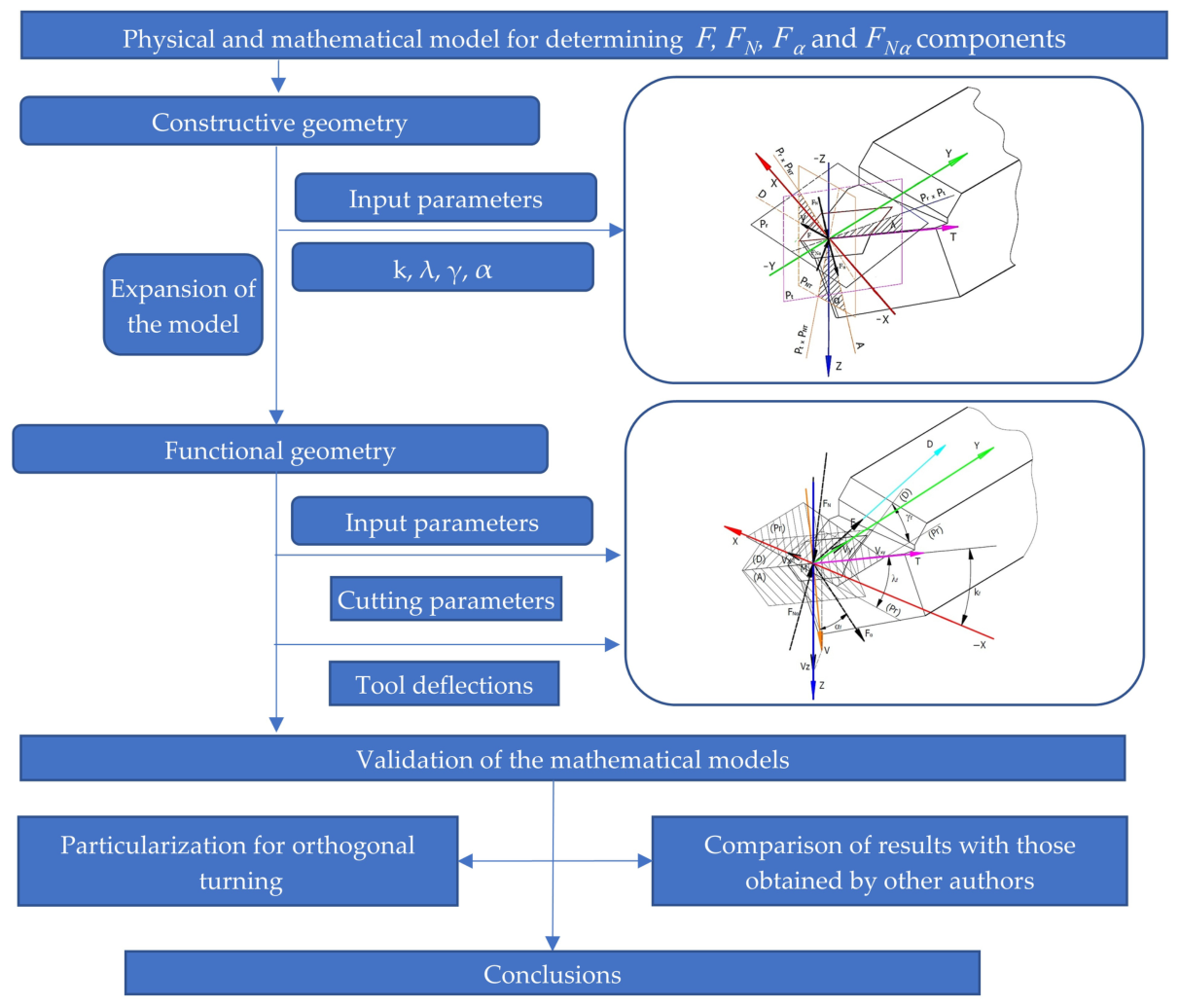
2. Methods and Methodologies
| Symbol/Variable | Description/Definition |
| Constructive tool angles (clearance, rake, inclination, side cutting-edge) | |
| Dynamic functional tool angles | |
| Chip flow direction angle | |
| Cutting velocity vector orientation angles | |
| Tool holder structural elastic deflection angles | |
| Friction and normal force components acting on the rake face | |
| Friction and normal force components acting on the flank face | |
| Global cutting force components measured by dynamometer (feed, passive, primary) |
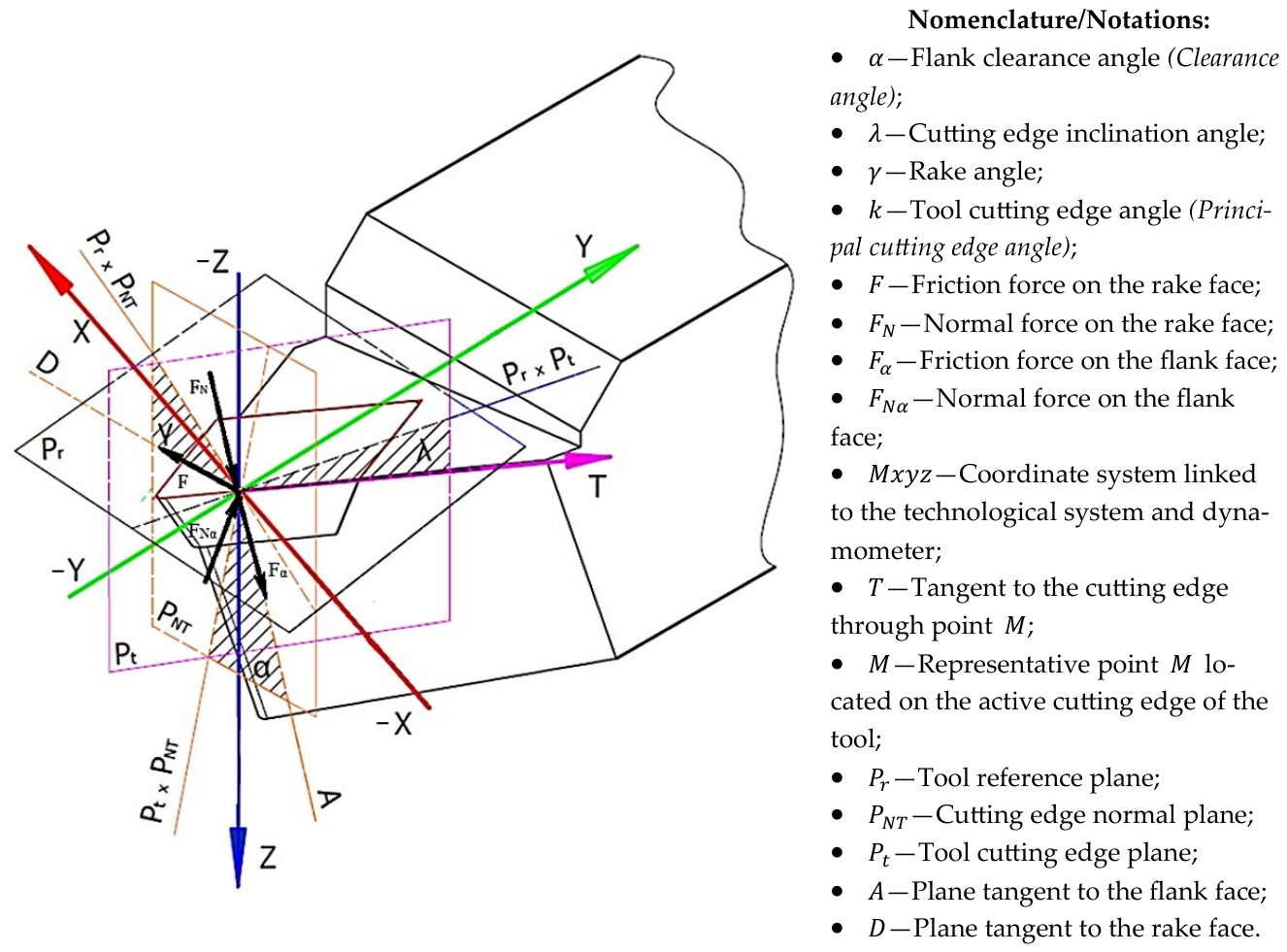
2.1. Model Principle
- -
- The tool is referenced to the coordinate system of the Kistler dynamometer, which coincides with that of the technological system;
- -
- The local forces are referenced to a representative point located on the active cutting edge of the tool;
- -
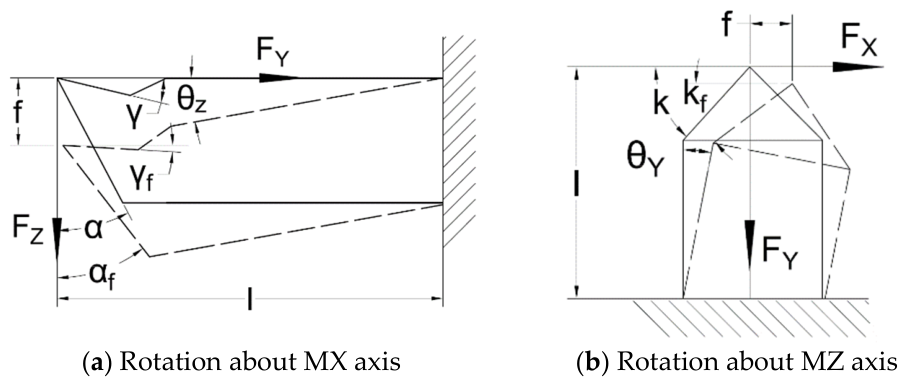
- The tool is considered a rigid body, and the actions of local tangential and normal contact force components are assumed on the active rake and flank faces;
- -
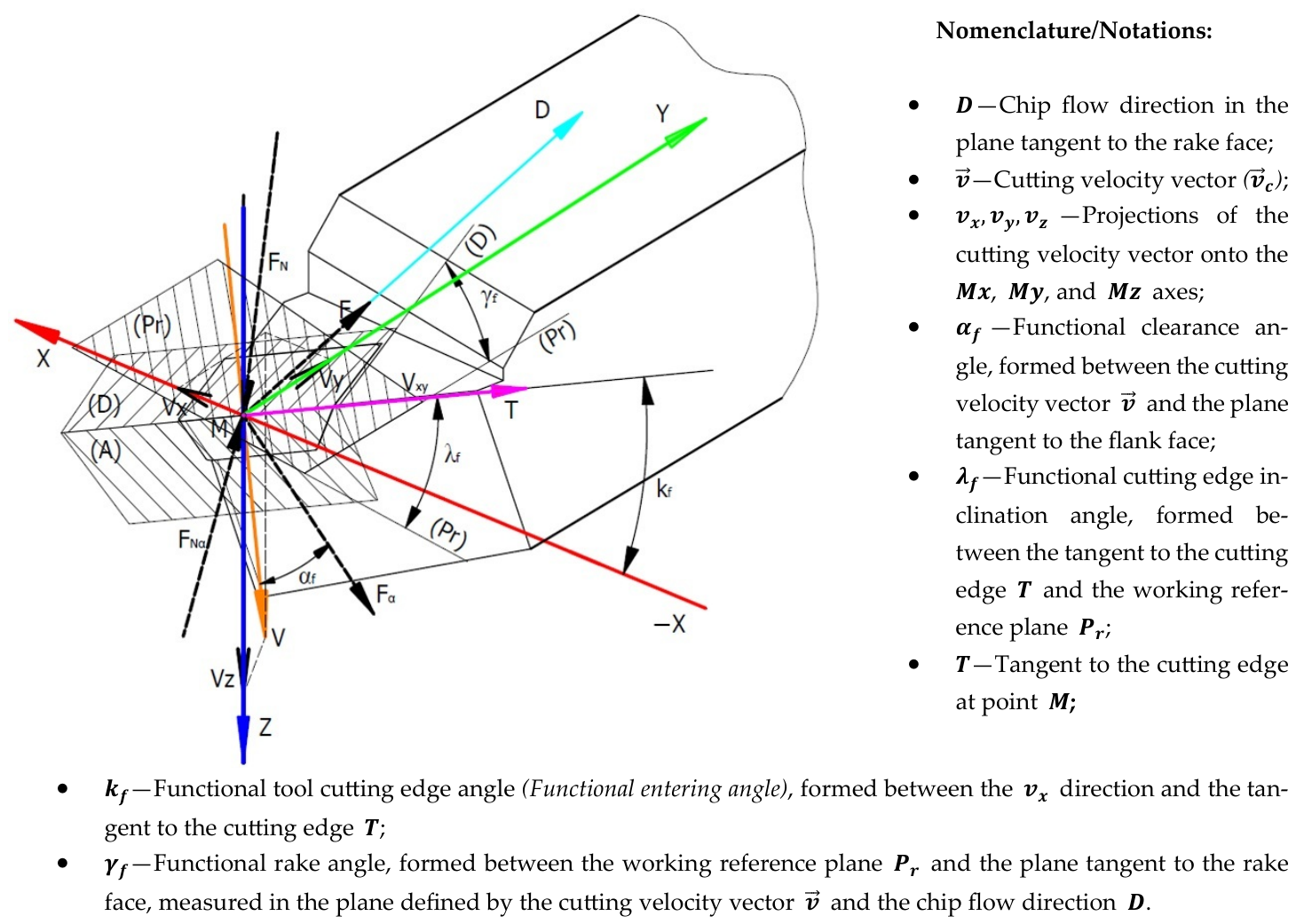
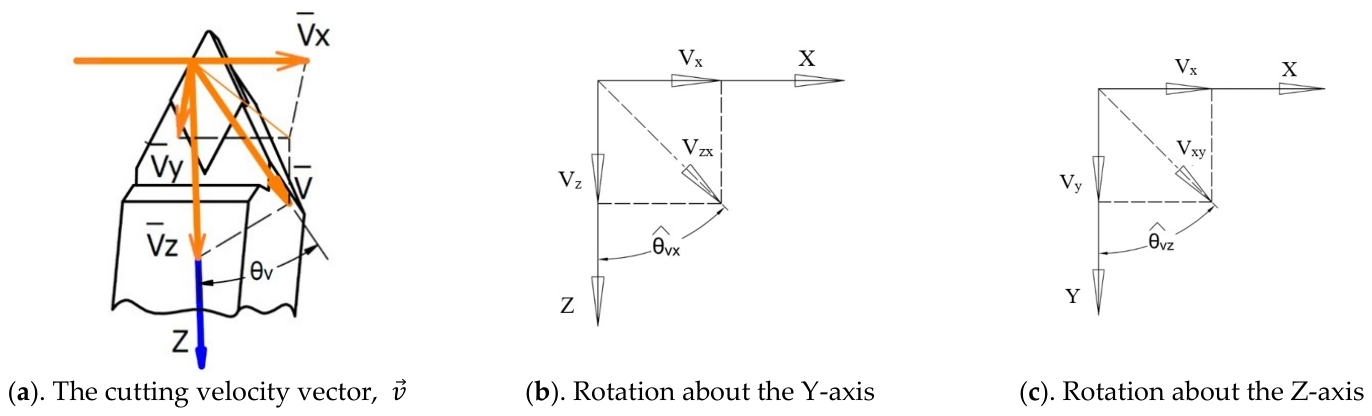
- The directions of the force vector components are determined by the displacement direction of the tool and the motions of the workpiece (—a vector sharing the same direction as the chip rake velocity vector, and —a vector sharing the same direction as the primary velocity vector, tangent to the machined surface);
- -
- The direction of the cutting force components is established by considering the tool as stationary, with the chip and workpiece material in motion relative to it;
- -
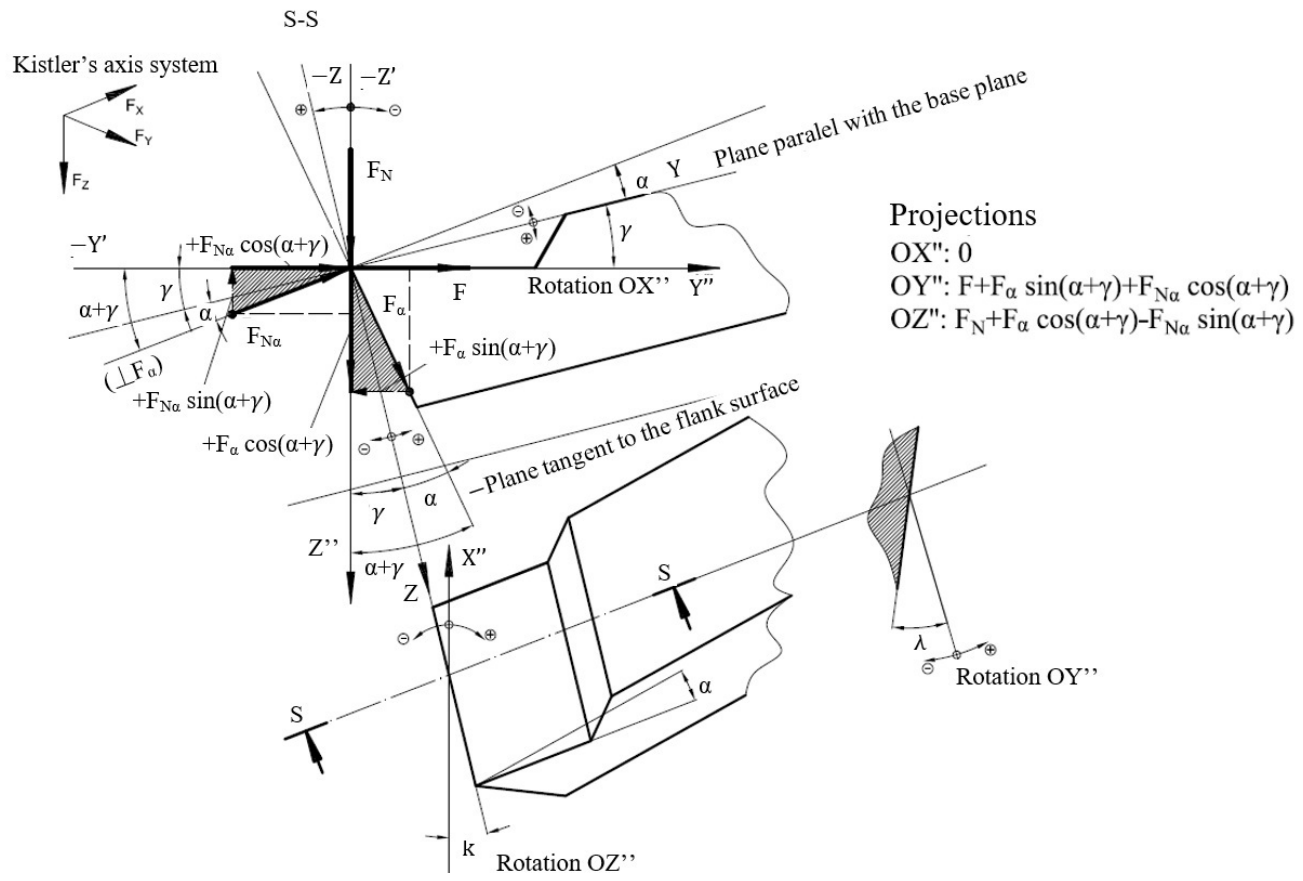
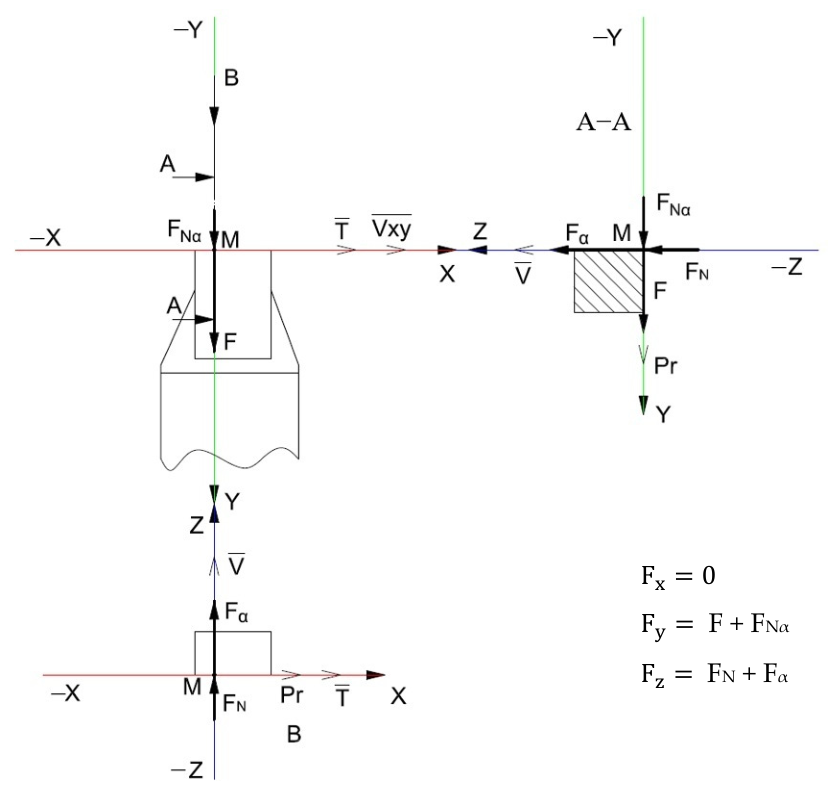
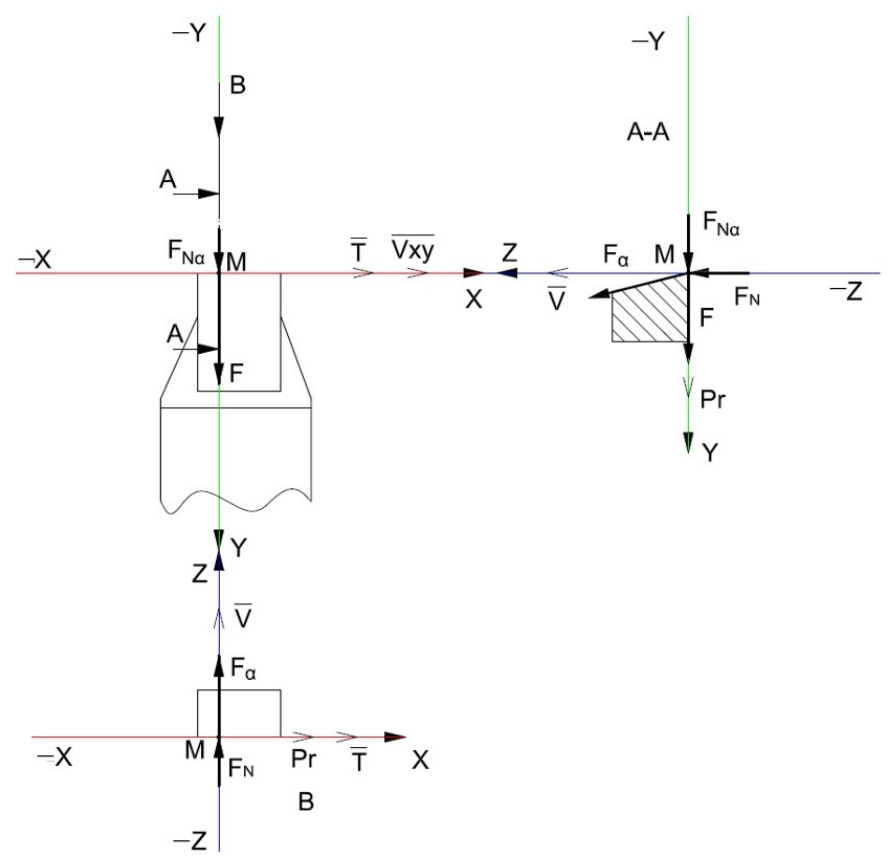
- The forces are analyzed in the cutting edge secant plane, considered at point $M$ on the tool’s cutting edge.
2.2. Physico-Mathematical Model for Cutting Tools—Constructive Geometry
2.3. Physico-Mathematical Model for Cutting Tools—Functional Geometry
3. Model Validation
3.1. Physico-Mathematical Model for Cutting Tools—Constructive Geometry
- I.
- Particularization for the case of cutting with zero geometry in static regime
- II.
- Particularization for the Case of Orthogonal Turning
3.2. Experimental Validation
3.3. Partial Conclusions Regarding the Experimental Validation of the Model
- Theoretical validation through particularization: Particularizing the proposed analytical–mechanistic model for the case of orthogonal cutting demonstrates a clear convergence with the classic Merchant model [5]. Furthermore, the vector force distributions illustrated in Figure 3 and Figure 4 faithfully correspond to the actual kinematics of the real cutting zone.
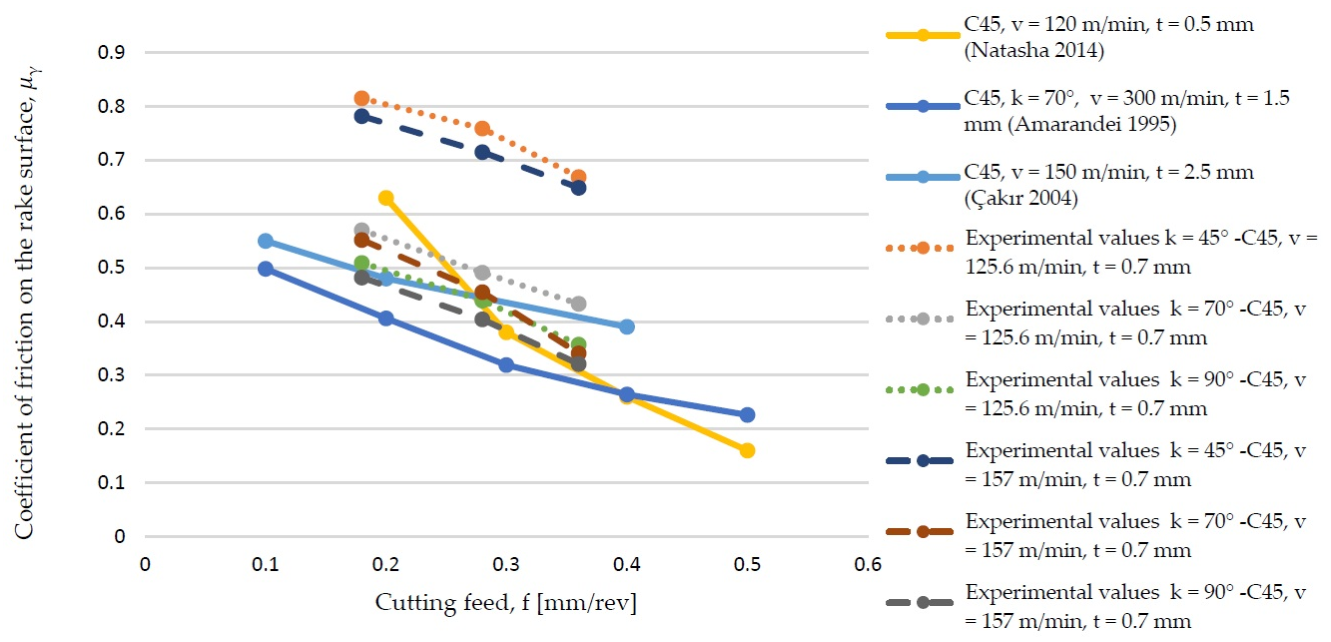
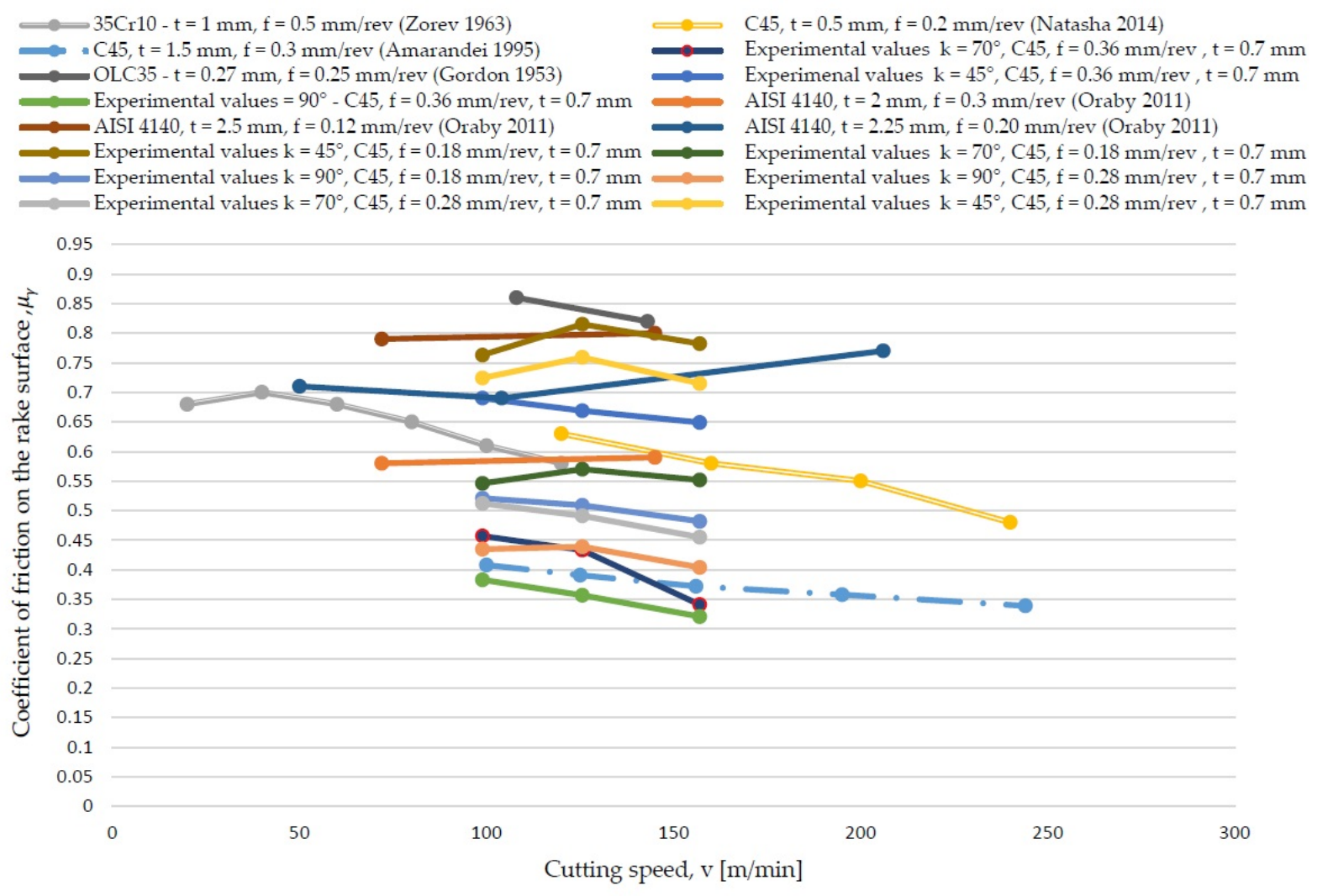
- Tribological behavior on the rake face: The variation in the local friction coefficient on the tool’s rake face, as well as the trend of the experimental curves plotted within the cutting speed range of , shows a strong correlation with the evolutionary patterns and trends identified by other authors for similar machining processes performed within the same kinematic windows (Figure 16).
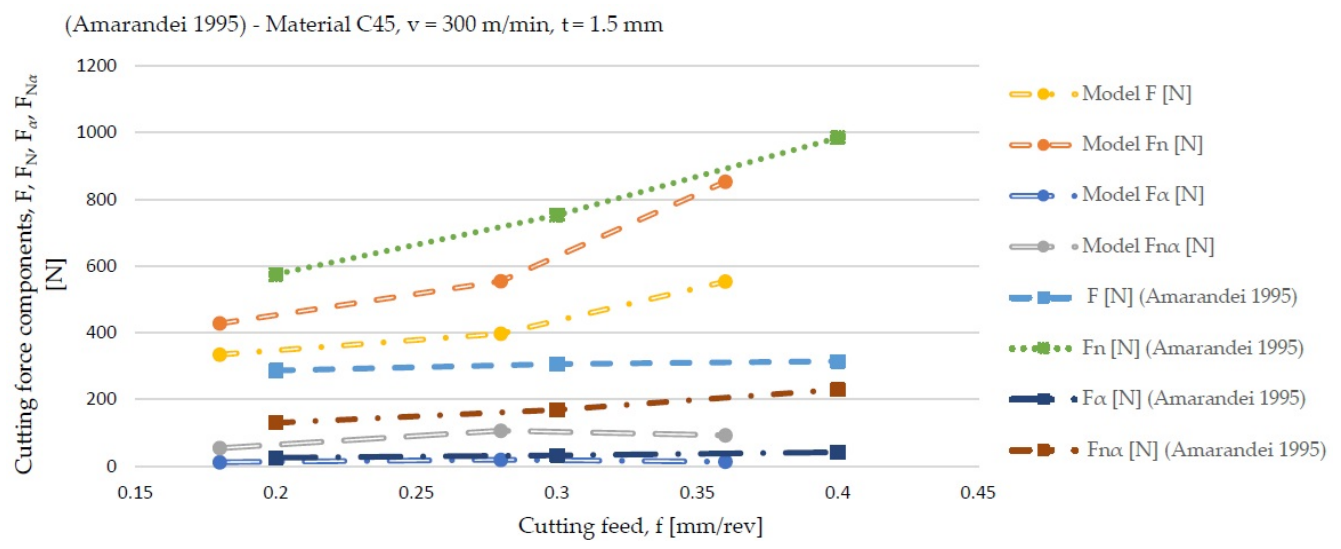
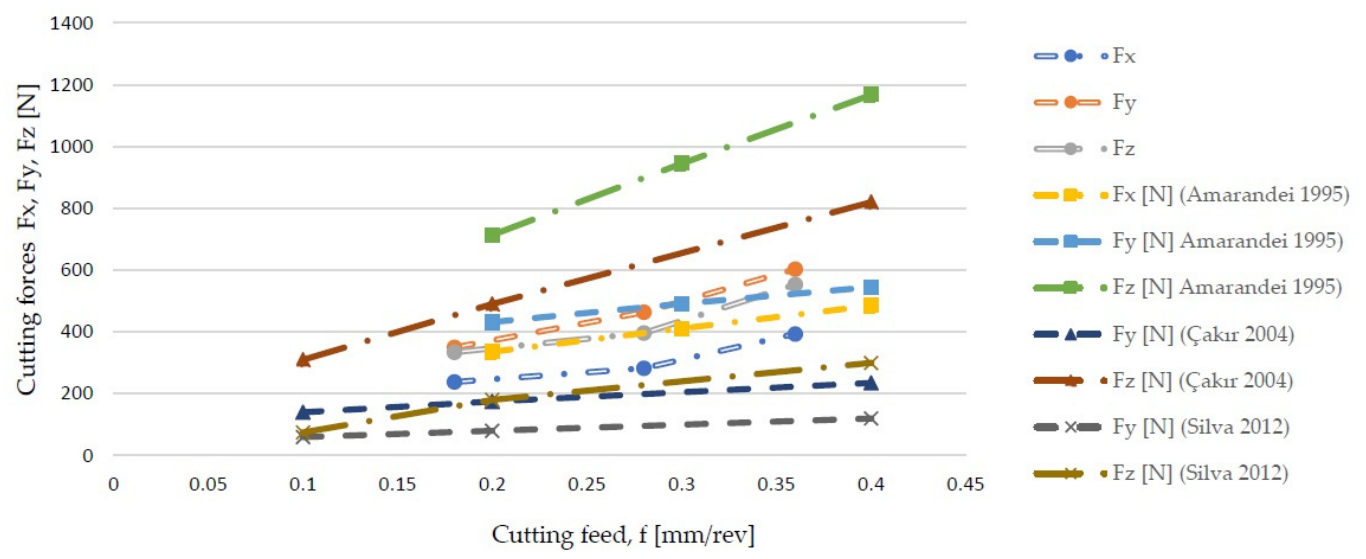
- Correlation of cutting force components: The trend of the variation curves for the orthogonal cutting force components (, , and ), plotted using the data centralized in Table 1, is highly consistent with the profiles reported in the specialized literature [47,48]. Additionally, the numerical values of the physical components and friction coefficients calculated via the proposed model for the same technological input parameters show high statistical proximity to the results reported in [42,43,46,47], falling strictly within the accepted variability limits (Figure 17).
- Statistical data validation: The application of the Grubbs statistical tests to identify and eliminate gross errors (outliers), carried out according to the methodology outlined in reference [44,49], demonstrates high stability of the experimental dataset, with the maximum calculated error not exceeding the critical threshold of . Specifically, relative reconstruction errors for the primary cutting force () ranged between 1.2% and 2.8%, while feed and passive forces () exhibited errors between 1.8% and 3.4%, remaining strictly below the critical threshold of 3.5%.
4. Conclusions
- The proposed analytical-mechanistic model for determining local friction forces and normal forces in oblique machining has been successfully validated both theoretically and experimentally. Its adaptation to the specific case of orthogonal machining confirms mathematical convergence with the classical equations of the Merchant model.
- The study of tribological behavior on the cutting tool’s rake face revealed that the shape of the experimental curves for the local velocity coefficient within the local velocity range (up to 160 m/min) adheres strictly to the physical laws governing machining processes. This strong correlation demonstrates the model’s high predictive capability.
- The force distribution vector diagrams accurately reflect the reality of the secondary plastic deformation zone. The orthogonal cutting force components () calculated using the proposed model show excellent statistical proximity to internationally validated reference values. Keeping gross errors below the critical threshold of 3.5% ensures the reproducibility of results and the scientific validity of the model.
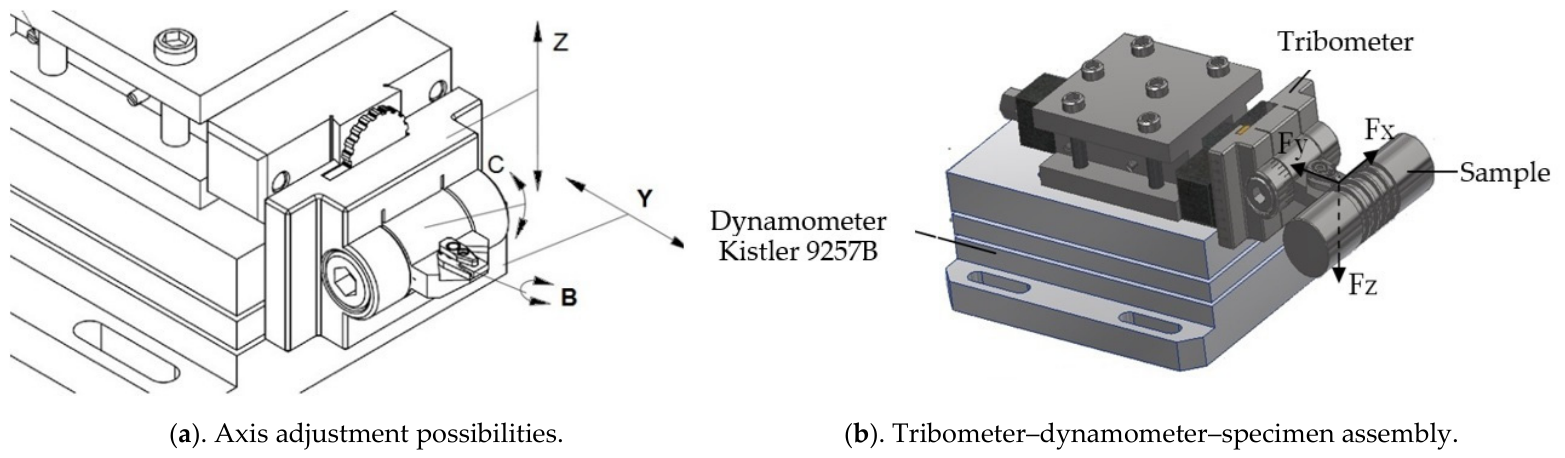
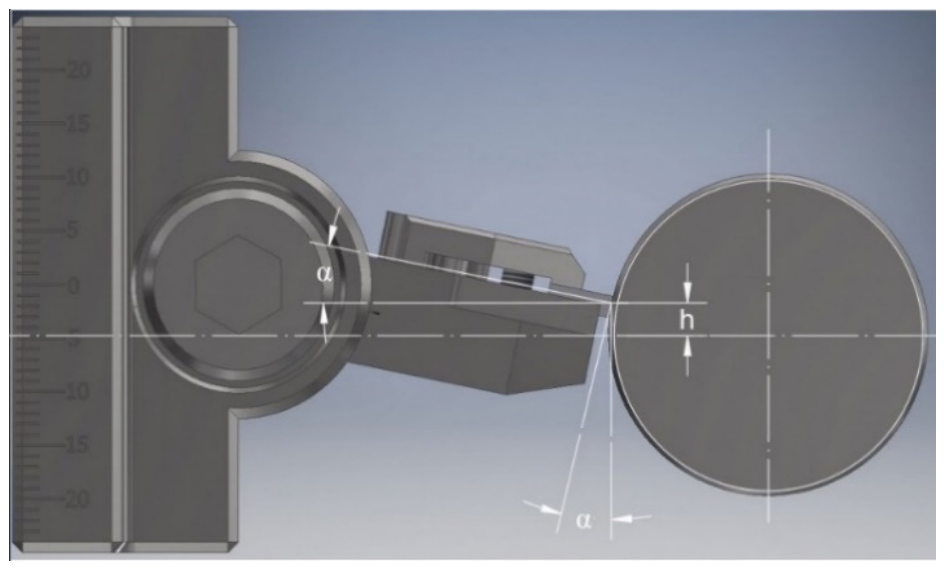
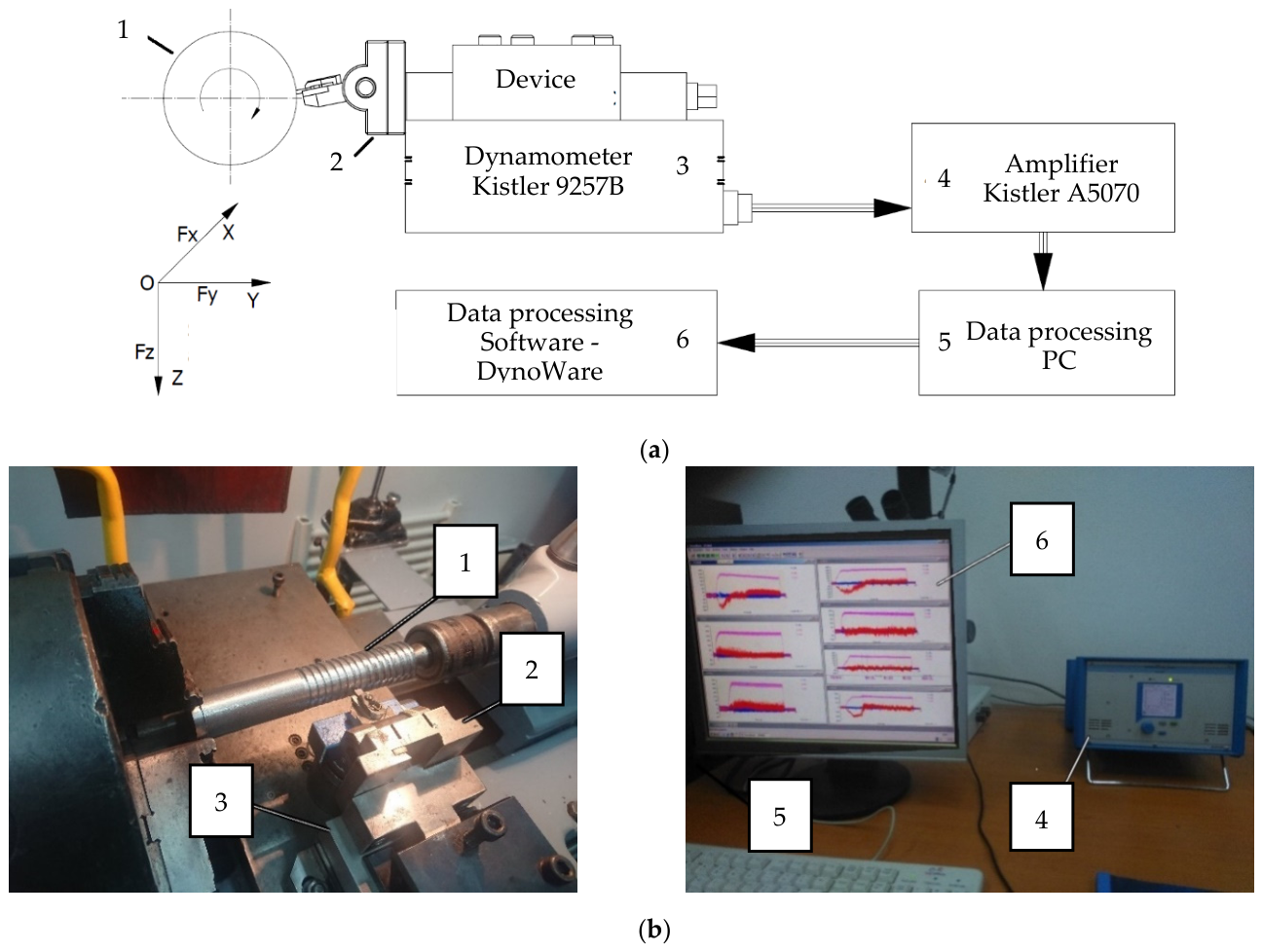
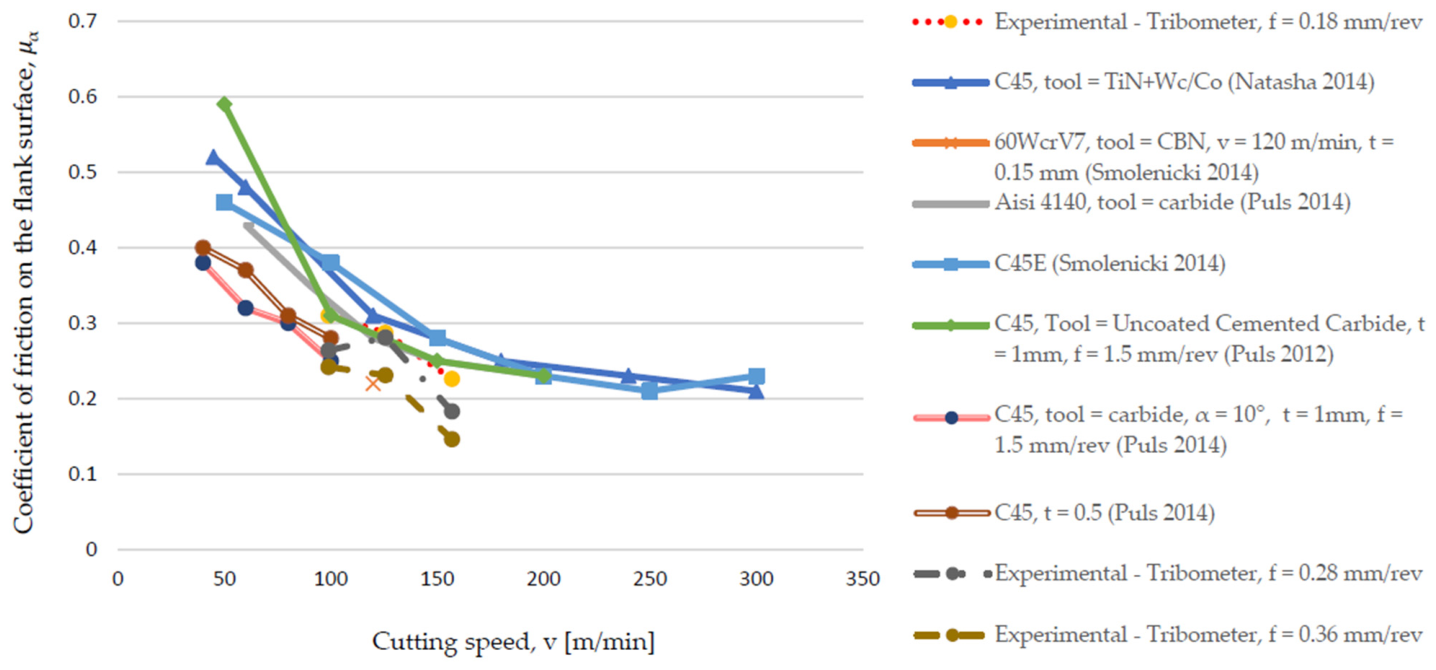
- The tribometric device employed in this study allows for the isolated investigation of temperature variation and cutting process physics at the tool–workpiece interface, specifically within the flank face region. By isolating the flank face, this approach contributes to a better understanding of tool transverse wear mechanisms.
Author Contributions
Funding
Data Availability Statement
Acknowledgments
Conflicts of Interest
References
- Shi, B.; Attia, M.H. Current status and future direction in the numerical modeling and simulation of machining processes: A critical literature review. Mach. Sci. Technol. 2010, 14, 149–188. [Google Scholar] [CrossRef] [Scilit]
- Neugebauer, R.; Bouzakis, K.D.; Denkena, B.; Klocke, F.; Sterzing, A.; Tekkaya, A.E.; Wertheim, R. Velocity effects in metal forming and machining processes. CIRP Ann. Manuf. Technol. 2011, 60, 627–650. [Google Scholar] [CrossRef] [Scilit]
- Abouridouane, M.; Bergs, T.; Schraknepper, D.; Wirtz, G. Friction behavior in metal cutting: Modeling and simulation. Procedia CIRP 2021, 102, 405–410. [Google Scholar] [CrossRef] [Scilit]
- Arrazola, P.J.; Özel, T.; Umbrello, D.; Davies, M.; Jawahir, I.S. Recent advances in modelling of metal machining processes. CIRP Ann. Manuf. Technol. 2013, 62, 695–718. [Google Scholar] [CrossRef] [Scilit]
- Merchant, M.E. Mechanics of the metal cutting process. I. Orthogonal cutting and a type 2 chip. J. Appl. Phys. 1945, 16, 267–275. [Google Scholar] [CrossRef] [Scilit]
- Armarego, E.J.A.; Brown, R.H. The Machining of Metals; Prentice-Hall: Englewood Cliffs, NJ, USA, 1977. [Google Scholar]
- Wang, J.; Liu, C.R. The effect of tool flank wear on the heat transfer, thermal damage and cutting mechanics in finish hard turning. CIRP Ann. Manuf. Technol. 1999, 48, 53–58. [Google Scholar] [CrossRef] [Scilit]
- Milutinović, M.; Tanović, L. Cutting forces in hard turning comprising tool flank wear and its implication for the friction between tool and workpiece. Teh. Vjesn. Tech. Gaz. 2016, 23, 1373–1379. [Google Scholar] [CrossRef] [Scilit][Green Version]
- Lee, E.H.; Shaffer, B.W. The theory of plasticity applied to a problem of machining. J. Appl. Mech. 1951, 18, 405–413. [Google Scholar] [CrossRef] [Scilit]
- Ackroyd, B.; Chandrasekar, S.; Compton, W.D. A model for the contact conditions at the chip-tool interface in machining. J. Tribol. 2003, 125, 649–660. [Google Scholar] [CrossRef] [Scilit]
- Astakhov, V.P. Tribology of Metal Cutting; Elsevier: Amsterdam, The Netherlands, 2006. [Google Scholar]
- Filice, L.; Micari, F.; Rizzuti, S.; Umbrello, D. A critical analysis on the friction modelling in orthogonal machining. Int. J. Mach. Tools Manuf. 2007, 47, 709–714. [Google Scholar] [CrossRef] [Scilit]
- Grzesik, W.; Żak, K. Friction quantification in the oblique cutting with CBN chamfered tools. Wear 2013, 304, 36–42. [Google Scholar] [CrossRef] [Scilit]
- Melkote, S.N.; Grzesik, W.; Outeiro, J.; Rech, J.; Schulze, V.; Attia, H.; Arrazola, P.J.; M’Saoubi, R.; Saldana, C. Advances in material and friction data for modelling of metal machining. CIRP Ann. Manuf. Technol. 2017, 66, 731–754. [Google Scholar] [CrossRef] [Scilit]
- Grzesik, W.; Rech, J.; Żak, K. Determination of friction in metal cutting with tool wear and flank face effects. Wear 2014, 317, 8–16. [Google Scholar] [CrossRef] [Scilit]
- Puls, H.; Klocke, F.; Lung, D. A new experimental methodology to analyse the friction behaviour at the tool-chip interface in metal cutting. Prod. Eng. Res. Dev. 2012, 6, 349–354. [Google Scholar] [CrossRef] [Scilit]
- Puls, H.; Klocke, F.; Lung, D. Experimental investigation on friction under metal cutting conditions. Wear 2014, 310, 63–71. [Google Scholar] [CrossRef] [Scilit]
- Voss, R.; Seeholzer, L.; Kuster, F.; Wegener, K. Cutting process tribometer experiments for evaluation of friction coefficient close to a CFRP machining operation. Procedia CIRP 2017, 66, 204–209. [Google Scholar] [CrossRef] [Scilit]
- Smolenicki, D.; Boos, J.; Kuster, F.; Roefolds, H.; Wyen, C. In-process measurement of friction coefficient in orthogonal cutting. CIRP Ann. Manuf. Technol. 2014, 63, 97–100. [Google Scholar] [CrossRef] [Scilit]
- Zemzemi, F.; Bensalem, W.; Rech, J.; Dogui, A.; Kapsa, P. New tribometer design designed for the characterisation of the friction properties at the tool/chip/workpiece interface in machining. Tribotest 2008, 14, 11–25. [Google Scholar] [CrossRef] [Scilit]
- Zemzemi, F.; Rech, J.; Salem, W.B.; Dogui, A.; Kapsa, P. Identification of a friction model at tool/chip/workpiece interfaces in dry machining of AISI4142 treated steels. J. Mater. Process. Technol. 2009, 209, 3978–3990. [Google Scholar] [CrossRef] [Scilit]
- Hedenqvist, P.; Olsson, M. Sliding wear testing of coated cutting tool materials. Tribol. Int. 1991, 24, 143–150. [Google Scholar] [CrossRef] [Scilit]
- Naisson, P.; Rech, J.; Paris, H. Characterization of friction properties during machining of various stainless steels. Eng. Trans. 2013, 61, 239–248. [Google Scholar]
- Rech, J.; Claudin, C.; Polly, P.; Courbon, C. New aspects of metrology of frictional behaviour in metal cutting. Mechanik 2016, 11, 1751–1753. [Google Scholar] [CrossRef] [Scilit]
- Rech, J.; Claudin, C.; Grzesik, W.; Zalisz, Z. Characterization of the friction properties of various coatings at the tool-chip-workpiece interfaces in dry machining of AISI 4140 steel. Proc. Inst. Mech. Eng. Part J J. Eng. Tribol. 2008, 222, 617–627. [Google Scholar] [CrossRef] [Scilit]
- Zhang, C.; Lu, J.; Zhang, F.; Butt, S.I. Identification of a new friction model at tool-chip interface in dry orthogonal cutting. Int. J. Adv. Manuf. Technol. 2017, 89, 921–932. [Google Scholar] [CrossRef] [Scilit]
- Zhang, G.; Guo, C. Modeling of cutting force distribution on tool edge in turning process. Procedia Manuf. 2015, 1, 454–465. [Google Scholar] [CrossRef] [Scilit]
- Grzesik, W.; Kowalczyk, D.; Żak, K. A new mechanistic friction model for the oblique cutting with tool wear effect. Tribol. Int. 2013, 66, 49–53. [Google Scholar] [CrossRef] [Scilit]
- Childs, T.H.C. Friction modelling in metal cutting. Wear 2006, 260, 310–318. [Google Scholar] [CrossRef] [Scilit]
- Campocasso, S.; Costes, J.P.; Fromentin, G.; Bissey-Breton, S.; Poulachon, G. A generalized geometrical model of turning operations for cutting force modelling using edge discretization. Appl. Math. Model. 2015, 39, 6612–6630. [Google Scholar] [CrossRef] [Scilit]
- Song, G.; Sui, S.; Tang, L. Precision prediction of cutting force in oblique cutting operation. Int. J. Adv. Manuf. Technol. 2015, 81, 553–562. [Google Scholar] [CrossRef] [Scilit]
- Dorlin, T.; Fromentin, G.; Costes, J.P.; Karaouni, H. Mechanistic cutting force model including the stress state induced by the chip flow contribution for cylindrical turning on Ti6Al4V alloy with two different nose radii. In Proceedings of the 13th International Conference on High Speed Machining, Metz, France, 4–5 October 2016. [Google Scholar]
- Bera, T.C.; Manikandan, H.; Bansal, A.; Nema, D. A method to determine cutting force coefficients in turning using mechanistic approach. Int. J. Mater. Mech. Manuf. 2018, 6, 99–103. [Google Scholar] [CrossRef] [Scilit][Green Version]
- Moufki, A.; Molinari, A.; Dudzinski, D. Modelling of orthogonal cutting with a temperature dependent friction law. J. Mech. Phys. Solids 1998, 46, 2103–2138. [Google Scholar] [CrossRef] [Scilit]
- Ozlu, E.; Budak, E. Experimental analysis and modeling of orthogonal cutting using material and friction models. In Proceedings of the 4th International Conference and Exhibition on Design and Production of Machines and DIES/MOLDS, Cesme, Turkey, 21–23 June 2007. [Google Scholar]
- Huerta, L.; Lozano-Guzman, A.; Orozco-Mendoza, H.; Jauregui-Correa, J.C. Method for friction force estimation on the flank of cutting tools. Shock. Vib. 2017, 2017, 5834863. [Google Scholar] [CrossRef] [Scilit]
- Molinari, A.; Dudzinski, D. Stationary shear band in high-speed machining. Comptes Rendus Acad. Sci. 1991, 315, 399–405. [Google Scholar]
- Lin, X.; Yang, W.; Xu, D.; Li, W.; Ma, S. Internal friction and compressive deformation in the primary zone during the high-speed cutting of SiCp/Al composites. arXiv 2021, arXiv:2103.17047. [Google Scholar]
- Belous, V. Sinteza Sculelor Așchietoare [Synthesis of Cutting Tools]; Junimea: Iași, Romania, 1980. [Google Scholar]
- Kiyak, M.; Altan, M.; Altan, E. Prediction of chip flow angle in orthogonal turning of mild steel by neural network approach. Int. J. Adv. Manuf. Technol. 2007, 33, 251–259. [Google Scholar] [CrossRef] [Scilit]
- Tamasag, I.; Beșliu, I.; Amarandei, D. Design of a device for testing and analysing the friction coefficient during metal cutting. Ann. Oradea Univ. Fascicle Manag. Technol. Eng. 2019, 28, 85–90. [Google Scholar]
- Natasha, A.R.; Othman, H.; Jaharah, A.G.; Che Haron, C.H.; Syarif, J. Chip formation and coefficient of friction in turning S45C medium carbon steel. Int. J. Mech. Mechatron. Eng. 2014, 14, 89–92. [Google Scholar]
- Amarandei, D. Experimental method applied for modelling edge tool cutting with aim of evaluation the plastic deformation forces and friction forces at high speed machining. In Proceedings of the 4th Yugoslav Conference of Tribology, Belgrade, Serbia, 27–29 September 1995. [Google Scholar]
- Çakır, O.; Kıyak, M.; Altan, E. Comparison of gases applications to wet and dry cuttings in turning. J. Mater. Process. Technol. 2004, 153–154, 35–41. [Google Scholar] [CrossRef] [Scilit]
- Zorev, N.N. Inter-relationship between shear processes occurring along the tool face and shear plane in metal cutting. Int. Res. Prod. Eng. 1963, 49, 143–152. [Google Scholar]
- Gordon, M.B. Distribution of friction forces on the tool rake face in the chip contact zone. Vestn. Mashinostr. 1953, 33, 53. [Google Scholar]
- Oraby, S.E.; Alaskari, A.M. Mathematical modeling experimental approach of the friction on the tool-chip interface of multicoated carbide turning inserts. Int. J. Mech. Mechatron. Eng. 2011, 5, 612–621. [Google Scholar]
- Silva, L.R.; Abrão, A.M.; Faria, P.; Davim, J.P. Machinability study of steels in precision orthogonal cutting. Mater. Res. 2012, 15, 589–595. [Google Scholar] [CrossRef] [Scilit]
- Ionescu, R.; Amarandei, D. Planificarea Experimentelor—Eficiență și Calitate [Design of Experiments—Efficiency and Quality]; Editura AGIR: București, România, 2004. [Google Scholar]



| Nr. | Input Parameters | Experimental Results | Parameters Obtained Using the Presented Model | |||||||||
|---|---|---|---|---|---|---|---|---|---|---|---|---|
| Principal Cutting Edge Angle | Cutting Speed | Cutting Feed | Force Values Obtained with the Kistler Dynamometer | Values Determined Using the Proposed Model, Equation (40) | The Coefficient of Friction, µα, Determined Using the Tribometer. | |||||||
| k [°] | v [m/min] | f [mm/rev] | Fx [N] | Fy [N] | Fz [N] | F [N] | FN [N] | Fα [N] | FNα [N] | μγ | ||
| 1 | 90 | 98.91 | 0.18 | 167.98 | 216.61 | 289.63 | 140.53 | 269.93 | 37.26 | 190.08 | 0.521 | 0.196 |
| 2 | 0.28 | 201.77 | 317.74 | 406.70 | 163.37 | 375.91 | 51.88 | 280.45 | 0.435 | 0.185 | ||
| 3 | 0.36 | 207.63 | 370.70 | 463.77 | 163.78 | 428.08 | 57.40 | 327.99 | 0.383 | 0.175 | ||
| 4 | 125.6 | 0.18 | 174.09 | 217.08 | 302.11 | 145.10 | 284.96 | 35.35 | 189.04 | 0.509 | 0.187 | |
| 5 | 0.28 | 203.27 | 328.85 | 405.26 | 164.93 | 375.47 | 51.03 | 291.62 | 0.439 | 0.175 | ||
| 6 | 0.36 | 191.35 | 332.62 | 445.80 | 148.61 | 416.63 | 49.17 | 290.93 | 0.357 | 0.169 | ||
| 7 | 157 | 0.18 | 158.30 | 209.06 | 285.81 | 130.67 | 271.18 | 31.17 | 182.30 | 0.482 | 0.171 | |
| 8 | 0.28 | 183.78 | 288.36 | 382.49 | 146.66 | 362.86 | 38.85 | 252.24 | 0.404 | 0.154 | ||
| 9 | 0.36 | 173.40 | 317.85 | 433.58 | 131.33 | 409.37 | 42.34 | 276.73 | 0.321 | 0.153 | ||
| 10 | 70 | 98.91 | 0.18 | 236.68 | 317.21 | 423.72 | 224.76 | 411.51 | 40.08 | 188.16 | 0.546 | 0.213 |
| 11 | 0.28 | 279.12 | 445.30 | 541.82 | 263.14 | 514.21 | 60.59 | 289.88 | 0.512 | 0.209 | ||
| 12 | 0.36 | 309.25 | 556.40 | 665.83 | 287.58 | 628.97 | 73.63 | 377.61 | 0.457 | 0.195 | ||
| 13 | 125.6 | 0.18 | 244.21 | 304.76 | 413.09 | 232.96 | 409.02 | 32.76 | 173.34 | 0.57 | 0.189 | |
| 14 | 0.28 | 271.38 | 408.53 | 531.19 | 254.59 | 518.64 | 44.69 | 255.34 | 0.491 | 0.175 | ||
| 15 | 0.36 | 276.88 | 454.99 | 604.21 | 255.65 | 590.54 | 46.70 | 291.86 | 0.433 | 0.16 | ||
| 16 | 157 | 0.18 | 218.15 | 268.55 | 373.30 | 207.41 | 375.72 | 23.25 | 150.00 | 0.552 | 0.155 | |
| 17 | 0.28 | 242.04 | 360.00 | 499.82 | 224.95 | 494.31 | 34.29 | 219.84 | 0.455 | 0.156 | ||
| 18 | 0.36 | 208.81 | 414.94 | 556.93 | 186.11 | 545.46 | 36.78 | 280.76 | 0.341 | 0.131 | ||
| 19 | 45 | 98.91 | 0.18 | 222.29 | 359.87 | 397.76 | 312.43 | 409.21 | 25.50 | 82.25 | 0.763 | 0.31 |
| 20 | 0.28 | 290.66 | 526.47 | 557.49 | 408.51 | 564.09 | 42.03 | 159.19 | 0.724 | 0.264 | ||
| 21 | 0.36 | 311.06 | 608.98 | 632.56 | 437.16 | 633.75 | 51.18 | 211.50 | 0.69 | 0.242 | ||
| 22 | 125.6 | 0.18 | 249.96 | 379.21 | 410.27 | 351.34 | 431.04 | 20.47 | 71.31 | 0.815 | 0.287 | |
| 23 | 0.28 | 305.02 | 520.78 | 553.35 | 428.70 | 564.94 | 39.15 | 139.33 | 0.759 | 0.281 | ||
| 24 | 0.36 | 288.53 | 579.24 | 605.32 | 405.49 | 606.08 | 48.02 | 207.87 | 0.669 | 0.231 | ||
| 25 | 157 | 0.18 | 238.16 | 350.01 | 400.55 | 334.74 | 427.79 | 12.23 | 54.13 | 0.782 | 0.226 | |
| 26 | 0.28 | 282.36 | 464.40 | 526.94 | 396.84 | 554.74 | 19.51 | 106.62 | 0.715 | 0.183 | ||
| 27 | 0.36 | 393.85 | 603.13 | 799.31 | 553.48 | 852.66 | 13.50 | 92.48 | 0.649 | 0.146 | ||
Disclaimer/Publisher’s Note: The statements, opinions and data contained in all publications are solely those of the individual author(s) and contributor(s) and not of MDPI and/or the editor(s). MDPI and/or the editor(s) disclaim responsibility for any injury to people or property resulting from any ideas, methods, instructions or products referred to in the content. |
© 2026 by the authors. Licensee MDPI, Basel, Switzerland. This article is an open access article distributed under the terms and conditions of the Creative Commons Attribution (CC BY) license.
Share and Cite
Tamașag, I.; Beșliu-Băncescu, I.; Amarandei, D. Analytical–Mechanistic Model for Determining Local Friction and Normal Forces in Oblique Cutting. Modelling 2026, 7, 191. https://doi.org/10.3390/modelling7050191
Tamașag I, Beșliu-Băncescu I, Amarandei D. Analytical–Mechanistic Model for Determining Local Friction and Normal Forces in Oblique Cutting. Modelling. 2026; 7(5):191. https://doi.org/10.3390/modelling7050191
Chicago/Turabian StyleTamașag, Ioan, Irina Beșliu-Băncescu, and Dumitru Amarandei. 2026. "Analytical–Mechanistic Model for Determining Local Friction and Normal Forces in Oblique Cutting" Modelling 7, no. 5: 191. https://doi.org/10.3390/modelling7050191
APA StyleTamașag, I., Beșliu-Băncescu, I., & Amarandei, D. (2026). Analytical–Mechanistic Model for Determining Local Friction and Normal Forces in Oblique Cutting. Modelling, 7(5), 191. https://doi.org/10.3390/modelling7050191