1. Introduction
Crashworthiness refers to a vehicle’s ability to mitigate the effects of a collision in a controlled manner, thereby reducing the risk of injury to its occupants. This concept is categorised as a passive safety measure, which aims to mitigate the consequences of an accident, as opposed to active safety measures that focus on preventing a collision altogether [
1,
2,
3,
4]. In line with the research presented in [
5], the authors proposed an improvement to the coach chassis body based on an adaptation of the regulation. This work was developed in parallel with the present study, where additional information about the coach structure can be found. The work carried out mainly focused on improving the structural design in order to comply with the applicable regulatory requirements.
As modern trains operate at increasingly higher speeds, the consequences of collisions have become much more severe. This has led engineers to be more cautious and intentional in designing railway vehicles, with a stronger focus on safety features. Crashworthiness, especially through the use of energy-absorbing structures, is a key aspect of safety standards. These structures must effectively absorb large amounts of kinetic energy in a controlled and consistent manner to protect passengers from serious injury in the event of a collision. Improving crash safety involves various techniques, primarily centred on material selection and structural design. Therefore, it is essential to identify the optimal structural characteristics to maximise crash energy management, ultimately enhancing the passive safety of railway vehicles [
6].
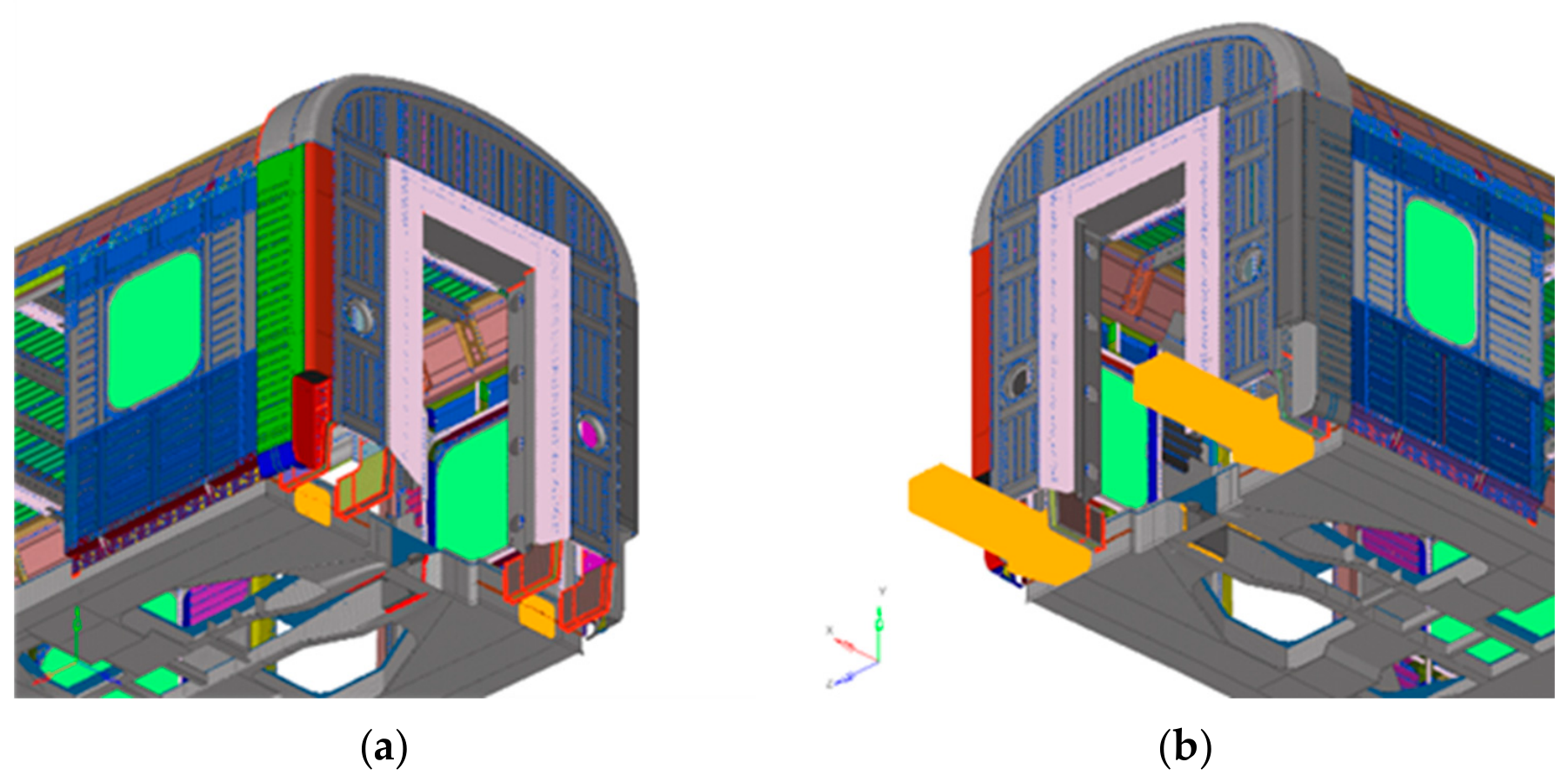
A Crash Energy Management System (CEMS) comprises several elements that, when combined, dissipate the impact energy effectively and in a predetermined order [
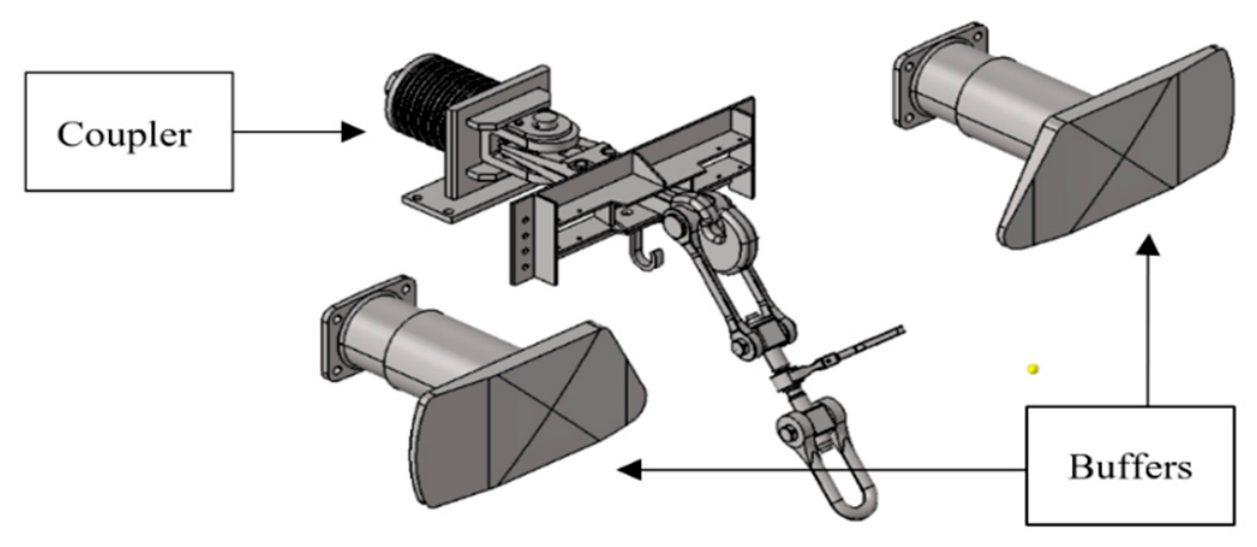
7]. The design incorporates several critical elements, including steel tubes, honeycomb structures, and foam-filled crash boxes that effectively absorb energy during deformation. Buffers are utilised as shock absorbers, while couplers enhance the stability of the connection between vehicles, preventing separation during collisions and minimising the transfer of impact energy. Furthermore, crumple zones are specifically engineered areas designed to deform in response to impacts [
8]. An example of this equipment is illustrated in
Figure 1.
The importance of crashworthiness systems is highlighted by real-world accidents where their failure led to tragic outcomes. One such incident occurred on 29 October 2023, in Vizianagaram, India, when a passenger train collided with another after overshooting a signal, resulting in 17 deaths and 34 injuries. While human error triggered the crash, the structural design of the coaches contributed to the high casualty count. Despite being equipped with anti-telescopic features to prevent collisions between cars, these mechanisms failed. Investigations revealed that modifications made over time had stiffened components designed to absorb energy, thereby reducing their effectiveness. Consequently, the end sections of the coaches could not collapse as intended, leading to increased intrusion into passenger space and intensifying the impact [
9,
10].
Tragedies like these highlight the urgent need for strict crashworthiness standards in modern rail systems. In light of increasing awareness and past failures, the railway industry, especially in Europe, has made significant advancements. Standards, such as EN 15227: 2020 [
11], outline rigorous crashworthiness requirements for rail vehicles. These standards specify design parameters for collision scenarios, energy absorption performance, and the necessity for validation through simulations and testing.
Finite Element Analysis (FEA) is a key tool for predicting how objects behave in crashes. However, detailed models can be very expensive to run, which limits their use in design and regulation. To address this, many researchers in the literature have focused their work on model simplification, aiming to reduce size and simulation time while maintaining the accuracy of the results. For instance, Huňady et al. [
12] utilised stiffness-based bushings to replace parts of Finite Element (FE) models, while Schäffer et al. [
13] employed surrogate representations of substructures based on stiffness and failure characteristics. Both approaches succeeded in reducing computational effort without compromising key crash responses.
In line with EN 15227, Surini et al. [
14] detailed a new metro light project platform, progressing from lumped-mass models to refined FE simulations. Braemar [
15] described a methodology that integrates conceptual models, 1D analyses, and full 3D simulations for optimising CEMS for couplers, anti-climbers and rigid cabs. Syaifudin et al. [
6] assessed Indonesia’s proposed high-speed train, proposing a modular system for effective energy absorption. Rizal and Syaifudin [
7] noted challenges in meeting international standards, indicating that adjustments in component placement and stiffness can enhance energy absorption, though full compliance with U.S. CFR Part 238 remained difficult. Together, these studies reflect the complexities of FE-based design and regulatory compliance.
In the field of structural optimisation, Molatefi et al. [
16] demonstrated that aluminium honeycomb absorbers in Eastern German passenger coaches increased energy absorption by 46% and reduced peak mid-chassis stresses by 66%, improving passenger safety without requiring full fleet replacement. Sobolevska and Horobets [
17] and Sobolevska and Telychko [
18] proposed multi-level energy absorption devices (EADs) utilising box and honeycomb structures, which were validated through simulations and crash tests, effectively limiting decelerations to below 5 g while maintaining regulatory compliance. Prasomsuk et al. [
19] examined the lightweight Aachener Rail Shuttle, finding that side energy absorbers could be complemented by operational measures, such as reducing speed at crossings. Jiménez de Cisneros Fonfría et al. [
20] emphasised the role of controlled underframe deformation in protecting passengers. To date, the only relevant published research is that of Xie et al. [
21], which focused on simplifying the rail vehicle model for high-speed trains, utilising mass and beam elements, but encountered issues with misalignment and compliance in their simulations. Additionally, the bending behaviour and complete adherence to regulatory scenarios were not accounted for.
The focus on model simplification constitutes a distinct research gap within railway crash analysis. To address this limitation, the present research introduces and validates a dedicated simplification methodology developed for the train crash analysis. Unlike the approach of Xie et al. [
21], the proposed method incorporates both axial and bending stiffness, thereby maintaining the coach’s dynamic response across a broader spectrum of crash scenarios. Furthermore, the methodology is explicitly aligned with the EN 15227 regulatory framework, representing the first systematic effort to embed simplification directly into standardised crashworthiness evaluations.
The engineering contribution of the present work is the development of a practical reduced-order modelling methodology that can be integrated into railway crashworthiness workflows. Unlike purely rigid lumped-mass approaches, the proposed method preserves both axial and bending stiffness contributions of the removed coach region. This is particularly relevant for long railway vehicles, where global bending and load-path continuity can significantly affect the crash response.
The method is intended to support early design iterations and train-level crash simulations, where using fully detailed FE models for every vehicle in the train set can become computationally impracticable. Once calibrated for a given vehicle family, the approach can be extended to similar coach configurations by updating the equivalent stiffness, mass distribution and connection layout according to the structural characteristics of the new model.
4. Numerical Analysis—Model for Validation Purposes
The full-scale coach model was discretized using a combination of shell, solid, beam and spring-type elements, according to the structural function of each component. Thin-walled structural parts, such as side walls, roof members, underframe plates and longitudinal beams, were mainly represented by shell elements. Local solid elements were used in regions where three-dimensional stress transfer or connector modelling was required. One-dimensional elements were used only where their mechanical role could be clearly represented by equivalent axial, bending, shear or torsional stiffness.
The mesh size was selected as a compromise between local accuracy, numerical stability and computational cost. Finer mesh refinement was adopted in regions expected to experience high stress gradients, contact interaction, local buckling or plastic deformation, especially near the impact end, buffer/coupler regions, underframe load paths and welded connection zones. Coarser mesh sizes were allowed in low-deformation regions that mainly contribute to the global stiffness and mass of the structure.
Special attention was given to the connection relationship between key components, since this strongly affects load transfer during crash simulations. Welded and bolted regions were not modelled as simple node sharing. Instead, connector formulations were adopted to represent the mechanical coupling between independent meshes. This strategy avoids excessive mesh dependency and allows local load transfer between structural parts while preserving the overall dynamic behavior of the coach. A summary of the discretization strategy adopted in the model is provided in
Table 3 [
23].
Regarding the materials, the coach is constructed from three distinct materials, each designated for specific components. All head stocks are made from 1.0570 S355J2G3 carbon steel, henceforth referred to as carbon steel. C1000 stainless steel is used for all sole bars and corrugated sheets, while C850 stainless steel is employed for all other components.
Multiple tensile tests were conducted to derive the stress−strain curves for these materials. The yield stress, peak stress and plastic strain at failure were determined by averaging the corresponding values from each test. The Johnson–Cook Plasticity model was implemented in Altair HyperMesh 2025.1 to characterise the material behaviour. This constitutive law describes an isotropic elasto-plastic material, linking stress to strain, strain rate and temperature [
10,
24].
At this stage of the project, there are no available data on how varying strain rates and temperatures affect the materials. However, when such data become accessible, this model allows for the seamless incorporation of these effects. In the Johnson–Cook Plasticity model, the material exhibits linear elasticity when the equivalent stress is below the yield stress,
. For stress values exceeding this threshold, the material behaves plastically, where the stress during plastic deformation is described by the following relationship [
25]:
where
is the equivalent flow stress predicted by the Johnson–Cook model;
is the plastic strain, specifically true strain;
is the yield stress;
b is the hardening modulus;
is the hardening exponent;
is the strain rate coefficient;
is the strain rate,
is the reference strain rate, and
is the temperature exponent;
T is the current material temperature and
is the melting temperature, expressed in Kelvin degrees.
In the elastic domain, the material response is governed by the elastic properties until the equivalent stress reaches the yield stress, . In the Johnson–Cook formulation, the parameter corresponds to this initial yield stress, i.e., under quasi-static conditions. Therefore, when , strain-rate and thermal effects are neglected, and the flow stress starts from .
Since temperature and strain rate effects will not be considered, both
and
variables will be left as default:
,
. Regarding the remaining variables,
and
are determined from each material’s stress–strain curve. This material model has a built-in failure criterion based on the maximum plastic strain. Once the maximum stress is reached during computation, the stress remains constant, and the material continues to deform until the maximum plastic strain is attained. Element rupture occurs when the plastic strain exceeds the maximum plastic strain,
. Understanding the behaviour of the material model is crucial for defining its remaining parameters. To determine the values of
and
, the research focuses solely on the plastic region up to the maximum stress of the material, as this is the area represented by the material model. Therefore, these regions were approximated by the curve using a power law to extract the necessary parameters, as illustrated in the following figures. The material parameters summarised in
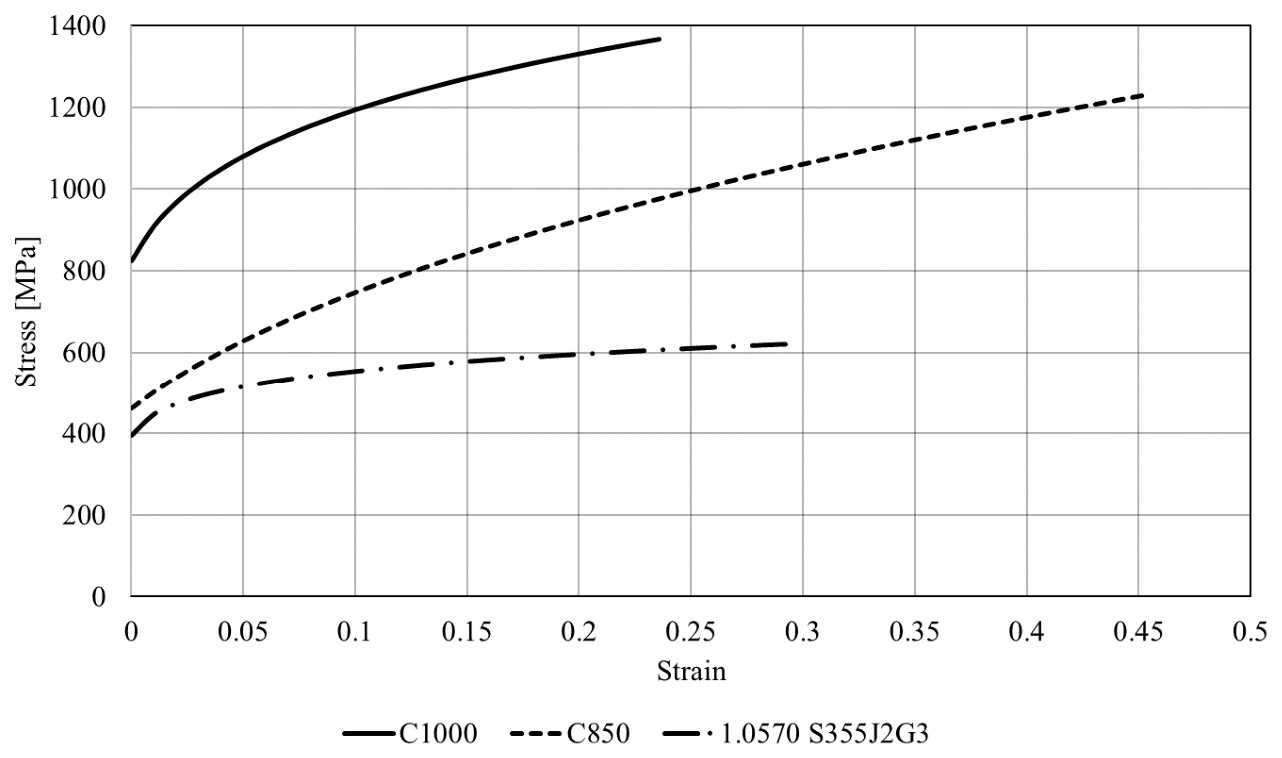
Table 4 were obtained from the experimental tensile tests performed on the three materials used in the coach structure. The corresponding stress–strain curves are presented in
Figure 5 and were used to identify the yield stress, maximum stress, hardening parameters, and plastic strain at failure.
Figure 5 and
Table 4 summarise the used materials parameters [
10,
24,
25]. The Johnson–Cook model was calibrated using the available quasi-static tensile test data. Since no dynamic material data were available, strain-rate and thermal softening effects were not included. Thus, the simulations are interpreted as a comparative assessment between the full-scale and reduced-order models under identical material assumptions, rather than as a final certification-level prediction. As both models use the same constitutive formulation, the comparison remains valid for evaluating the proposed simplification strategy, although future certification-oriented work should include dynamic material characterisation.
With regard to the connectors modelling, the components of the coach are joined using welded joints, specifically spot or seam welds. Currently, there is insufficient information regarding the materials and properties of these connections. The proposed method assumes that the connections will reflect the characteristics of the weakest material, which allows for the integration of future data. In HyperMesh, welds and bolt connections can be modelled using nodal, spring or solid connections.
A nodal connection attaches a primary surface to a single node on a secondary surface producing a rigid, non-deformable link. However, because its behaviour is strongly influenced by the mesh of the secondary surface, it is generally less suitable. A spring connection, using a beam-type element with two tied interfaces, avoids this issue by allowing independent meshes, preventing hourglass modes, and enabling the definition of axial, bending, shear and torsional stiffnesses. The solid connection method employs 8-node brick elements with tied interfaces, providing higher fidelity. It can be paired with Material Law 59 (a constitutive law describing the spot-weld connection material, in which elastic and elastoplastic behaviours are defined in both the normal and shear directions) and the connect failure model, requiring only a stress–strain curve, and its time step depends solely on the contact area. To reduce modelling assumptions while improving accuracy, this solid-element approach, incorporating Material Law 59 and the connect failure model, was adopted [
26].
In HyperMesh, the connector behaviour was defined using Property Type 43 with the strain formulation flag , which enables automatic parameter assignment based on the selected element type and material law. Owing to the lack of available data, the compression modulus was assumed to be equal to Young’s modulus. Stress–strain curves were specified for the normal direction; however, no corresponding curves were available for the tangential direction and were therefore not included in the model. According to the Tresca yield criterion, yielding is reached when the maximum shear stress equals the critical shear stress identified from a uniaxial tensile test. For a uniaxial stress state, this critical value is .
The final step in defining the connector materials is specifying the failure models. Material Law 59 is compatible only with the connect failure model, which characterises failure in connection materials based on displacement criteria. Failure occurs when either the normal displacement or the shear displacement, or a combination of both, is reached.
The failure model includes two behaviour types, controlled by the failure flag
[
27]. When
, an uncoupled failure criterion is adopted. In this case, failure occurs independently when either the normal displacement reaches its critical value or the tangential displacement reaches its critical value. When
, a coupled normal–shear failure criterion is adopted. In this case, the normal and tangential displacement contributions are combined into a single interaction equation. Failure occurs when the combined criterion exceeds unity, as expressed by:
where
is the displacement in the normal direction;
is the failure displacement in the normal direction;
is the displacement in shear direction;
is the failure displacement in shear direction;
,
,
and
are strain rate-related variables that are disregarded in this work;
,
,
and
are experimentally calibrated coefficients governing the relative weighting and nonlinearity of the normal and tangential contributions to the failure criterion.
This behaviour type better reflects real-world conditions and is more conservative, which is why it was chosen. Additionally, the failure model includes spot weld softening, where stress either drops to zero or gradually decreases upon reaching the failure criteria, as controlled by specified parameters
and
according to [
27]:
In the previous equation,
is the stress carried by the connector, the variable
D represents the damage variable;
controls the duration parameter for energy failure criteria, while
defines the softening exponent for failure. For parameters
,
,
and
, the default values were used. The same was done for parameters
and
, as the default values represent the most conservative case, when stress drops to 0 immediately. As for the failure flag
, the value was set to 1.0 which activates the coupled normal–shear displacement failure criterion described by Equation (3). More detailed information may be observed in
Table 5.
The welded joint model adopted in this work should be interpreted as an engineering approximation rather than a fully calibrated weld failure model. Due to the absence of specific experimental data for the welded connections, the connector properties were defined using conservative assumptions based on the weakest connected material and on the available material characterisation. The objective was to preserve a consistent load-transfer behaviour between connected components in both the full-scale and simplified models.
The adopted connector failure parameters were not intended to provide a definitive prediction of weld rupture. A complete weld failure calibration would require dedicated experimental tests or validated literature-based parameters for equivalent welded joints. This requirement is therefore identified as a limitation of the present study and as a recommendation for future work.
In this model, we used the general-purpose contact (Type 7) in Radioss for all interactions. Type 7 is a versatile contact method that can handle different types of impacts between a set of nodes and a main surface. This type of interaction does not require a set direction, which makes Type 7 ideal for simulating self-contact events, such as buckling during a high-speed crash. Type 7 has a key feature in which its contact stiffness changes instead of remaining constant. The stiffness increases as the penetration depth increases, which helps prevent nodes from crossing the shell mid-surface and fixes many problems seen in earlier interfaces. When contact occurs, it introduces massless stiffness to prevent interpenetration. However, this extra stiffness can affect the simulation time step, depending on how the interface is defined. This allows surfaces to slide against each other, utilising Coulomb friction to represent their interaction tangentially. The parameters applied to the interface are presented in
Table 6 [
28].
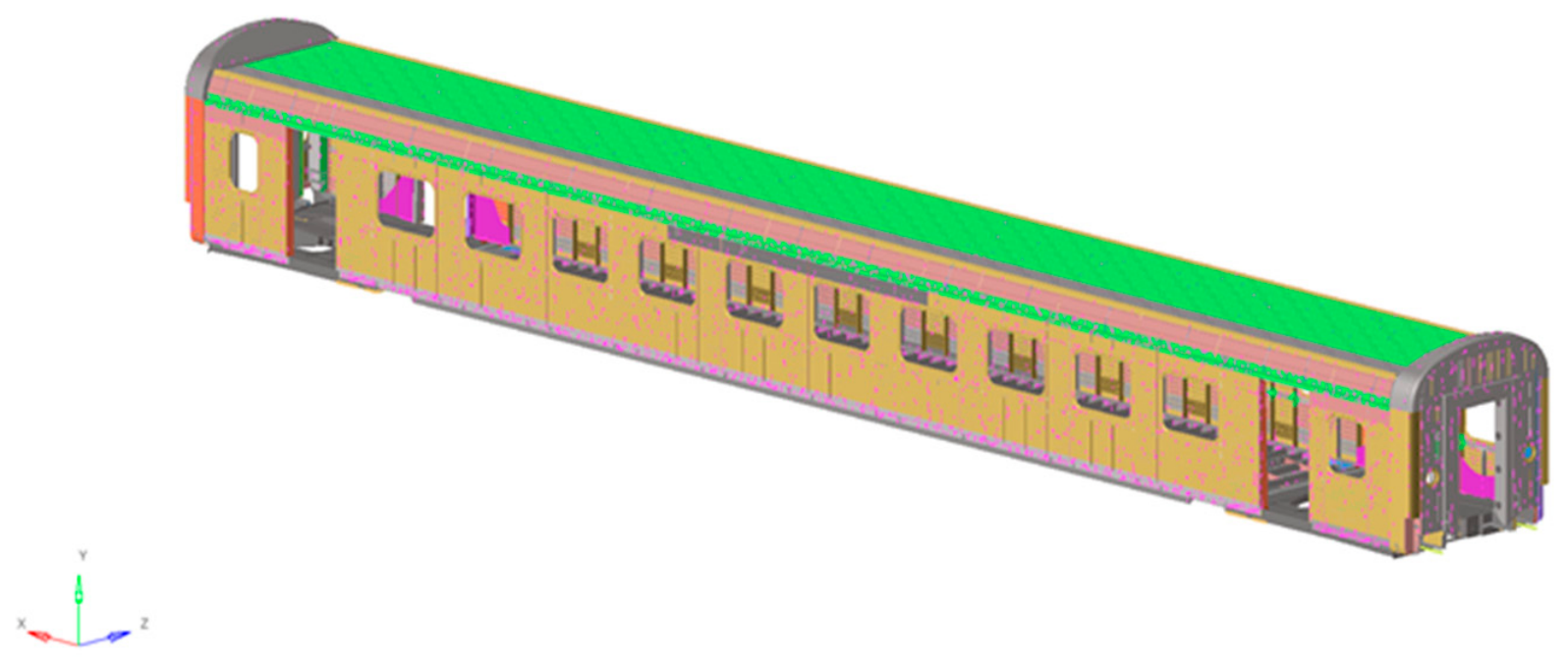
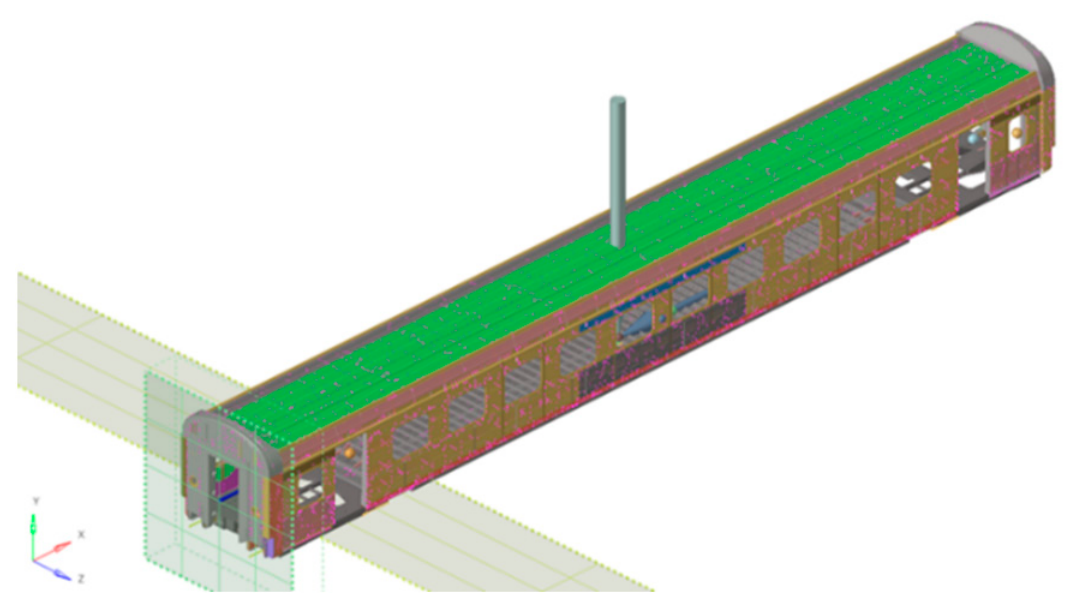
To verify the applied simplifications, the results are compared with those from a full reference model. This model represents a fully detailed coach undergoing a frontal impact at 18 km/h against a rigid wall, with gravity applied. The setup provides a simplified representation of the ES EN 15227 scenario. It includes two rigid walls: a vertical collision barrier with a contact search radius and a horizontal floor wall that interacts only with the bogie attachment nodes. The model is shown in the following figure (
Figure 6).
4.1. Simplified Model Development Approach
The simplification strategy focuses on reducing the computational cost of crashworthiness simulations while preserving the main structural response of the coach. The separation between detailed FE regions and reduced 1D/lumped-parameter regions was defined from the behaviour of the full-scale reference model under the reference impact condition. Regions showing relevant contact interaction, high stress gradients, plastic strain development, local buckling, significant deformation or important load-path contribution were retained as detailed FE substructures. In contrast, regions that remained essentially elastic and mainly contributed through global stiffness and inertia were considered suitable for simplification. Therefore, the adopted separation criterion is not arbitrary. It is based on the comparison of stress, plastic strain, deformation and load-path relevance in the full-scale model preliminary simulations. Only regions that do not govern the local crash response are replaced by equivalent stiffness and mass elements [
18].
To validate these simplifications, the detailed model’s baseline results were compared with those of the simplified version under identical load conditions, assessing critical parameters such as stresses, total deformation, and reaction forces. The crash scenario involves a head-on collision with a rigid wall at 18 km/h, simulating the conditions outlined in EN 15227. The model includes two walls, a vertical one for the collision and a horizontal one connecting to bogie attachment points, ensuring focused monitoring of the impact. In this research, the coach model was simplified by removing the central section and replacing it with spring elements of equivalent stiffness and mass properties, following a static test to support this approach. The test had two main purposes: first, to ensure that the coach met the static requirements mentioned in [
11], and second, to calculate the overall stiffness of the coach, a crucial factor in simplification. To perform this task, the OptiStruct solver within HyperMesh was utilised for the analysis. In this test, a total compressive distributed load of 2000 kN was applied to the buffer area on one side of the coach. A boundary condition was applied to the opposite buffer area to prevent movement along the longitudinal direction, which aligns with the x-axis, as shown in
Figure 7 [
10].
4.2. Global Stiffness Assessment
This section presents the global stiffness results of the coach structure obtained from the static analysis, based on displacement responses. Due to the applied loads acting at a distance from the neutral axis, the coach structure is subjected to a combination of axial compression and bending. This load eccentricity generates a bending moment, which must be considered in the global stiffness assessment. To estimate the coach’s global stiffness, the structure is simplified as a 2D beam model with two nodes, one simply supported and the other allowing rotation. In the static analysis, a compressive load of 2000 kN is applied, inducing both axial compression and bending, as reflected by the displacement distribution shown in in
Figure 8.
Within this simplified model, the bending moment is calculated based on the vertical distance between the point of load application and the centre of gravity along the neutral axis, according to [
10]:
where
is the bending moment,
is the force and
is the vertical distance between the coach’s centre of gravity and the point where force is applied.
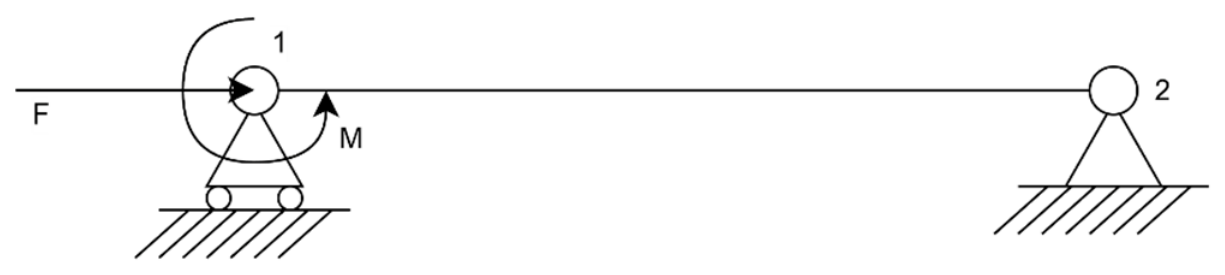
To model the left node, an axial force
and a moment
were considered. This approach reflects the combination of compression and bending effects seen in the static test [
10].
To obtain the equivalent global stiffness of the coach, the structure was represented by a two-node Euler–Bernoulli beam element subjected to axial compression and bending, represented in
Figure 9. This simplified analytical representation is used only to identify equivalent stiffness parameters for the reduced-order FE model.
The first matrix in Equation (6) represents the generic finite element equilibrium equation, written in terms of stiffness coefficients
. The second matrix corresponds to the explicit analytical stiffness matrix of a two-node beam element with axial and bending deformation [
10]:
In this formulation, A is the equivalent cross-sectional area of the beam, E is Young’s modulus, I is the second moment of area, and L is the equivalent beam length. The variables
and
are the axial displacements of nodes 1 and 2,
and
are the transverse displacements, and
and
are the corresponding rotations. The terms AE/L represent the axial stiffness contribution, while 12EI/L
3, 6EI/L
2, 4EI/L and 2EI/L are the standard bending stiffness terms of the Euler–Bernoulli beam element. Thus, the second form of Equation (6) is the expanded mechanical definition of the generic stiffness coefficients shown in the first form.
Considering the boundary conditions adopted in the equivalent beam model, the transverse displacements and are constrained, and the axial displacement at node 2 is fixed. Consequently, the retained degrees of freedom for stiffness identification are the axial displacement and the rotations and . The objective is not to identify all coefficients of the complete beam stiffness matrix, but only the two equivalent stiffness quantities required for the simplified FE model: the axial stiffness and the bending stiffness.
The equivalent axial stiffness is obtained directly from the applied compressive force and the corresponding axial displacement at node 1. The equivalent bending stiffness is obtained from the applied bending moment and the rotational response of the beam. The remaining force components are either zero due to the loading definition or correspond to support reactions associated with constrained degrees of freedom and are therefore not used for the calibration of the spring elements.
By replacing the displacement values measured from the static test into the above equations, the following stiffness values are obtained [
10]:
In Equation (7), represents the stiffness coefficient relating degree of freedom j to the force or moment associated with degree of freedom i. The terms , , and are zero because, in the adopted Euler–Bernoulli beam formulation, axial displacement is uncoupled from nodal rotations. Therefore, the axial response is defined only by , while the bending response is governed by the rotational stiffness terms , , and . For the two-node beam element, .
4.3. Simplified Model Validation
To assess the validity of the simplifications applied to the coach model, two simulation models were evaluated. The reference model represents a full-scale coach undergoing a frontal impact against a rigid wall at a velocity of 18 km/h, with gravitational effects included throughout the structure. This configuration reproduces the conditions described in the European Standard EN 15227, albeit in a simplified form. The setup features two rigid walls: a vertical wall that serves as the collision barrier and a horizontal wall that represents the ground. The vertical wall is defined with a contact detection radius surrounding the coach to ensure continuous contact during the impact event. The horizontal wall is constrained only at the bogie attachment points, allowing contact to occur exclusively at these interfaces [
10].
Preliminary simulations indicated that a time step of
ensures numerical stability. Under this configuration, the total energy imbalance, mass error and artificial energy dissipation remain below 5%, while the computational time required for the simulation is significantly reduced [
29].
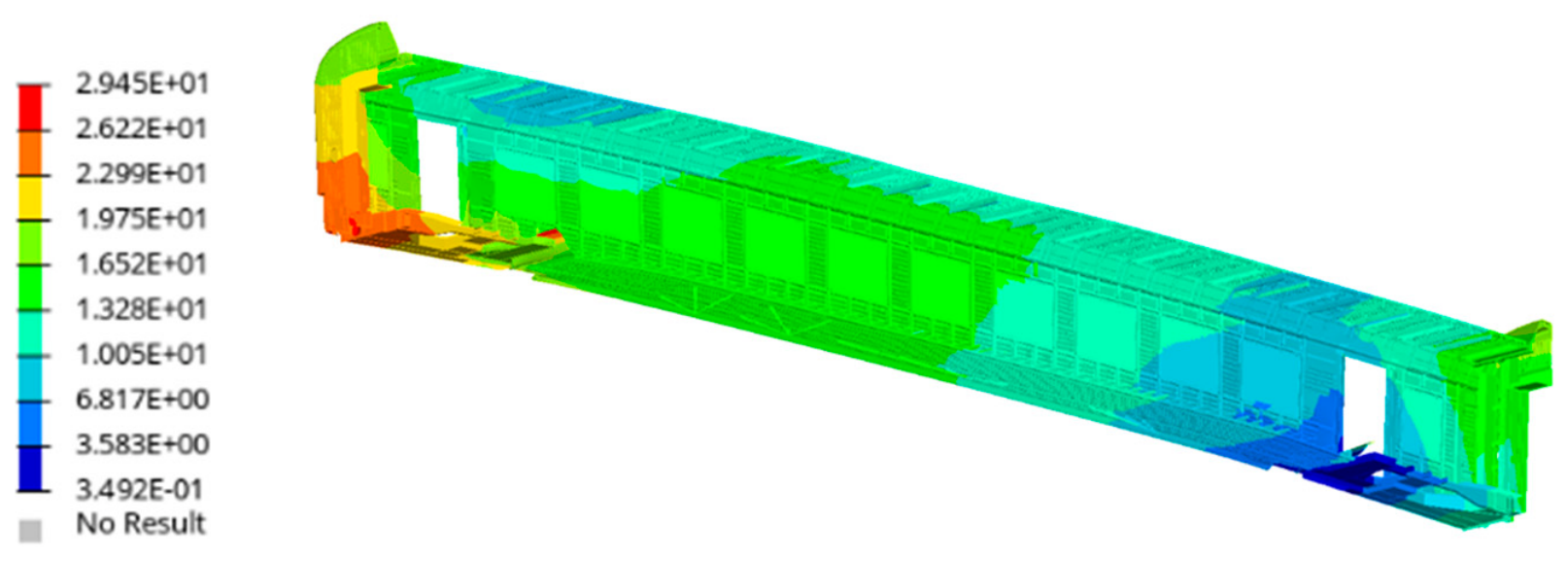
The initial crashworthiness assessment of the complete model reveals that stress is predominantly concentrated at the front section of the coach, where it impacts the rigid wall. A secondary area of high stress is located beneath the coach, which corresponds to the region experiencing the greatest deformation. As loading progresses and stresses accumulate in this area, the resulting deformation intensifies the local effects. Beyond the second passenger window, stress levels decrease markedly and are almost absent toward the rear of the vehicle. Plastic strain develops only in regions of high stress concentration, while the remainder of the coach undergoes purely elastic deformation [
10].
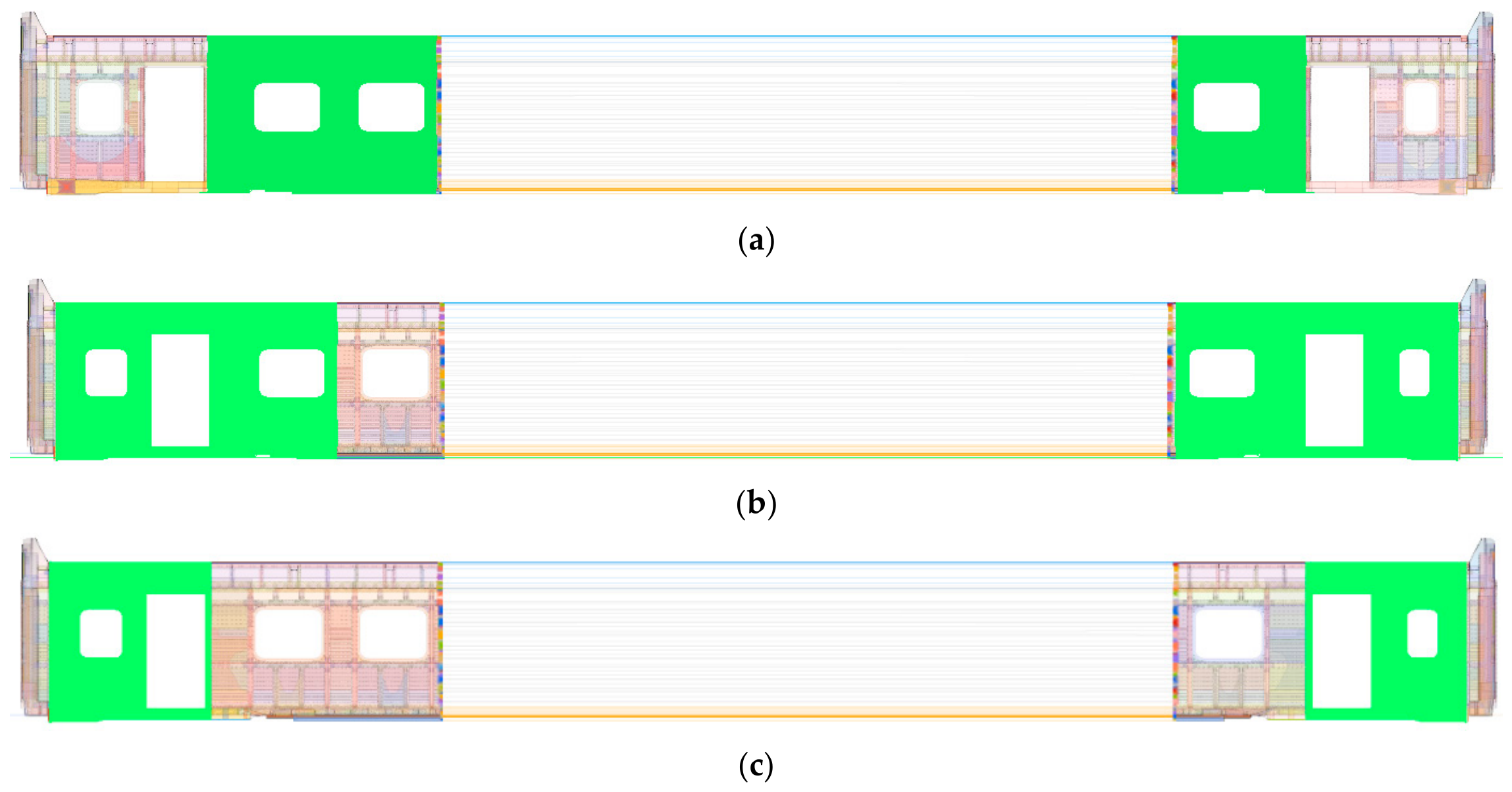
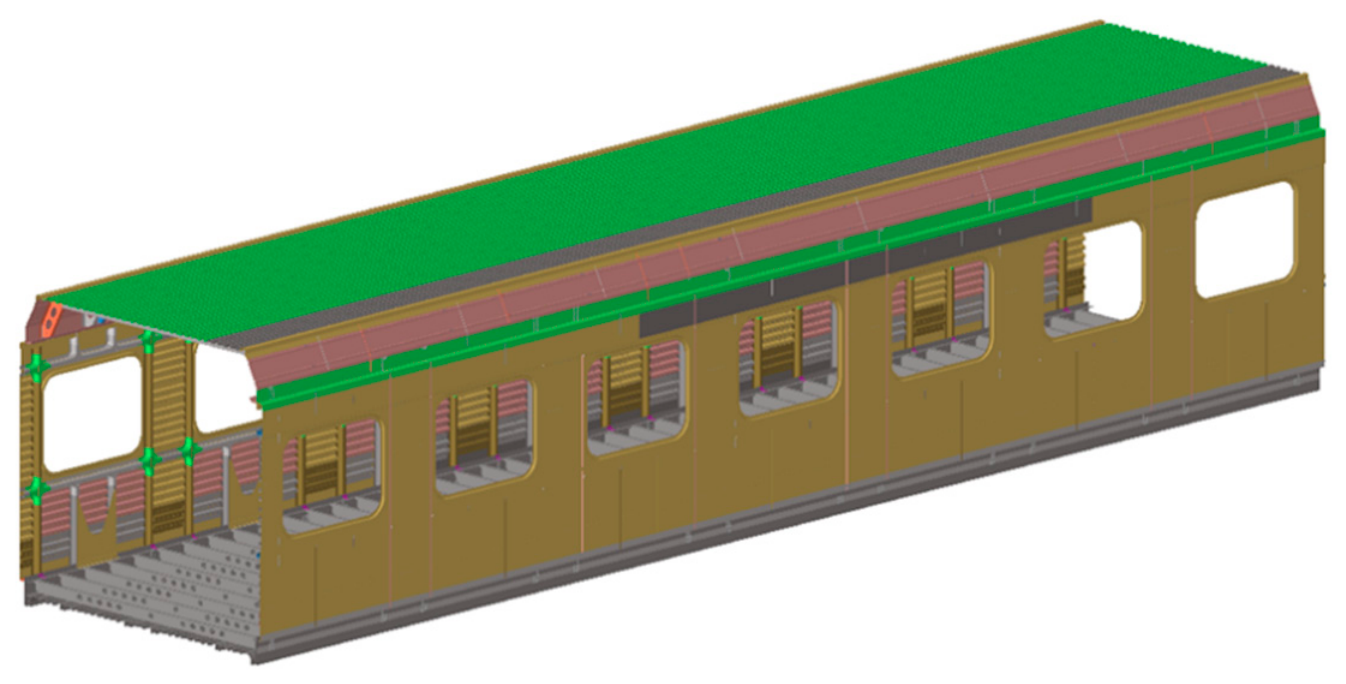
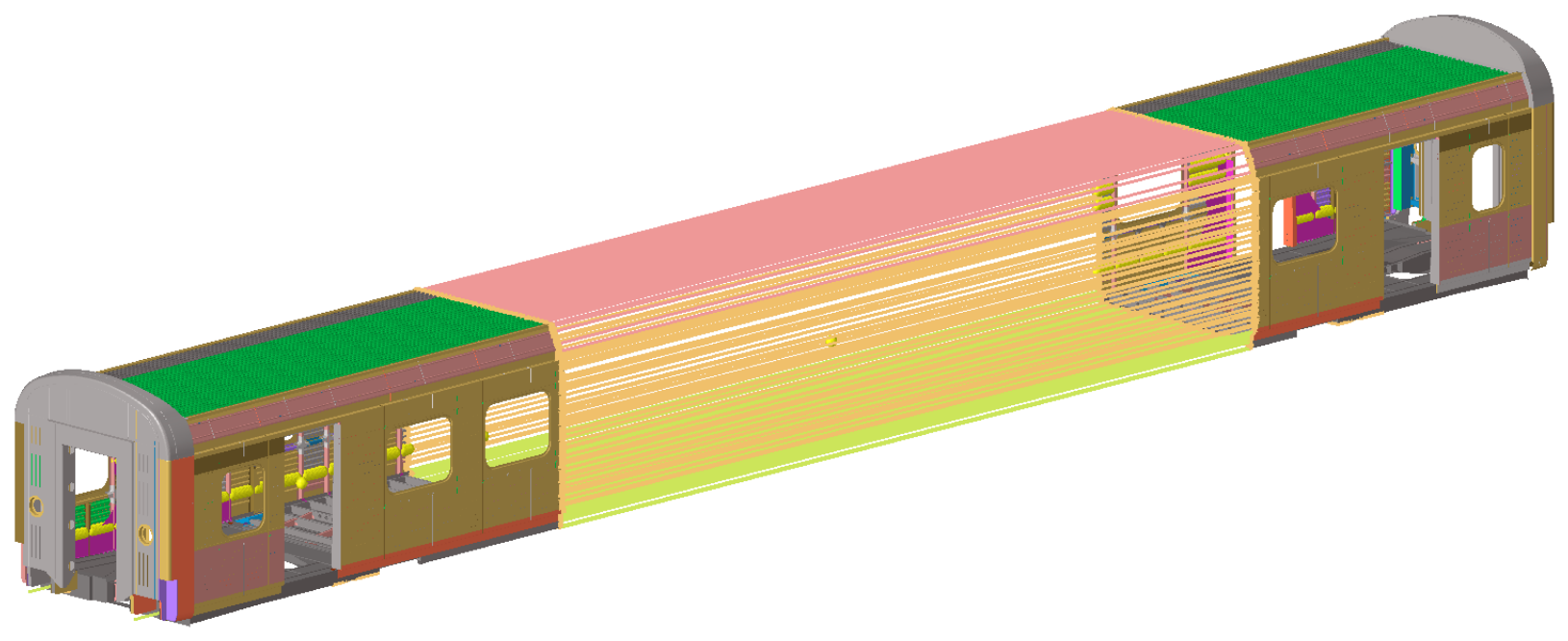
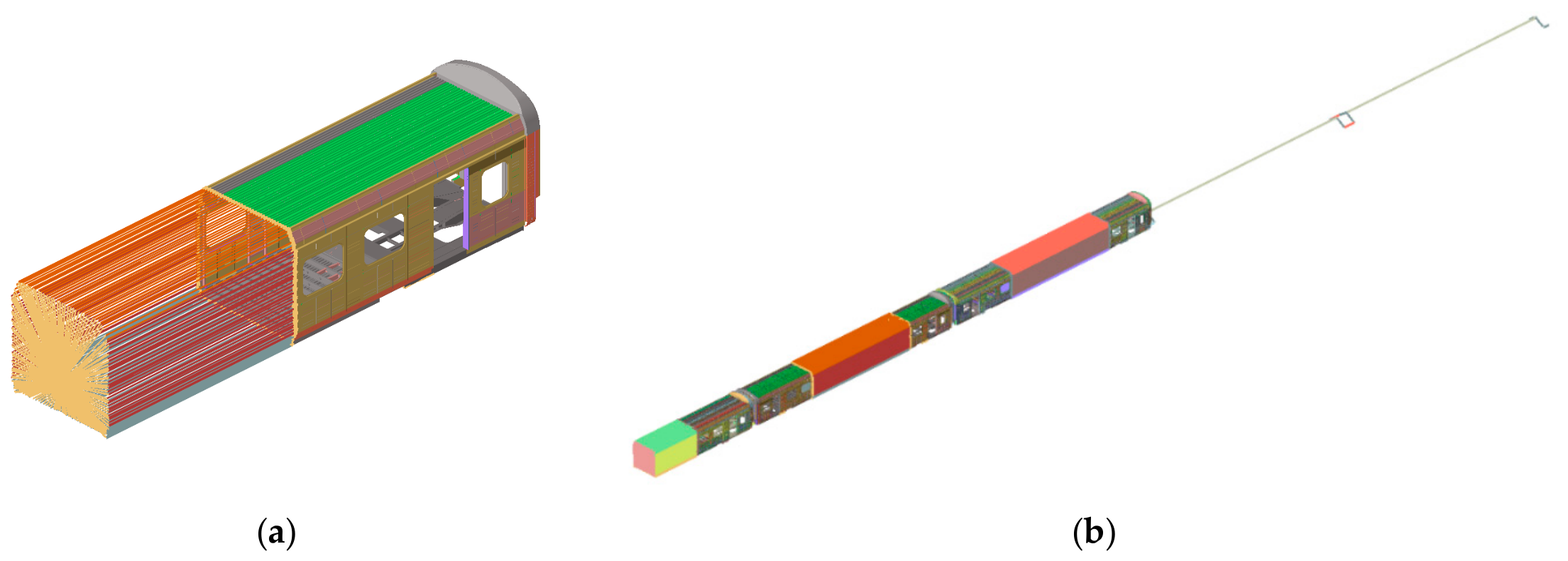
The simplified model consists of two detailed FE substructures, corresponding to the front and rear regions of the coach, connected by a set of equivalent lumped-parameter elements representing the removed intermediate section. The front region was kept fully detailed because it governs the impact response, contact interaction, plastic strain development and local deformation mechanisms. The rear region was also retained to preserve the correct boundary and inertial behaviour of the vehicle. The intermediate section (
Figure 10), where the full-scale model showed negligible plastic deformation and low stress levels, was replaced by equivalent translational and rotational spring elements.
The equivalent springs were calibrated to reproduce the global axial and bending stiffnesses identified in previous section. represents the number of equivalent spring elements used to replace the removed region, the stiffness assigned to each spring line is obtained by distributing the total equivalent stiffness along the simplified section. In this way, the axial spring stiffness is derived from , while the rotational spring stiffness is derived from . This distribution allows the simplified region to reproduce the global stiffness of the original coach without explicitly modelling all shell and solid elements of the removed structure. The spring elements connect corresponding structural locations of the retained front and rear FE substructures, allowing internal force transfer and maintaining axial/bending load-path continuity. Therefore, the simplified model preserves the main rigid-body motion and global force balance, while local deformation remains captured in the detailed FE regions.
The mass of the removed section was also preserved. The total removed mass was redistributed into lumped masses associated with the equivalent spring sets. To maintain the original mass distribution and centre of gravity, the mass was divided into floor, roof and side contributions, following the geometry of the removed section. Therefore, the simplified model preserves both the equivalent stiffness and the inertial properties of the full-scale coach.
The model was developed through an iterative process in which the central section of the vehicle was progressively replaced by spring elements to reduce simulation time while maintaining realistic structural behaviour. Initial tests with a single spring yielded unrealistic results, but after some iterations, a configuration was obtained that achieved a good balance between accuracy and efficiency. The removable section was defined based on validation results, which showed that plastic deformation was limited to the area around the first passenger window, while stresses were negligible beyond the second. Consequently, the region between the second front and first rear passenger windows was replaced by springs, as it was structurally non-critical. Equivalent mass and stiffness values were determined using the software’s mass tool and previous stiffness estimation, assuming uniform stiffness along the passenger area, considering the total stiffness divided by the number of spring elements (compressive stiffness = 958.92 N/mm, bending stiffness = 1,702,020,535 N mm/rad). This assumption ensured that the simplified model accurately reflected the real coach’s behaviour. In addition, the springs’ centre of gravity was aligned with the removed section’s centre of mass by assigning different masses to three spring sets: floor, roof and sides, reflecting the original mass distribution. The resulting model is illustrated in the
Figure 11 [
10].
At the beginning of the simulations, the kinetic energy values of the complete and simplified models did not match. This difference is explained by HyperMesh’s mass scaling process, which adds mass to nodes that do not meet the minimum time step requirement. Since the full model contains a larger number of elements and nodes, more mass was introduced to match the complete model [
10].
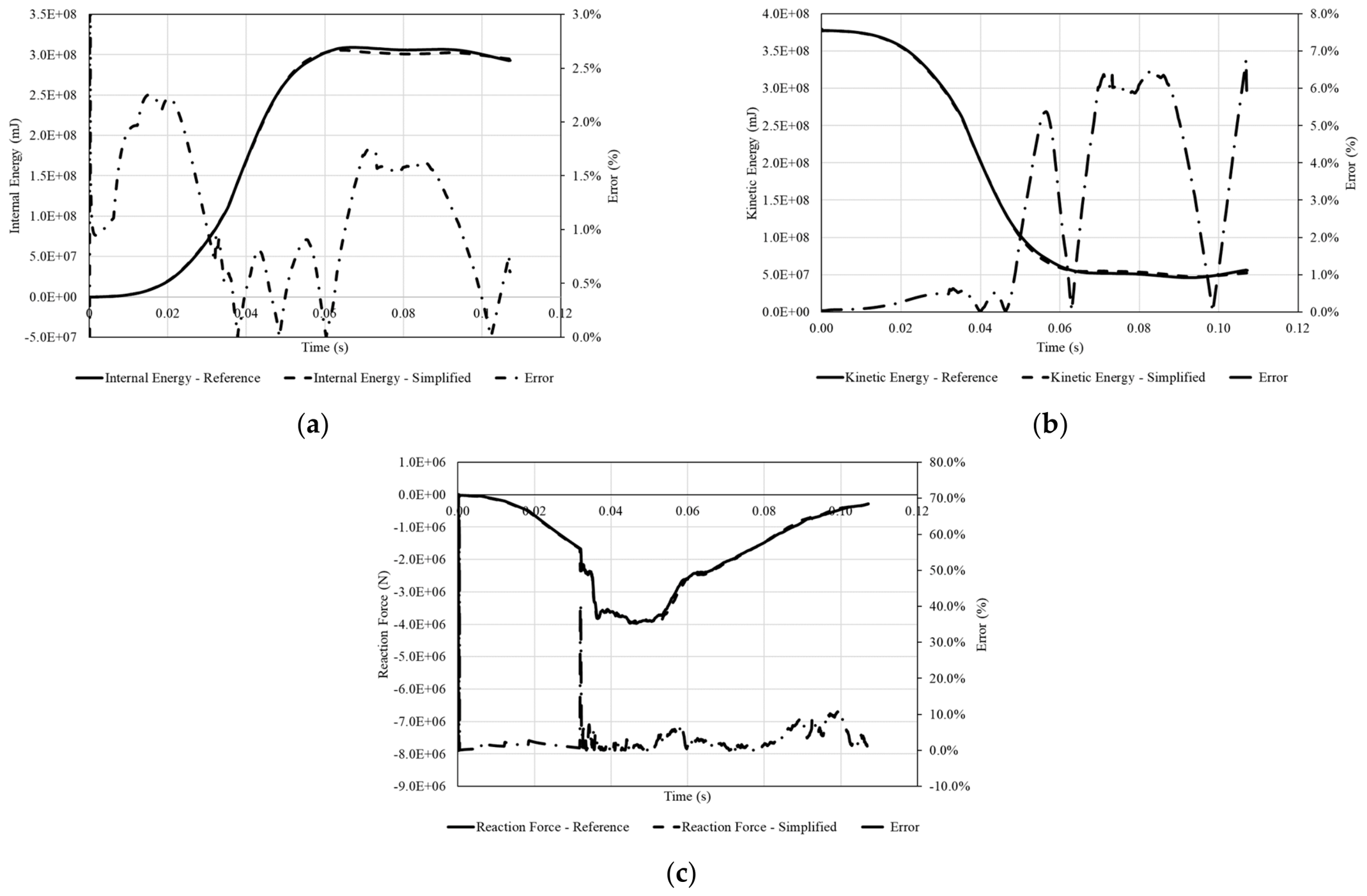
According to
Figure 12, the internal energy variation closely matches that of the complete model, showing no significant differences. The average error is 1.13%, with a maximum error of 2.25%. The kinetic energy variation aligns well at the start, with an average error of 2.43% and a maximum error of 6.75%. The reaction force behaviour is satisfactory, with an average error of 2.67%. The errors increase slightly at the end of the simulation due to a rapid decrease in vertical displacement [
10].
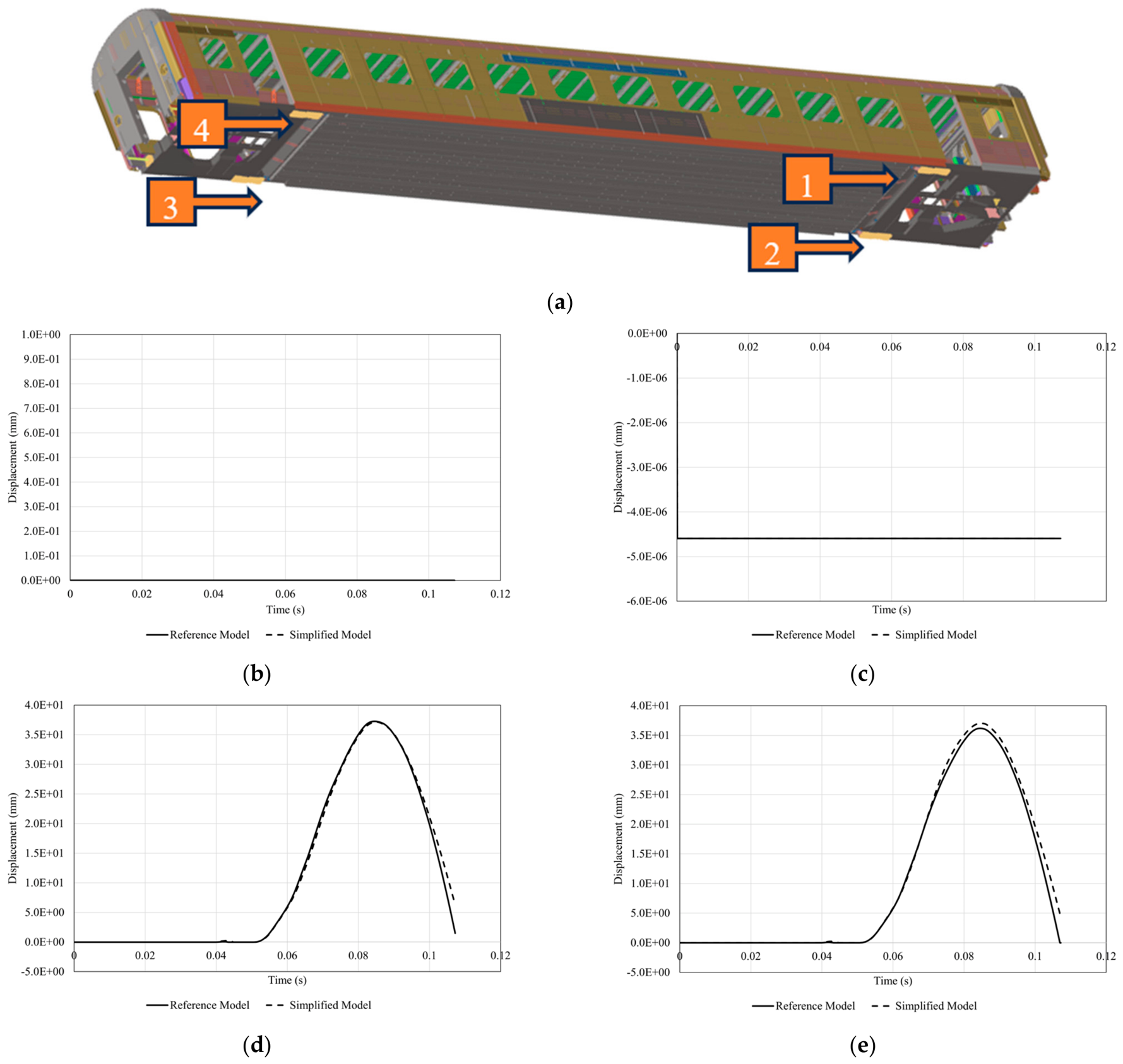
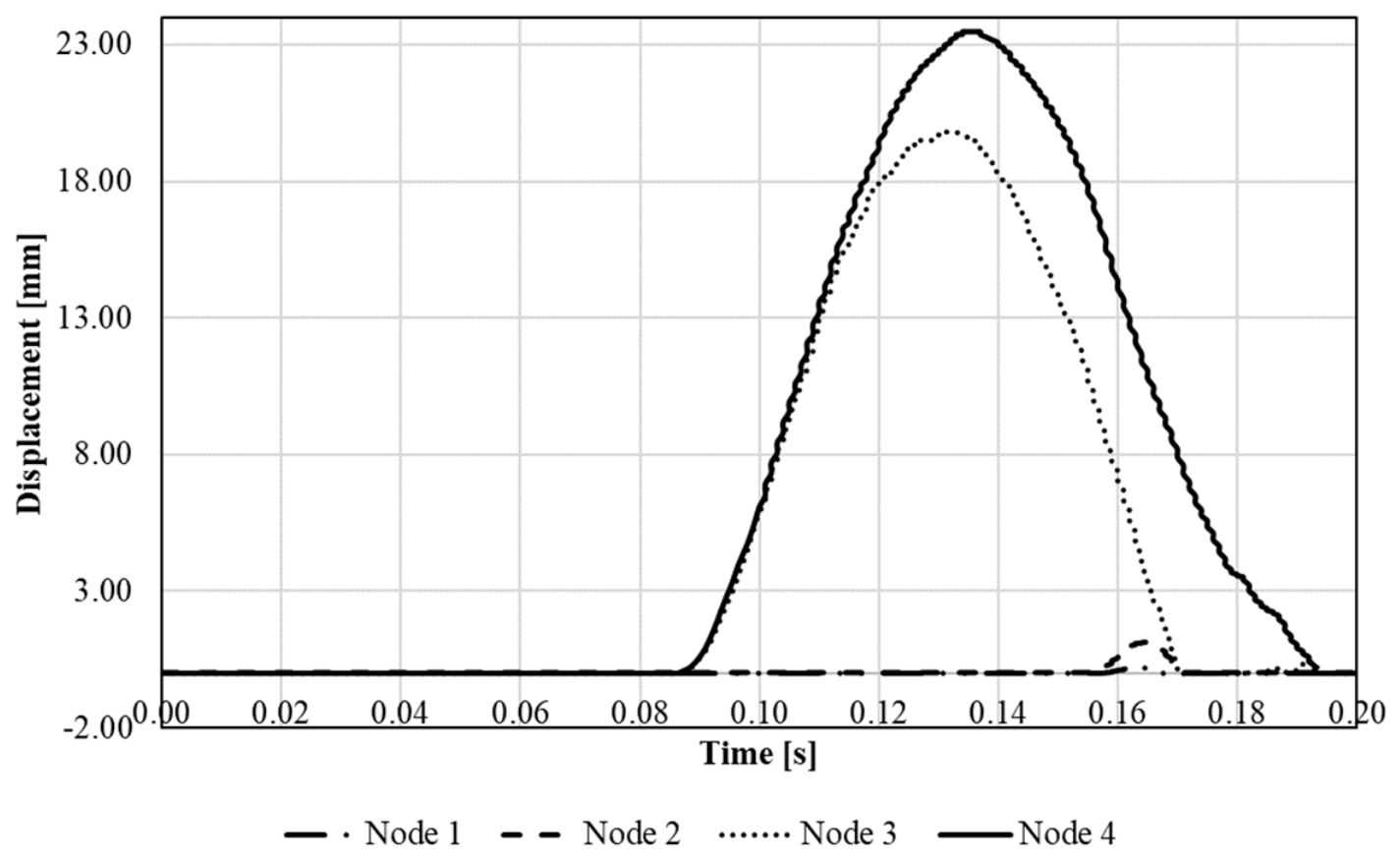
The simplified model accurately reproduces the vertical displacement of nodes 1 and 2, yielding a 0% error. For nodes 3 and 4, the displacement evolution closely follows that of the complete model, with minor oscillations and slight deviations near the end of the simulation. Not directly focusing on these end effects, the average and maximum errors are 2.27% and 12.75% for node 3, respectively, and 3.26% and 17.86% for node 4, respectively. More detailed information may be found in
Figure 13.
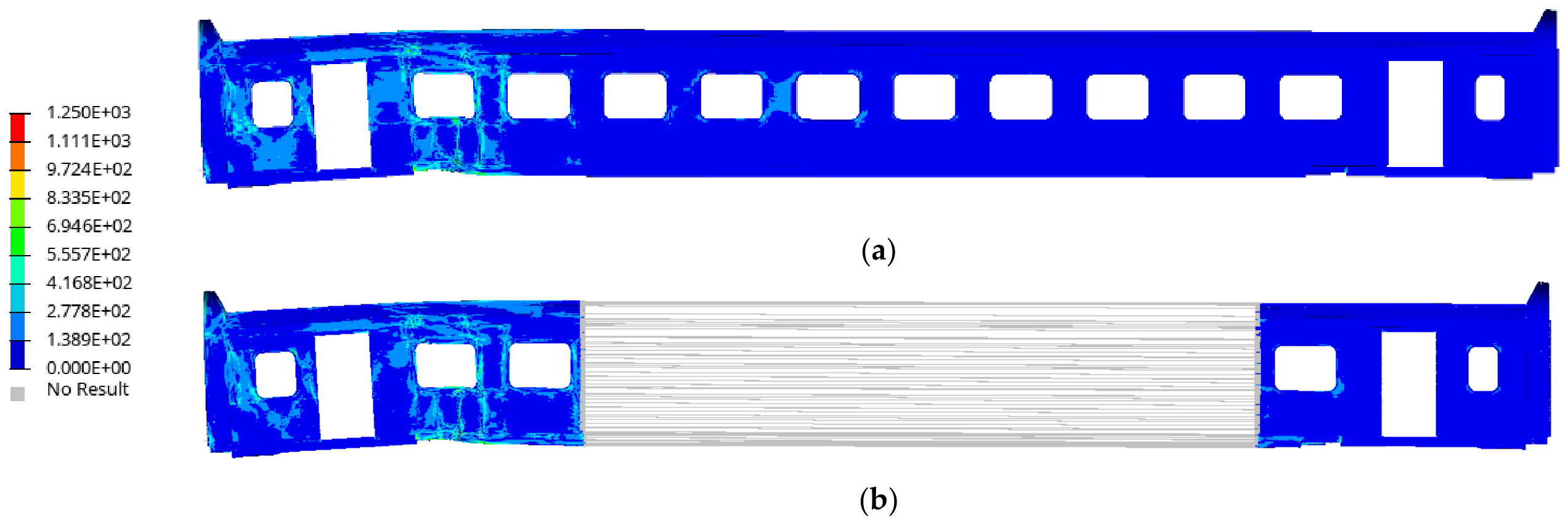
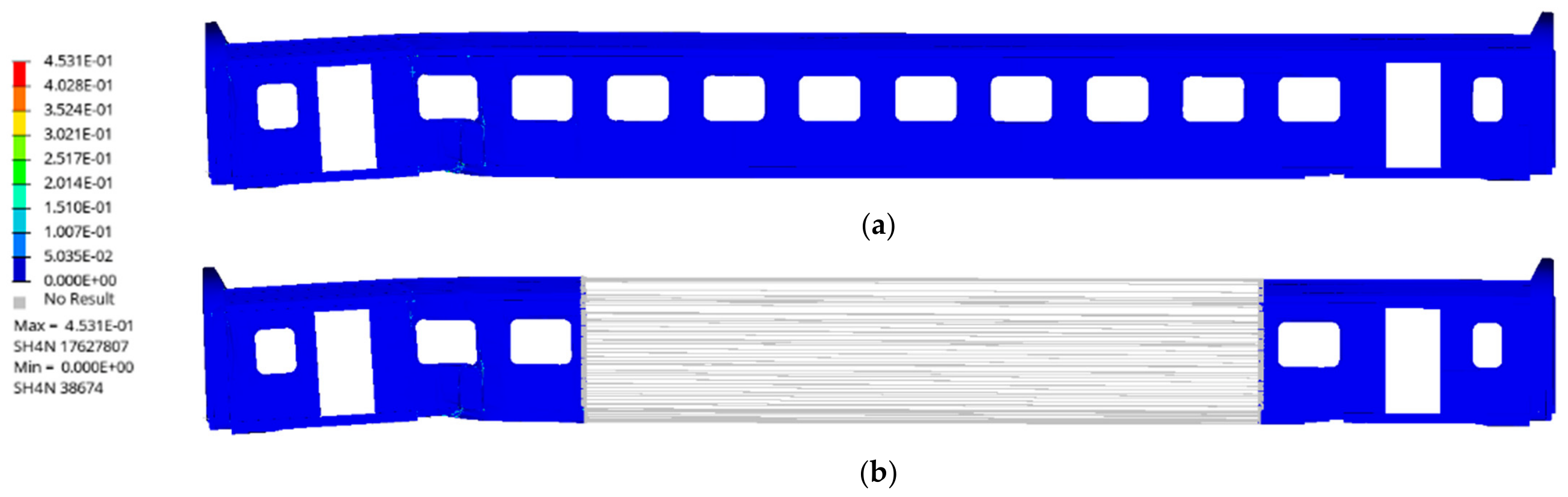
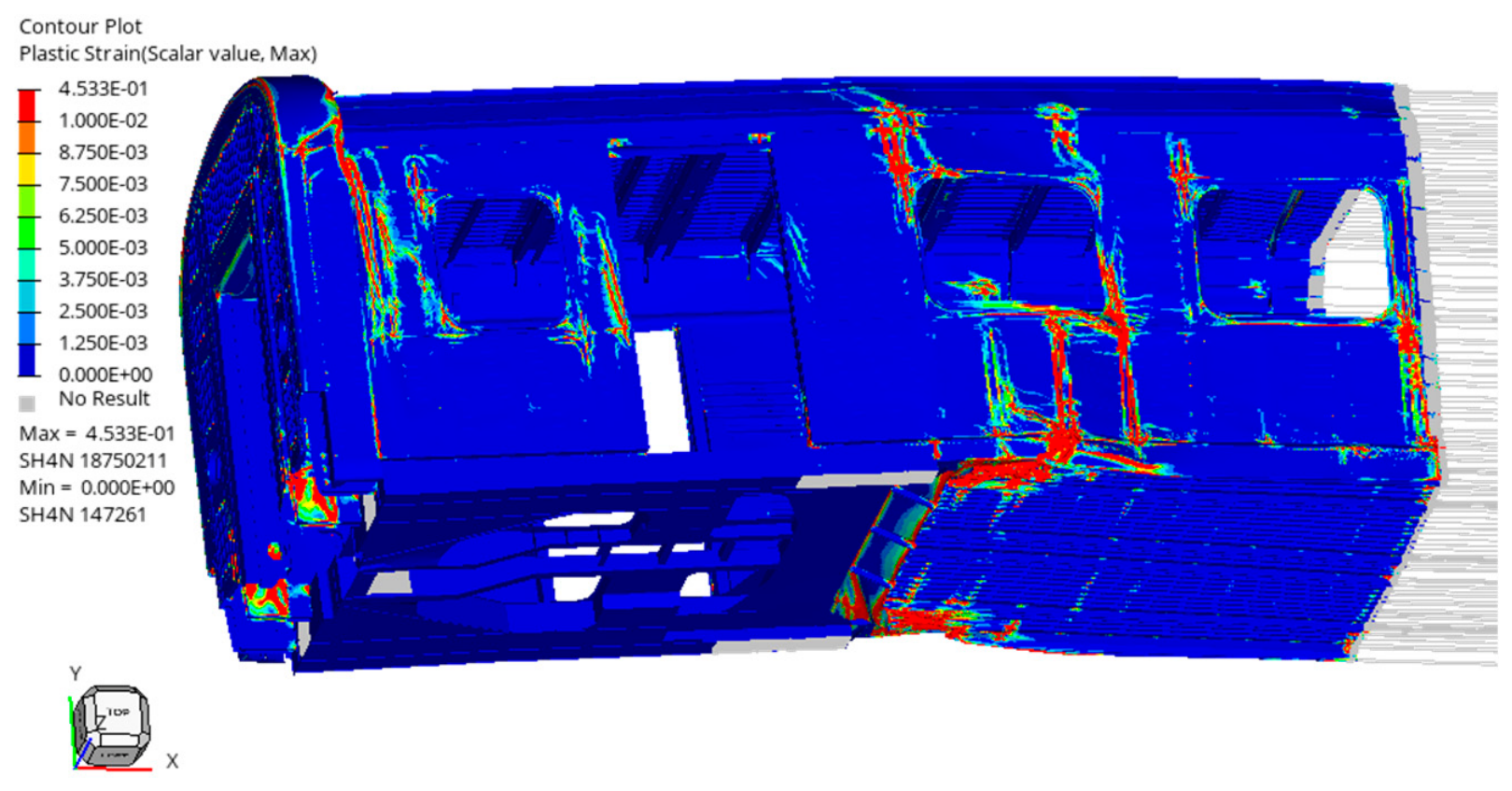
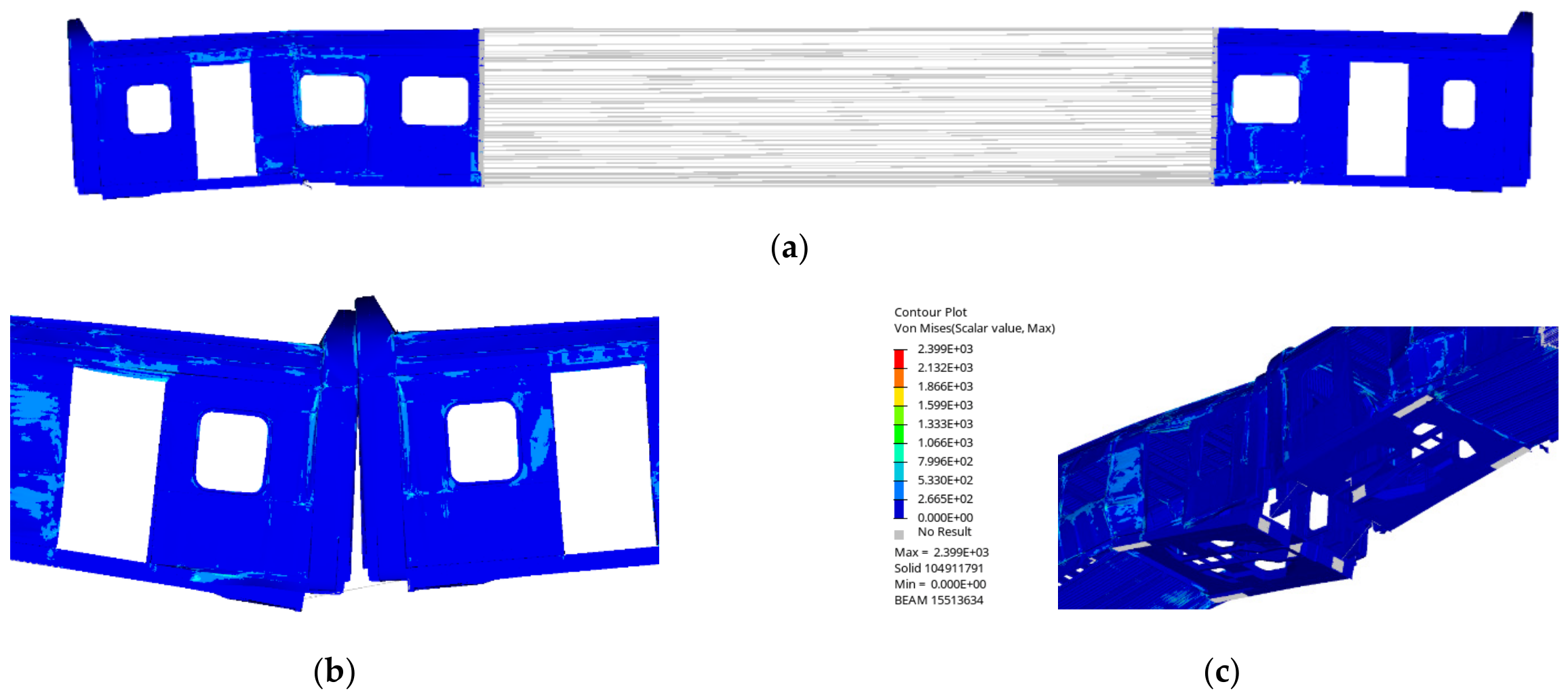
In addition to energy, reaction force and displacement comparisons, equivalent plastic strain was also assessed to verify whether the simplified model preserved the location and severity of the main deformation mechanisms. Since the objective of the reduced-order model is to reproduce the response of the full-scale model, the comparison focused not only on peak values, which may be affected by local numerical concentrations, but also on the spatial distribution of von Mises stress and on the regions exceeding relevant plastic strain thresholds. An example of results may be consulted in
Figure 14 and
Figure 15 and the damage in detail of the simplified model in
Figure 16.
Although the reduced-order model was not calibrated using modal equivalence in the present work, the comparison of internal energy, kinetic energy, reaction force and displacement indicates that the simplified model preserves the main crash-response behaviour of the full-scale model. The adopted methodology is therefore based on stiffness and mass equivalence, with validation performed under the reference impact condition.
In order to extend the dynamic validation of the reduced-order model through modal correlation, an iterative calibration procedure should be developed to assign the equivalent spring properties so that the natural frequencies of the simplified model converge towards those of the full-scale model. This would allow the spring stiffness characteristics to be adjusted not only from static/global stiffness criteria, but also from modal response consistency. This aspect will be considered in future work.
To ensure a fair comparison of computational efficiency, both models were solved using the same solver settings, time step control and computational resources. The main computational specifications are summarised in
Table 7. The reduced-order model achieved a 77.6% reduction in wall-clock simulation time while maintaining close agreement with the full-scale model in the analysed response quantities. A 77.6% reduction in the simulation’s running time was achieved, with minimal additional error introduced to the model.
5. Crash Scenario Modelling According to EN 15227
The crash scenario model according to EN 15227 was built as a direct application of the reduced-order methodology developed and validated in
Section 4.2 and
Section 4.3. The equivalent axial stiffness, bending stiffness and mass distribution obtained for the simplified coach were transferred to the train-level model in order to reduce computational time while preserving the main dynamic response of the vehicle set.
In this model, the coaches expected to experience relevant deformation were represented using the validated partial-detail approach, in which the end regions are explicitly modelled and the intermediate region is replaced by equivalent spring and mass elements. The last two coaches were represented in a more simplified form because they are not expected to undergo significant structural deformation in the analysed scenario and, according to EN 15227, their detailed local assessment is not required. This modelling strategy follows the same principle established in the validation stage: regions relevant to crash deformation are retained in detail, whereas regions mainly contributing through mass and stiffness are replaced by equivalent lumped-parameter representations.
In this scenario, as specified in EN 15227, the leading coach is subjected to a constant deceleration of 5 g until it comes to a complete stop. All vehicles begin with an initial velocity of 18 km/h, and gravity is applied across the entire model. Furthermore, the standard allows components that are not modelled in full detail to be constrained to one-dimensional (longitudinal) motion [
11].
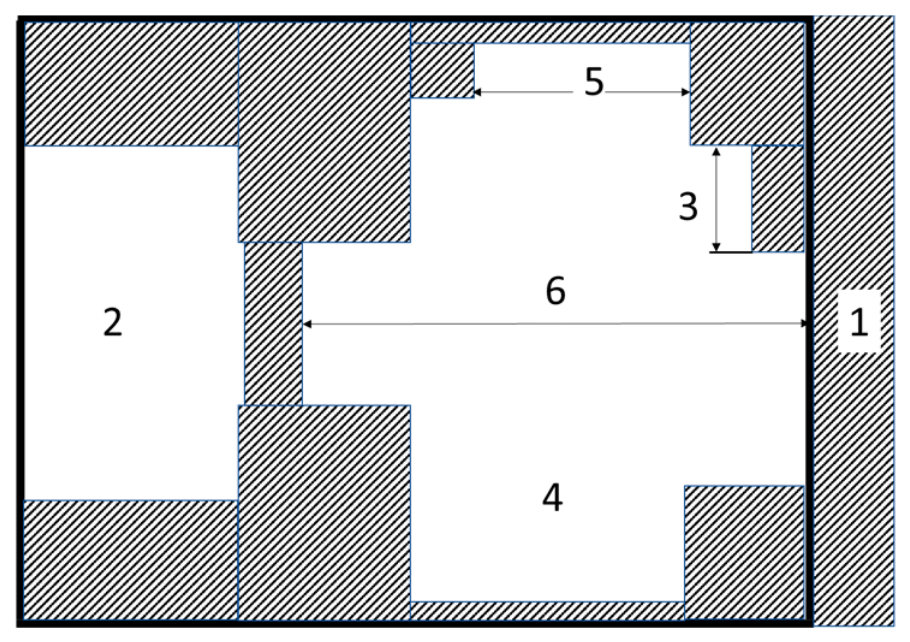
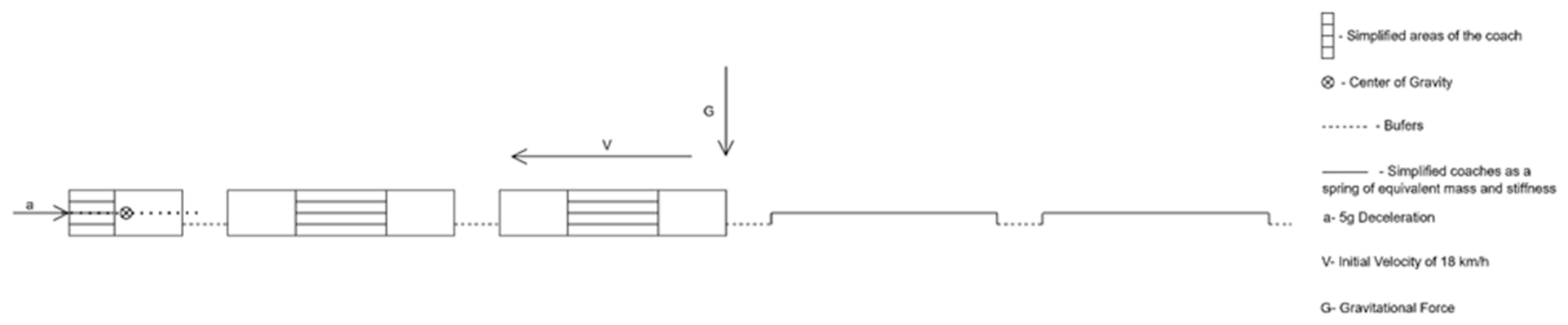
The standard also requires that deceleration be applied at a point within the rear half of the leading vehicle. Additionally, the trailing end of the leading vehicle must exhibit the same crash characteristics as the adjacent end of the coach under assessment [
11]. For these reasons, the leading vehicle was modelled differently. More detailed information can be found in
Figure 4, which presents the schematic of the normative model.
Specifically, only its rear half was represented, as the front half plays no role in this scenario. According to [
11], only the buffers and designated energy absorbers need to be modelled with the same level of detail as in the coach under assessment. Including the portion of the coach behind the halfway point (rather than modelling only the rear end) also provides additional energy absorption capacity, slightly reducing the loads experienced by the assessed coach. For the trailing simplified coaches, the same approach was applied, where each coach, represented as a spring element, was connected to its corresponding buffers. At this stage, to reduce the computational time, the buffers were modelled as nonlinear springs, with stiffness characteristics defined according to the supplier’s datasheet. The resulting model is illustrated in
Figure 17 [
10].
The main difference lies in the much longer simulation time compared to the validation cases. This increase is due to the longer simulated duration and the larger number of elements and nodes. The energy error is also higher than in previous models, but an error below 15% is still acceptable [
29]. Similarly, while the target mass error is below 3%, a 5% increase is considered acceptable for a model with a total mass of 143 tonnes [
29].
The complete simulation was executed over a total duration of 5 days, 23 h and 49 min, with a defined time step of 7.5 × 10
−7 s. The computed energy error was −13.3%, while the mass error reached 5.524%, exceeding the 5% threshold. However, beyond 0.2 s, the response became non-physical due to unrealistic behaviour, as discussed next, leading to a further increase in the error. Furthermore, the model exhibited an added mass of 7.916 tonnes, reflecting the overall contribution of additional components to the system’s total mass. In
Figure 18, it is possible to observe the evolution of several steps of the deformation of the final simplified model [
10].
The simulation results indicate that the structural response of the model becomes non-physical after approximately 0.2 s. At this stage, several unrealistic behaviours were observed, including detachment of the underframe from the main coach structure, excessive buffer rotation, and the formation of sharp angular discontinuities at the interfaces between the spring elements and the coach body. These anomalies were primarily attributed to the modelling simplification in which a single buffer element was employed to represent the buffers of both adjoining coaches. This configuration induced geometric misalignment under loading, resulting in the generation of artificial and unrealistic load paths within the structure. Consequently, abnormal vertical forces developed in the underframe region, resulting in excessive loading of the connecting elements and ultimately leading to their numerical failure [
10].
The weakest region of the model was identified at the interface between the spring elements and the coach structure, where the transfer of loads was not accurately captured, producing a discontinuous and unrealistic deformation pattern. To address these limitations, it is recommended that future models represent the buffers as two independent elements, either by incorporating their detailed geometry or through a simplified spring–rigid surface approach to simulate contact behaviour more accurately. Furthermore, the simulation duration should be extended to at least one second to satisfy the EN 15227 criteria, ensuring that either velocity equalisation (within 1%) or 95% energy absorption is achieved, which was not achieved at this point, thereby improving the validity and completeness of the dynamic response. In
Figure 19, it is possible to observe more detailed information about the previously mentioned output [
10].
5.1. Compliance with EN 15227 Standard
While some issues were noted in the simulation results, the model acted realistically and functioned as expected until 0.2 s. Therefore, the analysis will be limited to this time frame [
10].
5.1.1. Overriding Assessment
According to the ES EN 15227 standard, satisfactory resistance to overriding is ensured when at least two wheelsets from different bogies remain in contact with the track throughout the collision event, with their vertical displacement limited to a maximum of 75% of the wheel flange height. For the present coach, which has a minimum flange height of 28 mm, this criterion corresponds to an allowable vertical displacement of no more than 21 mm. As evidenced in
Figure 20 and
Table 8, at least one wheelset from each bogie remained within the maximum allowable vertical displacement limit. Consequently, the model satisfies the EN 15227 requirements and can be considered compliant in terms of overriding prevention.
5.1.2. Survival Space Assessment
To comprehensively evaluate the structural integrity and occupant protection performance of the coach model, three distinct regions are considered within the survival space assessment: the passenger survival space, the vehicle ends and the areas of temporary occupation. Each of these regions represents a critical zone for assessing the vehicle’s crashworthiness and ensuring that deformations remain within acceptable limits during the collision event. The corresponding evaluation and acceptance criteria governing these assessments have been previously defined in Section European Standard EN 15227 Guidelines [
11].
In the coach model, three survival spaces were defined, as illustrated in
Figure 21.
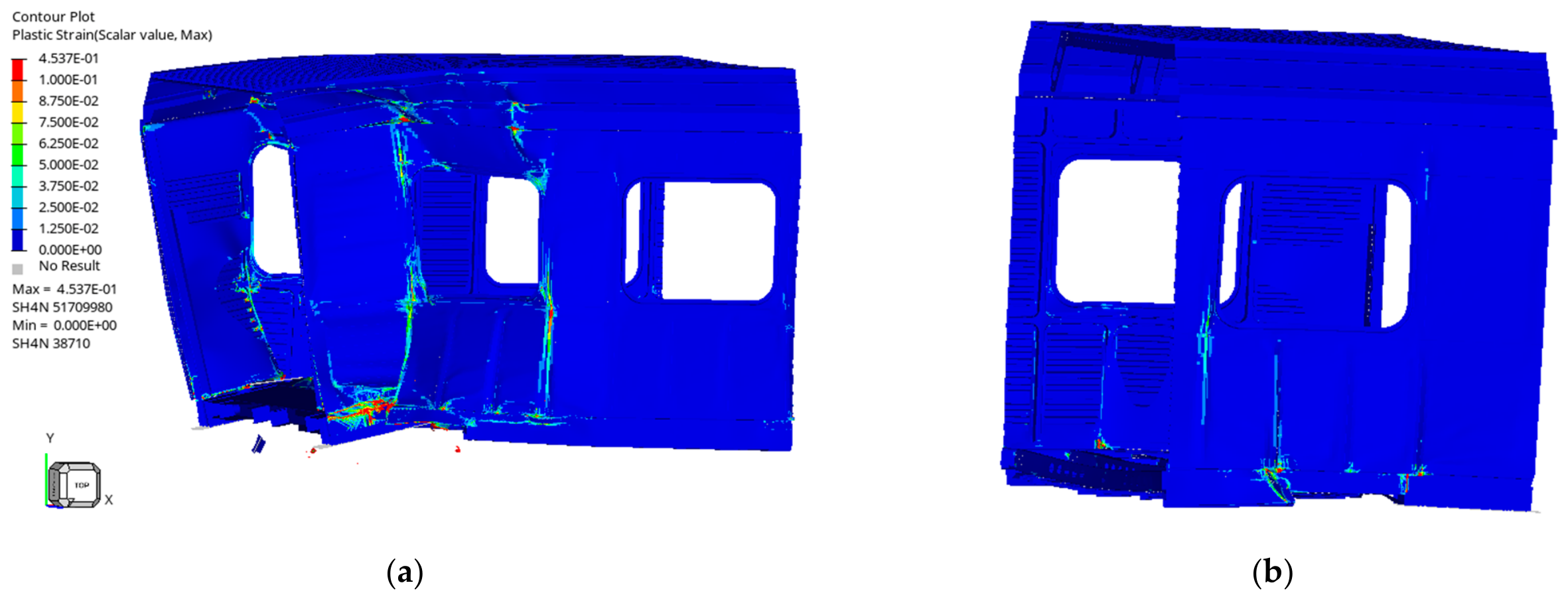
The analysis of the passenger survival spaces revealed that the model did not satisfy the required safety criteria. The equivalent plastic strain distribution in
Figure 22 includes a detailed view of the critical region limited to the 10% plastic strain threshold associated with the survival-space assessment. As a result, the longitudinal shortening of the survival spaces was assessed (
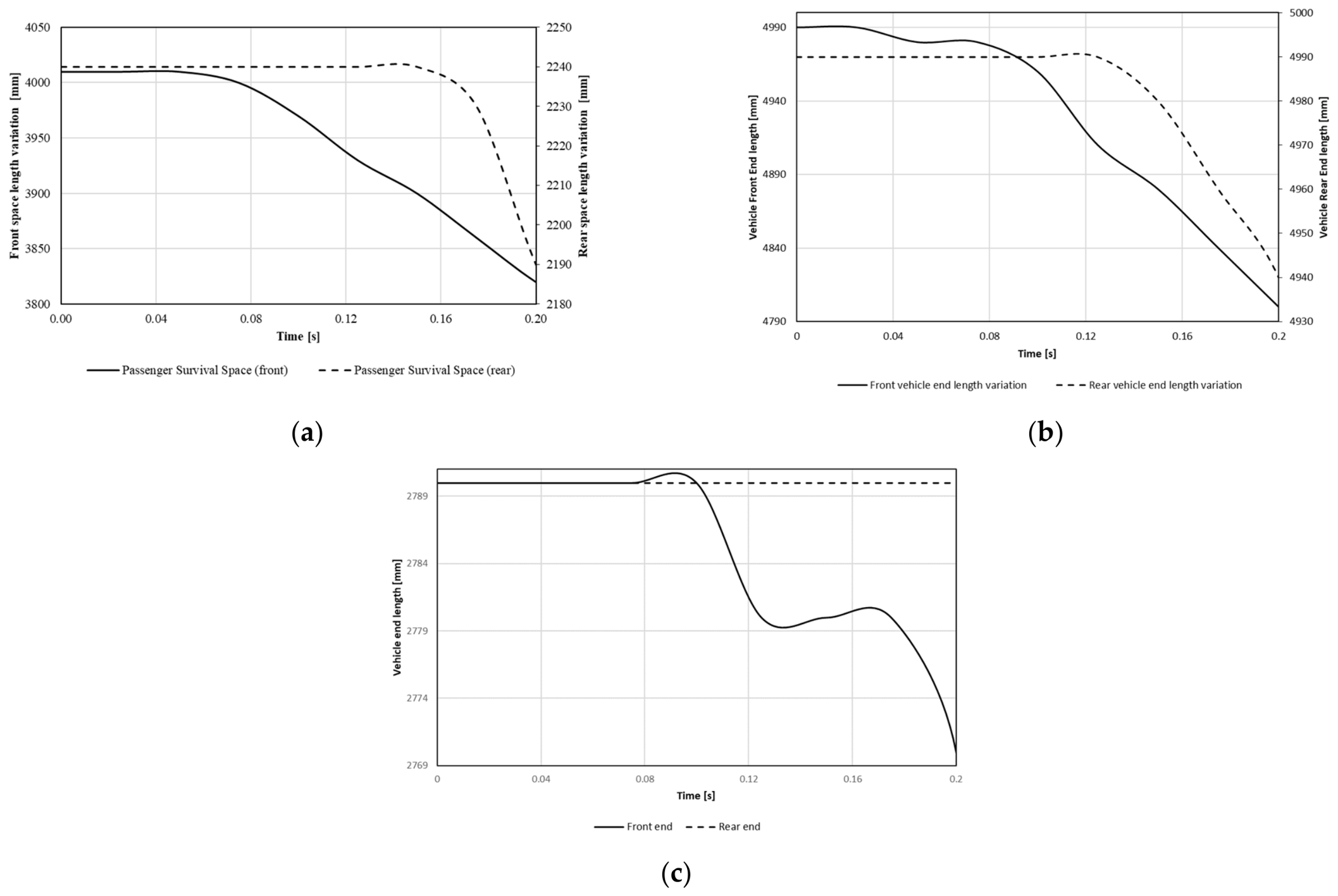
Figure 23 and
Table 9), indicating a contraction exceeding the maximum permissible value of 50 mm per 5 m at both the front and rear ends of the coach. These findings suggest that the model fails to maintain sufficient structural integrity within the designated survival zones.
For the vehicle ends, the terminal 5 m sections at both extremities were evaluated in accordance with regulatory requirements. Due to mesh discretisation constraints, the initial measured lengths of these regions do not exactly match the specified 5 m. Instead, the used values represent the closest feasible approximation within the finite element model. Under impact loading, the front end was subjected to the highest stress concentrations, exhibiting deformation beyond the admissible threshold, indicating localised structural failure. In contrast, the rear end remained within the acceptable deformation limits, demonstrating adequate structural performance under the imposed loading conditions.
Conversely, the coach model exhibited excellent performance in the area of temporary occupation, where the observed deformations were minimal and well below the maximum allowable limits.
5.1.3. Deceleration Assessment
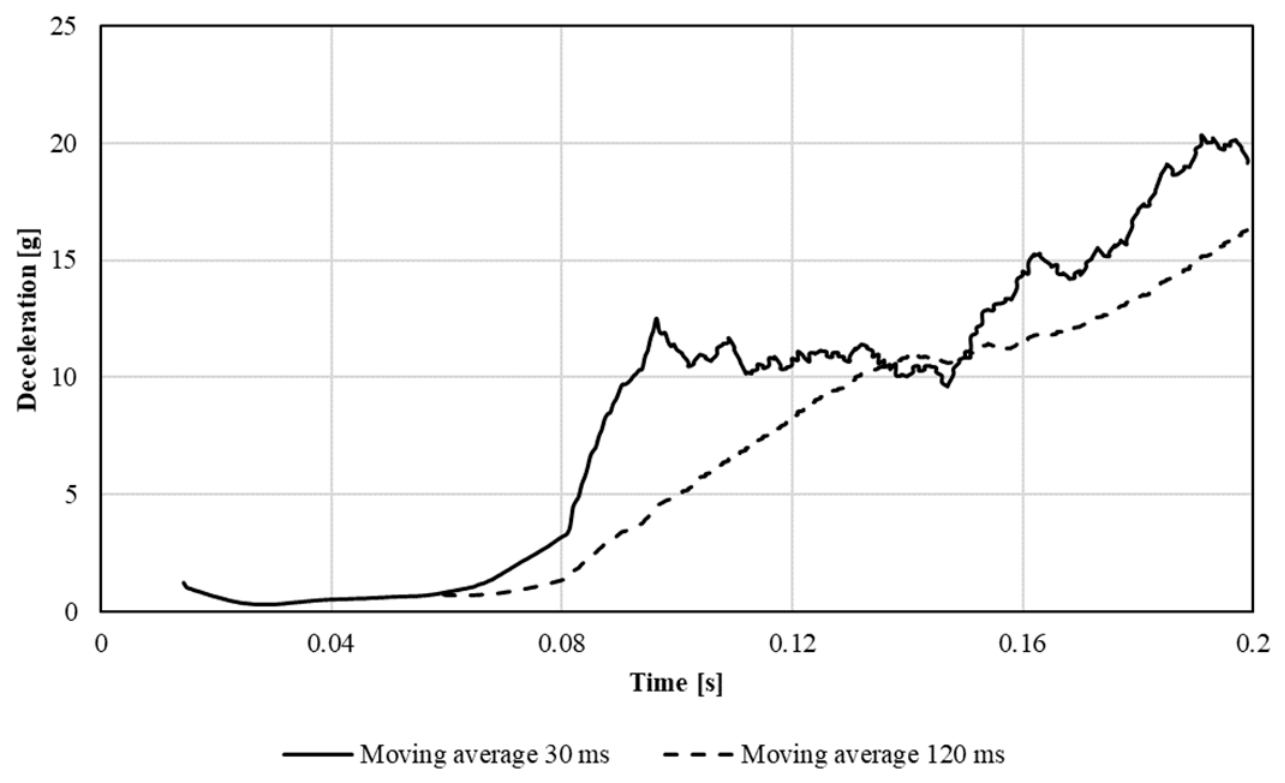
According to the EN 15227 requirements, the peak deceleration of the vehicle may not exceed 10 g when evaluated using a 30 ms moving average and 5 g when evaluated using a 120 ms moving average.
Figure 24 and
Table 10 present the acceleration time histories processed with the corresponding filtering windows and the compliance with the regulation. The filtered results show that the computed deceleration exceeds the allowable limits for both evaluation intervals. For a moving average duration of 30 ms, the exceedance is greater than a factor of two, while for the 120 ms averaging interval, the deceleration reaches approximately three times the permitted value. Consequently, the model does not comply with the deceleration performance criteria specified in EN 15227.
5.1.4. Summary Remarks
The findings strongly suggest that the coach suffers from an unbalanced distribution of stiffness. This suggests that the structure needs to incorporate energy-absorption features, such as controlled folding or triggered collapsing zones like crash boxes, which are commonly included in modern crashworthy designs. The connection between the end underframe and the passenger-area beams evidences a high concentration of loads into the side sills, revealing a lack of redundancy in the load paths. Instead of distributing compressive forces across multiple structural elements, the current layout funnels them into components that cannot sustain them, resulting in premature buckling and uncontrolled deformation.
The reinforced plate behaves as a weak link, and the fact that its reinforcements are attached only to the plate itself suggests a lack of proper load transfer to more stable elements. This design choice prevents the plate from stabilising the structure and instead allows it to deform freely, aggravating the collapse in the most critical region of the coach. The minimal deformation observed at the ends and vestibules further emphasises the model’s inability to engage these areas in energy absorption, despite their low survival-space constraints. This shortcoming highlights a broader issue: the design lacks a deliberate strategy to manage collision energy before it reaches the passenger compartment.
The comparison with real-world crash behaviour, where underframe deformation has been shown to protect passengers, highlights a significant gap between proven safety mechanisms and the current model. The coach fails to replicate deformation patterns known to improve survivability, suggesting that essential crash-energy-management features are either missing or improperly implemented.





 ,
,