
A Case Study on the Optimization of Cooling and Ventilation Performance of Marine Gas Turbine Enclosures: CFD Simulation and Experimental Validation of Key Inlet Parameters



Abstract
1. Introduction
2. Physical Model and Methodology
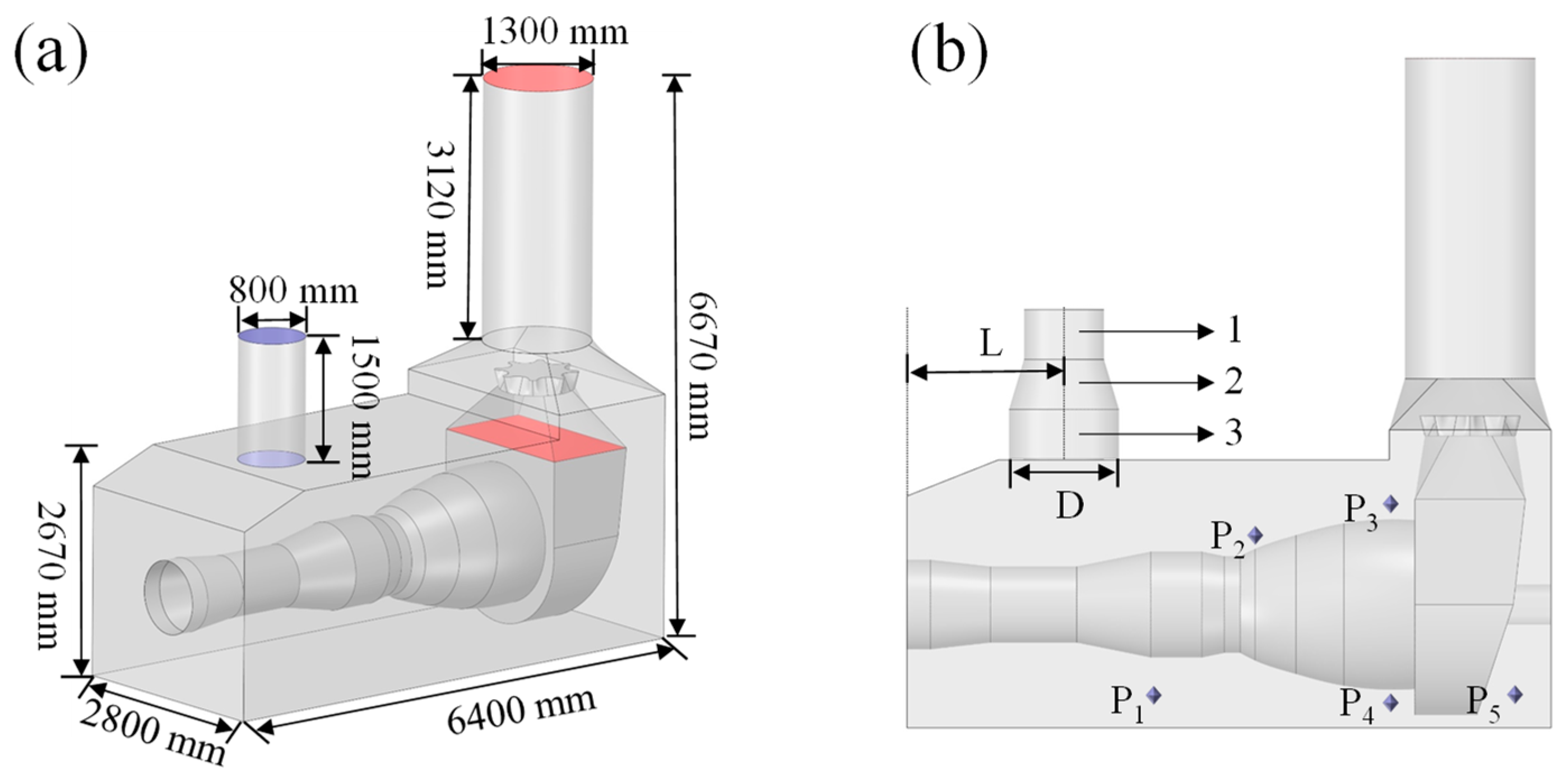
2.1. Physical Model
2.2. Modelling Assumptions
- (1)
- Steady-state RANS equations as the governing framework: The marine gas turbine operates in a long-term stable state during normal navigation, and transient fluctuations have negligible impacts on the core relationship between inlet parameters and cooling performance. Steady-state simulation avoids the high computational cost of transient calculations while adequately capturing the average flow and temperature fields critical to the study.
- (2)
- Air treated as an ideal gas: The operating temperature within the enclosure ranges from 300 K to 355 K (27 °C to 82 °C) and pressure is near atmospheric pressure, which falls within the applicable range of the ideal gas equation of state. This assumption simplifies the calculation of fluid density without compromising accuracy for the targeted operating conditions.
- (3)
- Surface-to-Surface (S2S) radiation model: The enclosure contains multiple high-temperature components (combustion chamber, turbine) whose radiative heat transfer significantly affects internal temperature distribution. The S2S model is suitable for complex geometries with multiple surfaces, enabling the accurate calculation of radiative heat flux between components—consistent with the need to characterize comprehensive thermal behavior.
- (4)
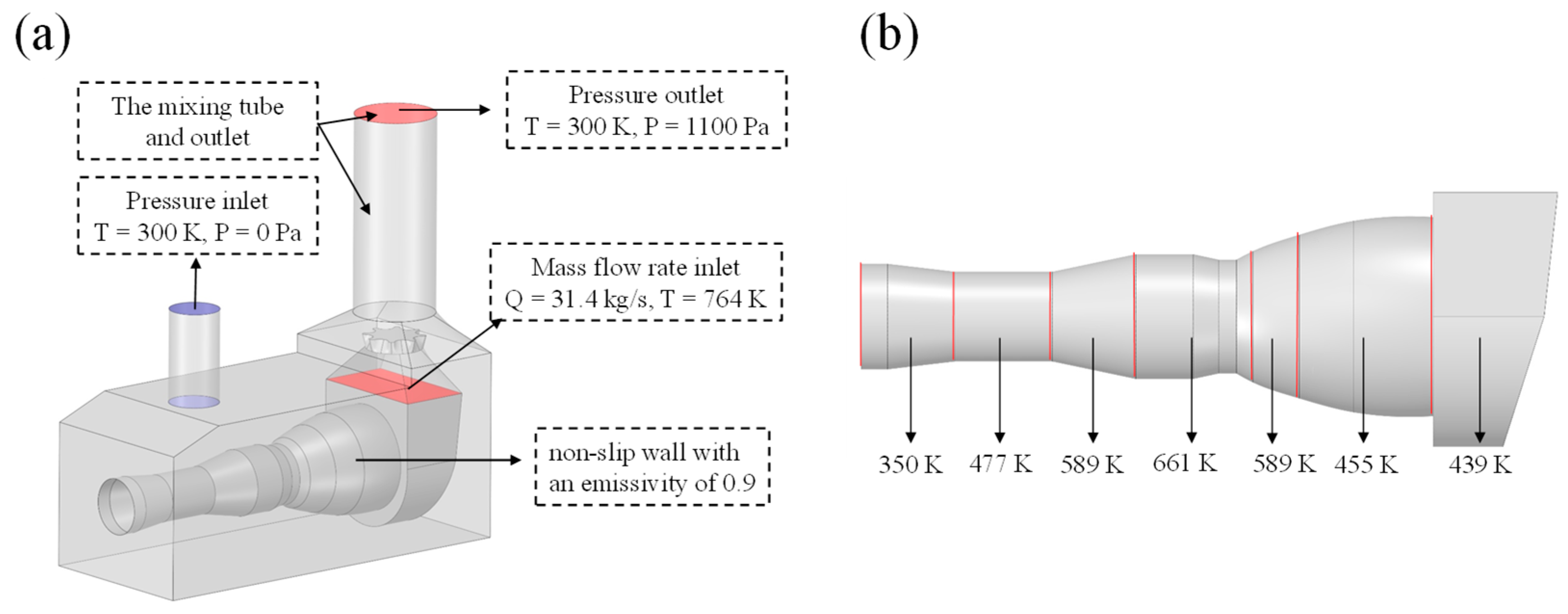
- Non-slip wall conditions with fixed emissivity (0.9): The gas turbine enclosure walls are made of metal materials with low surface slip potential, justifying the non-slip assumption. An emissivity of 0.9 was selected based on typical values for industrial metal surfaces [19,24], ensuring alignment with practical material thermal properties.
- (5)
- Neglect of conjugate heat transfer: The research focus is on the influence of inlet parameters on internal flow and temperature fields, rather than heat transfer within wall materials or internal auxiliary components. Ignoring conjugate heat transfer reduces computational complexity while preserving the core physical mechanism that governs cooling performance.
- (6)
- Simplified geometric model of internal auxiliary equipment: The geometric model omits detailed configurations of internal tubing and minor auxiliary components. These components occupy a small volume and have minimal impact on the overall flow field induced by inlet parameters. Simplification ensures computational efficiency without altering the key flow characteristics relevant to inlet parameter optimization.
2.3. Mathematical Model
2.4. Boundary Conditions
2.5. Numerical Solution Setup and Convergence
- (1)
- Pressure–Velocity Coupling: The Semi-Implicit Method for Pressure-Linked Equations (SIMPLE) algorithm was used for its robustness in solving incompressible and weakly compressible flows.
- (2)
- Spatial Discretization: A second-order upwind scheme was applied for the discretization of momentum, energy, and turbulence equations to achieve a balance between accuracy and computational stability. The pressure interpolation was handled using the PRESTO! (PREssure STaggering Option) scheme, which is recommended for flows involving strong pressure gradients or swirl.
- (3)
- Gradient Treatment: The cell-based least squares method was used for computing gradients.
- (1)
- Residuals: The iterative computation was considered converged when the scaled residuals for continuity, momentum, and turbulence equations dropped below 1 × 10⁻⁴, and the residual for the energy equation fell below 1 × 10⁻⁶.
- (2)
- Physical Quantity Monitoring: In addition to residuals, the mass flow rate at the cooling air inlet, the entrainment ratio (η), and the area-weighted average temperature at the outlet of the mixing tube were monitored. Convergence was confirmed when these key global quantities exhibited no observable change (variation less than 0.1%) over a minimum of 200 successive iterations.
2.6. Evaluation Indicators
- (1)
- Entrainment coefficient (η)
- (2)
- Pressure Loss Coefficient (PLC)
- (3)
- Temperature Indicators (T1–T5)
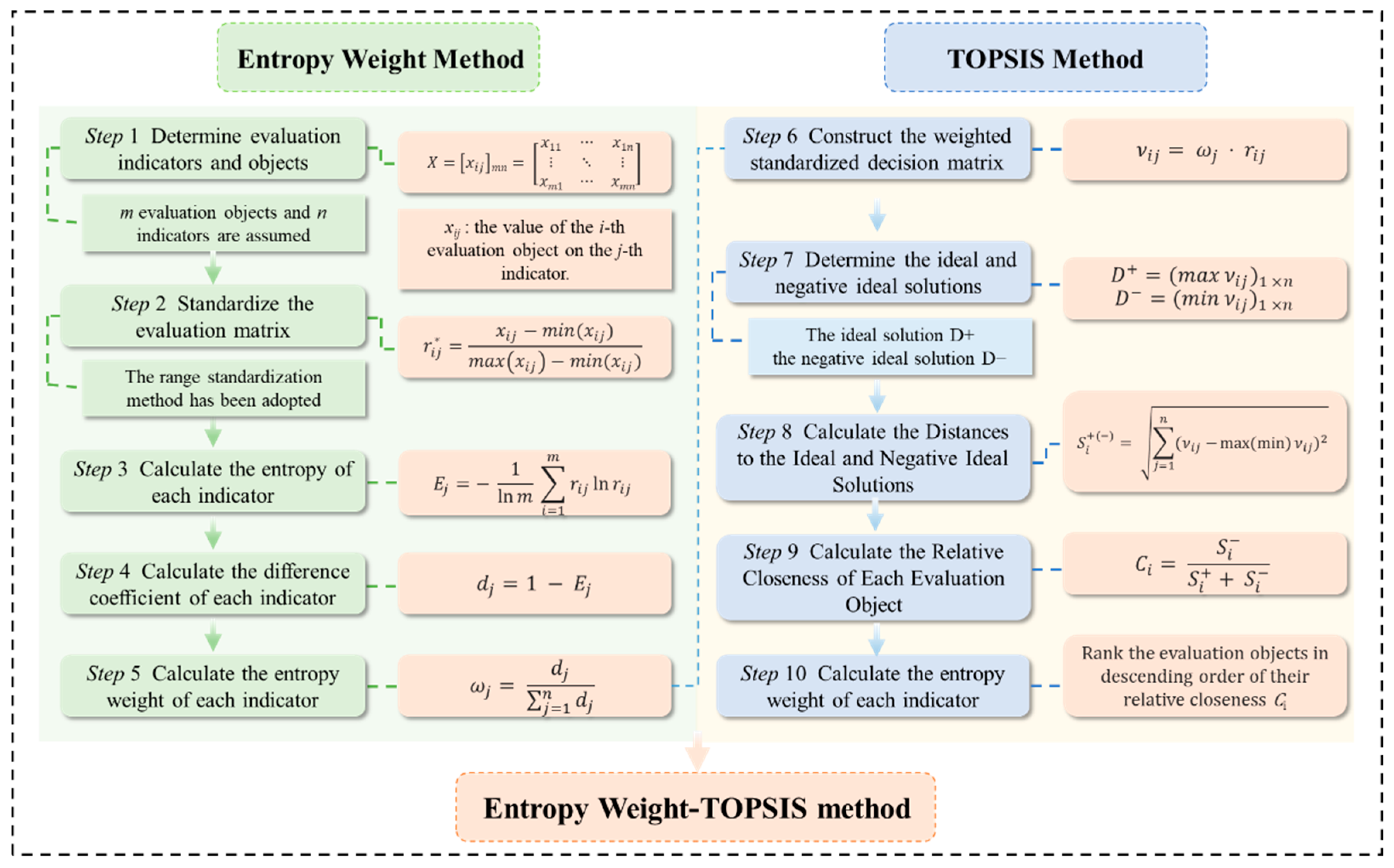
2.7. Multi-Objective Optimization Framework Based on Entropy Weight-TOPSIS Method
3. Algorithm Validation
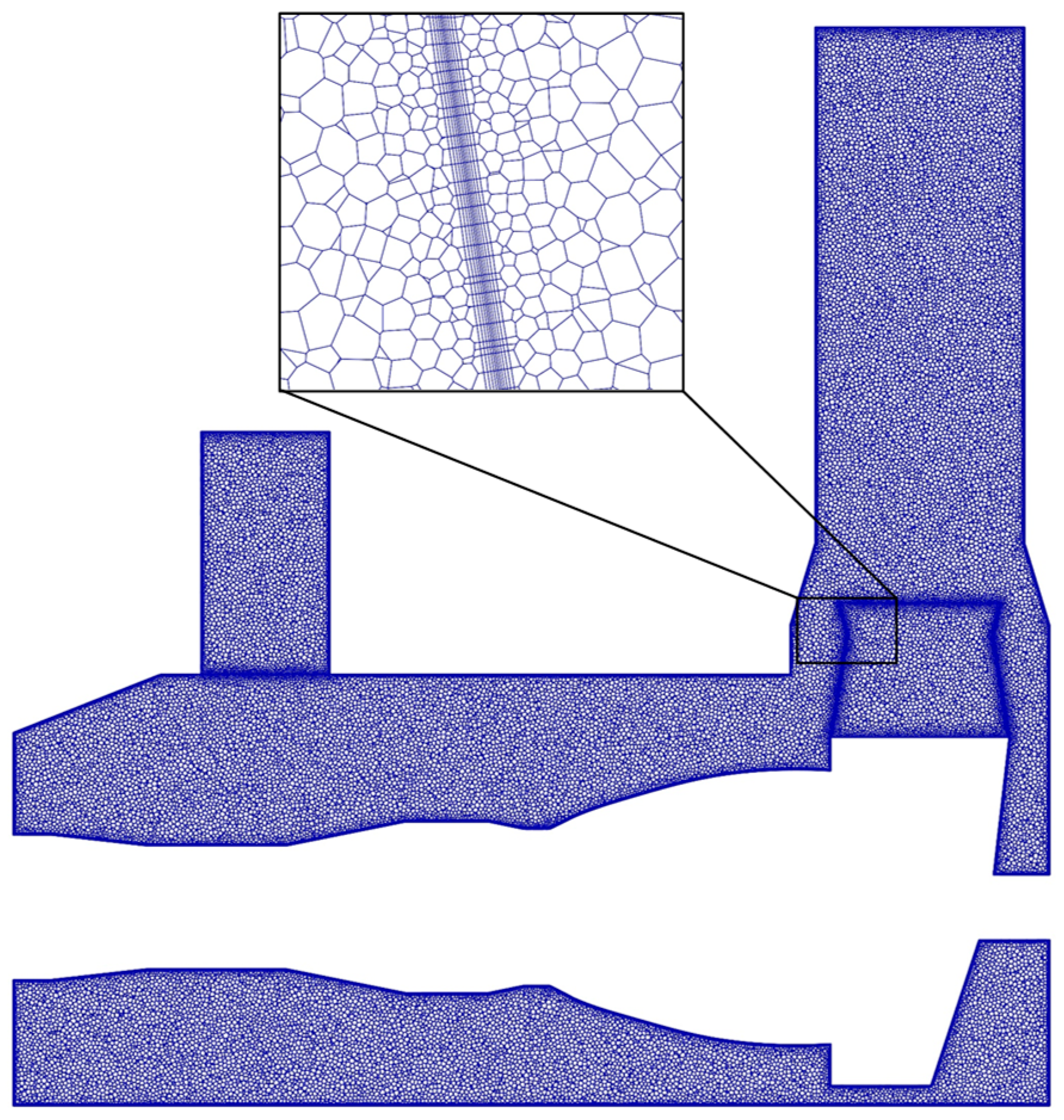
3.1. Mesh Independence
3.2. Turbulence Model Validation
4. Results and Discussion
4.1. Effect of Cooling Air Inlet Pressure
4.2. Effect of Enclosure Inlet Diameter
4.3. Effect of Different Cooling Air Inlet Positions
5. Multi-Objective Optimization of Enclosure Inlet Structure
5.1. Genetic Aggregation Prediction Method
5.2. Multi-Objective Optimization Results
5.3. Limitation and Future Work
- (1)
- Model Simplifications: The steady-state RANS approach with prescribed wall temperatures neglects transient effects and conjugate heat transfer, simplifying thermal inertia and solid conduction.
- (2)
- Geometric Abstraction: The omission of internal equipment and piping focuses on global flow but may not capture localized obstructions or heat accumulation.
- (3)
- System Boundary: The model isolates the enclosure, excluding external heat influx from the engine room and the system-level impact of cooling air pressure drop on overall plant efficiency.
- (4)
- Ambient Conditions: Simulations assumed constant ambient properties, leaving the influence of variable temperature and humidity on cooling performance unexamined.
- (5)
- Evaluation Method Limitation: The entropy weight-TOPSIS method is data-dependent, with weights derived from sample statistics rather than physical mechanisms. It quantifies trade-offs between heat exchange (T1–T5) and aerodynamic performance (η, PLC) but cannot explain the underlying fluid–thermal coupling mechanisms.
6. Conclusions
- (1)
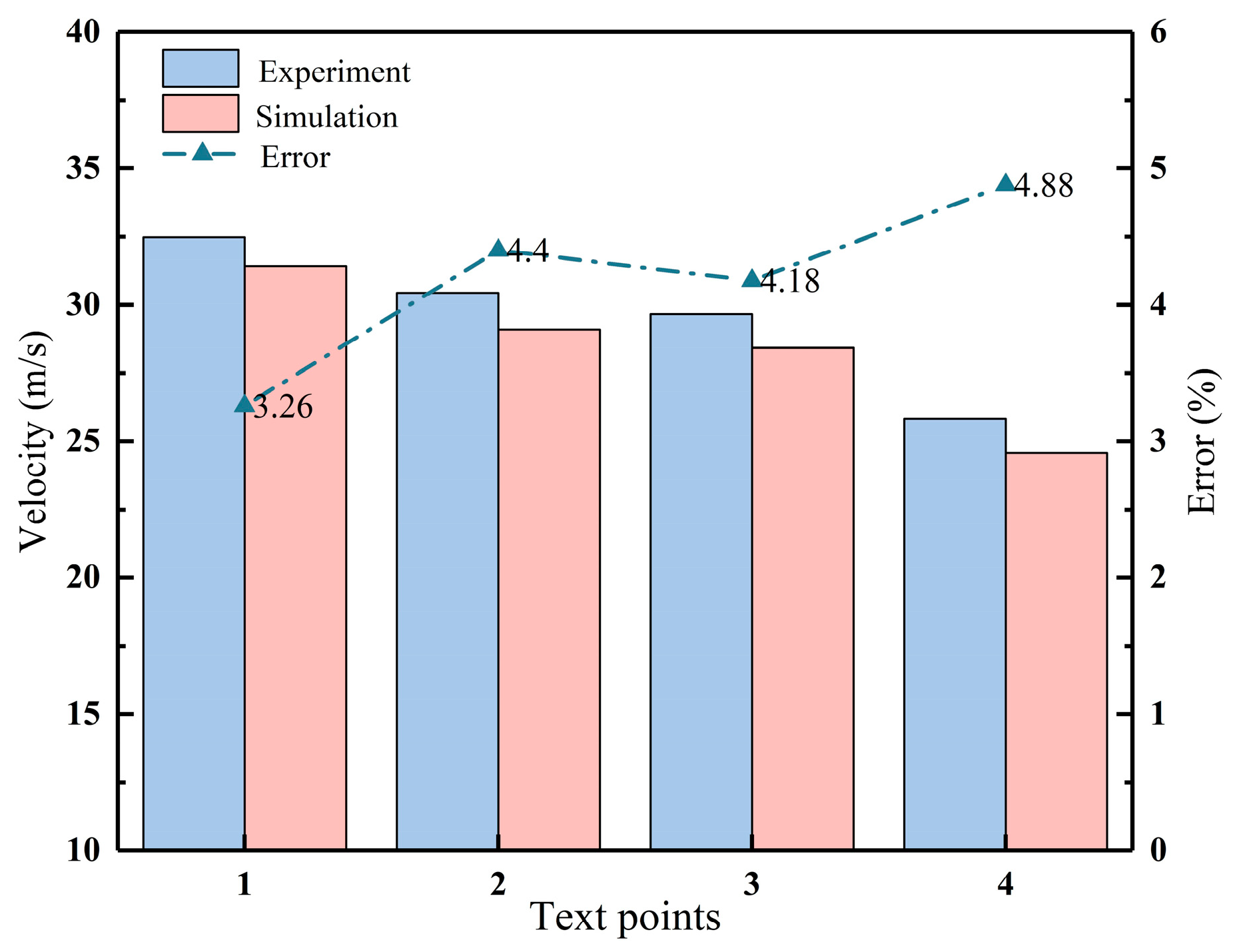
- Validated a CFD numerical model integrated with the Realizable k-ε turbulence model and S2S radiation model for marine gas turbine enclosures, with experimental data showing a maximum deviation of only 4.88%, and conducted the first systematic investigation on the coupled effects of three key inlet parameters (cooling air inlet pressure (Pin), enclosure inlet diameter (D), and inlet position (L)) on cooling ventilation performance.
- (2)
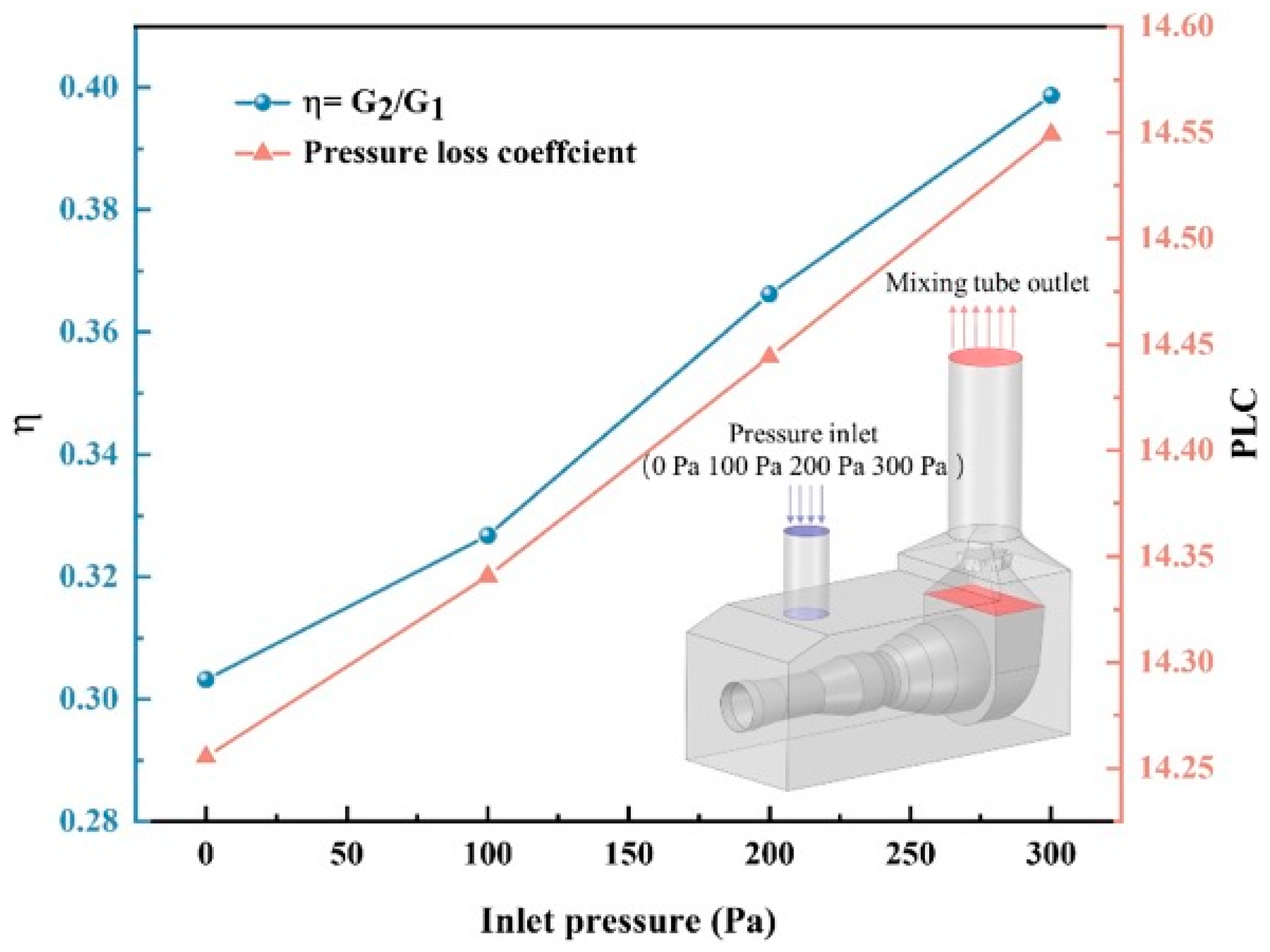
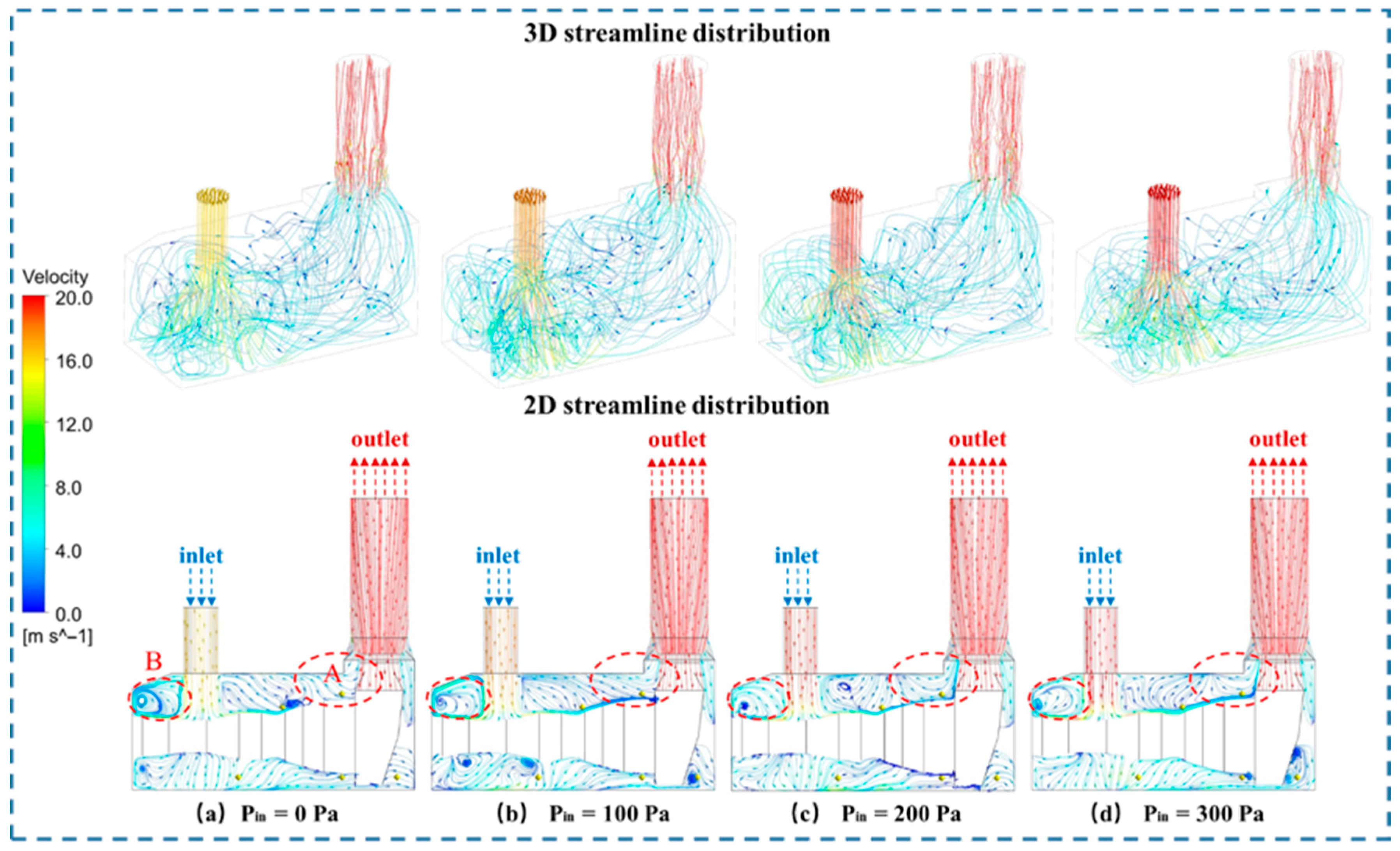
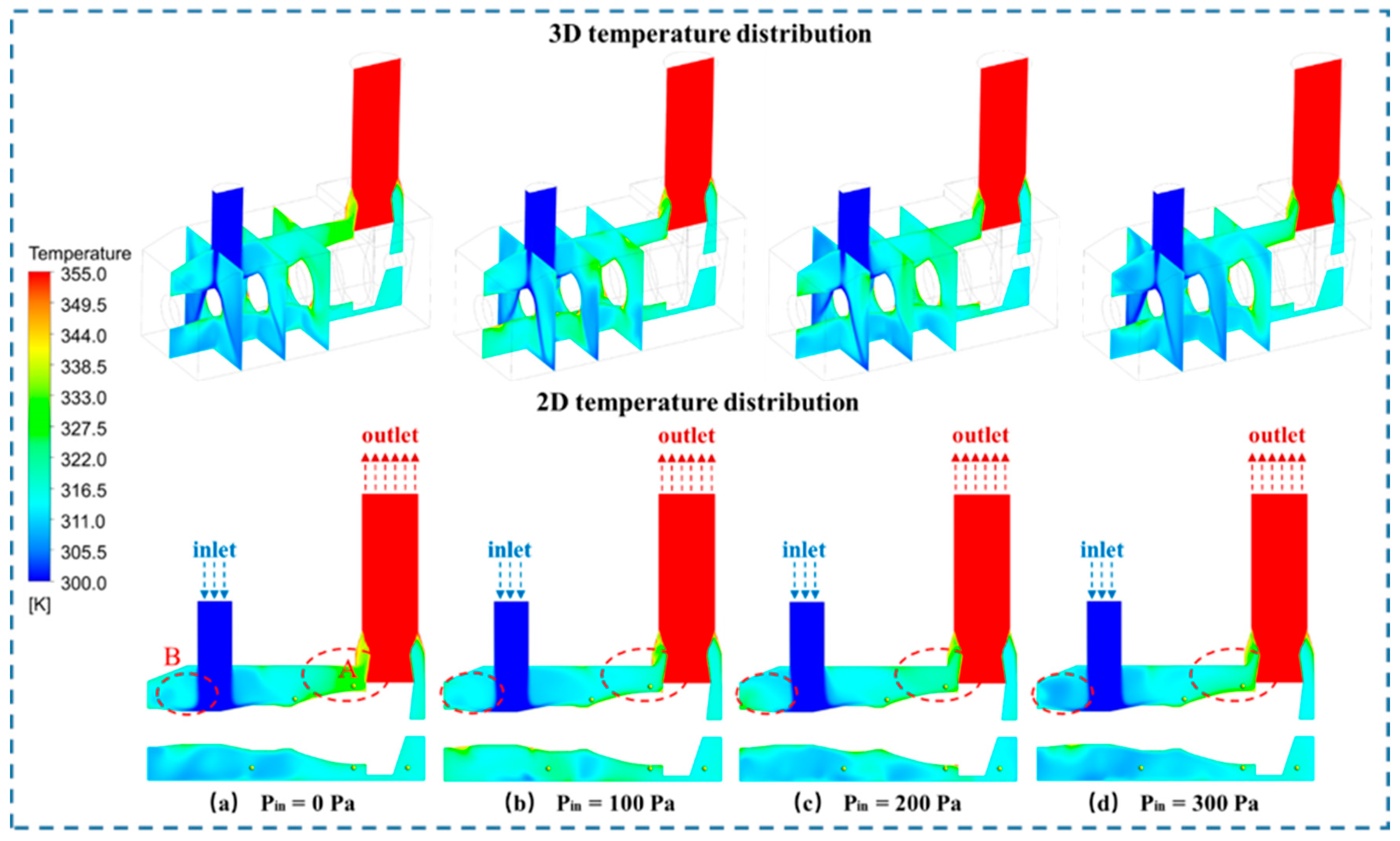
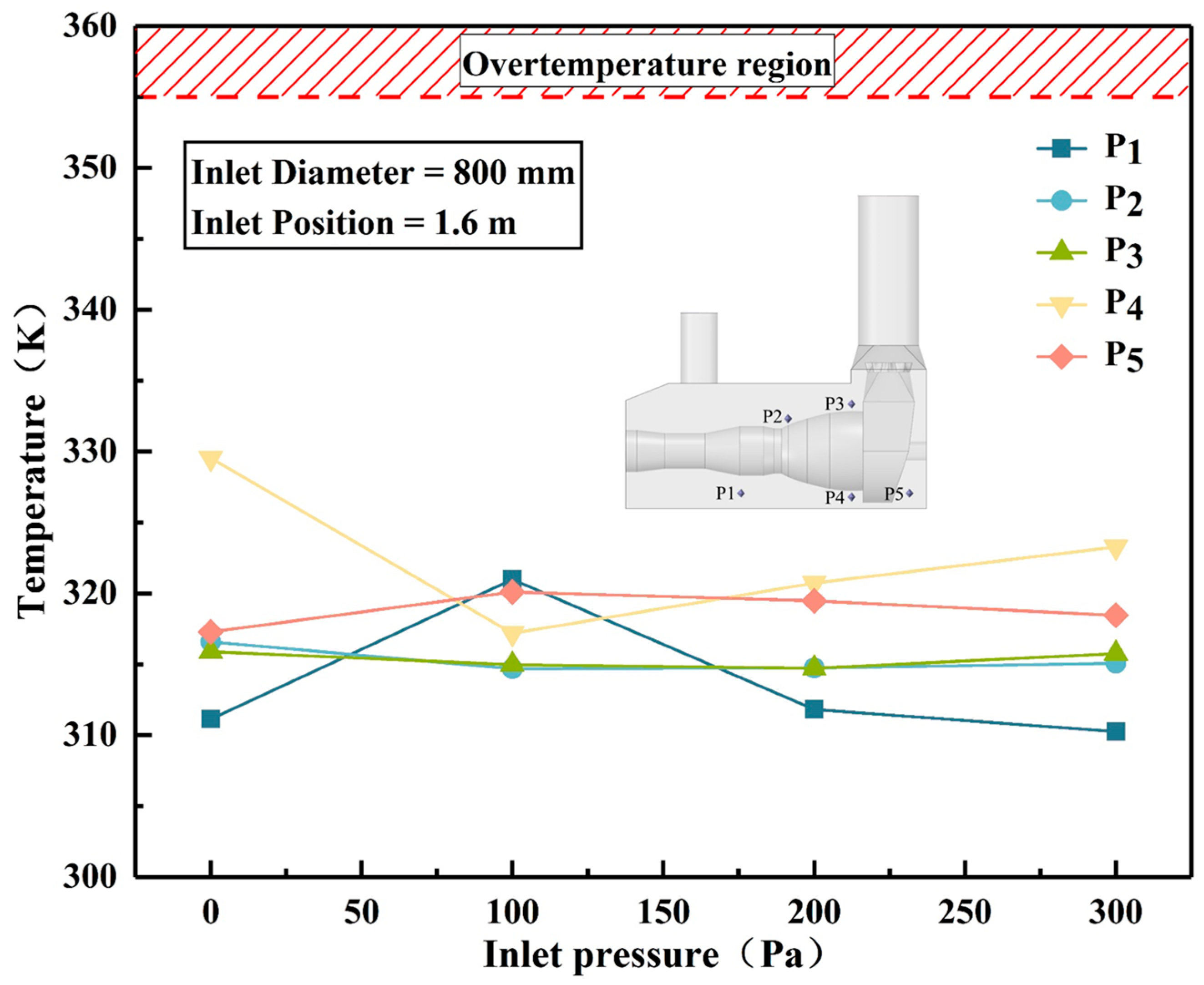
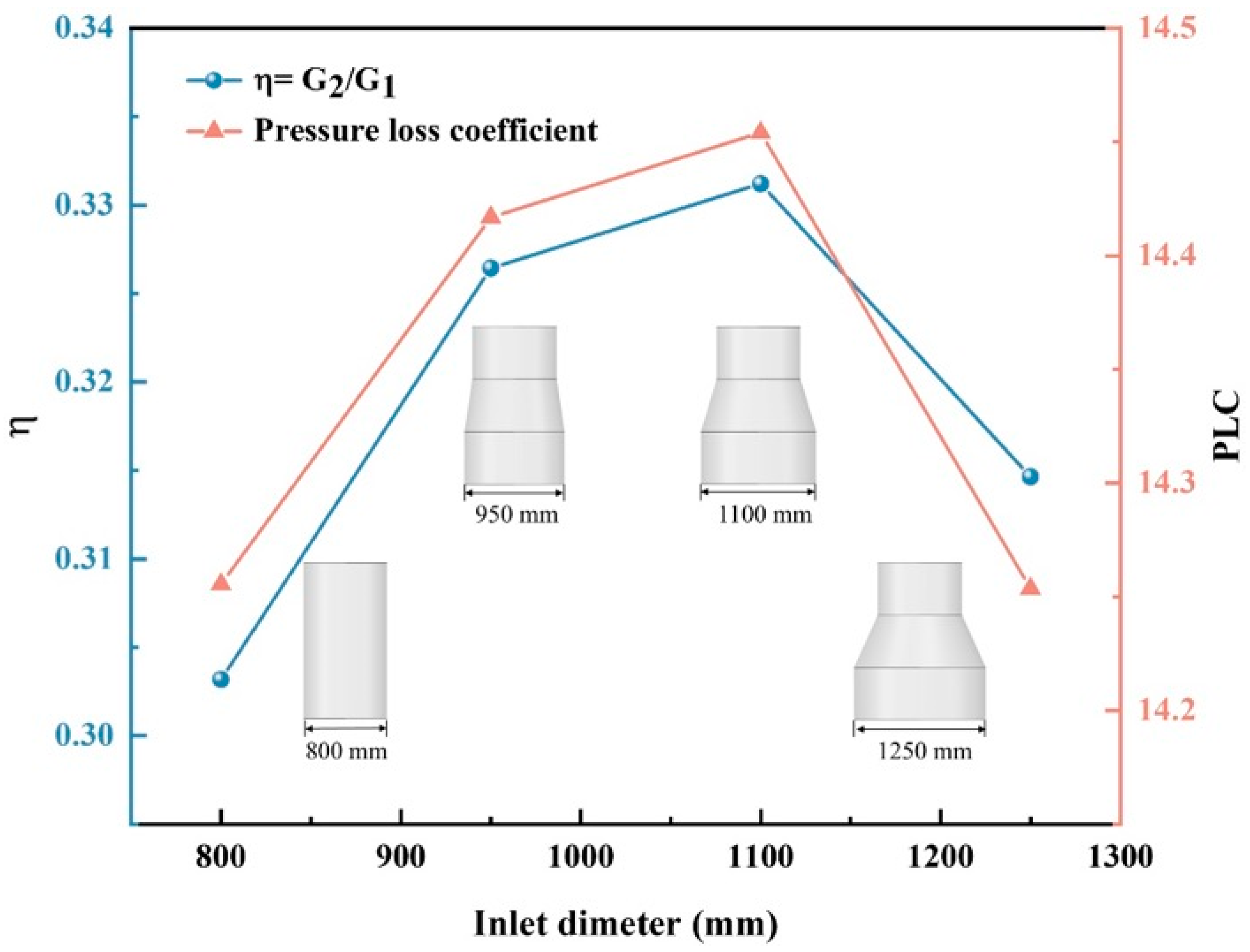
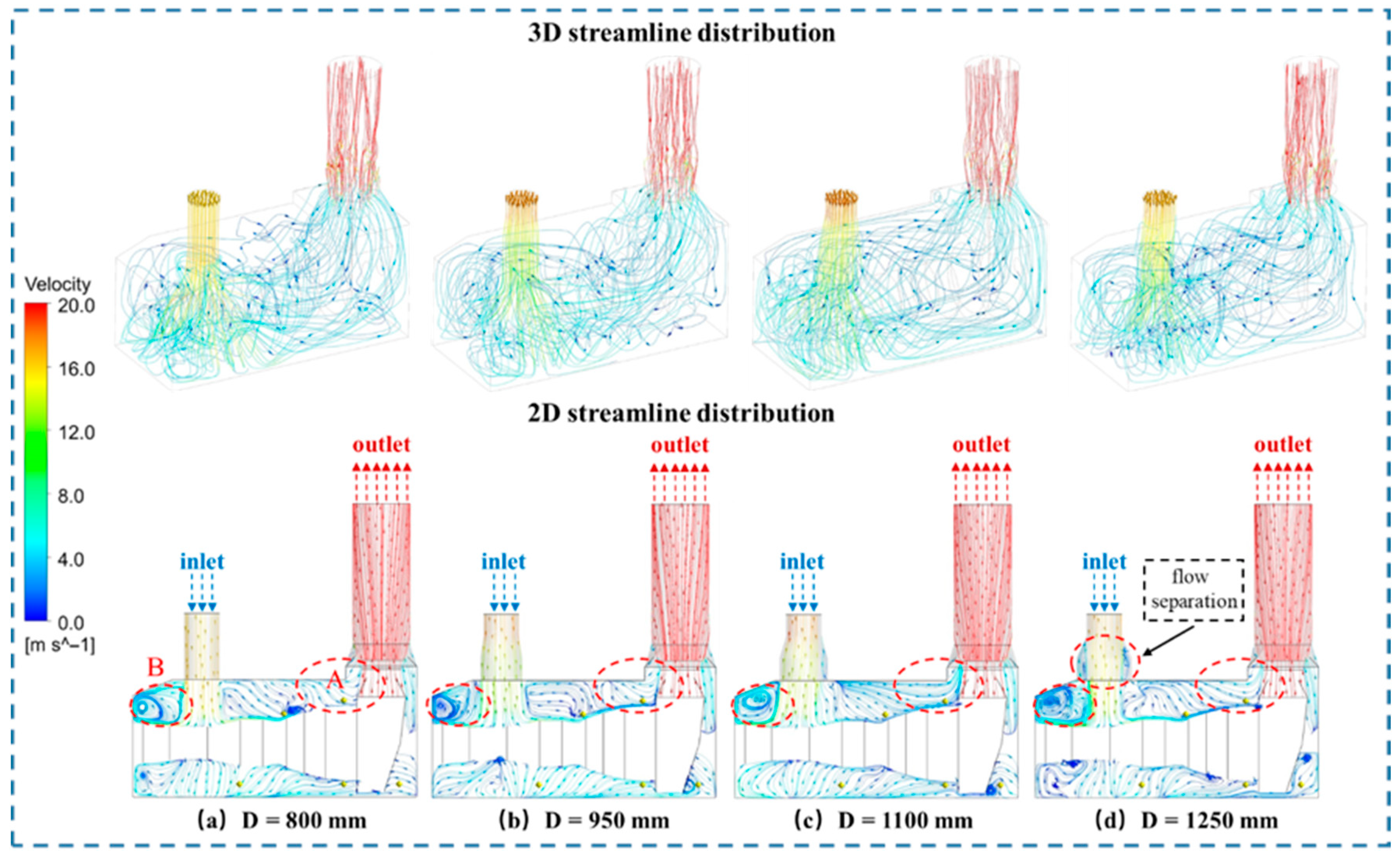
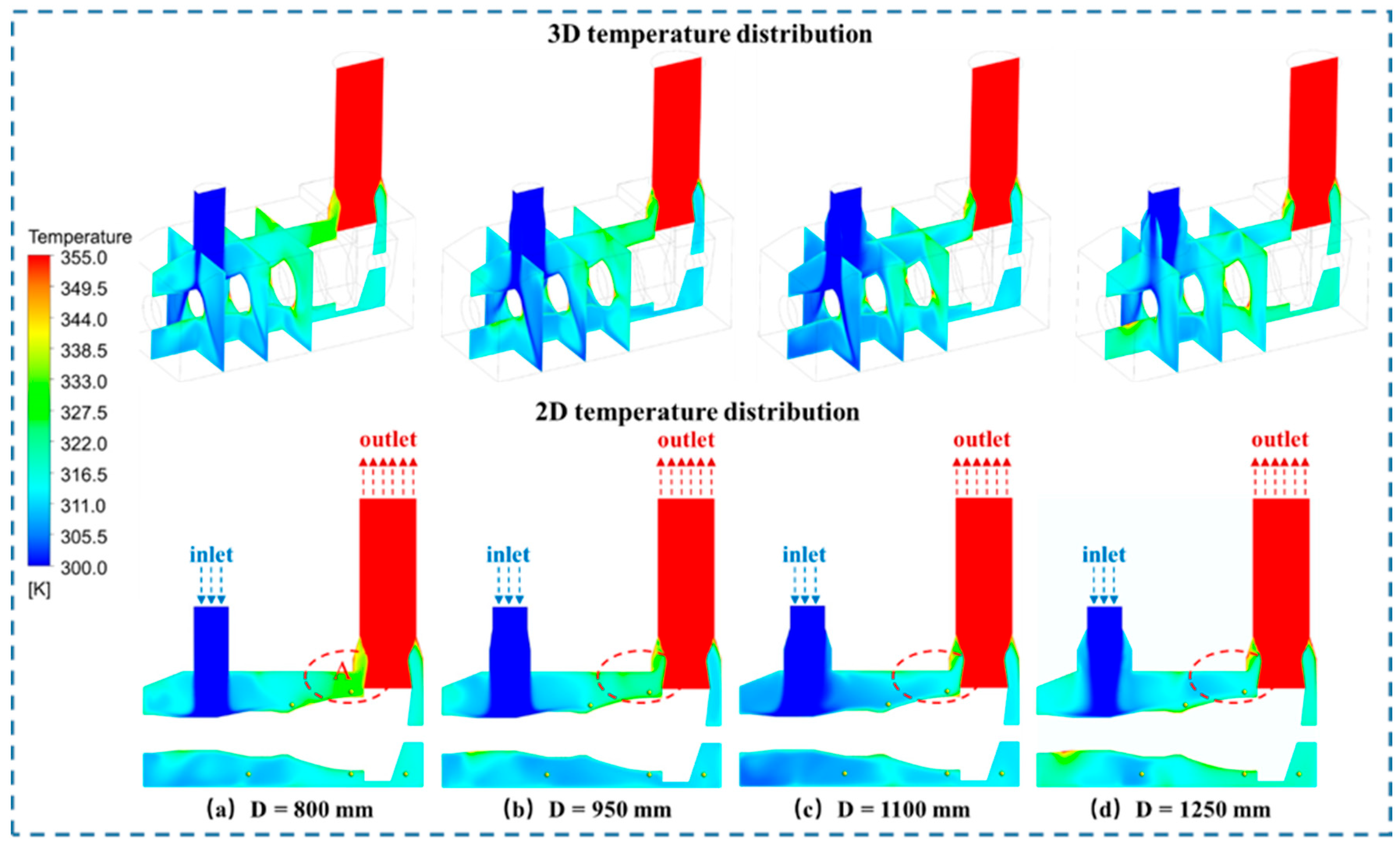
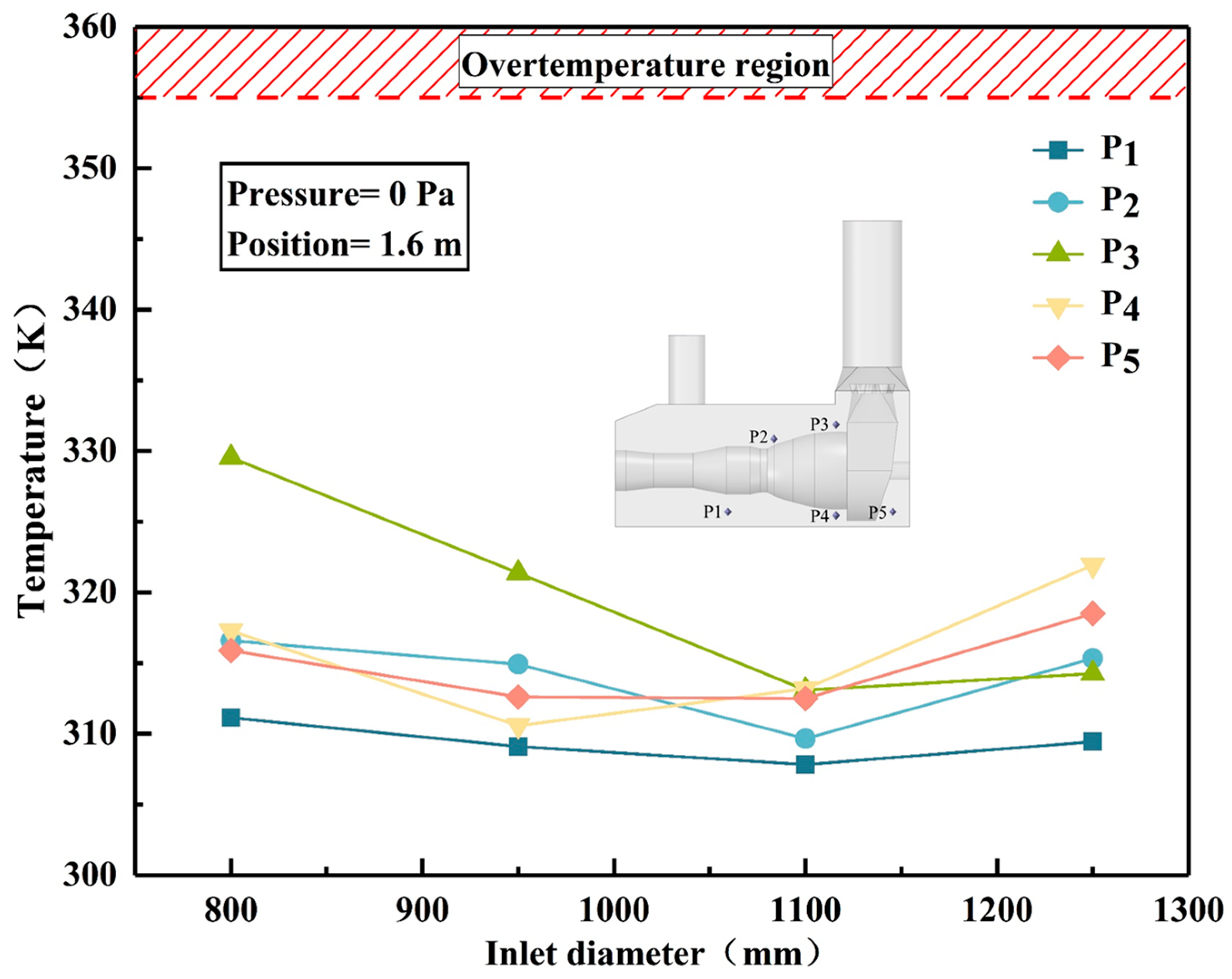
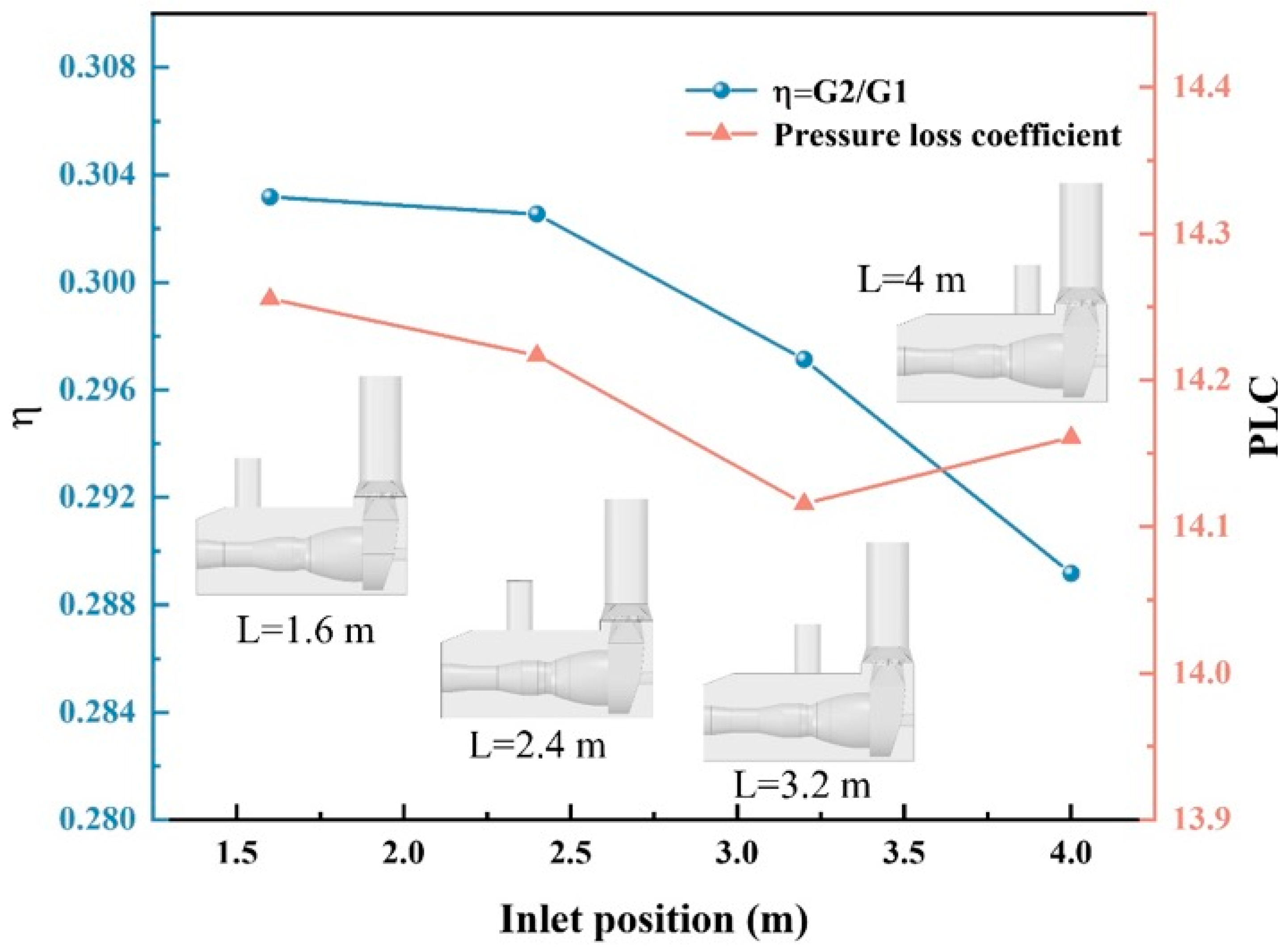
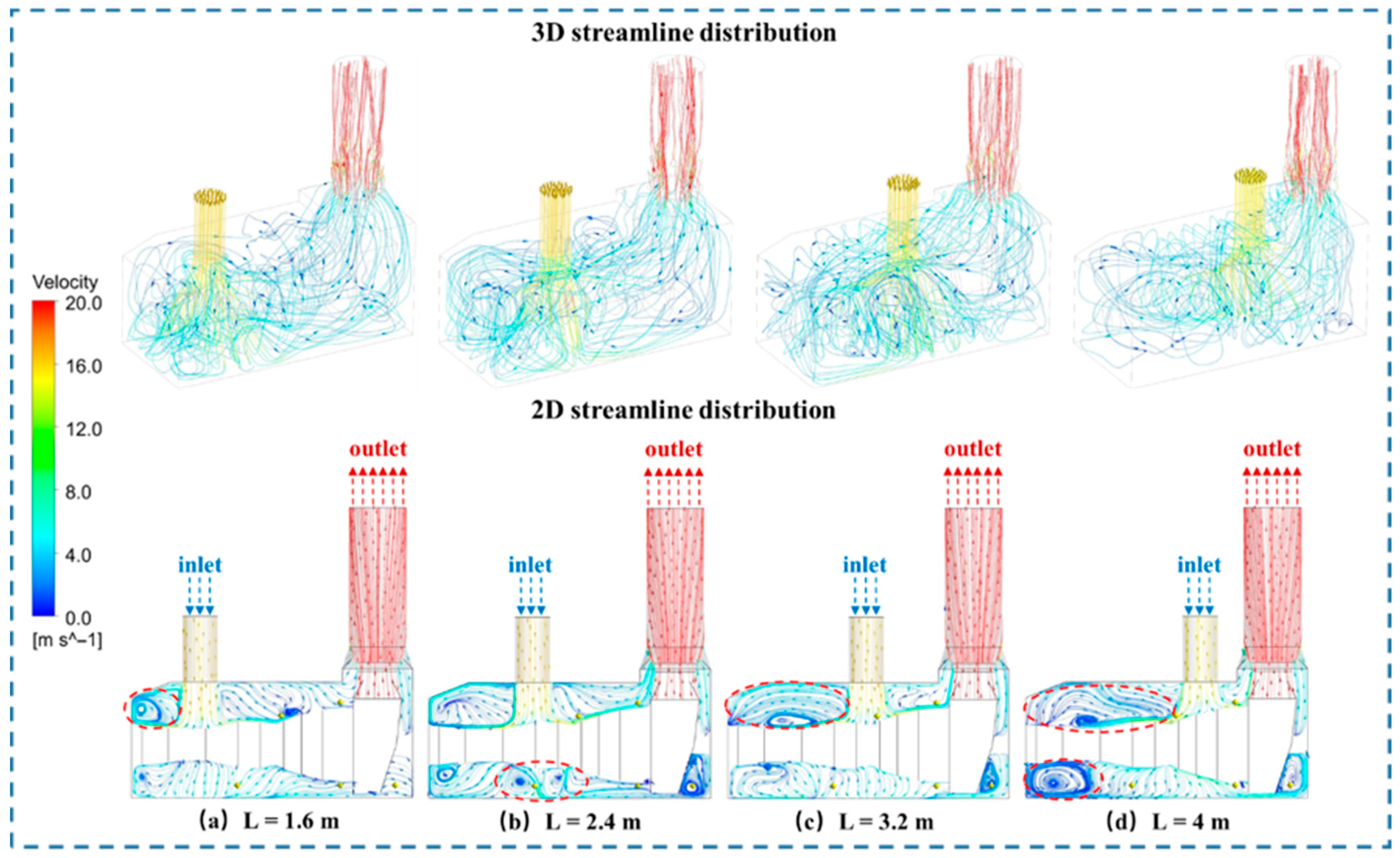
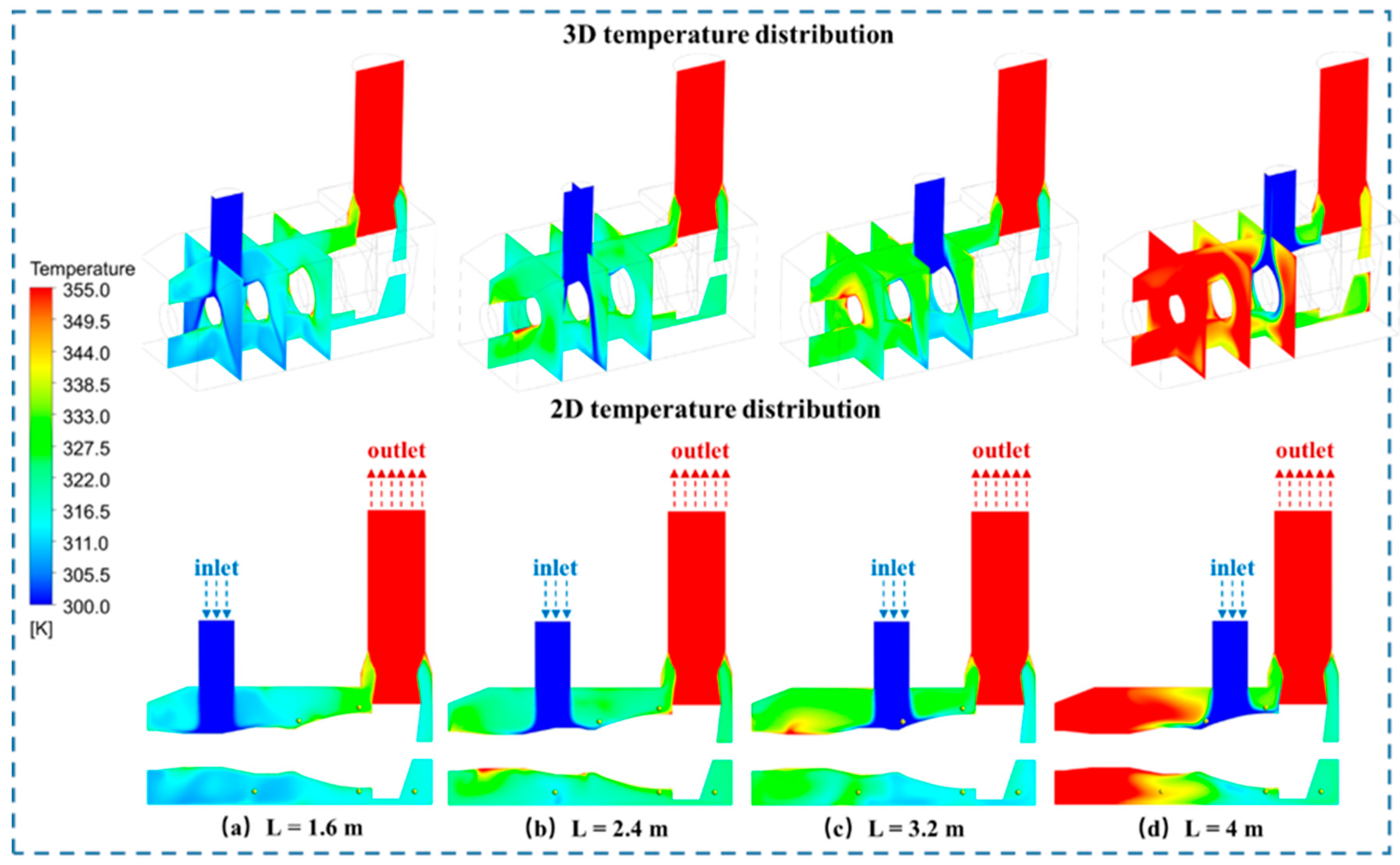
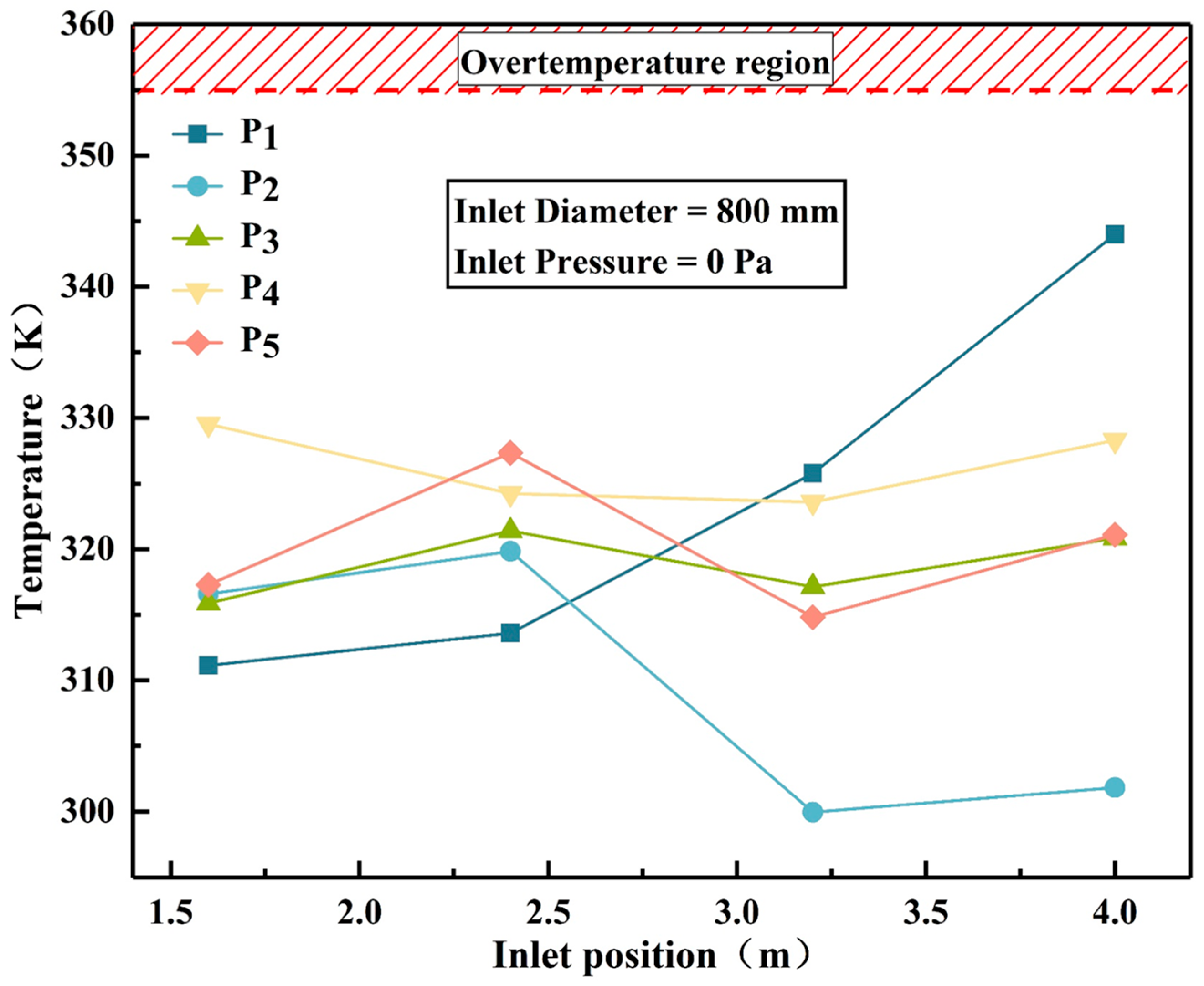
- Systematically quantified the single-factor effects of key inlet parameters on enclosure cooling performance: elevating cooling air inlet pressure (Pin) to 300 Pa improves the entrainment ratio (η) by 9.55% (with a 2.03% increase in pressure loss coefficient); an enclosure inlet diameter D of 1100 mm optimizes η to 0.33 and minimizes internal temperatures, achieving a temperature reduction of approximately 17 K compared to the baseline diameter of 800 mm; positioning the inlet away from the turbine outlet (minimum L = 1.6 m) suppresses vortex stagnation and enhances cooling uniformity.
- (3)
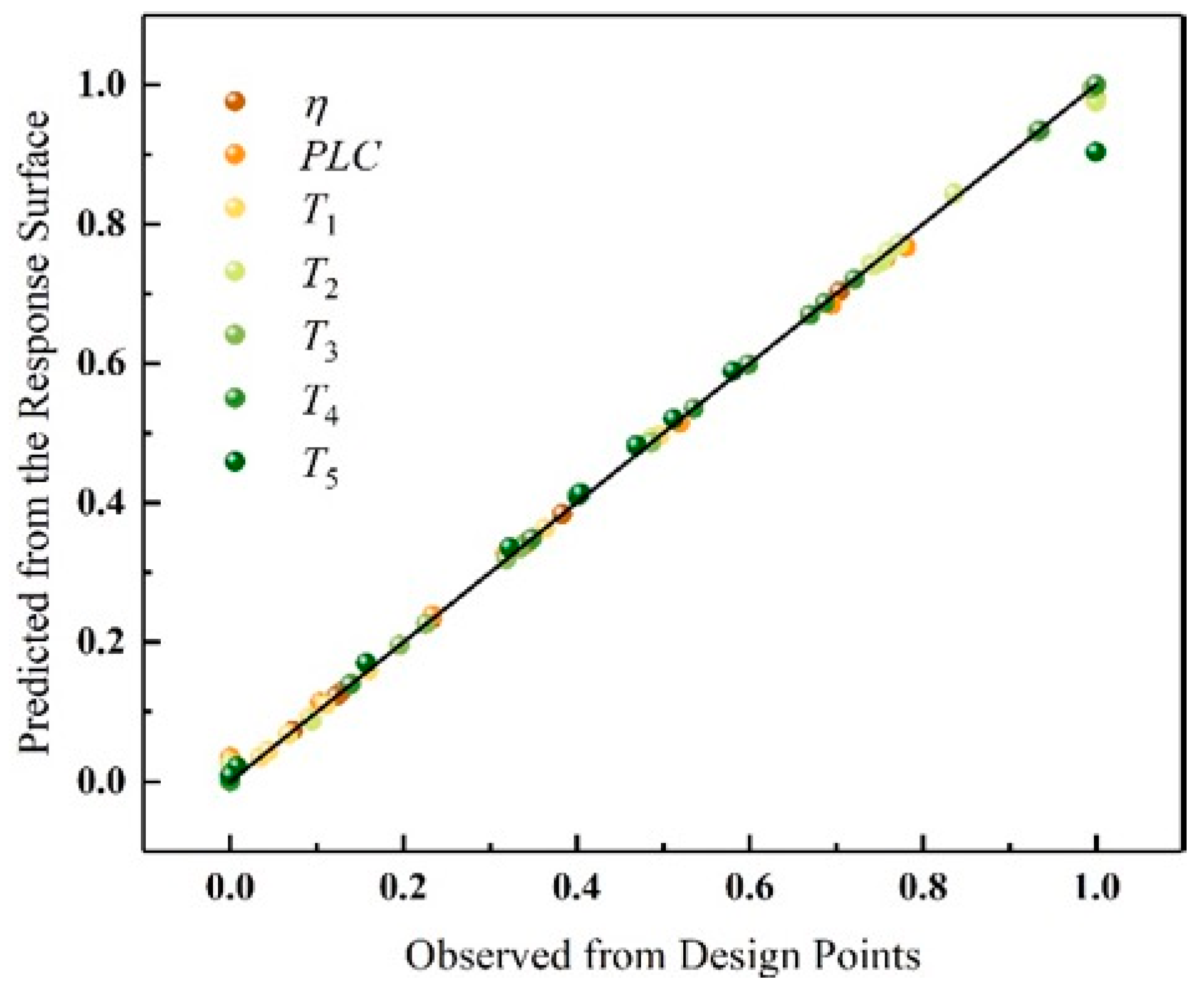
- Combined the genetic aggregation prediction method with the entropy weight-TOPSIS method for multi-objective optimization: the integrated framework constructs a high-fidelity response surface (goodness-of-fit close to 1.0, 7500 sets of sample data), objectively weights indicators (e.g., T4: 22.44%, η: 19.14%), and screens the optimal structure (D = 800 mm), Pin = 300 Pa, L = 1.6 m), which improved η by 9.55% and reduced the maximum internal temperature by approximately 16 K compared to the baseline.
- (4)
- Developed a low-cost, mechanically non-intrusive optimization solution: the solution requires no structural restructuring, avoids high costs of complex ejector modifications, and is generalizable to diesel engine enclosures or generator compartments; for marine use, it maintains all monitoring point temperatures at 307–315 K, well below the 355 K (82 °C) operational limit.
Author Contributions
Funding
Data Availability Statement
Conflicts of Interest
Nomenclature
| Symbol/Abbreviation | Definition | Unit |
| Pin | Cooling air inlet pressure | Pa |
| D | Enclosure inlet diameter | mm |
| L | Horizontal distance from inlet center to enclosure left end wall | m |
| η | Entrainment ratio (ratio of secondary air mass flow to mainstream mass flow) | Dimensionless |
| PLC | Pressure loss coefficient | Dimensionless |
| T1–T5 | Point temperatures at monitoring points P1–P5 (P1: compressor outlet; P2: combustion chamber outlet; P3: turbine inlet; P4: turbine outlet; P5: below exhaust diffuser) | K |
| G1 | Mass flow rate of mainstream | kg/s |
| G2 | Mass flow rate of secondary stream | kg/s |
| P1 | Total pressure at exhaust plenum outlet | Pa |
| P2 | Total pressure at mixing tube outlet | Pa |
| q | Dynamic pressure at exhaust plenum outlet | Pa |
| k | Turbulent kinetic energy | m2/s2 |
| ε | Turbulent dissipation rate | m2/s3 |
| ut | Turbulent viscosity | Pa·s |
| εk | Emissivity of surface k | Dimensionless |
| σ | Stefan–Boltzmann constant | W/(m2·K4) |
| CFD | Computational Fluid Dynamics | — |
| RANS | Reynolds-Averaged Navier–Stokes | — |
| S2S | Surface-to-Surface (radiation model) | — |
| TOPSIS | Technique for Order Preference by Similarity to Ideal Solution | — |
| GA | Genetic Algorithm | — |
| RBF | Radial Basis Function (surrogate model) | — |
| CCD | Central Composite Design (sampling method) | — |
References
- Liu, Z.; Ji, S.; Zhou, Y.; Chen, S.; Li, P. Heat transfer enhancement of gas turbine trailing-edge cooling channel with twisted blade-like fins arranged on endwalls. Int. J. Heat Fluid Flow 2024, 110, 109615. [Google Scholar] [CrossRef]
- Cheng, Y.; Li, Y.; Rao, Y. Enhanced turbine endwall cooling using crescent-dimpled film cooling holes and a hybrid configuration: Numerical study. Int. J. Heat Fluid Flow 2024, 109, 109546. [Google Scholar] [CrossRef]
- Zou, Y.; Liu, Z.; Qiao, X.; Jiang, Y.; Shi, H.; Jiang, Y. Fluid Dynamics and Infrared Stealth of Marine IRS Devices: A Review. Int. J. Mech. Syst. Dyn. 2025, 5, 179–200. [Google Scholar] [CrossRef]
- Lucherini, G.; Michelassi, V.; Minotti, S. The Impact of Model Assumptions on the CFD Assisted Design of Gas Turbine Packages. In Oil and Gas Applications; Supercritical CO2 Power Cycles; Wind Energy, Proceedings of the ASME Turbo Expo 2019: Tur-Bomachinery Technical Conference and Exposition, Phoenix, AZ, USA, 17–21 June 2019; American Society of Mechanical Engineers: New York, NY, USA, 2019; Volume 9, p. V009T27A020. [Google Scholar] [CrossRef]
- Sun, H.; Yang, X.; Chen, Y.; Ai, Y.; Zhang, W. Study on the Impact of Cooling Air Parameter Changes on the Thermal Fatigue Life of Film Cooling Turbine Blades. Aerospace 2025, 12, 512. [Google Scholar] [CrossRef]
- Yeranee, K.; Xu, C.; Cheng, Y.; Rao, Y. Conjugate Heat Transfer and Thermal Stress Analysis of a Gas Turbine Double-Wall Cooling System with a Diamond-Type TPMS Effusion. Energies 2025, 18, 6322. [Google Scholar] [CrossRef]
- Ponnuraj, B.; Sultanian, B.K.; Novori, A.; Pecchi, P. 3D CFD Analysis of an Industrial Gas Turbine Compartment Ven-tilation System. In Heat Transfer, Proceedings of the ASME 2003 International Mechanical Engineering Congress and Exposition, Washington, DC, USA, 15–21 November 2003; ASMEDC: New York, NY, USA, 2003; Volume 2, pp. 67–76. [Google Scholar] [CrossRef]
- Corsini, A.; Delibra, G.; Minotti, S.; Rossin, S. Numerical Assessment of Fan-Ducting Coupling for Gas Turbine Ventilation Systems. In Aircraft Engine; Fans and Blowers; Marine, Proceedings of the ASME Turbo Expo 2015: Turbine Technical Conference and Exposition, Montreal, QC, Canada, 15–19 June 2015; Volume 1. [CrossRef]
- Corsini, A.; Delibra, G.; Minotti, S.; Rossin, S. CFD analysis of ventilation systems for gas turbine enclosures. In Proceedings of the FAN 2015-International Conference on Fan Noise, Technology and Numerical Methods, Lyon, France, 15–17 April 2015; Institution of Mechanical Engineers: London, UK, 2015. [Google Scholar]
- Santon, R.C. Explosion Hazards at Gas Turbine Driven Power Plants. In Heat Transfer; Electric Power; Industrial and Cogeneration, Proceedings of the ASME 1998 International Gas Turbine and Aeroengine Congress and Exhibition, Stockholm, Sweden, 2–5 June 1998; American Society of Mechanical Engineers: New York, NY, USA, 1998; Volume 4, p. V004T10A007. [Google Scholar] [CrossRef]
- Santon, R.C.; Kidger, J.W.; Lea, C.J. Safety Developments in Gas Turbine Power Applications. In Turbo Expo, Proceedings of the ASME Turbo Expo 2002: Power for Land, Sea, and Air, Amsterdam, The Netherlands, 3–6 June 2002; ASMEDC: New York, NY, USA, 2002; Volume 1, pp. 959–966. [Google Scholar] [CrossRef]
- Santon, R.C.; Ivings, M.J.; Pritchard, D.K. A New Gas Turbine Enclosure Ventilation Design Criterion. In Turbo Expo, Proceedings of the ASME Turbo Expo 2005: Power for Land, Sea, and Air, Reno, NV, USA, 6–9 June 2005; ASMEDC: New York, NY, USA, 2005; Volume 5, pp. 445–452. [Google Scholar] [CrossRef]
- Kurz, R.; Mendoza, R.; Burnes, D.; Saxena, P.; Alexander, S. On Gas Turbine Safety in Offshore Operations. In Oil and Gas Applications; Supercritical CO2 Power Cycles; Wind Energy, Proceedings of the ASME Turbo Expo 2018: Turbomachinery Technical Conference and Exposition, Oslo, Norway, 11–15 June 2018; American Society of Mechanical Engineers: New York, NY, USA, 2018; Volume 9, p. V009T27A002. [Google Scholar] [CrossRef]
- Molina, A.; Jiménez-Portaz, M.; Clavero, M.; Moñino, A. The effect of turbine characteristics on the thermodynamics and compression process of a simple OWC device. Renew. Energy 2022, 190, 836–847. [Google Scholar] [CrossRef]
- Falcão, A.F.O. Comparisons between self-rectifying air turbines and self-rectifying water turbines for OWC wave energy converters. Energy 2025, 335, 138161. [Google Scholar] [CrossRef]
- Bagheri, H.; Vahidi, D. Ventilation of Gas Turbine Package Enclosures: Design Evaluation Procedure. In Offshore Technology; Offshore Wind Energy; Ocean Research Technology; LNG Specialty Symposium, Proceedings of the 25th International Conference on Offshore Mechanics and Arctic Engineering, Hamburg, Germany, 4–9 June 2006; ASMEDC: New York, NY, USA, 2006; Volume 1, pp. 607–613. [Google Scholar] [CrossRef]
- Vahidi, D.; Bagheri, H.; Glezer, B. Numerical and Experimental Study of Ventilation for Gas Turbine Package Enclosure. In Marine; Microturbines and Small Turbomachinery; Oil and Gas Applications; Structures and Dynamics, Parts A and B, Proceedings of the ASME Turbo Expo 2006: Power for Land, Sea, and Air, Barcelona, Spain, 8–11 May 2006; ASMEDC: New York, NY, USA, 2006; Volume 5, pp. 607–616. [Google Scholar] [CrossRef]
- Lucherini, G.; Minotti, S.; Ragni, G.; Bologna, F. Experimental and Numerical Investigation on Gas Turbine Package Scale Model. In Oil and Gas Applications; Supercritical CO2 Power Cycles; Wind Energy, Proceedings of the ASME Turbo Expo 2018: Turbomachinery Technical Conference and Exposition, Oslo, Norway, 11–15 June 2018; American Society of Mechanical Engineers: New York, NY, USA, 2018; Volume 9, p. V009T27A018. [Google Scholar] [CrossRef]
- Shi, H.; Yuan, N.; Liu, Z.; Song, C.; Wang, R. Optimization of exhaust ejector system for marine gas turbine enclosure cooling: Computational fluid dynamics analysis and parameter optimization. Int. Commun. Heat Mass Transf. 2024, 159, 108185. [Google Scholar] [CrossRef]
- Sun, T.; Ye, N.; Xu, Y.; Wang, G.; Yuan, M. Study of New Exhaust Ejector for Marine Gas Turbine. J. Eng. Gas Turbines Power 2015, 137, 121505. [Google Scholar] [CrossRef]
- Maqsood, A.; Birk, A. Effect of a Bend on the Performance of an Oblong Ejector. In Proceedings of the Turbo Expo: Power for Land, Sea, and Air, Montreal, QC, Canada, 14–17 May 2007; pp. 37–45. [Google Scholar] [CrossRef]
- Sheng, Z.; Zhang, L.; Dan, Y.; Wang, Y. Configuration of the lobed nozzle in an ejector mixer for extreme mixing efficiency. Int. J. Heat Mass Transf. 2022, 183, 122102. [Google Scholar] [CrossRef]
- Yi, S. Optimization Design of Gas Turbine Exhaust Ejector Based on ANSYS. Model. Simul. 2023, 12, 4537–4548. [Google Scholar] [CrossRef]
- Shi, H.; Zhang, Q.; Liu, M.; Yang, K.; Yuan, J. Numerical Study of the Ejection Cooling Mechanism of Ventilation for a Marine Gas Turbine Enclosure. Pol. Marit. Res. 2022, 29, 119–127. [Google Scholar] [CrossRef]
- Yuan, P.; Fang, Z.; Wang, W.; Chen, Y.; Li, K. Numerical Simulation Analysis and Full-Scale Experimental Validation of a Lower Wall-Mounted Solar Chimney with Different Radiation Models. Sustainability 2023, 15, 11974. [Google Scholar] [CrossRef]
- Liu, Z.; Song, C.; Liu, J.; Zeng, Z.; Yuan, N.; Shi, H. Numerical study on infrared suppression (IRS) devices with streamlined lobed nozzles featuring Bezier curve characteristics. Appl. Therm. Eng. 2025, 267, 125801. [Google Scholar] [CrossRef]
- Keshtkar, M.M. Performance analysis of a counter flow wet cooling tower and selection of optimum operative condition by MCDM-TOPSIS method. Appl. Therm. Eng. 2017, 114, 776–784. [Google Scholar] [CrossRef]
- Kracik, J.; Dvorak, V. Effect of wall roughness on secondary flow choking in supersonic air ejector with adjustable motive nozzle. Int. J. Heat Fluid Flow 2023, 103, 109168. [Google Scholar] [CrossRef]
- Sheng, Z.; Huang, P.; Zhao, T.; Ji, J. Configurations of lobed nozzles for high mixing effectiveness. Int. J. Heat Mass Transf. 2015, 91, 671–683. [Google Scholar] [CrossRef]
- Dumitrescu, O.; Drăgan, V.; Gherman, B.; Olaru, D.; Macrișoiu, N.; Nicoară, R. Experimental Validation of a Multi-Purpose Exhaust System Designed for a Naval Propulsion Group. J. Mar. Sci. Eng. 2023, 11, 304. [Google Scholar] [CrossRef]
- Kaur, M.; Kaur, P.; Singh, M. Rank Aggregation using Multi Objective Genetic Algorithm. In Proceedings of the 2015 1st International Conference on Next Generation Computing Technologies (NGCT), Dehradun, India, 4–5 September 2015; pp. 836–840. [Google Scholar] [CrossRef]



| Design Points | L (m) | Pin (Pa) | D (mm) | η | PLC | T1 | T2 | T3 | T4 | T5 |
|---|---|---|---|---|---|---|---|---|---|---|
| 1 | 1.6 | 0 | 800 | 0.303 | 14.255 | 311.141 | 316.595 | 315.886 | 329.546 | 317.292 |
| 2 | 2.4 | 0 | 800 | 0.303 | 14.217 | 313.615 | 319.847 | 321.419 | 324.250 | 327.349 |
| 3 | 3.2 | 0 | 800 | 0.297 | 14.116 | 325.785 | 299.973 | 317.146 | 323.605 | 314.831 |
| 4 | 4 | 0 | 800 | 0.289 | 14.161 | 344.002 | 301.846 | 320.852 | 328.307 | 321.117 |
| 5 | 1.6 | 100 | 800 | 0.327 | 14.341 | 320.987 | 314.683 | 314.980 | 317.187 | 320.100 |
| 6 | 1.6 | 200 | 800 | 0.366 | 14.444 | 311.817 | 314.730 | 314.728 | 320.732 | 319.466 |
| 7 | 1.6 | 300 | 800 | 0.399 | 14.549 | 310.254 | 315.070 | 315.752 | 323.274 | 318.451 |
| 8 | 1.6 | 0 | 950 | 0.326 | 14.417 | 309.095 | 314.920 | 321.376 | 310.569 | 312.617 |
| 9 | 1.6 | 0 | 1100 | 0.331 | 14.454 | 307.832 | 309.653 | 313.098 | 313.200 | 312.500 |
| 10 | 1.6 | 0 | 1250 | 0.315 | 14.254 | 309.437 | 315.333 | 314.266 | 321.928 | 318.508 |
| Performance Indicator | R2 | MAE |
|---|---|---|
| Entrainment ratio (η) | 0.992 | 0.0042 |
| Pressure loss coefficient (PLC) | 0.986 | 0.032 |
| T1 | 0.981 | 0.78 K |
| T2 | 0.978 | 0.83 K |
| T3 | 0.985 | 0.68 K |
| T4 | 0.99 | 0.61 K |
| T5 | 0.983 | 0.75 K |
| Indicator | Information Entropy Value (e) | Information Utility Value (d) | Weight (%) |
|---|---|---|---|
| η | 0.9888 | 0.0112 | 19.14% |
| PLC | 0.9943 | 0.0057 | 9.63% |
| T1 | 0.9952 | 0.0048 | 8.19% |
| T2 | 0.9921 | 0.0079 | 13.51% |
| T3 | 0.9955 | 0.0045 | 7.65% |
| T4 | 0.9868 | 0.0132 | 22.44% |
| T5 | 0.9886 | 0.0114 | 19.45% |
| D (mm) | Pin (Pa) | L (m) | Ideal Solutions (D+) | Negative Ideal Solutions (D−) | Relative Closeness (C) | Rank |
|---|---|---|---|---|---|---|
| 800.00 | 300.00 | 1.60 | 0.1514 | 0.2902 | 0.6571 | 1 |
| 800.00 | 293.88 | 1.60 | 0.1533 | 0.2886 | 0.6531 | 2 |
| 800.00 | 287.76 | 1.60 | 0.1552 | 0.2870 | 0.6491 | 3 |
| 800.00 | 281.63 | 1.60 | 0.1570 | 0.2854 | 0.6451 | 4 |
| 800.00 | 275.51 | 1.60 | 0.1514 | 0.2902 | 0.6411 | 5 |
| ⋮ | ⋮ | ⋮ | ⋮ | ⋮ | ⋮ | ⋮ |
| 800.00 | 36.73 | 3.17 | 0.3157 | 0.1116 | 0.2611 | 7496 |
| 800.00 | 42.86 | 3.17 | 0.3171 | 0.1121 | 0.2611 | 7497 |
| 800.00 | 48.98 | 3.22 | 0.3171 | 0.1118 | 0.2606 | 7498 |
| 800.00 | 36.73 | 3.22 | 0.3155 | 0.1101 | 0.2587 | 7499 |
| 800.00 | 42.86 | 3.22 | 0.3169 | 0.1106 | 0.2586 | 7500 |
Disclaimer/Publisher’s Note: The statements, opinions and data contained in all publications are solely those of the individual author(s) and contributor(s) and not of MDPI and/or the editor(s). MDPI and/or the editor(s) disclaim responsibility for any injury to people or property resulting from any ideas, methods, instructions or products referred to in the content. |
© 2026 by the authors. Licensee MDPI, Basel, Switzerland. This article is an open access article distributed under the terms and conditions of the Creative Commons Attribution (CC BY) license.
Share and Cite
Liu, Z.; Liu, J.; Zeng, Z.; Shi, H. A Case Study on the Optimization of Cooling and Ventilation Performance of Marine Gas Turbine Enclosures: CFD Simulation and Experimental Validation of Key Inlet Parameters. Modelling 2026, 7, 18. https://doi.org/10.3390/modelling7010018
Liu Z, Liu J, Zeng Z, Shi H. A Case Study on the Optimization of Cooling and Ventilation Performance of Marine Gas Turbine Enclosures: CFD Simulation and Experimental Validation of Key Inlet Parameters. Modelling. 2026; 7(1):18. https://doi.org/10.3390/modelling7010018
Chicago/Turabian StyleLiu, Zhenrong, Jiazhen Liu, Zhuo Zeng, and Hong Shi. 2026. "A Case Study on the Optimization of Cooling and Ventilation Performance of Marine Gas Turbine Enclosures: CFD Simulation and Experimental Validation of Key Inlet Parameters" Modelling 7, no. 1: 18. https://doi.org/10.3390/modelling7010018
APA StyleLiu, Z., Liu, J., Zeng, Z., & Shi, H. (2026). A Case Study on the Optimization of Cooling and Ventilation Performance of Marine Gas Turbine Enclosures: CFD Simulation and Experimental Validation of Key Inlet Parameters. Modelling, 7(1), 18. https://doi.org/10.3390/modelling7010018