Case Report

Tacrolimus Concentration Fluctuations Caused by Chyle Leakage After Liver Transplantation: A Case Report


Department of Hepatobiliary Surgery, The First Affiliated Hospital of Xi’an Jiaotong University, Xi’an 710061, China
*
Author to whom correspondence should be addressed.
Transplantology 2026, 7(1), 1; https://doi.org/10.3390/transplantology7010001
Submission received: 1 September 2025 / Revised: 28 November 2025 / Accepted: 1 December 2025 / Published: 25 December 2025

Abstract

Background: Chyle leakage is known to be a rare postoperative complication following liver transplantation (LT), and continuous leakage of large volumes of chyle can worsen prognosis. However, its mechanism is not fully understood, and no existing reports show the influence of chyle leakage after LT on blood concentration of the drug tacrolimus. Case presentation: A 43-year-old male with primary hepatocellular carcinoma (HCC), decompensated cirrhosis, and massive ascites underwent orthotopic liver transplantation (OLT). During active chyle leakage, his daily tacrolimus dose was escalated to 4.0 mg with concurrent administration of a CYP3A5 inhibitor, but blood concentrations remained subtherapeutic (1.7–2.5 ng/mL). Conservative treatments failed, so intraperitoneal injection of erythromycin (0.75 g) dissolved in 25% glucose solution (40 mL) was initiated on postoperative day (POD) 11, then administered every other day. After three treatments, chylous drainage reduced significantly, and tacrolimus concentrations abruptly increased to 14.7 ng/mL following a marked reduction in chylous drainage (to 800 mL/d on POD 13). Subsequent dose adjustments stabilized tacrolimus levels at 4.6–6.2 ng/mL with a daily dose of 2.0 mg. Conclusions: Intraperitoneal injection of erythromycin hypertonic solution may promote lymphatic fistula closure via chemical stimulation, though its efficacy requires further validation. Chyle leakage likely reduces tacrolimus blood concentration through multiple potential mechanisms. This case highlights the need for clinical attention to the association between chyle leakage and immunosuppressant concentrations, though further studies are required for validation.

1. Introduction

Chylous ascites is a milky, high-triglyceride abdominal effusion caused by disruption or obstruction of the intra-abdominal lymphatic system. Common etiologies include malignant tumors, liver cirrhosis, traumatic injury, autoimmune disorders, and inflammation [1]. Surgical damage to intestinal lymphatic pathways can lead to complications such as chylous ascites or fistulas, which adversely impact patient health and medication efficacy [2,3,4]. Chyle leakage is a rare but prognostically significant complication of LT. Retrospective studies report that its incidence ranges from 0.6% to 4.7% in adult LT recipients [2,5]; notably, this rate increases to 6.2% in patients with HCC complicated by portal vein tumor thrombus, which is attributed to extensive hilar lymphatic dissection during surgery [5]. Prolonged chyle leakage often results in severe malnutrition, immune dysfunction, and extended hospital stays. However, standardized therapeutic protocols remain unavailable; conservative treatments (e.g., octreotide, Novartis Pharma Stein AG, Stein, Switzerland; low-fat diet) only achieve success in 60–70% of cases, while surgical repair poses high risks for patients with decompensated cirrhosis [6,7,8].
Tacrolimus (Astellas Pharma US, Inc., Northbrook, IL, USA) is a key post-LT immunosuppressant used to prevent graft rejection, characterized by a narrow therapeutic window (5–10 ng/mL) [9,10]. Strict monitoring of its blood concentrations is essential: subtherapeutic levels elevate the risk of graft rejection, while supratherapeutic levels induce complications such as hepatic sinusoidal obstruction syndrome [11]. Tacrolimus exhibits bile acid-dependent absorption (bioavailability: 15–25%) and is primarily metabolized by hepatic CYP3A4/5 enzymes [12,13]. Despite extensive research into its pharmacokinetics—including the effects of CYP3A5 polymorphism and liver function recovery—the impacts of post-LT chyle leakage on tacrolimus distribution and clearance remain unreported [9,14,15]. Yang et al. [16] measured tacrolimus concentrations of 0.2–3.0 ng/mL in post-LT ascites (representing 1.19–31.87% of whole-blood levels). However, they did not distinguish between chylous and non-chylous ascites. This omission leaves the specific interaction between chyle leakage and tacrolimus underexposure unaddressed.
Here, we present a case of post-LT chyle leakage managed with the innovative use of intraperitoneal erythromycin hypertonic injection, along with detailed documentation of tacrolimus concentration fluctuations, from 1.7 to 2.5 ng/mL during active leakage to 14.7 ng/mL following leakage reduction. Our study aims to (1) address the knowledge gap regarding the impact of post-LT chyle leakage on tacrolimus pharmacokinetics; (2) highlight the novelty of this case by comparing it with existing post-LT chyle leakage reports, which have rarely linked lymphatic complications to immunosuppressant concentration instability; and (3) offer preliminary clinical guidance for the monitoring of immunosuppressants—with a specific focus on tacrolimus—in patients who develop chyle leakage after LT.

2. Case Presentation

The patient was a 43-year-old male (height: 168 cm, weight: 70 kg, BMI: 24.9 kg/m2) with a 30-year history of untreated chronic HBV infection. Eight months prior to OLT, he was diagnosed with HBV-related decompensated cirrhosis (Child–Pugh Class B) and unresectable hepatocellular carcinoma (CNLC IIIA: multiple tumors, largest measuring 10 cm). This diagnosis was based on an AFP level of 565 ng/mL and imaging-confirmed hepatic space-occupying lesions. Although the tumor size exceeded standard liver transplant criteria, there was no invasion of the portal vein trunk or other major vasculature, no lymph node metastasis, and no extrahepatic metastasis. Over the preceding year, he underwent two cycles of TACE for HCC, in addition to endoscopic variceal ligation and TIPS placement for variceal bleeding. Five months prior to OLT, he developed progressive abdominal distension and recurrent hematemesis, requiring serial paracentesis with daily drainage of 800–3500 mL of clear yellow ascites. The patient had a 2-year history of well-controlled type 2 diabetes mellitus, managed with metformin 500 mg BID; his fasting glucose levels ranged from 6.0 to 7.0 mmol/L. He had no history of hypertension, cardiovascular disease, or renal disease. On admission, he presented with mild malnutrition, evidenced by an albumin level of 35.2 g/L, prealbumin of 145 mg/L, and 10 kg of unintentional weight loss over 6 months. His home medications included entecavir (0.5 mg/d for HBV suppression), furosemide (20 mg/d for ascites management), and metformin; he had no prior history of immunosuppressive therapy. OLT was performed for end-stage liver disease refractory to conservative management, given the absence of alternative curative options, lack of absolute contraindications, and strong treatment intent from the patient and their family.
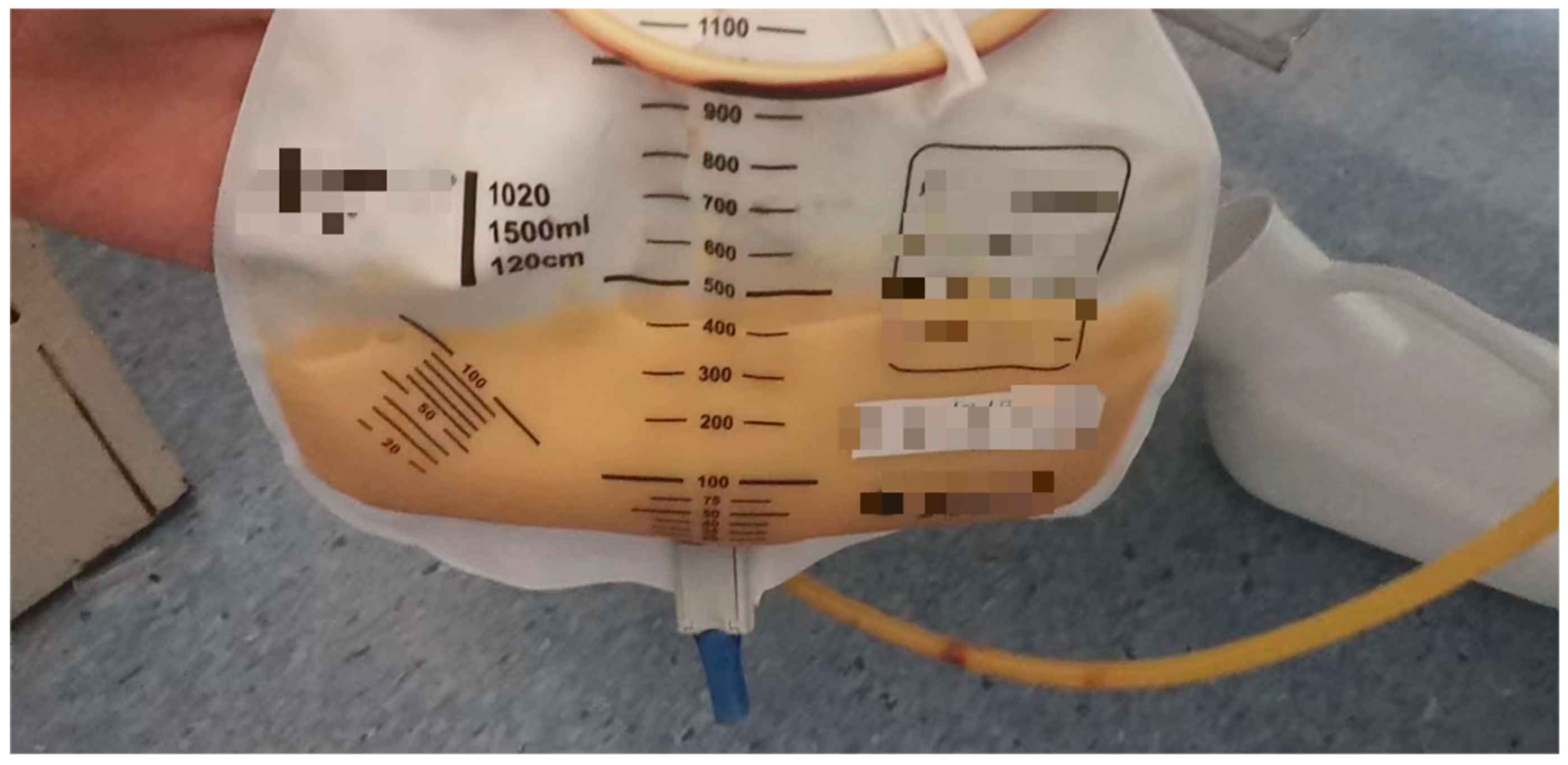
On POD 5 following OLT, the volume of fluid from the right subphrenic drain increased, with 500 mL of milky white, greasy fluid collected over 24 h (Figure 1). The patient reported no specific symptoms of discomfort. Subsequent laboratory analysis of the drainage fluid confirmed the following: Rivalta test positive (+), specific gravity 1.028, WBC count 6.1 × 10⁹/L (lymphocyte-predominant), total protein 27.3 g/L, glucose 7.89 mmol/L, chloride 104.8 mmol/L, TG 185 mg/dL, and negative bacterial culture. These findings satisfied four of Matsuura’s diagnostic criteria for chyle leakage—milky appearance, TG > 110 mg/dL, WBC > 1000/μL, and negative culture—confirming the diagnosis definitively [17]. Conservative management was initiated, including albumin infusions (China Resources Boya Bio-Pharmaceutical Group Co., Ltd., Fuzhou, Jiangxi, China); diuretics; a high-protein, low-fat diet; and subcutaneous octreotide. However, these interventions proved ineffective; the characteristics of the drained fluid remained unchanged, and the volume increased to approximately 2000 mL/24 h on POD 9–11 (Table 1).
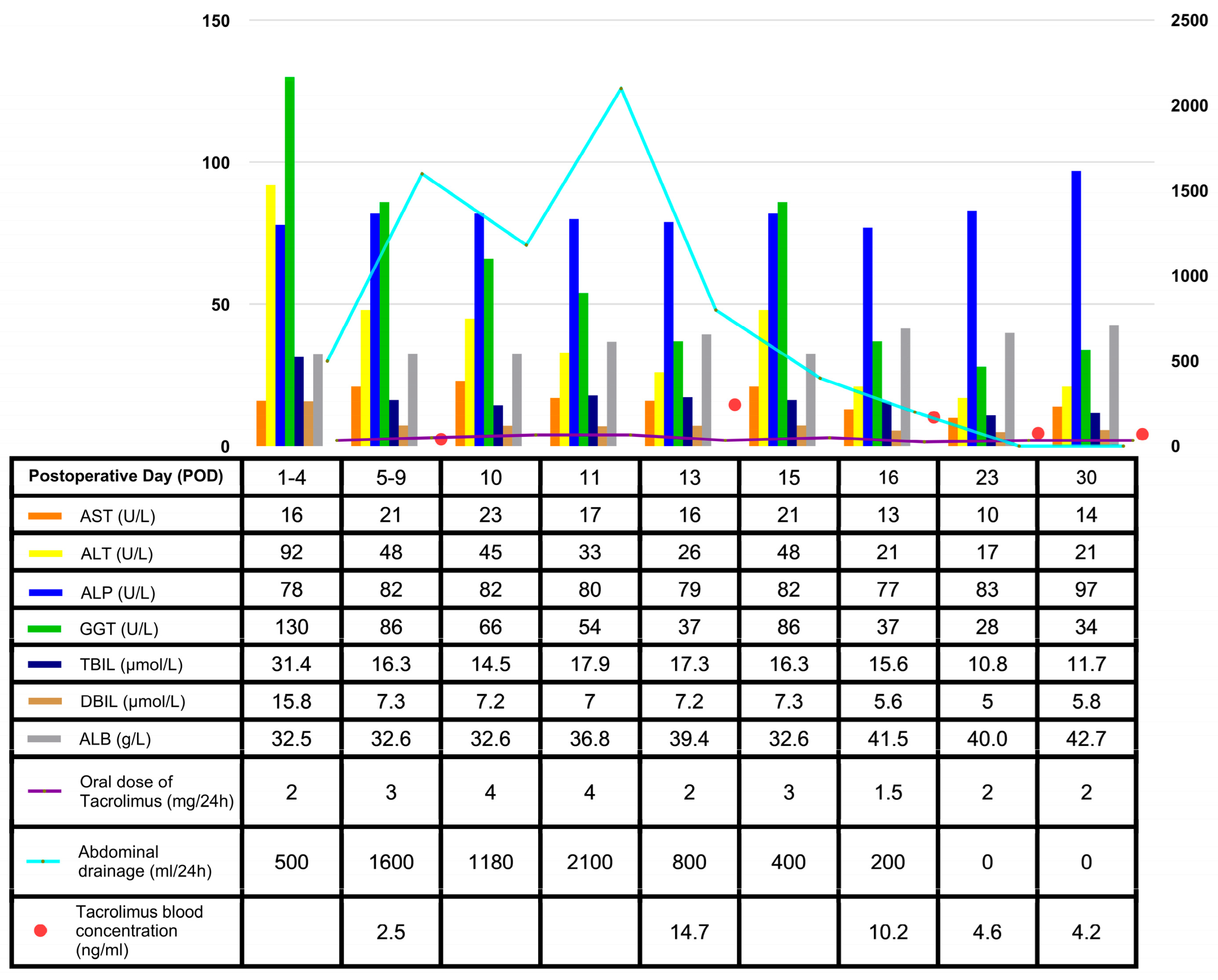
Beginning on POD 11, we administered 40 mL of a hypertonic solution containing 0.75g erythromycin (Hunan Kelun Pharmaceutical Co., Ltd., Yueyang, Hunan, China) and 25% glucose (Sichuan Kelun Pharmaceutical Co., Ltd., Chengdu, Sichuan, China) into the right subphrenic drain every other day. This intervention was initiated after failure of first-line conservative treatments and thorough multidisciplinary discussion involving hepatobiliary surgeons, clinical pharmacists, and ethicists. Following each injection, the drain was clamped for 1 h to promote local retention of the solution, then unclamped for continuous drainage. After three rounds of this intervention, chylous drainage volume decreased progressively, as follows: 800 mL/24 h on POD 13, 400 mL/24 h on POD 15, and a minimal volume on POD 16. The only associated complication was transient local abdominal pain, which was mitigated by the addition of 2% lidocaine (2 mL, Shandong Hualu Pharmaceutical Co., Ltd., Dezhou, Shandong, China) to the erythromycin solution. Following abdominal ultrasound confirmation of resolved fluid accumulation, the right subhepatic and right subphrenic drains were removed on POD 21 and POD 23, respectively (Figure 2).
Notably, chyle leakage exerted a substantial influence on the patient’s blood tacrolimus concentrations. Starting on POD 3, the patient received tacrolimus at a dose of 1.0 mg BID, with a blood concentration of 1.7 ng/mL measured on POD 5. When the tacrolimus dose was increased to 1.5 mg BID, Wuzhi capsules (a CYP3A5 inhibitor, Guangxi Fanglve Pharmaceutical Group Co., Ltd., Guigang, Guangxi, China) were co-administered to augment tacrolimus concentrations [18]; however, this adjustment yielded minimal improvement, as the blood concentration only increased to 2.5 ng/mL by POD 9. On POD 10, the tacrolimus dose was further escalated to 2.0 mg BID. Following the marked reduction in chyle leakage on POD 13, the patient’s blood tacrolimus concentration abruptly surged to 14.7 ng/mL. This prompted the immediate discontinuation of Wuzhi capsules to prevent excessive elevation of tacrolimus levels, and the evening tacrolimus dose on POD 13 was omitted. Subsequently, the tacrolimus dose was reduced to 1.5 mg BID, leading to a concentration decrease to 10.2 ng/mL by POD 16. After another evening dose omission on POD 16, the dose was further lowered to 1.0 mg BID—resulting in concentrations of 7.3 ng/mL on POD 19 and 4.6 ng/mL on POD 23. The patient was discharged on POD 23, with a follow-up tacrolimus concentration of 4.2 ng/mL recorded on POD 30 (Figure 2).

Follow-Up

After discharge, the patient was closely monitored for tacrolimus blood concentrations, with stable levels (4.2–6.2 ng/mL) maintained within the therapeutic window. Serial liver function tests revealed normal hepatic enzyme levels and preserved synthetic function, confirming successful graft function. Notably, no recurrence of chyle leakage was observed on follow-up imaging (abdominal ultrasounds at 1, 3, and 6 months post-discharge), and the patient reported no abdominal discomfort, unintended weight loss, or clinical signs of malnutrition. However, given the patient’s underlying history of decompensated cirrhosis and HCC—conditions that may persistently stress the lymphatic system and increase susceptibility to lymphatic complications—ongoing monitoring for potential recurrence of chylous leakage remains clinically necessary. Prophylactic management includes regular portal hemodynamic assessments, periodic monitoring of serum albumin and nutritional markers, and avoidance of excessive abdominal pressure. Long-term follow-up further confirmed no recurrence of HCC or metastatic disease (via abdominal and chest CT scans at 12 and 18 months) and sustained graft function. As of the last follow-up, on 28 April 2025, the patient remained in good health with consistent adherence to immunosuppressive therapy and regular clinic attendance, with no episodes of acute rejection or infectious complications documented.

3. Discussion

As previously noted, chyle leakage is a rare post-LT complication linked to rare adverse outcomes [2,5]. In this case, the patient’s decompensated cirrhosis exacerbated lymphatic congestion, while surgical dissection near the hepatic hilum and retroperitoneal structures likely damaged lymphatic trunks, collectively aligning with the two key drivers of post-LT chyle leakage (intraoperative lymphatic injury and portal hypertension-related lymph overproduction) [5,19]. To mitigate such complications, key surgical preventive strategies include (1) systematic identification and management of intraperitoneal or retroperitoneal lymphatic vessels and sealing of suspicious lymphatic branches using clips or electrocoagulation [20,21]; and (2) intraoperative lymphatic visualization—via carbon nanoparticles or lipophilic contrast agents—to detect small lymphatic injuries (<1 mm) [22,23].
The off-label use of intraperitoneal erythromycin as salvage therapy for refractory post-LT chylous leakage warrants explicit acknowledgment and detailed rationale. In this case, the off-label use was justified by three core factors: First, the unmet clinical need for minimally invasive alternatives in high-risk patients. For this patient, first-line conservative treatments proved ineffective: chylous drainage volume persisted at 1000–2100 mL/d (POD 5–11) with no improvement in fluid characteristics. Surgical repair was concurrently ruled out because of his pre-existing decompensated cirrhosis (Child–Pugh Class B) and history of HCC-heightened perioperative risks—specifically, portal hypertension-related bleeding, impaired wound healing due to malnutrition, and potential exacerbation of liver dysfunction—making reoperation clinically unsafe. Second, a plausible mechanistic basis supported repurposing erythromycin for peritoneal lymphatic fistula closure. As reported, erythromycin induces chemical pleurodesis via inflammatory cell recruitment and serosal fibrosis [24,25], a sclerosing effect that has been clinically utilized to manage refractory pneumothorax or malignant pleural effusions by promoting local tissue adhesion. Given the striking anatomical and physiological similarities between the pleural and peritoneal cavities—both lined by serous membranes with interconnected lymphatic drainage networks—this pleurodesis-related effect could theoretically extend to the peritoneal cavity, driving fibrosis around the lymphatic fistula to facilitate closure. Notably, the transient localized abdominal pain our patient experienced after the injections may have been associated with this inflammatory mechanism, which resolved with local lidocaine administration. Third, rigorous, patient-centered risk assessment and mitigation strategies were implemented to minimize harm. The primary potential risks of intraperitoneal erythromycin (chemical peritonitis, local irritation, systemic drug exposure, and unanticipated interactions with tacrolimus) were addressed via the following targeted measures: (1) a hypertonic formulation (25% glucose) was used to enhance local contact with the lymphatic fistula site while reducing systemic absorption; (2) the drain was clamped for 1 h post-injection to optimize local drug retention, followed by continuous drainage to limit prolonged peritoneal exposure, consistent with pleurodesis data showing systemic erythromycin concentrations rarely exceeding 0.3 μg/mL, far below the 1.0 μg/mL threshold for CYP3A4 inhibition [25]; (3) serial electrocardiographic monitoring was performed to assess for QT interval prolongation [26,27], with stable QTc intervals (380–410 ms) confirming no significant systemic drug effects; and (4) comprehensive informed consent was obtained from the patient and their family, explicitly documenting the off-label nature of the intervention, its experimental status, potential risks, and lack of specific outcome data in post-LT patients, consistent with institutional ethics requirements.
The patient exhibited distinct tacrolimus concentration fluctuations closely tied to the course of post-LT chylous leakage. From the onset of chylous leakage, tacrolimus concentrations remained persistently subtherapeutic [15], ranging from 1.7 to 2.5 ng/mL. This low exposure persisted even after aggressive dose adjustments: the daily tacrolimus dose was escalated from an initial 2.0 mg to 4.0 mg, and Wuzhi capsules were concurrently administered to enhance drug retention [18]. A clear reversal occurred only as chylous leakage resolved: chylous drainage volume decreased from 2000 mL/24 h (POD 9) to 800 mL/24 h (POD 13), and tacrolimus concentrations concurrently surged from 2.5 ng/mL (POD 9) to 14.7 ng/mL (POD 13), returning to the therapeutic window. This strict temporal alignment between chylous leakage severity and tacrolimus exposure prompted an in-depth investigation into the underlying cause of the fluctuations.
To explore the potential role of chylous leakage in tacrolimus concentration fluctuations, we first assessed common factors known to disrupt tacrolimus pharmacokinetics: First, gastrointestinal absorption impairment was considered less likely, as intact intestinal function was supported by the absence of persistent diarrhea or vomiting and a rising prealbumin level (145 mg/L–200 mg/L during the hospital stay), a marker often associated with improved nutritional status and intestinal integrity [28]. Second, genetic polymorphisms were deemed unlikely to drive refractory tacrolimus underexposure; genotyping revealed a CYP3A5*1/*3 genotype, a profile not typically linked to persistent subtherapeutic levels, and concurrent administration of Wuzhi capsules (validated CYP3A5 inhibitors) further eliminated genetic-driven clearance acceleration [29,30]. Third, drug–drug interactions with most concomitant medications were considered minimal; entecavir (viral prophylaxis), metformin (glucose control), and cefepime (infection prevention) have no documented effects on tacrolimus metabolism via CYP3A4/5 [31,32,33]. Fourth, we assessed diuretic use—the patient received furosemide (20 mg/d preoperatively, temporarily increased to 40 mg/d POD 9–10 during active chylous leakage, then titrated back to 20 mg/d) for ascites management, but its influence on tacrolimus fluctuations was minimal—stable volume status (daily weight 68–70 kg, 24 h urine output 1500–2000 mL/d, normal electrolytes/renal function) ruled out fluid shifts, and furosemide has no documented impact on tacrolimus metabolism or absorption. Fifth, patient non-adherence was considered absent via direct nursing observation during administration of tacrolimus. Sixth, liver function fluctuations were unlikely a key driver of tacrolimus fluctuations: a transient ALT elevation (peaking at 92 U/L on POD 4) resolved to 45 U/L by POD 10, indicating gradual recovery of liver function. Improved liver function would be expected to augment the hepatic first-pass metabolism of tacrolimus, theoretically leading to accelerated clearance and reduced concentrations [9], yet this contradicts clinical observations, as tacrolimus concentrations did not decrease alongside liver function recovery, but rather increased sharply to 14.7 ng/mL on POD 13. Regarding intraperitoneal erythromycin, as previously discussed in the rationale for this off-label intervention, we implemented measures to minimize systemic erythromycin exposure, which aligns with prior observations that local erythromycin administration in pleurodesis typically yields minimal systemic concentrations [24,25]. However, we cannot fully exclude erythromycin as a potential contributing factor because serum erythromycin concentrations were not measured. Collectively, these assessments suggest that chylous leakage is the most plausible primary contributor to tacrolimus fluctuations, with other factors playing minimal or secondary roles.
Chyle leakage emerged as the core cause of tacrolimus fluctuations via three key mechanisms: First, tacrolimus’ high lipophilicity (log P = 4.3) drives its preferential partitioning into lipid-rich chylous fluid, where it binds to chylomicrons and forms a “drug reservoir” [34], a phenomenon consistent with both preclinical data and clinical observations of other lipophilic drugs. Preclinically, our rat chyle leakage model demonstrated that tacrolimus concentrations in chylous ascites (57.93 ± 4.31 ng/mL) were threefold higher than in serum (19.65 ± 0.52 ng/mL, p = 0.0003). Detailed experimental methods and raw data of this preclinical study are provided in the Supplementary Materials (Supplementary Figure S1). Clinically, analogous sequestration has been reported for voriconazole; Tharanon et al. [35] documented a patient with idiopathic bilateral chylothorax who failed to achieve therapeutic voriconazole levels, attributed to drug trapping in chylous fluid. This reservoir effect differs sharply from non-chylous ascites; Yang et al. [16] noted that tacrolimus concentrations in non-chylous ascites (0.2–3.0 ng/mL) had negligible impacts on blood levels, with fluid drainage not altering whole-blood tacrolimus. The discrepancy arises from chylous fluid’s high chylomicron content; Tso et al. [36] recently reviewed that intestinal lymphatic vessels preferentially transport lipophilic drugs bound to chylomicrons, diverting them from systemic circulation, which explains why our patient had persistent tacrolimus underexposure despite dose escalation. Second, chyle leakage initially exacerbated the patient’s pre-existing hypoalbuminemia by depleting intravascular proteins, thereby increasing free tacrolimus fractions and accelerating its clearance via CYP3A4 [37]. As chyle leakage resolved, hypoalbuminemia improved accordingly (41.5 g/L on POD 16), reducing free drug clearance and contributing to the recovery of tacrolimus concentrations, further reinforcing chyle leakage as the upstream driver of both the albumin deficit and subsequent tacrolimus fluctuations. Third, we hypothesize that the profound catabolic state from sustained high-volume chylous fluid loss may have perturbed tacrolimus pharmacokinetics. Tacrolimus’ apparent volume of distribution (Vd)/bioavailability (F) is mainly regulated by physiological factors (weight, body fat, sex), biochemical indices (hematocrit), and concomitant medications (voriconazole), but none of the literature documents chylous leakage’s impact on its Vd [38,39,40,41,42]. Thus, this remains a plausible speculation: reduced intravascular volume and catabolism-driven body composition changes may have increased tacrolimus’ Vd, potentially shifting drug distribution to extravascular tissues and explaining lower whole-blood concentrations despite dose escalation. Notably, hematocrit was excluded as a confounder, as it stayed stable at 31.8–36.7 postoperatively, so it did not alter tacrolimus’ Vd or metabolism here.
This case report has inherent limitations. First, the lack of direct measurement of tacrolimus in chylous drainage fluid and erythromycin in serum means the proposed mechanisms remain supported by indirect clinical correlations, rather than definitive evidence. Second, as a single-case study, generalizability is limited, and the observed response to erythromycin may not be reproducible in all patients with post-LT chylous leakage. Third, the preclinical data cited to support tacrolimus sequestration, specifically, the rat chyle leakage model, showing threefold higher tacrolimus concentrations in chylous ascites than serum, are unpublished and preliminary, with no prior peer review. Thus, further large-scale clinical trials and mechanistic experiments are needed to systematically validate: the relationship between tacrolimus concentrations and chyle leakage, and the efficacy and safety of intraperitoneal erythromycin for post-LT chyle leakage.

4. Conclusions

Chyle leakage may reduce tacrolimus bioavailability via multiple synergistic mechanisms, including drug sequestration in chylous fluid and exacerbated hypoalbuminemia. Furthermore, the systemic catabolic state from high-volume fluid loss may contribute to pharmacokinetic instability, though this remains theoretical. Intraperitoneal erythromycin, used off-label in this case, suggests that chemical pleurodesis may be a viable salvage therapy for refractory post-LT chylous leakage in patients ineligible for surgical repair, but its efficacy and safety require further validation. These findings underscore the need for heightened clinical vigilance regarding the association between chylous leakage and immunosuppressant concentration instability, as well as tailored therapeutic drug monitoring protocols for this patient population. Further pharmacokinetic studies are needed to quantify tacrolimus loss and optimize immunosuppressive regimens in this setting.

Supplementary Materials

The following supporting information can be downloaded at: https://www.mdpi.com/article/10.3390/transplantology7010001/s1, Figure S1: Comparison of Tacrolimus Concentrations (ng/mL) between the Control and Drug-Treated Groups in Rats.

Author Contributions

Conceptualization, L.-S.H.; methodology, Y.-M.W. and L.-S.H.; software, Z.-Z.F.; validation, Y.-M.W., Z.-Z.F. and L.-S.H.; investigation, Y.-M.W. and F.M.; formal analysis, Y.-M.W.; writing—original draft, Y.-M.W. and Z.-Z.F.; writing—review and editing, B.W. and F.M.; visualization, B.W. and F.M.; project administration, L.-S.H.; data curation, Z.-Z.F. and F.M.; funding acquisition, B.W.; supervision, L.-S.H. All authors have read and agreed to the published version of the manuscript.

Funding

This work was supported by National Natural Science Foundation of China (No.82070649); Shaanxi Provincial Health Commission (No.2022A001 and No.2023TD-09).

Institutional Review Board Statement

This study was conducted in accordance with the Declaration of Helsinki, and approved by the Ethics Committee of The First Affiliated Hospital of Xi’an Jiaotong University (approval no. XJTU1AF2023LSK-009; approval date: 10 January 2023).

Informed Consent Statement

Informed consent was obtained from the patient for both participation in this study and the publication of clinical images included in this case report.

Data Availability Statement

The original data supporting the study’s findings are included in the article and its Supplementary Materials. Due to patient privacy protection (in line with informed consent and local data protection laws), raw clinical data cannot be publicly shared. The minimal dataset required to verify the core conclusions is available on request from the corresponding author with appropriate ethical approval.

Conflicts of Interest

The authors declare no competing financial interests or personal relationships that could have appeared to influence the work reported in this paper.

References

  1. Evans, J.G.; Spiess, P.E.; Kamat, A.M.; Wood, C.G.; Hernandez, M.; Pettaway, C.A.; Dinney, C.P.N.; Pisters, L.L. Chylous ascites after post-chemotherapy retroperitoneal lymph node dissection: Review of the M. D. Anderson experience. J. Urol. 2006, 176 Pt 1, 1463–1467. [Google Scholar] [CrossRef]
  2. Ijichi, H.; Soejima, Y.; Taketomi, A.; Yoshizumi, T.; Uchiyama, H.; Harada, N.; Yonemura, Y.; Maehara, Y. Successful management of chylous ascites after living donor liver transplantation with somatostatin. Liver Int. 2008, 28, 143–145. [Google Scholar] [CrossRef]
  3. Bhardwaj, R.; Vaziri, H.; Gautam, A.; Ballesteros, E.; Karimeddini, D.; Wu, G.Y. Chylous Ascites: A Review of Pathogenesis, Diagnosis and Treatment. J. Clin. Transl. Hepatol. 2018, 6, 105–113. [Google Scholar] [CrossRef]
  4. Lizaola, B.; Bonder, A.; Trivedi, H.D.; Tapper, E.B.; Cardenas, A. Review article: The diagnostic approach and current management of chylous ascites. Aliment. Pharmacol. Ther. 2017, 46, 816–824. [Google Scholar] [CrossRef] [PubMed]
  5. Yilmaz, M.; Akbulut, S.; Isik, B.; Ara, C.; Ozdemir, F.; Aydin, C.; Kayaalp, C.; Yilmaz, S. Chylous ascites after liver transplantation: Incidence and risk factors. Liver Transplant. 2012, 18, 1046–1052. [Google Scholar] [CrossRef] [PubMed]
  6. Adler, E.; Bloyd, C.; Wlodarczyk, S. Chylous Ascites. J. Gen. Intern. Med. 2020, 35, 1586–1587. [Google Scholar] [CrossRef] [PubMed]
  7. Saucedo-Crespo, H.; Roach, E.; Sakpal, S.V.; Auvenshine, C.; Steers, J. Spontaneous Chylous Ascites After Liver Transplantation Secondary to Everolimus: A Case Report. Transplant. Proc. 2020, 52, 638–640. [Google Scholar] [CrossRef]
  8. Takuwa, T.; Yoshida, J.; Ono, S.; Hishida, T.; Nishimura, M.; Aokage, K.; Nagai, K. Low-fat diet management strategy for chylothorax after pulmonary resection and lymph node dissection for primary lung cancer. J. Thorac. Cardiovasc. Surg. 2013, 146, 571–574. [Google Scholar] [CrossRef]
  9. Venkataramanan, R.; Swaminathan, A.; Prasad, T.; Jain, A.; Zuckerman, S.; Warty, V.; McMichael, J.; Lever, J.; Burckart, G.; Starzl, T. Clinical pharmacokinetics of tacrolimus. Clin. Pharmacokinet. 1995, 29, 404–430. [Google Scholar] [CrossRef]
  10. Iwasaki, K. Metabolism of tacrolimus (FK506) and recent topics in clinical pharmacokinetics. Drug Metab. Pharmacokinet. 2007, 22, 328–335. [Google Scholar] [CrossRef]
  11. Shen, T.; Feng, X.-W.; Geng, L.; Zheng, S.-S. Reversible sinusoidal obstruction syndrome associated with tacrolimus following liver transplantation. World J. Gastroenterol. 2015, 21, 6422–6426. [Google Scholar] [CrossRef]
  12. Bekersky, I.; Dressler, D.; Mekki, Q.A. Effect of low- and high-fat meals on tacrolimus absorption following 5 mg single oral doses to healthy human subjects. J. Clin. Pharmacol. 2001, 41, 176–182. [Google Scholar] [CrossRef]
  13. Jusko, W.J.; Piekoszewski, W.; Klintmalm, G.B.; Shaefer, M.S.; Hebert, M.F.; Piergies, A.A.; Lee, C.C.; Schechter, P.; Mekki, Q.A. Pharmacokinetics of tacrolimus in liver transplant patients. Clin. Pharmacol. Ther. 1995, 57, 281–290. [Google Scholar] [CrossRef] [PubMed]
  14. Suetsugu, K.; Ikesue, H.; Miyamoto, T.; Shiratsuchi, M.; Yamamoto-Taguchi, N.; Tsuchiya, Y.; Matsukawa, K.; Uchida, M.; Watanabe, H.; Akashi, K.; et al. Analysis of the variable factors influencing tacrolimus blood concentration during the switch from continuous intravenous infusion to oral administration after allogeneic hematopoietic stem cell transplantation. Int. J. Hematol. 2017, 105, 361–368. [Google Scholar] [CrossRef]
  15. Staatz, C.E.; Tett, S.E. Clinical pharmacokinetics and pharmacodynamics of tacrolimus in solid organ transplantation. Clin. Pharmacokinet. 2004, 43, 623–653. [Google Scholar] [CrossRef] [PubMed]
  16. Yang, N.; Du, Y.; He, J.; Ge, J.; Wang, M.; Sun, R.; Zhu, H.; Ge, W. Distribution evaluation of tacrolimus in the ascitic fluid of liver transplant recipients with liver cirrhosis by a sensitive ultra-performance liquid chromatography-tandem mass spectrometry method. J. Sep. Sci. 2022, 45, 411–421. [Google Scholar] [CrossRef]
  17. Matsuura, T.; Yanagi, Y.; Hayashida, M.; Takahashi, Y.; Yoshimaru, K.; Taguchi, T. The incidence of chylous ascites after liver transplantation and the proposal of a diagnostic and management protocol. J. Pediatr. Surg. 2018, 53, 671–675. [Google Scholar] [CrossRef]
  18. Peng, Y.; Jiang, F.; Zhou, R.; Jin, W.; Li, Y.; Duan, W.; Xu, L.; Yang, H. Clinical Evaluation of the Efficacy and Safety of Co-Administration of Wuzhi Capsule and Tacrolimus in Adult Chinese Patients with Myasthenia Gravis. Neuropsychiatr. Dis. Treat. 2021, 17, 2281–2289. [Google Scholar] [CrossRef]
  19. Al-Busafi, S.A.; Ghali, P.; Deschênes, M.; Wong, P. Chylous Ascites: Evaluation and Management. ISRN Hepatol. 2014, 2014, 240473. [Google Scholar] [CrossRef]
  20. Kanno, T.; Kobori, G.; Ito, K.; Nakagawa, H.; Takahashi, T.; Takaoka, N.; Somiya, S.; Nagahama, K.; Ito, M.; Megumi, Y.; et al. Complications and their management following retroperitoneal lymph node dissection in conjunction with retroperitoneal laparoscopic radical nephroureterectomy. Int. J. Urol. 2022, 29, 455–461. [Google Scholar] [CrossRef] [PubMed]
  21. Xing, Q.; He, L.; Cao, T.; Hu, C.; Liu, X. Managing Chyle Leakage Following Right Retroperitoneoscopic Adrenalectomy: A Case Study. Am. J. Case Rep. 2025, 26, e945469. [Google Scholar] [CrossRef] [PubMed]
  22. Su, P.; Zhang, Z. Nano Carbon Tracer in the Repairing of Congenital Abdominal Chylorus Leakage. Indian J. Pediatr. 2024, 91, 294–296. [Google Scholar] [CrossRef] [PubMed]
  23. Wang, S.; Jiang, W. Post-esophagectomy chylothorax refractory to mass ligation of thoracic duct above diaphragm: A case report. J. Cardiothorac. Surg. 2022, 17, 259. [Google Scholar] [CrossRef] [PubMed]
  24. Zhai, C.-C.; Lin, X.-S.; Yao, Z.-H.; Liu, Q.-H.; Zhu, L.; Lin, D.-J.; Wan, Y.-Y. Erythromycin poudrage versus erythromycin slurry in the treatment of refractory spontaneous pneumothorax. J. Thorac. Dis. 2018, 10, 757–765. [Google Scholar] [CrossRef]
  25. Balassoulis, G.; Sichletidis, L.; Spyratos, D.; Chloros, D.; Zarogoulidis, K.; Kontakiotis, T.; Bagalas, V.; Porpodis, K.; Manika, K.; Patakas, D. Efficacy and safety of erythromycin as sclerosing agent in patients with recurrent malignant pleural effusion. Am. J. Clin. Oncol. 2008, 31, 384–389. [Google Scholar] [CrossRef]
  26. Guo, L.; Coyle, L.; Abrams, R.M.C.; Kemper, R.; Chiao, E.T.; Kolaja, K.L. Refining the Human iPSC-Cardiomyocyte Arrhythmic Risk Assessment Model. Toxicol. Sci. 2013, 136, 581–594. [Google Scholar] [CrossRef]
  27. Gibson, J.K.; Yue, Y.; Bronson, J.; Palmer, C.; Numann, R. Human stem cell-derived cardiomyocytes detect drug-mediated changes in action potentials and ion currents. J. Pharmacol. Toxicol. Methods 2014, 70, 255–267. [Google Scholar] [CrossRef]
  28. Devoto, G.; Gallo, F.; Marchello, C.; Racchi, O.; Garbarini, R.; Bonassi, S.; Albalustri, G.; Haupt, E. Prealbumin serum concentrations as a useful tool in the assessment of malnutrition in hospitalized patients. Clin. Chem. 2006, 52, 2281–2285. [Google Scholar] [CrossRef]
  29. Haufroid, V.; Wallemacq, P.; VanKerckhove, V.; Elens, L.; De Meyer, M.; Eddour, D.C.; Malaise, J.; Lison, D.; Mourad, M. CYP3A5 and ABCB1 polymorphisms and tacrolimus pharmacokinetics in renal transplant candidates: Guidelines from an experimental study. Am. J. Transplant. 2006, 6, 2706–2713. [Google Scholar] [CrossRef]
  30. Kamdem, L.K.; Streit, F.; Zanger, U.M.; Brockmöller, J.; Oellerich, M.; Armstrong, V.W.; Wojnowski, L. Contribution of CYP3A5 to the in vitro hepatic clearance of tacrolimus. Clin. Chem. 2005, 51, 1374–1381. [Google Scholar] [CrossRef]
  31. Lourenço, T.; Vale, N. Entecavir: A Review and Considerations for Its Application in Oncology. Pharmaceuticals 2023, 16, 1603. [Google Scholar] [CrossRef]
  32. Boschung-Pasquier, L.; Atkinson, A.; Kastner, L.K.; Banholzer, S.; Haschke, M.; Buetti, N.; Furrer, D.I.; Hauser, C.; Jent, P.; Que, Y.A.; et al. Cefepime neurotoxicity: Thresholds and risk factors. A retrospective cohort study. Clin. Microbiol. Infect. 2020, 26, 333–339. [Google Scholar] [CrossRef]
  33. Rena, G.; Hardie, D.G.; Pearson, E.R. The mechanisms of action of metformin. Diabetologia 2017, 60, 1577–1585. [Google Scholar] [CrossRef]
  34. Yoshida, T.; Sako, K.; Kondo, H. Design of novel tacrolimus formulations with chemically synthesized oils for oral lymphatic delivery. Drug Dev. Ind. Pharm. 2020, 46, 219–226. [Google Scholar] [CrossRef] [PubMed]
  35. Tharanon, V.; Muangkasem, A.; Inprasit, N.; Chantharit, P. Patient with Probable Invasive Pulmonary Aspergillosis and Idiopathic Bilateral Chylothorax with Chylopericardium May Experience Unachievable Therapeutic Voriconazole Serum Levels. Ther. Drug Monit. 2025, 47, 452–456. [Google Scholar] [CrossRef]
  36. Tso, P.; Bernier-Latmani, J.; Petrova, T.V.; Liu, M. Transport functions of intestinal lymphatic vessels. Nat. Rev. Gastroenterol. Hepatol. 2025, 22, 127–145. [Google Scholar] [CrossRef] [PubMed]
  37. Chow, F.S.; Piekoszewski, W.; Jusko, W.J. Effect of hematocrit and albumin concentration on hepatic clearance of tacrolimus (FK506) during rabbit liver perfusion. Drug Metab. Dispos. 1997, 25, 610–616. [Google Scholar]
  38. Chen, L.; Lu, X.; Tan, G.; Zhu, L.; Liu, Y.; Li, M. Impact of body composition on pharmacokinetics of tacrolimus in liver transplantation recipients. Xenobiotica 2020, 50, 186–191. [Google Scholar] [CrossRef]
  39. Lu, Z.; Bonate, P.; Keirns, J. Population pharmacokinetics of immediate- and prolonged-release tacrolimus formulations in liver, kidney and heart transplant recipients. Br. J. Clin. Pharmacol. 2019, 85, 1692–1703. [Google Scholar] [CrossRef] [PubMed]
  40. Khamlek, K.; Komenkul, V.; Sriboonruang, T.; Wattanavijitkul, T. Population pharmacokinetic models of tacrolimus in paediatric solid organ transplant recipients: A systematic review. Br. J. Clin. Pharmacol. 2024, 90, 406–426. [Google Scholar] [CrossRef]
  41. Zhang, Y.; Xue, L.; Hu, L.; Wang, L.; Pan, H.; Lin, Y.; Ding, X.; Huang, Y.; Miao, L. Exploring the comprehensive factors influencing tacrolimus pharmacokinetics in early renal transplant recipients: A population pharmacokinetic analysis. Eur. J. Clin. Pharmacol. 2025, 81, 785–799. [Google Scholar] [CrossRef] [PubMed]
  42. Zhao, Y.-C.; Sun, Z.-H.; Li, J.-K.; Liu, H.-Y.; Zhang, B.-K.; Xie, X.-B.; Fang, C.-H.; Sandaradura, I.; Peng, F.-H.; Yan, M. Individualized dosing parameters for tacrolimus in the presence of voriconazole: A real-world PopPK study. Front. Pharmacol. 2024, 15, 1439232. [Google Scholar] [CrossRef] [PubMed]
Figure 1. Milky white greasy fluid drainage from right subphrenic drainage tube.
Transplantology 07 00001 g001
Figure 2. Correlations among tacrolimus blood concentration, liver function parameters, and abdominal drainage of the patient.
Transplantology 07 00001 g002
Table 1. Time-line of Clinical Symptoms, Laboratory Findings, Interventions, and Outcomes.
PODClinical SymptomsKey LabsInterventionsOutcomes
1–4Right subphrenic drainage: serous fluid (10–500 mL/d)Serum albumin 32.5 g/LTacrolimus 1.0 mg BID;
Entecavir + Cefepime + Teicoplanin + Caspofungin (anti-infection)
No infection signs;
No abdominal pain
5–9Milky drainage (100–1600 mL/d) Drainage fluid: TG 185 mg/dL, WBC 6.1 × 10⁹/L, culture (-);
Tacrolimus 1.7–2.5 ng/mL; Serum albumin 32.5 g/L
Tacrolimus increased to 1.5 mg BID (+ Wuzhi capsules); Conservative treatment: albumin, octreotide, low-fat diet + medium-chain triglyceridesNo infection signs;
No abdominal pain
10Milky drainage (1180 mL/d) Serum albumin 32.6 g/LTacrolimus further increased to 2.0 mg BIDDrainage volume still high
11Persistent milky drainage (2100 mL/d)Serum albumin 36.8 g/LFirst intraperitoneal injection: erythromycin 0.75 g + 25% glucose 40 mLTransient local pain
13Milky drainage decreased to 800 mL/dTacrolimus 14.7 ng/mL;
Serum albumin 39.4 g/L
Second erythromycin injection;
Discontinue Wuzhi capsules;
Skip evening tacrolimus dose, reduce to 1.5 mg BID
No toxicity signs
15Milky drainage further decreased to 400 mL/d Serum albumin 32.6 g/LThird erythromycin injection (add 2% lidocaine 2 mL to reduce irritation)No local pain
16 Drainage 200 mL/d (milky → serous)Tacrolimus 10.2 ng/mL; Serum albumin 41.5 g/LSkip evening tacrolimus dose, reduce to 1.0 mg BIDDrainage nearly resolved
23 No drainage, incision dryTacrolimus 4.6 ng/mL;
Serum albumin 37.5 g/L
Remove drainage tubesHospital discharge
30No abdominal discomfort;
Normal diet tolerance
Tacrolimus 4.2 ng/mL;
Serum albumin 37.6 g/L; Liver function normal
Continue tacrolimus 1.0 mg BID + entecavirStable condition, no chyle leakage recurrence
Disclaimer/Publisher’s Note: The statements, opinions and data contained in all publications are solely those of the individual author(s) and contributor(s) and not of MDPI and/or the editor(s). MDPI and/or the editor(s) disclaim responsibility for any injury to people or property resulting from any ideas, methods, instructions or products referred to in the content.