
Article

A Retrospective Analysis of a Single Center’s Experience with Hand-Assisted Retroperitoneoscopic Living Donor Nephrectomy: Perioperative Outcomes in 50 Consecutive Cases

1
1st Department of Surgery, University of Pavol Jozef Safarik, 040 11 Kosice, Slovakia
2
Transplant Center, Louis Pasteur University Hospital, 040 11 Kosice, Slovakia
*
Author to whom correspondence should be addressed.
Transplantology 2025, 6(4), 38; https://doi.org/10.3390/transplantology6040038
Submission received: 14 September 2025 / Revised: 2 November 2025 / Accepted: 17 November 2025 / Published: 9 December 2025
(This article belongs to the Section Living Donors and Mini Invasive Surgery)

Abstract

Background: Minimally invasive techniques for living donor nephrectomy are crucial for donor safety and promoting organ donation. Hand-Assisted Retroperitoneoscopic Donor Nephrectomy (HARP-DN) combines the benefits of minimally invasive surgery with the tactile feedback of open surgery. This study analyzes a single center’s initial experience with this technique. Methods: A retrospective analysis was conducted on the first 50 consecutive living kidney donors who underwent HARP-DN at our institution. We collected and evaluated preoperative demographics, intraoperative data (operating time, warm ischemia time), and postoperative outcomes, including complication rates, length of hospital stay, and donor renal function at discharge. Results: All 50 HARP-DN procedures were successfully completed with zero conversions to open surgery and no donor mortality. The mean operating time was 192.4 ± 57.7 min, and the median warm ischemia time was a competitive 110 s. The overall perioperative complication rate was low at 4% (2/50 cases), involving manageable bleeding events. Donors experienced a rapid return to oral diet, and all were discharged with excellent renal function as indicated by a mean serum creatinine of 1.09 ± 0.30 mg/dL. Conclusions: Our initial experience demonstrates that Hand-Assisted Retroperitoneoscopic Donor Nephrectomy is a safe, reproducible, and effective procedure. It offers the advantages of a minimally invasive approach, including low morbidity and excellent preservation of donor renal function, while achieving a short warm ischemia time critical for graft quality. These findings support HARP-DN as a safe, reproducible, and effective option for living donor nephrectomy.

1. Introduction

1.1. The Imperative for Minimally Invasive Living Donor Nephrectomy

Living donor kidney transplantation (LDKT) remains the definitive and superior treatment for patients with end-stage renal disease, offering improved graft and patient survival compared to deceased donor transplantation and dialysis [1,2]. The success and growth of LDKT programs are fundamentally dependent on the willingness of healthy individuals to undergo a major surgical procedure for the benefit of another [3]. Consequently, the foremost ethical and clinical mandate in living donor nephrectomy (DN) is the unwavering commitment to donor safety and the minimization of surgical morbidity [4,5].
The historical standard, open donor nephrectomy (ODN), while effective, was associated with significant drawbacks for the donor, including a large flank incision, substantial postoperative pain, a prolonged convalescence period, and suboptimal cosmetic results [6,7]. These factors served as considerable disincentives to potential donors. The advent of minimally invasive surgery (MIS) marked a paradigm shift in the field. The first laparoscopic donor nephrectomy (LDN), reported by Ratner and colleagues in 1995, heralded a new era aimed at mitigating the physical burden of donation [8]. Subsequent evidence has consistently demonstrated that minimally invasive approaches lead to reduced postoperative pain, shorter hospital stays, and a faster return to normal activities, thereby making the act of donation more acceptable and accessible [9,10].

1.2. Comparing Surgical Approaches: Transperitoneal vs. Retroperitoneal

Within the realm of MIS for DN, two primary anatomical routes have been established: the transperitoneal and the retroperitoneal. The standard transperitoneal laparoscopic surgery (TLS) is widely practiced, offering surgeons a large, familiar operative field with clear anatomical landmarks [11]. However, this approach necessitates entry into the peritoneal cavity and mobilization of intra-abdominal organs, such as the colon and spleen or liver. This carries an inherent, albeit low, risk of iatrogenic visceral injury, bowel adhesions, and postoperative ileus [12,13].
In contrast, the retroperitoneoscopic approach offers a more direct pathway to the kidney and its hilar structures, completely avoiding violation of the peritoneal cavity [14]. This anatomical segregation is not merely a technical nuance but represents a fundamental enhancement of the procedure’s safety profile. By remaining exclusively within the retroperitoneum, the surgeon eliminates the risk of a specific class of complications, including injury to the bowel, liver, and spleen, as well as the potential for late-onset small bowel obstruction from adhesions [15]. A meta-analysis comparing surgical techniques revealed that intra-abdominal injuries were exclusively associated with the transperitoneal approach. This inherent safety advantage is of paramount importance in the context of donor surgery, where the principle of primum non nocere (first, do no harm) is the guiding tenet. Furthermore, the retroperitoneal approach has been associated with a lower incidence of postoperative ileus, contributing to a smoother and faster recovery for the donor [16].

1.3. The Rationale for Hand-Assistance in Retroperitoneoscopic Surgery (HARP-DN)

Hand-assisted retroperitoneoscopic donor nephrectomy (HARP-DN) is a sophisticated hybrid technique that synergistically combines the reduced invasiveness of retroperitoneoscopy with the tactile feedback, control, and safety of traditional open surgery. The introduction of the surgeon’s hand into the operative field provides several distinct and critical advantages over a purely laparoscopic technique [17,18].
First and foremost is the significant reduction in warm ischemia time (WIT), defined as the period from the cessation of blood flow to the graft until cold perfusion is initiated [19]. The ability to manually grasp and rapidly extract the kidney through the hand-port incision is consistently shown in the literature, including large meta-analyses, to result in a shorter WIT compared to pure laparoscopic techniques that require placing the kidney in an entrapment sac for removal [20,21]. This reduction in WIT is vital for preserving immediate and long-term graft function [22].
Second, the surgeon’s hand provides invaluable tactile sensation, which is lost in purely robotic or laparoscopic surgery. This allows for direct palpation of tissues, facilitation of blunt dissection, and gentle, atraumatic retraction of the kidney, which can enhance both the safety and efficiency of the dissection. In the event of unexpected hemorrhage, the hand can provide immediate, direct digital compression for hemostasis, a crucial safety maneuver that is significantly more challenging and less effective with laparoscopic instruments alone [23,24,25].
This enhanced safety profile has broader implications, empowering surgical teams to undertake more complex cases with confidence. The combination of direct retroperitoneal access and manual control has been shown to facilitate right-sided donor nephrectomies, which are traditionally considered more technically demanding due to the shorter right renal vein and the anatomical position of the liver [26,27]. Centers that have adopted HARP-DN have reported a subsequent and dramatic increase in their utilization of right-sided kidneys [28]. This technical enablement is ethically significant, as it allows surgeons to more consistently adhere to the principle of leaving the donor with the functionally or anatomically superior kidney, irrespective of its side. This flexibility can expand the overall living donor pool by preventing the exclusion of candidates whose only suitable kidney for donation is the right one. We suggest that the minimized abdominal wall trauma associated with HARP-DN may translate into superior physical health-related quality of life scores for donors compared to those undergoing traditional open surgery [29,30].

1.4. Study Objective

Given the established benefits and the ongoing refinement of the HARP-DN technique, the primary objective of this study is to conduct a formal retrospective analysis of our institution’s 50 consecutive cases. We aim to report our center’s experience by evaluating perioperative outcomes and donor safety.

2. Materials and Methods

2.1. Study Design and Patient Cohort

The study cohort consists of the last 50 consecutive living kidney donors who underwent a HARP-DN procedure at our institution between November 2019 and May 2025. All donors provided written informed consent for both the surgical procedure and the use of their de-identified clinical data for research purposes.

2.2. Preoperative Donor Evaluation

All potential donors underwent a standardized, comprehensive, and multidisciplinary evaluation in accordance with established international guidelines to ensure their suitability and safety for donation. The evaluation protocol included:
  • Medical and Psychosocial Assessment: A dedicated living donor team, comprising transplant surgeons, nephrologists, social workers, a living donor coordinator, performed a thorough medical history, a complete physical examination, and a detailed psychosocial assessment. This was to confirm the donor’s voluntary and altruistic motivation and to assess their social support system.
  • Immunological Assessment: Standard immunological testing included ABO blood group typing, Human Leukocyte Antigen (HLA) typing, and panel reactive antibody (PRA) screening to determine donor–recipient compatibility.
  • Laboratory Evaluation: A comprehensive panel of laboratory tests was performed, including a complete blood count, a comprehensive metabolic panel, liver function tests, a coagulation profile, viral serologies and urine analysis with microscopy.
  • Anatomical and Functional Imaging: All donors underwent preoperative, contrast-enhanced, multiphasic computed tomography angiography (CT-AG) with 3D vascular and ureteral reconstruction. This imaging modality is the gold standard for providing a detailed roadmap of the renal parenchyma, delineating the number and course of renal arteries and veins, identifying any vascular or urological anomalies, and assessing the relationship of the kidneys to adjacent structures.

2.3. Kidney Selection Criteria

The fundamental principle guiding the choice of which kidney to procure was to ensure maximal donor safety by leaving the donor with the functionally and anatomically superior kidney. The left kidney was generally preferred, primarily due to the anatomical advantage of its longer renal vein, which provides greater flexibility and ease during the recipient implantation procedure. As our institutional experience has not demonstrated a significant difference in renal function or anatomical abnormalities based on the side of donation, all 50 consecutive nephrectomies were left-sided.

2.4. Data Collection and Outcome Measures

The following clinical and demographic parameters were retrospectively extracted from the donors’ and corresponding recipients’ electronic medical records and our institutional transplant database:
  • Donor Demographics: Age (years), gender, Body Mass Index (BMI, calculated as kg/m2), Preoperative serum creatinine levels (mg/dL) and anatomical abnormalities.
  • Intraoperative Variables: Total operating time (minutes), defined as the duration from skin incision to final skin closure 1; warm ischemia time (WIT, seconds), defined as the interval from the clamping of the renal artery to the initiation of cold graft perfusion on the back table.
  • Postoperative Clinical Course: Postoperative hemoglobin decrease (g/dL), calculated as the difference between the preoperative baseline and values at 24 h post-surgery; time to resumption of oral diet (days); total length of hospital stay (days); requirement for allogeneic blood transfusions (units); and type of analgesic requirement in the first 48 h post-surgery.
  • Donor Renal Function: Serum creatinine (mg/dL) measured at the time of hospital discharge.
  • Donor Complications: All perioperative complications occurring within 90 days of the surgical procedure were recorded.

2.5. Statistical Analysis

The distribution of continuous variables will be assessed for normality using Student’s t-test, Mann–Whitney U-test and Wilcoxon signed-rank test. Data with a normal distribution will be presented as mean ± standard deviation (SD), while non-normally distributed data will be presented as median and interquartile range (IQR). Categorical variables will be summarized as frequencies and percentages (n, %). One-way analysis (ANOVA) was used for comparisons among the three groups. The estimated glomerular filtration rate (eGFR) was calculated according to the CKD-EPI equation, incorporating age, sex, and serum creatinine concentration. Differences were considered significant at p < 0.05. Statistical analyses were performed and plots were generated using R (version 4.5.1 R Foundation for Statistical Computing, Vienna, Austria) in RStudio (version 2024.04.0) with the packages ggplot2, tidyverse, ggpubr, gt, gtsummary, gtExtras and webshot2.

2.6. Operative Technique

The HARP-DN procedure was performed using a standardized technique, synthesized from best practices reported in the literature and refined at our institution.

2.6.1. Patient Preparation and Positioning

After the successful induction of general endotracheal anesthesia, the patient is positioned in a full lateral decubitus (flank) position, with the operative side up. The operating table is flexed at the level of the iliac crest to create the maximum possible distance between the 12th rib and the iliac crest, thereby enlarging the retroperitoneal working space. The patient is then securely fixed to the table with padded straps to prevent any movement during the procedure.

2.6.2. Creation of Retroperitoneal Space and Port Placement

The operating table is flexed at the level of the iliac crest to create the maximum possible distance between the 12th rib and the iliac crest, thereby enlarging the retroperitoneal working space. The patient is then securely fixed to the table with padded straps to prevent any movement during the procedure.
A 2 cm skin incision is made in the mid-axillary line, just inferior to the tip of the 12th rib. The external oblique, internal oblique, and transversus abdominis muscles and their associated fascia are sequentially incised or bluntly spread to gain access to the retroperitoneal space. The surgeon then performs blunt digital dissection, creating an initial working space by gently sweeping the peritoneum and its contents medially and anteriorly, away from the posterior abdominal wall musculature (psoas and quadratus lumborum muscles).
A hand-assist device (e.g., GelPort) is then inserted through a separate 6–7 cm muscle-splitting Pfannenstiel incision, which is positioned to allow ergonomic access for the surgeon’s non-dominant hand. The use of a muscle-splitting incision, as opposed to a muscle-cutting one, helps to minimize postoperative pain and reduce the risk of hernia formation. Under direct manual guidance from the inserted hand, a 12 mm trocar for the laparoscope and an additional 5 mm or 12 mm working port are placed. Pneumoretroperitoneum is subsequently established and maintained at a pressure of 12–14 mmHg with carbon dioxide insufflation to maintain the operative view.

2.6.3. Kidney Mobilization and Hilar Dissection

The surgeon’s non-dominant hand, introduced via the hand port, serves as an internal retractor, a dissector, and a sensory instrument throughout the mobilization. Gerota’s fascia is incised longitudinally along the border of the psoas muscle, exposing the perirenal fat and the kidney. The dissection typically commences at the lower pole, where the ureter and the associated gonadal vein are identified. These structures are then carefully traced superiorly toward the renal hilum. Meticulous care is taken to preserve the delicate periureteral tissues, which contain the ureter’s primary blood supply.
The kidney is then systematically mobilized from its posterior, lateral, and superior attachments. The surgeon’s hand is instrumental in this process, providing gentle retraction to expose avascular planes and facilitate dissection with laparoscopic instruments, such as a hook cautery or an energy-based vessel-sealing device.
The dissection then focuses on the renal hilum. The renal vein is typically identified first, located anteriorly to the renal artery, and is carefully dissected circumferentially from the surrounding lymphatic and nervous tissue, tracing it back towards its origin from the vena cava. For a left nephrectomy, this involves identifying, ligating, and dividing the adrenal, lumbar, and gonadal veins to achieve maximal length of the main renal vein, which is crucial for the recipient operation (Figure 1). Subsequently, the renal artery is dissected.

2.6.4. Graft Procurement and Extraction

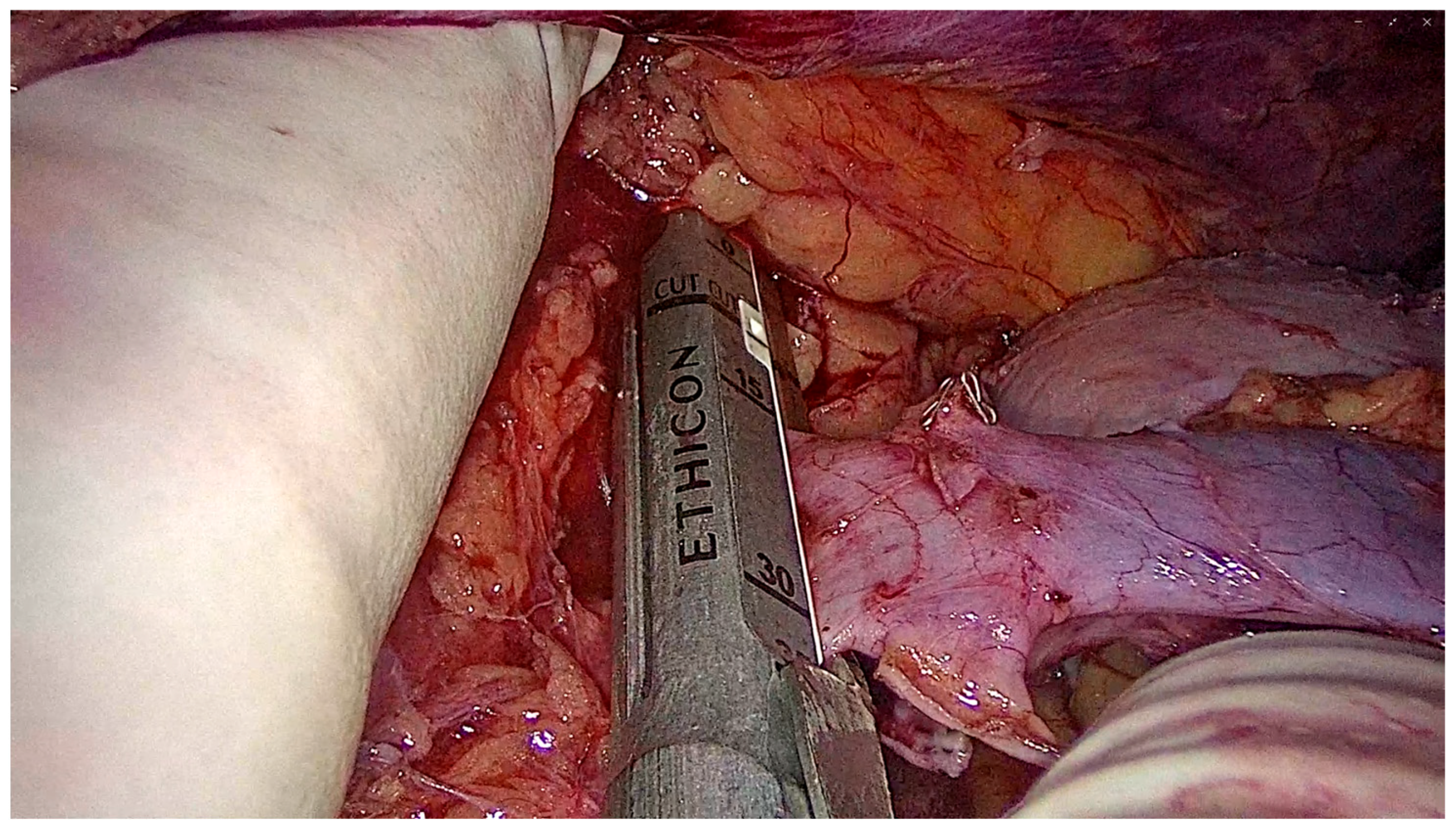
Once the kidney is completely mobilized and the hilar vessels are fully isolated and prepared, the ureter is divided distally, usually at the level where it crosses over the iliac vessels. The renal artery is then controlled proximally at its origin using a vascular endovascular stapler (e.g., Endo-GIA) and is then sharply divided. The renal vein is controlled and divided in a similar fashion (Figure 2).
Immediately following vascular division, the kidney is manually grasped by the surgeon and rapidly extracted through the hand-port incision. This direct, manual extraction is the key procedural step that minimizes the warm ischemia time. The graft is immediately passed to the back-table team, where it is flushed with iced preservation solution (e.g., Histidine-Tryptophan-Ketoglutarate or University of Wisconsin solution) to arrest metabolic activity and prepare it for implantation into the recipient.

2.6.5. Closure

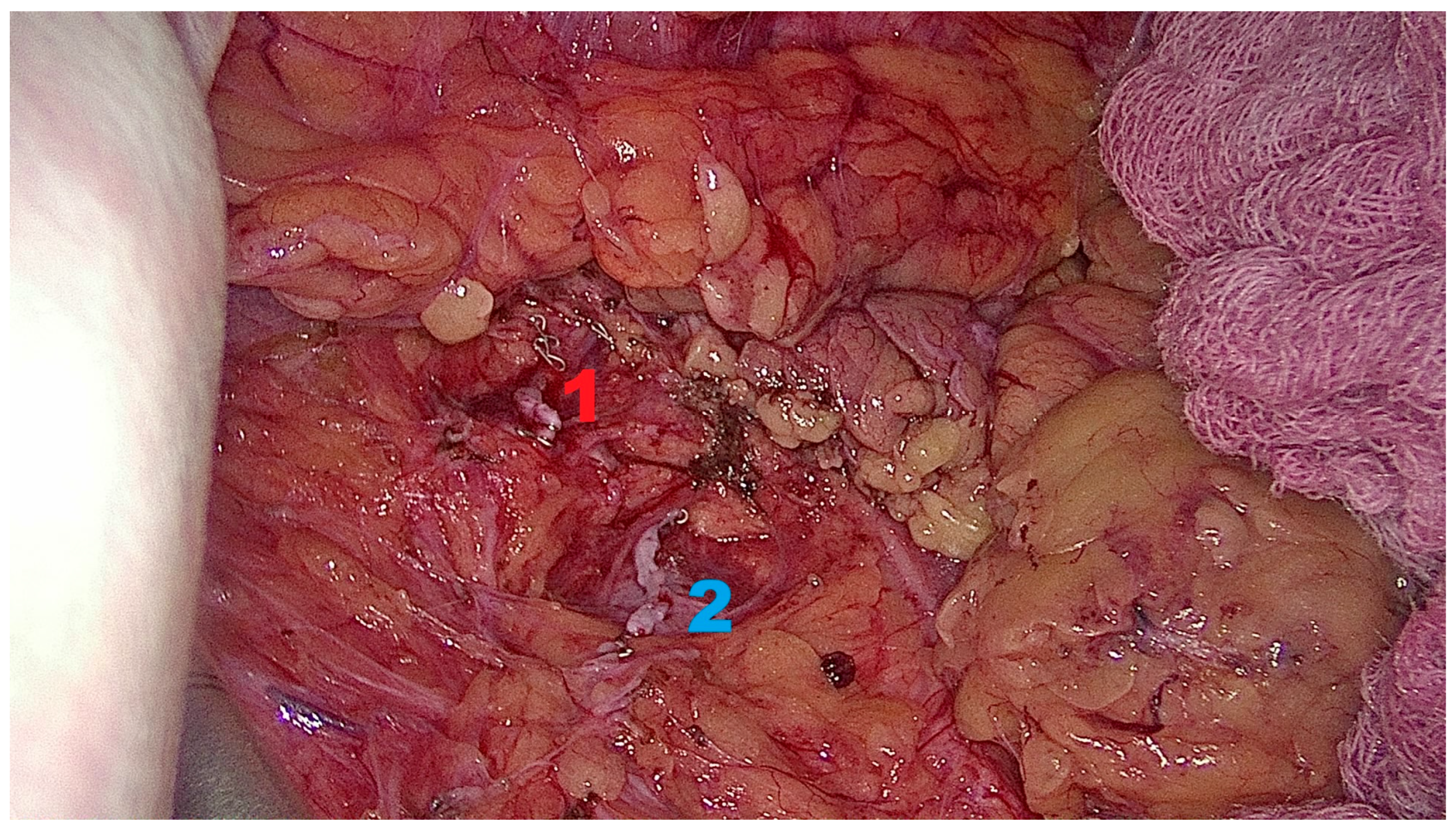
After graft extraction, the pneumoretroperitoneum is briefly re-established to allow for a final inspection of the renal fossa and hilar stumps for hemostasis (Figure 3).
A closed-suction drain may be placed in the renal fossa at the surgeon’s discretion to monitor for any postoperative bleeding or fluid collection. The fascial layers of the hand-port incision and any trocar sites larger than 5 mm are closed with absorbable suture to prevent incisional hernias. The skin is then closed with intradermal suture.

3. Results

3.1. Donor Demographics and Operative Characteristics

A total of 50 consecutive donors underwent HARP-DN during the study period. The demographic and preoperative characteristics of this cohort are summarized in Table 1. The mean age of the donors was [47.2] ± [12.6] years, with [64]% ([32]/50) being female. The mean Body Mass Index (BMI) was [26.38] ± [4.87] kg/m2. The baseline characteristics, including BMI and renal vascular anatomy as determined by preoperative imaging, provide essential context for interpreting the surgical outcomes. A cohort with a higher mean BMI or a greater prevalence of multiple renal arteries might be anticipated to present greater technical challenges, potentially influencing outcomes such as operating time and blood loss.

3.2. Perioperative Outcome

All 50 procedures were completed successfully using the HARP-DN approach, with no intraoperative conversions to a traditional open surgical procedure. The key perioperative outcomes, which serve as the primary measures of procedural efficacy and patient recovery, are detailed in Table 2. The mean operating time for the cohort was 192.4 ± 57.7 min. The median warm ischemia time was [110] seconds (IQR: [90]–[150]), mean hemoglobin decrease at 24 h after surgery was 2.38 ± 0.90 g/dL. These metrics collectively answer the fundamental questions regarding the procedure’s efficiency, safety, and the donor’s immediate postoperative course.

3.2.1. Association Between Donor BMI and Operative Time

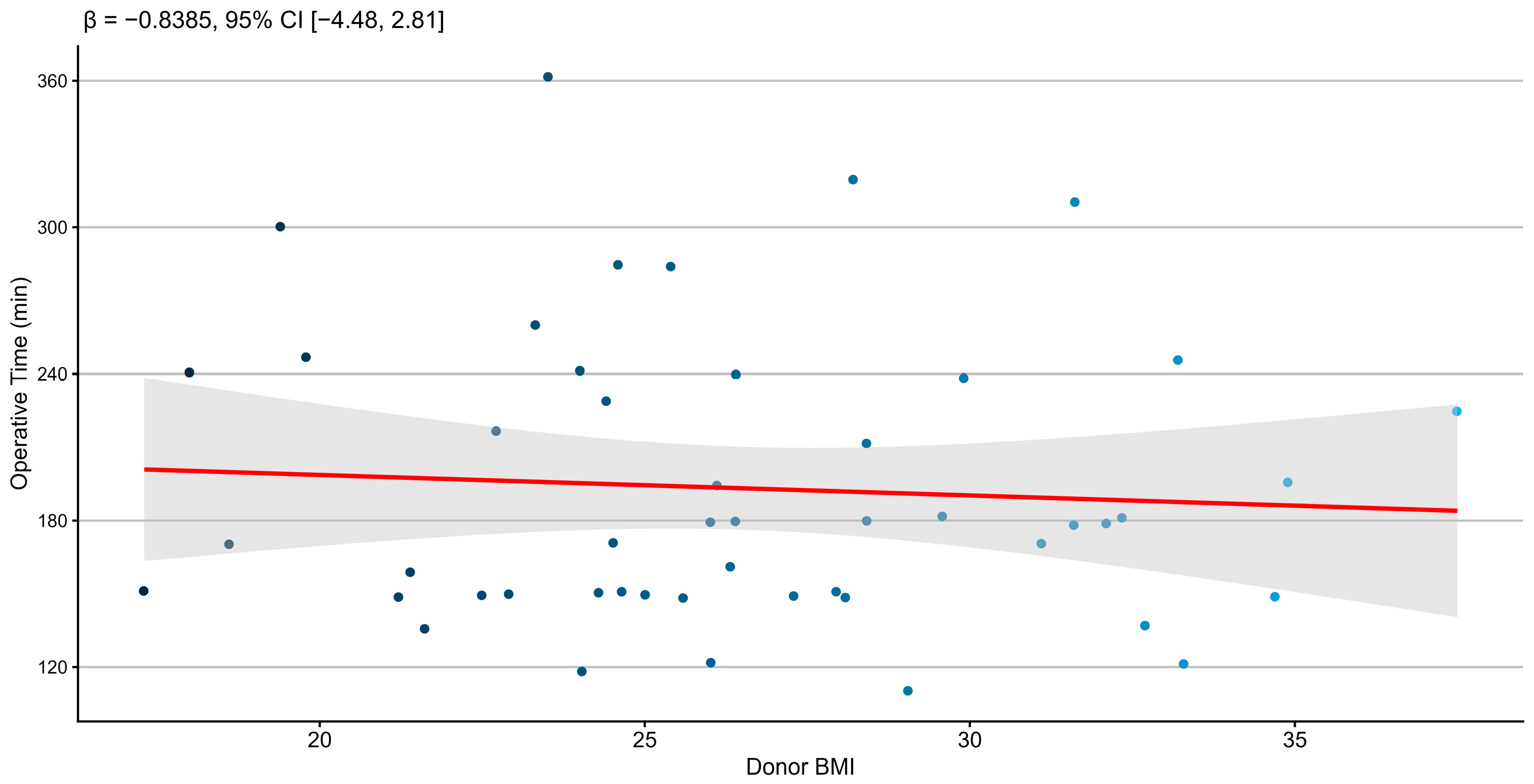
We hypothesized that higher donor BMI would prolong operative duration because greater subcutaneous and perinephric adiposity can complicate access and trocar placement, obscure anatomic landmarks, and make hilar dissection and hemostasis more demanding. However, the scatter plot shows an essentially neutral relationship between BMI and operative time. The linear regression coefficient was β = −0.84 (95% CI, −4.48 to 2.81; p = 0.646), indicating no statistically significant effect of BMI on operative time (Figure 4).

3.2.2. Association Between Donor–Recipient Relationship and Length of Hospital Stay

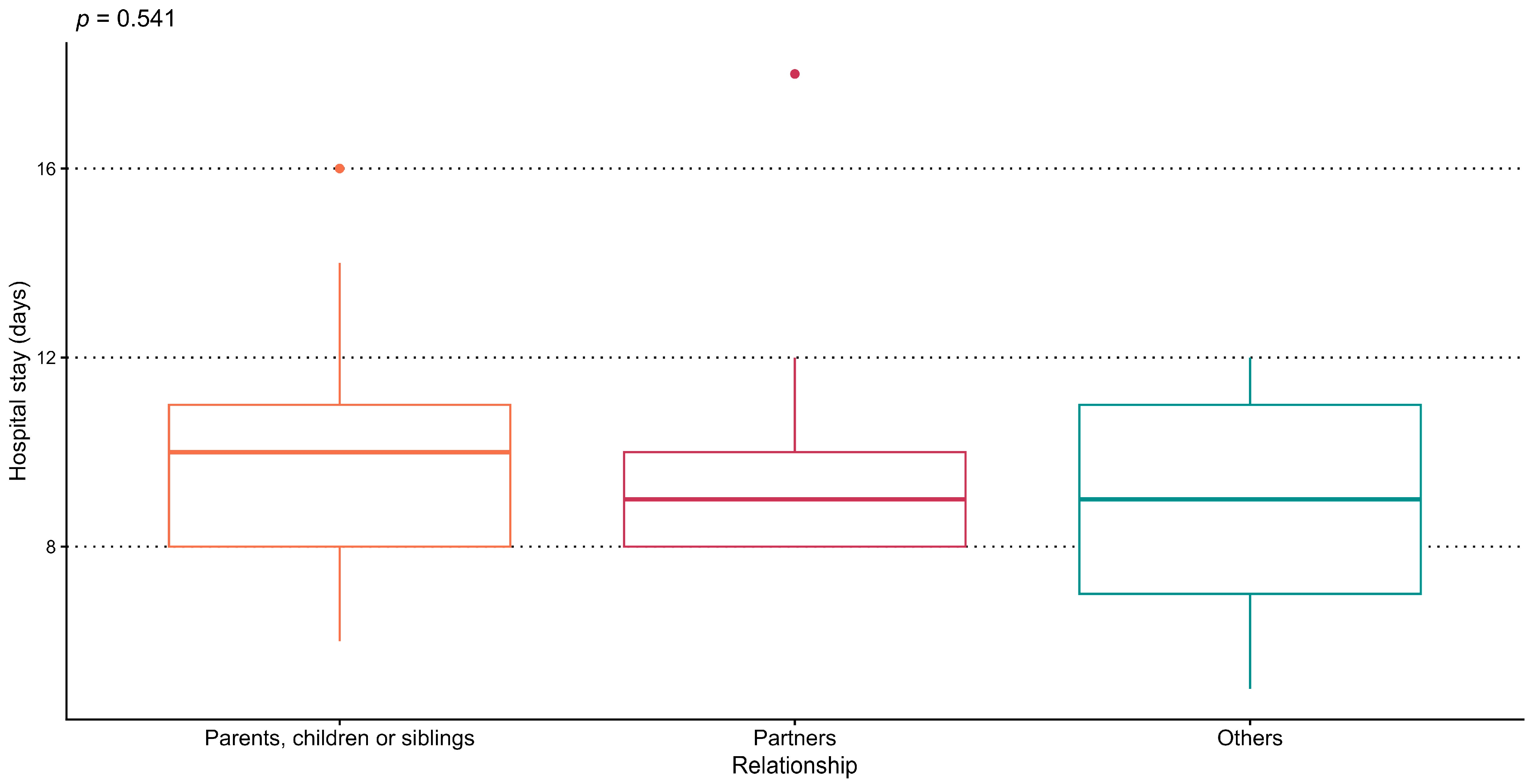
Donors were grouped by their relationship to the recipient: (1) parents, children, or siblings; (2) partners (spouse/partner); (3) others (e.g., distant relatives, friends). There was no significant difference in postoperative length of hospital stay across the three groups (p = 0.541; Figure 5). For clarity, there were no altruistic (non-directed) donors in this cohort; all donors were emotionally or biologically related to their recipients.

3.3. Kidney Function Follow-Up

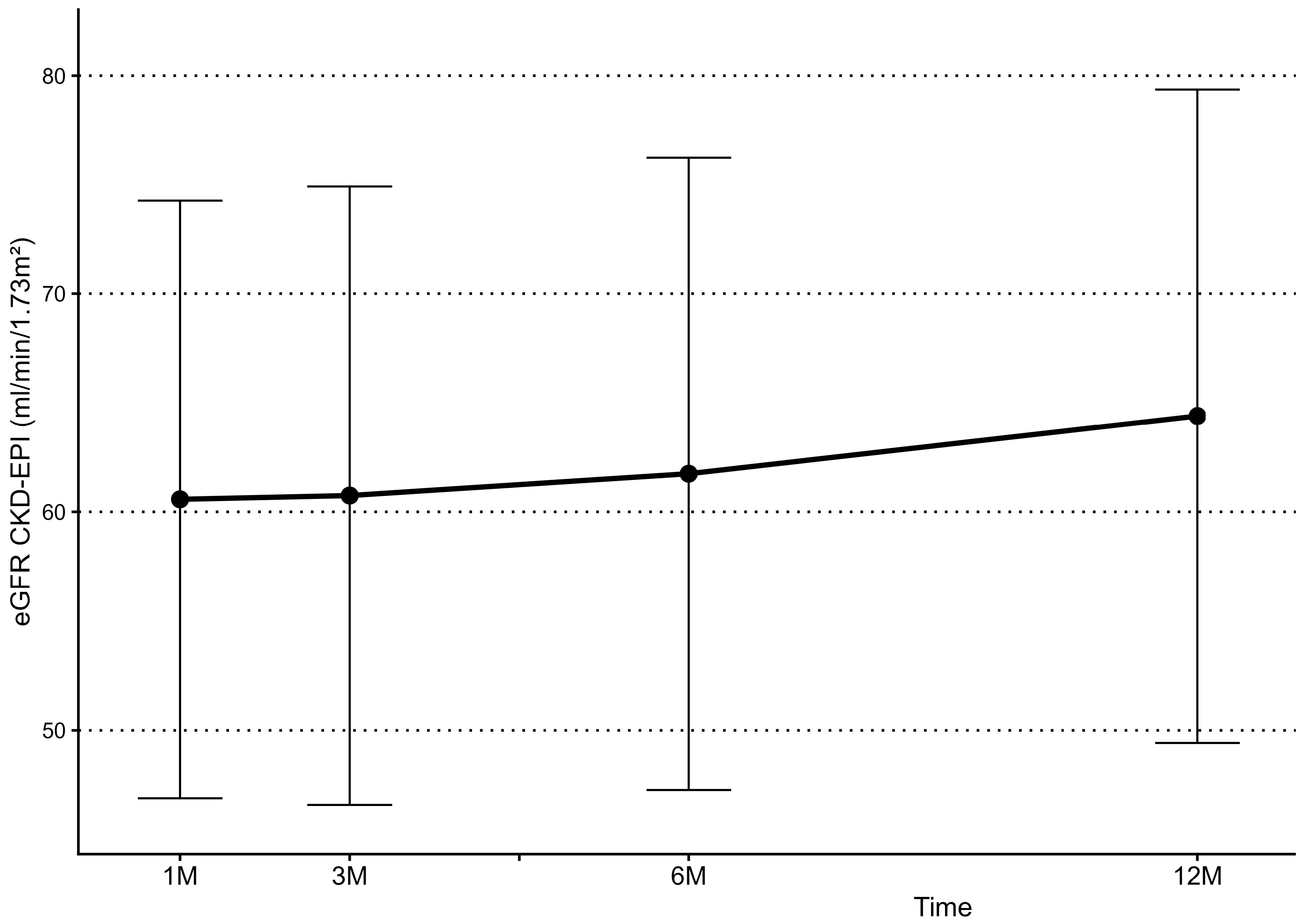
Preserving donors’ long-term renal health is a central objective of living donor nephrectomy. Across our cohort, renal function followed the expected post-nephrectomy course (Table 3). Donors entered with excellent baseline function (mean serum creatinine 0.80 ± 0.13 mg/dL; mean eGFR 100.6 ± 13.43 mL/min/1.73 m2). At discharge, mean creatinine was 1.09 ± 0.30 mg/dL with a corresponding eGFR of 76.26 ± 25.21 mL/min/1.73 m2. Creatinine peaked at 1 month (1.26 ± 0.33 mg/dL), coinciding with the eGFR nadir (58.58 ± 21.31 mL/min/1.73 m2). Thereafter, renal function improved and stabilized, consistent with compensatory hypertrophy of the remaining kidney: by 6 months, mean eGFR was 63.01 ± 15.71 mL/min/1.73 m2 and remained stable at 12 months (63.52 ± 13.71 mL/min/1.73 m2) (Figure 6). Relative to baseline, the 12-month eGFR represents a ~36.9% decrease, but an ~8.4% increase from the 1-month nadir, confirming preservation of donor renal function after HARP-DN.

3.4. Donor Complications

The overall perioperative complication rate in this series was 4% (2 out of 50 cases). No donor mortality was observed and no conversion to open surgery during nephrectomy was needed. No incisional hernia was recorded in follow-up to this day. No surgical site infections were observed.
All adverse events were systematically documented. One intraoperative complication involved bleeding from renal vein, which necessitated the administration of two units of blood transfusion. This event was managed without further postoperative complications or additional transfusion requirements.
The second complication occurred in the postoperative period and involved significant bleeding from the epigastric vessels. This necessitated both blood transfusion and surgical revision to achieve hemostasis.

4. Discussion

This retrospective analysis of our institution’s 50 consecutive Hand-Assisted Retroperitoneoscopic Donor Nephrectomy (HARP-DN) procedures provides critical evidence supporting its adoption as a standard procedure within our program. The discussion will contextualize our principal findings, analyze procedural efficiency and donor safety in comparison to established literature, evaluate the postoperative course, and acknowledge the study’s limitations.
The successful implementation of this surgical technique, particularly in the ethically sensitive field of living organ donation, requires a demonstration of safety, reproducibility, and efficacy [4]. This study represents our center’s foundational experience with HARP-DN, and the results from these 50 cases validate the procedure as a robust and reliable option. The most significant finding is the successful completion of all 50 nephrectomies without a single conversion to open surgery.
The paramount benchmark for any living donor program is the safety of the donor, a principle encapsulated by the tenet of primum non nocere (first, do no harm) [5]. In this series, there was zero donor mortality, fulfilling the most fundamental ethical and clinical mandate of living donor nephrectomy (LDN). The overall perioperative complication rate was low at 4% (2 of 50 donors), a figure that compares favorably with larger series and will be analyzed in detail subsequently [31,32,33]. The combination of zero mortality and a 0% conversion rate in an cohort establishes a strong safety profile and provides the necessary institutional confidence to continue and expand the HARP-DN program.
Procedural efficiency in LDN is typically measured by two key metrics: total operating time (OT) and warm ischemia time (WIT). Our findings demonstrate a proficient balance between surgical efficiency and the meticulous dissection required for donor safety, with a particularly favorable WIT that is critical for recipient graft outcomes.
The mean operating time (OT) in our series of 50 cases was 192.4 ± 57.7 min. While this figure is at the higher end of the spectrum when compared to other published series on retroperitoneal hand-assisted donor nephrectomy, it represents a very strong and safe outcome for a nascent program managing a complex patient cohort [27,34,35,36,37,38,39,40].
A review of the literature reveals a range of operative times for similar procedures. For instance, in larger series, Chen et al. (2012) and Shang et al. (2024) reported faster mean OTs of 121 min and 138.2 min, respectively [34,35]. Other studies with smaller cohorts have documented mean times spanning from 140 to 172 min (Fronek 2006; Sundqvist 2004; Dols 2010; Mjøen 2009; Gjertsen 2006; Klop 2013) [27,36,37,38,39,40]. Notably, a very large study by Akin et al. (2021) involving 565 cases reported a mean dissection time of 101.3 min, which, while not a direct comparison to total operative time, highlights the efficiency achievable in high-volume centers [28].
It is crucial to interpret our result of 192.4 min in the context of two significant factors. First, as this is our institution’s series, the operative time naturally reflects the learning curve, where procedural steps are performed with meticulous attention to detail and safety rather than prioritizing speed [41]. Second, our donor cohort presented considerable anatomical complexity; 18% of our donors had multiple renal arteries, a well-established factor that increases the technical difficulty and duration of hilar dissection, thereby prolonging the overall operative time [42].
It demonstrates that the procedure can be performed successfully and without conversion, even during the learning phase and with anatomically challenging cases. As our program matures, we anticipate a reduction in operative time, aligning more closely with the figures reported by high-volume international centers.
The median warm ischemia time (WIT) in our series was 110 s (interquartile range: 90–150 s), which translates to 1.83 min. This result is a key strength of the HARP-DN technique as practiced at our institution. WIT, the duration from clamping the renal artery to the initiation of cold perfusion, is a critical determinant of immediate and long-term graft function [22]. The ability to manually grasp and rapidly extract the kidney through the hand-port incision is the single most important procedural step that minimizes WIT, obviating the more time-consuming process of placing the kidney into a laparoscopic entrapment sac for removal [18].
Our findings are highly competitive when compared to other published series on laparoscopic donor nephrectomy. Our median WIT of 110 s is considerably shorter than the mean WITs reported in several notable studies, including those by Mjøen et al. (3.1 min, or 186 s), Sundqvist et al. (180 s), Dols et al. (150 s), Chen et al. (146 s), and Fronek et al. (122.5 s). Furthermore, our result approaches the benchmark set by the most rapid techniques, such as the recent series by Shang et al., which reported a median WIT of 90 s [34,35,36,37,38,39].
The clinical significance of this short WIT cannot be overstated. While open donor nephrectomy (ODN) has historically been associated with the shortest WIT, our result of 110 s demonstrates that the HARP-DN technique effectively mitigates one of the primary historical concerns leveled against the adoption of minimally invasive nephrectomy [9]. By achieving a WIT that is functionally equivalent to the best-case scenarios in contemporary practice, our technique provides a wide margin of safety and ensures the procured allograft is in optimal condition for transplantation, maximizing the potential for immediate function and long-term survival.
The ethical foundation of living donation rests upon the surgeon’s ability to minimize harm to a healthy individual undergoing a major operation for the benefit of another [29]. Our series demonstrates an exemplary safety profile for HARP-DN, characterized by zero mortality and a minimal, manageable morbidity rate. This reinforces the specific safety advantages conferred by the combination of hand-assistance and the retroperitoneal approach.
The overall perioperative complication rate in our cohort was 4% (2 of 50 cases), with no donor mortality. This rate is highly favorable when compared against large-scale registry data and meta-analyses. For instance, a 2020 study using the Premier Healthcare Database, which included over 11,000 LDN procedures, reported an overall 3-month complication rate of 16% [43]. A 2006 meta-analysis specifically examining complication rates for different laparoscopic techniques reported a major complication rate for HALDN of 7.7% and for pure LDN of 10.6% [44]. Our 4% rate of minor complications, none of which resulted in long-term sequelae, is well below these published benchmarks.
The nature of the complications observed in our series is as informative as the rate. The two adverse events were intraoperative venous bleeding requiring transfusion and postoperative bleeding from the epigastric vessels at an access site, which required re-intervention. Both are known potential risks of any nephrectomy, related to hilar dissection and abdominal wall access, respectively [13]. Crucially, there were zero instances of intra-abdominal visceral injury—such as damage to the bowel, spleen, or liver—and no cases of prolonged postoperative ileus. This finding is a direct testament to the primary advantage of the retroperitoneal approach [12]. By confining the entire operation to the retroperitoneal space, the surgeon completely avoids entering the peritoneal cavity and manipulating intra-abdominal organs. Meta-analyses have confirmed that complications like bowel and solid organ injury are almost exclusively associated with the transperitoneal approach. Our experience thus validates the core safety proposition of HARP-DN: it effectively eliminates an entire category of potential visceral complications, making it an inherently safer pathway for donor nephrectomy [15].
The postoperative trajectory of our donors underscores the minimal physiological insult of the HARP-DN procedure. The median time to resumption of an oral diet was 26 h (IQR 20–40 h). This rapid return of gut function is a strong clinical indicator of minimal bowel handling and the absence of prolonged ileus, a direct benefit attributable to the extraperitoneal nature of the retroperitoneal approach [16].
The mean length of hospital stay (LOS) in our cohort was 9.6 ± 2.4 days. This figure appears significantly longer than the 3–4 day stays commonly reported in North American and European literature [9]. It is essential to clarify that this extended LOS is not an indicator of higher morbidity or delayed recovery for the donor. Rather, it is the direct result of our center’s unique care model, which prioritizes the psychosocial bond between the donor and recipient.
At our institution, the donor and recipient are cared for together in the same room postoperatively. This practice is rooted in our philosophy that mutual support is a critical component of recovery, and the donor’s presence often has a profoundly positive benefit on the recipient’s mental status. Consequently, the donor and recipient are typically discharged from the hospital together. This intentionally synchronizes the donor’s discharge with the recipient’s longer recovery timeline, accounting for the extended LOS.
Given the low complication rate (4%), rapid return to diet, and minimal analgesic requirements observed, the prolonged stay is clearly a function of this supportive care protocol, not clinical complications. This distinction is critical to correctly interpreting the efficiency of the procedure itself, which facilitates a rapid clinical recovery for the donor.
Ultimately, the most important long-term outcome is the preservation of the donor’s renal function. The mean serum creatinine at the time of discharge was 1.09 ± 0.30 mg/dL, a normal and expected rise from the preoperative mean of 0.80 ± 0.13 mg/dL. This initial follow-up was extended to track the cohort’s long-term renal health (Table 3). As expected physiologically, eGFR reached its nadir at 1-month post-donation (58.58 ± 21.31 mL/min/1.73 m2). Thereafter, the remaining kidney showed compensatory hypertrophy, with mean eGFR improving to 63.01 ± 15.71 mL/min/1.73 m2 at 6 months and stabilizing at 63.52 ± 13.71 mL/min/1.73 m2 by 12 months. This demonstrates that the remaining kidney was functioning well, confirming that the primary objective of a safe donation was successfully achieved in all 50 cases [45].
A candid acknowledgment of this study’s limitations is essential for academic integrity and to guide future research. First, the retrospective design is subject to inherent biases, including selection bias and a reliance on the accuracy and completeness of medical record documentation. Second, as a single-center experience, the findings reflect the specific protocols, resources, and patient population of our institution, and may not be immediately generalizable to all other centers. Third, the study is a single-arm case series and lacks a concurrent, internal control group of patients who underwent an alternative procedure, such as ODN or pure LLDN. All comparisons are therefore made against the external, historical literature, which can be subject to confounding variables. Fourth, a cohort of 50 patients, while sufficient for establishing feasibility and safety, is modest and may lack the statistical power to detect very rare complications.
Finally, our series was limited to left-sided nephrectomies. The left kidney is generally preferred for donation due to its longer renal vein, which simplifies the recipient implantation [27]. However, it means we cannot comment on the efficacy or safety of HARP-DN for the more technically demanding right-sided donation. Future research at our institution will focus on expanding the technique to include right-sided nephrectomies, which will increase our flexibility and ability to always leave the donor with their anatomically or functionally superior kidney.

5. Conclusions

This series of 50 consecutive cases demonstrates that Hand-Assisted Retroperitoneoscopic Donor Nephrectomy, as performed at our institution, is a highly safe, reproducible, and effective procedure for living kidney donation. The technique was associated with minimal morbidity, with a low 4% rate of minor and manageable complications, and, most importantly, absolutely no donor mortality. The procedural outcomes, including a competitive warm ischemia time and a respectable operative time for an initial series, are comparable or superior to established international benchmarks for other minimally invasive and open surgical techniques.
Critically, all donors recovered well from the procedure. Almost all were discharged with normal serum creatinine levels, indicating excellent preservation of renal function in the remaining kidney, and all donors are reported to be doing well to this day. Our experience strongly supports the continued use and expansion of HARP-DN as our standard approach for living donor nephrectomy, as it successfully balances the non-negotiable imperative of donor safety with the goals of minimal invasiveness and optimal graft procurement.

Author Contributions

D.A. contributed to conceptualization, methodology, data collection, analysis, investigation, manuscript revision, and overall supervision. S.H., I.G., R.K., T.B., J.K. and L.B. contributed to conceptualization, methodology, critical manuscript review, and supervision. All authors have read and agreed to the published version of the manuscript.

Funding

This research received no external funding.

Institutional Review Board Statement

Ethical review and approval were waived by local Institutional Review Board for this study due to its anonymous data source.

Informed Consent Statement

Informed consent was obtained from all subjects involved in the study.

Data Availability Statement

All data from this study is available upon reasonable request to the corresponding author.

Acknowledgments

Frank Dor has played a key role in establishing and continuously improving our living kidney donor programme, advised us during the development of the surgical protocol and donor management pathway on which this study is fundamentally based.

Conflicts of Interest

The authors declare no conflicts of interest.

References

  1. Toapanta, N.; Comas, J.; Revuelta, I.; Manonelles, A.; Facundo, C.; Pérez-Saez, M.J.; Vila, A.; Arcos, E.; Tort, J.; Giral, M.; et al. Benefits of Living Over Deceased Donor Kidney Transplantation in Elderly Recipients. A Propensity Score Matched Analysis of a Large European Registry Cohort. Transplant. Int. 2024, 37, 13452. [Google Scholar] [CrossRef] [PubMed]
  2. Murray, J.; Luke, A.; Wallace, D.; Callaghan, C.; Sharples, L.D. Comparison of outcomes after living and deceased donor kidney transplantation: UK national cohort study. Br. J. Surg. 2025, 112, znaf162. [Google Scholar] [CrossRef] [PubMed]
  3. Rodrigue, J.R.; Schold, J.D.; Mandelbrot, D.A. The decline in living kidney donation in the United States: Random variation or cause for concern? Transplantation 2013, 96, 767–773. [Google Scholar] [CrossRef]
  4. Lentine, K.L.; Kasiske, B.L.; Levey, A.S.; Adams, P.L.; Alberú, J.; Bakr, M.A.; Gallon, L.; Garvey, C.A.; Guleria, S.; Li, P.K.-T.; et al. KDIGO Clinical Practice Guideline on the Evaluation and Care of Living Kidney Donors. Transplantation 2017, 101 (Suppl. S1), S1–S109. [Google Scholar] [CrossRef] [PubMed]
  5. Liyanage, L.; Muzaale, A.; Henderson, M. The true risk of living kidney donation. Curr. Opin. Organ Transplant. 2019, 24, 424–428. [Google Scholar] [CrossRef]
  6. Wilson, C.H.; Sanni, A.; Rix, D.A.; Soomro, N.A. Laparoscopic versus open nephrectomy for live kidney donors. Cochrane Database Syst. Rev. 2011, 11, CD006124. [Google Scholar] [CrossRef] [PubMed]
  7. Lecoanet, P.; Chammas, M.F., Jr.; Sime, W.N.; Guillemin, F.; Karam, G.; Ladrière, M.; Eschwège, P.; Mitre, A.I.; Frimat, L.; Hubert, J. Minimally Invasive and Open Donor Nephrectomy: Lessons Learned From a French Multicenter Experience. Transplant. Proc. 2022, 54, 696–701. [Google Scholar] [CrossRef]
  8. Ratner, L.E.; Ciseck, L.J.; Moore, R.G.; Cigarroa, F.G.; Kaufman, H.S.; Kavoussi, L.R. Laparoscopic live donor nephrectomy. Transplantation 1995, 60, 1047–1049. [Google Scholar]
  9. Dagnæs-Hansen, J.; Kristensen, G.H.; Stroomberg, H.V.; Sørensen, S.S.; Røder, M.A. Surgical Approaches and Outcomes in Living Donor Nephrectomy: A Systematic Review and Meta-analysis. Eur. Urol. Focus 2022, 8, 1795–1801. [Google Scholar] [CrossRef]
  10. Wang, L.; Zhu, L.; Xie, X.; Wang, H.; Yin, H.; Fang, C.; Dai, H. Long-term outcomes of laparoscopic versus open donor nephrectomy for kidney transplantation: A meta-analysis. Am. J. Transl. Res. 2020, 12, 5993–6002. [Google Scholar]
  11. Srivastava, A.; Gupta, N.; Kumar, A.; Kapoor, R.; Dubey, D. Transperitoneal laparoscopic live donor nephrectomy: Current status. Indian J. Urol. 2007, 23, 294–298. [Google Scholar] [CrossRef] [PubMed]
  12. Liu, J.; Zhang, B.; Qi, P.; Ren, X.; Zheng, D.; He, Y.; Zheng, X.; Yue, Z.; Li, Y.; Yang, N.; et al. Transperitoneal vs retroperitoneal laparoscopic radical nephrectomy: A double-arm, parallel-group randomized clinical trial. BMC Urol. 2024, 24, 29. [Google Scholar] [CrossRef] [PubMed]
  13. Garcia-Ochoa, C.; Feldman, L.S.; Nguan, C.; Monroy-Cuadros, M.; Arnold, J.; Boudville, N.; Cuerden, M.; Dipchand, C.; Eng, M.; Gill, J.; et al. Perioperative Complications During Living Donor Nephrectomy: Results From a Multicenter Cohort Study. Can. J. Kidney Health Dis. 2019, 6, 2054358119857718. [Google Scholar] [CrossRef] [PubMed]
  14. Fu, Y.; Hu, Y.; Wang, W.; Gao, B.; Wang, G.; Lian, X.; Zhou, H.; Wang, Y. Safety and Efficacy of Right Retroperitoneal Laparoscopic Live Donor Nephrectomy: A Retrospective Single-Center Study. Ann. Transplant. 2020, 25, e919284. [Google Scholar] [CrossRef] [PubMed]
  15. Kohei, N.; Kazuya, O.; Hirai, T.; Miyauchi, Y.; Iida, S.; Shirakawa, H.; Shimizu, T.; Ishida, H.; Tanabe, K. Retroperitoneoscopic living donor nephrectomy: Experience of 425 cases at a single center. J. Endourol. 2010, 24, 1783–1787. [Google Scholar] [CrossRef]
  16. Hirose, T.; Hotta, K.; Iwami, D.; Harada, H.; Morita, K.; Tanabe, T.; Sasaki, H.; Fukuzawa, N.; Seki, T.; Shinohara, N. Safety and Efficacy of Retroperitoneoscopic Living Donor Nephrectomy: Comparison of Early Complication, Donor and Recipient Outcome with Hand-Assisted Laparoscopic Living Donor Nephrectomy. J. Endourol. 2018, 32, 1120–1124. [Google Scholar] [CrossRef]
  17. Gavriilidis, P.; Papalois, V. Retroperitoneoscopic Standard or Hand-Assisted Versus Laparoscopic Standard or Hand-Assisted Donor Nephrectomy: A Systematic Review and the First Network Meta-Analysis. J. Clin. Med. Res. 2020, 12, 740–746. [Google Scholar] [CrossRef]
  18. Wadström, J.; Lindström, P. Hand-assisted retroperitoneoscopic living-donor nephrectomy: Initial 10 cases. Transplantation 2002, 73, 1839–1840. [Google Scholar] [CrossRef]
  19. Foley, M.E.; Vinson, A.J.; Skinner, T.A.A.; Kiberd, B.A.; Tennankore, K.K. The Impact of Combined Warm and Cold Ischemia Time on Post-transplant Outcomes. Can. J. Kidney Health Dis. 2023, 10, 20543581231178960. [Google Scholar] [CrossRef] [PubMed]
  20. Rosario Almonte, N.; Esqueda-Mendoza, A.; Mendoza Arcila, M.E.; Rendon Dosal, H.; Marique Canche, N.Z. Pure Laparoscopic Versus Hand-Assisted Nephrectomy: Comparative Outcomes in Living Kidney Donors. Cureus 2025, 17, e79191. [Google Scholar] [CrossRef] [PubMed]
  21. Elmaraezy, A.; Abushouk, A.I.; Kamel, M.; Negida, A.; Naser, O. Should hand-assisted retroperitoneoscopic nephrectomy replace the standard laparoscopic technique for living donor nephrectomy? A meta-analysis. Int. J. Surg. 2017, 40, 83–90. [Google Scholar] [CrossRef]
  22. Chumdermpadetsuk, R.R.; Alvino, D.M.L.; Kaul, S.; Fleishman, A.; Eckhoff, D.E.; Pavlakis, M.; Lee, D.D. Impact of Donor Warm Ischemia Time on Graft Survival for Donation After Circulatory Death Kidney Transplantation. Transplantation 2025, 109, 504–510. [Google Scholar] [CrossRef] [PubMed]
  23. Jacobs, S.C.; Cho, E.; Foster, C.; Liao, P.; Bartlett, S.T. Laparoscopic donor nephrectomy: The University of Maryland 6-year experience. J. Urol. 2004, 171, 47–51. [Google Scholar] [CrossRef]
  24. Kavic, M.S. Hand-assisted laparoscopic surgery—HALS. Jpn. Soc. Lang. Sci. 2001, 5, 101–103. [Google Scholar]
  25. Cheng, S.; Zheng, Q.; Xu, L.; Zhao, W.; Li, G.; Ding, G. Management of major vascular injury in laparoscopic urology. Laparosc. Endosc. Robot. Surg. 2020, 3, 107–110. [Google Scholar] [CrossRef]
  26. Narita, S.; Inoue, T.; Matsuura, S.; Horikawa, Y.; Kakinuma, H.; Saito, M.; Kumazawa, T.; Tsuchiya, N.; Satoh, S.; Habuchi, T. Outcome of right hand-assisted retroperitoneoscopic living donor nephrectomy. Urology 2006, 67, 496–501. [Google Scholar] [CrossRef] [PubMed]
  27. Gjertsen, H.; Sandberg, A.K.; Wadström, J.; Tydén, G.; Ericzon, B.G. Introduction of hand-assisted retroperitoneoscopic living donor nephrectomy at Karolinska University Hospital Huddinge. Transplant. Proc. 2006, 38, 2644–2645. [Google Scholar] [CrossRef]
  28. Akin, E.B.; Soykan Barlas, I.; Dayangac, M. Hand-assisted retroperitoneoscopic donor nephrectomy offers more liberal use of right kidneys: Lessons learned from 565 cases—A retrospective single-center study. Transpl. Int. 2021, 34, 445–454. [Google Scholar] [CrossRef]
  29. DuBray, B.J.; Thompson, J.J.; Shaffer, D.; Hale, D.A.; Rega, S.A.; Feurer, I.D.; Forbes, R.C. Incisional Hernia Development after Live Donor Nephrectomy: Impact of Surgical Technique. Kidney360 2023, 4, 78–82. [Google Scholar] [CrossRef]
  30. Clemens, K.; Boudville, N.; Dew, M.A.; Geddes, C.; Gill, J.S.; Jassal, V.; Klarenbach, S.; Knoll, G.; Muirhead, N.; Prasad, G.V.R.; et al. The long-term quality of life of living kidney donors: A multicenter cohort study. Am. J. Transplant. 2011, 11, 463–469. [Google Scholar] [CrossRef]
  31. Dols, L.F.; Kok, N.F.; D’aNcona, F.C.; Klop, K.W.; Tran, T.K.; Langenhuijsen, J.F.; Terkivatan, T.; Dor, F.J.; Weimar, W.; Dooper, I.M.; et al. Randomized controlled trial comparing hand-assisted retroperitoneoscopic versus standard laparoscopic donor nephrectomy. Transplantation 2014, 97, 161–167. [Google Scholar] [CrossRef]
  32. Troppmann, C.; Daily, M.F.; McVicar, J.P.; Troppmann, K.M.; Perez, R.V. The transition from laparoscopic to retroperitoneoscopic live donor nephrectomy: A matched pair pilot study. Transplantation 2010, 89, 858–863. [Google Scholar] [CrossRef]
  33. Ruszat, R.; Sulser, T.; Dickenmann, M.; Wolff, T.; Gürke, L.; Eugster, T.; Langer, I.; Vogelbach, P.; Steiger, J.; Gasser, T.C.; et al. Retroperitoneoscopic donor nephrectomy: Donor outcome and complication rate in comparison with three different techniques. World J. Urol. 2006, 24, 113–117. [Google Scholar] [CrossRef]
  34. Chen, Z.; Xie, J.L.; Zhou, C.; Chen, X. Technical modifications of hand-assisted retroperitoneoscopic living donor nephrectomy: A single-center experience. Transplant. Proc. 2012, 44, 1218–1221. [Google Scholar] [CrossRef]
  35. Shang, L.; Zheng, M.; Wang, Z.; Zhu, Y. The learning curve for modified hand-assisted retroperitoneoscopic living donor nephrectomy. BMC Urol. 2024, 24, 191. [Google Scholar] [CrossRef]
  36. Fronek, J.P.; Chang, R.W.; Morsy, M.A. Hand-assisted retroperitoneoscopic living donor nephrectomy: First UK experience. Nephrol. Dial. Transplant. 2006, 21, 2674–2675. [Google Scholar] [CrossRef] [PubMed]
  37. Sundqvist, P.; Feuk, U.; Häggman, M.; Persson, A.E.; Stridsberg, M.; Wadström, J. Hand-assisted retroperitoneoscopic live donor nephrectomy in comparison to open and laparoscopic procedures: A prospective study on donor morbidity and kidney function. Transplantation 2004, 78, 147–153. [Google Scholar] [CrossRef] [PubMed]
  38. Dols, L.F.; Kok, N.F.; Terkivatan, T.; Tran, T.K.; D’ANcona, F.C.; Langenhuijsen, J.F.; Borg, I.R.Z.; Alwayn, I.P.; Hendriks, M.P.; Dooper, I.M.; et al. Hand-assisted retroperitoneoscopic versus standard laparoscopic donor nephrectomy: HARP-trial. BMC Surg. 2010, 10, 11. [Google Scholar] [CrossRef]
  39. Mjøen, G.; Øyen, O.; Holdaas, H.; Midtvedt, K.; Line, P.D. Morbidity and mortality in 1022 consecutive living donor nephrectomies: Benefits of a living donor registry. Transplantation 2009, 88, 1273–1279. [Google Scholar] [CrossRef] [PubMed]
  40. Klop, K.W.J.; Kok, N.F.M.; Dols, L.F.C.; Dor, F.J.M.F.; Tran, K.T.C.; Terkivatan, T.; Weimar, W.; Ijzermans, J.N.M. Can right-sided hand-assisted retroperitoneoscopic donor nephrectomy be advocated above standard laparoscopic donor nephrectomy: A randomized pilot study. Transpl. Int. 2014, 27, 162–169. [Google Scholar] [CrossRef]
  41. Mercimek, M.N.; Ozden, E.; Gulsen, M.; Kalayci, O.; Yakupoglu, Y.K.Y.; Bostancı, Y.; Sarikaya, S. The learning curve for pure retroperitoneoscopic donor nephrectomy by using cumulative sum analysis. Can. Urol. Assoc. J. 2023, 17, E369–E373. [Google Scholar] [CrossRef] [PubMed]
  42. Kacar, S.; Gurkan, A.; Akman, F.; Varýlsuha, C.; Karaca, C.; Karaoglan, M. Multiple renal arteries in laparoscopic donor nephrectomy. Ann. Transplant. 2005, 10, 34–37. [Google Scholar] [PubMed]
  43. Chen, J.; Bhattacharya, S.; Sirota, M.; Laiudompitak, S.; Schaefer, H.; Thomson, E.; Wiser, J.; Sarwal, M.M.; Butte, A.J. Assessment of Postdonation Outcomes in US Living Kidney Donors Using Publicly Available Data Sets. JAMA Netw. Open 2019, 2, e191851. [Google Scholar] [CrossRef]
  44. Pareek, G.; Hedican, S.P.; Gee, J.R.; Bruskewitz, R.C.; Nakada, S.Y. Meta-analysis of the complications of laparoscopic renal surgery: Comparison of procedures and techniques. J. Urol. 2006, 175, 1208–1213. [Google Scholar] [CrossRef]
  45. Matas, A.J.; Rule, A.D. Long-term Medical Outcomes of Living Kidney Donors. Mayo Clin. Proc. 2022, 97, 2107–2122. [Google Scholar] [CrossRef] [PubMed]
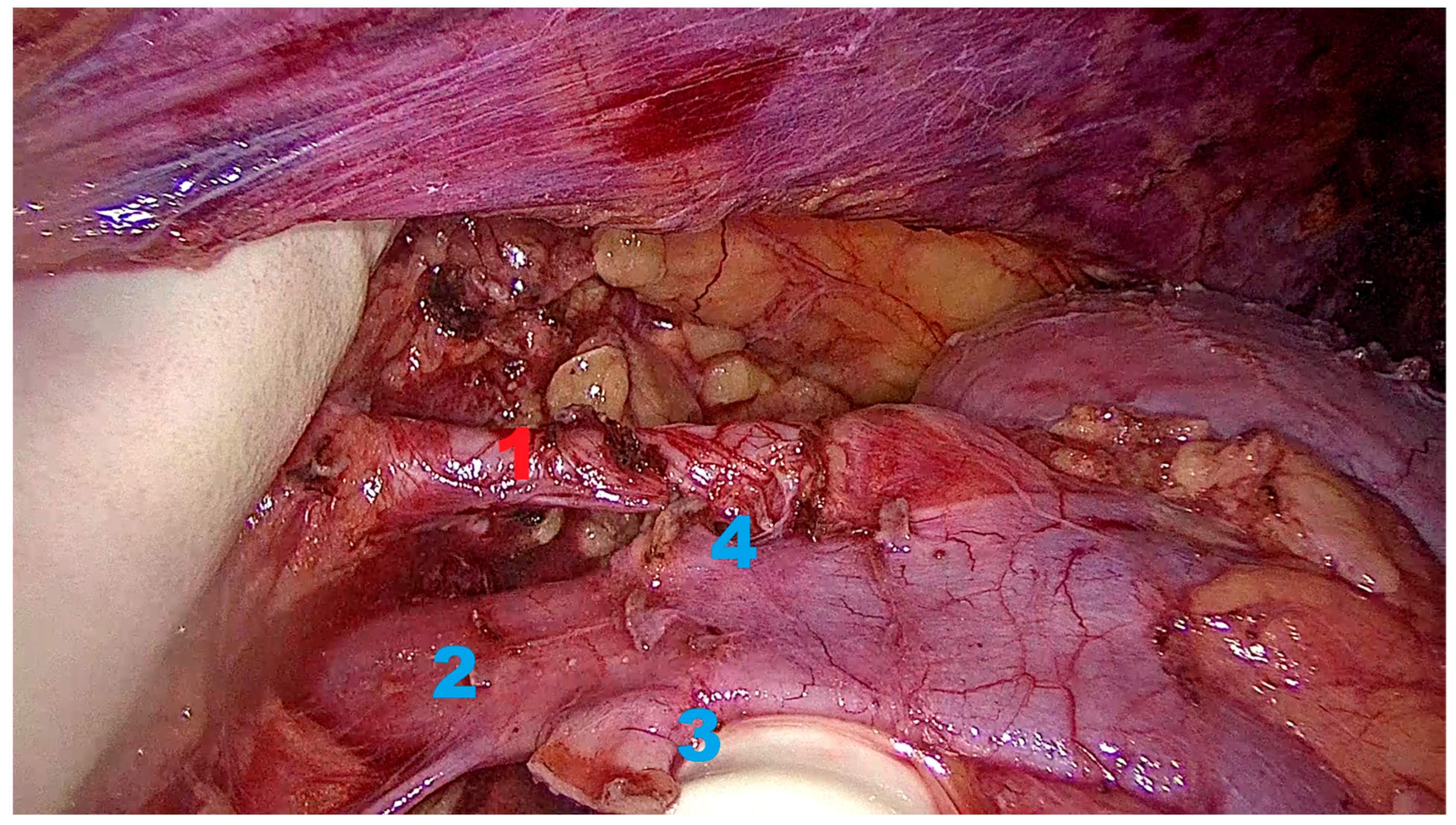
Figure 1. View of hilar vessels. 1. Renal artery 2. Renal vein 3. Left gonadal vein stump 4. Left adrenal vein stump.
Transplantology 06 00038 g001
Figure 2. Left renal vein stapling using vascular stapler.
Transplantology 06 00038 g002
Figure 3. View of renal fossa and hilar stumps. 1. Renal artery stump 2. Renal vein stump.
Transplantology 06 00038 g003
Figure 4. Association between donor BMI and operative time. Scatterplot of donor BMI vs. operative time with fitted linear regression (red) and 95% CI (shaded). Each point represents one donor.
Transplantology 06 00038 g004
Figure 5. Hospital stay by donor–recipient relationship. Box-and-whisker plots show postoperative length of stay for donors who were first-degree relatives, partners, or other relations. No significant differences were detected between groups (p = 0.541).
Transplantology 06 00038 g005
Figure 6. Post-donation eGFR trajectory during the first year. Mean eGFR (CKD-EPI) at 1, 3, 6, and 12 months with standard-deviation error bars. Values demonstrate early nadir followed by partial recovery and stabilization by 12 months.
Transplantology 06 00038 g006
Table 1. Donor Demographics and Preoperative Characteristics (n = 50).
CharacteristicValue
Age (years), mean ± SD47.2 ± 12.6
Gender, n (%)
       Female32 (64%)
       Male18 (36%)
Body Mass Index (kg/m2), mean ± SD26.38 ± 4.87
Preoperative Serum Creatinine (mg/dL), mean ± SD0.80 ± 0.13
Renal Arteries (from CT-AG), n (%)
       Single41 (82%)
       Multiple (≥2)9 (18%)
Table 2. Perioperative Outcomes for HARP-DN (n = 50).
Outcome MeasureValue
Operating Time (min), mean ± SD192.4 ± 57.7
Warm Ischemia Time (s), median (IQR)110 (90–150)
Intraoperative Complications, n (%)2 (4%)
     Renal vein bleeding (intraoperative)1 (50%)
     Epigastric vessels bleeding (revision)1 (50%)
Conversion to Open Surgery, n (%)0 (0%)
Hemoglobin Decrease at 24 h (g/dL), mean ± SD2.38 ± 0.90 g/dL
Blood Transfusion Required, n (%)2 (4%)
Time to Oral Diet (hours), median (IQR)26 (20–40)
Analgesics used in early postoperative setting, n (%)
     Metamizole31 (62%)
     Pethidine19 (38%)
Length of Hospital Stay (days), mean ± SD9.6 ± 2.4
Released on POD (days), mean ± SD7.6 ± 2.4
Table 3. Kidney function course following HARP-DN (n = 50).
Outcome MeasureValue
Pre-operative Serum Creatinine (mg/dL), mean ± SD0.8 ± 0.13 mg/dL
Pre-operative eGFR (CKD-EPI) (ml/min/m2), mean ± SD100.6 ± 13.43 mL/min/m2
Serum Creatinine at Discharge (mg/dL), mean ± SD1.09 ± 0.30 mg/dL
eGFR (CKD-EPI) at Discharge (ml/min/m2), mean ± SD76.26 ± 25.21 mL/min/m2
Serum Creatinine—1 month after nephrectomy (mg/dL), mean ± SD1.26 ± 0.33 mg/dL
eGFR (CKD-EPI)—1 month after nephrectomy (ml/min/m2), mean ± SD58.58 ± 21.31 mL/min/m2
Serum Creatinine—6 months after nephrectomy (mg/dL), mean ± SD1.21 ± 0.24 mg/dL
eGFR (CKD-EPI)—6 months after nephrectomy (ml/min/m2), mean ± SD63.01 ± 15.71 mL/min/m2
Serum Creatinine—12 months after nephrectomy (mg/dL), mean ± SD1.20 ± 0.21 mg/dL
eGFR (CKD-EPI)—12 months after nephrectomy (ml/min/m2), mean ± SD63.52 ± 13.71 mL/min/m2
Disclaimer/Publisher’s Note: The statements, opinions and data contained in all publications are solely those of the individual author(s) and contributor(s) and not of MDPI and/or the editor(s). MDPI and/or the editor(s) disclaim responsibility for any injury to people or property resulting from any ideas, methods, instructions or products referred to in the content.