Article

Biodegradable 3D Screen Printing Technique for Roll-to-Roll Manufacturing of Eco-Friendly Flexible Hybrid Electronics


1
Centro de Investigaciones en Dispositivos Semiconductores, Instituto de Ciencias, Benemérita Universidad Autónoma de Puebla (BUAP), Puebla 72570, Mexico
2
Institut National de la Recherche Scientifique, Varennes, QC J3X 1P7, Canada
*
Author to whom correspondence should be addressed.
Appl. Nano 2025, 6(4), 29; https://doi.org/10.3390/applnano6040029
Submission received: 21 October 2025 / Revised: 20 November 2025 / Accepted: 29 November 2025 / Published: 2 December 2025

Abstract

In this work, an eco-friendly 3D screen printing technique implemented in roll-to-roll technology for the manufacturing of flexible electronics is presented. The conductive ink was prepared through the decomposition of hydrogen peroxide, an eco-friendly reagent, onto the surfaces of silver nanoparticles. A biodegradable master pattern for screen printing was printed by 3D fused deposition modeling using a polylactic acid filament. This technique was implemented to fabricate hybrid touch-sensitive sensors, to be used as electrical switches, on both photographic and conventional office papers. The functionality of these sensors was demonstrated, and the systems were tested under aging and bending conditions, proving the reliability of this technological approach in flexible electronics and offering a biodegradable alternative.

1. Introduction

Electronic waste, or e-waste, refers to any electrical device or electronic component that has reached the end of its useful life cycle, as well as waste resulting from its operation and manufacturing [1]. E-waste is considered a fast-growing category because the consumption of and demand for electronic products continue to grow every year, with a projected increase in consumption of 9.49% and a projected market volume of USD 1469 billion in 2024 [2,3]. However, the high demand and levels of consumption across various socioeconomic profiles increase the level of e-waste, impacting and damaging the environment and human health [4,5,6].
The main components of these devices are printed circuit boards (PCBs). These systems are typically constituted by a substrate called flame retardant 4 (FR4), which is a composite material composed of woven fiberglass cloth, epoxy resin binders, and toxic substances such as bromated flame retardants. For these reasons, new technologies are currently emerging to develop new sustainable production routes for the industry, spanning the manufacturing stage up to disassembly [2,7,8]. If electronic devices are manufactured through processes enabling their recycling, the reduction of risks in the human manipulation of toxic metals would be favored, and the recovery of these materials would even be enhanced [7,9].
The eco-design of electronics serves as an alternative solution to reduce e-waste by employing materials with strong recycling capabilities, biodegradability, and low environmental impacts. In addition, implementing materials with versatile production processes and easy-to-handle chemicals not only eliminates the environmental risks but also facilitates their disposal [9]. Biodegradable and/or recyclable materials, such as natural and synthetic substrates (e.g., paper, polyvinylchloride (PVC), or polyethylene terephthalate (PET)) are cost-effective, making them attractive conventional materials for use in electronics. These materials are the basis of an application field known as flexible electronics, offering the possibility of replacing environmentally harmful techniques and PCBs with cleaner manufacturing methods and biodegradable materials, such as hybrid flexible electronics (HFEs), integrating flexible electronics and conventional silicon integrated circuits (ICs) [10,11].
Inks for printing systems are attracting increasing attention due to their low fabrication costs, large-area compatibility, high efficiency, flexibility, and large-scale deployment capabilities [12]. To implement this technology at an industrial level, the formulation of inks providing adequate flow, substrate compatibility, and enhanced quality in printed films is crucial. The choice of chemical solvent is primarily focused on particle compatibility, followed by the degree of toxicity to both human health and the environment. Commonly, solvent-based inks are formulated using a wide variety of available organic solvents, where the most used is methyl-ethyl-ketone. However, this product has the disadvantage of producing a very strong odor, which hinders its large-scale use [13]. In our work, we have used organic solvents, aiming to avoid the generation of volatile compounds [13,14]. The synthesis of water-based inks, besides avoiding the use of toxic solvents, implies no residue, and water is a much more economical and readily available solvent [15]. Printed electronics are still under development, but they provide solutions due to the adoption of new methods for the manufacturing of thin, flexible, lightweight, and low-cost electronic devices and PCBs using sustainable designs, thereby reducing the consumption of toxic and harmful materials.
Among the manufacturing technologies under development is roll-to-roll technology. This technology can offer a scalable and mass production process with a near-immediate high throughput [16,17]. The use of biodegradable materials as substrates is compatible with this technology. Screen printing is a contact technique widely related to roll-to-roll technology. In this technique, the conductive ink is squeezed through a patterned mesh or stencil (master pattern) utilizing a squeegee (doctor blade) [18,19]. Usually, most contact printing techniques require the fabrication of a master pattern, which increases the initial costs and delays initial production [18,19]. Several techniques and experimental approaches have been developed with the aim of optimizing the screen printing process. For the fabrication of the master pattern, a screen mesh of plastic or metal fibers is patterned using a light-sensitive material by optical lithography [18,20,21,22,23,24]. In [21], stainless-steel mesh screens were used for a screen printing process to fabricate a novel microfluidic channel-based capacitor. In [23], a glucose sensor on an algae-based substrate was printed by screen printing using a polyester screen mesh. In [24], a gold/cerium oxide-modified flexible electrode for the enzymatic detection of triglyceride was screen-printed using a master pattern of PVC patterned by laser ablation. Gravure and flexographic printing have also been used in roll-to-roll and screen printing, where the fabrication of the master pattern is more complex, with a higher cost, and it does not yet offer a biodegradable alternative [19,25]. These techniques have been used to fabricate novel gas sensors and antenna arrays for 5G applications and for X-ray imaging with perovskite CMOS arrays, among other novel applications [19,26,27]. Although there has been an increase in novel applications using screen printing, the fabrication of the master pattern is time-consuming and it does not offer an eco-friendly alternative [20,28,29,30,31,32,33,34,35,36,37].
On the other hand, 3D printing technology has revolutionized the industry due to its low cost and ease of use. Fused deposition modeling (FDM) is the most widely employed 3D printing method to deposit layers of fused thermoplastic material [38,39,40]. Recently, the development of novel filaments for 3D FDM with different material properties (electrical, magnetic, thermal, etc.) has been the focus of extensive research [40,41,42]. Although different thermoplastic filaments can be used in 3D FDM printing, polylactic acid (PLA) filaments offer the advantage of a non-toxic biodegradable material derived from natural sources [38]. Usually, PLA filaments are produced from sugarcane, corn starch, or tapioca roots, among others [40]. In addition to its renewable source, PLA offers strength, transparency, and stiffness. Another advantage of using PLA is the option to modify its properties by adding different additives [43]. In [40], the effect of adding micronized black chokeberry fiber to PLA was investigated in order to obtain composite filaments with enhanced functional properties, where a moderate antimicrobial effect and antioxidant activity were found. In [44], the 3D printing performance and biodegradation behavior of various plastics have been studied. Products produced from mixtures of PLA and poly(3-hydroxybutyrate) (PHB) showed improved biodegradation capabilities, meeting the ASTM D6400-12 standard required for compostable labeling (degradation threshold greater than 90% compared to the reference material in 180 days). These make use of PLA as a promising alternative that can be implemented in biodegradable and recyclable electronic systems. Moreover, 3D FDM printing using PLA filaments offers a cost-effective, simple, and biodegradable solution for the fast fabrication of the master pattern used in screen printing.
In this work, an eco-friendly screen printing method and roll-to-roll technology based on 3D-printed screens for flexible electronics are presented. The conductive ink is prepared through the decomposition of hydrogen peroxide onto the surfaces of silver nanoparticles (AgNPs). A 3D screen, as a master pattern, is printed by 3D FDM using a PLA filament as a biodegradable alternative. In addition, the fabrication of hybrid tactile sensors on photographic and office papers is demonstrated. Finally, the hybrid sensor’s functionalities are successfully demonstrated under aging and various bending conditions.

2. Materials and Methods

The 3D master pattern was achieved using the FDM Ender-6 3D printer from Shenzhen Creality 3D Technology Co., Ltd., Shenzhen, China, equipped with a biodegradable PLA filament. The general print settings were as follows: quality—0.1 mm, infill—80%, top/bottom pattern—zigzag. The design was obtained using the Creality Slicer 4.8.2 software.
The conductive AgNPs were synthesized through the chemical reduction of 0.03 M C6H5Na3O7 (99.0% Sigma-Aldrich, St. Louis, MO, USA), 0.15 M AgNO3 (99.0% Sigma-Aldrich), and 0.05 M NaBH4 (99.0% Sigma-Aldrich) in an ice bath. The AgNPs obtained were mixed with a commercial hydrogen peroxide (H2O2) solution at 3%, using a total volume of 5 mL, to dissolve the AgNPs (20 wt.%) and to obtain the conductive ink. Information regarding the synthesis process and the composition of the ink is available in Ref. [45]. Microscopic images of the ink were obtained with a Tescan Vega3 LMH scanning electron microscope (SEM) (TESCAN, a.s., Brno, Czech Republic). Current–voltage measurements were performed using a Keithley-4200 semiconductor characterization system (Keithley Instruments, Solon, OH, USA) at room temperature under ambient air conditions. The crystalline structure of the materials was determined using a Discover X-ray diffractometer (Bruker D8 Advance) (Bruker AXS, Madison, WI, USA), operated with a Cu-Kα radiation source, to perform θ–2θ diffraction measurements between 20° and 90°.
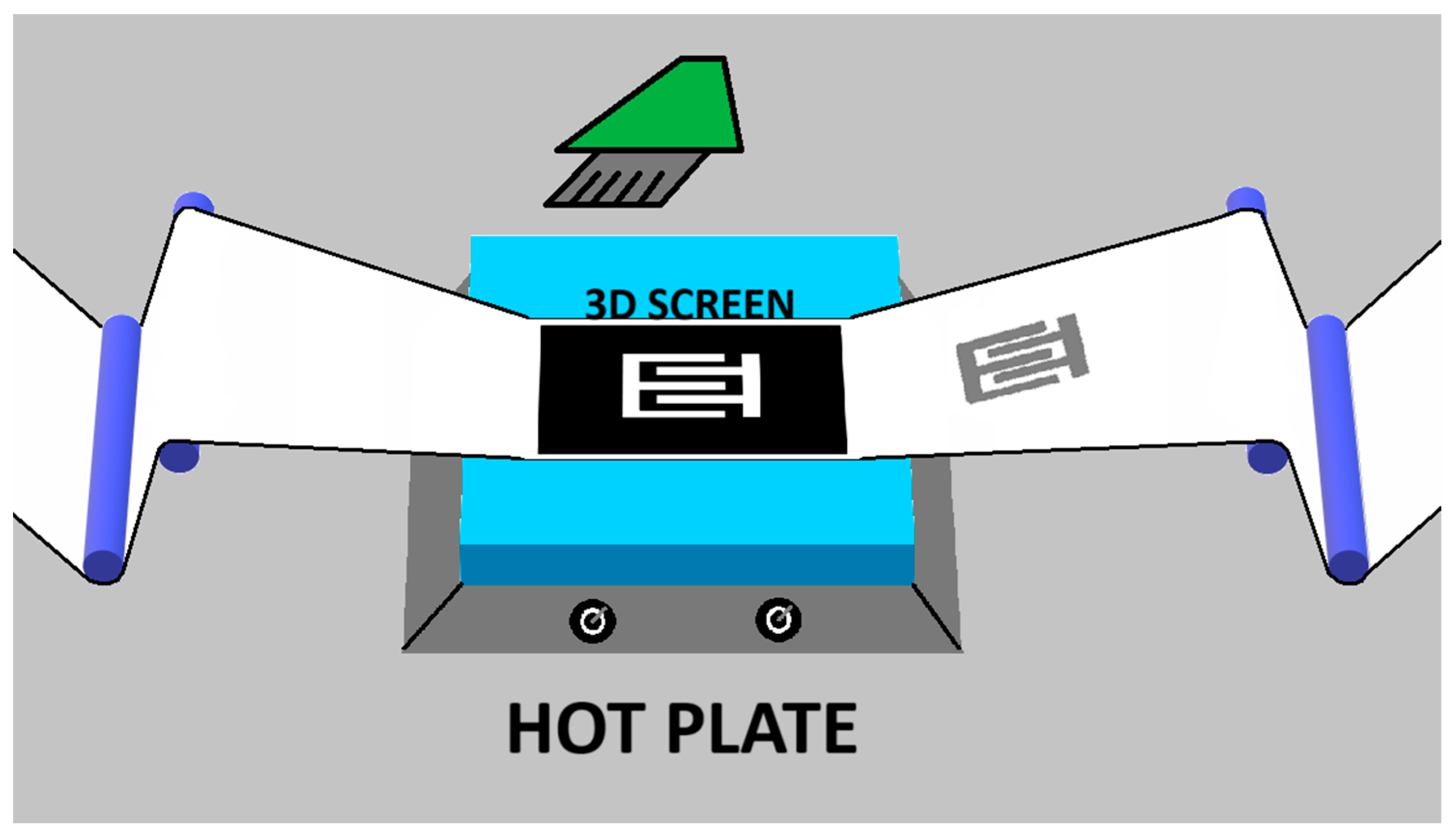
The roll-to-roll prototype equipment was implemented on a hot plate with a screen holder composed of aluminum. The hot plate was set at 60 °C during printing. The conductive AgNP ink was applied to the paper substrate through the 3D master pattern using a paintbrush. Figure 1 shows the conceptualization of the roll-to-roll technology based on 3D screen printing.
The hybrid tactile sensor was fabricated using conventional photographic and office paper as substrates, as well as surface mount technology (SMT) devices. First, the conductive tracks of the PCB were screen-printed using the implemented prototype. Then, using a water-based silver paint (SPI Supplies), the SMT devices were integrated into the printed PCB. Regarding the time period required for prototype fabrication, it is important to note that the biodegradable master pattern (5 cm × 5 cm) was printed in 9 min with a thickness of 0.9 mm.

3. Results and Discussion

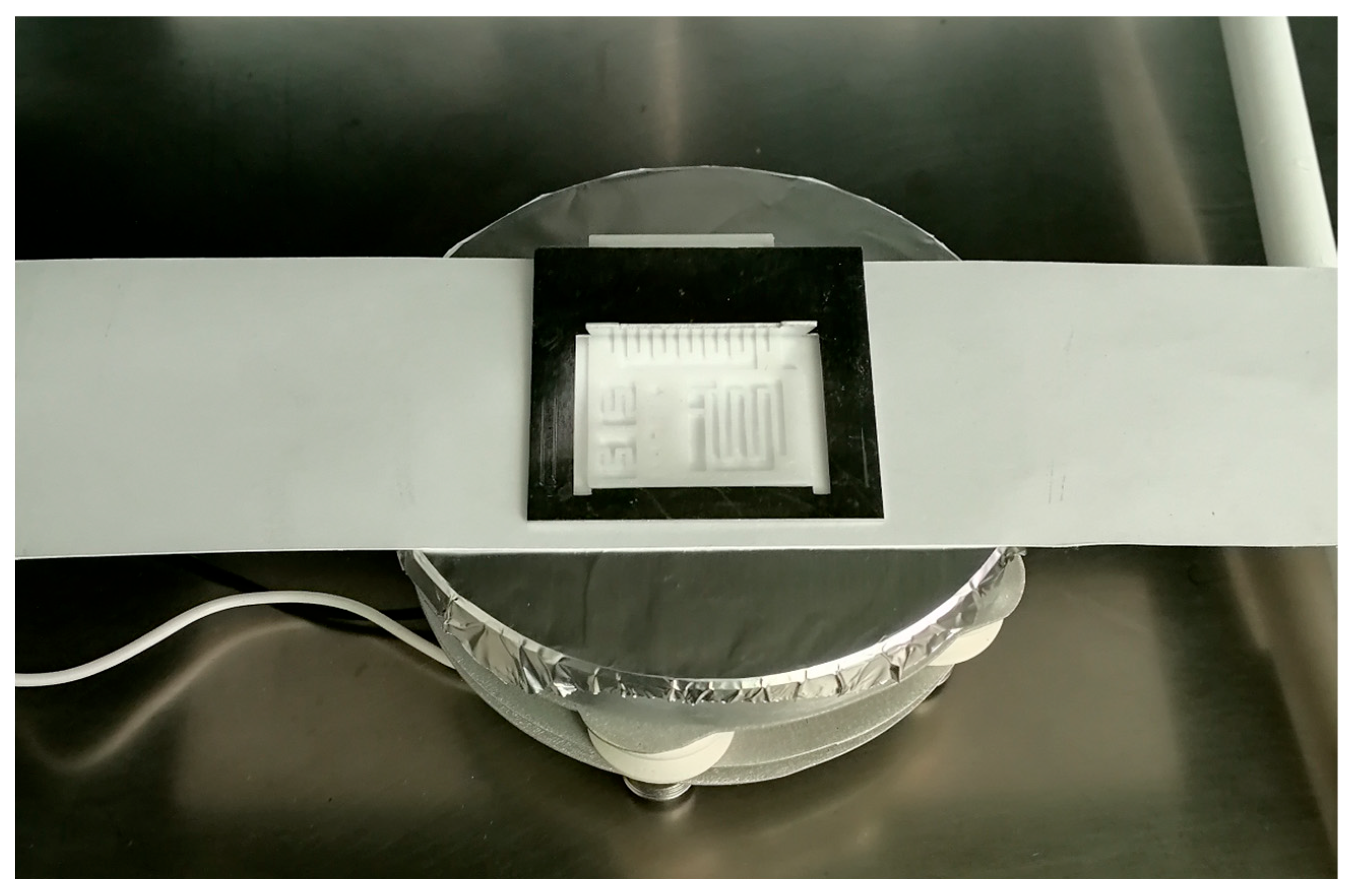
Figure 2 shows the implementation of the roll-to-roll equipment. Using a basic screen holder, the 3D master pattern was positioned above the roll of paper substrate so that the AgNP conductive ink could be applied to it. Brush ink printing was performed by hand. Thanks to the hot plate, it is possible to improve the printing efficiency of the AgNP ink (or any other conductive ink) by adjusting the temperature. In this work, when the printing was performed at room temperature, the patterns did not adhere properly to the paper; with an increase in temperature to 60 °C, the adhesion of the ink was improved.
Note that the AgNP ink used in this work offers the advantage of being eco-friendly, since it is produced from a non-pollutant reagent (H2O2) whose decomposition produces only water and oxygen, thus reducing waste production and the formation of volatile organic compounds [45].
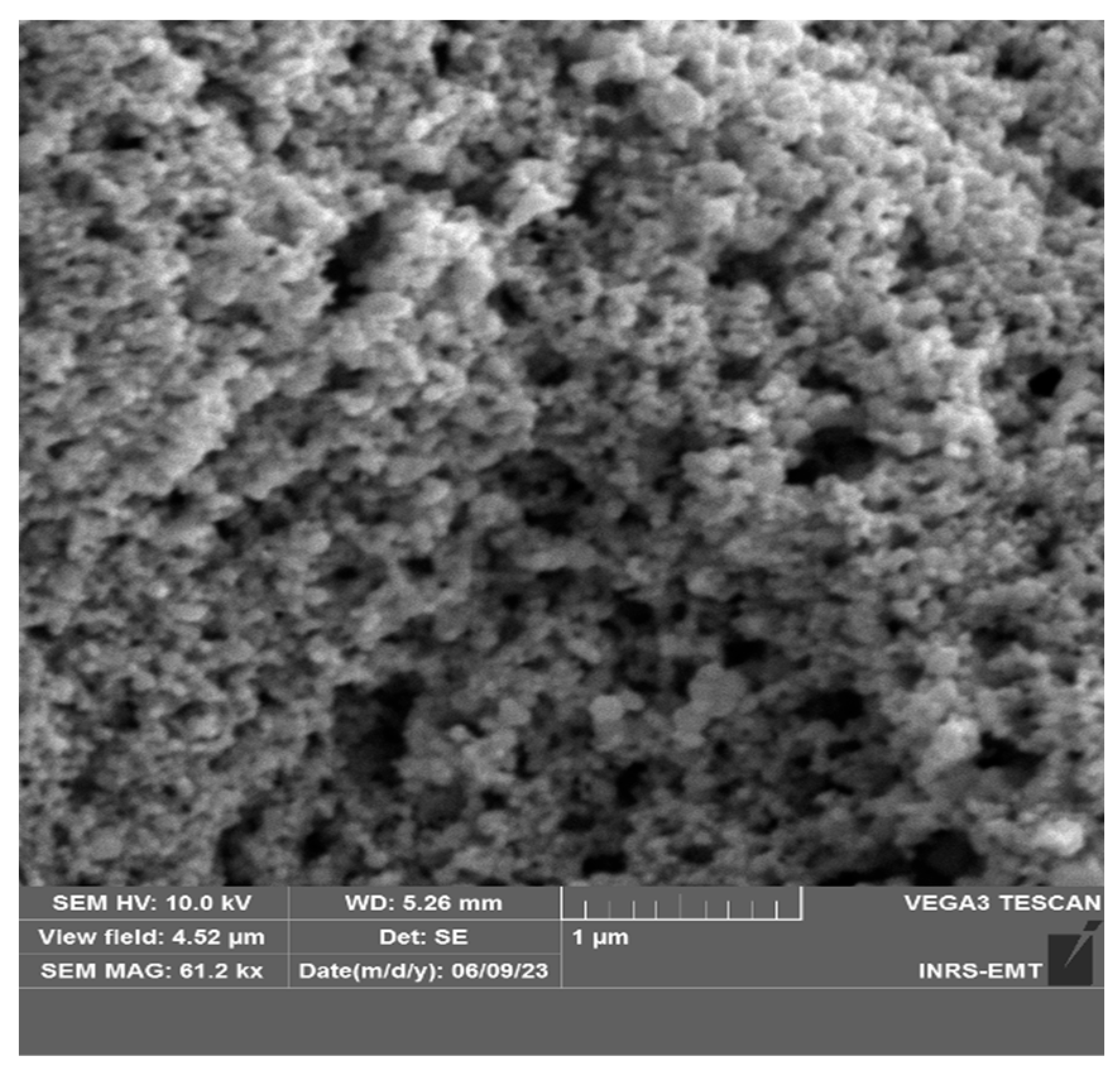
Figure 3 shows an SEM image of the patterns that were transferred to the substrate. This nanoscale image shows the agglomeration of particles of a spherical shape, as expected for this type of material [46]. The average size of the nanoparticles was found to be 48 ± 12 nm.
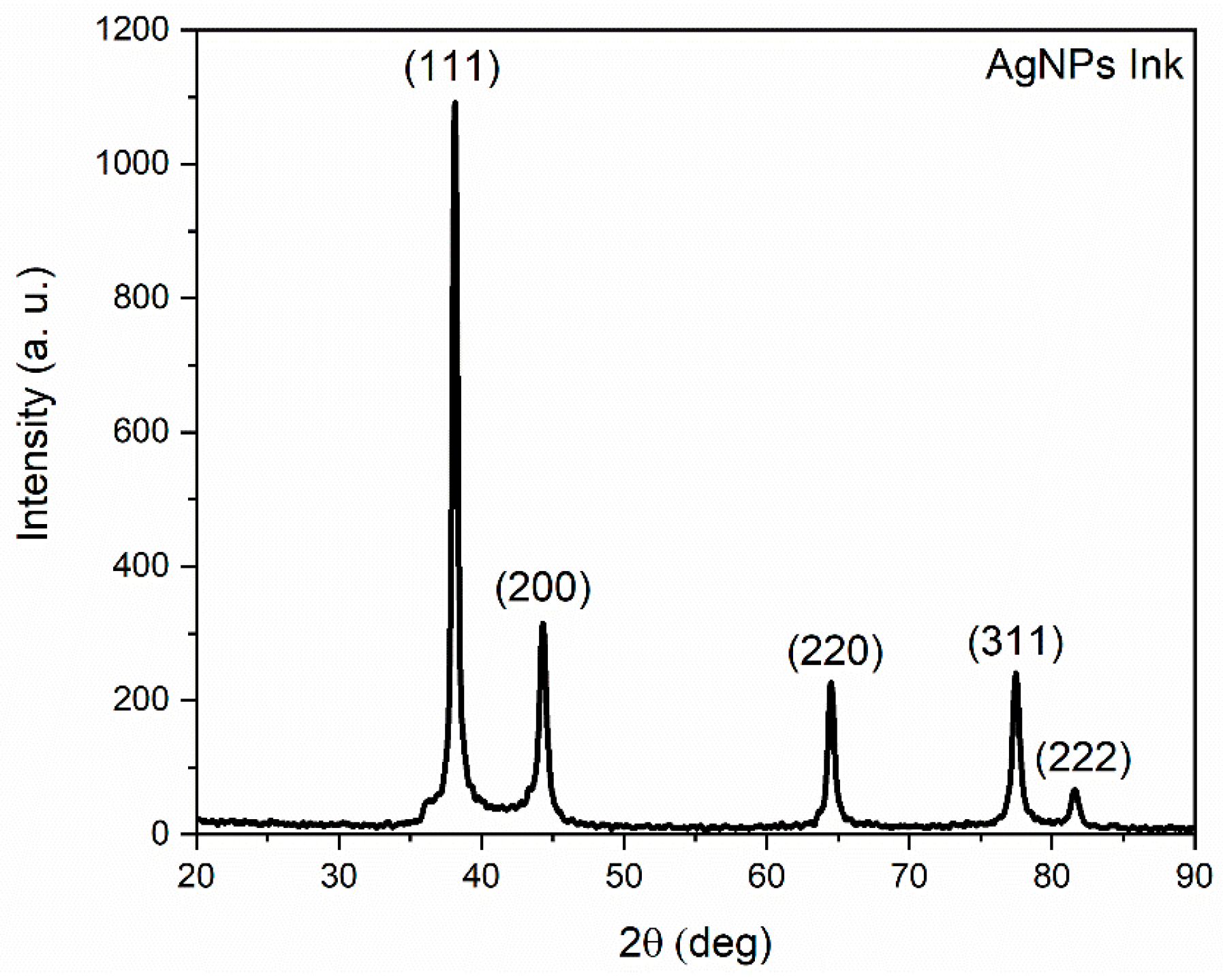
Figure 4 shows the X-ray diffraction (XRD) pattern of the conductive AgNP ink used in this work. The FCC structure is identified from JCPDS 00-004-0783 [45]. This pattern shows the presence of intense peaks at 38°, 44°, 64°, 77°, and 81°, related to the crystalline planes of the (111), (200), (220), (311), and (222) orientations, respectively. It can be noted that no silver oxide was detected; this indicates that H2O2 acts as a reducing agent during the AgNP-based ink preparation [45]. Energy-dispersive X-ray spectroscopy (EDS) and atomic force microscope (AFM) measurements can be found in [45]. The EDS measurements prior to mixing with H2O2 indicated the presence of small concentrations of nitrogen, oxygen, sodium, and carbon, arising from chemical residues and contamination. After mixing with H2O2, all these elements were found to become negligible, confirming that no additional chemical or evaporation process is required to remove possible contaminants. The absence of silver oxide or a concentration lower than the detection limit of the EDS analyzer may result from the efficient redox mechanism induced by H2O2. According to the profile obtained by AFM, the nanoparticles had diameters between 30 and 60 nm, which confirmed the dimensions measured by SEM, and the compact arrangement of the agglomerated AgNP-based ink over the surface was observed.
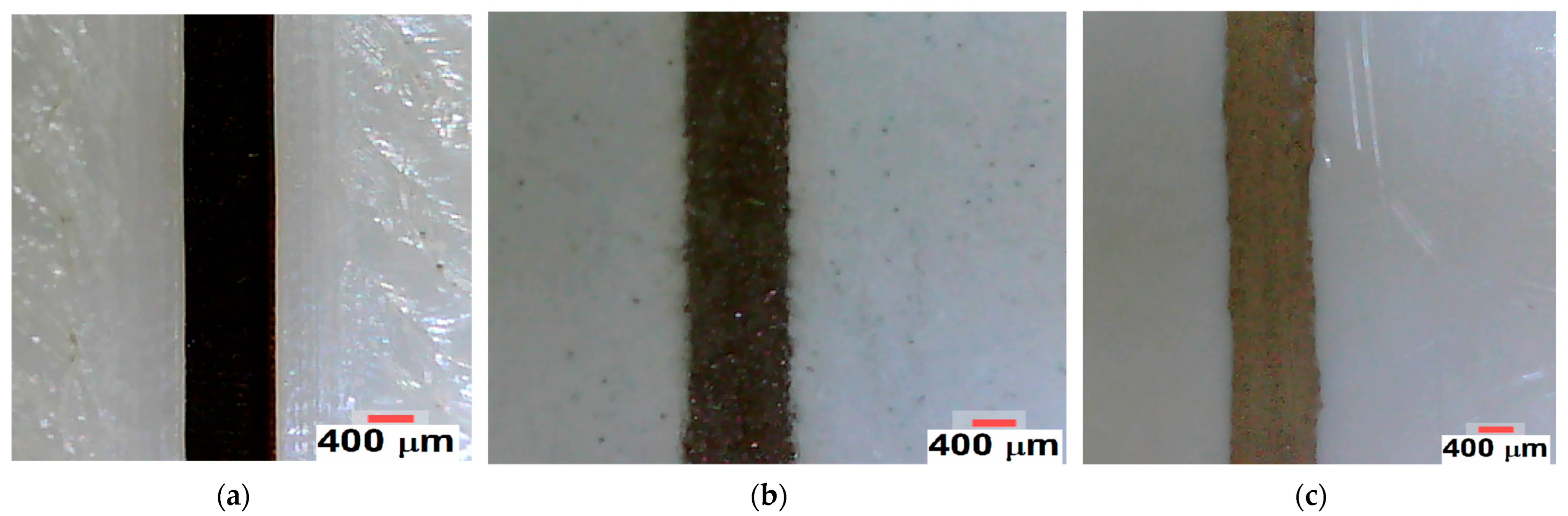
Figure 5 shows the 3D-printed screen and the respective transferred patterns in photographic and conventional office paper substrates. Here, 600 ± 30 µm was the optimal minimum length found for the 3D screen. This resolution is reliable for the fast prototyping of flexible PCBs and devices [19,21,23,24,25,31,33,35]. The realization of microcavities on flexible substrates was demonstrated by screen printing and in situ curing in [21]. The fabricated microfluidic channel-based capacitor exhibited the sensing of the fluid volume. The evaluated channel showed a width of 928–726 µm. Other systems with similar dimensions, such as a metal-free glucose sensor screen-printed on algae-based substrates with minimum electrode spacing of 1.2 mm [23], and a screen-printed humidity sensor with a surface area of 17 × 23 mm and a minimum width of 1 mm [33], have been reported. Figure 5b,c show the conductive pattern that was transferred to photographic and conventional office paper substrates using this very simple technique. On photographic paper, the transferred pattern at the minimum resolution exhibited variation of ±120 µm, and, for the transferred pattern on office paper, the variation was ±80 µm. The small imperfections seen on the patterns when the 3D screen was removed could be easily corrected by increasing the printing speed, which was not optimized in our work. This factor is a critical parameter to take into account during manufacturing. If the printing speed is too slow, the ink tends to remain beneath the 3D screen, and the transferred pattern expands on the substrate. If the printing speed is too fast, the ink will not cover the 3D screen windows and pattern transfer will fail. Therefore, as the fabrication process used to obtain the prototypes was very basic, subsequent work is necessary to determine the optimal printing speed and ink viscosity, which must be tested and evaluated before technological transfer to industry and everyday life.
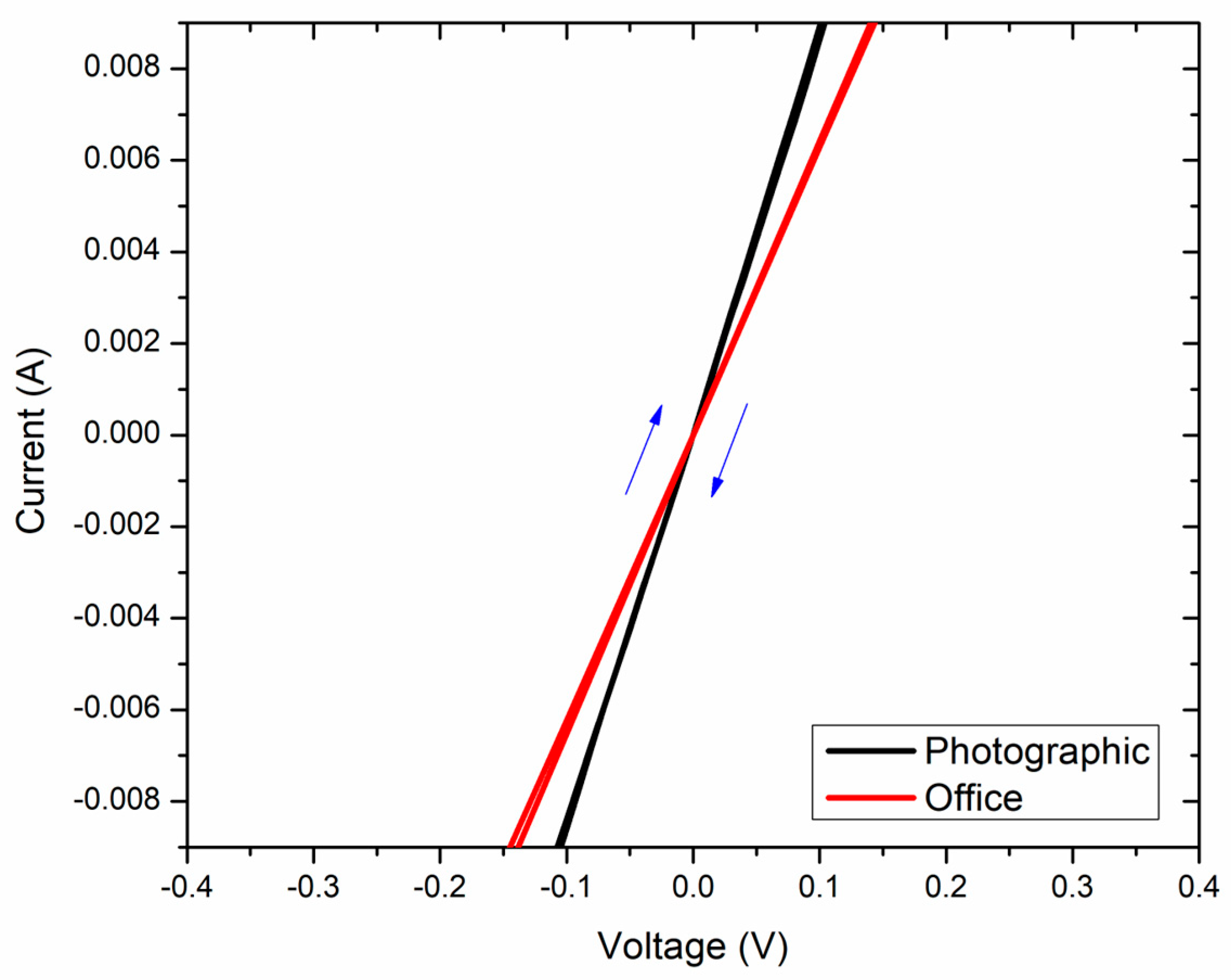
Figure 6 shows the current–voltage measurements conducted on two prototypes, i.e., printed on commercial office and photographic papers. The data reveal linear and symmetric I-V curves on both substrates, without hysteresis effects in both forward and reverse polarizations, indicating the absence of unwanted defects. The current measured in the system designed on photographic paper was found to be slightly higher, due to its lower surface roughness and capillarity, improving the quality of the print [45,47]. The calculated resistances were 12.1 ± 0.3 Ω and 14.1 ± 0.4 Ω for photographic and office papers, respectively. The calculated resistances were obtained from five measurements on four samples of each substrate.
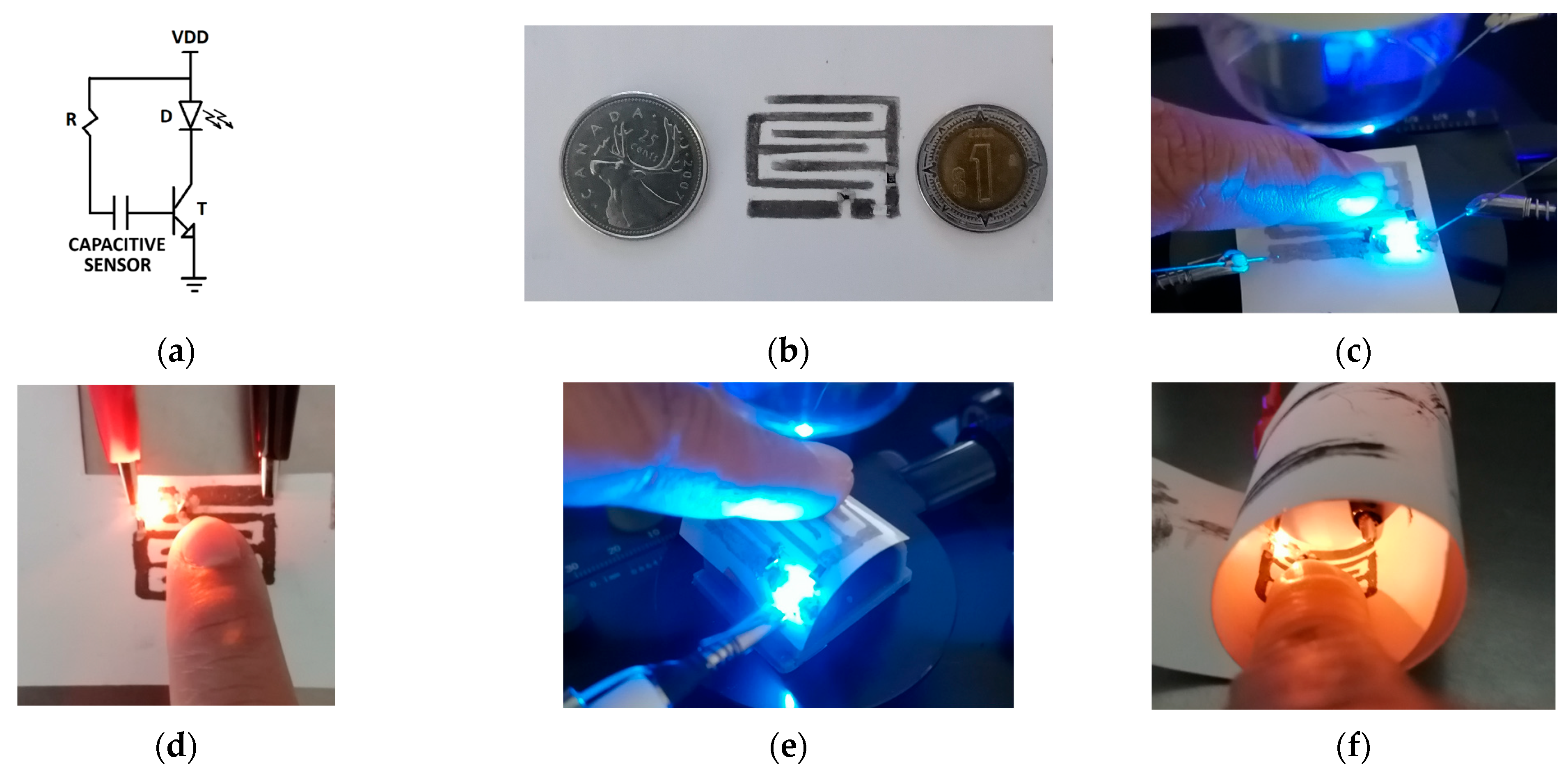
To evidence the relevance of this roll-to-roll technology based on 3D screen printing, a hybrid tactile sensor has been manufactured on photographic and office paper substrates, as shown in Figure 7. Figure 7a shows a diagram of the electronic circuit used to design this hybrid touch-sensitive module, as demonstrated in other works [47]. To illustrate the dimensions of this device, Figure 7b shows a photograph of the hybrid tactile sensor compared with a Mexican peso coin and a Canadian 25-cent coin. Figure 7c,d show the tactile sensor under operation in a flat position, fabricated on photographic and office papers, respectively. The hybrid tactile sensor exhibits sufficient drive-current capabilities to turn on a commercial LED device. After several taps on the system, this prototype was found to continue working. Figure 7e shows the hybrid sensor bent using a 3D-printed device at a tensile radius of 7.5 mm; it remained functional, as shown in the image of this device under operation. These features indicate that there was no malfunction during these experiments, even when the sensor was bent. Additionally, the hybrid sensor still worked after returning to the flat position. In order to demonstrate the reliability of this technology for printing on conventional office paper, the hybrid touch-sensitive sensor described previously was also applied on commercial paper, as illustrated in Figure 7d. As shown in Figure 7d,f, the sensor still demonstrated operation in both flat and rolled-up positions. Similarly to the sensor tested on photographic paper, the system continued to operate after several starts and stops, as well as after returning to a flat position.
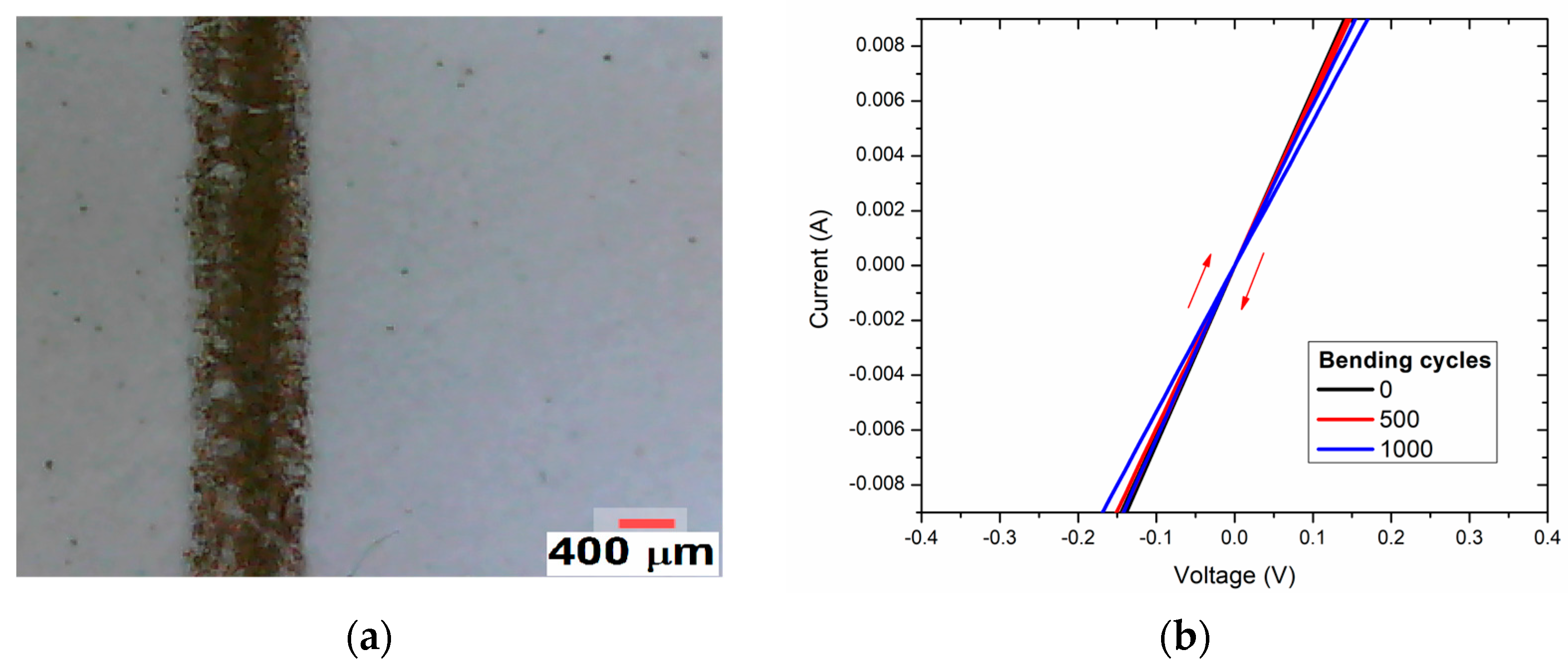
Figure 8 shows the aging and mechanical stress testing of the printed patterns on conventional office paper. After 100 days in ambient air (averaging a minimum temperature of 11 °C, maximum temperature of 26 °C, and mean relative humidity between 60 and 75%), the patterns previously shown in Figure 5b were mechanically stressed through several cycles of bending and rolling. Figure 8a shows a photograph of the printed pattern after 1000 bending and roll-up cycles. Although a deteriorated pattern can be seen, the shape of the conductive path still can be observed. To corroborate its electrical conductivity functionality, current–voltage curves were measured in both forward and reverse polarizations, as shown in Figure 8b. The measurements exhibit linear and symmetric curves, conserving its ohmic behavior. The current slightly decreased with the bending and roll-up cycles, which could be related to the loss of adherence of the AgNP-based ink. Slight hysteresis could be observed after 1000 bending cycles; this could be related to the oxidation of the AgNP-based ink. Despite the visual deterioration of the conductive path, its drive-current capabilities remained reliable, as shown in Figure 8b.
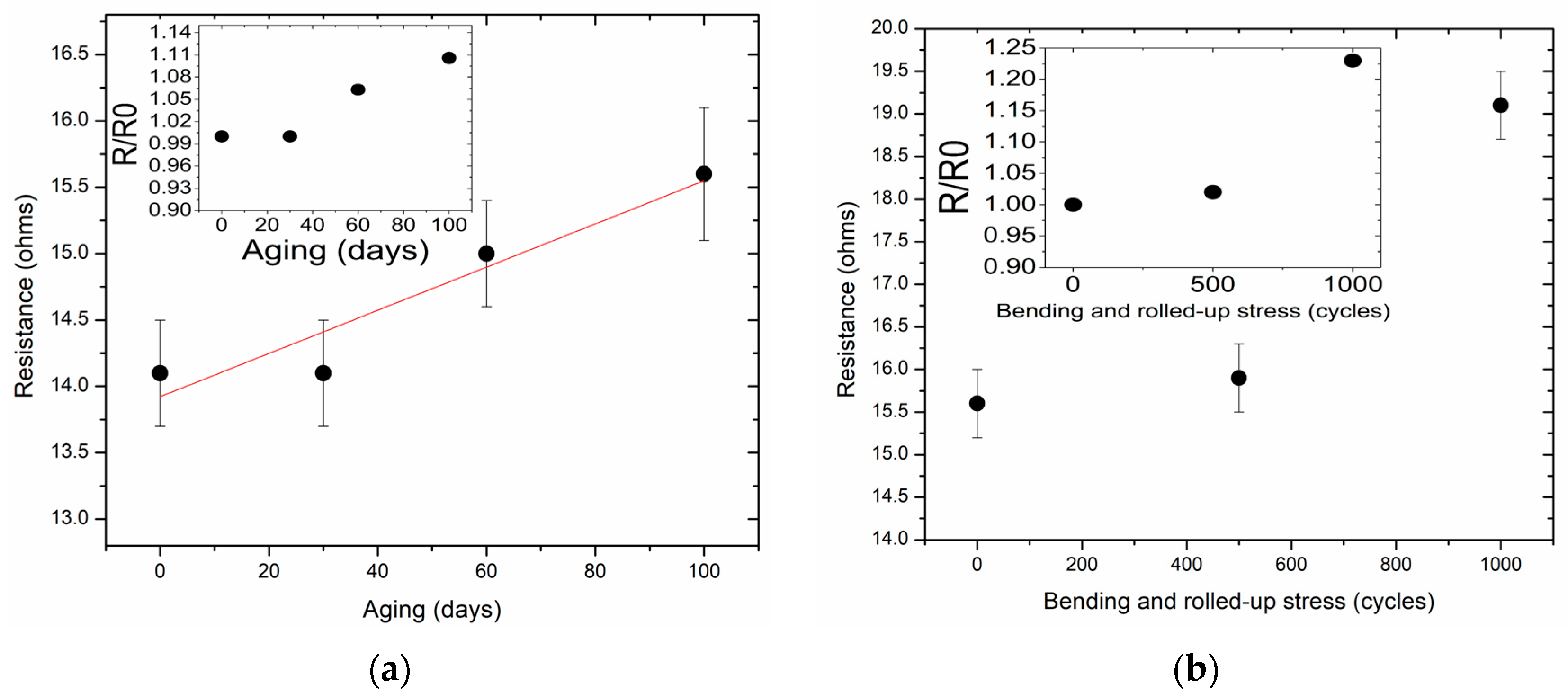
Figure 9 shows the temporal evolution of the calculated resistance and the shift in the original resistance (R/R0) with the aging period (Figure 9a), without and after exposure to mechanical stress (Figure 9b). As can be seen in Figure 9a, the increase in resistance tends to be slightly linear over time. Evaluating the R/R0 after 100 days of aging, the resistance increased by almost 10% (from 14.1 Ω to 15.6 Ω), which is still considered a reliable value for functional applications. On the other hand, Figure 9b shows the increase in resistance with bending and roll-up mechanical stress after 100 days of aging. As can be observed, no clear tendency related to the number of cycles was evidenced. After 1000 stress cycles and 100 days of aging, the increase in resistance was found to be 25% (from 15.6 Ω to 19.1 Ω). As a future perspective, further research considering controlled ambient conditions can be carried out, where a fixed temperature and relative humidity could offer different electrical and R/R0 behavior. Nonetheless, it is interesting that the conductive printed paths and tactile hybrid sensors exhibit operational behavior under these stress conditions, which demonstrates the potential applications of the presented approach.
This 3D screen printing technique offers compatibility to be used with other eco-friendly conductive inks and pastes [13,14,15]. Water-based inks offer the possibility of using spray dispersion through the 3D screen to avoid the related limitations regarding viscosity and surface tension [13]. Although the study of eco-friendly conductive inks is increasing, the compatibility of nanomaterials in water-based inks needs to be further explored. For example, water-based conductive inks can be formulated using biodegradable polymers, adhesives, and common carbon materials as conductive materials, where the patterns printed by screen printing (200 mesh) exhibit a resolution of 1–5 mm with resistance of ~1000 ohm [48]. These open up a wide range of possibilities to use different eco-friendly conductive inks compatible with the approach presented in this work.
The main challenges of this technology are finding the optimal printing parameters to improve the resolution of the patterns printed on each type of substrate, which was found here to significantly affect the quality of the final product. Although the results presented indicate a reliable resolution and printed patterns, rheological characterizations of the AgNP-based ink are needed as a way to improve the printing quality before technological transfer to industry.

4. Conclusions

In this work, an eco-friendly screen printing and roll-to-roll technology based on a 3D-printed screen for flexible electronics is successfully presented. The rapid fabrication of the 3D master pattern in minutes using FDM 3D technology offers a low-cost, simple, large-area-compatible, and biodegradable alternative for use in screen printing. The results show that the printed paths exhibit reliable functionality after aging and mechanical stress. The hybrid tactile sensors fabricated on conventional photographic and office paper exhibit functional operation in flat, bent, and rolled-up positions. The prototype PCB printed in this work shows strong compatibility and efficiency to be integrated into SMT devices and silicon ICs.
This approach based on 3D screen printing is found to be compatible with the implementation of eco-friendly inks based on silver nanoparticles. It successfully meets the preliminary requirements to motivate the development of novel flexible applications based on these two innovative concepts, including those suitable for achieving biodegradable PCBs.

Author Contributions

Conceptualization, S.C. and M.A.D.; methodology, S.C., D.B., and M.A.D.; writing—original draft preparation, S.C.; writing—review and editing, S.C., D.B., and M.A.D.; visualization, S.C. and M.A.D.; supervision, D.B. and M.A.D.; project administration, D.B. and M.A.D.; funding acquisition, D.B. and M.A.D. All authors have read and agreed to the published version of the manuscript.

Funding

This work was supported by the Groupe de Travail Québec-Mexique 2023–2025 du Ministère des Relations Internationales et de la Francophonie (MRIF), the DGQM-AMEXCID (Mexico), and the Fondo Sectorial de Investigación para la Educación (grant number A1-S-7888).

Data Availability Statement

The original contributions presented in the study are included in the article; further inquiries can be directed to the corresponding author.

Acknowledgments

The authors wish to thank the personnel of the Flexible Electronics Research Lab at Ecocampus-BUAP for the 3D printing and flexible electronic microfabrication. The authors are also grateful to the UNESCO MATECSS chair for initiating this international collaborative work between INRS and BUAP in 2018.

Conflicts of Interest

The authors declare no conflicts of interest.

References

  1. Suja, F.; Rahman, R.A.; Yusof, A.; Masdar, M.S. e-Waste Management Scenarios in Malaysia. J. Waste Manag. 2014, 2014, 609169. [Google Scholar] [CrossRef]
  2. Awasthi, A.K.; Li, J.; Koh, L.; Ogunseitan, O.A. Circular economy and electronic waste. Nat. Electron. 2019, 2, 86–89. [Google Scholar] [CrossRef]
  3. Statista eCommerce—Worldwide. Available online: https://www.statista.com/outlook/emo/ecommerce/worldwide?currency=usd (accessed on 14 November 2024).
  4. Nikou, V.; Sardianou, E. Bridging the socioeconomic gap in E-waste: Evidence from aggregate data across 27 European Union countries. Clean. Prod. Lett. 2023, 5, 100052. [Google Scholar] [CrossRef]
  5. Liu, K.; Tan, Q.; Yu, J.; Wang, M. A global perspective on e-waste recycling. Circ. Econ. 2023, 2, 100028. [Google Scholar] [CrossRef]
  6. Forti, V.; Balde, C.P.; Kuehr, R. E-Waste Statistics: Guidelines on Classification Reporting and Indicators, 2nd ed.; United Nations University: Bonn, Germany, 2018. [Google Scholar]
  7. Chakraborty, M.; Kettle, J.; Dahiya, R. Electronic Waste Reduction Through Devices and Printed Circuit Boards Designed for Circularity. IEEE J. Flex. Electron. 2022, 1, 4–23. [Google Scholar] [CrossRef]
  8. Grant, K.; Zhang, S.; Kettle, J. Improving the sustainability of printed circuit boards through additive printing. In Proceedings of the 2023 IEEE Conference on Technologies for Sustainability (SusTech), Portland, OR, USA, 19–22 April 2023; pp. 86–90. [Google Scholar]
  9. Li, W.; Liu, Q.; Zhang, Y.; Li, C.; He, Z.; Choy, W.; Low, P.; Sonar, P.; Kyaw, A. Biodegradable Materials and Green Processing for Green Electronics. Adv. Mater. 2020, 32, 2001591. [Google Scholar] [CrossRef]
  10. Khan, Y.; Thielens, A.; Muin, S.; Ting, J.; Baumbauer, C.; Arias, A. A New Frontier of Printed Electronics: Flexible Hybrid Electronics. Adv. Mater. 2019, 32, 1905279. [Google Scholar] [CrossRef] [PubMed]
  11. Tong, G.; Jia, Z.; Chang, J. Flexible Hybrid Electronics: Review and Challenges. In Proceedings of the 2018 IEEE International Symposium on Circuits and Systems (ISCAS), Florence, Italy, 27–30 May 2018; pp. 1–5. [Google Scholar]
  12. Yin, Z.; Huang, Y.; Bu, N.; Wang, X.; Xiong, Y. Inkjet printing for flexible electronics: Materials, processes and equipments. Chin. Sci. Bull. 2010, 55, 3383–3407. [Google Scholar] [CrossRef]
  13. Cano, C.; Denchev, Z.; Cruz, S.; Viana, J. Chemistry of solid metal-based inks and pastes for printed electronics—A review. Appl. Mater. Today 2019, 15, 416–430. [Google Scholar] [CrossRef]
  14. Orrill, M.; Abele, D.; Wagner, M.; LeBlanc, S. Sterically Stabilized Multilayer Graphene Nanoshells for Inkjet Printed Resistors. Electron. Mater. 2021, 2, 394–412. [Google Scholar] [CrossRef]
  15. Nallan, H.; Sadie, J.; Kitsomboonloha, R.; Volkman, S.; Subramanian, V. Systematic Design of Jettable Nanoparticle-Based Inkjet Inks: Rheology, Acoustics, and Jettability. Langmuir 2014, 30, 13470–13477. [Google Scholar] [CrossRef] [PubMed]
  16. Boutiette, A.; Toothaker, C.; Corless, B.; Boukaftane, C.; Howell, C. 3D printing direct to industrial roll-to-roll casting for fast prototyping of scalable microfluidic systems. PLoS ONE 2020, 15, e0244324. [Google Scholar] [CrossRef]
  17. Kronenfeld, J.; Rother, L.; Saccone, M.; Dulay, M.; DeSimone, J. Roll-to-roll, high-resolution 3D printing of shape-specific particles. Nature 2024, 627, 306–312. [Google Scholar] [CrossRef]
  18. Zikulnig, J.; Kosel, J. Fabrication Technologies for Flexible Printed Sensors. Encycl. Sens. Biosens. 2023, 3, 33–50. [Google Scholar]
  19. Si, B.; Hu, Y.; Yao, L.; Jin, Q.; Zheng, C.; Wu, Y.; Wu, X.; Gao, X. 3D Printing Technologies in Advanced Gas Sensing: Materials, Fabrication, and Intended Applications: A review. IEEE Sens. J. 2025, 25, 5916–5934. [Google Scholar] [CrossRef]
  20. Shukla, P.; Gond, R.; Beniwal, A.; Li, C.; Rawat, B. Disposable and Highly Sensitive Humidity Sensor based on PEDOT:PSS/GO Heterostructure. IEEE J. Flex. Electron. 2025, 4, 201–208. [Google Scholar] [CrossRef]
  21. Anderson, C.; Fan, Z.; Richstein, J.; Sussman, M.; Nishida, T. Fabrication of 3D Screen-Printed Micro-Cavities Towards Sweat Sensors for Integrated Flexible Hybrid Electronics. In Proceedings of the 2024 IEEE Sensors, Kobe, Japan, 20–23 October 2024. [Google Scholar] [CrossRef]
  22. Guo, Y.; Lan, Z.; Li, K.; Zhu, K.; Song, X.; Zhang, R.; Chen, W.; He, J.; Hou, X.; Chou, X. Fully Flexible Integrated and Self-Powered Smart Bending Strain Skin for Wireless Monitoring of Heavy Industrial Equipment. IEEE Trans. Instrum. Meas. 2025, 74, 2502012. [Google Scholar] [CrossRef]
  23. Alexandre, E.; Beduk, T.; Lengger, S.; Vijjapu, M.; Carrara, S.; Kosel, J. Glucose Sensor Printed on Algae-Based Substrates for Eco-Conscious Point-of-Care Devices. IEEE Sens. Lett. 2025, 9, 4500204. [Google Scholar] [CrossRef]
  24. Nair, P.; Santurkar, V.; Amreen, K.; Ponnalagu, R.; Goel, S. Gold/Cerium(IV) Oxide-Modified Flexible Electrodes for Enzymatic Detection of Triglyceride. IEEE Sens. Lett. 2024, 8, 4504704. [Google Scholar] [CrossRef]
  25. Punkari, T.; Kattainen, A.; Fonseca, A.; Pronto, J.; Keskinen, J.; Mäntysalo, M. Roll-to-roll Screen Printed Monolithic Supercapacitors and Modules with Varying Electrode Areas. IEEE J. Flex. Electron. 2025, 4, 12–19. [Google Scholar] [CrossRef]
  26. Egels, M.; Venouil, A.; Hannachi, C.; Pannier, P.; Benwadih, M.; Serbutoviez, C. Screen-Printed 1 × 4 Quasi-Yagi-Uda Antenna Array on Highly Flexible Transparent Substrate for the Emerging 5G Applications. Electronics 2025, 14, 2850. [Google Scholar] [CrossRef]
  27. Liu, Y.; Gao, C.; Li, D.; Zhang, X.; Zhu, J.; Wu, M.; Liu, W.; Shi, T.; He, X.; Wang, J.; et al. Dynamic X-ray imaging with screen-printed perovskite CMOS array. Nat. Commun. 2024, 15, 1588. [Google Scholar] [CrossRef] [PubMed]
  28. Zhang, H.; Li, Q.; Zou, F.; He, Y.; Sun, P.; Li, H.; Xiao, Y. High-Sensitivity and Broad Linearity Range Pressure Sensor Based on Printed Microgrids Structure. IEEE Sens. J. 2025, 25, 2372–2380. [Google Scholar] [CrossRef]
  29. Lim, D.; Lim, S. Optically Transparent and Rollable Metafilm for Electromagnetic Absorption using Screen Printed Metal Mesh. IEEE Antennas Wirel. Propag. Lett. 2025, 24, 686–690. [Google Scholar] [CrossRef]
  30. Cao, C.; Jia, Z.; Yang, L.; Li, H.; Tao, Y.; Zhong, Q.; Xu, Z.; Luo, C.; Chen, Z. Printed Heating and Temperature-Sensing Film in Transient Plane Source Sensor and Its Application in Measuring Thermal Conductivity. IEEE Sens. J. 2025, 25, 205–212. [Google Scholar] [CrossRef]
  31. Somarathna, U.; Garakani, B.; Weerawarne, D.; Alhendi, M.; Poliks, M.; Misner, M.; Burns, A.; Khinda, G.; Alizadeh, A. Reliability of Screen-printed Water-based Carbon Resistors for Sustainable Wearable Sensors. IEEE Sens. J. 2025, 25, 6449–6463. [Google Scholar] [CrossRef]
  32. Beniwal, A.; Gond, R.; Karagiorgis, X.; Rawat, B.; Li, C. Room-Temperature-Operated Fe2O3/PANI-Based Flexible and Eco-Friendly Ammonia Sensor with Sub-ppm Detectability. IEEE Sens. Lett. 2025, 9, 2000404. [Google Scholar] [CrossRef]
  33. Marini, L.; Dinesh, S.; Jhajharia, S.; Padmanabhan, M.; Mahajan, R.; Chithra, P. Screen Printable, Sustainable Water-Based Functional Ink from Coal-Derived Reduced Graphene Oxide for Humidity Sensing. IEEE Sens. Lett. 2025, 9, 2000204. [Google Scholar]
  34. Orlando, A.; Gaiardo, A.; Valt, M.; Trentini, G.; Magoni, M.; Tosato, P.; Krik, S.; Lugli, P.; Petti, L.; Lorenzelli, L. Towards Flexible & Wearable Diabetes Monitoring: Printing of Metal Oxide Materials for Chemiresistive Gas Sensors. In Proceedings of the 2024 IEEE International Flexible Electronics Technology Conference, Bologna, Italy, 15–18 September 2024. [Google Scholar] [CrossRef]
  35. Ersan, T.; Birer, O.; Dalkilic, A.; Inal, M.; Dericioglu, A. Fabricating X Band Frequency Selective Surface on Glass Fabric by Screen Printing Method. IEEE J. Flex. Electron. 2025, 3, 544–551. [Google Scholar] [CrossRef]
  36. Hunde, B.; Woldeyohannes, A. 3D printing and solar cell fabrication methods: A review of challenges, opportunities, and future prospects. Results Opt. 2023, 11, 100385. [Google Scholar] [CrossRef]
  37. Măghinici, A.; Bounegru, A.; Apetrei, C. Electrochemical Detection of Diclofenac Using a Screen-Printed Electrode Modified with Graphene Oxide and Phenanthroline. Chemosensors 2025, 13, 55. [Google Scholar] [CrossRef]
  38. Rocha, D.; Rocha, R.; Castro, S.; Trindade, M.; Munoz, R.; Richter, E.; Angnes, L. Posttreatment of 3D-printed surfaces for electrochemical applications: A critical review on proposed protocols. Electrochem. Sci. Adv. 2022, 2, e2100136. [Google Scholar] [CrossRef]
  39. Palacios, M.; Sanna, M.; Muñoz, J.; Ghosh, K.; Wert, S.; Pumera, M. Heterolayered carbon allotrope architectonics via multi-material 3D printing for advanced electrochemical devices. Virtual Phys. Prototyp. 2023, 18, e2276260. [Google Scholar] [CrossRef]
  40. Mania, S.; Staszczyk, K.; Banach, A.; Krawcewicz, R.; Mielewczyk, A.; Tylingo, R. From waste to value: Functionalized chokeberry-filled PLA filaments for 3D printing. J. Environ. Chem. Eng. 2025, 13, 118832. [Google Scholar] [CrossRef]
  41. Baskakova, K.I.; Okotrub, A.V.; Bulusheva, L.G.; Sedelnikova, O.V. Manufacturing of Carbon Nanotube-Polystyrene Filament for 3D Printing: Nanoparticle Dispersion and Electromagnetic Properties. Nanomanufacturing 2022, 2, 292–301. [Google Scholar] [CrossRef]
  42. Kausar, A.; Ahmad, I.; Eisa, M.H.; Maaza, M.; Khan, H. Manufacturing Strategies for Graphene Derivative Nanocomposites—Current Status and Fruitions. Nanomanufacturing 2023, 3, 1–19. [Google Scholar] [CrossRef]
  43. Arockiam, A.; Subramanian, K.; Padmanabhan, R.; Selvaraj, R.; Bagal, D.; Rajesh, S. A review on PLA with different fillers used as a filament in 3D printing. Mater. Today Proc. 2022, 50, 2057–2064. [Google Scholar] [CrossRef]
  44. Choe, S.; Kim, Y.; Park, G.; Lee, D.; Park, J.; Mossisa, A.; Lee, S.; Myung, J. Biodegradation of 3D-Printed Biodegradable/Non-biodegradable Plastic Blends. ACS Appl. Polym. Mater. 2022, 4, 5077–5090. [Google Scholar] [CrossRef]
  45. Ceron, S.; Barba, D.; Dominguez, M.A. Solution-Processable and Eco-Friendly Functionalization of Conductive Silver Nanoparticles Inks for Printable Electronics. Electron. Mater. 2024, 5, 45–55. [Google Scholar] [CrossRef]
  46. Shigemune, H.; Maeda, S.; Cacucciolo, V.; Iwata, Y.; Iwase, E.; Hashimoto, S.; Sugano, S. Printed Paper Robot Driven by Electrostatic Actuator. IEEE Robot. Autom. Lett. 2017, 2, 1001–1007. [Google Scholar] [CrossRef]
  47. Dominguez, M.; Sosa, J. Copper phthalocyanine buffer interlayer film incorporated in paper substrates for printed circuit boards and dielectric applications in flexible electronics. Solid State Electron. 2020, 172, 107898. [Google Scholar] [CrossRef]
  48. Yang, C.; Shu, M.; Yuan, C.; Dou, T.; Guo, L.; Xu, Z.; Wang, J.; Wang, D. Desing of water-based conductive inks with enhanced printability, conductivity, and anti-fouling ability. Sens. Act. A Phys. 2025, 395, 117055. [Google Scholar] [CrossRef]
Figure 1. Conceptualization of roll-to-roll technology based on 3D screen printing.
Applnano 06 00029 g001
Figure 2. Implementation of screen printing–roll-to-roll technology based on 3D-printed master pattern.
Applnano 06 00029 g002
Figure 3. SEM image of AgNP ink.
Applnano 06 00029 g003
Figure 4. XRD patterns of AgNP-based ink used. Reproduced from [45].
Applnano 06 00029 g004
Figure 5. Transferred pattern through 3D-printed screen. (a) Path on 3D-printed screen. (b) Printed path on conventional office paper. (c) Printed path on photographic paper.
Applnano 06 00029 g005
Figure 6. Current–voltage curves of the transferred patterns through the 3D-printed screen on conventional office and photographic paper substrates.
Applnano 06 00029 g006
Figure 7. Hybrid tactile sensor. (a) Diagram of the electronic circuit. (b) Fabricated device on office paper compared with a Mexican peso coin and a Canadian 25-cent coin. Different sensors under operation in flat position: (c) photographic and (d) office paper. (e) Sensor on photographic paper under operation with a tensile radius of 7.5 mm. (f) Sensor rolled up under operation.
Applnano 06 00029 g007
Figure 8. Aging and mechanical stress testing. (a) Photograph and (b) current–voltage curves of the printed patterns on office paper after 1000 bending and roll-up cycles and aging for 100 days in ambient air.
Applnano 06 00029 g008
Figure 9. Calculated resistance after (a) 100 days in ambient air and (b) mechanical stress testing. Insets: evaluation of R/R0 parameter.
Applnano 06 00029 g009
Disclaimer/Publisher’s Note: The statements, opinions and data contained in all publications are solely those of the individual author(s) and contributor(s) and not of MDPI and/or the editor(s). MDPI and/or the editor(s) disclaim responsibility for any injury to people or property resulting from any ideas, methods, instructions or products referred to in the content.