Article

Analytical Homogenization Approach for Double-Wall Corrugated Cardboard Incorporating Constituent Layer Characterization


by
Mohamed-Fouad Maouche
* and
Mabrouk Hecini
Laboratory of Mechanical Engineering (LGM), University Mohamed Khider Biskra, B.P. 145, Biskra RP 07000, Algeria
*
Author to whom correspondence should be addressed.
Appl. Mech. 2026, 7(1), 4; https://doi.org/10.3390/applmech7010004
Submission received: 9 October 2025 / Revised: 18 December 2025 / Accepted: 20 December 2025 / Published: 9 January 2026

Abstract

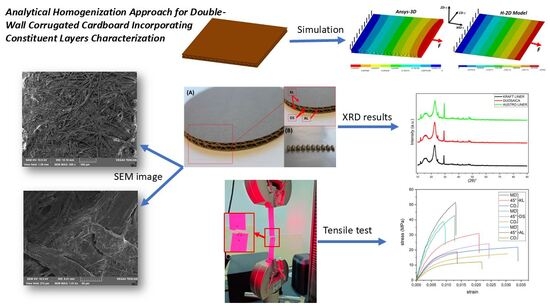
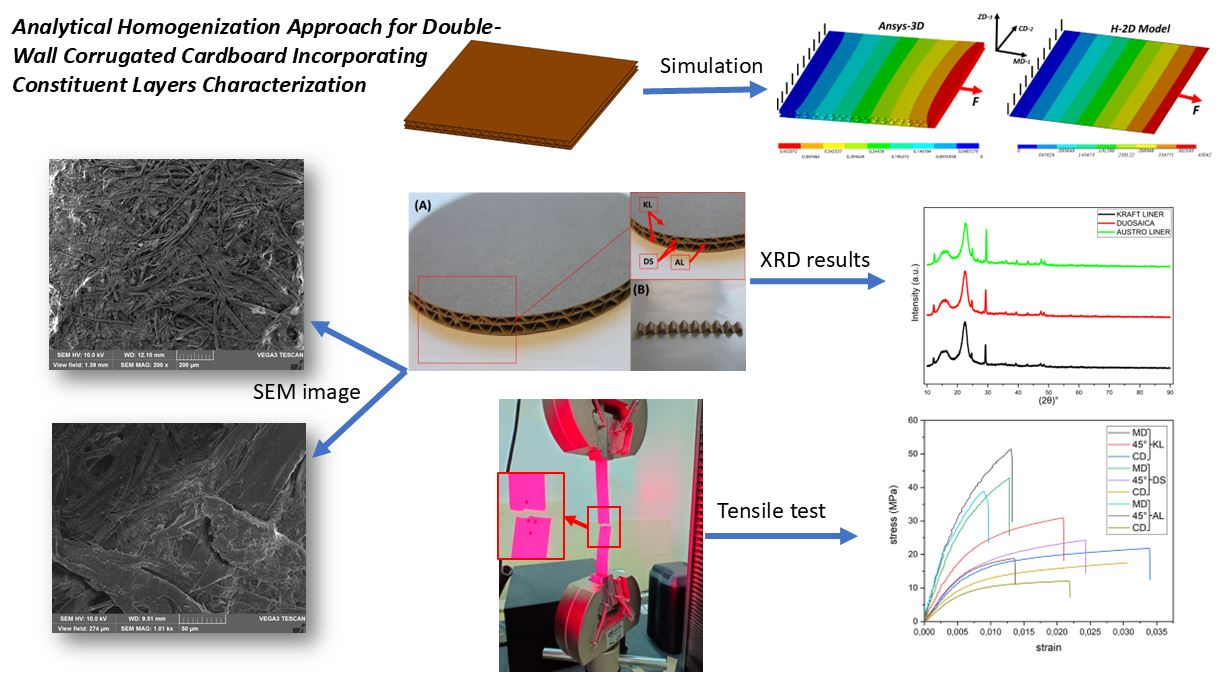
This work presents an analytical homogenization model developed to predict the tensile and bending behavior of double-wall corrugated cardboard. The proposed approach replaces the complex three-dimensional geometry, composed of five paper layers, with an equivalent two-dimensional homogenized plate. Based on lamination theory and enhanced by sandwich structure theory, the model accurately captures the orthotropic behavior of the material. To achieve this objective, three configurations of double-wall corrugated cardboard were investigated: KRAFT LINER (KL), DUOSAICA (DS), and AUSTRO LINER (AL). A comprehensive experimental characterization campaign was conducted, including physical analyses (density measurement, SEM imaging, and XRD analysis) and mechanical testing (tensile tests), to determine the input parameters required for the homogenization process. The proposed model significantly reduces geometric complexity and computational cost while maintaining excellent predictive accuracy. Validation was performed by comparing the results of a 3D finite element model (ANSYS-19.2) with those obtained from the homogenized H-2D model. The differences between both approaches remained systematically below 2%, confirming the ability of the H-2D model to accurately reproduce the axial and flexural stiffnesses of double-wall corrugated cardboard. The methodology provides a reliable and efficient framework specifically dedicated to the mechanical analysis and optimization of corrugated cardboard structures used in packaging applications.

1. Introduction

Corrugated cardboard is one of the most widely used materials in packaging due to its excellent strength-to-weight ratio, shock-absorbing properties, and recyclability. Its multi-layer structure, composed of flat sheets and flutes, offers a unique combination of lightness and rigidity. It is the primary material used for product protection and specific lightweight structural applications. However, this complex architecture results in highly orthotropic mechanical behavior that is difficult to characterize, with properties such as the modulus of elasticity differing significantly between directions (Figure 1), machine direction (MD) and transverse direction (CD), and across the thickness (ZD). Detailed three-dimensional numerical modeling can accurately represent this behavior, but it remains computationally expensive and challenging to implement for the analysis of large structures.
The mechanical characterization of corrugated paper structures has been extensively explored through experimental and numerical approaches. Biancolini et al. [1] conducted a comprehensive investigation into the buckling behavior of corrugated paper packages, combining experimental testing with theoretical analysis. Their work involved evaluating the mechanical properties of paperboard experimentally and developing a local geometry finite element model that accurately predicted buckling loads observed in standard edge compression tests. This approach underscores the importance of integrating experimental data with numerical modeling to understand the structural stability of corrugated paper. Similarly, Rejab et al. [2] examined the mechanical behavior of corrugated-core sandwich panels through experimental tests and numerical analyses. The study focused on the compression response and failure modes of lightweight panels fabricated from various materials, including aluminum alloy, GFRP, and CFRP. The fabrication process involved hot-press molding, and the subsequent bonding to face sheets facilitated a detailed understanding of how the corrugated core influences overall mechanical performance and failure mechanisms. In addition to experimental studies, numerical modeling has been employed to analyze the mechanical properties of corrugated structures. Liu et al. [3] utilized three-point bending tests to investigate the mechanical performance of CFRP panels with aluminum alloy corrugated cores. Their findings revealed that the corrugated core contributed significantly to energy absorption, accounting for over 95% of the energy consumption during bending, highlighting the role of the core in enhancing structural resilience.
The broader application of numerical methods to model the mechanics of corrugated structures is also evident in the work by Song et al. [4], who explored the residual stress and mechanical behavior of corrugated membranes in RF-MEMS switches. Their theoretical modeling demonstrated that residual stresses could be effectively characterized using mechanics theories, which is crucial for predicting the performance of corrugated microstructures in electronic applications. Furthermore, integrating experimental and numerical techniques extends to innovative structural designs. Wang et al. [5] investigated a face-centered cubic (FCC) micro-perforated sandwich structure with a corrugated core, aiming to optimize both mechanical and acoustic properties. Their approach involved simulation-based optimization to enhance low-frequency sound absorption, illustrating how numerical modeling can guide the design of corrugated structures with multifunctional performance.
Recent research has focused on developing analytical homogenization models for double-wall corrugated cardboard to predict mechanical behavior efficiently. Minh & Khoa (2016) [6] presented an analytical homogenization model for orthotropic composite plates that reduces 3D corrugated structures to 2D homogenized plates, based on stratification theory improved with sandwich theory. This approach was validated against Abaqus-3D simulations using user subroutines. Duong (2017) [7] extended this work by analyzing double-wall corrugated cardboard under bending and in-plane shear forces, implementing the model into 4-node shell elements and demonstrating good agreement with 3D shell simulations. Minh et al. (2021) [8] developed an elasto-plastic model for characterizing mechanical behavior through tensile tests and parameter identification, successfully predicting crushing and bending responses. Garbowski (2025) [9] provides a comprehensive review of homogenization techniques for corrugated materials, highlighting advances in analytical, numerical, and experimental approaches for modeling elasticity, bending, and shear stiffness, while identifying challenges related to environmental factors.
Analytical homogenization approaches for double-wall corrugated cardboard demonstrate accuracy ranging from 5 to 12% compared to experimental results [10], with performance dependent on loading scenarios and imperfection modeling. Double-wall 5-ply configurations combining E and B flutes are addressed through hybrid numerical–analytical methods based on strain energy equivalence rather than purely analytical approaches, which are limited to simpler single-wall boards [11,12]. Constituent layer characterization incorporates orthotropic elastic properties (E1, E2, ν12, ν21, G12) with higher stiffness in the machine direction, determined through short compression tests, tensile testing, and four-point bending [13,14].
Critical to double-wall board modeling is explicit treatment of geometric imperfections at 0.5% of compressed segment length, which cause approximately 10% stiffness variations depending on loading orientation and prove essential for bending stiffness prediction accuracy [10,13]. Methods achieving <5% error from analytical models require component validation through four-point bending tests enhanced by video extensometry or digital image correlation to eliminate displacement measurement artifacts [14,15]. The approaches enable rapid design optimization by reducing computational time versus full 3D finite element analysis while maintaining 94–95% accuracy, though in-plane shear predictions show degraded accuracy up to 23.5% error, indicating limitations for torsion-dominated loading scenarios [13].
Although many studies have investigated the mechanical behavior of corrugated cardboard through experimental, numerical, and analytical approaches, modeling double-wall configurations remains challenging. Three-dimensional models provide high accuracy but are computationally expensive, while existing homogenization approaches often lack systematic validation for global tensile and bending properties. Furthermore, the direct influence of the mechanical characterization of the paper constituents on the equivalent stiffnesses of corrugated boards has not yet been fully integrated into current models.
Despite the significant progress achieved in the experimental, numerical, and analytical modeling of corrugated cardboard, several limitations were identified in the existing literature. Most homogenization approaches were either restricted to single-wall configurations or validated under limited loading conditions, often focusing on either in-plane or bending behavior separately. In addition, the systematic integration of experimentally identified orthotropic properties of each paper constituent into the homogenization process remained incomplete, particularly for double-wall corrugated structures. Furthermore, many studies relied on complex user-defined subroutines or hybrid numerical–analytical formulations, which limited their applicability for practical engineering design and increased implementation effort. As a result, a clear gap persisted for a robust, computationally efficient two-dimensional homogenized model capable of accurately reproducing both tensile and bending responses of double-wall corrugated cardboard while being directly validated against a full three-dimensional reference model.
This work aims to develop and validate an analytical homogenization H-2D model for double-wall corrugated cardboard plates. Based on stratification theory enhanced by sandwich theory. The proposed model transforms the complex three-dimensional geometry into an equivalent two-dimensional plate capable of accurately reproducing the global mechanical behavior. In parallel, the mechanical characterization of the different paper layers (liners and fluting) is performed to identify their orthotropic properties and integrate them into the homogenization process. Validation is carried out through direct comparison with a 3D reference model to demonstrate the accuracy of the method, while significantly reducing geometrical complexity and computational cost.

2. Materials and Methods

2.1. Paper Material

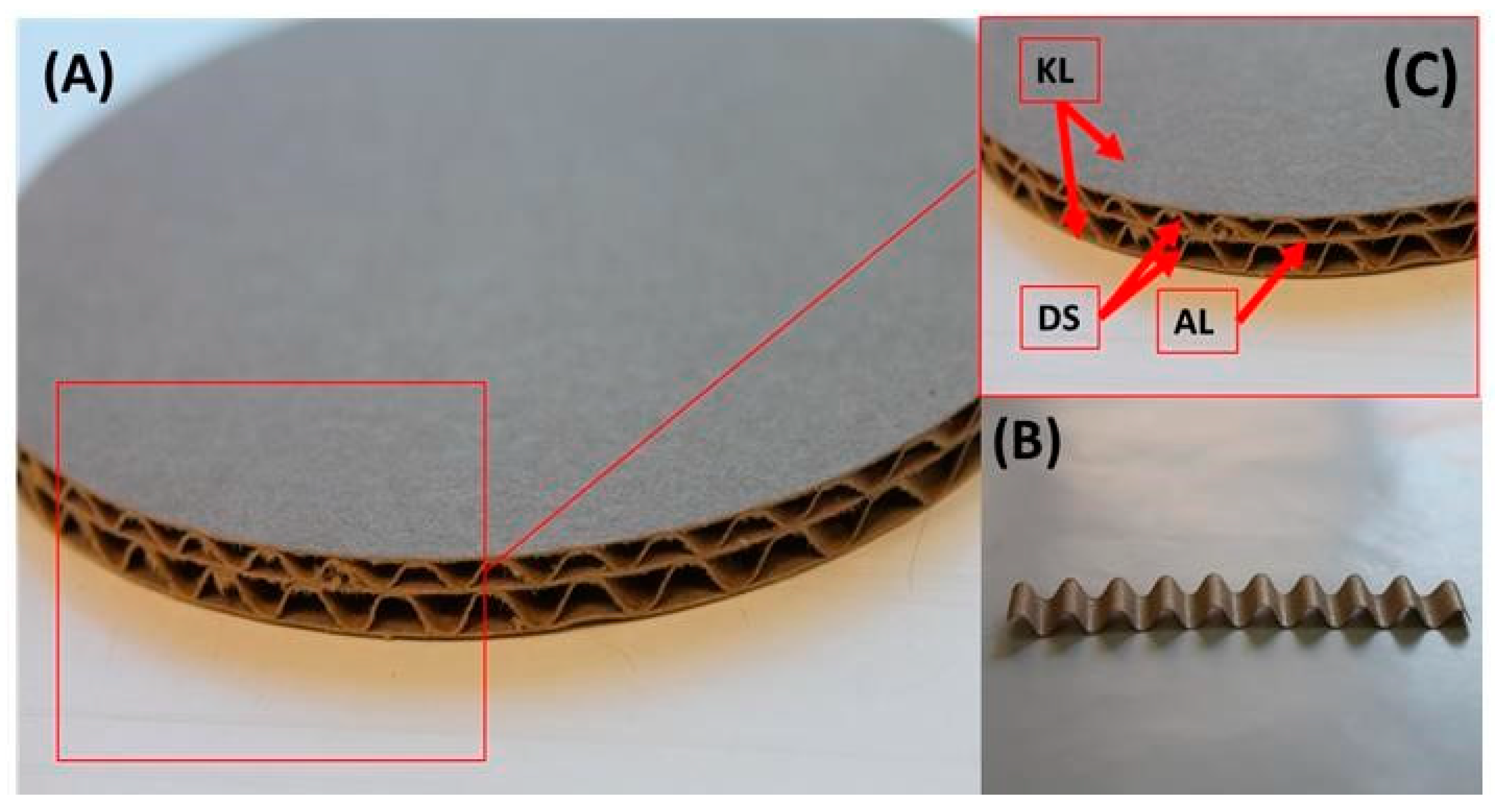
The samples analyzed in this study were obtained from the corrugated cardboard production line at the GENERALE EMBALAGE factory (Béjaïa, Algeria). The investigated double-wall corrugated cardboard, illustrated in Figure 2, is composed of three types of paper with different grammages: KRAFT LINER (KL) for the external layers, DUOSAICA (DS) for the fluting (Figure 2B), and AUSTRO LINER (AL) for the intermediate layer.

2.2. Characterization of Paper

2.2.1. Density

The required grammages were obtained experimentally in accordance with the ISO 536 [16] standard. Paper thickness is generally not constant due to the fibrous structure of the material and slight imperfections due to the manufacturing process. The standardized ISO 534 [17] method was used to measure the thickness and density of paper. Paper samples were conditioned at 23°C and 50% relative humidity for 24 hours in accordance with ISO 187 [18]. Ten samples of each type of paper were measured, as shown in Table 1.
The apparent density of the paper layer showed noticeable differences between the samples. The (DS) layer reached the highest density with a value of 729.7 kg/m3, indicating a more compact fiber network and reduced porosity. In contrast, layer (AL) had the lowest density at 684.2 kg/m3, reflecting a looser structure with higher void content. Layer (KL) presented intermediate values around 714.3 kg/m3. These variations highlight the influence of grammage and thickness on the compactness of the fibrous structure, which directly affects the mechanical behavior of the paper.

2.2.2. Scanning Electron Microscopy (SEM) Observation

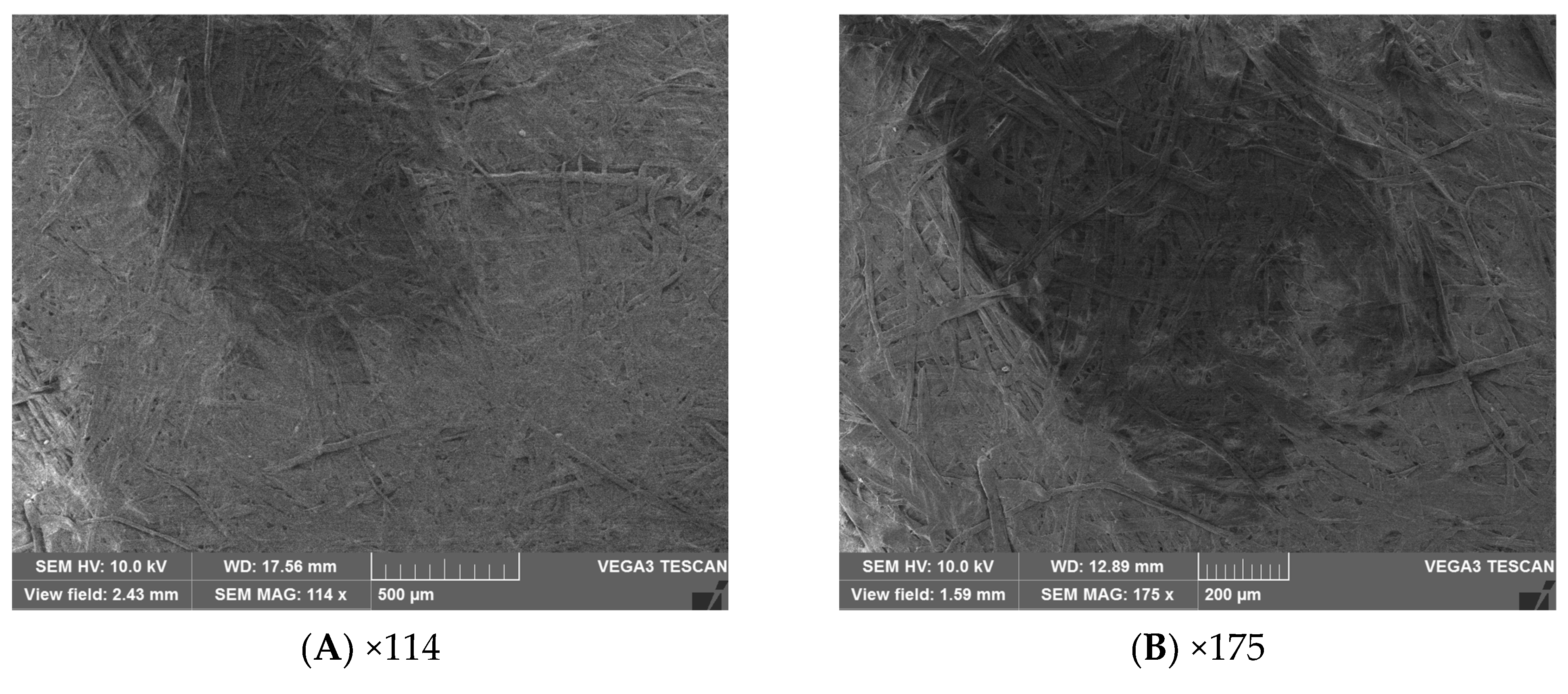
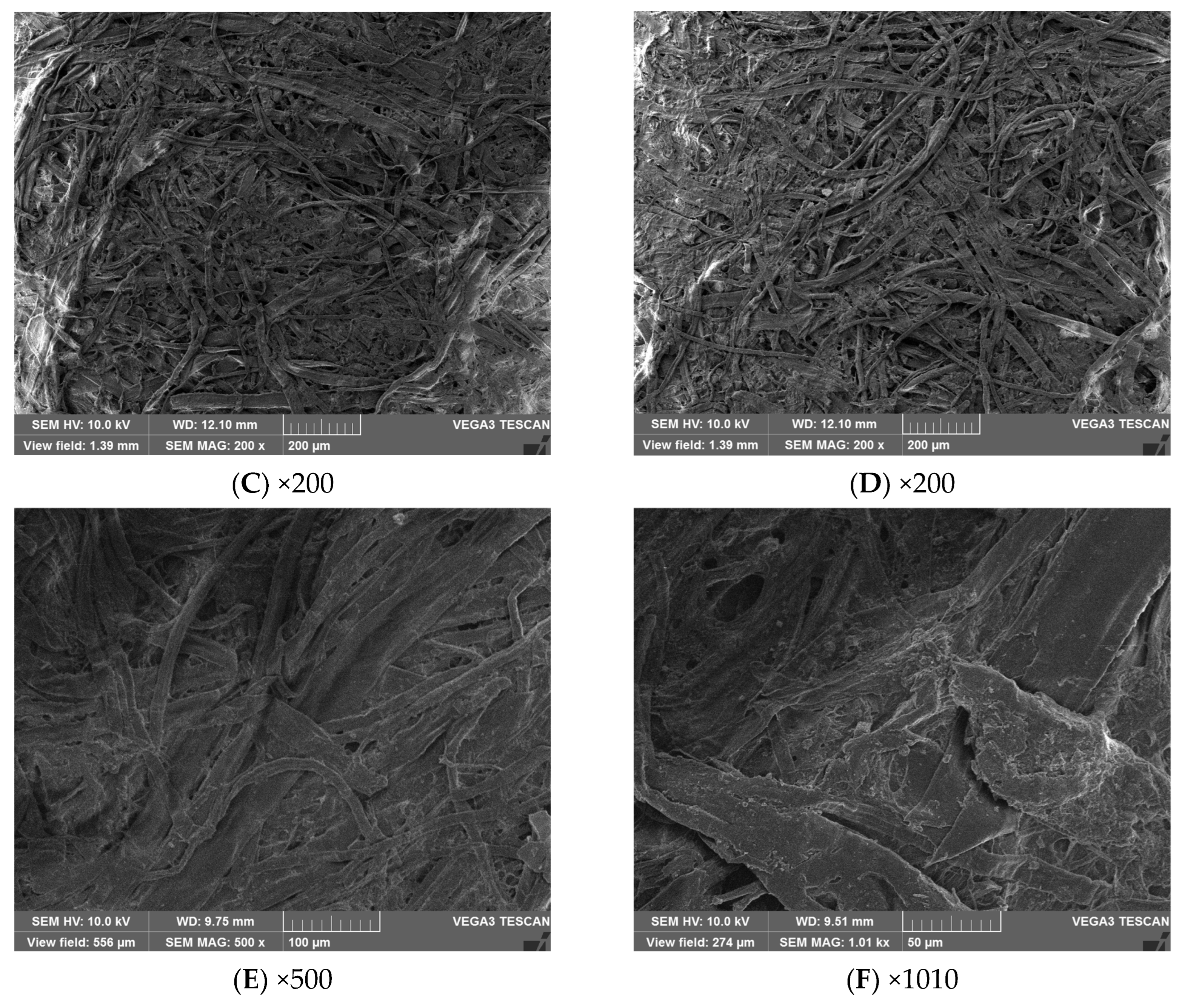
A morphological study was conducted using Scanning Electron Microscopy (SEM) to characterize the microstructure and surface morphology of the material under investigation. Micrographs were acquired at different magnifications (from 114× to 1010×) to analyze the structure across multiple scales. A fibrous structure typical of a paper material was revealed by observing the images (Figure 3A–F). The morphology comprised a three-dimensional network of randomly interwoven and overlapping fibers, forming a porous, non-woven matrix. This observation confirmed the essential cellulose-based nature of the material. The cohesion and strength of the structure were determined to be primarily provided by hydrogen bonds formed between the individual cellulose fibers during the manufacturing process (pressing and drying).
Based on the higher magnification image (Figure 3F, 1010×), the diameter of the individual fibers was determined to be approximately 50 µm. This value was found to be consistent with the standard dimensions of wood pulp fibers used in papermaking, which provided further evidence regarding the composition of the material.

2.2.3. X-Ray Diffraction Analysis (XRD) Results

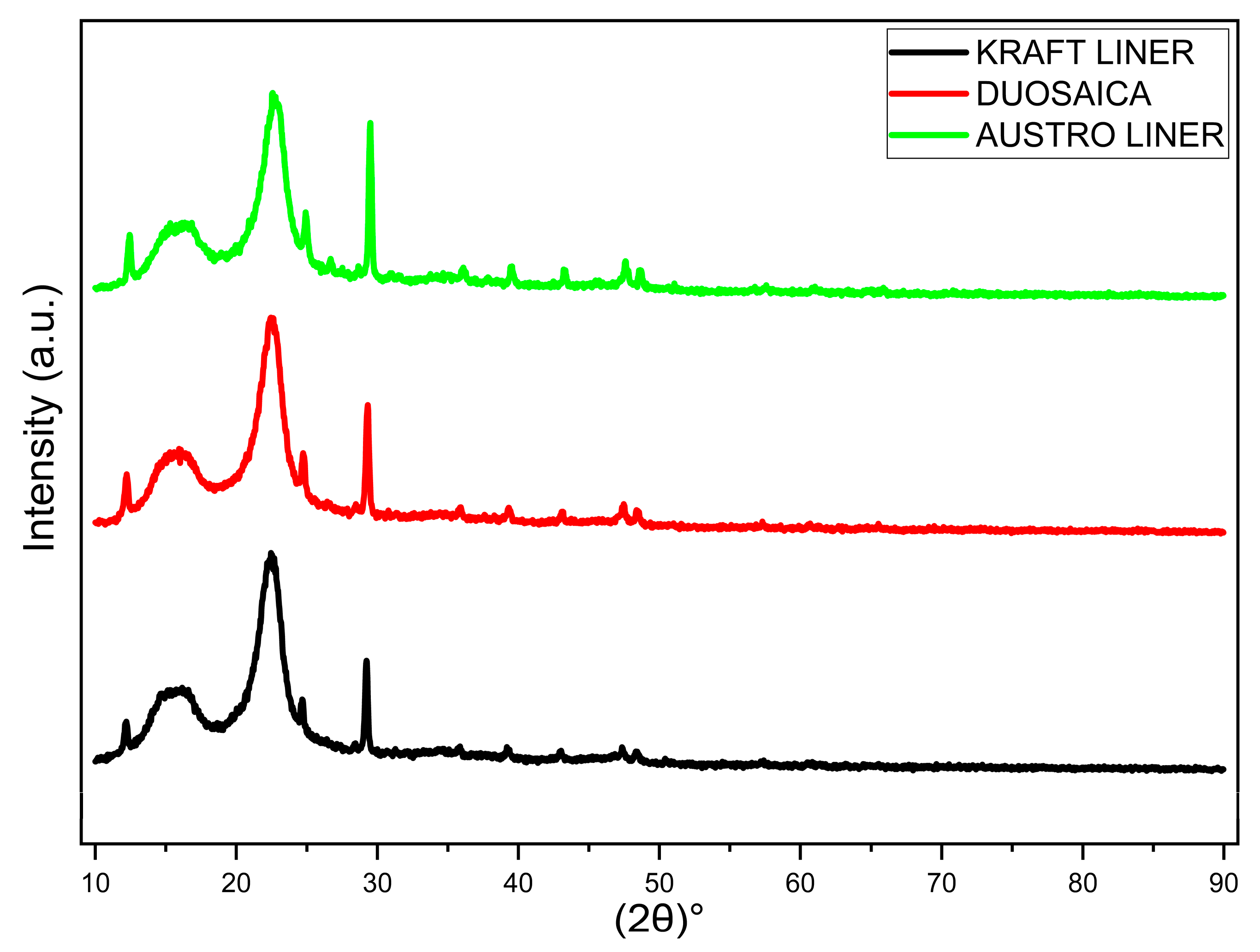
The diffractograms (Figure 4) exhibit a broad diffuse halo between 15° and 25° (2θ), which is characteristic of the amorphous cellulose matrix forming the fibrous basis of paperboard, in agreement with the observations reported by Nwabor et al. (2021) [19]. This amorphous signal is superimposed with sharper diffraction peaks, revealing the presence of mineral fillers.
A strong peak at ~26.6° 2θ corresponds to silica (quartz, SiO2), identified as the main crystalline filler in all three samples. In addition, a weak reflection around 12–13° 2θ can be attributed to kaolinite (Al2Si2O5(OH)4), consistent with the findings of Kethiri et al. (2024) [20]. However, other characteristic kaolinite reflections are not well resolved, suggesting only a minor presence. Unlike coated papers, no significant peak is observed at ~29.4° 2θ, indicating that the amount of calcite (CaCO3) is negligible or below the detection limit in these samples, which is in line with the results reported by Zwain et al. (2019) [21].
Overall, the analysis demonstrates that the three paper qualities studied consist of cellulose as the matrix, quartz as the main filler, and possibly minor traces of kaolinite. At the same time, calcite is absent or undetectable, which matches well with previously published results [13,14,15]

2.2.4. Tensile Test

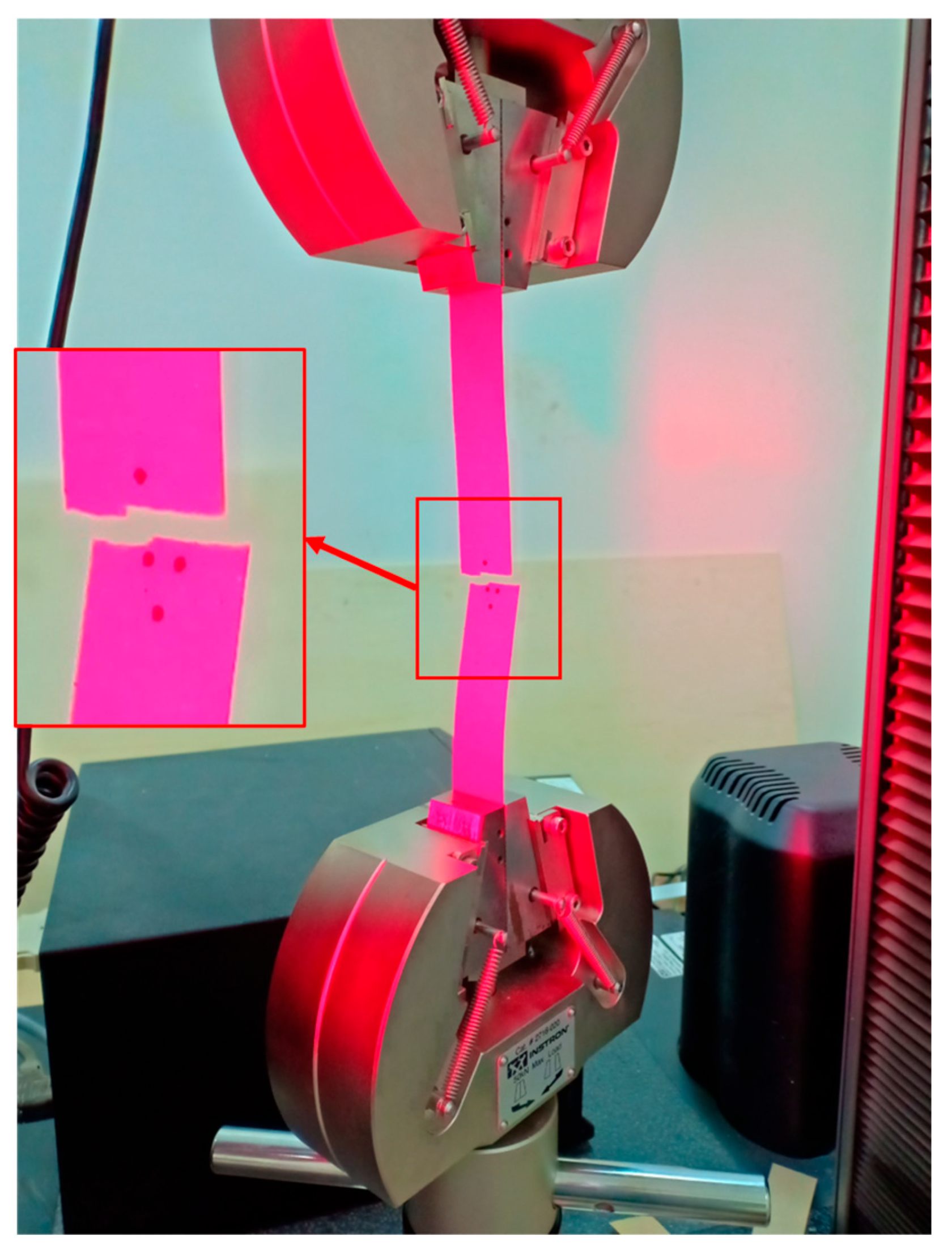
Tensile tests (Figure 5) were carried out for the three characteristic directions, MD, CD, and orientation of 45° from MD according to ASTM D828 (2016) [22], with a constant displacement speed of 25 ± 5 mm/min and under standard conditions of 23 °C and 50% humidity. The Instron Model 5969 universal testing machine with video extensometer was used to measure the elongation of the paper. Utilizing a cutting table (LASERCOMB PRODIGI 3117, ‘GENERALE EMBALAGE factory, Bejaia, Algeria’), rectangular samples measuring 250 × 25 mm were cut.
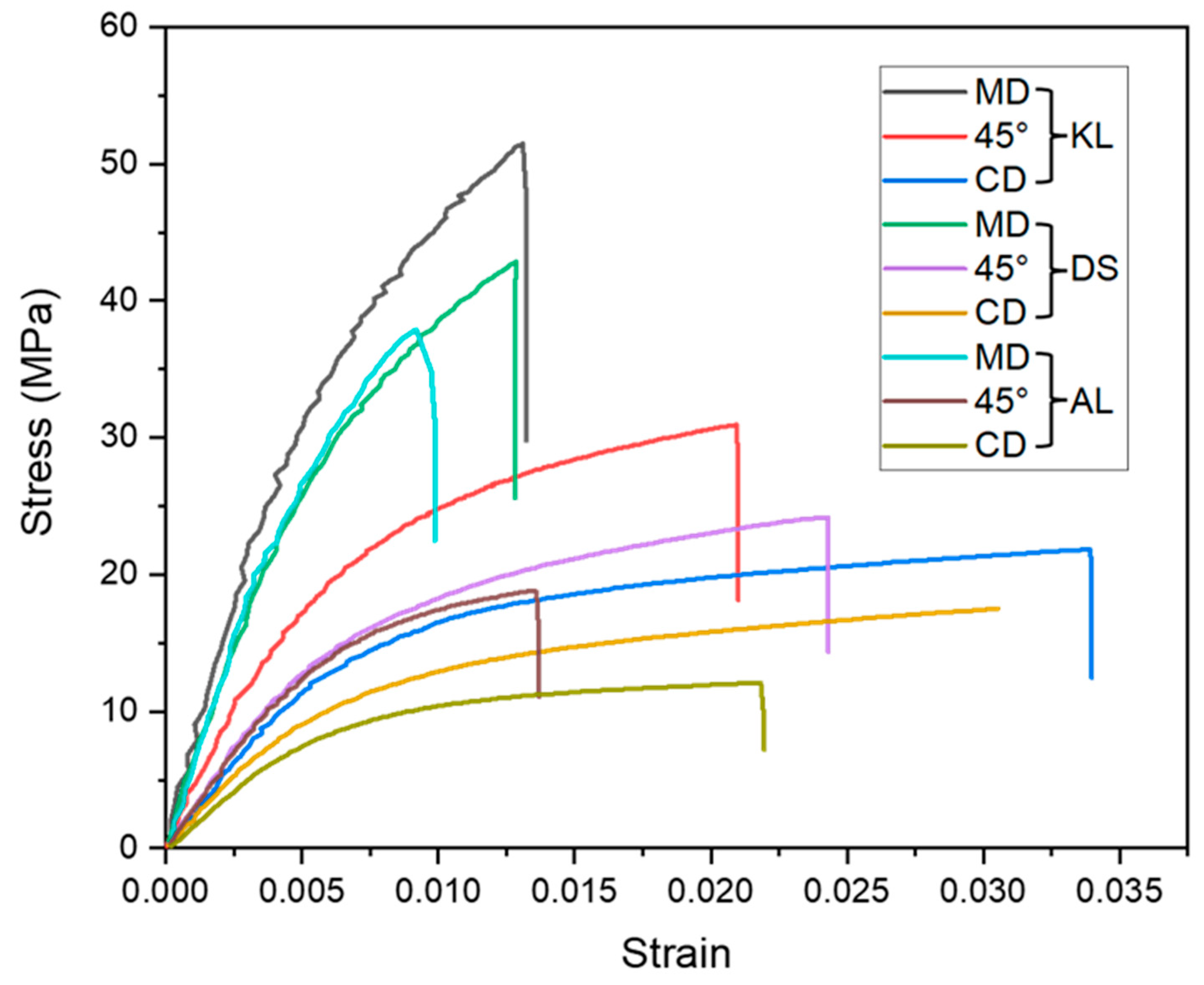
The in-plane tensile stress–strain curves (Figure 6) of the three papers studied (KL, DS, and AL) reveal a strong mechanical anisotropy, an established characteristic of fibrous materials. The maximum strength is systematically observed in the machine direction (MD), followed by the 45° direction, and finally the cross direction (CD). KRAFT LINER exhibits the highest maximum stress (≈ 52 MPa), indicating a high elastic modulus and superior stiffness. However, it has limited elongation at break, making it particularly suitable for the outer layers of corrugated board structures. DUOSAICA reaches an intermediate strength level (≈ 42 MPa in MD) with a more ductile behavior, reflecting a moderate capacity for fiber reorganization under mechanical loading.
On the other hand, AUSTRO LINER shows the lowest strength (≈ 39 MPa in MD), but compensates with a higher elongation at break (up to 0.03 in CD), indicating a greater ability to absorb deformation before failure. Comparatively, all three materials show a significant decrease in strength in the cross direction (10–20 MPa), confirming that this orientation represents the common mechanical weakness. These results confirm that (KL) ensures the best mechanical performance, while (AL) prioritizes ductility, and (DS) stands as a compromise between stiffness and deformability.
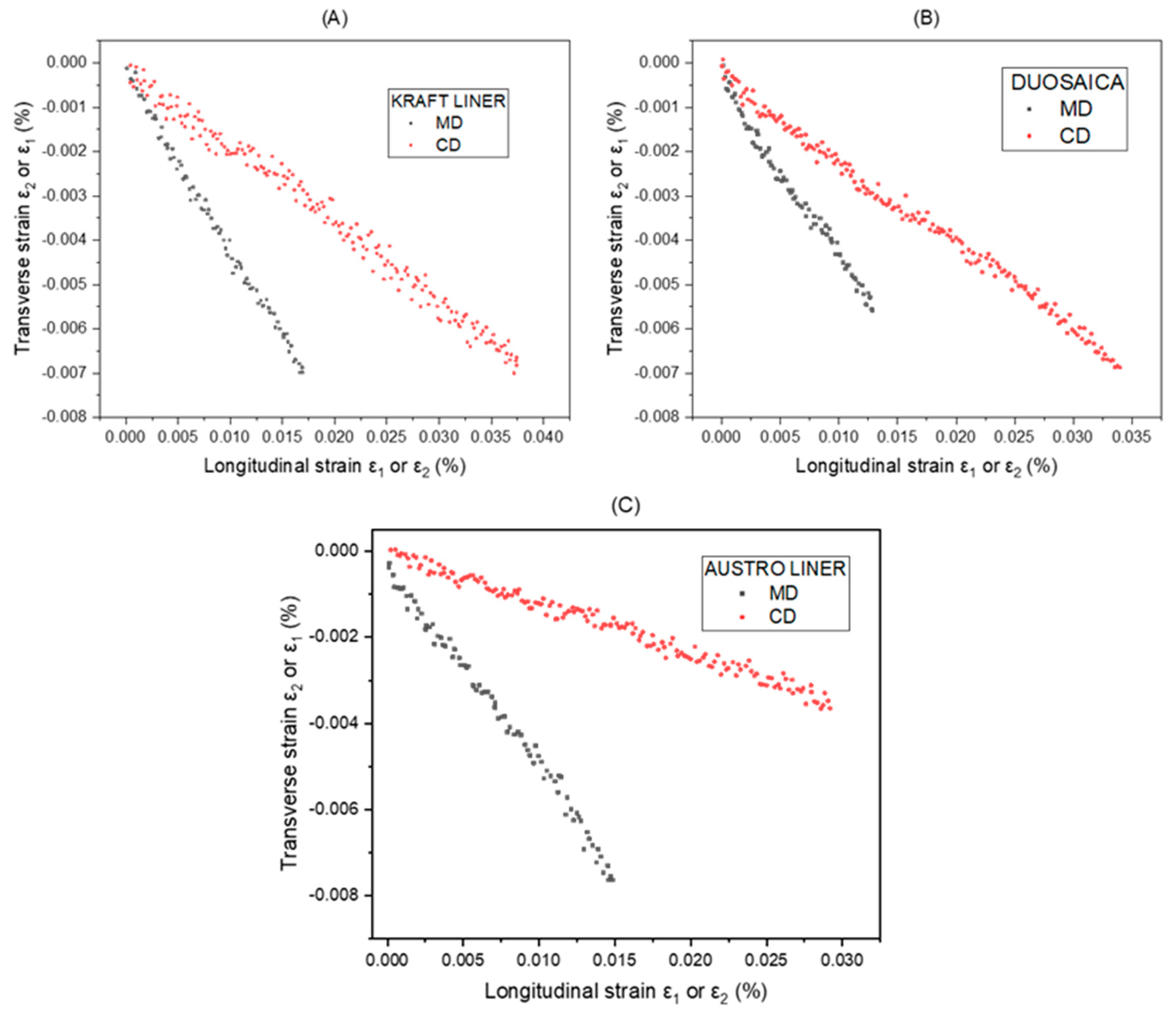
The transverse strain versus longitudinal strain curves for (KL), (DS), and (AL) tested in tensile along (MD) and (CD) are presented in Figure 7. The quasi-linear evolution of the curves allows for the estimation of Poisson’s ratios, highlighting the characteristic anisotropy of fibrous materials. Overall, (KL) exhibits a more balanced behavior between (MD) and (CD), whereas (AL) shows a more pronounced anisotropy, and (DS) demonstrates an intermediate response.
The in-plane modulus of elasticity ( E ) and Poisson’s ratio ( v ) of the individual layers are shown in Table 2). Material properties of the layers were determined through uniaxial tensile testing; the shear modulus G 12 was evaluated using the formula shown in Equation (1) (2003) [1]. Consequently, the in-plane elastic properties were measured along the (MD) and the (CD). The out-plane mechanical properties (Table 2) corresponding to the thickness direction (ZD) were estimated using the formulas shown in Equation (2), following the methodology proposed in previous studies (2022) [11]:
G 12 = 2 v 12 E 1 1 E 1 1 E 2 + 1 E 45 ° 1
E 3 = E 1 200 ; G 13 = E 1 55 ; G 23 = E 2 35
where E 1 , E 45 ° , E 2 and E 3 represent the modulus of elasticity in the (MD), (45°), (CD) and (ZD), respectively, G 13 and G 23 are the out-plane shear modulus, and v 12 is Poisson’s ratio in (MD) and (CD).

3. Homogenization Model for Corrugated Board

3.1. Theory of Laminated Plates

Creating a complete 3D geometric model of the liners and flutings in double-wall corrugated cardboard is a highly complex and time-intensive process. To simplify this, a homogenization approach that substitutes the corrugated structure with an equivalent 2D plate model is proposed in the current work.
Rather than defining a local constitutive law that links stresses to strains at each point within the heterogeneous material, the homogenization process provides global stiffness properties. These relate the generalized strains directly to the resultant forces, allowing for a more efficient analysis of the equivalent homogeneous plate.
Based on laminated plate theory, and after integrating the stress distribution first through the thickness direction (ZD or z-axis), and subsequently along the machine direction (MD or x-axis), the resulting generalized constitutive Equation can be expressed as follows (2009) [23]:
N M = A B B D ε m k
In this formulation, {N} and {M} represent the vectors of internal membrane forces and bending moments, respectively. The matrices [A], [B], and [D] denote the stiffness contributions associated with membrane behavior, membrane–bending coupling effects and bending-torsion moments, respectively. The vectors {εm} corresponds to membrane strains and {k} represents curvature. The individual components of these stiffness matrices are computed using the following expressions (2016) [6]:
A i j = h 2 h 2 Q i j d z =   k = 1 n Q i j k t k   B i j = h 2 h 2 z Q i j d z =   k = 1 n Q i j k t k z k D i j = h / 2 h / 2 z 2 Q i j d z =   k = 1 n Q i j k   t k z k 2 + t k 3 12
z and t represent the vertical position and thickness for each constituent of the double-wall corrugated cardboard.
Q i j is the elastic stiffness matrix for each constituent of the double-wall corrugated cardboard, defined as follows:
Q i j = E 1 1 v 12 v 21 v 12 E 2 1 v 12 v 21 0 v 21 E 1 1 v 12 v 21 E 2 1 v 12 v 21 0 0 0 G 12

3.2. Adapting Laminate Theory to Double-Wall Corrugated Board

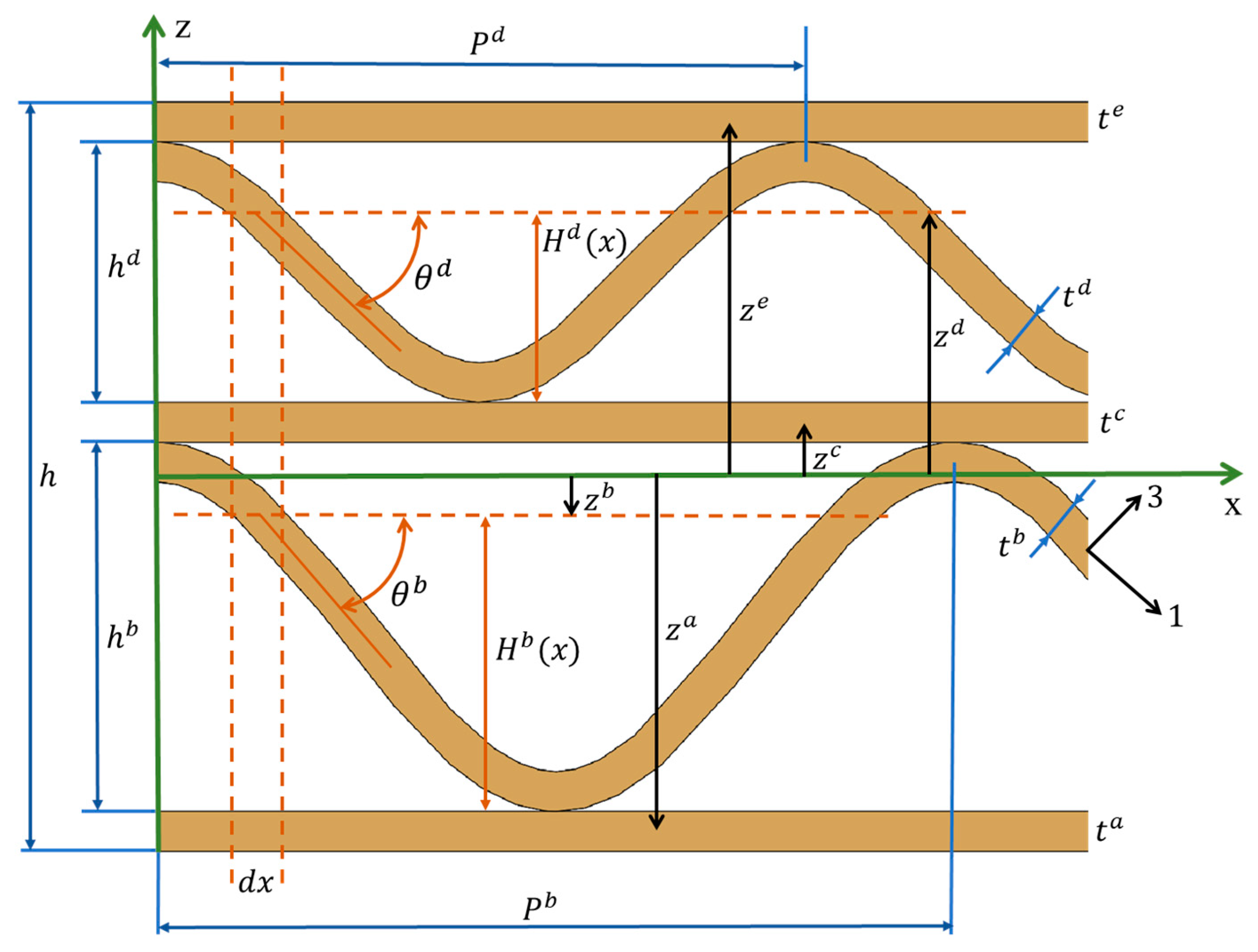
To homogenize a double-wall corrugated board panel, a representative volume element (RVE) must be adopted, which must be fairly small in relation to the dimensions of the entire panel, using a, b, c, d, and e to represent the layers (Figure 8). To apply laminate theory, the RVE is divided into small slices of length (dx) and integrated according to the thickness of each slice. Since the groove slice is inclined and its experimentally obtained mechanical properties are valid only in the plane of the panel (1, 2, and 3), it is necessary to transform these properties into the global plane (x, y, and z). The angle θ can be expressed in relation to the x-axis, and is obtained by the following formula [23]:
θ b x = tan 1 d H b x d x ; H b x = h b t b 2 sin 2 π P b x   θ d x = tan 1 d H d x d x ; H d x = h d t d 2 sin 2 π P d x
After calculating the local stiffness matrices for each slice via integration through the thickness, a second level of homogenization is carried out along the longitudinal direction (MD). The overall stiffness matrix of the RVE is then derived by averaging the contributions of the local stiffness matrices over one complete sinusoidal period, as follows:
A = 1 P 0 P A x d x                   ,                 B = 1 P 0 P B x d x                 ,                 D = 1 P 0 P D x d x
When the periods Pd and Pb of the corrugated layers are different, it is necessary to take an RVE of length P, which is the smallest common multiple of these periods.

3.3. Traction and Bending Stiffnesses

Since the vertical position z of a groove element ds depends on the horizontal coordinate x, the thickness along its vertical section varies with the groove inclination angle θ. Equation (7) can then be rewritten as follows (2016) [6]:
A i j = Q i j a t a + Q i j b t b cos θ b + Q i j c t c + Q i j d t d cos θ d + Q i j e t e   B i j = Q i j a t a z a + Q i j b t b cos θ b z b + Q i j c t c z c + Q i j d t d cos θ d z d + Q i j e t e z e D i j = Q i j a   t a z a 2 + t a 3 12 + Q i j b t b cos θ b z b 2 + 1 12 t b cos θ b 3   + Q i j c   t c z c 2 + t c 3 12 + Q i j d t d cos θ d z d 2 + 1 12 t d cos θ d 3   + Q i j e   t e z e 2 + t e 3 12
where:
h =   t a +   h b +   t c +   h b +   t e   z a =   h b 2 +   t a 2   ;     z c = h 2 +   t a +   h b +   t c 2     ;     z e = h 2   t e 2   z b x = h 2 +   t a +   h b 2 + 1 2   h b t b sin 2 π   p b x   d z b d x = π   h b t b   p b cos 2 π   p b x ;   θ b x = tan 1 d z b d x   z d x = h 2   t e   h d 2 + 1 2   h d t d sin 2 π   p d x   d z d d x = π   h d t d   p d cos 2 π   p d x ;   θ d x = tan 1 d z d d x

3.4. Implementation of the Homogenized Model in FE Analysis

The corrugated cardboard was represented by an equivalent homogenized plate 2D, which significantly simplifies the description of its complex geometry while preserving its overall mechanical properties. The stiffness matrices [A], [B], and [D], corresponding, respectively, to the membrane, membrane–bending coupling, and bending rigidities, were first determined using a Fortran code developed for the homogenization of the laminate. The resulting coefficients were then implemented into Ansys APDL through the constitutive law TB, ANEL, in combination with the quadrilateral four-node SHELL 181 elements. This procedure ensures the explicit incorporation of the homogenized stiffness matrices into the finite element formulation, thereby guaranteeing an accurate representation of the global structural behavior.

4. Results and Discussion

The five layers of double-wall corrugated cardboard were first discretized using tetrahedral ten-node SOLID 187 elements to validate the H-2D model, which enabled us to obtain a three-dimensional reference model (Ansys-3D). Subsequently, the homogenized two-dimensional model (H-2D) was discretized using SHELL 181 elements. The calculations are performed on a square panel with sides measuring 144 mm. The geometric data for the corrugated cardboard are as follows: period and height of the lower flut Pb = 8 mm and hb = 3.5 mm, and those of the upper flut Pd = 6 mm and hd = 2.4 mm. The mechanical properties of the layers are shown in Table 2. The stiffnesses of the equivalent 2D plate are calculated as shown in Table 3.
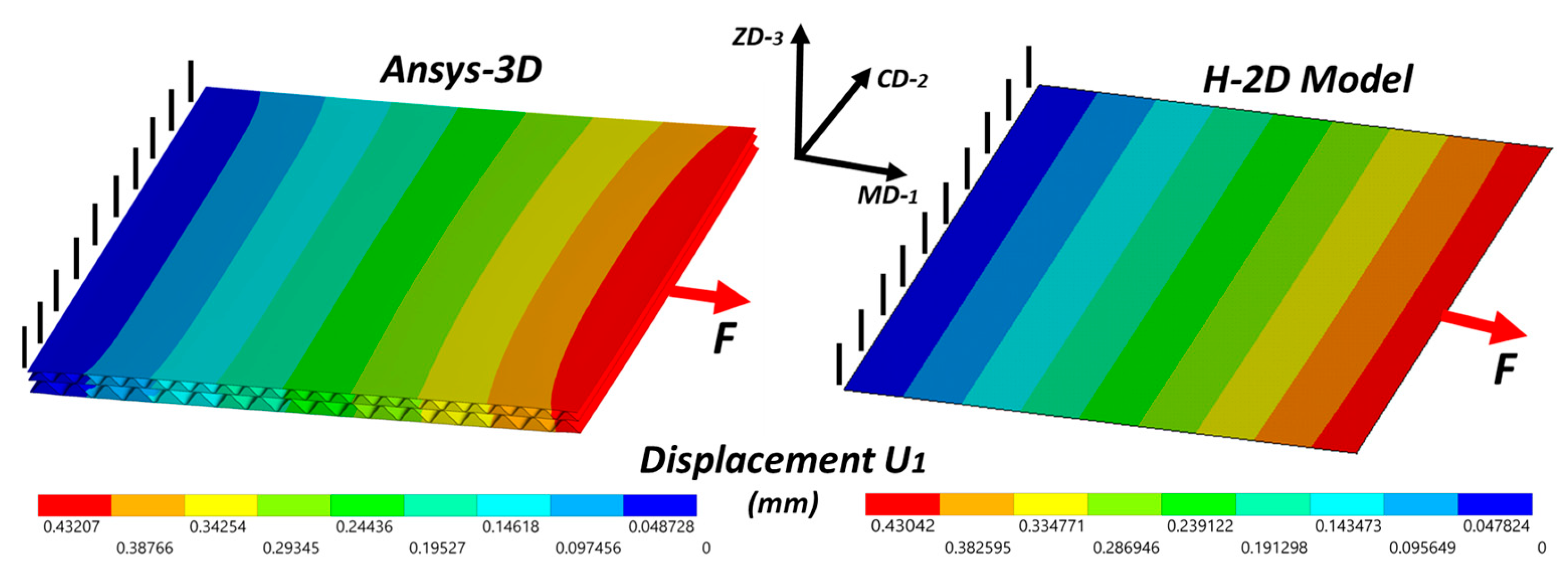
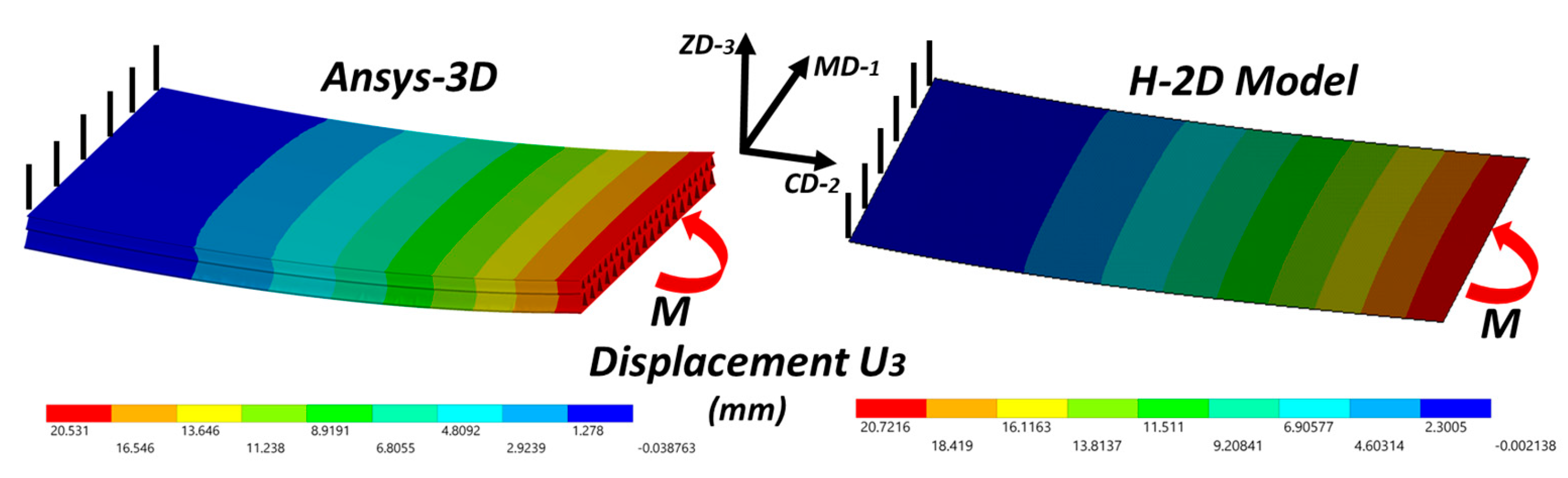
Numerical tests were performed in the two main directions of the material, Machine Direction (MD) and Cross Direction (CD). For traction (Figure 9), one side of the panel was fully clamped, while a force of 1500 N was applied to the opposite edge to impose uniaxial deformation. For bending (Figure 10), one edge was held completely fixed, and a moment of 8 KNmm was applied to the opposite edge. For the simulation of the homogenized plate using our H-2D model, the surface is discretized into 20,735 elements and 21,025 nodes, and for the Ansys-3D simulation, 178,055 elements and 491,239 nodes.
The comparison of displacements between the two models (Table 4) demonstrates an excellent correlation, with discrepancies consistently below 2% in both tension and bending. In tensile loading, the H-2D model slightly underestimates displacement in MD (−0.39%) and overestimates displacement in CD (−1.65%), confirming its ability to accurately reproduce the orthotropic in-plane stiffness influenced by fiber orientation, as previously characterized through tensile testing.
Similarly, under bending loads, deviations remain very small (1.64% in MD and 0.91% in CD), indicating that the homogenized rigidities (A, B, and D matrices) effectively account for the global flexural response of the double-wall corrugated structure. These results closely reflect the layered morphology observed in SEM analyses and the orthotropic elastic parameters extracted experimentally, confirming that the homogenization process integrates the real mechanical behavior of each paper type.
Furthermore, the proposed approach offers a major practical advantage: it drastically reduces computational time and simulation cost while maintaining a high level of accuracy. In contrast to a full 3D model, the H-2D homogenized formulation can be efficiently applied to more complex or irregular geometries without significantly increasing computational effort. Despite this simplification, the predicted displacements deviate by less than 2% from the reference 3D solution, with a maximum error of only 1.65%. This excellent agreement demonstrates that the H-2D model provides a reliable, robust, and computationally efficient alternative for the structural analysis of corrugated cardboard.
Overall, the strong agreement between the two numerical approaches validates the robustness and predictive capability of the H-2D model. It accurately captures the global mechanical response of double-wall corrugated cardboard while requiring significantly fewer computational resources than the full 3D representation. This demonstrates that the homogenized model is a reliable, efficient alternative for the structural analysis and design of corrugated cardboard-based packaging systems.
A validated analytical H-2D homogenization model was developed for double-wall corrugated cardboard, incorporating experimentally identified orthotropic material properties. The model was verified under both tensile and bending loads and showed excellent agreement with a three-dimensional reference model, with errors below 2%. This confirms that the approach provides an accurate and computationally efficient alternative to full 3D modeling for structural analysis and design.

5. Conclusions

In this work, a complete experimental and numerical study was carried out to establish a reliable homogenization model for double-wall corrugated cardboard. The three paper constituents (KL, DS, and AL) were first fully characterized through density measurements, SEM observations, XRD analysis, and in-plane tensile testing. This multi-scale characterization revealed the fibrous and anisotropic nature of the material, the presence of mineral fillers such as quartz, and the strong directional dependence of mechanical properties. The experimental elastic parameters obtained from tensile tests were used to define the orthotropic behavior of each layer, forming the basis for the homogenization procedure.
Using these experimentally measured properties, an analytical H2-D homogenization model was developed to predict the global stiffness of the double-wall corrugated structure. The equivalent rigidities of the homogenized plate were computed and incorporated into a 2D finite element model. The accuracy of the proposed model was then evaluated through numerical comparisons with a detailed 3D reference model (Ansys-3D) under both tensile and bending loading conditions.
The results demonstrated excellent agreement between the homogenized H-2D model and the full 3D model, with deviations consistently below 2% for all tested configurations. This high level of accuracy confirms the ability of the H2-D formulation to capture the global mechanical response of corrugated cardboard in the principal directions, while drastically reducing computational cost and modeling complexity.
It is worth noting that the present study focuses specifically on the tensile and bending behavior of corrugated cardboard, as these responses are the most critical in packaging applications—particularly under stacking conditions where axial and flexural stiffness govern load-bearing capacity and structural stability. Although shear and torsional effects may influence the behavior of corrugated structures in broader engineering contexts, their contribution is significantly less dominant in the typical loading scenarios encountered in packaging. For this reason, these aspects were not incorporated in the current homogenization framework.
Overall, the combination of detailed material characterization and analytical homogenization leads to a robust and efficient predictive tool. The proposed H2-D model can therefore be confidently used as an alternative to 3D modeling for the global mechanical analysis, simulation, and design of corrugated cardboard packaging structures.

Author Contributions

Conceptualization, software, validation, and writing—original draft preparation, M.-F.M.; writing—review and editing, and supervision, M.H. All authors have read and agreed to the published version of the manuscript.

Funding

This research received no external funding.

Data Availability Statement

The data presented in this study are available on request from the corresponding author. (The data presented in this study are available on request from the corresponding author, as they include experimental measurements and numerical simulation data that require specific processing and interpretation.)

Acknowledgments

This research work was supported by the General Direction of Scientific Research and Technological Development (DGRSDT), Algeria. The GENERALE EMBALAGE factory, Béjaïa, Algeria (https://generalemballage.com, accessed on 8 October 2025) is acknowledged for providing the corrugated cardboard samples.

Conflicts of Interest

The authors declare no conflict of interest.

References

  1. Biancolini, M.E.; Brutti, C. Numerical and experimental investigation of the strength of corrugated board packages. Packag. Technol. Sci. 2003, 16, 47–60. [Google Scholar] [CrossRef]
  2. Rejab, M.R.M.; Rejab, M.R.M.; Cantwell, W.J. The Mechanical Behaviour of Corrugated-Core Sandwich Panels. Compos. Part B-Eng. 2013, 47, 267–277. [Google Scholar] [CrossRef]
  3. Liu, S.; Xiao, J. Mechanical Properties Analysis of Carbon Fiber Panels Sandwich Structure Containing Aluminum Alloy Corrugated Core. In Proceedings of the DEStech Transactions on Engineering and Technology Research; DEStech Publications, Inc.: Lancaster, PA, USA, 2019. [Google Scholar] [CrossRef]
  4. Song, Y.-T.; Lee, H.-Y.; Esashi, M. A Corrugated Bridge of Low Residual Stress for RF-MEMS Switch. Sens. Actuators A-Phys. 2007, 135, 818–826. [Google Scholar] [CrossRef]
  5. Wang, D.-W.; Wen, Z.-H.; Glorieux, C.; Ma, L. Sound Absorption of Face-centered Cubic Sandwich Structure with Micro-perforations. Mater. Des. 2020, 186, 108344. [Google Scholar] [CrossRef]
  6. Minh, D.P.T.; Khoa, N.N. An analytic homogenization model in traction and bending for orthotropic composite plates with the type of double corrugated cardboard. Vietnam. J. Mech. 2016, 38, 41–50. [Google Scholar] [CrossRef]
  7. Duong, P.T.M. Analysis and simulation for the double corrugated cardboard plates under bending and in-plane shear force by homogenization method. Int. J. Mech. 2017, 11, 176–181. [Google Scholar]
  8. Minh, D.P.T.; Tien, D.L.; Hung, N.Q. Experimental and Numerical Characterization of Mechanical Behavior for the Corrugated Cardboard. In Advances in Engineering Research and Application; Sattler, K.-U., Nguyen, D.C., Vu, N.P., Long, B.T., Puta, H., Eds.; Springer International Publishing: Cham, Switzerland, 2021; pp. 425–433. [Google Scholar] [CrossRef]
  9. Garbowski, T.; Garbowski. Review on Numerical Homogenization of Corrugated Materials. State-of-the-art in Modeling of Corrugated Board. BioResources 2025, 20, 5157. [Google Scholar] [CrossRef]
  10. Garbowski, T.; Knitter-Pi atkowska, A. Analytical Determination of the Bending Stiffness of a Five-Layer Corrugated Cardboard with Imperfections. Materials 2022, 15, 663. [Google Scholar] [CrossRef] [PubMed]
  11. Mrówczynski, D.; Knitter-Piatkowska, A.; Garbowski, T. Non-Local Sensitivity Analysis and Numerical Homogenization in Optimal Design of Single-Wall Corrugated Board Packaging. Materials 2022, 15, 720. [Google Scholar] [CrossRef] [PubMed]
  12. Garbowski, T.; Grabski, J.K.; Marek, A. Full-Field Measurements in the Edge Crush Test of a Corrugated Board Analytical and Numerical Predictive Models. Materials 2021, 14, 2840. [Google Scholar] [CrossRef] [PubMed]
  13. Mrówczynski, D.; Knitter-Piątkowska, A.; Garbowski, T. Numerical Homogenization of Single-Walled Corrugated Board with Imperfections. Appl. Sci. 2022, 12, 9632. [Google Scholar] [CrossRef]
  14. Garbowski, T.; Marek, A. Homogenization of corrugated boards through inverse analysis. In Proceedings of the International Conference on Engineering and Applied Sciences Optimization OPT-i, Kos Town, Greece, 4–6 June 2014; Available online: https://api.semanticscholar.org/CorpusID:191602306 (accessed on 7 February 2020).
  15. Mrówczyński, D.; Garbowski, T. Influence of Imperfections on the Effective Stiffness of Multilayer Corrugated Board. Materials 2023, 16, 1295. [Google Scholar] [CrossRef] [PubMed]
  16. ISO:2019; Paper and Board—Determination of Grammage. International Organization for Standardization: Geneva, Switzerland, 2019.
  17. ISO:2011; Paper and Board—Determination of Thickness, Density and Specific Volume. International Organization for Standardization: Geneva, Switzerland, 2011.
  18. ISO:2022; Paper, Board and Pulps—Standard Atmosphere for Conditioning and Testing and Procedure for Monitoring the Atmosphere and Conditioning of Samples. International Organization for Standardization: Geneva, Switzerland, 2022.
  19. Nwabor, O.F.; Singh, S.; Chorachoo, J.; Vongkamjan, K. Valorization of Wastepaper Through Antimicrobial Functionalization with Biogenic Silver Nanoparticles, a Sustainable Packaging Composite. Waste Biomass Valorization 2021, 12, 3287–3301. [Google Scholar] [CrossRef]
  20. Kethiri, M.-A.; Chikhi, M.; Belghar, N.; Chekired, F.; Guerira, B. A thermophysical investigation of the potential for the use of wastepaper for insulation building materials. Int. Wood Prod. J. 2024, 15, 63–71. [Google Scholar] [CrossRef]
  21. Zwain, H.M.; Chang, S.; Dahlan, I. Physicochemical characteristics of microbial content in a modified anaerobic inclining-baffled reactor (MAI-BR) treating recycled paper mill effluent (RPME). Prep. Biochem. Biotechnol. 2019, 49, 344–351. [Google Scholar] [CrossRef] [PubMed]
  22. ASTM D828-16; Standard Test Method for Tensile Properties of Paper and Paperboard Using Constant-Rate-of-Elongation Apparatus. ASTM International: West Conshohocken, PA, USA, 2016. [CrossRef]
  23. Talbi, N.; Batti, A.; Ayad, R.; Guo, Y.Q. An analytical homogenization model for finite element modelling of corrugated cardboard. Compos. Struct. 2009, 88, 280–289. [Google Scholar] [CrossRef]
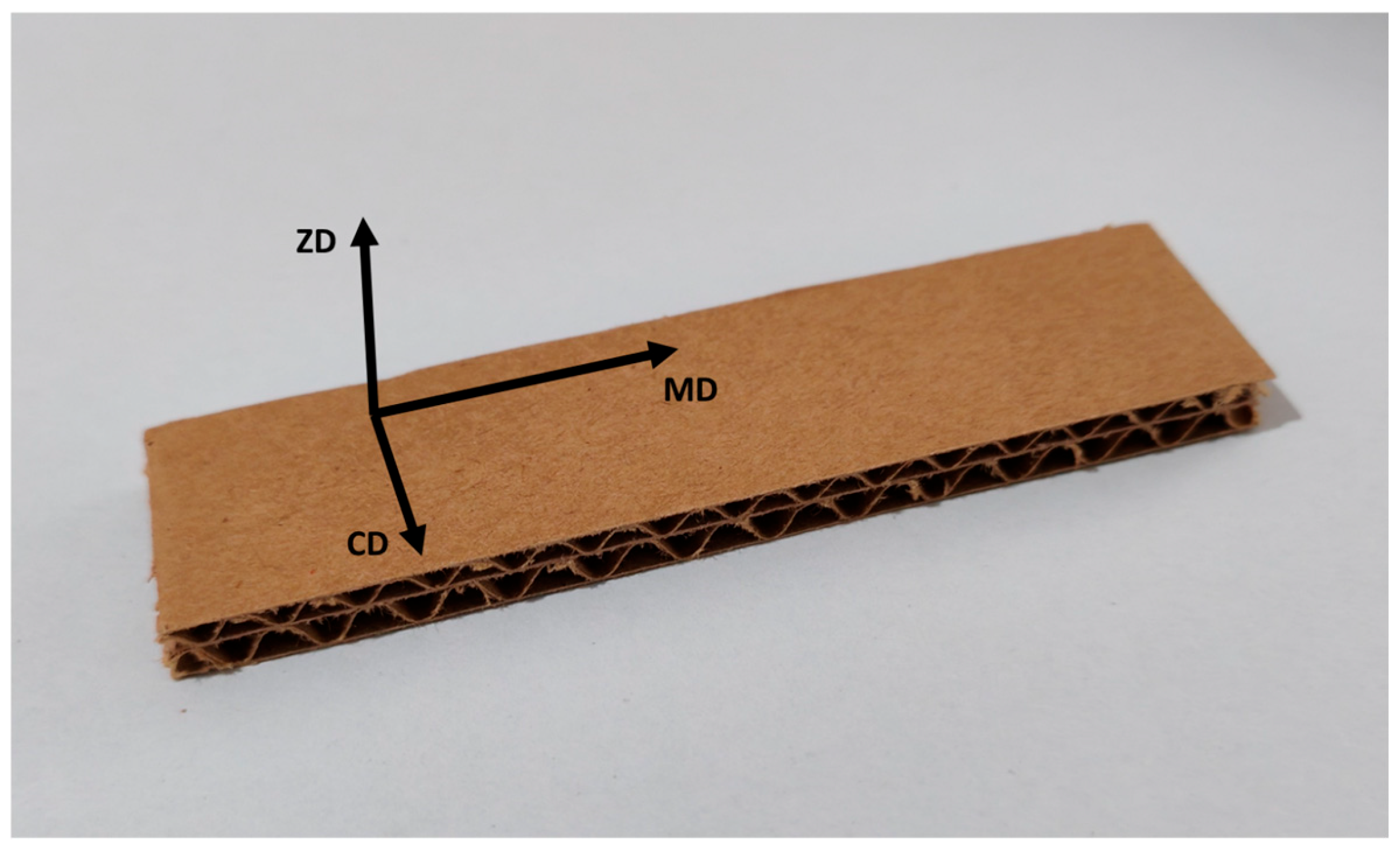
Figure 1. Principal directions of double-wall corrugated board.
Applmech 07 00004 g001
Figure 2. Sample of the paper studied: (A) double-wall corrugated board, (B) fluting, and (C) zoom of KRAFT LINER (KL), DUOSAICA (DS), and AUSTRO LINER (AL).
Applmech 07 00004 g002
Figure 3. SEM image of paper with different zoom levels.
Applmech 07 00004 g003aApplmech 07 00004 g003b
Figure 4. XRD results of the three different types of papers.
Applmech 07 00004 g004
Figure 5. Paper specimen under tensile loading—localization of rupture zone.
Applmech 07 00004 g005
Figure 6. In-plane tensile stress–strain curves.
Applmech 07 00004 g006
Figure 7. Transverse strain versus longitudinal strain curves. (A) KRAFT LINER; (B) DUOSAICA; (C) AUSTRO LINER.
Applmech 07 00004 g007
Figure 8. Geometry of a double-wall corrugated cardboard.
Applmech 07 00004 g008
Figure 9. Simulation of Ansys-3D and H-2D model in traction for the MD section.
Applmech 07 00004 g009
Figure 10. Simulation of the Ansys-3D and H-2D model in bending for the CD section.
Applmech 07 00004 g010
Table 1. Grammages, thickness, and density of layers.
LayersGrammage
(g/m2)
±Standard Deviation (g/m2)Thickness (mm)±Standard Deviation (mm)Density (kg/m3)±Standard Deviation (kg/m3)
KL125.00.70.1750.005714.313.9
DS130.00.90.1900.004684.211.0
AL135.00.60.1850.005729.710.4
Table 2. Material properties of layers.
KL±Standard DeviationDS±Standard DeviationAL±Standard Deviation
E 1 (MPa)620015657381896567210
E 45 ° (MPa)392812031111412919132
E 2 (MPa)242578220271177055
E 3 (MPa)310.7828.70.9432.81.05
ν 120.420.020.390.040.470.03
ν 210.170.010.150.020.130.02
G12 (MPa)171618126632124321
G13 (MPa)112.72.8104.33.4119.43.8
G23 (MPa)177.14.41645.4187.66
Table 3. Rigidities of the equivalent plate 2D.
Rigidities A 11  (N/mm) A 12  (N/mm) A 22
(N/mm)
B 11 (N) B 12 (N) B 22 (N) D 11 (N.mm) D 12 (N.mm) D 22 (N.mm)
Values3595.6546.54055.2710.590.0466.823,235.13802.112,602.9
Table 4. Comparison between the Ansys-3D and H-2D models for a plate in traction and bending.
Ansys-3DH-2DModelError (%)
Traction F = 1500 NMDDisplacement U1 (mm)0.43210.4304−0.39
CDDisplacement U2 (mm)0.37550.3818−1.65
Bending M = 8 KNmmMDDisplacement U3 (mm)22.836523.2175−1.64
CDDisplacement U3 (mm)20.531020.7216+0.91
Disclaimer/Publisher’s Note: The statements, opinions and data contained in all publications are solely those of the individual author(s) and contributor(s) and not of MDPI and/or the editor(s). MDPI and/or the editor(s) disclaim responsibility for any injury to people or property resulting from any ideas, methods, instructions or products referred to in the content.