Article

SHM System for Multilevel Impact Detection of Full-Scale Composite Wing Box


1
Adaptive Structures Laboratory, Italian Aerospace Research Center, 81043 Capua, Italy
2
Department of Industrial Engineering, University of Naples Federico II, 80125 Naples, Italy
3
Vibroacoustic Characterization Laboratory, Italian Aerospace Research Center, 81043 Capua, Italy
4
Aeronautics-Technologies Integration Office, Italian Aerospace Research Center, 81043 Capua, Italy
*
Author to whom correspondence should be addressed.
Appl. Mech. 2026, 7(1), 19; https://doi.org/10.3390/applmech7010019
Submission received: 24 October 2025 / Revised: 26 January 2026 / Accepted: 24 February 2026 / Published: 26 February 2026

Abstract

This paper presents the structural health monitoring (SHM) system applied to a 9 m composite outer wing box (OWB) specifically designed for a brand-new regional aircraft to detect barely visible impact damage (BVID) based on structural response data. The approach relies on different technologies to offer multilevel diagnosis, including impact detection as well as disbonding identification, localization, and sizing. The use of different sensing techniques based on piezoelectric transducers and distributed fiber optic sensors deployed all over wing structures is explored. Different features are simultaneously extracted from the propagating waves and from light scattering, able to detect low-energy BVID impact. In addition, the combined use of static and dynamic interrogation allows the estimation of the delamination surface after impact with good accuracy. The final test results on the OWB provided effectiveness in detecting, localizing, and tracking impact damage in the composite structure, ensuring long-term reliability and safety, as well as characterizing barely visible damage by a fully integrated onboard SHM system.

1. Introduction

To achieve higher performance with lighter components, composite materials are used because they combine different materials to create a product with superior properties, such as high strength-to-weight ratios, corrosion resistance, and design flexibility, and improved handling in various applications from aerospace to sporting goods [1]. An important aspect consists of the flexible design of the structure according to the tailorable properties of composite materials. This “tailoring” allows for more efficient aerostructures by customizing material properties to precisely match the specific load cases and conditions they will face, leading to structures with optimal strength and stiffness relative to their weight. Aircraft composite components are designed to be made with fewer parts and fewer connections. Furthermore, composites are even tougher than aluminum alloys, and the higher durability should reduce maintenance costs with respect to metallic aircraft. However, random events such as low velocity impacts may induce damage, which is typically less visible than in metals [2]. The internal damage, such as flaws and delamination, can spread extensively within a composite material while leaving a small and barely visible surface indentation. This occurs because the energy from an impact is dissipated through the formation of internal flaws, rather than just pushing the material’s surface inward. As a result, a large amount of thorough-thickness damage can exist beneath a relatively undamaged-looking surface, especially in thin laminates. For this reason, the damage tolerance approach, which usually avoids safety factors in favor of inspection procedures, introduces a sort of “defect” factor based on degree of detectability for composite structures. Such residual strength is that connected with external visibility, much lower than the material’s ultimate strength [3]. According to Boeing design manuals and military handbooks [2], the design limit allowable can be calculated for first approximation introducing a scatter factor equal to 2, which dramatically reduces the benefits of the composite being adopted.
When subject to low energy impacts, debonding may appear because the punctual load leads to complex damage mechanics resulting in the separation between the stringer and the hosting structure, which prevents the collaboration between parts with a dangerous drawback for loading absorbing. Delamination damage, when caused for instance by tools dropped at relatively low velocities, is difficult or even impossible to detect during visual inspections, but may increase in size under compression loading and lead to premature failure of the structure at loads much below the design load. This is the reason why aircraft composite structures are required to be able to carry the full ultimate design load even when containing invisible or Barely Visible Impact Damage (BVID) and to be damage-tolerant. The presence of delaminations affects the strength of composite aircraft structures when these are subjected to in-plane compression loads. With increasing load, the thin sublaminates resulting from delaminations lose their stability, bend out of plane, and finally collapse when loaded in compression. Major aircraft structures which are loaded predominantly by compression are the upper skin panels of wings and horizontal stabilizers [3].
The introduction of an effective SHM (structural health monitoring) system may completely change the maintenance strategies which are based on different levels of inspections targeted to ensure safety according to the damage tolerance design criteria. An integrated on-demand inspection allowing condition-based maintenance can increase safety and reduce the aircraft downtime as well [4]. Here is where SHM comes into play, enabling the reduction in in-service inspection costs of up to 1% for defect critical structures [5]. Among various techniques, wave propagation or guided ultrasonic waves (GUWs) techniques exploit the propagation and reflection of elastic ultrasonic waves in solids with the assumption that a hidden flaw in the structure alters their behavior [6]. The pitch–catch technique uses piezoelectric transducers to generate (pitch) and sense (catch) elastic waves, such as ultrasonic Lamb waves, to detect damage in a material. Damage is identified by analyzing changes in the received wave’s characteristics like amplitude, velocity, or time-of-flight, which are altered when the wave interacts with a flaw [7]. Severity is estimated based on the degree of these changes, for example, the extent of wave attenuation or dispersion caused by the damage [8]. Likewise, many algorithms and signal processing techniques are tailored to work while varying operative conditions and temperatures [9] are implemented for efficiently monitoring maintenance-critical structures.
Another promising approach takes advantage of fiber optic technology to monitor the structures through Fiber Bragg Grating (FBG) sensors. However, when the sensing region extends to tens of meters, it becomes prohibitively expensive to use FBG as they need to be inscribed on the sensing fiber one by one. To overcome this problem a sensor based on Rayleigh scattering by classical single-mode fiber, even tens of meters long, can be exploited. In [10] the authors used a distributed fiber optic sensing system to detect stringer debonding. The damage detection methodology (on five stringer-stiffened panels), based on first-order derivative on the strain map, correlates sensor values with a high gradient to damage, resulting in a good match with the conventional phased array ultrasonic testing.
In addition to technology demonstration, the probability of detection analysis is usually extended to SHM systems to assess reliability thereof. In general, the system quantification appears mostly affected by the decision level [11], and a threshold identifying technique cannot demand operator experience. Unsupervised or supervised [12] data processing have been proposed and can be addressed to enhance the aircraft lifetime management as well [13]. Likewise, the signal response can be statistically related to the flaw size to assess the severity and size of damage from the damage indicator [14]. The target of the system, defined as the minimum flaw size detectable with a certain confidence level, needs to be validated in industrially relevant conditions before industrial deployment. This is the key application of the present work, according to the building block approach in use within the aerospace field. Specifically, composite aircrafts show a typical damage scenario dealing with low-velocity impact-induced failures whose characteristics mainly depend upon the impact location. To reproduce such a complex scenario, within the framework of Clean Sky 2 Airgreen project, the final demonstrator consisting of a 9 m-long composite wing undergoes an impact testing campaign to demonstrate the efficiency of SHM integration based on piezoelectric sensors working in synergy with optical fibers strategically embedded in the Wing Box. The remainder of the paper is organized as follows. The next paragraph explains the monitoring methodology adopted, including the test article description along with the different techniques adopted for SHM. The following section shows the results obtained from the SHM system based on the hybrid UGW and FOSs (Fiber Optic Sensors) multi-path damage detection approach. Then, the comparison between Non-Destructive Inspection (NDI) and SHM results is shown to prove the effectiveness of SHM in detecting, localizing and tracking low-energy impact onset in the composite structures. Finally, concluding remarks summarize the paper.

2. Monitoring Methodology

It is worth noting that the complex propagation behavior introduced by composites does not allow efficient use of model-based approaches. A possible failure can be detected by comparing one or more wave parameters with scheduled intervals towards a “pristine (healthy) configuration”. The comparative analysis provides information about hidden flaws by means of damage indicators as assessment metrics. The same does not apply to distribute fiber optic sensing, where comparative evaluation is made in the space domain. However, the sensitive area is limited and requires distributed sensing instead of sparse allocation. These are the main considerations considered when a test article is sensorized, as described in the following subsection. In what follows the CAD images have been introduced as schematic illustrations to make the reader understand the complexity of the demonstrator. In addition, during the design of the SHM system, CAD is used to correctly localize the position of the sensors and route of the fiber and the wires as well as the egress point for the connectors.

2.1. Test Article Assembly Phase and Impact Location

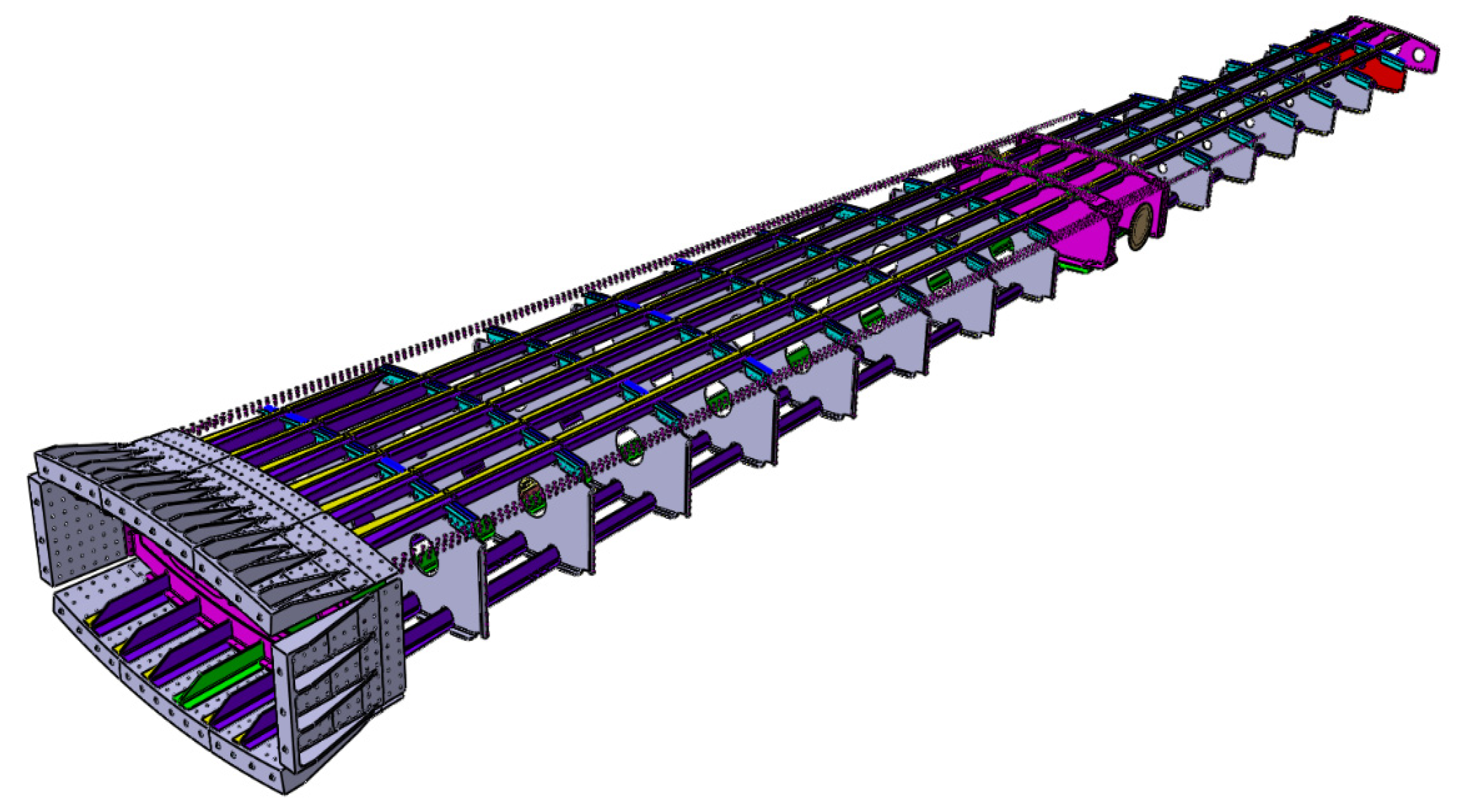
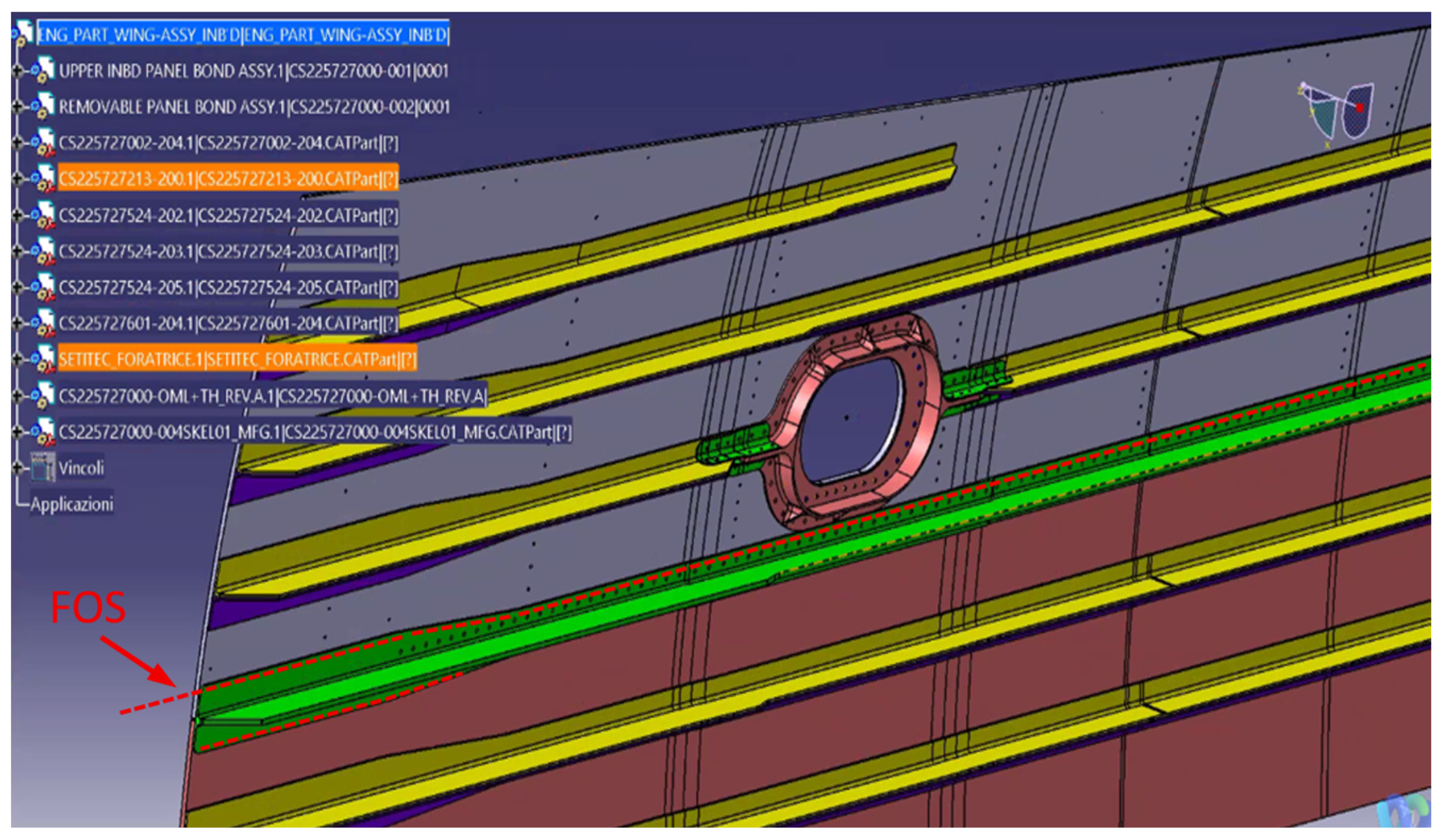
The test article is a full-scale wing box of 100 passengers’ regional aircraft manufactured by Leonardo Aircraft Division. It is characterized by a length of 9100 mm, a width at root rib of 1290 mm, and a width at tip rib of 650 mm. It is composed of two infused spars (front and rear), 14 infused ribs, 4 metallic ribs (see Figure 1), 1 stiffened upper panel (manufactured by liquid resin infusion) including a removable panel, and 1 stiffened lower panel (manufactured in liquid resin infusion) (see Figure 2).
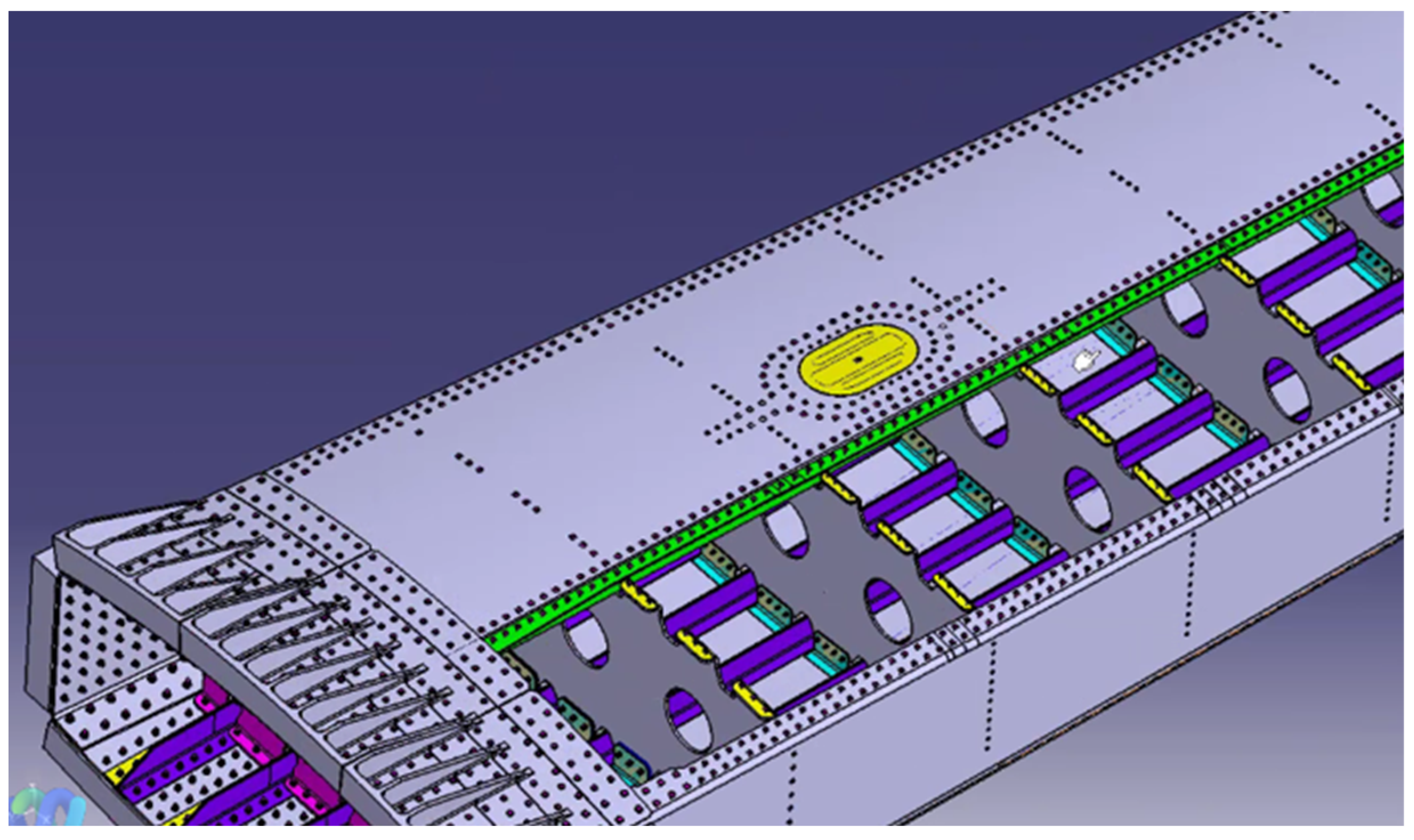
According to the design conceived to achieve a comprehensive and multilevel damage detection, the different sensors are located opportunely to monitor different damage positions. The installation is performed on the inner side of the panels before their assembly over the main frame (Figure 2 and Figure 3).
The fiber optic strain sensor is mounted over the inner surface of the structure through secondary bonding by means of double component epoxy glue, which is compliant with the requirements of dynamics measurements.
As regards the location of the fiber path, to capture strain at the location(s) and in the direction(s) of interest (along the fiber sensor) on the test article, it is important to plan the sensor route with some installation issues:
  • The bend radius is 2 cm.
  • The sensor loop should be not less than 6 cm long.
  • The measurement point(s) should be located at least 2.5 cm away from any bonded-to-unbonded transition regions or transition bends to mitigate strain transfer edge effects.
The following considerations should be applied to sensor ingress and egress points:
  • To protect fiber from breakage, a Teflon tube can be slid over the fiber sensor and held down at these transition locations.
  • A drop of silicone epoxy must be applied onto the end of the loose tube (Teflon) to hold it in place.
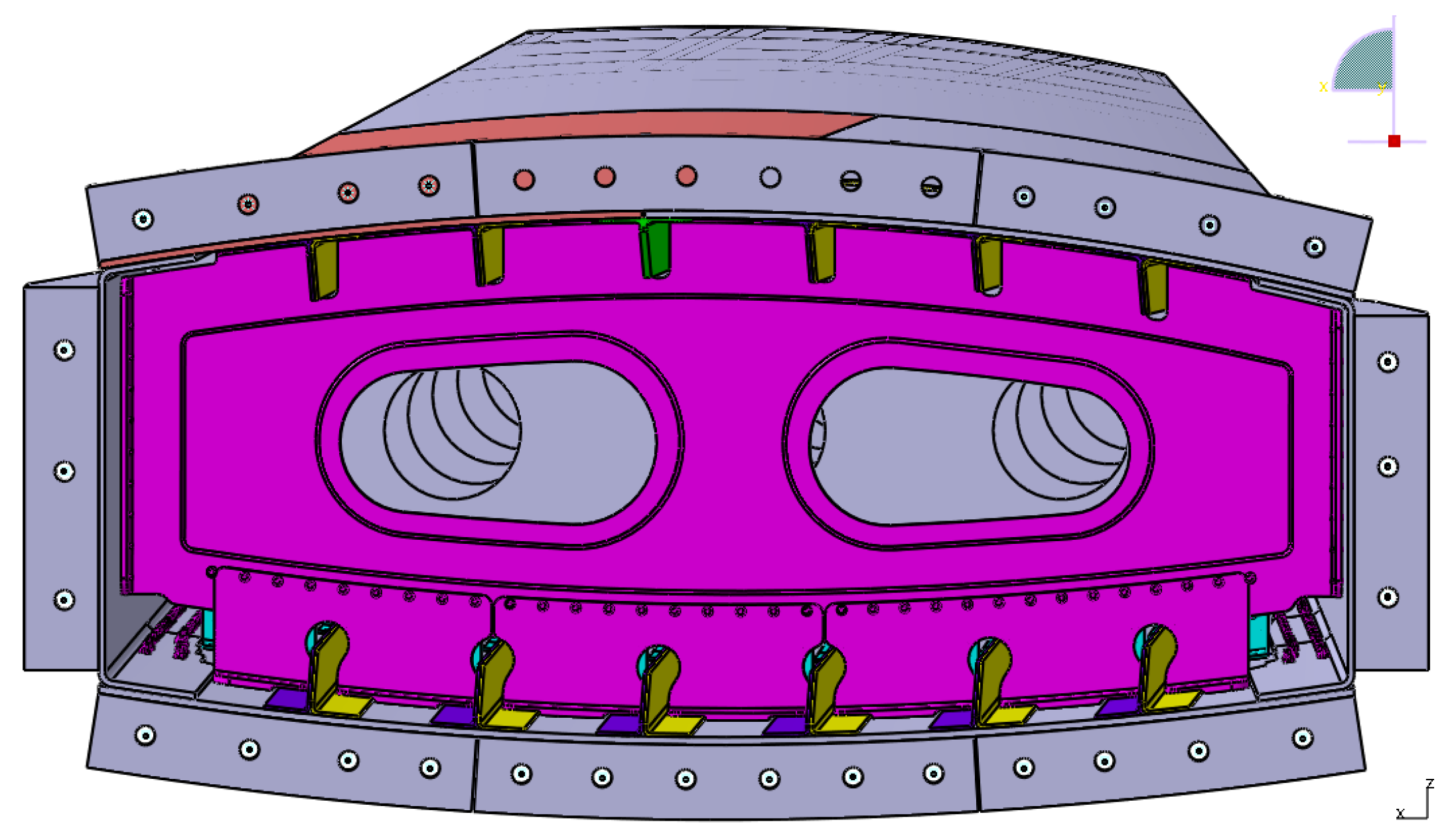
It is worth noting that the configuration is conceived to estimate the capability and sensitivity in monitoring and detecting BVID occurrence. However, positioning of the different sensors also accounts for the requirements of strain gauge installation (needed for structural testing) as well as the wiring to the SHM I/O digital/analog interrogation system, which is connected to the system outside of the wing box. Hence, wiring is connected to external sites through the wing root (Figure 4).
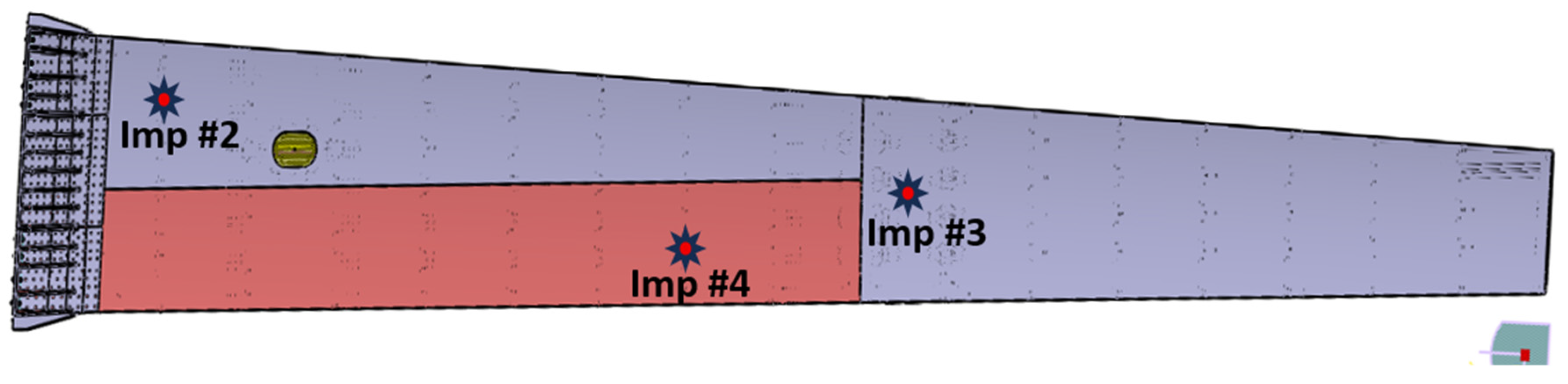
Figure 5 shows the locations of three impacts characterized by critical conditions and used to test fiber optic sensing for damage detection:
  • Impact#2 is in the region of the stringer core and middle bay, where the thickness of the skin is around 7.5 mm—impact energy 50 J.
  • Impact#3 is in the middle bay, where the thickness of the skin is around 5.0 mm—impact energy 50 J.
  • Impact#4 is in the region of the stringer foot and middle bay, where the thickness of the skin is around 5.0 mm—impact energy 50 J.
The 50 J impact is representative of certification-relevant BVID thresholds for this structure. The assessment has been carried out by the industrial partner. These scenarios resume the most critical and typical damage occurrence in composite structures. Middle bay impact is characterized by extensive delamination through the thickness, while stringer impacts are usually followed by the disconnection of the stiffener from the skin, usually referred as debonding.

2.2. SHM Systems Architectures

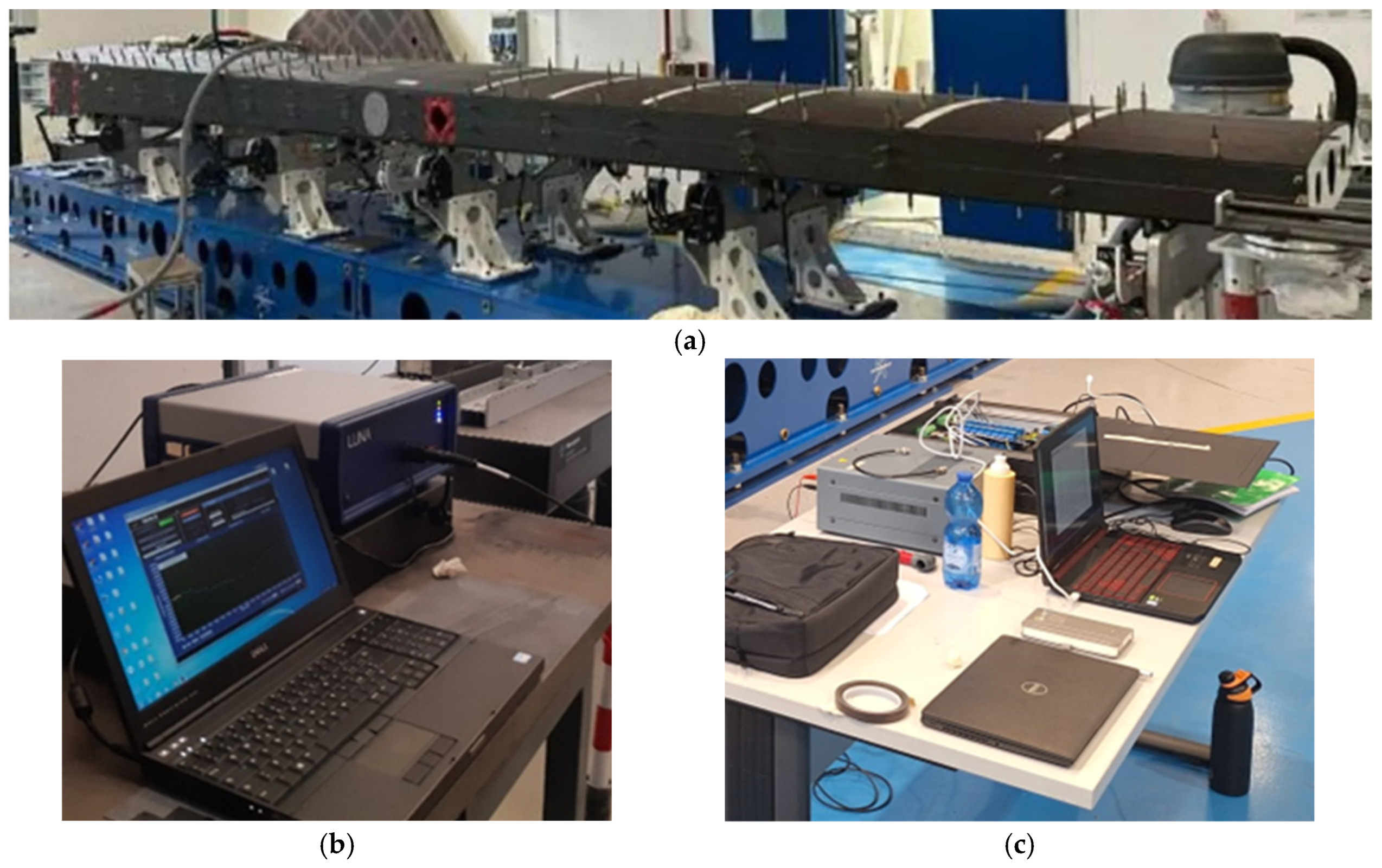
The SHM will run offline (only when the aircraft is on ground) during maintenance or pre-flight procedures and will be based on the signal signature reference baseline. The SHM transducer network (both the FOS and piezoelectric PZT) is fixed on the wing box frame and connected to a portable ground control console. The SHM ground control console is composed of an engineering ground support station (PC-based) and an ad hoc interface that allows connection between the interrogators and the SHM sensor network. The acquired data are processed and analyzed (Figure 6). Data analysis from raw signals is a key step for operating an identification system properly. The appropriate signal processing technique extracts features from the sensor array and translates the information gathered from single points into a diagnosis including location and/or severity of damage [13]. The detection and localization procedure adopted here requires the static interrogation of the FOS network and dynamic interrogation of the “pitch–catch” PZT network where the main activities involved can be grouped as follows:
  • Data acquisition, where the signals are recorded during aircraft parking according to the interrogation mode and stored for baseline signature analysis;
  • Data processing, which deals with the analysis of stored data to extract features possibly affected by the damage (signal response);
  • Decision-making process, where the minimum metrics associated with damage with reasonable confidence are established as a threshold level;
  • Damage information, which deals with damage extension and position estimation.

2.2.1. FOS-Based Algorithm

In this section, the diagnosis is realized by the FOS data feature pattern logic, based on the cross-correlation function of measured signals. It represents the measure of similarity of two signals as a function of a time shift or translation applied to one of them.
R i j ( t ) = 1 N l = 0 N 1 x i t x j t + τ
where N is the sample number of structural responses, τ is the time delay, and when I = j, Equation (1) is the auto-correlation function. Considering now two real-valued signals (i-th and j-th) and an x-axis, (whatever domain x is representing), the cross-correlation can be calculated to show how much the i-th signal must be anticipated along x-axes to make it identical to the reference i-th. The formula essentially anticipates the signal along the axis, calculating the integration of the product for each possible value of the displacement.
Assuming now that structural damage is in the form of a change in the structural stiffness, the stiffness value at position i of the damaged structure can then be expressed as
K i d = θ i K i
where Ki is the stiffness of the i-th element in the reference state (undamaged, baseline or whatever reference status is adopted), θi is defined as the stiffness fraction to the reference stiffness of the i-th element. θ = 0 denotes that the element loses its stiffness completely, whereas θ = 1 indicates that the element is intact.
For a dynamic structural response, the equation for an n-degree-of-freedoms (n-DOFs) viscous damped structure is given as
f ( t ) = M x ¨ ( t ) + C   x ˙ ( t ) + K x ( t )
where M, C, and K are the mass, damping, and stiffness matrices, respectively, and f(t) is the input excitation. For a static or quasi-static condition, it is demonstrated [14] that Equation (3) can be written in function of the strain:
B T   f ( t )   = B T K B 1 ε ( t )
where B is proportional to the differential operator. By substituting Equation (2) in Equation (4), the response for a damaged structure can hence be simplified in Equation (5):
fi   = θ i K i B 1 ε i
or:
B f i θ i K i = ε i
By considering strain measurements as input signals, the cross-correlation function of Equation (1) depends only on structural parameters and a constant and can be written as follows:
R i j ( t ) = 1 N l = 0 N 1 ε i t ε j t + τ
From the expression of the cross correlation in Equation (6), there is a multiplying constant referring to the input force. To eliminate the influence of the input force, Equation (7) is normalized by its root mean square value. Two considerations can be made:
  • If the strain at the current acquisition instant of time (τ + Δτ) is not affected by any variation with respect to time evolution, it would be equal to the strain at time t and the two signals coincide, so the value of Equation (7) is maximized and corresponds to the auto-correlation.
  • Similarly, also when the signal at different location points i-th and j-th coincide, Equation (7) is maximized and corresponds to the auto-correlation function.
According to this approach, as the goal is seeking a change in structural stiffness, that is, a change in the strain signals, both the strategies (time strain similarity or space location strain similarity) can be adopted, and the auto-correlation function can be used as reference signal.
Set the maximum value of the auto-correlation function of the current responses from different measurement points as a vector:
R m a x t = [ m a x ( R i i T ) ]
where i = 1, 2, …, n, is the response from measurement point i. Then, the relative change in cross-correlation function with respect to the reference auto-correlation vector is defined as
C D I i = [ ( R i j ) ] [ m a x ( R i i ) ] [ m a x ( R i i ) ]
In this equation, the only parameter influencing the deviation is the cross-correlation, which depends upon the strain gradient for two consecutive points location. The higher the local gradient, the higher the relative change is with respect to the reference point value. To highlight local strain gradient, a differential operator is applied on the strain data.
The differential operator is evaluated in both the time domain (for each two consecutive time step—by rows), and in the space domain (for each two consecutive sensors—by columns), assuming a constant time step or sensors gap respectively. A Threshold Level (TL) is then defined for each feature i following the standard definition:
TLi = μi + i
μ represents the mean value of the specific feature, σ the standard deviation, while k is a constant related to the Gaussian width. By assuming the acquired values fall within a normal distribution by a 99.7% probability, k = 3 may be assumed. The max-TLi is then arbitrarily selected to set a limit beyond which the detected information is assumed to be associated with a fault, for each sensible point. The Cumulative Damage Index (CDI) is then set to 0 (if the signal is below the TL) or 1 (possibility of a fault if the signal is above the TL). This allows us to set a fixed and quantifiable probability failure analysis PFA [15,16].
In the end, the threshold level is assumed to select and filter sensors indicating change in the structural stiffness from the others reading normal strain deviations, as shown in Figure 7.

2.2.2. PZT-Based Algorithm

When the diagnosis is realized by the PZT data feature pattern logic, several signal processing techniques can be exploited in relation to the wave feature selected. Such selection depends primarily upon the type of damage to investigate while interrogating the structure. Impact-induced damage can indeed be idealized as a complex discontinuity distributed through the thickness, changing the waveguide characteristics [17]. Lamb waves are quite dispersive at certain frequencies, and the interaction with local damage can lead to a different arrival time with respect to pristine propagation. The group velocity is strongly affected by those damages which modify the waveguide, while thickness frequency response shows a certain gradient. Due to the dispersion restriction, the combination of wave modes, interrogation frequency and thickness variation strongly affects the detectability, varying the time-of-flight efficiency.
Otherwise, a discontinuity in a waveguide can be modeled as an abrupt change in the local mechanical impedance [13], where the energy propagating in the media is scattered. Transmitted and received portions of the energy content of the propagating wave can be monitored. When the damage occurs, the wave transmitted over the flaw results from a complex interaction which is characterized by the scattering of the incident-guided mode into propagating and non-propagating evanescent modes, including mode conversion in the case of multi-modal waves (e.g., Lamb waves).
The damage-related metrics can be finally computed following Equation (10). The damage identification technique used in this application is based on the definition of an index to detect the presence of damage and provide useful indications to identify its location in the structure. The choice of index is determined by its ability to efficiently and accurately provide an overall measure of the disturbance produced on the wave signal by the presence of damage.
Referring to the time signal related to the displacement induced by the passage of the elastic wave measured at a given point on the structure, indicating with Cip its value at the i-th instant for the response acquired on the intact structure and Cid, the corresponding value acquired on the damaged structure, the damage index (DI) is calculated with the following expression:
D I = i ( C p i C d i ) 2 i C p i 2
where the summation results are extended to an appropriately selected time window.
The DI reported in Equation (10) is a very general metric for monitoring system states and can include different parameters (sensitive features) for which it is interesting to assess the variation over time. This can be aided by Euclidean distance definition or pure difference, given that this is normalized to the nominal condition [16].
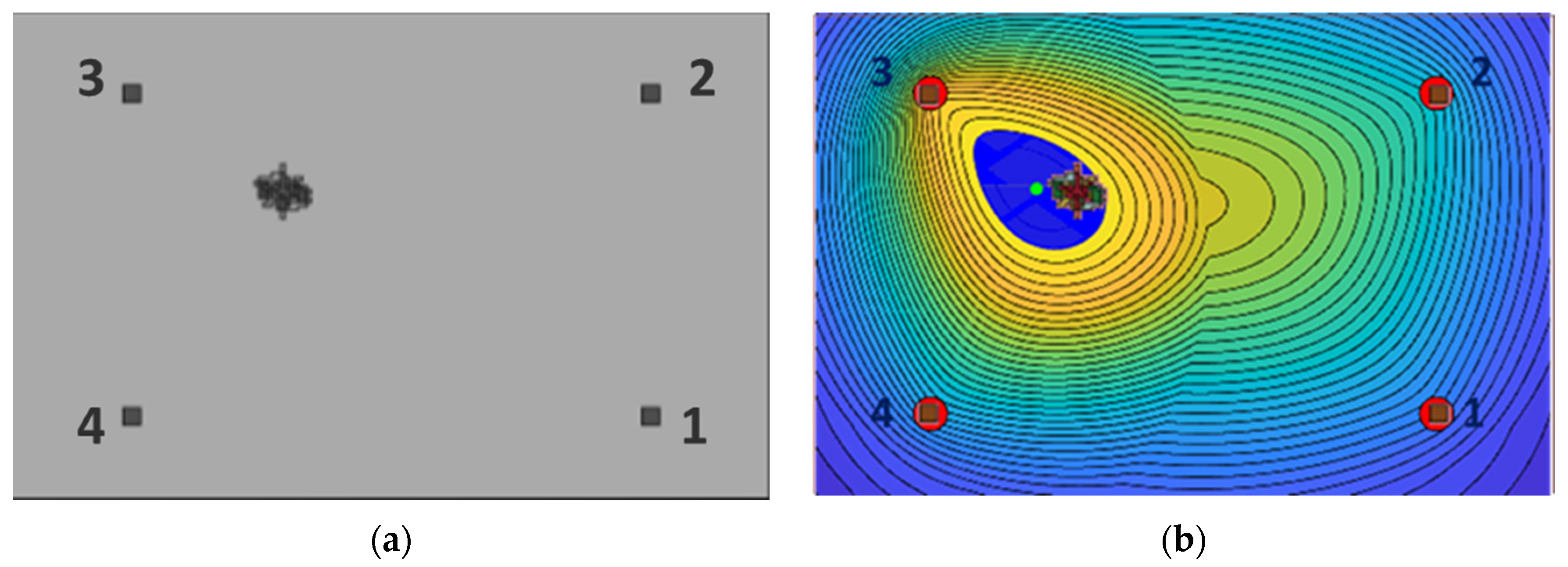
This index represents a measure of the disturbance that the damage produces, i.e., how much the signal acquired on the damaged structure is changed with respect to the reference signal. If the damage is close to the sensor/actuator junction, the disturbance reaches the sensor earlier and the DI value is larger. As an example, Figure 8b shows a color map showing the values that the damage index takes for each actuator/sensor pair, referring to the damaged structure shown in Figure 8a.
It is evident that piezo pairs 1-3, 2-3, 2-4 have higher DI values, since the damage is closer to the direct actuator/sensor path. In contrast, the DI of pair 1-2 is zero, since the perturbation due to the damage, which is far away from the piezo, does not reach the sensor in the time window used for index calculation. By distributing, therefore, both actuators and sensors appropriately, it is possible to extract from the damage index histogram the information needed for damage identification. Damage localization requires a numerical procedure capable of translating the information provided by the damage indices into a graphical map of the structure in which the region where the damage is located is highlighted.
The identification and localization technique used is based on the calculation of the probability density of damage presence: each sensor–actuator pair is associated with a probability ellipse to which a weight equal to the DI evaluated for the pair under consideration is assigned. For an actuator–sensor pair identified with index k, the probability ellipse, whose foci coincide with the actuator and sensor locations, is defined as
P k ( x , y ) = D I k [ R ( x , y , x a k , y a k , x s k , y s k ) β 1 + β β 1 ]
where
R ( x , y , x a k , y a k , x s k , y s k ) = R c ( x , y , x a k , y a k , x s k , y s k ) if   R c ( x , y , x a k , y a k , x s k , y s k ) < β and R ( x , y , x a k , y a k , x s k , y s k ) = β if   R c ( x , y , x a k , y a k , x s k , y s k ) β
β corresponds to the inverse of the eccentricity of the ellipse and is chosen in relation to the elongation to attribute to the ellipse. The choice of this parameter is, therefore, a function of the distribution of sensors/actuators and the overall size of the structure.
From relation (11) it can be seen that all points outside the ellipse of eccentricity 1/ β have a probability value of 0, while for points inside, this value is proportional to the damage index. The parameter Rc is obtained from the following relationship and represents the ratio between the sum of the distances of a generic point of the structure from the foci (sensor and actuator) and the focal distance:
R c ( x , y , x a k , y a k , x s k , y s k ) = ( x x a k ) 2 + ( y y a k ) 2 + ( x x s k ) 2 + ( y y s k ) 2 ( x a k x s k ) 2 + ( y a k y s k ) 2
To each point (x, y) in the panel will be assigned a resulting probability evaluated as the product of the probabilities obtained for each of the N pairs of actuators/sensors:
P R ( x , y ) = k = 1 N P k ( x , y )
Plotting these values on a graph produces an image, like the one shown in Figure 8b, in which the contoured area is where the probability of damage is highest.

3. Test Execution and Sensors Monitoring

To achieve a comprehensive and multilevel damage detection, different sensors are located opportunely to monitor different damage scenarios and validate the maturity of the combined approach. The experimental campaign that needed to be set up consists of three different stages as summarized below:
  • Phase I: Baseline acquisition, where diagnostic signals from PZTs are recorded to build the baseline dataset and FOS signal set to zero.
  • Phase II: Impact testing, when impacts are carried out along with FOS- and PZT-based sensing to monitor the impact events.
  • Phase III: Current acquisition, where diagnostic signals from PZTs are recorded to build the current dataset and distributed fiber optic sensor FOS is cross-correlated to record the local high edge onset information.
It is worth noting that Phase II is carried out in two stages: (i) a preliminary impact test to calibrate impact energies for BVID and (ii) an execution impact test when BVID are generated on the prescribed locations. In what follows, the impact test is described. The tests have been conducted in a stable temperature environment. The temperature fluctuation affects PZT and FOS, but the approach is robust against small fluctuations. Specifically, FOS algorithms automatically compensate the temperature, while PZT variation is rather limited compared to damage-induced variation in wave propagation.

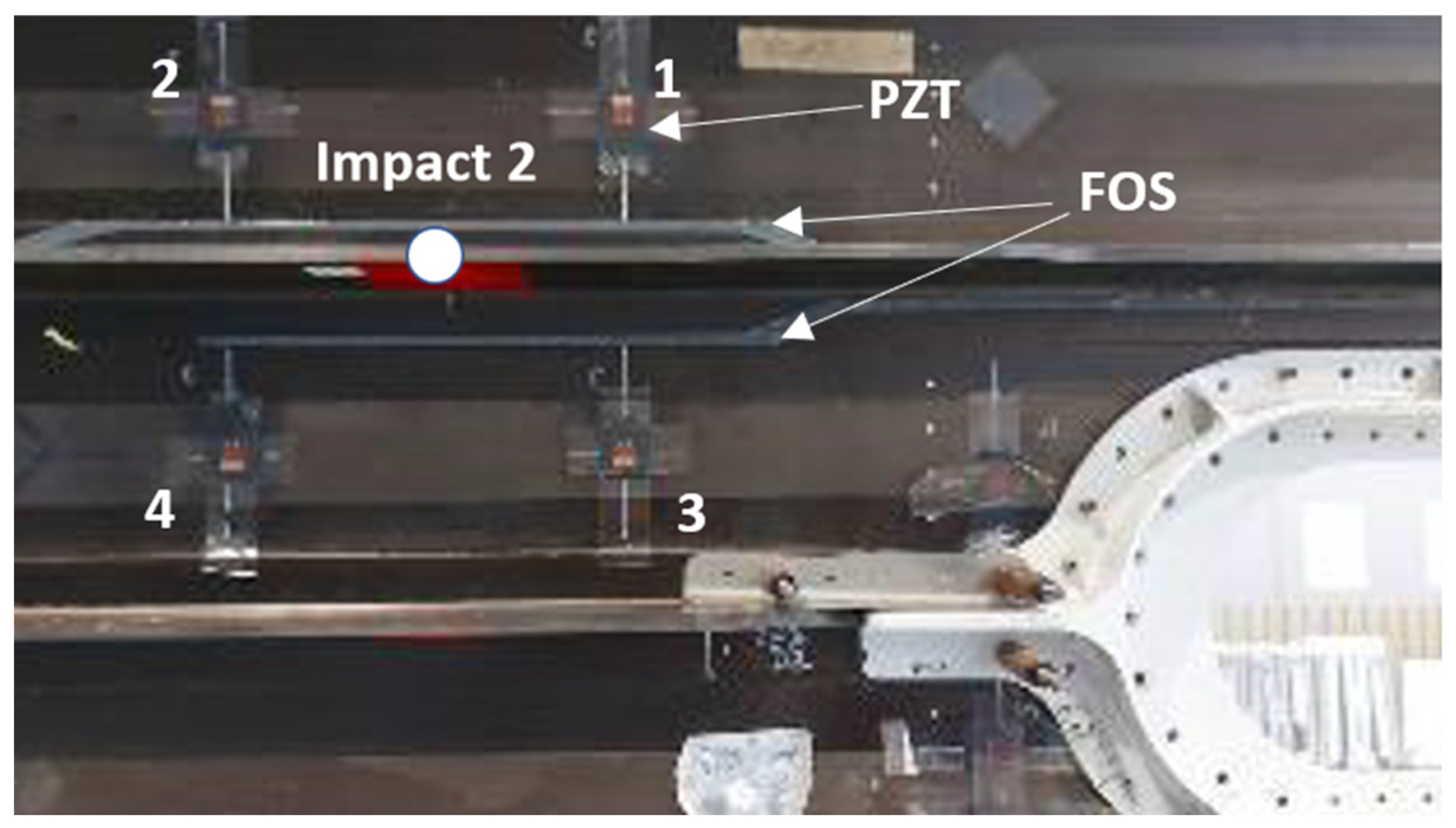
3.1. Impact #2

Figure 9 shows the installation on the inner surface of the structure of 4 PZTs (DuraAct by Physik Instrumente, Karlsruhe, Germany) for impact damage monitoring at position #2 and with the FOS being 10 m long, bonded all along the stringer cap edge by a turnaround loop at its end. The impact produced a very small indentation (<100 microns). Low impact energies have the potential to create barely visible impact damage (BVID), which describes a situation where potentially significant internal structural damage is produced with little if any visible evidence of damage on the surface. In that event a serious decline in the mechanical properties of the structure may go unnoticed. When the plate is very thick (e.g., location of Impact #2), the level of damage could be even lower, resulting in the definition of non-visible damage. Specifically, in the aerospace field, the BVID category is categorized as the impact-induced damage with more than 100 microns indentation.
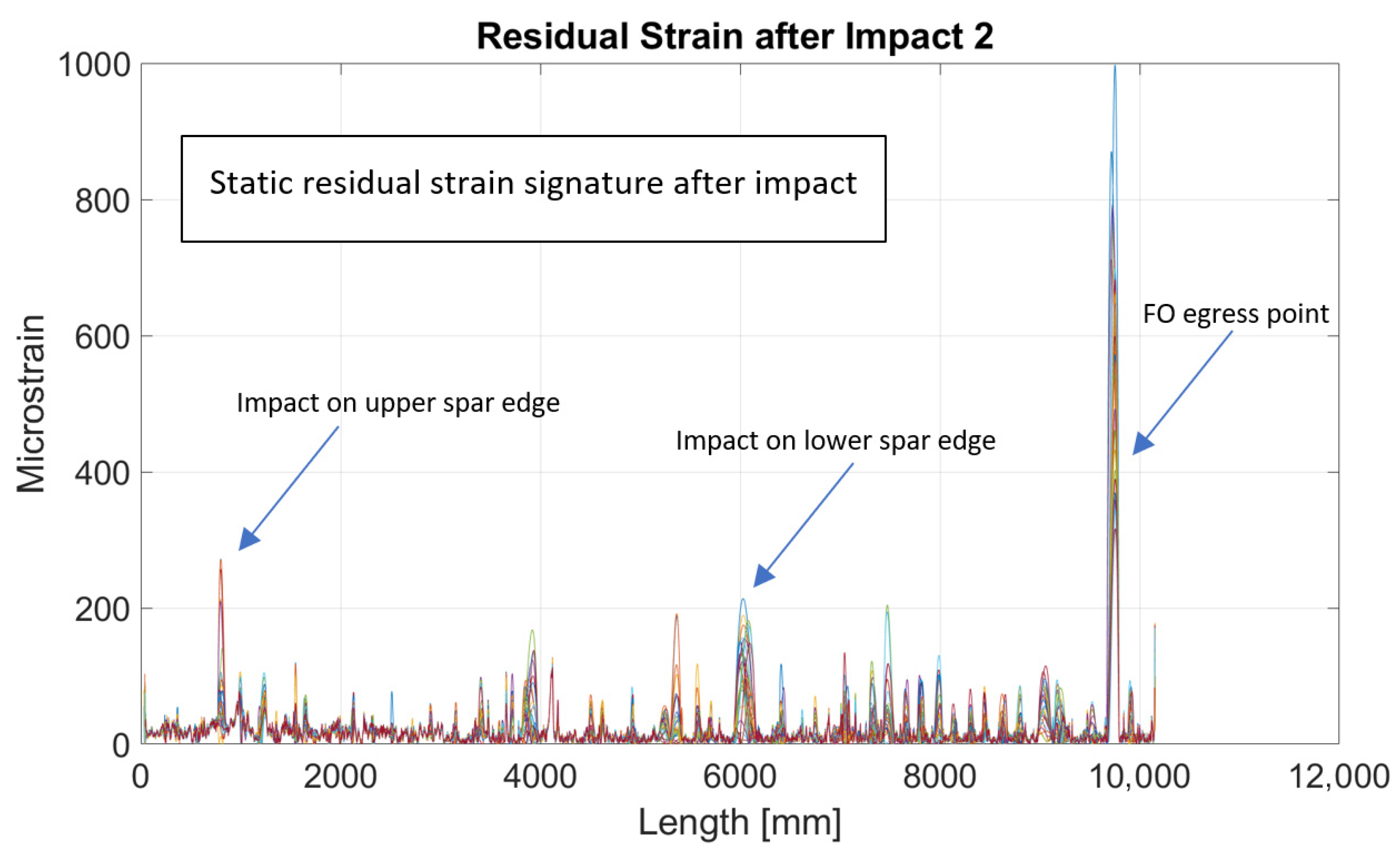
The fiber starts from the end termination side at 10 m, and at 750 mm a huge peak is evident along with the static strain signature (Figure 10). The spar is about 2 m long to the end after the turn-around loop, and the fiber signal along the opposite side of the spar cap detects another spike with lower intensity at a symmetric position with respect to the first occurrence, as evident at around 6 m. The remaining part of the fiber optic is wrapped around the spool.
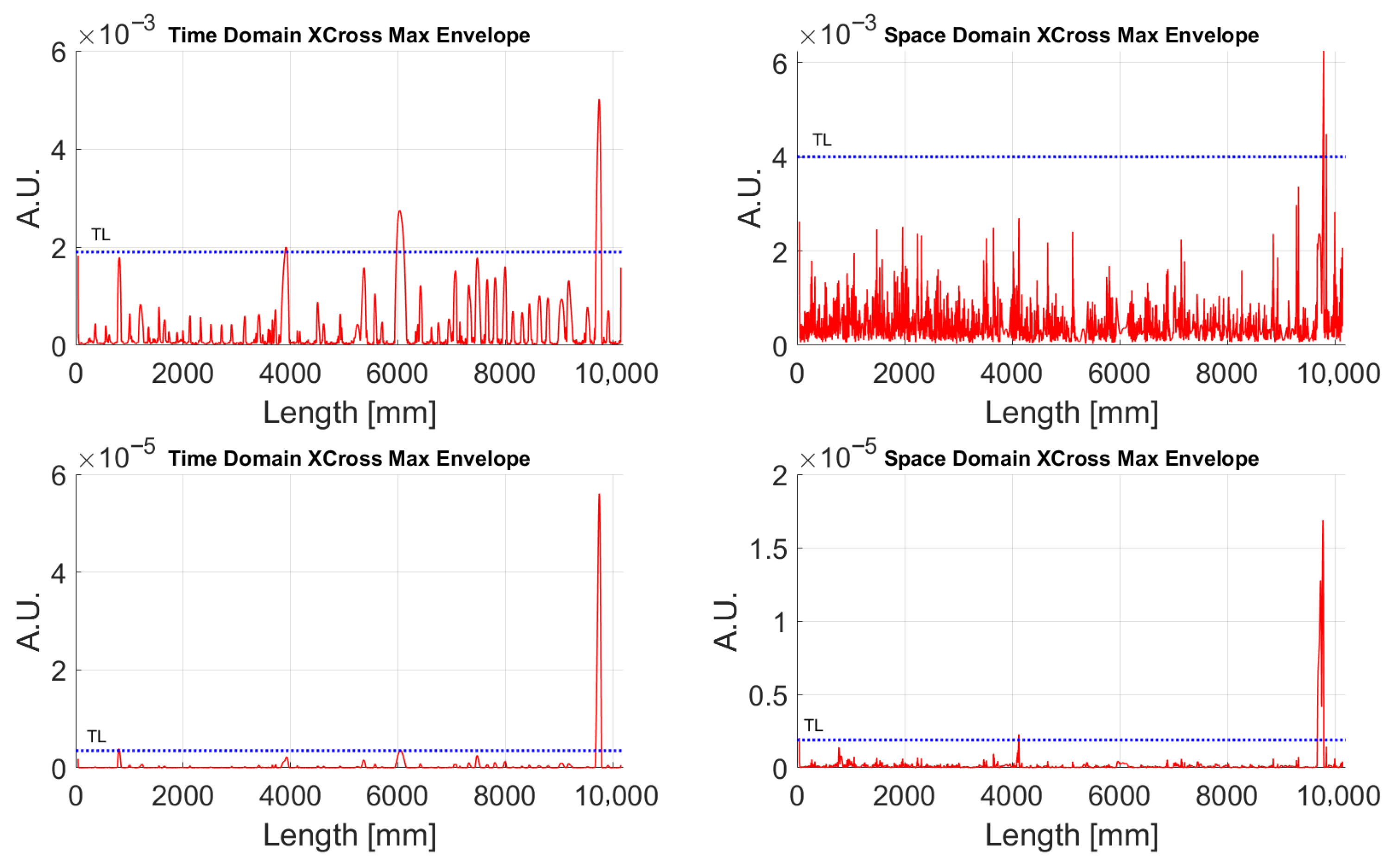
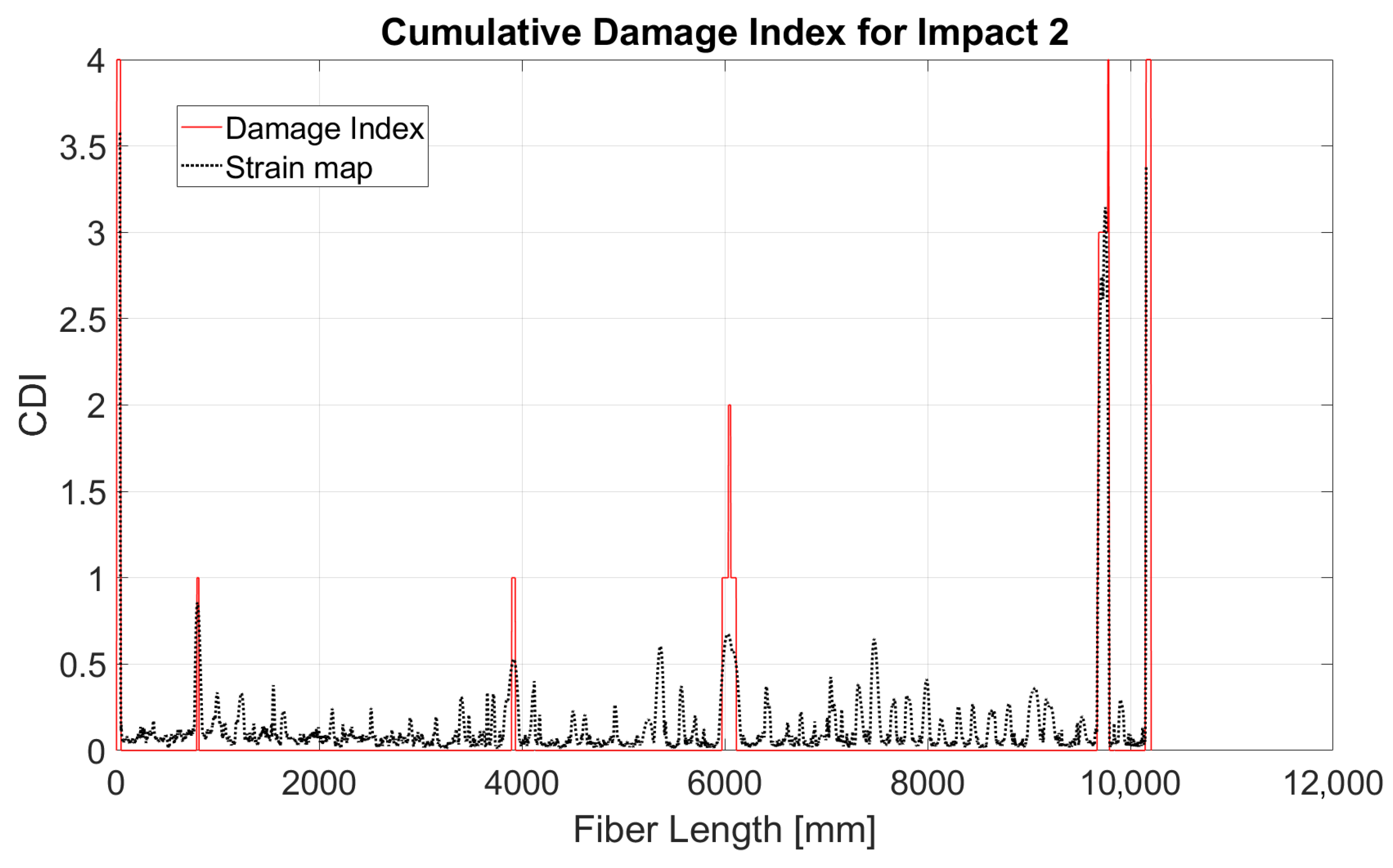
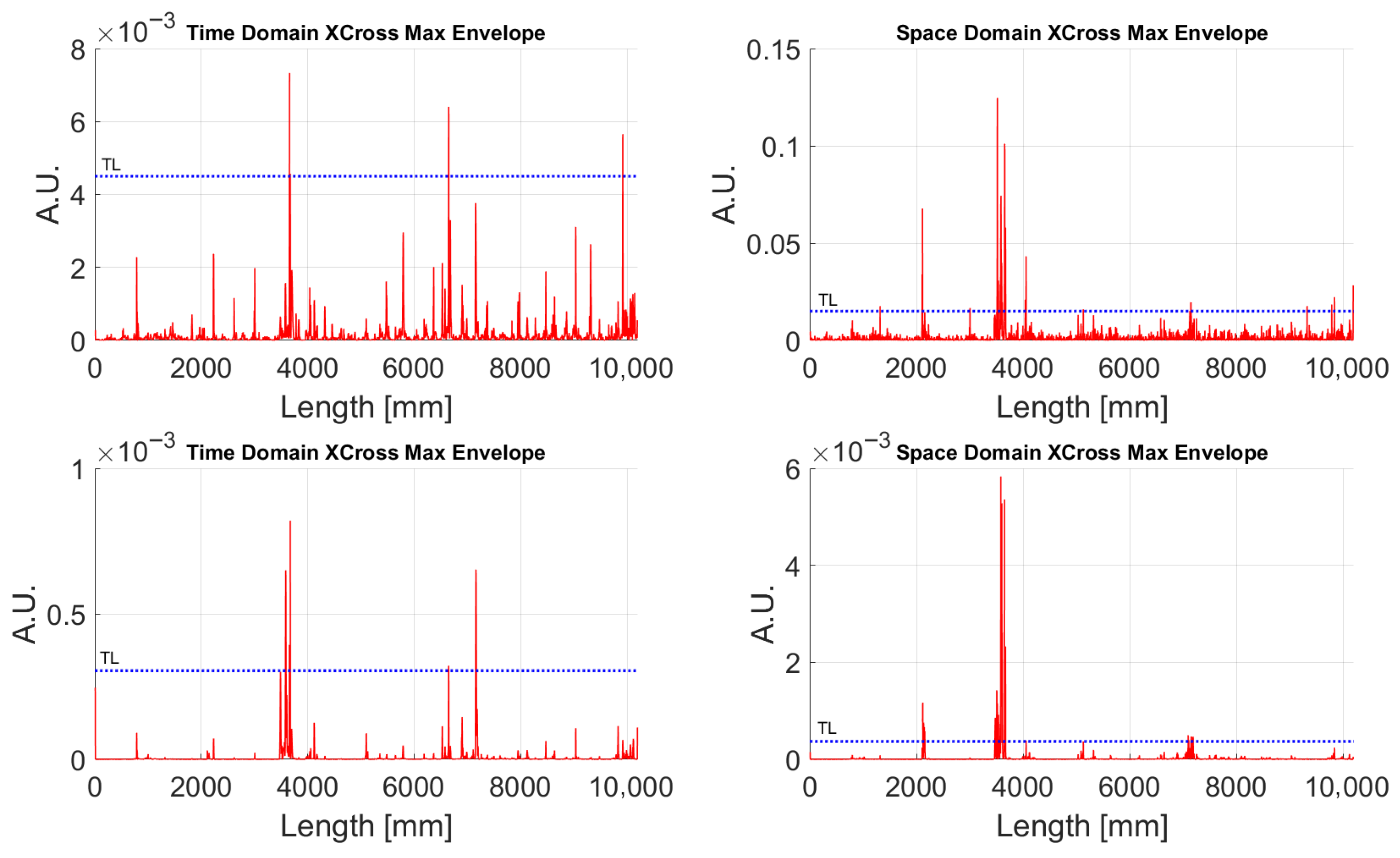
The features extracted from the cross-correlation in the time and space domain for the strain and the strain energy are reported in Figure 11. The threshold level, set to the mean of each feature distribution, is then used to cumulate eligible data exceeding the TL line, and the correspondent sensor location is flagged over the initial strain signature in Figure 12.
In this test case, the thickness of the skin is so important that the ultrasonic inspection and the guided waves, as well as the signal, showed a very high signal to noise ratio hence useless for the post-processing. On the other hand, the FOS are only able to indicate the position of a high strain onset, but no reliable indication can be provided for the damage extension.

3.2. Impact #3

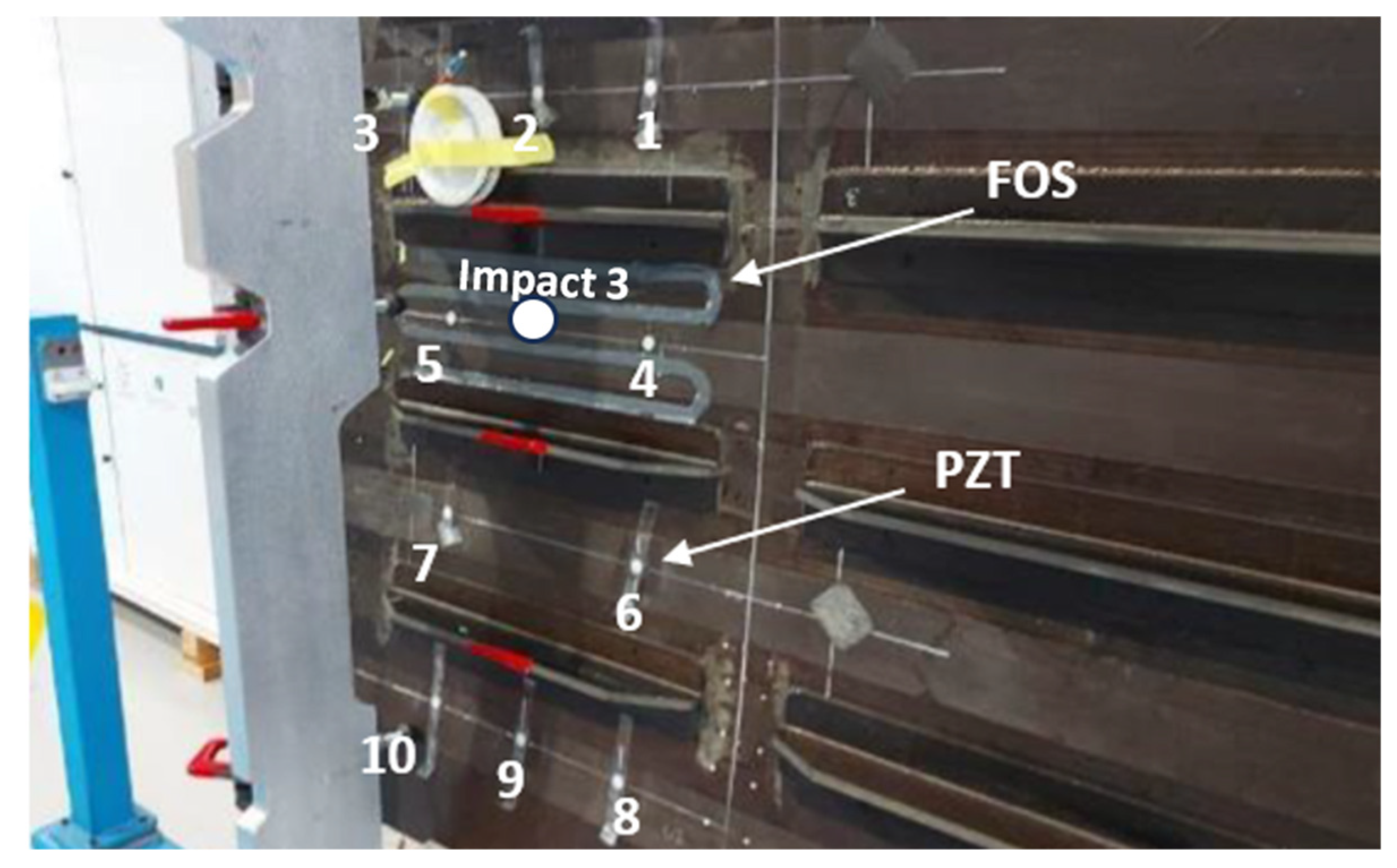
Figure 13 depicts the installation of ten PZTs for impact damage monitoring at #3. It is worth noting that the raw PZT disk is preferred here because it is more sensitive than film-protected DuraAct at catching the difference between different impact energies. In this case the most relevant PZT signals are processed for damage reconstruction.
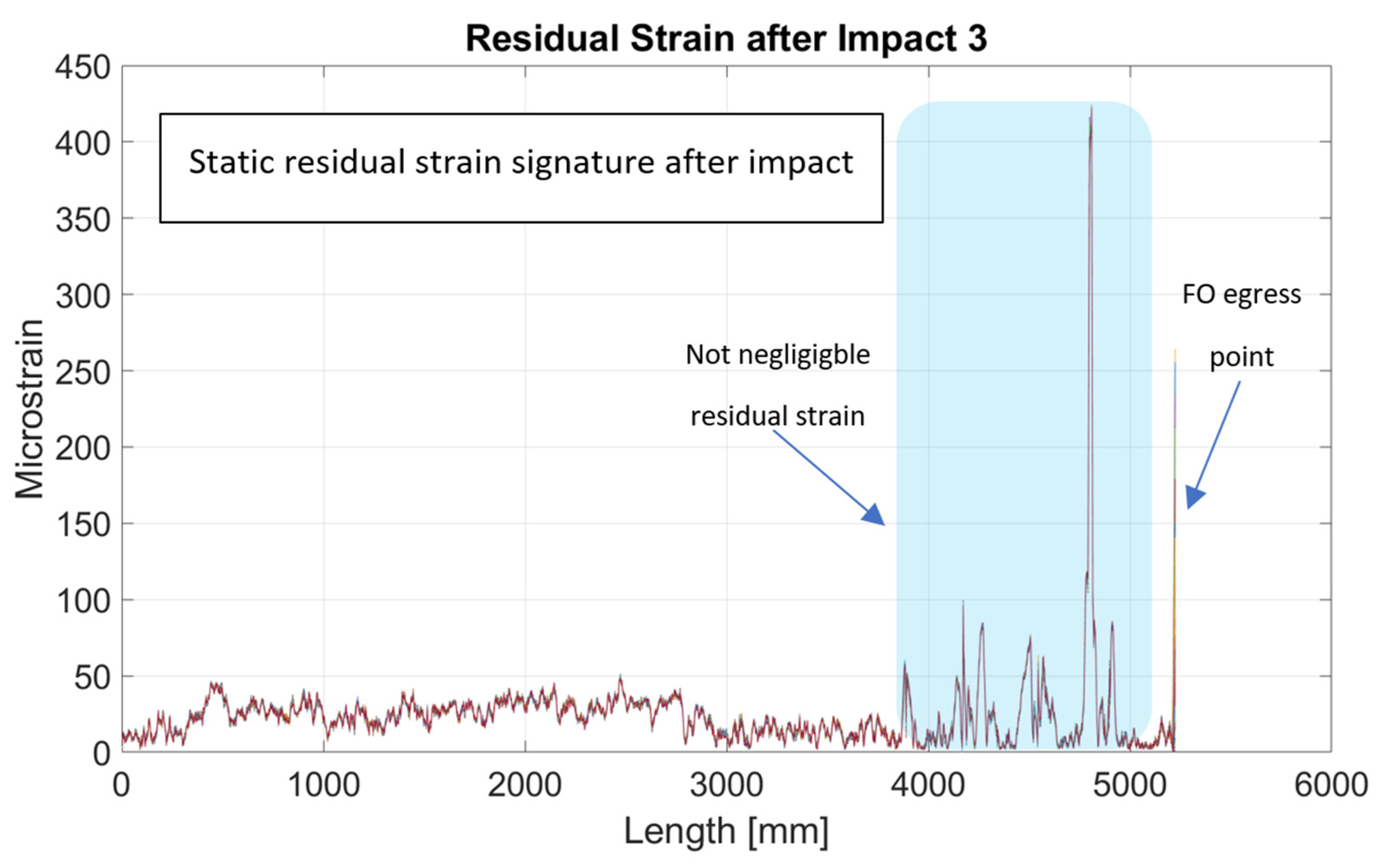
The fiber optic is glued directly onto the inner side of the skin according to a sinusoidal path with 4 linear segments of about 350 mm length. The static strain map after impact is reported in Figure 14.
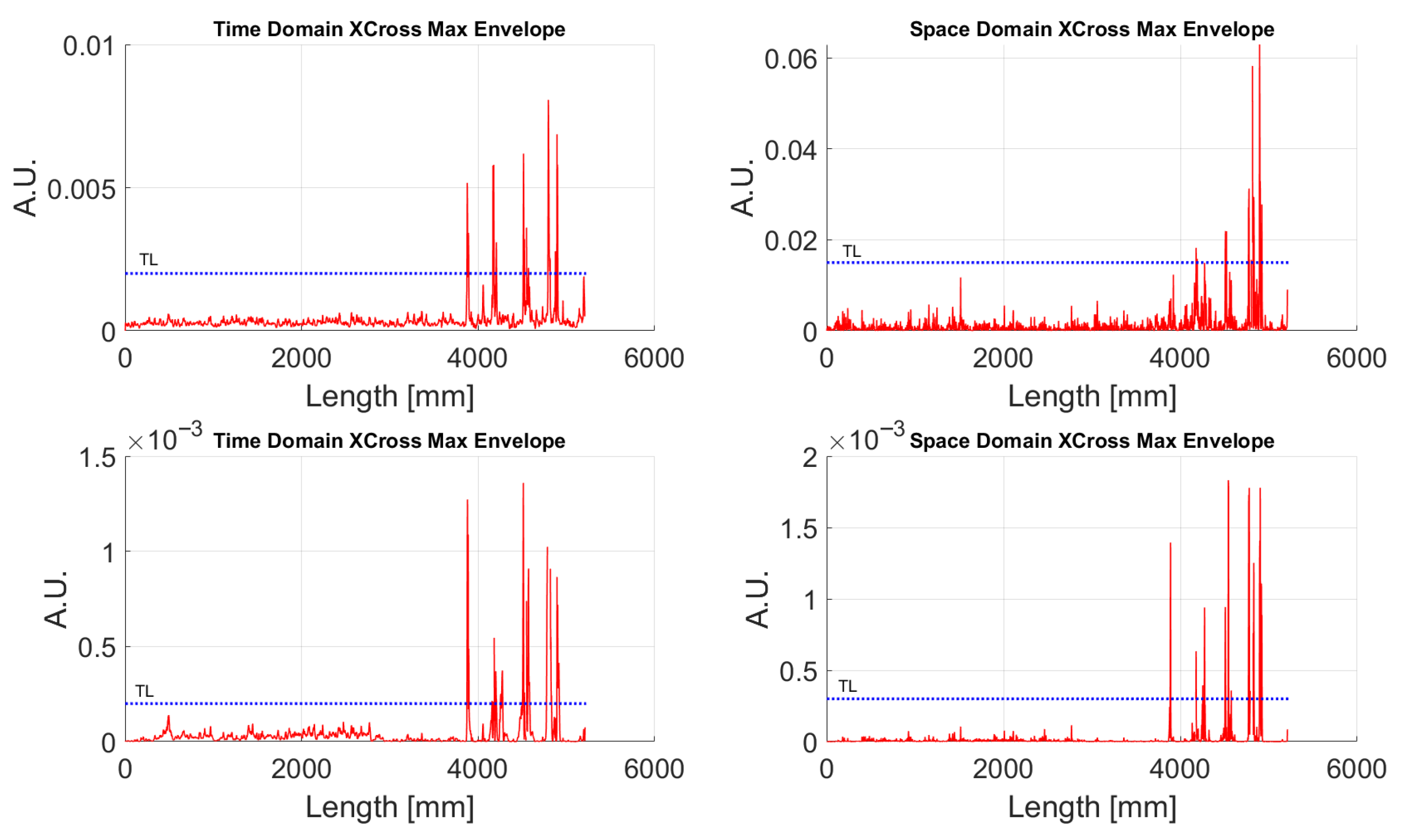
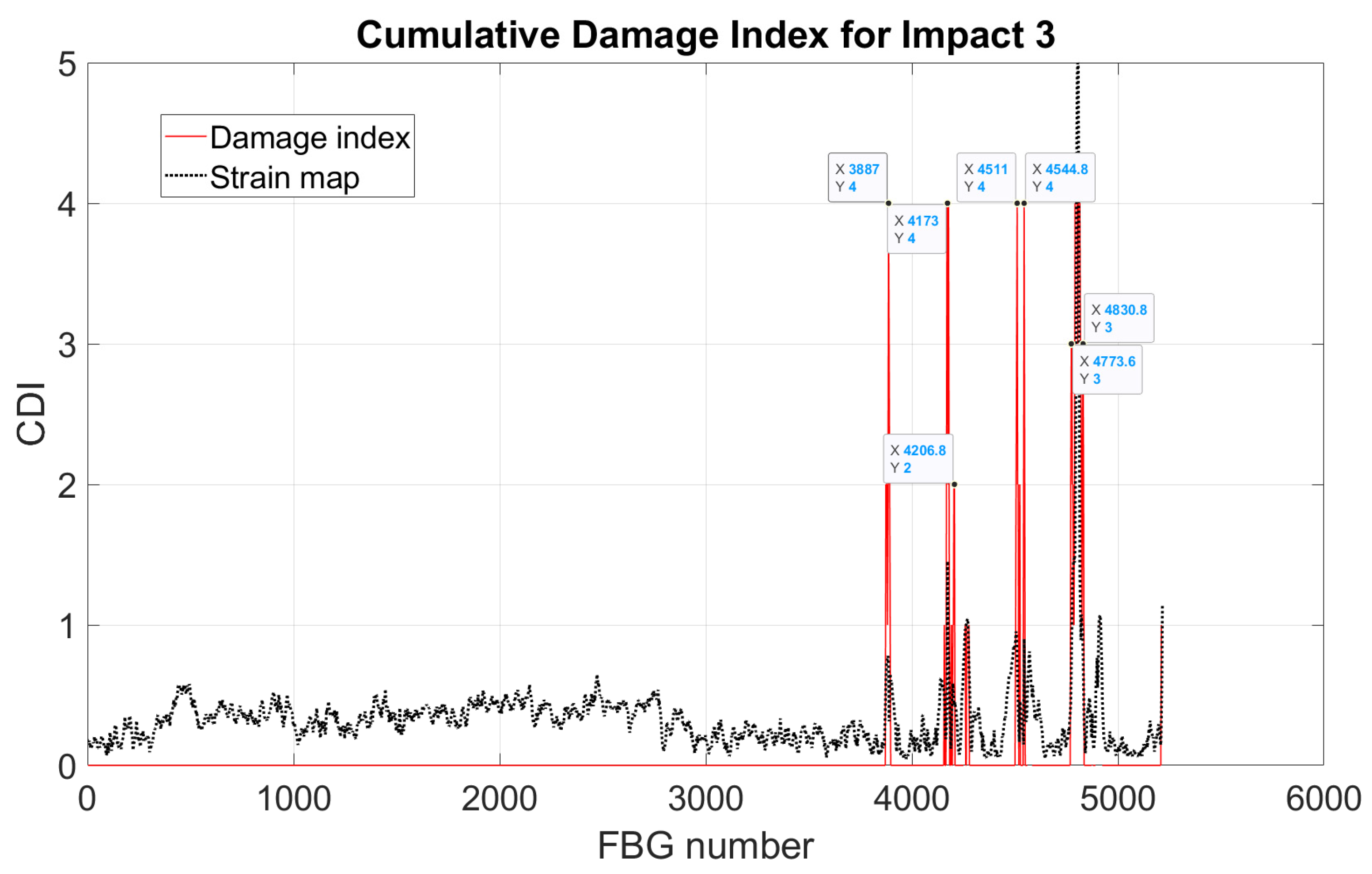
The four features extracted from the cross-correlation in the time and space domain for the strain and the strain energy are reported in Figure 15. The threshold level set to the meaning of each feature distribution is then used to cumulate eligible data exceeding the TL line, and the correspondent sensor location is flagged over the initial strain signature in Figure 16.
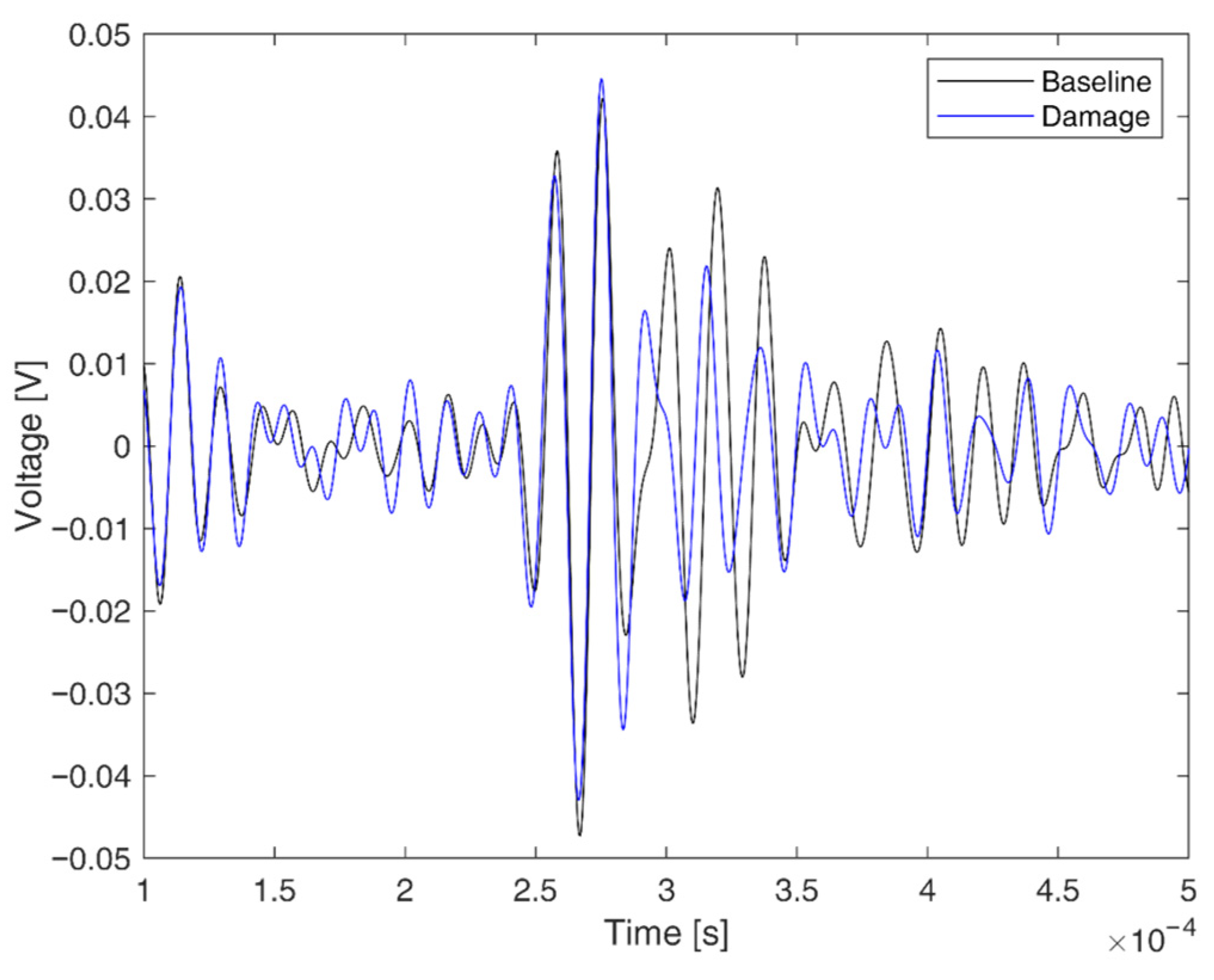
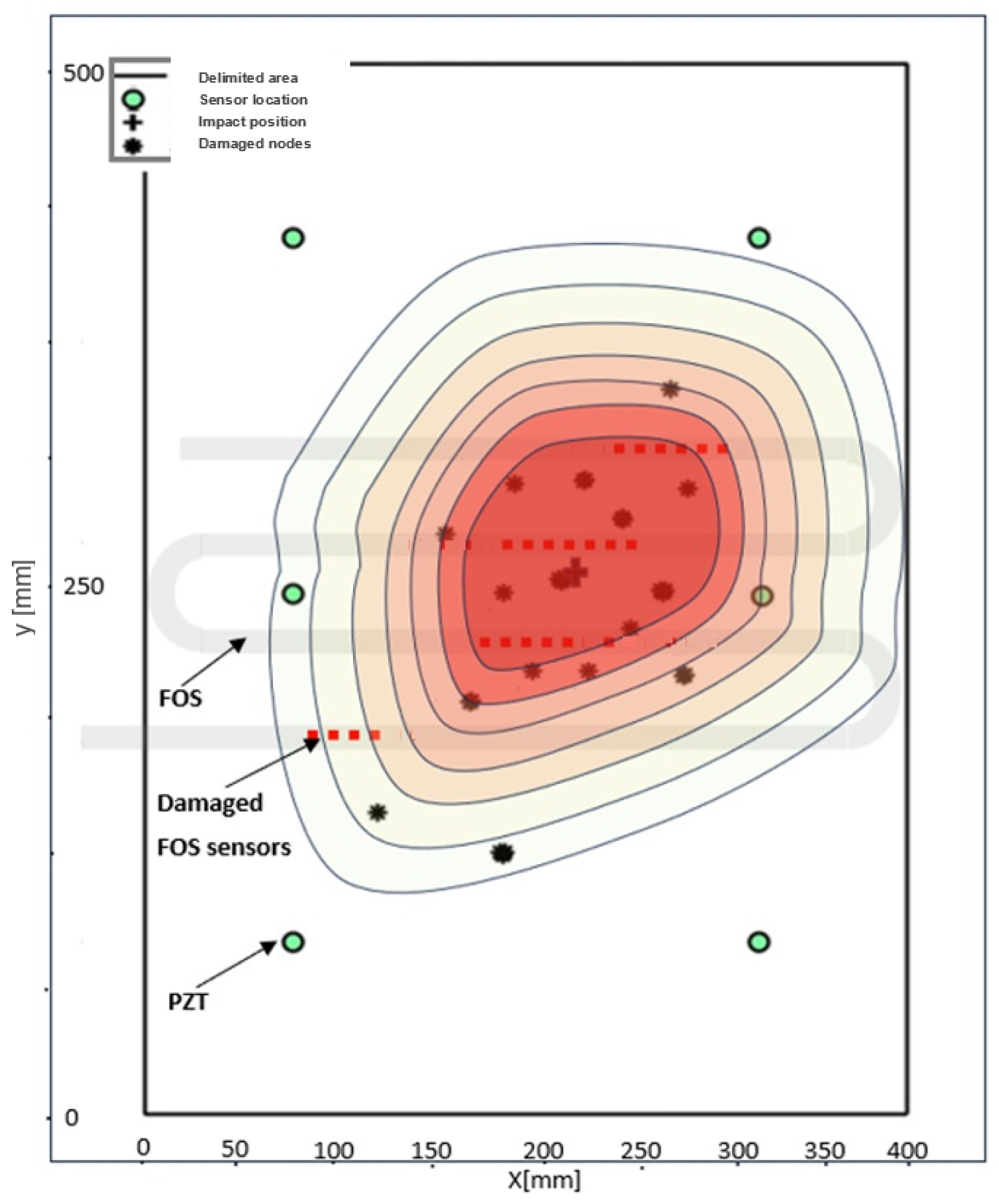
The ultrasonic signals (Figure 17) acquired by PZT after impact allowed the selection of the most affected paths, and the probability ellipse produced the contour plot for damage extension estimation overlapped to the FOS-damaged sensors (Figure 18). Indeed, it is worth noting that wave propagation changes due to the defect, as less energy can propagate from the emitting to the receiving transducer. This is evident at a time around 300 ms, where the lower energy transmission results in less amplitude of the wave packet traveling across the damage.

3.3. Impact #4

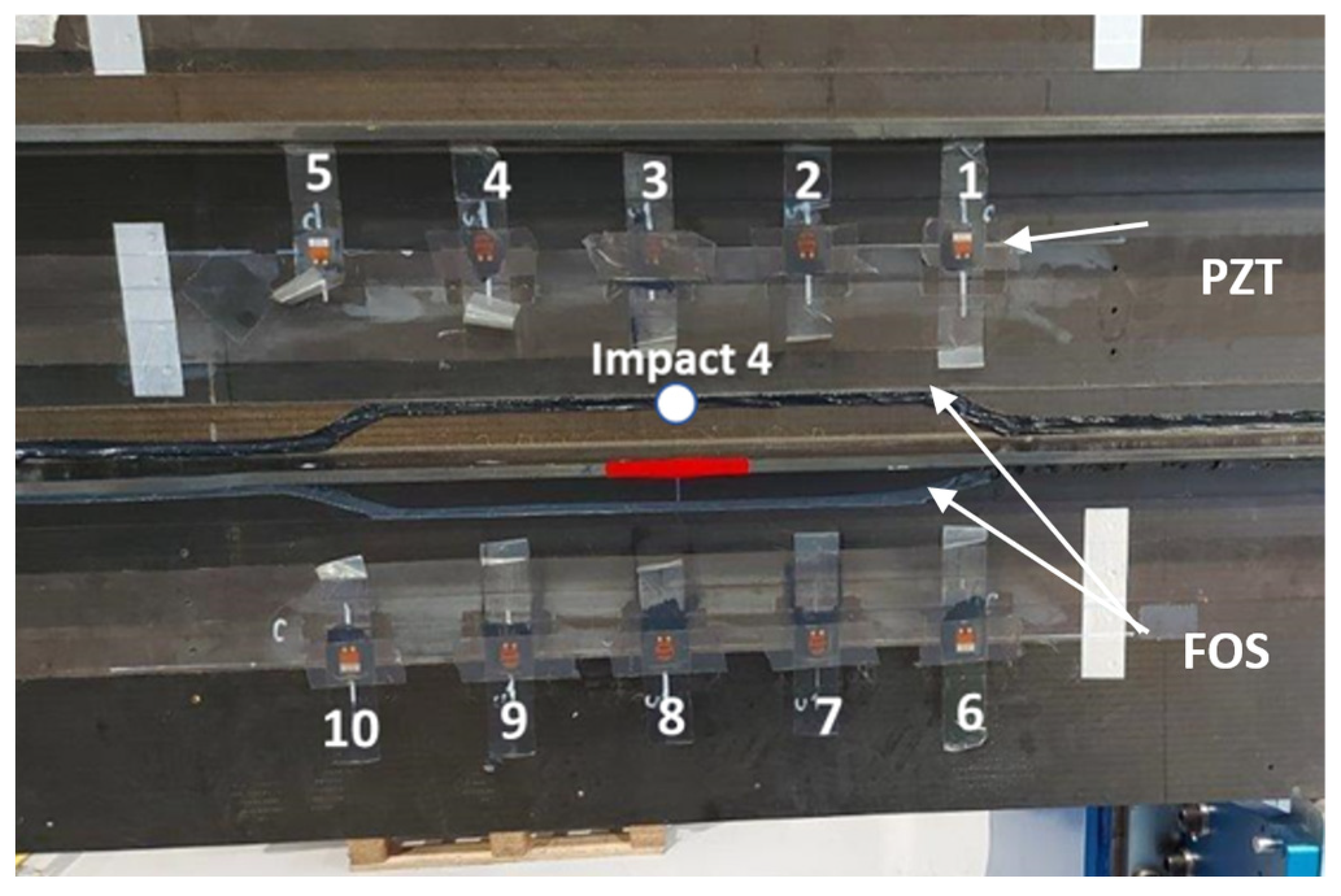
Figure 19 shows the final installation of ten PZTs (DuraAct by Physik Instrumente) for impact damage monitoring at location #4 using both local and global hotspot monitoring.
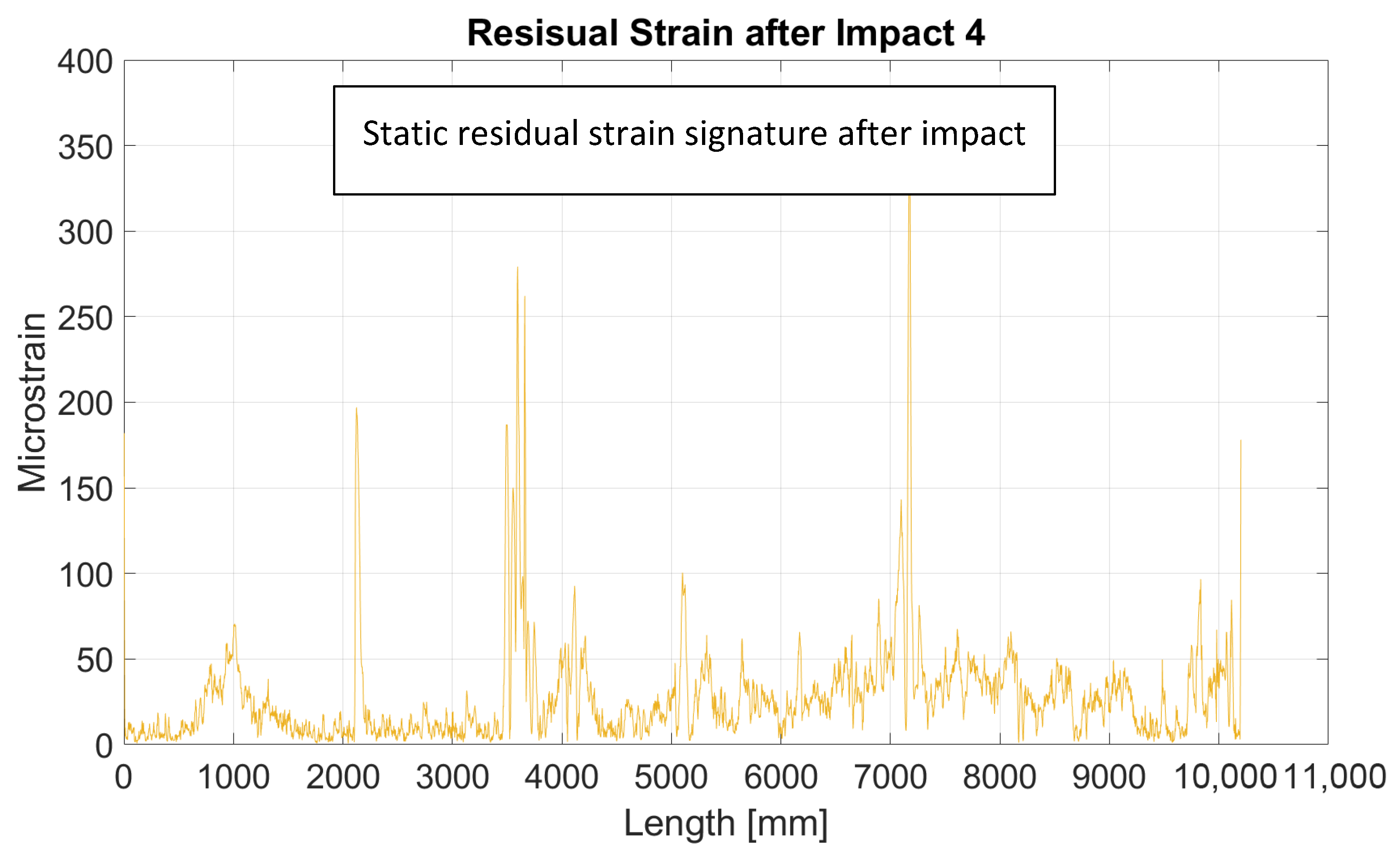
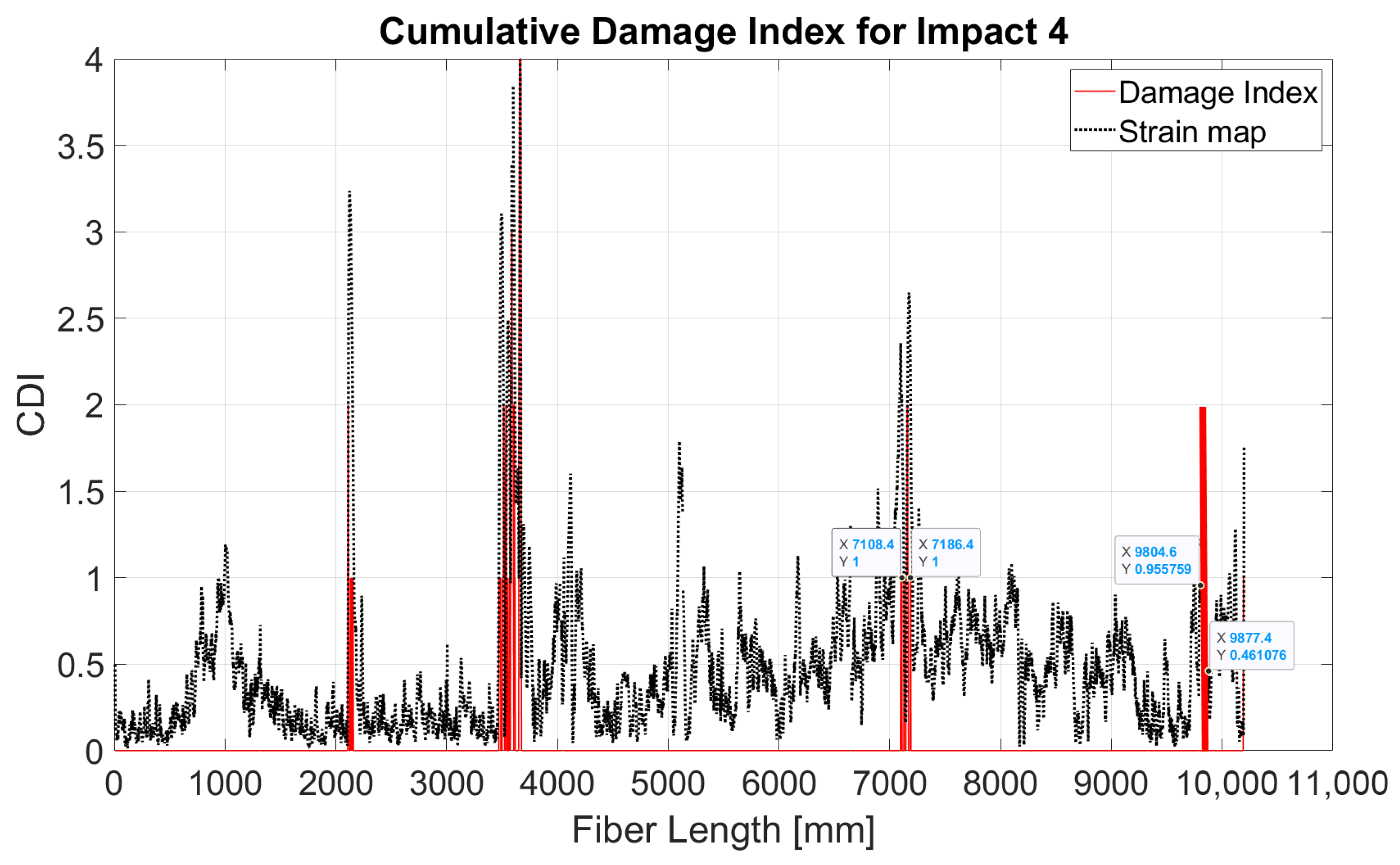
The static strain logged from FOS is reported in Figure 20, the extracted features are plotted in Figure 21 along with the threshold level, and the cumulative damage index is depicted over the strain map in Figure 22.
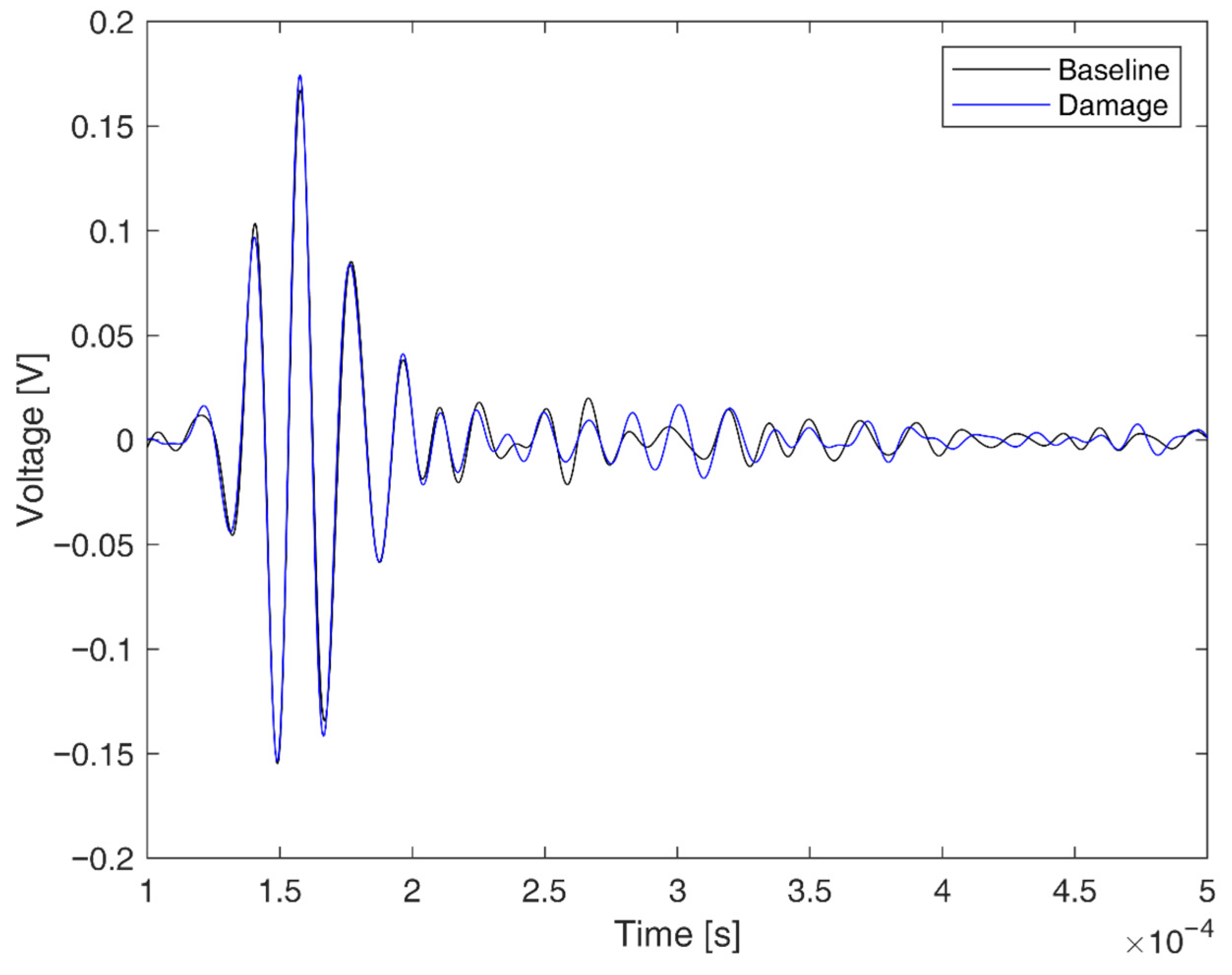
The ultrasonic signals (Figure 23) acquired after impact allowed the selection of the most affected paths. Indeed, it is worth noting that wave propagation changes due to the defect, as less energy from the emitting transducer is mirrored by the damaged stringer and more energy is transferred to the other side of the stringer at the receiving transducer. This is evident from the time history around 150 ms, where the higher energy transmitted is highlighted by higher amplitude in the (damage) signal.
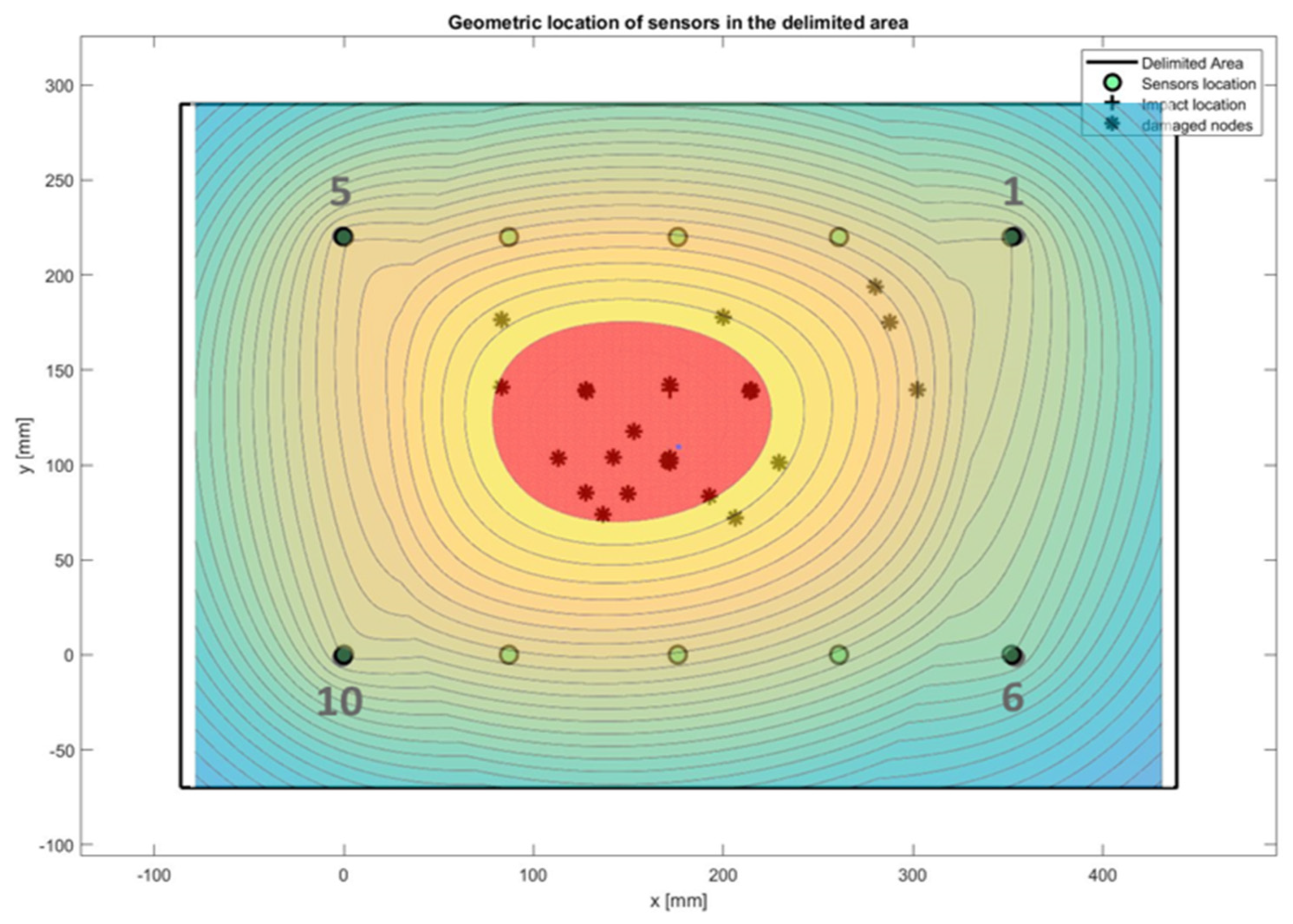
Figure 24 shows the piezo distribution and their numeration. Specifically, in this application the outer piezo were used (1, 5, 6, 10). The damage index distribution is illustrated, while colored in red is shown the area where the probability ellipse identified the damage.

4. NDI vs. SHM Results Analysis

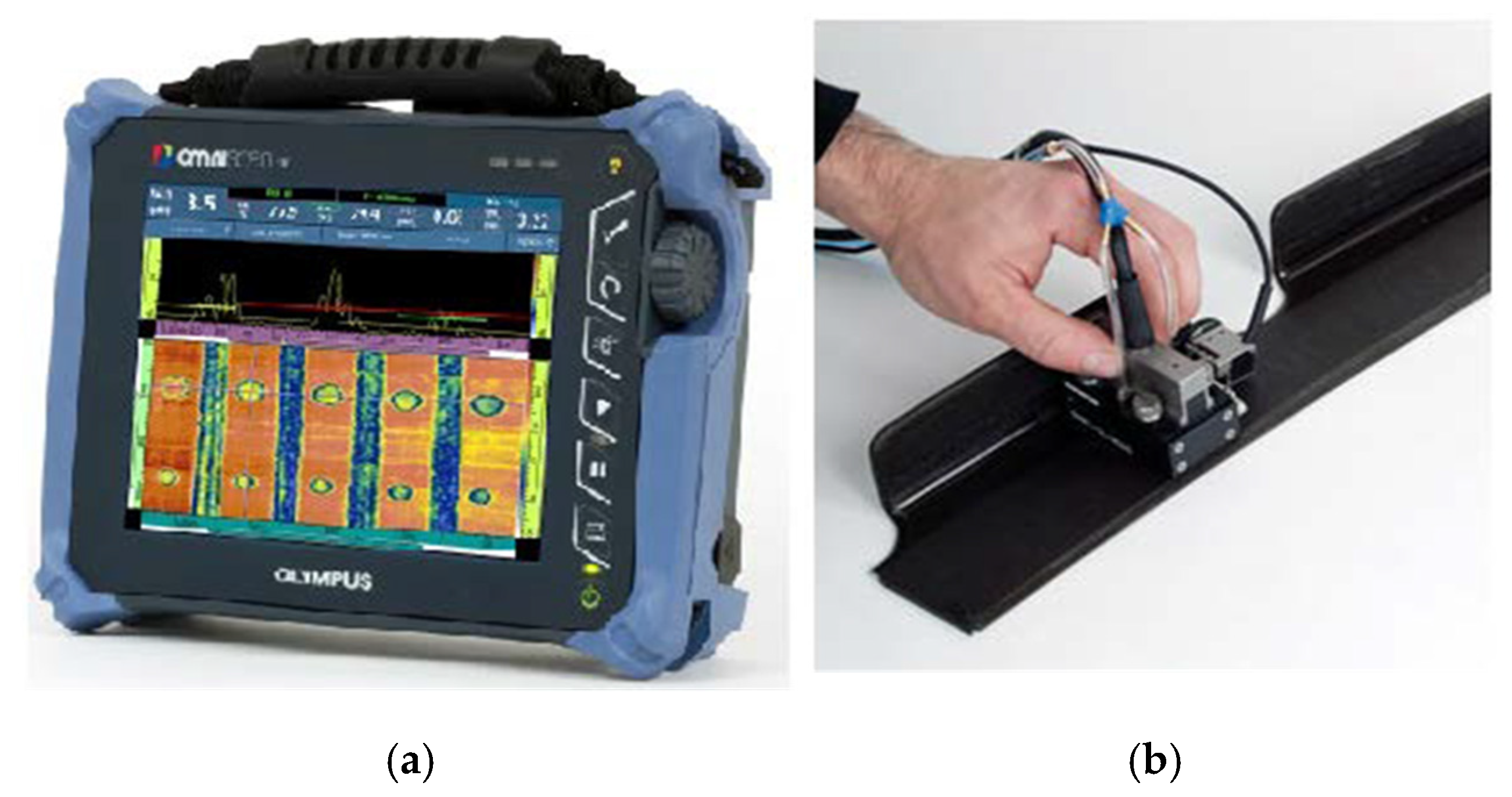
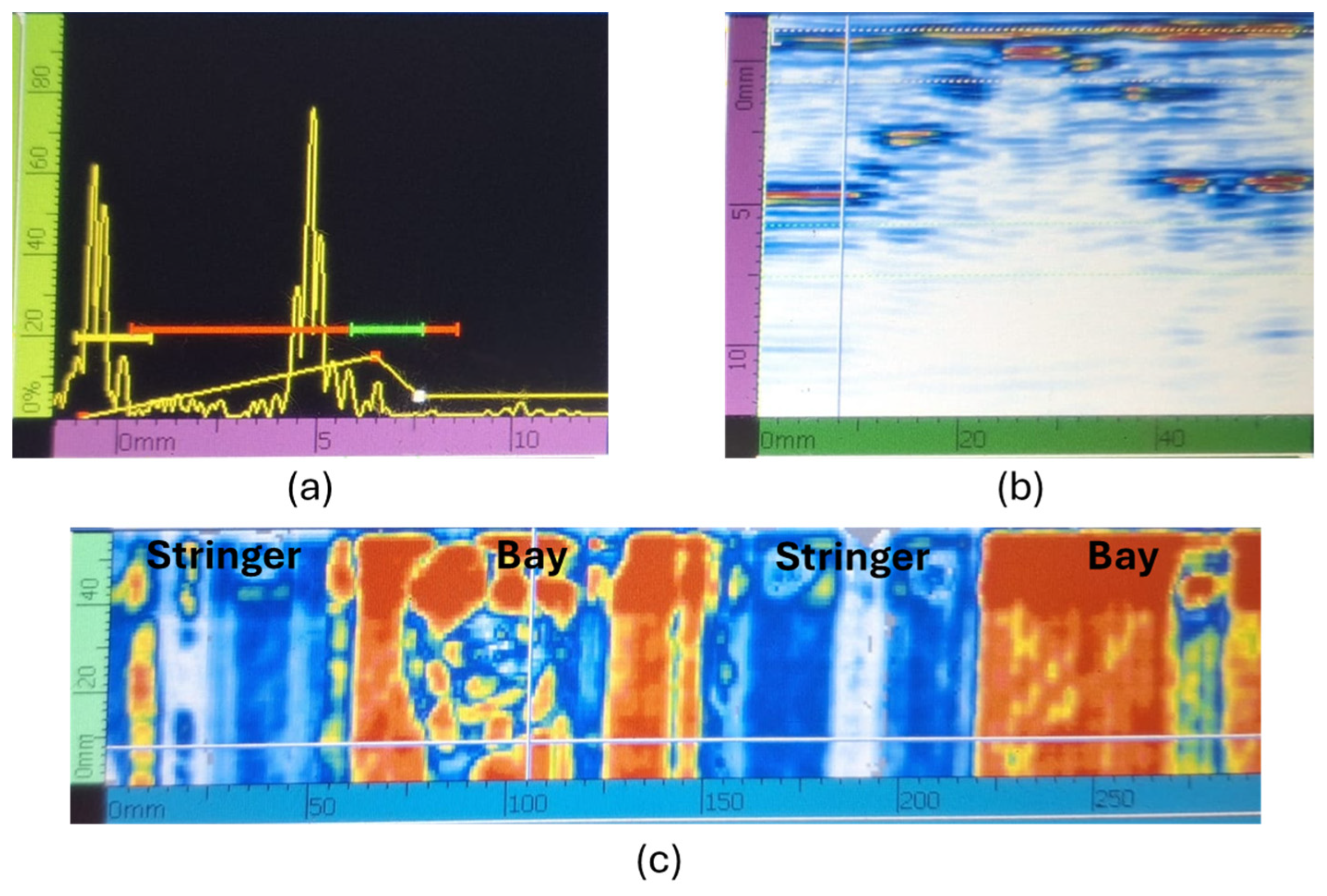
Impact-induced damage has been assessed through phased array ultrasonic testing (PAUT) by an Olympus OmniScan, Tokyo, Japan (Figure 25a) equipped with a 16:64PR phased array unit able to perform pulse-echo, pitch–catch or time of flight detection TOFD inspection. An encoded 5 MHz, 64-element linear array probe with a straight wedge is used, coupling the probe and the inspected panel surface with a specific water-based gel (Figure 25b). Tests are carried out with the phased array positioned over the smooth (outer) surface of the specimen; the probe is moved physically along the longitudinal axis while the ultrasonic beam electronically scans along the transverse direction. When detecting debondings, the echo in the A-scan from the interface between skin and stringer is slightly visible when bonding is ensured, while its amplitude gets higher when disconnection occurs. Likewise, when detecting delamination, the A-scan shows a strong echo when damage occurs. In both cases, C-scan allows the visualization of damage in plane. Instead, B- and S-scans can help in assessing the through thickness damage.
When inspecting damage after the impact campaign, no damage results from Impact #2, while barely visible damage is associated with the other impacts. This is mostly due to the different thickness and constraints of the wing box at the several locations. At Impact #2 location, slightly visible damage is observed, made of a few plies’ delamination at the sub-surface, caused by the impact itself. However, this does not belong to the BVID category. When inspecting Impact #3 (Figure 26), barely visible damage is observed, made of many plies delaminated through the thickness and distributed over the surface of about 50 × 55 mm. The S-scan in Figure 26b shows the typical impact cone, characterized by delamination and a matrix crack from one ply to the adjacent one. It is worth noting that the indentation is slightly visible also from the C-SCAN.
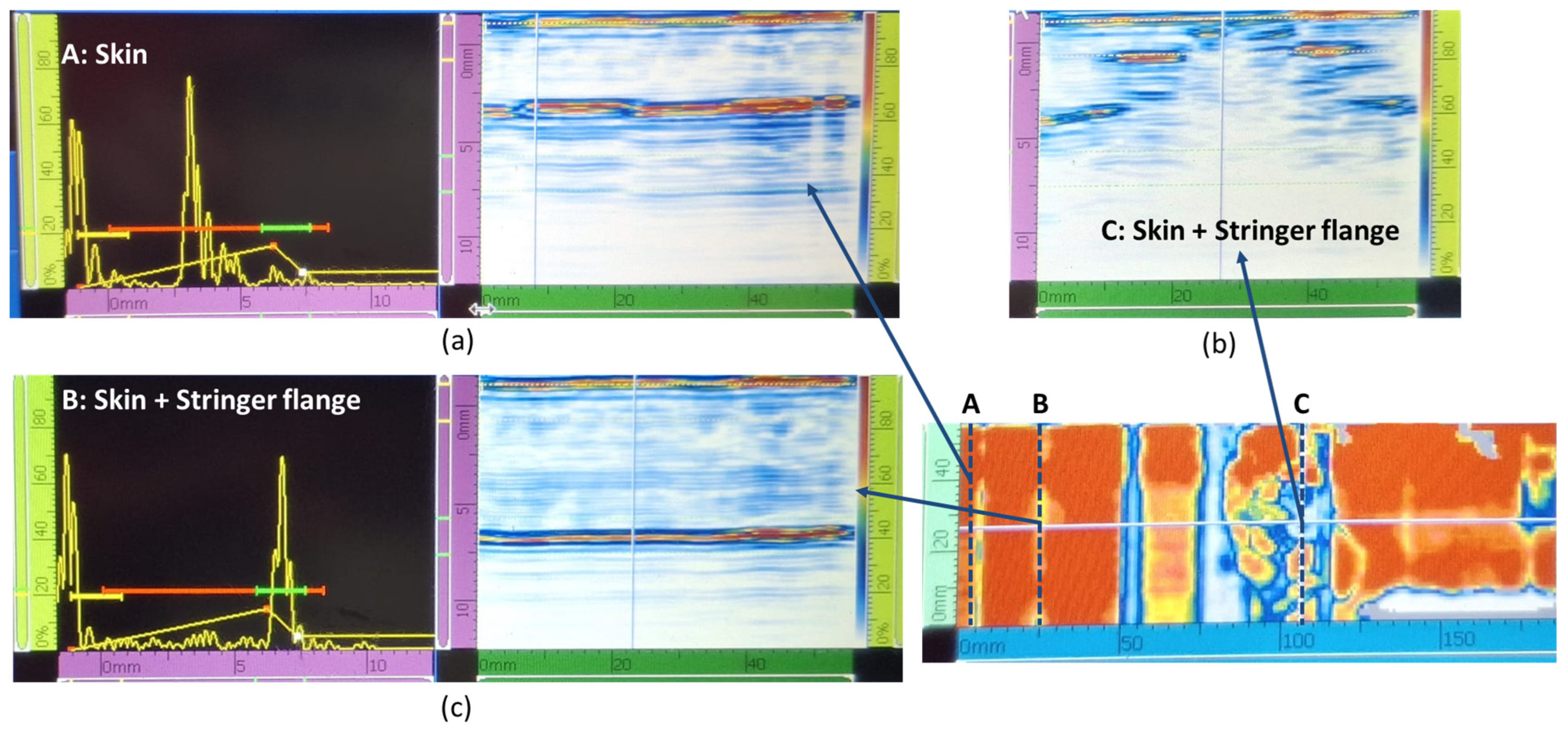
When inspecting Impact #4 (Figure 27), barely visible damage is still observed, made of many plies delaminated through the thickness and distributed over a surface of minimum 45 × 80 mm. The damage here is combined with disbonding, as the low-velocity impact results in an interlaminar shear stress overcoming the strength at stringer skin interface, resulting in a disconnection. Indeed, while Figure 27a,c show the S-scan on the skin (section A) and the stringer (section B) with different thicknesses. respectively, Figure 27c clearly shows a thickness typical of the skin area. This means that the ultrasound signal in section C is reflected back at the interface with the stringer (like section A). It is worth noting that the indentation is here quite visible also from the C-SCAN.
As a summary, Table 1 reports the comparison between NDI and SHM, showing the capability of SHM approaches to detect damage accurately even in a very complex testing structure such as a fully composite real-scale wing subject to low-velocity impacts resulting in barely visible impact damage.
The results from the three impact cases show significant disparities; for instance, the PZT signals for Impact #2 had a very high signal-to-noise ratio, rendering them “useless for post processing,” whereas impacts #3 and #4 did not encounter this issue. The underlying reasons for the differential sensitivity of the two sensing technologies at various locations must be correlated to the skin thickness and constraint conditions resulting in different damage severity.

Discussion

Piezoelectric technology is combined with distributed fiber optic sensors achieving a data multi-modal approach in which the damage detection, localization and severity assessment are achieved with increased reliability.
The PZT-based approach shown in this work is a probabilistic approach, namely returning the probability of damage in a specific area given that the threshold is overcome. The area above 95% probability is here conventionally used as a metric. However, the value is rather qualitative than quantitative. In addition, the number of transducers is poor (4). It is more a demonstration of feasibility of the approach even in such a complex scenario. Lastly, the PZT approach proposed here is a global approach, aimed at global coverage without local capacity. Indeed, the approach is intended in combination with FOS, which returns a local analysis without full coverage of the area.
The PZT/FOS integration returns a multi-modal and multilevel diagnostic tool in order to notice damage occurrence and realize the diagnosis. Indeed, the PZT-based approach shown in this work is a probabilistic approach, namely returning the probability of damage in a specific area given that the threshold is overcome. This is a global approach, in the sense that a small number of transducers are used, aiming at global coverage without local capacity. Otherwise, FOS returns a very local analysis (thanks to the huge number of distributed sensing points) without full coverage of the area. Indeed, the sensitivity is rather limited to the area close to the fiber deployment. This is where the synergistic combination of such technologies take place, returning location (PZT) and size (FOS) of damage given that the threshold is overcome (detection) as a full characterization of the damage.
It must be noted that due to the lack of certification, such a system (sensors plus instrumentation) cannot be currently used during flight. The industrial partner requirements referred to ground inspection and the influence of sensor layout on inspection “blind spots” is one of the limitations to be considered. Another point is the potential interference from environmental temperature or operational load fluctuations on both ultrasonic guided waves and fiber optic strain signals. In this case, the measurements are conceived to be performed after flight on ground and conducted in a stable temperature environment. The temperature fluctuation affects PZT and FOS, but the approach is robust against small fluctuations. Specifically, FOS algorithms automatically compensate for the temperature while PZT variation is rather limited compared to damage-induced variation in wave propagation.

5. Conclusions

The paper shows a comprehensive testing campaign on a real-scale outer wing box of a brand-new regional aircraft fully made from composite materials with the aim of validating the industrially relevant conditions for the integration of SHM. A hybrid approach based on PZT-excited ultrasonic guided waves UGWs and FOS-sensed strain to continuously monitor the condition of the OWB structure is used. An impact campaign is carried out to reproduce typical scenarios inducing critical damage to the structure, such as debonding in stiffened areas and delamination in flat bays. The SHM framework is successfully tested, proving its effectiveness in detecting, localizing and tracking damage onset in the composite structure, ensuring long-term reliability and safety. Specifically, barely visible impact induced damage is correctly detected and severity assessed in a variety of conditions. In addition, the results obtained are validated by using state-of-the-art non-destructive inspections.

Author Contributions

Conceptualization, M.C., A.S. and V.M.; methodology, M.C., A.S. and V.M.; software, M.C. and A.S.; validation, M.C., A.S. and V.M.; formal analysis, F.R., M.C. and A.S.; investigation, F.R.; resources, F.R.; data curation, M.C. and A.S.; writing—original draft preparation, F.R.; writing—review and editing, M.C.; visualization, A.S.; supervision, F.R.; project administration, F.R.; funding acquisition, F.R. All authors have read and agreed to the published version of the manuscript.

Funding

This research was funded by Clean Sky 2 Joint Undertaking, under the European’s Union Horizon 2020 research and innovation Program, under grant agreement No 945548-REGIONAL AIRCRAFT 2020-2023 (GAM-2020-REG); WAL (Work Area Leader): Leonardo Aircraft.

Institutional Review Board Statement

Not applicable.

Informed Consent Statement

Not applicable.

Data Availability Statement

The original contributions presented in this study are included in the article. Further inquiries can be directed to the corresponding authors.

Acknowledgments

The authors acknowledge the support received from Ing. Vittorio Ascione, who was responsible for the project within the management board of the corporation, Ing. Umberto Mercurio of CIRA for managing the Airgreen 2 project, Ernesto Monaco of University of Naples for his technical support, and Ing. Nicola Cimminiello and Ing. Francesco Paolo Camerlingo and all the Leonardo Company for managing the final test campaign.

Conflicts of Interest

The authors declare no conflicts of interest.

References

  1. Jones, R. Mechanics of Composite Materials; Materials Science and Engineering Series; Taylor & Francis: Abingdon, UK, 1998. [Google Scholar]
  2. USA Department of Defense. MIL-HDBK 17-3F: Composite Materials Handbook; Department of Defense: Washington, DC, USA, 2002.
  3. US Department of Transportation—Federal Aviation Administration. AC No: 20-107B. Composite Aircraft Structure; US Department of Transportation—Federal Aviation Administration: Washington, DC, USA, 2009.
  4. Verhagen, W.J.C.; Santos, B.F.; Freeman, F.; van Kessel, P.; Zarouchas, D.; Loutas, T.; Yeun, R.C.K.; Heiets, I. Condition-Based Maintenance in Aviation: Challenges and Opportunities. Aerospace 2023, 10, 762. [Google Scholar] [CrossRef]
  5. Sundravel, K.; Jagadeesan, R.; Dhanush, A.; Kumar, A. A Review of Innovations, Challenges, and Future Directions in Structural Health Monitoring Using Smart Materials. J. Environ. Nanotechnol. 2025, 14, 464–478. [Google Scholar] [CrossRef]
  6. Yang, Z.; Yang, H.; Tian, T.; Deng, D.; Hu, M.; Ma, J.; Gao, D.; Zhang, J.; Ma, S.; Yang, L.; et al. A review on guided-ultrasonic-wave-based structural health monitoring: From fundamental theory to machine learning techniques. Ultrasonics 2023, 133, 107014. [Google Scholar] [CrossRef] [PubMed]
  7. Memmolo, V.; Pasquino, N.; Ricci, F. Experimental characterization of a damage detection and localization system for composite structures. Measurement 2018, 129, 381–388. [Google Scholar] [CrossRef]
  8. De Marchi, L.; Marzani, A.; Moll, J.; Kudela, P.; Radzieński, M.; Ostachowicz, W. A pulse coding and decoding strategy to perform Lamb wave inspections using simultaneously multiple actuators. Mech. Syst. Signal Process. 2017, 91, 111–121. [Google Scholar] [CrossRef]
  9. Zhou, Y.; Ma, Z.; Fu, L. A Review of Key Signal Processing Techniques for Structural Health Monitoring: Highlighting Non-Parametric Time-Frequency Analysis, Adaptive Decomposition, and Deconvolution. Algorithms 2025, 18, 318. [Google Scholar] [CrossRef]
  10. Ciminello, M.; Boffa, N.D.; Concilio, A.; Memmolo, V.; Monaco, E.; Ricci, F. Stringer debonding edge detection employing fiber optics by combined distributed strain profile and wave scattering approaches for non-model based SHM. Compos. Struct. 2019, 216, 58–66. [Google Scholar] [CrossRef]
  11. Falcetelli, F.; Yue, N.; Sante, R.; Zarouchas, D. Probability of detection, localization, and sizing: The evolution of reliability metrics in Structural Health Monitoring. Struct. Health Monit. 2021, 21, 2990–3017. [Google Scholar] [CrossRef]
  12. Tiwari, A. Chapter 2—Supervised learning: From theory to applications. In Artificial Intelligence and Machine Learning for EDGE Computing; Pandey, R., Khatri, S.K., Singh, N.K., Verma, P., Eds.; Academic Press: Cambridge, MA, USA, 2022; pp. 23–32. ISBN 9780128240540. [Google Scholar] [CrossRef]
  13. Monaco, E.; Memmolo, V.; Ricci, F.; Boffa, N.; Maio, L. Guided waves based SHM systems for composites structural elements: Statistical analyses finalized at probability of detection definition and assessment. In Proceedings of the SPIE Smart Structures and Materials + Nondestructive Evaluation and Health Monitoring, San Diego, CA, USA, 8–12 March 2015; Volume 9438. [Google Scholar]
  14. Gianneo, A.; Carboni, M.; Giglio, M. Feasibility study of a multi-parameter probability of detection formulation for a Lamb waves based structural health monitoring approach to light alloy aeronautical plates. Struct. Health Monit. 2017, 16, 225–249. [Google Scholar] [CrossRef]
  15. Ciminello, M.; Ameduri, S.; Galasso, B.; Romano, F.; Concilio, A. Numerical and Experimental Comparison of Impact Damage Detection by Using Distributed Fiber Optics on a Stiffened Composite Panel. In Dynamic Response and Failure of Composite Materials: DRAF 2022; Lopresto, V., Papa, I., Langella, A., Eds.; Lecture Notes in Mechanical Engineering; Springer: Cham, Switzerland, 2023. [Google Scholar] [CrossRef]
  16. Apuleo, G.; Ciminello, M.; Pellone, L.; Mercurio, U.; Concilio, A. Application of a Fiber Optic-Based SHM System to a Composite Aircraft Wing and Its Technological Maturity Evaluation. Eng. Proc. 2025, 90, 31. [Google Scholar] [CrossRef]
  17. Memmolo, V.; Maio, L.; Ricci, F. Assessment of Damage in Composite Pressure Vessels Using Guided Waves. Sensors 2022, 22, 5182. [Google Scholar] [CrossRef] [PubMed]
Figure 1. Scheme of the internal layout of the full-scale wing box. The CAD geometry has been generated through CATIA V5 by the industrial partner (Leonardo).
Applmech 07 00019 g001
Figure 2. Sketch of the inner side of the panel with the example of FOS path. The CAD geometry has been generated through CATIA V5 by the industrial partner (Leonardo).
Applmech 07 00019 g002
Figure 3. Panel assembly on the wing box structure. The CAD geometry has been generated through CATIA V5 by the industrial partner (Leonardo).
Applmech 07 00019 g003
Figure 4. Root side of the wing is used as the egress point of the sensor cables. The CAD geometry has been generated through CATIA V5 by the industrial partner (Leonardo).
Applmech 07 00019 g004
Figure 5. Top view of the wing box with the sketch of the impact position.
Applmech 07 00019 g005
Figure 6. Setup listed as: (a) full-scale assembled wing; (b) distributed fiber optic interrogation unit; (c) PZT acquisition unit.
Applmech 07 00019 g006
Figure 7. Example of FOS data processing from static strain signature. The raw data in black, the threshold level in red and the damage index output in green.
Applmech 07 00019 g007
Figure 8. Scheme of a damage processed by PZT: (a) impact position (b) color map distribution based on damage index value (yellow-orange color is the highest strain).
Applmech 07 00019 g008
Figure 9. Upper panel detail with the position of the impact #2. The PZT and FOS sensors bonded on the inner side.
Applmech 07 00019 g009
Figure 10. Static residual strain after impact #2 from FOS. Multicolor curves indicate different time acquisitions. The spikes at 750 and 6000 mm indicate the effect of the impact damage.
Applmech 07 00019 g010
Figure 11. Features extracted from the residual strain after impact #2. Threshold levels in blue indicates the eligible sensors when crossing the processed data in red.
Applmech 07 00019 g011
Figure 12. Sensors indicating the damage position in function of the cumulative damage index are plotted in red and overlapped to the strain map in black.
Applmech 07 00019 g012
Figure 13. Upper panel detail with the position of the impact #3. The PZT and FOS sensors bonded on the inner side.
Applmech 07 00019 g013
Figure 14. Static residual strain after impact #3 from FOS. Multicolor curves indicate different time acquisitions.
Applmech 07 00019 g014
Figure 15. Features extracted from the residual strain after impact #3. Threshold levels in blue indicates the eligible sensors when crossing the processed data in red.
Applmech 07 00019 g015
Figure 16. Sensors indicating the damage position in function of the cumulative damage index are plotted in red and overlapped to the strain map in black.
Applmech 07 00019 g016
Figure 17. Typical ultrasonic signal acquired by PZT before (baseline) and after (damage) impact #3. Wave is actuated by transducers #2 and recorded by transducer #4.
Applmech 07 00019 g017
Figure 18. Scheme of probability ellipse producing the contour plot for damage extension estimation overlapped to the FOS-damaged sensors (red dotted lines).
Applmech 07 00019 g018
Figure 19. Upper panel detail with the position of the impact #4. The PZT and FOS sensors bonded on the inner side.
Applmech 07 00019 g019
Figure 20. Static residual strain after impact #4 from FOS. Multicolor curves indicate different time acquisitions.
Applmech 07 00019 g020
Figure 21. Features extracted from the residual strain after impact #4. Threshold levels in blue indicate the eligible sensors.
Applmech 07 00019 g021
Figure 22. Sensors indicating the damage position in function of the cumulative damage index are plotted in red and overlapped to the strain map in black.
Applmech 07 00019 g022
Figure 23. Typical ultrasonic signal acquired by PZT before (baseline) and after (damage) impact #4. Wave is actuated by transducers #4 and recorded by transducer #6.
Applmech 07 00019 g023
Figure 24. Scheme of probability ellipse producing the contour plot for damage extension estimation overlapped to the FOS-damaged extension (black dotted line).
Applmech 07 00019 g024
Figure 25. Olympus OmniScan SX flaw detector (a) equipped with a 16:64PR phased array unit (b) able to perform pulse-echo, pitch–catch or TOFD inspection on composite structures.
Applmech 07 00019 g025
Figure 26. A- (a), S- (b), and C-Scan (c) of Impact #3 carried out on the wing panel. Different bays are highlighted in (c).
Applmech 07 00019 g026
Figure 27. A- (a), S- (b), and C-Scan (c) of Impact #4 carried out on the stiffened structure.
Applmech 07 00019 g027
Table 1. NDI and SHM data results comparison table.
#ID
Damage
FOS—SHM
Damage Max Extension [mm]
PZT—SHM
Damage Max Extension [mm]
NDI
Damage Max Extension [mm]
#2Spike detectionN.A.N.A.
#3577650
#47311080
Disclaimer/Publisher’s Note: The statements, opinions and data contained in all publications are solely those of the individual author(s) and contributor(s) and not of MDPI and/or the editor(s). MDPI and/or the editor(s) disclaim responsibility for any injury to people or property resulting from any ideas, methods, instructions or products referred to in the content.