1. Introduction
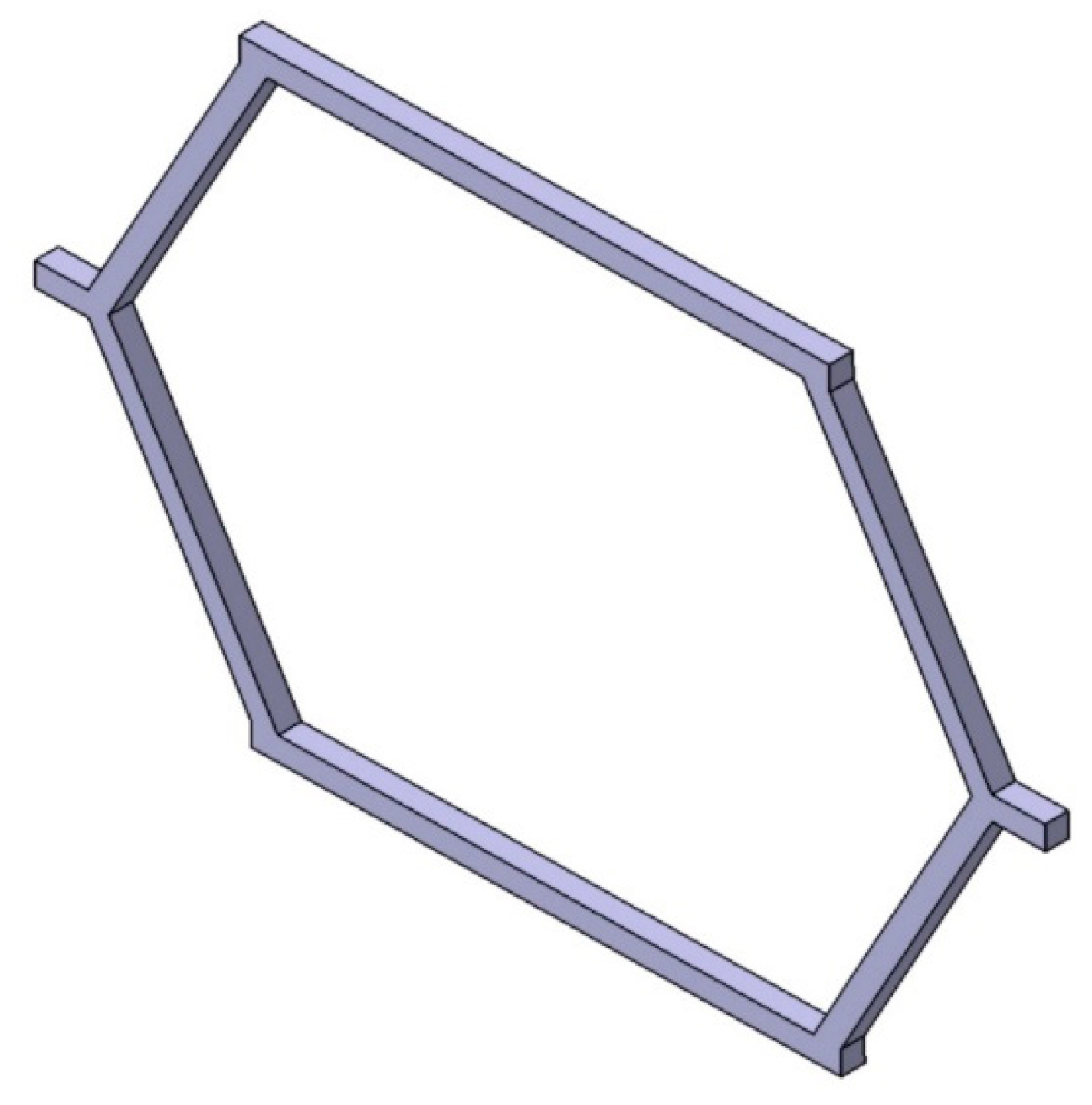
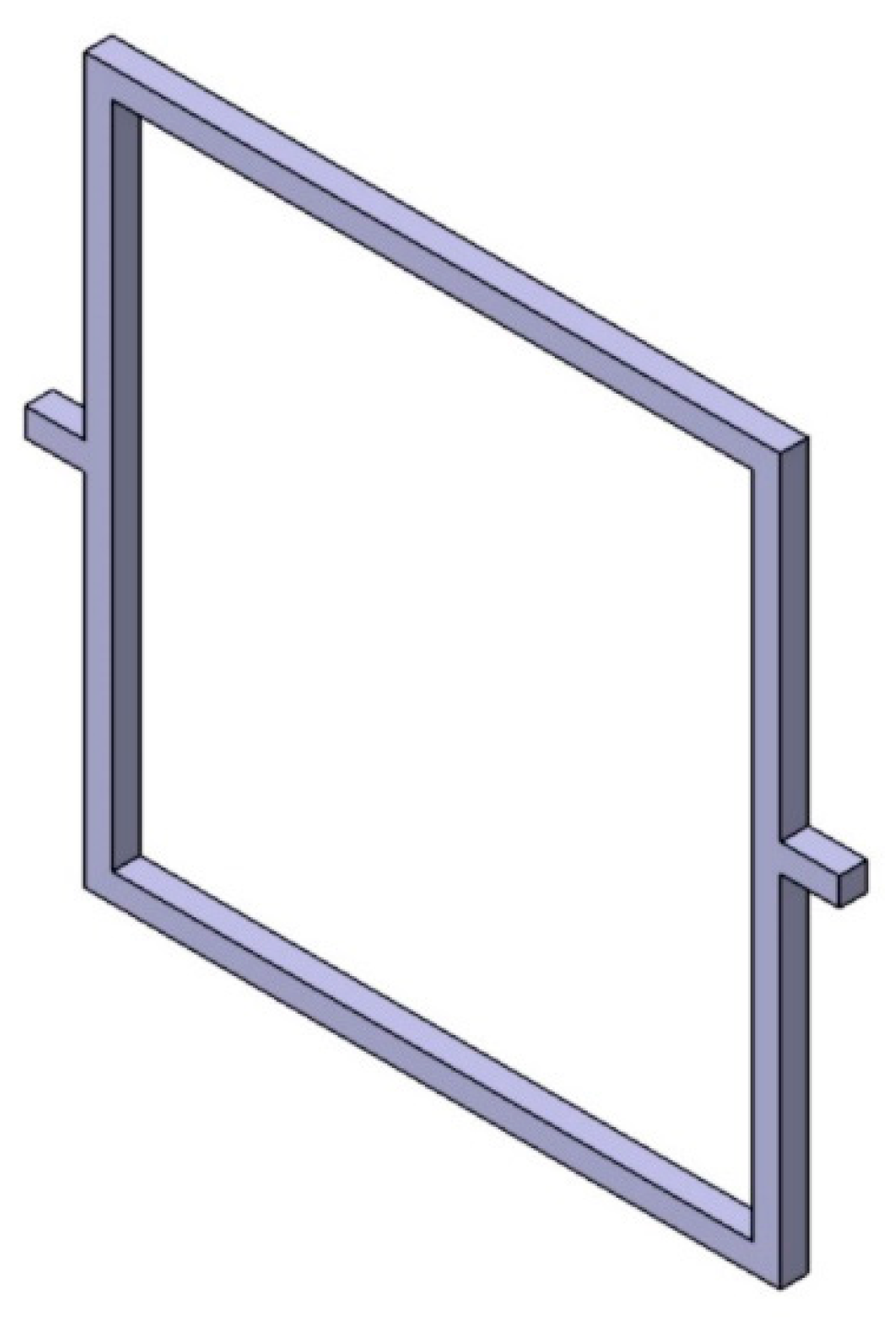
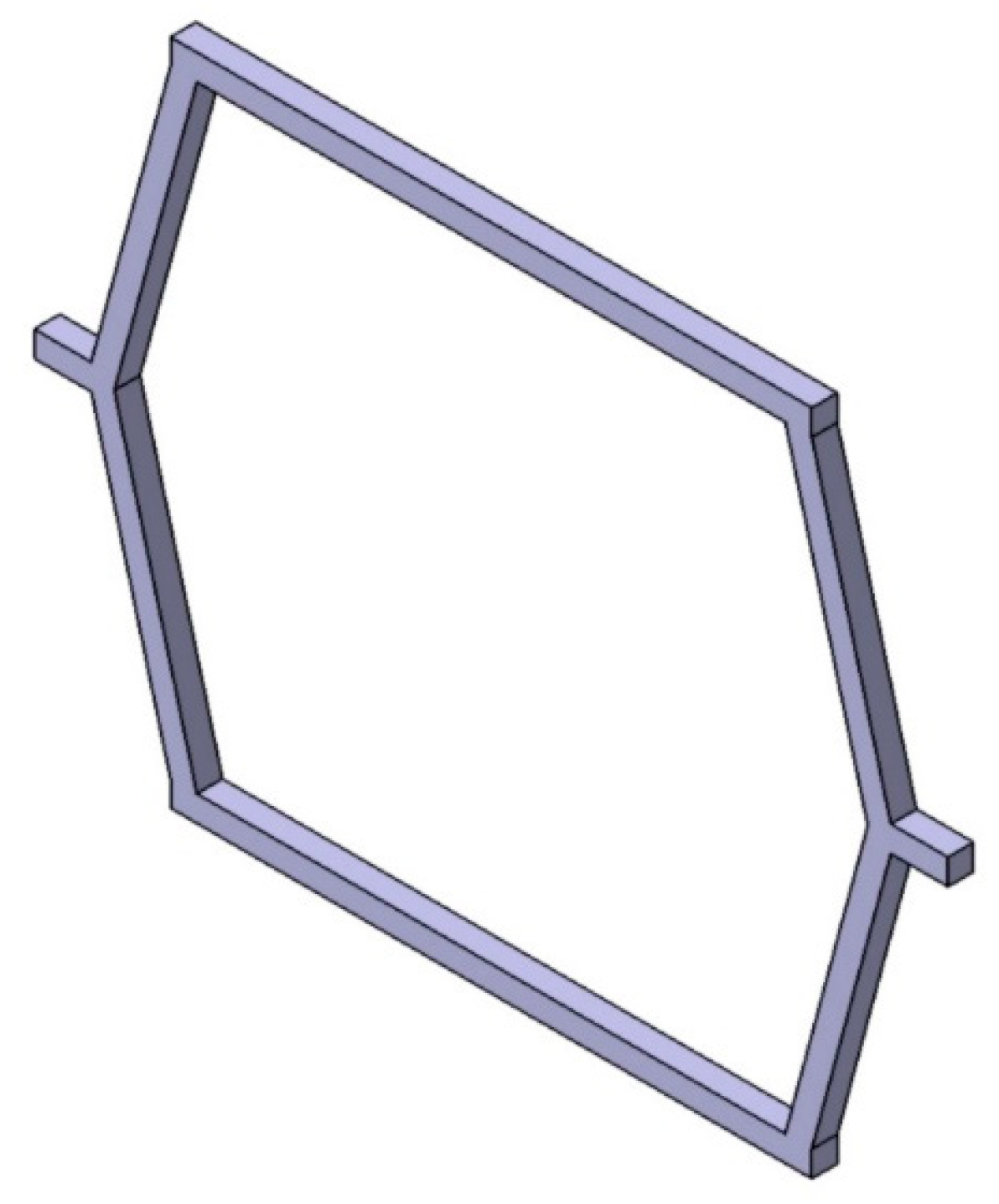
Re-entrant honeycomb structures are widely employed structural designs with numerous applications across various industries, and are usually found in lattice forms. However, in this study, inspired by the re-entrant honeycomb structure, we consider a single form (unit cell) of the re-entrant structure as a frame structure, which is used as a machine foundation for vibration reduction. We conducted both numerical and experimental modal analyses to examine the variations in the natural frequencies of the re-entrant structure-shaped steel frames with respect to the frame beam cross-section dimensions and the frame angle. Numerical calculations and experimental work were performed to determine how the natural frequency changes with respect to the beam cross-sectional dimensions and frame angle. For this purpose, frame models with different beam cross-section dimensions and main frame angles were created via 3D modeling software, and modal analyses were subsequently conducted for each model using the finite element method. In total, 20 distinct frame models were created to determine the relationship between the modal frequency and geometric configurations. Experimental modal analyses were then conducted to verify the finite element modeling results. As an introduction, a brief literature review of re-entrant honeycomb structures is presented below.
Lian et al. [
1] highlighted that implementing a hierarchical design in cell materials can enhance their energy absorption capabilities. They noted that materials with a negative Poisson’s ratio exhibit outstanding energy absorption potential and have a unique deformation mode. This paper presents augmented double-arrow honeycomb structures integrated into the re-entrant honeycomb—which is characterized by a negative Poisson’s ratio—serving as a substructure to increase the mechanical properties of the first-order re-entrant honeycomb and improve the energy absorption performance of the overall structure.
Elsamanty et al. [
2] reported the creation of auxetic structures for numerous applications. Considering their diverse uses, various studies have explored their static and dynamic properties. This paper outlines the findings of a numerical investigation on the dynamic characteristics of a re-entrant honeycomb auxetic structure in relation to its geometric parameters.
According to Baran [
3], materials that exhibit a negative Poisson’s ratio are referred to as auxetics. While auxetic structures can be designed in various sizes, ranging from micro- to macrostructures, the application of auxetics in civil engineering has only been explored to a limited degree. This study reported on the use of a medium-sized re-entrant auxetic structure to enhance a reinforced concrete beam.
Rathore et al. [
4] noted that the scarcity of building space in prime locations in major cities has prompted architects to design asymmetrical buildings. While these structures are intended to achieve optimal performance during earthquakes, their irregular shapes present unique challenges for structural engineers, who must ensure that the buildings can withstand lateral forces and function effectively under demanding conditions, safeguarding both the structure and its occupants. This study examined a building with an irregular L-shaped plane featuring a re-entrant corner. A total of 31 models were analyzed, which included 15 variations: five frames with different heights and brick infills; five frames of varying heights with brick infills and a shear wall at the core; and five frames with varying heights, brick infills, and shear walls integrated into the plan. Additionally, these 15 variants were re-evaluated by substituting the brick infills with AAC blocks to assess the decrease in seismic weight, alongside one regular RC frame for comparison.
Günaydın et al. [
5] conducted a study examining the impacts of various materials on hexagonal and re-entrant (auxetic) cellular structures. For each topology, they utilized three distinct material configurations: (a) nylon, (b) carbon fiber-reinforced nylon, and (c) glass fiber-reinforced nylon. A numerical model was developed to simulate the compressive behaviors of these multi-material cellular structures under quasistatic loading.
Goryachev et al. [
6] illustrated the capabilities of a large-scale multi-post re-entrant cavity via two case studies conducted with the same physical setup.
Le Floch et al. [
7] asserted that cylindrical re-entrant cavities possess distinct three-dimensional characteristics, resonating with electric and magnetic fields in different sections of the cavity.
In their study, Fan et al. [
8] analyzed the properties of resonant modes within a re-entrant cavity structure comprising a post and a ring, which they confirmed through experimental verification.
In their study, Ma et al. [
9] introduced an innovative hierarchical re-entrant honeycomb metamaterial by incorporating a square unit cell into the standard re-entrant honeycomb design, termed the square re-entrant honeycomb (SRH). This advanced structure has enhanced energy absorption capabilities and offers superior vibration insulation, when compared with the traditional RH model. The dynamic crushing behaviors of the SRH structures were examined theoretically and numerically, and the results indicated that the theoretical plateau stress aligns well with the numerical findings. Additionally, the deformation modes and energy absorption capacities of traditional RH and square re-entrant honeycombs (SRHs) were analyzed at varying impact velocities.
Peng et al. [
10] examined the flexural vibration behavior of a composite sandwich plate featuring a re-entrant honeycomb core (CSP-RHC), noting that the impact of a negative Poisson’s ratio (NPR) on its dynamic attributes is still not well understood. This study analyzed the flexural vibration of the CSP-RHC using the 2D homogenized plate model (2D-HPM) through the variational asymptotic method, which allows for the derivation of effective plate properties via homogenization of the unit cell of the CSP-RHC. The accuracy and efficiency of the free flexural vibration results produced using the 2D-HPM were validated through comparisons with 3D finite element method (3D-FEM) results across various boundary conditions, and the effects of selected parameters on the free vibration characteristics of the CSP-RHC were examined.
Gao et al. [
11] proposed an enhanced re-entrant negative Poisson’s ratio metamaterial fabricated through a combination of 3D printing and machining. Compared with its traditional counterpart, this improved metamaterial demonstrated superior load-carrying and vibration isolation capabilities.
Suthar and Purohit [
12] noted that reinforced concrete (RC) buildings featuring plan and/or vertical irregularities are frequently constructed around the globe, even though they are susceptible to seismic forces. Although irregular RC buildings exhibiting asymmetry, as well as mass and stiffness inconsistencies, have been extensively studied, the seismic performance of RC buildings with re-entrant corner plan irregularities has received less attention. This study developed 104 RC building models that prominently feature re-entrant corners (with C, L, T, and PLUS shapes), in addition to one regular rectangular structure. The plan irregularity descriptors (PIDs) were compiled with their regularity limits and assessed for these building models.
Teng et al. [
13] highlighted that re-entrant hexagonal honeycombs—as a type of auxetic structure—possess exceptional mechanical properties. However, most research has concentrated on two-dimensional (2D) re-entrant designs or three-dimensional (3D) structures, which often lack significant compressibility, thus resulting in insufficient energy absorption capacity for practical use. Hence, exploring 3D re-entrant honeycomb structures which are capable of enduring large deformations is crucial for optimizing material utilization. This study focused on the design, manufacturing, and analysis of a straightforward 3D re-entrant unit cell. The effects of geometric parameters on deformation modes and energy absorption capacity were assessed numerically, with experimental findings aligning closely with the finite element predictions.
Farshbaf et al. [
14] explored two structural types: re-entrant auxetic honeycomb and non-auxetic hexagonal honeycomb. They performed thorough deformation analyses in both 2D (plane strain) and 3D, utilizing linear triangular and tetrahedral multi-field displacement-pressure elements. The findings concerning the re-entrant auxetic structure aligned with the anticipated behavior, revealing a negative Poisson’s ratio and superior energy absorption efficiency when compared with the hexagonal honeycomb.
Ergene and Yalçın [
15] contend that advancements in technology demand innovative manufacturing techniques and lightweight, effective, and practical structural solutions to meet industrial requirements. Therefore, the distinct properties of honeycomb and re-entrant (auxetic) cellular structures—such as their energy and vibration absorption, resistance to indentation, and uniform load distribution—and their prospects for application in sandwich composite structures have recently been more extensively investigated.
In their research, Mustahsan et al. [
16] presented a modified re-entrant honeycomb auxetic structure aimed at improving overall compliance and achieving a higher negative Poisson’s ratio (NPR). This structure was designed by inserting a horizontal member between the vertical and re-entrant members of the semi-re-entrant honeycomb model, thereby enhancing compliance and reaching superior NPR values. An analytical model of the structure considering bending, shear, and axial deformations was developed, and the model’s validity was confirmed through finite element analysis (FEA) and tensile testing.
Choi and Park [
17] described the re-entrant hexagonal structure as one of the most utilized auxetic metamaterials, recognized for its unique deformation characteristics and negative Poisson’s ratio. Poisson’s ratio in these re-entrant auxetic structures changes depending on the design of the re-entrant shape and the deformation order. This study examined the deformation behaviors of re-entrant auxetic structures when modifying the re-entrant angle through both experimental and numerical methods. The experimental results indicated that Poisson’s ratio increased with a decrease in the re-entrant angle, maintaining auxetic properties only while the re-entrant cell exhibited a concave shape. Additionally, finite element analyses (FEAs) employing 1D-beam and 2D-continuum elements were performed to assess the deformation behaviors of the re-entrant structures.
Chen et al. [
18] introduced a new auxetic honeycomb design featuring self-similar inclusions within a traditional re-entrant hexagonal framework. They created theoretical models to analyze the elastic mechanical properties of both types of auxetic honeycombs. This innovative re-entrant honeycomb exhibited improved auxeticity and stiffness relative to the original design. The in-plane compressive behavior of these auxetic structures was examined using both experimental and numerical simulation techniques, revealing strong consistency between the results.
Ma et al. [
19] reported that origami honeycomb metamaterials have recently attracted considerable interest from researchers. These re-entrant origami honeycomb metamaterials exhibit outstanding mechanical performance owing to their lightweight nature, exceptional energy absorption capabilities, and varied configurations. This study involved the design of gradient re-entrant origami honeycomb metamaterials through adjustments to essential geometric parameters.
Shen et al. [
20] examined the mechanical performance of a newly introduced 3D re-entrant lattice auxetic structure subjected to bending loads. This innovative structure enhances the design possibilities for 3D auxetic structures, particularly in energy absorption and impact protection applications.
Hedayati et al. [
21] highlighted 2D and 3D re-entrant designs as well-known auxetic structures characterized by a negative Poisson’s ratio. This study presented new analytical relationships for 2D re-entrant hexagonal honeycombs that are applicable when considering both negative and positive ranges of the cell interior angle.
Bai et al. [
22] proposed an innovative construction method for vertically asymmetric re-entrant honeycombs (VAREHs). They derived general analytical expressions for elastic parameters which apply to all VAREH variants, including re-entrant hexagonal (REH) honeycombs. Additionally, they performed parametric analyses and benchmarked the results against finite element (FE) simulations. To validate the elastic mechanical properties of VAREHs created through 3D printing, uniaxial tension experiments were also conducted.
In their study, Széles et al. [
23] proposed a novel doubly re-entrant auxetic unit-cell design derived from the widely utilized auxetic honeycomb structure. Their objective was to develop a structure that preserves and amplifies the advantages of the auxetic honeycomb structure while mitigating its negative aspects.
Zhang et al. [
24] examined the non-linear transient responses of an auxetic honeycomb sandwich plate under dynamic impact loads, and formulated partial differential equations for a honeycomb sandwich plate using Reddy’s higher shear deformation theory and Hamilton’s principle. Their findings indicated that a honeycomb sandwich plate with a negative Poisson’s ratio performs better than one with a positive ratio for specific structures subjected to dynamic loads.
Dudek et al. [
25] introduced a novel hierarchical mechanical metamaterial composed of re-entrant truss-lattice elements. This system can deform in various ways and displays a versatile range of auxetic behaviors with slight changes in the thickness of its hinges. Additionally, based on which hierarchical level is deforming, the entire structure can exhibit a distinct type of auxetic behavior corresponding to a unique deformation mechanism.
Unlike previous studies, which have predominantly focused on the effective material properties of large-scale lattice networks or micro-structures, this research isolates the single unit cell as a standalone macro-structural frame, specifically for applications such as machine foundations. This distinct approach reveals dynamic behaviors governed by boundary effects that are often masked in periodic lattice studies. Furthermore, this study addresses a critical gap in the literature by quantifying the non-linear coupling effect between beam cross-sections and frame angles, proving that geometric convexity acts as a multiplier for structural stiffness. Going beyond theoretical analysis, we introduce a novel quadratic polynomial surface regression model (R2 > 0.98), providing engineers with a rapid, design-oriented tool to predict vibrational characteristics without the need for repetitive finite element simulations.
3. Numerical (Finite Element) Analyses
After the 3D solid models of the 20 re-entrant frames were assembled, they were imported into the commercial finite element analysis software program ANSYS 2025 R1 for natural frequency and mode shape analyses. The approximate mesh size of the finite element models was 2 mm, and the meshed finite element model of Frame 12 × 12-150 is shown in
Figure 7. Linear hexahedral and tetrahedral solid elements were applied in the mesh, and the material properties were as follows:
The frame models were clamped at both ends of the mid-handles, which acted as connections between unit cells in lattice forms. To ensure the accuracy of the finite element analysis results, a mesh convergence study was conducted on the 4 × 4 mm frame model, in which the element size was systematically reduced from 4 mm to 1 mm. The results indicated that a mesh size of 2 mm provided a mesh-independent solution with a variation in the first natural frequency of less than 1% compared with finer meshes, while maintaining computational efficiency. Full 3D solid elements were chosen over 1D beam elements to accurately capture the complex stress concentrations at the re-entrant corners and to simulate the exact geometric effects of the manufacturing process, which are critical for higher-order vibration modes. The Block Lanczos method was employed for eigenvalue extraction due to its efficiency and accuracy in solving large symmetric eigenvalue problems. To replicate the clamped boundary conditions used in the FEA, the test specimens were secured to rigid steel towers using high-tension bolts tightened to a specific torque, ensuring minimal rotation at the supports.
For each analysis, the first eight eigenvalues (natural frequencies) were extracted. These eigenvalues—which correspond to the first eight natural frequencies of a given structure—were derived by solving the eigenvalue problem formed from the mass and stiffness matrices of the structure. This process begins by establishing the governing equation of motion for undamped, free vibration:
, where
is the stiffness matrix,
is the mass matrix, and
denotes the eigenvalues (squared natural frequencies). Solving this generalized eigenvalue problem yields a set of eigenvalues and their associated eigenvectors. The square roots of the eigenvalues yield the natural frequencies in radians per second, which can be converted into Hz. The first eight eigenvalues refer to the eight lowest-frequency modes of vibration, which are typically the most significant for analyzing structural behaviors—especially for systems with multiple degrees of freedom. These are ordered from lowest to highest frequencies and are usually the most energetic modes that notably contribute to the dynamic responses of the system. The natural frequencies of all 20 re-entrant models are provided in
Table 1.
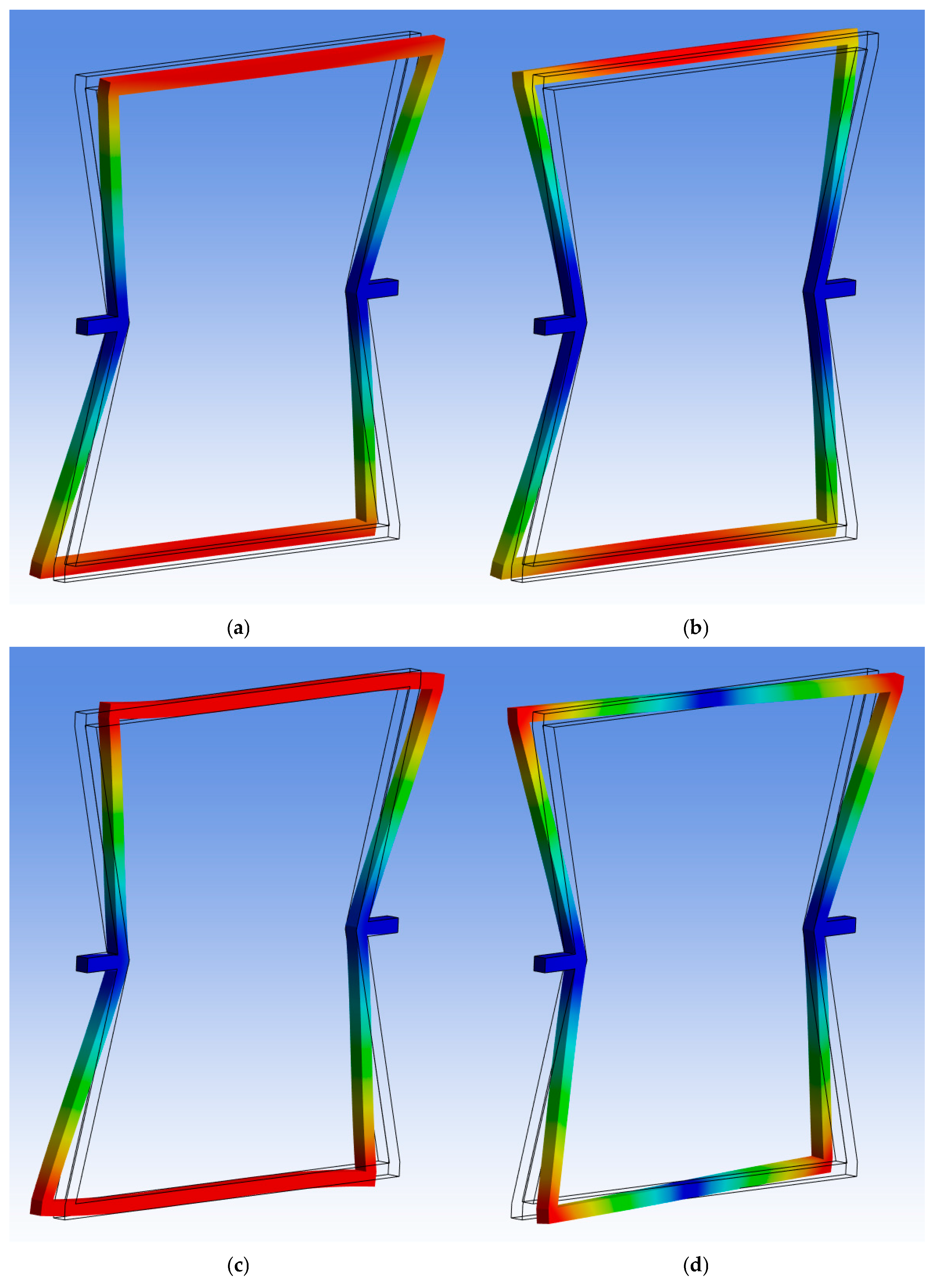
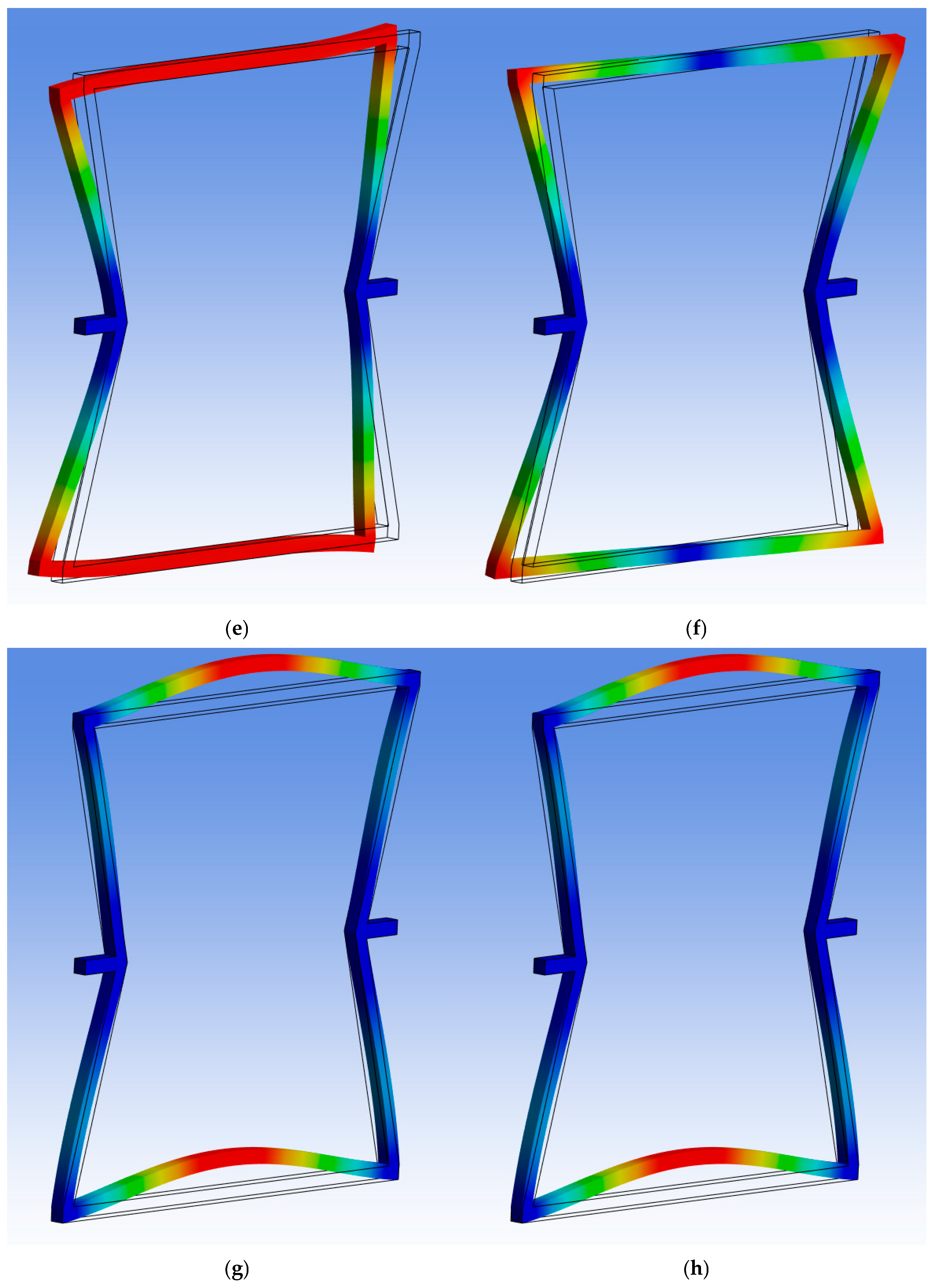
Each eigenvalue is associated with a certain mode shape that describes the deformation pattern of the structure at that frequency. The modal superposition technique—a fundamental method in structural dynamics that can be used to simplify and solve the equations of motion for complex structures—was employed to obtain mode shapes. Rather than solving the full dynamic system directly, this approach aims to transform the problem into a set of uncoupled, simpler single-degree-of-freedom systems using the natural modes of vibration of the system. This is possible as the natural mode shapes form an orthogonal basis, allowing the total dynamic response to be expressed as a sum (i.e., superposition) of individual modal contributions. In the case of Frame 12 × 12-150, the first eight natural frequencies were extracted, and their corresponding mode shapes are shown in
Figure 8.
The first eight mode shapes of the re-entrant frame model with 12 × 12 mm beam cross-sections and a main frame angle of 150° (Frame 12 × 12-150) reveal valuable insights into the dynamic behavior of the structure. These modes can be interpreted as follows.
The distinction between in-plane bending (Mode 1) and torsional modes (Mode 3) is critical for design. The high sensitivity of torsional modes to the frame angle suggests that hexagonal configurations provide superior resistance to twisting loads compared with straight frames, which is a key consideration for machines generating eccentric vibrations.
The mode shapes of the re-entrant frame model Frame 12 × 12-150 provide crucial insights into the dynamic behaviors of the structure across a broad frequency range. The first mode, occurring at 63.34 Hz, is characterized by a global lateral sway, where the entire frame bends side to side within its plane, showing significant displacement at the top and bottom members, whereas the mid-handle, being constrained by clamped boundary conditions, remains stationary. This low-frequency, highly flexible mode is particularly critical for dynamic responses under seismic or wind loads, and is sensitive to changes in frame geometry and stiffness. The second mode, at 101.34 Hz, demonstrates an out-of-plane bending motion, with the frame flapping forward and backward perpendicular to its initial plane. This mode indicates the frame’s out-of-plane flexibility, which is essential for understanding vulnerability to lateral–torsional buckling and dynamic blast loads. The third mode, at 107.30 Hz, transitions into a torsional deformation pattern where the frame twists about its vertical centroidal axis, with the top and bottom members rotating in opposite directions. This torsional response highlights potential vulnerabilities to asymmetric or rotational excitations, and necessitates careful attention in design to ensure torsional stiffness. The fourth mode, at 123.87 Hz, introduces a more complex bending pattern with multiple nodes and anti-nodes along the frame height, suggesting a higher-order flexural response that could lead to localized stress concentrations and fatigue under cyclic loading. As we move into higher modes, the fifth mode at 147.60 Hz shows coupled behavior combining bending and torsion, resulting in asymmetric deformation where the two sides of the frame move differently. This complex dynamic coupling becomes crucial under multi-directional or irregular loading conditions. The sixth mode, at 172.93 Hz, reflects localized bending predominantly within individual beams, where the upper and lower beams bend in opposite directions. This local mode is vital for identifying zones which are susceptible to local buckling or yielding under dynamic loads. In the high-frequency range, the seventh mode at 296.90 Hz is a high-order global flexural mode with multiple wave-like deformations, which is indicative of the behavior of the frame under high-frequency vibrations or impact loads. Finally, the eighth mode at 301.91 Hz portrays a highly localized and complex pattern involving both bending and twisting in confined sections of the frame, revealing the structure’s sensitivity to localized dynamic instabilities and manufacturing imperfections. Overall, the progression of the mode shapes from global, rigid-body-like deformations at lower frequencies to highly localized, complex patterns at higher frequencies underscores the importance of considering both global and local dynamic behaviors in frame design. Low-order modes affect serviceability and structural integrity under common dynamic loads, whereas higher-order modes are critical for fatigue resistance, local stress evaluation, and ensuring robustness against high-frequency excitations. Comprehensive understanding and interpretation of these mode shapes is essential for optimizing the frame’s design for dynamic performance, ensuring both global stability and local durability across the expected operational load spectrum. All mode shapes for all beam section dimensions and frame angles were investigated, and the same mode shapes were found to appear in the same order of mode number. Therefore, the general observations of mode shapes are as follows. Across all re-entrant frame models, the mode shapes consistently follow a clear progression from global to local deformation behaviors as the mode number increases. The first and second modes are dominated by global bending—with the first mode typically exhibiting in-plane lateral sway and the second mode showing out-of-plane bending—representing the most flexible, large-scale motions of the frame. These low-frequency modes are critical for assessing the overall stability and serviceability of frames under common dynamic loads such as wind or seismic excitations. The third mode generally introduces a torsional response, indicating the frames’ susceptibility to twisting motions about their vertical axis, which is an important factor in resisting asymmetric or eccentric dynamic loads. Higher-order modes, starting from the fourth mode onward, display increasingly complex deformation patterns, involving a combination of higher-order bending and torsion, as well as localized beam bending. These modes reveal the frames’ behaviors under more demanding dynamic conditions, with local deformations, stress concentrations, and potential failure zones becoming more pronounced. The highest modes exhibit highly localized distortions with multiple nodes and antinodes, suggesting vulnerability to high-frequency vibrations, impacts, or fatigue-inducing loads. Overall, all re-entrant frames share a dynamic behavior where lower modes govern the global motion and dynamic response, whereas higher modes expose the frames’ local flexibility and critical areas for structural refinement. Understanding this general modal behavior is essential to ensure both global dynamic stability and local durability across various operating conditions when designing re-entrant frame structures.
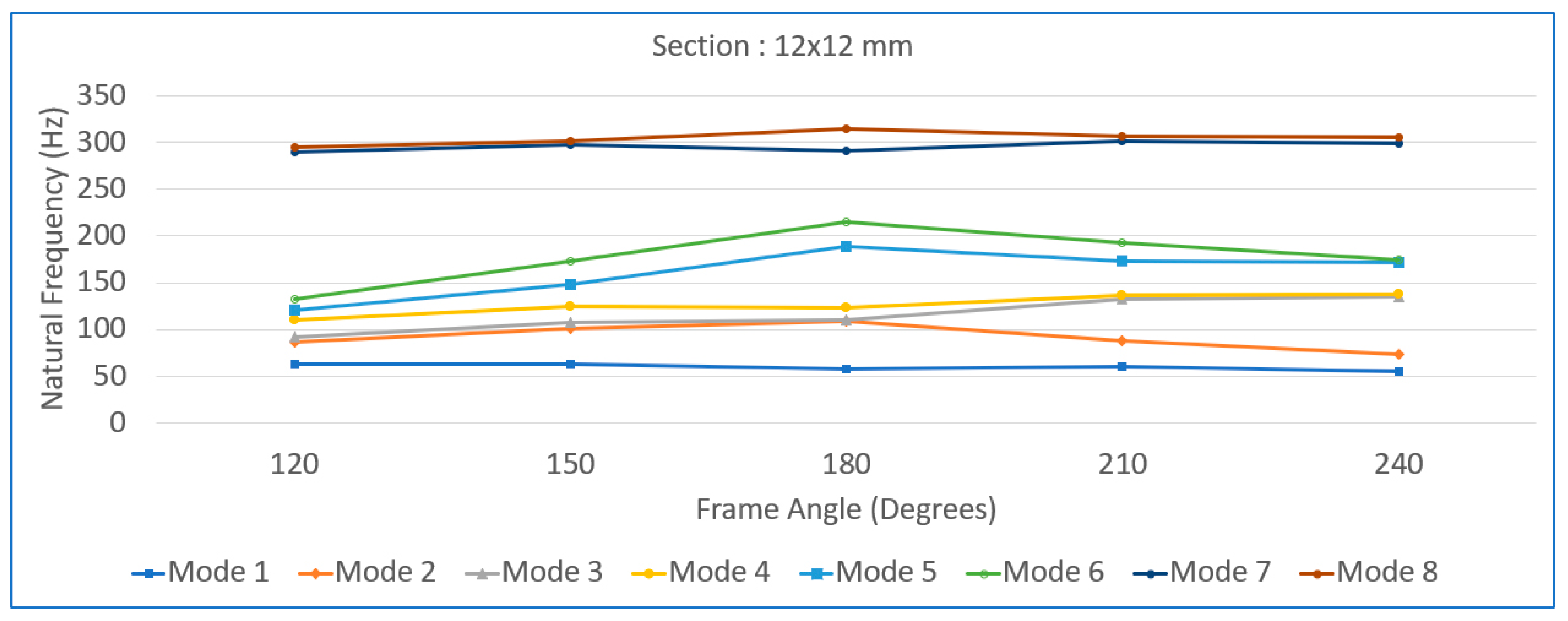
In
Figure 9,
Figure 10,
Figure 11 and
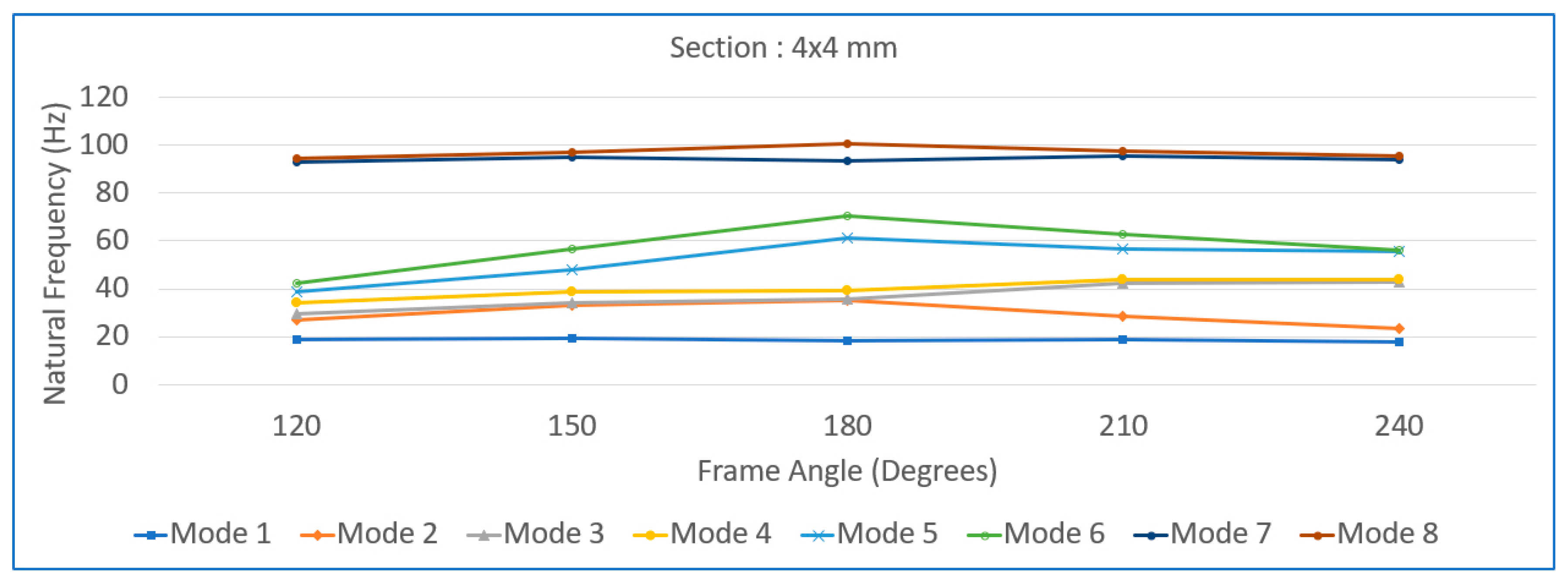
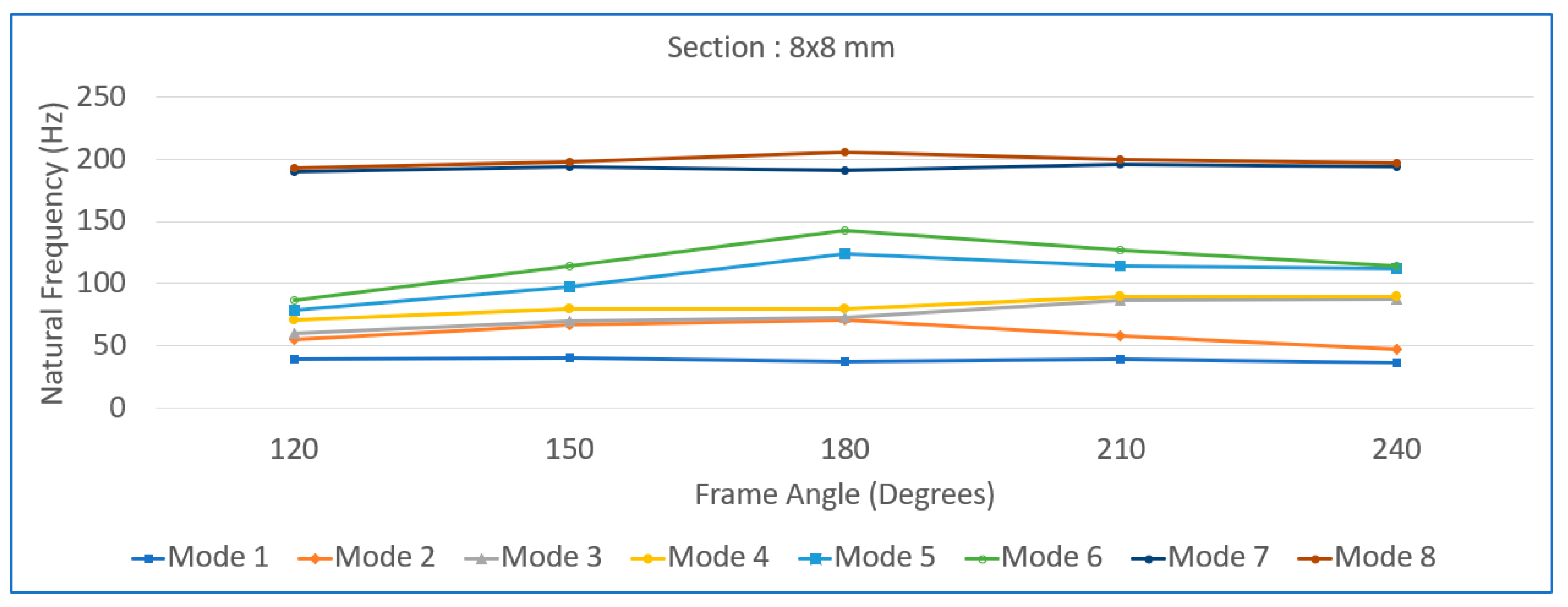
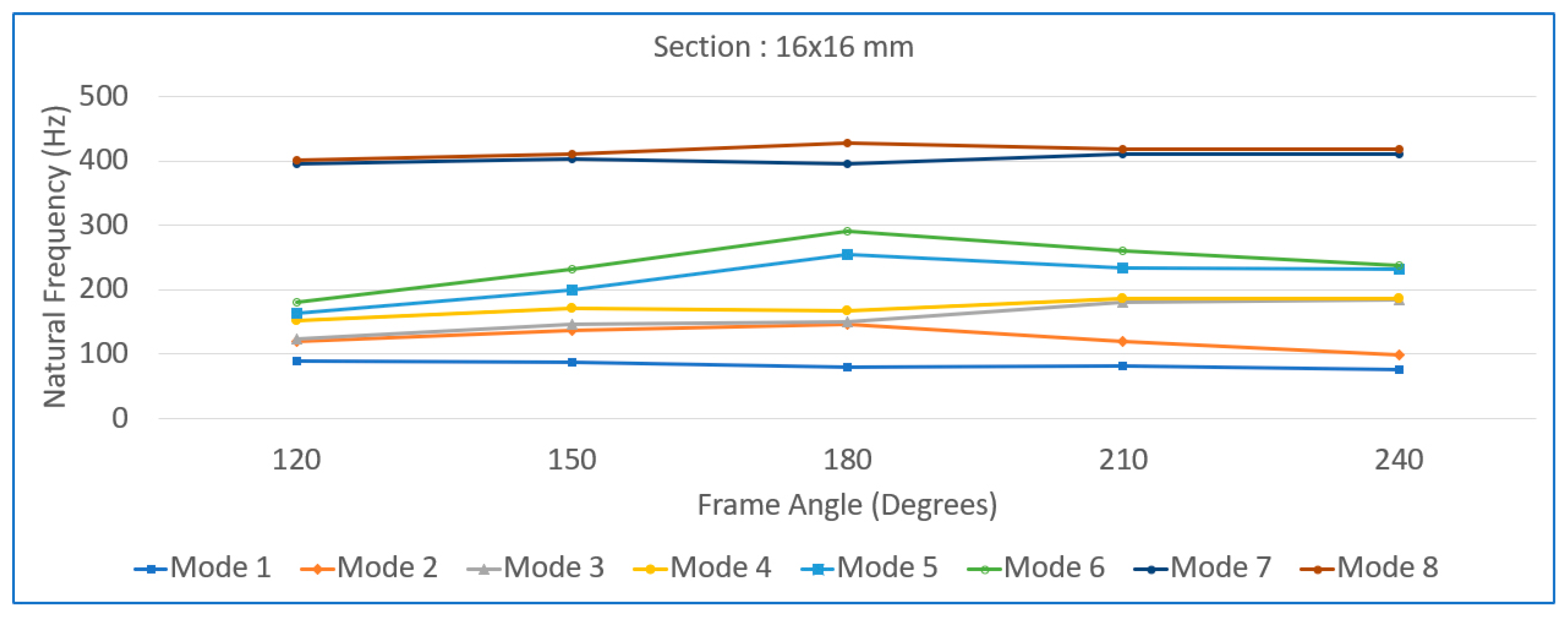
Figure 12, the variations in the natural frequency with respect to the frame angle are shown for the 4 × 4 mm, 8 × 8 mm, 12 × 12 mm and 16 × 16 mm full square cross-section frames. Each graph shows how the first eight natural frequencies change as the frame angle increases from 120° to 240°, highlighting the significant influence of both the geometric configuration and cross-sectional dimensions on the dynamic behavior of the frame structure.
In
Figure 9, corresponding to the smallest cross-section (4 × 4 mm), the frames exhibit the lowest natural frequencies across all the modes, indicating the highest flexibility. A clear trend is visible: the natural frequencies decrease as the frame angle approaches 180°, where the structure transitions to a straight configuration, and then increase again as the angle extends beyond 180° into the hexagonal range. This behavior reflects the frame becoming most pliable in the straight configuration and regaining stiffness as it moves toward the hexagonal form. In
Figure 10, while a similar trend can be observed for the 8 × 8 mm cross-section, the natural frequencies are higher due to increased stiffness. Moreover, the variations in the higher modes (especially Modes 5 to 8) are larger, suggesting that these modes are more sensitive to geometric changes.
Figure 11, which represents the 12 × 12 mm cross-section, shows further increases in frequency; however, the decrease near 180° is less pronounced, indicating that this structure maintains greater stiffness even in its most pliable configuration. The mode separation also becomes clearer, with higher modes remaining relatively elevated across all angles. Finally, in
Figure 12, for the largest cross-section of 16 × 16 mm, the frames exhibit the highest overall natural frequencies and the variation with respect to the frame angle becomes minimal. The dip near 180° is barely noticeable, suggesting that the structure has become dynamically robust, less sensitive to geometric changes, and highly resistant to dynamic instabilities and resonance phenomena. Overall, as the cross-sectional size increases, the natural frequencies rise significantly and the influence of the frame angle on dynamic behavior diminishes. The re-entrant frames (angles less than 180°) tended to be stiffer than the hexagonal frames (angles greater than 180°) with the same cross-section. These trends collectively highlight that increasing the cross-sectional dimension not only enhances global stiffness but also stabilizes the dynamic response across varying geometrical configurations, making the frames more resilient under different loading and vibration conditions. The combined effect of the frame’s geometry (angle) and cross-sectional dimensions plays a critical role in determining the dynamic characteristics of re-entrant frames. These observations have important implications for the practical design and optimization of re-entrant frame structures. The clear relationship between cross-sectional size and dynamic stability suggests that selecting larger beam cross-sections significantly enhances both the natural frequencies of the frames and their robustness to dynamic loads. Therefore, designers aiming for vibration-resistant structures should prioritize increasing the cross-sectional dimensions to not only increase the global stiffness but also to minimize the sensitivity of the structure to geometrical variations such as changes in the frame angle. Particularly for applications involving variable loading directions or environments where dynamic excitations are prevalent—such as machine foundations, aerospace structures, or vibration isolation systems—employing thicker cross-sections can effectively mitigate risks such as resonance and fatigue. Furthermore, since the frames are most flexible near the 180° straight configuration, careful consideration should be given to operating conditions or structural deployments that approach this geometry. Reinforcements or hybrid designs combining increased cross-sectional size with strategic bracing may be warranted in such cases. Ultimately, the combination of optimal frame angle selection and an appropriately chosen beam cross-section offers a powerful means to tailor the dynamic performance of re-entrant structures, ensuring their durability and operational reliability across a wide range of applications.
Although the positive correlation between cross-sectional dimensions and natural frequency is a fundamental mechanical principle, the novel contribution of this study lies in quantifying the non-linear interaction effect between the beam thickness and the frame angle.
Figure 13,
Figure 14,
Figure 15,
Figure 16 and
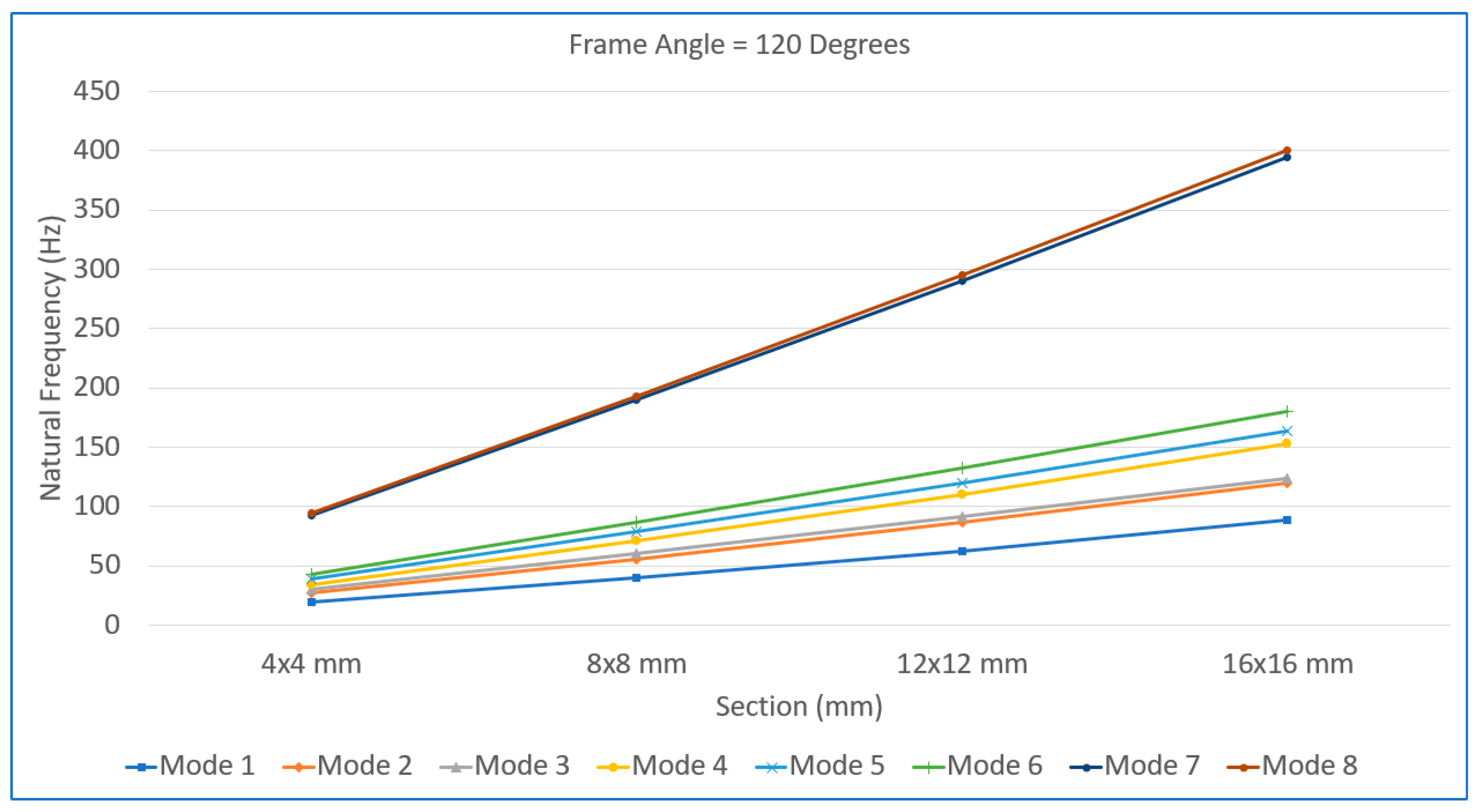
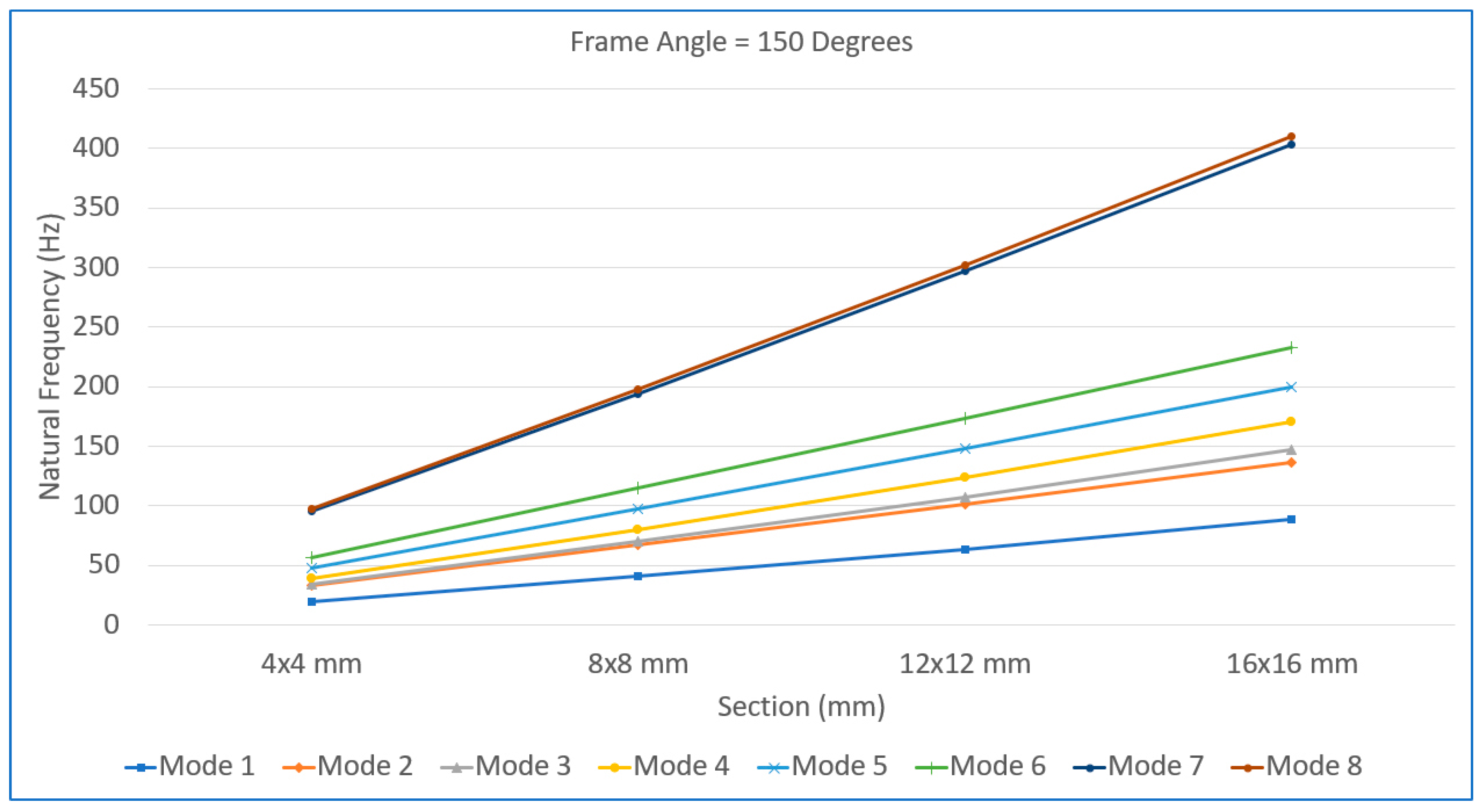
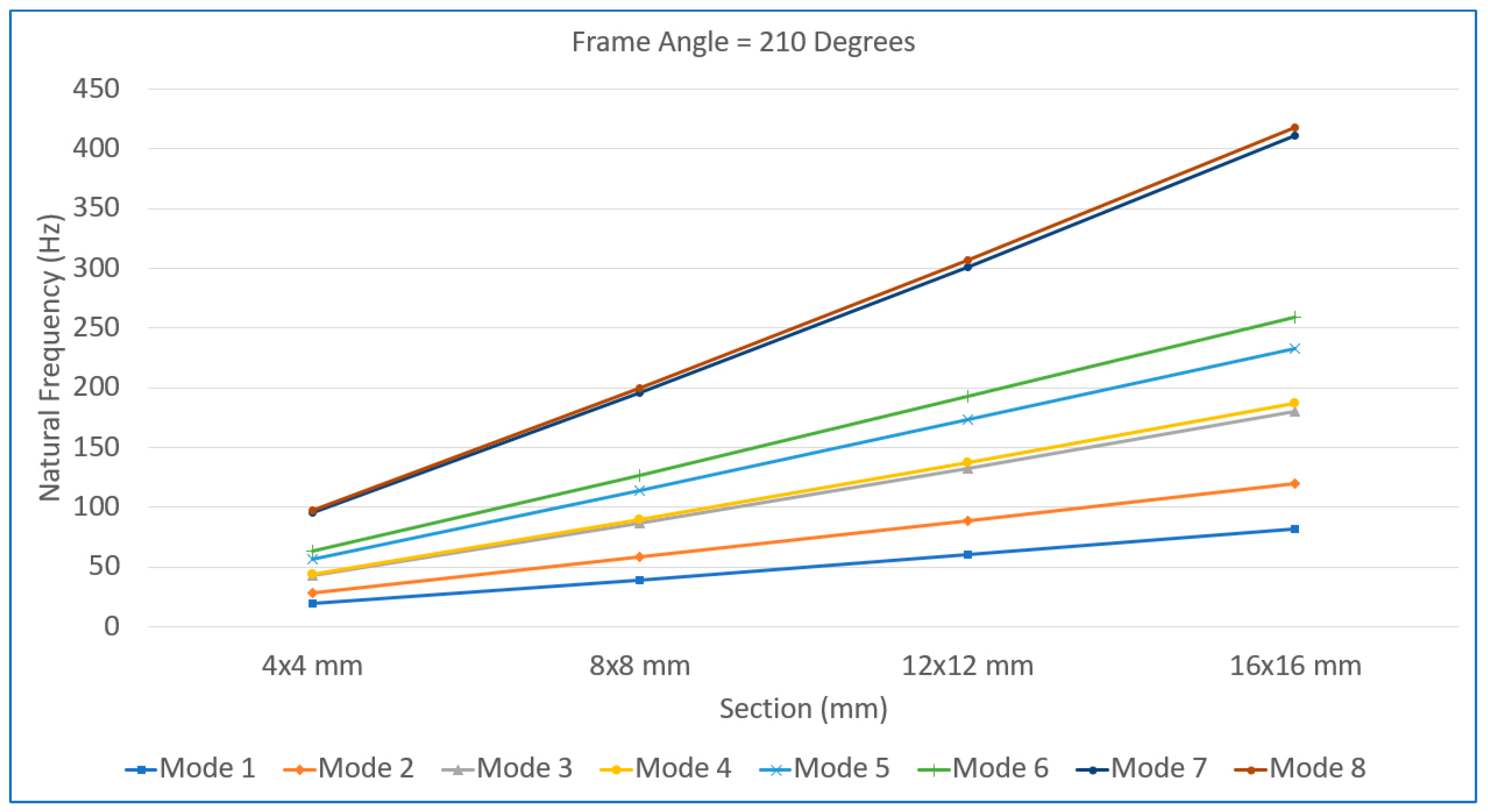
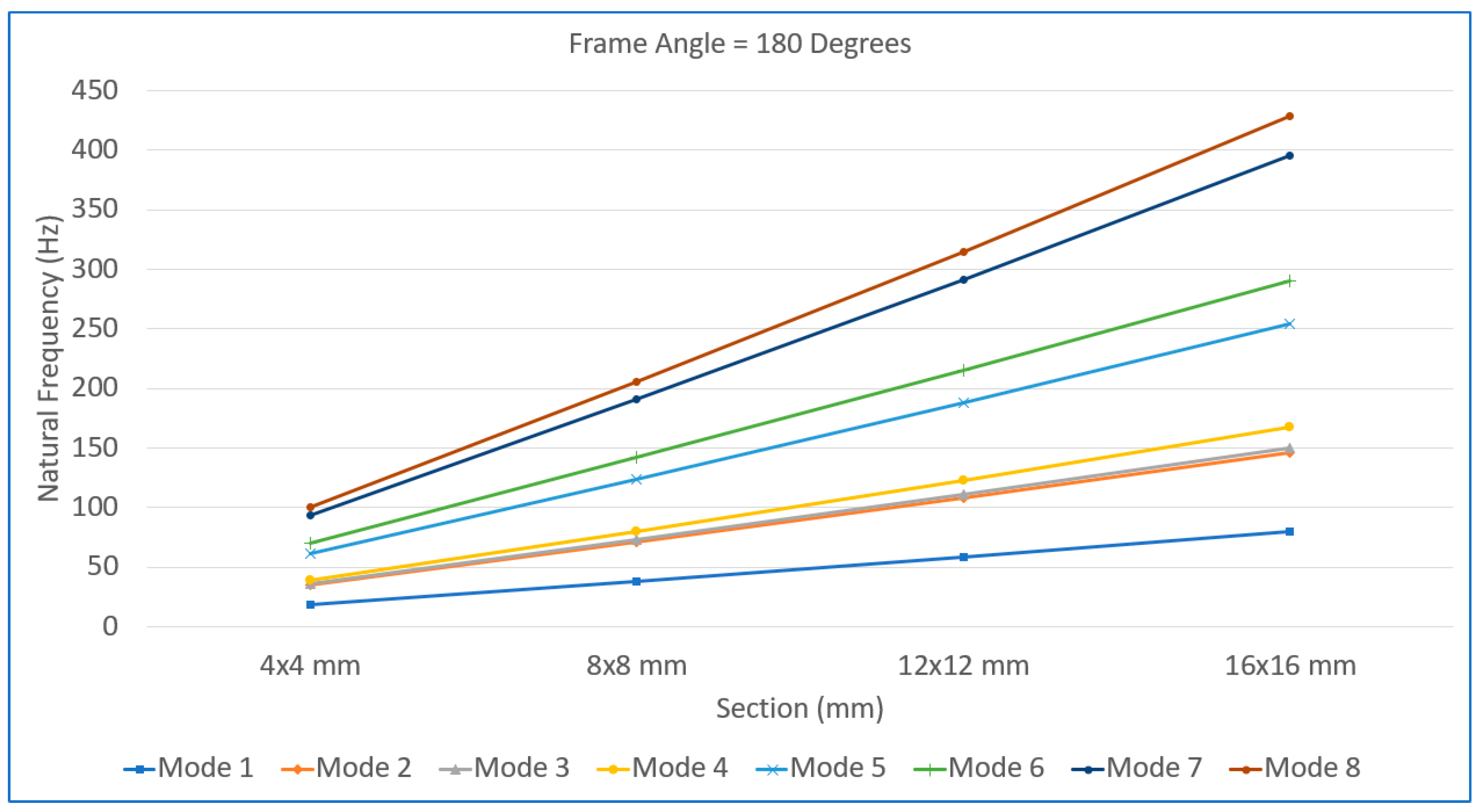
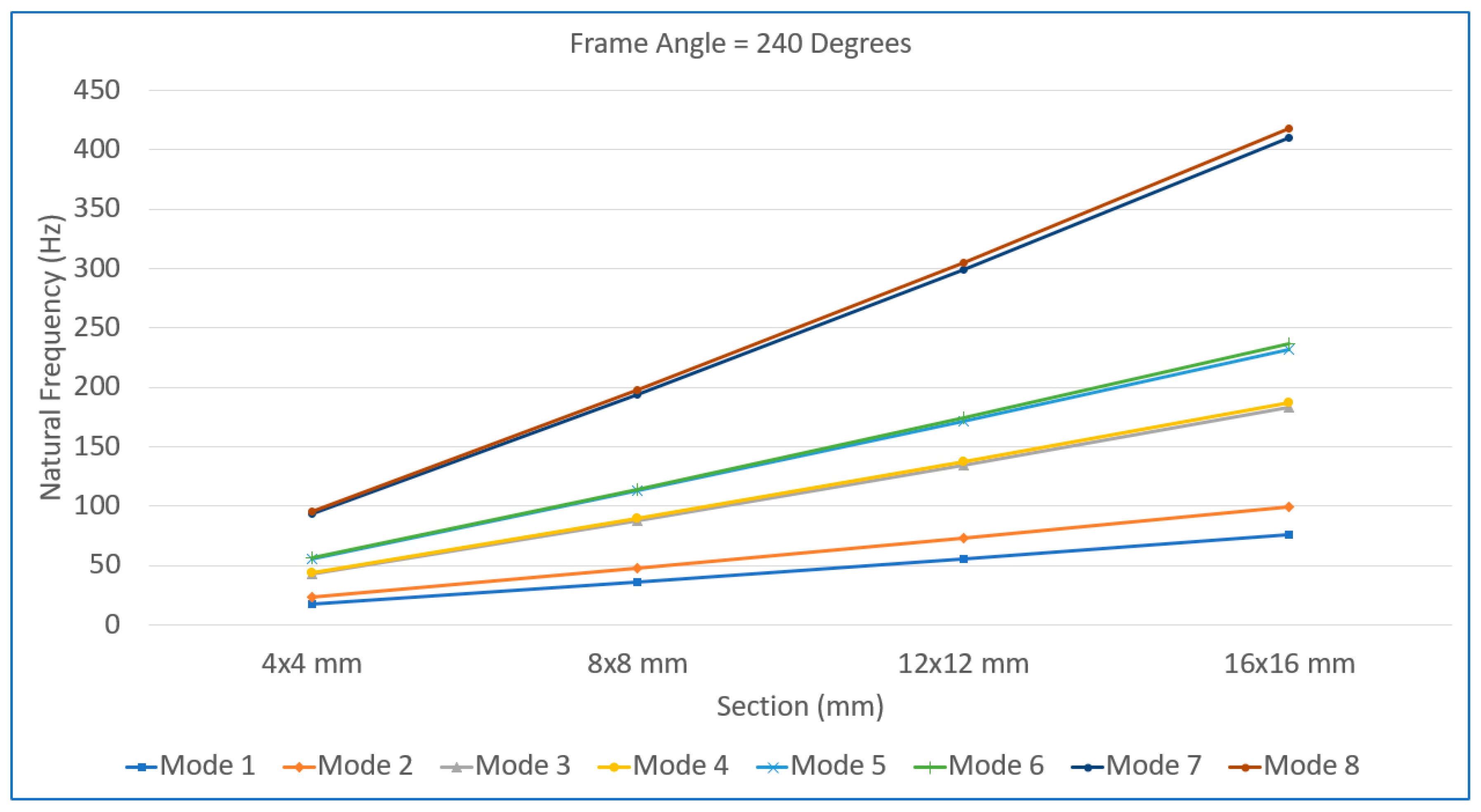
Figure 17 present the variations in the first eight natural frequencies of the re-entrant frame models as a function of the beam cross-sectional dimensions for different frame angles—120°, 150°, 180°, 210°, and 240°—and, as evidenced by the differing slopes in
Figure 13,
Figure 14,
Figure 15,
Figure 16 and
Figure 17, the rate of stiffness gain is not uniform across all geometries. Specifically, hexagonal configurations exhibit a higher sensitivity to cross-sectional expansion compared with the straight frame, demonstrating diminishing returns. This indicates that geometric convexity acts as a multiplier for material reinforcement. The proposed quadratic regression model captures this specific coupling, providing a design insight that goes beyond simple scaling laws and allows for the optimization of the ‘geometry–material’ pair.
For the 120° frame (
Figure 13), a sharp increase in natural frequency is observed with increasing cross-section, particularly from 4 × 4 mm to 8 × 8 mm, reflecting the inherently flexible nature of the re-entrant geometry and the significant benefit gained from modest increases in beam thickness. Similarly, the 150° frame (
Figure 14) demonstrates a steady rise in frequency with increasing cross-section, although the slope is slightly less steep than that of the 120° frame, suggesting a moderate initial stiffness and a balanced improvement across all modes as the beams thicken. The straight frame at 180° (
Figure 15) has the lowest natural frequency for a given cross-section, with a more modest increase in frequency as the beam dimensions increase, highlighting the geometric disadvantage of the straight configuration regarding dynamic performance; even with thicker beams, the stiffness gain remains limited compared with that of other configurations. For the hexagonal configurations, the 210° frame (
Figure 16) shows higher initial frequencies and a more pronounced increase with cross-sectional growth, especially for higher modes, indicating that the favorable geometry synergizes with material enhancements to achieve better dynamic stiffness. The 240° frame (
Figure 17) exhibits the highest natural frequency overall, with strong and consistent gains as the cross-section increases, demonstrating the excellent dynamic performance that results from the combination of a wide hexagonal geometry and increased material volume. Overall, the general trend across all frame angles is that while natural frequencies rise significantly with increasing cross-sectional size, the rate and extent of improvement are highly dependent on the frame angle. Re-entrant frames (120° and 150°) show rapid initial stiffness gains, straight frames (180°) lag in dynamic performance, and hexagonal frames (210° and 240°) benefit most consistently, achieving high natural frequencies across all modes. Additionally, higher-order modes (Modes 5–8) are more sensitive to cross-sectional changes, especially in stiffer hexagonal configurations. These results emphasize the critical roles of both the cross-sectional dimension and frame geometry in optimizing the dynamic characteristics of re-entrant structures for various engineering applications.
The results shown in
Figure 13,
Figure 14,
Figure 15,
Figure 16 and
Figure 17 suggest clear strategies for optimizing the design of re-entrant frame structures to enhance their dynamic performance. To achieve higher natural frequencies and improved resistance to dynamic excitations, increasing the cross-sectional dimensions of the beams is recommended, as this consistently resulted in significant gains in stiffness and vibrational resistance across all frame angles. However, the choice of frame geometry plays an equally crucial role: while re-entrant frames with angles such as 120° and 150° benefit from initial rapid stiffness gains with increasing beam size, their dynamic performance remains inherently limited compared with that of hexagonal configurations. In contrast, frames with larger angles, such as 210° and 240°, not only start with higher base stiffness due to their favorable geometry but also respond more effectively to cross-sectional enhancements, achieving superior dynamic stability across all modes. The straight frame (180°), on the other hand, consistently exhibited the lowest natural frequencies and demonstrated limited improvements even with larger cross-sections, indicating that it should be avoided in applications where dynamic performance is critical. Additionally, as higher-order modes are more sensitive to cross-sectional increases, designs aiming to control or suppress higher-frequency resonances—such as those exposed to impact loads or machine-induced vibrations—can be expected to particularly benefit from thicker beam sections. Therefore, for optimal vibrational performance, a combination of selecting a hexagonal frame geometry and maximizing the beam cross-sectional dimensions is recommended, which can ensure both global stiffness and local durability in dynamically demanding environments.
Next, a quadratic polynomial surface regression analysis was conducted on the modal results of all the models (
Table 1), and a function
was obtained using a custom quadratic polynomial surface regression program written in MATLAB R2025b, allowing for calculation of the natural frequency at a given cross-sectional dimension and main frame angle. A quadratic polynomial surface was selected as the relationship between the natural frequency and the frame angle was found to exhibit a parabolic non-linear trend (U-shape), which cannot be captured by linear models. The quadratic polynomial surface regression analysis conducted in this study is an effective curve-fitting technique for modeling the relationship between natural frequencies (f) and two independent variables: the cross-sectional dimension (b) and the main frame angle (α). By applying this method to the modal data from all structural models listed in
Table 1, a comprehensive mathematical representation of how natural frequencies vary across different geometric configurations was developed. The main function is as follows:
where the input and output variables are as follows:
α: main frame angle (degrees);
b: beam cross-sectional dimension (mm; e.g., b is equal to 12 for the 12 × 12 beams);
f: natural frequency (Hz).
The data for each mode (Modes 1 through 8) were substituted into the model, and the polynomial equation was fitted to the data points using least squares estimation, thereby minimizing the overall error between the model results and the actual data. The result is a unique set of six polynomial coefficients (
p values) for each mode, which are provided in
Table 2. These coefficients define the influence of each variable and their interactions:
p00: constant base value;
p10 and p01: linear influences of the dimension and angle, respectively;
p20, p02, p11: second-degree interactions (non-linear curvature).
Physically, the positive coefficients for the linear terms (p10 and p01) indicate that increasing the cross-sectional dimension generally enhances stiffness more than it adds mass, leading to higher natural frequencies. The negative interaction terms reflect the non-linear geometric softening observed with specific angle configurations.
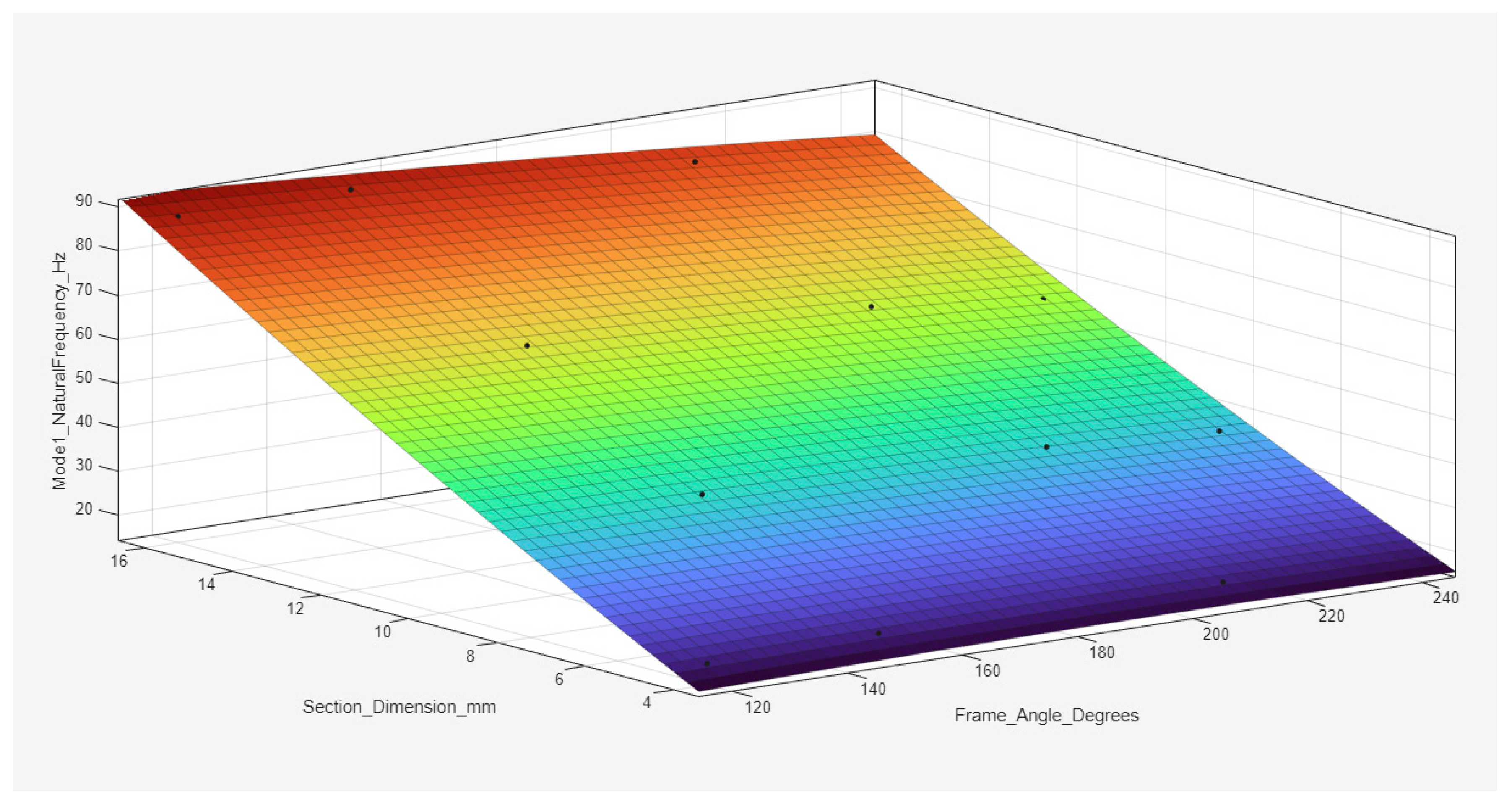
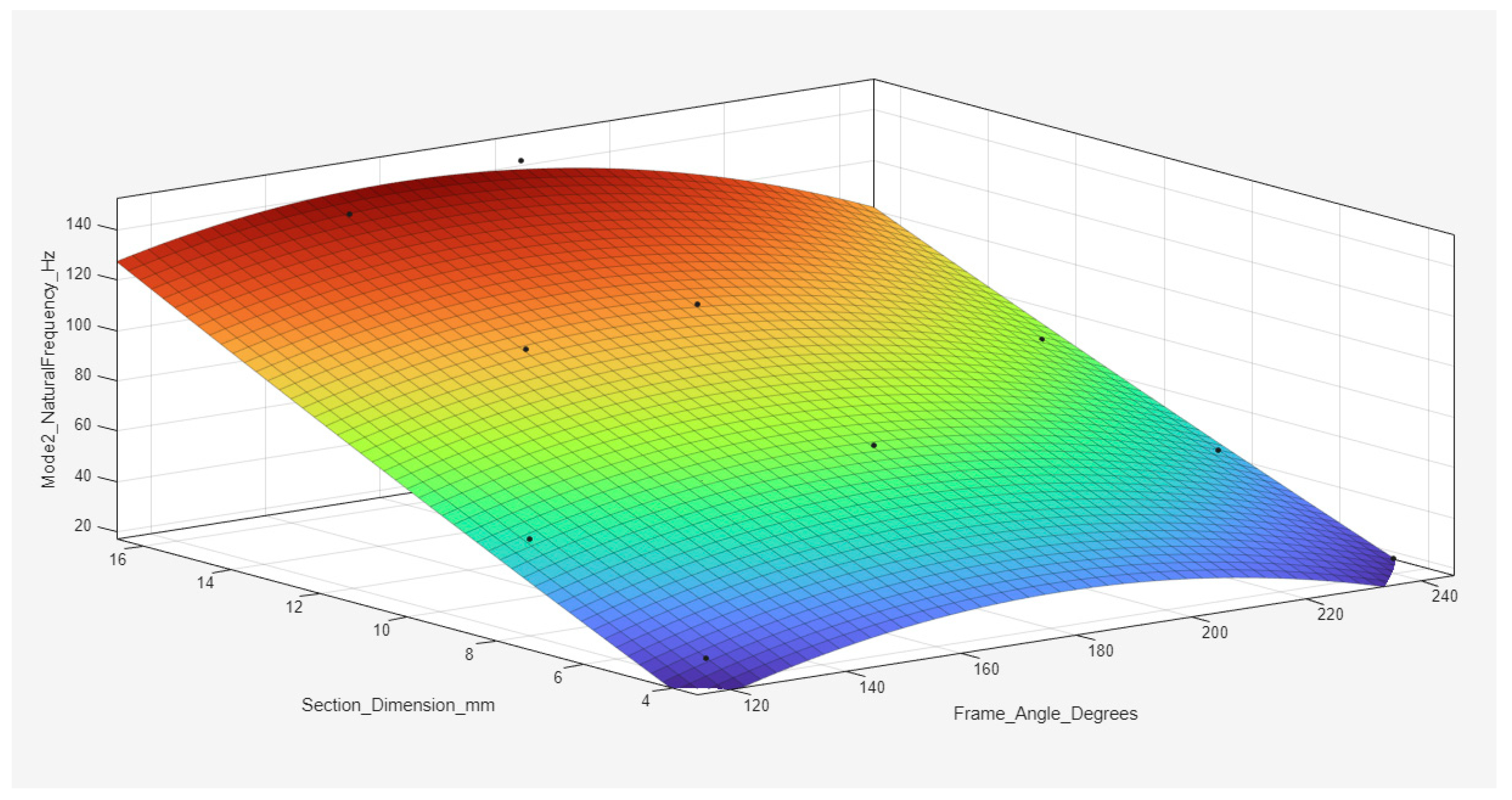
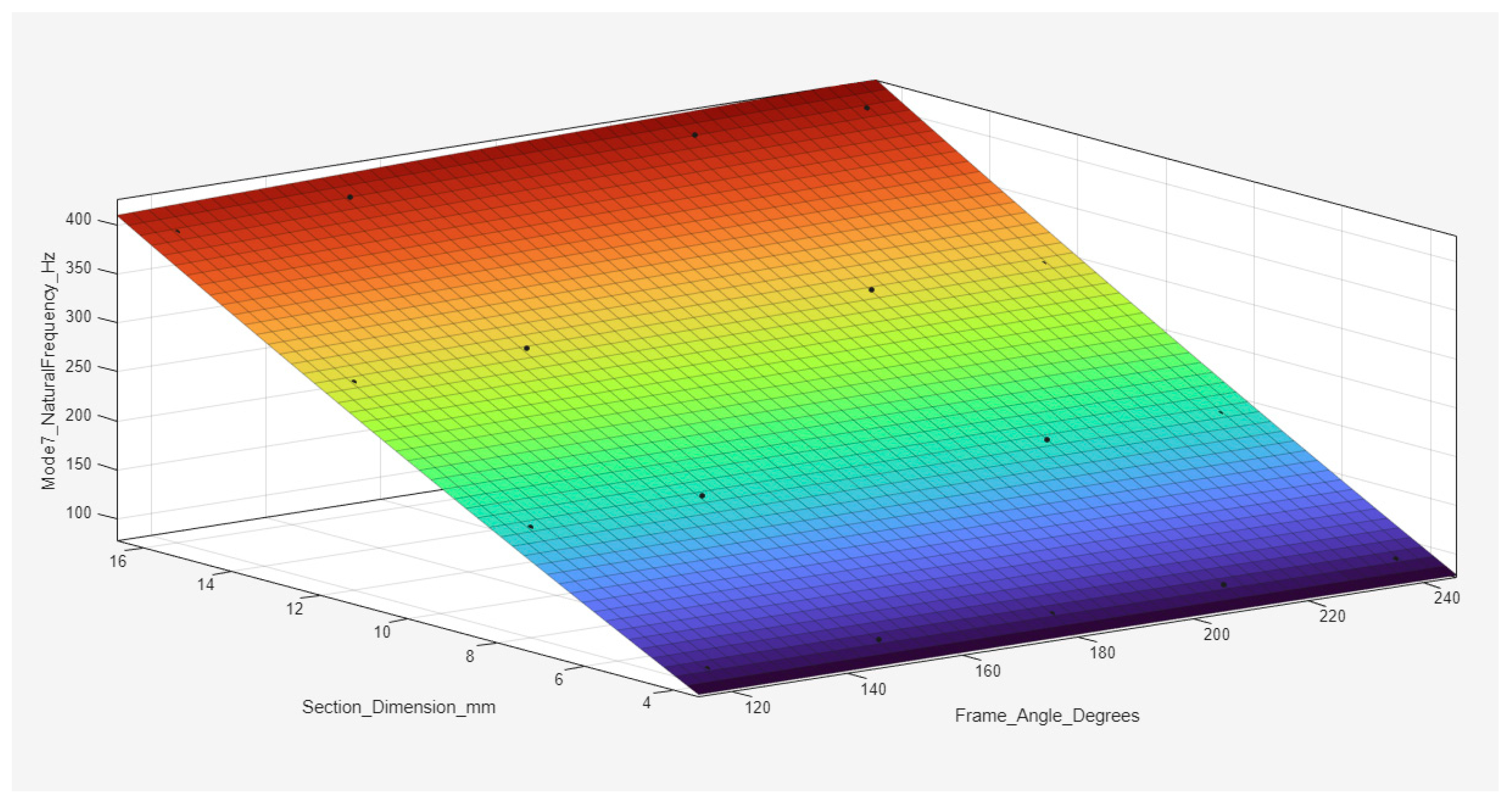
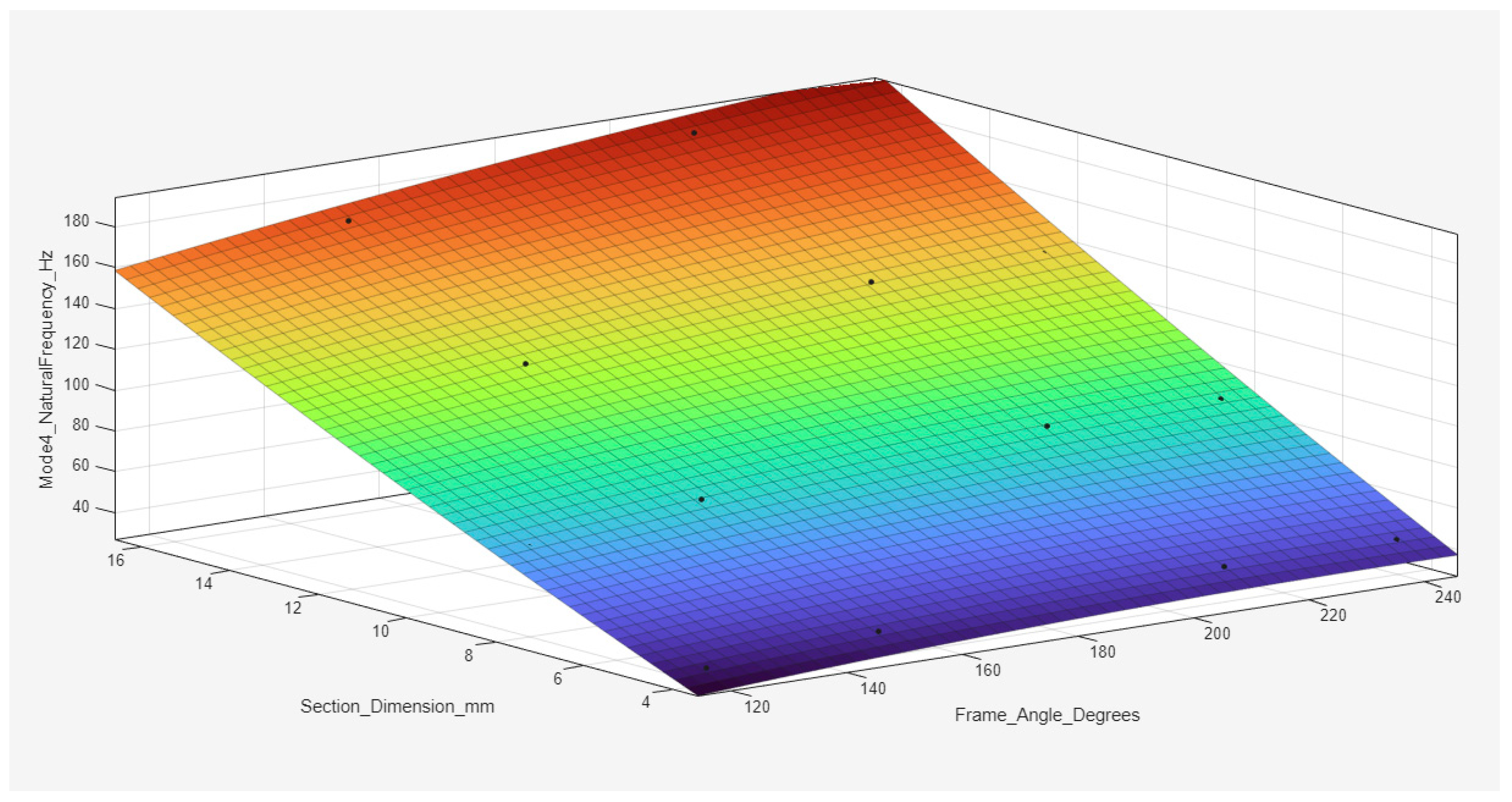
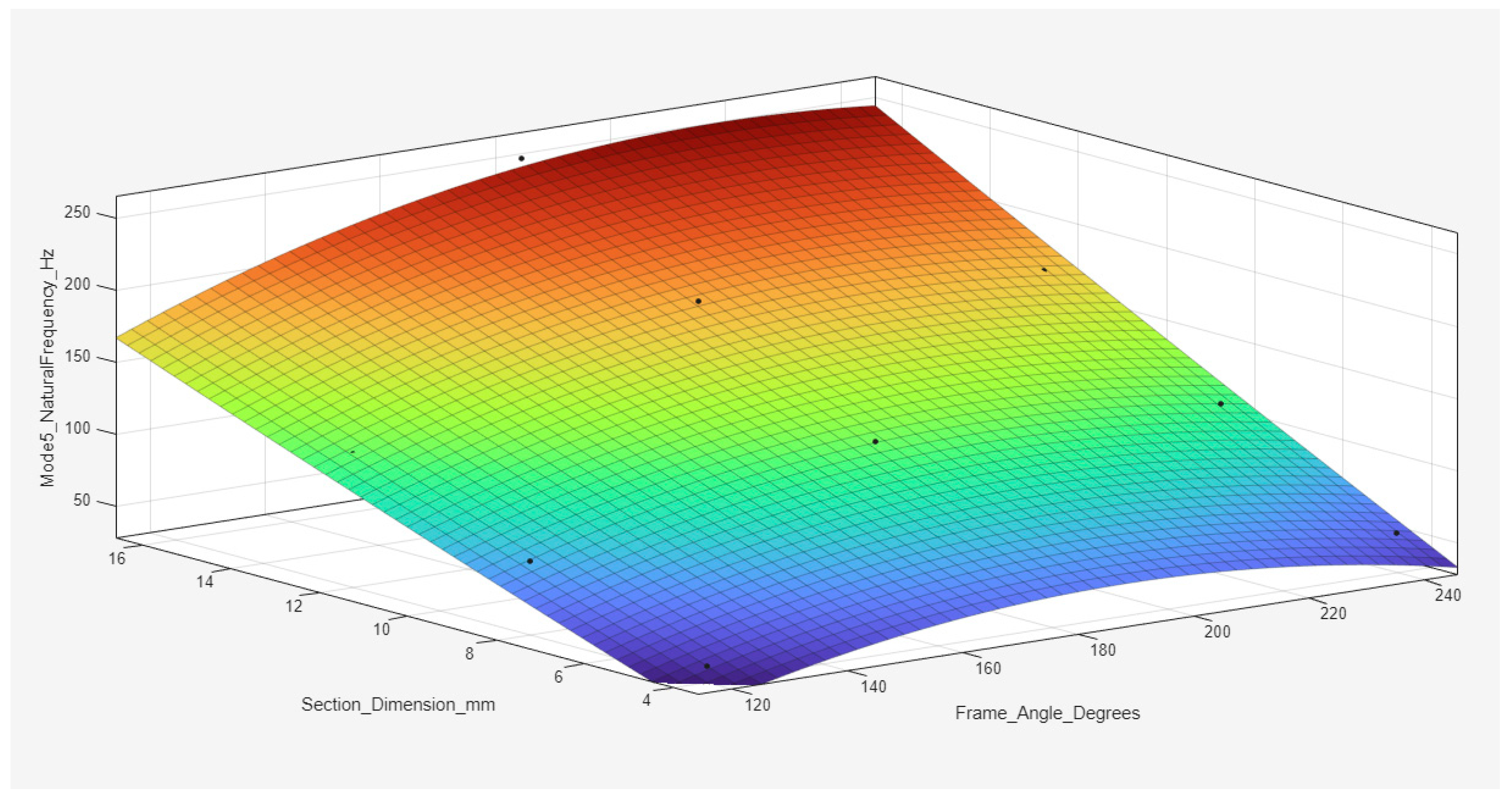
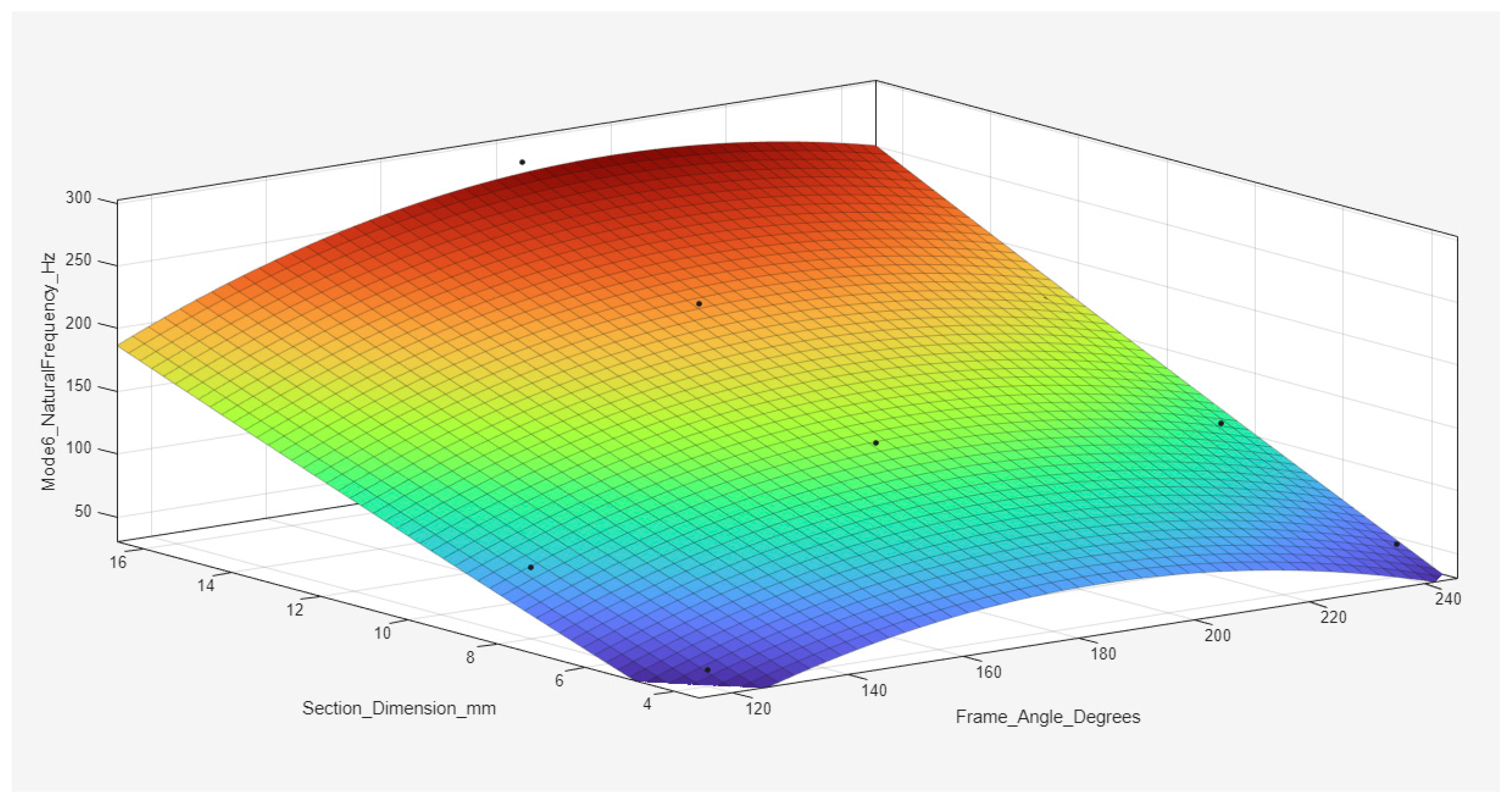
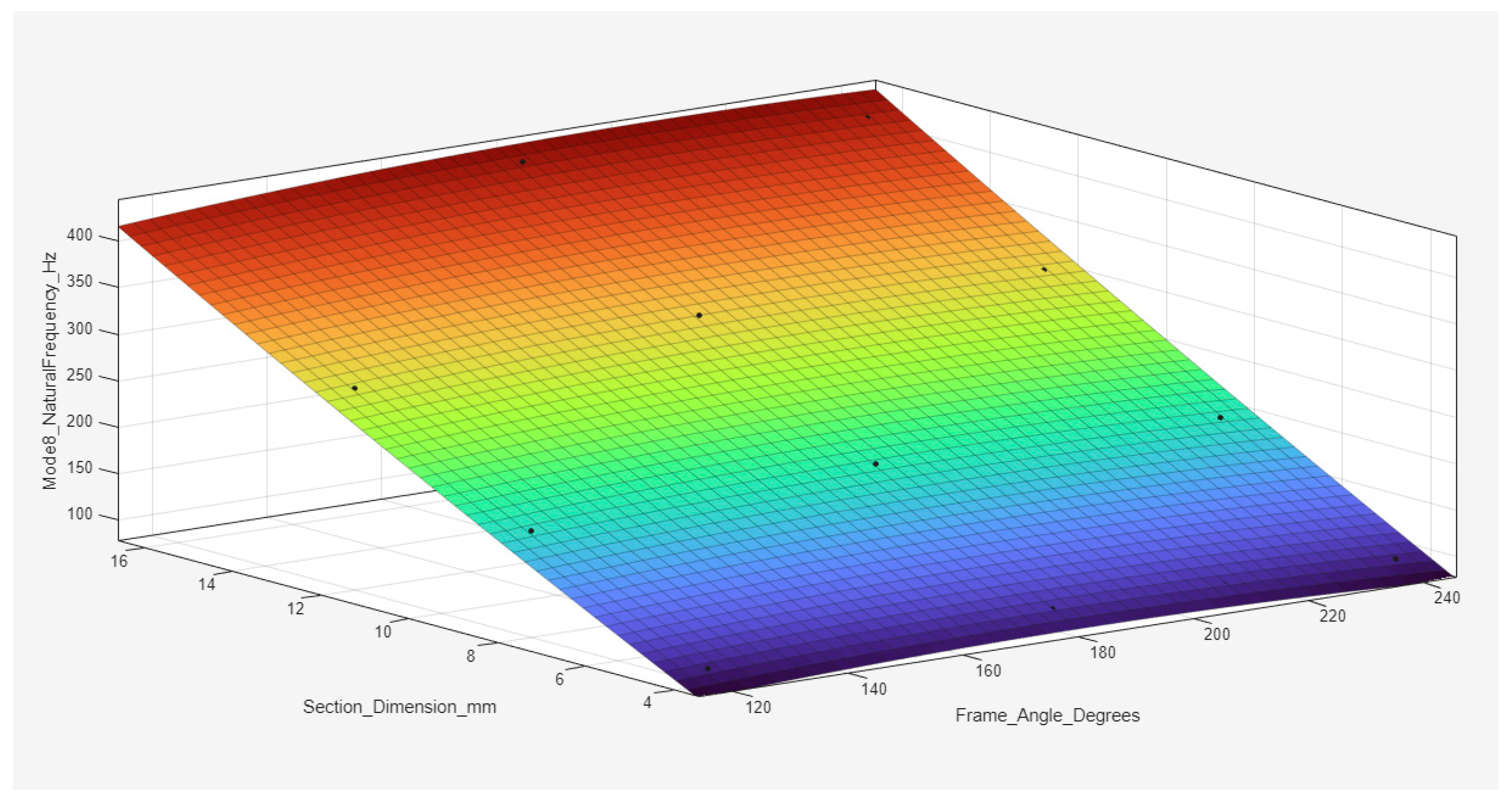
Figure 18,
Figure 19,
Figure 20,
Figure 21,
Figure 22,
Figure 23,
Figure 24 and
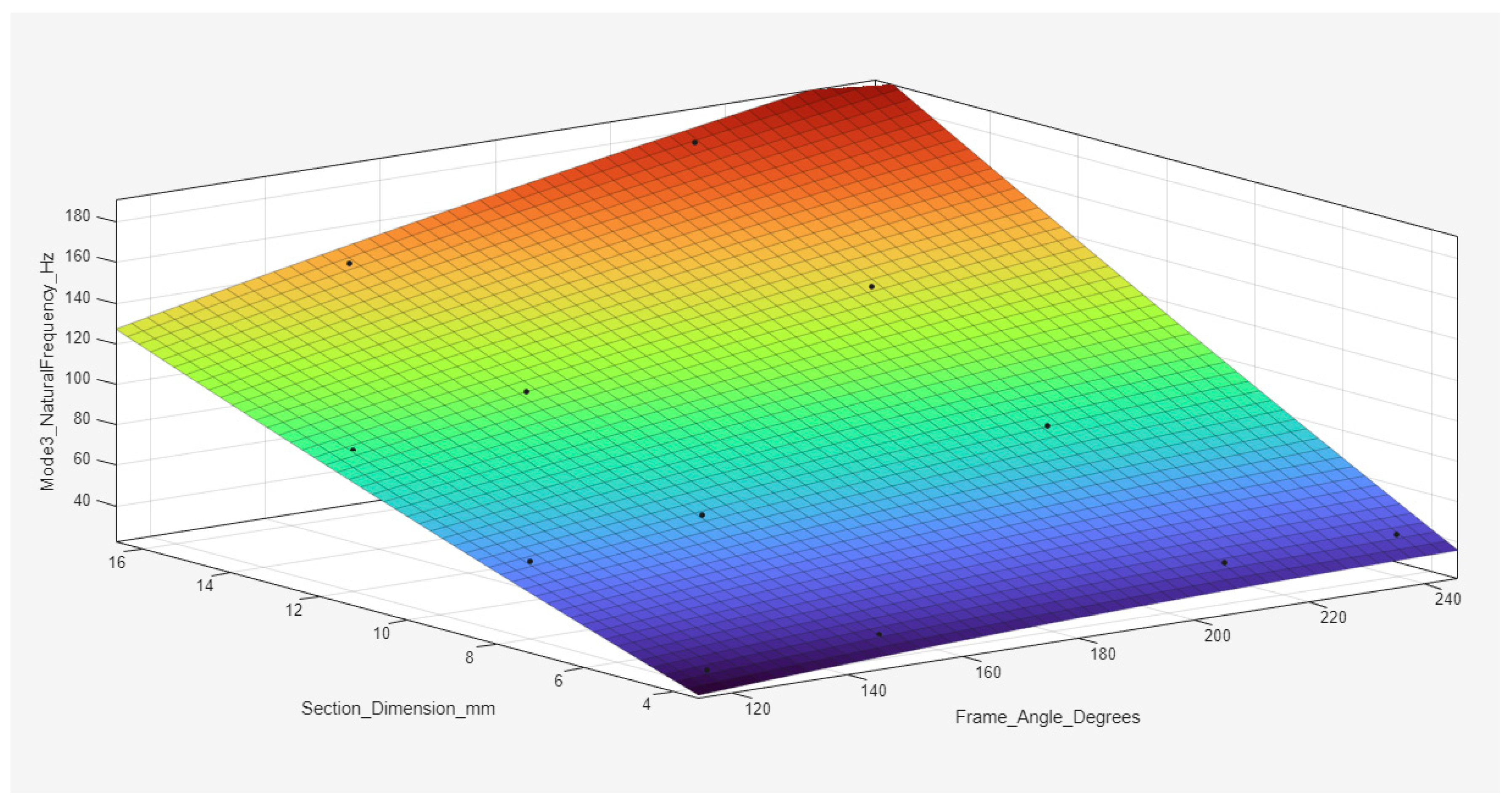
Figure 25 present the results of the quadratic polynomial surface regression analysis applied to the natural frequencies of the first eight vibration modes of the considered re-entrant frame structures, providing a comprehensive visualization of how the natural frequencies vary with respect to beam cross-sectional dimensions and main frame angles. In each figure, a smooth 3D surface is shown, which accurately fits the modal data: all R
2 values were above 0.98, indicating excellent predictive capability.
Figure 18, corresponding to Mode 1, shows a steady increase in the natural frequency with increasing cross-sectional dimension and a distinct minimum at approximately 180°, highlighting the reduced stiffness in the straight frame configuration.
Figure 19, for Mode 2, exhibits a similar trend but with steeper gradients, demonstrating the greater sensitivity of higher modes to geometry and cross-sectional size. As seen in
Figure 20 for Mode 3, which likely includes torsional effects, the frequency surface steepens further, indicating stronger interactions between the cross-section and frame angle.
Figure 21, representing Mode 4, continues to reflect the characteristic drop in frequency near 180°, with increased frequency gains toward more re-entrant and hexagonal configurations. In
Figure 22, for Mode 5, the interaction between geometry and size becomes more complex, producing a pronounced curvature in the surface and emphasizing the need for a balanced design to avoid frequency dips.
Figure 23,
Figure 24 and
Figure 25, covering Modes 6 to 8, show progressively higher natural frequencies and steeper surfaces, with a clear trend of frequency saturation at larger beam sizes, especially for the highest modes. These figures confirm that, while increasing the beam cross-sectional size significantly enhances the natural frequency, the frame angle remains a critical design parameter, with hexagonal configurations (angles greater than 180°) offering superior dynamic performance. The consistent minimum frequency at approximately 180° underscores the inherent flexibility of the straight frame geometry, whereas the highest frequencies are achieved through the combination of thick beam cross-sections and hexagonal angles. Although hexagonal frames generally showed superior stiffness, it can be observed from
Table 1 that for lower modes and thinner cross-sections, the 180° straight frame exhibited slightly higher natural frequencies. This suggests that the geometric benefits of the hexagonal shape are most pronounced at higher modes and larger cross-sections.
The results of the quadratic polynomial surface regression analysis offer valuable insights for the practical design and optimization of re-entrant frame structures. By providing a reliable and accurate predictive model for natural frequencies based on beam cross-sectional dimensions and frame angles, the regression surfaces enable designers to quickly assess the dynamic behaviors of different configurations without the need for time-consuming finite element simulations. This approach is particularly useful in the preliminary design phase, where rapid evaluations are crucial for narrowing down optimal design choices. Designers aiming to achieve higher natural frequencies should prioritize larger cross-sectional dimensions, as these dimensions were found to consistently lead to significant increases in stiffness and vibrational resistance. Additionally, selecting frame angles in the hexagonal range (greater than 180°) further enhances the dynamic performance, whereas configurations near 180° should be approached with caution due to their inherent flexibility and lower natural frequencies. The regression model also supports inverse design strategies, allowing engineers to define target frequency ranges and back-calculate the required geometric parameters. Overall, the integration of this regression tool into the design process can significantly streamline structural optimization, ensuring better control over dynamic characteristics and ultimately leading to the development of more robust and vibration-resistant re-entrant frame structures.
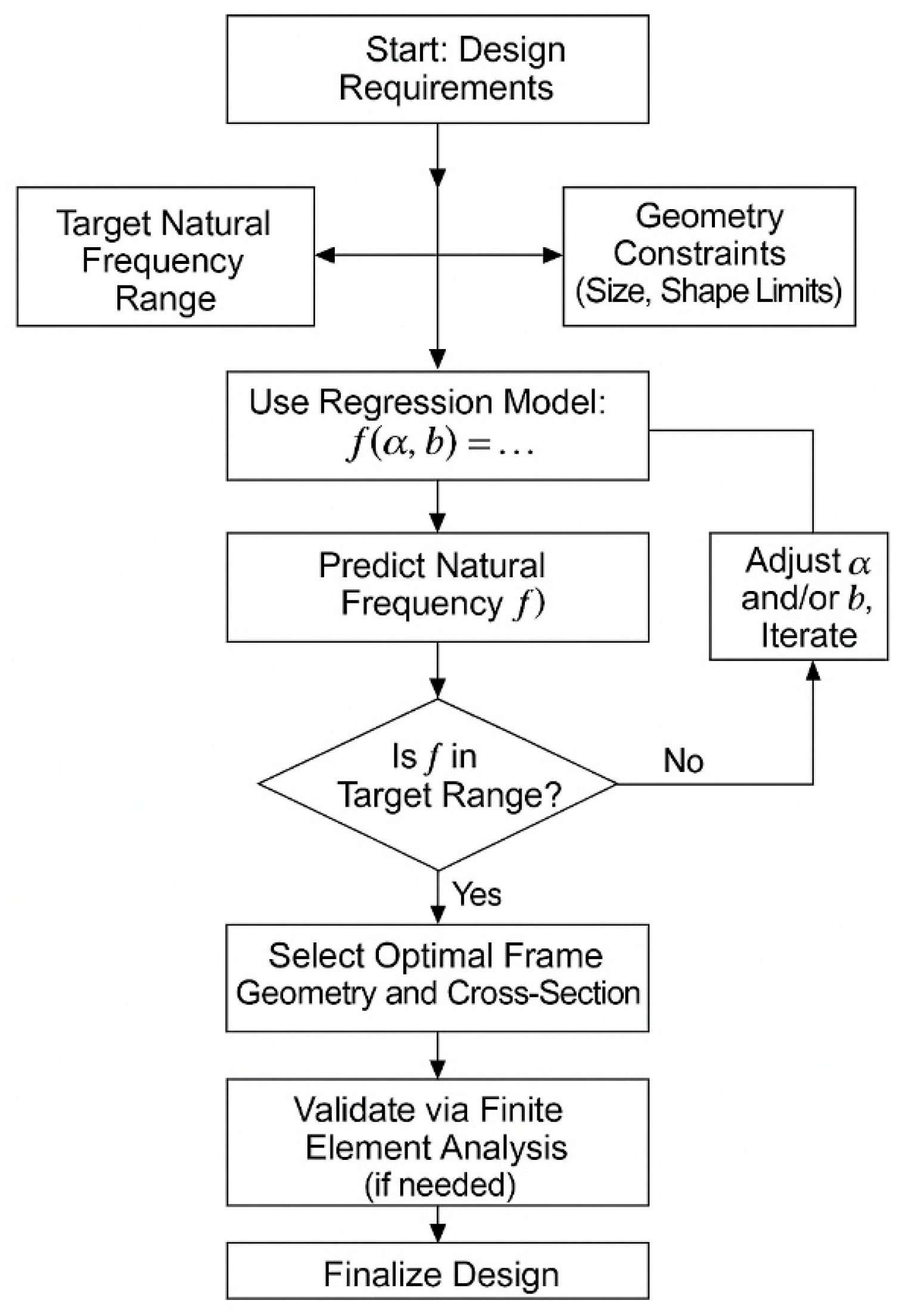
Figure 26 provides a workflow diagram for the regression-based re-entrant frame design process.
4. Experimental Modal Analyses
Experimental modal analysis (EMA) is an effective instrument for describing, understanding, and modeling a structure’s dynamic behaviors. It can determine a structure’s natural frequencies, as well as their mode shapes, and helps to verify the accuracy of and calibrate finite element models. Scaled modal models require precise force measurements. These can be obtained using electrodynamic and servohydraulic exciters controlled by a signal generator via a power amplifier. A more convenient and economical excitation method is a hammer fitted with a high-quality piezoelectric force transducer. In applications where a high crest factor and a limited ability to shape the input force spectrum are of no concern, impact hammer testing is an ideal source of excitation. Impact hammers are highly portable for field work and provide no unwanted mass loading to the structure during testing.
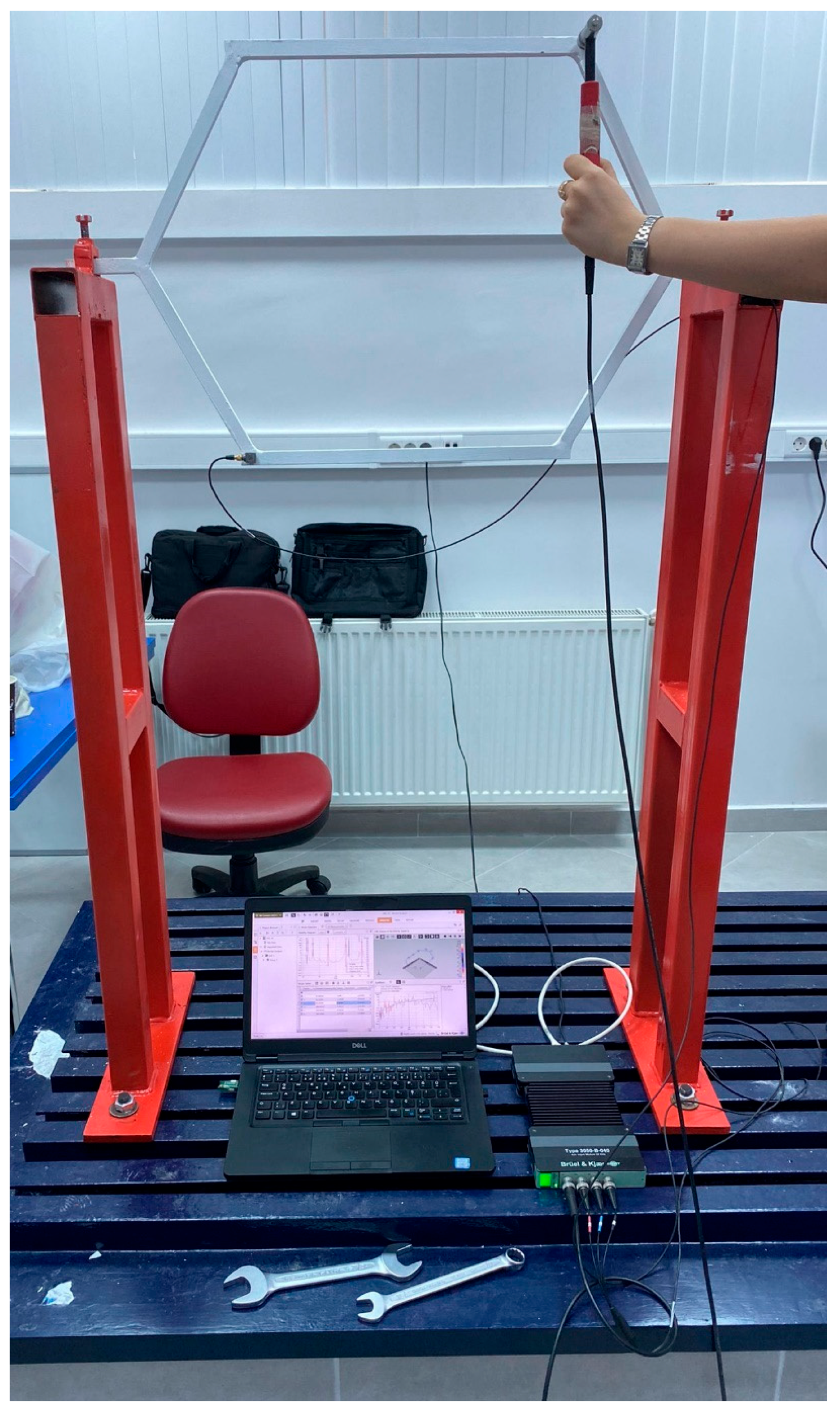
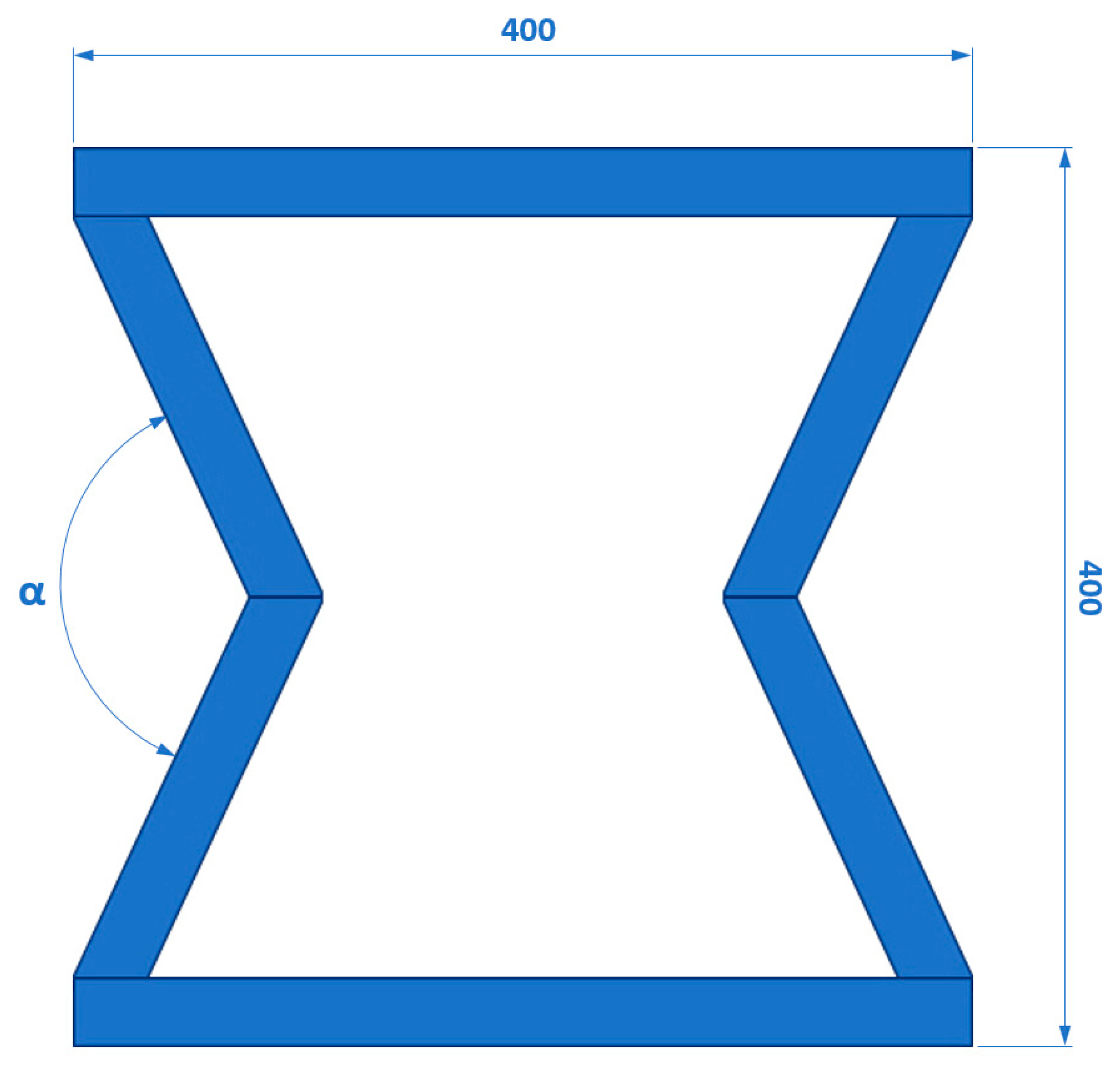
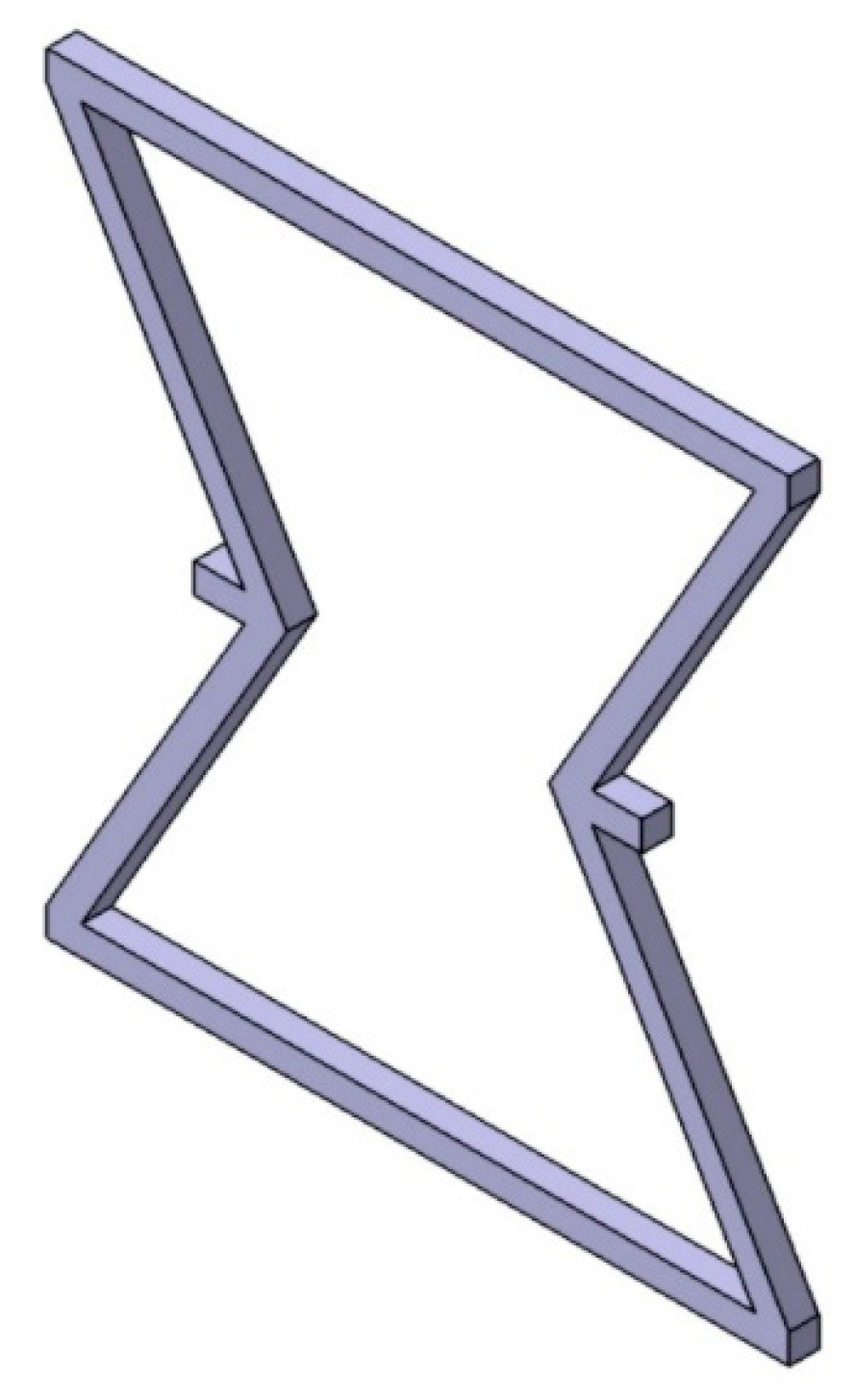
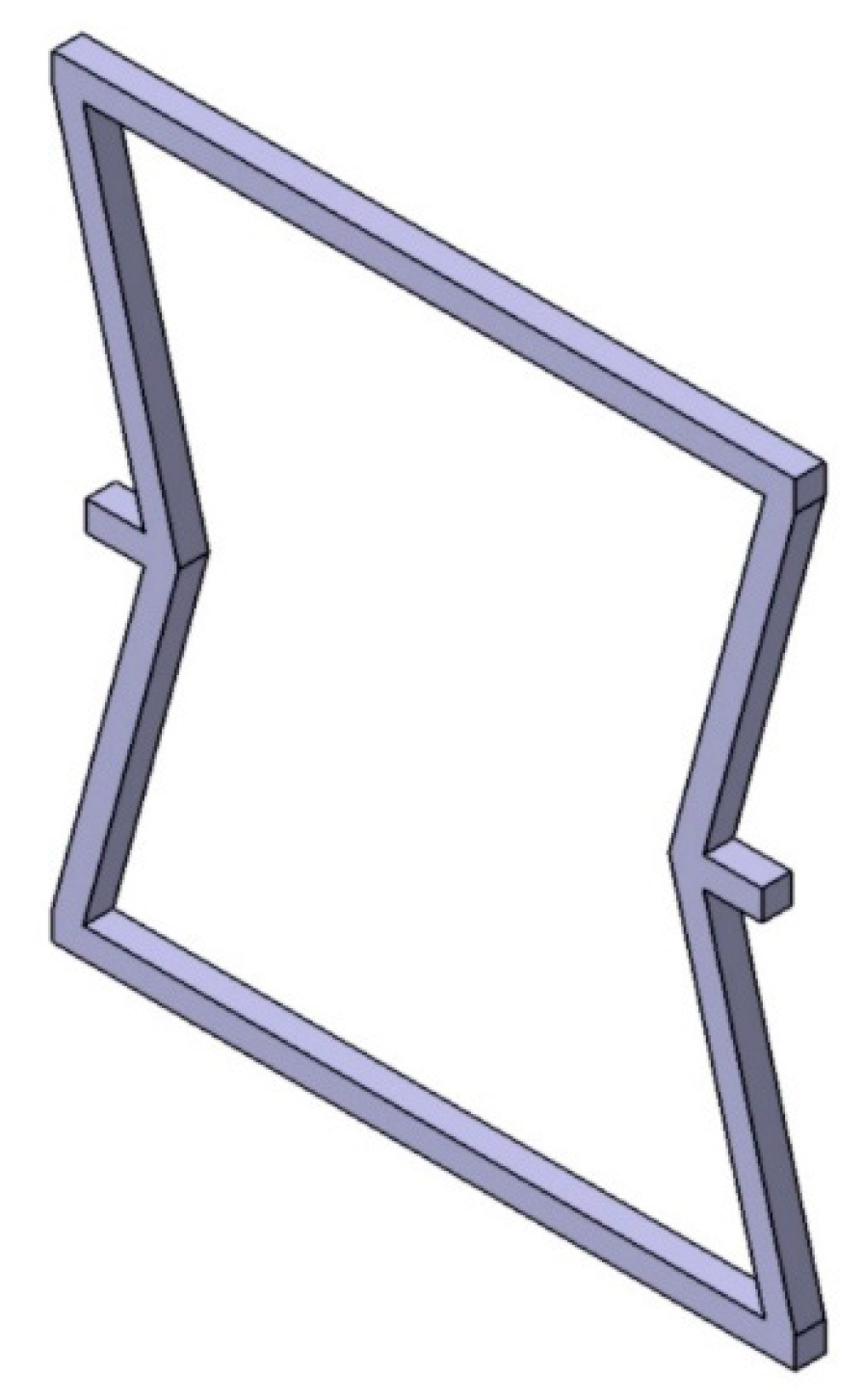
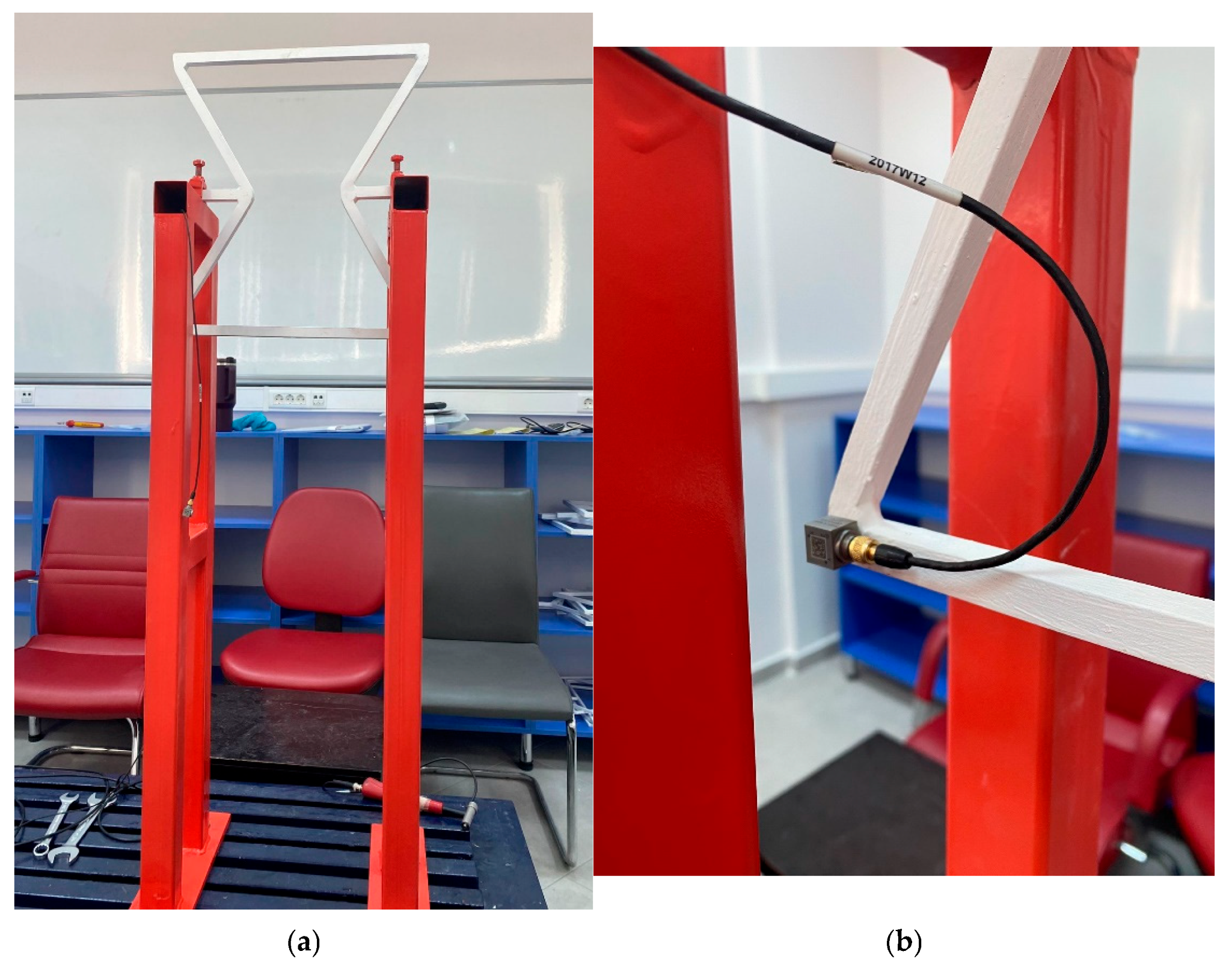
For the experiments, twenty distinct frame models, incorporating four cross-sectional sizes (4 × 4 mm, 8 × 8 mm, 12 × 12 mm, and 16 × 16 mm) and five main frame angles (120°, 150°, 180°, 210°, and 240°), were manufactured from a structural steel material. These models had the same dimensions as those used in the finite element analyses. Two steel red supporting towers were constructed for the clamped support of the test pieces, and these towers were clamped to the test stand. An example (16 × 16 mm; 120°) of a re-entrant test piece mounted on the experimental platform and the location of the sensor (accelerometer) on the test piece are shown in
Figure 27.
The roving sensor (accelerometer) test method was selected as the experimental modal analysis technique. To implement this technique, the impact hammer was applied to a fixed point over the mesh on the structure, and the accelerometer was located at each mesh point (nodal point) on the structure for every hammer hit. The impact forces from the hammer and the responses from the accelerometer were collected using a data recorder and analyzer (B&K PULSE LAN-XI Data Acquisition Hardware and the Modal Test Consultant Software). An image of the data recorder and analysis system connected to the computer running during the experiment is shown in
Figure 28. Then, using these data, the frequency response functions (FRFs) were obtained. Using modal analysis software (B&K Connect 2019) and the FRFs obtained from the recorder, we calculated the natural frequencies and mode shapes of the structures. The impact hammer (B&K Endevco 2302-10) had a sensitivity of 2.27 mV/N, a head mass of 100 g, and an aluminum impact tip with a diameter of 6.4 mm. A miniature piezoelectric triaxial CCLD accelerometer (B&K TYPE 4535-B-001) with a sensitivity of 98 mV/g was used for data collection, which had a frequency range of 0.3–10,000 Hz and a weight of 6 g. The system’s sampling frequency was 2048 Hz. To minimize environmental noise, the test setup was mounted on a heavy, isolated table. The test pieces were secured to the supporting towers using bolts tightened with a calibrated torque wrench to ensure consistent clamped boundary conditions across all tests.
For each model (test piece), the following steps were conducted in the experiments:
The model was selected (out of a total of 20);
The distance between the towers was adjusted to insert the test piece;
The test piece was inserted;
The bolts on the top of the towers were tightened such that the test piece was clamped.
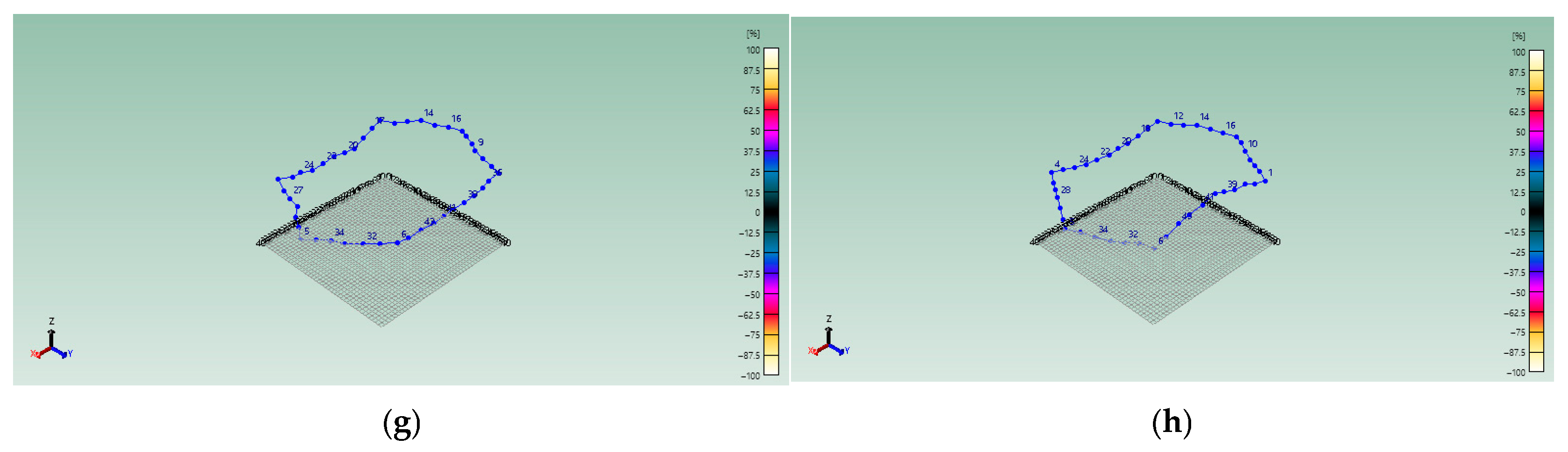
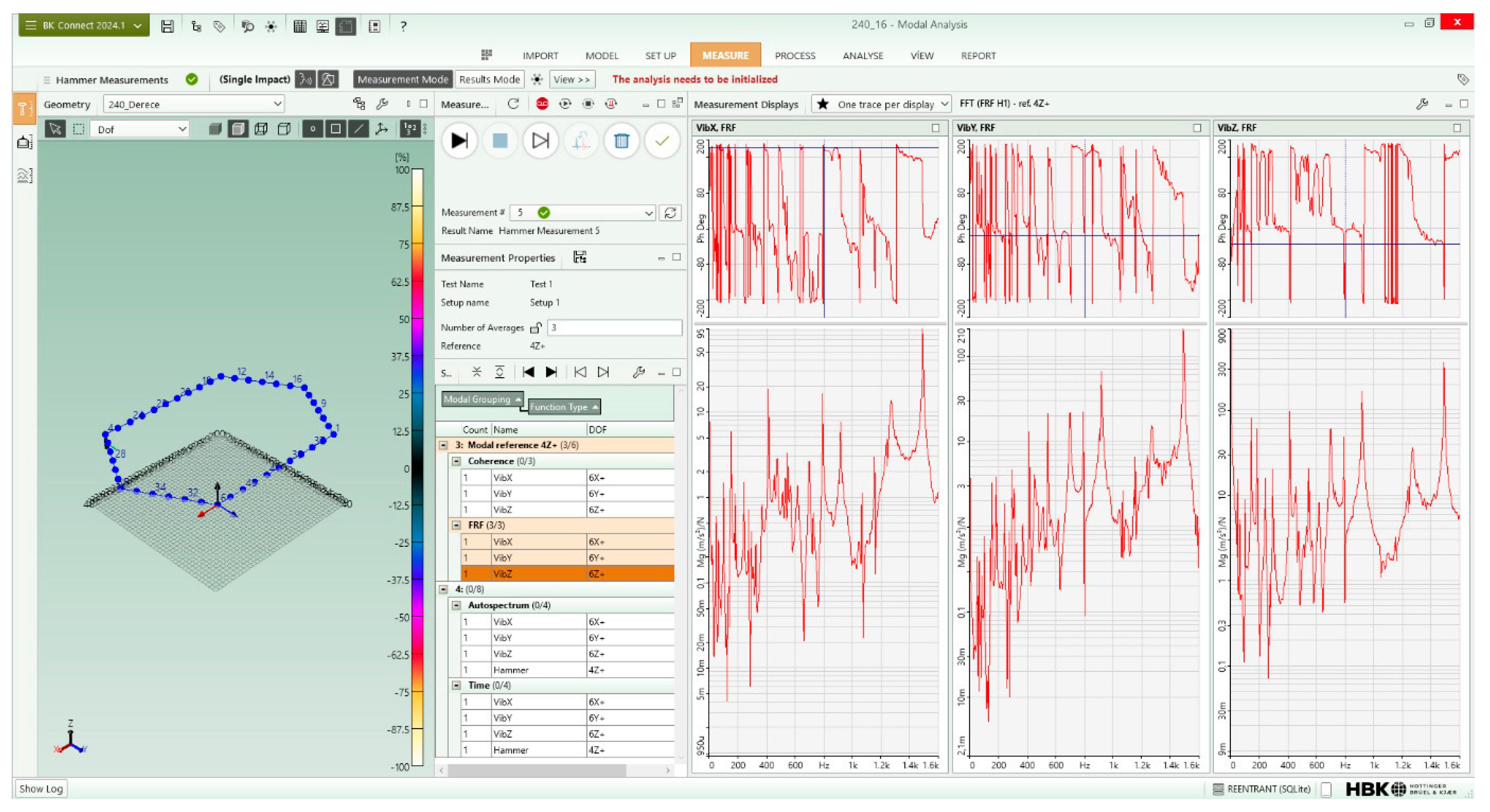
Then, for each model, the hammer was applied (hit) at the same point on the test piece and, for each hit, the accelerometer was located at a different point of the mesh. All data were subsequently collected by the data recorder and the analyzer, then transferred to the software running on the computer. For each model, a total of 16 different measurement points were selected and recorded. An example of a measurement screen for a hexagonal model (16 × 16 mm; 240°) is shown in
Figure 29.
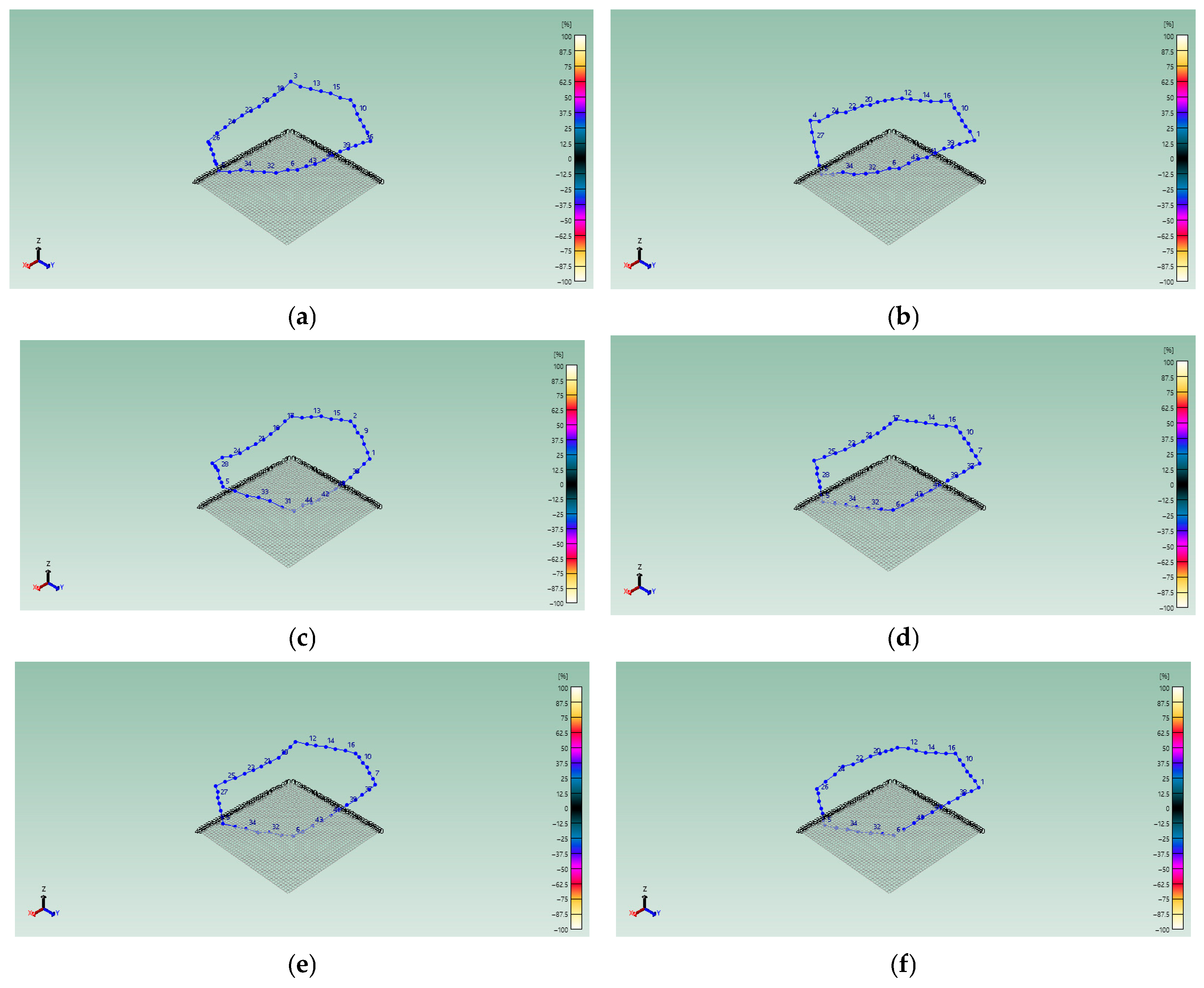
The calculated mode shapes for the model are shown in
Figure 30.
The experimental results (EXP) and comparisons with the corresponding numerical (Finite Element Method (FEM)) results, as well as the discrepancies, are reported in
Table 3. The discrepancies were calculated according to the following formula:
The observations from experimental modal analysis can be summarized as follows:
General Agreement with the FEM Results:
The experimental frequencies closely matched the numerical (FEM) results, with discrepancies predominantly below 5% across all modes and configurations. This confirms the accuracy of the FEM models and validates the assumptions adopted in the numerical simulations.
Higher discrepancies (up to ~7%) were observed mainly in higher modes and with larger cross-sections (e.g., 16 × 16 frames at 150° and 240°), which can be attributed to localized vibration complexities, slight manufacturing inaccuracies, or experimental noise.
Discrepancy Patterns across Modes:
The lower modes (Modes 1 to 3) consistently exhibited the smallest discrepancies (typically between 1.1% and 2.5%), indicating robust experimental detectability and relatively low sensitivity to boundary and excitation uncertainties.
The middle and higher modes (Modes 4 to 8) showed increasing discrepancies (often reaching 4–7%), particularly for frames with larger masses and stiffnesses. This was expected, as higher modes are more sensitive to boundary imperfections, damping effects, and sensor placement.
Influence of Cross-Section Size:
The discrepancies slightly increased with increasing beam cross-section. For example, the 4 × 4 models generally yielded lower discrepancy values than the 12 × 12 and 16 × 16 models. Larger sections exhibit stiffer responses, and even small experimental variations (e.g., imperfect boundary clamping or sensor alignment) can lead to measurable deviations in higher-frequency responses.
The best experimental–numerical alignment occurred for intermediate cross-sections (e.g., 8 × 8 and 12 × 12 mm), which strike a balance between stiffness and experimental observability.
Effect of Frame Angle (Geometry):
The straight frames (α = 180°) generally showed slightly greater discrepancies in the upper modes, especially for the 12 × 12 and 16 × 16 frames (e.g., 6.97% at Mode 8 for Frame 16 × 16-180). This can be attributed to their inherent flexibility and the challenge in accurately capturing boundary behaviors under dynamic excitation.
The re-entrant (α = 120°, 150°) and hexagonal (α = 210°, 240°) configurations yielded comparable experimental accuracies, although some of the highest discrepancies were noted in Modes 6–8 for the hexagonal models; this is likely due to the complex local deformation patterns at high frequencies.
Measurement Sensitivity and Experimental Challenges:
The consistency of discrepancies across modes and models indicates well-executed experimental procedures.
Nonetheless, discrepancies in higher modes suggest challenges in capturing complex vibration patterns—especially twisting and local bending modes—due to limited sensor placement, lower signal-to = noise ratios at high frequencies, or unmodeled damping effects.
While a quantitative Modal Assurance Criterion (MAC) analysis was not performed due to the limited spatial resolution of the accelerometer measurement points, the visual correspondence between the numerical and experimental mode shapes was rigorously verified. The consistent matching of mode order and deformation patterns (e.g., bending, torsion) confirmed the validity of the numerical model despite the lack of a full MAC matrix.
The parametric investigation was conducted on frames with fixed global dimensions (400 × 400 mm). Consequently, the quantitative frequency results are specific to this geometry and material (structural steel). However, the qualitative trends—specifically, the stiffening effect of hexagonal angles and the non-linear sensitivity to cross-sectional changes—are expected to remain valid for frames with different aspect ratios, provided that their slenderness ratios are comparable.
The maximum discrepancy of 6.96% observed in higher modes is within the acceptable range for dynamic testing of welded steel frames, where ideal clamped boundary conditions are difficult to perfectly replicate experimentally. Similar studies in the literature often report discrepancies up to 10% for higher-order modes due to the complexity of local deformations.
The experimental modal analysis successfully validated the finite element predictions for all 20 frame configurations, with consistently low discrepancies confirming the reliability of the test setup and the fidelity of the numerical models. Notably, lower modes were more accurately captured and less affected by experimental uncertainties. Larger cross-sections and higher modes show slightly greater deviations, which is typical in dynamic testing due to the complexity of mode shapes and sensitivity to imperfections. Overall, the experimental approach was robust and effective, reinforcing the numerical findings and supporting the conclusions drawn regarding the influences of the frame angle and beam dimensions on vibrational behaviors.
5. Conclusions
This study comprehensively investigated the dynamic behaviors of re-entrant unit cell-shaped steel frame structures through detailed numerical and experimental modal analyses. Inspired by classical re-entrant honeycomb structures, this research focused on simplified unit frames rather than traditional lattice networks, allowing for direct exploration of how geometric parameters—specifically, beam cross-sectional dimensions and frame angles—affect natural frequencies and mode shapes. The outcomes provide not only a deeper understanding of the vibrational characteristics of re-entrant frames but also inform practical strategies for optimizing their structural design to meet dynamic performance requirements.
The numerical analyses, which were conducted via finite element modeling with ANSYS, revealed consistent trends across the 20 frame models studied. The lower modes were generally dominated by global bending and torsional deformations, whereas the higher modes involved more localized, complex distortions. Importantly, the first and second modes typically involve large-scale lateral and out-of-plane bending movements, indicating that these modes are critical for assessing the frames’ global stability under dynamic loads. Torsional responses appeared prominently in the third mode, highlighting potential vulnerabilities to asymmetric dynamic excitations. As the mode number increased, the deformation patterns became increasingly intricate, with higher modes displaying combinations of local bending, twisting, and nodal displacements. These findings underline the necessity of considering both global and local modal behaviors during the design phase, particularly for applications where fatigue, resonance, or high-frequency vibrations are concerns.
The variation in natural frequencies was systematically evaluated against changes in beam cross-sectional dimensions and frame angles. Across all cases, increasing the cross-sectional size led to a significant increase in the natural frequency, corresponding to an increase in the dynamic stiffness. However, the effect of the frame angle was more nuanced: the models with a frame angle of 180°, representing a straight configuration, consistently exhibited the lowest natural frequencies regardless of the cross-sectional size. This finding indicates that straight frames are inherently more flexible, and thus, more susceptible to vibrational instabilities. Conversely, both re-entrant (angles less than 180°) and hexagonal (angles greater than 180°) frames demonstrated superior stiffness, with hexagonal configurations (210° and 240°) showing the highest natural frequencies; especially when coupled with larger cross-sectional dimensions.
Figure 9,
Figure 10,
Figure 11 and
Figure 12 demonstrate the strong dependency of the natural frequency on the frame angle at different cross-sectional sizes. The re-entrant frames showed rapid initial gains in stiffness with increasing beam thickness, whereas the hexagonal frames provided consistently high stiffness across the entire range of cross-sectional dimensions. In particular, the largest beam cross-section (16 × 16 mm) effectively minimized the variations in natural frequencies due to changes in the frame angle, indicating that robust structural behaviors are resistant to geometric sensitivity. These insights suggest that for applications demanding high dynamic stability—such as vibration isolation platforms, machine foundations, and aerospace structural components—using thicker beams and opting for hexagonal configurations are advantageous design strategies.
The importance of geometry and size was further emphasized through a regression-based approach. A quadratic polynomial surface regression analysis was performed to establish an empirical relationship between natural frequencies, beam cross-sectional dimensions, and frame angles. The high R2 values (greater than 0.98 for all modes) indicated that the regression surfaces accurately captured the non-linear interactions between these parameters. The 3D surface plots for each mode illustrate the complex but predictable manner in which structural geometry influences vibrational performance. The developed regression model not only provides a robust tool for predicting natural frequencies without the need for extensive finite element analyses but also supports inverse design processes, enabling designers to define target frequency ranges and back-calculate the necessary geometric parameters.
From a practical standpoint, the obtained regression model provides engineers with a valuable preliminary design tool. By inputting the desired natural frequency targets and operational constraints, combinations of the frame angle and beam cross-sectional dimension with best performance within the tested range can be rapidly identified. This is particularly beneficial during early design or optimization phases, where numerous design iterations are necessary but time and computational resources may be limited. Furthermore, the ability to predict dynamic behaviors with reasonable accuracy using simple regression functions opens the door to integrating this method into automated design frameworks or optimization algorithms.
Experimental modal analyses were conducted to validate the numerical results. The experimental results closely matched the finite element predictions, with discrepancies generally less than 7%, confirming the accuracy of the numerical models. The consistency between the experimental and numerical outcomes strengthens the reliability of the findings and ensures that the conclusions drawn are not merely artifacts of simulation assumptions but instead reflect the real dynamic behaviors of the frame structures. It is acknowledged that the magnitude of frequency shifts due to geometric variations is comparable with the experimental–numerical discrepancy range (~2–7%); however, the numerical trends observed were monotonic and physically consistent across all 20 models. The experimental deviations were attributed to random uncertainties (manufacturing tolerances, boundary realization), whereas the parametric sensitivities were considered to be systematic in nature. Therefore, the observed trends are considered genuine structural characteristics, rather than artifacts of modeling errors.
While the stiffening effect of increased cross-section was expected, the novelty of this parametric analysis lies in quantifying the complex interaction between the frame angle and beam thickness. The derived regression surfaces provide a unique design map that allows for the precise tuning of natural frequencies, offering a significant advantage over traditional trial-and-error design methods.
Based on the presented findings, several key design recommendations can be proposed. First, increasing the cross-sectional dimensions of beams is the most effective way to increase the dynamic stiffness and increase the natural frequency of frames, thereby reducing the susceptibility of the structure to resonant vibrations. Second, the frame angle should be strategically selected. Avoiding the 180° straight frame configuration is advisable for structures which are expected to experience significant dynamic loads, as these frames inherently exhibited lower stiffness and greater flexibility, while hexagonal configurations (angles of 210° and 240°) should be favored due to their superior vibrational resistance and stability. Third, designers should leverage the quadratic regression model developed in this study for rapid, yet accurate, estimation of natural frequencies, enabling efficient design iterations and optimization.
In summary, this study investigated the dynamic characteristics of re-entrant steel frames through numerical and experimental modal analyses. The key findings are as follows:
Cross-sectional impact: Increasing the beam dimensions significantly enhanced dynamic stiffness across all modes.
Geometric influence: Hexagonal frames (>180°) exhibited superior dynamic stability, compared with straight (180°) and re-entrant (<180°) configurations. Straight frames consistently showed the lowest natural frequencies due to reduced geometric stiffness.
Predictive model: The developed quadratic polynomial surface regression model enables the accurate prediction of natural frequencies (R2 > 0.98), serving as an efficient tool for preliminary design without extensive FEA.
Validation: The experimental results validated the numerical models with discrepancies generally below 7%, confirming the reliability of the proposed design guidelines.
In future work, we intend to extend this methodology to 3D lattice structures and incorporate damping effects for comprehensive vibration isolation analysis.
In conclusion, this study successfully bridges the gap between geometrical design and dynamic performance in re-entrant frame structures. The combination of finite element modeling, experimental validation, and empirical regression analysis provides a robust framework for understanding and optimizing the vibrational behaviors of these structures. The findings contribute significantly to the field of structural dynamics and offer practical tools and guidelines for engineers and designers aiming to develop vibration-resistant structures across a variety of engineering applications. The systematic approach adopted in this study ensures that re-entrant frame designs can be tailored effectively to meet stringent dynamic performance requirements, ultimately leading to safer, more reliable, and more efficient structural systems.