
Systematic Review

Artificial Intelligence in Vehicular Bridge Engineering: A Systematic Review of Design, Monitoring, and Lifecycle Management


by
Hugo Martínez Ángeles
,
Cesar Augusto Navarro Rubio
*,
José Gabriel Ríos Moreno
*,
Margarita G. Garcia-Barajas
,
Roberto Valentín Carrillo-Serrano
,
Mariano Garduño Aparicio
,
José Luis Reyes Araiza
and
Mario Trejo Perea
Facultad de Ingeniería, Universidad Autónoma de Querétaro, Santiago de Querétaro 76010, Mexico
*
Authors to whom correspondence should be addressed.
AI 2026, 7(6), 192; https://doi.org/10.3390/ai7060192
Submission received: 20 March 2026 / Revised: 27 April 2026 / Accepted: 22 May 2026 / Published: 26 May 2026

Abstract

This study presents a systematic review of Artificial Intelligence (AI) in vehicular bridge engineering, covering design, monitoring, and lifecycle decision support. The objective is to identify, classify, and critically analyze the main AI methods applied across the bridge lifecycle, including Machine Learning (ML), Deep Learning (DL), Artificial Neural Networks (ANNs), and Optimization Algorithms (OAs). The review follows the PRISMA 2020 framework to ensure transparency and reproducibility, considering publications from 2018 to 2026. The results show that AI applications span the entire bridge lifecycle; however, current research is predominantly concentrated in Structural Health Monitoring (SHM), damage detection, inspection, and predictive maintenance, while design-oriented applications—such as optimization, surrogate modeling, and structural analysis—remain comparatively less developed. Importantly, SHM data serve as a key input for data-driven modeling, enabling design optimization, reliability assessment, and lifecycle decision support. Classical ML methods remain effective for structured datasets, whereas DL models, particularly convolutional and recurrent neural networks, dominate image-based and time-series applications. In addition, hybrid physics-informed AI approaches are emerging to improve model reliability and interpretability. The review also identifies key challenges, including data quality limitations, lack of standardized methodologies, limited integration with engineering design codes, and barriers related to trust, expertise, and regulatory frameworks. Overall, the findings highlight a shift toward integrated digital frameworks, including digital twins and multimodal data fusion, to support more reliable monitoring and lifecycle decision-making. This study provides a comprehensive synthesis of current developments and outlines future research directions toward more resilient and intelligent bridge infrastructure systems.

Graphical Abstract

1. Introduction

Vehicular bridges are critical components of modern transportation infrastructure, enabling the safe and efficient movement of people and goods across urban and interurban networks [1]. Their structural reliability directly influences economic productivity, public safety, and the resilience of transportation systems [2]. As traffic volumes increase and bridge networks age, ensuring the optimal design, monitoring, maintenance, and lifecycle management of these structures has become a major engineering challenge of these structures has become a major engineering challenge [3].
Conventional bridge design approaches rely heavily on deterministic analytical models, empirical design codes, and numerical simulations such as Finite Element Methods (FEMs) [4]. Although these techniques have proven effective, they often require extensive computational resources, simplified assumptions, and significant engineering expertise to address the complex interactions between structural components, environmental conditions, and dynamic traffic loads [5].
In recent years, advances in computational methods and data-driven technologies have introduced new possibilities for improving structural design and analysis [6,7]. Artificial Intelligence (AI), including Machine Learning (ML) and its subset Deep Learning (DL), together with Evolutionary Optimization Algorithms (EOA), has emerged as a powerful tool for solving complex engineering problems characterized by nonlinear relationships, large datasets, and uncertainty [8].
In the field of structural engineering, AI techniques have been increasingly applied to tasks such as Structural Health Monitoring (SHM), damage detection, predictive maintenance, performance optimization, and decision support [9]. These methods enable the extraction of meaningful patterns from structural and operational data, facilitating more accurate predictions and more efficient design processes compared with traditional analytical approaches [10].
Within bridge engineering, AI-based approaches have demonstrated considerable potential for improving the design and management of vehicular bridges [11]. ML models have been used to predict structural responses under various loading scenarios, estimate material properties, and optimize geometric parameters for improved structural performance [12]. DL techniques, particularly Convolutional Neural Networks (CNNs), have shown remarkable capabilities in automated damage detection through computer vision applications, allowing for rapid identification of cracks, corrosion, and other structural defects [13].
Similarly, OA such as Genetic Algorithms (GAs), Particle Swarm Optimization (PSO), and differential evolution have been successfully integrated with structural analysis tools to enhance bridge design processes by minimizing construction costs, material usage, or environmental impact while maintaining structural safety and serviceability [14].
Recent studies have also explored the integration of AI with advanced simulation environments, sensor networks, and digital twin technologies to create intelligent infrastructure systems capable of real-time monitoring and real-time monitoring and lifecycle decision support [15,16,17]. These developments are particularly relevant in the context of smart cities and sustainable infrastructure, where the efficient management of large-scale bridge networks requires innovative solutions capable of handling vast amounts of data and complex operational conditions [18]. Furthermore, AI-based models have been increasingly used to improve reliability analysis, risk assessment, and resilience evaluation of bridge structures under extreme events such as earthquakes, floods, and heavy traffic loads [19].
Despite the rapid growth of AI applications in structural engineering, the literature remains fragmented, with many studies focusing on specific algorithms or isolated applications [20]. While several reviews have examined AI in civil engineering or SHM more broadly, there is still a lack of comprehensive systematic reviews specifically addressing the role of AI in the design and optimization of vehicular bridges [21,22].
Likewise, existing studies often emphasize monitoring or damage detection, reflecting the current maturity of the field, while design-oriented applications remain comparatively less developed [23]. Consequently, a structured synthesis of current research is necessary to identify dominant methodologies, emerging applications, and research gaps within this rapidly evolving field [24].
Therefore, this study seeks to address the following research questions:
  • What AI methods have been most widely applied to vehicular bridge engineering across the lifecycle, including design, monitoring, and maintenance, in recent scientific literature?
  • How can AI-based approaches be systematically classified according to their methodological characteristics and engineering applications?
  • What technological trends, limitations, and research gaps exist in the integration of AI into bridge engineering and infrastructure management?
The objective of this research is to conduct a systematic review of AI methods applied to vehicular bridge engineering, focusing on design, monitoring, and lifecycle decision support. Although the review includes design-oriented applications, the analysis reveals that current research is more strongly concentrated in monitoring, inspection, and maintenance domains. The study follows the PRISMA 2020 (Preferred Reporting Items for Systematic Reviews and Meta-Analyses) [25] guidelines to ensure transparency, methodological rigor, and reproducibility in the literature review process. By synthesizing recent advances in AI for bridge engineering, this work aims to provide a structured framework for understanding the current state of the field while highlighting future research opportunities for more integrated and lifecycle-oriented AI applications in bridge engineering.
This imbalance reflects both the availability of real-world monitoring data and the current stage of technological maturity, and highlights the need for further research in AI-driven design methodologies for bridge engineering.
The remainder of this paper is organized as follows. Section 2 describes the methodology of the systematic review, including the search strategy, inclusion and exclusion criteria, and data analysis procedures based on the PRISMA framework. Section 3 presents the results of the literature analysis, focusing on the classification of AI methods and their applications in vehicular bridge design and analysis. Section 4 discusses the main findings, technological trends, and limitations identified in the reviewed studies. Finally, Section 5 summarizes the key conclusions and provides recommendations for future research in the integration of AI into bridge engineering and smart infrastructure systems.

2. Materials and Methods

2.1. Artificial Intelligence Modeling and Analytical Framework

This section defines the analytical framework used to interpret and compare AI applications across the studies included in this systematic review. The methodology combines a structured literature review process with an analytical framework aimed at interpreting how AI models are used in different bridge engineering applications. The review procedure follows the PRISMA 2020 guidelines [25] to ensure transparency and reproducibility in the identification, screening, and synthesis of scientific literature.
This section is not intended as a general tutorial on AI, but rather as a conceptual framework to support the classification and interpretation of the studies included in the review.

2.1.1. Artificial Intelligence Modeling Framework

In the reviewed studies, AI models are commonly formulated as mappings between input monitoring data and predicted structural conditions. In general, AI-based models learn relationships between structural measurements and engineering outputs such as damage states, structural responses, or condition indices [26]:
y = f ( X , θ )
where X represents input data obtained from monitoring systems or inspection datasets, y denotes the predicted output, and θ represents model parameters.
In the reviewed studies on bridge SHM, input variables may include vibration signals, strain measurements, displacement data, environmental parameters, or inspection images collected from cameras or UAV platforms. AI algorithms such as ML, Artificial Neural Networks (ANNs), and DL models extract patterns from these datasets to support tasks such as damage detection, deterioration prediction, and automated inspection [26,27,28].
Within this review, this general formulation is used to interpret and compare how different studies map structural data to engineering decisions across application domains.

2.1.2. Role of Model Training and Prediction Tasks

Across the reviewed studies, model training is typically framed as either regression or classification tasks, depending on the engineering objective. This review focuses on how these tasks are implemented, including training strategies, validation approaches, and performance evaluation in applied bridge engineering contexts.
Rather than focusing on specific mathematical formulations, this review analyzes how different studies implement training strategies, validation approaches, and performance evaluation in practical engineering contexts [27,28].
This perspective allows comparing studies based on their modeling strategies and application objectives rather than on their specific mathematical formulations.

2.1.3. Structural Damage Indicators and SHM Context

Structural health monitoring (SHM) systems rely on damage-sensitive indicators derived from structural responses, such as vibration or modal properties. Variations in natural frequencies, mode shapes, or damping ratios are commonly used to identify structural changes associated with damage [27,29].
AI algorithms are applied to analyze these indicators and detect structural anomalies, particularly in systems where continuous monitoring data are available. These indicators provide a common basis for comparing how different AI methods are applied to damage detection and condition assessment tasks.
In this review, such indicators are not analyzed from a theoretical perspective, but as representative inputs used in the studies included in the synthesis.

2.1.4. Multimodal Data and Integrated Monitoring Frameworks

Modern bridge monitoring systems increasingly rely on multiple sensing technologies, including vibration sensors, fiber optic systems, displacement sensors, and computer vision platforms. AI methods enable the integration of these heterogeneous datasets through multimodal data analysis techniques [26,28].
These approaches improve the robustness of structural condition assessment and support advanced monitoring frameworks such as digital twins and integrated SHM systems. The ability to combine multiple data sources is particularly important for distinguishing between environmental variability and structural damage in real-world conditions.
Within this study, multimodal data integration is considered as a key dimension in the classification of AI applications across different bridge engineering domains.

2.1.5. Link to the Analytical Framework of the Review

The concepts described in this section provide a unified perspective that supports the coding and classification framework used in this review. Specifically, they inform the categorization of studies according to data types, AI methods, application domains, and bridge lifecycle stages, as presented in Section 3.
Overall, this analytical framework enables a consistent and application-oriented synthesis of AI methods in vehicular bridge engineering.

2.2. Methodological Design of the Systematic Review Using the PRISMA Protocol

The study was conducted following the PRISMA 2020 methodology [25], a standardized framework designed to improve transparency, reproducibility, and methodological rigor in systematic reviews. PRISMA provides a structured approach supported by a 27-item checklist and a flow diagram that illustrates the progression of studies through the identification, screening, eligibility, and inclusion phases. The implementation of this methodology allows for minimizing potential biases while ensuring a reliable and comprehensive synthesis of the available scientific literature.
The objective of this systematic review was to analyze the current state of research on AI techniques, including ML, DL, neural networks, and evolutionary algorithms, applied to vehicular bridge design, structural analysis, monitoring, and optimization. The study aims to identify the most relevant methodologies, application domains, and emerging research trends in the integration of intelligent systems within bridge engineering. A structured review protocol was defined prior to the execution of the search process.
This protocol included the definition of research questions, selection criteria, search strategy, data extraction procedures, and analysis methods. Establishing this protocol ensured consistency throughout the review process and enhanced the reproducibility of the results.
The literature search was conducted using the Scopus database due to its extensive coverage of peer-reviewed publications in engineering and interdisciplinary research. The search strategy was based on a Boolean query applied to the title, abstract, and keyword fields (TITLE-ABS-KEY), combining terms related to AI and vehicular bridge design.
The final search string used in Scopus was defined as follows:
TITLE-ABS-KEY(("artificial intelligence" OR "machine learning" OR
"deep learning" OR "neural network*" OR "data-driven")
AND ("bridge design" OR "bridge optimization" OR "bridge structural" OR
"bridge monitoring" OR "bridge assessment" OR "bridge evaluation" OR
"bridge health monitoring"))
AND (PUBYEAR > 2017 AND PUBYEAR < 2027)
AND (LIMIT-TO(DOCTYPE, "ar") OR
LIMIT-TO(DOCTYPE, "re")) AND (LIMIT-TO(LANGUAGE, "English"))
The initial search yielded 526 records, which were subsequently refined through the PRISMA screening process.
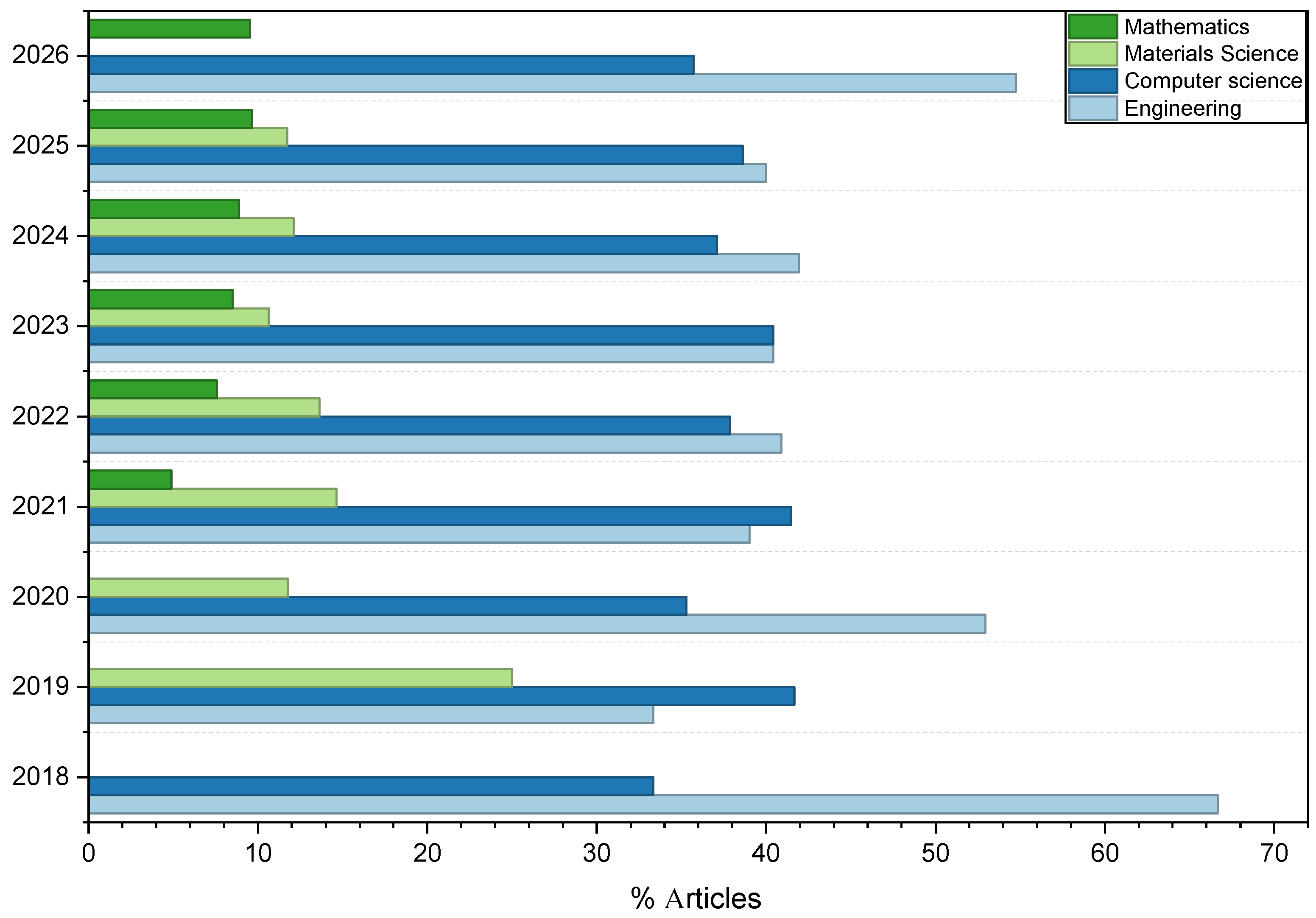
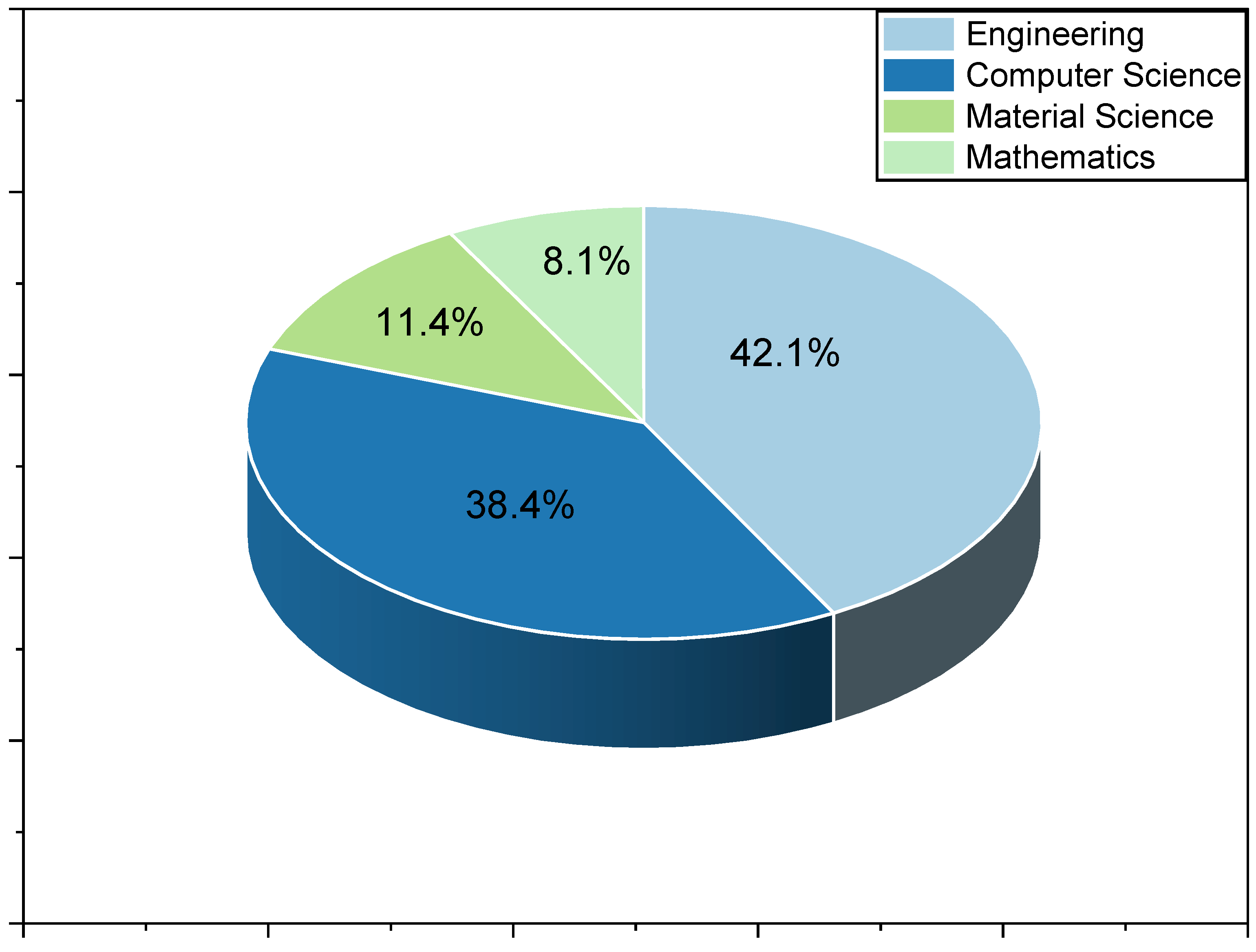
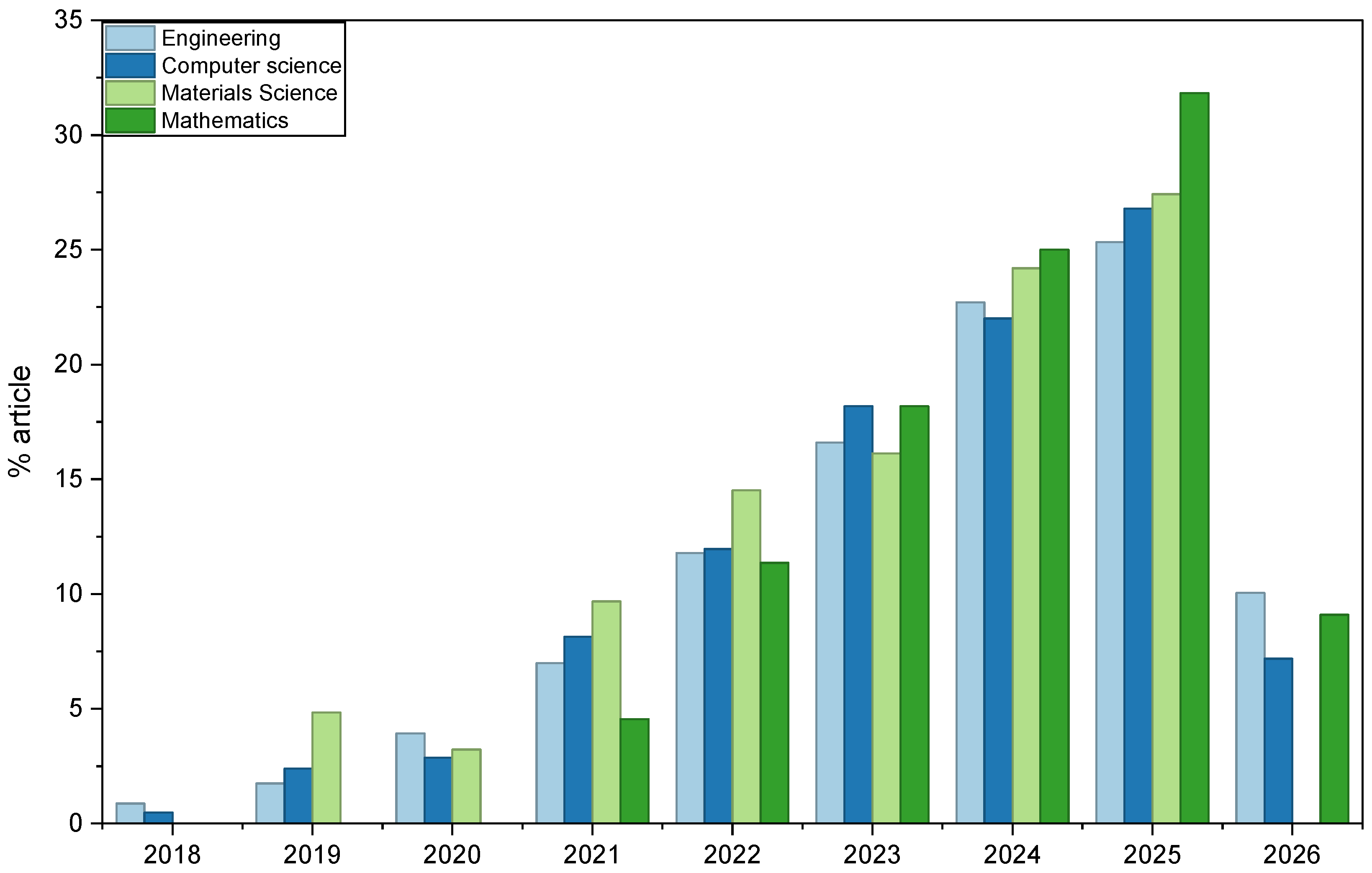
Additional filters were applied to restrict the results to publications between 2018 and 2026, within the subject areas of engineering, computer science, materials science, and mathematics. Only research articles and review papers written in English were considered.
To ensure the relevance and quality of the selected studies, inclusion and exclusion criteria were carefully defined. Only studies focused on the application of AI in vehicular bridge design and related structural engineering problems were included. Publications outside the selected subject areas or those not directly related to bridge engineering applications were excluded.
Additionally, duplicate records, non-peer-reviewed documents, and studies lacking sufficient methodological detail were removed during the selection process. Special attention was given to excluding works that focused exclusively on theoretical models without practical engineering application or those unrelated to infrastructure systems.
The screening process was conducted using a sequential filtering approach. First, duplicate records were removed automatically. Second, titles and abstracts were systematically reviewed to exclude studies that did not address bridge engineering applications or did not involve AI techniques. Third, full-text articles were assessed to verify compliance with inclusion criteria, ensuring consistency across the selection process.
In the eligibility phase, full-text articles were assessed in detail according to the established criteria. Finally, in the inclusion phase, only those studies that met all requirements were selected for qualitative synthesis and analysis. Data extraction was performed systematically for each selected study. Relevant information such as authorship, year of publication, type of AI technique, application domain, type of bridge, data sources, key findings, and limitations was collected. This process enabled a structured comparison of methodologies and facilitated the identification of patterns and trends within the literature.
To ensure the reliability and consistency of the qualitative assessment, each study was evaluated based on four criteria: (i) methodological clarity, (ii) relevance to vehicular bridge engineering, (iii) data robustness, and (iv) contribution to the field. Each criterion was assessed using a three-level scale (high, medium, low).
Studies were included in the final synthesis if they demonstrated at least moderate relevance and methodological clarity. Studies were excluded if they lacked sufficient technical detail, did not provide clear methodological descriptions, or were not directly related to bridge engineering applications.
This evaluation framework was applied consistently across all selected studies to support a structured and transparent evidence synthesis.
Finally, a qualitative synthesis of the selected studies was carried out to classify AI techniques, identify application areas, and detect research gaps and emerging trends. This analysis provided a comprehensive overview of the current state of AI in vehicular bridge design and highlighted future research directions, particularly in areas such as digital twins, smart infrastructure, and predictive maintenance systems.
The application of the PRISMA methodology, together with the defined evaluation framework, ensured a transparent, reproducible, and methodologically robust review process.
Likewise, the review protocol was retrospectively registered in the Open Science Framework (OSF) to ensure transparency and reproducibility of the review process, the link of registration is: (https://doi.org/10.17605/OSF.IO/NG4PK, accessed on 19 March 2026) and the completed PRISMA 2020 checklist is provided as Supplementary Material.

2.3. PRISMA Flow Diagram and Study Selection Process

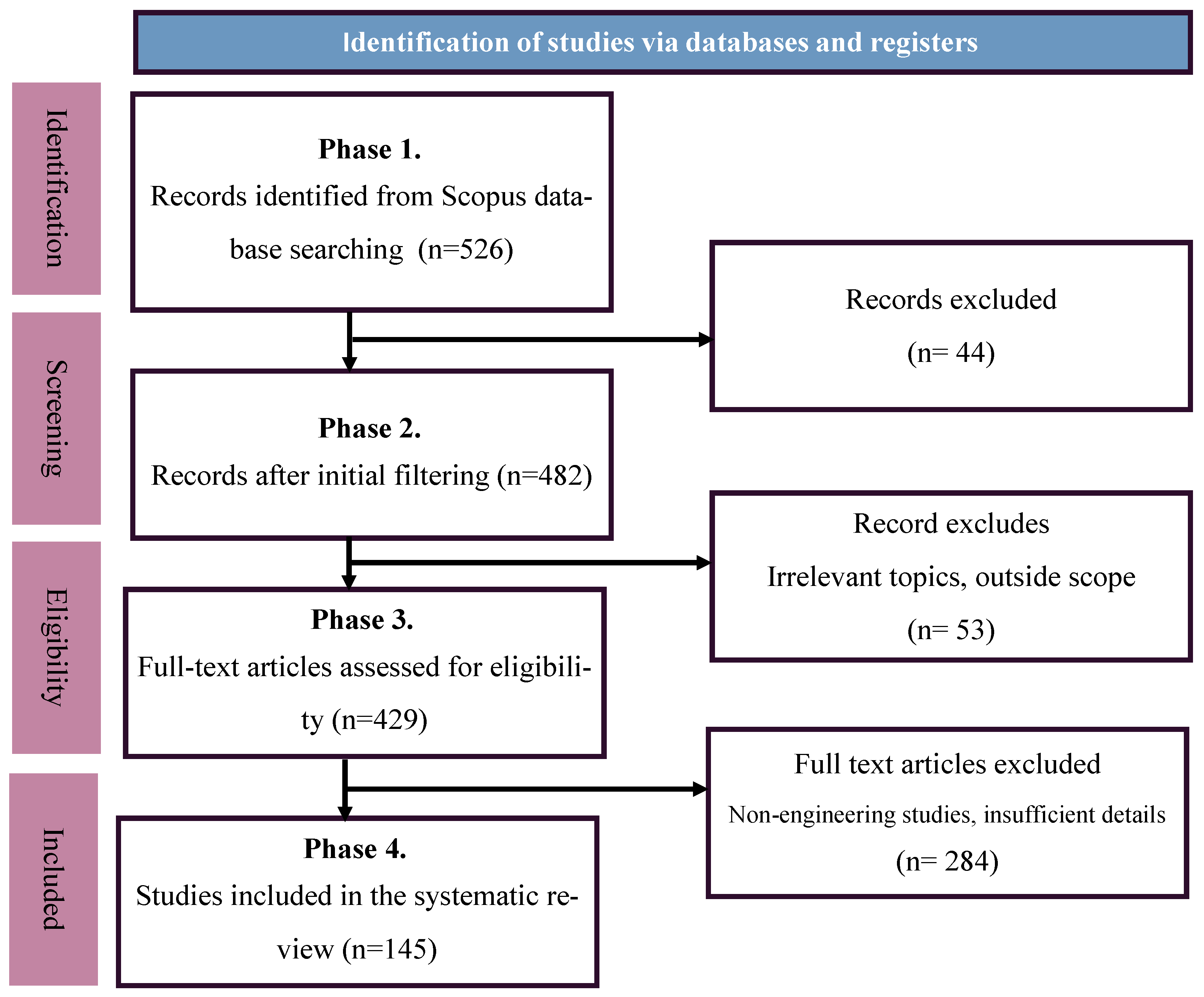
The PRISMA flow diagram (Figure 1) illustrates the systematic selection process of the scientific literature included in this study. The diagram visually summarizes the progression of records through the four main stages of the PRISMA methodology: identification, screening, eligibility, and inclusion.
In the identification phase, a total of 526 records were retrieved from the Scopus database using the defined search strategy. After initial filtering, 482 records remained for further analysis. During the screening phase, titles and abstracts were evaluated, leading to the exclusion of 53 studies that were considered irrelevant or outside the scope of vehicular bridge engineering and AI applications. This initial filtering step reflects the intentionally broad nature of the search strategy, which was designed to maximize coverage and was subsequently refined to focus on engineering-specific contributions.
Subsequently, 429 full-text articles were assessed for eligibility. The eligibility assessment was conducted based on predefined inclusion and exclusion criteria to ensure consistency in the selection process. At this stage, 284 studies were excluded due to reasons such as insufficient methodological detail, lack of direct application to bridge engineering, or focus on non-engineering domains. This phase was critical to ensure that only studies with a strong methodological foundation and direct relevance to the research objectives were included.
Finally, 145 studies were selected for qualitative synthesis. This reduction from the initial dataset reflects the rigorous filtering process required in systematic reviews to ensure both relevance and scientific quality.
From an analytical perspective, the PRISMA diagram reveals several important insights. First, the significant reduction in the number of studies between the identification and screening stages indicates that, although AI is widely studied, only a limited subset is directly applicable to vehicular bridge engineering. This suggests a fragmentation of research across domains and highlights the need for more focused interdisciplinary studies.
Second, the high number of exclusions during the eligibility phase underscores the variability in methodological quality within the field. Many studies lack sufficient experimental validation or practical engineering application, which limits their inclusion in rigorous systematic analyses. This finding emphasizes the importance of developing standardized methodologies and validation frameworks in AI-based bridge engineering research.
Overall, the PRISMA flow diagram not only documents the study selection process but also provides insight into the maturity and structure of the research field. The results suggest that while there is growing interest in the application of AI to bridge engineering, further efforts are needed to standardize methodologies, improve data quality, and strengthen the integration between computational techniques and real-world engineering applications.
All numerical values reported in Figure 1, this section, and the Supplementary PRISMA checklist have been cross-validated to ensure full internal consistency and reproducibility of the study selection process.

2.4. Bibliometric Network Analysis of Artificial Intelligence in Vehicular Bridge Research

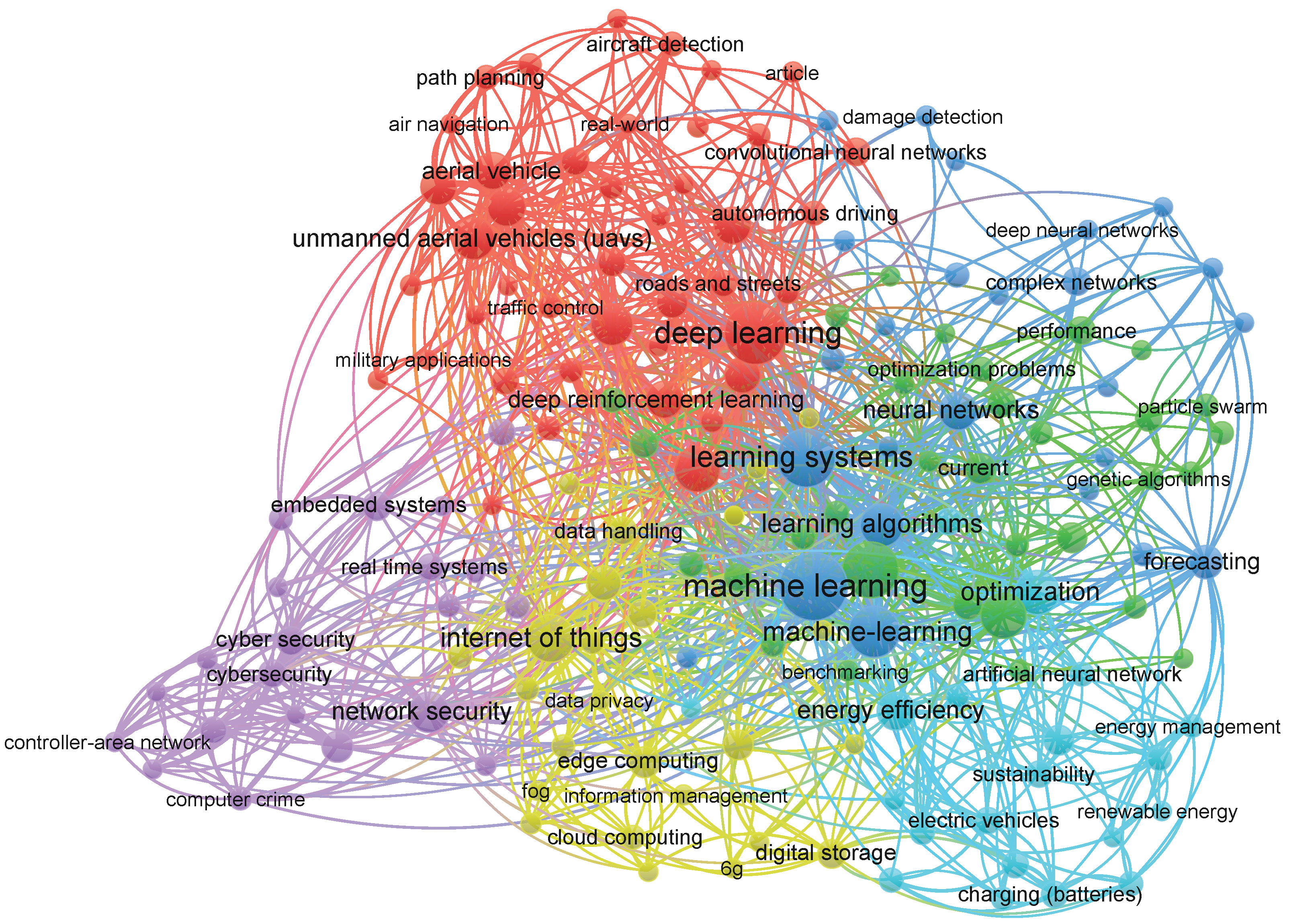
The bibliometric network map (Figure 2) was generated using VOSviewer software, (version 1.6.20) and illustrates the co-occurrence relationships among keywords related to AI applications in infrastructure and transportation systems, providing contextual insight into the broader research landscape in which vehicular bridge studies are embedded. The network is organized into multiple clusters differentiated by color, each representing a thematic subdomain. Nodes represent keywords, with their sizes reflecting frequency of occurrence, while the links indicate the strength of co-occurrence relationships.
The network reveals a highly interconnected and multidisciplinary research structure, where central nodes such as “machine learning”, “deep learning”, “learning systems”, and “neural networks” act as dominant hubs, indicating that these techniques constitute the core methodological foundation across infrastructure-related applications. These terms are strongly linked to application-oriented concepts such as “optimization”, “forecasting”, and “performance”, suggesting that AI is primarily employed for predictive modeling and decision-support tasks.
A detailed analysis of the clusters highlights distinct but interconnected research domains. The red cluster is mainly associated with DL and advanced computational approaches, including topics such as autonomous systems, aerial vehicles, and real-time analysis, reflecting the broader integration of AI in intelligent transportation systems.
The green and blue clusters are primarily related to optimization techniques and algorithmic development, including genetic algorithms, particle swarm optimization, and neural network-based modeling. These clusters emphasize the role of optimization-driven approaches across engineering applications.
The yellow cluster focuses on data-driven technologies and digital infrastructure, including Internet of Things (IoT), cloud computing, and edge computing, indicating the transition toward smart infrastructure systems and real-time data processing environments.
Additionally, the purple cluster is associated with cybersecurity and network-related topics, highlighting emerging concerns related to data integrity, communication reliability, and system security in AI-enabled infrastructure systems.
Although the network reflects a broad and multidisciplinary research landscape, the relatively limited presence of explicitly bridge-focused terms indicates that research specifically targeting vehicular bridge design represents a more specialized and emerging subset within the wider field of AI applications.
Overall, the bibliometric analysis provides contextual insight into the intellectual structure of AI research in infrastructure systems. It highlights the dominance of ML methodologies, the importance of optimization and digital infrastructure, and underscores the need for stronger integration of these approaches within bridge-specific engineering applications.

3. Results

To improve conceptual clarity, the results are organized into four main subdomains of AI applications in vehicular bridge engineering: (i) design optimization and structural analysis, (ii) surrogate modeling and reliability assessment, (iii) monitoring and inspection, and (iv) lifecycle decision support.
This structure reflects both the functional roles of AI across the bridge lifecycle and the current distribution of research efforts, where monitoring and inspection applications are more mature, whereas design-oriented approaches remain comparatively less developed.
Likewise, to further improve clarity and analytical depth, the results distinguish between overview tables that classify AI methods and applications, and evidence-based tables that compare representative studies in terms of datasets, validation strategies, and reported performance.

3.1. AI Methods Across the Vehicular Bridge Lifecycle

The application of AI techniques in vehicular bridge engineering spans a broad range of analytical tasks, including condition assessment, damage detection, deterioration prediction, and inspection automation. The increasing availability of monitoring data, inspection imagery, and traffic information has enabled the adoption of data-driven approaches for analyzing bridge behavior and supporting infrastructure management. Consequently, different algorithmic families have been adopted depending on the characteristics of the available datasets and the specific engineering objectives.
In bridge engineering practice, classical ML algorithms are frequently applied to structured datasets derived from inspections and monitoring systems, whereas DL models are typically used when large image datasets or complex temporal signals are involved. This diversity of approaches reflects the wide range of analytical challenges encountered throughout the lifecycle of bridge infrastructure [21,22,30,31,32,33,34].
Table 1 summarizes representative AI techniques reported in the literature for vehicular bridge applications. The table highlights the relationship between algorithm type, the engineering tasks addressed, the most common data sources, and the advantages and limitations associated with each method.
Table 1 highlights several important trends in the use of AI methods for vehicular bridge applications. Classical ML algorithms such as tree-based models and SVM remain widely used for condition classification and vibration-based damage detection tasks due to their ability to perform well with relatively small datasets and their robustness to noisy monitoring measurements [21,22,32]. These characteristics make them particularly suitable for applications where inspection data or limited monitoring records are available.
Neural network models, including ANN and recurrent architectures, are increasingly used to address prediction problems involving deterioration processes and structural response analysis. Their capability to capture nonlinear relationships between traffic loads, structural behavior, and damage evolution makes them especially suitable for long-term monitoring and predictive maintenance applications [21,22,32,33,34].
Table 1 also indicates the growing importance of computer vision approaches for automated bridge inspection. CNN-based models have significantly improved the detection of cracks, corrosion, and surface defects in inspection imagery obtained from field surveys or UAV platforms [22,30,35]. This effectiveness stems from their ability to learn hierarchical feature representations directly from raw image data, progressively increasing selectivity toward damage-relevant patterns while remaining invariant to irrelevant variations such as background clutter, lighting changes, and camera pose—limitations that constrain traditional hand-crafted feature extractors and shallow classifiers such as SVMs [36]. Despite their high accuracy, these models typically require large labeled datasets and may present limitations when inspection conditions differ from those used during model training.
This challenge is particularly relevant in operational monitoring contexts, where DL models must contend with continuously changing environmental and inspection conditions, such as variations in lighting, temperature, and viewing geometry [37]. Furthermore, conventional CNN-based classification frameworks face an additional limitation: they typically require retraining when new structural components or inspection scenarios are introduced.
To address these challenges, alternative approaches such as similarity-based methods, including Siamese Convolutional Neural Networks, have been proposed. These approaches reformulate damage detection and classification as a similarity learning problem, enabling the identification of structural components and defects from limited labeled data and improving adaptability to changing inspection conditions [38].
Another relevant observation from Table 1 is the increasing interest in hybrid approaches that integrate physics-based models with data-driven algorithms. These models aim to combine the predictive capabilities of AI with the physical consistency provided by analytical structural models, thereby improving model reliability and extrapolation capability in safety-critical infrastructure systems [22,30].
Likewise, while Table 1 provides a general classification of AI method families, subsequent tables present a more detailed comparison of their performance, validation context, and application-specific limitations.
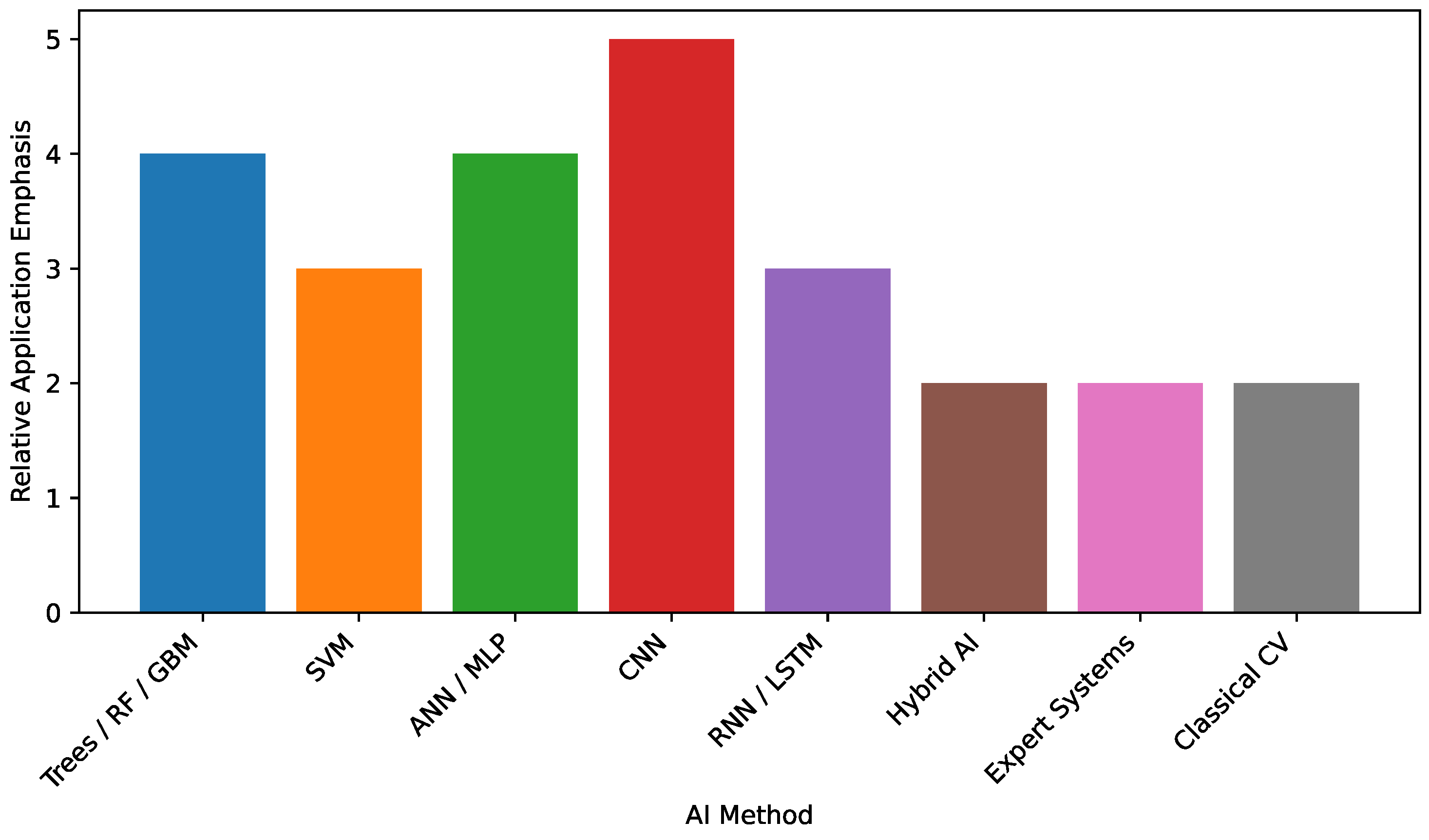
To complement the information summarized in Table 1, Figure 3 presents a graphical overview of the different algorithm families used in vehicular bridge applications. The Figure 3 visually synthesizes the methodological diversity identified in the literature and highlights how multiple AI paradigms coexist in bridge monitoring and inspection workflows.
Overall, the combined interpretation of Table 1 and Figure 3 illustrates the progressive diversification of AI applications in bridge engineering. While classical ML algorithms remain effective for structured monitoring datasets, DL and hybrid approaches are increasingly adopted to address more complex tasks such as automated inspection and long-term deterioration prediction. These developments reflect the ongoing transition toward integrated data-driven frameworks for infrastructure monitoring and maintenance management.

3.2. AI for Design Optimization and Reliability-Based Analysis

AI has increasingly been applied to design-oriented problems in bridge engineering, particularly in structural optimization, surrogate modeling, and reliability-based analysis. Recent studies have demonstrated that ML techniques can effectively approximate complex structural behaviors and support data-driven design processes, reducing the computational burden associated with traditional FEM [6,12,39].
In this context, surrogate modeling approaches such as Kriging, ANN, and support vector regression have been widely used to accelerate simulation-based design and enable efficient exploration of high-dimensional design spaces [40,41,42]. These methods are particularly relevant in reliability-based design optimization (RBDO), where repeated simulations are required to account for uncertainty and structural safety.
Additionally, the integration of AI with digital twin frameworks and OA has opened new possibilities for lifecycle-oriented design and decision-making in bridge engineering [43,44,45]. Table 2 summarizes the main approaches, applications, and limitations of AI methods in bridge design optimization and reliability analysis.
The approaches summarized in Table 2 highlight the growing role of AI in enhancing design workflows in bridge engineering. In particular, surrogate models and ML techniques enable significant reductions in computational cost while maintaining acceptable levels of accuracy, which is essential for large-scale optimization and uncertainty analysis [41,48].
However, despite these advances, design-oriented applications remain less mature than monitoring and inspection-based approaches. This is mainly due to challenges such as the integration of AI models with existing design codes, the need for high-quality training datasets, and the complexity of uncertainty quantification in real-world scenarios [42,51].
Furthermore, while digital twin and hybrid AI-based frameworks offer promising capabilities for lifecycle design and decision support, their practical implementation is still limited by issues related to data integration, interoperability, and computational requirements [43,49]. These limitations indicate that, although AI has strong potential in bridge design, further research is required to achieve robust, validated, and standardized methodologies for real-world engineering applications.
This subdomain complements the more mature monitoring and inspection applications discussed in subsequent sections, contributing to a more balanced representation of AI across the bridge engineering lifecycle.

3.3. AI Applications Across the Vehicular Bridge Lifecycle

AI is applied differently across the various phases of the vehicular bridge lifecycle, including planning, design, construction, operation, maintenance, rehabilitation, and decommissioning. Reviews on AI in construction, civil engineering, and transportation systems provide a useful framework to structure these phases and understand how data-driven techniques support decision-making throughout infrastructure development and management [30,52,53].
In practice, the role of AI varies according to the engineering objectives and the availability of data at each stage. Early phases such as planning and conceptual design typically rely on predictive models and optimization methods to evaluate alternative design scenarios, while later phases focus on monitoring structural behavior and supporting maintenance decisions [30,33]. Table 3 summarizes representative AI applications aligned with the main phases of the vehicular bridge lifecycle.
Table 3 shows that AI techniques are applied across the entire lifecycle of vehicular bridges, although their maturity varies significantly between phases. Early lifecycle stages such as planning and conceptual design primarily rely on predictive modeling and multi-objective optimization to support decision-making processes regarding bridge typology, materials, and structural configuration [30,52,53]. While these approaches can improve early project planning and sustainability assessments, they often depend on limited historical datasets and may face difficulties integrating with established engineering design standards [33,34,53].
In the design and construction phases, AI applications tend to focus on improving design efficiency and site safety. Neural network models can assist in predicting structural capacity and optimizing detailing solutions, enabling faster design iterations and potential material savings [33,34]. During construction, ML algorithms and computer vision tools are increasingly used for monitoring safety conditions and quality control processes, although practical implementation is often limited by fragmented project management structures and low levels of digitalization in construction workflows [30,52].
The operational phase represents the most mature area of AI adoption in bridge engineering. As indicated in Table 3, the combination of SHM systems with ML and DL techniques enables automated damage detection and monitoring of structural changes such as stiffness degradation [21,22,31]. These systems facilitate early warning mechanisms and allow infrastructure managers to implement condition-based maintenance strategies.
Maintenance and rehabilitation phases are closely linked to deterioration modeling and intervention prioritization. AI-based risk models allow agencies to allocate maintenance budgets more efficiently and evaluate alternative strengthening strategies [32,34]. However, these models are often limited by the availability of long-term monitoring data and by the relatively small number of documented rehabilitation case studies [32,33].
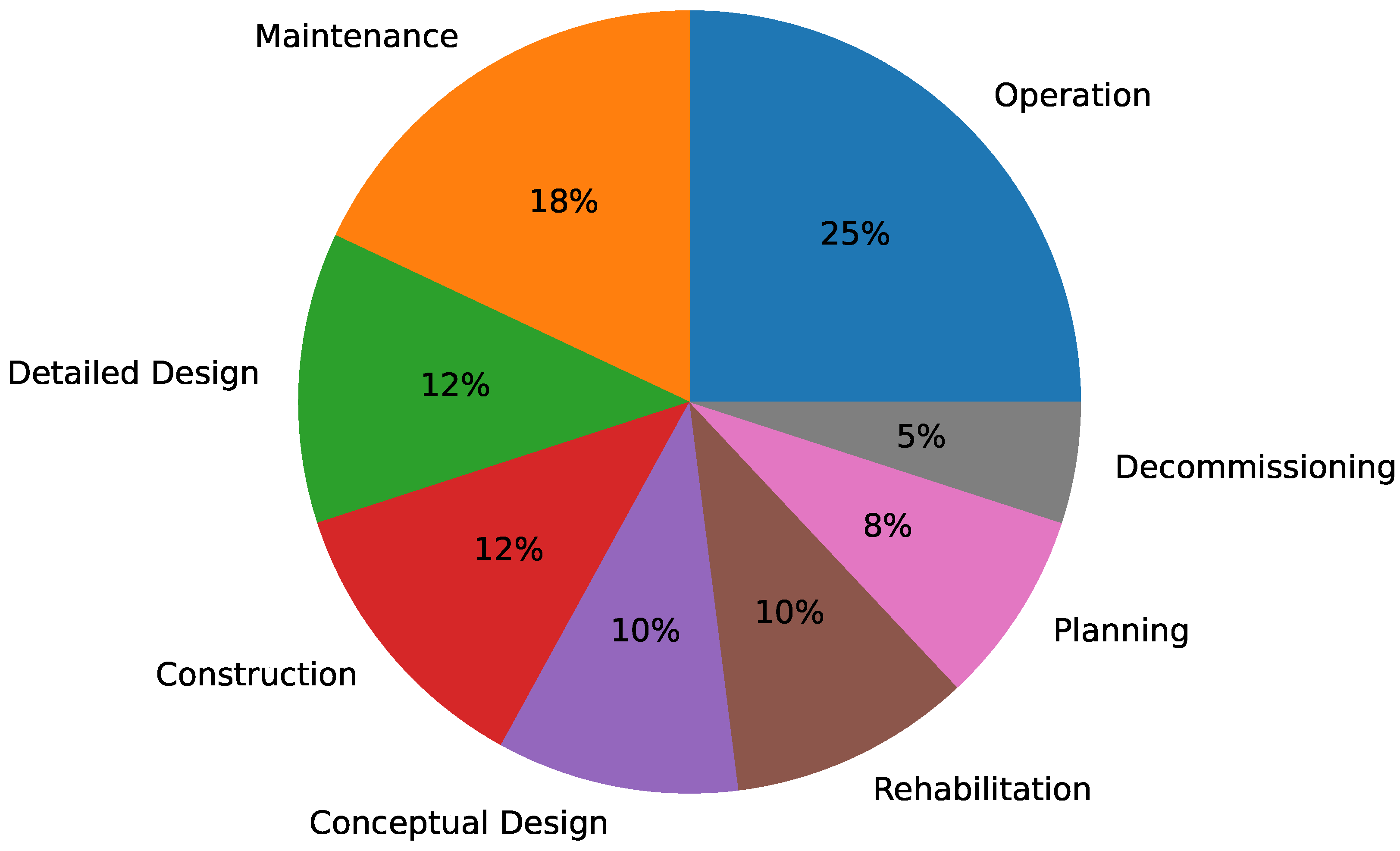
To complement the information summarized in Table 3, Figure 4 presents a graphical overview of the relative maturity of AI research across bridge lifecycle phases. Figure 4 highlights that most research and practical implementations concentrate on operational monitoring and maintenance management.
Figure 4 illustrates that the highest concentration of AI applications is currently found in the operation and maintenance phases, where continuous monitoring data from SHM systems provide suitable inputs for data-driven models [21,22]. In contrast, applications in planning and conceptual design remain less developed and are often based on isolated case studies, although recent reviews in civil engineering and construction indicate a rapid increase in optimization-based decision-support tools [34,53]. The decommissioning phase clearly remains an emerging research topic, highlighting an important opportunity for future studies focusing on AI-supported demolition planning, recycling strategies, and sustainable infrastructure management.

3.4. AI for Bridge SHM: Data, Algorithms, and Functions

Recent reviews on bridge SHM and DL applications in SHM provide a useful basis for analyzing the relationships between dominant data sources, commonly used AI algorithms, and the high-level monitoring functions they support [21,22]. In practice, SHM systems rely on heterogeneous data streams collected from sensors, imaging platforms, and environmental monitoring systems. AI techniques enable the analysis of these datasets to perform tasks such as damage detection, localization, quantification, and structural performance forecasting [31,32,35].
Depending on the type of data collected, different algorithmic approaches are adopted to extract relevant features and interpret structural behavior. Table 4 summarizes the relationships between dominant data types, their typical sources, the AI algorithms most frequently used for their analysis, and the SHM functions they support.
Table 4 highlights the diversity of data sources used in AI-based SHM systems for bridges. Vibration signals represent one of the most widely used sources of information, as they allow the detection of structural changes through variations in modal properties or acceleration patterns [21,22]. Algorithms such as SVM, RF, and ANN are frequently used for this purpose due to their ability to identify subtle variations in structural response data [31,32].
Surface imagery also represents a major source of information for SHM applications. Vision-based DL approaches, particularly CNN architectures, have demonstrated strong performance in the detection of cracks, corrosion, and other surface defects in bridge structures [22,31]. However, these systems often depend on image quality and may be affected by environmental conditions such as lighting variations, shadows, or occlusions [32,35].
Other types of monitoring data provide complementary information for evaluating bridge performance. Displacement measurements obtained from vision systems, GNSS, or laser sensors can be used to assess structural serviceability and detect excessive deflections under traffic loads [21,31,32]. Similarly, acoustic emission monitoring allows the detection of micro-fracture or corrosion events, although this approach remains less widely implemented in large-scale bridge monitoring systems [21,31].
The integration of environmental and traffic data also plays an important role in SHM analysis. These datasets allow AI models to contextualize structural responses and reduce false alarms caused by temperature variations or traffic-induced loads [31]. In recent years, increasing attention has been given to multimodal monitoring frameworks that combine multiple data sources to obtain a more comprehensive assessment of bridge condition [32,35].
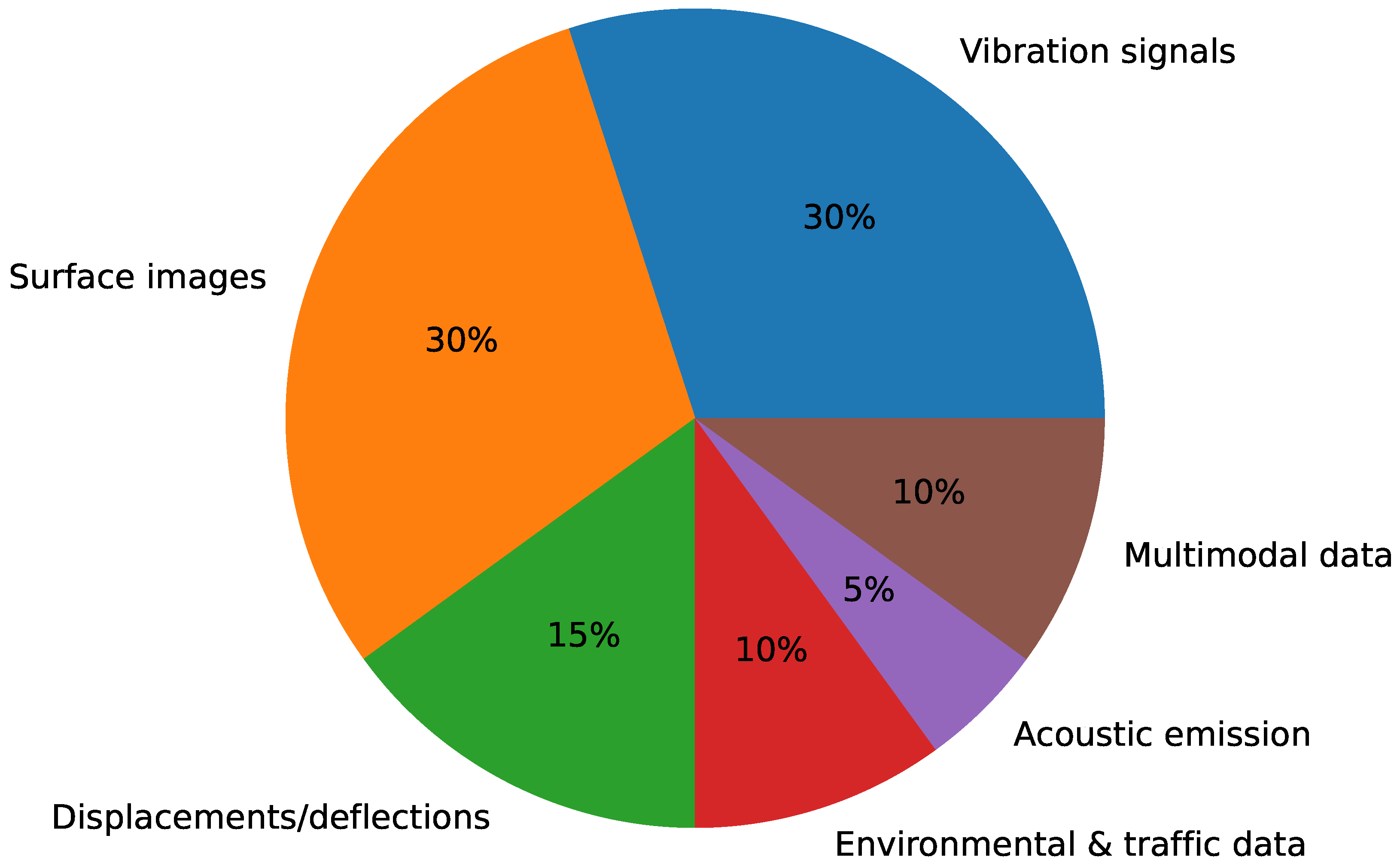
To complement the information summarized in Table 4, Figure 5 presents a graphical representation of the relative prevalence of different data types used in AI-based SHM studies for bridges.
Figure 5 illustrates that vibration signals and surface imagery dominate the current landscape of AI-based SHM research for bridges. These data sources provide rich structural information that can be effectively processed using ML and DL algorithms, enabling automated damage detection and structural condition assessment [21,31]. However, one of the most significant challenges in practical bridge monitoring remains the normalization of environmental and operational effects in order to avoid false positives or false negatives in damage detection systems [22].
Overall, the literature suggests a growing trend toward integrated SHM frameworks that combine multiple data sources and AI models [31]. These emerging approaches are closely related to the concept of digital twin SHM systems, where sensor data, predictive models, and structural simulations are combined to improve robustness, interpretability, and long-term forecasting capabilities for bridge infrastructure management [35].

3.5. Challenges for AI Adoption in Bridge Engineering from the Architecture, Engineering, and Construction Industry Perspective

Reviews addressing AI in construction, AI in civil engineering for sustainability, and Industry 4.0 in transportation systems consistently identify a set of technical and organizational barriers that also affect the adoption of AI in bridge engineering [30,52]. Although many of these challenges originate in the broader AEC sector, they are particularly relevant in bridge projects due to the safety-critical nature of infrastructure and the long service life of bridge assets [33,34,53].
Bridge projects involve multiple stakeholders—including public agencies, designers, contractors, and operators—who manage heterogeneous datasets and decision processes [34]. As a result, the integration of AI technologies into bridge planning, design, monitoring, and maintenance workflows requires not only technical solutions but also organizational and regulatory changes [53]. Table 5 summarizes the main categories of challenges identified in the literature, their manifestations in bridge projects, and potential mitigation strategies.
Table 5 highlights that many barriers to AI adoption in bridge engineering originate from structural characteristics of the AEC industry rather than purely technical limitations [30,52]. One of the most frequently mentioned challenges is sector fragmentation, where multiple contractors, infrastructure agencies, and maintenance operators manage separate datasets and decision processes. This fragmentation often prevents the integration of data required to train reliable AI models and limits the scalability of digital solutions in infrastructure projects [34,53].
Another major issue identified in the literature is the quality and governance of infrastructure data. Bridge inspection records, SHM measurements, and traffic datasets are often incomplete or inconsistent, which reduces the reliability of AI-based predictive models [21,30]. The development of standardized data frameworks, integration of BIM with IoT systems, and long-term data governance policies are therefore considered essential steps toward enabling large-scale AI deployment in infrastructure management [52,53].
Human and organizational factors also play a significant role. The lack of professionals with combined expertise in civil engineering and AI limits the capacity of many infrastructure organizations to develop and maintain data-driven systems [55]. In addition, decision-makers may be reluctant to rely on AI-based recommendations in safety-critical applications such as bridge evaluation and maintenance planning [34,52]. Consequently, approaches such as explainable AI and structured validation protocols are increasingly proposed as mechanisms to build trust in AI-assisted engineering decisions [33].
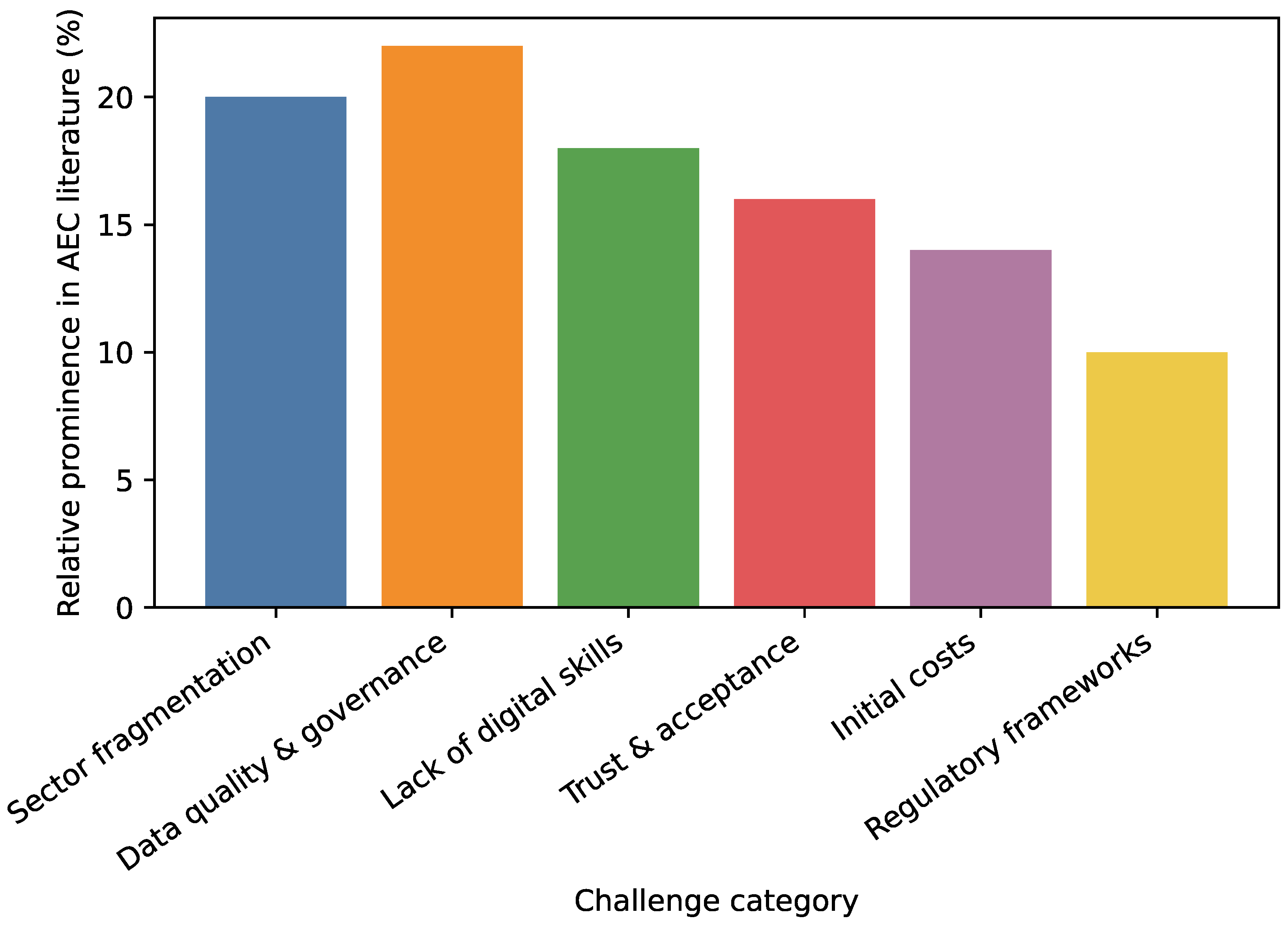
To complement the qualitative information presented in Table 5, Figure 6 provides a graphical overview of the relative prominence of these challenge categories as reported in AEC-related literature.
Figure 6 illustrates that data-related issues and sector fragmentation represent some of the most influential barriers to AI adoption in bridge engineering. These factors directly affect the availability and interoperability of infrastructure datasets required for ML models. At the same time, challenges related to skills, trust, and regulatory frameworks highlight the need for institutional and educational changes to support the integration of AI technologies into engineering practice [53].
Overall, the literature suggests that AI adoption in bridge engineering is likely to progress gradually through hybrid approaches in which AI tools complement rather than replace traditional engineering methods. The integration of AI technologies within broader digital frameworks such as BIM and Industry 4.0 ecosystems for transportation infrastructure appears to be one of the most promising pathways for scaling AI applications in bridge projects [33].

3.6. AI Algorithms and Engineering Tasks in Vehicular Bridge Research

Artificial intelligence algorithms are increasingly applied to a wide range of engineering tasks in vehicular bridge systems, including damage detection, crack identification, structural response prediction, condition assessment, and maintenance prioritization. The selection of an appropriate algorithm typically depends on the type of data available, the complexity of the structural problem, and the level of interpretability required for infrastructure decision-making. In bridge engineering, AI methods are frequently integrated with SHM systems and inspection technologies to support data-driven infrastructure management.
Recent research indicates that both classical ML algorithms and DL models are actively used in bridge-related applications. Traditional models such as support vector machines and ensemble methods remain effective for classification problems involving relatively small datasets, while neural network architectures are increasingly preferred for complex nonlinear problems and high-dimensional datasets such as images or long-term monitoring signals.
Table 6 summarizes the main AI algorithms applied in vehicular bridge engineering, their typical engineering tasks, the types of data they process, and their main advantages and limitations according to the literature.
Table 6 highlights the diversity of AI algorithms currently applied to vehicular bridge engineering problems [21,56]. Classical ML algorithms such as support vector machines and Random Forest models remain widely used for classification tasks such as damage detection and condition assessment, particularly when monitoring datasets are relatively small or when model interpretability is required [60,61].
ANN are widely applied for modeling nonlinear structural behavior and estimating bridge condition indicators from monitoring data [60,61]. These models are capable of capturing complex relationships between structural responses and external loads, although they often require careful training and large datasets to avoid overfitting [80].
Convolutional neural networks dominate image-based inspection applications, particularly for automated crack detection and surface damage identification in concrete bridge elements [66,68]. Their ability to automatically extract relevant features from visual data has significantly improved the efficiency and accuracy of inspection processes, especially when combined with UAV-based monitoring systems [69,70].
For long-term monitoring applications, recurrent neural networks and LSTM architectures have become increasingly relevant because they are designed to process sequential data [80,81]. These models are particularly effective in SHM systems where temporal patterns in vibration signals or strain measurements can indicate evolving structural damage or anomalies [82].
Another emerging research direction involves hybrid physics-informed AI models that integrate ML techniques with physics-based structural models [84]. By incorporating engineering knowledge into data-driven models, these approaches aim to improve both prediction reliability and interpretability, which are critical requirements for safety-critical infrastructure such as bridges [85,86].
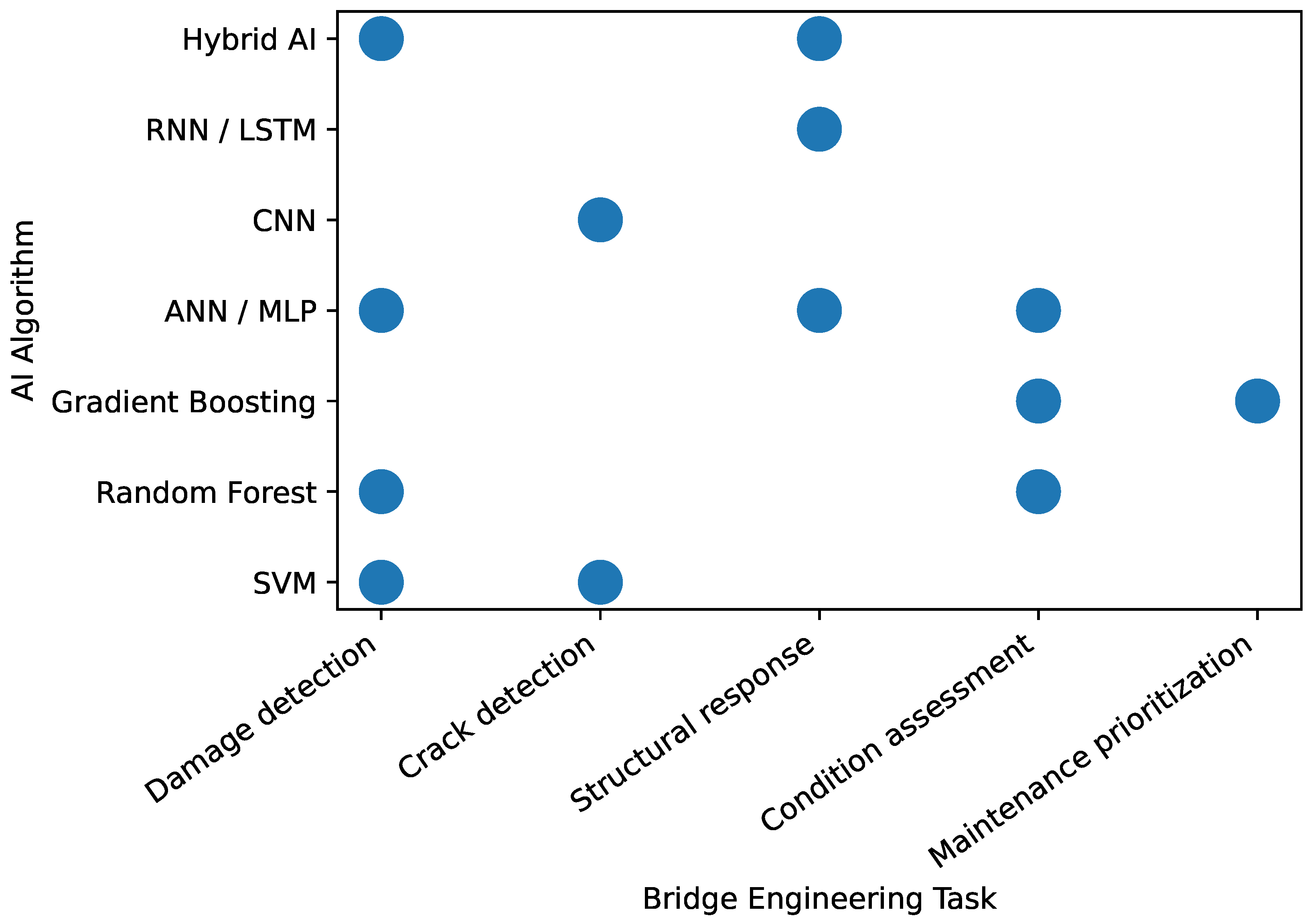
To visually summarize the relationships between AI algorithms and bridge engineering tasks, Figure 7 presents a matrix representation of the algorithms and their most common applications in the literature.
Figure 7 illustrates how different algorithms support different engineering functions. Classical ML methods are primarily used for classification-based damage detection tasks, whereas DL architectures such as CNNs and RNNs are better suited for processing complex datasets such as inspection images or long-term monitoring signals. Hybrid physics-informed models represent a growing research direction aimed at improving the reliability and interpretability of AI-based structural analysis.
Despite the significant progress achieved in recent years, several challenges remain. Many AI algorithms require large labeled datasets that may not be available for all bridge types or structural conditions. DL models can also be computationally intensive, which may limit their deployment in real-time monitoring systems or edge computing environments. In addition, the interpretability of AI models remains a critical issue when engineering decisions affect public safety.
Recent studies therefore emphasize the importance of explainable AI techniques, multimodal data fusion, and hybrid approaches that combine data-driven algorithms with domain knowledge to improve the transparency and reliability of AI-assisted bridge engineering systems [78].

3.7. AI Applications Across Different Types of Vehicular Bridges

Artificial intelligence techniques are increasingly applied to a wide variety of vehicular bridge structures, enabling automated inspection, SHM, damage detection, and predictive maintenance. The specific AI methods and monitoring technologies used often depend on the structural characteristics of the bridge type, the accessibility of structural components, and the availability of monitoring or inspection data.
In recent years, advances in ML, DL, and computer vision have enabled the development of automated systems capable of processing sensor data, visual inspection images, and structural monitoring signals. These technologies allow engineers to detect structural defects earlier, automate inspection processes, and improve the reliability of bridge condition assessment.
Table 7 summarizes the main AI applications reported in the literature for different types of vehicular bridges, together with the monitoring data used, main findings, and the main challenges associated with each bridge category.
Table 7 shows that the application of AI varies significantly depending on the structural configuration of the bridge. Steel bridges have received significant attention in AI-based monitoring studies due to the complexity of their structural connections and the need for continuous monitoring of bolts, welds, and fatigue-prone components [21,66]. ML algorithms combined with vibration monitoring and UAV imagery have proven particularly effective for detecting structural anomalies in these bridges [82].
Reinforced concrete bridges represent the most common bridge type worldwide, which explains the large number of studies focusing on automated crack detection and defect classification [92]. Computer vision methods based on convolutional neural networks and advanced object detection models such as YOLO have demonstrated high accuracy in identifying cracks and surface defects from inspection images collected manually or via UAV platforms [68].
Prestressed concrete bridges present different challenges because internal prestressing tendons are difficult to access for direct inspection. As a result, several studies have explored ML approaches capable of estimating prestress losses indirectly using vibration or strain monitoring data [103].
Long-span bridge structures such as cable-stayed and suspension bridges often rely on large sensor networks to monitor environmental loads and structural responses [57]. In these bridges, AI models have been used to predict wind-induced vibrations and provide early warning systems during extreme weather events [90]. In addition, UAV-based inspection combined with DL algorithms enables automated inspection of critical structural components such as bolts and cable connections [104].
Composite bridges have also benefited from advances in ML applied to three-dimensional data processing. Neural networks applied to LiDAR point clouds enable automated segmentation and classification of structural components, facilitating the development of digital bridge models and bridge information modeling systems [105].
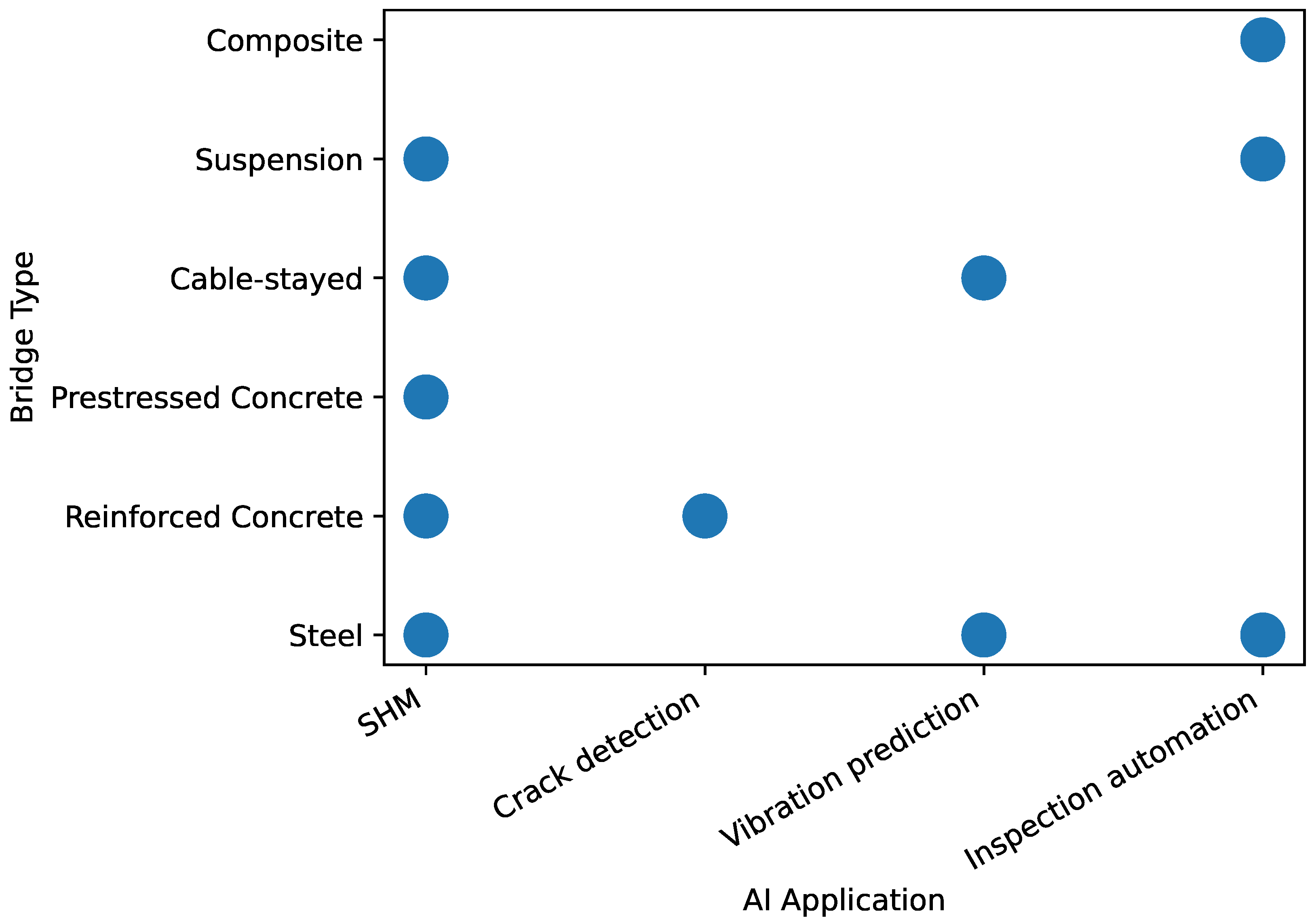
To complement the information summarized in Table 7, Figure 8 presents a matrix representation showing the relationship between bridge types and the main AI applications reported in the literature.
Figure 8 illustrates that SHM and automated inspection applications appear across several bridge types, particularly for steel and reinforced concrete bridges where extensive monitoring data and inspection images are available. In contrast, specialized bridge types such as cable-stayed and suspension bridges tend to focus on vibration prediction and environmental load monitoring due to their sensitivity to wind and dynamic loads.
Overall, the literature suggests that AI-based bridge research has concentrated primarily on steel and reinforced concrete bridges because of their widespread use and the availability of monitoring datasets. However, emerging research increasingly explores AI applications in long-span and composite bridge systems, highlighting opportunities for expanding intelligent monitoring technologies across a broader range of bridge structures.

3.8. Sensors and Monitoring Technologies for AI-Based Bridge Structural Health Monitoring

Artificial intelligence-based SHM systems rely on the availability of sensing technologies capable of capturing structural responses under operational and environmental conditions. In bridge engineering, different sensor technologies are used to collect vibration, strain, displacement, acoustic, and visual data, which can then be analyzed using ML and DL algorithms to detect damage, predict structural responses, and support infrastructure management decisions.
Recent advances in sensing technologies, wireless monitoring systems, and computer vision platforms have significantly expanded the range of datasets available for AI-driven bridge monitoring. These technologies allow engineers to implement continuous monitoring systems capable of detecting structural anomalies and supporting predictive maintenance strategies.
Table 8 summarizes the main sensor technologies used in AI-based bridge monitoring systems, including the types of data collected, typical AI algorithms applied, monitoring applications, and the advantages and limitations associated with each sensing technology.
Table 8 highlights the diversity of sensing technologies used in AI-based bridge SHM systems. Accelerometers remain one of the most widely used sensors because they provide vibration data suitable for ML algorithms designed to detect structural anomalies through pattern recognition in dynamic responses [106,107]. These sensors are widely adopted due to their relatively low cost, high sampling frequency, and compatibility with vibration-based SHM methods [31,111].
Fiber optic sensors, particularly fiber Bragg grating (FBG) technologies, have gained increasing attention due to their ability to provide distributed strain measurements along structural components [112,113]. These sensors are immune to electromagnetic interference and allow large-scale monitoring of bridge strain fields and cable forces, making them highly suitable for AI-driven anomaly detection and long-term monitoring systems [114,115].
Computer vision systems represent another major category of monitoring technologies used in AI-based bridge inspection [113,120]. Cameras, UAV platforms, and low-cost imaging systems allow engineers to collect high-resolution images that can be processed using DL algorithms such as convolutional neural networks and transformer-based models to detect cracks, corrosion, and surface defects automatically [31,107].
Other sensing technologies such as GNSS and laser vibrometry sensors are often used to measure structural displacements in large-span bridges [112]. These sensors complement vibration-based monitoring systems by providing information about quasi-static structural movements that cannot be easily captured by accelerometers alone [107].
In addition, multimodal monitoring systems that combine multiple sensing technologies are increasingly used in modern bridge monitoring frameworks [120]. By integrating heterogeneous data sources, these systems improve the robustness of AI models and reduce false alarms, enabling more reliable structural condition assessment and supporting the development of digital twin infrastructure systems [17].
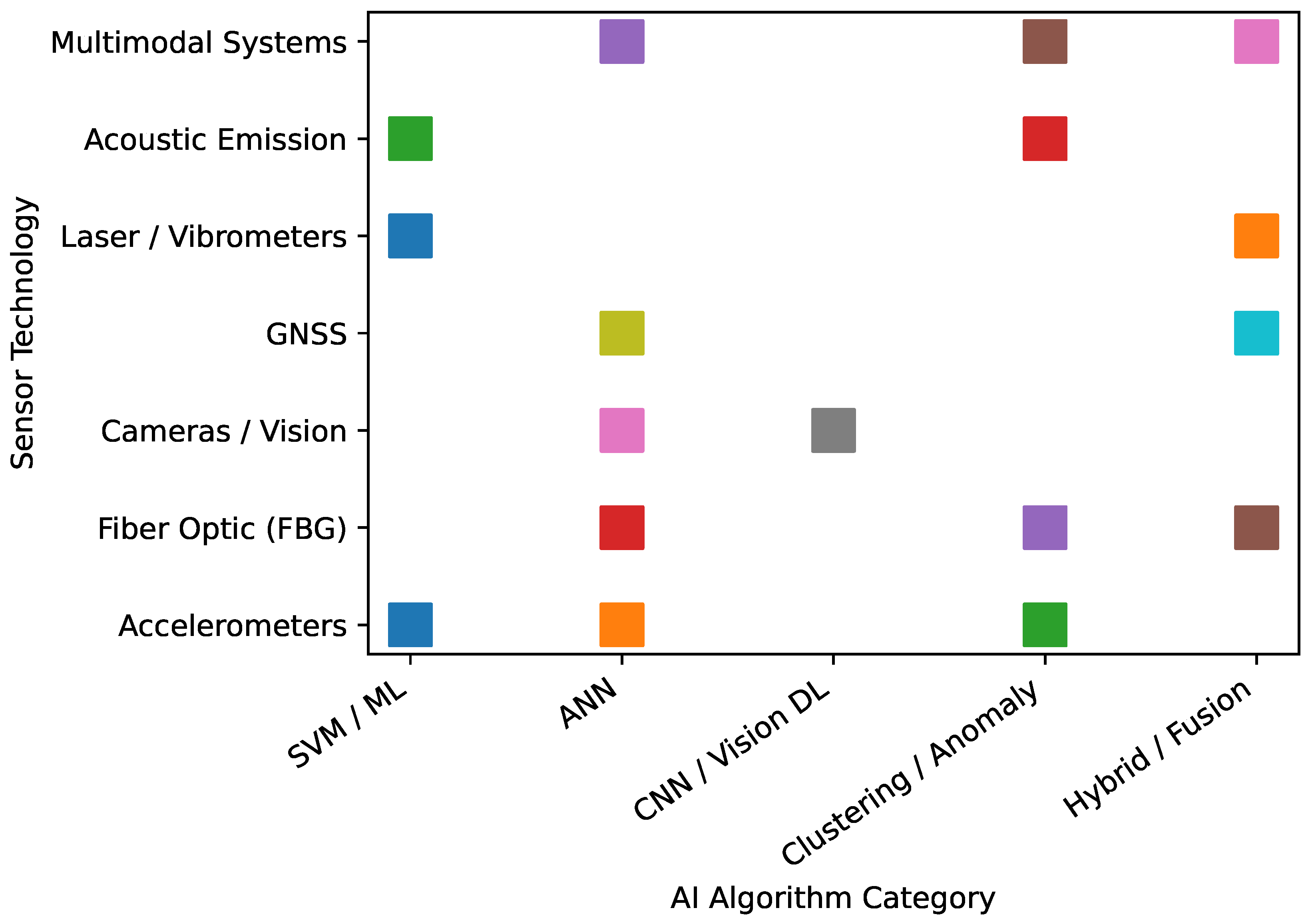
To complement the information summarized in Table 8, Figure 9 presents a matrix representation of the relationship between sensor technologies and the categories of AI algorithms commonly used in bridge SHM.
Figure 9 illustrates that vibration sensors such as accelerometers are commonly associated with classical ML algorithms and neural networks, whereas vision-based monitoring systems are primarily linked to convolutional neural networks and other DL architectures. Fiber optic sensors and multimodal monitoring systems are frequently used together with hybrid AI models and data fusion techniques to improve monitoring reliability and enable more advanced digital twin frameworks.
Overall, the integration of advanced sensing technologies with AI algorithms represents one of the most important technological developments in modern bridge SHM. Continued progress in sensor networks, wireless monitoring systems, and AI-based data analytics is expected to further enhance the capabilities of intelligent bridge infrastructure systems.

3.9. Performance Metrics for AI Models in Bridge Structural Health Monitoring and Inspection

Evaluating the performance of AI models is a critical step in bridge SHM and automated inspection systems. Different metrics are used depending on whether the AI model performs classification, regression, anomaly detection, or object detection tasks. In bridge engineering, performance metrics are essential to assess the reliability of AI models used for damage detection, crack identification, condition assessment, and deterioration prediction.
Recent studies emphasize that selecting appropriate performance metrics is particularly important in safety-critical infrastructure systems such as bridges, where false alarms, missed damage detection, or inaccurate predictions may directly affect maintenance decisions and structural safety.
Table 9 summarizes the most commonly used performance metrics reported in AI-based bridge monitoring and inspection studies, together with their interpretation, advantages, and limitations.
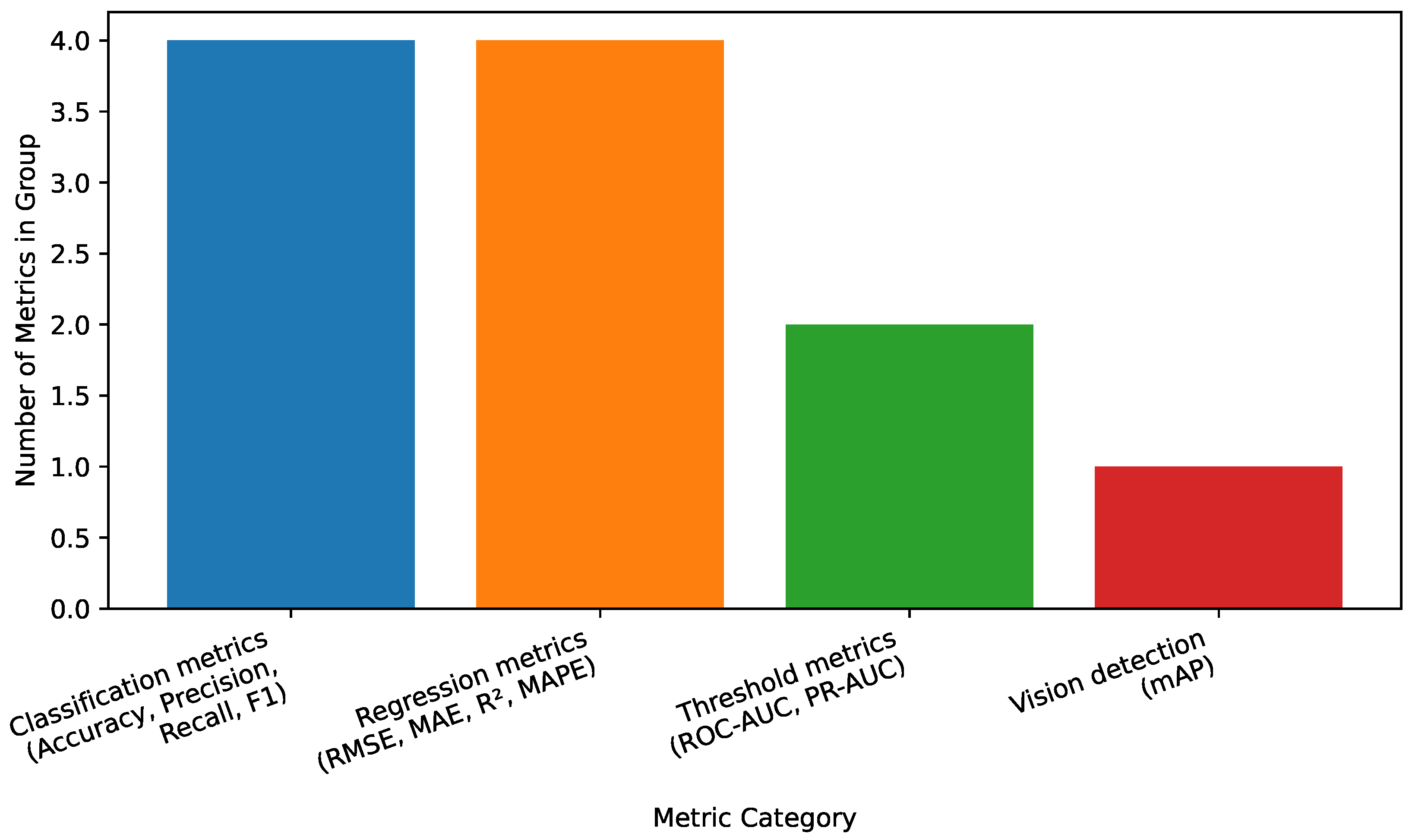
Table 9 highlights that different categories of performance metrics are required depending on the nature of the AI task. Classification metrics such as accuracy, precision, recall, and F1-score are commonly used in crack detection and defect classification models, where the objective is to distinguish between damaged and undamaged structural states.
Regression metrics including RMSE, MAE, R2, and MAPE are widely used in predictive models that estimate structural deterioration, traffic loads, or bridge condition indices. These metrics quantify how closely model predictions match observed structural responses.
For anomaly detection and damage detection under uncertain environmental conditions, threshold-based evaluation methods such as ROC-AUC and PR-AUC are frequently used. These metrics help determine optimal detection thresholds and evaluate the trade-off between missed damage detection and false alarms.
In image-based inspection systems, object detection models such as YOLO or Faster R-CNN typically use the mean average precision (mAP) metric to evaluate the combined accuracy of damage localization and classification.
To complement the information summarized in Table 9, Figure 10 presents a graphical overview of the main categories of performance metrics used in AI-based bridge monitoring studies.
Figure 10 illustrates that performance evaluation in AI-based bridge monitoring typically involves multiple categories of metrics. Classification metrics dominate crack detection and defect identification tasks, regression metrics are used for structural response and deterioration prediction, and detection metrics such as ROC-AUC or PR-AUC support anomaly detection in SHM systems. Vision-based inspection models rely on object detection metrics such as mAP to evaluate both localization and classification performance.
Overall, the use of multiple complementary performance metrics is essential to ensure a reliable evaluation of AI models applied to bridge monitoring and inspection. This multi-metric evaluation approach helps researchers and infrastructure managers better understand model performance and limitations when deploying AI-based systems in real-world bridge infrastructure.

3.10. Datasets and Experimental Platforms for AI-Based Bridge Structural Health Monitoring

The development and validation of AI methods for bridge SHM rely heavily on the availability of representative datasets and experimental platforms. These datasets allow researchers to evaluate damage detection algorithms, train ML models, and validate monitoring strategies under realistic structural and environmental conditions.
Bridge monitoring datasets can originate from several sources, including long-term monitoring systems installed on real bridges, controlled laboratory experiments, digital twin platforms, UAV-based inspection systems, and benchmark datasets designed specifically for research purposes. These experimental environments play a fundamental role in advancing AI-based SHM techniques by providing high-quality structural response data and controlled damage scenarios.
Table 10 summarizes representative datasets and experimental platforms that have been widely used in the development of AI methods for bridge monitoring. The table includes information on bridge type, data collected, AI techniques applied, and the main research objectives associated with each dataset or platform.
Table 10 highlights the diversity of experimental platforms used to develop and validate AI methods in bridge monitoring research. Benchmark datasets such as the Z24 bridge dataset remain widely used because they provide controlled damage scenarios and long-term monitoring data suitable for evaluating vibration-based damage detection algorithms.
Large-scale monitoring systems installed on real bridges, such as the Tsing Ma Bridge and Tianjin Yonghe Bridge monitoring systems, provide valuable long-term datasets that capture structural responses under real environmental and operational conditions. These datasets are particularly important for developing AI models capable of distinguishing structural damage from environmental variability.
Laboratory-scale bridge models and full-scale experimental test structures provide controlled environments for validating new AI algorithms. These experimental setups allow researchers to impose known damage scenarios and evaluate the performance of both supervised and unsupervised ML methods.
More recently, digital twin platforms and UAV-based inspection datasets have become increasingly important for AI-based bridge monitoring. Digital twin frameworks enable real-time integration of monitoring data with numerical models, while UAV photogrammetry and vision-based inspection systems provide detailed geometric and surface condition information for automated damage detection.
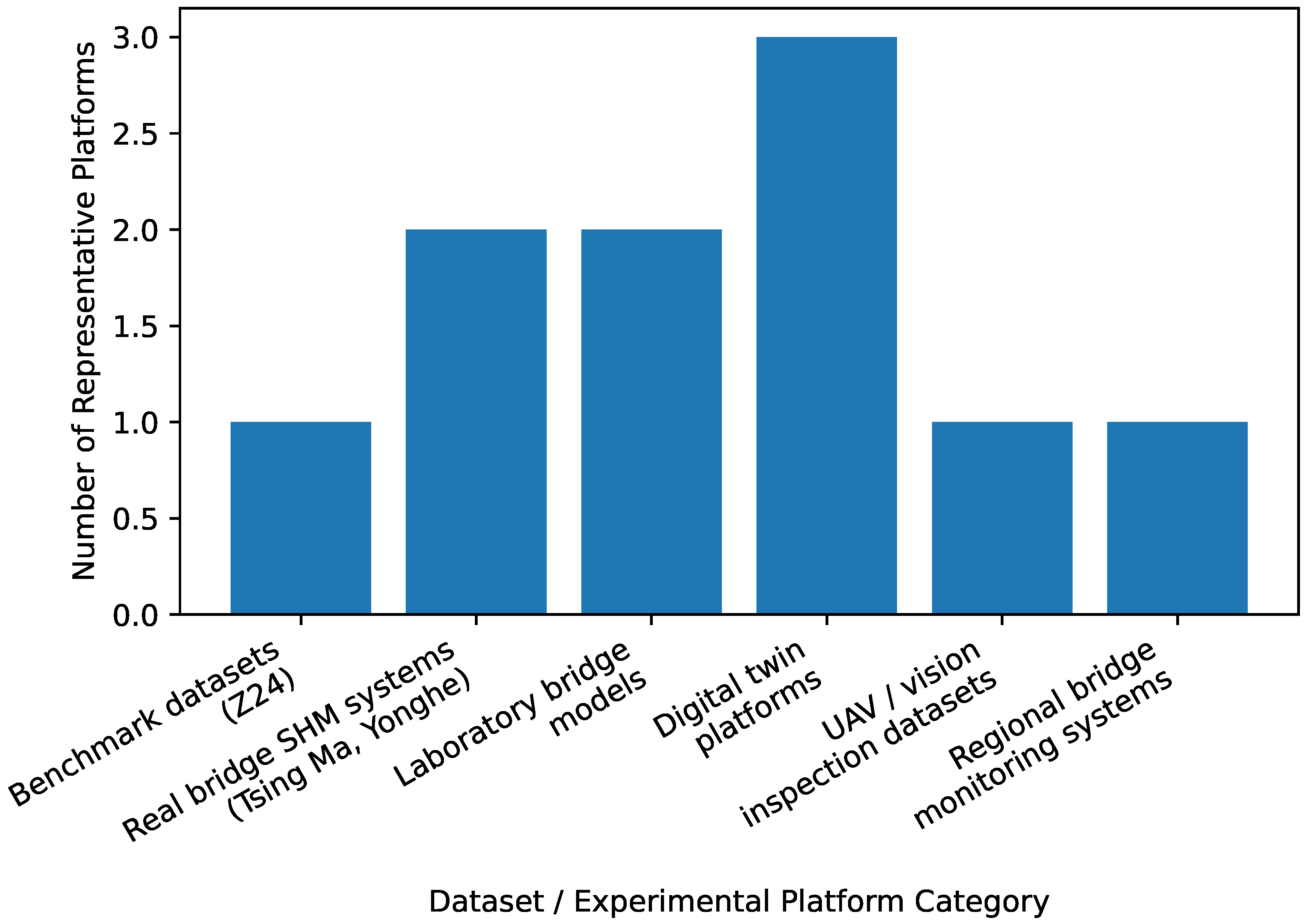
To complement the information summarized in Table 10, Figure 11 presents an overview of the main categories of datasets and experimental platforms used in AI-based bridge monitoring research.
Figure 11 illustrates that research in AI-based bridge monitoring relies on a combination of benchmark datasets, real-world SHM systems, laboratory experiments, digital twin environments, and UAV-based inspection datasets. This diversity of data sources is essential for developing robust AI models capable of operating under the complex environmental and operational conditions typical of bridge infrastructure systems.
Overall, the availability of high-quality datasets and experimental platforms remains a critical factor for advancing AI applications in bridge structural health monitoring. Continued development of open datasets, digital twin platforms, and integrated monitoring systems will play a main role in improving the reliability and scalability of AI-based bridge monitoring technologies.

4. Discussion

4.1. Challenges and Limitations for AI Adoption in Vehicular Bridge Engineering

Despite the growing interest in AI for bridge engineering, several technical and organizational challenges still limit the large-scale deployment of AI-driven systems in vehicular bridge management. Although recent studies demonstrate significant advances in SHM, automated inspection, and predictive maintenance, the integration of these technologies into real infrastructure systems remains constrained by data availability, computational requirements, and system interoperability [21,30].
One of the main barriers relates to the availability and quality of infrastructure datasets. AI models require large volumes of reliable monitoring data, including inspection records, vibration measurements, and environmental information. However, many bridge monitoring datasets remain incomplete or inconsistent, which limits the training and generalization capability of ML models across different bridge types and operational conditions [21].
Another challenge concerns the computational demands of advanced AI models. DL approaches used for automated inspection or time-series monitoring often require significant computational resources, particularly when processing large image datasets or continuous sensor measurements [30].
Model interpretability also represents a critical issue in safety-critical infrastructure systems such as bridges. Many AI algorithms operate as “black-box” models, making it difficult for engineers to understand how predictions are generated or validated, which may reduce confidence in AI-assisted decision-making processes [34].
Similarly, the integration of AI technologies with existing infrastructure management systems remains challenging. Many legacy bridge management platforms were not designed for advanced data analytics, creating interoperability issues with emerging digital technologies such as BIM and IoT monitoring systems [52].
Table 11 summarizes the main challenges identified in the literature regarding the adoption of AI in vehicular bridge engineering, together with their implications for infrastructure monitoring systems and potential research directions for addressing these limitations.
The challenges summarized in Table 11 highlight that the adoption of AI in bridge engineering depends not only on algorithmic advances but also on improvements in data infrastructure, computational frameworks, and institutional practices. Data-related challenges remain particularly critical because AI models require large volumes of high-quality information to detect structural anomalies and predict deterioration trends reliably [21,30].
The issue of model interpretability is also receiving increasing attention in infrastructure research. Because bridges are safety-critical systems, infrastructure managers must understand how AI models generate predictions before these models can be integrated into operational decision-making processes. As a result, explainable AI approaches and hybrid models that combine physics-based structural analysis with ML techniques are emerging as promising solutions [34].
Finally, the integration of AI with broader digital infrastructure ecosystems is expected to play a crucial role in overcoming many of the limitations identified in this section. The convergence of AI, sensor networks, digital twin platforms, and smart infrastructure management systems may enable the development of next-generation bridge monitoring frameworks capable of supporting real-time diagnostics, predictive maintenance, and data-driven infrastructure planning [52].

4.2. Future Trends and Research Opportunities for Vehicular Bridges

Several recent reviews highlight the growing role of emerging digital technologies such as digital twins, UAV-based inspection systems, AI–IoT integration, and sustainability-oriented approaches in transportation infrastructure [30,31,53]. These technological directions are increasingly shaping the future development of intelligent bridge systems capable of supporting predictive maintenance, automated inspection, and data-driven asset management [34,35].
In the context of vehicular bridges, these emerging technologies are expected to complement existing SHM systems and traditional engineering workflows by enabling more integrated and adaptive infrastructure management strategies. Table 12 summarizes the main emerging research directions identified in the literature, together with their expected role in bridge engineering, current level of technological maturity, and the main research challenges that remain open.
Table 12 highlights several technological directions that are expected to significantly influence the future development of AI-based bridge engineering [30,31]. Among these trends, the integration of digital twin frameworks with SHM systems is receiving increasing attention, as it enables the creation of continuously updated virtual representations of bridge structures capable of supporting real-time diagnostics and long-term performance prediction [35,53].
Another rapidly evolving area involves the combination of UAV-based inspection with computer vision and AI techniques. These technologies allow engineers to perform rapid inspections of structural components that are difficult to access using traditional inspection methods [22]. Although numerous studies have demonstrated the effectiveness of UAV-assisted inspection, challenges remain related to environmental conditions, precise image registration, and regulatory constraints governing drone operations [32].
The table also indicates growing interest in sustainability-oriented AI applications. OA and data-driven decision-support tools are increasingly being explored to minimize the environmental impact of bridge design and maintenance strategies [53]. However, the lack of standardized sustainability metrics specifically adapted to bridge infrastructure remains a major research challenge [34].
In addition, the integration of AI technologies within broader Industry 4.0 frameworks is expected to enable more comprehensive asset management systems for transportation infrastructure. These platforms combine BIM, IoT sensors, and AI analytics to support integrated monitoring and decision-making processes, although issues related to interoperability and large-scale deployment still require further research [33].
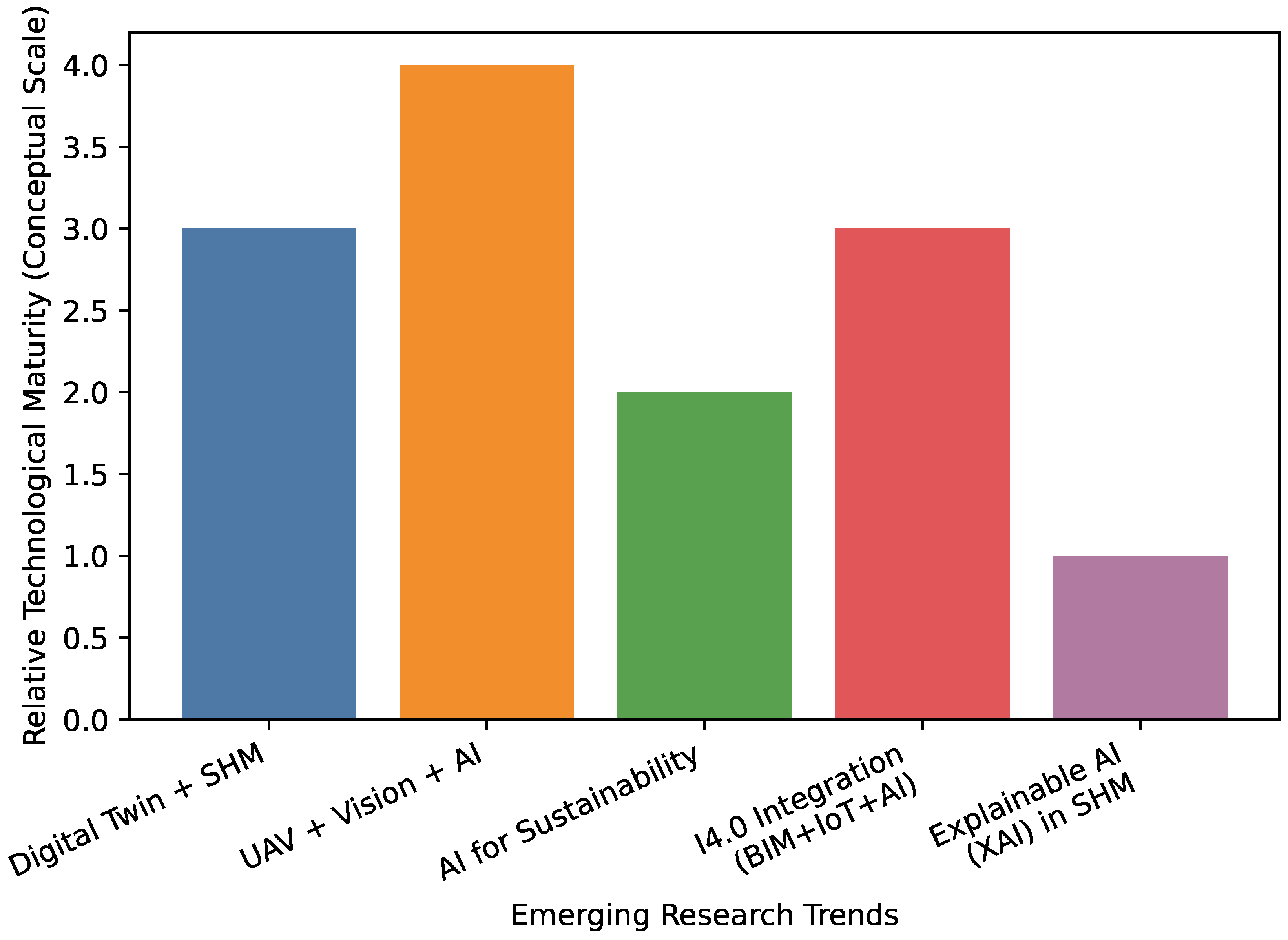
To complement the qualitative analysis presented in Table 12, Figure 12 illustrates the relative technological maturity of the main emerging AI trends identified in the literature for vehicular bridge applications.
Figure 12 shows that UAV-assisted inspection combined with AI techniques currently represents one of the most mature and rapidly expanding research directions in bridge monitoring. Digital twin frameworks and Industry 4.0 integration are also gaining increasing attention as part of broader smart infrastructure initiatives [30,31]. In contrast, explainable AI and sustainability-oriented AI applications remain relatively early-stage research areas, highlighting important opportunities for future work focused on improving the transparency, reliability, and environmental performance of AI-assisted bridge engineering systems [33,35,53].

4.3. Comparison of Review Articles on Artificial Intelligence for Bridge Engineering

The comparative review presented in Table 13 highlights the distinct approach of this study compared with the existing literature on AI applications in bridge engineering and SHM. Previous review articles have mainly focused on specific technological aspects such as vibration-based damage detection, sensing technologies, or computer vision-based inspection methods. While these works provide valuable insights into individual domains of bridge monitoring, most studies do not integrate the entire technological ecosystem required for intelligent bridge infrastructure.
In particular, early reviews focused primarily on signal-processing methods and vibration-based monitoring techniques. With the rapid growth of ML and DL methods in civil engineering, more recent studies have expanded their scope to include data-driven damage detection methods, computer vision inspection techniques, and digital infrastructure management frameworks.
The present review adopts a broader perspective by integrating multiple research dimensions, including AI algorithms, sensing technologies, monitoring datasets, bridge lifecycle applications, and emerging digital twin platforms. This integrated approach provides a comprehensive understanding of how AI can support intelligent vehicular bridge infrastructure systems.
The comparative analysis summarized in Table 13 reveals the progressive evolution of research in SHM and bridge infrastructure monitoring. Early studies established the theoretical and methodological foundations of SHM systems and damage detection techniques [29,149]. These works focused primarily on signal-processing techniques and physics-based monitoring approaches.
More recent studies have increasingly incorporated ML and DL techniques into bridge monitoring systems. For instance, several reviews highlight the growing use of ML algorithms for damage detection and condition assessment in civil infrastructure [27]. Similarly, DL architectures such as convolutional neural networks have been widely applied to SHM and automated inspection tasks [28].
Computer vision-based monitoring systems have also emerged as an important research direction in infrastructure inspection, particularly through the use of UAV-based imaging platforms and automated defect detection algorithms [26]. Despite these advances, most existing reviews remain limited to specific technological domains and rarely provide an integrated perspective that simultaneously considers sensing technologies, datasets, AI algorithms, and infrastructure lifecycle applications.
Table 14 highlights the progressive expansion of AI applications in bridge engineering. Early studies focused primarily on vibration-based monitoring and sensor technologies used in SHM systems. Later research incorporated ML algorithms for automated damage detection and infrastructure condition assessment.
The comparison presented in Table 14 highlights the progressive expansion of AI applications in bridge engineering. Early studies focused primarily on vibration-based monitoring and sensor technologies used in SHM systems. Later research incorporated ML algorithms for automated damage detection and infrastructure condition assessment.
More recent developments include DL-based inspection systems, computer vision monitoring techniques, and UAV-based inspection platforms. Despite these advances, most existing review articles remain limited to specific technological domains such as signal processing methods, ML algorithms, or vision-based monitoring techniques.
In contrast, the present work adopts a systems-oriented perspective that integrates these technological layers within a unified framework for vehicular bridge infrastructure. By combining AI algorithms, sensing technologies, monitoring datasets, digital twin platforms, and lifecycle infrastructure management strategies, this study provides a comprehensive synthesis of the current state of AI-driven bridge engineering and identifies future research directions toward intelligent infrastructure systems.

4.4. Research Gaps and Future Directions in Artificial Intelligence for Vehicular Bridge Engineering

Despite the rapid progress in AI applications for SHM and bridge infrastructure management, several important challenges remain. Although ML and DL techniques have demonstrated promising capabilities for damage detection, automated inspection, and structural condition assessment, many AI-based approaches are still evaluated under controlled experimental conditions rather than real bridge monitoring environments.
One of the main challenges identified in the literature is the limited availability of large-scale monitoring datasets for training and validating AI models. Many studies rely on laboratory experiments or small monitoring datasets, which restricts the ability of AI models to generalize to different bridge types and environmental conditions [27,28].
Another important limitation concerns the influence of environmental and operational variability on monitoring data. Structural responses measured by sensors are strongly affected by temperature variations, humidity, traffic loads, and other environmental factors. These influences may lead to false positives in damage detection systems if not properly accounted for during model development and data preprocessing [29].
Recent advances in computer vision have also enabled automated inspection systems capable of detecting cracks, corrosion, and other surface defects using images and videos collected from cameras or UAV platforms. However, challenges remain regarding the robustness of vision-based monitoring systems under varying lighting conditions, occlusions, and complex structural geometries [26].
Table 15 summarizes the main research gaps identified in the literature together with potential research directions for advancing AI applications in vehicular bridge engineering.
The research gaps summarized in Table 15 highlight several challenges that must be addressed to enable the large-scale deployment of AI systems in bridge infrastructure monitoring. One of the most critical challenges is the limited availability of large-scale monitoring datasets suitable for training robust AI models. Although several SHM datasets exist, many models are still trained using relatively small experimental datasets, which limits their ability to generalize to different bridge types and environmental conditions.
Environmental variability also represents a major challenge for AI-based monitoring systems. Structural responses are strongly influenced by environmental and operational conditions, which may mask damage-related patterns in monitoring data. Addressing this challenge requires the development of advanced data-driven methods capable of separating environmental effects from structural damage indicators.
In addition, computer vision techniques have shown significant potential for automated bridge inspection. However, vision-based monitoring systems remain sensitive to variations in lighting conditions, camera perspectives, and environmental noise. Improving the robustness of DL models under real-world inspection conditions remains an important research direction.
Overall, advancing AI applications in vehicular bridge engineering will require the development of large-scale monitoring datasets, improved multimodal monitoring frameworks, and more robust AI models capable of operating reliably under complex real infrastructure conditions.

4.5. Evolution and Future Outlook of Artificial Intelligence Applications in Vehicular Bridge Engineering

The temporal evolution of scientific production across different subject areas, including engineering, computer science, materials science, and mathematics, between 2018 and 2026 reveals a clear dominance of engineering and computer science within the research landscape. Engineering consistently exhibits the highest percentage of publications, particularly in early stages such as 2018, where its contribution significantly surpasses that of other disciplines. This behavior reflects the strong application-oriented nature of the field, where infrastructure development and structural problem-solving remain central.
Over time, a gradual stabilization and redistribution of contributions among disciplines can be observed (Figure 13). Computer science maintains a strong and sustained presence throughout the analyzed period, highlighting the central role of AI techniques in advancing bridge engineering solutions. In contrast, materials science and mathematics show comparatively lower participation, although materials science presents slight growth trends in intermediate years, suggesting a growing interest in integrating material behavior with intelligent computational systems.
From a systemic perspective, this temporal distribution indicates that the field is predominantly rooted in engineering-driven applications supported by computational methodologies (Figure 14). However, the relatively limited contribution from materials science suggests that the integration of advanced materials with AI in bridge design remains underdeveloped, representing a significant opportunity for future research. This imbalance also reflects a prevailing focus on algorithmic and data-driven approaches rather than on material–structure interactions, which are essential for achieving more holistic and sustainable infrastructure systems.
A cumulative analysis of the distribution of publications by subject area (Figure 15) shows that engineering accounts for 42.1% of the total research output, followed by computer science with 38.4%, while materials science and mathematics contribute 11.4% and 8.1%, respectively. This distribution confirms that the field is primarily driven by engineering and computational disciplines, which together represent more than 80% of the total scientific production.
The predominance of engineering reflects the practical orientation of the research, where AI is mainly applied to solve real-world structural challenges. Similarly, the strong representation of computer science underscores the dependence on ML and data-driven methodologies as core drivers of innovation. Conversely, the lower participation of materials science and mathematics suggests that fundamental and theoretical aspects are less emphasized, potentially limiting the development of more integrated and multidisciplinary frameworks.
The growth trends observed over time indicate a clear upward trajectory across all disciplines, particularly from 2021 onwards. Engineering and computer science exhibit the most significant increases, with pronounced growth peaks between 2023 and 2025, reflecting an accelerated expansion of research activity in recent years. Mathematics also demonstrates a notable increase in later years, indicating a growing interest in advanced modeling, optimization techniques, and theoretical foundations that support AI applications.
This sustained upward trend reflects the rapid evolution of the field and the increasing relevance of AI in infrastructure engineering. The simultaneous growth across multiple disciplines suggests a transition toward a more interdisciplinary research paradigm. However, the faster expansion of computational fields compared to materials science indicates that the development of intelligent systems is progressing more rapidly than the integration of physical material considerations.
Overall, the combined analysis of these trends demonstrates that the field is undergoing sustained and accelerated growth, driven primarily by engineering and computer science. While this evolution highlights the technological maturity of AI applications, it also reveals a critical opportunity to strengthen interdisciplinary integration, particularly with materials science, in order to develop more comprehensive, efficient, and sustainable solutions for vehicular bridge design.

4.6. Artificial Intelligence Framework for Vehicular Bridge Lifecycle Management

To synthesize the results of this systematic review, Figure 16 presents an integrated framework illustrating the role of AI across the lifecycle of vehicular bridges. The framework organizes AI applications into seven interconnected stages that represent the main phases of bridge data generation, monitoring, analysis, and infrastructure management. Together, these stages illustrate how AI technologies enable a transition from traditional inspection-based practices toward predictive and data-driven bridge management systems.
Raw Data and Infrastructure Information: The first stage of the framework corresponds to the collection of infrastructure data describing the bridge system. These datasets typically include bridge geometry, structural design parameters, material properties, traffic loading information, environmental conditions, and historical inspection records. Such data provide the foundational knowledge required for training AI models and establishing baseline structural behavior for monitoring systems.
Data Acquisition and Structural Monitoring: Once infrastructure information is defined, structural monitoring systems are used to capture real-time structural responses. Modern bridge monitoring relies on SHM sensor networks that may include accelerometers, strain gauges, displacement sensors, GNSS receivers, and environmental sensors. In addition, unmanned aerial vehicles (UAVs) and computer vision systems are increasingly used to perform automated inspections and collect high-resolution imagery of structural components.
AI-Based Data Processing and Feature Extraction: Following data acquisition, AI algorithms are applied to process and analyze monitoring data. Techniques such as signal processing, feature extraction, dimensionality reduction, and multimodal data fusion allow engineers to extract relevant structural information from large monitoring datasets. ML pipelines are commonly used to transform raw sensor signals and inspection data into meaningful indicators of structural performance.
Structural Assessment and Damage Detection: The processed monitoring data can then be used to evaluate the structural condition of the bridge. AI-based damage detection methods enable the identification of structural anomalies such as cracks, corrosion, stiffness reductions, or abnormal vibration patterns. Computer vision algorithms are particularly effective for detecting surface damage from inspection images, while ML models can identify hidden structural degradation through vibration-based monitoring.
Predictive Maintenance and Decision Support: Beyond damage identification, AI techniques support predictive maintenance strategies. By analyzing historical monitoring data and deterioration trends, AI models can estimate the remaining useful life of bridge components and forecast future structural performance. These predictive capabilities enable infrastructure managers to prioritize maintenance interventions and optimize maintenance planning based on risk and performance indicators.
Bridge Lifecycle and Asset Management: Artificial intelligence technologies can also be integrated into bridge management systems (BMSs) and infrastructure asset management platforms. Through AI-driven analytics, infrastructure agencies can evaluate structural performance across bridge networks, allocate maintenance resources efficiently, and support long-term infrastructure planning strategies aimed at improving transportation system resilience.
End-of-Life and Infrastructure Renewal: The final stage of the framework involves infrastructure renewal and end-of-life management. AI-based analytics can support decisions regarding rehabilitation, retrofitting, strengthening, or bridge replacement by analyzing long-term performance trends and structural deterioration patterns. These tools enable more sustainable infrastructure management by supporting informed decisions about infrastructure renewal strategies.
At the center of the framework are the overarching objectives of AI-enabled bridge infrastructure systems, including structural safety, infrastructure resilience, lifecycle cost optimization, sustainable infrastructure management, and the development of intelligent transportation networks. By integrating AI technologies across the bridge lifecycle, infrastructure managers can transition from reactive inspection-based practices toward predictive and data-driven infrastructure management strategies.

5. Conclusions

This study presents a systematic review of AI applications in vehicular bridge engineering, covering design, monitoring, and lifecycle decision support, and enabling the identification of key trends, dominant methodologies, and current challenges in the field.
First, the findings confirm that IA has become an increasingly important tool in bridge engineering, particularly in SHM, damage detection, and predictive maintenance. These applications have demonstrated significant improvements in accuracy, efficiency, and data processing capabilities compared to traditional approaches.
Second, a clear distinction was observed in the use of AI techniques depending on the type of data. Classical ML algorithms are widely used for structured datasets derived from sensors and inspections, whereas DL models are more effective for processing complex data such as images and time-series signals, especially in automated crack detection and structural response analysis.
Furthermore, the results highlight a growing trend toward hybrid models that combine physics-based approaches with AI. These models improve both interpretability and reliability, which are essential requirements in safety-critical infrastructure systems such as bridges.
Another important finding is that the highest level of maturity in AI applications is concentrated in the operation and maintenance phases of the bridge lifecycle, mainly due to the availability of structural health monitoring data. In contrast, design-oriented applications—such as optimization, surrogate modeling, and reliability-based approaches—remain comparatively less developed and represent an important direction for future research.
Despite the progress achieved, several challenges still limit the widespread adoption of AI in bridge engineering. These include issues related to data quality and availability, fragmentation within the construction sector, lack of standardized methodologies, insufficient regulatory frameworks, and limited trust in AI-based decision-making for safety-critical applications.
It is important to emphasize that AI should be considered as a decision-support tool rather than a replacement for engineering judgment, particularly in safety-critical infrastructure systems.
Finally, the study emphasizes that future developments in this field will be driven by the integration of AI with emerging technologies such as digital twins, IoT, and multimodal monitoring systems. These advancements will enable the development of more resilient, sustainable, and intelligent infrastructure systems. Therefore, further research is needed to promote interdisciplinary collaboration, methodological standardization, and real-world validation of AI-based solutions in bridge engineering.

Supplementary Materials

The following supporting information can be downloaded at: https://www.mdpi.com/article/10.3390/ai7060192/s1. PRISMA 2020 Checklist.

Author Contributions

Conceptualization, H.M.Á., C.A.N.R. and J.G.R.M.; methodology, H.M.Á., M.G.G.-B. and C.A.N.R.; software, H.M.Á., M.G.G.-B. and R.V.C.-S.; validation, M.G.A., J.L.R.A. and J.G.R.M.; formal analysis, H.M.Á., M.G.G.-B. and C.A.N.R.; investigation, H.M.Á., M.G.G.-B., R.V.C.-S. and M.G.A.; data curation, H.M.Á., M.G.G.-B. and C.A.N.R.; writing—original draft preparation, H.M.Á., M.G.G.-B. and C.A.N.R.; writing—review and editing, J.G.R.M., M.T.P., J.L.R.A., R.V.C.-S. and M.G.A.; visualization, H.M.Á., M.G.G.-B. and R.V.C.-S.; supervision, J.G.R.M., M.T.P., J.L.R.A., R.V.C.-S. and M.G.A. All authors have read and agreed to the published version of the manuscript.

Funding

The authors declare that no funding was associated with this research.

Institutional Review Board Statement

Not applicable.

Informed Consent Statement

Not applicable.

Data Availability Statement

All data generated or analyzed during this study are included in this published article.

Conflicts of Interest

The authors declare no conflicts of interest.

References

  1. Malekjafarian, A.; Corbally, R.; Gong, W. A review of mobile sensing of bridges using moving vehicles: Progress to date, challenges and future trends. Structures 2022, 44, 1466–1489. [Google Scholar] [CrossRef]
  2. Kheirkhahan, N.; Bellantuono, L.; Amoroso, N.; Cilli, R.; Biase, L.D.; Lucaferri, V.; Monaco, A.; Ormando, C.; Pantaleo, E.; Pomarico, D.; et al. Data-driven assessment of Apulian road network resilience: Bridge unavailability and inner municipality isolation impact. PLoS ONE 2025, 20, e0333308. [Google Scholar] [CrossRef]
  3. Azanaw, G. Revolutionizing Bridge Engineering: A Comprehensive Review of Smart Materials, AI-Driven Structural Optimization, and Resilient Design Innovations. Am. J. Mater. Synth. Process. 2025, 10, 6–17. [Google Scholar] [CrossRef]
  4. Chang, S.; Liu, K.; Yang, M.; Yuan, L. Theory and implementation of sub-model method in finite element analysis. Heliyon 2022, 8, e11427. [Google Scholar] [CrossRef] [PubMed]
  5. Røstum, H.; Gros, S.; Aas-Jakobsen, K. Constrained Bayesian optimization for engineering bridge design. Struct. Multidiscip. Optim. 2025, 68, 20. [Google Scholar] [CrossRef]
  6. Etim, B.; Al-Ghosoun, A.; Renno, J.; Seaid, M.; Mohamed, M.S. Machine Learning-Based Modeling for Structural Engineering: A Comprehensive Survey and Applications Overview. Buildings 2024, 14, 3515. [Google Scholar] [CrossRef]
  7. Koh, H.; Blum, H.B. Data-driven design approaches for hollow section columns—Database analysis and implementation. J. Constr. Steel Res. 2025, 224, 109085. [Google Scholar] [CrossRef]
  8. Jain, R.; Singh, S.; Palaniappan, D.; Parmar, K.; T, P. Data-Driven Civil Engineering: Applications of Artificial Intelligence, Machine Learning, and Deep Learning. Turk. J. Eng. 2025, 9, 354–377. [Google Scholar] [CrossRef]
  9. Azad, M.M.; Kim, S.; Cheon, Y.; Kim, H.S. Intelligent structural health monitoring of composite structures using machine learning, deep learning, and transfer learning: A review. Adv. Compos. Mater. 2023, 33, 162–188. [Google Scholar] [CrossRef]
  10. Plevris, V.; Papazafeiropoulos, G. AI in Structural Health Monitoring for Infrastructure Maintenance and Safety. Infrastructures 2024, 9, 225. [Google Scholar] [CrossRef]
  11. Zadorozhnyi, D.; Ovcharenko, O. Automated Monitoring of Bridge Structures Based on Artificial Intelligence. Bull. Kharkov Natl. Automob. Highw. Univ. 2025, 109, 81–88. [Google Scholar] [CrossRef]
  12. Thai, H. Machine learning for structural engineering: A state-of-the-art review. Structures 2022, 38, 448–491. [Google Scholar] [CrossRef]
  13. Golding, V.P.; Gharineiat, Z.; Munawar, H.S.; Ullah, F. Crack Detection in Concrete Structures Using Deep Learning. Sustainability 2022, 14, 8117. [Google Scholar] [CrossRef]
  14. Bai, H.; Zhang, Y.; You, B.; Chen, K. Comprehensive Design Optimization Framework for Prestressed Concrete Continuous Beam Bridge Using Genetic Algorithm and Backpropagation Neural Network. Buildings 2025, 15, 1344. [Google Scholar] [CrossRef]
  15. Ajayi, J.O.; Erigha, E.D.; Obuse, E.; Ayanbode, N.; Cadet, E. Resilient infrastructure management systems using real-time analytics and AI-driven disaster preparedness protocols. Comput. Sci. IT Res. J. 2025, 6, 525–548. [Google Scholar] [CrossRef]
  16. Animashaun, T.; Sunday, O.; Ogunleye, E.; Agbahiwe, O.K.; Afolayan, O.N.; Okpoko, O.A.; Enabulele, A.B.O.; Enobakhare, B.O.; Ifionu, E.S. AI-Powered Digital Twin Platforms for Next-Generation Structural Health Monitoring: From Concept to Intelligent Decision-Making. J. Eng. Res. Rep. 2025, 27, 12–37. [Google Scholar] [CrossRef]
  17. Gunaware, P.D. AI-Driven Structural Health Monitoring and Digital Twin Systems for Resilient Infrastructure. Open Access J. Multidiscip. Res. 2025, 1, 1–16. [Google Scholar] [CrossRef]
  18. Wang, K. Lifecycle Management of Bridge and Tunnel Infrastructure Using Digital Twin Technology. Appl. Comput. Eng. 2025, 140, 132–137. [Google Scholar] [CrossRef]
  19. Lamouri, H.; Mkhalet, M.E.; Lamdouar, N. Artificial Intelligence for Structural Reliability Analysis of Steel Truss Bridges. In Proceedings of the 2025 5th International Conference on Innovative Research in Applied Science, Engineering and Technology (IRASET); IEEE: Piscataway, NJ, USA, 2025; pp. 1–9. [Google Scholar] [CrossRef]
  20. Wang, C.; Song, L.; Yuan, Z.; Fan, J.S. State-of-the-art AI-based computational analysis in civil engineering. J. Ind. Inf. Integr. 2023, 33, 100470. [Google Scholar] [CrossRef]
  21. Sonbul, O.S.; Rashid, M. Algorithms and Techniques for the Structural Health Monitoring of Bridges: Systematic Literature Review. Sensors 2023, 23, 4230. [Google Scholar] [CrossRef]
  22. Mucci, V.M.D.; Cardellicchio, A.; Ruggieri, S.; Nettis, A.; Renò, V.; Uva, G. Artificial intelligence in structural health management of existing bridges. Autom. Constr. 2024, 167, 105719. [Google Scholar] [CrossRef]
  23. Liu, C.; Liang, Y.; Zhang, J.; Li, Z. AI-Assisted Bridge Scheme Design Based on Diffusion Model. In IABSE Reports; International Association for Bridge and Structural Engineering (IABSE): Zurich, Switzerland, 2025. [Google Scholar] [CrossRef]
  24. Yüksel, N.; Börklü, H.R.; Sezer, H.K.; Canyurt, O. Review of artificial intelligence applications in engineering design perspective. Eng. Appl. Artif. Intell. 2023, 118, 105697. [Google Scholar] [CrossRef]
  25. Page, M.J.; McKenzie, J.E.; Bossuyt, P.M.; Boutron, I.; Hoffmann, T.C.; Mulrow, C.D.; Shamseer, L.; Tetzlaff, J.M.; Akl, E.A.; Brennan, S.E.; et al. The PRISMA 2020 statement: An updated guideline for reporting systematic reviews. BMJ 2021, 372, n71. [Google Scholar] [CrossRef]
  26. Dong, C.Z.; Catbas, F.N. A review of computer vision–based structural health monitoring at local and global levels. Struct. Health Monit. 2021, 20, 692–743. [Google Scholar] [CrossRef]
  27. Ye, X.W.; Jin, T.; Yun, C.B. A review on deep learning-based structural health monitoring of civil infrastructures. Smart Struct. Syst. 2019, 24, 567–585. [Google Scholar] [CrossRef]
  28. Azimi, M.; Eslamlou, A.D.; Pekcan, G. Data-driven structural health monitoring and damage detection through deep learning: State-of-the-art review. Sensors 2020, 20, 2778. [Google Scholar] [CrossRef]
  29. Farrar, C.R.; Worden, K. Structural Health Monitoring: A Machine Learning Perspective; John Wiley & Sons: Hoboken, NJ, USA, 2012. [Google Scholar] [CrossRef]
  30. Alsharqawi, M. Artificial Intelligence in Bridge Engineering and Management with Emphasis on Construction Phase. Int. J. Bridge Eng. Manag. Res. 2025, 2, 214250022–1:16. [Google Scholar] [CrossRef]
  31. Jia, J.; Li, Y. Deep Learning for Structural Health Monitoring: Data, Algorithms, Applications, Challenges, and Trends. Sensors 2023, 23, 8824. [Google Scholar] [CrossRef]
  32. Niyirora, R.; Wei, J.; Masengesho, E.; Munyaneza, J.; Niyonyungu, F.; Nyirandayisabye, R. Intelligent damage diagnosis in bridges using vibration-based monitoring approaches and machine learning: A systematic review. Results Eng. 2022, 16, 100761. [Google Scholar] [CrossRef]
  33. Xu, Y.; Qian, W.; Li, N.; Li, H. Typical advances of artificial intelligence in civil engineering. Adv. Struct. Eng. 2022, 25, 3405–3424. [Google Scholar] [CrossRef]
  34. Manzoor, B.; Othman, I.; Durdyev, S.; Ismail, S.; Wahab, M.H. Influence of Artificial Intelligence in Civil Engineering toward Sustainable Development—A Systematic Literature Review. Appl. Syst. Innov. 2021, 4, 52. [Google Scholar] [CrossRef]
  35. Fayyad, T.; Taylor, S.; Feng, K.; Hui, F.K.P. A scientometric analysis of drone-based structural health monitoring and new technologies. Adv. Struct. Eng. 2024, 28, 122–144. [Google Scholar] [CrossRef]
  36. Sheiati, S.; Chen, X. Advances in computer vision-based structural health monitoring techniques for wind turbine blades. Renew. Sustain. Energy Rev. 2025, 224, 116078. [Google Scholar] [CrossRef]
  37. Sheiati, S.; Chen, X. Deep Learning-Based Fatigue Damage Segmentation of Wind Turbine Blades under Complex Dynamic Thermal Backgrounds. Struct. Health Monit. 2024, 23, 539–554. [Google Scholar] [CrossRef]
  38. Sheiati, S.; Chen, X. Artificial Intelligence-Based Blade Identification in Operational Wind Turbines through Similarity Analysis Aided Drone Inspection. Eng. Appl. Artif. Intell. 2024, 133, 109234. [Google Scholar] [CrossRef]
  39. Fan, W.; Chen, Y.; Li, J.; Sun, Y.; Feng, J.; Hassanin, H.; Sareh, P. Machine learning applied to the design and inspection of reinforced concrete bridges: Resilient methods and emerging applications. Structures 2021, 33, 3954–3963. [Google Scholar] [CrossRef]
  40. Mai, H.T.; Kang, J.; Lee, J. A machine learning-based surrogate model for optimization of truss structures with geometrically nonlinear behavior. Finite Elem. Anal. Des. 2021, 196, 103572. [Google Scholar] [CrossRef]
  41. Ling, C.; Kuo, W.; Xie, M. An Overview of Adaptive-Surrogate-Model-Assisted Methods for Reliability-Based Design Optimization. IEEE Trans. Reliab. 2023, 72, 1243–1264. [Google Scholar] [CrossRef]
  42. Song, C.; Sun, B.; Zhang, C.; Xiao, R. High-dimensional reliability-based structural design optimization: A surrogate model-assisted decoupled method based on importance sampling quantiles. Eng. Struct. 2025, 327, 119549. [Google Scholar] [CrossRef]
  43. Dang, H.V.; Tatipamula, M.; Nguyen, H. Cloud-Based Digital Twinning for Structural Health Monitoring Using Deep Learning. IEEE Trans. Ind. Inform. 2021, 18, 3820–3830. [Google Scholar] [CrossRef]
  44. Yang, Y.; Zhu, Y.C.; Cai, C. Research progress and prospect of digital twin in bridge engineering. Adv. Struct. Eng. 2023, 27, 333–352. [Google Scholar] [CrossRef]
  45. Ramu, P.; Thananjayan, P.; Acar, E.; Bayrak, G.; Park, J.; Lee, I. A survey of machine learning techniques in structural and multidisciplinary optimization. Struct. Multidiscip. Optim. 2022, 65, 266. [Google Scholar] [CrossRef]
  46. Salehi, H.; Burgueño, R. Emerging artificial intelligence methods in structural engineering. Eng. Struct. 2018, 171, 170–189. [Google Scholar] [CrossRef]
  47. Chitkeshwar, A. Revolutionizing Structural Engineering: Applications of Machine Learning for Enhanced Performance and Safety. Arch. Comput. Methods Eng. 2024, 31, 4617–4632. [Google Scholar] [CrossRef]
  48. Zemed, N.; Abdelali, H.M.; Mouzoun, K.; Cherradi, T.; Bouyahyaoui, A. Optimization of reinforced concrete bridge girders using reliability-based design and active learning to ensure long-term serviceability. Adv. Bridge Eng. 2025, 6, 37. [Google Scholar] [CrossRef]
  49. Jayasinghe, S.; Mahmoodian, M.; Alavi, A.; Sidiq, A.; Sun, Z.; Shahrivar, F.; Setunge, S.; Thangarajah, J. Application of Machine Learning for Real-Time Structural Integrity Assessment of Bridges. CivilEng 2025, 6, 2. [Google Scholar] [CrossRef]
  50. Xing, Y.; Tong, L. A machine learning-assisted structural optimization scheme for fast-tracking topology optimization. Struct. Multidiscip. Optim. 2022, 65, 105. [Google Scholar] [CrossRef]
  51. Lehký, D.; Slowik, O.; Novák, D. Reliability-based design: Artificial neural networks and double-loop reliability-based optimization approaches. Adv. Eng. Softw. 2017, 117, 123–135. [Google Scholar] [CrossRef]
  52. Regona, M.; Yigitcanlar, T.; Xia, B.; Li, R. Opportunities and Adoption Challenges of AI in the Construction Industry: A PRISMA Review. J. Open Innov. Technol. Mark. Complex. 2022, 8, 45. [Google Scholar] [CrossRef]
  53. Abbasnejad, B.; Soltani, S.; Ahankoob, A.; Kaewunruen, S.; Vahabi, A. Industry 4.0 Technologies for Sustainable Transportation Projects: Applications, Trends, and Future Research Directions in Construction. Infrastructures 2025, 10, 104. [Google Scholar] [CrossRef]
  54. Liu, Y.; A.H., A.; Haron, N.A.; N.A., B.; Wang, H. Robotics in the Construction Sector: Trends, Advances, and Challenges. J. Intell. Robot. Syst. 2024, 110, 72. [Google Scholar] [CrossRef]
  55. Alowais, S.A.; Alghamdi, S.S.; Alsuhebany, N.; Alqahtani, T.; Alshaya, A.I.; Almohareb, S.N.; Aldairem, A.; Alrashed, M.A.; Saleh, K.B.; Badreldin, H.; et al. Revolutionizing healthcare: The role of artificial intelligence in clinical practice. BMC Med. Educ. 2023, 23, 689. [Google Scholar] [CrossRef]
  56. Zhou, C.; Xie, Y.; Wang, W.; Zheng, Y. Machine learning driven post-impact damage state prediction for performance-based crashworthiness design of bridge piers. Eng. Struct. 2023, 292, 116539. [Google Scholar] [CrossRef]
  57. Lan, Y.; Zhang, Y.; Lin, W. Diagnosis algorithms for indirect bridge health monitoring via an optimized AdaBoost-linear SVM. Eng. Struct. 2023, 275, 115239. [Google Scholar] [CrossRef]
  58. Bayane, I.; Leander, J.; Karoumi, R. An unsupervised machine learning approach for real-time damage detection in bridges. Eng. Struct. 2024, 308, 117971. [Google Scholar] [CrossRef]
  59. Bukhsh, Z.; Stipanovic, I.; Saeed, A.; Dorée, A. Maintenance intervention predictions using entity-embedding neural networks. Autom. Constr. 2020, 116, 103202. [Google Scholar] [CrossRef]
  60. Malekjafarian, A.; Golpayegani, F.; Moloney, C.; Clarke, S. A Machine Learning Approach to Bridge-Damage Detection Using Responses Measured on a Passing Vehicle. Sensors 2019, 19, 4035. [Google Scholar] [CrossRef]
  61. Corbally, R.; Malekjafarian, A. A data-driven approach for drive-by damage detection in bridges considering the influence of temperature change. Eng. Struct. 2022, 253, 113783. [Google Scholar] [CrossRef]
  62. Yan, W.; Ren, H.; Luo, X.; Li, S. Hybrid-data-driven bridge weigh-in-motion technology using a two-level sequential artificial neural network. Comput.-Aided Civ. Infrastruct. Eng. 2025, 40, 2992–3012. [Google Scholar] [CrossRef]
  63. Xia, Y.; Lei, X.; Wang, P.; Sun, L. Artificial Intelligence Based Structural Assessment for Regional Short- and Medium-Span Concrete Beam Bridges with Inspection Information. Remote Sens. 2021, 13, 3687. [Google Scholar] [CrossRef]
  64. Santaniello, P.; Russo, P. Bridge Damage Identification Using Deep Neural Networks on Time–Frequency Signals Representation. Sensors 2023, 23, 6152. [Google Scholar] [CrossRef]
  65. Neves, A.; González, I.; Leander, J.; Karoumi, R. Structural health monitoring of bridges: A model-free ANN-based approach to damage detection. J. Civ. Struct. Health Monit. 2017, 7, 689–702. [Google Scholar] [CrossRef]
  66. Hajializadeh, D. Deep learning-based indirect bridge damage identification system. Struct. Health Monit. 2023, 22, 897–912. [Google Scholar] [CrossRef]
  67. Wan, H.; Gao, L.; Yuan, Z.; Qu, H.; Sun, Q.; Cheng, H.; Wang, R. A novel transformer model for surface damage detection and cognition of concrete bridges. Expert Syst. Appl. 2022, 213, 119019. [Google Scholar] [CrossRef]
  68. Xiong, C.; Zayed, T.; Abdelkader, E.M. A novel YOLOv8-GAM-Wise-IoU model for automated detection of bridge surface cracks. Constr. Build. Mater. 2024, 414, 135025. [Google Scholar] [CrossRef]
  69. Sun, H.; Song, L.; Yu, Z. A deep learning-based bridge damage detection and localization method. Mech. Syst. Signal Process. 2023, 193, 110277. [Google Scholar] [CrossRef]
  70. Xu, H.; Su, X.; Wang, Y.; Cai, H.; Cui, K.; Chen, X. Automatic Bridge Crack Detection Using a Convolutional Neural Network. Appl. Sci. 2019, 9, 2867. [Google Scholar] [CrossRef]
  71. Wang, J.; He, X.; Shao, F.; Lu, G.; Cong, H.; Jiang, Q. A Real-Time Bridge Crack Detection Method Based on an Improved Inception-Resnet-v2 Structure. IEEE Access 2021, 9, 93209–93223. [Google Scholar] [CrossRef]
  72. Ni, Y.; Mao, J.; Fu, Y.; Wang, H.; Zong, H.; Luo, K. Damage Detection and Localization of Bridge Deck Pavement Based on Deep Learning. Sensors 2023, 23, 5138. [Google Scholar] [CrossRef]
  73. Yang, Q.; Shi, W.; Chen, J.; Lin, W. Deep convolution neural network-based transfer learning method for civil infrastructure crack detection. Autom. Constr. 2020, 116, 103199. [Google Scholar] [CrossRef]
  74. Song, X.; Yu, W.; Cai, C.S.; Luo, W.; Deng, P.; Wu, L. Eliminating the effects of temperature and vehicle interference on modal frequency identification based on autoencoders with particle swarm optimization backpropagation. Smart Mater. Struct. 2025, 34, 065031. [Google Scholar] [CrossRef]
  75. Li, G.; Liu, Q.; Zhao, S.; Qiao, W.; Ren, X. Automatic crack recognition for concrete bridges using a fully convolutional neural network and naive Bayes data fusion based on a visual detection system. Meas. Sci. Technol. 2020, 31, 075403. [Google Scholar] [CrossRef]
  76. Dadoulis, G.I.; Manolis, G.; Katakalos, K.; Dragos, K.; Smarsly, K. Damage detection in lightweight bridges with traveling masses using machine learning. Eng. Struct. 2025, 322, 119216. [Google Scholar] [CrossRef]
  77. Liu, G.; Li, Z.; Song, W.; Qi, L.; Wang, Y. Research on Bridge Crack Detection Method based on Convolutional Neural Network. In Proceedings of the 2025 International Conference on Intelligent Systems and Computational Networks (ICISCN); IEEE: Piscataway, NJ, USA, 2025; pp. 1–7. [Google Scholar] [CrossRef]
  78. Hajializadeh, D. Deep-Learning-Based Drive-by Damage Detection System for Railway Bridges. Infrastructures 2022, 7, 84. [Google Scholar] [CrossRef]
  79. Jiang, W.; Liu, M.; Peng, Y.; Wu, L.; Wang, Y. HDCB-Net: A Neural Network with the Hybrid Dilated Convolution for Pixel-Level Crack Detection on Concrete Bridges. IEEE Trans. Ind. Inform. 2021, 17, 5485–5494. [Google Scholar] [CrossRef]
  80. Yessoufou, F.; Zhu, J. Classification and regression-based convolutional neural network and long short-term memory configuration for bridge damage identification using long-term monitoring vibration data. Struct. Health Monit. 2023, 22, 4027–4054. [Google Scholar] [CrossRef]
  81. Zhang, Q.; Barri, K.; Babanajad, S.; Alavi, A. Real-Time Detection of Cracks on Concrete Bridge Decks Using Deep Learning in the Frequency Domain. Engineering 2020, 7, 1786–1796. [Google Scholar] [CrossRef]
  82. Zahid, T.B.; Rana, S.; Haque, M.N. Output Only Damage Detection of a Steel Truss Bridge Based on a Semisupervised BiLSTM Modeling Scheme. Struct. Control Health Monit. 2025, 2025, 5965478. [Google Scholar] [CrossRef]
  83. Liu, J.; Li, Y.; Sun, L.; Wang, Y.; Luo, L. Physics and data hybrid-driven interpretable deep learning for moving force identification. Eng. Struct. 2025, 329, 119801. [Google Scholar] [CrossRef]
  84. Yin, X.; Huang, Z.; Liu, Y. Bridge damage identification under the moving vehicle loads based on the method of physics-guided deep neural networks. Mech. Syst. Signal Process. 2023, 190, 110123. [Google Scholar] [CrossRef]
  85. Ahmed, B.; Qiu, Y.; Abueidda, D.; El-Sekelly, W.; de Soto, B.G.; Abdoun, T.; Mobasher, M. Physics-informed deep operator networks with stiffness-based loss functions for structural response prediction. Eng. Appl. Artif. Intell. 2025, 144, 110097. [Google Scholar] [CrossRef]
  86. Ritto, T.; Rochinha, F. Digital twin, physics-based model, and machine learning applied to damage detection in structures. Mech. Syst. Signal Process. 2020, 155, 107614. [Google Scholar] [CrossRef]
  87. Hurtado, A.; Kaur, K.; Alamdari, M.M.; Atroshchenko, E.; Chang, K.; Kim, C. Unsupervised learning-based framework for indirect structural health monitoring using adversarial autoencoder. J. Sound Vib. 2023, 550, 117598. [Google Scholar] [CrossRef]
  88. Hurtado, A.; Alamdari, M.M.; Atroshchenko, E.; Chang, K.; Kim, C. A data-driven methodology for bridge indirect health monitoring using unsupervised computer vision. Mech. Syst. Signal Process. 2024, 210, 111109. [Google Scholar] [CrossRef]
  89. Wang, Z.; Cha, Y. Unsupervised deep learning approach using a deep auto-encoder with a one-class support vector machine to detect damage. Struct. Health Monit. 2020, 20, 406–425. [Google Scholar] [CrossRef]
  90. Li, S.; Cao, Y.; Gdoutos, E.; Tao, M.; Alkayem, N.F.; Avci, O.; Cao, M. Intelligent framework for unsupervised damage detection in bridges using deep convolutional autoencoder with wavelet transmissibility pattern spectra. Mech. Syst. Signal Process. 2024, 220, 111653. [Google Scholar] [CrossRef]
  91. Zhang, Y.; Yuen, K. Review of artificial intelligence-based bridge damage detection. Adv. Mech. Eng. 2022, 14, 16878132221122770. [Google Scholar] [CrossRef]
  92. Manal, S.S.; Jogad, C.M. Artificial Intelligence–Based Structural Health Monitoring of Aging Reinforced Concrete Bridges Using Sap2000 Simulation and Vibration Data Analysis. Int. J. Sci. Res. Eng. Manag. 2025, 9, 1–9. [Google Scholar] [CrossRef]
  93. Zhang, J.; Qian, S.; Tan, C. Automated bridge surface crack detection and segmentation using computer vision-based deep learning model. Eng. Appl. Artif. Intell. 2022, 115, 105225. [Google Scholar] [CrossRef]
  94. Amirkhani, D.; Allili, M.S.; Hebbache, L.; Hammouche, N.; Lapointe, J.F. Visual Concrete Bridge Defect Classification and Detection Using Deep Learning: A Systematic Review. IEEE Trans. Intell. Transp. Syst. 2024, 25, 10483–10505. [Google Scholar] [CrossRef]
  95. Li, S.; Chang, Z.; Zhou, X. Recognition method of bridge apparent defects based on image processing and improved convolutional neural networks. PLoS ONE 2025, 20, e0335446. [Google Scholar] [CrossRef] [PubMed]
  96. Zhang, X.; Wogen, B.E.; Liu, X.; Iturburu, L.; Salmeron, M.; Dyke, S.; Poston, R.; Ramirez, J. Machine-Aided Bridge Deck Crack Condition State Assessment Using Artificial Intelligence. Sensors 2023, 23, 4192. [Google Scholar] [CrossRef]
  97. Ruggieri, S.; Cardellicchio, A.; Nettis, A.; Renò, V.; Uva, G. Using Attention for Improving Defect Detection in Existing RC Bridges. IEEE Access 2025, 13, 18994–19015. [Google Scholar] [CrossRef]
  98. Zoubir, H.; Rguig, M.; Aroussi, M.E.; Chehri, A.; Saadane, R.; Jeon, G. Concrete Bridge Defects Identification and Localization Based on Classification Deep Convolutional Neural Networks and Transfer Learning. Remote Sens. 2022, 14, 4882. [Google Scholar] [CrossRef]
  99. Yu, W.; Nishio, M. Multilevel Structural Components Detection and Segmentation toward Computer Vision-Based Bridge Inspection. Sensors 2022, 22, 3502. [Google Scholar] [CrossRef]
  100. Zhu, J.; Zhang, C.; Qi, H.; Lu, Z. Vision-based defects detection for bridges using transfer learning and convolutional neural networks. Struct. Infrastruct. Eng. 2019, 16, 1037–1049. [Google Scholar] [CrossRef]
  101. Gagliardi, V.; Bella, F.; Sansonetti, G.; Previti, R.; Menghini, L. Automatic damage detection of bridge joints and road pavements by artificial neural networks ANNs. In Earth Resources and Environmental Remote Sensing/GIS Applications XIII; SPIE: Cergy-Pontoise, France, 2022; Volume 12268, pp. 89–100. [Google Scholar] [CrossRef]
  102. Ruggieri, S.; Cardellicchio, A.; Nettis, A.; Renò, V.; Uva, G. A decision support system for damage identification in RC bridges using deep neural networks. In Multimodal Sensing and Artificial Intelligence for Sustainable Future; SPIE: Cergy-Pontoise, France, 2025; Volume 13570, pp. 219–229. [Google Scholar] [CrossRef]
  103. Calò, M.; Ruggieri, S.; Buitrago, M.; Nettis, A.; Adam, J.; Uva, G. An ML-based framework for predicting prestressing force reduction in reinforced concrete box-girder bridges with unbonded tendons. Eng. Struct. 2025, 325, 119400. [Google Scholar] [CrossRef]
  104. Ye, X.; Sun, Z.; Lu, J. Prediction and early warning of wind-induced girder and tower vibration in cable-stayed bridges with machine learning-based approach. Eng. Struct. 2023, 275, 115261. [Google Scholar] [CrossRef]
  105. Xia, T.; Yang, J.; Chen, L. Automated semantic segmentation of bridge point cloud based on local descriptor and machine learning. Autom. Constr. 2022, 133, 103992. [Google Scholar] [CrossRef]
  106. Xie, Y.; Zhang, S.; Meng, X.; Nguyen, D.T.; Ye, G.; Li, H. An Innovative Sensor Integrated with GNSS and Accelerometer for Bridge Health Monitoring. Remote Sens. 2024, 16, 607. [Google Scholar] [CrossRef]
  107. Hassani, S.; Dackermann, U. A Systematic Review of Advanced Sensor Technologies for Non-Destructive Testing and Structural Health Monitoring. Sensors 2023, 23, 2204. [Google Scholar] [CrossRef]
  108. Flah, M.; Nunez, I.; Chaabene, W.B.; Nehdi, M. Machine Learning Algorithms in Civil Structural Health Monitoring: A Systematic Review. Arch. Comput. Methods Eng. 2020, 28, 2621–2643. [Google Scholar] [CrossRef]
  109. Sofi, A.; Regita, J.J.; Rane, B.; Lau, H. Structural health monitoring using wireless smart sensor network—An overview. Mech. Syst. Signal Process. 2022, 163, 108113. [Google Scholar] [CrossRef]
  110. Deng, Z.; Huang, M.; Wan, N.; Zhang, J. The Current Development of Structural Health Monitoring for Bridges: A Review. Buildings 2023, 13, 1360. [Google Scholar] [CrossRef]
  111. Liew, J.; Rashidi, M.; Le, K.N.; Nazar, A.M.; Sorooshnia, E. Reviewing a Decade of Structural Health Monitoring in Footbridges: Advances, Challenges, and Future Directions. Remote Sens. 2025, 17, 2807. [Google Scholar] [CrossRef]
  112. He, Z.; Li, W.; Salehi, H.; Zhang, H.; Zhou, H.; Jiao, P. Integrated structural health monitoring in bridge engineering. Autom. Constr. 2022, 136, 104168. [Google Scholar] [CrossRef]
  113. Kang, X.; Zhu, B.; Cai, Y.; Xiao, Y.; Liu, N.; Guo, Z.; Wang, Q.; Luo, Y. A Concise Review of State-of-the-Art Sensing Technologies for Bridge Structural Health Monitoring. Sensors 2025, 25, 5460. [Google Scholar] [CrossRef] [PubMed]
  114. Casas, J.; Cruz, P. Fiber Optic Sensors for Bridge Monitoring. J. Bridge Eng. 2003, 8, 362–373. [Google Scholar] [CrossRef]
  115. Lu, R.; Judd, J. Field-Deployable Fiber Optic Sensor System for Structural Health Monitoring of Steel Girder Highway Bridges. Infrastructures 2022, 7, 16. [Google Scholar] [CrossRef]
  116. Seņkāns, U.; Silkans, N.; Spolitis, S.; Braunfelds, J. Comprehensive Analysis of FBG and Distributed Rayleigh, Brillouin, and Raman Optical Sensor-Based Solutions for Road Infrastructure Monitoring Applications. Sensors 2025, 25, 5283. [Google Scholar] [CrossRef]
  117. Zhu, C.; Zhuang, Y.; Liu, B.; Huang, J. Review of Fiber Optic Displacement Sensors. IEEE Trans. Instrum. Meas. 2022, 71, 7008212. [Google Scholar] [CrossRef]
  118. Yassin, M.H.; Farhat, M.; Soleimanpour, R.; Nahas, M. Fiber Bragg grating (FBG)-based sensors: A review of technology and recent applications in structural health monitoring (SHM) of civil engineering structures. Discov. Civ. Eng. 2024, 1, 151. [Google Scholar] [CrossRef]
  119. Golmohammadi, A.; Hernando, D.; den bergh, W.V.; Hasheminejad, N. Advanced data-driven FBG sensor-based pavement monitoring system using multi-sensor data fusion and an unsupervised learning approach. Measurement 2025, 242, 115821. [Google Scholar] [CrossRef]
  120. Wu, T.; Tang, L.; Shao, S.; Zhang, X.; Liu, Y.; Zhou, Z.; Qi, X. Accurate structural displacement monitoring by data fusion of a consumer-grade camera and accelerometers. Eng. Struct. 2022, 262, 114303. [Google Scholar] [CrossRef]
  121. Soman, R.; Kyriakides, M.; Onoufriou, T.; Ostachowicz, W. Numerical evaluation of multi-metric data fusion based structural health monitoring of long span bridge structures. Struct. Infrastruct. Eng. 2018, 14, 673–684. [Google Scholar] [CrossRef]
  122. Benfenati, L.; Pagliari, D.J.; Zanatta, L.; Velez, Y.A.B.; Acquaviva, A.; Poncino, M.; Macii, E.; Benini, L.; Burrello, A. Foundation Models for Structural Health Monitoring. IEEE Trans. Sustain. Comput. 2024, 10, 1103–1115. [Google Scholar] [CrossRef]
  123. Dongre, A. Machine learning-driven structural health monitoring: Towards smart, resilient civil infrastructure. Int. J. Appl. Math. 2025, 38, 1222–1243. [Google Scholar] [CrossRef]
  124. Zinno, R.; Haghshenas, S.S.; Guido, G.; Vitale, A. Artificial Intelligence and Structural Health Monitoring of Bridges: A Review of the State-of-the-Art. IEEE Access 2022, 10, 88058–88078. [Google Scholar] [CrossRef]
  125. Fard, F.; Fard, F.S.N. Development and Utilization of Bridge Data of the United States for Predicting Deck Condition Rating Using Random Forest, XGBoost, and Artificial Neural Network. Remote Sens. 2024, 16, 367. [Google Scholar] [CrossRef]
  126. Pooraskarparast, B.; Dang, S.N.; Pakrashi, V.; Matos, J.C. Performance of Fine-Tuning Techniques for Multilabel Classification of Surface Defects in Reinforced Concrete Bridges. Appl. Sci. 2025, 15, 4725. [Google Scholar] [CrossRef]
  127. Inam, H.; Islam, N.; Akram, M.; Ullah, F. Smart and Automated Infrastructure Management: A Deep Learning Approach for Crack Detection in Bridge Images. Sustainability 2023, 15, 1866. [Google Scholar] [CrossRef]
  128. Giglioni, V.; García-Macías, E.; Venanzi, I.; Ierimonti, L.; Ubertini, F. The use of receiver operating characteristic curves and precision-versus-recall curves as performance metrics in unsupervised structural damage classification under changing environment. Eng. Struct. 2021, 246, 113029. [Google Scholar] [CrossRef]
  129. Hossain, M.I. Implementation of AI-integrated iot sensor networks for real-time structural health monitoring of in-service bridges. ASRC Procedia Glob. Perspect. Sci. Scholarsh. 2024, 4, 33–71. [Google Scholar] [CrossRef]
  130. Wang, Q. Bridge Health Status Detection Based on Deep Learning. J. Cases Inf. Technol. 2025, 27, 24. [Google Scholar] [CrossRef]
  131. Berangi, M.; Zhang, F.; Phusakulkajorn, W.; Núñez, A.; Anupam, K. Structural Key Performance Indicators for Condition Monitoring of Concrete Bridges Using Artificial Intelligence: A Review. Intell. Transp. Infrastruct. 2025, 4, liaf022. [Google Scholar] [CrossRef]
  132. Stevens, N.; Lydon, M.; Marshall, A.; Taylor, S. Identification of Bridge Key Performance Indicators Using Survival Analysis for Future Network-Wide Structural Health Monitoring. Sensors 2020, 20, 6894. [Google Scholar] [CrossRef]
  133. Sharma, S.; Arora, H.; Kumar, A.; Kontoni, D.N.; Kapoor, N.R.; Kumar, K.; Singh, A. Computational Intelligence-Based Structural Health Monitoring of Corroded and Eccentrically Loaded Reinforced Concrete Columns. Shock Vib. 2023, 2023, 9715120. [Google Scholar] [CrossRef]
  134. Tang, Y.; Wan, S.; Yang, Q.; Chen, Z.; Xu, Y. A Review: Research Progress in Bridge Structural Health Monitoring From the Perspective of AI Development. Struct. Control Health Monit. 2025, 2025, 8870840. [Google Scholar] [CrossRef]
  135. Cardellicchio, A.; Ruggieri, S.; Nettis, A.; Renó, V.; Uva, G. Physical interpretation of machine learning-based recognition of defects for the risk management of existing bridge heritage. Eng. Fail. Anal. 2023, 149, 107237. [Google Scholar] [CrossRef]
  136. Trach, R.; Tyvoniuk, V.; Wierzbicki, T.; Trach, Y.; Kowalski, J.; Szymanek, S.; Dzięcioł, J.; Statnyk, I.; Podvornyi, A. Using AI-Based Tools to Quantify the Technical Condition of Bridge Structural Components. Appl. Sci. 2025, 15, 1625. [Google Scholar] [CrossRef]
  137. Impraimakis, M.; Palkanoglou, E.N. A generative adversarial network optimization method for damage detection and digital twinning by deep AI fault learning: Z24 Bridge structural health monitoring benchmark validation. Struct. Multidiscip. Optim. 2025, 68, 221. [Google Scholar] [CrossRef]
  138. Dabbous, A.; Berta, R.; Fresta, M.; Ballout, H.; Lazzaroni, L.; Bellotti, F. Bringing Intelligence to the Edge for Structural Health Monitoring: The Case Study of the Z24 Bridge. IEEE Open J. Ind. Electron. Soc. 2024, 5, 781–794. [Google Scholar] [CrossRef]
  139. Jayasinghe, S.; Sun, Z.; Sidiq, A.; Mahmoodian, M.; Shahrivar, F.; Setunge, S. Smart Structural Monitoring: Real-Time Bridge Response Using Digital Twins and Inverse Analysis. Sensors 2025, 25, 3513. [Google Scholar] [CrossRef] [PubMed]
  140. Svendsen, B.T.; Frøseth, G.T.; Øiseth, O.; Rønnquist, A. A data-based structural health monitoring approach for damage detection in steel bridges using experimental data. J. Civ. Struct. Health Monit. 2021, 12, 101–115. [Google Scholar] [CrossRef]
  141. Svendsen, B.T.; Øiseth, O.; Frøseth, G.T.; Rønnquist, A. A hybrid structural health monitoring approach for damage detection in steel bridges under simulated environmental conditions using numerical and experimental data. Struct. Health Monit. 2023, 22, 540–561. [Google Scholar] [CrossRef]
  142. Civera, M.; Mugnaini, V.; Fragonara, L.Z. Machine learning-based automatic operational modal analysis: A structural health monitoring application to masonry arch bridges. Struct. Control Health Monit. 2022, 29, e3028. [Google Scholar] [CrossRef]
  143. Mohammadi, M.; Rashidi, M.; Mousavi, V.; Karami, A.; Yu, Y.; Samali, B. Quality Evaluation of Digital Twins Generated Based on UAV Photogrammetry and TLS: Bridge Case Study. Remote Sens. 2021, 13, 3499. [Google Scholar] [CrossRef]
  144. Rios, A.J.; Plevris, V.; Nogal, M. Bridge management through digital twin-based anomaly detection systems: A systematic review. Front. Built Environ. 2023, 9, 1176621. [Google Scholar] [CrossRef]
  145. Dan, D.; Ying, Y.; Ge, L. Digital Twin System of Bridges Group Based on Machine Vision Fusion Monitoring of Bridge Traffic Load. IEEE Trans. Intell. Transp. Syst. 2021, 23, 22190–22205. [Google Scholar] [CrossRef]
  146. Zhou, C.; Xiao, D.; Hu, J.S.; Yang, Y.; Li, B.; Hu, S.; Demartino, C.; Butala, M. An Example of Digital Twins for Bridge Monitoring and Maintenance: Preliminary Results. In Proceedings of the 1st Conference of the European Association on Quality Control of Bridges and Structures; Lecture Notes in Civil Engineering; Springer: Cham, Switzerland, 2021. [Google Scholar] [CrossRef]
  147. Kaewunruen, S.; Sresakoolchai, J.; Ma, W.; Phil-Ebosie, O. Digital Twin Aided Vulnerability Assessment and Risk-Based Maintenance Planning of Bridge Infrastructures Exposed to Extreme Conditions. Sustainability 2021, 13, 2051. [Google Scholar] [CrossRef]
  148. Rohrer, M.; Backhaus, J.; Bestmann, U.; López, V.D.A.; Diaz, P.A.; Gerke, M.; Könke, C.; Lenzen, A.; Lippold, L.; Maboudi, M.; et al. Experimental studies on multi-scale data-driven methods within the framework of structural health monitoring. Civ. Eng. Des. 2025, 7, 147–168. [Google Scholar] [CrossRef]
  149. Worden, K.; Farrar, C.R.; Manson, G.; Park, G. The fundamental axioms of structural health monitoring. Proc. R. Soc. A Math. Phys. Eng. Sci. 2007, 463, 1639–1664. [Google Scholar] [CrossRef]
Figure 1. PRISMA flow diagram of the study selection process for AI in vehicular bridge engineering.
Ai 07 00192 g001
Figure 2. Keyword co-occurrence network of AI applications in infrastructure and transportation systems generated using VOSviewer. Node size represents keyword frequency, while links indicate co-occurrence strength. The figure provides contextual background situating bridge-related research within the broader AI and infrastructure domain.
Ai 07 00192 g002
Figure 3. Overview of AI method families applied to vehicular bridge engineering tasks, based on a qualitative classification of the reviewed literature. The figure summarizes the relationship between algorithm categories and their typical applications.
Ai 07 00192 g003
Figure 4. Relative maturity of AI applications across vehicular bridge lifecycle phases, based on a qualitative synthesis of the reviewed literature. The proportions reflect general research emphasis across phases rather than exact quantitative measurements.
Ai 07 00192 g004
Figure 5. Relative use of different data types in AI-based bridge structural health monitoring (SHM) applications, based on a qualitative synthesis of the reviewed literature. The proportions reflect general trends in data usage rather than exact quantitative distributions.
Ai 07 00192 g005
Figure 6. Main barriers to AI adoption in bridge engineering identified in AEC literature based on a qualitative synthesis of the reviewed studies. The figure summarizes commonly reported challenges rather than providing a quantitative ranking.
Ai 07 00192 g006
Figure 7. Relationship between AI algorithms and bridge engineering tasks in vehicular bridge research, based on a qualitative classification of the reviewed literature. The figure illustrates how different algorithm families are applied across typical engineering tasks.
Ai 07 00192 g007
Figure 8. Relationship between vehicular bridge types and AI applications reported in the literature, based on a qualitative classification of the reviewed studies. The figure illustrates how different AI applications are distributed across bridge categories.
Ai 07 00192 g008
Figure 9. Relationship between sensor technologies and AI algorithm categories used in bridge SHM, based on a qualitative classification of the reviewed studies. The figure illustrates how different sensing technologies are associated with specific AI approaches.
Ai 07 00192 g009
Figure 10. Main categories of performance metrics used in AI-based bridge SHM and inspection studies, based on a qualitative classification of the reviewed literature. The figure summarizes the most commonly reported evaluation metrics across different AI tasks.
Ai 07 00192 g010
Figure 11. Categories of datasets and experimental platforms used for the development and validation of AI-based bridge SHM systems, based on a qualitative classification of the reviewed literature. The figure summarizes the main types of data sources and testing environments reported in the studies.
Ai 07 00192 g011
Figure 12. Emerging AI research directions for vehicular bridges and their relative technological maturity, based on a qualitative synthesis of the reviewed literature. The maturity levels are indicative and intended to illustrate relative research emphasis rather than exact quantitative distributions.
Ai 07 00192 g012
Figure 13. Temporal distribution of scientific publications by subject area (2018–2026), based on the reviewed dataset retrieved from Scopus. The figure shows the annual number of publications classified by subject area.
Ai 07 00192 g013
Figure 14. Percentage distribution of publications by subject area, based on the final dataset of studies retrieved from Scopus and included in the review. Percentages represent the proportion of publications within each subject area relative to the total number of selected studies.
Ai 07 00192 g014
Figure 15. Growth trends of publications by subject area over time, based on the final dataset of studies retrieved from Scopus and included in the review. The figure shows the evolution in the number of publications across subject areas over the study period.
Ai 07 00192 g015
Figure 16. Conceptual AI framework for vehicular bridge lifecycle management, developed based on the synthesis of the reviewed literature. The framework integrates design, monitoring, and maintenance stages, illustrating how AI techniques support decision-making across the bridge lifecycle.
Ai 07 00192 g016
Table 1. Overview classification of AI method families in vehicular bridge engineering, including typical tasks and associated data types.
AI MethodTypical Bridge TaskMain Data TypePrimary Engineering RoleReferences
Decision Trees, Random Forest, GBMDamage classification, condition/state predictionSHM sensors, inspection dataData-driven classification and condition assessment[21,22,32,34]
SVMVibration-based damage detection, pattern classificationAcceleration signals, modal propertiesPattern recognition in SHM signals[21,32]
ANN, MLPDeterioration prediction, structural response modelingLoad history, traffic data, damage recordsNonlinear structural behavior modeling[21,22,32,33,34]
CNNCrack detection, defect identificationInspection images, UAV imageryVision-based inspection and damage detection[22,30,31,32,35]
RNN/LSTMTime-series analysis, response predictionSensor signals, traffic time seriesTemporal modeling of structural behavior[21,22,31]
Hybrid models (physics + AI)Structural capacity, fragility assessmentSHM data + analytical modelsIntegration of physics-based and data-driven modeling[21,22,30,33]
Expert systems/rule-basedInspection support, maintenance prioritizationInspection protocols, engineering standardsRule-based decision support[30,34]
Classical computer vision (e.g., SIFT)Displacement tracking, feature recognitionVideo monitoring, UAV imageryFeature extraction in visual monitoring[22,32,35]
Table 2. Overview of AI applications in bridge design optimization, surrogate modeling, and reliability-based analysis, including main approaches, techniques, benefits, and limitations.
Main ApproachApplicationTechniquesBenefitsLimitationsReferences
ML in Structural EngineeringStructural analysis, design optimization, performance predictionANN, SVM, Random Forest, DLAccurate prediction; reduced computational cost; modeling of nonlinear systemsRequires large datasets; integration with physics-based models[6,12,39,46,47]
Surrogate Modeling for Optimization and RBDODesign optimization under uncertainty; FEM accelerationKriging, ANN, SVR, Active LearningEfficient design-space exploration; reduced simulation costModel accuracy depends on training data; high-dimensional problems[40,41,42,48]
Digital Twin in Bridge EngineeringReal-time monitoring, predictive maintenance, lifecycle simulationIoT + ML + FEM + BIM; DLDynamic visualization; proactive maintenance; lifecycle managementInteroperability issues; high computational requirements[43,44,49]
AI-Assisted Structural OptimizationMulti-objective design (cost, weight, performance)GA, PSO, Bayesian Optimization, hybrid ML-evolutionary modelsMaterial and cost reduction; near-optimal solutionsConvergence issues; sensitivity to model calibration[40,45,50]
Reliability-Based Design with AI and SurrogatesProbabilistic design; failure analysis under uncertaintyHybrid surrogate models (ANN, Kriging, SVR); adaptive methodsEfficient reliability estimation; improved safety and cost balanceHigh methodological complexity; limited real-world validation[41,48,51]
Table 3. Overview of AI applications across the lifecycle of vehicular bridges, including main phases, applications, benefits, and limitations.
Lifecycle PhaseKey Sub-ProcessExample AI ApplicationExpected BenefitsMain BarriersReferences
PlanningLocation and typology selectionML models to estimate cost, time, and risk of alternativesImproved early decision-making, reduced cost overrunsLimited and heterogeneous historical datasets[30,34,52,53]
Conceptual designStructural scheme, materials, sectionsMulti-objective optimization (GA, ML) of weight, cost, sustainabilityMore efficient and sustainable designsLack of integration with design codes and commercial software[33,34,53]
Detailed designStructural detailing and reinforcementNeural networks for capacity prediction and optimal detailingFaster design iterations and material savingsAcceptance by designers and formal validation challenges[33,34]
ConstructionPlanning, safety, quality controlML for health and safety risk detection; vision-based construction monitoringReduced accidents and automated quality controlFragmentation of stakeholders and limited digitalization[30,52,54]
OperationVibrational SHM, traffic and environmental monitoringDL models for damage detection and stiffness changesEarly warning systems and condition-based managementSensorization and data transmission requirements[21,22,31,32,35]
MaintenanceIntervention prioritizationAI-based deterioration and risk modelsOptimal allocation of maintenance budgetsLimited long-term datasets[21,22,32,34]
RehabilitationRetrofit and strengthening designML models to evaluate effectiveness of strengthening alternativesImproved cost–benefit decision-makingScarcity of rehabilitation case datasets[22,32,33]
DecommissioningSafe dismantling and recycling planningAI-based logistics and recycling optimizationReduced environmental and traffic impactStill a largely unexplored research area[34,53]
Table 4. Comparison of AI applications in bridge SHM, linking data types, algorithms, and their observed performance and reliability in practical monitoring scenarios.
Dominant Data TypeTypical SourceAI AlgorithmsMain SHM FunctionPerformance/ReliabilityReferences
Vibration (accel., modal)Accelerometers, FBG, MEMSSVM, RF, ANN, CNN 1DDamage detection, localizationHigh sensitivity; validated in lab/field SHM; prone to environmental variability (false positives)[21,22,31,32]
Displacement/
deflection
LVDT, vision, GNSS, laserClassical ML, ANNServiceability, deformation detectionReliable for global response; requires stable references; limited for local damage[21,31,32,35]
Surface imagesCameras, UAV, mobile systemsCNN, FCN, DL visionCrack and defect detectionHigh accuracy in image-based tasks; validated in field inspections; sensitive to lighting/occlusion[22,31,32,35]
Acoustic emissionAcoustic/
ultrasonic sensors
ANN, clusteringFracture and corrosion detectionHigh sensitivity to active damage; mostly lab-scale validation; noise-sensitive[21,31]
Environmental + trafficWeather, traffic countersRNN, hybrid modelsBehavior and deterioration predictionImproves context modeling; reduces false alarms; depends on data quality[21,22,31]
Multimodal dataSensor + image fusionMultimodal DL, hybridIntegrated condition assessmentImproved robustness; emerging field; challenges in fusion and synchronization[22,31,32,35]
Table 5. Overview of challenges for AI adoption in bridge engineering from the Architecture, Engineering, and Construction (AEC) perspective, highlighting their impact and potential mitigation strategies.
Challenge TypeManifestation in Bridge ProjectsEvidence in AEC/CE ReviewsPossible Mitigation StrategiesReferences
Sector fragmentationMultiple contractors and agencies managing dispersed datasetsIdentified as a central obstacle for AI deployment in constructionContractual frameworks that encourage data sharing[30,34,52,53]
Data quality and governanceIncomplete inspection, SHM, and traffic datasetsRecurring limitation for robust AI modelsData standards, BIM + IoT integration, database maintenance policies[21,30,33,34,52,53]
Lack of digital skillsLimited availability of professionals with combined CE–AI expertiseHighlighted in AI-in-construction literatureTraining programs and curricula including applied AI[33,34,52]
Trust and acceptanceReluctance to rely solely on AI for safety-related decisionsAcceptance studies highlight the importance of trustAI as decision-support tool, XAI approaches, validation protocols[33,34,52,55]
Initial costsInvestment required for sensors, communications, and computing infrastructureFrequently identified barrier for advanced SHM deploymentScalable pilot projects and ROI demonstrations[30,31,52,53]
Regulatory frameworksCodes and standards rarely address AI or advanced SHM explicitlyRegulatory lag in Industry 4.0 technologiesTechnical guidelines for AI-based bridge evaluation[33,34,53]
Table 6. Evidence-based comparison of AI algorithms in vehicular bridge engineering, highlighting validation context, performance characteristics, and practical limitations.
AI AlgorithmEngineering TaskData ContextPerformance/ValidationLimitationsReferences
SVMDamage detection, crack IDVib., imagesHigh accuracy in lab SHM; limited field validationKernel sensitivity; limited scalability[21,56,57,58]
Random ForestCondition assessment, classificationSensor + inspection dataRobust to noise; validated on medium-scale datasetsLower performance vs. DL[21,56,59]
Gradient BoostingDamage prediction, maintenanceInspection + sensor dataHigh accuracy in structured datasetsOverfitting risk; computational cost[56,59]
ANN/MLPDamage detection, response predictionVib., vehicle dataNonlinear modeling; validated in lab and field studiesLarge data required; low interpretability[60,61,62,63,64,65]
CNNCrack detection, visual SHMImages, UAV, vib.State-of-the-art in vision tasks; validated on large labeled datasetsData demand; domain sensitivity[66,67,68,69,70,71,72,73,74,75,76,77,78,79]
RNN/LSTMTime-series predictionVib., strainEffective temporal modeling; validated on SHM datasetsTraining instability; sequence dependency[80,81,82]
Physics-informed AIResponse prediction, damage localizationSensor + FE dataImproved generalization; hybrid validation (data + physics)Model complexity; calibration effort[83,84,85,86]
Table 7. Overview of AI applications across different types of vehicular bridges, including associated data sources, findings, and limitations.
Bridge TypeTypical AI Application(s)Monitoring or Inspection Data UsedKey FindingsLimitations/ChallengesReferences
Steel bridgesStructural health monitoring, damage detection, bolt inspection, vibration anomaly detectionVibration and strain sensors, acceleration data, UAV imagery, visual inspectionsAI models enable accurate defect detection and automated inspection processesEnvironmental variability and limited labeled damage datasets[21,58,65,66,76,82,87,88,89,90,91]
Reinforced concrete bridgesCrack detection, defect classification, condition assessment, maintenance prioritizationVisual inspection images, UAV imagery, vibration data, inspection reportsDL models achieve high accuracy in crack detection and automated condition ratingRequires large annotated datasets and may suffer from limited generalization[63,67,68,69,92,93,94,95,96,97,98,99,100,101,102]
Prestressed concrete bridgesPrestress loss prediction, structural health monitoringStrain sensors, vibration monitoring data, experimental datasetsML enables indirect estimation of prestress force lossesInternal components are difficult to validate experimentally[98,103]
Cable-stayed bridgesWind-induced vibration prediction, SHMWind speed sensors, vibration and acceleration monitoringML models support early warning systems for extreme wind eventsRequires dense sensor networks and environmental data correction[104]
Suspension bridgesUAV-based bolt inspection, structural monitoringUAV images and videos, vibration and strain sensorsDL enables automated defect detection in structural connectionsOperational challenges in UAV inspections and limited training datasets[90]
Composite bridgesAutomated structural component segmentation and classificationLiDAR point clouds, visual inspection imagesML allows accurate component identification for digital modelsHigh computational cost for large point-cloud datasets[105]
Table 8. Overview of sensor technologies used in AI-based structural health monitoring of bridges, including data types, applications, advantages, and limitations.
Sensor TechnologyData CollectedTypical AI AlgorithmsMonitoring ApplicationAdvantagesLimitationsReferences
Accelerometers (wired/wireless MEMS)Acceleration, vibration, modal parametersSVM, ANN, CNN, anomaly detectionVibration-based SHM, modal identification, damage detectionMature and low-cost technology with high sampling ratesSensitive to environmental effects and installation orientation[31,106,107,108,109,110,111]
Fiber optic sensors (FBG and distributed OFS)Strain, temperature, displacement, cable forcesANN, clustering, anomaly detectionLong-term SHM, strain monitoring, damage localizationImmune to electromagnetic interference, high sensitivityInstallation complexity and high interrogator cost[112,113,114,115,116,117,118,119]
Cameras and vision systems (including UAVs)Surface images, videos, optical displacementCNN, YOLO, transformersAutomated crack detection, corrosion recognition, visual inspectionNon-contact monitoring with full-field coverageSensitive to lighting conditions and occlusions[31,107,108,110,113,120]
GNSS sensorsAbsolute displacement and deformationANN, filtering algorithms, anomaly detectionLong-term displacement monitoring of large bridgesProvides absolute positioning and large-scale displacement measurementLow sampling frequency and limited vibration detection[106,107,112]
Laser displacement and vibrometry sensorsDisplacement, velocity, vibrationML/DL signal classificationHigh-precision vibration and displacement monitoringNon-contact measurement with high spatial resolutionLimited measurement range and environmental sensitivity[107,117]
Acoustic emission sensorsStress waves from crack growth or frictionClustering, SVM, DL classifiersEarly crack detection and fatigue monitoringHighly sensitive to active damage processesSensitive to noise and requires dense sensor arrays[107]
Multimodal monitoring systemsCombined vibration, strain, displacement and environmental dataEnsemble ML, data fusion, DLIntegrated SHM, digital twins, anomaly detectionImproved robustness through sensor fusionComplex synchronization and higher system cost[17,31,106,107,112,115,119,120,121]
Table 9. Overview of performance metrics used in AI models for bridge SHM and inspection, including their interpretation, advantages, and limitations.
MetricTypical UseInterpretationAdvantagesLimitationsReferences
AccuracyOverall performance of classification modelsFraction of correctly classified samplesSimple and intuitiveMisleading under class imbalance[122,123,124,125]
PrecisionCrack detection and defect classificationTrue positives divided by predicted positivesReflects false alarm rateIgnores missed damage cases[68,123,126,127,128,129]
Recall (Sensitivity)Damage detection and anomaly detectionTrue positives divided by actual positivesImportant for safety-critical detectionMay produce many false alarms[68,122,123,126,127,129]
F1-scoreCrack detection and bridge condition classificationHarmonic mean of precision and recallRobust under class imbalanceMay hide differences between precision and recall[68,122,125,126,127,130]
RMSERegression tasks such as deterioration predictionSquare root of mean squared errorPenalizes large prediction errorsSensitive to outliers[63,131,132,133]
MAERegression problems such as load estimationMean absolute difference between predicted and actual valuesEasy interpretationLess sensitive to large errors than RMSE[131,132,133]
ROC-AUCModel selection for damage detectionArea under the ROC curveThreshold-independent comparisonMay be optimistic under strong class imbalance[65,123,128,134]
PR-AUCDamage detection with rare positive casesArea under the precision–recall curveEffective with imbalanced datasetsHarder to interpret[65,128]
mAP/mAP@IoUVision-based defect detectionAverage precision across recall levelsStandard metric in object detection modelsDepends on annotation quality[68,127,135]
R2Regression models predicting structural behaviorProportion of variance explainedIntuitive measure of model fitHigh value does not guarantee low error[63,131,132,133,136]
MAPERegression for condition index predictionMean absolute percentage errorScale-independent interpretationUndefined near zero values[133,136]
Table 10. Evidence-based comparison of representative datasets and platforms for AI-based bridge SHM, including validation and limitations.
DatasetTypeDataAIValidationObjectiveLimitationsRefs.
Z24PC bridgeVib. (long-term), env., damageGAN, SVM, CNNBenchmark; controlled damageDamage detectionLow real variability[31,137,138]
Tsing MaSuspensionVib., wind, trafficANN, CNN/LSTMReal SHM (long-term)Performance eval.Env. variability[31]
YongheCable-stayedVib.DL (ResNet)Real SHM dataBenchmark SHMLimited labels[31]
Lab DTLab modelStrain, defl., loadFE + DTLab validationDT validationLimited scalability[139]
NTNUSteel trussAccel. (dense)ML (sup./unsup.)Full-scale testDamage detectionLimited scenarios[140,141]
MasonryArch modelVib.Clustering, OMALab testsDamage detectionScale effects[142]
UAV/DTReal bridgesImages, 3DCV, clusteringField validationInspection/DTImage sensitivity[143,144]
Shanghai DTNetworkTraffic + sensorsData fusionReal deploymentMonitoringHigh complexity[145]
JuanhuHighwayVideo + accel.YOLO + BayesCase studyLoad estimationData sync issues[146]
ZhongchengHighwaySHM + BIM/DTDT + anomalyCase studyMaintenanceLow generalization[147]
SPPMulti-scaleMulti-sensorMLExperimentalDamage localizationComplex setup[148]
Table 11. Overview of challenges and limitations for the adoption of AI in vehicular bridge engineering, including their impact and potential mitigation strategies.
ChallengeManifestation in Bridge EngineeringImpact on AI ApplicationsPotential Research DirectionsReferences
Data quality and availabilityIncomplete inspection records and limited long-term SHM datasetsLimits the training and validation of reliable ML modelsDevelopment of standardized infrastructure datasets and open bridge-monitoring databases[21,30]
Computational scalabilityLarge image datasets and long-term monitoring signals require high computational resourcesDifficult deployment of AI models in real-time monitoring environmentsEdge computing architectures and cloud-based infrastructure monitoring platforms[30]
Model interpretabilityBlack-box behavior of DL models reduces transparency in safety-critical decisionsReduced trust in AI-assisted structural assessment and maintenance decisionsExplainable AI (XAI) methods and physics-informed ML models[34]
Integration with legacy systemsExisting bridge management systems lack compatibility with AI-driven analyticsData interoperability issues between infrastructure management platformsIntegration frameworks combining BIM, IoT, and AI-based analytics[52]
Data governance and privacyMonitoring systems collect large volumes of traffic and infrastructure dataRegulatory concerns regarding data ownership and privacy protectionDevelopment of clear regulatory frameworks and ethical data management policies[52]
Table 12. Overview of emerging research trends and opportunities for AI in vehicular bridges, including key directions and potential applications.
Emerging TrendExpected Role in Vehicular BridgesApproximate Technological MaturityMain Research ChallengesReferences
Digital Twin + SHMLiving model of the bridge integrating AI for diagnosis and prognosisDemonstrators and early prototypesOnline model updating and long-term validation[30,31,35,53]
UAV/drones + vision + AIRapid inspection of inaccessible structural elementsRapidly growing in SHM and fly-by inspectionEnvironmental conditions, accurate registration, airspace regulation[22,32,35]
AI for sustainabilityOptimization of design and maintenance to reduce carbon footprintConceptual reviews and isolated case studiesUnified sustainability metrics at bridge scale[33,34,53]
Industry 4.0 integration (BIM + IoT + AI)Integrated platform for road and bridge asset managementProgress in transportation infrastructure systemsSystem interoperability and scalability[30,33,34,53]
Explainable AI (XAI) in SHMJustification of diagnostic results and load restriction decisionsVery early-stage research in infrastructureExplainability metrics meaningful for engineers and regulators[31,33]
Table 13. Overview of review articles on AI applications in bridge engineering and structural health monitoring, including their scope and main contributions.
WorkMain FocusMethodologyStrengthsLimitationsContribution of This Work
[149]Structural health monitoring methodsComprehensive literature reviewFoundational review of SHM methods and damage detectionLimited use of modern AI techniquesExtends discussion toward modern AI and deep learning methods
[29]Structural health monitoring frameworksReview of SHM principles and methodologiesProvides conceptual foundation for SHM systemsLimited coverage of modern data-driven AI modelsIntegrates modern AI technologies with SHM concepts
[27]ML for SHMReview of ML-based damage detection methodsComprehensive overview of ML techniques for infrastructure monitoringFocus mainly on algorithmic aspectsExtends discussion to sensing technologies and datasets
[28]DL for SHMReview of DL architectures applied to SHMDetailed overview of CNN and DL modelsLimited infrastructure lifecycle analysisIntegrates DL methods with infrastructure management systems
[26]Computer vision for infrastructure inspectionReview of vision-based monitoring systemsComprehensive analysis of UAV and image-based inspectionFocus limited to vision-based approachesIntegrates vision inspection with multimodal monitoring systems
This workAI ecosystem for vehicular bridge lifecycle managementSystematic review (PRISMA-based)Integrates algorithms, sensors, datasets, lifecycle phases, and digital twinsRequires future validation through large-scale deploymentProvides a comprehensive framework for AI-driven bridge lifecycle management
Table 14. Comparison of this work with state-of-the-art reviews on IA applications in bridge engineering, highlighting scope, focus areas, and key contributions.
WorkAI MethodsSHMVisionSensorsDatasetsDigital TwinsLifecyclePeriod
[149] X X 1995–2007
[29] X X 2000–2012
[27]XX 2010–2019
[28]XXX 2015–2020
[26]X X 2015–2021
This workXXXXXXX2018–2026
Table 15. Overview of research gaps and future directions in AI applications for vehicular bridge engineering, highlighting key challenges and emerging research needs.
Research GapDescriptionImpact on Bridge EngineeringPotential Research DirectionsReferences
Limited monitoring datasetsMany AI models are trained on small laboratory datasetsLimits the generalization capability of AI monitoring systemsDevelopment of large-scale open SHM datasets for bridge monitoring[27,28]
Environmental variability in SHM dataTemperature, humidity, and traffic loads affect structural response measurementsCauses uncertainty and false positives in damage detectionDevelopment of AI methods capable of separating environmental and structural effects[27,29]
Limited integration of multimodal monitoring dataMany studies rely on single sensing technologiesReduces monitoring robustness and reliabilityDevelopment of multimodal AI frameworks combining vibration and vision data[26]
Limited robustness of vision-based inspection systemsVision-based damage detection is affected by lighting conditions and occlusionsReduces reliability of automated inspection systemsDevelopment of robust DL models for real-world inspection environments[26,28]
Limited real-world deployment of AI monitoring systemsMost AI methods are validated only in experimental studiesLimits adoption in infrastructure management practiceDevelopment of real-time AI monitoring systems integrated with bridge management platforms[29]
Disclaimer/Publisher’s Note: The statements, opinions and data contained in all publications are solely those of the individual author(s) and contributor(s) and not of MDPI and/or the editor(s). MDPI and/or the editor(s) disclaim responsibility for any injury to people or property resulting from any ideas, methods, instructions or products referred to in the content.