Review

Environmental Constraints and Resilience of Organisms in Abyssal Plain, Whale Fall, Cold Seep and Hydrothermal Vent Environments in the Deep Sea


Department of Marine and Coastal Sciences, Rutgers University, New Brunswick, NJ 08901, USA
*
Author to whom correspondence should be addressed.
Oceans 2026, 7(1), 10; https://doi.org/10.3390/oceans7010010
Submission received: 5 November 2025 / Revised: 31 December 2025 / Accepted: 26 January 2026 / Published: 28 January 2026

Abstract

The deep sea is often depicted as a barren environment. Using the abyssal plain as a baseline system characterized by high pressure, extreme nutrient limitation, and slow growth rates, this review contrasts these conditions with specialized habitats that serve as oases of life such as whale falls, cold seeps, and hydrothermal vents. These environments retain the high-pressure characteristic of deep-sea habitats, but other unique environmental factors select for organisms with distinct life-history strategies and growth rates. This review examines the environmental constraints, organism physiological adaptations, and life-history strategies that define each habitat. Through synthesizing these factors, we identify patterns that influence not only growth and succession, but broader ecosystem vulnerability and resilience, defined here as the capacity of these communities to recover from disturbance. By evaluating how biological traits contribute to resilience across the four habitats in response to specific environmental constraints, this comparative framework identifies trade-offs between growth specialization and habitat stability. Understanding these environmental factors is critical in evaluating the resilience of these habitats to growing anthropogenic disturbances and determining future directions of study. This review concludes that while hydrostatic pressure and temperature impose fundamental metabolic constraints, nutrient availability and habitat stability are the primary determinants of organismal growth rates and life-history strategies. In the context of each ecosystem, both these variables can play a large role in the ability and time to recover from disturbance and may be good indicators of resilience at both a community and an organismal level. Consequently, slow-growing, long-lived fauna may possess far lower intrinsic resilience to anthropogenic disturbance compared to rapidly growing organisms with shorter life histories. Varying resilience of these habitats may necessitate habitat-specific strategies for assessment and protection.

1. Introduction

The history of deep-sea exploration is often defined by the overturning of long-held assumptions. In the mid-19th century, the Azoic Hypothesis was a widely held belief among the scientific community that life could not be supported in the deep sea [1]. While this was disproven by later expeditions, the abyssal plain has long been viewed as a stable, low-energy ecosystem defined by extreme hydrostatic pressure and limited nutrient flux. In this review, the abyssal plain serves as the baseline system, characterized by organisms with slow growth rates and high longevity.
This baseline ecosystem in the deep sea is contrasted by high-energy oases of life, such as hydrothermal vents, discovered in 1977. In this environment, temperatures can reach upwards of 300 °C and chemical-rich fluids support complex ecosystems sustained entirely by chemosynthesis [2]. Some extremophile hydrothermal vent organisms have also developed physiological adaptations to thrive under these extreme constraints [3]. These adaptations, such as specialized enzymes, not only facilitate survival but can also be used to further biotechnological advancements for both industrial and medical use [4].
Additionally, the deep sea has a broader implication for global wellbeing, providing a safe and stable form of containment for carbon [5,6]. However, the stability of the carbon storage may be threatened by consequences of large-scale bottom disturbances, which similarly pose a threat to communities that inhabit the seafloor [7,8,9,10]. Despite their importance, these environments face increased threats from anthropogenic disturbances, such as mining-induced sediment plumes [10]. To predict how these ecosystems will recover, we must first understand the environmental constraints governing growth of their constituent inhabitants. Currently, the technical challenges of monitoring growth and recovery in situ make it difficult to detect and understand impacts of anthropogenic disturbance. This review seeks to use the abyssal plain as a baseline system to compare how varying environmental constraints of whale falls, cold seeps, and hydrothermal vents may select for organisms with different life-history strategies, shape community structure/succession, and even shape physiology. By understanding how these environments recruit specific taxa, we can evaluate the inherent resilience of each habitat. Ultimately these biological trade-offs may determine the recovery potential of the community, revealing why certain deep-sea ecosystems may be more vulnerable to anthropogenic disturbance than others.

1.1. Overview of Deep-Sea Habitats

The abyssal plains are flat areas of the ocean floor ranging from 3500 to 5000 m, which are only broken up by topographical features such as seamounts, subduction zones, and mid-ocean ridges [11,12]. Abyssal plains comprise 28% of the global seafloor, making up around 20% of the entire surface of Earth [11]. The seafloor in these regions is often covered in a soft, fine sediment cover made of biogenic particles and erosional detritus that averages 450 m in thickness [11,12]. Conditions in this environment are extreme, with temperatures reaching a high of 4 °C and pressure increasing with depth (1 atm/10 m) [13]. Organisms here grow slowly and are often long-living.
Hydrothermal vents are dynamic, high-temperature environments fueled by chemosynthetic primary production [14]. Successional stages at hydrothermal vents are determined by concentrations of hydrogen sulfide in vent emissions [15]. Endemic vent organisms often display rapid growth rates, among other characteristics, which allow them to exploit the transient hydrogen sulfide availability at different successional stages [16]. However, habitats at hydrothermal vents are variable in space and time as they can be changed abruptly with tectonic or volcanic activity [17,18].
Cold seeps, similar to vents, also can support chemosynthetic life through the release of hydrocarbons and methane at both active and passive continental margins [19]. These habitats can exist on larger timescales than hydrothermal vents allowing for more stability [20]. Seeps and hydrothermal vents can share some common taxa such as tubeworms, vesicomyid clams, and bathymodiolin mussels [21,22]. However, cold seeps occur at ambient ocean temperatures, and species endemic to these environments often exhibit slower growth and longer life spans compared to vent analogs [23,24].
Whale falls serve as oases of life along the ocean floor. They undergo several successional stages following the decomposition of the whale carcass. Whale falls are a source of abundant food on the sea floor, with a single 40-ton carcass able to transport the equivalent amount of carbon received by a hectare of abyssal sea floor over the span of 100 to 200 years [25]. As a result of this large carbon influx, whale falls are able to host dense communities at temperatures similar to surrounding bottom water [26]. The locations of whale falls determine the depth and pressure, making these factors variable but, nonetheless, important, as they may play a role in species composition [27]. In later stages of decomposition, these habitats can support chemosynthetic life, with species overlap from hydrothermal vents [26,27,28].

1.2. Research Questions

  • How do environmental variables such as temperature, pressure, nutrient availability, and habitat stability interact across abyssal plains, whale falls, cold seeps, and hydrothermal vents to influence organismal growth rates and life-history strategies?
  • How do anthropogenic disturbances alter environmental conditions that regulate growth and recovery in deep-sea communities?
  • What methodological challenges limit our ability to monitor deep-sea habitats and accurately assess growth, recovery, and community structure across these habitats?

2. Environmental Drivers of Growth

2.1. Temperature, Metabolism, and Moderating Factors

Temperature strongly influences growth and metabolic rates of organisms. In ectotherms, such as most fish and marine invertebrates, metabolic rates can fluctuate depending on ambient temperatures [29,30]. Deep-sea habitats, which generally reach a high of 4 °C, can impose metabolic constraints on resident organisms [13]. Studies on teleost fish demonstrated that metabolic rate increased with temperature, and a 50 g fish living at 30 °C required six times as much oxygen for resting metabolism as a polar fish at 0 °C [31]. This temperature dependence can provide an explanation for the variation in growth rates observed across deep-sea habitats. In this subsection, we examine how temperature interacts with other environmental factors to shape metabolic rates and growth strategies across deep-sea organisms.
Abyssal plains, generally reaching temperatures no higher than 1–2 °C, are typically characterized by low temperatures [12]. In a study evaluating variation in growth rates among 53 species of both shallow and deep-sea fish based on environmental factors, temperature alone explained almost 30% of growth variation between species [32]. However, temperature might not fully account for lowered metabolic requirements observed at abyssal depths [33]. The visual interaction hypothesis suggests that declining metabolic rates with depths may occur due to the reduced need for high locomotory capacity as visual predation becomes less of a concern in increasing depths [33]. In the photic zone, species would usually experience strong selection for fast movement, to escape visual predators, and, thus, higher metabolic activity, whereas at abyssal depths this pressure is relaxed [33].
Nevertheless, some abyssal organisms often exhibit metabolic rates even lower than those predicted by the visual interaction hypothesis. An examination of Holothuroidea, a non-visual echinoderm, found that temperature- and mass-normalized metabolic rates were significantly lower in abyssal species compared to shallow-water species [34]. As these organisms are not affected by visual predation, the decline may be attributed to other environmental constraints such as nutrient availability and pressure. These findings suggest that, while temperature and ecological interactions may play a role in shaping metabolic rates across depth gradients, the extreme conditions of the abyssal plain may impose additional challenges that further suppress metabolism and growth [34].
Similarly to the abyssal plain, habitats created by whale falls are subject to low ambient water temperatures, which places similar temperature constraints on endemic organisms [27]. However, the elevated influx of organic matter causes local enrichment and elevated microbial activity, which can be approximated with the observation of bacterial mats within 10 months of a whale fall [35]. This surge in available energy may temporarily also create a metabolic hotspot. Deep-sea species occupy “metabolic niches” shaped by chemical energy availability, which is estimated using rates of carbon flux [36]. Therefore, whale falls, serving as a large and concentrated form of organic matter, can support organisms with higher metabolic demands and, thus, higher growth rates than typically sustained in the abyssal plains despite similar temperature constraints [36].
Cold seeps and hydrothermal vents similarly represent energy-rich exceptions within the deep sea [37]. The release of hydrocarbons and methane can, while at ambient ocean temperatures similar to the abyssal plain, locally increase chemical energy availability and support dense, active ecosystems at cold seeps [38]. Hydrothermal vents, while also reliant on chemosynthesis, are distinguished by the elevated temperatures of vent fluid. The combination of nutrient density allowing vents to support metabolically demanding organisms, as well as comparatively higher temperatures to the abyssal plain that may modulate metabolism, allows hydrothermal vents to support some of the fastest growing and metabolically demanding organisms in the deep-sea [39].
Beyond environmental factors, the developmental stages of organisms can further influence growth patterns. Juvenile organisms exhibit faster growth than mature individuals, a trend documented in both vent and cold seep communities. At vents, the in situ growth rates of Bathymodiolus thermophilus were studied at the East Pacific Rise by Roux et al. [40]. The mussels were transplanted at an active vent and left for 44 months; when collected again, they showed growth rates of 9.5 mm/year for smaller specimens and 6.6 mm/year for larger specimens [40]. Similar trends were observed in a separate study of Bathymodiolus thermophilus at vents along the Galapagos Rift. This study used direct measurement of shell growth of specimens, originally marked in situ with a file, that were subsequently sampled after 294 days. Mature mussels were approximated to have a maximum growth rate of 10 mm/year, while maximum juvenile growth rates were determined to be 0.09 mm/day or 32.9 mm/year [41]. At cold seeps, research on growth rates has largely focused on tubeworms from the genus Lamellibrachia. A study conducted on Lamellibrachia tubeworms, using banding to measure growth rates, found an average growth rate of 7.7 mm/year, with individuals reaching over 2 m in length [24]. Similar findings from studies on Lamellibrachia luymesi show an average growth rate of 100 mm/year, while another study of Escarpia laminata observed growth rates of 0.67–2.67 mm/year [42,43]. Once reaching maturity, tubeworms, such as L. luymesi and Seepiophila jonesi, exhibited exponentially slower growth, and measurements of larger individuals showed no significant growth [43]. Similar patterns can also be observed in shallow-water analogs such as Buccinum undatum, the common whelk, where juvenile whelks repaired shells faster than adults [44].
In all habitats, temperature serves as an important modulator of metabolism and growth rates, with developmental stages contributing to additional variation. However, nutrient availability plays an even greater role in determining the extent to which organisms can sustain levels of high metabolic activity. The local enrichment observed at whale falls, cold seeps, and hydrothermal vents demonstrates how access to organic or chemical energy can recruit organisms with higher metabolic needs, thus creating and supporting ecosystems with comparatively higher biomass and faster growth rates.

2.2. Nutrient Availability

As mentioned above, while temperature may modulate metabolic processes to some extent, nutrient availability often exerts a more direct influence on growth rates. At the depth of the abyssal plain, there is no light available, so there are no photosynthetic organisms capable of surviving at these depths. The primary source of nutrients for most deep-sea life is the influx of organic carbon from the photic zone.
Over the abyssal plain, the quantity of sinking organic carbon is variable in time and space, often being sporadic and low unless there is a high level of primary productivity in surface waters such as at upwelling zones [11]. Although organisms have a constant supply of oxygen from deep-sea currents, the main limiting factor of growth is the input of organic carbon. However, despite the extreme conditions found at abyssal plains and relatively low organic carbon input, there is a surprisingly high biodiversity. Common organisms found on the abyssal plains are sea stars, brittle stars, sea cucumbers, sea urchins, and sea lilies. Other inhabitants include sea anemones, corals, and fish [12]. As much of the abyssal plain is covered in soft sediment, there is a large infaunal community composed of bivalves, gastropods, polychaeta worms, and crustaceans [12]. There are also scavengers, such as giant isopods and amphipods, that roam the abyssal plain in search of sporadic food falls [12]. Because nutrient input is intermittent and often scarce, growth in these communities is slow, with organisms adapting to slow growth rates and long life spans. For example, a specimen of Tindaria callistifromis was recovered at a depth of 3806 m in the North Atlantic, and radium-228 chronology estimated the clam, with a shell length of only 8.4 mm, to be about 100 years old [45]. Growth rates of other common deep-sea organisms, such as the coral Lophelia pertusa (4–25 mm/year) and the deep-sea sponge Rossella racovitzae (2.9 mm/year) with slightly higher growth rates, are also relatively slow [46,47].
On the other hand, whale falls provide a stark contrast to the nutrient-scarce deep sea, with large influxes of organic carbon from whale carcasses. Whale falls transport organic matter at a rate 2000 times faster than the sinking of marine snow [48]. The whale carcass contains blubber and other soft tissue, and the bones themselves contain as much as 60% lipids by wet weight [48]. This helps provide a source of long-term energy that supports distinct successional stages where nutrient levels and microbial activity peak, enabling rapid colonization and growth. Growth rates at whale falls can be approximated by observing the timing of faunal colonization during each successional stage. The rapid colonization of polychaeta and Osedax worms within as little as 4 months suggests substantially higher rates of growth than those observed in the abyssal plains [35].
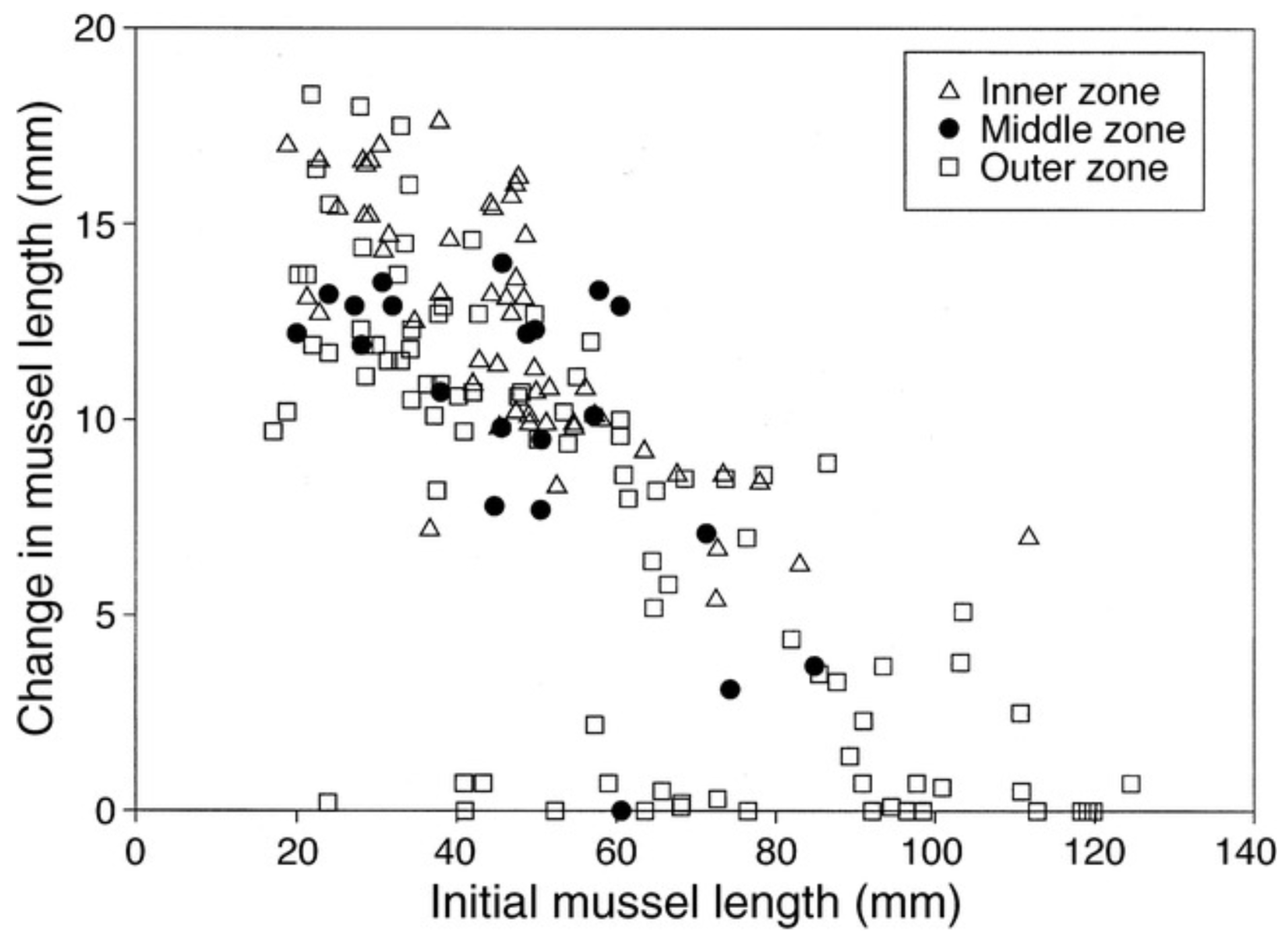
Similarly, cold seeps provide sustained sources of chemical energy derived from methane seepage from the seafloor. These compounds fuel chemosynthetic microbial communities that become the primary producers in the cold-seep food web [49]. The continuous seepage supports dense aggregations of mussels, clams, and tubeworms that rely on symbiotic relationships with chemosynthetic bacteria [50]. As the nutrient input at cold seeps is relatively stable, these communities can maintain elevated biomass and moderate growth rates over longer timescales, with models predicting maximum ages of some organisms such as Lamellibrachia luymesi, Seepiophila jonesi, and Escarpia laminata to regularly reach ages older than 100 years [23]. However, growth remains constrained by local fluxes in hydrocarbon emissions. A study of seep mussels determined that growth rates can vary depending on the environmental conditions as well as maturity. Analyses of a mussel bed in brine pools with methane seepage in the Gulf of Mexico identified three zones based on methane seepage: outer, middle, and inner. It was observed that larger individuals had decreased overall growth rates (Figure 1). Furthermore, the growth rate was also dependent on the location of the mussels. Small mussels in the inner zone that were receiving the most methane grew the fastest, averaging around 15–20 mm/year, while large mussels in the outer zone grew the slowest [51]. This highlights how microhabitat nutrient gradients directly shape organismal growth patterns, with higher nutrient input correlating with faster growth rates. The increased nutrient availability of cold seep habitats in comparison to the abyssal plain can allow for the selection organisms with faster growth rates.
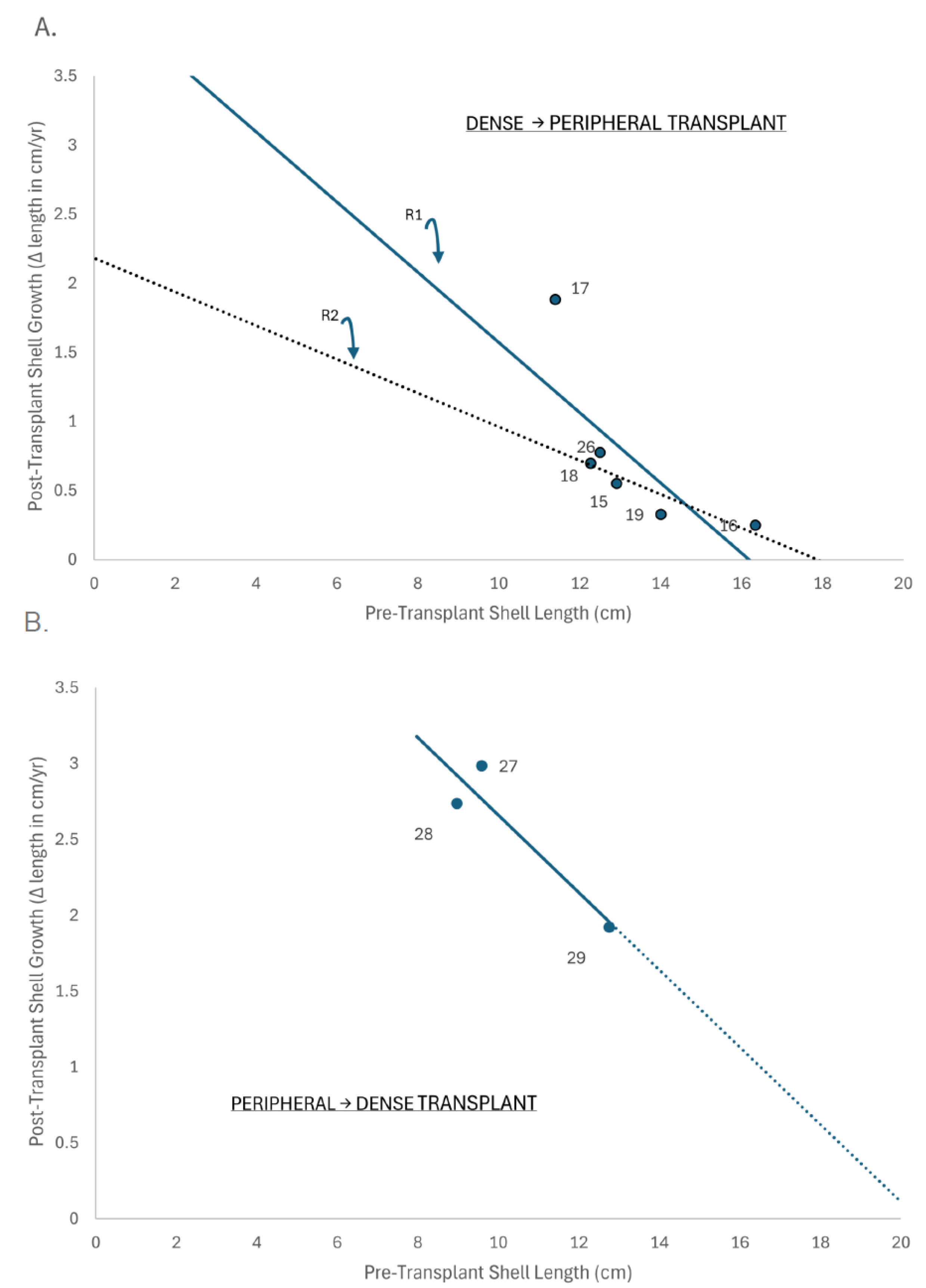
Unlike cold seeps, hydrothermal vent ecosystems are characterized by the emission of superheated water enriched in hydrogen sulfide, which provides abundant energy for chemoautotrophs. The structure of the hydrothermal vent environment establishes both a chemical and thermal gradient, with temperature and levels of hydrogen sulfide peaking near vent emissions [15]. This gradient allows for the direct observation of nutrient availability on growth rates [52]. In a transplantation experiment at the Galapagos Rift, unclassified mussels identified variations in growth rate depending on location around the vents (Figure 2). Mussels that were relocated to nutrient-rich, densely populated locations showed growth rates around 2–3 times higher than mussels moved to the peripheral locations [52]. In comparison to the abyssal plain, the increased nutrient availability of the hydrothermal vent environment allows for the environment to sustain organisms with greater metabolic demands and, thus, faster growth rates.
Together, these habitats illustrate that nutrient availability in the forms of organic matter or through chemosynthetic pathways has a considerable influence on growth rates of deep-sea organisms. While abyssal plains are typically limited by nutrient availability, localized nutrient enrichment in habitats such as whale falls, cold seeps, and hydrothermal vents allows these ecosystems to sustain organisms that can use this abundance to sustain comparatively faster growth rates [12,45].

2.3. Pressure and Physiological Adaptations

Hydrostatic pressure increases by one atmosphere every ten meters. At the depths of the abyssal plain and habitats such as whale falls, cold seeps, and hydrothermal vents, extreme pressure can affect metabolic and enzymatic processes. For instance, experimental observation of organic material submerged to a depth of approximately 1540 m in the deep-diving submersible Alvin showed remarkably no degradation after more than 10 months at 3–4 °C. However, when the food was recovered and subsequently refrigerated at the same temperature, it rapidly degraded within days to weeks, suggesting that pressure itself may be a key factor to limiting microbial activity and overall metabolic rates [53]. Further studies on rates of carbon microbial degradation at elevated pressures indicate similar findings. When exposed to a pressure range of 20–100 MPa, microbes exhibited gradual inhibition of microbial respiration, with near cessation of respiration at 100 MPa. The inhibition of microbial respiration also correlated with the decreased carbon mineralization of the Calanus finmarchicus carcass as well [54]. An in situ experiment on microbes at 4000 m also showed similar trends, with 100-fold metabolic increases upon depressurization [55]. Gradual inhibition of both carbon mineralization and microbial respiration with increasing pressure proves that pressure can act as a modulator of metabolism and growth.
However, organisms develop physiological adaptations to combat the effects of pressure in these environments. At increasing depths, hydrostatic pressure influences protein structure, requiring molecular adaptations that prevent pressure-induced denaturation. Studies on both moderate piezophile and hyper-piezophile Moritella dihydrofolate reductase (DHFR), an enzyme essential for purine and, thus, DNA synthesis, indicates that at moderate depths the enzyme is more flexible. This allows the protein to adjust to changing pressures, as it is more compressible; though, at extreme depths, the protein is more rigid, which allows for more stability under extreme pressure and prevents denaturation from water penetration into the interior of the protein [56]. This study shows how protein modification can be pressure-dependent, and that with varying depth, organisms may adopt different strategies to combat extreme pressure. Some piezophilic organisms in particular have developed key strategies to combat high hydrostatic pressure. In response to high pressure, organisms use homeoviscous adaptation (HVA), which causes membrane phase transition into an ordered gel state with tight packing [57]. Organisms use this adaptation to maintain the integrity of their lipid membrane, with inclusions of unsaturated and branched fatty-acid chains increasing with rising pressure [58].
In addition to protein and structural modifications, deep-sea animals accumulate high concentrations of organic osmolytes in muscle tissue, such as trimethylamine-N-oxide (TMAO), with increasing depth [57]. These osmolytes serve to stabilize proteins under pressure and maintain enzyme function by facilitating ligand binding in high-pressure environments, as high pressure compresses proteins and can cause protein unfolding or conformational drift, which interferes with biochemical reactions [59,60]. Deep-sea organisms not only adapt at the molecular and biochemical level but also have genetic adaptations to withstand extreme pressure. A study done on bathypelagic and abyssopelagic fishes showed that there was positive selection for genes associated with cytoskeletal response to mechanical forces [61]. A similar study on hadal-zone teleost fish showed a convergent amino acid substitution across 11 species that influenced transcription efficiency, possibly by enhancing protein stability or strengthening interactions between transcription machinery [62]. Microbes show similar genomic changes, with the piezophilic bacterium strain of Photobacterium profundum demonstrating a flexible gene pool, with 171 open reading frames that were absent in pressure sensitive strains, some of which are upregulated under high-pressure conditions. These genes were likely acquired through lateral gene transfer and suggest that they confer functions useful for high-pressure survival [63].
Hydrostatic pressure exerts a profound influence on the metabolism and growth of organisms endemic to deep-sea ecosystems, including slowing microbial activity and constraining biochemical reactions [55]. Organisms have developed adaptations, including protein modification and accumulating osmolytes, to even genomic changes, in order to mitigate the effects of hydrostatic pressure [56]. These physiological and genetic strategies allow deep-sea species to maintain functional metabolism and growth despite the harsh environmental constraints imposed on them [56,61,62]. The effect of hydrostatic pressure is variable by depth, but is one of the most stable components of deep-sea habitats, exerting the same constraint among all habitats at a certain depth. However, pressure is not the only factor modulating growth in these ecosystems. Understanding the role of habitat stability along with the successional stages of deep-sea habitats is important in determining the life strategies of endemic organisms, which can further dictate time to recovery from disturbance [64].

2.4. Habitat Stability and Successional Stages

While the abyssal plain lacks distinct successional stages, it is one of the most stable environments in the deep sea. The abyssal plain, which is mostly food-limited, receives sparse and episodic inputs of organic matter [65]. Other environmental constraints, such as low temperature and high pressure, remain constant [12]. The low frequency of disturbance found at the abyssal plain has selected for organisms with slow life-history strategies, species that grow slowly, live longer, and exhibit reduced metabolic rates [32]. This enables survival in a habitat where resources are scarce and environmental change is minimal.
Unlike abyssal plains, there are three recognized successional stages of a whale fall ecosystem: mobile-scavenger phase, enrichment opportunist phase, and sulfophilic phase [35]. Two timescale studies performed on several whale falls off the coast of California describe the macrofaunal succession of these stages. The mobile-scavenger phase is the first stage that occurs after the whale carcass reaches the seafloor and is when a majority of the soft tissue is removed from the carcass [66]. Hagfish (Eptatretus deani and Eptatretus stoutii) were present in the hundreds and were accompanied by sleeper sharks (Somniosus pacificus). At a number of deeper sites there were also lithodid and tanner crabs, lysianassid amphipods, rattail fish, blob sculpin, and snubnose eelpout. Once the soft tissue had disappeared and the skeleton of the carcass was exposed, organisms from the enrichment opportunist phase began to appear, like bone-eating Osedax worms, anemones, fragile urchin (Allocentrotus fragilis), starfish (Rathbunaster californicus), annelids, polychaetas, decapods, bivalves, and gastropods. At sites deeper than 1000 m, a sulfophilic stage was observed as early as 10 months after carcasses had been sunk. Dense mats of sulfur and methane oxidizing bacteria developed on the sediment surrounding the carcass as well as on the skeleton itself [27,67].
The timing of the successional stages may be used as an indicator of habitat stability. The three successional stages of whale falls progress over months and years, with the sulfophilic stage being the longest stage. Macrofaunal abundance, while elevated near the carcass, continued to decline and return to background levels after 4.5 years. However, persistent chemosynthetic communities and pore-water sulfide enrichment persisted for at least 6–7 years after the whale fall, indicating prolonged habitat enrichment [67]. While capable of supporting life for years after whale fall, the ephemeral nature of these environments may not be stable on larger timescales, unlike the abyssal plain. The importance of chemical enrichment is obvious in later stages of whale falls; however, in cold seeps it is an immediately evident determining factor in succession.
Succession at cold seeps is largely defined by methane concentration and substrate characteristics [68]. A study done on thirty-two cold seeps along the Hikurangi Margin in New Zealand defined five main successional stages: aerobic microbial colonizers, ampharetid polychaetas, clams, carbonate precipitates with tubeworms, and colonization by non-chemosynthetic fauna. While there is some debate as to whether ampharetids recruit before or after the colonization of aerobic microbes, current studies suggest that ampharetids are heterotrophic and get most of their energy by consuming methane-oxidizing bacteria [69]. This suggests that the establishment of aerobic microbes is necessary prior to the recruitment of ampharetids to an area. Bacterial mats are often observed to occur in places absent of ampharetids, further indicating such mats may be a precursor to their recruitment. These initial stages of colonization are critical for community development. For example, ampharetid tube building activity promotes methane flux into the sediment, enriches sediments with sulfides, and provides surface area for the growth of microbes using anaerobic methane oxidation. The increased sulfide concentrations found at ampharetid beds correlate with the preferential recruitment of Calyptogena sp. clams. These clams, which utilize thiotrophic symbionts, were only found at the sulfide-enriched sediment sites.
Sulfide depletion occurs with the recruitment of clams at the sediment patches, and, over larger timescales, carbonate precipitates will accumulate and cap the fluid flow on these patches. However, if fluid flux to the patches occurs on longer timescales, in combination with the accumulation of carbonate precipitates, a hard substrate enriched with sulfides and methane is formed. These conditions are perfect for the recruitment of organisms such as Lamellibrachia tubeworms, Bathymodiolus mussels, and sponges, which need hard substrates to settle. Many of these seep organisms have chemoautotrophic symbionts that allow them to use the enriched water to their advantage. The Lamellibrachia tubeworms utilize thiotrophic endosymbionts, while the Bathymodiolus mussels primarily rely on methanotrophic symbionts. Over time, with decreasing levels of methane at seep sites, chemoautotrophic organisms will be replaced with heterotrophic fauna such as sponges and corals [70,71].
Cold seeps display distinct successional stages; however, they correspond with seep activity which can fluctuate on large timescales. Using uranium/thorium dating, cold seep carbonate age was determined at sites in the Gulf of Mexico, Congo Fan, and the Black Sea. It was determined that the seep carbonates, which formed in times of enhanced seepage, were formed up to 53.4–1.7 ka BP, 45.5–3.0 ka BP, and 1.6–1.1 ka BP, respectively [72]. Using the same method, another cold seep site in the northern South China Sea was determined to be continuously active since at least 72 ka [73]. The persistent nature of cold seep habitats, while seepage may fluctuate, may allow for a stable environment for deep-sea organisms. Such stability is reflected in the life histories of seep fauna like the tubeworm Lamellibrachia found in the Gulf of Mexico. Conservative estimates suggest that individuals in mature aggregations here are 100–150 years old, with some potentially living longer [24]. The persistent nature of cold seeps allows organisms to adopt longer life-history strategies, as seen by the extreme longevity of organisms found at seeps. This is greatly distinct from life-history strategies in more dynamic environments such as hydrothermal vents.
Hydrothermal vents are unique benthic habitats that are characterized by the emission of high temperature, hydrogen-sulfide-enriched vent fluid. Vent communities emerge as a result of lava flow from spreading centers on the ocean floor combining with cold ocean water. The mixture rapidly cools the lava and forms cracks, allowing water to seep down and become superheated over magma chambers. The superheated water is stripped of oxygen but enriched in hydrogen sulfide from the surrounding rock and flows out through direct or indirect paths, forming hydrothermal vent communities. Biological succession at vents is determined by vent fluid chemistry [12]. This is best exemplified by the observations made after the eruption at the East Pacific Rise vent sites.
In 1991, lava flows destroyed existing vent communities, and high-temperature vent emissions were observed (>350 °C). Microbial mats were also present around vent emissions. Within 11 months, areas near vent emissions, where bacterial mats were previously present, were colonized by Tevnia jerichonana. Several species of limpets, amphipods, copepods, and zoarcid fish, as well as brachyuran and galatheid crabs, were present in peripheral areas. Within 32 months, the Tevnia were joined by Riftia pachyptila, and dense bacterial mats were restricted to the surfaces of chimneys. There were an additional six species observed from video analysis, with the most notable (besides the presence of Riftia) being alvinellid polychaetas and bresiliid shrimp. The mussel Bathymodiolus thermophilus was seen near the tubeworm colonies at 42 months, and, by around 55 months, were seen settled on the tubeworms themselves. The clam Calyptogena magnifica also settled near vent sites with decreasing hydrogen sulfide flow [74].
While there is no discrete measurement for the stability of hydrothermal vent habitats, it is known that they are prone to frequent and catastrophic eruptions. Therefore, an estimate of stability can be determined by rates of change following recolonization. Following the 1991 eruption, there were rapid geochemical shifts, such as hydrogen sulfide dropping from 1.90 mmol/kg to almost half of that over the next two years, as well as shifts in diversity, with a 2–3-fold increase in the number of species 3–5 years after eruption [74]. These rapid changes in both chemical conditions and species composition illustrate the high instability of hydrothermal vent habitats. Consequently, this environment selects for organisms that are able to recover quickly following episodes of high disturbance. This is reflected in the growth rates of organisms such as of Riftia and Tevnia, which were estimated to grow at >850 mm/year and >300 mm/year, respectively [39]. These rates surpass previous estimates of growth rates of 140 mm/year for Riftia and 92 mm/year for Tevnia [40].
The shorter life-history strategies of organisms in less stable environments such as hydrothermal vents and whale falls may allow for faster recovery after anthropogenic disturbance in comparison to organisms with longer life-history strategies at cold seeps and abyssal plains. This is because, in response to rapidly changing environmental parameters, they may be able to recolonize at a faster rate than slow-growing organisms that are accustomed to stable environments which undergo change on large timescales.

3. Anthropogenic Impacts on Growth and Recovery

Shallow-water environments, including coastal and estuary ecosystems, are particularly susceptible to anthropogenic disturbance due to their proximity to human activities. Eutrophication, driven by nutrient runoff, leads to algal blooms that deplete oxygen levels, adversely affecting the growth and survival of species [75]. Additionally, overfishing and destructive fishing methods, such as bottom trawling, cause physical damage to habitats like coral reefs and sea grass beds, which can further hinder species recovery.
While deep-sea environments may seem remote in comparison, that does not make them immune to anthropogenic disturbance. Activities such as deep-sea mining, oil fracking, and bottom trawling can result in habitat destruction. Furthermore, many of these activities can physically remove benthic organisms, resuspend sediment, and, thus, alter nutrient composition, and could expose organisms to potentially toxic substances [76]. One of the earliest demonstrations of such impacts comes from a large-scale DISCOL experiment, which simulated nodule mining in the Peru Basin. This study revealed that small-scale experimental disturbances could cause lasting changes to sediment structure and benthic community composition [77,78,79]. However, the physical effects of mining, as simulated by the DISCOL, are not the only problems caused by these types of disturbances.
Mining can result in sediment resuspension, which can harm deep-sea fauna. An experiment using a prototype polymetallic nodule collector showed that gravity currents formed using the machinery had not only localized effects but were seen to cause sediment resuspension kilometers away [9]. Sediment resuspension can have varying effects on deep-sea fauna, depending on their tolerance. In jellyfish, high levels of plume concentrations triggered stress responses, such as increased mucus secretion, and expression of genes involved in aerobic respiration and wound healing [80]. Sediment plumes can also dilute food for zooplankton, which can cause further shifts in community [81,82]. Long-term impacts are not very well understood; however, in situ monitoring of some sites revealed that persistent physical changes have resulted in biological impact, especially for megafauna communities [83]. Beyond physical alteration of deep-sea habitats, pollution in the form of microplastics has been observed in some hydrothermal vent communities [84]. Bioaccumulation and biomagnification could be seen in top predators of the ecosystems [84]. Observable levels of the effects of microplastics in a niche community such as hydrothermal vents raise questions about how they negatively impact the health of deep-sea organisms across much larger habitats.
Current studies indicate that recovery from physical disturbances is slow, with some ecosystems showing limited signs of regeneration even decades after activity has halted [83]. This is unsurprising as typical deep-sea growth rates are slow and can exacerbate the challenges to recovery from these activities [85]. While studies such as DISCOL have provided valuable insight into recovery following anthropogenic disturbances, these investigations may be site-specific, and their findings may not directly translate to other deep-sea regions with different environmental conditions or disturbance regimes.
Overall, anthropogenic pressures have introduced disturbances that many marine ecosystems are poorly equipped to withstand [83]. Although some studies demonstrate partial recovery over decadal scales, these responses may be influenced by site-specific conditions and may not reflect outcomes elsewhere [86]. Given the persistent physical, chemical, and biological alterations associated with activities such as deep-sea mining and pollution, precautionary approaches and more comprehensive long-term monitoring are critical. However, the implementation of such monitoring can be constrained by the same environmental limitations that define these deep-sea ecosystems.

4. Methodological Challenges

Monitoring growth and recovery in the deep sea is complicated due to extreme environmental conditions as well as temporal and special limitations in data collection. The complete darkness of deep-sea habitats makes it difficult to visually observe changes. Though direct observation is possible through the use of ROVs and AUVs, long-term observation is costly and often not achievable using these methods [87]. However, long-term monitoring can be achieved with the use of wireless sensors, though they can often experience issues once deployed. Measurement accuracy for parameters like temperature, oxygen, and chemical concentrations can be affected by sensor drift [88]. Equipment calibration is often difficult in remote settings, and maintenance can be costly. The reliability of wireless networks also comes into play as data can be lost due to transmission errors. Even if the sensors are functioning, there are limitations to the temporal and spatial coverage of the sensors in vast deep-sea habitats that can lead to gaps in data that can reduce the reliability of long-term trends [88].
For habitats with large infaunal communities, where visual observation may not be an option, sampling can be achieved with the use of box corers, multicorers, and sieves [89]. However, the use of core samples in determining community structure and comprehensive fauna representation is limited as they are restricted by the size of marine benthos and would also require many deployments in order to make an accurate prediction of distribution patterns [90]. However, core samples can be used in combination with visual approaches, such as seabed images, to provide more detailed predictions of distribution patterns [90].
Another constraint of the deep sea is the extreme pressure. Pressure can affect the performance and structure of sampling equipment, which can change the characteristics of samples; and at habitats such as hydrothermal vents, thermal and chemical gradients can result in damage or corrosion to equipment [91,92]. The study of organisms under ex situ environmental conditions is also limited by pressure at these depths, but can be achieved with the use of pressure-retaining samplers that are able to recover and maintain samples under similar conditions [93]. Sampling and retrieval under similar isobaric conditions allow for the capture of deep-sea organisms that can be kept at atmospheric conditions after slow depressurization [94,95]. There is, however, a higher risk of mortality during sampling in cases where rapid depressurization is allowed to occur on ascent [96]. Some species, even after surviving at atmospheric pressure, require greater pressure to thrive. In a study on deep-sea shrimp, larvae were able to hatch at atmospheric pressure; however, they all died after 74 days, suggesting that hydrostatic pressure is important for larval growth [97]. While ex situ experiments of deep-sea species is possible, and can provide information on species behavior, growth, and response to environmental factors, maintaining environmental conditions after harvesting is critical in cultivation and study [98].
Overall, the combination of extreme environmental conditions, technological constraints, and the vastness of deep-sea habitats makes it difficult to obtain a complete understanding of these ecosystems. Sampling methods have inherent limitations when it comes to temporal or spatial coverage and harsh environmental conditions. Ex situ studies, while valuable for investigating growth, behavior, and responses to environmental factors in organisms, cannot capture ecosystem-level interactions. Consequently, our understanding of deep-sea ecosystems is not complete, and continued methodological innovation, as well as integrative approaches, are needed to better understand, assess, and protect these environments.

5. Discussion

The deep-sea habitats examined here demonstrate marked differences in environmental parameters, growth strategies, succession, and stability, which collectively influence their resilience to anthropogenic disturbances. The baseline of the abyssal plains represents the most stable yet nutrient-poor deep-sea environment and can host long-lived organisms with slow growth rates [45,46,47]. The abyssal plains support slow-growing organisms adapted to the sparse availability of food [99]. In evaluating the resilience of abyssal plains, their response to anthropogenic disturbance shows slow states of recovery even decades later, which can be exacerbated by slow life-history strategies. Recolonization has also been observed, but not without impacts on community structure [83]. The timescales at which the abyssal plains recover likely point to a low intrinsic resilience of endemic organisms to anthropogenic change.
Unlike abyssal plains, which are nutrient-limited, whale falls introduce a large amount of localized nutrients. Though similarly exposed to low ambient temperatures and high pressures, the large influx of nutrients triggers rapid colonization and growth in early stages, followed by a slower, more stable, successional stage afterwards [27]. However, given the episodic nature of whale falls and organisms’ reliance on a single food source, it is uncertain how they would be impacted by anthropogenic disturbances. While successional stages and colonization occur in months to years, indicating comparatively faster growth rates, disturbance of the carcass may result in changes to community structure [26,27,28,35], though whale falls are spatially and temporally isolated, occurring opportunistically, and are unlikely to overlap with polymetallic nodule fields targeted for deep-sea mining [100]. This may reduce their direct risk from physical disturbance, although indirect effects such as traveling sediment plumes as well as commercial whale hunting could still pose an issue [9,101]. The resilience of whale falls, given their nature is, thus, difficult to evaluate and would likely need to take into account various factors of specific whale fall environments such as depth, age, and endemic organisms.
Cold seeps share traits with all aforementioned habitats, existing at high pressure, being able to support chemosynthetic life, and low temperatures. They are stable over extended periods and can remain active over long timescales [72,73]. While reliant on stable methane seepage, they are able capable of supporting long-lived organisms with slow growth rates, alongside active chemosynthetic communities [25]. Given the long life-history strategies of these organisms, recovery after disturbance may be slow to follow. Furthermore, as seeps and their endemic organisms are closely tied to geochemical processes, anthropogenic disturbances that alter sediment structure, fluid flow, or methane concentration could negatively impact community growth and composition. There is little evidence detailing recovery at cold seeps after anthropogenic disturbance; however, the impact of events similar to mining can be examined to determine potential resistance. A study evaluated vesicomyid clams at a cold seep after several deposition events, earthquakes, and associated turbid flow. The study found that, throughout the observation, the clams experienced ongoing decline, with the earthquakes being too severe for them to survive [102]. While the cold seep environment is persistent over large timescales and may be able to recover after brief disturbances, catastrophic or long-term disturbances may negatively impact them.
However, deep-sea hydrothermal vent ecosystems are naturally adapted to disturbances and generally show resilience in the face of environmental fluctuations [74]. Hydrothermal vents are the most dynamic of the four environments, with frequent geologic disruption, especially at fast-spreading centers [12]. Frequent disturbances have resulted in shorter life-history strategies of endemic vent organisms, which may contribute to faster recovery in the face of anthropogenic disturbance. Vents are also the only environment with high temperatures, coupled with high concentrations of hydrogen sulfide that fuel both free-living and symbiotic microbes that can aid in recolonization [12], though humans can introduce additional pressures that affect growth and recovery. Most current anthropogenic impacts appear to have little to moderate effects on vent communities, but the greatest concern arises from deep-sea mining [16]. This poses a risk particularly to the larval stages of vent organisms that are critical for recolonization and population maintenance [103]. Without proper management, cumulative effects of disturbance could lead to degradation of these ecosystems [85].
Deep-sea organisms evolve diverse strategies in response to selective pressure applied by nutrient availability, temperature, and environmental stability. The presence of certain traits can determine a species’ as well as a community’s capacity to recover from disturbances [104]. However, our current understanding of the effects of anthropogenic disturbance in these environments is shaped by the limitations of deep-sea monitoring. Long-term continuous monitoring is constrained by cost, equipment limitations, and the harsh conditions of these environments. These limitations not only present challenges to understanding deep-sea habitats but also mean that we may fail to capture responses to environmental change. The dynamics of these ecosystems also imply variable levels of resilience and vulnerability to anthropogenic disturbances. The combination of varying habitat vulnerability, specificity, and challenges to monitoring complicates assessment of anthropogenic impacts on deep-sea habitats.

6. Conclusions

Ecological constraints of deep-sea habitats can affect growth rates of endemic organisms in varying ways. While nutrient availability seems to strongly correlate with the recruitment of organisms that typically have fast growth rates, its effects are modulated by temperature and stability. Increased temperature is associated with faster growth as it may increase metabolic rates. The life-history strategies of organisms, which are largely determined by habitat stability, also play a role in determining growth rates of organisms, as short-lived organisms require faster maturation and growth rates; however, the trade-off for longevity may come with increased resilience to change. However, to further our understanding of how these deep-sea ecosystems recover from disturbance, increased long-term and detailed monitoring of unique habitats is critical to providing more information on response to environmental parameters as well as a more comprehensive review of the timescale of endemic species’ colonization, succession, and growth.
Studying these extreme habitats is not only important for better understanding biological limits to life in these ecosystems, but with increasing anthropogenic disturbances such as deep-sea trawling, hydrocarbon drilling, and oil fracking, it is unknown how community structure in these habitats will be affected. These disturbances may lead to irreversible damage or collapse of communities that are slow to recover or irreplaceable. Continued research is, therefore, critical to also assess the resilience of deep-sea organisms and better inform conservation strategies for these unique ecosystems.

Author Contributions

E.N.: Writing—original draft, investigation; R.A.L.: Writing—review and editing. All authors have read and agreed to the published version of the manuscript.

Funding

This research received no external funding.

Data Availability Statement

No new data were created or analyzed in this study.

Acknowledgments

The authors are grateful to the reviewers for their valuable comments and suggestions.

Conflicts of Interest

The authors declare no conflicts of interest.

References

  1. Anderson, T.R.; Rice, T. Deserts on the sea floor: Edward Forbes and his azoic hypothesis for a lifeless deep ocean. Endeavour 2006, 30, 131–137. [Google Scholar] [CrossRef]
  2. Corliss, J.B.; Dymond, J.; Gordon, L.I.; Edmond, J.M.; von Herzen, R.P.; Ballard, R.D.; Green, K.; Williams, D.; Bainbridge, A.; Crane, K.; et al. Submarine Thermal Springs on the Galápagos Rift. Science 1979, 203, 1073–1083. [Google Scholar] [CrossRef]
  3. Danovaro, R.; Corinaldesi, C.; Dell’Anno, A.; Snelgrove, P.V.R. The deep-sea under global change. Curr. Biol. 2017, 27, R461–R465. [Google Scholar] [CrossRef] [PubMed]
  4. Dalmaso, G.Z.; Ferreira, D.; Vermelho, A.B. Marine extremophiles: A source of hydrolases for biotechnological applications. Mar. Drugs 2015, 13, 1925–1965. [Google Scholar] [CrossRef]
  5. Teng, Y.; Zhang, D. Long-term viability of carbon sequestration in deep-sea sediments. Sci. Adv. 2018, 4, eaao6588. [Google Scholar] [CrossRef]
  6. Fleming, L.E.; Landrigan, P.J.; Ashford, O.S.; Whitman, E.M.; Swift, A.; Gerwick, W.H.; Heymans, J.J.; Hicks, C.C.; Morrissey, K.; White, M.P.; et al. Enhancing Human Health and Wellbeing through Sustainably and Equitably Unlocking a Healthy Ocean’s Potential. Ann. Glob. Health 2024, 90, 41. [Google Scholar] [CrossRef]
  7. Felgate, S.L.; Aldridge, J.; Bolam, S.G.; Breimann, S.; de Borger, E.; Claes, J.; Depestele, J.; Epstein, G.; Garcia, C.; Hicks, N.; et al. Investigating the effects of mobile bottom fishing on benthic carbon processing and storage: A systematic review protocol. Environ. Evid. 2024, 13, 24. [Google Scholar] [CrossRef]
  8. Bartl, I.; Thrush, S. Sediment heterogeneity shapes spatial variability of resuspension-induced CO2 production. Biogeosciences 2025, 22, 7441–7454. [Google Scholar] [CrossRef]
  9. Gazis, I.-Z.; de Stigter, H.; Mohrmann, J.; Heger, K.; Diaz, M.; Gillard, B.; Baeye, M.; Veloso-Alarcón, M.E.; Purkiani, K.; Haeckel, M.; et al. Monitoring benthic plumes, sediment redeposition and seafloor imprints caused by deep-sea polymetallic nodule mining. Nat. Commun. 2025, 16, 1229. [Google Scholar] [CrossRef]
  10. Bai, M.; Dong, F.; Jia, Y.; Qi, B.; Yu, S.; Peng, S.; Liang, B.; Li, L.; Yu, L.; Zhang, X.; et al. Impact of Sediment Plume on Benthic Microbial Community in Deep-Sea Mining. Water 2025, 17, 3013. [Google Scholar] [CrossRef]
  11. Voelker, D. Abyssal Plains. In Encyclopedia of Marine Geosciences; Harff, J., Meschede, M., Petersen, S., Thiede, J., Eds.; Springer: Dordrecht, The Netherlands, 2016; pp. 1–5. [Google Scholar]
  12. Van Dover, C.L. The Ecology of Deep-Sea Hydrothermal Vents; Princeton University Press: Princeton, NJ, USA, 2000. [Google Scholar]
  13. Sweetman, A.K.; Thurber, A.R.; Smith, C.R.; Levin, L.A.; Mora, C.; Wei, C.-L.; Gooday, A.J.; Jones, D.O.B.; Rex, M.; Yasuhara, M.; et al. Major impacts of climate change on deep-sea benthic ecosystems. Elem. Sci. Anthr. 2017, 5, 4. [Google Scholar] [CrossRef]
  14. Grassle, J.F. Hydrothermal Vent Animals: Distribution and Biology. Science 1985, 229, 713–717. [Google Scholar] [CrossRef] [PubMed]
  15. Luther, G.W., 3rd; Rozan, T.F.; Taillefert, M.; Nuzzio, D.B.; Di Meo, C.; Shank, T.M.; Lutz, R.A.; Cary, S.C. Chemical speciation drives hydrothermal vent ecology. Nature 2001, 410, 813–816. [Google Scholar] [CrossRef] [PubMed]
  16. Dykman, L.N.; Beaulieu, S.E.; Mills, S.W.; Solow, A.R.; Mullineaux, L.S. Functional traits provide new insight into recovery and succession at deep-sea hydrothermal vents. Ecology 2021, 102, e03418. [Google Scholar] [CrossRef] [PubMed]
  17. Johnson, H.P.; Hutnak, M.; Dziak, R.P.; Fox, C.G.; Urcuyo, I.I.; Cowen, J.P.; Nabelek, J.; Fisher, C. Earthquake-induced changes in a hydrothermal system on the Juan de Fuca mid-ocean ridge. Nature 2000, 407, 174–177. [Google Scholar] [CrossRef]
  18. Embley, R.W.; Chadwick, W.W., Jr.; Clague, D.; Stakes, D. 1998 eruption of axial volcano: Multibeam anomalies and sea-floor observations. Geophys. Res. Lett. 1999, 26, 3425–3428. [Google Scholar] [CrossRef]
  19. Sibuet, M.; Olu, K. Biogeography, biodiversity and fluid dependence of deep-sea cold-seep communities at active and passive margins. Deep Sea Res. Part II Top. Stud. Oceanogr. 1998, 45, 517–567. [Google Scholar] [CrossRef]
  20. Ingram, W.C.; Meyers, S.R.; Brunner, C.A.; Martens, C.S. Late Pleistocene–Holocene sedimentation surrounding an active seafloor gas-hydrate and cold-seep field on the Northern Gulf of Mexico Slope. Mar. Geol. 2010, 278, 43–53. [Google Scholar] [CrossRef]
  21. Paull, C.K.; Hecker, B.; Commeau, R.; Freeman-Lynde, R.P.; Neumann, C.; Corso, W.P.; Golubic, S.; Hook, J.E.; Sikes, E.; Curray, J. Biological communities at the Florida escarpment resemble hydrothermal vent taxa. Science 1984, 226, 965–967. [Google Scholar] [CrossRef]
  22. Rybakova, E.; Krylova, E.; Mordukhovich, V. Methane seeps and hydrothermal vents in the Bering Sea: Comparative aspects of the fauna, composition and community structure. Reg. Stud. Mar. Sci. 2025, 93, 104678. [Google Scholar] [CrossRef]
  23. Durkin, A.; Fisher, C.R.; Cordes, E.E. Extreme longevity in a deep-sea vestimentiferan tubeworm and its implications for the evolution of life history strategies. Sci. Nat. 2017, 104, 63. [Google Scholar] [CrossRef] [PubMed]
  24. Fisher, C.R.; Urcuyo, I.A.; Simpkins, M.A.; Nix, E. Life in the Slow Lane: Growth and Longevity of Cold-Seep Vestimentiferans. Mar. Ecol. 1997, 18, 83–94. [Google Scholar] [CrossRef]
  25. Smith, C.R.; Baco, A.R. Ecology of Whale Falls at the Deep-Sea Floor. Oceanogr. Mar. Biol. 2003, 41, 311–354. [Google Scholar]
  26. Treude, T.; Smith, C.R.; Wenzhöfer, F.; Carney, E.; Bernardino, A.F.; Hannides, A.K.; Krüger, M.; Boetius, A. Biogeochemistry of a deep-sea whale fall: Sulfate reduction, sulfide efflux and methanogenesis. Mar. Ecol. Prog. Ser. 2009, 382, 1–21. [Google Scholar] [CrossRef]
  27. Lundsten, L.; Schlining, K.L.; Frasier, K.; Johnson, S.B.; Kuhnz, L.A.; Harvey, J.B.J.; Clague, G.; Vrijenhoek, R.C. Time-series analysis of six whale-fall communities in Monterey Canyon, California, USA. Deep Sea Res. Part I Oceanogr. Res. Pap. 2010, 57, 1573–1584. [Google Scholar] [CrossRef]
  28. Amon, D.J.; Glover, A.G.; Wiklund, H.; Marsh, L.; Linse, K.; Rogers, A.D.; Copley, J.T. The discovery of a natural whale fall in the Antarctic deep sea. Deep Biodivers. Life Hist. Process. 2013, 92, 87–96. [Google Scholar] [CrossRef]
  29. van de Pol, I.; Flik, G.; Gorissen, M. Comparative Physiology of Energy Metabolism: Fishing for Endocrine Signals in the Early Vertebrate Pool. Front. Endocrinol. 2017, 8, 36. [Google Scholar] [CrossRef]
  30. Kovacevic, A.; Latombe, G.; Chown, S.L. Rate dynamics of ectotherm responses to thermal stress. Proc. R. Soc. B Biol. Sci. 2019, 286, 20190174. [Google Scholar] [CrossRef]
  31. Clarke, A.; Johnston, N.M. Scaling of metabolic rate with body mass and temperature in teleost fish. J. Anim. Ecol. 1999, 68, 893–905. [Google Scholar] [CrossRef]
  32. Black, J.A.; Neuheimer, A.B.; Horn, P.L.; Tracey, D.M.; Drazen, J.C. Environmental, evolutionary, and ecological drivers of slow growth in deep-sea demersal teleosts. Mar. Ecol. Prog. Ser. 2021, 658, 1–26. [Google Scholar] [CrossRef]
  33. Seibel, B.A.; Drazen, J.C. The rate of metabolism in marine animals: Environmental constraints, ecological demands and energetic opportunities. Philos. Trans. R. Soc. B Biol. Sci. 2007, 362, 2061–2078. [Google Scholar] [CrossRef] [PubMed]
  34. Brown, A.A.-O.X.; Hauton, C.A.-O.; Stratmann, T.A.-O.; Sweetman, A.A.-O.; van Oevelen, D.; Jones, D.A.-O. Metabolic rates are significantly lower in abyssal Holothuroidea than in shallow-water Holothuroidea. R. Soc. Open Sci. 2018, 5, 172162. [Google Scholar] [CrossRef] [PubMed]
  35. Smith, C.R.; Baco, A.R. Oceanography and Marine Biology: An Annual Review; Taylor & Francis: Abingdon, UK, 2003; Volume 41, pp. 311–354. [Google Scholar]
  36. McClain, C.R.; Webb, T.J.; Nunnally, C.C.; Dixon, S.R.; Finnegan, S.; Nelson, J.A. Metabolic Niches and Biodiversity: A Test Case in the Deep Sea Benthos. Front. Mar. Sci. 2020, 7, 216. [Google Scholar] [CrossRef]
  37. Hydrothermal Vents and Cold Seeps. In The First Global Integrated Marine Assessment: World Ocean Assessment I; United Nations, Ed.; Cambridge University Press: Cambridge, UK, 2017; pp. 853–862. [Google Scholar]
  38. Barry, J.P.; Gary Greene, H.; Orange, D.L.; Baxter, C.H.; Robison, B.H.; Kochevar, R.E.; Nybakken, J.W.; Donald, L.R.; McHugh, C.M. Biologic and geologic characteristics of cold seeps in Monterey Bay, California. Deep Sea Res. Part I Oceanogr. Res. Pap. 1996, 43, 1739–1762. [Google Scholar] [CrossRef]
  39. Lutz, R.A.; Shank, T.M.; Fornari, D.J.; Haymon, R.M.; Lilley, M.D.; Von Damm, K.L.; Desbruyeres, D. Rapid growth at deep-sea vents. Nature 1994, 371, 663–664. [Google Scholar] [CrossRef]
  40. Roux, M.; Rio, M.; Schein, E.; Lutz, R.; Fritz, L.; Ragone, L.M. In situ measurements of bivalve and tube worm growth rate and of shell corrosion at the 13° N hydrothermal site, East Pacific Rise. Comptes Rendus Acad. Des. Sci. Ser. III 1989, 308, 121–127. [Google Scholar]
  41. Rhoads, D.C.; Lutz, R.A.; Revelas, E.C.; Cerrato, R.M. Growth of Bivalves at Deep-Sea Hydrothermal Vents Along the Galápagos Rift. Science 1981, 214, 911–913. [Google Scholar] [CrossRef]
  42. Cordes, E.E.; Bergquist, D.C.; Shea, K.; Fisher, C.R. Hydrogen sulphide demand of long-lived vestimentiferan tube worm aggregations modifies the chemical environment at deep-sea hydrocarbon seeps. Ecol. Lett. 2003, 6, 212–219. [Google Scholar] [CrossRef]
  43. Cordes, E.E.; Bergquist, D.C.; Redding, M.L.; Fisher, C.R. Patterns of growth in cold-seep vestimenferans including Seepiophila jonesi: A second species of long-lived tubeworm. Mar. Ecol. 2007, 28, 160–168. [Google Scholar] [CrossRef]
  44. Colvin, C.N.; Hollyman, P.R.; Richardson, C.A.; Chenery, S.R.N.; Waggitt, J.J.; McCarthy, I.D. The effect of environmental factors on shell growth and repair in Buccinum undatum. J. Exp. Mar. Biol. Ecol. 2022, 551, 151720. [Google Scholar] [CrossRef]
  45. Turekian, K.K.; Cochran, J.K.; Kharkar, D.P.; Cerrato, R.M.; Vaisnys, J.R.; Sanders, H.L.; Grassle, J.F.; Allen, J.A. Slow growth rate of a deep-sea clam determined by 228Ra chronology. Proc. Natl. Acad. Sci. USA 1975, 72, 2829–2832. [Google Scholar] [CrossRef] [PubMed]
  46. Fallon, S.J.; James, K.; Norman, R.; Kelly, M.; Ellwood, M.J. A simple radiocarbon dating method for determining the age and growth rate of deep-sea sponges. Nucl. Instrum. Methods Phys. Res. Sect. B Beam Interact. Mater. At. 2010, 268, 1241–1243. [Google Scholar] [CrossRef]
  47. Rogers, A.D. The Biology of Lophelia pertusa (Linnaeus 1758) and Other Deep-Water Reef-Forming Corals and Impacts from Human Activities. Int. Rev. Hydrobiol. 1999, 84, 315–406. [Google Scholar] [CrossRef]
  48. Li, Q.; Liu, Y.; Li, G.; Wang, Z.; Zheng, Z.; Sun, Y.; Lei, N.; Li, Q.; Zhang, W. Review of the Impact of Whale Fall on Biodiversity in Deep-Sea Ecosystems. Front. Ecol. Evol. 2022, 10, 885572. [Google Scholar] [CrossRef]
  49. Duperron, S.; Lorion, J.; Samadi, S.; Gros, O.; Gaill, F. Symbioses between deep-sea mussels (Mytilidae: Bathymodiolinae) and chemosynthetic bacteria: Diversity, function and evolution. Comptes Rendus Biol. 2009, 332, 298–310. [Google Scholar] [CrossRef]
  50. Cordes, E.E.; Bergquist, D.C.; Fisher, C.R. Macro-ecology of Gulf of Mexico cold seeps. Ann. Rev. Mar. Sci. 2009, 1, 143–168. [Google Scholar] [CrossRef]
  51. Smith, E.B.; Scott, K.M.; Nix, E.R.; Korte, C.; Fisher, C.R. Growth and condition of seep mussels (Bathymodiolus childressi) at a gulf of mexico brine pool. Ecology 2000, 81, 2392–2403. [Google Scholar] [CrossRef]
  52. Rhoads, D.C.; Lutz, R.A.; Cerrato, R.M.; Revelas, E.C. Growth and predation activity at deep-sea hydrothermal vents along the Galápagos Rift. J. Mar. Res. 1982, 40, 1594. [Google Scholar]
  53. Jannasch, H.W.; Kjell, E.; Wirsen, C.O.; Farmanfarmaian, A. Microbial Degradation of Organic Matter in the Deep Sea. Science 1971, 171, 672–675. [Google Scholar] [CrossRef]
  54. Franco-Cisterna, B.; Stief, P.; Glud, R.N. Hydrostatic pressure impedes the degradation of sinking copepod carcasses and fecal pellets. J. Plankton Res. 2024, 46, 219–223. [Google Scholar] [CrossRef]
  55. Amano, C.; Zhao, Z.; Sintes, E.; Reinthaler, T.; Stefanschitz, J.; Kisadur, M.; Utsumi, M.; Herndl, G.J. Limited carbon cycling due to high-pressure effects on the deep-sea microbiome. Nat. Geosci. 2022, 15, 1041–1047. [Google Scholar] [CrossRef] [PubMed]
  56. Penhallurick, R.W.; Ichiye, T. Pressure Adaptations in Deep-Sea Moritella Dihydrofolate Reductases: Compressibility versus Stability. Biology 2021, 10, 1211. [Google Scholar] [CrossRef] [PubMed]
  57. Maiti, A.; Erimban, S.; Daschakraborty, S. Extreme makeover: The incredible cell membrane adaptations of extremophiles to harsh environments. Chem. Commun. 2024, 60, 10280–10294. [Google Scholar] [CrossRef] [PubMed]
  58. Tamby, A.; Sinninghe Damsté, J.S.; Villanueva, L. Microbial membrane lipid adaptations to high hydrostatic pressure in the marine environment. Front. Mol. Biosci. 2022, 9, 1058381. [Google Scholar] [CrossRef]
  59. Yancey, P.H. Adaptations to Hydrostatic Pressure in Protein Structure and Organic Osmolytes in Deep-Sea Animals. High. Press. Biosci. Biotechnol. 2007, 1, 90–95. [Google Scholar] [CrossRef]
  60. Kamali, A.; Jahmidi-Azizi, N.; Oliva, R.; Winter, R. Deep sea osmolytes in action: Their effect on protein–ligand binding under high pressure stress. Phys. Chem. Chem. Phys. 2022, 24, 17966–17978. [Google Scholar] [CrossRef]
  61. Bo, J.; Xu, H.; Lv, W.; Wang, C.; He, S.; Yang, L. Molecular Mechanisms of the Convergent Adaptation of Bathypelagic and Abyssopelagic Fishes. Genome Biol. Evol. 2022, 14, evac109. [Google Scholar] [CrossRef]
  62. Xu, H.; Fang, C.; Xu, W.; Wang, C.; Song, Y.; Zhu, C.; Fang, W.; Fan, G.; Lv, W.; Bo, J.; et al. Evolution and genetic adaptation of fishes to the deep sea. Cell 2025, 188, 1393–1408.e1313. [Google Scholar] [CrossRef]
  63. Campanaro, S.; Vezzi, A.; Vitulo, N.; Lauro, F.M.; D’Angelo, M.; Simonato, F.; Cestaro, A.; Malacrida, G.; Bertoloni, G.; Valle, G.; et al. Laterally transferred elements and high pressure adaptation in Photobacterium profundum strains. BMC Genom. 2005, 6, 122. [Google Scholar] [CrossRef]
  64. Lytle, D.; Lytle, D.A. Disturbance regimes and life-history evolution. Am. Nat. 2001, 157, 525–536. [Google Scholar] [CrossRef]
  65. Nomaki, H.; Rastelli, E.; Alves, A.; Suga, H.; Ramos, S.; Kitahashi, T.; Tsuchiya, M.; Ogawa, N.; Matsui, Y.; Seike, K.; et al. Abyssal fauna, benthic microbes, and organic matter quality across a range of trophic conditions in the western Pacific Ocean. Prog. Oceanogr. 2021, 195, 102591. [Google Scholar] [CrossRef]
  66. Silva, A.P.; Colaço, A.; Ravara, A.; Jakobsen, J.; Jakobsen, K.; Cuvelier, D. The first whale fall on the Mid-Atlantic Ridge: Monitoring a year of succession. Deep Sea Res. Part I Oceanogr. Res. Pap. 2021, 178, 103662. [Google Scholar] [CrossRef]
  67. Smith, C.; Bernardino, A.; Baco, A.; Hannides, A.; Altamira, I. Seven-year enrichment: Macrofaunal succession in deep-sea sediments around a 30 tonne whale fall in the Northeast Pacific. Mar. Ecol. Prog. Ser. 2014, 515, 133. [Google Scholar] [CrossRef]
  68. Chen, Y.; Li, J.; Li, N.; Di, P.; Li, Q.; Tao, J.; Zhang, S. All roads lead to Rome: Multiple trajectories of faunal succession in deep-sea cold seeps. Sci. Bull. 2025, 70, 871–875. [Google Scholar] [CrossRef] [PubMed]
  69. Thurber, A.R.; Levin, L.A.; Rowden, A.A.; Sommer, S.; Linke, P.; Kröger, K. Microbes, macrofauna, and methane: A novel seep community fueled by aerobic methanotrophy. Limnol. Oceanogr. 2013, 58, 1640–1656. [Google Scholar] [CrossRef]
  70. Bowden, D.A.; Rowden, A.A.; Thurber, A.R.; Baco, A.R.; Levin, L.A.; Smith, C.R. Cold Seep Epifaunal Communities on the Hikurangi Margin, New Zealand: Composition, Succession, and Vulnerability to Human Activities. PLoS ONE 2013, 8, e76869. [Google Scholar] [CrossRef]
  71. Hovland, M. On the self-sealing nature of marine seeps. Cont. Shelf Res. 2002, 22, 2387–2394. [Google Scholar] [CrossRef]
  72. Feng, D.; Roberts, H.H.; Cheng, H.; Peckmann, J.; Bohrmann, G.; Lawrence Edwards, R.; Chen, D. U/Th dating of cold-seep carbonates: An initial comparison. Deep Sea Res. Part II Top. Stud. Oceanogr. 2010, 57, 2055–2060. [Google Scholar] [CrossRef]
  73. Wang, M.; Chen, T.; Feng, D.; Zhang, X.; Li, T.; Robinson, L.F.; Liang, Q.; Bialik, O.M.; Liu, Y.; Makovsky, Y. Uranium-thorium isotope systematics of cold-seep carbonate and their constraints on geological methane leakage activities. Geochim. Cosmochim. Acta 2022, 320, 105–121. [Google Scholar] [CrossRef]
  74. Shank, T.M.; Fornari, D.J.; Von Damm, K.L.; Lilley, M.D.; Haymon, R.M.; Lutz, R.A. Temporal and spatial patterns of biological community development at nascent deep-sea hydrothermal vents (9°50′ N, East Pacific Rise). Deep Sea Res. Part II Top. Stud. Oceanogr. 1998, 45, 465–515. [Google Scholar] [CrossRef]
  75. Zhou, J.; Leavitt, P.R.; Zhang, Y.; Qin, B. Anthropogenic eutrophication of shallow lakes: Is it occasional? Water Res. 2022, 221, 118728. [Google Scholar] [CrossRef] [PubMed]
  76. Paulus, E. Shedding Light on Deep-Sea Biodiversity—A Highly Vulnerable Habitat in the Face of Anthropogenic Change. Front. Mar. Sci. 2021, 8, 667048. [Google Scholar] [CrossRef]
  77. de Jonge, D.S.W.; Stratmann, T.; Lins, L.; Vanreusel, A.; Purser, A.; Marcon, Y.; Rodrigues, C.F.; Ravara, A.; Esquete, P.; Cunha, M.R.; et al. Abyssal food-web model indicates faunal carbon flow recovery and impaired microbial loop 26 years after a sediment disturbance experiment. Prog. Oceanogr. 2020, 189, 102446. [Google Scholar] [CrossRef]
  78. Stratmann, T.; Lins, L.; Purser, A.; Marcon, Y.; Rodrigues, C.F.; Ravara, A.; Cunha, M.R.; Simon-Lledó, E.; Jones, D.O.B.; Sweetman, A.K.; et al. Abyssal plain faunal carbon flows remain depressed 26 years after a simulated deep-sea mining disturbance. Biogeosciences 2018, 15, 4131–4145. [Google Scholar] [CrossRef]
  79. Simon-Lledó, E.; Bett, B.J.; Huvenne, V.A.I.; Köser, K.; Schoening, T.; Greinert, J.; Jones, D.O.B. Biological effects 26 years after simulated deep-sea mining. Sci. Rep. 2019, 9, 8040. [Google Scholar] [CrossRef]
  80. Stenvers, V.I.; Hauss, H.; Bayer, T.; Havermans, C.; Hentschel, U.; Schmittmann, L.; Sweetman, A.K.; Hoving, H.T. Experimental mining plumes and ocean warming trigger stress in a deep pelagic jellyfish. Nat. Commun. 2023, 14, 7352. [Google Scholar] [CrossRef]
  81. Lefaible, N.; Macheriotou, L.; Pape, E.; Molari, M.; Haeckel, M.; Zeppilli, D.; Vanreusel, A. Industrial mining trial for polymetallic nodules in the Clarion-Clipperton Zone indicates complex and variable disturbances of meiofaunal communities. Front. Mar. Sci. 2024, 11, 1380530. [Google Scholar] [CrossRef]
  82. Dowd, M.H.; Assad, V.E.; Cazares-Nuesser, A.E.; Drazen, J.C.; Goetze, E.; White, A.E.; Popp, B.N. Deep-sea mining discharge can disrupt midwater food webs. Nat. Commun. 2025, 16, 9575. [Google Scholar] [CrossRef]
  83. Jones, D.O.B.; Arias, M.B.; Van Audenhaege, L.; Blackbird, S.; Boolukos, C.; Bribiesca-Contreras, G.; Copley, J.T.; Dale, A.; Evans, S.; Fleming, B.F.M.; et al. Long-term impact and biological recovery in a deep-sea mining track. Nature 2025, 642, 112–118. [Google Scholar] [CrossRef]
  84. Park, B.; Cho, B.; Cho, J.; Kim, T. Microplastic Contamination of a Benthic Ecosystem in a Hydrothermal Vent. Environ. Sci. Technol. 2024, 58, 7636–7642. [Google Scholar] [CrossRef]
  85. Van Dover, C.L. Impacts of anthropogenic disturbances at deep-sea hydrothermal vent ecosystems: A review. Mar. Environ. Res. 2014, 102, 59–72. [Google Scholar] [CrossRef] [PubMed]
  86. Borowski, C. Physically disturbed deep-sea macrofauna in the Peru Basin, southeast Pacific, revisited 7 years after the experimental impact. Deep Sea Res. Part II Top. Stud. Oceanogr. 2001, 48, 3809–3839. [Google Scholar] [CrossRef]
  87. Bell, K.L.C.; Quinzin, M.C.; Amon, D.; Poulton, S.; Hope, A.; Sarti, O.; Cañete, T.E.; Smith, A.M.; Baldwin, H.I.; Lira, D.M.; et al. Exposing inequities in deep-sea exploration and research: Results of the 2022 Global Deep-Sea Capacity Assessment. Front. Mar. Sci. 2023, 10, 1217227. [Google Scholar] [CrossRef]
  88. Skålvik, A.M.; Saetre, C.; Frøysa, K.-E.; Bjørk, R.N.; Tengberg, A. Challenges, limitations, and measurement strategies to ensure data quality in deep-sea sensors. Front. Mar. Sci. 2023, 10, 1152236. [Google Scholar] [CrossRef]
  89. Montagna, P.A.; Baguley, J.G.; Hsiang, C.-Y.; Reuscher, M.G. Comparison of sampling methods for deep-sea infauna. Limnol. Oceanogr. Methods 2017, 15, 166–183. [Google Scholar] [CrossRef]
  90. Pineda-Metz, S.E.A.; Gerdes, D. Seabed images versus corer sampling: A comparison of two quantitative approaches for the analysis of marine benthic communities in the southern Weddell Sea (Southern Ocean). Polar Biol. 2018, 41, 515–526. [Google Scholar] [CrossRef]
  91. Li, Z. Deep-sea sampling techniques ranging from traditional methods to future perspectives. Adv. Eng. Innov. 2025, 16, 92–95. [Google Scholar] [CrossRef]
  92. Wu, S.; Yang, C.-J.; Pester, N.; Chen, Y. A New Hydraulically Actuated Titanium Sampling Valve for Deep-Sea Hydrothermal Fluid Samplers. IEEE J. Ocean Eng. 2011, 36, 462–469. [Google Scholar] [CrossRef]
  93. Garel, M.; Bonin, P.; Martini, S.; Guasco, S.; Roumagnac, M.; Bhairy, N.; Armougom, F.; Tamburini, C. Pressure-Retaining Sampler and High-Pressure Systems to Study Deep-Sea Microbes Under in situ Conditions. Front. Microbiol. 2019, 10, 453. [Google Scholar] [CrossRef]
  94. Shillito, B.; Amand, L.; Hamel, G. Update of the PERISCOP system for isobaric sampling of deep-sea fauna. Deep Sea Res. Part I Oceanogr. Res. Pap. 2023, 193, 103956. [Google Scholar] [CrossRef]
  95. Koyama, S. Cell biology of deep-sea multicellular organisms. Cytotechnology 2007, 55, 125–133. [Google Scholar] [CrossRef][Green Version]
  96. Shillito, B.; Ravaux, J.; Sarrazin, J.; Zbinden, M.; Sarradin, P.-M.; Barthelemy, D. Long-term maintenance and public exhibition of deep-sea hydrothermal fauna: The AbyssBox project. Deep Sea Res. Part II Top. Stud. Oceanogr. 2015, 121, 137–145. [Google Scholar] [CrossRef]
  97. Koyama, S.; Nagahama, T.; Ootsu, N.; Takayama, T.; Horii, M.; Konishi, S.; Miwa, T.; Ishikawa, Y.; Aizawa, M. Survival of Deep-Sea Shrimp (Alvinocaris sp.) During Decompression and Larval Hatching at Atmospheric Pressure. Mar. Biotechnol. 2005, 7, 272–278. [Google Scholar] [CrossRef] [PubMed]
  98. Feng, J.-C.; Liang, J.; Cai, Y.; Zhang, S.; Xue, J.; Yang, Z. Deep-sea organisms research oriented by deep-sea technologies development. Sci. Bull. 2022, 67, 1802–1816. [Google Scholar] [CrossRef] [PubMed]
  99. Ramirez-Llodra, E.; Brandt, A.; Danovaro, R.; De Mol, B.; Escobar, E.; German, C.R.; Levin, L.A.; Martinez Arbizu, P.; Menot, L.; Buhl-Mortensen, P.; et al. Deep, diverse and definitely different: Unique attributes of the world’s largest ecosystem. Biogeosciences 2010, 7, 2851–2899. [Google Scholar] [CrossRef]
  100. Christodoulou, M.; O’Hara, T.; Hugall, A.F.; Khodami, S.; Rodrigues, C.F.; Hilario, A.; Vink, A.; Martinez Arbizu, P. Unexpected high abyssal ophiuroid diversity in polymetallic nodule fields of the northeast Pacific Ocean and implications for conservation. Biogeosciences 2020, 17, 1845–1876. [Google Scholar] [CrossRef]
  101. Smith, C.R.; Roman, J.; Nation, J.B. A metapopulation model for whale-fall specialists: The largest whales are essential to prevent species extinctions. J. Mar. Res. 2019, 77, 283–302. [Google Scholar] [CrossRef]
  102. Nakajima, R.; Chen, C.; Iwase, R.; Yamamoto, H.; Fujikura, K. Clams after storms: The impact of multiple disturbances on seep vesicomyid clams revealed by long-term monitoring. Mar. Biol. 2019, 166, 35. [Google Scholar] [CrossRef]
  103. Suzuki, K.; Yoshida, K.; Watanabe, H.; Yamamoto, H. Mapping the resilience of chemosynthetic communities in hydrothermal vent fields. Sci. Rep. 2018, 8, 9364. [Google Scholar] [CrossRef]
  104. Clay, C.G.; Dunhill, A.M.; Reimer, J.D.; Beger, M. Trait networks: Assessing marine community resilience and extinction recovery. iScience 2024, 27, 110962. [Google Scholar] [CrossRef]
Figure 1. Change in mussel length per year vs. initial length at each zone. Graph sourced from Smith et al., 2000 [51].
Oceans 07 00010 g001
Figure 2. Mussel growth rates post transplantation. (A) This graph shows mussels transplanted from areas with high density to low density. Numbers by data points refer to specimen numbers. Two regressions were plotted as specimen 17 appeared anomalous. Linear regression using all specimens (R1) yielded r = −0.76. R2 demonstrates linear regression, excluding data point 17, which yielded r = −0.90. (B) This graph shows mussels transplanted from areas with low density to areas with high density. Numbers by data points refer to specimen numbers. Linear regression was (r = −0.93). Graph redrawn from Rhoads et al., 1982 [52].
Oceans 07 00010 g002
Disclaimer/Publisher’s Note: The statements, opinions and data contained in all publications are solely those of the individual author(s) and contributor(s) and not of MDPI and/or the editor(s). MDPI and/or the editor(s) disclaim responsibility for any injury to people or property resulting from any ideas, methods, instructions or products referred to in the content.