Non-Implantable Prosthetic Devices to Stabilize Posture and Body Balance


Abstract
1. Introduction
2. Sensory Substitution Devices
2.1. Auditory Feedback
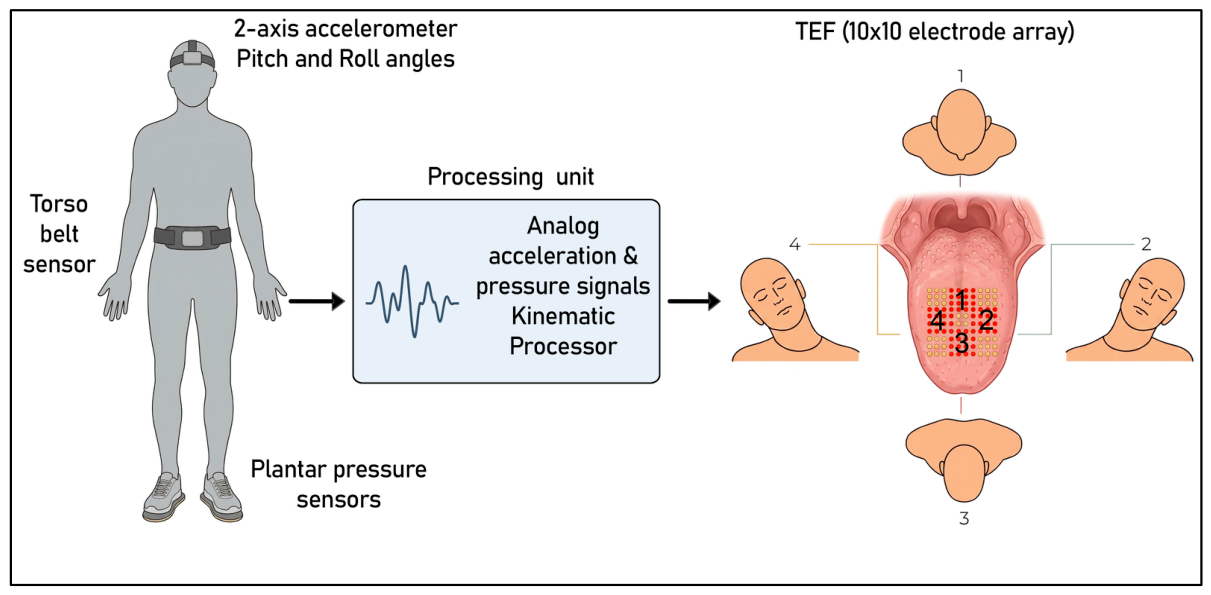
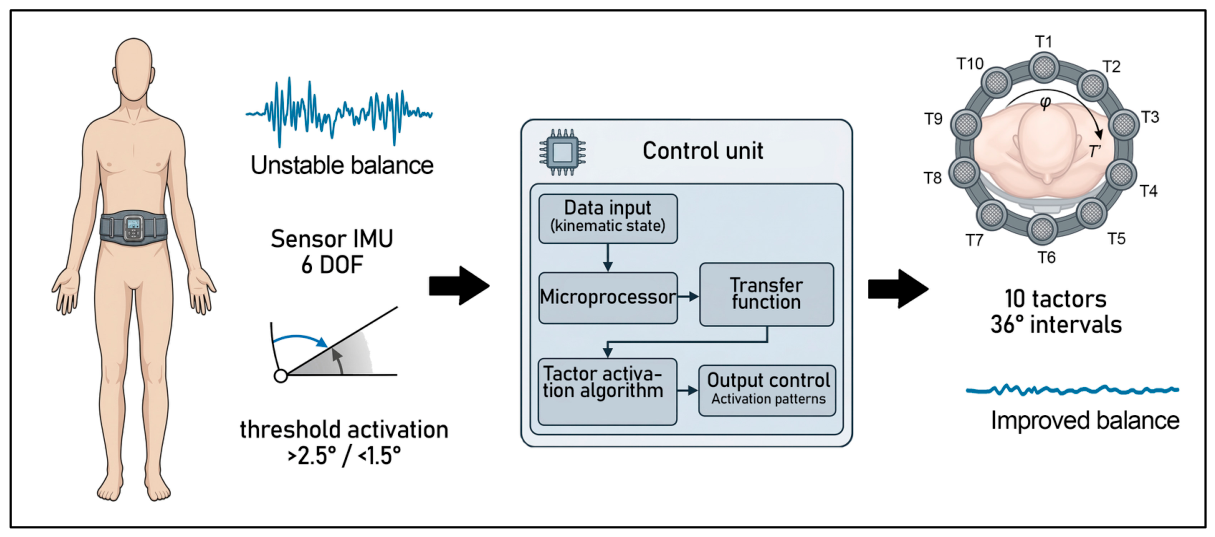
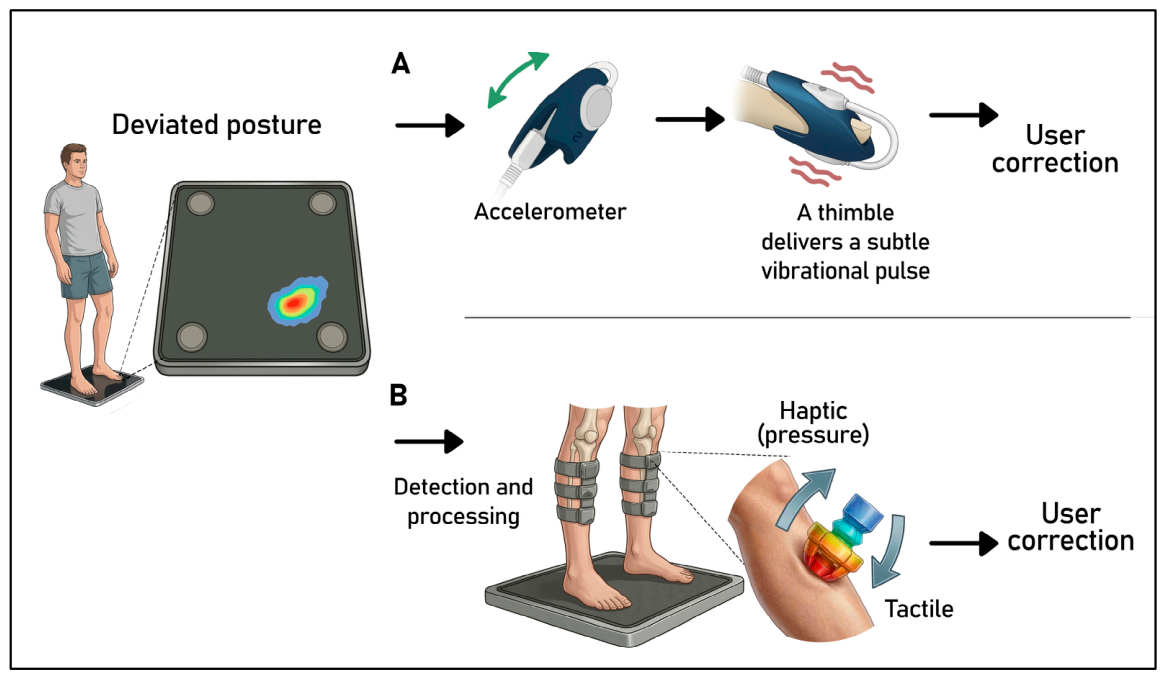
2.2. Tactile Feedback
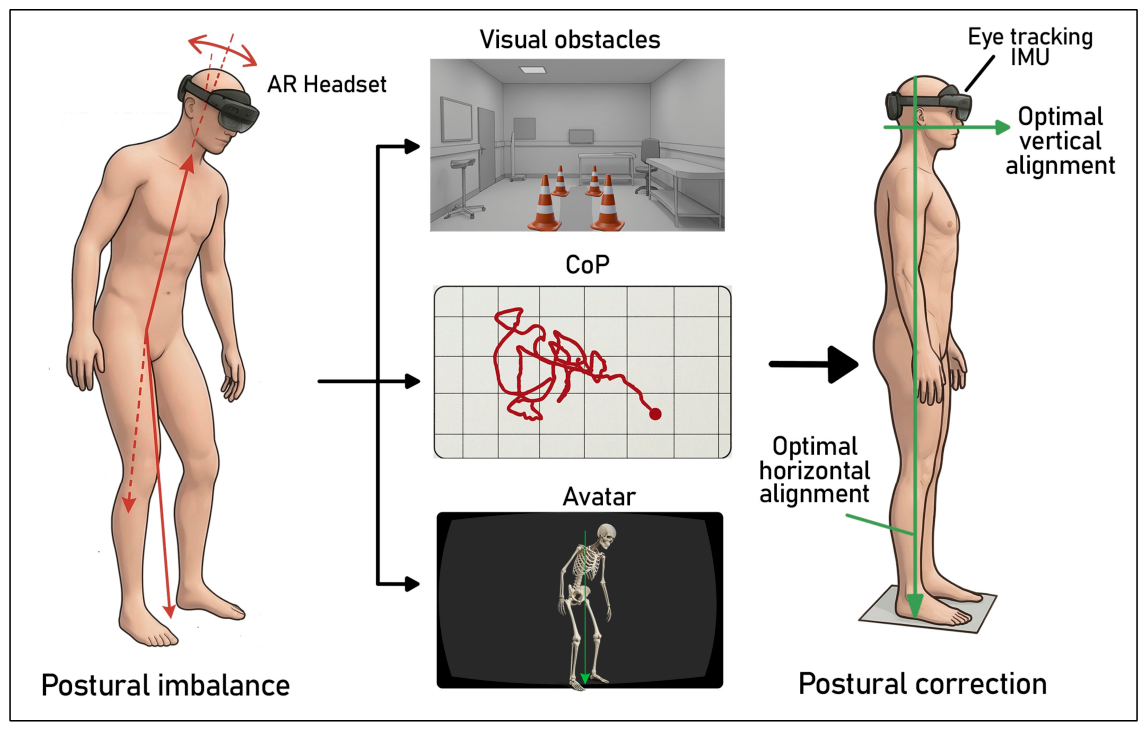
2.3. Visual Feedback: Augmented and Virtual Reality
3. Sensory Enhancement Strategies
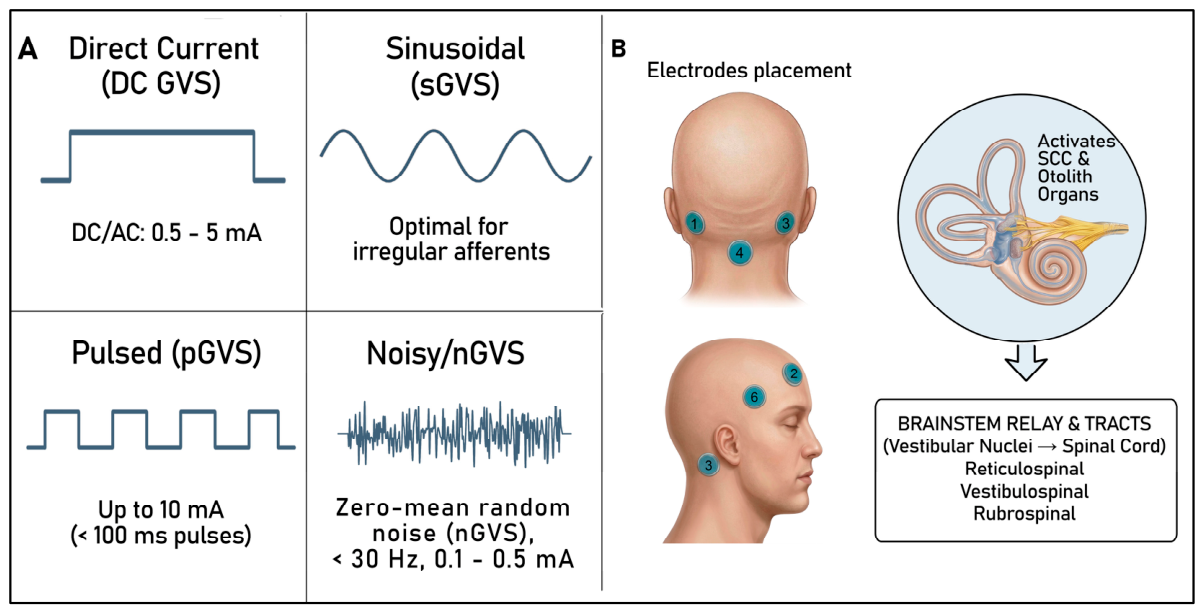
Galvanic Vestibular Stimulation
4. General Limitations and Challenges of Non-Implantable Devices
Author Contributions
Funding
Institutional Review Board Statement
Informed Consent Statement
Data Availability Statement
Acknowledgments
Conflicts of Interest
Abbreviations
| ABR | Auditory brainstem response audiometry |
| AC | Alternate current |
| AR | Augmented reality |
| AUPV | Acute unilateral peripheral vestibulopathy |
| BBS | Berg Balance Scale |
| BVH | Bilateral vestibular hypofunction |
| CNS | Central nervous system |
| CoM | Center of mass |
| CoP | Center of pressure |
| DC | Direct current |
| DOF | Degree of freedom |
| EMG | Electromyography |
| GVS | Galvanic vestibular stimulation |
| HMD | Head-mounted display |
| IMU | Inertial measurement unit |
| ISI | Insomnia Severity Index |
| MS | Multiple sclerosis |
| mTBI | Mild traumatic brain injury |
| MVP | Multichannel vestibular prosthesis |
| nGVS | Noisy galvanic vestibular stimulation |
| OCR | Ocular counter rolling |
| PD | Parkinson’s disease |
| PPPD | Persistent postural–perceptual dizziness |
| RCTs | Randomized controlled trials |
| RMS | Root mean square |
| SCC | Semicircular canal |
| TEF | Tongue electrotactile feedback |
| TMS | Transcranial magnetic stimulation |
| Vbt | Vibrotactile |
| VEMP | Vestibular-evoked myogenic potential |
| VeNS | Vestibular nerve stimulation |
| VOR | Vestibulo-ocular reflex |
| VR | Virtual reality |
References
- Cullen, K.E. Vestibular motor control. Handb. Clin. Neurol. 2023, 195, 31–54. [Google Scholar] [CrossRef]
- Cullen, K.E. Vestibular processing during natural self-motion: Implications for perception and action. Nat. Rev. Neurosci. 2019, 20, 346–363. [Google Scholar] [CrossRef]
- Guzmán-Muñoz, E.; Montalva-Valenzuela, F.; Garcia-Carrillo, E.; Castillo-Paredes, A.; López-Gil, J.F.; Narrea Vargas, J.J.; Yáñez-Sepúlveda, R.; Concha-Cisternas, Y. Postural Balance and Human Movement: An Integrative Framework for Mechanisms, Assessment, and Functional Implications. J. Clin. Med. 2026, 15, 2588. [Google Scholar] [CrossRef]
- Jamon, M. The Development of Vestibular System and Related Functions in Mammals: Impact of Gravity. Front. Integr. Neurosci. 2014, 8, 11. [Google Scholar] [CrossRef]
- Hitier, M.; Besnard, S.; Smith, P.F. Vestibular pathways involved in cognition. Front. Integr. Neurosci. 2014, 8, 59. [Google Scholar] [CrossRef]
- Lopez, C. A Neuroscientific account of how vestibular disorders impair bodily self-consciousness. Front. Integr. Neurosci. 2013, 7, 72622. [Google Scholar] [CrossRef]
- Zhou, Y.; Chen, Y.; Zhang, J.; Long, Y.; Lei, J.; Chang, M. From balance to perception: Vestibular-cognitive integration predicts signal discrimination in a Multirule Visual Monitoring Task. Front. Psychol. 2026, 17, 1759775. [Google Scholar] [CrossRef] [PubMed]
- Strupp, M.; Kim, J.-S.; Murofushi, T.; Straumann, D.; Jen, J.C.; Rosengren, S.M.; Della Santina, C.C.; Kingma, H. Bilateral vestibulopathy: Diagnostic criteria consensus document of the classification committee of the Bárány society. J. Vestib. Res. 2017, 27, 177–189. [Google Scholar] [CrossRef] [PubMed]
- Agrawal, Y.; Van de Berg, R.; Wuyts, F.; Walther, L.; Magnusson, M.; Oh, E.; Sharpe, M.; Strupp, M. Presbyvestibulopathy: Diagnostic criteria consensus document of the classification committee of the Bárány society. J. Vestib. Res. 2019, 29, 161–170. [Google Scholar] [CrossRef]
- Stultiens, J.J.A.; Lewis, R.F.; Phillips, J.O.; Boutabla, A.; Della Santina, C.C.; Glueckert, R.; van de Berg, R. The next challenges of vestibular implantation in humans. J. Assoc. Res. Otolaryngol. 2023, 24, 401–412. [Google Scholar] [CrossRef] [PubMed]
- Soto, E.; Pliego, A.; Vega, R. Vestibular prosthesis: From basic research to clinics. Front. Integr. Neurosci. 2023, 17, 1161860. [Google Scholar] [CrossRef] [PubMed]
- Wiboonsaksakul, K.P.; Leavitt Brown, O.M.; Cullen, K.E. Restoring vestibular function during natural self-motion: Progress and challenges. eLife 2024, 13, 99516. [Google Scholar] [CrossRef]
- de Azevedo, Y.J.; Ledesma, A.L.L.; Pereira, L.V.; Oliveira, C.A.; Junior, F.B. Vestibular implant: Does it really work? A systematic review. Braz. J. Otorhinolaryngol. 2019, 85, 788–798. [Google Scholar] [CrossRef]
- Sienko, K.H.; Whitney, S.L.; Carender, W.J.; Wall, C. The role of sensory augmentation for people with vestibular deficits: Real-time balance aid and/or rehabilitation device? J. Vestib. Res. 2017, 27, 63–67. [Google Scholar] [CrossRef] [PubMed]
- Minino, R.; Romano, A.; Troisi Lopez, E.; Liparoti, M.; Sorrentino, P.; Fratini, A. The effects of vibratory and acoustic stimulations on postural control in healthy people: A systematic review. Ann. Biomed. Eng. 2023, 51, 643–659. [Google Scholar] [CrossRef]
- Mohammed, A.; Li, S.; Liu, X. Exploring the potentials of wearable technologies in managing vestibular hypofunction. Bioengineering 2024, 11, 641. [Google Scholar] [CrossRef] [PubMed]
- Kahya, M.; Hackman, D.; Jacobs, L.; Nilsson, D.; Rumsey, Y.; Oddsson, L.I.E. Wearable technologies using peripheral neuromodulation to enhance mobility and gait function in older adults―A narrative review. J. Gerontol. A Biol. Sci. Med. Sci. 2023, 78, 831–841. [Google Scholar] [CrossRef]
- Wuehr, M.; Decker, J.; Schniepp, R. Noisy galvanic vestibular stimulation: An emerging treatment option for bilateral vestibulopathy. J. Neurol. 2017, 264, 81–86. [Google Scholar] [CrossRef]
- McLaren, R.; Smith, P.F.; Taylor, R.L.; Niazi, I.K.; Taylor, D. Scoping out noisy galvanic vestibular stimulation: A review of the parameters used to improve postural control. Front. Neurosci. 2023, 17, 1156796. [Google Scholar] [CrossRef]
- Marchand, S.; Langlade, A.; Legois, Q.; Séverac Cauquil, A. A wide-ranging review of galvanic vestibular stimulation: From its genesis to basic science and clinical applications. Exp. Brain Res. 2025, 243, 131. [Google Scholar] [CrossRef]
- Haxby, F.; Akrami, M.; Zamani, R. Finding a Balance: A Systematic Review of the Biomechanical Effects of Vestibular Prostheses on Stability in Humans. J. Funct. Morphol. Kinesiol. 2020, 5, 23. [Google Scholar] [CrossRef] [PubMed]
- De Angelis, S.; Princi, A.A.; Dal Farra, F.; Morone, G.; Caltagirone, C.; Tramontano, M. Vibrotactile-Based Rehabilitation on Balance and Gait in Patients with Neurological Diseases: A Systematic Review and Metanalysis. Brain Sci. 2021, 11, 518. [Google Scholar] [CrossRef] [PubMed]
- Boutabla, A.; Revol, R.; Carvalho, M.F.; Grouvel, G.; Corre, J.; Cugnot, J.-F.; Cavuscens, S.; Ranieri, M.; Zhu, M.; McCrum, C.; et al. Gait impairments in patients with bilateral vestibulopathy and chronic unilateral vestibulopathy. Front. Neurol. 2025, 16, 1547444. [Google Scholar] [CrossRef]
- Tyler, M.E.; Kaczmarek, K.A.; Rust, K.L.; Subbotin, A.M.; Skinner, K.L.; Danilov, Y.P. Non-invasive neuromodulation to improve gait in chronic multiple sclerosis: A randomized double blind controlled pilot trial. J. Neuroeng. Rehabil. 2014, 11, 79. [Google Scholar] [CrossRef]
- Fung, A.; Lai, E.C.; Lee, B.-C. Usability and validation of the smarter balance system: An unsupervised dynamic balance exercises system for individuals with parkinson’s disease. IEEE Trans. Neural Syst. Rehabil. Eng. 2018, 26, 798–806. [Google Scholar] [CrossRef]
- Hwang, Y.S.; Min, J.; Yoo, Y.; Kim, S.; Lee, S.-M.; Park, H.-J. Noisy galvanic vestibular stimulation and static balance in parkinson’s disease: A multimodal resting-state fMRI feasibility study. J. Neuroeng. Rehabil. 2026, 23, 24. [Google Scholar] [CrossRef]
- Owaki, D.; Sekiguchi, Y.; Honda, K.; Izumi, S.-I. Two-week rehabilitation with auditory biofeedback prosthesis reduces whole body angular momentum range during walking in stroke patients with hemiplegia: A randomized controlled trial. Brain Sci. 2021, 11, 1461. [Google Scholar] [CrossRef]
- Liu, L.; He, J.; Nong, F.; Huang, Y.; Huang, S.; Qin, X.; Xiao, C.; Long, Y. Changes in cortical activation during proprioceptive stimulation and galvanic vestibular stimulation in healthy individuals and individuals with post-stroke balance disorders: A functional near-infrared spectroscopy study. NeuroImage Clin. 2025, 47, 103822. [Google Scholar] [CrossRef]
- Kim, K.H.; Kim, D.H. Improved Balance, Gait, and Lower Limb Motor Function in a 58-Year-Old Man with Right Hemiplegic Traumatic Brain Injury Following Virtual Reality-Based Real-Time Feedback Physical Therapy. Am. J. Case Rep. 2023, 24, e938803. [Google Scholar] [CrossRef]
- Bach-y-Rita, P. Brain Mechanisms in Sensory Substitution; Academic Press: New York, NY, USA, 1972. [Google Scholar]
- Lloyd-Esenkaya, T.; Lloyd-Esenkaya, V.; O’Neill, E.; Proulx, M.J. Multisensory inclusive design with sensory substitution. In Cognitive Research: Principles and Implications; Springer: Berlin/Heidelberg, Germany, 2020; Volume 5, p. 37. [Google Scholar] [CrossRef]
- Janssen, M.; Pas, R.; Aarts, J.; Janssen-Potten, Y.; Vles, H.; Nabuurs, C.; van Lummel, R.; Stokroos, R.; Kingma, H. Clinical observational gait analysis to evaluate improvement of balance during gait with vibrotactile Biofeedback. Physiother. Res. Int. 2011, 17, 4–11. [Google Scholar] [CrossRef] [PubMed]
- McLaren, R.; Smith, P.F.; Taylor, R.L.; Taylor, D. Optimizing noisy galvanic vestibular stimulation (nGVS) for postural control: Methodological considerations when individualizing the signal for people with bilateral vestibulopathy. Front. Neurol. 2025, 16, 1609123. [Google Scholar] [CrossRef]
- Ralston, J.D.; Stanley, S.; Roper, J.M.; Darici, O.; Peters, R.M. Quantifying Changes in Balance, Gait, Fall Risk, and Sensory Reweighting in Older Adults Following Multi-Session Electrical Vestibular Stimulation Therapy. Med. Devices Evid. Res. 2026, 19, 590344. [Google Scholar] [CrossRef]
- Bowman, T.; Gervasoni, E.; Arienti, C.; Moro Moro, M.; Longo, P.; Castelli, L.; Lazzerini, F.; Morgante, F.; Agosti, M.; Paolucci, S.; et al. Wearable devices for biofeedback rehabilitation: A systematic review and meta-analysis to design application rules and estimate the effectiveness on balance and gait outcomes in neurological diseases. Sensors 2021, 21, 3444. [Google Scholar] [CrossRef]
- Nairn, B.; Tsakanikas, V.; Gordon, B.; Karapintzou, E.; Kaski, D.; Fotiadis, D.I.; Bamiou, D.E. Smart wearable technologies for balance rehabilitation in older adults at risk of falls: Scoping review and comparative analysis. JMIR Rehabil. Assist. Technol. 2025, 12, e69589. [Google Scholar] [CrossRef] [PubMed]
- Hegeman, J.; Honegger, F.; Kupper, M.; Allum, J.H. The balance control of bilateral peripheral vestibular loss subjects and its improvement with auditory prosthetic feedback. J. Vestib. Res. 2005, 15, 109–117. [Google Scholar] [CrossRef]
- Dozza, M.; Horak, F.B.; Chiari, L. Auditory biofeedback substitutes for loss of sensory information in maintaining stance. Exp. Brain Res. 2007, 178, 37–48. [Google Scholar] [CrossRef]
- Dozza, M.; Chiari, L.; Peterka, R.J.; Wall, C.; Horak, F.B. What is the most effective type of audio-biofeedback for postural motor learning? Gait Posture 2011, 34, 313–319. [Google Scholar] [CrossRef]
- Hallemans, A.; Mertens, G.; Van de Heyning, P.; Van Rompaey, V. Playing music may improve the gait pattern in patients with bilateral caloric areflexia wearing a cochlear implant: Results from a pilot study. Front. Neurol. 2017, 8, 404. [Google Scholar] [CrossRef]
- Ross, J.M.; Will, O.J.; McGann, Z.; Balasubramaniam, R. Auditory white noise reduces age-related fluctuations in balance. Neurosci. Lett. 2016, 630, 216–221. [Google Scholar] [CrossRef] [PubMed]
- Basta, D.; Singbartl, F.; Todt, I.; Clarke, A.; Ernst, A. Vestibular rehabilitation by auditory feedback in otolith disorders. Gait Posture 2008, 28, 397–404. [Google Scholar] [CrossRef] [PubMed]
- Fino, P.C.; Peterka, R.J.; Hullar, T.E.; Murchison, C.; Horak, F.B.; Chesnutt, J.C.; King, L.A. Assessment and rehabilitation of central sensory impairments for balance in mTBI using auditory biofeedback: A randomized clinical trial. BMC Neurol. 2017, 17, 41. [Google Scholar] [CrossRef]
- Yashima, J.; Kusuno, M.; Sugimoto, E.; Sasaki, H. Auditory noise improves balance control by cross-modal stochastic resonance. Heliyon 2021, 7, e08299. [Google Scholar] [CrossRef] [PubMed]
- Lim, H.S.; Ryu, J.; Ryu, S. Auditory feedback alters postural control and functional ability in patients with chronic stroke. Res. Sqr. 2020. [Google Scholar] [CrossRef]
- Palm, H.G.; Strobel, J.; Achatz, G.; von Luebken, F.; Friemert, B. The role and interaction of visual and auditory afferents in postural stability. Gait Posture 2009, 30, 328–333. [Google Scholar] [CrossRef]
- Vuillerme, N.; Pinsault, N.; Chenu, O.; Demongeot, J.; Payan, Y.; Danilov, Y. Sensory supplementation system based on electrotactile tongue biofeedback of head position for balance control. Neurosci. Lett. 2008, 431, 206–210. [Google Scholar] [CrossRef]
- Bach-y-Rita, P.; Danilov, Y.; Tyler, M.; Grimm, R. Late human brain plasticity: Vestibular substitution with tongue brain port human-machine interface. Intellectica 2005, 40, 115–122. [Google Scholar] [CrossRef]
- Vuillerme, N.; Pinsault, N.; Fleury, A.; Chenu, O.; Demongeot, J.; Payan, Y.; Pavan, P. Effectiveness of an electro-tactile vestibular substitution system in improving upright postural control in unilateral vestibular-defective patients. Gait Posture 2008, 28, 711–715. [Google Scholar] [CrossRef]
- Vuillerme, N.; Hlavackova, P.; Franco, C.; Diot, B.; Demongeot, J.; Payan, Y. Can an electro-tactile vestibular substitution system improve balance in patients with unilateral vestibular loss under altered somatosensory conditions from the foot and ankle? Annu. Int. Conf. IEEE Eng. Med. Biol. Soc. 2011, 2011, 1323–1326. [Google Scholar] [CrossRef]
- Leonard, G.; Lapierre, Y.; Chen, J.-K.; Wardini, R.; Crane, J.; Ptito, A. Noninvasive tongue stimulation combined with intensive cognitive and physical rehabilitation induces neuroplastic changes in patients with multiple sclerosis: A multimodal neuroimaging study. Mult. Scler. J. Exp. Transl. Clin. 2017, 3, 2055217317690561. [Google Scholar] [CrossRef]
- Wood, S.J.; Black, F.O.; MacDougall, H.G.; Moore, S.T. Electrotactile feedback of sway position improves postural performance during galvanic vestibular stimulation. Ann. N. Y. Acad. Sci. 2009, 1164, 492–498. [Google Scholar] [CrossRef] [PubMed]
- Takada, H.; Takada, M.; Tanaka, K.; Shiozawa, T.; Furuta, M.; Miyao, M. Effects of galvanic vestibular stimulation on statokinesigrams of the elderly. Gerontechnology 2008, 7, 329. [Google Scholar] [CrossRef]
- Ghulyan-Bedikian, V.; Paolino, M.; Paolino, F. Short-term retention effect of rehabilitation using head position-based electrotactile feedback to the tongue: Influence of vestibular loss and old-age. Gait Posture 2013, 38, 777–783. [Google Scholar] [CrossRef]
- Grant, P.; Maeng, M.; Arango, T.; Hogle, R.; Szlyk, J.; Seiple, W. Performance of Real-world Functional Tasks Using an Updated Oral Electronic Vision Device in Persons Blinded by Trauma. Optom. Vis. Sci. 2018, 95, 766–773. [Google Scholar] [CrossRef]
- Peterka, R.J.; Wall, C.; Kentala, E. Determining the effectiveness of a Vibrotactile balance prosthesis. J. Vestib. Res. 2006, 16, 45–56. [Google Scholar] [CrossRef]
- Felipe, L.; Kingma, H. Vibrotactile biofeedback system and bilateral vestibular loss: Pilot study. J. Otolaryngol. ENT Res. 2016, 4, 154–157. [Google Scholar] [CrossRef]
- Kingma, H.; Felipe, L.; Gerards, M.C.; Gerits, P.; Guinand, N.; Perez-Fornos, A.; Demkin, V.; van de Berg, R. Vibrotactile feedback improves balance and mobility in patients with severe bilateral vestibular loss. J. Neurol. 2019, 266, 19–26. [Google Scholar] [CrossRef] [PubMed]
- Kingma, H.; Hougaard, D.D.; van de Berg, R. Subconscious Vibrotactile stimulation improves mobility and balance in patients with bilateral vestibulopathy: Adherence over 2 years. Front. Neurol. 2024, 15, 1491195. [Google Scholar] [CrossRef]
- Candreia, C.; Rust, H.M.; Honegger, F.; Allum, J.H.J. The effects of vibro-tactile biofeedback balance training on balance control and dizziness in patients with persistent postural-perceptual dizziness (PPPD). Brain Sci. 2023, 13, 782. [Google Scholar] [CrossRef] [PubMed]
- Shima, K.; Shimatani, K.; Sakata, M. A wearable light-touch contact device for human balance support. Sci. Rep. 2021, 11, 7324. [Google Scholar] [CrossRef] [PubMed]
- Niijima, A.; Shindo, M.; Aoki, R. Invisible Light Touch: Standing Balance Improvement by Mid-Air Haptic Feedback. In Proceedings of the 2025 CHI Conference on Human Factors in Computing Systems; ACM: New York, NY, USA, 2025; p. 502. [Google Scholar] [CrossRef]
- Mikami, H.; Shima, K.; Wang, T.; Kai, H.; Shimatani, K. A training system for human standing stability using virtual viscosity fields. Sensors 2026, 26, 1985. [Google Scholar] [CrossRef]
- Aydin, M.; Mutlu, R.; Singh, D.; Sariyildiz, E.; Coman, R.; Mayland, E.; Shemmell, J.; Lee, W. Novel soft haptic biofeedback—Pilot study on postural balance and proprioception. Sensors 2022, 22, 3779. [Google Scholar] [CrossRef]
- Allum, J.H.J.; Honegger, F. Vibro-tactile and auditory balance biofeedback changes muscle activity patterns: Possible implications for vestibular implants. J. Vestib. Res. 2017, 27, 77–87. [Google Scholar] [CrossRef]
- van der Logt, R.P.; Findling, O.; Rust, H.; Yaldizli, O.; Allum, J.H. The effect of Vibrotactile biofeedback of trunk sway on balance control in multiple sclerosis. Mult. Scler. Relat. Disord. 2016, 8, 58–63. [Google Scholar] [CrossRef]
- Clément, G.; Reschke, M.F.; Wood, S.J. Vibrotactile feedback improves manual control of tilt after spaceflight. Front. Physiol. 2018, 9, 1850. [Google Scholar] [CrossRef] [PubMed]
- Horlings, C.G.C.; Carpenter, M.G.; Honegger, F.; Allum, J.H.J. Vestibular and proprioceptive contributions to human balance corrections. Ann. N. Y. Acad. Sci. 2009, 1164, 89–96. [Google Scholar] [CrossRef] [PubMed]
- Allum, J.H.J.; Carpenter, M.G.; Horslen, B.C.; Davis, J.R.; Honegger, F.; Tang, K.-S.; Kessler, P. Improving Impaired Balance Function: Real-Time versus Carry-over Effects of Prosthetic Feedback. In Proceedings of the 2011 Annual International Conference of the IEEE Engineering in Medicine and Biology Society; IEEE: Piscataway, NJ, USA, 2011; pp. 1314–1318. [Google Scholar] [CrossRef]
- Margani, V.; Pascucci, S.; Talamonti, R.; Serani, E.; Bini, F.; Marinozzi, F.; Volpini, L.; Elfarargy, H.H.; Covelli, E.; Barbara, M. Augmented virtual reality in vestibular assessment: A dynamic gait application. Audiol. Neurotol. 2023, 28, 308–316. [Google Scholar] [CrossRef] [PubMed]
- Bzdúšková, D.; Marko, M.; Hirjaková, Z.; Riečanský, I.; Kimijanová, J. Fear of heights shapes postural responses to vibration-induced balance perturbation at virtual height. Front. Hum. Neurosci. 2023, 17, 1229484. [Google Scholar] [CrossRef]
- Schedler, S.; Gramann, K.; Hill, M.W.; Muehlbauer, T. Balance performance of healthy young individuals in real versus matched virtual environments: A systematic scoping review. Front. Hum. Neurosci. 2024, 18, 1422581. [Google Scholar] [CrossRef]
- Sarasso, E.; Gardoni, A.; Tettamanti, A.; Agosta, F.; Filippi, M.; Corbetta, D. Virtual reality balance training to improve balance and mobility in Parkinson’s Disease: A systematic review and meta-analysis. J. Neurol. 2022, 269, 1873–1888. [Google Scholar] [CrossRef]
- Yaman, F.; Leblebicier, M.A.; Okur, İ.; Kızılkaya, M.İ.; Kavuncu, V. Is virtual reality training superior to conventional treatment in improving lower extremity motor function in chronic hemiplegic patients? Turk. J. Phys. Med. Rehab. 2022, 68, 391–398. [Google Scholar] [CrossRef]
- Hazzaa, N.M.; Manzour, A.F.; Yahia, E.; Galal, E.M. Effectiveness of virtual reality-based programs as vestibular rehabilitative therapy in peripheral vestibular dysfunction: A meta-analysis. Eur. Arch. Oto-Rhino-Laryngol. 2023, 280, 3075–3086. [Google Scholar] [CrossRef]
- Malisky, J.S.; Cavalcante-Leão, B.L.; Santos, G.J.B.; Severiano, M.I.; Teive, H.A.G.; José, M.R.; de Araújo, C.M.; Zeigelboim, B.S. Evaluation of quality of life after use the virtual reality in patients with neurodegenerative disease. Int. Arch. Otorhinolaryngol. 2024, 28, e523–e529. [Google Scholar] [CrossRef]
- Porcino, T.M.; Clua, E.; Trevisan, D.; Vasconcelos, C.N.; Valente, L. Minimizing cyber sickness in head mounted display systems: Design guidelines and applications. In Proceedings of the 2017 IEEE 5th International Conference on Serious Games and Applications for Health (SeGAH); IEEE: Piscataway, NJ, USA, 2017; pp. 1–6. [Google Scholar] [CrossRef]
- Caserman, P.; Garcia-Agundez, A.; Gámez Zerban, A.; Göbel, S. Cybersickness in current-generation virtual reality head-mounted displays: Systematic review and outlook. Virtual Real. 2021, 25, 1153–1169. [Google Scholar] [CrossRef]
- Pradhan, G.N.; Kingsbury, S.E.; Stepanek, J.; Cevette, M.J. Effects of integrated virtual reality and galvanic vestibular stimulation on standing balance. J. Otorhinolaryngol. Hear. Balance Med. 2025, 6, 1. [Google Scholar] [CrossRef]
- Cevette, M.J.; Stepanek, J.; Cocco, D.; Galea, A.M.; Pradhan, G.N.; Wagner, L.S.; Oakley, S.R.; Smith, B.E.; Zapala, D.A.; Brookler, K.H. Oculo-vestibular recoupling using galvanic vestibular stimulation to mitigate simulator sickness. Aviat. Space Environ. Med. 2012, 83, 549–555. [Google Scholar] [CrossRef]
- Mahmud, M.R.; Cordova, A.; Quarles, J. Auditory, Vibrotactile, or visual? Investigating the effective feedback modalities to improve standing balance in immersive virtual reality for people with balance impairments due to type 2 diabetes. In Proceedings of the 2023 IEEE International Symposium on Mixed and Augmented Reality (ISMAR), Sydney, Australia, 6–20 October 2023; pp. 573–582. [Google Scholar] [CrossRef]
- Hefferman, A.; Abdelmalek, M.; Nunez, D.A. Virtual and augmented reality in the vestibular rehabilitation of peripheral vestibular disorders: Systematic review and meta-analysis. Sci. Rep. 2021, 11, 17843. [Google Scholar] [CrossRef]
- David, E.A.; Shahnaz, N. Posturographic sensory ratios provide evidence for neuroplasticity after computerized vestibular rehabilitation therapy in a single group interventional trial. J. Neuroeng. Rehabil. 2025, 22, 81. [Google Scholar] [CrossRef]
- Liu, X.; Yang, S.; Wang, Y.; Tong, Z.; An, X.; Ren, X.; Sun, X.; Zhou, Z.; Wang, H.; Liu, X. Comparison of the effectiveness of immersive and non-immersive virtual reality in the treatment of vertigo in patients with peripheral vestibular dysfunction: A systematic review and meta-analysis. Front. Neurol. 2025, 16, 1638868. [Google Scholar] [CrossRef]
- Mylonas, C.; Iakovidis, P.; Kottaras, A.; Lytras, D.; Kasimis, K.; Fetlis, A. The effect of rehabilitation in a virtual reality environment on improving balance in older adults with parkinson’s disease: A systematic review. Int. J. Clin. Orthop. 2023, 7, 12–16. [Google Scholar] [CrossRef]
- Hong, J.-C.; Yasuda, K.; Xu, Q.; Iwata, H. Development of a system integrating immersive VR and Vibrotactile feedback to reduce visual dependence in postural control: A feasibility study in young healthy participants. In Proceedings of the 2023 IEEE International Conference on Robotics and Biomimetics (ROBIO), Koh Samui, Thailand, 4–9 December 2023; pp. 1–5. [Google Scholar] [CrossRef]
- Iwasaki, S.; Yamamoto, Y.; Togo, F.; Kinoshita, M.; Yoshifuji, Y.; Fujimoto, C.; Yamasoba, T. Noisy vestibular stimulation improves body balance in bilateral vestibulopathy. Neurology 2014, 82, 969–975. [Google Scholar] [CrossRef]
- Iwasaki, S.; Karino, S.; Kamogashira, T.; Togo, F.; Fujimoto, C.; Yamamoto, Y.; Yamasoba, T. Effect of noisy galvanic vestibular stimulation on ocular vestibular-evoked myogenic potentials to bone-conducted vibration. Front. Neurol. 2017, 8, 26. [Google Scholar] [CrossRef]
- Soto, E.; Vega, R.; Alexandrova, T.; Alexandrov, V.; Reyes, M.; Pliego, A.; Guerrero, W.F. Vestibular Prosthesis. U.S. Patent 20140081346a1, 20 March 2014. [Google Scholar]
- Aleksandrov, V.V.; Romero, M.R.; Soto, E.; Vega, R.; Alexandrova, T.; Bugrov, D.; Lebedev, A.; Lemak, S.; Tikhonova, K.V. Mathematical modeling of output signal for the correction of the vestibular system inertial biosensors. In Proceedings of the 2014 International Symposium on Inertial Sensors and Systems (INERTIAL), Laguna Beach, CA, USA, 25–26 February 2014; pp. 1–4. [Google Scholar] [CrossRef]
- Aoyama, K.; Iizuka, H.; Ando, H.; Maeda, T. Four-pole galvanic vestibular stimulation causes body sway about three axes. Sci. Rep. 2015, 5, 10168. [Google Scholar] [CrossRef]
- Lopez, C.; Cullen, K.E. Electrical stimulation of the peripheral and central vestibular system. Curr. Opin. Neurol. 2024, 37, 40–51. [Google Scholar] [CrossRef]
- Matsugi, A.; Nagino, K.; Shiozaki, T.; Okada, Y.; Mori, N.; Nakamura, J.; Douchi, S.; Oku, K.; Nagano, K.; Tamaru, Y. No impact of stochastic galvanic vestibular stimulation on arterial pressure and heart rate variability in the elderly population. Front. Hum. Neurosci. 2021, 15, 646127. [Google Scholar] [CrossRef] [PubMed]
- Matsugi, A. Effects of Noisy Galvanic Vestibular Stimulation on Blood Pressure and Postural Sway in Healthy Adults: A Pilot Study. Cureus 2025, 17, e94450. [Google Scholar] [CrossRef]
- Fernández, L.; Breinbauer, H.A.; Delano, P.H. Vertigo and dizziness in the elderly. Front. Neurol. 2015, 6, 144. [Google Scholar] [CrossRef]
- Osaba, M.Y.; Rao, A.K.; Agrawal, S.K.; Lalwani, A.K. Balance and gait in the elderly: A contemporary review. Laryngoscope Investig. Otolaryngol. 2019, 4, 143–153. [Google Scholar] [CrossRef] [PubMed]
- Hall, C.D.; Herdman, S.J.; Whitney, S.L.; Anson, E.R.; Carender, W.J.; Hoppes, C.W.; Cass, S.P.; Christy, J.B.; Cohen, H.S.; Fife, T.D. Vestibular rehabilitation for peripheral vestibular hypofunction: An updated clinical practice guideline from the academy of neurologic physical therapy of the american physical therapy association. J. Neurol. Phys. Ther. 2022, 46, 118–177. [Google Scholar] [CrossRef]
- Kornilova, L.N.; Naumov, I.A.; Glukhikh, D.O.; Ekimovskiy, G.A.; Pavlova, A.S.; Khabarova, V.V.; Smirnov, Y.u.I.; Yarmanova, E.N. Vestibular function and space motion sickness. Hum. Physiol. 2017, 43, 557–568. [Google Scholar] [CrossRef]
- Soto, E.; Vega, R. Use of galvanic vestibular stimulation device as a countermeasure for microgravity effects in spaceflight. Front. Space Technol. 2024, 5, 1422868. [Google Scholar] [CrossRef]
- Pixa, N.H.; Steinberg, F.; Doppelmayr, M. Effects of high-definition anodal transcranial direct current stimulation applied simultaneously to both primary motor cortices on bimanual sensorimotor performance. Front. Behav. Neurosci. 2017, 11, 130. [Google Scholar] [CrossRef]
- Goldberg, J.M.; Fernández, C.; Smith, C.E. Responses of vestibular-nerve afferents in the squirrel monkey to externally applied galvanic currents. Brain Res. 1982, 252, 156–160. [Google Scholar] [CrossRef] [PubMed]
- Goldberg, J.M.; Smith, C.E.; Fernandez, C. Relation between discharge regularity and responses to externally applied galvanic currents in vestibular nerve afferents of the squirrel-monkey. J. Neurophysiol. 1984, 51, 1236–1256. [Google Scholar] [CrossRef] [PubMed]
- Gensberger, K.D.; Kaufmann, A.K.; Dietrich, H.; Branoner, F.; Banchi, R.; Chagnaud, B.P.; Straka, H. Galvanic vestibular stimulation: Cellular substrates and response patterns of neurons in the vestibulo-ocular network. J. Neurosci. 2016, 36, 9097–9110. [Google Scholar] [CrossRef]
- Dlugaiczyk, J.; Gensberger, K.D.; Straka, H. Galvanic vestibular stimulation: From basic concepts to clinical applications. J. Neurophysiol. 2019, 121, 2237–2255. [Google Scholar] [CrossRef]
- Kwan, A.; Forbes, P.A.; Mitchell, D.E.; Blouin, J.S.; Cullen, K.E. Neural substrates, dynamics and thresholds of galvanic vestibular stimulation in the behaving primate. Nat. Commun. 2019, 10, 1904. [Google Scholar] [CrossRef] [PubMed]
- Aw, S.T.; Todd, M.J.; Halmagyi, G.M. Latency and initiation of the human vestibuloocular reflex to pulsed galvanic stimulation. J. Neurophysiol. 2006, 96, 925–930. [Google Scholar] [CrossRef]
- Valter, Y.; Vataksi, L.; Allred, A.R.; Hebert, J.R.; Brunyé, T.T.; Clark, T.K.; Serrador, J.; Datta, A. A review of parameter settings for galvanic vestibular stimulation in clinical applications. Front. Hum. Neurosci. 2025, 19, 1518727. [Google Scholar] [CrossRef]
- Fitzpatrick, R.C.; Day, B.L. Probing the human vestibular system with galvanic stimulation. J. Appl. Physiol. 2004, 96, 2301–2316. [Google Scholar] [CrossRef]
- Truong, D.Q.; Thomas, C.; Ira, S.; Valter, Y.; Clark, T.K.; Datta, A. Unpacking Galvanic Vestibular Stimulation using simulations and relating current flow to reported motions: Comparison across common and specialized electrode placements. PLoS ONE 2024, 19, e0309007. [Google Scholar] [CrossRef]
- Inukai, Y.; Otsuru, N.; Masaki, M.; Saito, K.; Miyaguchi, S.; Kojima, S.; Onishi, H. Effect of noisy galvanic vestibular stimulation on center of pressure sway of static standing posture. Brain Stimul. 2018, 11, 85–93. [Google Scholar] [CrossRef]
- Assländer, L.; Peterka, R.J. Sensory reweighting dynamics following removal and addition of visual and proprioceptive cues. J. Neurophysiol. 2016, 116, 272–285. [Google Scholar] [CrossRef]
- Cohen, B.; Yakushin, S.B.; Holstein, G.R. What does galvanic vestibular stimulation actually activate. Front. Neurol. 2012, 2, 90. [Google Scholar] [CrossRef]
- Watson, S.R.D.; Brizuela, A.E.; Curthoys, I.S.; Colebatch, J.G.; MacDougall, H.G.; Halmagyi, G.M. Maintained ocular torsion produced by bilateral and unilateral galvanic (DC) vestibular stimulation in humans. Exp. Brain Res. 1998, 122, 453–458. [Google Scholar] [CrossRef]
- MacDougall, H.G.; Brizuela, A.E.; Curthoys, I.S.; Halmagyi, G.M. Three-Dimensional eye-movement responses to surface galvanic vestibular stimulation in normal subjects and in patients: A Comparison. Ann. N. Y. Acad. Sci. 2002, 956, 546–550. [Google Scholar] [CrossRef]
- Matsugi, A.; Shiozaki, T.; Tanaka, H. Vestibulo-ocular reflex is modulated by noisy galvanic vestibular stimulation. Front. Neurol. 2022, 13, 826739. [Google Scholar] [CrossRef]
- Yakushin, S.B.; Martinelli, G.P.; Raphan, T.; Xiang, Y.; Holstein, G.R.; Cohen, B. Vasovagal oscillations and vasovagal responses produced by the vestibulo-sympathetic reflex in the rat. Front. Neurol. 2014, 5, 37. [Google Scholar] [CrossRef] [PubMed]
- Cohen, B.; Martinelli, G.P.; Xiang, Y.; Raphan, T.; Yakushin, S.B. Vestibular activation habituates the vasovagal response in the rat. Front. Neurol. 2017, 8, 83. [Google Scholar] [CrossRef]
- Ferrè, E.R.; Berlot, E.; Haggard, P. Vestibular contributions to a right-hemisphere network for bodily awareness: Combining galvanic vestibular stimulation and the “Rubber Hand Illusion”. Neuropsychologia 2015, 69, 140–147. [Google Scholar] [CrossRef] [PubMed]
- Oppenländer, K.; Keller, I.; Karbach, J.; Schindler, I.; Kerkhoff, G.; Reinhart, S. Subliminal galvanic-vestibular stimulation influences ego- and object-centred components of visual neglect. Neuropsychologia 2015, 74, 170–177. [Google Scholar] [CrossRef] [PubMed]
- MacDougall, H.G.; Brizuela, A.E.; Burgess, A.M.; Curthoys, I.S.; Halmagyi, G.M. Patient and normal three-dimensional eye-movement responses to maintained (DC) surface galvanic vestibular stimulation. Otol. Neurotol. 2005, 26, 500–511. [Google Scholar] [CrossRef] [PubMed]
- Kim, J.; Curthoys, I.S. Responses of primary vestibular neurons to galvanic vestibular stimulation (GVS) in the anaesthetised guinea pig. Brain Res. Bull. 2004, 64, 265–271. [Google Scholar] [CrossRef] [PubMed]
- Curthoys, I.S.; MacDougall, H.G. What galvanic vestibular stimulation actually activates. Front. Neurol. 2012, 3, 117. [Google Scholar] [CrossRef] [PubMed]
- Kim, J. Head movements suggest canal and otolith projections are activated during galvanic vestibular stimulation. Neuroscience 2013, 253, 416–425. [Google Scholar] [CrossRef] [PubMed]
- Wardman, D.L.; Taylor, J.L.; Fitzpatrick, R.C. Effects of galvanic vestibular stimulation on human posture and perception while standing. J. Physiol. 2003, 551, 1033–1042. [Google Scholar] [CrossRef]
- Hlavacka, F.; Mergner, T.; Krizkova, M. Control of the body vertical by vestibular and proprioceptive inputs. Brain Res. Bull. 1996, 40, 431–434. [Google Scholar] [CrossRef]
- Bent, L.R.; Inglis, J.T.; McFadyen, B.J. When is vestibular information important during walking? J. Neurophysiol. 2004, 92, 1269–1275. [Google Scholar] [CrossRef]
- Reimann, H.; Fettrow, T.D.; Thompson, E.D.; Agada, P.; McFadyen, B.J.; Jeka, J.J. Complementary mechanisms for upright balance during walking. PLoS ONE 2017, 12, e0172215. [Google Scholar] [CrossRef]
- Matos-Cunha, L.C.; Campelo Tavares, M.; Tierra Criollo, C.J.; Labanca, L.; Cardoso dos Santos Couto Paz, C.; Resende Martins, H.; de Freitas Carneiro-Proietti, A.B.; Utsch Goncalves, D. Contribution of galvanic vestibular stimulation for the diagnosis of HTLV-1-associated myelopathy/tropical spastic paraparesis. J. Clin. Neurol. 2013, 9, 252. [Google Scholar] [CrossRef]
- Ali, A.S.; Rowen, K.A.; Iles, J.F. Vestibular actions on back and lower limb muscles during postural tasks in man. J. Physiol. 2003, 546, 615–624. [Google Scholar] [CrossRef]
- Kim, J. Short-Term Habituation of Eye-Movement Responses Induced by Galvanic Vestibular Stimulation (GVS) in the Alert Guinea Pig. Brain Res. Bull. 2009, 79, 1–5. [Google Scholar] [CrossRef]
- MacDougall, H.G.; Brizuela, A.E.; Burgess, A.M.; Curthoys, I.S. Between-subject variability and within-subject reliability of the human eye-movement response to bilateral galvanic (DC) vestibular stimulation. Exp. Brain Res. 2002, 144, 69–78. [Google Scholar] [CrossRef]
- Im, C.; Seo, H.; Jun, S.C. Stimulation effect of inter-subject variability in tdcs–multi-scale modeling study. In Proceedings of the 2018 40th Annual International Conference of the IEEE Engineering in Medicine and Biology Society (EMBC), Honolulu, HI, USA, 18–21 July 2018; pp. 3092–3095. [Google Scholar] [CrossRef]
- Flores, A.; Manilla, S.; Huidobro, N.; De la Torre-Valdovinos, B.; Kristeva, R.; Mendez-Balbuena, I.; Galindo, F.; Treviño, M.; Manjarrez, E. Stochastic resonance in the Synaptic Transmission between Hair Cells and Vestibular Primary Afferents in Development. Neuroscience 2016, 322, 416–429. [Google Scholar] [CrossRef]
- Goel, R.; Kofman, I.; Jeevarajan, J.; De Dios, Y.; Cohen, H.S.; Bloomberg, J.J.; Mulavara, A.P. Using low levels of stochastic vestibular stimulation to improve balance function. PLoS ONE 2015, 10, e0136335. [Google Scholar] [CrossRef]
- Fujimoto, C.; Yamamoto, Y.; Kamogashira, T.; Kinoshita, M.; Egami, N.; Uemura, Y.; Togo, F.; Yamasoba, T.; Iwasaki, S. Noisy galvanic vestibular stimulation induces a sustained improvement in body balance in elderly adults. Sci. Rep. 2016, 6, 37575. [Google Scholar] [CrossRef]
- Galvan-Garza, R.C.; Clark, T.K.; Mulavara, A.P.; Oman, C.M. Exhibition of stochastic resonance in vestibular tilt motion perception. Brain Stimul. 2018, 11, 716–722. [Google Scholar] [CrossRef]
- Serrador, J.M.; Deegan, B.M.; Geraghty, M.C.; Wood, S.J. Enhancing vestibular function in the elderly with imperceptible electrical stimulation. Sci. Rep. 2018, 8, 336. [Google Scholar] [CrossRef] [PubMed]
- Keywan, A.; Jahn, K.; Wuehr, M. Noisy galvanic vestibular stimulation primarily affects otolith-mediated motion perception. Neuroscience 2019, 399, 161–166. [Google Scholar] [CrossRef] [PubMed]
- Chen, A.; Kuo, C.; Blouin, J.S. A portable and low-cost solution for real-time manipulation of the vestibular sense. J. Neurosci. Methods 2022, 382, 109709. [Google Scholar] [CrossRef]
- Kollmansperger, S.; Decker, J.; Berkes, S.; Jahn, K.; Wuehr, M. A mobile electrical stimulator for therapeutic modulation of the vestibular system—Design, safety, and functionality. Front. Neurol. 2024, 15, 1502204. [Google Scholar] [CrossRef] [PubMed]
- Kim, S.; Lazaro, M.J.; Kang, Y. Galvanic vestibular stimulation to counteract leans illusion: Comparing step and ramped waveforms. Ergonomics 2023, 66, 432–442. [Google Scholar] [CrossRef]
- Allred, A.R.; Lippert, A.F.; Wood, S.J. Galvanic vestibular stimulation advancements for spatial disorientation training. Aerosp. Med. Hum. Perform. 2024, 95, 390–398. [Google Scholar] [CrossRef]
- Maitre, J.; Paillard, T. Postural effects of vestibular manipulation depend on the physical activity status. PLoS ONE 2016, 11, e0162966. [Google Scholar] [CrossRef]
- Deshpande, N.; Hewston, P.; Yoshikawa, M. Age-associated differences in global and segmental control during dual-task walking under sub-optimal sensory conditions. Hum. Mov. Sci. 2015, 40, 211–219. [Google Scholar] [CrossRef]
- Fu, W.; Bai, Y.; Wang, X. Galvanic vestibular stimulation for postural rehabilitation in neurological disorders: A systematic review. Front. Neurosci. 2025, 19, 1580078. [Google Scholar] [CrossRef]
- Moore, S.T.; Dilda, V.; Morris, T.R.; Yungher, D.A.; MacDougall, H.G. Pre-adaptation to noisy galvanic vestibular stimulation is associated with enhanced sensorimotor performance in novel vestibular environments. Front. Syst. Neurosci. 2015, 9, 88. [Google Scholar] [CrossRef]
- Wuehr, M.; Nusser, E.; Decker, J.; Krafczyk, S.; Straube, A.; Brandt, T.; Jahn, K.; Schniepp, R. Noisy vestibular stimulation improves dynamic walking stability in bilateral vestibulopathy. Neurology 2016, 86, 2196–2202. [Google Scholar] [CrossRef]
- Iwasaki, S.; Fujimoto, C.; Egami, N.; Kinoshita, M.; Togo, F.; Yamamoto, Y.; Yamasoba, T. Noisy vestibular stimulation increases gait speed in normals and in bilateral vestibulopathy. Brain Stimul. 2018, 11, 709–715. [Google Scholar] [CrossRef]
- Chen, P.Y.; Jheng, Y.C.; Wang, C.C.; Huang, S.E.; Yang, T.H.; Hsu, P.C.; Kuo, C.H.; Lin, Y.Y.; Lai, W.Y.; Kao, C.L. Effect of noisy galvanic vestibular stimulation on dynamic posture sway under visual deprivation in patients with bilateral vestibular hypofunction. Sci. Rep. 2021, 11, 4229. [Google Scholar] [CrossRef]
- Wuehr, M.; Eder, J.; Keywan, A.; Jahn, K. Noisy galvanic vestibular stimulation improves vestibular perception in bilateral vestibulopathy. J. Neurol. 2023, 270, 938–943. [Google Scholar] [CrossRef]
- Nguyen, T.T.; Lee, S.-B.; Kang, J.-J.; Oh, S.-Y. Optimal design of galvanic vestibular stimulation for patients with vestibulopathy and cerebellar disorders. Brain Sci. 2023, 13, 1333. [Google Scholar] [CrossRef]
- Wuehr, M.; Eder, J.; Kellerer, S.; Amberger, T.; Jahn, K. Mechanisms underlying treatment effects of vestibular noise stimulation on postural instability in patients with bilateral vestibulopathy. J. Neurol. 2024, 271, 1408–1415. [Google Scholar] [CrossRef]
- Curry, G.; Cheung, T.; Zhang, S.D.; Logue, S.; McAnena, L.; Price, R.; Sittlington, J.J. Repeated electrical vestibular nerve stimulation (VeNS) reduces severity in moderate to severe insomnia; a randomised, sham-controlled trial; the modius sleep study. Brain Stimul. 2024, 17, 782–793. [Google Scholar] [CrossRef] [PubMed]
- Mitsutake, T.; Nakazono, H.; Shiozaki, T.; Taniguchi, T.; Yoshizuka, H.; Sakamoto, M. Neural interference effects on lateral vestibulospinal tract excitability by noisy galvanic vestibular stimulation. Clin. Neurophysiol. 2024, 168, 153–160. [Google Scholar] [CrossRef] [PubMed]
- King, J.A.; Walters, N.; Rodrigues, N.; Al Bastami, J.; Mehri, N.; Chan, A.; Spencer, M.; Clark, S.; Ferrier, E.; Orr, S.L. Electrical vestibular stimulation to improve balance in older adults: A pilot randomized controlled trial. J. Neuroeng. Rehabil. 2025, 22, 231. [Google Scholar] [CrossRef] [PubMed]
- Fujimoto, C.; Kawahara, T.; Kikkawa, Y.S.; Kinoshita, M.; Kamogashira, T.; Oka, M.; Ichijo, K.; Kondo, K.; Iwasaki, S. Relationship between short-term postural responses to noisy galvanic vestibular stimulation at varying current intensities and its prolonged effects in patients with peripheral vestibulopathy. Cureus 2025, 17, e95861. [Google Scholar] [CrossRef]
- Menon, A.; Vigneswaran, M.; Zhang, T.; Sreenivasan, V.; Kim, C.; McKeown, M.J. Individualizing galvanic vestibular stimulation further improves visuomotor performance in Parkinson’s Disease. Bioengineering 2025, 12, 523. [Google Scholar] [CrossRef]
- Oh, S.Y.; Nguyen, T.T.; Kang, J.J.; Chae, J.; Dieterich, M. Galvanic vestibular stimulation promotes visuospatial cognitive recovery in acute unilateral vestibulopathy via targeted neural modulation: A randomized controlled trial. J. Transl. Med. 2025, 23, 991. [Google Scholar] [CrossRef]
- Cheung, T.; Lam, J.Y.T.; Fong, K.H.; Cheng, C.P.; Xiang, Y.T.; Li, T.M.H. Efficacy of electrical vestibular stimulation (VeNS) on adults with insomnia: A double-blind, randomized, sham-controlled trial. Dialogues Clin. Neurosci. 2025, 27, 236–248. [Google Scholar] [CrossRef]
- Čobeljić, R.; Milijković, N.; Ribarić-Jankes, K.; Švirtlih, L. A paradigm of galvanic vestibular stimulation diminishes the soleus muscle h-reflex in healthy volunteers. Spinal Cord 2016, 54, 150–153. [Google Scholar] [CrossRef]
- Utz, K.S.; Dimova, V.; Oppenländer, K.; Kerkhoff, G. Electrified minds: Transcranial direct current stimulation (tDCS) and galvanic vestibular stimulation (GVS) as methods of non-invasive brain stimulation in neuropsychology--a review of current data and future implications. Neuropsychologia 2010, 48, 2789–2810. [Google Scholar] [CrossRef]
- Assländer, L.; Giboin, L.S.; Gruber, M.; Schniepp, R.; Wuehr, M. No evidence for stochastic resonance effects on standing balance when applying noisy galvanic vestibular stimulation in young healthy adults. Sci. Rep. 2021, 11, 12327. [Google Scholar] [CrossRef]
- Lin, C.C.; Whitney, S.L.; Loughlin, P.J.; Furman, J.M.; Redfern, M.S.; Sienko, K.H.; Sparto, P.J. The effect of age on postural cognitive task performance while using Vibrotactile feedback. J. Neurophysiol. 2015, 113, 2127–2136. [Google Scholar] [CrossRef]
- Lin, C.C.; Whitney, S.L.; Loughlin, P.J.; Furman, J.M.; Redfern, M.S.; Sienko, K.H.; Sparto, P.J. The use of Vibrotactile feedback during dual-task standing balance conditions in people with unilateral vestibular hypofunction. Otol. Neurotol. 2018, 39, e349–e356. [Google Scholar] [CrossRef] [PubMed]
- Schulleri, K.H.; Feizian, F.; Steinböck, M.; Lee, D.; Johannsen, L. Does Vibrotactile biofeedback for postural control interfere with cognitive processes? J. Neuroeng. Rehabil. 2024, 21, 184. [Google Scholar] [CrossRef]
- Cullen, K.E. Neural control of eye movements. In Adler’s Physiology of the Eye, 12th ed.; Levin, L.A., Kaufman, P.L., Hartnett, M.A., Eds.; Elsevier: Amsterdam, The Netherlands, 2025; pp. 212–235. [Google Scholar]
- Oman, C.M.; Cullen, K.E. Brainstem processing of vestibular sensory exafference: Implications for motion sickness etiology. Exp. Brain Res. 2014, 232, 2483–2492. [Google Scholar] [CrossRef]
- Zhu, Y. Design and validation of a low-cost portable device to quantify postural stability. Sensors 2017, 17, 619. [Google Scholar] [CrossRef]
- Guyot, J.-P.; Perez Fornos, A. Milestones in the development of a vestibular implant. Curr. Opin. Neurol. 2019, 32, 145–153. [Google Scholar] [CrossRef]
- Whitebread, F.; Lee, C. Standardizing stimulus parameters for noisy galvanic vestibular stimulation. J. Audiol. Otol. 2026, 30, 13–22. [Google Scholar] [CrossRef] [PubMed]
- Angelaki, D.E.; Cullen, K.E. Vestibular system: The many facets of a multimodal sense. Annu. Rev. Neurosci. 2008, 31, 125–150. [Google Scholar] [CrossRef] [PubMed]
- Cullen, K.E. The Vestibular System: Multimodal Integration and Encoding of Self-Motion for Motor Control. Trends Neurosci. 2012, 35, 185–196. [Google Scholar] [CrossRef] [PubMed]
- Laurens, J.; Angelaki, D.E. A unified internal model theory to resolve the paradox of active versus passive self-motion sensation. eLife 2017, 6, e28074. [Google Scholar] [CrossRef] [PubMed]
- Zhao, Y.; Chen, J.; Xi, N. Improving Human Balance with Wearable Devices. In Structural Health Monitoring; DEStech Publishing Inc.: Lancaster, PA, USA, 2023. [Google Scholar] [CrossRef]
- Fleming, A.; Huang, S.; Buxton, E.; Hodges, F.; Huang, H.H. Direct Continuous Electromyographic Control of a Powered Prosthetic Ankle for Improved Postural Control after Guided Physical Training: A Case Study. J. Neuroeng. Rehabil. 2021, 18, 54. [Google Scholar] [CrossRef]
- Pradhan, G.; Galvan-Garza, R.; Perez, A.; Stepanek, J.; Cevette, M. Visual vestibular conflict mitigation in virtual reality using galvanic vestibular stimulation. Aerosp. Med. Hum. Perform. 2022, 93, 406–414. [Google Scholar] [CrossRef]
- Groth, C.; Tauscher, J.P.; Heesen, N.; Hattenbach, M.; Castillo, S.R.; Magnor, M. Omnidirectional galvanic vestibular stimulation in virtual reality. IEEE Trans. Vis. Comput. Graph. 2022, 28, 4101–4112. [Google Scholar] [CrossRef] [PubMed]



| Author | GVS | Subjects | Result |
|---|---|---|---|
| Wuehr et al., 2016 [147] | Transmastoid nGVS (sham trial) and nonzero-amplitude nGVS set to 80% of the individual cutaneous threshold for GVS. | BVH patients (n = 13) were tested while walking. | Walking improvement in BVH patients was more notorious during slow stride than at a fast pace. nGVS did not provoke nystagmus, vertigo or pain to any participant. Results showed that GVS improved gait performance in pathological conditions. |
| Iwasaki et al., 2018 [148] | Transmastoid nGVS. | 19 healthy controls and 12 patients with BVH. | nGVS had significant effects on gait velocity, stride length and stride time in healthy subjects as well as in patients with BVH. |
| Chen et al., 2021 [149] | nGVS intensities (0–1000 μA). Amplitude determined by standing stability. | Ten BVH patients and 16 healthy participants. nGVS applied in straight walking and 2 Hz head yaw walking in light and dark conditions. | In the light, the CoM deviation decreased in straight walking for the BVH. In the dark, both healthy and BVH showed decreased lateral deviation during nGVS. The chest–pelvic ratio angle significantly decreased in BVH for 2 Hz head yaw walking. nGVS reduced walking deviations in BVH patients. |
| Wuehr et al., 2023 [150] | nGVS (mean intensity: 0.36 ± 0.16 mA). Optimized for each subject to stabilize in posturographic assessment. | Eleven patients with BVH (mean age: 54.0 ± 8.3 years; 7 females). | nGVS improves vestibular perceptual performance determined as direction recognition thresholds for head-centered roll tilt motion on a 6DOF motion platform. |
| Nguyen et al., 2023 [151] | GVS (sinusoidal, direct current, and noisy), amplitude (0.4, 0.8, and 1.2 mA), and duration (5 and 30 min). | Patients with either unilateral or BVH (n = 18) or cerebellar ataxia (n = 13) were enrolled in the study. | Patients with unilateral vestibulopathy experienced the most favorable change in dizziness perception and imbalance with nGVS or sGVS at 0.4 mA for 30 min, followed by DC GVS at 0.8 mA for 5 min. nGVS, use of 0.8–0.4 mA, for 30 min was most effective in BVH and cerebellar ataxia patients. |
| Wuehr et al., 2024 [152] | Transmastoid nGVS of various levels from 0 to 0.7 mA. | BVH patients (n = 19) and paired controls. | Body sway versus nGVS amplitude showed a bell-shaped function in 63% of patients, thus indicating a stochastic resonance with optimal improvements of 31% at an average intensity of 0.3 mA. Patients with a stronger stochastic resonance-like response showed the most meaningful improvement in static balance. |
| Curry et al., 2024 [153] | Vestibular nerve stimulation (VeNS) using Modius Sleep device 30 min daily for 4 weeks. | Randomized, sham-controlled trial in 147 participants with moderate-to-severe insomnia (Insomnia Severity Index (ISI) ≥ 15). | After 4 weeks, mean ISI score reduction was greater in the VeNS than sham group. Mean ISI score decreased by 5.8 (95% CI: [−6.8, −4.81], approaching the clinically meaningful threshold of a 6-point reduction. |
| Mitsutake et al., 2024 [154] | Square-wave transmastoid GVS of 3000 μA and 200 μA, and nGVS of 200 µA. | Twenty-six healthy volunteers in two groups: balance training combined with nGVS and sham GVS. Nine consecutives 60 s GVS periods. | nGVS group showed significantly increased post-intervention H-reflex amplitude. |
| King et al., 2025 [155] | nGVS amplitude of ±0.35 mA, wideband of 0.001–300 Hz, bipolar mastoids and C4 reference, for 20 min three times weekly for six weeks. | 40 older adults randomly assigned to a stimulation group of noisy electrical vestibular stimulation (nEVS intervention) or sham group. | Following a regimen of multiple GVS (nEVS in this work), improvements in balance persisted for up to six months. This suggests the potential for long-term training effects, possibly due to neuroplastic changes in the vestibular system. |
| Fujimoto et al., 2025 [156] | Bipolar transmastoid. nGVS 100–2000 µA for 30s. | Randomized, double-blind, placebo-controlled trial in 39 patients with unilateral or bilateral peripheral vestibulopathy. | 30% of patients demonstrated significantly greater reductions in CoP velocity at 100 μA and 1700 μA. |
| Menon et al., 2025 [157] | GVS 0.1 mA, with steps of 0.1 mA, until skin sensitivity. Two-pole (transmastoid) and three-pole (two additional electrodes on the temples) stimulation. | 12 participants with PD. | GVS improved visuomotor target tracking in individuals with PD. Both two-pole and three-pole stimulation were effective. The most effective stimulus across all subjects was a waveform with an envelope frequency of 30 Hz and a carrier frequency of 110 Hz, which improved motor performance by 25% relative to the sham stimulus. |
| Oh et al., 2025 [158] | Bipolar transmastoid. Direct current (DC) of 0.8 to 1.0 mA, 30 min daily for 10 days. | Single-blind, randomized, sham-controlled trial in 83 acute unilateral peripheral vestibulopathy (AUPV) patients using GVS (cathode on lesion side). | Improved visuospatial memory performance. Findings support GVS as a neuromodulatory intervention to enhance spatial memory and facilitate cognitive recovery in AUPV. |
| Cheung et al., 2025 [159] | Use of VeNS amplitude of 0–1 mA until subjects felt a swaying sensation. Frequency: 100 Hz. Modius Sleep device (Nurovalens®). | Participants, including 43 adults exhibiting insomnia symptoms and 40 paired sham controls, underwent 20 VeNS sessions, one hour prior to bedtime during 30 min. | Findings suggest that VeNS was effective in reducing insomnia severity and improving participants’ physical well-being immediately after the 4-week intervention and at the 3-month follow-up compared with the sham VeNS group. |
| Technology | Mechanism | Clinical Evidence | Target Population | Advantages | Limitations |
|---|---|---|---|---|---|
| Auditory biofeedback | Sensory substitution (acoustic encoding of sway) | Moderate (RCTs in BVH, stroke, and mTBI) | BVH, stroke, and mTBI | No ear canal occlusion; portable; land ow cost | Acoustic signal competes with and may mask environmental sounds, social limitation, and no ambulatory standardization |
| Vbt/haptic biofeedback [58,59] | Sensory substitution (tactile encoding of trunk tilt) | Moderate–high (RCTs and long-term follow-up studies) | BVH, PD, MS, and elderly | Ambulatory, subconscious, wearable, and commercially available | Incomplete postural info (no cephalic axis), cognitive load in elderly, and trunk-only sensing |
| TEF | Sensory substitution (electrotactile tongue array) | Moderate (RCTs, BVH, and MS) | BVH, MS, and dizzy patients | High spatial resolution and neuroplasticity effects; limited accessibility | Intraoral, interferes with speech/eating, significant learning period, and limited portability |
| GVS | Sensory enhancement (direct vestibular afferent modulation) | High (many RCTs and systematic reviews) | BVH, PD, elderly, and astronauts | Modulates vestibular pathway directly; neuroplastic potential; intermediate accessibility | Non-specific activation, high inter-subject variability, and no standardized dosing |
| VR/AR [36,78,82,84] | Visual feedback substitution or enhancement | High (meta-analyses and systematic reviews) | BVH, PD, stroke, and peripheral vestibular disorders | Rich sensorimotor environment, neuroplasticity, and highly accessible | Cybersickness, no long-term retention data, and requires technical infrastructure |
Disclaimer/Publisher’s Note: The statements, opinions and data contained in all publications are solely those of the individual author(s) and contributor(s) and not of MDPI and/or the editor(s). MDPI and/or the editor(s) disclaim responsibility for any injury to people or property resulting from any ideas, methods, instructions or products referred to in the content. |
© 2026 by the authors. Licensee MDPI, Basel, Switzerland. This article is an open access article distributed under the terms and conditions of the Creative Commons Attribution (CC BY) license.
Share and Cite
Arellano, G.; Pliego, A.; Soto, E. Non-Implantable Prosthetic Devices to Stabilize Posture and Body Balance. Prosthesis 2026, 8, 51. https://doi.org/10.3390/prosthesis8060051
Arellano G, Pliego A, Soto E. Non-Implantable Prosthetic Devices to Stabilize Posture and Body Balance. Prosthesis. 2026; 8(6):51. https://doi.org/10.3390/prosthesis8060051
Chicago/Turabian StyleArellano, Gustavo, Adriana Pliego, and Enrique Soto. 2026. "Non-Implantable Prosthetic Devices to Stabilize Posture and Body Balance" Prosthesis 8, no. 6: 51. https://doi.org/10.3390/prosthesis8060051
APA StyleArellano, G., Pliego, A., & Soto, E. (2026). Non-Implantable Prosthetic Devices to Stabilize Posture and Body Balance. Prosthesis, 8(6), 51. https://doi.org/10.3390/prosthesis8060051