Systematic Review

Wettability of 3D-Printed Denture Base Resins Compared with Conventional Heat-Polymerized and Milled Counterparts: A Systematic Review and Meta-Analysis of In Vitro Studies


1
Department of Prosthodontics, School of Dentistry, Faculty of Health Sciences, Aristotle University of Thessaloniki, 54124 Thessaloniki, Greece
2
Department of Prosthodontics, School of Dental Medicine, Tufts University, Boston, MA 02111, USA
*
Author to whom correspondence should be addressed.
Prosthesis 2026, 8(6), 50; https://doi.org/10.3390/prosthesis8060050
Submission received: 3 April 2026 / Revised: 8 May 2026 / Accepted: 19 May 2026 / Published: 22 May 2026
(This article belongs to the Section Prosthodontics)

Abstract

Background/Objectives: Wettability is a key surface property of denture base resins and is related to denture retention through interfacial cohesive–adhesive forces; conversely, compromised material wettability facilitates bacterial adhesion and colonization. Although three-dimensional (3D) printing has become an increasingly popular method for fabricating dentures, there is insufficient evidence regarding the wettability of 3D-printed denture base resins. This study aims to evaluate the wettability of 3D-printed, heat-polymerized, and milled denture base resins by comparing their contact angles. Methods: A search was conducted in MEDLINE, Scopus, and Web of Science, while grey literature was also assessed. The risk of bias was evaluated using the Quality Assessment Tool for In Vitro Studies (QUIN). Meta-analyses were conducted using inverse variance and the random effects model. Results: A total of nine and seven studies were included in the quantitative synthesis comparing 3D-printed denture base resins with heat-polymerized and milled resins, respectively. A statistically significant difference of −6.50 degrees was observed in favor of 3D-printed denture base resins compared to heat-polymerized ones (95% CI: −12.11 to −0.90, I2 = 99%), while the comparison between 3D-printed and milled resins showed a non-statistically significant mean difference (MD: 0.87, 95% CI: −5.08 to 6.82, I2 = 98%). Conclusions: The available in vitro evidence indicates that 3D-printed denture base resins tend to exhibit improved surface wettability compared with heat-polymerized resins and perform similarly to milled resins. However, given the extremely high heterogeneity, these findings should be interpreted with caution, as clinical performance depends on the complex interplay between surface characteristics and microbial adhesion rather than solely on wettability.

1. Introduction

The surface properties of denture base materials play an important role in the success of dentures [1]. The ability of a liquid, such as saliva, to adhere to a solid material (i.e., a denture base) is defined by the term “wettability” [2]. Measuring the contact angle between a droplet and a solid surface is a reliable method for quantifying wettability [2,3,4]. As the contact angle increases above 90 degrees, wettability decreases, and the material is considered hydrophobic. Conversely, a contact angle less than 90 degrees indicates hydrophilic behavior and increased wettability [2,5].
Higher wettability positively affects denture performance by improving retention [6]. Saliva adheres better to the denture surface, and cohesive–adhesive forces are enhanced, which provides denture wearers with comfort and satisfaction [3,5,6,7]. Additionally, denture bases with impaired wettability may promote colonization by C. albicans, as the yeast preferentially adheres to more hydrophobic surfaces [8,9,10].
Three-dimensional (3D)-printed acrylic polymers are considered a recent and promising alternative for denture fabrication [11,12]. Their use is expected to increase in the near future as digital technology gains ground over conventional protocols, providing a more predictable workflow with fewer laboratory and clinical steps in denture construction [13,14]. It also offers reduced material waste compared with milled alternatives, enhancing cost-effectiveness [15,16]. However, 3D-printed denture base materials appear to have degraded mechanical properties and rough surfaces, probably due to the layer-by-layer printing technique [16,17,18].
As has already been pointed out, the wettability of 3D-printed denture base resins should be systematically examined to determine whether they are reliable materials for denture fabrication. Based on the existing literature, a few systematic reviews and meta-analyses tend to focus either on comparisons between CAD/CAM milled and conventional denture base resins or surface properties other than wettability [19,20,21]. Therefore, the authors did not identify any systematic reviews and meta-analyses on the wettability of 3D-printed denture base resins compared to conventional and CAD/CAM milled denture base materials.
This study aimed to assess the wettability of 3D-printed, milled, and conventional (heat-cured/heat-polymerized) denture base resins, with a focus on pairwise comparisons between 3D-printed resins and the other material groups.

2. Materials and Methods

2.1. Protocol Registration

The protocol of the present systematic review and meta-analysis was formed based on the Preferred Reporting Items for Systematic Reviews and Meta-Analyses 2020 (PRISMA 2020) statement [22]. Prior to conducting the systematic review and meta-analysis, it was submitted to the international systematic review registry PROSPERO (CRD420251077402). The protocol was registered prior to formal searching and study screening to ensure methodological transparency. Although the initial protocol had planned for a GRADE (Grading of Recommendations Assessment, Development, and Evaluation) assessment, this was omitted, as the review eventually only included in vitro studies. The GRADE framework’s criteria (e.g., directness of clinical outcomes) are not applicable to these studies.

2.2. Eligibility Criteria

Studies were considered eligible for inclusion in the current systematic review and meta-analysis provided that they fulfilled the following criteria:
  • Specimen type (population): Denture base resin specimens.
  • Intervention group: 3D-printed denture base resins.
  • Comparator: Conventional (heat-polymerized) or CAD/CAM milled denture base resins.
  • Outcome: Wettability (evaluated by measuring the contact angle of the drop).
  • Study design: Either clinical (randomized controlled trials, non-randomized clinical trials) or observational (case control) studies, as well as in vitro experimental ones.
  • Availability in full text.
  • English language.

2.3. Information Sources and Search Strategy

An electronic search was conducted across three databases—MEDLINE (via PubMed), Scopus, and Web of Science—with the final search performed in December 2025. The detailed search strategy plans for both comparisons are provided in the Supplementary Section (Table S1). Manual searches were performed using Google and Google Scholar, where the first 100 records for each platform were screened based on relevance using the basic terms of the search strategy. The platform opengrey.eu was consulted to assess grey literature.

2.4. Study Records

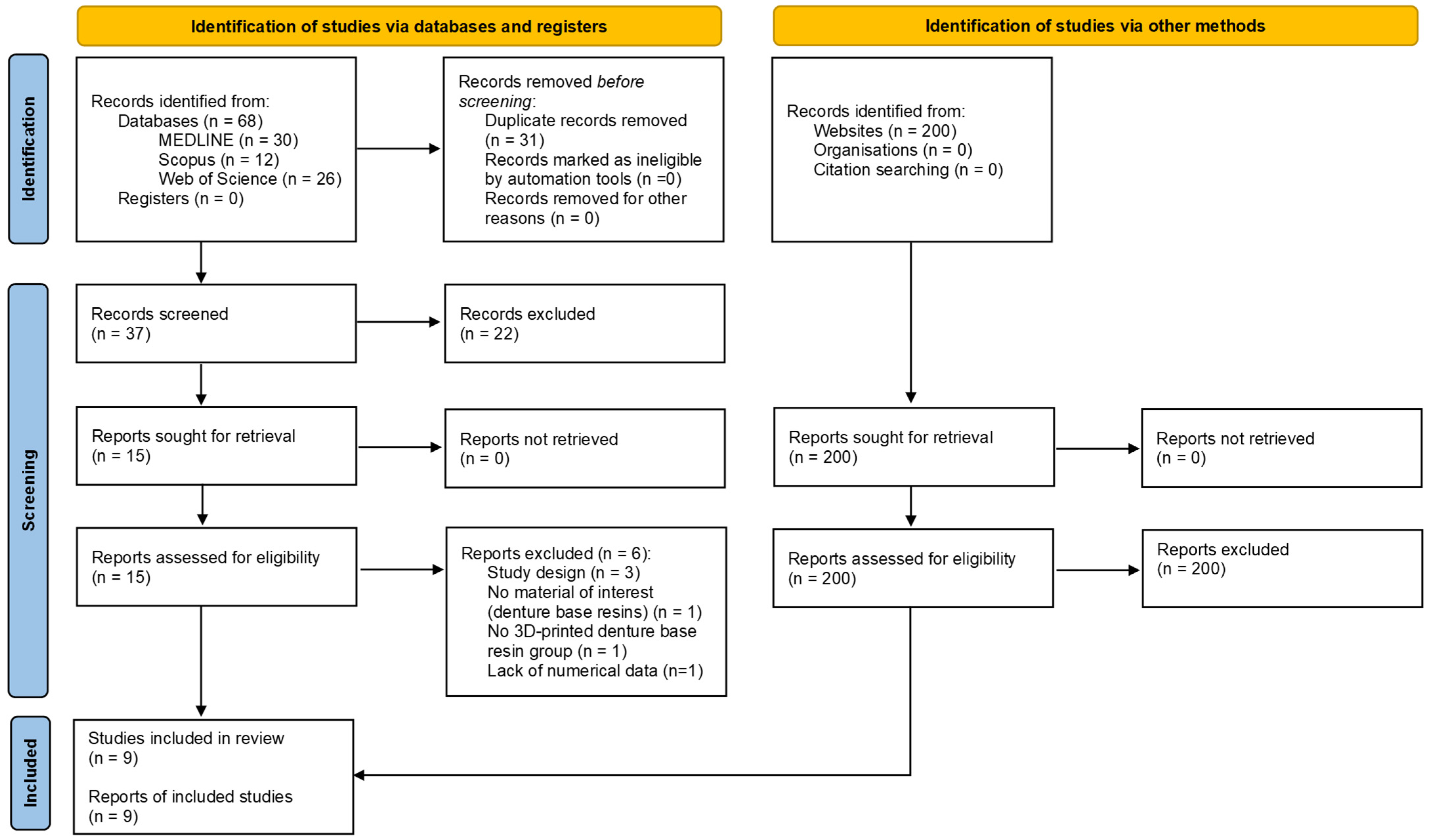
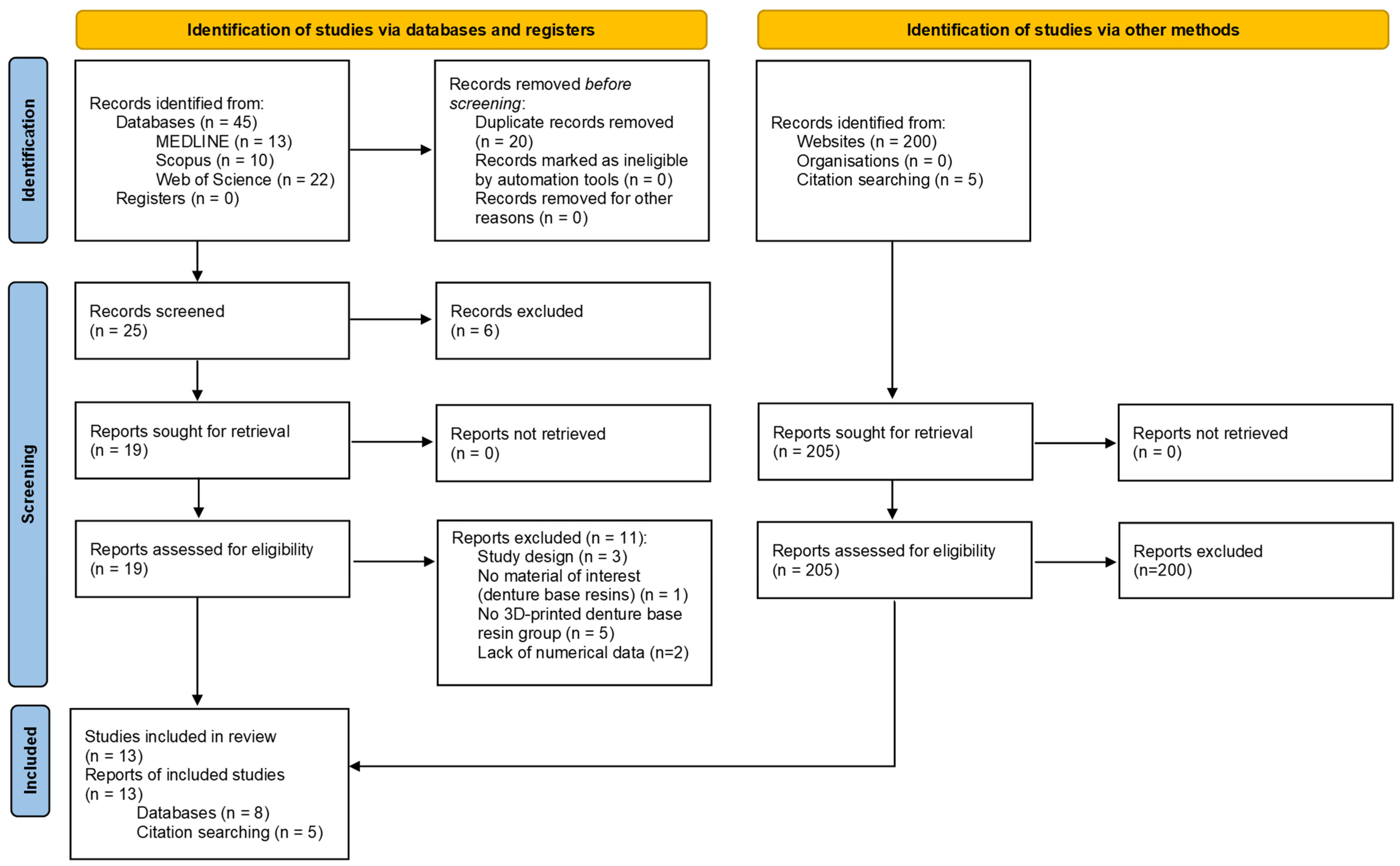
The search records were imported into Mendeley to remove duplicates. The data were then transferred to the Rayyan platform [23]. Study selection was carried out by two independent reviewers (I.T. and S.K.), based initially on titles and/or abstracts, followed by full-text assessment. Any disagreements were resolved by a third independent reviewer (O.N.). Figure 1 and Figure 2 illustrate the study selection process for the two comparisons of interest in detail (Figure 1 and Figure 2). Flow diagrams were generated using the corresponding PRISMA 2020 online template [22,24].
Inter-reviewer agreement was calculated using Cohen’s kappa (κ), resulting in κ = 0.902 for title and abstract screening and κ = 1 for full-text screening. This indicates that there was almost perfect agreement between the two reviewers.

2.5. Data Items and Extraction

Two independent reviewers (I.T. and S.K.) performed the data extraction, and any discrepancies were resolved by a third reviewer (O.N.). The extracted data were then compiled into a Microsoft Excel spreadsheet and organized under the following categories:
  • PMID, first author, year of publication, study type, type of 3D printer used, number of specimens per study group, sample size, brand of 3D-printed denture base resin, conventional fabrication method or brand of milled denture base resin (according to comparison of interest), device measuring wettability, polishing of specimens and numerical results (preferably presented as mean and standard deviation).

2.6. Risk of Bias

The risk of bias in in vitro studies was critically appraised using the Quality Assessment Tool for In Vitro Studies (QUIN), which is based on 12 predefined criteria [25]. Two independent reviewers (I.T. and S.K.) assessed the studies as “low”, “medium”, or “high” risk, while a third reviewer (O.N.) adjudicated any conflicts.

2.7. Study Outcomes and Data Synthesis

Wettability was the outcome of interest in this study. As it is considered a continuous variable, the mean difference and standard deviation (95% CI) were assessed between the study groups (3D-printed versus conventional and 3D-printed versus milled denture base resins). The contact angle of the drop is expressed in degrees (o).
Meta-analyses were to be performed in the case that the included studies were homogeneous in terms of the methods used to evaluate wettability. I2 and chi-squared tests were used to quantify heterogeneity. Subgroup analyses based on 3D printer type and specimen polishing were performed in an attempt to address possible heterogeneity, while studies with a high risk of bias were to be excluded during sensitivity analyses.
In order to assess intervention effects across studies, it was decided that meta-analyses were to be conducted using the inverse variance and the random effects model. Cochrane’s Review Manager (RevMan), version 5.4, was used to handle the data for these meta-analyses. For multi-arm study designs involving two or more intervention or control groups, it was decided that the groups would be combined to form single pair-wise comparisons, as recommended by Chapter 23 of the Cochrane Handbook for Systematic Reviews of Interventions [26]. A single combined set of values for multi-arm studies was calculated using the sample sizes, means, and standard deviations of the corresponding arms.

3. Results

3.1. Search Results

Although the eligibility criteria were intentionally broad to include clinical trials (randomized and non-randomized) and observational studies (case control), none were identified during the electronic search. Consequently, only in vitro experimental studies met the inclusion criteria and were considered eligible for this review.

3.1.1. 3D-Printed Versus Conventional Denture Base Resin

The electronic searches of the MEDLINE, Scopus, and Web of Science databases retrieved 13, 10, and 22 records, respectively, for a total of 45 records. After duplicate removal, 25 records proceeded to title/abstract and full-text evaluation, and eight studies were considered eligible for qualitative synthesis. As there were also five records identified from citation searching, the number of included studies in this systematic review was 13 (Table 1) [3,27,28,29,30,31,32,33,34,35,36,37,38].

3.1.2. 3D-Printed Versus Milled Denture Base Resin

The database search yielded 68 results (MEDLINE: 30, Scopus: 12, Web of Science: 26), and 31 records were excluded as duplicates. The remaining studies were assessed for eligibility, and nine were ultimately included in the qualitative synthesis (Table 2) [3,27,32,33,34,35,36,37,38].

3.2. Study Characteristics

3.2.1. 3D-Printed Versus Conventional Denture Base Resin

All included studies were in vitro experimental, with the conventional denture fabrication method being heat-polymerized. Ten out of these studies evaluated contact angle via a goniometer, whereas the rest of them utilized a camera-based method. The majority of the studies used polished specimens for wettability assessment, while there was a study [27] using both polished and unpolished denture base resin specimens. Regarding types of 3D printers, the studies were distributed among digital light processing (DLP), liquid crystal display (LCD), and stereolithography (SLA) printers.

3.2.2. 3D-Printed Versus Milled Denture Base Resin

The same study design (in vitro) was detected across all included studies. Contact angle goniometer was the selected device for evaluating wettability in seven studies, and in the remaining two studies, the camera-based method was chosen. Similarly to the other comparison, most of the studies used polished specimens, while the same 3D printer types were noted across the included studies.

3.3. Outcome Measures

3.3.1. 3D-Printed Versus Conventional Denture Base Resin

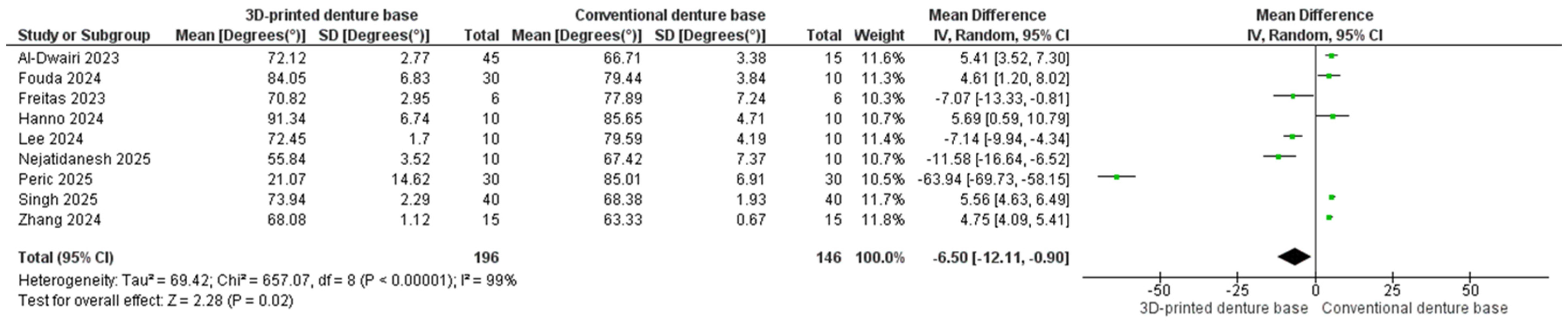
Although 13 studies met the eligibility criteria for qualitative synthesis, nine of them provided sufficient and comparable data for meta-analysis [3,28,29,32,33,34,35,36,38]. Studies that did not report means and standard deviations, or those presenting contact angle measurements other than static, were not eligible for the meta-analysis. As shown in Figure 3, the mean difference between the contact angles of 3D-printed and conventional (heat-polymerized) denture base resins is −6.5 degrees in favor of 3D-printed ones, and this difference is statistically significant (95% CI: −12.11 to −0.90, I2 = 99%) (Figure 3).

3.3.2. 3D-Printed Versus Milled Denture Base Resin

Seven out of nine studies included in the systematic review offered the mean and standard deviation of the contact angle of 3D-printed and milled denture base resins and proceeded to quantitative analysis [3,32,33,34,35,36,38]. Only studies with available mean and standard deviation values for static contact angles were pooled in this meta-analysis. There is a slightly higher mean contact angle observed in 3D-printed denture base resins compared to milled ones. However, this difference (0.87 degrees) is not statistically significant (95% CI: −5.08 to 6.82, I2 = 98%) (Figure 4).

3.4. Risk of Bias Assessment

The QUIN tool was selected for evaluating the quality of the evidence. Among the 12 criteria, both “sampling technique” and “randomization” were judged as “not applicable” by the reviewers. Each of the remaining criteria was graded with a score of two when it was adequately specified, whereas one and zero were given for inadequately and not specified criteria, respectively.
With the exception of one study [33] which was judged as “low risk”, all studies included in both meta-analyses were evaluated as “medium risk” (Table 3 and Table 4). The domains of comparison group, methodology, method of measurement of outcome, statistical analysis, and presentation of results were adequately described across all included studies.

3.5. Subgroup and Sensitivity Analyses

Subgroup analyses were conducted according to 3D printer type and specimen polishing status. These subgroup analyses did not reduce heterogeneity in either comparison, indicating that neither printer type nor polishing status alone accounted for the observed variability between studies (Figures S1–S4).
With regard to sensitivity analyses, there were no studies with a high risk of bias in either comparison. As a result, it was not feasible to perform sensitivity analyses.

4. Discussion

A statistically significant difference was demonstrated in the comparison of contact angles between 3D-printed and conventional denture base resins, with the mean contact angle of 3D-printed materials being 6.5 degrees lower than that of the conventional counterparts. This finding points to a possible trend where 3D-printed denture base resins exhibit greater wettability and hydrophilicity. Currently, there are no reviews directly comparing the wettability of 3D-printed resins with either conventional or milled resins. Two recent systematic reviews and meta-analyses have compared the wettability of digital (CAD/CAM milled) versus conventional denture base materials [19,20]. Both found no statistically significant difference between CAD/CAM and heat-polymerized acrylic resins, regardless of the conventional fabrication method.
3D-printed, milled and conventional resins have been shown to differ in terms of their surface properties. A network meta-analysis [21] revealed significant advantages of milled resins regarding mechanical (flexural strength, flexural modulus, impact strength) and surface (surface roughness) properties. Additionally, a recent meta-analysis [20] reported a statistically significant difference in the surface roughness values of milled complete dentures compared to other denture fabrication methods (flask–pack–press, injection-molded, auto-polymerized, and 3D-printed).
Regarding wettability, there was no statistically significant difference between the two digital denture base resins (3D-printed and milled). This lack of a significant difference is noteworthy, given that surface wettability is fundamentally linked to surface roughness, surface free energy and the presence of salivary pellicles [8]. According to the Wenzel model, surface irregularities intensify a material’s inherent wetting behavior [39]. From a clinical perspective, higher roughness creates micro-retentive niches for microorganisms, shielding them from cleaning agents and promoting bacterial adhesion [8,40]. However, contact angle results alone are insufficient to predict clinical success, as denture performance depends on a complex interplay of multiple factors, including material composition, surface topography and wettability.
A random effects model was applied to account for variability between studies, based on the assumption that the included studies estimate effects that are related but not identical [26]. However, this approach does not mitigate the substantial heterogeneity across studies. While all studies examined the same outcome (contact angle) in denture base materials, there was significant variability regarding printer technologies, resin formulation, specimen preparation, polishing protocols, aging conditions and measurement methods. As these factors are known to directly influence surface properties and wettability, they may have contributed to the high heterogeneity. Therefore, the pooled estimates should be interpreted as exploratory rather than definitive.
The subgroup analyses failed to effectively reduce the I2 values when the data were stratified by 3D printer type or polishing status. This suggests that other factors relating to the methodology and materials used, such as resin formulation, post-curing protocols, aging conditions, polishing sequences and contact angle measurement methods, may have contributed to the variability observed across studies.
The methodological quality of the included evidence further limits the certainty of the findings. Almost all included studies were categorized as medium risk, with only one assessed as low risk. The main drawbacks were the absence of outcome assessor details and the lack of blinding, which are inherent limitations of in vitro studies. Therefore, the results should be interpreted with caution, as methodological limitations and statistical heterogeneity reduce confidence in the estimated effects.
The included studies mainly reported different types of 3D printers, such as SLA, DLP, and LCD. Although the authors performed a subgroup analysis based on 3D printer types, the heterogeneity could not be reduced. According to the existing literature, all these types of 3D printers are capable of printing specimens that meet the ISO standards regarding mechanical properties [41], while both DLP and LCD systems are characterized by printing denture base specimens with a flexural strength above the 65 MPa threshold [42]. As previously noted, the wetting behavior of denture base resins is closely associated with their surface roughness. Recent findings [43] demonstrate that LCD technology tends to produce more textured and rougher surfaces compared to the smoother finishes achieved with SLA and DLP systems. This may be explained by the lower resolution of LCD printing, which introduces pixelation and stair-stepping artifacts during the curing process [43]. In the present study, this could partly explain the observed differences in contact angle values, which suggests that the printing method is a contributing factor to both surface topography and wettability outcomes.
The existence of various 3D printer systems among the included studies is due to the different advantages that each one offers. The SLA technique appears to provide specimens with higher flexural strength and fracture toughness than the DLP and LCD techniques, not only for denture bases [41,43] but also for provisional fixed dental prostheses [44]. However, SLA cannot be considered the printer type of choice due to its lower printing speed and higher microbial adhesion [41]. Between LCD and DLP systems, the latter seems to offer greater accuracy when printing dental models [45].
In most of the included studies, the denture base resin specimens were polished. Although a subgroup analysis was attempted to address heterogeneity, this was ineffective. It was expected that this would reduce heterogeneity, given that statistically significantly higher surface roughness values were observed between unpolished and polished heat-polymerized and 3D-printed denture base specimens [46]. The persistent heterogeneity within the polished subgroup can be attributed to the lack of standardization in finishing protocols across the included studies. Although all specimens were categorized as polished, the procedures ranged from sequential grinding with silicon carbide papers (up to 1200 grit) to elaborate polishing sequences involving 5000 mesh abrasives, tungsten carbide burs and pumice slurries. Variations in abrasive grit size and polishing sequence create distinct micro-topographies and alter the surface free energy, directly impacting the contact angle [47].
A key strength of the present meta-analysis is its originality, as it is the first to quantitatively compare the wettability of 3D-printed dentures with dentures produced using other fabrication techniques (both conventional and digital). The wide variety of 3D printer systems employed in the included studies may enhance the generalizability of the research findings. Another strength of this study is its strict adherence to the most recent PRISMA 2020 guidelines, with the review conducted in accordance with a pre-specified protocol. However, the small number of studies per meta-analysis (nine and seven) may limit the robustness of the pooled estimates. The observed high heterogeneity and the inability to reduce it via subgroup and sensitivity analyses are additional limitations of this study. In an attempt to account for and mitigate the observed heterogeneity, future studies should incorporate subgroup analyses based on parameters such as aging conditions and specific wettability measurement techniques, provided that sufficient primary data are available.

5. Conclusions

Within the limitations of this systematic review and meta-analysis of in vitro studies, 3D-printed denture base resins exhibited lower contact angle values than conventional heat-polymerized denture base resins, though their pooled values were not significantly different from those of milled resins. However, these findings should be interpreted with caution, as heterogeneity was high and could not be adequately explained by subgroup analyses. The pooled estimates should be regarded as exploratory rather than definitive evidence of superior wettability. Further in vitro studies using standardized protocols for specimen preparation, polishing, aging, and contact-angle measurement are required before stronger conclusions can be drawn.

Supplementary Materials

The following supporting information can be downloaded at: https://www.mdpi.com/article/10.3390/prosthesis8060050/s1, Figure S1: Forest plot presenting mean difference and standard deviation of contact angles between 3D-printed and conventional (heat-polymerized) denture base resins by 3D printer type [3,28,29,32,33,34,35,36,38]; Figure S2: Forest plot presenting mean difference and standard deviation of contact angles between 3D-printed and conventional (heat-polymerized) denture base resins by surface treatment (polished vs. unpolished specimens) [3,28,29,32,33,34,35,36,38]; Figure S3: Forest plot presenting mean difference and standard deviation of contact angles between 3D-printed and milled denture base resins by 3D printer type [3,32,33,34,35,36,38]; Figure S4: Forest plot presenting mean difference and standard deviation of contact angles between 3D-printed and milled denture base resins by surface treatment (polished vs. unpolished specimens) [3,32,33,34,35,36,38]; Table S1: Search strategy.

Author Contributions

Conceptualization, I.T., S.K., O.N. and E.K.; methodology, I.T., S.K., O.N. and E.K.; software, I.T., S.K., O.N. and E.K.; validation, I.T., S.K., O.N. and E.K.; formal analysis, I.T., S.K., O.N. and E.K.; investigation, I.T., S.K., O.N. and E.K.; resources, I.T., S.K., O.N. and E.K.; data curation, I.T., S.K., O.N. and E.K.; writing—original draft preparation, I.T., S.K., O.N. and E.K.; writing—review and editing, I.T., S.K., O.N. and E.K.; visualization, I.T., S.K., O.N. and E.K.; supervision, E.K.; project administration, I.T. and E.K. All authors have read and agreed to the published version of the manuscript.

Funding

This research received no external funding.

Institutional Review Board Statement

Not applicable.

Informed Consent Statement

Not applicable.

Data Availability Statement

Data were derived from previously published studies included in the systematic review and are available from the corresponding author upon reasonable request.

Conflicts of Interest

The authors declare no conflicts of interest.

Abbreviations

The following abbreviations are used in this manuscript:
3DThree-dimensional
DLPDigital light processing
LCDLiquid crystal display
SLAStereolithography

References

  1. Zeidan, A.A.E.-L.; Abd Elrahim, R.A.; Abd El Hakim, A.F.; Harby, N.M.; Helal, M.A. Evaluation of Surface Properties and Elastic Modulus of CAD-CAM Milled, 3D Printed, and Compression Moulded Denture Base Resins: An In Vitro Study. J. Int. Soc. Prev. Community Dent. 2022, 12, 630–637. [Google Scholar] [CrossRef]
  2. Zhang, M.; Chu, L.; Chen, J.; Qi, F.; Li, X.; Chen, X.; Yu, D.G. Asymmetric Wettability Fibrous Membranes: Preparation and Biologic Applications. Compos. Part B Eng. 2024, 269, 111095. [Google Scholar] [CrossRef]
  3. Hanno, K.I.; Metwally, N.A. The Wettability of Complete Denture Base Materials Constructed by Conventional versus Digital Techniques: An in-Vitro Study. BMC Oral Health 2024, 24, 1081. [Google Scholar] [CrossRef]
  4. Chen, L.; Bonaccurso, E. Electrowetting—From Statics to Dynamics. Adv. Colloid Interface Sci. 2014, 210, 2–12. [Google Scholar] [CrossRef]
  5. Vellingiri, S.K.; Shivakumar, S.; Lahiri, B.; Hashmi, A.; Shivakumar, C.A.; Varmudy, N. In Vitro Assessment of the Wettability of Three Commercially Available Saliva Substitutes on Denture Base Material: A Comparative Study. World J. Dent. 2022, 13, 389–393. [Google Scholar] [CrossRef]
  6. Narde, J.; Ahmed, N.; Siurkel, Y.; Marrapodi, M.M.; Ronsivalle, V.; Cicciù, M.; Minervini, G. Evaluation and Assessment of the Wettabilty and Water Contact Angle of Modified Poly Methyl Methacrylate Denture Base Materials against PEEK in Cast Partial Denture Framework: An in Vitro Study. BMC Oral Health 2024, 24, 248. [Google Scholar] [CrossRef] [PubMed]
  7. Preoteasa, C.T.; Nabil Sultan, A.; Popa, L.; Ionescu, E.; Iosif, L.; Ghica, M.V.; Preoteasa, E. Wettability of Some Dental Materials. Optoelectron. Adv. Mater. Rapid Commun. 2011, 5, 874–878. [Google Scholar]
  8. Gad, M.M.; Abualsaud, R.; Khan, S.Q. Hydrophobicity of Denture Base Resins: A Systematic Review and Meta-Analysis. J. Int. Soc. Prev. Community Dent. 2022, 12, 139–159. [Google Scholar] [CrossRef] [PubMed]
  9. de Foggi, C.C.; Machado, A.L.; Zamperini, C.A.; Fernandes, D.; Wady, A.F.; Vergani, C.E. Effect of Surface Roughness on the Hydrophobicity of a Denture-Base Acrylic Resin and Candida Albicans Colonization. J. Investig. Clin. Dent. 2016, 7, 141–148. [Google Scholar] [CrossRef]
  10. Alqarawi, F.K.; Gad, M.M. Tendency of Microbial Adhesion to Denture Base Resins: A Systematic Review. Front. Oral Health 2024, 5, 1375186. [Google Scholar] [CrossRef] [PubMed]
  11. Chander, N.G.; Gopi, A. Trends and Future Perspectives of 3D Printing in Prosthodontics. Med. J. Armed Forces India 2024, 80, 399–403. [Google Scholar] [CrossRef] [PubMed]
  12. Alyami, M.H. The Applications of 3D-Printing Technology in Prosthodontics: A Review of the Current Literature. Cureus 2024, 16, e68501. [Google Scholar] [CrossRef]
  13. Casucci, A.; Verniani, G.; Bonadeo, G.; Fadil, S.; Ferrari, M. Analog and Digital Complete Denture Bases Accuracy and Dimensional Stability: An in-Vitro Evaluation at 24 Hours and 6 Months. J. Dent. 2025, 157, 105658. [Google Scholar] [CrossRef]
  14. Maragliano-Muniz, P.; Kukucka, E.D. Incorporating Digital Dentures into Clinical Practice: Flexible Workflows and Improved Clinical Outcomes. J. Prosthodont. 2021, 30, 125–132. [Google Scholar] [CrossRef] [PubMed]
  15. Abdelnabi, M.H.; Swelem, A.A. 3D-Printed Complete Dentures: A Review of Clinical and Patient-Based Outcomes. Cureus 2024, 16, e69698. [Google Scholar] [CrossRef]
  16. Arzani, S.; Khorasani, E.; Mokhlesi, A.; Azadian, S.; Ghodsi, S.; Mosaddad, S.A. Do 3D-Printed and Milled Denture Bases Differ in Microbial Activity and Adhesion? A Systematic Review and Meta-Analysis. Int. Dent. J. 2025, 75, 100857. [Google Scholar] [CrossRef] [PubMed]
  17. Revilla-León, M.; Özcan, M. Additive Manufacturing Technologies Used for Processing Polymers: Current Status and Potential Application in Prosthetic Dentistry. J. Prosthodont. 2019, 28, 146–158. [Google Scholar] [CrossRef]
  18. Majeed, H.F.; Hamad, T.I.; Bairam, L.R. Enhancing 3D-Printed Denture Base Resins: A Review of Material Innovations. Sci. Prog. 2024, 107, 368504241263484. [Google Scholar] [CrossRef]
  19. de Oliveira, E.; Zancanaro de Figueiredo, E.; Spohr, A.M.; Lima Grossi, M. Properties of Acrylic Resin For CAD/CAM: A Systematic Review and Meta-Analysis of In Vitro Studies. J. Prosthodont. 2021, 30, 656–664. [Google Scholar] [CrossRef]
  20. Srinivasan, M.; Kamnoedboon, P.; McKenna, G.; Angst, L.; Schimmel, M.; Özcan, M.; Müller, F. CAD-CAM Removable Complete Dentures: A Systematic Review and Meta-Analysis of Trueness of Fit, Biocompatibility, Mechanical Properties, Surface Characteristics, Color Stability, Time-Cost Analysis, Clinical and Patient-Reported Outcomes. J. Dent. 2021, 113, 103777. [Google Scholar] [CrossRef]
  21. Vincze, Z.É.; Nagy, L.; Kelemen, K.; Cavalcante, B.G.N.; Gede, N.; Hegyi, P.; Bányai, D.; Köles, L.; Márton, K. Milling Has Superior Mechanical Properties to Other Fabrication Methods for PMMA Denture Bases: A Systematic Review and Network Meta-Analysis. Dent. Mater. 2025, 41, 366–382. [Google Scholar] [CrossRef]
  22. Page, M.J.; McKenzie, J.E.; Bossuyt, P.M.; Boutron, I.; Hoffmann, T.C.; Mulrow, C.D.; Shamseer, L.; Tetzlaff, J.M.; Akl, E.A.; Brennan, S.E.; et al. The PRISMA 2020 Statement: An Updated Guideline for Reporting Systematic Reviews. BMJ 2021, 372, n71. [Google Scholar] [CrossRef]
  23. Ouzzani, M.; Hammady, H.; Fedorowicz, Z.; Elmagarmid, A. Rayyan-a Web and Mobile App for Systematic Reviews. Syst. Rev. 2016, 5, 210. [Google Scholar] [CrossRef] [PubMed]
  24. Haddaway, N.R.; Page, M.J.; Pritchard, C.C.; McGuinness, L.A. PRISMA2020: An R Package and Shiny App for Producing PRISMA 2020-Compliant Flow Diagrams, with Interactivity for Optimised Digital Transparency and Open Synthesis. Campbell Syst. Rev. 2022, 18, e1230. [Google Scholar] [CrossRef]
  25. Sheth, V.H.; Shah, N.P.; Jain, R.; Bhanushali, N.; Bhatnagar, V. Development and Validation of a Risk-of-Bias Tool for Assessing in Vitro Studies Conducted in Dentistry: The QUIN. J. Prosthet. Dent. 2024, 131, 1038–1042. [Google Scholar] [CrossRef]
  26. Higgins, J.P.T.; Thomas, J.; Chandler, J.; Cumpston, M.; Li, T.; Page, M.J.; Welch, V.A. Cochrane Handbook for Systematic Reviews of Interventions, 2nd ed.; Higgins, J.P.T., Thomas, J., Chandler, J., Cumpston, M., Li, T., Page, M.J., Welch, V.A., Eds.; John Wiley and Sons: Chichester, UK, 2019. [Google Scholar]
  27. Mikhail, P.; Pesun, I.; Azpiazu-Flores, F.; França, R. Wettability of Saliva Substitutes across Various Denture Base Fabrication Techniques. J. Prosthodont. 2024, 1–8. [Google Scholar] [CrossRef]
  28. Al-Dwairi, Z.N.; Al Haj Ebrahim, A.A.; Baba, N.Z. A Comparison of the Surface and Mechanical Properties of 3D Printable Denture-Base Resin Material and Conventional Polymethylmethacrylate (PMMA). J. Prosthodont. 2023, 32, 40–48. [Google Scholar] [CrossRef] [PubMed]
  29. Lee, C.G.; Jin, G.; Lim, J.H.; Liu, Y.; Afrashtehfar, K.I.; Kim, J.E. Influence of Hydrothermal Aging on the Shear Bond Strength of 3D Printed Denture-Base Resin to Different Relining Materials. J. Mech. Behav. Biomed. Mater. 2024, 149, 106221. [Google Scholar] [CrossRef] [PubMed]
  30. Teixeira, A.B.V.; Carvalho-Silva, J.M.; Ferreira, I.; Schiavon, M.A.; Cândido dos Reis, A. Silver Vanadate Nanomaterial Incorporated into Heat-Cured Resin and Coating in Printed Resin—Antimicrobial Activity in Two Multi-Species Biofilms and Wettability. J. Dent. 2024, 145, 104984. [Google Scholar] [CrossRef]
  31. de Camargo Poker, B.; de Cássia Oliveira, V.; Macedo, A.P.; Gonçalves, M.; Ramos, A.P.; Silva-Lovato, C.H. Evaluation of Surface Roughness, Wettability and Adhesion of Multispecies Biofilm on 3D-Printed Resins for the Base and Teeth of Complete Dentures. J. Appl. Oral Sci. 2024, 32, e20230326. [Google Scholar] [CrossRef]
  32. Perić, M.; Petrović, S.; Čairović, A.; Vlajić Tovilović, T.; Racić, A.; Panajotović, R.; Živković, R.; Miličić, B.; Radunović, M. Influence of Ageing on Surface Properties and Biofilm Adhesion on Denture Base Resin Material Fabricated by Different Manufacturing Techniques. Clin. Oral Investig. 2025, 29, 423. [Google Scholar] [CrossRef]
  33. Fouda, S.M.; Gad, M.M.; Abualsaud, R.; Ellakany, P.; Alrumaih, H.S.; Farooqi, F.A.; Matin, A.; Al-Eraky, D.M.; Al-Qarni, F.D.; Al-Harbi, F.A. In Vitro Evaluation of Candida Albicans Adhesion and Related Surface Properties of CAD/CAM Denture Base Resins. Eur. J. Dent. 2024, 18, 579–586. [Google Scholar] [CrossRef] [PubMed]
  34. Zhang, R.J.; Zhao, L.; Yu, L.X.; Tan, F.B. Influence of Thermal-Cycling or Staining Medium on the Surface Properties and Color Stability of Conventional, Milled, and 3D-Printed Base Materials. Sci. Rep. 2024, 14, 28928. [Google Scholar] [CrossRef]
  35. Nejatidanesh, F.; Savabi, O.; Khodaei, M.; Gheisarifar, M.; Homagarani, Y.M. Comparative Evaluation of Surface Properties of Milled, 3D- Printed, and Conventional Denture Base Materials: Implications for Clinical Use. Int. J. Prosthodont. 2025, 1–20. [Google Scholar] [CrossRef] [PubMed]
  36. Singh, B.; Jain, S.; Bhasin, N.; Kaur, J.; Borse, P.; Longkumer, P. Comparative Evaluation of Surface Roughness, Wettability, and Hardness of Conventional, Heat-Polymerized, Computer-Aided Designed and Milled, and Three-Dimensionally Printed Polymethyl Methacrylate Denture Base Resins: An In Vitro Study. Cureus 2025, 17, e85008. [Google Scholar] [CrossRef] [PubMed]
  37. Sahin, Z.; Ozer, N.E.; Calı, A. Biofilm Inhibition of Denture Cleaning Tablets and Carvacrol on Denture Bases Produced with Different Techniques. Clin. Oral Investig. 2024, 28, 413. [Google Scholar] [CrossRef]
  38. de Freitas, R.F.C.P.; Duarte, S.; Feitosa, S.; Dutra, V.; Lin, W.S.; Panariello, B.H.D.; Carreiro, A.d.F.P. Physical, Mechanical, and Anti-Biofilm Formation Properties of CAD-CAM Milled or 3D Printed Denture Base Resins: In Vitro Analysis. J. Prosthodont. 2023, 32, 38–44. [Google Scholar] [CrossRef]
  39. Kubiak, K.J.; Wilson, M.C.T.; Mathia, T.G.; Carval, P. Wettability versus Roughness of Engineering Surfaces. Wear 2011, 271, 523–528. [Google Scholar] [CrossRef]
  40. Katsikogianni, M.; Missirlis, Y.F. Concise Review of Mechanisms of Bacterial Adhesion to Biomaterials and of Techniques Used in Estimating Bacteria-Material Interactions. Eur. Cells Mater. 2004, 8, 37–57. [Google Scholar] [CrossRef]
  41. Lee, H.E.; Alauddin, M.S.; Mohd Ghazali, M.I.; Said, Z.; Mohamad Zol, S. Effect of Different Vat Polymerization Techniques on Mechanical and Biological Properties of 3D-Printed Denture Base. Polymers 2023, 15, 1463. [Google Scholar] [CrossRef]
  42. do Carmo Viotto, H.E.; Queiroz, J.F.C.; Moisés, L.d.S.; Coelho, S.R.G.; Piza, G.T.B.; Santos, J.A.O.; Pero, A.C. Mechanical and Chemical Properties of a 3-Dimension–Printed Denture Base Resin Obtained by Varying Digital Light Processing and Liquid Crystal Display Printing Angles. JADA Found. Sci. 2026, 5, 100064. [Google Scholar] [CrossRef]
  43. Katheng, A.; Prawatvatchara, W.; Chaiamornsup, P.; Sornsuwan, T.; Lekatana, H.; Palasuk, J. Comparison of Mechanical Properties of Different 3D Printing Technologies. Sci. Rep. 2025, 15, 18998. [Google Scholar] [CrossRef] [PubMed]
  44. Yıldırım, Ö.; Yeşil, Z.; Hatipoğlu, Ö. Effect of Different 3D-Printing Systems on the Flexural Strength of Provisional Fixed Dental Prostheses: A Systematic Review and Network Meta-Analysis of in Vitro Studies. BMC Oral Health 2025, 25, 82. [Google Scholar] [CrossRef] [PubMed]
  45. Tsolakis, I.A.; Papaioannou, W.; Papadopoulou, E.; Dalampira, M.; Tsolakis, A.I. Comparison in Terms of Accuracy between DLP and LCD Printing Technology for Dental Model Printing. Dent. J. 2022, 10, 181. [Google Scholar] [CrossRef] [PubMed]
  46. Al-Dulaijan, Y.A. Evaluation of the Effects of Different Polishing Protocols on the Surface Characterizations of 3D-Printed Acrylic Denture Base Resins: An In Vitro Study. Polymers 2023, 15, 2913. [Google Scholar] [CrossRef]
  47. Bae, G.; Park, T.; Song, I.H. Surface Modification of Polymethylmethacrylate (PMMA) by Ultraviolet (UV) Irradiation and IPA Rinsing. Micromachines 2022, 13, 1952. [Google Scholar] [CrossRef]
Figure 1. PRISMA 2020 flow diagram. 3D-printed versus conventional denture base resins.
Prosthesis 08 00050 g001
Figure 2. PRISMA 2020 flow diagram. 3D-printed versus milled denture base resins.
Prosthesis 08 00050 g002
Figure 3. Forest plot presenting mean difference and standard deviation of contact angles between 3D-printed and conventional (heat-polymerized) denture base resins [3,28,29,32,33,34,35,36,38].
Prosthesis 08 00050 g003
Figure 4. Forest plot presenting mean difference and standard deviation of contact angles between 3D-printed and milled denture base resins [3,32,33,34,35,36,38].
Prosthesis 08 00050 g004
Table 1. List of included studies. 3D-printed versus conventional denture base resins.
PMIDFirst Author, YearStudy TypeType of 3D Printer UsedSpecimens per Study GroupSample Size3D-Printed Denture Base Resin BrandDevice Measuring WettabilitySpecimens Mean Contact Angle in Degrees (SD)
39539130Mikhail, 2024 [27]in vitroSLA48Formlabs Denture Base RPGoniometerPolished and unpolishedAdvancing Contact Angle: 3DP Polished: 48.61 (5.05), C Polished: 61.40 (5.43), 3DP Unpolished:107.61 (6.87), C Unpolished: 81.45 (2.72)
35119168Al-Dwairi, 2023 [28]in vitroDLP1560NextDent, Dentona, ASIGACamera-basedPolishedASIGA: 73.44 (2.74), NextDent: 72.73 (2.10), Dentona: 70.20 (2.43), C: 66.71 (3.38)
37976994Lee, 2024 [29]in vitroDLP1020Dentca Denture Base IIGoniometerPolished3DP: 72.45 (1.70), C: 79.59 (4.19)
38583645Teixeira, 2024 [30]in vitroLCD816Cosmus Denture ResinGoniometerPolished3DP: 59.21, C: 61.13
38656049de Camargo Poker, 2024 [31]in vitroDLP3060PriZma Bio Denture Makertech 3D ResinGoniometerPolishedMedian 3DP: 61.76, Median C: 84.54
39272090Hanno, 2024 [3]in vitroSLA1020Formlabs Denture Base LPGoniometerUnpolished3DP: 91.34 (6.74), C: 85.65 (4.71)
40875047Peric, 2025 [32]in vitroDLP3060Dentona optiprint laviva DPGoniometerUnpolished3DP: 21.07 (14.62), C: 85.01 (6.91)
38086425Fouda, 2024 [33]in vitroDLP, SLA1020ASIGA DentaBASE, Formlabs Denture Base LP, Denture 3D+ GoniometerPolished3DP: ASIGA: 81.63 (3.13), Formlabs: 80.62 (8.35), NextDent: 89.91 (3.61), C: 79.44 (3.84)
39572646Zhang, 2024 [34]in vitroLCD1530Sino Dentex Denture Base ResinGoniometerPolished3DP: 68.08 (1.12), C: 63.33 (0.67)
40694394Nejatidanesh, 2025 [35]in vitroLCD1020ASIGA DentaBASE GoniometerPolished3DP: 55.84 (3.52), C: 67.42 (7.37)
40585711Singh, 2025 [36]in vitroLCD40803D Accuprint DentureCamera-basedPolished3DP: 73.94 (2.29), C: 68.38 (1.93)
38965139Sahin, 2024 [37]in vitroLCD1020Curo DentureGoniometerPolishedMedian (IQR) 3DP: 69.25 (16.63), C: 66.45 (12.55)
35661475Freitas, 2023 [38]in vitroDLP612Cosmos Denture ResinCamera-basedPolished3DP: 70.82 (2.95), C: 77.89 (7.24)
3DP: 3D-printed; C: conventional; DLP: digital light processing; LCD: liquid crystal display; SLA: stereolithography.
Table 2. List of included studies. 3D-printed versus milled denture base resins.
PMIDFirst Author, YearStudy TypeType of 3D Printer UsedSpecimens per Study GroupSample Size3D-Printed Denture Base Resin BrandMilled Denture Base Resin brandDevice Measuring WettabilitySpecimensMean Contact Angle in Degrees (SD)
39539130Mikhail, 2024 [27]in vitro SLA48Formlabs Denture Base RPLucitone 199 Denture Base DiscGoniometerPolished and unpolishedAdvancing Contact angle: 3DP Polished: 48.61 (5.05), M Polished: 63.73 (2.29), 3DP Unpolished:107.61 (6.87), M Unpolished: 84.64 (2.29)
39272090Hanno, 2024 [3]in vitroSLA1020Formlabs Denture Base LPM-PM Merz DentalGoniometerUnpolished3DP: 91.34 (6.74), M: 53.00 (4.77)
39572646Zhang, 2024 [34]in vitroLCD1530Sino Dentex Denture Base ResinShandong Huge PMMA DiscGoniometerPolished3DP: 68.08 (1.12), M: 64.09 (0.8)
40875047Peric, 2025 [32]in vitroDLP3060Dentona optiprint laviva DPIvoBase CAD GoniometerUnpolished3DP: 21.07 (14.62), M: 65.59 (12.83)
38086425Fouda, 2024 [33]in vitroDLP, SLA1020ASIGA DentaBASE, Formlabs Denture Base LP, Denture 3D+ AvaDent, IvoCadGoniometerPolished3DP: ASIGA: 81.63 (3.13), Formlabs: 80.62 (8.35), NextDent: 89.91 (3.61), M: AvaDent: 70.01 (2.61), IvoCad: 72.4 (3.74)
40694394Nejatidanesh, 2025 [35]in vitroLCD1020ASIGA DentaBASE IvoBase CAD GoniometerPolished3DP: 55.84 (3.52), M: 64.52 (6.49)
40585711Singh, 2025 [36]in vitroLCD40803D Accuprint DentureIvotion Base DiscCamera-basedPolished3DP: 73.94 (2.29), M: 73.26 (2.37)
38965139Sahin, 2024 [37]in vitroLCD1020Curo DentureYamahachiGoniometerPolishedMedian (IQR) 3DP: 69.25 (16.63), M: 75.2 (13.13)
35661475Freitas, 2023 [38]in vitroDLP612Cosmos Denture ResinAvaDentCamera-basedPolished3DP: 70.82 (2.95), M: 77.52 (5.07)
3DP: 3D-printed; DLP: digital light processing; LCD: liquid crystal display; M: milled; SLA: stereolithography.
Table 3. QUIN risk of bias assessment. 3D-printed versus conventional denture base resins.
First Author, Year1. Aims/Objectives2. Sample Size Calculation3. Sampling Technique4. Comparison Group5. Methodology6. Operator Details7. Randomization8. Method of Measurement of Outcome9. Outcome Assessor Details10. Blinding11. Statistical Analysis12. Presentation of ResultsTotal ScoreFinal Score (in Percentage)Interpretation
Al-Dwairi, 2023 [28]20NA221NA200221365Medium Risk
Fouda, 2024 [33]22NA221NA200221575Low Risk
Freitas, 2023 [38]21NA220NA200221365Medium Risk
Hanno, 2024 [3]22NA220NA200221470Medium Risk
Lee, 2024 [29]11NA220NA200221260Medium Risk
Nejatidanesh, 2025 [35]22NA220NA200221470Medium Risk
Peric, 2025 [32]21NA121NA200221365Medium Risk
Singh, 2025 [36]22NA220NA200221470Medium Risk
Zhang, 2024 [34]22NA220NA200221470Medium Risk
NA: Not applicable.
Table 4. QUIN risk of bias assessment. 3D-printed versus milled denture base resins.
First Author, Year1. Aims/Objectives2. Sample Size Calculation3. Sampling Technique4. Comparison Group5. Methodology6. Operator Details7. Randomization8. Method of Measurement of Outcome9. Outcome Assessor Details10. Blinding11. Statistical Analysis12. Presentation of ResultsTotal ScoreFinal Score (in Percentage)Interpretation
Fouda, 2024 [33]22NA221NA200221575Low Risk
Freitas, 2023 [38]21NA220NA200221365Medium Risk
Hanno, 2024 [3]22NA220NA200221470Medium Risk
Nejatidanesh, 2025 [35]22NA220NA200221470Medium Risk
Peric, 2025 [32]21NA221NA200221470Medium Risk
Singh, 2025 [36]22NA220NA200221470Medium Risk
Zhang, 2024 [34]22NA220NA200221470Medium Risk
NA: Not applicable.
Disclaimer/Publisher’s Note: The statements, opinions and data contained in all publications are solely those of the individual author(s) and contributor(s) and not of MDPI and/or the editor(s). MDPI and/or the editor(s) disclaim responsibility for any injury to people or property resulting from any ideas, methods, instructions or products referred to in the content.