1. Introduction
Minimally invasive dentistry has gained increasing attention as a contemporary approach to managing non-cavitated enamel lesions while preserving sound tooth structure. Among the available techniques, resin infiltration has emerged as an effective micro-invasive strategy for sealing subsurface enamel porosities. The ICON
® system (DMG, Hamburg, Germany) represents the most widely used commercial product in this category, designed to arrest lesion progression by occluding the porous enamel matrix with a low-viscosity, light-curable resin. Owing to its refractive index, which closely approximates that of hydroxyapatite, ICON
® also offers optical blending effects, contributing to the aesthetic masking of white spot lesions [
1,
2,
3].
Unlike conventional sealants or fluoride-based remineralizing agents, resin infiltrants penetrate the lesion body and create a diffusion barrier within the enamel structure, combining therapeutic, preventive, and aesthetic functions. ICON
® has been successfully applied in the management of non-cavitated smooth-surface and proximal carious lesions, mild hypomineralization, and post-orthodontic demineralization [
4,
5,
6]. However, its potential preventive use on sound enamel surfaces—particularly as a pre-orthodontic protective coating—remains insufficiently explored. This application could provide a physical barrier that mitigates the risk of acid diffusion and white spot formation during fixed appliance therapy.
Scanning electron microscopy (SEM) has significantly advanced the understanding of resin–enamel interactions, offering detailed information on penetration depth, interface continuity, and morphological adaptation [
7,
8,
9]. Optimal surface conditioning and etching are known to enhance the diffusion capacity of the infiltrant, promoting deeper resin integration [
10]. Consequently, SEM-based investigations remain essential tools for validating the structural performance of such biomaterials under various conditions.
Several in vitro and clinical studies have confirmed the therapeutic efficacy of ICON
® in managing early enamel lesions and improving aesthetics through white spot masking [
11,
12,
13,
14,
15]. SEM analyzes have consistently demonstrated that the resin effectively seals enamel porosities and establishes a uniform resin–enamel interface [
16,
17]. Additional studies have examined microleakage control and the use of nanocomposite infiltrants as part of minimally invasive treatment protocols [
18,
19].
Recent evidence has strengthened the scientific foundation of micro-invasive enamel therapies, including resin infiltration. Several systematic reviews and meta-analyses have demonstrated that resin infiltrants can significantly slow lesion progression, improve enamel mechanical stability, and provide predictable aesthetic benefits in early non-cavitated lesions [
20,
21,
22,
23]. These reviews also highlight resin infiltration as a central component of minimally invasive dentistry, with relevance to both caries prevention and orthodontic management, where white-spot lesions remain a frequent challenge.
Considering the growing need for preventive strategies in orthodontic patients, among whom the prevalence of white spot lesions remains, further evaluation of ICON® as a primary prophylactic material on sound enamel is warranted. Therefore, the present in vitro study aimed to perform both qualitative and quantitative SEM analyzes of ICON® resin infiltration in sound human enamel, providing morphological and numerical validation of its behavior as a micro-invasive preventive biomaterial. The present study was designed to characterize the baseline penetration pattern of ICON resin when applied to sound enamel. This morphological reference is intended to support future comparative studies involving demineralized substrates. Although ICON requires prior etching with 15% HCl to facilitate infiltration, this procedure is part of the standard application protocol and should not be interpreted as a simulation of enamel damage. The enamel substrates used in this study were sound prior to the etching process.
Hypothesis:
ICON® infiltration depth and pattern differ depending on enamel morphology; therefore, when applied to sound enamel, the material may exhibit distinct penetration characteristics that can be objectively quantified.
2. Materials and Methods
2.1. Ethical Approval and Study Design
This in vitro study was approved by the Ethics Committee of the “Grigore T. Popa” University of Medicine and Pharmacy, Iasi (Approval No. 449/28.05.2024).
The objective was to evaluate the morphological and structural characteristics of enamel surfaces treated with ICON® resin infiltration, using quantitative morphometric analysis and scanning electron microscopy (SEM).
2.2. Sample Collection and Storage
Fourteen freshly extracted human anterior teeth (incisors) were collected from patients who underwent extractions for periodontal or orthodontic indications, with informed consent obtained from all donors. Given the restricted availability of extracted human teeth suitable for SEM processing, the sample size was limited to 14 specimens. Accordingly, the statistical power (15.2%) classifies the present investigation as an exploratory descriptive study rather than one intended for inferential statistical generalization.
Teeth with visible carious lesions, restorations, enamel cracks, or developmental defects were excluded.
After extraction, soft-tissue remnants were removed with hand scalers under water spray. The teeth were disinfected in 0.5% hydrogen peroxide for seven days, then stored in physiological saline at 4 °C to prevent dehydration until use.
All SEM measurements were performed by a single examiner trained in quantitative image analysis, to minimize variability. No formal intra- or inter-observer reliability assessment (ICC or repeated measurements) was conducted, which represents a methodological limitation.
2.3. Surface Cleaning and Injury Simulation
Each specimen underwent professional prophylaxis using a contra-angle handpiece with a rotary brush and LUNOS® Prophy Paste Supersoft (Dürr Dental SE, Bietigheim-Bissingen, Germany) with RDA = 5.
The buccal enamel surfaces were selected for infiltration, while the lingual/palatal surfaces were preserved as non-infiltrated internal controls.
To simulate early subsurface demineralization, a 15% hydrochloric acid gel was applied for 2 min, according to the ICON
® manufacturer’s recommendations, followed by rinsing with distilled water (30 s) and drying with 99% ethanol (30 s) [
18].
The 15% hydrochloric acid etching for 2 min was applied in accordance with the manufacturer’s standard protocol for ICON infiltration. This step is intended solely to remove the superficial hypermineralized layer and facilitate resin penetration. It does not simulate enamel injury or pathological demineralization. Previous SEM studies have shown that this protocol produces a controlled surface microporosification necessary for resin infiltration, without replicating natural carious lesions.
2.4. Resin Infiltration Protocol
ICON® Infiltrant (DMG, Hamburg, Germany), a low-viscosity TEGDMA-based resin, was applied to the prepared buccal surfaces using the manufacturer’s applicator tips. The resin was left in place for 3 min to allow capillary penetration, followed by gentle air-drying to remove excess and light-curing for 40 s using an LED curing unit (Bluephase N, Ivoclar Vivadent, Schaan, Liechtenstein; 1000–1200 mW/cm2). A second resin layer was applied for 1 min, then light-cured again for 40 s. After infiltration, all specimens were stored in a light-protected chamber at 37 °C for 24 h to ensure complete polymerization and stabilization of the infiltrant prior to sectioning.
2.5. Finishing, Sectioning, and Sample Preparation
After the curing period, each tooth was sectioned longitudinally in a medio-distal direction under continuous water irrigation using a low-speed diamond disc (Isomet, Buehler, Lake Bluff, IL, USA). Each tooth was sectioned longitudinally to obtain two halves. This approach was used to minimize inter-sample variability related to anatomical and microstructural differences. The two halves were not intended to function as a control and treatment group but rather as internal replicates with comparable substrate characteristics.
This yielded two equal halves: surface A (mesial) and surface B (distal).
Both halves were later examined under SEM to assess the homogeneity and penetration depth of the resin infiltrant across different enamel regions of the same tooth.
The lingual/palatal surfaces remained uninfiltrated and served as internal controls.
2.6. Sectioning and Embedding for SEM
Quantitative evaluation of the ICON® resin penetration was performed using morphometric analysis on the SEM images obtained for each specimen. Measurements were carried out along the enamel–resin interface on both mesial (surface A) and distal (surface B) halves of each tooth.
For each surface, the penetration depth (µm) was measured at three distinct and reproducible points, corresponding to central and marginal regions of the infiltrated area. The mean value per surface was recorded and used in statistical comparisons. This design allowed paired analysis between the two halves of the same tooth, providing insight into the uniformity of resin infiltration within individual specimens.
All SEM measurements were performed by a single examiner trained in quantitative image analysis, in order to minimize variability. No formal intra- or inter-observer reliability assessment (ICC or repeated measurements) was conducted, which represents a methodological limitation. Data distribution was tested for normality using the Shapiro–Wilk test. The paired t-test was applied to evaluate differences in penetration depth between surfaces A and B, while Pearson’s correlation coefficient (r) was calculated to assess the degree of association between corresponding measurements. The percentage difference in penetration depth between surfaces was also calculated to identify potential directional bias.
All data were expressed as mean ± standard deviation (SD), and statistical significance was set at p < 0.05.
A post-hoc power analysis was performed to evaluate the influence of the sample size (n = 14 teeth) on the statistical power of the study. All analyzes were conducted using IBM SPSS Statistics v.29.0 (IBM Corp., Armonk, NY, USA).
2.7. SEM Imaging and Documentation
The enamel–resin interface was examined using a JEOL JSM-6390 scanning electron microscope (JEOL Ltd., Tokyo, Japan), operated in secondary electron imaging (SEI) mode under high vacuum. The accelerating voltage was set at 10 kV, with a working distance of 25 mm and spot size 60. Images were acquired using the PC-SEM (version 1.0; JEOL Ltd., Tokyo, Japan) software provided by the manufacturer, with scale calibration at 1 mm.
Each tooth specimen was sectioned longitudinally into two halves—surface A (mesial) and surface B (distal)—after resin infiltration. Both halves were independently analyzed under SEM to assess the homogeneity and uniformity of resin penetration across different enamel regions within the same tooth.
The sectioned surfaces were prepared following a standardized polishing protocol adapted from previously validated methodology [
24,
25,
26,
27]. The enamel was sequentially polished with 3 µm diamond paste and 20 nm colloidal silica (Syton, DuPont, Wilmington, DE, USA) under constant irrigation to obtain a smooth, reproducible surface.
For each half, penetration depth was measured along the enamel–resin interface in three distinct locations, and the mean value per surface was used for quantitative analysis. This procedure allowed intra-tooth comparison (surface A vs. B) and overall evaluation of infiltration consistency across all specimens.
A low magnification (×17) was used for SEM documentation, sufficient to visualize the full enamel–resin interface and the overall extent of resin penetration. Higher magnifications were intentionally avoided, as the infiltrant used (ICON® resin) is a low-viscosity, unfilled resin, and its subsurface diffusion cannot be clearly differentiated from surrounding enamel at high magnification. This methodological choice ensured accurate observation of infiltration continuity and depth without introducing imaging artifacts.
2.8. Optical Microscopy Verification
In addition to SEM evaluation, the same sectioned specimens were examined using optical microscopy to qualitatively verify the presence and continuity of the infiltrated zone. Optical micrographs were acquired with a Carl Zeiss Axio Imager A1 microscope equipped with an EC Epiplan-Neofluar 10×/0.25 HD DIC M27 objective and an AxioCam MR5 digital camera (Carl Zeiss, Oberkochen, Germany), using reflected light illumination. Representative images (scale bar 200 μm) were included to confirm the infiltrated region and to exclude sectioning-related artifacts. Optical microscopy served exclusively as a qualitative validation tool, while all quantitative penetration-depth measurements were derived from SEM micrographs.
2.9. Statistical Analysis
All statistical analyzes were performed using IBM SPSS Statistics v.29.0 (IBM Corp., Armonk, NY, USA). The Shapiro–Wilk test was applied to assess data normality. Differences in mean penetration depth between surface A (mesial) and surface B (distal) were evaluated using the paired t-test, while the Pearson correlation coefficient (r) was calculated to determine the strength of association between corresponding measurements. The percentage difference in penetration depth was also calculated to identify any directional bias. A paired t-test and Pearson’s correlation coefficient were used to provide basic descriptive insights into measurement variability. These tests were not intended to yield inferential conclusions. Results were expressed as mean ± standard deviation (SD), and statistical significance was set at p < 0.05. A post-hoc power analysis was conducted to assess the influence of the sample size (n = 14) on the study’s statistical power. Due to the limited sample size, statistical analyzes were performed in an exploratory manner.
3. Results
3.1. Descriptive Statistical Analysis
Descriptive analysis was performed on all 28 measured values, corresponding to both surface A (mesial) and surface B (distal) of the sectioned teeth.
The overall mean penetration depth of the ICON
® resin was 666.34 ± 165.73 µm, ranging from 396.05 µm to 986.06 µm (
Table 1). This variability reflects normal biological and structural differences in enamel infiltration patterns across specimens following resin application.
Although no statistically significant difference was detected between the measurements, this finding should not be interpreted as evidence of equivalent or homogeneous resin penetration.
To evaluate possible intra-tooth differences, descriptive statistics were also calculated separately for each surface (A and B), with 14 measurements per group.
For surface A, the mean penetration depth was 655.69 ± 194.40 µm (range 396.05–934.00 µm). For surface B, the mean was 676.98 ± 137.87 µm (range 456.39–986.06 µm). These values indicate similar mean penetration depths between the two surfaces, although greater variability was observed on surface A (
Table 2).
Given the small number of specimens, the statistical outputs should be interpreted as descriptive indicators rather than inferential evidence.
3.2. Normality Assessment of Paired Differences
The Shapiro–Wilk test was applied to evaluate the normality of the paired differences between the measurements on surfaces A and B.
The result (W = 0.947, p = 0.512) confirmed that the data did not significantly deviate from a normal distribution (p > 0.05).
Therefore, the assumption of normality was satisfied, and parametric tests were deemed appropriate for subsequent statistical analyses.
3.3. Comparison of Paired Measurements (Paired-Samples T-Test)
A paired-samples
t-test was conducted to compare the penetration depth of ICON
® resin between surface A (mesial) and surface B (distal) of the sectioned teeth. The analysis revealed a mean difference of −21.29 µm (t = −0.654, df = 13,
p = 0.525), indicating that resin infiltration depth was slightly higher on surface B, although this difference was not statistically significant (
p > 0.05). Therefore, the penetration of the infiltrant can be considered uniform across both enamel surfaces, with no significant intra-tooth variation observed (
Table 3).
3.4. Comparative Boxplot Analysis
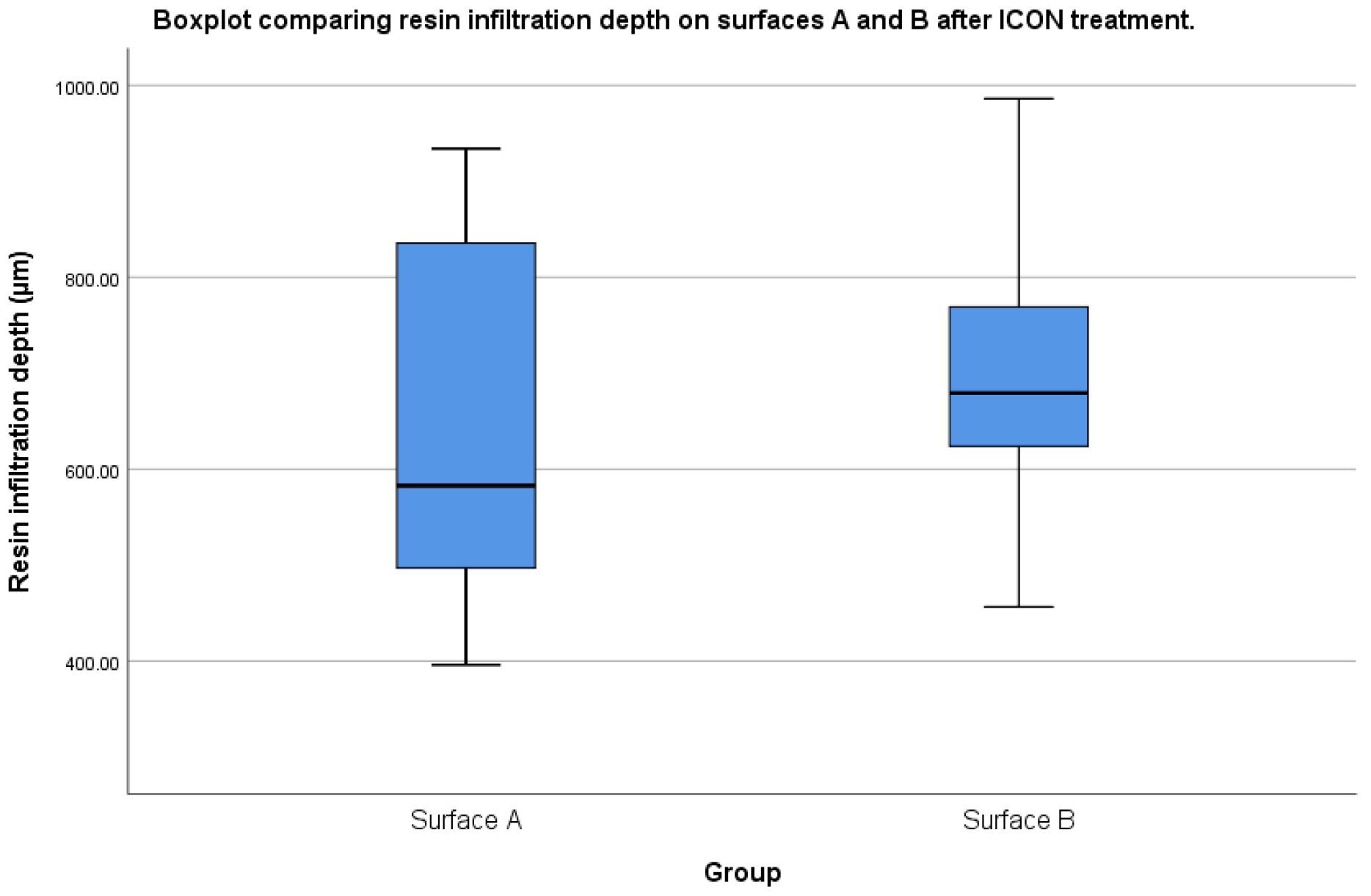
The boxplot illustrates the distribution of resin penetration depths on surfaces A and B (
Figure 1).
Surface A exhibited a wider interquartile range (IQR) and a slightly lower median compared with surface B, indicating greater variability in penetration on the mesial halves.
Although surface B presented a higher median value, the two groups showed overlapping data ranges, confirming the t-test result that the difference between them was not statistically significant (p = 0.525).
No outliers were detected, suggesting that all measurements fell within a consistent range of infiltration depths across specimens.
3.5. Correlation Analysis and Scatterplot Representation
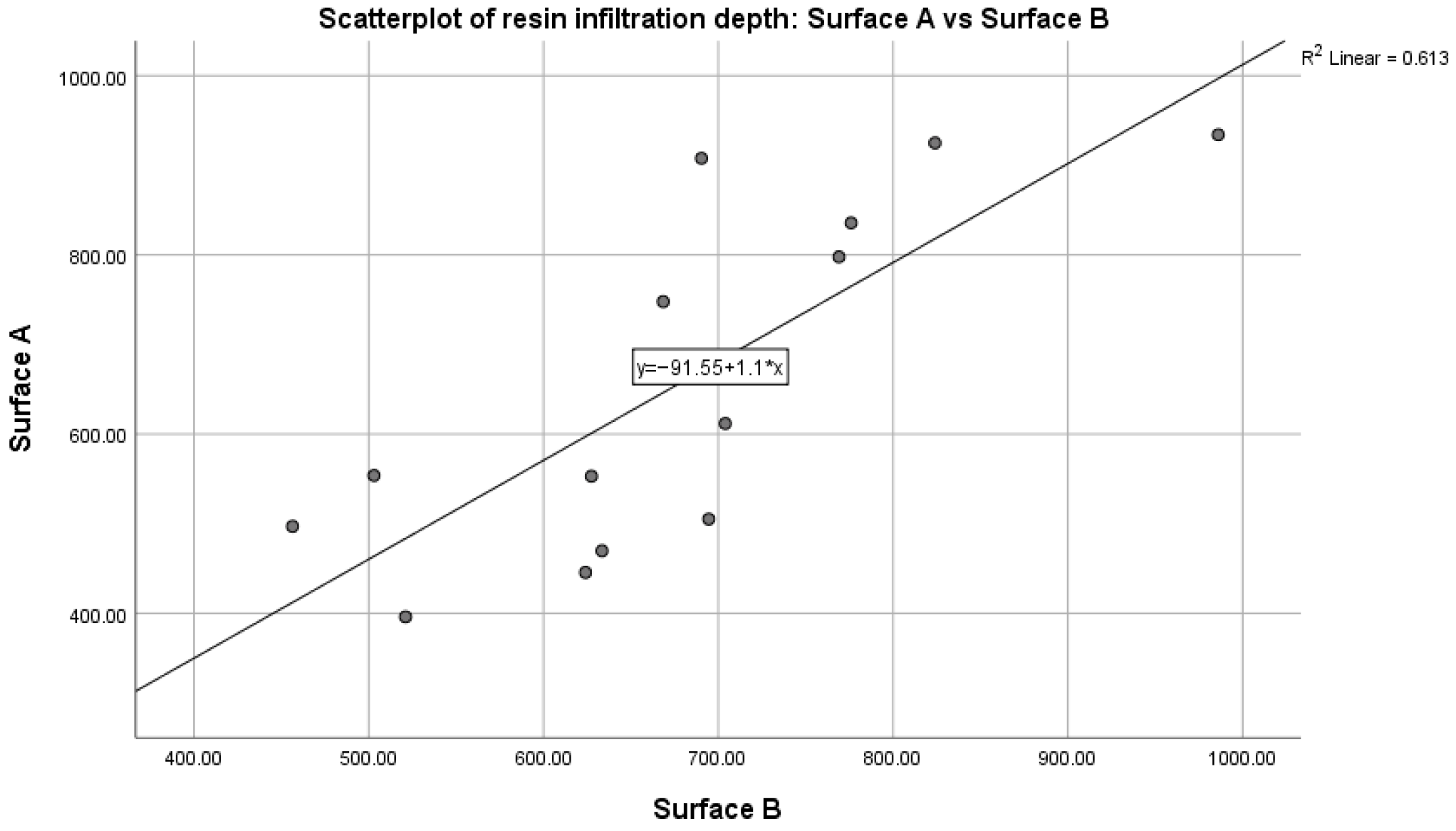
The scatterplot illustrates the relationship between resin penetration depths measured on surface A (mesial) and surface B (distal) of the same teeth (
Figure 2). A positive linear trend was observed, supported by a regression coefficient of R
2 = 0.613, indicating that approximately 61% of the variance in surface A measurements can be explained by surface B values. This visual trend is confirmed by the Pearson correlation coefficient, which showed a strong positive correlation (r = 0.783,
p = 0.001). These findings demonstrate that ICON
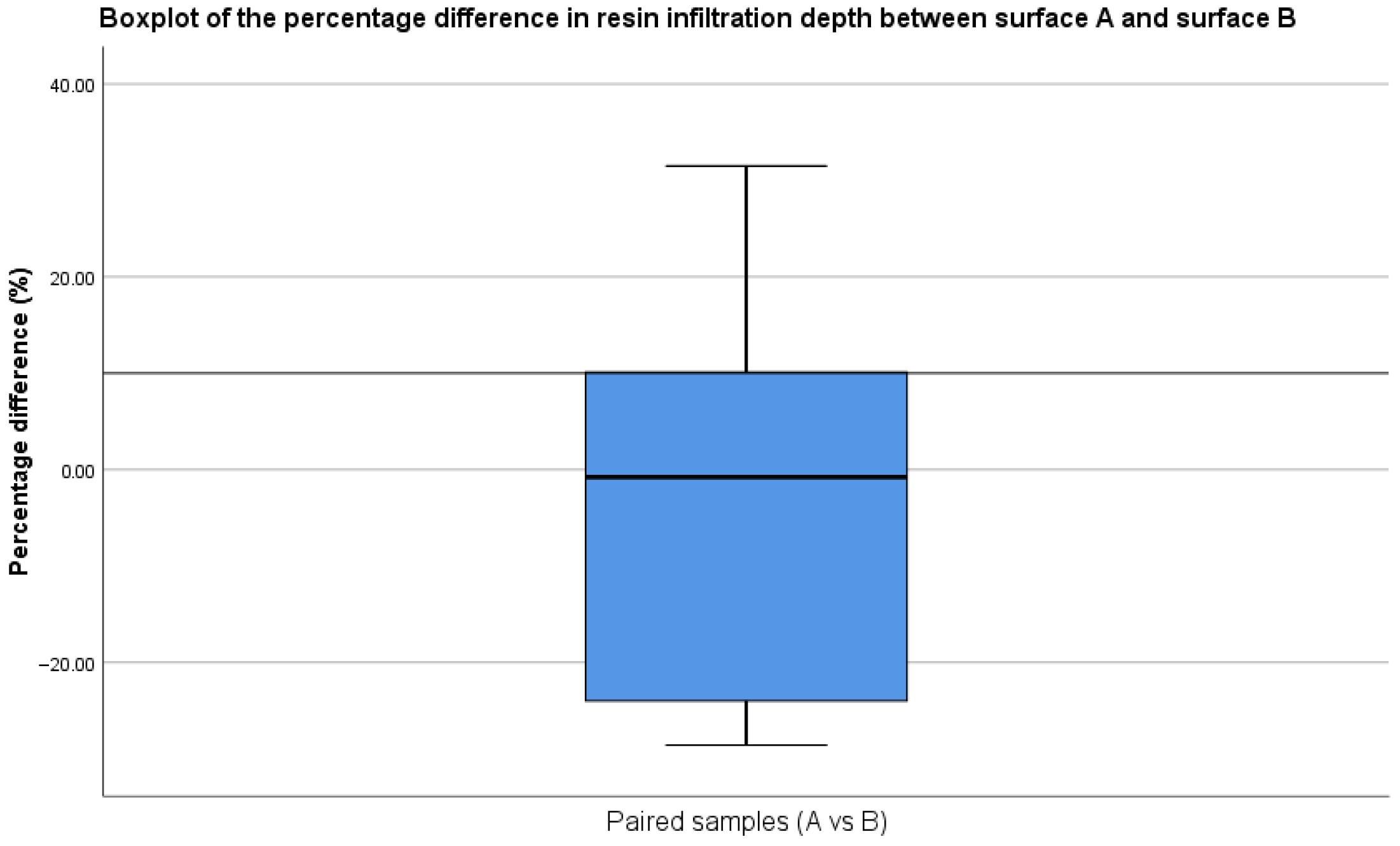
® resin infiltration exhibits consistent and uniform penetration behavior across both surfaces of the same tooth. The mean percentage difference between the two surfaces was −3.57% (SD = 18.61%), indicating minimal directional bias. Although the standard deviation reflects some natural variability, the mean difference close to zero further supports the uniformity of resin distribution. Given that the coefficient of variation (CV) is unreliable for values approaching zero, interpretation was based on absolute mean differences and correlation coefficients, both confirming homogeneous infiltration patterns.
The mean percentage difference in resin penetration depth between surface A (mesial) and surface B (distal) was −3.57% (SD = 18.61%), indicating that, on average, surface A exhibited a slightly lower infiltration depth than surface B. However, the large standard deviation and the occurrence of both negative and positive values reflect considerable inter-sample variability. Overall, these results suggest that the differences in resin infiltration depth between the two surfaces are small and inconsistent, further supporting the uniformity of ICON
® resin penetration across enamel regions (
Figure 3). These findings confirm the absence of a consistent directional bias in resin infiltration between paired surfaces (
Figure 3).
3.6. Post-Hoc Power Analysis of the Paired-Samples T-Test
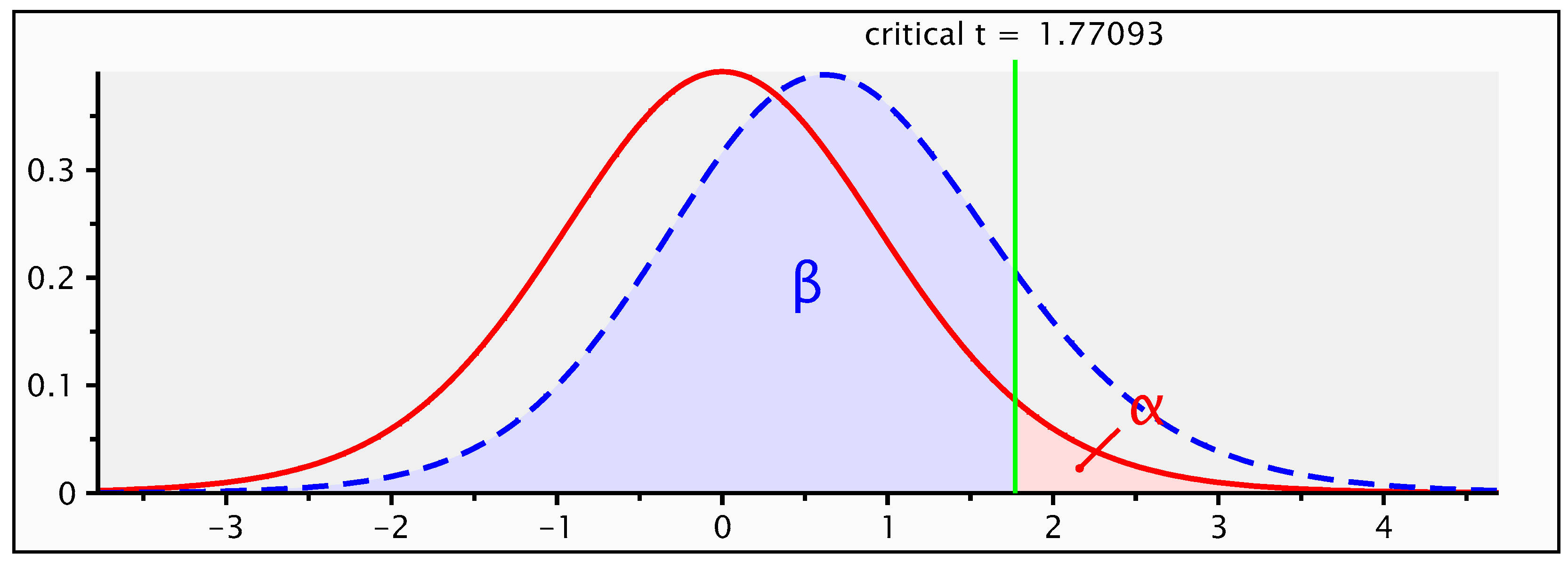
A post-hoc power analysis was conducted using G*Power (version 3.1, Düsseldorf, Germany) to assess the sensitivity of the paired-samples
t-test employed in this study. Based on the observed effect size (dz = 0.175), α = 0.05, and
n = 14 paired observations, the achieved statistical power was 15.2%. This result indicates that the study was underpowered to detect small differences in resin infiltration depth between surfaces A and B. Therefore, the non-significant outcome (
p = 0.525) should be interpreted with caution, as it may reflect the limited sample size rather than true equivalence between the two surfaces (
Figure 4).
3.7. Micromorphological Evaluation of Resin Infiltration (SEM Analysis)
Micromorphological analysis of the infiltrated enamel surfaces revealed a continuous, homogeneous integration of the ICON
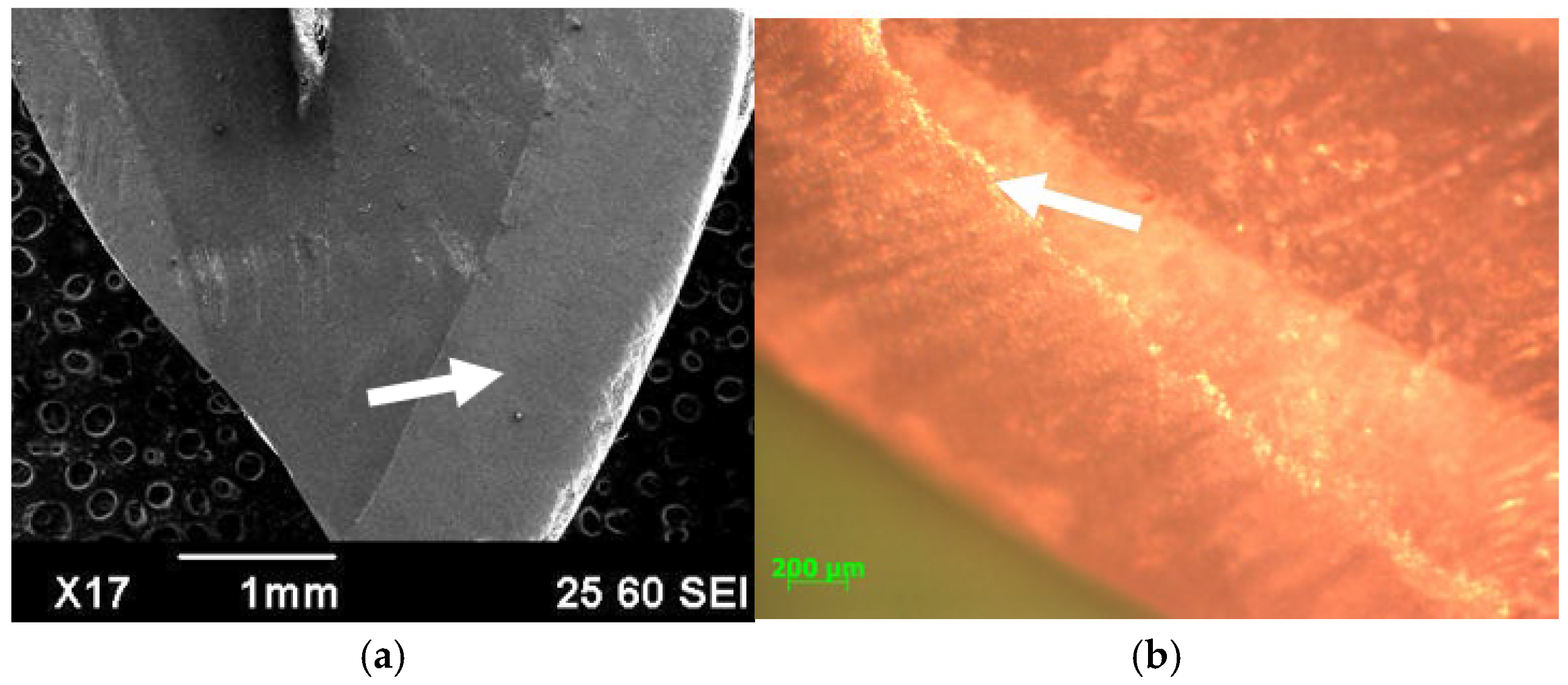
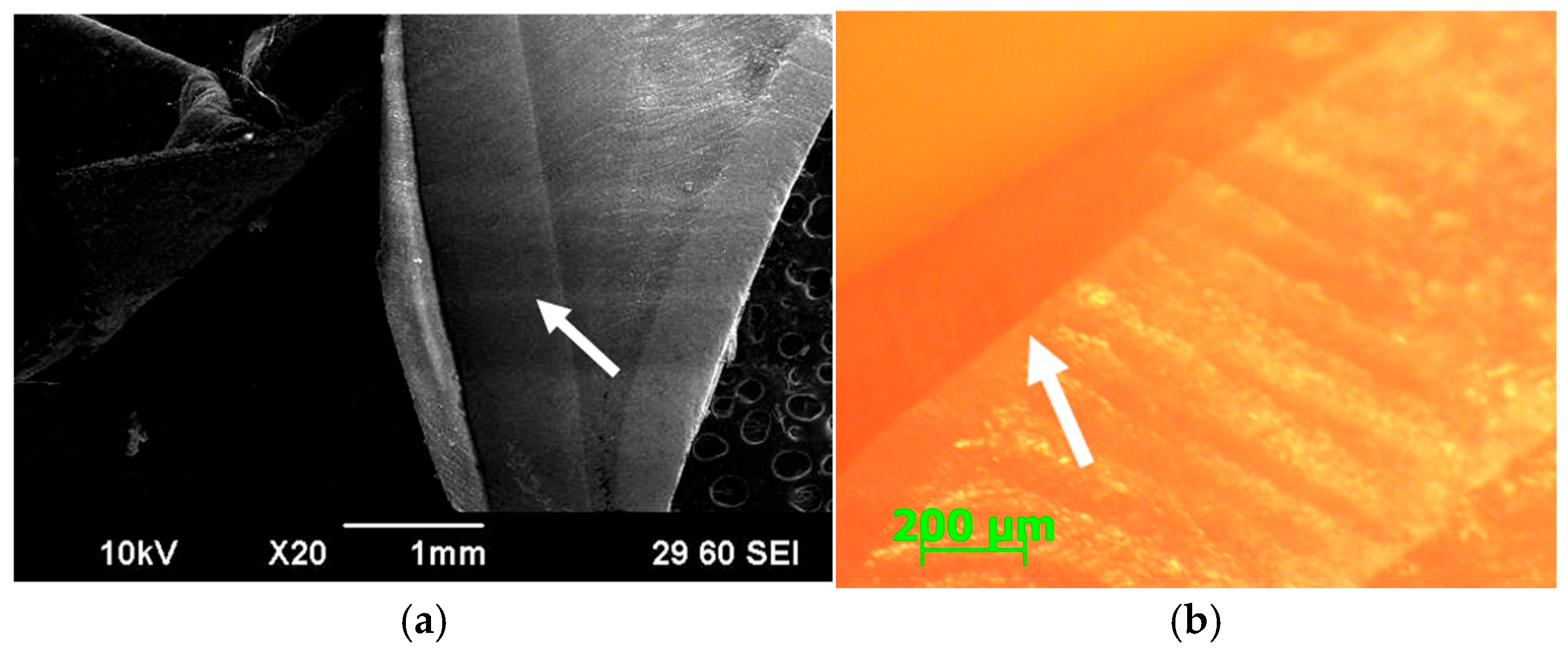
® resin within the enamel microstructure, extending across the entire buccal surface. The resin infiltrant filled the interprismatic spaces uniformly and showed smooth continuity along the enamel–resin interface, with no observable discontinuities or voids. A comparable infiltrated band was observed when the same region was examined under optical microscopy, which qualitatively confirmed the continuity of the infiltrated zone identified in SEM (
Figure 5a,b). The correspondence between the two imaging modalities supports the reliability of the morphological assessment.
The enamel micromorphology demonstrated a consistent resin infiltration pattern across both mesial (surface A) and distal (surface B) halves of the buccal surface.
Measured penetration depths ranged from 373.89 to 927.62 µm on surface A and from 503.00 to 876.77 µm on surface B.
These findings confirm the continuous integration of the ICON
® infiltrant within the enamel microstructure and are further supported by the corresponding optical microscopy observations, which qualitatively reflect the same infiltrated band (
Figure 6a,b). The agreement between SEM and OM images reinforces the consistency of the micromorphological pattern across the evaluated surfaces.
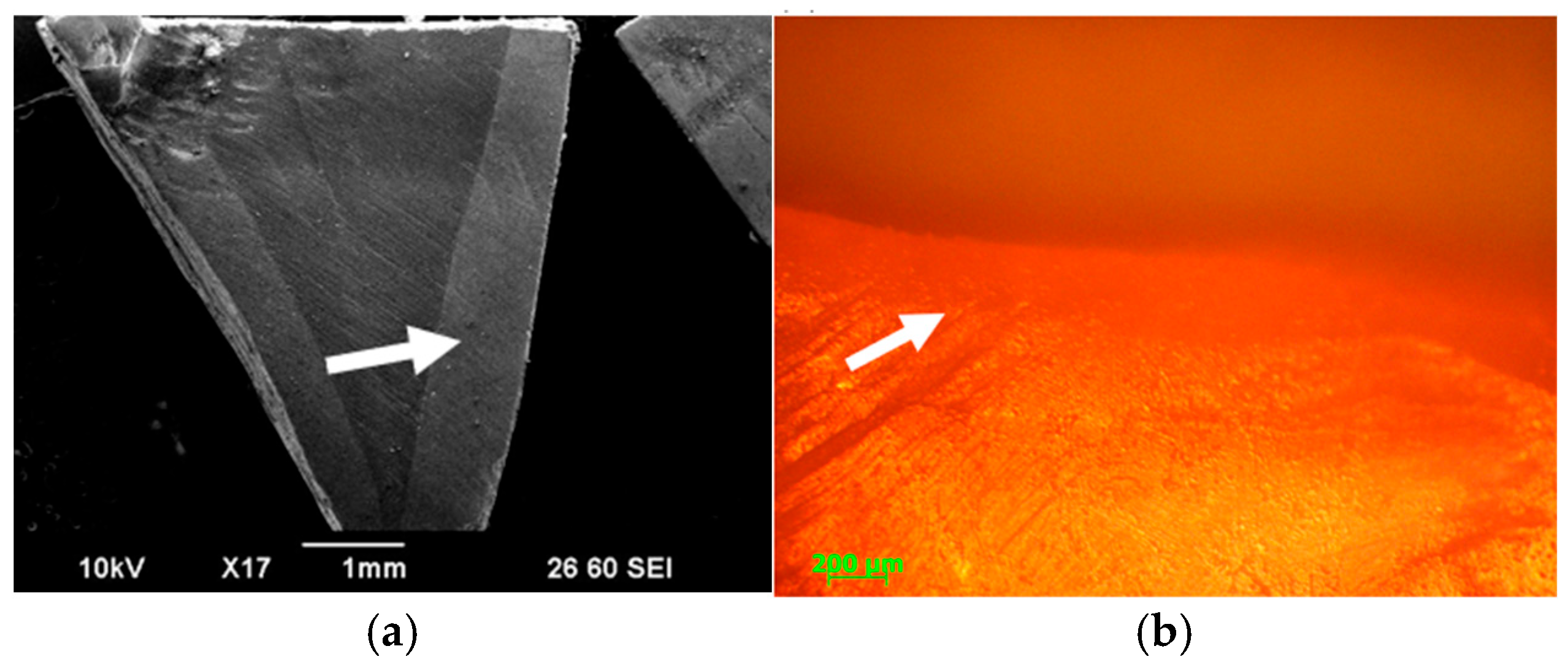
Other examined samples exhibited a uniform resin infiltration pattern across both mesial (surface A) and distal (surface B) halves of the buccal enamel surface. Measured penetration depths ranged from 469.71 to 780.34 µm on surface A and from 533.43 to 544.44 µm on surface B. Despite the slight difference in magnification between images, both halves displayed continuous and homogeneous resin integration within the enamel structure, confirming the reproducibility of the infiltration pattern (
Figure 7a,b).
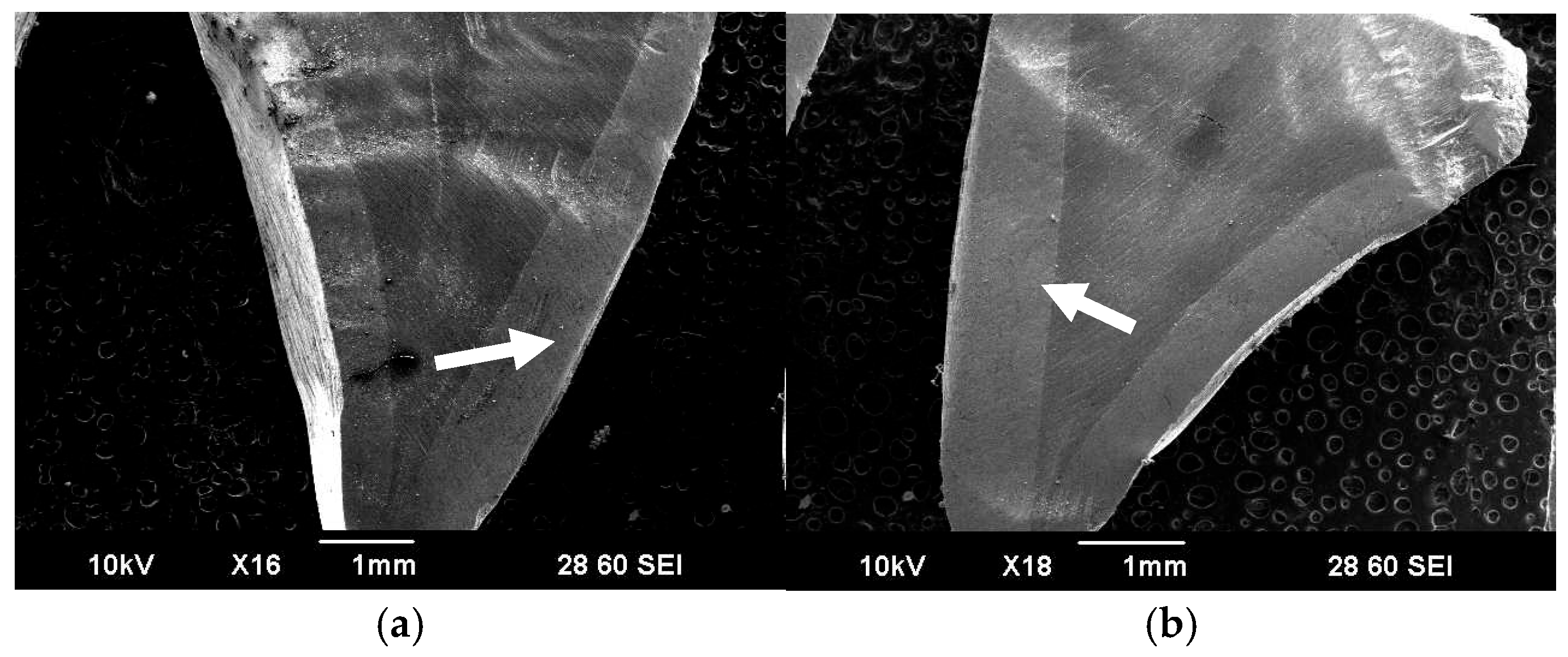
In another representative sample, the ICON
® resin infiltrant exhibited strong adaptation within the buccal enamel microstructure on both mesial (surface A) and distal (surface B) halves. Measured penetration depths ranged from 799.26 to 809.51 µm on the mesial side and from 373.89 to 789.84 µm on the distal side. The observed morphology indicates continuous resin diffusion along enamel prisms and consistent integration within the enamel structure, supporting the overall findings of uniform infiltration (
Figure 8a,b).
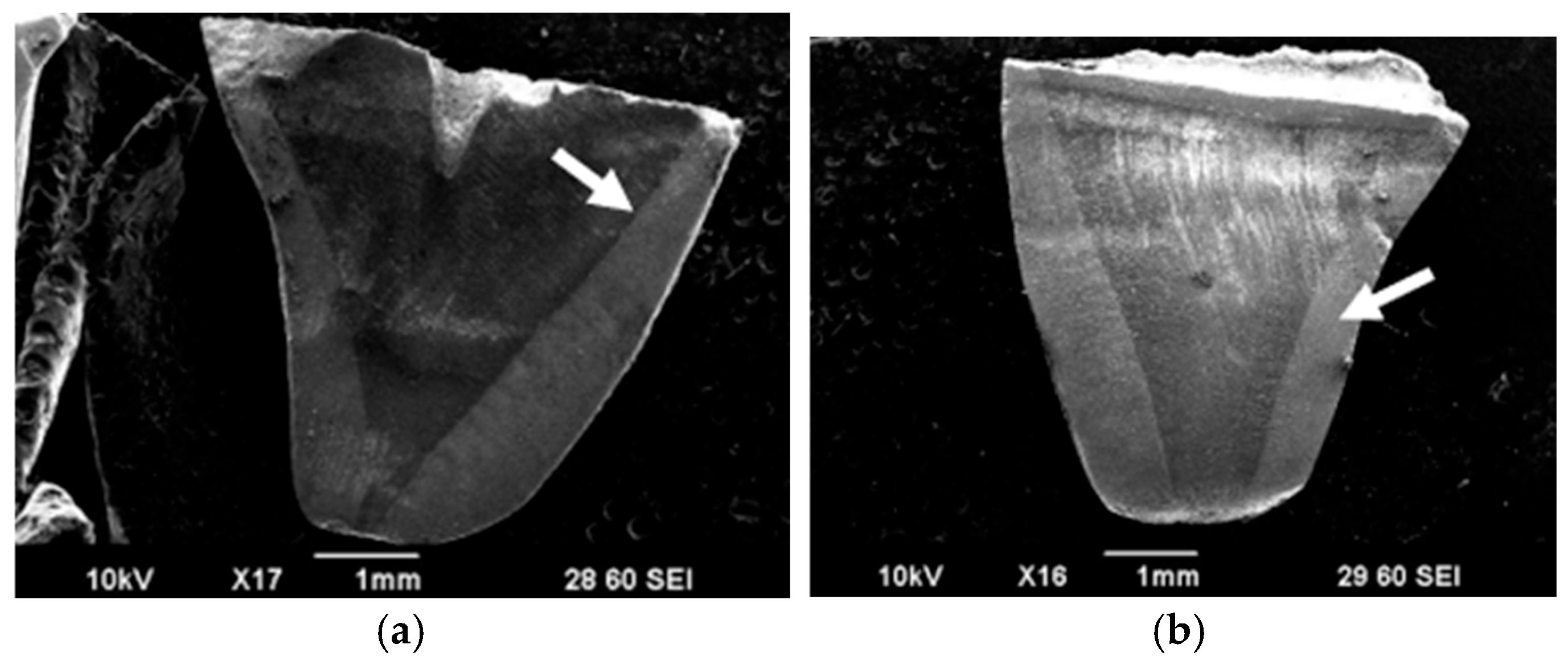
Optical microscopy confirmed the presence and continuity of the infiltrated region, supporting the SEM-based penetration-depth measurements.
A comparable infiltrated zone was also observed in this specimen, where the SEM image displayed a continuous band extending along the buccal enamel surface. The corresponding optical microscopy image revealed the same region as a distinctly illuminated band, qualitatively confirming the continuity of the infiltrant (
Figure 9a,b). This concordance between SEM and OM reinforces the reproducibility of the micromorphological pattern across samples.
4. Discussion
4.1. Summary of Main Findings
This in vitro study investigated the penetration behavior of ICON® resin infiltrant in sound human enamel using both quantitative morphometric analysis and qualitative scanning electron microscopy (SEM). Quantitative evaluation revealed a mean difference of −21.29 µm between measurements on surface A (mesial) and surface B (distal), which was not statistically significant (p = 0.525). The Pearson correlation coefficient (r = 0.783, p = 0.001) indicated a strong positive association between corresponding measurements, suggesting consistent infiltration behavior across the two enamel surfaces. The percentage difference analysis showed a mean of −3.57% (SD = 18.61%), with the mean difference close to zero and variability that appeared random rather than systematic. Together, these results demonstrate that ICON® infiltration achieved uniform and reproducible penetration throughout the buccal enamel of sound teeth. Dividing each tooth into two measurable halves (surfaces A and B) provided a practical design for evaluating intra-tooth reproducibility. The combination of non-significant mean differences and strong positive correlation supports the conclusion that the resin infiltrant penetrated homogeneously across the entire buccal surface, validating both the experimental model and the consistency of the infiltration technique.
4.2. Clinical Significance and Interpretation
Although the difference between the two surfaces was not statistically significant, the strong correlation observed supports the concept of homogeneous resin infiltration along the entire buccal surface of intact enamel. This uniformity holds clinical relevance, as it demonstrates the ability of ICON® resin to penetrate sound enamel consistently, providing a promising premise for its application in preventive and micro-invasive dentistry. Even though this study was performed on caries-free teeth, the results reinforce the expectation that ICON® can deliver predictable and reproducible infiltration under standardized clinical protocols. The minimal variability in penetration depth observed under controlled laboratory conditions suggests reliable material performance, highlighting the value of ICON® as a stable infiltrant capable of uniform integration within enamel. From a preventive perspective, such findings may support the use of resin infiltration as a primary prophylactic strategy, particularly in orthodontic patients who are at increased risk for enamel demineralization.
4.3. Comparison with Literature Data
The findings of this study are consistent with the existing literature on ICON® resin infiltration.
Manoharan et al. (2019) demonstrated that resin infiltration significantly reduces the long-term need for restorative interventions [
19], while the meta-analysis by Cebula et al. 2023) confirmed its clinical efficacy in halting lesion progression in both permanent and primary teeth [
11].
Edunoori et al. (2022) reported an average penetration depth of 24.46 µm for ICON
®, approximately double that achieved by Clinpro XT, confirming its superior masking effect on demineralized enamel [
10].
Similarly, Wierichs et al. (2023) validated its usefulness during orthodontic treatment, and Brescia et al. (2022) documented stable long-term aesthetic outcomes in enamel hypomineralization cases [
13,
23].
ICON® has also been successfully applied in the management of mild fluorosis and post-traumatic enamel defects, due to its excellent optical blending and adaptability.
Furthermore, studies by Ibrahim et al. (2023) and Kobeissi et al. (2020) emphasized the importance of color stability monitoring, which remains a challenge because of the hydrophilic nature of the resin matrix [
18,
24].
Collectively, these studies confirm the versatility, aesthetic performance, and preventive potential of ICON® resin infiltration, aligning with the present findings that demonstrate its uniform penetration behavior even in sound enamel.
The higher penetration depths observed in this study on sound human teeth (373–927 µm) appear greater than the values typically reported in the literature (25–100 µm).
This difference can be attributed to the use of 15% hydrochloric acid etching for two minutes, which effectively removed the hypermineralized surface layer, and to the repeated resin application protocol, both of which enhanced the depth of infiltration.
Although earlier studies commonly reported penetration depths of 25–100 μm, recent investigations have demonstrated that ICON infiltration may extend significantly deeper. Srikumar et al. (2024) reported maximum penetration depths up to 580 μm in demineralized enamel, with a mean of 279 μm [
22]. These data support the possibility of deep diffusion in substrates presenting extensive interprismatic porosity. In our study, the combination of slight sectioning obliquity, thin incisal enamel, and low-magnification SEM imaging contributed to the observation of similarly extended penetration distances.
The optical microscopy evaluation corroborated the SEM observations, demonstrating that the infiltrated zone was clearly identifiable and continuous across the sectioned enamel surface. The consistency between optical and SEM images provides additional confidence in the validity of the penetration-depth measurements.
Similar extended penetration depths have been reported under optimized in vitro conditions, such as those described by Edunoori et al. (2022) [
10].
Therefore, the results presented here likely reflect enhanced preparation efficiency rather than measurement error.
High-magnification SEM analysis confirmed the presence of continuous resin tags penetrating deeply into the enamel, supporting the accuracy and reproducibility of the measurements obtained.
Comparable findings have been documented in previous studies.
Kim et al. (2011) demonstrated that ICON
® resin infiltration significantly improves the aesthetic appearance of white spot lesions, achieving outcomes comparable or superior to conventional remineralization techniques [
3].
Similarly, Paris and Meyer-Lueckel (2010) showed that resin infiltrants inhibit the progression of natural carious lesions in vitro, reinforcing their long-term protective potential [
1,
2,
4].
Previous SEM-based investigations have further shown that differences in etching time, surface conditioning, and resin composition can markedly influence infiltration morphology and enamel–resin interface integration [
23,
25,
26].
In a randomized clinical trial, Welk et al. (2020) reported that a self-assembling peptide (P11-4) promoted remineralization of orthodontically induced lesions, although ICON
® infiltration achieved more consistent and predictable results [
27].
Likewise, the meta-analysis by Hochli et al. (2017) highlighted the limitations of fluoride-based treatments alone, particularly regarding aesthetic improvement and treatment duration [
28].
Kamber et al. (2021) concluded that ICON
® offers an optimal balance between efficacy, esthetics, and minimally invasive application, outperforming traditional sealants and bonding systems [
29].
Overall, the present findings—supported by quantitative morphometric analysis, strong statistical correlation, and SEM confirmation—align closely with these reports and substantiate the consistent distribution and homogeneous integration of ICON® resin within enamel structures.
4.4. SEM Observations and Correlation with Quantitative Data
The lingual/palatal surfaces, which were not subjected to resin infiltration, served as negative controls. As expected, no resin penetration was detected in these regions, confirming the validity and accuracy of the infiltration protocol. Consequently, these control areas were used solely for morphological reference, not for statistical comparison.
SEM imaging revealed a continuous and homogeneous distribution of the infiltrated ICON® resin along the buccal enamel surface, encompassing both mesial and distal halves.
The internal “network-like” pattern observed within the enamel prisms demonstrated stable and effective penetration of the infiltrant into the microstructure of intact teeth.
These micromorphological findings were consistent with the quantitative results—although minor surface differences were noted, the overall infiltration pattern remained uniform, without visible interfacial gaps.
This supports the interpretation that ICON® resin achieves consistent integration even in non-demineralized enamel, confirming its ability to adapt to subtle variations in enamel morphology.
Furthermore, SEM analysis revealed a well-defined and continuous enamel–resin interface, which is essential for mechanical stability and long-term aesthetic performance.
Overall, SEM proved to be a valuable tool not only for visualizing resin distribution but also for corroborating the quantitative evidence of consistent and uniform infiltration.
4.5. Study Limitations
A major limitation of the study is the small sample size, which resulted in a low statistical power. Therefore, the results should be interpreted as exploratory and descriptive. While SEM provides detailed morphological insights into ICON infiltration patterns, larger controlled studies are required to confirm these findings and improve the statistical robustness of future analyses.
The G*Power analysis indicated an achieved power of only 15.2%, substantially below the conventional 80% threshold.
Additionally, the experimental design assumed structural equivalence between surfaces A and B of the same tooth, which, while methodologically justified, may introduce potential intra-sample bias.
The use of sound human enamel ensured standardization and reproducibility, but it does not fully replicate clinical conditions of demineralized or carious enamel.
Long-term factors such as color stability, staining susceptibility, and material durability were not assessed.
A key limitation of the study is the absence of a control group with demineralized enamel. Without a comparative substrate, the findings cannot be extrapolated to clinical scenarios involving initial carious lesions. Future studies incorporating artificially or naturally demineralized enamel will be essential to establish direct comparisons and to better understand the differences in ICON infiltration behavior.
Moreover, the absence of automated SEM measurement protocols and dedicated control groups limits the generalizability of the results and warrants caution in extrapolating the findings to clinical practice.
The use of a paired t-test and Pearson’s correlation in a small sample with low statistical power provides limited inferential validity. The statistical analysis was therefore restricted to exploratory purposes, complementing the primary SEM morphological observations. Larger studies with adequate power are required to support inferential conclusions.
4.6. Clinical Implications and Future Directions
Despite being conducted on sound enamel, this study supports the concept that ICON® resin infiltration achieves consistent and reproducible penetration, making it a promising approach for preventive and micro-invasive dentistry.
The uniform infiltration patterns observed suggest that ICON® may perform reliably in early demineralization scenarios, such as orthodontic patients at risk of white spot formation.
A limitation of the study is that the split-tooth design provides internal replication rather than a true experimental comparison. Therefore, the two halves cannot be interpreted as control versus treatment groups. This approach was used solely to reduce specimen variability during SEM assessment, but it does not allow inferential conclusions regarding differences in resin behavior.
Future research should include randomized clinical trials with larger sample sizes and long-term follow-up to evaluate parameters such as color stability, resistance to staining, and functional durability of the infiltrant.
Integrating ICON
® with remineralizing or antibacterial agents could further enhance its therapeutic effectiveness and cost-efficiency, aligning with the principles of minimally invasive dentistry [
19,
26,
30].
Another limitation of the study is the absence of intra- and inter-observer reliability analysis for SEM measurements. Although a single calibrated examiner performed all assessments to reduce subjective variability, the lack of repeated measurements limits the ability to quantify measurement error. Future studies should include reliability tests such as intraclass correlation coefficients or repeated-measurement agreement analyses.
In addition, future studies should aim to develop standardized SEM and colorimetric evaluation protocols and incorporate patient-centered outcomes, including aesthetic satisfaction and economic feasibility, especially among younger populations and underserved communities where preventive approaches may provide the greatest benefit.
The absence of statistically significant differences cannot be construed as confirmation of uniform penetration, as this would risk a Type II error. Instead, the observed values should be interpreted descriptively. The limited sample size may prevent the detection of subtle differences in penetration depth.
5. Conclusions
This study describes the penetration behavior of ICON® resin in sound human enamel under the specific in vitro conditions applied. Both SEM and optical microscopy confirmed the presence, continuity, and depth of the infiltrated zone, providing consistent morphological evidence of resin integration within the enamel microstructure. The observed penetration patterns reflect the combined effect of enamel morphology, sectioning orientation, and the standard HCl conditioning protocol used in ICON application.
Given the limited sample size, low statistical power, and the absence of formal measurement reliability testing, the results should be interpreted within the methodological boundaries of this study. The split-tooth model ensured substrate uniformity but did not represent a control–treatment design; therefore, the findings cannot be generalized beyond the experimental conditions.
Although the model did not replicate demineralized or carious substrates, the deep and continuous infiltration observed in intact enamel suggests potential relevance for future investigations addressing early enamel demineralization and aesthetic management. In particular, the ability of ICON® to achieve consistent penetration in sound enamel indicates that resin infiltration may also serve as a primary preventive strategy in orthodontic patients, helping to reduce the risk of demineralization around fixed appliances and bracket margins.
Further studies involving larger sample sizes, standardized sectioning, repeated-measurement reliability assessments, and direct comparison with demineralized enamel are needed to expand and validate these findings.





 ,
,