


Abstract
The loss of a limb is an event that significantly affects an individual’s quality of life, with implications not only for autonomy in daily activities but also for their ability to interact with others. At the same time, current prostheses often fail to meet the user’s needs, resulting in high drop-out rates. In this review, we investigated the primary causes of prosthesis abandonment and analyzed them by highlighting the technological and psychological aspects associated with current devices. Technological issues due to reliability, functionality and comfort, together with psychological issues related to anxiety and depression, are among the main factors contributing to prosthesis rejection. Social aspects, sport, and community activities play crucial roles in improving the sense of belonging and acceptance of prosthesis users. Although research has often prioritized functionality, prosthesis development should follow patient-centered models that address the individual needs and requirements of patients, emphasizing psychological, rehabilitative, and technological support.
1. Introduction
Limb amputation is a life-changing event with physical and psychological effects on the amputees [1]. In 2017, more than 57 million people worldwide were living with limb amputation due to traumatic causes [2], and more than 215.000 amputation surgeries are performed each year [3]. It has been estimated that in the United States, there are approximately 2 million people living with limb loss [4], and those numbers are estimated to double by 2050 due to the aging of the population and the higher incidence of vascular diseases and diabetes [4,5]. The leading causes of amputations are trauma-related and, most commonly, due to work-related accidents, traffic accidents, and falls [5,6,7,8,9,10,11,12,13,14,15,16]. According to Raspopovich et al. [17], 15,900 upper limb amputations are performed in the USA each year, while 6311 are performed in the European Union (data averaged from [17,18,19,20]). Prosthesis rejection rates remain high (30–80%) due to a lack of user needs [21,22,23,24,25,26].
Limb amputation is certainly a delicate moment that forces individuals to deal with various changes in their life [27,28], such as difficulty in continuing their work, a loss of autonomy in various daily tasks, emotional adjustment to their new condition [29,30], physical pain following the operation, and, in some cases, phantom limb pain [31]. According to Horgan and MacLachlan [32], depression and anxiety are common in the first two years after amputation, even if, as shown by Singh et al. [33], levels of anxiety and depression are not constant over the two years. Anxiety and depression levels are higher during hospitalization, followed by a drop before increasing again. Mckechnie and John [34] estimated incidences of 20.6–63% for depression and 25.45–57% for anxiety after traumatic amputation.
For upper limb loss in particular, the combined reduction in function and aesthetic appearance, along with the inability to easily hide the amputated hand or arm from view, can result in a traumatic experience. The human hand, in addition to its aesthetic value, serves a range of complex functions that enable individuals to interact with external objects through grasping and touch, as well as to communicate with others through gestures [35].
The sudden loss of such an important body part generates a multifaceted adaptation process, ranging from altered body image and lifestyle, and a change in self-concept, to altered physical functioning, prosthetic use, and pain. These stressors challenge individuals’ ability to maintain emotional well-being, which can lead to maladaptive reactions and poor psychosocial adjustment [36,37]. Senra et al. [38] demonstrated how depressive symptoms, phantom limb pain, and anxiety influence self-perception and adjustments after amputation. The amputation affects the integrity of the body and, in this way, the skills and talents of the individual as well [39]. As a consequence, the individual may start perceiving themself as inferior because of the amputation, eliciting detrimental cognitions linked to catastrophizing concerning future functionality and adaptation, often leading to maladaptive behaviors [40] and negative emotional states including anger, hostility, or suicidal thoughts [41].
Added to these are any medical problems following the loss of the affected limb, recommended therapies (e.g., physical therapy, psychological counselling, etc.), the various visits with specialists, but also the possibility of prescribing the most useful prosthesis, recommended based on needs/requirements and financial availability, along with the frequency of prosthetic replacement [42].
Despite technological advancements, prosthetic abandonment remains a significant problem, with rejection rates of up to 50%, depending on the type of device and patient population [43,44]. Furthermore, failure to use the prosthetic device is not only a problem for the individual but also has repercussions on healthcare costs. In their study on lower-limb prostheses, Miller et al. showed that failure to use the prosthesis in the 12 months following amputation has an impact of over 25% on the healthcare costs associated with the individual [45]. However, the impact is also present in the upper limb, where non-use of the prosthesis leads to bodily changes that would result in additional costs for prosthetic production, further discouraging its use [46].
Henao et al. [47] highlighted that aspects such as comfort, weight reduction, and intuitive control are among the top priorities for end-users and should therefore also become key features for prosthetic design. To reduce rejection rates, prosthetic systems must be designed to meet the user’s needs, fulfilling the requirements of weight, comfort, and functionality. In fact, users who perceive a significant improvement in quality of life (QoL) thanks to the use of prosthetics are less likely to abandon them [48]. Prosthetic device selection is crucial since it must be chosen to fulfil user requirements, without creating a discrepancy between prosthetic functionality and user expectations [49,50].
Physical discomfort, a lack of perceived functional benefit, and maintenance requirements, as well as psychosocial factors and external barriers such as cost and limited insurance coverage, are typically responsible for prosthetic rejection.
This review aims to identify and discuss key factors that lead to prosthetic abandonment, analyzing them by prosthesis type. It examines both technical aspects of prosthetics and psychological factors influencing device acceptance and long-term use, including motivation, cognition, and behavior. The goal is to provide a comprehensive, evidence-based perspective that can guide future upper limb prosthetic design and clinical strategies to reduce prosthetic abandonment. This narrative review includes articles found through a non-systematic search on Google Scholar, PubMed, and Scopus. An initial search of the literature was conducted using the research query “(“Prostheses” or “Prosthetics”) and “upper limb” and (“rejection” or “abandonment”)”, which was then expanded without following a systematic approach. The selection was based on relevance to the review’s topics (technological and psychosocial), without applying formal inclusion/exclusion criteria or systematic screening.
2. Technological Challenges: Upper Limb Prosthetic Devices
The evolution of upper limb prostheses has led to the availability of a wide range of devices that differ in technical characteristics, functional purposes, and degree of user interaction. Upper limb prostheses are mainly divided into two categories: passive and active. Passive and cosmetic devices have purely aesthetic functions or are designed to perform straightforward tasks [51]. Active prostheses are further divided into body-powered, which utilize the motion of the residual limb, and battery-powered, which can be controlled via surface electromyography [37,52]. The use of increasingly innovative materials and technological advancements, combined with microcontroller-based boards, provides ever-improving prosthetic control [53,54]. Emerging technologies, including osseointegration and implantable electrodes, offer improved control, stability, and sensory feedback [55], while neural interfaces are being developed to achieve bidirectional communication with the nervous system [56]. While these innovations improve mechanical control and sensory feedback, prosthesis adoption also depends on psychological and perceptual aspects. One of the critical factors in user satisfaction, and thus acceptance, is the recognition of the device as an extension of one’s own body [57] and this can also depend on the type of prosthesis chosen. This section presents an analysis of the main characteristics, advantages, and limitations of each kind of prosthetic typology. A graphical representation of the main prosthetic devices is shown in Figure 1.
Figure 1.
Main upper limb prosthetic devices. (A) Passive devices. (B) Myoelectric devices. (C) Body-powered devices. (D) Hybrid devices.
A summary of the advantages and disadvantages of each prosthetic technology is shown in Figure 2.
Figure 2.
Summary of the advantages and disadvantages of each prosthetic technology.
2.1. Passive Prostheses
Passive prostheses are primarily designed to restore the length and appearance of the limb, allowing for stabilization or transport of objects in an ipsilateral or bilateral manner [52]. They are characterized by their simple construction, lightweight design, and minimal maintenance requirements. However, they offer limited functionality, especially in terms of active grasping [58].
These devices can be static, i.e., with no moving parts, or positional, i.e., with passive movable fingers. Because they do not generate an active grasp, the ability to manipulate objects depends entirely on the user’s adaptation, with a relative advantage for positional prostheses over static ones [51,53]. Passive prostheses can be designed to faithfully reproduce the appearance of the natural limb, improving body image and reducing unwanted attention, as well as providing psychological benefits [52,54]. Among the main limitations reported by users are thermal discomfort during use, glove wear, excessive weight, damage to clothing, and irritation from straps [58,59]. Passive prostheses range from fixed devices to systems that allow for locking in different positions or spring activation in response to contact with objects [30,35]. Another functional advantage of cosmetic prostheses is that, although they may not be actively prehensile, they restore the ability to perform bimanual tasks for people with unilateral amputations [60].
In cases of wrist amputation, functional aesthetic prostheses can be used to hold objects by placing them in one hand or wedging them between the prosthesis and the wearer’s torso [61]. Aesthetic restoration in the case of a trans-humeral amputation involves an elbow that can be locked at various degrees of flexion to allow people to perform a gesture such as hanging up a bag [62].
2.2. Body-Powered Prostheses
Body-powered (BP) prostheses consist of mechanical systems based on cables and straps that allow movement control through the shoulders and other residual joints [56]. Compared to alternatives, they offer several advantages—reduced weight, greater robustness, resistance to adverse environmental conditions, the provision of proprioceptive feedback and lower initial and maintenance costs—with respect to their electrical counterparts [52].
Control occurs through the movement of the shoulder, which sequentially activates the elbow, wrist, and terminal device (TD) [63]. To switch between different functions, the user must lock the joints with switches or through the movement of specific locking cables [56]. Their modularity allows for the assembly of both hands and different types of hooks. Body-powered hooks are often chosen for their lightness, functionality, and improved visibility of objects during manipulation [35].
Since the remaining limb is mechanically connected to the prosthesis, the user receives information about the prosthesis’s state through the same physiological pathways used to activate it [64,65]. The resulting sensation of extended physiological proprioception in the prosthetic limb [66] may minimize the conscious attention required to control the prosthesis [67]. Despite their advantages, these prostheses present some critical issues, such as harnesses that can be restrictive and uncomfortable. Although the first information about and examples of BP prostheses can be dated to around 1812 [68], the design priorities and requirements of users still seem to have remained consistent over the past decades, with the main concerns being about harness discomfort and control [69,70].
Furthermore, the design of the hooks, cables, and harnesses can be aesthetically unappealing [52]. Rejection is typically related to slow movement, difficult maintenance, insufficient grip strength, and the high energy expenditure required. Acceptance of these devices depends heavily on the type of TD [63].
Some studies suggest that rejection of BP systems with a TD hand can reach 80–87% [10,71]. However, according to Biddis et al. [72], the rejection rate was about 50% among BP prosthesis users compared to 39% among myoelectric and hybrid system users. A similar result was found by McFarland et al. [71]. The authors reported that 40% of surveyed amputee veterans who used a body-powered system rejected the prosthesis.
2.3. Electrically Powered Prostheses
Electrically powered prosthetic devices use motors controlled by rechargeable batteries [52]. Control is mainly exerted via electromyographic (EMG) signals; however, other inputs, such as inertial measurement units (IMUs), can also be used [73]. These devices offer advantages such as a more powerful grip, adjustable speed proportional to muscle contraction, the ability to control two components simultaneously, and an advanced anthropomorphic appearance [52]. However, they have disadvantages related to high costs, battery maintenance, their greater weight, and their sensitivity to environmental conditions such as dust or humidity. Recent advances, such as waterproofing and robust materials, have mitigated some of these limitations [74].
Powered prosthetics are often considered a more modern and functional alternative to body-powered prosthetics, offering greater aesthetics, durability, and ease of use, as well as the absence of harnesses [35].
2.4. Myoelectric Prostheses
Myoelectric prostheses have been available since the late 1960s [75] and are nowadays the most common kind of active prosthesis. These devices use EMG signals generated by residual muscles to control movements [56]. Control occurs through the recording and decoding of the electrical activity of two or more separate muscles [76]. Muscle recording is typically performed using surface electrodes employing control algorithms based on different levels of muscle contractions [77] or monitoring antagonist muscles [78]. However, superficial electromyography (sEMG) is highly susceptible to motion artifacts and electromagnetic interference, which can significantly reduce control reliability [79,80]. Recent studies have highlighted the potential of implantable electrodes to enhance signal stability and improve prosthetic control [81,82,83,84,85]; however, no extensive clinical validation has yet been provided.
Although conventional myoelectric prostheses have a single motor that controls fingers, allowing them to perform a power grip or pinch, the most modern devices, known as multigrip prostheses, have several motors, allowing them to perform separate finger movements and resulting in a higher number of gestures [52,55,86,87].
Myoelectric prostheses offer significant advantages in terms of cosmesis, grip strength, and range of motion [88], but remain expensive, heavy, and difficult to control [58,89]. Despite advances, control interfaces still face major challenges because of the reliability of the EMG signal. Additionally, myoelectric prosthesis control is not intuitive for users and requires extensive training [90]. Control algorithms are sensitive to electrode placement and are susceptible to interference, which reduces their reliability in daily use [35]. These limitations lead to high abandonment rates, especially among unilateral amputees, who often prefer to rely on their healthy contralateral limb [35]. Moreover, their cost is still extremely high, and their purchase is not always guaranteed by the national public service, thus making them accessible only to the wealthiest [71].
2.5. Hybrid Prostheses
Hybrid prostheses combine two systems—typically a body-powered elbow and a powered hand or wrist—and this is especially true in cases of above-the-elbow amputation [52]. This approach allows for simultaneous control of multiple components, a lower weight than fully powered prostheses, and greater grip strength than purely mechanical ones [91]. However, the body-powered elbow still requires the use of harnesses or gravity, reducing the fluidity of movement [56]. The creation of a hybrid prosthesis requires a high level of customization to suit the amputee’s clinical condition, thus leading to extremely high costs [92,93].
3. Prosthesis Abandonment: Main Factors
Alongside technological limitations, it must be considered that prosthetic abandonment is influenced by factors related to the individual and psychosocial sphere, with body image, self-efficacy, social support, quality of clinical communication, expectations regarding use, and perceived comfort all playing decisive roles [94].
Although upper limb prostheses are used to facilitate daily activities, for people who have undergone upper limb amputation, even the best commercially available prostheses cannot reproduce the sensation of their own arm, both in functional and sensory aspects [53,95]. What is important to make clear from the outset to anyone receiving a prosthesis is that the device itself will not restore the same abilities they had before the amputation, nor will it transform them into bionic people with extraordinary abilities [53]. The use of prostheses is notoriously challenging for activities of daily living. From cosmetic hands to body-powered hooks to externally powered devices, prosthetic design strives to meet the different needs and desires of people with upper limb loss [96].
The high variability in abandonment rates among the same population of upper limb prosthesis users makes it difficult to gain a holistic understanding of why people choose to abandon their prosthetic devices [58,96]. Below, we attempt to summarize the main reasons reported in the literature regarding prosthetic abandonment, from both technological and social perspectives.
The level and severity of the amputation strongly influence the degree of prosthetic satisfaction and abandonment [95]. Cordella et al. [97] and Brack et al. [92] deeply investigated the association between technology and level of amputation. Analyzing and collecting information from past reviews and the literature, we identified some recurring motivations, as shown in Table 1 and Figure 3.
Table 1.
Table of articles from 1993 to 2025 used to evaluate the main reasons for prosthetic abandonment.
Figure 3.
Most common critical factors related to comfort, functionality, and reliability that cause prosthetic abandonment.
Since the initial study on prosthetic abandonment by Atkins et al. in 1996 [100], comfort and functionality were identified as major causes. Although numerous technological advances have occurred in the meantime, prosthetic abandonment rates appear to have remained unchanged over the past 20 years, suggesting that these reasons remain valid and relevant today [8,44,102]. Similarly, the case study approached by Schaffalitzky et al. [104], which included two upper limb amputees, found that both used body-powered devices and both preferred function over cosmetics.
Several studies identified the discrepancy between user needs and device performance as a major reason for dissatisfaction and abandonment [95,105,106,107]. Even if some studies highlighted the importance of aesthetics [92,98,108,109,110,111], comfort, functionality, and reliability are the most important features required by the user [112], especially for BP and myoelectric devices [26,60,72,96,98,99,101,113,114]. Figure 3 summarizes the main abandonment reasons divided into the categories of comfort, functionality and reliability. These three categories represent not only critical factors but also lead to prosthetic rejection and abandonment.
Prosthetic comfort is a priority for users. Amputees’ feedback regarding comfort mainly focuses on the characteristics of the prosthetic socket and the weight of the prosthesis [96,98,114]. Users have often complained about prosthetic sockets that are not soft enough and not sufficiently customized to the residual limb [115], as well as prostheses that are excessively heavy [35].
Lack of functionality remains a cross-generational issue, and it has been reported in numerous studies on prosthetic abandonment and rejection since 1996 [100]. Commercial prosthetic devices still do not adequately represent the complexity of hand gestures, and limitations in wrist and elbow control are among the main shortcomings that users note. Additionally, there are critical concerns about prosthesis reliability [89]. There are also other critical aspects relating to the reliability of the prosthesis. BP prosthesis users often report that mechanical parts like belts have limited durability and tend to wear out [16,98]. Meanwhile, myoelectric prostheses frequently fail to operate correctly throughout the day due to battery life issues [16,47,99,102,114] and deterioration of the muscle–electrode interface, which impacts control quality. If electrodes are not properly interfaced with the residual limb, users may experience increased uncertainty in controlling the prosthesis [89], and unintended activations further diminish their sense of control [67]. Users of body-powered prostheses tend to experience less uncertainty because of the direct mechanical connection between the harness and the terminal device [67]. It is essential to highlight that operating these devices is often not straightforward [16,98,114], and users need to go through extensive training and rehabilitation sessions to reach a reasonable level of proficiency with the prosthesis [90,116,117]. A lack of proper support from rehabilitation specialists or poor user participation in rehabilitation can pose major challenges, leading to dissatisfaction and the abandonment of the prosthesis [25,96,101]. Cain et al. [118] identified critical boundaries in the individual journey after limb loss, revealing inequities, including inadequate assistance, delays in prosthetic delivery (over 10 months), and financial barriers. Resnik et al. [103] conducted a study involving 727 upper limb amputees, showing that 20% of those who ever used a prosthesis paid out-of-pocket costs, while up to 25% of individuals who never used a prosthesis or abandoned it reported being unable to repair or afford the prosthetic device. Even in countries with national coverage systems, there is no guarantee that the national health system will cover the costs of the most modern and sophisticated devices [119]. In medical insurance-based states such as the USA, access to prosthetic devices depends on the rules of the health insurance company, which often do not cover all types of prosthetic terminals, including microprocessor-based prostheses [118], thus limiting the opportunity of amputees to try several types of sockets, harnesses, prostheses, and terminal devices before choosing their permanent device, as should ideally happen [120].
If an individual’s prosthetic rehabilitation plan is designed to facilitate realistic goals and a prosthesis enables them to achieve those goals, rejection should only occur when their goals have changed. Failure to state those goals or define them correctly is therefore a direct path to rejection of the prosthesis. Furthermore, the role of occupational therapy cannot be overstated when it comes to upper limb prosthetic rehabilitation [53].
Prosthetic acceptance and satisfaction are strictly related to user expectations. With respect to other technologies, myoelectric devices are advertized as being able to restore users’ functionality, and, obviously, expectations regarding functionality are higher. These higher expectations may give users an additional reason to feel disappointed with the current state of technology [58]. From a technological perspective, it is essential to meet the needs related to control and communication with the prosthesis. Adopting a prosthesis represents an attempt to restore these functions; however, approximately 21% of adults with upper limb amputations abandon their use, believing the available devices are insufficient to meet their needs [72]. One of the main critical issues is the lack of sensory feedback, which is recognized as a determining factor in abandoning their use [25].
Recent advances in science and technology have led to promising methods for accessing neural information for communication or control [56,121,122]. Researchers have explored invasive [47,83,115,116,117,123,124,125,126] and non-invasive methods [114,127,128,129,130,131,132,133] of connecting with muscles, nerves, or the brain to provide greater functionality to patients suffering from diseases or injuries [134], including amputation [135]. These techniques offer hope for more natural and intuitive prosthetic control, and thus a better quality of life [56,135].
According to Engdahl et al. [136,137] and Zheng, J.Y et al. [138], amputees are mostly interested in improving the dexterity and durability of prosthetic options.
To achieve these goals, they are willing to consider using invasive and non-invasive neural interfaces; however, they show some reluctance toward brain implants. Advanced neural interfaces capable of enabling bidirectional communication between prostheses and subjects using sensory feedback have been shown to improve agency, embodiment and dexterity [134,139]. Embodiment refers to the way our physical bodies, including our senses and perceptions, understand and interact with the world, while agency, on the other hand, is the capacity of an individual to act and exert control over their actions and environment [140,141,142,143]. Sensory feedback contributes directly to the modulation of both these dimensions, closing the sensorimotor circuit and allowing alignment between motor intention, execution, and perception [144]. In addition to improving motor control, sensory feedback promotes greater embodiment, or the perception of the prosthesis as an integral part of one’s body, with positive effects on phantom limb pain (PLP) [145].
Conventional prostheses offer mobility and mechanical functionality; however, they do not restore the natural sensory experience of the hand. The absence of such feedback forces users of myoelectric prostheses to rely primarily on visual and auditory input, resulting in deficits in grip force control and object property discrimination [146].
The lack of physiological feedback from the remaining limb prevents the prosthesis from being properly integrated into body perception [17]. This leads to low prosthesis embodiment [147] and increases cognitive effort during device use [148], which affects acceptability and ultimately reduces user confidence in the prosthesis [149]. In users of myoelectric prostheses, when they have difficulty perceiving control over their prosthesis, it is possible that they are not receiving adequate sensory feedback to compare with the expected result of their movement [67].
It has also been shown that sensory feedback restoration has an impact on the duration of prosthesis use in everyday life [150]. The lack of proper sensory feedback in prosthetic devices is therefore responsible for an increase in the abandonment rate of these devices, preventing the full reintegration of prosthesis users into society [17].
Another interesting aspect to observe is shown in Figure 4. Some causes of prosthetic abandonment have remained almost unchanged over time, such as the weight of prosthetics, while others have changed with the advancement of technology. In the past, more attention was paid to factors such as aesthetics and the difficulty of using prosthetics, whereas today there is greater dissatisfaction linked to the high expectations people have of technology.
Figure 4.
The figure shows the main reasons for prosthetic abandonment and how they have changed over the last thirty-two years. From 1993 to today, users’ needs have changed: back in the day, even if aesthetics played an important role in prosthetic acceptance, people prioritized comfort and functionality.
Psychological and Social Implications of Wearing a Prosthesis
Losing a limb involves coping with significant physical change, which can sometimes be painful. This change is not limited to adapting to the use of a prosthesis, but also involves psychosocial upheaval, including alterations in body image and lifestyle, as well as self-concept [36].
The loss of a limb greatly impacts a person’s independence and ability to perform daily activities, both at work and in social situations. The loss of a hand in particular means losing a vital tool for perceiving and interacting with the environment, as well as a key means of physical and social connection with others. The hand is fundamental in social interactions, establishing the boundaries between what belongs to oneself and the surrounding environment. Its loss can be perceived as devastating, as it affects one’s level of autonomy, limiting one’s ability to perform work, social, and daily life activities [97].
These factors represent a source of stress that tests individuals’ ability to maintain emotional well-being and, over time, can lead to poor psychosocial adjustment [151]. Often, cases of depression have been observed in people suffering from limb loss, with a statistical incidence more than three times that of the general population [29,36,152,153,154].
However, there are considerable differences between individuals in the literature: some manage to adapt easily to their new condition, while others experience clinically significant psychological or social problems [155,156,157,158].
Numerous factors can contribute to psychosocial adaptation to the new physical condition [159,160]. Emotional responses after amputation vary significantly from patient to patient, influenced by a range of factors, including the reason for the amputation, personal life circumstances, social and historical context, the severity of the disease, and how the patient interprets their symptoms [161,162,163]. Patients who have amputations due to painful vascular disorders may feel relieved, as do those who undergo amputation to treat bone cancer. On the other hand, patients who experience trauma react differently and struggle with uncertainty about their future. The sooner a prosthesis is fitted, the less severe the associated psychological issues tend to be [39,164]. A fundamental role is attributed to the coping strategies that individuals adopt to manage the experience of severe stress associated with amputation [162,165]. Coping mechanisms and strategies influence body image and self-concept, as well as contributing to the nature and timing of the process of adjustment to loss and disability [166,167]. Therefore, the potential to promote favorable coping strategies represents a key pathway to preventing adjustment problems.
Active/task-oriented strategies, such as problem solving and perception of control over disability, promote positive psychosocial adjustment [162,168], while negative emotions and thoughts, such as cognitive disengagement and catastrophizing, have been associated with poor outcomes [162,169]. Greater problem-solving ability leads to faster adaptation and acceptance of disability. Contrary to this, coping focused on negative emotions is associated with depression, hostility, and a lack of acceptance of disability [36,162].
The complexity and diversity of the functions performed by the upper limbs and their importance in communication and self-presentation pose significant and distinct challenges for rehabilitation and prosthetic restoration [36]. No upper limb prosthesis will ever fully replace the myriad functions of the arm and hand. People who have recently undergone amputation often feel uncomfortable in social situations because they struggle to incorporate their new physical appearance into their self-image. The experience and perceptions of wearing an upper limb prosthesis, therefore, focus on the image that the subject has of themselves and on the use of the device in social contexts, considering its aesthetic and functional aspects. Prosthesis wearers must learn to modify their body posture, learning to “carry” the limb to facilitate a normal appearance [62]. The use of prostheses helps many individuals conceal what they consider to be differences, as wearing the device makes them feel more “normal” than they would have without it, and this also moderates other people’s reactions [113]. Providing cosmetic restoration for a finger or a complete arm will allow them to live under the illusion that they have not suffered such damage, restoring a normal appearance [151]. The use of cosmetic prostheses improves self-image perception, reducing cases of depression and improving user confidence, facilitating social engagement [170]. The study conducted by Gaine et al. found that most users employed different types of prostheses depending on the occasion, with aesthetic and myoelectric prostheses being preferred for social outings [37]. According to Lee et al., if the user is satisfied with the aesthetic appearance of their prosthesis, they will be more involved in its use [171].
Together with the aesthetic factor, there are other ways to increase feelings of embodiment; one of these is certainly sports practice. Sport is a powerful tool for amputated people to embrace prosthetics, promoting not only the integration of the aid into their body image, but also their psychophysical well-being and social participation, helping to rebuild confidence, autonomy, and a sense of belonging. Laferrier et al. emphasize how sport, exercise, and recreation (SER) following an amputation can improve quality of life [172]. A combination of these three not only prevents cardiovascular disease, obesity, diabetes, and chronic pain, but also has beneficial effects on depression and increased self-esteem. Practicing a sport can help with the embodiment of the prosthesis. Sport allows you to see concrete results, such as improved performance, which also increases motivation to use the prosthesis. Today, the opportunity to see highly visible sporting events, such as the Paralympic Games or the Cybathlon, combats prejudice and normalizes the presence and use of prostheses in society. Earley et al. observed that the agonistic motivation for participating in a sporting challenge, such as Cybathlon, increased the number of hours of prosthetic use at home by approximately 66% [173]. Sport allows people to socialize and promotes positive coping strategies, counteracting social isolation and promoting inclusion [172,174].
4. Discussion
The information collected in this literature review suggests that upper limb prosthesis abandonment is the result of a complex interplay between technological limitations, psychosocial adjustment issues, and contextual barriers, rather than being solely attributed to one cause.
While significant progress has been made in materials, control algorithms, osseointegration, and neural interfaces, ongoing challenges remain. Users often encounter problems like excessive weight, socket discomfort, mechanical fragility, and unreliable control, as noted in early studies [58,175].
Additionally, limited energy efficiency can cause rapid battery drain in some devices, restricting their practical use. These technical issues collectively reduce daily performance and impact embodiment. Myoelectric systems offer improved functionality and a more lifelike appearance but are still especially vulnerable to rejection. Factors such as a steep learning curve, sensitivity of surface electrodes, limited battery life, and a lack of intuitive sensory feedback often discourage prolonged use [176], particularly among unilateral amputees who may prefer using only their intact limb.
Control is among the most critical issues in this type of prosthesis. The control chain of a myoelectric prosthesis is based on three key aspects: the generation of the electromyographic signal, the ability to acquire the electromyographic signal, and finally, the ability of the terminal to respond to the command [177]. No matter how good the signal generation is, if the interface between the electrodes and the skin fails to provide accurate and reliable signal transfer, the user will struggle to control the device. If the socket is too loose, the arm may move within it, causing electrodes to lose contact with the skin. This can result in signal artifacts or failure to activate the hand [177,178]. Furthermore, the skin–electrode interface varies throughout the day because of socket fit issues, which can be worsened by sweat, rain, or humidity [179,180]. Below the socket, changes in arm posture during muscle contraction may lead to alteration of the EMG features [181,182]. Due to this alteration, a sensor can receive different signals for the same intended movement, leading to unpredictable movement in the terminal device [177].
These findings highlight the urgent need for device-specific improvements to lower abandonment rates and increase user satisfaction. For myoelectric prostheses, greater attention must be paid to the design of the socket and the optimization of the electrode–skin interface in order to ensure durability and reliability throughout the day. Recently, epidermal electronics have demonstrated the ability, in controlled environments, to enable both the acquisition of biopotentials [183,184,185,186] and electrical stimulation for sensory feedback [187] through the use of tattoo technology, which, thanks to its mechanical properties, can optimize adhesion to the skin and maximize the contact surface [188,189]. Although tattoo electrodes represent an interesting technological solution, their use in real-world conditions still needs to be demonstrated.
For BP prostheses, design priorities should be moved towards the fulfilment of user requirements, prioritizing and investigating new design approaches and solutions capable of reducing the number of harnesses and facilitating control. Particular attention should be given to innovative designs, such as the “Self-Grasping Hand” [190,191,192], which represents a passive hand with a grasping mechanism. Another option is the “Wilmer Elbow Control,’ a harness-free, elbow-controlled body-powered prosthesis that uses the elbow’s flexion and extension movements as control inputs instead of a traditional harness [193]. Finally, the Breathing-Powered UL prosthesis proposed by Nagaraja et al. [194,195] may overcome some of the limitations of current BP technology in cabled systems, including limited operational space and user discomfort from the harness to which the cables are affixed.
A recurring theme in the literature is the gap between users’ expectations and the actual performance of commercial devices. Marketing and popular media often exaggerate the capabilities of advanced bionic hands, creating unrealistic expectations of full “restoration” [196]. When real-world control or sensory feedback falls short, users may become frustrated and eventually abandon the device [197].
Study Limitations and Future Directions
Although this work focused on reviewing the most relevant literature on prosthetic abandonment from technological and psychological perspectives, it is important to highlight some limitations of this study. The research was conducted using the main search platforms (Google Scholar, PubMed, and Scopus) without a systematic approach in selecting the inclusion and exclusion criteria. This may have introduced a bias in the definition of the main factors influencing prosthesis abandonment, favoring certain aspects over others. Nonetheless, we believe this work represents a significant step in identifying key psychological and technological factors related to prosthetic abandonment. Many of these aspects will require further analysis to establish guidelines that connect them to cultural and socio-economic contexts. In this work, the technological and psychological aspects of prosthetic abandonment have been examined from a global perspective, without emphasizing the national context and, therefore, socio-cultural factors. We believe that future studies need to analyze in more detail how the factors identified in this work change and evolve from one country to another, depending on different national healthcare systems.
The resolution of the problem of prosthetic abandonment requires a complex effort involving legislative bodies, orthotics and prosthetics specialists, rehabilitation personnel, and engineers. As seen throughout this article, while from a technological perspective the issue of abandonment is related to functional problems, comfort, or reliability, the causes of abandonment can also stem from psychological and social aspects. Social inequality can disadvantage certain groups, who may not receive the appropriate psychological support before and after amputation, thereby delaying the process of psychological acceptance and adaptation. Poor healthcare coverage may also fail to ensure the pursuit of the best prosthetic device. It is essential to develop new patient-centered care models, ensuring that the entire “prosthetic journey” meets the patient’s needs, as stated by Cain et al. [118].
Several technological priorities have emerged as critical in improving upper limb prostheses. The prosthetic socket represents the most critical part. Improving fitting and reducing the weight of prostheses must be a priority for designers. New materials should be explored, and 3D printing technology should be investigated further to reduce costs and enhance prosthetic personalization. The use of anchored-bone prostheses should be widespread due to their better weight distribution [198].
Then, improving functionality through a new human–machine interface is the next cross-technological challenge. As explained before, improving functionality is a priority for users who are inclined to use a neural implant to enhance dexterity and gain more natural control of the device. It is necessary to develop new neural interfaces and surgical implantation procedures to scale up the devices currently observed in academic research, which have already demonstrated the potential to improve dexterity and prosthetic use [55,56,82,121,122,151,176,199]. It is also necessary to develop new paradigms for acquiring muscle and neural biopotentials, as well as ensuring bidirectional communication with the nervous system [200,201]. Delivering tactile and proprioceptive cues through peripheral or non-invasive stimulation has shown promise for improving grasp control, sense of agency, and relief from phantom limb pain, ultimately supporting longer and more confident device use. It is essential to focus research on the development of devices that can restore somatotopic tactile and thermal sensations using both invasive and non-invasive approaches [202,203,204].
Equally important are the social and psychological factors. Amputation has a profound impact on identity, body image, and social roles [205,206]. Poor embodiment, social stigma, or a lack of access to peer role models can undermine adherence, even when technology is adequate. Structured rehabilitation should map each psychosocial barrier to specific clinical disciplines, transforming broad recommendations into actionable pathways. For example, occupational therapy can facilitate daily living adaptations and routine integration; peer mentoring can offer social role models; and psychological counselling can support grief processing and self-concept development. This interdisciplinary approach promotes coordinated care and provides more holistic support for amputees. Addressing this gap requires not only ongoing technical innovation but also honest, transparent counselling during device prescription. Among the promising psychological support activities that may have an impact on the prosthesis acceptance rate, we can list the following: personalized goal setting and training, that could enable users to master functional tasks relevant to work, self-care, and leisure; psychological support and coping strategy development to address grief, altered self-concept, and fear of judgment; opportunities for sport, recreation, and community engagement, all of which have been shown to support prosthesis embodiment, enhance well-being, and reduce isolation; and inclusive funding and service policies to reduce inequities in access to high-performance devices and follow-up care.
Finally, research on prosthesis abandonment would benefit from greater methodological consistency. Many studies vary in definitions, outcome measures, and sampling methods, often overlooking individuals who choose not to use prostheses at all. Standardized protocols, combined with qualitative research into lived experiences, would yield a more nuanced understanding of success and failure. Effective strategies for addressing users’ prosthetic needs require a comprehensive clinical assessment that offers a holistic view of the individual’s symptoms, health, function, and environmental barriers and facilitators [207]. Recent initiatives include restructuring educational curricula for orthotics and prosthetics students [208,209] and providing prosthetists with interactive training in test administration [210]. Despite these efforts, the lack of standardized assessments in prosthetics and orthotics services persists in many developed countries [211,212,213,214]. To address this gap, Dupuis et al. [215] developed an innovative solution based on an online interactive platform for clinical assessment and follow-up. Dupuis and colleagues used a three-round electronic Delphi method, involving focus groups with prosthetists, prosthesis users, and decision-makers, to identify essential elements for assessing prosthetic services in lower-limb amputees. A total of 78 elements were identified as crucial for the evaluation of prosthetic service provision and classified into various domains, encompassing the acquisition of personal and medical data, contextual information pertaining to the environment, and technical aspects (including prosthetic components, usage, comfort, and user satisfaction), as well as the physical health status of the prosthesis recipient (pain and clinical evaluation, which includes mobility assessments both with and without the prosthesis).
Although the study has so far been conducted only in Canada, the potential of the framework proposed by Dupuis and colleagues should be investigated on a broader scale.
Incorporating continuous sensing technologies, such as wearable activity trackers or onboard usage logs, into standard protocols could provide objective adherence data across various contexts [216]. This approach would enhance methodological rigor and enable deeper insights into user behavior and device utilization.
Author Contributions
Conceptualization, R.C., methodology, R.C. and E.F.; investigation, V.M., E.F. and R.C.; resources, M.B.; data curation, R.C., E.F. and C.S.; writing—original draft preparation, R.C. and E.F.; writing—review and editing, R.C., E.F., C.S., V.M. and M.B.; visualization, R.C., E.F. and C.S.; supervision, M.B.; project administration, M.B.; funding acquisition, M.B. All authors have read and agreed to the published version of the manuscript.
Funding
This research received no external funding.
Institutional Review Board Statement
Not applicable.
Informed Consent Statement
Not applicable.
Data Availability Statement
No new data were created or analyzed in this study. Data sharing is not applicable to this article.
Acknowledgments
This paper was produced while attending the PhD programme in Electronic and Computer Engineering at the University of Cagliari, Cycle XXXVIII, with the support of a scholarship financed by Ministerial Decree no. 352 of 9 April 2022, based on the NRRP—funded by the European Union—NextGenerationEU—Mission 4 “Education and Research”, Component 1 “Enhancement of the offer of educational services: from nurseries to universities”—Investment 3.4 “Advanced teaching and university skills”.
Conflicts of Interest
The authors declare no conflicts of interest.
Abbreviations
The following abbreviations are used in this manuscript:
| BP | Body-Powered |
| EMG | Electromyography |
| sEMG | Surface Electromyography |
| TD | Terminal Device |
| QoL | Quality of Life |
| PLP | Phantom Limb Pain |
| RHI | Rubber Hand Illusion |
| LD | Linear Dichroism |
| SER | Sport, Exercise, Recreation |
References
- Pezzin, L.E.; Dillingham, T.R.; Mackenzie, E.J. Rehabilitation and the Long-Term Outcomes of Persons with Trauma-Related Amputations. Arch. Phys. Med. Rehabil. 2000, 81, 292–300. [Google Scholar] [CrossRef] [PubMed]
- McDonald, C.L.; Westcott-Mccoy, S.; Weaver, M.R.; Haagsma, J.; Kartin, D. Global Prevalence of Traumatic Non-Fatal Limb Amputation. Prosthet. Orthot. Int. 2021, 45, 105–114. [Google Scholar] [CrossRef] [Scilit] [PubMed]
- Bumbaširević, M.; Lesic, A.; Palibrk, T.; Milovanovic, D.; Zoka, M.; Kravić-Stevović, T.; Raspopovic, S.S. The Current State of Bionic Limbs from the Surgeon’s Viewpoint. EFORT Open Rev. 2020, 5, 65–72. [Google Scholar] [CrossRef] [Scilit] [PubMed]
- Rivera, J.A.; Churovich, K.; Anderson, A.B.; Potter, B.K. Estimating Recent US Limb Loss Prevalence and Updating Future Projections. Arch. Rehabil. Res. Clin. Transl. 2024, 6, 100376. [Google Scholar] [CrossRef] [Scilit]
- Ziegler-Graham, K.; MacKenzie, E.J.; Ephraim, P.L.; Travison, T.G.; Brookmeyer, R. Estimating the Prevalence of Limb Loss in the United States: 2005 to 2050. Arch. Phys. Med. Rehabil. 2008, 89, 422–429. [Google Scholar] [CrossRef] [Scilit]
- Segura, D.; Romero, E.; Abarca, V.E.; Elias, D.A. Upper Limb Prostheses by the Level of Amputation: A Systematic Review. Prosthesis 2024, 6, 277–300. [Google Scholar] [CrossRef] [Scilit]
- Qadir, R.; Sidhu, S.; Romine, L.; Meyer, M.S.; Duncan, S.F.M. Interscapulothoracic (Forequarter) Amputation for Malignant Tumors Involving the Upper Extremity: Surgical Technique and Case Series. J. Shoulder Elb. Surg. 2014, 23, e127–e133. [Google Scholar] [CrossRef] [Scilit]
- Armed Forces Health Surveillance Center (AFHSC). Amputations of Upper and Lower Extremities, Active and Reserve Components Approved, U.S. Armed Forces, 2000–2011. MSMR 2012, 19, 2–6. [Google Scholar]
- Cancio, L.C.; Jimenez-Reyna, J.F.; Barillo, D.J.; Walker, S.C.; McManus, A.T.; Vaughan, G.M. One Hundred Ninety-Five Cases of High-Voltage Electric Injury. J. Burn. Care Rehabil. 2005, 26, 331–340. [Google Scholar] [CrossRef] [Scilit]
- Mitchell, S.L.; Hayda, R.; Chen, A.T.; Carlini, A.R.; Ficke, J.R.; Mackenzie, E.J. The Military Extremity Trauma Amputation/Limb Salvage (METALS) Study: Outcomes of Amputation Compared with Limb Salvage Following Major Upper-Extremity Trauma. J. Bone Jt. Surg. 2019, 101, 1470–1478. [Google Scholar] [CrossRef] [Scilit]
- Varma, P.; Stineman, M.G.; Dillingham, T.R. Epidemiology of Limb Loss. Phys. Med. Rehabil. Clin. N. Am. 2014, 25, 1–8. [Google Scholar] [CrossRef] [Scilit] [PubMed]
- Freeland, A.E.; Psonak, R. Traumatic Below-Elbow Amputations. Orthopedics 2007, 30, 120–126. [Google Scholar]
- Dillingham, T.R.; Pezzin, L.E.; MacKenzie, E.J. Limb Amputation and Limb Deficiency: Epidemiology and Recent Trends in the United States. South Med. J. 2002, 95, 875–883. [Google Scholar] [CrossRef] [Scilit]
- Flinn, S.R.; Goodman, G. Effective Assessments to Identify Overuse Injuries in Unaffected Limbs of Persons with Unilateral Upper Limb Amputations. J. Hand Ther. 2021, 34, 298–308. [Google Scholar] [CrossRef] [Scilit] [PubMed]
- Das De, S.; Liang, Z.C.; Cheah, A.E.J.; Puhaindran, M.E.; Lee, E.Y.; Lim, A.Y.T.; Chong, A.K.S. Emergency Hand and Reconstructive Microsurgery in the COVID-19–Positive Patient. J. Hand Surg. 2020, 45, 869–875. [Google Scholar] [CrossRef] [Scilit]
- Resnik, L.; Ekerholm, S.; Borgia, M.; Clark, M.A. A National Study of Veterans with Major Upper Limb Amputation: Survey Methods, Participants, and Summary Findings. PLoS ONE 2019, 14, e0213578. [Google Scholar] [CrossRef] [Scilit] [PubMed]
- Raspopovic, S.; Valle, G.; Petrini, F.M. Sensory Feedback for Limb Prostheses in Amputees. Nat. Mater. 2021, 20, 925–939. [Google Scholar] [CrossRef] [Scilit]
- Winkler, S.L.H. Care of the Combat Amputee; Pasquina, P.F., Cooper, R.A., Eds.; Office of The Surgeon General Department of the Army: Houston, TX, USA; United States of America and US Army Medical Department Center: San Antonio, TX, USA; School Fort Sam Houston: San Antonio, TX, USA, 2009; Volume XLI, pp. 597–605.
- INAIL. Sanità Solo Il 5 Di Amputazioni è Legata a Infortuni Sul Lavoro. Available online: https://www.inail.it/cs/internet/comunicazione/news-ed-eventi/news/p1780018061_sanita_solo_il_5_di_amputazi.html (accessed on 26 November 2025).
- Atroshi, I.; Rosberg, H.E. Epidemiology of Amputations and Severe Injuries of the Hand. Hand Clin. 2001, 17, 343–350. [Google Scholar] [CrossRef] [Scilit]
- Resnik, L.; Borgia, M.; Clark, M. Function and Quality of Life of Unilateral Major Upper Limb Amputees: Effect of Prosthesis Use and Type. Arch. Phys. Med. Rehabil. 2020, 101, 1396–1406. [Google Scholar] [CrossRef] [Scilit]
- Tintle, S.M.; Baechler, M.F.; Nanos, G.P.; Forsberg, J.A.; Potter, B.K. Traumatic and Trauma-Related Amputations: Part II: Upper Extremity and Future Directions. J. Bone Jt. Surg. 2010, 92, 2934–2945. [Google Scholar] [CrossRef] [Scilit]
- Biddiss, E.A.; Chau, T.T. Multivariate Prediction of Upper Limb Prosthesis Acceptance or Rejection. Disabil. Rehabil. Assist. Technol. 2008, 3, 181–192. [Google Scholar] [CrossRef] [Scilit] [PubMed]
- Apagüeño, B.; Munkwitz, S.E.; Mata, N.V.; Alessia, C.; Nayak, V.V.; Coelho, P.G.; Fullerton, N. Optimal Sites for Upper Extremity Amputation: Comparison Between Surgeons and Prosthetists. Bioengineering 2025, 12, 765. [Google Scholar] [CrossRef] [Scilit] [PubMed]
- Biddiss, E.; Chau, T. Upper Limb Prosthesis Use and Abandonment: A Survey of the Last 25 Years. Prosthet. Orthot. Int. 2007, 31, 236–257. [Google Scholar] [CrossRef] [Scilit] [PubMed]
- Wright, T.W.; Hagen, A.D.; Wood, M.B. Prosthetic Usage in Major Upper Extremity Amputations. J. Hand Surg. 1995, 20, 619–622. [Google Scholar] [CrossRef] [Scilit]
- Borsook, D.; Becerra, L. Emotional Pain without Sensory Pain-Dream on? Neuron 2009, 61, 153–155. [Google Scholar] [CrossRef] [Scilit]
- Cotigă, A.C.; Zivari, M.; Cursaru, A.; Aliuş, C.; Ivan, C. Amputation, Psychological Consequences, and Quality of Life among Romanian Patients. Rom. J. Orthop. Surg. Traumatol. 2020, 3, 29–40. [Google Scholar] [CrossRef] [Scilit]
- Jo, S.-H.; Kang, S.-H.; Seo, W.-S.; Koo, B.-H.; Kim, H.-G.; Yun, S.-H. Psychiatric Understanding and Treatment of Patients with Amputations. Yeungnam Univ. J. Med. 2021, 38, 194–201. [Google Scholar] [CrossRef] [Scilit]
- Perkins, Z.B.; De’Ath, H.D.; Sharp, G.; Tai, N.R.M. Factors Affecting Outcome after Traumatic Limb Amputation. Br. J. Surg. 2012, 99, 75–86. [Google Scholar] [CrossRef] [Scilit]
- Flor, H. Phantom-Limb Pain: Characteristics, Causes, and Treatment. Lancet Neurol. 2002, 1, 182–189. [Google Scholar] [CrossRef] [Scilit]
- Horgan, O.; MacLachlan, M. Psychosocial Adjustment to Lower-Limb Amputation: A Review. Disabil. Rehabil. 2004, 26, 837–850. [Google Scholar] [CrossRef] [Scilit]
- Singh, R.; Ripley, D.; Pentland, B.; Todd, I.; Hunter, J.; Hutton, L.; Philip, A. Depression and Anxiety Symptoms after Lower Limb Amputation: The Rise and Fall. Clin. Rehabil. 2009, 23, 281–286. [Google Scholar] [CrossRef] [Scilit] [PubMed]
- Mckechnie, P.S.; John, A. Anxiety and Depression Following Traumatic Limb Amputation: A Systematic Review. Injury 2014, 45, 1859–1866. [Google Scholar] [CrossRef] [Scilit] [PubMed]
- Carey, S.L.; Lura, D.J.; Highsmith, M.J. Differences in Myoelectric and Body-Powered Upper-Limb Prostheses: Systematic Literature Review. JPO J. Prosthet. Orthot. 2017, 29, P4–P16. [Google Scholar] [CrossRef] [Scilit]
- Desmond, D.M.; MacLachlan, M. Coping Strategies as Predictors of Psychosocial Adaptation in a Sample of Elderly Veterans with Acquired Lower Limb Amputations. Soc. Sci. Med. 2006, 62, 208–216. [Google Scholar] [CrossRef] [Scilit]
- Gaine, W.J.; Smart, C.; Bransby-Zachary, M. Upper Limb Traumatic Amputees Review of Prosthetic Use. J. Hand Surg. 1997, 22, 73–76. [Google Scholar] [CrossRef] [Scilit]
- Senra, H.; Oliveira, R.A.; Leal, I.; Vieira, C. Beyond the Body Image: A Qualitative Study on How Adults Experience Lower Limb Amputation. Clin. Rehabil. 2012, 26, 180–191. [Google Scholar] [CrossRef] [Scilit]
- Roșca, A.C.; Baciu, C.C.; Burtăverde, V.; Mateizer, A. Psychological Consequences in Patients with Amputation of a Limb. An Interpretative-Phenomenological Analysis. Front. Psychol. 2021, 12, 537493. [Google Scholar] [CrossRef] [Scilit]
- Beck, A.; Emery, G. Anxiety Disorders and Phobias: A Cognitive Perspective; Basic Books/Hachette Book Group, Ed.; Basic Books/Hachette Book Group: New York, NY, USA, 2005. [Google Scholar]
- Beck, J.S. Cognitive Behavior Therapy: Basics and Beyond; The Guilford Press (A Division of Guilford Publications, Inc.): New York, NY, USA, 2011. [Google Scholar]
- Esquenazi, A. Amputation Rehabilitation and Prosthetic Restoration. From Surgery to Community Reintegration. Disabil. Rehabil. 2004, 26, 831–836. [Google Scholar] [CrossRef] [Scilit]
- Piscitelli, D.; Beghi, M.; Bigoni, M.; Diotti, S.; Perin, C.; Peroni, F.; Turati, M.; Zanchi, N.; Mazzucchelli, M.; Maria Cornaggia, C. Prosthesis Rejection in Individuals with Limb Amputation: A Narrative Review with Respect to Rehabilitation. Riv. Psichiatr. 2021, 56, 174–181. [Google Scholar]
- Salminger, S.; Stino, H.; Pichler, L.H.; Gstoettner, C.; Sturma, A.; Mayer, J.A.; Szivak, M.; Aszmann, O.C. Current Rates of Prosthetic Usage in Upper-Limb Amputees–Have Innovations Had an Impact on Device Acceptance? Disabil. Rehabil. 2022, 44, 3708–3713. [Google Scholar] [CrossRef] [Scilit]
- Miller, T.A.; Paul, R.; Forthofer, M.; Wurdeman, S.R. Impact of Time to Receipt of Prosthesis on Total Healthcare Costs 12 Months Postamputation. Am. J. Phys. Med. Rehabil. 2020, 99, 1026–1031. [Google Scholar] [CrossRef] [Scilit] [PubMed]
- Biddiss, E.; McKeever, P.; Lindsay, S.; Chau, T. Implications of Prosthesis Funding Structures on the Use of Prostheses: Experiences of Individuals with Upper Limb Absence. Prosthet. Orthot. Int. 2011, 35, 215–224. [Google Scholar] [CrossRef] [Scilit] [PubMed]
- Henao, S.C.; Cuartas-Escobar, S.; Salazar-Salgado, S.; Posada-Borrero, A.M. Upper-Limb Prosthetic Requirements from the Healthcare Providers, End-Users and Relatives’ Perspectives. J. Hand Ther. 2025; epub ahead of print. [CrossRef] [Scilit] [PubMed]
- Yamamoto, M.; Chung, K.C.; Sterbenz, J.; Shauver, M.J.; Tanaka, H.; Nakamura, T.; Oba, J.; Chin, T.; Hirata, H. Cross-Sectional International Multicenter Study on Quality of Life and Reasons for Abandonment of Upper Limb Prostheses. Plast. Reconstr. Surg. Glob. Open 2019, 7, E2205. [Google Scholar] [CrossRef] [Scilit]
- Van der Linde, H.; Hofstad, C.J.; Geertzen, J.H.B.; Postema, K.; Van Limbeek, J. From Satisfaction to Expectation: The Patient’s Perspective in Lower Limb Prosthetic Care. Disabil. Rehabil. 2007, 29, 1049–1055. [Google Scholar] [CrossRef] [Scilit]
- Baars, E.C.; Schrier, E.; DIjkstra, P.U.; Geertzen, J.H.B. Prosthesis Satisfaction in Lower Limb Amputees: A Systematic Review of Associated Factors and Questionnaires. Medicine 2018, 97, e12296. [Google Scholar] [CrossRef] [Scilit]
- Arazpour, M.; Mardani, M.A.; Bani, M.A.; Zarezadeh, F.; Hutchins, S.W. Design and Fabrication of a Finger Prosthesis Based on a New Method of Suspension. Prosthet. Orthot. Int. 2013, 37, 332–335. [Google Scholar] [CrossRef] [Scilit]
- Trent, L.; Intintoli, M.; Prigge, P.; Bollinger, C.; Walters, L.S.; Conyers, D.; Miguelez, J.; Ryan, T. A Narrative Review: Current Upper Limb Prosthetic Options and Design. Disabil. Rehabil. Assist. Technol. 2020, 15, 604–613. [Google Scholar] [CrossRef] [Scilit]
- Kistenberg, R.S. Prosthetic Choices for People with Leg and Arm Amputations. Phys. Med. Rehabil. Clin. N. Am. 2014, 25, 93–115. [Google Scholar] [CrossRef] [Scilit]
- Bouffard, J.; Vincent, C.; Dith Boulianne, É.; Lajoie, S.; Mercier, C. Interactions Between the Phantom Limb Sensations, Prosthesis Use, and Rehabilitation as Seen by Amputees and Health Professionals. JPO J. Prosthet. Orthot. 2012, 24, 25–33. [Google Scholar] [CrossRef] [Scilit]
- Ortiz-Catalan, M.; Zbinden, J.; Millenaar, J.; D’aCcolti, D.; Controzzi, M.; Clemente, F.; Cappello, L.; Earley, E.J.; Mastinu, E.; Kolankowska, J.; et al. A Highly Integrated Bionic Hand with Neural Control and Feedback for Use in Daily Life. Sci. Robot. 2023, 8, eadf7360. [Google Scholar] [CrossRef] [Scilit] [PubMed]
- Schultz, A.E.; Kuiken, T.A. Neural Interfaces for Control of Upper Limb Prostheses: The State of the Art and Future Possibilities. PM&R 2011, 3, 55–67. [Google Scholar] [CrossRef] [Scilit] [PubMed]
- Nguyen, T.T.; Wang, B.; Alas, H.; Jones, Q.; Clark, C.; Lazar, S.; Malik, S.; Graham, J.; Talaat, Y.; Shin, C.; et al. Prosthesis Embodiment in Lower Extremity Limb Loss: A Narrative Review. Appl. Sci. 2025, 15, 4952. [Google Scholar] [CrossRef] [Scilit]
- Smail, L.C.; Neal, C.; Wilkins, C.; Packham, T.L. Comfort and Function Remain Key Factors in Upper Limb Prosthetic Abandonment: Findings of a Scoping Review. Disabil. Rehabil. Assist. Technol. 2021, 16, 821–830. [Google Scholar] [CrossRef] [Scilit]
- Doeringer, J.A.; Hogan, N. Performance of Above Elbow Body-Powered Prostheses in Visually Guided Unconstrained Motion Tasks. IEEE Trans. Biomed. Eng. 1995, 42, 621–631. [Google Scholar] [CrossRef] [Scilit]
- Resnik, L.; Borgia, M.; Silver, B.; Cancio, J. Systematic Review of Measures of Impairment and Activity Limitation for Persons with Upper Limb Trauma and Amputation. Arch. Phys. Med. Rehabil. 2017, 98, 1863–1892.e14. [Google Scholar] [CrossRef] [Scilit]
- Belter, J.T.; Segil, J.L.; Dollar, A.M.; Weir, R.F. Mechanical Design and Performance Specifications of Anthropomorphic Prosthetic Hands: A Review. J. Rehabil. Res. Dev. 2013, 50, 599–618. [Google Scholar] [CrossRef] [Scilit]
- Kyberd, P.J.; Hill, W. Survey of Upper Limb Prosthesis Users in Sweden, the United Kingdom and Canada. Prosthet. Orthot. Int. 2011, 35, 234–241. [Google Scholar] [CrossRef] [Scilit]
- Simon, A.M.; Lock, B.A.; Stubblefield, K.A. Patient Training for Functional Use of Pattern Recognition-Controlled Prostheses. J. Prosthet. Orthot. 2012, 24, 56–64. [Google Scholar] [CrossRef] [Scilit]
- Weir, R.F.F. Design of artificial arms and hands for prosthetic applications. In Standard Handbook of Biomedical Engineering and Design; The McGraw-Hill Companies: Chicago, IL, USA, 2004. [Google Scholar]
- Dimante, D.; Logina, I.; Sinisi, M.; Krūmiņa, A. Sensory Feedback in Upper Limb Prostheses. Proc. Latv. Acad. Sci. Sect. B Nat. Exact Appl. Sci. 2020, 74, 308–317. [Google Scholar] [CrossRef] [Scilit]
- Mablekos-Alexiou, A.; Bertos, G.A.; Papadopoulos, E. A biomechatronic Extended Physiological Proprioception (EPP) controller for upper-limb prostheses. In Proceedings of the International Conference on Intelligent Robots and Systems (IROS), Hamburg, Germany, 28 September–2 October 2015. [Google Scholar]
- Engdahl, S.M.; Meehan, S.K.; Gates, D.H. Differential Experiences of Embodiment between Body-Powered and Myoelectric Prosthesis Users. Sci. Rep. 2020, 10, 15471. [Google Scholar] [CrossRef] [Scilit] [PubMed]
- Muilenburg, A.L.; Leblanc, M.A. Body-Powered Upper-Limb Components. In Comprehensive Management of the Upper-Limb Amputee; Atkins, D.J., Meier, R.H., Eds.; Springer: New York, NY, USA, 1989. [Google Scholar]
- Leblanc, M.A.M.E. Innovation and Improvement of Body-Powered Arm Prostheses: A First Step. Clin. Prosthet. Orthot. 1985, 9, 13–16. [Google Scholar]
- Nagaraja, V.H.; Bergmann, J.H.M.; Sen, D.; Thompson, M.S. Examining the Needs of Affordable Upper Limb Prosthetic Users in India: A Questionnairebased Survey. Technol. Disabil. 2016, 28, 101–110. [Google Scholar] [CrossRef] [Scilit]
- Mcfarland, L.V.; Winkler, S.L.H.; Heinemann, A.W.; Jones, M.; Esquenazi, A. Unilateral Upper-Limb Loss: Satisfaction and Prosthetic-Device Use in Veterans and Servicemembers from Vietnam and OIF/OEF Conflicts. J. Rehabil. Res. Dev. 2010, 47, 299–316. [Google Scholar] [CrossRef] [Scilit]
- Biddiss, E.; Beaton, D.; Chau, T. Consumer Design Priorities for Upper Limb Prosthetics. Disabil. Rehabil. Assist. Technol. 2007, 2, 346–357. [Google Scholar] [CrossRef] [Scilit]
- Wang, Y.; Cheng, X.; Jabban, L.; Sui, X.; Zhang, D. Motion Intention Prediction and Joint Trajectories Generation Toward Lower Limb Prostheses Using EMG and IMU Signals. IEEE Sens. J. 2022, 22, 10719–10729. [Google Scholar] [CrossRef] [Scilit]
- Brown, J.D.; Kunz, T.S.; Gardner, D.; Shelley, M.K.; Davis, A.J.; Gillespie, R.B. An Empirical Evaluation of Force Feedback in Body-Powered Prostheses. IEEE Trans. Neural Syst. Rehabil. Eng. 2017, 25, 215–226. [Google Scholar] [CrossRef] [Scilit]
- Vujaklija, I.; Farina, D.; Aszmann, O.C. New Developments in Prosthetic Arm Systems. Orthop. Res. Rev. 2016, 8, 31–39. [Google Scholar] [CrossRef] [Scilit]
- Jaramillo-Yánez, A.; Benalcázar, M.E.; Mena-Maldonado, E. Real-Time Hand Gesture Recognition Using Surface Electromyography and Machine Learning: A Systematic Literature Review. Sensors 2020, 20, 2467. [Google Scholar] [CrossRef] [Scilit]
- Kang, W.-J.; Shiu, J.-R.; Cheng, C.-K.; Lai, J.-S.; Tsao, H.-W.; Kuo, T.-S. The Application of Cepstral Coefficients and Maximum Likelihood Method in EMG Pattern Recognition. IEEE Trans. Biomed. Eng. 1995, 42, 777–785. [Google Scholar] [CrossRef] [Scilit]
- Ajiboye, A.B.; Weir, R.F. Muscle Synergies as a Predictive Framework for the EMG Patterns of New Hand Postures. J. Neural Eng. 2009, 6, 036004. [Google Scholar] [CrossRef] [Scilit]
- Smith, L.H.; Hargrove, L.J. Comparison of SURFACE and Intramuscular EMG Pattern Recognition for Simultaneous Wrist/Hand Motion Classification. In Proceedings of the 2013 35th Annual International Conference of the IEEE Engineering in Medicine and Biology Society (EMBC), Osaka, Japan, 3–7 July 2013; IEEE: Osaka, Japan, 2013. ISBN 9781457702167. [Google Scholar]
- Weir, R.F.; Troyk, P.R.; DeMichele, G.A.; Kerns, D.A.; Schorsch, J.F.; Maas, H. Implantable Myoelectric Sensors (IMESs) for Intramuscular Electromyogram Recording. IEEE Trans. Biomed. Eng. 2009, 56, 159–171. [Google Scholar] [CrossRef] [Scilit] [PubMed]
- Mastinu, E.; Clemente, F.; Sassu, P.; Aszmann, O.; Brånemark, R.; Håkansson, B.; Controzzi, M.; Cipriani, C.; Ortiz-Catalan, M. Grip Control and Motor Coordination with Implanted and Surface Electrodes While Grasping with an Osseointegrated Prosthetic Hand. J. Neuroeng. Rehabil. 2019, 16, 49. [Google Scholar] [CrossRef] [Scilit] [PubMed]
- Ortiz-Catalan, M.; Brånemark, R.; Håkansson, B. Direct Neural Sensory Feedback and Control via Osseointegration. In Proceedings of the XVI World Congress of the International Society for Prosthetics and Orthotics (ISPO), Cape Town, South Africa, 8–11 May 2017. [Google Scholar]
- Earley, E.J.; Kristoffersen, M.B.; Ortiz-Catalan, M. Comparing Implantable Epimysial and Intramuscular Electrodes for Prosthetic Control. Front. Neurosci. 2025, 19, 1568212. [Google Scholar] [CrossRef] [Scilit] [PubMed]
- Ortiz-Catalan, M.; Mastinu, E.; Sassu, P.; Aszmann, O.; Brånemark, R. Self-Contained Neuromusculoskeletal Arm Prostheses. N. Engl. J. Med. 2020, 382, 1732–1738. [Google Scholar] [CrossRef] [Scilit]
- Ortiz-Catalan, M.; Håkansson, B.; Brånemark, R. An Osseointegrated Human-Machine Gateway for Long-Term Sensory Feedback and Motor Control of Artificial Limbs. Sci. Transl. Med. 2014, 6, 257re6. [Google Scholar] [CrossRef] [Scilit]
- Zbinden, J.; Sassu, P.; Mastinu, E.; Earley, E.J.; Munoz-Novoa, M.; Brånemark, R.; Ortiz-Catalan, M. Improved Control of a Prosthetic Limb by Surgically Creating Electro-Neuromuscular Constructs with Implanted Electrodes. Sci. Transl. Med. 2023, 15, eabq3665. [Google Scholar] [CrossRef] [Scilit]
- Schone, H.R.; Udeozor, M.; Moninghoff, M.; Rispoli, B.; Vandersea, J.; Lock, B.; Hargrove, L.; Makin, T.R.; Baker, C.I. Should Bionic Limb Control Mimic the Human Body? Impact of Control Strategy on Bionic Hand Skill Learning. bioRxiv 2023. [Google Scholar] [CrossRef] [Scilit]
- Li, G.; Schultz, A.E.; Kuiken, T.A. Quantifying Pattern Recognition- Based Myoelectric Control of Multifunctional Transradial Prostheses. IEEE Trans. Neural Syst. Rehabil. Eng. 2010, 18, 185–192. [Google Scholar] [CrossRef] [Scilit]
- Chadwell, A.; Kenney, L.; Thies, S.; Galpin, A.; Head, J. The Reality of Myoelectric Prostheses: Understanding What Makes These Devices Difficult for Some Users to Control. Front. Neurorobot. 2016, 10, 7. [Google Scholar] [CrossRef] [Scilit]
- Widehammar, C.; Lidström Holmqvist, K.; Hermansson, L. Training for Users of Myoelectric Multigrip Hand Prostheses: A Scoping Review. Prosthet. Orthot. Int. 2021, 45, 393–400. [Google Scholar] [CrossRef] [Scilit] [PubMed]
- Livneh, H.; Richard, F.; Antonak, E.D.; John, G. Multidimensional Investigation of the Structure of Coping Among People with Amputations. Psychosomatics 2020, 41, 235–244. [Google Scholar] [CrossRef] [Scilit] [PubMed]
- Brack, R.; Amalu, E.H. A Review of Technology, Materials and R&D Challenges of Upper Limb Prosthesis for Improved User Suitability. J. Orthop. 2021, 23, 88–96. [Google Scholar] [CrossRef] [Scilit] [PubMed]
- Sreenivasan, N.; Ulloa Gutierrez, D.F.; Bifulco, P.; Cesarelli, M.; Gunawardana, U.; Gargiulo, G.D. Towards Ultra Low-Cost Myoactivated Prostheses. Biomed. Res. Int. 2018, 2018, 9634184. [Google Scholar] [CrossRef] [Scilit]
- Hutchison, A.; D’cRuz, K.; Ross, P.; Anderson, S. Exploring the Barriers and Facilitators to Community Reintegration for Adults Following Traumatic Upper Limb Amputation: A Mixed Methods Systematic Review. Disabil. Rehabil. 2024, 46, 1471–1484. [Google Scholar] [CrossRef] [Scilit]
- Jabban, L.; Metcalfe, B.W.; Raines, J.; Zhang, D.; Ainsworth, B. Experience of Adults with Upper-Limb Difference and Their Views on Sensory Feedback for Prostheses: A Mixed Methods Study. J. Neuroeng. Rehabil. 2022, 19, 80. [Google Scholar] [CrossRef] [Scilit]
- Biddiss, E.; Chau, T. Upper-Limb Prosthetics: Critical Factors in Device Abandonment. Am. J. Phys. Med. Rehabil. 2007, 86, 977–987. [Google Scholar] [CrossRef] [Scilit]
- Cordella, F.; Ciancio, A.L.; Sacchetti, R.; Davalli, A.; Cutti, A.G.; Guglielmelli, E.; Zollo, L. Literature Review on Needs of Upper Limb Prosthesis Users. Front. Neurosci. 2016, 10, 209. [Google Scholar] [CrossRef] [Scilit]
- Kejlaa, G.H. Consumer Concerns and the Functional Value of Prostheses to Upper Limb Amputees. Prosthetics Orthot. Int. 1993, 17, 157–163. [Google Scholar] [CrossRef] [Scilit]
- Silcox, D.H., 3rd; Rook, M.D.; Vogel, R.R.; Fleming, L.L. Myoelectric Prostheses. A Long-Term Follow-up and a Study of the Use of Alternate Prostheses. J. Bone Jt. Surg. Am. 1993, 75, 1781–1789. [Google Scholar] [CrossRef] [Scilit]
- Atkins, D.J.; Heard, D.; Donovan, W.H. Epidemiologic Overview of individuals with Upper-Limb Loss and Their Reported Research Priorities. JPO J. Prosthet. Orthot. 1996, 8, 2–11. [Google Scholar] [CrossRef] [Scilit]
- Østlie, K.; Lesjø, I.M.; Franklin, R.J.; Garfelt, B.; Skjeldal, O.H.; Magnus, P. Prosthesis Rejection in Acquired Major Upper-Limb Amputees: A Population-Based Survey. Disabil. Rehabil. Assist. Technol. 2012, 7, 294–303. [Google Scholar] [CrossRef] [Scilit]
- Al-Owaidi, N.; Mora, M.C.; Ventura, S. Analysis on the Rejection and Device Passivity Problems with Myoelectric Prosthetic Hand Control. In Proceedings of the World Multi-Conference on Systemics, Cybernetics and Informatics, WMSCI, Virtual, 10–13 September 2024; pp. 10–17. [Google Scholar]
- Resnik, L.J.; Borgia, M.; Clark, M.A.; Ni, P. Out-of-Pocket Costs and Affordability of Upper Limb Prostheses. Prosthet. Orthot. Int. 2024, 48, 108–114. [Google Scholar] [CrossRef] [Scilit]
- Schaffalitzky, E.; Ni Mhurchadha, S.; Gallagher, P.; Hofkamp, S.; MacLachlan, M.; Wegener, S.T. Identifying the Values and Preferences of Prosthetic Users: A Case Study Series Using the Repertory Grid Technique. Prosthet. Orthot. Int. 2009, 33, 157–166. [Google Scholar] [CrossRef] [Scilit]
- Baumgartner, R.F. Upper Extremity Amputation and Prosthetics. J. Rehabil. Res. Dev. 2001, 38, 7–10. [Google Scholar]
- Saradjian, A.; Thompson, A.R.; Datta, D. The Experience of Men Using an Upper Limb Prosthesis Following Amputation: Positive Coping and Minimizing Feeling Different. Disabil. Rehabil. 2008, 30, 871–883. [Google Scholar] [CrossRef] [Scilit]
- Narang, I.C.; Jape, V.S. Retrospective study of 14,400 civilian disabled (new) treated over 25 years at an Artificial Limb Centre. Prosthetics Orthot. Int. 1982, 6, 10–16. [Google Scholar] [CrossRef] [Scilit]
- Resnik, L.; Benz, H.; Borgia, M.; Clark, M.A. Patient Perspectives on Benefits and Risks of Implantable Interfaces for Upper Limb Prostheses: A National Survey. Expert. Rev. Med. Devices 2019, 16, 515–540. [Google Scholar] [CrossRef] [Scilit]
- Pylatiuk, C.; Schulz, S.; Döderlein, L. Results of an Internet Survey of Myoelectric Prosthetic Hand Users. Prosthet. Orthot. Int. 2007, 31, 362–370. [Google Scholar] [CrossRef] [Scilit]
- Meier, R.H.; Choppa, A.J.; Johnson, C.B. The Person with Amputation and Their Life Care Plan. Phys. Med. Rehabil. Clin. N. Am. 2013, 24, 467–489. [Google Scholar] [CrossRef] [Scilit]
- Millstein, S.G.; Heger, H.; Hunter, G.A. Prosthetic Use in Adult Upper Limb Amputees: A Comparison of the Body Powered and Electrically Powered Prostheses. Prosthet. Orthot. Int. 1986, 10, 27–34. [Google Scholar] [CrossRef] [Scilit] [PubMed]
- Engeberg, E.D.; Meek, S. Enhanced Visual Feedback for Slip Prevention with a Prosthetic Hand. Prosthet. Orthot. Int. 2012, 36, 423–429. [Google Scholar] [CrossRef] [Scilit] [PubMed]
- Ritchie, S.; Wiggins, S.; Sanford, A. Perceptions of Cosmesis and Function in Adults with Upper Limb Prostheses: A Systematic Literature Review. Prosthet. Orthot. Int. 2011, 35, 332–341. [Google Scholar] [CrossRef] [Scilit]
- McFarland, D.J.; Krusienski, D.J.; Sarnacki, W.A.; Wolpaw, J.R. Emulation of Computer Mouse Control with a Noninvasive Brain-Computer Interface. J. Neural Eng. 2008, 5, 101–110. [Google Scholar] [CrossRef] [Scilit] [PubMed]
- Xu, K.; Qin, S. An Interdisciplinary Approach and Advanced Techniques for Enhanced 3D-Printed Upper Limb Prosthetic Socket Design: A Literature Review. Actuators 2023, 12, 223. [Google Scholar] [CrossRef] [Scilit]
- Carro, R.M.; Costales, F.G.; Ortigosa, A. Serious Games for Training Myoelectric Prostheses through Multi-Contact Devices. Children 2022, 9, 423. [Google Scholar] [CrossRef] [Scilit]
- Johnson, S.S.; Mansfield, E. Prosthetic Training: Upper Limb. Phys. Med. Rehabil. Clin. N. Am. 2014, 25, 133–151. [Google Scholar] [CrossRef] [Scilit]
- Cain, J.; Earley, E.J.; Potter, B.K.; Grover, P.; Thomas, P.; Stark, G.; White, A. Innovations in Amputee Care in the United States: Access, Ethics, and Equity. Prosthesis 2025, 7, 153. [Google Scholar] [CrossRef] [Scilit]
- Kannenberg, A.; Seidinger, S. Health Economics in the Field of Prosthetics and Orthotics: A Global Perspective. Can. Prosthet. Orthot. J. 2021, 4, 35298. [Google Scholar] [CrossRef] [Scilit]
- Brenner, C.D.; Brenner, J.K. The Use of Preparatory/Evaluation/Training Prostheses in Developing Evidenced-Based Practice in Upper Limb Prosthetics. JPO J. Prosthet. Orthot. 2008, 20, 70–82. [Google Scholar] [CrossRef] [Scilit]
- Valle, G.; Zürich, E.; Tayeb, Z.; Iberite, F.; Ienca, M.; Valeriani, D.; Santoro, F. The Present and Future of Neural Interfaces. Front. Neurorobot. 2020, 16, 953968. [Google Scholar] [CrossRef] [Scilit]
- Wang, Y.; Liu, S.; Wang, H.; Zhao, Y.; Zhang, X.D. Neuron Devices: Emerging Prospects in Neural Interfaces and Recognition. Microsyst. Nanoeng. 2022, 8, 128. [Google Scholar] [CrossRef] [Scilit] [PubMed]
- Biddiss, E.; Chau, T. The Roles of Predisposing Characteristics, Established Need, and Enabling Resources on Upper Extremity Prosthesis Use and Abandonment. Disabil. Rehabil. Assist. Technol. 2007, 2, 71–84. [Google Scholar] [CrossRef] [Scilit] [PubMed]
- Navarro, X.; Krueger, T.B.; Lago, N.; Micera, S.; Stieglitz, T.; Dario, P. A Critical Review of Interfaces with the Peripheral Nervous System for the Control of Neuroprostheses and Hybrid Bionic Systems. J. Peripher. Nerv. Syst. 2005, 10, 229–258. [Google Scholar] [CrossRef] [Scilit] [PubMed]
- Leventhal, D.K.; Durand, D.M. Chronic Measurement of the Stimulation Selectivity of the Flat Interface Nerve Electrode. IEEE Trans. Biomed. Eng. 2004, 51, 1649–1658. [Google Scholar] [CrossRef]
- Lawrence, S.M.; Dhillon, G.S.; Horch, K.W. Fabrication and Characteristics of an Implantable, Polymer-Based, Intrafascicular Electrode. J. Neurosci. Methods 2003, 131, 9–26. [Google Scholar] [CrossRef] [Scilit]
- Bell, C.J.; Shenoy, P.; Chalodhorn, R.; Rao, R.P.N. Control of a Humanoid Robot by a Noninvasive Brain-Computer Interface in Humans. J. Neural Eng. 2008, 5, 214–220. [Google Scholar] [CrossRef] [Scilit]
- Iturrate, I.; Antelis, J.M.; Kübler, A.; Minguez, J. A Noninvasive Brain-Actuated Wheelchair Based on a P300 Neurophysiological Protocol and Automated Navigation. IEEE Trans. Robot. 2009, 25, 614–627. [Google Scholar] [CrossRef] [Scilit]
- Collu, R.; Earley, E.J.; Barbaro, M.; Ortiz-Catalan, M. Non-Rectangular Neurostimulation Waveforms Elicit Varied Sensation Quality and Perceptive Fields on the Hand. Sci. Rep. 2023, 13, 1588. [Google Scholar] [CrossRef] [Scilit]
- D’Anna, E.; Petrini, F.M.; Artoni, F.; Popovic, I.; Simanić, I.; Raspopovic, S.; Micera, S. A Somatotopic Bidirectional Hand Prosthesis with Transcutaneous Electrical Nerve Stimulation Based Sensory Feedback. Sci. Rep. 2017, 7, 10930. [Google Scholar] [CrossRef] [Scilit]
- Osborn, L.E.; Dragomir, A.; Betthauser, J.L.; Hunt, C.L.; Nguyen, H.H.; Kaliki, R.R.; Thakor, N.V. Prosthesis with Neuromorphic Multilayered E-Dermis Perceives Touch and Pain. Sci. Robot. 2018, 3, eaat3818. [Google Scholar] [CrossRef] [Scilit] [PubMed]
- D’Accolti, D.; Dejanovic, K.; Cappello, L.; Mastinu, E.; Ortiz-Catalan, M.; Cipriani, C. Decoding of Multiple Wrist and Hand Movements Using a Transient EMG Classifier. IEEE Trans. Neural Syst. Rehabil. Eng. 2023, 31, 208–217. [Google Scholar] [CrossRef] [Scilit] [PubMed]
- Patel, G.K.; Dosen, S.; Castellini, C.; Farina, D. Multichannel Electrotactile Feedback for Simultaneous and Proportional Myoelectric Control. J. Neural Eng. 2016, 13, 056015. [Google Scholar] [CrossRef] [Scilit] [PubMed]
- Hobbs, T.G.; Greenspon, C.M.; Verbaarschot, C.; Valle, G.; Hughes, C.L.; Boninger, M.L.; Bensmaia, S.J.; Gaunt, R.A. Biomimetic Stimulation Patterns Drive Natural Artificial Touch Percepts Using Intracortical Microstimulation in Humans. J. Neural Eng. 2025, 22, 036014. [Google Scholar] [CrossRef] [Scilit]
- Yanagisawa, T.; Fukuma, R.; Seymour, B.; Tanaka, M.; Hosomi, K.; Yamashita, O.; Kishima, H.; Kamitani, Y.; Saitoh, Y. BCI Training to Move a Virtual Hand Reduces Phantom Limb Pain: A Randomized Crossover Trial. Neurology 2020, 95, E417–E426. [Google Scholar] [CrossRef] [Scilit]
- Engdahl, S.M.; Chestek, C.A.; Kelly, B.; Davis, A.; Gates, D.H. Factors Associated with Interest in Novel Interfaces for Upper Limb Prosthesis Control. PLoS ONE 2017, 12, e0182482. [Google Scholar] [CrossRef] [Scilit]
- Engdahl, S.M.; Christie, B.P.; Kelly, B.; Davis, A.; Chestek, C.A.; Gates, D.H. Surveying the Interest of Individuals with Upper Limb Loss in Novel Prosthetic Control Techniques. J. Neuroeng. Rehabil. 2015, 12, 53. [Google Scholar] [CrossRef] [Scilit]
- Zheng, J.Y.; Kalpakjian, C.; Larrága-Martínez, M.; Chestek, C.A.; Gates, D.H. Priorities for the Design and Control of Upper Limb Prostheses: A Focus Group Study. Disabil. Health J. 2019, 12, 706–711. [Google Scholar] [CrossRef] [Scilit]
- Clemente, F.; Valle, G.; Controzzi, M.; Strauss, I.; Iberite, F.; Stieglitz, T.; Granata, G.; Rossini, P.M.; Petrini, F.; Micera, S.; et al. Intraneural Sensory Feedback Restores Grip Force Control and Motor Coordination While Using a Prosthetic Hand. J. Neural Eng. 2019, 16, 026034. [Google Scholar] [CrossRef] [Scilit]
- Zopf, R.; Polito, V.; Moore, J. Revisiting the Link between Body and Agency: Visual Movement Congruency Enhances Intentional Binding but Is Not Body-Specifics. Sci. Rep. 2018, 8, 196. [Google Scholar] [CrossRef] [Scilit]
- Longo, M.R.; Schüür, F.; Kammers, M.P.M.; Tsakiris, M.; Haggard, P. What Is Embodiment? A Psychometric Approach. Cognition 2008, 107, 978–998. [Google Scholar] [CrossRef] [Scilit]
- Synofzik, M.; Vosgerau, G.; Newen, A. I Move, Therefore I Am: A New Theoretical Framework to Investigate Agency and Ownership. Conscious. Cogn. 2008, 17, 411–424. [Google Scholar] [CrossRef] [Scilit] [PubMed]
- Tsakiris, M. My Body in the Brain: A Neurocognitive Model of Body-Ownership. Neuropsychologia 2010, 48, 703–712. [Google Scholar] [CrossRef] [Scilit] [PubMed]
- Marasco, P.D.; Hebert, J.S.; Sensinger, J.W.; Beckler, D.T.; Thumser, Z.C.; Shehata, A.W.; Williams, H.E.; Wilson, K.R. Neurorobotic Fusion of Prosthetic Touch, Kinesthesia, and Movement in Bionic Upper Limbs Promotes Intrinsic Brain Behaviors. Sci. Robot. 2021, 6, eabf3368. [Google Scholar] [CrossRef] [Scilit] [PubMed]
- Graczyk, E.L.; Gill, A.; Tyler, D.J.; Resnik, L.J. The Benefits of Sensation on the Experience of a Hand: A Qualitative Case Series. PLoS ONE 2019, 14, e0211469. [Google Scholar] [CrossRef] [Scilit]
- Johansson, R.S.; Westling, G. Roles of Glabrous Skin Receptors and Sensorimotor Memory in Automatic Control of Precision Grip When Lifting Rougher or More Slippery Objects. Exp. Brain Res. 1984, 56, 550–564. [Google Scholar] [CrossRef] [Scilit]
- Blanke, O. Multisensory Brain Mechanisms of Bodily Self-Consciousness. Nat. Rev. Neurosci. 2012, 13, 556–571. [Google Scholar] [CrossRef] [Scilit]
- Heller, B.W.; Datta, D.; Howitt, J. A Pilot Study Comparing the Cognitive Demand of Walking for Transfemoral Amputees Using the Intelligent Prosthesis with That Using Conventionally Damped Knees. Clin. Rehabil. 2000, 14, 518–522. [Google Scholar] [CrossRef] [Scilit]
- Makin, T.R.; De Vignemont, F.; Faisal, A.A. Neurocognitive Barriers to the Embodiment of Technology. Nat. Biomed. Eng. 2017, 1, 0014. [Google Scholar] [CrossRef] [Scilit]
- Petrini, F.M.; Valle, G.; Strauss, I.; Granata, G.; Di Iorio, R.; D’Anna, E.; Čvančara, P.; Mueller, M.; Carpaneto, J.; Clemente, F.; et al. Six-Month Assessment of a Hand Prosthesis with Intraneural Tactile Feedback. Ann. Neurol. 2019, 85, 137–154. [Google Scholar] [CrossRef] [Scilit]
- Graczyk, E.L.; Resnik, L.; Schiefer, M.A.; Schmitt, M.S.; Tyler, D.J. Home Use of a Neural-Connected Sensory Prosthesis Provides the Functional and Psychosocial Experience of Having a Hand Again. Sci. Rep. 2018, 88, 9866. [Google Scholar] [CrossRef] [Scilit] [PubMed]
- Rybarczyk, B.D.; Nyenhuis, D.L.; Nicholas, J.J.; Schulz, R.; Alioto, R.J.; Blair, C. Social Discomfort and Depression in a Sample of Adults with Leg Amputations. Arch. Phys. Med. Rehabil. 1992, 73, 1169–1173. [Google Scholar]
- Blazer, D.G.; Kessler, R.C.; Mcgonagle, K.A.; Swartz, M.S. The Prevalence and Distribution of Major Depression in a National Community Sample: The National Comorbidity Survey. Am. J. Psychiatry 1994, 151, 979–986. [Google Scholar] [CrossRef] [Scilit] [PubMed]
- Eaton, W.W. Epidemiologic Evidence on the Comorbidity of Depression and Diabetes. J. Psychosom. Res. 2002, 53, 903–906. [Google Scholar] [CrossRef] [Scilit] [PubMed]
- Cansever, A. Depression in Men with Traumatic Part Amputation: A Comparison to Men with Surgical Part Amputation. Mil. Med. 2003, 168, 106–110. [Google Scholar] [CrossRef] [Scilit]
- Hagberg, K.; Brånemark, R. Consequences of Non-Vascular Trans-Femoral Amputation: A Survey of Quality of Life, Prosthetic Use and Problems. Prosthet. Orthot. Int. 2001, 25, 186–194. [Google Scholar] [CrossRef] [Scilit]
- Pezzin, L.E.; Dillingham, T.R.; MacKenzie, E.J.; Ephraim, P.; Rossbach, P. Use and Satisfaction with Prosthetic Limb Devices and Related Services. Arch. Phys. Med. Rehabil. 2004, 85, 723–729. [Google Scholar] [CrossRef] [Scilit]
- Rybarczyk, B.; Nyenhuis, D.L.; Nicholas, J.J.; Cash, S.M.; Kaiser, J. Body Image, Perceived Social Stigma, and the Prediction of Psychosocial Adjustment to Leg Amputation. Rehabil. Psychol. 1995, 40, 95–110. [Google Scholar] [CrossRef]
- Livneh, H. Psychosocial Adaptation to Chronic Illness and Disability: A Conceptual Framework. Rehabil. Couns. Bull. 2001, 44, 151–160. [Google Scholar] [CrossRef] [Scilit]
- Schultz, I.Z.; Crook, J.; Meloche, G.R.; Berkowitz, J.; Milner, R.; Zuberbier, O.A.; Meloche, W. Psychosocial Factors Predictive of Occupational Low Back Disability: Towards Development of a Return-to-Work Model. Pain 2004, 107, 77–85. [Google Scholar] [CrossRef] [Scilit]
- Bradway, J.K.; Malone, J.M.; Racy, J.; Leal, J.M.; Jana Poole, C. Psychological Adaptation to Amputation: An Overview. Orthot. Prosthet. 1984, 38, 46–50. [Google Scholar]
- Livneh, H.; Antonak, R.F.; Gerhardt, J. Psychosocial Adaptation to Amputation: The Role of Sociodemographic Variables, Disability-Related Factors and Coping Strategies. Int. J. Rehabil. Res. 1999, 22, 21–31. [Google Scholar] [CrossRef] [Scilit] [PubMed]
- Ohenewa, E.; Yendork, J.S.; Amponsah, B.; Owusu-Ansah, F.E. “After Cutting It, Things Have Never Remained the Same”: A Qualitative Study of the Perspectives of Amputees and Their Caregivers. Health Expect. 2025, 28, e70148. [Google Scholar] [CrossRef] [Scilit]
- Bergo, M.F.d.C.; Prebianchi, H.B. Emotional Aspects Present in the Lives of Amputees: A Literature Review. Psicol. Teor. Prática 2018, 20, 47–60. [Google Scholar] [CrossRef] [Scilit]
- Lauwerier, E. Coping with Chronic Pain: Problem Solving and Acceptance; Universiteit Gent: Ghent, Belgium, 2013. [Google Scholar]
- Callaghan, B.; Condie, E.; Johnston, M. Using the Common Sense Self-Regulation Model to Determine Psychological Predictors of Prosthetic Use and Activity Limitations in Lower Limb Amputees. Prosthet. Orthot. Int. 2008, 32, 324–336. [Google Scholar] [CrossRef] [Scilit]
- Wilson, P.G.; Krebs, M.J.S. Coping with Amputation. Sage J. Vasc. Surg. 1983, 17, 165–175. [Google Scholar] [CrossRef] [Scilit]
- Dunn, D.S. Well-Being Following Amputation: Salutary Effects of Positive Meaning, Optimism, and Control. Rehabil. Psychol. 1996, 41, 285–302. [Google Scholar] [CrossRef]
- Hill, A.; Niven, C.A.; Knussen, C. The Role of Coping in Adjustment to Phantom Limb Pain. Pain 1995, 62, 79–86. [Google Scholar] [CrossRef] [Scilit]
- Carroll, Á.M.; Fyfe, N. A Comparison of the Effect of the Aesthetics of Digital Cosmetic Prostheses on Body Image and Well-Being. JPO J. Prosthet. Orthot. 2004, 16, 66–68. [Google Scholar]
- Lee, S.P.; Mitchell, C.; Repayo, K.; Tillitt, M.; Weber, C.; Chien, L.C.; Doerger, C. Patient Engagement in Cosmetic Designing of Prostheses: Current Practice and Potential Outcome Benefits. Prosthet. Orthot. Int. 2022, 46, E335–E340. [Google Scholar] [CrossRef] [Scilit]
- Laferrier, J.Z.; Parente, M.; Felmlee, D. Return to Sport, Exercise, and Recreation (SER) Following Amputation. Curr. Phys. Med. Rehabil. Rep. 2024, 12, 1–10. [Google Scholar] [CrossRef] [Scilit]
- Earley, E.J.; Zbinden, J.; Munoz-Novoa, M.; Mastinu, E.; Smiles, A.; Ortiz-Catalan, M. Competitive Motivation Increased Home Use and Improved Prosthesis Self-Perception after Cybathlon 2020 for Neuromusculoskeletal Prosthesis User. J. Neuroeng. Rehabil. 2022, 19, 47. [Google Scholar] [CrossRef] [Scilit]
- Bragaru, M.; Dekker, R.; Geertzen, J.H.B.; Dijkstra, P.U. Amputees and Sports A Systematic Review. Sports Med. 2011, 41, 721–740. [Google Scholar] [CrossRef] [Scilit] [PubMed]
- Hashim, N.A.; Abd Razak, N.A.; Abu Osman, N.A.; Gholizadeh, H. Improvement on Upper Limb Body-Powered Prostheses (1921–2016): A Systematic Review. Proc. Inst. Mech. Eng. H 2018, 232, 3–11. [Google Scholar] [CrossRef] [Scilit] [PubMed]
- Wendelken, S.; Page, D.M.; Davis, T.; Wark, H.A.C.; Kluger, D.T.; Duncan, C.; Warren, D.J.; Hutchinson, D.T.; Clark, G.A. Restoration of Motor Control and Proprioceptive and Cutaneous Sensation in Humans with Prior Upper-Limb Amputation via Multiple Utah Slanted Electrode Arrays (USEAs) Implanted in Residual Peripheral Arm Nerves. J. Neuroeng. Rehabil. 2017, 14, 121. [Google Scholar] [CrossRef] [Scilit]
- Chadwell, A.; Kenney, L.; Thies, S.; Head, J.; Galpin, A.; Baker, R. Addressing Unpredictability May Be the Key to Improving Performance with Current Clinically Prescribed Myoelectric Prostheses. Sci. Rep. 2021, 11, 3300. [Google Scholar] [CrossRef] [Scilit]
- Head, J. The Effect of Socket Movement and Electrode Contact on Myoelectric Prosthesis Control During Daily Living Activities. Ph.D. Thesis, University of Salford, Salford, UK, 2014. [Google Scholar]
- Schone, H.R.; Udeozor, M.; Moninghoff, M.; Rispoli, B.; Vandersea, J.; Lock, B.; Hargrove, L.; Makin, T.R.; Baker, C.I. Biomimetic versus Arbitrary Motor Control Strategies for Bionic Hand Skill Learning. Nat. Hum. Behav. 2024, 8, 1108–1123. [Google Scholar] [CrossRef] [Scilit]
- Chadwell, A.; Prince, M.; Head, J.; Galpin, A.; Thies, S.; Kenney, L. Why Does My Prosthetic Hand Not Always Do What It Is Told? Front. Young Minds 2022, 10, 786663. [Google Scholar] [CrossRef] [Scilit]
- Stuttaford, S.A.; Dyson, M.; Nazarpour, K.; Dupan, S.S.G. Reducing Motor Variability Enhances Myoelectric Control Robustness Across Untrained Limb Positions. IEEE Trans. Neural Syst. Rehabil. Eng. 2024, 32, 23–32. [Google Scholar] [CrossRef] [Scilit]
- Mesin, L.; Joubert, M.; Hanekom, T.; Merletti, R.; Farina, D. A Finite Element Model for Describing the Effect of Muscle Shortening on Surface EMG. IEEE Trans. Biomed. Eng. 2006, 53, 593–600. [Google Scholar]
- Zhuo, S.; Tessier, A.; Arefi, M.; Zhang, A.; Williams, C.; Ameri, S.K. Reusable Free-Standing Hydrogel Electronic Tattoo Sensors with Superior Performance. Npj Flex. Electron. 2024, 8, 49. [Google Scholar] [CrossRef] [Scilit]
- Ferrari, L.M.; Sudha, S.; Tarantino, S.; Esposti, R.; Bolzoni, F.; Cavallari, P.; Cipriani, C.; Mattoli, V.; Greco, F. Ultraconformable Temporary Tattoo Electrodes for Electrophysiology. Adv. Sci. 2018, 5, 1700771. [Google Scholar] [CrossRef] [Scilit] [PubMed]
- Mascia, A.; Collu, R.; Spanu, A.; Fraschini, M.; Barbaro, M.; Cosseddu, P. Wearable System Based on Ultra-Thin Parylene C Tattoo Electrodes for EEG Recording. Sensors 2023, 23, 766. [Google Scholar] [CrossRef] [Scilit] [PubMed]
- Mascia, A.; Collu, R.; Makni, N.; Concas, M.; Barbaro, M.; Cosseddu, P. Impedance Characterization and Modeling of Gold, Silver, and PEDOT:PSS Ultra-Thin Tattoo Electrodes for Wearable Bioelectronics. Sensors 2025, 25, 4568. [Google Scholar] [CrossRef] [Scilit]
- Antonello, M.; Riccardo, C.; Roberto, P.; Andrea, D.; Francesca, C.; Loredana, Z.; Massimo, B.; Piero, C. Ultra-Conformable Tattoo Electrodes for Providing Sensory Feedback via Transcutaneous Electrical Nerve Stimulation. Sci. Rep. 2025, 15, 37521. [Google Scholar] [CrossRef] [Scilit]
- Nawrocki, R.A. Super- and Ultrathin Organic Field-Effect Transistors: From Flexibility to Super- and Ultraflexibility. Adv. Funct. Mater. 2019, 29, 1906908. [Google Scholar] [CrossRef] [Scilit]
- Nawrocki, R.A.; Jin, H.; Lee, S.; Yokota, T.; Sekino, M.; Someya, T. Self-Adhesive and Ultra-Conformable, Sub-300 Nm Dry Thin-Film Electrodes for Surface Monitoring of Biopotentials. Adv. Funct. Mater. 2018, 28, 1803279. [Google Scholar] [CrossRef] [Scilit]
- Smit, G.; Maat, B.; Plettenburg, D.; Breedveld, P. A self-grasping hand prosthesis. In Proceedings of the Myoelectric Controls and Upper Limb, Prosthetics Symposium, Fredericton, NB, Canada, 15 August 2017. [Google Scholar]
- O’Brien, L.; Montesano, E.; Chadwell, A.; Kenney, L.; Smit, G. Real-World Testing of the Self Grasping Hand, a Novel Adjustable Passive Prosthesis: A Single Group Pilot Study. Prosthesis 2022, 4, 48–59. [Google Scholar] [CrossRef] [Scilit]
- Chadwell, A.; Chinn, N.; Kenney, L.; Karthaus, Z.J.; Mos, D.; Smit, G. An Evaluation of Contralateral Hand Involvement in the Operation of the Delft Self-Grasping Hand, an Adjustable Passive Prosthesis. PLoS ONE 2021, 16, e0252870. [Google Scholar] [CrossRef] [Scilit]
- Plettenburg, D.H. Basic Requirements For Upper Extremity Prostheses: The Wilmer Approach. In Proceedings of the 20th Annual International Conference of the IEEE Engineering in Medicine and Biology Society. Biomedical Engineering Towards the Year 2000 and Beyond. (Cat. No.98CH36286), Hong Kong, China, 1 November 1998; Volume 20, pp. 2276–2281. [Google Scholar]
- Nagaraja, V.H.; Moulic, S.G.; D’Souza, J.V.; Limesh, M.; Walters, P.; Bergmann, J.H.M. A Novel Respiratory Control and Actuation System for Upper-Limb Prosthesis Users: Clinical Evaluation Study. IEEE Access 2022, 10, 128764–128778. [Google Scholar] [CrossRef] [Scilit]
- Nagaraja, V.H.; da Ponte Lopes, J.; Bergmann, J.H.M. Reimagining Prosthetic Control: A Novel Body-Powered Prosthetic System for Simultaneous Control and Actuation. Prosthesis 2022, 4, 394–413. [Google Scholar] [CrossRef] [Scilit]
- Meyer, B.; Asbrock, F. Disabled or Cyborg? How Bionics Affect Stereotypes toward People with Physical Disabilities. Front. Psychol. 2018, 9, 2251. [Google Scholar] [CrossRef] [Scilit] [PubMed]
- Schofield, J.S.; Shell, C.E.; Beckler, D.T.; Thumser, Z.C.; Marasco, P.D. Long-Term Home-Use of Sensory-Motor-Integrated Bidirectional Bionic Prosthetic Arms Promotes Functional, Perceptual, and Cognitive Changes. Front. Neurosci. 2020, 14, 120. [Google Scholar] [CrossRef] [Scilit] [PubMed]
- Tereshenko, V.; Giorgino, R.; Eberlin, K.R.; Valerio, I.L.; Souza, J.M.; Alessandri-Bonetti, M.; Peretti, G.M.; Aszmann, O.C. Emerging Value of Osseointegration for Intuitive Prosthetic Control after Transhumeral Amputations: A Systematic Review. Plast. Reconstr. Surg. Glob. Open 2024, 12, E5850. [Google Scholar] [CrossRef] [Scilit] [PubMed]
- Tan, D.W.; Schiefer, M.A.; Keith, M.W.; Anderson, J.R.; Tyler, D.J. Stability and Selectivity of a Chronic, Multi-Contact Cuff Electrode for Sensory Stimulation in Human Amputees. J. Neural Eng. 2015, 12, 026002. [Google Scholar] [CrossRef] [Scilit]
- Cady, S.R.; Lambrecht, J.M.; Dsouza, K.T.; Dunning, J.L.; Anderson, J.R.; Malone, K.J.; Chepla, K.J.; Graczyk, E.L.; Tyler, D.J. First-in-Human Implementation of a Bidirectional Somatosensory Neuroprosthetic System with Wireless Communication. J. Neuroeng. Rehabil. 2025, 22, 90. [Google Scholar] [CrossRef] [Scilit]
- Gasparini, E.; Cerqueira, R.; Preziuso, C.; Angelini, L.; Guachi, R.; Controzzi, M.; Cipriani, C.; Mastinu, E. LimbMATE: A Versatile Platform for Closed-Loop Research in Prosthetics. IEEE Trans. Neural Syst. Rehabil. Eng. 2025, 33, 2112–2122. [Google Scholar] [CrossRef] [Scilit]
- Paolini, R.; Collu, R.; Tullio, L.; Demofonti, A.; Scarpelli, A.; Cordella, F.; Barbaro, M.; Zollo, L. Wearable Stimulator for Upper and Lower Limb Somatotopic Sensory Feedback Restoration. IEEE Trans. Biomed. Circuits Syst. 2025, 1–10. [Google Scholar] [CrossRef] [Scilit]
- Collu, R.; Paolini, R.; Bilotta, M.; Demofonti, A.; Cordella, F.; Zollo, L.; Barbaro, M. Wearable High Voltage Compliant Current Stimulator for Restoring Sensory Feedback. Micromachines 2023, 14, 782. [Google Scholar] [CrossRef] [Scilit]
- Graczyk, E.; Hutchison, B.; Valle, G.; Bjanes, D.; Gates, D.; Raspopovic, S.; Gaunt, R. Clinical Applications and Future Translation of Somatosensory Neuroprostheses. J. Neurosci. 2024, 44, e1237242024. [Google Scholar] [CrossRef] [Scilit]
- Murray, C.D.; Fox, J. Body Image and Prosthesis Satisfaction in the Lower Limb Amputee. Disabil. Rehabil. 2002, 24, 925–931. [Google Scholar] [CrossRef] [Scilit]
- Şimsek, N.; Öztürk, G.K.; Nahya, Z.N. The Mental Health of Individuals with Post-Traumatic Lower Limb Amputation: A Qualitative Study. J. Patient Exp. 2020, 7, 1665–1670. [Google Scholar] [CrossRef] [Scilit] [PubMed]
- Schaffalitzky, E.; Gallagher, P.; MacLachlan, M.; Wegener, S.T. Developing Consensus on Important Factors Associated with Lower Limb Prosthetic Prescription and Use. Disabil. Rehabil. 2012, 34, 2085–2094. [Google Scholar] [CrossRef] [Scilit] [PubMed]
- Spaulding, S.E.; Yamane, A.; McDonald, C.L.; Spaulding, S.A. A Conceptual Framework for Orthotic and Prosthetic Education. Prosthet. Orthot. Int. 2019, 43, 369–381. [Google Scholar] [CrossRef] [Scilit] [PubMed]
- Spaulding, S.E.; Kheng, S.; Kapp, S.; Harte, C. Education in Prosthetic and Orthotic Training: Looking Back 50 Years and Moving Forward. Prosthet. Orthot. Int. 2020, 44, 416–426. [Google Scholar] [CrossRef] [Scilit]
- Gaunaurd, I.; Spaulding, S.E.; Amtmann, D.; Salem, R.; Gailey, R.; Morgan, S.J.; Hafner, B.J. Use of and Confidence in Administering Outcome Measures among Clinical Prosthetists: Results from a National Survey and Mixed-Methods Training Program. Prosthet. Orthot. Int. 2015, 39, 314–321. [Google Scholar] [CrossRef] [Scilit]
- Hall, N.; Parker, D.; Williams, A. An Exploratory Qualitative Study of Health Professional Perspectives on Clinical Outcomes in UK Orthotic Practice. J. Foot Ankle Res. 2020, 13, 49. [Google Scholar] [CrossRef] [Scilit]
- Morgan, S.J.; Rowe, K.; Fitting, C.C.; Gaunaurd, I.A.; Kristal, A.; Balkman, G.S.; Salem, R.; Bamer, A.M.; Hafner, B.J. Use of Standardized Outcome Measures for People With Lower Limb Amputation: A Survey of Prosthetic Practitioners in the United States. Arch. Phys. Med. Rehabil. 2022, 103, 1786–1797. [Google Scholar] [CrossRef] [Scilit]
- Ostler, C.; Dickinson, A.; Metcalf, C.; Donovan-Hall, M. Exploring the Patient Experience and Perspectives of Taking Part in Outcome Measurement during Lower Limb Prosthetic Rehabilitation: A Qualitative Study. Disabil. Rehabil. 2024, 46, 5640–5650. [Google Scholar] [CrossRef] [Scilit]
- Robinson, C.; Fatone, S. You’ve Heard about Outcome Measures, so How Do You Use Them? Integrating Clinically Relevant Outcome Measures in Orthotic Management of Stroke. Prosthet. Orthot. Int. 2013, 37, 30–42. [Google Scholar] [CrossRef] [Scilit]
- Dupuis, F.; Pichette, M.; Swaine, B.; Auger, C.; Zidarov, D. Consensus-Based Recommendations for Comprehensive Clinical Assessment in Prosthetic Care: A Delphi Study. Prosthesis 2025, 7, 92. [Google Scholar] [CrossRef] [Scilit]
- Chadwell, A.; Kenney, L.; Granat, M.; Thies, S.; Head, J.S.; Galpin, A. Visualisation of Upper Limb Activity Using Spirals: A New Approach to the Assessment of Daily Prosthesis Usage. Prosthet. Orthot. Int. 2018, 42, 37–44. [Google Scholar] [CrossRef] [Scilit]
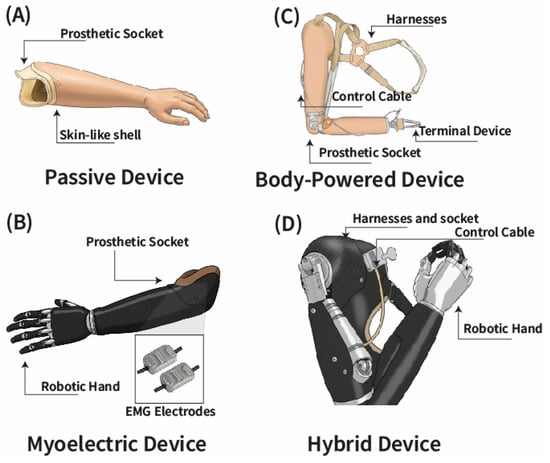
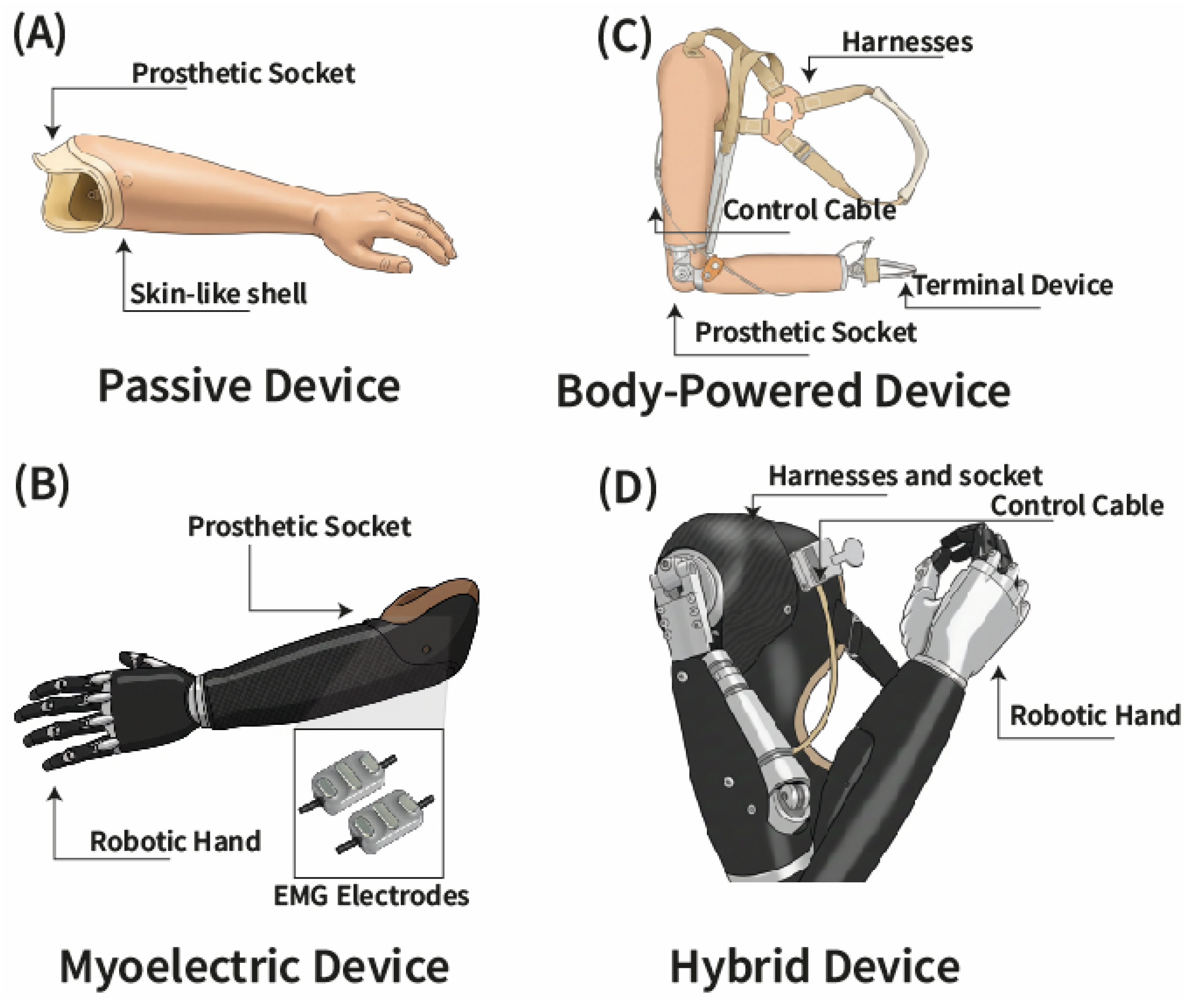
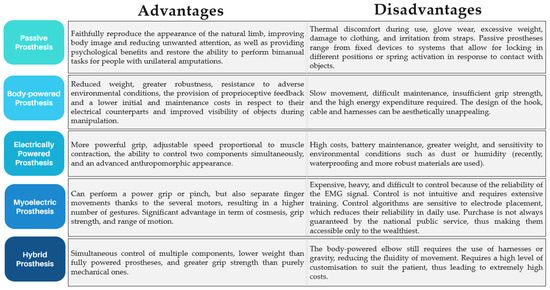
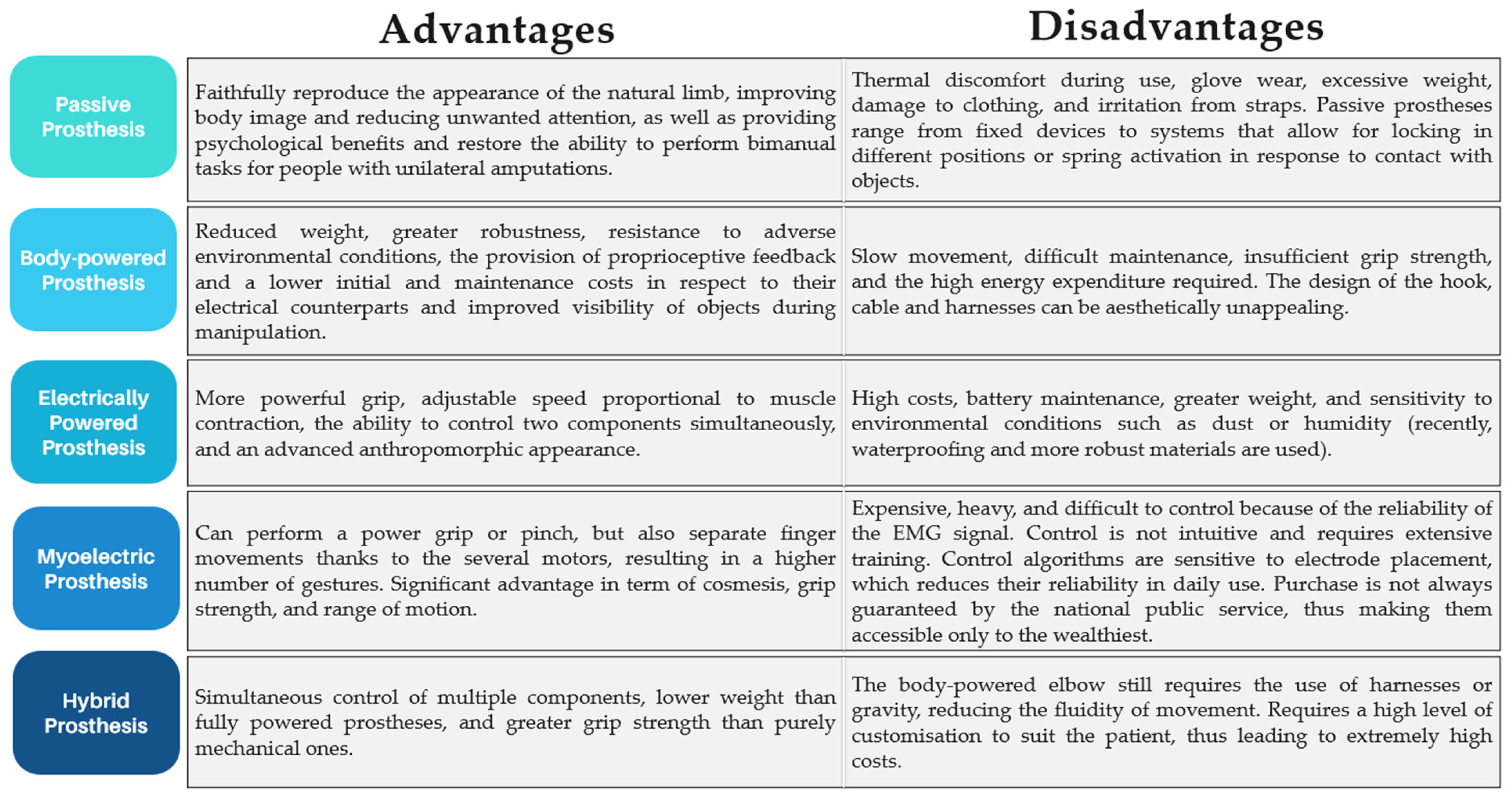
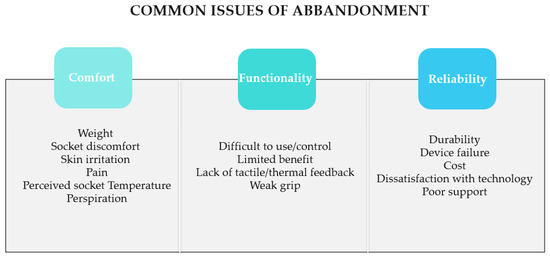
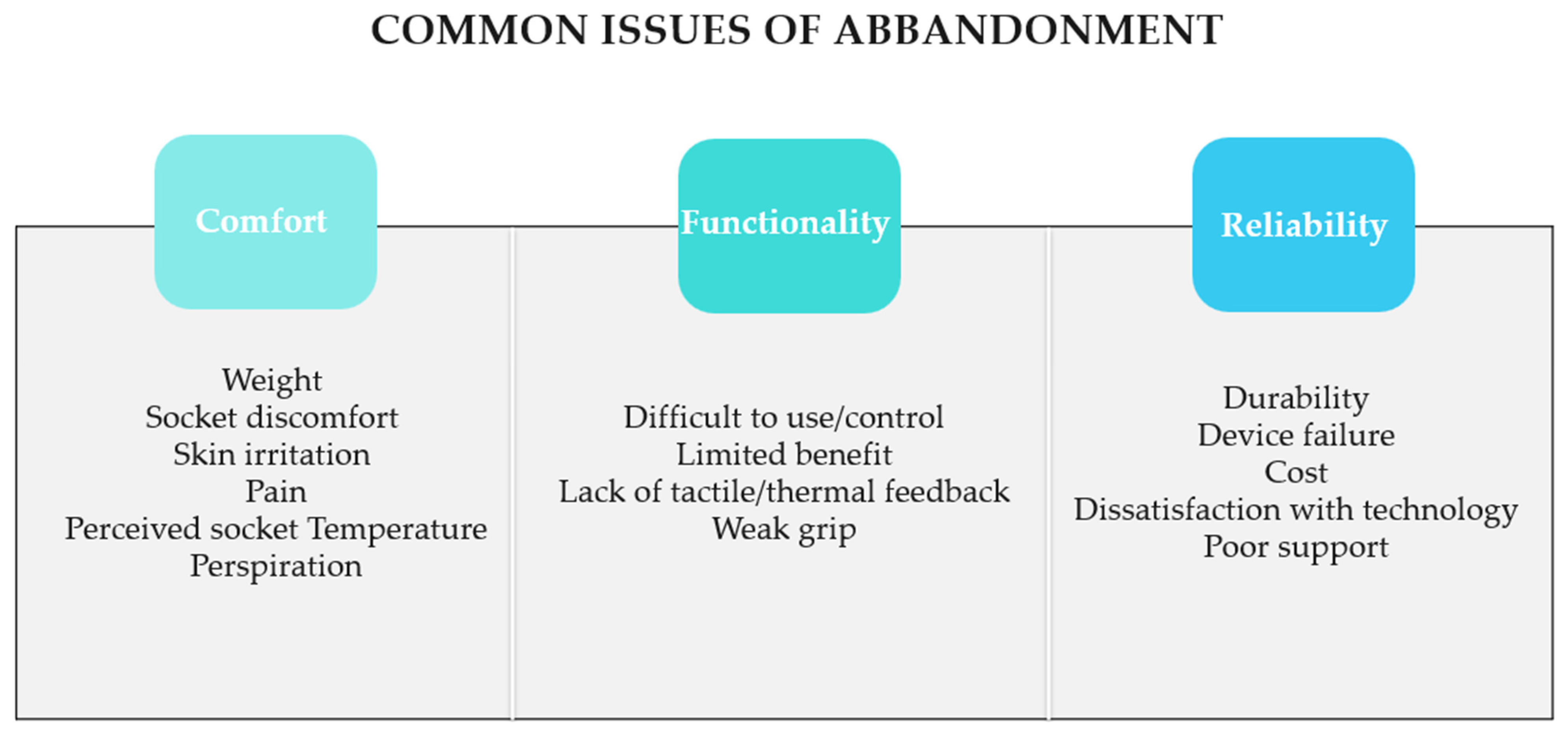
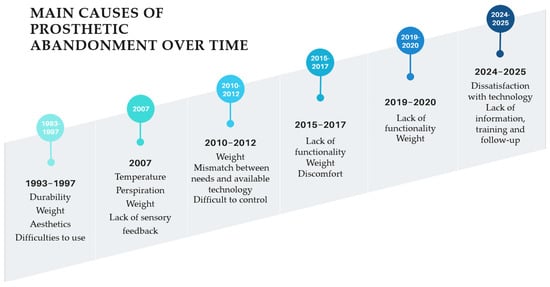
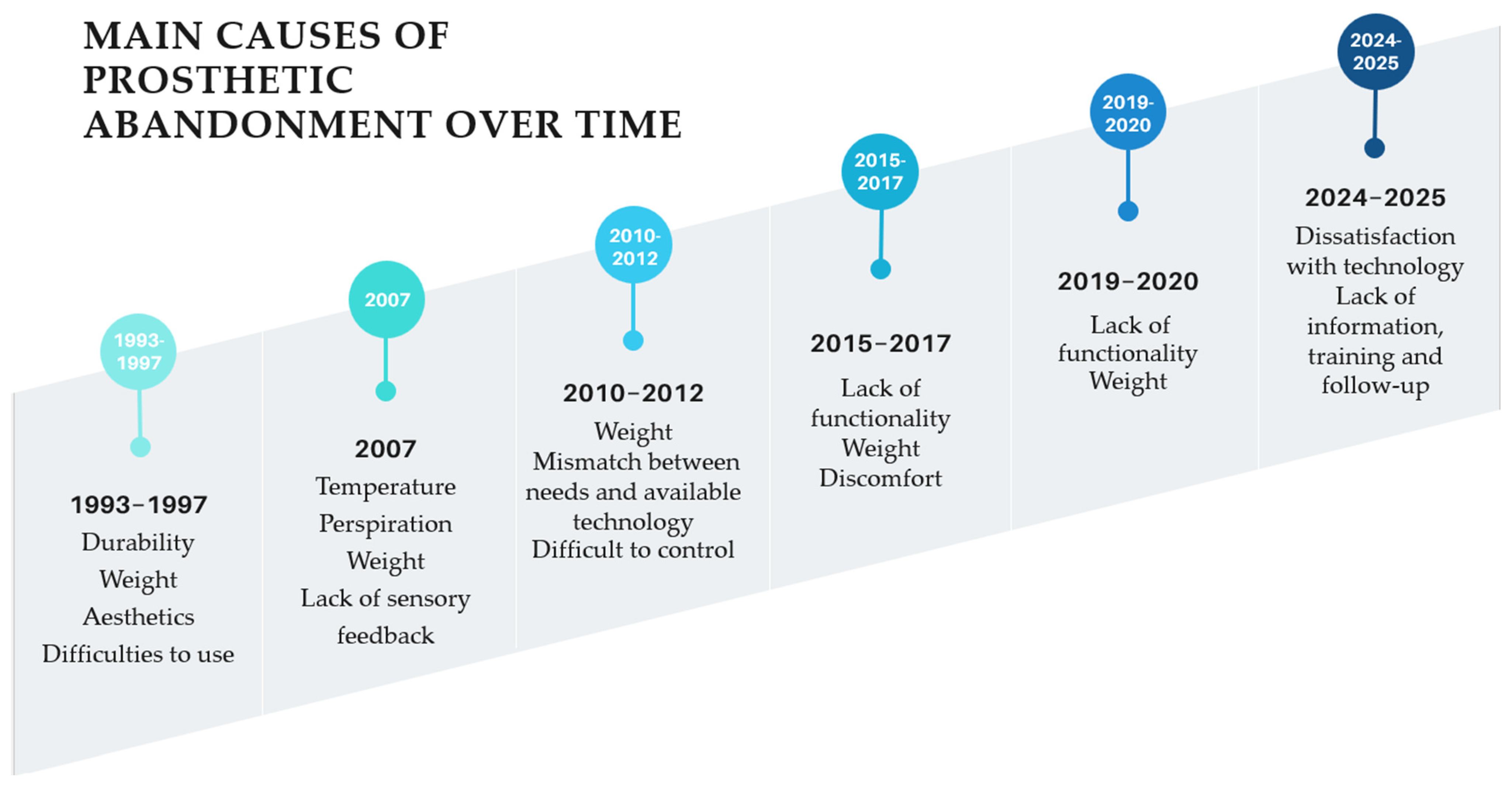

Disclaimer/Publisher’s Note: The statements, opinions and data contained in all publications are solely those of the individual author(s) and contributor(s) and not of MDPI and/or the editor(s). MDPI and/or the editor(s) disclaim responsibility for any injury to people or property resulting from any ideas, methods, instructions or products referred to in the content. |
© 2025 by the authors. Licensee MDPI, Basel, Switzerland. This article is an open access article distributed under the terms and conditions of the Creative Commons Attribution (CC BY) license (https://creativecommons.org/licenses/by/4.0/).