Article

Cu-Doped Mesoporous Bioactive Glass Nanoparticles Loaded in Xanthan Dialdehyde-Alginate Hydrogel for Improved Bioacompatiability, Angiogenesis, and Antibacterial Activity


by
Rizwan Ahmed Malik
1,
Hussein Alrobei
1,* and
Muhammad Atiq Ur Rehman
2
1
Department of Mechanical Engineering, College of Engineering, Prince Sattam bin Abdulaziz University, Al-Kharj 11942, Saudi Arabia
2
Department of Materials Science & Engineering, Institute of Space Technology, Islamabad 44000, Pakistan
*
Author to whom correspondence should be addressed.
Prosthesis 2025, 7(6), 164; https://doi.org/10.3390/prosthesis7060164

Submission received: 29 October 2025 / Revised: 3 December 2025 / Accepted: 5 December 2025 / Published: 12 December 2025
(This article belongs to the Section Bioengineering and Biomaterials)

Abstract

Objectives: Burn being a major traumatic issue worldwide impacts millions of lives annually. Herein, a novel xanthan dialdehyde/sodium alginate/copper-doped mesoporous bioactive glass nanoparticle (XDA/Na-ALG/Cu-MBGN) hydrogel is presented in this study. Methods: The hydrogel was fabricated by a casting method, followed by its characterization in terms of its morphology, surface topography, and in vitro biochemical and physical interactions. Results: Scanning electron microscopy images revealed the rough surface of the hydrogel, ideal for cell attachment and proliferation. The nanoporous structure revealed by BET enabled it to hold moisture for an extended span. The nanopores were developed because of the ether linkage developed between XDA and Na-ALG, as evident from Fourier Transform Infrared Spectroscopy. The loading of Cu-MBGNs was also confirmed by FTIR. The release of copper ions was sustained throughout the 7 days, and it is accounting for about 22 µg/mL in 330 h, which follows the degradation kinetics of XDA/Na-ALG/Cu-MBGN hydrogels. The released copper ions promoted angiogenesis, as confirmed by the enhanced release of vascular endothelial growth factor (VEGF) for the XDA/Na-ALG/Cu-MBGN hydrogel (275 ng/mL) in comparison to 200 ng/mL of the bare TCP. The hydrogel, despite being bactericidal against Escherichia coli (E. coli) and Staphylococcus aureus (S. aureus) did not show toxicity towards human dermal fibroblasts confirmed via a Water-Soluble Tetrazolium 8 assay. Conclusions: Hence, the developed XDA/Na-ALG/Cu-MBGN hydrogel possesses potential to be investigated further in terms of in vivo interactions.

1. Introduction

Burn care is a substantial medical concern; approximately 11 million people suffer from burns throughout the year [1]. Out of these 11 million burns, 180,000 are fatal, with ~90% occurring in middle- and low-income households, and the child fatality rate being 7–11 times higher in developing countries than in developed countries [2,3]. The American Burn Association reported in 2019 that most burns were a result of flame injuries [2]. Capital investment in the burn care industry is expected to rise from USD 1.67 billion to USD 3.17 billion by 2030 [4].
Skin is the primary protective layer for the human body’s internal organs, which acts as a barrier against infectious cells and microorganisms. Skin accommodates blood vessels and nerves to supply nutrients and to regulate our body temperature [5,6]. When damaged, impaired skin creates active sites and open pathways for bacterial infection [7,8].
Burn damage—caused by heat, radiation, chemicals, or electricity—can result in dehydration, circulatory failure, multiple organ dysfunction syndrome, etc. [9,10,11,12]. Conventional treatments were plant-based, herbal, and animal-based extracts along with minerals. Recently, autologous grafts, skin substitutes, and hydrogels have emerged as potential burn treatments [13,14]. Hydrogels are a 3D crosslinked network of polymers, capable of retaining high water content without being degraded [15,16], thus enabling them to eliminate thermal residue in burns, minimize scar tissue, lower pain levels, and facilitate dressing changes by low adherence to skin tissue [8,17,18,19,20].
Biopolymers like xanthan (Xn), chitin, guar gum, PVA, and sodium alginate (Na-ALG) are extensively used in hydrogel synthesis [20]. Xanthan dialdehyde (XDA) and Na-ALG were preferred in this study because of their suitable biocompatibility, bioactivity, and crosslinking capability. Xanthan gum (XG) exhibits high viscosity at low concentrations and stability over a wide range of pH and ionic strength, making it a suitable material for hydrogels and scaffolds [21,22,23,24]. Similarly, XDA is optimal for wound dressings because of enhanced crosslinking sites (dialdehyde functional groups), antioxidant activity, and adhesive nature [25,26,27]. XDA can also augment mechanical properties via crosslinking of aldehydes [28]. As discussed, earlier Na-ALG is not only biocompatible but is also capable of reinforcing gels [29]. Na-ALG can undergo ionotropic gelation, forming a strong 3D network upon contact with divalent or trivalent cations [30].
Bioceramics like doped bioactive glasses (BGs), hydroxyapatite (HA), and alumina can aid in the repair and restoration of injured tissues [31,32]. Mesoporous bioactive glass nanoparticles (MBGNs) doped with Cu concentrations (Cu-MBGNs) were used due to their therapeutic effect morphology, i.e., pro-angiogenic and antibacterial behavior [33,34,35].
Hua et al. [36] fabricated a novel XG (Montmorillonite/Polyacrylamide-co-acrylonitrile)-based hydrogel that proved to be cytocompatible to mouse-derived fibroblast cell line (L9299). Xiong et al. [37] prepared Xn oligosaccharides with increased antioxidant activity, tested by various radical scavenging assays. Wang et al. [38] developed gelatin (Gel)/Na-ALG hydrogels, which increased the mechanical properties of Gel/Na-ALG in comparison to pure Gel hydrogels through dynamic mechanical testing. Romero-Sanchez et al. [39] reported a positive angiogenic effect of Cu-MBGNs via a zebrafish embryo assay, manifested by an increase in thickness and the number of sub-intestinal vessels. M. Hosseini et al. [40] confirmed the bactericidal properties of Cu-MBGNs by analyzing the kinetic growth of Methicillin-resistant Staphylococcus aureus against bioactive glass and Cu-ion-induced bioactive glass, observed via retarded growth of bacteria. S. V. Gudkov. et al. [27] reviewed antibacterial properties of copper oxide nanoparticles in detail and posed them to have significant bacteriostatic potential against a wide range of bacteria from both Gram-positive and Gram-negative classes, while particularly reporting their minimum inhibitory concentration against Escherichia coli and Staphylococcus aureus.
Burn injuries, being a traumatic health issue worldwide, demand the development of advanced solutions that can be translated into clinical applications. The suitable in vitro performance of the stated XDA/Na-ALG/Cu-MBGN hydrogel as presented in this study suggests its potential to be a promising alternative of conventional burn treatments. The stated hydrogel targets to rejuvenate vascular network at the wound site by controlling the release pattern of Cu2+ ions. Moreover, its antibacterial potential further improves its therapeutic effect by minimizing the infectious bacteria. Hence, it can be posed as a one-stop solution for burn wound management in clinical settings rather than using conventional dressings and oral antibiotic therapy. The suitable biocompatibility of XDA/Na-ALG/Cu-MBGN hydrogel suggests its further investigation in vivo, which can be translated to clinical settings. The promising in vitro viability and angiogenic potential indicates its potential to completely transform the current wound care practices. As the proposed hydrogels accelerate the healing process, promote tissue regeneration, and reduce inflammation, their use would lead to rapid healing and improved patient comfort. Besides improving individuals’ quality if life, it would also reduce the cost of burn care treatments by offering an economic solution to hospitals and rescue facilities.
In this study, XDA/Na-ALGs were expected to form the basic porous polyelectrolyte network for sustained release of ions from Cu-MBGNs. Cu-MBGNs were anticipated to be critical to inducing the pro-angiogenic effect and antibacterial properties. Herein, a novel XDA/Na-ALG polyelectrolyte network loaded with Cu-MBGNs is proposed for advanced burn care applications. The said hydrogel with high angiogenic and antimicrobial potential would be capable of being used as a first aid treatment for severe burns and a primary treatment option for lower-degree burns.

2. Materials and Methods

Xanthan (Xn) from Xanthomonas campestris, sodium meta periodate (SMP, >99%), sodium alginate (Na-ALG) (sodium salt of alginic acid obtained from brown algae), and ethylene glycol (EG, >99% pure) were purchased from Sigma-Aldrich Chemie® (Sigma Aldrich, Steinheim, Germany). Calcium chloride anhydrous (CaCl2) (95% pure) was purchased from Duksan Pure Chemicals (Ansan, Republic of Korea).

2.1. Synthesis of Xanthan Dialdehyde (XDA)

XDA was synthesized by the oxidation of xanthan gum (XG) using SMP in a dark-controlled environment at 60 °C, stirred for 6 h [27,41]. J. Guo et al. reported 1 g of Xn in 25 mL deionized water (D.I. Water) (XG, 4 w/v%) and 9.6 w/v% (0.096 g/mL), 10 mL SMP solution for the oxidation of XG to prepare XDA. J. Guo et al. reported a 9.6 w/v% SMP solution concentration for approximately 45% aldehyde content for XDA [41].
Briefly, for XDA, 2 g of Xn was dissolved in 100 mL D.I. water at 60 °C to make a 2 w/v% solution of XG and was oxidized by SMP at concentrations of 0.096 g/mL. The solution was stirred for 6 h in a dark environment [27,41]. The reaction was quenched using EG 0.45 w/v% of the final solution [27].

2.2. Hydrogel Synthesis

Na-ALG solution was prepared using 2 g of Na-ALG in 100 mL D.I. water (2 w/v%) under magnetic stirring until fully dissolved. The said solution was added to the XDA solution with a ratio of 1:1 and was magnetically stirred at 50–60 °C to form a homogenous solution.
The crosslinking of XDA/Na-ALG was achieved using 1 M CaCl2 [42]. The 1 M soln. of CaCl2 was added in XDA/Na-ALG with the ratio of 4:1 and magnetically stirred overnight at 50–60 °C. The crosslinked soln. was poured into a petri dish and incubated at 50 °C for drying.
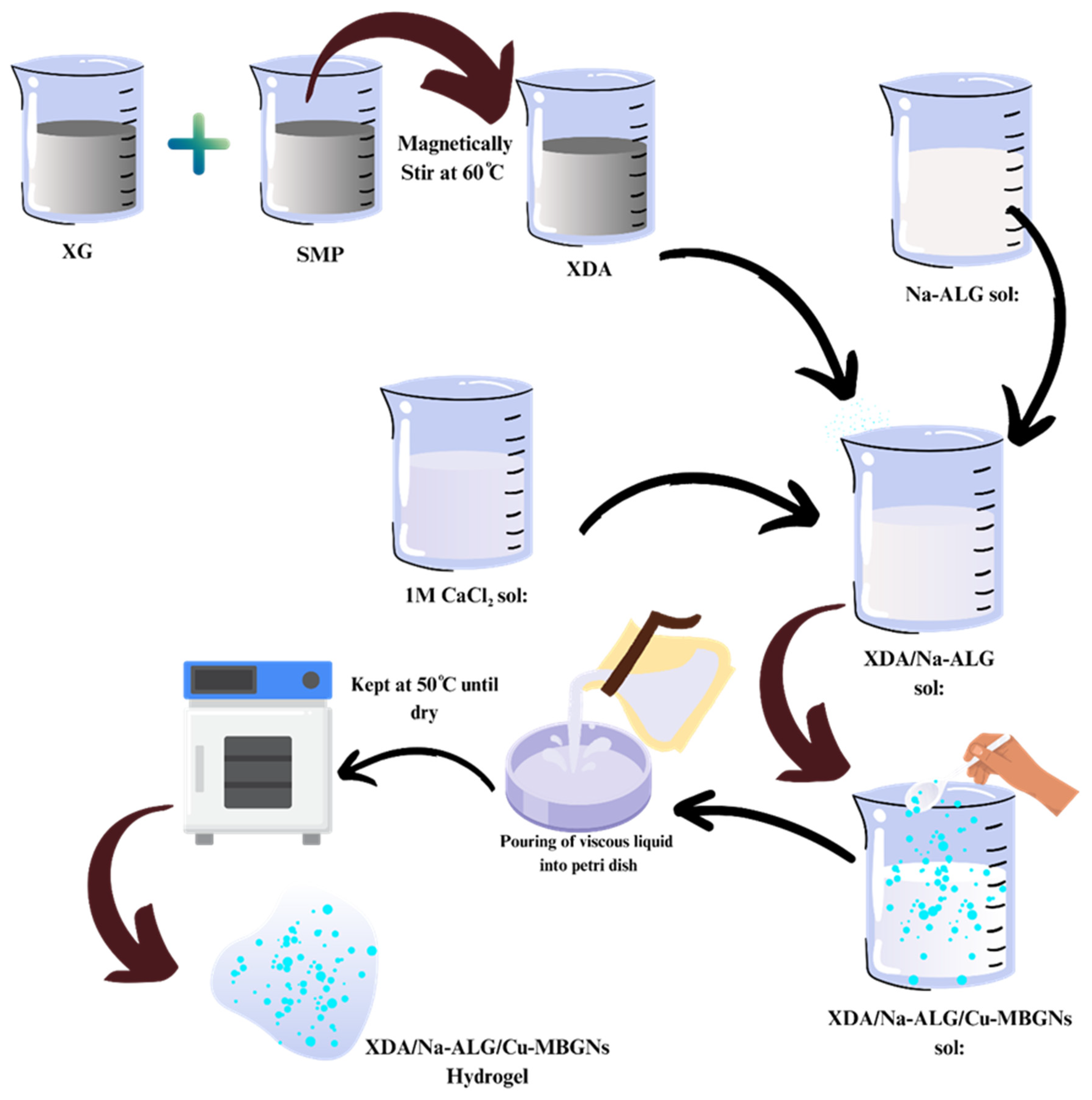
Cu-MBGNs were dispersed into the soln. of XDA/Na-ALG to induce angiogenic and antibacterial effects, with an amount of 2 g/L [43]. Cu-MBGNs were prepared using the CuCl2/Ascorbic Complex precursor, as reported in [33]. The precursor was made by adding 0.2 M CuCl2 solution in D.I. water, which was then heated in oil bath at 80 °C followed by dropwise addition of 0.4 M L-ascorbic acid solution. The reaction mixture was continuously stirred for 24 h at similar temperature under dark conditions. Thereafter, the supernatant was collected as CuCl2/Ascorbic Complex precursor after centrifugation at 7000 RCF for 15 min. Moreover, MBGNs were prepared via widely accepted sol-gel microemulsion method. Briefly, cetyltrimethylammonium bromide (CTAB) (0.56 g) was dissolved in D.I. water (26 mL) followed by addition of 8 mL ethyl acetate and 5.6 mL of 1 M ammonia solution. Later, 2.88 mL of tetraethyl orthosilicate and 1.83 g of calcium nitrate tetrahydrate were added. Stirring for 20–30 min is mandatory at each step. Finally, 5 mL of CuCl2/Ascorbic Complex precursor was added, and solution was stirred for another 4 h. The particles were collected via centrifugation at 7000 RCF for 15 min followed by drying them in oven at 60 °C for 12 h. Once dried, the particles were calcinated at 700 °C for 4 h with heating and cooling rate of 2 °C per minute. Finally, the calcinated particles were ground to fine powder by ball milling the calcinated particles; 0.5 g of prepared Cu-MBGNs was added to a homogeneous solution of XDA/Na-ALG and ultrasonicated to achieve complete dispersion of particles. The developed XDA/Na-ALG/Cu-MBGN and XDA/Na-ALG hydrogels were then characterized in vitro. The synthesis route adopted for the development of hydrogels is shown in Figure 1.

3. Characterization Techniques

3.1. Morphological Studies

3.1.1. Scanning Electron Microscope (SEM)

A field emission scanning electron microscope (FE-SEM, MIRA, TESCAN) was used to analyze and investigate the surface topography and morphology of the prepared hydrogels. Scanning was performed at different magnifications on sputter-coated samples. Samples were sputter-coated (Q150/S by Quorum Technologies, Puslinch, ON, Canada) with Au before SEM analysis to prevent charging effects.

3.1.2. Brunauer–Emmett–Teller (BET)

The surface area and pore size of the prepared hydrogels were examined using a BET (V-Sorb 2800P, Shanghai, China) surface area and porosimetry analyzer. Following degassing at 120 °C for 20 h, area analysis was performed using a combination of N2 and He gases, and adsorption isotherms were obtained at −196 °C. The surface area was calculated based on N2 gas adsorbed on the hydrogel surface using the multi-point BET method in the relative pressure range of 0.00 to 0.35 [44]. The obtained isotherms were characterized according to the International Union of Pure and Applied Chemistry (IUPAC).

3.2. Compositional and Thermal Analysis

3.2.1. Fourier Transformation Infrared Spectroscopy (FTIR)

The analysis of different functional groups along with confirmation of crosslinking in the synthesized hydrogels and individual components (XG, XDA, Na-ALG, Cu-MBGNs) was investigated using an Attenuated Total Reflection Fourier Transformation Infrared (ATR-FTIR) Spectroscope (ThermoFisher Scientific Waltham, MA, USA) equipped with the OMNIC paradigm version 1.6 software. The transmittance spectrum obtained was in the 4000–400 cm−1 range at a resolution of 4 cm−1. Background measurements were taken 16 times before sample measurement for noise removal.

3.2.2. Thermogravimetric Analysis (TGA)

The thermal stability assessment of hydrogels was conducted using a Thermal Gravimetric Analyzer (TGA) and Differential Scanning Calorimeter (DSC) 1 STAR® System manufactured by METTLER TOLEDO, (Toledo, OH, USA). To establish a comparison, individual constituents were also subjected to TGA analysis.
TGA is a technique that monitors changes in sample mass over time as temperature varies, capturing events such as phase transitions, solid–gas reactions, and thermal decomposition. To maintain consistency, precisely 15 mg of both the prepared samples was loaded into alumina (Al2O3) crucibles for analysis. The analysis was performed under linear dynamic conditions, spanning a temperature range from 25 °C to 1300 °C, in a nitrogen (N2) environment, with a controlled heating rate of 10 °C/min. For baseline correction, a reference measurement was obtained using an empty alumina crucible, following the same linear dynamic conditions [39].
The dynamic thermodynamic thermograms generated from these experiments allowed for estimation of key parameters, including the temperatures corresponding to 10%, 40%, and 50% mass loss (T10, T40, and T50), representing degradation temperatures. Additional insight was gained from the TGA thermogram and the derivative weight loss curves, aiding in the determination of the maximum degradation rate (Tmax) and the char yield (fYc).

3.3. Swelling and Degradation Studies

3.3.1. Swelling and Degradation Studies

To test the hydrogel’s solvent-absorbing ability, swelling studies were performed. Phosphate Buffered Saline (PBS) solution at pH = 7.4, Dulbecco’s Modified Eagle Medium (DMEM), Stimulated Body Fluid (SBF), and D.I. Water were used as solvents at a temperature of 37 °C. Hydrogel samples of size (10 × 10 × 2 mm) were cast, and four samples of each hydrogel were soaked in ethanol for 48 h and then air dried before swelling studies. Dried samples of each hydrogel were kept in 5 mL of each solvent at 37 °C and allowed to swell for the next 8 h. Readings of each hydrogel were taken after every 30 min for the next 2 h, then every hour for the next 2 h, then every 2 h for the remaining 4 h. Afterward, the same hydrogel samples were monitored for degradation for the next 14 days, and the weight of the sample was noted after every 24 h. The solvents were replaced with ones that had been pre-equilibrated at 37 °C at the time of the measurement. The swelling (%) was calculated using Equation (1).
Swelling   ( % ) = w t w o w o × 100
where w t is the weight at time (t), w o is the weight of samples after redrying from ethanol, and Ks is the swelling rate.
The degradation (%) was calculated using Equation (2). The weight loss was reported as a loss of weight percentage w.r.t. time.
Weight   loss   ( % ) = W s W m a x × 100
W m a x is the maximum weight of swollen hydrogels, and W s is the weight at the time of reading.

3.3.2. Contact Angle

Hydrophobicity of the synthesized hydrogels (XDA/Na-ALG, XDA/Na-ALG/Cu-MBGNs) was determined by measuring the contact angles at 37 °C using the sessile drop method [45]. D.I. Water at fixed volume of 5 µL was dropped onto the surface of the gels. Digital images, captured at intervals of 5 s for 60 s, were analyzed via Image JTM version 1.54k, software [46,47]. Mean values along with the standard deviation were plotted in a graph.

3.3.3. In Vitro Degradation Studies

In vitro degradation studies were conducted for the synthesized hydrogels: XDA/Na-ALG (control) and XDA/Na-ALG/Cu-MBGNs. Hydrogel degradation occurs via cells, enzymes, or hydrolysis reactions in either acidic or basic conditions. Degradation study is of great consequence; it enables us to simulate the in vivo environment of skin wounds and confirm that no toxic compounds are produced because of its degradation [48,49]. Samples were dried in an incubator and weighed, followed by submersion into equal amounts of PBS in falcon tubes, and they were then placed in a shaking incubator at 37 °C. The media was replaced after 24 h, and the samples were reweighed; pH of the media was measured. The readings were taken for 28 days [48,49,50]. The degradation of hydrogels was studied using a pH and weight loss [48,49]. Degradation and degradation rate were calculated by weight loss percentage using Equation (3).
w t   % = w i w f w f × 100
where w t is the weight loss percentage, w i is the initial weight before submersion, and w f is the weight after submersion and removal of excess solution.

3.3.4. In Vitro Ion Release

The ion release behavior of doped Cu-MBGNs in XDA/Na-ALG was studied in Phosphate Buffer Saline (PBS) of pH 7.4. Briefly, a 10 mm × 10 mm × 0.1 mm size hydrogel was soaked in 20 mL of PBS soln. in a shaking incubator at 37 °C at 90 rpm for 14 days. After 3 h for an initial 12 h, 1 day, and after every day for 14 days, 1 mL of soln. was taken and replaced with fresh PBS. The ionic concentration was studied using inductively coupled plasma optical emission spectroscopy (ICP-OES, PerkinElmer Optima 8300, Waltham, MA, USA) ICP-OES. Briefly, the collected PBS samples were first filtered by employing 0.22 µm filters. Thereafter, they were diluted with 2 v/v % nitric acid in order to stabilize the ions alongside matching the matrix of calibration standards. Standard of Cu was used to draw a six-point calibration curve for metallic ion. The ICP-OES was then operated in axial view mode following standard conditions. Minimal spectral interference and accurate results were achieved by measuring Cu ions at wavelengths of 324.754 nm. Moreover, blank and quality control standard (scandium) were also used for accurate results. Herein, the final ionic concentration of Cu ions was calculated by determining the suitable dilution factor and adjusting the collected or added PBS at each time.
In order to avoid any overlap with degradation kinetics of XDA/Na-ALG/Cu-MBGN hydrogel, the ICP-OES studies were performed separately. The supernatant was collected primarily for ICP-OES analysis only at each time point, while the hydrogel samples were not taken out or dried for degradation purposes during ion release studies. Herein, ion release studies, subjectively, depict the release of Cu2+ from Cu-MBGNs and not the degradation of the hydrogel matrix.

3.4. Antioxidant Test

The radical scavenging ability of XDA/Na-ALG and XDA/Na-ALG/Cu-MBGN hydrogels was determined by employing 2,2-diphenyl-1-picrylhydrazyl (DPPH) assay as described in [1]. Briefly, 0.1 mM suspension of DPPH was prepared in dark conditions, followed by addition of 100 µL of methanolic extracts of XDA/Na-ALG and XDA/Na-ALG/Cu-MBGN hydrogels in 300 µL of DPPH suspension. The extract, inclusive DPPH suspensions, and bare DPPH suspension with methanol only were then incubated at 37 °C for 30 min followed by absorbance measurement at wavelength of 517 nm. The antioxidant potential of each sample was calculated using Equation (4).
A n t i o x i d a n t   % = A b D P P H A b s a m p l e   A b D P P H
where A b D P P H represents absorbance of bare DPPH solution and A b s a m p l e represents absorbance of XDA/Na-ALG/Cu-MBGN-induced DPPH.

3.5. Biological Studies

3.5.1. Antibacterial Studies

The antibacterial efficacy of XDA/Na-ALG and XDA/Na-ALG/Cu-MBGN hydrogel was determined using disc diffusion assay against Escherichia coli (E. coli) and Staphylococcus aureus (S. aureus) as detailed in [51]. Briefly, nutrient agar was prepared by adding 7 g of nutrient agar in D.I. Water followed by its dissolution and autoclaving at 121 °C for 25 min. The autoclaved agar was then transferred to sterile petri dishes (20 mL in each dish) when its temperature lowered to lukewarm, which was then allowed to solidify at room temperature. Afterwards, overnight cultured bacterial inoculum of each strain was diluted to absorbance of 0.015 ± 0.002 at wavelength of 600 nm by adding sterile nutrient broth. Uniform bacterial lawn of both strains was prepared on separate plates by spreading 20 µL of prepared inoculum via glass spreader. Both the hydrogels were placed on each plate and incubated again for 48 h at 37 °C. Post-incubation, the photographs of petri dishes were taken, and inhibition zone round each sample was measured using ImageJ software version 1.54K.
The turbidimetric analysis was opted for to assess the quantitative antimicrobial efficacy of XDA/Na-ALG and XDA/Na-ALG/Cu-MBGN hydrogels against E. coli and S. aureus. Briefly, an overnight cultured bacterial inoculum of both strains was adjusted to absorbance of 0.015 ± 0.002 at wavelength of 600 nm (OD600). The absorbance was tuned by adjusting the amounts of cultured inoculum and bare nutrient broth. Afterwards, the samples were introduced to prepared suspensions and incubated again at 37 °C for 24 h. Post-incubation, the absorbance was checked at regular intervals, and the increase in absorbance was attributed to an increase in bacterial growth.

3.5.2. Cellular Studies

The cellular viability of XDA/Na-ALG and XDA/Na-ALG/Cu-MBGNs with the primary dermal fibroblast cells (HDFa) was accessed using water-soluble tetrazolium salt (WST-8) assay. Briefly, HDFa cells were cultured (at 37 °C for 48 h) in culture medium (89% DMEM; 10% FBS: 1% Penicillin/Streptomycin) until it reached a confluency of 80–90%. Afterwards, the culture medium was removed, and cells were washed thrice with sterile PBS, followed by trypsinization for 5–7 min. The cells were collected via centrifugation and further diluted in freshly prepared culture medium. Then, the cells were counted using hemocytometer, and a number of 5 × 10⁴ cells were introduced in each well of 24-well plate except the first well. The first well was loaded with fresh medium only and referred to as blank. While the next three wells (A2–A4) were referred to as tissue culture plate, TCP. Later wells were loaded with XDA/Na-ALG and XDA/Na-ALG/Cu-MBGN hydrogels. The well plate was then incubated again for 7 days. The 100 µL medium was collected from each well at regular intervals and replaced with fresh medium. The collected medium was transferred to 96-well plate followed by addition of 10 µL of WST-8 dye and its incubation for 3–4 h. The incubated plate was then read through ELISA microplate reader (Accuris-9600, Denver, CO, USA) at wavelength of 450 nm. The absorbance of TCP on respective time was considered as 100%, and the samples were reported accordingly.

3.5.3. Release of Vascular Endothelial Growth Factor (VEGF)

The capability of XDA/Na-ALG and XDA/Na-ALG/Cu-MBGN hydrogels to trigger the release of vascular endothelial release factor (VEGF) was assessed by co-culturing them with HDFa cells followed by quantification of VEGF release from those cells in comparison to bare cultured HDFa cells. Co-culturing was performed by opting the similar method detailed in cell viability studies. Subsequently, the cells were collected from each well with the help of cell scraper, and assay was performed as instructed by manufacturer (VEGF ELISA Kit; Finetest, Wuhan, China). Briefly, a standard curve was plotted between absorbance and concentration using the provided VEGF tablet of known weight in kit. The absorbance of all samples was measured at wavelength of 450 nm and compared with pre-drawn calibration curve to access the concentration of VEGF released from cells of each well.

4. Results

4.1. Morphological Studies

4.1.1. Scanning Electron Microscope (SEM)

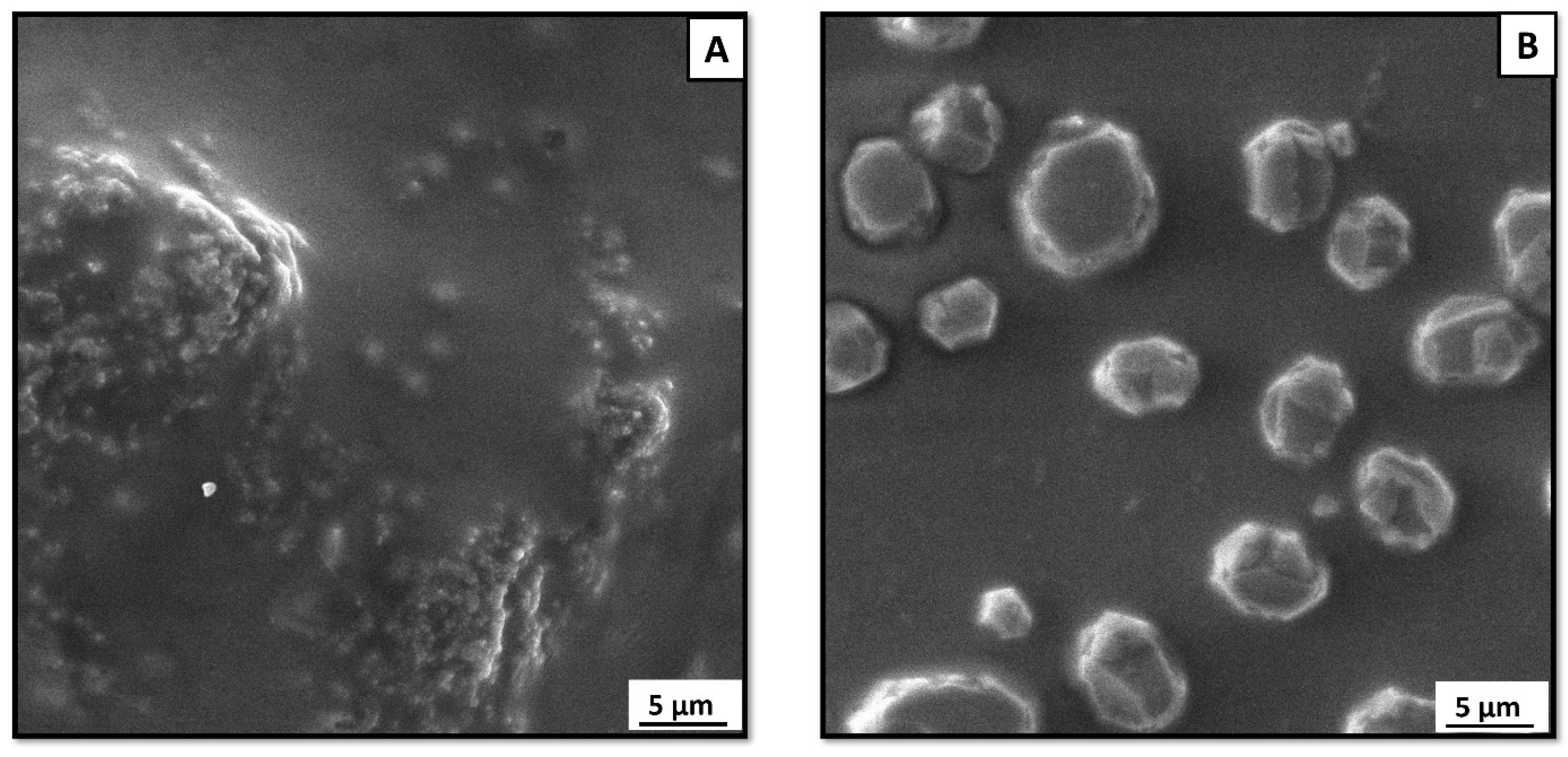
A morphological analysis was performed using SEM. The morphology of the hydrogels was used to analyze the porosity of the microstructure. Figure 2A shows the interconnected porous network of the XDA/Na-ALG hydrogel. The porous network facilitates nutrient exchange, cell proliferation, and tissue regeneration. Moreover, porosity also helps in maintaining the moisture in the matrix to keep the burn wound site moist. Figure 2B depicts the uniform dispersion of Cu-MBGNs in the XDA/Na-ALG matrix [52,53]. The synthesized hydrogel results are optimal for cell attachment based upon previous studies [54,55,56].

4.1.2. Brunauer–Emmett–Teller (BET)

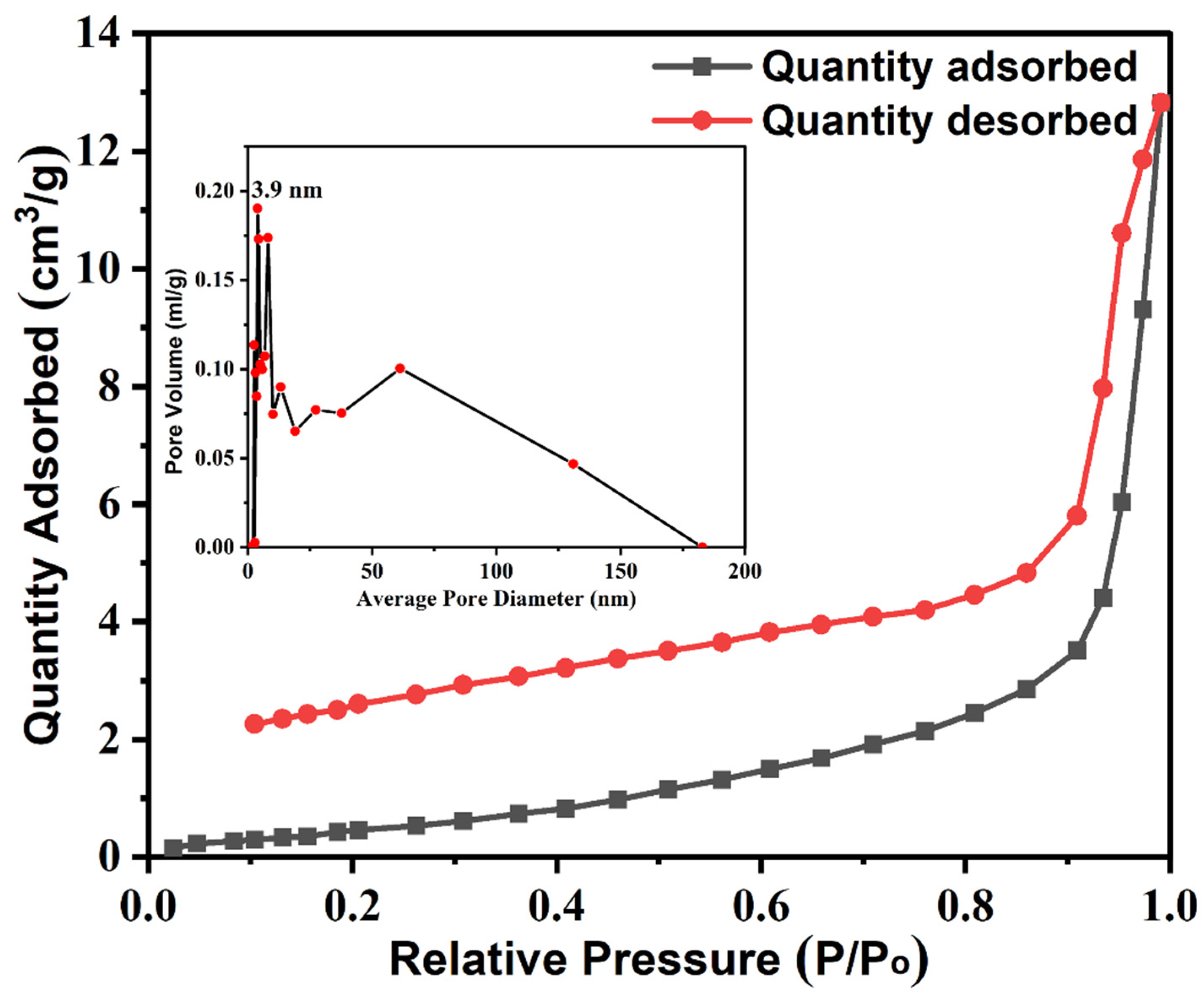
The BET analysis of Cu-MBGNs revealed that these nanoparticles showed the third type of isotherms associated with a BET analysis of nanoparticles. The convex shape curve in Figure 3 is plotted between the relative pressure (P/P0) at the X-axis vs. quantity of gas adsorbed (cm3/g) at the Y-axis, while there is another inset plot that shows the relation between the average pore diameter (nm) and pore volume (mL/g). This curve shows zero initial slope, which indicates that there is very weak adsorbate (N2)–adsorbent interaction (Cu-MBGNs). At very low relative pressure (P/P0), there is very minimal adsorption between gas molecules and Cu-MBGNs because the N2 molecules have little attraction to the surface of Cu-MBGNs. This curve also shows that there is no monolayer formation on the surface of Cu-MBGNs, but the multilayer formation was observed. Normally, the silica particles show a hydrophilic nature, but due to the doping of the copper and calcium, which changed the surface nature of these particles, the adsorbates (N2 molecules) preferentially interacted with themselves, which led to the formation of multilayers instead of monolayers even at very low relative pressure (P/P0) [57,58].
As the relative pressure (P/P0) increased, the curvature of the adsorption curve also increased and became increasingly steep as the relative pressure approached the saturation pressure. This rapid acceleration in the adsorption curve reflected that adsorbate (N2) molecules had a great tendency to condense upon and led to the formation of multilayers. While inset of Figure 3 showed the average pore diameter was 3.9 nm associated with mesoporous nature of pores and hysteresis lope was of type H3 which demonstrated that the pores present on Cu-MBGNs exhibited silt pores which are plate like pores [59,60].

4.2. Compositional Analysis

Fourier Transformation Infrared Spectroscopy (FTIR)

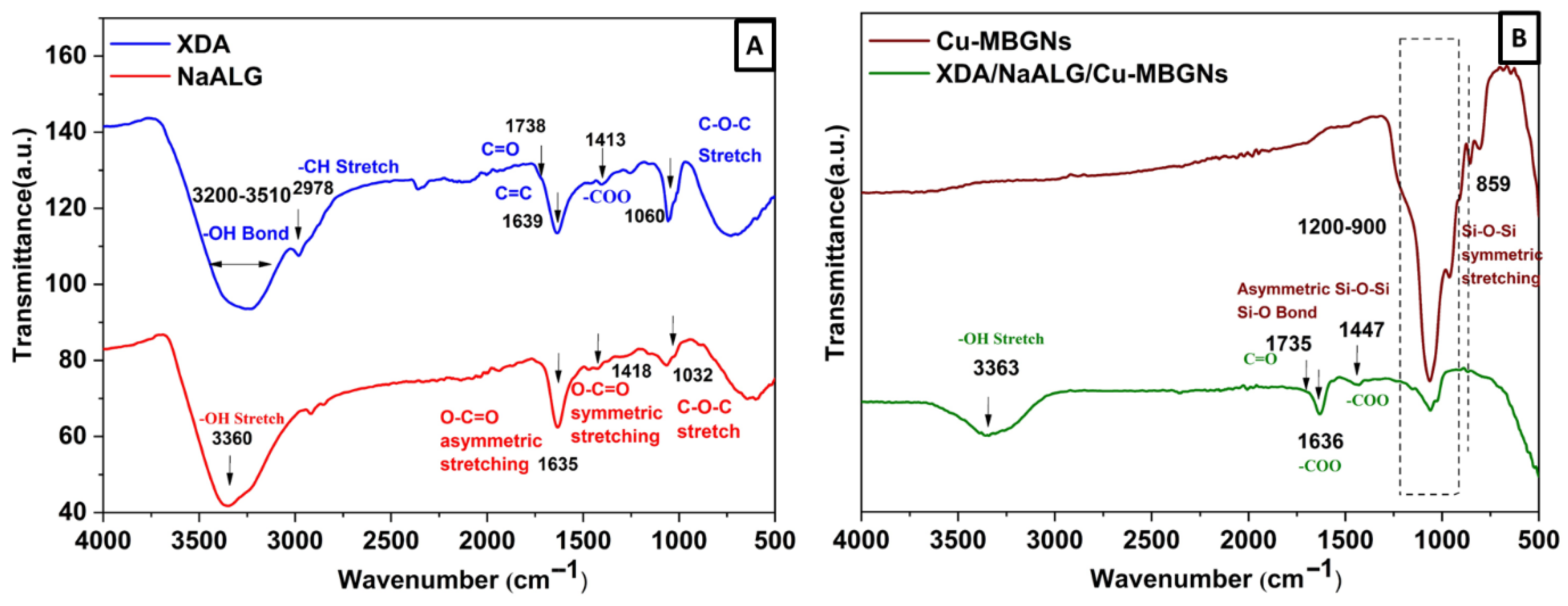
Figure 4A,B display ATR-FTIR spectra of the individual components, namely XDA, Na-ALG, and Cu-MBGNs as well as the ATR-FTIR spectrum of the composite hydrogel formed by combining XDA, Na-ALG, and Cu-MBGNs (referred to as XDA/Na-ALG/Cu-MBGN composite hydrogel).
Confirmation of the presence of aldehyde groups in XDA was achieved through FTIR spectroscopy. This was typically indicated by a prominent peak within the range of 1750–1730 cm−1, which corresponded to the stretching vibration of the aldehyde group’s C=O bond [61]. Furthermore, there were observable peaks in the vicinity of 1650–1600 cm−1 as well as at 2978 cm−1, which could be attributed to the stretching vibrations of C=C bonds and C-H bonds, respectively [62]. Additionally, the FTIR spectrum revealed a band related to be O-H stretching vibrations within the range of 3200–3600 cm−1, while peaks around 1100–1030 cm−1 corresponded to C-O-C stretching vibrations [62].
The FTIR spectra of Na-ALG depicted the presence of hydroxyl (-OH) stretching peak at 3360 cm−1 [63]. The peaks attributed to asymmetric and symmetric stretching vibrations of the carboxyl group (-COOH) appeared at 1635 and 1418 cm−1, respectively. Moreover, the peak corresponded to an ether linkage appeared at 1032 cm−1 [63,64].
The peak observed at 859 cm−1 belonged to the Si-O-Si stretching vibrations [65]. In addition, asymmetric Si-O-Si and Si-O bonds appeared in the range of 1200–900 cm−1 [65,66].
A composite hydrogel showed a peak of a hydroxyl group stretch at 3363 cm−1 attributed to the presence of Na-ALG and XDA [62,63]. The asymmetric stretching vibration peak of Na-ALG appeared at 1636 cm−1. Furthermore, the ether linkage-associated peak for both the biopolymers was observed at 1030 cm−1 [62,64]. The peaks belonging to Cu-MBGNs were also observed in the FTIR spectra of the composite hydrogel as mentioned above [65,66]. In the spectra of the composite hydrogel, a shift in the peak associated with COO- stretching of Na-ALG was observed. This shift was observed from 1418 cm−1 to 1447 cm−1 for the carboxylate group. The shift indicated the involvement of this group in the crosslinking process, particularly its association with calcium ions (Ca2+) during the crosslinking of Na-ALG with XDA using CaCl2 as the crosslinker. The same crosslinking mechanism was confirmed by FTIR in the literature [67].

4.3. Thermal Analysis

TGA

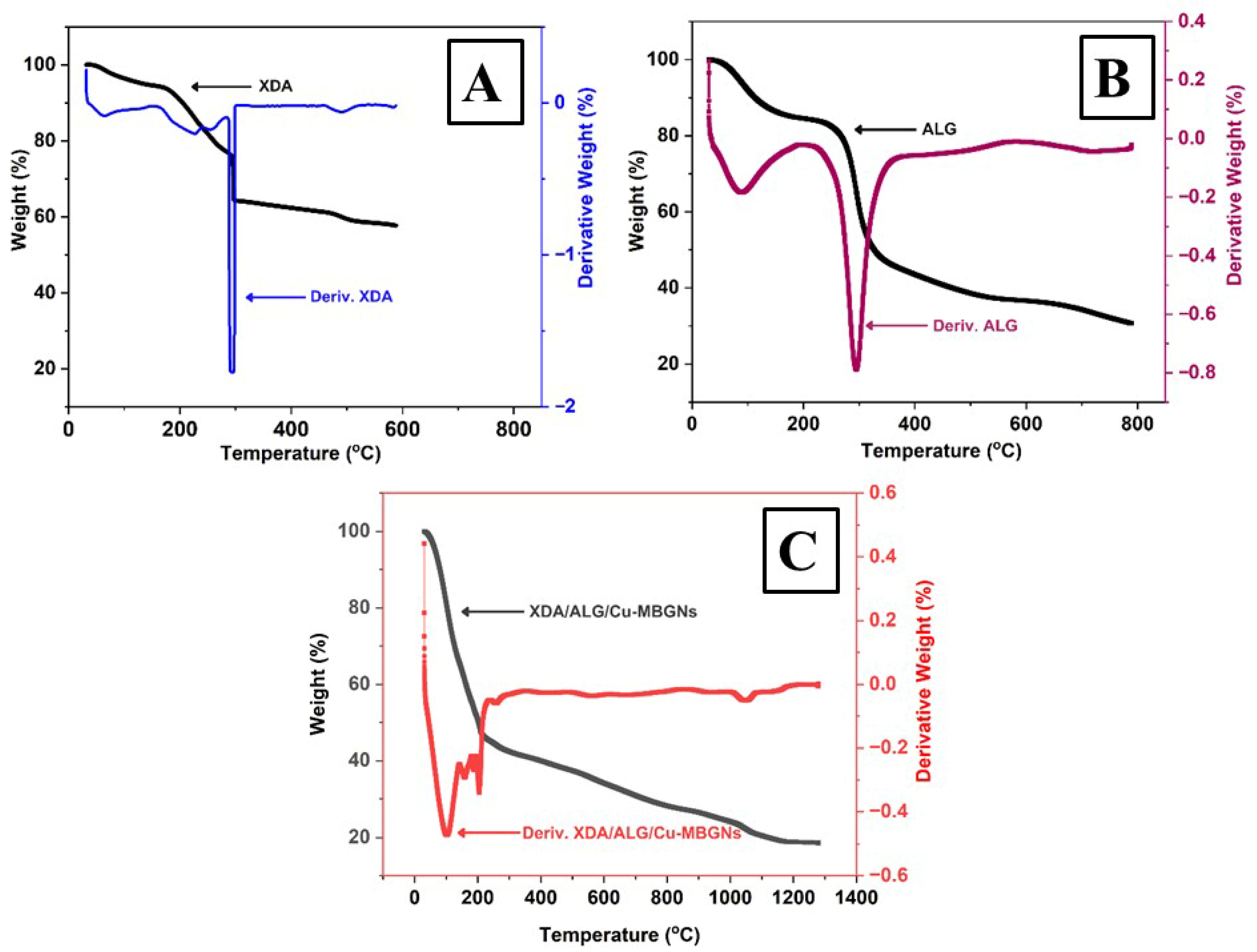
The thermal stability of synthesized hydrogels was analyzed through TGA. TGA results of individual constituents XDA, Na-ALG, and XDA/Na-ALG/Cu-MBGN hydrogel are reported in Figure 5A–C. The XDA, Na-ALG, and XDA/Na-ALG/Cu-MBGN hydrogel shows three-step degradation. XDA exhibited about 9% of mass loss below 100 °C, which may be due to the moisture (adsorbed water) and low molecular mass compounds present in XDA. The second step of degradation occurred in the range of 120–240 °C and showed about 13% of mass loss attributed to the degradation of low-melting-point compounds, and the third step of degradation showed that a maximum degradation of 18% occurred in the temperature range of 280 °C to 290 °C, ascribed to the degradation of oxidized chains in xanthan. When the temperature exceeds 500 °C, the remaining residue confirms the presence of highly thermally stable structures [68].
In the case of Na-ALG, about 18% of mass loss was achieved below 220 °C. This may be due to the moisture adsorbed in the Na-ALG due to the presence of hydrophilic hydroxyl groups in the Na-ALG as well as low-molecular-weight compounds. The second step of degradation occurred in the range of 240 °C to 350 °C, and the observed mass loss was 33% due to the depolymerization and degradation of 1,4-β-d-mannuronic (M) and α-l-guluronic (G) acids present in the backbone of the Na-ALG structure. The third step of degradation occurred after 500 °C, which was attributed to the thermally stable residue. Almost 51% of Na-ALG degradation was observed below 500 °C.
The synthesized hydrogel showed the first step of degradation below 100 °C, and the mass loss achieved at this temperature range was 20%. The first step of degradation confirmed the moisture in the hydrogel due to the hydrophilic characteristic of said hydrogel, as reported in Section TGA; the hydroxyl and carboxyl groups and silica of Cu-MBGNs in the hydrogel helps to adsorb the moisture in the hydrogel. In the second step of degradation, 35% of mass loss was observed in the temperature range of 100–200 °C; this may be due to the reaction of Ca2+ with the aldehyde group of XDA and carboxyl group of Na-ALG. The third step of degradation confirmed the presence of Cu-MBGNs in the temperature range of 1180–1250 °C and observed mass loss at about 10% due to the degradation of silica-based mesoporous structure adsorbed with copper, as shown in Table 1.

4.4. Swelling Studies

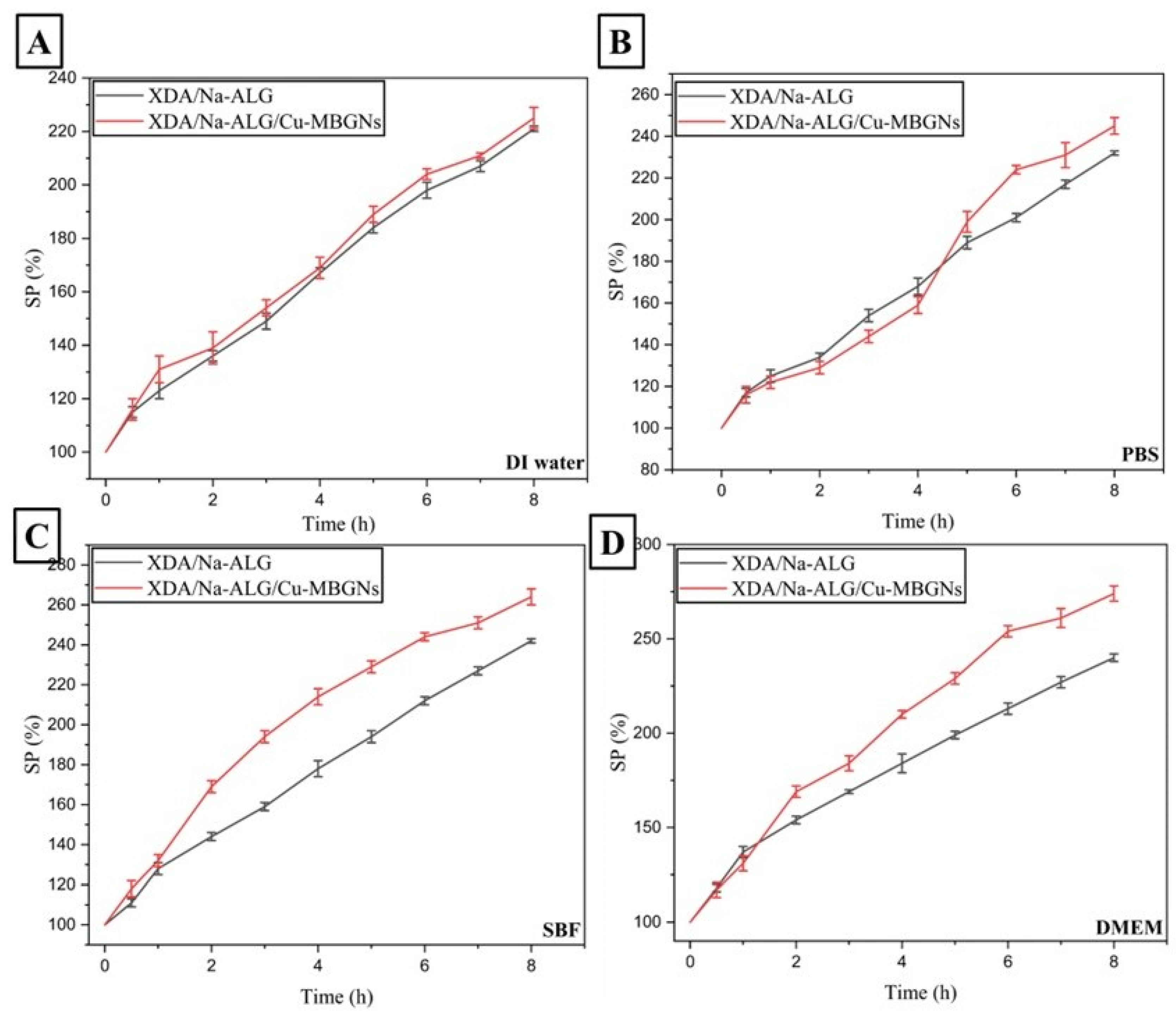
Swelling studies of hydrogels are significant for delivering drugs to the wound area. The fact that the secretion of inflammatory fluid and tissue fluid impedes the healing process means that a higher swelling capacity will lead to greater excess secretion absorption and improved wound healing [69]. Therefore, swelling studies were conducted in various media, including D.I. Water, PBS, SBF, and DMEM. Figure 6A depicts the swelling behavior of hydrogel in D.I. Water, whereas Figure 6B–D show swelling behavior in PBS, SBF, and DMEM, respectively. The swelling ratio of XDA/Na-ALG/Cu-MBGN hydrogel is more than the XDA/Na-ALG hydrogel, which is due to the more hydroxyl (-OH) groups present at surface due to their silica-based composition. When combined with Na-ALG, it makes the environment more hydrophilic. The carboxyl groups (-COOH) present in both Na-ALG and XDA interact in ionic interactions with Cu-MBGN cations, and this increases the hydrophilicity of the XDA/Na-ALG/Cu-MBGN hydrogel, which further increases the swelling ratio. The varied ionic strength, pH, and composition of D.I. Water, PBS, SBF, and DMEM lead to different interactions with the hydrogel’s functional groups, resulting in distinct swelling behaviors [70,71,72,73].

4.4.1. Contact Angle

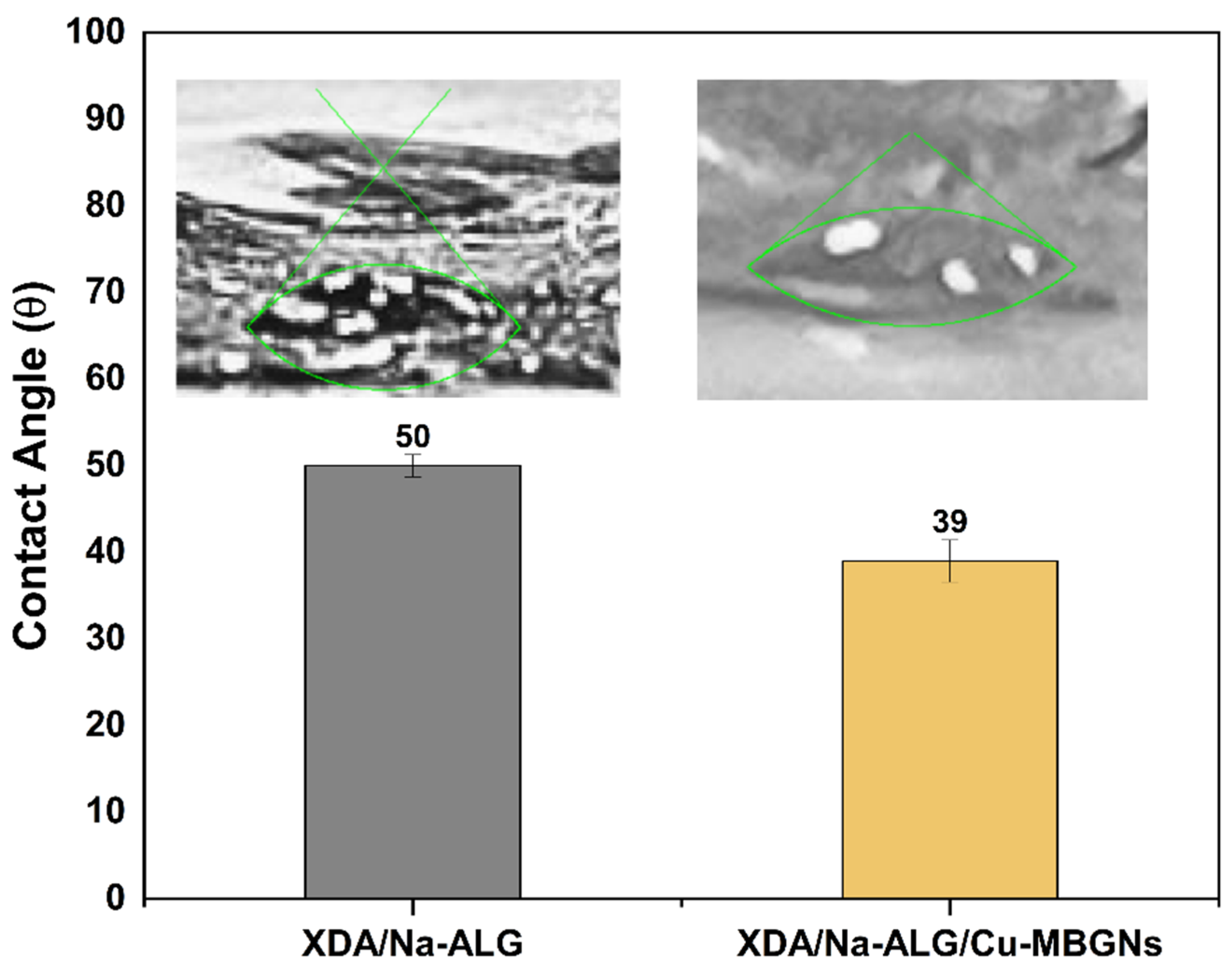
Contact angle measurements were conducted to evaluate the hydrophilicity of the hydrogel formulations. The XDA/Na-ALG hydrogel exhibited a contact angle of approximately 50°, indicating moderate hydrophilicity, as shown in Figure 7. This hydrophilic behavior can be attributed to the inherent properties of Na-ALG, which contains hydroxyl (-OH) and carboxyl (-COOH) functional groups that readily interact with water molecules, promoting wettability [74].
In contrast, the inclusion of Cu-MBGNs in the XDA/Na-ALG matrix resulted in a significantly reduced contact angle of approximately 39°. Cu-MBGNs possess a surface rich in (-OH) groups due to their silica-based composition. These (-OH) groups synergistically enhance the hydrophilic nature of the hydrogel when combined with Na-ALG, creating an environment conducive to moisture absorption and cellular interactions. XDA contains aldehyde functional groups (-CHO) introduced through a controlled oxidation process. These aldehyde groups are known for their hydrophilic character and can contribute to improved wettability by forming hydrogen bonds with water molecules. The (-COOH) group present in both Na-ALG and XDA can engage in ionic interactions with cations present in the Cu-MBGNs, further enhancing the hydrophilicity of the hydrogel. Enhanced hydrophilicity is often associated with improved cell adhesion and migration. Fibroblasts and keratinocytes, critical players in the wound healing process, tend to thrive in hydrophilic environments. Therefore, the XDA/Na-ALG/Cu-MBGN hydrogel may create a more favorable milieu for these cells to proliferate and contribute to tissue regeneration. J.H Lee [1] reported that for initial protein attachment and cell proliferation, the preferred contact angle must be in the range of (35–80°), and the reported results are in agreement with [74].

4.4.2. In Vitro Degradation Studies

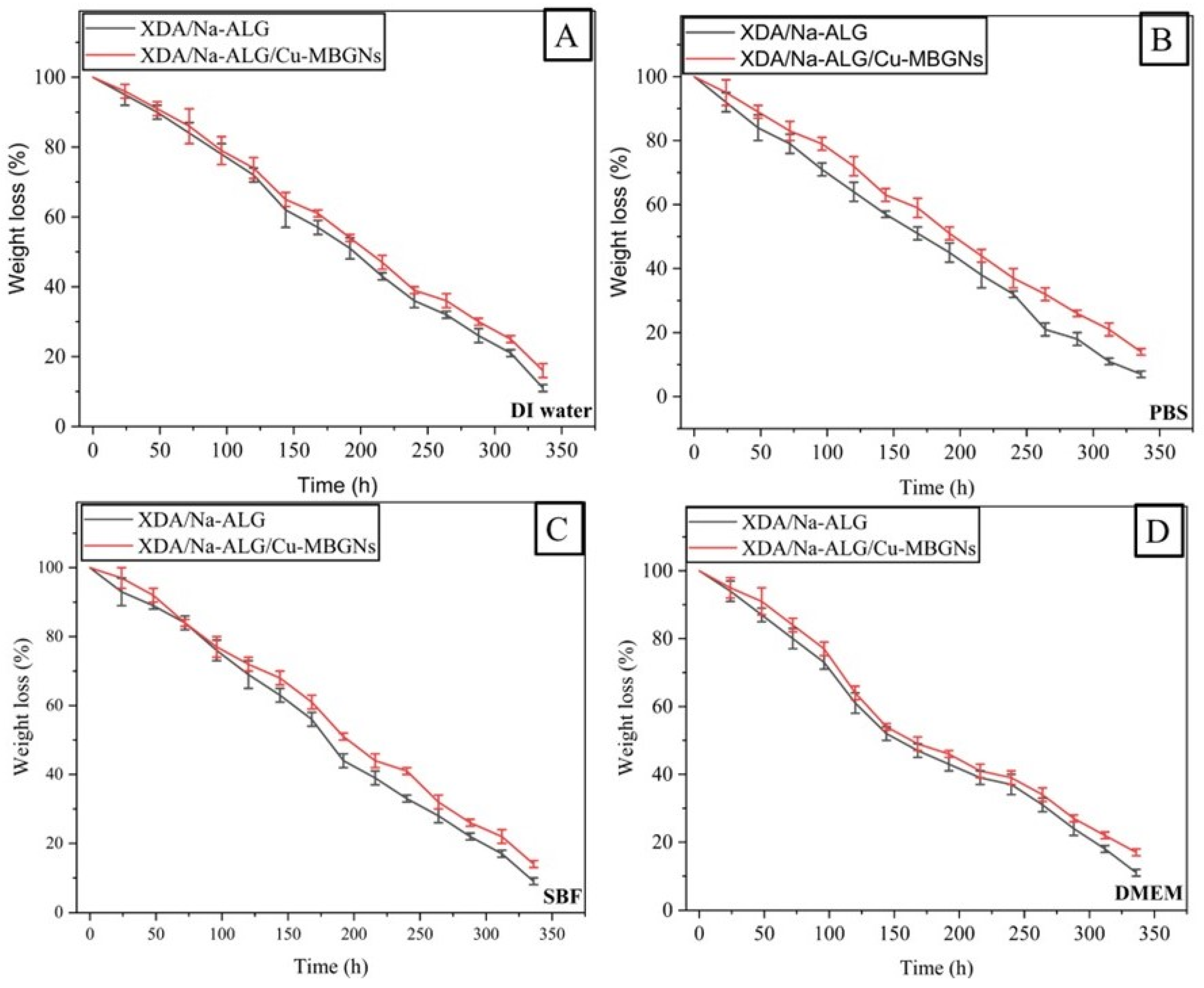
After an initial 8 h of swelling, synthesized hydrogels are monitored for degradation over 14 days in four different media. The degradation (%) was calculated using Equation (2), and the results of the degradation of XDA/Na-ALG and XDA/Na-ALG/Cu-MBGNs are reported in Figure 8A–D. The XDA/Na-ALG/Cu-MBGN hydrogels showed a degradation of about 70% in 14 days in all media, as compared to XDA/Na-ALG, which shows a degradation of about 95%, which could be due to the Cu-MBGNs as the Cu-adsorbed nanoparticles strengthen the polymeric crosslink network. The enhanced stability of the Cu-MBGN-doped hydrogel is likely due to the additional ionic interactions and possible covalent or hydrogen bonding between the Cu2+ ions and functional groups (e.g., -OH, -COOH) present in the polymer matrix. This interaction reinforces the three-dimensional network, thus slowing down the hydrolytic breakdown of the hydrogel. The XDA/Na-ALG/Cu-MBGNs show the sustained and controlled degradation of the polymeric network. However, XDA/Na-ALG shows continuous degradation, which shows ~95% degradation in all media. As reported in the wettability section, synthesized hydrogels are hydrophilic, and SP (%) agrees with this. PBS and SBF mimic the physiological environment of the body and contain pH 7.4; the degradation rate is slow compared to D.I. Water, suggesting ionic interactions between the hydrogel matrix and the surrounding ions (e.g., Na+, Ca2+, PO43−). Cu-MBGN hydrogels exhibited a significantly more sustained degradation profile in these buffered conditions.
This sustained degradation is advantageous in wound dressings or drug delivery systems, where prolonged material presence is needed for functional support. The results confirm that Cu-MBGNs act as stabilizing agents within the hydrogel network without completely inhibiting degradation, thereby offering tunable resorption rates depending on the application.

4.4.3. In Vitro Ion Release Studies

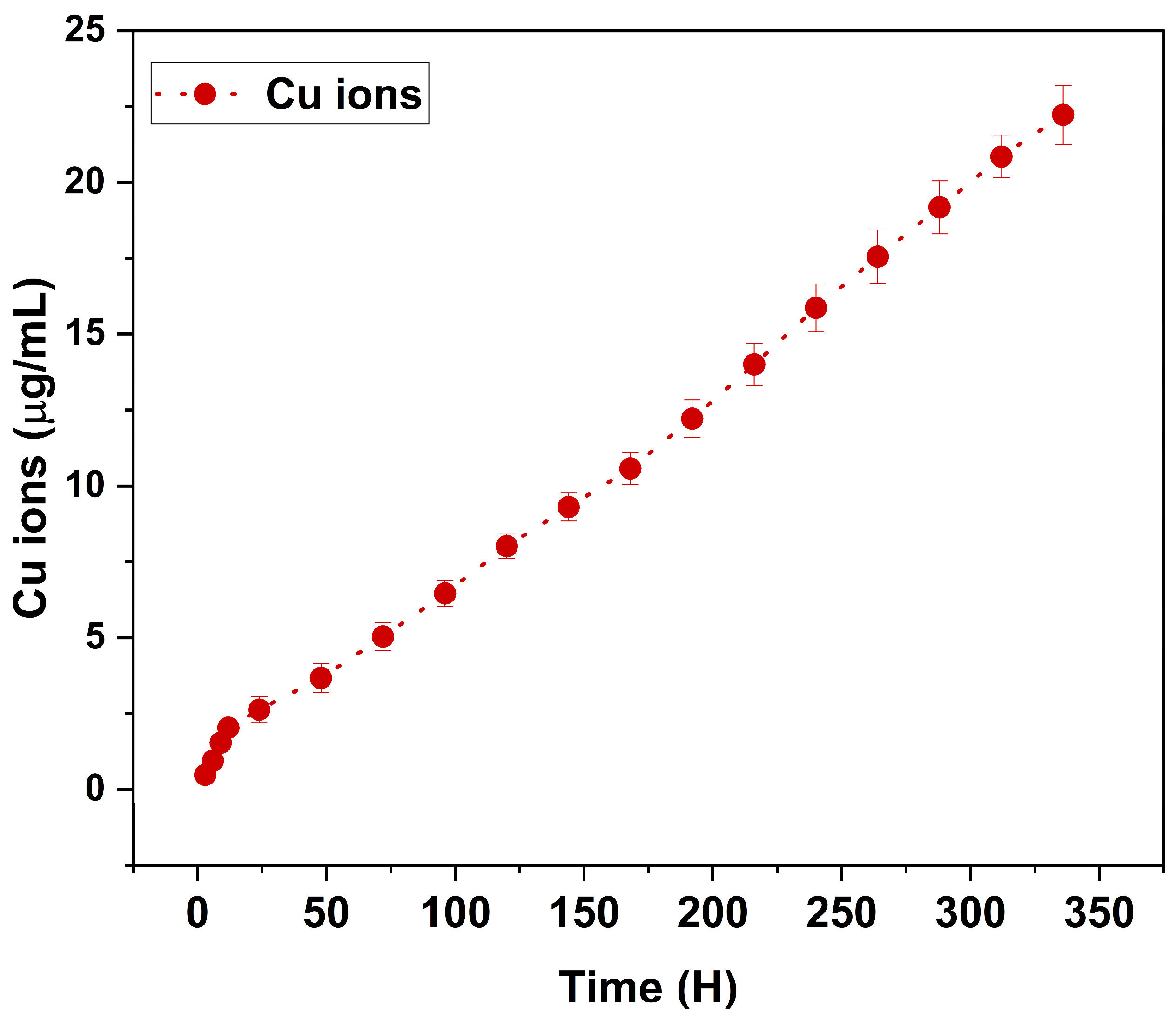
It is reported that the ionic release of the doped MBGNs induces biological responses that are beneficial (e.g., angiogenic and anti-bacterial activities) in tissue regeneration. The ion release profile of Cu-MBGNs present in the synthesized hydrogel was evaluated and reported in Figure 9. N.M Sosnowoka et al. reported that the Cu ions in the Cu-MBGNs are responsible for the angiogenic effect [75], demonstrating the minimum concentration of Cu release profiles to accelerate the angiogenic effect in the body. Ion release profiles of the synthesized hydrogel were studied in PBS because the release of Cu is slow in physiological fluids (e.g., PBS and SBF) and faster in Tris-HCL, and for angiogenic applications, a relatively low concentration of Cu ions is required [76]. It is noted that in Figure 9, in the initial 24 h, no significant amount of Cu ions were released; this could be due to the strong crosslinked network of the synthesized hydrogel, as Cu-MBGNs show slow release of Cu in PBS. After 168 h, the release profile of Cu ions is relatively high compared to the initial 24 h. This comparatively fast release of Cu ions suggests that the PBS diffuses into the hydrogel and comes into direct contact with the Cu-MBGNs, as Cu is present on the outer layer of the MBGNs and releases fast. The hydrogel network helps in the controlled release of Cu ions from the MBGNs, which is beneficial for angiogenic properties.

4.5. Antioxidant Test

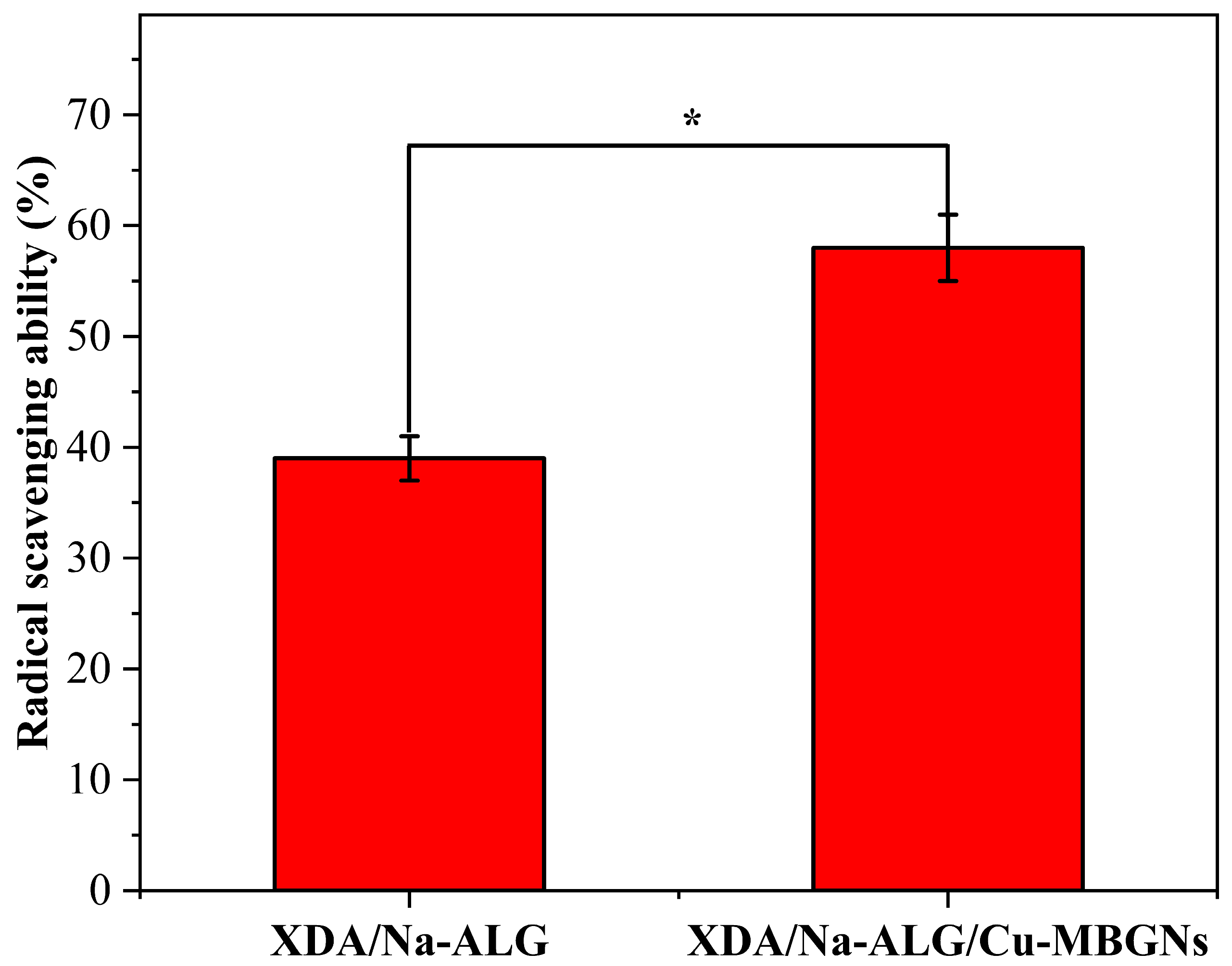
The ability of XDA/Na-ALG and XDA/Na-ALG/Cu-MBGN hydrogels to scavenge free radicals, i.e., their antioxidant potential, was assessed by a DPPH assay and presented in Figure 10. The scavenging ability towards free radicals was seen for both hydrogels. However, the significantly higher activity seen for XDA/Na-ALG/Cu-MBGNs can be attributed to Cu-MBGNs (well reported for their antioxidant potential) [77]. The antioxidant nature of XDA/Na-ALG could be due to XDA, as it contains hydroxyl and aldehyde groups, which scavenges the free radicals via electron donation. Na-ALG also contributes by chelating transition metal ions capable of causing oxidative stress [78], while enhanced activity for XDA/Na-ALG/Cu-MBGNs can be attributed to the synergistic impact of XDA and Cu-MBGNs. Cu2+ ions inhibit reactive oxygen species by triggering Fenton-like reactions and redox cycling. The mesoporous nature of Cu-MBGNs facilitates a higher number of reactive oxygen species to interact and denature by providing a high surface area [79]. Moreover, Cu2+ ions have also been studied to impact the release of endogenous antioxidant enzymes like superoxide dismutase, ultimately lowering oxidative stress [80]. The silica network of Cu-MBGNs converts to silanol upon hydrolysis, which is also capable of neutralizing free radicals. Both the hydrogel and the MBGN matrix control the release of Cu2+ ions, avoiding their agglomeration by releasing them slowly in redox-active form.

4.6. Biological Studies

4.6.1. Antibacterial Studies

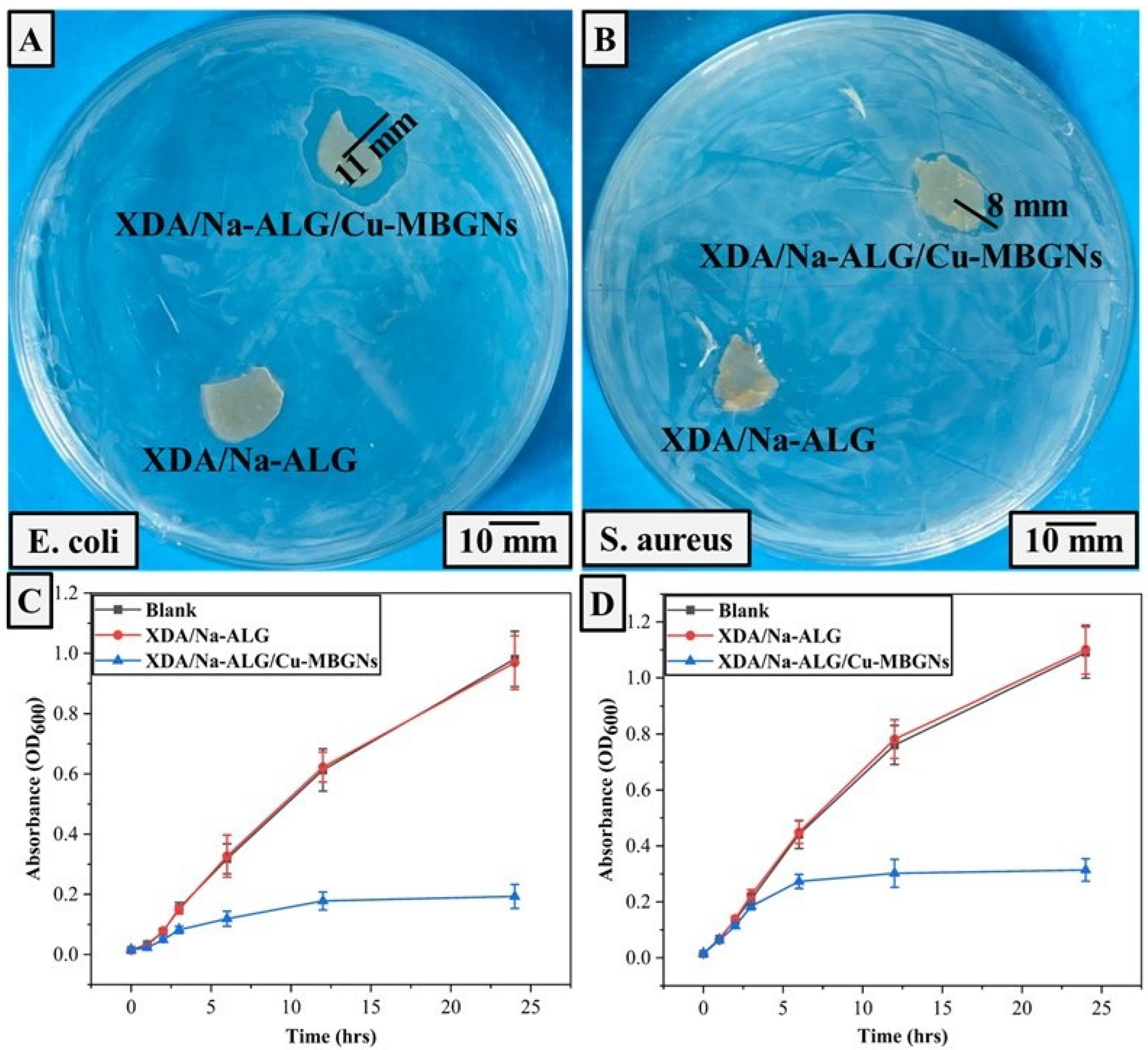
The disc diffusion assay was performed to determine the antibacterial potency of XDA/Na-ALG and XDA/Na-ALG/Cu-MBGN hydrogels. Dominant and clear zones of bacterial inhibition were seen for XDA/Na-ALG/Cu-MBGN hydrogels against both E. coli and S. aureus, as shown in Figure 11A,B. While XDA/Na-ALG failed to form any inhibition zone as of their compatible nature, the XDA/Na-ALG/Cu-MBGNs presented a zone of 11 ± 2 mm and 8 ± 1 mm against E. coli and S. aureus, respectively. The inhibition zone against E. coli was predominantly larger than that of the zone against S. aureus, which could be due to the thinner peptidoglycan layer of E. coli. The highly permeable cell membrane of E. coli and its negatively charged lipopolysaccharides attract Cu2+ ions that disintegrate the membrane and cause cell apoptosis [80].
The basic quantitative turbidity analysis of bare E. coli and S. aureus inoculums cultured for 24 h in comparison to XDA/Na-ALG- and XDA/Na-ALG/Cu-MBGN-induced inoculums is presented in Figure 11C,D. The higher absorbance refers to a turbid suspension with more bacterial cells, while a lower absorbance indicates a relatively clear suspension with fewer bacteria. The absorbance and turbidity for bare inoculums of both E. coli and S. aureus increased throughout the culture span till the 24th hour in the culture conditions provided. The XDA/Na-ALG scaffold also failed to retard the growth of both strains throughout the incubation cycle that may be due to the compatible nature of both biopolymers. However, the XDA/Na-ALG/Cu-MBGN hydrogel appeared to be highly bactericidal against both E. coli and S. aureus, with a slightly more bactericidal impact towards E. coli. The absorbance for bare E. coli inoculum increased up to 0.981 ± 0.09 after 24 h, and an almost similar increase was seen for XDA/Na-ALG-induced inoculum, whose absorbance rose up to 0.969 ± 0.08. Reluctant behavior towards E. coli was seen by XDA/Na-ALG/Cu-MBGNs, as it raised slightly just up to 0.193 ± 0.04. Similarly for S. aureus, bare inoculum, XDA/Na-ALG, and XDA/Na-ALG/Cu-MBGNs exhibited absorbance of 1.091 ± 0.09, 1.101 ± 0.08, and 0.314 ± 0.04, respectively, after 24 h. The enhanced activity for XDA/Na-ALG/Cu-MBGNs could be due to Cu-MBGNs, as Cu2+ ions have been previously reported for their broad-spectrum antimicrobial efficacy [81]. Cu2+ ions do so by interacting with negatively charged phospholipids and lipopolysaccharides of bacterial cell membranes, leading to membrane disintegration and the release of cytoplasmic constituents. Besides this, Cu2+ ions may also impact enzymes involved in important functions like respiration, replication, and protein synthesis by interacting with thiol and imidazole groups [82]. Upon diffusion in cells, Cu2+ ions may also interact with the electron transport chain and cause ATP depletion, which leads to cell death ultimately. The increased impact towards E. coli may be due to its thinner peptidoglycan layer with relatively more negatively charged lipopolysaccharides and highly permeable membrane [80].

4.6.2. Cell Viability Studies

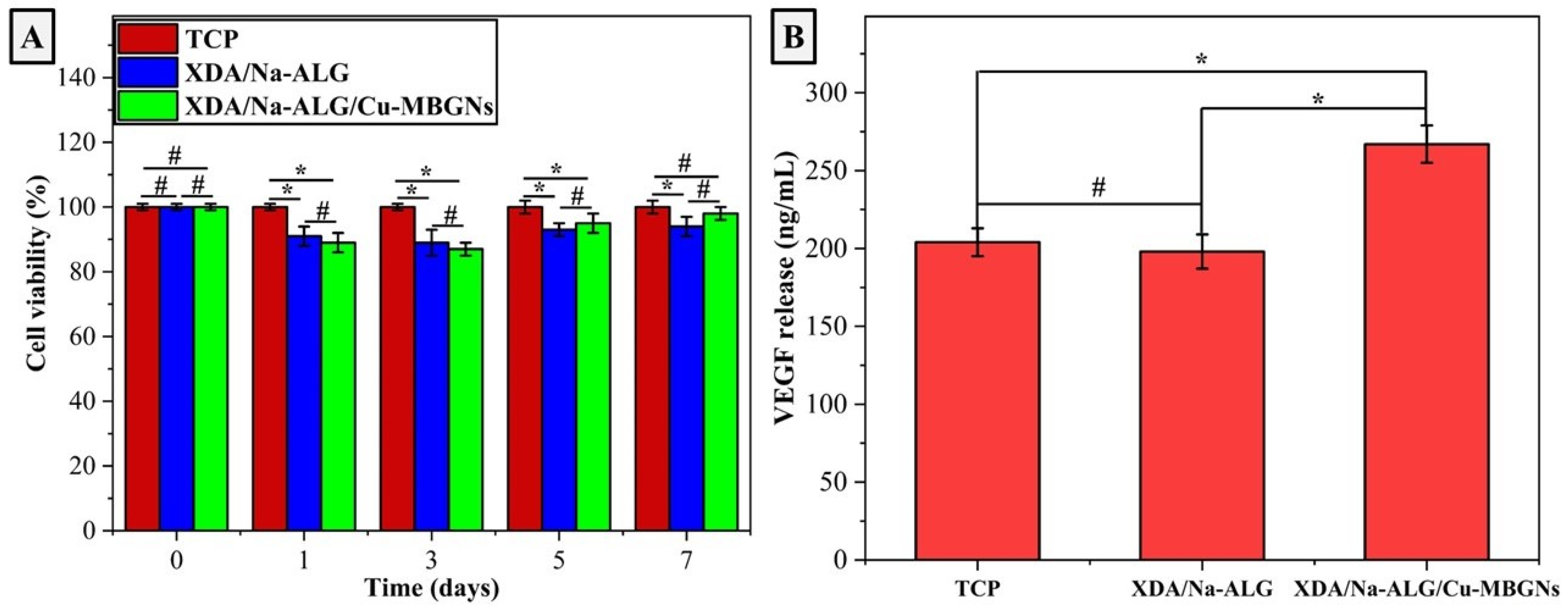
The viability of XDA/Na-ALG and XDA/Na-ALG/Cu-MBGN hydrogels towards HDFa cells was assessed by comparing them with bare cultured HDFa cells. The bare cultured HDFa cells were referred to as the tissue culture plate, i.e., TCP, and their growth at each interval was considered as 100% and the absorbance of other samples was compared to the TCP and reported as percentage viability in comparison to the TCP. Initially, a similar number of HDFa cells was induced into each well, so the viability at day 0 accounted for 100% for all samples, including the TCP (Figure 12A). Once incubated, a slight decrease in the cell viability for XDA/Na-ALG and XDA/Na-ALG/Cu-MBGN hydrogels was observed for the first few days. The bare TCP accounted for 100% for all three days, while XDA/Na-ALG accounted for 91 ± 3, 89 ± 4, 93 ± 2, and 94 ± 3 on days 1, 3, 5, and 7, respectively. Similar behavior was seen for the XDA/Na-ALG/Cu-MBGN hydrogel with relatively improved viability in the later half of incubation, as it depicted viability of 89 ± 3, 87 ± 2, 95 ± 3, and 98 ± 2. The initial decline in viability refers to slower cell division initially, not apoptosis. As HDFa cells are induced to hydrate the hydrogel surface solid canted neck flask, they demand time to adapt, resulting in weaker cell adhesion and proliferation initially [83]. Cu2+ ions are highly studied for their bioactive nature, but initially, HDFa cells demand slight metabolic adjustments to combat the oxidative stress caused by these ions; this justifies the slightly lower viability for XDA/Na-ALG/Cu-MBGN-induced gel in the initial days. Afterwards, as the HDFa cells adopt the mechanical and biochemical nature of XDA/Na-ALG and XDA/Na-ALG/Cu-MBGN hydrogels, the adherence between cells and gel matrix seems to start improving by synthesizing proteins like collagen and fibronectin. Cu2+ ions also begin to portray a positive impact in terms of the activation of regenerative and angiogenic pathways by triggering VEGF and FGF release [84]. Cu2+ ions activate lysyl oxidase, which facilitates collagen crosslinking and tissue repair. It also facilitates the proliferation and migration of fibroblast cells [10]. The mesoporous nature of MBGNs assists in ECM remodeling by cell infiltration, efficient nutrients, and oxygen exchange [85]. Moreover, the basic XDA/Na-ALG network also forms a matrix mimicking the natural ECM, which facilitates cell attachment and proliferation.

4.6.3. Release of VEGF

The HDFa cells were cultured with induced XDA/Na-ALG and XDA/Na-ALG/Cu-MBGN hydrogels to quantify the release of VEGF from those HDFa cells. The release from HDFa cells co-cultured with XDA/Na-ALG was not significantly different from bare HDFa cells, as they both accounted for 204 ± 9 ng/mL and 198 ± 11 ng/mL, while a significant increase in release was seen for the XDA/Na-ALG/Cu-MBGN hydrogel, as it counted about 267 ± 12 ng/mL (as shown in Figure 12B), which may be attributed to the bioactive role of Cu-MBGNs. The OGG/Na-ALG network is expected to provide the basic network and framework support for the re-growth of the vascular network. The mesoporous silica network of MBGNs controls the sustained release of Cu2+ ions responsible for cell mediated responses [85]. Cu2+ ions upregulate pathways like hypoxia inducible factor (HIF) that triggers VEGF expression besides its involvement in redox reactions to cater oxidative stress [86]. Cu2+ ions can conjugate as a cofactor with prolyl hydroxylases (PHDs) followed by hydroxylation of HIF-α with the help of proline subunits [87]. Hence, Cu2+ ions can regulate the stability of HIF by controlling the degradation rate of HIF-α. The stabilized HIF-α adjoins with HIF-β in the nucleus and forms a HIF complex, which in turn binds with hypoxia response elements (HREs), which act as promoter genes for angiogenesis [86]. Cu2+ ions are also involved in stacking collagen bundles and ECM remodeling, which facilitates the release of growth factors like FGF and VEGF. Cu2+ ions also trigger the mitogen-activated protein kinase (MAPK) pathway and its subsequent pathways involved in cell growth and inflammatory responses [88]. Cu2+ ions impact these sub-pathways of the MAPK pathway by generating reactive oxygen species or through tyrosine kinases and integrins [89]. Briefly, Cu-MBGNs seem to activate the HIF pathway, resulting in enhanced release of VEGF.

5. Conclusions

In this study, a novel XDA/Na-ALG/Cu-MBGN hydrogel was synthesized and evaluated for its potential application in potential wound healing and burn care treatments. The prepared hydrogel exhibited a porous microstructure conducive for cellular attachment, moisture retention, and sustained release of bioactive metallic ions. In vitro characterization via FTIR and TGA confirmed effective crosslinking and thermal stability, while the BET analysis validated the mesoporous nature of Cu-MBGNs. The hydrogel demonstrated superior swelling capacity and controlled degradation, both essential for dynamic wound environments. Importantly, the sustained release of Cu2+ ions not only facilitated angiogenesis, as evidenced by enhanced VEGF expression, but also provided potent antibacterial activity against E. coli and S. aureus without compromising cytocompatibility toward human dermal fibroblasts. These findings collectively establish the XDA/Na-ALG/Cu-MBGN hydrogel as a promising multifunctional dressing for burn wound management. Detailed biological characterization and in vivo studies are recommended to further validate its clinical applicability and optimize its performance in real biological settings.

Author Contributions

Conceptualization, methodology, software, and validation, writing—original draft preparation by R.A.M. Formal analysis, investigation, data curation, writing—review and editing by M.A.U.R. Supervision, project administration, and funding acquisition by H.A. All authors have read and agreed to the published version of the manuscript.

Funding

This research was funded by Prince Sattam bin Abdulaziz University grant number (PSAU/2024/01/31907).

Institutional Review Board Statement

Not applicable.

Informed Consent Statement

Not applicable.

Data Availability Statement

Data will be available upon request.

Acknowledgments

The authors extend their appreciation to Prince Sattam bin Abdulaziz University for funding this research work through the project number (PSAU/2024/01/31907).

Conflicts of Interest

The authors declare no conflict of interest.

References

  1. Stokes, M.A.R.; Johnson, W.D. Burns in the Third World: An Unmet Need. Ann. Burn. Fire Disasters 2017, 30, 243–246. Available online: https://pubmed.ncbi.nlm.nih.gov/29983673/ (accessed on 4 May 2023).
  2. Jeschke, M.G.; van Baar, M.E.; Choudhry, M.A.; Chung, K.K.; Gibran, N.S.; Logsetty, S. Burn injury. Nat. Rev. Dis. Primers 2020, 6, 11. [Google Scholar] [CrossRef] [PubMed]
  3. Peck, M.; Pressman, M.A. The correlation between burn mortality rates from fire and flame and economic status of countries. Burns 2013, 39, 1054–1059. [Google Scholar] [CrossRef] [PubMed]
  4. Burn Care Market—Demand, Sales, Trends & Forecast 2033. Available online: https://www.futuremarketinsights.com/reports/burn-care-market (accessed on 4 May 2023).
  5. Benson, H.A.E.; Lane, M.E.; Santos, P.; Watkinson, A.C.; Hadgraft, J. Passive Skin Penetration Enhancement. In Topical and Transdermal Drug Delivery; John Wiley & Sons: Hoboken, NJ, USA, 2012; pp. 3–38. Available online: https://www.wiley.com/en-us/Topical+and+Transdermal+Drug+Delivery%3A+Principles+and+Practice-p-9780470450291 (accessed on 4 May 2023).
  6. Lanigan, S.W.; Zaidi, Z. Dermatology in Clinical Practice; Springer: Berlin/Heidelberg, Germany, 2010. [Google Scholar] [CrossRef]
  7. Sun, A.; Hu, D.; He, X.; Ji, X.; Li, T.; Wei, X.; Qian, Z. Mussel-inspired hydrogel with injectable self-healing and antibacterial properties promotes wound healing in burn wound infection. NPG Asia Mater. 2022, 14, 86. [Google Scholar] [CrossRef]
  8. Surowiecka, A.; Strużyna, J.; Winiarska, A.; Korzeniowski, T. Hydrogels in Burn Wound Management—A Review. Gels 2022, 8, 122. [Google Scholar] [CrossRef]
  9. Shpichka, A.; Butnaru, D.; Bezrukov, E.A.; Sukhanov, R.B.; Atala, A.; Burdukovskii, V.; Zhang, Y.; Timashev, P. Skin tissue regeneration for burn injury. Stem Cell Res. Ther. 2019, 10, 94. [Google Scholar] [CrossRef]
  10. Souto, E.B.; Ribeiro, A.F.; Ferreira, M.I.; Teixeira, M.C.; Shimojo, A.A.M.; Soriano, J.L.; Naveros, B.C.; Durazzo, A.; Lucarini, M.; Souto, S.B.; et al. New Nanotechnologies for the Treatment and Repair of Skin Burns Infections. Int. J. Mol. Sci. 2020, 21, 393. [Google Scholar] [CrossRef]
  11. Bairagi, A.; Griffin, B.; Banani, T.; McPhail, S.M.; Kimble, R.; Tyack, Z. A systematic review and meta-analysis of randomized trials evaluating the efficacy of autologous skin cell suspensions for re-epithelialization of acute partial thickness burn injuries and split-thickness skin graft donor sites. Burns 2021, 47, 1225–1240. [Google Scholar] [CrossRef] [PubMed]
  12. Zhang, Y.M.; Ruan, J.; Xiao, R.; Zhang, Q.; Huang, Y.S. Comparative study of 1,064-nm laser-induced skin burn and thermal skin burn. Cell Biochem. Biophys. 2013, 67, 1005–1014. [Google Scholar] [CrossRef]
  13. Ozhathil, D.K.; Tay, M.W.; Wolf, S.E.; Branski, L.K. A Narrative Review of the History of Skin Grafting in Burn Care. Medicina 2021, 57, 380. [Google Scholar] [CrossRef]
  14. Stone, R.; Saathoff, E.C.; Larson, D.A.; Wall, J.T.; Wienandt, N.A.; Magnusson, S.; Kjartansson, H.; Natesan, S.; Christy, R.J. Accelerated Wound Closure of Deep Partial Thickness Burns with Acellular Fish Skin Graft. Int. J. Mol. Sci. 2021, 22, 1590. [Google Scholar] [CrossRef]
  15. Korah, L.V.; Anilkumar, G.; Thomas, S. Hydrogels, DNA, and RNA polypeptides for the preparation of biomaterials. In Fundamental Biomaterials: Polymers; Woodhead Publishing: Cambridge, UK, 2018; pp. 85–104. [Google Scholar] [CrossRef]
  16. Choudhary, B.; Paul, S.R.; Nayak, S.K.; Qureshi, D.; Pal, K. Synthesis and biomedical applications of filled hydrogels. In Polymeric Gels; Woodhead Publishing: Cambridge, UK, 2018; pp. 283–302. [Google Scholar] [CrossRef]
  17. Zhang, X.; Qin, M.; Xu, M.; Miao, F.; Merzougui, C.; Zhang, X.; Wei, Y.; Chen, W.; Huang, D. The fabrication of antibacterial hydrogels for wound healing. Eur. Polym. J. 2021, 146, 110268. [Google Scholar] [CrossRef]
  18. Liang, Y.; He, J.; Guo, B. Functional Hydrogels as Wound Dressing to Enhance Wound Healing. ACS Nano 2021, 15, 12687–12722. [Google Scholar] [CrossRef] [PubMed]
  19. Wasiak, J.; Cleland, H.; Campbell, F.; Spinks, A. Dressings for superficial and partial thickness burns. Cochrane Database Syst. Rev. 2013, 2013, CD002106. [Google Scholar] [CrossRef] [PubMed]
  20. Madaghiele, M.; Demitri, C.; Sannino, A.; Ambrosio, L. Polymeric hydrogels for burn wound care: Advanced skin wound dressings and regenerative templates. Burn. Trauma. 2014, 2, 153–161. [Google Scholar] [CrossRef]
  21. García-Ochoa, F.; Santos, V.E.; Casas, J.A.; Gómez, E. Xanthan gum: Production, recovery, and properties. Biotechnol. Adv. 2000, 18, 549–579. [Google Scholar] [CrossRef]
  22. Singhvi, G.; Hans, N.; Shiva, N.; Dubey, S.K. Xanthan gum in drug delivery applications. In Natural Polysaccharides in Drug Delivery and Biomedical Applications; Academic Press: Cambridge, MA, USA, 2019; pp. 121–144. [Google Scholar] [CrossRef]
  23. Kandar, C.C.; Hasnain, M.S.; Nayak, A.K. Natural polymers as useful pharmaceutical excipients. In Advances and Challenges in Pharmaceutical Technology: Materials, Process Development and Drug Delivery Strategies; Academic Press: Cambridge, MA, USA, 2021; pp. 1–44. [Google Scholar] [CrossRef]
  24. Petri, D.F.S. Xanthan gum: A versatile biopolymer for biomedical and technological applications. J. Appl. Polym. Sci. 2015, 132, 42035. [Google Scholar] [CrossRef]
  25. Patel, J.; Maji, B.; Moorthy, N.S.H.N.; Maiti, S. Xanthan gum derivatives: Review of synthesis, properties and diverse applications. RSC Adv. 2020, 10, 27103–27136. [Google Scholar] [CrossRef]
  26. Ge, L.; Li, X.; Zhang, R.T.; Yang, T.; Ye, X.; Li, D.C.; Mu, C. Development and characterization of dialdehyde xanthan gum crosslinked gelatin based edible films incorporated with amino-functionalized montmorillonite. Food Hydrocoll. 2015, 51, 129–135. [Google Scholar] [CrossRef]
  27. Gudkov, S.V.; Burmistrov, D.E.; Fomina, P.A.; Validov, S.Z.; Kozlov, V.A. Antibacterial Properties of Copper Oxide Nanoparticles (Review). Int. J. Mol. Sci. 2024, 25, 11563. [Google Scholar] [CrossRef]
  28. Hu, M.; Peng, X.; Shi, S.; Wan, C.; Cheng, C.; Yu, X. Dialdehyde xanthan gum and curcumin synergistically crosslinked bioprosthetic valve leaflets with anti-thrombotic, anti-inflammatory and anti-calcification properties. Carbohydr. Polym. 2023, 310, 120724. [Google Scholar] [CrossRef]
  29. Sahoo, D.R.; Biswal, T. Alginate and its application to tissue engineering. SN Appl. Sci. 2021, 3, 30. [Google Scholar] [CrossRef]
  30. Jadach, B.; Świetlik, W.; Froelich, A. Sodium Alginate as a Pharmaceutical Excipient: Novel Applications of a Well-known Polymer. J. Pharm. Sci. 2022, 111, 1250–1261. [Google Scholar] [CrossRef]
  31. Baino, F.; Novajra, G.; Vitale-Brovarone, C. Bioceramics and scaffolds: A winning combination for tissue engineering. Front. Bioeng. Biotechnol. 2015, 3, 202. [Google Scholar] [CrossRef]
  32. Kumar, P.; Dehiya, B.S.; Sindhu, A. Bioceramics for Hard Tissue Engineering Applications: A Review. Int. J. Appl. Eng. Res. 2018, 13, 2744–2752. Available online: http://www.ripublication.com (accessed on 4 May 2023).
  33. Zheng, K.; Kang, J.; Rutkowski, B.; Gawȩda, M.; Zhang, J.; Wang, Y.; Founier, N.; Sitarz, M.; Taccardi, N.; Boccaccini, A.R. Toward highly dispersed mesoporous bioactive glass nanoparticles with high cu concentration using cu/ascorbic acid complex as precursor. Front. Chem. 2019, 7, 497. [Google Scholar] [CrossRef] [PubMed]
  34. Besheli, N.H.; Verbakel, J.; Hosseini, M.; Andrée, L.; Joosten, B.; Walboomers, X.F.; Cambi, A.; Yang, F.; Leeuwenburgh, S.C. Cellular Uptake of Modified Mesoporous Bioactive Glass Nanoparticles for Effective Intracellular Delivery of Therapeutic Agents. Int. J. Nanomed. 2023, 18, 1599–1612. [Google Scholar] [CrossRef] [PubMed]
  35. Bari, A.; Bloise, N.; Fiorilli, S.; Novajra, G.; Vallet-Regí, M.; Bruni, G.; Torres-Pardo, A.; González-Calbet, J.M.; Visai, L.; Vitale-Brovarone, C. Copper-containing mesoporous bioactive glass nanoparticles as multifunctional agent for bone regeneration. Acta Biomater. 2017, 55, 493–504. [Google Scholar] [CrossRef]
  36. Hua, D.; Gao, S.; Zhang, M.; Ma, W.; Huang, C. A novel xanthan gum-based conductive hydrogel with excellent mechanical, biocompatible, and self-healing performances. Carbohydr. Polym. 2020, 247, 116743. [Google Scholar] [CrossRef]
  37. Xiong, X.; Li, M.; Xie, J.; Jin, Q.; Xue, B.; Sun, T. Antioxidant activity of xanthan oligosaccharides prepared by different degradation methods. Carbohydr. Polym. 2013, 92, 1166–1171. [Google Scholar] [CrossRef]
  38. Wang, L.; Zhang, H.J.; Liu, X.; Liu, Y.; Zhu, X.; Liu, X.; You, X. A Physically Cross-Linked Sodium Alginate-Gelatin Hydrogel with High Mechanical Strength. ACS Appl. Polym. Mater. 2021, 3, 3197–3205. [Google Scholar] [CrossRef]
  39. LRomero-Sánchez, B.; Marí-Beffa, M.; Carrillo, P.; Medina, M.Á.; Díaz-Cuenca, A. Copper-containing mesoporous bioactive glass promotes angiogenesis in an in vivo zebrafish model. Acta Biomater. 2018, 68, 272–285. [Google Scholar] [CrossRef]
  40. Hosseini, M.; Besheli, N.H.; Deng, D.; Lievens, C.; Zuo, Y.; Leeuwenburgh, S.C.; Yang, F. Facile post modification synthesis of copper-doped mesoporous bioactive glass with high antibacterial performance to fight bone infection. Biomater. Adv. 2023, 144, 213198. [Google Scholar] [CrossRef] [PubMed]
  41. Guo, J.; Ge, L.; Li, X.; Mu, C.; Li, D. Periodate oxidation of xanthan gum and its crosslinking effects on gelatin-based edible films. Food Hydrocoll. 2014, 39, 243–250. [Google Scholar] [CrossRef]
  42. Lini Seixas, F.; Turbiani, F.; Salomao, P.; Souza, R.; Gimenes, M. Biofilms Composed of Alginate and Pectin: Effect of Concentration of Crosslinker and Plasticizer Agents. Chem. Eng. Trans. 2013, 32, 1693–1698. [Google Scholar] [CrossRef]
  43. Nawaz, A.; Bano, S.; Yasir, M.; Wadood, A.; Rehman, M.A.U. Ag and Mn-doped mesoporous bioactive glass nanoparticles incorporated into the chitosan/gelatin coatings deposited on PEEK/bioactive glass layers for favorable osteogenic differentiation and antibacterial activity. Mater. Adv. 2020, 1, 1273–1284. [Google Scholar] [CrossRef]
  44. Eskhan, A.; Banat, F. Removal of Oil from Water by Calcium Alginate Hydrogel Modified with Maleic Anhydride. J. Polym. Environ. 2018, 26, 2901–2916. [Google Scholar] [CrossRef]
  45. Read, M.L.; Morgan, P.B.; Kelly, J.M.; Maldonado-Codina, C. Dynamic Contact Angle Analysis of Silicone Hydrogel Contact Lenses. J. Biomater. Appl. 2010, 26, 85–99. [Google Scholar] [CrossRef]
  46. Grundke, K.; Pöschel, K.; Synytska, A.; Frenzel, R.; Drechsler, A.; Nitschke, M.; Cordeiro, A.; Uhlmann, P.; Welzel, P. Experimental studies of contact angle hysteresis phenomena on polymer surfaces—Toward the understanding and control of wettability for different applications. Adv. Colloid Interface Sci. 2015, 222, 350–376. [Google Scholar] [CrossRef]
  47. Read, M.L.; Morgan, P.B.; Maldonado-Codina, C. Measurement errors related to contact angle analysis of hydrogel and silicone hydrogel contact lenses. J. Biomed. Mater. Res. Part B Appl. Biomater. 2009, 91B, 662–668. [Google Scholar] [CrossRef]
  48. Ghobril, C.; Grinstaff, M.W. The chemistry and engineering of polymeric hydrogel adhesives for wound closure: A tutorial. Chem. Soc. Rev. 2015, 44, 1820–1835. [Google Scholar] [CrossRef]
  49. Bahadoran, M.; Shamloo, A.; Nokoorani, Y.D. Development of a polyvinyl alcohol/sodium alginate hydrogel-based scaffold incorporating bFGF-encapsulated microspheres for accelerated wound healing. Sci. Rep. 2020, 10, 7342. [Google Scholar] [CrossRef] [PubMed]
  50. Holland, T.A.; Tessmar, J.K.V.; Tabata, Y.; Mikos, A.G. Transforming growth factor-β1 release from oligo(poly(ethylene glycol) fumarate) hydrogels in conditions that model the cartilage wound healing environment. J. Control. Release 2004, 94, 101–114. [Google Scholar] [CrossRef] [PubMed]
  51. Masood, F.; Makhdoom, M.A.; Channa, I.A.; Gilani, S.J.; Khan, A.; Hussain, R.; Batool, S.A.; Konain, K.; Rahman, S.U.; Wadood, A.; et al. Development and Characterization of Chitosan and Chondroitin Sulfate Based Hydrogels Enriched with Garlic Extract for Potential Wound Healing/Skin Regeneration Applications. Gels 2022, 8, 676. [Google Scholar] [CrossRef] [PubMed]
  52. Delavari, B.; Mamashli, F.; Bigdeli, B.; Poursoleiman, A.; Karami, L.; Zolmajd-Haghighi, Z.; Ghasemi, A.; Samaei-Daryan, S.; Hosseini, M.; Haertlé, T.; et al. A Biophysical Study on the Mechanism of Interactions of DOX or PTX with α-Lactalbumin as a Delivery Carrier. Sci. Rep. 2018, 8, 17345. Available online: https://www.nature.com/articles/s41598-018-35559-1 (accessed on 27 September 2023).
  53. Salehi, M.; Ehterami, A.; Farzamfar, S.; Vaez, A.; Ebrahimi-Barough, S. Accelerating healing of excisional wound with alginate hydrogel containing naringenin in rat model. Drug Deliv. Transl. Res. 2021, 11, 142–153. [Google Scholar] [CrossRef]
  54. O’Brien, F.J.; Harley, B.A.; Yannas, I.V.; Gibson, L.J. The Effect of Pore Size on Cell Adhesion in Collagen-GAG Scaffolds. Biomaterials 2005, 26, 433–441. Available online: https://www.sciencedirect.com/science/article/pii/S0142961204002017 (accessed on 27 September 2023). [CrossRef]
  55. Yang, S.; Leong, K.F.; Du, Z.; Chua, C.K. The Design of Scaffolds for Use in Tissue Engineering. Part I. Traditional Factors. Tissue Eng. 2004, 7, 679–689. [Google Scholar] [CrossRef]
  56. Shaikh, S.F.; Mane, R.S.; Min, B.K.; Hwang, Y.J.; Joo, O. D-sorbitol-induced phase control of TiO2 nanoparticles and its application for dye-sensitized solar cells. Sci. Rep. 2016, 6, 20103. [Google Scholar] [CrossRef]
  57. Mohammed, I.; Afagwu, C.C.; Adjei, S.; Kadafur, I.B.; Jamal, M.S.; Awotunde, A.A. A review on polymer, gas, surfactant and nanoparticle adsorption modeling in porous media. Oil Gas Sci. Technol. Rev. D’ifp Energ. Nouv. 2020, 75, 77. [Google Scholar] [CrossRef]
  58. Bardestani, R.; Patience, G.S.; Kaliaguine, S. Experimental methods in chemical engineering: Specific surface area and pore size distribution measurements—BET, BJH, and DFT. Can. J. Chem. Eng. 2019, 97, 2781–2791. [Google Scholar] [CrossRef]
  59. Manzur, J.; Akhtar, M.; Aizaz, A.; Ahmad, K.; Yasir, M.; Minhas, B.Z.; Avcu, E.; Rehman, M.A.U. Electrophoretic Deposition, Microstructure, and Selected Properties of Poly(lactic-co-glycolic) Acid-Based Antibacterial Coatings on Mg Substrate. ACS Omega 2023, 8, 18074–18089. [Google Scholar] [CrossRef]
  60. Hasan, M.M.; Khan, M.N.; Haque, P.; Rahman, M.M. Novel alginate-di-aldehyde cross-linked gelatin/nano-hydroxyapatite bioscaffolds for soft tissue regeneration. Int. J. Biol. Macromol. 2018, 117, 1110–1117. [Google Scholar] [CrossRef] [PubMed]
  61. Ngwabebhoh, F.A.; Zandraa, O.; Patwa, R.; Saha, N.; Capáková, Z.; Saha, P. Self-crosslinked chitosan/dialdehyde xanthan gum blended hypromellose hydrogel for the controlled delivery of ampicillin, minocycline and rifampicin. Int. J. Biol. Macromol. 2021, 167, 1468–1478. [Google Scholar] [CrossRef] [PubMed]
  62. Abbasi, A.R.; Sohail, M.; Minhas, M.U.; Khaliq, T.; Kousar, M.; Khan, S.; Hussain, Z.; Munir, A. Bioinspired sodium alginate based thermosensitive hydrogel membranes for accelerated wound healing. Int. J. Biol. Macromol. 2020, 155, 751–765. [Google Scholar] [CrossRef]
  63. Mandal, B.; Ray, S.K. Synthesis of interpenetrating network hydrogel from poly(acrylic acid-co-hydroxyethyl methacrylate) and sodium alginate: Modeling and kinetics study for removal of synthetic dyes from water. Carbohydr. Polym. 2013, 98, 257–269. [Google Scholar] [CrossRef]
  64. Damian-Buda, A.-I.; Unalan, I.; Boccaccini, A.R. Combining mesoporous bioactive glass nanoparticles (MBGNs) with essential oils to tackle bacterial infection and oxidative stress for bone regeneration applications. ACS Biomater. Sci. Eng. 2024, 10, 6860–6873. [Google Scholar] [CrossRef]
  65. Milkovic, L.; Hoppe, A.; Detsch, R.; Boccaccini, A.R.; Zarkovic, N. Effects of Cu-doped 45S5 bioactive glass on the lipid peroxidation-associated growth of human osteoblast-like cells in vitro. J. Biomed. Mater. Res. A 2014, 102, 3556–3561. [Google Scholar] [CrossRef]
  66. Pilipenko, N.; Gonçalves, O.H.; Bona, E.; Fernandes, I.P.; Pinto, J.A.; Sorita, G.D.; Leimann, F.V.; Barreiro, M.F. Tailoring swelling of alginate-gelatin hydrogel microspheres by crosslinking with calcium chloride combined with transglutaminase. Carbohydr. Polym. 2019, 223, 115035. [Google Scholar] [CrossRef] [PubMed]
  67. Das, S.; Dalei, G. In situ forming dialdehyde xanthan gum-gelatin Schiff-base hydrogels as potent controlled release fertilizers. Sci. Total Environ. 2023, 875, 162660. [Google Scholar] [CrossRef]
  68. Wang, X.; Guan, S.; Zhang, K.; Li, J. Benlysta-Loaded Sodium Alginate Hydrogel and Its Selective Functions in Promoting Skin Cell Growth and Inhibiting Inflammation. ACS Omega 2020, 5, 10395–10400. [Google Scholar] [CrossRef]
  69. Olad, A.; Zebhi, H.; Salari, D.; Mirmohseni, A.; Tabar, A.R. Water retention and slow release studies of a salep-based hydrogel nanocomposite reinforced with montmorillonite clay. New J. Chem. 2018, 42, 2758–2766. [Google Scholar] [CrossRef]
  70. Feng, W.; Wang, Z. Tailoring the Swelling-Shrinkable Behavior of Hydrogels for Biomedical Applications. Adv. Sci. 2023, 10, e2303326. [Google Scholar] [CrossRef]
  71. Iudin, D.; van Steenbergen, M.J.; Masereeuw, R.; van Ravensteijn, B.G.P.; Vermonden, T. Shrinkable Hydrogels through Host–Guest Interactions: A Robust Approach to Obtain Tubular Cell-Laden Scaffolds with Small Diameters. Adv. Funct. Mater. 2025, 35, 2416522. [Google Scholar] [CrossRef]
  72. Rao, R.R.; Jiao, A.; Kohn, D.H.; Stegemann, J.P. Exogenous mineralization of cell-seeded and unseeded collagen–chitosan hydrogels using modified culture medium. Acta Biomater. 2012, 8, 1560–1565. [Google Scholar] [CrossRef]
  73. Bolto, B.; Tran, T.; Hoang, M.; Xie, Z. Crosslinked poly(vinyl alcohol) membranes. Prog. Polym. Sci. 2009, 34, 969–981. [Google Scholar] [CrossRef]
  74. Lee, J.H.; Lee, J.W.; Khang, G.; Lee, H.B. Interaction of cells on chargeable functional group gradient surfaces. Biomaterials 1997, 18, 351–358. [Google Scholar] [CrossRef]
  75. Mroczek-Sosnowska, N.; Sawosz, E.; Vadalasetty, K.P.; Łukasiewicz, M.; Niemiec, J.; Wierzbicki, M.; Kutwin, M.; Jaworski, S.; Chwalibog, A. Nanoparticles of Copper Stimulate Angiogenesis at Systemic and Molecular Level. Int. J. Mol. Sci. 2015, 16, 4838–4849. [Google Scholar] [CrossRef]
  76. Westhauser, F.; Wilkesmann, S.; Nawaz, Q.; Hohenbild, F.; Rehder, F.; Saur, M.; Fellenberg, J.; Moghaddam, A.; Ali, M.S.; Peukert, W.; et al. Effect of manganese, zinc, and copper on the biological and osteogenic properties of mesoporous bioactive glass nanoparticles. J. Biomed. Mater. Res. A 2021, 109, 1457–1467. [Google Scholar] [CrossRef] [PubMed]
  77. Kargozar, S.; Hooshmand, S.; Hosseini, S.A.; Gorgani, S.; Kermani, F.; Baino, F. Antioxidant Effects of Bioactive Glasses (BGs) and Their Significance in Tissue Engineering Strategies. Molecules 2022, 27, 6642. [Google Scholar] [CrossRef] [PubMed]
  78. Gao, W.; Guo, Y.; Wang, L.; Jiang, Y.; Liu, Z.; Lin, H. Ameliorative and protective effects of fucoidan and sodium alginate against lead-induced oxidative stress in Sprague Dawley rats. Int. J. Biol. Macromol. 2020, 158, 662–669. [Google Scholar] [CrossRef]
  79. Pourshahrestani, S.; Zeimaran, E.; Janko, C.; Alexiou, C.; Kerpes, A.; Würz, A.; Fischer, M.; Kaňková, H.; Hartmann, M.; Boccaccini, A.R. The effect of mesoporous bioactive glass nanoparticles incorporating various metallic ions (Cu, Zn, Mn, Te) on wound healing. Mater. Adv. 2024, 5, 6630–6647. [Google Scholar] [CrossRef]
  80. Mosa, K.A.; El-Naggar, M.; Ramamoorthy, K.; Alawadhi, H.; Elnaggar, A.; Wartanian, S.; Ibrahim, E.; Hani, H. Copper Nanoparticles Induced Genotoxicty, Oxidative Stress, and Changes in Superoxide Dismutase (SOD) Gene Expression in Cucumber (Cucumis sativus) Plants. Front. Plant Sci. 2018, 9, 872. [Google Scholar] [CrossRef]
  81. Zou, W.; Cheng, J.; Ou, Y.; Deng, Y.; Zhao, Q. Copper I-II-containing composites and coatings with high and broad-spectrum antimicrobial activity. Chem. Eng. J. 2024, 498, 155193. [Google Scholar] [CrossRef]
  82. Lehninger, A.L. Role of Metal IONS in Enzyme Systems. Physiol. Rev. 1950, 30, 393–429. [Google Scholar] [CrossRef]
  83. Seyfoori, A.; Askari, E.; Razzaghi, M.; Karimi, M.H.; Akbari, M. High-density culturing of the dermal fibroblast cells on hydrogel-based soft microcarriers for cell therapy application. Chem. Eng. J. 2024, 494, 152784. [Google Scholar] [CrossRef]
  84. Zhao, F.; Yang, S.; Wang, Y.; Peng, C.; Chen, L.; Li, Y.; Tao, E. Synthesis of novel collagen-based aerogel with slit-shaped pore structure: Study on its adsorption mechanism on copper ions. Sep. Purif. Technol. 2025, 353, 128456. [Google Scholar] [CrossRef]
  85. Zhu, H.; Zheng, K.; Boccaccini, A.R. Multi-functional silica-based mesoporous materials for simultaneous delivery of biologically active ions and therapeutic biomolecules. Acta Biomater. 2021, 129, 1–17. [Google Scholar] [CrossRef]
  86. Liu, X.; Zhang, W.; Wu, Z.; Yang, Y.; Kang, Y.J. Copper levels affect targeting of hypoxia-inducible factor 1α to the promoters of hypoxia-regulated genes. J. Biol. Chem. 2018, 293, 14669–14677. [Google Scholar] [CrossRef]
  87. Banerjee, S.S.; Thirunavukkarasu, M.; Rishi, M.T.; Sanchez, J.A.; Maulik, N.; Maulik, G. HIF–prolyl hydroxylases and cardiovascular diseases. Toxicol. Mech. Methods 2012, 22, 347–358. [Google Scholar] [CrossRef] [PubMed]
  88. Liu, H.; Guo, H.; Deng, H.; Cui, H.; Fang, J.; Zuo, Z.; Deng, J.; Li, Y.; Wang, X.; Zhao, L. Copper induces hepatic inflammatory responses by activation of MAPKs and NF-κB signalling pathways in the mouse. Ecotoxicol. Environ. Saf. 2020, 201, 110806. [Google Scholar] [CrossRef]
  89. Ostrakhovitch, E.A.; Lordnejad, M.R.; Schliess, F.; Sies, H.; Klotz, L.-O. Copper Ions Strongly Activate the Phosphoinositide-3-Kinase/Akt Pathway Independent of the Generation of Reactive Oxygen Species. Arch. Biochem. Biophys. 2002, 397, 232–239. [Google Scholar] [CrossRef] [PubMed]
Figure 1. Schematic representation of hydrogel synthesis. (XG is xanthan gum, SMP is sodium metaperiodate, XDA is xanthan dialdehyde, CaCl2 is calcium chloride, Na-ALG is sodium alginate, and Cu-MBGNs are copper-doped mesoporous bioactive glass nanoparticles).
Prosthesis 07 00164 g001
Figure 2. SEM micrographs of (A) XDA/Na-ALG and (B) XDA/Na-ALG/Cu-MBGNs.
Prosthesis 07 00164 g002
Figure 3. BET analysis of Cu-MBGNs synthesized for antibacterials and wound healing ability.
Prosthesis 07 00164 g003
Figure 4. FTIR spectra of (A) XDA, Na-ALG, and (B) Cu-MBGNs and XDA/Na-ALG/Cu-MBGNs.
Prosthesis 07 00164 g004
Figure 5. TGA thermograms of (A) XDA, (B) Na-ALG, and (C) XDA/Na-ALG/Cu-MBGNs.
Prosthesis 07 00164 g005
Figure 6. The swelling behavior of XDA/Na-ALG and XDA/Na-ALG/Cu-MBGN hydrogels in (A) D.I. Water, (B) PBS, (C) SBF, and (D) DMEM at 37 °C. The values were taken in mean ± standard deviation of triplicates (n = 3).
Prosthesis 07 00164 g006
Figure 7. Contact angles of XDA/Na-ALG and XDA/Na-ALG/Cu-MBGNs. The values were taken in mean ± standard deviation of triplicates (n = 3).
Prosthesis 07 00164 g007
Figure 8. Degradation behavior of XDA/Na-ALG and XDA/Na-ALG/Cu-MBGN hydrogels in (A) D.I. Water, (B) PBS, (C) SBF, and (D) DMEM at 37 °C. The values were taken in mean ± standard deviation of triplicates (n = 3).
Prosthesis 07 00164 g008
Figure 9. Cumulative ion release profile of Cu-MBGNs in Phosphate Buffer Saline (PBS). The values were taken in mean ± standard deviation of triplicates (n = 3).
Prosthesis 07 00164 g009
Figure 10. The radical scavenging ability of XDA/Na-ALG and XDA/Na-ALG/Cu-MBGNs. The values were taken in mean ± standard deviation of triplicates (n = 3).
Prosthesis 07 00164 g010
Figure 11. The disc diffusion assay of XDA/Na-ALG and XDA/Na-ALG/Cu-MBGNs against (A) E. coli, (B) S. aureus, (C) the absorbance of E. coli, and (D) the absorbance of S. aureus incubated bare, XDA/Na-ALG, and XDA/Na-ALG/Cu-MBGN hydrogels. The values were taken in mean ± standard deviation of triplicates (n = 3).
Prosthesis 07 00164 g011
Figure 12. (A) The percentage cell viability of HDFa placed against XDA/Na-ALG and XDA/Na-ALG/Cu-MBGNs and (B) VEGF release from bare HDFa and HDFa co-cultured with XDA/Na-ALG and XDA/Na-ALG/Cu-MBGNs. The values were taken in mean ± standard deviation of triplicates (n = 3). A one-way analysis of variance (ANOVA) was applied to the experimental data (n = 3), where “*” represents the significant difference (p < 0.05) and where “#” represents the non-significant difference (p < 0.05).
Prosthesis 07 00164 g012
Table 1. Decomposition temperatures of XDA, Na-ALG, and XDA/Na-ALG/Cu-MBGNs.
SamplesT10 (°C)T20 (°C)T50 (°C)Tm (°C)
XDA100200340285
Na-ALG<220230350500
XDA/Na-ALG/Cu-MBGNs100–200<200<12501210
T10 = Temperatures at 10% Weight Loss; T20 = Temperature at 20% Weight Loss; T50 = Temperature at 50% Weight Loss; Tm = Maximum Decomposition Temperature.
Disclaimer/Publisher’s Note: The statements, opinions and data contained in all publications are solely those of the individual author(s) and contributor(s) and not of MDPI and/or the editor(s). MDPI and/or the editor(s) disclaim responsibility for any injury to people or property resulting from any ideas, methods, instructions or products referred to in the content.