1. Introduction
Ballasted track is a foundational component of China’s extensive railway network [
1,
2,
3], consisting of rails, sleepers, fasteners and a ballast bed made of compacted hard mineral crushed stones. The granular nature of the ballast bed endows the track with excellent elasticity, which mitigates train-induced vibrations and ensures the stability of the vehicle–track system. However, long-term cyclic train loading causes progressive ballast wear, pulverization and cementation, which impairs the bed’s drainage and elasticity, and even leads to severe diseases such as mud pumping [
4]. Such pathological changes induce significant deviations in track geometric alignment and threaten railway operational safety, making comprehensive ballast cleaning an essential maintenance measure to restore track performance.
In accordance with China’s Code for Maintenance of Existing Railway Lines, railway overhaul relies on large-scale maintenance machinery integrating ballast cleaning, tamping and stabilization functions. Nevertheless, traditional ballast cleaning equipment is subject to severe operational constraints in the narrow-clearance sections such as railway tunnels and bridges, where maintenance work has to rely on manual operation with low efficiency, poor quality consistency and high safety risks. This creates an urgent technological demand for specialized ballast cleaning equipment adapted to confined tunnel–bridge spaces, and the SQS-300K tunnel and bridge clearance cleaning vehicle was developed to address this demand. However, field applications of the SQS-300K have revealed a critical precision control issue: its main lifting and lining device suffers from obvious left–right lifting height deviation (up to 50 mm in transition curves), which distorts track geometric parameters, increases subsequent track restoration workload and introduces potential safety hazards to construction and train operation. This pressing engineering problem is the core research focus of this study.
To solve this practical engineering problem, this study innovatively applies general engineering principles including hydraulic independent control and electromechanical integrated real-time measurement and control to the structural and control system optimization of the SQS-300K, and achieves measurable optimization results by reconstructing the hydraulic–electric control system, which not only resolves the height deviation issue of the dedicated equipment but also provides a scalable technical path for the application of general engineering principles in similar large-scale railway maintenance machinery.
To address the above-mentioned precision control challenges of the SQS-300K tunnel and bridge clearance cleaning vehicle, the key contributions of this work are as follows:
We rigorously identify the fundamental causes of left–right lifting height deviations in the main lifting and lining device, focusing on the internal leakage of the O-ring valves in the frame support cylinders and the inherent defects of the “single-valve, dual-cylinder” control strategy under complex curve conditions.
We propose a comprehensive optimization scheme for both hydraulic and electrical systems, which transforms the lifting cylinders from a rigid synchronous control mode to an independent control mode and integrates cable-stayed sensors for real-time monitoring to achieve high-precision adjustment of the lifting height.
Through extensive field testing across multiple working conditions, we obtain measurable and verifiable optimization results: the proposed scheme reduces the maximum left–right lifting height deviation from 50 mm to less than 10 mm, which significantly enhances the operational accuracy of the SQS-300K and effectively mitigates potential safety hazards during construction.
This research establishes a theoretical foundation and practical reference for the design and precise control of lifting and lining mechanisms in similar large-scale railway maintenance machinery, contributing to the advancement of specialized railway maintenance technology for narrow-clearance sections.
2. Related Works
Ballast cleaning technology has evolved from dedicated functional units to highly integrated railway maintenance systems. Austria’s Plasser & Theurer has established core technical paradigms in this field: the RM80 adopts a dedicated design for standard track sections, focusing on mechanical reliability and operational efficiency [
5,
6]; the RU800S realizes an integrated overhaul train concept with multi-process integration and adjustable excavation width, but its complex marshalling and long setup time are incompatible with China’s short “maintenance window” operation mode [
7,
8,
9].
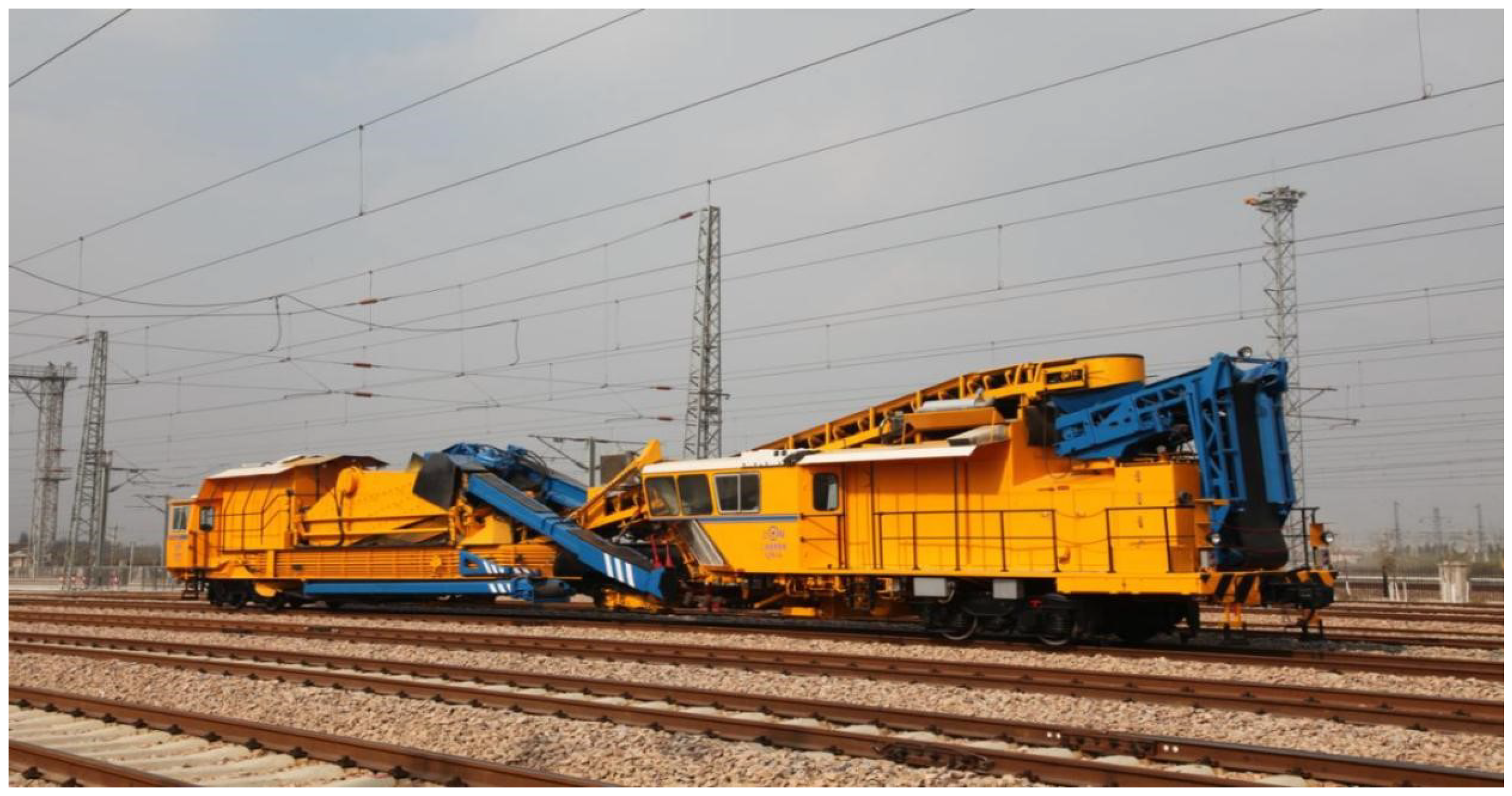
Domestically, the mainstream QS-650K (
Figure 1) large ballast cleaning machine is designed for main lines with a minimum excavation width of 3900 mm [
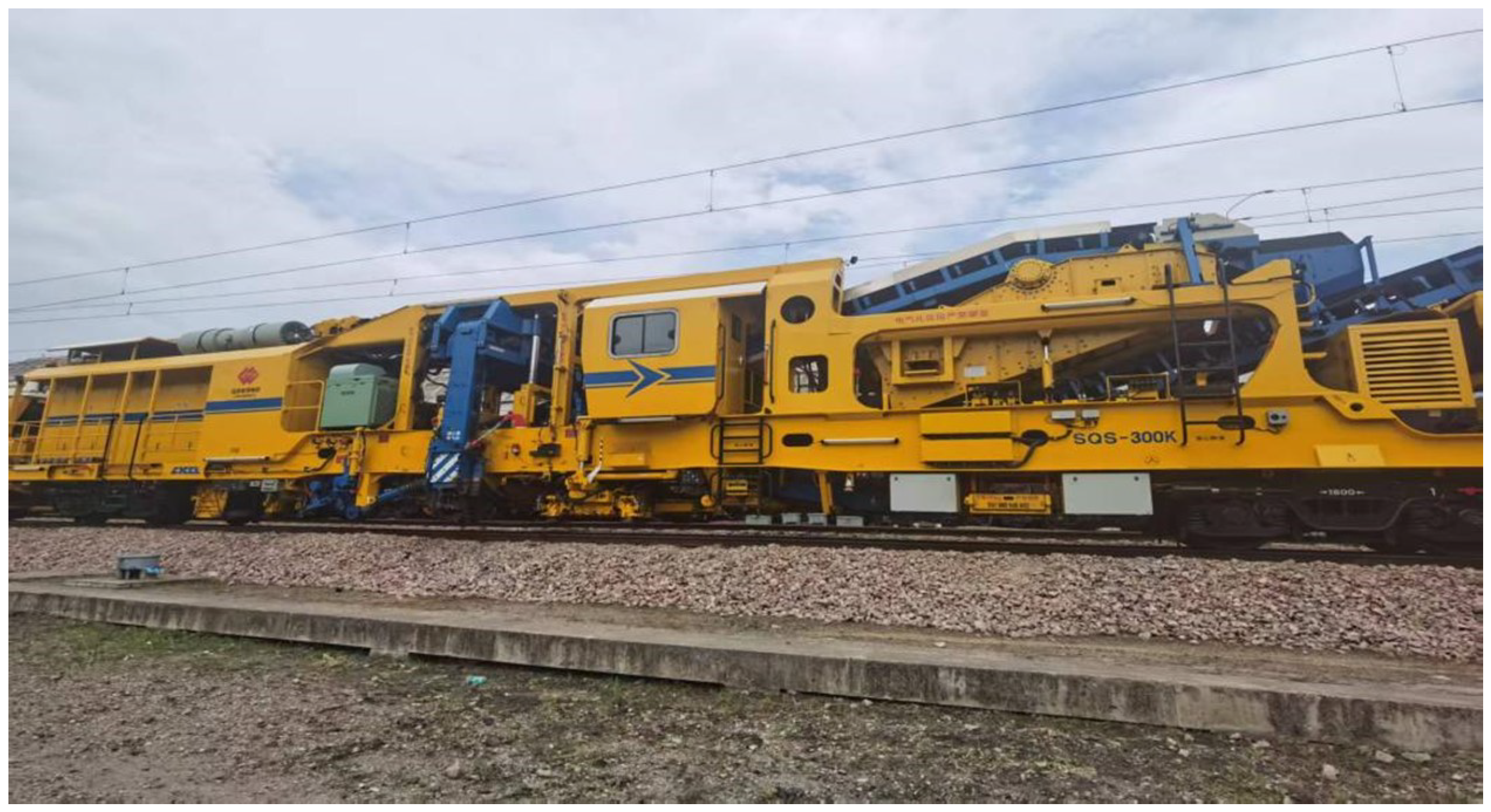
10], which cannot adapt to narrow clearances of tunnels, bridges and platform lines, leaving a technical gap for restricted-space ballast cleaning. The SQS-300K tunnel and bridge ballast cleaning vehicle (
Figure 2) fills this gap with its pioneering compact vertical excavation structure, track-lifting-free shallow excavation capability, high-precision measurement and control system, and tunnel-adapted environmental protection design, and has been widely applied in engineering practice [
10].
Extensive research on hydraulic synchronous control for railway maintenance machinery has established a theoretical basis for dual-cylinder lifting system control [
11,
12]. To enhance synchronous control accuracy under variable loads, adaptive control [
13], fuzzy PID [
2] and other optimized algorithms have been developed, achieving satisfactory performance in conventional working conditions. However, most existing studies focus on flat track scenarios [
14], with rare attention to the multi-field coupling disturbances in high-superelevation curve sections (track superelevation, time-varying ballast excavation load and dynamic operation). Targeted analysis of the control mechanism of the ballast cleaning machine’s lifting and lining system under such complex conditions remains insufficient, and autonomous control strategies adapted to extreme working conditions are lacking [
15]. Accordingly, in-depth analysis of the hydraulic and electrical drivers of lifting height inconsistency and the development of optimized control strategies have critical practical engineering value for improving the operational accuracy of railway maintenance equipment.
3. Existing Problems and Cause Analysis
Field applications reveal a critical control defect: inconsistent left–right lifting height of the main lifting and lining device during high-superelevation curve operations, which causes track geometric parameter errors, increases subsequent restoration workload, and brings driving safety risks.
3.1. Analysis Methodology
This section adopts three mainstream standardized tools in failure analysis and risk management (compliant with railway industry standard TB/T 3553) for systematic research: (1) Failure Mode and Effects Analysis (FMEA) for failure definition and field performance sorting; (2) Risk Matrix Assessment Method for quantitative evaluation of failure impacts; (3) Fault Tree Analysis (FTA) for top–down root cause identification. The analysis results based on the above tools are detailed below.
3.2. Existing Problems in Field Application
Based on the FMEA method, the failure mode, allowable threshold and field performance of the main lifting and lining device are clearly defined as follows:
3.2.1. Fault Phenomena
Field operation data of the SQS-300K tunnel and bridge ballast cleaning vehicle show that the main lifting and lining device has an obvious problem of inconsistent left–right lifting heights, specifically manifested as follows: (1) Deviation range in straight sections: 15–20 mm; (2) Maximum deviation in transition curves: 50 mm.
3.2.2. Impact Assessment
Using the industry-standard risk matrix method, the severity, occurrence probability and risk level of each adverse impact of the failure are quantitatively evaluated, and the core impacts are sorted as follows:
Multiple adverse impacts caused by this problem include: (1) Excessive lateral horizontal deviation in the track (High Risk); (2) Increased workload of subsequent track restoration and tamping operations (High Risk); (3) Reduced overall construction efficiency (Medium Risk); (4) Potential safety hazards for operation and driving (High Risk).
3.3. Cause Analysis of the Problems
Based on the FTA top–down root cause analysis method, the core root causes of the failure are identified and analyzed from three dimensions: mechanical structure, hydraulic control and control strategy:
3.3.1. Mechanical Structure
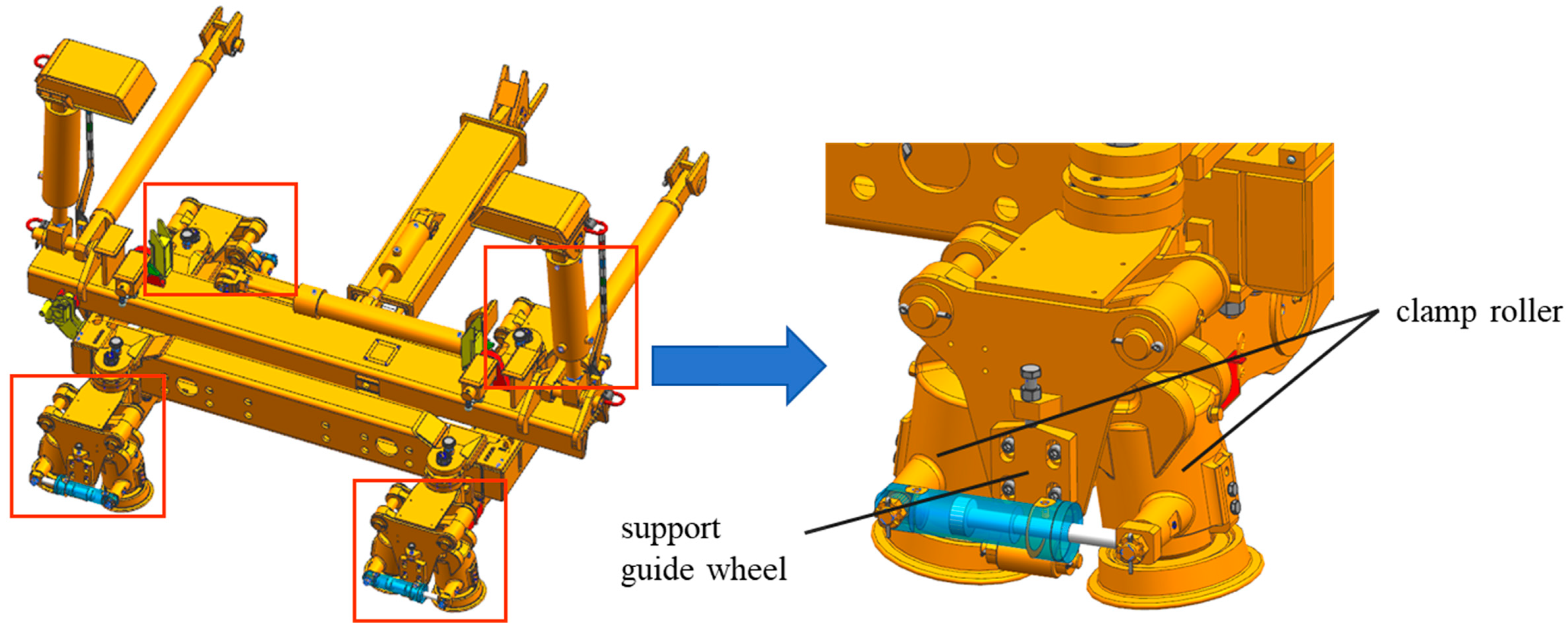
Heights of Clamp Rollers and Guide Wheels of the Main Lifting and Lining Device: The main lifting and lining device adopts a double-point clamping structure and is equipped with 4 sets of clamp assemblies, each consisting of 2 clamp rollers and 1 support guide wheel, as shown in
Figure 3.
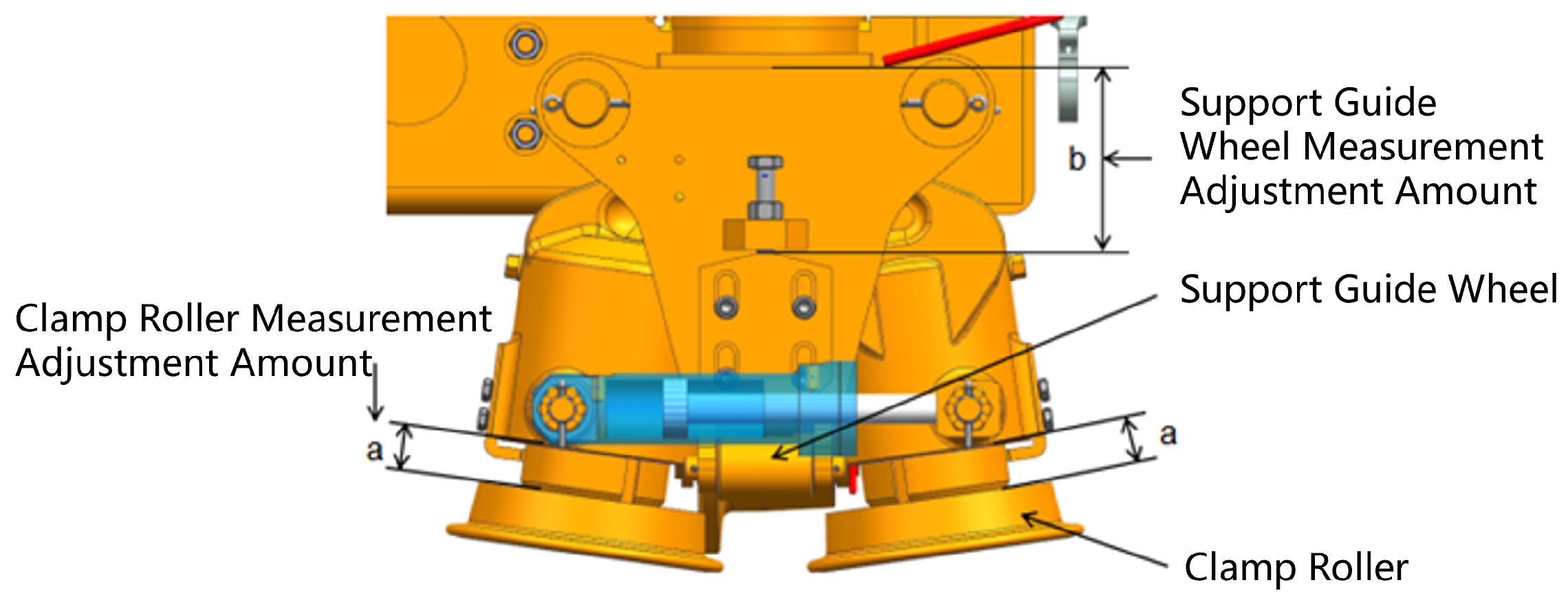
Field measurements have been carried out on the heights of the 8 clamp rollers and 4 support guide wheels. The heights of the clamp rollers and guide wheels were adjusted according to the measured deviations, to ensure that the mechanical dimension error is basically zero when the clamp is closed and in operation after adjustment. The measured adjustment values of the clamp rollers and support guide wheels are shown in
Figure 4.
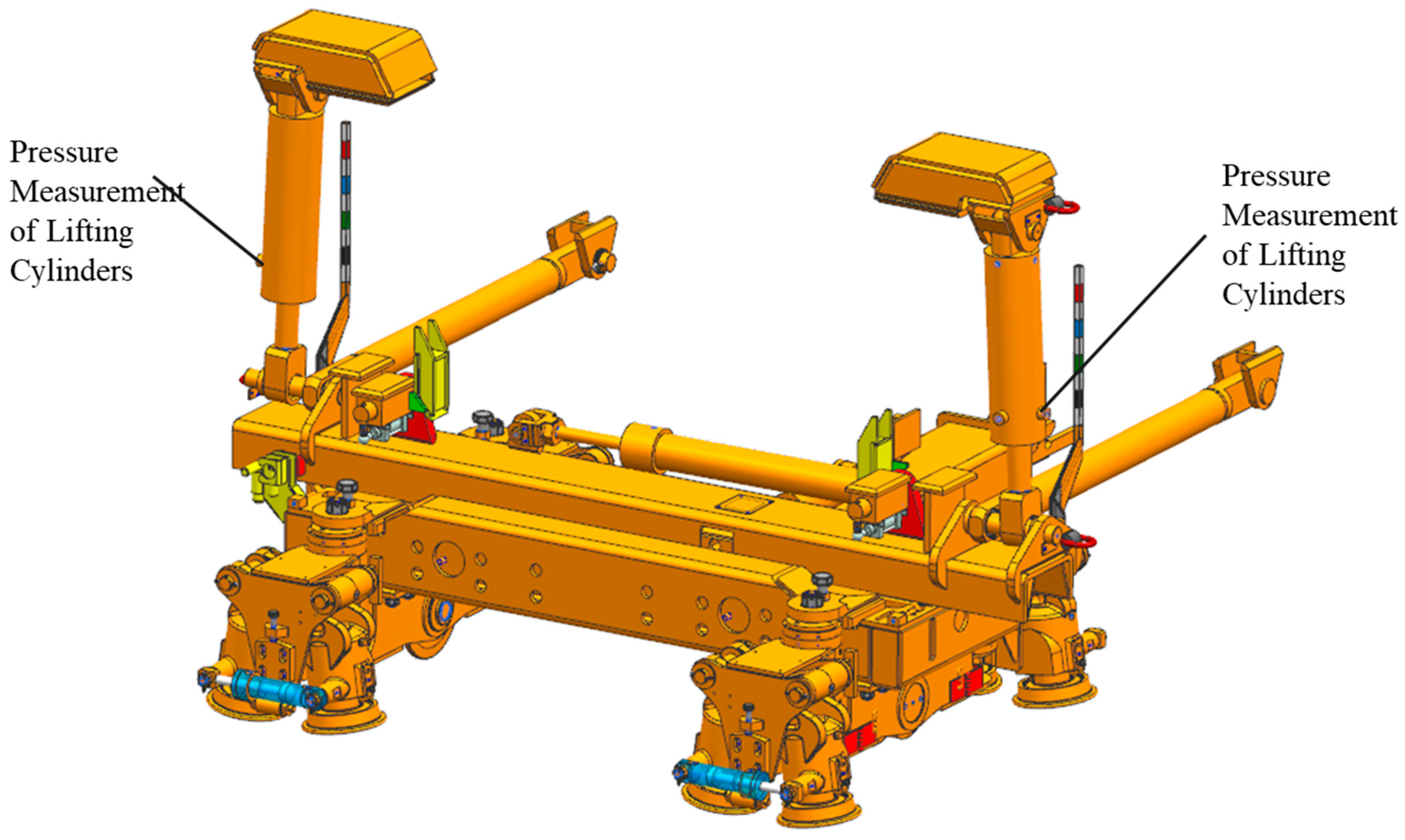
Lifting Cylinder Pressure of the Main Lifting and Lining Device: In the field test, two pressure gauges were connected to the rod chambers of the left and right lifting cylinders respectively, and pressure tests were carried out on the two lifting cylinders. The test results show that the working pressure of both cylinders is normal; thus, it can be confirmed that there is no internal leakage in the cylinders, as shown in
Figure 5.
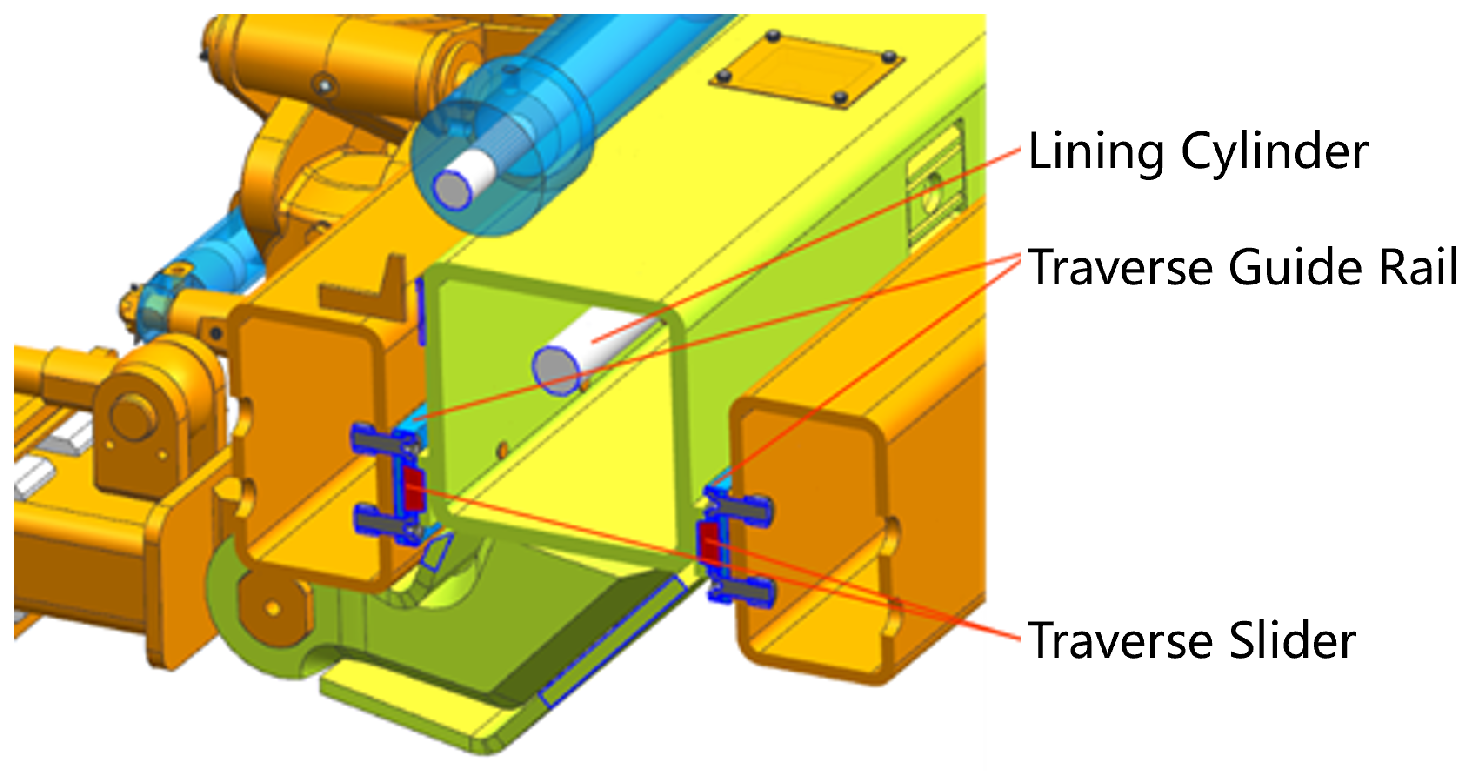
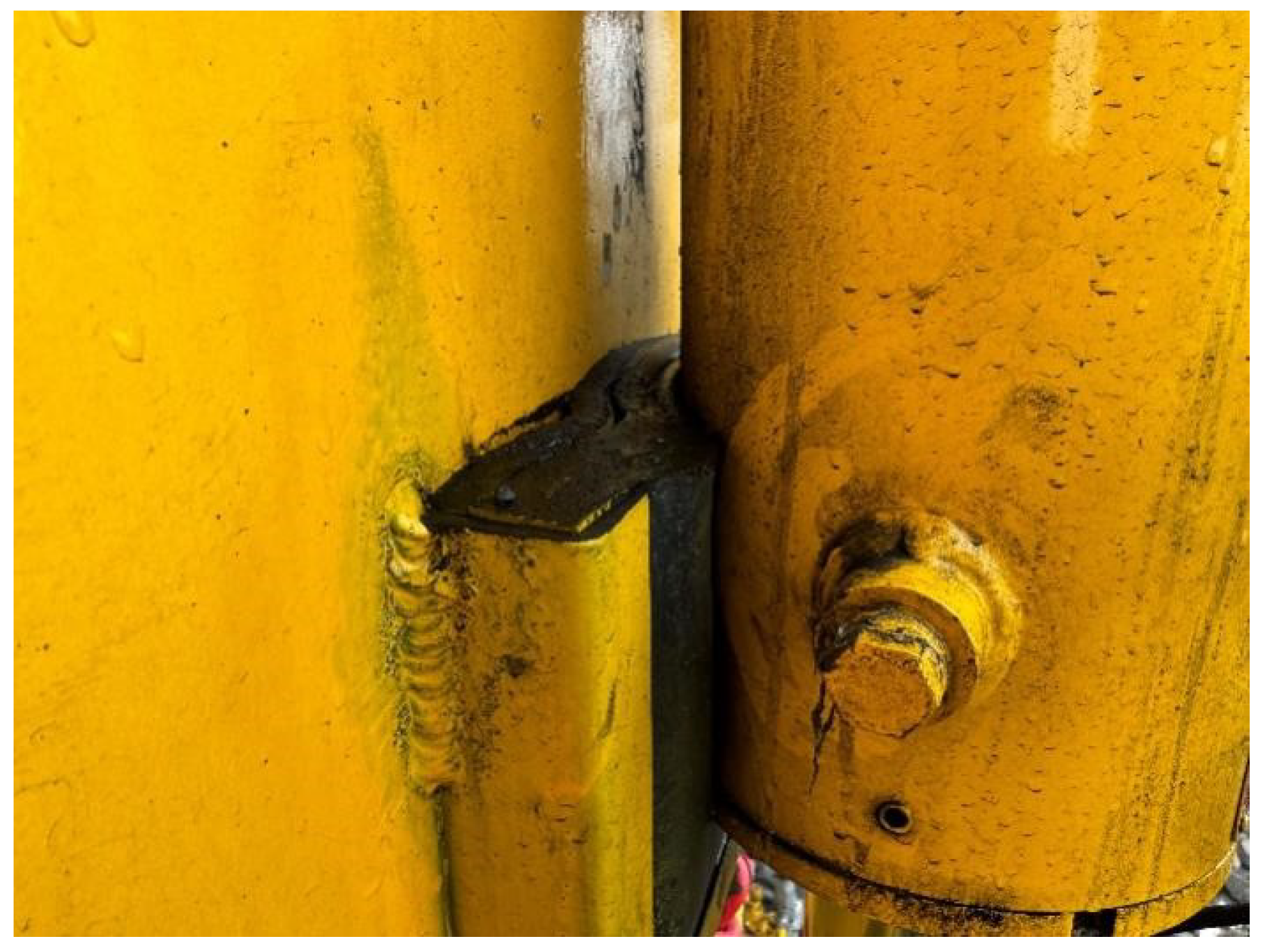
Support Cylinder Control Valve of the Main Lifting and Lining Frame: The main lifting and lining device of the SQS-300K tunnel and bridge ballast cleaning vehicle consists of a fixed frame and a traverse slideway. The traverse slideway slides left and right within the fixed frame, and the fixed frame is flexibly connected to the vehicle frame through 3 cylinders. Two of the cylinders are responsible for lifting and lowering the main lifting and lining device, and the other is a frame support cylinder. During lining operations, it rigidly connects the fixed frame to the vehicle body, enabling the lateral lining force generated during lining to be transmitted to the vehicle body (as shown in
Figure 5 and
Figure 6).
The frame support cylinder of the main lifting and lining device adopts a floating design for action control and an O-ring valve seal. During lining operations, subject to the track’s own gravity and rebound force, the O-ring valve is subjected to high pressure for a long time. Without hydraulic lock sealing, a certain degree of internal leakage occurs, which is a normal phenomenon.
During operation, due to the certain degree of internal leakage of the O-ring valve in the frame support cylinder, the fixed frame fails to form a rigid connection with the vehicle body, causing the fixed frame to shift to one side. This leads to extrusion between the lifting cylinders and the vehicle body (as shown in
Figure 7), resulting in uneven forces on the left and right lifting cylinders of the main lifting and lining device. Consequently, the synchronous lifting amount of the cylinders on both sides is affected, and displacement deviation gradually occurs.
3.3.2. Hydraulic Control
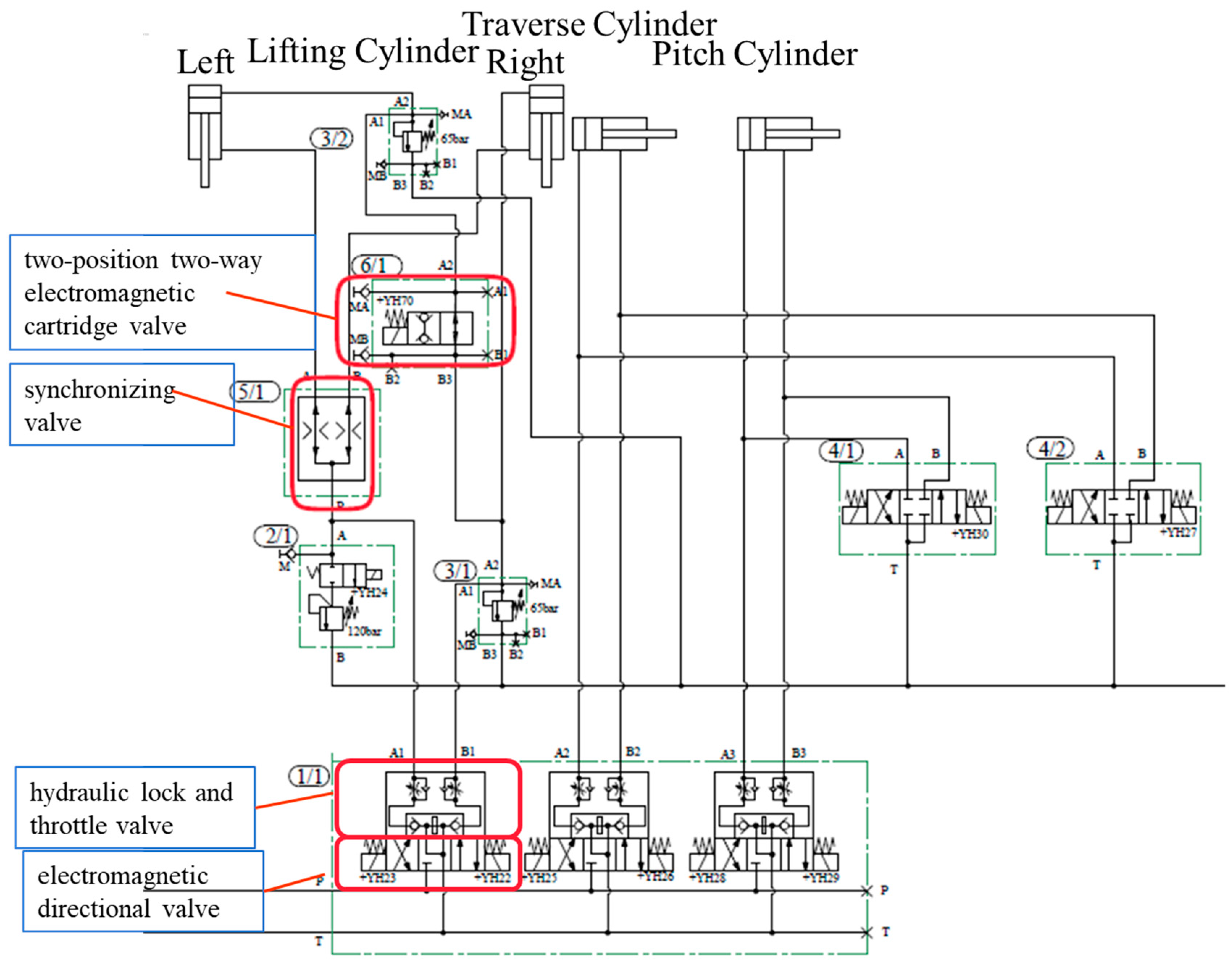
Defects in Hydraulic Control Design: Uneven Flow Distribution Caused by Single-Valve Control of Dual Cylinders and Inconsistent Response Characteristics of Synchronizing Valves [
16,
17,
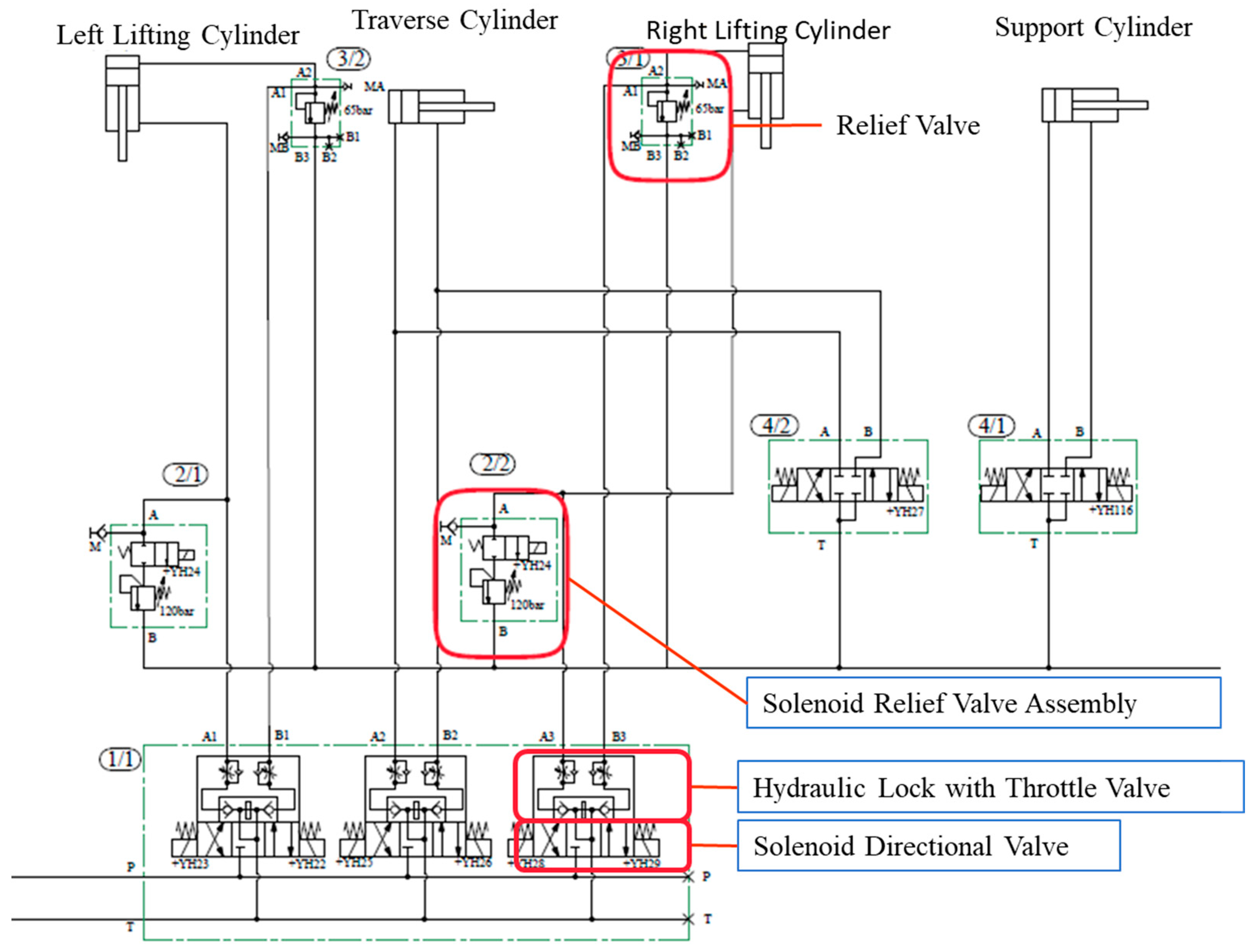
18]. The hydraulic circuit of the main lifting and lining device is designed to control the two lifting cylinders via one electromagnetic directional valve, a throttle valve, a hydraulic lock and a synchronizing valve (marked in the left red circle in
Figure 8). During field operation, it was found that the main lifting and lining device tends to level both sides of the track when working in high-superelevation curve sections, resulting in a large deviation in the track superelevation value after operation and a significant adverse impact on subsequent track restoration. Through analysis, it is determined that this problem may be caused by uneven force on the rod chambers of the two cylinders affected by track superelevation during operation, which leads to oil cross-flow between the cylinders.
To prevent such a situation, a two-position two-way electromagnetic cartridge valve (marked in the right red circle in
Figure 8) was added to isolate the hydraulic oil between the left and right lifting cylinders during operation. However, in actual use, metal impurities in the hydraulic oil may jam the electromagnetic cartridge valve for oil isolation. This prevents the cartridge valve from fully opening and causes throttling, which increases the return oil back pressure of the left lifting cylinder, resulting in uneven force on the cylinders on both sides and ultimately leading to inconsistent lifting and lowering of the cylinders.
Insufficient Control Strategy: Open-Loop Control Cannot Compensate for External Disturbances, Lack of Adaptive Adjustment Function, Fixed Parameter Settings Fail to Adapt to Different Working Conditions: When the vehicle starts operation on a circular curve and moves to a straight section through a transition curve, the vehicle body tilt is slightly greater than the track superelevation when the lifting and lining device is lowered for operation on a small-radius, high-superelevation circular curve. At this time, although the cylinders on both sides extend synchronously when the main lifting and lining device is lowered, the low rail side contacts the rail surface first, while the high rail side has not yet made contact. Further lowering is required, resulting in different extension amounts of the cylinders on both sides, with a larger extension amount on the high rail side.
After the vehicle operates for a period of time and enters the transition curve, the lifting cylinders of the lifting and lining device still maintain the original superelevation state. As the track superelevation gradually decreases and the vehicle body tilt is gradually corrected, the low rail side is gradually lifted, damaging the track superelevation value and affecting subsequent track restoration.
4. Optimization Scheme Design and Methodology
The synchronous control of the left and right lifting cylinders of the main lifting and lining device is replaced with independent control. Both cylinders adopt the same control mode: electromagnetic directional valves (Y-type neutral position) combined with hydraulic locks and throttle valves. Through electrical switches, the left and right lifting cylinders can be controlled to act independently, or the two sets of electromagnetic valves can be energized/de-energized simultaneously for synchronous action. Two additional cable-stayed sensors are installed to measure the left and right lifting heights, which are synchronously displayed in the driver’s cab and the control position under the vehicle. The lifting heights on both sides can be manually adjusted according to on-site operation requirements.
4.1. Hydraulic System
The original solenoid valve assembly for the lifting cylinders of the main lifting and straightening device is modified to control only the left lifting cylinder. An additional hydraulic circuit is added to control the right lifting cylinder, which consists of one Solenoid Directional Valve, one Throttle Valve, one Hydraulic Lock, one Relief Valve, and one Solenoid Relief Valve Assembly. The control valve configurations of the left and right lifting cylinders remain identical.
The synchronizing valve for the lifting cylinders and the two-position two-way solenoid cartridge valve in the large chamber of the lifting cylinders of the main lifting and straightening device are eliminated, as shown in
Figure 9.
4.2. Electrical System
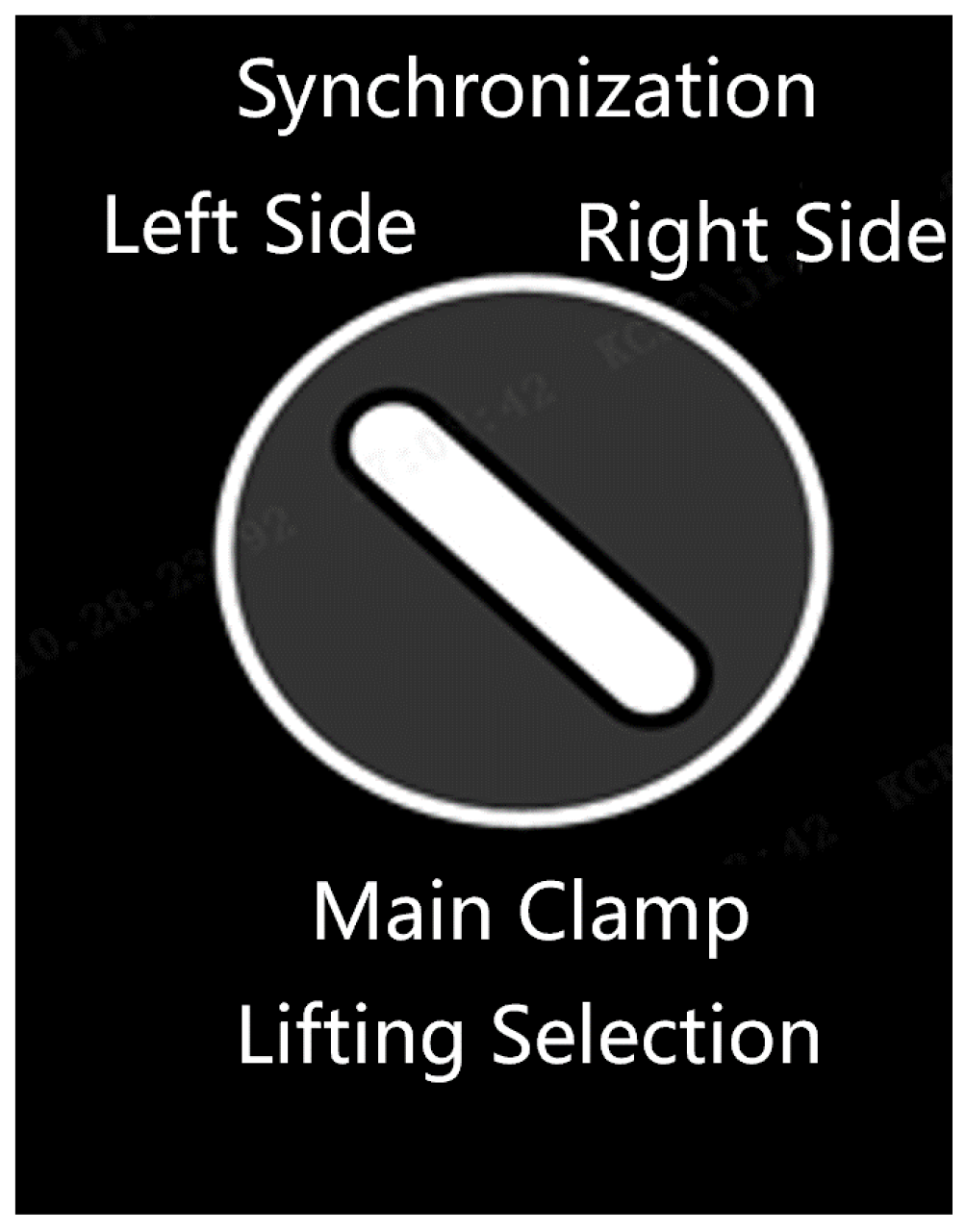
A three-position switch is added to the operation control box for selecting the lifting permission of the main lifting and lining device (main clamp). The left position of the switch controls the lifting of the left lifting cylinder, the middle position enables synchronous lifting of the left and right lifting cylinders, and the right position controls the lifting of the right lifting cylinder, as shown in
Figure 10.
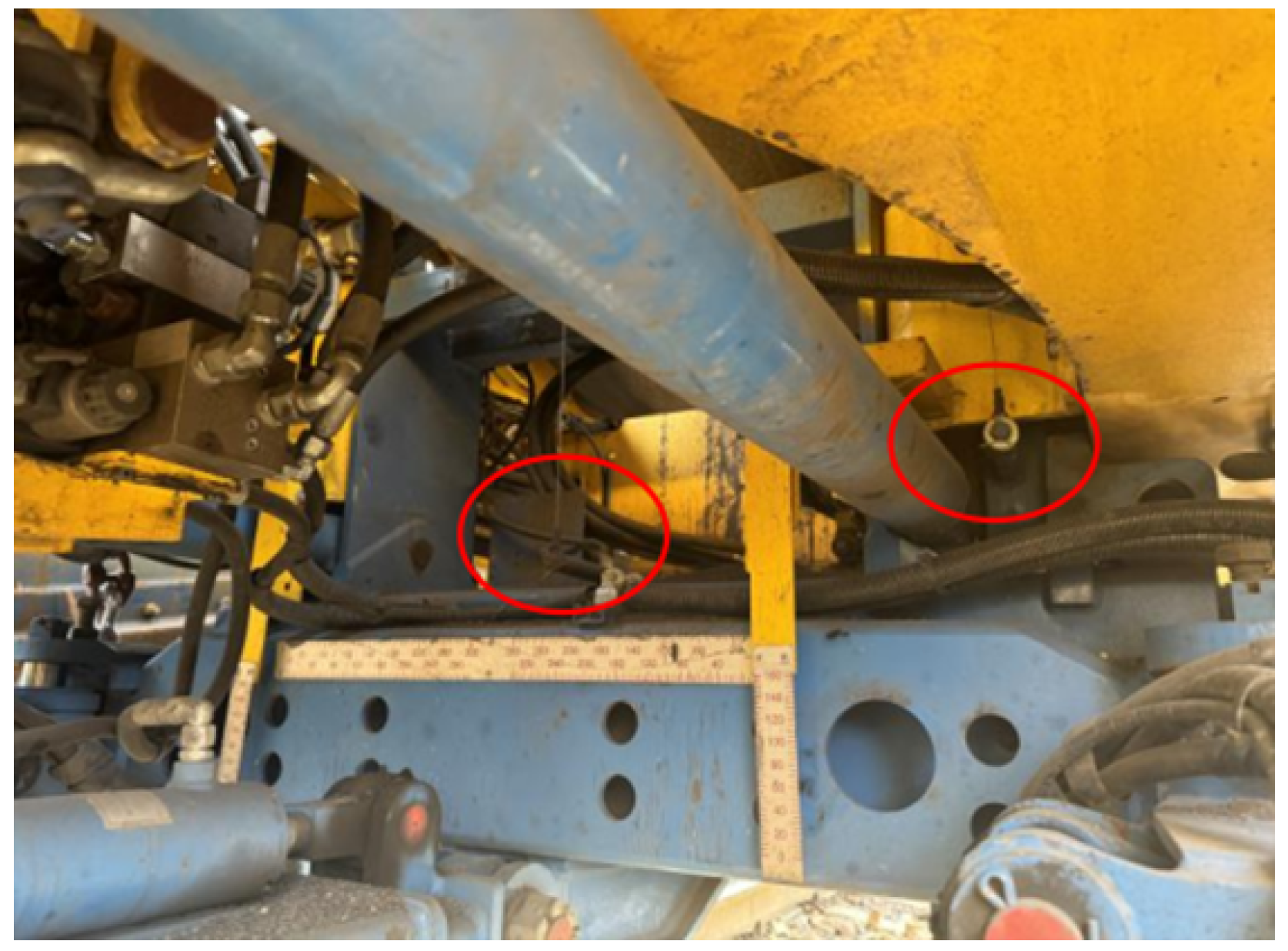
A cable-stayed sensor is installed on each of the left and right lifting cylinders of the main lifting and lining device, as shown in
Figure 11. These sensors are used to measure the extension and retraction of the cylinders (i.e., to detect the left and right lifting amounts of the main lifting and lining device). Meanwhile, the extension values of the left and right cylinders are displayed in real time on the HMI screen to indicate the lifting status of the left and right lifting cylinders.
The performance parameters of the cable-stayed sensor used for measuring the track lifting amount are presented in
Table 1. The measurement accuracy of the sensor is calculated as:
This value is well below the 10 mm sensitivity target required for on-board installation, confirming that the sensor fully meets the engineering requirements.
Due to the complex mechanical structure and the inconvenience of sensor disassembly, on-site calibration focuses on rapid operation, which mainly includes two parts: zero-point check and full-scale calibration. For zero-point check, the main lifting and lining device is first retracted to its mechanical origin. After the cable-stayed sensor is electrically retracted, the current value is set to “0” via the HMI. For full-scale calibration, the cable is pulled out to a predetermined length using the known stroke range of the main lifting and lining device. Then the sensor reading is compared with the actual mechanical displacement, and the gain parameter is adjusted until the reading is consistent with the actual value. Since tamping operation must be carried out immediately after ballast cleaning, no additional calibration for measurement uncertainty is performed on site to ensure operation efficiency.
The electrical control program of the main lifting and lining device is optimized and modified according to the revisions of the hydraulic system and electrical system, with corresponding control items added.
5. Field Test, Effect Verification Results and Discussion
5.1. Effect Verification
After the hydraulic and electrical control systems of the main lifting and straightening device were reconstructed, both the operational accuracy and operational convenience of the SQS-300K tunnel–bridge ballast cleaning vehicle were significantly improved compared with the original system. A quantitative comparison of height deviation under different optimization schemes is presented in
Table 2, which fully reflects the improvement effect of different technical paths.
Specifically, the original system showed severe height deviation in tunnel–bridge operation scenarios, with the deviation reaching 35–50 mm in 100 mm superelevation curves. Although the hydraulic-only improvement scheme reduced the deviation by approximately 30% (e.g., 18–25 mm in 100 mm superelevation curves), it still failed to meet the precision requirements of narrow-clearance tunnel–bridge operation. By contrast, the hydraulic–electric synergistic improvement scheme (adopting independent adjustment and control of left and right lifting cylinders) achieved a substantial reduction in track superelevation deviation: the deviation was controlled to less than 3 mm in straight sections and less than 10 mm even in 100 mm superelevation curves.
This result verifies that the integration of general hydraulic independent control and electrical real-time monitoring principles into the SQS-300K dedicated equipment effectively solves the long-standing problem of height deviation in transition curve operation, and achieves good application results in actual tunnel–bridge maintenance projects.
5.2. Operational Considerations for Long-Term Performance After Optimization
Due to the dust-laden environment and high operating frequency during ballast cleaning operations, issues of anti-loosening, wear resistance, and dust prevention become exceptionally prominent. To mitigate the long-term impacts of factors such as hydraulic locking system wear, sensor drift, and component degradation, regular inspections of the hydraulic control valves and sensor-related components are required during operation, including the following checks:
Abnormal actuation, jamming, or leakage of the hydraulic control valves;
Smooth extension and retraction of the steel wire rope in cable-stayed sensors, checking for any jamming;
Slackness or breakage (single or multiple strands) of the steel wire rope in cable-stayed sensors;
Loose connections between hydraulic valves/sensors and reliable electrical connector connections.
Any identified issues (e.g., damaged hydraulic valves or sensors) must be addressed promptly by replacing faulty components.
Furthermore, regular verification and calibration of the sensors are necessary to maintain their measurement accuracy. This verification involves testing all key performance parameters of the sensors and should be conducted by certified personnel using dedicated calibration equipment, thereby ensuring the long-term reliability and precision of the system.
5.3. Cost-Benefit Analysis and Implementation Feasibility
The implementation costs of the proposed optimization primarily cover the procurement of electrical and hydraulic system components and auxiliary materials. The electrical system includes cable-stayed sensors, control boxes, and related accessories, while the hydraulic system involves solenoid relief valves, flow dividers, solenoid directional valves, and pipeline joints. The overall implementation cycle is approximately 1–2 weeks, depending on on-site conditions and equipment delivery schedules. In terms of labor demand, the installation and commissioning work requires coordination among 2 electrical engineers and 1 hydraulic engineer. Overall, this optimization scheme is characterized by controllable costs, a short implementation period, and limited manpower requirements, ensuring strong engineering feasibility for industrial application.
After the reconstruction and optimization of the hydraulic and electrical control systems for the main lifting and straightening device, significant benefits have been achieved in terms of cost control for track overhaul operations. By effectively controlling the track geometric parameters immediately after ballast cleaning, the workload of the tamping machine required to restore the track geometry post-cleaning is substantially reduced. This optimization not only minimizes the time cost but also optimizes the economic cost throughout the track overhaul process, thereby delivering considerable economic efficiency in practical engineering scenarios.
6. Conclusions
This paper conducts in-depth analysis and technical transformation targeting the problem of inconsistent left–right lifting heights of the main lifting and lining device of the SQS-300K tunnel and bridge ballast cleaning vehicle during field application. When performing ballast cleaning operations in line sections with limited space such as bridges and tunnels, the lifting accuracy of the main lifting and lining device is directly related to the safety distance control of track panel traversal and the smoothness of the line after cleaning.
Previously, due to the synchronous control strategy adopted for the left and right cylinders of the main lifting and lining device, differences in actual loads between the two cylinders easily occurred under complex working conditions such as uneven line foundation resistance and varying degrees of ballast bed cementation, leading to deviations in the lifting amounts on both sides. Such deviations not only affect the safety clearance control between the excavation guide groove and sleeper ends, as well as the ballast retaining side walls during cleaning operations but may also adversely impact the quality of the finally restored track geometric alignment (e.g., horizontal level, track alignment).
To solve this problem, this study implements targeted rectification of the hydraulic and control systems of the main lifting and lining device. By modifying the left and right cylinders of the main lifting and lining device to adopt independent control, the lifting amounts on both sides can be adjusted in a timely manner during operations, effectively resolving the existing problem. Through this technical transformation, the operation accuracy and adaptability of the SQS-300K ballast cleaning vehicle under special working conditions such as tunnels and bridges have been significantly improved.
Future research will focus on the in-depth technical optimization of this equipment and other large-scale railway maintenance machinery, to further improve the operational performance, maintenance efficiency and operation quality of equipment in railway tunnel and bridge sections, and provide technical support for the safety of railway transportation.
Author Contributions
Conceptualization, T.Y.; methodology, T.Y.; software, T.Y. and H.D.; validation, Y.L.; formal analysis, T.Y.; investigation, T.Y.; resources, T.Y.; data curation, T.Y.; writing—original draft preparation, Y.L.; writing—review and editing, Z.N.; visualization, Z.N.; supervision, Z.N.; project administration, H.D.; funding acquisition, Y.L. All authors have read and agreed to the published version of the manuscript.
Funding
This work is supported by the National Natural Science Foundation of China (No. U24A20265).
Data Availability Statement
Dataset available on request from the authors.
Conflicts of Interest
Authors Tao You and Hao Ding were employed by the China Energy Shuohuang Railway Development Limited Liability Company. Author Zhongwei Ni was employed by the China Railway Construction Hi-Tech Equipment Corporation Limited. The remaining authors declare that the research was conducted in the absence of any commercial or financial relationships that could be construed as a potential conflict of interest.
References
- Korolev, V.; Loktev, A.; Shishkina, I.; Zapolnova, E.; Kuskov, V.; Basovsky, D.; Aktisova, O. Technology of crushed stone ballast cleaning. In Proceedings of the IOP Conference Series: Earth and Environmental Science; IOP Publishing: Bristol, UK, 2019; Volume 403, p. 012194. [Google Scholar]
- Sadeghi, J.; Motieyan-Najar, M.; Zakeri, J.; Yousefi, B.; Mollazadeh, M. Improvement of railway ballast maintenance approach, incorporating ballast geometry and fouling conditions. J. Appl. Geophys. 2018, 151, 263–273. [Google Scholar] [CrossRef]
- Anderson, P.; Cunningham, C.; Barry, D. Efficiency and potential environmental impacts of different cleaning agents used on contaminated railway ballast. Land Contam. Reclam. 2002, 10, 71–78. [Google Scholar] [CrossRef]
- Ciotlaus, M.; Kollo, G. Ballast bed cleaning and recycling–influence on stability of continuously welded rail track. Procedia Manuf. 2018, 22, 294–300. [Google Scholar] [CrossRef]
- Zhang, M.; Liu, M.H.; Jiang, L. The Structural analysis of the RM80 ballast cleaner. Appl. Mech. Mater. 2014, 556, 1259–1262. [Google Scholar] [CrossRef]
- Zhang, M.; Liu, M.H.; Jiang, L. Improve the efficiency of RM80 ballast cleaning machine. Adv. Mater. Res. 2014, 915, 1536–1539. [Google Scholar] [CrossRef]
- Beilhack, F. RU 800 S–Performance Comparison After Three Years. Eur. Rail Technol. Rev. 2010, 50, 24–26. [Google Scholar]
- Wenty, R. Machines and technology for high-capacity lines. Eur. Railw. Rev. 2006, 12, 52–56. [Google Scholar]
- Wenty, R. High-capacity, precision and reliability in track maintenance. Railw. Tech. Rev. 2006, 46, 24–32. [Google Scholar]
- He, H.; Cui, Z.; Liu, J. Fault risk assessment of railway turnout ballast clearing machine based on AHP-fuzzy comprehensive evaluation method. In Proceedings of the 14th International Conference on Quality, Reliability, Risk, Maintenance, and Safety Engineering (QR2MSE 2024); IET: Stevenage, UK, 2024; Volume 2024, pp. 66–72. [Google Scholar]
- Xiao, Y.; Shi, S.; Xia, M.; Wang, J.; Niu, Z.; Wang, C.; Gao, L. Failure analysis and improvement of trackbed mechanical properties in ballast cleaning operation. Eng. Fail. Anal. 2025, 179, 109771. [Google Scholar] [CrossRef]
- Qiao, X.; Poggi, M.; Wei, X.; Deng, P.; Zhou, Y.; Mattoccia, S. Learnable Fractional Reaction-Diffusion Dynamics for Under-Display ToF Imaging and Beyond. In Proceedings of the IEEE/CVF International Conference on Computer Vision. 2025; pp. 6080–6090.
- Xiao, Y.; Gao, L.; Shi, S.; Wang, C.; Cui, W.; Li, Y. Minimizing breakage and optimizing ballast reusability during excavation for ballast cleaning: A computationally efficient model and operational parameter recommendations. Comput. Geotech. 2024, 169, 106224. [Google Scholar] [CrossRef]
- Li, B.; Peng, Z.; Wang, S.; Guo, L. Identification of ballast fouling status and mechanized cleaning efficiency using FDTD method. Remote Sens. 2023, 15, 3437. [Google Scholar] [CrossRef]
- Borkovcová, A.; Boreckỳ, V.; Artagan, S.S.; Ševčík, F. Quantification of the mechanized ballast cleaning process efficiency using GPR technology. Remote Sens. 2021, 13, 1510. [Google Scholar] [CrossRef]
- Li, R.; Zhang, Y.; Feng, Z.; Xu, J.; Wu, X.; Liu, M.; Xia, Y.; Sun, Q.; Yuan, W. Review of the progress of energy saving of hydraulic control systems. Processes 2023, 11, 3304. [Google Scholar] [CrossRef]
- Kong, X.; Cai, B.; Liu, Y.; Zhu, H.; Liu, Y.; Shao, H.; Yang, C.; Li, H.; Mo, T. Optimal sensor placement methodology of hydraulic control system for fault diagnosis. Mech. Syst. Signal Process. 2022, 174, 109069. [Google Scholar] [CrossRef]
- Sulistyo, M.E.; Ristiana, R.; Kaleg, S.; Hapid, A.; Muharam, A.; Budiman, A.C.; Jaelani, A.Q.; Amin. A comparison of hydraulic and electro-hydraulic power steering control systems for increasing energy efficiency. Evergreen 2023, 10, 1951–1960. [Google Scholar] [CrossRef]
| Disclaimer/Publisher’s Note: The statements, opinions and data contained in all publications are solely those of the individual author(s) and contributor(s) and not of MDPI and/or the editor(s). MDPI and/or the editor(s) disclaim responsibility for any injury to people or property resulting from any ideas, methods, instructions or products referred to in the content. |