Article

Comparative Study on the Wear Evolution Mechanisms and Damage Pathways of Pantograph–Catenary Systems Under Multiple Environmental Conditions Based on an Equivalent Parametrization Framework

School of Electrical and Automation Engineering, East China Jiaotong University, Nanchang 330013, China
*
Author to whom correspondence should be addressed.
Vehicles 2026, 8(3), 53; https://doi.org/10.3390/vehicles8030053
Submission received: 29 January 2026 / Revised: 3 March 2026 / Accepted: 6 March 2026 / Published: 10 March 2026

Abstract

Sliding contact wear at the pantograph–catenary interface directly impacts the current collection performance and power supply reliability of electrified railways. Addressing the challenges in multi-environmental wear studies—namely, fragmented modeling chains, inconsistent parameter calibrations, and prohibitive computational costs that hinder horizontal comparisons—this study develops an equivalent parameterized modeling framework tailored for engineering assessment. The framework encapsulates environmental effects as equivalent load increments and interface coefficient corrections, facilitating efficient multi-scenario parameter scanning within a 3D contact model. Findings reveal that environmental factors drive wear through a distinct “pressure-wear” nonlinear decoupling mechanism. In sandy environments, abrasive-mediated micro-cutting dominates, leading to a monotonic surge in wear depth as sand concentration increases, despite a buffered contact pressure response. In icing conditions, the synergy of low-temperature brittleness and geometric impact renders hotspot wear highly sensitive to temperature fluctuations. For salt spray conditions, the environmental impact is represented via equivalent corrections to the interfacial parameters; within this equivalent framework, the results suggest that salt spray intensity has a more pronounced effect on wear accumulation than humidity alone. This work reveals the divergence of dominant damage pathways across environments, offering a quantitative basis for the differentiated maintenance and remaining life estimation of pantograph–catenary systems in extreme climates.

1. Introduction

The pantograph–catenary system is a critical component for traction power supply in electrified railways. The pantograph carbon contact strip and the pantograph–catenary system maintain prolonged sliding contact, where wear-induced profile changes can further trigger contact instability, localized arcing, and power supply interruptions. In recent years, railway lines have extended into regions characterized by wind-blown sand, icing in cold zones, and high salt spray along coastlines, making the impact of environmental factors on pantograph–catenary wear behavior increasingly prominent. Numerous scholars have conducted research on the contact characteristics and wear behavior of the pantograph–catenary system. In [1], the authors reviewed the primary wear mechanisms of the sliding contact, including adhesive wear, abrasive wear, surface fatigue, and arc erosion. In [2], the authors showed that dynamic contact force can significantly affect the tribological properties of the pantograph/catenary system during current-carrying sliding and may promote the transition of wear mechanism from mechanical wear to arc erosion. The literature [3] was analyzed from a vibration perspective, finding that the high-frequency vertical modal vibration of carbon contact strips closely correlates with abnormal wear profiles on the strip surface. Experimental work by [4] revealed that electrical wear becomes the key factor determining total wear volume when system stability declines. In a study by [5], the authors numerically simulated the wear rate under different pantograph models and speeds, indicating that increasing speed at high currents may actually reduce wear per unit distance due to shorter contact time. In [6], the authors demonstrated in their study of rigid contact networks for subways that the arrangement pattern (e.g., sinusoidal, zigzag) significantly impacts the uniformity of collector shoe wear, with sinusoidal layouts prone to deep groove wear at maximum draw-out points. As railways extend into extreme environments, the interference from environmental factors becomes increasingly prominent. In [7], the authors reviewed the recent progress, challenges, and outlooks of high-speed railway pantograph–catenary electrical contact systems, indicating that complex environments can significantly influence system dynamics, friction and wear behavior, electrical contact performance, and service reliability. In [8], the authors conducted wind tunnel tests on a high-speed railway catenary system to study wind-induced dynamic responses. They found that increased wire tension reduces deflection and raises the system’s natural frequency, while turbulent wind causes more significant displacements than uniform wind. In [9], the authors conducted a detailed study of pantograph–catenary system dynamics under crosswind conditions using a coupled dynamic model based on the Absolute Nodal Coordinate Formulation and a stochastic wind spectrum. Their results show that increased wind speed and turbulence intensity significantly amplify the low-frequency vibration response of the system and increase the standard deviation of contact force, which leads to deteriorated current collection quality. The literature [10] analyzed pantograph–catenary contact reliability under crosswind conditions using a combined optimization model. The study showed that increased crosswind speeds significantly reduce contact reliability, with lateral deviations worsening performance. The literature [11] showed that the presence and thickness of ice significantly affect the dynamic interaction and current collection quality, with heavier icing leading to larger vibration amplitudes and potential arcing between the pantograph and contact wire. In [12], the authors found that higher relative humidity leads to a decrease in wear rate and alters friction characteristics, suggesting that environmental humidity can affect the tribological performance of copper-impregnated carbon materials used in pantograph–catenary systems. Comprehensive studies by [13] summarized the impact of humidity on current-carrying friction, noting that in low-humidity environments (below 30% RH), the absence of water film lubrication can result in wear rates several times higher than in high-humidity conditions. In [14], the authors validated the negative correlation between wear rates and environmental humidity through field data analysis, noting that seasonal abnormal wear frequently occurs during dry months. The literature [15] has also evaluated risks to electrified railway overhead contact systems under combined geographic and weather influences. The analysis showed that extreme weather events and terrain variability significantly increase the probability of system failures and reduce operational reliability. Regarding wind-sand and icing environments, ref. [16] conducted optimization studies on surface treatments for aluminum alloy components in dusty regions, while [17] reviewed the formation mechanisms of overhead contact line icing and the dynamic response behavior during mechanical de-icing. The literature [18] reviewed the dynamic current-collection and service performance of pantograph–catenary systems in complex environments, indicating that temperature, humidity, air pressure, wind-induced vibration, and icing have important effects on system dynamics, current collection stability, and service reliability. Regarding modeling research, in [19], the authors proposed a simplified calculation method for predicting contact wire and pantograph wear distribution based on an improved Lim–Ashby model. In [20], the modified Archard theory was successfully applied to predict wear life in similar contact pairs, such as molds. Finally, stochastic analysis methods were introduced in [21], establishing a current collection quality assessment model incorporating contact line wear degradation using multi-year field data. Although pantograph–catenary contact and wear have been explored from multiple dimensions, several research gaps remain: (1) Fragmented modeling across environments. Existing studies are largely confined to conventional or isolated extreme conditions. The inconsistency in modeling prerequisites hampers cross-sectional evaluations of wear performance. (2) Prohibitive computational costs of strong coupling. While high-fidelity multiphysics models attempt to encapsulate electrical, thermal, and mechanical interactions, they often suffer from structural redundancy and low practical utility due to high parametric sensitivity. (3) Unresolved dominant damage pathways. The lack of systematic comparisons has hindered the formation of a clear consensus on wear drivers across diverse environments. Consequently, developing a unified, high-efficiency simulation approach to reveal critical damage factors remains an urgent scientific task. To bridge these gaps, this paper develops an equivalent parameterized framework tailored for engineering-scale wear analysis under multiple typical environmental stressors.
The primary innovations and contributions of this work are summarized in the following two aspects:
(1)
Development of a “dual-channel” equivalent parameterized modeling framework for multi-environmental comparative assessment. This framework transcends the limitations of traditional strongly coupled multiphysics models, such as computational redundancy and fragmented operating conditions. It innovatively maps heterogeneous environmental effects into equivalent inputs for the “external loading channel” and “interface channel.” This allows for reproducible and comparable quantitative investigations into damage evolution across complex environments (e.g., wind-blown sand, icing, and salt spray) within a unified numerical architecture.
(2)
Revelation of the primary damage pathways and sensitivity patterns of wear in pantograph–catenary systems under multi-source environmental disturbances: By constructing an interface mapping function driven by environmental parameters, the corrective effects of abrasive particle involvement, geometric offset of ice deposition, and salt spray wet film effects on the interface constitutive relationship were quantified. The study identified the nonlinear decoupling relationship between “pressure response” and “wear depth” under different environments, uncovering the physical essence of environmentally dominated damage.

2. Numerical Models and Computational Methods

2.1. Geometric Model

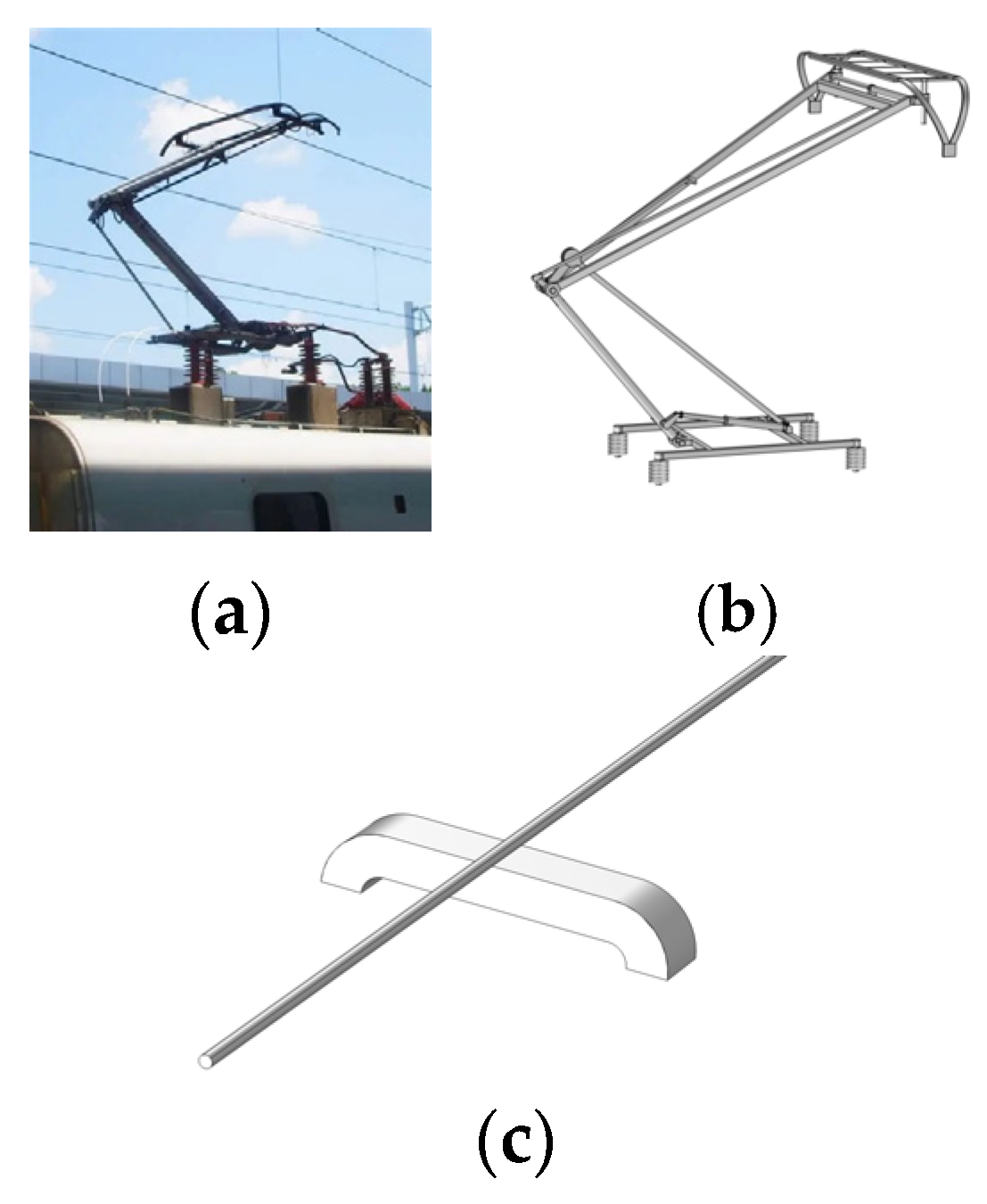
A three-dimensional local contact model was established between the carbon contact strip and the contact wire. The carbon contact strip was modeled as a rectangular solid, while the contact wire was simplified as a cylindrical structure. To reduce computational cost, the analysis focused solely on the pantograph–contact wire region without modeling the entire contact wire. The fundamental structure and model of the pantograph–contact wire system represent the combination of fixed and moving equipment within the traction power supply system. During train operation, the pantograph and contact wire form a unique friction pair. Figure 1a shows the physical structure of the pantograph–contact wire system. This simulation models the friction and wear behavior between the pantograph collector shoe and contact wire during relative sliding motion. Using the pantograph system as the actual subject, a three-dimensional model was established based on the actual dimensions of the pantograph and contact wire to make the simulation closer to engineering reality. The three-dimensional model of the pantograph–contact wire system was created using S O L I D W O R K S 2024, as shown in Figure 1b. To reduce computational load and improve software efficiency, the finite element simulation analysis focused solely on the sliding friction process between the carbon contact strip and the contact wire, as illustrated in Figure 1c.
The carbon contact strip and contact wire maintain contact in the initial state. The model accurately reflects the variations in contact pressure and the evolution of wear caused by sliding contact during actual operation.

2.2. Material Models and Parameters

Both the carbon contact strip and contact wire employ an isotropic linear elastic material model. Material parameters, such as density, Poisson’s ratio, and Young’s modulus, were selected based on the existing literature and engineering experience, with specific values listed in Table 1.

2.3. Contact Model and Friction Description

The contact between the contact strip and the contact line is modeled using a face-to-face contact model. Normal contact employs a penalty function method to ensure numerical stability of the contact constraint, while tangential contact utilizes the Coulomb friction model. To mitigate nonlinear solver difficulties caused by frequent contact state transitions, this study implements reasonable contact search and stabilization settings for contact pairs. Consistency in contact pair definitions is maintained throughout transient wear progression.
Considering that typical environmental conditions significantly alter interface friction states (e.g., sand particle involvement, lubrication changes due to icing/meltwater, surface film effects caused by salt spray–humidity), this study does not treat the friction coefficient μ as a constant. Instead, an environment-parameter-driven friction coefficient mapping model is constructed:
  μ = μ T , C s a n d , R H , C l , δ i c e ,
where T denotes ambient temperature, C s a n d represents wind-sand intensity, R H indicates relative humidity, C l signifies salt spray intensity, and δ i c e denotes equivalent ice thickness. The ranges and operational combinations for these parameters are specified in Section 3. This mapping approach unifies environmental influences into key inputs of the friction control equation, enabling comparability and reproducibility across multiple environmental conditions without introducing highly coupled multiphysics.

2.4. Archard Wear Model

Carbon contact materials undergo sliding wear, which is modeled using the Archard wear model. For sliding contact interfaces, the incremental wear depth per unit time can be expressed as
  h ˙ = k p v H ,
h ˙ represents the wear rate (m/s), k denotes the wear coefficient, p indicates the contact pressure (Pa), v signifies the relative sliding velocity (m/s), and H reflects the material hardness (Pa). In the numerical implementation, the contact interface is obtained at each time step through contact solving p and v , subsequently calculating h ˙ . The wear depth h is then accumulated and updated over time to modify the contact interface geometry or equivalent clearance, forming a closed-loop evolutionary process of “contact-wear-geometry update-re-contact”.
To characterize the influence of different environments on wear mechanisms, this paper does not treat the wear coefficient k as a constant. Instead, it constructs an environment-parameter-driven wear coefficient mapping:
  k = k T , C s a n d , R H , C l , δ i c e ,
Environmental factors primarily influence the effective wear coefficient by altering third-body particles (abrasives, ice crystals, and corrosion products) and surface conditions (roughness, films, and material degradation), manifesting as parameterizable variations in k at the engineering scale. Section 3 details the correction methods and ranges for k under various environments, with sensitivity analysis of key parameters discussed in the results section.

2.5. Equivalent Parametric Incorporation of Environmental Factors

This study aims to characterize the dominant effects of environmental factors—such as wind-blown sand, icing, and salt spray—on pantograph–contact wire wear behavior within a unified three-dimensional contact-wear framework for engineering comparative evaluation. To avoid the issues of lengthy modeling chains, input uncertainties, and excessive computational costs associated with constructing strongly coupled multiphysics models, this paper adopts an equivalent parameterization strategy. This approach projects environmental effects onto key control variables governing wear evolution, ensuring comparability and reproducibility across different environmental conditions while maintaining consistency in geometry, material basis, loading, and motion forms [22].
Equivalent parameterization introduces environmental effects through two channels:
(1)
External load channel: Modifies normal contact conditions using equivalent additional loads (e.g., equivalent wind pressure), primarily altering contact pressure distribution p , thereby influencing wear spatial distribution and peak values [23].
(2)
Interface channel: Environmental parameters are used to relatively correct the interface friction coefficient μ and wear coefficient k , characterizing the effects of particle involvement, wet/salt films, low temperatures, etc., on interface state and material removal efficiency.
It is important to note that this study employs the Archard model for wear evolution, where the wear rate is determined by contact pressure ( p ), sliding speed ( v ), material hardness ( H ), and wear coefficient ( k ). The friction coefficient ( μ ) primarily describes tangential friction response and may indirectly influence wear through altered contact states and pressure redistribution. Therefore, μ is not treated as a direct independent variable in the Archard wear rate expression.
Parameter ranges for various environmental conditions, dimensionless strength coefficients, and relative correction rules are provided in Section 3. Parameter scans are employed to systematically compare wear behavior in different environments.
To clarify the positioning of the proposed equivalent parameterization approach for engineering-scale multi-environment comparison, its advantages and limitations are summarized in Section 2.7 and qualitatively compared with commonly used modeling strategies in Table 2.

2.6. Numerical Solution Process and Computational Setup

This study establishes a three-dimensional contact wear model based on COMSOL Multiphysics 6.3, employing transient time stepping and a progressive wear update strategy for the solution. The overall solution can be described as a closed-loop iteration of “mechanical field solution—wear calculation—geometric update—proceed to next step,” with the numerical workflow as follows [24]:
(1)
Initialization
Set geometric and material parameters, establish contact pairs, and define friction contact models; apply normal load and slip velocity boundary conditions; input the environmental parameter vector ( U , C s a n d , T , R H , C l , δ i c e ) . The friction coefficient μ and wear coefficient k for the current operating condition are obtained via the equivalent mapping function (detailed parameters are provided in Section 3).
(2)
Contact Mechanics Solution
Solve the solid mechanics equations at the time step t n while satisfying contact constraints to obtain the contact pressure P ( X , t n ) and relative sliding velocity v ( X , t n ) at the contact interface.
(3)
Wear Calculation and Update
Calculate the wear rate based on the Archard wear model
  h ˙ X , t n = k p X , t n v X , t n H ,
and integrate over the time step to obtain the wear increment:
  h X , t n = h ˙ X , t n t ,
Subsequently, the wear depth is cumulatively updated:
  h X , t n + 1 = h X , t n + h X , t n ,
Update the contact interface geometry according to h ( X , t n + 1 ) and use it as the initial state for the next time step.
(4)
Time Advancement and Convergence Control
Repeat the calculation of wear increment and wear depth until the total simulation time is reached. During computation, to suppress nonlinear oscillations caused by rapid geometric evolution, wear progression employs a small time step. Sensitivity checks are performed on both mesh size and time step. When key response quantities (e.g., maximum contact pressure m a x ( p ) , maximum cumulative wear depth m a x ( h ) ) exhibit changes below the set threshold after mesh refinement or time step reduction, the numerical settings are considered converged.

2.7. Advantages and Limitations of the Equivalent Parameterization Framework

To enable efficient and reproducible cross-environment comparison under a unified numerical basis, the proposed equivalent parameterization framework incorporates environmental effects through two predefined channels in the same 3D contact–wear solver: the external load channel and the interface channel.
Advantages:
(1)
High comparability across heterogeneous environments. By enforcing identical baseline settings and introducing environmental effects only through the external load channel and interface channel, changes in p m a x and w m a x can be attributed to environmental severity in a controlled manner, reducing confounding effects caused by environment-specific modeling assumptions.
(2)
Computational efficiency for systematic parameter scanning. Compared with strongly coupled multiphysics models, the equivalent strategy avoids complex coupling loops and reduces parameter dimensionality, making it feasible to conduct multi-parameter scans (e.g., wind speed/sand intensity; ambient temperature/equivalent ice thickness; relative humidity/salt spray intensity) with consistent numerical settings.
(3)
Engineering interpretability aligned with wear evolution drivers. The two-channel structure separates “load redistribution” effects (external load channel) from “interfacial state and material removal efficiency” effects (interface channel). Since the Archard wear rate is directly governed by contact pressure and wear coefficient (together with sliding speed and hardness), the framework facilitates interpreting why w m a x may be more sensitive to k-related corrections than p m a x in certain environments.
Limitations:
(1)
Dependence on the fidelity of μ k mapping functions. The predictive quality is sensitive to the adopted correction factors and mapping rules for μ and k. Without dedicated calibration under specific regional climates and material pairs, the mapping uncertainty may propagate into p m a x and w m a x trends.
(2)
Limited resolution of localized multiphysics mechanisms. The framework represents complex phenomena (e.g., flash temperature rise, arc erosion, corrosion–wear coupling kinetics, and phase-change details in icing) through equivalent corrections rather than explicit field coupling. Therefore, it is primarily intended for engineering-scale comparative assessment and sensitivity ranking, rather than detailed microscale mechanism reconstruction.
(3)
Restricted validity when the contact mode fundamentally changes. If environmental effects lead to contact loss, severe impact-dominated interactions, or other regime transitions beyond the assumptions of continuous sliding contact, purely equivalent corrections in the two channels may be insufficient, and higher-fidelity coupled modeling and experimental calibration would be required.
A qualitative comparison between the proposed framework and commonly used modeling strategies is provided in Table 2.

3. Environmental Conditions and Parameter Settings

To ensure comparability across different environmental conditions, all cases in this study employ identical geometric models, material reference parameters, normal contact loads, and sliding velocities. Environmental variations are introduced solely through equivalent parameterization: the external load channel modifies normal contact conditions, while the interface channel updates friction coefficients ( μ ) and wear coefficients ( k ) via relative correction. The ranges of environmental parameters were referenced from typical regional operational conditions and the relevant literature. A dimensionless strength coefficient was employed for combined scanning to mitigate the impact of absolute value uncertainties on comparative conclusions.

3.1. Sandstorm Environment Operating Conditions

Northwestern sandstorm regions typically feature high wind speeds and high dust concentrations. The impact of sandstorm environments on pantograph–catenary system wear manifests primarily in two aspects:
1
Wind load effects: Increased wind speeds generate additional aerodynamic forces on the pantograph–catenary system, altering contact pressure distribution.
2
Sand particle abrasion: Sand particles entering the contact interface accelerate abrasive wear, increasing friction and wear coefficients.
In the numerical model, wind load is applied as equivalent wind pressure to the wind-exposed surface [24], expressed as
    p w = 1 2 ρ U 2 ,
where ρ is the air density, and U is the wind speed. The relative corrections to μ and k for operating conditions and abrasive particle effects via the wind-sand intensity coefficient C s a n d are shown in Table 3.

3.2. Icing Environmental Conditions

Contact wire icing frequently occurs in severe winter conditions across Northeast China. Icing impacts pantograph–contact wire wear behavior primarily through two mechanisms:
(1)
Low-temperature effects cause changes in material mechanical properties and interfacial friction characteristics with temperature variation [25];
(2)
Geometric effects alter the initial contact geometry due to the ice layer, redistributing the contact pressure and actual contact area [26].
In numerical models, icing conditions are described by lowering the ambient temperature T and introducing an equivalent ice thickness δ i c e . Please refer to Table 4 for specific parameters. The combined effects of temperature and ice on the interface are captured through equivalent parameterization, manifested as relative corrections to the friction coefficient and wear coefficient:
  μ = μ 0 α T T α i c e δ i c e ,
k = k 0 β T T β i c e δ i c e ,
μ 0 and k 0 represent the reference values under the non-icing baseline conditions ( T = 0   ° C ,   δ i c e = 0 ). α T , β T , α i c e , and β i c e denote the dimensionless correction factors, characterizing the influence of material properties and interfacial state changes on wear evolution under low-temperature conditions. The equivalent icing thickness is further employed to characterize the alteration in the initial contact state induced by icing. This paper introduces an initial normal gap (i.e., contact offset) at the boundary of the contact pair to model the equivalent geometric effect. The initial normal gap is set equal to the equivalent ice thickness: δ i c e . When δ i c e > 0, it indicates initial separation; g n 0 = 0 indicates initial contact; and δ i c e < 0 indicates initial overclosure (equivalent interference). Under the reference condition without icing, δ i c e = 0 is adopted. This approach characterizes the expansion of the contact area and redistribution of pressure peaks caused by icing without altering the global geometric topology. To avoid numerical divergence and non-physical stress spikes caused by sudden overclosure during the initial transient solution phase, this study employs a progressive loading strategy for equivalent icing: define   h i t = h i · r ( t ) , where r t = m i n ( t / t r , 1 ) , and t r is set to 10% of the total simulation time. This approach effectively circumvents the frequent remeshing challenges posed by complex ice layer geometry modeling, significantly enhancing computational robustness during multi-environment parametric scans [27].

3.3. Salt Spray Environmental Conditions

Coastal and island regions are subject to prolonged exposure to high humidity and high salt spray environments. The impact of salt spray environments on pantograph–catenary systems is primarily manifested in:
(1)
High humidity alters interfacial friction conditions [28].
(2)
Salt spray corrosion accelerates material surface degradation and enhances corrosion–wear coupling effects [29]. In this study, the salt spray environment is characterized by relative humidity R H and salt spray concentration   C l . Its effects are reflected through modified friction coefficients μ and wear coefficients k , with correction factor values shown in Table 5b,c. The baseline condition is set to the lowest level of R H and C l = 0.

3.4. Operating Condition Combination and Comparison Strategy

To ensure comparability of numerical results across different environmental conditions, this study uses a unified geometric model, contact load, and slip velocity as benchmarks. Only the environmental equivalent parameters are altered, with corrections applied via mapping relationships to μ and k . Parameter scanning employs a “scanning by environment based on the reference condition” strategy. First, reference responses (contact pressure, wear depth, etc.) are obtained under the reference condition. Subsequently, parameter combinations are calculated separately for three environmental categories: wind-blown sand, icing, and salt spray. All cases terminate at the same total sliding time and output key comparison metrics: maximum contact pressure ( p m a x ) and maximum cumulative wear depth ( h m a x ).

4. Results and Analysis

4.1. Analysis of Contact Pressure and Cumulative Wear Depth Patterns in Sandstorm Environments

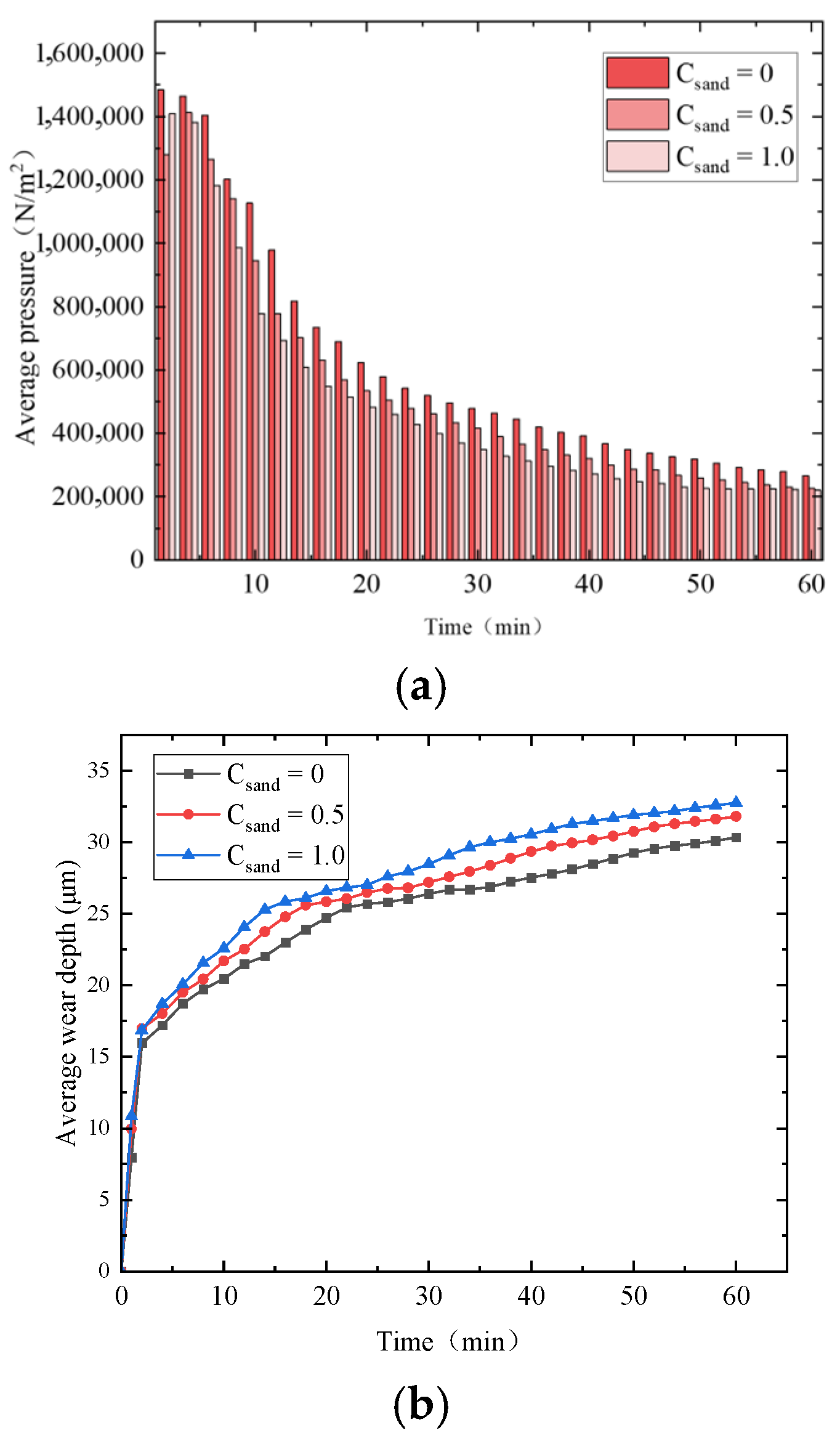
The sandstorm environment jointly influences pantograph–contact wire and wear evolution through the “external load channel (equivalent wind pressure) and interface channel ( μ ,   k corrections)”. Wind speed elevates the normal load level via equivalent dynamic pressure   p w = 1 2 ρ v 2 . The sand concentration coefficient C s a n d (included), enhances material removal efficiency under abrasive particle involvement by increasing the friction coefficient and wear coefficient (relative corrections to μ and k ). To avoid redundant presentation due to highly similar time-history curve morphologies across three wind speeds (10/20/30 m/s), this paper selects the representative curve for v = 10 m/s to illustrate the mechanism and evolution process (Figure 2). Differences at other wind speeds are summarized through aggregated indicators.
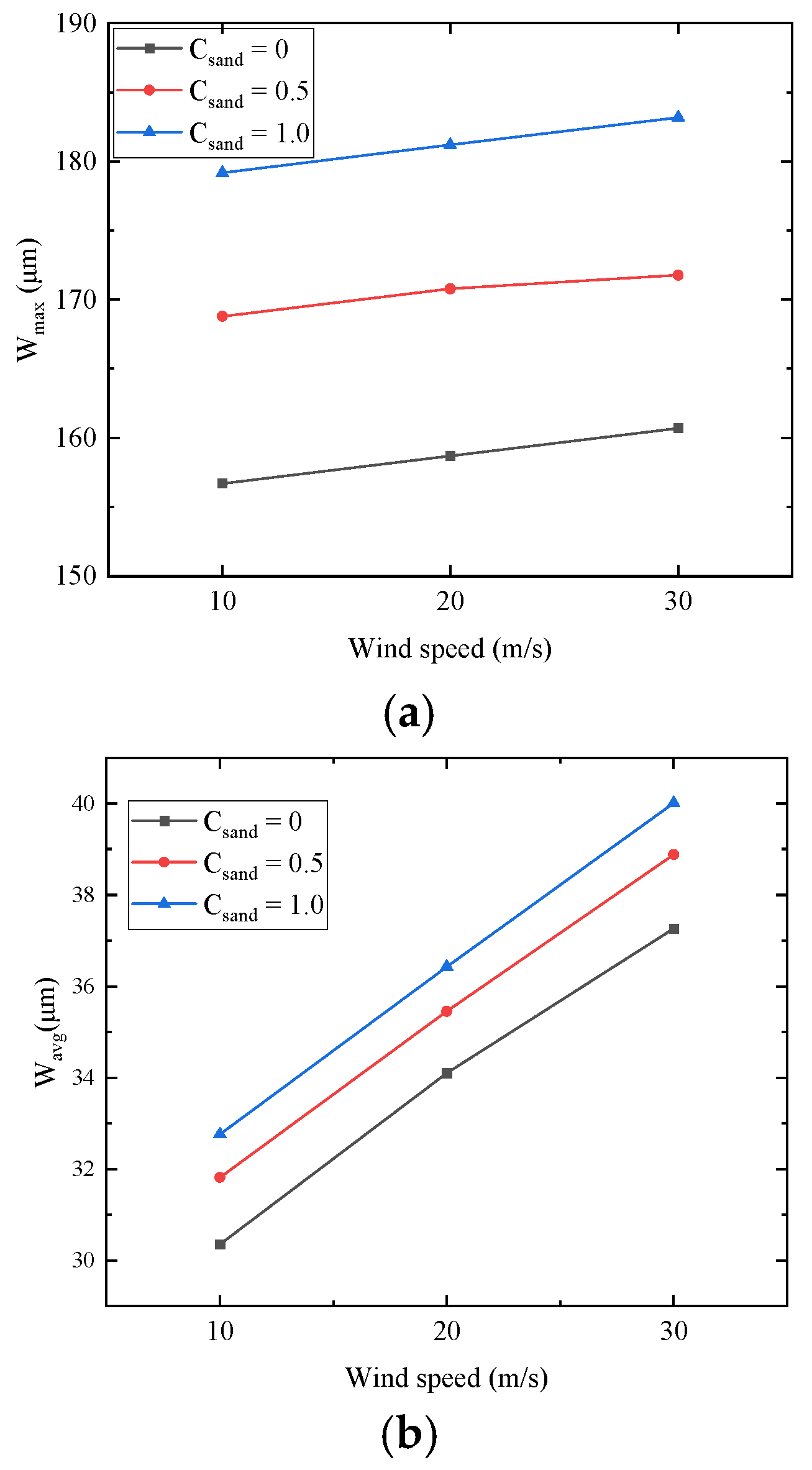
Figure 2 shows the evolution of average pressure and average wear over time for different C s a n d at   v = 10   m / s . Figure 3 displays the maximum contact pressure contour map on the carbon contact strip surface at a wind speed of 10 m/s and   C s a n d = 1. Figure 4 summarizes the results for v = at 10 m/s, 20 m/s, and 30 m/s with three types of C s a n d .
As shown in Figure 2, the average contact pressure exhibits an overall pattern of “initially elevated levels followed by a decline and stabilization” over time. This reflects localized stress concentration during the initial contact phase. As the contact patch evolves due to wear and the actual contact area expands, the load redistributes across a larger region, causing the pressure level to gradually decrease and stabilize. Concurrently, the average wear depth exhibits a monotonically increasing trend over time, displaying the typical wear characteristic of “rapid growth in the early stage followed by a gradual slowdown in the later stage.”
Comparing sand concentration effects, at identical wind speeds, increasing C s a n d shifts the wear curve upward overall and significantly increases terminal wear. This aligns with the equivalent setting where μ and k increase with C s a n d in sandstorm environments. In contrast, pressure variations across different C s a n d settings typically show smaller differences than wear variations. Sand particles may cause localized fluctuations in contact conditions while also promoting contact spot homogenization, resulting in flatter pressure curve differences. However, wear continues to amplify under the influence of higher k values.
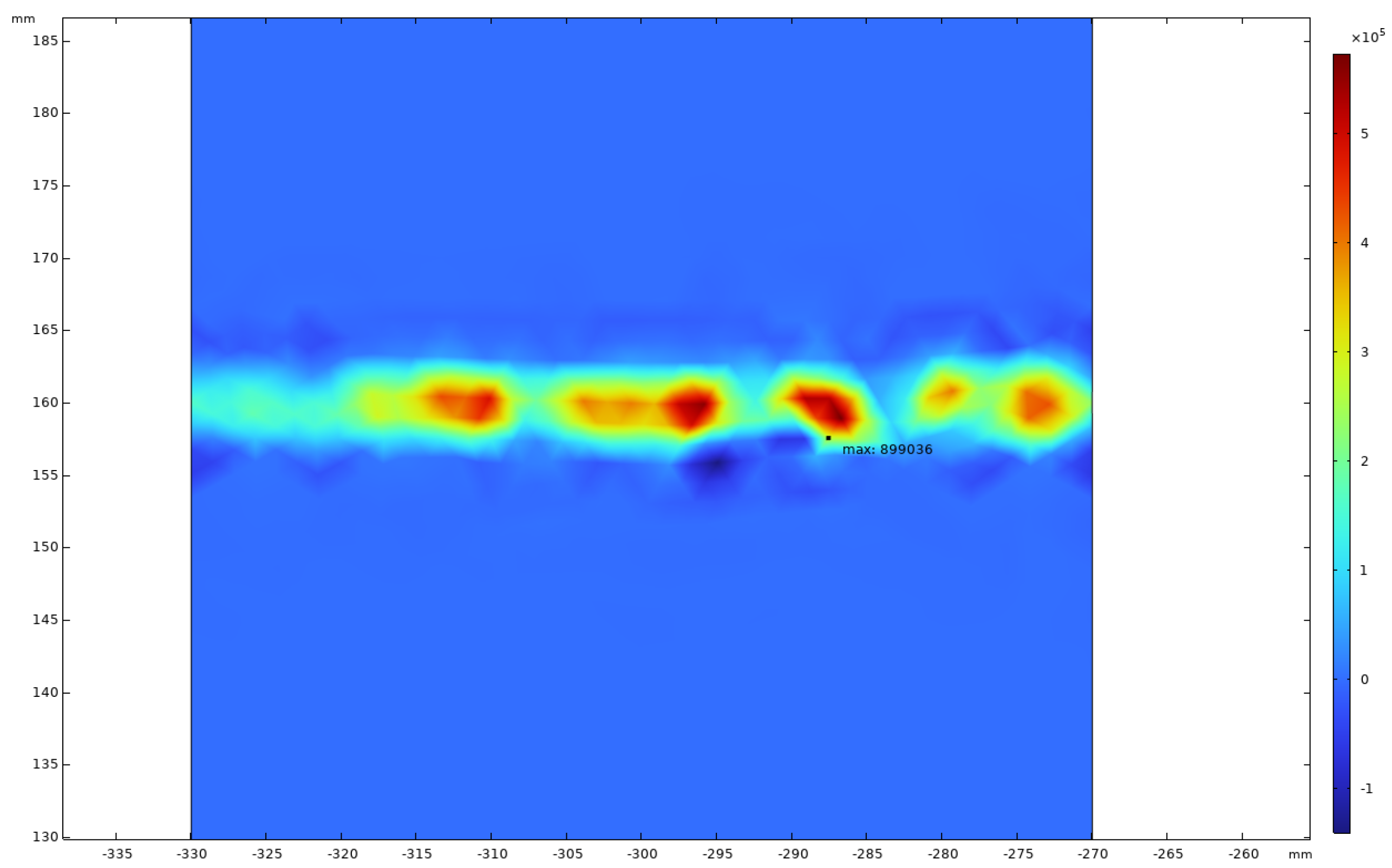
Figure 3 presents the contact pressure contour of the pantograph–catenary system at a wind speed of 10 m/s with C s a n d = 1. The figure clearly illustrates the spatial distribution of contact pressure under different sand concentration conditions. As can be directly observed, increasing sand concentration leads to a progressive localization of contact pressure and a pronounced rise in peak pressure in certain regions. This indicates that the involvement of sand particles intensifies local contact loading at the interface, thereby accelerating wear development. Figure 4 summarizes that increasing wind speed leads to an overall rise in terminal wear metrics. This indicates that enhanced equivalent external loading from higher wind speeds elevates the contact system’s load level. Combined with the effects of μ and k , this further amplifies wear accumulation. Simultaneously, at any given wind speed, increasing C s a n d consistently correlates with intensified wear. This demonstrates the dominant driving role of interfacial channels ( μ , k corrections) in wind-sand wear.

4.2. Analysis of Contact Pressure and Cumulative Wear Depth Patterns Under Icing Conditions

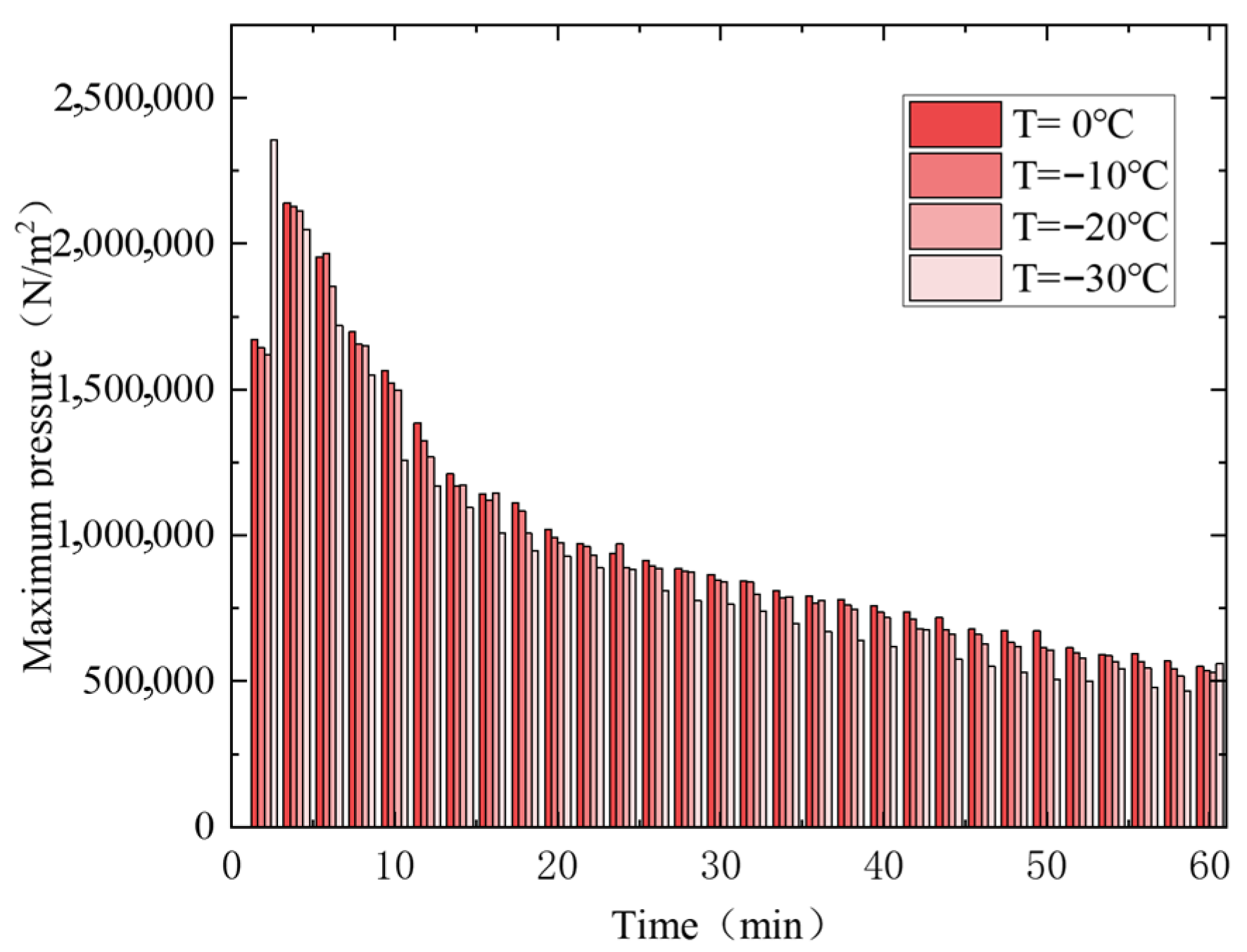
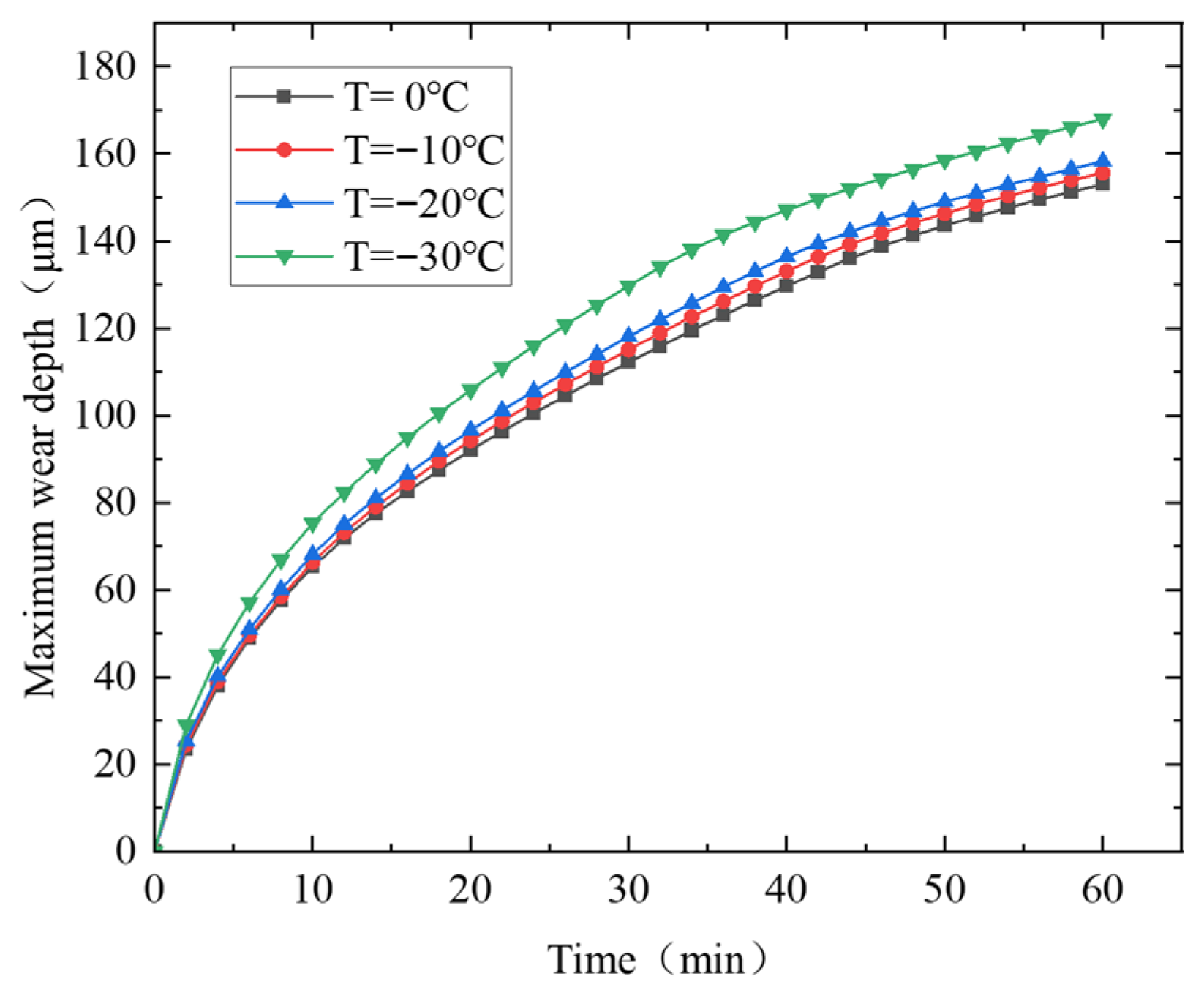
Contact patterns under icing conditions exhibit pronounced non-uniformity: actual loading often concentrates in striped or localized patchy regions, with local peaks better representing risk at the “most unfavorable locations.” Therefore, this study selects maximum contact pressure and maximum cumulative wear depth as primary comparison metrics for the iced section to characterize localized loading extremes and hotspot wear accumulation, as shown in Figure 5, Figure 6 and Figure 7.
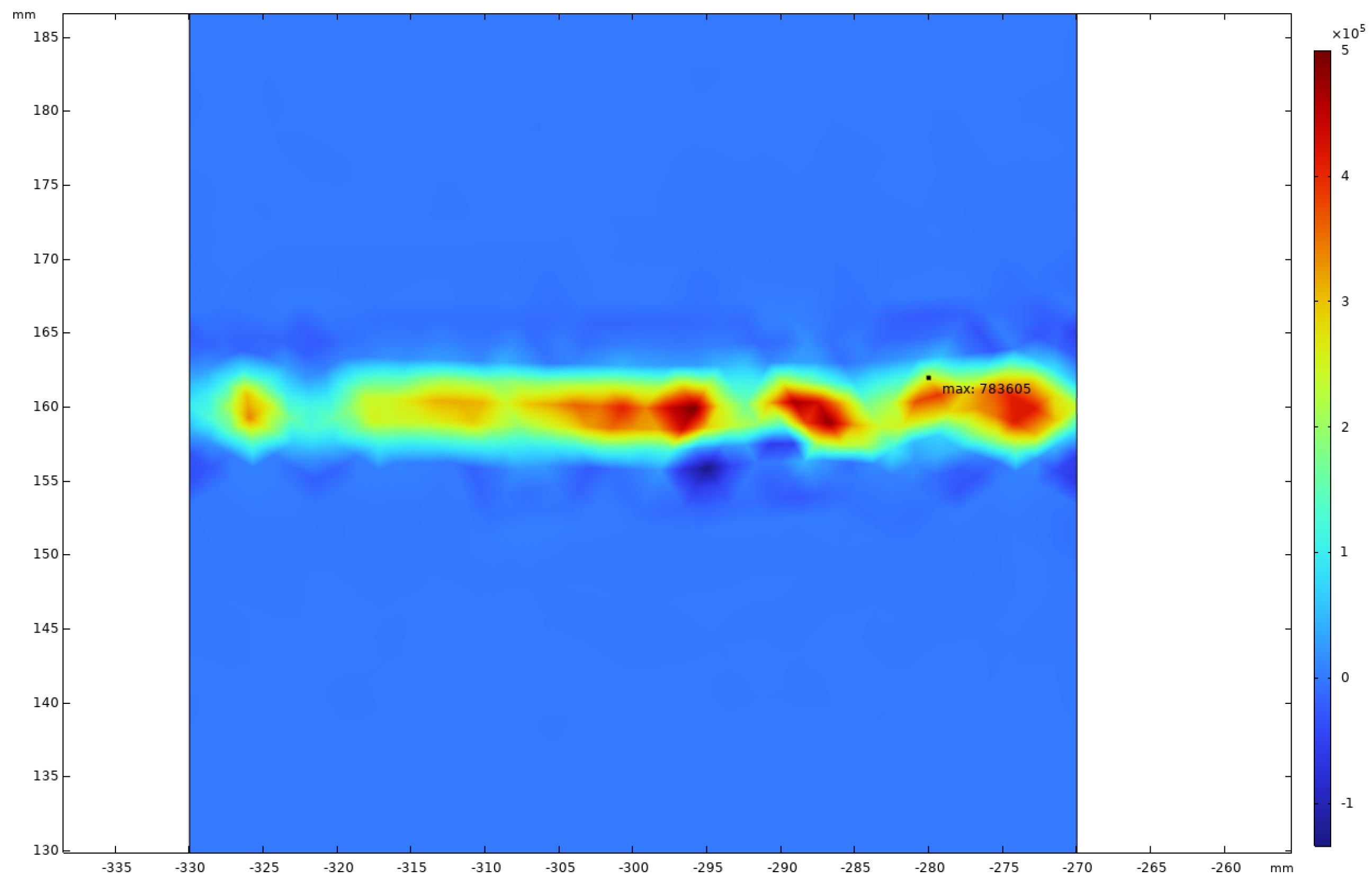
Figure 5 displays the maximum contact pressure contour map of the carbon contact strip surface at T = 30   ° C and δ i c e = 5   m m . Figure 6 indicates that under icing conditions, the maximum contact pressure of the carbon contact strip at different temperatures exhibits consistent temporal evolution patterns: initial high peaks followed by gradual attenuation and stabilization as operating time increases. The overall difference in maximum pressure between different temperatures is relatively small. This indicates that under the current model and parameter settings, the dominant influence on peak pressure stems from the initial break-in process and rapid adjustment of the contact area during the early stages of contact, while temperature variations have a relatively limited impact on the overall decay pattern.
Figure 7 shows that the maximum wear depth of the carbon contact strip at different temperatures increases monotonically over time, exhibiting a pattern of “rapid growth in the early stage and gradual slowdown in the later stage.” Simultaneously, the curves exhibit stable temperature stratification: lower temperatures (indicating stronger icing effects) correlate with greater overall maximum wear depth. The −30 °C group consistently occupies the upper envelope, the 0   ° C group shows the relatively lowest values, and the remaining temperatures fall between these two extremes. This indicates that increased icing significantly amplifies wear accumulation at the most unfavorable positions.
Combining Figure 5, Figure 6 and Figure 7 reveals that while maximum contact pressure decays over time with negligible temperature variation, maximum wear depth exhibits greater temperature sensitivity and increases markedly at lower temperatures. This indicates that wear evolution under icing conditions is not solely determined by pressure peaks but is more likely driven by combined changes in interface states—such as localized contact concentration, third-body participation, and enhanced equivalent wear capacity. Therefore, employing “maximum contact pressure and maximum wear depth” more effectively characterizes the local maximum load-bearing capacity and hotspot wear risk under icing conditions.

4.3. Analysis of Contact Pressure and Cumulative Wear Depth Patterns in Salt Spray Environments

The salt spray environment primarily alters the interface state through relative humidity R H and the salt spray intensity coefficient C l : R H modifies μ via wet film and salt film effects; this further enhances μ and k , thereby increasing tangential friction and material removal efficiency.
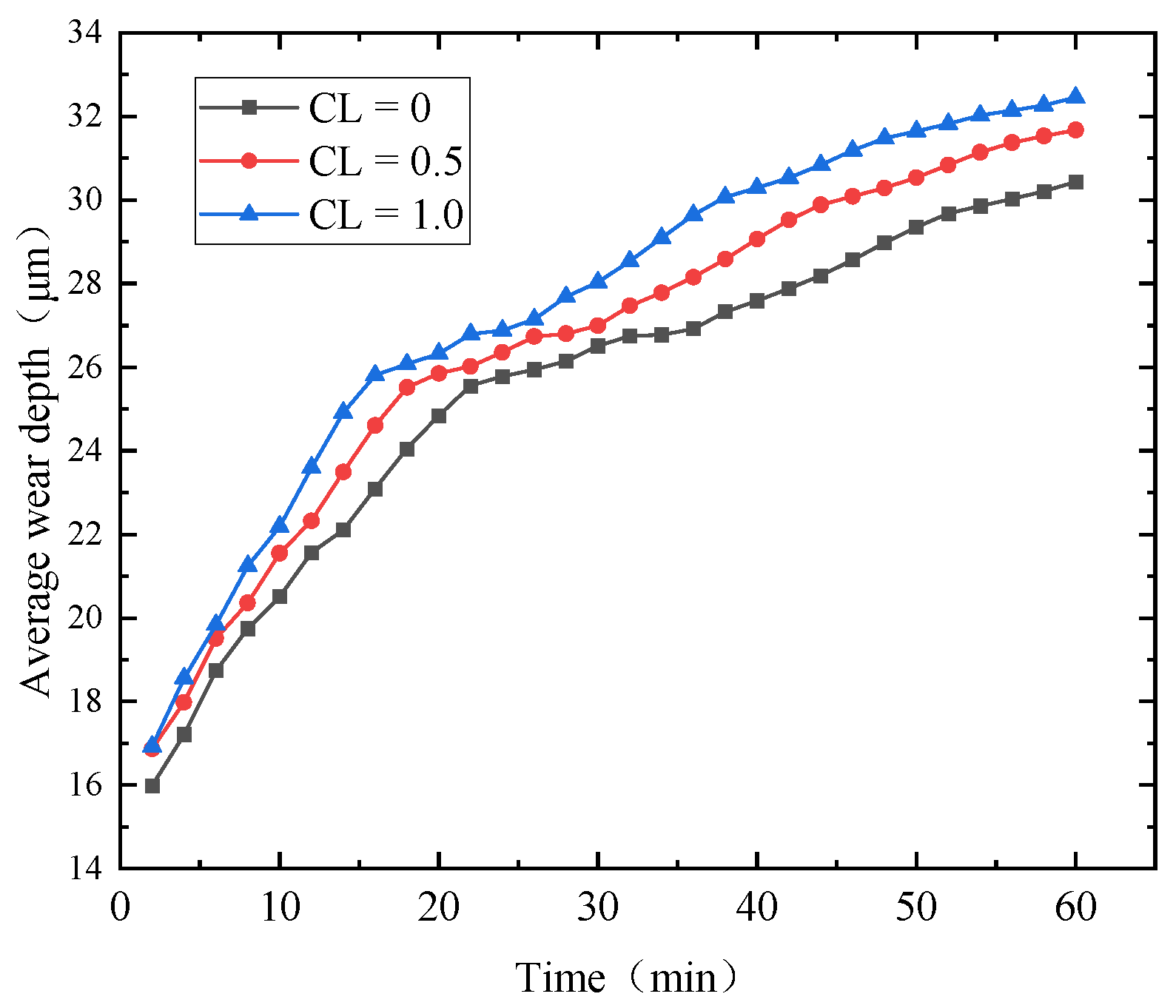
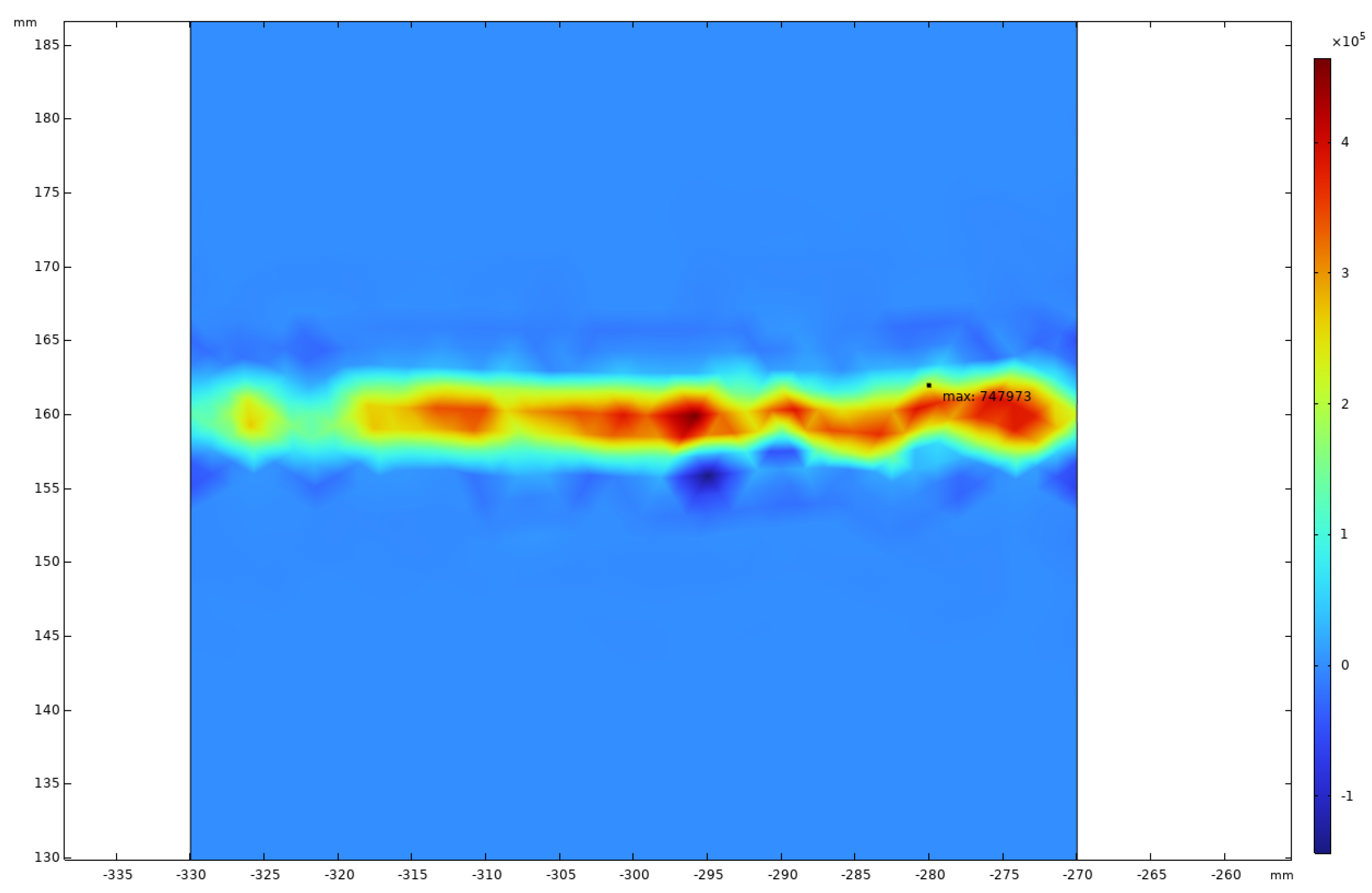
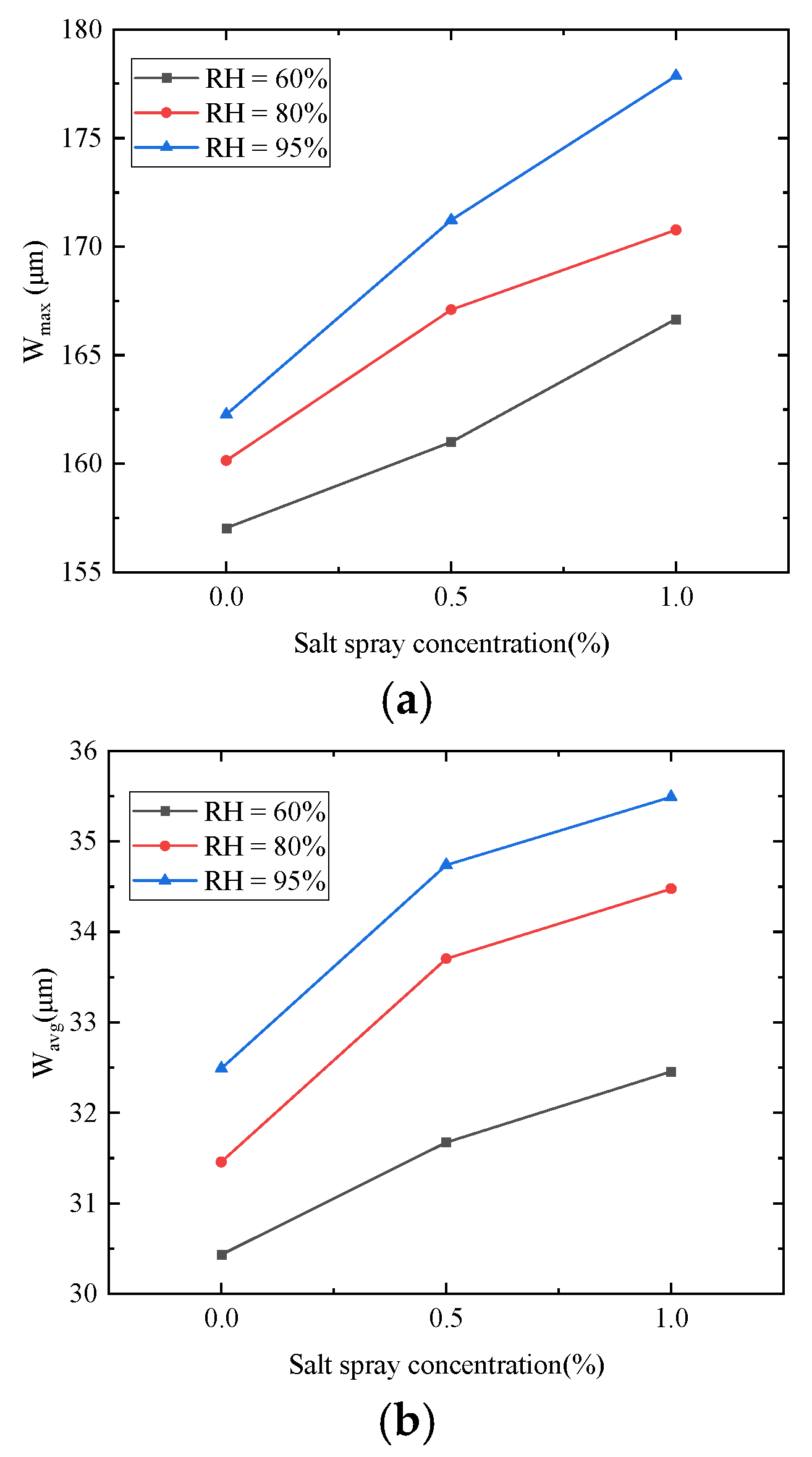
Since the time-history curves exhibit similar overall patterns under three R H conditions (60%, 80%, 95%), to avoid redundant figures, this paper uses the time-history curves for R H = 60% (Figure 8 and Figure 9) as representative examples to illustrate the evolution patterns. Figure 10 displays the maximum contact pressure contour map on the carbon contact strip surface at R H = 60% and C l = 1, while Figure 11 provides an overall summary of the aggregated metrics for different R H and C l values.
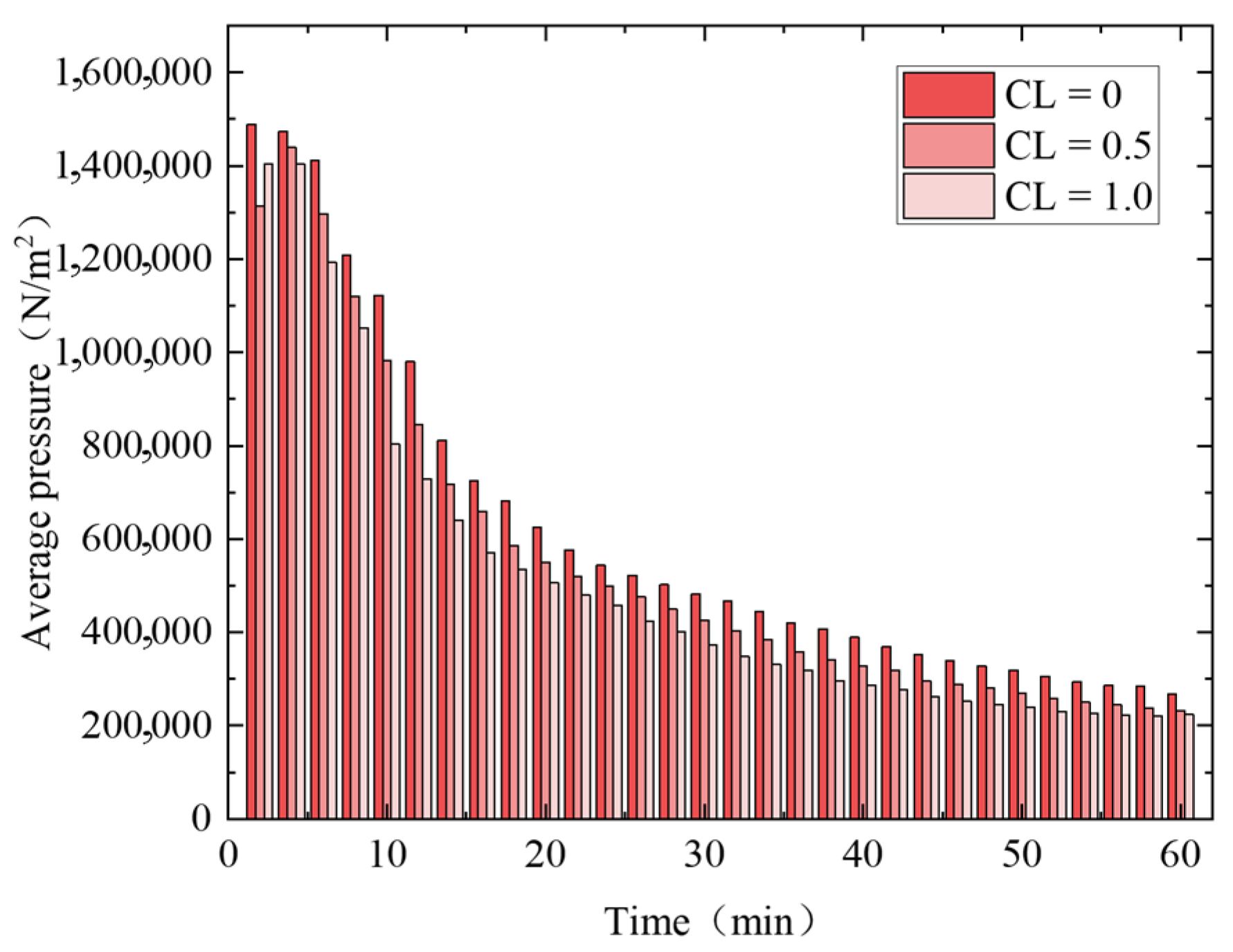
As shown in Figure 8 ( R H = 60%), the average contact pressure exhibits a high level during the initial loading phase, subsequently decaying over time and stabilizing. As depicted in Figure 9, the wear index accumulates over time with a gradually decreasing growth rate, demonstrating the typical “rapid-to-slow” evolution characteristic of wear. The curves for different salt spray intensity coefficients show stable stratification: higher C l values correlate with overall higher pressure and wear levels, with more pronounced differences observed in the early to mid-stages.
This trend aligns with the equivalent parameterization settings in this study: increased salt spray intensity corresponds to simultaneous elevations in μ and k . Among these, the increase in k more directly influences the Archard wear rate, making wear more sensitive to C l . Meanwhile, the rise in μ enhances tangential friction and may alter local micro-contact states, collectively elevating cumulative wear and local load-bearing responses.
Parametric scans comparing key wear values under different R H and C l conditions (Figure 11) reveal that salt spray intensity C l contributes more significantly to wear than relative humidity R H . As C l increases, the stepwise rise in the interfacial wear coefficient k becomes the dominant factor causing rapid failure of the pantograph–catenary system under coastal conditions.

4.4. Discussion

This study investigates the wear behavior and contact pressure variations of the pantograph–catenary system under different environmental conditions, including wind-blown sand, icing, and salt spray, using the proposed equivalent parameterization framework. Compared with related studies reported in the literature, our results elucidate how these environmental conditions affect system wear, providing important engineering implications.
  • Effects under wind-blown sand conditions:
This study shows that increasing sand concentration leads to a gradual rise in contact pressure and a pronounced increase in wear depth. This is consistent with refs. [9,13], which indicate that particle-induced friction/abrasion is a primary contributor to aggravated wear in wind-blown sand environments. Moreover, our results suggest that increasing wind speed not only elevates the contact pressure level but also significantly accelerates the wear process. This trend agrees with the findings reported in ref. [16]. Notably, in our model, the influence of sand concentration on wear accumulation appears more pronounced than that reported in previous studies.
2.
Effects under icing conditions:
Under icing conditions, the variation in contact pressure with decreasing temperature is relatively limited, whereas the wear depth exhibits a clear temperature dependence. In line with refs. [17,26], we observe that lower temperatures intensify wear, particularly at −30 °C. In addition, our results further suggest that the fluctuations in contact pressure and the aggravated wear are mainly associated with the geometric effect induced by the ice layer and the low-temperature brittleness of the material—mechanisms that have not been explicitly discussed in depth in prior studies.
3.
Effects under salt spray conditions:
In salt spray environments, increasing salt concentration markedly increases the wear depth. Ref. [23] investigated controlled-humidity conditions, and our conclusions are partly consistent under comparable cases. However, unlike humidity-only studies, we explicitly introduce salt spray concentration in the present work, and the results indicate that this factor has a more pronounced effect on wear accumulation than humidity alone. This finding provides additional theoretical support for maintenance strategies in coastal/salt spray service environments.
Although this study provides a comparative wear analysis under different environmental conditions based on the proposed equivalent parameterization framework, certain limitations remain due to model simplifications and the incomplete representation of environmental factors. Future work will focus on validating the model using higher-fidelity experimental data and further optimizing the model parameters, as well as conducting more in-depth investigations of carbon strip wear behavior under extreme climatic conditions [30].

5. Conclusions

This study proposes an equivalent parameterization modeling approach combining “external load channel + interface channel.” It maps the effects of wind-sand, icing, and salt spray environments as equivalent additional loads and μ ,   k corrections, respectively. Within a unified three-dimensional contact-wear time progression framework, this method enables comparative analysis and parameterized evaluation across multiple environmental conditions. Under sandstorm conditions, increased sediment concentration significantly elevates wear levels, indicating that wear growth is primarily driven by enhanced interfacial removal capacity. Increased wind speed amplifies overall terminal wear levels, reflecting the magnifying effect of enhanced external load pathways on wear accumulation. In icing conditions, maximum contact pressure decays over time with negligible temperature variation, yet hotspot wear increases markedly at low temperatures. This indicates that icing-induced wear is more sensitive to changes in interface parameters, and peak pressure is not the sole determinant of wear severity. Employing extreme value metrics to characterize worst-case risks holds greater engineering significance. In salt spray environments, the coupled effect of relative humidity and salt spray intensity coefficients shifts overall wear levels upward, making wear more sensitive to salt spray intensity.

Author Contributions

Conceptualization and methodology, B.W. and F.D.; data curation and analysis, K.Z. and J.W.; investigation and validation, H.Z., Y.S. and Z.L.; writing and editing, K.Z. All authors have read and agreed to the published version of the manuscript.

Funding

The funding provided by the National Natural Science Foundation of China for General Programs. The funding number is 52277148.

Data Availability Statement

The data presented in this study are available on request from the corresponding author due to data confidentiality requirements.

Conflicts of Interest

The authors declare no conflict of interest.

References

  1. Huang, M.; Yang, B.; Liao, Z.; Lü, P.; Xiao, S.; Yang, G.; Zhu, T. Review of Research on Pantograph Slider Wear: A Review. J. Mech. Eng. 2025, 61, 193–213. [Google Scholar]
  2. Zhang, Y.; Li, C.; Pang, X.; Song, C.; Ni, F.; Zhang, Y. Evolution processes of the tribological properties in pantograph/catenary system affected by dynamic contact force during current-carrying sliding. Wear 2021, 477, 203809. [Google Scholar] [CrossRef]
  3. Huang, C.; Wang, A.; He, Y.; Gao, F. Analysis of Abnormal Wear and High-Frequency Vibration Mechanism of Pantograph Carbon Contact Strips. Railw. Stand. Des. 2021, 65, 149–156+163. [Google Scholar] [CrossRef]
  4. Ren, W.; Chen, G. Experimental study on the wear mechanism of the contact line in rigid pantograph-catenary systems. Tribol. Int. 2023, 187, 108739. [Google Scholar] [CrossRef]
  5. Simarro, M.; Postigo, S.; Casanueva, C.; Rodríguez-Tembleque, L.; Castillo, J.J. Influence of main operating conditions on contact wire wear of rigid catenary lines. Tribol. Int. 2024, 196, 109708. [Google Scholar] [CrossRef]
  6. Yang, Z.; Huang, Z.; Pan, L.; Huang, C.; Xing, T.; Fu, R.; Zhang, H.; Wei, W.; Wu, G. Analysis and prediction of uneven wear in metro pantograph-rigid catenary system. Tribol. Int. 2024, 198, 109925. [Google Scholar] [CrossRef]
  7. Wu, G.; Dong, K.; Xu, Z.; Xiao, S.; Wei, W.; Chen, H.; Li, J.; Huang, Z.; Li, J.; Gao, G.; et al. Pantograph–catenary electrical contact system of high-speed railways: Recent progress, challenges, and outlooks. Railw. Eng. Sci. 2022, 30, 437–467. [Google Scholar] [CrossRef]
  8. Xie, Q.; Zhi, X. Wind tunnel test of an aeroelastic model of a catenary system for a high-speed railway in China. J. Wind. Eng. Ind. Aerodyn. 2019, 184, 23–33. [Google Scholar] [CrossRef]
  9. Luo, Q.; Mei, G.; Chen, G.; Zhang, W. Study of pantograph-catenary system dynamic in crosswind environments. Veh. Syst. Dyn. 2024, 62, 813–836. [Google Scholar] [CrossRef]
  10. Li, Y.H.; Cao, Y.; Wu, Y.X.; Bai, X.N.; Mao, J.W. Pantograph-catenary contact reliability analysis under crosswind. Int. J. Struct. Integr. 2021, 12, 629–644. [Google Scholar] [CrossRef]
  11. Yao, Y.; Zhou, N.; Mei, G.; Zhang, W. Dynamic Analysis of Pantograph-Catenary System considering Ice Coating. Shock. Vib. 2020, 2020, 8887609. [Google Scholar] [CrossRef]
  12. Huang, M.; Yang, B.; Rong, Y.; Zhao, L.; Xiao, S. Study on friction and wear properties of copper-impregnated carbon slide plate under different humidity conditions. Tribol. Trans. 2023, 66, 953–964. [Google Scholar] [CrossRef]
  13. Shen, M.; Chen, S.; Wu, H.; Xiao, L.; Wang, N.; Ji, D. Research Progress on Material Current-Carrying Friction Behavior Under Service Environment. Chin. J. Mech. Eng. 2026, 37, 2–13+21. [Google Scholar]
  14. Zhi, X.; Zhou, N.; Cheng, Y.; Wang, X.; Wei, H.; Chen, G.; Zhang, W. Effect and behaviors of ambient humidity on the wear of metal-impregnated carbon contact strip in pantograph-catenary system. Tribol. Int. 2023, 188, 108864. [Google Scholar] [CrossRef]
  15. Feng, D.; Yu, Q.; Sun, X.; Zhu, H.; Lin, S.; Liang, J. Risk assessment for electrified railway catenary system under comprehensive influence of geographical and meteorological factors. IEEE Trans. Transp. Electrif. 2021, 7, 3137–3148. [Google Scholar] [CrossRef]
  16. Feng, X. Optimal Surface Treatment for Aluminum Alloy Pantograph-Catenary Components in High-Wind and Sand Regions. Surf. Technol. 2016, 45, 84–88. [Google Scholar] [CrossRef]
  17. Huang, G.; Ma, T.; Liu, Y.; Li, Z.; Gao, G.; Wu, G. Effect of ice coating on thermal characteristics of pantograph-catenary arc and power quality of traction drive system. Electr. Power Syst. Res. 2026, 254, 112665. [Google Scholar] [CrossRef]
  18. Gao, J.; Zhou, Y.; Cheng, Y.; Li, F.; Zhu, Z.; Zhou, N.; Miao, B. Dynamical Current-Collection and Service Performance of Pantograph-Catenary System in Complex Environment. Int. J. Veh. Struct. Syst. (IJVSS) 2025, 17, 193. [Google Scholar]
  19. Wei, X.K.; Meng, H.F.; He, J.H.; Jia, L.M.; Li, Z.G. Wear analysis and prediction of rigid catenary contact wire and pantograph strip for railway system. Wear 2020, 442–443, 203118. [Google Scholar] [CrossRef]
  20. Wu, G.; Gao, G.; Wei, W.; Yang, Z. Friction and wear of pantograph and catenary. In the Electrical Contact of the Pantograph-catenary System: Theory and Application; Springer: Singapore, 2019; pp. 71–107. [Google Scholar]
  21. Song, Y.; Wang, H.; Liu, Z. An investigation on the current collection quality of railway pantograph-catenary systems with contact wire wear degradations. IEEE Trans. Instrum. Meas. 2021, 70, 9003311. [Google Scholar] [CrossRef]
  22. Zhao, Y.; Wei, Y.; Fan, F.; Yang, Q.; Xiong, X.; Mao, Y. Reliability Modeling of Transmission Lines Considering Micro-vibration Wear and Wind-Rain Loads. Prot. Control Electr. Syst. 2015, 43, 19–25. [Google Scholar]
  23. Lou, W.; Zhou, W.; Bian, R.; Chen, K.; Huang, Z. Wind-induced resonance response characteristics and wind vibration coefficient analysis of transmission line jumpers. Vib. Shock 2024, 43, 1–8. [Google Scholar]
  24. Zhou, N.; Cheng, Y.; Zhang, X.; Zhi, X.; Zhang, W. Wear rate and profile prediction of Cu-impregnated carbon contact strip for high-speed pantograph. Wear 2023, 530–531, 205056. [Google Scholar] [CrossRef]
  25. Liu, X.; Li, Z.; Hu, M.; Zhou, C.; Xiao, Q.; Yang, W.; Chen, D. Research on the wear properties of carbon contact strips and contact wires at frigid temperatures. Wear 2021, 486–487, 204122. [Google Scholar] [CrossRef]
  26. Zhang, H.; Wei, W.; Pan, L.; Yang, Z.; Huang, G.; Liu, Y.; Chen, X.; Yang, Z.; Wu, G. Ice-covered environmental adaptability assessment for overhead contact system in high-speed railways. Chin. J. Electr. Eng. 2024, 10, 70–79. [Google Scholar] [CrossRef]
  27. Yang, Z.; Yang, Z.; Huang, G.; Chen, X.; Ma, T.; Zhang, H.; Wei, W.; Wu, G. Effect of ice-covered catenary on dynamic interactions of pantograph-catenary system and limited speed of trains. Cold Reg. Sci. Technol. 2024, 228, 104331. [Google Scholar] [CrossRef]
  28. Shen, M.X.; Ji, D.H.; Hu, Q.; Xiao, L.; Li, Q.P. Current-carrying tribological behavior of C/Cu contact pairs in extreme temperature and humidity environments for railway catenary systems. Sci. China Technol. Sci. 2024, 67, 2537–2548. [Google Scholar] [CrossRef]
  29. Li, B.; Zhao, Y.; Ji, R.; Dong, H.; Wei, N. Arc dynamics and erosion behavior of pantograph-catenary contacts under controlled humidity levels. Sensors 2025, 25, 5208. [Google Scholar] [CrossRef]
  30. Zou, D.; Zhong, S.; Geng, Y.; Cheng, Y.; Mo, Z.; Xu, K.; Song, B.; Cheng, B.; Zhang, S.; Wang, Z.; et al. Analysis of Abnormal Wear in Urban Rail Transit Pantograph-Catenary Systems and Research on Prevention Technologies. Trans. Chin. Soc. Mech. Eng. 2023, 59, 152–178. [Google Scholar]
Figure 1. Physical object and model image. (a) Physical model of the pantograph–catenary. (b) Pantograph–catenary system structure. (c) Three-dimensional geometric model of carbon contact strip and contact wire system.
Vehicles 08 00053 g001
Figure 2. Average pressure and average wear depth maps on the carbon contact strip surface at wind speed 10 m/s under different C s a n d values. (a) Average pressure distribution. (b) Average wear depth distribution.
Vehicles 08 00053 g002
Figure 3. Maximum contact pressure contour map on the carbon contact strip surface at wind speed 10 m/s and   C s a n d = 1.
Vehicles 08 00053 g003
Figure 4. Overview of maximum and average wear at different wind speeds and sediment concentrations. (a) Maximum wear map. (b) Average wear map.
Vehicles 08 00053 g004
Figure 5. Maximum contact pressure contour map on the carbon contact strip surface at T = 30   ° C and δ i c e = 5   m m .
Vehicles 08 00053 g005
Figure 6. Comparison of maximum contact pressure on the carbon contact strip surface at different temperatures under icing conditions.
Vehicles 08 00053 g006
Figure 7. Comparison of maximum wear depth on the carbon contact strip surface at different temperatures under icing conditions.
Vehicles 08 00053 g007
Figure 8. Comparison of average contact pressure on carbon contact strip surfaces at 60% relative humidity ( R H ) under different salt spray concentration coefficients.
Vehicles 08 00053 g008
Figure 9. Comparison of average wear depth on the carbon contact strip surface at 60% relative humidity ( R H ) under different salt spray concentration coefficients.
Vehicles 08 00053 g009
Figure 10. Contour plot of maximum contact pressure on the carbon contact strip surface at R H = 60% and C l = 1.
Vehicles 08 00053 g010
Figure 11. Overview of maximum and average wear under different operating conditions in a salt spray environment. (a) Maximum wear map. (b) Average wear map.
Vehicles 08 00053 g011
Table 1. Material Parameters of Carbon Contact Strip and Contact Wire.
Density Poisson’s RatioYoung’s Modulus
Contact Line8850 kg/m30.33110 GPa
Carbon Contact Strip2400 kg/m30.310 GPa
Table 2. Qualitative comparison of modeling strategies for pantograph–catenary wear assessment.
AspectEquivalent Parameterization Framework (This Work)Strongly Coupled Multiphysics ModelSingle-Factor/Isolated-Condition Model
Primary goalEfficient cross-environment comparison using unified outputs ( p m a x , w m a x )High-fidelity reproduction of coupled mechanismsFast prediction under one environment
Computational costLow–mediumHighLow
InputsEquivalent loads + corrected μ , kMultiple coupled fields and parametersLimited parameters
Cross-environment consistencyHigh (same geometry/material/load/kinematics)Medium (often requires rebuilding coupling settings)Low (assumptions vary by case)
Mechanism resolutionMedium (net-effect representation via μ , k)HighLow–medium
Best use scenarioEngineering screening, sensitivity ranking, comparative evaluationMechanism-level investigation, local physics validationRapid estimation for a single condition
Table 3. Sandstorm environment parameters. (a) Operating parameter range. (b) Wind load equivalent wind pressure. (c) Equivalent correction for wind and sand on μ and k .
(a)
Parameter NameSymbolValue RangeUnitDescription
Wind Speed U 0/10/20/30m/sNo wind to strong wind conditions
Air Density p 1.225 k g / m 3 Standard temperature and pressure (fixed)
Equivalent wind pressure p w See (Table 3b) P a Equivalent applied to the wind-exposed surface
Wind and Sand Strength Coefficient C s a n d 0/0.5/1.0No sand to strong sandstorm (dimensionless)
Contact stateSliding contactNo consideration for complete disengagement and loss of pressure
(b)
Parameter NameSymbolValue RangeUnitDescription
Equivalent Wind Pressure Expression p w p w = 1 2 ρ U 2 P a Used to characterize aerodynamic additional loads
U (m/s)0102030
p w ( P a ) ( p = 1.225)061.25245.00551.25
(c)
C s a n d 00.51.0
α s a n d (for μ )1.001.151.30
β s a n d (for k )1.001.251.50
Note: α s a n d = 1 + a C s a n d , β s a n d = 1 + b C s a n d , μ = μ 0 ( 1 + a C s a n d ), k = k 0 ( 1 + b C s a n d ), where   a , b is the equivalent correction coefficient. This paper adopts a = 0.3 and b = 0.5 as baseline settings (same applies below). Wind loads are applied as equivalent dynamic pressure to the wind-exposed surface for comparative analysis.
Table 4. Icing environment parameters. (a) Operating condition parameter ranges. (b) Temperature correction factor. ( b 1 ) Temperature-dependent correction factors for friction and wear coefficients in icing environments. (c) Ice thickness correction factor. ( c 1 ) Correction factors for friction and wear coefficients induced by ice thickness variations in icing conditions.
(a)
Parameter NameSymbolValue RangeUnitDescription
Ambient Temperature( T )0/−10/−20/−30°C Typical cold-region operating conditions
Equivalent Ice Thickness δ i c e 0/0.5/1.0/2.0mmLight to heavy icing (equivalent parameters)
Contact ConditionSliding contactComplete disengagement and loss of pressure not considered
(b)
Parameter NameSymbolValue RangeUnitDescription
Temperature Correction Factor (Friction) α T ( T ) See Table 4 b 1 Relative correction for friction changes due to low temperature
Temperature Correction Factor (Wear) β T ( T ) See Table 4 b 1 Relative correction for wear variation due to low temperature
( b 1 )
T   ( ° C ) 0−10−20−30
α T 1.001.051.101.15
β T 1.001.051.101.20
(c)
Parameter NameSymbolValue RangeUnitDescription
Icing Correction Factor (Friction) α i c e ( δ i c e ) See Table 4 c 1 Relative correction for interfacial effects caused by icing
Icing Correction Factor (Wear) β i c e ( δ i c e ) See Table 4 c 1 Relative correction for wear variation due to icing
( c 1 )
δ i c e (mm)00.51.02.0
α i c e 1.001.021.051.10
β i c e 1.000.951.001.10
Table 5. Salt spray environment parameters. (a) Operating condition parameter ranges. (b) Equivalent humidity correction for μ . (c) Equivalent correction for salt spray intensity for μ and k .
(a)
Parameter NameSymbolValue RangeUnitDescription
Relative Humidity ( R H ) 60/80/95%Humid to high-humidity environments
Salt Spray Concentration Parameters ( C l ) 0/0.5/1.0%No salt spray to strong salt spray
Contact StateSliding contactNo consideration for complete disengagement under pressure loss
(b)
R H ( % ) 608095
α R H 1.121.161.19
(c)
Cl (%)00.51.0
α C l (for μ )1.001.151.30
β C l (for k ) 1.001.201.40
Note: Among these, α R H = 1 + a R H R H 100 and a R H are set to 0.2; μ = μ 0 ( 1 + a R H R H 100 +   a C l C l ) and   a C l are set to 0.3; α C l = 1 +   a C l C l and β C l = 1 +   b C l C l are set to 0.4; and   b C l is set to 0.4. Therefore, k = k 0 ( 1 + 0.4 C l ).
Disclaimer/Publisher’s Note: The statements, opinions and data contained in all publications are solely those of the individual author(s) and contributor(s) and not of MDPI and/or the editor(s). MDPI and/or the editor(s) disclaim responsibility for any injury to people or property resulting from any ideas, methods, instructions or products referred to in the content.