3.1.1. Analysis of Soil Pressure-Sinkage Characteristics
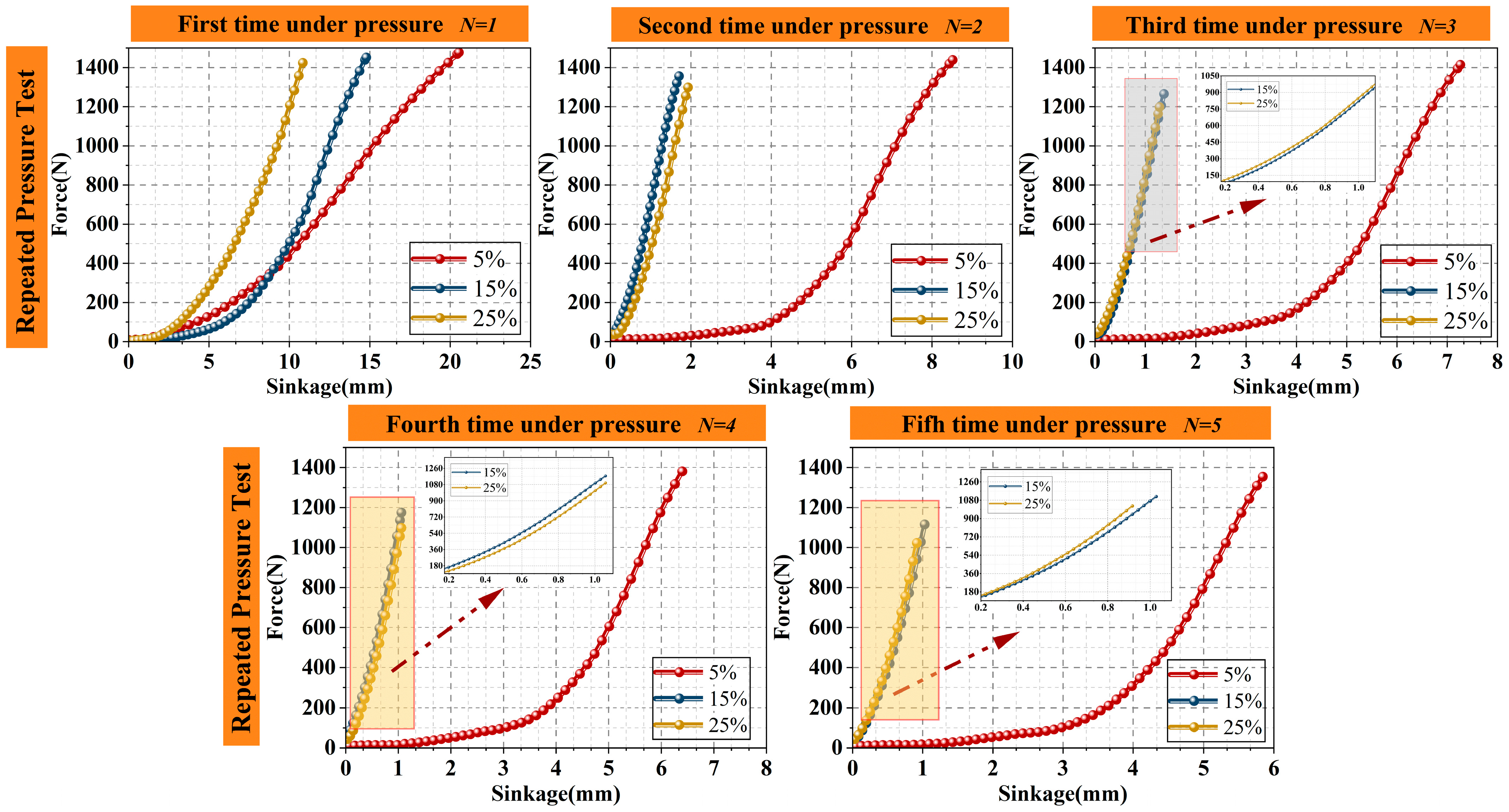
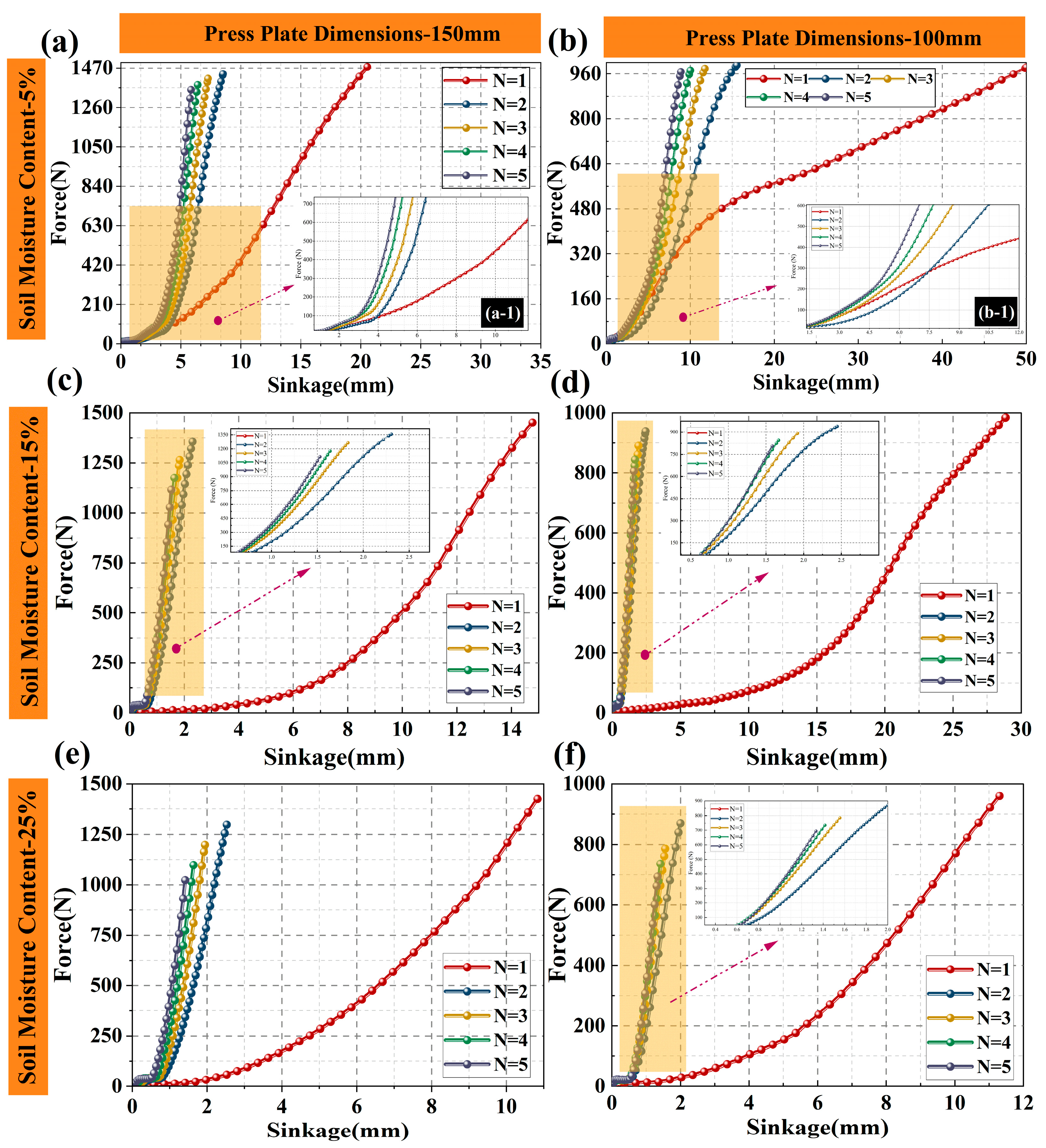
Figure 6 shows the load–sinkage relationship curves of soil samples with different moisture contents under repeated loading (N = 1~5) using a 150 mm circular plate. During the first loading cycle (N = 1), the soil with low moisture content (5%) exhibited significant sinkage exceeding 10 mm under a relatively small load (approximately 450 N), indicating a loose structure and weak interparticle cohesion. Initial loading readily induced shear failure and rapid compaction, reflecting poor overall stability and low bearing capacity. In contrast, the curves for soils with higher moisture content (15% and 25%) showed steeper slopes during the first loading, requiring higher loads to achieve the same sinkage depth. This effect was particularly pronounced at 25% moisture content, suggesting that moderate water content promotes particle rearrangement and the formation of a denser, more stable structure, thereby enhancing initial bearing capacity [
31].
The repeated loading process revealed significant compaction effects and evolutionary patterns. During the repeated loading phase (N = 2~5), the load–sinkage curves of the soil with 5% moisture content remained relatively flat, indicating that the soil skeleton remained weak after the initial structural failure, and continued to undergo substantial plastic deformation under loading [
32]. In contrast, the soils with 15% and 25% moisture content exhibited notable strengthening effects. At the beginning of the second loading cycle, the stiffness of the curves increased markedly—the load required to achieve the same sinkage depth rose, while the cumulative plastic deformation under the same load level decreased progressively. In particular, in the N = 3~5 curves, the slope increased sharply, and the curves shifted toward higher load levels. As the number of loading cycles increased, the load–sinkage curves of the soils with 15% and 25% moisture content became nearly identical, indicating the formation of a stable and dense load-bearing structure and a significant enhancement in mechanical response. This demonstrates that near the optimal moisture content, repeated loading effectively promotes particle rearrangement and densification, substantially improving the soil’s stability and bearing capacity.
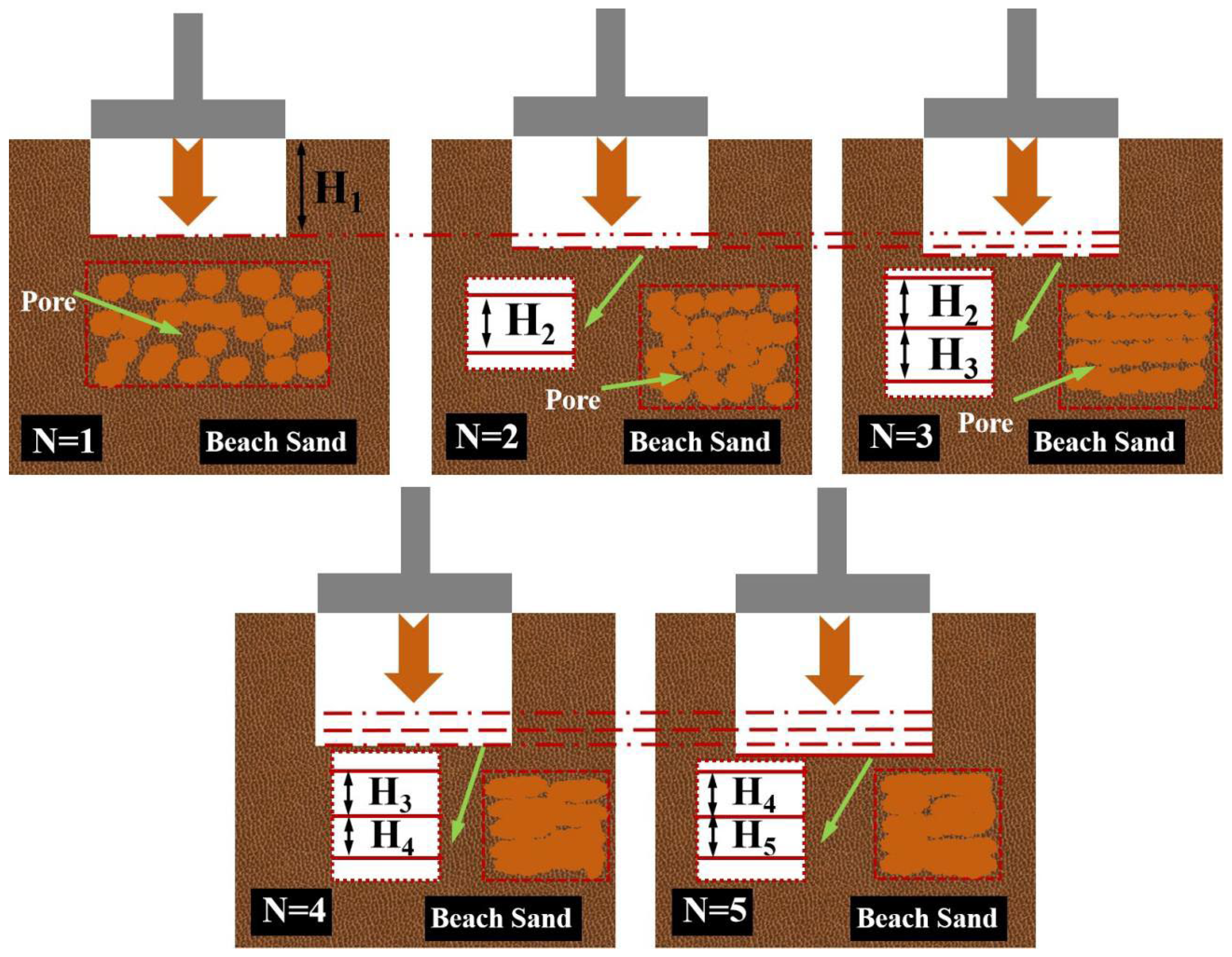
The simplified model of the plate sinkage process under repeated loading, as shown in
Figure 7, demonstrates that the mechanical response and deformation evolution can be categorized into three progressive stages with increasing number of loading cycles (N): an initial compression and particle rearrangement phase (N = 1); followed by a densification and stable skeleton formation phase (N = 2); and finally a shakedown and stabilized elastoplastic state phase (N = 3, 4, 5). The figure illustrates the corresponding evolution of both macroscopic mechanical behavior and meso-scale structure throughout these stages, highlighting characteristic nonlinearity and cumulative plastic deformation.
During the first loading stage (N = 1), as illustrated by the initial state of the beach sand under compression, the soil skeleton was highly loose with high porosity, and interparticle contacts were primarily point-to-point with weak cohesion. Under external load, intense particle displacement occurred, large pores collapsed rapidly, and significant irreversible plastic deformation was observed, resulting in the maximum sinkage depth H1. The mechanical behavior in this stage was dominated by global shear failure and initial compaction, with energy dissipation mainly through friction. Upon entering the second loading stage (N = 2), the soil structure had already undergone considerable alteration from the first cycle: porosity decreased, interparticle contact points increased, and a force chain network began to develop. As shown in the corresponding figure, particles rearranged into a more stable configuration, greatly reducing the remaining compressible pores and enhancing interparticle frictional resistance. Consequently, even under the same external load, the additional plastic sinkage H2 was much smaller than H1 (H2 << H1). This stage represents a critical period for the construction of a load-bearing skeleton, during which the soil transitions from a “loose state” to a “dense state” with a notable increase in stiffness.
In the third and subsequent loading stages (N = 3, 4, 5), the soil deformation entered a shakedown state. As indicated by the gradually stabilizing morphology of the “Beach Sand” from N = 3 to N = 5, the spatial distribution of particles became steady, and the force chains were optimized and homogenized. Macroscopically, the incremental plastic deformation per cycle became minimal and consistent, with the sinkage depths following the sequence H3 > H4 > H5, reflecting a relatively stable elastoplastic state. At this point, the applied load was primarily borne by the stabilized skeleton, and the soil exhibited significant elastic recovery and cyclic stability.
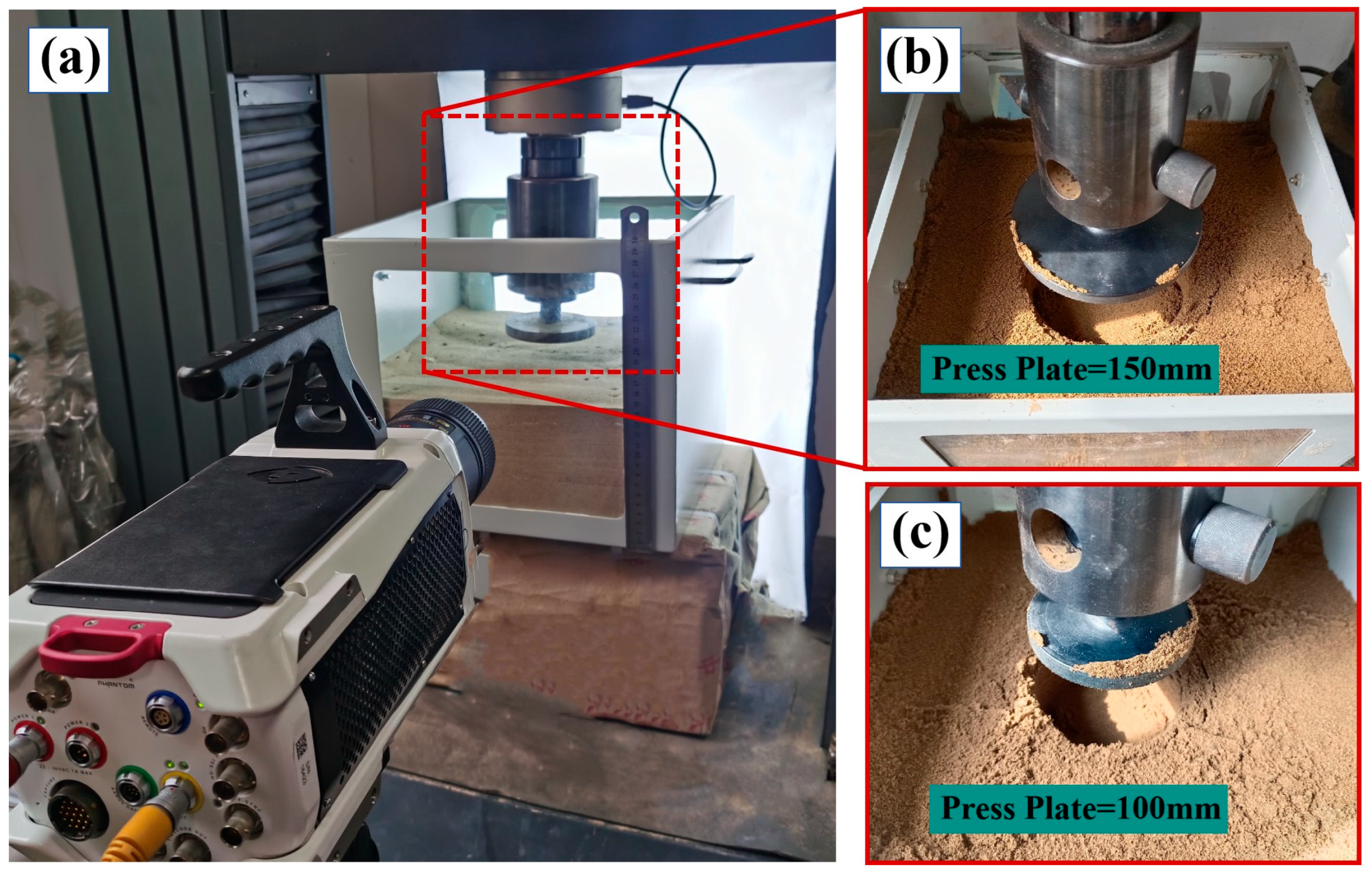
A systematic analysis was conducted on the pressure-sinkage characteristics of the soil under three moisture content conditions (5%, 15%, and 25%) and two plate sizes (D = 150 mm and 100 mm). The load–sinkage curves in
Figure 8 clearly demonstrate that, under the same moisture content, the plate size influences the mechanical response of the soil. When achieving the same sinkage depth, the load required for the larger plate (D = 150 mm) is substantially greater than that for the smaller plate (D = 100 mm). For example, as shown in the figure, at 5% moisture content, the load corresponding to a sinkage depth of 10 mm is higher for the 150 mm plate than for the 100 mm plate. Conversely, under the same applied load, the sinkage depth generated by the larger plate is much smaller than that of the smaller plate. The curves show that the load–sinkage curve of the larger plate consistently lies above that of the smaller plate and exhibits a steeper slope, indicating higher stiffness and bearing capacity.
This phenomenon can be explained by Boussinesq’s elastic theory: when a load is transferred into the soil through a plate, stress is distributed and dissipates with depth. Due to its larger contact area, the large plate (D = 150 mm) induces stress to greater depths and tends to cause general shear failure. The deeper influence mobilizes a stronger soil mass to jointly resist the load [
33], resulting in smaller deformation per unit pressure and a curve that exhibits higher stiffness and ultimate bearing capacity. In contrast, the small plate (D = 100 mm) influences a shallower zone with significant stress concentration, making it more prone to local shear or punching failure [
34]. Under repeated loading, the shallow soil beneath the small plate is more rapidly compacted to failure [
35,
36]. Furthermore, as the number of loading cycles increases (from N = 1 to N = 5), all curves show a noticeable strengthening effect, which is particularly pronounced under high moisture content and large plate conditions. The curve for N = 5 is shifted upward and exhibits a steeper slope compared to N = 1, indicating that the soil gradually densifies and its structure stabilizes under repeated loading. The coupling of this size effect and the compaction effect collectively influences the long-term mechanical behavior of the soil under load.
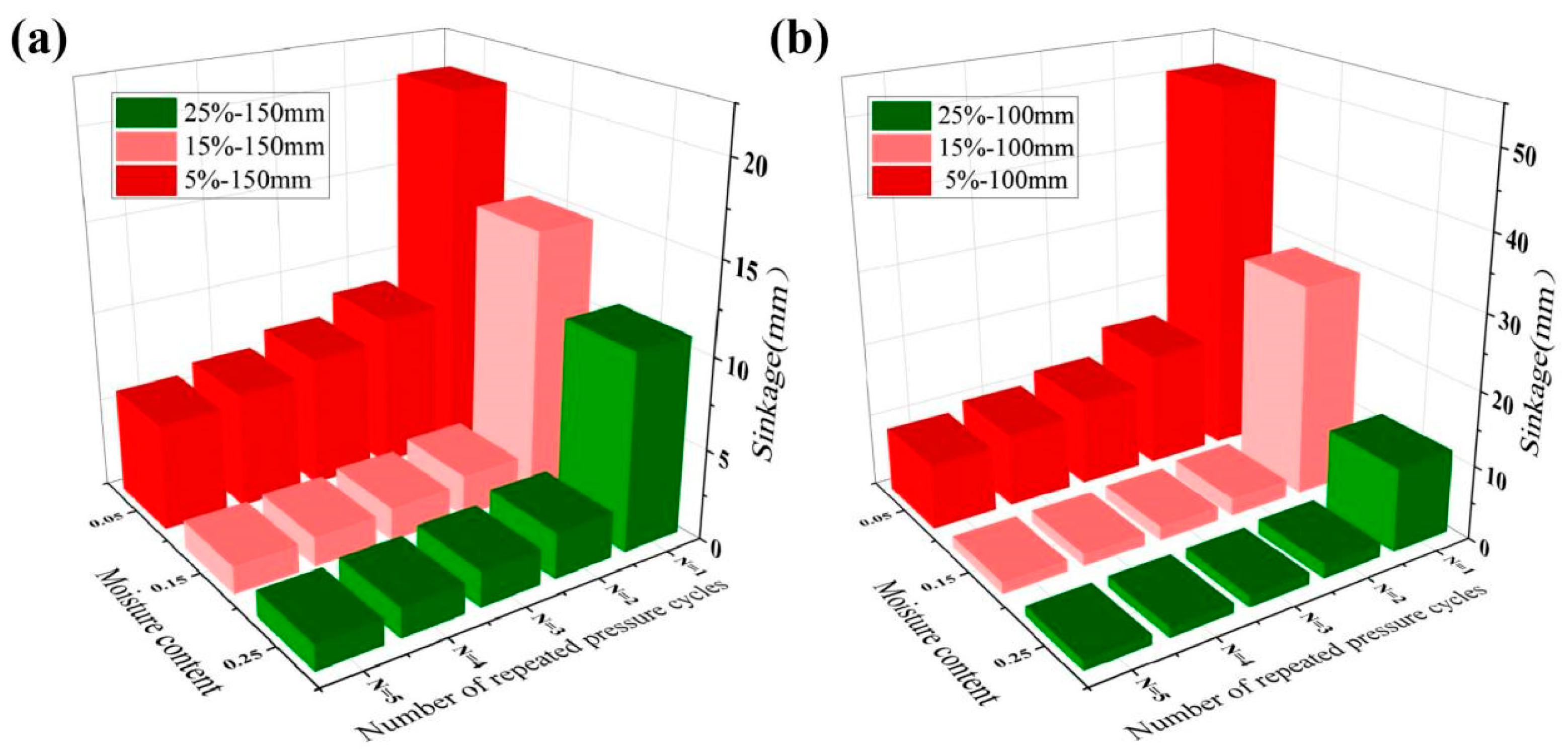
Figure 9 illustrates the relationship between plate sinkage depth and the number of loading cycles in the repeated pressure-sinkage tests, clearly demonstrating the significant influence of moisture content on the mechanical behavior of the beach sand. As the moisture content of the sand increased from 5% to 25%, the cumulative sinkage decreased noticeably. A comparison between
Figure 9a (150 mm plate) and
Figure 9b (100 mm plate) shows that the sinkage under 5% moisture content was substantially greater than that under 15% and 25% moisture content. The dry sand (5%) exhibited a loose structure with negligible cohesion between particles, leading to high compressibility during the initial loading stage and rapid development of sinkage. Although its ultimate bearing capacity was provided by interparticle friction, the overall higher position of its curve indicates large deformation and poor resistance to sinkage.
As the number of loading cycles increased, the sinkage under all moisture conditions exhibited a gradually decreasing trend, indicating a compaction effect induced by repeated loading. Among them, the soils with higher moisture content (15% and 25%) showed faster convergence of sinkage and lower final stabilized values. Particularly at 2 5% moisture content, the sinkage was the smallest, and the curve was the steepest, suggesting that moderate moisture enhances the formation of a more stable skeletal structure through capillary-induced apparent cohesion, resulting in a hardened bearing layer near the surface. These results demonstrate that the moisture content of beach sand is a critical factor influencing vehicle trafficability. Sand with optimal moisture content provides higher bearing strength and reduced sinkage, improving vehicle driving performance, while overly dry sand leads to increased sinkage due to its loose structure, thereby impairing vehicle mobility.
3.1.2. Analysis of Soil Pressure-Sinkage Parameters
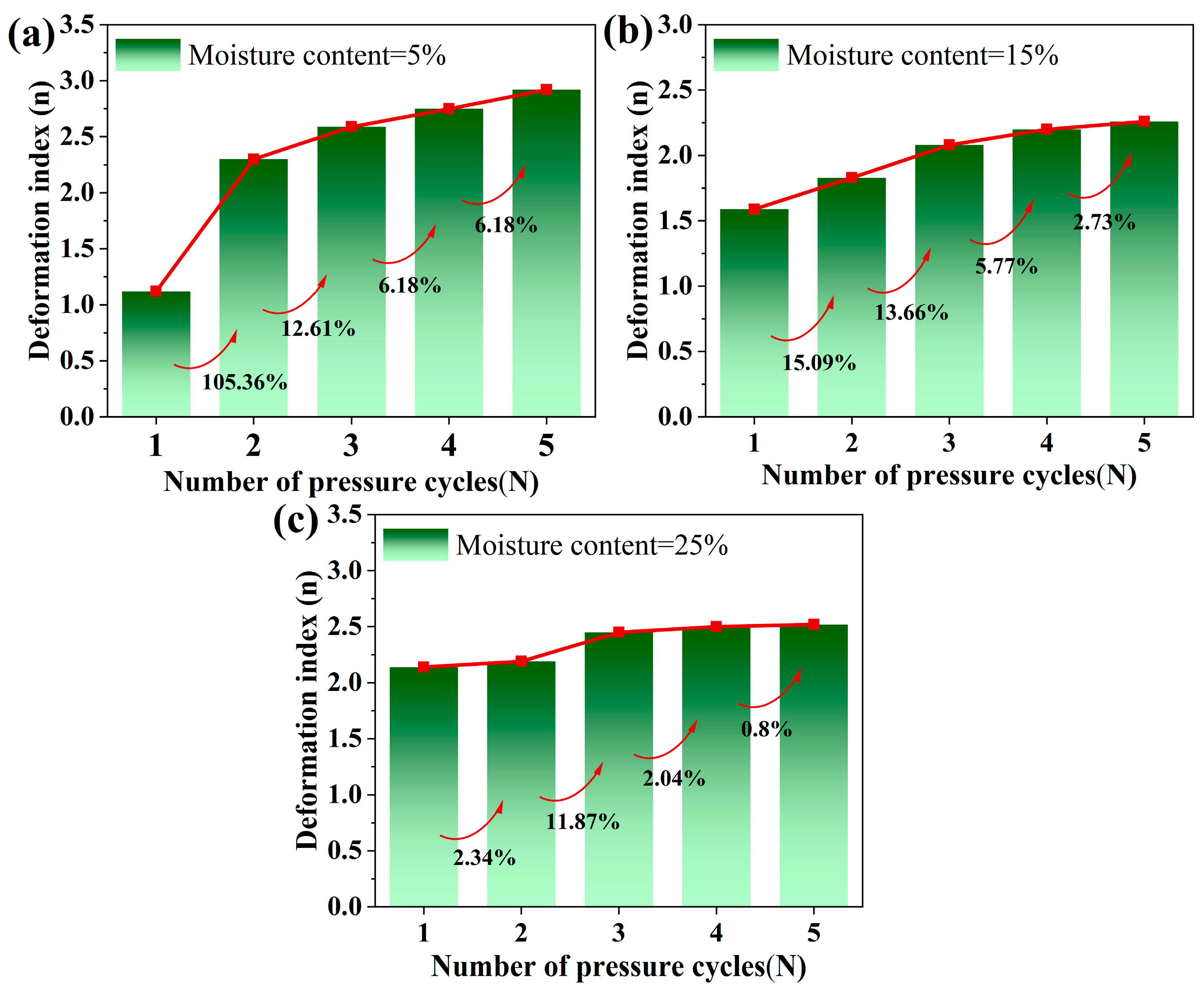
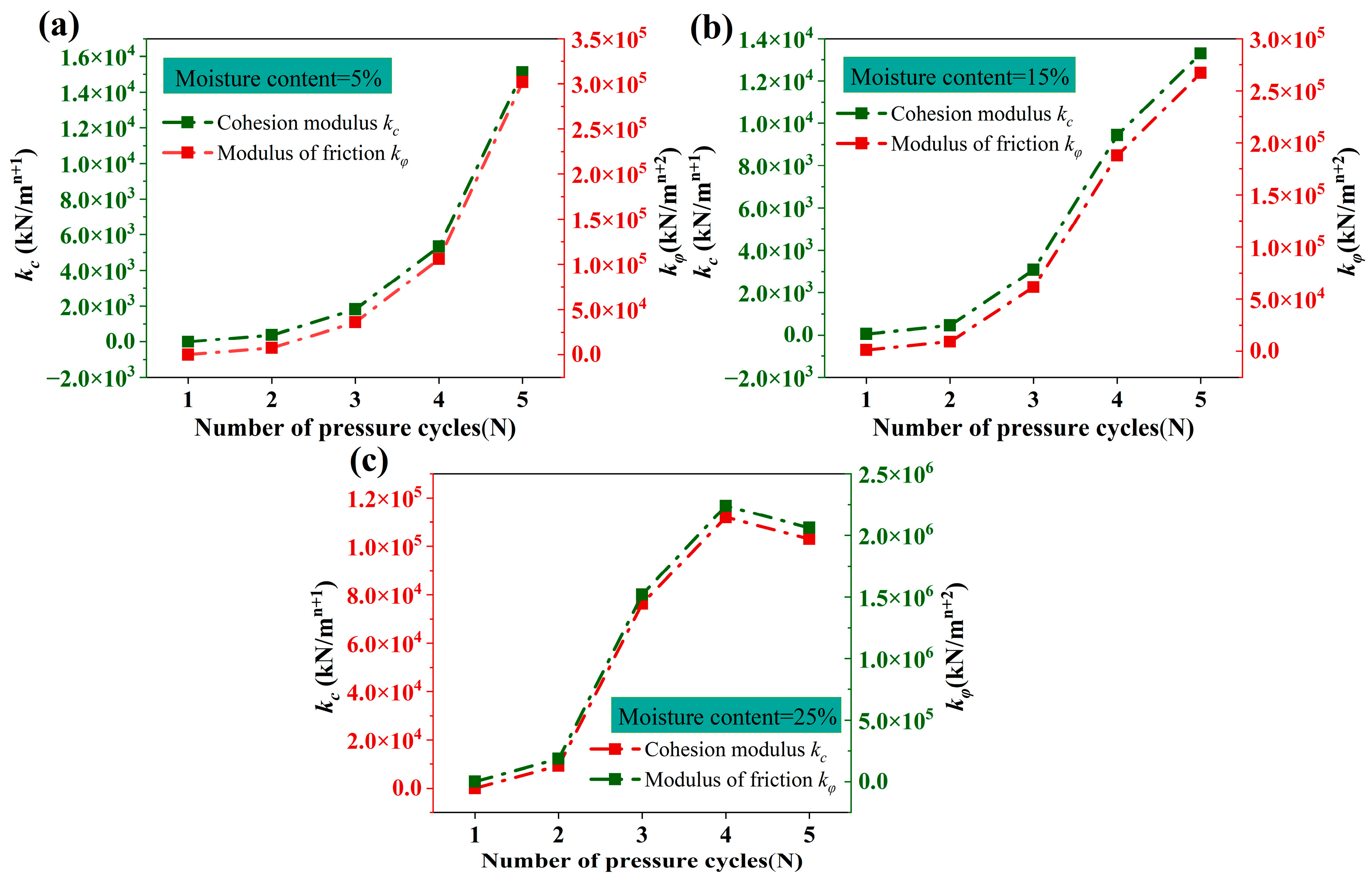
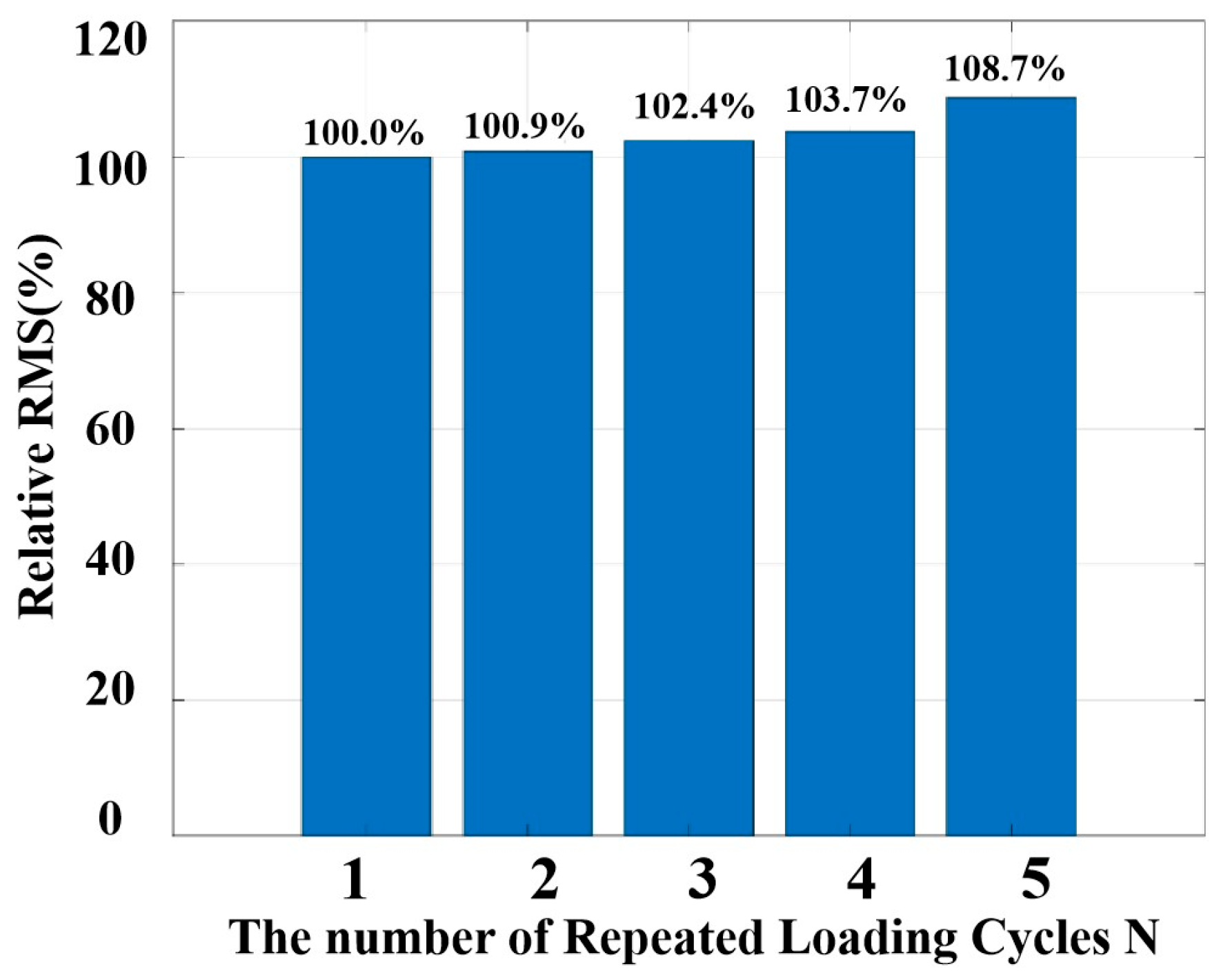
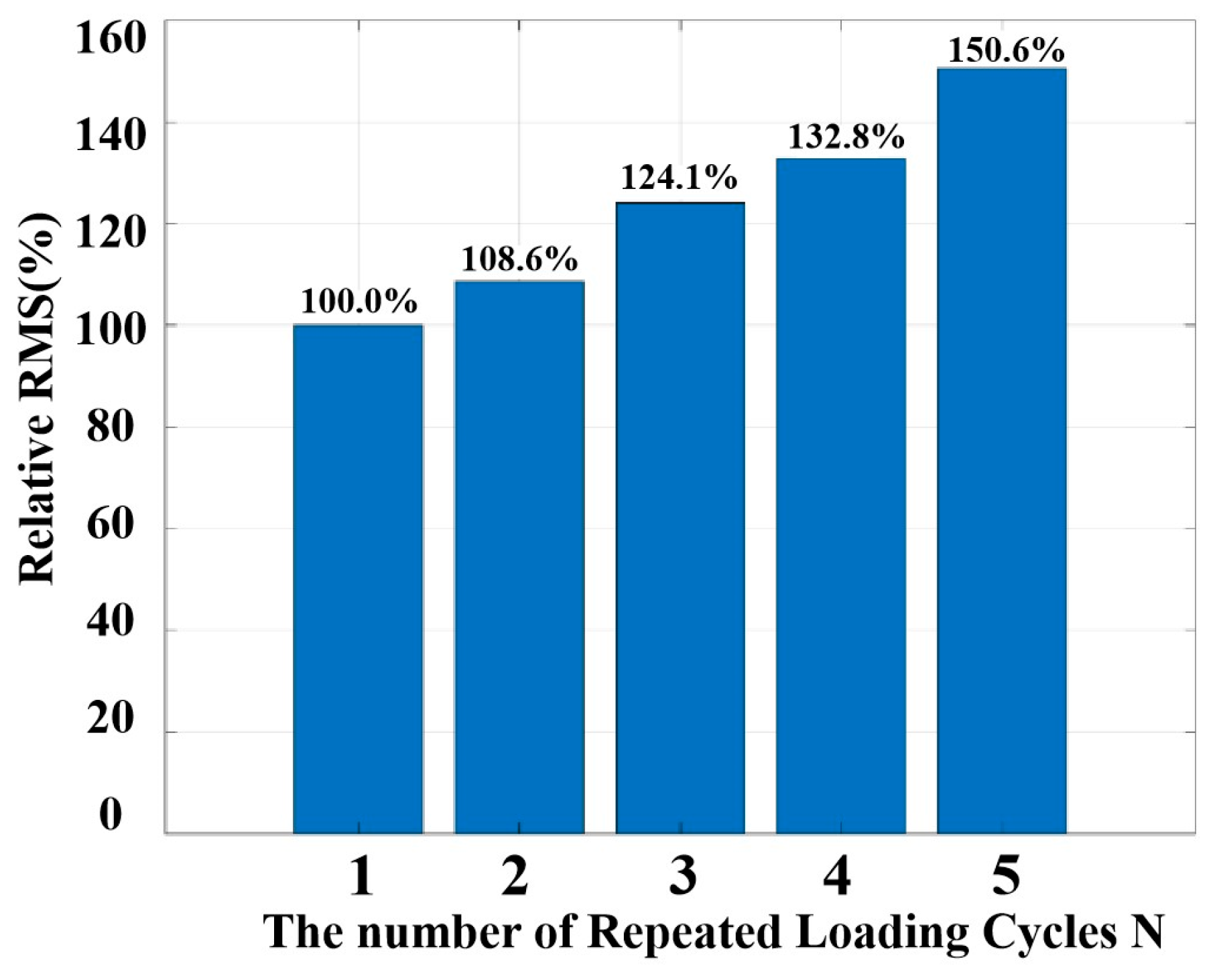
Figure 10 and
Figure 11 illustrate the variation of the deformation exponent (
n), cohesive modulus (
kc), and frictional modulus (
kφ) of the beach sand with the number of repeated loading cycles (
N) under different moisture contents (5%, 15%, 25%). As shown in
Figure 10a–c, the soil deformation exponent
n exhibits an increasing trend with additional loading cycles, and higher moisture content corresponds to greater values of
n. At 5% moisture content, the most significant increase in nn occurs between the first and second loading cycles, reaching 105.36%, which is consistent with the results in
Figure 8a,b. Under low moisture conditions, the large interparticle voids allow intense particle displacement under load, while at higher moisture levels, water facilitates particle rearrangement and structural adjustment.
Figure 11a–c further reveal the strengthening effect of repeated loading on the soil strength parameters. Both the cohesive modulus
kc and the frictional modulus
kφ show continuous growth with increasing
N, indicating that repeated compaction enhances the overall pressure–sinkage capacity of the soil. In summary, under repeated loading, moisture content is a critical factor influencing the evolution of the mechanical properties of beach sand. The presence of moderate moisture (e.g., 15%, 25%) more effectively promotes particle reorganization and structural densification, thereby markedly improving the cohesive strength and overall bearing capacity of the soil.




 and
and