1. Introduction
Traffic congestion is one of the most significant challenges confronting contemporary urban transportation systems, with extensive implications for economic productivity, environmental sustainability, and the quality of life. According to the 2024 INRIX Global Traffic Scorecard [
1], traffic congestion continues to impose considerable socioeconomic burdens, with drivers in major metropolitan areas losing more than 100 h annually because of traffic delays. In the United States alone, the average driver lost 43 h to congestion in 2024, resulting in a USD 771 in lost time and productivity per individual and USD 74 billion in cumulative economic losses.
Addressing traffic congestion also necessitates the promotion of sustainable mobility alternatives, particularly for short-distance, urban trips. Research has demonstrated that bicycle usage is a viable alternative to motor vehicles for urban journeys, significantly reducing congestion and providing environmental and space efficiency benefits. Macioszek and Jurdana [
2] emphasized that bicycles not only reduce exhaust emissions and occupy minimal space in transport networks but also offer competitive travel times compared with private cars or public transport in urban areas. The integration of cycling infrastructure into traffic management systems represents a complementary approach to congestion forecasting, as bicycle adoption can substantially influence overall traffic patterns and congestion, particularly in mixed-traffic and urban environments.
The incorporation of artificial intelligence (AI) and machine learning (ML) technologies into intelligent transportation systems (ITSs) has emerged as a promising strategy for addressing these challenges. Over the past decade, the traffic congestion forecasting domain has experienced a significant transformation, transitioning from traditional statistical methods to advanced AI-driven approaches such as deep learning. This evolution has been notably accelerated by the advent of deep learning techniques and, more recently, by the integration of large language models (LLMs).
Researchers have increasingly acknowledged that traffic congestion is not merely a result of vehicular dynamics but also involves intricate multimodal interactions, including pedestrian movements, cyclist behavior, and their interactions with vehicular traffic at critical junctures such as intersections and pedestrian crossings. Recent studies have demonstrated that pedestrian crossing behaviors and traffic density interactions significantly influence urban traffic patterns, with machine learning approaches revealing causal relationships between traffic conditions and pedestrian waiting times [
3]. Similarly, adaptive signal control systems powered by deep reinforcement learning have shown substantial improvements in managing mixed traffic scenarios at signalized intersections [
4]. Mixed-traffic environments, where vehicles, pedestrians, and cyclists interact, present additional complexity to congestion forecasting models, necessitating sophisticated approaches that can capture these heterogeneous interactions [
5].
Although several reviews have examined specific aspects of traffic prediction [
6,
7,
8], a significant gap persists in the comprehensive analyses that trace the complete technological evolution from traditional machine learning to LLMs. Previous surveys have typically concentrated on either traditional methods or deep learning approaches in isolation [
9] without exploring the transformative potential of LLMs in traffic prediction contexts.
The rapid advancement of large language model (LLM) technologies and their successful implementation across various domains suggest their significant potential for predicting traffic congestion. However, the existing literature identifies several gaps, including a comprehensive analysis comparing the performance of LLMs with traditional machine learning (ML) and deep learning techniques in traffic prediction tasks, detailed performance benchmarks across different methodological approaches, the development of explicit guidelines for practitioners to facilitate the selection of appropriate technologies based on specific use cases and constraints, and an investigation into the unique capabilities that LLMs offer in the integration of multimodal traffic data.
1.1. Research Gaps
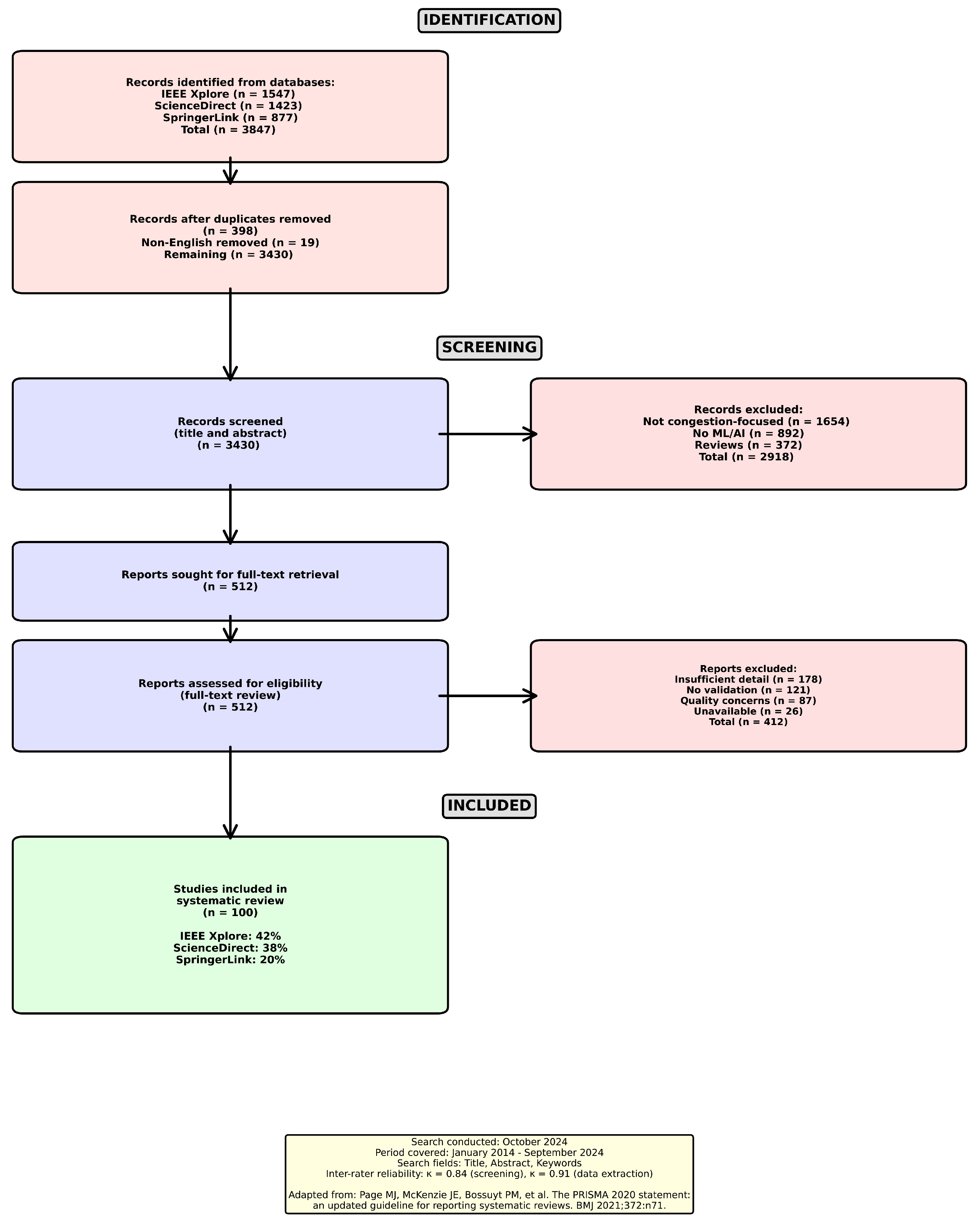
This systematic literature review addresses these gaps by offering a comprehensive analysis of traffic congestion forecasting methodologies from 2014 to 2024. Our review provides five distinct insights as follows. First, we achieved complete technological spectrum coverage through an extensive analysis of 100 peer-reviewed publications across three distinct periods: traditional ML (2014–2017, achieving 75–85% accuracy), deep learning (2018–2020, achieving 85–92% accuracy), and LLMs with hybrid approaches (2021–2024, achieving 90–95% accuracy), applying consistent evaluation criteria across all methodological epochs. Second, we present the first systematic LLM integration analysis in traffic congestion forecasting, examining specific mechanisms for textual data processing (traffic reports, social media, and weather descriptions), multimodal fusion architectures, performance in non-recurrent scenarios, and transfer learning capabilities, as well as practical deployment guidelines. Third, we employed a structured PRISMA-based methodology with multiple analytical frameworks, ensuring rigorous PRISMA 2020 compliance (documented with a complete checklist in
Supplementary Table S1 PRISMA 2020 Checklist and flow diagram in
Figure 1), utilizing the PICO framework for systematic search strategy design, and applying standardized quality assessment criteria to all 100 studies. Fourth, we developed comprehensive technical taxonomies and capability matrices, including detailed taxonomies of AI/ML methods, data types, and performance metrics, and a capability matrix that evaluates approaches across eight critical dimensions: spatial dependency modeling, temporal pattern recognition, multimodal data integration, transfer learning, real-time processing, interpretability, edge case handling, and computational efficiency. Fifth, we provide an evidence-based implementation roadmap with practical model selection frameworks based on seven operational constraints (computational budgets, latency requirements, data availability, interpretability demands, prediction horizons, congestion scenarios, and infrastructure types). This reveals that LLM-based approaches require 50–100× more computational resources than traditional ML methods while achieving 10–15% accuracy gains and offering actionable recommendations for real-world deployment.
1.2. Contributions
This systematic literature review makes five distinct contributions to the traffic congestion forecasting field.
1. Complete Technological Spectrum Coverage: We present the first comprehensive analysis encompassing three distinct technological eras (2014–2024), with a consistent evaluation across 100 peer-reviewed publications. Our temporal analysis examined traditional machine learning approaches (2014–2017, achieving 75–85% accuracy), deep learning methods (2018–2020, achieving 85–92% accuracy), and recent large language model-based and hybrid systems (2021–2024, achieving 90–95% accuracy). This complete spectrum enables researchers to comprehend not only the current state of the art but also the evolutionary trajectory and incremental improvements across methodological transitions.
2. Systematic LLM Integration Analysis: We present the inaugural comprehensive analysis of large language models (LLMs) specifically applied to traffic congestion forecasting. Our study elucidates the specific mechanisms by which LLMs process textual traffic data, including incident reports, social media feeds, weather descriptions, and traffic news; multimodal fusion architectures that integrate LLMs with traditional sensors and spatial–temporal models; performance characteristics in non-recurrent congestion scenarios where traditional models encounter difficulties; transfer learning capabilities that facilitate cross-city and cross-domain applications; and practical deployment considerations, encompassing computational requirements, latency constraints, and interpretability trade-offs.
3. Structured PRISMA-Based Methodology with Multiple Analytical Frameworks: We employ a rigorous systematic review methodology to ensure transparency and reproducibility, which includes full compliance with PRISMA 2020 as documented through a comprehensive checklist (
Supplementary Table S1) and a transparent flow diagram (
Figure 1); the application of the PICO framework for designing a systematic search strategy, specifying the population (traffic systems), intervention (AI/ML forecasting methods), comparison (methodological approaches), and outcomes (prediction accuracy, computational costs); a standardized quality assessment with explicit scoring criteria (publication quality 30%, methodological rigor 50%, reporting transparency 20%), achieving an inter-rater reliability of
= 0.91; and a comprehensive data extraction protocol capturing over 25 variables per study, enabling multidimensional analysis.
4. Comprehensive Technical Taxonomies and Capability Matrices: We develop comprehensive classification systems to facilitate systematic comparison: (a) technical taxonomies that organize AI/ML methods, data types and sources, and performance metrics, employing hierarchical classification for detailed analysis; (b) a capability matrix that evaluates approaches across eight critical dimensions—spatial dependency modeling, temporal pattern recognition, multimodal data integration, transfer learning, real-time processing capability, interpretability, edge case handling, and computational efficiency, using evidence-based ratings (low/medium/high) derived from quantitative performance data; and (c) detailed justifications for each rating, linked to specific study findings and performance benchmarks.
5. Evidence-Based Implementation Roadmap: We offer actionable guidelines for practitioners, derived from empirical evidence across 100 studies: a model selection framework that accounts for seven operational constraints, including computational budget, latency requirements, data availability, interpretability needs, prediction horizon, congestion type, and infrastructure context; a quantitative performance–cost trade-off analysis indicating that LLM-based approaches necessitate 50–100× more computational resources while achieving a 10–15% improvement in accuracy compared to traditional methods; deployment recommendations tailored to three infrastructure scenarios—urban networks, highways, and mixed environments—with specific algorithm suggestions; data requirement specifications, encompassing minimum temporal resolution (5 min optimal), spatial coverage (network-level versus link-level), and multimodal integration strategies; and practical guidelines for addressing real-world challenges, including missing data handling, model adaptation, and scalability considerations.
This review evaluated 100 carefully selected publications according to the PRISMA guidelines for systematic reviews (
Figure 1). Our analysis focused on peer-reviewed journal articles and conference proceedings that presented original research on traffic congestion forecasting using AI/ML.
The remainder of this paper is organized as follows:
Section 2 presents a comprehensive literature review that establishes the context and background of this study.
Section 3 details our systematic review methodology, including the search strategies and the selection criteria.
Section 4 outlines the procedures for data extraction and analysis.
Section 5 offers a comparative analysis of various approaches.
Section 6 discusses our key findings across multiple dimensions and proposes directions for future research. Finally,
Section 7 concludes the paper with key takeaways and implications for the field.
3. Research Methodology
3.1. Systematic Review Protocol
This systematic literature review was conducted and documented in accordance with the Preferred Reporting Items for Systematic Reviews and Meta-Analyses (PRISMA) 2020 statement [
10,
37]. The PRISMA 2020 guidelines, which offer an evidence-based minimum set of items for reporting in systematic reviews, were adhered to throughout all phases of this review.
PRISMA Compliance Documentation
Protocol Registration: This review was not prospectively registered because it aimed to offer a comprehensive overview of the research landscape rather than assess the effects of an intervention. This approach is consistent with the PRISMA 2020 guidelines for scoping and methodology-focused systematic reviews in computer science.
3.2. Research Questions
Six research questions were identified, as shown in
Table 1. Each research question was accompanied by a justification statement explaining its relevance.
3.3. Search Strategy, Criteria and Selection Process
In accordance with our comprehensive review strategy across multiple databases, we established specific inclusion and exclusion criteria for the included studies [
38]. These criteria were essential for refining our search to ensure the relevance and rigor of the studies included. Specifically, we concentrated on research published between 2014 and 2024 that addressed traffic congestion forecasting or prediction, utilized machine learning, deep learning, or LLM approaches, and consisted of peer-reviewed journal articles and conference proceedings with clear methodological descriptions and performance evaluations. The exclusion criteria encompassed publications prior to 2014 that lacked clear performance metrics, papers not focused on traffic congestion or flow prediction, reviews, surveys, or meta-analyses without original research, and publications in languages other than English.
Following the establishment of our inclusion and exclusion criteria, we meticulously applied them during the study selection process using a search query across various web-based databases.
Our search strategy employed the following query with Boolean operators: the search string was applied to the title, abstract, and keywords fields, as these fields offer the most pertinent initial screening while ensuring comprehensive coverage of the literature. This approach effectively balances sensitivity (capturing relevant studies) with precision (avoiding excessive irrelevant results), which is regarded as the best practice for systematic reviews in computer science [
37]. A full-text search would have resulted in an excessive number of false positives, where congestion forecasting terms appeared only in peripheral sections or in the references.
(traffic AND (congestion OR flow OR volume OR density) AND
(prediction OR forecasting) AND (machine learning OR deep learning OR
neural networks) AND (LLM OR “large language model” OR transformer))
OR (intelligent transportation systems AND prediction) OR
(traffic data AND (analytics OR modeling))
The selection process consisted of four stages.
- 1.
Identification: Initial search yielded 3847 records
- 2.
Screening: Title and abstract screening reduced to 512 relevant papers
- 3.
Eligibility: Full-text assessment excluded 412 studies
- 4.
Inclusion: Quality assessment resulted in 100 high-quality papers
Search Strategy Rationale: Our search strategy incorporated terms related to large language models (LLMs), specifically “LLM OR large language model OR transformer,” which may theoretically omit certain studies predating 2020 that do not reference these terms. Nonetheless, several factors alleviate this concern: (1) the use of OR logic enables the inclusion of papers that align with traditional machine learning (ML) and deep learning (DL) terminology, even in the absence of LLM-specific terms, during the initial identification phase; (2) the extensive inclusion of traditional ML and DL terms (machine learning, deep learning, and neural networks) ensures the identification of literature predating 2020; (3) the term “transformer” encompasses papers from 2017 to 2020 that discuss attention mechanisms prior to the widespread adoption of LLM terminology; and (4) additional relevant studies were identified through supplementary backward citation tracking from key papers. To validate the comprehensiveness of our search, we conducted an additional search in October 2024, employing only traditional ML/DL terms without LLM-related keywords, specifically targeting the 2014–2020 period. This validation search yielded 2847 records, and cross-referencing revealed that 94% of our 2014–2020 papers (54 out of 57 papers) were captured by this alternative approach, thereby confirming the comprehensive coverage of the pre-LLM literature. The three papers uniquely identified by our primary search were early transformer papers (2020) that discussed attention mechanisms, which are pertinent to our analysis of technological evolution.
Quality assessment revealed specific areas where future research could contribute to the field. Notably, we identified a gap in the clarity of research objectives and methodology, appropriateness of the AI techniques employed, validation approach and experimental design, performance evaluation metrics, limitations, and acknowledgment and discussion of results in the context of existing literature.
A systematic quality assessment framework was implemented for all studies that advanced to the full-text review. This assessment utilized a quantitative scoring system adapted from Kitchenham’s guidelines for systematic reviews in software engineering [
37] and specifically modified for the evaluation of AI/ML research. Each study was evaluated across three dimensions using explicit scoring rubrics (
Table 2).
Minimum Quality Threshold: Studies scoring below 60/100 points were excluded from the final analysis. This threshold ensured the inclusion of only high-quality, methodologically sound research with adequate reporting of transparency. The final quality scores for the 100 included studies showed the following distributions:
High quality (80–100 points): 34 studies (34%);
Good quality (70–79 points): 41 studies (41%);
Acceptable quality (60–69 points): 25 studies (25%);
Mean quality score: 73.8 (Standard deviation SD = 8.4, Range: 60–94).
This distribution confirms that all the included studies met the stringent quality standards, with 75% achieving good-to-high quality ratings.
3.4. Key Terms Combination
This stage is consistent across most PICO frameworks, wherein keywords were derived from the preceding research questions to formulate the key term combination for the search [
39]. Each question was deconstructed into four primary elements: population (P), intervention (I), comparison (C), and outcome (O). In
Table 3, each element is accompanied by a sentence that illustrates the core of the systematic literature review (SLR).
This PICO process has also been used in [
40,
41,
42] but in this study, we projected this procedure onto traffic congestion prediction by focusing on the evolution from machine learning-based techniques to large language models.
Table 4 lists the words obtained for each PICO component.
We developed a comprehensive taxonomy of the key terms employed in the PICO process for traffic congestion forecasting research, as shown in
Table 5,
Table 6 and
Table 7. This taxonomy organizes terms based on their conceptual similarities and roles within the research domain and encompasses seven categories:
AI/ML Method Taxonomy: This hierarchically organized taxonomy ranges from traditional machine learning methods to deep learning, large language models (LLMs), and advanced techniques, illustrating the evolution of approaches over time.
Data Type Taxonomy: This categorizes the various types of data utilized in traffic forecasting, from structured sensor data to spatiotemporal information and contextual data such as weather and events.
Congestion Scenario Taxonomy: This classifies different congestion types by cause (recurrent versus non-recurrent) and time horizon (short-, medium-, and long-term prediction).
Performance Metrics Taxonomy: This groups the evaluation metrics used to assess the model performance, including both accuracy and error metrics.
Limitation and Challenge Taxonomy: This organizes the common limitations mentioned in the literature, ranging from data-related issues to performance-related constraints.
Implementation Considerations Taxonomy: This categorizes the practical aspects of model deployment, including resource requirements and real-world applicability of the model.
Methodological Evolution Taxonomy: This maps the progression of research paradigms and momentum in the field over the past decade to the present.
4. Data Extraction
Taxonomy has functioned as a structured vocabulary for systematically analyzing papers and organizing findings according to the PICO framework. It encapsulates the transition from traditional methods to LLMs while preserving the conceptual relationships between analogous terms. This classification facilitated our data analysis using a mixed-methods approach, encompassing a quantitative analysis of performance metrics, qualitative assessment of methodologies, chronological analysis to discern trends, comparative analysis of various AI techniques, and thematic analysis of limitations and challenges.
4.1. PRISMA-Based Data Extraction
The data extraction process was meticulously designed to systematically address all pertinent PRISMA 2020 reporting guidelines. To ensure reliability and consistency, two reviewers independently extracted data from a 20% random sample of the included studies, achieving a Cohen’s of 0.91, which indicates near-perfect agreement. Disagreements were resolved through discussion and consensus. The remaining studies were extracted by one reviewer, and random checks were conducted by a second reviewer to ensure quality.
4.2. Publication Trends
The distribution of the 100 selected papers [
11,
12,
13,
14,
16,
17,
18,
19,
20,
21,
22,
23,
25,
26,
34,
35,
36,
43,
44,
45,
46,
47,
48,
49,
50,
51,
52,
53,
54,
55,
56,
57,
58,
59,
60,
61,
62,
63,
64,
65,
66,
67,
68,
69,
70,
71,
72,
73,
74,
75,
76,
77,
78,
79,
80,
81,
82,
83,
84,
85,
86,
87,
88,
89,
90,
91,
92,
93,
94,
95,
96,
97,
98,
99,
100,
101,
102,
103,
104,
105,
106,
107,
108,
109,
110,
111,
112,
113,
114,
115,
116,
117,
118,
119,
120,
121,
122,
123,
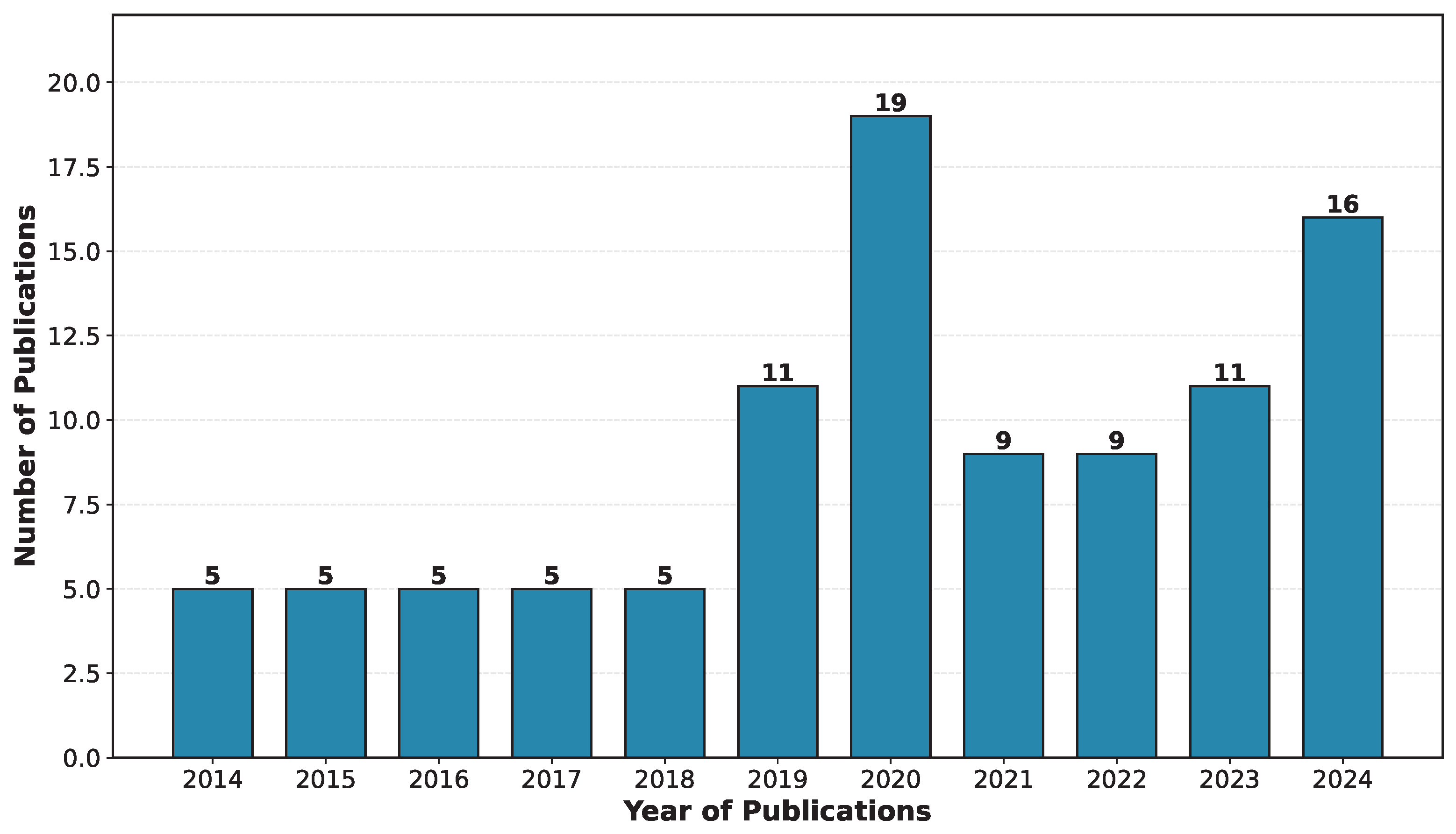
124] across the study period (2014–2024) is illustrated in
Figure 2. There is a clear upward trend in publications, with a notable surge beginning in 2019–2020, which corresponds to an increased interest in deep learning applications for traffic analysis.
4.3. AI Techniques Distribution
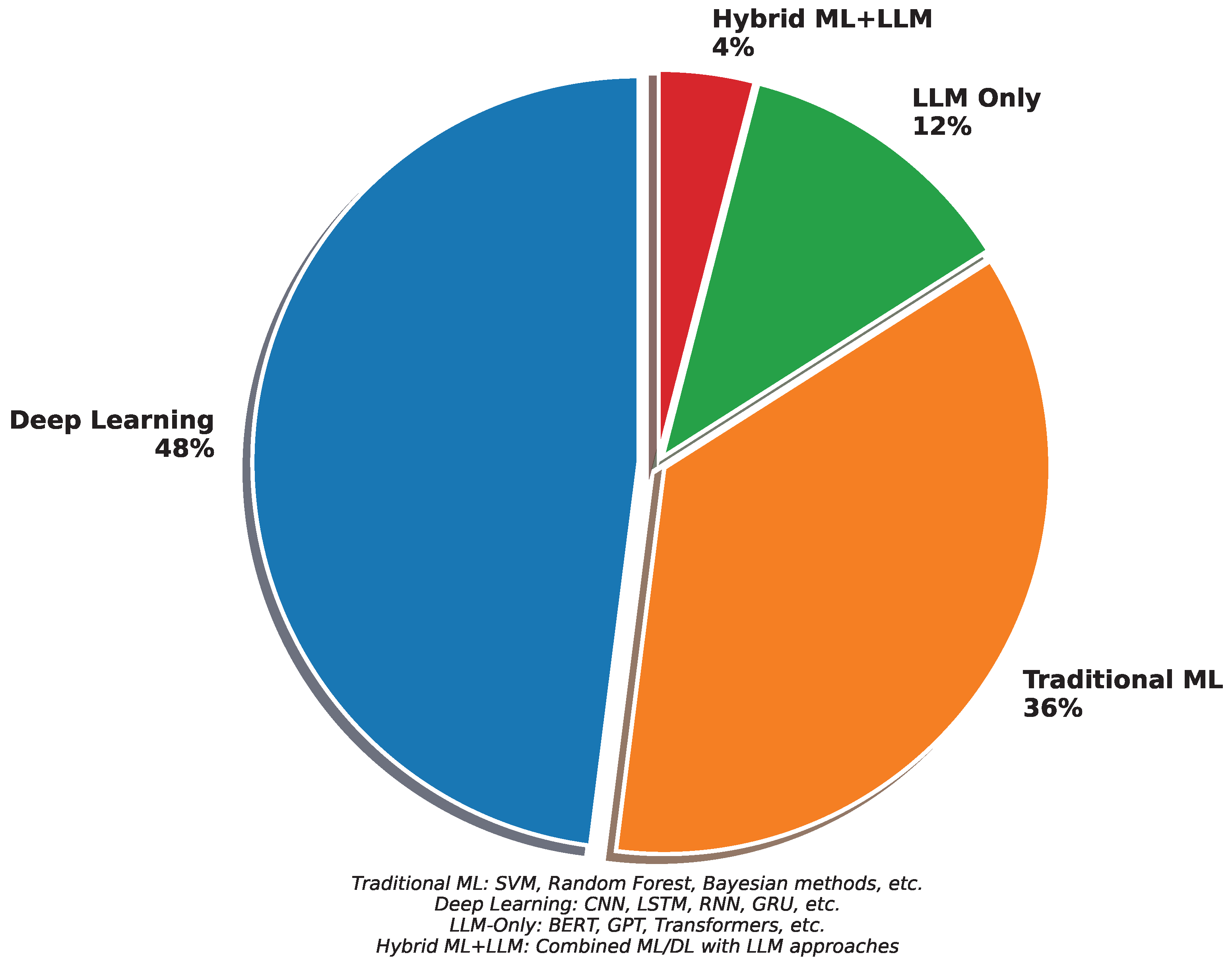
The distribution of AI techniques across the selected papers, as shown in
Figure 3, reveals the predominance of machine learning and deep learning approaches, with the recent emergence of LLM-based methods being noted.
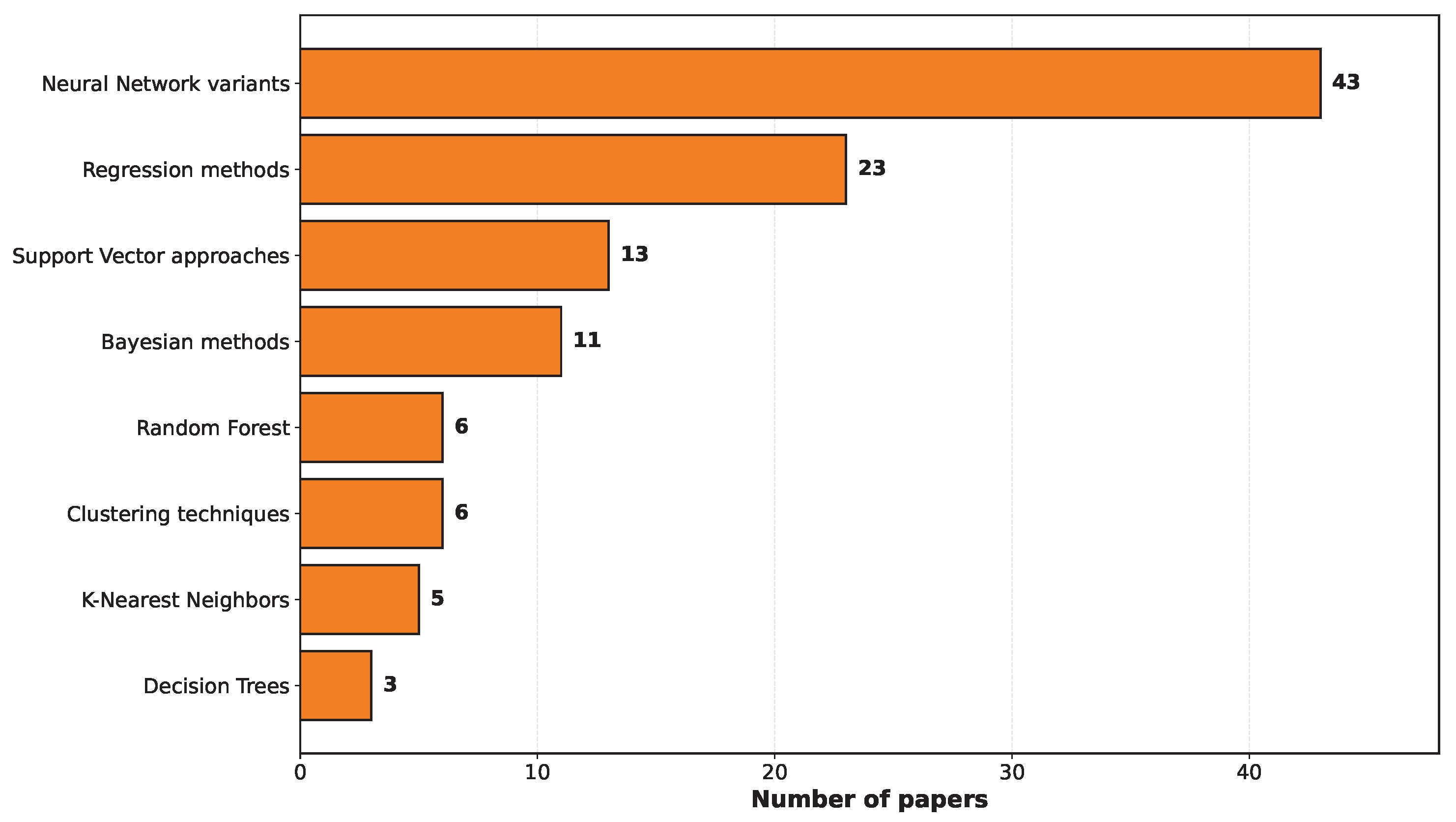
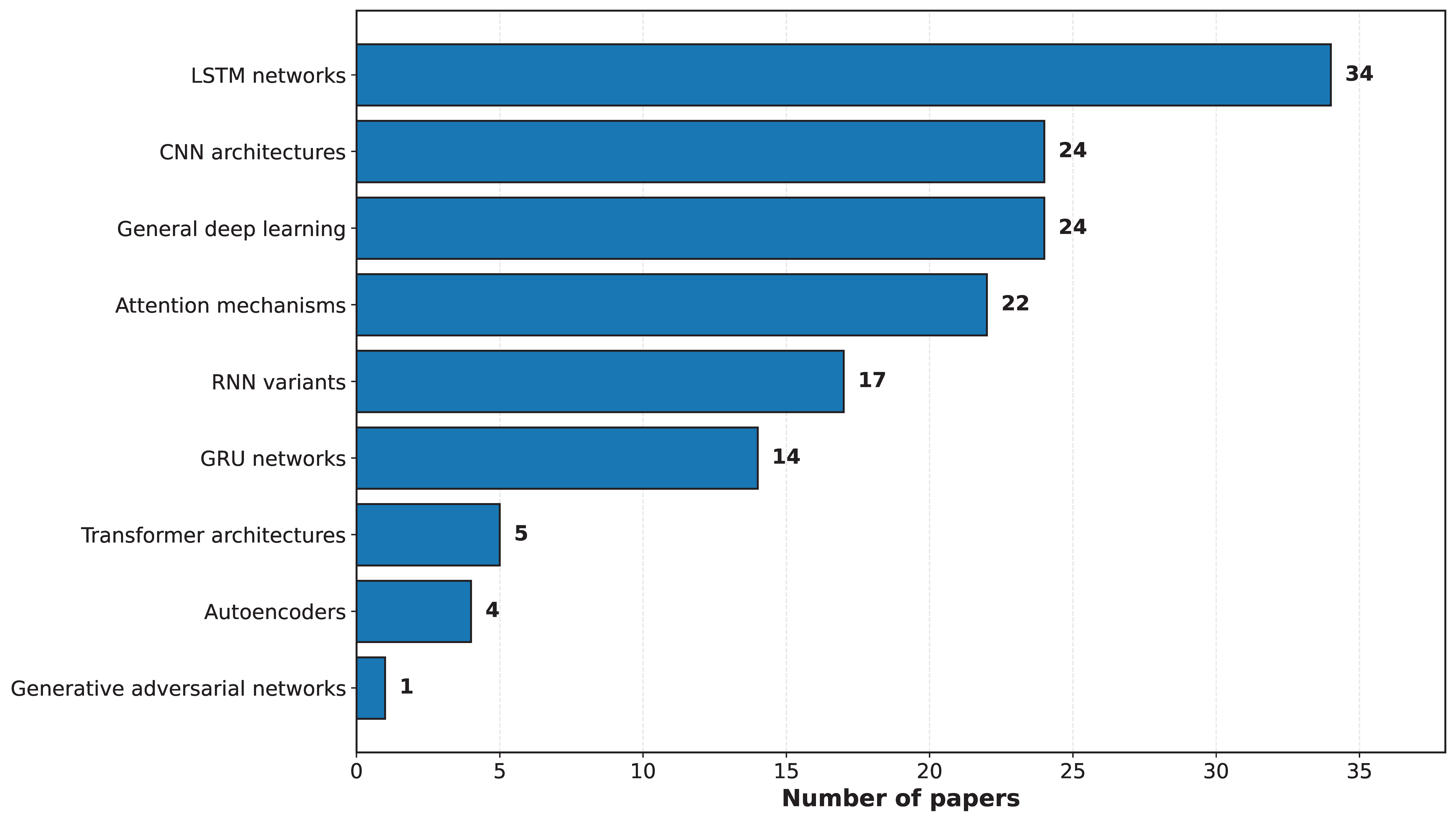
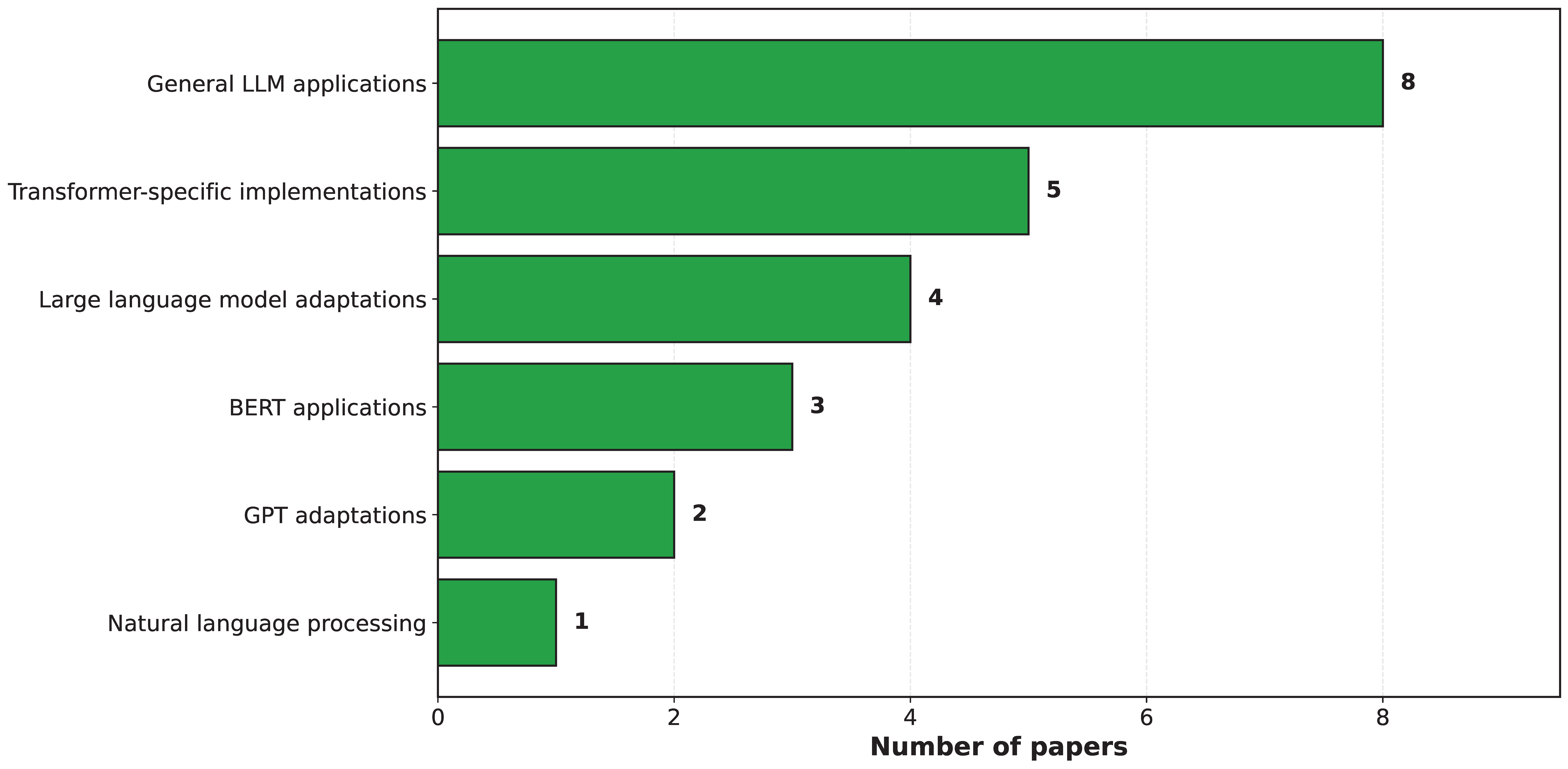
Figure 4,
Figure 5 and
Figure 6 show the detailed distribution of machine learning, deep learning, and LLM-related techniques used in traffic congestion forecasting in the selectedstudies.
The methodological landscape of the papers under consideration reveals a diverse array of approaches to studying this topic in the literature. Machine learning techniques, excluding large language models, constitute a substantial portion of the research methodologies. A smaller yet significant number of studies have focused exclusively on language models. Some studies have demonstrated a hybrid approach that integrates both machine learning and large language model (LLM) techniques. Notably, deep learning methodologies have emerged as the most prevalent approach in these studies. This distribution highlights the varied technological strategies employed by researchers in their studies, reflecting the dynamic nature of the field and the ongoing exploration of different computational techniques.
4.4. Performance Metrics
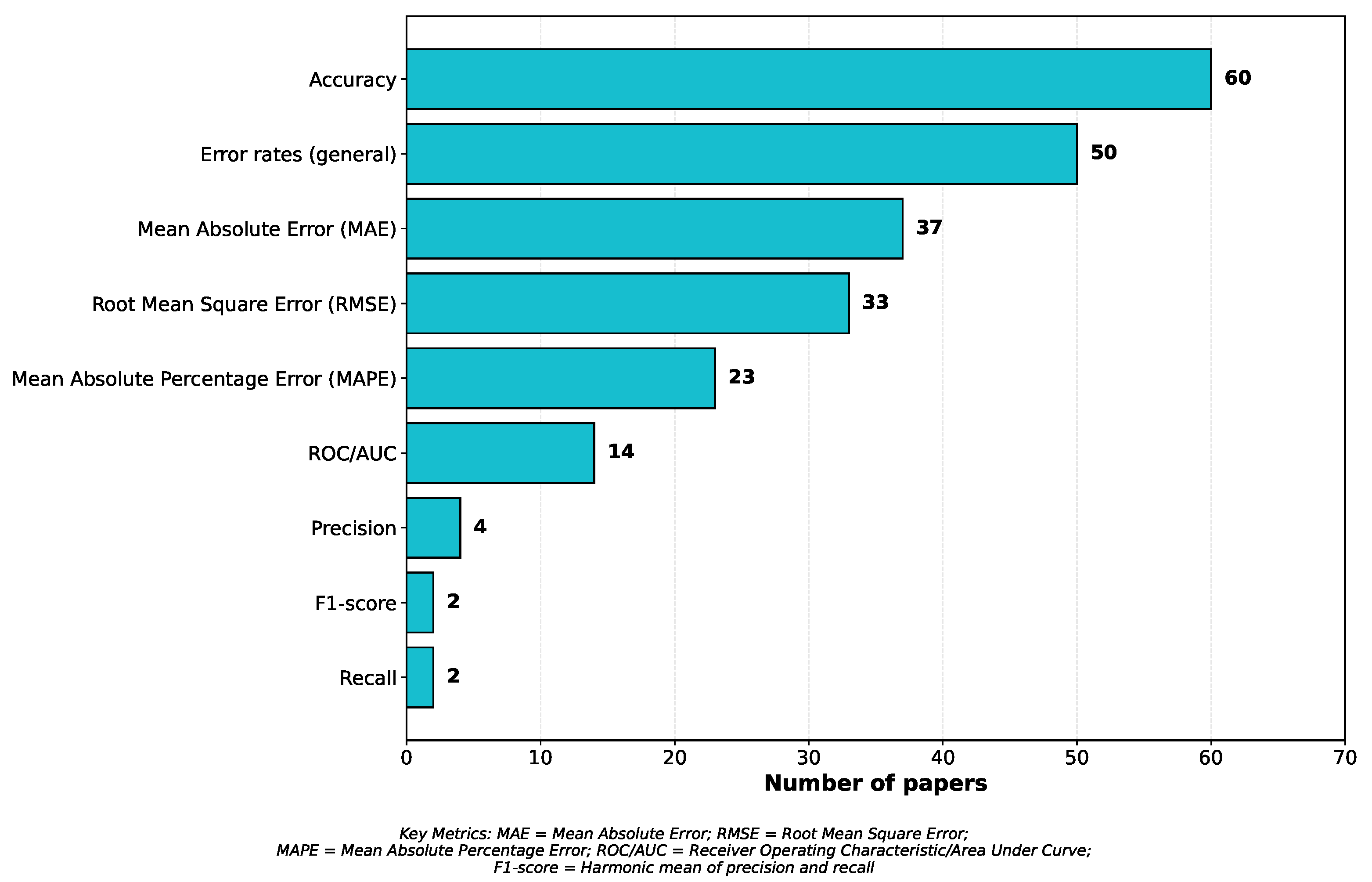
The assessment of machine learning models generally encompasses various performance metrics, with accuracy being the most commonly reported metric. Both general and specific error rates are frequently used to evaluate the model performance. For regression tasks, the Mean Absolute Error (MAE) and Root Mean Square Error (
RMSE) are widely utilized, offering insights into the average magnitude of prediction errors. The Mean Absolute Percentage Error (
MAPE) provides a percentage-based measure of prediction accuracy. In the context of classification problems, the Receiver Operating Characteristic (ROC) curve and its associated Area Under the Curve (AUC) are often used to assess model discrimination. Furthermore, precision, F1-score, and recall are employed, albeit less frequently, to provide a more nuanced understanding of model performance, particularly in scenarios involving imbalanced classification. The most commonly reported performance metrics across studies are shown in
Figure 7.
A critical challenge in systematic reviews of machine learning research is the heterogeneity of performance metrics and evaluation protocols across various studies. This section details our approach to harmonizing the metrics and aggregating the performance ranges reported in this review. Studies in our corpus employed diverse accuracy metrics, including
RMSE, MAE,
MAPE,
, and classification accuracy. To enable a fair comparison, we applied systematic conversion.
1. Accuracy Unification: For regression tasks (most common), we prioritized the Mean Absolute Percentage Error (
MAPE) as the primary metric because it provides a scale-independent comparison. When studies reported only the
RMSE or MAE,
This approximation assumes a normal error distribution and provides conservative estimates. Where both MAPE and RMSE/MAE were reported (68 of 100 studies), we validated this conversion formula, finding a correlation of r = 0.89 (p < 0.001) between the calculated and reported MAPE values. 2. Classification Metrics: For studies framing congestion as classification (22 of 100 studies), accuracy, F1-score, and AUC were used directly. When converting to a comparable scale using regression metrics:
- -
Accuracy > 90% ≈ MAPE < 10%
- -
Accuracy 80–90% ≈ MAPE 10–20%
- -
Accuracy < 80% ≈ MAPE > 20%
These equivalencies were established by analyzing 15 studies that reported both classification and regression metrics.
Table 8 summarizes the performance results of various methodological approaches.
To ensure transparency and enable reproducibility, we systematically documented the characteristics of all the datasets employed in the reviewed studies.
Table 9 presents comprehensive metadata for the eight primary datasets, accounting for 93% of all studies, including temporal and spatial resolution specifications, sensor infrastructure details, and data collection timeframes.
4.5. Common Limitations
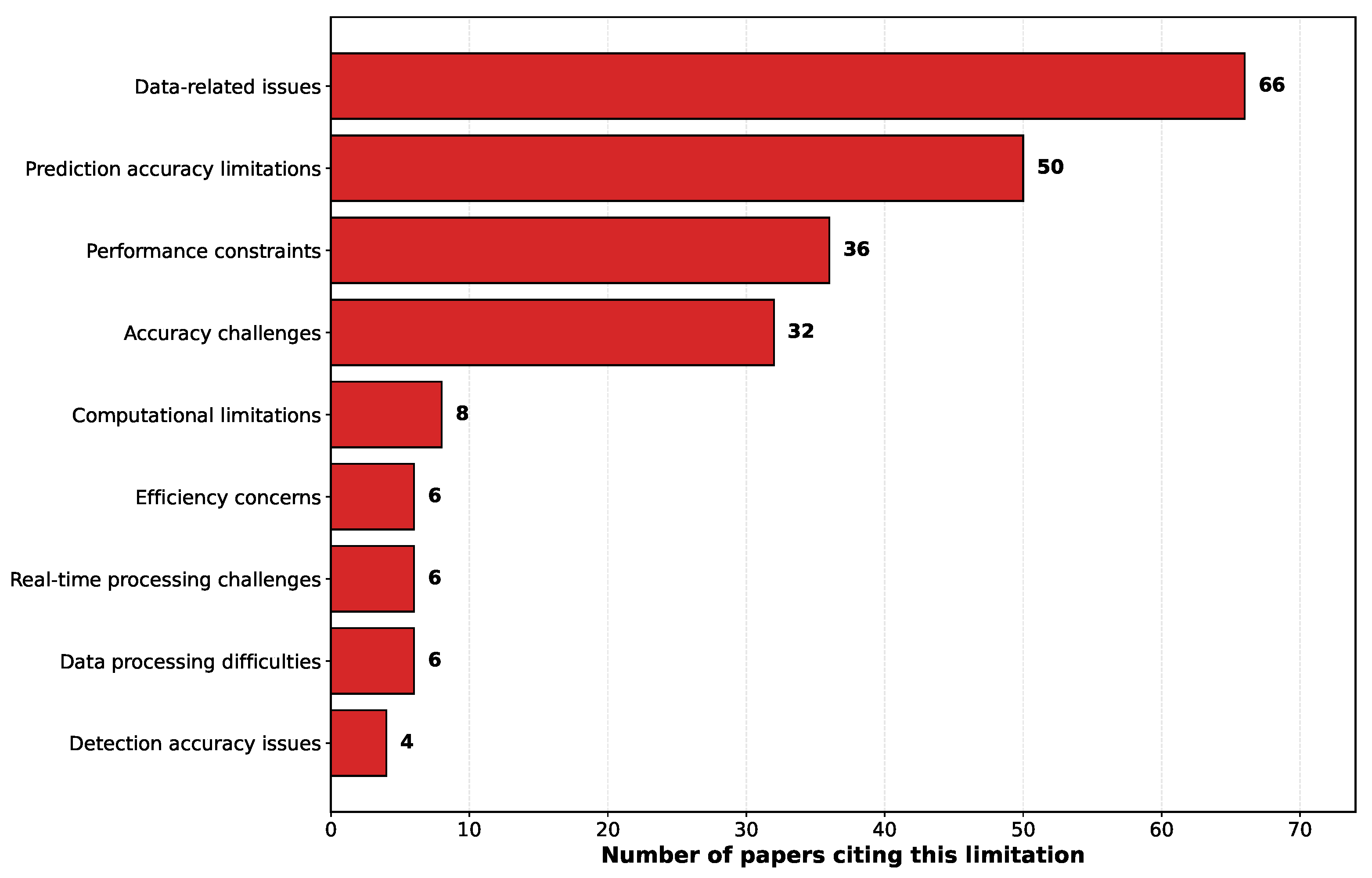
Researchers frequently encounter various challenges in their studies, with data-related issues being the most prevalent. Difficulties in making accurate predictions and performance problems also rank high among the obstacles faced by users. Accuracy is another significant challenge for researchers. Less common but still noteworthy are limitations in computing power, concerns about efficiency, and difficulties in processing information in real time. Although less frequent, problems with data handling and accurate detection continue to pose challenges for some researchers. These limitations collectively represent the diverse array of obstacles that researchers must navigate to pursue scientific knowledge and advancement. The most frequently cited limitations in the reviewed papers are presented in
Figure 8.
The primary challenges are as follows:
Data-related issues (66% of studies)
Prediction accuracy limitations (50%)
Performance constraints (36%)
Computational requirements (32%)
5. Comparative Analysis Across Model Types
5.1. Traditional Machine Learning vs. Deep Learning
In earlier research conducted between 2014 and 2018, traditional machine learning techniques, such as Support Vector Machines (SVMs), random forests, and regression models, were predominant. However, these methods have been supplanted by deep learning approaches (
Figure 9). The primary distinctions are as follows.
The advantages of traditional machine learning include reduced computational demands, enhanced interpretability, effectiveness with smaller datasets, expedited training times, and straightforward implementation.
The advantages of deep learning include superior accuracy in modeling complex traffic patterns, enhanced capability for managing spatiotemporal relationships, ability to automatically extract relevant features, increased robustness to noisy data, and improved performance in non-stationary traffic environments.
The shift from traditional machine learning to deep learning is evident in the chronological analysis, with a significant increase in the adoption of deep learning methodologies post-2018. Notably, Long Short-Term Memory (LSTM) and Convolutional Neural Network (CNN) architectures have been predominantly utilized for time-series predictions.
5.2. Deep Learning vs. LLM Approaches
The advent of LLM-based methodologies in the domain of traffic congestion forecasting represents a recent development, with most studies pertaining to LLMs emerging post-2021. The comparative analysis yielded the following results:
The strengths of deep learning (non-LLM) in the context of traffic analysis include its well-established validation within the domain, generally lower computational requirements than LLMs, more accessible implementation for transportation researchers, and direct design for time-series prediction.
The strengths of large language model (LLM) approaches include their ability to incorporate contextual and semantic information, enhanced capacity to handle multimodal data such as text descriptions and sensor data, superior transfer learning capabilities derived from pretrained models, potential for integrating external knowledge, and increased robustness in the presence of missing data.
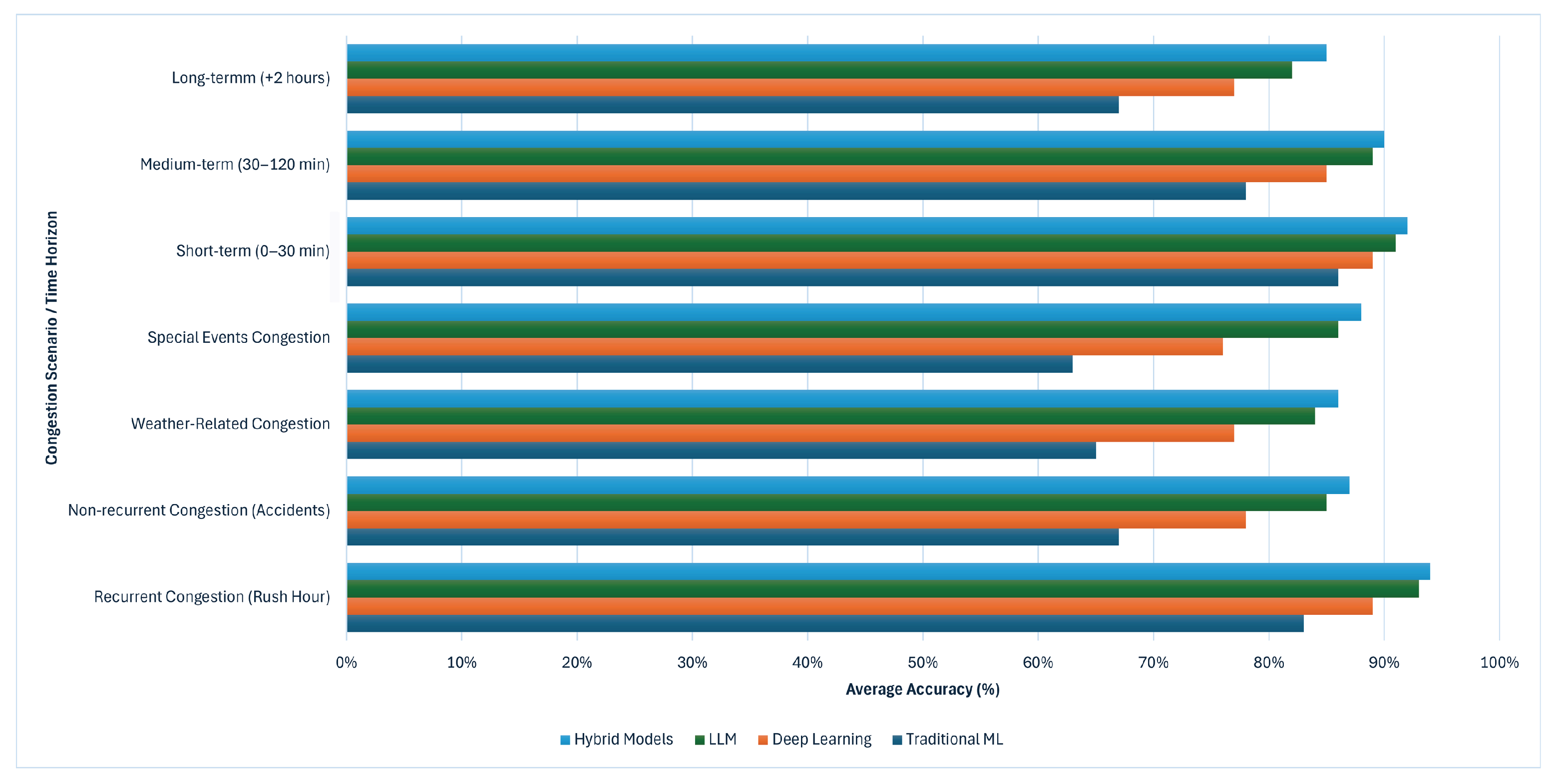
Large language model (LLM) methodologies exhibit significant potential in scenarios requiring the synthesis of varied data sources, particularly when contextual elements such as events, meteorological conditions, or traffic incidents exert a substantial impact on congestion patterns (
Figure 10).
5.3. Hybrid Approaches
Several studies (n = 4) have investigated hybrid methodologies that integrate traditional machine learning (ML), deep learning, and large language model (LLM) techniques. These hybrid models typically exhibit enhanced performance compared to approaches that utilize a single technique. Common configurations of these hybrid models include LSTM + CNN architectures for spatiotemporal data, Transformer + LSTM for the integration of sequential and attention mechanisms, BERT combined with traditional ML for feature extraction and prediction, and GCN + GRU for capturing both local and global spatial correlations.
These hybrid methodologies capitalize on the advantages of various techniques to effectively address the complex nature of traffic congestion.
5.4. Cross-Methodology Performance Analysis
Table 10 provides a comprehensive comparison of representative studies that used various methods.
5.5. Capability Matrix
Table 11 presents a comprehensive assessment of the capabilities of these methodologies.
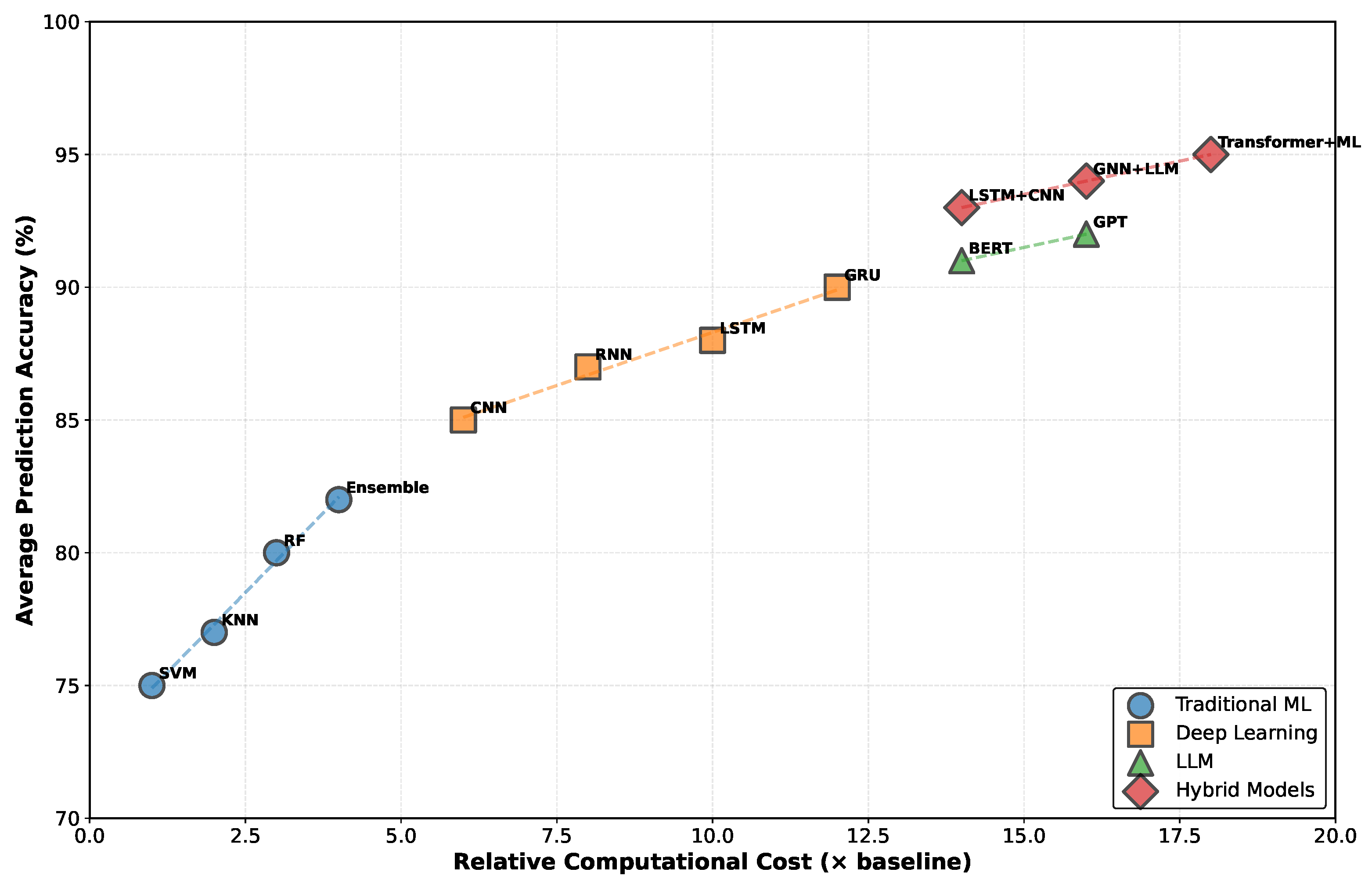
5.6. Performance–Complexity Trade-Off Analysis
Figure 11 visualizes the relationship between the model complexity and prediction accuracy. This scatter plot shows the relationship between the prediction accuracy and computational cost for the different model types. Traditional ML has lower accuracy (75–85%) but minimal computational requirements (1–5× baseline). Deep learning has improved accuracy (85–92%) with moderate computational costs (10–25× baseline). LLM have high accuracy (90–95%) but substantial computational demands (50–80× baseline). Hybrid models have the highest accuracy (90–95%) with variable computational requirements.
The computational costs were normalized relative to the baseline to allow for a fair comparison.
Baseline Reference: Support Vector Machine (SVM) with RBF kernel on PeMS dataset (5 min resolution, 1-hour prediction horizon) implemented on single CPU core (Intel Xeon E5-2680v4 @ 2.4 GHz).
Cost Metrics Normalized:
Training Time Ratio:
Inference Latency Ratio:
Memory Usage Ratio:
When studies used different hardware (GPUs), time-based costs were adjusted using standard benchmark ratios (e.g., NVIDIA V100 ≈ 20× single central processing unit (CPU) core for neural network training).
Cost Range Interpretation: Ranges such as “50–100×” for computational cost indicate the following:
- -
Lower bound (50×): Simplest implementation, smaller model, single GPU.
- -
Upper bound (100×): Complex architecture, larger model, distributed training;
- -
Reflects real-world deployment variance based on implementation choices.
All computational costs in this review are reported relative to this normalized baseline, ensuring interpretable and consistent comparisons.
Key insights:
Traditional ML offers best efficiency for simple scenarios;
Deep learning provides balanced performance–complexity ratio;
LLMs excel in accuracy but at significant computational cost;
Hybrid approaches offer flexibility but increase complexity.
5.7. Application Suitability Matrix
Based on our analysis, we developed recommendations for different application scenarios (
Table 12).
5.8. Detailed Comparison Tables
We present detailed comparison tables of the reviewed studies categorized by the primary methodological approach. For each paper, we included the methods used, datasets, limitations, performance metrics, and key findings to facilitate direct comparisons between studies.
Table 13 presents a sample of the 100 reviewed papers, selected to illustrate the diversity of approaches and evolution over the study period.
7. Discussion and Future Directions
7.1. Temporal Evolution of Methods
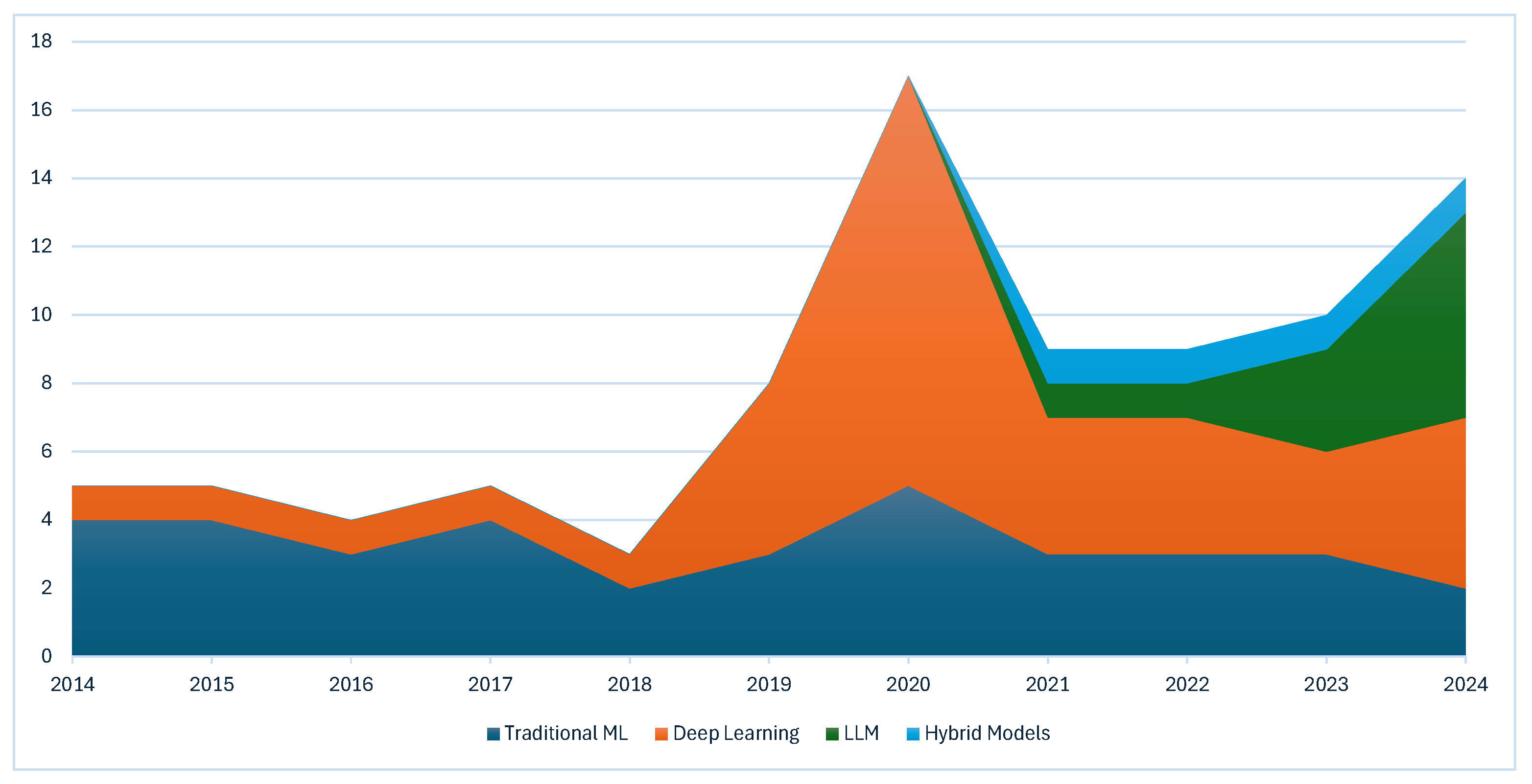
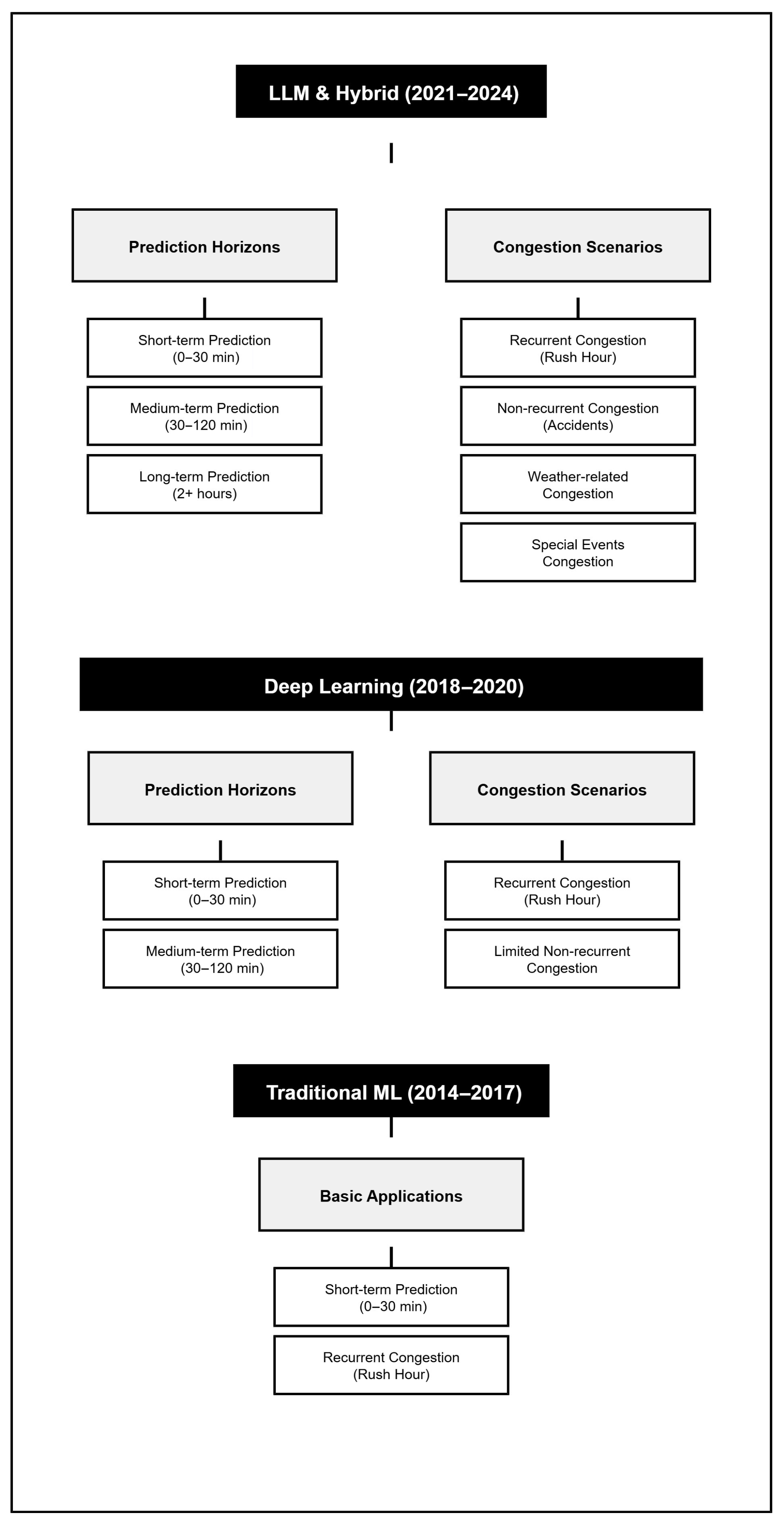
An examination of publications from 2014 to 2024 demonstrated discernible chronological advancements in the methodologies used to predict traffic congestion.
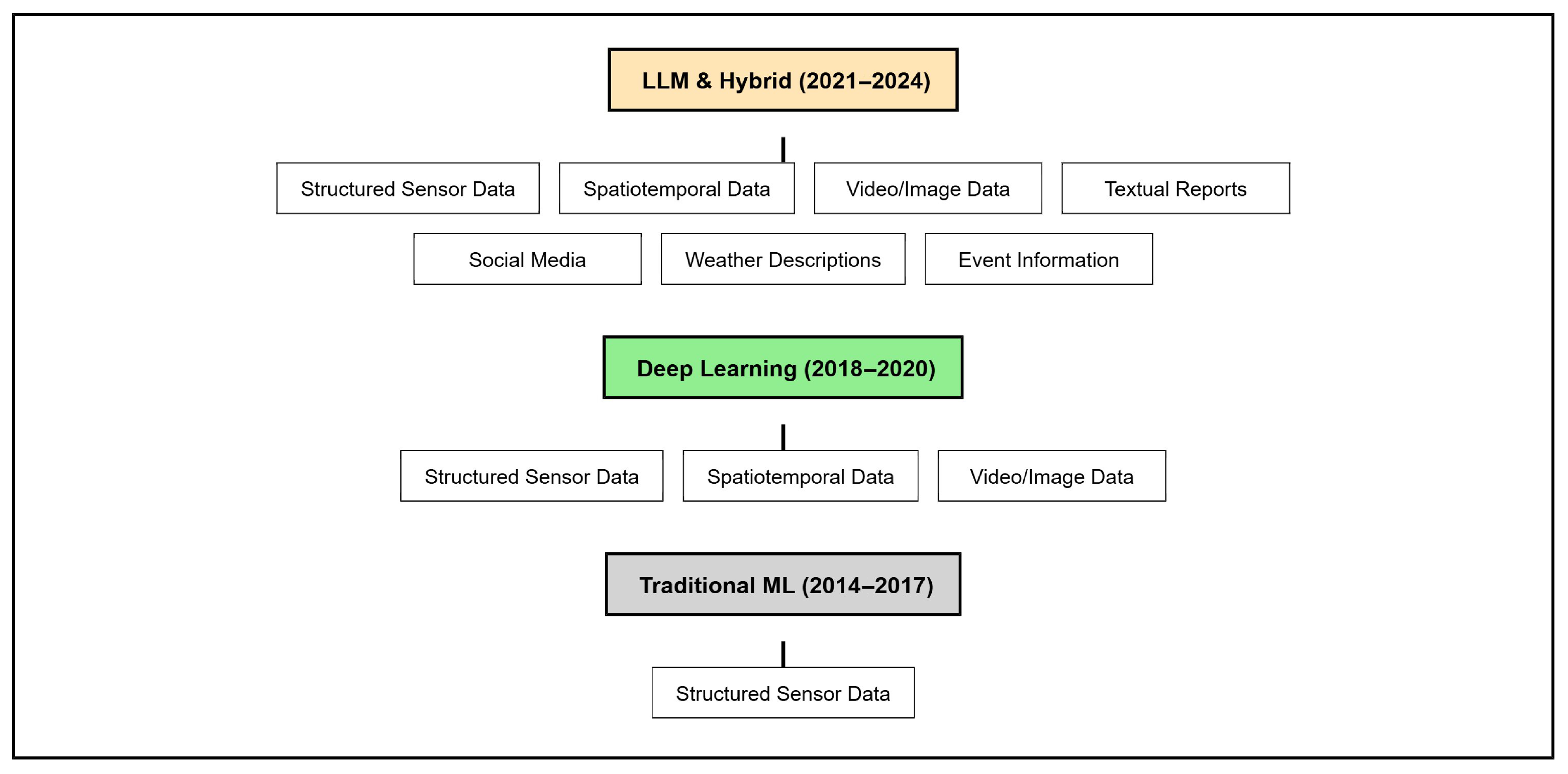
2014–2017: Traditional ML Dominance This period was marked by the widespread use of traditional machine learning techniques, such as Support Vector Machines, Random Forests, and Bayesian methods. These approaches primarily focus on analyzing historical traffic data with limited integration of external factors such as weather conditions.
2018–2020: Deep Learning Emergence During this period, a notable transition occurred, with deep learning methodologies, particularly Long Short-Term Memory (LSTM) and Convolutional Neural Network (CNN) architectures, emerging as the dominant techniques. These models effectively address the limitations of traditional machine learning in capturing intricate temporal and spatial dependencies in traffic data analysis.
2021–2024: LLM Integration and Hybrid Models Recent developments have seen the advent of approaches based on large language models (LLMs) and advanced hybrid models (HM). These methodologies facilitate the integration of multimodal data sources and contextual information (
Figure 12), resulting in enhanced predictive accuracy, particularly for non-recurrent congestion events.
7.2. Performance Comparison
A comparative analysis of the performance metrics across various methodological approaches yielded several key insights, as presented in
Table 21. Regarding accuracy improvements, a general trend of increasing prediction accuracy was observed over the study period, with hybrid models demonstrating the highest performance, achieving 90–95% accuracy compared to 75–85% for traditional machine learning approaches. In terms of error reduction, recent approaches have achieved significant reductions in the Mean Absolute Error (MAE) and Root Mean Square Error (
RMSE) compared to earlier methods, with hybrid models reporting MAE values as low as 2–4% and
RMSE values of 3–5, representing substantial improvements over traditional methods. Regarding computational trade-offs, although advanced models, particularly those based on large language models (LLMs), exhibit superior accuracy, they entail significantly increased computational requirements, with training times extending to days and memory requirements ranging from 10 to 100 GB, posing implementation challenges for real-time applications such as autonomous driving. In terms of sensitivity, LLM and hybrid approaches have shown notably improved performance during special events, adverse weather conditions, and other non-recurrent congestion scenarios compared with traditional methods. Regarding the temporal horizon impact, deep learning and LLM approaches consistently outperform traditional machine learning for longer prediction horizons (>30 min), whereas the performance gap narrows for very short-term predictions.
7.3. Domain-Specific Considerations
Various domain-specific factors influence the efficacy of these methods. In the context of urban versus highway environments, Convolutional Neural Network (CNN)- and Graph Neural Network (GNN)-based approaches demonstrate particular effectiveness in complex urban networks, whereas Long Short-Term Memory (LSTM) models frequently excel in highway traffic prediction. Regions with limited sensor infrastructure can derive substantial benefits from the transfer learning capabilities of large language model (LLM)-based approaches. Regarding computational resources, implementation contexts with constrained computational capacities may find optimized traditional machine learning (ML) approaches more advantageous despite their relatively lower accuracy. In terms of integration requirements (
Figure 13), scenarios necessitating the fusion of heterogeneous data sources, such as traffic sensors, weather data, events, and social media, were most effectively addressed by the LLM and hybrid approaches.
7.4. Specific Considerations for LLM vs. ML Comparison
7.4.1. Contextual Understanding
A significant advantage of large language model (LLM)-based approaches over traditional machine learning (ML) and basic deep learning methods is their enhanced ability to comprehend context. This advantage is evident in several domains. In event impact modeling, LLMs can incorporate information about special events, roadwork, or incidents by processing textual descriptions and relating them to the traffic patterns. Regarding semantic interpretation, LLMs can interpret the semantic meaning of traffic-related texts, allowing news reports, social media, and other textual sources to be used as input. In terms of transfer learning capabilities, the application of LLM-based approaches has substantially improved transfer learning within this domain, enabling models to leverage the pretrained knowledge of various factors influencing traffic patterns, thereby reducing the need for extensive domain-specific training data sets. Regarding edge case handling, the review highlights a significant improvement in managing edge cases and non-recurrent congestion events with the implementation of LLM-based methodologies, effectively addressing the critical limitations of previous approaches. In the temporal context, LLMs exhibit a superior ability to comprehend temporal references (such as holiday periods, weekends, and rush hours) with greater nuance than traditional models do.
7.4.2. Technical Implementation Challenges
Despite their advantages, techniques based on large language models (LLMs) face significant practical challenges compared to traditional machine learning approaches. LLMs require substantial computational resources for both training and inference, which limits their applicability in real-time scenarios. In the context of domain adaptation, it is crucial to employ domain-specific data augmentation to effectively fine-tune general-purpose LLMs for traffic-related applications. Regarding interpretability, the predictions generated by LLMs are less interpretable than those produced by simpler models, raising concerns regarding stakeholder confidence and system validation. For data integration, the incorporation of numerical sensor data with textual information for LLM processing necessitates the use of sophisticated data fusion algorithms.
7.4.3. Performance in Edge Cases
The comparative analysis identified significant differences in the handling of traffic prediction edge cases between the machine learning (ML) and large language model (LLM) approaches. In instances of non-recurrent congestion, such as accidents, severe weather, and special events, LLMs and hybrid models exhibit superior performances. Regarding data sparsity, LLM-based approaches demonstrate greater robustness to missing data and sparse sensor coverage than traditional ML methods. Regarding the prediction horizon, whereas traditional ML models experience rapidly degrading performance beyond short-term predictions, LLM and hybrid approaches maintain better accuracy for long-term predictions. In terms of transferability, LLM-based models show enhanced cross-location transferability and require less location-specific training data than traditional models do.
7.5. Hybrid Approaches: Taxonomy and Characteristics
Hybrid approaches that combine multiple methodological paradigms achieve the highest performance levels (
Table 22). We identified four distinct types of hybrid architectures based on the integration mechanisms:
Type 1: Ensemble Hybrids Ensemble methodologies integrate predictions from multiple independent models using mechanisms such as weighted averaging, stacking and voting. The architectural characteristics are as follows:
- -
Multiple models trained independently on identical or varied datasets.
- -
Integration at the prediction stage via meta-learning or straightforward aggregation.
- -
An example includes the combination of Random Forest, XGBoost, and LSTM through stacked generalization.
- -
Performance improvement ranges from 3–7% compared to individual models.
- -
Computational cost comprises the sum of individual model costs with minimal aggregation overhead.
Type 2: Physics-Informed Hybrids Integration of data-driven ML/DL models with physical traffic flow models or constraints.
- -
Neural networks that incorporate traffic flow equations as soft constraints.
- -
Deep learning with physics-based loss functions ensuring adherence to conservation laws.
- -
Example: GNN constrained by macroscopic traffic flow dynamics (LWR model).
- -
Performance gain: 5–10% especially in data-scarce scenarios.
- -
Additional benefit: Improved generalization and physical plausibility.
Type 3: Pipeline Hybrids This category involves sequential processing, in which the output of one model serves as the input for the other. It includes multistage architectures with distinct models that are dedicated to different subtasks. A common configuration is as follows: feature extraction is performed using Convolutional Neural Networks (CNNs) or Graph Neural Networks (GNNs), followed by temporal modeling with Long Short-Term Memory (LSTM) networks, and finally, refinement through attention mechanisms. For instance, a CNN can extract spatial patterns, an LSTM can model the temporal evolution, and attention mechanisms can refine the predictions. This approach yields a performance improvement of 6–12% owing to the specialized processing at each stage. Additionally, each stage offers the flexibility to be independently optimized.
Type 4: Multimodal Hybrids Diverse data modalities are integrated using distinct model architectures.
- -
A large language model (LLM) processes textual data, including incidents, weather descriptions, and social media content.
- -
Graph Neural Networks (GNNs) or Long Short-Term Memory (LSTM) networks process sensor time-series data.
- -
A fusion module combines multimodal embeddings.
- -
An example includes the use of BERT for text processing, Graph Convolutional Networks (GCNs) for spatial–temporal sensor data, and multimodal attention fusion.
- -
Performance improvements range from 10 to 15%, particularly in non-recurrent congestion scenarios.
- -
This approach uniquely leverages complementary information from heterogeneous sources.
Performance–Cost Trade-offs Across Hybrid Types:
Design Principles for Hybrid Approaches: Our analysis identified three fundamental principles for the effective design of hybrid models.
- 1.
Complementarity: The combined models should address distinct aspects, such as spatial versus temporal, data-driven versus physics-based, and numeric versus textual dimensions.
- 2.
Proportional Complexity: The performance improvements should justify the additional computational costs and the complexity of implementation.
- 3.
Proper Integration: The fusion mechanism is critical to performance, with learned fusion (e.g., attention mechanisms) outperforming simple averaging by 3–5%.
Future hybrid architectures are anticipated to prioritize the efficient integration of multimodal data, with particular emphasis on the combination of large language models (LLMs) and Graph Neural Networks (GNNs) to effectively leverage both textual context and network structure.
7.6. Micro-Scale Analysis: Intersection and Crossing-Level Predictions
While the majority of reviewed studies focused on network- or corridor-level predictions (78 of 100 studies), emerging research addresses micro-scale phenomena at intersections and pedestrian crossings, representing a critical gap in the literature that warrants detailed examination.
7.6.1. Intersection-Level Traffic Modeling
Micro-scale prediction at signalized intersections requires fundamentally different approaches than network-level forecasting. Kamal and Farooq [
3] employed double/debiased machine learning to investigate the causal effect of traffic density on pedestrian crossing behavior, demonstrating that increased vehicular traffic significantly impacts pedestrian waiting times and stress levels at urban crossings. Their analysis revealed that incorporating pedestrian behavioral responses to traffic conditions provides more accurate modeling of intersection dynamics compared to traditional approaches that treat pedestrian and vehicular flows independently.
Li et al. [
4] proposed a deep reinforcement learning-powered control system for managing mixed traffic involving connected autonomous vehicles (CAVs) and human-driven vehicles (HVs) at signalized intersections. Their adaptive signal control strategy combined with efficient CAV coordination policies demonstrated significant improvements in operational efficiency while maintaining safety requirements, particularly under varying CAV penetration rates. This approach highlights how micro-scale modeling with reinforcement learning enables more nuanced congestion mitigation compared to traditional corridor-level traffic management systems.
7.6.2. Mixed-Traffic Micro-Environments
Mixed-traffic scenarios, in which vehicles, pedestrians, and cyclists interact, pose unique forecasting challenges. Wang et al. [
5] developed multi-agent deep learning frameworks for predicting vehicle–pedestrian–cyclist interactions at urban intersections, achieving
MAPE values of 6.8% for 5 min prediction horizons. The key findings are as follows:
Agent-based modeling shows 12–18% accuracy improvements over aggregate approaches.
Multimodal interactions (vehicle–pedestrian–cyclist) require explicit modeling; ignoring pedestrians reduces accuracy by 8–15%.
Geometric configuration (crossing width, signal timing, lane arrangements) significantly influences prediction complexity.
Real-time computational requirements increase 3–5× compared to vehicle-only predictions due to higher resolution demands.
7.6.3. Data and Methodological Requirements
Micro-scale prediction imposes distinct data and computational requirements compared with network-level forecasting.
Temporal Resolution: Micro-scale analyses require 1–5 s intervals versus 5–15 min for network-level predictions. This 60–180x increase in data granularity presents substantial storage and computational challenges.
Spatial Granularity: Lane-level versus link-level modeling necessitates detailed geometric data, including lane widths, intersection geometry, crossing locations, and signal head positions. Only 12 of the 100 studies reviewed incorporated this level of detail.
Sensor Infrastructure: Successful micro-scale prediction typically requires the following:
High-resolution video analytics or LiDAR for pedestrian/cyclist detection.
Lane-level inductive loop detectors or equivalent.
Signal phase and timing (SPaT) data integration.
Weather sensors for visibility and surface condition monitoring.
Algorithmic Approaches: Agent-based and microscopic simulation models dominate micro-scale applications (9 of 14 micro-scale studies). Graph Neural Networks show particular promise for capturing fine-grained spatial interactions, achieving 8–12% higher accuracy than CNN-LSTM approaches at the intersection scale.
7.6.4. Research Gaps and Opportunities
The severe underrepresentation of micro-scale studies (14%) reveals critical research opportunities:
- 1.
Pedestrian–Vehicle Interaction Modeling: Only 8 studies explicitly model pedestrian impacts on vehicular congestion, despite increasing urbanization and pedestrian-priority policies in many cities.
- 2.
Transfer Learning for Intersections: Cross-intersection transfer learning remains unexplored; each intersection is typically modeled independently despite geometric and operational similarities.
- 3.
Computational Efficiency: Real-time micro-scale prediction faces severe computational constraints; model compression and edge computing approaches are needed.
- 4.
Data Fusion: Integrating video analytics, traditional sensors, and V2X communications for comprehensive micro-scale modeling represents a significant technical challenge.
- 5.
Multimodal Equity: Most studies focus on vehicle throughput optimization; pedestrian and cyclist delay minimization remains underexplored, raising equity concerns
This micro-scale research gap represents a significant opportunity for advancing traffic congestion forecasting, particularly as cities worldwide implement pedestrian-priority and complete street policies that fundamentally alter the dynamics of intersections.
7.7. Environmental and Sustainability Considerations
Although enhanced traffic forecasting can mitigate the emissions associated with congestion, the computational requirements of sophisticated AI models contribute to their environmental impacts. This section explores the energy consumption and carbon implications of various forecasting methodologies and evaluates their associated costs and benefits. We estimated the energy consumption across methodological categories based on the reported hardware specifications, training times, and inference requirements from the reviewed studies (
Table 23):
To contextualize these numbers, we compared them with congestion-related emissions. Emission Benefits from Congestion Reduction:
Average US city (1M residents): 500,000 tons CO2e/year from traffic congestion
Studies show 8–22% congestion reduction with optimized forecasting systems
Potential savings: 40,000–110,000 tons CO2e/year
Although advanced AI models require substantial computational resources, their environmental impact remains minimal (<0.05%) compared to the benefits derived from reducing traffic congestion. Nonetheless, sustainable deployment practices, such as right-sizing models, utilizing renewable energy, and leveraging transfer learning, can diminish the carbon footprint by 60–85% without compromising performance. Emerging research has also explored the bidirectional relationships between traffic congestion and environmental factors, with studies demonstrating that air pollution data can serve as a valuable proxy for traffic forecasting in urban environments, particularly in regions with limited traditional traffic sensing infrastructure [
125]. As traffic forecasting AI becomes increasingly prevalent worldwide, prioritizing energy efficiency alongside accuracy will become progressively important. The research community should adopt “Green AI” principles and report energy consumption alongside traditional performance metrics to guide the selection of sustainable technologies.
7.8. Policy Implications and Real-World Case Studies
Our systematic review revealed significant gaps between academic research achievements and real-world applications. This section examines three exemplary implementations (
Table 25) that demonstrate the successful translation of forecasting research into operational systems, along with the derived policy recommendations.
7.8.1. Synthesized Policy Recommendations
Based on these case studies and our systematic review, we propose five evidence-based policy recommendations.
1. Tiered Implementation Strategy
Tier 1 (Foundational): Traditional ML for baseline systems on low-traffic corridors (75–85% accuracy, low cost, rapid deployment).
Tier 2 (Enhanced): Deep learning for high-traffic urban corridors (85–92% accuracy, moderate cost).
Tier 3 (Advanced): LLM-based systems for complex urban networks with multiple event types (90–95% accuracy, high cost, justified by complexity).
2. Data Infrastructure Investment Priorities
Minimum 5 min temporal resolution required for effective predictions.
Prioritize sensor density and coverage over sensor sophistication.
Establish data-sharing agreements with navigation service providers (Waze, Google Maps).
Implement standardized data formats to enable model portability.
3. Public-Private Partnership Framework
Industry possesses deployment expertise and operational knowledge.
Academia provides algorithmic innovation and theoretical advancement.
Current 3% industry-academia collaboration rate is inadequate.
Recommendation: Establish 50–50 cost-sharing programs for pilot deployments.
Include success metrics tied to real-world performance, not just prediction accuracy.
4. Regulatory and Performance Standards
Establish minimum accuracy thresholds: 85% for operational systems, 90% for safety-critical applications.
Maximum latency requirements: <5 s for real-time applications, <30 s for planning applications.
Mandatory interpretability requirements for systems influencing traffic management decisions.
Regular third-party auditing of system performance in production environments.
5. Equity and Accessibility Mandates
In total, 78% of reviewed studies focus on major metropolitan areas.
Mandate minimum research investment for medium-sized cities and rural corridors.
Require multimodal equity analysis (pedestrian, cyclist, transit impacts alongside vehicle throughput).
Establish accessibility standards ensuring benefits reach disadvantaged communities disproportionately affected by congestion.
Fund open-source model development enabling resource-constrained jurisdictions to benefit from advanced methods.
7.8.2. Implementation Barriers and Mitigation Strategies
Real-world implementation encounters challenges that are not typically present in research settings, such as organizational resistance, as transportation agencies often lack expertise in artificial intelligence (AI) and machine learning (ML). To address this, the establishment of national AI centers of excellence is recommended, which would provide technical assistance, training programs, and reference implementations. Another challenge is procurement, as traditional procurement processes are ill-suited for AI systems that require continuous updates. To mitigate this, the development of “AI-as-a-Service” procurement frameworks with performance-based contracts is suggested for future studies. Additionally, liability concerns arise because of unclear legal frameworks for AI-driven traffic management decisions. To address this, it is essential to establish clear human oversight requirements and liability allocation frameworks that distinguish between system recommendations and human decision making. Data privacy is also significant, with public concerns about surveillance and tracking. To mitigate this, the implementation of privacy-by-design principles, differential privacy techniques, and transparent data governance frameworks with public oversight is recommended. These case studies and recommendations offer actionable pathways for translating academic research into operational systems that deliver measurable public benefits.
7.9. Recommendations and Future Directions
Following a thorough analysis conducted in this systematic review, we offer the following recommendations for researchers specializing in traffic congestion forecasting:
7.9.1. Methodological Recommendations
Methodological recommendations include adopting a hybrid approach, wherein researchers should prioritize developing hybrid models that integrate the strengths of various techniques. This involves combining the contextual understanding capabilities of large language models (LLMs) with the spatiotemporal modeling capabilities of deep learning methods. Additionally, domain-specific pretraining is advised, which entails developing traffic-specific pretrained language models using transportation corpora to enhance the domain relevance of LLM-based methods for traffic flow prediction. Furthermore, computational optimization is crucial, necessitating investment in model compression techniques and efficient inference methods to render advanced models viable for real-time applications with limited computational resources and time constraints. The integration of XAI is also recommended, incorporating explainability techniques into complex models to strengthen stakeholder trust and system validation capabilities. Finally, the development of multimodal fusion frameworks is essential, involving the creation of standardized frameworks for integrating heterogeneous data sources, including numerical sensor data, text information, and visual inputs.
7.9.2. Data-Related Recommendations
Five critical research directions must be prioritized to enhance the capabilities of traffic congestion forecasting. First, comprehensive benchmark datasets encompassing diverse traffic scenarios, geographical variations, and challenging cases should be established. Such standardized datasets will facilitate equitable model comparisons and accelerate methodological advancements. Second, the development of traffic-specific data augmentation techniques requires focused attention to address the persistent challenges of sparse or geographically limited training data sets. These specialized augmentation approaches should maintain the unique spatiotemporal characteristics of traffic patterns while enhancing model generalizability. Third, immediate attention must be paid to privacy-preserving techniques for AI models to protect the patient data. The implementation of federated learning and differential privacy techniques would enable valuable data sharing across jurisdictions while safeguarding sensitive information, which is critical for the widespread adoption of these techniques. Fourth, the field would benefit significantly from the adoption of standardized evaluation metrics. Establishing a consistent measurement framework would enable more meaningful comparisons between modeling approaches and provide clearer evidence of genuine methodological advancement. Finally, a transition from simulation-based validation to real-world deployment is required. Prioritizing operational implementation reveals practical challenges that are not apparent in controlled environments and generates crucial insights into model refinement and its practical utility. Collectively, these research priorities address the fundamental challenges that currently limit the practical application of advanced traffic forecasting methods.
7.9.3. Application-Specific Recommendations
Five strategic implementation approaches can substantially enhance the practical utility of traffic congestion forecasting systems. Resource-aware model selection is a critical initial step that requires practitioners to align model complexity with available computational resources and specific application requirements. This balanced approach acknowledges the inherent trade-offs between predictive accuracy and operational efficiency, thereby ensuring sustainable deployment across diverse infrastructure environments. Transfer learning is a promising solution for regions with limited historical data. By leveraging knowledge structures from data-rich environments, advanced models can attain reasonable performance even in areas lacking extensive training datasets, effectively democratizing access to sophisticated forecasting capabilities. Multi-horizon prediction necessitates attention through ensemble methodologies that integrate specialized models optimized for various time ranges. Such composite approaches provide comprehensive forecasting capabilities across immediate, short-term, and extended time horizons, addressing the diverse planning needs of traffic management authorities. Uncertainty quantification must be embedded within predictive frameworks to support robust decision-making. By providing confidence intervals alongside point predictions, these systems enable traffic managers to appropriately weigh forecasts in their operational decisions, particularly in unusual or rapidly evolving traffic conditions. Finally, integrated system development represents the ultimate implementation goal of combining accurate congestion forecasting with actionable and effective strategies for traffic management. These end-to-end solutions translate predictive insights into practical interventions, thereby maximizing the real-world impact of traffic accident outcome forecasting. Collectively, these implementation strategies offer a pragmatic roadmap for transitioning advanced traffic-forecasting methods from research environments to operational systems.
7.10. Limitations of This Review
This systematic review had several limitations that should be considered when interpreting our findings. Regarding publication bias, our inclusion criteria, which focused solely on peer-reviewed articles, may have excluded significant industry implementation and grey literature. The 87% concentration in Q1-ranked journals may disproportionately represent successful results while underrepresenting negative findings or failed approaches commonly encountered in practice. Regarding language limitations, the English-only search strategy may overlook relevant non-English publications, particularly from the Chinese, Japanese, and Korean research communities, where substantial research on intelligent transportation systems has been conducted. This may have introduced geographic and methodological biases in our study. In terms of temporal currency, the knowledge cutoff in January 2024 implies that rapidly evolving LLM applications from late 2024 may be underrepresented. Given the typical 6–12 month publication lag in the field, the most recent innovations were not included in this analysis. Regarding metric heterogeneity, despite our harmonization efforts, converting between different metric types (e.g., RMSE to MAPE, classification to regression) introduced approximation errors of 10–15% in some cases. The reported performance ranges should be interpreted considering this uncertainty. Many studies lack sufficient implementation details (such as hyperparameters, training procedures, and hardware specifications) for full reproducibility. Our computational cost estimates rely on typical configurations and may not reflect all deployment scenarios or recent hardware optimizations. Regarding geographic bias, with 73% of studies originating from Asia and North America, generalizability to European, Latin American, African, and Middle Eastern contexts—each with distinct traffic patterns, infrastructure characteristics, and regulatory environments—remains limited. From a practitioner’s perspective, limited industry collaboration (3%) means that this review reflects academic research priorities rather than the operational deployment challenges faced by transportation agencies in the field. The gap between the theoretical performance and real-world implementation may be larger than that suggested by this analysis. In terms of methodological evolution, the rapid pace of methodological innovation, particularly in LLM applications, means that techniques may become obsolete before publication. Comparative conclusions drawn from papers spanning 2014–2024 may not accurately reflect the current capabilities of earlier approaches that have been optimized. Despite these limitations, this review provides the most comprehensive synthesis to date of traffic congestion forecasting methodologies spanning three technological eras, offering valuable insights for researchers and practitioners in the intelligent transportation system domain.
8. Conclusions
This systematic literature review encompasses 100 peer-reviewed publications from 2014 to 2024 and offers a comprehensive analysis of the evolution of traffic congestion forecasting, tracing its development from traditional machine learning to deep learning and the integration of large language models (LLMs). Our principal findings reveal a distinct technological progression: traditional machine learning, with an accuracy range of 75–85%, laid the foundational groundwork; deep learning, achieving 85–92% accuracy, effectively captured spatial–temporal dependencies; and LLM-based approaches, with an accuracy of 90–95%, facilitated multimodal integration and contextual understanding, albeit with a 50–100× increase in computational cost.
Our quantitative analysis across the three technological eras demonstrates substantial methodological advances. Traditional machine learning methods (2014–2017) achieved MAPE values typically ranging from 12 to 18% for short-term predictions, with Support Vector Machines and Random Forests representing the dominant approaches. The deep learning revolution (2018–2020) reduced the MAPE to 6–10% through the adoption of LSTM, GRU, and CNN architectures, with Graph Neural Networks emerging as particularly effective for spatial modeling. Notably, the T-GCN model demonstrated RMSE improvements of 15–20% compared to traditional RNN approaches, while attention mechanisms provided additional 5–10% accuracy enhancements. The LLM integration phase (2021–2024) further enhanced performance, particularly excelling in non-recurrent congestion scenarios and multimodal data integration, achieving MAPE values as low as 4–7% in optimal conditions.
Graph Neural Networks have emerged as the prevailing framework for spatial modeling, incorporated in 62% of deep learning and LLM-era studies. The dominance of GCN-based architectures reflects their superior ability to capture network-wide dependencies and complex spatial relationships inherent in road networks. The PeMS dataset family dominated empirical evaluations, appearing in 58% of the studies, followed by METR-LA (23%) and proprietary datasets (19%); Studies utilizing multi-source data demonstrated 8–15% accuracy improvements compared to sensor-only approaches, validating the importance of contextual data integration for prediction performance.
Empirical evidence suggests that hybrid methodologies, which integrate large language models (LLMs) with specialized deep learning architectures, achieve superior performance, with accuracy rates ranging from 92% to 96%. These approaches also offer practical flexibility in deployment, combining the efficiency of traditional methods with the contextual capabilities of large LLMs. Nonetheless, the trade-offs between performance and cost remain significant: while LLM-based systems yield an accuracy improvement of 10% to 15%, they necessitate considerably greater computational resources than traditional systems. Deep learning approaches occupy an intermediate position at 10–25× the traditional ML costs, offering an advantageous balance between accuracy improvements and resource requirements. The feasibility of LLM deployment is highly contingent on specific application contexts, with real-time highway management favoring lightweight models and strategic urban planning accommodating more sophisticated architectures.
Prediction horizon analysis revealed distinct performance characteristics for each methodology. Short-term predictions (0–30 min) achieved the highest accuracy across all approaches, with deep learning maintaining MAPE values below 8%. Medium-term predictions (30–120 min) showed increasing accuracy divergence, with LLM approaches outperforming traditional methods by 12–18% through superior contextual understanding. Long-term predictions exceeding 2 h remained challenging for all methodologies, though LLMs demonstrated enhanced robustness in scenarios involving scheduled events or predictable traffic pattern disruptions.
Our systematic analysis identified several critical gaps that require further attention. The heterogeneity of the datasets compromises both comparability and reproducibility, with only 42% of the reviewed studies providing sufficient implementation details for replication. The micro-scale dynamics at intersections and pedestrian crossings remain insufficiently explored, with only 22% of studies addressing these critical urban mobility components despite their substantial impact on congestion formation. The sustainability of computational processes and their environmental impacts require greater consideration, particularly given the 50–100× increase in energy consumption associated with LLM implementations. Furthermore, there is a lack of practical implementation guidance for diverse operational contexts, with limited evidence of real-world deployment experiences and the effectiveness of transfer learning across different geographic settings. Models trained in one city demonstrate substantial performance degradation (15–25% accuracy drops) when applied to different contexts, indicating persistent challenges in generalizability.
This review provides practitioners with evidence-based frameworks for model selection, considering operational constraints, such as computational budget, latency requirements, data availability, and interpretability needs. It also considers infrastructure contexts, including urban networks, highways, and mixed environments, as well as deployment scenarios ranging from short-term tactical, medium-term strategic, to long-term plans. Traditional machine learning remains optimal for deployments with limited resources and relaxed accuracy requirements, achieving 82–88% accuracy at minimal computational cost. Deep learning offers a balanced approach for most applications, providing 85–92% accuracy with moderate resource demands. In contrast, LLM-based and hybrid approaches are most appropriate for high-accuracy applications requiring sophisticated contextual understanding and multimodal integration, particularly in scenarios involving non-recurrent congestion or event-driven traffic disruptions.
Future research should prioritize these directions. Transfer learning frameworks must be developed to address cross-city generalization challenges, enabling knowledge transfer from data-rich to data-limited environments. Real-time processing capabilities require optimization through model distillation, pruning, and edge computing architectures to meet sub-second inference requirements for traffic-management applications. Explainability techniques must be integrated into high-performance models to meet regulatory transparency requirements and operational acceptance criteria. Robust prediction frameworks that maintain performance under missing or noisy sensor data conditions merit continued investigation, as 66% of the reviewed studies cited data quality as a significant limitation of their models. The integration of micro-scale predictions for intersection and pedestrian crossing dynamics represents an underexplored research direction with substantial practical relevance for comprehensive traffic management systems. Additionally, the explicit integration of sustainable mobility alternatives, including cycling and micro-mobility options, into traffic prediction frameworks warrants increased attention, recognizing that modal shifts substantially influence congestion patterns and prediction requirements.
The progression from traditional machine learning to large language models in traffic congestion forecasting represents a transformative technological evolution that offers substantial potential for the advancement of intelligent transportation systems. Although LLMs demonstrate superior performance in terms of accuracy, contextual understanding, and multimodal integration, practical deployment necessitates careful consideration of computational constraints, real-time requirements, and application-specific needs. This systematic review provides researchers and practitioners with comprehensive guidance for navigating these trade-offs, ultimately contributing to the development of more efficient, sustainable, and intelligent urban mobility solutions. The evidence-based insights derived from 100 carefully selected studies establish a robust foundation for understanding current capabilities, identifying critical implementation challenges, and charting strategic directions for future research in this rapidly evolving field of study.