Article

How Users’ Familiarity, Perception of Policy Restrictions, and Effects of AVs Influence Their Willingness to Ride Them


by
Hardik Gajera
1 and
Srinivas S. Pulugurtha
2,*
1
Department of Civil and Environmental Engineering, The University of North Carolina at Charlotte, Charlotte, NC 28223, USA
2
Department of Civil Engineering, The University of Mississippi, University, MS 38677, USA
*
Author to whom correspondence should be addressed.
Vehicles 2025, 7(2), 34; https://doi.org/10.3390/vehicles7020034

Submission received: 26 January 2025 / Revised: 26 March 2025 / Accepted: 12 April 2025 / Published: 18 April 2025

Abstract

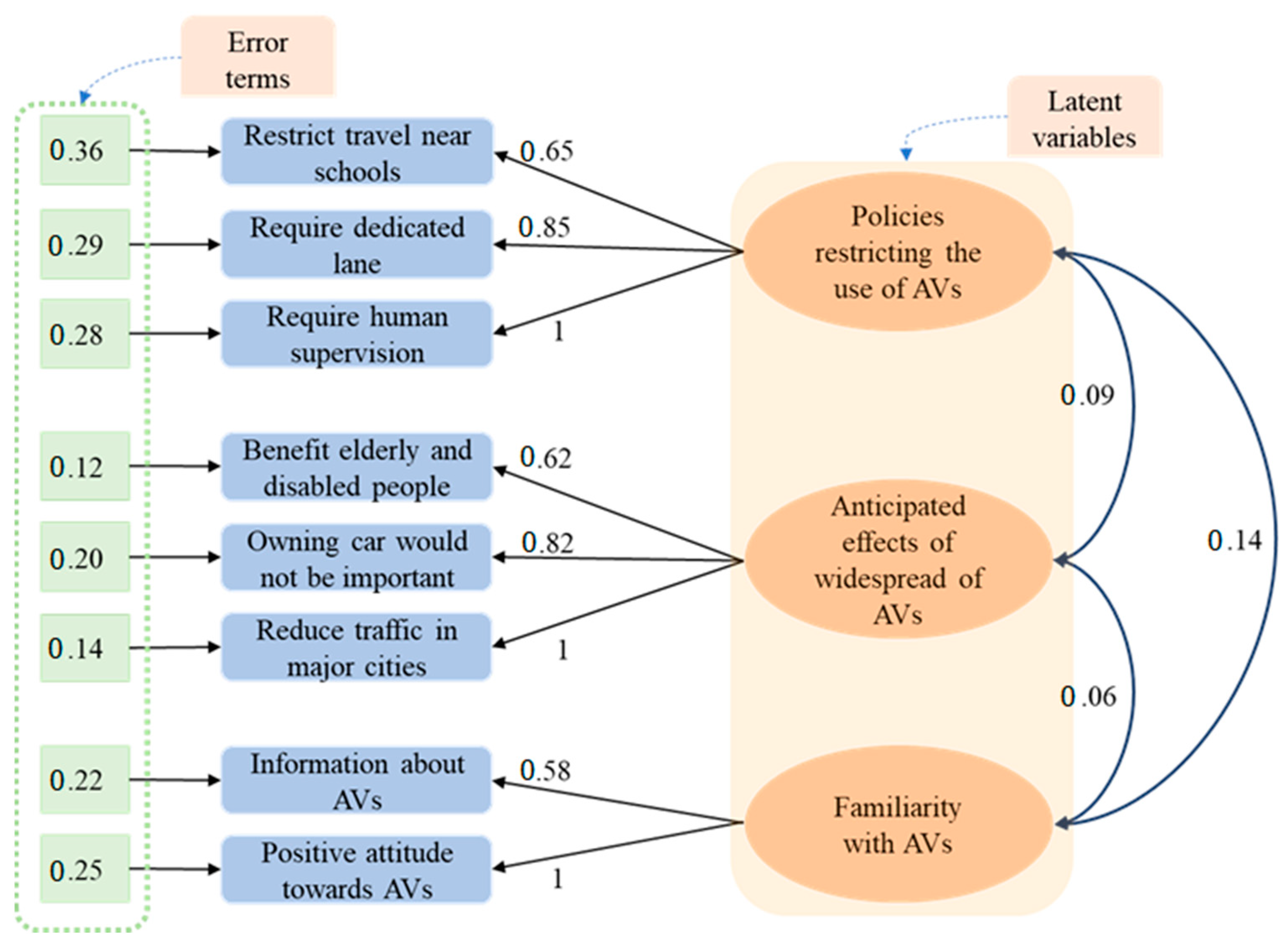
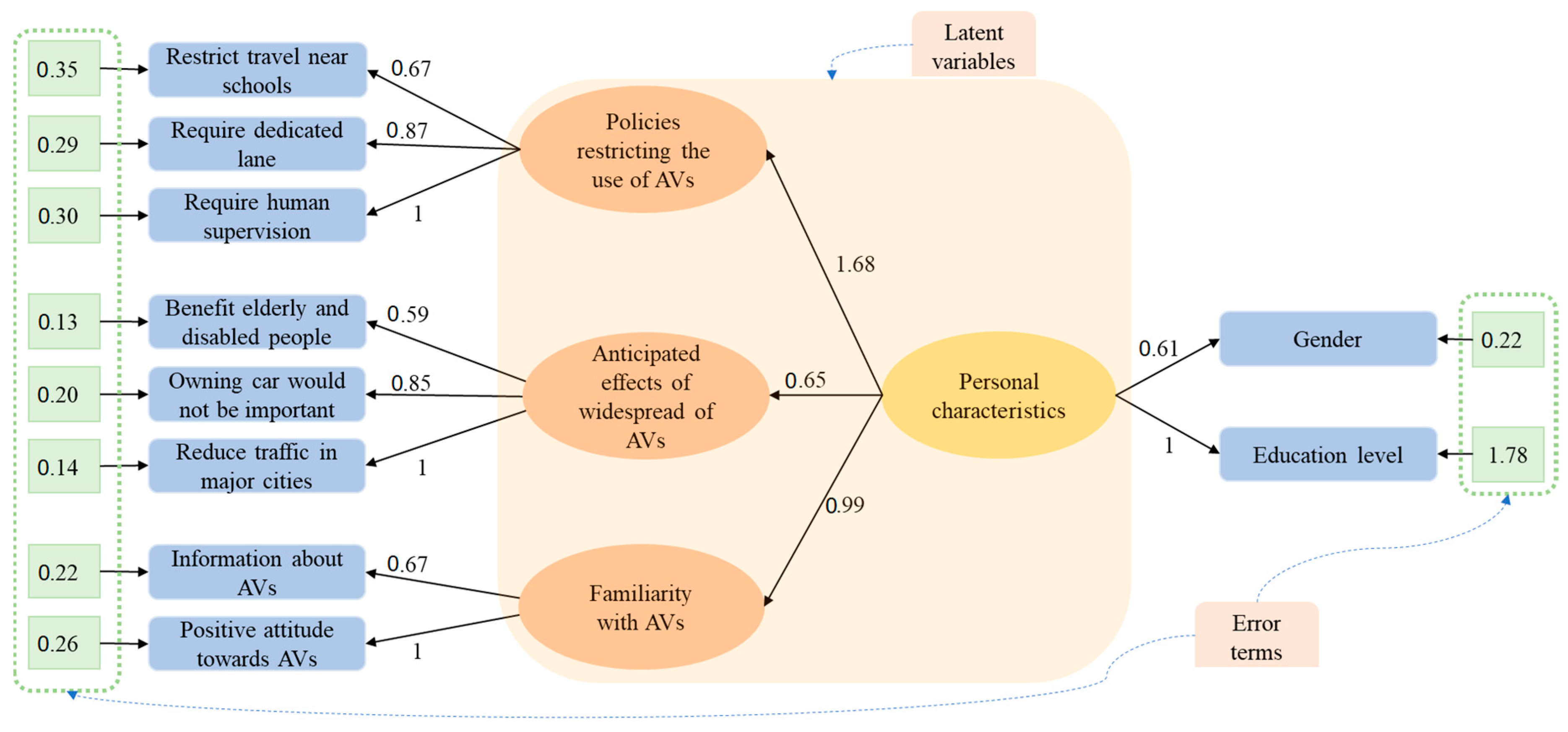
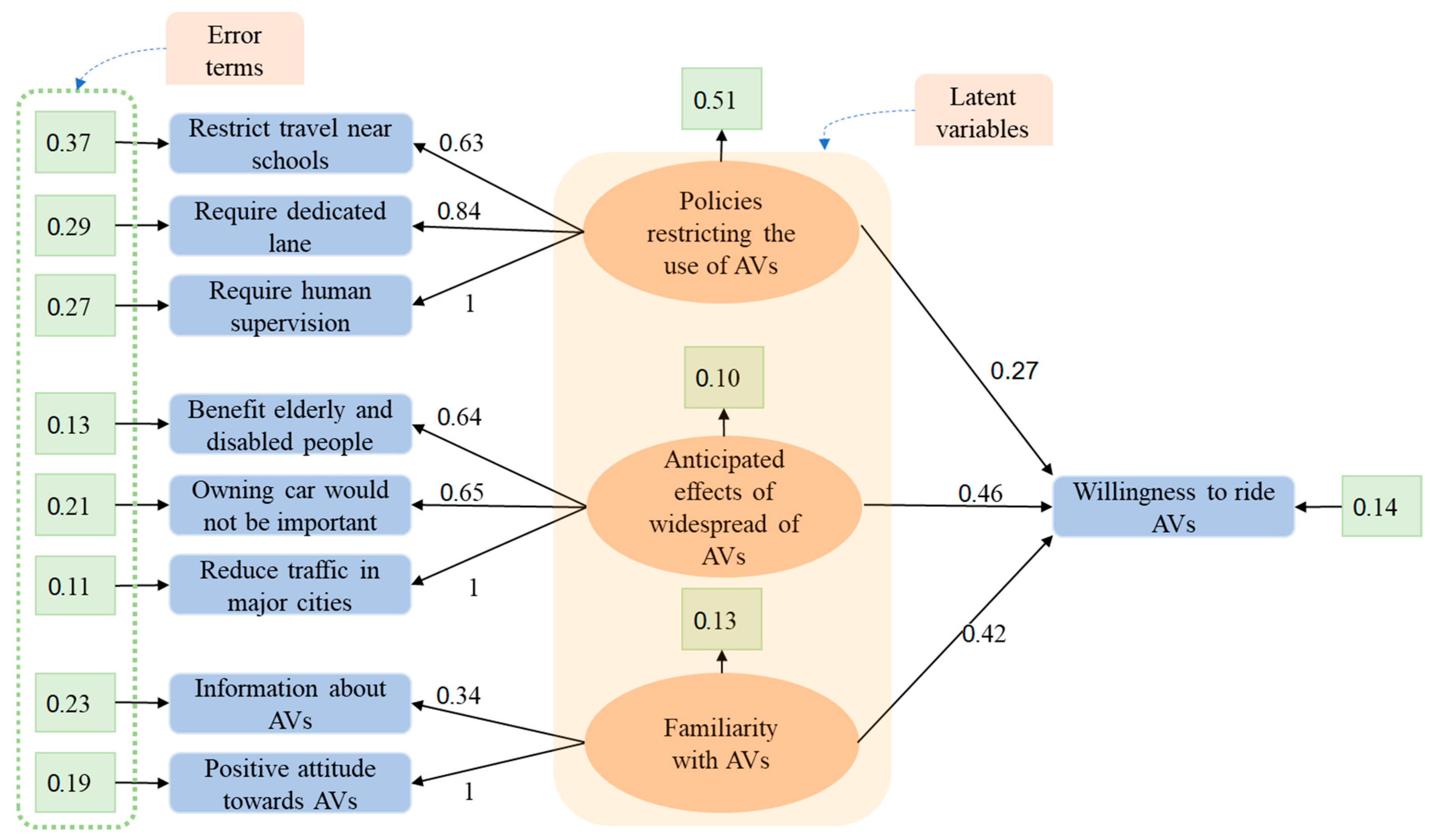
The deployment of autonomous vehicles (AVs) is gaining popularity due to their predicted safety and operational benefits and is driven by advancements in the automobile industry. However, due to the unavailability of fully AVs in the automobile market, users’ perception of their adoption is driven by available knowledge and personal attitudes towards AVs. The effects of users’ perception of policy requirements, the potential effects of AVs, and their familiarity with AV technology on their willingness to ride AVs are investigated in this research. The effect of personal characteristics, such as gender and education level, on users’ perceptions of various aspects related to AVs is also modeled. Stated preference survey data of 2323 respondents from the United States was used for modeling, and three models were developed using confirmatory factor analysis and structural equation modeling (SEM) techniques. The results show that users’ perception of the required policies restricting AVs, the influence of widespread AVs, and their familiarity with AV technology are unrelated. Persons with higher education levels and females were found to give more weight to policies restricting AVs than the potential effects of AVs. Users’ familiarity with AV technology and their perception of the anticipated effects of AVs were found to positively influence their willingness to ride AVs. Even though users favored policies restricting the use of AVs in certain areas, they were still willing to ride them. The findings provide valuable insights for policymakers to restrict the use of AVs in certain areas during their early deployment stages. They can also assist automobile manufacturers in prioritizing and focusing on technical advancements that will increase their acceptance and penetration into the market.
Keywords: autonomous vehicles; willingness to ride; structural equation modeling autonomous vehicles; willingness to ride; structural equation modeling