Article

EV Battery Degradation Assessment Under Standard Drive Cycles Using Simulated EIS

by
Akila E. Jayasinghe
1,2,3,
Nuwantha Fernando
1,*,
Sisil Kumarawadu
2,
Liuping Wang
1 and
J. P. Karunadasa
2
1
Department of Electrical and Electronic Engineering, School of Engineering, RMIT University, Melbourne VIC 3000, Australia
2
Department of Electrical Engineering, Faculty of Engineering, University of Moratuwa, Moratuwa 10400, Sri Lanka
3
Department of Engineering Technology, Faculty of Technology, University of Jaffna, Jaffna 40000, Sri Lanka
*
Author to whom correspondence should be addressed.
Vehicles 2025, 7(1), 21; https://doi.org/10.3390/vehicles7010021

Submission received: 6 December 2024 / Revised: 16 February 2025 / Accepted: 17 February 2025 / Published: 19 February 2025
(This article belongs to the Special Issue Battery Management of Hybrid Electric Vehicles)

Abstract

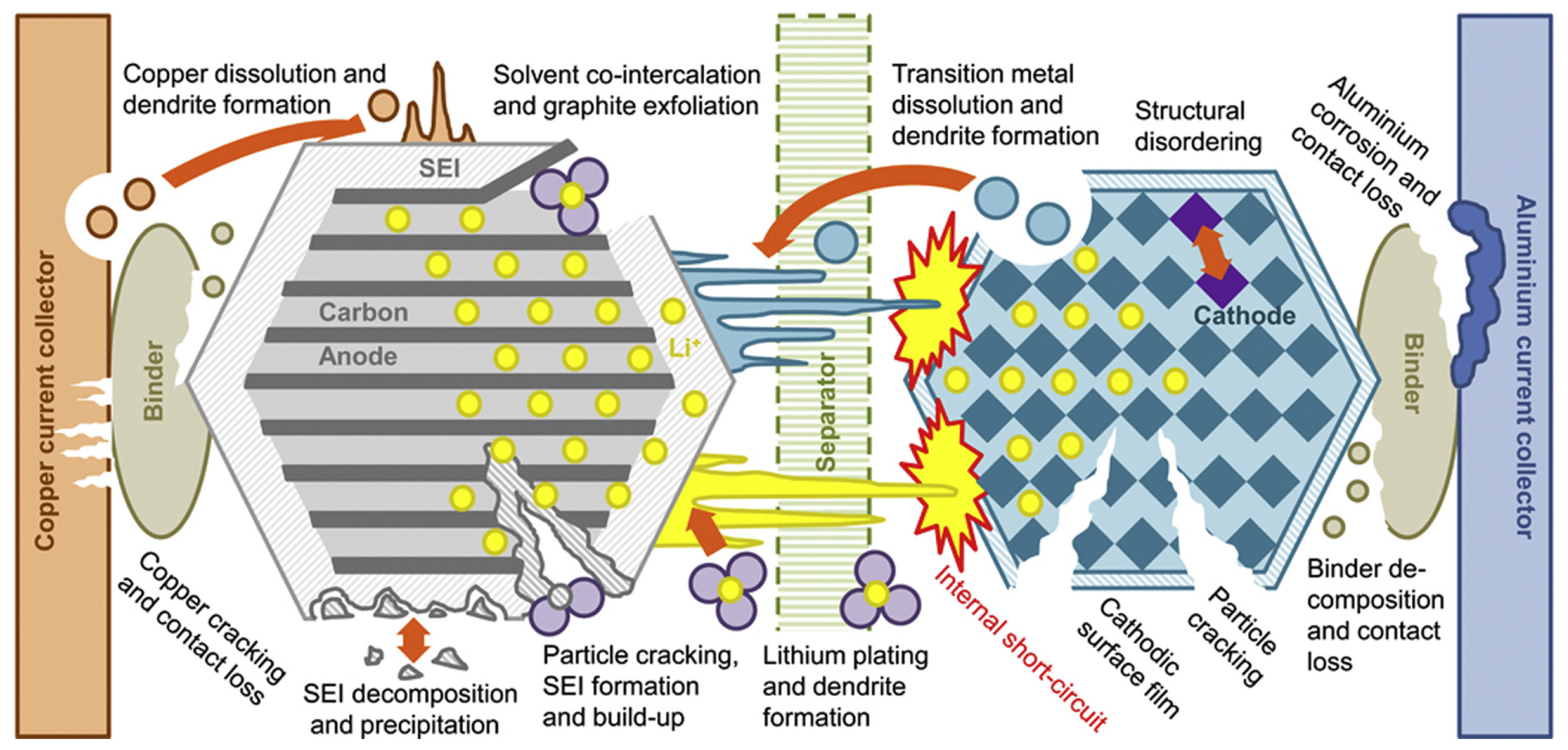
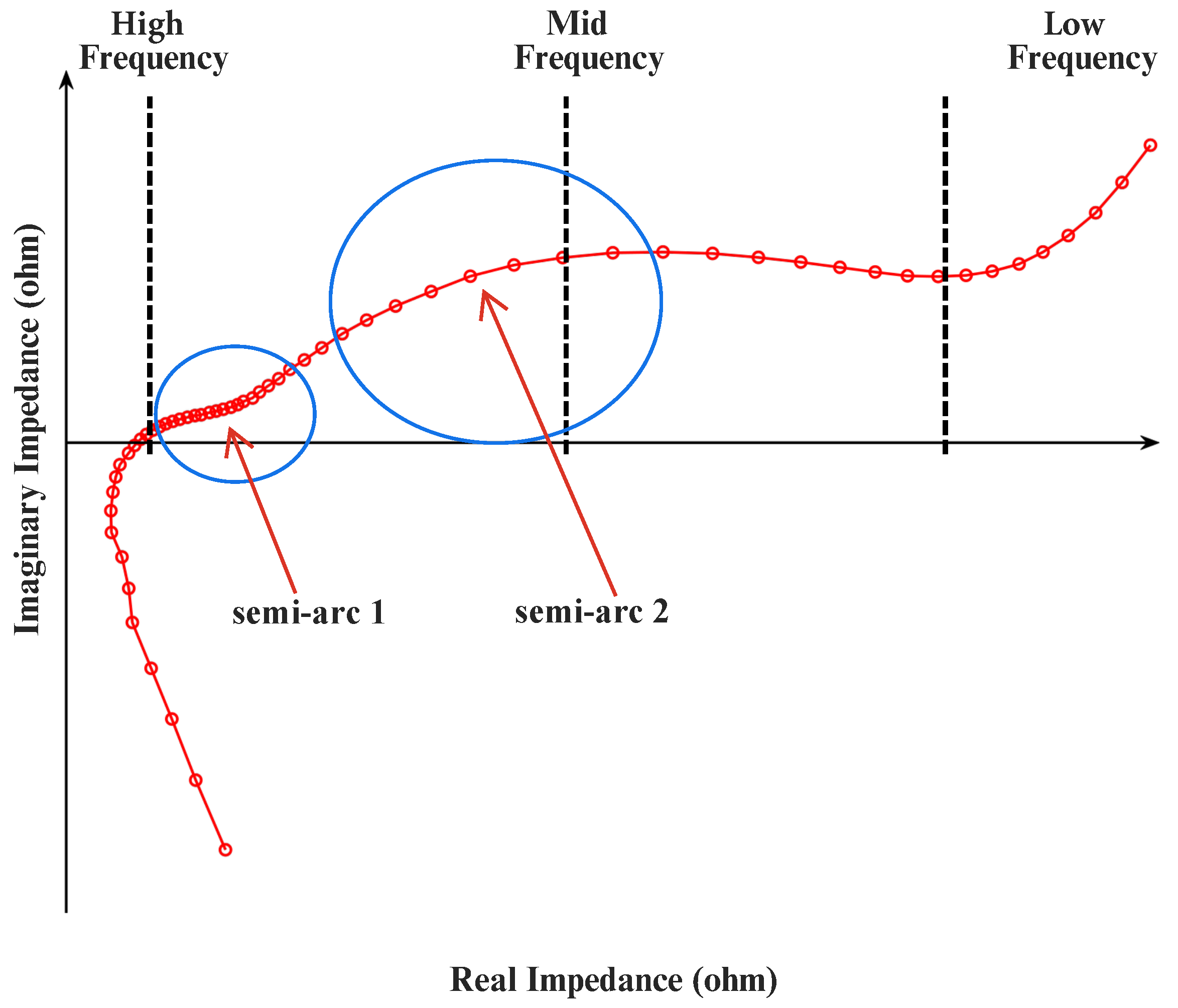
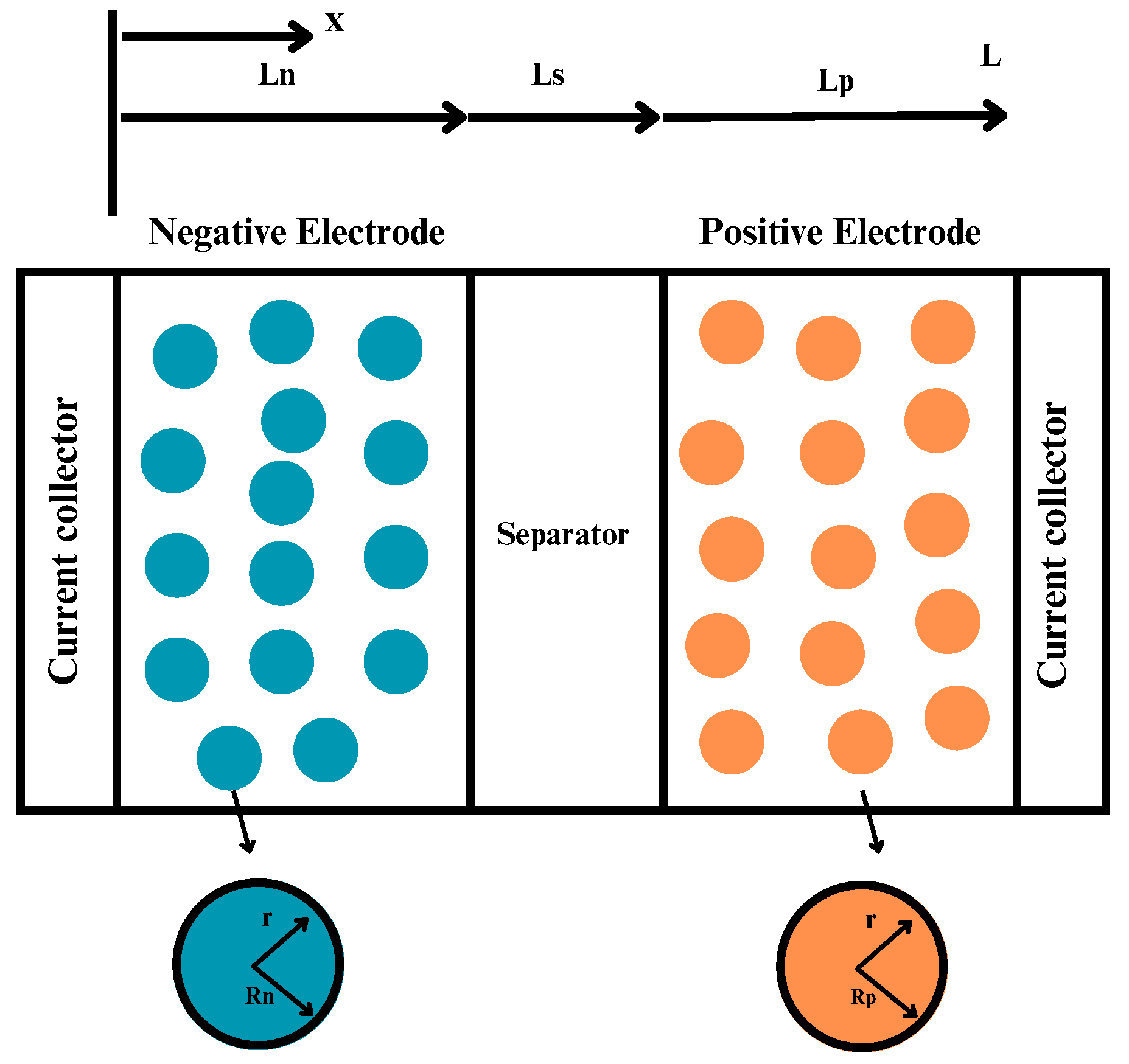
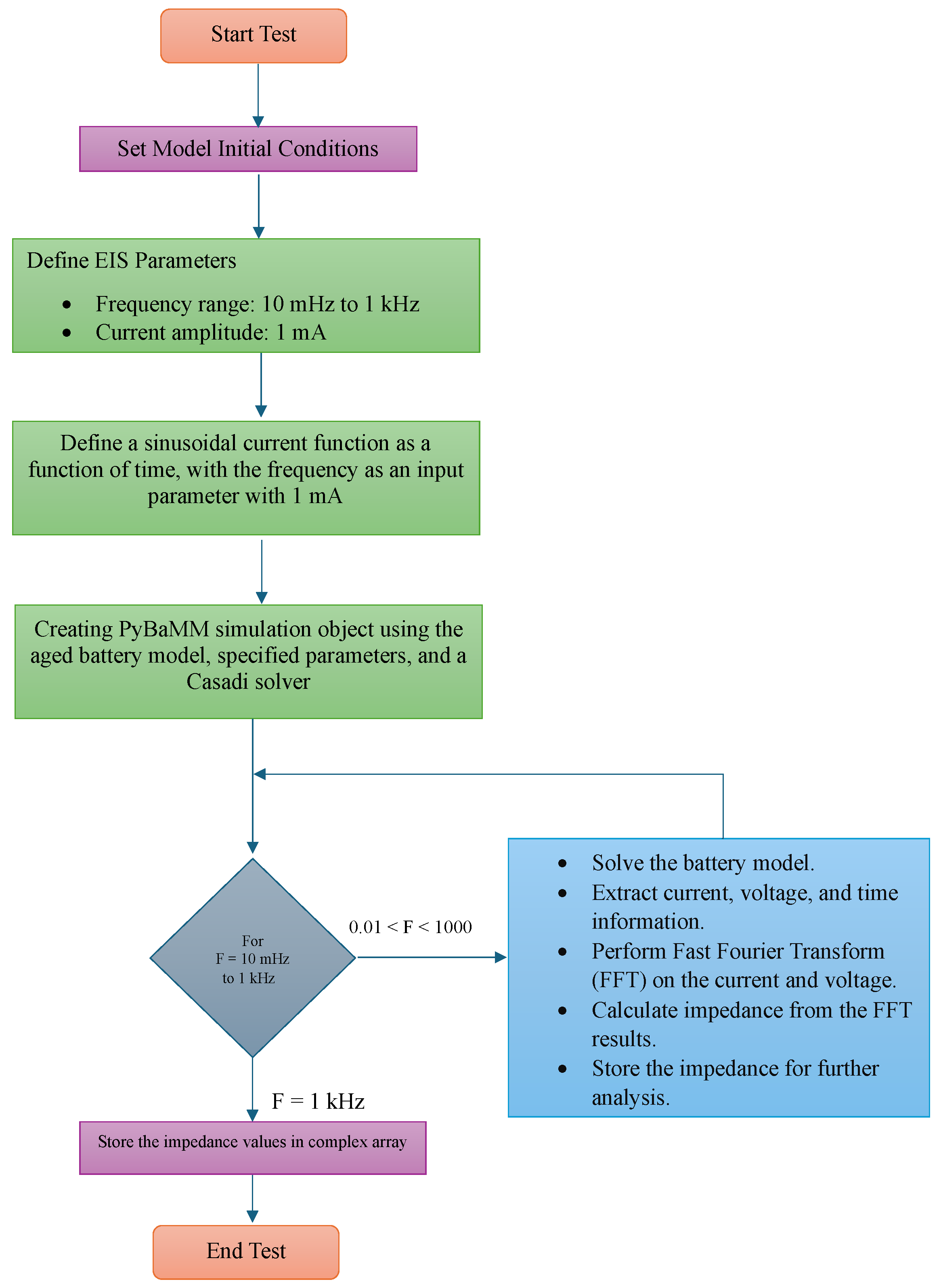
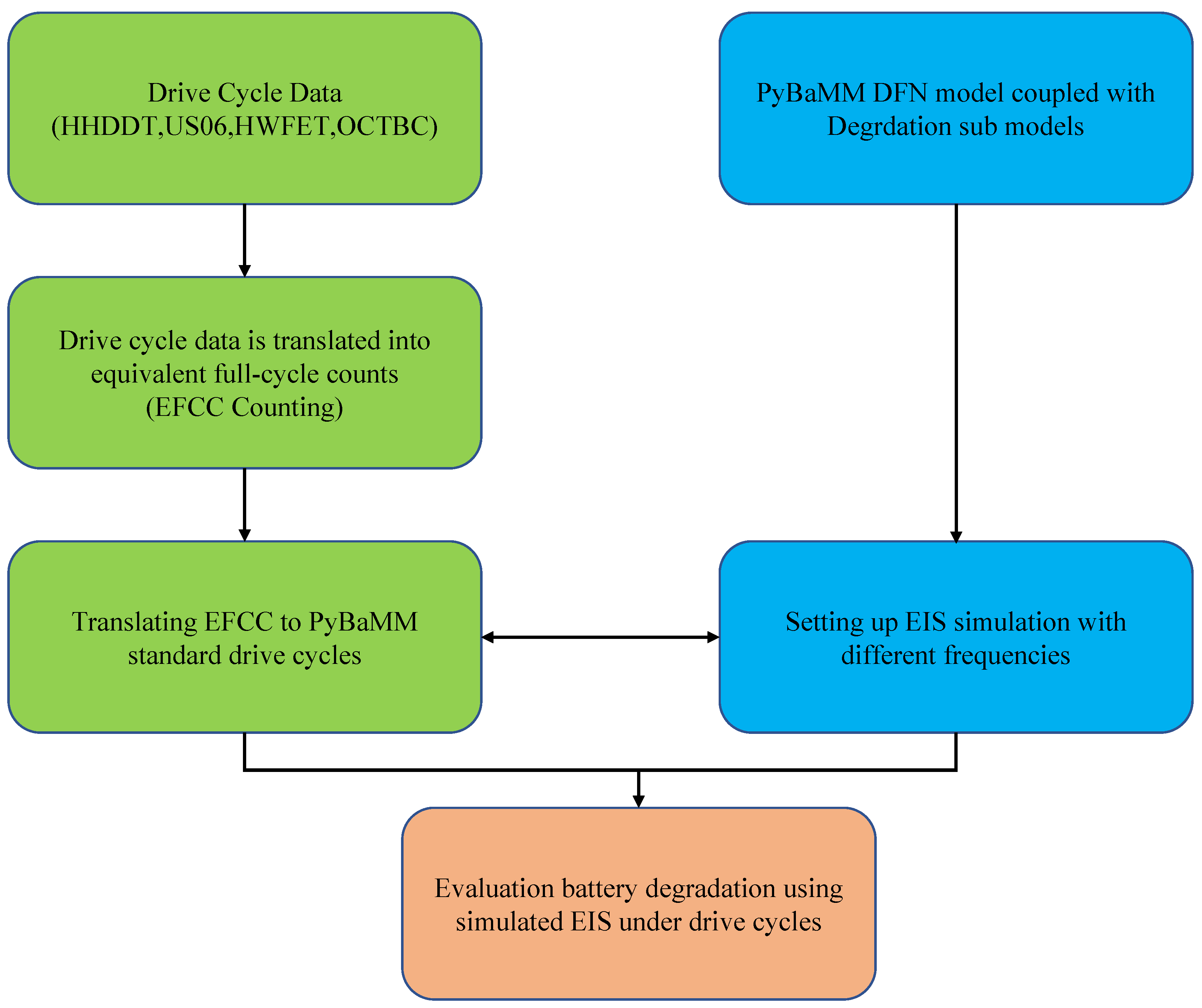
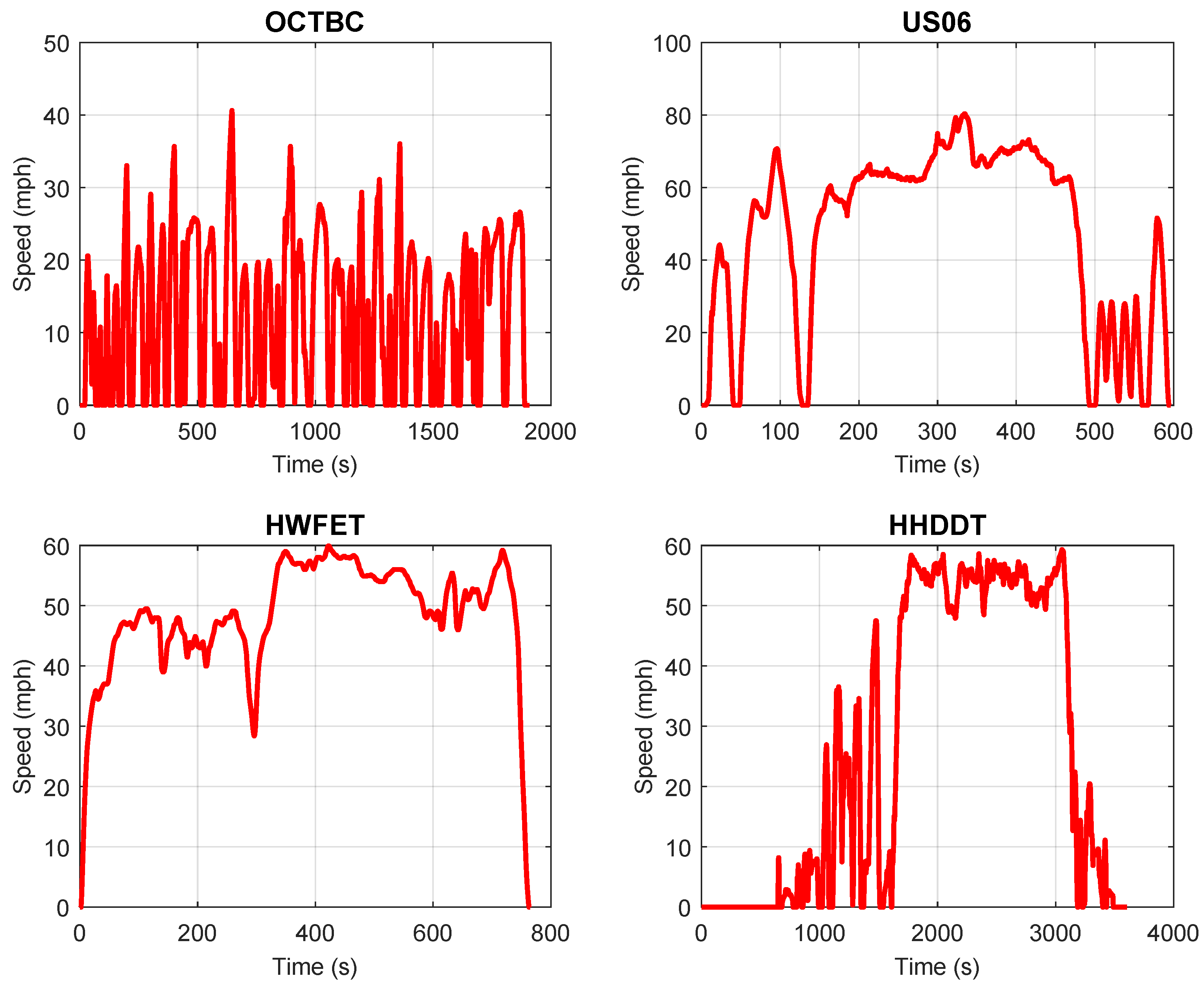
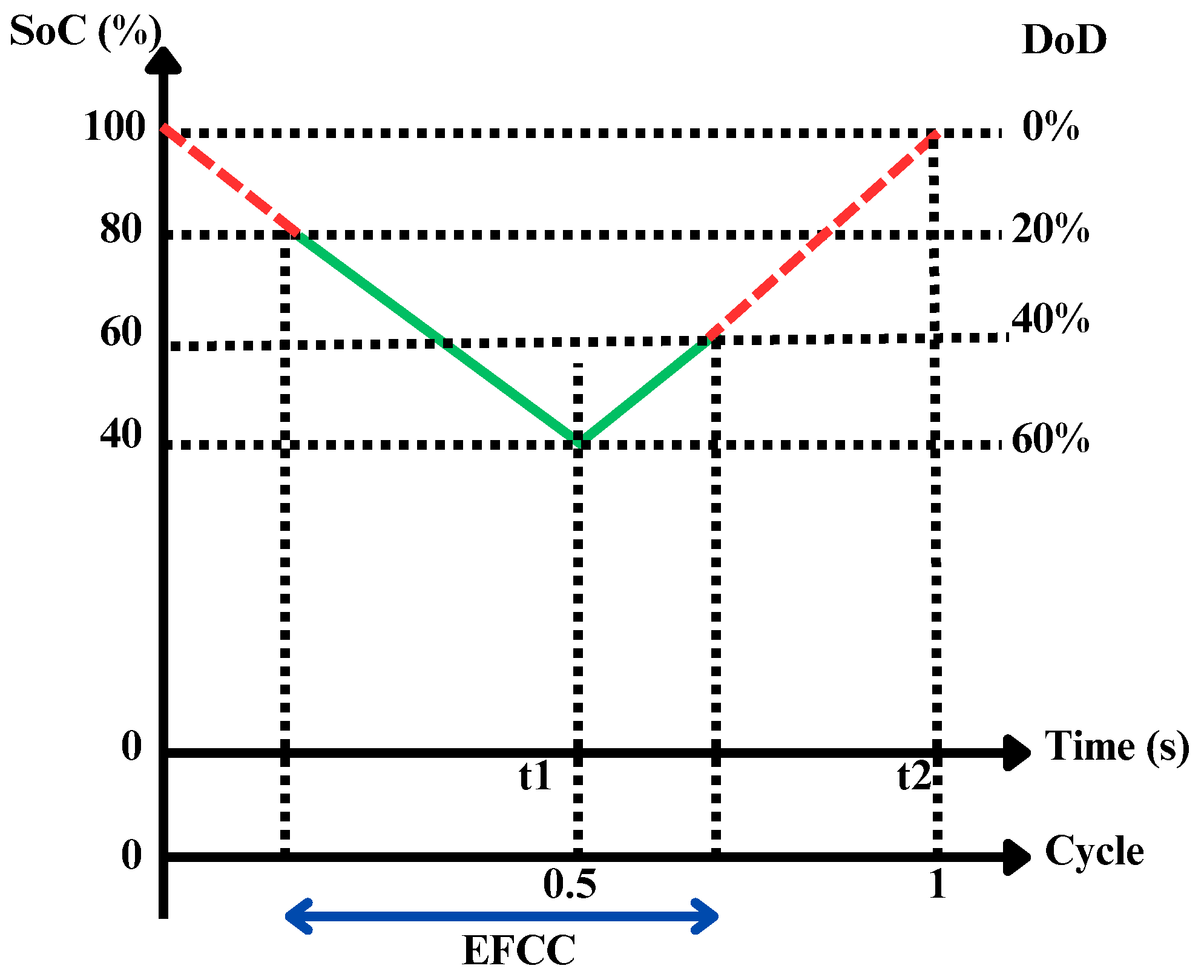
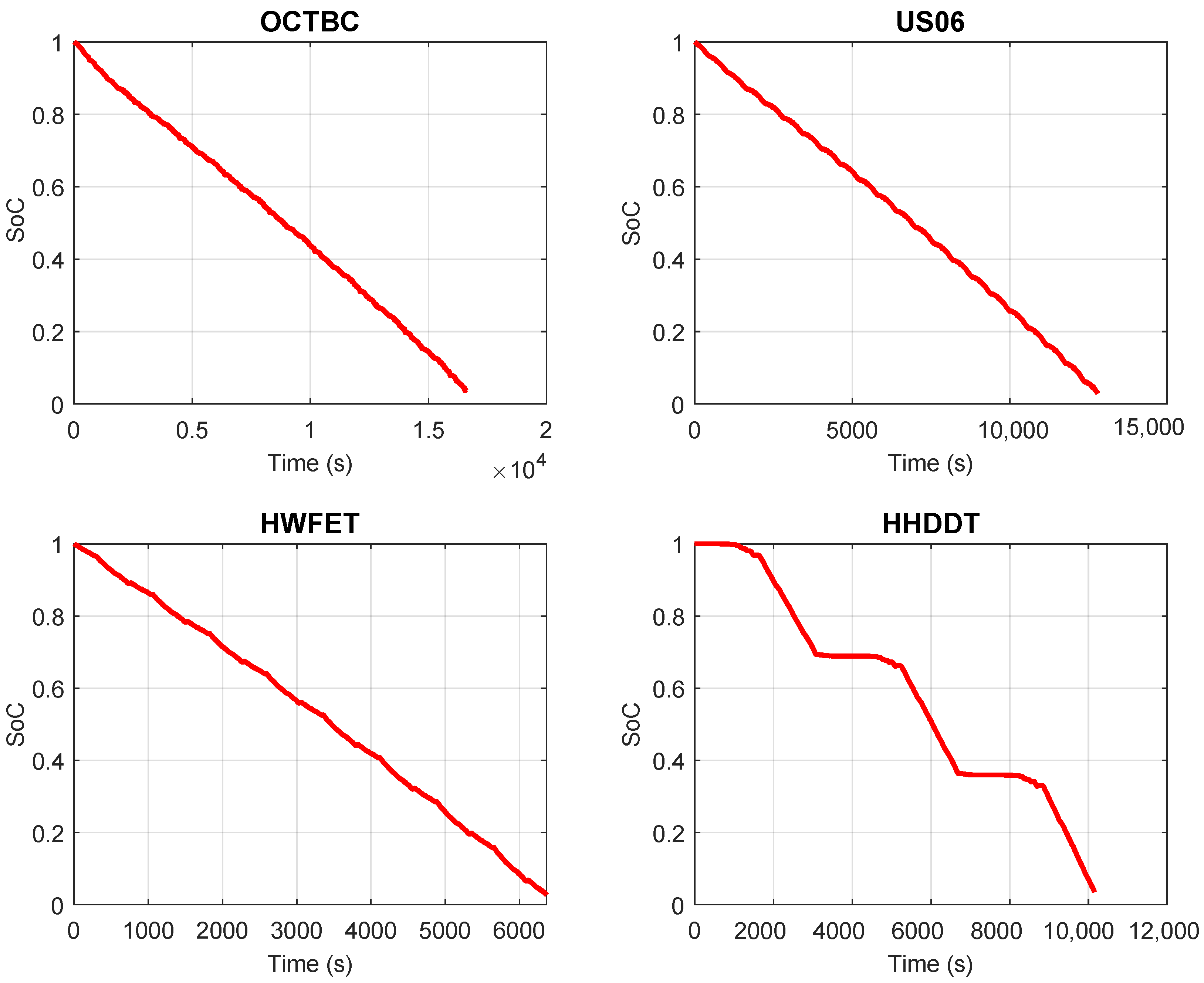
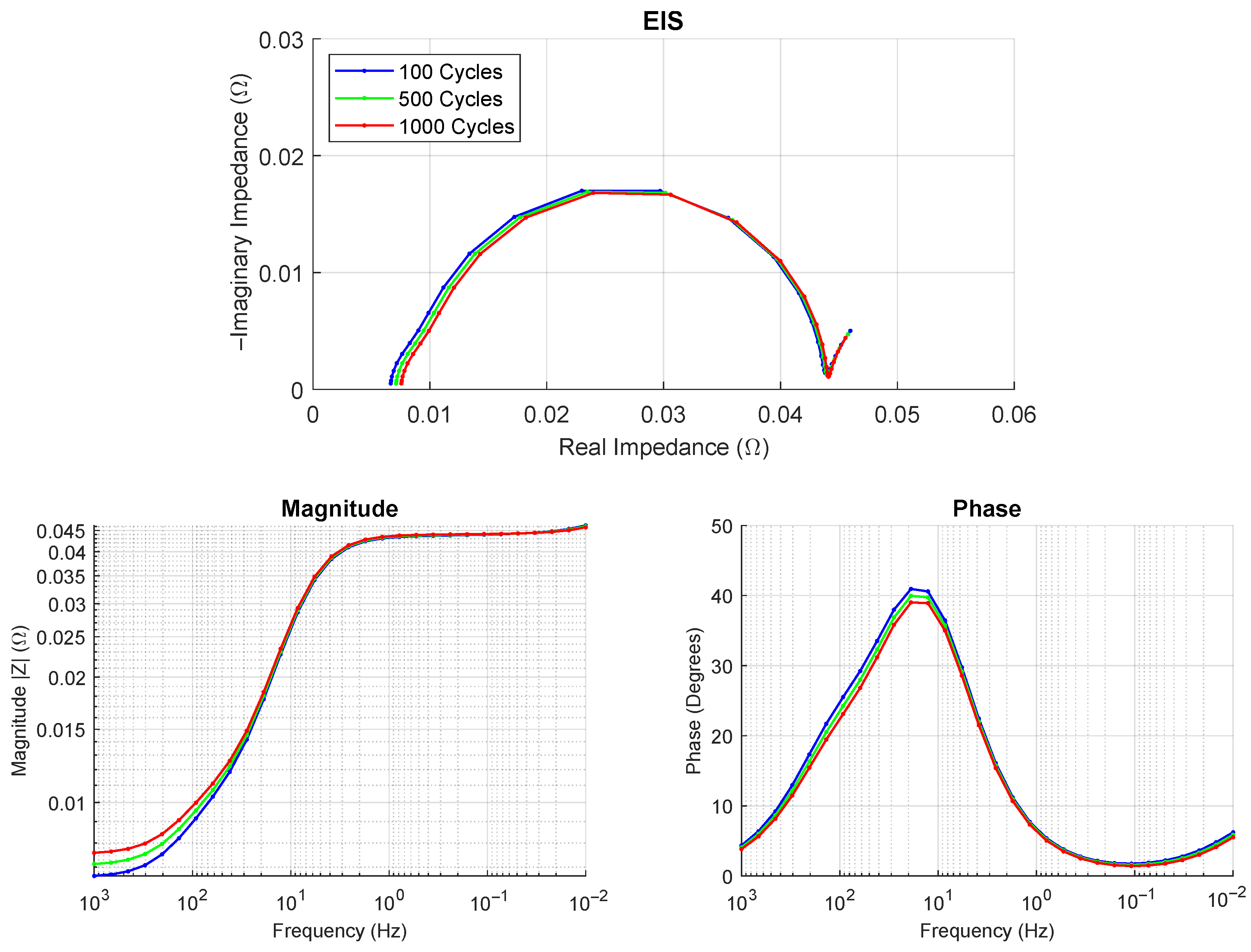
Lithium-ion batteries (LIBs) play a critical role in electric vehicles (EVs) and hybrid electric vehicles (HEVs) and degradation of LIBs influences lifetime, reliability, safety and dependability. The ability to assess and quantify degradation enables assessment of LIB’s true state of health. This paper investigates LIB degradation using a pseudo two-dimensional (P2D) model, particularly focusing on the changes to Electrochemical Impedance spectroscopy (EIS) results due to degradation. Three key degradation mechanism are considered and the impact of State-of-Charge (SoC) and temperature on EIS results are discussed. This paper also identifies the need for a more realistic approach to assess degradation. Simulations are conducted considering four repetitive standard drive cycles (viz., HTDDT, HWFET, US06 and OCTBC) for a vehicle travel distance of 150,000 km for each case. The cycle counting method is used to convert partial SoC variations during a drive cycle to an equivalent full cycle count which is then used within the degradation model to modify the parameters to represent the P2D model. This study demonstrates a robust process for analyzing degradation dynamics. The methodology presented here can guide future researchers with experimental data, enabling validation and refinement of model parameters to advance LIB degradation analysis and improve battery life predictions under operational scenarios.
Keywords: electric vehicles; hybrid electric vehicles; lithium-ion battery degradation; battery modelling; impedance spectroscopy electric vehicles; hybrid electric vehicles; lithium-ion battery degradation; battery modelling; impedance spectroscopy