Article

Comparative Analysis of Ruminant and Equine Milk: Quality Assessment and Potential Benefits for Human Nutrition


by
Nikoleta Lugonja
1,*,
Milena Milojević
2,
Petar Ristivojević
3,
Maja Krstić Ristivojević
3 and
Dalibor Stanković
3
1
Institute of Chemistry, Technology and Metallurgy, National Institute of the Republic of Serbia, University of Belgrade, Njegoseva 12, 11000 Belgrade, Serbia
2
Faculty of Agriculture, University of Belgrade, Nemanjina 6, 11070 Zemun, Serbia
3
Faculty of Chemistry, University of Belgrade, Studentski Trg, 12-16, 11000 Belgrade, Serbia
*
Author to whom correspondence should be addressed.
Dairy 2026, 7(2), 21; https://doi.org/10.3390/dairy7020021
Submission received: 9 December 2025 / Revised: 19 January 2026 / Accepted: 24 February 2026 / Published: 27 February 2026
(This article belongs to the Section Milk and Human Health)

Abstract

Milk is a highly nutritious food and a cornerstone of the human diet, supplying not only essential macronutrients but also a wide range of bioactive compounds with important functional and health-promoting properties. This study presents the first comparative analysis of ruminant (cow, goat, sheep) and equine (mare, jenny) milk samples collected in Serbia, with emphasis on their physicochemical properties, protein profile, redox characteristics, and nutritional potential. Ruminant milk had significantly higher protein concentrations, with cow and sheep milk containing the highest levels of protein. Two equine milks demonstrated a distinctive whey-to-casein protein ratio to ruminants, and a higher content of active sulfhydryl groups, correlating with improved digestibility and functional properties. Antioxidant potential was determined using spectrophotometric and electrochemical methods, confirming superior redox potential in mare’s milk, followed by jenny’s and sheep’s milk. Nutritional properties of milk separated by Principal Component Analysis highlighted species-specific profiles of equine milks as a promising alternative for individuals with an allergy to cow’s milk protein, offering enhanced antioxidant protection, bioactive compounds, and digestibility. These results support the potential of equine milk as a functional food with added value in human nutrition.

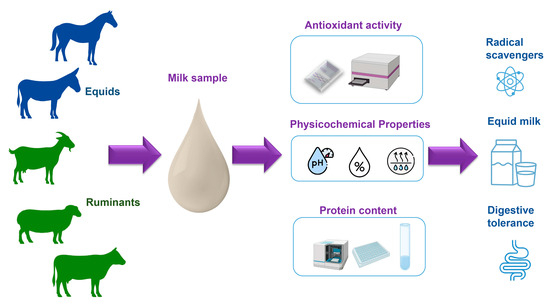
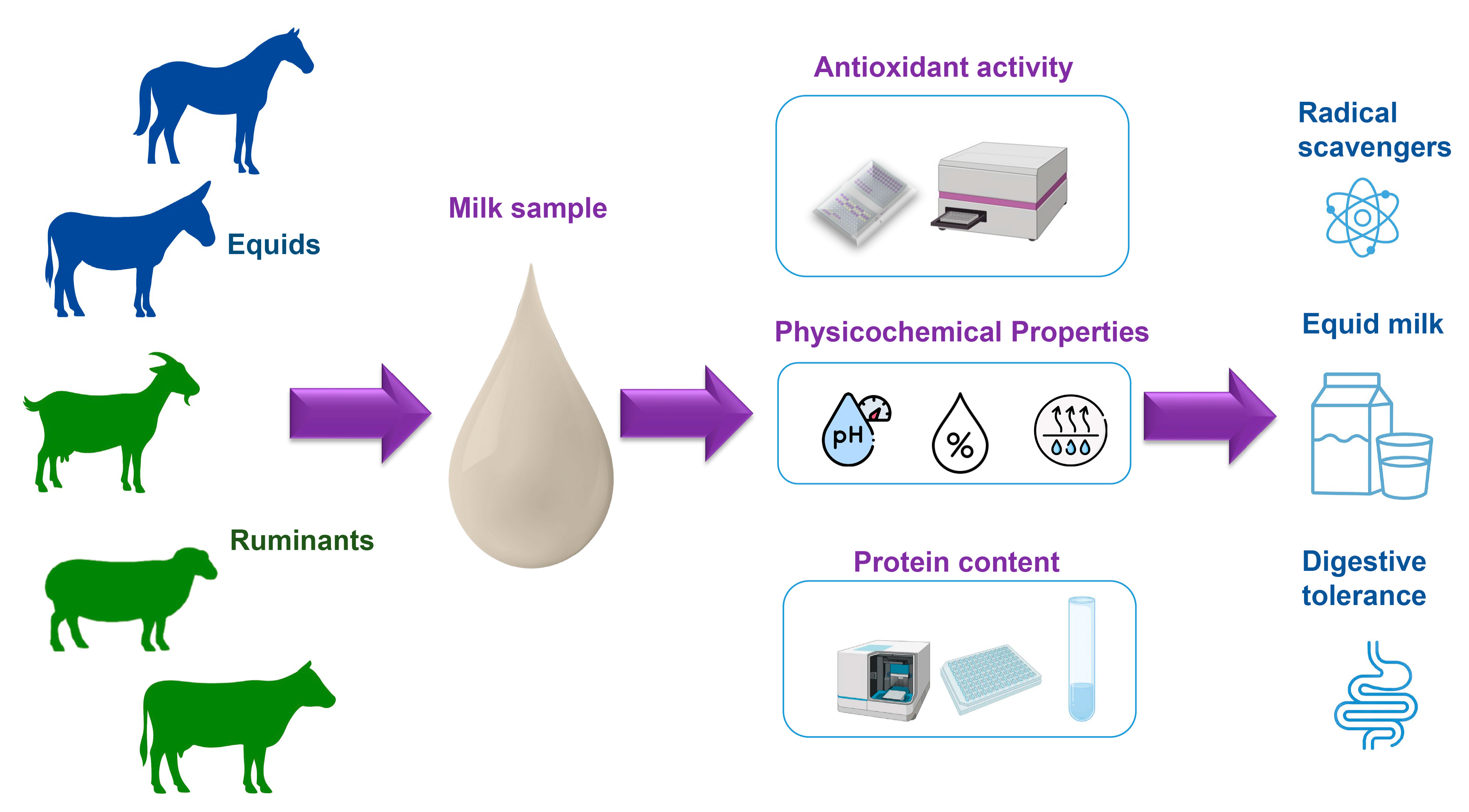
Graphical Abstract

1. Introduction

Global milk production is predominantly based on ruminant milk, primarily cow’s milk, which accounts for the majority of milk produced and consumed worldwide. Fresh whole cow’s milk represents approximately 81% of global milk production, followed by buffalo (15%), goat (2.3%), sheep (1.3%), and camel (0.4%) milk. Future production is projected to increase by 1.8% annually over the next decade. Cow’s milk is widely used in dairy products, confectionery, and bakery applications, and after processing, in infant, clinical, and elderly nutrition. However, its use is limited in individuals with lactose intolerance, cow’s milk protein allergy, or digestive discomfort, encouraging the search for alternative milk sources that offer a balanced or improved nutritional profile. In recent years, this growing demand for nutritionally richer and more digestible milk has renewed interest in equine milk, particularly that from mares and donkeys. Although mare’s milk and jenny milk account for less than 1% of global milk production, they have attracted increasing attention for their potential health benefits, digestibility, and unique composition that closely resembles human milk. Unlike milk of ruminants, including cow, goat, and sheep milk, which is rich in casein, equine milk contains lower levels of casein and higher levels of whey proteins, making it easier to digest for those who experience adverse reactions to traditional dairy products [1].
The growing interest in equine milk also aligns with global efforts to promote more sustainable, diverse, and nutritionally valuable food sources [2,3,4]. Methane emissions from dairy production contribute significantly to global greenhouse gas levels. Compared with ruminants, equids such as horses and donkeys with comparable body weight emit 3.6 times less methane per unit of digested fiber, thereby contributing less to overall greenhouse gas emissions [5,6,7]. Sustainability goals, including those emphasized in UN Sustainable Development Goal 13 (Climate Action) and International Dairy Federation reports, highlight the importance of reducing greenhouse gas emissions within the dairy sector [1].
Equine milk has a composition more similar to human milk than ruminant milk, characterized by lower protein and fat content, while comparative studies have highlighted notable differences in nutritional value and bioactivity among milks from different animal species [8,9]. These properties make it a promising alternative for infants and young children with cow’s milk allergy. Moreover, it contains a range of bioactive components such as lysozyme and lactoferrin with antimicrobial effects, or α-linolenic acid and vitamin C with antioxidant activity, supporting its value as a functional food for health-conscious consumers [10]. Mare’s milk is highly digestible, closely resembling human milk, and is considered a suitable alternative for children with cow’s milk allergies due its lower levels of α-lactalbumin, β-lactoglobulin, and α-casein [11,12]. Jenny milk has a ratio of major milk proteins, caseins to whey (0.68–0.75), similar to that of human milk (0.59–0.70) [13,14]. Among ruminants, sheep and goat milk are more digestible than cow’s milk due to their lower casein content and higher concentration of bioactive substances, contributing to their recognized functional value and positive impact on human health [15].
Although all mammalian milks contain the same basic components, their composition varies notably, not only between ruminants and non-ruminants, but also between different species, genetic lines, and individual animals, resulting in distinct nutritional and bioactive profiles [16,17]. These variations are reflected not only in the relative abundance of the major milk constituents but also at the molecular level, including protein isoforms and amino acid composition [18,19]. Consequently, systematic monitoring of milk quality becomes essential to ensure consistency, detect deviations, and support reliable downstream processing. Various analytical approaches can be used to assess redox capacity, and electrochemical methods provide a rapid, sensitive, and environmentally friendly means of directly determining the redox potential and total antioxidant capacity of raw milk without the use of chemical reagents [20].
To the best of our knowledge, the proposed study represents the first comparative analysis of ruminant and equine milk from Serbia, focusing on their physicochemical properties, protein profile, and redox properties. By examining the milk of Serbian cows, goats, sheep, mares, and jennies, the study provides valuable insights into their nutritional diversity and potential functional benefits. This study hypothesizes that equine milk (mare’s and jenny’s) differs significantly from ruminant milk (cow, goat, sheep) in protein profile and redox properties, showing a lower casein-to-whey ratio, higher digestibility, and stronger antioxidant potential. It is further expected that these characteristics make equine milk a promising functional and sustainable alternative to traditional dairy.

2. Materials and Methods

2.1. Study Design

Milk samples were obtained from five animal species: cow (Bos taurus), sheep (Ovis aries), goat (Capra hircus), mare (Equus caballus), and jenny (Equus asinus). All animals were healthy and managed under semi-extensive conditions at free-range private farms throughout the Republic of Serbia. The animals sampled for milk were representative of local production systems. All animals belonged to either autochthonous or widely used commercial breeds. Breed-specific effects were not considered. Samples were collected during the winter and spring seasons (December to July) at the beginning of the mid-lactation period. Cow and goat milk samples were collected between December and February, sheep milk in May, mare milk in June, and jenny milk in July, in accordance with the natural lactation periods of each species. This sampling design ensured that all samples were obtained during mid-lactation, consistent with the natural reproductive cycle of each species. To minimize variability related to age and reproductive status, all animals were in their second parity. Five samples per species (n = 5) were collected, and each was analyzed in triplicate. Milking was performed manually. Before each milk collection, the teat area was washed with clean water and thoroughly dried. Samples were collected into sterile containers (100 mL) following standard hygienic procedures before milking, then immediately transported to the laboratory under refrigerated conditions, and stored at −20 °C until analysis.

2.2. Physicochemical Properties

Dry matter and moisture content were measured using a moisture analyzer (Shimadzu MOC-120H, Kyoto, Japan). pH levels were measured with a WTW pH meter (Xylem Analytics Germany Sales GmbH & Co. KG, Weilheim, Germany).

2.3. Protein Quantification and SDS-PAGE Separation

Raw milk samples were centrifuged to remove the cream layer. The samples were prepared according to a previously described protocol, except that the acid precipitation of casein was omitted, and the resulting supernatants were collected [21]. Total protein concentrations in the supernatants were determined using a bicinchoninic acid (BCA) assay kit (Merck KGaA, Darmstadt, Germany) according to the manufacturer’s instructions.
Protein separation was performed using sodium dodecyl sulfate–polyacrylamide gel electrophoresis (SDS-PAGE) under reducing conditions, following the Laemmli protocol [22]. Electrophoresis was conducted with a Bio-Rad Mini-PROTEAN tetra system (Bio-Rad, Hercules, CA, USA) employing a discontinuous buffer system. Equal amounts of protein (25 μg per well) were loaded onto 12% hand-cast polyacrylamide gels. Protein molecular weight standards with molecular masses of 116, 66.2, 45, 35, 25, 18.4, and 14.4 kDa (Thermo Fisher Scientific, Waltham, MA, USA) were used for molecular weight estimation. Following electrophoretic separation, protein bands were stained with Coomassie Brilliant Blue R-250 (Sigma-Aldrich, Darmstadt, Germany) for protein visualization.
Densitometric analysis of the percentage representation of proteins obtained from SDS-PAGE content was performed using GelAnalyzer software (version 23.1.1; Istvan Lazar, www.gelanalyzer.com)

2.4. Determination of Sulfhydryl (−SH) Groups

The sulfhydryl groups (−SH) were measured spectrophotometrically (UV-1280, Shimadzu, Kyoto, Japan) at 412 nm using Ellman’s reagent. Results were expressed in nanomoles per mg of protein (nmol/mg) [23].

2.5. Determination of Redox and Antioxidant Parameters in Milk Samples

2.5.1. Voltammetric Methods for Detection of Redox Potential

Milk samples for electrochemical measurements were prepared by adding supporting electrolyte potassium chloride to achieve a final concentration of 0.1 M. All samples were prepared this way to minimize the lengthy sample preparation process and reduce testing costs. A vitamin C standard solution was made by dissolving an appropriate amount of ascorbic acid (AA, Sigma-Aldrich, Darmstadt, Germany) in the same supporting electrolyte solution [20]. Electrochemical measurements were equipped with a 5 mL volume three-electrode cell using a CHI 760 B instrument (CH Instruments, Inc., Austin, TX, USA), with glassy carbon electrode (GCE, Model CHI 104, CH Instruments, Inc., Austin, TX, USA) as the working electrode, a platinum wire electrode (Model CHI 221, CH Instruments, Inc., Austin, TX, USA) as the counter electrode, and Ag/AgCl reference electrode (Model CHI 111, CH Instruments, Inc., Austin, TX, USA). Before each measurement, the surface of the working electrode was polished with alumina powder (particle sizes 1.0 and 0.5 µm, Buehler, Lake Bluff, IL, USA, or 0.03 and 0.05 µm, depending on the experimental setup). The electrode was rinsed with distilled or double-distilled water. Cyclic voltammetry (CV) and differential pulse voltammetry (DPV) experiments were performed in a standard three electrode cell with a sample volume of 5 mL. The cell consisted of a glassy carbon working electrode, a silver/silver chloride reference electrode (internal solution 3 M KCl) and a large-area platinum rod counter electrode. All voltammograms were recorded in the potential range from 0 to 1.2 V at a scan rate of 100 mV/s for cyclic voltammetry and 25 mV/s for the DPV method. A solution of vitamin C was used as a standard for constructing the calibration curve. In the CV method, the charge passed at the oxidation peak around +200 mV (Q200) was used to estimate antioxidant capacity. Conversely, in the DPV method, the charge at approximately +500 mV (Q500) was used for the same purpose. The area under the oxidation peaks was integrated and compared to the calibration data for quantitative analysis [20,24].

2.5.2. Spectrophotometric Methods for Detection of Total Antioxidant Potential

The Ferric reducing antioxidant potential (FRAP) assay is based on the reduction in the ferric 2,4,6-tripyridyl-s-triazine complex [Fe(III)-TPTZ] to its ferrous form at low pH, producing an intensely blue-colored complex that is detected at 593 nm, as described by Benzie and Strain with minor modifications [25,26]. A calibration curve was created using aqueous solutions of FeSO4·7H2O at concentrations ranging from 100 to 1000 µM. The results were expressed as FRAP values (µmol Fe2+/L).
Radical scavenging activity was measured using the 2,2-diphenyl-1-picrylhydrazyl (DPPH) assay as described by Zarban et al. [27] with slight modifications. Briefly, 1800 µL of the DPPH reagent (0.1 mM DPPH dissolved in 95% methanol) was added to 200 µL of the milk sample in glass test tubes. The samples were shaken, incubated in the dark at room temperature for 30 min, and then centrifuged at 10,000 rpm for 10 min. Methanol was used as a blank. The absorbance was measured at 517 nm, and the results were expressed:
Radical scavenging activity % = [1 − (Abs sample/Abs blank)] × 100
Total polyphenolic content was determined using Folin–Ciocalteu (FC) assay, and the results were expressed as gallic acid equivalents per mL of the sample (mg GAE/mL) [28].

2.6. Statistical Analysis

Statistical analysis was performed using SPSS Statistics, version 25.0 (IBM Corp., Armonk, NY, USA). Data were analyzed using one-way ANOVA for each measured variable, and, if significant differences between groups were detected, a post hoc Tukey test was performed for pairwise comparisons. Results are presented as mean ± standard deviation (SD), p < 0.05 was considered statistically significant. The Principal Component Analysis (PCA) was performed using the PLS Toolbox statistical package, version 5.7 (Eigenvectors Research Inc., Manson, WA, USA) for MATLAB version 7.12.0 R2015a (MathWorks, Natick, MA, USA) as an exploratory data analysis method. A singular value decomposition (SVD) algorithm was applied, with a 0.95 confidence level set for both Q and T2 Hotelling limits to identify potential outliers. By retaining only a limited number of principal components (PCs), the dimensionality of the data space was reduced, facilitating the interpretation and grouping of substances based on their similarities. Prior to multivariate analysis, the data were pre-processed using standard normal variate, mean centering, and filtering, which is the preferred approach when all variables are measured in the same units and classification of samples is required.

3. Results

3.1. Physicochemical Properties of Milk Samples

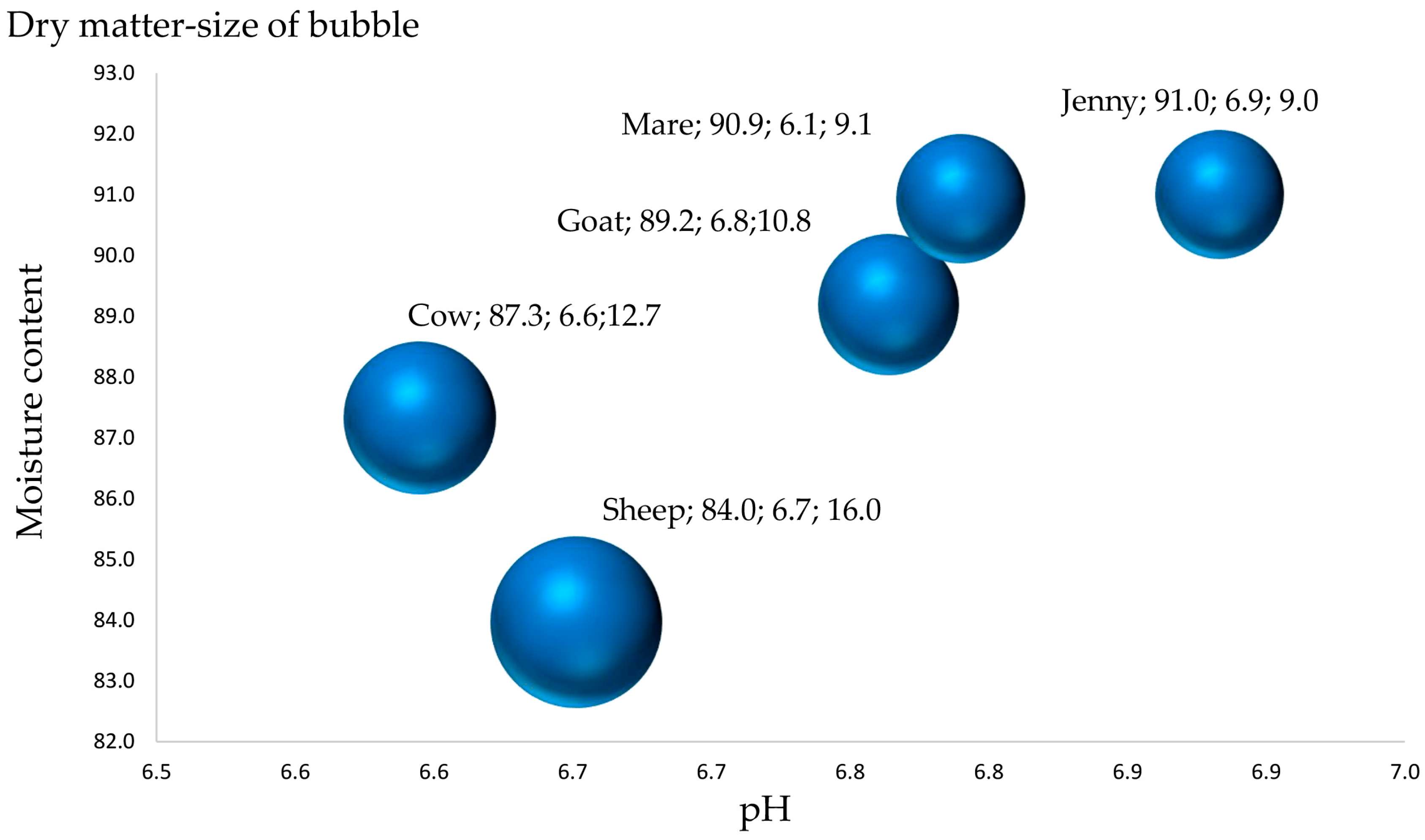
The physicochemical properties, including dry matter and moisture content, and pH value, are important for assessing milk composition and its suitability for consumption and processing (Figure 1), serving as screening indicators of its quality. The dry matter content is highest in sheep milk, while it is the lowest in mare’s milk. The pH value across all samples was from 6.6 ± 0.1 for cow milk to 6.80 ± 0.1 for mare and 6.88 ± 0.1 for jenny milk.
The physicochemical properties of milk from different species are presented in Figure 1, which illustrates the relationship between moisture content, pH, and dry matter. Apparent interspecies variations in milk samples were observed, reflecting the compositional diversity of milk. Cow’s milk exhibited a moisture content of 87.3% and a dry matter level of 12.7%, positioning it in the mid-range among the analyzed species. Sheep’s milk showed the lowest moisture content (84.0%) but the highest dry matter content (16.0%), indicating its richer nutrient density compared to other species. Goat’s milk presented intermediate values, with 89.2% moisture and 10.8% dry matter, suggesting a composition closer to cow’s milk but slightly more diluted. In contrast, equine milk (mare and jenny) was characterized by notably higher moisture levels (90.9–91.0%) and lower dry matter contents (9.0–9.1%), which clearly differentiates it from ruminant milk. The pH values across all samples ranged narrowly between 6.6 and 6.9, consistent with the typical near-neutral nature of fresh milk. However, slight differences were observed, with equine milk tending toward the higher pH range compared to ruminant milk. The results confirm that ruminant milk is richer in dry matter, particularly in sheep’s milk, whereas equine milk is more diluted but closer in composition to human milk. These compositional differences are of practical relevance for nutrition, infant feeding applications, and dairy product processing.

3.2. Protein Profile and Free Sulfhydryl (−SH) Group Content in Milk

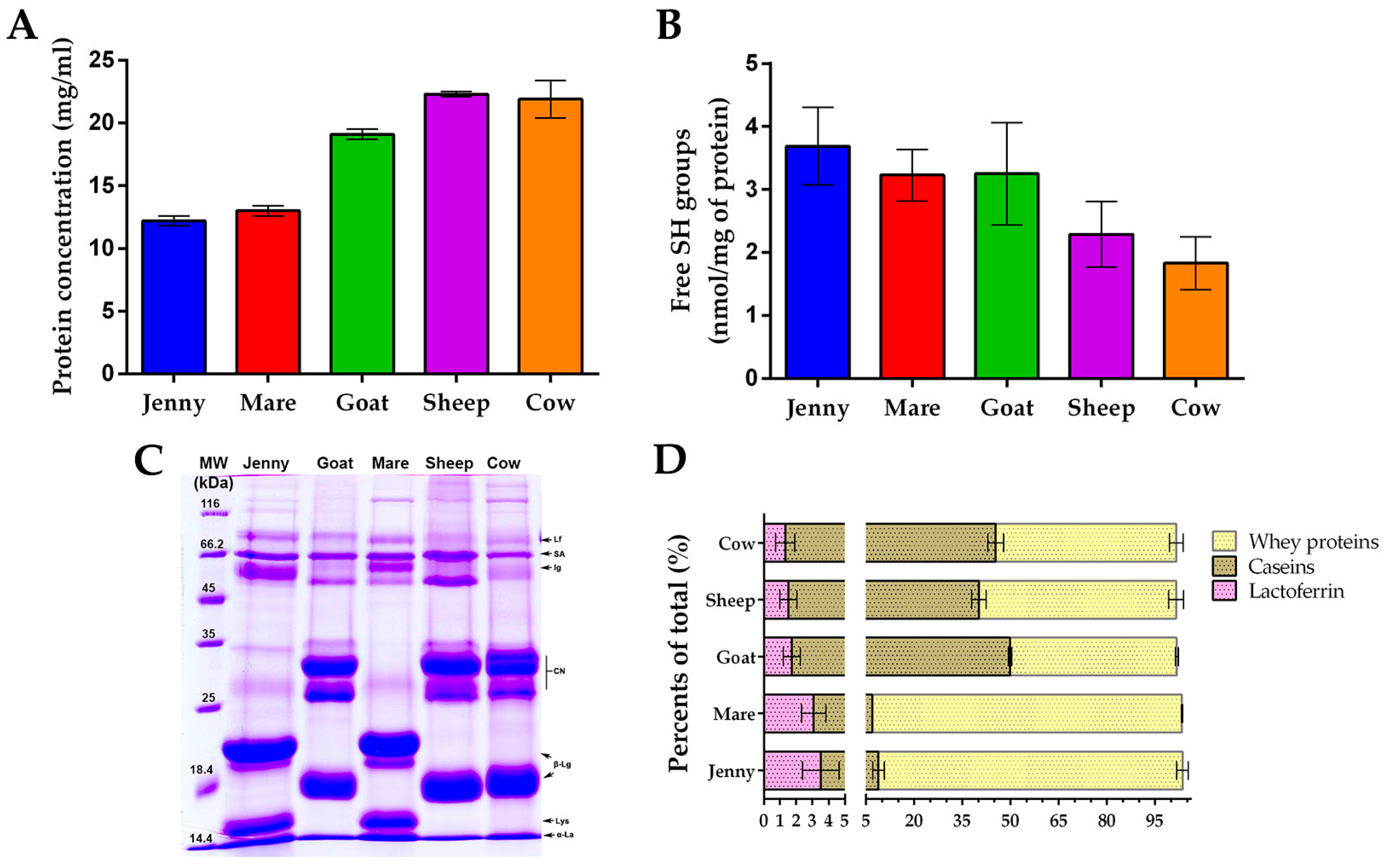
Milk proteins are primarily classified into caseins and whey proteins, with their ratios varying across species. The total protein content in milk showed significant variation among the samples (Figure 2A). Ruminant species had approximately double the protein concentration compared to equine milk, with sheep milk containing the highest protein level, followed by cow and goat milk (22, 21, and 19 mg/mL, respectively). Among non-ruminant milk samples, mare milk had a slightly higher protein concentration than jenny milk, with values of 13 and 12 mg/mL, respectively. Statistically significant differences in protein concentration were observed among all groups, except between jenny and mare milk and between cow and sheep milk. Comparisons were performed using one-way ANOVA followed by Tukey’s post hoc test, with a confidence level of p < 0.01 (Appendix A, Table A1).
To compare the protein profiles of the milk samples, an equal amount of total proteins from each sample was resolved by SDS-PAGE, and the resulting electrophoregram is shown in Figure 2C. The SDS-PAGE analysis revealed notable differences in the distribution and intensity of protein bands across the samples. Major bands corresponding to caseins (approximately 25–35 kDa) and whey proteins, such as β-lactoglobulin (~18 kDa) and α-lactalbumin (~14 kDa), were present in all samples, although their relative intensities differed considerably between species. In cow milk, distinct bands were observed at ~29 kDa (κ-casein), ~25 kDa (β-casein), ~18 kDa (β-lactoglobulin), and ~14 kDa (α-lactalbumin). Goat milk exhibited a similar banding pattern, though with slightly less intense β-lactoglobulin bands, while maintaining strong casein bands. Sheep milk displayed intense casein bands (~25–35 kDa) and relatively weaker whey protein bands, indicating a high casein-to-whey protein ratio. In mare and jenny milk, weak casein bands were observed at ~25–35 kDa, while stronger bands were present in the whey protein region (~20–14 kDa), consistent with the well-known high whey-to-casein ratio in equine milk. An additional noteworthy observation was the presence of a prominent protein band at approximately 16 kDa, which likely corresponds to lysozyme, a protein absent in the ruminant milk samples. Densitometric analysis (Figure 2D) illustrates the relative percentage composition of the major protein classes: whey proteins, caseins, and lactoferrin as one of the most biologically potent proteins. The data reveal significant quantitative differences in the distribution of these protein fractions among species. Notably, the casein-to-whey protein ratio is highest in cow, sheep and goat milk, whereas the profiles of jenny and mare milk indicate a comparatively greater proportion of whey proteins. Lactoferrin content also varies considerably, being almost twice as high in jenny and mare milk compared to ruminant milk. Low coefficient variation values for caseins and whey proteins indicate high repeatability of the measurements, whereas higher coefficient variation values observed for lactoferrin reflect its biologically variable abundance rather than methodological inconsistency.
The content of free sulfhydryl groups per milligram of milk proteins was higher in equine milk samples compared to ruminant milk. Mare and goat milk have similar levels of sulfhydryl groups, whereas cow milk showed the lowest content among all samples (Figure 2B). Statistically significant differences in active SH groups per mg of protein among all milk types showed that goat, jenny, and mare milk had significantly higher SH content per mg of protein compared to cow milk (p < 0.01), while sheep milk did not differ considerably from cow milk (Appendix A).

3.3. Principal Component Analysis of Milk Protein Profile

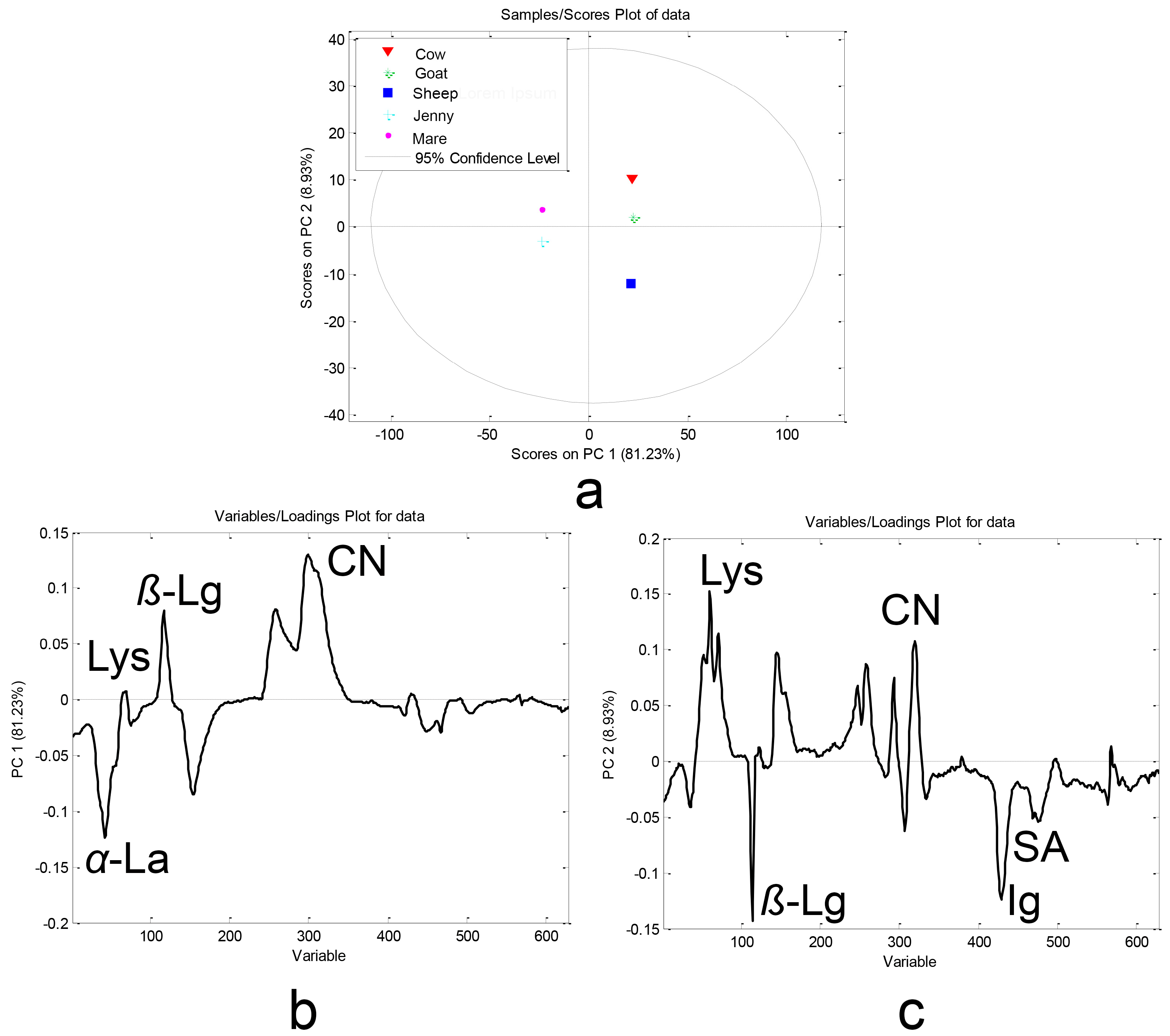
PCA was applied to explore the variability in protein profile and to assess the similarity/dissimilarity among the different milk samples (Figure 3). The PC score plot clearly distinguishes ruminant milk (cow, goat, sheep) from equine milk (mare, jenny), confirming the compositional differences previously observed (Figure 3a). The first principal component (PC1) explained 81.23% of the total variance, while the second principal component (PC2) accounted for an additional 8.93%, resulting in a cumulative variance of 90.16%. Based on PCs score plot, cow milk samples were clearly separated along the positive side of PC1, whereas goat and sheep milk samples were positioned differently, indicating compositional differences among species. Mare and jenny milk samples were clustered on the negative side of PC1, suggesting closer similarity between these two milk types compared to ruminant milks. The PC1 loading plot (Figure 3b) reveals that casein (CN) and β-lactoglobulin (β-Lg) contributed positively to PC1, while α-lactalbumin (α-La) showed negative loadings. This indicates that PC1 primarily reflects variations in major milk proteins, particularly those distinguishing ruminants from non-ruminant milk.
The PC2 loading plot (Figure 3c) shows that lysozyme (Lys) and casein (CN) were the dominant positive contributors, whereas β-lactoglobulin (β-Lg), serum albumin (SA), and immunoglobulins (Ig) contributed negatively. PC2 therefore captures secondary differences related to minor protein fractions and bioactive components. In contrast, mare and jenny milk samples were associated with higher levels of lysozyme (Lys) and lactoferrin (Lf), and lower levels of β-Lg, which is in line with their reported similarity to human milk. The reduced β-Lg content in equine milk is particularly relevant, as β-Lg is absent in from human milk and has been implicated as a major allergen in cow’s milk.

3.4. Antioxidant and Redox Potential of Milk Samples

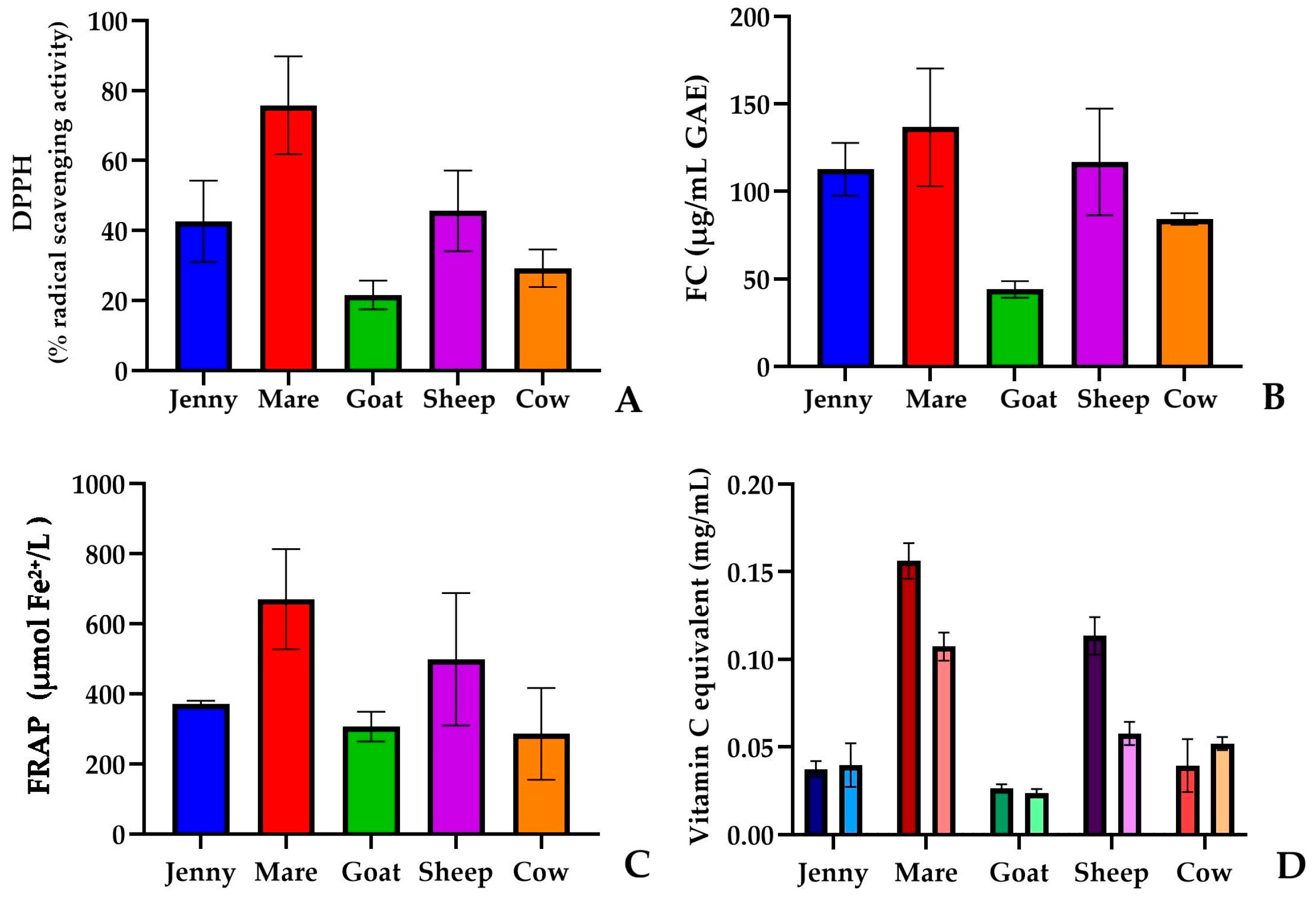
Different types of equine and ruminant milk were compared to evaluate their capacity to scavenge free radicals and mitigate oxidative stress. Standard spectrophotometric methods were employed, including the DPPH and FRAP assays. Among all samples, mare’s milk exhibited the most reactive and highest antioxidant capacity, followed by jenny milk, whereas sheep milk showed the highest values among ruminant milk (Figure 4A,B). The total polyphenolic content was significantly lower in the jenny, sheep, and cow compared to mare’s milk (Figure 4C). Goat milk has the lowest antioxidant capacity of all examined milks (Appendix A).
Antioxidant properties and milk quality were further confirmed by determining the redox system in milk samples using electrochemical methods: the cyclic voltammetry method for screening and the differential pulse voltammetry for a more precise determination of the TAC and types of reactive species present in the milk (Figure 4D). Statistically significant differences in antioxidant potential were observed among the analyzed milk types across all applied methods (p < 0.05). The DPPH and FC assays showed significant differences between mare to cow milk, mare to goat milk, jenny to cow milk, jenny to goat milk, and between goat and sheep milk (p < 0.05). DPPH also showed differences between jenny and goat milk (p < 0.05). The FRAP assay revealed differences between mare and cow milk, mare and goat milk, cow and sheep milk, and goat and sheep milk. For the CV method, mare milk exhibited significantly higher redox potential compared to cow, goat, sheep and jenny milk, while other comparisons were not significant. Similarly, the DPV method showed that mare milk had significantly higher values (p < 0.05) than cow, goat and sheep milk, while no additional significant differences. Mare milk possessed the highest antioxidant capacity, followed by sheep milk, while jenny and goat milk showed the lowest activities of antioxidant reactive species. CV, DPV and FRAP measurements additionally revealed a difference between mare and jenny milk (Appendix A).
Correlation analysis was performed among three spectrophotometric methods (DPPH, FC, and FRAP) and two electrochemical methods (CV and DPV) to assess the relationship between the antioxidant capacity of equine and ruminant milks. A strong positive correlation was detected between FRAP and DPPH spectrophotometric methods (r = 0.957). The electrochemical methods CV and DPV showed a high degree of mutual correlation (r = 0.911) and a high correlation with the FRAP and DPPH methods (r = 0.971 and 0.904, respectively). Moderate correlations were observed between electrochemical and FC spectrophotometric methods (CV-FC, r = 0.781; DPV-FC, r = 0.789).
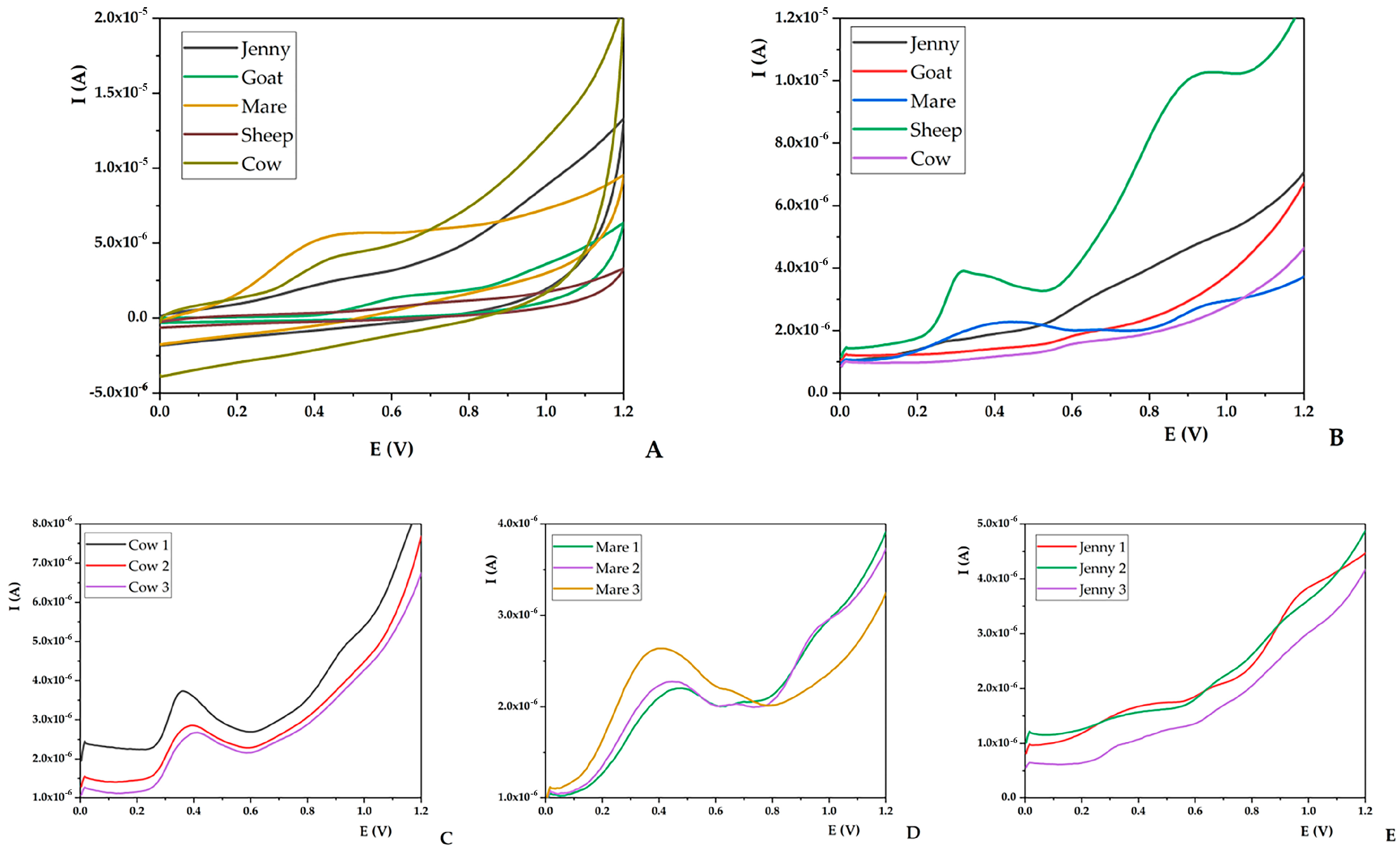
The electrochemical profile of the tested milk is shown in Figure 5A,B. In this experiment, in addition to the content of the antioxidant capacity of the sample, the electrochemical profile of the tested samples can also be observed. As can be seen from these results, both methods are in excellent agreement with the results of standard optical methods for measuring TAC. However, the results confirm the greater sensitivity of the DPV method for this application. For most samples, measurements made with the CV method show one dominant peak that allows the calculation of the TAC value based on the measurement of the peak area. On the other hand, with the DPV method, there is a clear differentiation of the peaks, primarily due to the greater sensitivity of the method. Unlike the CV method, the DPV is significantly more sensitive for lower concentrations and at higher concentrations an error in the results can occur. This is shown through the mare’s milk sample where the value obtained with this method is lower than the case with the CV method. Since this type of sample shows the highest activity, the more suitable method for its determination is CV. Thus, this method can be used for fingerprinting different milks. Figure 5C–E illustrate three groups of individual milk samples originating from cows, mare and jenny. From these results it can be concluded that each of the individual milks from one set of samples has its own uniform electrochemical profile, which coincides within the same group of samples. Each group of samples has its own characteristic peaks at similar potentials and of similar shape, while there is an evident difference in the values of the oxidation current. Based on this, we can conclude that electrochemical methods can serve as a good technique for determining both the origin and nature of the milk being tested, representing a characteristic fingerprint for the type of milk tested, in addition to the value of the antioxidant capacity of the sample itself.

4. Discussion

In many countries and regions, secondary dairy species such as goats, sheep, donkeys, mares, buffaloes, and camels play a crucial role in meeting the food and nutritional needs of the local population [29,30]. Although not primarily bred for milk production, they are occasionally milked regularly to produce various dairy products that provide macro- and micronutrients, contribute to biodiversity, and offer additional income for farmers [29]. This study represents the first comparative analysis of the nutritional quality of ruminant and equine milk from Serbia, focusing on their protein profile and redox properties. By examining milk from cows, goats, sheep, mares, and jennies, this study provides valuable insights into protein profiles, sulfhydryl groups, and the ability to scavenge free radicals.
Milk proteins are primarily classified into caseins and whey proteins, with their relative proportions varying significantly among species. In ruminant milk, caseins typically account for 70–85% of total protein, whereas in equine milk (mare and jenny), the casein fraction is markedly lower, averaging 40–60%, reflecting a higher whey-to-casein ratio [30,31,32,33,34,35]. Within the whey protein fraction, β-lactoglobulin is the predominant component, while α-lactalbumin, serum albumin, and lactoferrin are present in smaller amounts. The concentration of lactoferrin varies substantially across species, ranging from 0.02–0.75 mg/mL in bovine milk to higher values in jenny and mare milk, where it may reach 1–3% of total protein [35,36].
The total protein content of milk showed pronounced interspecies variation (Figure 2A). Ruminant species exhibited approximately twofold higher protein concentrations compared to non-ruminants, with sheep milk containing the highest level, followed by cow and goat milk. Among non-ruminants, mare and jenny milk had lower total protein contents consistent with some previous reports [30,32]. Furthermore, in terms of total protein content, our results revealed an approximately twofold lower concentration of proteins in ruminant milk samples compared to previously reported values [34]. Samples were collected in the winter and spring seasons from free-ranging animals at mid-lactation and second parity. Protein content during this lactation stage is naturally variable. Additionally, sample handling, storage, and the fat removal protocol may have caused partial protein precipitation, leading to lower detectable protein levels. Although it has been demonstrated that centrifugation at low temperatures does not significantly alter the total protein concentration in human milk, it is possible that removal of fat using organic solvents could impact the concentration, especially fat globule-associated milk proteins such as caseins [21,35,36].
To compare protein profiles, equal amounts of milk protein from each species were subjected to SDS-PAGE (Figure 2C). Distinct differences in band distribution and intensity were observed. In cow milk, prominent bands appeared at ~29 kDa (κ-casein), ~25 kDa (β-casein), ~18.4 kDa (β-Lg), and ~14 kDa (α-La), consistent with literature values. Goat and sheep milk exhibited similar patterns with strong casein bands and slightly weaker whey protein bands, confirming the high casein-to-whey ratio typical for ruminants. Conversely, mare and jenny milk displayed weaker casein bands (25–30 kDa) and stronger whey protein bands between 20–14 kDa, indicating their whey-dominant protein profile. Additionally, a protein band corresponding to a molecular weight of approximately 16 kDa was identified, likely lysozyme. This protein was detected in jenny and mare milk samples, and it is only present in trace amounts in cow’s milk, as previously reported [37]. Furthermore, an abundant presence of β-Lg and α-La was consistently observed across all milk samples. Interestingly, in non-ruminant milk samples, a distinct D form of β-Lg with a higher molecular weight (~20 kDa) was detected, in contrast to the typical β-Lg (~18 kDa) observed in ruminant milk [38]. The content of free sulfhydryl groups, expressed per milligram of milk protein, was higher in equine milk compared to ruminant samples (Figure 2B). This increase may be attributed to the greater proportion of whey proteins—particularly β-Lg and SA—which contain cysteine residues with reactive −SH groups. In contrast, caseins, which dominate in ruminant milk, lack disulfide bonds and contain fewer sulfhydryl groups, resulting in lower SH group content [32]. The relatively high SH content in mare and jenny milk thus reflects their higher whey-to-casein ratio and may contribute to their enhanced antioxidant and redox properties. Previous studies confirm that active sulfhydryl groups, which originate mainly from whey proteins, particularly β-lactoglobulin, serve as important indicators of protein structure, antioxidant capacity, and thermal stability [10].
Principal component analysis effectively discriminated ruminant and equine milks based on their protein profiles, reinforcing the notion that species origin plays a major role in determining the nutritional and functional properties of milk [33]. These results are in agreement with earlier reports indicating that ruminant milk is richer in casein fractions. In contrast, equine milk exhibits a protein profile closer to human milk, with higher proportions of bioactive proteins such as lysozyme, lactoferrin, and immunoglobulins [39]. Such compositional traits make equine milk a suitable alternative for individuals with cow’s milk protein allergy and highlight its potential for nutritional and functional applications [40,41,42].
The whey protein and casein ratio in milk has a significant impact on its nutritional value and absorption in the body [43]. Casein, as an insoluble protein, is more difficult to digest and can form larger and more complex clots in the baby’s stomach. In contrast, whey proteins, which belong to the group of soluble proteins, form small and soft clots in the stomach of the newborn, which makes them easier to digest and better absorbed. In addition, whey proteins contain numerous biologically active substances, including enzymes, peptides, immune factors, and growth factors, which play a crucial role in human growth and mental development.
Several factors influence the composition of milk, including the species, breed, and age of the animal, as well as reproductive and management-related factors, the stage of lactation, animal health, and nutrition. Circadian rhythm and dietary intervention can influence the content of specific nutrients and antioxidant potential of milk [44,45,46]. Previous studies have shown that human milk possesses a high redox-antioxidant potential, whereas cow’s milk exhibits a low level of antioxidant activity [24]. In this study, the most active were mare and jenny milks. Among ruminant milks, sheep milk showed the most significant antioxidant capacity. The higher antioxidant and redox potential observed in sheep’s milk may be due to its higher content of proteins and antioxidants, as well as possible effects of lactation stage, diet, individual animal genetics, and seasonal factors, compared to goat’s milk.
The higher antioxidant capacity of equine milk could be attributed to the direct scavenging of radicals by the sulfhydryl group and polyphenols. Polyphenol content is significantly lower in goat, sheep, and cow milk compared to mare’s milk. Conversely, sulfhydryl group activity is higher in jenny, mare, and goat milk than in sheep and cow milk. Previous research indicates that bioactive components, such as lysozyme and vitamin C, also contribute to the overall antioxidant capacity [47,48,49]. Ascorbic acid levels in mare and jenny milk are comparable to human milk, but substantially lower in cow milk. The high lysozyme content of equine milk further enhances its antioxidant activity, and mare and jenny milk contain three- to five-fold higher concentrations than human milk, while present only in trace amounts in cow’s milk. The pronounced resistance to oxidative processes contributes to the nutritional value of mare and jenny milk [42,47,48,49,50,51]. Correlation analysis showed good agreement between electrochemical measurements and spectrophotometric assays, indicating complementary information about the antioxidant capacity [20,24,51].
Milk samples were collected from semi-extensive systems characterized by pasture grazing during the vegetation season, which is typical of the temperate continental climate. Serbia, Romania, Hungary, and Bulgaria are located within this climatic zone and exhibit similar temperature patterns, seasonal precipitation, and pasture resources. Previous studies in European regions have demonstrated that pasture-based systems are associated with higher antioxidant potential and phenolic content in milk compared to intensive indoor feeding systems common in Northern and Western Europe. These results underscore the impact of climatic conditions, pasture diversity, and management practices on the bioactive composition of milk [17,52,53,54,55,56,57,58].
Equine milks have several advantages over ruminant milks, including hypoallergenicity, a protein profile similar to human milk, and functional benefits for intestinal microbiota, which makes them suitable as a substitute for a diet based on cow’s milk, a valuable nutrient in infant nutrition, and for individuals with cow’s milk protein allergy [9,46,47].
This study presents an initial comparative analysis of milk from various animal species in Serbia. The sample size was constrained by the limited availability of lactating mares and jennies with accessible milk. Nevertheless, the selected samples permitted interspecies comparison. Despite this limitation, the findings yield valuable preliminary insights and establish a foundation for future, more comprehensive investigations of milk quality in relation to region, diet, and season.

5. Conclusions

The study presents the first comparative analysis of the milk from ruminants and equids in Serbia, focusing on their protein profile and redox properties. The results showed significant differences in nutritional value and functional potential among the examined species. The physicochemical properties showed distinct interspecies differences, with ruminant milks being richer in solids and slightly more acidic, while equine milks are more diluted and exhibit a slightly higher pH, positioning them closer to human milk in composition. Equine milk, specifically from mares and jennies, demonstrated a higher antioxidant capacity, a more favorable whey-to-casein ratio, and greater lactoferrin content compared to ruminant milk, which suggests that equine milk may be more suitable for individuals with specific dietary requirements. These findings underline the potential of mare’s and jenny’s milk as valuable functional foods and promising alternatives in human nutrition. Further research into the proteomic and immunological characteristics of equine milk could offer deeper insight into its role in supporting the health of sensitive and vulnerable populations.

Author Contributions

Conceptualization, N.L.; methodology, D.S., M.M., M.K.R. and P.R.; software, P.R.; formal analysis, M.K.R., P.R. and D.S.; investigation, N.L., M.K.R., P.R. and D.S.; data curation, M.M.; writing—original draft preparation, N.L.; writing—review and editing, D.S., M.M., P.R. and M.K.R.; supervision, N.L. All authors have read and agreed to the published version of the manuscript.

Funding

This work was funded by the Ministry of Science, Technological Development and Innovation of the Republic of Serbia (Contract No: 451-03-136/2025-03/200026 and 451-03-33/2026-03/200168), according to Agenda 2030—United Nations Sustainable Development Goals: 2—Zero hunger, 3—Good Health and well-being and 13—Climate Action.

Informed Consent Statement

Not applicable.

Data Availability Statement

The original contributions presented in this study are included in the article. Further inquiries can be directed to the corresponding author.

Conflicts of Interest

The authors declare no conflicts of interest.

Abbreviations

The following abbreviations are used in this manuscript:
CNCaseins
CVCyclic voltammetry
DPVDifferential pulse voltammetry
IgImmunoglobulins
LfLactoferrin
LysLysozyme
MWMolecular weight markers
SASerum albumin
TACTotal antioxidant capacity
PCAPrincipal component analysis
α-LaAlpha-lactalbumin
β-LgBeta-lactoglobulin

Appendix A

Table A1. Comparison of results for nutritive and antioxidant properties of different milk types.
Milk TypeProtein
(mg/mL)
Free SH
(nmol/mg Protein)
DPPH
(% Scavenging Activity)
FC
(mg GAE/mL)
FRAP
(µmol Fe2+/L)
CV
(mg/mL CE)
DPV
(mg/mL CE)
Jenny12.21 ± 0.443.69 ±
0.62
42.66 ±
11.61
113.63 ± 15.11 370.67 ±
9.56 b
0.03736 ± 0.00456 b0.03962 ±
0.01246
Mare12.98 ± 0.443.23 ±
0.41
75.80 ±
13.99
136.65 ± 33.68 670.20 ±
142.74 a
0.15616 ± 0.10121 a0.10733 ±
0.08045 a
Goat19.08 ± 0.42 a,b,c,e3.25 ±
0.81
21.60 ±
4.08 a,b,c
43.97 ±
4.74 a,b,c
306.40 ±
42.15 a,b,c
0.02638 ± 0.00236 b0.02388 ±
0.00214 b
Sheep22.31 ± 0.21 a,b,d2.29 ±
0.52
45.67 ±
11.53
116.89 ± 30.45498.71 ±
188.67
0.11343 ± 0.10776 b0.05772 ±
0.06597 b
Cow21.88 ± 1.50 a,b,c,d1.83 ±
0.42 a,b,d
29.25 ±
5.36 b,c
84.29 ±
3.32 a,b,c
285.88 ±
131.03 a,b
0.03943 ± 0.01507 b0.05191 ±
0.00375 b
All results were expressed as mean ± SD. Superscripts indicate a statistically significant difference from jenny (a), mare (b), sheep (c), goat (d) or cow milk (e).
One-way ANOVA revealed statistically significant differences among milk types in both protein concentration and free SH group content per mg of protein. Significant differences in protein concentration were observed across all groups, except between jenny and mare milk and between cow and sheep milk, as determined by one-way ANOVA followed by Tukey’s post hoc test (p < 0.01). Analysis of free SH groups also showed a significant overall effect (F(4,10) = 7.93, p = 0.0014), with Tukey’s post hoc test indicating that goat, jenny, and mare milk had significantly higher SH content per mg of protein compared to cow milk (p < 0.01), whereas sheep milk did not differ significantly from cow milk. No other pairwise comparisons reached statistical significance. A comparison of the antioxidant properties of different types of milk was conducted using ANOVA to analyze the results across all milk types and various methods. The mean values of antioxidant potential measured by five methods showed significant differences among milk types. One-way ANOVA results were as follows: DPPH F(4,20) = 17.866, p = 0.0001; FC F(4,20) = 8.969, p = 0.0002; FRAP F(4,20) = 8.607, p = 0.0003; CV F(4,20) = 9.35, p = 0.0002; and DPV F(4,20) = 3.295, p = 0.031. These results indicate statistically significant differences in antioxidant potential among groups for all methods (p < 0.05). Post hoc Tukey tests revealed the following pairwise differences: DPPH method: Significant differences were observed between mare and cow milk (p = 0.013), mare and goat milk (p = 0.003), jenny and goat milk (p = 0.0154), cow and sheep milk (p = 0.0105), and goat and sheep milk (p = 0.0026). FC method: Significant differences were found between mare and cow milk (p = 0.009), mare and goat milk (p = 0.003), jenny and goat milk (p = 0.027), and goat and sheep milk (p = 0.004). FRAP method: Significant differences were observed between mare and cow milk (p = 0.004), mare and goat milk (p = 0.004), cow and sheep milk (p = 0.003), and goat and sheep milk (p = 0.002). CV method: Mare milk values were significantly higher compared to cow (p = 0.004), goat (p = 0.003), sheep (p = 0.003), and jenny milk (p = 0.004); other comparisons were not statistically significant. DPV method: Mare milk values were significantly higher than cow (p = 0.013), sheep (p = 0.018), and goat milk (p = 0.006). Additionally, post hoc Tukey tests for CV, DPV and FRAP methods revealed a significant difference between mare and jenny milk (p < 0.05). These findings indicate that highest potential is in mare’s milk, while goat and cow milk exhibited low antioxidant potential.

References

  1. OECD/FAO. OECD-FAO Agricultural Outlook 2025–2034; OECD Publishing: Paris, France; FAO: Rome, Italy, 2025. [Google Scholar] [CrossRef]
  2. Miraglia, N.; Salimei, E.; Fantuz, F. Equine Milk Production and Valorization of Marginal Areas—A Review. Animals 2020, 10, 353. [Google Scholar] [CrossRef]
  3. Pânzaru, C.; Doliș, M.G.; Radu-Rusu, R.-M.; Pascal, C.; Maciuc, V.; Davidescu, M.-A. Equine Milk and Meat: Nutritious and Sustainable Alternatives for Global Food Security and Environmental Sustainability—A Review. Agriculture 2024, 14, 2290. [Google Scholar] [CrossRef]
  4. Pieszka, M.; Łuszczyński, J.; Zamachowska, M.; Augustyn, R.; Długosz, B.; Hędrzak, M. Is mare milk an appropriate food for people?—A review. Ann. Anim. Sci. 2015, 16, 33–51. [Google Scholar] [CrossRef]
  5. Clauss, M.; Dittmann, M.T.; Vendl, C.; Hagen, K.B.; Frei, S.; Ortmann, S.; Müller, D.W.H.; Hammer, S.; Munn, A.J.; Schwarm, A.; et al. Comparative methane production in mammalian herbivores. Animal 2020, 14, s113–s123. [Google Scholar] [CrossRef]
  6. Elghandour, M.M.Y.; Adegbeye, M.J.; Barbabosa-Pilego, A.; Rivero Perez, N.; Rojas Hernández, S.; Zaragoza-Bastida, A.; Salem, A.Z.M. Equine Contribution in Methane Emission and Its Mitigation Strategies. J. Equine Vet. Sci. 2019, 72, 56–63. [Google Scholar] [CrossRef]
  7. Franz, R.; Soliva, C.; Kreuzer, M.; Steuer, P.; Hummel, J.; Clauss, M. Methane production in relation to body mass of ruminants and equids. Evol. Ecol. Res. 2010, 12, 727–738. [Google Scholar] [CrossRef]
  8. La Torre, C.; Caputo, P.; Cione, E.; Fazio, A. Comparing Nutritional Values and Bioactivity of Kefir from Different Types of Animal Milk. Molecules 2024, 29, 2710. [Google Scholar] [CrossRef]
  9. Pânzaru, C.; Davidescu, M.A.; Simeanu, C.; Pascal, C.; Usturoi, A.; Doliș, M.G. A Comprehensive Review on Equine Milk: Composition, Functional Properties, Technological Applications, and Future Perspectives. Agriculture 2026, 16, 120. [Google Scholar] [CrossRef]
  10. Stobiecka, M.; Król, J.; Brodziak, A. Antioxidant Activity of Milk and Dairy Products. Animals 2022, 12, 245. [Google Scholar] [CrossRef] [PubMed]
  11. Monti, G.; Bertino, E.; Muratore, M.; Coscia, A.; Cresi, F.; Silvestro, L.; Fabris, C.; Fortunato, D.; Giuffrida, M.; Conti, A. Efficacy of donkey’s milk in treating highly problematic cow’s milk allergic children: An in vivo and in vitro study. Pediatr. Allergy Immunol. 2007, 18, 258–264. [Google Scholar] [CrossRef] [PubMed]
  12. Caffarelli, C.; Giannetti, A.; Buono, E.V.; Cunico, D.; Carbone, R.; Tonello, F.; Ricci, G. Cow’s Milk Allergy in Breastfed Infants: What We Need to Know About Mechanisms, Management, and Maternal Role. Nutrients 2025, 17, 1787. [Google Scholar] [CrossRef] [PubMed]
  13. Gubić, J.; Tomić, J.; Torbica, A.; Iličić, M.; Tasić, T.; Šarić, L.; Popović, S. Characterization of several milk proteins in Domestic Balkan donkey breed during lactation, using lab-on-a-chip capillary electrophoresis. Chem. Ind. Chem. Eng. Q. 2016, 22, 321–328. [Google Scholar] [CrossRef]
  14. Barreto, Í.; Rangel, A.; Urbano, S.; Bezerra, J.; Oliveira, C. Equine milk and its potential use in the human diet. Food Sci. Technol. 2018, 39, 1–7. [Google Scholar] [CrossRef]
  15. Flis, Z.; Molik, E.; Ptak, A.; Szatkowski, P. Natural Bioactive Compounds in Sheep Milk: Potential Biomedical Applications. Curr. Issues Mol. Biol. 2025, 47, 456. [Google Scholar] [CrossRef]
  16. Almasri, R.S.; Bedir, A.S.; Ranneh, Y.K.; El-Tarabily, K.A.; Al Raish, S.M. Benefits of Camel Milk over Cow and Goat Milk for Infant and Adult Health in Fighting Chronic Diseases: A Review. Nutrients 2024, 16, 3848. [Google Scholar] [CrossRef]
  17. Kocsis, R.; Süle, J.; Nagy, P.; Gál, J.; Tardy, E.; Császár, G.; Rácz, B. Annual and seasonal trends in cow’s milk quality determined by FT-MIR spectroscopy in Hungary between 2011 and 2020. Acta Vet. Hung. 2022, 70, 207–214. [Google Scholar] [CrossRef]
  18. Pietrzak-Fiećko, R.; Kamelska-Sadowska, A.M. The Comparison of Nutritional Value of Human Milk with Other Mammals’ Milk. Nutrients 2020, 12, 1404. [Google Scholar] [CrossRef]
  19. Claeys, W.L.; Verraes, C.; Cardoen, S.; De Block, J.; Huyghebaert, A.; Raes, K.; Dewettinck, K.; Herman, L. Consumption of raw or heated milk from different species: An evaluation of the nutritional and potential health benefits. Food Control 2014, 42, 188–201. [Google Scholar] [CrossRef]
  20. Lugonja, N.M.; Stanković, D.M.; Miličić, B.; Spasić, S.D.; Marinković, V.; Vrvić, M.M. Electrochemical monitoring of the breast milk quality. Food Chem. 2018, 240, 567–572. [Google Scholar] [CrossRef] [PubMed]
  21. Stojadinović, M.; Burazer, L.; Erçili-Cura, D.; Sancho, A.; Buchert, J.; Ćirković Veličković, T.; Stanić-Vučinić, D. One-step method for isolation and purification of native β-lactoglobulin from bovine whey. J. Sci. Food Agric. 2012, 92, 1432–1440. [Google Scholar] [CrossRef] [PubMed]
  22. Laemmli, U.K. Cleavage of structural proteins during the assembly of the head of bacteriophage T4. Nature 1970, 227, 680–685. [Google Scholar] [CrossRef]
  23. Habeeb, A.F.S.A. Reaction of protein sulfhydryl groups with Ellman’s reagent. Methods Enzymol. 1972, 25, 457–464. [Google Scholar] [CrossRef]
  24. Lugonja, N.; Stanković, D. Eco-Friendly Voltammetric Techniques for Assessing Antioxidant Properties in Dietary Supplements. Compounds 2025, 5, 51. [Google Scholar] [CrossRef]
  25. Benzie, I.F.; Strain, J.J. The ferric reducing ability of plasma (FRAP) as a measure of “antioxidant power”: The FRAP assay. Anal. Biochem. 1996, 239, 70–76. [Google Scholar] [CrossRef]
  26. Lugonja, N.; Marinković, V.; Miličić, B.; Avdalović, J.; Vrvić, M.; Spasić, S. Effect of storage process on nutritive properties of preterm human milk. Chem. Ind. Chem. Eng. Q. 2023, 29, 141–148. [Google Scholar] [CrossRef]
  27. Zarban, A.; Taheri, F.; Chahkandi, T.; Sharifzadeh, G.; Khorashadizadeh, M. Antioxidant and radical scavenging activity of human colostrum, transitional and mature milk. J. Clin. Biochem. Nutr. 2009, 45, 150–154. [Google Scholar] [CrossRef]
  28. Singleton, V.L.; Rossi, J.A. Colorimetry of total phenolics with phosphomolybdic-phosphotungstic acid reagents. Am. J. Enol. Vitic. 1965, 16, 144–158. [Google Scholar] [CrossRef]
  29. Faccia, M.; D’Alessandro, A.G.; Summer, A.; Hailu, Y. Milk Products from Minor Dairy Species: A Review. Animals 2020, 10, 1260. [Google Scholar] [CrossRef] [PubMed]
  30. Food and Agriculture Organization of the United Nations. Gateway to Dairy Production and Products. Available online: https://www.fao.org/dairy-production-products/production/dairy-animals/en/ (accessed on 13 November 2025).
  31. Malacarne, M.; Martuzzi, F.; Summer, A.; Mariani, P. Protein and Fat Composition of Mare’s Milk: Some Nutritional Remarks with Reference to Human and Cow’s Milk. Int. Dairy J. 2002, 12, 869–877. [Google Scholar] [CrossRef]
  32. Park, Y.W. Rheological Characteristics of Goat and Sheep Milk. Small Rumin. Res. 2007, 68, 73–87. [Google Scholar] [CrossRef]
  33. Vincenzetti, S.; Polidori, P.; Mariani, P.; Cammertoni, N.; Fantuz, F.; Vita, A. Donkey’s Milk Protein Fractions Characterization. Food Chem. 2008, 106, 640–649. [Google Scholar] [CrossRef]
  34. Fox, P.F.; McSweeney, P.L.H. Advanced Dairy Chemistry, Volume 1A: Proteins—Basic Aspects, 4th ed.; Springer: New York, NY, USA, 2015. [Google Scholar] [CrossRef]
  35. Roy, D.; Ye, A.; Moughan, P.J.; Singh, H. Composition, Structure, and Digestive Dynamics of Milk from Different Species—A Review. Front. Nutr. 2020, 7, 577759. [Google Scholar] [CrossRef]
  36. Barbas, K.H.; O’Brien, K.; Forbes, P.W.; Belfort, M.B.; Connor, J.A.; Thiagarajan, R.R.; Huh, S.Y. Macronutrient Analysis of Modified-Fat Breast Milk Produced by Three Methods of Fat Removal. J. Parenter. Enteral Nutr. 2020, 44, 895–902. [Google Scholar] [CrossRef]
  37. Reinhardt, T.A.; Lippolis, J.D. Bovine Milk Fat Globule Membrane Proteome. J. Dairy Res. 2006, 73, 406–416. [Google Scholar] [CrossRef]
  38. Chandan, R.C.; Parry, R.M.; Shahani, K.M. Lysozyme, Lipase, and Ribonuclease in Milk of Various Species. J. Dairy Sci. 1968, 51, 606–607. [Google Scholar] [CrossRef]
  39. Cosenza, G.; Mauriello, R.; Garro, G.; Di Gregorio, P.; Salzano, A.; Di Berardino, D.; Ramunno, L. Casein Composition and Differential Translational Efficiency of Casein Transcripts in Donkey’s Milk—Corrigendum. J. Dairy Res. 2020, 87, 141. [Google Scholar] [CrossRef]
  40. Uniacke-Lowe, T.; Huppertz, T.; Fox, P.F. Equine Milk Proteins: Chemistry, Structure and Nutritional Significance. Int. Dairy J. 2010, 20, 609–629. [Google Scholar] [CrossRef]
  41. Ji, Z.; Dong, R.; Du, Q.; Jiang, H.; Fan, R.; Bu, D.; Wang, J.; Yu, Z.; Han, R.; Yang, Y. Insight into Differences in Whey Proteome from Human and Eight Dairy Animal Species for Formula Humanization. Food Chem. 2024, 430, 137076. [Google Scholar] [CrossRef]
  42. Salimei, E.; Fantuz, F. Equid Milk for Human Consumption. Int. Dairy J. 2012, 24, 130–142. [Google Scholar] [CrossRef]
  43. Chauvet, L.; Charton, E.; Lemaire, M.; Le Huërou-Luron, I.; Deglaire, A. Human Milk vs. Cow-Milk Based Infant Formula Proteins: Structure, Digestion and Physiological Impacts. Front. Nutr. 2025, 12, 1635919. [Google Scholar] [CrossRef]
  44. Toffolon, A.; de Rocco-Ponce, M.; Vettore, M.; Iori, E.; Lante, A.; Tessari, P. Effect of Reversal of Whey-Protein to Casein Ratio of Cow Milk on Insulin, Incretin, and Amino Acid Responses in Humans. Mol. Nutr. Food Res. 2021, 65, 2100069. [Google Scholar] [CrossRef]
  45. Teng, Z.W.; Yang, G.Q.; Wang, L.F.; Fu, T.; Lian, H.X.; Sun, Y.; Han, L.Q.; Zhang, L.Y.; Gao, T.Y. Effects of the Circadian Rhythm on Milk Composition in Dairy Cows: Does Day Milk Differ from Night Milk? J. Dairy Sci. 2021, 104, 8301–8313. [Google Scholar] [CrossRef]
  46. Milojević, M.; Mitrović, S.; Ayaşan, T.; Zdralić, T.; Djermanović, V. Effects of Age and Sex of the Foal on the Gestation Length of Thorough-bred Mares. KSU J. Agric. Nat. 2020, 23, 1386–1392. [Google Scholar] [CrossRef]
  47. Musaev, A.; Sadykova, S.; Anambayeva, A.; Saizhanova, M.; Balkanay, G.; Kolbaev, M. Mare’s milk: Composition, properties, and application in medicine. Arch. Razi Inst. 2021, 76, 1125–1135. [Google Scholar] [CrossRef]
  48. Vincenzetti, S.; Santini, G.; Polzonetti, V.; Pucciarelli, S.; Klimanova, Y.; Polidori, P. Vitamins in human and donkey milk: Functional and nutritional role. Nutrients 2021, 13, 1509. [Google Scholar] [CrossRef] [PubMed]
  49. Teichert, J.; Cais-Sokolińska, D.; Bielska, P.; Danków, R.; Chudy, S.; Kaczyński, Ł.K.; Biegalski, J. Milk fermentation affects amino acid and fatty acid profile of mare milk from Polish Coldblood mares. Int. Dairy J. 2021, 121, 105137. [Google Scholar] [CrossRef]
  50. Li, L.; Liu, X.; Guo, H. The Nutritional Ingredients and Antioxidant Activity of Donkey Milk and Donkey Milk Powder. Food Sci. Biotechnol. 2018, 27, 393–400. [Google Scholar] [CrossRef]
  51. Ristivojević, P.; Trifković, J.; Stanković, D.M.; Radoičić, A.; Manojlović, D.; Milojković-Opsenica, D. Cyclic voltammetry and UV/Vis spectroscopy in combination with multivariate data analysis for the assessment of authenticity of poplar type propolis. J. Apic. Res. 2017, 56, 559–568. [Google Scholar] [CrossRef]
  52. Chetroiu, R.; Rodino, S.; Dragomir, V.; Ilie, D.A.; Marin, A. Assessing economic viability of resilient sheep foraging alternatives in lowland regions of Romania. Agriculture 2024, 14, 1656. [Google Scholar] [CrossRef]
  53. Marincheva, V. European perspectives in donkey husbandry and breeding with insights from Bulgaria. Bulg. J. Anim. Husb. Breed. Stud. 2025. [Google Scholar] [CrossRef]
  54. Rzekęć, A.; Vial, C.; Genevieve, B. Green assets of equines in the European context of the ecological transition of agriculture. Animals 2020, 10, 106. [Google Scholar] [CrossRef] [PubMed]
  55. FAO. The State of the World’s Animal Genetic Resources for Food and Agriculture; Food and Agriculture Organization of the United Nations: Rome, Italy, 2015. [Google Scholar]
  56. FAO. Global Livestock Production Systems and Estimated Numbers of Rural Poor Livestock Keepers in Eastern Europe and Central Asia; Food and Agriculture Organization of the United Nations: Rome, Italy, 2011. [Google Scholar]
  57. Cabiddu, A.; Delgadillo-Puga, C.; Decandia, M.; Molle, G. Extensive ruminant production systems and milk quality with emphasis on unsaturated fatty acids, volatile compounds, antioxidant protection degree and phenol content. Animals 2019, 9, 771. [Google Scholar] [CrossRef] [PubMed]
  58. Van Vliet, S.; Provenza, F.D.; Kronberg, S.L. Health-promoting phytonutrients are higher in grass-fed meat and milk: A mechanistic review. Front. Sustain. Food Syst. 2021, 4, 555426. [Google Scholar] [CrossRef]
Figure 1. Physicochemical Properties of Milk: water content (%), pH value, and dry matter (%), respectively.
Dairy 07 00021 g001
Figure 2. Nutritive Properties of Milks: (A) protein content, (B) free SH groups, (C) SDS-PAGE separation of milk proteins, and (D) percentage representation of proteins obtained from SDS-PAGE separation followed by densitometric analysis. Abbreviations: MW—molecular weight markers, Lf—lactoferrin, SA—serum albumin, Ig—Immunoglobulins, CN—caseins, β-Lg—beta-lactoglobulin, Lys—lysozyme, α-La—alpha-lactalbumin.
Dairy 07 00021 g002
Figure 3. PCA analysis of Milk: (a) PCs score plot, (b) PC1 loading plot, (c) PC2 loading plot.
Dairy 07 00021 g003
Figure 4. The total antioxidant and redox potential of equine and ruminant milk determined by three spectrophotometric methods and two electrochemical methods: (A) DPPH radical scavenging activity, (B) Folin–Ciocalteau assay (FC), (C) Ferric Reducing Antioxidant Potential (FRAP), (D) cyclic (CV, darker tone) and differential pulse voltammetry (DPV, lighter tone).
Dairy 07 00021 g004
Figure 5. Application of electrochemical methods for assessing the antioxidant quality of milk using cyclic voltammetry (A) and differential pulse voltammetry (B). Redox potential of selected samples determined by differential pulse voltammetry: cow milk (C), mare milk (D), and jenny milk (E).
Dairy 07 00021 g005
Disclaimer/Publisher’s Note: The statements, opinions and data contained in all publications are solely those of the individual author(s) and contributor(s) and not of MDPI and/or the editor(s). MDPI and/or the editor(s) disclaim responsibility for any injury to people or property resulting from any ideas, methods, instructions or products referred to in the content.