Review

The Calci-Inflammatory Network: A Paradigm Shift in Understanding Milk Fever

Department of Agriculture, Food and Nutritional Science, Faculty of Agricultural, Life and Environmental Sciences, University of Alberta, Edmonton, AB T6G 2P5, Canada
Dairy 2025, 6(3), 22; https://doi.org/10.3390/dairy6030022
Submission received: 11 March 2025 / Revised: 11 April 2025 / Accepted: 25 April 2025 / Published: 28 April 2025
(This article belongs to the Section Dairy Animal Health)

Abstract

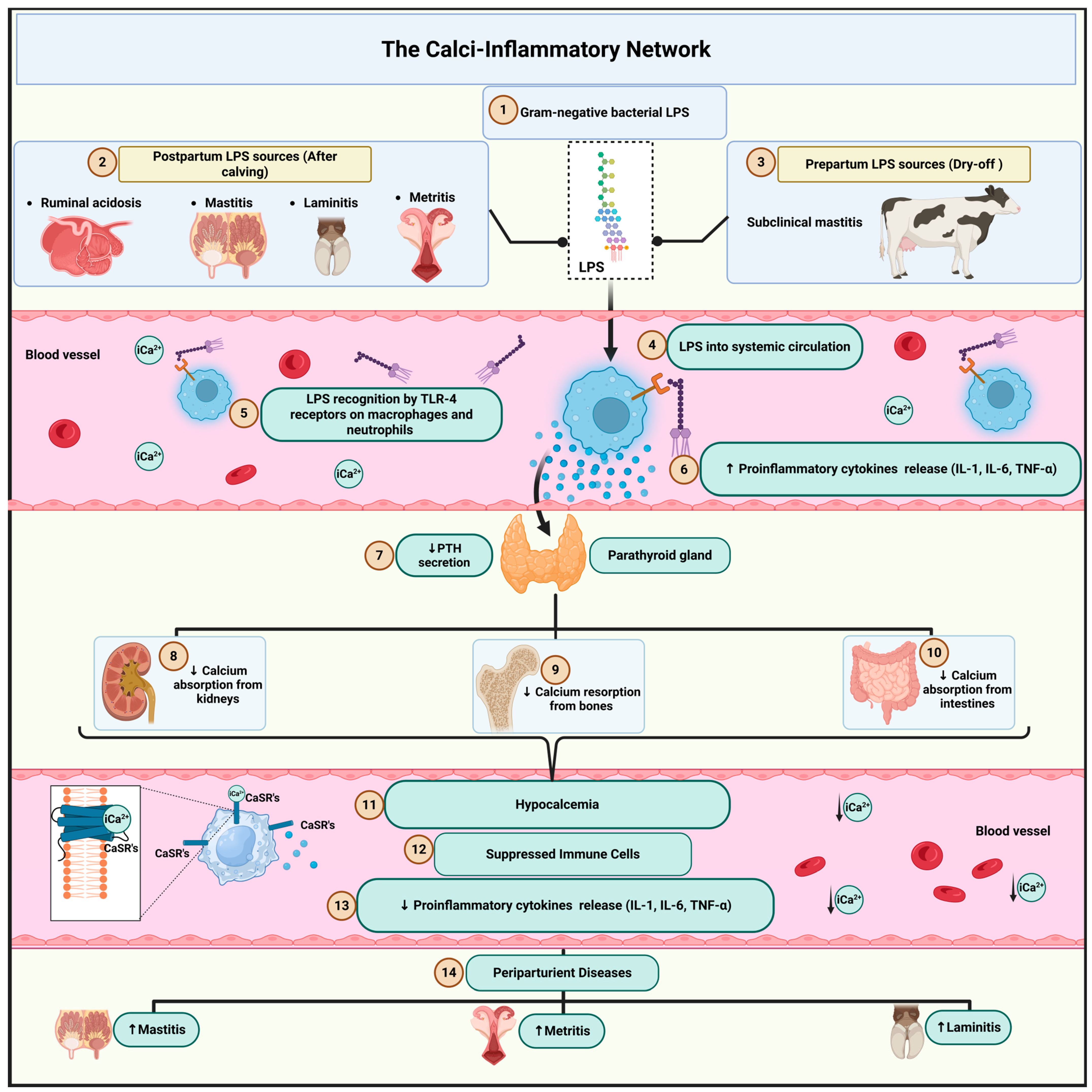
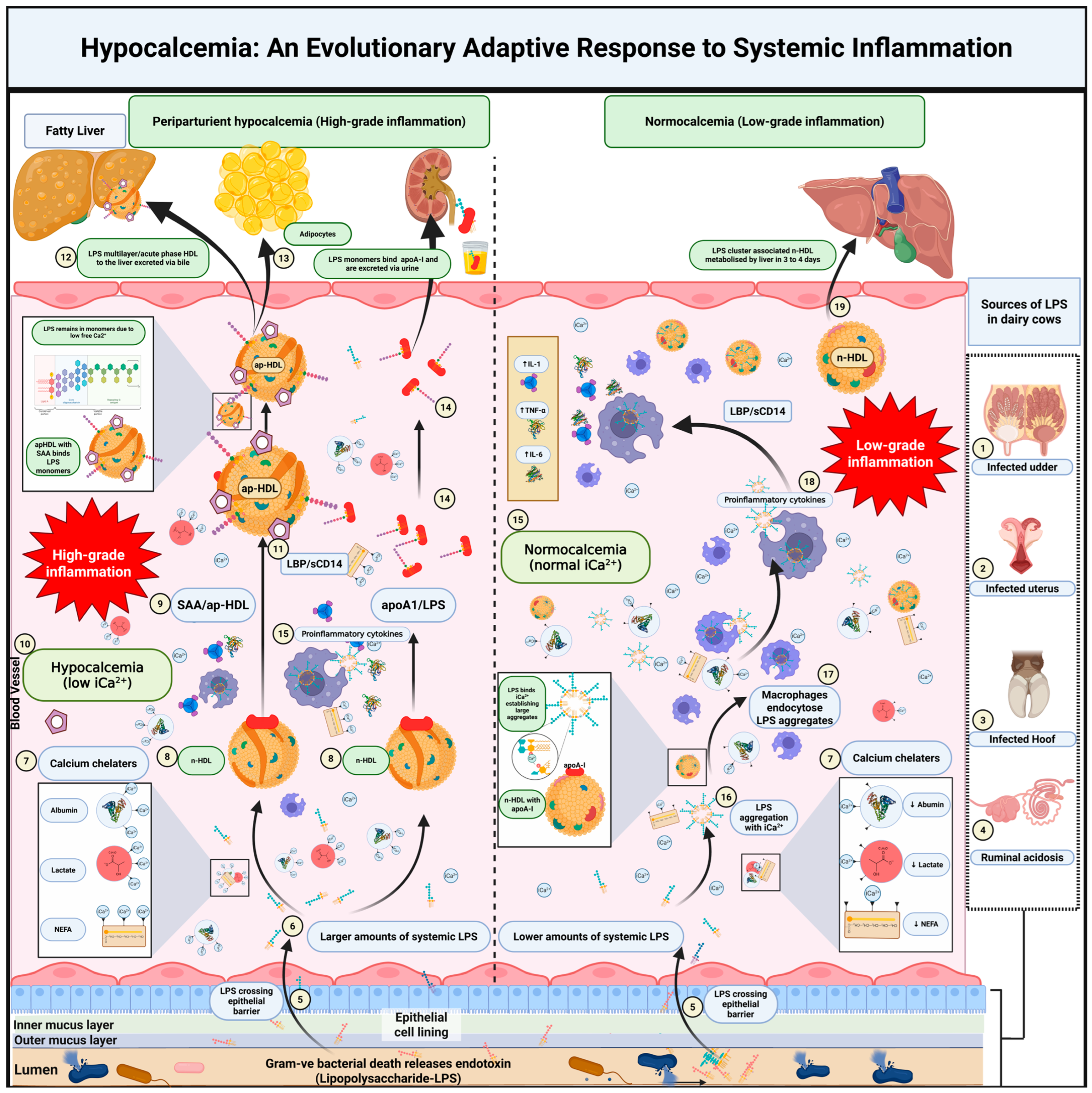
This review highlights a paradigm shift in our understanding of hypocalcemia during milk fever by introducing the concept of the Calci-Inflammatory Network. Traditionally viewed as a pathological deficiency necessitating rapid correction (e.g., through calcium borogluconate infusions or dietary adjustments like dietary cation-anion difference), periparturient hypocalcemia is reinterpreted here as an adaptive, protective response. Within this new framework, reduced circulating calcium levels may help temper systemic inflammation by limiting lipopolysaccharide (LPS) aggregation and curbing excessive macrophage activation. The review discusses how calcium signaling, the calcium-sensing receptor (CaSR), and immune cell functions adapt under hypocalcemic conditions to modulate inflammatory processes. This integrated perspective not only redefines the role of hypocalcemia but also proposes the Calci-Inflammatory Network as a novel concept through which we can understand how changes in calcium homeostasis mitigate inflammatory cascades—potentially lowering the incidence of periparturient diseases and enhance overall cow health and farm productivity. Future research should investigate the long-term effects of hypocalcemia, the environmental influences on this Calci-Inflammatory Network, and their collective impact on disease susceptibility and inflammation.
Keywords: milk fever; hypocalcemia; inflammation; dairy cows; endotoxemia milk fever; hypocalcemia; inflammation; dairy cows; endotoxemia