Article

Commercial-Scale Demonstration of Carbon Capture and Utilisation (CCU) from a Nickel Refinery Off-Gas Using Microalgae in a Closed Vertical Tube Photobioreactor

by
Emily Preedy
1,
Darren L. Oatley-Radcliffe
1,*,
José Gayo Pelaez
1,
Gahtan S. M. Algahtani
1,2,
Jack H. Wade
3 and
Andrew R. Barron
3,4,5
1
Department of Chemical Engineering, Faculty of Science and Engineering, Swansea University Bay Campus, Crymlyn Burrows, Fabian Way, Swansea, Wales SA1 8EN, UK
2
Operational Excellence Department, Al-Midra, Saudi Aramco, Dhahran 31311, Saudi Arabia
3
Algae Products International, Swansea Enterprise Park, Swansea, Wales SA7 9LA, UK
4
MiDAS Green Innovations, Swansea, Wales SA1 8RD, UK
5
Department of Chemistry, Rice University, 6100 Main St., Houston, TX 77005-1827, USA
*
Author to whom correspondence should be addressed.
Chemistry 2026, 8(5), 57; https://doi.org/10.3390/chemistry8050057
Submission received: 24 March 2026 / Revised: 16 April 2026 / Accepted: 22 April 2026 / Published: 28 April 2026
(This article belongs to the Special Issue Sustainable Chemistry for a Net Zero World)

Abstract

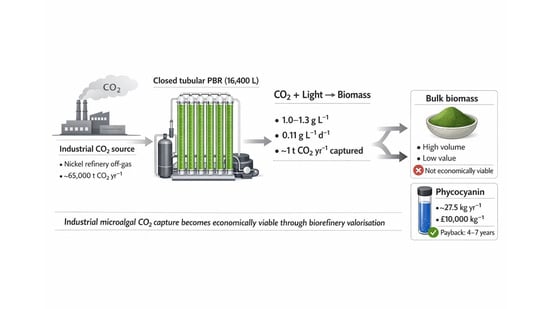
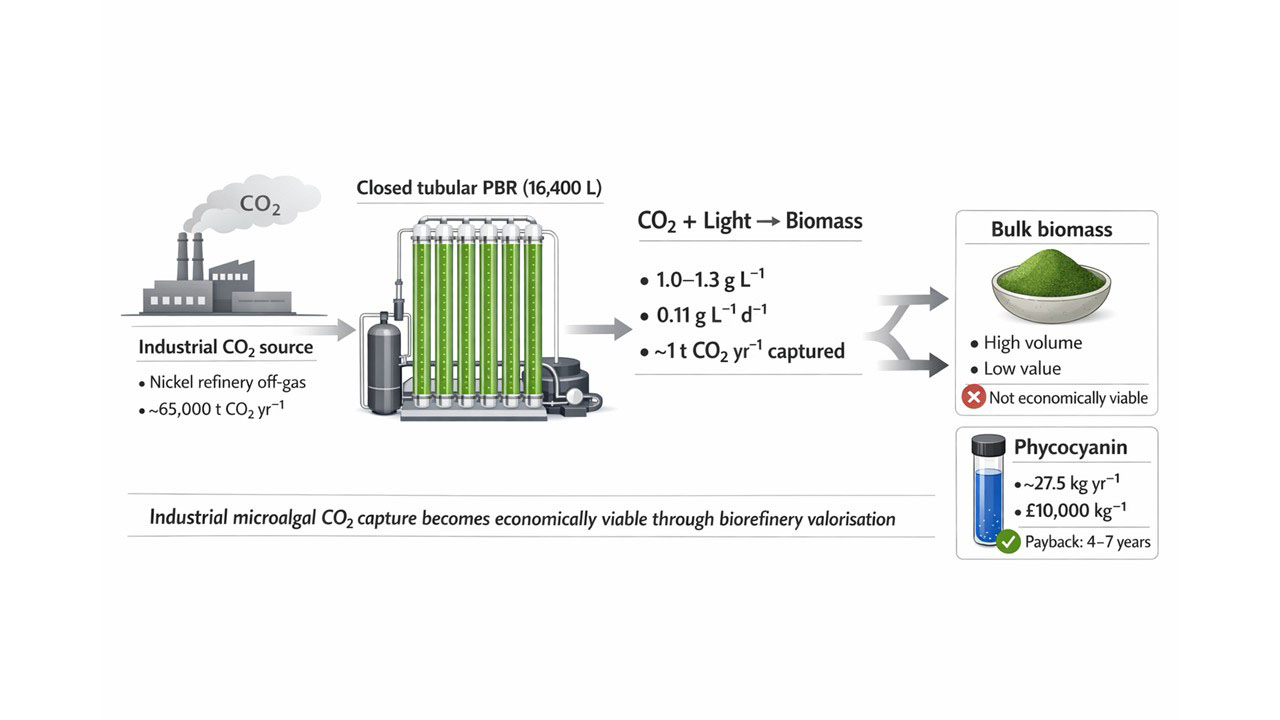
Despite the extensive literature on microalgal production, most studies focus on controlled laboratory-scale systems, resulting in a critical lack of confidence at industrial scale. This is further compounded by the frequently observed inconsistencies, with only modest increases achieved in operational scale. This work demonstrates the design, construction, and operation of a commercial-scale tubular photobioreactor and associated equipment for the production of algae using CO2 derived from an industrial nickel refinery. The reactor was demonstrated by growing the species Nannochloropsis gaditana. Biomass concentrations of 1.0 to 1.3 g L−1 were achieved with a productivity of 0.11 g L−1 d−1. Extrapolation to a 300-day production year showed that the reactor was capable of producing 541.2 kg algae and sequestering around 1 tonne of CO2. A technoeconomic assessment showed that the total plant CAPEX was £583,905 and the OPEX was £98,196. Sales of algae alone showed poor economic performance. However, economic favourability is observed for species that contain phycocyanin pigment and yield a positive net present value within 4 to 7 years based on recovery yield. This work effectively provides reliable process data developed at scale that can be used to formulate business cases for further scale-up and expansion of algal production systems. This moves the technology a step closer to full-scale realisation and the potential for a net-zero, sustainable future.

Graphical Abstract

1. Introduction

Since the dawn of the industrial revolution, the impact of human activities has led to significant environmental damage. This has been recognised under the UN Paris Agreement [1] that legally binds countries to reduce greenhouse gas (GHG) emissions to limit global warming to 1.5 °C above pre-industrial levels. The concept of net-zero carbon emissions entails achieving a balance between the amount of greenhouse gases emitted and the amount removed from the atmosphere. This represents a pivotal milestone in humanity’s efforts to curtail the adverse impacts of climate change and transition towards a more resilient and sustainable future.
Carbon dioxide (CO2) is one of several greenhouse gases and is traditionally emitted when burning fossil fuels. The total GHG emissions in 2021 in the United Kingdom amounted to 502 million tonnes of CO2 equivalent (MTCO2e) [2], with the primary emission sources being manufacturing (81.6 MTCO2e), transport (56.8 MTCO2e), the energy sector (86.1 MTCO2e), and domestic (134.8 MTCO2e). These figures have reduced by some 25% in the last ten years. However, there is still a need to drive CO2 emissions lower, and this can be achieved by the more prudent use of fossil fuels or by the introduction of green initiatives to decarbonise activities. To address this challenge, the Energy Safety Research Institute (ESRI) at Swansea University introduced the Reducing Industrial Carbon Emissions (RICE) initiative to translate and transfer promising research technologies out of the laboratory and into industry as an agent for change. Within this framework, one of the industrial collaborations was to reduce CO2 emissions from a local nickel refinery using carbon capture and utilisation via microalgae.
Microalgae are a diverse range of photosynthetic organisms that are capable of rapid growth due to the simplistic nature of their structure [3]. With their cousins, macroalgae/seaweed, these organisms are natural pollution control agents for seas and oceans. Under autotrophic conditions, they perform photosynthesis and consume CO2 and nutrients (such as nitrogen and phosphorus) and expel oxygen, while producing biomass. Under regular photosynthetic conditions, microalgae are reported to consume 1.8 to 2.2 kg CO2 per kg of biomass produced [4,5]. The biomass production rates of microalgae significantly outperform the production rates of terrestrial crops. For example, oil production from a high-lipid-producing species has a productivity of around 136,900 L per hectare per annum, compared to land-based systems, which are capable of producing between 172 and 5366 L per hectare per annum depending on species [6]. Microalgae are also capable of producing a range of other products such as proteins, carbohydrates, pigments, and fine chemicals. This versatility supports their inclusion in a biorefinery framework that combines carbon mitigation with the production of multiple value-added products, harnessing a true circular economy.
Despite the extensive literature highlighting the potential of microalgae for the abatement of industrial effluents, most studies remain speculative or are confined to small-scale laboratory experiments using simplified or synthetic feed streams. Although some investigations have incorporated industrially derived inputs, the deployment of algal technologies at scale within real industrial environments remains exceptionally rare. Indeed, one of the major criticisms of algae technology is that scale-up projections are often based on selective extrapolations of limited data from short-term and small-scale pond operations and laboratory experiments [5]. Several studies have demonstrated the potential of microalgae for carbon capture and utilisation using industrial or simulated flue gas streams. For example, Yadav et al. [7] demonstrated the growth of Chlorella sp. on flue gas from a coal-fired power station and nutrient supply from a common effluent industrial wastewater in 500 mL flasks. The study found that algae could be grown to concentrations of 1.52 g L−1 at a CO2 fixation rate of 187.65 mg L−1 d−1 with a nutrient removal rate of 70%. Similarly, Cui et al. [8] demonstrated that flue gas from a biomass plant can be used as carbon source for Spirulina cultivation. The maximum scale of the work was a 70 L reactor and achieved a culture density of around 2.5 g L−1, with a protein content of greater than 60% and phycocyanin content of around 22%. The resulting biomass met the requirements of the Chinese national standard for feed utilisation.
Pilot-scale studies remain limited. Troschl et al. [9] describe a pilot algae production system supplied by flue gas from a power plant at Dürnrohr (Austria) that contains between 11% and 13% CO2. The reactor itself contained 200 L working volume and was used to grow the species Synechocystis salina. The primary product of interest was polyhydroxybutyrate (PHB), which is obtained under nitrogen-limited conditions. Final biomass and PHB concentrations were in the range of 0.9 to 2.1 g L−1 and 4.8% to 9% of cellular dry mass, respectively. Following the installation of a degassing system, the algae production rate increased to 0.25 g L−1 d−1. One interesting observation made by the authors was that continuous operation using direct flue gas injection was not possible due to the plant only being used to balance peak electricity demand, i.e., an intermittent CO2 supply. Leflay et al. [10] used a 300 L algal photobioreactor to demonstrate the remediation of synthetic power plant emissions in a laboratory environment. The work demonstrated the potential for an algal CO2 capture system with optimum growth at 5% CO2 and 17% capture efficiency, the reactor being constantly fed with gas. An economic assessment of the process was made, and it was deemed favourable.
Limited large-scale deployments include the work by Wilson et al. [11]. The microalgae Scenedesmus acutus was used to capture CO2 from a coal-fired power plant (Duke’s Energy East Bend Station, Union, KY, USA) using an 18,000 L photobioreactor. A maximum seasonal productivity of 39 g m−2 d−1 was achieved, although the high capital investment and operating costs were prohibitive for the technology when using the algae to generate fuels. The production costs were estimated as $1600 ton−1 CO2 when amortised over 10 years, with the main expense being the photobioreactor materials and installation. Subsequent work [12] developed and installed a novel 1200 L cyclic flow photobioreactor at East Bend Power Station with the intention of demonstrating a lower-cost production system. While no actual costs of production were provided, the work did demonstrate that the new reactor used significantly less power than the original reactor (1 MW d−1 as opposed to 12 MW d−1). The authors also noted that the algae reactor had a productivity of 0.165 g L−1 d−1 and acted as a secondary scrubber for NOx and SOx in the flue gas effluent.
Alternative approaches include raceway ponds and hybrid processes. For example, Van Den Hende et al. [13] grew algae in a 28 m2 (10 m3) raceway pond on nutrients from food waste and flue gas effluents. While no data was given on algae growth rates, the defined process, which involved freezing, aqueous extraction, and size exclusion chromatography, yielded 22.4 g of phycocyanin per kg algae with a purity of 1.32 (24.5% recovery) and 9.5 g phycoerythrin per kg algae with a purity of 1.06 (20.9% recovery). The residual biomass was fed to an anaerobic digestion plant and yielded 272 L of methane per gram of algae. Samartha et al. [14] reported on the solar-assisted capture of CO2 using an algal pond of 1500 m2. The process involved the selective capture of CO2 from a pulverised coal power plant flue gas using MEA solvent and the release of the CO2 to the algal pond. The resulting biomass was then converted to biodiesel. The study found an algal production rate of 104 kg h−1 for an inlet coal capacity of 40 kg h−1. Simulations were then performed for a 500 MW power plant, and suggested that for a 15-acre pond, the algal production rate would be 50 tonnes per hour. White et al. [15] reported the use of several large pilot and industrial deployments of algae technology. In one case study (pilot plant 1), a 2000 L vertical tube photobioreactor was successfully used to process flue gas, which was obtained from a wood pellet burner; no further data was supplied. A second case study (pilot plant 4) employed a novel horizontal tubular reactor with mechanical agitation to remediate flue gas from an industrially combined heat and power plant. The 16,000 L capacity plant required only 20–70 W m−3 energy for the mechanical agitation and grew thermophilic freshwater cyanobacteria (Chlorogloeopsis fritschii). The system was designed to produce bioactive extracts, and subsequent hydrothermal liquefaction of the resultant biomass was performed to yield energy. No production data was given.
While these studies demonstrate the technical feasibility of algal CO2 capture across a range of configurations, most are confined to laboratory or small pilot scale, they often rely on synthetic or controlled feed streams and provide limited long-term operational or economic data. Consequently, there remains a significant lack of robust, industrial-scale evidence to inform reactor design, scale-up, and commercial deployment.
The Vale Europe Limited nickel refinery is based in Clydach, UK. The refinery was first established in 1902 and produces high-purity nickel in the form of pellets and powder using the Mond process [16]. This process requires carbon monoxide, which extracts nickel directly from ores by sublimation as nickel carbonyl gas. The temperature of this gas can then be raised and the reaction reversed to release pure nickel solid, and the original carbon monoxide is recycled. Fresh carbon monoxide is supplied to the plant via steam reforming of methane; see Equations (1) and (2).
C H 4 ( g ) + H 2 O ( g ) C O ( g ) + 3 H 2 ( g )
C O ( g ) + H 2 O ( g ) C O 2 ( g ) + H 2 ( g )
In this process, methane is burned in the presence of steam to produce carbon monoxide (CO), CO2 and hydrogen (H2). These products are then separated using pressure swing adsorption to form almost pure gas products; with CO used in the Mond process, the hydrogen is burned as a fuel on site, and the CO2 is used in limited applications and the vast majority emitted to atmosphere. Typically, the production of 1 kg of nickel metal is associated with 14 kg of CO2 emissions, with around 60% of these emissions coming directly from the production process and the remaining coming from indirect sources such as electricity consumption [17]. Demand for nickel is increasing with uses in stainless steel (58%), nickel-based alloys (14%), casting and alloy steels (9%), electroplating (9%) and rechargeable batteries (5%) [18], with the latter increasing rapidly due to the dawn of the electric vehicle. Global production of nickel was around 2.8 million tonnes per annum in 2021, up from around 1 million tonnes per annum in 2000 [19]. The Vale Europe nickel refinery is a high energy user, with annual GHG emissions of around 65,000 tonnes of CO2 equivalent [20]. Thus, the recovery and reuse of this CO2 is a key driver for the site to achieve net-zero targets.
In this context, the aim of this work is to deploy an industrial-scale (commercial-scale) algal production facility at the nickel refinery and successfully demonstrate the capture and reuse of industrial CO2 emissions, while at the same time generating specific risk assessments to facilitate operation at a COMAH Tier 1 industrial plant. In addition, the deployment exercise will allow for real-world data collection and analysis of algal technology in terms of growth rates, algae composition, productivities, and financial implications at full industrial-scale operation. Through this, the risks of technology’s further adoption will be removed, allowing heavy industry to decarbonise.

2. Materials and Methods

2.1. Construction of the Photobioreactors

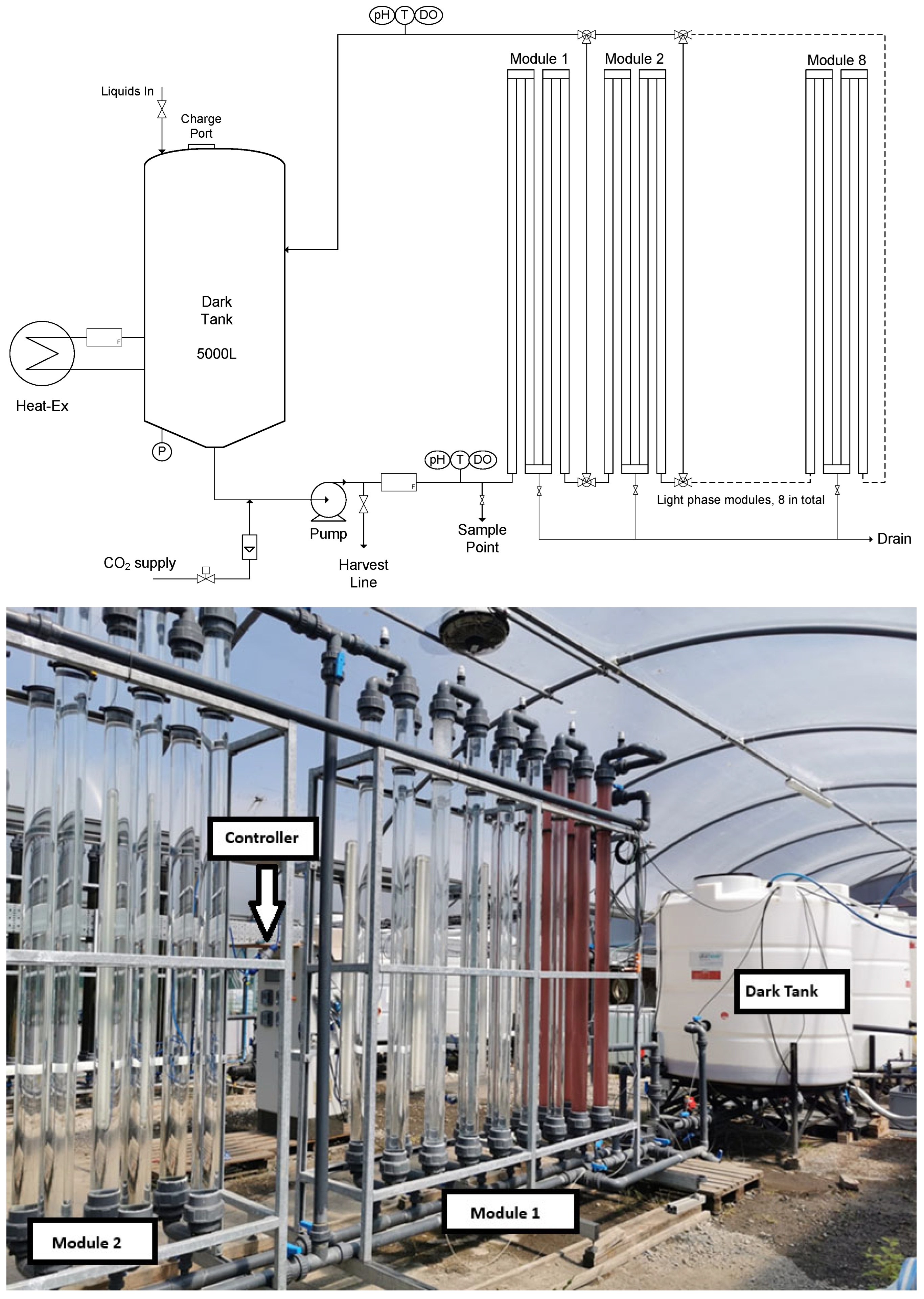
The photobioreactors (PBRs) were designed, developed, and constructed by the RICE engineering team based on previous experience gained in the ALG-AD and BioAlgaesorb projects [21,22]. The reactor consisted of two main sections, a large tank (the dark tank) and a vertical tubular section (the light phase); a basic illustration is shown in Figure 1. The 5000 L dark tank (Model 17551545-F, Enduramaxx Limited, Baston, UK) is fitted with a top entry port that is used for charging purposes, and a DN100 base outlet is used to discharge fluids. The discharge line contains a drain on a T-section and supplies fluids to the main recirculating pump (DAB EuroSwim 300 T, 42 m3 h−1, head 22 m, Anglian Pumping Services, Ipswich, UK). Just upstream of the main recirculation pump is a DN25 inlet, through which CO2 is injected into the system via an automated valve (Parker 221G6336-2995-481865C2, Mercateo UK Limited, London, UK). This is controlled via an open/close actuated valve linked to the pH of the system and is controlled automatically to given high and low set points. When the valve is opened, CO2 flows into the reactor through a rotameter and is discharged through a punnet stone. Immediately downstream of the recirculation pump is a T-section with a reduced DN50 line and isolation valve. This is used to harvest materials from the reactor. Two additional ports were bored into the lower section of the tank to facilitate a separate DN50 recirculation loop (pump = SACI Optima 75, 16 m3 h−1, head 15.5 m, Water Garden Ltd., Portsmouth, UK) through a heat exchanger (PC30P3,AES-Proteam, Bury St. Edmunds, UK) for temperature control. This recirculation line was fitted with a flowmeter (SA200, ifm electronic Ltd., Hampton, UK). A DN100 port was bored into the side of the tank as a return line from the light phase and contains a combined pH–temperature sensor (model 8350, Hach Lange Ltd., Manchester, UK), a dissolved oxygen sensor (Intellical LDO101, Hach Lange Ltd., Manchester, UK), and a flowmeter (SM2100, ifm electronic Ltd., Hampton, UK). A DN50 port was bored into the top of the tank and was used for supply of bulk liquids to the tank, pumped in using an ancillary pump (SACI Optima 75, 16 m3 h−1, head 15.5 m, Water Garden Ltd., Portsmouth, UK).
A further DN50 port was bored into the top of the tank and acted as a vent line, and a pressure sensor (PI12798, ifm electronic Ltd., Hampton, UK) was bored into the vessel base to measure liquid level in the tank. Downstream of the dark tank in the main recirculation line is a further pH–temperature sensor (model 8350, Hach Lange Ltd., Manchester, UK) and dissolved oxygen sensor (Intellical LDO101, Hach Lange Ltd., UK), facilitating measurements at the inlet and outlet of the tank. In addition, immediately beyond the sensor array is a T-section reduced to DN10 with a valve to allow for small samples to be taken. Beyond the outlet senor array is the light phase. This is a series of eight modules, each containing 16 transparent DN100 × 2.5 m vertically mounted extruded acrylic tubes (Plastock, High Wycombe, UK) organised in two parallel rows and connected in series; for example, fluid flows through the bank as if it were one extended tube. The top of the tubes are connected by simple unions and bends within which is fitted an air-release float valve (Philmac X-380, AliAxis, Cannock, UK) to remove any air in the tube (required for flood filling on start-up). The base of the tubes contains a similar arrangement and includes a DN25 port bored into the connection forming a drain line with isolation valve. Each tube-pair drain was connected to a common DN50 drain line. At the base and top of the vertical tubes, the connection is made via a spin-lock system (14735, Plastic Pipe Shop Limited, Stirling, UK), such that each individual tube can removed from the unit if needed for cleaning purposes or replacement. The whole module is mounted on a custom-made galvanised steel frame (Unistrut, West Bromwich, UK). Each light-phase module was fitted with an externally mounted series of three strip lamps fitted with two incandescent tubes (Colour 865, Mumbles Electric Installation and Maintenance Limited, Swansea, UK) for use in low-level light conditions and automatic illumination at night via a hardware timer. A quantum sensor (SQ-512, Campbell Scientific Ltd., Loughborough, UK) was mounted to the reactor to measure ambient light conditions. Each of the light-phase modules contains approximately 400 L volume, with a total volume of 3200 L in the array. The eight modules were assembled in series with interconnecting pipework containing T-section and valves between some modules (one, two, and four), such that the dark tank contents could be recirculated through one, two, four, or eight of the light-phase modules as required. Thus, the maximum operating volume of the PBR was 8200 L. Two identical PBR trains were built, giving a total maximum operating capacity of 16,400 L. Note that all interconnecting pipework was standard PVC piping and all ball valves were standard double-union PVC ball valves (Plastic Pipe Shop Limited, Stirling, UK). A purpose-built automated monitoring, control, and data acquisition platform was purchased (FRE Energy Ltd., Wrexham, UK) which displays and records the activity of all instruments, pumps, and automated valves. In addition, the unit also controls the start, stop, and running level of the pumps and adjusts the automated valve positions. The system also controls the temperature, pH, and flowrate of the recirculating main loop and the flowrate of the heat transfer loop. Several alarms are also present to alert the operators of adverse conditions, for example, high levels in the dark tank.

2.2. Operation of the PBR

The general operation of the PBR is achieved by the flood fill of the whole light phase with water (towns water supply from the Vale Europe Ltd. Site, Clydach, UK) via the dark-tank bulk fluid addition line and allowing the dark tank to achieve a 400 L volume. The recirculation pumps are then started, which sets the temperature control loop into action, and fluid flows to the light-phase modules and back to the dark tank, i.e., this is a cyclical flow reactor. The PBR is then chemically sterilised by the use of sodium hypochlorite (0.5 mL L−1—24 h) and neutralisation by sodium thiosulphate (0.2 g L−1); both chemicals were obtained from Fischer Scientific UK. The system is then adjusted to operate with light-phase module 1 only and the desired operating conditions for temperature and pH are set. Nutrients and salts, as required for the given species, are added and recirculated to achieve a homogeneous solution, at around 15 min. The reactor is then inoculated with seed algae via the dark-tank addition port. The system flow is recirculated, and the growth of the algae species is monitored by sampling and analysis of dry weight. Additional nutrients are added based on periodic sampling and the expansion of the PBR operating volume. All operating parameters and conditions can be optimised to accommodate the specific physiological and metabolic requirements of different microalgal species.
The PBR may be used in batch mode, where the operation detailed previously is followed and at the end of the final growth period the content of the reactor is discharged, and the process started again. A more typical operation is via semi-continuous mode, where the PBR achieves full volume and growth with periodic harvesting from the dark tank then taking place. One-third or a half of the PBR volume is withdrawn, and the contents are replaced with fresh water, nutrients, and salt as required. In this operating mode, the PBR may be harvested periodically for several months.

2.3. Cleaning the PBR

Cleaning the PBR is achieved by draining the contents of the light-phase modules via the bottom drain lines and draining the tank via the tank drain line. Then, the reactor is flushed with warm water and bleach if needed. In cases where a significant biofilm was observed, the tubes were accessed from the top by removal of the spin-lock connection and a pressure wash hose with spray lance fitting was inserted into the tube. In cases where residues remained, the tube was removed from the system and cleaned manually using a sponge attached to a pole. When cleaning was finished, the system was once more flood-filled with towns water and sterilised. Note that due to the valve arrangement, each of the light-phase modules can be individually isolated, drained, and cleaned as required.

2.4. Nutrient Preparation for the PBR

The required nutrient quantity was determined to achieve set-point levels (species-specific) and added directly as powder via the dark tank charge port. The powder is then mixed and dissolved by the natural recirculation of the PBR. Alternatively, the required nutrient mass is mixed with a small quantity (1 L) of sterilised water and added to the PBR as a liquid via a peristaltic pump.

2.5. Algae Growth and Scale-Up

On receipt, the algae master culture is placed in a sterile incubator (Labcold RLSD01502, Lab Cold Limited, Basingstoke, UK) for 3–5 days for acclimation with temperature set to 17 °C and a light to dark ratio of 12:12 h. Sterile media composed of autoclaved reverse osmosis water, 30 g L−1 NaCl, and 40 g L−1 Cell-Hi F2P is prepared. All chemicals used are high-purity analytical-grade (Fischer Scientific, Loughborough, UK), except Cell-Hi F2P, which is a Guillard F/2 saltwater species feed (Varicon Aqua Solutions Ltd., Worcester, UK). Pre-made media with feed is stored in a fridge at 2 to 5 °C in the dark.
Sterile universal containers (30 mL, Z645354, Sigma-Aldrich, Gillingham, UK) are inoculated in a biological safety cabinet (Haemair Limited, Swansea, UK) that has previously been cleaned with 70% ethanol and exposed to UV light (Philips UV-C, Amazon, London, UK) for 30 min. An inoculation ratio of 1:10 is used, where 2 mL of species is added to 18 mL of pre-made media using sterilised disposable pipette tips. In total, 10 master culture samples are made up for storage, and 1 culture is added directly to a pre-sterilised 250 mL flask containing 180 mL of pre-made media. The 200 mL culture is then incubated at 20 °C, aerated with a 1 um filtered compressed air line, and allow to grow for 7 days prior to upscaling. The inoculum is then subsequently scaled to 1 L flasks and allowed to grow under the same conditions. This is then scaled to 2.5 L flasks, and finally to 20 L carboy containers at laboratory scale. The 1 L, 2.5 L, and 20 L containers are aerated with air containing 5% CO2. Carboy cultures are then used to inoculate the large reactor. Typically, seeding of the large reactor is conducted with only one module of the operational light-phase reactor and an equivalent volume in the dark tank, i.e., ~800 L total volume with four carboys used as inoculum. The reactor was then allowed to grow with regular checks for nutrients and dry weight. Once the desired cell density has been achieved, further light-phase modules are brought online and the dark tank topped up with the appropriate volume of pre-sterilised town water and fresh nutrient to maintain a 50:50 volume ratio between the dark tank and light phase. The total volume introduced to the reactor is increased systematically as growth occurs. Thus, module 1 is made operational, then module 2 added, modules 3 and 4 added, and modules 5–8 added. In each scale-up, the reactor volume was doubled, i.e., 800 L, 1600 L, 3200 L and 6400 L, respectively. In the case where the species was grown in saline water, the town water was fed initially to a mixing vessel and salt was added prior to its addition to the reaction system.

2.6. Algal Culture Used

The microalgae species used in this trial was Nannochloropsis gaditana (also known as Microchloropisis gaditana). The Nannochloropsis gaditana species was obtained from the Culture Collection of Algae and Protozoa (SAMS Limited, Oban, UK).

2.7. Analysis Methods

Dry weight (DW) of algae was measured periodically according to the Sorokin protocol [23]. Whatman filters (47 mm diameter and 0.22 μm GF/C) were placed in an oven (Genlab DC125, Cheshire, UK) at 80 °C for at least 4 h or until reaching a constant mass. The mass was measured using a precision balance (SLS SR-250AZ, LAB PRO, Oxford, UK). Culture samples of 20 mL were then filtered using a Buchner funnel and washed three times with 10 mL of deionised water to remove any salts or residues. The resulting filter and cake were then placed back in the oven for 12 h, after which the final mass was recorded, and the dry weight was calculated from the difference in mass before and after filtration and the solution volume, i.e.,
DW (g L−1) = 1000 × (final mass [g] − original mass [g])/sample volume [mL]
The specific growth rate (µ) of the species was calculated from the initial biomass growth data and was calculated using the following equation:
μ = 1 t L n X X 0
where t is the time and X 0 and X are the initial and final biomass concentrations, respectively.
Algal productivity (P) is described as
P = X X 0 t 2 t 1   t 2 > t 1
Nutrient concentrations were checked daily with the Total Nitrogen kit (LCK338, Hach, Düsseldorf, Germany) and phosphates with the MQuant® Phosphate test (HC985964, Hach, Düsseldorf, Germany). Both tests are colorimetric techniques that involved adding a known quantity of PBR fluid to a pre-made test solution. Analysis was then performed using a spectrophotometer (DR3900, Hach, Düsseldorf, Germany), and the resulting concentration of nutrient was evaluated by comparison to a standard calibration curve. Replenishment of nutrients occurred approximately every 5 days to avoid mineral macronutrient starvation and to prevent CO2 uptake.

3. Results

3.1. Growth and Biomass Production for the Algal Species

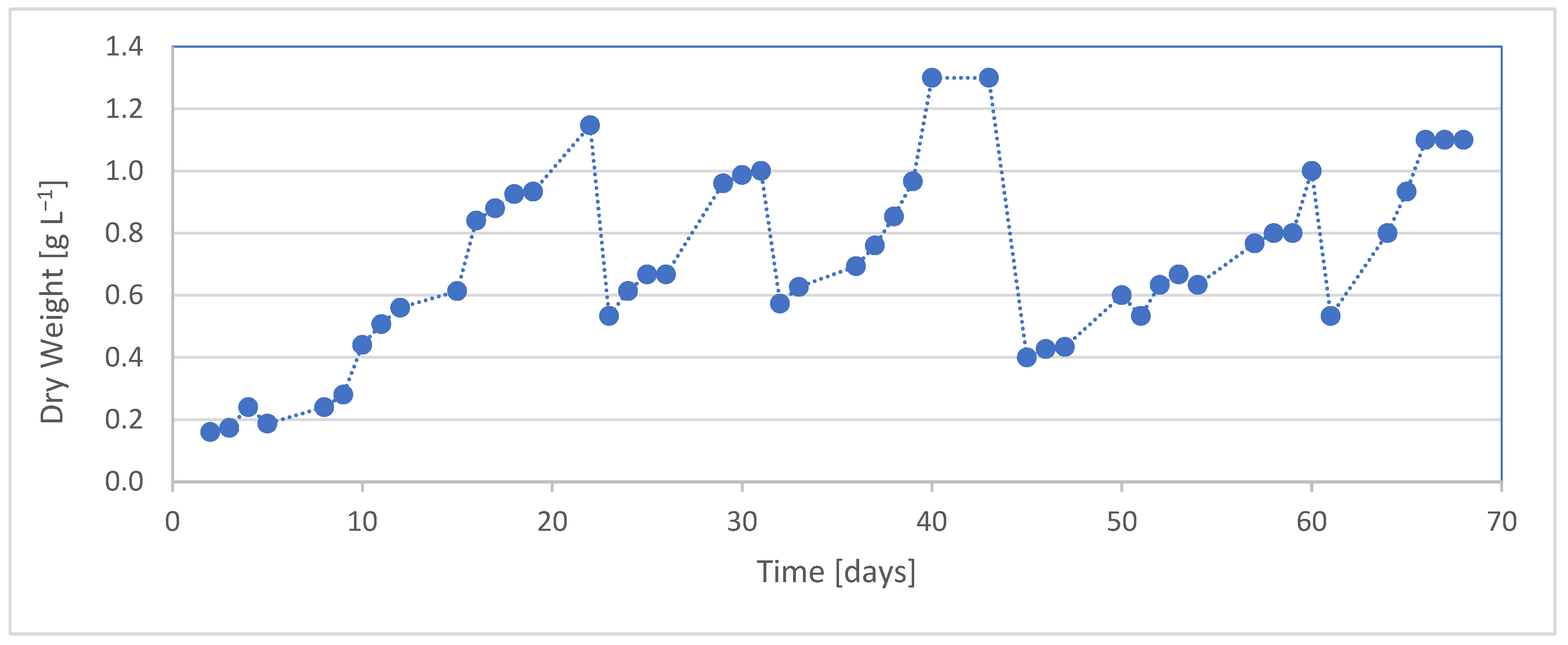
The growth of the microalgal species was monitored during 68 consecutive days under pH control via automated CO2 injection and is illustrated in Figure 2. The data shows that following initial inoculation, the species grows well for the first 19 days, increasing from 0.1 to 1.15 g L−1. On day 22, module 2 of the reactor was brought online, with the materials in the system being used as inoculum and topped up with fresh water and nutrients. As a result, the dry weight immediately dropped to 0.53 g L−1, and a subsequent growth phase followed. On day 31, the cell density had replenished to 1.0 g L−1 and modules 3 and 4 were brought online. Again, water and fresh nutrients were added to make up the volume, and the new dry weight was now 0.57 g L−1. Growth followed until the biomass achieved 1.3 g L−1 on day 40. On day 43, there had been no additional growth, so the reactor was expanded to all eight modules, and the resulting biomass concentration was 0.4 g L−1. Steady growth occurred once more, and on day 60, 1000 L was harvested from the reactor followed by another growth cycle. There are five growth phases observed in the data set which correspond to the series of volume expansions in the reactor and one final growth phase following harvest at full volume. The specific growth rate and productivities associated with these growth cycles was calculated (Equations (3) and (4)) and are shown in Table 1.
The growth rate for cycles 2–4 is consistent at approximately 0.085 d−1. The first and last data set shows higher growth rates at 0.193 and 0.144 d−1, respectively. The difference between the phase 1 growth rate compared to phases 2 to 4 may be explained by the fact that for phase 1 the initial seed concentration was only 0.1 g L−1, whereas for phases 2–4, the initial seed concentration was around 0.5 g L−1. When the cell concentration is lower, it is less likely for there to be any self-shading limitation, and the cells should be able to grow faster. However, the fact that phase 5 also shows a higher growth rate would suggest that light limitation may have occurred for phases 2–4, i.e., the weather was generally poorer for these runs and sunlight was not as available. The productivity information also shows that the final run had the highest productivity at 0.11 g L−1 d−1. This would lend some weight to the argument that the conditions experienced by the algae were more favourable for this period. Given this productivity and the total reactor volume in use, for a 300-day (1 year with shutdown for winter months) production run, the total biomass that could be expected from the reactor is 541.2 kg year−1. The biomass would consume approximately 1 tonne per annum of CO2 (1.8 × 547.2 kg). This is a CO2 fixation rate of 0.203 g L−1 d−1 and is similar to that reported [7].
Pedersen et al. [24] studied the growth rate of Nanochloropsis gaditana under a range of different conditions in the laboratory at a 1 L scale. Unfortunately, cell growth data was recorded as cell number rather than dry weight, so no meaningful comparison can be made. However, the exponential growth period observed for the study was around 8–10 days, which is similar to that observed in this study. The growth rate was far superior to that observed in this study, with growth rates in the rage of 0.4 to 0.8 d−1 observed across a range of conditions. However, the reported productivity was in the range of 0.06 to 0.13 g L−1 d−1, which is similar to that reported in this study. The final cell dry weight following the growth period was provided and was in the range 0.61 to 1.62 g L−1, with most of the data in the range 0.75 to 1.25 g L−1. Again, this is very similar to the maximum dry weight observed in this study of 1.3 g L−1. This would indicate that while the specific growth rates observed in this study are low by comparison, the productivity and maximum cell concentrations achieved in the industrial-scale reactor are similar to those seen for independent laboratory studies. This is encouraging for further scale-up.

3.2. Nutrient Uptake During the Biomass Production

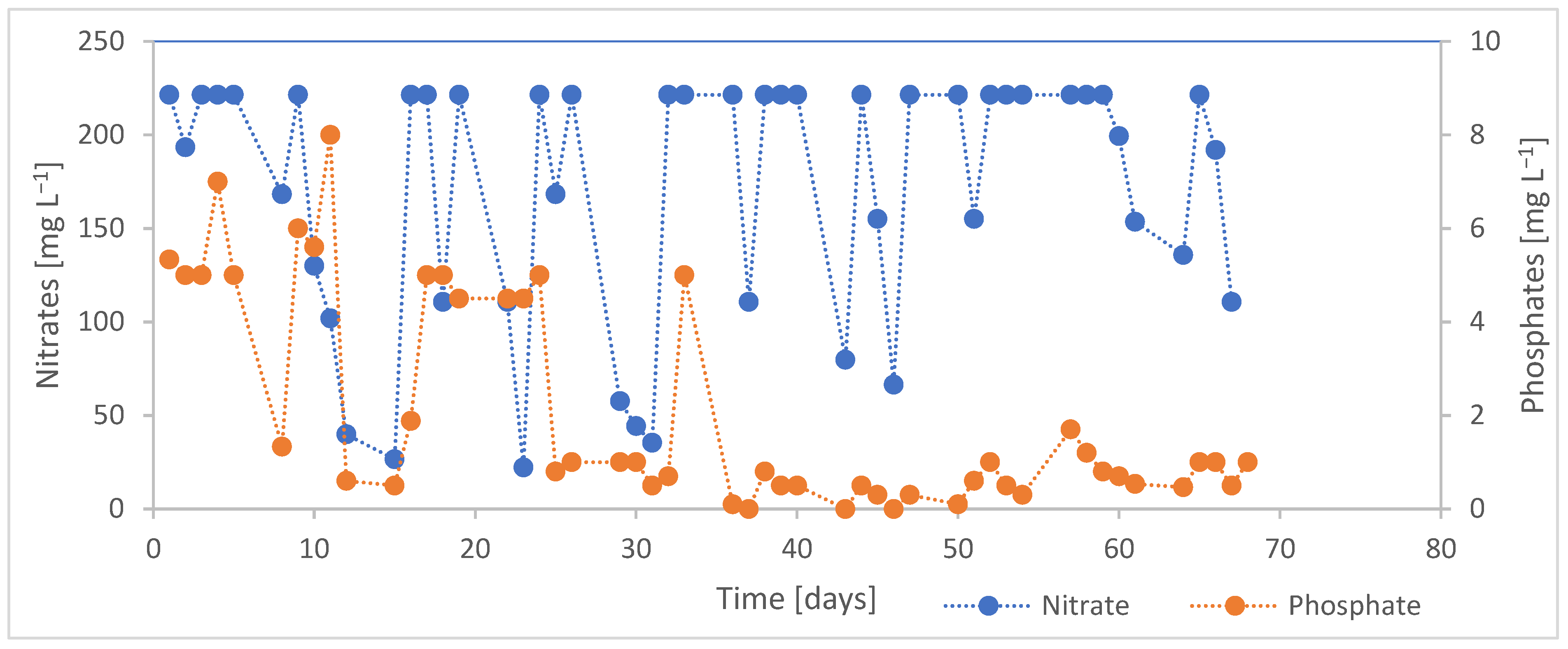
The uptake of nitrates and phosphates was monitored and is shown in Figure 3. The replenishment concentration for nitrates was 225 mg L−1 and 5 mg L−1 for phosphates. As can be seen in Figure 3, both the nitrates and phosphates are being consumed at a relatively high rate by the organism, and in some cases are depleted before replenishment occurs. This is particularly noticeable for the phosphates towards the later part of the study, where the concentration remains below 2 g L−1. This indicates that the organism was, indeed, growing well at this point in the trial, but also suggests that the organism growth could be affected by the low nutrient level, i.e., even better growth may have been achieved if the nutrients were better controlled. An automatic nutrient dosing system would be relatively easy to set up. However, online monitoring of the nutrient concentration required for feedback control is not a trivial matter and would be very costly. Similarly, the set point of 5 mg L−1 for phosphates could be increased in order to ensure that a plentiful supply is available for the organism.

3.3. Other Growth Parameters During Production

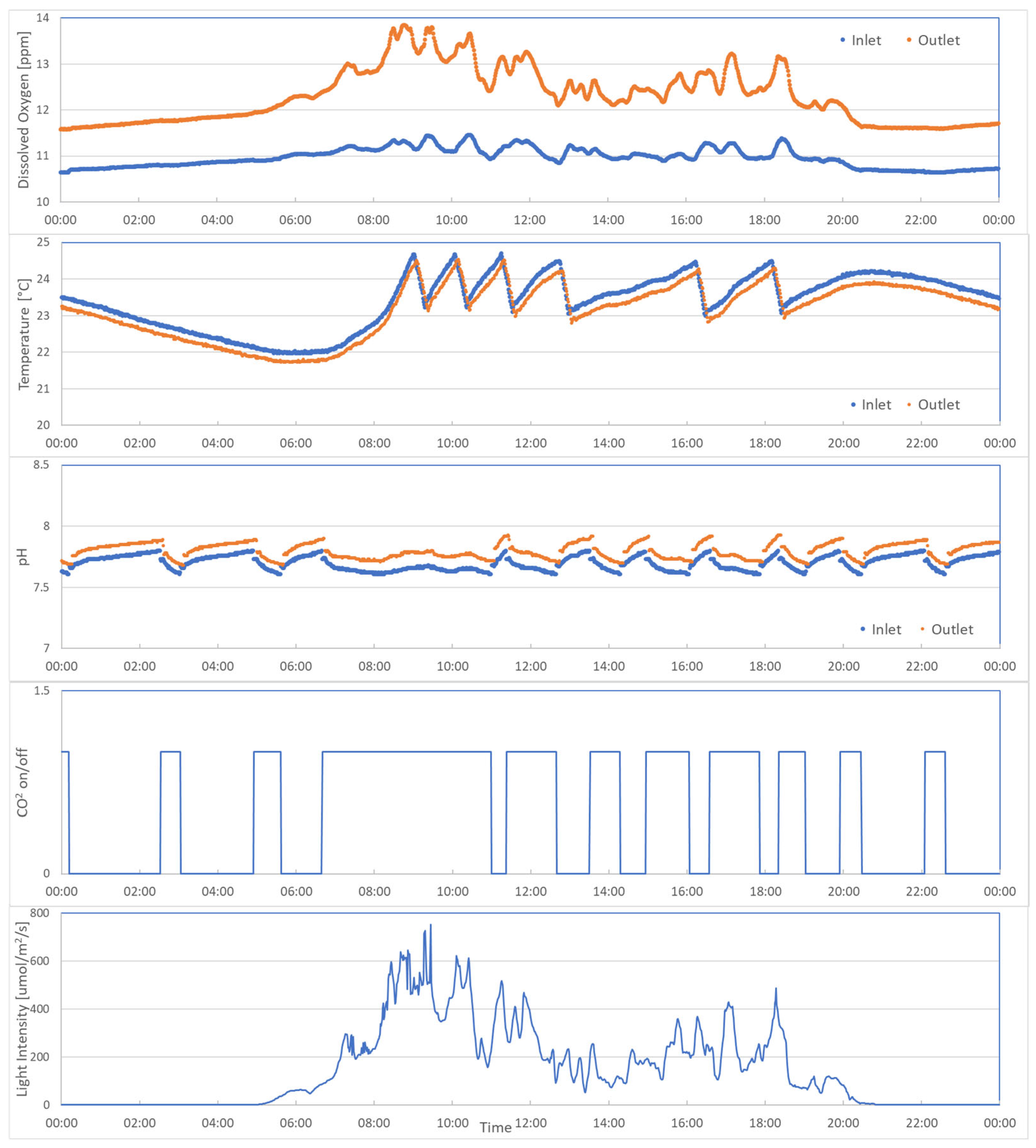
The control system for the reactor automatically records key production data at 1 min (1 Hz) intervals. Thus, for a 68-day run, this is a lot of information, and averaging data becomes less detailed. For this reason, experimental data for a single day of operation is shown in Figure 4. The plot shows the dissolved oxygen, temperature, and pH for the reactor in the first three plots, respectively. The next plot shows the position of the actuated valve that allows carbon dioxide into the reactor. Finally, the last plot shows the ambient light intensity. Dissolved oxygen at the outlet from the light-phase modules is always higher than the inlet concentration. This is expected, as oxygen levels will increase as a result of photosynthesis.
There is a gradual increasing trend in the dark hours related to the illumination of the reactor, and then a more sporadic increase in dissolved oxygen during the daylight hours that corresponds to the ambient light intensity. The difference between the inlet and outlet is largest during the daylight hours, indicating that more photosynthesis is occurring, as would be expected. Rajwa-Kuligiewicz et al. [25] studied the dissolved oxygen of lowland river waters at various temperatures over a range of time and suggested that the saturation point is around 8 mg L−1 at 23–25 °C. In this reactor, the dissolved oxygen content leaving the dark tank is approximately 11 mg L−1 and never exceeds 14 mg L−1 in the reactor exit. Keymer et al. [26] have shown that dissolved oxygen must be above 20 mg L−1 to become toxic to algae and above 27 mg L−1 to have a significant impact on vitality. While their study focussed on Scenedesmus sp. and the toxicity may be different for Nannochloropsis gaditana, the dissolved oxygen levels here are well below the critical threshold. Thus, the simple disentrainment process occurring naturally in the headspace of the dark tank is effective enough for oxygen removal from the system. The temperature in the reactor is highest at the end of the day and the reactor cools overnight, from approximately 24 °C at 9 pm to 22 °C at 6 am. During the daylight hours, the sun’s irradiance heats the light phase quite significantly and a series of oscillations occurs where the sun warms the reactor followed by control action to remove the heat. The reactor oscillates between around 24.5 °C and 23 °C. Overall, on a daily cycle, the temperature in the reactor is maintained between 22 °C and 24.5 °C, which is perfectly acceptable with the mean being 23.25 ± 1.25 °C. The pH in the reactor is controlled by injecting carbon dioxide, which makes the solution more acidic and reduces the pH. As would be expected, the pH is seen to drop each time the actuated valve opens. The upper and lower pH bounds are tightly controlled between pH 7.5 and pH 8. The actuated valve clearly opens at night, demonstrating that the system is experiencing photosynthesis due to the lighting system being activated. However, the valve is clearly opened much more frequently and for longer duration during the daylight hours where the photosynthesis rate is higher. Interestingly, for the period of highest light intensity, between approximately 6.30 am to 11.00 am, the actuated valve remains open for the entire period. During this period, the pH of the reactor is practically stable at about pH 7.7. This would indicate that the carbon dioxide addition rate is almost balanced by the organism’s consumption rate during this time. This indicates that the flow rate of carbon dioxide to the reactor is adequate and is not inhibiting growth in any way.
Effective control of the operating parameters enabled stable and reproducible cultivation of Nannochloropsis gaditana under direct exposure to refinery-derived flue gas, demonstrating the feasibility of microalgal CO2 capture under industrial conditions. The consistency of process monitoring highlights the robustness of the reactor design, which sustained reliable performance at scale.

3.4. Economic Appraisal

A recent publication [27] has outlined a costing structure for a basic technoeconomic analysis (TEA) for an industrial-based algal production unit, and this framework of approach is employed here. The major facility costs for the as-built algal production plant are outlined in Table 2.
Table 2 highlights that there are two main CAPEX considerations. Firstly, the primary costs needed to produce algae at this scale are approximately £350,000. This consists of the inoculation facility (algae nursery to scale-up cell lines), analysis equipment for monitoring growth and other parameters, the large vertical tube photobioreactors, the housing and construction costs, cell harvesting equipment to dewater the algae, and a spray drier needed to obtain dried algal powder. The polytunnel cost is primarily to help maintain temperature with the algae reactor. In a more temperate climate, this would not be needed and would make the CAPEX cheaper at £243,262, with no need for a polytunnel or reactor heater/chiller. The secondary costs are associated with downstream processing of the algal biomass. In this case, consideration of an intracellular product has been made, and the respective CAPEX cost is £234,068. This consists of a homogeniser for the breakage of cells, membrane equipment for the isolation and purification of cellular components, process vessels, small-scale drying equipment for product drying, and a water recycling unit (reverse osmosis equipment). The total installed cost of the production facility is £583,905.
The operational costs (OPEX) for running the reactor and all ancillary equipment have been assessed and are presented in Table 3. The table lists all of the main equipment used in each of the sections of the plant. The quantity of items is listed and the listed power rating of the equipment. An assessment of the actual power consumption was made for some of the equipment (not all equipment could be assessed), and this showed that in most cases, the actual power consumption was lower than the listed power consumption. The listed power consumption was then used in calculating costs as a worst-case scenario. Each of the equipment items was monitored over the experimental period and the average daily usage time was determined. This allowed for the daily power usage to be determined in kWh d−1. This could then be scaled by the 300-day operational year to give annual costs based on an electricity price of 0.2979 £ kWh−1, which is appropriate for small-scale industrial operations [28].
The inoculation facility and the algal production area usage amounts are obvious. However, the downstream process is only used periodically. Each of these operations have been assessed to be in use for 4 h per week (averaged as 0.57 h d−1) or 8 h per week (averaged as 1.14 h d−1). Additional to the equipment electricity costs is an assigned cost for labour, nutrients, and other consumables with maintenance. The labour charge is based on an activity mapping for the system estimating the required hours needed on a weekly basis for general operations. The expected annual hours required by a full-time equivalent (FTE) employee are 1040 h. A standard FTE working year in the UK is 2000 h, and a typical salary is £35,000 per annum full-cost. Therefore, the cost to the business for labour is £18,200 per annum. The cost of nutrients is directly linked to the algal production rate, at 2.04 kg nutrient per kg algae. The cost of nutrients is £27 kg−1, giving an annual nutrient cost of £30,128. Other consumables, such as gloves and pipettes, were estimated to be £1000, and a maintenance cost of £2500 was added. This gives a total cost for operations of £98,196 per annum. If we consider basic production costs only, i.e., the cost of biomass production, then the CAPEX cost is £349,837 and the OPEX cost is £97,930. Taking the CAPEX as a 10-year linear depreciation to zero, this gives a total annual cost of production of £132,913 or £245 per kg algae or £136 per kg CO2 abatement. According to Costa et al. [29], the sales value of algae biomass varies between 1 and 244 US$ kg−1, with the lowest estimates coming from China and the higher price threshold being for USA-derived material. With an exchange rate of 0.75 £/USD, this is equivalent to a maximum market sales price of £183 kg−1, leaving a cost deficit for algae production of −£60 kg−1. So, in this best-case scenario using the highest observed growth rate, the algae plant in not financially viable. As most of the annual production cost is OPEX, then economies of scale, i.e., scale-up to a much larger reactor, are not going to significantly impact the financial case. Interestingly, the cost of CO2 abatement calculated here is several orders of magnitude higher than that estimated for the power plant abatement [11].

3.5. Power Consumption

Table 3 specifies the power consumption of each of the various areas of the plant. For pure biomass production, the total power consumption is that of the inoculation facility, the algal production and the basic downstream processing. This equates to an annual power consumption of 154,758 kWh or 282.8 kWh kg algae−1. If the full production process is employed and pigments are harvested, the total energy consumption is not significantly impacted, with only a further 891 kWh of power used. This equates to 284.4 kWh kg algae−1. Wilson et al. [12] estimated that their plant was consuming 1 MW d−1, which is the equivalent of 12,500 kWh year−1 for a 1200 L reactor. Given that both reactor systems are similar, the scale factor can be considered as approximately linear and the power consumption would be 170,833.3 kWh year−1 for an equivalent reactor volume as used in this study. This indicates that the power demand of the reactor in this study is approximately 10% lower. Gayo-Pelaez et al. [27] reported a power consumption of 1009.8 kWh kg−1 for the production of algae in an internally lit photobioreactor. This system considered the reactor only and was approximately 4 times the power consumption reported here. This shows that reactors with natural lighting are much cheaper to operate than internal illumination systems.

3.6. A Biorefinery Approach

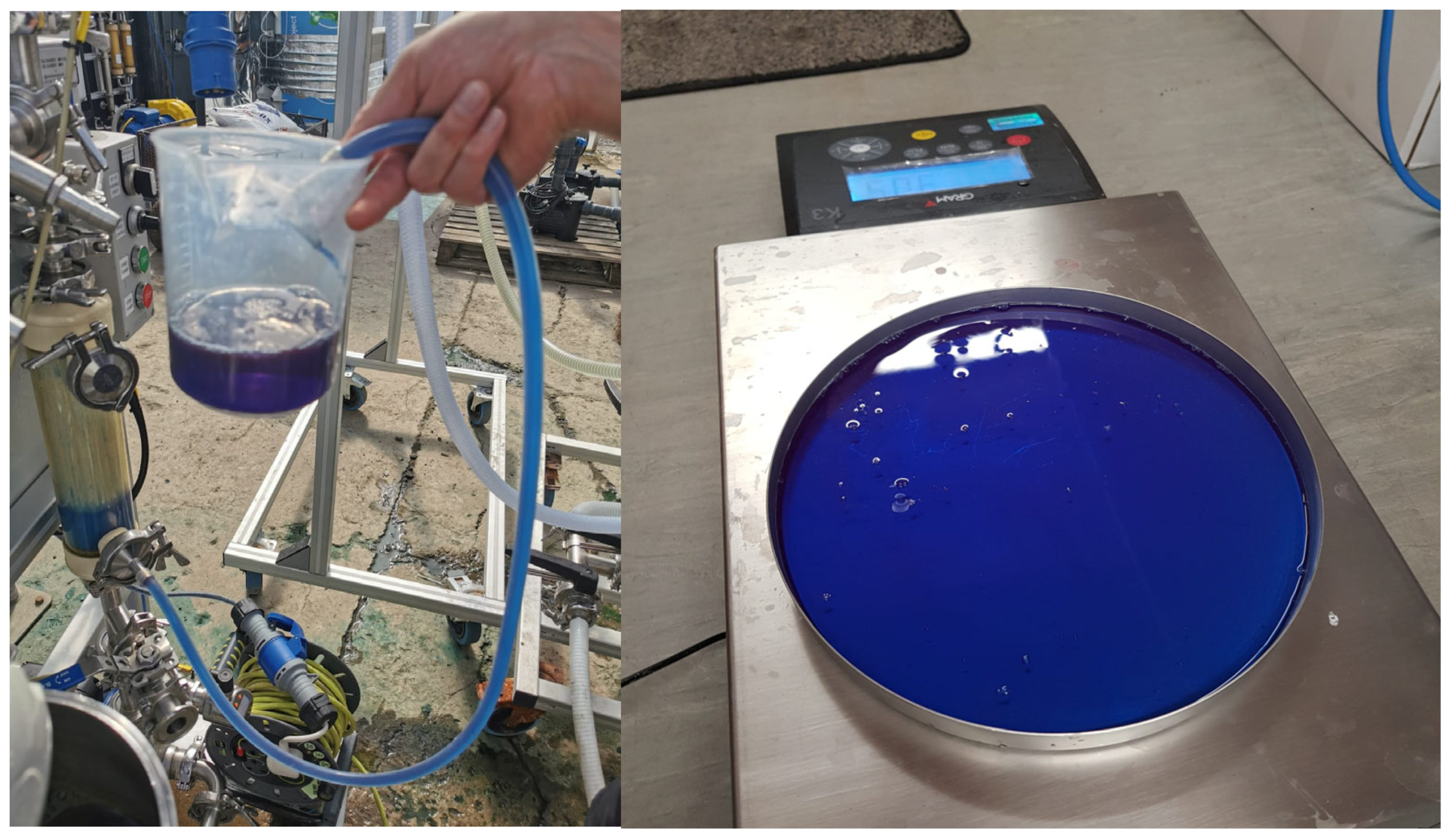
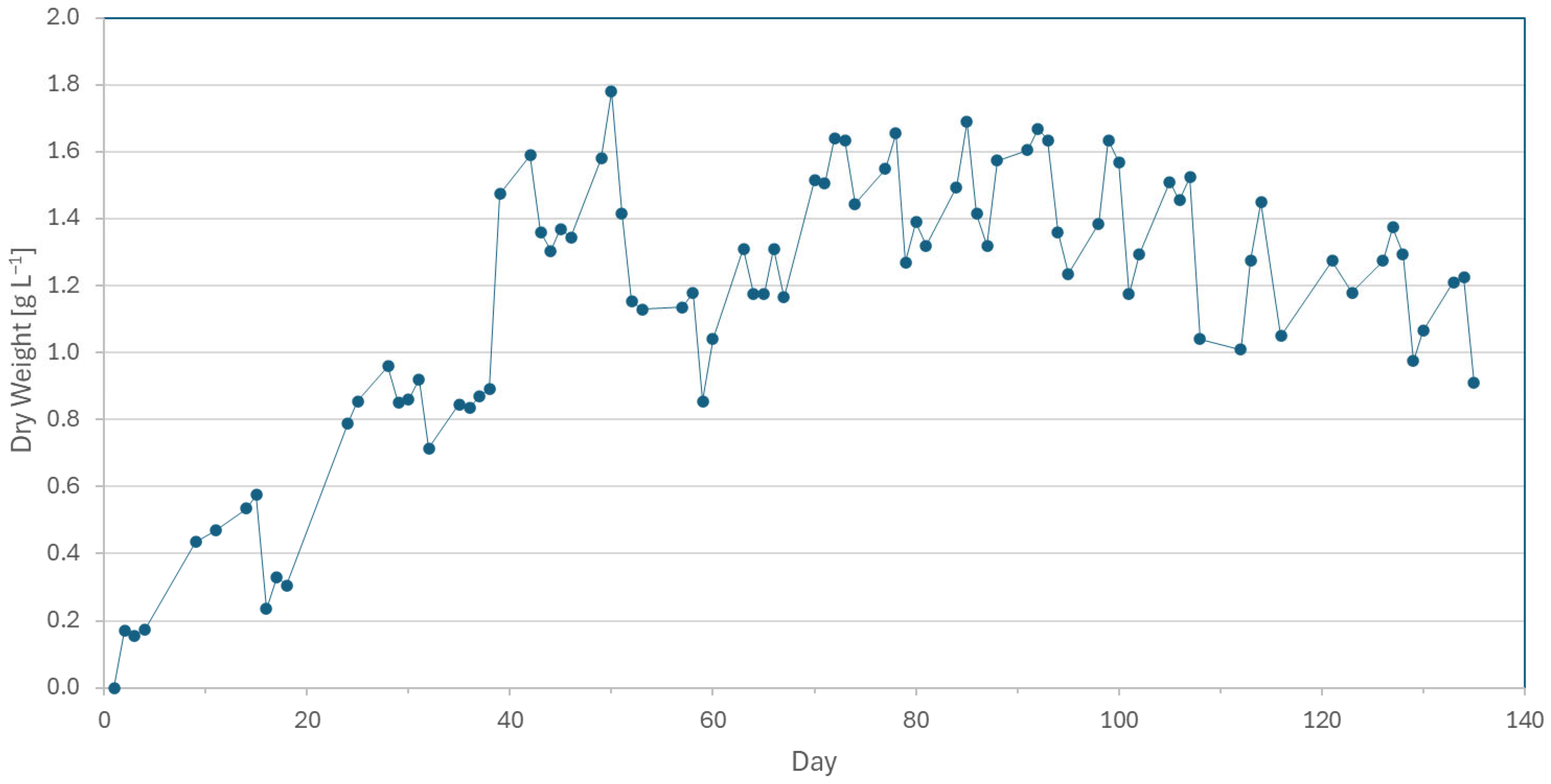
Given the fact that the algae production system is non-profitable when considering algae as a single product, a biorefinery approach may be the answer [30]. This methodology follows the principle of mass efficiency and looks to fractionate the algae into component parts to sell a range of derived products and maximise the revenue available. Algae contain a range of bulk components, typically carbohydrates, lipids and protein, and a range of minor components, typically essential amino acids, vitamins, and pigments. The benefit of a closed-reactor set-up, such as that used in this study, is that the biomass produced is high-quality and free from contamination, meaning that the products produced are suitable for the food, cosmetic, and healthcare sectors where the highest value of the products can be realised. One such pigment is the phycobiliprotein phycocyanin. Phycocyanin is a natural blue pigment that can be used in the nutraceutical, pharmaceutical, food, animal, nanotechnological, and medical fields with anti-inflammatory, antioxidant, anticancer, antiviral, neuroprotective, cardioprotective, and immune-stimulating properties [31]. The algae production system described here is not species-specific and has been used for the cultivation of several other algae species (not reported). Production and isolation of phycocyanin have been achieved using the equipment; see Figure 5. However, the production methodology is proprietary information and the property of Algae Products International (Swansea, UK), and cannot be fully shared here. However, the company have provided growth data for the organism Arthrospira platensis (Spirulina); see Figure 6.
Figure 6 shows the initial inoculation of the reactor using one light-phase fence on day 0. The algae then grow over the next 14 days and reach a dry weight of 0.58 g L−1. At this point, the reactor is opened up to all eight light-phase modules, and growth continues until day 31 when the reactor is harvested. In this case, 1500 L are removed and the contents are replenished. Steady-state operation then continues with periodic harvesting until day 135. The maximum dry weight observed during the production is 1.78 g L−1, and the organism generally remains between 1.0 and 1.7 g L−1 throughout the growth and harvest cycles. The production period shown is between late summer and early autumn, and the growth data can be clearly seen to fade towards the end of the production run. This is most likely due to the diminishing daylight hours associated with the autumn period reducing photosynthetic output. A similar, but reversed, trend would be expected at the start of the year from the spring to summer period. In total, for the steady-state operating period, the volume harvested was 23,300 L and the biomass recovered was 31.62 kg with the reactor operating at 6400 L capacity. This gives an average productivity of 0.05 g L−1 d−1 and is slightly lower than that observed for the Nannochloropsis species but is more representative of actual production data. If the total capacity of the reactor system was employed, based on this productivity rate, the annual production rate for Spirulina would be 246 kg based on 300 days’ operation. The typical phycocyanin content from algae derived in the tubular reactor was 50 mg g−1 [27]. This equates to a total phycocyanin production of 12.3 kg year−1. The selling price of food-grade phycocyanin is $0.13 mg−1 or £100,000 kg−1 [32]. However, Gayo-Pelaez et al. [27] argued that this is an over-inflated price in reality. Therefore, we assume that the sales price is 20% of that quoted, i.e., £20,000 kg−1. This gives a total phycocyanin sale price of £246,000. In this case, the full plant would be in use, so the CAPEX is £583,905 and the OPEX is £98,196. If the total cost of production is considered as full CAPEX added to OPEX for year 1, then the total cost is £682,101. For the subsequent years, the cumulative cost will be £780,279 in year 2, £878,493 in year 3, and £976,689 in year 4. Four years of sales equate to £984,000. So, the plant would pay back within the first four years of operation when selling pigments alone. This scenario is ideal as the recovery of phycocyanin would be less than 100%. A positive net present value would be achieved following 5 years at 90% recovery, 6 years at 80% recovery, and 8 years at 70% recovery, each of which is still a feasible economic option. The residual biomass is rich in lipids, carbohydrates, and protein, which would also fetch a price as animal fodder or could be further refined to generate more products. While this additional revenue stream would not be as significant when compared to the pigment sales, this would make the financials even more favourable and would deliver a 100% mass efficient product portfolio. Similarly, in each of these cost scenarios, the nutrient feed stream to the reactor is fresh and this could be substituted for recycled materials at a much lower cost. Moreover, almost half of the OPEX is electricity, and this could be offset by onsite generation or renewables. However, there would need to be a positive business case generated in order to justify the additional spend profile required.

4. Conclusions

The successful cultivation of Nanochloropsis gaditana was demonstrated in a commercial-scale (16,400 L) closed vertical tube photobioreactor running on industrial point-source CO2 emissions from a nickel refinery. The production run demonstrated a phased approach to culture scale-up from laboratory cultures to the full reactor volume ensuring consistent culture conditions and vitality. In total, five growth cycles were demonstrated over a 68-day period. Effective control over the reactor parameters of temperature, pH, and dissolved oxygen were maintained. Nutrient dosing was manually achieved and set to 225 mg L−1 for nitrates and 5 mg L−1 for phosphates. The stability of the nutrient profile within the reactor was reasonably good for the first half of the study, but the second half of the study showed rapid consumption of the phosphate and could have been improved by the increased addition of phosphate to maintain a consistent reactor profile. The reactor performance showed a robust growth profile and stability over time with no lag period. The maximum concentration of algae achieved in the reactor was consistently between 1.0 and 1.3 g L−1 at the end of the growth phase, and the maximum productivity achieved was 0.11 g L−1 d−1. Based on the productivity data achieved, the annual performance of the reactor based on 300 days of operation was estimated to generate 541.2 kg of algae, while consuming approximately 1 tonne of CO2. This is a CO2 fixation rate of 0.203 g L−1 d−1, and is similar to that reported elsewhere in the literature. The PBR demonstrated robust control of key operational parameters, supporting stable and successful cultivation.
Power consumption in the reactor and associated equipment was estimated from the listed power ratings of the equipment items. The complete plant, i.e., inoculum facility, reactor, and downstream processes, were found to consume 155,650 kWh for the 300-day operation. This is the equivalent of 284.4 kWh kg algae−1. Power consumption from the largest-scale reactor (1200 L) found in the literature that reported this data was scaled to an equivalent volume and found to be comparable, with this production facility using 10% less energy. A measurement of actual power draw was made for equipment where possible, and this showed that the power rating for equipment was an overestimation, so the actual power consumption for the production facility is likely to be less than that reported here.
A basic technoeconomic assessment of the production facility was made and showed that for the production and downstream processing of algae, the capital investment in equipment was £583,905 and the annual operating costs were £98,196. The cost of biomass production was then £245 per kg algae, which is around £60 per kg more expensive than the current best sale price that could be expected. Downstream processing to form refined products from algae was considered, and phycocyanin production was used as a model compound. The analysis showed that annual production quantities would be 12.3 kg/year−1, which would generate £246,000. Several business case scenarios were considered, and all showed a positive net present value of the production facility within a relatively short timeframe of 4 to 8 years depending on extraction and recovery efficiency.
Overall, this work demonstrates the effective operation of a commercial-scale algal production facility based on a vertical tube closed photobioreactor for the remediation of CO2 from an industrial point source. Real scale production data has been generated and favourable economics have been demonstrated, which will allow business cases to be formed that will facilitate the further scale-up and realisation of algal technology.


Author Contributions

E.P.: data curation, investigation, validation, writing—review and editing; D.L.O.-R.: data curation, formal analysis, investigation, validation, funding acquisition, methodology, supervision, project administration, visualisation, writing—original draft, writing—review and editing; J.G.P.: data curation, investigation, validation, writing—review and editing; G.S.M.A.: data curation, investigation, validation, writing—review and editing; J.H.W.: data curation, investigation, validation; A.R.B.: funding acquisition, project administration, writing—review and editing. All authors have read and agreed to the published version of the manuscript.

Funding

This research was funded by the Welsh Government and was administered by the Welsh European Funding Office (WEFO) grant number [RICE—Reducing Industrial Carbon Emissions] and the APC was funded by [Swansea University].

Data Availability Statement

The authors can make all data available on request.

Acknowledgments

The authors would like to acknowledge the input of Thomas Ainscough and Eduardo Verdu for their assistance in the construction of the reactor. The team at Algae Products International for access to data from the commercial production process.

Conflicts of Interest

The authors declare no conflicts of interest. G.S.M.A. is employee of Saudi Aramco. J.H.W. and A.R.B. are employees of Algae Products International. A.R.B. is employee of MiDAS Green Innovations.

References

  1. COP21. Report of the Conference of the Parties on Its Twenty-First Session, Held in Paris from 30 November to 13 December 2015; United Nations Framework Convention on Climate Change: Bonn, Germany, 2016. [Google Scholar]
  2. Office for National Statistics. Measuring the contribution of the environment to the economy, impact of economic activity on the environment, and response to environmental issues. In Statistical Bulletin, UK Environment Accounts 2023; Office for National Statistics: London, UK, 2023. [Google Scholar]
  3. Li, Y.; Horsman, M.; Wu, N.; Lan, C.Q.; Dubois-Calero, N. Biofuels from microalgae. Biotechnol. Prog. 2008, 24, 815–820. [Google Scholar] [CrossRef] [PubMed]
  4. Benemann, J.R.; Oswald, W.J. Systems and Economic Analysis of Microalgae Ponds for Conversion of CO2 to Biomass; Final Report; Grant No. DE-FG22-93PC93204 Department of Energy Pittsburgh Energy Technology Center: Pittsburgh, PA, USA, 1996. [Google Scholar]
  5. Benemann, J.R. CO2 mitigation with microalgae systems. Energy Convers. Manag. 1997, 38, S475–S479. [Google Scholar] [CrossRef]
  6. Oatley-Radcliffe, D.L.; Silkina, A.; Barron, A.R. A Circular Economy Centered on Microalgae: Moving Toward Economic Commercial-Scale Recycling of Industrial, Agricultural, and Domestic Waste for a Sustainable Environment. In Sustainable Energy-Water-Environment Nexus in Deserts: Proceeding of the First International Conference on Sustainable Energy-Water-Environment Nexus in Desert Climates; Springer International Publishing: Cham, Switzerland, 2022; pp. 681–694. [Google Scholar]
  7. Yadav, G.; Dash, S.K.; Sen, R. A biorefinery for valorization of industrial waste-water and flue gas by microalgae for waste mitigation, carbon-dioxide sequestration and algal biomass production. Sci. Total Environ. 2019, 688, 129–135. [Google Scholar] [CrossRef] [PubMed]
  8. Cui, H.; Yang, Z.; Lu, Z.; Wang, Q.; Liu, J.; Song, L. Combination of utilization of CO2 from flue gas of biomass power plant and medium recycling to enhance cost-effective Spirulina production. J. Appl. Phycol. 2019, 31, 2175–2185. [Google Scholar] [CrossRef]
  9. Troschl, C.; Meixner, K.; Drosg, B. Cyanobacterial PHA production—Review of recent advances and a summary of three years’ working experience running a pilot plant. Bioengineering 2017, 4, 26. [Google Scholar] [CrossRef] [PubMed]
  10. Leflay, H.; Pandhal, J.; Brown, S. Direct measurements of CO2 capture are essential to assess the technical and economic potential of algal-CCUS. J. CO2 Util. 2021, 52, 101657. [Google Scholar] [CrossRef]
  11. Wilson, M.H.; Groppo, J.; Placido, A.; Graham, S.; Morton, S.A., III; Santillan-Jimenez, E.; Shea, A.; Crocker, M.; Crofcheck, C.; Andrews, R. CO2 recycling using microalgae for the production of fuels. Appl. Petrochem. Res. 2014, 4, 41–53. [Google Scholar] [CrossRef]
  12. Wilson, M.H.; Mohler, D.T.; Groppo, J.G.; Grubbs, T.; Kesner, S.; Frazar, E.M.; Shea, A.; Crofcheck, C.; Crocker, M. Capture and recycle of industrial CO2 emissions using microalgae. Appl. Petrochem. Res. 2016, 6, 279–293. [Google Scholar] [CrossRef]
  13. Van Den Hende, S.; Beyls, J.; De Buyck, P.J.; Rousseau, D.P. Food-industry-effluent-grown microalgal bacterial flocs as a bioresource for high-value phycochemicals and biogas. Algal Res. 2016, 18, 25–32. [Google Scholar] [CrossRef]
  14. Samartha, M.; Pippal, R.K.S.; Sethi, V.K. Biofuel Production through Algae Route using Solar Assisted Carbon Capture Plant. In IOP Conference Series: Earth and Environmental Science; IOP Publishing: Philadelphia, PA, USA, 2022; Volume 1084, p. 012030. [Google Scholar]
  15. White, D.; Silkina, A.; Skill, S.; Oatley-Radcliffe, D.; Van Den Hende, S.; Ernst, A.; De Viser, C.; Van Dijk, W.; Davey, M.; Day, J. Best Practices for the Pilot-Scale Cultivation of Microalgae, Public Output Report of the EnAlgae Project; EnAlgae: Swansea, UK, 2015; 34p. [Google Scholar] [CrossRef]
  16. Mond, L.; Langer, C.; Quincke, F.L. Action of carbon monoxide on nickel. J. Chem. Soc. Trans. 1890, 57, 749–753. [Google Scholar] [CrossRef]
  17. Wei, W.; Samuelsson, P.B.; Tilliander, A.; Gyllenram, R.; Jönsson, P.G. Energy consumption and greenhouse gas emissions of nickel products. Energies 2020, 13, 5664. [Google Scholar] [CrossRef]
  18. Barnett, S. Nickel—A key material for innovation in a sustainable future. In 2nd Euro Nickel Conference; Informa Pty Ltd.: London, UK, 2010. [Google Scholar]
  19. Henckens, M.L.C.M.; Worrell, E. Reviewing the availability of copper and nickel for future generations. The balance between production growth, sustainability and recycling rates. J. Clean. Prod. 2020, 264, 121460. [Google Scholar] [CrossRef]
  20. Aspire. Industrial Fuel Switching: Project ASPIRE F435-WP11-2 Vale IFS Project ASPIRE Nov19 V1; Aspire: Irving, TX, USA, 2019. [Google Scholar]
  21. ALG-AD. Available online: https://vb.nweurope.eu/projects/project-search/alg-ad-creating-value-from-waste-nutrients-by-integrating-algal-and-anaerobic-digestion-technology/ (accessed on 21 April 2026).
  22. BioAlgaesorb. Available online: https://arquivo.pt/wayback/20160515220942/http://bioalgaesorb.com/ (accessed on 21 April 2026).
  23. Sorokin, C. Dry weight, packed cell volume and optical density. In Handbook of Phycological Methods: Culture Methods and Growth Measurements; Stein, J.R., Ed.; Cambridge University Press: London, UK, 1973; pp. 321–343. [Google Scholar]
  24. Pedersen, T.C.; Gardner, R.D.; Gerlach, R.; Peyton, B.M. Assessment of Nannochloropsis gaditana growth and lipid accumulation with increased inorganic carbon delivery. J. Appl. Phycol. 2018, 30, 2155–2166. [Google Scholar] [CrossRef]
  25. Rajwa-Kuligiewicz, A.; Bialik, R.J.; Rowinski, P.M. Dissolved oxygen and water temperature dynamics in lowland rivers over various timescales. J. Hydrol. Hydromech. 2015, 63, 353. [Google Scholar] [CrossRef]
  26. Keymer, P.C.; Pratt, S.; Lant, P.A. Development of a novel electrochemical system for oxygen control (ESOC) to examine dissolved oxygen inhibition on algal activity. Biotechnol. Bioeng. 2013, 110, 2405–2411. [Google Scholar] [CrossRef] [PubMed]
  27. Ignacio, G.-P.J.; Oatley-Radcliffe, D.L.; Silkina, A.; Barron, A.R. Cost-effective and sustainable microalgae cultivation: A low-cost artificially integrated LED photobioreactor ensuring high-quality algal biomass production from industrial CO2 flue gas in a high latitude country. Clean. Circ. Bioeconomy 2026, 13, 100209. [Google Scholar]
  28. DESNEZ—Department for Energy Security and Net Zero. Prices of Fuels Purchased By Non-Domestic Consumers in the United Kingdom Excluding/Including CCL (QEP 3.4.1 and 3.4.2). GOV UK. 2025. Available online: https://www.gov.uk/government/statistical-data-sets/gas-and-electricity-prices-in-the-non-domestic-sector (accessed on 21 April 2026).
  29. Vieira, C.J.A.; Freitas, B.C.B.; Rosa, G.M.; Moraes, L.; Morais, M.G.; Mitchell, B.G. Operational and economic aspects of Spirulina-based biorefinery. Bioresour. Technol. 2019, 292, 121946. [Google Scholar] [CrossRef] [PubMed]
  30. Darren L, O.-R.; Ekins-Coward, T.; Robert, W.L. Maximising Value: The Bio-Refinery Concept. In Microalgae as a Source of Bioenergy: Products, Processes and Economics; Bentham Science Publishers: Potomac, MD, USA, 2017; pp. 315–331. [Google Scholar]
  31. Joshua, A.T.; Samborska, K.; Lee, C.C.; Tomas, M.; Capanoglu, E.; Tarhan, Ö.; Taze, B.; Jafari, S.M. Phycocyanin, a super functional ingredient from algae; properties, purification characterization, and applications. Int. J. Biol. Macromol. 2021, 193, 2320–2331. [Google Scholar] [CrossRef] [PubMed]
  32. Mao, M.; Han, G.; Zhao, Y.; Xu, X.; Zhao, Y. A review of phycocyanin: Production, extraction, stability and food applications. Int. J. Biol. Macromol. 2024, 280, 135860. [Google Scholar] [CrossRef] [PubMed]
Figure 1. The photobioreactor construction. (Top): schematic outline of the equipment indicating major items such as dark tank, pump loops, and light-phase modules. (Bottom): a picture of the actual equipment indicating the dark tank, two of the light-phase modules, and the system controller (behind reactor modules).
Chemistry 08 00057 g001
Figure 2. Dry weight measurement from the reactor for Nannochloropsis gaditana over a 68-day production run.
Chemistry 08 00057 g002
Figure 3. Nutrient levels in the reactor over the 70-day production run.
Chemistry 08 00057 g003
Figure 4. Parametric monitoring of the reactor over a typical day during the 68-day production run. From top to bottom: dissolved oxygen concentration (ppm: mg L−1), temperature (°C), pH, carbon dioxide feed position (on or off), ambient light intensity (µmol m−2 s−1). Inlet and outlet refer to the sensor location with respect to the light-phase modules, i.e., inlet is the inlet to the light-phase module or outlet from the dark tank.
Chemistry 08 00057 g004
Figure 5. Phycocyanin pigment production in the algal production facility. (Left), extraction from the processed algae solution. (Right), purified and concentrated phycocyanin solution prior to drying.
Chemistry 08 00057 g005
Figure 6. Growth data for Arthrospira platensis in the reactor over a 135-day operational cycle.
Chemistry 08 00057 g006
Table 1. Calculated specific growth rate for the Nannochloropsis gaditana growth cycles.
Growth Phase (d)Specific Growth Rate (µ), d−1Productivity (P), g L−1 d−1
1 (1–19)0.1930.06
2 (19–28)0.0800.05
3 (29–37)0.0870.09
4 (40–50)0.0880.06
5 (51–56)0.1440.11
Table 2. An estimation of the capital investment (CAPEX) for the 16,000 L algal production facility.
Capital Expenditure—CAPEXPrice (£)QuantityTotal (£)
Inoculation facility21,474121,474
Analytical facility12,881112,881
Reactor 55,8712111,742
Polytunnel29,233129,233
Construction expenses77,342177,342
Cell harvesting—MF37,450137,450
Drying equipment—large spray drier59,715159,715
Basic reactor set-up—total 349,837
Cell breakage—homogeniser65,000165,000
Refining and purification—MF/UF77,250177,250
Water recycling—RO61,125161,125
Process vessels87543500
Drying equipment—small freeze-dryer13,597227,193
Inclusion of downstream processing—total 583,905
Table 3. Operational expenditure (OPEX) costs of running the equipment according to energy use and prices.
Operational Expenditure—OPEX
Inoculation FacilityListed Power (W)Measured Power (W)QuantityDaily Use (h)Power (kWh/Day)Power (kWh/Year)Cost (£)
Production lights5454121610.373110926.59
Air compressor2582241.20360107.24
Refrigerators1101301242.64792235.94
Vacuum pump for DW analysis24950110.257522.25
Algal incubator3502841248.402520750.71
Small freezer90221242.16648193.04
Autoclave1250900111.25375111.71
Drying oven—glassware50043612412.0036001072.44
Freeze Dryer—algae products800 22438.4011,5203431.81
Inoculation facility—total 23,0006851.73
Algal production
Lighting—algae growth in dark hours10 9687.682304686.36
Pump—algae recirculation2500 224120.0036,00010,724.40
Pump—heat transfer loop800 22438.4011,5203431.81
Heat exchanger5400 224259.2077,76023,164.70
Control panel500 12412.0036001072.44
Algal production—total 131,18439,079.71
Basic downstream processing
Membrane harvesting750 10.570.4312938.30
Drying1300 11.141.49446132.78
Basic downstream processing—total 574171.08
Additional downstream processing
Cell breakage2200 10.571.26377112.35
Refining and purification900 10.570.5115445.96
Water recycling1100 10.570.6318956.18
Drying500 11.140.5717151.07
Additional downstream processing—total 891265.56
Additional costs
Labour cost 18,200.00
Nutrients 30,128.19
Other consumables, repair and maintenance 3500.00
Additional costs 51,828.19
Total OPEX costs 98,196.27
Disclaimer/Publisher’s Note: The statements, opinions and data contained in all publications are solely those of the individual author(s) and contributor(s) and not of MDPI and/or the editor(s). MDPI and/or the editor(s) disclaim responsibility for any injury to people or property resulting from any ideas, methods, instructions or products referred to in the content.