1. Introduction
Since the dawn of the industrial revolution, the impact of human activities has led to significant environmental damage. This has been recognised under the UN Paris Agreement [
1] that legally binds countries to reduce greenhouse gas (GHG) emissions to limit global warming to 1.5 °C above pre-industrial levels. The concept of net-zero carbon emissions entails achieving a balance between the amount of greenhouse gases emitted and the amount removed from the atmosphere. This represents a pivotal milestone in humanity’s efforts to curtail the adverse impacts of climate change and transition towards a more resilient and sustainable future.
Carbon dioxide (CO
2) is one of several greenhouse gases and is traditionally emitted when burning fossil fuels. The total GHG emissions in 2021 in the United Kingdom amounted to 502 million tonnes of CO
2 equivalent (MTCO
2e) [
2], with the primary emission sources being manufacturing (81.6 MTCO
2e), transport (56.8 MTCO
2e), the energy sector (86.1 MTCO
2e), and domestic (134.8 MTCO
2e). These figures have reduced by some 25% in the last ten years. However, there is still a need to drive CO
2 emissions lower, and this can be achieved by the more prudent use of fossil fuels or by the introduction of green initiatives to decarbonise activities. To address this challenge, the Energy Safety Research Institute (ESRI) at Swansea University introduced the Reducing Industrial Carbon Emissions (RICE) initiative to translate and transfer promising research technologies out of the laboratory and into industry as an agent for change. Within this framework, one of the industrial collaborations was to reduce CO
2 emissions from a local nickel refinery using carbon capture and utilisation via microalgae.
Microalgae are a diverse range of photosynthetic organisms that are capable of rapid growth due to the simplistic nature of their structure [
3]. With their cousins, macroalgae/seaweed, these organisms are natural pollution control agents for seas and oceans. Under autotrophic conditions, they perform photosynthesis and consume CO
2 and nutrients (such as nitrogen and phosphorus) and expel oxygen, while producing biomass. Under regular photosynthetic conditions, microalgae are reported to consume 1.8 to 2.2 kg CO
2 per kg of biomass produced [
4,
5]. The biomass production rates of microalgae significantly outperform the production rates of terrestrial crops. For example, oil production from a high-lipid-producing species has a productivity of around 136,900 L per hectare per annum, compared to land-based systems, which are capable of producing between 172 and 5366 L per hectare per annum depending on species [
6]. Microalgae are also capable of producing a range of other products such as proteins, carbohydrates, pigments, and fine chemicals. This versatility supports their inclusion in a biorefinery framework that combines carbon mitigation with the production of multiple value-added products, harnessing a true circular economy.
Despite the extensive literature highlighting the potential of microalgae for the abatement of industrial effluents, most studies remain speculative or are confined to small-scale laboratory experiments using simplified or synthetic feed streams. Although some investigations have incorporated industrially derived inputs, the deployment of algal technologies at scale within real industrial environments remains exceptionally rare. Indeed, one of the major criticisms of algae technology is that scale-up projections are often based on selective extrapolations of limited data from short-term and small-scale pond operations and laboratory experiments [
5]. Several studies have demonstrated the potential of microalgae for carbon capture and utilisation using industrial or simulated flue gas streams. For example, Yadav et al. [
7] demonstrated the growth of
Chlorella sp. on flue gas from a coal-fired power station and nutrient supply from a common effluent industrial wastewater in 500 mL flasks. The study found that algae could be grown to concentrations of 1.52 g L
−1 at a CO
2 fixation rate of 187.65 mg L
−1 d
−1 with a nutrient removal rate of 70%. Similarly, Cui et al. [
8] demonstrated that flue gas from a biomass plant can be used as carbon source for Spirulina cultivation. The maximum scale of the work was a 70 L reactor and achieved a culture density of around 2.5 g L
−1, with a protein content of greater than 60% and phycocyanin content of around 22%. The resulting biomass met the requirements of the Chinese national standard for feed utilisation.
Pilot-scale studies remain limited. Troschl et al. [
9] describe a pilot algae production system supplied by flue gas from a power plant at Dürnrohr (Austria) that contains between 11% and 13% CO
2. The reactor itself contained 200 L working volume and was used to grow the species
Synechocystis salina. The primary product of interest was polyhydroxybutyrate (PHB), which is obtained under nitrogen-limited conditions. Final biomass and PHB concentrations were in the range of 0.9 to 2.1 g L
−1 and 4.8% to 9% of cellular dry mass, respectively. Following the installation of a degassing system, the algae production rate increased to 0.25 g L
−1 d
−1. One interesting observation made by the authors was that continuous operation using direct flue gas injection was not possible due to the plant only being used to balance peak electricity demand, i.e., an intermittent CO
2 supply. Leflay et al. [
10] used a 300 L algal photobioreactor to demonstrate the remediation of synthetic power plant emissions in a laboratory environment. The work demonstrated the potential for an algal CO
2 capture system with optimum growth at 5% CO
2 and 17% capture efficiency, the reactor being constantly fed with gas. An economic assessment of the process was made, and it was deemed favourable.
Limited large-scale deployments include the work by Wilson et al. [
11]. The microalgae
Scenedesmus acutus was used to capture CO
2 from a coal-fired power plant (Duke’s Energy East Bend Station, Union, KY, USA) using an 18,000 L photobioreactor. A maximum seasonal productivity of 39 g m
−2 d
−1 was achieved, although the high capital investment and operating costs were prohibitive for the technology when using the algae to generate fuels. The production costs were estimated as
$1600 ton
−1 CO
2 when amortised over 10 years, with the main expense being the photobioreactor materials and installation. Subsequent work [
12] developed and installed a novel 1200 L cyclic flow photobioreactor at East Bend Power Station with the intention of demonstrating a lower-cost production system. While no actual costs of production were provided, the work did demonstrate that the new reactor used significantly less power than the original reactor (1 MW d
−1 as opposed to 12 MW d
−1). The authors also noted that the algae reactor had a productivity of 0.165 g L
−1 d
−1 and acted as a secondary scrubber for NOx and SOx in the flue gas effluent.
Alternative approaches include raceway ponds and hybrid processes. For example, Van Den Hende et al. [
13] grew algae in a 28 m
2 (10 m
3) raceway pond on nutrients from food waste and flue gas effluents. While no data was given on algae growth rates, the defined process, which involved freezing, aqueous extraction, and size exclusion chromatography, yielded 22.4 g of phycocyanin per kg algae with a purity of 1.32 (24.5% recovery) and 9.5 g phycoerythrin per kg algae with a purity of 1.06 (20.9% recovery). The residual biomass was fed to an anaerobic digestion plant and yielded 272 L of methane per gram of algae. Samartha et al. [
14] reported on the solar-assisted capture of CO
2 using an algal pond of 1500 m
2. The process involved the selective capture of CO
2 from a pulverised coal power plant flue gas using MEA solvent and the release of the CO
2 to the algal pond. The resulting biomass was then converted to biodiesel. The study found an algal production rate of 104 kg h
−1 for an inlet coal capacity of 40 kg h
−1. Simulations were then performed for a 500 MW power plant, and suggested that for a 15-acre pond, the algal production rate would be 50 tonnes per hour. White et al. [
15] reported the use of several large pilot and industrial deployments of algae technology. In one case study (pilot plant 1), a 2000 L vertical tube photobioreactor was successfully used to process flue gas, which was obtained from a wood pellet burner; no further data was supplied. A second case study (pilot plant 4) employed a novel horizontal tubular reactor with mechanical agitation to remediate flue gas from an industrially combined heat and power plant. The 16,000 L capacity plant required only 20–70 W m
−3 energy for the mechanical agitation and grew thermophilic freshwater cyanobacteria (
Chlorogloeopsis fritschii). The system was designed to produce bioactive extracts, and subsequent hydrothermal liquefaction of the resultant biomass was performed to yield energy. No production data was given.
While these studies demonstrate the technical feasibility of algal CO2 capture across a range of configurations, most are confined to laboratory or small pilot scale, they often rely on synthetic or controlled feed streams and provide limited long-term operational or economic data. Consequently, there remains a significant lack of robust, industrial-scale evidence to inform reactor design, scale-up, and commercial deployment.
The Vale Europe Limited nickel refinery is based in Clydach, UK. The refinery was first established in 1902 and produces high-purity nickel in the form of pellets and powder using the Mond process [
16]. This process requires carbon monoxide, which extracts nickel directly from ores by sublimation as nickel carbonyl gas. The temperature of this gas can then be raised and the reaction reversed to release pure nickel solid, and the original carbon monoxide is recycled. Fresh carbon monoxide is supplied to the plant via steam reforming of methane; see Equations (1) and (2).
In this process, methane is burned in the presence of steam to produce carbon monoxide (CO), CO
2 and hydrogen (H
2). These products are then separated using pressure swing adsorption to form almost pure gas products; with CO used in the Mond process, the hydrogen is burned as a fuel on site, and the CO
2 is used in limited applications and the vast majority emitted to atmosphere. Typically, the production of 1 kg of nickel metal is associated with 14 kg of CO
2 emissions, with around 60% of these emissions coming directly from the production process and the remaining coming from indirect sources such as electricity consumption [
17]. Demand for nickel is increasing with uses in stainless steel (58%), nickel-based alloys (14%), casting and alloy steels (9%), electroplating (9%) and rechargeable batteries (5%) [
18], with the latter increasing rapidly due to the dawn of the electric vehicle. Global production of nickel was around 2.8 million tonnes per annum in 2021, up from around 1 million tonnes per annum in 2000 [
19]. The Vale Europe nickel refinery is a high energy user, with annual GHG emissions of around 65,000 tonnes of CO
2 equivalent [
20]. Thus, the recovery and reuse of this CO
2 is a key driver for the site to achieve net-zero targets.
In this context, the aim of this work is to deploy an industrial-scale (commercial-scale) algal production facility at the nickel refinery and successfully demonstrate the capture and reuse of industrial CO2 emissions, while at the same time generating specific risk assessments to facilitate operation at a COMAH Tier 1 industrial plant. In addition, the deployment exercise will allow for real-world data collection and analysis of algal technology in terms of growth rates, algae composition, productivities, and financial implications at full industrial-scale operation. Through this, the risks of technology’s further adoption will be removed, allowing heavy industry to decarbonise.
2. Materials and Methods
2.1. Construction of the Photobioreactors
The photobioreactors (PBRs) were designed, developed, and constructed by the RICE engineering team based on previous experience gained in the ALG-AD and BioAlgaesorb projects [
21,
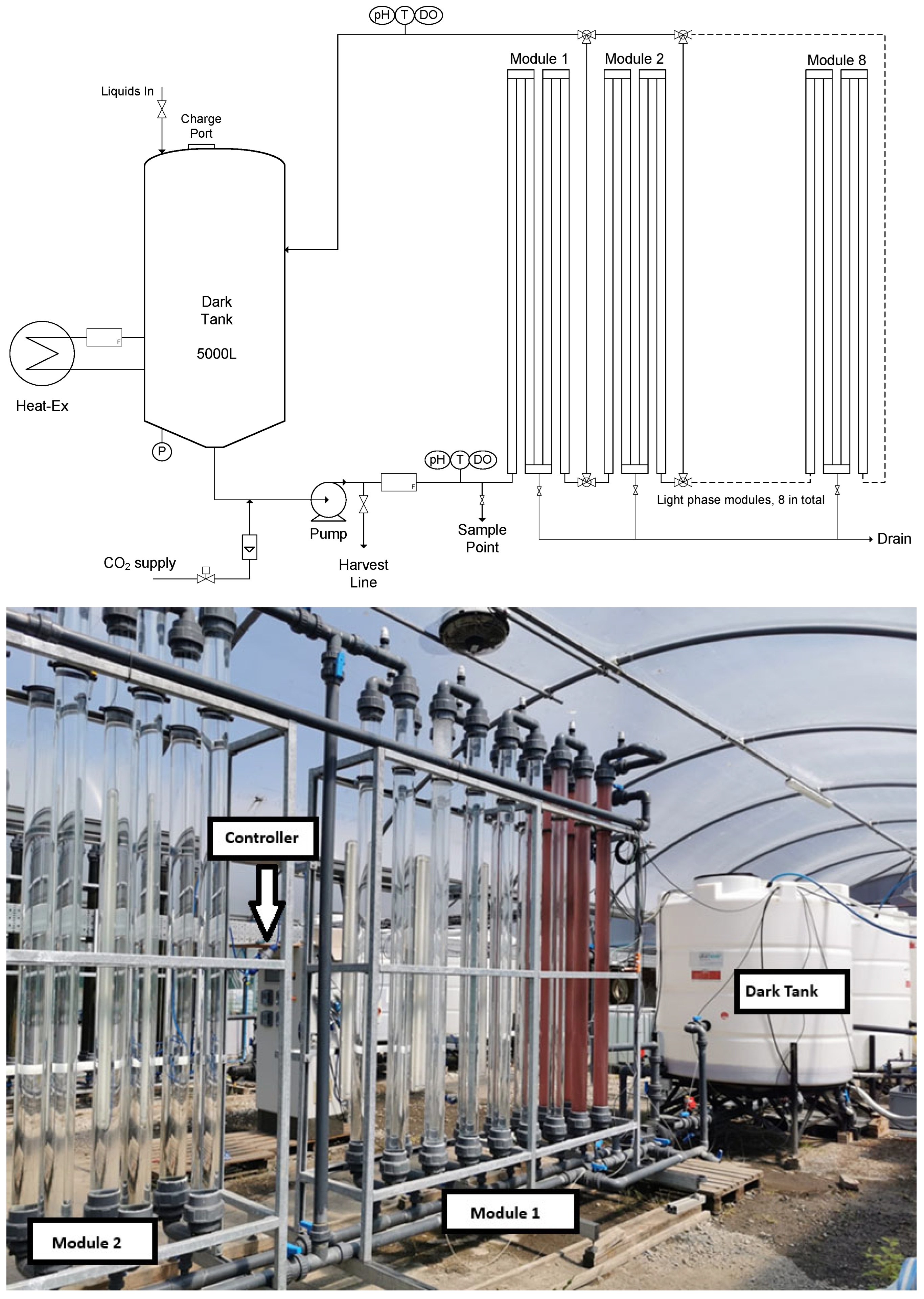
22]. The reactor consisted of two main sections, a large tank (the dark tank) and a vertical tubular section (the light phase); a basic illustration is shown in
Figure 1. The 5000 L dark tank (Model 17551545-F, Enduramaxx Limited, Baston, UK) is fitted with a top entry port that is used for charging purposes, and a DN100 base outlet is used to discharge fluids. The discharge line contains a drain on a T-section and supplies fluids to the main recirculating pump (DAB EuroSwim 300 T, 42 m
3 h
−1, head 22 m, Anglian Pumping Services, Ipswich, UK). Just upstream of the main recirculation pump is a DN25 inlet, through which CO
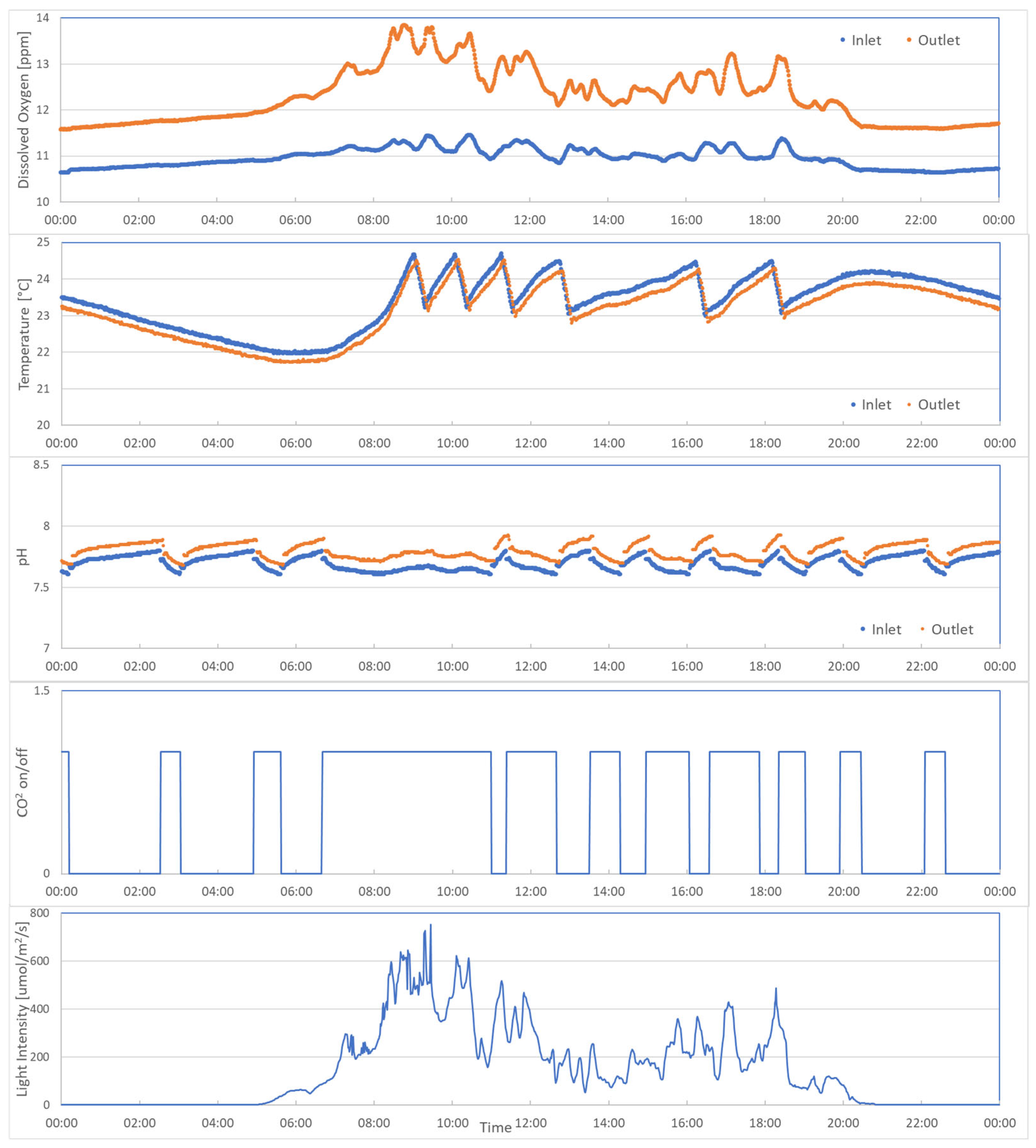
2 is injected into the system via an automated valve (Parker 221G6336-2995-481865C2, Mercateo UK Limited, London, UK). This is controlled via an open/close actuated valve linked to the pH of the system and is controlled automatically to given high and low set points. When the valve is opened, CO
2 flows into the reactor through a rotameter and is discharged through a punnet stone. Immediately downstream of the recirculation pump is a T-section with a reduced DN50 line and isolation valve. This is used to harvest materials from the reactor. Two additional ports were bored into the lower section of the tank to facilitate a separate DN50 recirculation loop (pump = SACI Optima 75, 16 m
3 h
−1, head 15.5 m, Water Garden Ltd., Portsmouth, UK) through a heat exchanger (PC30P3,AES-Proteam, Bury St. Edmunds, UK) for temperature control. This recirculation line was fitted with a flowmeter (SA200, ifm electronic Ltd., Hampton, UK). A DN100 port was bored into the side of the tank as a return line from the light phase and contains a combined pH–temperature sensor (model 8350, Hach Lange Ltd., Manchester, UK), a dissolved oxygen sensor (Intellical LDO101, Hach Lange Ltd., Manchester, UK), and a flowmeter (SM2100, ifm electronic Ltd., Hampton, UK). A DN50 port was bored into the top of the tank and was used for supply of bulk liquids to the tank, pumped in using an ancillary pump (SACI Optima 75, 16 m
3 h
−1, head 15.5 m, Water Garden Ltd., Portsmouth, UK).
A further DN50 port was bored into the top of the tank and acted as a vent line, and a pressure sensor (PI12798, ifm electronic Ltd., Hampton, UK) was bored into the vessel base to measure liquid level in the tank. Downstream of the dark tank in the main recirculation line is a further pH–temperature sensor (model 8350, Hach Lange Ltd., Manchester, UK) and dissolved oxygen sensor (Intellical LDO101, Hach Lange Ltd., UK), facilitating measurements at the inlet and outlet of the tank. In addition, immediately beyond the sensor array is a T-section reduced to DN10 with a valve to allow for small samples to be taken. Beyond the outlet senor array is the light phase. This is a series of eight modules, each containing 16 transparent DN100 × 2.5 m vertically mounted extruded acrylic tubes (Plastock, High Wycombe, UK) organised in two parallel rows and connected in series; for example, fluid flows through the bank as if it were one extended tube. The top of the tubes are connected by simple unions and bends within which is fitted an air-release float valve (Philmac X-380, AliAxis, Cannock, UK) to remove any air in the tube (required for flood filling on start-up). The base of the tubes contains a similar arrangement and includes a DN25 port bored into the connection forming a drain line with isolation valve. Each tube-pair drain was connected to a common DN50 drain line. At the base and top of the vertical tubes, the connection is made via a spin-lock system (14735, Plastic Pipe Shop Limited, Stirling, UK), such that each individual tube can removed from the unit if needed for cleaning purposes or replacement. The whole module is mounted on a custom-made galvanised steel frame (Unistrut, West Bromwich, UK). Each light-phase module was fitted with an externally mounted series of three strip lamps fitted with two incandescent tubes (Colour 865, Mumbles Electric Installation and Maintenance Limited, Swansea, UK) for use in low-level light conditions and automatic illumination at night via a hardware timer. A quantum sensor (SQ-512, Campbell Scientific Ltd., Loughborough, UK) was mounted to the reactor to measure ambient light conditions. Each of the light-phase modules contains approximately 400 L volume, with a total volume of 3200 L in the array. The eight modules were assembled in series with interconnecting pipework containing T-section and valves between some modules (one, two, and four), such that the dark tank contents could be recirculated through one, two, four, or eight of the light-phase modules as required. Thus, the maximum operating volume of the PBR was 8200 L. Two identical PBR trains were built, giving a total maximum operating capacity of 16,400 L. Note that all interconnecting pipework was standard PVC piping and all ball valves were standard double-union PVC ball valves (Plastic Pipe Shop Limited, Stirling, UK). A purpose-built automated monitoring, control, and data acquisition platform was purchased (FRE Energy Ltd., Wrexham, UK) which displays and records the activity of all instruments, pumps, and automated valves. In addition, the unit also controls the start, stop, and running level of the pumps and adjusts the automated valve positions. The system also controls the temperature, pH, and flowrate of the recirculating main loop and the flowrate of the heat transfer loop. Several alarms are also present to alert the operators of adverse conditions, for example, high levels in the dark tank.
2.2. Operation of the PBR
The general operation of the PBR is achieved by the flood fill of the whole light phase with water (towns water supply from the Vale Europe Ltd. Site, Clydach, UK) via the dark-tank bulk fluid addition line and allowing the dark tank to achieve a 400 L volume. The recirculation pumps are then started, which sets the temperature control loop into action, and fluid flows to the light-phase modules and back to the dark tank, i.e., this is a cyclical flow reactor. The PBR is then chemically sterilised by the use of sodium hypochlorite (0.5 mL L−1—24 h) and neutralisation by sodium thiosulphate (0.2 g L−1); both chemicals were obtained from Fischer Scientific UK. The system is then adjusted to operate with light-phase module 1 only and the desired operating conditions for temperature and pH are set. Nutrients and salts, as required for the given species, are added and recirculated to achieve a homogeneous solution, at around 15 min. The reactor is then inoculated with seed algae via the dark-tank addition port. The system flow is recirculated, and the growth of the algae species is monitored by sampling and analysis of dry weight. Additional nutrients are added based on periodic sampling and the expansion of the PBR operating volume. All operating parameters and conditions can be optimised to accommodate the specific physiological and metabolic requirements of different microalgal species.
The PBR may be used in batch mode, where the operation detailed previously is followed and at the end of the final growth period the content of the reactor is discharged, and the process started again. A more typical operation is via semi-continuous mode, where the PBR achieves full volume and growth with periodic harvesting from the dark tank then taking place. One-third or a half of the PBR volume is withdrawn, and the contents are replaced with fresh water, nutrients, and salt as required. In this operating mode, the PBR may be harvested periodically for several months.
2.3. Cleaning the PBR
Cleaning the PBR is achieved by draining the contents of the light-phase modules via the bottom drain lines and draining the tank via the tank drain line. Then, the reactor is flushed with warm water and bleach if needed. In cases where a significant biofilm was observed, the tubes were accessed from the top by removal of the spin-lock connection and a pressure wash hose with spray lance fitting was inserted into the tube. In cases where residues remained, the tube was removed from the system and cleaned manually using a sponge attached to a pole. When cleaning was finished, the system was once more flood-filled with towns water and sterilised. Note that due to the valve arrangement, each of the light-phase modules can be individually isolated, drained, and cleaned as required.
2.4. Nutrient Preparation for the PBR
The required nutrient quantity was determined to achieve set-point levels (species-specific) and added directly as powder via the dark tank charge port. The powder is then mixed and dissolved by the natural recirculation of the PBR. Alternatively, the required nutrient mass is mixed with a small quantity (1 L) of sterilised water and added to the PBR as a liquid via a peristaltic pump.
2.5. Algae Growth and Scale-Up
On receipt, the algae master culture is placed in a sterile incubator (Labcold RLSD01502, Lab Cold Limited, Basingstoke, UK) for 3–5 days for acclimation with temperature set to 17 °C and a light to dark ratio of 12:12 h. Sterile media composed of autoclaved reverse osmosis water, 30 g L−1 NaCl, and 40 g L−1 Cell-Hi F2P is prepared. All chemicals used are high-purity analytical-grade (Fischer Scientific, Loughborough, UK), except Cell-Hi F2P, which is a Guillard F/2 saltwater species feed (Varicon Aqua Solutions Ltd., Worcester, UK). Pre-made media with feed is stored in a fridge at 2 to 5 °C in the dark.
Sterile universal containers (30 mL, Z645354, Sigma-Aldrich, Gillingham, UK) are inoculated in a biological safety cabinet (Haemair Limited, Swansea, UK) that has previously been cleaned with 70% ethanol and exposed to UV light (Philips UV-C, Amazon, London, UK) for 30 min. An inoculation ratio of 1:10 is used, where 2 mL of species is added to 18 mL of pre-made media using sterilised disposable pipette tips. In total, 10 master culture samples are made up for storage, and 1 culture is added directly to a pre-sterilised 250 mL flask containing 180 mL of pre-made media. The 200 mL culture is then incubated at 20 °C, aerated with a 1 um filtered compressed air line, and allow to grow for 7 days prior to upscaling. The inoculum is then subsequently scaled to 1 L flasks and allowed to grow under the same conditions. This is then scaled to 2.5 L flasks, and finally to 20 L carboy containers at laboratory scale. The 1 L, 2.5 L, and 20 L containers are aerated with air containing 5% CO2. Carboy cultures are then used to inoculate the large reactor. Typically, seeding of the large reactor is conducted with only one module of the operational light-phase reactor and an equivalent volume in the dark tank, i.e., ~800 L total volume with four carboys used as inoculum. The reactor was then allowed to grow with regular checks for nutrients and dry weight. Once the desired cell density has been achieved, further light-phase modules are brought online and the dark tank topped up with the appropriate volume of pre-sterilised town water and fresh nutrient to maintain a 50:50 volume ratio between the dark tank and light phase. The total volume introduced to the reactor is increased systematically as growth occurs. Thus, module 1 is made operational, then module 2 added, modules 3 and 4 added, and modules 5–8 added. In each scale-up, the reactor volume was doubled, i.e., 800 L, 1600 L, 3200 L and 6400 L, respectively. In the case where the species was grown in saline water, the town water was fed initially to a mixing vessel and salt was added prior to its addition to the reaction system.
2.6. Algal Culture Used
The microalgae species used in this trial was Nannochloropsis gaditana (also known as Microchloropisis gaditana). The Nannochloropsis gaditana species was obtained from the Culture Collection of Algae and Protozoa (SAMS Limited, Oban, UK).
2.7. Analysis Methods
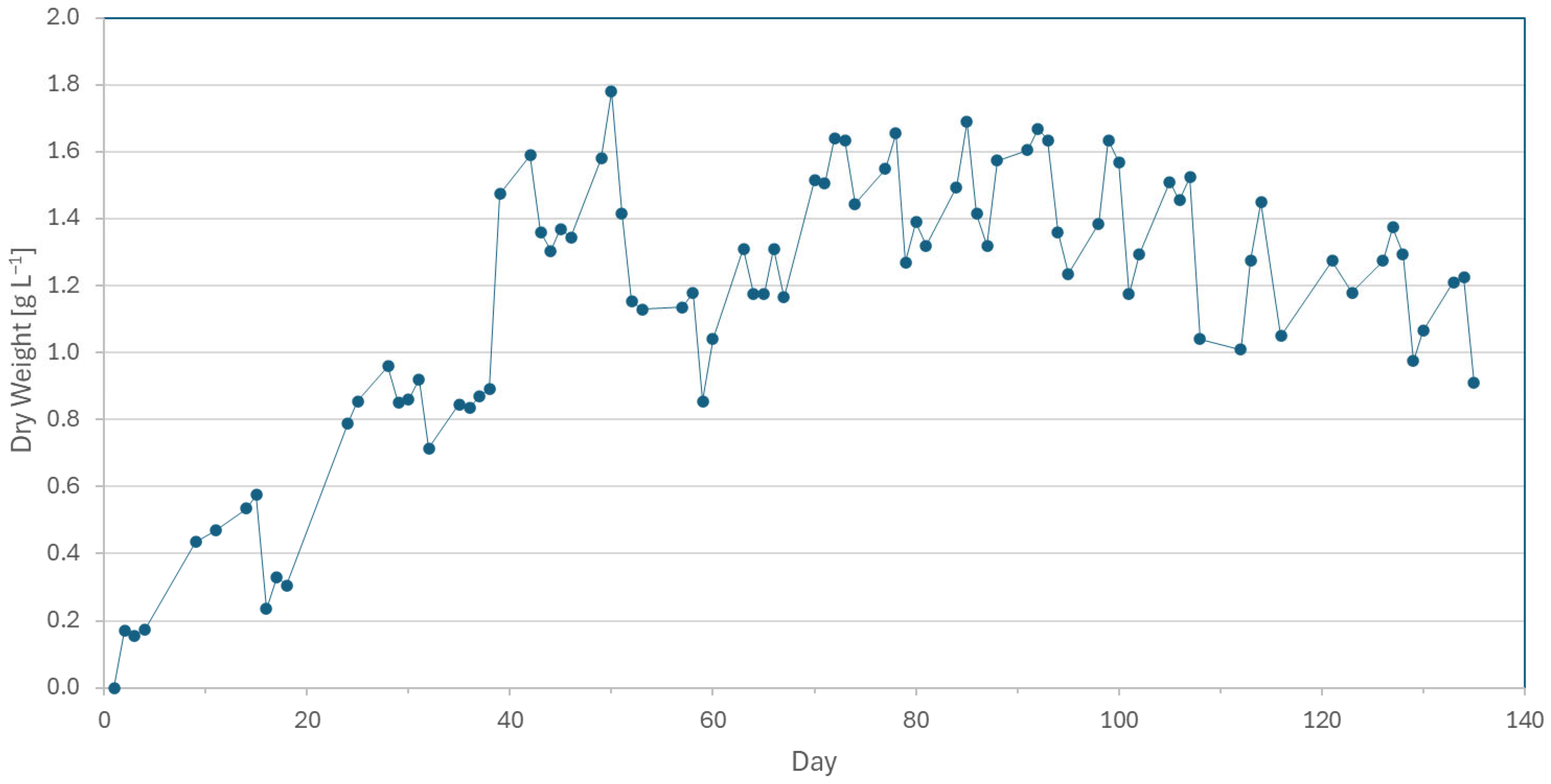
Dry weight (DW) of algae was measured periodically according to the Sorokin protocol [
23]. Whatman filters (47 mm diameter and 0.22 μm GF/C) were placed in an oven (Genlab DC125, Cheshire, UK) at 80 °C for at least 4 h or until reaching a constant mass. The mass was measured using a precision balance (SLS SR-250AZ, LAB PRO, Oxford, UK). Culture samples of 20 mL were then filtered using a Buchner funnel and washed three times with 10 mL of deionised water to remove any salts or residues. The resulting filter and cake were then placed back in the oven for 12 h, after which the final mass was recorded, and the dry weight was calculated from the difference in mass before and after filtration and the solution volume, i.e.,
The specific growth rate (
µ) of the species was calculated from the initial biomass growth data and was calculated using the following equation:
where
t is the time and
and
are the initial and final biomass concentrations, respectively.
Algal productivity (P) is described as
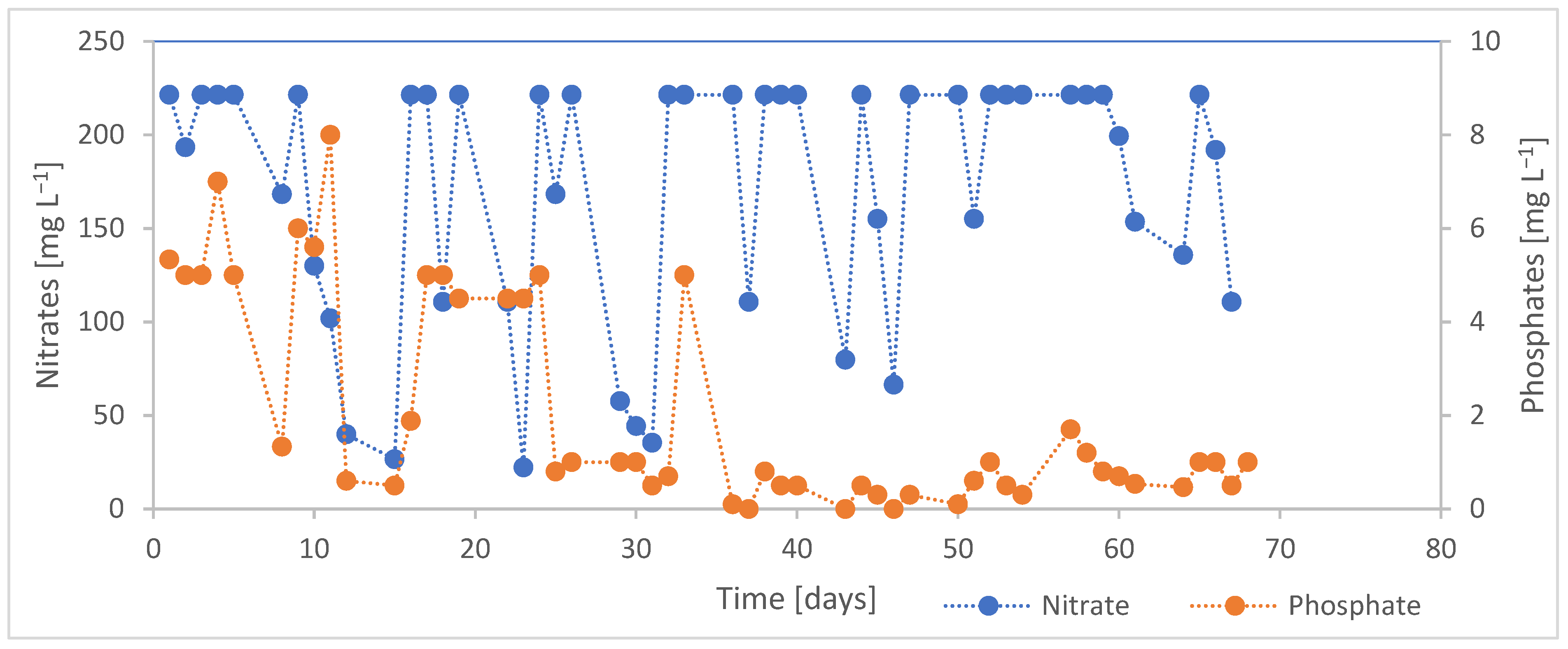
Nutrient concentrations were checked daily with the Total Nitrogen kit (LCK338, Hach, Düsseldorf, Germany) and phosphates with the MQuant® Phosphate test (HC985964, Hach, Düsseldorf, Germany). Both tests are colorimetric techniques that involved adding a known quantity of PBR fluid to a pre-made test solution. Analysis was then performed using a spectrophotometer (DR3900, Hach, Düsseldorf, Germany), and the resulting concentration of nutrient was evaluated by comparison to a standard calibration curve. Replenishment of nutrients occurred approximately every 5 days to avoid mineral macronutrient starvation and to prevent CO2 uptake.
4. Conclusions
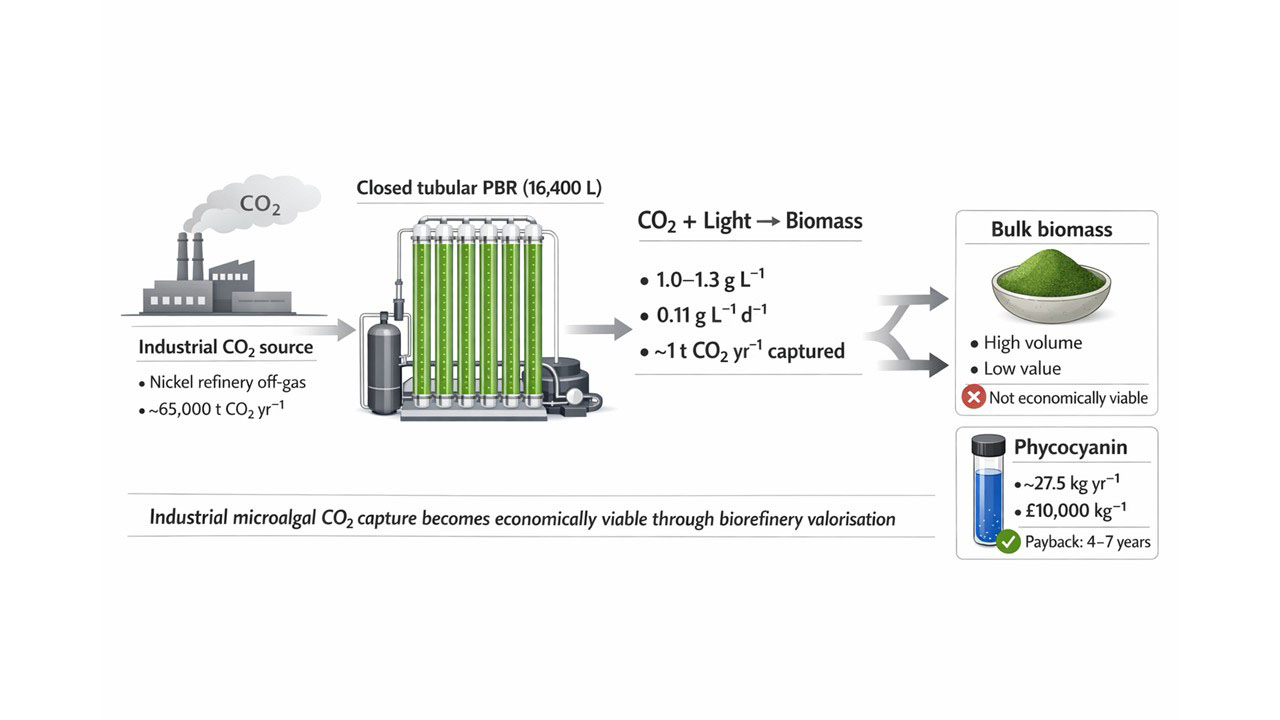
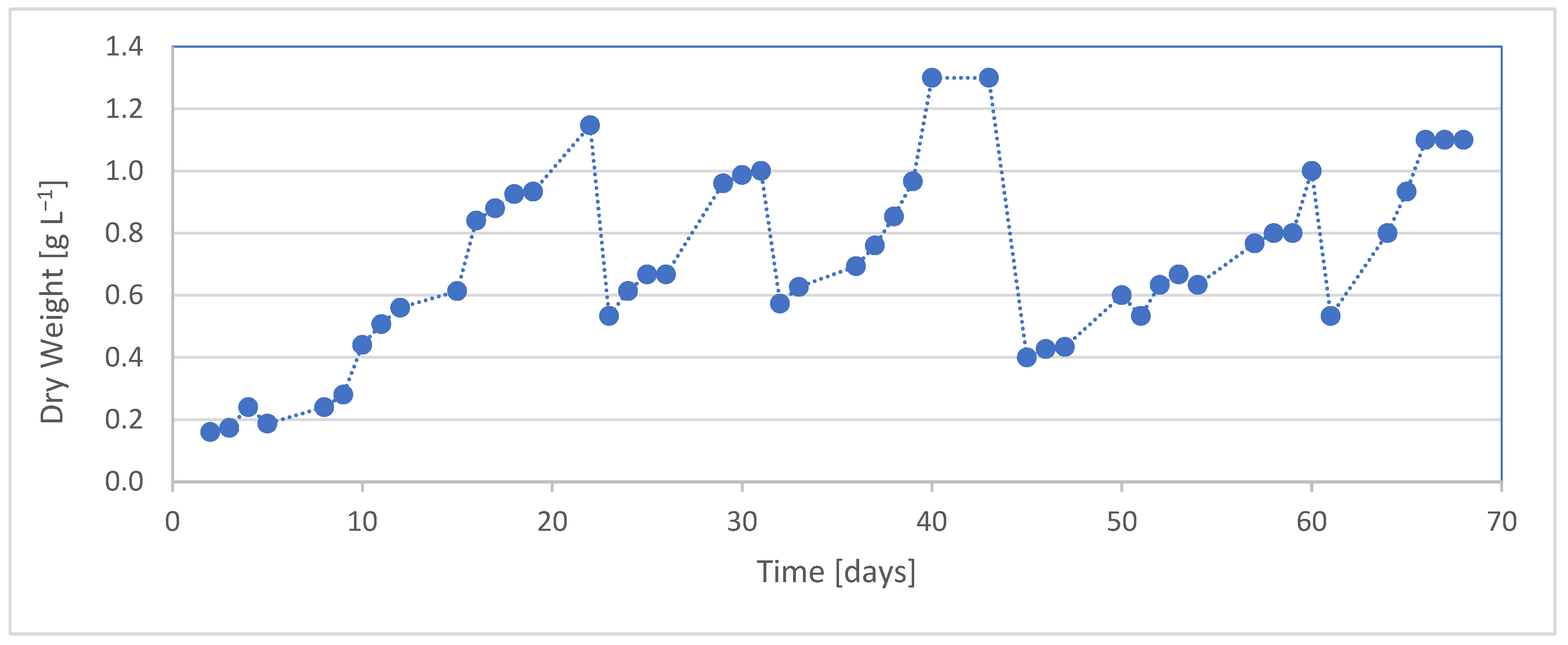
The successful cultivation of Nanochloropsis gaditana was demonstrated in a commercial-scale (16,400 L) closed vertical tube photobioreactor running on industrial point-source CO2 emissions from a nickel refinery. The production run demonstrated a phased approach to culture scale-up from laboratory cultures to the full reactor volume ensuring consistent culture conditions and vitality. In total, five growth cycles were demonstrated over a 68-day period. Effective control over the reactor parameters of temperature, pH, and dissolved oxygen were maintained. Nutrient dosing was manually achieved and set to 225 mg L−1 for nitrates and 5 mg L−1 for phosphates. The stability of the nutrient profile within the reactor was reasonably good for the first half of the study, but the second half of the study showed rapid consumption of the phosphate and could have been improved by the increased addition of phosphate to maintain a consistent reactor profile. The reactor performance showed a robust growth profile and stability over time with no lag period. The maximum concentration of algae achieved in the reactor was consistently between 1.0 and 1.3 g L−1 at the end of the growth phase, and the maximum productivity achieved was 0.11 g L−1 d−1. Based on the productivity data achieved, the annual performance of the reactor based on 300 days of operation was estimated to generate 541.2 kg of algae, while consuming approximately 1 tonne of CO2. This is a CO2 fixation rate of 0.203 g L−1 d−1, and is similar to that reported elsewhere in the literature. The PBR demonstrated robust control of key operational parameters, supporting stable and successful cultivation.
Power consumption in the reactor and associated equipment was estimated from the listed power ratings of the equipment items. The complete plant, i.e., inoculum facility, reactor, and downstream processes, were found to consume 155,650 kWh for the 300-day operation. This is the equivalent of 284.4 kWh kg algae−1. Power consumption from the largest-scale reactor (1200 L) found in the literature that reported this data was scaled to an equivalent volume and found to be comparable, with this production facility using 10% less energy. A measurement of actual power draw was made for equipment where possible, and this showed that the power rating for equipment was an overestimation, so the actual power consumption for the production facility is likely to be less than that reported here.
A basic technoeconomic assessment of the production facility was made and showed that for the production and downstream processing of algae, the capital investment in equipment was £583,905 and the annual operating costs were £98,196. The cost of biomass production was then £245 per kg algae, which is around £60 per kg more expensive than the current best sale price that could be expected. Downstream processing to form refined products from algae was considered, and phycocyanin production was used as a model compound. The analysis showed that annual production quantities would be 12.3 kg/year−1, which would generate £246,000. Several business case scenarios were considered, and all showed a positive net present value of the production facility within a relatively short timeframe of 4 to 8 years depending on extraction and recovery efficiency.
Overall, this work demonstrates the effective operation of a commercial-scale algal production facility based on a vertical tube closed photobioreactor for the remediation of CO2 from an industrial point source. Real scale production data has been generated and favourable economics have been demonstrated, which will allow business cases to be formed that will facilitate the further scale-up and realisation of algal technology.




 ,
,