Review

Benzimidazole Derivatives: A Review of Advances in Synthesis, Biological Potential, Computational Modelling, and Specialized Material Functions

1
Analytical Chemistry and Electrochemistry Lab (LR99ES15), Department of Chemistry, Faculty of Science, University of Tunis El Manar, Tunis 2092, Tunisia
2
Department of General Science, College of Basic Education, University of Anbar, Al Anbar 31001, Iraq
3
Department of Medical Laboratories Techniques, College of Health and Medical Technology, University of Al Maarif, Al Anbar 31001, Iraq
4
Department of Nursing, Al-Hadi University College, Baghdad 10071, Iraq
5
Department of Chemistry, College of Science, University of Anbar, Ramadi 31001, Iraq
6
Heet General Hospital, Al-Anbar Health Directory, Ministry of Health, Anbar 31007, Iraq
*
Authors to whom correspondence should be addressed.
Chemistry 2026, 8(1), 1; https://doi.org/10.3390/chemistry8010001 (registering DOI)
Submission received: 11 November 2025 / Revised: 10 December 2025 / Accepted: 11 December 2025 / Published: 19 December 2025

Abstract

Benzimidazole derivatives are a privileged family of heterocyclic compounds that have remarkable structural diversity and find various pharmacological and industrial applications. In this article, we report on their synthetic procedures, ranging from classic condensation methodologies to modern green chemistry methodologies (microwave-assisted methods and catalyst-free methods). The biological significance of these derivatives is discussed, and their anticancer, antimicrobial, anti-inflammatory, antioxidant, antiparasitic, antiviral, antihypertensive, antidiabetic, and neuroprotective activities are reported. This article also reviews recent industrial applications, with special reference to hydrogen storage and environmental sustainability. The latest computational techniques, such as density functional theory (DFT), molecular docking, and molecular dynamics simulation, are particularly emphasized because they can be instrumental in understanding structure–activity relationships and rational drug design. In summary, the present review describes the importance of new benzimidazole derivatives, which are considered a different class of multitarget agents in medicinal chemistry and computational drug design.

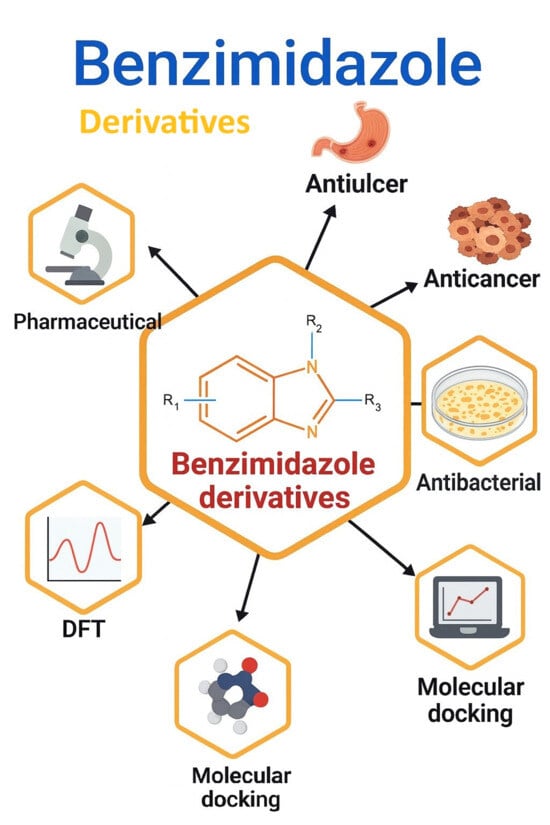
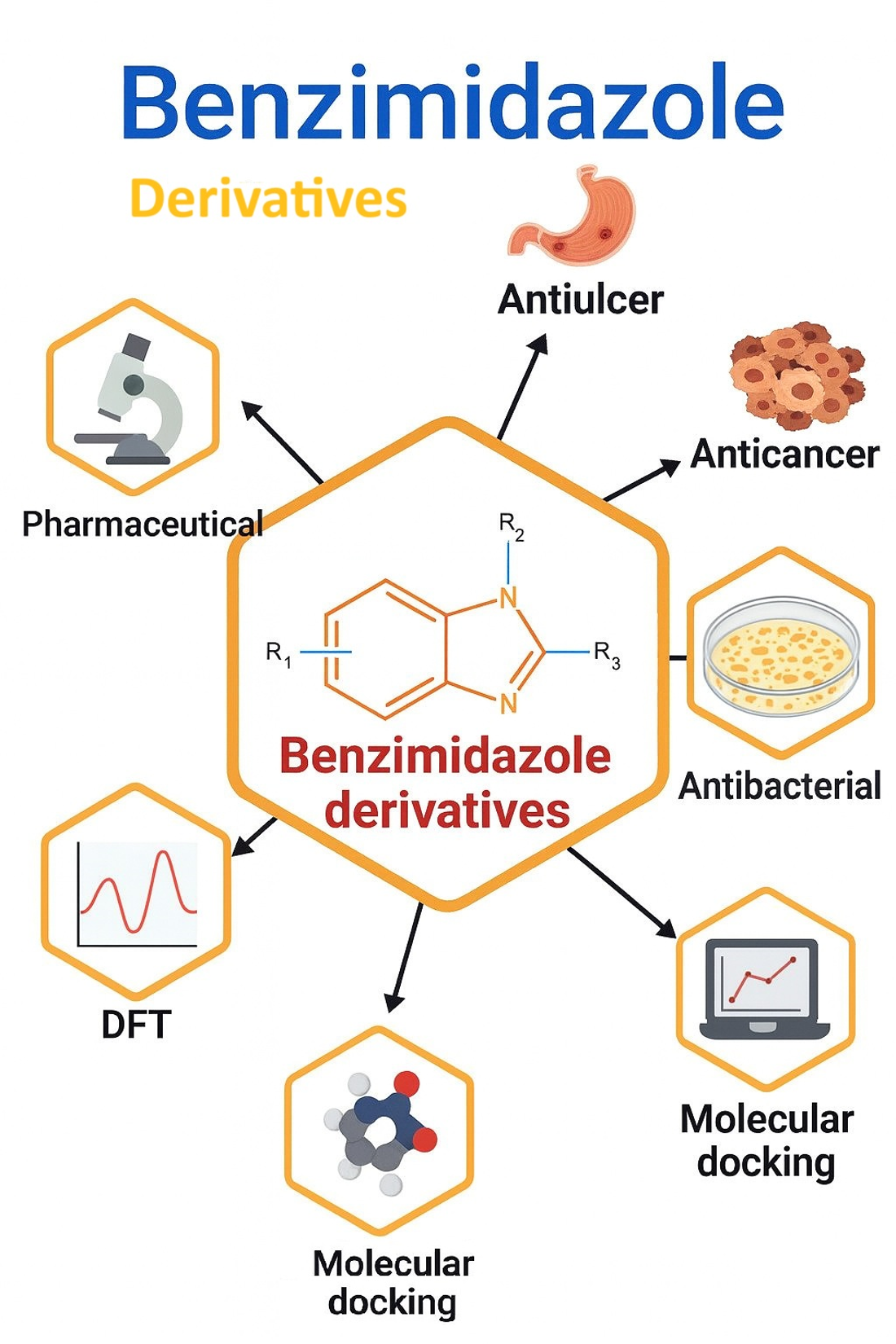
Graphical Abstract

1. Introduction

Heterocyclic compounds are of prime interest due to their role in the synthesis of various other organic compounds, especially pharmaceutical compounds, making them of immense significance for pharmacology and industrial purposes [1,2,3,4]. These compounds are of widespread interest because of the rare chemical structure they possess, i.e., containing different atoms like oxygen, nitrogen, or sulfur, which endows them with specific chemical and physical properties [5].
The potential of these high-performance materials to improve the quality of human life has been shown in previous studies; the materials could have several applications, such as in the development of medicines for curing chronic disease, in the agricultural sector as bio-pesticides, and in the chemical industry sector for constructing polymers and different organic compounds [6]. These entities exhibit the ability to engage in efficient, targeted chemical reactions, rendering them highly valuable across numerous industrial sectors (Figure 1) [5,7,8,9,10,11,12,13,14,15,16,17,18].
In recent years, great progress has been made in the development of new environmentally friendly and efficient chemical processes for the synthesis of heterocyclic compounds. These advances have been punctuated by advances in modern catalytic techniques and cleaner processes, resulting in effective drugs that fulfil both economic and environmental sustainability aspects [19].
This review highlights recent advances from the past decade in benzimidazole chemistry, focusing on these important heterocyclic compounds. It integrates up-to-date synthetic methodologies, biological evaluations, and computational insights. We examine these compounds’ properties, synthesis methods, and medical and industrial uses. Furthermore, we discuss the application of modern analytical techniques like density functional theory and molecular docking to studying their interactions, which aids in understanding their biological mechanisms and supports rational drug design. Only historically essential older references were retained where necessary.

2. Benzimidazole

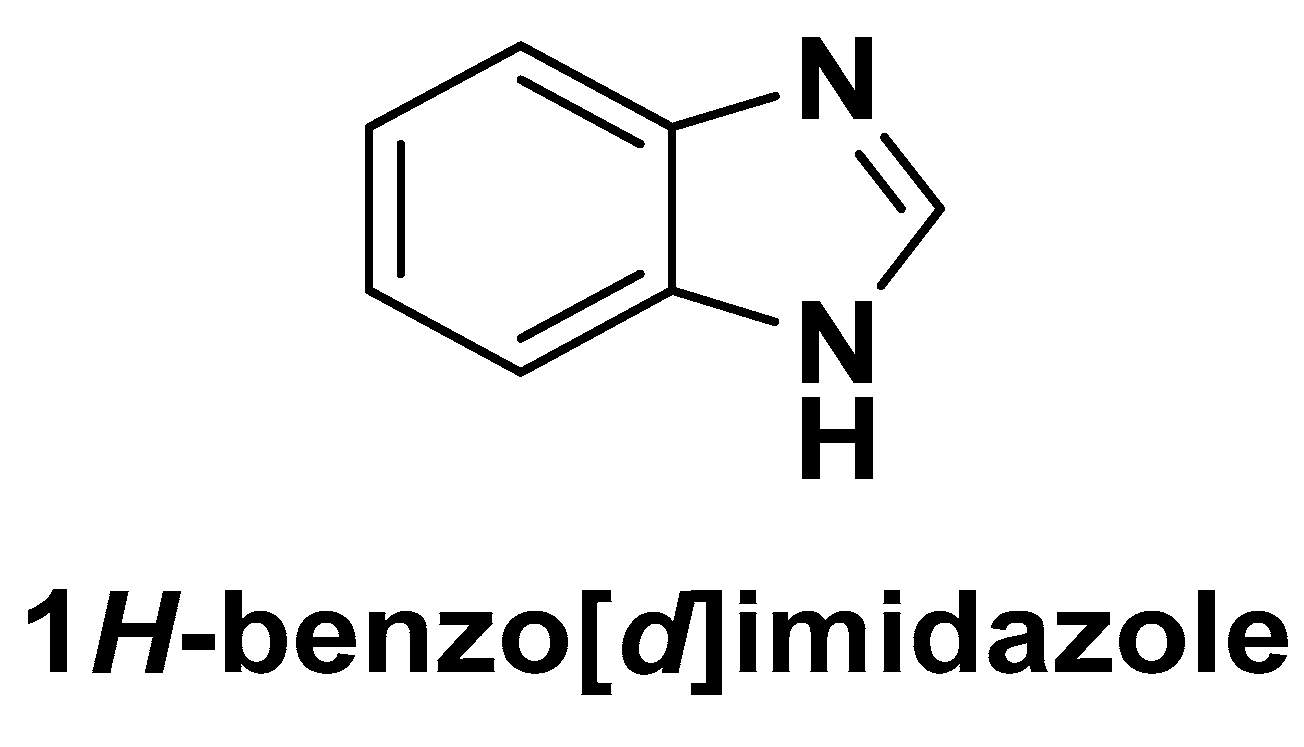
Benzimidazole is a heterocycle formed by fusing a benzene ring with an imidazole ring (Figure 2) [20].
Benzimidazole derivatives are an important class of drugs because of their characteristic chemical and biological properties. They have been the centre of interest for medicinal chemists and pharmacologists. These derivatives are the basis of a vast array of drug compounds that can be used to fight a wide variety of diseases, from things like bacterial and fungal infections to long-term and complex diseases like cancer and high blood pressure. These are structurally versatile molecules with wide-ranging biochemical activity that makes them capable of interacting efficiently with many biological systems, allowing them to serve as multitarget drugs [21].
In cancer therapy, benzimidazole derivatives have shown themselves to be a highly effective class of inhibitors of various proteins that are critical for cancer cells’ growth and spread, including, but not limited to, the epidermal growth factor receptor (EGFR) and its binding partners. These proteins are high-value targets for anticancer drugs, as they drive excessive cell proliferation. By inhibiting their function, benzimidazole analogues contribute to the inhibition of cancer cell proliferation and metastasis and may be considered potential candidates for the development of cytotoxic and efficacious agents [22].
In addition, these derivatives are shown to have potent antibacterial and antiparasitic activity by inhibiting the critical enzymes that bacteria rely on to survive and proliferate. This feature makes them useful in the treatment of microbial and bacterial infections that have become drug-resistant. Several of the derivatives have also demonstrated the ability to block crucial viral proteins needed for viruses to multiply inside a host, further justifying their use in the fight against viral diseases [23].
Benzimidazoles possess high conformational flexibility and appear capable of accommodating various biological targets. This structural versatility of bio-derived materials offers numerous opportunities for developing new pharmaceutical compounds. Advances in computational techniques, such as molecular docking and density functional theory, now facilitate detailed molecular analysis to predict chemical structures with enhanced efficacy and fewer side effects [24].
These computational methods present a new avenue for various drug designs, assisting scientists in studying the molecular interactions and electron characteristics of benzimidazole compounds, thus promoting better drug design for their numerous biological targets. These derivatives have been shown to have strong potential for interaction with many biological systems, to adapt to treatment needs, and to be an important field of scientific research and drug development, helping researchers to discover treatments for new chronic and intractable diseases [23].

3. Methods for Preparing Benzimidazole Derivatives

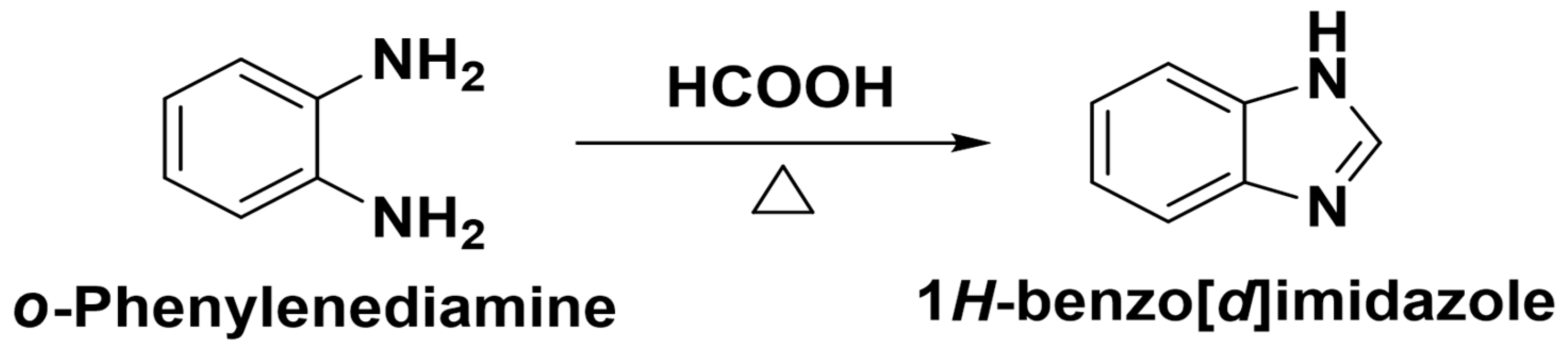
Several approaches have been reported for the synthesis of benzimidazole analogues, which have demonstrated potency towards the targeted compounds at a higher degree of purity. The most direct method is the condensation of a monomer such as o-phenylenediamine and formic acid, as demonstrated in Scheme 1 [25].
Building on this, innovative synthetic techniques have emerged that address many of the limitations associated with traditional methods, offering improved efficiency, milder reaction conditions, and greater selectivity. Such advancements have paved the way for the development of diverse benzimidazole derivatives, each tailored for specific biological activities or pharmaceutical applications. In the following subsections, we will delve into some of the most notable synthetic strategies, detailing their mechanisms and advantages, and highlighting recent advancements that have significantly streamlined the preparation of these valuable heterocycles.

3.1. Synthesis of Benzimidazole from 2-Haloanilines

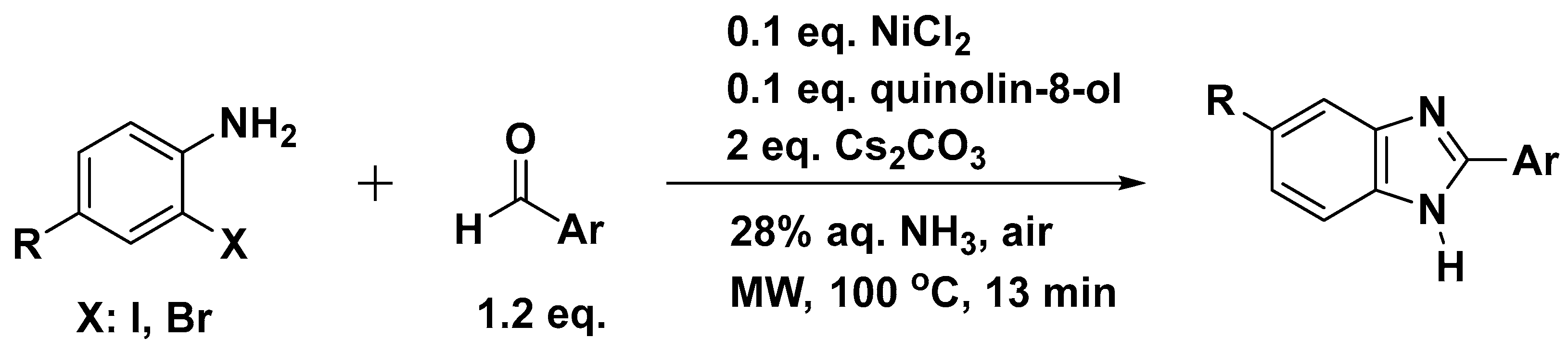
Efficient and convenient one-pot synthesis of N-substituted benzimidazoles using a nickel catalyst was developed. This approach involves the condensation of 2-haloanilines with different aldehydes with the aid of ammonia as the source of nitrogen. The reaction is catalysed by nickel, and C-N bond construction is efficiently realized, affording the corresponding benzimidazole compounds in good to high yields (Scheme 2) [26].

3.2. Synthesis of Benzimidazole from o-Phenylenediamine

3.2.1. Reaction with Aldehydes

The synthesis of benzimidazole derivatives was achieved in a one-pot manner from o-phenylenediamines and various aryl aldehydes using H2O2/HCl as catalysts under solvent-free conditions at room temperature, or in acetonitrile via single-step condensation. This process affords a range of benzimidazole products with rapid reaction kinetics, easy workup, and high yields (Scheme 3) [27].

3.2.2. Reaction with Carboxylic Acids

Some reports in the literature showed that benzimidazoles and their derivatives can be prepared by the condensation of various carboxylic acids and o-phenylenediamine or its derivatives (Scheme 4) [28].

3.3. Synthesis of Benzimidazole from Aromatic and Heteroaromatic 2-Nitroamines

A facile and efficient one-pot chemical reaction was developed to transform 2-nitroamine aromatic and heteroaromatic derivatives into 2H-benzimidazole bicyclic compounds, using formic acid, iron powder, and ammonium chloride (NH4Cl) as additives. This way of reducing the nitro group and catalysing the imidazole ring creation is highly efficient, and the reaction is typically finished within 1−2 h. The method is applicable to a variety of functional groups, and it finds many applications in chemical synthesis (Scheme 5) [29].

3.4. Synthesis of Benzimidazole from 2-Aminobenzylamines

An oxone-mediated, sequential conversion process was developed for the one-pot conversion of 2-aminobenzylamine into 2-substituted benzimidazoles at room temperature. The reaction is initiated by the condensation of 2-aminobenzylamine with aromatic, heteroaromatic, or aliphatic aldehydes, yielding a tetrahydroquinazoline intermediate, which is further transformed into benzimidazoles in excellent yields via ring distortion with oxone. This is an efficient procedure under mild conditions and tolerates several aldehydes (Scheme 6) [30].

3.5. Synthesis of Benzimidazole Using Copper (II) Oxide Catalysts

Efficient ligand-free preparation of benzimidazoles, 2-aminobenzimidazoles, 2-aminobenzothiazoles, and benzoxazoles can be performed via intramolecular ring formation of o-bromoaryl derivatives using copper (II) oxide nanoparticles as a catalyst in DMSO medium under aerobic conditions. Heterogeneous catalysts can be recovered and reused without loss of activity (Scheme 7) [31].

3.6. Green Synthesis

With the rapid development of green chemistry, designing processes that reduce the use of environmentally harmful substances has become one of the main goals of scientific research in the modern era. These principles were established in the 1990s as sustainable solutions aimed at reducing the risks associated with conventional chemical processes, which contribute to environmental pollution through toxic gases and difficult-to-treat secondary waste. Thus, the methods of manufacturing chemicals have been reconsidered to achieve a balance between industrial development and environmental protection.
In this context, a set of alternative technologies has been adopted to prepare organic compounds, which are essentially based on improving the quality of products and reducing the resulting waste, in addition to saving energy in chemical processes. Among these advanced technologies, the following have shown great effectiveness:
  • Microwave technology, which is used to accelerate chemical reactions and save time and energy;
  • Photochemical reactions, which are catalysed by light and allow for improved productivity in safer environments;
  • Reactions in aqueous medium, which is an environmentally friendly solvent, instead of toxic materials;
  • Ultrasound methods, which are used to accelerate organic reactions and make them more efficient;
  • Catalytic reactions, which rely on chemical catalysts to increase the reaction rate and reduce the need for additional materials.
The use of microwave technology is among the most efficient modern methods for preparing benzimidazole derivatives. This technique has proven highly effective in accelerating condensation reactions between ortho-phenylenediamine and aldehydes in the presence of acetic acid as a catalyst (Scheme 8) [32]. This method is characterized by its rapid reaction time and the use of non-toxic solvents, making it environmentally friendly. It also contributes to a significant increase in the reaction yield, reflecting its simultaneous economic and environmental efficiency. A catalyst-free synthetic route has also been discussed, in which o-phenylenediamine reacts with aldehydes under thermal conditions without any added catalyst, producing benzimidazole derivatives with good yields and minimal waste generation.
These modern methods for preparing organic compounds represent an important and advanced step toward achieving the goals of green chemistry, given their prominent role in improving traditional chemical processes while preserving the environment and reducing negative impacts.
Table 1 presents an overview of the synthetic approaches utilized for the preparation of benzimidazole derivatives.

4. Biological Activity of Benzimidazole Derivatives

Since their first preparation, benzimidazole derivatives have been associated with a wide range of biological applications, owing to their high efficiency proven by scientific research over the years [33,34,35,36,37,38,39,40]. The following are the most important biological applications in which benzimidazole derivatives have been used as basic components.

4.1. Anticancer Activity

Cancer is the second leading cause of death worldwide, prompting scientists to develop effective compounds to be applied as anticancer drugs. To be effective, these compounds must have high selectivity and target only cancer cells without harming healthy cells. Although many previously developed anticancer drugs have shown efficacy against cancer cells, they have caused significant damage to normal cells as well. The challenge of the toxic side effects of chemotherapy has aroused the interest of researchers to find safer and less harmful alternatives. In this context, heterocyclic compounds, including benzimidazole derivatives, have proven to be promising options because of their ability to balance high selectivity with limited side effects, making them a priority in pharmaceutical research [41].
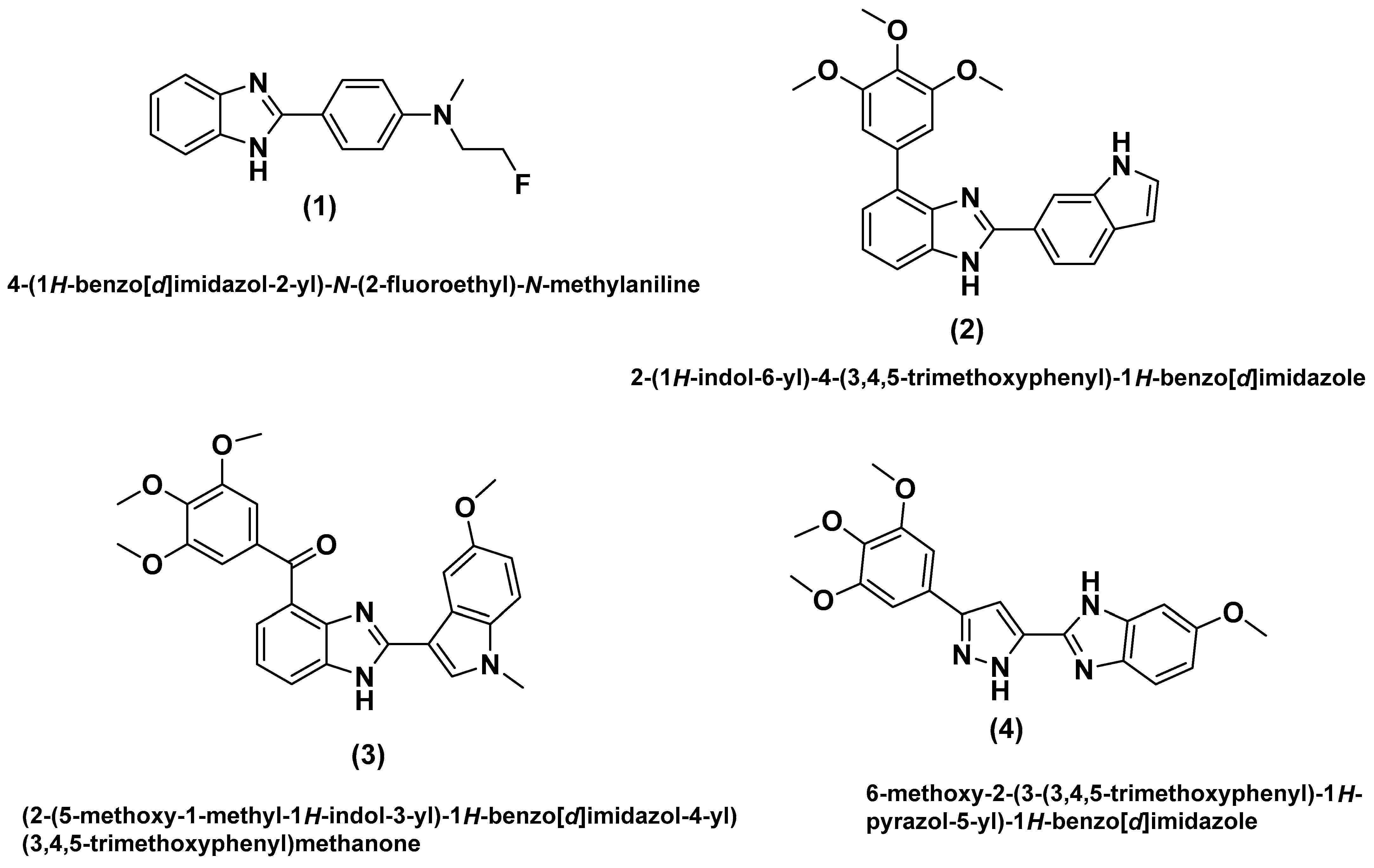
A series of hydrogenated and fluorinated alkyl derivatives was synthesized to assess their anticancer potential. Among them, compound 1 (Figure 3), designated 4-(1H-benzo[d]imidazol-2-yl)-N-(2-fluoroethyl)-N-methylaniline, exhibited outstanding anticancer activity. This enhanced performance is attributed largely to the fluoroethyl substituent, which is well recognized for improving cellular permeability, as well as its pharmacokinetic and pharmacodynamic properties.
For example, Wang et al. [42] synthesized a series of benzimidazole derivatives containing hydrogenated or fluorinated alkyl substituents to evaluate their anticancer properties. Among these, compound 1 (Figure 3), identified as 4-(1H-benzo[d]imidazol-2-yl)-N-(2-fluoroethyl)-N-methylaniline, demonstrated remarkable anticancer activity, particularly due to the presence of the fluoroethyl moiety, which is known to enhance cell permeability and pharmacodynamic behaviour. In another study, researchers introduced novel benzimidazole conjugates as inhibitors of tubulin, the main component of microtubule proteins that are partly involved in cancer cell division, to facilitate the diversification activity and formation of these compounds. For instance, Lu et al. [43] designed and prepared compound 2 (Figure 3), which showed a high ability to inhibit tubulin protein, leading to the disruption of microtubule functions and preventing cell division. The GI50 value of this compound was 30 nM, thus exhibiting good metabolic stability in human liver microsomes, enhancing its potential as an anticancer compound.
In a related context, Wang et al. [44] prepared a series of 1-benzoyl-2-(1-methylindole-3-yl)-benzimidazole derivatives, where compound 3 (Figure 3) showed prominent activity against cancer cells by inhibiting tubulin protein, with GI50 values reaching 2.4, 3.8, and 5.1 µM against the A549 (lung cancer), HepG2 (liver cancer), and MCF-7 (breast cancer) cancer cell lines, reflecting its promising efficacy in disrupting the malignant cell division cycle.
Kamal et al. [45] prepared compound 4 (Figure 3) from a group of 20 derivatives of benzimidazole linked to aryl pyrazole. This compound exhibited inhibitory activity against tubulin protein, which led to the prevention of microtubule polymerization through its association with the colchicine site. Although it lacks direct structural similarity to colchicine, it clearly inhibits cancer cell division.
Conversely, the data indicates that benzimidazole derivatives are promising anticancer agents because of their high effectiveness and targeted action. This section’s anticancer research clearly outlines structure–activity relationships (SARs). Substituents at the 2-position and the addition of bulky aromatic or electron-withdrawing groups consistently improve tubulin inhibition and cytotoxic strength. Molecules that bind at the colchicine site show better activity, suggesting that benzimidazole scaffolds can effectively mimic or interfere with microtubule dynamics, even with limited structural similarity to colchicine. These results collectively position benzimidazoles as promising anticancer candidates with customizable pharmacological profiles, making them suitable for further drug development. Notably, there was considerable variation in cytotoxic responses across different cell lines (see Table 2).

4.2. Anti-Inflammatory Activity

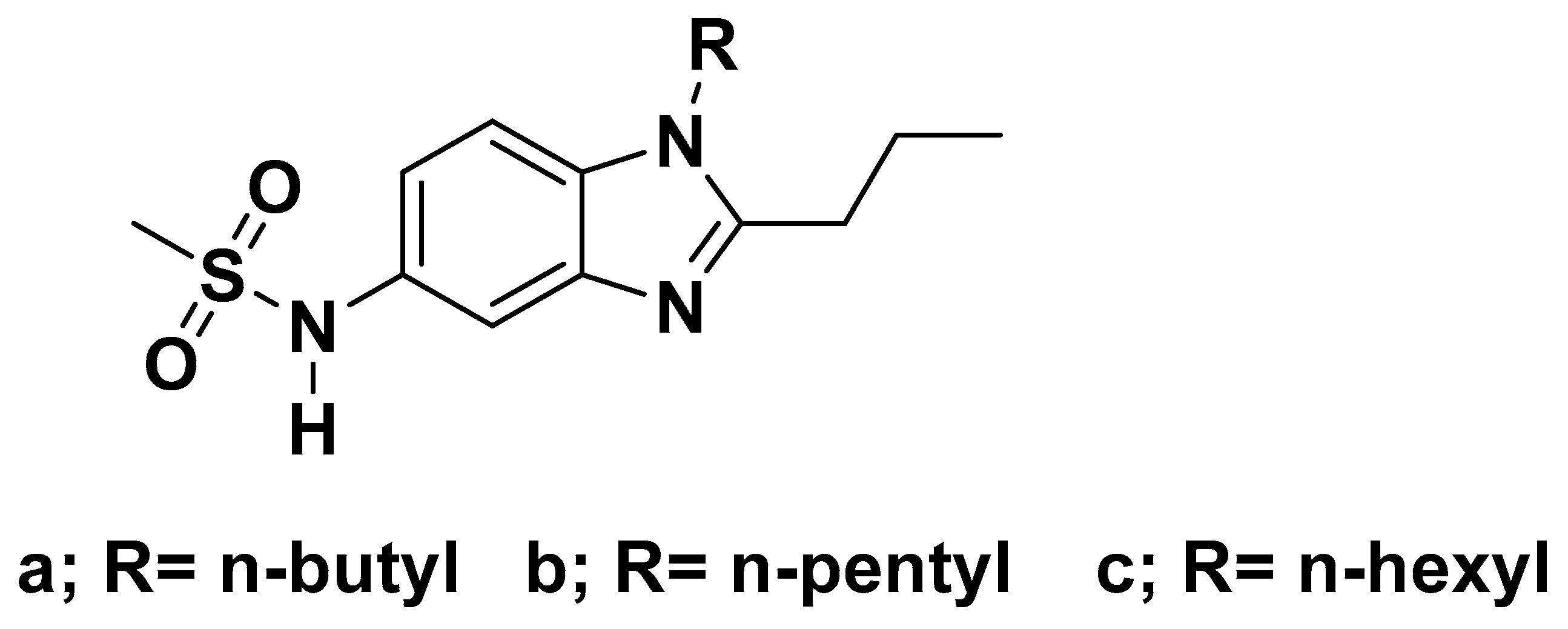
The term “anti-inflammatory” refers to the properties of substances that reduce the effects of inflammation in the body. Many analgesics not only relieve pain but also have anti-inflammatory effects, as these drugs contribute to reducing inflammation and thus eliminating pain. Benzimidazoles are among the most preferred pharmaceutical substances for the design of analgesic and anti-inflammatory drugs that target approved medical targets for the treatment of pain and tissue inflammation [46]. In a study by Sharma et al. [47], a set of prepared compounds was tested using a carrageenan-induced rat paw oedema model. The tested anti-inflammatory agents included 5-methanesulfonamidobenzimidazole, and rofecoxib and indomethacin were used as reference drugs for comparison. Derivatives 5ac (Figure 4) exhibited the highest inhibition rates (92.73%, 95.64%, and 97.62%, respectively) at the tested doses, highlighting the effective anti-inflammatory role of benzimidazole-based compounds.
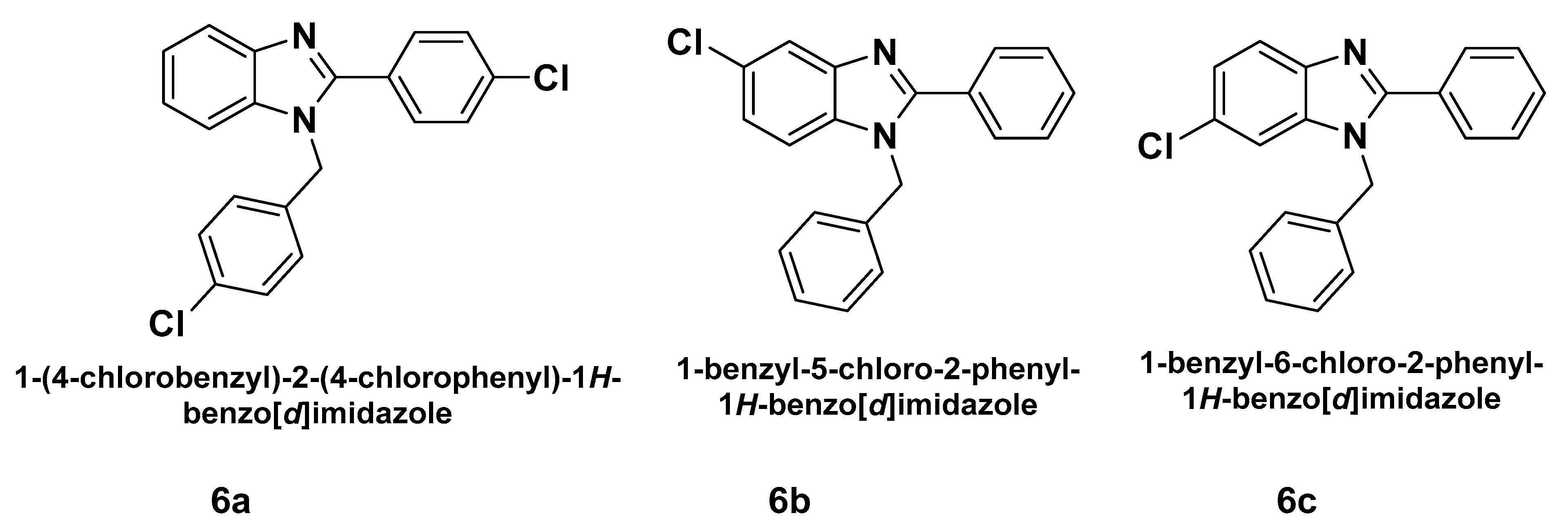
In another study, Saha et al. [48] tested the anti-inflammatory effects of substituted benzimidazole derivatives on carrageenan-induced rat paw oedema. Derivatives 6ac (Figure 5) exhibited potent anti-inflammatory activity at 100 mg/kg body weight, demonstrating inhibition of claw oedema (81.75%, 79.09%, and 86.69%, respectively) similar to that of the standard drug acesulfamethoxazole (87.83% inhibition).
Taken together, the anti-inflammatory evaluations show that structural modifications on the benzimidazole core, particularly sulfonamide and substituted aromatic groups, significantly improve the inhibition of oedema and inflammatory mediators. The comparable or superior activity of several derivatives relative to standard drugs such as indomethacin suggests a strong correlation between electron-donating substituents and enhanced anti-inflammatory potency. These SAR observations provide valuable guidance for designing new benzimidazole-based agents with improved selectivity and reduced side effects.

4.3. Antioxidant Activity

Antioxidants are molecules that inhibit or neutralize free radicals, thereby protecting cells from oxidative damage. Aerobic organisms generate free radicals as a byproduct of normal metabolism, but if too many of these reactive molecules accumulate, they can harm cellular components. Oxidative stress occurs when antioxidants fall short, damaging proteins, lipids, and DNA. This type of damage can lead to genetic changes and has connections to a range of chronic illnesses, including cancer, diabetes, diseases affecting the nervous system, and heart conditions [49]. Therefore, it has become necessary to use antioxidants to eliminate these free radicals before they cause harm to the body. Antioxidants can be obtained from natural sources, such as fruits rich in vitamins A, C, and E, or synthesized from organic compounds [50]. Benzimidazole derivatives are considered effective compounds in this field because the two fused aromatic rings allow free radicals to interact with the electrons in the aromatic rings, thereby reducing their effect or eliminating them [51,52].
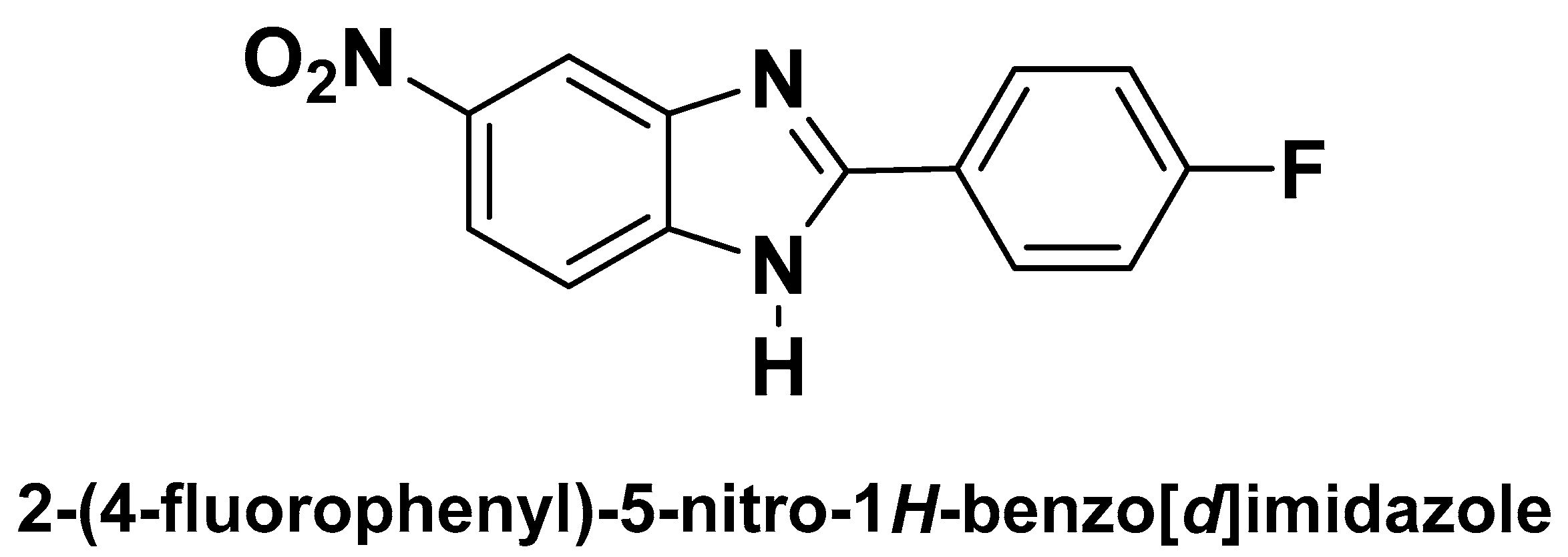
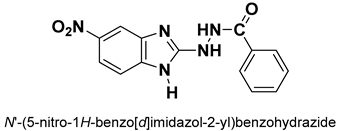
In a study conducted by Archie et al. [53], the antioxidant activity of some prepared benzimidazole derivatives was evaluated. All the derivatives showed good antioxidant activity, with IC50 values ranging from 3.17 to 7.59 μg/mL, whereas the value for butylated hydroxytoluene (BHT) was approximately 18.42 μg/mL. Compound 7 (Figure 6) was the most effective in the study, with an IC50 value of 3.17 μg/mL.
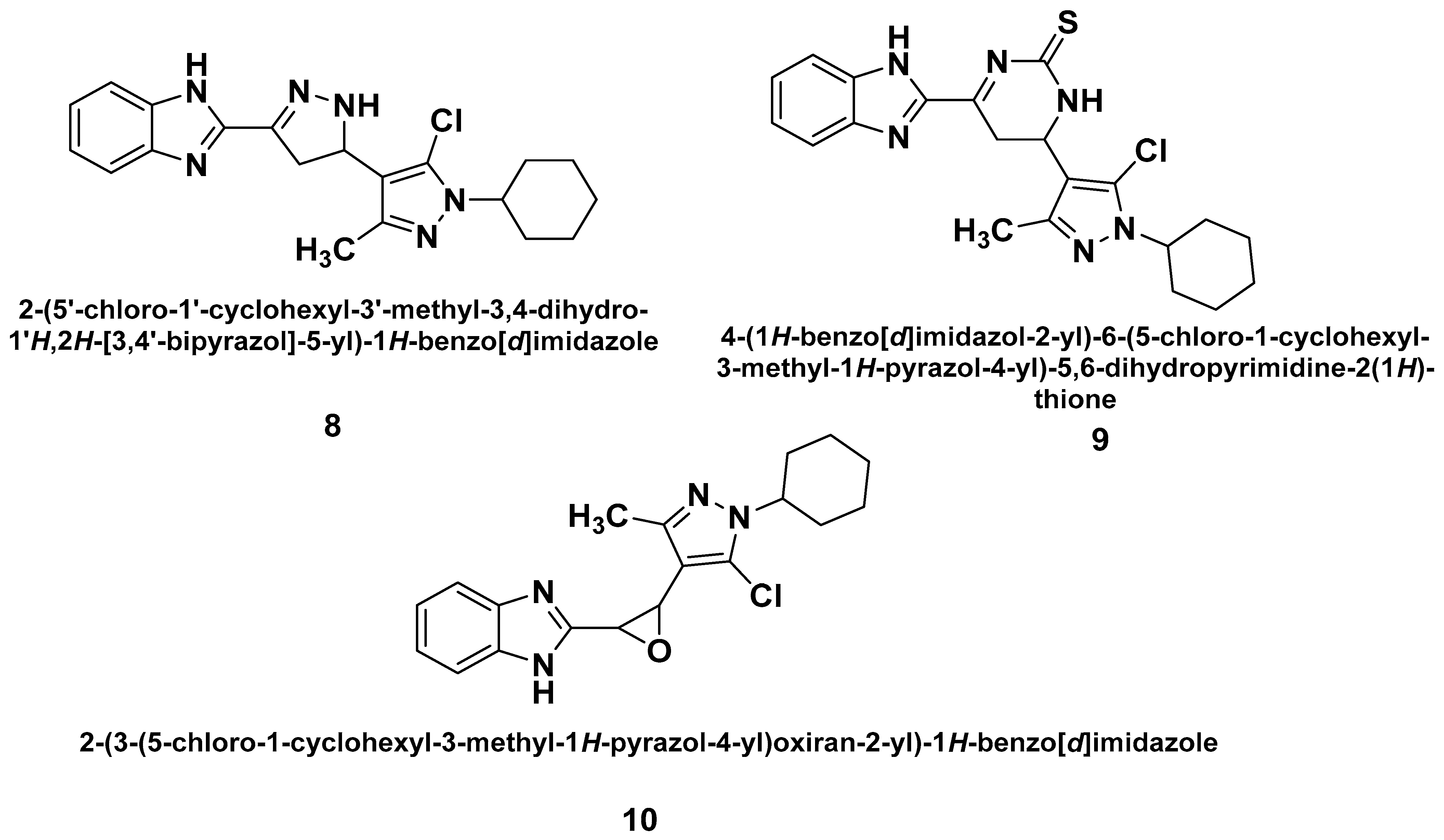
In another study conducted by Abd et al. [54], benzimidazole derivatives were prepared using chalcone, oxirane, pyrimidines, oxazoline, and pyrazoline, and the antioxidant activity of these compounds was evaluated using the DPPH method. The results showed that compounds 8 and 9 exhibited antioxidant activity comparable to that of ascorbic acid when tested at a concentration of 100 μM. The study also showed that the presence of the pyrazoline ring system in compound 8 was not responsible for the antioxidant activity; rather, the pyrimidine ring in compound 9 and the epoxide ring in compound 10 were the main contributors to this activity (Figure 7). The antioxidant performance of benzimidazole derivatives highlights the crucial influence of heterocyclic substituents on radical-scavenging efficiency. Compounds incorporating pyrimidine, epoxide, or strongly conjugated aromatic systems displayed markedly lower IC50 values, indicating improved electron-transfer or hydrogen-donation capacities. These trends confirm that both the electronic nature and structural orientation of substituents are key determinants of antioxidant potency, offering a useful basis for the rational development of more effective antioxidant agents.

4.4. Antimicrobial Activity

Antimicrobials are among the most important compounds used to combat harmful microorganisms, as they can eliminate them or inhibit their growth. Antimicrobial drugs are divided according to the type of targeted organisms. They can also be classified according to their mechanism of action; compounds that eliminate microorganisms are known as “biocides,” while those that inhibit their growth are known as “bioinhibitors” [55,56]. Benzimidazole compounds inhibit protein synthesis in microorganisms because of their chemical structure, which is similar to that of purines. Benzimidazole derivatives substituted at the second position usually exhibit stronger biological activity [57].
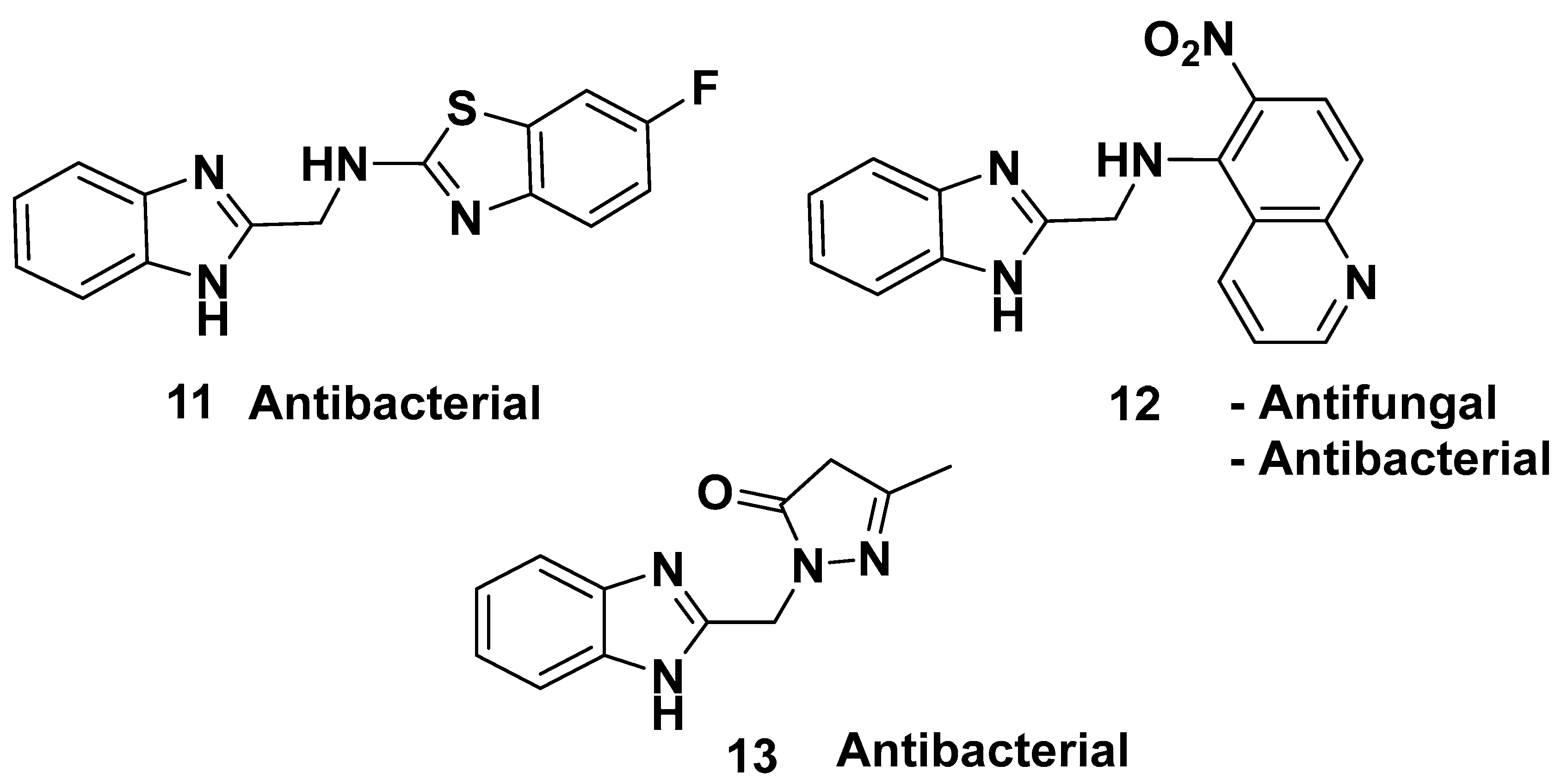
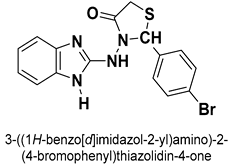
El-Gohary et al. [58] studied the activity of new benzimidazole derivatives against several microorganisms, including Staphylococcus aureus, Bacillus cereus, Escherichia coli, Candida albicans, and Aspergillus fumigatus. Compounds 11 and 12 (Figure 8) exhibited remarkable activity against Staphylococcus aureus, with MIC values of 0.524 and 0.684 μg/mL, respectively, whereas compound 13 demonstrated good activity against Bacillus cereus, with an MIC value of 0.489 μg/mL. In addition, compound 12 showed promising activity against Aspergillus fumigatus, with an MIC value of 1.37 μg/mL.
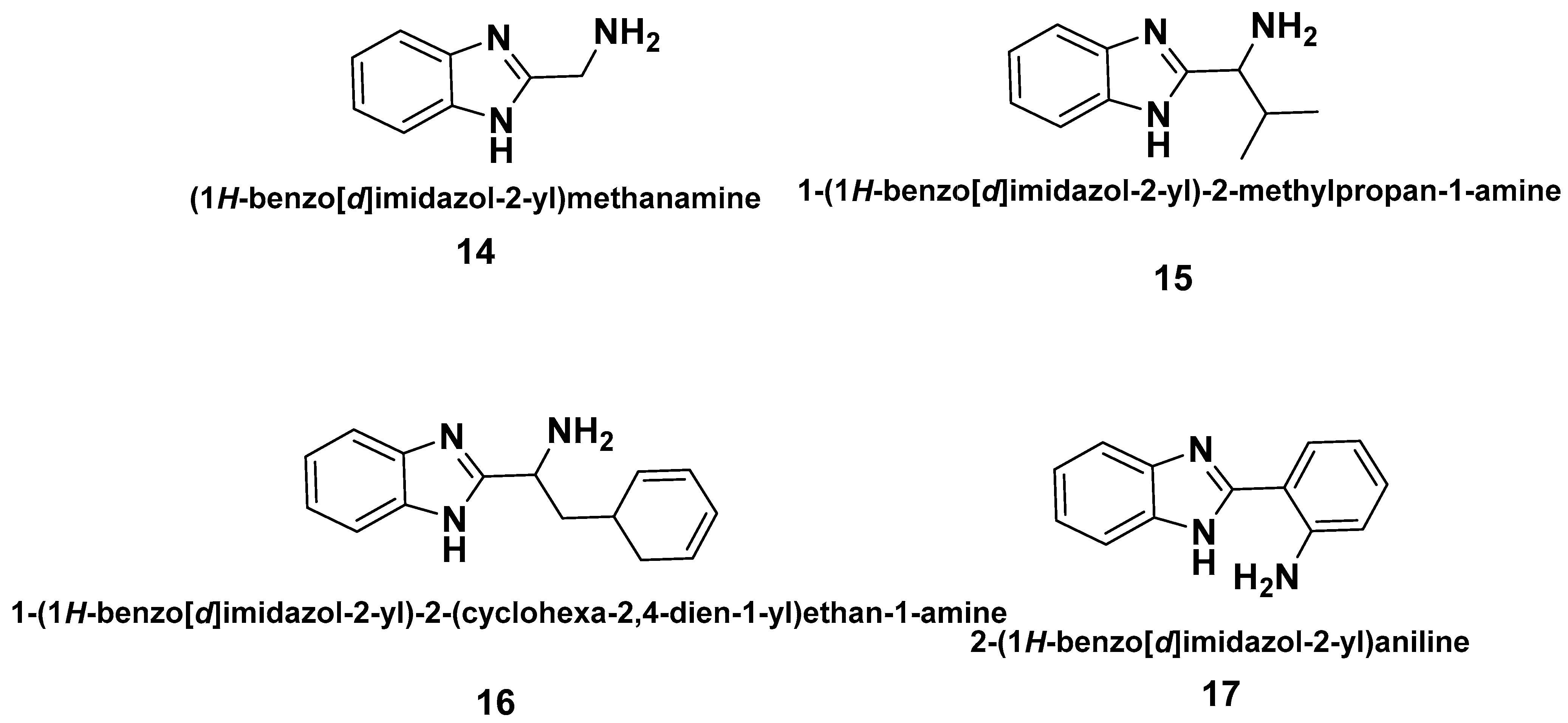
In another study by Ajani et al. [59], the antimicrobial activity of some benzimidazole derivatives substituted at the second position was evaluated. Gram-positive bacteria (P. vulgaris, S. faecalis, S. aureus) and Gram-negative bacteria (Pseudomonas aeruginosa, E. coli, K. pneumoniae) strains were used to evaluate the activity using the inhibition zone measurement system. Compounds 1417 (Figure 9) exhibited higher activity than the standard antibiotic gentamicin. Compound 17 was the most effective against Klebsiella pneumoniae, with an inhibition zone diameter of 42 ± 0.10 mm.
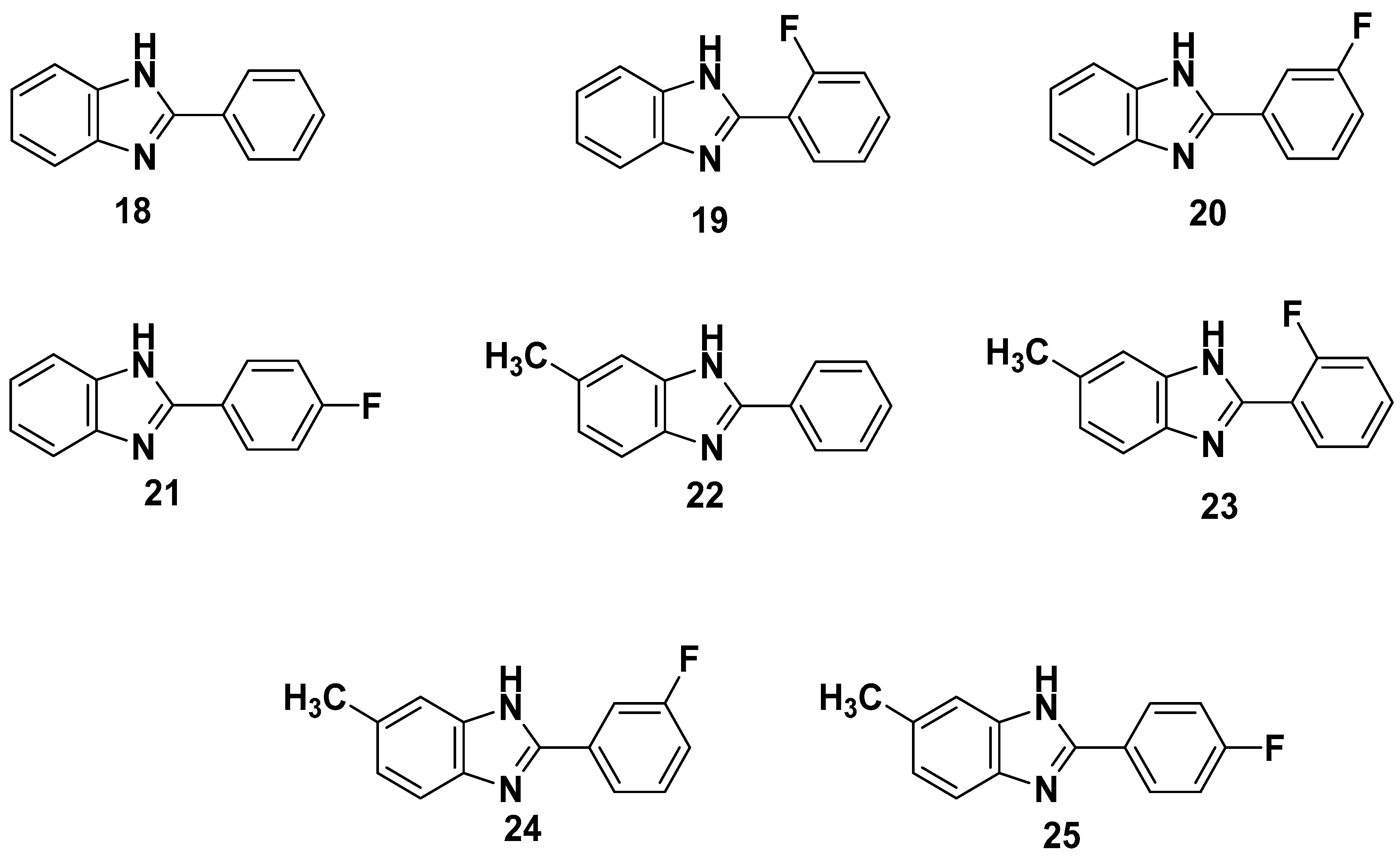
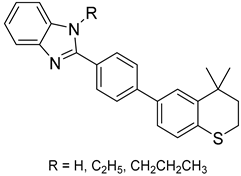
Jasim et al. [60] studied a series of benzimidazole compounds (1825, Figure 10) containing a fluorobenzene group. Their results showed that fluorinated compounds 1921 and 2325 possessed better antibacterial and antifungal properties than the original unsubstituted compounds 18 and 22. Compound 24, which contained a fluorine atom at the meta position on the lateral phenyl ring, exhibited strong activity against Gram-negative bacteria, with an MIC value of 31.25 μg/mL. In addition, compounds 20 and 24 exhibited remarkable activity against B. subtilis, with an MIC value of 7.81 μg/mL. The structure–activity relationship (SAR) analysis revealed that the presence of a methyl group at the fifth position in benzimidazoles enhanced their antifungal activity, particularly against C. parapsilosis. The remarkable activity of compound 24 suggests its potential as a basis for developing new antimicrobial drugs.
Collectively, the antimicrobial findings demonstrate that substitution at the 2-position, fluorination of the aromatic ring, and the introduction of methyl groups significantly enhance antibacterial and antifungal activity [61]. Fluorinated derivatives in particular showed broad-spectrum potency, likely due to increased lipophilicity and improved membrane penetration. The observed SAR trends confirm that fine-tuning the electronic and steric properties of benzimidazole scaffolds can yield derivatives with superior antimicrobial profiles, supporting their continued exploration as promising anti-infective agents. The antimicrobial activity of the synthesized benzimidazole derivatives against the tested bacterial strains is presented in Table 3.

4.5. Other Biological Applications

In addition to their medical uses, which were discussed previously, benzimidazole derivatives have demonstrated a remarkable diversity of biological activities. Studies have proven their effectiveness in combating a range of diseases, reflecting their growing importance in medicine and therapy. For example, many of these compounds have been shown to have a blood pressure-lowering effect [62,63,64,65,66], making them promising options for treating cardiovascular disorders, one of the most prominent global health challenges.
Other studies have shown that benzimidazole derivatives possess potent activity against a range of viruses [67,68,69,70], which qualifies them to contribute to the development of new treatments for viral infections. Numerous of these derivatives have also been observed to possess an inhibitory capacity against parasitic worms [71,72,73,74,75], enhancing their role in treating parasitic diseases that pose a threat to public health in many regions of the world. On the other hand, these derivatives have emerged as effective antidiabetics [76,77,78,79,80]. Previous studies have shown their ability to regulate blood sugar levels, which increases their value as a therapeutic option for patients with type 2 diabetes. Some of these derivatives have also been used as painkillers [81,82,83,84], making them alternatives to conventional treatments for pain relief, particularly in cases of chronic pain. These benefits are not limited to this. Benzimidazoles have demonstrated anticonvulsant properties [85,86], opening new horizons for treating epilepsy and other neurological disorders. A role for these derivatives in treating psychiatric disorders has also emerged. Some research has shown that they have antidepressant effects [87,88,89,90,91,92], supporting their potential use in the development of new, more effective psychiatric medications.
In other studies, some of these derivatives have demonstrated efficacy in combating Alzheimer’s disease [93,94,95], a promising and important step in combating the neurological deterioration associated with this disease, which affects millions worldwide. They have also been shown to have antiulcer properties [96,97,98,99], making them suitable for treating gastric and intestinal ulcers, thus improving patients’ quality of life.
Regarding infectious diseases, some studies have shown that these derivatives exhibit remarkable activity against tuberculosis [100,101,102,103,104,105,106] and human immunodeficiency virus (HIV) [107,108,109,110,111,112,113], opening new avenues for their use in the design of effective drugs against these deadly diseases.
The remarkable therapeutic potential of benzimidazole derivatives in addressing both infectious and chronic diseases stems from their diverse pharmacological properties. As summarized in Table 4, these compounds exhibit a broad spectrum of biological activities and clinical applications, underscoring their importance as promising candidates for future drug development.

5. Density Functional Theory and Molecular Docking

Due to the growing demand for effective drug leads for the treatment of persistent and chronic diseases, benzimidazole and its analogues have emerged as some of the most important scaffolds among diverse multifunctional chemical classes. Their unique capacity to interact with many biological targets predestines them as an attractive target for research in drug design.
Theoretical models, especially the molecular docking method, as well as the density functional theory approach, further solve the properties and binding mechanisms of these derivatives, thus providing us with a better computational method for design and development [119]. These tools are necessary to obtain a complete perspective of the interactions of these derivatives with multiple biological receptors.
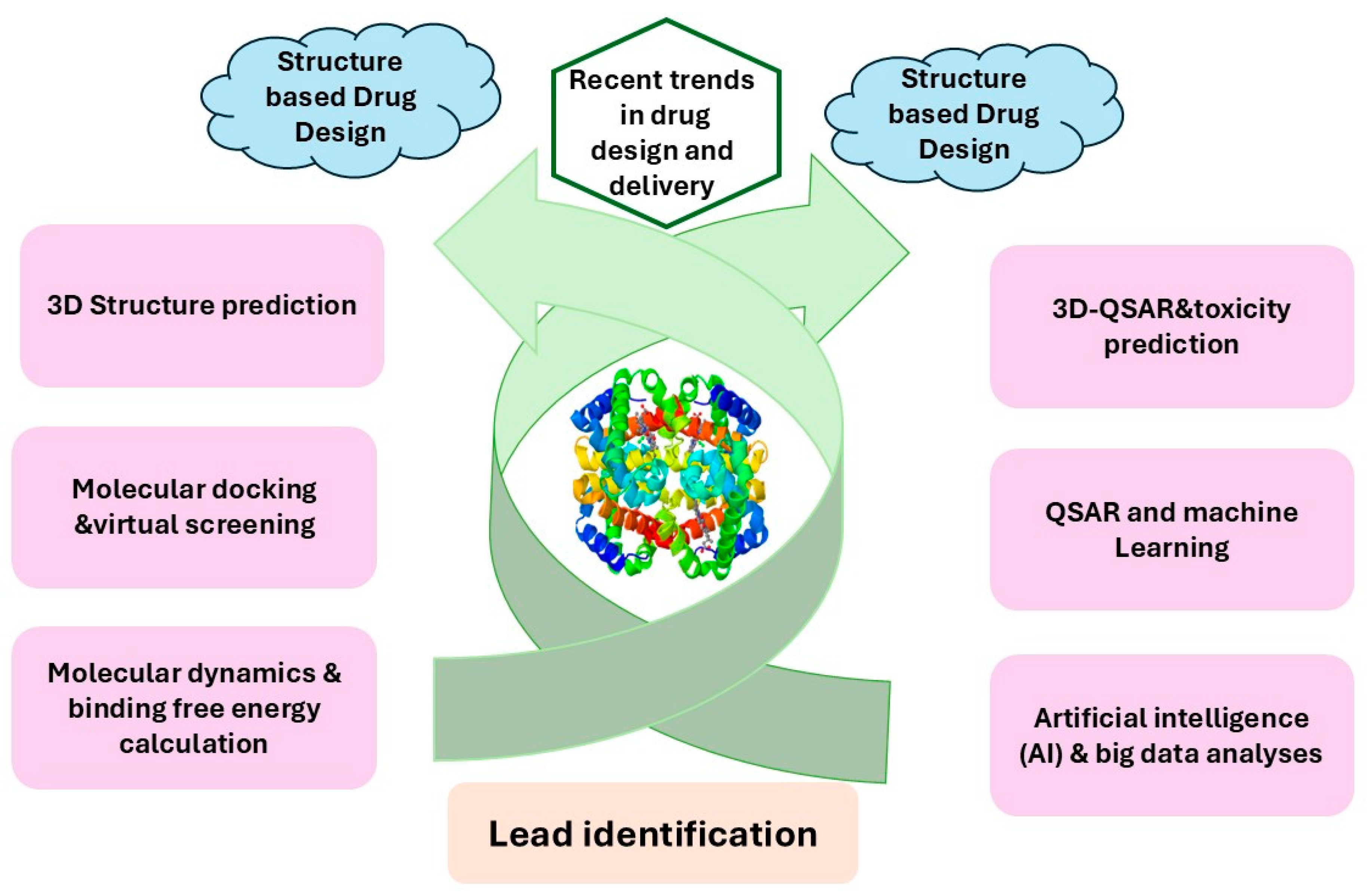
Figure 11 also captures recent developments in structure-based drug design, such as 3D modelling, virtual screening, and predicting toxicity, aimed at making the drug discovery process more efficient. Furthermore, the rapid progress in artificial intelligence and big data analysis makes a significant contribution to the acceleration of these trials, including the identification of potential derivatives and the in-depth evaluation of their efficacy and safety. Such integrated approaches will augment our ability to design new highly active drugs and open wide perspectives for the treatment of refractory and chronic diseases, which are still causing many troubles in modern medicine.

5.1. DFT for the Study of Benzimidazole Derivatives

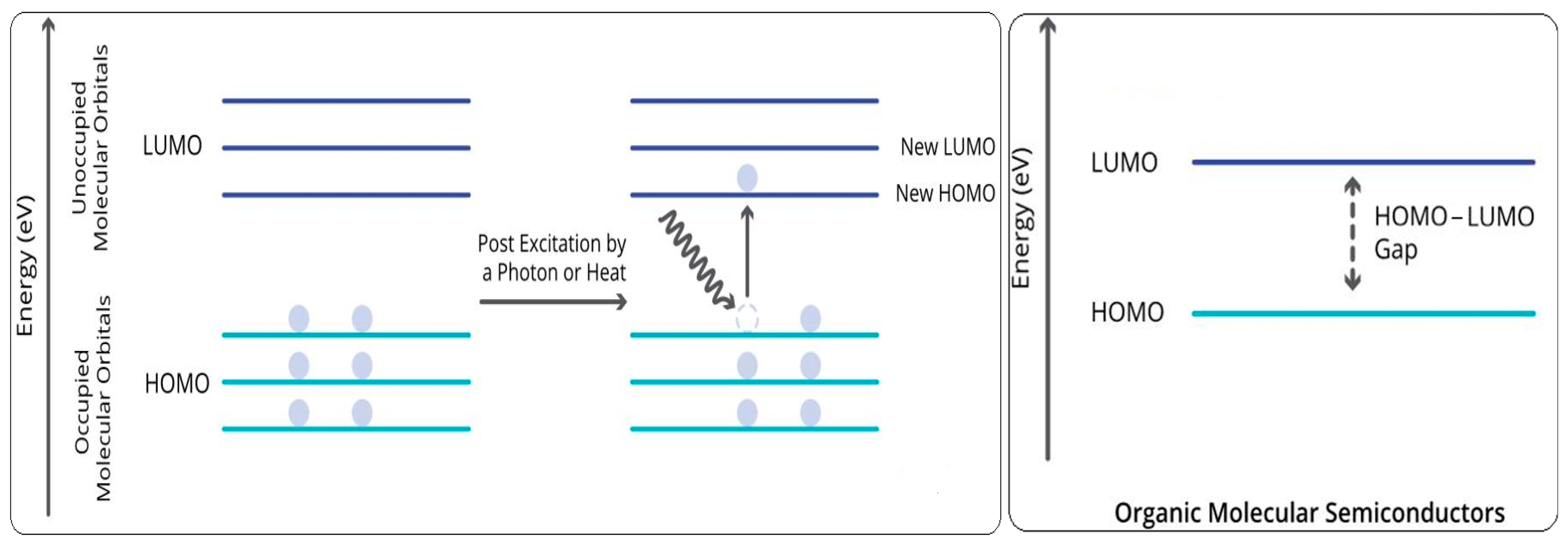
The use of density and potential functional theory to determine the interaction mechanism between benzimidazole derivatives and the target enzyme or protein is obviously interesting. Theoretical computations have found that certain derivatives with different electronic configurations can have a better ability to form strong bonds with the active site of the enzyme and, as a result, may help in selecting the compounds that best interact with the biological targets, enhancing their pharmacological effects. Additionally, these calculations have been applied to determine the absorption and emission spectra of these derivatives and to analyse how different types of radiation influence their photophysical behaviour (Figure 12). These studies also offer valuable information concerning the optical properties of the compounds, which might support the design of more selective drugs [120].

5.2. Molecular Docking Techniques

Molecular docking is an essential tool for investigating the interaction mechanism between small molecules (ligands) and target proteins. This method estimates, by simulating the binding energy between the molecule and the protein active site [121], how a molecule binds to a protein active site [122].

Applications of Molecular Docking in Benzimidazole Derivatives

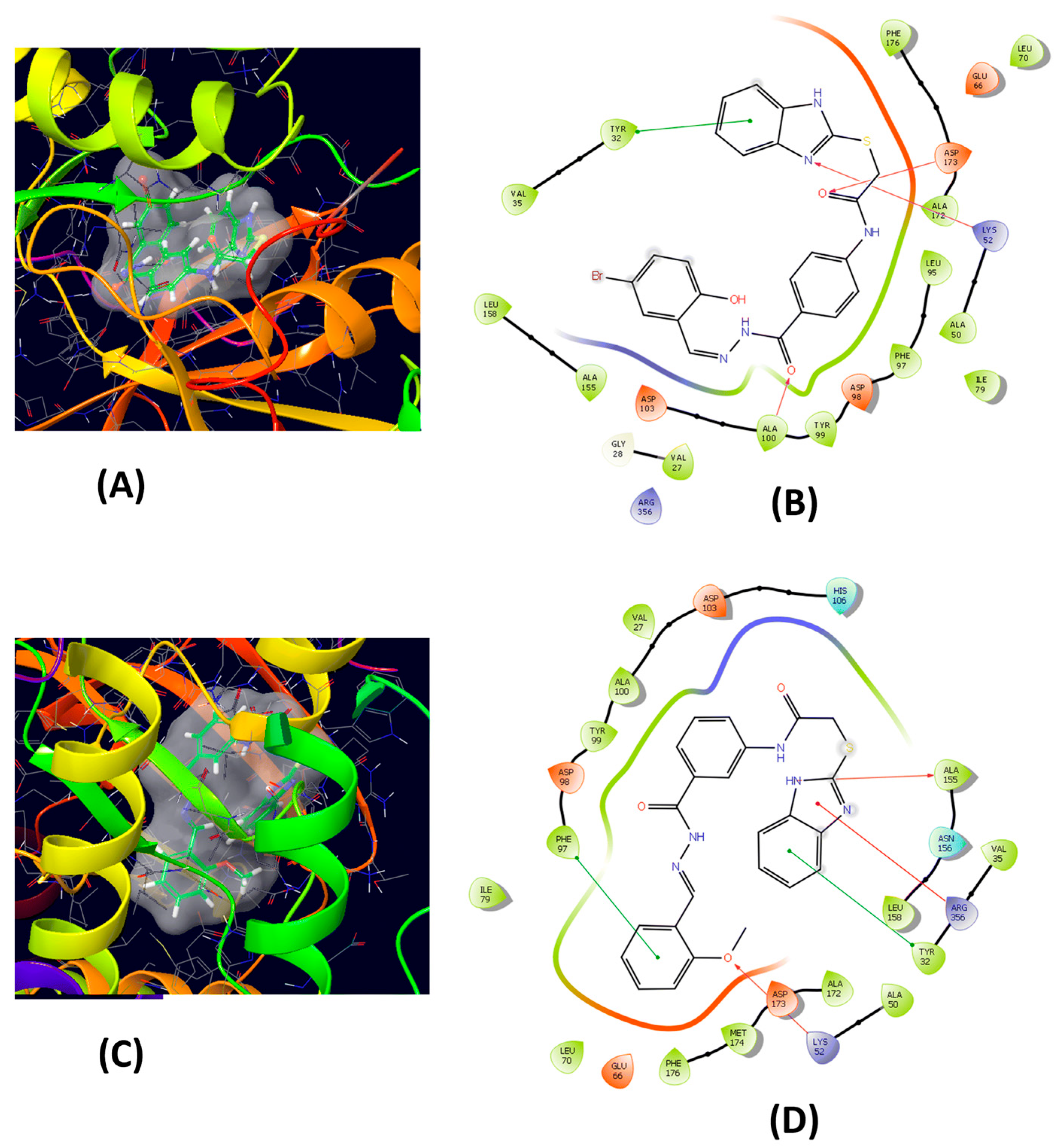
Molecular docking is one of the useful computational approaches for the prediction of how benzimidazole derivatives interact with target proteins, including EGFR and HER2. It has been reported that derivatives can block the signals that promote the growth of tumours for cancer treatment. Calculations performed by means of the molecular docking technique led us to deduce that derivatives bearing functional groups, ketones or amines, possess an ability to interact strongly with target proteins; they achieve very low binding energies, displaying the stability of the interaction with the active site of the protein. This stability within the interaction is one of the crucial aspects making the compound effective in terms of its interference with cancer-related biological processes [123]. Some of the benzimidazole derivatives have been reported to be promising anticancer drug candidates via molecular docking studies. Figure 13 reports the interactions of these derivatives with the active sites of target proteins.
This work emphasizes the potential of designed benzimidazole derivatives to form stable and effective molecular interactions that, in turn, can be promising in the development of cancer therapeutics [123]. In addition, molecular docking has been employed to assist in designing new inhibitors from these compounds, where the molecular structures could be modified through the introduction of functional groups, increasing the selectivity of the target protein and thus enhancing the therapeutic effects. Toxicity is minimized by the discovery of compounds that interact more favourably with the biological targets without affecting healthy tissues. In that sense, molecular docking provides an excellent roadmap for the prospective design and development of new and safer drugs that can more accurately pinpoint cancerous cells or other biological targets [124].

6. Molecular Dynamics and Its Applications in Theoretical Chemistry

Molecular dynamics is the most widely used computational technique for investigating the dynamical properties of molecules at an atomic level in time. This method involves computing Newton’s equations of motion for a system containing many particles to obtain dynamic trajectories that illustrate how atoms and molecules interact among themselves in a specific environment. Molecular dynamics is a very broad subject applied to the investigation of the dynamic properties of materials, biological interactions, and drug design.

Applications of Molecular Dynamics in the Study of Benzimidazole Derivatives

MD is also employed to investigate other heterocyclic compounds, such as benzimidazole derivatives. It models the interaction of these derivatives with target proteins, evaluates their stability, and analyses their binding energies and molecular interactions. This is essential as it offers insights that aid new drug treatment development.
Benzimidazole derivatives have been the focus of many researchers owing to their variety of biological activities, such as antibacterial, anticancer, antiviral, and antifungal activities [125]. Accordingly, molecular dynamics can be utilized to investigate the stability of benzimidazole derivatives, to predict the interactions between them and a wide range of bio-targets, and to assess their dynamic properties in diverse media. Synchronously, through dynamic simulations, the spatial structures of the compounds in three-dimensional space, the influence of temperature and solvent, and environmental effects for analysis provide valuable means to understand their activities in biological and chemical systems.
These comprehensive studies would give better insight into the structure–activity relationship of these benzimidazole derivatives and assist in designing therapeutically effective molecules. They also help with the design of advanced computer-based models to analyse the structure–activity relationship to facilitate data-driven scientific decision-making for medicinal chemistry and materials chemistry [126,127].

7. Conclusions

Benzimidazole derivatives are one of the most important classes of organic compounds as they have a very significant biological role and are nowadays frequently used in the preparation of a large number of antibiotics. These derivatives have shown impressive development in medicinal and industrial chemistry as they are very effective in the treatment of several refractory and chronic diseases, such as cancer, diabetes, infections, hypertension, convulsions, and diseases of the nervous system. These derivatives have contributed to the development of better drug treatments, and their range of medical uses has broadened to include the struggle against parasites and viral diseases, in addition to other illnesses such as tuberculosis and Alzheimer’s disease. The development of classical and modern techniques for the preparation of benzimidazole derivatives, as a basic consideration, has made the process easier, minimizing the experimental workup and providing impressive results. Techniques based on microwave (MW) irradiation are one of the most reported approaches providing high reaction efficiency and decreasing chemical waste generation. Theoretical studies have played a crucial role in understanding the scientific basis of the molecular architecture of these derivatives, using computational tools like molecular docking, molecular dynamics simulation, and density functional theoretical parameters, thereby making a path towards the design of more potent and efficacious drugs. Besides their extensive use as drug molecules, these derivatives are well addressed in other fields of research for fighting environmental pollution and green chemistry. Benzimidazole derivatives, due to their biological activities and eco-friendly properties, are considered potential therapeutic agents for use in green chemistry and green medicine research.
In conclusion, benzimidazole analogues continue to be a convenient model for research in both chemistry and medicine, providing new answers to untreatable and persistent health problems, as well as offering new drugs that are more efficient and safer, underscoring their crucial role in human health and welfare.

Author Contributions

N.F.A.: conceptualization, writing—original draft, writing—review and editing; S.A.A.: writing—review and editing; M.A.A.: review and editing; M.Y.D. Darwesh: resources and editing; J.A.A.: contributed to data analysis, manuscript proofreading, and verification of biological activity data; R.B.: supervision. All authors have read and agreed to the published version of the manuscript.

Funding

This research received no external funding.

Data Availability Statement

No new data were created or analyzed in this study. Data sharing is not applicable to this article.

Conflicts of Interest

The authors declare no conflicts of interest.

References

  1. Al-Mulla, A. A review: Biological importance of heterocyclic compounds. Der Pharma Chem. 2017, 9, 141–147. [Google Scholar]
  2. Kabir, E.; Uzzaman, M. A review on biological and medicinal impact of heterocyclic compounds. Results Chem. 2022, 4, 100606. [Google Scholar] [CrossRef]
  3. Alheety, N.F.; Mssdf, A.K.; Besbes, R.; Alheety, M.A. Influence of Ring Size on Hydrogen Storage Performance of cis-Aziridine Derivatives: A Thermodynamic Investigation. Macromol. Symp. 2025, e70208. [Google Scholar] [CrossRef]
  4. Alheety, N.F.; Al-Hadithy, S.; Alheety, M.A.; Besbes, R. Color Fastness of Newly Synthesized Thiadiazole Derivatives According to ISO 105 on Cotton Fiber. Macromol. Symp. 2025, e70210. [Google Scholar] [CrossRef]
  5. Gomtsyan, A. Heterocycles in drugs and drug discovery. Chem. Heterocycl. Compd. 2012, 48, 7–10. [Google Scholar] [CrossRef]
  6. Alheety, N.F.; Awad, S.A.; Abdulkareem, R.; Alheety, M.A.; Jebur, I.K. Synthesis and Characterization of Benzimidazole-Based Scaffolds (ICSEM 2025). Macromol. Symp. 2025, e70153. [Google Scholar] [CrossRef]
  7. Adnan, L.A.; Alheety, N.F.; Majeed, A.H.; Alheety, M.A.; Akbaş, H. Novel organic-inorganic nanohybrids (MnO2 and Ag nanoparticles functionalized 5-methoxy-2-mercaptobenzimidazole): One step synthesis and characterization. Mater. Today Proc. 2021, 42, 2700–2705. [Google Scholar] [CrossRef]
  8. Alheety, N.F.; Raouafi, N.; Ibrahim, S.S.; Al-Kubaisi, A.A.; Alheety, M.A.; Besbes, R. Synthesis, characterization, DFT and molecular docking of novel organic-inorganic nanohybrids synthesized from silver nanoparticles with benzothiazole derivatives. J. Indian Chem. Soc. 2025, 102, 101761. [Google Scholar] [CrossRef]
  9. Farhan, M.A.; Nief, O.A.; Ali, W.B. New photostabilizers for poly (vinyl chloride) derived from heterocyclic compounds. J. Med. Pharm. Chem. Res. 2022, 4, 525–543. [Google Scholar]
  10. Ibrahim, W.A.; Farhan, M.A.; Abdulateef, M.H. Synthesis and evaluation of biological activity of some newsalicylic acid derivatives. Biochem. Cell. Arch. 2020, 20, 3727–3732. [Google Scholar]
  11. Abd El-Salam, N.M.; Mostafa, M.S.; Ahmed, G.A.; Alothman, O.Y. Synthesis and Antimicrobial Activities of Some New Heterocyclic Compounds Based on 6-Chloropyridazine-3(2H)-thione. J. Chem. 2013, 2013, 890617. [Google Scholar] [CrossRef]
  12. Azab, M.E.; Youssef, M.M.; El-Bordany, E.A. Synthesis and Antibacterial Evaluation of Novel Heterocyclic Compounds Containing a Sulfonamido Moiety. Molecules 2013, 18, 832–844. [Google Scholar] [CrossRef]
  13. Alheety, N.F.; Mohammed, L.A.; Majeed, A.H.; Aydin, A.; Ahmed, K.D.; Alheety, M.A.; Guma, M.A.; Dohare, S. Antiproliferative and antimicrobial studies of novel organic-inorganic nanohybrids of ethyl 2-((5-methoxy-1H-benzo[d]imidazol-2-yl)thio)acetate (EMBIA) with TiO2 and ZnO. J. Mol. Struct. 2023, 1274, 134489. [Google Scholar] [CrossRef]
  14. Cao, X.; Sun, Z.; Cao, Y.; Wang, R.; Cai, T.; Chu, W.; Hu, W.; Yang, Y. Design, Synthesis, and Structure–Activity Relationship Studies of Novel Fused Heterocycles-Linked Triazoles with Good Activity and Water Solubility. J. Med. Chem. 2014, 57, 3687–3706. [Google Scholar] [CrossRef]
  15. Salem, M.S.; Sakr, S.I.; El-Senousy, W.M.; Madkour, H.M.F. Synthesis, Antibacterial, and Antiviral Evaluation of New Heterocycles Containing the Pyridine Moiety. Arch. Der Pharm. 2013, 346, 766–773. [Google Scholar] [CrossRef]
  16. El-Sawy, E.R.; Ebaid, M.S.; Abo-Salem, H.M.; Al-Sehemi, A.G.; Mandour, A.H. Synthesis, anti-inflammatory, analgesic and anticonvulsant activities of some new 4,6-dimethoxy-5-(heterocycles)benzofuran starting from naturally occurring visnagin. Arab. J. Chem. 2014, 7, 914–923. [Google Scholar] [CrossRef]
  17. Chen, Y.; Yu, K.; Tan, N.-Y.; Qiu, R.-H.; Liu, W.; Luo, N.-L.; Tong, L.; Au, C.-T.; Luo, Z.-Q.; Yin, S.-F. Synthesis, characterization and anti-proliferative activity of heterocyclic hypervalent organoantimony compounds. Eur. J. Med. Chem. 2014, 79, 391–398. [Google Scholar] [CrossRef] [PubMed]
  18. Mabkhot, Y.N.; Barakat, A.; Al-Majid, A.M.; Alshahrani, S.; Yousuf, S.; Choudhary, M.I. Synthesis, reactions and biological activity of some new bis-heterocyclic ring compounds containing sulphur atom. Chem. Cent. J. 2013, 7, 112. [Google Scholar] [CrossRef]
  19. Hossain, M.; Nanda, A.K. A review on heterocyclic: Synthesis and their application in medicinal chemistry of imidazole moiety. Science 2018, 6, 83–94. [Google Scholar] [CrossRef]
  20. Guendouz, A.; Ettahiri, W.; Adardour, M.; Lazrak, J.; El Assiri, E.H.; Taleb, A.; Hammouti, B.; Rais, Z.; Baouid, A.; Taleb, M. New benzimidazole derivatives as efficient organic inhibitors of mild steel corrosion in hydrochloric acid medium: Electrochemical, SEM/EDX, MC, and DFT studies. J. Mol. Struct. 2025, 1321, 139901. [Google Scholar] [CrossRef]
  21. Vasava, M.S.; Bhoi, M.N.; Rathwa, S.K.; Jethava, D.J.; Acharya, P.T.; Patel, D.B.; Patel, H.D. Benzimidazole: A milestone in the field of medicinal chemistry. Mini Rev. Med. Chem. 2020, 20, 532–565. [Google Scholar] [CrossRef]
  22. El Rashedy, A.A.; Aboul-Enein, H.Y. Benzimidazole derivatives as potential anticancer agents. Mini Rev. Med. Chem. 2013, 13, 399–407. [Google Scholar]
  23. Keri, R.S.; Hiremathad, A.; Budagumpi, S.; Nagaraja, B.M. Comprehensive review in current developments of benzimidazole-based medicinal chemistry. Chem. Biol. Drug Des. 2015, 86, 19–65. [Google Scholar]
  24. Marinescu, M.; Tudorache, D.G.; Marton, G.I.; Zalaru, C.-M.; Popa, M.; Chifiriuc, M.-C.; Stavarache, C.-E.; Constantinescu, C. Density functional theory molecular modeling, chemical synthesis, and antimicrobial behaviour of selected benzimidazole derivatives. J. Mol. Struct. 2017, 1130, 463–471. [Google Scholar] [CrossRef]
  25. Martin, E. o-Phenylenediamine. Org. Synth. 2003, 19, 70. [Google Scholar]
  26. Ke, F.; Zhang, P.; Xu, Y.; Lin, X.; Lin, J.; Lin, C.; Xu, J. Microwave-Assisted Nickel-Catalyzed Synthesis of Benzimidazoles: Ammonia as a Cheap and Nontoxic Nitrogen Source. Synlett 2018, 29, 2722–2726. [Google Scholar] [CrossRef]
  27. Bahrami, K.; Khodaei, M.M.; Kavianinia, I. A Simple and Efficient One-Pot Synthesis of 2-Substituted Benzimidazoles. Synthesis 2007, 2007, 547–550. [Google Scholar] [CrossRef]
  28. Cui, W.; Kargbo, R.B.; Sajjadi-Hashemi, Z.; Ahmed, F.; Gauuan, J.F. Efficient one-pot synthesis of 2-substituted benzimidazoles from triacyloxyborane intermediates. Synlett 2012, 2012, 247–250. [Google Scholar] [CrossRef]
  29. Hanan, E.J.; Chan, B.K.; Estrada, A.A.; Shore, D.G.; Lyssikatos, J.P. Mild and General One-Pot Reduction and Cyclization of Aromatic and Heteroaromatic 2-Nitroamines to Bicyclic 2H-Imidazoles. Synlett 2010, 2010, 2759–2764. [Google Scholar] [CrossRef]
  30. Hati, S.; Kumar Dutta, P.; Dutta, S.; Munshi, P.; Sen, S. Accessing Benzimidazoles via a Ring Distortion Strategy: An Oxone Mediated Tandem Reaction of 2-Aminobenzylamines. Org. Lett. 2016, 18, 3090–3093. [Google Scholar] [CrossRef] [PubMed]
  31. Saha, P.; Ramana, T.; Purkait, N.; Ali, M.A.; Paul, R.; Punniyamurthy, T. Ligand-free copper-catalyzed synthesis of substituted benzimidazoles, 2-aminobenzimidazoles, 2-aminobenzothiazoles, and benzoxazoles. J. Org. Chem. 2009, 74, 8719–8725. [Google Scholar] [CrossRef]
  32. Azarifar, D.; Pirhayati, M.; Maleki, B.; Sanginabadi, M.; Yami, N.R. Acetic acid-promoted condensation of o-phenylenediamine with aldehydes into 2-aryl-1-(arylmethyl)-1H-benzimidazoles under microwave irradiation. J. Serbian Chem. Soc. 2010, 75, 1181–1189. [Google Scholar] [CrossRef]
  33. Alheety, N.F.; Mssdf, A.K.; Alheety, A.J.; Aldahham, B.J.; Raouafi, N.; Alheety, M.A.; Besbes, R. Benzimidazole Macromolecules from 2-Mercaptobenzimidazole: Synthesis, Characterization, and Molecular Docking Studies. Macromol. Symp. 2025, 414, 2400233. [Google Scholar]
  34. Clayton, C.; Abbott, L., Jr. Inhibitory effects of certain benzimidazole derivatives on the production of azo dye liver tumors. Cancer Res. 1958, 18, 94–97. [Google Scholar]
  35. Alheety, N.F.; Aldahham, B.J.; Raouafi, N.; Mohammed, A.M.; Alheety, M.A.; Besbes, R. Molecular Docking Studies of Novel Benzimidazole Macromolecules. Macromol. Symp. 2025, 414, 2400232. [Google Scholar] [CrossRef]
  36. Maekawa, K.; Ohtani, J. Synthesis and Biological Activities of Benzimidazole Derivatives from Peptides. Agric. Biol. Chem. 1977, 41, 811–818. [Google Scholar]
  37. Lazer, E.S.; Matteo, M.R.; Possanza, G.J. Benzimidazole derivatives with atypical antiinflammatory activity. J. Med. Chem. 1987, 30, 726–729. [Google Scholar] [CrossRef]
  38. Meegalla, S.K.; Stevens, G.J.; McQueen, C.A.; Chen, A.Y.; Yu, C.; Liu, L.F.; Barrows, L.R.; LaVoie, E.J. Synthesis and pharmacological evaluation of isoindolo [1, 2-b] quinazolinone and isoindolo [2, 1-a] benzimidazole derivatives related to the antitumor agent batracylin. J. Med. Chem. 1994, 37, 3434–3439. [Google Scholar] [PubMed]
  39. Pham, E.C.; Le, T.V.T.; Truong, T.N. Design, synthesis, bio-evaluation, and in silico studies of some N-substituted 6-(chloro/nitro)-1 H-benzimidazole derivatives as antimicrobial and anticancer agents. RSC Adv. 2022, 12, 21621–21646. [Google Scholar] [CrossRef] [PubMed]
  40. Alzahrani, H.A.; Alam, M.M.; Elhenawy, A.A.; Malebari, A.M.; Nazreen, S. Synthesis, antiproliferative, docking and DFT studies of benzimidazole derivatives as EGFR inhibitors. J. Mol. Struct. 2022, 1253, 132265. [Google Scholar] [CrossRef]
  41. Shaharyar, M.; Mazumder, A. Benzimidazoles: A biologically active compounds. Arab. J. Chem. 2017, 10, S157–S173. [Google Scholar] [CrossRef]
  42. Wang, Z.; Deng, X.; Xiong, S.; Xiong, R.; Liu, J.; Zou, L.; Lei, X.; Cao, X.; Xie, Z.; Chen, Y.; et al. Design, synthesis and biological evaluation of chrysin benzimidazole derivatives as potential anticancer agents. Nat. Prod. Res. 2018, 32, 2900–2909. [Google Scholar] [CrossRef]
  43. Lu, Y.; Chen, J.; Wang, J.; Li, C.-M.; Ahn, S.; Barrett, C.M.; Dalton, J.T.; Li, W.; Miller, D.D. Design, synthesis, and biological evaluation of stable colchicine binding site tubulin inhibitors as potential anticancer agents. J. Med. Chem. 2014, 57, 7355–7366. [Google Scholar] [CrossRef]
  44. Wang, Y.-T.; Qin, Y.-J.; Yang, N.; Zhang, Y.-L.; Liu, C.-H.; Zhu, H.-L. Synthesis, biological evaluation, and molecular docking studies of novel 1-benzene acyl-2-(1-methylindol-3-yl)-benzimidazole derivatives as potential tubulin polymerization inhibitors. Eur. J. Med. Chem. 2015, 99, 125–137. [Google Scholar]
  45. Kamal, A.; Reddy, T.S.; Polepalli, S.; Shalini, N.; Reddy, V.G.; Rao, A.S.; Jain, N.; Shankaraiah, N. Synthesis and biological evaluation of podophyllotoxin congeners as tubulin polymerization inhibitors. Bioorg. Med. Chem. 2014, 22, 5466–5475. [Google Scholar] [CrossRef]
  46. Pathare, B.; Bansode, T. Biological active benzimidazole derivatives. Results Chem. 2021, 3, 100200. [Google Scholar] [CrossRef]
  47. Sharma, R.; Bali, A.; Chaudhari, B.B. Synthesis of methanesulphonamido-benzimidazole derivatives as gastro-sparing antiinflammatory agents with antioxidant effect. Bioorg. Med. Chem. Lett. 2017, 27, 3007–3013. [Google Scholar]
  48. Saha, P.; Brishty, S.R.; Rahman, S.A. Pharmacological screening of substituted benzimidazole derivatives. Dhaka Univ. J. Pharm. Sci. 2021, 20, 95–102. [Google Scholar] [CrossRef]
  49. Kálai, T.; Balog, M.; Szabó, A.; Gulyás, G.; Jekő, J.; Sümegi, B.; Hideg, K. New Poly(ADP-ribose) Polymerase-1 Inhibitors with Antioxidant Activity Based on 4-Carboxamidobenzimidazole-2-ylpyrroline and -tetrahydropyridine Nitroxides and Their Precursors. J. Med. Chem. 2009, 52, 1619–1629. [Google Scholar] [CrossRef]
  50. Lourenço, S.C.; Moldão-Martins, M.; Alves, V.D. Antioxidants of natural plant origins: From sources to food industry applications. Molecules 2019, 24, 4132. [Google Scholar] [CrossRef] [PubMed]
  51. Brishty, S.R.; Saha, P.; Al Mahmud, Z.; Rahman, S.A. Synthesis and Evaluation of Analgesic and Antioxidant Activities of Substituted Benzimidazole Derivatives: Synthesis and Evaluation of Analgesic and Antioxidant Activities. Dhaka Univ. J. Pharm. Sci. 2020, 19, 37–46. [Google Scholar] [CrossRef]
  52. Taha, M.; Mosaddik, A.; Rahim, F.; Ali, S.; Ibrahim, M.; Almandil, N.B. Synthesis, antiglycation and antioxidant potentials of benzimidazole derivatives. J. King Saud Univ.-Sci. 2020, 32, 191–194. [Google Scholar] [CrossRef]
  53. Archie, S.R.; Das, B.K.; Hossain, M.S.; Kumar, U.; Rouf, A.S. Synthesis and antioxidant activity of 2-substituted-5-nitro benzimidazole derivatives. Int. J. Pharm. Pharm. Sci. 2017, 9, 308–310. [Google Scholar] [CrossRef]
  54. Abd, S.; Soliman, F. Synthesis, some reactions, cytotoxic evaluation and antioxidant study of novel benzimidazole derivatives. Der Pharma Chem. 2015, 7, 71–84. [Google Scholar]
  55. Wanda, C.R. An overview of the antimicrobial resistance mechanisms of bacteria. AIMS Microbiol. 2018, 4, 482–501. [Google Scholar] [CrossRef] [PubMed]
  56. Asif, M. Antimicrobial agents. J. Anal. Pharm. Res. 2017, 4, 73–77. [Google Scholar] [CrossRef]
  57. Alheety, N.F.; Majeed, A.H.; Alheety, M.A. Silver Nanoparticles Anchored 5-methoxy benzimidazol thiomethanol (MBITM): Modulate, Characterization and Comparative Studies on MBITM and Ag-MBITM Antibacterial Activities. J. Phys. Conf. Ser. 2019, 1294, 052026. [Google Scholar] [CrossRef]
  58. El-Gohary, N.S.; Shaaban, M.I. Synthesis and biological evaluation of a new series of benzimidazole derivatives as antimicrobial, antiquorum-sensing and antitumor agents. Eur. J. Med. Chem. 2017, 131, 255–262. [Google Scholar] [CrossRef]
  59. Ajani, O.O.; Aderohunmu, D.V.; Olorunshola, S.J.; Ikpo, C.O.; Olanrewaju, I.O. Facile synthesis, characterization and antimicrobial activity of 2-alkanamino benzimidazole derivatives. Orient. J. Chem. 2016, 32, 109. [Google Scholar] [CrossRef]
  60. Jasim, K.H.; Ersan, R.H.; Sadeeq, R.; Salim, S.; Mahmood, S.; Fadhil, Z. Fluorinated benzimidazole derivatives: In vitro antimicrobial activity. Bioorg. Med. Chem. Rep. 2023, 6, 1–8. [Google Scholar] [CrossRef]
  61. Xiang, S.; Li, Y.; Khan, S.N.; Zhang, W.; Yuan, G.; Cui, J. Exploiting the Anticancer, Antimicrobial and Antiviral Potential of Naphthoquinone Derivatives: Recent Advances and Future Prospects. Pharmaceuticals 2025, 18, 350. [Google Scholar] [CrossRef] [PubMed]
  62. Wu, Z.; Xia, M.-B.; Bertsetseg, D.; Wang, Y.-H.; Bao, X.-L.; Zhu, W.-B.; Tao, X.; Chen, P.-R.; Tang, H.-S.; Yan, Y.-J.; et al. Design, synthesis and biological evaluation of novel fluoro-substituted benzimidazole derivatives with anti-hypertension activities. Bioorg. Chem. 2020, 101, 104042. [Google Scholar] [CrossRef]
  63. Khan, M.T.; Razi, M.T.; Jan, S.U.; Mukhtiar, M.; Gul, R.; Hussain, A.; Rabbani, I. Synthesis, characterization and antihypertensive activity of 2-phenyl substituted benzimidazoles. Pak. J. Pharm. Sci 2018, 31, 1067–1074. [Google Scholar] [PubMed]
  64. Wu, Z.; Bao, X.-L.; Zhu, W.-B.; Wang, Y.-H.; Phuong Anh, N.T.; Wu, X.-F.; Yan, Y.-J.; Chen, Z.-L. Design, Synthesis, and Biological Evaluation of 6-Benzoxazole Benzimidazole Derivatives with Antihypertension Activities. ACS Med. Chem. Lett. 2019, 10, 40–43. [Google Scholar] [CrossRef]
  65. Kumar, J.R.; Jawahar L., J.; Pathak, D. Synthesis of benzimidazole derivatives: As anti-hypertensive agents. J. Chem. 2006, 3, 278–285. [Google Scholar] [CrossRef]
  66. Zhu, W.; Da, Y.; Wu, D.; Zheng, H.; Zhu, L.; Wang, L.; Yan, Y.; Chen, Z. Design, synthesis and biological evaluation of new 5-nitro benzimidazole derivatives as AT1 antagonists with anti-hypertension activities. Bioorg. Med. Chem. 2014, 22, 2294–2302. [Google Scholar] [CrossRef]
  67. Huo, X.; Hou, D.; Wang, H.; He, B.; Fang, J.; Meng, Y.; Liu, L.; Wei, Z.; Wang, Z.; Liu, F.-W. Design, synthesis, in vitro and in vivo anti-respiratory syncytial virus (RSV) activity of novel oxizine fused benzimidazole derivatives. Eur. J. Med. Chem. 2021, 224, 113684. [Google Scholar] [CrossRef]
  68. Chen, M.; Su, S.; Zhou, Q.; Tang, X.; Liu, T.; Peng, F.; He, M.; Luo, H.; Xue, W. Antibacterial and antiviral activities and action mechanism of flavonoid derivatives with a benzimidazole moiety. J. Saudi Chem. Soc. 2021, 25, 101194. [Google Scholar] [CrossRef]
  69. Ibba, R.; Carta, A.; Madeddu, S.; Caria, P.; Serreli, G.; Piras, S.; Sestito, S.; Loddo, R.; Sanna, G. Inhibition of Enterovirus A71 by a Novel 2-Phenyl-Benzimidazole Derivative. Viruses 2021, 13, 58. [Google Scholar] [CrossRef]
  70. Hue, B.T.B.; Nguyen, P.H.; De, T.Q.; Van Hieu, M.; Jo, E.; Van Tuan, N.; Thoa, T.T.; Anh, L.D.; Son, N.H.; La Duc Thanh, D. Benzimidazole derivatives as novel zika virus inhibitors. ChemMedChem 2020, 15, 1453–1463. [Google Scholar] [CrossRef] [PubMed]
  71. Meher, C.P.; Meher, V.K.; Pradhan, D.; Meher, A.K.; Sahu, S.C.; Sahu, S. Screening of a Benzimidazole Derivative for Anthelmintic Activity with” Rule of 5” Approach. J. Pharm. Res. Int. 2021, 33, 1982–1988. [Google Scholar] [CrossRef]
  72. Anichina, K.; Argirova, M.; Tzoneva, R.; Uzunova, V.; Mavrova, A.; Vuchev, D.; Popova-Daskalova, G.; Fratev, F.; Guncheva, M.; Yancheva, D. 1H-benzimidazole-2-yl hydrazones as tubulin-targeting agents: Synthesis, structural characterization, anthelmintic activity and antiproliferative activity against MCF-7 breast carcinoma cells and molecular docking studies. Chem. -Biol. Interact. 2021, 345, 109540. [Google Scholar] [CrossRef]
  73. Alheety, N.F.; Al-Kubaisi, A.A.; Benassi, E.; Raouafi, N.; Maamer, C.B.; Alheety, M.A.; Besbes, R. Benzimidazole Derivatives as Potential Inhibitors of Monkeypox A41 Protein: DFT Calculations, Molecular Docking, ADME, and Toxicity Assessments. ChemistrySelect 2025, 10, e01475. [Google Scholar] [CrossRef]
  74. Meher, C.P.; Sahu, A.K.; Dash, S.K.; Sahoo, R.K.; Sahu, S.C.; Gupta, D.K. Designing and Synthesis of some Novel 2-Substituted Benzimidazole Derivatives and their Evaluation for Antimicrobial and Anthelmintic Activity. Asian J. Res. Chem. 2019, 12, 58–62. [Google Scholar] [CrossRef]
  75. Kaliyaperumal, S.; Pattanayak, P. Synthesis, Characterization and In Vitro Evaluation for Antimicrobial and Anthelmintic Activity of Novel Benzimidazole Substituted 1, 3, 4-Thiadiazole Schiff’s Bases. FABAD J. Pharm. Sci. 2021, 46, 261–270. [Google Scholar]
  76. Campos-Almazan, M.I.; Flores-Ramos, M.; Hernández-Campos, A.; Castillo, R.; Sierra-Campos, E.; Torgeson, K.; Peti, W.; Valdez-Solana, M.; Oria-Hernández, J.; Mendez, S.T. Design, synthesis, kinetic, molecular dynamics, and hypoglycemic effect characterization of new and potential selective benzimidazole derivatives as Protein Tyrosine Phosphatase 1B inhibitors. Bioorg. Med. Chem. 2021, 48, 116418. [Google Scholar] [CrossRef] [PubMed]
  77. Dik, B.; Coşkun, D.; Bahçivan, E.; Üney, K. Potential antidiabetic activity of benzimidazole derivative albendazole and lansoprazoledrugs in different doses in experimental type 2 diabetic rats. Turk. J. Med. Sci. 2021, 51, 1579–1586. [Google Scholar] [CrossRef]
  78. Deswal, L.; Verma, V.; Kumar, D.; Kaushik, C.P.; Kumar, A.; Deswal, Y.; Punia, S. Synthesis and antidiabetic evaluation of benzimidazole-tethered 1, 2, 3-triazoles. Arch. Der Pharm. 2020, 353, 2000090. [Google Scholar]
  79. Babkov, D.A.; Zhukowskaya, O.N.; Borisov, A.V.; Babkova, V.A.; Sokolova, E.V.; Brigadirova, A.A.; Litvinov, R.A.; Kolodina, A.A.; Morkovnik, A.S.; Sochnev, V.S. Towards multi-target antidiabetic agents: Discovery of biphenyl-benzimidazole conjugates as AMPK activators. Bioorg. Med. Chem. Lett. 2019, 29, 2443–2447. [Google Scholar] [CrossRef]
  80. Kwak, H.J.; Pyun, Y.M.; Kim, J.Y.; Pagire, H.S.; Kim, K.Y.; Kim, K.R.; Dal Rhee, S.; Jung, W.H.; Song, J.S.; Bae, M.A. Synthesis and biological evaluation of aminobenzimidazole derivatives with a phenylcyclohexyl acetic acid group as anti-obesity and anti-diabetic agents. Bioorg. Med. Chem. Lett. 2013, 23, 4713–4718. [Google Scholar] [CrossRef] [PubMed]
  81. Sakr, H.M.; Ayyad, R.R.; Mahmoud, K.; Mansour, A.M.; Ahmed, A.G. Design, synthesis of analgesics and anticancer of some new derivatives of benzimidazole. Int. J. Org. Chem. 2021, 11, 144–169. [Google Scholar] [CrossRef]
  82. Raka, S.C.; Rahman, A.; Hussain, F.; Rahman, S.A. Synthesis, characterization and in vitro, in vivo, in silico biological evaluations of substituted benzimidazole derivatives. Saudi J. Biol. Sci. 2022, 29, 239–250. [Google Scholar] [CrossRef] [PubMed]
  83. Maltsev, D.V.; Spasov, A.A.; Vassiliev, P.M.; Skripka, M.O.; Miroshnikov, M.V.; Kochetkov, A.N.; Eliseeva, N.V.; Lifanova, Y.V.; Kuzmenko, T.A.; Divaeva, L.N.; et al. Synthesis and Pharmacological Evaluation of Novel 2,3,4,5-tetrahydro[1,3]diazepino[1,2-a]benzimidazole Derivatives as Promising Anxiolytic and Analgesic Agents. Molecules 2021, 26, 6049. [Google Scholar] [CrossRef]
  84. Saha, P.; Brishty, S.R.; Rahman, S.A. Synthesis and evaluation of disubstituted benzimidazole derivatives as potential analgesic and antidiarrheal agents. Indian J. Pharm. Sci 2020, 82, 222–229. [Google Scholar] [CrossRef]
  85. Aydin, S.; Beis, R.; Can, Ö. Analgesic and antispasmodic activities of 2-(2-nitro-phenyl)-1H-benzimidazole 5-carboxylic acid: Evidence for the importance of the 2-(o-substituted phenyl) group. Die Pharm.-Int. J. Pharm. Sci. 2003, 58, 405–408. [Google Scholar]
  86. Navarrete-Vázquez, G.; Moreno-Diaz, H.; Aguirre-Crespo, F.; León-Rivera, I.; Villalobos-Molina, R.; Munoz-Muniz, O.; Estrada-Soto, S. Design, microwave-assisted synthesis, and spasmolytic activity of 2-(alkyloxyaryl)-1H-benzimidazole derivatives as constrained stilbene bioisosteres. Bioorg. Med. Chem. Lett. 2006, 16, 4169–4173. [Google Scholar] [CrossRef] [PubMed]
  87. Tantray, M.A.; Khan, I.; Hamid, H.; Alam, M.S.; Dhulap, A.; Kalam, A. Synthesis of benzimidazole-linked-1, 3, 4-oxadiazole carboxamides as GSK-3β inhibitors with in vivo antidepressant activity. Bioorg. Chem. 2018, 77, 393–401. [Google Scholar] [CrossRef]
  88. Theivendren, P.; Subramanian, A.; Murugan, I.; Joshi, S.D.; More, U.A. Graph theoretical analysis, insilico modeling, design, and synthesis of compounds containing benzimidazole skeleton as antidepressant agents. Chem. Biol. Drug Des. 2017, 89, 714–722. [Google Scholar] [CrossRef]
  89. Turan, N.; Özkay, Ü.D.; Can, N.Ö.; Can, Ö.D. Investigating the antidepressant-like effects of some benzimidazole-piperidine derivatives by in-vivo experimental methods. Lett. Drug Des. Discov. 2019, 16, 341–346. [Google Scholar] [CrossRef]
  90. Mathew, B.; Suresh, J.; Anbazhagan, S. Development of novel (1-H) benzimidazole bearing pyrimidine-trione based MAO-A inhibitors: Synthesis, docking studies and antidepressant activity. J. Saudi Chem. Soc. 2016, 20, S132–S139. [Google Scholar] [CrossRef]
  91. Tantray, M.A.; Khan, I.; Hamid, H.; Alam, M.S.; Dhulap, A.; Kalam, A. Synthesis of benzimidazole-based 1, 3, 4-oxadiazole-1, 2, 3-triazole conjugates as glycogen synthase kinase-3β inhibitors with antidepressant activity in in vivo models. RSC Adv. 2016, 6, 43345–43355. [Google Scholar] [CrossRef]
  92. Siddiqui, N.; Alam, M.S.; Sahu, M.; Yar, M.S.; Alam, O.; Siddiqui, M.J.A. Antidepressant, analgesic activity and SAR studies of substituted benzimidazoles. Asian J. Pharm. Res. 2016, 6, 170–174. [Google Scholar] [CrossRef]
  93. Latif, A.; Bibi, S.; Ali, S.; Ammara, A.; Ahmad, M.; Khan, A.; Al-Harrasi, A.; Ullah, F.; Ali, M. New multitarget directed benzimidazole-2-thiol-based heterocycles as prospective anti-radical and anti-Alzheimer’s agents. Drug Dev. Res. 2021, 82, 207–216. [Google Scholar] [CrossRef]
  94. Adalat, B.; Rahim, F.; Taha, M.; Alshamrani, F.J.; Anouar, E.H.; Uddin, N.; Shah, S.A.A.; Ali, Z.; Zakaria, Z.A. Synthesis of benzimidazole–based analogs as anti Alzheimer’s disease compounds and their molecular docking studies. Molecules 2020, 25, 4828. [Google Scholar] [CrossRef]
  95. Chaves, S.; Hiremathad, A.; Tomás, D.; Keri, R.S.; Piemontese, L.; Santos, M.A. Exploring the chelating capacity of 2-hydroxyphenyl-benzimidazole based hybrids with multi-target ability as anti-Alzheimer’s agents. New J. Chem. 2018, 42, 16503–16515. [Google Scholar] [CrossRef]
  96. Noor, A.; Qazi, N.G.; Nadeem, H.; Khan, A.-u.; Paracha, R.Z.; Ali, F.; Saeed, A. Synthesis, characterization, anti-ulcer action and molecular docking evaluation of novel benzimidazole-pyrazole hybrids. Chem. Cent. J. 2017, 11, 85. [Google Scholar] [CrossRef]
  97. Katsura, Y.; Inoue, Y.; Nishino, S.; Tomoi, M.; Itoh, H.; Takasugi, H. Studies on antiulcer drugs. III. Synthesis and antiulcer activities of imidazo [1, 2-a] pyridinylethyl-benzoxazoles and related compounds. A novel class of histamine H2-receptor antagonists. Chem. Pharm. Bull. 1992, 40, 1424–1438. [Google Scholar] [CrossRef]
  98. Spasov, A.; Kovalev, G.; Bakumov, P.; Reshetov, M.; Anisimova, V.; Avdiunina, N. The effect on gastric secretion and the anti-ulcer action of imidazo [1, 2-A] benzimidazole derivatives. Farmakol. I Toksikol. 1990, 53, 30–33. [Google Scholar]
  99. Yamada, S.-I.; Goto, T.; Shimanuki, E.; Narita, S.-I. Syntheses and Antiulcer Activities of Novel 2-[(6, 7, 8, 9-Tetrahydro-5H-cyclohepta [b] pyridin-9-yl) sulfinyl]-1H-benzimidazole Analogues. Chem. Pharm. Bull. 1994, 42, 718–720. [Google Scholar] [CrossRef] [PubMed]
  100. Maste, M.; Jeyarani, P.; Kalekar, M.; Bhat, A. Synthesis and Evaluation of Benzimidazole Derivatives for Anti-tubercular and Antimicrobial Activities. Asian J. Res. Chem. 2011, 4, 1055–1058. [Google Scholar]
  101. Yar, M.S.; Abdullah, M.M.; Majeed, J. In vitro anti-tubercular screening of newly synthesized benzimidazole derivatives. World Acad. Sci. Engr. Tech 2009, 55, 593–599. [Google Scholar]
  102. Shingalapur, R.V.; Hosamani, K.M.; Keri, R.S. Synthesis and evaluation of in vitro anti-microbial and anti-tubercular activity of 2-styryl benzimidazoles. Eur. J. Med. Chem. 2009, 44, 4244–4248. [Google Scholar] [CrossRef]
  103. Sabale, P.; Bhagwat, D.; Sabale, V. Synthesis and anti-tubercular activity of substituted phenylpyrazole having benzimidazole ring. Res. J. Pharm. Technol. 2018, 11, 3599–3608. [Google Scholar] [CrossRef]
  104. Mohanty, S.K.; Khuntia, A.; Yellasubbaiah, N.; Ayyanna, C.; Sudha, B.N.; Harika, M.S. Design, synthesis of novel azo derivatives of benzimidazole as potent antibacterial and anti tubercular agents. Beni-Suef Univ. J. Basic Appl. Sci. 2018, 7, 646–651. [Google Scholar] [CrossRef]
  105. Kore, P.S.; Lokpaure, S.G.; Jawarkar, S.V.; Mohite, S.K.; Magdum, C.S. Synthesis and anti-tubercular activity of some n-substituted and 2-substituted benzimidazole derivatives. Asian J. Res. Chem. 2014, 7, 137–140. [Google Scholar]
  106. Siddiki, A.A.; Bairwa, V.K.; Telvekar, V.N. Synthesis and biological evaluation of novel N’(4-aryloxybenzylidene)-1H-benzimidazole-2 carbohydrazide derivatives as anti-tubercular agents. Comb. Chem. High Throughput Screen. 2014, 17, 630–638. [Google Scholar] [CrossRef]
  107. Rida, S.M.; El-Hawash, S.A.M.; Fahmy, H.T.Y.; Hazzaa, A.A.; El-Meligy, M.M.M. Synthesis of novel benzofuran and related benzimidazole derivatives for evaluation ofin vitro anti-HIV-1, anticancer and antimicrobial activities. Arch. Pharmacal Res. 2006, 29, 826–833. [Google Scholar] [CrossRef] [PubMed]
  108. Demirayak, Ş.; Mohsen, U.A.; Karaburun, A.Ç. Synthesis and anticancer and anti-HIV testing of some pyrazino [1, 2-a] benzimidazole derivatives. Eur. J. Med. Chem. 2002, 37, 255–260. [Google Scholar]
  109. Pan, T.; He, X.; Chen, B.; Chen, H.; Geng, G.; Luo, H.; Zhang, H.; Bai, C. Development of benzimidazole derivatives to inhibit HIV-1 replication through protecting APOBEC3G protein. Eur. J. Med. Chem. 2015, 95, 500–513. [Google Scholar] [CrossRef]
  110. Yadav, G.; Ganguly, S.; Murugesan, S.; Dev, A. Synthesis, anti-HIV, antimicrobial evaluation and structure activity relationship studies of some novel benzimidazole derivatives. Anti-Infect. Agents 2015, 13, 65–77. [Google Scholar] [CrossRef]
  111. Demirayak, Ş.; Mohsen, U.A. Anticancer and anti-HIV activities of some pyrido/pyrazino-benzimidazole derivatives. Acta Pharm. Sci. 1998, 40. [Google Scholar]
  112. Miller, J.F.; Turner, E.M.; Gudmundsson, K.S.; Jenkinson, S.; Spaltenstein, A.; Thomson, M.; Wheelan, P. Novel N-substituted benzimidazole CXCR4 antagonists as potential anti-HIV agents. Bioorg. Med. Chem. Lett. 2010, 20, 2125–2128. [Google Scholar] [CrossRef]
  113. Vásquez, D.; Lagos, C.F.; Mella-Raipán, J.; González, L.; Ebensperger, R.; Alvarez-Figueroa, M.J.; Sáez, E.; Pessoa-Mahana, H.; Araya-Secchp, R.; González-Wong, A. 1-benzoyl-2-(2-nitrophenyl)-1H-benzimidazole derivatives: A novel approach to the development of new HIV-1 reverse transcriptase inhibitors. J. Chil. Chem. Soc. 2007, 52, 1281–1287. [Google Scholar] [CrossRef]
  114. Alheety, N.F.; Al-Kubaisi, A.A.; Alhadidi, H.A.; Alheety, M.A.; Jebur, I.K. Molecular Docking of Benzimidazole Derivatives as Potential Serotonin Transporter (SERT) Inhibitors in Depression Disease (ICSEM 2025). Macromol. Symp. 2025, e70148. [Google Scholar] [CrossRef]
  115. Alheety, N.F.; Al-Kubaisi, A.A.; Mukhlif, M.Y.; Alheety, M.A.; Besbes, R. Structure-Based Design and ADME Screening of Benzimidazole Derivatives as Potential Therapeutics for Human Metapneumovirus (HMPV) (ICSEM 2025). Macromol. Symp. 2025, e70159. [Google Scholar] [CrossRef]
  116. Kumar, B.; Rao, P. Synthesis and structural studies on transition metal complexes derived from 1-(2-thienyl)-1-ethanole-1H-benzimidazole. Asian J. Chem. 2006, 18, 3060–3064. [Google Scholar]
  117. Devivar, R.V.; Kawashima, E.; Revankar, G.R.; Breitenbach, J.M.; Kreske, E.D.; Drach, J.C.; Townsend, L.B. Benzimidazole Ribonucleosides: Design, Synthesis, and Antiviral Activity of Certain 2-(Alkylthio)-and 2-(Benzylthio)-5, 6-dichloro-1-(. beta.-D-ribofuranosyl) benzimidazoles. J. Med. Chem. 1994, 37, 2942–2949. [Google Scholar] [CrossRef]
  118. Guo, X.-Z.; Shi, L.; Wang, R.; Liu, X.-X.; Li, B.-G.; Lu, X.-X. Synthesis and biological activities of novel nonpeptide angiotensin II receptor antagonists based on benzimidazole derivatives bearing a heterocyclic ring. Bioorg. Med. Chem. 2008, 16, 10301–10310. [Google Scholar] [CrossRef]
  119. Khanum, G.; Ali, A.; Shabbir, S.; Fatima, A.; Alsaiari, N.; Fatima, Y.; Ahmad, M.; Siddiqui, N.; Javed, S.; Gupta, M. Vibrational Spectroscopy, Quantum Computational and Molecular Docking Studies on 2-[(1H-benzimidazol-1-yl)-methyl] benzoic acid. Crystals 2022, 12, 337. [Google Scholar] [CrossRef]
  120. Zouaghi, M.O.; Bensalah, D.; Hassen, S.; Arfaoui, Y.; Mansour, L.; Özdemir, N.; Bülbül, H.; Gurbuz, N.; Özdemir, I.; Hamdi, N. Benzimidazole derivatives as a new scaffold of anticancer agents: Synthesis, optical properties, crystal structure and DFT calculations. Heliyon 2024, 10, e32905. [Google Scholar] [CrossRef] [PubMed]
  121. Alheety, N.F.; Yassin, H.A.; Karakosh, A.J.; Aldahham, B.J.M.; Ali, S.H.; Ahmed, K.D.; Dylan, B.A.; Nuaman, H.A.; Alheety, M.A. Synthesis and In Silico Study of Silver Nanoparticles Composite with Novel Schiff Base. Macromol. Symp. 2025, 414, 2400234. [Google Scholar] [CrossRef]
  122. Al-Kubaisi, A.A.; Awad, S.A.; Monawer, E.M.; Abbood, R.S.; Mukhlif, M.Y.; Omar, T.A.; Abbas, J.A.; Khalaf, E.M.; Alheety, N.F. Biogenic Silver Nanowires Embedded in Benzoxazolylthiomethanol Matrix (Ag NPs-BOTM): An Antibacterial Activity, DFT investigation and Molecular Docking Analysis of a New Organic–Inorganic Nanohybrid. J. Mol. Struct. 2025, 1353, 144764. [Google Scholar] [CrossRef]
  123. Tahlan, S.; Kumar, S.; Ramasamy, K.; Lim, S.M.; Shah, S.A.A.; Mani, V.; Narasimhan, B. In-silico molecular design of heterocyclic benzimidazole scaffolds as prospective anticancer agents. BMC Chem. 2019, 13, 90. [Google Scholar] [CrossRef] [PubMed]
  124. Almalki, A.S.; Nazreen, S.; Elbehairi, S.E.I.; Asad, M.; Shati, A.A.; Alfaifi, M.Y.; Alhadhrami, A.; Elhenawy, A.A.; Alorabi, A.Q.; Asiri, A.M. Design, synthesis, anticancer activity and molecular docking studies of new benzimidazole derivatives bearing 1, 3, 4-oxadiazole moieties as potential thymidylate synthase inhibitors. New J. Chem. 2022, 46, 14967–14978. [Google Scholar] [CrossRef]
  125. Alheety, N.F.; Al-Kubaisi, A.A.; Yassin, H.A.; Alheety, M.A. Novel Benzoxazole Derivatives as Potential Acetylcholinesterase (AChE) Inhibitors in Alzheimer’s Disease: Molecular Docking and Pharmacokinetics Analysis (ICSEM 2025). Macromol. Symp. 2025, e70156. [Google Scholar] [CrossRef]
  126. Thapa, S.; Biradar, M.S.; Nargund, S.L.; Ahmad, I.; Agrawal, M.; Patel, H.; Lamsal, A. Synthesis, molecular docking, molecular dynamic simulation studies, and antitubercular activity evaluation of substituted benzimidazole derivatives. Adv. Pharmacol. Pharm. Sci. 2024, 2024, 9986613. [Google Scholar] [CrossRef]
  127. Srivastava, R.; Gupta, S.K.; Naaz, F.; Gupta, P.S.S.; Yadav, M.; Singh, V.K.; Singh, A.; Rana, M.K.; Gupta, S.K.; Schols, D. Alkylated benzimidazoles: Design, synthesis, docking, DFT analysis, ADMET property, molecular dynamics and activity against HIV and YFV. Comput. Biol. Chem. 2020, 89, 107400. [Google Scholar] [CrossRef] [PubMed]
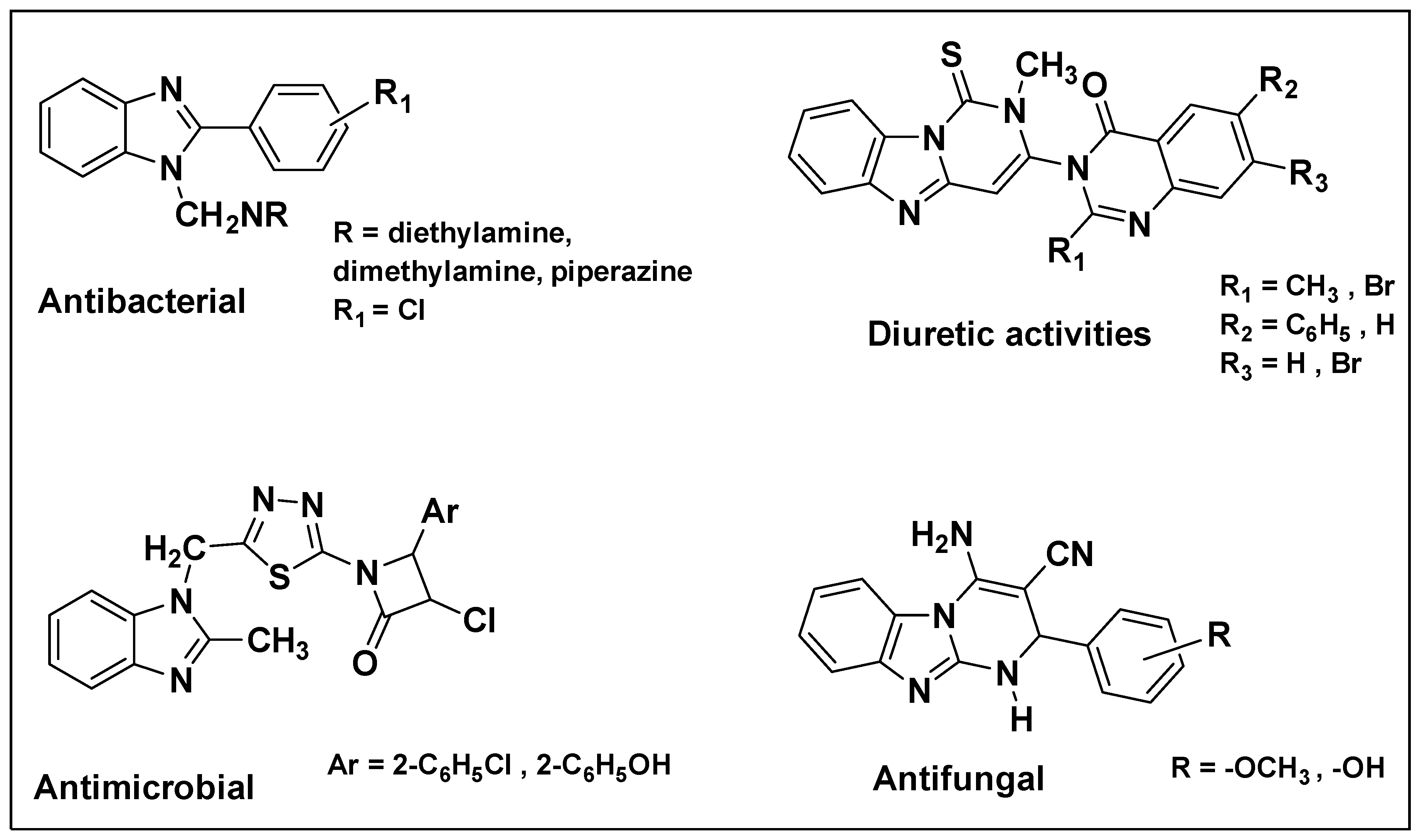
Figure 1. Representative structures of biologically active heterocyclic compounds.
Chemistry 08 00001 g001
Figure 2. The chemical structure of benzimidazole.
Chemistry 08 00001 g002
Scheme 1. Synthesis of benzimidazole.
Chemistry 08 00001 sch001
Scheme 2. Synthesis of benzimidazole derivatives from 2-haloanilines.
Chemistry 08 00001 sch002
Scheme 3. General one-pot condensation of o-phenylenediamine with substituted aryl aldehydes to afford a series of benzimidazole derivatives.
Chemistry 08 00001 sch003
Scheme 4. Condensation of o-phenylenediamines with carboxylic acids to prepare benzimidazoles.
Chemistry 08 00001 sch004
Scheme 5. Synthesis of benzimidazole derivatives from 2-nitroamine.
Chemistry 08 00001 sch005
Scheme 6. Condensation of 2-aminobenzylamines with aldehydes to prepare benzimidazoles.
Chemistry 08 00001 sch006
Scheme 7. Preparation of benzimidazole using copper (II) oxide nanocatalyst.
Chemistry 08 00001 sch007
Scheme 8. Preparation of benzimidazole using the microwave technique.
Chemistry 08 00001 sch008
Figure 3. Representative chemical structures of benzimidazole derivative compounds 14.
Chemistry 08 00001 g003
Figure 4. The chemical structure of compounds 5ac.
Chemistry 08 00001 g004
Figure 5. Structure of compounds 6ac.
Chemistry 08 00001 g005
Figure 6. The structure of compound 6.
Chemistry 08 00001 g006
Figure 7. Structures of benzimidazole derivatives 8, 9, and 10.
Chemistry 08 00001 g007
Figure 8. Structures of compounds 11, 12, and 13.
Chemistry 08 00001 g008
Figure 9. Structure of compounds 1417 as antibacterial agents.
Chemistry 08 00001 g009
Figure 10. Structure of compounds 1825 as antibacterial and antifungal agents.
Chemistry 08 00001 g010
Figure 11. The theoretical steps used to select new biological agents.
Chemistry 08 00001 g011
Figure 12. Sketch of HOMO–LUMO energy levels.
Chemistry 08 00001 g012
Figure 13. Molecular interactions of benzimidazole derivatives: (A,B) show ((E)-2-((1H-benzo[d]imidazol-2-yl)thio)-N-(4-(2-(5-bromo-2-hydroxybenzylidene)hydrazine-1-carbonyl)phenyl)acetamide)) while (C,D) show ((E)-2-((1H-benzo[d]imidazol-2-yl)thio)-N-(4-(2-(2-methoxybenzylidene)hydrazine-1-carbonyl)phenyl)acetamide) interacting with the active sites of target proteins [123].
Chemistry 08 00001 g013
Table 1. Synthetic method summary.
MethodStarting MaterialsConditionsYield (%)Reference
Condensationo-Phenylenediamine + aldehydesH2O2/HCl, solvent-free, RT82–95[27]
Nitro-reduction2-NitroanilinesFe/NH4Cl, formic acid70–90[29]
Microwave synthesisO-Phynylenedianine (OPD) + aldehydesMW, AcOH88–96[32]
Table 2. In vitro anticancer activity of benzimidazole derivatives against various cell lines.
CompoundTargetActivityCell LinesReference
Benzimidazole-fluoroalkylTubulinIC50 = 30 NmA549, HepG2[43]
1-Benzoyl-2-(indol-3-yl)TubulinGI50 = 2.4–5.1 µMA549, HepG2, MCF-7[44]
Benzimidazole-pyrazoleTubulin (colchicine site)Potent inhibitorHeLa[45]
Table 3. Antimicrobial activity of benzimidazole derivatives against bacterial strains.
CompoundActivityMIC (µg/mL)OrganismReference
11Antibacterial0.524S. aureus[58]
13Antibacterial0.489B. cereus[58]
17Antibacterial42 mm (zone)K. pneumoniae[58]
Table 4. Chemical structures and biological activities of key benzimidazole derivatives.
CompoundChemical StructureBiological Activity Mechanism of ActionReference
26Chemistry 08 00001 i001AntiviralMonkeypox A41 protein inhibitor[73]
27Chemistry 08 00001 i002AntidepressantSelective Serotonin Reuptake Inhibitor (SSRI)[114]
28Chemistry 08 00001 i003AntiviralInhibitor of HMPV F protein-mediated membrane fusion[115]
29Chemistry 08 00001 i004AntimicrobialDual-target bacterial cell division and DNA replication inhibitor[33]
30Chemistry 08 00001 i005Anti-asthmaticSelective β2-adrenergic receptor agonist[116]
31Chemistry 08 00001 i006AntiviralInhibits viral DNA polymerase[117]
32Chemistry 08 00001 i007AntidiabeticEnhances insulin sensitivity[116]
33Chemistry 08 00001 i008HypotensiveAngiotensin II receptor antagonist[118]
Disclaimer/Publisher’s Note: The statements, opinions and data contained in all publications are solely those of the individual author(s) and contributor(s) and not of MDPI and/or the editor(s). MDPI and/or the editor(s) disclaim responsibility for any injury to people or property resulting from any ideas, methods, instructions or products referred to in the content.