Previous Article in Journal / Special Issue
Application of Metal-Doped Nanomaterials in Cancer Diagnosis and Treatment
error_outline You can access the new MDPI.com website here. Explore and share your feedback with us.
 
 
Review

Stem Cell-Derived Exosomes for Diabetic Wound Healing: Mechanisms, Nano-Delivery Systems, and Translational Perspectives


1
Department of Pharmaceutical Quality Assurance, ISF College of Pharmacy, GT Road, Moga 142001, Punjab, India
2
Department of Pharmaceutics, ISF College of Pharmacy, GT Road, Moga 142001, Punjab, India
3
Department of Pharmaceutical Chemistry, ISF College of Pharmacy, GT Road, Moga 142001, Punjab, India
4
Department of Pharmacognosy, Sir Madan Lal Institute of Pharmacy, Etawah 206130, Uttar Pradesh, India
5
Department of Pharmaceutical Chemistry, Faculty of Pharmacy, Uttar Pradesh University of Medical Sciences, Saifai, Etawah 206130, Uttar Pradesh, India
*
Authors to whom correspondence should be addressed.
J. Nanotheranostics 2026, 7(1), 1; https://doi.org/10.3390/jnt7010001
Submission received: 17 November 2025 / Revised: 26 December 2025 / Accepted: 30 December 2025 / Published: 6 January 2026
(This article belongs to the Special Issue Feature Review Papers in Nanotheranostics)

Abstract

Diabetic wounds remain chronically non-healing due to impaired angiogenesis, persistent inflammation, and defective extracellular matrix remodelling. In recent years, stem cell-derived exosomes have emerged as a potent cell-free regenerative strategy capable of recapitulating the therapeutic benefits of mesenchymal stem cells while avoiding risks associated with direct cell transplantation. This review critically evaluates the preclinical evidence supporting the use of exosomes derived from adipose tissue, bone marrow, umbilical cord, and induced pluripotent stem cells for diabetic wound repair. These exosomes deliver bioactive cargos such as microRNAs, proteins, lipids, and cytokines that modulate key signalling pathways, including Phosphatidylinositol 3-kinase/Protein kinase (PI3K/Akt), Nuclear factor kappa B (NF-κB), Mitogen-activated protein kinase (MAPK), Transforming growth factor-beta (TGF-β/Smad), and Hypoxia inducible factor-1α/Vascular endothelial growth factor (HIF-1α/VEGF), thereby promoting angiogenesis, accelerating fibroblast and keratinocyte proliferation, facilitating re-epithelialization, and restoring immune balance through M2 macrophage polarization. A central focus of this review is the recent advances in exosome-based delivery systems, including hydrogels, microneedles, 3D scaffolds, and decellularized extracellular matrix composites, which significantly enhance exosome stability, retention, and targeted release at wound sites. Comparative insights between stem cell therapy and exosome therapy highlight the superior safety, scalability, and regulatory advantages of exosome-based approaches. We also summarize progress in exosome engineering, manufacturing, quality control, and ongoing clinical investigations, along with challenges related to standardization, dosage, and translational readiness. Collectively, this review provides a comprehensive mechanistic and translational framework that positions stem cell-derived exosomes as a next-generation, cell-free regenerative strategy with the potential to overcome current therapeutic limitations and redefine clinical management of diabetic wound healing.

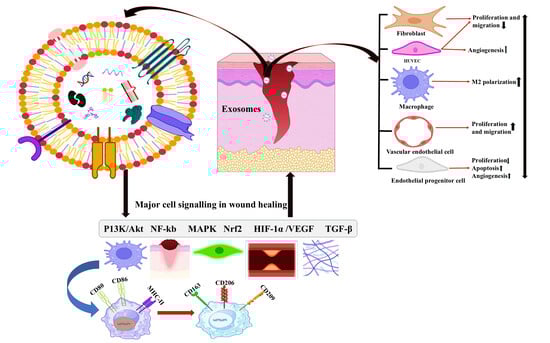
Graphical Abstract

1. Introduction

Mesenchymal stem cells (MSCs) have garnered significant interest in regenerative medicine due to their ability to self-renew, differentiate into multiple cell lineages, and secrete bioactive factors that facilitate tissue repair [1]. Their therapeutic potential is particularly notable in conditions characterized by impaired healing, such as diabetic complications. MSCs exert beneficial effects by modulating inflammation, enhancing angiogenesis, stimulating fibroblast and keratinocyte proliferation, and promoting extracellular matrix remodelling [2]. However, the efficacy of direct MSC transplantation is limited by challenges such as poor survival, restricted engraftment, potential tumorigenicity, and immunogenicity, prompting attention toward the paracrine mechanisms underlying their therapeutic actions. Among these mechanisms, extracellular vesicles, particularly exosomes, have emerged as critical mediators of MSC-induced tissue repair [3]. Exosomes are nanoscale (30–150 nm) extracellular vesicles that shuttle proteins, lipids, and various RNA species between cells, enabling intercellular communication. They originate from the inward budding of endosomal membranes to form intraluminal vesicles within multivesicular bodies, which are subsequently released into extracellular spaces upon fusion with the plasma membrane [4].
Exosomes possess distinctive physicochemical characteristics, including size, morphology, density, porosity, and surface charge, that influence their biological functions and can be analyzed using techniques such as atomic force microscopy, transmission electron microscopy, flow cytometry, dynamic light scattering, nanoparticle tracking analysis, and SPR-based nanosensors [5]. They are widely present in physiological fluids such as blood, urine, saliva, cerebrospinal fluid, amniotic fluid, and breast milk, highlighting their accessibility and potential for therapeutic applications. Diabetic foot ulcers (DFUs) represent a major clinical and economic challenge worldwide, arising from chronic, non-healing wounds due to hyperglycemia-induced oxidative stress, excessive inflammation, impaired fibroblast migration and proliferation, abnormal collagen deposition, and delayed re-epithelialization [6]. Conventional therapies, including debridement, dressings, and growth factor applications, often fail to achieve complete wound closure, underscoring the need for novel regenerative strategies. Mesenchymal stem cell exosomes (MSC-Exos) have demonstrated therapeutic effects comparable to MSCs in promoting diabetic wound healing [7]. They reduce inflammation, enhance angiogenesis, stimulate fibroblast function, and improve collagen remodelling, while avoiding many limitations of whole-cell therapy, such as tumorigenicity, immunogenicity, and complex storage requirements [8]. Their safety, stability, and ability to recapitulate MSC-mediated regenerative effects make MSC-Exos a promising and clinically feasible alternative for the management of DFUs.
This review, therefore, synthesizes and critically evaluates published evidence demonstrating that MSC-derived exosomes can act as independent, cell-free therapeutic agents that accelerate diabetic wound healing by modulating inflammation, angiogenesis, fibroblast activation, and antioxidant pathways. While exosomes may also be integrated with advanced wound dressings, hydrogels, or growth factor–based therapies to achieve synergistic effects, the primary focus of this review is on their standalone therapeutic efficacy. Preclinical studies report effective exosome doses ranging from approximately 1 × 10⁸ to 5 × 10¹⁰ particles per application, or 10–200 µg of total exosomal protein, depending on the experimental model. Most diabetic wound models employ topical or intradermal administration at intervals of 2–3 days over 1–2 weeks, resulting in significant improvements in re-epithelialization, angiogenesis, and macrophage polarization. These findings support the feasibility of exosomes as a direct therapeutic modality; however, standardized human-equivalent dosing still requires clinical validation.

2. Pathophysiology of Diabetic Wound Healing

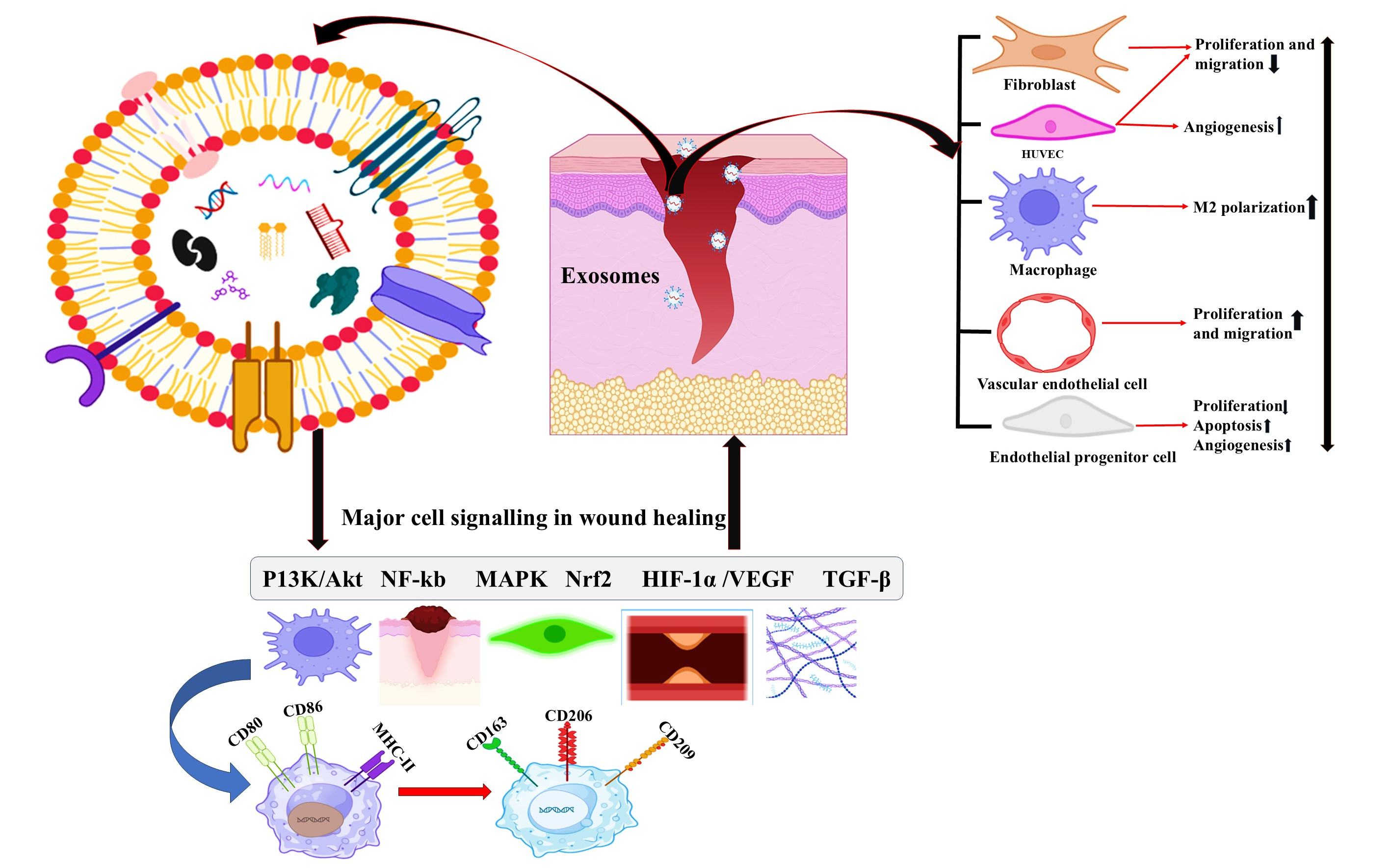
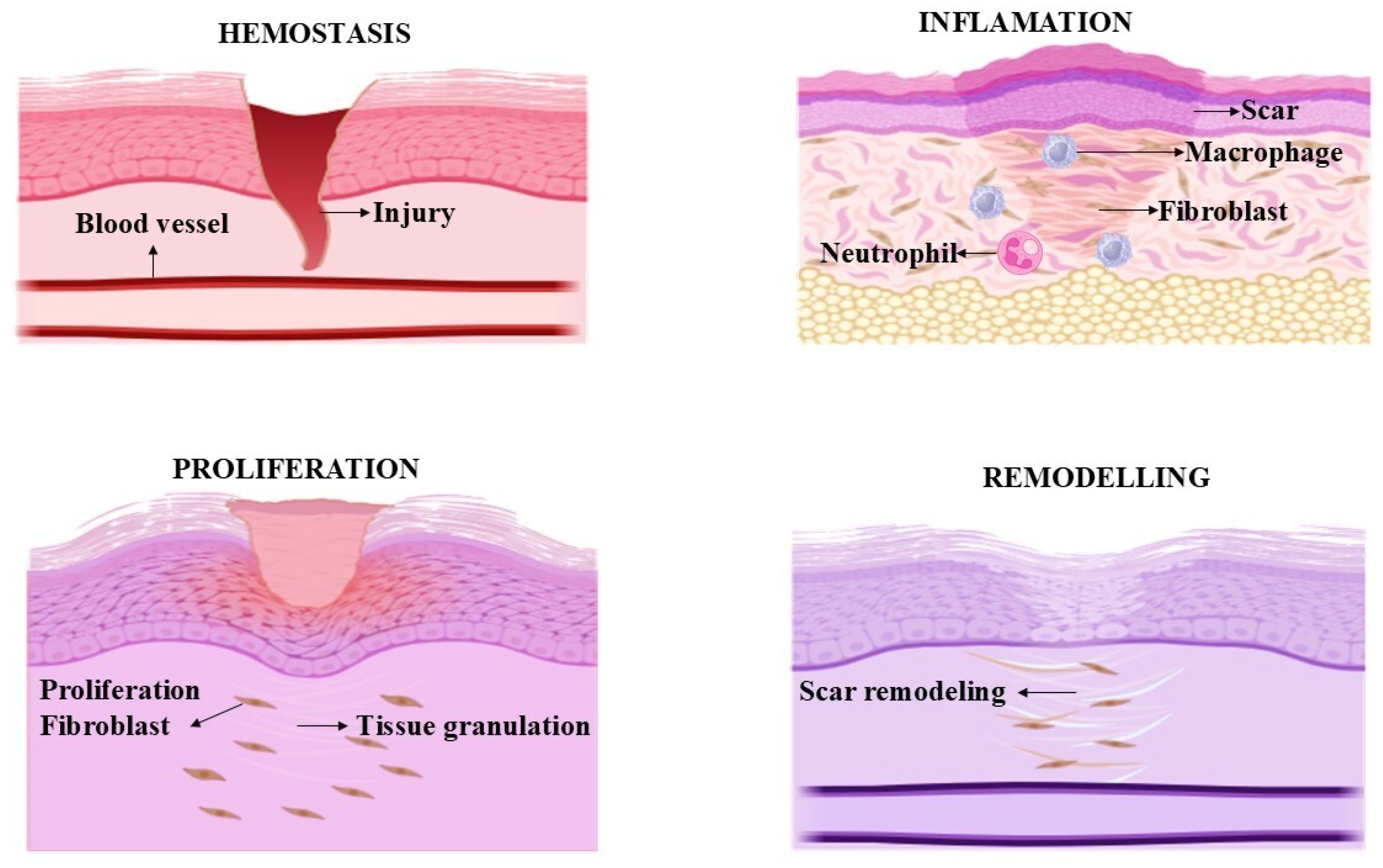
During wound healing, the recovery of physiological processes is a complex and dynamic process, involving four stages: the hemostasis phase, the inflammatory phase, the proliferative phase, and the remodelling phase (Figure 1). Vascular constriction and thrombin activation promote platelet aggregation, leading to the formation of thrombi and the release of certain proinflammatory mediators, including cytokines, which trigger the hemostasis phase (0 h after injury). Mast cells release 5-hydroxytryptamine and histamine, which increase vascular permeability at the wound site and promote the migration of neutrophils, monocytes, and chemokines to the injury site, resulting in an inflammatory response and the inflammatory phase, which lasts from one to three days. Cell proliferation occurs (4–21 days) due to the migration of lymphocytes and macrophages to the wound, which helps control infection. This process is facilitated by cytokines and growth factors released from cellular fragments that promote their degradation. Finally, during remodelling (around 21 days onward), regenerated epithelial tissue forms, myofibroblasts contract the wound, new vasculature develops, and scar tissue emerges [9,10,11]. In diabetes, this tightly regulated sequence becomes severely disrupted. Persistent hyperglycemia, neuropathy, and vascular insufficiency generate excessive reactive oxygen species (ROS), advanced glycation end products (AGEs), and microvascular injury, impairing angiogenesis and prolonging inflammation. Diabetic wounds exhibit high levels of M1 macrophages and neutrophils, elevated pro-inflammatory cytokines, tumour necrosis factor-alpha, interleukin-1 beta, interleukin 6 (TNF-α, IL-1β, IL-6), delayed pathogen clearance, reduced fibroblast and keratinocyte migration, defective re-epithelialization, abnormal collagen deposition, and impaired extracellular matrix (ECM) remodelling. These defects result in stalled, non-healing wounds with increased susceptibility to infection and amputation. Several pathological factors sustain chronicity in diabetic wounds. Hypoxia plays a major role, as diabetic patients experience inadequate oxygen supply and increased oxygen consumption in wound tissues. Hypoxia elevates oxygen-free radicals, intensifying inflammation and impairing fibroblast function and angiogenesis. Impaired angiogenic signalling, due to dysregulated TGF-α, TGF-β, FGF-2, VEGF, EGF, and HIF-1α, further reduces vascular growth and blood supply [9]. Macroangiopathy and microvascular dysfunction caused by decreased nitric oxide synthase (NOS) activity and impaired vasodilation exacerbate ischemia [12]. Chronic inflammation marked by persistent M1 macrophages reduces fibroblast-to-myofibroblast differentiation, suppresses TGF-β receptor expression, and diminishes collagen production [9]. Additionally, hyperglycemia-induced overexpression of matrix metalloproteinases (MMPs) accelerates degradation of ECM, growth factors, and receptors, worsening tissue breakdown and delaying healing [13]. Among these dysfunctions, stem cell secretomes, especially exosomes, offer promise as a cell-free therapeutic approach. Exosomes are nano-sized extracellular vesicles (30–150 nm) enriched with proteins, lipids, mRNAs, microRNAs, and various non-coding RNAs. They are secreted by multiple cell types, including MSCs, epidermal stem cells, adipose-derived stem cells (ADSCs), induced pluripotent stem cells (iPSCs), and skin-resident cells [14]. Among the dysregulated molecular events in diabetic wounds, the PI3K/AKT and NF-κB pathways play particularly critical roles [15]. The PI3K/AKT pathway normally supports angiogenesis, fibroblast proliferation, keratinocyte migration, and cell survival, but hyperglycemia suppresses this signalling, leading to impaired tissue regeneration [4]. Conversely, the NF-κB pathway is excessively activated in diabetic wounds, driving persistent inflammation, elevated cytokine levels, and a delayed transition of macrophages from the M1 to M2 phenotype [16]. Beyond PI3K/Akt and NF-κB, diabetic wounds are shaped by a network of interlinked inflammatory and stress-response pathways that are also modulated by stem cell-derived exosomes. Exosomes have been reported to regulate JAK/STAT signalling (which influences cytokine responses and macrophage phenotype), and to interact with MAPK family members (p38, JNK and ERK) that mediate stress responses, cell migration and proliferation. They also enhance Nrf2-driven antioxidant programmes that reduce hyperglycemia-induced oxidative stress and suppress inflammasome activation, actions that promote the M1-M2 macrophage shift and protect keratinocytes and endothelial cells from apoptosis. Moreover, exosomal cargos modulate TGF-β/Smad signalling to balance fibrosis versus regenerative matrix remodelling, and cross-talk among these cascades (e.g., NF-κB-STAT and Nrf2-NF-κB interactions) determines the net inflammatory tone in chronic diabetic wounds. Recognizing this broader signalling milieu clarifies why exosome therapies show pleiotropic benefits in preclinical DFU models and suggests multi-target engineering strategies for future translational development. The MAPK pathway also regulates keratinocyte proliferation, migration, and cellular stress responses, while the TGF-β/Smad pathway governs fibroblast differentiation, collagen synthesis, and extracellular matrix remodelling. Hypoxia-driven angiogenesis is primarily mediated through the HIF-1α/VEGF axis, which promotes neovascularization in ischemic diabetic wounds. Additionally, the JAK/STAT pathway contributes to immune regulation and cytokine signalling, whereas activation of the Nrf2 pathway by exosomes reduces oxidative stress and cellular apoptosis. Together, these pathways function as an integrated molecular network that restores angiogenesis, suppresses chronic inflammation, and accelerates tissue regeneration in diabetic wound healing [17]. In wound healing stem cell-derived exosomes have been shown to modulate these pathways by activating PI3K/AKT while inhibiting NF-κB, thereby promoting angiogenesis, reducing inflammation, and restoring a pro-healing environment. Exosomes also replicate key paracrine functions of their parent cells, promoting M2 macrophage polarization, reducing inflammatory cytokines, stimulating angiogenesis through pro-angiogenic miRNAs (e.g., miR-132, miR-146a) and VEGF, and activating PI3K/Akt, TGF-β/Smad, and Janus kinase/Signal transducer and activator of transcription (JAK/STAT) pathways. They enhance fibroblast proliferation, collagen synthesis, keratinocyte re-epithelialization, ECM remodelling, and vascularization, ultimately accelerating wound closure and mitigating oxidative stress and apoptosis in diabetic models [18].

3. Therapeutic Mechanism of Stem Cell-Derived Exosomes in Diabetic Wound Repair

3.1. Immune Response and Anti-Inflammation

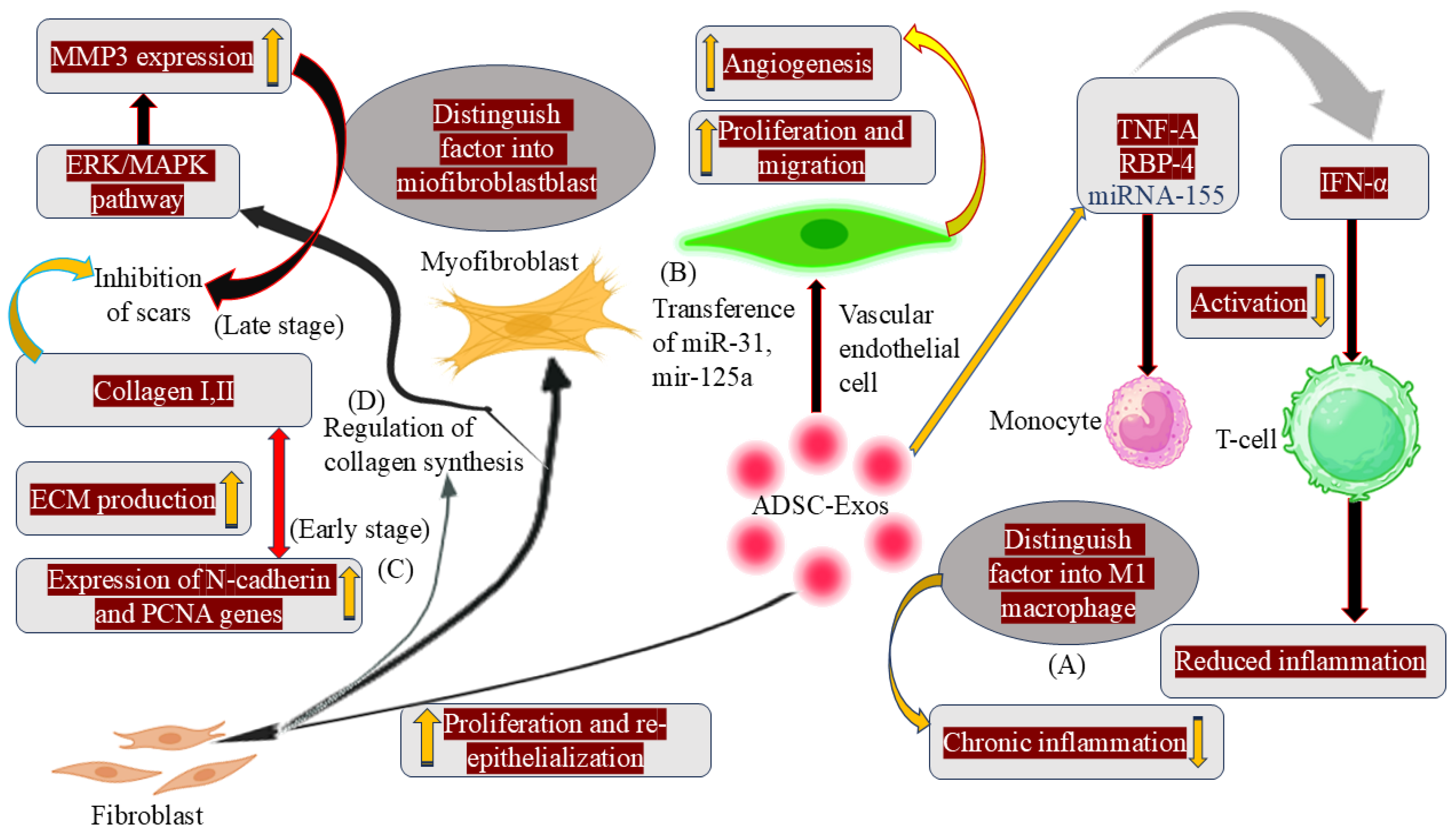
Inflammation is the body’s self-defence response to damaging stimuli. Chronic and excessive inflammation occurs during the inflammation stage, which is delayed; subsequently, wound healing is ensured by well-moderated inflammation [19]. Activated T regulatory cells can aid in wound healing by reducing the aggregation of M1 macrophages and the production of interferon alpha (IFN-α). By decreasing INF-α secretion, ADSC-Exos regulate the immune system by preventing T cell activation [20]. Additionally, immunoregulatory proteins such as TNF-α, macrophage colony-stimulating factor (M-CSF), and retinol-binding protein 4 (RBP-4) are found in adipose-derived mesenchymal stem cell exosomes (ADSC-Exos). Reports of M1 activation are context-dependent and mainly observed in obesity-related pathological conditions where ADSC-Exos enriched with miR-155 can transiently enhance M1 markers; however, in diabetic wound models, ADSC-Exos consistently reduce inflammatory cytokines and promote M2-driven tissue repair. Adipose-derived macrophages from obese mice may be induced to differentiate into M1 macrophages by miR-155 in ADSC-Exos, leading to chronic inflammation and an imbalance in the M1-to-M2 macrophage ratio in adipose tissue [21]. ADSC-Exos can also promote early inflammation by enhancing the expression of monocyte chemoattractant protein-1 and inflammatory protein-1-α [22].

3.2. Prompting Angiogenesis

In wound healing, angiogenesis provides a new blood supply and removes waste products from metabolism, aiding the wound healing process [23,24,25]. Additionally, ADSC-Exosomes aid in promoting angiogenesis [26]. Exosomes produced from human adipose stem cells (hADSCs) are rich in miRNA-125a and miRNA-31, which may be transported to vascular endothelial cells to promote angiogenesis and proliferation. MiR-125a has been shown to transfer to endothelial cells both in vitro and in animal studies [27]. Vascular endothelial tip cells may migrate and grow if MSC-Exos suppress the production of the angiogenesis inhibitor delta-like ligand 4 (DLL4). There has also been evidence of miRNA-31 transfer to endothelial cells [28], where human adipose-derived stem cell-derived exosomes (hADSC-Exos) enhanced angiogenesis and promoted migration in human umbilical vein endothelial cells by suppressing the expression of the anti-angiogenic gene HIF1-α in vascular endothelial cells. Additionally, ADSC-Exos may enhance capillary density and support skin flap survival, thereby contributing to the healing of ischemia–reperfusion damage [29].

3.3. Proliferation and Re-Epithelialization of Skin Cells

During the proliferation phase, epithelial cells increase and migrate towards the wound centre to assist fibroblasts in multiplying to produce the ECM. In skin regeneration, proliferation, and re-epithelialization are very necessary [22]. Internalized by fibroblast, ADSC-Exos promote collagen production, migration, and proliferation in a dose-dependent manner [23]. In vivo tests have demonstrated that ADSC-Exos optimize fibroblast characteristics, thereby accelerating cutaneous wound healing. Lastly, to encourage dermal fibroblast proliferation and differentiation, which accelerated skin regeneration, hADSC-Exos up-regulated 199 miRNAs and down-regulated 93 miRNAs [24].

3.4. Collagen Remodelling and Scar Hyperplasia

Scarring is a morphological change in the skin that occurs during the healing process of a wound. Extensive burns and severe burns typically lead to scarring, which compromises organ function and appearance [25]. ADSC-Exos can prevent scar hyperplasia by controlling collagen remodelling. Exosomes minimize scarring in the late stage by preventing the creation of new collagen [23]. In contrast, in the early stage, they encourage collagen remodelling by stimulating the synthesis of types I and III collagen. Additionally, by controlling fibroblast differentiation and gene expression, ADSC-Exos can promote the regeneration of the extracellular matrix, thereby facilitate wound healing and inhibiting the formation of scars. In vivo ADSC-Exos enhanced the ratio of transforming growth factor-beta3 (TGF-β3) to transforming growth factor-beta1 (TGF-β1), but inhibited the development of fibroblasts into myofibroblasts. In skin fibroblasts, ADSC-Exos produced MMP-3, resulting in a high ratio of MMP-3 to tissue inhibitor of metalloproteinase-1 (TIMP-1). This helps the ECM to reconstruct, which lessens scarring. In contrast, ADSC-Exosome promoted collagen deposition in diabetic mice, which improved in the late stage of wound healing [26]. Still, this results in scar hyperplasia, which hinders the healing process. These contentious findings may be a consequence of the intricate roles that collagen and exosomes play at various stages of wound healing. Further research is necessary to investigate the effects of ADSCs-EXOs on collagen deposition and their relationship to scar growth (Figure 2).

4. Biology, Biogenesis, and Composition of Exosomes

4.1. Biogenesis

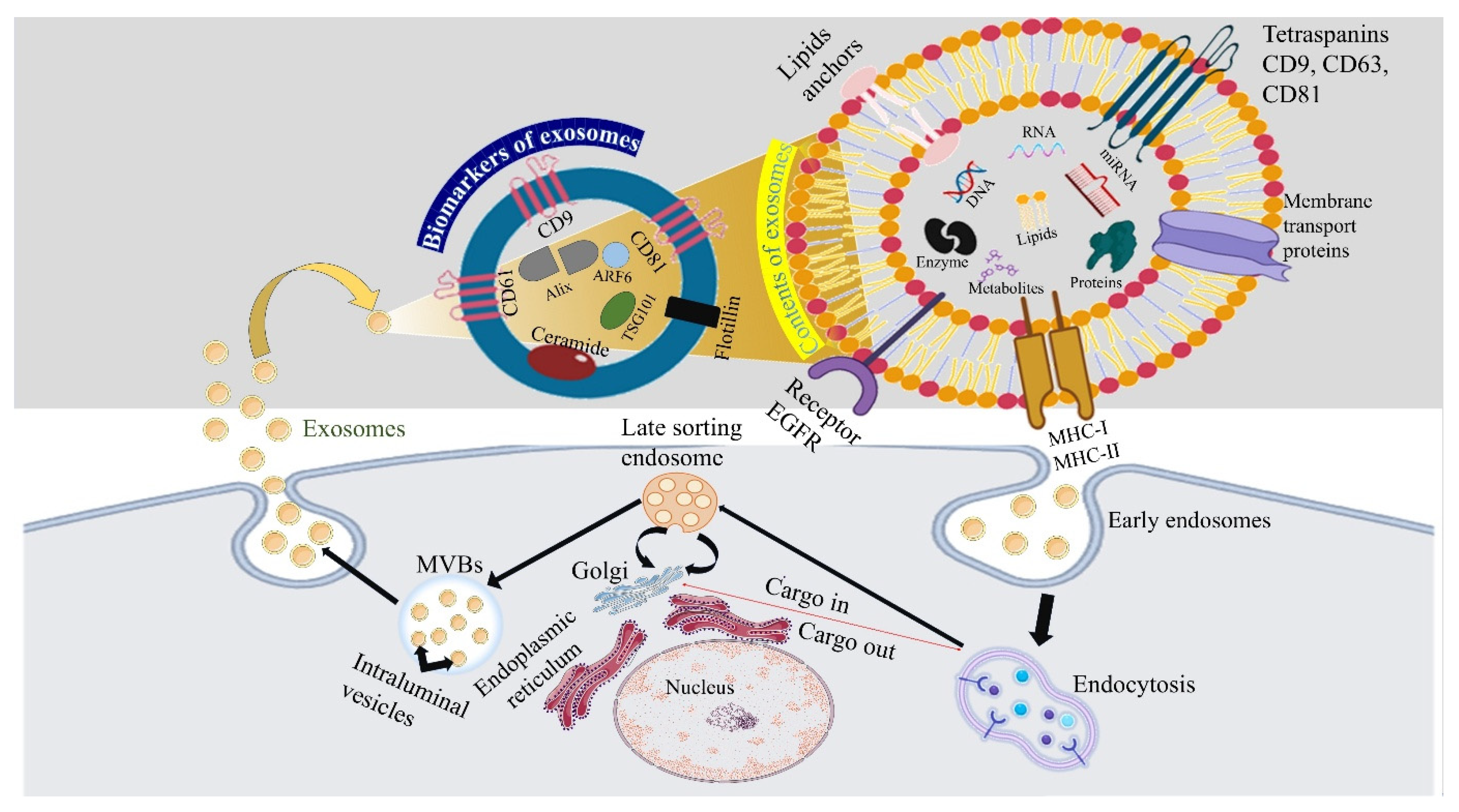
Late endosomes are created by the restricted multivesicular Body (MVB) membrane budding inward, and these endosomes become endosomes constitutively. The development of intraluminal vesicles (ILVs) within large MVBs is the consequence of late endosomal membrane invasion [27]. During this phase, the cytosolic components are absorbed and confined within the ILVs, while certain proteins are integrated into the invaginating membrane. The majority of ILVs fuse with the plasma membrane and are released into the extracellular environment; these are known as exosomes (Figure 3) [28]. Instead, these substances are transported to lysosomes, where they are broken down and processed. When prepared artificially, canonical exosomes have a characteristic biconcave or cup-like form; when observed under transmission electron microscopy, they appear spherical in solution [29]. Their density on sucrose gradients usually ranges from 1.13 g/mL (exos derived from B cells) to 1.19 g/mL (exos derived from epithelial cells) [30]. There is evidence that the endosomal sorting complex required for transmembrane transport (ESCRT) function is necessary for the production of ILVs. Four distinct protein ESCRT (0 through III) make up this complex protein machinery, which cooperates to promote vesicle budding, protein cargo sorting, and MVB formation. The ubiquitin-binding subunits of ESCRT-0 recognize and sequester ubiquitinated proteins in specific endosomal membrane domains, thereby initiating the ESCRT process. The complete complex will merge ESCRT-III, a protein complex involved in promoting budding processes, after it comes into contact with the ESCRT-I and ESCRT-II complexes. The sorting protein vascular protein sorting 4 (Vps4) provides the energy for the ESCRT-III complex to finally form the MVB membrane after the buds have been cleaved to create ILVs [31]. Although there is disagreement over whether ESCRT controls exosome release, exosomes separated from different cell types have been previously found to contain distinct ubiquitinated proteins and ESCRT components. Alix, a characteristic exosomal protein linked to many ESCRT (TSG101 and CHMP4) proteins, has also been shown to be involved in exosomal cargo selection through interaction with syndical, as well as endosomal membrane budding and abscission [32]. A hypothesis linking ESCRT function to exosomal biogenesis was derived from these data. Notably, new data suggest an alternative route that sorts exosomal cargo within the endosomal membrane. It is believed that these microdomains are substantially concentrated in sphingomyelinases, which hydrolytically remove the phosphocholine moiety to create ceramides [33]. Ceramides are known to cause microdomains in model membranes to coalesce and separate laterally. Furthermore, domain-induced budding may be promoted by the spontaneous negative curvature of the endosomal membrane caused by the cone-shaped structure of ceremide. This ceramide-dependent method, therefore, highlights the crucial role that exosomal lipids play in exosome biogenesis [34]. Additionally, proteins like tetraspanins are involved in protein loading and exosome formation. Tetraspanins-enriched microdomains (TEMs) are widely distributed specialized membrane platforms that are used to compartmentalize signalling proteins and receptors in the plasma membrane [30]. Target receptors and intracellular components have been demonstrated to be sorted towards exosomes by TEMs in conjunction with the tetraspanin CD81 [35]. It appears that several specialised processes guarantee the precise sorting of bioactive compounds into exosomes. These mechanisms, which can be either ESCRT-dependent or independent (involving lipids and tetraspanins), may behave differently depending on the type of cell [30]. Plasma membrane-budded microvesicles (MVs) and apoptotic bodies are two additional types of membrane vesicles that cells produce, in addition to exosomes. The outward budding of the plasma membrane produces diverse populations of membrane vesicles, known as MVs. They are mostly classified as products of red blood cells, endothelial cells (ECs), and platelets. They range in size from 100 to 1000 nm and have different forms. According to reports, MVs have a density of 1.25–1.30 g/mL. The last stage of apoptotic bodies is discharged from the plasma membrane. They are similar in size to platelets, ranging from 1 to 5 mm, and contain a variety of intracellular fragments, cellular organelles, membranes, and cytosolic contents.

4.2. Cargo

Exosomes cargo is known to control biological functions essential for pregnancy and female reproductive health. Exosomes cargo and surface markers, for instance, have been shown to vary throughout the menstrual cycle. Trophoblast cell adhesion, migration, invasion, and extracellular matrix remodelling are all regulated by human endometrial exosomes [36]. Similarly, miRNA cargo and the cyclic control of endometrial embryo cross-talk and embryo implantation. Through their modulation of immunological responses, placentation, vascular development, and metabolism, placental exosomes also support the health of the mother, fetus, and reproductive system [37]. Pre-eclampsia, gestational diabetes mellitus, and polycystic ovary syndrome are among the female reproductive disorders that have been connected to dysregulation of the quantity of exosomes discharged into the bloodstream or their composition [38]. Additionally, studies on animals indicate that exomes may have an impact on premature birth in mice. Consequently, it has been proposed that exosomes might play a key role in the pathogenesis of endometriosis [39].

5. Engineering, Isolation, and Manufacturing of Exosomes

Exosome isolation methods are numerous, including ultracentrifugation (UC), size-exclusion chromatography (SEC), immunoaffinity capture, and tangential flow filtration (TFF), but considerations include scalability, cost, yield, and purity.

5.1. Ultracentrifugation (UC)

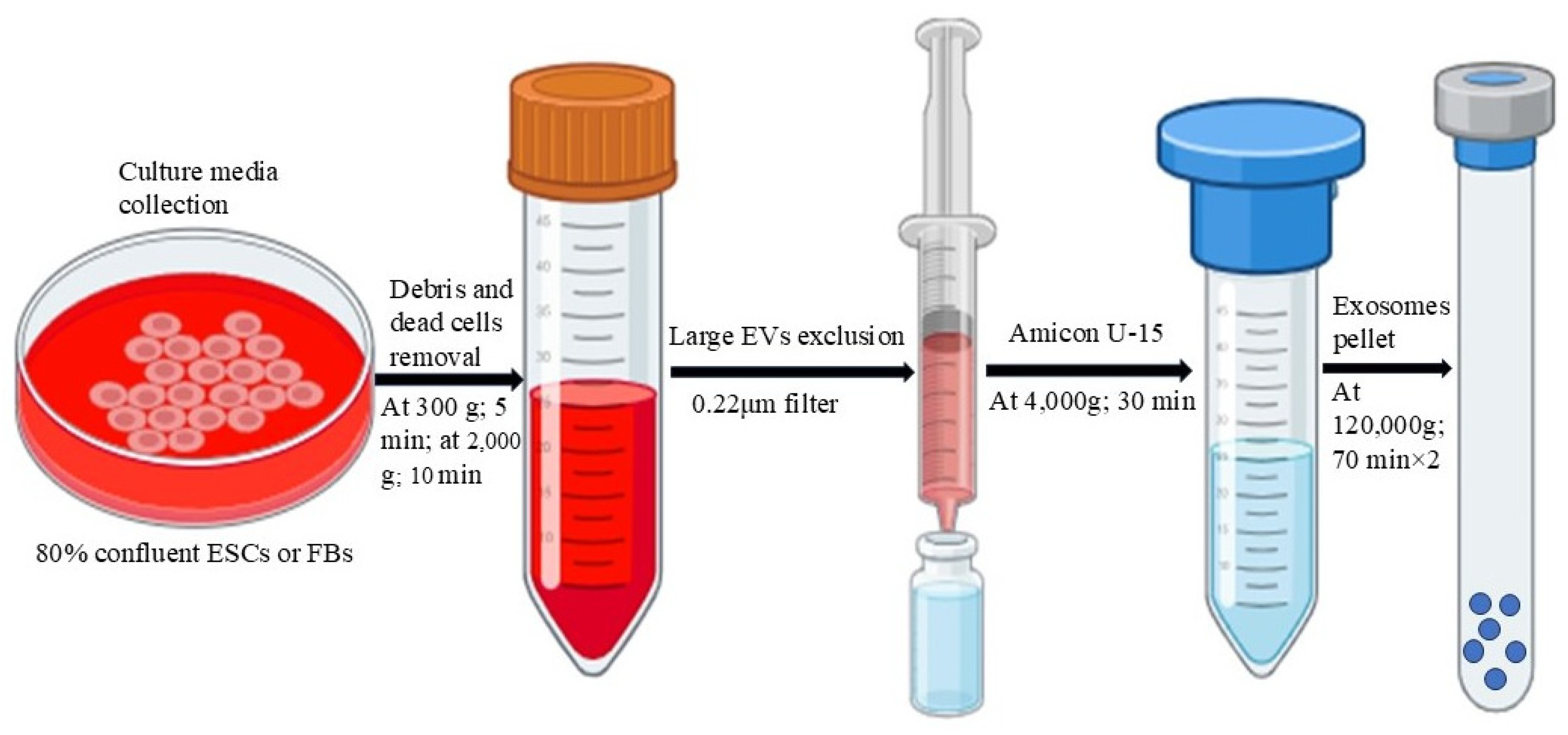
This is the most common technology in research that uses UC to separate exosomes [40]. The basic principle of ultracentrifugation is based on differences in density and size between exosomes and impurities in the sample. The sample is centrifuged at different weights: 300× g, 2000× g, and 10,000× g. The cell fragments, larger cells, and dead cells could be eliminated. In some strategies, the filtration process can be an alternative to these low-speed centrifugal steps for the large-scale preparation of new exosomes. To extract exosomes, the supernatant was then ultracentrifuged twice at higher speeds (100,000–120,000× g) [41]. The centrifugate needs to undergo UC to concentrate the size and density, without selectively isolating exosomes. One of the most common advantages of this technology is that it is suitable for separating most samples and has low operating expenses. In this technology, processing time exceeds 4 h, and reproducibility is poor/unstable. Second, despite multiple rounds of centrifugation, the nub may still contain significant impurities (co-purifying protein aggregates, virions, and subcellular organelles), which may interfere with mass spectrometry or protein quantification [42]. To improve the separation of exosomes, density gradient centrifugation is best for ultracentrifugation. Density gradient centrifugation differs from UC in that it is used for two or more separation media with different densities, such as sucrose and iodixanol [43]. The specific actions also involve removing large impurities through low-speed centrifugation, where the sample is placed on top of the UC separation medium. This technology advantage is higher isolation purity (Figure 4) [44].

5.2. Ultrafiltration

This is another technique to obtain exosomes from a variety of sources, such as culture medium and biological fluid [45]. This process, involving extracellular vesicles suspended in a solution, can be separated by size or molecular weight. In this technique, different forces are applied to pass through a selective membrane. Centrifugal forces, pressure, and vacuum are applied for ultrafiltration by a membrane that is constructed from materials with low protein affinity [46]. Ultrafiltration is typically used in conjunction with other exosome isolation techniques [47]. Different protocols are employed in this method as a cleaning step, particularly following UC, such as precipitation methods [48,49]. Selectively separate exosomes, some procedures expressed by cryo-electron microscopy, dynamic light scattering, and Western blot analysis for CD63 and CD81 [50]. Nevertheless, exosomes can also be isolated by ultrafiltration using selective filtration membranes. Typically, some protocols are faster, easier, and less costly than UC [51]. Typically, the filtration process combines size and molecular weight. Filters with pore sizes of 0.8, 0.45, and 0.22 µm, as well as some membranes with a cut-off range of 10–100 kDa, are used in filtration [52]. Since the end product will be highly concentrated, the levels of exosome-derived RNA and protein are also much more concentrated than when most other methods are used. This technology is used for highly concentrated urinary exosomes that may be used as biomarkers of renal diseases [53].

5.3. Size-Exclusion Chromatography (SEC)

SEC is a technology used for the separation of exosomes based on differences in molecular size, purity, and yield, with minimal effects on exosomal structural integrity. In fast-performance liquid chromatography (SE-FPLC), inhibitors of clinical translation potential for high-yield isolation (>88%), rapid processing (<20 min), and successful removal of albumin and lipoprotein contaminations [54]. SEC technology is broadly compatible with a variety of biological sources, such as cell culture media, serum, plasma, urine, and saliva [55]. Due to these advantages, SEC is more effective for clinical applications, thanks to its exceptional balance of yield, purity, and standardization potential [56,57].
On the other side, immunoaffinity-based methods use biochemical specificity to bind exosomal surface markers (CD9, CD63, CD81) by matching antibodies [40]. These days, methods use aptamers and tailored antibody fragments on various substrates, which increases selectivity and enables multiplexed capture for the simultaneous isolation of various exosome subpopulations [58]. This method enables the specificity of immunoaffinity capture with the operational benefits of magnetic separation, allowing for automated processing and increased capacity.
Isolation is performed based on the application requirements of the final product, the desired level of purity, the sample size, and the downstream analysis needs. Comparative analysis indicates that SEC has shown the most promise in clinical translational benchmarking, striking an effective balance between yield, purity, and automation. Although the traditional gold standard is UC, immuno-magnetic separation is becoming a viable alternative to clinical workflow high throughput, in spite of the fact that it is more expensive. PEG precipitation, which is inexpensive and scalable, typically requires additional purification, thereby limiting its direct clinical application. Microfluidic approaches are primarily limited to research environments due to the complexity of the equipment and low throughput. To achieve temporary clinical use, automated SEC systems are gaining popularity due to their reproducibility and standardization capabilities. However, the discipline continues to encounter major challenges regarding protocol harmonization, enhancing cost efficiency, and scalability to support large-scale clinical implementation [59].

5.4. Tangential Flow Filtration (TFF) and Dead-End Filtration (DEF)

DEF refers to a filtration mode in which the direction of liquid flow is perpendicular to the filtration direction. Due to the rapid collection of the filter cake on the membrane surface, the permeation rate is reduced, resulting in the complete blockage of the membrane. Therefore, DEF is best suited for handling only small-scale liquids. In TFF, the filtration flow is oriented perpendicular to the direction of filtration. The TFF method is more effective because it forms a filter cake on the membrane surface, thereby increasing membrane utilization efficiency and enhancing the operational stability of the system [60].

5.5. Quality Control for MSC-Derived EVs

Developing QC is crucial for MSC-EV therapies. Comprehensive profiling of omics and rigorous characterization assays are necessary for determining the identity, potency, and stability of EVs However, this makes the standardized benchmarks for quality by design (QbD) approaches for critical quality attributes important due to the intrinsic unpredictability in upstream processes. Activities like EV-TRACK have become vital for encouraging coordination to improve best practices and establish robust field standards. A unified regulatory pathway is essential for governing MSC-EV therapies and making them accessible to patients worldwide. The development of commercial regulatory agencies such as the U.S. Food and Drug Administration (FDA) contributes to the safety, purity, and quality of pharmaceutical products. These agencies contribute to every stage of pharmaceutical manufacturing, from the initial raw materials to the release of finished products. According to current good manufacturing practice (cGMP), in MSC-EV production, the pharmaceutical industry must design, implement, and maintain procedures, facilities, and equipment, as well as conduct rigorous testing and qualification of raw materials. Manufacturing process facilities should be validated, another aspect of quality control, and an assurance system for consistently monitoring the production area. Finally, the necessary documentation is required to ensure adherence to the cGMP requirements [61,62]. In cGMP upbringings, we appreciate that the quality, safety, and consistency of MSC-EV therapies are ensured. In the working process, a regulatory approval and successful commercialization are required. In MSC-EVs, therapies serve as excellent examples of how to apply these concepts [62,63]. The crucial function of QC is demonstrated by the cGMP-compliant manufacturing method used for an MSC-EV treatment that targets graft-versus-host disease. when standard quality products, along with clinical results that are observably successful, are achieved, these therapies will receive marketing approval, highlighting the sustainability and efficacy [64]. MSC-EV therapy utilizes the QbD concept from the early development stages of neurodegenerative diseases, ensuring process reliability, efficient scale-up, and adherence to predetermined product quality requirements. In diabetic wound healing, MSC-EV therapies are a fully automated manufacturing procedure to reduce human intervention and enhance product sterility. This is an advanced technology to optimize production efficacy [65]. Liang et al. (2025) studied and described an in vivo study of pharmacokinetics experiments at Peking University Third Hospital (approval number: M2022400 for human and A2022057 for animal), which were approved by the Institutional Animal Ethics Committee [66]. This in vivo study concluded that ADSC-derived exosomes and dECM-collagen bilayer patches increased collagen deposition and alignment, promoted granulation tissue development, and sped up wound healing in a diabetic animal model. In addition, they reduce bacterial colonisation, promote angiogenesis, and favour M2 macrophage polarisation, all of which suggest immunomodulatory actions. Transcriptomic investigations reveal that regenerative pathways, including the PI3K-Akt, cAMP, calcium signalling, and cytokine interactions, are activated. These pathways promote angiogenesis, ECM remodelling, immunological control, and epithelial regeneration. An in vitro study concluded that ADSC-Exos can accelerate tissue regeneration by increasing angiogenesis through enhanced tube formation and VEGF production, as well as by dose-dependently promoting the migration and proliferation of fibroblasts, keratinocytes, and endothelial cells. ADSC-Exos are added to collagen and decellularized porcine pericardium bilayer patches to enhance distribution. The collagen layer promotes cell attachment, maintains a fibrous architecture while eliminating cellular debris, and ensures advantageous mechanical characteristics, water absorption, and controlled degradation for wound healing [67].

6. Classification of Exosome Isolation Methods and Their Analytical Performance

Isolation of exosomes is a critical step that directly influences downstream analyses, therapeutic applications, and reproducibility. Current isolation strategies rely on physical, physicochemical, biochemical, or microfluidic principles, each offering specific advantages and limitations. Traditional methods, such as differential UC and ultrafiltration, separate exosomes based on size and density, whereas precipitation and chromatography approaches utilize polymer affinity or physicochemical interactions to enrich vesicles. Newer microfluidic and immunoaffinity-based platforms provide faster processing and higher specificity, making them suitable for clinical-grade exosome preparation. However, no single method yields exosomes that are simultaneously high-purity, high-yield, intact, and scalable. Therefore, selecting an appropriate isolation strategy depends on the intended application, the sample type, required purity, available infrastructure, and downstream analysis. Various exosome isolation methods are shown in Table 1.

7. Characterization Techniques for Exosomes

The overall quality of the separated exosomes may be assessed using quantitative characterization methods, along with the amount and purity of biomolecules such as proteins, lipids, and nucleic acids [68]. Many factors are crucial, as will be covered in more detail below.

7.1. Total Exosomes Count

Exosome yield is calculated by particle-counting techniques such as electron microscopy (EM), resistive pulse sensing (RPS), dynamic light scattering (DLS), fluorescence correlation spectroscopy (FCS), flow cytometry, and nanoparticle tracking analysis (NTA) [69,70]. The most popular techniques are NTA, FCS, and flow cytometry. DLS and RPS are not accurate for counting since they frequently inflate the total number of particles.

7.2. Protein Content

The quality of protein (in mass) contained in exosomes can be used to assess their purity. The proportion of protein mass in relation to the total number of exosome particles can be used to determine the purity of a sample [71]. Mass spectroscopy and enzyme-linked immunosorbent assays (ELISAs) are used to identify and quantify protein markers [72]. One high-throughput technique for chemical identification is mass spectrometry, which measures the mass-to-charge ratio of ions. Mass spectrometry techniques used in exosomes proteomics require minimal sample pre-processing to avoid exosomes’ destruction during analysis [73]. Mass spectrometry and bioinformatics can be used to characterize proteins unique to exosomes [71]. ELISA is a widely used technique for using antibodies to analyze proteins and peptides quantitatively [74]. Exosome profiling and diagnosis have made use of ELISA, which enables the identification of protein markers and the measurement of tumour antigens on exosomes and exosome-specific antigens [75]. ELISA may be used to assess some protein markers at a low cost, while mass spectrometry can be used to quantify proteins in complex biological samples [76].

7.3. Lipid Composition

The lipids present in exosome membranes allow them to be classified into several groups. By determining the proportion of total exosomes that contain a specific lipid, one can assess the purity of targeted exosomes [71]. Techniques for quantifying lipids include sulfo-phospho-vanillin (SPV) tests, fluorescence microscopy, and Fourier transform infrared (FT-IR) spectroscopy [77]. SPV tests measure lipid concentrations, as phosphovanillin reacts with carbonium ions from lipids in the presence of sulfuric acid to produce a colourful product. Reliable results require sample concentrations of at least 50 µg/mL of lipid. Using fluorescence microscopy with lipophilic dyes like PKH26 or DiR to label plasma membranes, and comparing exosome images to a reference standard, can estimate lipid content in exosomes [78,79]. FT-IR offers a faster, more accurate, and more consistent method for lipid quantification, with lower cost and sample volume requirements compared to SPV and fluorescence microscopy [71,80]. However, because the C-C and C-H vibrational bands of cholesterol and other sterols are often confused with those of other substances, FT-IR is less sensitive to these compounds [81]. The lipidomics characterization of exosome requires more advanced analytical/hyphenated techniques due to the structural diversity and low abundance of specific lipid classes. Modern methods such as liquid chromatography-mass spectrometry (LC–MS/MS), ultra-high-performance liquid chromatography (UHPLC) coupled with high-resolution mass spectrometry (HR-MS), and shotgun lipidomics (direct infusion MS) enable precise quantification of phosphatidylserine, sphingomyelin, ceramides, cholesterol esters, and glycerophospholipids present in MSC-derived exosomes. Techniques such as MALDI-TOF MS and ion mobility spectrometry provide additional structural resolution of isomeric lipid species. These analytical platforms allow identification of lipid signatures responsible for exosomal stability, membrane fusion, immunomodulatory effects, and biodistribution. Incorporating advanced lipidomics into exosome research will improve standardization, and enhance translational potential for diabetic wound healing [82].

7.4. DNA/RNA Analysis

Exosomes can carry RNA and DNA from one cell to another. The ratio of the targeted DNA/RNA sequences to the total number of exosomes may also be used to assess the purity of exosomes. Exosome DNA/RNA studies may employ a variety of nucleic acid quantification techniques, including polymerase chain reaction (PCR), next-generation sequencing (NGS), and microarrays [83]. Because of its greater sensitivity and accuracy than NGS and microarray technology, PCR is regarded as the gold standard [84].

8. Stem Cell Sources and Their Therapeutic Potential

Stem cells are defined as cells that can develop into various cell lineages and can self-renew. The cells are found in each stage of human development, from the early stage to the end of life. In the human body, stem cells are undifferentiated cells that differentiate into specialized cells, which comprise the various tissue types. Since they are needed for our body’s brain, bones, muscles, nerves, blood, skin, and other organs to form, grow, maintain, and heal, they are required [85].

8.1. Stem Cell Source Determination

Increasing expectations for regenerative treatments through the application of stem cell therapies have led to a growing selection of stem cell types and sources, and a diversification of stem cell therapies from autologous to allogenic to iPSC [86]. In addition, all types of stem cell treatments must be assessed on the same basis, based on clinical experience, among other factors [87]. Identifying the strengths and weaknesses of each stem cell type is crucial to determining the maximum therapeutic effect of stem cells. This approach will match the best stem cell types to specific disorders, encouraging disease-specific stem cell therapeutics. Below, we discuss the characteristics of various stem cells.

8.2. ADSC-Exos

In 1981, Terms et al. identified vesicle structure with ATPase activity, which was isolated from cell culture and coined as exosomes [88]. Subsequently, in 1983, sheep reticulocytes were observed to have EVs with an average diameter of 100 nm, which are in exosomes [89].
Primarily, human ADSCs are isolated from adipose tissue that has been surgically removed or liposuctioned [90]. Mouse ADSCs are isolated from adipose tissue taken from the inguinal region [91,92]. The enzymatic digestion method is the commonly used technique for isolating ADSCs. This method involves several steps, including tissue fragmentation, enzymatic digestion, filtration, centrifugation, and cultivation, to isolate ADSCs [90]. ADSCs were repeatedly centrifuged at 300, 2000, and 10,000 rpm for 10 and 45 min, and the supernatant was collected. Then, the supernatant was diluted with 120,000× g of ultracentrifugation for 70 min to obtain a sediment suspended in phosphate-buffered saline (PBS), and it was stored at −80 °C. Then, authors observed the movement and morphology of the vehicles using transmission electron microscopy (TEM) (HT7700; Hitachi, Tokyo, Japan). Nanoparticle tracer vehicles (NTV) are analyzed for particle size distribution and concentration of the extracellular vehicle. The activation of protein markers, such as CD9 (Abcam, Cambridge, UK; Ab92726), CD63 (Abcam, Cambridge, UK; Ab134045), and Calnexin (Affinity Biosciences Changzhou, China; Af5362), was identified by Western blotting. The ADSCs’ isolated extracellular vesicles were administered to HBMECs for 24 h, labelled with PKH26 (Sigma-Aldrich, St. Louis, MO, USA; PKH26PCL) and observed under a laser scanning confocal microscope [93]. ADSC-Exos do not promote M1 macrophage formation; instead, they downregulate M1-associated pro-inflammatory pathways and enhance M2 macrophage polarization through miRNA-mediated regulation of PI3K/Akt, NF-κB, JAK/STAT, and Nrf2 signalling.

8.3. Embryonic Stem Cells (ESCs)

Cells from the inner cell mass of blastocysts, which can differentiate into multiple cell types, are used in stem cell treatments. Multipotent adult stem cells (ASCs) exist with the ability to regenerate and repair damaged tissue. An alternative to embryonic stem cells, iPSCs are adult cells reprogrammed to resemble ESCs in certain ways. A wide range of illnesses and injuries can be treated using this therapeutic strategy by harnessing the regenerative potential of various stem cell types. Stem cell treatment has enormous potential to change healthcare and improve patient outcomes. It could treat diabetes, spinal cord injuries, and cardiovascular conditions. Because stem cells are malleable, they can develop into numerous kinds of cells, which makes them useful for repairing and replacing damaged cells with suitable ones. Customized therapies based on each patient’s unique genetic profile are made possible by the in vitro manipulation of stem cells [94]. Stem cell therapy can also lessen the risk of rejection and lower the demand for organ transplants. Treatments for various illnesses could become more effective and long-lasting as a result of this innovative approach to healthcare. The future of regenerative medicine appears increasingly hopeful as researchers continue to highlight the regenerative potential of stem cells through ongoing research and advancements. Stem cell therapy has shown potential in treating a wide range of illnesses and injuries as a result of ongoing scientific research and technological advances [95].

8.4. Mesenchymal Stem Cells (MSCs)

Mesenchymal cells describe the cell’s embryonic origin. MSCs can be extracted from various sources, including different tissues. There are bone marrow mesenchymal stem cells (BM-MSCs), human umbilical cord mesenchymal stem cells (hUC-MSCs), ADSCs, urine-derived stem cells (USCs), and placenta-derived mesenchymal stem cells (PD-MSCs). Mesenchymal stem cells, which can develop into distinct mesodermal tissues, were formerly known as fibroblast colony-forming units or bone marrow stromal cells [64]. Among the three main layers that develop early in embryonic development is the mesoderm. Many connective tissues, including muscle, bone, cartilage, and fat, as well as cells that form blood vessels, blood cells, and the urogenital system [96]. Furthermore, MSCs are useful for the ectoderm- and endoderm-derived cells, such as those found in the liver and nerve [97]. The capacity for differentiation of MSCs may depend on the culturing microenvironment, amplification conditions, and the source of stem cells. Specific hormones, growth factors, or differentiation agents can all trigger the differentiation process [98].

8.5. Endothelial Progenitor Cells (EPCs)

EPCs are stem-like cells found in the blood and bone marrow and participate in the maintenance of endothelial homeostasis and formation of new vessels, and it is commonly known that they are linked to EPC dysfunction and decline [99]. EPCs emit paracrine substances that affect cell biology in injured organs, including growth factors, cytokines, chemokines, and bioactive lipids [100]. EPC-derived factors can be classified into five major groups based on their biological functions and molecular characteristics. The first group includes neuropilins, semaphorins, and VEGFR1, 2, and 3, which play crucial roles in vasculogenesis and angiogenesis. The second group comprises factors that regulate interactions between endothelial cells/EPCs and immune cells, influencing proliferation, migration, survival, apoptosis, angiogenesis, immunogenicity, and immune modulation; key members include TNF-α, tumor necrosis factor receptor 2 (TNFR2/P75), tumor necrosis factor receptor 1 (TNFR1/P55), and tumor necrosis factor-related apoptosis-inducing ligand (TRAIL). The third group encompasses various growth factors such as platelet-derived growth factor (PDGF), bone morphogenetic protein (BMP), VEGF, transforming growth factor-beta (TGF-β), basic FGF2, insulin-like growth factor-1 (IGF-1), and epidermal growth factor (EGF), all of which are involved in tissue regeneration and angiogenic signaling. The fourth group includes small non-coding RNAs, such as microRNAs (miRNA), long non-coding RNAs (lncRNA), ribosomal RNAs (rRNA), and transfer RNAs (tRNA), that exhibit regulatory functions at the genetic and epigenetic levels. The fifth group consists of molecules associated with ligand internalization, endocytosis, migration, and invasive capacity, including urokinase plasminogen activator (uPA), its urokinase plasminogen activator receptor (uPAR) and urokinase plasminogen activator receptor-associated (uPARAP), tissue-type plasminogen activator (tPA), neuropilins, VEGFR1-3, platelet endothelial cell adhesion molecule-1 (PECAM-1), intercellular adhesion molecule-1 (ICAM-1), VE-cadherin, ephrins, and epidermal growth factor-like domain 7 (EGFL7) [101].

8.6. iPSC-Derived Cells

iPSC technology has become a new human-based model for in Vitro research on illnesses and development. Similar to stem embryonic stem cells, iPSCs are distinguished by their capacity and ability to self-renew. Additionally, iPSCs preserve the donor’s genetic heritage, making them a valuable tool for applications such as drug development, cell replacement therapy, and disease modelling. Any of the three germ layer lineages may be produced from iPSC lines, and effective methods for producing the majority of somatic cell types are now accessible [102]. Any differentiation process needs a pure beginning population of pluripotent stem cells to be successful. Present a reliable technique for cultivating, growing, and cryopreserving a supply of superior iPSCs appropriate for a variety of subsequent uses. Four reprogramming factors (also known as Yamanaka factors), octamer-binding transcription factor 4 (Oct4), sry-related high mobility group box 2 (Sox2), kruppel-like factor 4 (Klf4), and myelocytosis viral oncogene (cMyc), are normally expressed in ectopic expression in adult somatic cell types to produce iPSCs [103]. Several different strategies for introducing these components are available, including non-integrating viral vectors (such as Adenovirus and Sendai virus) and integrating viral vectors (such as retroviral and lentiviral delivery). And other techniques without deoxyribonucleic acid (DNA), such as mRNA or protein delivery [104]. Although incorporating viral vectors yielded relatively high reprogramming efficiencies, in previous research, concerns over their potential to modify genomes made them less appropriate for clinical application, which has led to an alternative technique in recent years [105]. Traditionally, pluripotent stem cells are cultured on a monolayer of feeder cells, such as mitotically inactivated mouse embryonic fibroblasts (MEFs), in serum-containing media [106]. For clinical translation and reproducibility, however, it is now highly recommended that iPSCs be cultured without feeders and serum [107].

8.7. Application of iPSC

Therapeutic development and in vitro research have changed as a result of the introduction of iPSC technology [102,108]. Comparing iPSCs to human ESCs, there are fewer ethical restrictions because they can develop into a variety of human cell types and multiply virtually indefinitely [109,110]. As a result, iPSC-derived cells are often utilized in human development and disease, as well as in high-throughput drug screening and the development of autologous and allogeneic cell therapies. The remainder of the paper covers the many uses of iPSCs, their most significant, and the obstacles that still need to be addressed [111].

9. Comparative Analysis of Stem Cell-Based Therapy and Stem Cell-Derived Exosome Therapy

Stem cell-based therapies, particularly those using MSCs, have attracted significant attention due to their abilities to self-renew, differentiate, and secrete bioactive factors that support tissue repair. However, emerging evidence indicates that much of their therapeutic effect is mediated not through direct engraftment but via paracrine mechanisms, primarily through extracellular vesicles such as exosomes. While MSCs modulate inflammation, enhance angiogenesis, and promote fibroblast and keratinocyte proliferation, their survival, engraftment, and integration into diabetic wound sites are often limited [112]. In contrast, exosomes encapsulate regenerative molecules, including microRNAs, proteins, and lipids, that target key signalling pathways like PI3K/Akt, NF-κB, JAK/STAT, and TGF-β/Smad, and their nanoscale size allows deeper tissue penetration and more effective intracellular communication, yielding comparable or superior regenerative outcomes [113]. From a safety perspective, stem cell transplantation carries risks such as unwanted differentiation, tumour formation, microvascular obstruction, and ectopic tissue formation, whereas exosomes, being non-living and non-replicating, avoid these complications and exhibit predictable biodistribution and short biological half-life. Immunogenically, MSCs, though relatively immune-privileged, can trigger host immune responses, especially with repeated or allogeneic administration, whereas exosomes show minimal immunogenicity due to their reduced protein load and absence of major histocompatibility complex components, enabling repeated dosing with lower rejection risk [114]. Additionally, stem cell therapies face complex regulatory hurdles as living advanced therapy medicinal products, requiring donor screening, GMP-compliant expansion, viability and tumorigenicity testing, and long-term follow-up, while exosomes, being acellular, offer more consistent physicochemical properties, scalable manufacturing, simpler storage and transport, and potentially more streamlined regulatory pathways. Overall, while stem cell-based therapy remains valuable in regenerative medicine, exosome therapy emerges as a safer, more stable, controllable, and potentially more efficacious alternative for diabetic wound healing, emphasizing the critical role of paracrine signalling over direct cellular engraftment.

10. Delivery Strategies for Stem Cell-Derived Exosomes and Cell Products

Owing to their nanoscale size, stability, and ability to transport bioactive cargos such as microRNAs, cytokines, and growth factors, MSC-Exos have emerged as promising agents for diabetic wound therapy. However, exos undergo rapid clearance due to diffusion, enzymatic degradation, and phagocytic uptake. Therefore, optimized delivery systems are essential to enhance their retention, stability, and therapeutic efficacy at the wound site. Recent advances focus on topical, injectable, and biomaterial-assisted delivery strategies, which improve localization, protect exosomes from degradation, and enable controlled release.

10.1. Direct/Topical Delivery

Topical or intradermal application is the simplest method for exosome administration. MSC-Exos can penetrate superficial layers and modulate inflammation, angiogenesis, and fibroblast proliferation. However, rapid clearance and short residence time limit their therapeutic duration. Yang et al. (2025) [115] aimed to evaluate the therapeutic potential of hUCMSC-Exos in wound healing and also explored the molecular mechanisms involved. The goal was to determine how hUCMSC-Exos influence the behaviour of fibroblasts and endothelial cells and identify key miRNA-regulated targets in tissue repair. The result of the study is that hUCMSC-Exos significantly enhanced fibroblast and endothelial cell proliferation, migration, and angiogenesis, leading to faster wound closure in vivo [115]. Zhou (2021) [116] aimed to investigate whether hUCMSC-Exos can enhance wound healing by regulating fibroblast and endothelial cell functions. It also sought to identify key miRNA-mediated molecular targets involved in exosome-driven tissue repair. The result indicates that hUCMSC-Exos significantly accelerated wound closure by promoting fibroblast migration, endothelial cell angiogenesis, and extracellular matrix formation while reducing inflammation. Bioinformatics analysis revealed ULK2, COL19A1, and IL6ST as crucial miRNA-regulated targets contributing to their regenerative effect [116]. Recent studies suggest that the primary limitation of direct exosome delivery is insufficient retention, not inadequate biological potency. This shift has led to research focusing on biomaterial-assisted delivery systems, such as hydrogels, microneedles, and ECM-mimicking scaffolds, which significantly enhance wound-site residency, protect exosomes from degradation, and enable sustained, targeted, and stimuli-responsive release. These strategies may overcome the pharmacokinetic challenges observed with topical or intradermal application and represent the most promising direction for clinical translation.

10.2. Exosome-Hydrogel Formulations

Hydrogels possess unique physical and chemical properties, such as their high-water content, that make them clinically valuable for wound management. Their high hydration capacity (up to 90%) forms a moist wound environment that promotes fibroblast proliferation, keratinocyte migration, and re-epithelialization, accelerating the healing of dry and necrotic wounds [117]. Their swelling ability enables them to absorb wound exudate while maintaining structural integrity, and their tissue-like mechanical properties and excellent biocompatibility allow efficient loading of therapeutic agents, including bioactive molecules and nanoparticles [118]. The pore size of hydrogels evolves during their degradation, enabling sustained and controlled release of the incorporated therapeutic cargo. Dynamic covalent chemistries, such as Schiff-base linkages, boronic esters, and disulfide bonds, provide self-healing and injectable properties, while physical interactions, such as hydrogen bonding and metal–ligand coordination, enhance structural stability [119]. While physical interactions, such as hydrogen bonding and metal-ligand coordination, enhance mechanical properties, they are limited by high water content [120]. Importantly, hydrogels have emerged as ideal delivery platforms for exosome-based therapies. Encapsulating stem cell-derived exosomes within hydrogels significantly improves their stability, prevents rapid degradation, and protects them from enzymatic clearance in the wound microenvironment. Hydrogels provide a moist environment, protect exosomes against enzymatic degradation, and enable sustained, localized release at the wound site. They also mimic the extracellular matrix, promoting angiogenesis and granulation tissue formation. Wu et al. (2024) [121] aimed to develop a chitosan-based thermosensitive hydrogel loaded with adipose-derived MSC exosomes (Exo/Gel) to enhance full-thickness skin wound repair and evaluate its regenerative mechanisms. The Exo/Gel dressing provided sustained exosome release, promoted fibroblast migration and angiogenesis, and accelerated wound closure compared with controls. In vivo, it improved collagen organization, enhanced vascularization, and supported hair follicle regeneration, demonstrating its strong potential as an acellular wound-healing strategy [121]. Another study employed a hydrogel loaded with Wharton’s jelly MSC-derived exosomes (WJMSC-Exos) and demonstrated significantly enhanced wound healing, characterized by increased angiogenesis (elevated CD31 and VEGF expression), improved collagen and skin appendage regeneration, and a favourable shift in macrophage phenotype from pro-inflammatory M1 to reparative M2 [122]. A recent study also showed that chitosan-αβ-glycerophosphate (CS-αβ-GP) hydrogel crosslinked with ADSC-Exos significantly improved deep burn wound healing. The treatment reduced inflammation, decreased lymphocyte infiltration, and promoted blood vessel and muscle fibre regeneration. It enhanced anti-inflammatory cytokines like IL-10 and growth factors such as TGF-β and EGF while suppressing pro-inflammatory markers including TNF-α, IL-1α, and IL-6. Additionally, it promoted M1-to-M2 macrophage polarization by inhibiting the NF-κB pathway, showing superior efficacy compared to ASC-Exos alone [123].

10.3. Three-Dimensional Scaffolds and Decellularized Matrix (dECM)-Based Delivery Systems

Hydrogels and three-dimensional (3D) scaffolds differ fundamentally in their structure, mechanical properties, and mechanisms of exosome delivery. Hydrogels are highly hydrated, soft polymeric networks that primarily act as exosome reservoirs, enabling localized retention and sustained release at superficial or moderately deep wound sites. In contrast, 3D scaffolds possess a porous, mechanically stable architecture that more closely mimics the native extracellular matrix, providing both structural support and spatial guidance for cell infiltration, angiogenesis, and tissue regeneration. While hydrogels are particularly suited for moist wound environments and controlled diffusion-based release, 3D scaffolds enable deeper tissue integration and prolonged exosome bioavailability through scaffold-mediated cellular interactions. As a representative example of a 3D scaffold-based delivery system, porcine pericardial decellularized extracellular matrix (dECM) bilayer scaffolds loaded with ADSC-Exos have demonstrated significant therapeutic efficacy in diabetic wound models. These scaffolds provide a 3D porous architecture that supports the migration of fibroblasts and keratinocytes while enabling the sustained and localised release of exosomes. In diabetic mice, exosome-loaded dECM patches significantly accelerated wound closure and enhanced granulation tissue formation, re-epithelialization, collagen deposition, and angiogenesis compared with direct exosome administration alone. Mechanistic investigations revealed increased proliferation and migration of dermal fibroblasts and keratinocytes, along with enhanced endothelial tube formation. Notably, the preserved bioactive components of dECM, including endogenous growth factors and cytokines, appear to synergize with exosomes to modulate inflammation and promote tissue regeneration, highlighting the advantages of 3D scaffold-based platforms for exosome delivery in wound healing applications [67].

10.4. Microneedle-Based Transdermal Delivery Systems for Exosomes

Microneedle (MN) devices have attracted growing attention as minimally invasive platforms for intradermal delivery of therapeutic agents, including EVs/exosomes, because they can bypass the stratum corneum and deliver cargo directly into the dermis or subdermal layers. This bypass avoids the low penetration and rapid clearance associated with topical application, while eliminating the discomfort and risks of repeated injections. Recent advances provide strong proof-of-concept that MN-based exosome delivery can markedly improve wound healing outcomes compared with conventional delivery. For instance, a dissolvable MN patch embedding platelet-derived exosomes (PLT-Exos) was shown to provide sustained intradermal delivery, enabling continuous release of exosomes, promoting M1-to-M2 macrophage polarization, stimulating neovascularization, and significantly accelerating diabetic wound healing in vivo [124]. More recently, a sophisticated core–shell MN patch was developed in which a hydrophilic gelatin methacryloyl (GelMA) shell carried an anti-inflammatory small molecule, while the core was made of hydrophobic poly-lactide-based polymer encapsulated MSC–derived exosomes for prolonged release. This design enabled coordinated and temporally controlled delivery, early release of anti-inflammatory agent to suppress the initial inflammatory surge followed by sustained release of exosomes to promote angiogenesis, re-epithelialization, and ECM remodelling. In vivo application resulted in enhanced wound closure, vessel formation, re-epithelialization, and reduced scar formation, demonstrating the potential of MN-based exosome delivery for scarless skin regeneration [125].

11. Clinical Trials and Evidence on Stem Cell- and Exosome-Based Therapies

The clinical translation of stem cell and exosome-based therapies for wound healing, particularly DFUs, has progressed rapidly over recent years. Early-phase clinical studies consistently demonstrate that these biologically active therapies are safe, well-tolerated, and capable of enhancing core regenerative processes such as angiogenesis, collagen remodelling, and re-epithelialization. Most clinical research focuses on chronic wounds and DFUs, employing diverse delivery strategies including topical application, intradermal injection, conditioned medium, and advanced biomaterials. Collectively, these trials indicate improved wound closure rates, faster granulation tissue formation, and reduced inflammation compared with standard care alone. However, challenges remain in standardizing exosome dosage, treatment intervals, and delivery systems, as well as conducting long-term follow-up to evaluate recurrence. Ongoing clinical trials aim to refine these parameters and generate more robust, high-quality evidence to support regulatory approval and broader clinical implementation. Several recent clinical trials have explored advanced therapies for chronic wounds, highlighting promising outcomes. In a Phase 1 pilot study (NCT04134676), topical application of Wharton’s jelly-derived mesenchymal stem cell (WJ-MSC) conditioned medium led to measurable improvements in granulation, wound size reduction, edema, and erythema within two weeks, suggesting potential for accelerating healing in ulcers unresponsive to standard care, though the small sample size and lack of a comparator arm limited generalizability [126]. Similarly, NCT06812637 demonstrated that WJ-MSC exosomes were safe and promoted faster wound closure, increased granulation, and reduced inflammation over 20 weeks in diabetic foot ulcers. However, the study’s single-centre design and short follow-up highlighted the need for larger multicentre trials to assess long-term efficacy and optimal dosing [127]. Biomaterial-based approaches have also shown promise, as NCT06403605 found that a borate-based bioresorbable glass fibre matrix (MIRRAGEN™) enhanced wound closure rates, accelerated healing, and improved patient-reported outcomes in Wagner Grade 1 diabetic foot ulcers, though the open-label design and 12-week follow-up limited long-term assessment [128].

12. Key Challenges and Translational Barriers

Despite significant progress in stem cell and exosome-based therapies for wound and diabetic wound healing, several critical challenges impede their translation into routine clinical practice. One of the foremost barriers is the lack of standardized manufacturing protocols. Exosome yield, purity, bioactivity, and molecular composition vary widely depending on the parent cell source, culture conditions, isolation technique, and storage method. This heterogeneity makes it difficult to compare studies, reproduce results, and establish universal quality-control benchmarks. Additionally, scalability remains a major limitation, as current isolation methods such as ultracentrifugation or precipitation are labour-intensive, low-throughput, and unsuitable for large-scale clinical production. Another key challenge is the uncertainty in optimal dosing, delivery routes, and treatment schedules. Exosomes have a short in vivo half-life and may be rapidly cleared from the wound microenvironment, reducing therapeutic efficacy. While delivery platforms such as hydrogels, microneedles, and 3D scaffolds enhance retention, there is still no consensus on the best delivery strategy for different wound types. Moreover, long-term safety data are limited, especially regarding immunogenicity, unintended biodistribution, and potential pro-tumorigenic effects, which must be thoroughly evaluated before regulatory approval. Regulatory complexity also presents a significant barrier. Exosomes occupy an ambiguous space between biologics, cell-free therapies, and drug–device combinations, resulting in unclear and evolving regulatory frameworks across countries. This creates delays in approval, increases development costs, and complicates commercialization efforts. Additionally, preclinical-clinical gaps pose translational difficulties. Many promising results arise from small animal models, which do not fully replicate human chronic wound pathology, comorbidities, or microvascular complications. Finally, clinical trials remain limited in number, sample size, diversity, and long-term follow-up, making it challenging to assess real-world effectiveness. Collectively, overcoming these translational barriers will require harmonized manufacturing standards, innovative delivery technologies, robust regulatory pathways, and well-designed clinical trials to unlock the full therapeutic potential of stem cell-derived exosomes in wound healing. From a clinical translation perspective, several formulation and manufacturing considerations are crucial for advancing MSC-derived exosome therapy for diabetic wound healing. First, dosing design remains a major challenge because exosome potency varies according to the tissue source, isolation method, and cargo profile. Current preclinical studies commonly report doses ranging from 1 × 10⁸ to 1 × 10¹¹ particles per application, yet the optimal therapeutic window for humans is still undefined, particularly for chronic wounds that require sustained delivery. Controlled-release systems, hydrogel-embedded exosomes, and repeated low-dose regimens are being explored to maintain therapeutic levels in the wound microenvironment. However, no standardized human-equivalent dosing has yet been established. The RNA and lipid cargo composition is highly heterogeneous but central to therapeutic efficacy. Exosomal microRNAs such as miR-21, miR-146a, miR-126, and miR-223 regulate PI3K/Akt, NF-κB, JAK/STAT, and inflammasome pathways, directly influencing inflammation, angiogenesis, oxidative stress, and macrophage polarization. Similarly, the lipid profile, including ceramides, sphingomyelin, phosphatidylserine, and phosphatidylcholine, affects exosome stability, membrane fusion, cellular uptake, and biodistribution. Standardization of RNA/lipid quantification (e.g., nanoparticle tracking analysis, lipidomic profiling, RNA-seq) is essential to ensure batch-to-batch consistency for future clinical-grade products [129]. Variability in RNA and lipid composition across donor sources and culture conditions remains a major translational challenge requiring strict quality control. Scalability and good manufacturing practices (GMP) compliant production remain major translational barriers. Conventional UC yields small batches with variable purity, making it unsuitable for clinical manufacturing. Recent advances, including TFF, size-exclusion chromatography, 3D bioreactor expansion of MSCs, and microfluidic isolation systems, have significantly improved scalability while preserving exosome integrity. However, establishing robust quality control criteria (particle number, potency assays, residual DNA/protein, sterility, and cargo consistency) is critical for regulatory approval. Collectively, optimizing dosing regimens, defining functional RNA/lipid signatures, and implementing scalable production platforms will be pivotal for translating exosome-based therapies from bench to bedside in diabetic wound management [130].

13. Future Perspectives in Exosome-Based Diabetic Wound Healing

The future of exosome- and stem cell-derived therapies for diabetic wound healing lies in advancing delivery platforms, optimizing therapeutic efficacy, and ensuring seamless translation from preclinical success to clinical application. The next generation of regenerative strategies is moving toward cell-free, exosome-based therapies that offer reduced risks of tumorigenicity and immune rejection compared to traditional stem cell transplantation. A major focus will be on engineering exosomes to enhance their regenerative potential by enriching them with pro-healing biomolecules that promote angiogenesis, extracellular matrix remodelling, and anti-inflammatory activity, while suppressing oxidative stress and pathological signalling. Integrating these engineered exosomes with smart biomaterial systems, such as hydrogels, scaffolds, and nanocarriers, can improve targeted and sustained delivery at the wound site, enabling controlled release and enhanced tissue regeneration. Hybrid formulations like Exo-gel composites represent a particularly promising approach for localized therapy, offering spatiotemporal control of exosome activity and promoting macrophage polarization toward a pro-healing phenotype. In parallel, stem cell–based therapies, especially those derived from adipose and mesenchymal stem cells, will continue to play a pivotal role in advancing clinical outcomes. The emphasis will be on establishing standardized protocols for cell sourcing, dosing, and delivery routes to ensure consistency and safety. Addressing regulatory, ethical, and manufacturing challenges, particularly large-scale good manufacturing practice (GMP) production and potency testing, will be critical for successful clinical translation. Moreover, integrating exosome engineering with precision medicine and advanced biomaterials could yield personalized therapeutic solutions tailored to individual wound pathophysiology. Collectively, these innovations are expected to transform diabetic wound management, shifting from symptomatic care toward mechanism-driven regenerative healing, ultimately improving quality of life and reducing complications for diabetic patients.

14. Conclusions

Diabetic wound healing remains an urgent global clinical challenge, driven by persistent inflammation, impaired angiogenesis, oxidative stress, and extracellular matrix disorganization. Conventional treatments offer only partial benefits, often failing to overcome the deep molecular dysfunctions that characterize chronic diabetic ulcers. In this context, stem cell–derived exos have emerged as a transformative, cell-free therapeutic platform capable of addressing the multifactorial nature of impaired wound repair. Unlike stem-cell transplantation, exosome-based therapy avoids concerns of immune rejection, tumorigenicity, poor engraftment, and complex handling requirements, while retaining the essential paracrine regenerative functions of their parent cells. Extensive preclinical research consistently demonstrates that exosomes derived from mesenchymal stem cells, adipose tissue, umbilical cord, and induced pluripotent stem cells modulate key signalling networks such as PI3K/Akt, NF-κB, TGF-β/Smad, and HIF-1α/VEGF. Through these pathways, exosomes promote angiogenesis, support fibroblast and keratinocyte proliferation, enhance collagen remodelling, suppress excessive inflammation, and facilitate macrophage polarization from the M1 to reparative M2 phenotype. These coordinated effects lead to accelerated wound closure, improved granulation tissue formation, optimized extracellular matrix deposition, and reduced scar formation. A major advancement in the field is the integration of exosomes with innovative biomaterial-based delivery systems, including hydrogels, microneedles, 3D scaffolds, and decellularized extracellular matrix constructs, which significantly enhance exosome retention, stability, and localized therapeutic action. These platforms overcome the short half-life and rapid clearance associated with free exosomes, representing a major step toward clinical translation. Despite substantial progress, challenges remain, including standardization of isolation methods, optimization of dosing, development of potency assays, and establishment of regulatory frameworks. Future directions should focus on exosome engineering, scalable GMP manufacturing, precision-targeted delivery systems, and robust clinical trials. Overall, current evidence strongly positions stem cell-derived exosomes as a safe, potent, and clinically promising regenerative therapy capable of redefining diabetic wound management.

Author Contributions

S.C. writing—original draft preparation. A.K. writing—original draft preparation. P.P. Conceptualization. B.D.K. and S.J. writing—review and editing. B.K. and A.V. supervision and Visualization. All authors have read and agreed to the published version of the manuscript.

Funding

This research received no external funding.

Data Availability Statement

No new data were created or analyzed in this study. Data sharing is not applicable to this article.

Conflicts of Interest

The authors declare no conflicts of interest.

Abbreviations

The following abbreviations are used in this manuscript:
MSCsMesenchymal stem cells
DFUsDiabetic foot ulcers
MSC-ExosMesenchymal stem cell exosomes
ROSReactive oxygen species
AGEsAdvanced glycation end products
TNF-αTumor necrosis factor alpha
IL-1βInterleukin-1 beta
IL-6Interleukin 6
ECMExtracellular matrix
TNF-βTumor necrosis factor beta
FGF-2Fibroblast growth factor-2
EGFEpidermal growth factor
VEGFVascular endothelial growth factor
HIF-1αHypoxia inducible factor 1 alpha
NOSNitric oxide synthase
MMPsMatrix metalloproteinases
ADSCsAdipose-derived stem cells
iPSCsInduced pluripotent stem cells
PI3K/AKTPhosphatidylinositol 3-kinase/Protein kinase
NF-κBNuclear factor kappa B
MAPKMitogen-activated protein kinase
TGF-β/SmadTransforming growth factor-beta
JAK/STATJanus kinase/Signal transducer and activator of transcription
Nrf2Nuclear factor erythroid 2-related factor 2
IFN-αInterferon alpha
M-CSFMacrophage colony-stimulating factor
RBP-4Retinol-binding protein 4
ADSC-Exosadipose-derived mesenchymal stem cell exosomes
hADSCsHuman adipose stem cells
DLL4Delta-like ligand 4
hADSC-ExosHuman adipose-derived stem cell exosomes
MMP-3Metalloproteinase-3
TIMP-1Tissue inhibitor of metalloproteinase-1
ILVsIntraluminal vesicles
ESCRTendosomal sorting complex required for transport
Vps4Vascular protein sorting 4
TEMsTetraspanins-enriched microdomains
MVsMicrovesicles
ECsEndothelial cells
EMElectron microscopy
RPSResistive pulse sensing
DLSDynamic light scattering
FCSFluorescence correlation spectroscopy
NTANanoparticle tracking analysis
ELISAsEnzyme-linked immunosorbent assays
SPVSulfo-phospho-vanillin
PCRPolymerase chain reaction
NGSNext-generation sequencing
TEMTransmission electron microscopy
NTVNanoparticle tracer vehicles
ASCsAdult stem cells
BM-MSCsBone marrow mesenchymal stem cells
hUC-MSCsHuman umbilical cord mesenchymal stem cells
USCsUrine-derived stem cells
PD-MSCsPlacenta-derived mesenchymal stem cells
PLT ExosPlatelet-derived exosomes
EPCsEndothelial progenitor cells
TNFR2Tumor necrosis factor receptor 2
TRAILTumor necrosis factor-related apoptosis ligand
PDGFPlatelet-derived growth factor
BMPBone morphogenetic protein
IGF-1Insulin-like growth factor-1
PECAM-1Platelet endothelial cell adhesion molecule-1
uPAUrokinase plasminogen activator
uPARUrokinase plasminogen activator receptor
uPARAPUrokinase plasminogen activator receptor-associated
ICAM-1Intercellular adhesion molecule-1
EGFL7Epidermal growth factor-like domain 7
Oct4Octamer-binding transcription factor 4
MEFsMouse embryonic fibroblasts
MNMicroneedle
UCUltracentrifugation
SECSize-exclusion chromatography
TFFTangential flow filtration
DEFDead-end filtration
FDAFood and Drug Administration
GMPGood manufacturing practice
QbDQuality by design
cGMPCurrent good manufacturing practice

References

  1. Rehman, A.; Nigam, A.; Laino, L.; Russo, D.; Todisco, C.; Esposito, G.; Svolacchia, F.; Giuzio, F.; Desiderio, V.; Ferraro, G. Mesenchymal stem cells in soft tissue regenerative medicine: A comprehensive review. Medicina 2023, 59, 1449. [Google Scholar] [CrossRef] [PubMed]
  2. Tutuianu, R.; Rosca, A.-M.; Iacomi, D.M.; Simionescu, M.; Titorencu, I. Human mesenchymal stromal cell-derived exosomes promote in vitro wound healing by modulating the biological properties of skin keratinocytes and fibroblasts and stimulating angiogenesis. Int. J. Mol. Sci. 2021, 22, 6239. [Google Scholar] [CrossRef]
  3. Kalluri, R.; LeBleu, V.S. The biology, function, and biomedical applications of exosomes. Science 2020, 367, eaau6977. [Google Scholar] [CrossRef]
  4. Song, J.; Zhao, T.; Wang, C.; Sun, X.; Sun, J.; Zhang, Z. Cell migration in diabetic wound healing: Molecular mechanisms and therapeutic strategies. Int. J. Mol. Med. 2025, 56, 126. [Google Scholar] [CrossRef]
  5. Khatun, Z.; Bhat, A.; Sharma, S.; Sharma, A. Elucidating diversity of exosomes: Biophysical and molecular characterization methods. Nanomedicine 2016, 11, 2359–2377. [Google Scholar] [CrossRef]
  6. Hegazi, S.; Aly, R.; Mesilhy, R.; Aljohary, H. Diabetic foot ulcer wound healing and tissue regeneration: Signaling pathways and mechanisms. In Diabetic Foot Ulcers-Pathogenesis, Innovative Treatments and AI Applications; IntechOpen: Rijeka, Croatia, 2024. [Google Scholar]
  7. Keshtkar, S.; Kaviani, M.; Sarvestani, F.S.; Ghahremani, M.H.; Aghdaei, M.H.; Al-Abdullah, I.H.; Azarpira, N. Exosomes derived from human mesenchymal stem cells preserve mouse islet survival and insulin secretion function. EXCLI J. 2020, 19, 1064. [Google Scholar]
  8. Wu, J.; Chen, L.-H.; Sun, S.-Y.; Li, Y.; Ran, X.-W. Mesenchymal stem cell-derived exosomes: The dawn of diabetic wound healing. World J. Diabetes 2022, 13, 1066. [Google Scholar] [CrossRef] [PubMed]
  9. Choudhury, H.; Pandey, M.; Lim, Y.Q.; Low, C.Y.; Lee, C.T.; Marilyn, T.C.L.; Loh, H.S.; Lim, Y.P.; Lee, C.F.; Bhattamishra, S.K. Silver nanoparticles: Advanced and promising technology in diabetic wound therapy. Mater. Sci. Eng. C 2020, 112, 110925. [Google Scholar] [CrossRef] [PubMed]
  10. Wang, Y.; Wu, Y.; Long, L.; Yang, L.; Fu, D.; Hu, C.; Kong, Q.; Wang, Y. Inflammation-responsive drug-loaded hydrogels with sequential hemostasis, antibacterial, and anti-inflammatory behavior for chronically infected diabetic wound treatment. ACS Appl. Mater. Interfaces 2021, 13, 33584–33599. [Google Scholar] [CrossRef]
  11. Bai, Q.; Han, K.; Dong, K.; Zheng, C.; Zhang, Y.; Long, Q.; Lu, T. Potential applications of nanomaterials and technology for diabetic wound healing. Int. J. Nanomed. 2020, 15, 9717–9743. [Google Scholar] [CrossRef]
  12. Okonkwo, U.A.; DiPietro, L.A. Diabetes and wound angiogenesis. Int. J. Mol. Sci. 2017, 18, 1419. [Google Scholar] [CrossRef]
  13. Li, N.; Yang, L.; Pan, C.; Saw, P.E.; Ren, M.; Lan, B.; Wu, J.; Wang, X.; Zeng, T.; Zhou, L. Naturally-occurring bacterial cellulose-hyperbranched cationic polysaccharide derivative/MMP-9 siRNA composite dressing for wound healing enhancement in diabetic rats. Acta Biomater. 2020, 102, 298–314. [Google Scholar] [CrossRef]
  14. Gaur, M.; Dobke, M.; Lunyak, V.V. Mesenchymal stem cells from adipose tissue in clinical applications for dermatological indications and skin aging. Int. J. Mol. Sci. 2017, 18, 208. [Google Scholar] [CrossRef]
  15. Cai, F.; Chen, W.; Zhao, R.; Liu, Y. Mechanisms of Nrf2 and NF-κB pathways in diabetic wound and potential treatment strategies. Mol. Biol. Rep. 2023, 50, 5355–5367. [Google Scholar]
  16. Wu, X.; He, W.; Mu, X.; Liu, Y.; Deng, J.; Liu, Y.; Nie, X. Macrophage polarization in diabetic wound healing. Burn. Trauma 2022, 10, tkac051. [Google Scholar] [CrossRef]
  17. Yi, J.; Tang, Q.; Sun, S.; Xie, H.; Wang, L.; Yin, X. Exosomes in Diabetic Wound Healing: Mechanisms, Applications, and Perspectives. Diabetes Metab. Syndr. Obes. 2025, 18, 2955–2976. [Google Scholar] [CrossRef] [PubMed]
  18. Jin, W.; Li, Y.; Yu, M.; Ren, D.; Han, C.; Guo, S. Advances of exosomes in diabetic wound healing. Burn. Trauma 2025, 13, tkae078. [Google Scholar] [CrossRef]
  19. Panigrahy, D.; Gilligan, M.M.; Serhan, C.N.; Kashfi, K. Resolution of inflammation: An organizing principle in biology and medicine. Pharmacol. Ther. 2021, 227, 107879. [Google Scholar] [CrossRef]
  20. Blazquez, R.; Sanchez-Margallo, F.M.; de la Rosa, O.; Dalemans, W.; Álvarez, V.; Tarazona, R.; Casado, J.G. Immunomodulatory potential of human adipose mesenchymal stem cells derived exosomes on in vitro stimulated T cells. Front. Immunol. 2014, 5, 556. [Google Scholar] [CrossRef] [PubMed]
  21. Zhang, Y.; Mei, H.; Chang, X.; Chen, F.; Zhu, Y.; Han, X. Adipocyte-derived microvesicles from obese mice induce M1 macrophage phenotype through secreted miR-155. J. Mol. Cell Biol. 2016, 8, 505–517. [Google Scholar] [CrossRef] [PubMed]
  22. An, Y.; Lin, S.; Tan, X.; Zhu, S.; Nie, F.; Zhen, Y.; Gu, L.; Zhang, C.; Wang, B.; Wei, W. Exosomes from adipose-derived stem cells and application to skin wound healing. Cell Prolif. 2021, 54, e12993. [Google Scholar] [CrossRef]
  23. Hu, L.; Wang, J.; Zhou, X.; Xiong, Z.; Zhao, J.; Yu, R.; Huang, F.; Zhang, H.; Chen, L. Exosomes derived from human adipose mensenchymal stem cells accelerates cutaneous wound healing via optimizing the characteristics of fibroblasts. Sci. Rep. 2016, 6, 32993. [Google Scholar] [CrossRef]
  24. Choi, E.W.; Seo, M.K.; Woo, E.Y.; Kim, S.H.; Park, E.J.; Kim, S. Exosomes from human adipose-derived stem cells promote proliferation and migration of skin fibroblasts. Exp. Dermatol. 2018, 27, 1170–1172. [Google Scholar]
  25. Knoedler, S.; Knoedler, L.; Kauke-Navarro, M.; Rinkevich, Y.; Hundeshagen, G.; Harhaus, L.; Kneser, U.; Pomahac, B.; Orgill, D.P.; Panayi, A.C. Regulatory T cells in skin regeneration and wound healing. Mil. Med. Res. 2023, 10, 49. [Google Scholar] [CrossRef] [PubMed]
  26. Wang, J.; Yi, Y.; Zhu, Y.; Wang, Z.; Wu, S.; Zhang, J.; Hu, X.; Nie, J. Effects of adipose-derived stem cell released exosomes on wound healing in diabetic mice. Zhongguo Xiu Fu Chong Jian Wai Ke Za Zhi=Chin. J. Reparative Reconstr. Surg. 2020, 34, 124–131. [Google Scholar]
  27. Minciacchi, V.R.; Freeman, M.R.; Di Vizio, D. Extracellular vesicles in cancer: Exosomes, microvesicles and the emerging role of large oncosomes. Semin. Cell Dev. Biol. 2015, 40, 41–51. [Google Scholar] [CrossRef] [PubMed]
  28. Sakai, Y.; Oku, M. ATG and ESCRT control multiple modes of microautophagy. FEBS Lett. 2024, 598, 48–58. [Google Scholar] [CrossRef] [PubMed]
  29. Soltanmohammadi, F.; Gharehbaba, A.M.; Zangi, A.R.; Adibkia, K.; Javadzadeh, Y. Current knowledge of hybrid nanoplatforms composed of exosomes and organic/inorganic nanoparticles for disease treatment and cell/tissue imaging. Biomed. Pharmacother. 2024, 178, 117248. [Google Scholar] [CrossRef]
  30. Zhang, Y.; Liu, Y.; Liu, H.; Tang, W.H. Exosomes: Biogenesis, biologic function and clinical potential. Cell Biosci. 2019, 9, 19. [Google Scholar] [CrossRef]
  31. Yang, B.; Lin, Y.; Huang, Y.; Zhu, N.; Shen, Y.-Q. Extracellular vesicles modulate key signalling pathways in refractory wound healing. Burn. Trauma 2023, 11, tkad039. [Google Scholar] [CrossRef]
  32. Dai, W.; Dong, Y.; Han, T.; Wang, J.; Gao, B.; Guo, H.; Xu, F.; Li, J.; Ma, Y. Microenvironmental cue-regulated exosomes as therapeutic strategies for improving chronic wound healing. NPG Asia Mater. 2022, 14, 75. [Google Scholar] [CrossRef]
  33. Airola, M.V.; Hannun, Y.A. Sphingolipid metabolism and neutral sphingomyelinases. Sphingolipids Basic Sci. Drug Dev. 2013, 57–76. [Google Scholar]
  34. dos Santos, T.d.C.B. Biophysical and Biological Properties of Atypical Sphingolipids: Implications to Physiology and Pathophysiology. Ph.D. Thesis, Universidade de Lisboa, Lisbon, Portugal, 2021. [Google Scholar]
  35. van den Boorn, J.G.; Daßler, J.; Coch, C.; Schlee, M.; Hartmann, G. Exosomes as nucleic acid nanocarriers. Adv. Drug Deliv. Rev. 2013, 65, 331–335. [Google Scholar] [CrossRef]
  36. Greening, D.W.; Nguyen, H.P.; Elgass, K.; Simpson, R.J.; Salamonsen, L.A. Human endometrial exosomes contain hormone-specific cargo modulating trophoblast adhesive capacity: Insights into endometrial-embryo interactions. Biol. Reprod. 2016, 94, 38. [Google Scholar] [CrossRef] [PubMed]
  37. Freger, S.; Leonardi, M.; Foster, W.G. Exosomes and their cargo are important regulators of cell function in endometriosis. Reprod. Biomed. Online 2021, 43, 370–378. [Google Scholar] [CrossRef] [PubMed]
  38. Li, H.; Huang, X.; Chang, X.; Yao, J.; He, Q.; Shen, Z.; Ji, Y.; Wang, K. S100-A9 protein in exosomes derived from follicular fluid promotes inflammation via activation of NF-κB pathway in polycystic ovary syndrome. J. Cell. Mol. Med. 2020, 24, 114–125. [Google Scholar] [CrossRef]
  39. Sheller-Miller, S.; Trivedi, J.; Yellon, S.M.; Menon, R. Exosomes cause preterm birth in mice: Evidence for paracrine signaling in pregnancy. Sci. Rep. 2019, 9, 608. [Google Scholar] [CrossRef]
  40. Zarovni, N.; Corrado, A.; Guazzi, P.; Zocco, D.; Lari, E.; Radano, G.; Muhhina, J.; Fondelli, C.; Gavrilova, J.; Chiesi, A. Integrated isolation and quantitative analysis of exosome shuttled proteins and nucleic acids using immunocapture approaches. Methods 2015, 87, 46–58. [Google Scholar] [CrossRef]
  41. Palanichamy, K.; Vadivalagan, C.; Fan, Y.-J. Isolation and purification of exosome and other extracellular vesicles. In Extracellular Vesicles for Therapeutic and Diagnostic Applications; Elsevier: Amsterdam, The Netherlands, 2025; pp. 1–23. [Google Scholar]
  42. Zhang, M.; Jin, K.; Gao, L.; Zhang, Z.; Li, F.; Zhou, F.; Zhang, L. Methods and technologies for exosome isolation and characterization. Small Methods 2018, 2, 1800021. [Google Scholar] [CrossRef]
  43. Tauro, B.J.; Greening, D.W.; Mathias, R.A.; Ji, H.; Mathivanan, S.; Scott, A.M.; Simpson, R.J. Comparison of ultracentrifugation, density gradient separation, and immunoaffinity capture methods for isolating human colon cancer cell line LIM1863-derived exosomes. Methods 2012, 56, 293–304. [Google Scholar] [CrossRef]
  44. Liu, J.; Chen, Y.; Pei, F.; Zeng, C.; Yao, Y.; Liao, W.; Zhao, Z. Extracellular vesicles in liquid biopsies: Potential for disease diagnosis. BioMed Res. Int. 2021, 2021, 6611244. [Google Scholar] [CrossRef]
  45. Kuo, W.P.; Jia, S. Extracellular Vesicles: Methods and Protocols; Humana Press: New York, NY, USA, 2017; Volume 1660. [Google Scholar]
  46. Li, P.; Kaslan, M.; Lee, S.H.; Yao, J.; Gao, Z. Progress in Exosome Isolation Techniques. Theranostics 2017, 7, 789–804. [Google Scholar] [CrossRef]
  47. Musante, L.; Tataruch-Weinert, D.; Kerjaschki, D.; Henry, M.; Meleady, P.; Holthofer, H. Residual urinary extracellular vesicles in ultracentrifugation supernatants after hydrostatic filtration dialysis enrichment. J. Extracell. Vesicles 2017, 6, 1267896. [Google Scholar] [CrossRef] [PubMed]
  48. Shi, Y.; Du, L.; Lv, D.; Li, Y.; Zhang, Z.; Huang, X.; Tang, H. Emerging role and therapeutic application of exosome in hepatitis virus infection and associated diseases. J. Gastroenterol. 2021, 56, 336–349. [Google Scholar] [CrossRef] [PubMed]
  49. Stranska, R.; Gysbrechts, L.; Wouters, J.; Vermeersch, P.; Bloch, K.; Dierickx, D.; Andrei, G.; Snoeck, R. Comparison of membrane affinity-based method with size-exclusion chromatography for isolation of exosome-like vesicles from human plasma. J. Transl. Med. 2018, 16, 1. [Google Scholar] [CrossRef] [PubMed]
  50. Chen, J.; Li, P.; Zhang, T.; Xu, Z.; Huang, X.; Wang, R.; Du, L. Review on strategies and technologies for exosome isolation and purification. Front. Bioeng. Biotechnol. 2022, 9, 811971. [Google Scholar] [CrossRef]
  51. Konoshenko, M.Y.; Lekchnov, E.A.; Vlassov, A.V.; Laktionov, P.P. Isolation of extracellular vesicles: General methodologies and latest trends. BioMed Res. Int. 2018, 2018, 8545347. [Google Scholar] [CrossRef]
  52. Bryzgunova, O.E.; Zaripov, M.M.; Skvortsova, T.E.; Lekchnov, E.A.; Grigor’eva, A.E.; Zaporozhchenko, I.A.; Morozkin, E.S.; Ryabchikova, E.I.; Yurchenko, Y.B.; Voitsitskiy, V.E. Comparative study of extracellular vesicles from the urine of healthy individuals and prostate cancer patients. PLoS ONE 2016, 11, e0157566. [Google Scholar] [CrossRef]
  53. Mao, X.; Xu, H.; Liu, X.; Guan, J.; Shi, J.; Yang, S. Proteomics of urinary exosomes for discovering novel non-invasive biomarkers of acute myocardial infarction patients. Int. J. Biol. Macromol. 2025, 302, 140427. [Google Scholar] [CrossRef]
  54. Kapoor, K.S.; Harris, K.; Arian, K.A.; Ma, L.; Zancanela, B.S.; Church, K.A.; McAndrews, K.M.; Kalluri, R. High throughput and rapid isolation of extracellular vesicles and exosomes with purity using size exclusion liquid chromatography. Bioact. Mater. 2024, 40, 683–695. [Google Scholar] [CrossRef]
  55. Contreras, H.; Alarcón-Zapata, P.; Nova-Lamperti, E.; Ormazabal, V.; Varas-Godoy, M.; Salomon, C.; Zuniga, F.A. Comparative study of size exclusion chromatography for isolation of small extracellular vesicle from cell-conditioned media, plasma, urine, and saliva. Front. Nanotechnol. 2023, 5, 1146772. [Google Scholar] [CrossRef]
  56. Lobb, R.J.; Becker, M.; Wen Wen, S.; Wong, C.S.; Wiegmans, A.P.; Leimgruber, A.; Möller, A. Optimized exosome isolation protocol for cell culture supernatant and human plasma. J. Extracell. Vesicles 2015, 4, 27031. [Google Scholar] [CrossRef]
  57. Gaspar, L.S.; Santana, M.M.; Henriques, C.; Pinto, M.M.; Ribeiro-Rodrigues, T.M.; Girão, H.; Nobre, R.J.; de Almeida, L.P. Simple and fast SEC-based protocol to isolate human plasma-derived extracellular vesicles for transcriptional research. Mol. Ther. Methods Clin. Dev. 2020, 18, 723–737. [Google Scholar]
  58. Guo, X.; Hu, F.; Zhao, S.; Yong, Z.; Zhang, Z.; Peng, N. Immunomagnetic separation method integrated with the Strep-Tag II system for rapid enrichment and mild release of exosomes. Anal. Chem. 2023, 95, 3569–3576. [Google Scholar] [CrossRef] [PubMed]
  59. Zhang, J.; Tian, X.; Li, Y.; Fang, C.; Yang, F.; Dong, L.; Shen, Y.; Pu, S.; Li, J.; Chang, D. Stem Cell-Derived Exosomes: A Comprehensive Review of Biomedical Applications, Challenges, and Future Directions. Int. J. Nanomed. 2025, 20, 10857–10905. [Google Scholar] [CrossRef]
  60. Busatto, S.; Vilanilam, G.; Ticer, T.; Lin, W.-L.; Dickson, D.W.; Shapiro, S.; Bergese, P.; Wolfram, J. Tangential flow filtration for highly efficient concentration of extracellular vesicles from large volumes of fluid. Cells 2018, 7, 273. [Google Scholar] [CrossRef]
  61. Seet, W.T.; Mat Afandi, M.A.; Shamsuddin, S.A.; Lokanathan, Y.; Ng, M.H.; Maarof, M. Current good manufacturing practice (cGMP) Facility and production of stem cell. In Stem Cell Production: Processes, Practices and Regulations; Springer: Berlin/Heidelberg, Germany, 2022; pp. 37–68. [Google Scholar]
  62. Shimizu, Y.; Ntege, E.H.; Inoue, Y.; Matsuura, N.; Sunami, H.; Sowa, Y. Optimizing mesenchymal stem cell extracellular vesicles for chronic wound healing: Bioengineering, standardization, and safety. Regen. Ther. 2024, 26, 260–274. [Google Scholar] [CrossRef]
  63. Liao, Y.; Zhang, Z.; Ouyang, L.; Mi, B.; Liu, G. Engineered extracellular vesicles in wound healing: Design, paradigms, and clinical application. Small 2024, 20, 2307058. [Google Scholar]
  64. Fujii, S.; Miura, Y. Immunomodulatory and regenerative effects of MSC-derived extracellular vesicles to treat acute GVHD. Stem Cells 2022, 40, 977–990. [Google Scholar] [CrossRef] [PubMed]
  65. Fernández-Santos, M.E.; Garcia-Arranz, M.; Andreu, E.J.; García-Hernández, A.M.; López-Parra, M.; Villarón, E.; Sepúlveda, P.; Fernández-Avilés, F.; García-Olmo, D.; Prosper, F. Optimization of mesenchymal stromal cell (MSC) manufacturing processes for a better therapeutic outcome. Front. Immunol. 2022, 13, 918565. [Google Scholar] [CrossRef]
  66. Liang, W.; Wu, H.; Tan, L.; Meng, X.; Dang, W.; Han, M.; Zhen, Y.; Chen, H.; Bi, H.; An, Y. Porcine pericardial decellularized matrix bilayer patch containing adipose stem cell-derived exosomes for the treatment of diabetic wounds. Mater. Today Bio 2025, 30, 101398. [Google Scholar] [CrossRef]
  67. Nigro, A.; Finardi, A.; Ferraro, M.M.; Manno, D.E.; Quattrini, A.; Furlan, R.; Romano, A. Selective loss of microvesicles is a major issue of the differential centrifugation isolation protocols. Sci. Rep. 2021, 11, 3589. [Google Scholar] [CrossRef] [PubMed]
  68. Rupert, D.L.; Claudio, V.; Lässer, C.; Bally, M. Methods for the physical characterization and quantification of extracellular vesicles in biological samples. Biochim. Biophys. Acta (BBA)-Gen. Subj. 2017, 1861, 3164–3179. [Google Scholar] [CrossRef]
  69. Szatanek, R.; Baj-Krzyworzeka, M.; Zimoch, J.; Lekka, M.; Siedlar, M.; Baran, J. The methods of choice for extracellular vesicles (EVs) characterization. Int. J. Mol. Sci. 2017, 18, 1153. [Google Scholar] [CrossRef]
  70. Théry, C.; Witwer, K.W.; Aikawa, E.; Alcaraz, M.J.; Anderson, J.D.; Andriantsitohaina, R.; Antoniou, A.; Arab, T.; Archer, F.; Atkin-Smith, G.K. Minimal information for studies of extracellular vesicles 2018 (MISEV2018): A position statement of the International Society for Extracellular Vesicles and update of the MISEV2014 guidelines. J. Extracell. Vesicles 2018, 7, 1535750. [Google Scholar] [CrossRef]
  71. Miron, R.J.; Zhang, Y. Understanding exosomes: Part 1—Characterization, quantification and isolation techniques. Periodontol. 2000 2024, 94, 231–256. [Google Scholar] [CrossRef]
  72. Burton, J.B.; Carruthers, N.J.; Stemmer, P.M. Enriching extracellular vesicles for mass spectrometry. Mass Spectrom. Rev. 2023, 42, 779–795. [Google Scholar] [CrossRef]
  73. Wang, L.; Skotland, T.; Berge, V.; Sandvig, K.; Llorente, A. Exosomal proteins as prostate cancer biomarkers in urine: From mass spectrometry discovery to immunoassay-based validation. Eur. J. Pharm. Sci. 2017, 98, 80–85. [Google Scholar] [CrossRef]
  74. Logozzi, M.; Di Raimo, R.; Mizzoni, D.; Fais, S. Immunocapture-based ELISA to characterize and quantify exosomes in both cell culture supernatants and body fluids. Methods Enzymol. 2020, 645, 155–180. [Google Scholar] [PubMed]
  75. Jeppesen, D.K.; Hvam, M.L.; Primdahl-Bengtson, B.; Boysen, A.T.; Whitehead, B.; Dyrskjøt, L.; Ørntoft, T.F.; Howard, K.A.; Ostenfeld, M.S. Comparative analysis of discrete exosome fractions obtained by differential centrifugation. J. Extracell. Vesicles 2014, 3, 25011. [Google Scholar] [CrossRef] [PubMed]
  76. Forfang, K.; Zimmermann, B.; Kosa, G.; Kohler, A.; Shapaval, V. FTIR spectroscopy for evaluation and monitoring of lipid extraction efficiency for oleaginous fungi. PLoS ONE 2017, 12, e0170611. [Google Scholar] [CrossRef]
  77. Benmoussa, A.; Ly, S.; Shan, S.T.; Laugier, J.; Boilard, E.; Gilbert, C.; Provost, P. A subset of extracellular vesicles carries the bulk of microRNAs in commercial dairy cow’s milk. J. Extracell. Vesicles 2017, 6, 1401897. [Google Scholar] [CrossRef]
  78. Dominkuš, P.P.; Stenovec, M.; Sitar, S.; Lasič, E.; Zorec, R.; Plemenitaš, A.; Žagar, E.; Kreft, M.; Lenassi, M. PKH26 labeling of extracellular vesicles: Characterization and cellular internalization of contaminating PKH26 nanoparticles. Biochim. Biophys. Acta (BBA)-Biomembr. 2018, 1860, 1350–1361. [Google Scholar] [CrossRef]
  79. Bağcı, C.; Sever-Bahcekapili, M.; Belder, N.; Bennett, A.P.; Erdener, Ş.E.; Dalkara, T. Overview of extracellular vesicle characterization techniques and introduction to combined reflectance and fluorescence confocal microscopy to distinguish extracellular vesicle subpopulations. Neurophotonics 2022, 9, 021903. [Google Scholar] [CrossRef] [PubMed]
  80. Osteikoetxea, X.; Balogh, A.; Szabó-Taylor, K.; Németh, A.; Szabó, T.G.; Pálóczi, K.; Sódar, B.; Kittel, Á.; György, B.; Pállinger, É. Improved characterization of EV preparations based on protein to lipid ratio and lipid properties. PLoS ONE 2015, 10, e0121184. [Google Scholar] [CrossRef] [PubMed]
  81. Ghadami, S.; Dellinger, K. The lipid composition of extracellular vesicles: Applications in diagnostics and therapeutic delivery. Front. Mol. Biosci. 2023, 10, 1198044. [Google Scholar] [CrossRef] [PubMed]
  82. Metzenmacher, M.; Váraljai, R.; Hegedüs, B.; Cima, I.; Forster, J.; Schramm, A.; Scheffler, B.; Horn, P.A.; Klein, C.A.; Szarvas, T. Plasma next generation sequencing and droplet digital-qPCR-based quantification of circulating cell-free RNA for noninvasive early detection of cancer. Cancers 2020, 12, 353. [Google Scholar] [CrossRef]
  83. Khodakov, D.; Wang, C.; Zhang, D.Y. Diagnostics based on nucleic acid sequence variant profiling: PCR, hybridization, and NGS approaches. Adv. Drug Deliv. Rev. 2016, 105, 3–19. [Google Scholar] [CrossRef]
  84. Jagiri, A.G.; Gotte, P.; Singireddy, S.; Kadarla, R.K. Stem cell therapy—An overview. Asian J. Pharm. Res. Dev. 2019, 7, 92–102. [Google Scholar] [CrossRef]
  85. Herberts, C.A.; Kwa, M.S.; Hermsen, H.P. Risk factors in the development of stem cell therapy. J. Transl. Med. 2011, 9, 29. [Google Scholar] [CrossRef]
  86. Poulos, J. The limited application of stem cells in medicine: A review. Stem Cell Res. Ther. 2018, 9, 1. [Google Scholar] [CrossRef]
  87. Trams, E.G.; Lauter, C.J.; Salem, N., Jr.; Heine, U. Exfoliation of membrane ecto-enzymes in the form of micro-vesicles. Biochim. Biophys. Acta 1981, 645, 63–70. [Google Scholar] [CrossRef] [PubMed]
  88. Pan, B.T.; Johnstone, R.M. Fate of the transferrin receptor during maturation of sheep reticulocytes in vitro: Selective externalization of the receptor. Cell 1983, 33, 967–978. [Google Scholar] [CrossRef] [PubMed]
  89. Shen, K.; Wang, X.; Wang, Y.; Jia, Y.; Zhang, Y.; Wang, K.; Luo, L.; Cai, W.; Li, J.; Li, S.; et al. miR-125b-5p in adipose derived stem cells exosome alleviates pulmonary microvascular endothelial cells ferroptosis via Keap1/Nrf2/GPX4 in sepsis lung injury. Redox Biol. 2023, 62, 102655. [Google Scholar] [CrossRef]
  90. Liu, M.; Yang, Y.; Zhao, B.; Yang, Y.; Wang, J.; Shen, K.; Yang, X.; Hu, D.; Zheng, G.; Han, J. Exosomes Derived from Adipose-Derived Mesenchymal Stem Cells Ameliorate Radiation-Induced Brain Injury by Activating the SIRT1 Pathway. Front. Cell Dev. Biol. 2021, 9, 693782. [Google Scholar] [CrossRef]
  91. Zhao, S.; Liu, Y.; Wang, J.; Wen, Y.; Wu, B.; Yang, D.; Wang, G.; Xiu, G.; Ling, B.; Du, D.; et al. ADSCs increase the autophagy of chondrocytes through decreasing miR-7-5p in Osteoarthritis rats by targeting ATG4A. Int. Immunopharmacol. 2023, 120, 110390. [Google Scholar] [CrossRef] [PubMed]
  92. Wu, S.; Chen, Z.; Wu, Y.; Shi, Q.; Yang, E.; Zhang, B.; Qian, Y.; Lian, X.; Xu, J. ADSC-Exos enhance functional recovery after spinal cord injury by inhibiting ferroptosis and promoting the survival and function of endothelial cells through the NRF2/SLC7A11/GPX4 pathway. Biomed. Pharmacother. 2024, 172, 116225. [Google Scholar] [CrossRef]
  93. Wang, H.-S.; Ma, X.-R.; Guo, Y.-H. Development and application of haploid embryonic stem cells. Stem Cell Res. Ther. 2024, 15, 116. [Google Scholar] [CrossRef]
  94. Panferov, E.; Dodina, M.; Reshetnikov, V.; Ryapolova, A.; Ivanov, R.; Karabelsky, A.; Minskaia, E. Induced Pluripotent (iPSC) and Mesenchymal (MSC) Stem Cells for In Vitro Disease Modeling and Regenerative Medicine. Int. J. Mol. Sci. 2025, 26, 5617. [Google Scholar] [CrossRef]
  95. Ferretti, E.; Hadjantonakis, A.-K. Mesoderm specification and diversification: From single cells to emergent tissues. Curr. Opin. Cell Biol. 2019, 61, 110–116. [Google Scholar] [CrossRef]
  96. Harrell, C.R.; Djonov, V.; Volarevic, V. The cross-talk between mesenchymal stem cells and immune cells in tissue repair and regeneration. Int. J. Mol. Sci. 2021, 22, 2472. [Google Scholar] [CrossRef]
  97. Yu, X.; Liu, P.; Li, Z.; Zhang, Z. Function and mechanism of mesenchymal stem cells in the healing of diabetic foot wounds. Front. Endocrinol. 2023, 14, 1099310. [Google Scholar] [CrossRef]
  98. Altabas, V.; Biloš, L.S.K. The role of endothelial progenitor cells in atherosclerosis and impact of anti-lipemic treatments on endothelial repair. Int. J. Mol. Sci. 2022, 23, 2663. [Google Scholar] [CrossRef] [PubMed]
  99. Rafieezadeh, D.; Rafieezadeh, A. Extracellular vesicles and their therapeutic applications: A review article (part1). Int. J. Physiol. Pathophysiol. Pharmacol. 2024, 16, 1. [Google Scholar] [CrossRef] [PubMed]
  100. Abdelgawad, M.E.; Desterke, C.; Uzan, G.; Naserian, S. Single-cell transcriptomic profiling and characterization of endothelial progenitor cells: New approach for finding novel markers. Stem Cell Res. Ther. 2021, 12, 145. [Google Scholar] [CrossRef]
  101. Shi, Y.; Inoue, H.; Wu, J.C.; Yamanaka, S. Induced pluripotent stem cell technology: A decade of progress. Nat. Rev. Drug Discov. 2017, 16, 115–130. [Google Scholar] [CrossRef]
  102. Takahashi, K.; Tanabe, K.; Ohnuki, M.; Narita, M.; Ichisaka, T.; Tomoda, K.; Yamanaka, S. Induction of pluripotent stem cells from adult human fibroblasts by defined factors. Cell 2007, 131, 861–872. [Google Scholar] [CrossRef] [PubMed]
  103. Ceccarelli, L.; Verriello, L.; Pauletto, G.; Valente, M.; Spadea, L.; Salati, C.; Zeppieri, M.; Ius, T. The role of human pluripotent stem cells in amyotrophic lateral sclerosis: From biological mechanism to practical implications. Front. Biosci. 2024, 29, 114. [Google Scholar] [CrossRef]
  104. Burt, R.K. Induced Pluripotent Stem Cells: The Story of Genetic Reprogramming. In Hematopoietic Stem Cell Transplantation and Cellular Therapies for Autoimmune Diseases; CRC Press: Boca Raton, FL, USA, 2021; pp. 59–68. [Google Scholar]
  105. Zhang, P.; Dong, J.; Fan, X.; Yong, J.; Yang, M.; Liu, Y.; Zhang, X.; Lv, L.; Wen, L.; Qiao, J. Characterization of mesenchymal stem cells in human fetal bone marrow by single-cell transcriptomic and functional analysis. Signal Transduct. Target. Ther. 2023, 8, 126. [Google Scholar] [CrossRef]
  106. Fan, Y.; Min, Z.; Alsolami, S.; Ma, Z.; Zhang, E.; Chen, W.; Zhong, K.; Pei, W.; Kang, X.; Zhang, P. Generation of human blastocyst-like structures from pluripotent stem cells. Cell Discov. 2021, 7, 81. [Google Scholar] [CrossRef]
  107. Shi, Y. Induced pluripotent stem cells, new tools for drug discovery and new hope for stem cell therapies. Curr. Mol. Pharmacol. 2009, 2, 15–18. [Google Scholar] [CrossRef]
  108. Charitos, I.A.; Ballini, A.; Cantore, S.; Boccellino, M.; Di Domenico, M.; Borsani, E.; Nocini, R.; Di Cosola, M.; Santacroce, L.; Bottalico, L. Stem cells: A historical review about biological, religious, and ethical issues. Stem Cells Int. 2021, 2021, 9978837. [Google Scholar] [CrossRef]
  109. Park, S.J.; Kim, Y.Y.; Han, J.Y.; Kim, S.W.; Kim, H.; Ku, S.-Y. Advancements in human embryonic stem cell research: Clinical applications and ethical issues. Tissue Eng. Regen. Med. 2024, 21, 379–394. [Google Scholar] [CrossRef]
  110. Cerneckis, J.; Cai, H.; Shi, Y. Induced pluripotent stem cells (iPSCs): Molecular mechanisms of induction and applications. Signal Transduct. Target. Ther. 2024, 9, 112. [Google Scholar] [CrossRef]
  111. Wang, D.; Chen, A.; Fang, Y.; Ma, C.; Lu, Y.; Zhou, C.; Liu, Q.; Jiang, B. Engineering strategies to enhance the research progress of mesenchymal stem cells in wound healing. Stem Cell Res. Ther. 2025, 16, 342. [Google Scholar] [CrossRef]
  112. Li, D.; Li, D.; Wang, Z.; Li, J.; Shahzad, K.A.; Wang, Y.; Tan, F. Signaling pathways activated and regulated by stem cell-derived exosome therapy. Cell Biosci. 2024, 14, 105. [Google Scholar] [CrossRef] [PubMed]
  113. Ankrum, J.A.; Ong, J.F.; Karp, J.M. Mesenchymal stem cells: Immune evasive, not immune privileged. Nat. Biotechnol. 2014, 32, 252–260. [Google Scholar] [CrossRef] [PubMed]
  114. Ma, C.Y.; Zhai, Y.; Li, C.T.; Liu, J.; Xu, X.; Chen, H.; Tse, H.F.; Lian, Q. Translating mesenchymal stem cell and their exosome research into GMP compliant advanced therapy products: Promises, problems and prospects. Med. Res. Rev. 2024, 44, 919–938. [Google Scholar] [CrossRef]
  115. Yang, Y.; Huang, Y.; Yang, J.; Hu, Z.; Wu, S.; Yuan, Q.; Meng, S.; Li, D.; Jiang, M.; Liao, Y.; et al. Umbilical cord mesenchymal stem cell-derived exosomes promote wound healing and skin regeneration via the regulation of inflammation and angiogenesis. Front. Bioeng. Biotechnol. 2025, 13, 1641709. [Google Scholar] [CrossRef]
  116. Zhou, Y.; Zhao, B.; Zhang, X.-L.; Lu, Y.-j.; Lu, S.-T.; Cheng, J.; Fu, Y.; Lin, L.; Zhang, N.-Y.; Li, P.-X.; et al. Combined topical and systemic administration with human adipose-derived mesenchymal stem cells (hADSC) and hADSC-derived exosomes markedly promoted cutaneous wound healing and regeneration. Stem Cell Res. Ther. 2021, 12, 257. [Google Scholar] [CrossRef] [PubMed]
  117. Patel, D.K.; Won, S.-Y.; Jung, E.; Han, S.S. Recent progress in biopolymer-based electrospun nanofibers and their potential biomedical applications: A review. Int. J. Biol. Macromol. 2025, 293, 139426. [Google Scholar] [CrossRef]
  118. Zheng, Y.; Pan, C.; Xu, P.; Liu, K. Hydrogel-mediated extracellular vesicles for enhanced wound healing: The latest progress, and their prospects for 3D bioprinting. J. Nanobiotechnology 2024, 22, 57. [Google Scholar] [CrossRef] [PubMed]
  119. Muir, V.G.; Burdick, J.A. Chemically modified biopolymers for the formation of biomedical hydrogels. Chem. Rev. 2020, 121, 10908–10949. [Google Scholar] [CrossRef]
  120. Shi, Y.; Guo, S.; Tian, J.; Xie, X.; Shi, J.; Zhang, X.; Wang, C. Biomaterials-mediated sequential drug delivery: Emerging trends for wound healing. Asian J. Pharm. Sci. 2025, 20, 101088. [Google Scholar] [CrossRef]
  121. Wu, D.; Tao, S.; Zhu, L.; Zhao, C.; Xu, N. Chitosan hydrogel dressing loaded with adipose mesenchymal stem cell-derived exosomes promotes skin full-thickness wound repair. ACS Appl. Bio Mater. 2024, 7, 1125–1134. [Google Scholar] [CrossRef]
  122. Xu, C.B.; Xu, Z.; Yu, C.; Jiang, Z. Hydrogel loaded with exosomes from Wharton’s Jelly-derived mesenchymal stem cells enhances wound healing in mice. Zhejiang Da Xue Xue Bao Yi Xue Ban 2023, 52, 766–776. [Google Scholar] [CrossRef]
  123. Xu, L.; Liu, D.; Yun, H.L.; Zhang, W.; Ren, L.; Li, W.W.; Han, C. Effect of adipose-derived stem cells exosomes cross-linked chitosan-αβ-glycerophosphate thermosensitive hydrogel on deep burn wounds. World J. Stem Cells 2025, 17, 102091. [Google Scholar] [CrossRef] [PubMed]
  124. Cao, Y.; Chen, B.; Liu, Q.; Mao, Y.; He, Y.; Liu, X.; Zhao, X.; Chen, Y.; Li, X.; Li, Y.; et al. Dissolvable microneedle-based wound dressing transdermally and continuously delivers anti-inflammatory and pro-angiogenic exosomes for diabetic wound treatment. Bioact. Mater. 2024, 42, 32–51. [Google Scholar] [CrossRef] [PubMed]
  125. Lyu, S.; Liu, Q.; Yuen, H.-Y.; Xie, H.; Yang, Y.; Yeung, K.W.-K.; Tang, C.-Y.; Wang, S.; Liu, Y.; Li, B. A differential-targeting core–shell microneedle patch with coordinated and prolonged release of mangiferin and MSC-derived exosomes for scarless skin regeneration. Mater. Horiz. 2024, 11, 2667–2684. [Google Scholar] [CrossRef]
  126. Stem Cell and Cancer Institute, Kalbe Farma Tbk. Therapeutic Potential of Stem Cell Conditioned Medium on Chronic Ulcer Wounds: Pilot Study in Human. 2019. Available online: https://ctv.veeva.com/study/therapeutic-potential-of-stem-cell-conditioned-medium-on-chronic-ulcer-wounds (accessed on 26 December 2025).
  127. Hafez, A. Efficacy and Safety of Wharton’s Jelly-Derived Mesenchymal Stem Cell Exosomes in the Treatment of Diabetic Foot Ulcers: A Randomized Controlled Trial; National Library of Medicene: Bethesda, MD, USA, 2025. Available online: https://clinicaltrials.gov/study/NCT06812637 (accessed on 26 December 2025).
  128. Professional Education and Research Institute. A Randomized Controlled Clinical Trial Evaluating the Efficacy of a Borate-Based Bioactive Glass Advanced Wound Matrix and Standard of Care Versus Standard of Care Alone. 2024. Available online: https://clinicaltrials.gov/study/NCT06403605 (accessed on 26 December 2025).
  129. Gupta, D.; Zickler, A.M.; El Andaloussi, S. Dosing extracellular vesicles. Adv. Drug Deliv. Rev. 2021, 178, 113961. [Google Scholar] [CrossRef]
  130. Zheng, B.; Wang, X.; Guo, M.; Tzeng, C.-M. Current development of mesenchymal stem cell-derived extracellular vesicles. Cell Transplant. 2025, 34, 09636897241297623. [Google Scholar] [CrossRef] [PubMed]
Figure 1. Illustration of the sequential phases of wound healing, beginning with hemostasis to control bleeding, followed by inflammation involving immune cell infiltration. It then shows the proliferation phase with granulation tissue formation and fibroblast activity, and finally the remodelling phase where collagen is reorganized and the scar matures.
Jnt 07 00001 g001
Figure 2. Schematic representation of the role of ADSC-Exos in wound healing and inflammation modulation. ADSC-Exos regulate macrophage polarization toward the M1 phenotype, leading to reduced chronic inflammation, and promote angiogenesis, endothelial cell proliferation, and migration via miR-31 and miR-125a transfer. They also modulate fibroblast–myofibroblast differentiation, ECM production, collagen I/III synthesis, and scar remodelling through ERK/MAPK signalling.
Jnt 07 00001 g002
Figure 3. Schematic representation of exosome biogenesis, composition, and uptake. Exosomes originate from multivesicular bodies, carry bioactive molecules (proteins, RNA, lipids), and are taken up by recipient cells via endocytosis for intercellular communication.
Jnt 07 00001 g003
Figure 4. Representation of the Step-by-step workflow for isolating exosomes from cell culture media using differential centrifugation and filtration.
Jnt 07 00001 g004
Table 1. Classification of exosome isolation methods.
MethodTime (h)CategoryMain AdvantagesLimitationsSuitable Applications
Differential Ultracentrifugation>4PhysicalWidely used, maintains vesicle morphology and scalable for large volumeExpensive equipment; low purity; aggregation of vesicles; time-consumingBiomarker discovery, drug delivery research, proteomics, EV morphology studies
Density Gradient Ultracentrifugation6–12PhysicalHighest purity among centrifugation methods; preserves size and density distributionVery long process; requires technical expertise; low throughputHigh-purity exosome isolation for molecular characterization
Ultrafiltration1–4PhysicalFast; no specialized equipment; high recovery of proteins/RNAMembrane clogging; vesicle deformation due to shear stressBiomarker analysis; RNA profiling; rapid sample concentration
Size-Exclusion Chromatography0.3–2PhysiochemicalHigh purity; gentle on vesicles; preserves biological activityRequires commercial columns; moderate processing timeDrug delivery research; therapeutic exosome preparation; proteomic studies
Polymer-Based Precipitation (e.g., PEG)2–18PhysicochemicalSimple; no specialized equipment; high yieldCo-precipitation of contaminants; pellet contains proteins/lipids; vesicle aggregationPreliminary isolation; nucleic acid quantification; high-yield experiments
Microfluidic-Based Isolation<1MicrofluidicRapid; minimal sample volume; high precision; integrates isolation + analysisRequires specialized chips; limited scalability for therapeutic useClinical diagnostics; point-of-care testing; single-vesicle studies
Disclaimer/Publisher’s Note: The statements, opinions and data contained in all publications are solely those of the individual author(s) and contributor(s) and not of MDPI and/or the editor(s). MDPI and/or the editor(s) disclaim responsibility for any injury to people or property resulting from any ideas, methods, instructions or products referred to in the content.