Article

Modular IoT Architecture for Monitoring and Control of Office Environments Based on Home Assistant


by
Yevheniy Khomenko
1,† and
Sergii Babichev
1,2,*,†,‡
1
Department of Physics, Faculty of Computer Science, Physics and Mathematics, Kherson State University, 73000 Kherson, Ukraine
2
Department of Informatics, Faculty of Science, Jan Evangelista Purkyně University in Ústí nad Labem, 400 96 Ústí nad Labem, Czech Republic
*
Author to whom correspondence should be addressed.
These authors contributed equally to this work.
Current address: Pasteurova 3632/15, 400 96 Ústí nad Labem, Czech Republic.
Submission received: 5 October 2025 / Revised: 6 November 2025 / Accepted: 12 November 2025 / Published: 17 November 2025

Abstract

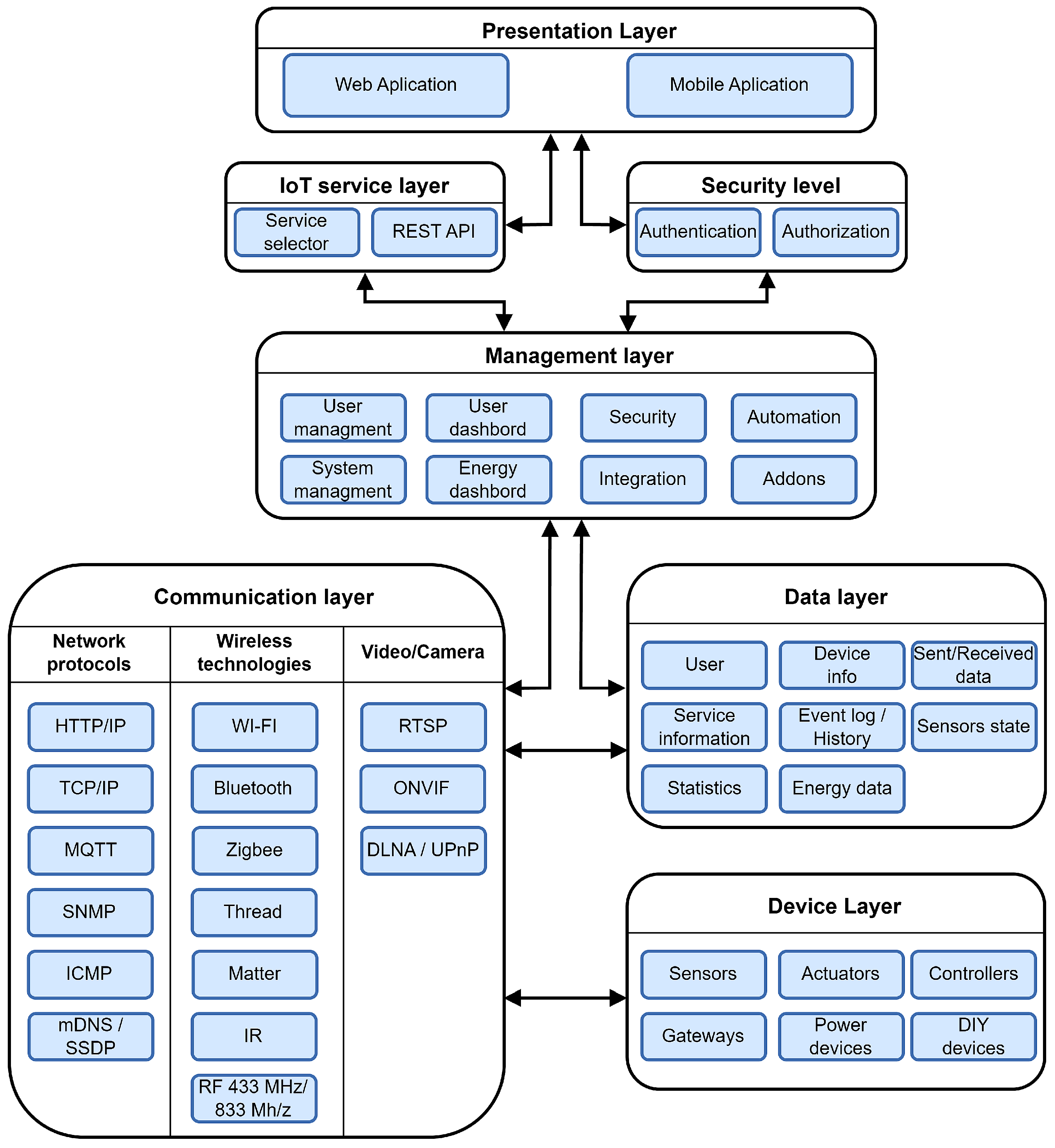
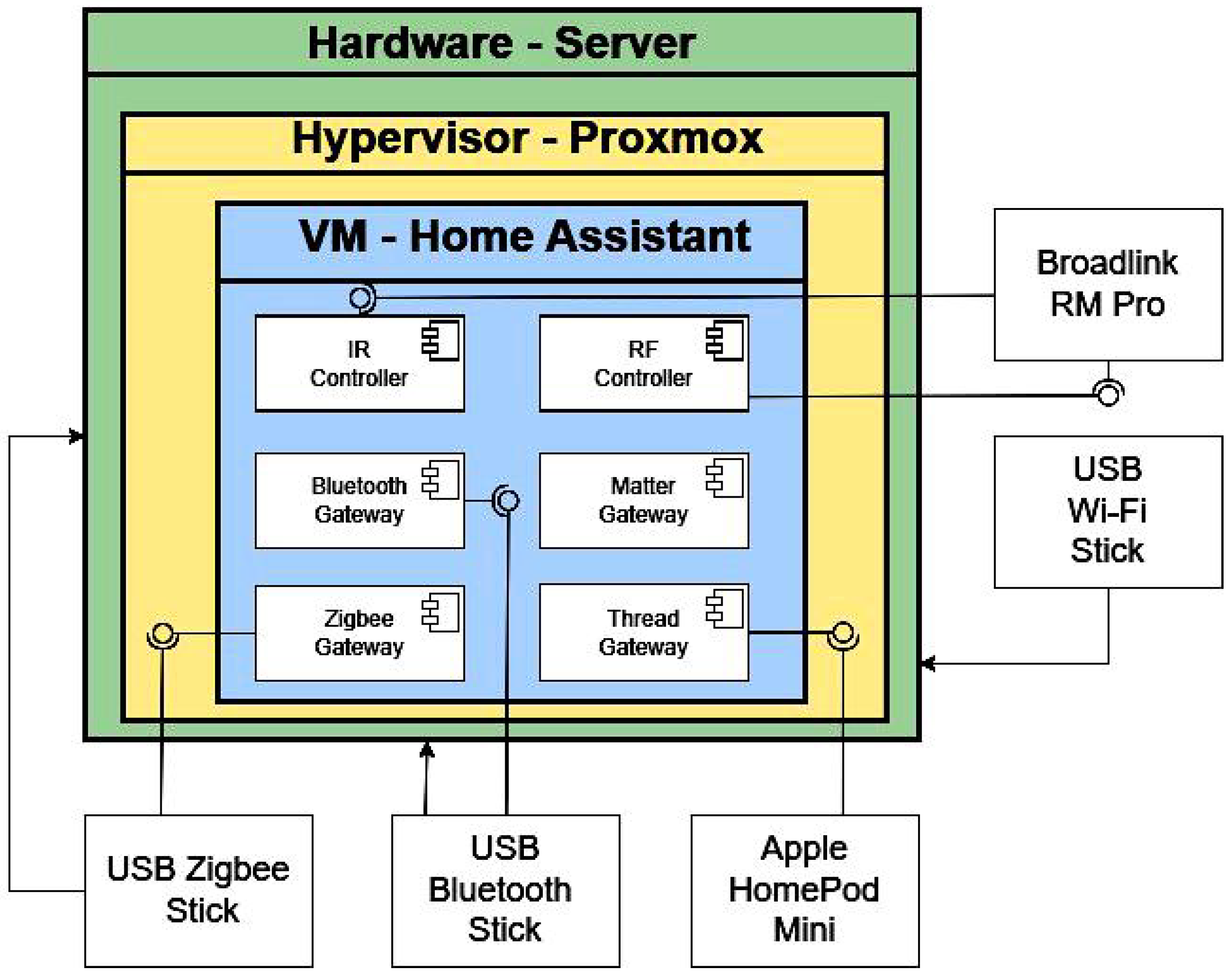
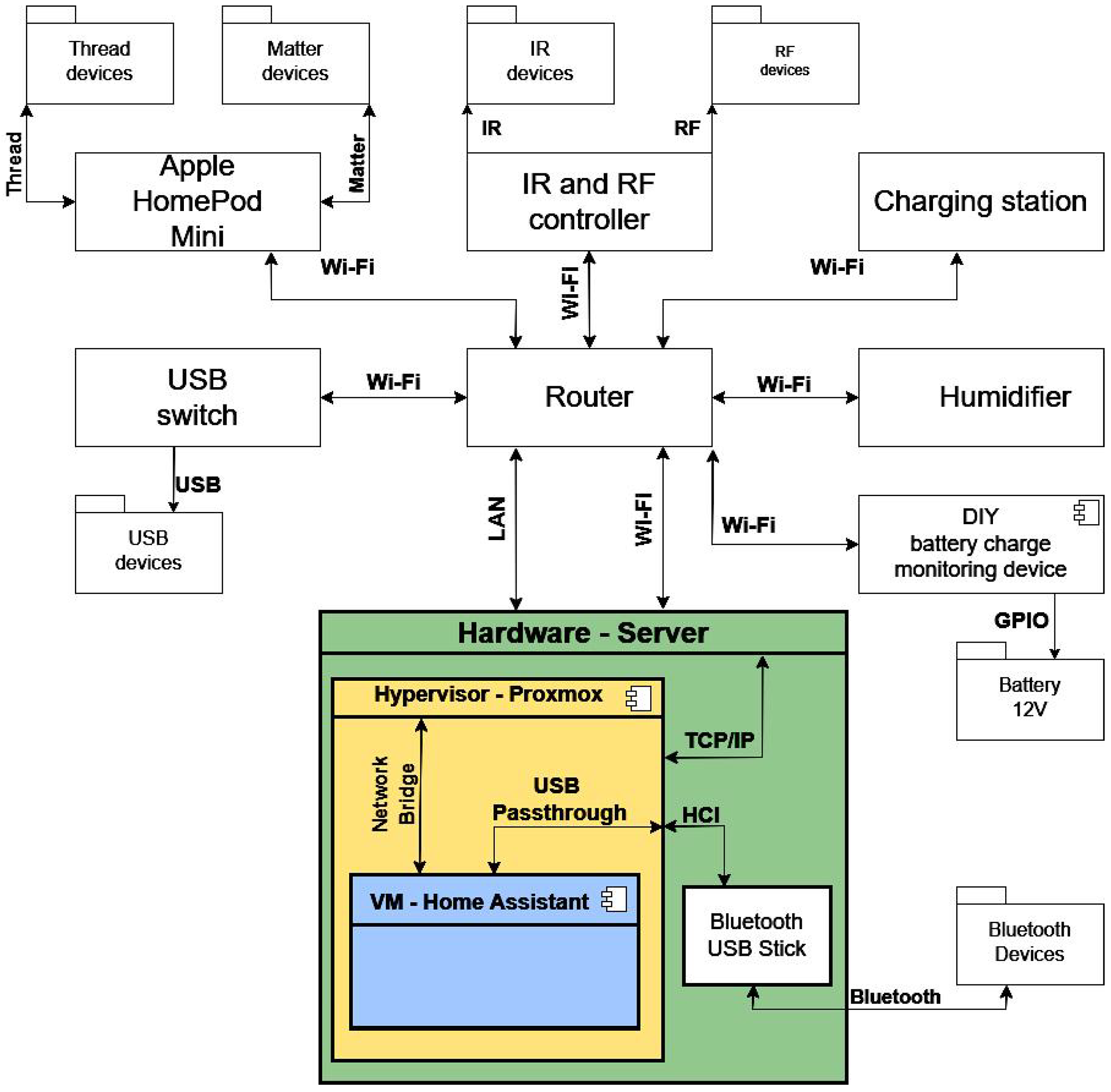
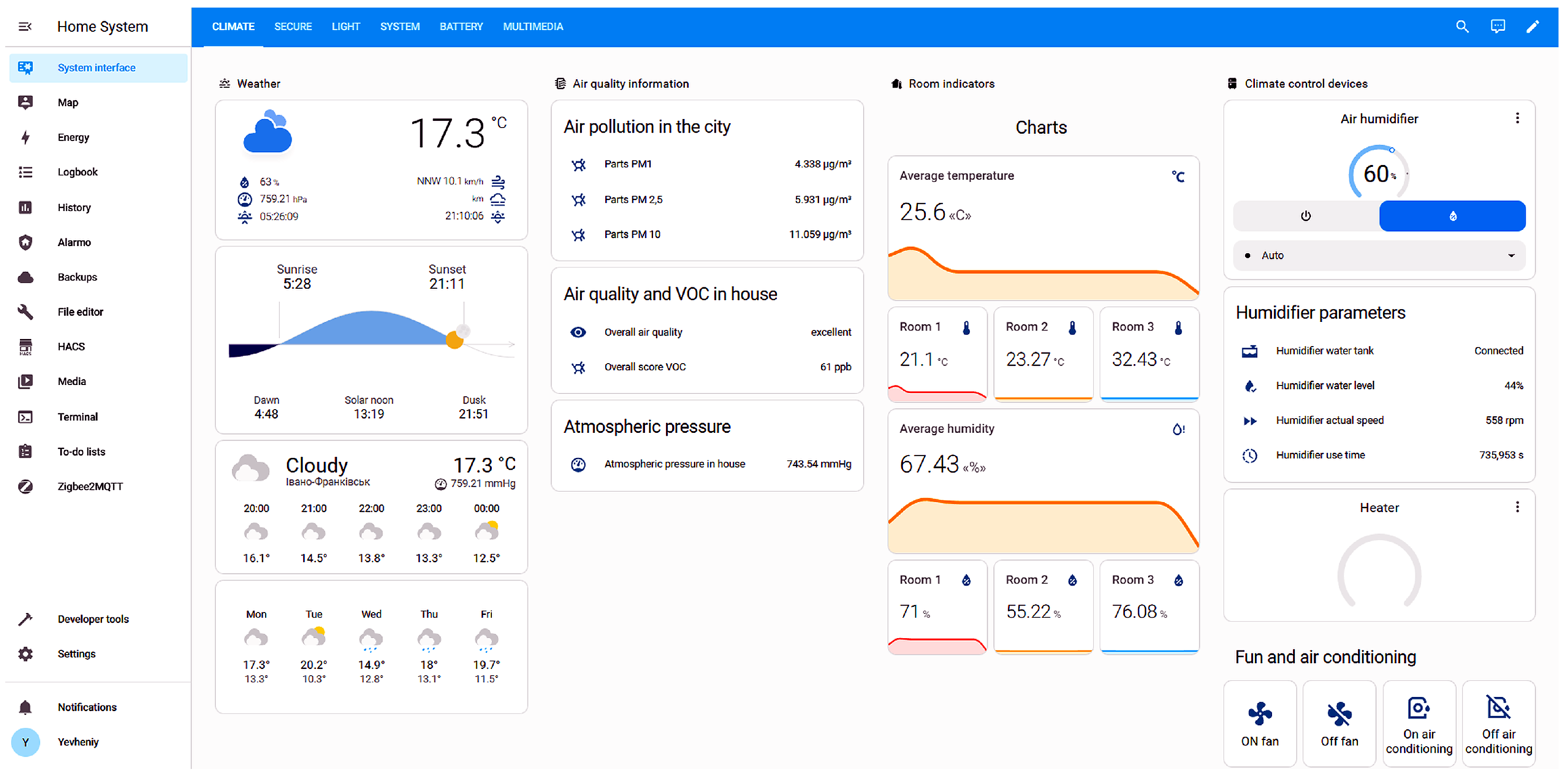
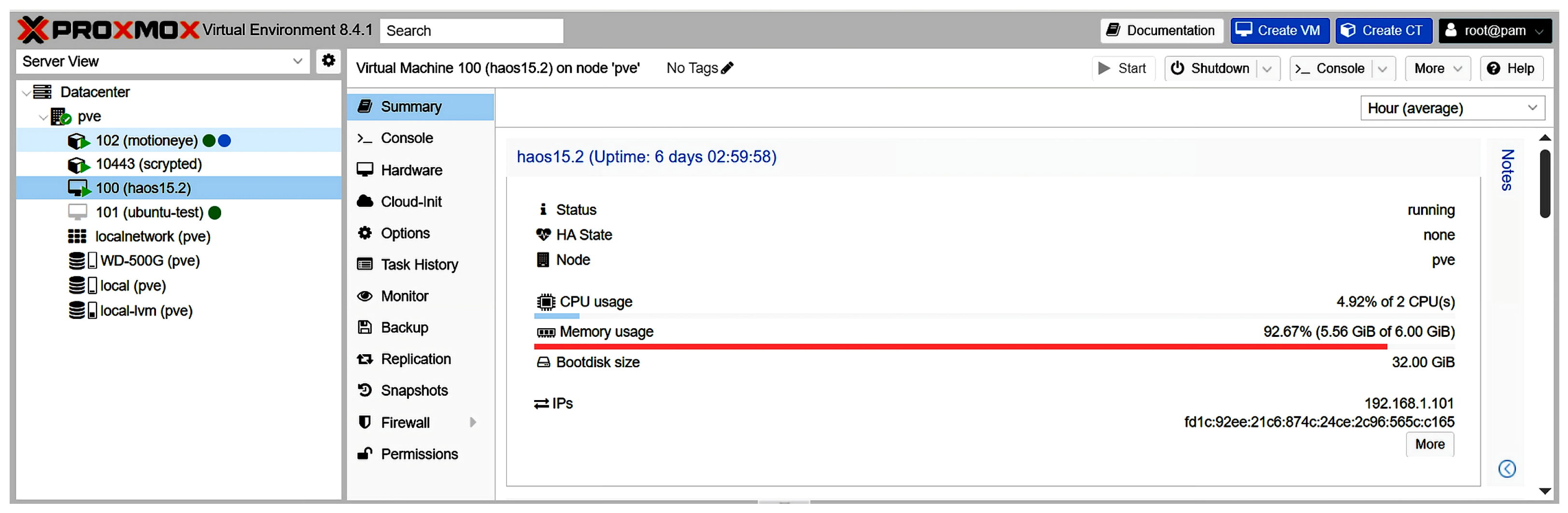
Cloud-centric IoT frameworks remain dominant; however, they introduce major challenges related to data privacy, latency, and system resilience. Existing open-source solutions often lack standardized principles for scalable, local-first deployment and do not adequately integrate fault tolerance with hybrid automation logic. This study presents a practical and extensible local-first IoT architecture designed for full operational autonomy using open-source components. The proposed system features a modular, layered design that includes device, communication, data, management, service, security, and presentation layers. It integrates MQTT, Zigbee, REST, and WebSocket protocols to enable reliable publish–subscribe and request–response communication among heterogeneous devices. A hybrid automation model combines rule-based logic with lightweight data-driven routines for context-aware decision-making. The implementation uses Proxmox-based virtualization with Home Assistant as the core automation engine and operates entirely offline, ensuring privacy and continuity without cloud dependency. The architecture was deployed in a real-world office environment and evaluated under workload and fault-injection scenarios. Results demonstrate stable operation with MQTT throughput exceeding 360,000 messages without packet loss, automatic recovery from simulated failures within three minutes, and energy savings of approximately 28% compared to baseline manual control. Compared to established frameworks such as FIWARE and IoT-A, the proposed approach achieves enhanced modularity, local autonomy, and hybrid control capabilities, offering a reproducible model for privacy-sensitive smart environments.
Keywords: Home Assistant; IoT architecture; smart office; local automation; edge computing; open-source platforms Home Assistant; IoT architecture; smart office; local automation; edge computing; open-source platforms