Article

Metamorphic Malware Detection via Graph-Augmented Neural Semantics and Adversarial Hardening: A Comprehensive Framework


by
Victor Manuel González-Gorrín
* and
Josep Prieto-Blázquez
Faculty of Computer Science, Multimedia and Communications, Universitat Oberta de Catalunya, Rambla del Poblenou, 154-156, 08018 Barcelona, Spain
*
Author to whom correspondence should be addressed.
J. Cybersecur. Priv. 2026, 6(5), 164; https://doi.org/10.3390/jcp6050164 (registering DOI)
Submission received: 27 July 2026 / Revised: 6 September 2026 / Accepted: 14 September 2026 / Published: 17 September 2026
(This article belongs to the Special Issue Cyber Security and Digital Forensics—3rd Edition)

Abstract

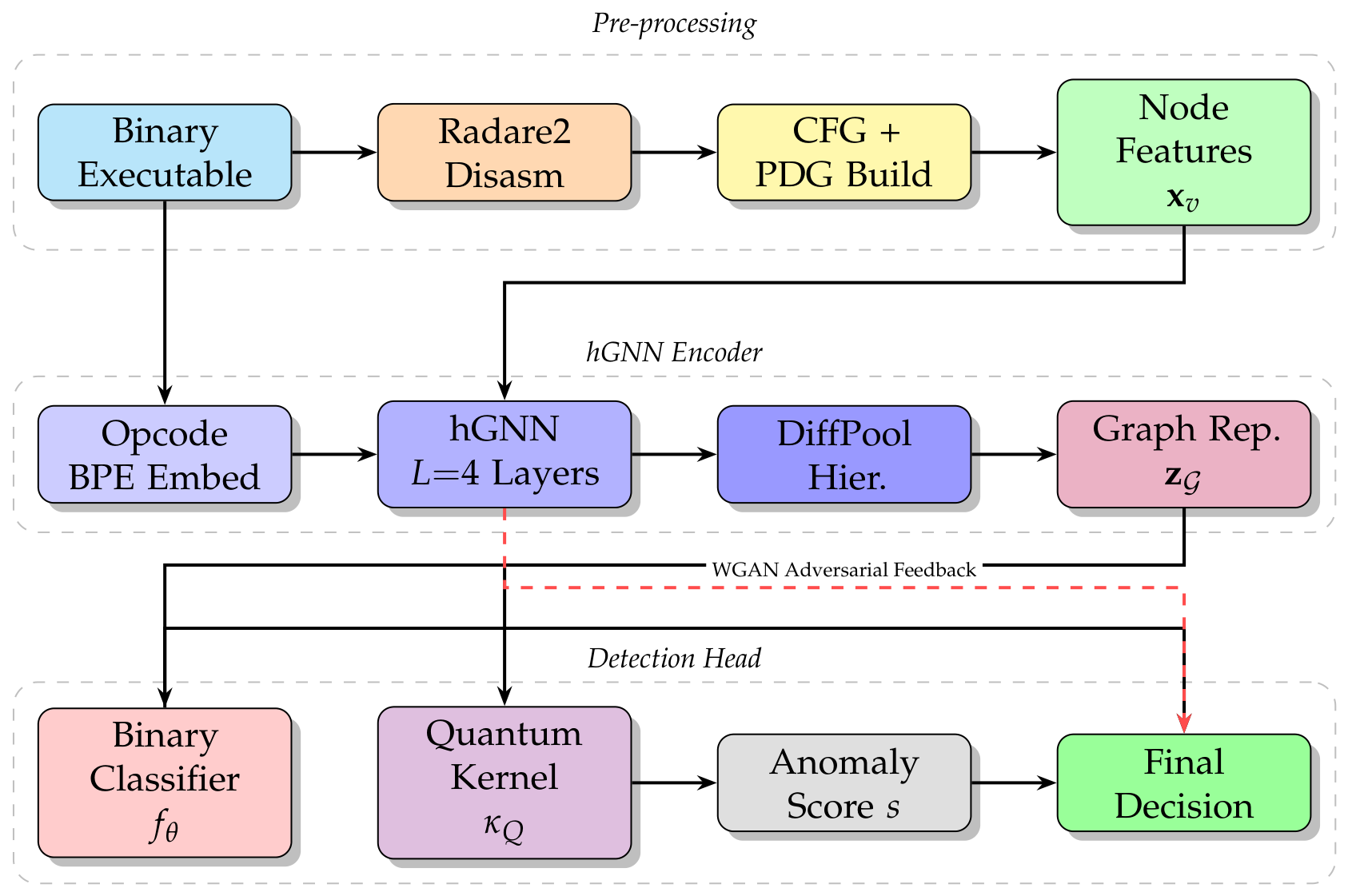
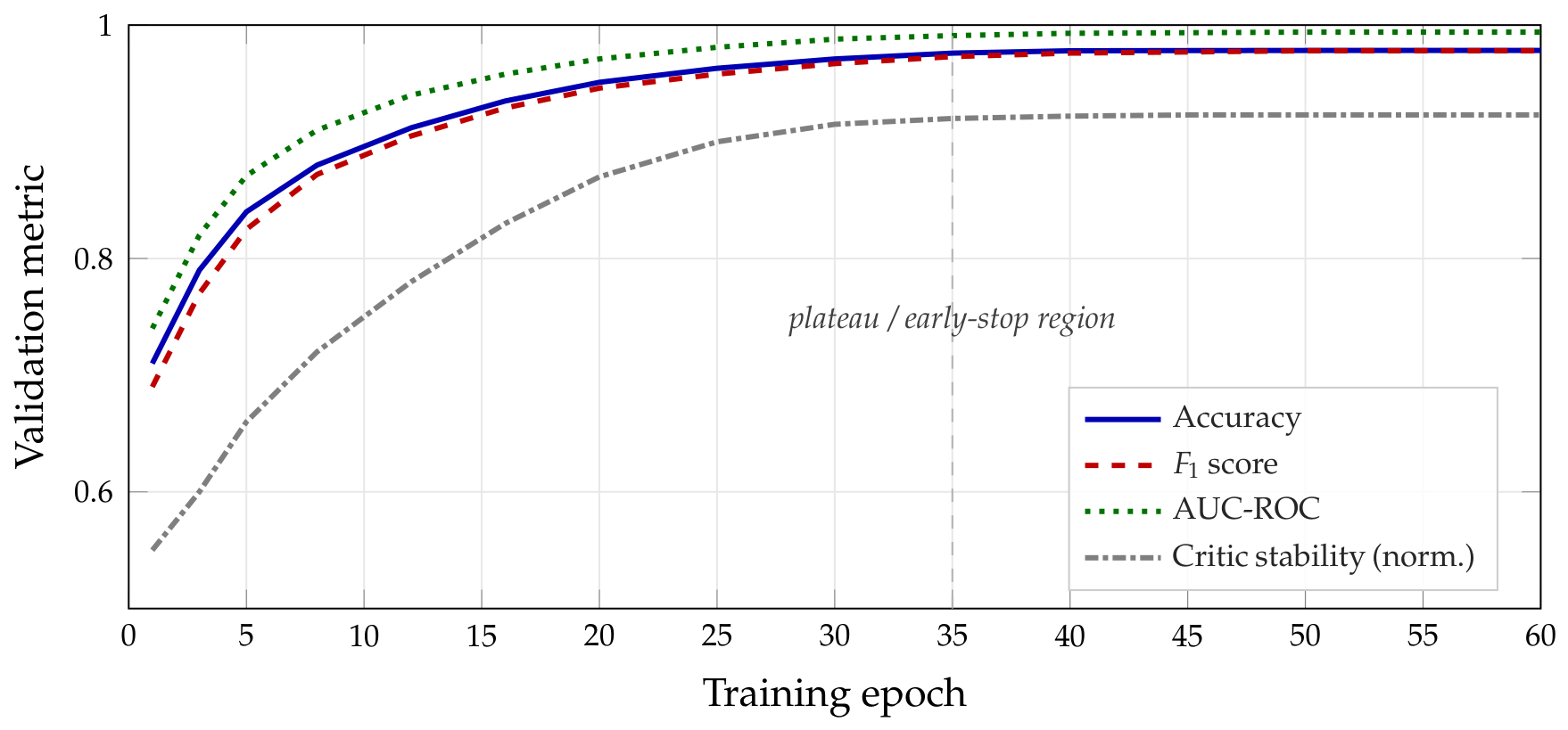
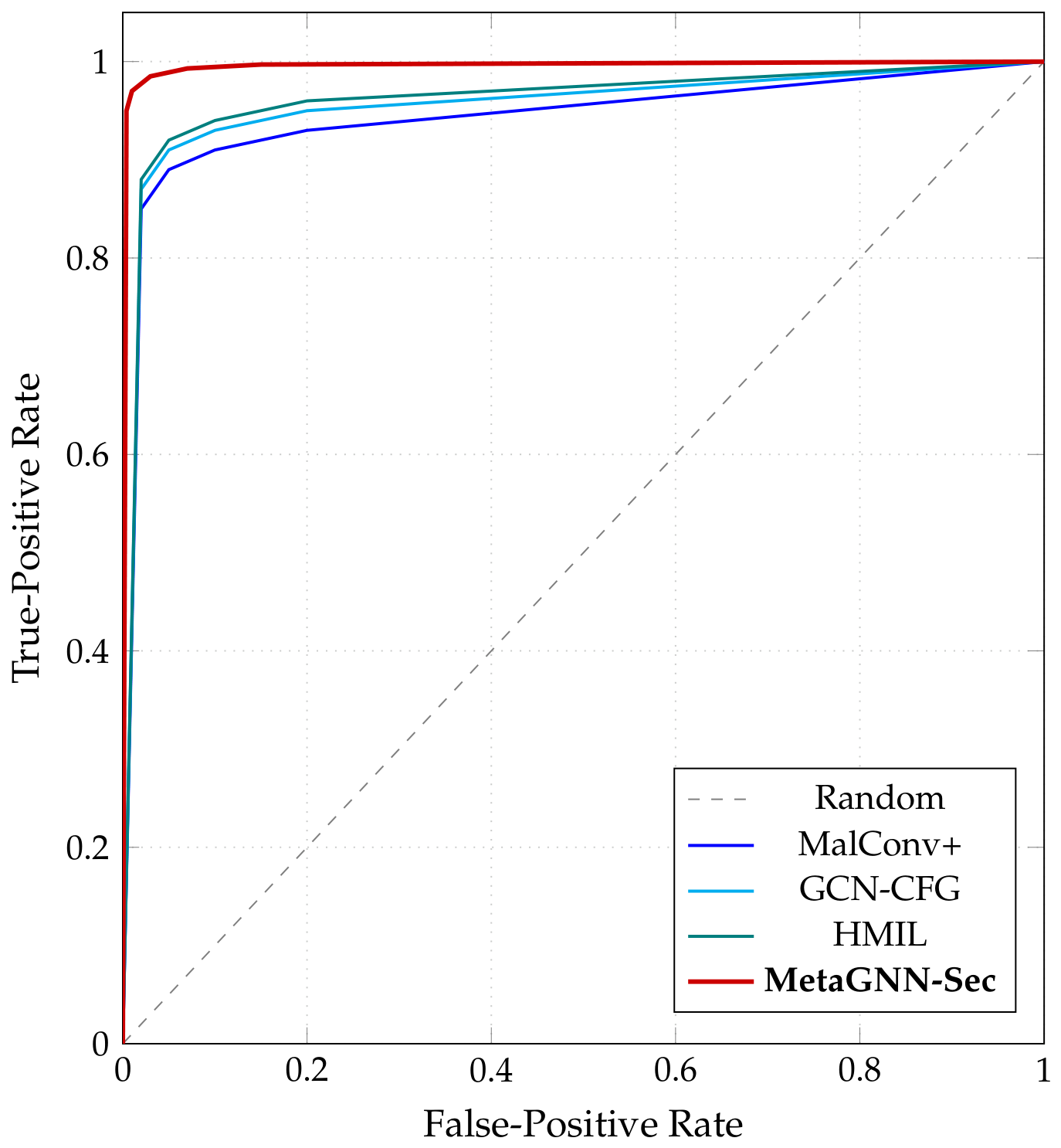
Background: Metamorphic malware is among the most persistent adversarial challenges in cybersecurity: it rewrites its own instruction stream on every propagation, preserving functional semantics while presenting a syntactically distinct binary that defeats signature-based and many learning-based detectors. Methods: We propose MetaGNN-Sec, a graph-augmented neural framework that detects metamorphic malware from program structure rather than surface bytes. The framework composes four components, each addressing a distinct facet of the problem: (i) control-flow graph (CFG) extraction with semantic opcode embeddings; (ii) a heterogeneous graph neural network (hGNN) operating over program-dependence graphs that capture mutation-stable control- and data-flow invariants; (iii) an adversarial training loop derived from the Wasserstein generative adversarial network (WGAN) that hardens the classifier against adaptive evasion mutations; and (iv) a quantum-kernel anomaly layer implemented in PennyLane for separation of heavily obfuscated outliers in a high-dimensional feature space. Results: Experiments are conducted on two public corpora—VirusShare 2024 and a SOREL-20M subset—comprising 200,175 binary samples in total (155,175 malware and 45,000 benign), in agreement with the corpus totals reported in Datasets Section of this paper. MetaGNN-Sec achieves a detection rate of 97.83%, a false-positive rate of 0.41%, and an F1 score of 0.978 on held-out metamorphic families, exceeding the next-best baseline (MalConv+) by 4.6 percentage points on clean data and degrading by only 5.4 points under adaptive adversarial evasion (versus 17–31 points for the baselines). The quantum-kernel module contributes a further 1.2 pp reduction in false-negative rate, concentrated on the most heavily mutated families. Conclusions: The framework provides a heterogeneous PDG representation with a conditional score-shift bound under graph-edit-bounded mutations, a WGAN hardening loop that delivers measurable adversarial robustness, a quantum-kernel pre-filter with an explicit cost/benefit characterization, and a reproducible, near-real-time pipeline suitable for enterprise endpoint deployment.
Keywords: metamorphic malware; adversarial machine learning; graph neural networks; control-flow graphs; quantum-kernel methods; program semantics metamorphic malware; adversarial machine learning; graph neural networks; control-flow graphs; quantum-kernel methods; program semantics