1. Introduction
Information security and communications security (INFOSEC/COMSEC) frameworks rely heavily on protecting sensitive information stored in digital systems. In environments where government agencies manage large datasets containing personally identifiable information (PII) or operational records, cryptographic protection of stored data is considered a fundamental control.
Encryption mechanisms such as full-disk encryption and file-level encryption are widely recognized as essential safeguards against unauthorized access to information stored on servers, workstations, and portable devices [
1].
The incident analyzed in this study concerns the 2006 U.S. Department of Veterans Affairs data breach, in which sensitive data was stored on an unencrypted portable laptop that was subsequently stolen. Public reporting and government oversight documents indicate that the incident affected approximately 26.5 million individuals [
2,
3].
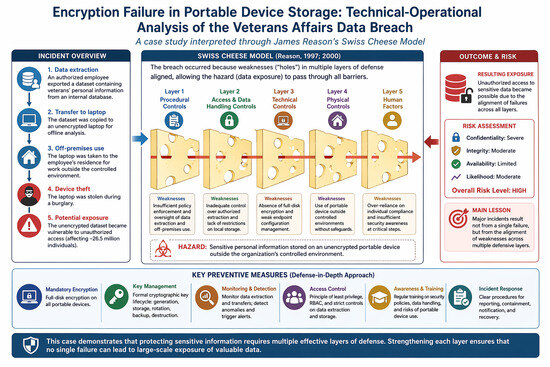
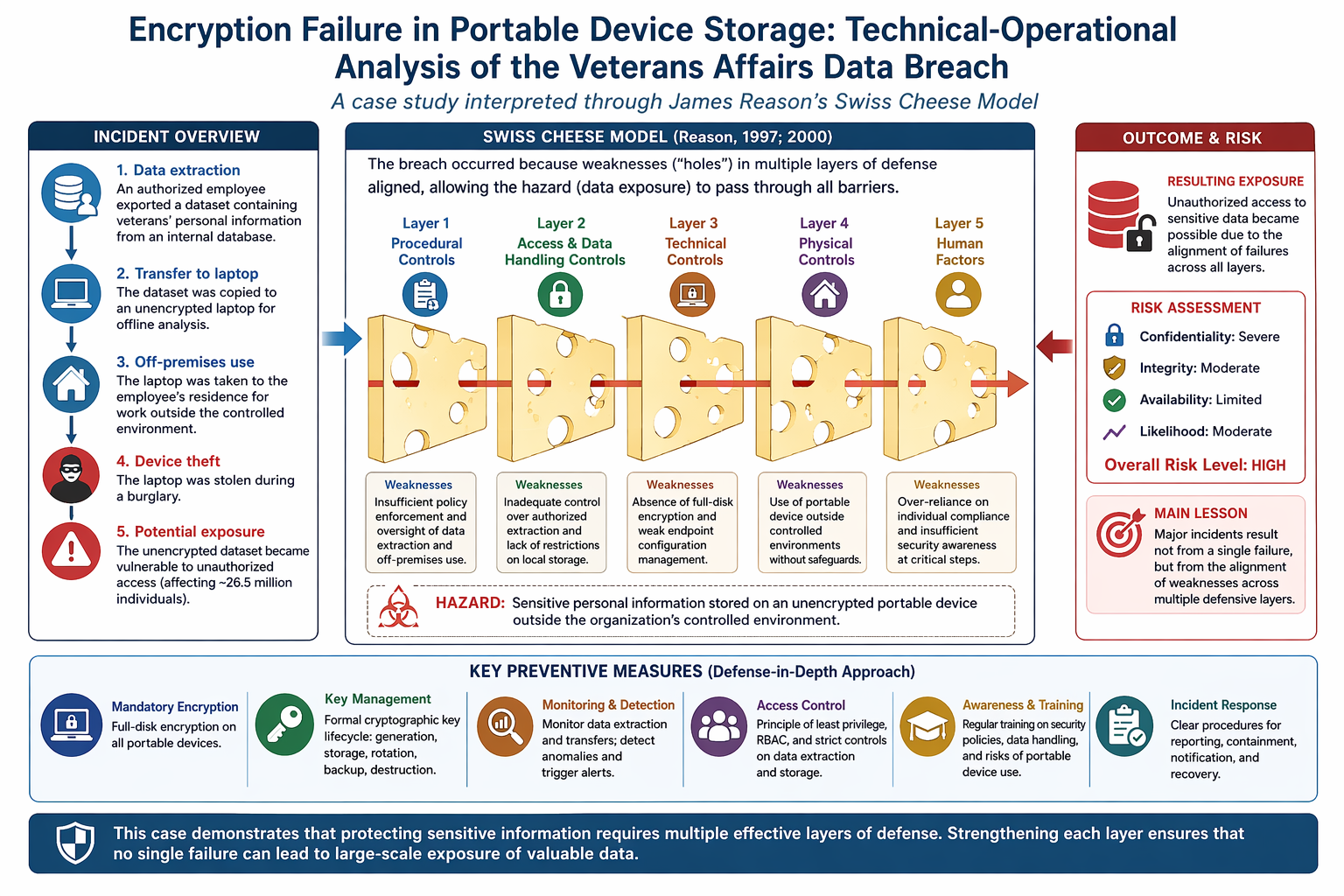
This case study examines the technical and operational failures that enabled the incident, interprets them through James Reason’s Swiss cheese model [
4,
5], evaluates the associated risks, and proposes corrective and preventive measures aligned with recognized security standards. Rather than treating the incident as an isolated encryption failure, the study interprets it as the result of aligned weaknesses across multiple layers of defense. In this sense, the case can be understood through the Swiss cheese model, according to which major incidents occur when vulnerabilities in procedural, technical, physical, and human safeguards combine in a way that allows the hazard to propagate.
The analysis focuses on information protection mechanisms for digital storage and organizational procedures related to data handling and device security. It combines documented facts with clearly delimited analytical assumptions and is structured around three main contributions. First, it provides a structured technical-operational reconstruction of the Veterans Affairs data breach, focusing on the transition of sensitive data from a controlled organizational environment to an exposed state through portable device use. Second, it derives a generalized failure-chain model, referred to as the Portable Device Data Exposure Chain, which links data extraction, local storage, absence of encryption, and loss of physical control as sequential conditions enabling unauthorized exposure. Third, it proposes a defense-in-depth control framework that maps preventive and detective controls to each stage of the exposure chain, providing a reusable analytical model applicable to modern distributed and endpoint-centric operational environments.
The engineering context has changed substantially since 2006. At that time, software-based full-disk encryption could impose noticeable performance, and enterprise enforcement was less mature. Contemporary processors provide dedicated cryptographic instructions such as AES-NI, which accelerates compute-intensive AES operations, while modern operating systems integrate full-disk encryption with hardware roots of trust such as the Trusted Platform Module (TPM) and the Apple Secure Enclave [
6,
7,
8,
9].
These developments reduce historical deployment friction and make encryption of managed endpoints a baseline expectation rather than the principal novelty of a modern security architecture. The remaining research problem, therefore, extends beyond the specific incident and focuses on how organizations can prevent authorized data from crossing trust boundaries without effective and continuously verifiable protection controls.
2. Related Work and Contemporary Security Context
Storage-encryption guidance traditionally focuses on selecting, deploying, and managing cryptographic protections for end-user devices [
1]. This perspective is necessary but narrower than contemporary endpoint security, which treats device configuration, centralized management, identity, application state, and data handling as interdependent controls. NIST guidance published in 2023, for example, places mobile-device protection within a lifecycle that includes enterprise mobility management, endpoint protection, monitoring, and both organization-owned and personally owned devices [
10].
The proposed model, formalized as the Portable Device Data Exposure Chain (PDDEC), also intersects with data-lifecycle and defense-in-depth models [
11] because it traces information from an authoritative repository to local processing and possible disclosure. The PDDEC differs from attacker-centric frameworks such as the Cyber Kill Chain [
12] and MITRE ATT&CK [
13], which model the progression of adversarial activities through tactics, techniques, and operational stages. In contrast, the PDDEC models the progression of sensitive data through changes in location, custody, trust boundaries, and protection state. Its analytical focus is not on attacker behavior but on the sequence of conditions and control failures that transform legitimate data access into potential unauthorized disclosure.
The PDDEC contribution is not a replacement for those models. It is a case-oriented diagnostic model composed of three narrower properties: (i) it makes the crossing of a managed trust boundary an explicit stage; (ii) it distinguishes authorization to access data from authorization to extract, transfer, and retain it [
14]; and (iii) it associates each transition with an interruption point at which preventive or detective evidence can be tested. The model provides an auditable bridge between an incident narrative and a control-assurance exercise.
Zero Trust Architecture (ZTA) further changes the interpretation of the case. ZTA rejects implicit trust based on network location or organizational ownership and requires separate authentication and authorization decisions for subjects and devices [
15]. Applied to portable endpoints, this means that possession of valid user credentials is insufficient. Device health, encryption state, data sensitivity, requested operation, and current context should influence whether extraction or local processing is permitted. This is particularly relevant to remote work, cloud services, and bring-your-own-device (BYOD) arrangements, in which the network perimeter no longer defines the effective security boundary.
Finally, modern platform-security guidance emphasizes roots of trust, protection of boot firmware, detection of unauthorized changes, and secure recovery [
16]. Hardware-backed key storage can bind the release of a disk-encryption key to measured platform state, but it does not protect every operating state. When an authenticated device is running or sleeping, keys and plaintext may be available in memory. Cold-boot and direct-memory-access attacks demonstrate why data-at-rest controls must be complemented by secure power-state policy, input/output memory management, verified boot, memory protection, and rapid revocation [
17,
18].
3. Methodology
This study adopts a qualitative retrospective case-study approach focused on the analysis of a well-documented information security incident involving the U.S. Department of Veterans Affairs. The objective is not to produce a forensic reconstruction of the incident, but to examine it as a representative example of a portable device data exposure scenario and to identify the interaction between technical, procedural, and organizational control failures.
The case is analyzed from a technical-operational perspective, with emphasis on the lifecycle of sensitive data, the crossing of trust boundaries, and the effectiveness of layered security controls. Rather than treating the incident as a purely technical failure, the study interprets it as a multi-layered breakdown consistent with established models of organizational risk and system failure.
3.1. Data Sources
The analysis is based exclusively on publicly available information, including (i) government oversight or regulatory reports, security guidelines, and secondary documentation describing the incident and its context; (ii) a government or standards-body publication defining a relevant security control; (iii) a peer-reviewed primary study demonstrating a technical limitation of endpoint encryption; or (iv) an official enforcement record describing a comparable endpoint-loss incident. Commentary without traceable evidence, vendor marketing claims, and reports that did not distinguish confirmed facts from speculation were excluded.
Sources were prioritized in the following order: contemporaneous government findings, later official enforcement or audit documents, normative standards, peer-reviewed technical research, and secondary explanatory material. The VA reconstruction relies principally on GAO reports. Contemporary controls are derived from NIST, ISO/IEC, Trusted Computing Group, Microsoft, and Apple documentation, while technical attack claims are supported by primary research. Comparative incidents were selected purposively rather than statistically, to involve loss or theft of a portable endpoint, sensitive data outside a centrally controlled environment, and sufficient official documentation to map the event to the PDDEC.
Each factual statement used in the reconstruction was labeled during analysis as documented, inferred, or assumed. Documented facts are directly supported by cited sources; inferences connect documented events without introducing new incident facts; assumptions represent simplified environmental conditions needed to test the model. This distinction limits retrospective over-interpretation.
3.2. Analytical Method
The analytical process consists of three main steps:
Context reconstruction—Identification of the operational environment, actors, assets, and trust boundaries relevant to the incident, based on available documentation and reasonable technical assumptions.
Failure-chain modeling—Abstraction of the incident into a sequence of dependent stages, formalized as the Portable Device Data Exposure Chain, linking data extraction, transfer to a portable device, absence of encryption, and loss of physical control.
Control mapping and risk interpretation—Identification of control failures at each stage of the exposure chain and evaluation of their impact using a qualitative risk assessment framework based on confidentiality, integrity, and availability considerations.
Failure coding—Each observed or inferred weakness was coded as procedural, technical, physical, organizational/governance, or human-factor-related. A weakness could receive more than one code when the evidence indicated interacting causes. Coding required a stated failed expectation, supporting evidence or explicit assumption, and a plausible relationship to one or more chain transitions.
Comparative back-test—The resulting stages and control points were applied to two post-2010 incidents documented by official bodies. The purpose was analytical replication: determining whether the same variables could describe comparable endpoint-loss events, not estimating population-level predictive accuracy.
Model construction followed three rules: (i) a stage had to represent a distinct change in data location, protection state, or custodial control; (ii) adjacent stages had to be linked by an observable or reasonably testable transition; (iii) at least one preventive, detective, or corrective control had to be assignable to each transition. Stages that merely restated a cause without changing the exposure state were retained as contributing factors rather than model components.
Consistent with the role of likelihood, impact, and uncertainty in established risk assessment guidance [
19], likelihood and impact are each rated on four ordinal levels. Likelihood is low when the scenario requires exceptional access or several unlikely pre-conditions; moderate when portable device loss is credible but exposure additionally depends on failed controls; high when the activity is recurrent and important controls are inconsistently enforced; and very high when exposure is expected or repeatedly observed. Impact is low for limited, readily recoverable harm; moderate for material but contained operational or privacy harm; high for major organizational, legal, or multi-subject harm; and severe for large-scale disclosure of highly sensitive data or consequences extending beyond the organization.
Ordinal levels are converted to values from 1 to 4 and multiplied. Scores of 1–3 are low, 4–6 moderate, 7–11 high, and 12–16 very high. The assessment is an illustrative inherent scenario risk estimate under the documented control conditions, not a measured residual-risk calculation for a current VA environment.
3.3. Scope and Limitations
This study is subject to several limitations. First, the analysis is based on secondary sources and simplified analytical assumptions and does not rely on primary forensic evidence nor classified information, which constrains the level of technical detail available regarding the incident. Second, certain aspects of the operational context—such as system configurations, internal procedures, and user behavior—are represented through simplified analytical assumptions intended to support structured reasoning rather than factual reconstruction.
Additionally, the qualitative risk assessment presented in this study is intended for analytical illustration and does not represent a formal organizational risk evaluation. The purposive two-case back-test is too small to establish statistical validity, predictive performance, or universal applicability. The PDDEC is limited to scenarios in which sensitive data is copied to or made locally available on a portable endpoint and physical or administrative control is subsequently weakened. It is not designed as a complete model for cloud compromise, remote exploitation, insider exfiltration without endpoint loss, or attacks against cryptographic algorithms. Despite these limitations, the case provides a basis for examining recurring patterns of control failure and data exposure in comparable environments.
3.4. Generalization Strategy
Although the analysis is grounded in a specific historical incident, the study adopts an abstraction-based analytical-generalization strategy. By modeling the incident as a PDDEC, mapping control failures to distinct transitions, and back-testing the model against later documented cases, the study evaluates whether the same constructs remain useful in contemporary environments characterized by remote work, mobile endpoints, and distributed data processing.
The resulting claim is intentionally limited. The model may be reused as a diagnostic checklist for incidents with equivalent data movement and endpoint-loss conditions. Broader external validity requires a larger, systematically sampled incident set and independent coding by multiple analysts.
4. Operational Context and Assumptions
Based on the methodological approach described in the previous section, this section reconstructs the operational context of the incident by identifying the relevant environment, actors, assets, and trust boundaries. The objective is not to reproduce the exact operational configuration, but to provide a consistent abstraction that supports the identification of control failures and the modeling of the Portable Device Data Exposure Chain.
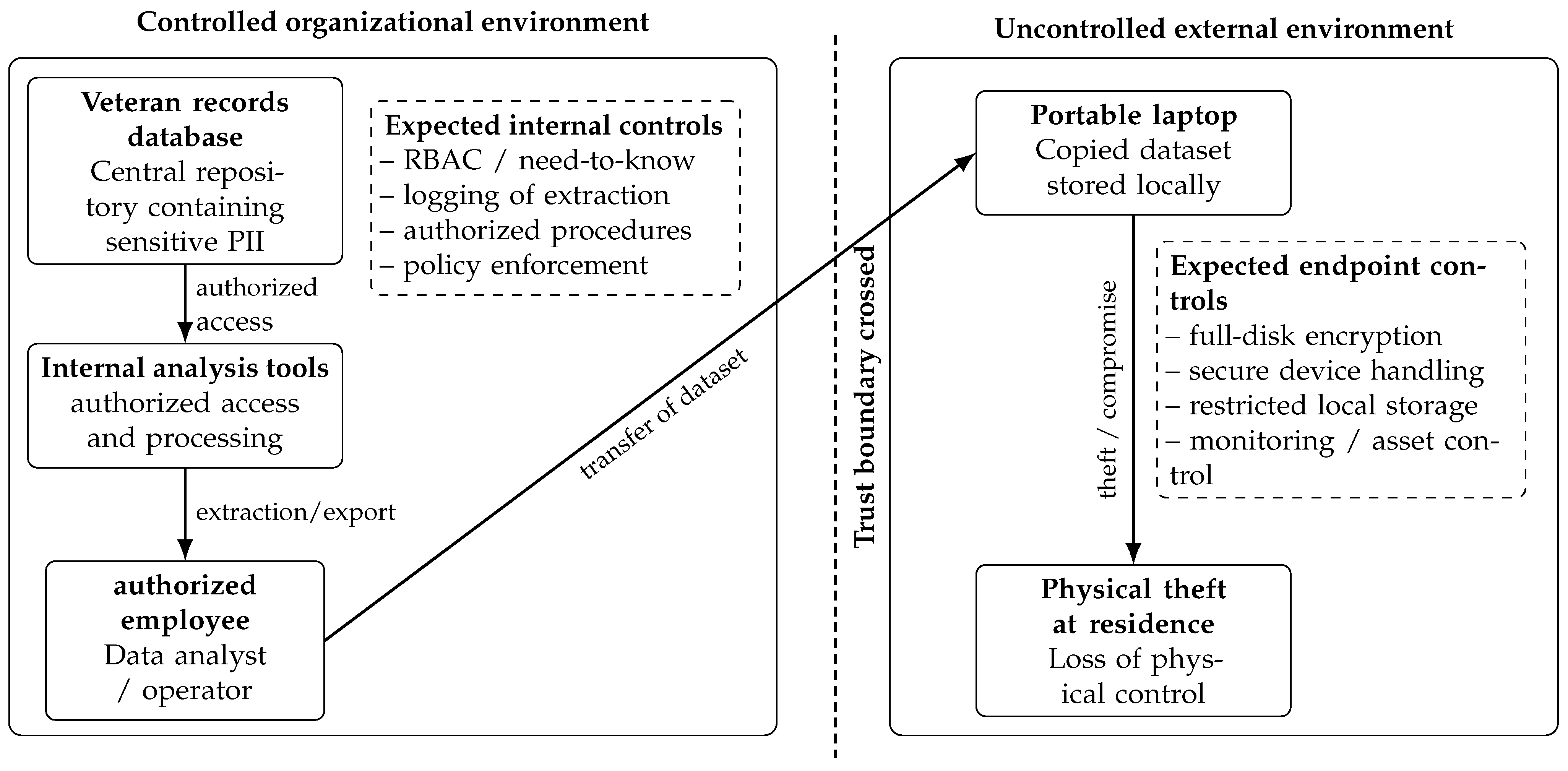
Figure 1 depicts the operational context and trust boundaries relevant to the incident, emphasizing how the transfer of sensitive data to a portable device effectively bypassed organizational security controls and introduced exposure risks outside the controlled infrastructure. In particular, it highlights the transition of sensitive data from a controlled environment to an uncontrolled external context, where critical security controls—such as encryption and device management—were expected but not effectively enforced.
4.1. Organizational Environment
The reconstructed scenario involves a governmental information system responsible for maintaining and processing records related to military veterans. This environment supports administrative operations, data analysis activities, and the management of sensitive personal information associated with veteran services.
The organization operates and maintains a set of interrelated information assets and systems, including: (i) large-scale databases containing personally identifiable information (PII) of veterans; (ii) administrative information systems used for managing veteran benefits and services; (iii) internal data processing and analysis tools used by authorized personnel; (iv) portable computing devices assigned to employees for operational and analytical tasks.
The supporting technical infrastructure comprises centralized database servers, internal network systems, and managed workstations within controlled environments, complemented by portable endpoints (e.g., laptops) used by authorized personnel for off-site or mobile work. These endpoints extend the operational environment beyond organizational premises and create an additional trust boundary, making consistent endpoint, procedural, and user-level controls essential. This distributed environment is particularly relevant because it creates multiple layers of defense whose weaknesses may interact under adverse conditions.
4.2. Actors and Roles
The reconstructed environment involves several organizational actors whose responsibilities influenced both the progression and prevention of the incident. These roles are important because each corresponds to a distinct control function within the Portable Device Data Exposure Chain, helping to identify where preventive, technical, supervisory, and governance safeguards failed or were insufficiently enforced.
Data Analyst/Operator—Authorized user responsible for accessing and analyzing veteran records for administrative or analytical purposes. In this case, this role is directly associated with the extraction of sensitive data from internal systems and its transfer to a portable device, making it central to the transition from authorized access to increased exposure risk.
System Administrator—Technical staff responsible for managing database systems, configuring user access permissions, maintaining workstation and server infrastructure, and ensuring the secure configuration of organizational devices. Failures in endpoint configuration, device compliance, or access control enforcement may have contributed to the absence of effective technical safeguards.
Information Security Officer—Role responsible for defining, implementing, and enforcing organizational information security policies, including encryption requirements, data handling procedures, and compliance with applicable security standards. This role is linked to the existence, adequacy, and enforcement of policies intended to prevent sensitive data from being stored on unprotected portable devices.
Security Auditor—Independent role responsible for assessing the effectiveness of technical and procedural security controls, reviewing compliance with organizational policies, and supporting post-incident investigation. This role is relevant because insufficient audit visibility or weak compliance review may allow control weaknesses to remain undetected until an incident occurs.
Organizational Leadership—Senior management is responsible for the governance of information security practices, allocation of resources for security controls, and strategic decision-making during incident response and remediation. This role is significant because failures in prioritization, oversight, or resource allocation can weaken the broader security architecture within which all other controls operate.
Taken together, these roles illustrate that the protection of sensitive information depends not on a single actor or safeguard, but on the coordinated functioning of user behavior, technical controls, policy enforcement, independent oversight, and organizational governance.
4.3. Relevant Assets
The incident involves several information and technical assets that are critical to both the organization’s operational processes and its information security posture. These assets correspond to distinct control and exposure points within the Portable Device Data Exposure Chain, where the effectiveness of safeguards determines whether sensitive data remains protected or becomes vulnerable to unauthorized access.
Veteran records databases—Centralized repositories containing personally identifiable information (PII), service records, and administrative data. These systems represent the primary source of sensitive information and constitute the initial control point, where access restrictions, logging, and authorization mechanisms are expected to regulate data extraction.
Extracted analytical datasets—Subsets of data exported from internal systems for reporting or analysis purposes. These datasets represent a transitional asset within the exposure chain, as they move from controlled storage to potentially less controlled environments, increasing the risk of uncontrolled duplication and dissemination.
Portable laptop devices—Organizational endpoints used to process and store sensitive data outside controlled environments. This asset constitutes a critical exposure point, since the absence of full-disk encryption eliminated a key protective layer once the device left the organizational infrastructure.
Internal network infrastructure—Connectivity layer linking databases, workstations, and internal systems. This asset supports controlled data access and transfer within the organization and represents an environment where security controls are typically stronger and centrally enforced.
Authentication and access control systems—Identity and access management mechanisms enforcing role-based permissions and need-to-know principles. These systems represent a preventive control layer intended to limit access and regulate data extraction, but do not by themselves prevent exposure once data is transferred to external endpoints.
Security policies and procedures—Governance artifacts defining data protection requirements, device security standards, and acceptable handling of sensitive information. These assets are significant because they establish the expected controls across all stages of the exposure chain, and their insufficient enforcement contributes directly to systemic vulnerability.
Taken together, these assets illustrate that sensitive data exposure does not result from the compromise of a single component, but from the progressive weakening of controls across multiple technical, procedural, and governance elements as data moves across trust boundaries.
4.4. Classification Levels
For the purposes of this case study, a simplified classification scheme is adopted to represent the sensitivity of information handled within the organizational environment, without relying on actual classified data.
Two levels of information sensitivity are considered:
Sensitive Personal Data—Personally identifiable information (PII) related to military veterans, including identifiers, service records, and administrative data, whose unauthorized disclosure may cause significant privacy, legal, and reputational harm.
Restricted Administrative Information—Internal organizational data used for administrative operations, analysis, and reporting, with lower disclosure impact than sensitive personal data.
These categories are used solely for analytical purposes and reflect commonly observed sensitivity levels in governmental information systems. They provide a simplified abstraction of real-world classification frameworks, enabling structured analysis without reliance on actual classified information. The distinction implies different protection requirements and different consequences in the event of control failure. The exposure of sensitive personal data is of particular significance because its level of sensitivity requires stronger safeguards at the stages of access, transfer, storage, and endpoint protection.
4.5. Access Rules
Access to sensitive information within the operational environment is governed by standard information security principles designed to ensure confidentiality, accountability, and controlled data handling [
20].
Need-to-know principle—Access to information is granted only to personnel whose duties require it.
Role-based access control (RBAC)—Permissions are assigned according to organizational roles and responsibilities.
Segregation of duties—Critical operations are distributed among different roles to reduce the risk of misuse or error.
Controlled database access procedures—Extraction and processing of sensitive datasets must follow authorized operational procedures and logging mechanisms.
In addition, portable computing devices used by authorized personnel are expected to comply with organizational security requirements, including mandatory encryption, secure storage practices, and controlled handling of sensitive information outside secured facilities. These rules show that authorized access to data does not automatically imply authorization to transfer, store, or process that data outside controlled environments. Weaknesses in the enforcement of these access and handling rules contributed to the progression from legitimate access to potential unauthorized exposure.
5. Case Description
5.1. Timeline
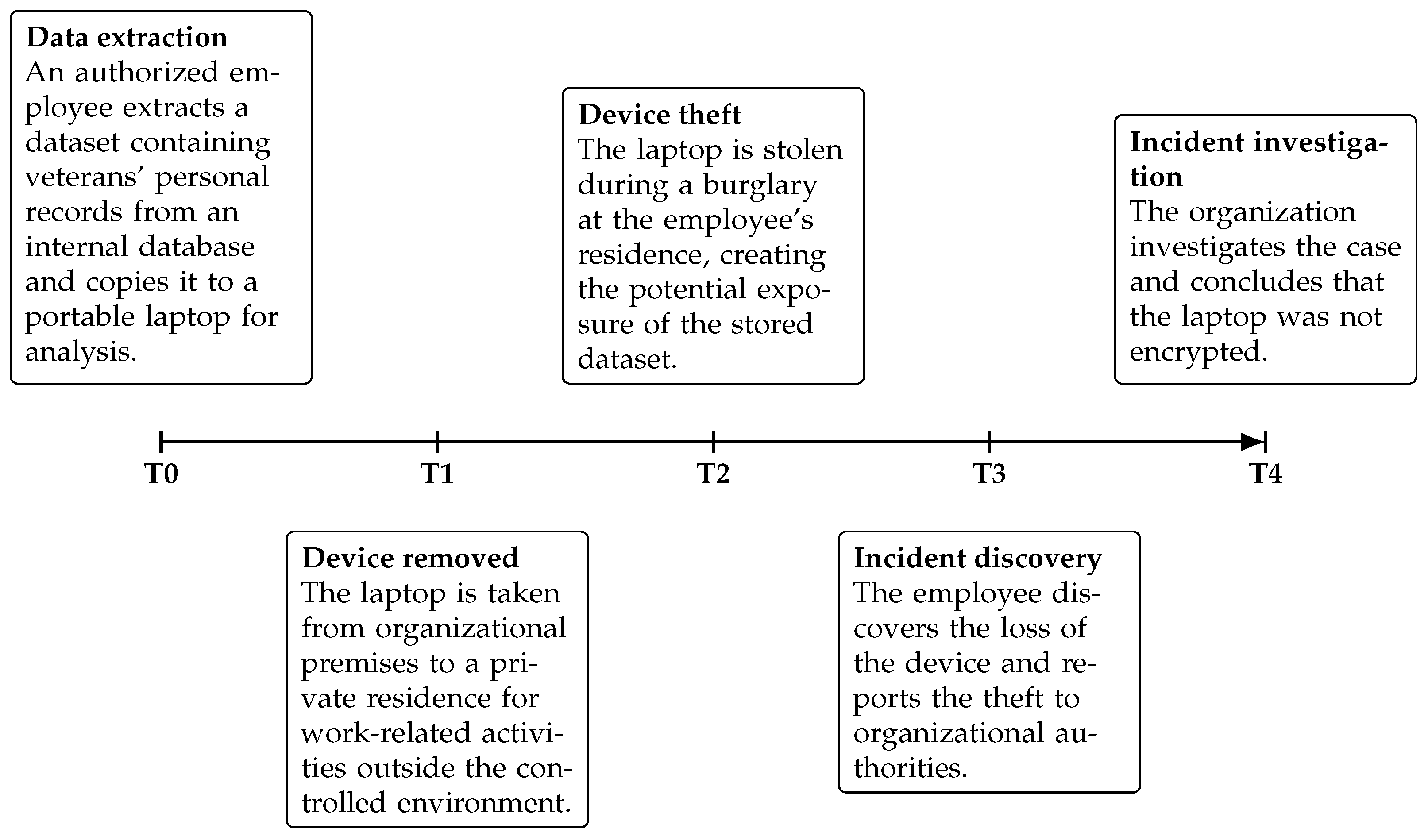
Figure 2 illustrates the chronological sequence of events underlying the incident, highlighting how a series of operational actions—data extraction, off-premise device use, and subsequent theft—collectively resulted in the potential exposure of sensitive information.
T0—Data extraction. An authorized employee extracts a dataset containing personal records of military veterans from an internal organizational database. The dataset is copied to a portable laptop device in order to perform administrative analysis and reporting tasks.
T1—Device taken outside the controlled environment. The employee removes the laptop from the organizational premises and takes it to a private residence to continue work-related activities outside the controlled office environment.
T2—Device theft. The laptop was stolen during a burglary at the employee’s residence, resulting in the potential exposure of the stored dataset.
T3—Incident discovery. The employee reports the theft to organizational authorities after discovering that the device is missing.
T4—Incident investigation. The organization initiates a security investigation to determine the nature of the data stored on the device, assesses whether appropriate encryption mechanisms were implemented, and evaluates the potential impact of the incident. The investigation concludes that the laptop did not implement encryption protection for the stored dataset.
5.2. Available Evidence
In a reconstructed investigation scenario, the incident would typically rely on multiple sources of technical and administrative evidence to reconstruct the sequence of events, determine the scope of the potential data exposure, and assess compliance with organizational security procedures.
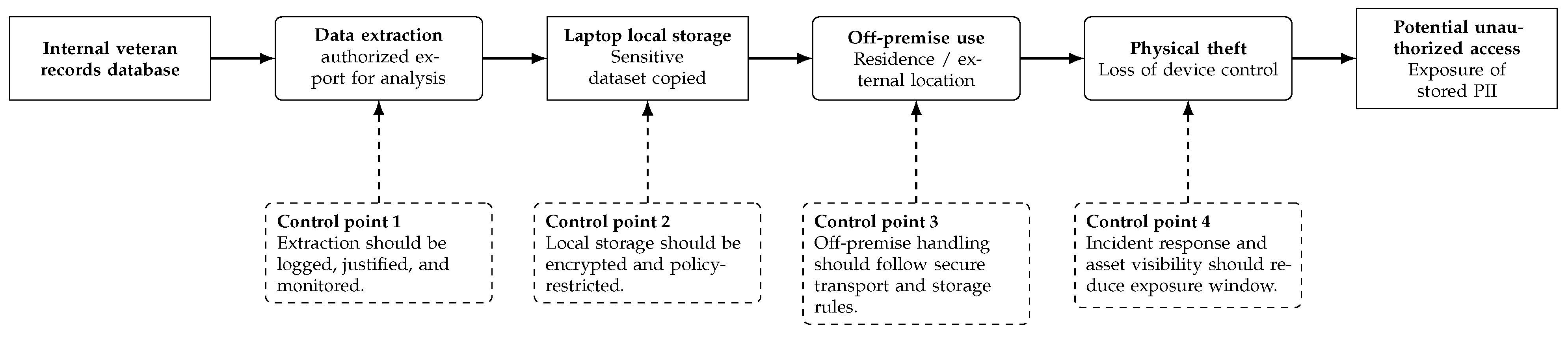
Figure 3 provides a data-centric view of the incident, illustrating how sensitive information transitioned across multiple stages—from controlled internal storage to external exposure—while identifying key control points at which security mechanisms should have prevented or mitigated the risk.
The representative evidence sources include:
Device Inventory Records—Organizational asset management records identifying the laptop assigned to the employee, including device ownership, configuration status, and security controls applied to the device.
Database Access Logs—System-generated logs recording authorized access to internal databases, including queries and data extraction operations performed by the employee prior to the incident.
User Activity Records—Workstation and system activity logs documenting user actions, file transfers, and dataset exports from internal systems.
Internal Incident Reports—Official documentation produced following the incident notification, including the initial report of the device theft and subsequent organizational response.
Security Audit Documentation—Reports and compliance reviews related to existing information security policies, including device encryption requirements and data handling procedures.
Employee Statements—Formal statements provided by the employee involved, describing the circumstances surrounding the data extraction, the use of the laptop device, and the theft incident.
These sources can be mapped to different stages of the Portable Device Data Exposure Chain, as shown in
Table 1. This mapping enables a structured reconstruction of the incident, linking observable evidence to specific transitions in the exposure process, and also supports traceability between observed evidence and inferred control failures, strengthening the analytical consistency of the reconstruction.
Taken together, these sources support a structured reconstruction of the incident across its key stages, enabling the analysis of operational context, verification of control implementation, and assessment of potential impact. They also make it possible to identify where procedural, technical, and human safeguards failed or were insufficiently enforced.
6. Results and Analysis
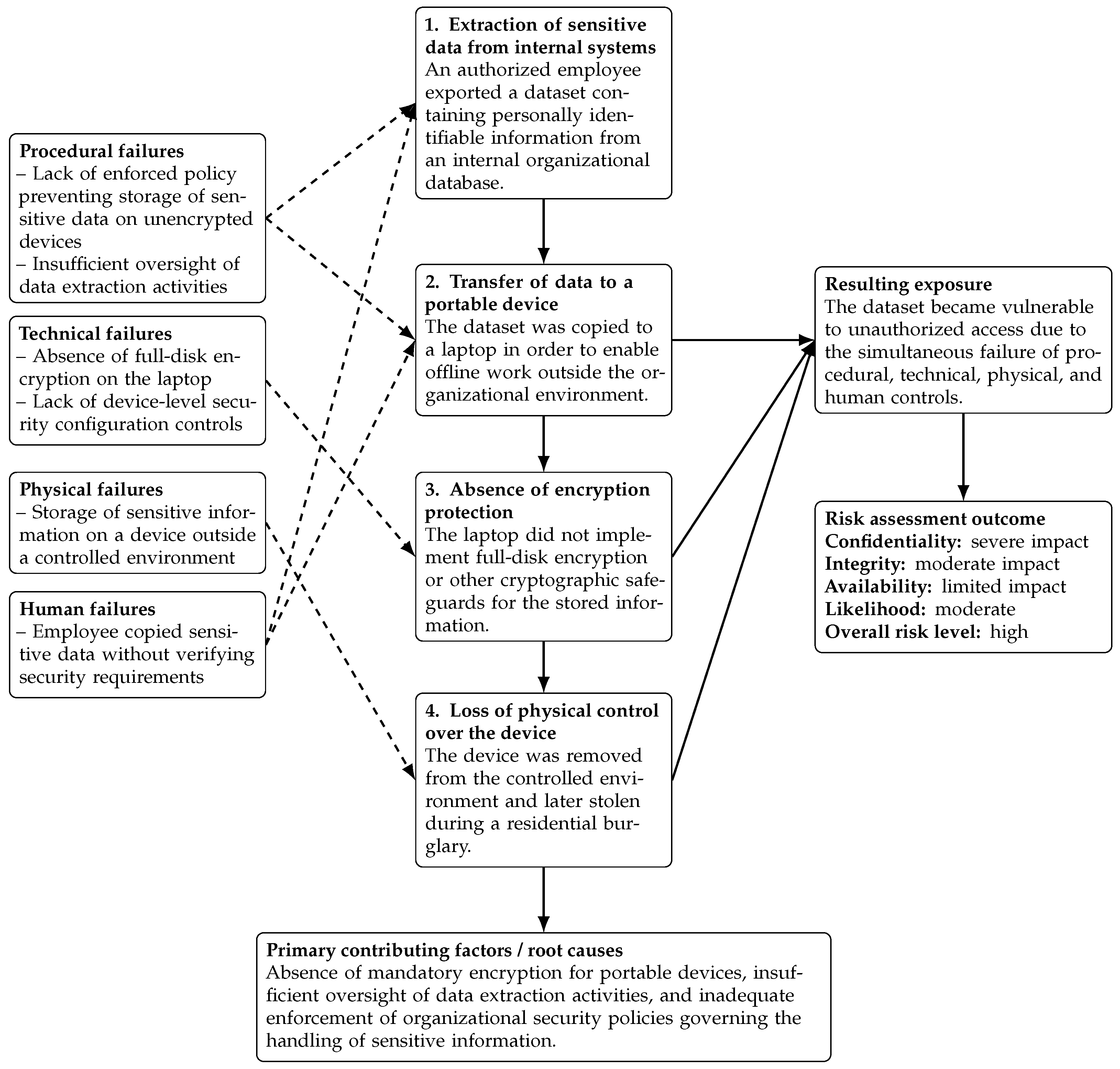
Figure 4 provides a structured representation of the causal chain underlying the incident, showing how failures across multiple control domains—procedural, technical, physical, and human—interacted to enable the exposure of sensitive information. It integrates the sequence of events and data flows into a unified causal model, highlighting how the absence or ineffectiveness of key safeguards allowed the incident to evolve from authorized data extraction to eventual exposure.
6.1. Failure Identification
The incident resulted from the breakdown of multiple control layers, which can be categorized into procedural, technical, physical, and human failures. These failures can be understood as weaknesses in distinct layers of organizational defense. Consistent with James Reason’s Swiss cheese model [
4,
5], the breach became possible because these weaknesses aligned in a way that allowed the incident to progress without effective interruption.
Procedural failures
Absence of enforced policies prohibiting the storage of sensitive data on unencrypted portable devices;
Insufficient oversight and authorization controls governing data extraction activities from internal systems.
Technical failures
Absence of full-disk encryption on the portable device, leaving stored data unprotected in case of loss or theft;
Lack of centralized device security configuration and compliance controls to ensure adherence to organizational security requirements.
Physical failures
Human failures
Authorized employee transferred sensitive data to a portable device without verifying compliance with applicable security policies and protection requirements;
The workflow appears to have favored task completion and off-premise productivity over explicit verification of endpoint protection, illustrating a policy–practice gap rather than a purely individual error;
Reliance on user discretion diffused responsibility between the employee, line management, system administrators, and security governance functions.
The human contribution should therefore not be reduced to non-compliance. Reason’s organizational perspective distinguishes active errors from latent conditions [
4,
5]. In this case, plausible latent conditions include normalization of insecure workarounds, weak supervisory feedback, unclear ownership of extraction approval, inadequate usability of approved remote-processing mechanisms, and incentives that prioritized timely analysis over security verification. Because the available reports do not provide interviews or behavioral measurements, these factors are analytical explanations rather than confirmed motives. Their practical implication is nevertheless important, as awareness training alone cannot compensate for a workflow that permits high-volume extraction to a non-compliant device.
6.2. Causal Analysis
The incident resulted from a combination of technical and procedural failures that enabled the exposure of sensitive information. However, the case is better understood not as a simple linear failure, but as the outcome of interacting weaknesses across multiple layers of defense. The incident can be modeled as a Portable Device Data Exposure Chain, in which the exposure results from a sequence of dependent stages and from the failure of controls at each stage. In this sense, the causal chain can be reconstructed as follows:
Extraction of sensitive data from internal systems—An authorized employee exported a dataset containing personally identifiable information from an internal organizational database for administrative analysis.
Transfer of data to a portable device—The dataset was copied to a laptop device in order to enable offline work outside the organizational environment.
Absence of encryption protection—The laptop did not implement full-disk encryption or other cryptographic protections capable of safeguarding the stored information.
Loss of physical control over the device—The device was removed from the controlled organizational environment and subsequently stolen during a residential burglary.
The exposure of the dataset became possible due to the simultaneous failure of multiple security controls. In particular, the incident reveals weaknesses in device security configuration, data handling procedures, and organizational enforcement of encryption requirements. The breach emerged because procedural, technical, physical, and human weaknesses aligned in a manner that allowed the hazard to pass through all relevant defensive layers without effective interruption.
From a root-cause perspective, the primary contributing factors include the absence of mandatory encryption for portable devices, insufficient oversight of data extraction activities, and inadequate enforcement of organizational security policies governing the handling of sensitive information. Accordingly, the incident should be understood not merely as the consequence of device theft, but as the result of a broader organizational failure to maintain effective layered protection over sensitive data throughout its extraction, transfer, storage, and off-premise use.
6.3. Formal Definition of the PDDEC
Let a PDDEC instance be represented as
where
D is a sensitive dataset,
E an authorized extraction event,
B a transfer across a managed trust boundary,
S the protection state of the destination endpoint,
L a loss of physical or administrative control,
X the resulting exposure state, and
the controls assigned to the transitions. Progression to potential disclosure occurs when the following conditions are jointly satisfied:
where
denotes effective protection of the data on the endpoint
S. Effective protection is intentionally broader than the presence of encryption, because it requires suitable cryptography, protected keys, a trustworthy platform state, and an operating state in which an unauthorized party cannot obtain plaintext through an already authenticated session.
The model has six operational stages: (1) authorized access and extraction; (2) transfer to a portable endpoint; (3) crossing of a managed trust boundary; (4) ineffective data protection; (5) loss of physical or administrative control; and (6) potential unauthorized disclosure. Stages 1–5 describe changes in custody or protection, and stage 6 is an exposure outcome. Device theft is neither necessary nor sufficient in every case. Loss may also arise from misplacement, disposal, unauthorized reassignment, or loss of management control, while theft of a properly shut-down and strongly encrypted endpoint need not produce data disclosure.
The chain is interrupted when at least one transition control remains effective. Examples include extraction authorization and data-loss prevention before E; endpoint-compliance verification before B; encryption with hardware-backed keys at S; secure shutdown and memory protection before L; and rapid revocation, remote wipe, and incident response after L. The model assumes that the attacker obtains the device or equivalent administrative control but does not initially compromise the central repository. It does not model remote-only intrusion or cryptanalytic failure.
Relative to a general data lifecycle, the PDDEC is narrower and event-oriented. Relative to an attack chain, it can begin with legitimate employee activity rather than adversarial reconnaissance. Relative to the Swiss cheese model, it specifies the data-state transitions through which aligned weaknesses propagate. Its novelty is therefore the explicit combination of trust-boundary movement, separation of access from extraction authority, and testable interruption points.
6.4. Comparative Historical Back-Test
Table 2 applies the model to two later incidents selected according to the methodology above. The March 2011 theft of an unencrypted NASA notebook reportedly involved algorithms used to command and control the International Space Station and was cited by the NASA Inspector General as an example of inadequate protection of sensitive information [
21]. In the Feinstein Institute case, a laptop containing protected health information was stolen from an employee’s vehicle; the U.S. Department of Health and Human Services subsequently required a corrective action plan and a monetary settlement [
22].
The back-test demonstrates construct portability, not causal proof. The model described the common movement from authorized organizational use to weakened endpoint custody, while also exposing evidence gaps. Official public records do not always establish the device power state, key configuration, or whether data was accessed. The comparison supports limited analytical generalization across government, aerospace, and health-research contexts, but not an estimate of how often any stage causes disclosure.
6.5. Risk Assessment
Table 3 defines the ordinal scale and score thresholds used in this study. These criteria are applied to the incident conditions documented for 2006 and should not be interpreted as a current assessment of VA controls.
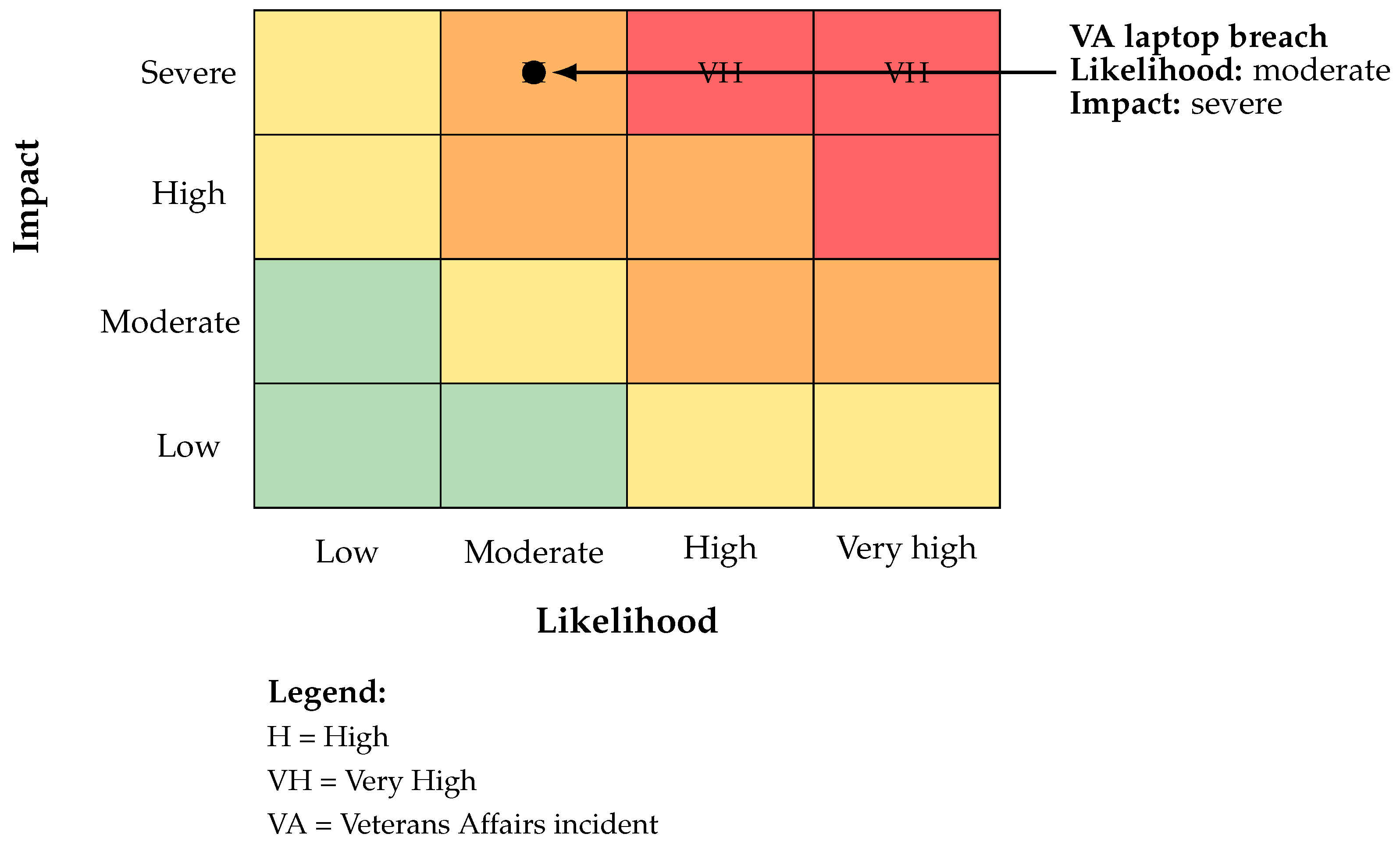
Figure 5 consolidates the risk assessment by mapping the incident’s likelihood and impact within a heat map, demonstrating that the combination of moderate likelihood and severe impact places the scenario in a high-risk category. This assessment reflects not only the immediate consequences of device theft, but also the broader control failures and exposure pathways identified in the preceding analysis, showing that the severity of the incident resulted from the combined weakness of multiple protective layers.
The incident presents significant risks to the organization due to the exposure of sensitive personal information stored on an unencrypted portable device. The risk assessment considers the potential impact on key security objectives and the likelihood of occurrence based on the operational context. The severity of the scenario derives not only from the sensitivity of the compromised data, but also from the fact that multiple control layers failed to prevent the progression from authorized access to potential unauthorized disclosure.
6.5.1. Impact
Confidentiality—The theft of the unencrypted laptop created the possibility of unauthorized access to personally identifiable information of millions of individuals. The compromise of such data represents a severe breach of confidentiality, particularly because no effective protective layer remained capable of preventing access once physical control of the device was lost.
Integrity—Although the primary concern relates to data disclosure, the unauthorized possession of the dataset also introduces the risk of manipulation, unauthorized distribution, or misuse of personal information.
Availability—The incident did not significantly affect the availability of internal systems or databases, as the primary data repositories remained operational within the organizational infrastructure.
Reputation and Legal Impact—The exposure of sensitive personal data can result in substantial reputational damage, loss of public trust, legal liabilities, and regulatory consequences for the organization.
6.5.2. Likelihood
The likelihood of this type of incident is considered moderate, as theft or loss of portable computing devices is a relatively common operational risk. The probability of data exposure increases significantly when such devices lack encryption or other protective controls, particularly in operational settings where sensitive data may be extracted and handled outside controlled organizational environments.
6.5.3. Risk Level
Considering the severe impact on confidentiality and the moderate likelihood of occurrence, the overall risk level associated with this scenario is assessed as high.
This classification reflects both the scale of potential harm associated with large-scale exposure of personally identifiable information and the failure of multiple control layers to interrupt the progression from authorized access to potential unauthorized disclosure.
The risk level is determined using an illustrative qualitative risk matrix adopted for analytical consistency within this study. In this case, the scenario is positioned at moderate likelihood (level 2) and severe impact (level 4). The resulting product score is , within the defined high range of 7–11.
This is an inherent scenario assessment under the failed-control conditions documented for the incident. It is not a post-control or residual-risk estimate because no effective endpoint encryption control is credited. More broadly, the scenario is consistent with the Swiss cheese model, since the high-risk outcome resulted from the alignment of weaknesses across several defensive layers rather than from a single isolated failure. As a result, the identified risk level justifies the implementation of stronger preventive and detective controls, particularly mandatory full-disk encryption for portable devices, stricter controls over sensitive data extraction, and enhanced monitoring and auditability of data handling activities.
7. Discussion
7.1. From a 2006 Encryption Gap to a Modern Endpoint-Assurance Problem
The 2006 incident demonstrates the direct value of full-disk encryption. A correctly implemented encrypted device that is shut down before theft substantially reduces the likelihood that loss of hardware becomes loss of data. In contemporary managed fleets, however, FDE is a baseline rather than a complete architecture. Dedicated cryptographic instructions and operating-system integration have reduced the performance and usability objections that affected earlier deployments, while hardware roots of trust can protect keys and condition their release on platform measurements [
7,
8,
9]. The engineering question has shifted from whether encryption should be deployed to whether its configuration, keys, recovery paths, platform state, and operating state are continuously trustworthy.
Modern control assurance should therefore combine FDE with hardware-backed key sealing, verified or measured boot, centralized recovery-key escrow with separation of duties, cryptographic inventory, automated compliance reporting, and documented exception handling. Key recovery is a particularly important failure path: broadly accessible escrow keys, weak help-desk identity verification, or unmanaged copies can negate strong endpoint cryptography. Self-encrypting drives likewise require validated configuration and lifecycle management. The presence of encryption-capable hardware is not evidence that protection is enabled or correctly governed.
7.2. Limitations of Full-Disk Encryption
FDE primarily protects
data at rest before authentication. It does not prevent an authenticated user, malware running in that user’s context, or an attacker controlling an unlocked endpoint from reading plaintext. When a device is running or in a sleep state, volume keys and sensitive data may remain in memory. Cold-boot research has demonstrated recovery of encryption material from remanent memory, while DMA research shows that malicious or compromised peripherals can bypass operating-system isolation when input/output memory protections are absent or defective [
17,
18].
Compensating controls include requiring shutdown or cryptographically safe hibernation for high-risk transport, pre-boot multifactor authentication, disabling unused external DMA-capable interfaces, enabling IOMMU/kernel DMA protection, rapid screen locking, memory encryption where supported, and remote revocation or wipe. Metadata such as device identity, file names, synchronization records, access logs, and traffic patterns may also remain exposed even when file contents are encrypted. Data-loss prevention, minimization of local datasets, application-level protection for selected records, and centralized processing reduce this residual exposure.
Confidential computing and hardware memory-encryption technologies extend protection toward data in use, but they do not remove the need for endpoint hardening or application security. They introduce their own trust dependencies, attestation requirements, side-channel considerations, and key management obligations. The appropriate conclusion is therefore not that FDE has become ineffective, but that its security claim must be limited to a defined device and power state.
7.3. Human and Organizational Interpretation
The comparative cases reinforce the Swiss cheese interpretation, showing that an employee action becomes consequential when governance, tooling, supervision, and technical enforcement allow it to pass unchecked. Behavioral interventions should address security friction, ambiguous accountability, and normalization of exceptions.
Useful measures include approved remote-analysis environments, just-in-time warnings tied to sensitive extraction, manager approval for bulk export, feedback from simulated or detected policy violations, and metrics that reward compliant completion rather than speed alone. Training remains necessary, but its effectiveness should be measured through observed behavior and controlled outcomes rather than attendance records. This perspective is also aligned with Safety-II approaches that emphasize understanding everyday work practices and organizational resilience rather than focusing exclusively on individual failures [
23].
7.4. Relationship to Zero Trust and Data-Centric Security
The PDDEC complements ZTA by identifying the exact operation for which trust should be reevaluated. A user may be authorized to query a repository but not to export millions of records; a device may be organization-owned but non-compliant; and a session may begin in a trusted state but become risky after a posture change. Policy enforcement should therefore evaluate subject identity, device health, data classification, requested operation, location, and anomalous volume before permitting extraction or local retention [
15].
This perspective is applicable to BYOD, remote work, and cloud-synchronized endpoints because it treats the protected resource and data operation, rather than network location, as the unit of control. Nevertheless, the two-case back-test remains exploratory. A stronger validation would sample a larger incident corpus, use independent coders, measure inter-rater agreement, and compare PDDEC-based control prioritization with established incident-analysis methods.
8. Corrective and Preventive Measures
8.1. Corrective Measures
Following the discovery of the incident, a number of immediate corrective actions must be implemented in order to contain the potential impact, assess the scope of the exposure, and restore organizational control over sensitive information assets. These actions are particularly important in situations where failures across multiple procedural, technical, and governance layers have already allowed the incident to progress beyond the point of initial compromise.
Incident Reporting to Relevant Authorities—The incident must be formally reported to the appropriate regulatory and oversight bodies in accordance with applicable legal and organizational reporting requirements.
Notification to Affected Individuals—Individuals whose personal information may have been exposed should be notified in a timely manner. This notification should include information regarding the nature of the incident, the potential risks involved, and recommended protective actions.
Review of Device Inventory and Security Status—A comprehensive audit of organizational portable devices should be conducted to verify the implementation of required security controls, particularly encryption mechanisms and device management policies.
These corrective actions aim to mitigate the immediate consequences of the incident while enabling the organization to assess vulnerabilities, restore control over affected security processes, and reduce the likelihood of further data exposure.
8.2. Preventive Measures
The proposed preventive measures are structured to address each stage of the Portable Device Data Exposure Chain, ensuring that the failure of a single control does not allow progression to subsequent stages. These measures are also consistent with the governance and continual-improvement principles described in ISO/IEC 27001 [
24]. More specifically,
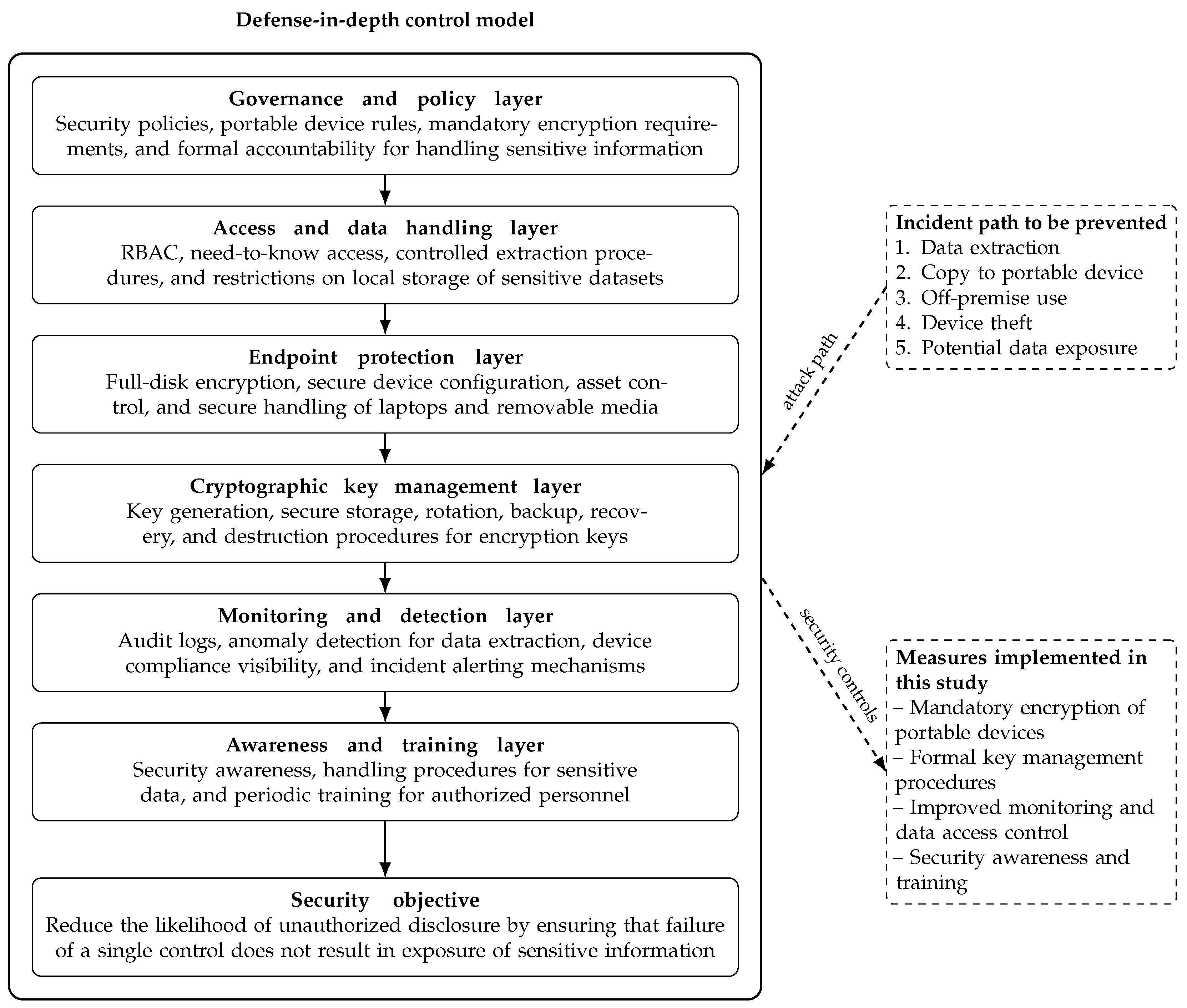
Figure 6 presents the layered control model proposed to prevent similar incidents, showing how organizational, technical, cryptographic, monitoring, and human safeguards work together to reduce the likelihood of sensitive data exposure. This model reflects a defense-in-depth approach in which the protection of sensitive information depends on the combined effectiveness of multiple safeguards rather than on any single control acting alone [
11].
Corrective actions such as coordinated breach response, notification, and incident decision-making are also consistent with lessons identified in federal reviews of the VA incident [
2,
3]. In addition to immediate corrective actions, a set of preventive measures should be implemented to reduce the likelihood of similar incidents in the future and strengthen the organization’s information security posture. In conceptual terms, these measures are intended to reinforce multiple defensive layers so that the weakness or failure of one safeguard does not directly result in the exposure of sensitive information.
Mandatory Encryption of Portable Devices
All organizational portable devices, including laptops and removable storage media, must implement full-disk encryption in order to protect sensitive data in the event of device loss or theft.
Responsible unit: Information Security Department.
Pre-conditions: Deployment of approved encryption solutions and configuration standards for organizational devices.
Evidence of implementation: Device configuration records, encryption status reports, and centralized device management logs.
Acceptance criteria: All organizational portable devices verified as compliant with the mandatory encryption policy through periodic security audits.
Formal Key Management Procedures
The organization must establish formal procedures governing cryptographic key management, including key generation, secure storage, rotation, backup, and destruction. These procedures must follow recognized cryptographic standards.
Responsible unit: Security Operations Team.
Pre-conditions: Definition of organizational cryptographic policies and deployment of secure key management infrastructure.
Evidence of implementation: Key management documentation, cryptographic configuration records, and key lifecycle audit logs.
Acceptance criteria: Successful verification of key management procedures during periodic security and compliance audits.
Improved Monitoring and Data Access Control
Monitoring mechanisms should be implemented to detect abnormal data extraction activities, large dataset transfers, and unauthorized access to sensitive information.
Responsible unit: Security Monitoring Team.
Pre-conditions: Deployment of monitoring and logging systems capable of analyzing database activity and data transfer patterns.
Evidence of implementation: Monitoring dashboards, security alerts, and system event logs.
Acceptance criteria: Detection mechanisms capable of identifying anomalous data access events and generating timely alerts.
Security Awareness and Training
Regular training programs must be conducted to ensure that employees handling sensitive information understand organizational security policies, data handling requirements, and the risks associated with storing data on portable devices.
Responsible unit: Organizational Security Governance Unit.
Pre-conditions: Development of security awareness training materials and training schedules.
Evidence of implementation: Training attendance records, certification logs, and employee acknowledgement of security policies.
Acceptance criteria: All personnel with access to sensitive information successfully complete periodic security training programs.
9. Lessons Learned and Applicability
The incident illustrates that the protection of sensitive information on portable devices cannot be treated as a purely technical matter. Although the immediate failure was the absence of encryption on the stolen laptop, the broader analysis shows that the exposure resulted from the interaction of multiple weaknesses: (i) inadequate policy enforcement, (ii) insufficient control over data extraction, (iii) limited monitoring of data movement, and (iv) over-reliance on individual user behavior. The principal lesson is therefore that confidentiality breaches of this kind are rarely caused by a single missing safeguard; rather, they emerge when organizational, technical, and human controls fail simultaneously. In this sense, the case is consistent with the Swiss cheese model, according to which major incidents occur when weaknesses across multiple defensive layers align and allow the hazard to propagate.
A second lesson concerns the importance of trust boundaries. Once sensitive data was transferred from a controlled internal environment to a portable endpoint located outside organizational premises, the organization lost the benefit of many environmental safeguards normally present within managed infrastructure. This shift substantially increased exposure risk and made endpoint protections—especially full-disk encryption, device configuration control, and asset visibility—critical compensating controls. The case demonstrates that data portability must be governed as a high-risk operation in itself, particularly when it involves local storage on laptops or removable media.
A third lesson is that authorized access does not by itself imply secure handling. The employee involved in the incident appears to have had legitimate access to the dataset, yet the authorized nature of the extraction did not prevent subsequent exposure. This highlights the need to distinguish between permission to access and permission to transfer, store, or process data outside controlled environments. Effective protection requires controls not only at the point of access, but also at the stages of extraction, transfer, storage, and post-incident response.
The case also highlights the importance of defense in depth [
11]. No single control should be solely responsible for preventing the disclosure of sensitive information. Even if one safeguard fails—for example, policy enforcement or user compliance—additional layers such as endpoint encryption, key management, monitoring of anomalous data extraction, and rapid incident response should continue to reduce the likelihood or impact of exposure. In this sense, the incident is best understood as a failure of layered security architecture rather than merely as an isolated device security lapse.
These lessons are directly applicable to government organizations, healthcare institutions, defense-related environments, critical infrastructure operators, and private sector entities that handle sensitive personal, operational, or regulated data. Any organization that permits the use of portable endpoints, remote work practices, off-premise data processing, or local extraction of large datasets faces similar structural risks. The case is therefore relevant beyond the specific Veterans Affairs context and provides a useful reference model for the design of policies, technical safeguards, and governance mechanisms aimed at reducing exposure resulting from lost or stolen devices.
More broadly, the incident remains relevant because contemporary organizations continue to depend on distributed work practices, mobile endpoints, and extensive handling of personal data. In such environments, the Portable Device Data Exposure Chain provides a reusable analytical framework for identifying control weaknesses and structuring defense-in-depth strategies across both public and private sector contexts.
For BYOD and remote work environments, ownership cannot be used as a proxy for trust. Access to sensitive resources should depend on current device posture, managed application state, encryption status, and the specific requested data operation. Under a Zero Trust approach, these conditions are reassessed continuously, and local retention can be denied even after user authentication [
10,
15]. Cloud synchronization also requires explicit governance because a protected organizational file may be replicated to personally controlled endpoints or backup services, creating additional PDDEC instances beyond the original laptop.
10. Conclusions
This case study examined the 2006 VA breach through a reproducible retrospective method that distinguishes documented facts, inferences, and analytical assumptions. The analysis shows that the exposure was enabled by aligned procedural, technical, physical, organizational, and human-factor weaknesses rather than by device theft or missing encryption alone. The finding is consistent with Reason’s Swiss cheese model [
4,
5], since the breach resulted from the alignment of weaknesses across multiple defensive layers rather than from a single isolated point of failure.
The principal contribution is the formalized PDDEC, which describes changes in data custody and protection from authorized extraction to potential disclosure. Its distinction from broader lifecycle and attack-chain models lies in the explicit trust-boundary transition, separation of access authority from extraction authority, and assignment of testable control points to each transition. Application to two later endpoint-loss incidents provides a limited historical back-test and indicates that the constructs can transfer across organizational sectors, while also revealing recurring evidence gaps.
From an operational perspective, full-disk encryption remains fundamental, but modern security engineering must treat it as a baseline control with clearly defined security assumptions. Hardware-backed keys, verified boot, secure recovery, endpoint attestation, data-loss prevention, monitoring, and secure power-state policy are required to address key management failure and data-in-use exposure [
1,
10,
16]. Zero Trust principles further require that user identity, device condition, data sensitivity, and requested operation be evaluated before local extraction is permitted [
15].
Overall, the study does not empirically estimate control effectiveness, and its two-case purposive comparison cannot establish statistical generalizability. Future work should use a larger incident corpus, independent coders, inter-rater reliability measures, and simulation or quantitative loss data to test whether PDDEC-based control prioritization improves on established methods. Within these limits, the model offers a transparent analytical tool for endpoint-loss scenarios in distributed, mobile, BYOD, and remote-working environments. Beyond the historical case itself, the study contributes a reusable analytical model for understanding how sensitive data becomes exposed when trust boundaries are crossed without adequate technical, procedural, and governance safeguards.