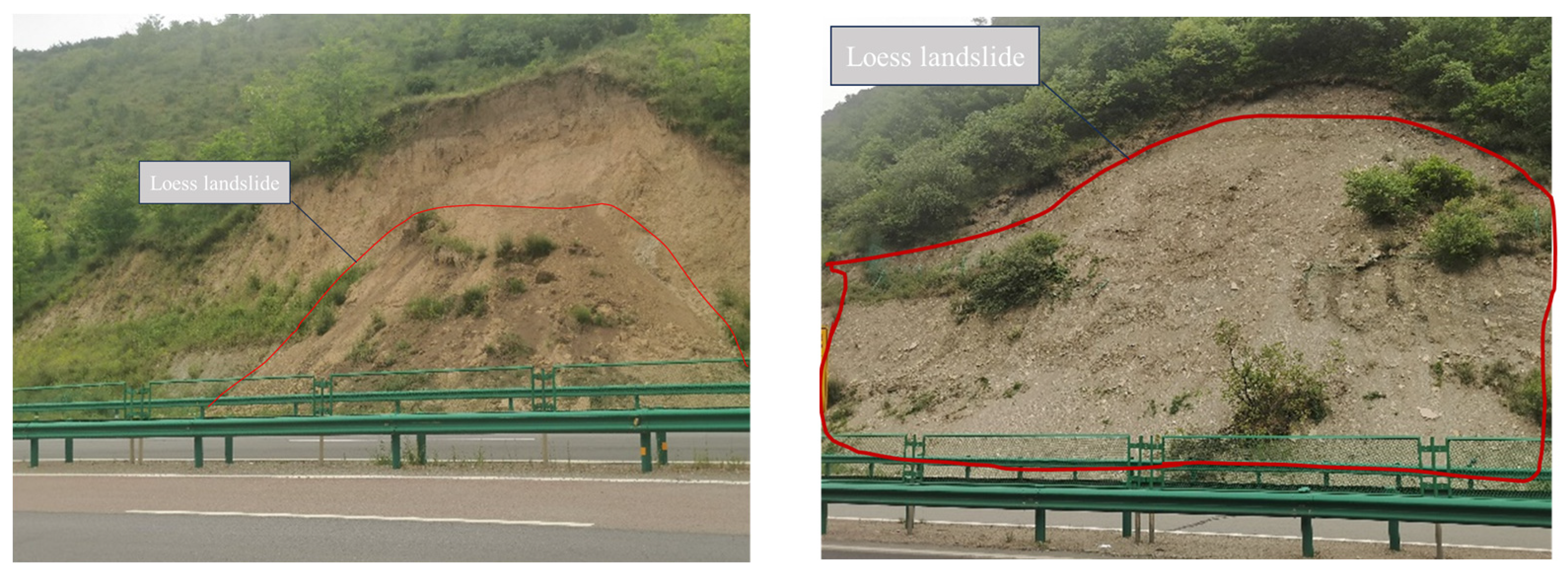
Prediction of Rainfall-Induced Slope Stability Spatiotemporal Evolution Based on a Hybrid Transformer–LSTM Deep Learning Framework

Abstract
1. Introduction
2. Materials and Methods
2.1. Fluid-Solid Coupling Model
2.2. Multi-Factor Experimental Design
3. Transformer–LSTM Hybrid Deep Learning Framework and Evaluation Metrics
3.1. Transformer–LSTM
3.1.1. Long Short-Term Memory Neural Network (LSTM)
3.1.2. Transformer
3.2. Model Computational Process
3.3. Evaluation Metrics for Regression Model
3.4. Physical Attribution Analysis Based on SHAP Values
4. Results Analysis
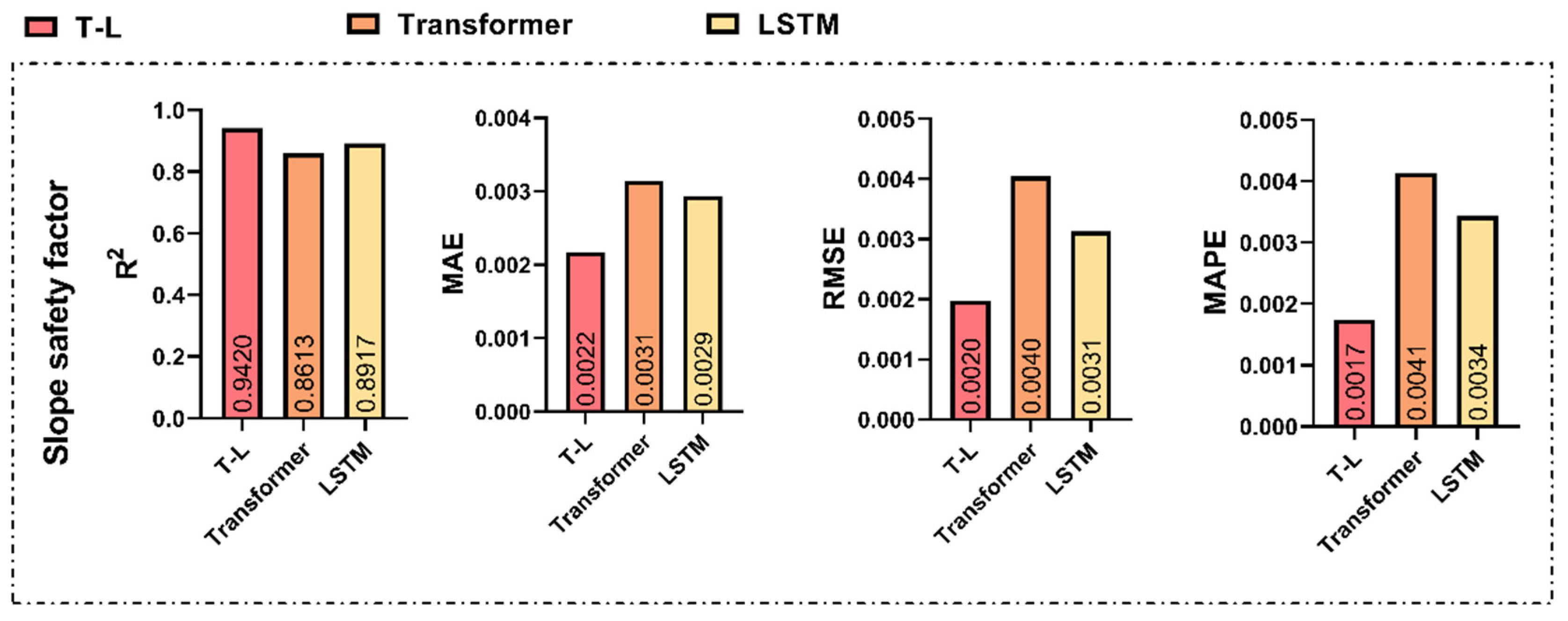
4.1. Comparative Evaluation Against Optimized Baseline Models
4.2. Ablation Study: Hybrid Versus Standalone Architectures
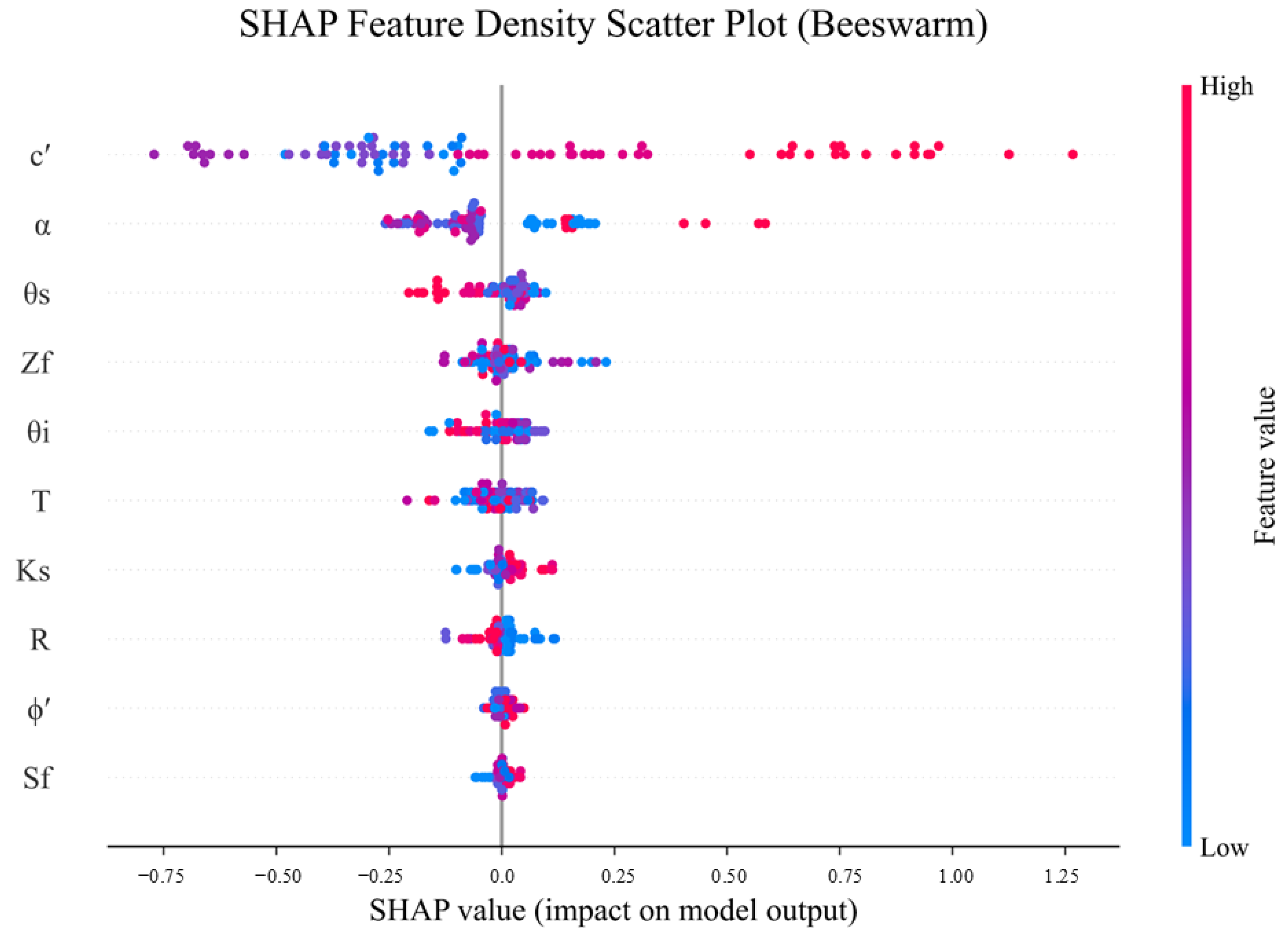
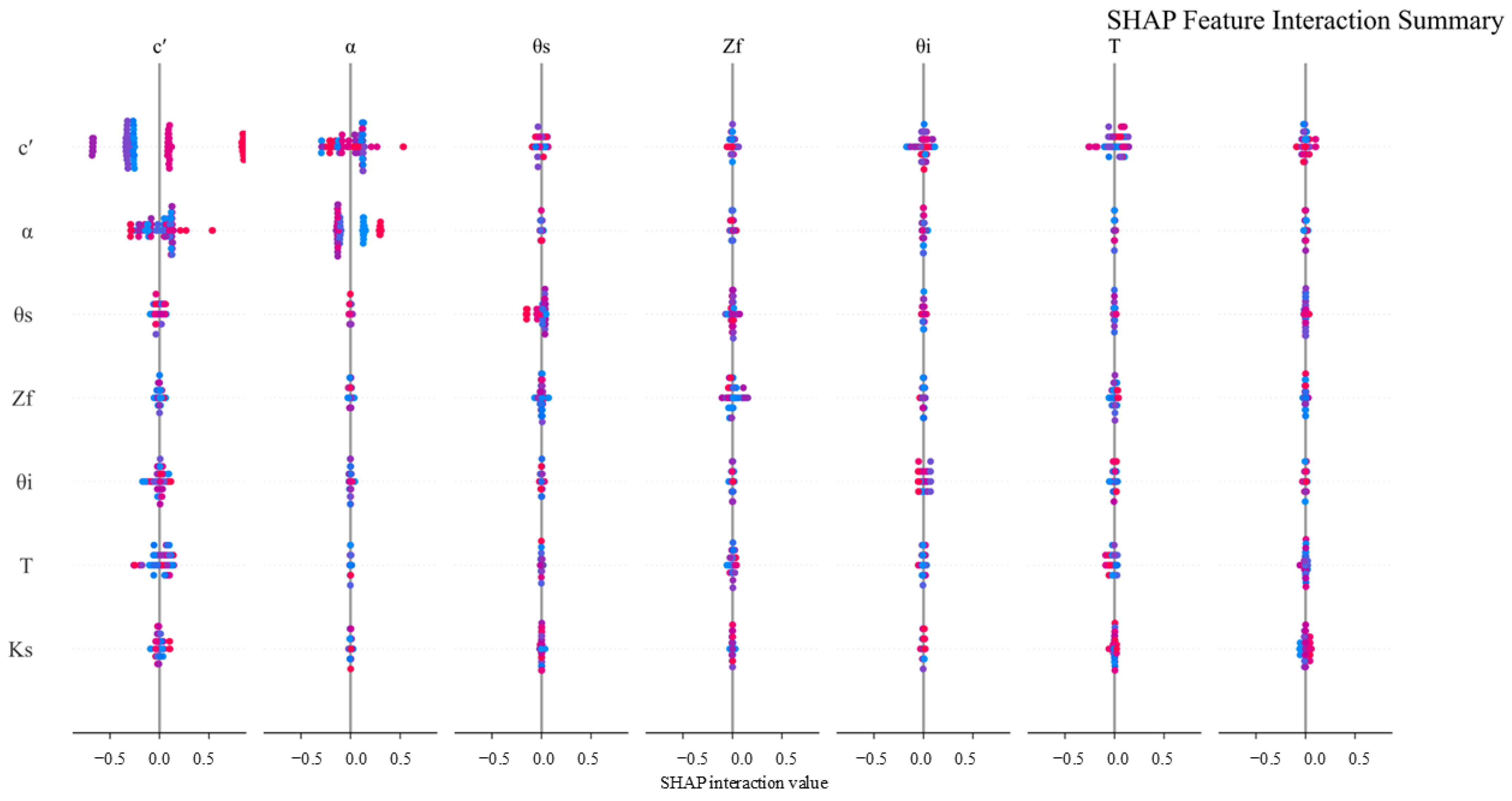
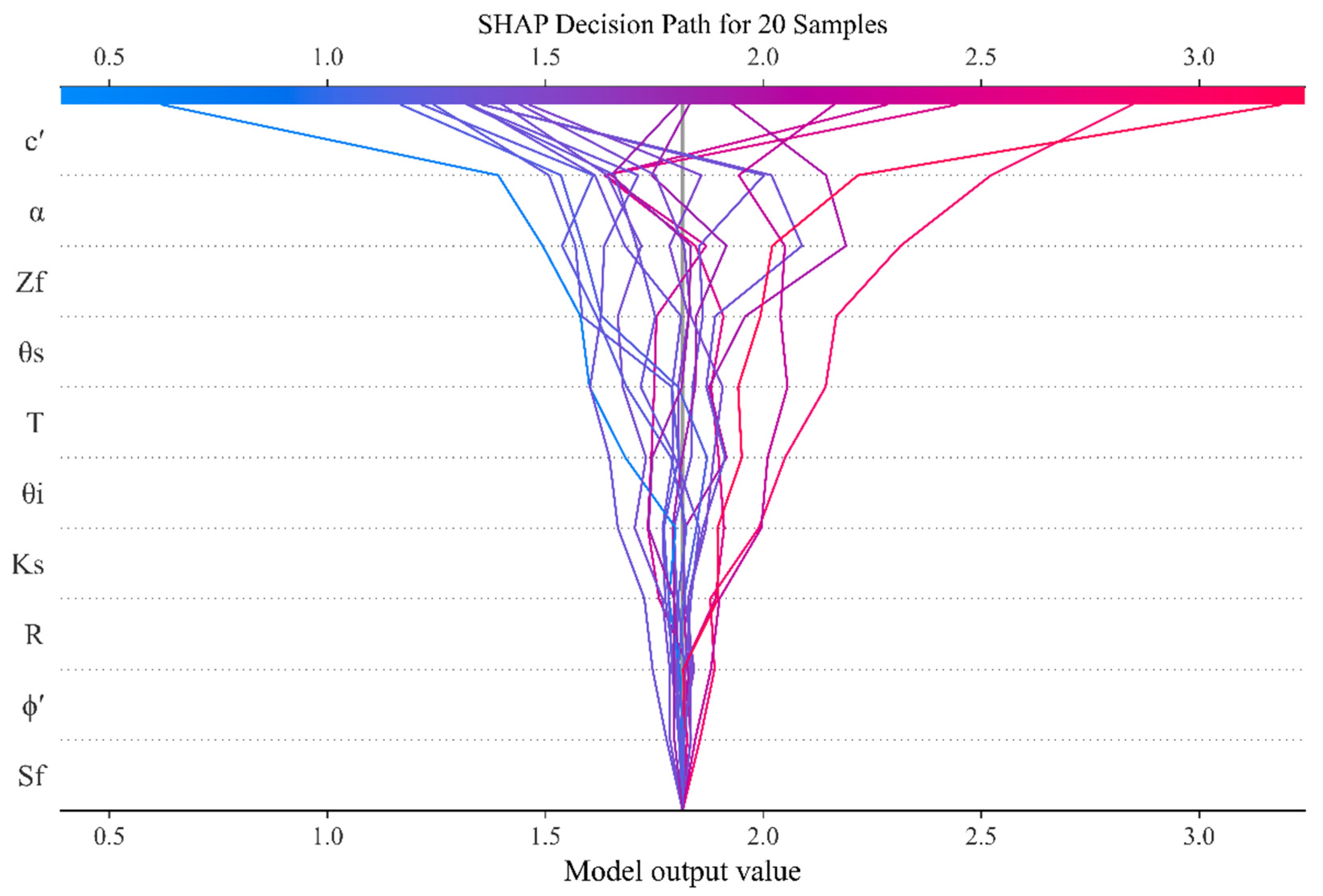
4.3. Explainable Analysis
5. Discussion
5.1. Comparative Analysis with Existing Literature
5.2. Model Validation
5.3. Limitations and Future Research Directions
6. Conclusions
Author Contributions
Funding
Data Availability Statement
Conflicts of Interest
References
- He, Z.; Akiyama, M.; Alhamid, A.K.; Frangopol, D.M.; Huang, Y. Probabilistic life-cycle landslide assessment subjected to nonstationary rainfall based on alternating stochastic renewal process. Eng. Geol. 2024, 338, 107543. [Google Scholar] [CrossRef]
- Nguyen, B.Q.V.; Doan, V.L.; Kim, Y.T.; Song, C.-H.; Lee, J.-S. Considering antecedent rainfall to improve susceptibility assessment of rainfall-earthquake-triggered landslides on unsaturated slopes. Environ. Earth Sci. 2024, 83, 142. [Google Scholar] [CrossRef]
- Ebrahim, K.M.P.; Gomaa, S.M.M.H.; Zayed, T.; Alfalah, G. Rainfall-induced landslide prediction models, part ii: Deterministic physical and phenomenologically models. Bull. Eng. Geol. Environ. 2024, 83, 85. [Google Scholar] [CrossRef]
- Li, J.; Jiang, S.; Huang, F.; Huang, J. Characteristics of large deformation failure of slopes under rainfall considering spatial variability of permeability coefficient. J. Appl. Basic Eng. Sci. 2024, 32, 72–84. [Google Scholar]
- Tozato, K.; Sugo, D.; Dolojan, N.L.J.; Nomura, R.; Terada, K.; Takase, S.; Kaneko, K.; Moriguchi, S. Rapid prediction of rainfall-induced landslides over a wide area aided by a simulation-based surrogate model. Comput. Geotech. 2025, 188, 107480. [Google Scholar] [CrossRef]
- Chen, Z.; Dai, Z.; Guo, L.; Fang, W. Stability analysis of recent failed red clay landslides influenced by cracks and rainfall based on the XGBoost–PSO–SVR model. Water 2025, 17, 1920. [Google Scholar] [CrossRef]
- Wu, L.; Gan, F.; Yang, R.; Liu, J.; Ren, Z.; Wang, H. A new intelligent combined prediction system for rainfall-induced instability of circular failure slopes. Environ. Earth Sci. 2025, 84, 585. [Google Scholar] [CrossRef]
- Li, X.; Wang, S.; Lei, C.; Jiang, Y.; Li, D.; Koga, A. Machine learning-based assessment of three-dimensional slope stability using geometric features under heavy rainfall. J. Rock Mech. Geotech. Eng. 2026; in press. [CrossRef]
- Huang, P.C. Establishing a shallow-landslide prediction method by using machine-learning techniques based on the physics-based calculation of soil slope stability. Landslides 2023, 20, 2741–2756. [Google Scholar] [CrossRef]
- Zhang, S.; Jia, H.; Wang, C.; Wang, X.; He, S.; Jiang, P. Deep-learning-based landslide early warning method for loose deposits slope coupled with groundwater and rainfall monitoring. Comput. Geotech. 2024, 165, 105924. [Google Scholar] [CrossRef]
- Lin, M.; Lu, Y.; Li, Y.; Chen, G.; Yuan, B. Time series prediction of the slope stability under rainfall conditions based on LSTM and CNN. Nat. Hazards 2025, 121, 22487–22517. [Google Scholar] [CrossRef]
- Deng, T.; Li, K.; Zhang, C.; Zhang, X. Study on unsaturated rainfall-induced slope stability and failure probability based on GA-LSTM-MC. Alex. Eng. J. 2026, 135, 353–370. [Google Scholar] [CrossRef]
- Liu, L.; Santos, J.E.; Prodanović, M.; Pyrcz, M.J. Mitigation of spatial nonstationarity with vision transformers. Comput. Geosci. 2023, 178, 105412. [Google Scholar] [CrossRef]
- Richards, L.A. Capillary conduction of liquids through porous mediums. Physics 1931, 1, 318–333. [Google Scholar] [CrossRef]
- Deng, Q.; Liu, X.; Zeng, C.; He, X.; Chen, F.; Zhang, S. A freezing-thawing damage characterization method for highway subgrade in seasonally frozen regions based on thermal-hydraulic-mechanical coupling model. Sensors 2021, 21, 6251. [Google Scholar] [CrossRef] [PubMed]
- Cheng, W.; Bian, H.; Shi, H.; Xun, F. Experimental and numerical modelling of desiccation shrinkage process of kaolin clays. Sci. Rep. 2025, 15, 20905. [Google Scholar] [CrossRef] [PubMed]
- Cai, J.-S.; Yeh, T.-C.J.; Yan, E.-C.; Hao, Y.-H.; Huang, S.-H.; Wen, J.-C. Uncertainty ofrainfall-induced landslides considering spatial variability ofparameters. Comput. Geotech. 2017, 87, 149–162. [Google Scholar] [CrossRef]
- Li, D.; Al-Mahamda, M.F.M. Collective Risk Ranking of Highway Segments on the Basis of Severity-Weighted Crash Rates. J. Adv. Transp. 2020, 1, 8837762. [Google Scholar] [CrossRef]
- Miah, M.M.; Hyun, K.K.; Mattingly, S.P.; Khan, H. Estimation of daily bicycle traffic using machine and deep learning techniques. Transportation 2023, 50, 1631–1684. [Google Scholar] [CrossRef]
- Qi, X.; Wang, S.; Fang, C.; Jia, J.; Lin, L.; Yuan, T. Machine learning and SHAP value interpretation for predicting comorbidity of cardiovascular disease and cancer with dietary antioxidants. Redox Biol. 2025, 79, 103470. [Google Scholar] [CrossRef] [PubMed]


| Parameter | Symbol | Unit | Level 1 | Level 2 | Level 3 | Level 4 | Level 5 | Level 6 |
|---|---|---|---|---|---|---|---|---|
| Saturated hydraulic conductivity | ks | m/s | 1.10 × 10⁻⁴ | 1.21 × 10⁻⁴ | 1.31 × 10⁻⁴ | 1.41 × 10⁻⁴ | 1.51 × 10⁻⁴ | 1.61 × 10⁻⁴ |
| Saturated vol. water content | θs | — | 0.355 | 0.426 | 0.457 | 0.478 | 0.499 | 0.510 |
| Initial vol. water content | θi | — | 0.053 | 0.080 | 0.100 | 0.120 | 0.140 | 0.160 |
| Effective cohesion | c′ | kPa | 6.20 | 10.00 | 19.50 | 23.67 | 32.34 | 41.15 |
| Effective friction angle | φ′ | ° | 26.57 | 26.02 | 25.87 | 25.51 | 25.22 | 26.57 |
| Slope angle | β | ° | 30 | 40 | 50 | 60 | 70 | 75 |
| Rainfall intensity | I | mm/h | 1.16 | 2.32 | 3.47 | 5.79 | 8.10 | 11.58 |
| Wetting front suction | hf | kPa | 16.7 | 18.0 | 19.0 | 20.0 | 21.0 | 22.0 |
| Rainfall duration | D | h | 4 | 10 | 20 | 30 | 48 | 72 |
| Hyperparameter | Value | Description |
|---|---|---|
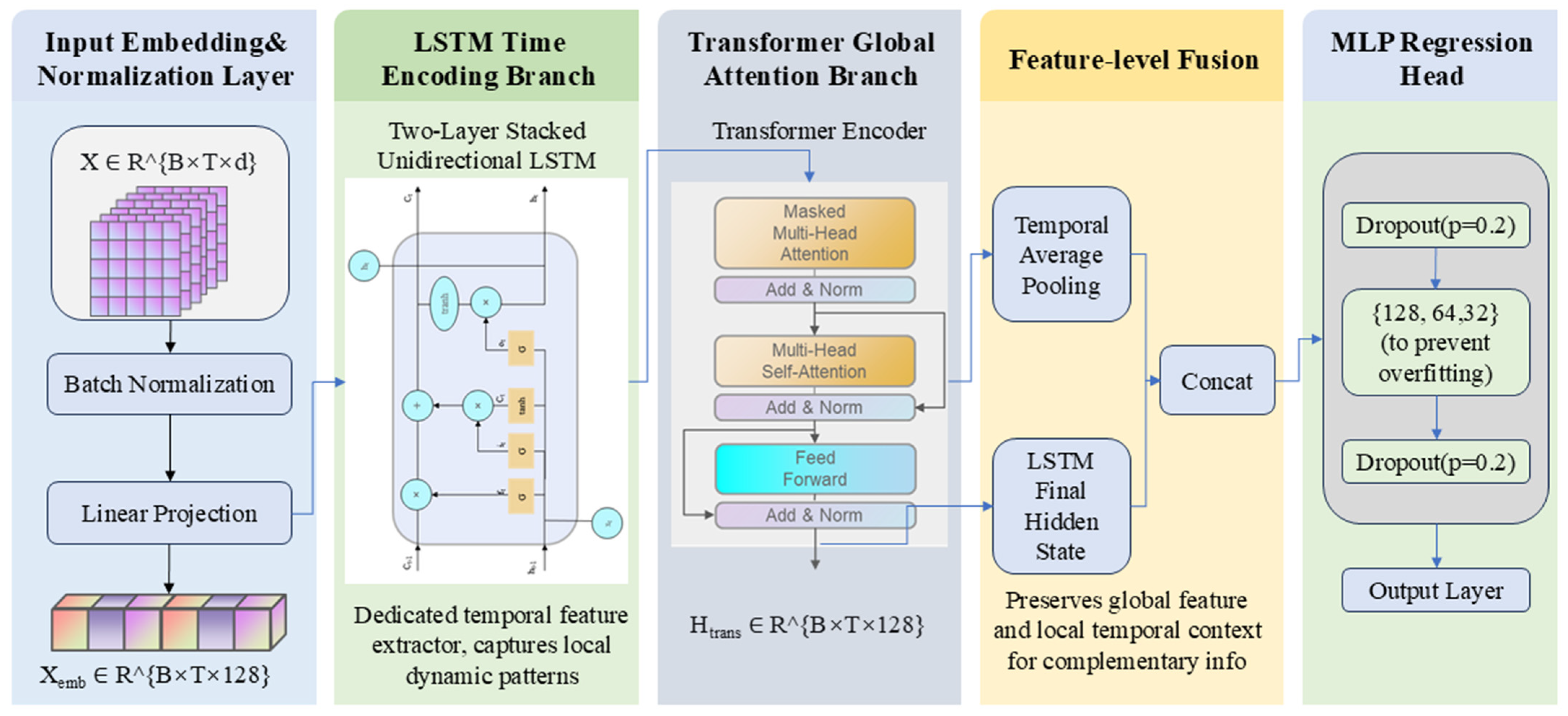
| Input tensor shape | B × 12 × 11 | Batch size × window length × features |
| Look-back window T | 12 time steps | Historical sequence length for prediction |
| Prediction horizon N | 1 time step | Single-step-ahead FOS prediction |
| Embedding dimension dmodel | 128 | Dimension after linear projection |
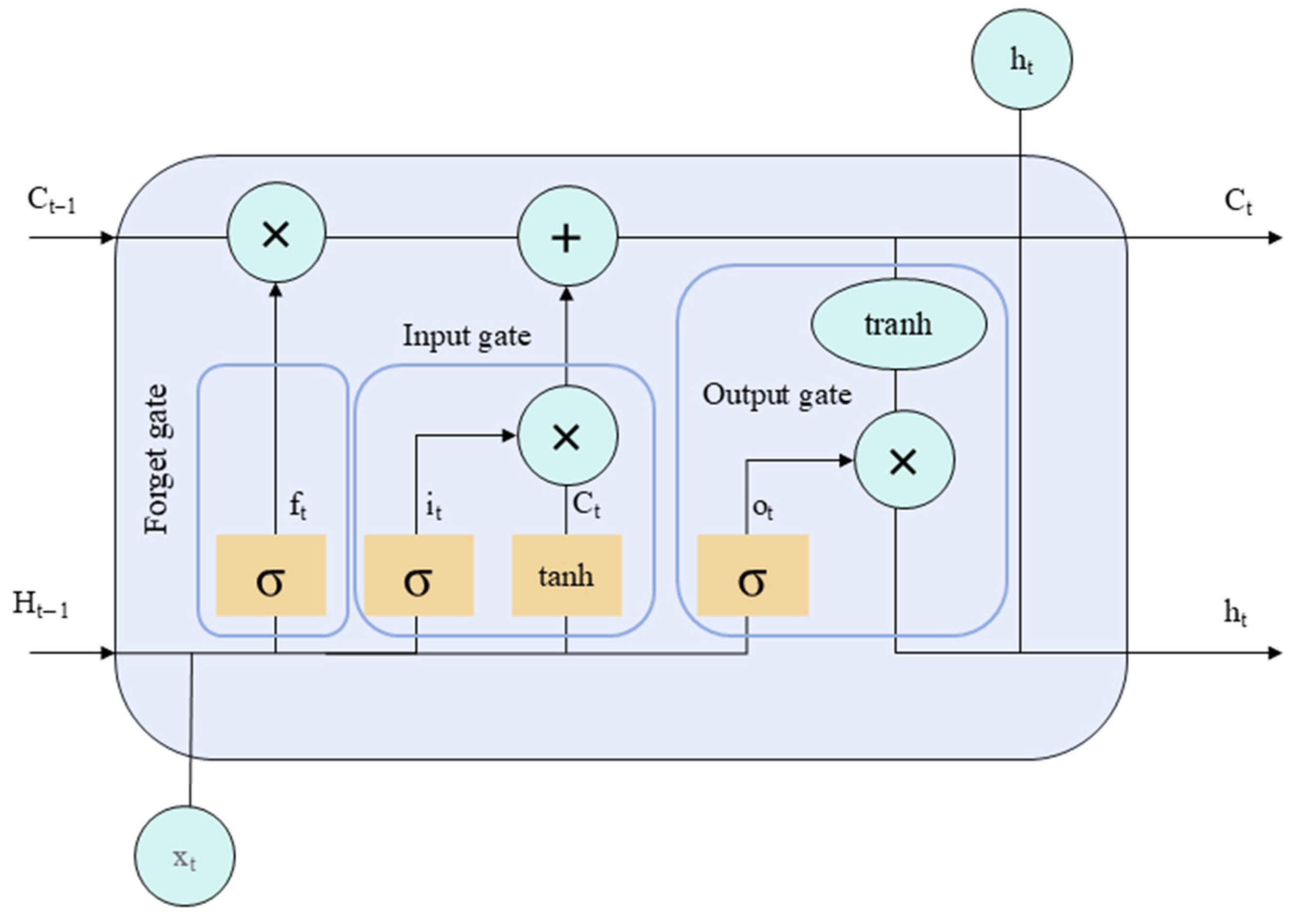
| LSTM hidden dimension | 128 per layer | Two stacked unidirectional LSTM layers |
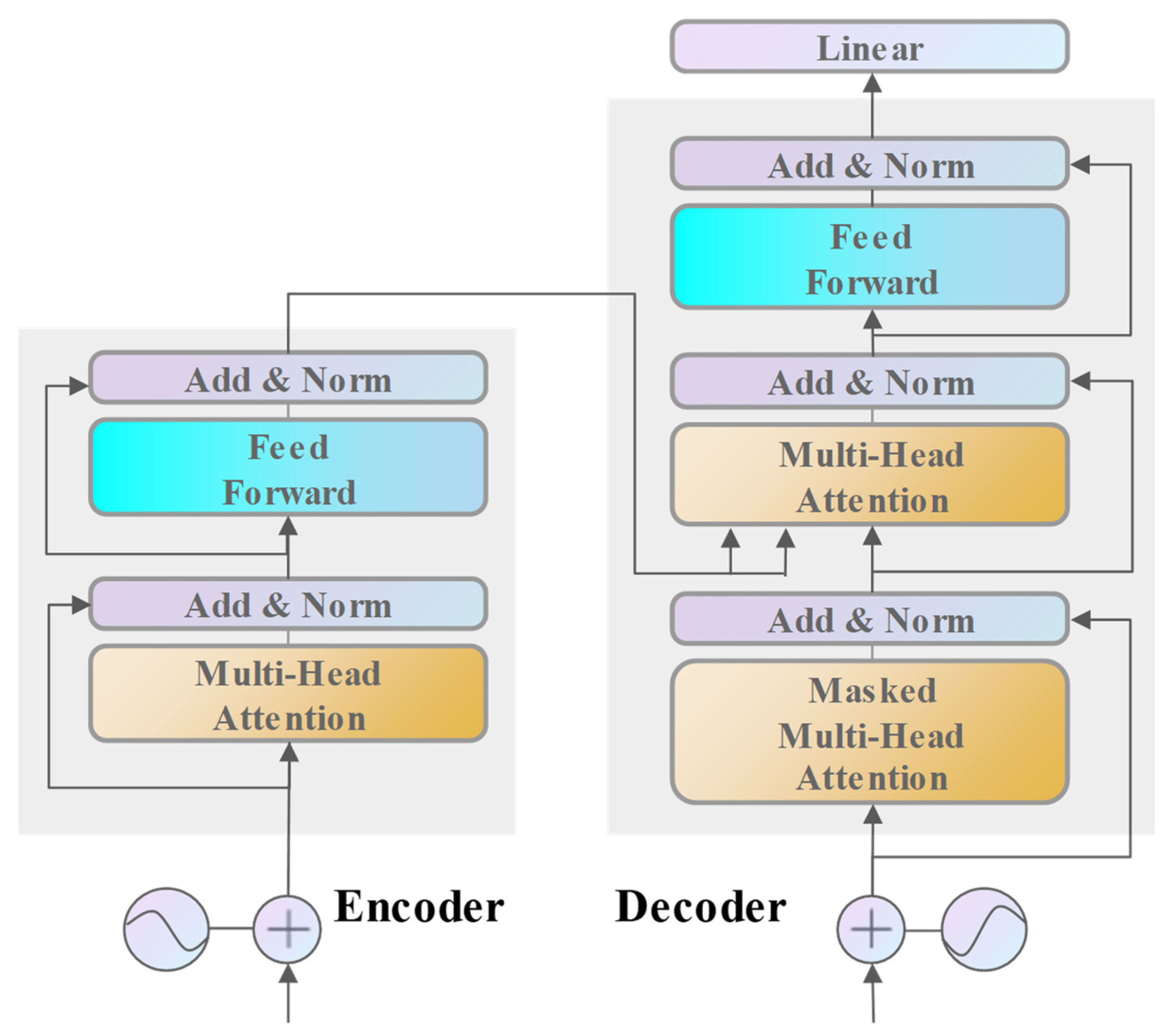
| Transformer encoder layers Nenc | 3 | Number of stacked encoder blocks |
| Attention heads h | 8 | Per-head dimension = 128/8 = 16 |
| FFN inner dimension | 512 | Expansion ratio = 4 relative to dmodel |
| MLP hidden dimensions | {128, 64, 32} | Three-layer regression head |
| Dropout rate | 0.2 | Applied after each hidden layer |
| Total trainable parameters | ~1.32 × 10⁶ | Approximately 1.32 million |
| Batch size B | 32 | Mini-batch gradient descent |
| Optimizer | AdamW | Weight decay = 1 × 10⁻⁴ |
| Learning rate (initial) | 1 × 10⁻⁴ | With cosine annealing schedule |
| Learning rate (minimum) | 1 × 10⁻⁶ | After cosine annealing decay |
| Weight decay | 1 × 10⁻⁴ | L2 regularization coefficient |
| Loss function | MSE | Mean squared error |
| Maximum epochs | 300 | With early stopping patience = 40 |
| Early stopping metric | Validation R2 | Patience = 40 epochs without improvement |
| Training; Validation; Test split | 70%:15%:15% | Case-level stratified split |
| Normalization | Z-score | Per-feature standardization to N (0,1) |
| Feature Vector | K-S Test Statistic | K-S Test Significance | Mann–Whitney U Test Significance | Quantitative Effect Size Index |
|---|---|---|---|---|
| Effective cohesion | 0.784 | p < 0.001 | p < 0.001 | 1.45 (Very Large Effect) |
| Slope angle | 0.652 | p < 0.001 | p < 0.001 | −1.12 (Large Effect) |
| Rainfall intensity | 0.521 | p < 0.001 | p < 0.001 | 0.68 (Medium to Large Effect) |
| Initial volumetric water | 0.412 | p = 0.008 | p = 0.015 | 0.45 (Medium Effect) |
| Saturated hydraulic conductivity | 0.153 | p = 0.124 | p = 0.089 | 0.12 (Trivial Effect) |
| Study | Method | R2 | RMSE | Study | Method | R2 | RMSE |
|---|---|---|---|---|---|---|---|
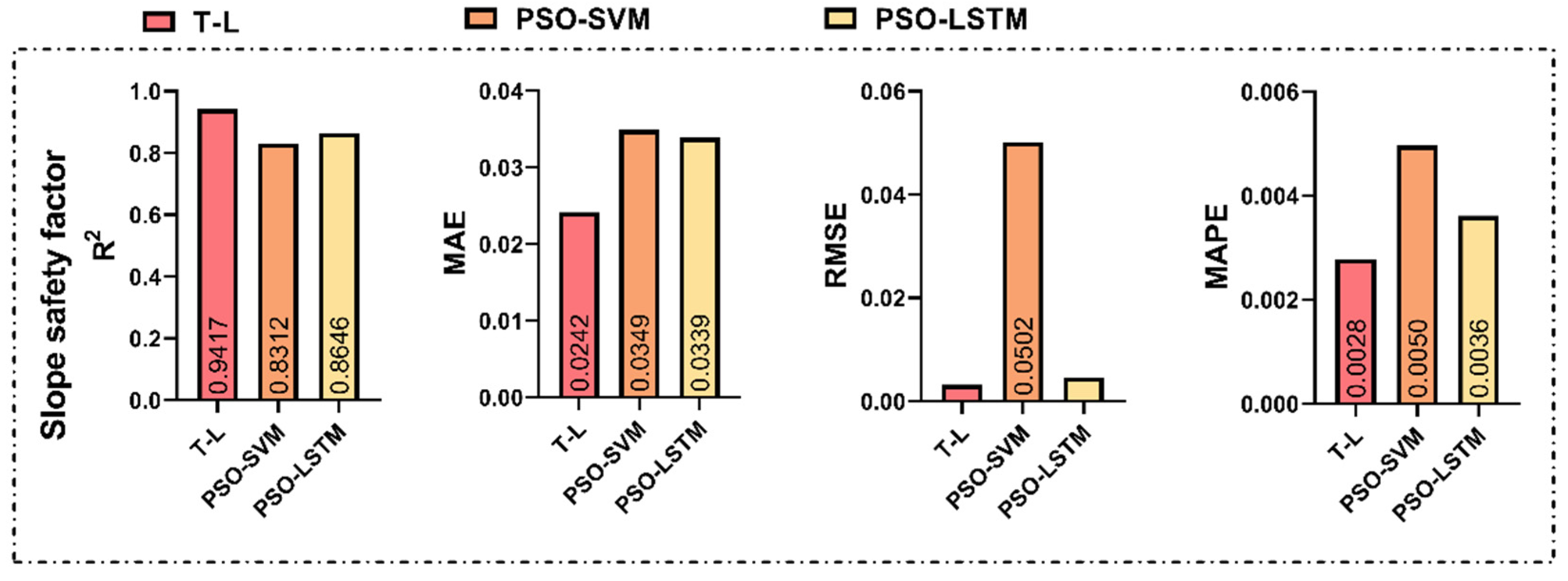
| This study | Transformer–LSTM | 0.942 | 0.0123 | Deng et al. [12] | GA-LSTM-MC | 0.921 | 0.0285 |
| Chen et al. [6] | XGBoost-PSO-SVR | 0.912 | 0.0317 | Li et al. [8] | SVR-XGBoost-LightGBM | 0.905 | — |
| Lin et al. [11] | LSTM-CNN | 0.897 | 0.0412 | Wu et al. [7] | Ensemble (RF + ANN) | 0.886 | 0.0358 |
Disclaimer/Publisher’s Note: The statements, opinions and data contained in all publications are solely those of the individual author(s) and contributor(s) and not of MDPI and/or the editor(s). MDPI and/or the editor(s) disclaim responsibility for any injury to people or property resulting from any ideas, methods, instructions or products referred to in the content. |
© 2026 by the authors. Licensee MDPI, Basel, Switzerland. This article is an open access article distributed under the terms and conditions of the Creative Commons Attribution (CC BY) license.
Share and Cite
Zhang, X.; Wang, F.; Yang, H.; Liu, S. Prediction of Rainfall-Induced Slope Stability Spatiotemporal Evolution Based on a Hybrid Transformer–LSTM Deep Learning Framework. GeoHazards 2026, 7, 75. https://doi.org/10.3390/geohazards7020075
Zhang X, Wang F, Yang H, Liu S. Prediction of Rainfall-Induced Slope Stability Spatiotemporal Evolution Based on a Hybrid Transformer–LSTM Deep Learning Framework. GeoHazards. 2026; 7(2):75. https://doi.org/10.3390/geohazards7020075
Chicago/Turabian StyleZhang, Xin, Fang Wang, Hao Yang, and Shixiao Liu. 2026. "Prediction of Rainfall-Induced Slope Stability Spatiotemporal Evolution Based on a Hybrid Transformer–LSTM Deep Learning Framework" GeoHazards 7, no. 2: 75. https://doi.org/10.3390/geohazards7020075
APA StyleZhang, X., Wang, F., Yang, H., & Liu, S. (2026). Prediction of Rainfall-Induced Slope Stability Spatiotemporal Evolution Based on a Hybrid Transformer–LSTM Deep Learning Framework. GeoHazards, 7(2), 75. https://doi.org/10.3390/geohazards7020075