Article

Experimental Study on Pressure Wave Propagation in Mine Ventilation Disasters

1
State Key Laboratory of Gas Disaster Detecting, Preventing and Emergency Controlling, Chongqing 400037, China
2
College of Safety Science and Engineering, Xi’an University of Science and Technology, Xi’an 710054, China
3
Shaanxi Energy Zhaoshipan Mining Operation Co., Ltd., Yulin 719100, China
4
China Coal Technology Engineering Group, Chongqing Research Institute, Chongqing 400037, China
*
Author to whom correspondence should be addressed.
GeoHazards 2026, 7(2), 46; https://doi.org/10.3390/geohazards7020046

Submission received: 16 March 2026 / Revised: 15 April 2026 / Accepted: 15 April 2026 / Published: 28 April 2026

Abstract

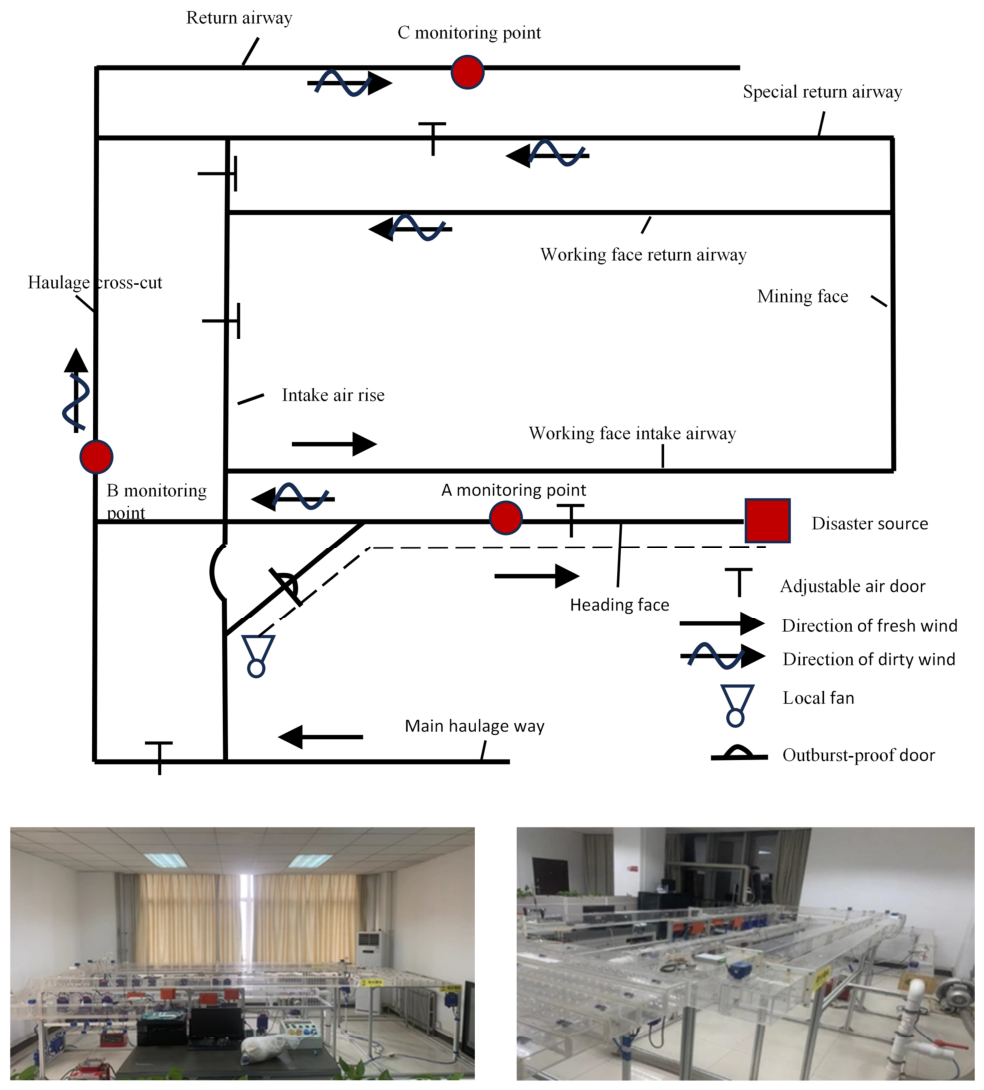
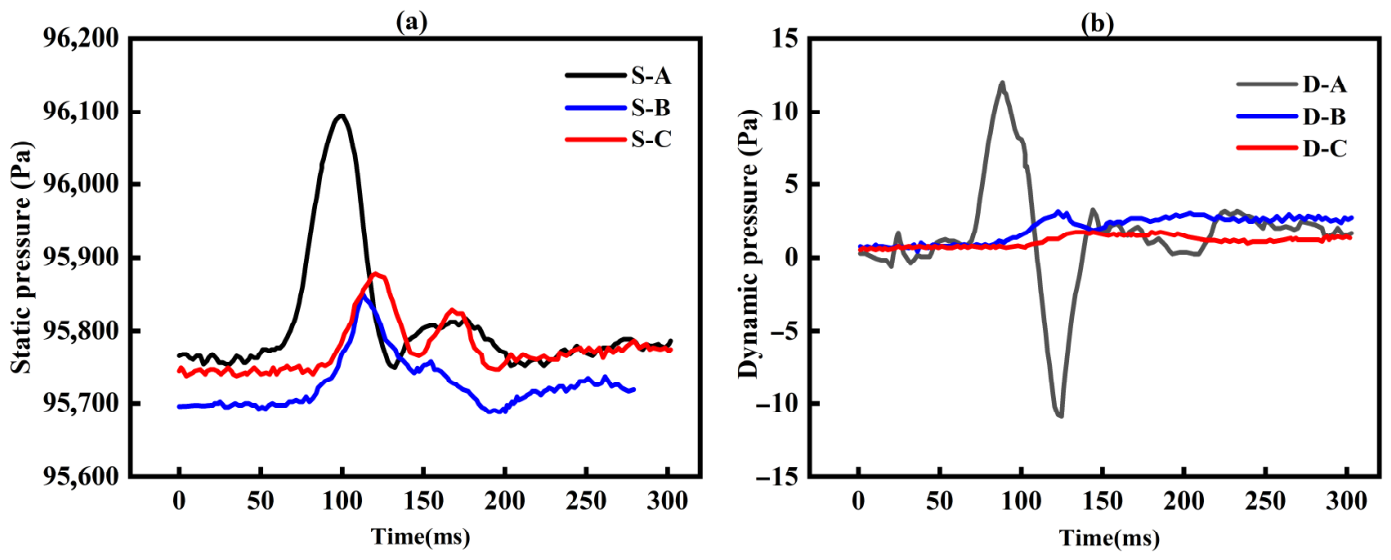
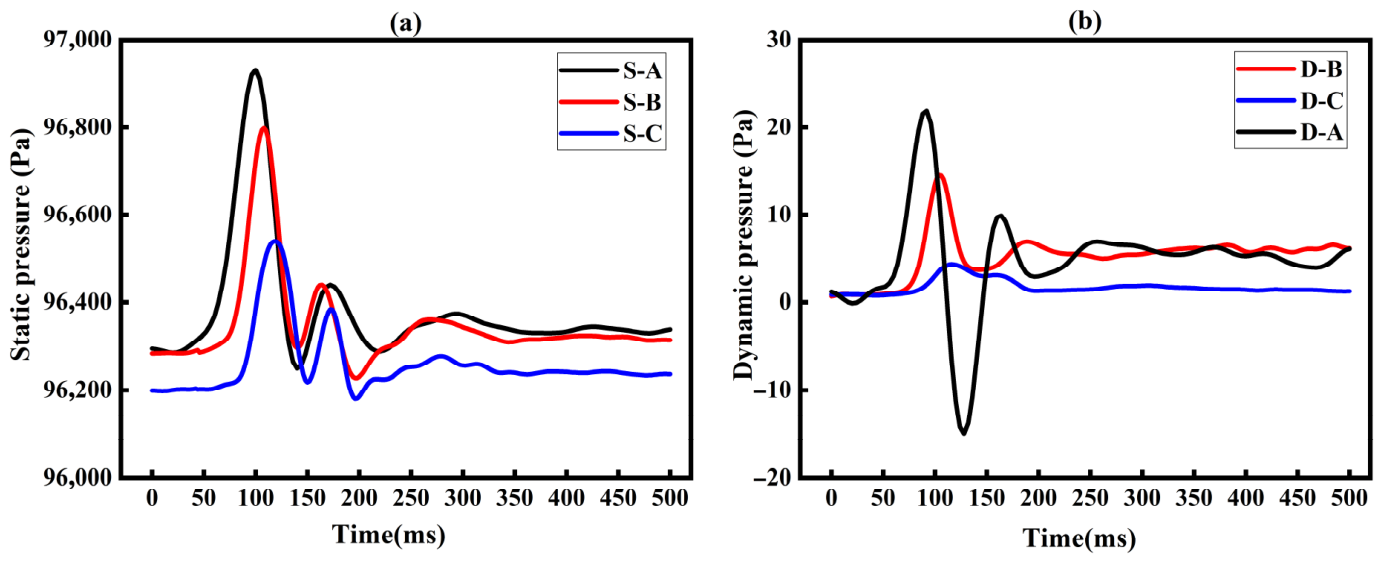
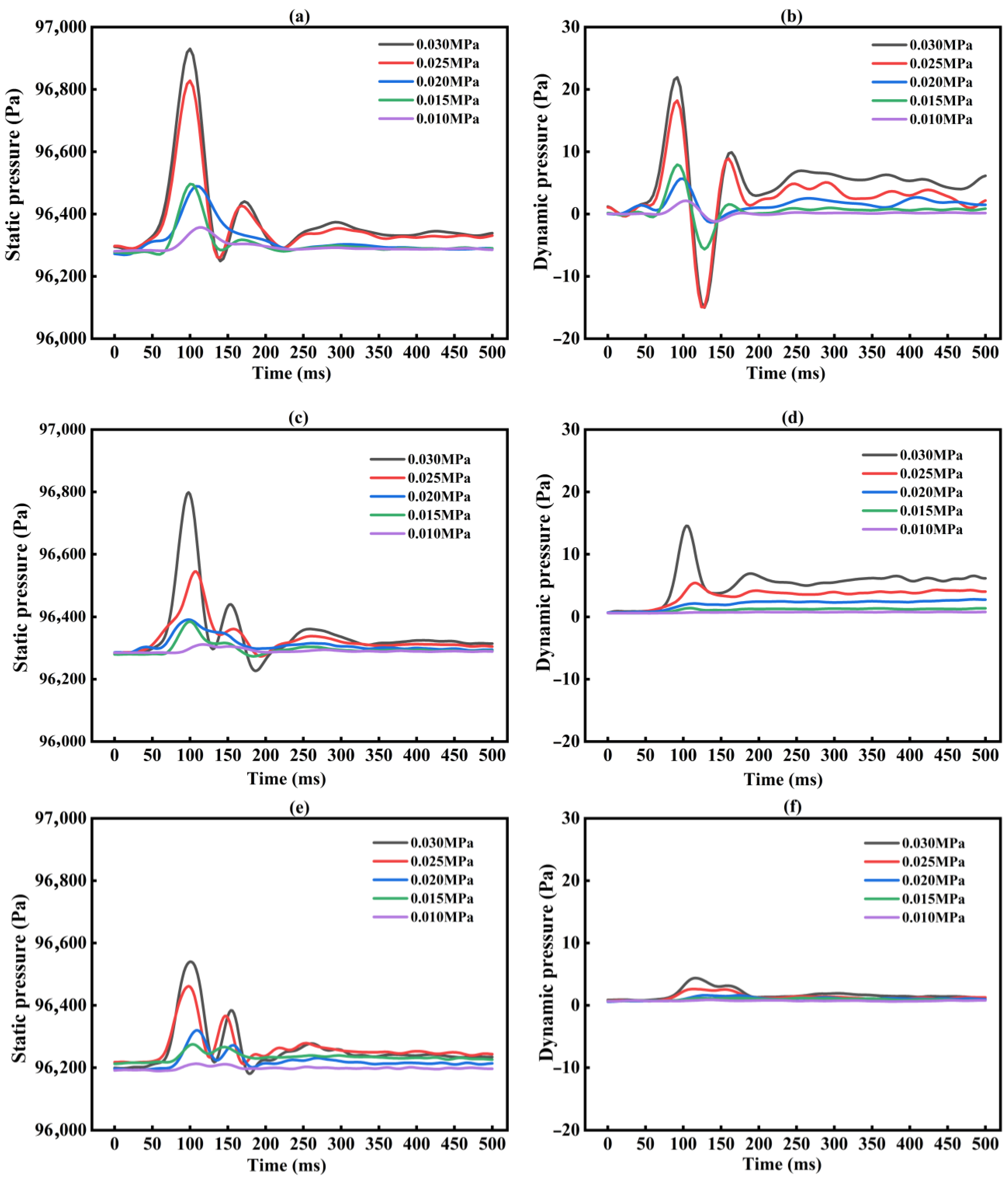
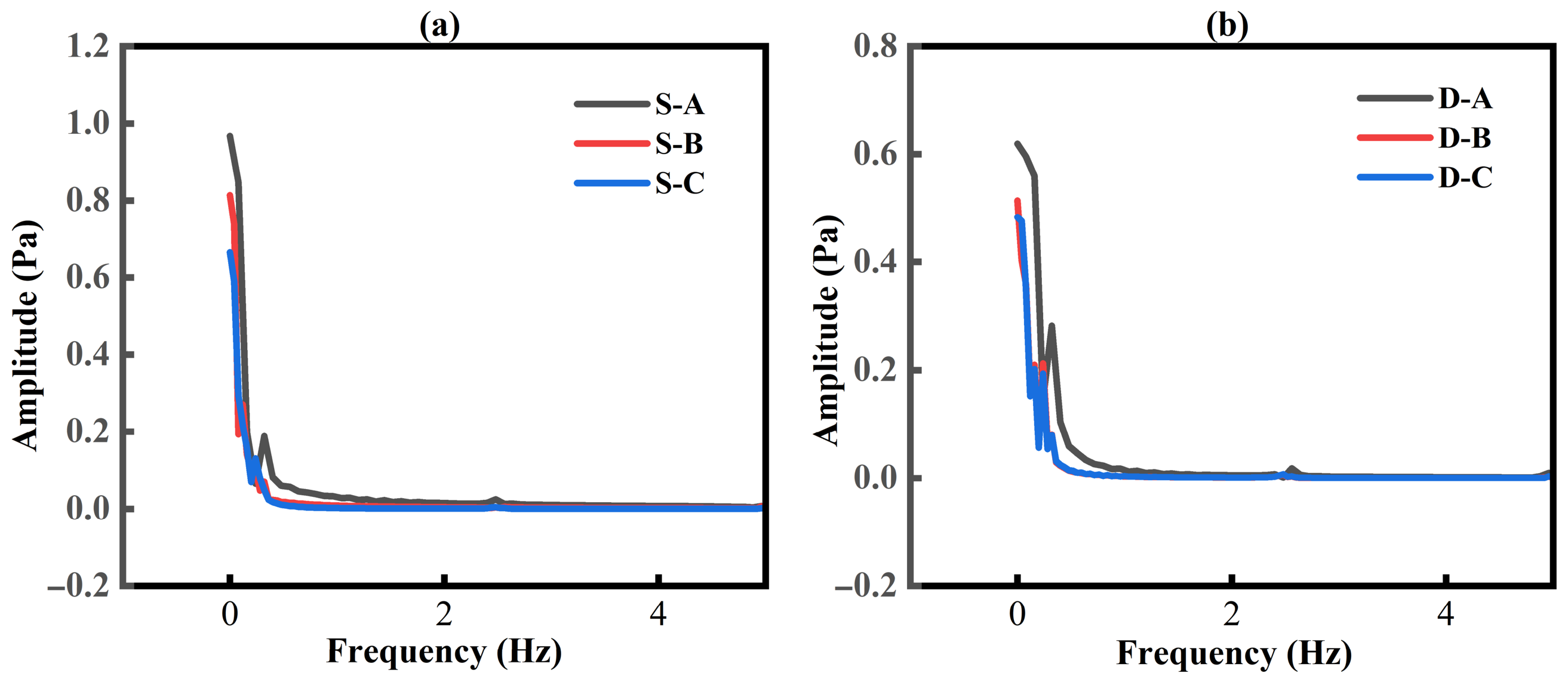
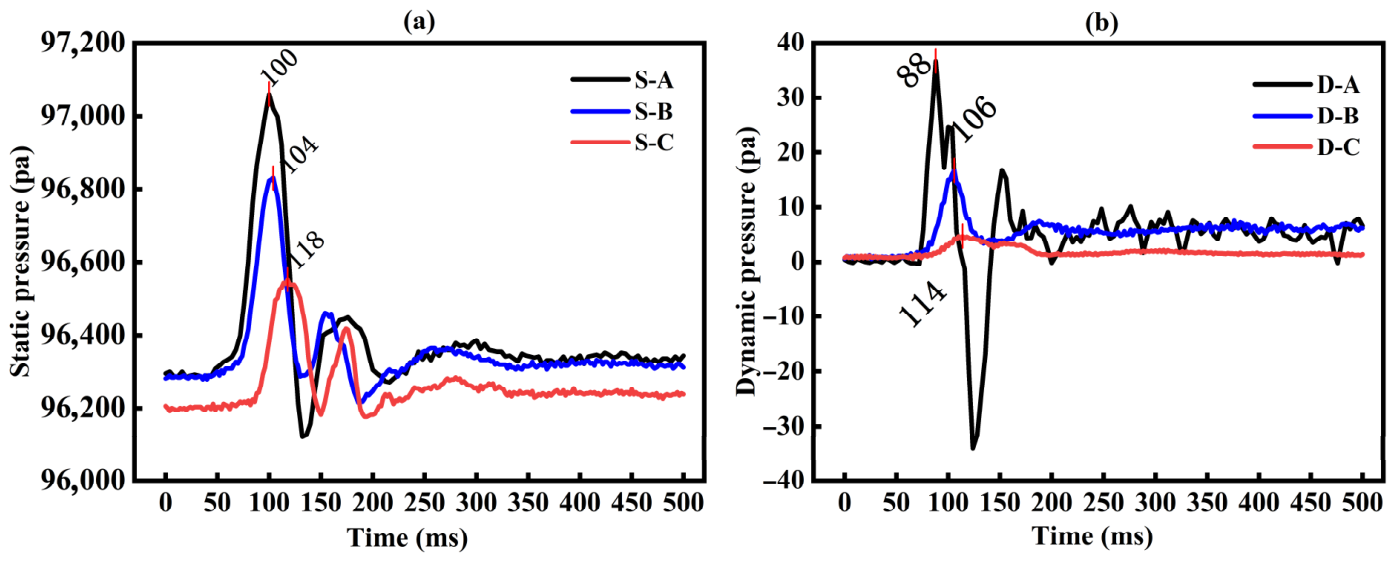
This study experimentally investigates the propagation characteristics of static pressure waves (S-waves) and dynamic pressure waves (D-waves) induced by coal and gas outbursts of varying intensities, utilizing a self-built 1:30 scaled laboratory mine ventilation model. Systematic measurements and quantitative analyses were conducted to determine waveform morphology, propagation velocities, attenuation laws, and frequency distributions. The results demonstrate that outburst-induced D-waves exhibit a distinct full-sinusoidal waveform, whereas S-waves present a half-sinusoidal profile. Notably, the wavelength of both wave types remains highly stable regardless of initial outburst intensity and propagation distance. Conversely, the wave amplitude is positively correlated with the outburst intensity and attenuates progressively with distance. Furthermore, D-waves demonstrate a significantly higher sensitivity to propagation distance than S-waves. Spectral analysis confirms that the primary energy of both pressure waves is concentrated in the ultra-low-frequency range below 1.0 Hz. The average propagation velocities of S-waves and D-waves were measured at 395.67 m/s and 280.27 m/s, respectively, indicating that S-waves propagate considerably faster. It should be noted that since these findings were derived under scaled laboratory conditions, direct extrapolation to full-scale, long-distance field roadways requires further validation. Ultimately, this work elucidates the fundamental propagation mechanisms of attenuated pressure waves within mine ventilation networks, providing critical waveform signatures for the remote identification and localization of underground disaster sources.
Keywords: mine ventilation; coal and gas outbursts; static pressure wave; dynamic pressure wave; waveform characteristics mine ventilation; coal and gas outbursts; static pressure wave; dynamic pressure wave; waveform characteristics