Article

Fault Structure Characterization in the Gulf of Evia (Central Greece): Insights from an Enhanced, Relocated Seismic Catalog (2018–2023)


by
Andreas Karakonstantis
1,2,
Vasilis Kapetanidis
1,
Nikolaos Madonis
3,
Haralambos Kranis
4 and
George Kaviris
1,*
1
Section of Geophysics-Geothermics, Department of Geology and Geoenvironment, National and Kapodistrian University of Athens, 15784 Athens, Greece
2
Seismological Laboratory, Department of Geology, University of Patras, 26504 Patras, Greece
3
National Observatory of Athens, Institute of Geodynamics, Lofos Nymfon, Thission, 11810 Athens, Greece
4
Section of Dynamic, Tectonic and Applied Geology, Department of Geology and Geoenvironment, National and Kapodistrian University of Athens, 15784 Athens, Greece
*
Author to whom correspondence should be addressed.
GeoHazards 2026, 7(2), 38; https://doi.org/10.3390/geohazards7020038

Submission received: 9 February 2026 / Revised: 23 March 2026 / Accepted: 27 March 2026 / Published: 31 March 2026

Abstract

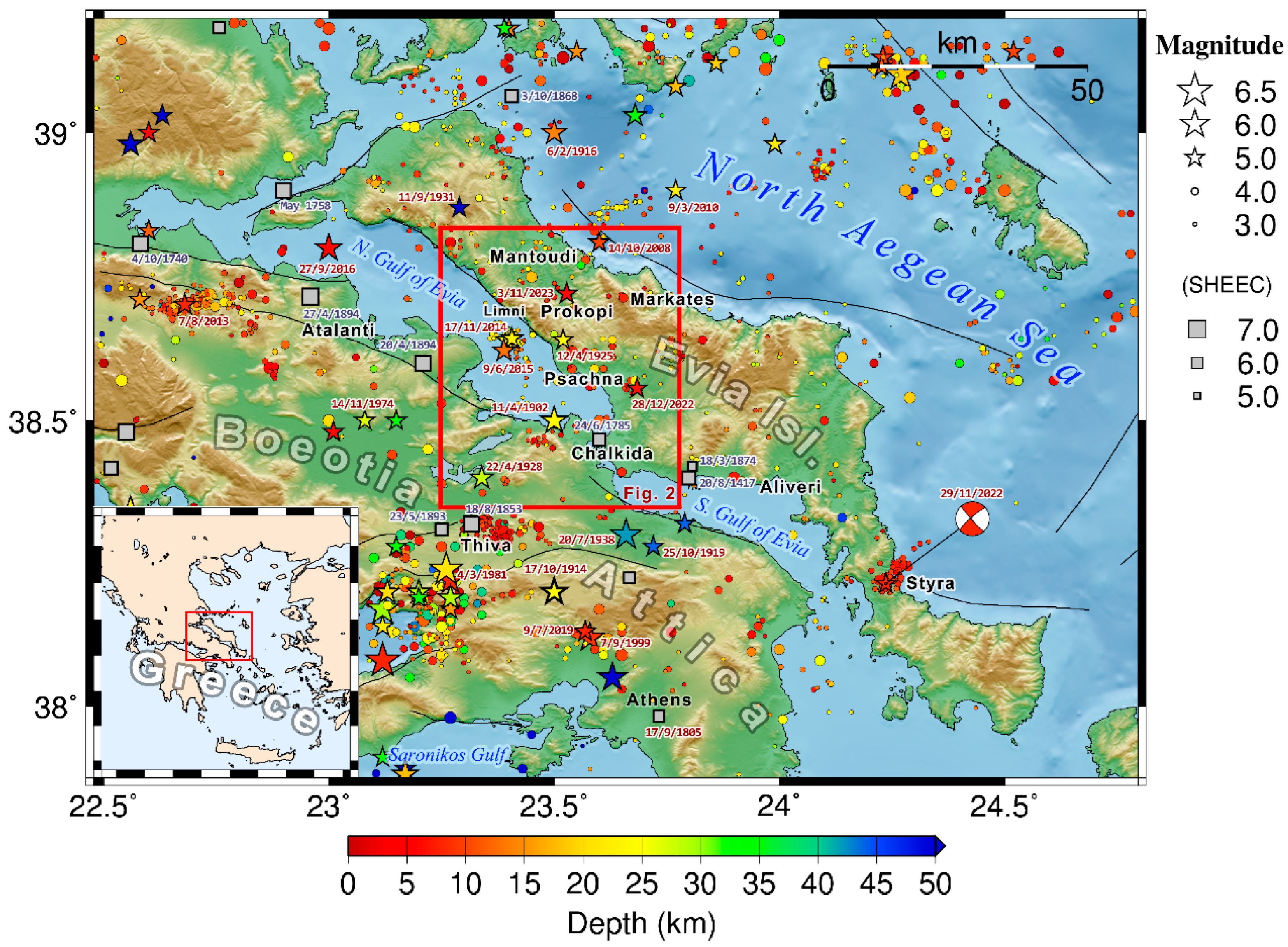
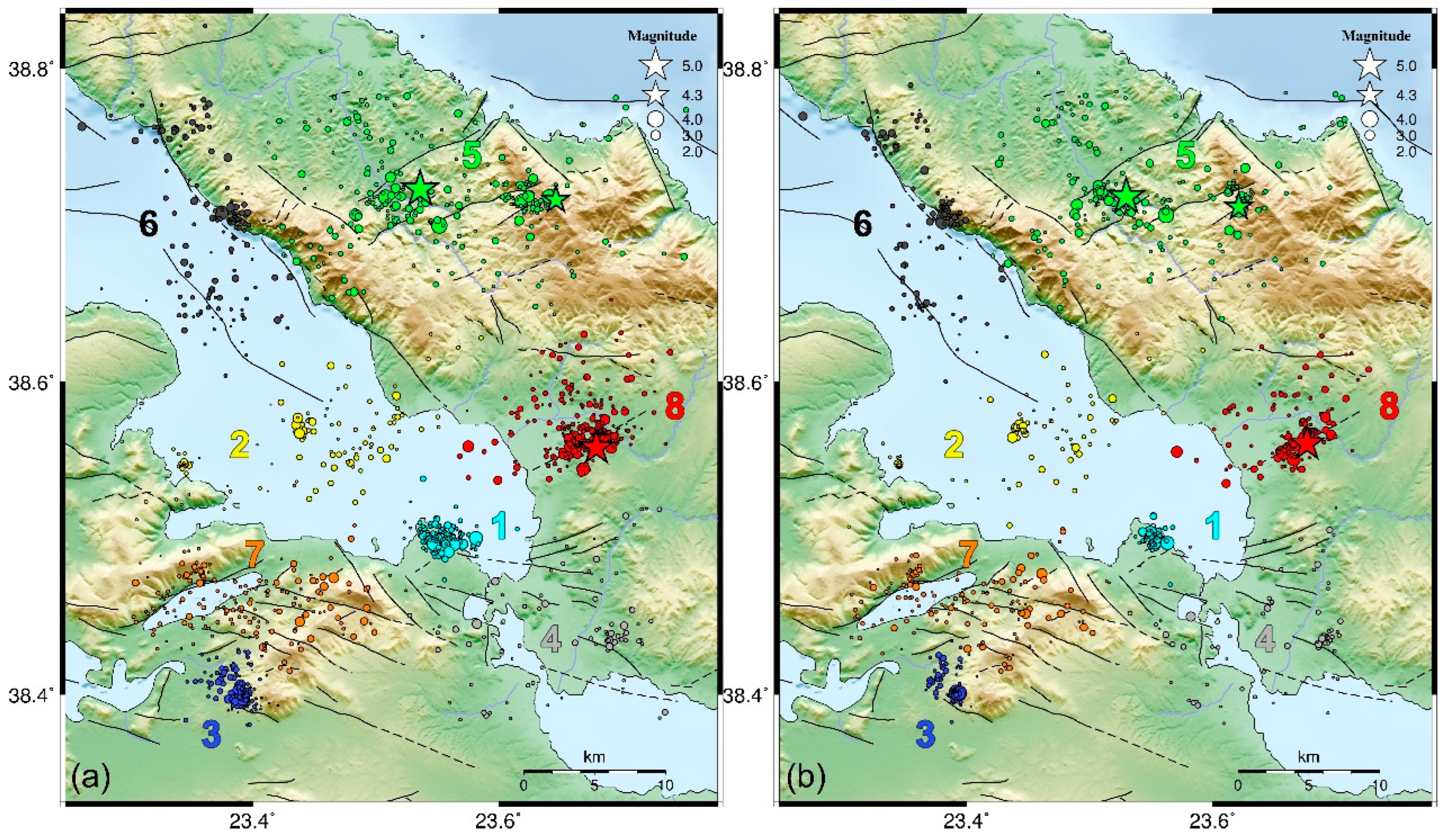
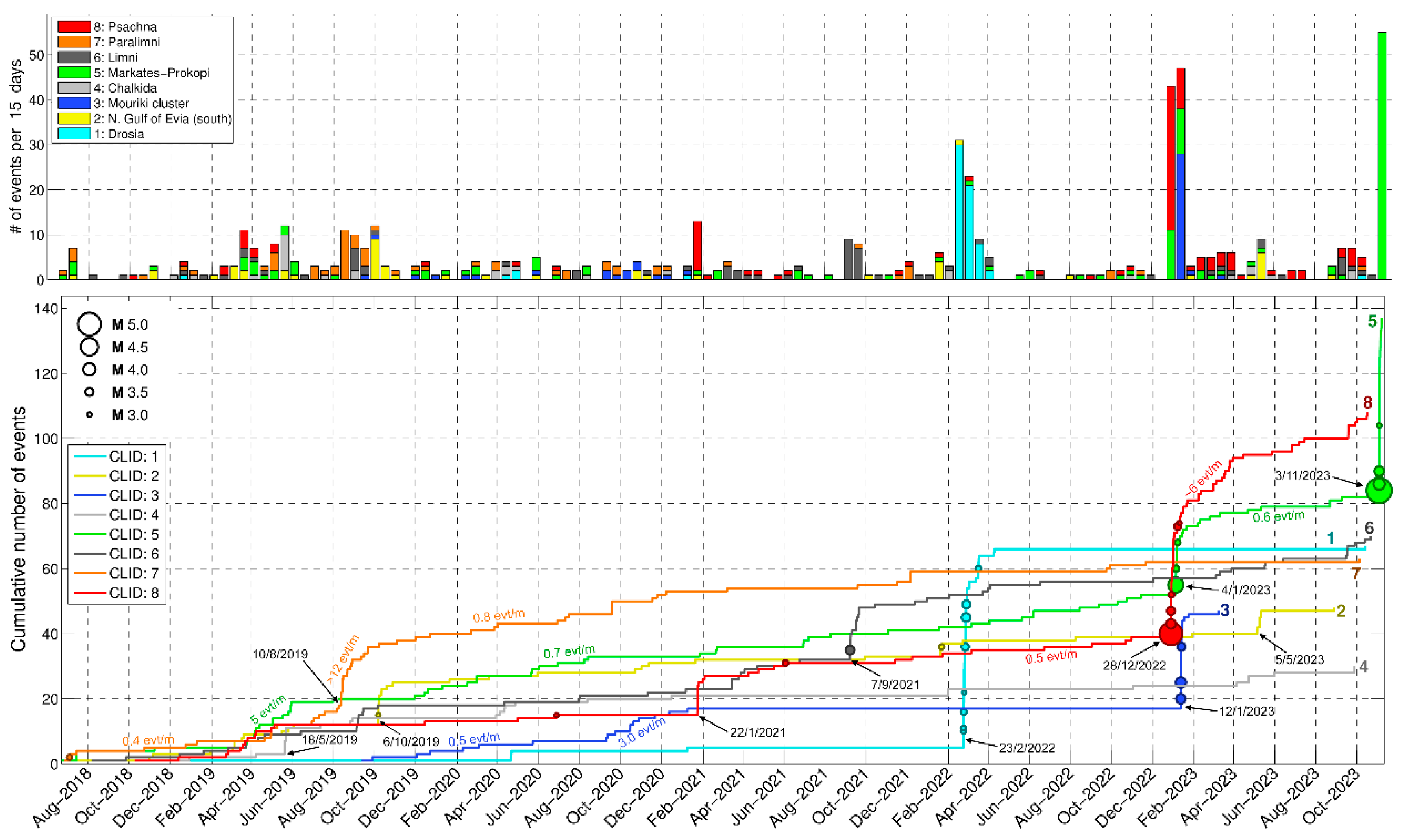
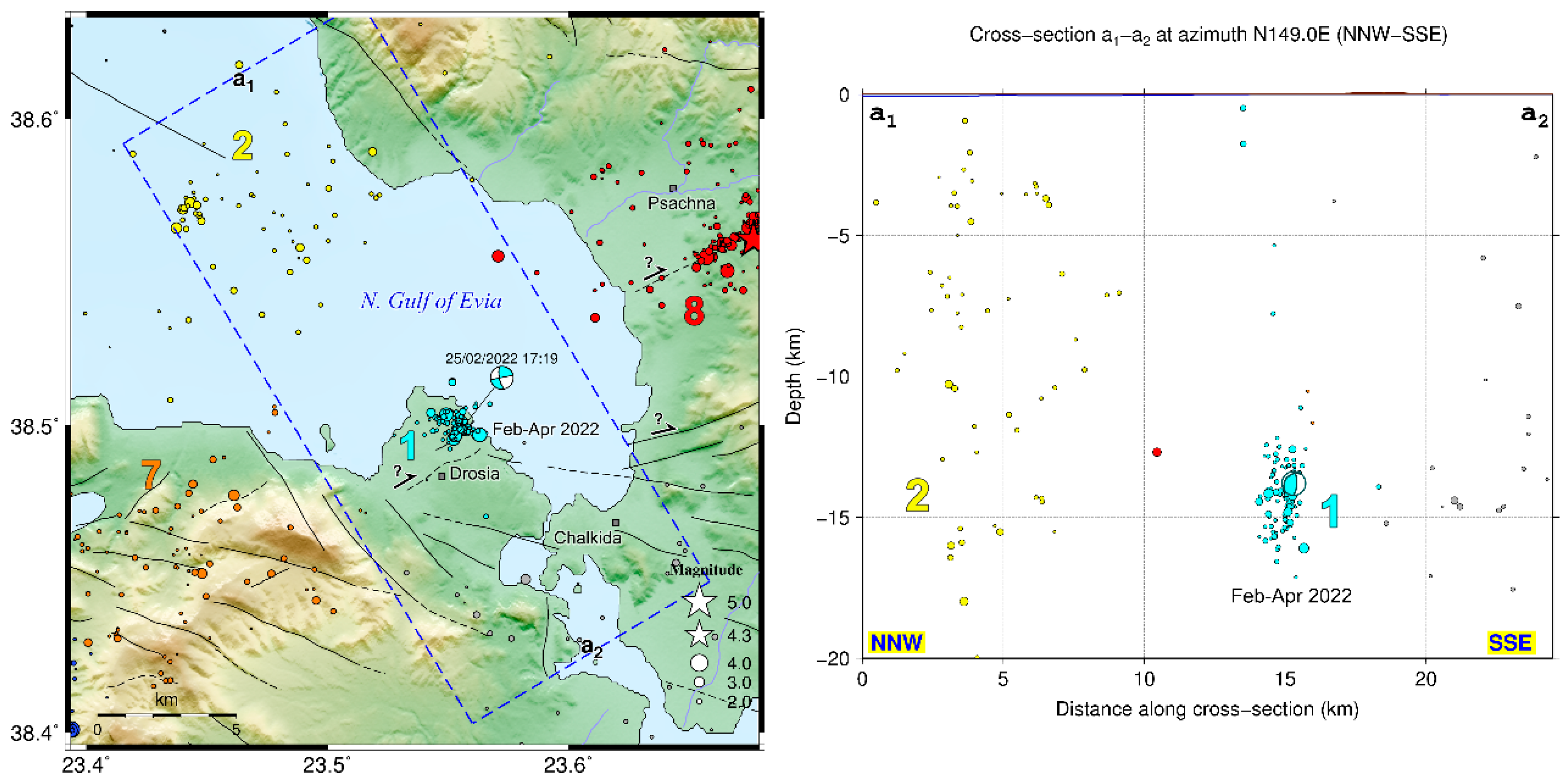
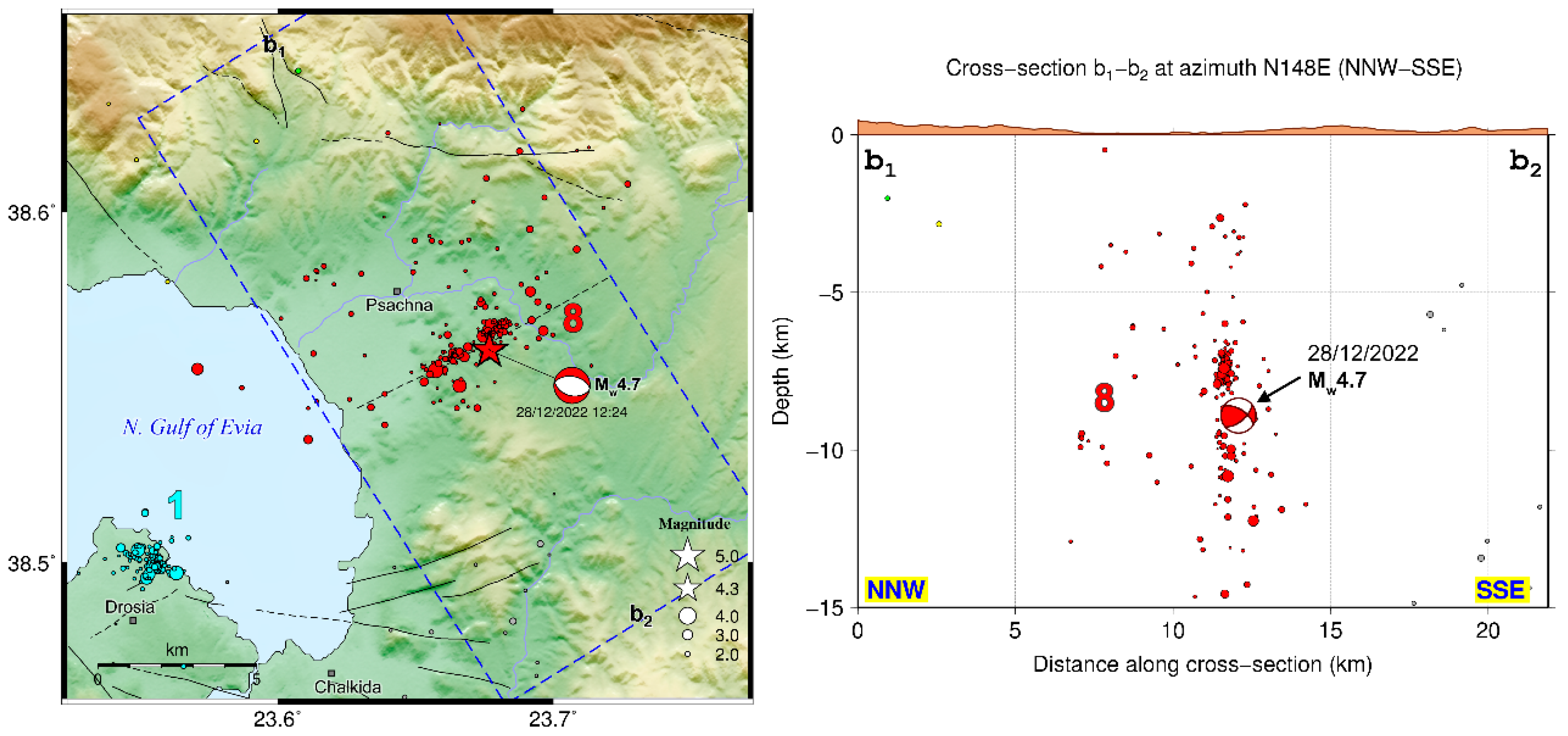
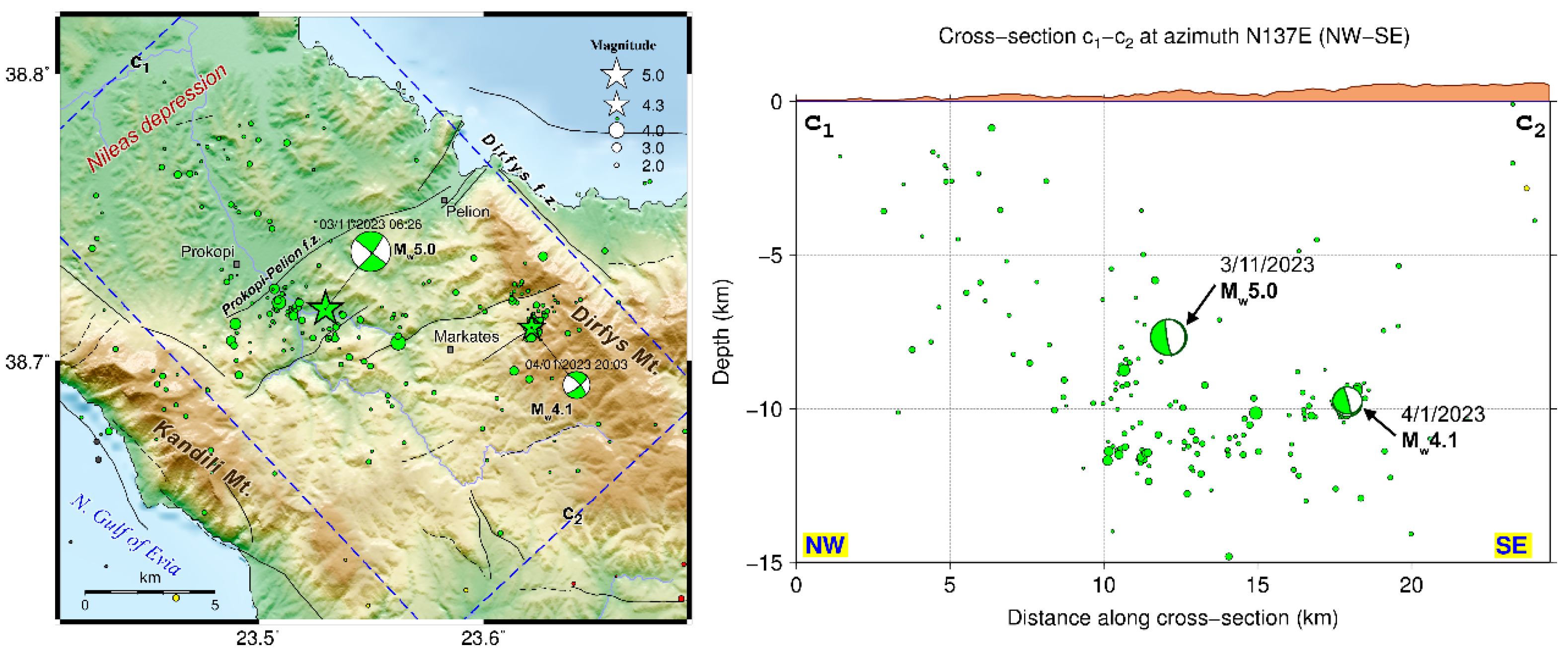
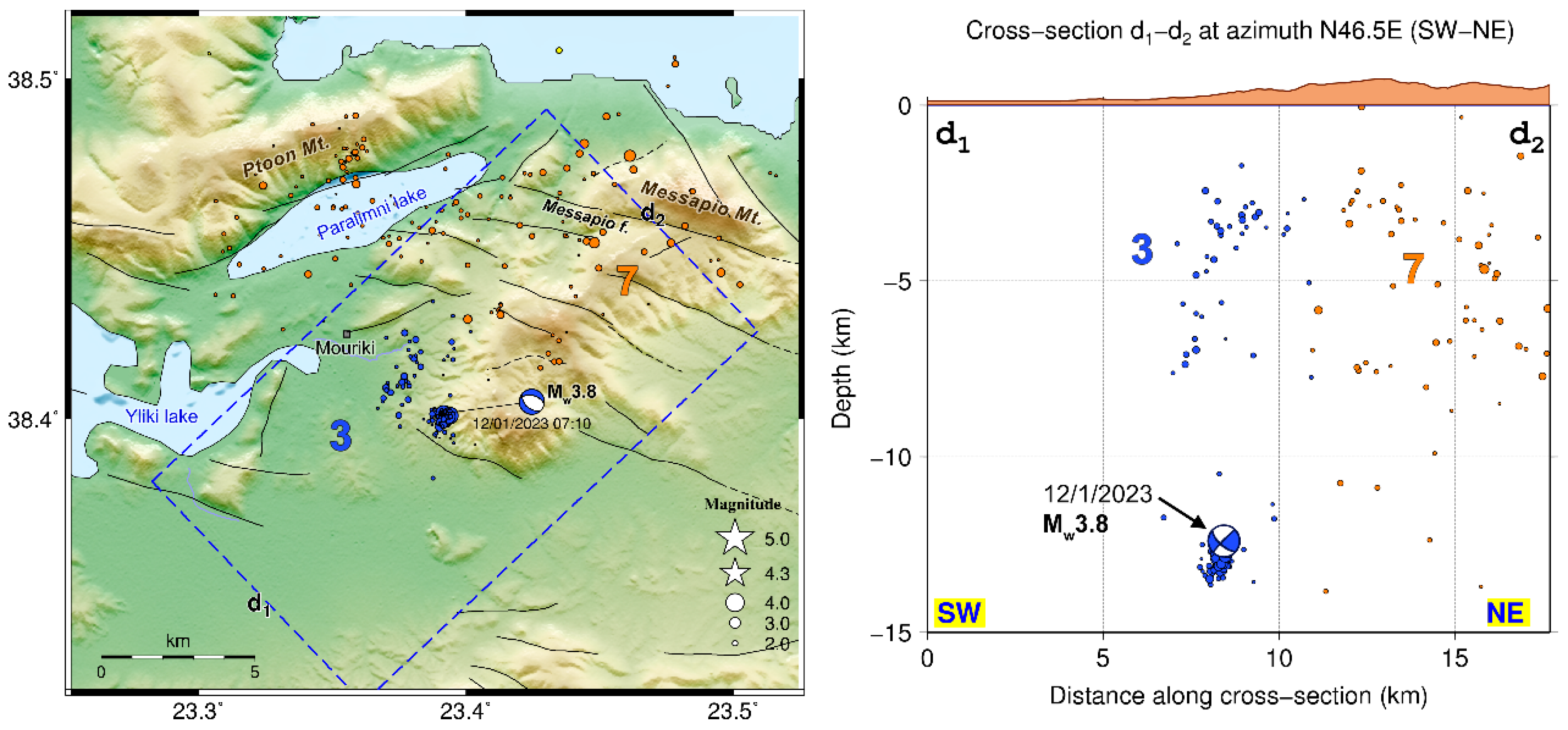
We present an enhanced earthquake catalog for Central Evia and the Northern Gulf of Evia, in Central Greece, between June 2018 and November 2023. The area is characterized by a low background seismicity rate, with occasional clustered events and seismic swarms, including those of February–April 2022 near Drosia and of October 2022 near Styra. The seismic catalog was enhanced by integrating additional data acquired through the application of the EQ-Transformer deep-learning model. A total of ~1400 events were analyzed, with ~1200 of them being successfully relocated with the double-difference method. The available focal mechanisms indicate predominantly normal, oblique-normal, and pure strike-slip faulting. The relocated seismicity was examined in conjunction with known mapped faults to investigate the activated structures at depth, providing insight into their degree of activity. In Drosia, the seismicity, at a depth of ~14 km, can be related to an E–W dextral strike-slip fault, with subtle surficial expression. In Psachna, the epicenters are oriented in an NE–SW direction, not matching the strike of the mainshock’s normal focal mechanism, but roughly coinciding with NE–SW-oriented topographic spurs and the local drainage pattern. In Markates and Prokopi, the seismicity is sparse, but the focal mechanisms are consistent with SW–NE dextral strike-slip faulting, aligned with the trend of the Nileas depression and the Prokopi–Pelion fault zone. Finally, in Mouriki, the seismic cluster is characterized by WNW-ESE normal faulting, most likely related to the SSW-dipping Messapio fault.
Keywords: earthquake relocation; deep-learning models; strike-slip faults; Gulf of Evia earthquake relocation; deep-learning models; strike-slip faults; Gulf of Evia