Article

Magnetically Recyclable Pd@UiO-66@Fe3O4 Ternary Composites as Efficient Heterogeneous Catalysts for Suzuki–Miyaura Cross-Coupling Reaction


1
School of Petrochemical Engineering, Advanced Catalysis and Green Manufacturing Collaborative Innovation Center, Changzhou University, Changzhou 213164, China
2
Department of Chemistry, Chung-Ang University, Seoul 06974, Republic of Korea
*
Authors to whom correspondence should be addressed.
Reactions 2026, 7(2), 32; https://doi.org/10.3390/reactions7020032
Submission received: 30 April 2026 / Revised: 18 May 2026 / Accepted: 20 May 2026 / Published: 24 May 2026

Abstract

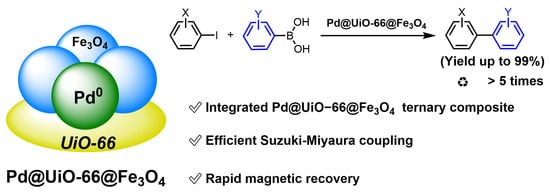
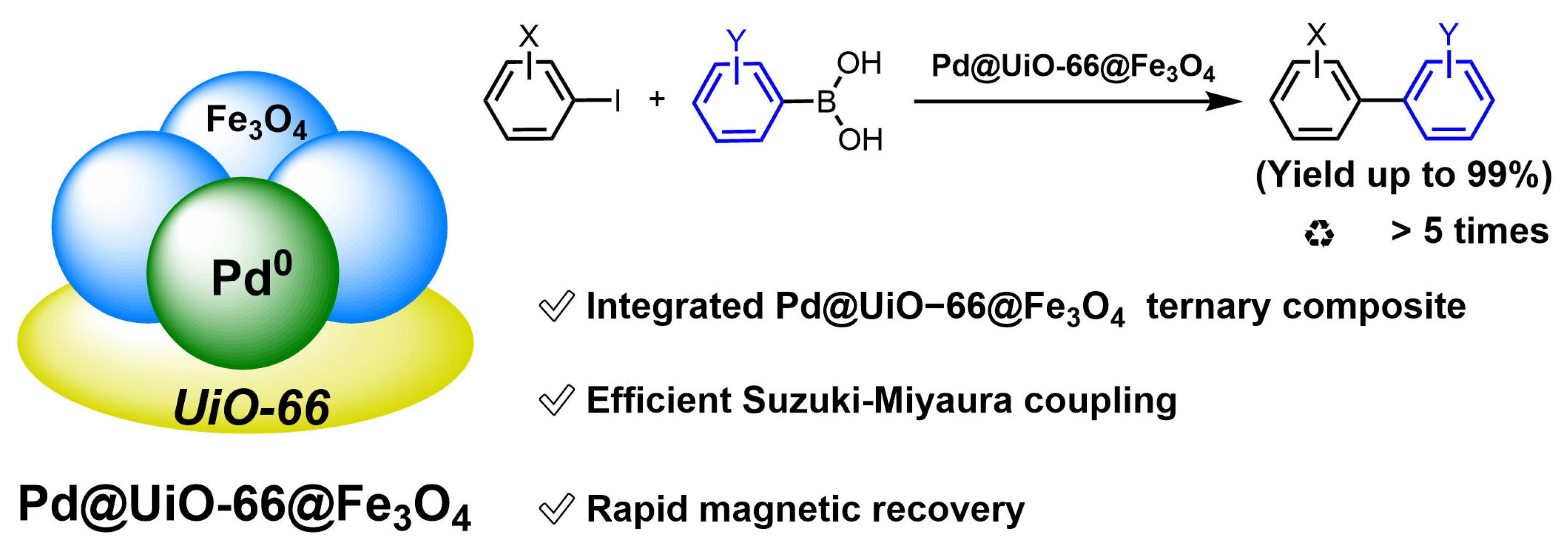
In this study, a novel magnetic metal–organic framework (MOF) composite, Pd@UiO-66@Fe3O4, was successfully synthesized as a high-performance heterogeneous catalyst for the Suzuki–Miyaura cross-coupling reaction. The material was prepared by loading nano-sized carboxylated Fe3O4 onto UiO-66 via an in situ solvothermal method, followed by the encapsulation of Pd nanoparticles using an ultrasound-assisted dual-solvent method (DSA). Characterization results, including PXRD and TEM, confirmed that the ternary composite retains the structural integrity of UiO-66 while incorporating magnetic functionality and well-dispersed Pd active sites. The catalyst exhibited high catalytic performance for the coupling of aryl iodides and aryl boronic acids. Furthermore, the catalyst demonstrated good compatibility with the substrates examined and excellent stability. Due to the integration of carboxylated Fe3O4, the composite could be easily separated from the reaction mixture using an external magnet and reused for at least five cycles without a significant loss in catalytic activity. The high activity and durability are attributed to the integrated roles of the Pd nanoparticles, the porous MOF support, and the magnetic Fe3O4 component, which respectively provide catalytic active sites, structural stabilization/dispersion, and magnetic recoverability.

Graphical Abstract

1. Introduction

In the field of organic synthesis, the construction of C–C bonds represents a powerful and essential strategy for the synthesis of complex compounds, with the resulting coupling products widely used in pharmaceuticals, agrochemicals, functional materials, and fine chemicals [1,2]. Consequently, C–C coupling methodologies have attracted significant attention across diverse areas of chemical transformation [3]. Owing to the widespread commercial availability and stability of aryl halides and aryl boronic acids, the Suzuki–Miyaura cross-coupling reaction has become a cornerstone for C–C bond formation [4,5]. While palladium (Pd) serves as an outstanding catalyst capable of facilitating transformations for a wide range of substrates, its broad industrial implementation is hindered by its high cost and the technical complexities associated with catalyst recovery and reuse [6]. In addition to catalyst cost and reusability, residual Pd contamination in coupling products is another practical concern, particularly in pharmaceutical and fine-chemical synthesis. Previous studies have shown that products from Pd-catalyzed cross-coupling reactions may contain residual Pd at ppm-level concentrations or above, and additional purification, scavenging, or extraction procedures are often required to reduce the metal content in final pharmaceutical or fine-chemical products [6,7]. Therefore, the development of easily recoverable heterogeneous Pd catalysts is important for both catalyst recycling and the minimization of Pd residues in the final products.
Metal–Organic Frameworks (MOFs) have emerged as an important class of inorganic–organic hybrid crystalline materials characterized by exceptionally high surface areas, tunable pore architectures, and highly dispersed adsorptive and catalytic sites [8,9,10,11,12,13,14,15]. These unique attributes provide a distinct advantage in heterogeneous catalysis, where MOFs act not only as robust supports but also as active participants in catalytic cycles [16,17,18,19,20,21,22,23]. A critical benefit of utilizing MOFs for the immobilization of precious metals like palladium is the “molecular fence effect,” where the well-defined pore confinement and surface functionalization effectively prevent catalyst deactivation caused by the aggregation, migration, or leaching of active species [24,25,26]. Among these MOFs, UiO-66 (UiO for University of Oslo) shows good thermal stability (up to 350 °C) and acid/base resistance owing to its Zr6O4(OH)4 inorganic cores. Moreover, UiO-66 has a high specific surface area and coordinatively unsaturated metal centers, which can serve as Lewis acid sites for heterogeneous catalysis [27,28,29,30,31,32].
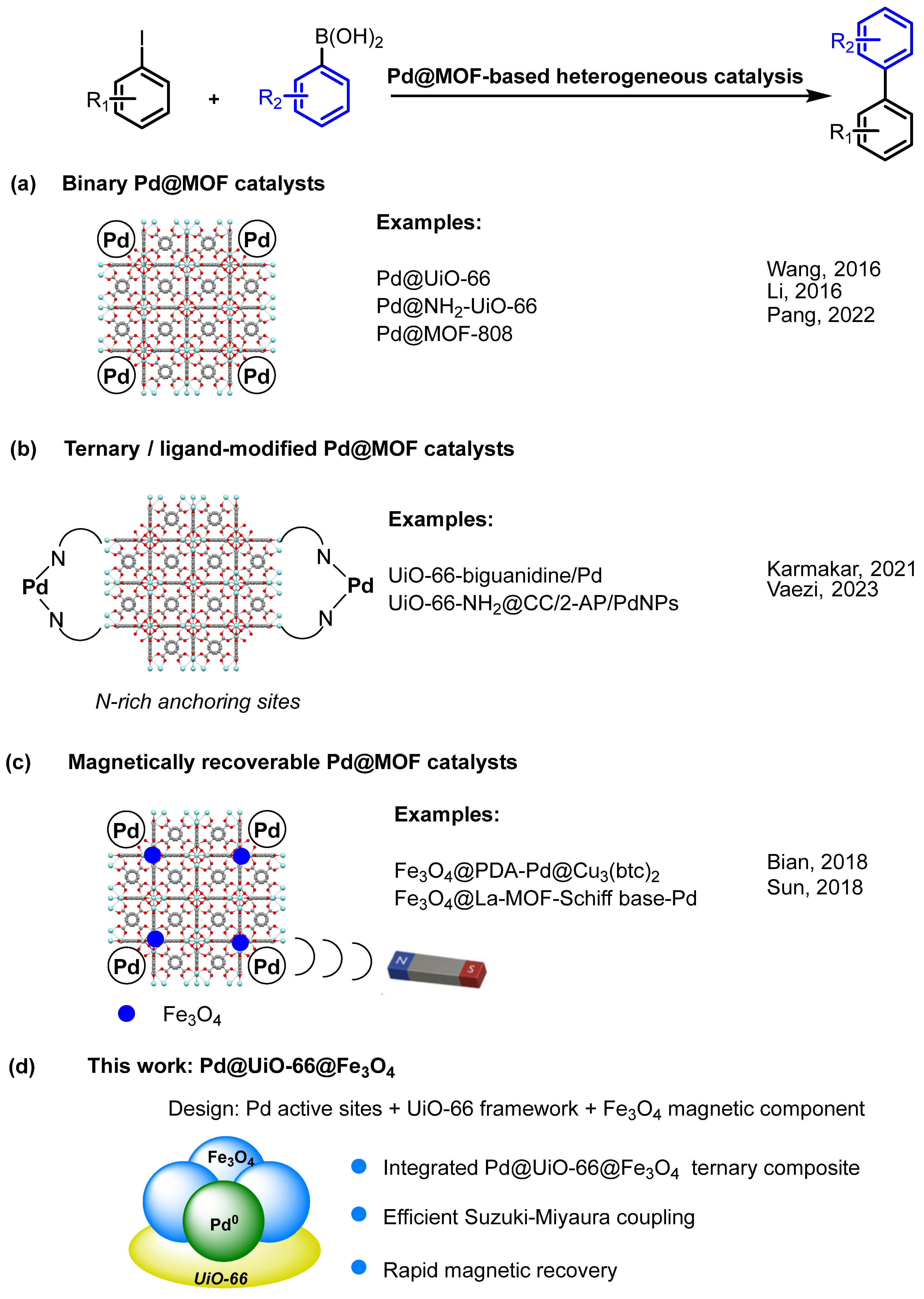
To improve the recyclability, stability, and dispersion of Pd active species in Suzuki–Miyaura coupling reactions, various strategies have been developed to immobilize Pd species within or onto porous MOF supports, particularly UiO-66-based frameworks [33,34,35,36]. Comprehensive comparisons of these MOF-based catalytic systems have been systematically summarized in recent reviews [24,37,38], demonstrating the highly competitive performance of UiO-66 derivatives and other Zr-MOF supports. Rather than repeating these review-style summaries, Scheme 1 provides a focused overview of representative Pd@MOF-based heterogeneous catalysts that are directly relevant to the present work. Binary Pd@MOF catalysts (Scheme 1a), such as Pd@UiO-66 [34], Pd@NH2-UiO-66 [36], and Pd@MOF-808 [39], have shown high catalytic activity for Suzuki–Miyaura coupling by stabilizing Pd species within porous MOF environments. In addition, ternary or ligand-modified Pd@MOF catalysts, including UiO-66-biguanidine/Pd [35] and UiO-66-NH2@CC/2-AP/PdNPs [40] (Scheme 1b), introduce N-rich anchoring sites to improve Pd immobilization and catalytic recyclability. Magnetically recoverable Pd@MOF catalysts (Scheme 1c), such as Fe3O4@PDA-Pd@Cu3(btc)2 [41] and Fe3O4@La-MOF-Schiff base-Pd [42], further demonstrate the practical advantage of magnetic separation for catalyst reuse. Despite these advances, conventional binary Pd@UiO-66 systems are commonly recovered by filtration or centrifugation, and the fine particle size of MOF powders may complicate catalyst separation and lead to material loss during recycling. In some immobilization methods, inappropriate matching between Pd species, anchoring sites, and MOF pore environments may lead to nonuniform Pd distribution, restricted loading, or partial pore blockage. Therefore, integrating Pd active sites with a stable UiO-66 framework and a magnetic Fe3O4 component represents a practical strategy to combine catalytic activity, Pd stabilization, and facile catalyst recovery.
In this context, we prepared a magnetically recoverable Pd@UiO-66@ Fe3O4 ternary composite for recyclable Suzuki–Miyaura cross-coupling reactions (Scheme 1d). In this design, carboxylated Fe3O4-COOH nanoparticles were introduced to provide magnetic responsiveness and affinity toward the UiO-66 framework, while the carboxyl groups can interact with Zr nodes and help anchor the magnetic component within the MOF-based composite. Subsequent Pd incorporation affords accessible catalytic sites supported by the porous UiO-66 framework. As a result, the integrated Pd@UiO-66@Fe3O4 system is expected to combine efficient Pd-catalyzed coupling activity with rapid magnet-assisted separation and reuse.

2. Results and Discussion

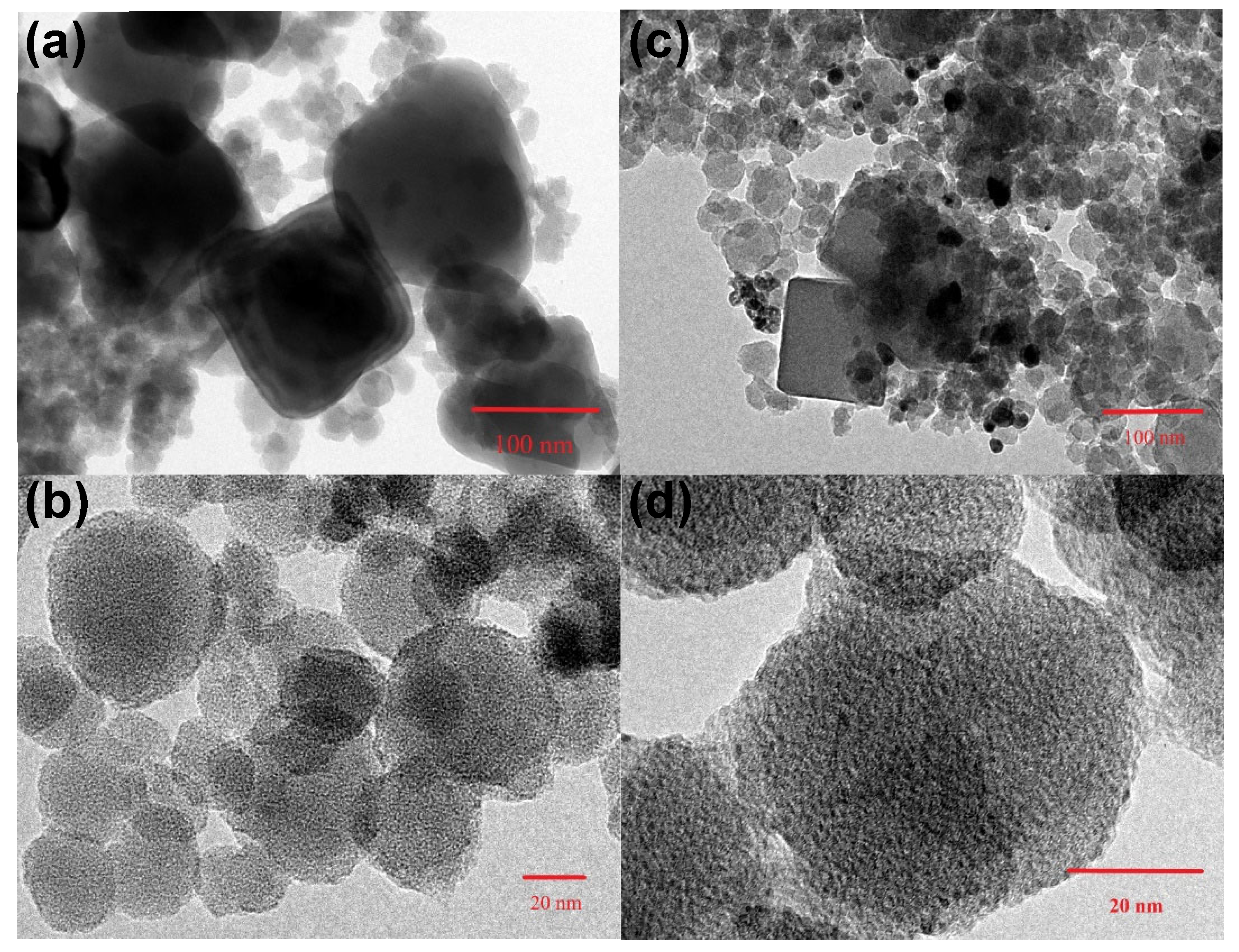
UiO-66 crystals synthesized under solvothermal conditions typically exhibit cubic or cuboctahedral morphologies depending on the synthesis parameters [43]. The Pd precursor was introduced into UiO-66@Fe3O4 using an ultrasound-assisted dual-solvent method [32]. In this approach, a hydrophobic solvent, n-hexane, disperses the MOF composite, while a small amount of aqueous Pd precursor solution preferentially enters the hydrophilic pores or defect domains of the MOF under ultrasonic treatment. This strategy helps localize Pd species within or near the porous framework and improves their dispersion after H2 reduction. As illustrated in the TEM images (Figure 1), both the binary UiO-66@Fe3O4 and Pd@UiO-66@Fe3O4 composites effectively retain the parent MOF’s structural characteristics, maintaining a distinct cubic architecture alongside a moderate degree of aggregation.
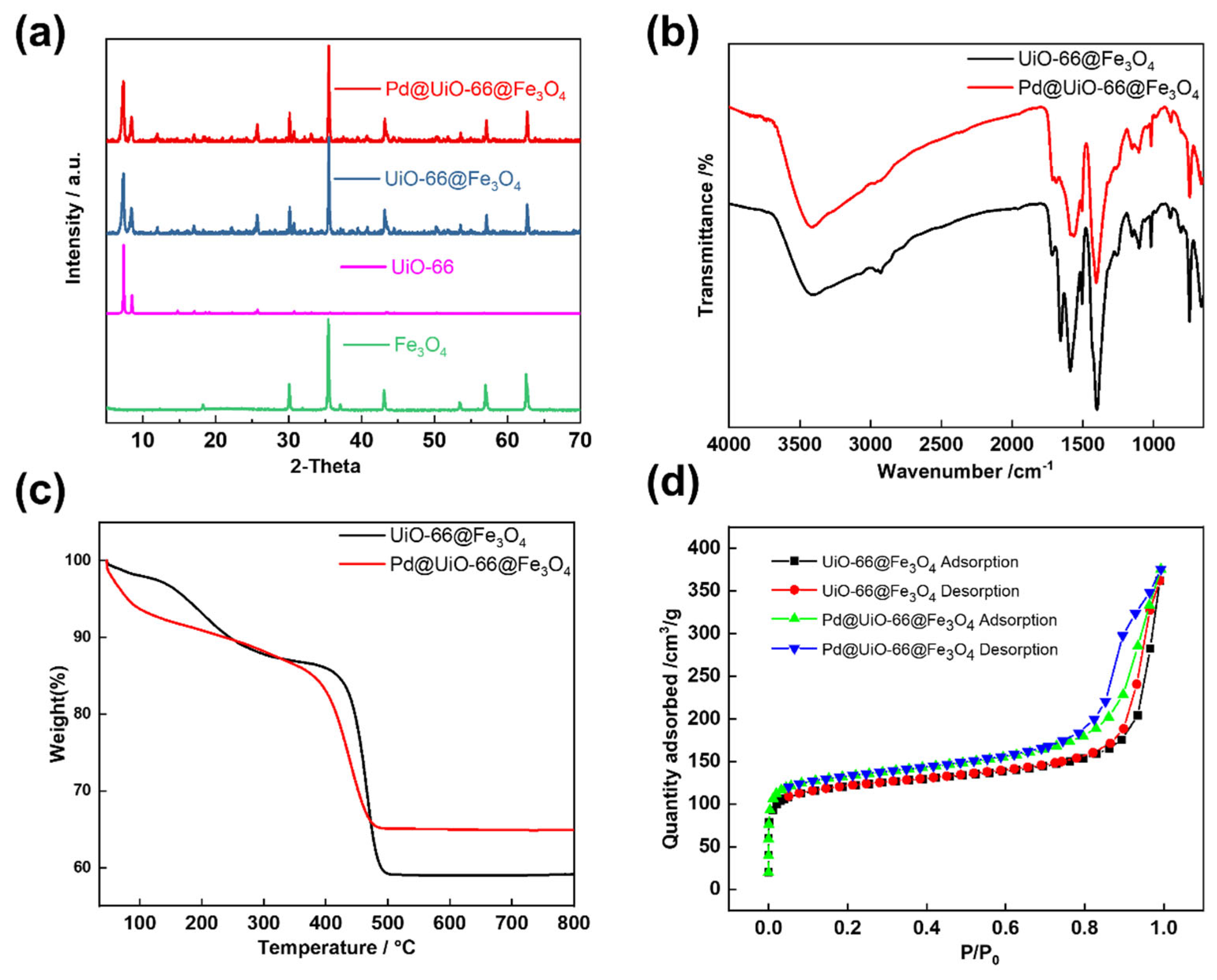
The crystallinity of UiO-66@Fe3O4 and Pd@UiO-66@Fe3O4 was examined via powder X-ray diffraction (PXRD) (Figure 2a). The diffraction patterns for UiO-66@Fe3O4 clearly exhibit the characteristic peaks of both the parent UiO-66 and the Fe3O4 nanoparticles, indicating successful binary integration. Upon the introduction of palladium, the PXRD pattern of the ternary Pd@UiO-66@Fe3O4 remains largely consistent with its precursor, suggesting that the framework’s integrity is preserved during the loading process. Notably, no distinct diffraction peaks for Pd were detected, which is likely attributed to its low loading percentage and high dispersion within the framework. Furthermore, FT-IR spectra (Figure 2b) confirm the successful synthesis through the presence of characteristic vibrational modes. The typical peaks observed at 1580 cm−1 and 1400 cm−1 are assigned to the asymmetric and symmetric stretching vibrations of the carboxylate groups, respectively, validating the coordinated organic ligands within the MOF structure. Thermogravimetric analysis (TGA) was employed to evaluate the thermal stability of the composites (Figure 2c). Both materials exhibit a multi-stage weight loss profile between 50 °C and 800 °C. The initial mass loss of approximately 5% occurring near 100 °C is attributed to the removal of adsorbed guest molecules and solvent within the pores. A stable region is observed between 300 °C and 400 °C, highlighting the high thermal robustness of the framework, followed by structural decomposition of the organic skeleton at approximately 500 °C. Comparison of the final residues indicates that Pd@UiO-66@Fe3O4 retains 5% more mass than UiO-66@ Fe3O4, which corresponds to the successful loading of the palladium content.
N2 adsorption–desorption measurements were performed to investigate the specific surface area and pore structure of the prepared samples (Figure 2d). The UiO-66@Fe3O4 sample shows a steep N2 uptake at low relative pressures, indicating the presence of microporous characteristics. In comparison, Pd@UiO-66@Fe3O4 exhibits a more pronounced hysteresis loop, suggesting the presence of mesoporosity or interparticle voids after Pd incorporation. Based on these measurements, the BET surface areas of UiO-66@Fe3O4 and Pd@UiO-66@Fe3O4 were determined to be 375 and 420 m2 g−1, respectively, with average pore sizes of approximately 5.96 and 5.52 nm, respectively (Figure S1). The slight increase in BET surface area after Pd incorporation is somewhat unusual, because metal loading in MOF pores often leads to pore occupation or partial pore blocking. In the present case, this increase may be associated with the ultrasound-assisted dual-solvent treatment and subsequent H2 reduction, which could remove residual guest molecules, improve framework activation, generate additional defect/interparticle porosity, or expose more accessible surface area through partial particle dispersion. Therefore, the increased BET surface area is more reasonably attributed to changes in accessible porosity during Pd incorporation and activation rather than to a simple pore-expanding effect of Pd itself.
The chemical composition and surface states of Pd@UiO-66@Fe3O4 were analyzed by X-ray Photoelectron Spectroscopy (XPS, Figure S2). The XPS survey spectrum shows the presence of C, O, Zr, Fe, and Pd elements, confirming the successful formation of the composite. The high-resolution O 1s spectrum can be fitted with peaks assigned to C–O, O–C=O, and C=O species, while the C 1 s spectrum shows characteristic C–C, C–O, and C=O signals from the organic linker. The Zr 3d spectrum exhibits two typical peaks corresponding to Zr 3d5/2 and Zr 3d3/2. The Fe 2 p spectrum confirms the presence of the Fe3O4 component. In the Pd 3d spectrum, both Pd0 and Pd2+ species are observed, with the binding energy of 333.4 eV (3d5/2) and 337.9 eV (3d3/2) being attributed to Pd0 as the main component [44]. These results demonstrate that Pd species were successfully incorporated into the UiO-66@Fe3O4 support.
Following the comprehensive characterization of the structural properties of Pd@UiO-66@Fe3O4, its catalytic performance was evaluated in the Suzuki–Miyaura cross-coupling reaction of iodobenzene (1a) and phenylboronic acid (2a) as model substrates. Systematic optimization of the reaction parameters revealed that the choice of solvent was critical to the yield (Table 1). Specifically, non-polar or chlorinated solvents such as toluene and dichloromethane resulted in low yields of 7% and 23%, respectively, whereas polar protic solvents significantly enhanced the reaction efficiency. Among the tested systems, an EtOH/H2O (1:1) mixture was found to be the optimal solvent system providing both high catalytic efficiency and the benefits of a sustainable, green solvent. Although H2O alone also afforded a high yield, the EtOH/H2O mixed solvent was selected because EtOH improves the solubility of the organic substrates and facilitates better contact between the substrates and the heterogeneous catalyst, while water maintains the green character of the reaction medium. In the control experiment using UiO-66@Fe3O4 without Pd (entry 8), no desired coupling product was detected, confirming that Pd species are essential for the Suzuki–Miyaura coupling reaction under the present conditions. Regarding catalyst loading, the reaction provided quantitative yield with 20.0 mg of the composite catalyst. Because the reaction had already reached 99% yield with 20.0 mg of catalyst, further increasing the catalyst amount to 30.0 or 40.0 mg did not further increase the final yield under these conditions. Finally, after extensive screening, the optimal reaction conditions were established as follows: 1.0 mmol of 1a, 1.5 mmol of 2a, 4.0 mmol of Cs2CO3, and 20.0 mg of Pd@UiO-66@Fe3O4 (corresponding to 0.2 mol% Pd relative to iodobenzene) which achieved a yield of 99% at 80 °C within 6 h. This high performance may be attributed to the well-dispersed Pd active sites supported by the porous UiO-66 framework, while the Fe3O4 component mainly contributes to rapid magnetic separation and catalyst recovery. Furthermore, the inherent magnetism of the composite facilitates rapid separation and recovery, highlighting its potential for sustainable catalytic applications.
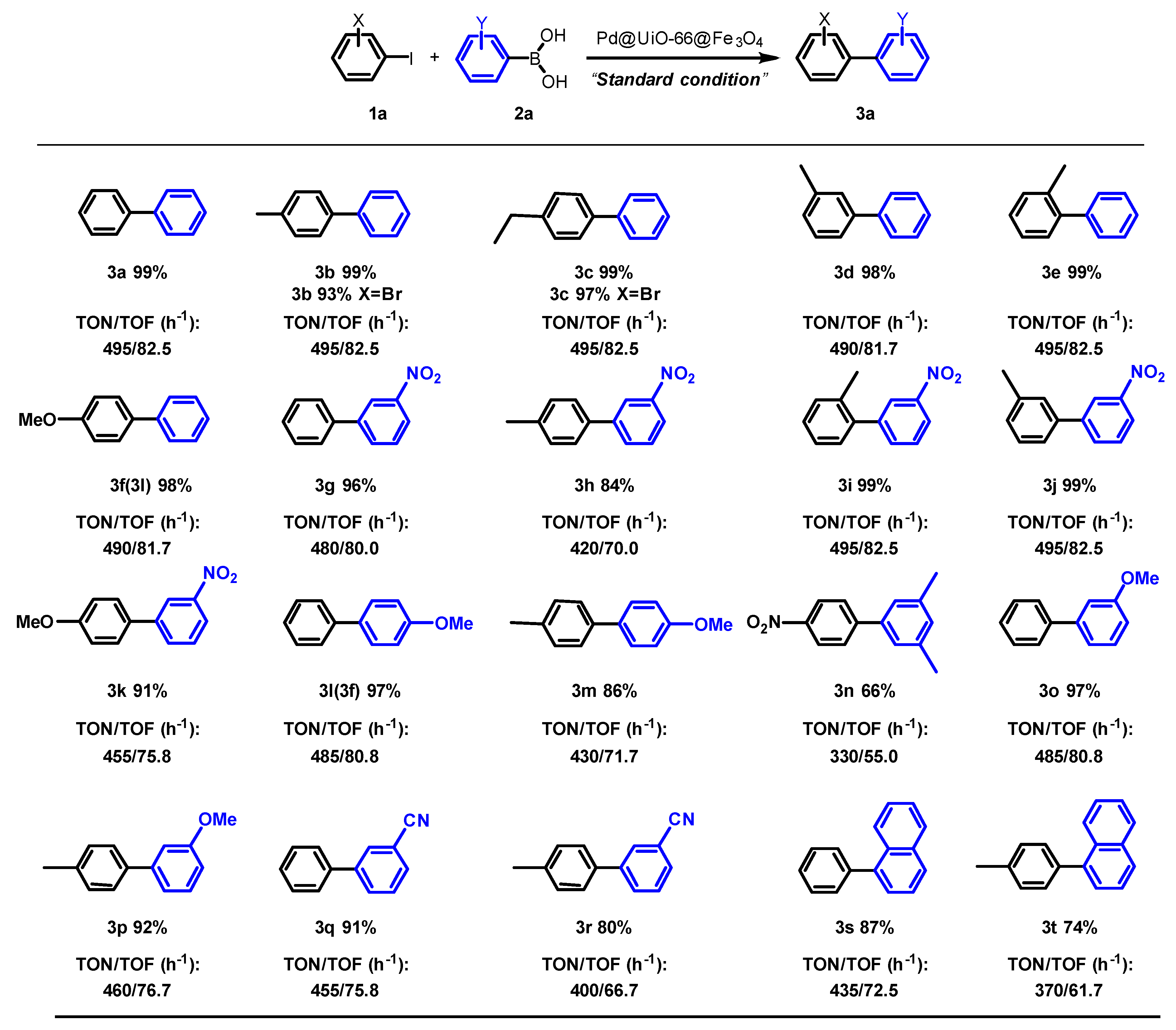
With the optimized reaction conditions in hand, we investigated the substrate scope. As shown in Scheme 2, a series of aryl iodides reacted efficiently with various aryl boronic acids to produce the corresponding coupling products (3a to 3t) in good to excellent isolated yields. The reaction showed good compatibility with several substituents of different electronic nature. Electron-donating groups, including alkyl chains such as methyl (3b) and ethyl (3c), as well as methoxy groups (3f), were well-tolerated with yields generally over 90%. Similarly, substrates bearing electron-withdrawing groups were successfully converted, with nitro (3g3k, and 3n) and cyano (3q and 3r) groups exhibiting high reactivity. The influence of steric effects was also examined. Ortho-substituted aryl iodides (3e and 3i) participated effectively in the coupling reaction while achieving excellent yields. In terms of halide reactivity, while aryl iodides were the primary substrates, aryl bromides also proved viable, affording products 3b (93%) and 3c (97%) with only a slight decrease in yield.
Furthermore, the utility of the Pd@UiO-66@Fe3O4 system was extended to sterically demanding polycyclic systems, where the use of 1-naphthylboronic acid yielded products 3s and 3t in 87% and 74% yields, respectively.
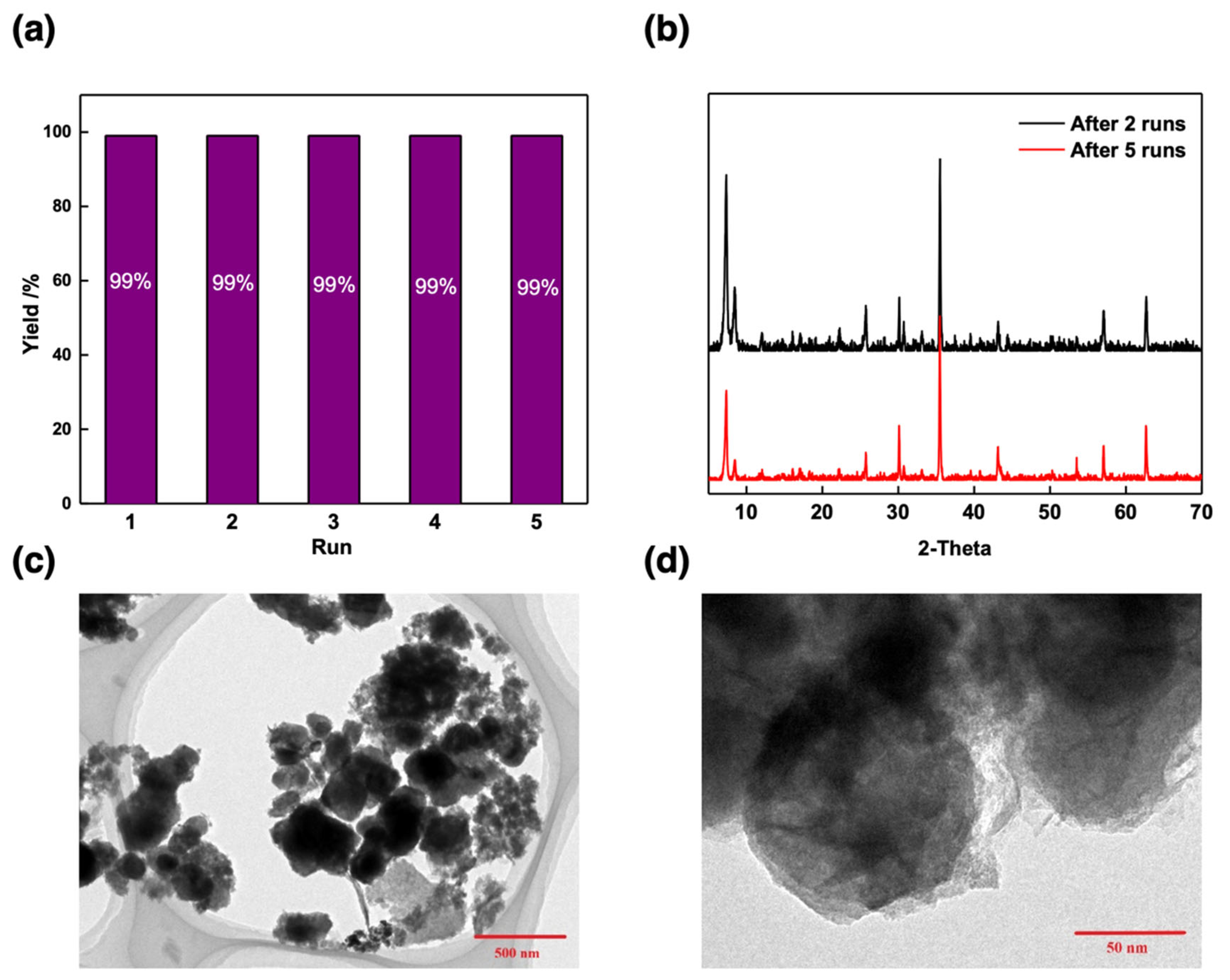
Heterogeneous catalysts offer significant advantages in synthetic chemistry due to their operational simplicity and potential for multiple reuses. Consequently, the recyclability of the Pd@UiO-66@Fe3O4 ternary composite was evaluated using the model Suzuki–Miyaura cross-coupling reaction of iodobenzene and phenylboronic acid. Harnessing the magnetic properties of the embedded Fe3O4 nanoparticles, the catalyst was rapidly isolated from the reaction mixture using an external magnet. As illustrated in the recyclability profile in Figure 3a, the catalytic activity remained exceptionally robust throughout the study. The yield of product 3a reached a consistent 99% over five consecutive catalytic cycles, with no discernible loss in efficiency observed. The structural integrity of the recycled catalyst was further analyzed through PXRD analysis (Figure 3b). The diffraction patterns obtained after the second and fifth runs are nearly identical to the original catalyst, confirming that the crystalline framework of the UiO-66 and the Fe3O4 components remains intact under the reaction conditions. Furthermore, TEM imaging of the used catalyst (Figure 3c,d) reveals that the characteristic cubic morphology and particle size of the Pd@UiO-66@Fe3O4 composite is effectively preserved. Even after multiple uses, the nanoparticles remain well-dispersed without obvious aggregation or structural collapse. These results collectively demonstrate that the Pd@UiO-66@Fe3O4 composite exhibited excellent durability and high potential for sustainable catalytic applications.
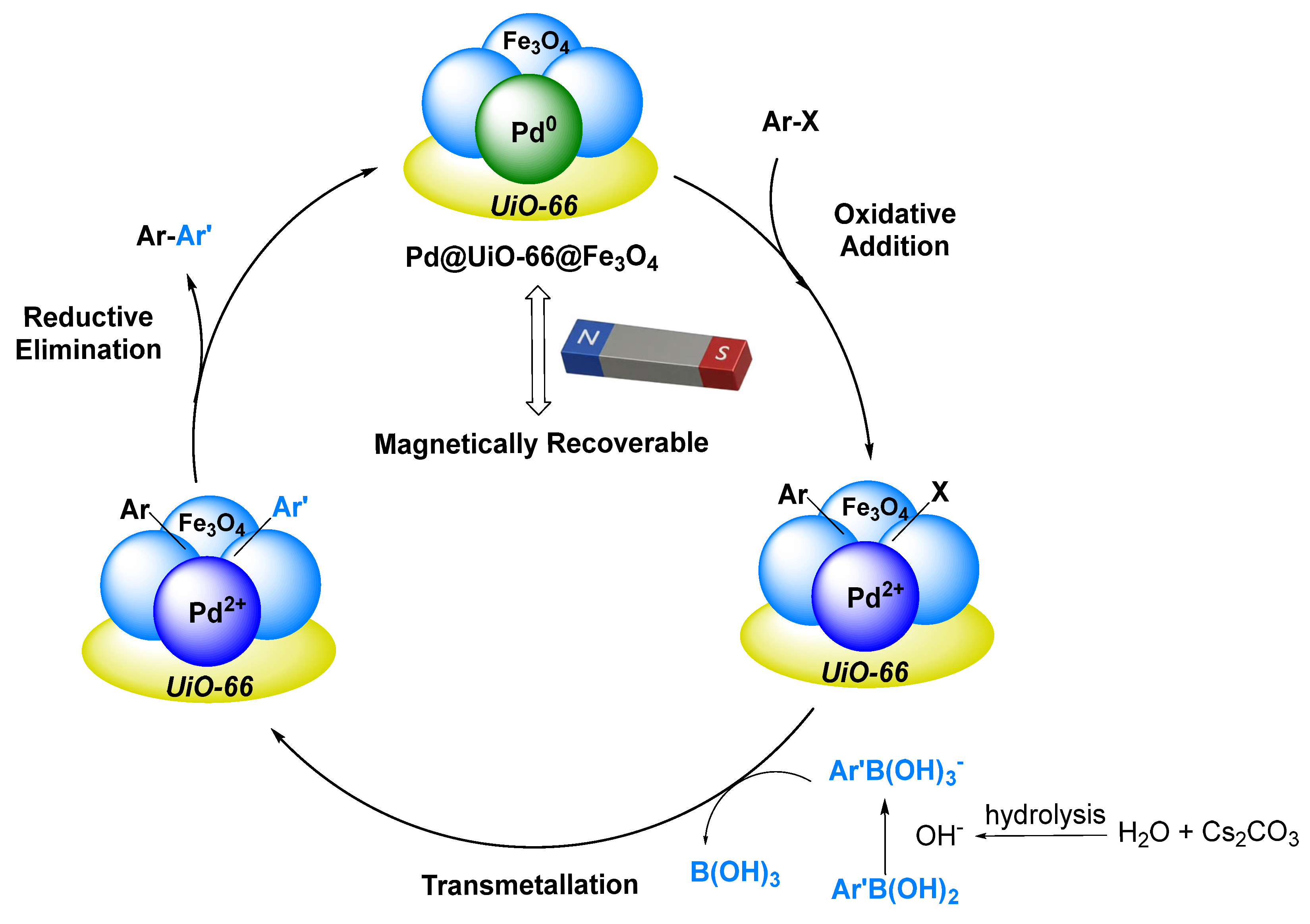
The proposed catalytic mechanism for the Suzuki–Miyaura coupling over the Pd@UiO-66@Fe3O4 composite is shown in Figure 4. The reaction follows a typical Pd(0)/Pd(II) catalytic cycle [5,45,46]. First, oxidative addition of the aryl halide to Pd(0) species generates an aryl–Pd(II) intermediate. Subsequently, transmetalation occurs in the presence of base, transferring the aryl group from the boronate species to the Pd(II) center. Finally, reductive elimination affords the corresponding biaryl product and regenerates the Pd(0) species. Beyond this conventional catalytic cycle, the UiO-66 framework is expected to play an important structural role in stabilizing the Pd species during catalysis. The porous framework and defect sites of UiO-66 can provide spatial confinement and anchoring environments for Pd nanoparticles, which may help improve Pd dispersion and suppress nanoparticle aggregation or sintering during the reaction and recycling process. The diffusion of aryl halides and arylboronic acids through the porous/interparticle channels of the MOF composite may also facilitate contact between substrates and the immobilized Pd sites. Meanwhile, the Fe3O4 component is mainly introduced to provide magnetic responsiveness, allowing rapid catalyst separation and reuse. Possible interfacial interactions between carboxylated Fe3O4 and the UiO-66 framework may also contribute to the structural integration of the ternary composite, although the present study does not provide direct electronic or kinetic evidence for a distinct Fe3O4-induced catalytic effect. Therefore, the enhanced practical performance of Pd@UiO-66@Fe3O4 is more appropriately attributed to the combined material functions of Pd catalysis, UiO-66-assisted Pd dispersion/stabilization, and Fe3O4-enabled magnetic recovery.

3. Materials and Methods

3.1. Materials

The commercial reagents used in the experiment were purchased from suppliers such as Bide Medicine and Adamas in Beijing, China, with purity grades all at analytical reagent (AR) level or higher. The carboxylated Fe3O4-COOH was purchased from Dekedaojin Co., Ltd, Beijing, China.

3.2. Synthesis of Binary UiO-66@Fe3O4 Composite

The synthesis of UiO-66@Fe3O4 was performed under the solvothermal conditions [47]. Firstly, 0.20 g carboxylated Fe3O4-COOH was dispersed in 80 mL N,N-dimethylformamide (DMF) and stirred for 0.5 h. After that, 0.22 g (1.3 mmol) terephthalic acid and 0.30 g (1.3 mmol) zirconium tetrachloride were dispersed in 60 mL DMF and stirred for 0.5 h. Then the above two solutions were mixed and transferred into a Teflon-lined stainless steel autoclave, which was heated at 80 °C for 12 h and then heated at 100 °C for 24 h. The resultant UiO-66@Fe3O4 microcrystals were obtained after cooling to room temperature, followed by filtration, drying and grounded into powder.

3.3. Synthesis of Ternary Pd@UiO-66@Fe3O4 Composite

The Pd(II) precursor was incorporated into UiO-66@Fe3O4 by adopting an ultrasound-assisted dual-solvent method (DSA), where n-hexane and water were used as hydrophobic and hydrophilic solvents, respectively. A total of 0.1 g UiO-66@Fe3O4 was ultrasonically dispersed in 20 mL n-hexane and stirred for 1 h. Then 2.7 mg (0.01 mmol) palladium nitrate dihydrate and 50 μL deionized water were added to the mixture, which was ultrasonically dispersed and stirred for another 3 h. After stirring, the solid sample was obtained after filtration and placed in a tube furnace with H2 flow at 200 °C for 4 h, and the Pd@UiO-66@Fe3O4 ternary composite catalyst was achieved.

3.4. General Procedure for the Suzuki–Miyaura Coupling Reaction

Pd@UiO-66@Fe3O4 and the related binary composites were used to catalyze the Suzuki–Miyaura cross-coupling reaction. A typical catalytic procedure is as follows: 1.0 mmol iodobenzene, 1.5 mmol phenylboronic acid, 4.0 mmol Cs2CO3, and 20.0 mg Pd@UiO-66@Fe3O4 were added to 5 mL EtOH/H2O (1:1) in a Schlenk tube upon nitrogen purging. Then, the reaction mixture was magnetically stirred in an oil bath at 80 °C for 6 h. After the reaction was completed, Pd@UiO-66@Fe3O4 catalyst was separated from the reaction solution using a magnet. The separated catalyst was washed thoroughly with 10 mL of ethyl acetate, then placed in an oven at 60 °C to dry for the reuse. The reaction mixture was analyzed by gas chromatography using an A90 gas chromatograph from Shanghai Echrom Electronic Technology Co., Ltd in Shanghai, China. The GC system was equipped with an Agilent DB-5 capillary column (30 m × 0.25 mm × 0.25 μm) and a flame ionization detector (FID). Helium was used as the carrier gas. The injector and detector temperatures were set at 250 °C. The oven temperature program was as follows: the initial temperature was held at 100 °C for 2 min, then increased to 220 °C at a rate of 25 °C min−1 and held for 9 min. The reaction mixture was then extracted with CH2Cl2 (3 × 50 mL). The combined organic layers were washed with H2O (2 × 50 mL), then brine (2 × 50 mL), dried over MgSO4 and concentrated in vacuo. The residue was purified by flash column chromatography on silica gel using hexane/ethyl acetate as the eluent to afford the desired product.

4. Conclusions

In summary, a novel ternary composite, Pd@UiO-66@Fe3O4, was successfully synthesized and evaluated as a high-performance catalyst for the Suzuki–Miyaura cross-coupling reaction. The catalyst demonstrated exceptional catalytic efficiency and good compatibility with the substrates examined under mild reaction conditions. Owing to the magnetic recoverability provided by the embedded Fe3O4 nanoparticles, the catalyst could be rapidly recovered from the reaction mixture using an external magnet. Notably, the catalyst maintained a consistent yield of 99% over five consecutive cycles, with its crystalline structure and morphology remaining fully intact without discernible loss of activity. This performance is mainly attributed to the complementary functions of the Pd active sites, the porous UiO-66 framework, and the magnetic Fe3O4 nanoparticles: Pd provides the catalytic centers, UiO-66 assists Pd dispersion and framework stabilization, and Fe3O4 enables facile magnetic recovery. This study offers a promising strategy for the development of efficient, stable, and easily recyclable MOF-based heterogeneous catalytic systems for sustainable organic synthesis.

Supplementary Materials

The following supporting information can be downloaded at: https://www.mdpi.com/article/10.3390/reactions7020032/s1, Figure S1. Pore size distribution of Pd@UiO-66@Fe3O4 microcrystals; Figure S2. XPS spectra of Pd@UiO-66@Fe3O4 microcrystals. (a) Survey, (b) O 1s, (c) C 1s, (d) Zr 3d, (e) Fe 2p, and (f) Pd 3d; Copies of 1H NMR spectra. References [48,49,50,51,52,53,54,55,56,57,58,59,60,61] are cite in Supplementary Materials.

Author Contributions

N.D.C.: Writing—original draft, Formal analysis, Data curation; D.L.: Methodology, Investigation; Z.-Y.Z.: Formal analysis, Methodology; Y.-H.T.: Formal analysis, Conceptualization. Writing—review & editing, Supervision; Q.C.: Formal analysis, Supervision; Z.-H.Z.: Funding acquisition, Formal analysis, Writing—review & editing, Supervision. All authors have read and agreed to the published version of the manuscript.

Funding

This research was funded by National Natural Science Foundation of China (Grant 12175024) and the Science and Technology Project of Changzhou (CQ20240064).

Data Availability Statement

Data are contained within the article and Supplementary Materials.

Conflicts of Interest

The authors declare that they have no known competing financial interests or personal relationships that could have appeared to influence the work reported in this paper.

References

  1. Islam, A.; Ghosh, P. Frontiers in bond construction: Innovative approaches to C–C and carbon–heteroatom (C–S, C–N, C–O, C–Se, C–P) transformations-a review. RSC Adv. 2025, 15, 23704–23759. [Google Scholar] [CrossRef] [PubMed]
  2. Nicolaou, K.C.; Snyder, S.A. Chasing Molecules That Were Never There: Misassigned Natural Products and the Role of Chemical Synthesis in Modern Structure Elucidation. Angew. Chem. Int. Ed. 2005, 44, 1012–1044. [Google Scholar] [CrossRef] [PubMed]
  3. Corbet, J.-P.; Mignani, G. Selected Patented Cross-Coupling Reaction Technologies. Chem. Rev. 2006, 106, 2651–2710. [Google Scholar] [CrossRef]
  4. Magano, J.; Dunetz, J.R. Large-Scale Applications of Transition Metal-Catalyzed Couplings for the Synthesis of Pharmaceuticals. Chem. Rev. 2011, 111, 2177–2250. [Google Scholar] [CrossRef]
  5. Miyaura, N.; Suzuki, A. Palladium-Catalyzed Cross-Coupling Reactions of Organoboron Compounds. Chem. Rev. 1995, 95, 2457–2483. [Google Scholar] [CrossRef]
  6. Economidou, M.; Mistry, N.; Wheelhouse, K.M.; Lindsay, D.M. Palladium Extraction Following Metal-Catalyzed Reactions: Recent Advances and Applications in the Pharmaceutical Industry. Org. Process Res. Dev. 2023, 27, 1585–1615. [Google Scholar] [CrossRef]
  7. Horbaczewskyj, S.; Fairlamb, I.J.S. Pd-Catalyzed Cross-Couplings: On the Importance of the Catalyst Quantity Descriptors, mol% and ppm. Org. Process Res. Dev. 2022, 26, 2240–2269. [Google Scholar] [CrossRef]
  8. Li, Y.; Huang, K.; Liu, W.; Wang, K.; Fu, S.; Guo, H.; Zhang, J.; Lian, C.; Wang, L. Interfacial engineering of carbon quantum dot/metal-organic framework heterostructures for boosted urea electrosynthesis from carbon dioxide and nitrate. J. Colloid Interface Sci. 2026, 703, 139264. [Google Scholar] [CrossRef]
  9. Freund, R.; Zaremba, O.; Arnauts, G.; Ameloot, R.; Skorupskii, G.; Dincă, M.; Bavykina, A.; Gascon, J.; Ejsmont, A.; Goscianska, J.; et al. The Current Status of MOF and COF Applications. Angew. Chem. Int. Ed. 2021, 60, 23975–24001. [Google Scholar] [CrossRef]
  10. Bao, W.; Yu, T.; Liu, Y.; Sun, Z.; Yuan, L.; Mei, L.; Shi, W.; Zhang, Z. Cutting-edge characterization techniques to decipher adsorption mechanisms of radionuclides and heavy metals. Coord. Chem. Rev. 2025, 539, 216748. [Google Scholar] [CrossRef]
  11. Yang, G.; Jiang, X.; Xu, H.; Zhao, B. Applications of MOFs as Luminescent Sensors for Environmental Pollutants. Small 2021, 17, 2005327. [Google Scholar] [CrossRef]
  12. Li, S.; Luo, P.; Wu, H.; Wei, C.; Hu, Y.; Qiu, G. Strategies for Improving the Performance and Application of MOFs Photocatalysts. ChemCatChem 2019, 11, 2978–2993. [Google Scholar] [CrossRef]
  13. Qian, Y.; Zhang, F.; Pang, H. A Review of MOFs and Their Composites-Based Photocatalysts: Synthesis and Applications. Adv. Funct. Mater. 2021, 31, 2104231. [Google Scholar] [CrossRef]
  14. Ding, M.; Cai, X.; Jiang, H.-L. Improving MOF stability: Approaches and applications. Chem. Sci. 2019, 10, 10209–10230. [Google Scholar] [CrossRef]
  15. Liu, Y.N.; Zhu, Y.J.; Yang, S.; Sun, Z.H.; Cheng, Y.; Zheng, M.Q.; Zhao, Y.P.; Lian, C.; Bu, Y.F.; Guskov, V.; et al. Amino-regulated charge separation in MOF/CdS heterostructures for boosted photocatalytic hydrogen evolution. Rare Met. 2025, 44, 10215–10226. [Google Scholar] [CrossRef]
  16. Cheng, S.Y.; Cheng, Y.; Li, C.X.; Cai, Y.S.; Qian, J.F.; Sun, Z.H.; Zhang, J.Y.; Chen, Q.; Wang, L.; Zhang, Z.H. Rare-Earth Metal–Organic Framework/CdS Heterostructures for Highly Efficient Photocatalytic Hydrogen Evolution. Adv. Synth. Catal. 2026, 368, e70357. [Google Scholar] [CrossRef]
  17. Sun, Z.; Chen, W.; Wang, L.; Wang, L.; Tang, Y.; Qian, B.; He, M.; Chen, Q.; Zhang, Z. Noble-metal free Suzuki–Miyaura reaction catalyzed by magnetically recyclable MOF composites. Appl. Organomet. Chem. 2022, 36, e6842. [Google Scholar] [CrossRef]
  18. Beyzavi, H.; Klet, R.C.; Tussupbayev, S.; Borycz, J.; Vermeulen, N.A.; Cramer, C.J.; Stoddart, J.F.; Hupp, J.T.; Farha, O.K. A Hafnium-Based Metal–Organic Framework as an Efficient and Multifunctional Catalyst for Facile CO2 Fixation and Regioselective and Enantioretentive Epoxide Activation. J. Am. Chem. Soc. 2014, 136, 15861–15864. [Google Scholar] [CrossRef]
  19. Pascanu, V.; Miera, G.G.; Inge, A.K.; Martín-Matute, B. Metal–Organic Frameworks as Catalysts for Organic Synthesis: A Critical Perspective. J. Am. Chem. Soc. 2019, 141, 7223–7234. [Google Scholar] [CrossRef] [PubMed]
  20. Jiao, L.; Wang, Y.; Jiang, H.; Xu, Q. Metal–Organic Frameworks as Platforms for Catalytic Applications. Adv. Mater. 2018, 30, 1703663. [Google Scholar] [CrossRef]
  21. Wei, R.-J.; You, P.-Y.; Duan, H.; Xie, M.; Xia, R.-Q.; Chen, X.; Zhao, X.; Ning, G.-H.; Cooper, A.I.; Li, D. Ultrathin Metal–Organic Framework Nanosheets Exhibiting Exceptional Catalytic Activity. J. Am. Chem. Soc. 2022, 144, 17487–17495. [Google Scholar] [CrossRef]
  22. Chen, X.; Song, J.-Y.; Zheng, J.; Wang, Y.-M.; Luo, J.; Weng, P.; Cai, B.-C.; Lin, X.-C.; Ning, G.-H.; Li, D. Metal Variance in Multivariate Metal–Organic Frameworks for Boosting Catalytic Conversion of CO2. J. Am. Chem. Soc. 2024, 146, 19271–19278. [Google Scholar] [CrossRef]
  23. Konda, S.K.; Chen, A. Palladium based nanomaterials for enhanced hydrogen spillover and storage. Mater. Today 2016, 19, 100–108. [Google Scholar] [CrossRef]
  24. Lawrence, A.S.; Martin, N.; Sivakumar, B.; Cirujano, F.G.; Dhakshinamoorthy, A. Palladium-Based Metal Organic Frameworks as Heterogeneous Catalysts for C−C Couplings. ChemCatChem 2022, 14, e202200403. [Google Scholar] [CrossRef]
  25. Yang, Q.; Yao, F.; Zhong, Y.; Chen, F.; Shu, X.; Sun, J.; He, L.; Wu, B.; Hou, K.; Wang, D.; et al. Metal–Organic Framework Supported Palladium Nanoparticles: Applications and Mechanisms. Part. Part. Syst. Charact. 2019, 36, 1800557. [Google Scholar] [CrossRef]
  26. Dhakshinamoorthy, A.; Santiago-Portillo, A.; Asiri, A.M.; Garcia, H. Engineering UiO-66 Metal Organic Framework for Heterogeneous Catalysis. ChemCatChem 2019, 11, 899–923. [Google Scholar] [CrossRef]
  27. Jiang, D.; Fang, G.; Tong, Y.; Wu, X.; Wang, Y.; Hong, D.; Leng, W.; Liang, Z.; Tu, P.; Liu, L.; et al. Multifunctional Pd@UiO-66 Catalysts for Continuous Catalytic Upgrading of Ethanol to n Butanol. ACS Catal. 2018, 8, 11973–11978. [Google Scholar] [CrossRef]
  28. Vermoortele, F.; Bueken, B.; Le Bars, G.; Van De Voorde, B.; Vandichel, M.; Houthoofd, K.; Vimont, A.; Daturi, M.; Waroquier, M.; Van Speybroeck, V.; et al. Synthesis Modulation as a Tool To Increase the Catalytic Activity of Metal–Organic Frameworks: The Unique Case of UiO-66(Zr). J. Am. Chem. Soc. 2013, 135, 11465–11468. [Google Scholar] [CrossRef] [PubMed]
  29. Wang, L.; Li, J.; Cheng, L.; Song, Y.; Zeng, P.; Wen, X. Application of hard and soft acid base theory to uncover the destructiveness of Lewis bases to UiO-66 type metal organic frameworks in aqueous solutions. J. Mater. Chem. A 2021, 9, 14868–14876. [Google Scholar] [CrossRef]
  30. Cirujano, F.G.; Xamena, F.X.L.I. Tuning the Catalytic Properties of UiO-66 Metal–Organic Frameworks: From Lewis to Defect-Induced Brønsted Acidity. J. Phys. Chem. Lett. 2020, 11, 4879–4890. [Google Scholar] [CrossRef]
  31. Feng, X.; Hajek, J.; Jena, H.S.; Wang, G.; Veerapandian, S.K.P.; Morent, R.; De Geyter, N.; Leyssens, K.; Hoffman, A.E.J.; Meynen, V.; et al. Engineering a Highly Defective Stable UiO-66 with Tunable Lewis- Brønsted Acidity: The Role of the Hemilabile Linker. J. Am. Chem. Soc. 2020, 142, 3174–3183. [Google Scholar] [CrossRef]
  32. Guan, Q.; Wang, B.; Chai, X.; Liu, J.; Gu, J.; Ning, P. Comparison of Pd-UiO-66 and Pd-UiO-66-NH2 catalysts performance for phenol hydrogenation in aqueous medium. Fuel 2017, 205, 130–141. [Google Scholar] [CrossRef]
  33. Yao, S.; Jiang, Z.; Zhang, H.; Wang, X.; Liu, F.; Wu, J.; Pan, Y.; Li, J.; Xie, L.; Qian, F.; et al. Confinement-engineered Pd@UiO-66(Zr) catalysts enabling hydrogen spillover-driven Fe cycling for rapid carbamazepine degradation. J. Alloys Compd. 2025, 1045, 184596. [Google Scholar] [CrossRef]
  34. Dong, W.; Feng, C.; Zhang, L.; Shang, N.; Gao, S.; Wang, C.; Wang, Z. Pd@UiO-66: An Efficient Catalyst for Suzuki–Miyaura Coupling Reaction at Mild Condition. Catal. Lett. 2016, 146, 117–125. [Google Scholar] [CrossRef]
  35. Veisi, H.; Abrifam, M.; Kamangar, S.A.; Pirhayati, M.; Saremi, S.G.; Noroozi, M.; Tamoradi, T.; Karmakar, B. Pd immobilization biguanidine modified Zr-UiO-66 MOF as a reusable heterogeneous catalyst in Suzuki–Miyaura coupling. Sci. Rep. 2021, 11, 21883. [Google Scholar] [CrossRef]
  36. Sun, D.; Li, Z. Double-Solvent Method to Pd Nanoclusters Encapsulated inside the Cavity of NH2–UiO-66(Zr) for Efficient Visible-Light-Promoted Suzuki Coupling Reaction. J. Phys. Chem. C 2016, 120, 19744–19750. [Google Scholar] [CrossRef]
  37. Rabiei, K. Advancing Suzuki couplings: The role of metal-organic frameworks in efficient biaryl compound synthesis. J. Organomet. Chem. 2026, 1045, 123961. [Google Scholar] [CrossRef]
  38. Rao, R.S.; Bashri, M.; Mohideen, M.I.H.; Yildiz, I.; Shetty, D.; Shaya, J. Recent advances in heterogeneous porous Metal–Organic Framework catalysis for Suzuki-Miyaura cross-couplings. Heliyon 2024, 10, e40571. [Google Scholar] [CrossRef]
  39. Wang, J.; Li, T.; Zhao, Z.; Zhang, X.; Pang, W. Pd Nanoparticles Embedded into MOF-808: Synthesis, Structural Characteristics, and Catalyst Properties for the Suzuki–Miyaura Coupling Reaction. Catal. Lett. 2022, 152, 1545–1554. [Google Scholar] [CrossRef]
  40. Mohammadi, L.; Hosseinifard, M.; Vaezi, M.R. Stabilization of Palladium-Nanoparticle-Decorated Postsynthesis-Modified Zr-UiO-66 MOF as a Reusable Heterogeneous Catalyst in C–C Coupling Reaction. ACS Omega 2023, 8, 8505–8518. [Google Scholar] [CrossRef] [PubMed]
  41. Ma, R.; Yang, P.; Ma, Y.; Bian, F. Facile Synthesis of Magnetic Hierarchical Core–Shell Structured Fe3O4@PDA-Pd@MOF Nanocomposites: Highly Integrated Multifunctional Catalysts. ChemCatChem 2018, 10, 1446–1454. [Google Scholar] [CrossRef]
  42. Xiong, G.; Chen, X.-L.; You, L.-X.; Ren, B.-Y.; Ding, F.; Dragutan, I.; Dragutan, V.; Sun, Y.-G. La-Metal-Organic Framework Incorporating Fe3O4 Nanoparticles, Post-Synthetically Modified with Schiff Base and Pd: A Highly Active, Magnetically Recoverable, Recyclable Catalyst for C–C Cross-Couplings at Low Pd Loadings. J. Catal. 2018, 361, 116–125. [Google Scholar] [CrossRef]
  43. Han, Y.; Liu, M.; Li, K.; Zuo, Y.; Wei, Y.; Xu, S.; Zhang, G.; Song, C.; Zhang, Z.; Guo, X. Facile Synthesis of Morphology and Size-Controlled Zirconium Metal–Organic Framework UiO-66: The Role of Hydrofluoric Acid in Crystallization. CrystEngComm 2015, 17, 6434–6440. [Google Scholar] [CrossRef]
  44. Liang, Y.; Chen, Z.; Zhou, H.; Hu, J.; Wang, Q.; Dou, Z.; Wang, M. Protective Spillover-Hydrogenation Catalyst Based on Pd-Loaded Metal–Organic Frameworks. J. Am. Chem. Soc. 2026, 148, 18941–18950. [Google Scholar] [CrossRef]
  45. Sampatkumar, H.G.; Antony, A.M.; Trivedi, M.; Sharma, M.; Ghate, M.; Baidya, M.; Dateer, R.B.; Patil, S.A. In situ biosynthesis of palladium nanoparticles on banana leaves extract-coated graphitic carbon nitride: An efficient and reusable heterogeneous catalyst for organic transformations and antimicrobial agent. Biomass Convers. Biorefin. 2024, 14, 10045–10066. [Google Scholar] [CrossRef]
  46. Ndlovu, S.; Lane, C.A.; Naden, A.B.; Grillo, F.; Giménez-Nueno, I.; Clarke, M.L.; Wright, P.A. Synergistic cross-coupling catalysis: A trialkylphosphine/Pd catalyst tethered to MOF-808(Hf) is very effective for Suzuki–Miyaura coupling of problematic nucleophiles. Catal. Sci. Technol. 2025, 15, 4922–4931. [Google Scholar] [CrossRef]
  47. Sun, Z.H.; Chen, W.; Qian, B.B.; Wang, L.; Yu, B.; Chen, Q.; He, M.Y.; Zhang, Z.H. UiO-66 microcrystals catalyzed direct arylation of enol acetates and heteroarenes with aryl diazonium salts in water. Appl. Organomet. Chem. 2020, 34, e5482. [Google Scholar] [CrossRef]
  48. Bezaatpour, A.; Amiri, M.; Vocke, H.; Akhundi, A.; Wark, M. α-Fe2O3/CeBi2O2CO3 decorated with Pd as an efficient photo-assisted catalyst for Suzuki–Miyaura coupling (SMC) under visible light irradiation. J. Organomet. Chem. 2025, 1030, 123573. [Google Scholar] [CrossRef]
  49. Tian, J.; Xu, D.; Sun, W. Cobalt(II)-catalyzed transfer hydrogenation of simple alkenes. Adv. Synth. Catal. 2022, 364, 3874–3880. [Google Scholar] [CrossRef]
  50. Li, M.; Deng, M.-L.; Yang, R.; Zhou, X.; Loh, T.-P.; Lu, M.-Z. Palladium-catalyzed Hiyama cross-coupling of arylsulfonium salts via C–S bond cleavage. Org. Lett. 2025, 27, 12104–12110. [Google Scholar] [CrossRef]
  51. Zhang, Y.; Zhang, L.; Zhang, X.; Yang, D.; Du, C.; Wan, L.; Au, C.; Chen, J.; Xie, M. Pyridine-based hypercrosslinked polymers as support materials for palladium photocatalysts and their application in Suzuki–Miyaura coupling reactions. New J. Chem. 2020, 44, 15202–15208. [Google Scholar] [CrossRef]
  52. Chen, F.; Wang, S.; Sun, Q.; Xiao, F. Turning on catalysis: Construction of triphenylphosphine moieties into porous frameworks. ChemCatChem 2020, 12, 3285–3289. [Google Scholar] [CrossRef]
  53. Zhou, W.; Wang, K.; Wang, J.; Huang, D. Reusable, polystyrene-resin-supported, palladium-catalyzed, atom-efficient cross-coupling reaction of aryl halides with triarylbismuths. Eur. J. Org. Chem. 2010, 3, 416–419. [Google Scholar] [CrossRef]
  54. Xiang, Q.; Luo, G.; Zhang, C.; Hu, Q.; Wang, C.; Wu, T.; Xu, H.; Hu, J.; Zhuang, X.; Zhang, M.; et al. Discovery, optimization and evaluation of 1-(indolin-1-yl)ethan-1-ones as novel selective TRIM24/BRPF1 bromodomain inhibitors. Eur. J. Med. Chem. 2022, 236, 114311. [Google Scholar] [CrossRef]
  55. Chang, M.-Y.; Cheng, Y.-C.; Lu, Y.-J. Synthesis of substituted benzenes via Bi(OTf)3-mediated intramolecular carbonyl allylation of α-prenyl or α-geranyl β-arylketosulfones. Org. Lett. 2015, 17, 3142–3145. [Google Scholar] [CrossRef]
  56. Li, Y.; Liu, W.; Tian, Q.; Yang, Q.; Kuang, C. Palladium-catalyzed Suzuki cross-coupling of phenylhydrazine or (phenylsulfonyl)hydrazine. Eur. J. Org. Chem. 2014, 16, 3307–3312. [Google Scholar] [CrossRef]
  57. Chow, W.K.; So, C.M.; Lau, C.P.; Kwong, F.Y. A general palladium catalyst system for Suzuki–Miyaura coupling of potassium aryltrifluoroborates and aryl mesylates. J. Org. Chem. 2010, 75, 5109–5112. [Google Scholar] [CrossRef]
  58. Bluemke, T.D.; Clegg, W.; García-Alvarez, P.; Kennedy, A.R.; Koszinowski, K.; McCall, M.D.; Russo, L.; Hevia, E. Structural and reactivity insights in Mg–Zn hybrid chemistry: Zn–I exchange and Pd-catalysed cross-coupling applications of aromatic substrates. Chem. Sci. 2014, 5, 3552. [Google Scholar] [CrossRef]
  59. Galaverna, R.S.; Fernandes, L.P.; Menezes Da Silva, V.H.; De Siervo, A.; Pastre, J.C. Humins-like solid support for palladium immobilization: Highly efficient and recyclable catalyst for cross-coupling reactions. Eur. J. Org. Chem. 2022, 24, e202200376. [Google Scholar] [CrossRef]
  60. Gonçalves, R.S.B.; de Oliveira, A.B.V.; Sindra, H.C.; Archanjo, B.S.; Mendoza, M.E.; Carneiro, L.S.A.; Buarque, C.D.; Esteves, P.M. Heterogeneous catalysis by covalent organic frameworks (COF): Pd(OAc)2@COF-300 in cross-coupling reactions. ChemCatChem 2016, 8, 743–750. [Google Scholar] [CrossRef]
  61. Kardela, M.; Halikowska-Tarasek, K.; Szostak, M.; Bisz, E. Enhanced activity of bulky N-heterocyclic carbenes in nickel–NHC catalyzed Kumada–Corriu cross-coupling of aryl tosylates. Catal. Sci. Technol. 2022, 12, 7275–7280. [Google Scholar] [CrossRef]
Scheme 1. Schematic overview of representative Pd@MOF-based heterogeneous catalysts for Suzuki–Miyaura coupling and the design of this work. (a) Binary Pd@MOF catalysts. (b) Ternary or ligand-modified Pd@MOF catalysts with N-rich anchoring sites. (c) Magnetically recoverable Pd@MOF catalysts. (d) This work: Pd@UiO-66@Fe3O4 ternary composite integrating Pd active sites. CC = cyanuric chloride; 2-AP = 2-aminopyrimidine [34,35,36,39,40,41,42].
Reactions 07 00032 sch001
Figure 1. (a,b) TEM images of UiO-66@Fe3O4; (c,d) TEM images of Pd@UiO-66@Fe3O4.
Reactions 07 00032 g001
Figure 2. (a) PXRD patterns, (b) FT-IR spectra, (c) TG curves, and (d) N2 adsorption/desorption isotherms.
Reactions 07 00032 g002
Scheme 2. Substrate scope of aryl iodides and aryl boronic acids. Standard condition: Aryl iodide 1 (1.0 mmol), Aryl boronic acid 2 (1.5 mmol), Cs2CO3 (4.0 mmol), Pd@UiO-66@Fe3O4 (20.0 mg, 0.2 mol% palladium relative to the aryl iodide substrate), EtOH/H2O (1:1), 80 °C, 6 h. Isolated yields. TON was calculated as moles of product per mole of Pd initially introduced during catalyst preparation; TOF was calculated as TON divided by the reaction time. The reported TON and TOF values are apparent values based on the nominal Pd amount.
Reactions 07 00032 sch002
Figure 3. (a) Recyclability of Pd@UiO-66@Fe3O4 for the synthesis of 3a under standard reaction conditions. (b) PXRD patterns of Pd@UiO-66@Fe3O4 after catalysis. (c,d) TEM images of the recycled Pd@UiO-66@Fe3O4 catalysts.
Reactions 07 00032 g003
Figure 4. Proposed Pd(0)/Pd(II) catalytic cycle for the Suzuki–Miyaura cross-coupling reaction over Pd@UiO-66@Fe3O4.
Reactions 07 00032 g004
Table 1. Optimization of the reaction conditions a.
Reactions 07 00032 i001
EntrySolventCs2CO3 (mmol)Temp.
(°C)
Catalyst Loading (mg)Time
(h)
Yield (%) b
1Toluene4.010010.0127
2CH2Cl24.010010.01223
3H2O4.010010.01290
4EtOH4.010010.01288
5DMF4.010010.01290
6DMSO4.010010.01288
7EtOH/H2O (1:1)4.010010.01291
8 cEtOH/H2O (1:1)4.010010.0120
9EtOH/H2O (1:1)4.010020.01299
10EtOH/H2O (1:1)4.010030.01299
11EtOH/H2O (1:1)4.010040.01299
12EtOH/H2O (1:1)4.010020.0999
13EtOH/H2O (1:1)4.010020.0699
14EtOH/H2O (1:1)4.010020.0394
15EtOH/H2O (1:1)4.08020.0699
16EtOH/H2O (1:1)4.012020.0699
17EtOH/H2O (1:1)1.08020.0683
18EtOH/H2O (1:1)2.08020.0689
19EtOH/H2O (1:1)3.08020.0693
a Reaction conditions: 1a (1.0 mmol), 2a (1.5 mmol), solvent (5 mL). b GC yield. c Use UiO-66@Fe3O4 as catalyst.
Disclaimer/Publisher’s Note: The statements, opinions and data contained in all publications are solely those of the individual author(s) and contributor(s) and not of MDPI and/or the editor(s). MDPI and/or the editor(s) disclaim responsibility for any injury to people or property resulting from any ideas, methods, instructions or products referred to in the content.