
Article

Hydrodeoxygenation of Black Liquor HTL Oil Model Compounds in Supercritical Water

1
VTT Technical Research Centre of Finland Ltd., P.O. Box 1000, 02044 Espoo, Finland
2
Ranido s.r.o., Thákurova 531/4, 160 00 Praha, Czech Republic
*
Author to whom correspondence should be addressed.
Reactions 2026, 7(1), 7; https://doi.org/10.3390/reactions7010007
Submission received: 24 July 2025 / Revised: 17 December 2025 / Accepted: 9 January 2026 / Published: 20 January 2026
(This article belongs to the Special Issue Feature Papers in Reactions in 2025)

Abstract

Black liquor, the side stream from Kraft pulping, is a promising feedstock for the production of renewable fuels via hydrothermal liquefaction (HTL). However, further upgrading of the black liquor HTL oil is required to reduce the oxygen content for fuel use. In this work, the hydrodeoxygenation (HDO) of black liquor HTL oil model compounds was investigated to enhance the understanding of catalyst activity and selectivity under hydrothermal conditions. The study focused on isoeugenol and 4-methylcatechol as model compounds, representing different functionalities in black liquor-derived HTL-oil. Sulfided NiMo catalysts supported on titania, zirconia, activated carbon, and α-alumina were evaluated in batch mode at subcritical and supercritical upgrading using hydrogen gas. The results show that isoeugenol was fully converted in all experiments, while 4-methylcatechol conversion varied depending on the catalyst and reaction conditions. Phenols were obtained as the main products and the maximum degree of deoxygenation achieved was around 40%. This research provides insights into the potential of hydrothermal HDO for upgrading BL-derived biocrudes, emphasising the importance of catalyst selection and reaction conditions in hydrothermal conditions.

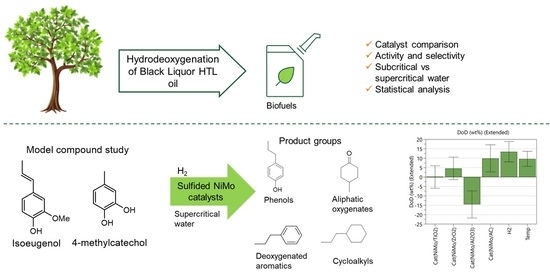
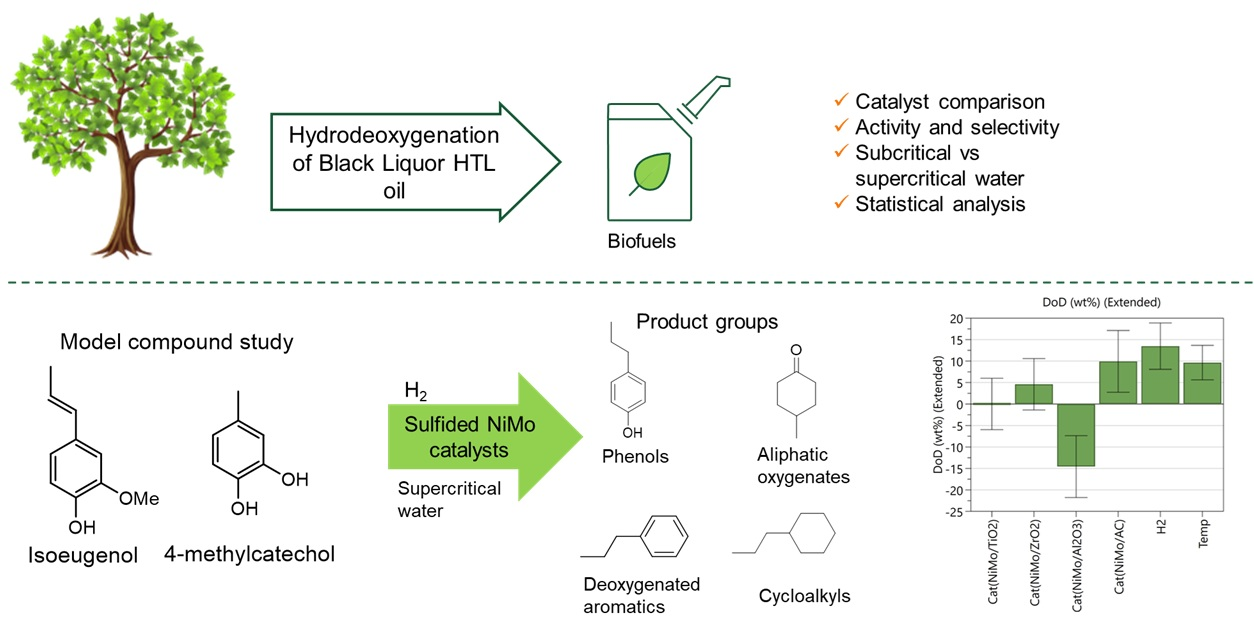
Graphical Abstract

1. Introduction

The mitigation of climate change requires a drastic reduction in greenhouse gas emissions. In 2019, transportation produced over 8 Gt CO2, accounting for 27% of the total CO2 emissions [1]. Replacing fossil fuels in transportation with sustainable alternatives is necessary to reach radical decarbonisation. Drop-in biofuels could offer a short-term solution without the need to completely renew the transport infrastructure. However, the availability of sustainable biomass is a crucial factor when evaluating different production processes.
A very promising and currently underutilised abundant feedstock for biofuels is black liquor (BL), a side stream of the chemical pulping industry. The annual production of BL is about 170 million dry tons [2]. During the Kraft pulping process, most of the lignin and hemicellulose in lignocellulosic biomass is dissolved into the aqueous alkaline solution containing the cooking chemicals sodium hydroxide and sodium sulfide [3]. After separating the solid pulp, the weak black liquor is first concentrated by evaporation. The resulting strong black liquor is then combusted in recovery boilers to generate energy for the pulp mill and to recover the cooking chemicals. However, the energy content of BL surpasses the needs of modern pulp mills [4] and therefore part of BL could be valorised into biofuels without disturbing the energy balance of the mill.
Hydrothermal liquefaction (HTL) is an attractive technology for processing biomass at aqueous conditions and temperatures of 250–350 °C into liquid fuels [5]. HTL is especially suited for streams with high water content, such as BL. The main targeted product of HTL is bio-oil, which can be used as biofuel after further upgrading. During HTL, lignin degrades into a highly complex mixture of phenolic monomers and oligomers [6]. The bio-oil yield depends strongly on the reaction conditions and additives like co-solvents and catalysts [3]. Orebom et al. reported 80 wt% yield of extractable organics from HTL of BL [7].
Bio-oils are typically produced by different lignocellulosic biomass liquefaction techniques such as thermal fast pyrolysis, catalytic fast pyrolysis, and HTL. Bio-oils are viscous and often acidic liquids with a complex molecular composition and high oxygen content. The oxygen content of bio-oils varies from 35–50% in thermal fast pyrolysis bio-oil to 5–28% in HTL bio-oil, also known as HTL biocrude [8]. This high oxygen content caused by oxygenates with various functional groups such as carbonyls, carboxylic acids, and hydroxyls is the main difference with fossil transportation fuels, and the main aim of upgrading bio-oil to fuels is typically to reduce the oxygen content to close to zero. One of the main techniques to reduce oxygen content in bio-oils is catalytic hydrodeoxygenation (HDO), where oxygen is removed under hydrogen pressure, typically as water or as carbon oxides [9]. HDO has been commercialised for the deoxygenation of oils containing fatty acids such as vegetable oils, animal fats, and tall oil. However, there are still unsolved challenges in the HDO of bio-oils from lignocellulosic biomass preventing commercialisation, especially related to fast deactivation of the catalyst by impurities in the oil and by coke formation.
Various catalysts have been studied in the hydrodeoxygenation of bio-oils and their model compounds. The most used type of catalyst has been supported metal catalysts [10,11,12]. Sulfided Mo-based catalysts that are widely used in the oil refining industry for hydrodesulfurisation and hydrodenitrogenation have been an obvious and common choice in many studies. However, noble metal catalysts including monometallic or bimetallic Pd, Pt, Rh, and Ru have been very popular in these studies as well [13]. The most common supports for noble metals have been activated carbon and γ-alumina. However, many other supports including other metal oxides (La, Zr, Ti), zeolites, and carbon nanotubes have been investigated for bio-oil HDO. Most of the studies on bio-oils HDO relate to fast pyrolysis bio-oil and especially to its model compounds. Studies on HTL biocrude have been published to a lesser extent. Sulfided hydrotreatment catalysts (NiMo, CoMo, NiW) have been the most popular ones in experimental hydrodeoxygenation studies of HTL biocrudes [14].
HTL produces a mixture of water-insoluble and water-soluble compounds, and therefore it is an attractive alternative not to separate water applied in HTL before the subsequent hydrodeoxygenation upgrading step. Hydrothermal HDO has mainly been applied to fatty acids and triglycerides such as triolein and palmitic acid [15,16] and HTL biocrude [17]. Hydrothermal HDO, especially when performed in near- or supercritical water (SCW), takes advantage of the higher solubility of organic compounds in SCW compared to ambient conditions [18]. Furthermore, hydrogen can be generated in situ by transfer hydrogenation and aqueous phase reforming (APR). It has also been claimed that such reaction conditions can protect the catalyst from coke formation. After the hydrothermal HDO, organic compounds contain much less oxygen, being less soluble in the aqueous phase than before HDO, thus making phase separation easier and less energy-consuming.
Hydrothermal conditions are challenging for conventional catalyst and support materials, like the γ-alumina often used in hydrotreating. In a recent study with Kurlov et al., we investigated the stability of catalyst supports and sulfided NiMo-catalysts in continuous flow supercritical water [19]. In this work, we have studied the hydrodeoxygenation of HTL oil model compounds in aqueous conditions in a batch reactor, with a focus on the activity and selectivity of the catalysts under the hydrothermal conditions. Isoeugenol and 4-methylcatechol were selected as model compounds representing different functionalities in HTL oil. Sulfided NiMo supported on titania, zirconia, activated carbon, and α-alumina were studied as the catalysts, and were selected based on the stability of the materials under supercritical water conditions. The HDO experiments were carried out both in subcritical and supercritical conditions using hydrogen gas; the design of experiment method was applied to study the effect of the catalyst and reaction conditions on the product distribution and conversion.

2. Materials and Methods

2.1. Model Compounds

Isoeugenol (>98%, mixture of cis- and trans, Merck), 4-methylcatechol (>95%, Merck) and diphenylmethane (99%, Merck) were used as received.

2.2. Catalyst Synthesis

Four catalysts were used in the HDO experiments: NiMo/TiO2, NiMo/ZrO2, NiMo/AC, and NiMo/α-Al2O3. The metal oxide supports were produced by Ranido s.r.o. (Praha, Czech Republic) and the activated carbon was purchased from OQEMA, type AquaSorb CS, 4 × 8 mesh. To prepare the catalysts, supports were ground and sieved into 0.4–0.8 mm and 0.2–0.4 mm granules before incipient wetness impregnation. The impregnation solutions, made from ammonium molybdate, nickel nitrate, and phosphoric acid, were used immediately and stirred well to avoid crystallisation. After impregnation, the mass was dried at 120 °C and calcined at 550 °C in air or under nitrogen at 450 or 550 °C for activated carbon. The intermediates were then milled and sieved to produce NiMo catalysts (NiMo/TiO2, NiMo/ZrO2, NiMo/AC and NiMo/α-Al2O3). Detailed synthesis of NiMo/TiO2, NiMo/ZrO2 and NiMo/AC is reported in our previous paper [19]. Synthesis of NiMo/α-Al2O3 is presented in Supporting Information.
Prior to the HDO experiments, the catalysts were sulfided in a 1 L autoclave by Autoclave Engineers. Then, 10 g catalyst, 100 mL n-hexane, and 5 mL dimethyldisulfide were added to the reactor, and the reactor was sealed and flushed three times with nitrogen. Then, 30 bar hydrogen gas was loaded at room temperature, and the sulfidation was run at 350 °C for 4 h. The sulfided catalysts, denoted NiMoSx/TiO2, NiMoSx/ZrO2, NiMoSx/AC, and NiMoSx/α-Al2O3, were stored under n-hexane.

2.3. Catalyst Characterisation

Nitrogen physisorption data were collected using an ASAP 2020 (Micromeritics) instrument. The samples underwent degassing at a pressure of 10−2 Pa and a temperature of 300 °C for 3 h prior to measurement. The Brunauer–Emmett–Teller (BET) theory was utilised to determine the specific surface area (SSA), while the BJH (Barrett, Joyner, and Halenda) method was employed to calculate the pore volume and pore size distribution. The pore sizes were measured within a range of 0.35–500 nm.
XRF data were measured using an ARL 9400 XP with a Rh anode, 4 kW generator, 4 collimators, 6 crystals (AX 20, TLAP, PET, Ge 111, LiF 200, LiF 220), and 2 detectors (proportional and scintillation). Semi-quantitative analysis was carried out with a calibration curve from Winxrf software and standards analysis using Uniquant 4. Note that the catalyst compositions obtained are semi-quantitative and were measured prior to sulfidation.

2.4. Hydrodeoxygenation Experiments

The HDO experiments were carried out in an Autoclave engineers 1 L batch autoclave equipped with a mechanical stirrer. The catalyst and 1 g of each model compound (isoeugenol, 4-methylcatechol, and in some experiments, diphenylmethane) were added to the reactor along with 150 mL of deionised water. The reactor was sealed, flushed with nitrogen three times, and pressurised with hydrogen to the target pressure at room temperature. The reactor was then heated to the desired temperature for 2 h reaction time while stirring with a mechanical stirrer at 600 rpm. After the experiment, the autoclave was cooled to room temperature and a sample of the gas phase was taken into a gas bag. The reaction mixture was collected, weighed and filtered through a filter paper into a separation funnel. The catalyst residue was washed with 10 mL isopropanol which was added to the filtrate. The aqueous phase was extracted with 2 × 50 mL ethyl acetate.

2.5. Product Analysis

Products were analysed from both the organic phase and the aqueous phase using 1-butanol as an internal standard by an Agilent 7890A GC equipped with a J&W HP-Innowax column (60 m × 250 μm × 0.25 μm) and FID and 5977B MS detectors. The oven temperature programme was as follows: initial temperature of 60 °C was held for 1 min, then the column was heated to 260 °C at a rate of 3 °C/min and kept at this temperature for 10 min. The FID signals were used for quantitation and MS for identifying the products.
The gas samples were analysed for non-condensable gases and light hydrocarbons using an Agilent 490 micro-GC equipped with four columns (10 m Molsieve-5A, 10 m Poraplot-U, 10 m Al2O3 KCl, and 8 m CP-Sil 5 CB) and four TCDs. The molar amounts of gas-phase products were calculated using the ideal gas law by estimating the gas volume in the reactor.
Conversion of each model compound MC at reaction time t was determined from the following Equation (1).
X t = n M C 0 n M C t n M C 0 × 100 %
Due to the high number of products from the experiments, the products were grouped according to their functionality into phenols, deoxygenated aromatics, aliphatic oxygenates, and cycloalkyls. The selectivity to each product group pg compared to identified products was calculated according to Equation (2).
S p g = n p g n a l l   p r o d u c t s × 100 %
Carbon balance of the model compound experiments was calculated based on the amount of detected products (3).
C % = n p r o d u c t s n M C × 100 %
Degree of deoxygenation was calculated based on the decrease of oxygen content (wt%) in the products compared to the starting materials.
D o D w t % = m O ( M C ) m O ( p r o d u c t s ) m O ( M C ) × 100 %
The selectivity to C9 products was calculated compared to the amount of isoeugenol at the start.
S C 9 = n C 9 n I E × 100 %

3. Results

3.1. Catalyst Preparation and Characterisation

Sulfided catalysts containing non-noble metals like nickel, molybdenum, and cobalt are widely applied in hydrotreatment processes including hydrodeoxygenation of biomass into fuels and chemicals. Additionally, sulfided catalysts are tolerant to the sulfur present in the black liquor HTL oil. Hydrothermal conditions are demanding for catalyst stability, and therefore the catalyst supports were selected based on their stability in SCW [20]. The selected supports were activated carbon and metal oxides, rutile TiO2, monoclinic ZrO2, and α-Al2O3. The supports were impregnated with nickel and molybdenum and sulfided prior to use in the HDO experiments. Physisorption data and metal content of the fresh catalysts before sulfidation is presented in Table 1. The metal oxide supported catalysts exhibited low surface areas < 30 m2/g while the AC-supported catalyst showed a BET surface area over 700 m2/g. Detailed characterisation of the same catalyst batches of NiMo/TiO2, NiMo/ZrO2 and NiMo/AC in oxide form is discussed by Kurlov et al. [19]. XRD diffractogram of NiMo/α-Al2O3 is presented in Figure S1.

3.2. Hydrodeoxygenation of Model Compounds

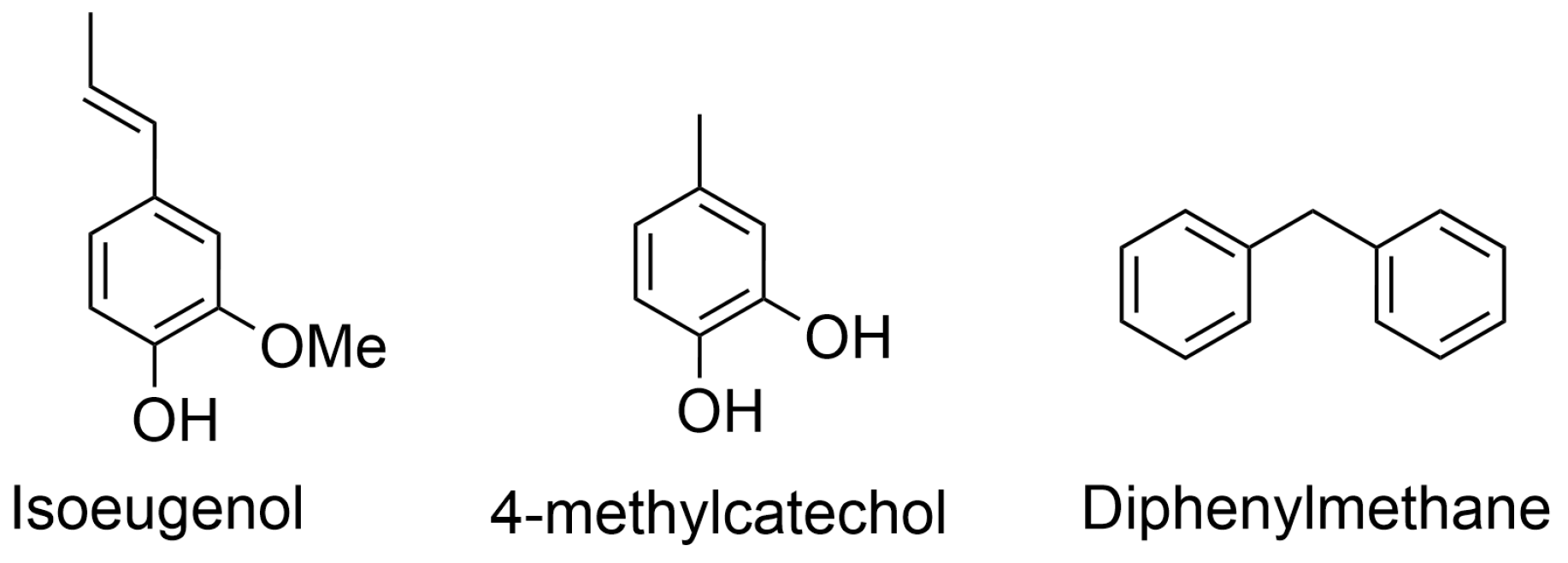
The use of model compounds was chosen because there is limited understanding on hydrothermal HDO, especially in supercritical water (SCW), and the model compound studies serve as an important way of investigating the catalyst activity and selectivity towards the relevant functional groups under the process conditions. In the hydrothermal liquefaction of black liquor, lignin depolymerises, producing various aromatic compounds. Based on the analysis of Wörner et al., catechols are the main aromatic monomers present in BL-derived HTL-oil; 4-methylcatechol (MC) was detected at up to 10 mg/gbiomass [21,22]. Therefore, we selected MC as one of the model compounds (Scheme 1). Furthermore, isoeugenol (IE) is often used as a model compound as it contains various functionalities present in lignin-derived molecules; the allylic double bond is highly reactive, and the phenolic hydroxyl and methoxy groups are characteristic for lignin [11]. In addition to the monomeric compounds, we wanted to select a model compound containing a C-C bond between two aromatic units. Even though the Cα–C1 bond observed in diphenylmethane is absent in natural lignins, it can form in the condensation reactions occurring during the delignification processes [23]. Properties of the model compounds are summarised in Table S1. The oxygen content of IE and MC are 19.5 and 25.8 wt%, respectively, which corresponds well to the observed oxygen content of BL-derived HTL oil between 10.8 and 27.7 wt% [24].
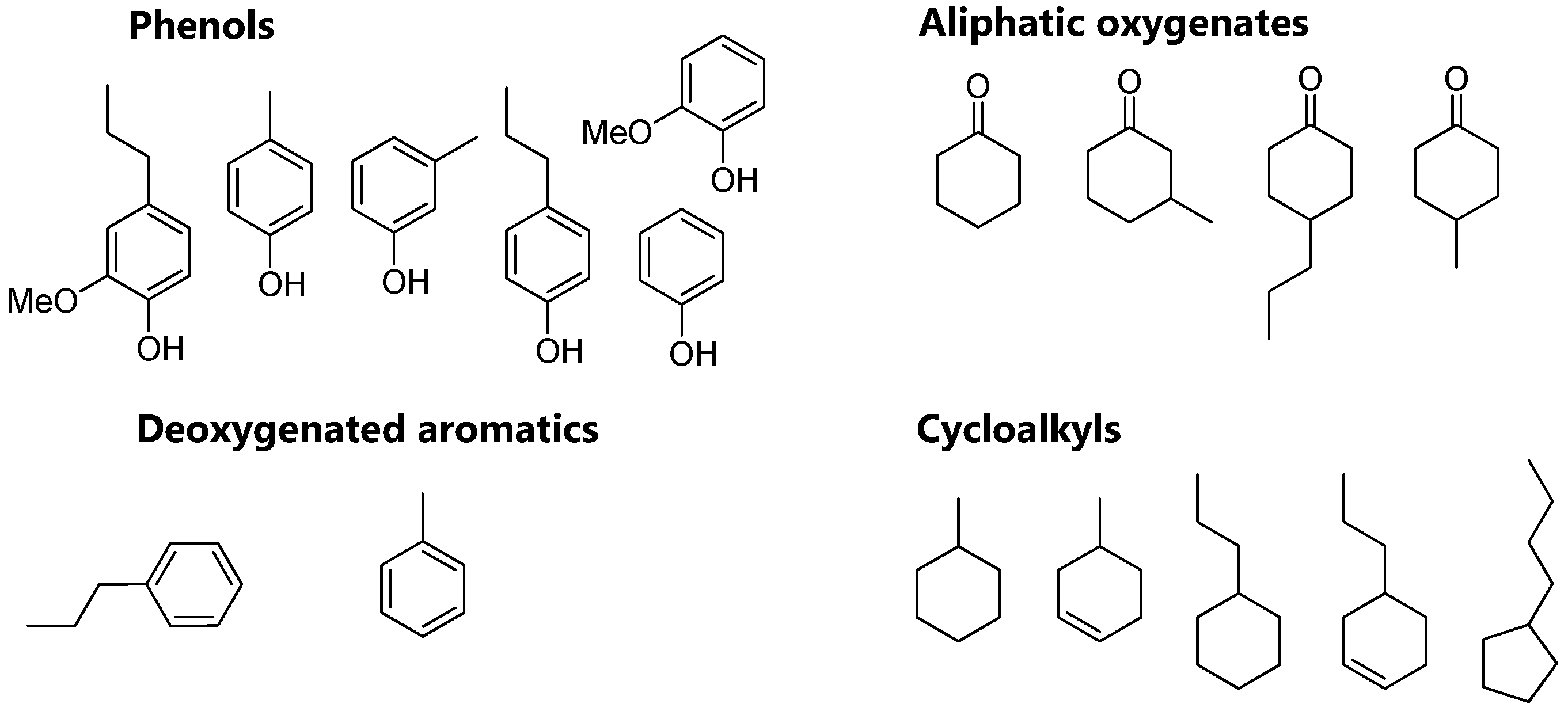
The experiments were started with a mixture of the three model compounds in water. The reaction temperature and hydrogen loading were varied from 350 to 380 °C and 2 to 30 bar, respectively, which resulted in experiments both below and above the critical point of water (374 °C and 221 bar). The design of experiments method was applied in planning the experiments. At 380 °C, however, we could only load 15 bar hydrogen to keep the reaction pressure below the limit of the reactor. In all experiments, the reaction time was 2 h, and the amount of catalyst and model compounds was kept constant. After the experiments, the aqueous phase was extracted with ethyl acetate to recover the products. Both the organic and aqueous phases were analysed by GC-MS. The amount of organic compounds detected in the aqueous phase was found to be negligible; therefore, the results presented are based solely on the analysis of the organic phase. Numerous compounds were identified in the product mixture, and to facilitate the analysis of the results, the products were grouped into phenols, deoxygenated aromatics, aliphatic oxygenates, and cycloalkyls (Scheme 2).

3.2.1. Catalyst Comparison

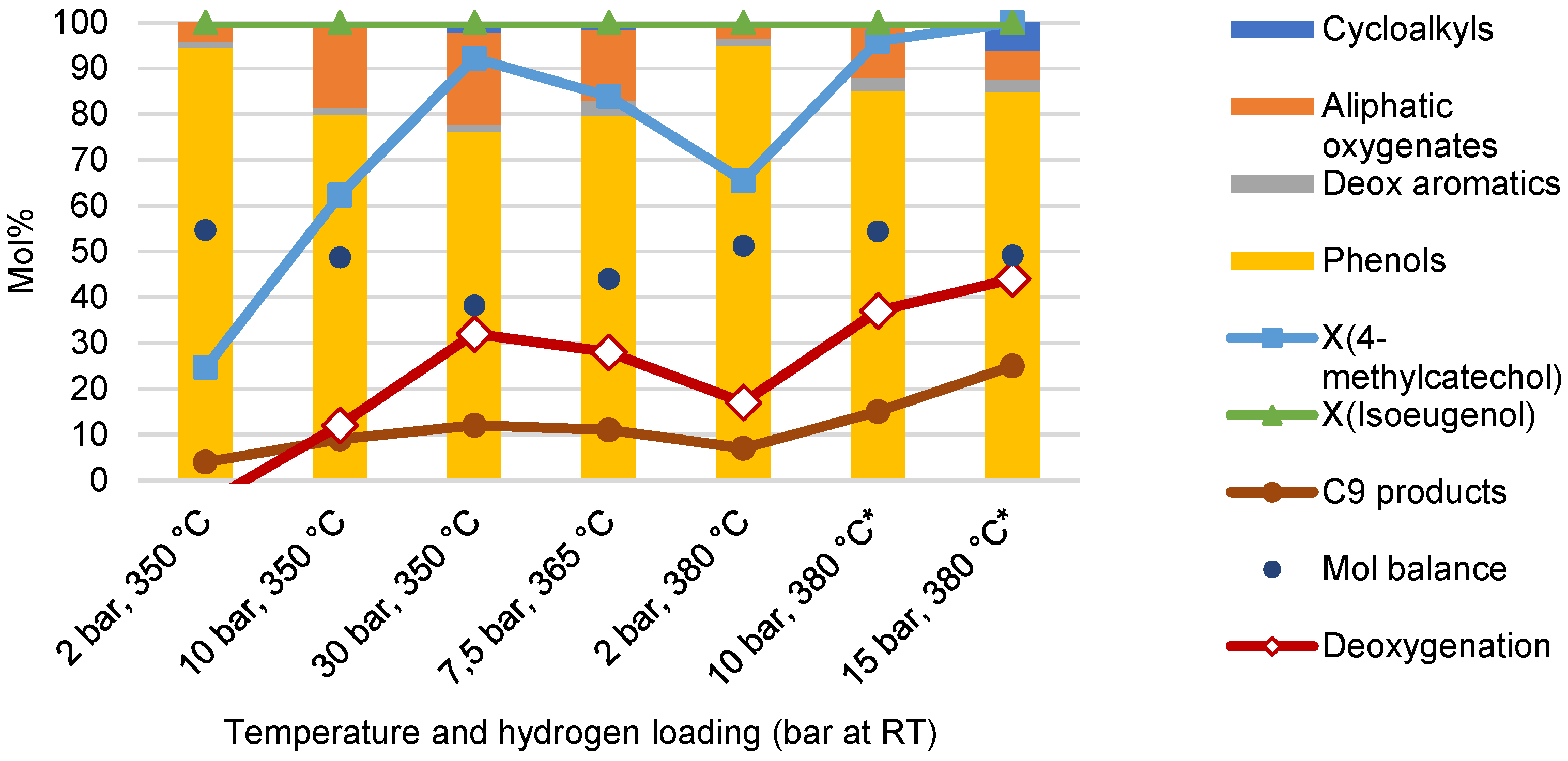
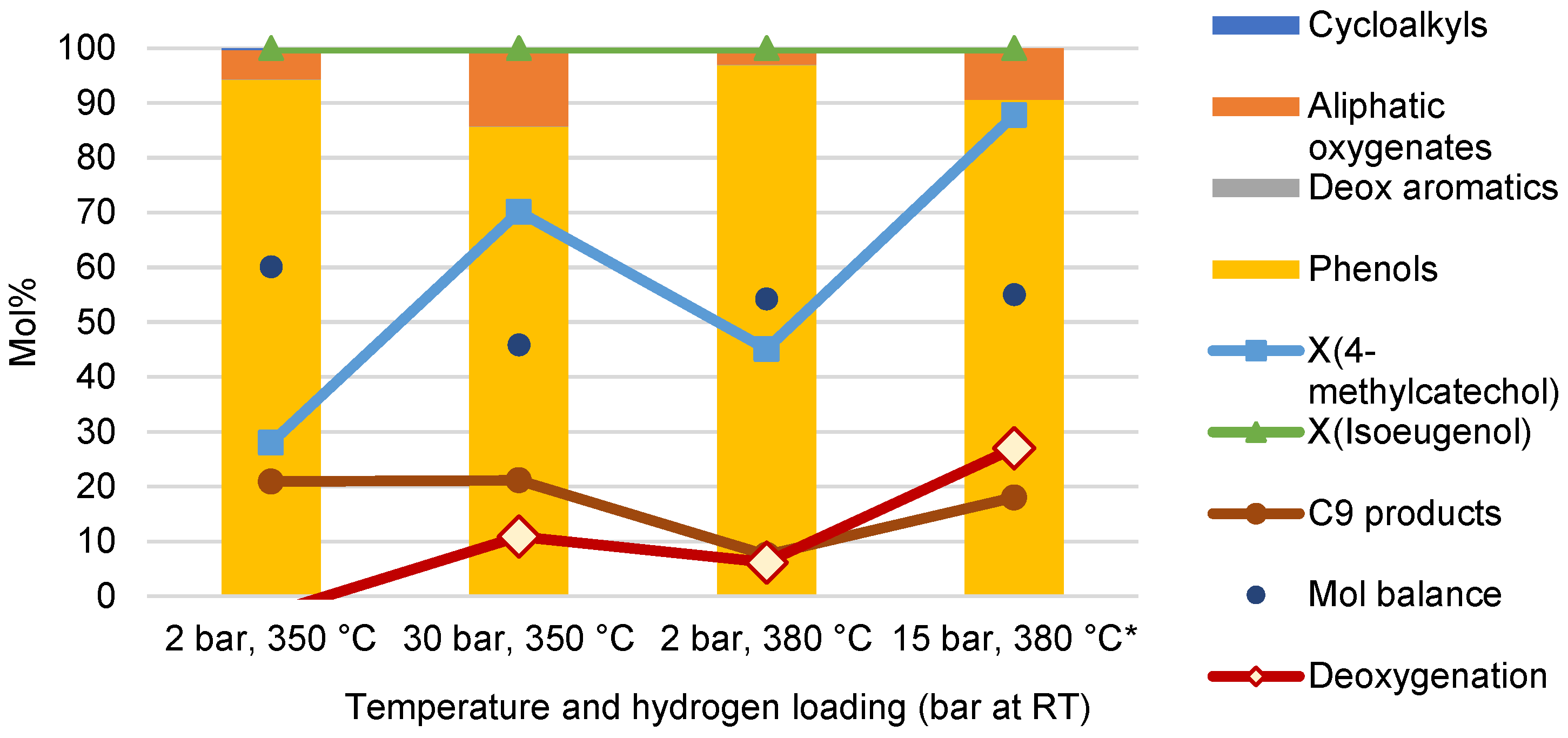
Figure 1 shows the results from the experiments with NiMoSx/TiO2. The numerical results along with pressures observed at the reaction temperature are shown in Table S1 in the Supporting Information. The conversion of IE was complete in all experiments. The conversion of MC varied between 25 and 100 mol%; higher hydrogen pressures and temperatures were needed to reach high conversion, and full conversion was only reached at SCW using the highest hydrogen loadings. In the case of diphenylmethane, no conversion was observed in the experiments with the model mixture or in control experiments with only diphenylmethane. Therefore, the dimer is omitted from the results. A similar observation was reported by Shuai et al.; the cleavage of methylene-linked lignin models was dependant on the presence of phenolic hydroxyl groups of the aromatic moieties [25].
Carbon balance, calculated based on the moles of liquid products observed in GC, varied between 38 and 55%, which is in line with those reported previously [11]. In all experiments, phenols accounted for majority of the products, with cresols and propylphenols being the most prevalent. Aliphatic oxygenates were the second most abundant product group, featuring several alkyl-substituted cyclohexanones. The selectivity was highly dependent on the reaction conditions; cyclic ketones accounted for up to 20% of products under a 30 bar H2 loading at 350 °C. The production of deoxygenated products was relatively low across all experiments. Deoxygenated aromatics, such as propylbenzene and toluene, exhibited selectivity of only up to 3%. Increasing the temperature and hydrogen loading facilitated further hydrodeoxygenation, resulting in cycloalkyls with up to 6% selectivity with 15 bar H2 at 380 °C. Despite the limited formation of fully deoxygenated products, the overall degree of deoxygenation was strongly influenced by both temperature and hydrogen loading, mirroring the conversion trend of MC. At low H2 loading and 350 °C, a negative degree of deoxygenation (DoD) was observed, likely due to low MC conversion and extensive cracking of the IE C9 backbone; only 4 mol% of C9-products were detected compared to the starting IE. The highest DoD observed was 44% under the maximum temperature and hydrogen loading conditions, corresponding with the least amount of cracking detected.
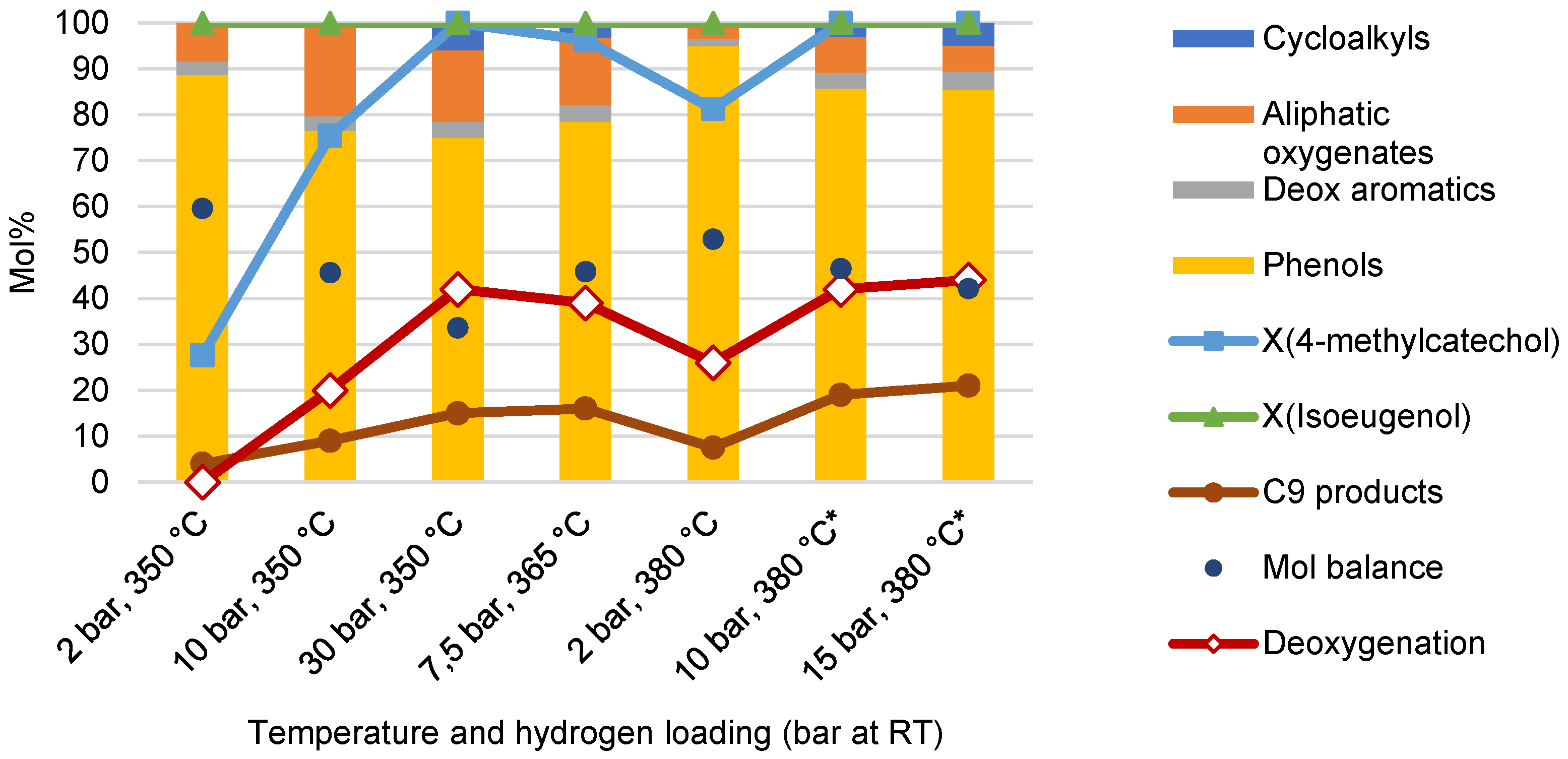
Next, we studied the HDO using the NiMoSx/ZrO2 catalyst, which showed slightly higher activity in comparison with the titania-supported catalyst (Figure 2). Higher MC conversions were observed, and full conversion was obtained already at 350 °C with the highest hydrogen loading. No conversion of diphenylmethane was observed. The dependence of the selectivity on the reaction conditions was very similar with both catalysts, even though the higher DoD observed with NiMoSx/ZrO2 resulted in slightly higher amounts of deoxygenated products. A comparison between experiments conducted in subcritical and supercritical regimes revealed that comparable results regarding conversion and degree of deoxygenation (DoD) can be achieved at lower temperatures with increased hydrogen loadings. The selectivity towards aliphatic products was higher at the lower temperature, likely due to the greater availability of hydrogen.
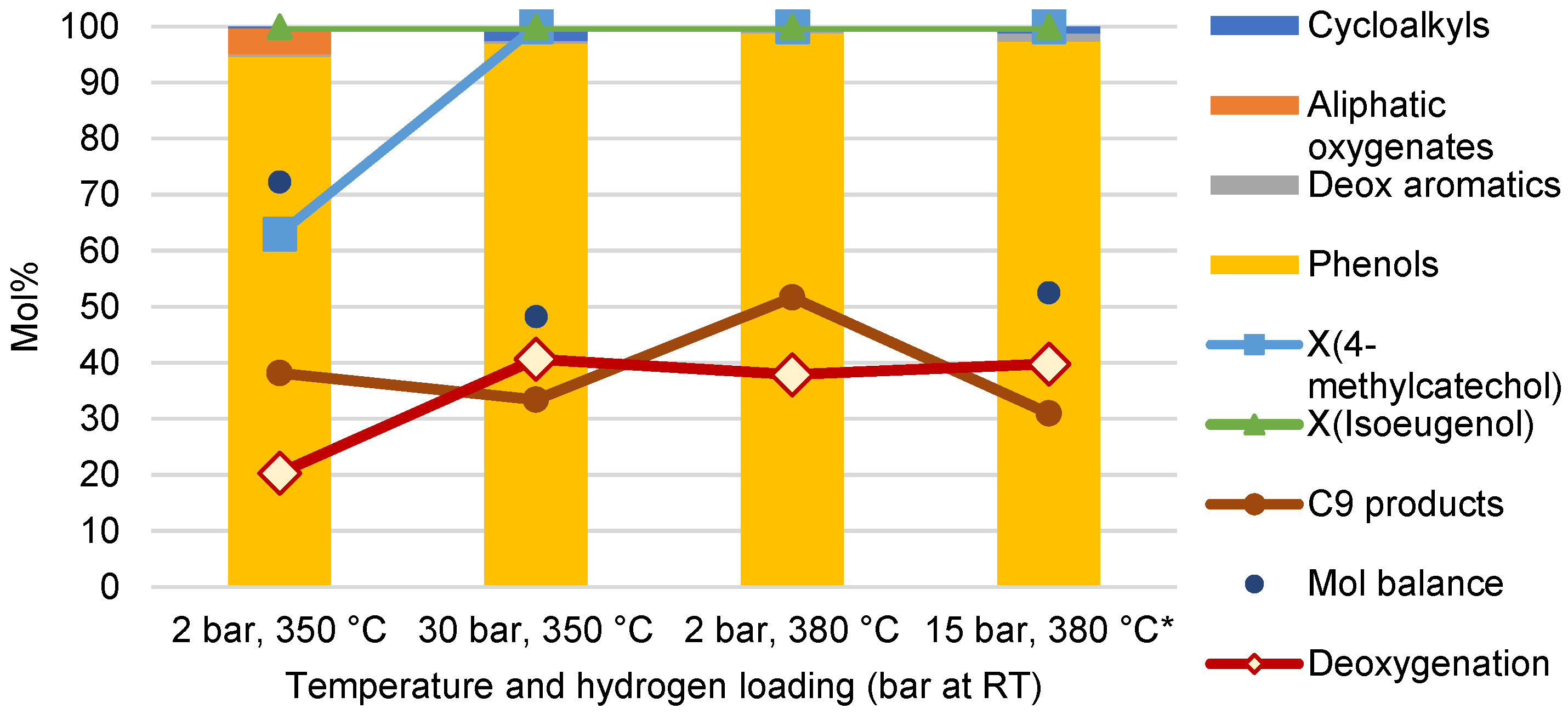
The catalysts supported on α-alumina and activated carbon were studied using the minimum and maximum temperatures and hydrogen loadings from the previous experiments, resulting in four experiments for each catalyst. Furthermore, since no conversion of diphenylmethane was observed, we omitted it in the following experiments. Among all the catalysts tested, the NiMoSx/α-Al2O3 exhibited the lowest activity; while full IE conversion was observed in all experiments, the MC conversion reached only 88 mol% (Figure 3). Furthermore, the highest DoD observed was only 27%, obtained under SCW conditions at 380 °C and 15 bar hydrogen loading. Consequently, only a minimal amount of deoxygenated compounds was detected with this catalyst. Furthermore, an experiment at 250 °C with 30 bar H2 gave only 17% MC conversion and negligible DoD (Table S2, entry 19). Alongside the liquid phase analysis, the gas phase from each experiment was also analysed, with the results summarised in Table S2. Up to 4.3% of the carbon from the model compounds was found in the gas phase products, predominantly consisting of carbon dioxide and methane.
The NiMoSx/AC catalyst demonstrated superior activity in comparison to metal oxide-supported catalysts, as evidenced by its higher MC conversion and degree of deoxygenation (DoD) (Figure 4). At a temperature of 350 °C and with 2 bar hydrogen loading, the DoD reached 20%, while other catalysts exhibited zero or negative values. Under more rigorous conditions, the DoD values stabilised at approximately 40% in both subcritical and supercritical experiments. Despite these high conversions, the selectivity for deoxygenated or aliphatic compounds remained low, achieving a maximum of only 5%. Notably, the carbon-supported catalyst also exhibited a reduced tendency for cracking, which resulted in an increased selectivity towards C9 products compared to metal oxide-supported catalysts. In the gas phase, carbon product yields of up to 8% were detected (Table S2).

3.2.2. Statistical Analysis

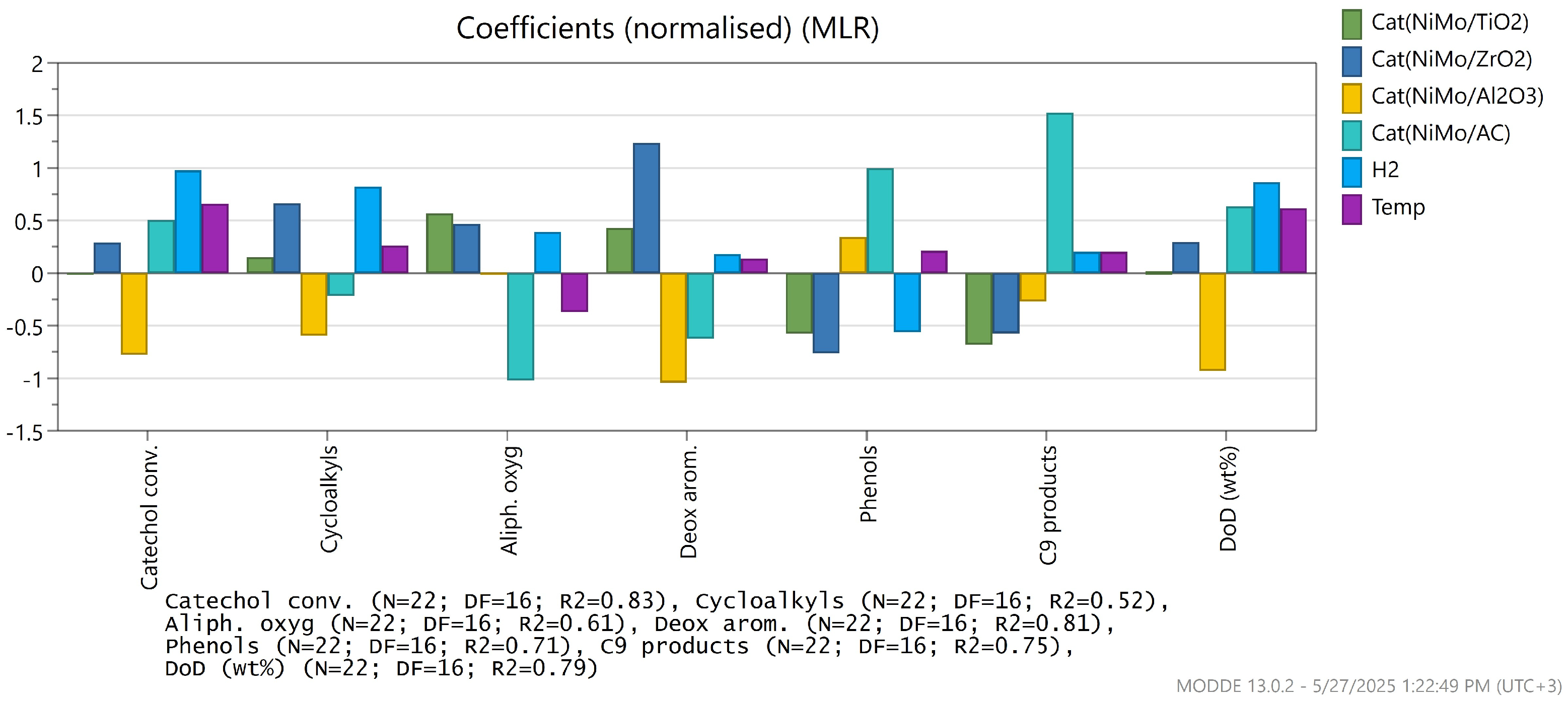
The design of experiments method was used in planning the experimental matrix, which enabled us to further analyse the results using statistical methods to assess the influence of various parameters on the outcome. The results were fitted using MODDE software version 13.0.2 using multiple linear regression (MLR). Temperature and hydrogen loading were considered as quantitative factors, while the type of catalyst was treated as a qualitative factor. MC conversion, selectivity to the four product groups, selectivity to C9 products, and DoD were considered as the responses. As IE reached full conversion in all experiments, we excluded it from the responses. See Supporting Information Section S3 for more information. Figure 5 summarises the effects of these factors on the different responses (results), where a higher positive bar indicates a stronger positive effect on the response, and vice versa. Although the quality and reliability of the models could be enhanced with further experimentation, the present analysis provides valuable insights into the interpretation of results and enables comparison of the impacts of reaction conditions and catalysts on the outcomes.
Based on the analysis, it was observed that reaction parameters exert a more significant impact on MC conversion than the choice of catalyst, despite the alumina-supported catalyst exhibiting a negative effect, i.e., lower conversion compared to other catalysts. Moreover, supercritical conditions did not demonstrate a particular advantage in the experiments; similar MC conversions and DoD were achievable by using higher hydrogen loading at a lower temperature compared to SCW. In this context, the higher HDO activity of NiMoSx/AC is reflected as a high positive coefficient, whereas NiMoSx/Al2O3 shows a strong negative effect, corresponding with its lower activity.
When examining the selectivity to different product groups, the catalysts exhibited more distinct differences. For instance, hydrogenation of the aromatic ring was more pronounced with titania and zirconia-supported catalysts, the latter also showing a strong positive effect on selectivity towards deoxygenated aromatics. A similar trend was observed by Souza et al. in phenol HDO; the higher selectivity to benzene observed with zirconia and titania-supported Pd was attributed to the oxophilic sites present in the supports [26]. However, despite the seemingly strong coefficients, it should be noted that the overall selectivity to aliphatic and deoxygenated products was relatively low in all experiments. Interestingly, the carbon-supported catalyst showed a positive coefficient only in selectivity to phenols. According to Zhao et al., complete hydrodeoxygenation of phenol in the aqueous phase requires both active metal and acid sites; carbon-supported metal alone was inactive [13]. Based on our findings, it could be suggested that the metal oxide support functions as an acid under hydrothermal conditions, promoting the HDO of phenols. This hypothesis is supported by the extensive cracking of the C9 backbone, particularly evident with metal oxide-supported catalysts; cracking is typically promoted by acidic supports.

4. Discussion

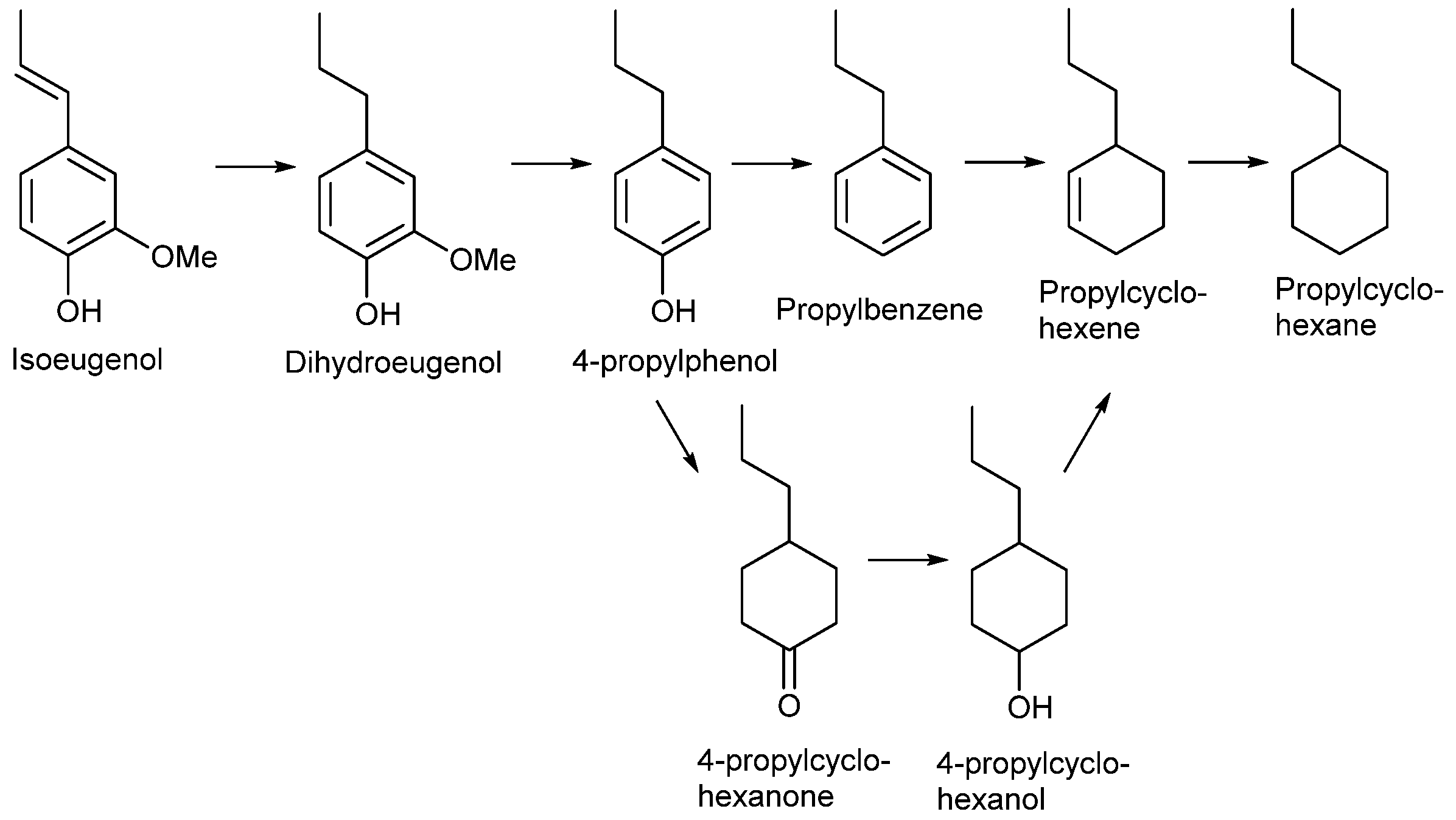
To our knowledge, this is the first study on hydrothermal hydrodeoxygenation of compounds typically present in liquefied lignocellulosic residues and wastes. The results obtained in the study give insights into the potential of hydrothermal HDO. Based on the results, hydrodeoxygenation reactions take place in near or supercritical water as solvent. In the case of isoeugenol, hydrogenation of the double bond occurs fast [27], and the resulting dihydroeugenol is demethoxylated to form 4-propylphenol (Figure 6) [11,28]. In the next step, the reaction can proceed both through direct dehydroxylation into propylbenzene or hydrogenation of the aromatic ring via keto-enol tautomerisation. Propylbenzene and other deoxygenated aromatics were detected only in minor amounts using titania or zirconia-supported catalysts. Aliphatic oxygenates were detected with the metal oxide supported catalysts in up to 20% selectivity, indicating that hydrogenation of the aromatic ring is dominating over dehydroxylation in the aqueous conditions. Interestingly, aliphatic oxygenates were not detected in HDO of dihydroeugenol with sulfided catalysts when hydrocarbon was used as solvent [12]. In contrast, Zhao et al. reported that aqueous-phase HDO of phenol on Pd/C proceeded through cyclohexanone [13], indicating that the solvent greatly affects the reaction pathway. In this work, the highest selectivity to fully deoxygenated compounds was 10% and phenols were detected as the main products with all catalysts, which indicates that both dehydroxylation and hydrogenation of the phenolics is very challenging in the aqueous conditions with sulfided catalysts. Clearly, a further upgrading step is required to reach full deoxygenation to enable using the products as fuels.
It is well known that supercritical water conditions are challenging for most of the typical support materials of heterogeneous catalysts and this study gave only limited indications of catalyst stability. Recent work by Kurlov et al. showed that continuous flow conditions can further challenge the stability of sulfided catalysts [19]. Therefore, extensive studies on the stabilities of catalyst and support materials applied for hydrothermal HDO are needed. Solubilities of bio-oils and biocrudes in water also remain unknown. It is probable that supercritical water dissolves such oils well, but, especially in batch mode operation, it is also relevant how bio-oils dissolve in water close to ambient conditions.

5. Conclusions

Hydrothermal hydrodeoxygenation is an attractive method for upgrading water-containing biocrude feedstocks to decrease the oxygen content and facilitate the separation of the upgraded bio-oil from the aqueous phase. In this work, the effect of catalyst support and reaction conditions on the hydrodeoxygenation of BL model compounds was evaluated in subcritical and supercritical water using sulfided NiMo catalysts. Of the three model compounds studied, isoeugenol was fully converted in all experiments, while 4-methylcatechol conversion was dependent on both the catalyst and conditions applied. The highest conversions were observed using NiMoSx/AC. Phenols were detected as the main products with over 75% selectivity and the maximum degree of deoxygenation was around 40%. The highest deoxygenation performance was obtained with the zirconia-supported catalyst; up to 10% selectivity to deoxygenated products was achieved. Interestingly, the carbon-supported catalyst was selective towards phenolic products, whereas hydrogenation of the aromatic ring was observed only with the oxide-supported catalysts. In summary, further deoxygenation is needed to use the BL-derived biocrudes as fuels. Nevertheless, the results show that the selectivity towards deoxygenated products can be promoted with the choice of catalyst support.

Supplementary Materials

The following supporting information can be downloaded at https://www.mdpi.com/article/10.3390/reactions7010007/s1, Table S1: Properties of the model compounds and biocrudes; Table S2: Results from model compound hydrodeoxygenation experiments; Table S3: Gas analysis of the headspace after the hydrodeoxygenation experiments; Figure S1. XRD diffractogram of NiMo/α-Al2O3 showing peaks of α-alumina (red) and MoO3 (dark blue); Figure S2: Plots of observed vs. predicted results.

Author Contributions

Conceptualization, S.R., T.V., P.K. and J.L.; methodology, S.R., T.V., L.M. and J.L.; validation, S.R. and J.L.; formal analysis, F.H. and S.R.; investigation, F.H., T.V., N.V. and L.M.; resources, P.K. and J.L.; writing—original draft preparation, S.R.; writing—review and editing, J.L.; supervision, P.K. and J.L.; project administration, P.K. and S.R.; funding acquisition, P.K. and J.L. All authors have read and agreed to the published version of the manuscript.

Funding

This project has received funding from the European Union’s Horizon 2020 Research and Innovation programme under Grant Agreement No. 884111, Black Liquor to fuels (BL2F) project.

Data Availability Statement

Dataset available on request from the authors.

Acknowledgments

The authors are grateful to the BL2F project team for valuable discussions during the project. Especially, we wish to thank David Baudouin and Alexey Kurlov for great collaboration.

Conflicts of Interest

Sari Rautiainen, Tyko Viertiö, Niko Vuorio, Felix Hyppönen, and Juha Lehtonen are employees of VTT Technical Research Centre of Finland Ltd. Luděk Meca and Pavel Kukula are employees of Ranido s.r.o. The paper reflects the views of the scientists, and not the company. The authors declare no conflicts of interest.

References

  1. Agency, I.E. Greenhouse Gas Emissions from Energy: Overview; IEA: Paris, France, 2021; Available online: https://www.iea.org/data-and-statistics/data-tools/greenhouse-gas-emissions-from-energy-data-explorer (accessed on 7 October 2022).
  2. Agency, I.E. Black Liquor Gasification Summary and Conclusions from the IEA Bioenergy ExCo54 Workshop; IEA Bioenergy: Paris, France, 2007; Available online: https://www.ieabioenergy.com/wp-content/uploads/2013/10/Black-Liquor-Gasification-summary-and-conclusions3.pdf (accessed on 7 October 2022).
  3. Lappalainen, J.; Baudouin, D.; Hornung, U.; Schuler, J.; Melin, K.; Bjelić, S.; Vogel, F.; Konttinen, J.; Joronen, T. Sub- and Supercritical Water Liquefaction of Kraft Lignin and Black Liquor Derived Lignin. Energies 2020, 13, 3309. [Google Scholar] [CrossRef]
  4. Jafri, Y.; Wetterlund, E.; Mesfun, S.; Rådberg, H.; Mossberg, J.; Hulteberg, C.; Furusjö, E. Combining expansion in pulp capacity with production of sustainable biofuels–Techno-economic and greenhouse gas emissions assessment of drop-in fuels from black liquor part-streams. Appl. Energy 2020, 279, 115879. [Google Scholar] [CrossRef]
  5. Grande, L.; Pedroarena, I.; Korili, S.A.; Gil, A. Hydrothermal Liquefaction of Biomass as One of the Most Promising Alternatives for the Synthesis of Advanced Liquid Biofuels: A Review. Materials 2021, 14, 5286. [Google Scholar] [CrossRef]
  6. Lee, H.S.; Jae, J.; Ha, J.M.; Suh, D.J. Hydro- and solvothermolysis of kraft lignin for maximizing production of monomeric aromatic chemicals. Bioresour. Technol. 2016, 203, 142–149. [Google Scholar] [CrossRef]
  7. Orebom, A.; Verendel, J.J.; Samec, J.S.M. High Yields of Bio Oils from Hydrothermal Processing of Thin Black Liquor without the Use of Catalysts or Capping Agents. ACS Omega 2018, 3, 6757–6763. [Google Scholar] [CrossRef]
  8. Haarlemmer, G.; Guizani, C.; Anouti, S.; Déniel, M.; Roubaud, A.; Valin, S. Analysis and comparison of bio-oils obtained by hydrothermal liquefaction and fast pyrolysis of beech wood. Fuel 2016, 174, 180–188. [Google Scholar] [CrossRef]
  9. Zhang, S.; Yang, X.; Zhang, H.; Chu, C.; Zheng, K.; Ju, M.; Liu, L. Liquefaction of Biomass and Upgrading of Bio-Oil: A Review. Molecules 2019, 24, 2250. [Google Scholar] [CrossRef] [PubMed]
  10. Si, Z.; Zhang, X.; Wang, C.; Ma, L.; Dong, R. An Overview on Catalytic Hydrodeoxygenation of Pyrolysis Oil and Its Model Compounds. Catalysts 2017, 7, 169. [Google Scholar] [CrossRef]
  11. Lindfors, C.; Mäki-Arvela, P.; Paturi, P.; Aho, A.; Eränen, K.; Hemming, J.; Peurla, M.; Kubička, D.; Simakova, I.L.; Murzin, D.Y. Hydrodeoxygenation of Isoeugenol over Ni- and Co-Supported Catalysts. ACS Sustain. Chem. Eng. 2019, 7, 14545–14560. [Google Scholar] [CrossRef]
  12. Cheah, Y.W.; Salam, M.A.; Arora, P.; Öhrman, O.; Creaser, D.; Olsson, L. Role of transition metals on MoS2-based supported catalysts for hydrodeoxygenation (HDO) of propylguaiacol. Sustain. Energy Fuels 2021, 5, 2097–2113. [Google Scholar] [CrossRef]
  13. Zhao, C.; He, J.; Lemonidou, A.A.; Li, X.; Lercher, J.A. Aqueous-phase hydrodeoxygenation of bio-derived phenols to cycloalkanes. J. Catal. 2011, 280, 8–16. [Google Scholar] [CrossRef]
  14. Yang, C.; Wang, S.; Yang, J.; Xu, D.; Li, Y.; Li, J.; Zhang, Y. Hydrothermal liquefaction and gasification of biomass and model compounds: A review. Green Chem. 2020, 22, 8210–8232. [Google Scholar] [CrossRef]
  15. Mao, J.; Jiang, D.; Fang, Z.; Wu, X.; Ni, J.; Li, X. Efficient hydrothermal hydrodeoxygenation of triglycerides with in situ generated hydrogen for production of diesel-like hydrocarbons. Catal. Commun. 2017, 90, 47–50. [Google Scholar] [CrossRef]
  16. Liu, X.; Yang, M.; Deng, Z.; Dasgupta, A.; Guo, Y. Hydrothermal hydrodeoxygenation of palmitic acid over Pt/C catalyst: Mechanism and kinetic modeling. Chem. Eng. J. 2021, 407, 126332. [Google Scholar] [CrossRef]
  17. Usman, M.; Cheng, S.; Boonyubol, S.; Cross, J.S. From biomass to biocrude: Innovations in hydrothermal liquefaction and upgrading. Energy Convers. Manag. 2024, 302, 118093. [Google Scholar] [CrossRef]
  18. Yao, X.; Strathmann, T.J.; Li, Y.; Cronmiller, L.E.; Ma, H.; Zhang, J. Catalytic hydrothermal deoxygenation of lipids and fatty acids to diesel-like hydrocarbons: A review. Green Chem. 2021, 23, 1114–1129. [Google Scholar] [CrossRef]
  19. Kurlov, A.; Meca, L.; Viertiö, T.; Rautiainen, S.; Vogel, F.; Lehtonen, J.; Kukula, P.; Baudouin, D. Stability assessment of sulfided NiMo-based catalysts for continuous flow supercritical water hydrodeoxygenation applications. J. Supercrit. Fluids 2025, 225, 106682. [Google Scholar] [CrossRef]
  20. Xiong, H.; Pham, H.N.; Datye, A.K. Hydrothermally stable heterogeneous catalysts for conversion of biorenewables. Green Chem. 2014, 16, 4627–4643. [Google Scholar] [CrossRef]
  21. Wörner, M.; Barsuhn, A.; Zevaco, T.; Hornung, U.; Dahmen, N. From Pulp to Aromatic Products─Reaction Pathways of Lignin Depolymerization. Energy Fuels 2024, 38, 6020–6035. [Google Scholar] [CrossRef] [PubMed]
  22. Wörner, M.; Werner, L.; Hornung, U.; Islongo Canabarro, N.; Baudouin, D.; Dahmen, N. The Impact of Sulfur-Containing Inorganic Compounds during the Depolymerization of Lignin by Hydrothermal Liquefaction of Black Liquor. Energy Fuels 2024, 38, 6036–6047. [Google Scholar] [CrossRef] [PubMed]
  23. Guadix-Montero, S.; Sankar, M. Review on Catalytic Cleavage of C–C Inter-unit Linkages in Lignin Model Compounds: Towards Lignin Depolymerisation. Top. Catal. 2018, 61, 183–198. [Google Scholar] [CrossRef]
  24. Wörner, M.; Hornung, U.; Arjmand, B. EU Project Report: BL2F D1.4-Report on HTL-Oil Characterization. 2024. Available online: https://bl2f.eu/docs/BL2F%20DELIVERABLES/D1.4%20BL2F_D1.4%20under%20revision%20by%20the%20European%20Commission.pdf (accessed on 19 November 2025).
  25. Shuai, L.; Sitison, J.; Sadula, S.; Ding, J.; Thies, M.C.; Saha, B. Selective C–C Bond Cleavage of Methylene-Linked Lignin Models and Kraft Lignin. ACS Catal. 2018, 8, 6507–6512. [Google Scholar] [CrossRef]
  26. de Souza, P.M.; Rabelo-Neto, R.C.; Borges, L.E.P.; Jacobs, G.; Davis, B.H.; Resasco, D.E.; Noronha, F.B. Hydrodeoxygenation of Phenol over Pd Catalysts. Effect of Support on Reaction Mechanism and Catalyst Deactivation. ACS Catal. 2017, 7, 2058–2073. [Google Scholar] [CrossRef]
  27. Bjelić, A.; Grilc, M.; Likozar, B. Catalytic hydrogenation and hydrodeoxygenation of lignin-derived model compound eugenol over Ru/C: Intrinsic microkinetics and transport phenomena. Chem. Eng. J. 2018, 333, 240–259. [Google Scholar] [CrossRef]
  28. Tieuli, S.; Mäki-Arvela, P.; Peurla, M.; Eränen, K.; Wärnå, J.; Cruciani, G.; Menegazzo, F.; Murzin, D.Y.; Signoretto, M. Hydrodeoxygenation of isoeugenol over Ni-SBA-15: Kinetics and modelling. Appl. Catal. A Gen. 2019, 580, 1–10. [Google Scholar] [CrossRef]
Scheme 1. Model compounds used in the HDO experiments.
Reactions 07 00007 sch001
Scheme 2. Examples of the products detected in the HDO experiments.
Reactions 07 00007 sch002
Figure 1. Results of the model compound HDO experiments with NiMoSx/TiO2. * Supercritical conditions at reaction temperature.
Reactions 07 00007 g001
Figure 2. Results of the model compound HDO experiments with NiMoSx/ZrO2. * Supercritical conditions at reaction temperature.
Reactions 07 00007 g002
Figure 3. Results of the model compound HDO experiments with NiMoSx/α-Al2O3. * Supercritical conditions at reaction temperature.
Reactions 07 00007 g003
Figure 4. Results of the model compound HDO experiments with NiMoSx/AC. * Supercritical conditions at reaction temperature.
Reactions 07 00007 g004
Figure 5. Statistical analysis of the effect of reaction parameters (catalyst, temperature, hydrogen loading) on the HDO of model compounds.
Reactions 07 00007 g005
Figure 6. Reaction scheme for isoeugenol hydrodeoxygenation [11,28].
Reactions 07 00007 g006
Table 1. Properties of the catalysts before sulfidation.
CatalystSupportGranulate Size (mm)Physisorption DataXRF Data
BET (m2/g)Desorp. Pore Vol. (mm3/g)NiO (wt%)MoO3 (wt%)
NiMo/TiO2TiO2 rutile0.2–0.46.218.16.4531.0
NiMo/ZrO2ZrO2 monoclinic0.2–0.426.61015.726.5
NiMo/α-Al2O3α-Al2O3 corundum<0.43.512.33.7823.2
NiMo/ACActivated carbon0.4–0.87593414.118.7
Disclaimer/Publisher’s Note: The statements, opinions and data contained in all publications are solely those of the individual author(s) and contributor(s) and not of MDPI and/or the editor(s). MDPI and/or the editor(s) disclaim responsibility for any injury to people or property resulting from any ideas, methods, instructions or products referred to in the content.