Article

Optimization and Kinetic Study of Palmitic Acid Esterification with Subcritical Methanol via Response Surface Methodology

by
Jie Luo
1,2,
Zhigang Que
1,2,3,*,
Ke Zhang
1,2,
Yinxuan Fu
2,3,
Xiaodi Cheng
2,3,
Rong Huang
2,3,
Jinming Shi
2,3,
Haiwei Jiang
2,3,
Xianbin Ai
2,3,
Tonghui Deng
2,3,
Xianhua Qiu
1,* and
Chunbao Xu
4,*
1
School of Environmental and Chemical Engineering, Nanchang Hangkong University, Nanchang 330063, China
2
Key Laboratory of Greenhouse Gas Accounting and Carbon Reduction of Jiangxi Province, Institute of Energy Research, Jiangxi Academy of Sciences, Nanchang 330096, China
3
Jiangxi Carbon Neutralization Research Center, Nanchang 330096, China
4
School of Energy and Environment, City University of Hong Kong, Hong Kong, China
*
Authors to whom correspondence should be addressed.
Reactions 2025, 6(4), 69; https://doi.org/10.3390/reactions6040069 (registering DOI)
Submission received: 3 November 2025 / Revised: 29 November 2025 / Accepted: 1 December 2025 / Published: 5 December 2025

Abstract

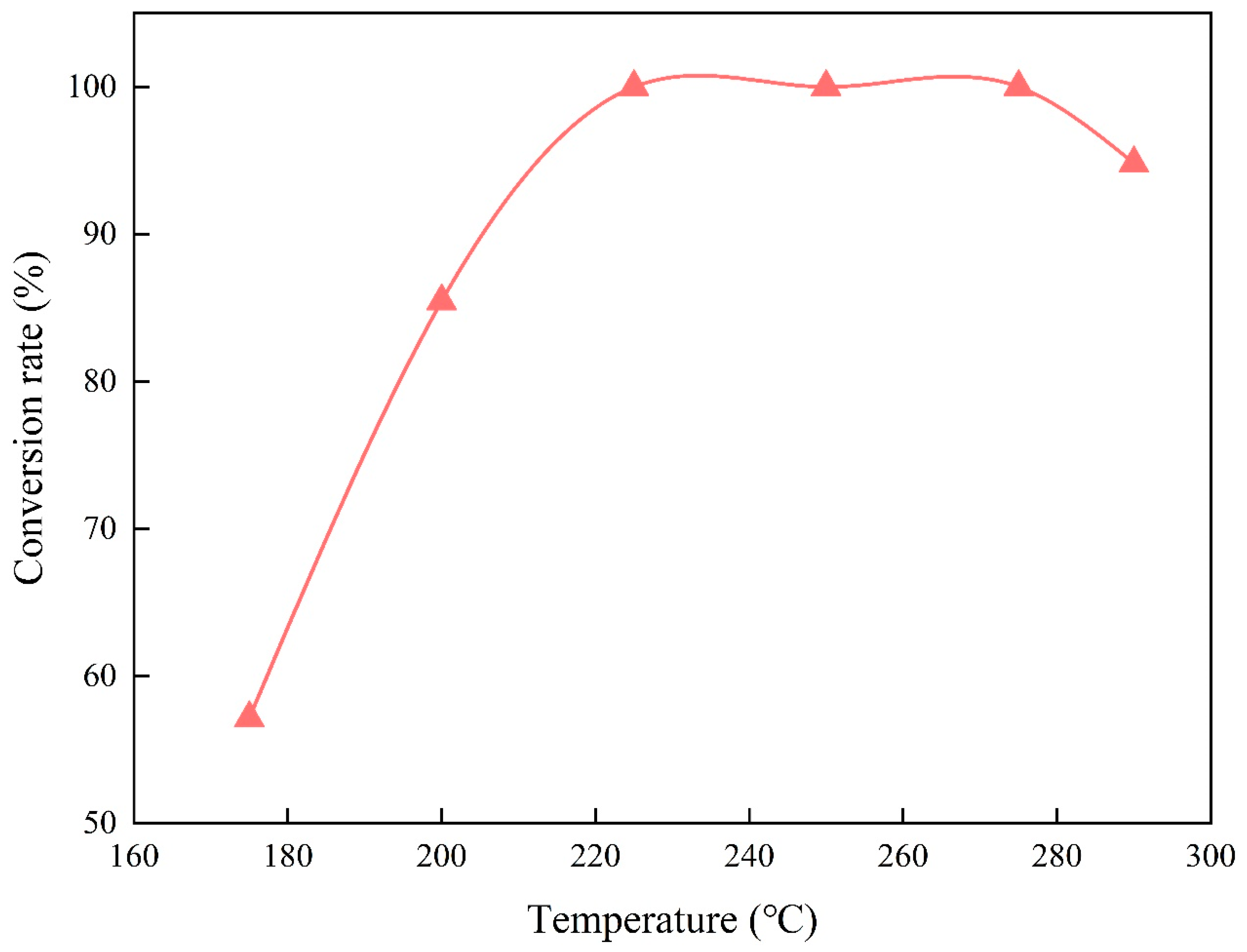
Biodiesel is a green, low-carbon, and renewable fuel with the potential to substitute fossil fuels. The effects of reaction temperature (175–290 °C), residence time (5–75 min), and molar ratio of methanol to palmitic acid (6:1–35:1) on the non-catalytic esterification of palmitic acid with methanol to produce biodiesel were investigated by using a batch reactor. Moreover, the reaction parameters were optimized by using the response surface methodology (RSM), and the reaction kinetics were analyzed. The results showed that the conversion rate of palmitic acid to methyl palmitate increased to 100% as the reaction temperature rose from 175 °C to 225 °C, slightly changed until 275 °C, and then decreased to 94.81% at 290 °C. The conversion rate increased with residence time and reached the maximum value of 94.93% at 60 min. With increasing the molar ratio, the conversion rate rose to a maximum value of 85.46% at 15:1 and subsequently decreased. RSM results indicated the relative influence of factors on the conversion rate as reaction temperature > residence time > molar ratio. The optimal reaction parameters were 224 °C, 26 min, and a molar ratio of 16:1, affording a palmitic acid conversion rate of 99.30%. The esterification reaction between methanol and palmitic acid follows the first-order kinetics model.

1. Introduction

The combustion of fossil fuels has led to rising carbon dioxide emissions, exacerbating the global greenhouse effect. In response to global climate change, there is an urgent need to transition from fossil fuel dependence to clean energy systems and to pursue net-zero carbon emissions. Consequently, research on low-carbon and renewable energy technologies has accelerated worldwide. Biodiesel is a renewable fuel characterized by low lifecycle greenhouse gas emissions, favorable combustion properties, biodegradability, and low toxicity [1]. It consists primarily of fatty acid methyl and/or ethyl esters produced from renewable lipid feedstocks, such as animal fats and vegetable oils [2].
Methanol is a common chemical product that is widely used in the production of biodiesel. Biodiesel production is typically conducted at low temperatures with catalysts to accelerate reaction rates and improve process efficiency. Catalysts are broadly classified as homogeneous (e.g., H2SO4, NH4Fe(SO4)2, KOH) and heterogeneous (e.g., CaO, K2CO3/γ-Al2O3, CH3ONa/zeolites, cation-exchange resins). Lüneburger et al. [3] examined H2SO4-catalyzed esterification of seed oil with methanol and reported a 99.55% reduction in acid value at 1.5 wt% H2SO4. For lauric acid esterification with methanol, Ganesan et al. [4] employed NH4Fe(SO4)2, achieving 99.8% methyl ester conversion at 1.5 h, a 6:1 methanol-to-acid molar ratio, and 8 wt% catalyst. In transesterification of waste cooking oil, Sahar et al. [5] used KOH, obtaining 94% fatty acid methyl ester (FAME) yield at a 3:1 methanol-to-oil molar ratio, 1 wt% catalyst, and 60 °C. Hsiao et al. [6] used CaO (4 wt%) and achieved 98.2% conversion at an 8:1 methanol-to-oil ratio, 65 °C, and 75 min. Abu-Ghazala et al. [7] applied a K2CO3/γ-Al2O3 nanocatalyst, reaching 98.7% biodiesel yield at room temperature with 5.8 wt% catalyst, a 9:1 methanol-to-oil ratio, and 120 min. Argaw Shiferaw et al. [8] investigated CH3ONa-loaded Y-zeolite, attaining 99% yield with 20 wt% catalyst, a 16:1 oil-to-methanol ratio, 30 min, and 60 °C. Falizi et al. [9] evaluated H+ and Na+ form ion-exchange resins for corn oil transesterification; at 20 wt% resin, 65 °C, an 18:1 methanol-to-oil ratio, and 48 h, the maximum free fatty acid conversions were 73.5% and 79.45% for the H+ and Na+ resins, respectively. Despite these advances, both homogeneous and heterogeneous catalysts face practical limitations, including catalyst recovery and separation challenges, deactivation and limited reusability, and associated operating and lifecycle costs.
Methanol has relatively mild critical conditions (Tc = 239.43 °C, Pc = 8.09 MPa) and favorable physicochemical properties, including high diffusivity, high reactivity, and a low dielectric constant. Consequently, supercritical methanol can react directly with free fatty acids to efficiently produce biodiesel without catalysts. Shin et al. [10] studied the supercritical transesterification of waste oil at 335 °C, a methanol-to-oil molar ratio of 45:1, 20 MPa, 15 min, and 500 rpm, achieving a free fatty acid methyl ester (FAME) content of 89.91%. Román-Figueroa et al. [11] investigated non-catalytic transesterification of crude castor oil with supercritical methanol and reported a 96.5% FAME yield at 300 °C and a 43:1 methanol-to-oil molar ratio after 90 min. However, supercritical methanol processes typically require temperatures above 300 °C and methanol-to-oil ratios greater than 30:1, leading to high pressures and excessive methanol consumption. In contrast, the reactivity of subcritical methanol with free fatty acids has not been systematically assessed across operating conditions. Therefore, this study investigates the esterification of palmitic acid with methanol under subcritical conditions, examining the effects of temperature (175–290 °C), residence time (5–75 min), and methanol-to-acid molar ratio (6:1–35:1). Response surface methodology was used to identify the optimal reaction conditions, and a kinetic model was subsequently developed based on the optimized parameters.

2. Materials and Methods

2.1. Material

Anhydrous methanol (≥99.7%, AR) and n-hexane (≥97%, AR) were purchased from Xilong Scientific Co., Ltd. (Shantou, China). Palmitic acid and methyl palmitate (≥98%, GC) were obtained from Shanghai Aladdin Biochemical Technology Co., Ltd. (Shanghai, China). Ethyl acetate (≥99.7%, HPLC) was supplied by Merck, Darmstadt, Germany.

2.2. The Esterification Reaction of Palmitic Acid and Methanol

The esterification of palmitic acid with methanol was carried out in a 50 mL batch reactor (Shanghai LABE Instrument Co., Ltd., Shanghai, China); Tmax = 300 °C, Pmax = 10 MPa). A specified mass of palmitic acid and 15 mL methanol were charged, mixed, and the reactor was sealed. The vessel was purged with nitrogen for 1 min to remove air and leak-checked. After reaction, the reactor was cooled to room temperature and depressurized, and the products were collected. The reactor and impeller were rinsed twice with 10 mL methanol each. For separating the products, 50 mL n-hexane and 10 mL of 5 wt% saturated NaCl solution were added in the collected products, and the mixture was transferred to a separatory funnel and vigorously shaken to induce phase separation. The upper organic phase was collected, and the aqueous phase was re-extracted twice with additional n-hexane. The n-hexane extracts were evaporated to remove solvent by a rotary evaporator, and the residue was weighed [2]. The product was dried at 105 °C for 3–4 h and was weighed. A schematic diagram of the experimental procedure is shown in Figure 1.

2.3. Product Analysis

Approximately 60–70 mg of the dried product was dissolved in 2 mL ethyl acetate to obtain a homogeneous solution. An aliquot of 1.5 μL was injected into the gas chromatograph (Gas chromatography is a powerful analytical technique used to separate and analyze the individual components of mixtures that can be vaporized without decomposition.) for analysis. External calibration was performed using a series of standards prepared by dissolving known amounts of methyl palmitate in 2 mL ethyl acetate to generate a calibration curve. The methyl palmitate concentration in the sample was determined from the calibration curve, from which its mass fraction in the product and the corresponding amount of substance (moles) were calculated. The conversion of palmitic acid to methyl palmitate was then computed as:
η = n methyl   palmitate n palmitic   acid × 100 %
where nmethyl palmitate is the moles of methyl palmitate formed and npalmitic acid is the initial moles of palmitic acid.
Methyl palmitate in the reaction products was qualitatively and quantitatively determined using an Agilent 7820A GC (Agilent, California, USA) equipped with a flame ionization detector (FID). Separations were carried out on a DB-WAX capillary column (30 m × 0.25 mm × 0.25 μm). The injector and detector temperatures were set to 230 °C and 300 °C, respectively. The oven program was as follows: hold at 50 °C for 3 min; ramp to 180 °C at 10 °C min−1 and hold for 5 min; then ramp to 230 °C at 5 °C min−1 and hold for 19 min. The limit of detection (LOD) for methyl palmitate is 0.1 μg/mL in this study.

2.4. Experimental Design of Surface Response Method

The esterification of palmitic acid with methanol was optimized with respect to three independent variables: reaction temperature (X1), residence time (X2), and the methanol-to-palmitic acid molar ratio (X3). A Box–Behnken experimental design was employed using Design-Expert software (version 10.0.1.0) to evaluate the effects of these variables on the conversion of palmitic acid to methyl palmitate. The ranges of the variables were preliminarily determined through single-factor experiments. The corresponding levels of each factor are summarized in Table 1. The ranges and levels of the independent variables (reaction temperature: 175–225 °C; residence time: 5–45 min; molar ratio: 10:1–30:1) for the Box–Behnken design were selected based on the results of our preliminary single-factor experiments. As illustrated in Section 3.1, these preliminary investigations clearly delineated the boundaries within which each factor significantly influences the palmitic acid conversion rate, thereby providing a rational basis for the design of the response surface methodology experiments.

3. Results and Discussion

3.1. Effects of Different Reaction Parameters on the Esterification of Methanol and Palmitic Acid

3.1.1. Effects of Reaction Temperature on the Esterification of Methanol and Palmitic Acid

Figure 2 illustrates the influence of reaction temperature on the conversion of palmitic acid under a fixed methanol-to-palmitic acid molar ratio of 15:1 and a residence time of 30 min. When the temperature was elevated from 175 °C to 225 °C, the conversion improved from 57% to nearly 100%. It can be attributed to the acceleration of the esterification reaction at higher temperatures, which promotes the forward reaction and decreases the residual concentration of palmitic acid [12]. As the temperature continued to rise to 275 °C, the conversion rate changed slightly. Palmitic acid was almost completely converted. However, the conversion exhibited a noticeable decline over 275 °C. Methyl palmitate is prone to thermal decomposition under such high temperatures, which led to a decrease in its yield and thus reduced the conversion rate [13,14]. A similar trend was observed by Aboelazayem et al. [15] and Ghoreishi [16], where the biodiesel yield declined beyond 270 °C as a result of FAME decomposition.

3.1.2. Effects of Residence Time on the Esterification of Methanol and Palmitic Acid

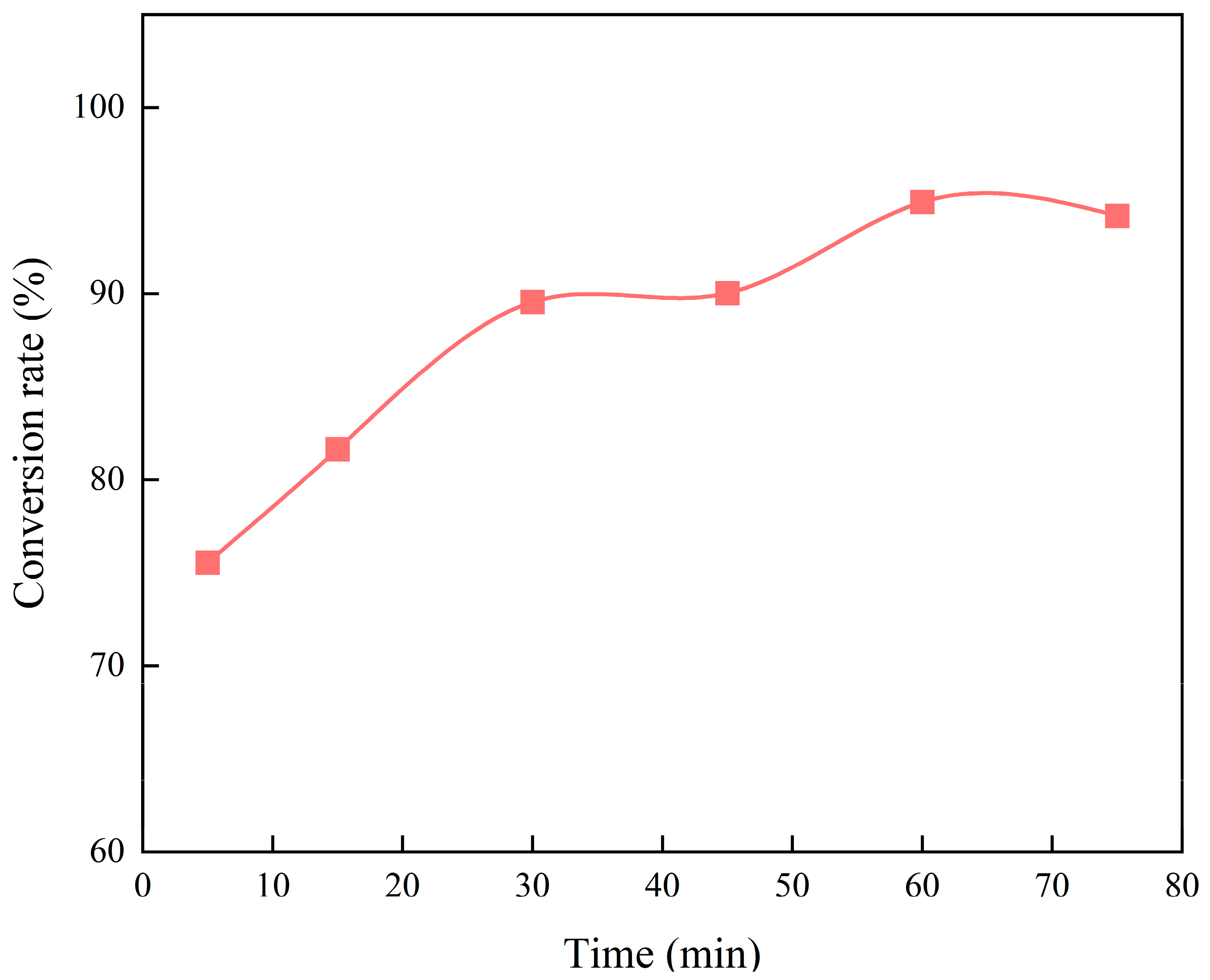
Figure 3 depicts the effect of residence time on the conversion of palmitic acid under a methanol-to-palmitic acid molar ratio of 15:1 at 200 °C. As observed, the conversion increased rapidly from 75% to 89% when the residence time was extended from 5 min to 30 min, indicating that the esterification reaction between methanol and palmitic acid was most active during this period. With a further increase in residence time from 30 min to 45 min, conversion slightly increased to 90.02%. Moreover, when the residence time was extended to 60 min, the conversion approached 94.93% and remained nearly constant thereafter, suggesting that the reaction had attained equilibrium under these conditions. Dos Santos et al. [17] also reported comparable results, establishing that reaction equilibrium was reached at a residence time of approximately 40 min under subcritical conditions (220 °C).

3.1.3. Effects of the Molar Ratio of Methanol and Palmitic Acid on Their Esterification

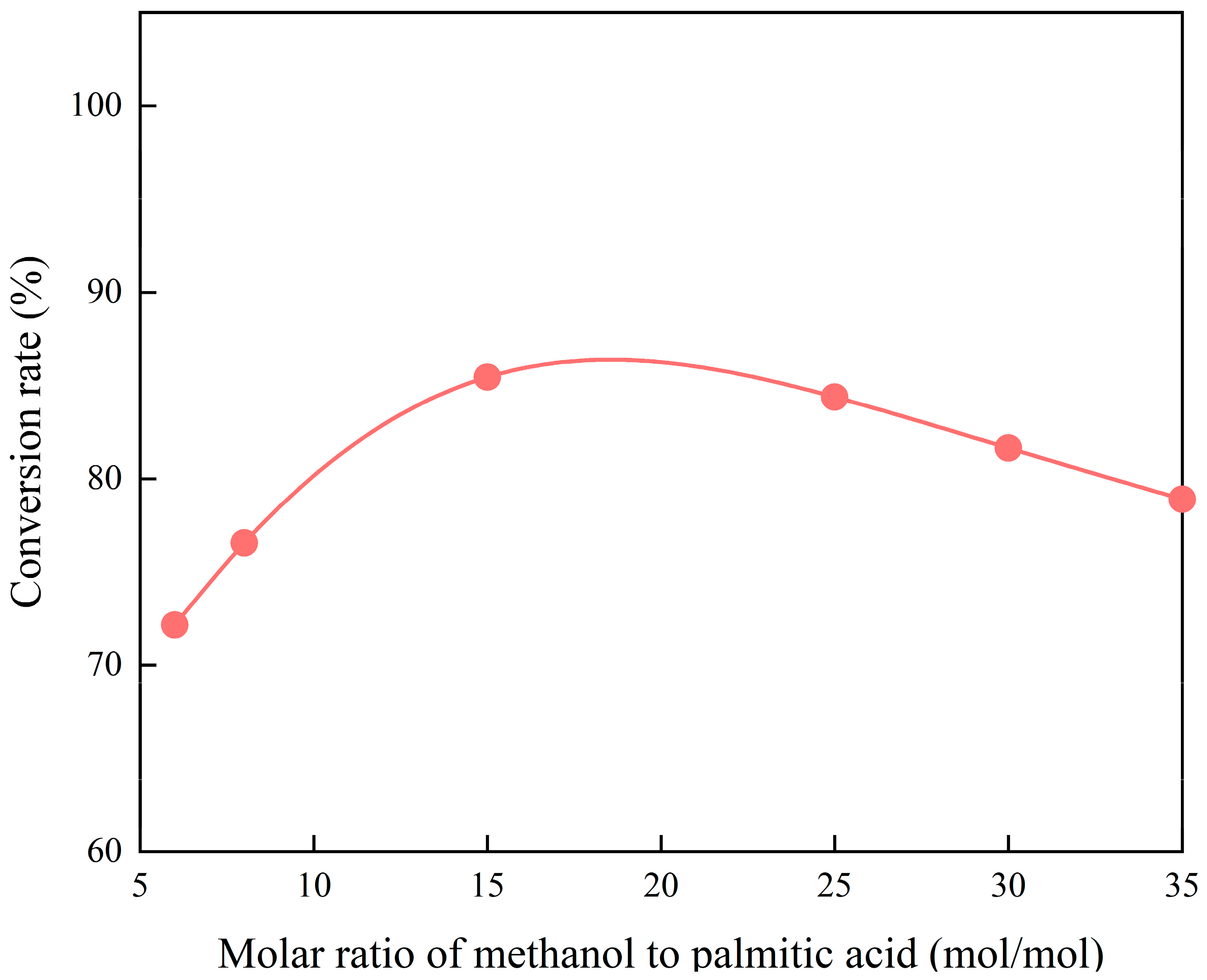
Figure 4 presents the effect of the methanol-to-palmitic acid molar ratio on the conversion of palmitic acid at a fixed reaction temperature of 200 °C and a residence time of 30 min. As observed, the conversion increased from 72.15% to 85.46% as the molar ratio rose from 6:1 to 15:1, indicating that an appropriate excess of methanol favors the forward esterification reaction within this range. However, further increasing the molar ratio beyond 15:1 led to a gradual decrease in conversion, with the value declining to 78.91% at a ratio of 35:1. It can be attributed to the excessive dilution of palmitic acid by methanol, which reduces the effective collision frequency between reactant molecules and shifts the reaction equilibrium, thereby diminishing the overall conversion rate [18,19]. Kamjam et al. [20] and Aboelazayem et al. [21] reported similar results, with the highest conversion rate at a methanol-to-oil ratio of 20:1. However, the excess methanol diluted the reactants at a ratio of 40:1, leading to a decrease in conversion rate.

3.2. Response Surface Method Modeling and Variance Analysis

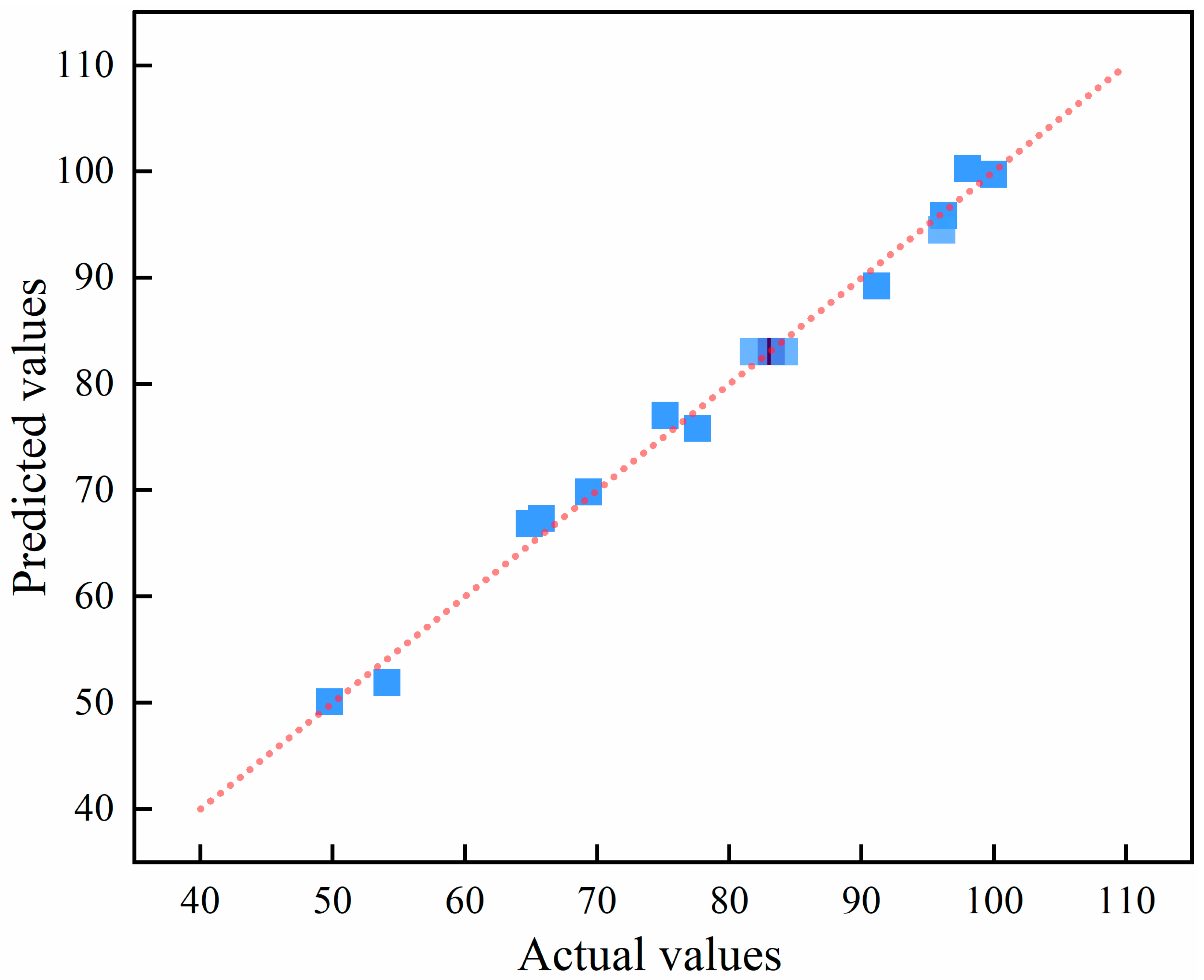
To validate the developed model, fifteen experimental runs were performed to obtain the corresponding response values. Table 2 shows the surface response schemes and their corresponding results. Figure 5 shows the correlation between the experimental and predicted data. The coefficient of determination (R2) was employed to evaluate the agreement between the experimental and predicted results. Ideally, an R2 value of 1 reflects perfect consistency, indicating an excellent predictive capability of the model. In this study, the obtained R2 of 0.9909 demonstrates that less than 1% of the total variation remains unexplained, suggesting that the model accounts for more than 99% of the observed variability. Therefore, the strong correlation between the predicted and experimental results confirms the reliability and predictive accuracy of the established quadratic polynomial model. Table 3 ANOVA for response surface quadratic model. It can be seen that the mathematical relationship between the conversion of methyl palmitate and the influencing factors is expressed by the following equation.
        Y = 177.56268 + 1.69219 X 1 + 2.30136 X 2 1.13702 X 3 0.007905 X 1 X 2 + 0.00973 X 1 X 3 0.004063 X 2 X 3 0.002333 X 1 2 0.006882 X 2 2 0.030929 X 3 2
Furthermore, an analysis of variance (ANOVA) was conducted to assess the adequacy and statistical significance of the proposed model. The significance of the response variables was evaluated using p-values, while the model’s overall validity was examined through Fisher’s F-test. The obtained F-value of 60.17 indicates that the model is well fitted to the experimental data, and the corresponding p-value (<0.05) confirms its statistical significance. Among the model terms, X1, X2, X3, and X1X2 exhibited p-values below 0.05, suggesting that these terms have a significant effect on methyl palmitate conversion. Conversely, terms with p-values greater than 0.1 were regarded as statistically insignificant.
The Adeq Precision ratio, representing the signal-to-noise ratio, was 24.13—well above the desirable threshold of 4—indicating that the model provides an adequate level of predictive precision. Moreover, the coefficient of variation (C.V. = 3.22%) was relatively low, demonstrating high reliability of the experimental data and good reproducibility of the results. The non-significant Lack of Fit further confirms that the model accurately describes the experimental observations. Based on these statistical metrics, it can be concluded that the proposed model is statistically robust and suitable for predicting the conversion of methyl palmitate within the investigated parameter range.

3.2.1. The Impact of a Single Factor on the Esterification of Methanol and Palmitic Acid

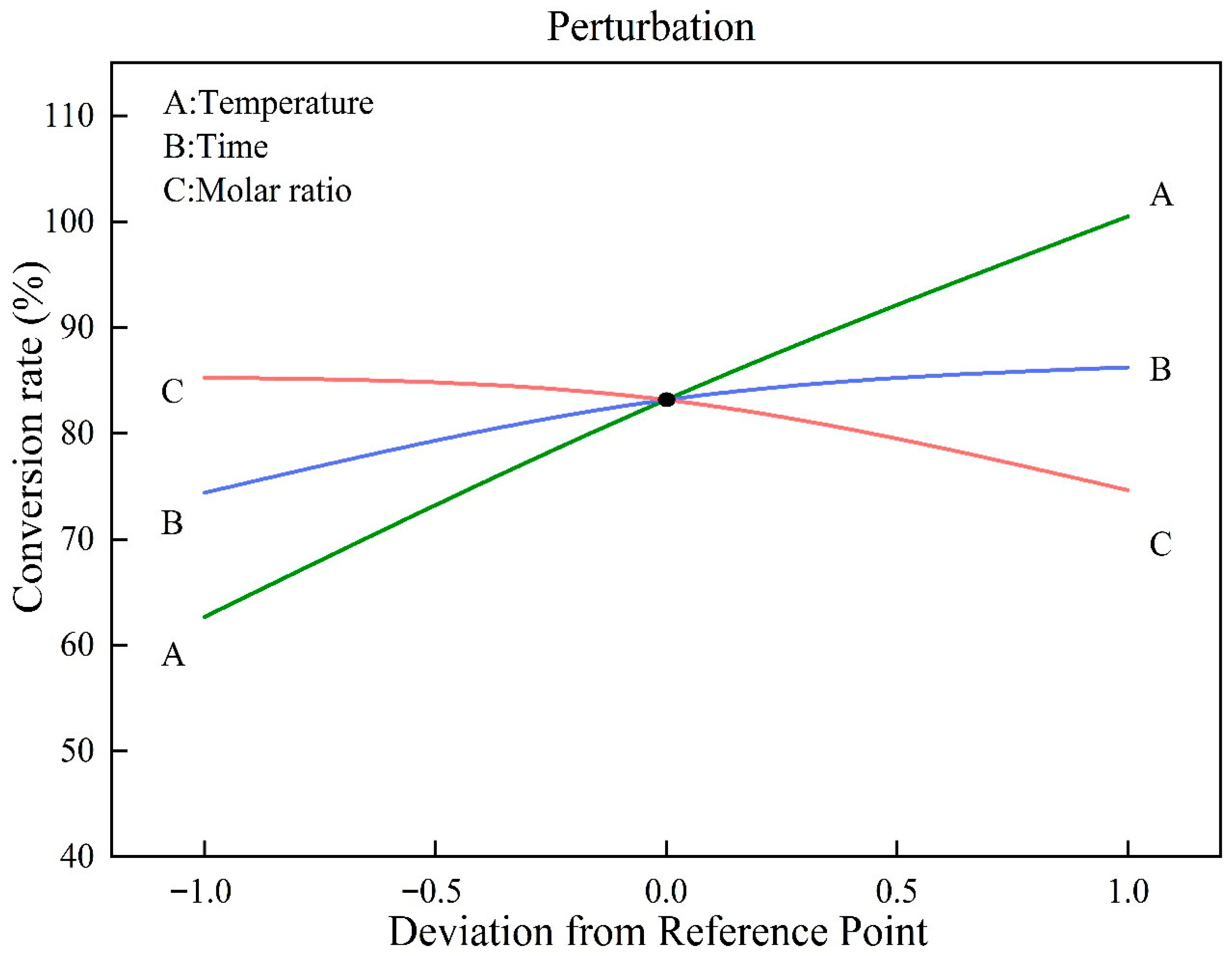
Figure 6 depicts the combined effects of reaction temperature, residence time, and methanol-to-palmitic acid molar ratio on the conversion of palmitic acid. Both reaction temperature and residence time showed a positive correlation with the conversion rate, indicating that increasing either factor enhances the esterification efficiency. Among these, reaction temperature exhibited the most pronounced effect, demonstrating a stronger influence on the reaction kinetics compared to residence time. In contrast, the methanol-to- palmitic acid molar ratio displayed a negative correlation with the conversion rate, as the conversion rate gradually decreased with increasing methanol content. Overall, the relative significance of the three variables affecting the conversion rate can be ranked as follows: reaction temperature > residence time > molar ratio.

3.2.2. The Surface Response Analysis of Two Factors on the Esterification of Methanol and Palmitic Acid

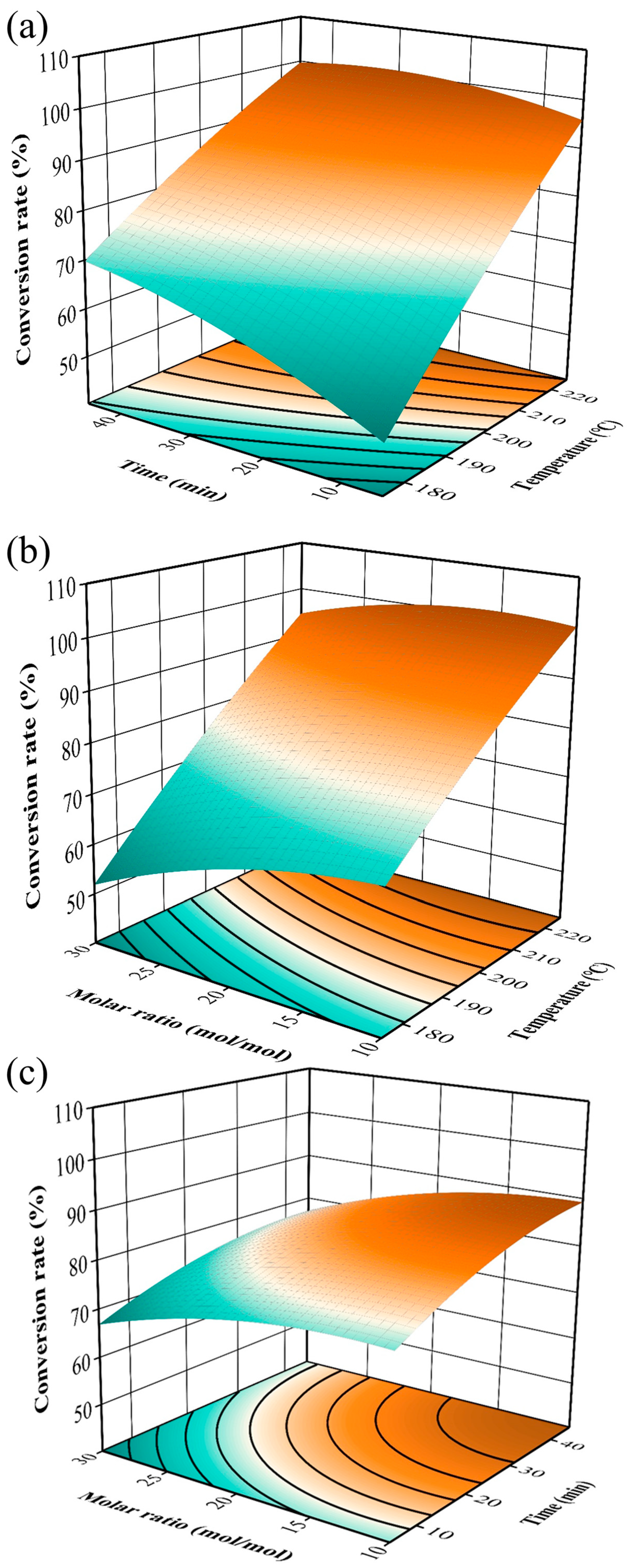
Figure 7a presents the response surface plot illustrating the combined effects of reaction temperature and residence time on the conversion of palmitic acid at a fixed methanol-to-palmitic acid molar ratio of 20:1. As shown, at a lower temperature of 175 °C, the conversion was strongly dependent on residence time, indicating that longer residence times were required to achieve higher conversion levels. In contrast, at an elevated temperature of 225 °C, the conversion became less sensitive to residence time, suggesting that the reaction approached completion more rapidly. Specifically, at 175 °C, a residence time of approximately 45 min was necessary to achieve about 70% conversion, whereas at 225 °C, a higher conversion than that obtained at 175 °C could be achieved in less than 5 min. These results demonstrated that increasing the reaction temperature significantly enhances the reaction rate, enabling higher conversions to be achieved within shorter residence times.
Figure 7b presents the response surface plot illustrating the combined effects of reaction temperature and the methanol-to-palmitic acid molar ratio on the conversion of palmitic acid at a fixed residence time of 25 min. It was observed that the conversion initially increased and subsequently decreased with rising molar ratio at 175 °C. Furthermore, the conversion was little affected by the molar ratio at 225 °C. At 175 °C, the forward esterification reaction was promoted by increasing the methanol ratio, which drove the reaction toward the formation of methyl palmitate. However, further increasing the methanol ratio resulted in excessive dilution of palmitic acid, which reduced the effective collision frequency between reactant molecules and consequently inhibited esterification. At 225 °C, the reaction between methanol and palmitic acid was nearly complete. Therefore, additional methanol had a negligible effect on the conversion.
Figure 7c illustrates the response surface plot showing the combined effects of residence time and the methanol-to-palmitic acid molar ratio on the conversion of palmitic acid at a fixed reaction temperature of 200 °C. As observed, at a lower molar ratio of 10:1, the conversion increased substantially with extended residence time, indicating that the reaction proceeded progressively toward completion. In contrast, at a higher molar ratio of 30:1, the increase in conversion with time became less pronounced., the gradual progression of the esterification reaction over time led to a steady improvement in conversion at the molar ratio of 10:1. However, the excessive amount of methanol caused dilution of palmitic acid at the molar ratio of 30:1, reducing the effective collision probability between reactant molecules and thereby diminishing the forward reaction rate, even with prolonged residence time.
In summary, the optimal reaction parameters were determined to be a reaction temperature of 224 °C, a residence time of 26 min, and a methanol-to-oil molar ratio of 16:1. Under these optimized conditions, the model predicted a palmitic acid conversion of 100%. Experimental validation performed under the same conditions resulted in an actual conversion of 99.30%, which is in close agreement with the predicted value. This excellent consistency between the experimental and predicted results confirms the reliability and accuracy of the developed model for describing the esterification process.

3.3. Establishment of the Kinetic Model

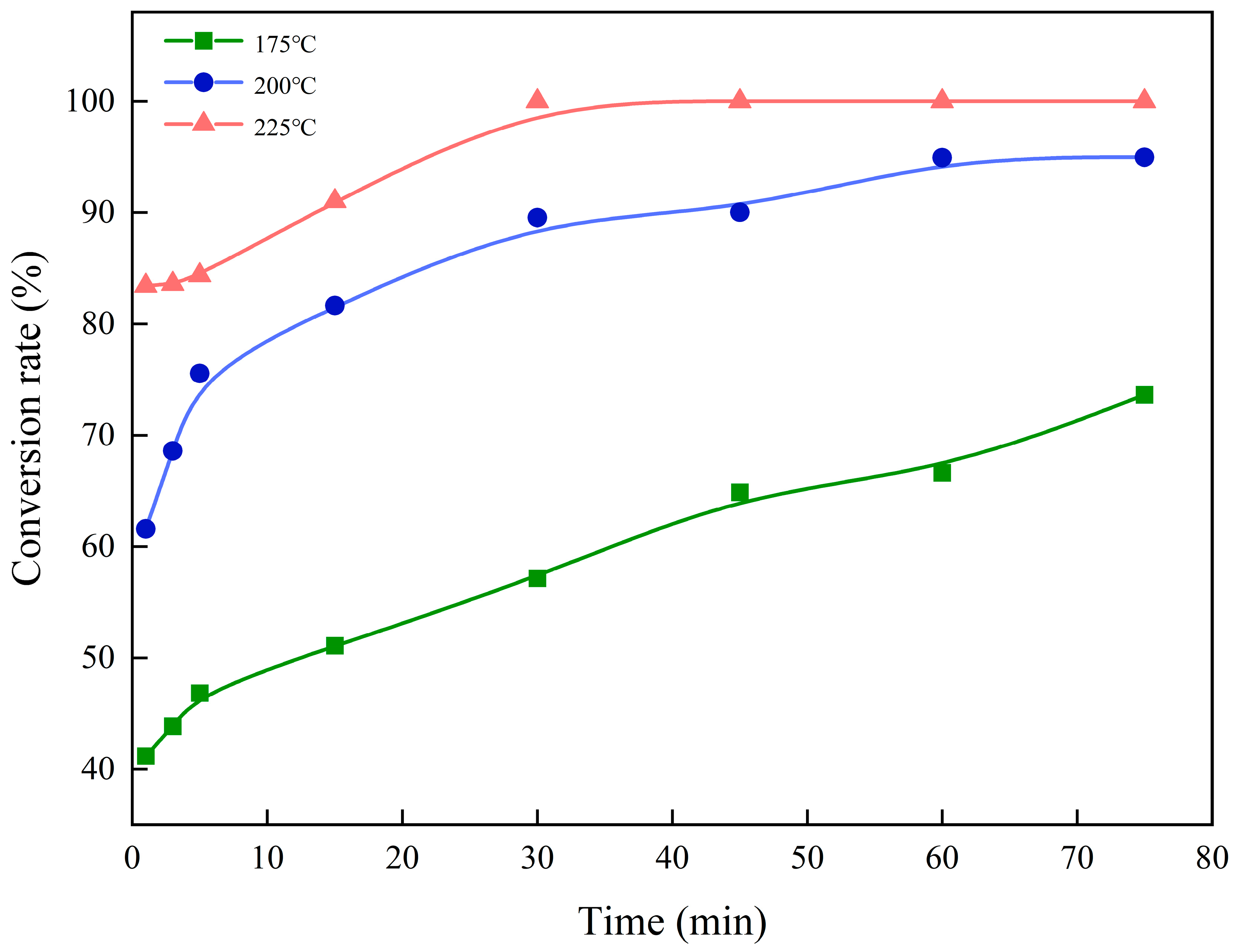
Figure 8 illustrates the variation in the conversion of palmitic acid with reaction time at a methanol-to-palmitic acid molar ratio of 15:1 and reaction temperatures ranging from 175 °C to 225 °C. At 175 °C, a conversion rate of 73.63% was achieved at 75 min. Moreover, when the temperature was raised to 225 °C, palmitic acid was nearly completely converted within approximately 30 min, indicating that elevated temperature markedly accelerates the reaction under subcritical methanol conditions. Therefore, kinetic analysis was performed within the reaction temperature range of 175–225 °C to quantitatively elucidate the relationship between reaction temperature and reaction rate.
According to the stoichiometric equation of the esterification reaction, palmitic acid reacts with methanol to form methyl palmitate and water.
C 15 H 31 COOH + C H 3 OH     C 15 H 31 COO H 3 + H 2 O  
Given the high methanol-to-palmitic acid molar ratio, methanol was present in large excess. As a result, the reverse reaction can be reasonably neglected, and the esterification kinetics can be approximated as a pseudo-first-order reaction with respect to palmitic acid. The apparent rate constant (k) for the reaction is expressed as follows
r A = - d C A d t = k C A
where CA is the concentration of palmitic acid, which can be expressed as CA0(1 − X), with CA0 and X representing the initial concentration and conversion rate of palmitic acid, respectively. By integrating the rate equation, the following expression is obtained.
ln 1 X = k t
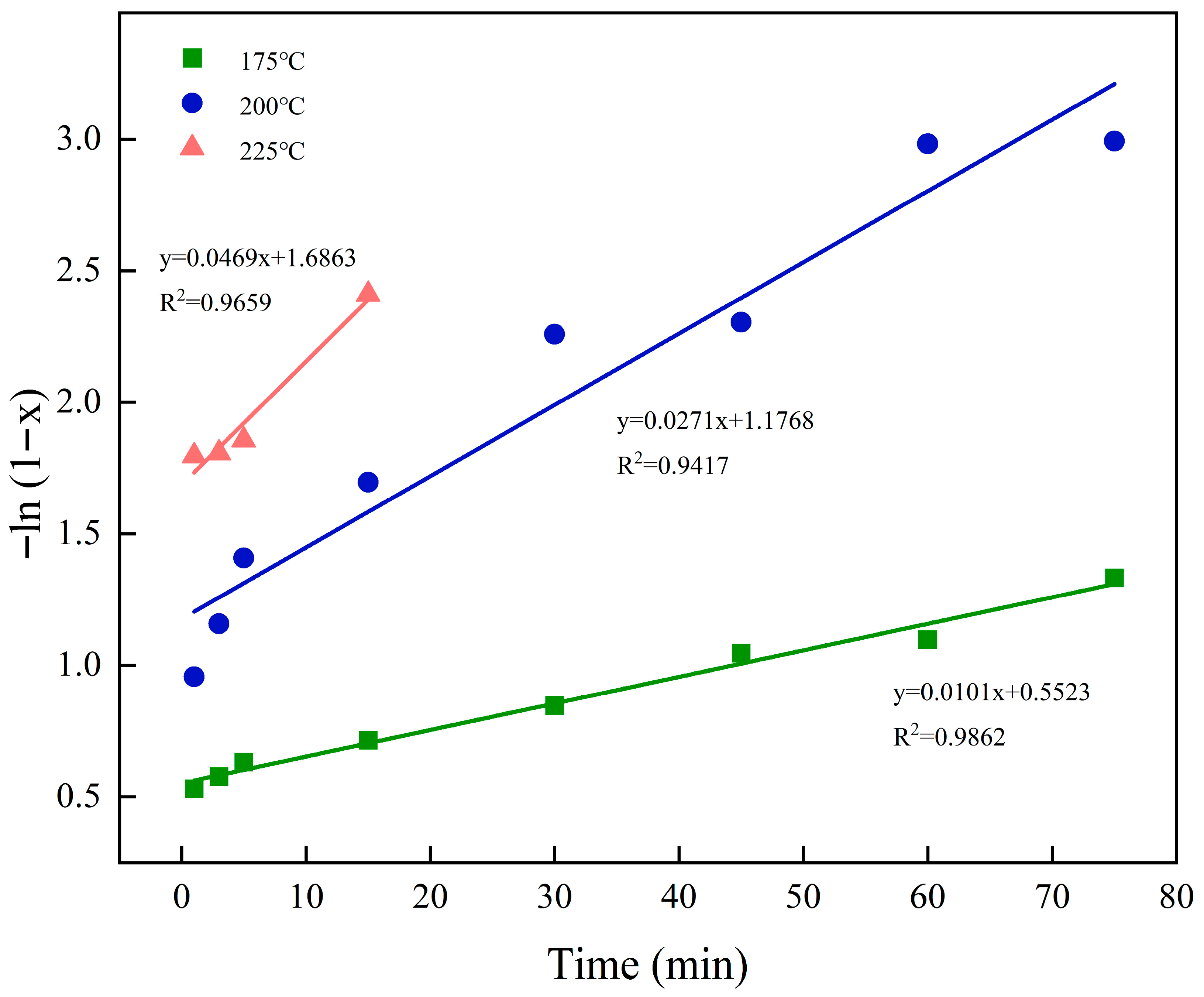
Hence, the rate constant k was determined through linear fitting of the equation. Figure 9 presents the fitted results at various temperatures, revealing a strong linear correlation between −ln(1 − X) and t. This good linearity validates the assumption that the reaction follows first-order kinetics.
The reaction rate constant k had been established at each temperature, the Arrhenius equation was utilized to calculate the activation energy Ea of the esterification reaction.
k = A e E a R T
where A is the factor of frequency, and Ea is the energy of activation. The formula could be deducted as
l n k = E a R T + l n A
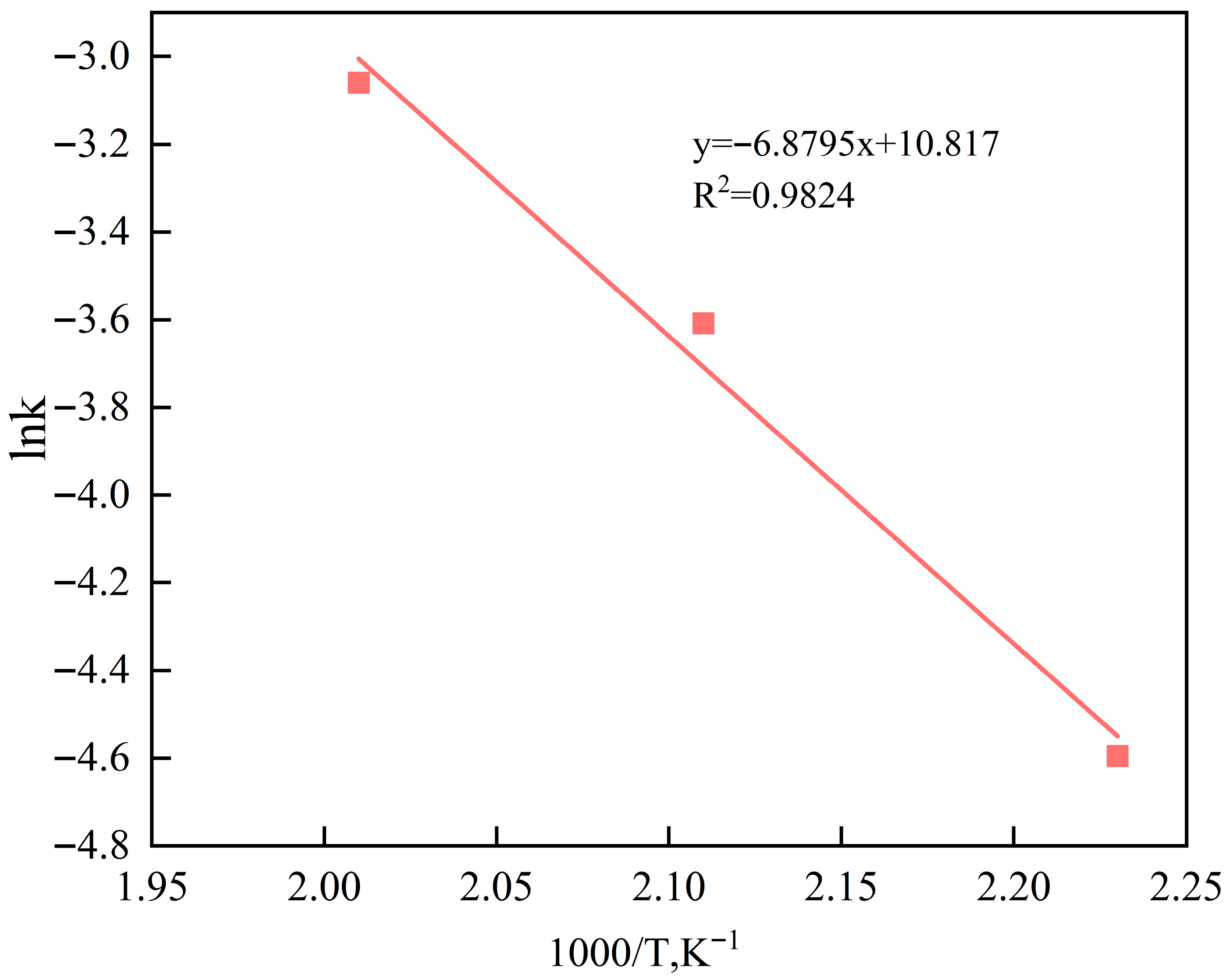
Accordingly, with the gas constant R = 8.314 J mol−1 K−1, the plot of ln k versus 1000/T was constructed to represent the Arrhenius relationship, as depicted in Figure 10.
Based on the linear Arrhenius plot shown in Figure 9 and Figure 10 for the temperature range of 175–225 °C, the activation energy and pre-exponential factor were derived as 57.20 kJ/mol and 4.986 × 10⁴, respectively. This value was benchmarked against relevant literature on non-catalytic esterification in supercritical/subcritical methanol. It is reasonably aligned with the values reported by Mohod et al. [22] (72 kJ/mol) and Kusdiana and Saka [22] (67 kJ/mol), confirming the consistency and reliability of the revised kinetic model. In contrast, Jin et al. [14] reported a significantly lower Ea of 21.98 kJ/mol for esterification in supercritical methanol. Thus, the kinetic model for the esterification of palmitic acid with subcritical methanol is formulated as
r A = d C A d t = 4.986 × 10 4 e 57.20 × 10 4 R T
To quantitatively verify the absence of internal mass transfer limitations, the Weisz modulus (Φ) was estimated for non-catalyst esterification reaction [23]. A conservative scenario was analyzed using the obtained reaction rate (at 225 °C and 5 min), a characteristic mixing length of 100 μm, and a subcritical methanol diffusivity of 1 × 10⁻⁸ m2/s. The calculated Φ value was on the order of 10−3, which is significantly less than 1. This conclusively demonstrates that the esterification reaction occurs in the kinetically controlled regime under the investigated subcritical conditions. Therefore, the obtained apparent activation energy of 57.20 kJ/mol represents the intrinsic energy barrier for the chemical reaction, unaffected by diffusion processes.

4. Conclusions

(1)
In the esterification reaction of methanol and palmitic acid, the conversion rate of palmitic acid first increased and then remained unchanged with the increasing reaction temperature, which reached complete conversion at 225 °C but decreased above 275 °C. It first increased and then changed slightly with increasing residence time, obtaining a maximum value of 94.92% at 60 min. It first increased and then decreased with the increasing molar ratio of methanol to palmitic acid, achieving a maximum value of 85.46% at 15:1.
(2)
Both reaction temperature and residence time exhibited a positive correlation with the conversion rate of palmitic acid, while the methanol-to- palmitic acid molar ratio displayed a negative correlation. The relative influence of these factors was determined to follow the order: reaction temperature > residence time > molar ratio. The conversion rate of palmitic acid reached 99.30% under the optimal reaction parameters, which were a reaction temperature of 224 °C, a residence time of 26 min, and a molar ratio of methanol to palmitic acid of 16:1.
(3)
Within a temperature range of 175–225 °C, the reaction of palmitic acid with subcritical methanol follows a first-order reaction kinetic model. The activation energy and pre-exponential factor for their esterification reaction are 57.20 kJ/mol and 4.986 × 10⁴, respectively.
(4)
The catalyst-free esterification in subcritical methanol presents a promising route for scalable biodiesel production. The absence of catalysts enables a simpler continuous process, such as in tubular reactors, without the need for separation units. Combined with its moderate temperature and lower methanol consumption, this method shows significant potential for reducing energy use and operational costs. These advantages align well with lifecycle carbon reduction and net-zero goals, supporting sustainable biodiesel production.

Author Contributions

Conceptualization, Z.Q., C.X. and X.Q.; methodology, J.L., K.Z., Y.F. and X.C.; software, J.L. and R.H.; validation, K.Z. and T.D.; formal analysis, Z.Q. and H.J.; investigation, Y.F. and R.H.; resources, X.A. and Z.Q.; data curation, J.L., T.D. and X.C.; writing—original draft preparation, J.L. and Z.Q.; writing—review and editing, C.X. and X.Q.; visualization, H.J.; supervision, X.A. and J.S.; project administration, Z.Q.; funding acquisition, Z.Q. All authors have read and agreed to the published version of the manuscript.

Funding

This research was funded by the National Natural Science Foundation of China (No. 52364053), China Baowu Low Car-bon Metallurgy Innovation Foundation (No. BWLCF202316), Jiangxi Provincial Natural Science Foundation (No. 20252BAC220074), Key R&D Program of Jiangxi Province (No. 20244BDF60009 and 20233BCA01002), and Pilot Demonstration Project for the Contract Responsibility System of the Provincial Science and Technology Plan Project of Jiangxi Academy of Sciences (No. 2023YSTZX02).

Data Availability Statement

All data are available and can be shared upon request.

Conflicts of Interest

The authors declare no conflicts of interest.

References

  1. Akram, F.; ul Haq, I.; Raja, S.I.; Mir, A.S.; Qureshi, S.S.; Aqeel, A.; Shah, F.I. Current Trends in Biodiesel Production Technologies and Future Progressions: A Possible Displacement of the Petro-Diesel. J. Clean. Prod. 2022, 370, 133479. [Google Scholar] [CrossRef]
  2. Go, A.W.; Tran Nguyen, P.L.; Huynh, L.H.; Liu, Y.T.; Sutanto, S.; Ju, Y.H. Catalyst Free Esterification of Fatty Acids with Methanol under Subcritical Condition. Energy 2014, 70, 393–400. [Google Scholar] [CrossRef]
  3. Lüneburger, S.; Lazarin Gallina, A.; Cabreira Soares, L.; Moter Benvegnú, D. Biodiesel Production from Hevea Brasiliensis Seed Oil. Fuel 2022, 324, 124639. [Google Scholar] [CrossRef]
  4. Ganesan, S.; Nadarajah, S.; Khairuddean, M.; Teh, G.B. Studies on Lauric Acid Conversion to Methyl Ester via Catalytic Esterification Using Ammonium Ferric Sulphate. Renew. Energy 2019, 140, 9–16. [Google Scholar] [CrossRef]
  5. Sadaf, S.; Iqbal, J.; Ullah, I.; Bhatti, H.N.; Nouren, S.; Nisar, J.; Iqbal, M. Biodiesel Production from Waste Cooking Oil: An Efficient Technique to Convert Waste into Biodiesel. Sustain. Cities Soc. 2018, 41, 220–226. [Google Scholar] [CrossRef]
  6. Hsiao, M.C.; Kuo, J.Y. Optimized Conversion of Waste Cooking Oil to Biodiesel Using Modified Calcium Oxide as Catalyst via a Microwave Heating System. Fuel 2020, 266, 117114. [Google Scholar] [CrossRef]
  7. Abu-Ghazala, A.H.; Abdelhady, H.H.; Mazhar, A.A.; El-Deab, M.S. Exceptional Room Temperature Catalytic Transesterification of Waste Cooking Oil to Biodiesel Using Environmentally-Benign K2CO3/γ-Al2O3 Nano-Catalyst. Chem. Eng. J. 2023, 474, 145784. [Google Scholar] [CrossRef]
  8. Argaw Shiferaw, K.; Mathews, J.M.; Yu, E.; Choi, E.Y.; Tarte, N.H. Sodium Methoxide/Zeolite-Supported Catalyst for Transesterification of Soybean Waste Cooking Oil for Biodiesel Production. Inorganics 2023, 11, 163. [Google Scholar] [CrossRef]
  9. Falizi, N.J.; Madenoğlu, T.G.; Yüksel, M.; Kabay, N. Biodiesel Production Using Gel-type Cation Exchange Resin at Different Ionic Forms. Int. J. Energy Res. 2019, 43, 2188–2199. [Google Scholar] [CrossRef]
  10. Shin, H.Y.; Lee, S.H.; Ryu, J.H.; Bae, S.Y. Biodiesel Production from Waste Lard Using Supercritical Methanol. J. Supercrit. Fluids 2012, 61, 134–138. [Google Scholar] [CrossRef]
  11. Román-Figueroa, C.; Olivares-Carrillo, P.; Paneque, M.; Palacios-Nereo, F.J.; Quesada-Medina, J. High-Yield Production of Biodiesel by Non-Catalytic Supercritical Methanol Transesterification of Crude Castor Oil (Ricinus communis). Energy 2016, 107, 165–171. [Google Scholar] [CrossRef]
  12. Mohod, A.V.; Subudhi, A.S.; Gogate, P.R. Intensification of Esterification of Non Edible Oil as Sustainable Feedstock Using Cavitational Reactors. Ultrason. Sonochem. 2017, 36, 309–318. [Google Scholar] [CrossRef]
  13. Jin, T.; Wang, B.; Zeng, J.; Yang, C.; Wang, Y.; Fang, T. Esterification of Free Fatty Acids with Supercritical Methanol for Biodiesel Production and Related Kinetic Study. RSC Adv. 2015, 5, 52072–52078. [Google Scholar] [CrossRef]
  14. Ang, G.T.; Tan, K.T.; Lee, K.T.; Mohamed, A.R. Biodiesel Production via Injection of Superheated Methanol Technology at Atmospheric Pressure. Energy Convers. Manag. 2014, 87, 1231–1238. [Google Scholar] [CrossRef]
  15. Aboelazayem, O.; Gadalla, M.; Saha, B. Biodiesel Production from Waste Cooking Oil via Supercritical Methanol: Optimisation and Reactor Simulation. Renew. Energy 2018, 124, 144–154. [Google Scholar] [CrossRef]
  16. Ghoreishi, S.M.; Moein, P. Biodiesel Synthesis from Waste Vegetable Oil via Transesterification Reaction in Supercritical Methanol. J. Supercrit. Fluids 2013, 76, 24–31. [Google Scholar] [CrossRef]
  17. dos Santos, P.R.S.; Voll, F.A.P.; Ramos, L.P.; Corazza, M.L. Esterification of Fatty Acids with Supercritical Ethanol in a Continuous Tubular Reactor. J. Supercrit. Fluids 2017, 126, 25–36. [Google Scholar] [CrossRef]
  18. Roy, T.; Sahani, S.; Madhu, D.; Chandra Sharma, Y. A Clean Approach of Biodiesel Production from Waste Cooking Oil by Using Single Phase BaSnO3 as Solid Base Catalyst: Mechanism, Kinetics & E-Study. J. Clean. Prod. 2020, 265, 121440. [Google Scholar] [CrossRef]
  19. Minami, E.; Kawamoto, H. Methyl Esterification of Oleic Acid in Supercritical Methanol with Methyl Formate. J. Jpn. Pet. Inst. 2021, 64, 188–196. [Google Scholar] [CrossRef]
  20. Kamjam, M.; Wongsawaeng, D.; Sawangkeaw, R.; Supang, W.; Hosemann, P.; Sola, P.; Ngamprasertsith, S. Valorization of Rambutan Seed Waste into Biodiesel via Non-Catalytic Supercritical Ethanol and Ethyl Acetate. Energies 2025, 18, 6004. [Google Scholar] [CrossRef]
  21. Aboelazayem, O.; Gadalla, M.; Saha, B. Comprehensive Optimisation of Biodiesel Production Conditions via Supercritical Methanolysis of Waste Cooking Oil. Energies 2022, 15, 3766. [Google Scholar] [CrossRef]
  22. Kusdiana, D.; Saka, S. Methyl Esterification of Free Fatty Acids of Rapeseed Oil as Treated in Supercritical Methanol. J. Chem. Eng. Jpn. 2001, 34, 383–387. [Google Scholar] [CrossRef]
  23. Fogler, H.S. Elements of Chemical Reaction Engineering, 6th ed.; Pearson: Boston, MA, USA, 2020; pp. 825–841. [Google Scholar]
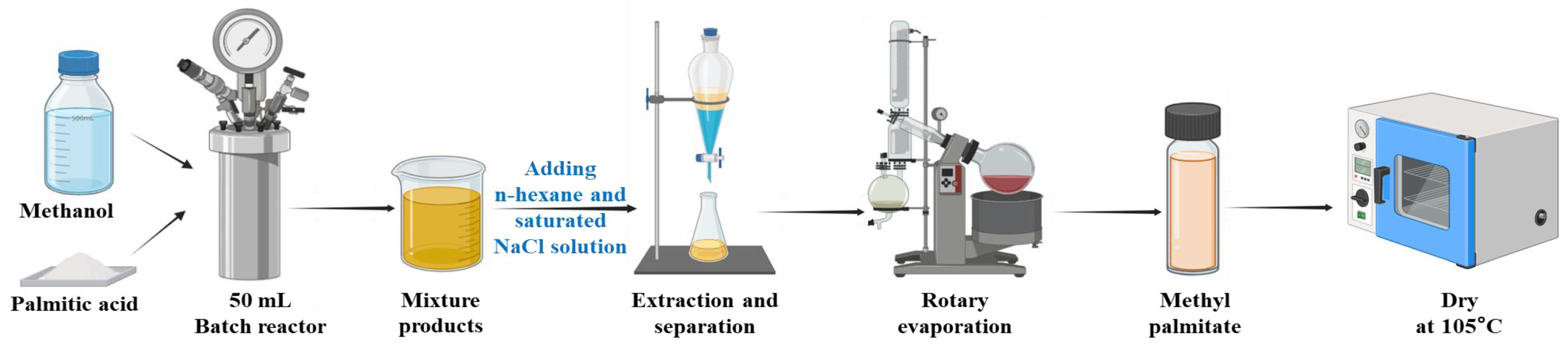
Figure 1. Experimental flowchart.
Reactions 06 00069 g001
Figure 2. The effect of reaction temperature on the conversion rate of palmitic acid.
Reactions 06 00069 g002
Figure 3. The effect of residence time on the conversion rate of palmitic acid.
Reactions 06 00069 g003
Figure 4. The effect of molar ratio on the conversion rate of palmitic acid.
Reactions 06 00069 g004
Figure 5. The comparison chart of predicted values and actual values.
Reactions 06 00069 g005
Figure 6. The impact of a single factor on the conversion rate of palmitic acid.
Reactions 06 00069 g006
Figure 7. 3D response chart of two factors on the esterification of methanol and palmitic acid: (a) Temperature and Residence time; (b) Temperature and Molar ratio; (c) Residence time and Molar ratio.
Reactions 06 00069 g007
Figure 8. Effect of reaction time on conversion rate at 175~225 °C.
Reactions 06 00069 g008
Figure 9. Graph of the relationship between time and −ln(1 − X).
Reactions 06 00069 g009
Figure 10. Graph of the relationship between ln k and 1000/T.
Reactions 06 00069 g010
Table 1. Design of factors and levels in response surface.
SymbolsVariablesLow LevelCentral LevelHigh Level
X1Reaction temperature (°C)175200225
X2Residence time (min)52545
X3Molar ratio (mol/mol)102030
Table 2. Design of the response surface method and the corresponding results.
No.Reaction Temperature (°C)Residence Time (min)Methanol to Palmitic Acid Molar Ratio (mol/mol)Conversion
Rate (%)
1175253054.13
2175251065.81
3175452069.36
417552049.78
5200453075.17
6200451091.17
720053064.87
820051077.62
9200252083.17
10200252084.16
11200252081.83
1222552096.23
13225251098.01
14225253096.06
152254520100
Table 3. ANOVA for response surface quadratic model.
SourceSum of SquaresDegrees of FreedomMean SquareF ValueValue Prob > F
Model3513.089390.3460.170.0001Significant
X12858.4412858.44440.6<0.0001
X2278.481278.4842.920.0012
X3224.511224.5134.610.002
X1X262.49162.499.630.0267
X1X323.67123.673.650.1144
X2X32.6412.640.410.5516
X127.8517.851.210.3215
X2227.98127.984.310.0924
X3235.32135.325.440.0669
Residual32.4456.49
Lack of Fit29.739.97.240.1238Not Significant
Pure Error2.7321.37
Cor Total3545.5214
Disclaimer/Publisher’s Note: The statements, opinions and data contained in all publications are solely those of the individual author(s) and contributor(s) and not of MDPI and/or the editor(s). MDPI and/or the editor(s) disclaim responsibility for any injury to people or property resulting from any ideas, methods, instructions or products referred to in the content.