1. Introduction
Lima beans (
Phaseolus lunatus L.) are a rich source of proteins, minerals, and compounds with high antioxidant and known anticancer activity, making them a healthy and functional food source [
1,
2]. This crop is considered an important food source in Brazil, especially in the northeast region, where its production and consumption are higher [
3].
Lima beans have high genetic diversity in Brazil, superior to that observed in other regions of the American continent and similar to that reported for wild populations in centers of genetic diversity of the species [
3]. Despite its high socioeconomic importance, lima bean cultivation is still limited, mainly to the lack of technological inputs, especially in terms of the management of pests, diseases, and nutrients required for high yields.
Anthracnose is a disease caused by
Colletotrichum species that destroys the leaves, stems, and fruits of different crops, reducing productivity and product quality [
4,
5,
6]. In Brazil, especially in the northeast region, different
Colletotrichum species have been identified as the causal agents of lima bean anthracnose, such as
C. truncatum,
C. cliviae,
C. fructicola,
C. musicola,
C. brevisporum,
C. lobatum, and
C. plurivorum, although
C. truncatum is reported as the main pathogen of this host [
7,
8].
The
C. truncatum species is widely distributed in the states of Ceará, Piauí, Alagoas, Paraíba, and Pernambuco, the main producers in the region. This species is highly virulent and causes typical anthracnose rot, mainly in seeds, pods, stems, and leaves [
8], which is one of the main factors impairing productivity [
9]. Under field conditions, lima bean varieties have shown different resistance levels to
C. truncatum infection [
10].
Part of the plant’s innate immune system can be activated and enhanced with inducing molecules, which activate defense-related enzymes, characterizing an induced systemic resistance [
11,
12]. The regulation of these enzymes allows plants to resist pathogen attacks that may result in yield costs, known as the physiological cost of resistance.
Several methods to induce plant resistance have been researched, such as the application of K phosphite in the management of lima bean anthracnose, which significantly induced the plant defense enzymes peroxidase and phenylalanine ammonia-lyase [
13]. In
Phaseolus vulgaris, the mechanism of systemic-induced resistance against
C. lindemuthianum was characterized by an increase in peroxidase [
14].
The application of chemical products is still the main method used to control anthracnose in many crops, resulting in increased production costs and risks to the environment and human health. However, the application of resistance inducers is an alternative and efficient method to reduce disease severity in the crop [
9,
15].
Compounds such as acibenzolar-S-methyl, phosphorylated mannan-oligosaccharide, K phosphite, Ca and Mg silicate, citrus biomass, and silicate clay have been employed in the control of anthracnose in lima bean [
9,
15], with different responses according to the cultivar, dose and growing conditions. Therefore, this study aimed to evaluate the effects of different resistance inducers against
C. truncatum in lima bean plants cultivated in two different regions.
2. Materials and Methods
2.1. Seed Procurement
Landrace lima bean seeds were obtained from a production area in the county of Cuité (latitude 6°29′06″ S, longitude 36°09′125″ W), Brazil. A lima bean variety with determined growth, as described by Gomes and Nascimento [
15], was used in the experiments and named variety UFPB04.
2.2. Experimental Area
The experiments were carried out under field and rainfed conditions from May to December of 2017. The first experiment was located in the experimental area of Chã de Jardim (latitude 6°58′8″ S, longitude 35°42′15″ W) at 620 m altitude, in the county of Areia, Brazil. The climate is classified as the As type according to Köppen and Geiger [
16]: hot and humid, with an average annual temperature ranging from 21 to 26 °C with minimal monthly variations [
17], relative humidity of 80% and annual precipitation of 1.400 mm [
18]. The soil of the area is classified as Neosol regolithic [
19].
2.3. Installation of the Experiments
Before sowing, a soil sample was collected at a 0–20 cm depth from the two experimental areas (Chã de Jardim and EMPAER) for fertility analysis. After considering the soil fertility analyses, the correction and fertilization of the soil were carried out, following recommendations by Cavalcanti [
20].
2.4. Experimental Design and Treatments
A complete randomized block experimental design was used in a split-plot scheme with four replicates. In the main plots, fourteen treatments were applied, composed of the inducers phosphorylated mannan-oligosaccharide, acibenzolar-S-methyl, citrus biomass, K phosphite, silicate clay, and Ca and Mg silicate, with and without fungicide, including the controls carbendazim and distilled water. All formulations are described in
Table 1.
The dose of carbendazim used in the combined treatments with inducers (0.12 mL L−1) was deliberately reduced compared to the treatment with fungicide alone (0.24 mL L−1) to avoid applying an excessive load of active ingredients and possible phytotoxic effects or physiological interferences resulting from the overlapping mechanisms of action.
In the sub-plots, the effects of the experimental areas (Areia and Lagoa Seca) on the anthracnose severity and the enzymatic and ecophysiological activity of the lima bean plants were evaluated.
The evaluations of C. truncatum control in lima bean plants occurred in two experiments, located in two distinct growing regions, under field conditions. Sowing was performed manually, and each experimental unit had 6 m2 (2 m × 3 m), divided into 3 rows of 1 m between rows and 0.5 m between plants, totaling 8 plants per plot−1.
Four seeds per hole were sown, and after emergence, thinning was performed, leaving two plants per hole. Weed control was carried out manually during the experiment. At 52 days after sowing (DAS), the plants underwent the first spraying of the treatments (
Table 1) using a manual backpack sprayer. In each application, 5 L of spray solution was used per treatment, applied until the point of leaf runoff. Fifteen days after the first application, a second spraying was carried out following the same procedure.
2.5. Variables Evaluated
The anthracnose severity was evaluated every seven days on two leaves of the upper, middle, and lower third plant portions. Disease ratings were attributed to the infected leaves: 0, 0.13, 0.47, 0.64, 1.26, 3.07, 7.53, and 14.81%, according to the diagrammatic scale adapted from Dalla Pria and Amorim [
21], under field conditions. The area under the disease progress curve (AUDPC) was calculated from the disease severity values, according to Campbell and Madden [
22], and the disease index according to Erkilic et al. [
23].
The enzymatic activity was evaluated 21 days after the second spray with the treatments in plants from each area. Peroxidase, polyphenol oxidase, and phenylalanine ammonia-lyase were evaluated. One gram of macerated leaves was macerated in 10 mL of sodium acetate. After obtaining a homogeneous mass, the material was transferred to Eppendorf tubes, centrifuged at 12.000 G for 15 min at −4 °C, and the supernatant collected to determine enzymatic activity. The total protein quantification followed procedures described by Bradford [
24].
Peroxidase activity was determined by adding 0.25 mL of the enzymatic extract to the reaction medium containing 0.25 mL of guaiacol (1.7%), 0.75 mL of 0.1 M phosphate buffer (pH 6.0), and 0.25 mL of H2O2 (1.8%), totaling a final volume of 1.5 mL. The same composition was used for the blank sample but replacing the enzymatic extract with SDW. The enzymatic activity was determined in a spectrophotometer by absorbance variation at 470 nm wavelength and 25 °C. After mixing, the reading was performed immediately, and the activity was expressed in Units of Absorbance Units (AU) min−1 mg−1 of protein.
The polyphenol oxidase activity was determined by adding 0.25 mL of the enzymatic extract to the reaction medium containing 0.25 mL of 0.6 mM S-methyl-catechol and 0.75 mL of 0.1 M phosphate buffer (pH 6.8). The same composition was used for the blank sample but replacing the enzymatic extract with SDW. The samples were incubated for 15 min in a water bath at 40 °C. After this period, the activity of the samples was stopped with the addition of 0.8 mL of perchloric acid. The enzymatic activity was determined in a spectrophotometer, by absorbance variation, at 395 nm wavelength and 25 °C, and expressed as UA min−1 mg−1 of protein.
The phenylalanine ammonia-lyase activity was determined by adding 0.5 mL of the enzyme extract to test tubes with 1.5 mL of TRIS buffer solution (0.01M, pH 8.8), 0.5 mL of phenylalanine solution (substrate), and 0.5 mL of SDW. The blank sample was composed of all solutions used in the reaction medium, except for the enzymatic extract, which was replaced by SDW. The tubes containing the samples were incubated in a water bath at 40 °C for 60 min. Then, the reactions were stopped with 0.1 mL of hydrochloric acid at 5.0 M. The reading was performed in a quartz cuvette in the spectrophotometer by absorbance variation, at 290 nm wavelength and 25 °C, and the results were expressed in min−1 mg−1 protein.
Ecophysiological analyses were performed 82 days after sowing, between 9 am and 1 pm. The gas exchange determinations were carried out with a portable photosynthesis meter—IRGA (LI-COR—model LI-6400XT). The fourth leaf was analyzed from the plant’s apex of each plot, always in the middle portion of expanded leaves, fully exposed to solar radiation. The following characteristics were evaluated: net photosynthetic CO2 assimilation (A) (µmol of CO2 m−2 s−1); stomatal conductance (mol of H2O m−2 s−1); CO2 concentration (mmol of CO2 m−2 s−1), transpiration (mmol of H2O m−2 s−1) and leaf temperature (°C). After data collection, the instantaneous water use efficiency = A/E (µmol of CO2 m−2 s−1/mmol of H2O m−2 s−1), intrinsic water use efficiency = A/gs (µmol CO2 m−2 s−1/mol H2O m−2 s−1)- and the instantaneous carboxylation efficiency = A/Ci (µmol CO2 m−2 s−1/mmol CO2 m−2 s−1) were quantified. The temperature during the experimental period ranged from 18.1 to 27 °C in Areia and from 17.6 to 25.01 °C in Lagoa Seca. The relative humidity ranged between 31.1 and 37.6%, and 30.1 and 38.5%, in the two locations, respectively.
Yield (kg ha
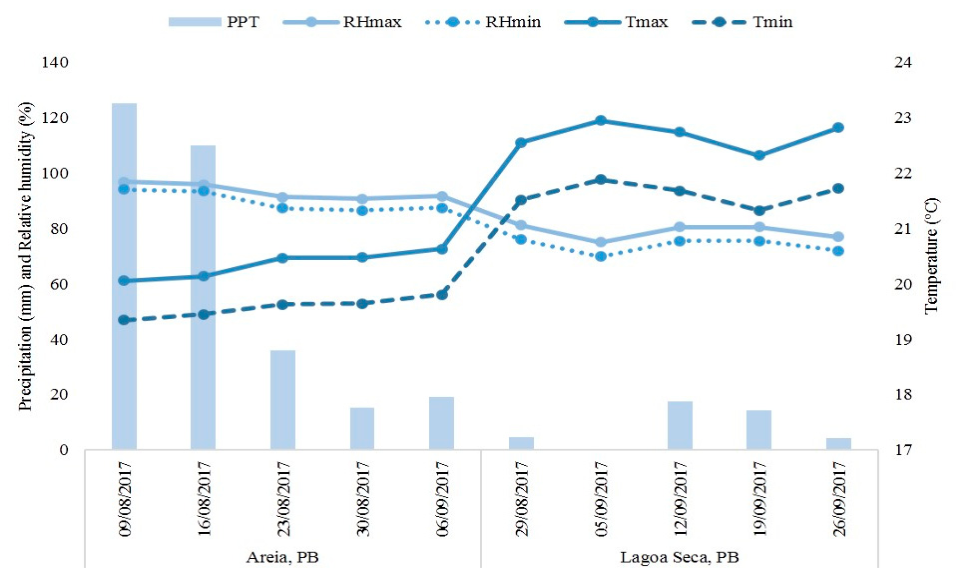
−1) was determined at the end of the crop cycle by harvesting dry grains from each plot of the treatments after correcting the grain moisture to 13%. The meteorological data of maximum and minimum relative humidity, maximum and minimum temperatures, and total precipitation during the evaluation period in the two cultivation regions were obtained at the stations OMM: 81877, Areia-A310, and OMM: 81913, Campina Grande-A313, of the National Institute of Meteorology. According to the climatic data (precipitation, relative humidity, and temperature) obtained weekly during the evaluation of anthracnose severity, a clear distinction between the cultivation regions (Brejo and Agreste da Paraíba) was observed (
Figure 1).
2.6. Statistical Analysis
Data were submitted for an analysis of variance. The means of treatments within each experimental area and growing regions of each treatment were compared by Tukey and F-tests, respectively. The effect of the resistance inducers, with and without fungicide, were compared to the control and the carbendazim treatment using Dunnett’s test at 5% probability. The statistical R
® software (version 4.4.0) [
25] was used in all analyses.
3. Results
The total precipitation in the experimental area of Chã de Jardim, located in Areia, was 305.2 mm. In contrast, in the experimental area of EMPAER, Lagoa Seca (Brazil), only 40.8 mm was recorded (
Figure 1). Weekly average variations were found to be between 15.2 and 125.2 mm in Areia (Brazil), while in the Lagoa Seca area, precipitation lower than expected was recorded, with values of 0.2 and 1.4 mm during the evaluation period. The relative humidity ranged from 86.5 to 96.8% in the experimental area of Areia, with an average of 91.5%. In comparison, in Lagoa Seca, it ranged from 69.8 to 81.1%, with an average of 76.2% (
Figure 1). The temperature in Areia ranged from 19.3 to 20.6 °C, and an average of 20 °C was recorded, while in Lagoa Seca, the average temperature ranged from 21.3 to 22.9 °C (
Figure 1).
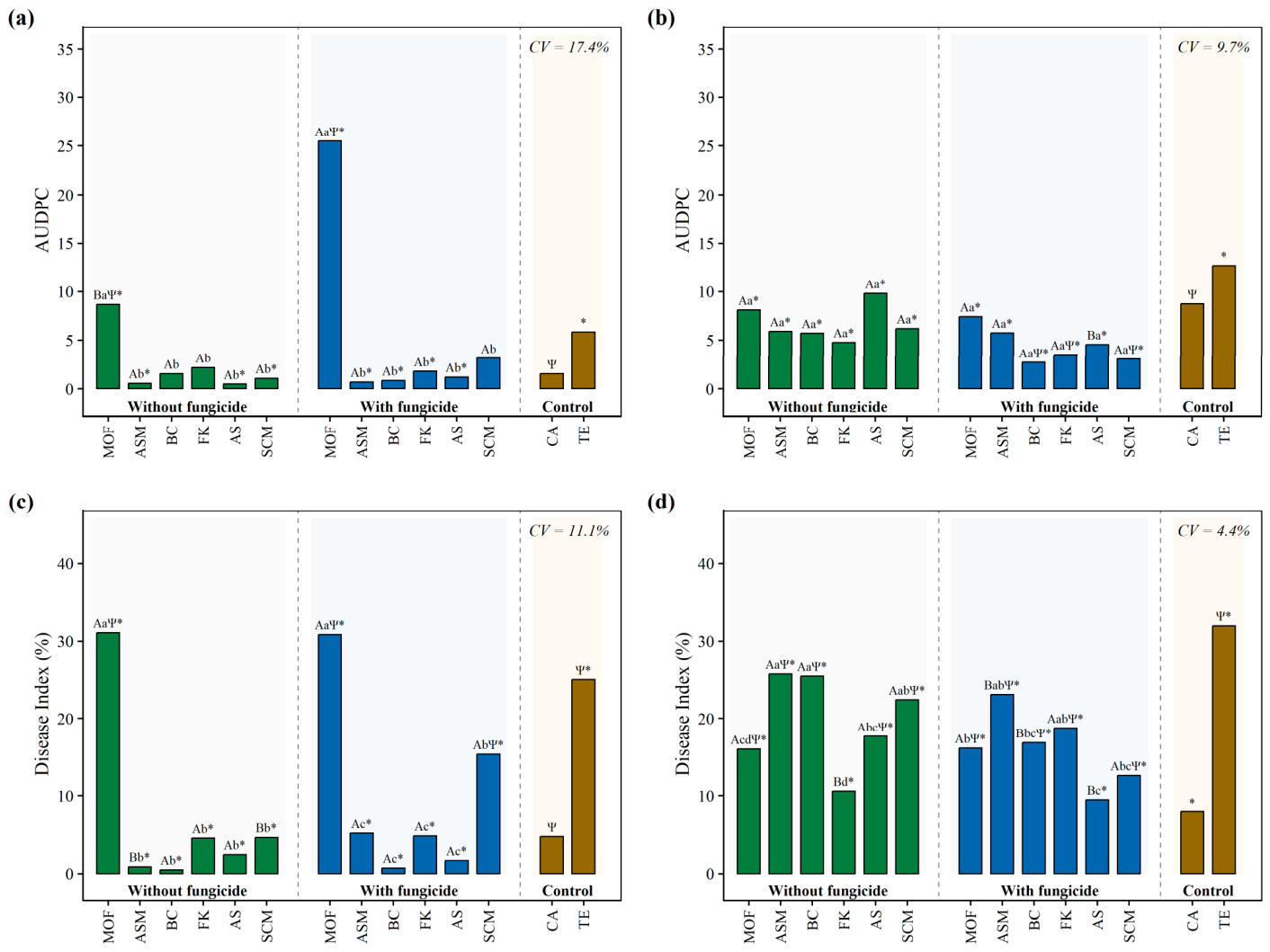
On average, lima bean plants treated with the resistance inducers cultivated in Areia and Lagoa Seca showed an area under the disease progress curve of 5.83% and 12.69%, respectively (
Figure 2a,b).
A strong interaction effect of the different inducers combined with the fungicide was observed in plants cultivated in Areia. The application of phosphorylated mannan-oligosaccharide, citrus biomass, and K-phosphite without the fungicide did not reduce the area under the disease progress curve when compared to the control (
Figure 2a). However, when combined with the fungicide, the application of citrus biomass resulted in a lower area under the disease progress curve than that observed for the control, which suggests synergism between the resistance inducer and the fungicide in the disease control. When acibenzolar-S-methyl, silicate clay, and Ca and Mg silicate without the fungicide were applied, the area under the disease progress curve was significantly reduced. As for the cumulative progression of anthracnose throughout the cycle (AUDPC,
Figure 2a), the treatment with Ca and Mg silicate combined with fungicide did not differ significantly from the control (
p > 0.05), indicating an absence of effective control in this integrated variable. However, in the assessment of the disease index at the end of the cycle (DI,
Figure 2c), this same treatment showed significantly superior severity than the control (
p ≤ 0.01). These results reflect distinct epidemiological dynamics: while AUDPC captures the cumulative progression of the disease throughout the entire evaluation period, the DI represents the severity at the endpoint, being sensitive to late accelerations of the disease. The discrepancy observed between these parameters points to a non-additive interaction between Ca and Mg silicate and carbendazim.
All inducers reduced the area under the disease progress curve and disease index, regardless of the fungicide application, in plants cultivated in Lagoa Seca when compared to the control (
Figure 2b–d). Additionally, no significant differences were observed for the area under the disease progress curve on plants treated with the fungicide and the inducers alone (without fungicide) in Lagoa Seca, which shows that the inducers were as efficient as carbendazim in terms of disease control (
Figure 2b).
All inducers resulted in a lower area under the disease progress curve and disease index regardless of the fungicide application in lima bean plants cultivated in Lagoa Seca compared to the control (
Figure 2b–d). Moreover, no significant differences were observed for the area under the disease progress curve on plants treated with the fungicide and the inducers alone (without fungicide) in Lagoa Seca, which indicates that the inducers were as efficient as the fungicide carbendazim in the disease control (
Figure 2b). A similar pattern was observed in plants cultivated in Areia, where the treatments also reduced the area under the disease progress curve and the disease index similarly to the fungicide; exceptions were observed for the phosphorylated mannan-oligosaccharide treatment, which showed the highest values for area under the disease progress curve and disease index, and for treatments with Ca and Mg silicate combined with fungicide, which promoted a higher disease index (
Figure 2a–c).
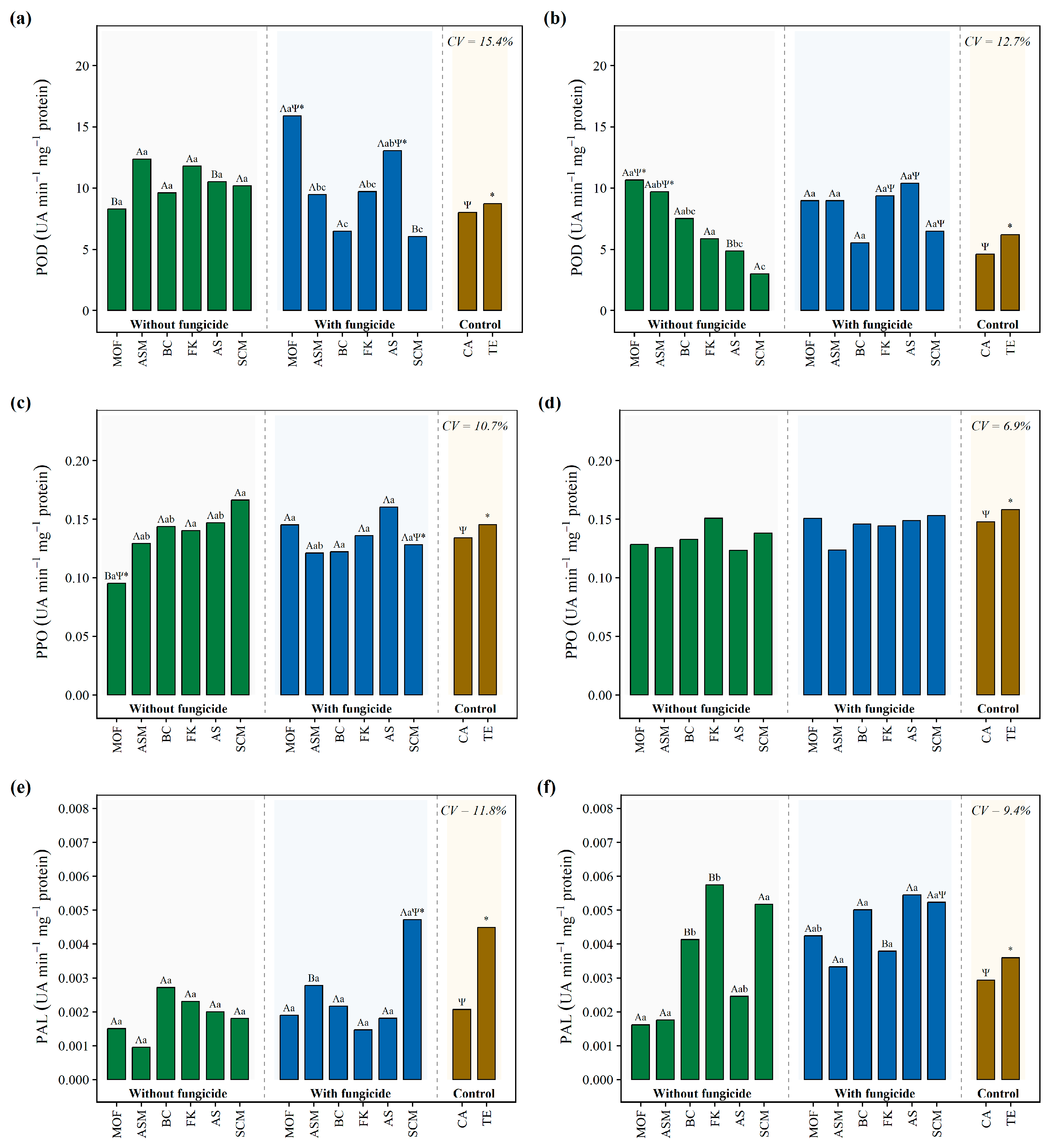
No differences in the peroxidase activity were observed among plants cultivated in Areia treated with the inducers without fungicide or for the control with fungicide (
Figure 3a). In contrast, plants treated with phosphorylated mannan-oligosaccharide combined with fungicide showed higher peroxidase activity, superior to plants treated with silicate clay combined with fungicide (
p ≤ 0.01), the treatments with fungicide, and the control (
Figure 3a).
Plants cultivated in Lagoa Seca and treated with phosphorylated mannan-oligosaccharide and acibenzolar-S-methyl without fungicide showed higher peroxidase activity and differed from the fungicide treatment and the control (
Figure 3b). However, plants treated with Ca and Mg silicate and silicate clay showed the lowest peroxidase activity and significantly differed from the other inducers without fungicide. No differences were observed among the treatments when combined with fungicide. Nevertheless, treatment with K phosphite and silicate clay promoted higher peroxidase activity (
p ≤ 0.01) when compared to the fungicide and control (
Figure 3b).
The treatment with phosphorylated mannan-oligosaccharide resulted in lower polyphenoloxidase activity when applied without fungicide in plants cultivated in Areia, and was significantly different (
p ≤ 0.01) from those treated with the fungicide treatment and the control (
Figure 3c). However, when combined with fungicide, a positive effect was observed, suggesting synergism between the resistance inducer and the fungicide carbendazim in the enzymatic activity. The polyphenol oxidase activity was higher in the remaining treatments and similar between them (with and without fungicide), even when compared with the control and the fungicide. Nevertheless, no significant difference was observed for polyphenol oxidase activity in plants cultivated in Lagoa Seca (
Figure 3d). These results indicate that polyphenol oxidase activity is not necessarily involved in the defense process of lima bean plants against
C. truncatum, as observed for different enzyme activities, see
Supplementary Materials.
The treatment with acibenzolar-S-methyl promoted phenylalanine ammonia-lyase activity at a significantly lower level (
p ≤ 0.01) than that observed in the treatment with fungicide and control on plants cultivated in Areia (
Figure 3e). When Ca and Mg silicate were combined with fungicide, it promoted a significantly higher phenylalanine ammonia-lyase activity than the application with other inducers and the fungicide. The application of K phosphite without fungicide resulted in a phenylalanine ammonia-lyase activity significantly higher (
p ≤ 0.01) than the other resistance inducers in plants cultivated in Lagoa Seca (
Figure 3f). However, no significant differences were observed among the inducers, the fungicide, and the control when combined with the fungicide. Thus, a synergistic effect of the fungicide with the resistance inducers, except for K phosphite, was observed, resulting in increased phenylalanine ammonia-lyase activity.
The CO
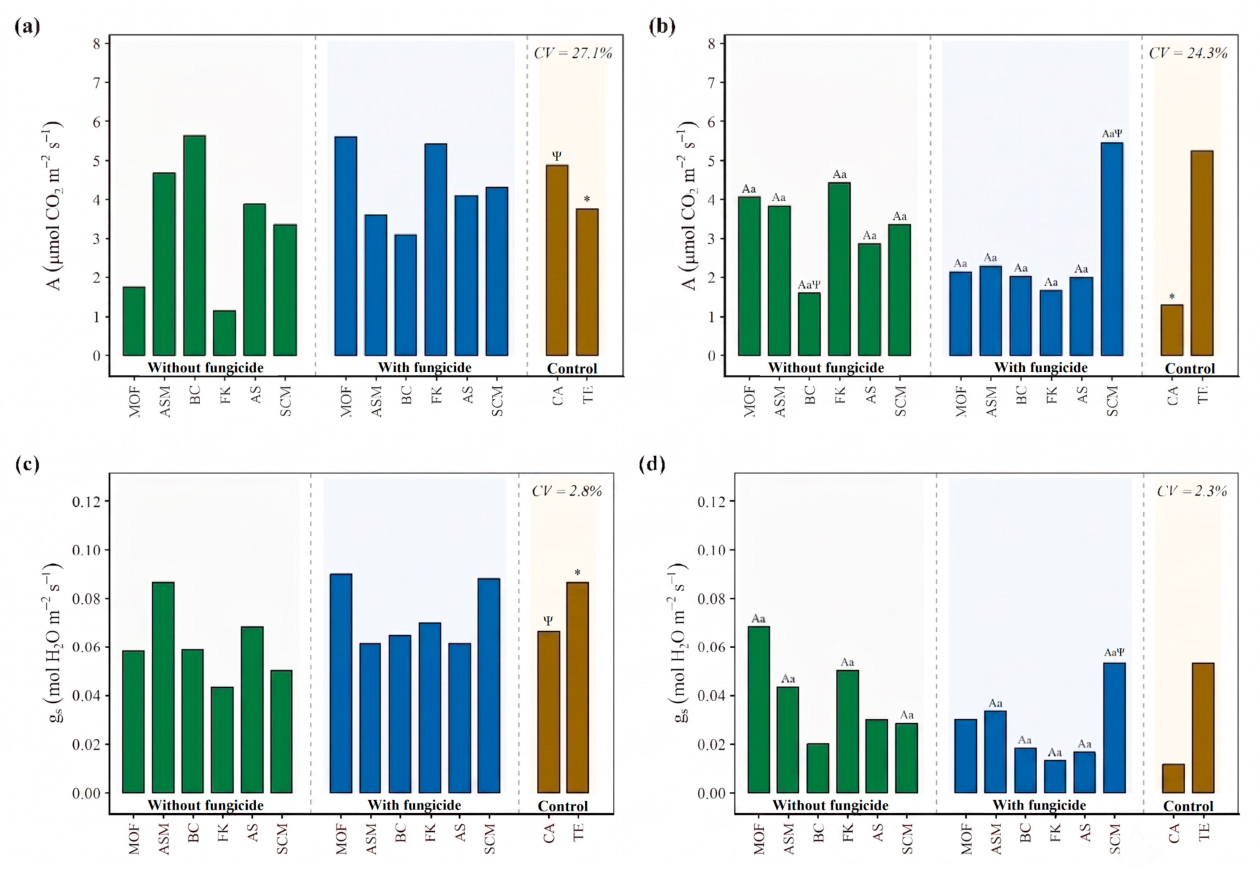
2 net assimilation was similar among all treatments and both locations (
Figure 4a,b), except for the Ca and Mg silicate treatment combined with fungicide in Lagoa Seca, which showed higher CO
2 net assimilation than the application with fungicide (
Figure 4b). Additionally, no significant effects of the inducers on stomatal conductance were observed, except for the treatment with phosphorylated mannan-oligosaccharide without fungicide, in plants grown in Lagoa Seca, which had a stomatal conductance higher than that observed for the treatment with fungicide (
Figure 4d).
There was no significant difference among any of the treatments for the CO2 concentration in the plants. The values ranged from 254.0 to 349.3 µmol of CO2 m−1 s−1 in plants cultivated in Areia and from 242.6 to 340.1 µmol of CO2 m−1 s−1 in plants cultivated in EMPAER, Lagoa Seca.
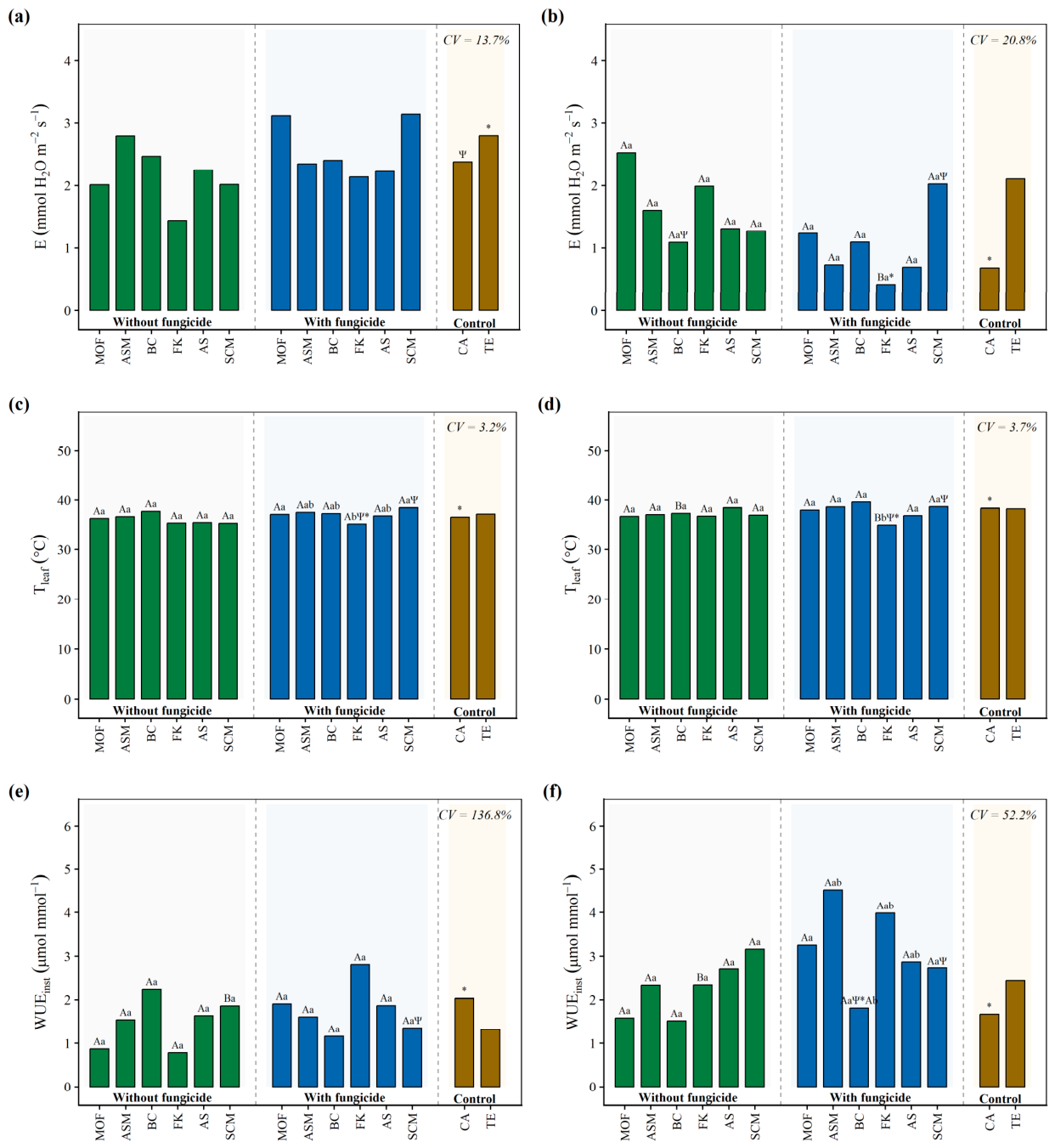
The transpiration was not significantly different among treatments in plants cultivated in Areia (
Figure 5a). In Lagoa Seca, plants treated with phosphorylated mannan-oligosaccharide showed higher transpiration than those treated with the fungicide (
Figure 5b). Nevertheless, the K phosphite combined with fungicide resulted in lower transpiration compared to the control.
The application of inducers without fungicide did not affect leaf temperature in plants from either location (
Figure 5c,d). However, when combined with the fungicide, K phosphite resulted in lower leaf temperature at both locations and differed (
p ≤ 0.01) from the fungicide and the control treatments (
Figure 5c,d).
The application of K phosphite combined with fungicide in plants grown in Areia promoted a higher instantaneous water use efficiency when compared to the treatment with only K phosphite (
Figure 5e). A similar effect was observed when acibenzolar-S-methyl was combined with fungicide in Lagoa Seca (
Figure 5f). In Areia, there was no difference between the different inducers and treatments with fungicide and the control (
Figure 5e). However, when combined with the fungicide, acibenzolar-S-methyl promoted a higher instantaneous water use efficiency than the fungicide and the control treatment in plants grown in Lagoa Seca (
Figure 5f). Moreover, K phosphite combined with fungicide also resulted in instantaneous water use efficiency superior to that observed for the fungicide alone.
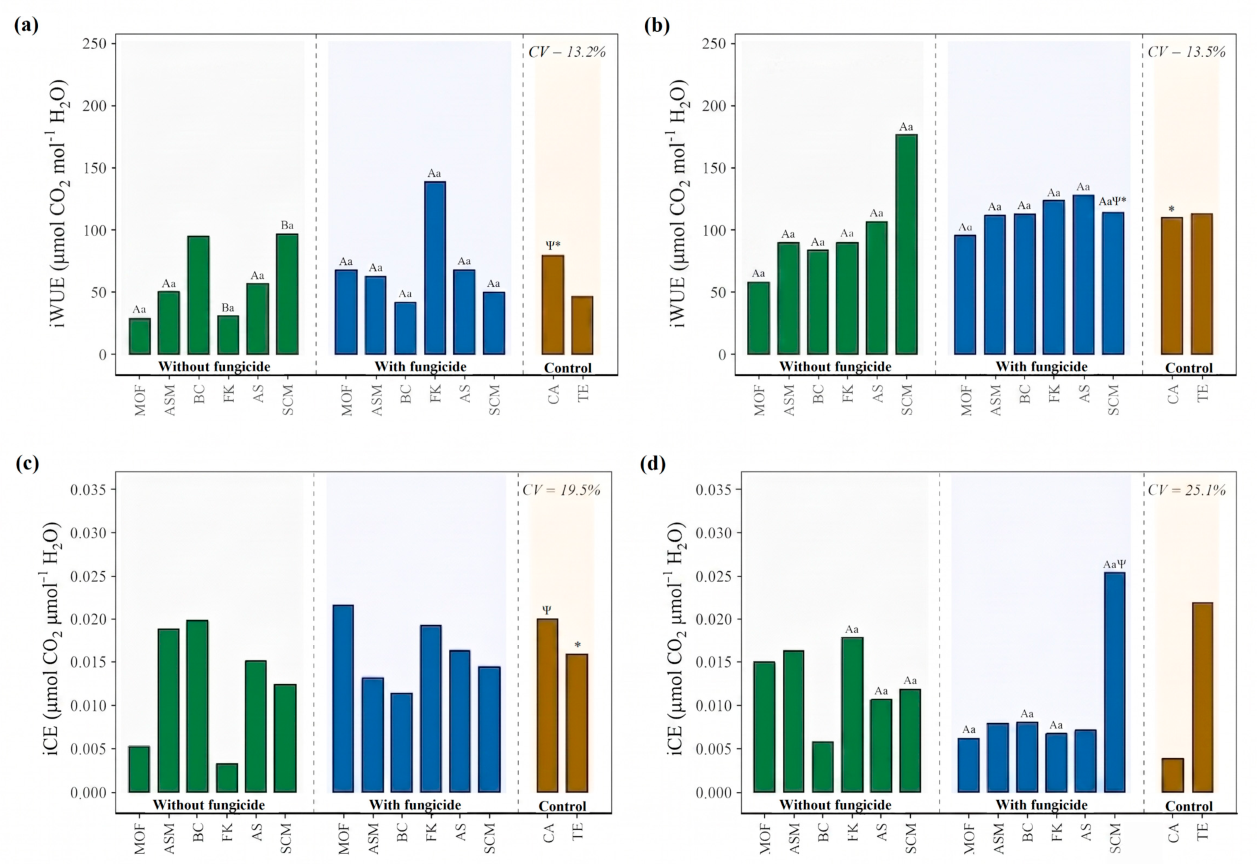
The intrinsic water use efficiency was also higher when K phosphite was applied with fungicide and differed (
p ≤ 0.01) to the application with K phosphite alone in plants cultivated in Areia (
Figure 6a). However, no significant difference was observed for this variable between treatments in plants cultivated in Lagoa Seca (
Figure 6b).
In general, there were no significant differences for the instantaneous carboxylation efficiency on plants grown in Areia under treatment with the different inducers. Differently, in Lagoa Seca, the treatments with Ca and Mg silicate combined with fungicide showed higher instantaneous carboxylation efficiency than that observed in the treatment with fungicide and the control (
Figure 6d).
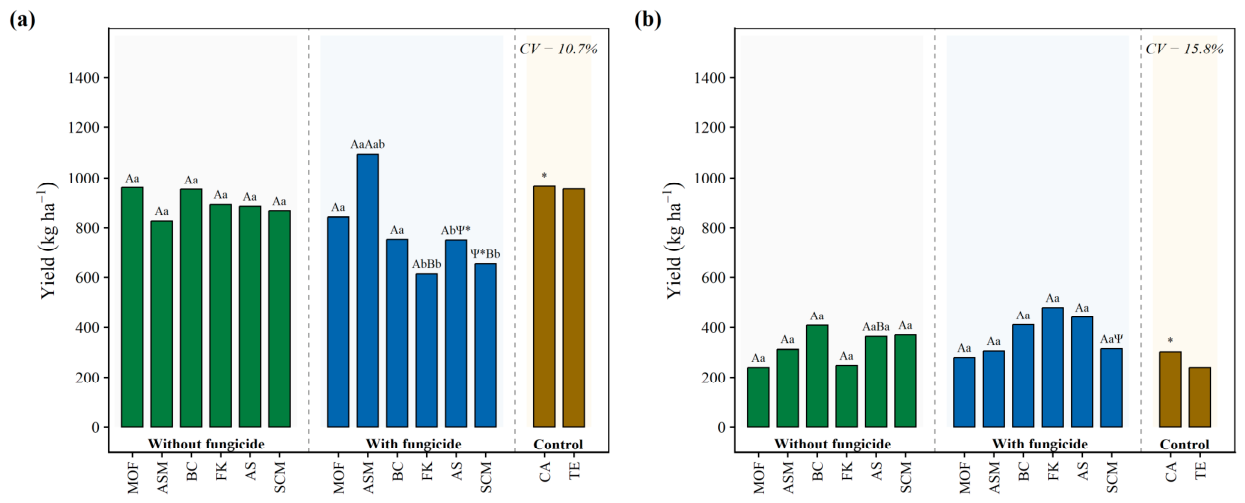
Yield was similar for plants treated with inducers without fungicide at both locations and when combined with fungicide in Lagoa Seca (
Figure 7a,b). Acibenzolar-S-methyl combined with fungicide promoted greater yield than the treatments with K phosphite, citrus biomass, and silicate clay, Ca and Mg silicate, also combined with fungicide (
Figure 7a). However, this treatment did not differ from the fungicide and the control. The treatment with K phosphite combined with fungicide resulted in a significantly lower yield (
p ≤ 0.01) than the treatment with fungicide and control (
Figure 7a).
An additional effect of treatment with K phosphite combined with fungicide was verified on lima bean yield cultivated in Lagoa Seca, which was only statistically different (
p ≤ 0.01) when this resistance inducer was applied without the fungicide (
Figure 7b).
4. Discussion
A higher anthracnose incidence in host plants is generally associated with climatic conditions favorable to the fungus development, such as moderate temperatures, high relative humidity, and long periods of leaf wetness [
10]. However, plant resistance to certain pathogens is dependent on the host genotype [
3,
10], the resistance inducer characteristics [
10,
15] and the metabolic status of the plant, since the activation of the plant immune system will often result in energy cost, which can eventually reduce yield performance [
26].
Lima bean plants cultivated in Areia showed greater potential for resistance to
C. truncatum infection, assessed by the lower area under the disease progress curve and disease index compared to plants cultivated in Lagoa Seca. This was probably due to the lower precipitation in Lagoa Seca (
Figure 1), which resulted in plants with limited energy status and higher disease susceptibility.
The variation in the efficiency of the inducers among the experimental environments can be attributed to the interaction between the induced defense mechanisms and the prevailing microclimatic conditions. In Areia, the high rainfall (305.2 mm) and high relative humidity (91.5%) favored the establishment and progression of anthracnose, imposing greater inoculum pressure and successive infections throughout the crop cycle. Under these conditions, a favorable environment may have reduced the distinction between treatments regarding disease suppression. In contrast, in Lagoa Seca, the low rainfall (40.8 mm) and lower relative humidity (76.2%) created a water stress environment in which the efficiency of the inducers was associated not only with resistance to anthracnose, but also with the modulation of physiological and biochemical responses related to drought tolerance. Thus, the differential performance observed between the environments highlights the dependence of the inducer efficacy on environmental conditions and the intensity of disease pressure.
The coexistence of an AUDPC not significantly different from the control (
Figure 2a) with a significantly superior final DI (
Figure 2c) can be explained by the heterogeneous temporal dynamics of infection in this treatment. As AUDPC integrates multiple assessment points throughout the cycle, an initial disease progression similar to the control is capable of maintaining the integrated value within the non-significant range, even if the severity increases more markedly in the final stages of the culture. This pattern is biologically consistent with one transient silicon-mediated structural protection in the early phases, followed by greater susceptibility in the finals stages, possibly arising from antagonism between silicon activated by the hormone signaling pathways and the systemic effect of carbendazim.
The higher peroxidase activity is considered part of the systemic resistance mechanism induced against
C. lindemuthianum in common bean (
Phaseolus vulgaris L.) and
C. truncatum in pepper (
Capsicum annum L.) [
13,
14,
27]. Peroxidase activity is a robust plant response to biotic and abiotic stresses that play a central role in eliminating reactive oxygen species that can be harmful to cells [
28]. When combined with fungicide, the treatment with phosphorylated mannan-oligosaccharide promoted the highest peroxidase activity and was, therefore, the most efficient in inducing resistance against
C. truncatum in plants cultivated in Lagoa Seca (
Figure 3a,b).
Higher phenylalanine ammonia-lyase activity may indicate changes in the phenylpropanoid pathway, indicating the activation of plant defense mechanisms, such as the synthesis of lignin, phenolic compounds, and quinones, which can be boosted by resistance inducers [
13]. The application of K phosphite without fungicide showed higher potential to induce plant defense in lima bean plants, related to phenylalanine ammonia-lyase, than phosphorylated mannan-oligosaccharide and acibenzolar-S-methyl (
Figure 3e–f).
According to Silva et al. [
13], common bean plants under
C. lindemuthianum infection show the increased activity of defense-related enzymes in the first periods after contact with the pathogen, which results in a metabolic cost for the plants, consequently reducing subsequent enzyme activity.
In our study, a slight difference was observed for the physiological variables, such as gas exchange, stomatal conductance, water and carboxylation use efficiency, and yield, indicating that, regardless of the damage level caused by anthracnose, the plants had similar losses, as similarly reported by Blue et al. [
29].
Despite the low precipitation observed in Lagoa Seca, the lower lima bean yield compared to that obtained in the area located in Areia may be related to the high metabolic cost of the plants in defense against the pathogen [
26]. Additionally, the lower yield may be due to the high anthracnose incidence, which causes qualitative and quantitative losses, destroying pods and seeds [
7,
8,
9].
Together, the significant variation in the plant’s responses to anthracnose, especially the different effects of the resistance inducers in plants from the two growing areas, may be related to the high genetic variability of this species [
3], which favors the occurrence of plants with greater potential for resistance development.
The increased anthracnose index observed with the combination of Ca and Mg silicate + carbendazim suggests a possible non-additive interaction between the treatments. Silicon acts predominantly through the induction of structural, physiological, and biochemical defense responses, including lignin deposition, phenolic compounds, and the modulation of hormonal pathways related to pathogen resistance. Thus, the observed result may be related both to the variability of the response induced by silicon and to the possible reduction in the fungicide’s efficacy against the pathogen population present in the experimental area, a hypothesis that requires specific investigation in future studies.




 and
and