1. Introduction
Greenhouse cultivation has become an increasingly popular approach in agriculture, as it ensures crop quality and productivity [
1,
2,
3]. In tropical regions where the climate is usually hot, cooling is necessary to provide suitable air temperatures for crop growth during greenhouse cultivation. As a heat-sensitive crop, for instance, strawberries grow best with daytime temperatures around 20–25 °C and nighttime temperatures between 10 and 12 °C [
4]. One of the primary challenges of greenhouse cultivation, however, is that greenhouses consume energy via environmental control systems, with greenhouse cooling resulting in increased energy consumption during the hot season in tropical regions in particular [
5,
6].
Both passive and active cooling strategies are used in greenhouse cultivation, and several studies have been conducted on environmental control systems for entire greenhouse areas. Environmental control systems, including passive cooling via natural ventilation [
7,
8,
9], active cooling via evaporative cooling [
10,
11], earth–air heat exchangers [
12,
13,
14], and even intensive cooling systems, such as air-conditioning systems, are used to provide suitable environments for greenhouse crops. However, traditional passive cooling methods are often insufficient, whereas active cooling systems tend to be energy-intensive, making them economically disadvantageous under certain conditions.
Due to the high use of energy in greenhouse production, researchers have also explored innovative cooling methods for greenhouses. Abedrabboh et al. [
15] developed a new greenhouse design for hot and arid regions that included a fully shaded roof with open diffuse lenses. The authors concluded that this greenhouse model could remarkably reduce the cooling load during hot seasons—by 85.6%—compared to a conventional greenhouse. Ashraf et al. [
16] examined a desiccant dehumidification-based, Maisotsenko-cycle, evaporative cooling system for greenhouse air conditioning in Pakistan, reporting that a maximum air temperature gradient of approximately 21.9 °C (considered optimal for most greenhouse crops) could be achieved under ambient air conditions of 39.2 °C. Ma et al. [
17] investigated a nanofluid-based passive roof in a glass greenhouse to mitigate high temperatures during summer. To evaluate the cooling performance, a small-scale glass greenhouse model was constructed, with the setup including three roof configurations, each using a different insulation medium: air, water, and a nanofluid. The results revealed that nanofluid roofs provided superior temperature reduction compared to water and air roofs, which achieved maximum indoor cooling temperatures of 5.1 °C and 8.7 °C, respectively. The results of these studies demonstrate that air can be cooled down in greenhouses used for crop cultivation.
As previously mentioned, earth–air heat exchangers are one type of environmental control system used in greenhouses due to their potential for effective cooling. Yang et al. [
18] investigated the performance of earth–air heat exchangers for an agricultural greenhouse, with each earth–air heat exchanger, measuring 8 inches in diameter (approximately 0.216 m), installed underneath the ground surface at approximately 0.3 m. They discovered that the earth–air heat exchanger system reached a cooling capacity of 1.5–4.5 kW in the summer. Additionally, they analyzed the energy consumption of the heat exchanger system, finding that the earth–air heat exchanger system could save energy by approximately 70% compared to the traditional heat pump system.
Ground-source heat pumps are another option available for cooling or heating in a greenhouse, as they are increasingly adopted for their ability to increase energy efficiency and reduce energy use [
19]. Ahsan et al. [
20] examined the performance of a hybrid geothermal heat pump system integrated with a cooling tower, specifically optimized for greenhouse operations in Houston, Texas, of hot and humid climates. The results indicated that a hybrid ground-source heat pump system coupled with a wet cooling tower was found to reduce cooling energy consumption by up to 10.8% compared to a standalone ground-source heat pump. Zhou et al. [
21] evaluated the operation of a hybrid ground-source heat pump, which consisted of a ground-source heat pump, photovoltaic thermal panels, and cooling towers using simulation. Nikolić et al. [
22] investigated energy optimization of a solar greenhouse with a photovoltaic system and a ground-source heat pump. These studies revealed that hybrid ground-source heat pump systems can reduce energy consumption in greenhouses.
Moreover, unlike the aforementioned environmental control systems in greenhouses, a local climate control system using a heat exchanger for climate control, placed near crops, was used in this study. Fin-and-tube heat exchangers can offer high thermal performance [
23,
24]. However, for local area cooling, fins can accumulate dirt in humid areas, like agricultural environments, resulting in challenges for maintenance. In addition, the fin-and-tube heat exchanger may obstruct the sunlight, which could negatively affect plant growth. Therefore, a serpentine-shaped heat exchanger was introduced for local area cooling due to the fact that it enables sunlight penetration and is easy to maintain in the humid areas of agricultural fields.
Generally, the pipe diameter and pipe spacing of a heat exchanger have a significant impact on the heat transfer surface area, pressure drop, and flow rate. Abd et al. [
25] evaluated the effect of shell diameters and baffle spacing on the pressure drop and heat transfer coefficient of a shell-and-tube exchanger. Abu-Hamdeh et al. [
26] studied the effect of 12 various helical microdouble-tube heat exchanger configurations on heat transfer performance and fluid flow characteristics, finding that the configurations varied with pitch length and turn number. These studies demonstrated that variations in configuration parameters significantly affect heat transfer performance in heat exchangers.
Ye et al. [
27] investigated the performance of cold radiant panels with varying heat transfer pipe spacings. Their study revealed that cold radiant panels with variable pipe spacing significantly improved overall heat transfer performance compared to conventional panels with equal pipe spacing, resulting in a more uniform surface temperature distribution and lower average surface temperatures. Qi et al. [
28] analyzed the impact of wall thickness, outer diameter, and spacing of the heat tubes on the heat transfer performance of the double-layer heat exchanger of lead-bismuth reactors. Their results stated that the design of the double-layer heat exchanger increased the optimized overall heat transfer coefficient by 5.79%.
While prior studies have examined pipe diameter and pipe spacing of the heat exchanger of the cooling applications, the research gap exists in examining the effect of pipe diameter and spacing specifically on the performance of heat exchangers for local cooling in greenhouse cultivation. Therefore, this study addresses this gap by investigating the cooling performance of heat exchangers with varying pipe diameters and pipe spacing.
As the local area cooling method has not been widely investigated in different heat exchanger configurations, the novelty of this study lies in the optimization of heat exchanger configuration in terms of pipe diameter choice and pipe spacing for localized cooling in greenhouses.
The aim of this study, therefore, was to conduct a comparative analysis of the performance of three serpentine-shaped heat exchangers in local area cooling for crop cultivation in greenhouses. As local air temperatures near crops are important for crop growth, local air temperatures in the area below heat exchangers used for cooling were investigated. The heat flux and pressure drop of the three serpentine-shaped heat exchangers will be described later in this paper. This study could contribute to the understanding of how heat exchanger configuration parameters influence the performance of local cooling systems. The results of this study will be useful for appropriately configuring the heat exchanger used for local cooling in greenhouse crop farming.
2. Materials and Methods
2.1. Experimental System Setup
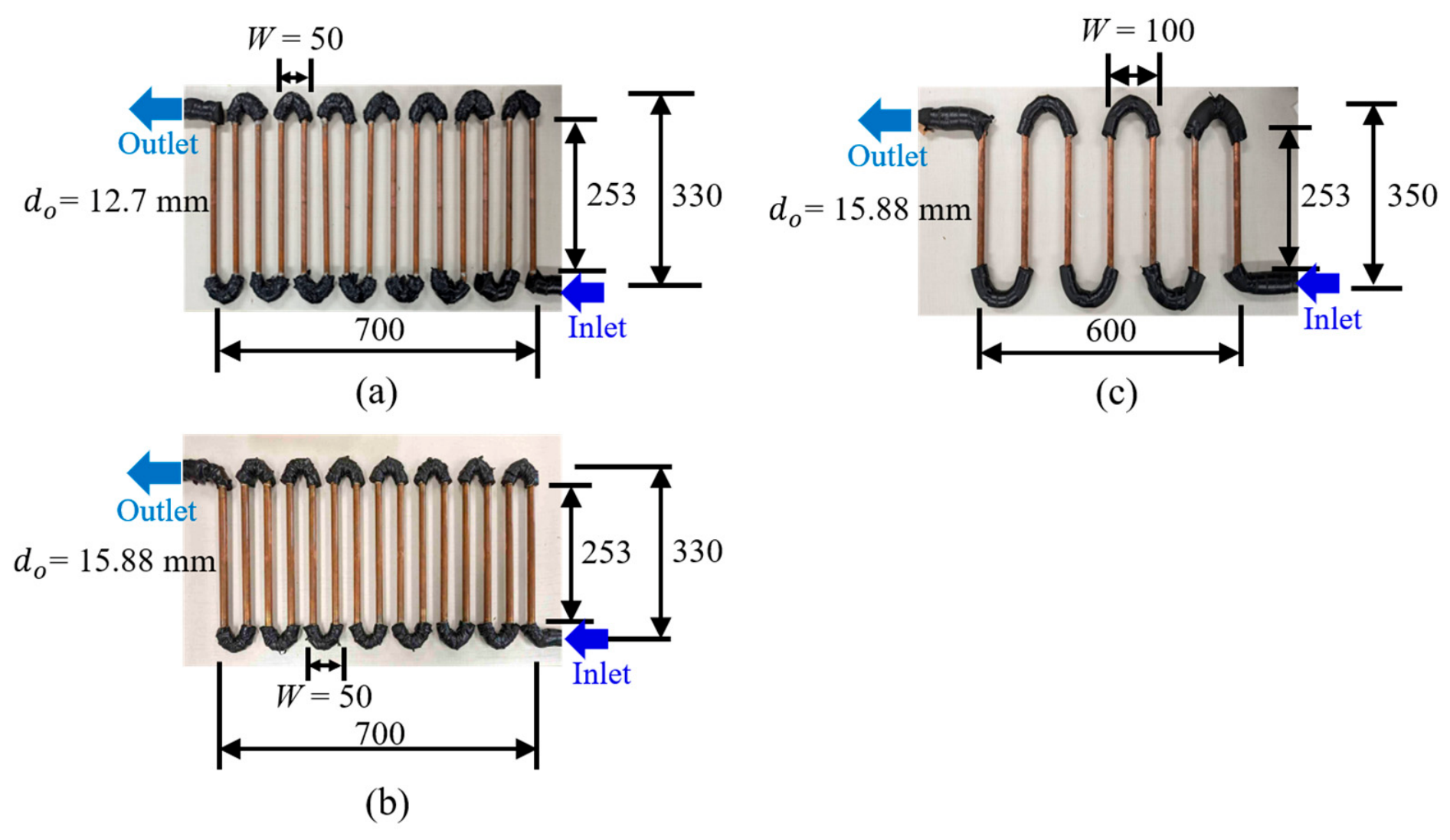
Figure 1 shows the arrangement of the three serpentine-shaped copper pipes used as heat exchangers. The lengths and widths of the Shape 1 and Shape 2 heat exchangers were 700 mm and 253 mm, respectively, whereas the Shape 3 heat exchanger had dimensions of 600 mm by 253 mm. The copper pipes were assembled into well-insulated U-bends. The dimensions and arrangement of the heat exchangers were considered with dimensions that allowed for coverage of a small rectangular area within the greenhouse plantation.
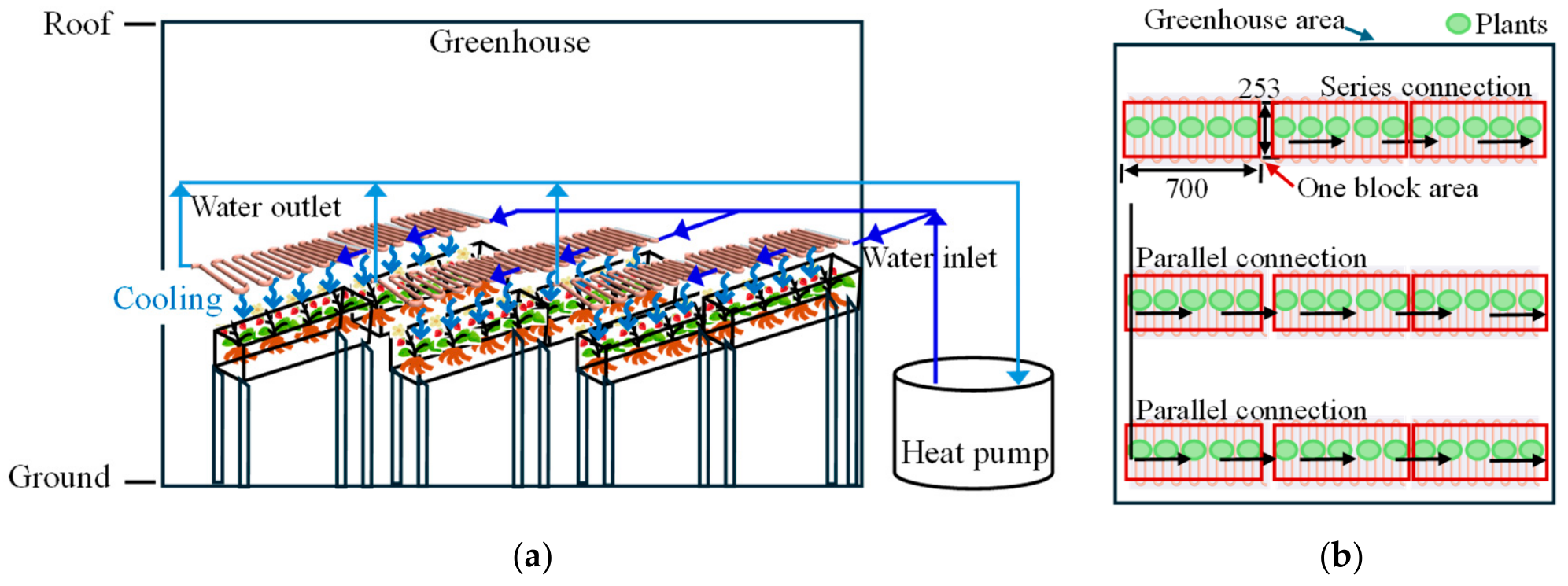
Figure 2 shows the concept of the heat exchanger installation and connection. In practical greenhouse cultivation, the heat exchangers will be installed above the crops to provide cooling, as shown in
Figure 2a. The heat exchangers will then be integrated with each other for series connection and those to be parallel connection, as shown in
Figure 2b. The unit-element heat exchanger can cover a small rectangular area of three to four plants within the plantation.
The specifications of the heat exchangers are listed in
Table 1. The outer diameters of the copper pipes were 12.7 mm and 15.88 mm for all three heat exchanger shapes. The spacing between each pipe,
W, for the Shape 1 and Shape 2 heat exchangers was 50 mm, whereas the spacing for the Shape 3 heat exchanger was 100 mm. These pipe diameters and pipe spacings were considered of minimal shade for crops. The thickness of the copper pipes was 0.8 mm. The inner pipe diameter can be calculated from the outer pipe diameter minus twice the thickness of the pipe. The number of pipes was 15 for the Shapes 1 and 2 heat exchangers, whereas the number of pipes was 7 for Shape 3. The pipe surface area was 0.151, 0.189, and 0.088 m
2, respectively.
This study is centered on strawberry crops for greenhouse farming in tropical regions because strawberries are heat-sensitive crops whose growth, flowering, and fruit quality are significantly affected by elevated temperatures. This makes them the ideal candidate crop for evaluating the effectiveness of serpentine-shaped heat exchangers. As the experiments in our study were performed without actual crops present, we conducted our study under the assumption that heat exchangers would be installed above the crops for local cooling during strawberry cultivation. To achieve this setup, a heat exchanger was mounted on a frame, and experiments were performed using Shape 1, Shape 2, and Shape 3 heat exchangers within the same test section. These unit-element heat exchangers can cover three to four plants, and their heat transfer performance was tested.
2.2. Data Measurement and Collection
As stated earlier, the heat exchanger will be installed closely above the crops for local cooling in the real greenhouse. Air temperatures near crops are referred to as local air temperatures. To investigate the optimal local air temperature required for strawberry crop cultivation, the air temperature in the area below the heat exchanger was evaluated. The local air temperatures near the crops are equivalent to the air temperatures in the area below the heat exchanger. Hence, air temperatures in the area below the heat exchanger are local air temperatures for the crops. The air temperature in the area above the heat exchanger was also investigated and served as a reference; therefore, air temperatures both below and above the heat exchanger were measured.
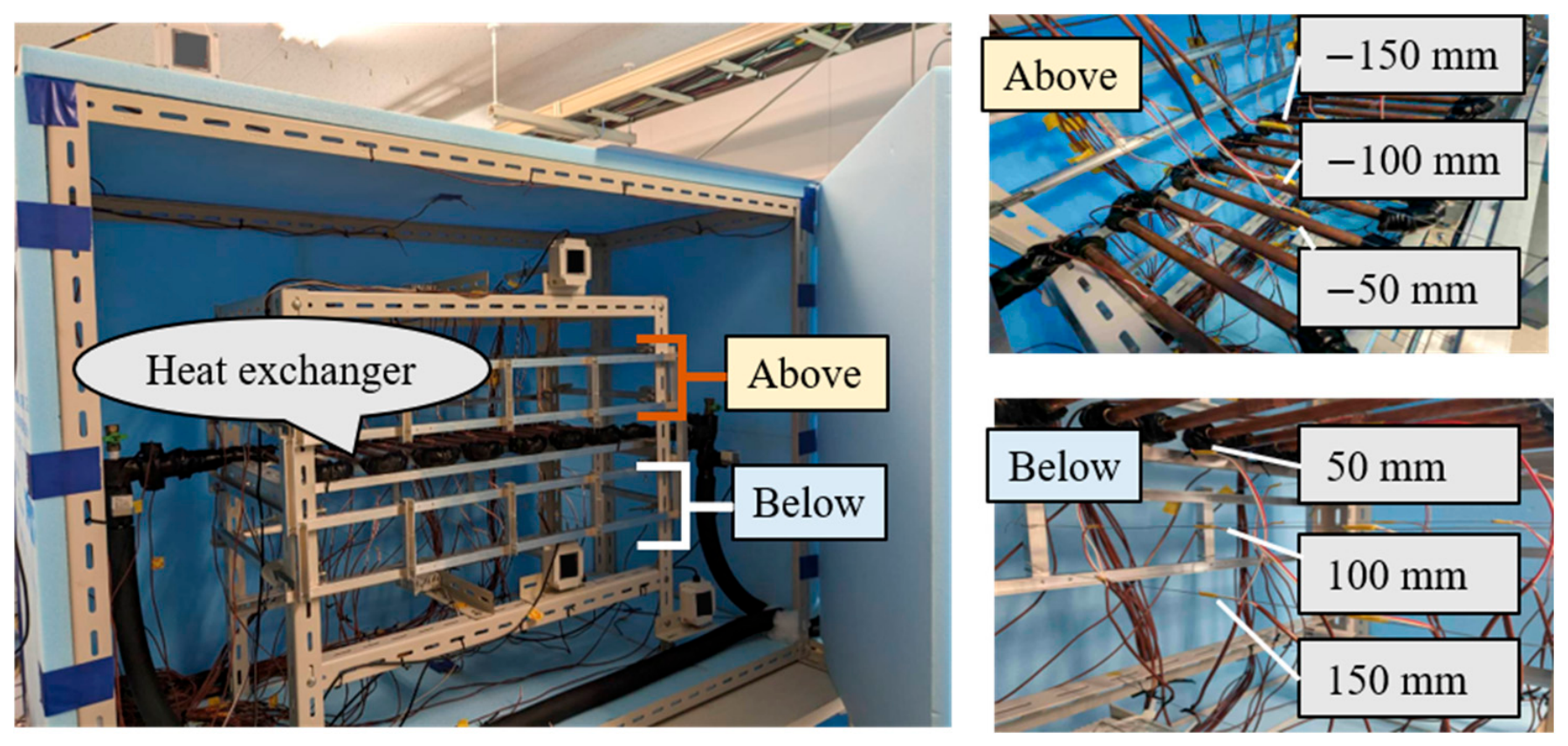
Figure 3 illustrates the air temperature measurements in the areas below and above the heat exchanger. Three vertical layers, spaced 50 mm apart, were placed in the area below the heat exchanger—50 mm, 100 mm, and 150 mm. Considering buoyant force, a positive distance was defined as downward. Three vertical layers were also placed above this area, and nine thermocouples were installed horizontally in each vertical layer, resulting in a total of fifty-four thermocouples across the six layers. The vertical uncertainty of the thermocouple positions in each horizontal layer was ±2 mm.
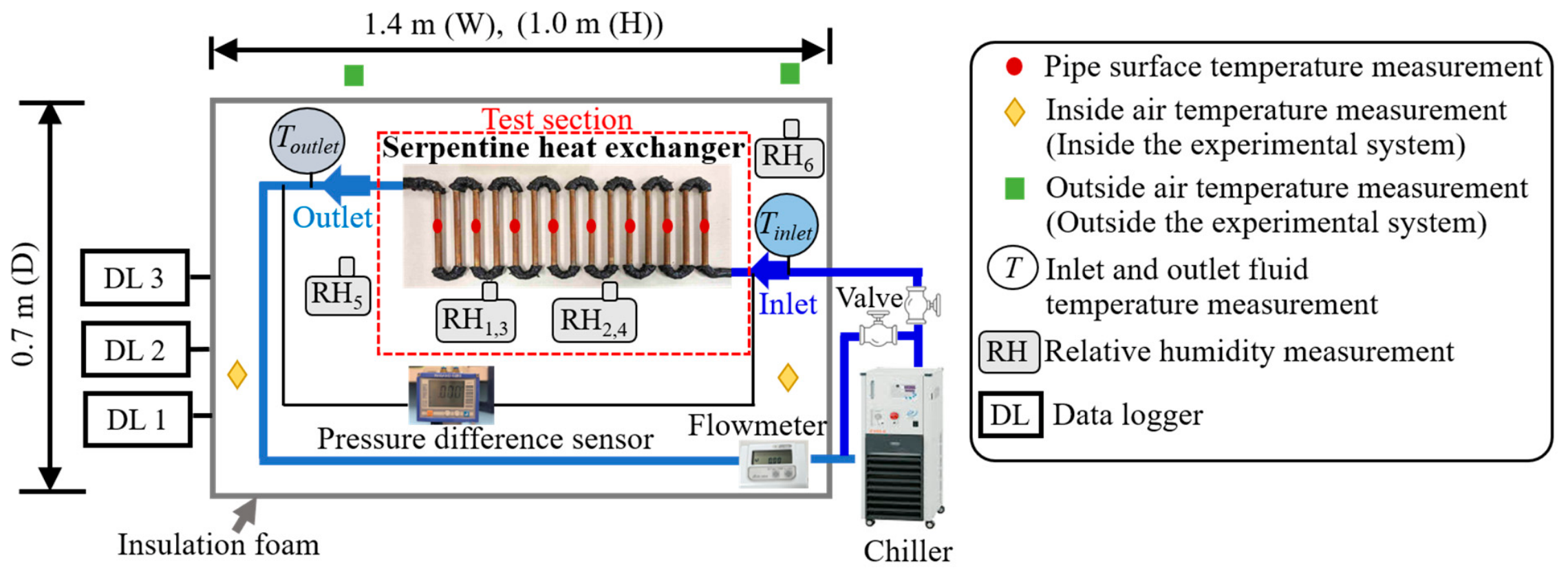
Figure 4 shows the layout of the experimental system, which consisted of a heat exchanger, a chiller to cool the water fluid, a globe valve to control the flow rate, thermocouples for measuring pipe surface temperatures, as well as room air, outside air, and local air temperatures, resistance temperature detectors for inlet and outlet fluid temperature measurements, and a pressure difference sensor to measure the pressure drop across the heat exchanger. Humidity sensors were used for reference measurements.
To minimize temperature measurement inaccuracies, all temperature sensors were calibrated, with T-type thermocouples (Chino, Tokyo, Japan) applied in order to measure local air temperatures. Prior to the experiments, all thermocouples were calibrated against a carefully selected, stable reference temperature. The measurement uncertainty of the T-type thermocouples was ±0.2 °C. The same calibration procedure was performed for the resistance temperature detectors (Pt100, Chino, Tokyo, Japan), which were calibrated under static conditions using a stable reference temperature prior to the experimental period. Their measurement inaccuracy was ±0.02 °C after calibration.
A flow meter (NW05-NTN, Aichi Tokei Denki, Nagoya, Japan) was used to monitor the flow rate, and a pressure difference sensor (GC 50, Nagano Keiki, Tokyo, Japan) was employed to measure the pressure drop. Three data loggers were used to collect the experimental data.
To prevent the water from freezing, ethylene glycol (40% by volume) was mixed with water (60% by volume), and this water mixture was used as the working fluid in this study. The outside air temperature was maintained at approximately 25 °C during the experimentation period. The overall dimensions of the experimental system are as follows: 1.4 m in width, 0.7 m in depth, and 1.0 m in height. Additionally, the experimental system was separated from the laboratory by using an insulation foam board.
2.3. Experimental Conditions
The inlet fluid temperature and fluid flow rate were established as experimental conditions. For all the heat exchangers, the inlet fluid temperature was varied from 5 °C to 10 °C with 5 °C intervals. The fluid flow rate was varied from 0.3 to 3.0 L/min, using 0.2 L/min increments within the range of 0.3–1.5 L/min and 0.5 L/min increments within the range of 1.5–3.0 L/min. The ranges 5 °C to 10 °C and 0.3 to 3.0 L/min were chosen as experimental conditions, given that they led to a reduction in local air temperature based on the preliminary experimental tests. The Reynolds number (Re) ranged from 50 to 1394 for the flow rates of 0.3 to 3.0 L/min, corresponding to the three heat exchanger shapes.
As stated earlier, the unit-element heat exchangers will be connected in the series and parallel for greenhouse applications. Low flow rates are considered suitable for localized cooling in greenhouses. Moreover, the use of low flow rates can reduce pumping power requirements, which may contribute to lower energy consumption of the heat exchanger system.
When the flow rate was higher than 1.3 L/min, the inlet and outlet fluid temperature difference became very small, resulting in low accuracy since the heat exchangers are unit-element heat exchangers. This very small temperature difference could lead to inaccuracy in computing the heat flux in the heat exchanger. Hence, the results of flow rates higher than 1.3 L/min (i.e., from 1.5 to 3.0 L/min) were omitted. Furthermore, a decrease in flow rate, i.e., flow velocity, also reduces pressure loss, thereby contributing to energy conservation.
Heat transfer was determined from the data obtained under steady-state conditions as follows:
where
is the heat flux from the copper pipe surfaces (W/m
2),
ρ is the working fluid density (kg/m
3),
is the volumetric flow rate of the working fluid (m
3/s),
is the fluid-specific heat (J/(kg
K)),
is the outer surface area of the copper pipe without the U-bends (m
2), and
(=
) is the outlet and inlet fluid temperature difference (°C).
and
represent the inlet and outlet fluid temperatures (°C), respectively. Note that a flow rate of 1 L/min corresponds to 1.67 × 10
−5 m
3/s.
The uncertainty of the computed heat flux was evaluated using the method of Kline and McClintock [
29], in which the total uncertainty of a derived quantity is estimated by root-sum-squaring the contributions of all independent measurement uncertainties. It is as follows:
where
represents the uncertainties of the variables.
The uncertainty of the heat flux is in the range between 0.81% and 6.06% for all the experimental conditions.
The Reynolds number,
Re, can be computed from the following equation:
where
represents the working fluid velocity (m/s),
represents the internal diameter of the copper pipe (m), and
represents the working fluid dynamic viscosity (Pa
s).
3. Results
The cooling performance of the three heat exchangers was evaluated using flow rates ranging from 0.3 to 1.3 L/min due to the low accuracy in measuring fluid temperature differences, , when flow rates are greater than 1.3 L/min. In this study, the air temperatures near the crops are referred to as local air temperatures; therefore, the local air temperature around the heat exchangers was investigated in relation to crop cultivation.
3.1. Local Air Temperatures
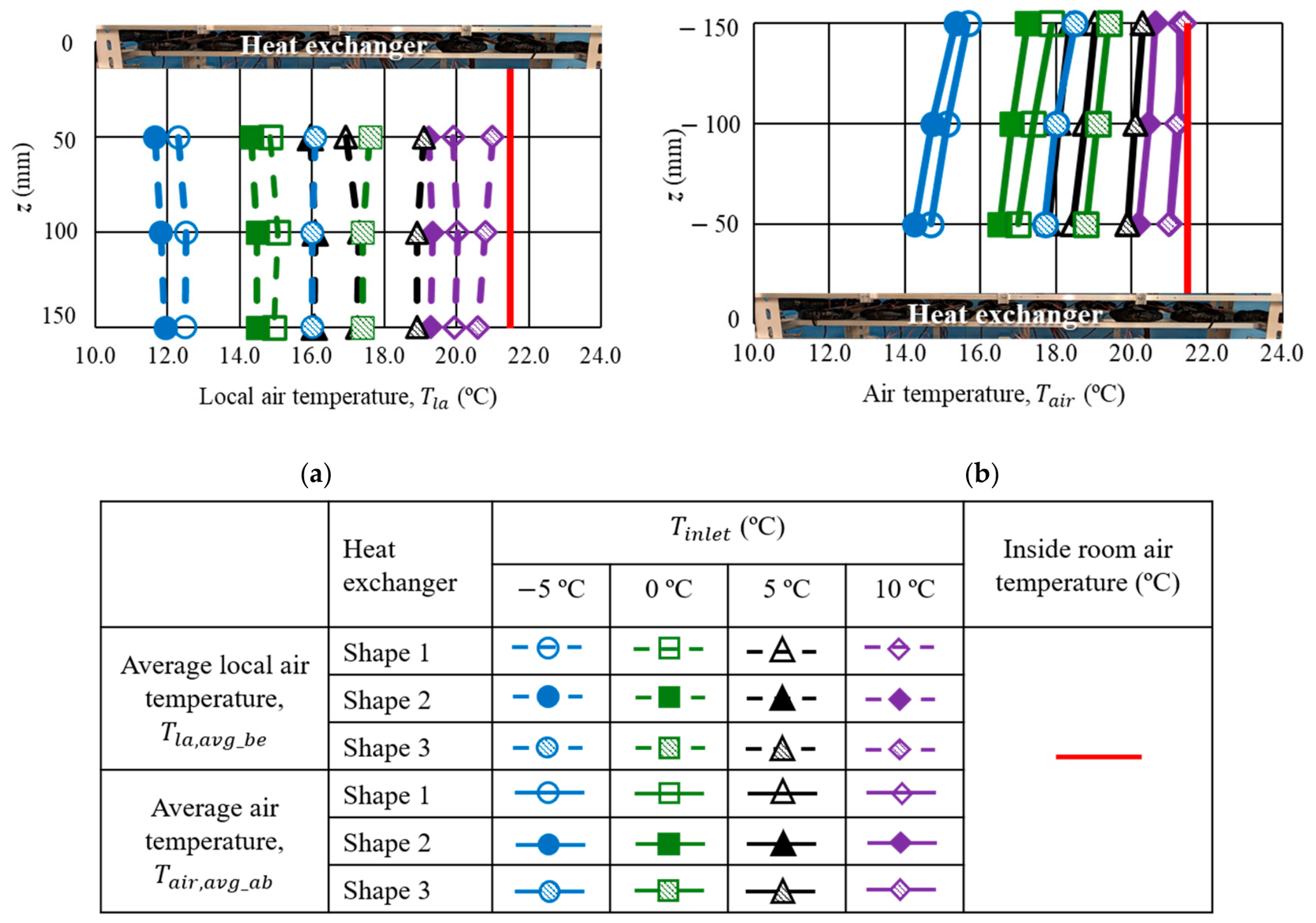
Figure 5 shows the average local air temperature profiles at each vertical distance layer in the area below and average air temperature profiles at each vertical distance in the area above the heat exchangers for Shapes 1, 2, and 3. The data presented correspond to a flow rate of
= 0.9 L/min as a reference for all inlet water temperatures under steady-state conditions. The local air temperatures in each vertical layer in the area below, measured by the nine thermocouples, were averaged. The average local air temperatures of each layer in the area below the heat exchanger are denoted as
. The same was applied for the average air temperatures in the area above the heat exchanger, and they are denoted as
. The
and
values for the Shape 2 heat exchanger were moderately lower than those for Shapes 1 and 3. The
of the Shape 2 heat exchanger was 1 to 4 °C lower than that of Shape 1 and Shape 3 for all inlet fluid temperatures. The surrounding air temperature near the three heat exchanger shapes decreased from the inside room air temperature, confirming that all three heat exchangers provided cooling, particularly in the areas below them.
The reached approximately 12 °C at an inlet fluid temperature of 5 °C using Shape 1 and 2 heat exchangers, and was about 16 °C with the Shape 3 heat exchanger under the same operating conditions. This shows that the local air temperature can be reduced by 33% with Shape 1 and 2 heat exchangers compared to the Shape 3 heat exchanger. Moreover, the average local air temperature of approximately 12 °C could meet the strawberry growth temperature requirement.
The decreased local air temperature of Shape 1 and Shape 2 heat exchangers can be attributed to the increased heat transfer area. A larger exposed surface area enhances the heat exchange between the cooling surface and surrounding air, thereby increasing the heat transfer rate. Increasing the heat transfer surface area directly increases the amount of transferred heat under similar operating conditions. As a result, Shape 1 and Shape 2 achieved a greater temperature reduction compared to the Shape 3 heat exchanger.
The serpentine configuration plays a significant role in shaping the buoyancy-driven airflow behavior. Each horizontal pipe acts as a cooling surface, generating a downward-moving cold air along its lower side. This can be attributed to buoyancy force, which is the dominant airflow mechanism in the absence of forced convection. As cold water circulates through the serpentine copper pipes, heat is conducted rapidly through the pipe wall due to copper’s high thermal conductivity (~385 W/mK). Then, heat is transferred to the surrounding air via natural convection from the outer pipe surface. The air layer in direct contact with the pipe surface is cooled and its density increases. The dense cool air descends under gravitational force, displacing the warmer and lighter air upward. This continuous cycle establishes a buoyancy-driven airflow of natural convection. As seen from the results, the areas below the heat exchangers were cooler than the areas above the heat exchangers.
3.2. Reduction in Local Air Temperature
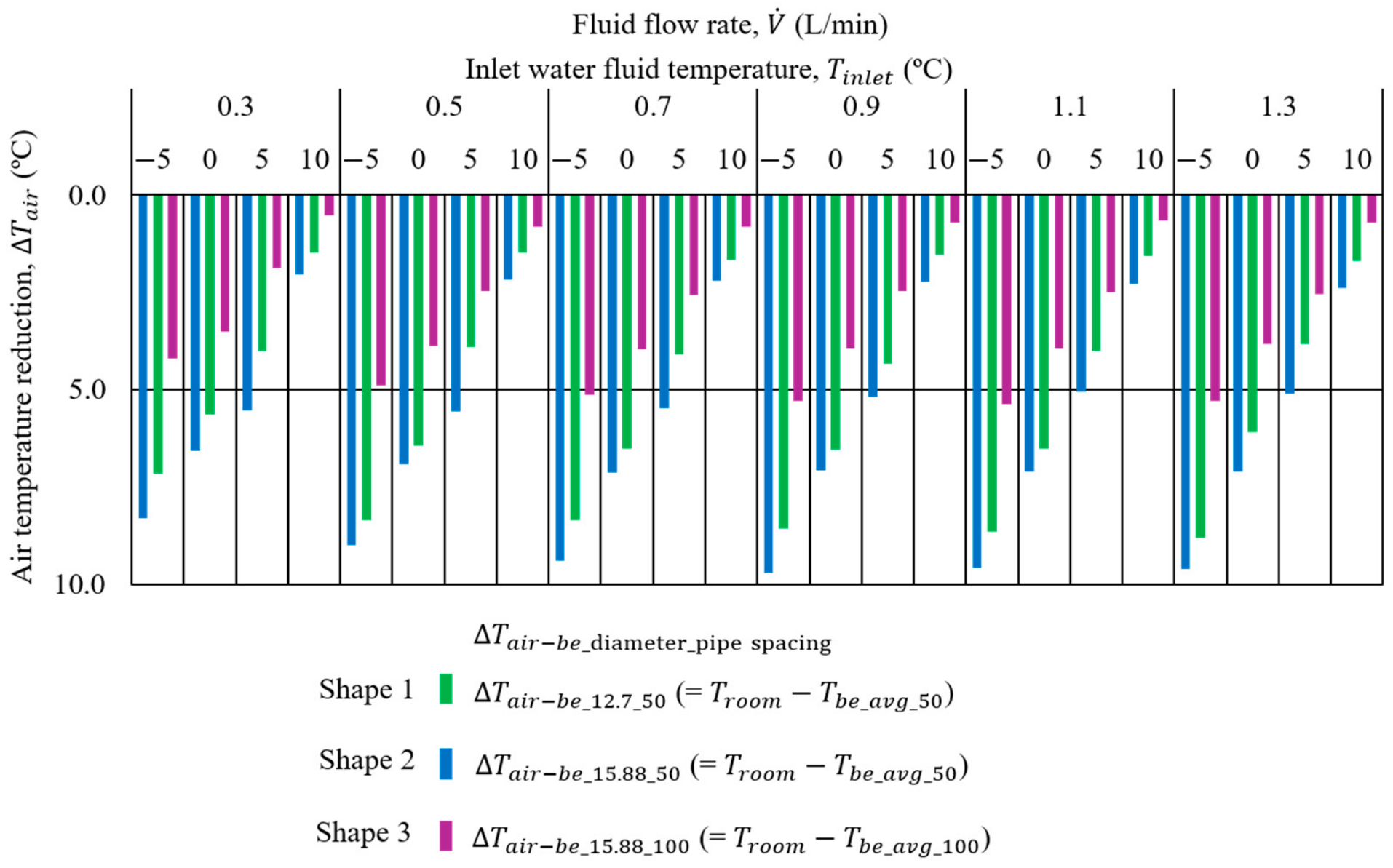
Figure 6 depicts the reduction in the average local air temperature in the area below the heat exchangers from the indoor room air temperature. The local cooling will be provided for crops in greenhouse cultivation with the heat exchangers. The local air temperature reduction in the area below the heat exchanger is more important than the air temperature reduction in the area above. Hence, the local air temperature reduction in the area below the three heat exchangers was evaluated.
The local air temperatures of the three vertical layers were averaged, and the average local air temperature reductions in the area below from indoor air temperature were then analyzed. At an inlet water fluid temperature of 5 °C and a flow rate of 0.3 L/min, for Shape 1, the average local air temperature reduction in the area below, , was approximately 7.0 °C. By contrast, for Shape 2, was approximately 8.0 °C below the heat exchanger. However, for Shape 3, was approximately 4.0 °C.
When the inlet water fluid temperature decreased from 10 °C to 5 °C, the average local air temperature reductions increased significantly for all heat exchangers. However, the average local air temperature reduction was less pronounced at the higher flow rate of 0.7 L/min. This implies that the inlet fluid temperature had a greater impact on the local air temperature than the flow rate. In addition, this suggests that local air temperature reduction is possible even with a low flow rate. When the flow rate increased, the fluid inlet and outlet temperature differences decreased significantly, given that the current experimental heat exchangers were unit-element heat exchangers. Thus, the local air temperature reduction did not change significantly with an increased flow rate.
The local air temperature reduction provided by the heat exchangers is important because it indicates how much the air temperature could be diminished from the initial temperature during the cooling process. Thus, this cooling effect will be beneficial for crop cultivation in greenhouses.
3.3. Pressure Drop in Heat Exchangers
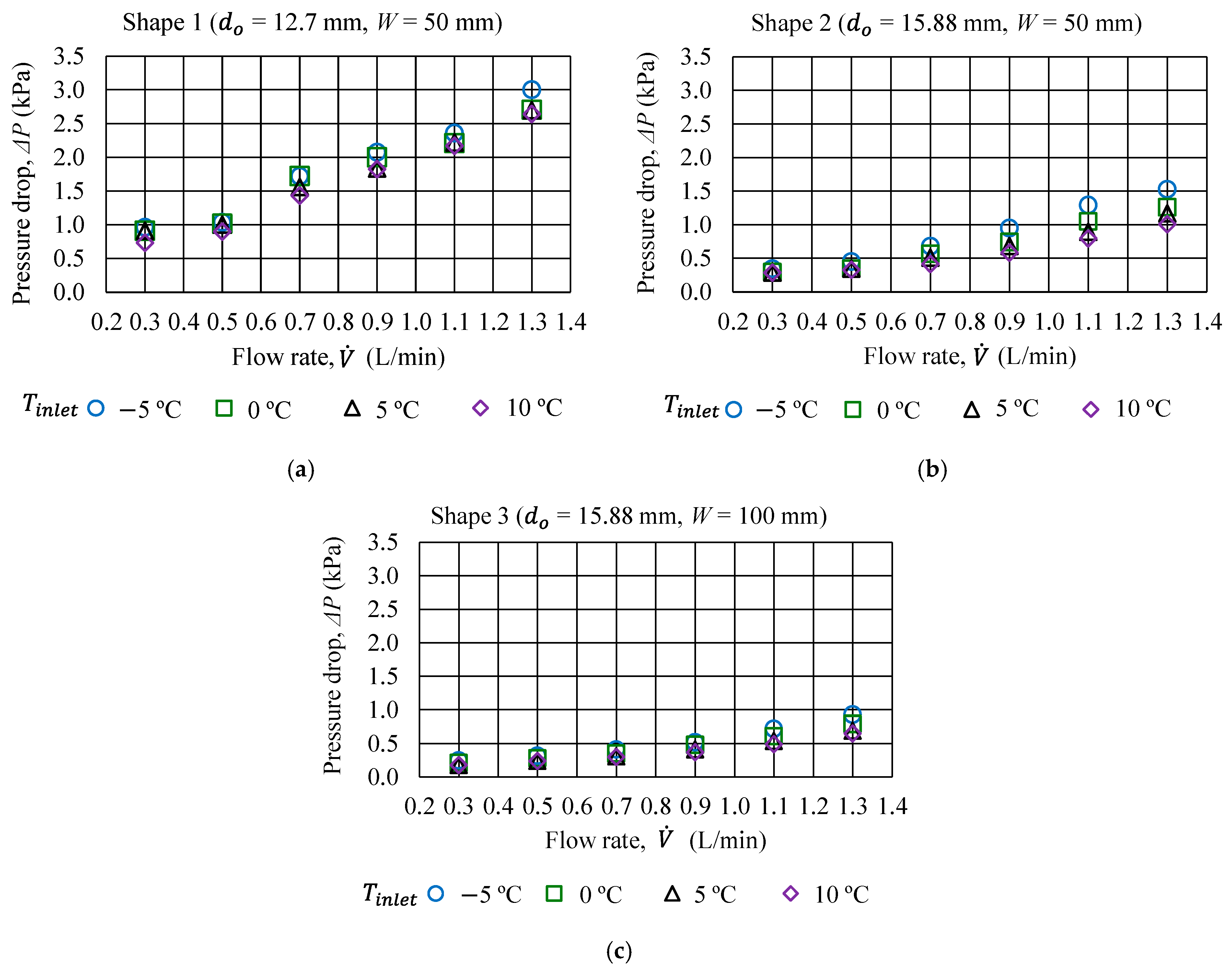
Figure 7 depicts the pressure drop across the three heat exchangers for flow rates ranging from 0.3 to 1.3 L/min at all inlet fluid temperatures.
Figure 7a–c illustrate the pressure drop in the Shape 1, Shape 2, and Shape 3 heat exchangers, respectively. As observed in the figures, the pressure drop decreases as the inlet fluid temperature increases, due to the reduction in fluid viscosity with higher temperatures. Conversely, the pressure drop increases as the flow rate increases. The pressure drop in the Shape 1 heat exchanger is approximately between 1.0 and 3.0 kPa, whereas in the Shape 2 and Shape 3 heat exchangers, it ranges from approximately 0.3 to 1.5 kPa. The pressure drops in Shapes 2 and 3 are about half that of Shape 1, and this is due to the larger pipe diameter and fewer U-bends in these heat exchangers. At the low flow rates of 0.3 and 0.5 L/min, the pressure drop in the three heat exchangers is insignificant and overlapping. This is owing to the small flow velocity at low flow rates regardless of different inlet fluid temperatures.
3.4. Heat Flux in the Heat Exchangers
Table 2 shows the outlet and inlet fluid temperature difference,
, for the three heat exchangers at all inlet fluid temperatures, with flow rates ranging from 0.3 to 1.3 L/min.
decreases significantly with the increase in flow rate, as expected. The
values for Shapes 1 and 2 are nearly identical. However, the
for Shape 3 is about one-eighth lower than that for Shapes 1 and 2, which is attributed to the shorter contact time between the pipe surface and the fluid in the Shape 3 heat exchanger.
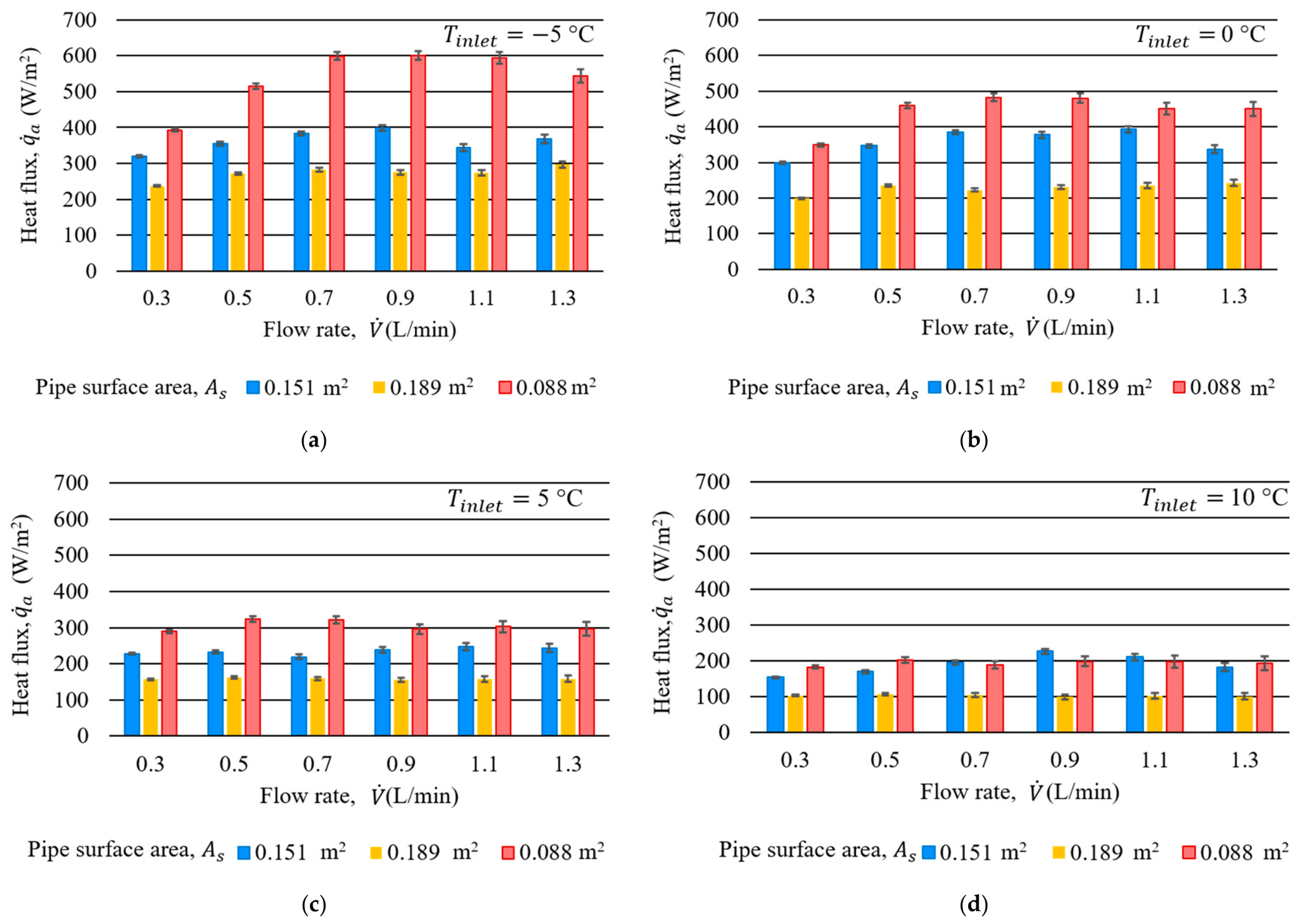
Figure 8 depicts the heat flux for the three heat exchangers at different inlet fluid temperatures under various fluid flow rates ranging from 0.3 L/min to 1.3 L/min.
Figure 8a–d represent the heat flux of inlet fluid temperature at
5, 0, 5, and 10 °C, respectively. The heat flux,
, was estimated using Equation (1) and depends on the
and
. The error bars are included in heat fluxes according to the uncertainty analysis of heat fluxes. The heat flux showed an increasing trend as the flow rate increased under all inlet fluid temperatures. The average heat flux in the Shape 3 heat exchanger was higher than those in Shapes 1 and 2, owing to its smaller pipe surface area. Moreover, the average heat flux in Shape 1 was higher than that in Shape 2, due to the thinner thermal boundary layer in Shape 1 resulting from its higher fluid velocity compared to Shape 2 at the same flow rate. However, at
= 1.3 L/min, the heat fluxes decreased because the measurement accuracy of the temperature difference between the inlet and outlet fluids decreased.
4. Discussion
In modern agriculture, controlling environmental conditions is vital, and air temperature is a critical factor. Understanding the specific temperature needs of a crop is fundamental for successful growth and maximum yield. This is especially important for widely cultivated leafy vegetables, such as lettuce, and crops such as cucumbers, tomatoes, and strawberries.
The optimal air temperature range for lettuce is approximately 20–24 °C [
30,
31], and for cucumbers, the optimal temperature is 25–30 °C during the day and 18–21 °C at night [
32,
33]. For tomatoes, studies have claimed that optimal daytime temperatures fluctuate between 22 and 26 °C, and optimal nighttime temperatures fall between 13 and 16 °C [
34,
35]. The optimal air temperature ranges for strawberries are 20–25 °C and 10–12 °C during the day and night, respectively [
4]. It is noteworthy that air temperature, as well as other factors, such as humidity, sunlight intensity, water, and fertilizer use, are important for crop cultivation.
Based on the results of this study, the average local air temperature of the area below a heat exchanger could be reduced by 5 °C with the use of the Shape 3 heat exchanger and approximately 10 °C with the use of the Shape 1 and Shape 2 heat exchangers. In terms of air temperature, all three heat exchanger shapes could reduce the local air temperature close to a heat exchanger. This indicates that these heat exchangers could provide sufficient cooling near crop areas in greenhouse cultivation. For conditions requiring minimal cooling, the Shape 3 heat exchanger is suitable. Moreover, when higher cooling capacities are necessary, the Shape 1 and Shape 2 heat exchangers are better choices, as they can provide greater temperature reductions.
In terms of pressure drop, a larger pipe diameter with fewer U-bends would be desirable in greenhouse cultivation due to its low pressure drop. The pressure drops in the Shapes 2 and 3 heat exchangers were half as low as that of the Shape 1 heat exchanger. However, in practical greenhouse cultivation, heat exchangers are typically connected in series and/or in parallel to cover larger areas. Therefore, the overall cumulative pressure drop of these connections should be further addressed for practical greenhouse cultivation.
The cost of the heat exchanger should be considered as well.
Table 3 shows the simple estimated cost of each unit-element heat exchanger neglecting the U-bends price. Regarding the cost of copper pipes, the price of a small-diameter pipe is cheaper, which is 11.48 USD/m, compared to a larger-diameter pipe, which is 12.45 USD/m [
36]. Total pipe length of a unit-element heat exchanger can be obtained by multiplying the pipe length required for connection with U-bends and the number of pipes. The narrow-spacing heat exchangers (Shape 1 and 2) cost USD 57.4 and USD 62.3, compared with USD 24.9 for the wider spacing (Shape 3). Hence, the cost of pipes with narrow spacing is higher than those with wide spacing due to the fact that several pipes are required for narrowly spaced pipes. Therefore, the cost of a Shape 2 heat exchanger would be higher than that of Shape 1 and Shape 3 heat exchangers, given that the Shape 2 heat exchanger has larger-diameter pipes than Shape 1 and narrow pipe spacing compared to the Shape 3 heat exchanger.
Therefore, the advantages and disadvantages mentioned for each heat exchanger configuration should be balanced when selecting the appropriate heat exchanger.
Table 4 shows the summary of the findings of the related greenhouse cooling system and current study. Mao et al. [
37] experimentally and numerically investigated the cooling performance of a fan-coil air-conditioning system integrated with a ground-source heat pump in a Venlo-type greenhouse. The geothermal fan-coil system effectively cooled the greenhouse, providing uniform temperature reduction about 11 °C, with a coefficient of performance of 5.4. Helmy et al. [
38] studied roof evaporative cooling of a fan-pad system for greenhouses in hot and dry regions. The reported results show that the addition of the roof water flow over the greenhouse roof can lower the greenhouse inner temperature by up to 6 °C. Shi et al. [
7] simulated the cooling characteristics of shading and natural ventilation in a greenhouse of a botanical garden in Shanghai, China. From their results, shading can reduce the indoor air temperature by around 3 °C when the outdoor temperature is 34 °C.
In comparison, these cooling systems provide the cooling to the entire greenhouse volume, while the current study’s local cooling system regulates the cooling near the crop area. Moreover, the local cooling system heat exchangers could reduce the local air temperature by between 5 and 10 °C. Because the heat exchangers regulate local air temperature near the plantation area, energy consumption is expected to be lower than that of conventional greenhouse environmental control systems. The energy savings of this system will be investigated in future studies.
5. Conclusions
In this study, a comparative analysis was conducted on the performance of three serpentine-shaped heat exchangers for local area cooling specific to crop cultivation in greenhouses. The conclusions of this study can be drawn as below.
The results indicated that Shape 2 (15.88 mm pipe with 50 mm spacing) offers a good balance of local air temperature reduction and pressure drop, making it a preferable configuration for practical greenhouse cooling applications.
From the experimental results, the maximum reduction in local air temperature reached 10 °C for the Shape 1 and Shape 2 heat exchangers, while the Shape 3 heat exchanger achieved a maximum reduction of 5 °C. This indicates that the local air cooling from the Shape 1 and Shape 2 heat exchangers could suit the temperature requirement for strawberry growth. On the other hand, the Shape 3 heat exchanger could be beneficial to other crops, such as cucumbers, where a temperature difference around 5 °C would be required. Furthermore, the flow rate of less than 0.7 L/min can even provide sufficient local air temperature reduction. Therefore, it can be concluded that the three heat exchangers could provide effective local cooling for practical greenhouse cultivation.
This study was conducted in a laboratory to evaluate the performance of the heat exchangers more precisely by excluding the effects of relative humidity and solar radiation, and these constitute the limitations of this study. Moreover, the cumulative pressure drop should further be addressed when the heat exchangers are integrated into series and parallel connections in the real greenhouse cultivation.
This study contributes to the understanding of how heat exchanger configuration parameters influence the performance of the local cooling system. The results obtained from this study could be useful in choosing the heat exchanger configuration for localized cooling in greenhouses. Cost and effectiveness should also be considered when selecting the most suitable heat exchanger. Future research should address energy consumption in practical greenhouse cultivation using serpentine-shaped heat exchangers.






 ,
,