
Article

Monitoring Enrichment Block Pecking Behavior of Cage-Free Laying Hens with Deep Learning
Department of Poultry Science, University of Georgia, Athens, GA 30602, USA
*
Author to whom correspondence should be addressed.
AgriEngineering 2026, 8(6), 227; https://doi.org/10.3390/agriengineering8060227 (registering DOI)
Submission received: 25 April 2026 / Revised: 28 May 2026 / Accepted: 3 June 2026 / Published: 5 June 2026

Abstract

US egg production is undergoing a transition to cage-free (CF) housing systems. This transition has increased the need for automated monitoring tools to support welfare management and reduce production costs. While CF houses allow hens to perform natural behaviors such as dust bathing and foraging, a persistent challenge is severe feather pecking. Pecking block enrichment is used as a managemental approach to control severe feather pecking. However, manual quantification of such behavior is subjective and labor-intensive. This study evaluated the performance of small and large variants of both YOLOv10 and YOLO11 models for automatic detection of enrichment block pecking behavior in CF research environment. A total of 1061 color images were used to train and evaluate the models using 70:20:10 split for training, validation, and testing. Performance was assessed using precision, recall, mean average precision at 50% intersection over union (mAP50), confusion matrices, and F1–confidence curve. All models demonstrated robust performance, with precision, recall and mAP50 values greater than 0.94. YOLO11l achieved the highest precision with 0.969 and mAP50 with 0.988, while YOLOv10s achieved the highest recall of 0.962. Evaluation on test datasets showed robust generalization capability of the model, with high confidence detections. Overall, the findings show that YOLO models provide a consistent, objective, and scalable method for automatic quantification of pecking enrichment block related pecking behavior in a CF system. It offers potential as an automated monitoring tool for poultry researchers and may support future development of tools for commercial CF system.

1. Introduction

In the United States the total production value from broilers, eggs, and turkeys, along with the sales value from chickens, was $70.2 billion in 2024 [1]. Egg production accounted for 30% of this total production value. Although total egg production declined from 110 billion in 2023 to 109 billion in 2024, the value of egg production increased by 18%, rising from $17.9 billion to $21.0 billion [1]. At the same time, US egg industry is significantly evolving towards cage-free (CF) production system. By the end of 2024, 38.7% of hens were housed in CF system, representing an increase of 25% since 2016 and 34% since 2010 [2]. This transition accelerated into 2025, with CF egg production accounting for 42.1% of the total table egg layer flocks.
This transition is driven by welfare concerns and consumer demand. Compared to the conventional battery-cage system, the CF system provides freedom for hens to perform their natural behavior [3]. Caged hens are restricted from performing their natural behaviors such as perching, foraging, and dustbathing [3]. Consequently, conventional cages compromise the welfare of hens. All the major grocery chains in the United States, including Walmart and Kroger, had pledged to transition their egg supplies to CF eggs, with most initially setting their deadline to 2025 [4]. However, several of them have not been able to fulfill their commitment. Walmart sold only 27% of eggs coming from non-caged hens in the fiscal year 2024, Dollar General revoked the pledge mentioning customer and shareholder activity, and Kroger expects it to be at 70% CF only by 2030 [5]. Conventional cages have not been replaced by CF houses at the expected rate.
One of the main barriers to replacing conventional cage systems is its economic feasibility. Conventional cages and eggs produced from such system are cheaper than alternatives such as the CF housing system [6,7]. Labor cost is another significant factor making the CF system expensive [8]. Precision livestock farming technologies offer a potential alternative to solve these economic challenges with efficient and cost-effective solutions. For instance, a low-cost deep learning-based model has been developed to monitor feed consumption using audio data [9]. Such tools can replace man-labor and can eventually be economically profitable. For instance, precision agricultural technology has shown to increase the average return on investment by 22.3% and net profit by 18.5% in a meta-analysis of eighty-five studies [10]. A recent review paper highlighted that precision technology can be used to monitor behavior, predict, and detect disease, and automate tasks such as egg collection [11].
Although CF housing system is known for better overall welfare status of laying hens, the transition to CF house also brings related welfare challenges. Severe feather pecking is one of such major challenges. Housing large groups of hens as in CF house leads to higher incidence of severe feather pecking [12,13]. Feather pecking is associated with various housing, managemental, genetic and nutritional factors [14,15]. It involves pecking, pulling out, and consuming the feathers of other hens [16]. There are several types of feather pecking, and not all feather pecking is harmful. Savory [17] categorized bird-to-bird pecking in laying fowl into five types: aggressive pecking, feather pecking without removal, feather pulling leading to feather, tissue pecking in denuded areas and vent pecking. Severe pecking can lead to loss of feathers, injuries, and even death, so it is very important to control severe feather pecking especially in cage-free hens. Although interventions such as beak trimming were popular to prevent pecking, they raised welfare concerns because of the anatomical, physiological, and behavioral impact [18].
Research has shown that beak trimming reduced the frequency of feather pecking but did not completely prevent severe feather pecking [19]. Providing enrichment has emerged as an alternative approach with studies suggesting that this can be a solution to the pecking problem [20]. Enrichment blocks can potentially redirect the exploratory pecking behavior and reduce harmful feather pecking directed towards another hen in the pen. For instance, hens with access to pecking stones demonstrated better feather scores, particularly on wings [21]. However, other factors such as the nutritional composition of the pecking stone might be contributing to the result. Another similar study showed a slight increase in foraging bouts with larval enrichment while there was no significant effect on feather pecking [22]. However, observations in that study were only limited to 17 weeks of age, i.e., before hens started laying eggs. In another study, pecking stone preference quantification was done by measuring the stone weight while the behavior was observed manually through the video recordings [23]. However, the hygroscopic nature of the pecking stones, influenced by room humidity, affected the accuracy of the weight measurements and even resulted in some negative weight loss values. These limitations suggest that quantifying pecking frequency might be a more reliable indicator of enrichment preference instead of weight-based evaluation.
To overcome such challenges, poultry research and production industry is increasingly adopting precision poultry technology. Such technology uses advanced techniques and methods to automatically monitor birds to observe their health, welfare, production, and environmental impact in real time [24]. Computer vision is one of the precision technologies, which is growing as a promising tool as it is objective, consistent, and more efficient [25]. It uses cameras and algorithms to detect, track, and measure objects automatically. Among computer vision tools, many of the poultry behavioral studies are using You Only Look Once (YOLO) models [26,27]. YOLO is a popular object detection model launched in 2015, which became popular for its speed and accuracy. There are several models within the YOLO family, with the latest release being YOLO26 [28]. In poultry studies, YOLO models have been used to detect floor eggs [29], dust bathing behavior [30], dead chickens [27], pathological conditions [31], and lameness [32], etc. The application of real-time feather pecking monitoring with computer vision as shown by Subedi et al. 2023 [33] using the YOLO model may help improve CF management significantly by enabling early detection of pecking problems. It enables early intervention by the farmer, which can reduce the occurrence of severe feather pecking, potentially reducing the need for practices like beak trimming. Also, continuous behavioral monitoring could help researchers and farmers to evaluate the enrichment effectiveness better and identify changes in flock behavioral patterns associated with their welfare. The objective of this study was to observe and compare YOLO-based computer vision models in detecting laying hens pecking at diverse types of pecking blocks.

2. Materials and Methods

2.1. Experimental Setup

This study was conducted at the University of Georgia (UGA) Poultry Research Center in a CF housing setup. A total of 96 Lohmann LSL-Lite hens were used for the study and divided into four pens. Two smaller pens (2.3 m × 1.8 m) housed 18 hens each, while the two larger pens (2.9 m × 2.3 m) housed 30 hens each. The pens were enclosed on the sides and top with mesh wire. Day-old chicks were obtained from Hy-Line North America (Mansfield, GA, USA) and reared under conditions recommended by the Lohmann LSL-Lite management guide. The environmental conditions maintained at the time of data collection from 50 to 70 weeks of age had an air temperature range of 21–23 °C and 20 lux of light intensity with a photo period of 19 h of light and 5 h of darkness. Pine shavings were used as litter material. Each pen was provided with two feeders, a nipple drinker line, and a perch. Feed was manufactured at the UGA feed mill and was offered ad libitum to hens. UGA Institutional Animal Care and Use Committee (IACUC) approved all animal handling and management procedures (AUP#: A2023 02-024).
To make the model more robust by introducing variations, three distinct types of pecking block were provided:
  • PECKstone: A mineral-based grey cylinder (Dimensions: 12″ diameter, 3.75″).
  • Purina® Flock Block®: Grain-based dark brown cuboid (Dimensions: 9″ × 9″ × 7.88″).
  • ChikPek: Grain-based dark brown cuboid (Dimensions: 8.9″ × 8.8″ × 6.1″).
One pen served as the control and was without a pecking block. As shown in Figure 1, blocks were placed on a concrete pedestal at the center of each pen. To increase variability in training images, blocks were rotated weekly among pens, and a different pen was assigned as control each week. One-day withdrawal period was maintained between block rotations, during which no pecking block was provided in the pen.

2.2. Image Acquisition

Four-night vision network cameras (PRO-1080MSB, Swann Communications USA Inc., Santa Fe Springs, LA, USA) mounted 2.75 m above the ground were positioned directly above each pecking block to capture the top-down view. The videos (RGB) were recorded at a resolution of 1920 × 1080 pixels and 15 frames per second using a digital video recorder (DVR-4580, Swann 126 Communications USA Inc., Santa Fe Springs, LA, USA). Images were extracted from the videos in JPEG format for model training and evaluation.

2.3. Image Pre-Processing and Annotation

A total of 5000 images were extracted from the video using stratified random sampling techniques to ensure good distribution of pecking blocks across images. After manual observation, only the images with instances of hens pecking at the pecking block were selected, with 1061 images remaining for model training and evaluation. The annotation was performed on still images with frame-based approach. An instance was annotated as pecking when the hen’s beak was contacting the enrichment block or when the head and neck posture of the bird indicated pecking interaction directed towards the pecking block. Hens merely standing near the enrichment block, passing by, or orienting towards the block without pecking-related interaction were not annotated. A trained individual manually annotated the images by drawing rectangular bounding boxes around the hens pecking the blocks. Another trained individual reviewed a random subset (10%) of annotations, with agreement above 95%. An open-source tool, CVAT.ai v2.61.0 [34], was used for annotation.

2.4. Model Training

YOLO object detection models were implemented to detect block pecking instances. YOLOv10 (10s and 10l) and YOLO11 (11s and 11l) models were trained using a 70:20:10 split for training, validation, and testing datasets. The models were trained for 100 epochs with a batch size of 16 and a learning rate of 0.01 for stochastic gradient descent and 0.001 or the Adam optimizer. The training was conducted using Python 3.14.3 on a NVIDIA RTX 400 (Ada Generation) with CUDA version 12.5.

2.5. Performance Evaluation

Performance of the models were evaluated using standard object detection metrics: precision, recall, and mean average precision at 50% intersection over union (mAP50).

2.5.1. Precision

Precision is the ratio of correct positive predictions made by the model to all positive predictions made by the model. In the context of this study, precision is the ratio of correct hen-to-block pecking predictions out of all the hen-to-block pecking predictions made by the model.
Precision   ( P ) = True   Positive   ( TP )   TP + False   Positive   ( FP ) = Total   true   pecking   detections Total   pecking   detection

2.5.2. Recall

Recall is the ratio of correct positive predictions made by the model to all actual pecking instances. In the context of this study, recall is the ratio of correct hen-to-block pecking predictions made by the model out of all the actual hen-to-block pecking instances.
Recall   ( R ) = TP TP + False   Negative   ( FN ) = Total   true   pecking   detections Total   pecking   instances

2.5.3. mAP50

mAP50 is the mean average precision calculated over all recall levels at an intersection over union (IoU) of 0.5. IoU measures the degree of overlap between the predicted bounding box and the ground truth bounding box. mAP50 incorporates both precision and recall, making it a more comprehensive evaluation metric.
A v e r a g e   p r e c i s i o n A P = 0 1 P R d R
M e a n   a v e r a g e   p r e c i s i o n m A P = 1 n i = 1 n A P i
n = n u m b e r   o f   c l a s s e s = 1

3. Results

3.1. Performance Metrics

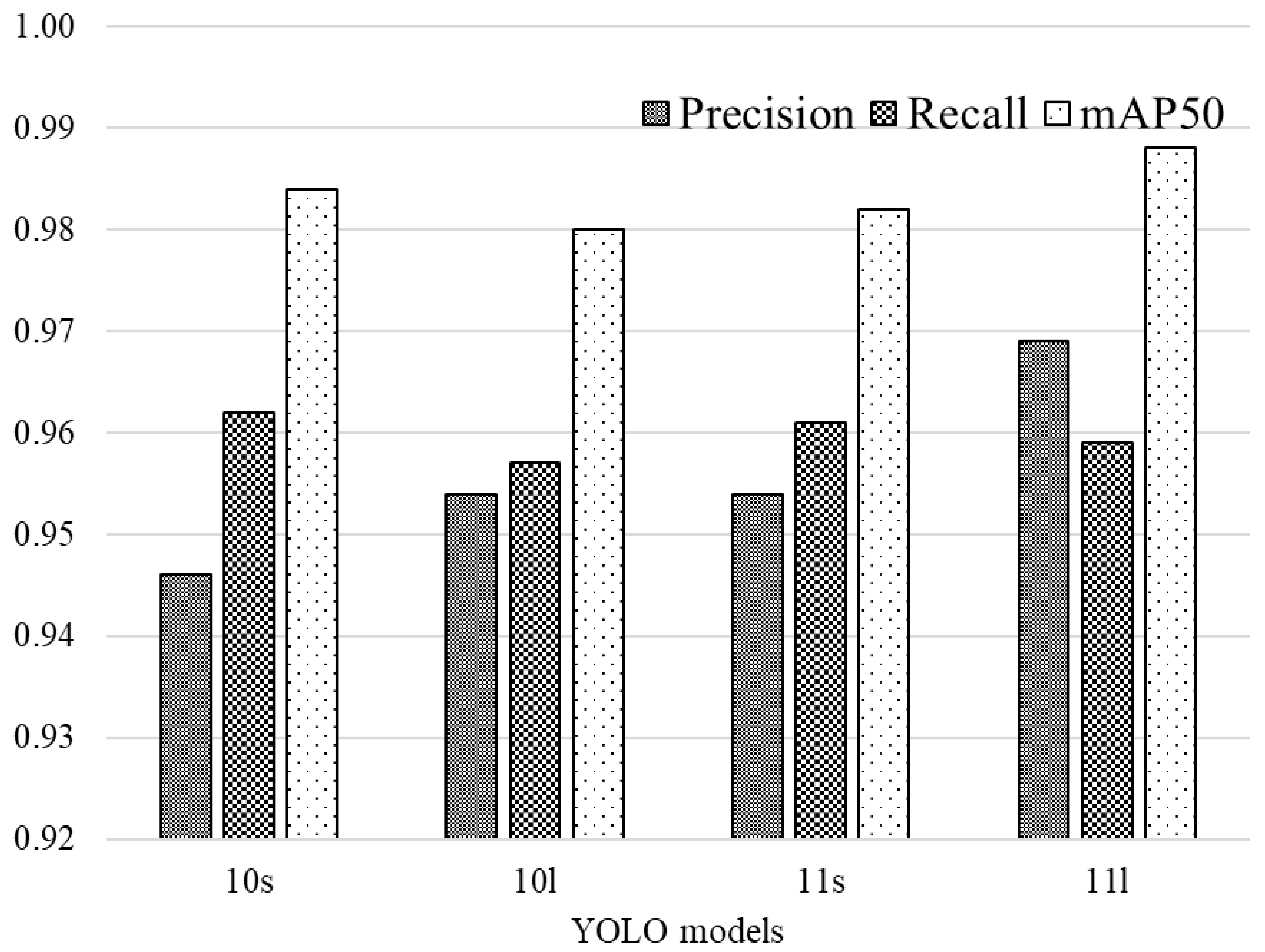
Precision, recall and mAP50 of the models trained for block pecking detection are compared in a clustered bar graph shown in Figure 2 and Table 1. Among the models, YOLO11l achieved the highest precision of 0.969. YOLO11s and YOLOv10l both achieved a precision of 0.954. YOLOv10s recorded the lowest precision at 0.946. In terms of recall, YOLOv10s achieved the highest value at 0.962. YOLO11s followed with 0.961, YOLO11l reached 0.959, and YOLOv10l achieved 0.957. For mAP50, YOLO11l demonstrated the highest value of 0.988. YOLOv10s achieved 0.984, YOLO11s reached 0.982, and YOLOv10l reached 0.980.

3.2. Confusion Matrix

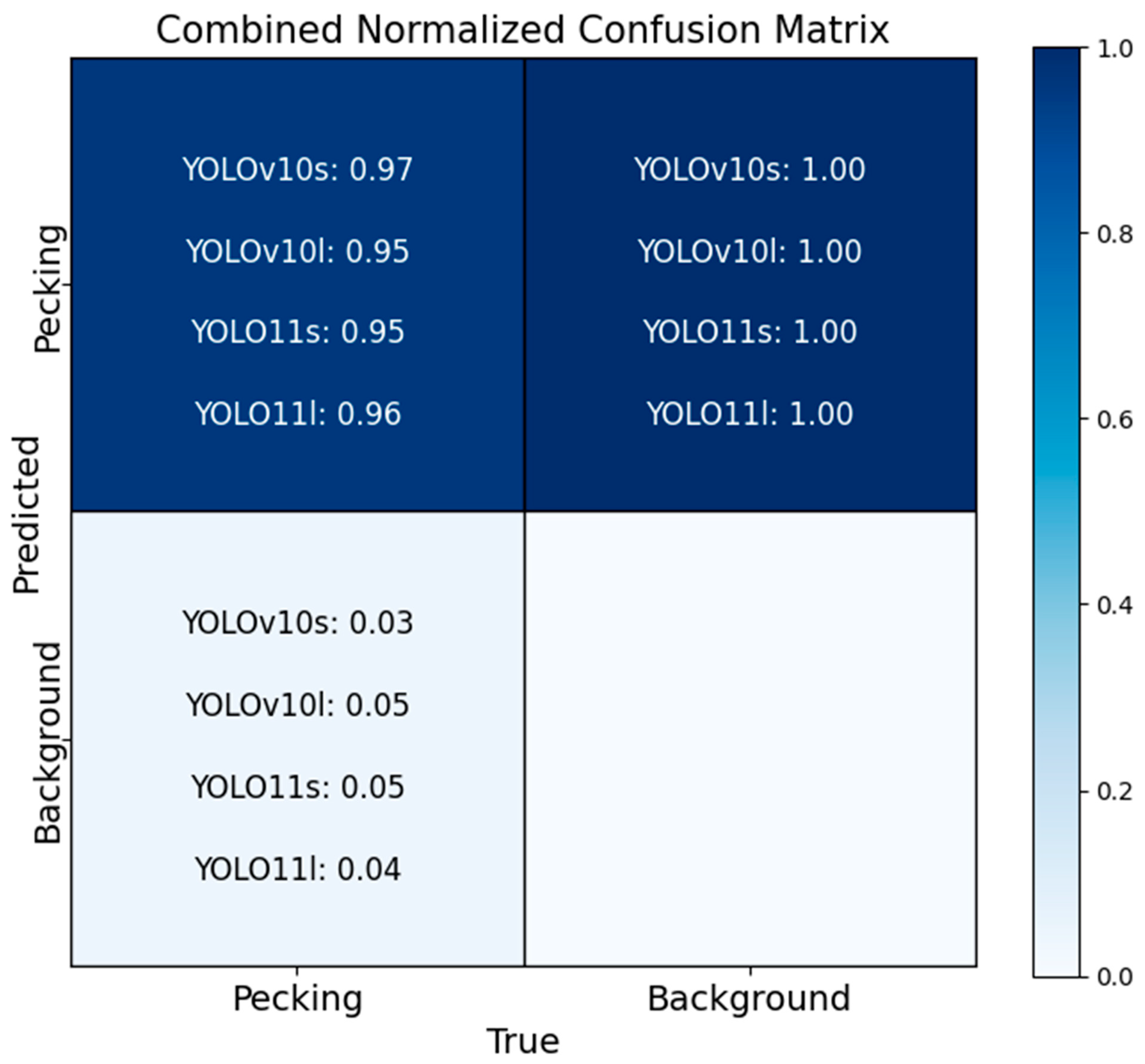
Confusion matrix shown in Figure 3 provides a normalized evaluation of the detection models. All models had a true positive rate (TPR) greater than 0.94. YOLOv10s had the highest TPR of 0.97. YOLO1l had TPR of 0.96, while YOLOv10l and YOLO11s both had TPR of 0.95. True negative rates were not reported. For detection tasks such as this, there would be a very high number of background regions in each image. Including true negatives would dominate the confusion matrix and misrepresent the performance.

3.3. F1–Confidence Curve

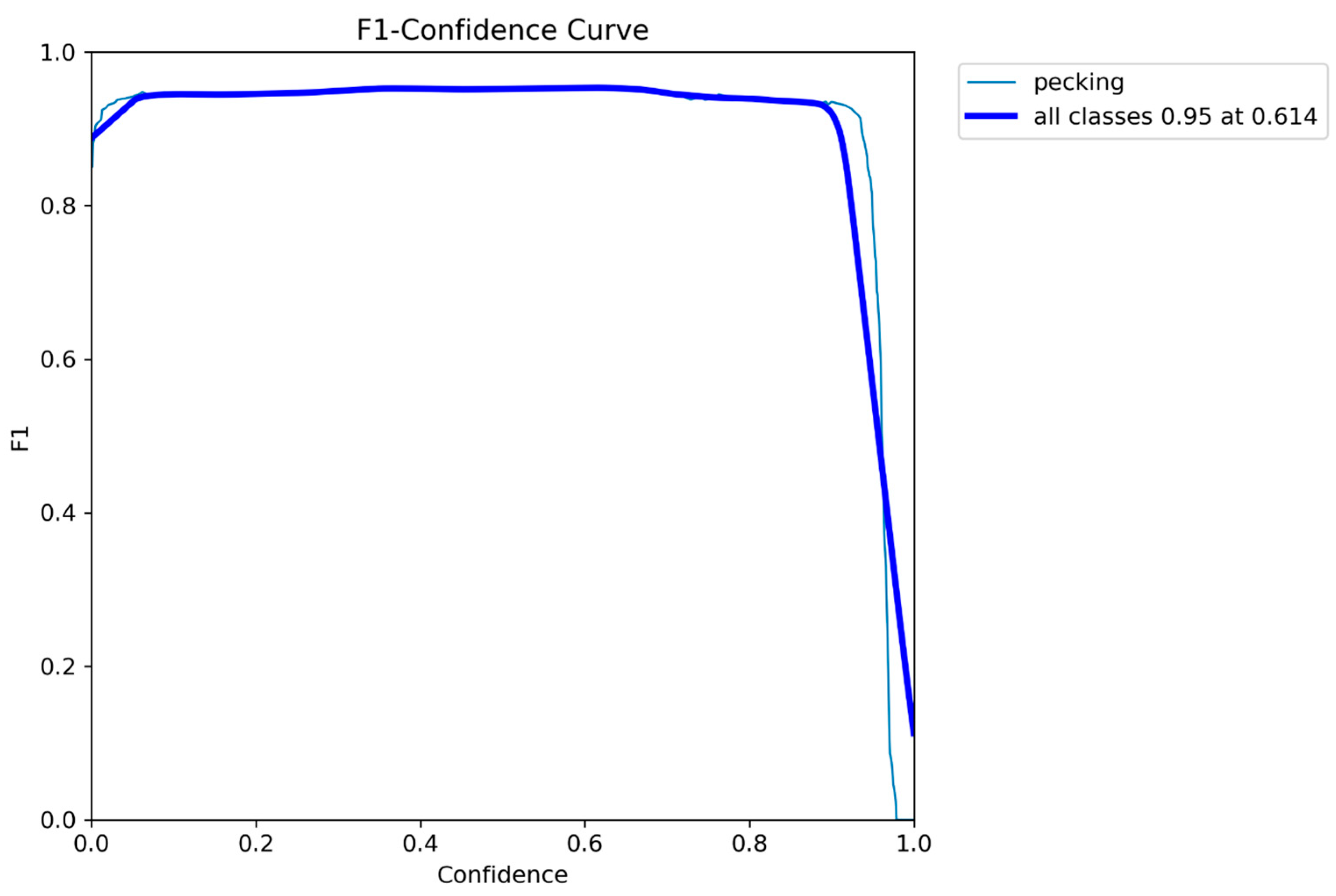
The F1 score measures the balance of precision and recall, while the confidence score represents the certainty of the model for each detection made. The F1–confidence curve helps visualize F1 score change across varying confidence thresholds. For all the models, F1 scores increased with increasing confidence score up to a certain point and then declined with increasing confidence threshold. The confidence threshold where the model achieved the best balance between precision and recall is the optimal threshold, and this corresponds to the peak F1 score. Figure 4 presents the F1–confidence curve for YOLOv10s. YOLOv10l and YOLO11s both reached peak F1 score of 0.96 at low confidence threshold of 0.153 and 0.268, respectively. Meanwhile YOLOv10s achieved an F1 score of 0.95 at a higher threshold of 0.614. YOLO11l had a peak F1 score of 0.96 at a confidence score of 0.446.

3.4. Model Training and Performance Analysis

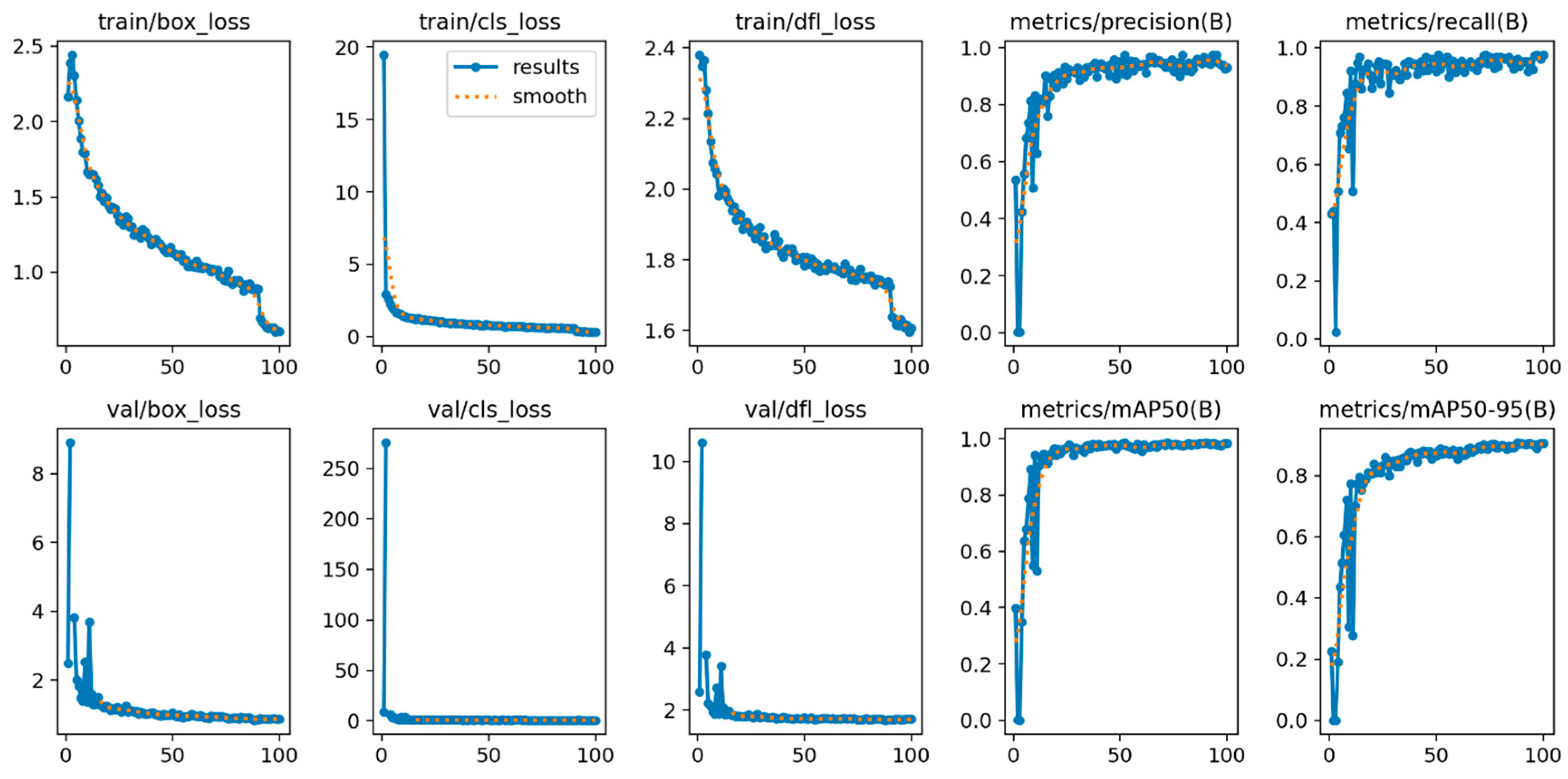
Detailed training dynamics of the models over 100 epochs showing loss trends and performance metrics with changing epochs is given in Figure 5 for YOLOv10s. For YOLOv10s, at the beginning of training, the losses are high with training box loss, classification loss, and distribution focal loss (DFL) at 2.166, 19.491, and 2.381, respectively, while validation box loss, classification loss, and DFL at 2.945, 8.571, and 2.581, respectively. Instability was observed during the first few epochs, where losses spiked and dropped. Performance also changed along with changing losses. However, later the training stabilized and losses decreased consistently, making the performance increase consistently. By epoch 50, the training box loss decreased to approximately 1.13 and then to 0.606 by epoch 100. All other losses followed a similar pattern, stabilizing after early fluctuations.

3.5. Model Test

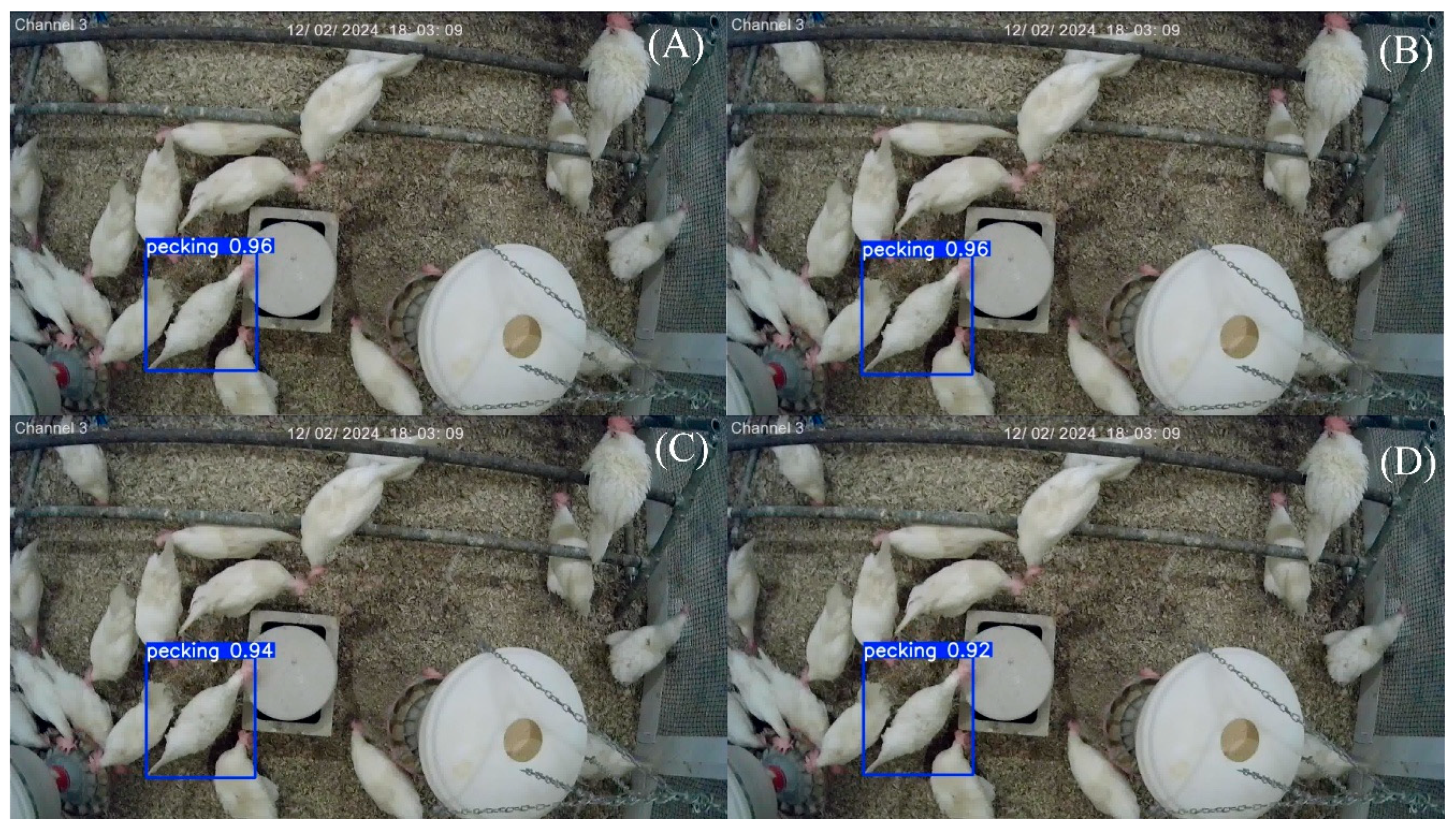
The trained models were evaluated on datasets completely unseen during training and validation to evaluate the robustness of the models in detecting block pecking. Figure 6 presents representative prediction results obtained from YOLOv10s, YOLOv10l, YOLO11s, and YOLO11l detection models on the same test image. These models consistently localized the birds pecking the block and had a remarkably high confidence score assigned with the detection instance. For this instance, YOLOv10s and YOLOv10l both produced confidence scores of 0.96, while YOLO11s and YOLO11l produced confidence scores of 0.94 and 0.92, respectively.

4. Discussion

The evaluation of small and large variants of both YOLOv10 and YOLO11 models for block pecking detection achieved powerful performance, with only minor difference in precision, recall, and mAP50. YOLO11l achieved the highest precision and mAP50, suggesting it to be more effective in correctly identifying the positive instances. Meanwhile, YOLOv10s had the highest recall, suggesting it could detect a larger proportion of actual pecking events, but may have some false positives because of lower precision. This also shows the trade-off between precision and recall, where a model with high precision might have more false negatives, whereas models with high recall might have more false positives. The confusion matrix further supports the powerful performance of the models. Extremely high TPR suggests that the models are highly effective at correctly identifying the block pecking instances. YOLOv10l and YOLO11s with peak F1 scores at lower threshold suggest these models are very good at detecting positives, and higher thresholds might reduce the recall. In contrast, YOLOv10s reached peak F1 score at a higher confidence threshold, meaning it is more accurate when only confident detections are accepted. Meanwhile, YOLO11l, with peak F1 score around the middle, reflects a balanced detection. Testing on completely new datasets further confirmed the robustness of the model. All the models generated high confidence scores in the test images. This shows that the models were robust under experimental conditions used in the study. However, additional validation under different types of environmental complexity and camera position in commercial condition is still challenging. Commercial complexity might include larger flock sizes, multiple enrichment blocks, varying camera angles and uneven illumination condition. Problems like occlusion and dust might also affect detection robustness. Current study implemented improving variability within the dataset by including multiple enrichment block types with different appearance and weekly rotation among the pens. This still represents a relatively controlled top-view imaging condition. Therefore, additional training and validation using larger and more diverse datasets from commercial cage-free conditions are needed for commercial use.
Results from the present study demonstrate high improvement compared to similar behavioral detection studies. Subedi et al. 2023 [33] trained YOLOv5 models with 1924 total image datasets to detect pecking behavior in CF laying hens and reported that the best model achieved precision, recall and mAP50 of 0.883, 0.688 and 0.787, respectively, which is lower than those obtained in the current study. This improvement might be due to numerous factors. First, block pecking in the present study occurred only around a consistent, centrally located pecking block, which might have provided a stable spatial reference in the images. In contrast, bird-to-bird pecking can occur anywhere within the frame, increasing spatial variability and difficulty in detection. Additionally, advancements from YOLOv5 to newer models like YOLOv10 and YOLO11 might have contributed to better performance. Paneru et al. 2025 [35] in a study evaluating ramp use reported extremely high performance with YOLO11n achieving precision and recall both 0.99 and an mAP50 of 0.98 using 2000 images. This powerful performance might be due to the presence of clearly defined structural elements within an image ramp in this case. Furthermore, Dahal et al. 2025 [36] used YOLO11 models to detect foraging behavior and reported precision, recall and mAP50 values below 0.9, even with a larger dataset of 4886 images. This suggests that dataset size and newer models might not be the only factors associated with better performance. Foraging behavior like bird-to-bird pecking lacks fixed spatial reference, which might explain the lower performance. Analysis of the model training shows the close alignment between training and validation loss, indicating minimal overfitting and good generalization potential. Additionally, the performance metrics improved consistently as the loss decreased, confirming stable model learning.
Nasirahmadi et al. 2020 [37] developed a deep learning-based pecking detection system using acoustic data achieving precision of 0.896 and recall of 0.92. These results are comparable to the performance from current study. Although, acoustic data might not be affected by conditions with occlusions or poor lighting, it might be sensitive to background noise and overlapping sounds. Therefore, combining both visual and acoustic data sources might be another way forward to producing more robust model.
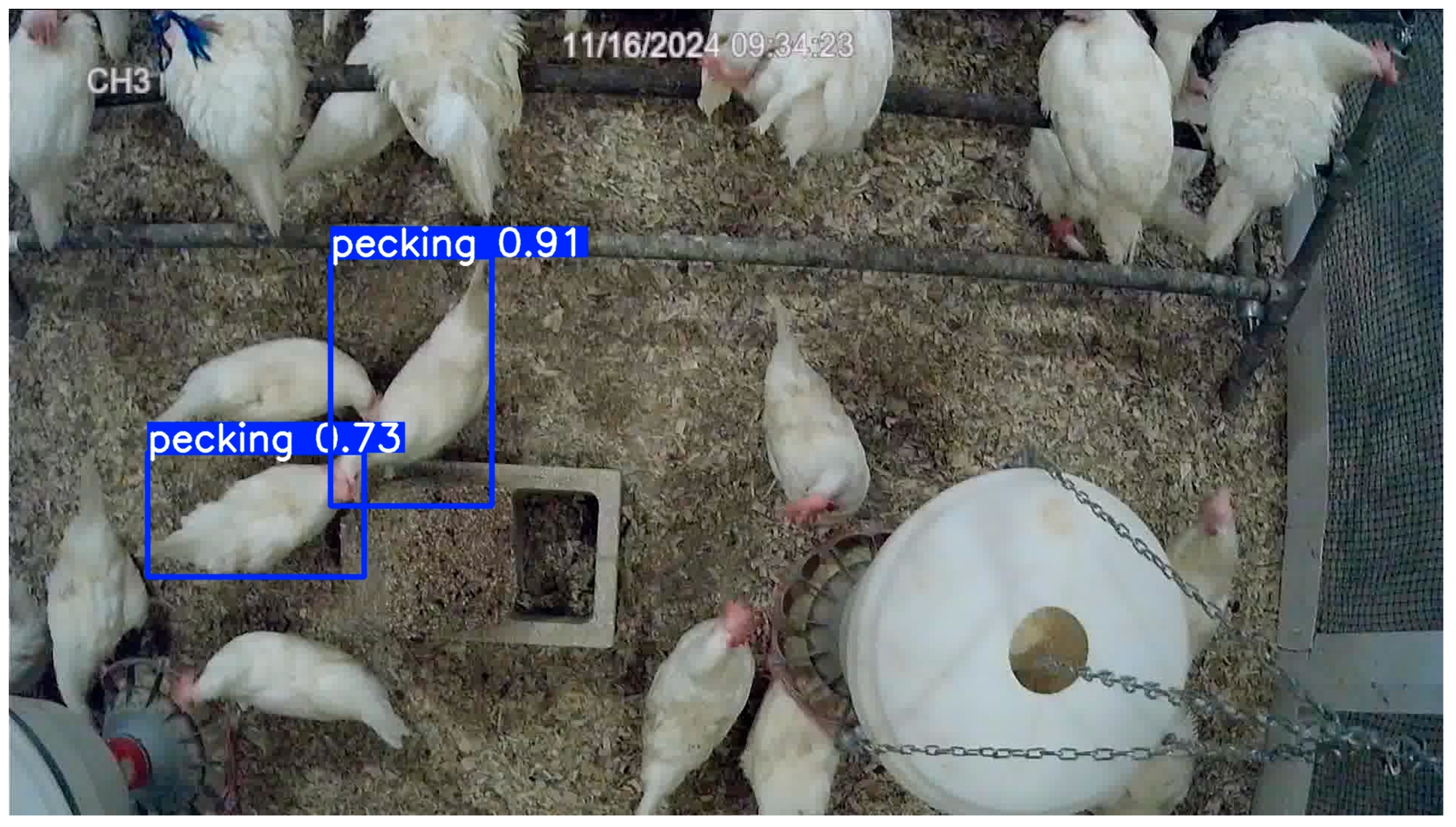
Despite the overall impressive performance, there were some limitations to the model. As shown in Figure 7, although only one hen was pecking at the block as correctly predicted by other models, YOLO11s model predicted two hens pecking at the block. The predicted instances had confidence scores of 0.91 and 0.73. The higher confidence detection correctly corresponds to the actual instance of hen pecking at the pecking block. The second prediction with lower confidence scores corresponds to the false positive detection. This false positive might be because of the overlap of the heads of the hens. Yu et al. 2024 [38] proposed a cage-gate removal algorithm that can reduce occlusion effects, improving YOLO detection performance in the study by up to 11%. Similar image enhancement of occlusion mitigation techniques could improve robustness in a crowded CF commercial environment.
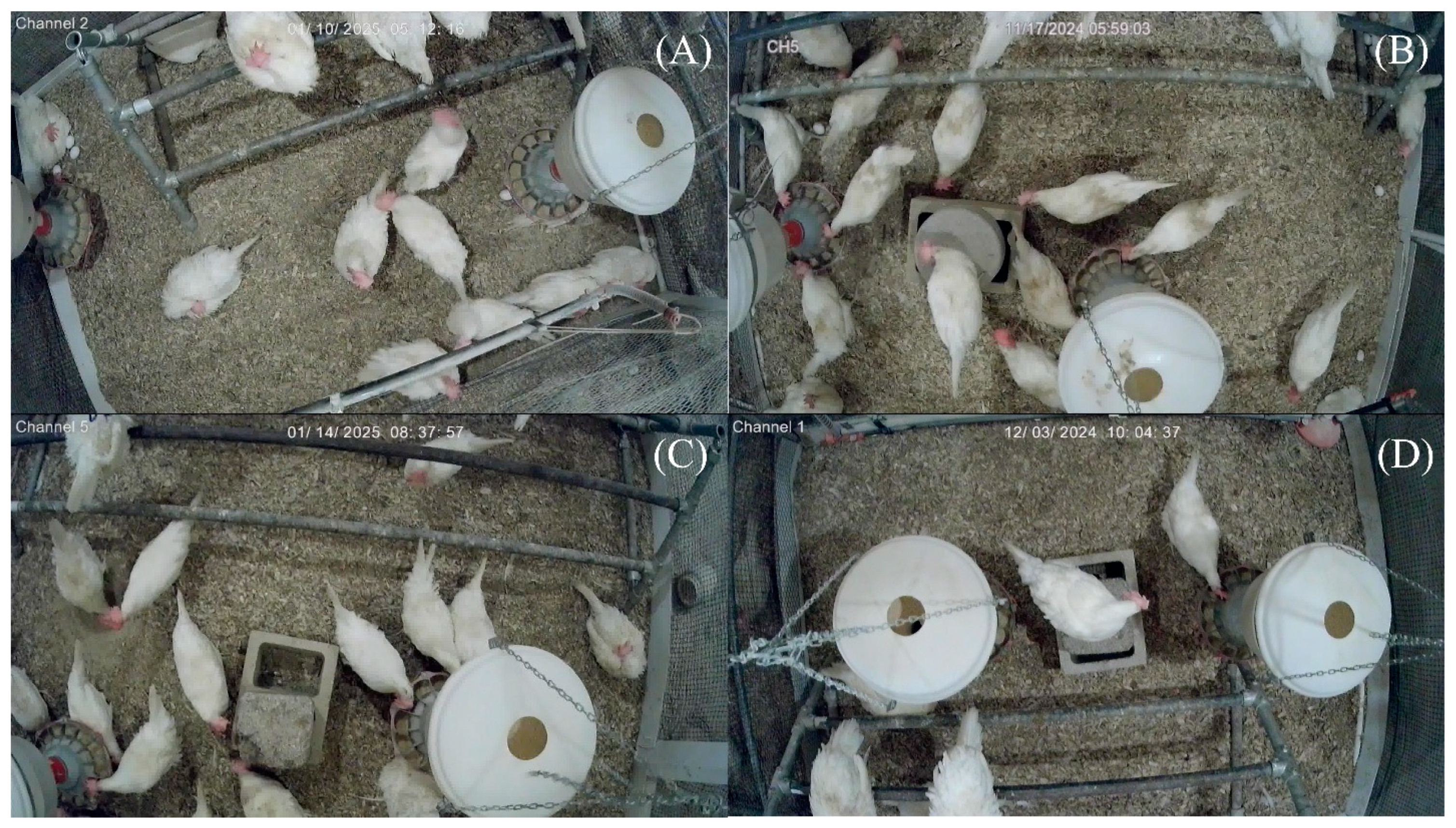
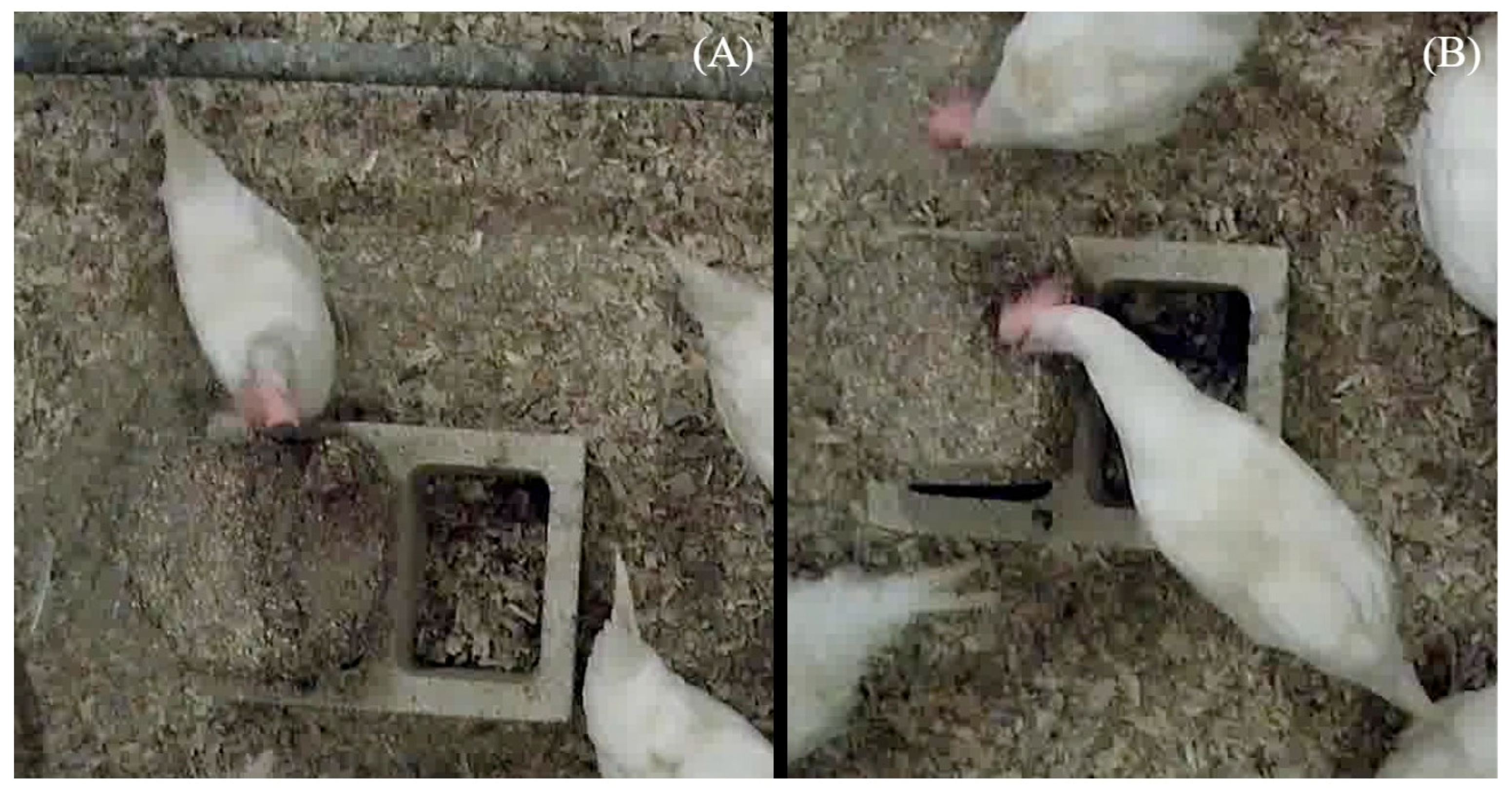
The top-down camera angle as in this study can create problems, making the annotation ambiguous when hens pass near the enrichment block. As shown in Figure 8A, hens may appear close to the block and look at it without actually pecking the block. To reduce this issue, the annotation was performed using also the posture assessment, as shown in Figure 8B. However, ambiguous cases may still remain especially in case of crowded CF conditions. Future studies should address this by incorporating temporal information from consecutive frames, multiple angle camera system, motion tracking, pose estimation methods or depth cameras to better differentiate true interaction from overlaps. The present study does not investigate associations between enrichment pecking frequency and welfare outcomes. Future studies integrating behavioral detection with welfare assessment metrics may be performed using models similar to this study.

5. Conclusions

This study evaluated the performance of small and large versions of YOLOv10 and YOLO11 object detection models for automatic detection of laying hens pecking at diverse types of enrichment blocks in a CF system. All four models exhibited high performance, showing the effectiveness of the computer vision approach for monitoring enrichment-related behavior in poultry research. Among the models evaluated, YOLO11l achieved the highest precision and mAP50 with the values 0.969 and 0.988, respectively. Meanwhile, YOLOv10s achieved the highest recall of 0.962. The findings show that YOLO-based object detection has the potential to be used as a reliable, objective, and scalable method for quantifying enrichment block pecking behavior in CF systems. Further validation under commercial CF conditions is needed before large-scale implementation. Further research should focus on using such models in well-designed experimental research to look at the association of feather pecking in relation to enrichment block usage.

Author Contributions

Conceptualization, L.C.; methodology, S.D. and L.C.; formal analysis, S.D.; investigation, S.D., B.P., A.D. and L.C.; resources, L.C.; writing—original draft preparation, S.D., B.P., A.D. and L.C.; writing—review and editing, S.D., B.P., A.D. and L.C.; visualization, S.D., B.P., A.D. and L.C.; supervision, L.C.; project administration, L.C.; funding acquisition, L.C. All authors have read and agreed to the published version of the manuscript.

Funding

This research was funded by the USDA-NIFA AFRI (2023-68008-39853), Georgia Research Alliance (Venture Fund), and UGA Institute for Integrative Precision Agriculture.

Institutional Review Board Statement

The research was approved by the UGA Institutional Animal Care and Use Committee (IACUC) (AUP#: A2023 02-024).

Informed Consent Statement

Not applicable.

Data Availability Statement

The original contributions presented in this study are included in the article. Further inquiries can be directed to the corresponding author.

Conflicts of Interest

The authors declare no conflicts of interest. The funders had no role in the design of the study; in the collection, analyses, or interpretation of data; in the writing of the manuscript; or in the decision to publish the results.

Abbreviations

The following abbreviations are used in this manuscript:
AUCArea Under Curve
CNNConvolutional Neural Network
GPUGraphics Processing Unit
IoUIntersection over Union
mAPMean Average Precision
mAP50Mean Average Precision at 50% Intersection over Union threshold
ReLURectified Linear Unit
UGAUniversity of Georgia
YOLOYou Only Look Once

References

  1. USDA NASS. Poultry-Production and Value 2024 Summary; USDA National Agricultural Statistics Service (NASS): Washington, DC, USA, 2025.
  2. UEP. Facts & Stats-United Egg Producers; United Egg Producers (UEP): Johns Creek, GA, USA, 2025; Available online: https://unitedegg.com/facts-stats/ (accessed on 28 February 2026).
  3. Shields, S.; Duncan, I.J.H. A comparison of the welfare of hens in battery cages and alternative systems. In Impacts on Farm Animals; Humane Society of the United States (HSUS): Washington, DC, USA, 2009; Volume 18. [Google Scholar]
  4. Graber, R.; Keller, J. Infographic: Retailers’ Cage-Free Egg Pledges; WATTAgNet: Rockford, IL, USA, 2020. [Google Scholar]
  5. Ro, C. 2025 Is A Critical Year for Cage-Free Meat and Eggs; Forbes: Jersey City, NJ, USA, 2025. [Google Scholar]
  6. Kato, H.; Shimizuike, Y.; Yasuda, K.; Yoshimatsu, R.; Yasuda, K.T.; Imamura, Y.; Imai, R. Estimating production costs and retail prices in different poultry housing systems: Conventional, enriched cage, aviary, and barn in Japan. Poult. Sci. 2022, 101, 102194. [Google Scholar] [CrossRef]
  7. Sumner, D.A.; Matthews, W.A.; Mench, J.A.; Rosen-Molina, J.T. The Economics of Regulations on Hen Housing in California. J. Agric. Appl. Econ. 2010, 42, 429–438. [Google Scholar] [CrossRef]
  8. Matthews, W.A.; Sumner, D.A. Effects of housing system on the costs of commercial egg production. Poult. Sci. 2014, 94, 552. [Google Scholar] [CrossRef] [PubMed]
  9. Amirivojdan, A.; Nasiri, A.; Zhou, S.; Zhao, Y.; Gan, H. ChickenSense: A Low-Cost Deep Learning-Based Solution for Poultry Feed Consumption Monitoring Using Sound Technology. AgriEngineering 2024, 6, 2115–2129. [Google Scholar] [CrossRef]
  10. Lan, J.; Ban, Q. The Farm-Level Economic and Environmental Benefits of Precision Agriculture Technology Adoption: A Meta-Analysis of Global Evidence. Sustainability 2025, 17, 11223. [Google Scholar] [CrossRef]
  11. Paneru, B.; Dhungana, A.; Dahal, S.; Chai, L. Artificial intelligence in precision poultry farming: Opportunities, challenges, and future features. Anim. Front. 2026, 16, 41–50. [Google Scholar] [CrossRef] [PubMed]
  12. Hartcher, K.M.; Jones, B. The welfare of layer hens in cage and cage-free housing systems. Worlds Poult. Sci. J. 2017, 73, 767–782. [Google Scholar] [CrossRef]
  13. Allen, J.; Perry, G.C. Feather pecking and cannibalism in a caged layer flock. Br. Poult. Sci. 1975, 16, 441–451. [Google Scholar] [CrossRef]
  14. McAdie, T.M.; Keeling, L.J. Effect of manipulating feathers of laying hens on the incidence of feather pecking and cannibalism. Appl. Anim. Behav. Sci. 2000, 68, 215–229. [Google Scholar] [CrossRef]
  15. Bestman, M.W.P.; Wagenaar, J.P. Farm level factors associated with feather pecking in organic laying hens. Livest. Prod. Sci. 2003, 80, 133–140. [Google Scholar] [CrossRef]
  16. Rodenburg, T.B.; Van Krimpen, M.M.; De Jong, I.C.; De Haas, E.N.; Kops, M.S.; Riedstra, B.J.; Nordquist, R.E.; Wagenaar, J.P.; Bestman, M.; Nicol, C.J. The prevention and control of feather pecking in laying hens: Identifying the underlying principles. Worlds Poult. Sci. J. 2013, 69, 361–374. [Google Scholar] [CrossRef]
  17. Savory, C.J. Feather pecking and cannibalism. Worlds Poult. Sci. J. 1995, 51, 215–219. [Google Scholar] [CrossRef]
  18. Gentle, M.J. Beak trimming in poultry. Worlds Poult. Sci. J. 1986, 42, 268–275. [Google Scholar] [CrossRef]
  19. Schwarzer, A.; Plattner, C.; Bergmann, S.; Rauch, E.; Erhard, M.; Reese, S.; Louton, H. Feather Pecking in Non-Beak-Trimmed and Beak-Trimmed Laying Hens on Commercial Farms with Aviaries. Animals 2021, 11, 3085. [Google Scholar] [CrossRef]
  20. Xu, D.; Shu, G.; Liu, Y.; Qin, P.; Zheng, Y.; Tian, Y.; Zhao, X.; Du, X. Farm Environmental Enrichments Improve the Welfare of Layer Chicks and Pullets: A Comprehensive Review. Animals 2022, 12, 2610. [Google Scholar] [CrossRef]
  21. Iqbal, Z.; Drake, K.; Swick, R.A.; Taylor, P.S.; Perez-Maldonado, R.A.; Ruhnke, I. Effect of pecking stones and age on feather cover, hen mortality, and performance in free-range laying hens. Poult. Sci. 2020, 99, 2307–2314. [Google Scholar] [CrossRef] [PubMed]
  22. Kliphuis, S.; Manet, M.W.E.; Goerlich, V.C.; Nordquist, R.E.; Vernooij, H.; van den Brand, H.; Tuyttens, F.A.M.; Rodenburg, T.B. Early-life interventions to prevent feather pecking and reduce fearfulness in laying hens. Poult. Sci. 2023, 102, 102801. [Google Scholar] [CrossRef]
  23. McAuley, M.; Caston, L.J.; Widowski, T.M. Laying hens prefer softer over harder mineral-based pecking stones and peck them more at the end of the light period. Poult. Sci. 2025, 104, 104575. [Google Scholar] [CrossRef]
  24. Berckmans, D. Precision livestock farming: From where we came and where we go. Anim. Biosci. 2026, 39, 260110. [Google Scholar] [CrossRef] [PubMed]
  25. Okinda, C.; Nyalala, I.; Korohou, T.; Okinda, C.; Wang, J.T.; Achieng, T.; Wamalwa, P.; Mang, T.; Shen, M.X. A review on computer vision systems in monitoring of poultry: A welfare perspective. Artif. Intell. Agric. 2020, 4, 184–208. [Google Scholar] [CrossRef]
  26. Qin, W.X.; Yang, X.; Wang, Y.; Wei, Y.X.; Zhou, Y.; Zheng, W.C. YOLOPoul: Performance evaluation of a novel YOLO object detectors benchmark for multi-class manure identification to warn about poultry digestive diseases. Smart Agric. Technol. 2025, 12, 101145. [Google Scholar] [CrossRef]
  27. Bumbálek, R.; Umurungi, S.N.; Ufitikirezi, J.D.M.; Zoubek, T.; Kuneš, R.; Stehlík, R.; Lin, H.I.; Bartoš, P. Deep learning in poultry farming: Comparative analysis of Yolov8, Yolov9, Yolov10, and Yolov11 for dead chickens detection. Poult. Sci. 2025, 104, 105440. [Google Scholar] [CrossRef] [PubMed]
  28. Jocher, G.; Qiu, J. Ultralytics YOLO26; Ultralytics: Frederick, MD, USA, 2026. [Google Scholar]
  29. Subedi, S.; Bist, R.; Yang, X.; Chai, L. Tracking floor eggs with machine vision in cage-free hen houses. Poult. Sci. 2023, 102, 102637. [Google Scholar] [CrossRef]
  30. Paneru, B.; Bist, R.; Yang, X.; Chai, L. Tracking dustbathing behavior of cage-free laying hens with machine vision technologies. Poult. Sci. 2024, 103, 104289. [Google Scholar] [CrossRef] [PubMed]
  31. Elmessery, W.M.; Gutiérrez, J.; Abd El-Wahhab, G.G.; Elkhaiat, I.A.; El-Soaly, I.S.; Alhag, S.K.; Al-Shuraym, L.A.; Akela, M.A.; Moghanm, F.S.; Abdelshafie, M.F. YOLO-Based Model for Automatic Detection of Broiler Pathological Phenomena through Visual and Thermal Images in Intensive Poultry Houses. Agriculture 2023, 13, 1527. [Google Scholar] [CrossRef]
  32. Garg, D.; Goel, N. LameDetect: A hybrid YOLO and CNN model for early lameness detection in poultry chickens. Comput. Electron. Agric. 2026, 240, 111239. [Google Scholar] [CrossRef]
  33. Subedi, S.; Bist, R.; Yang, X.; Chai, L. Tracking pecking behaviors and damages of cage-free laying hens with machine vision technologies. Comput. Electron. Agric. 2023, 204, 107545. [Google Scholar] [CrossRef]
  34. CVAT.ai. Computer Vision Annotation Tool (CVAT); CVAT.ai v2.61.0: Wilmington, DE, USA, 2023. [Google Scholar]
  35. Paneru, B.; Yang, X.; Dhungana, A.; Dahal, S.; Ritz, C.W.; Kim, W.; Liu, T.M.; Chai, L.L. Monitoring the ramp use of cage-free laying hens with deep learning technologies. Poult. Sci. 2025, 104, 105858. [Google Scholar] [CrossRef]
  36. Dahal, S.; Yang, X.; Paneru, B.; Dhungana, A.; Chai, L. Automatic Detection of Foraging Hens in a Cage-Free Environment with Computer Vision Technology. Poultry 2025, 4, 34. [Google Scholar] [CrossRef]
  37. Nasirahmadi, A.; Gonzalez, J.; Sturm, B.; Hensel, O.; Knierim, U. Pecking activity detection in group-housed turkeys using acoustic data and a deep learning technique. Biosyst. Eng. 2020, 194, 40–48. [Google Scholar] [CrossRef]
  38. Yu, Z.; Wan, L.; Yousaf, K.; Lin, H.; Zhang, J.; Jiao, H.C.; Yan, G.Q.; Song, Z.H.; Tian, F.Y. An enhancement algorithm for head characteristics of caged chickens detection based on cyclic consistent migration neural network. Poult. Sci. 2024, 103, 103663. [Google Scholar] [CrossRef] [PubMed]
Figure 1. Top view of the experimental setup with 4 pens. (A) represents the control pen without any pecking block, (B) contains PECKstone, (C) contains Flock Bock and (D) contains ChikPek. Weekly rotation of blocks was performed among the pens.
Agriengineering 08 00227 g001
Figure 2. Clustered bar graph comparing the precision, recall, and mean average precision at 50% intersection over union (mAP50) of the trained YOLO models for block pecking detection.
Agriengineering 08 00227 g002
Figure 3. Combined normalized confusion matrix for the block pecking detection model. Here, rows represent the true labels, and columns represent the predicted labels.
Agriengineering 08 00227 g003
Figure 4. YOLOv10s F1–confidence curve: Line graph showing the change in F1 score with varying confidence threshold. The legend at the top right indicates peak F1 score and its corresponding confidence threshold.
Agriengineering 08 00227 g004
Figure 5. YOLOv10s training loss, validation loss, and performance metrics across 100 epochs. The first three columns show the variation of box loss, classification loss, and distribution focal loss, with training losses in the first row and the validation losses in the second row. The fourth and fifth columns present precision, recall, mAP50 and mAP50-95.
Agriengineering 08 00227 g005
Figure 6. Block pecking prediction by trained (A) YOLOv10s, (B) YOLOv10l, (C) YOLO11s, and (D) YOLO11l models on a test image, with confidence score displayed above the predicted bounding box.
Agriengineering 08 00227 g006
Figure 7. Example of a challenging detection case: YOLO11s model in this example detected two hens pecking at the pecking block. However, only one hen was pecking at the block.
Agriengineering 08 00227 g007
Figure 8. Example of a challenging annotation case: (A) hen is close to the pecking block but not pecking, (B) hen is stretching towards the block and its beak is in contact with the block, indicating pecking the enrichment block.
Agriengineering 08 00227 g008
Table 1. Comparison of key performance metrics of models for enrichment block pecking detection.
ModelPrecisionRecallmAP50
YOLOv10s0.9460.9620.984
YOLOv10l0.9540.9570.980
YOLO11s0.9540.9610.982
YOLO11l0.9690.9590.988
Disclaimer/Publisher’s Note: The statements, opinions and data contained in all publications are solely those of the individual author(s) and contributor(s) and not of MDPI and/or the editor(s). MDPI and/or the editor(s) disclaim responsibility for any injury to people or property resulting from any ideas, methods, instructions or products referred to in the content.