1. Introduction
Oil palm (
Elaeis guineensis Jacq.), native to the tropical rainforests of West Africa, is now cultivated in over 45 countries, predominantly in tropical regions such as Malaysia, Indonesia, Thailand, Nigeria, Colombia, and Ghana. In India, oil palm was commercially introduced in the early 1990s to enhance domestic edible oil production, owing to its superior oil-yielding potential compared to other oilseed crops [
1]. An estimated 27.99 lakh ha of land is suitable for oil palm cultivation in this country, of which approximately 5.25 lakh ha has been planted, with 2.50 lakh ha under bearing. Under favorable conditions with high-quality planting material, assured irrigation, and proper management, palms can produce 20–25 t ha
−1 of fresh fruit bunches (FFBs) at 8–9 years of age, translating into 4–5 t of palm oil and 0.4–0.5 t of palm kernel oil (PKO). This yield potential is nearly five times higher than that of conventional edible oilseed crops.
The crop has an economic life span of nearly 30 years, typically divided into three growth phases: juvenile (1–3 years), stabilizing (4–8 years), and stabilized (9–30 years). Among cultural practices, ablation of inflorescences during the juvenile phase and harvesting of FFBs during the productive phase are particularly labor-intensive, accounting for 43–45% of annual man-days between 9–25 years of crop age and 16–18% of the total cost of production [
2,
3]. Ablation, the removal of inflorescences and immature bunches during the juvenile period, promotes vegetative growth, enhances root and shoot development, and improves drought tolerance by conserving assimilates [
4]. Harvesting, on the other hand, requires precision in timing; under-ripe bunches yield less oil, whereas overripe bunches produce oil of inferior quality due to elevated free fatty acid (FFA) levels. Currently, oil palm ablation and harvesting operations are primarily carried out using manual climbing or long-pole harvesting techniques. These methods involve significant physical strain, risk of falls, and low operational efficiency [
5,
6]. Manual climbing is particularly hazardous and time-consuming, and requires skilled labor. Shortage of skilled labor further restricts timely harvesting using the climbing method, ultimately compromising oil quality and yield. Similarly, pole harvesting tools remain widely used but become increasingly difficult with palm height, resulting in operator fatigue and reduced productivity [
7].
Mechanization offers a viable solution to reduce drudgery, improve worker safety, and enable timely harvesting for better oil recovery and quality. However, existing mechanized harvesting technologies are often constrained by limitations such as higher machine weight, restricted maneuverability, and operator fatigue, which affect their field adaptability [
8]. Similarly, Cantas™, although effective, are limited by higher weight, lack of versatility, and inability to perform ablation operations [
9]. Moreover, most available machines are designed only for harvesting and require separate tools for ablation, increasing operational costs and labor requirements. These limitations highlight the need for a multi-functional, lightweight, and ergonomically suitable machine capable of performing both ablation and harvesting operations.
In view of these challenges, the present study was undertaken to design and develop a motorized backpack-type machine capable of performing both ablation and harvesting operations. The objectives included assessing its quality standards, field performance, ergonomic suitability, and cost economics under oil palm plantation conditions.
2. Materials and Methods
2.1. Machine Development
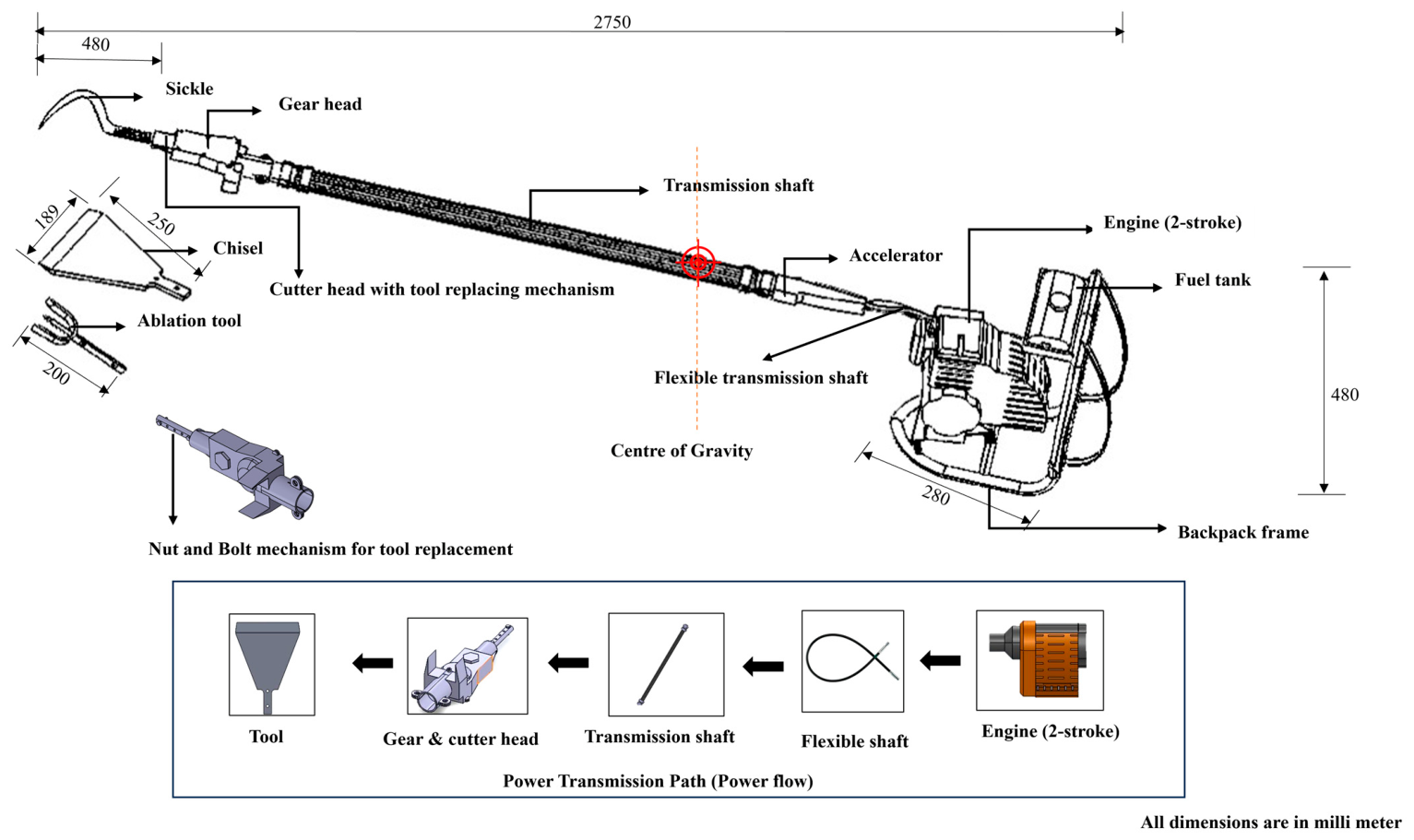
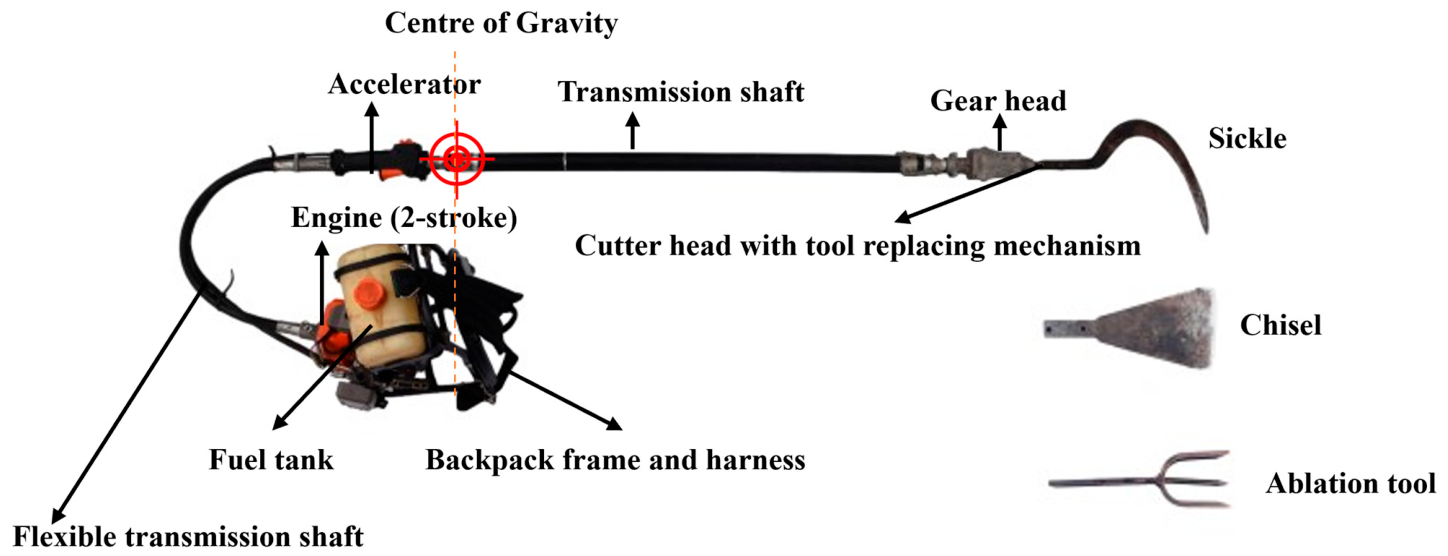
A motorized backpack-type machine was developed to perform oil palm ablation and harvesting operations. The prototype was designed to address three major limitations encountered with existing equipment: the need to carry excessive weight by hand during operation, high vibration levels, and the inability to use a single machine for both ablation and harvesting. The developed unit consists of a backpack frame supporting the engine, a flexible transmission shaft, a rotary shaft, a connecting rod assembly, and an interchangeable cutter head equipped with tools such as a chisel, sickle, and ablation implement. A schematic representation of the machine is provided in
Figure 1.
The backpack-type configuration was selected to reduce operator fatigue and improve maneuverability in dense oil palm plantations where hand-held machines become cumbersome during prolonged operation. A two-stroke air-cooled engine was used due to its lightweight construction, higher power-to-weight ratio, and ease of maintenance under field conditions. The flexible transmission shaft enables efficient power transfer while allowing freedom of movement for the operator, particularly when working at varying palm heights. Interchangeable cutting tools, including chisel, sickle, and ablation blade, were incorporated to enable multi-functional operation using a single machine, thereby reducing equipment cost and improving operational efficiency. These design considerations were guided by field constraints such as labor shortage, ergonomic limitations, and the need for timely harvesting.
The motorized backpack machine operates based on the principle of power transmission, motion conversion, ergonomics, and vibration control. The two-stroke engine generates rotary motion, which is transmitted through a centrifugal clutch to a flexible transmission shaft that facilitates ease of operator movement. The transmitted power reaches a 90° gear head located near the cutter assembly, where the direction of rotation is changed and further transferred to a crank and connecting rod mechanism. This mechanism converts the rotary motion into reciprocating motion, which drives the cutter head for effective cutting action. Depending on the attached tool—chisel, sickle, or ablation blade—the reciprocating motion enables cutting of inflorescences during ablation or fresh fruit bunches during harvesting. The interchangeable tool system allows the machine to perform multiple operations efficiently under varying field conditions. Additionally, the center of gravity of the machine is strategically positioned close to the operator’s back, ensuring better balance, reduced muscular strain, and improved ergonomic comfort during prolonged operation. The detailed technical specifications of the machine are presented in
Table 1.
2.2. Quality Tests
A series of quality tests were carried out to verify that the developed motorized backpack machine conformed to the required operational standards prior to field evaluation. These tests were essential to ensure reliability, functional safety, and durability of the prototype under practical working conditions. The evaluation procedure was adapted from the methodology proposed by Jelani et al. [
10] and Mehta et al. [
11], which is widely followed for assessing agricultural machinery.
It is important to note that several quality assessment tests, such as drop, fatigue, and functional reliability, are primarily evaluated based on standardized experimental procedures and acceptance criteria rather than purely analytical formulations, as widely practiced in agricultural engineering research. Wherever applicable, relevant quantitative expressions were used to support the evaluation.
2.2.1. Physical Test
The physical evaluation involved measuring the overall length, total weight, and specific weight of the machine. These parameters are essential indicators of portability and ergonomic suitability. The total length was recorded to assess maneuverability within plantation conditions, while the overall and specific weights provided insights into operator comfort, ease of transport, and potential drudgery during extended use.
The specific weight of the machine was determined as:
where
is the specific weight (kg m
−1),
is the total weight of the machine (kg), and
is the total length (m).
2.2.2. Functional Test
The functional test was designed to verify whether the developed machine could effectively perform the intended field operations, namely ablation and harvesting. The harvester was evaluated for its ability to cut oil palm fronds and fresh fruit bunches in accordance with its design specifications. During the test, the machine was required to cut a minimum of ten fronds or bunches under normal plantation conditions, and the cutting time for each operation was recorded. Smoothness of cutting, precision of tool engagement, and continuity of operation without undue mechanical difficulty were considered as key performance indicators. Successful completion of the test with consistent cutting action and minimal operator effort was taken as evidence of the machine’s functional reliability.
2.2.3. Drop Test
The drop test was conducted to evaluate the structural durability and mechanical integrity of the developed machine under accidental impact conditions. The test involved subjecting the machine to free-fall drops from predetermined heights and angles, simulating handling-related mishaps that may occur during field use or transportation. Two vertical drop heights, 1.0 m and 2.0 m, were selected as per standard machinery testing protocols. At each height, the machine was dropped at four angular orientations, namely 30°, 45°, 60°, and 90°, to represent different possible impact positions. After each drop, the machine was carefully inspected for structural deformation, cracks, loosening of fasteners, and functional impairments. The ability of the machine to withstand repeated impacts without exceeding structural deformation of 2 mm or loss of functionality was considered an indicator of its robustness and suitability for plantation conditions.
2.2.4. Vibration Test
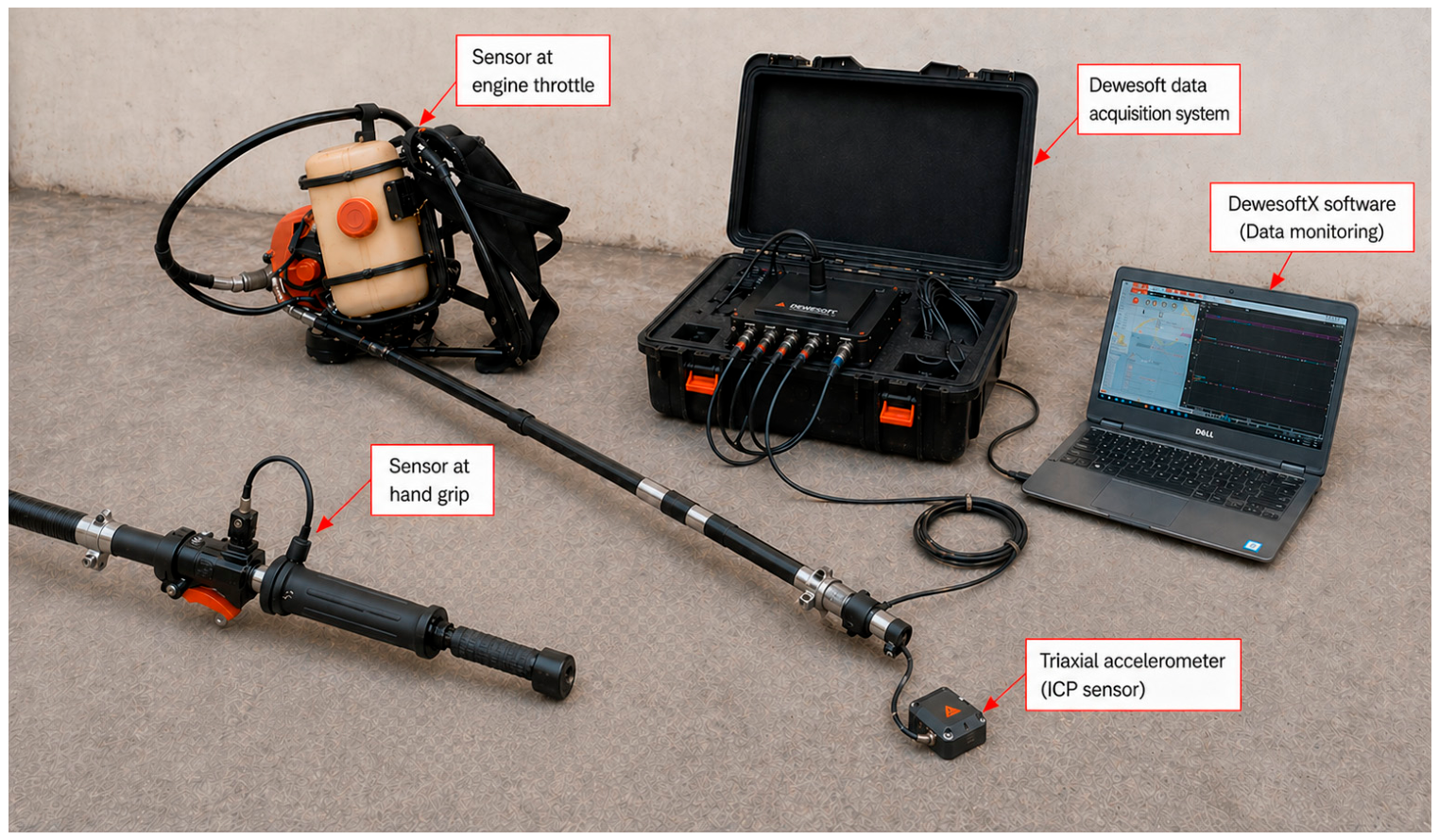
The vibration test was conducted to quantify the vibration transmitted from the machine to the operator’s hands during ablation and harvesting operations. The testing procedure was adapted from [
10,
12], and was performed in accordance with the Control of Vibration at Work Regulations, 2005. Vibration levels were measured at two critical points: the engine throttle point and the hand grip point, where the operator holds the pole during cutting of fronds and fruit bunches. Hand–arm vibration (HAV), defined as vibration transmitted into the worker’s hands and arms, was the primary parameter evaluated. Measurements were recorded using Dewesoft vibration measurement equipment during active cutting operations (
Figure 2).
The regulations provide guidelines for safe exposure, including an exposure action value (EAV) and an exposure limit value (ELV), which consider both vibration magnitude and duration of exposure. The daily EAV is 2.5 m s
−2 A [
9], indicating a level at which intervention is required to manage risk, while the daily ELV is 5 m s
−2 A [
9], representing the maximum permissible exposure beyond which operators should not be exposed. Vibration levels at the measured points were compared against these standards to assess the ergonomic suitability and operational safety of the machine.
2.2.5. Engine Performance Test
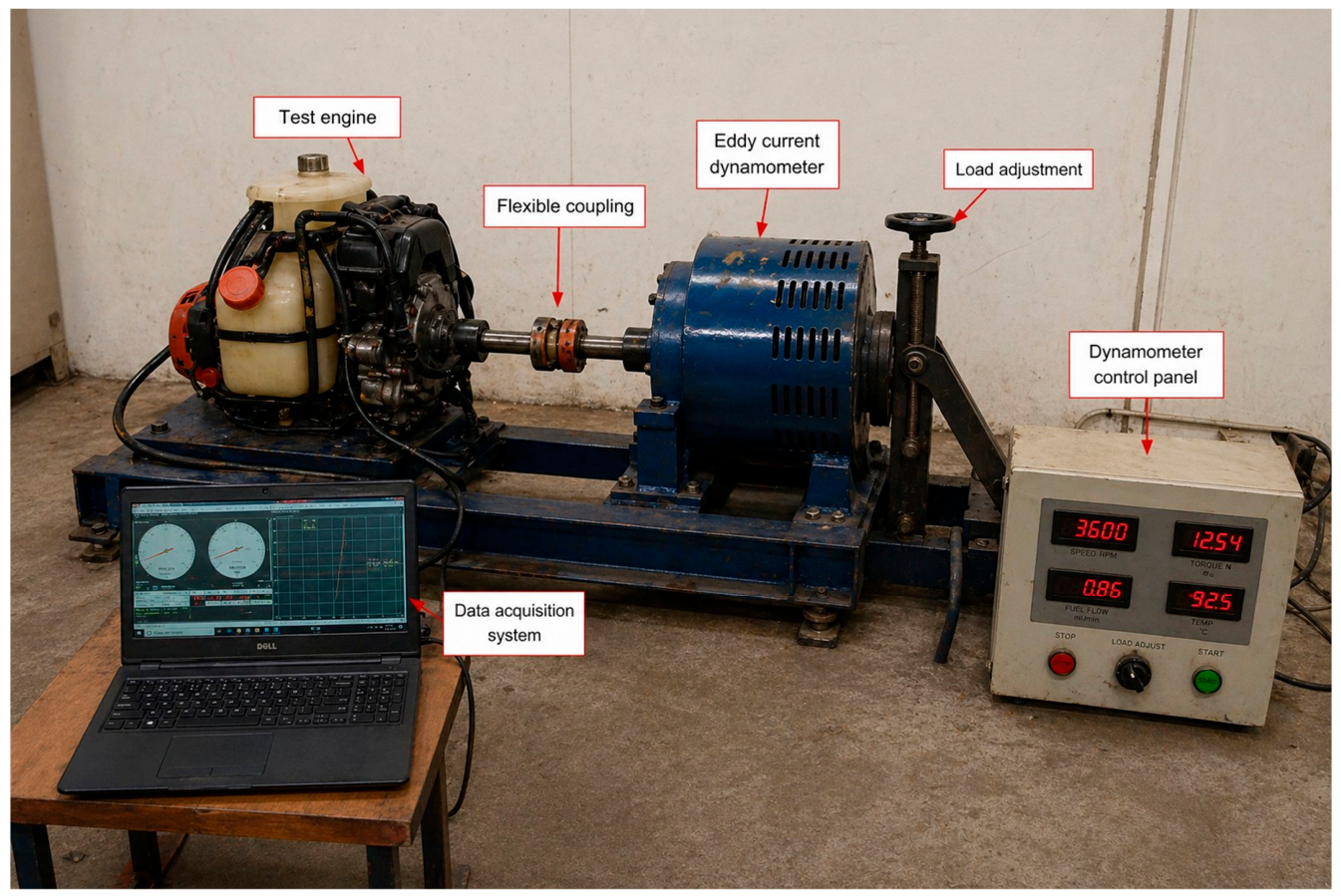
Engine performance testing was conducted to characterize the operational capabilities of the motorized backpack machine, including torque, horsepower, fuel consumption, and engine temperature under varying load conditions. The experiments were performed using an eddy-current small-engine dynamometer (
Figure 3), allowing precise control and measurement of engine parameters. Engine speed was varied from 2000 to 10,000 rpm to obtain a comprehensive performance profile. The testing procedure followed the ISO 1585 standard [
13], which provides guidelines for measuring power output in rotary piston and reciprocating internal combustion engines. Data collected from this test were used to evaluate engine efficiency, thermal behavior, and fuel usage, ensuring the machine could sustain continuous operation during field ablation and harvesting tasks.
2.2.6. Fatigue Test
The fatigue test, also referred to as the repetitive operation test, was conducted to assess the durability and long-term reliability of the machine’s components under conditions simulating actual field use. During the test, the machine was operated continuously using a controller to maintain predetermined operating cycles over a specified period. The prototype was subjected to a design load of 20 kg, representative of typical field conditions during ablation and harvesting. The test was carried out for a minimum duration of 100 h to evaluate wear, tear, and potential failure points in critical components such as the transmission shaft, connecting rod, and cutter head. Observations from this test provided insights into component longevity and maintenance requirements, ensuring the machine’s operational robustness for sustained plantation use.
2.3. Field Evaluation
Field trials were conducted to evaluate the long-term performance of the developed motorized backpack machine under actual plantation conditions at the experimental fields of ICAR—Indian Institute of Oil Palm Research, Pedavegi, Andhra Pradesh, India. During ablation operations, the machine was assessed for key performance parameters including ideal operating time per day (8 h), required break time, number of palms processed, area covered, ablation capacity, actual and theoretical field capacities, field efficiency, average net accelerated time to remove inflorescences, and fuel consumption. For harvesting operations, both chisel and sickle attachments were tested, and data were recorded on ideal daily operating time, break time, number of palms harvested, area covered, harvesting capacity, actual and theoretical field capacities, field efficiency, average net accelerated time per frond and per bunch, and fuel consumption. These evaluations provided a comprehensive understanding of the machine’s productivity, efficiency, and resource utilization for both ablation and harvesting, enabling quantitative comparison with conventional manual methods and identification of potential areas for operational improvement.
2.4. Ergonomic Evaluation
Ergonomics, the scientific study of interactions between humans and their working environment, aims to optimize human efficiency by identifying and eliminating design features that may lead to inefficiency, fatigue, or long-term physical injury, thereby reducing operational costs. Its application in agricultural machinery is particularly relevant in tropical farming systems, where labor-intensive tasks often involve significant physical strain, and can help mitigate some of the drudgery associated with prolonged manual operations [
14,
15]. Prolonged use of hand-held vibrating tools, such as those employed in oil palm ablation and harvesting, has been associated with hand–arm vibration syndrome (HAVS), which affects the musculoskeletal, nervous, and vascular structures of the upper limbs, potentially causing long-term occupational health issues [
16,
17].
Evaluating the ergonomics of the developed motorized backpack machine was considered essential to enhance the efficiency of the man–machine system while safeguarding operator health. For this purpose, three experienced agricultural workers representing different age groups (20–30, 30–40, and 40–50 years) with average body weights of 62, 68, and 71 kg and operational experience of more than three years were selected for ergonomic evaluation. Although the sample size was limited, the study provides preliminary insights into ergonomic performance. Future work will include larger sample sizes and comparison with manual operations. Physiological parameters including heart rate, oxygen consumption rate, and energy expenditure were measured in accordance with the methods described by Akki et al. [
15]. These measurements provided quantitative insights into the physical demands imposed by the machine, enabling assessment of workload intensity, operator fatigue, and overall ergonomic suitability during field operations. The results from this study are expected to inform design improvements and operational recommendations aimed at minimizing physical strain while maximizing productivity in oil palm cultivation.
2.4.1. Heart Rate (Beats min−1)
Heart rate is a widely recognized parameter for quantifying physical workload and drudgery in agricultural operations [
18]. Compared to energy consumption, heart rate provides a more direct and reliable indication of the overall physiological demands of work and has the added advantage of being relatively simple to measure under field conditions. In the present study, cardiovascular workload of the operators was assessed by recording heart rate (beats min
−1) before and after performing ablation and harvesting operations with the motorized backpack machine. Measurements were taken using a stethoscope, following standard field procedures [
5], allowing for evaluation of the acute physiological response of operators and providing insights into the intensity and ergonomics of the machine’s operation.
2.4.2. Oxygen Consumption Rate (L min−1)
The intensity of physical activity is closely correlated with oxygen consumption, particularly when a steady state of exertion is achieved [
5]. In the present study, oxygen consumption rate, defined as the volume of oxygen utilized by the body per unit time, was estimated based on the heart rate of operators. The relationship between heart rate and oxygen consumption was expressed using the empirical formula proposed by [
19]:
This calculation allowed for a non-invasive estimation of the metabolic workload of operators during ablation and harvesting operations with the motorized backpack machine, providing insights into the physiological demands and ergonomic efficiency of the equipment.
2.4.3. Energy Expenditure Rate (KJ min−1)
Energy expenditure represents the total amount of energy required by the human body to perform physiological functions, including basal activities such as breathing, blood circulation, and digestion, as well as physical work such as manual labor or machine operation. It is typically expressed in calories, with total daily energy expenditure (TDEE) indicating the cumulative energy utilized over a 24 h period. In agricultural ergonomics, work intensity is often categorized into four levels—light, moderate, heavy, and extremely heavy—based on energy costs, oxygen consumption rates (OCR), and percentage of maximal oxygen uptake (VO
2 max) [
20].
In the present study, the energy expenditure associated with operating the motorized backpack harvesting machine was estimated using the oxygen consumption rate derived from heart rate measurements. Operating the machine individually by a single operator corresponded to a ‘heavy’ work category, reflecting substantial metabolic demand, whereas operation with two operators reduced the workload to a ‘moderate’ category. The energy expenditure rate (kJ min
−1) was calculated using the formula:
where OCR is the oxygen consumption rate in L min
−1, and 20.88 kJ L
−1 represents the calorific equivalent of oxygen. This approach provided a quantitative assessment of the physiological effort required during ablation and harvesting operations, allowing classification of work intensity and facilitating ergonomic evaluation. Such measurements are essential for understanding operator workload, optimizing machine design, and ensuring safe and efficient field operations.
2.5. Cost Economics
A cost-economics study was conducted to evaluate the financial feasibility of using the developed motorized backpack machine for harvesting operations. The analysis utilized data collected from field evaluations, including machine productivity, fuel consumption, operating time, and labor requirements, combined with standard economic assumptions regarding costs of inputs, labor wages, and machine depreciation. The study aimed to estimate key economic indicators such as the cost of operation per hectare, cost per tonne of harvested produce, and potential earnings of operators, allowing comparison with conventional manual harvesting methods. This approach provided a quantitative assessment of the economic viability and cost-effectiveness of adopting mechanized harvesting in oil palm plantations.
2.5.1. Cost of Harvesting
Fixed and variable cost components were used to estimate the harvesting cost. Fixed cost included depreciation and interest on capital investment, whereas variable cost comprised labor wages, fuel consumption, and repair and maintenance expenses. Using these parameters, the cost of harvesting was calculated on both a per-tonne basis and a per-hectare annual basis following the procedure proposed by Mehta et al. [
11]. All monetary values were expressed in United States dollars (USD). Average number of working days for a harvester was taken as 200 days, as reported by Prasad et al. [
7], and average yield of oil palm was assumed to be 20 tonnes/hectare in a year.
Fixed cost was estimated as the sum of depreciation and interest charges:
Daily depreciation was calculated using the straight-line method:
where IC represents the initial capital investment (USD), S denotes the salvage value taken as 10% of the initial cost, L is the economic life of the machine (years), and d indicates the number of working days per year.
Daily interest cost was computed as:
where i is the annual interest rate (%).
Variable cost consisted of repair and maintenance charges and labor wages:
Repair and maintenance cost was assumed to be 10% of the capital investment, while labor wages were considered as 9 USD per day.
The total daily operating cost of the harvester was calculated as:
The harvesting cost per tonne was estimated by dividing the daily operating cost by the harvesting capacity:
Finally, the annual harvesting cost per hectare was determined as:
2.5.2. Cost-Effectiveness
The economic efficiency of the developed motorized backpack machine was assessed by comparing the total quantity of oil palm fresh fruit bunches (FFBs) harvested over the machine’s service life with its initial purchase cost [
21,
22]. This analysis provides an estimate of the cost per unit of harvested produce, reflecting the machine’s financial value relative to its investment. Cost-effectiveness, expressed in USD per tonne, was calculated using the following formula:
where HC is the daily harvesting capacity of the machine in tonnes, HD represents the number of harvesting days per year (assumed to be 200 in this study), and the machine life is expressed in years. By applying this approach, the study quantified the return on investment and provided a basis for comparing the cost-efficiency of mechanized harvesting with conventional manual methods, enabling a clear understanding of potential economic benefits in oil palm production.
3. Results and Discussion
3.1. Motorized Backpack Machine
The developed motorized backpack machine (
Figure 4) demonstrated significant versatility, as it can be adapted for two critical operations in oil palm cultivation: ablation and harvesting. During the juvenile phase of the palms, the machine equipped with the ablation tool efficiently performed inflorescence removal, thereby promoting vegetative growth and enhancing future fruit yield. For harvesting operations, the ablation tool can be easily replaced with a chisel using a simple nut-and-bolt assembly, allowing the machine to harvest fresh fruit bunches (FFBs) from palms with heights ranging from 6 to 8 feet. For taller palms, the chisel can be substituted with a sickle, enabling safe and efficient harvesting of bunches from heights of 8 to 12 feet. This modular design ensures that a single machine can be employed throughout multiple stages of oil palm production, reducing the need for multiple specialized tools and minimizing labor requirements. The adaptability of the prototype not only enhances operational efficiency but also contributes to ergonomic benefits by allowing operators to switch tools quickly and safely, maintaining productivity across varying plantation conditions.
3.2. Quality Tests
Prior to field performance evaluation, the developed motorized backpack machine underwent a series of quality tests to verify compliance with design and operational standards. Physical evaluation revealed that the machine has an overall length of 2.75 m, a total weight of 10.56 kg, and a specific weight of 3.75 kg m
−1, indicating that it is manageable for operators and ergonomically suitable for prolonged use during ablation and harvesting operations. Functional testing (
Table 2) demonstrated the machine’s efficiency, with four inflorescences, 15 fronds, and nine fresh fruit bunches successfully removed from nine palms. The machine was easy to handle, and cutting operations were smooth, with both the sickle and chisel attachments proving sufficiently sharp for reliable performance across different tools. After drop tests from heights of 1.0 m and 2.0 m at four orientations (30°, 45°, 60°, and 90°), no structural deformation exceeding 2 mm was observed. All fasteners remained intact, and no functional impairment was detected. Hand–arm vibration measurements showed magnitudes of 1.9 m s
−2 at the engine throttle and 1.5 m s
−2 at the hand grips, remaining within the ISO 5349 [
23] recommended exposure action value of 2.5 m s
−2, indicating minimal risk to the operator during extended use. Engine evaluation recorded a maximum output of 1.25 kW at 6000 rpm, providing adequate power for both ablation and harvesting operations. Additionally, fatigue testing over 100 h of continuous operation under a 20 kg load, showed no visible wear or failure in the transmission shaft, cutter head, or connecting rod assembly. Minor surface wear (<1%) was recorded in rotating joints, confirming the machine’s durability and reliability for sustained field performance.
3.3. Field Evaluation
The developed motorized backpack machine was evaluated under field conditions to assess its operational performance for ablation and harvesting tasks. Field trials were conducted over an 8 h workday using all three tool attachments: the ablation tool for inflorescence removal, and the chisel and sickle for harvesting fresh fruit bunches (FFBs). The detailed results are summarized in
Table 3.
Observations revealed that operators required periodic breaks during all three operations, with the longest rest periods occurring during harvesting with the sickle, followed by the chisel and the ablation tool. Consequently, the net ideal running time of the machine was lowest when using the sickle and highest during ablation operations. The total area covered in a single day was greatest when using the ablation tool, followed by the chisel and sickle for harvesting operations, reflecting differences in operational speed and effort required for each task.
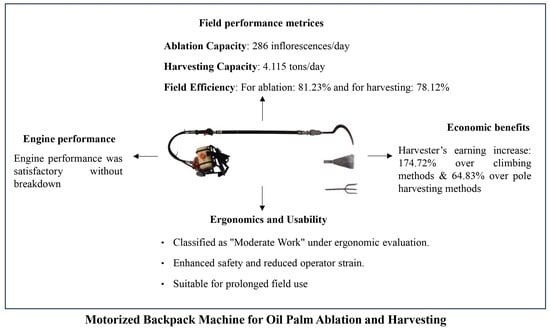
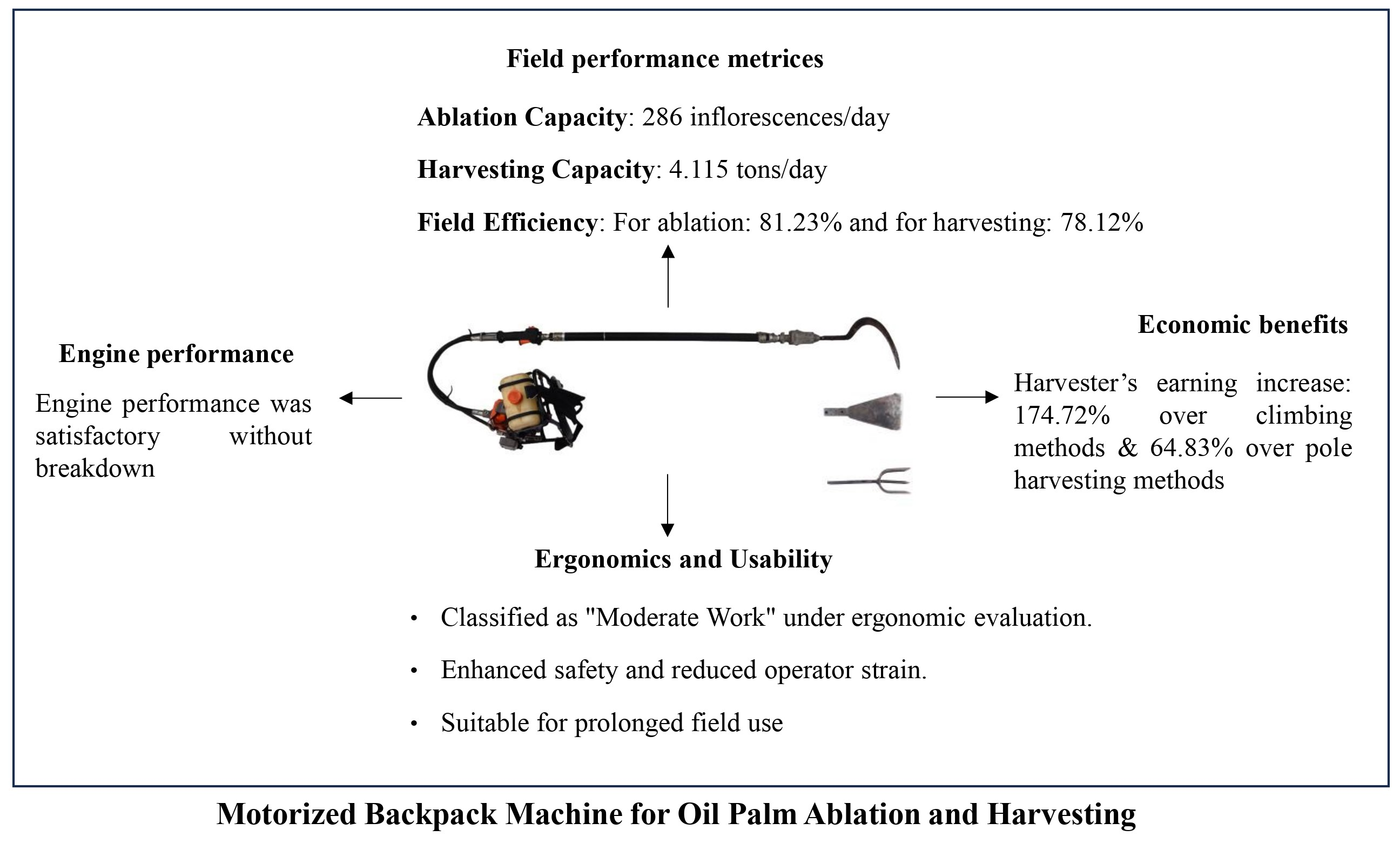
The machine demonstrated the capability to remove approximately 286 inflorescences per day using the ablation tool, while harvesting capacities were 4.21 tonnes per day with the chisel and 4.02 tonnes per day with the sickle. Calculations of actual field capacity, theoretical field capacity, and field efficiency indicated superior performance with the ablation tool compared to the chisel and sickle. The highest field efficiency recorded was 81.23% for ablation and 79.91% for harvesting using the chisel.
Fuel consumption was similar across all tool operations, although slightly higher consumption was observed during harvesting with the sickle. This increase is likely attributable to the greater acceleration and effort required to cut fronds and bunches at higher palm heights, which imposed additional load on the engine. Overall, these results demonstrate that the developed machine performs efficiently across multiple operations, providing high productivity with consistent fuel usage, and can be effectively employed for both ablation and harvesting in oil palm plantations.
The developed motorized backpack machine demonstrated higher operational efficiency compared to traditional manual methods reported in earlier studies [
7]. The average harvesting capacity of the developed machine (4.115 t day
−1) was higher than pole harvesting (2.5–3.0 t day
−1) and manual climbing methods (1.5–2.0 t day
−1) [
10]. Additionally, field efficiency and operational cost were significantly improved. These results indicate that mechanized harvesting using the developed machine can significantly enhance productivity while reducing labor requirements.
3.4. Ergonomic Evaluation
Physiological responses of operators were measured before and after performing ablation and harvesting operations with the developed motorized backpack machine, and the results are presented in
Table 4. Key parameters evaluated included heart rate, oxygen consumption rate (OCR), and energy expenditure rate. All subjects exhibited a significant increase in heart rate following machine operation. The highest post-operation heart rate of 120 beats min
−1 was observed for P3 (age group 40–50 years), followed by 118 beats min
−1 for P2 (30–40 years) and 110 beats min
−1 for P1 (20–30 years), suggesting that age may influence cardiovascular response during manual and mechanized field work.
The observed heart rate values (110–120 beats min
−1) during operation of the developed machine were comparable with moderate workload reported for tractor drivers (105–125 beats min
−1), as reported by previous ergonomic studies [
20]. Similarly, oxygen consumption and energy expenditure values also fall within moderate workload classification, indicating acceptable physiological demand during machine operation. Based on the classification system proposed by Nag et al. [
20], which categorizes agricultural work intensity into light, moderate, heavy, and extremely heavy according to energy cost, OCR, and percentage of VO
2 max, the operation of the motorized backpack machine falls within the ‘moderate’ work category. This indicates that while the machine imposes measurable physical demand on the operator, it remains within acceptable limits, thereby confirming its ergonomic suitability for extended field use.
3.5. Cost Economics
3.5.1. Cost of Harvesting
The economic assessment of the developed motorized backpack machine was conducted considering a machine life of five years and an average purchase cost of 600 USD per unit. Field evaluation data and standard assumptions were used to calculate the cost of operation per tonne of fresh fruit bunches (FFBs) and per hectare per year. The average cost of operation was estimated as 3.02 USD per tonne and 60.40 USD per hectare per year, respectively, with detailed results provided in
Table 5.
The total fixed cost of the machine was calculated as 0.74 USD per day, and the average daily fuel cost during harvesting operations was 2.4 USD. Considering an average daily harvesting capacity of 4.115 tonnes, the total cost of harvesting per day was 12.44 USD. The cost per tonne of harvested FFBs was 3.02 USD, which is lower than traditional methods, including pole harvesting (3.64 USD/tonne) and climbing (6.0 USD/tonne). The reduced cost is primarily attributed to the higher harvesting efficiency of the motorized machine compared to conventional techniques. Although parallel experimental comparison with manual methods was not conducted in this study, previously published data from pole harvesting and climbing methods [
7] were used for comparative analysis. Future studies will include replicated field trials comparing the developed machine with conventional harvesting techniques.
The study also estimated the potential income for harvesters using mechanized versus traditional harvesting methods. Using the motorized backpack harvester, an operator could earn approximately 4938 USD per year, compared to 2995.80 USD with pole harvesting and 1797.48 USD with climbing methods (based on unpublished data). This translates to an increase in annual income of 64.83% and 174.72% over pole and climbing methods, respectively, demonstrating the substantial economic benefits of mechanized harvesting in oil palm plantations.
3.5.2. Cost-Effectiveness
Cost-effectiveness of machine indicates additional charges incurring in harvesting of oil palm fresh fruit bunches. The cost-effectiveness of developed motorized backpack machine for harvesting is 0.15 USD per tonne.
4. Conclusions
A motorized backpack-type machine was developed for oil palm ablation and harvesting operations. The developed machine satisfactorily met the requirements of the initial quality tests and performance evaluation was done in field using all three tools viz., ablation tool, chisel, and sickle. All the performance parameters indicated that developed machine worked satisfactorily in field. The highest field capacity and field efficiency was reported for the machine operated using the ablation tool as compared to the chisel and sickle. Ergonomical evaluation of developed machine revealed that its operation comes under the moderate work category. From an economic point of view, adopting motorized harvesting decreased the cost of operation per tonne and increased the harvester earnings by 174.72%, and 64.83% over climbing, and pole harvesting methods. Mechanization of harvesting increases harvesting capacity and can improve both oil quality and yield through timely harvesting of oil palm bunches. Although the developed machine showed promising performance, further studies involving larger sample sizes, different plantation conditions, and direct comparison with existing commercial harvesters are recommended to validate long-term performance.




 ,
,