Article

Integrating Multi-Sensor Data Fusion to Map Isohydric Responses and Maize Yield Variability in Tropical Oxisols

by
Fábio Henrique Rojo Baio
1,*,
Paulo Eduardo Teodoro
1,
Job Teixeira de Oliveira
1,
Ricardo Gava
1,
Larissa Pereira Ribeiro Teodoro
1,
Cid Naudi Silva Campos
1,
Estêvão Vicari Mellis
2,
Isabella Clerici de Maria
2,
Marcos Eduardo Miranda Alves
1,
Fernanda Ganassim
1,
João Pablo Silva Weigert
1,
Kelver Pupim Filho
1,
Murilo Bittarello Nichele
1 and
João Lucas Gouveia de Oliveira
3
1
Departament of Agronomy, Chapadão do Sul Campus (CPCS), Federal University of Mato Grosso do Sul (UFMS), Chapadão do Sul 79560-000, MS, Brazil
2
Agronomic Institute of Campinas (IAC), Campinas 13012-970, SP, Brazil
3
Department of Agronomy, São Paulo State University (UNESP), Ilha Solteira 15385-007, SP, Brazil
*
Author to whom correspondence should be addressed.
AgriEngineering 2026, 8(4), 131; https://doi.org/10.3390/agriengineering8040131
Submission received: 28 January 2026 / Revised: 11 March 2026 / Accepted: 23 March 2026 / Published: 1 April 2026

Abstract

Maize cultivation in tropical Oxisols during the second growing season faces significant climatic risks, where spatial heterogeneity in soil water retention often dictates economic viability. This study integrated a trimodal sensing approach, combining multispectral, thermal, and LiDAR data, with proximal physiological measurements to map isohydric responses and yield variability. Conducted in the Brazilian Cerrado, the research monitored a one-hectare maize field using UAV-based sensors alongside ground truth evaluations of gas exchange, leaf water potential, and soil moisture. Results revealed high yield variability (6.6 to 13.4 Mg ha−1) primarily governed by clay content-mediated water availability. Maize exhibited strict isohydric behavior, maintaining homeostatic leaf water potential through preventive stomatal closure, which limited CO2 assimilation in zones with lower water retention. A significant statistical decoupling was observed between plant height and final grain yield, as water stress impacted reproductive stages more severely than vegetative growth. Furthermore, the Temperature Vegetation Dryness Index (TVDI) served as a robust proxy for biomass vigor rather than mere water deficit. These results confirm that yield variability in tropical Oxisols was not a product of hydraulic failure, but rather a consequence of carbon limitation necessitated by the crop’s conservative hydraulic management to maintain leaf water potential within safe thresholds.

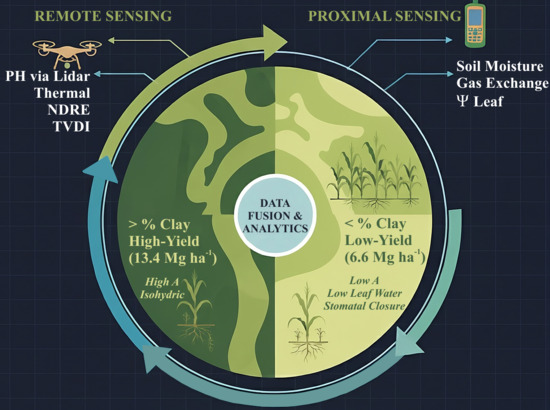
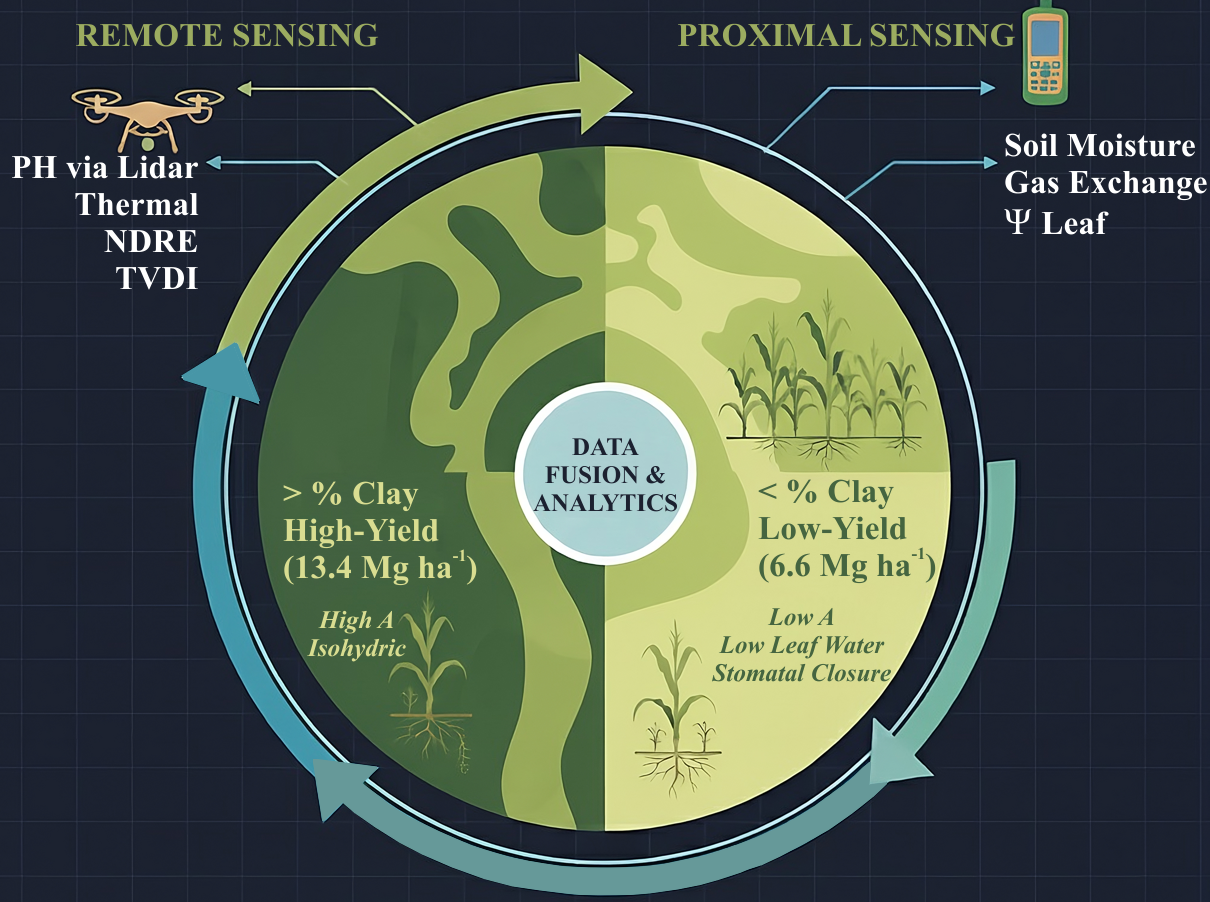
Graphical Abstract

1. Introduction

Maize (Zea mays L.) crop cultivation during the second growing season in Brazil occurs within a high-risk climatic window. This period is characterized by a significant decline in rainfall during the crop’s most critical phenological stages, such as tasseling and grain filling. In these tropical environments, the spatial variability of soil attributes is no longer a pedological curiosity but the primary determinant of economic viability. Tropical Oxisols, which predominate in the Cerrado biome, are physically deep and well-drained but exhibit significant heterogeneity in water retention capacity and fertility [1]. Consequently, drought stress remains a major constraint on maize growth and yield optimization [2,3].
In tropical Oxisols, the spatial heterogeneity of soil moisture and nutrient availability is frequently obscured by uniform conventional management, making the use of high-resolution sensors essential for unmasking site-specific limitations that impact crop performance [4,5]. The deployment of integrated sensing systems in these highly weathered soils enables the delineation of management zones that reflect the real-time interaction between soil texture-mediated water availability and the crop’s dynamic physiological demand [6,7]. This shift toward high-resolution spatial analysis is representative of how Precision Agriculture (PA) has evolved from simple soil mapping into a comprehensive strategy for managing both climatic and edaphic risks.
Precision Agriculture offers fundamental strategies to mitigate these climatic risks by intersecting the soil’s static resource supply with the plant’s dynamic physiological responses. While traditional soil sampling provides essential data [8], it is often too sparse to capture field-scale variability. In contrast, remote sensing via Unmanned Aerial Vehicles (UAVs) equipped with multispectral, thermal, and LiDAR (Light Detection and Ranging) sensors allows for continuous and detailed monitoring of the soil–plant–atmosphere system [9,10].
A critical challenge in managing maize crops is the crop’s isohydric behavior. Maize plants exercise strict stomatal control to maintain leaf water potential (Ψ Leaf) and prevent xylem cavitation [11,12]. When soil moisture decreases, the synthesis of abscisic acid (ABA) triggers stomatal closure, which preserves cell turgidity but limits carbon assimilation and evaporative cooling, leading to canopy warming. Recent advances suggest that spatial yield variability is not driven solely by tissue dehydration, but by the duration of stomatal closure in areas with lower water retention. However, traditional vegetation indices like the NDVI (Normalized Difference Vegetation Index) often saturate in high-biomass conditions [13], such as maize crop [14]. This necessitates the use of the red-edge wavelength region (e.g., NDRE—Normalized Difference Red Edge Index) and fused metrics, such as the Temperature Vegetation Dryness Index (TVDI), to accurately detect early water stress and delineate management zones [6,15]. Therefore, the use of the red-edge band is essential because maize is a C4 crop, characterized by a carbon fixation pathway with high photosynthetic efficiency and biomass accumulation [11], for which the conventional NDVI often fails due to saturation effects.
The novelty of this research lies in its trimodal approach, integrating spectral response, thermal signatures, and three-dimensional structural data (LiDAR) to explain the spatial mechanisms of yield formation in tropical Oxisols [6]. Unlike conventional studies that focus on vegetative vigor as a direct proxy for yield, this investigation explores the statistical decoupling between morphological traits, such as plant height, and final grain yield. By confronting proximal sensing data, including gas exchange and leaf water potential, with remote observations, this study reveals how ‘functional stress’ in high-yielding zones challenges traditional paradigms of water deficit detection [12,15]. We propose a conceptual shift where certain levels of thermal and hydraulic stress are viewed as consequences of high photosynthetic activity and effective water use in clay-rich soil patches.
The objective of this study was to evaluate the efficiency of fusing proximal and remote sensing data (thermal, multispectral, and LiDAR) to characterize the spatial variability of maize yield and establish precision management zones. Specifically, we aimed to: (a) identify how soil texture governs water availability and physiological responses in Oxisols; (b) assess the performance of the TVDI and Stress Ratio indices as proxies for crop vigor and yield optimization; (c) investigate the statistical decoupling between vegetative morphological traits (plant height) and final grain yield under water-limited conditions.

2. Materials and Methods

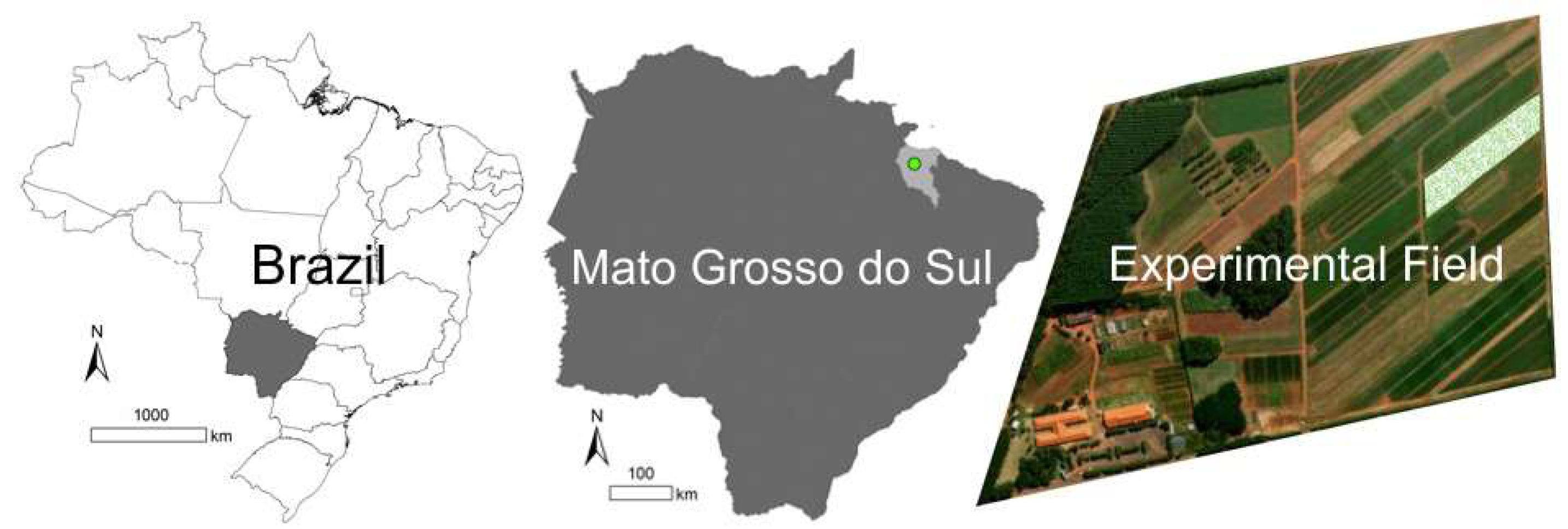
The experiment was conducted in the municipality of Chapadão do Sul, Brazil, in the experimental area of the Federal University of Mato Grosso do Sul (18°46′44″ S, 52°36′59″ W), between March and July 2025, during the second crop season in the region (Figure 1). The experimental area was 1 ha, previously cultivated with soybean (Glycine max) under a minimum tillage system for 15 years. Soil attribute spatial variability was characterized prior to sowing through field mapping. The soil in the region is Oxisol (Soil Taxonomy), common in the Cerrado biome. Forty-five control points were randomly established in the area for the purpose of phenological evaluation of the crop at the georeferenced sampling points. A Nomade (Trimble, Sunnyvale, CA, USA) GNSS (Global Navigation Satellite System) device was used to navigate between the points. Phenological assessments of the crop were carried out when the crop was between stages R1 and R2, corresponding to the beginning of the reproductive stage. Crop yield was measured at the end of the crop cycle, evaluating the grains harvested from the plants (dried to 13% moisture) in two parallel lines of 3 m at the 45 sampling points of evaluation.
Chemical analyses of the soil formed the basis for interpreting nutrient levels and recommendations for management and fertilization, using the formulated NPK 0-25-15 fertilizer. When the maize was in the phenological stage between V4–V6, topdressing with potassium chloride (KCl) was carried out at a dose of 100 kg ha−1, and topdressing with urea at a dose of 90 kg ha−1. Crop management practices, including the application of herbicides, insecticides, fungicides, and fertilizers, were conducted according to the specific requirements of the maize. The area was sown with the Monsanto AG-3510 hybrid (Refuge Max, Chapadão do Céu, Brazil), considered an early-cycle, glyphosate-resistant (RR2 technology). Sowing was carried out on 10 March 2025, with a population of 60,000 plants ha−1.
Soil sampling to verify the levels of physical (texture) and chemical soil attributes was carried out using a systematic sampling grid of 30 × 30 m, at a depth varying from 0.0 to 0.2 m, incorporating 9 subsamples, and covering the entire experimental area. From the results of the soil analyses (Table 1), the interpretation table of recommended fertility levels was used to identify the availability of each macronutrient and classify them according to their respective levels in the soil [8]. The experimental area showed high fertility, with an average base saturation (V%) of 65.56% and an average clay content of 441.89 g kg−1, classifying it as clayey in texture. The soil is corrected and rich in Phosphorus, Calcium, Magnesium, and Zinc. Special attention was given to potassium, which was present at low levels for the maize crop; therefore, topdressing fertilization was carried out, split into two applications.
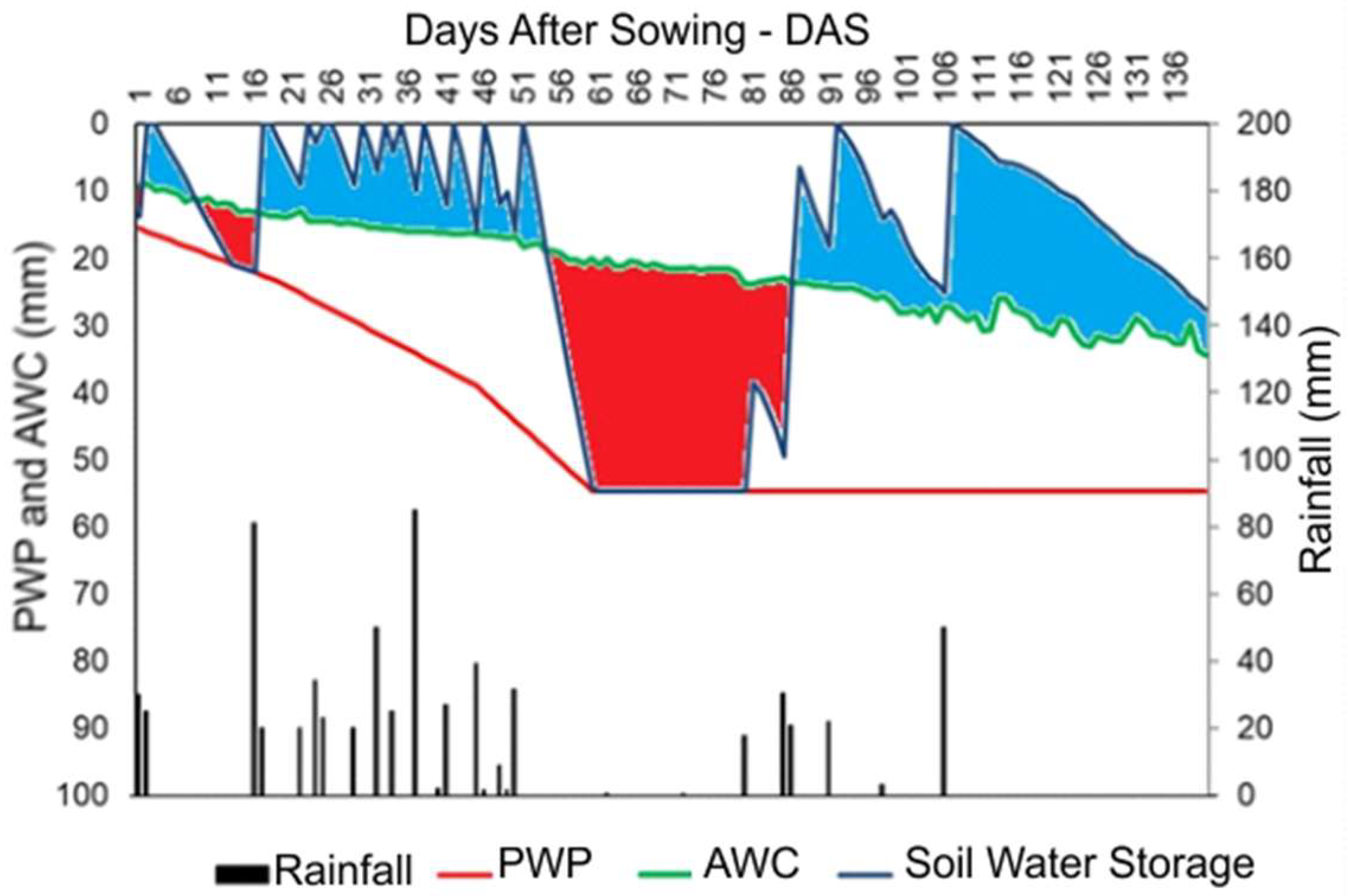
The climate of the region where the municipality is located, according to Köppen, is tropical with a dry winter and a rainy summer (Aw). The rainfall regime was adequate for the good development of the crop, with rain practically throughout the entire period that the crop was in the field (Figure 2). The water balance during the crop cycle indicated that soil water storage remained close to the Available Water Capacity (AWC) during most of the vegetative and reproductive period, favored by the regular distribution of rainfall, which minimized the occurrence of severe water deficits until physiological maturity.
Spectral data collection was performed using a fixed-wing Unmanned Aerial Vehicle (UAV), model eBee RTK (SenseFly, Cheseaux-sur-Lausanne, Switzerland), equipped with the Sequoia multispectral camera (Parrot, Paris, France). The sensor recorded images in the central bands of Green (550 nm), Red (660 nm), Red-Edge (735 nm), and Near-Infrared (NIR—790 nm). Flights were conducted around 10:00 AM local time, without shading from the crop rows, at an altitude of 100 m, providing a spatial resolution of 0.10 m, with 80% longitudinal and 75% lateral overlap. Radiometric calibration was performed under field conditions prior to the flight and after data processing. Multispectral image processing was conducted using Pix4Dmapper software 4.9.0 (Pix4D, Lausanne, Switzerland), following the standard alignment and radiometric calibration workflow.
In selecting vegetation indices, the physiology of the maize crop and its high biomass content were considered. In selecting spectral variables, the use of the red-edge wavelength region was prioritized to avoid the saturation common to indices based solely on the visible red region. Consequently, the NDRE (Normalized Difference Red Edge), (Equation (1)) was calculated, specifically chosen for its ability to maintain sensitivity and not saturate under high Leaf Area Index conditions, and more specifically to calculate the Stress Ratio (SR) index. The NDVI (Normalized Difference Vegetation Index), (Equation (2)) was also calculated for comparative purposes with crop yield.
N D R E = ( N I R R e d E d g e ) / ( N I R + R e d E d g e )
N D V I = ( N I R R e d ) / ( N I R + R e d )
A Matrice 350 RTK multirotor UAV (DJI, Shenzhen, China) was used to acquire thermal data. The UAV carried the Zenmuse H20T radiometric camera (DJI, Shenzhen, China). This sensor has a thermal resolution of 640 × 512 pixels and a thermal sensitivity of ≤50 mK. Georeferencing accuracy was ensured by the embedded RTK system in communication with the D-RTK2 mobile base station. The RTK base was positioned over a point with known geographic coordinates, enabling GIS (Geographic Information System) overlay between the maps.
The processing of thermal images, due to the nature of the radiometric format, required a specific workflow in the Metashape Professional software 2.2.3 (Agisoft, St. Petersburg, Russia). Raw thermal imagery from the Zenmuse H20T camera was initially pre-processed using the DJI Image Processor software v1.7. The workflow involved high-accuracy photo alignment, camera calibration optimization, dense point cloud generation, and the creation of a Digital Elevation Model (DEM). The final radiometric orthomosaic was generated and exported in TIFF format, preserving the quantitative surface temperature (Ts) values for further analysis.
Water stress was assessed using two distinct metrics. First, the TVDI (Temperature Vegetation Dryness Index) was used, calculated based on the Surface Temperature versus Vegetation Index attribute space (stress triangle) (Equation (3)). The TVDI is a normalized index that ranges from 0 to 1, where values close to 0 indicate that the pixel temperature is approaching the wet edge (Tmin), representing maximum transpiration rates and water comfort.
T V D I = ( T s T m i n ) / ( T m a x T m i n )
where Ts: Surface temperature observed at the pixel; Tmin: Minimum temperature observed for a given NDRE, corresponding to the wet edge (defined by the lower edge of the stress triangle scatter plot); Tmax: Maximum temperature observed corresponding to the dry edge, with minimum water availability and stomatal closure (defined by the linear equation of the upper edge of the stress triangle: Tmax = a + b × NDRE); a and b: Represent, respectively, the linear and angular coefficients of the fitted line.
Although the original methodology [16] frequently uses NDVI, this study opted to replace it with NDRE. This choice is justified by the high biomass of the maize crop in the reproductive stage, a condition in which NDVI tends to saturate and lose sensitivity, while NDRE maintains a better correlation with crop variability. Due to the discrepancy in spatial resolution between the sensors, thermal data were resampled using the nearest neighbor method to a final resolution of 0.10 m to ensure pixel-by-pixel matching with the multispectral data. Additionally, the Stress Ratio (SR), a simplified metric of the thermal spectral relationship (Equation (4)), was calculated.
S R = T s / N D R E
The height of the crop was measured using the Zenmuse L2 LiDAR sensor (DJI, Shenzhen, China) also coupled to the Matrice 350 RTK aircraft, with real-time positioning corrections provided by the D-RTK2 base station. The flight was performed at a height of 35 m above the ground, with a speed of 2 m s−1 and a lateral overlap of 30%. The sensor was configured for a non-repetitive scanning mode with a density of 1000 points m−2 and 5 returns per pulse.
The processing of the LiDAR sensor data started in the Terra software 5.0.2 (DJI, Shenzhen, China) for the fusion of raw data and association of coordinates to the point cloud, followed by corrections to the cloud using the LiDAR360 software 9.0.0 (GreenValley International, Hanoi, Vietnam). At this stage, noise filtering, smoothing, and automatic classification of points in soil and vegetation were performed. The normalization of the point cloud was obtained by subtracting the terrain elevation from the vegetation points, resulting in the Digital Height Model (DHM) (Equation (5)). The crop heights used in the analysis were extracted directly from this normalized model.
D H M ( x , y ) = D S M ( x , y ) D T M ( x , y )
where DHM(x,y) corresponds to the normalized height of the crop, DSM(x,y) to the canopy surface elevation, and DTM(x,y) to the terrain elevation at coordinates x and y.
Soil moisture characterization (ϴ SW) was performed concurrently with the evaluation of plant water potential (Ψ Leaf), using the same grid of 45 sampling points, during the early R2 phenological stage (beginning of grain formation). While physiological and sensing data were collected during the R2 stage, the regional water balance (Figure 2) confirms that soil water storage was maintained near the available water capacity throughout the subsequent grain-filling period. For the measurement of ϴ SW, the HydroFarm portable electronic meter (Falker) was used, which operates using a contact sensor to estimate the volumetric soil moisture based on the dielectric properties of the medium. The sensor was calibrated using local soil samples following a multi-point gravimetric procedure to account for the specific electromagnetic properties of the tropical Oxisols [17]. Readings were taken by inserting the sensor rod vertically into the soil profile in the root zone of the evaluated plants, providing the baseline data for the spatialization of water availability in the plot.
The water status of the maize crop was evaluated by determining the leaf water potential using a Scholander Pressure Chamber, Model 1000 (PMS Instrument Company, Albany, NY, USA), pressurized with compressed nitrogen gas. Measurements were taken in the pre-dawn period, in a grid of 45 sampling points, aiming to quantify the water balance between the soil and the plant. The procedure followed the standard method of pressurizing the chamber containing the excised leaf, recording the pressure required to force the exudation of xylem sap onto the cut surface of the petiole.
Physiological evaluations were performed using a portable infrared gas analyzer (IRGA), model LI-6400 (LI-COR, Lincoln, NE, USA), equipped with the 6400-40 fluorometric chamber, which includes an artificial light source and fluorometry system. Readings were taken under artificial saturating irradiance of 1000 µmol m−2 s−1 and ambient CO2 concentration (approximately 380–400 µmol mol−1). Measurements were taken on fully developed leaves between 8:00 and 10:00 AM local time, ensuring that the plants were under ideal hydration and radiation conditions.
The data analysis was conducted in two stages: multivariate exploratory and geostatistical. The normality of the data was verified by the Shapiro–Wilk test (p < 0.05). The interpolation of the data for the generation of continuous surface maps was performed using the Ordinary Kriging method (for variables with defined spatial dependence) or Inverse Distance Squared (for variables without a clear spatial structure), using ArcGIS 10.5 software (ESRI, Redlands, CA, USA). Statistical and Moran’s index analyses were processed in the R software 4.5.2.
The Global Bivariate Moran’s index (I) was calculated to evaluate the spatial relationship between crop yield and the measured agronomic attributes. Moran’s index explicitly incorporates the spatial structure of the samples, allowing us to distinguish real associations instead of illegitimate patterns resulting from the geographic proximity between points [18,19]. The spatial weight matrix was constructed using the k-nearest neighbors (KNN) algorithm, with k set to 5 to define the neighborhood structure. The weights were row-standardized to ensure that the spatial lag calculation represented the average value of neighboring observations. All variables were standardized (Z-scores) to a mean of zero and a standard deviation of one. The Bivariate Moran’s was then calculated to quantify the spatial correlation between a variable (X) at a given location and the spatial lag of a variable (Y) at neighboring locations. The statistical significance of the indices was assessed using a Monte Carlo permutation test with 999 random simulations (p < 0.05).
Principal Component Analysis (PCA) was applied to address multicollinearity among the multiple explanatory variables and to reduce the dimensionality of the dataset, by transforming correlated variables into a smaller number of orthogonal components that explain most of the total variance [20]. PCA allowed the variables to be grouped into latent vectors that explain most of the variance in the soil–plant system, facilitating the physiological interpretation of spatial patterns. After identifying which variables have the highest values of the bivariate Moran’s I index with the Yield, a multiple linear regression analysis was performed to establish a predictive model. Yield was considered as the main dependent variable and the other selected variables as independent explanatory variables, according to Equation (6):
Y i e l d = β 0 + β 1 C l a y + β 2 ϴ S W + β 3 W U E + β 4 A + β 5 G s + β 6 T V D I + β 7 S R + ε
where β0: intercept of the regression; βi: partial regression coefficients associated with each independent variable; ε : random error; Clay: Soil clay content; ϴSW: Volumetric soil water content; WUE: Water Use Efficiency; A: Net photosynthetic rate; Gs: Stomatal conductance to water vapor; TVDI: Temperature Vegetation Dryness Index; SR: Stress Ratio. The significance of the coefficients was tested using the t-test at a 5% probability level.

3. Results

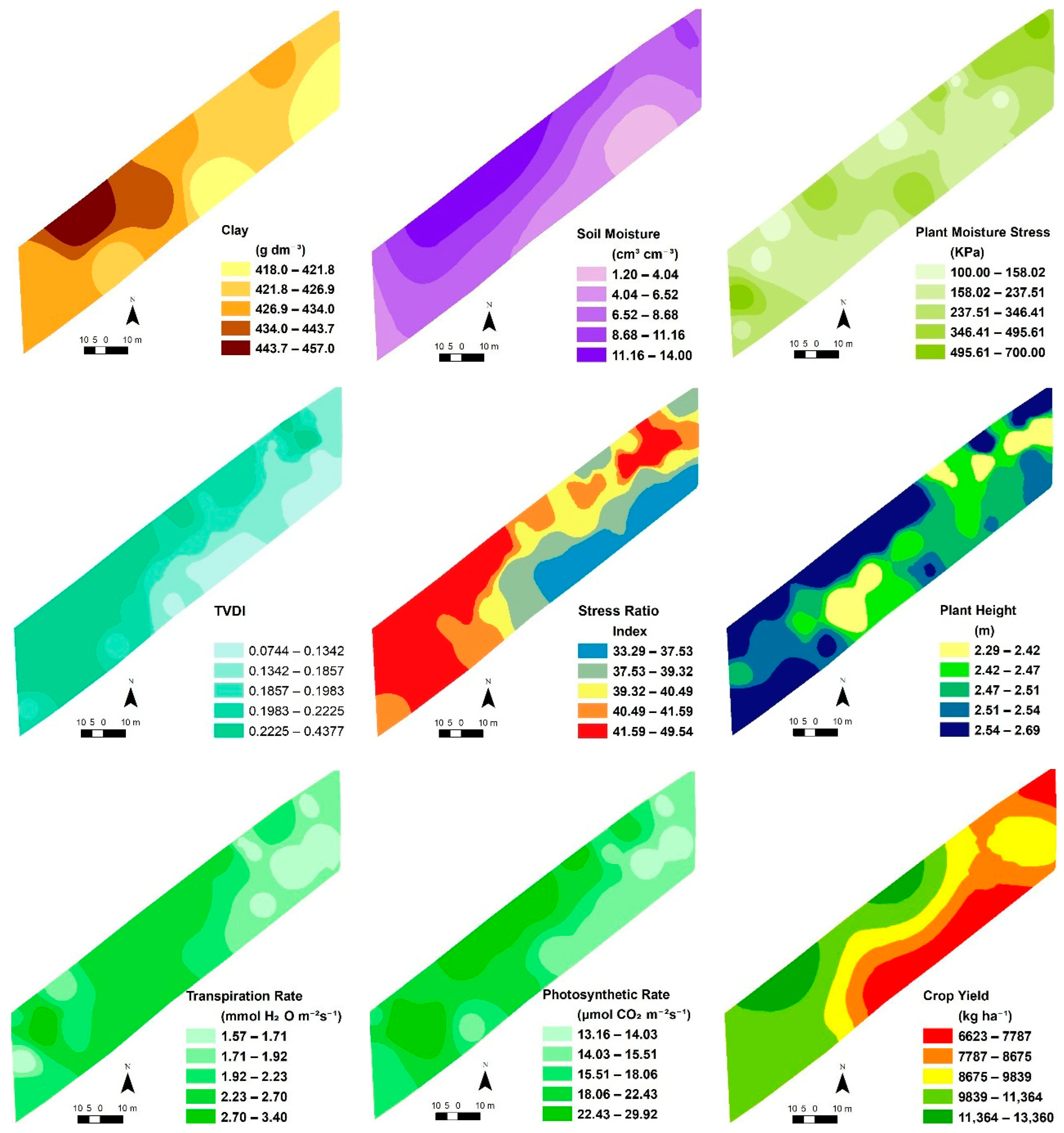
Crop yield showed high spatial variability, ranging from 6623 to 13,360 kg ha−1 (Figure 3), highlighting the heterogeneity of the plot even under uniform management. Spatial visualization of the attributes revealed distinct patterns of variability. A visual correspondence was observed between the zones with higher clay content (Clay) and the zones with higher productivity (Crop Yield), soil moisture, and water use efficiency (WUE). Regarding the stress indicators, the Stress Ratio Index (SR) showed higher values in areas where productivity and plant height were lower. In contrast, the Temperature Vegetation Dryness Index (TVDI) exhibited a different pattern, with higher values spatially co-located with zones of superior biomass and yield, a physiological relationship explored in Section 4.
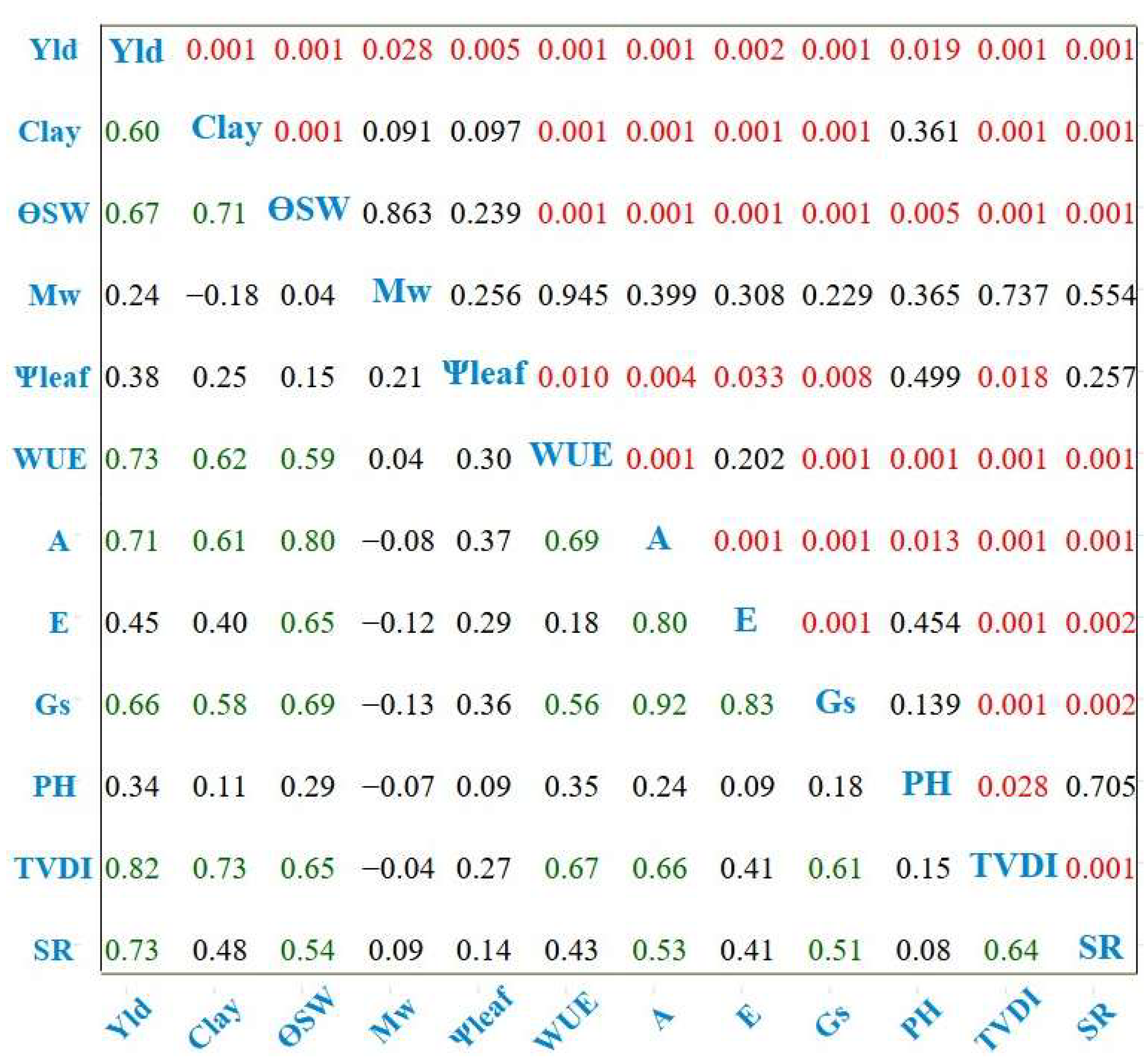
The bivariate spatial correlation matrix (Figure 4) corroborated the visual correspondence between crop performance and environmental variables. It was observed that there were striking positive spatial dependencies between Crop Yield and water-related parameters, specifically TVDI (I = 0.82) and Soil Water (I = 0.67). Similarly, physiological traits such as Water Use Efficiency (I = 0.73) and Photosynthetic Rate (A, I = 0.71) showed high spatial coherency with yield maps. These high Moran’s I values (I > 0.60) confirm that high-yielding clusters are not randomly distributed but are significantly co-located with spatially contiguous zones of optimal soil moisture, clay content (I = 0.60), and plant physiological activity.
Analysis of the crop’s water status revealed a critical physiological nuance regarding the survival strategy of the hybrid used. A decoupling was observed between soil water availability and leaf water potential (Ψ leaf). While the soil moisture map (ϴ SW) showed a strong positive correlation with gas exchange (I = 0.80 for Photosynthesis and I = 0.65 for Transpiration), the correlation of this map with leaf water potential was low (I = 0.15). This behavior indicates that, in zones with lower clay content and lower water storage, the plants acted under strict stomatal control (isohydric behavior). To maintain Ψ leaf at homeostatic levels (between −100 and −700 kPa) and avoid xylem cavitation, the crop sacrificed stomatal conductance. Consequently, the spatial variability of productivity was not governed by failures in tissue hydration (the leaf Ψ remained safe), but rather by the decrease in CO2 input induced by preventive stomatal closure in zones with lower water retention capacity. Thus, the variability in the productivity map was not caused by plant dehydration, but rather by the fact that they spent too much time with their stomata closed, drastically reducing the daily photosynthetic rate in those soil patches.
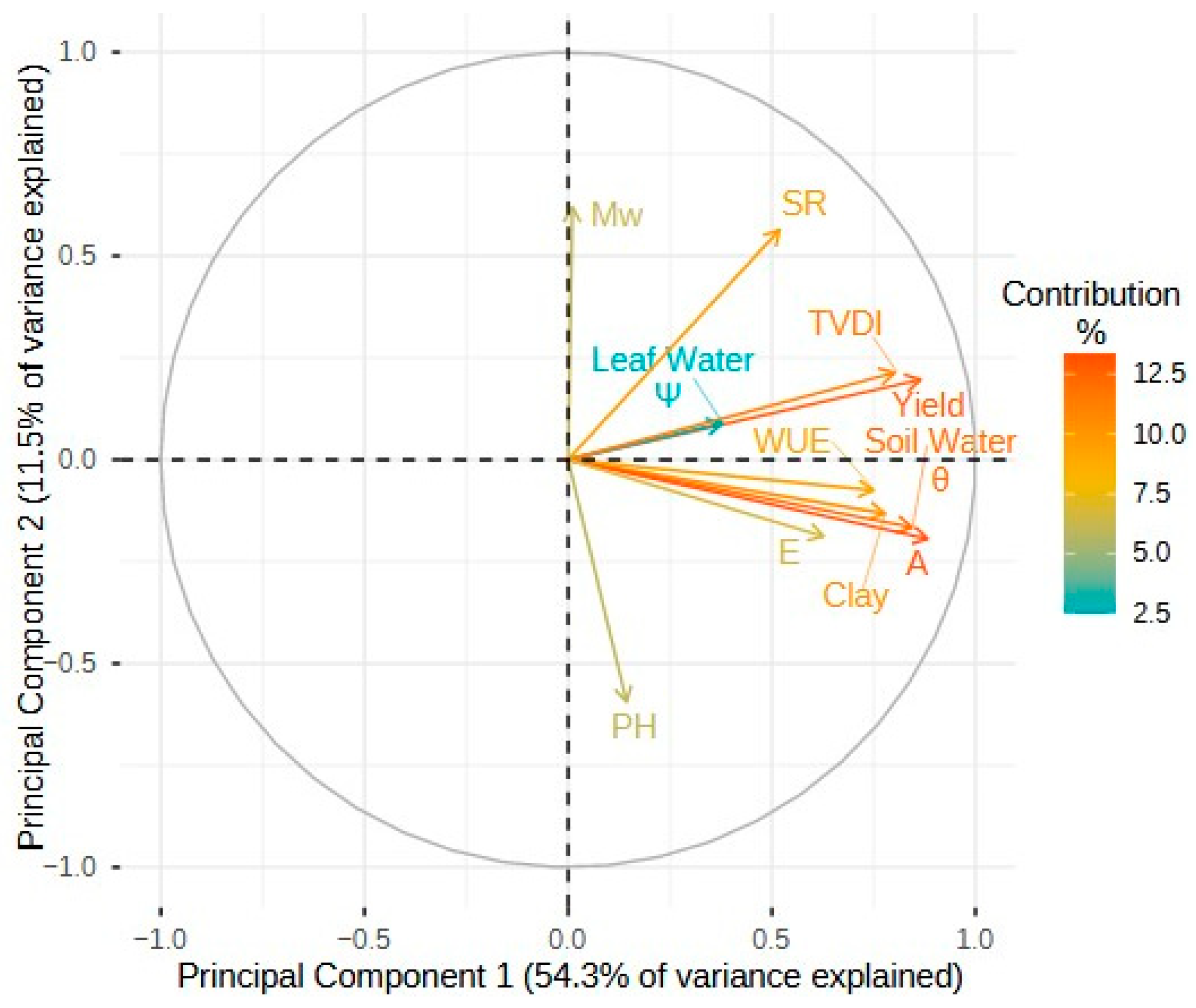
Principal Component Analysis (PCA) synthesized the covariance structure of the data into two latent axes which, combined, explain 65.8% of the total variation in the system (Figure 5). The first principal component (PC1), responsible for 54.3% of the variance, acted as an integrated indicator of productive potential and water status. On this axis, a strong positive vector clustering is observed between crop productivity (Yield), soil water (ϴ SW), clay content (Clay), and key physiological variables such as photosynthetic rate (A), transpiration (E), water use efficiency (WUE), and leaf water potential (Ψ Leaf). The projection of these vectors in the same direction confirms that the zones of higher productivity were governed by the soil’s water retention capacity (associated with clay content), which allowed the crop to maintain higher gas exchange rates (A and E) and better water status. Interestingly, the TVDI also aligned with this group, indicating that the spectral indices were sensitive in capturing this spatial variability of vigor associated with water.
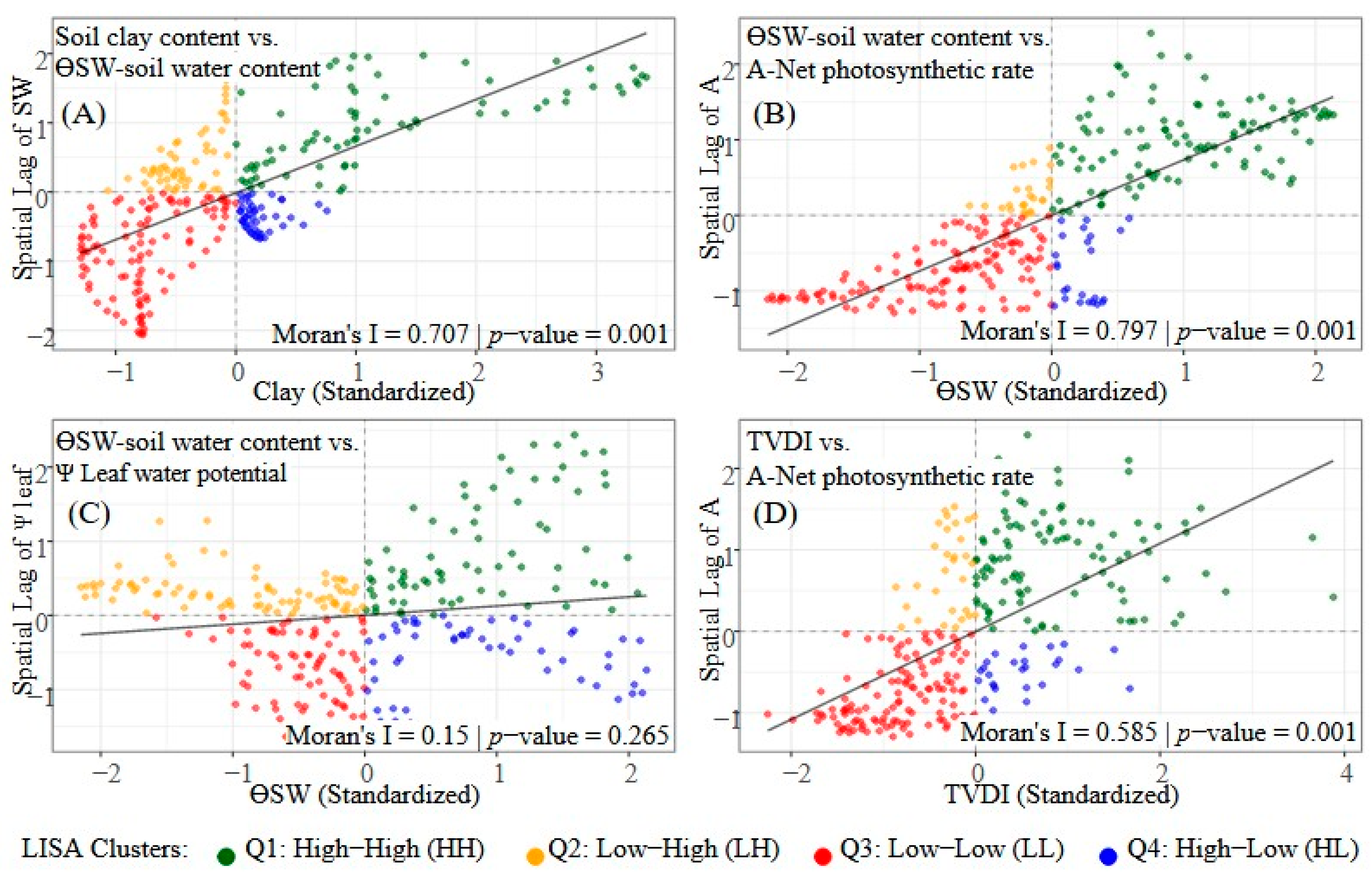
In contrast, the morphological dynamics of the crop showed independent behavior. The Plant Height (PH) vector projected mainly onto Principal Component 2 (11.5% of the variance), forming an angle of practically 90° in relation to the yield and water attribute vectors. The significance of PC2, therefore, is not the magnitude of variance explained, but its role in isolating morphological traits that are statistically independent of yield formation. This demonstrates that plant height variation was driven by factors other than the water-mediated mechanisms governing final productivity, confirming an allometric decoupling between vegetative structure and reproductive output. While productivity fluctuated drastically in the plot (variation of 101.72%) in response to clay and water gradients, height remained more stable (variation of 67.13%). This allometric decoupling suggests that water stress (a limiting factor for maize crop productivity) acted more severely during the reproductive stages (grain filling), penalizing yield, but did not significantly interfere with vertical vegetative growth, which was already established. This physiological mechanism is statistically confirmed by the Bivariate Moran’s analysis (Figure 6C), which shows no spatialcorrelation between ϴ SW and Ψ leaf water potential, contrasting with the strong spatial dependency of Photosynthesis on ϴ SW (Figure 6B).
Table 2 contains the estimates of multiple linear regression (MLR) coefficients, standard error, and their significance for predicting maize yield. The MLR model, constructed using variables previously identified by the Bivariate Moran’s I, demonstrated a robust predictive capacity for maize yield, with an adjusted coefficient of determination (R2) of 0.6831 (p < 2.2 × 10⁻¹⁶). Except for soil clay content, all other independent variables (ϴSW, WUE, A, Gs, TVDI, and SR) showed statistically significant coefficients (p < 0.05). The high significance of the physiological and sensing-derived parameters reinforces that the integrated trimodal approach captures the major portion of the spatial crop yield variance in these tropical Oxisols.
The MLR model provides a predictive framework that complements the spatial correlation analysis. Interestingly, while soil clay content exhibited a strong spatial dependency with yield in the Moran’s I analysis (I = 0.60), it was not a significant predictor in the multivariate regression (p = 0.21). This is likely due to multicollinearity, as the effect of clay on productivity is mechanistically mediated by volumetric soil water content (ϴSW), which was highly significant in the model (p < 0.01). This reinforces the hierarchical chain of causality where soil texture dictates water availability, which in turn governs the gas exchange rates and final yield.


4. Discussion

4.1. Soil Properties, Water Availability, Stomatal Regulation, and Crop Yield

Maize (Zea mays L.) is an isohydric plant, meaning that it rigorously regulates its leaf water potential through stomatal control. Upon perceiving soil drying (reduction in matric potential), the roots synthesize abscisic acid (ABA), which is translocated via the xylem to the leaves [11]. ABA induces stomatal closure to reduce transpiration and conserve cell turgor [3]. Preventive stomatal closure, triggered by ABA signaling from roots to shoots, is modulated by mineral nutrition. As noted by Rengel et al. [21], plants with an adequate nutritional status of phosphorus and zinc, both elevated in the experimental area, tend to maintain higher stomatal conductance under moderate stress, which may help explain why vegetative growth (plant height) was preserved before water deficit became severe during the grain-filling period. Transpiration is the main cooling mechanism of the leaf (latent heat of vaporization). With the stomata closed, the dissipation of solar energy decreases, and the leaf temperature rises, exceeding the air temperature [12].
The strict stomatal regulation required to maintain leaf water potential at homeostatic levels reflects the preservation of a functional balance between the shoot and the root system. Although this mechanism protects the plant against xylem cavitation, prolonged stomatal closure in zones with low soil water-holding capacity may have penalized photosynthetic rates and post-flowering Radiation Use Efficiency [22], thereby potentially reducing daily biomass accumulation.
The observed decoupling between soil moisture and leaf water potential provides compelling evidence of the crop’s isohydric strategy. This distinction is critical: the plants did not suffer from hydraulic stress or tissue dehydration, as ψ Leaf remained homeostatic. Instead, the spatial variability in productivity was driven by carbon limitation; the preventive stomatal closure, while successful in avoiding xylem cavitation, significantly curtailed CO2 assimilation [23]. Thus, the yield gap between management zones was fundamentally a trade-off between hydraulic safety and photosynthetic gain.
The differentiated water availability, conditioned by texture, governed the physiological response of the maize crop. The role of soil texture as a primary driver of productivity, as suggested by Pessoa and Libardi [24], gains a mechanistic dimension when mineral nutrition is considered. In highly weathered tropical soils (e.g., Oxisols), the degree of clay microaggregation and pore size distribution critically influences the soil water retention curve, which in turn governs plant-available water; aggregation processes that alter pore geometry result in significant changes in available water dynamics [24]. As emphasized by Rengel et al. [21], the intense weathering characteristic of these soils promotes the formation of microaggregates, within which potassium diffusion and nitrate mass flow are strongly governed by volumetric soil moisture (θSW). This mechanism may penalize sandy zones, where the limited soil volume explored by roots constrains nutrient supply concomitantly with water stress.
Paradoxically, the areas with higher productivity exhibited plants operating under lower (more negative) leaf water potentials (Ψ leaf). This result suggests a significant hydraulic cost required to sustain superior productivity [22]. In zones with higher clay content, increased water availability allowed plants to maintain open stomata, resulting in elevated transpiration rates. This intense soil–atmosphere water flux necessitated a steeper tension gradient in the leaf to extract water from the soil matrix, characterizing a state of beneficial functional stress, a hallmark of plants in full metabolic activity and biomass accumulation. These observations align with findings that soil moisture governs approximately 69% of the variation in leaf water potential, with stomatal conductance decreasing sharply as available soil water is depleted [25]. Furthermore, recent evidence in grain crops highlights that stomatal conductance is positively correlated with mean Ψ leaf and hydraulic conductance, emphasizing the intricate linkage between plant water status and active stomatal regulation [26].
The absence of correlation between Plant Height and Crop Yield reveals a temporal dynamic of water stress. The stability of plant height in contrast to the high variability in grain yield corroborates the observations reported by Sah et al. [25] and Huang et al. [27]. Maize height is defined in the vegetative stages, a phase in which the rainfall regime was sufficient to guarantee the cell turgor necessary for stem elongation throughout the plot, homogenizing the canopy architecture [27]. However, final productivity is defined in the reproductive phase, where atmospheric demand increases and the soil’s water storage capacity becomes crucial. The fact that the plot presents plants with similar height but contrasting productivities indicates a spatial variation in the apparent harvest index. In the areas of lower texture, the plant invested energy to build the vegetative structure (vegetative sink), but subsequent water restriction and stomatal closure (isohydric behavior) limited the photosynthetic rate necessary to fill the grains [11]. The plant formed the structure, but the soil did not deliver enough water for it to fill this structure with starch [27], resulting in the observed decoupling between structural biomass and grain productivity. Plant height and leaf area index are defined by early differentiation and expansion rates during the plastochron. As the initial rainfall regime was adequate, vegetative structure was established relatively uniformly [22]. However, effective grain filling depends on both the rate and duration of dry matter accumulation after the lag phase, during which severe water restriction in lower clay content zones may have limited final grain weight and the realized harvest index.
The relationship between the thermal index (TVDI) and productivity challenged the classic paradigm that cooler plants produce more. The strong positive correlation between TVDI and Productivity, corroborated by the vector projection in the same quadrant of the PCA, indicates that TVDI acted, in this scenario, as a proxy for vigor and biomass accumulation, and not for water deficit [10]. The explanation lies in the high Water Use Efficiency (WUE) observed in the productive zones. Plants in these zones were able to maximize carbon assimilation (A) with optimized stomatal control. According to Rengel et al. [21], nitrogen not only increases biomass but also optimizes WUE by enhancing Rubisco site saturation in bundle sheath cells of C4 plants, thereby allowing photosynthesis to be maintained even under reduced stomatal aperture.

4.2. Interpretation of TVDI and Temperature Patterns

The TVDI did not exhibit a random pattern but rigorously followed the spatial distribution of biomass and crop yield. Although stress indices are frequently associated with stomatal closure [15], in this study, the highest TVDI values overlapped with zones of higher transpiration and photosynthesis. This demonstrates that the thermal sensor detected the sensible heat generated by the greater amount of biomass exposed to radiation in high-vigor zones [10], validating the use of remote sensing to delineate zones of high productive potential based on the accumulated physiological response of the crop [16].
Typically, an increase in canopy temperature is a pre-visual sign of stress. However, our results revealed that higher TVDI values were co-located with zones of superior transpiration (E), photosynthesis (A), and final grain yield. We hypothesize that in high-yielding zones, characterized by dense canopies and complete ground cover, the effective radiating surface captured by the UAV-based thermal sensor is the canopy top [28]. This surface may exhibit a higher bulk temperature due to boundary layer effects and intense radiation interception [29], which reduce sensible heat flux even while individual leaves transpire at high rates to sustain metabolic activity. Consequently, in this high-biomass context, the TVDI functions as an integrated marker of physiological vigor and productive potential rather than a simple indicator of stomatal closure. This explains why the thermal index mapped zones of greatest vigor, where clay-mediated water availability allowed for sustained CO2 assimilation despite the higher hydraulic cost required to maintain the soil–plant–atmosphere water flux.
The relative warming detected by the thermal sensor (higher TVDI) in these high-vigor areas can be attributed to the more complex canopy architecture, which intercepts more solar radiation, coupled with fine physiological regulation where the plant maximizes photosynthesis without necessarily excessively cooling the leaf via wasteful transpiration. TVDI, therefore, accurately mapped the zones where the photosynthetic system was operating at its maximum capacity on the support of the clay soil. Thus, in this high-biomass context, TVDI functions as an integrated marker of radiation interception and biomass vigor rather than a simple proxy for stomatal closure.

4.3. Synthesis, Limitations, and Practical Implications

Based on the analysis of the overall interaction between the results obtained in this experimental condition, for maize grown in the Brazilian Cerrado, it is very likely that, in a soil with fertility established at an adequate level, crop productivity is determined, first, by soil texture [30], which influences water availability [19], which, in turn, conditions plant physiology [22] and, consequently, final productivity [31].
It is recommended to validate these zones over growing seasons with different rainfall regimes (El Niño vs. La Niña years) to test the temporal stability of the management zones [6]. Experiments in a single region have difficulty demonstrating the universality of the proposed method. Therefore, it is important that the results presented here be validated in more crop seasons and locations before their broad generalization. Additionally, an economic analysis of the return on investment (ROI) of variable seed rate technology should be carried out to encourage its adoption by farmers in the region.

5. Conclusions

The pronounced spatial variability in maize grain yield, ranging from 6623 to 13,360 kg ha−1, was fundamentally orchestrated by soil texture-mediated water availability. Zones characterized by superior clay content enhanced soil water retention, which in turn facilitated heightened photosynthetic rates, transpiration, and water use efficiency (WUE), ultimately driving yield optimization in tropical Oxisols. The maize crop exhibited a strict isohydric strategy, meticulously regulating leaf water potential through preemptive stomatal control. In soil patches with lower water-holding capacity, sustained stomatal closure constrained CO2 assimilation, curtailing daily photosynthetic output and final grain mass. In weathered tropical soils, maize yield is primarily orchestrated by a carbon–water trade-off. The strict isohydric behavior prioritized the maintenance of hydraulic integrity over biomass accumulation, confirming that productivity losses in water-limited zones resulted from carbon limitation rather than critical hydraulic failure. Furthermore, the Temperature Vegetation Dryness Index (TVDI), derived from Normalized Difference Red Edge (NDRE) data, demonstrated a robust positive correlation with grain yield, functioning as an integrated proxy for vegetative vigor and metabolic activity rather than a traditional indicator of water deficit in this high-biomass context. This finding challenges the conventional “cooler-is-better” paradigm in thermal remote sensing, underscoring the necessity for context-specific interpretations of thermal signatures. Notably, plant height, primarily established during vegetative development, was statistically decoupled from final yield. This allometric divergence highlights that environmental stress during the reproductive phase was the primary yield-limiting factor, emphasizing the critical role of soil water reservoirs during grain filling. Collectively, the integration of trimodal sensing data (spectral, thermal, and structural) enabled the precise delineation of management zones. These findings demonstrate that effective management zones in tropical environments should move beyond a sole reliance on historical yield maps or simplistic vegetation indices, which often fail to capture the underlying biophysical drivers of variability. Instead, robust resource management must be grounded in an understanding of soil texture and its dynamic interaction with the crop’s physiological response, as revealed by the multi-sensor fusion approach presented here. By capturing these site-specific mechanisms, this framework provides a superior basis for variable-rate seeding and precision irrigation, ensuring that management strategies are aligned with the actual resource-use efficiency and productive potential of the soil–plant system.

Author Contributions

Conceptualization, F.H.R.B. and P.E.T.; methodology, F.H.R.B., E.V.M., I.C.d.M., J.T.d.O., R.G., L.P.R.T., C.N.S.C. and J.L.G.d.O.; software, F.H.R.B. and P.E.T.; validation, F.H.R.B., P.E.T. and L.P.R.T.; formal analysis, F.H.R.B.; investigation, J.T.d.O., R.G., M.E.M.A., F.G., J.P.S.W., K.P.F., M.B.N. and J.L.G.d.O.; resources, F.H.R.B.; data curation, F.H.R.B. and J.T.d.O.; writing—original draft preparation, F.H.R.B.; writing—review and editing, F.H.R.B., P.E.T., L.P.R.T., E.V.M. and I.C.d.M.; visualization, F.H.R.B. and P.E.T.; supervision, F.H.R.B., P.E.T. and L.P.R.T.; project administration, F.H.R.B.; funding acquisition, F.H.R.B. All authors have read and agreed to the published version of the manuscript.

Funding

This study was funded in part by Coordenação de Aperfeicoamento de Pessoal de Nível Superior: 0001; National Council for Scientific and Technological Development: 304041/2024-6; Financiadora de Estudos e Projetos (Finep): 1586/22.

Institutional Review Board Statement

Not applicable.

Informed Consent Statement

Not applicable.

Data Availability Statement

The raw data supporting the conclusions of this article will be made available by the authors on request.

Conflicts of Interest

The authors declare no conflicts of interest.

References

  1. Santos, H.G.; Jacomine, P.K.S.; dos Anjos, L.H.C.; de Oliveira, V.Á.; Lumbreras, J.F.; Coelho, M.R.; de Almeida, J.A.; de Araujo Filho, J.C.; de Oliveira, J.B.; da Cunha, T.J.F. Brazilian Soil Classification System, 5th ed.; Embrapa: Brasília, Brazil, 2018; ISBN 9788570358004. [Google Scholar]
  2. Deribe, H. Review on Effects of Drought Stress on Maize Growth, Yield and Its Management Strategies. Commun. Soil Sci. Plant Anal. 2025, 56, 123–143. [Google Scholar] [CrossRef]
  3. Sah, R.P.; Chakraborty, M.; Prasad, K.; Pandit, M.; Tudu, V.K.; Chakravarty, M.K.; Narayan, S.C.; Rana, M.; Moharana, D. Impact of Water Deficit Stress in Maize: Phenology and Yield Components. Sci. Rep. 2020, 10, 2944. [Google Scholar] [CrossRef] [PubMed]
  4. Bottega, E.L.; Pinto, E.B.; Saretta, E.; de Oliveira, Z.B.; Severo, F.S.; Assmann, J. Soil Sensor Use in Delimiting Management Zones for Sowing Maize in No-Till. Sensors 2024, 24, 7552. [Google Scholar] [CrossRef] [PubMed]
  5. Keshavarzi, A.; Kumar, V.; Bottega, E.L.; Rodrigo-Comino, J. Determining Land Management Zones Using Pedo-Geomorphological Factors in Potential Degraded Regions to Achieve Land Degradation Neutrality. Land 2019, 8, 92. [Google Scholar] [CrossRef]
  6. Munnaf, M.A.; Haesaert, G.; Mouazen, A.M. Site-Specific Seeding for Maize Production Using Management Zone Maps Delineated with Multi-Sensors Data Fusion Scheme. Soil Tillage Res. 2022, 220, 105377. [Google Scholar] [CrossRef]
  7. Nogueira Martins, R.; Magalhães Valente, D.S.; Fim Rosas, J.T.; Souza Santos, F.; Lima Dos Santos, F.F.; Nascimento, M.; Campana Nascimento, A.C. Site-Specific Nutrient Management Zones in Soybean Field Using Multivariate Analysis: An Approach Based on Variable Rate Fertilization. Commun. Soil Sci. Plant Anal. 2020, 51, 687–700. [Google Scholar] [CrossRef]
  8. Sobral, L.F.; Cabral De Vasconcellos, M.; Airon, B.; Da Silva, J.; Luiz, J.; Anjos, D. Guia Prático Para Interpretação de Resultados de Análises de Solos; Embrapa Tabuleiros Costeiros: Aracaju, Brazil, 2015. [Google Scholar]
  9. Ezenne, G.I.; Jupp, L.; Mantel, S.K.; Tanner, J.L. Current and Potential Capabilities of UAS for Crop Water Productivity in Precision Agriculture. Agric. Water Manag. 2019, 218, 158–164. [Google Scholar] [CrossRef]
  10. Mali, S.S.; Scobie, M.; Baillie, J.; Plant, C.; Shammi, S.; Das, A. Integrating UAV-Based Multispectral and Thermal Infrared Imageries with Machine Learning for Predicting Water Stress in Winter Wheat. Precis. Agric. 2025, 26, 44. [Google Scholar] [CrossRef]
  11. Taiz, L.; Zeiger, E.; Moller, I.M.; Murphy, A. Phloem Translocation. In Plant Physiology and Development; Artmed: Guelph, ON, Canada, 2017; pp. 285–316. ISBN 978-85-8271-367-9. [Google Scholar]
  12. Nilahyane, A.; Islam, M.A.; Mesbah, A.O.; Herbert, S.K.; Garcia y Garcia, A. Growth, Water Productivity, Nutritive Value, and Physiology Responses of Silage Corn to Water Stress. Agron. J. 2020, 112, 1625–1635. [Google Scholar] [CrossRef]
  13. Gitelson, A.A.; Kaufman, Y.J.; Merzlyak, M.N. Use of a Green Channel in Remote Sensing of Global Vegetation from EOS-MODIS. Remote Sens. Environ. 1996, 58, 289–298. [Google Scholar] [CrossRef]
  14. Daughtry, C.S.T.; Walthall, C.L.; Kim, M.S.; De Colstoun, E.B.; McMurtrey, J.E. Estimating Corn Leaf Chlorophyll Concentration from Leaf and Canopy Reflectance. Remote Sens. Environ. 2000, 74, 229–239. [Google Scholar] [CrossRef]
  15. Ahmad, U.; Alvino, A.; Marino, S. A Review of Crop Water Stress Assessment Using Remote Sensing. Remote Sens. 2021, 13, 4155. [Google Scholar] [CrossRef]
  16. Schirmbeck, L.W.; Fontana, D.C.; Schirmbeck, J. Two Approaches to Calculate TVDI in Humid Subtropical Climate of Southern Brazil. Sci. Agric. 2018, 75, 111–120. [Google Scholar] [CrossRef]
  17. Gava, R.; Da Silva, E.E.; Baio, F.H.R. Calibration of an Electronic Moisture Sensor in Different Soil Textures. Rev. Bras. Eng. Biossistemas 2016, 10, 154–162. [Google Scholar] [CrossRef]
  18. de Oliveira, J.T.; de Oliveira, R.A.; Plazas, G.M.R.; Andrade, S.M.; da Cunha, F.F. Distribution and Spatial Autocorrelation of Physical-Water Attributes of an Oxisol. Rev. Bras. Eng. Biossistemas 2023, 17, 1109. [Google Scholar] [CrossRef]
  19. de Oliveira, J.T.; Baio, F.H.R.; da Silva, E.E.; de Moura, S.S.; Valente, D.S.; Teodoro, P.E. Spatial Autocorrelation of Soybean Plant Populations and Physical Attributes of Oxisol. Rev. Bras. Eng. Agrícola Ambient. 2024, 28, e264872. [Google Scholar] [CrossRef]
  20. Hair, J.F.; Black, W.C.; Babin, B.J.; Anderson, R.E. Multivariate Data Analysis, 5th ed.; Cengage: Singapore, 2019; ISBN 978-1-4737-5654-0. [Google Scholar]
  21. Rengel, Z.; Cakmak, I.; White, P.J. Marschner’s Mineral Nutrition of Plants; Academic Press: London, UK, 2022; ISBN 9780128197738. [Google Scholar]
  22. Satorre, E.H.; Arnold, R.L.B.; Slafer, G.A.; de la Fuente, E.B.; Miralles, D.J.; Otegui, M.E.; Savin, R. Grain Production: Functional Bases for Its Management, 6th ed.; Editorial Facultad de Agronomía: Buenos Aires, Argentina, 2015; ISBN 950-29-0713-2. [Google Scholar]
  23. McDowell, N.; Pockman, W.T.; Allen, C.D.; Breshears, D.D.; Cobb, N.; Kolb, T.; Plaut, J.; Sperry, J.; West, A.; Williams, D.G.; et al. Mechanisms of Plant Survival and Mortality during Drought: Why Do Some Plants Survive While Others Succumb to Drought? New Phytol. 2008, 178, 719–739. [Google Scholar] [CrossRef]
  24. Pessoa, T.N.; Libardi, P.L. Physical-Hydric Properties of Oxisols as Influenced by Soil Structure and Clay Mineralogy. Catena 2022, 211, 106009. [Google Scholar] [CrossRef]
  25. Saha, S.; Strazisar, T.M.; Menges, E.S.; Ellsworth, P.; Sternberg, L.; Saha, S.; Strazisar, T.M.; Menges, E.S.; Ellsworth, P.; Sternberg, L. Linking the Patterns in Soil Moisture to Leaf Water Potential, Stomatal Conductance, Growth, and Mortality of Dominant Shrubs in the Florida Scrub Ecosystem. Plant Soil 2008, 313, 113–127. [Google Scholar] [CrossRef]
  26. Wang, L.; Zhang, Y.; Luo, D.; Hu, X.; Feng, P.; Mo, Y.; Li, H.; Gong, S. Integrated Effects of Soil Moisture on Wheat Hydraulic Properties and Stomatal Regulation. Plants 2024, 13, 2263. [Google Scholar] [CrossRef]
  27. Huang, C.; Qin, A.; Gao, Y.; Ma, S.; Liu, Z.; Zhao, B.; Ning, D.; Zhang, K.; Gong, W.; Sun, M.; et al. Effects of Water Deficit at Different Stages on Growth and Ear Quality of Waxy Maize. Front. Plant Sci. 2023, 14, 1069551. [Google Scholar] [CrossRef]
  28. Jones, H.G.; Serraj, R.; Loveys, B.R.; Xiong, L.; Wheaton, A.; Price, A.H. Thermal Infrared Imaging of Crop Canopies for the Remote Diagnosis and Quantification of Plant Responses to Water Stress in the Field. Funct. Plant Biol. 2009, 36, 978–989. [Google Scholar] [CrossRef]
  29. Still, C.J.; Rastogi, B.; Page, G.F.M.; Griffith, D.M.; Sibley, A.; Schulze, M.; Hawkins, L.; Pau, S.; Detto, M.; Helliker, B.R. Imaging Canopy Temperature: Shedding (Thermal) Light on Ecosystem Processes. New Phytol. 2021, 230, 1746–1753. [Google Scholar] [CrossRef]
  30. Baio, F.H.R.; Gava, R.; Teodoro, L.P.R.; de Alvarez, R.C.F.; Alves, M.E.M.; Santana, D.C.; Campos, C.N.S.; da Cândido, A.C.S.; Teodoro, P.E. A New Proposal for Soybean Plant Stand: Variation Based on the Law of the Minimum. Plants 2024, 13, 3193. [Google Scholar] [CrossRef]
  31. Tang, J.; Riley, W.J. Finding Liebig’s Law of the Minimum. Ecol. Appl. 2021, 31, e02458. [Google Scholar] [CrossRef]
Figure 1. Location of the experimental area with maize crop cultivation.
Agriengineering 08 00131 g001
Figure 2. Soil water balance during the field experiment, showing the Permanent Wilting Point (PWP), Available Water Capacity (AWC), rainfall events, and soil water storage dynamics.
Agriengineering 08 00131 g002
Figure 3. Maps of spatial variability of soil physical-hydric properties, spectral indices, gas exchange, and phenology of the maize crop.
Agriengineering 08 00131 g003
Figure 4. Matrix of Bivariate Moran’s statistics illustrating spatial correlations between maize yield (Yld), soil properties, and physiological traits. Values below the diagonal represent the global Moran’s index (I, green values indicate strong spatial correlation), and values above the diagonal indicate the statistical significance (p-value, red values indicate statistically significant correlations). Clay: Soil clay content; ϴSW: Volumetric soil water content; Mw: Plant fresh mass; Ψleaf: Leaf water potential (Scholander chamber); WUE: Water Use Efficiency; A: Net photosynthetic rate; E: Transpiration rate; Gs: Stomatal conductance to water vapor; PH: Plant height; TVDI: Temperature Vegetation Dryness Index; SR: Stress Ratio.
Agriengineering 08 00131 g004
Figure 5. Principal Component Analysis (PCA) biplot representing the relationships between soil properties, plant physiological traits, and maize grain yield. The length and color of the vectors indicate the contribution of each variable to the principal components. Abbreviations: Yield: Grain yield; Soil Water (ϴ): Volumetric soil water content; Ψ Leaf: Leaf water potential; WUE: Water Use Efficiency; A: Net assimilation rate; E: Transpiration rate.
Agriengineering 08 00131 g005
Figure 6. Spatial mechanisms of soil–plant interaction. Bivariate Moran’s I scatterplots illustrating: (A) structural dependence of Soil Water (SW) on Clay content; (B) limitation of Net Photosynthesis driven by Soil Water availability; (C) isohydric behavior of the crop, evidenced by the lack of spatial correlation between Soil Water and Leaf Water Potential; and (D) relationship between TVDI and Photosynthesis.
Agriengineering 08 00131 g006
Table 1. Results of the chemical and physical analysis of the soil. Abbreviations: pH CaCl2; H + Al: Potential acidity; Ca: Calcium; Mg: Magnesium; K: Potassium; P: Phosphorus; O.M.: Organic Matter; Clay: Clay content; V%: Base saturation; C.E.C.: Cation Exchange Capacity; S: Sulfur; B: Boron; Cu: Copper; Fe: Iron; Mn: Manganese; Zn: Zinc.
O.M.pHPKCaMgH + AlC.E.C.
g dm−3CaCl2mg dm−3mmolc dm−3
Avg21.895.5735.441.5841.5011.8327.0081.91
Min19.005.1020.001.0028.005.0018.0069.00
Max24.006.1071.003.6070.0026.0039.00115.10
V%SBCuFeMnZnClay
%mg dm−3g kg−1
Avg65.563.280.191.2340.062.223.03441.89
Min49.001.000.100.7031.001.502.10418.00
Max84.007.000.242.5050.003.206.00476.00
Table 2. Estimates of multiple linear regression coefficients, standard error, and their significance for predicting maize yield. Abbreviations: Clay: Soil clay content; ϴSW: Volumetric soil water content; WUE: Water Use Efficiency; A: Net photosynthetic rate; Gs: Stomatal conductance to water vapor; TVDI: Temperature Vegetation Dryness Index; SR: Stress Ratio.
CoefficientEstimateStd. Errorp-Value
Intercept6492.143850.970.09
Clay−11.889.460.21
ϴSW200.6135.350.00
WUE564.9985.770.00
A−106.0349.130.03
Gs7395.872517.970.00
TVDI4405.18883.530.00
SR26.469.750.00
Disclaimer/Publisher’s Note: The statements, opinions and data contained in all publications are solely those of the individual author(s) and contributor(s) and not of MDPI and/or the editor(s). MDPI and/or the editor(s) disclaim responsibility for any injury to people or property resulting from any ideas, methods, instructions or products referred to in the content.