Article

Effects of Combination of Cover Crops and Controlled Agricultural Machinery Traffic on Soybean Performance and Yield


by
Fernanda Pacheco de Almeida Prado Bortolheiro
1,
Murilo Battistuzzi Martins
1,*,
Aldir Carpes Marques Filho
2,
Vanessa Ribeiro
1,
Eduardo Pradi Vendruscolo
1,
Cássio de Castro Seron
1,
Eder Barbosa Costa
1,
Joaquim Tenório Neto
1 and
Wellingthon da Silva Guimarães Júnnyor
1
1
Cassilândia University Unit, Mato Grosso do Sul State University (UEMS), 306 Road, Km 6, Cassilândia City 9543-899, MS, Brazil
2
Agricultural Engineering Department, Federal University of Lavras (UFLA), Lavras 37200-900, MG, Brazil
*
Author to whom correspondence should be addressed.
AgriEngineering 2026, 8(3), 85; https://doi.org/10.3390/agriengineering8030085
Submission received: 13 December 2025 / Revised: 28 January 2026 / Accepted: 25 February 2026 / Published: 2 March 2026

Abstract

Climate change is one of the current challenges for agricultural production, and sustainable cultivation strategies that mitigate these effects are essential. This study aimed to evaluate the effect of soil cover combined with the intensity of controlled agricultural machinery traffic on soybean development and productivity in two production cycles. The experimental design was a randomized complete block design with a split-plot arrangement with six replications. The main plots consisted of three soil management systems: brachiaria straw, millet straw and spontaneous species straw. The subplots created for agricultural machinery were passed through along the controlled traffic lines (two, four, six, and eight times, and four, eight, twelve, and sixteen times in the first and second years of cultivation, respectively). According to the Köppen classification, the region’s climate is tropical rainy (Aw), with a rainy summer and a dry winter, with an average annual precipitation and temperature of 1520 mm and 24.1 °C, respectively. The traits evaluated were CO2 assimilation rate, stomatal conductance, transpiration rate, internal CO2 concentration, water use efficiency, carboxylation efficiency, stem diameter, plant height, number of branches, number of pods, number of grains, and grain yield. The highest soybean yield was achieved with twice the agricultural traffic, a 22% increase compared to sixteen times the agricultural traffic. With the increase in machinery traffic, the water use efficiency of soybean plants decreased. The stem diameter, number of branches, number of pods, and grains were higher in the spontaneous species straw; however, they did not reflect a higher soybean yield, which was achieved with soil cover with brachiaria and millet, which also promoted greater water use efficiency. It was concluded that the combination of soil cover and agricultural machinery traffic is an effective and sustainable strategy for promoting a higher soybean yield.

1. Introduction

Soybeans are a vital crop, cultivated worldwide due to their economic and nutritional importance [1,2], serving as an important source of food, oil, and animal feed, and playing a crucial role in agribusiness [3,4]. Given this importance, there is a growing demand for ways to make the crop more productive and efficient [5].
C3 plants, such as soybeans, are sensitive to abiotic factors such as temperature, air humidity, and light intensity, which, in turn, influence the gas exchange potential. This contributes to water management, plant photosynthesis, and productivity [6]. Therefore, using management practices that minimize these effects is essential for crop productivity.
The no-till farming system (NTFS) and regenerative agriculture [7] are based, among other factors, on a permanent soil cover, associated with crop rotation [8,9], since maintaining crop straw on the soil surface reduces the impact of raindrops, favors infiltration and decreases surface runoff of water in the soil, reducing the removal of the topsoil layer by water erosion. Thus, when well-managed, no-till farming acts as a provider of soil quality, improving the physical, chemical and biological quality of the soil [10].
For the characterization of this system, cover crops have been cultivated in the off-season of most important commercial crops, including soybeans, as a sustainable alternative to minimize soil compaction problems in cropping systems [11]. Furthermore, soil cover and modern management systems seek alternatives to minimize the use of inputs into the production system in a low-impact regenerative system [12].
Cover crops enable high root production, which ends up exploring a large volume of soil profiles and is capable of altering the physical and hydrological properties of the soil and, consequently, the productivity of the crop grown in succession [13].
Depending on the type of cover crop adopted in the system, the root system behaves differently. Plants with thick, deep roots, such as those found in spontaneous species in fallow areas, as well as those with thin, voluminous roots found in species of brachiaria (Urochloa ruziziensis) and millet (Pennisetum glaucum), are effective in improving soil structure, creating pathways during growth and producing biopores after root death [14,15,16,17].
The roots of cover crops are important tools for manipulating soil structure and obtaining beneficial conditions for the growth of subsequent crops of commercial interest. They offer spaces with low mechanical resistance and high oxygen concentrations, favoring respiration and deep root growth, thus contributing to greater soil exploration in search of nutrients and water [15,18], favoring the physiological processes and gas exchange of the crop in succession, such as soybeans.
In addition to structural and biological benefits, vegetation cover can mitigate soil compaction [19]. This occurs because straw or vegetation acts mechanically on the surface, reducing the machine impact by increasing the contact area and reducing the total pressure applied by the wheels. This point is essential because, despite the numerous benefits of no-till farming over time, relative stability and even lower productivity can be observed as a result of greater compaction in the topsoil layer, which can restrict drainage and aeration of the soil and, consequently, inhibit root growth [20].
The need for good soil cover is evident given the intensity of agricultural mechanization in cropping systems, due to the need for greater operational efficiency of agricultural machinery, to meet the expansion of arable areas. Tractors have constantly become heavier due to the increased power required to perform large-scale agricultural operations, increasing the load applied and causing soil compaction [21].
A significant increase in soil compaction during pre-sowing preparation is influenced by the size, power, and method of locomotion (wheels or tracks) of agricultural tractors [22]. Even in no-till farming areas, an increase in penetration resistance and apparent density of the topsoil layer is observed due to the random and repeated traffic of heavy machinery for planting, phytosanitary management, weed control, and harvesting, which can hardly be avoided [23].
Machine traffic, which can be intense and heavily loaded depending on the production system or field area, can result in soil compaction with cumulative effects [24,25]. Therefore, controlled traffic is a management alternative that can mitigate the effects of compaction, promoting the physical structuring of the soil in the root development zone of crops [26].
Additionally, confining machinery to permanent traffic lanes restricts the effects of compaction and tends to limit compaction to the lanes, allowing for more significant root development in areas without traffic. This is because permanent traffic lanes are planned in advance to be detectable throughout the crop’s growth cycle and then used by the wheels or tracks of all implements and tractors for cultivation work. At the same time, the long-term use of the same permanent traffic lane, combined with proper crop rotation, is of interest [27].
Furthermore, controlling machine traffic and reducing the number of machine passes in the field can promote lower pollutant emissions and optimize the energy demand of mechanized systems [28].
Conservation tillage systems have the least effect on topsoil displacement due to tractor wheel slippage, while reduced tillage and reduced tillage depth can have significant effects on tractor fuel consumption [29], contributing to sustainable agricultural production management.
Soil compaction under continuous and unrestricted traffic over crops represents one of the main limitations to achieving high productivity [30], as it reduces gas exchange, water infiltration into the soil, and nutrient absorption by plants [18,31], leading to lower crop productivity [32], reinforcing the need for techniques that minimize these adversities, such as controlled traffic of agricultural machinery associated with soil cover plants.
The combination of cover crops and controlled traffic represents a challenge in modern agriculture, because the plants’ developmental characteristics and their effect on the subsoil still require further investigation.
The objective of this study was to evaluate the effect of controlled traffic under different soil management conditions for soybean production. Specifically, it assessed physiological characteristics and crop yield performance as a function of traffic intensity between rows.

2. Materials and Methods

2.1. Study Location

The experiment was implemented and conducted at the Experimental Farm of the Mato Grosso do Sul State University, Cassilândia Unit (coordinates 19°05′46″ S and 51°48′50″ W and altitude of 521 m above sea level), for two consecutive growing seasons, 2022/23 and 2023/24.
According to the Köppen classification, the region’s climate is tropical rainy (Aw), with a rainy summer and a dry winter (winter precipitation is less than 60 mm), with an average annual precipitation and temperature of 1520 mm and 24.1 °C, respectively.
The soil was classified as Quartzarenic Neosols, according to [33], and as Entisols (Quartzipsamments) according to Soil Taxonomy [34].
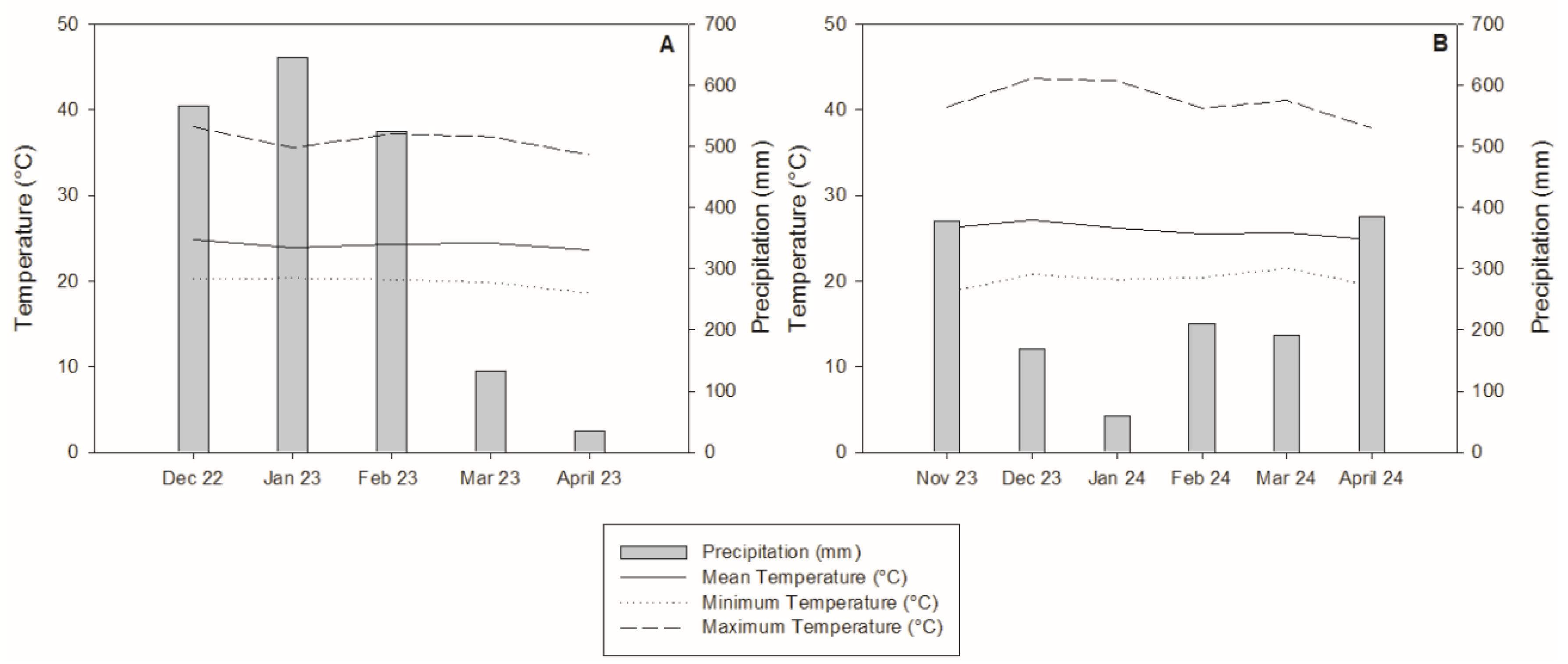
Temperature and precipitation data during the experimental period were obtained from a weather station installed at the Mato Grosso do Sul State University (UEMS) in Cassilândia, Mato Grosso do Sul, Brazil, and are presented in Figure 1.
During the season 2022/23 experimental period, minimum and maximum air temperatures ranged from 14.34 °C to 38.00 °C, with a mean of 24.20 °C, and total precipitation was 1917.2 mm (Figure 1A). In the season 2023/24, temperatures ranged from 18.66 °C to 43.63 °C, with a mean of 25.87 °C, and total precipitation was 1393.7 mm (Figure 1B).

2.2. Experimental Procedure

The experimental design was a randomized complete block design (RCBC) with a split-plot arrangement with six replications. The main plots consisted of three types of soil management: with brachiaria straw, millet straw, and spontaneous species straw. The subplots for agricultural machinery were passed through the controlled traffic lines (2, 4, 6, and 8 times, and 4, 8, 12, and 16 times in the first and second years of cultivation, respectively).
During the off-season, broadcast seeding was carried out to establish cover crops for no-till planting. Brachiaria (Urochloa ruziziensis) was used at a density of 10 kg ha−1 of seeds, and millet (Pennisetum glaucum) cultivar BRS 1501 at a density of 25 kg ha−1. In the fallow area, only the spontaneous species present were characterized, with a predominance of dayflower (Commelina benghalensis), sourgrass (Digitaria insularis), and sicklepod (Senna obtusifolia) in both years of cultivation. Desiccation of the cover crops to form straw occurred when they reached physiological maturity, using glyphosate herbicide at a spray volume of 200 L ha−1, using a ground sprayer, model Condor 600 (Jacto—Pompéia, Brazil) attached to the tractor’s three-point hitch for application, as was done in the fallow area with the spontaneous species.
Soil compaction in the controlled traffic lines was determined in the field using a 4 × 2 TDA agricultural tractor (Solis 90-Yanmar) with a 66.2 kW engine, equipped with BKT front tires with 12.4–24 diagonal plies and BKT rear tires with 18.4–30 diagonal plies. The total mass of the tractor was 3900 kg. This tractor passed over the traffic lines 2, 4, 6, and 8 times (passes) in the first soybean cycle and 4, 8, 12, and 16 times in the second growing cycle, simulating the various traffic machines used in the crop throughout the soybean cycle.
With the controlled traffic lanes defined for both cycles, Brasmax Tanque I2X (maturation group with 7.4 and cycle of 113 days) soybean was sown in the first year and the Olimpo cultivar (maturation group with 7.8 and cicly of 118 days) in the second year, according to the recommendation for the appropriate cultivar for the experimental year. In both sowings, the soybean seeds were previously treated with fungicide and insecticide. During the sowing operation, the seeds were inoculated with the Semia 5079 and Semia 5080 strains of Bradyrhizobium japonicum.
According to the recommendation for the cultivars used, a row spacing of 0.45 m and a seeding density of 15 seeds per meter were adopted with the application of 100 kg ha−1 of P2O5 at sowing and 50 kg ha−1 of K2O as topdressing 30 days after emergence in all treatments. The sowing method used consisted of five sowing rows and a total mass of 1145 kg. All sowing plots were carried out at a constant speed of 5 km h−1 using the same mechanized equipment.
During the development of the soybean plants, weed, pest, and disease management was carried out according to the crop’s needs and technical recommendations for the region.

2.3. Gas Exchange Analysis

The net photosynthetic rate (A), stomatal conductance (gs), internal CO2 concentration (Ci), and transpiration rate (E) were measured using a portable gas exchange analyzer (LCi, ADC Bioscientific, Hertfordshire, UK) in the morning, between 8:00 and 11:00 a.m., during the peak period of plant gas exchange activity. Evaluations were performed eight and nine days after treatment application for the 2023/24 growing season, respectively. The carboxylation efficiency (A/Ci) and water use efficiency (WUE) indices were also estimated. The carboxylation efficiency (A/Ci) was calculated using the rate of A/Ci and water use efficiency (WUE) was calculated using the rate of A/E.
Gas exchange measurements were conducted on a fully expanded leaf from the upper third of the plants. The average photosynthetically active natural radiation (PAR) was 1369 μmol m−2 s−1, CO2 was 450 ppm, and the chamber temperature was 40 °C. These assessments could not be performed in the first experiment due to unfavorable weather conditions.

2.4. Phenological and Productive Response of Soybeans

At the soybean maturity stage, the following characteristics were evaluated: plant height (cm), using a graduated ruler from the base of the stem to the apical meristem; height of the first pod insertion (cm), using a graduated ruler from the base of the stem to the first pod; stem diameter (mm), using a caliper; number of branches, through counting the branches; and number of pods, through counting the pods.
The measurements were taken by collecting five random plants in each subplot. For grain yield (t), all plants in the area of the subplot used were harvested and threshed manually, and the moisture content was determined. Subsequently, this value was corrected to 13% moisture and the productivity extrapolated to kg ha−1.

2.5. Statistical Analysis

The results were subjected to the Anderson–Darling normality test and subsequently to analysis of variance (ANOVA). Means were compared using Tukey’s test, with a significance level of 5%. Minitab 16 software was used for all statistical analyses of the data.

3. Results

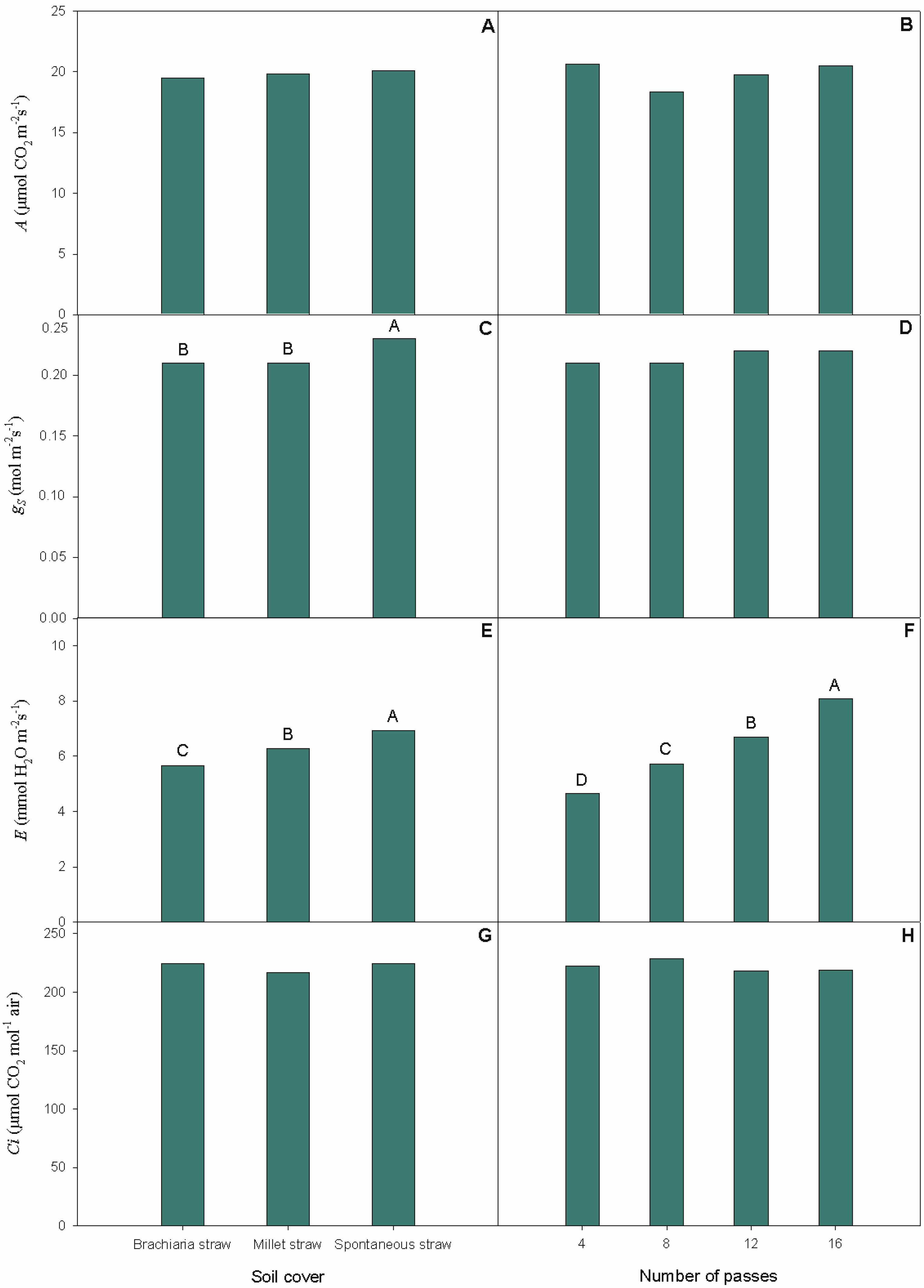
Regarding soil cover, there was no influence on the assimilation rate and internal CO2 concentration, while for the variables stomatal conductance and transpiration rate there was a significant difference between treatments. Cultivation without straw provided a higher stomatal conductance and transpiration rate in soybean plants (Figure 2C,E). Treatments with brachiaria and millet straw reduced the stomatal conductance in soybean plants by 9% compared to spontaneous species straw.
For the number of machine passes, there was no influence on the assimilation rate, stomatal conductance, and internal CO2 concentration. The transpiration rate was significantly influenced by the number of machine passes, with an increase in the transpiration rate as the number of passes increased (Figure 2F). Increases in the transpiration rate of 23%, 44%, and 74% were observed for treatments with eight, twelve, and sixteen machine passes, respectively, compared to the treatment with four machine passes.
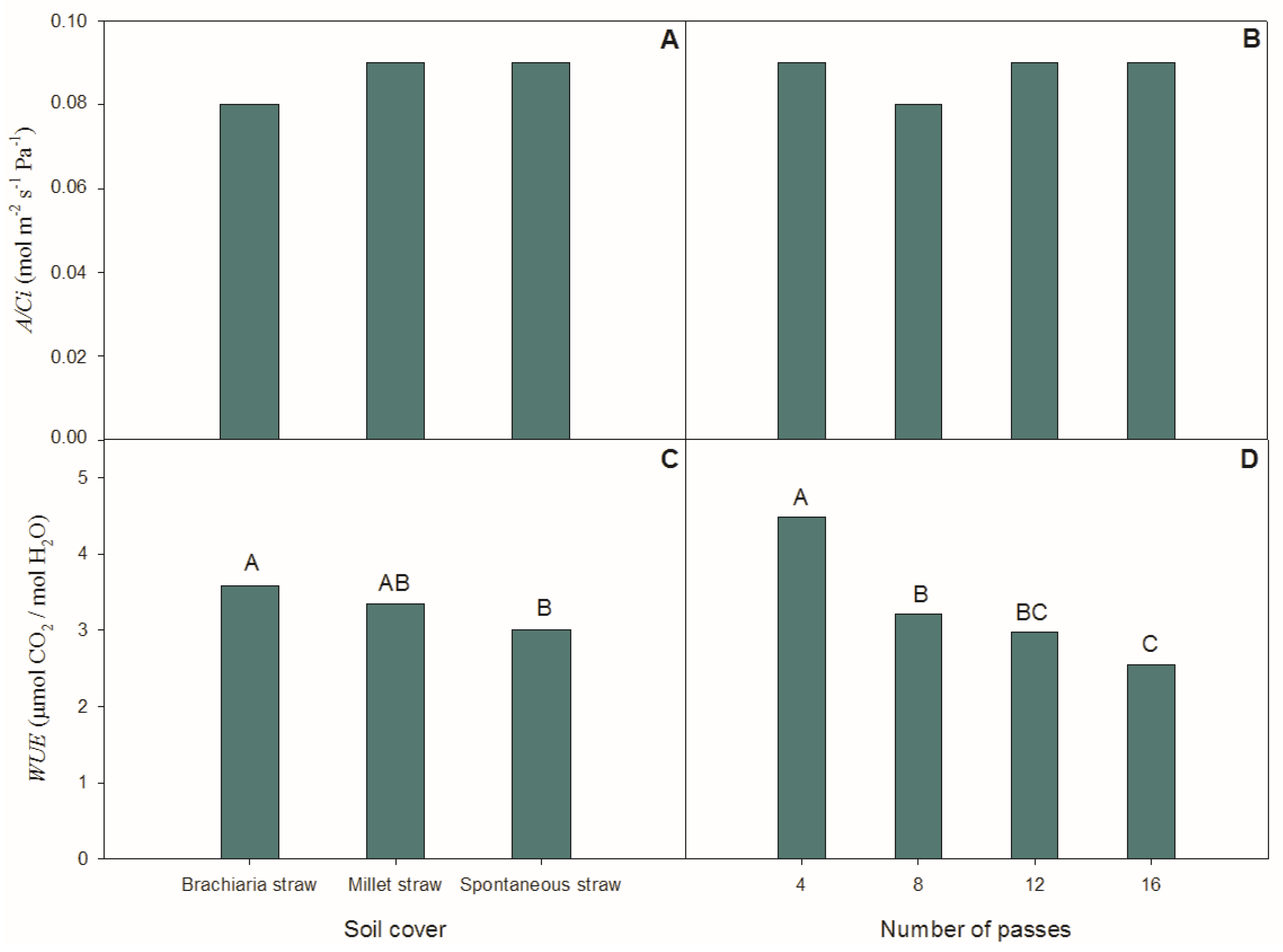
Carboxylation efficiency was not influenced by soil cover or machinery traffic (Figure 3A,B). However, soil cover and machinery traffic did influence water use efficiency.
The highest water use efficiency was observed in plants grown in brachiaria straw, 16% higher compared to cultivation in spontaneous species straw, which had the lowest WUE (Figure 3C). Regarding the number of passes, the highest WUE was observed with the fewest number of machine passes (four passes), 29%, 34%, and 43% higher, respectively, compared to crops with eight, twelve, and sixteen machine passes (Figure 3D). A reduction in the WUE of soybean plants was observed as the number of machine passes increased.
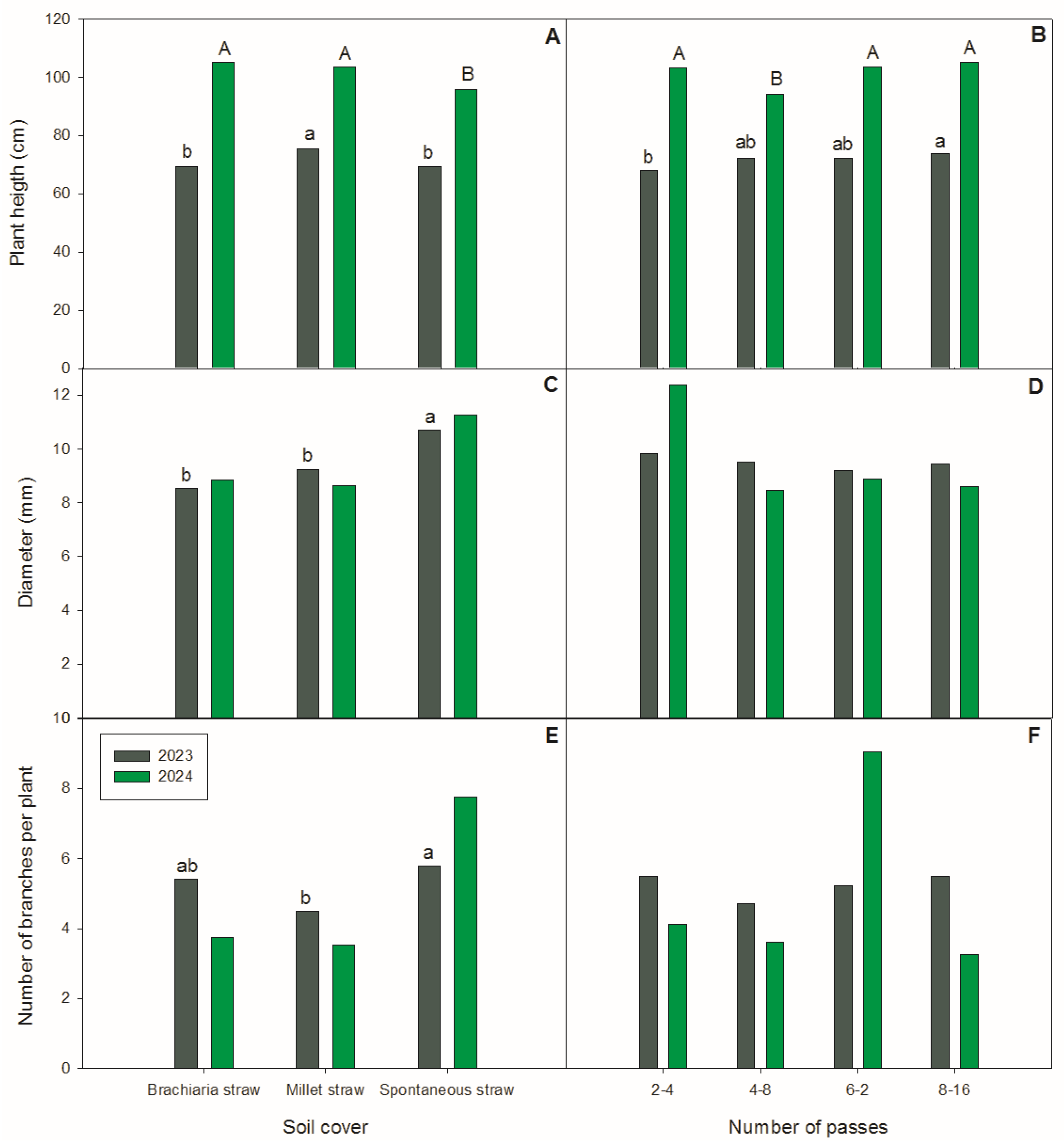
Plant height was significantly influenced by soil cover and the number of machine passes for both seasons of evaluation, while the diameter and number of branches per plant was influenced only by soil cover in the 2023 season (Figure 4).
In 2023, the greatest plant height was observed in millet straw, 8% higher than in brachiaria straw and the spontaneous species straw treatment (Figure 4A). In 2024, the greatest plant height was observed in millet and brachiaria straw, respectively 7 and 9% greater than the treatment with spontaneous species straw (Figure 4A). Regarding the number of passes, in 2023, the greatest plant height was observed in the area with the highest number of passes (eight passes), 8% higher than the lowest height observed in the treatment with two passes (Figure 4B). In 2024, the greatest height was observed in plants in the treatments with four, twelve, and sixteen passes, and the lowest height in the treatment with eight passes (Figure 4B).
Regarding the stem diameter, the largest diameter in 2023 was observed in plants grown in spontaneous species straw, 14 and 20% larger compared to those grown in millet and brachiaria straw, respectively (Figure 4C). In 2024, although no significant difference occurred, the same behavior was observed as in 2023, with a larger diameter in the treatment with spontaneous species straw compared to the treatment with brachiaria and millet straw.
Figure 4. Plant height (A,B), stem diameter (C,D) and number of grains per plant (E,F) of soybeans grown in three types of straw with different soil compaction. Means followed by the same lowercase letters do not differ for the 2023 season, and the same uppercase letters do not differ for the 2024 season, according to Tukey’s test (p < 0.05).
Agriengineering 08 00085 g004
The highest number of branches in 2023 was observed in plants grown in spontaneous species straw, 7% and 22% higher compared to brachiaria and millet straw, respectively (Figure 4E). Although no statistically significant difference occurred in 2024, the same behavior was observed as in 2023, with a higher number of branches in spontaneous species straw compared to the treatment with brachiaria and millet straw.
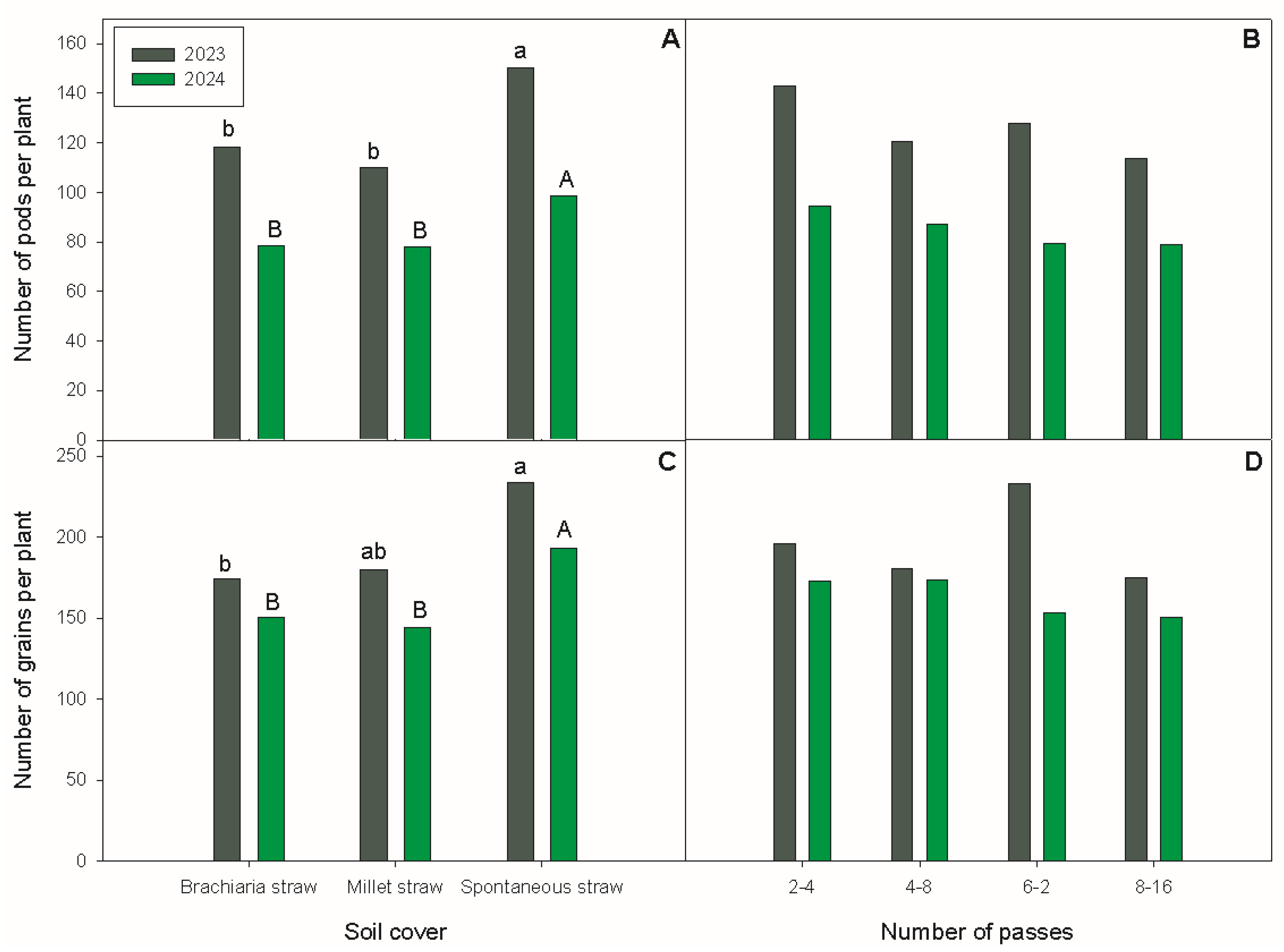
The production components, number of pods per plant, and number of grains per plant were influenced only by soil cover (Figure 5) and were not influenced by the number of machine passes. The number of pods per plant, for both years of cultivation, was higher in soybean plants grown in spontaneous species straw, while cultivation with brachiaria and millet straw were significantly similar (Figure 5A). In 2023, the treatment with spontaneous species straw was 21% and 27% higher compared to brachiaria and millet straw, respectively, and in 2024, the treatment with spontaneous species straw was 21% higher compared to brachiaria and millet straw, respectively (Figure 5A). 2–4
In 2023, the number of grains per plant was higher in the crop cultivated in spontaneous species straw, but significantly similar to the crop with millet straw; the lowest number of grains was observed in the crop with brachiaria straw (Figure 5C). The treatment with spontaneous species straw was 25% and 23% higher compared to brachiaria and millet straw, respectively (Figure 5C).
In 2024, the highest number of grains per plant was observed in the crop cultivated in spontaneous species straw, 22% and 24% higher compared to brachiaria and millet straw, respectively, while the crops with brachiaria and millet straw were significantly similar (Figure 5C).
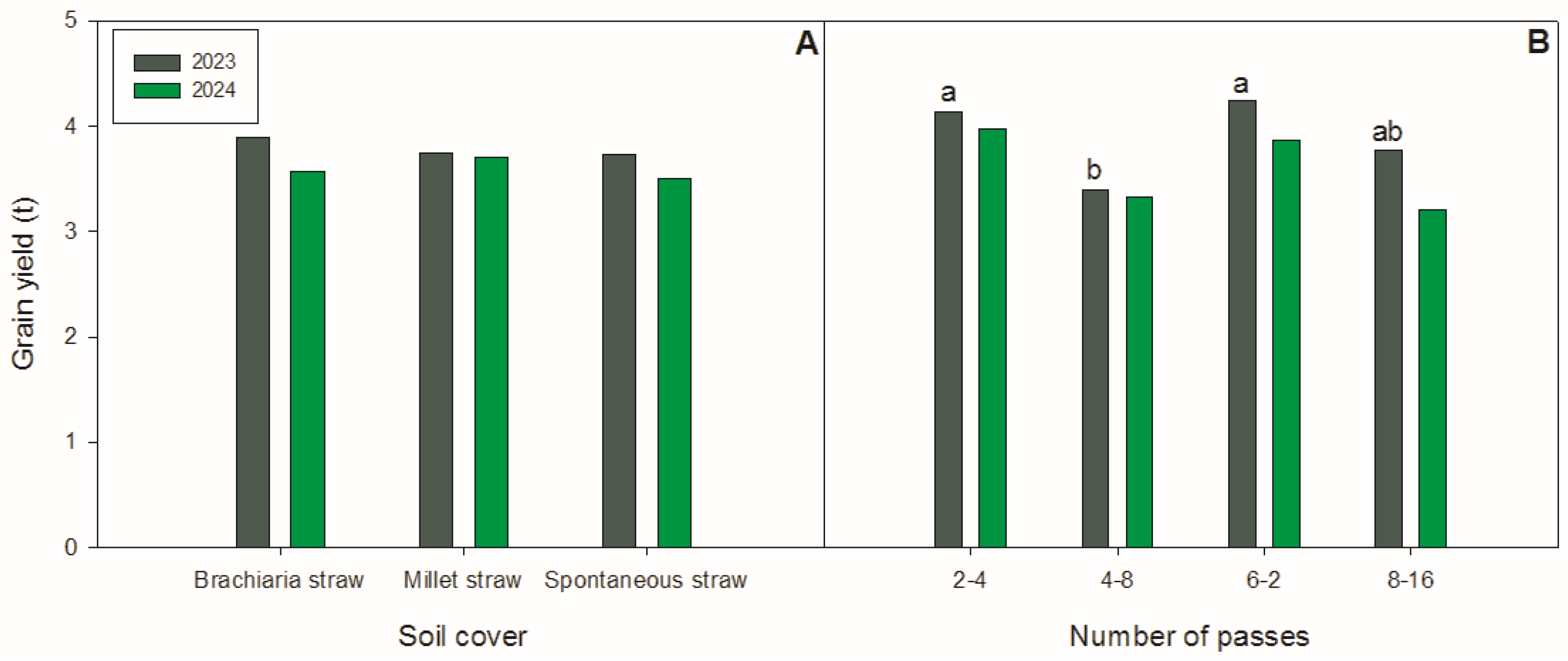
Grain yield was not influenced by soil cover (Figure 6A), but it was influenced by the number of machine passes (Figure 6B). In 2023, productivity was highest in locations with two and six passes, followed by eight passes, and the lowest productivity was observed in the location with four machine passes (Figure 6B). In 2024, no statistically significant difference was observed; however, the highest soybean grain yield was obtained in the treatments with four and twelve passes, respectively, followed by lower productivities found in eight and sixteen machine passes.

4. Discussion

Soil cover influenced physiological and morphological parameters of soybeans, such as stomatal conductance, transpiration rate, water use efficiency, plant height, diameter, number of branches, number of pods per plant, and number of grains per plant. Machinery traffic influenced transpiration rate, water use efficiency, plant height, and grain yield. Similarly, ref. [4] observed the influence of the production system (direct or conventional) and the soil cover used. Silva [15] also observed the influence of soil cover on the physiological and productive characteristics of soybeans and [35] observed an increase in soybean yield in crop rotation.
The effects of soil cover on root development and physiological rates can be related physically, chemically, and biologically depending on the type of cover and interactions between plants. Zhang [36] indicated that symbiotic networks are formed between different individuals, with the presence of agents that catalyze physiological processes, such as fungi, bacteria, and nematodes, from crop establishment to the end of the cycle with the expression of productivity. The dynamics of water and root growth depend directly on these interspecific relationships.
Plants can regulate CO2 uptake and water loss through the regulation of stomatal opening in response to environmental changes [6]. The use of straw in soybean cultivation resulted in a reduction in stomatal conductance, consequently reducing transpiration, leading to increased water use efficiency and taller plants compared to cultivation without straw. Cover crops contribute to the formation of micropores in the soil [35], which can increase water infiltration and water availability for subsequent plants, consequently increasing water use efficiency, as observed in this study, promoting benefits in the growth and development of the subsequent crop [35,37].
Species such as millet, used in this experiment, have an aggressive root system and can reach great depths in the soil, promoting characteristics that improve the rhizosphere environment, benefiting soil properties and the yield of species in succession [17], as well as brachiaria, which has aggressive and voluminous roots and drags other nearby roots to greater depths, promoting productive benefits [16].
Luz [26] indicated that soil structural quality is improved with the application of controlled traffic models, reducing the degradation caused by machinery to the physical structure of the subsoil under uncontrolled traffic conditions. The authors verified an increase in soil quality and health indices with traffic control, which corroborates our results, where a lower number of passes promoted a lower level of stress in soybean plants, as indicated by water use efficiency and physiological rates.
The greater plant height observed in cultivation after cover crops may occur due to the release of nutrients by the straw [38]. Cover crops, associated with no-till farming and less machinery traffic, help improve the physical, chemical, and biological components of the soil, and nutrient cycling [37], and increase the available organic matter content and carbon levels [39].
In the present study, the use of straw on the soil did not result in an increase in production components, such as the number of pods and grains, and there was no difference in grain yield between the use of straw or without straw. On the other hand, Côrt [37] observed an increase in soybean productivity cultivated in succession to cover crops in a Red-Yellow Latosol. An increase in soybean productivity and profitability in crop rotation or succession was observed only after six years of cultivation [4]. In a 17-year experiment of crop rotation of Crotalaria juncea and soybean, it was observed that soybean yield increased in crop rotation treatment compared to treatment without crop rotation [15].
The benefits of using straw in crop rotation or succession may increase over time [4]. The increase in productivity with the use of cover crops may be related to the beneficial changes these plants promote in the physical and structural properties of the soil, resulting in channels for root growth, water absorption and retention, and also increased oxygen availability for the roots [15].
Although the treatment without straw resulted in an increase in the number of branches, pods, and grains, this increase did not translate into increased productivity. This may have been due to greater water loss through transpiration and lower water use efficiency, potentially indicating a stressful situation for soybean plants grown without straw. The greater the amount of water available to meet the crop’s water demand, the higher the expected soybean grain yield [40].
The use of controlled traffic can be a strategy for promoting water availability, since the implementation of controlled machine traffic promotes defined compaction zones. This dissipates the load applied by the machines’ passage to deeper areas, leaving the remaining area free from traffic. This results in better root development due to lower resistance to soil penetration and the consequent presence of roots in larger areas and at greater depths. This can guarantee better water and nutritional conditions for plants, as these conditions increase the root exploration area, allowing easy access to water in deeper soil layers, thus increasing productivity [38]. Rainwater use efficiency was 65% higher in controlled traffic areas compared to areas without controlled traffic in an evaluation of the effects of controlled traffic on grain sorghum productivity, precipitation, and efficiency of nitrogen as a fertilizer [41].
The greater the amount of biomass on the soil surface, the greater the water retention in the soil and less water is lost by the soil through evaporation, consequently resulting in more water available for plants [42]. Greater water retention was observed in the soil with Crotalaria juncea straw, which provided a greater leaf area, water potential, and relative water content in soybean leaves, indicating that the more water available in the soil, the greater the amount of water in the plant [15]. The authors also observed higher soybean productivity in this treatment.
Our results differ from [43], who found no significant difference in soybean productivity under controlled traffic with different intensities; however, the highest productivity was observed in the treatment without machine traffic, with a reduction in productivity as machine traffic increased. They also differ from [44], where strip compaction did not alter soybean productivity. Conversely, the implementation of controlled agricultural machinery traffic provides positive changes and can be significant for the world’s major crops, such as soybeans [28].
Godwin [45] concluded that the soil conservation system, with maintenance of soil cover, has a positive long-term effect on crop productivity, in addition to reducing crop establishment costs. In addition, cultivation with controlled agricultural machinery traffic increased long-term grain productivity by 30% [41]. The basis of controlled traffic is the elimination of soil compaction in the cultivated area, resulting in improvements in crop yields and economic returns, making it a promising solution for farmers even in the long term [46].
This study demonstrated that the use of cover crops in succession or rotation with soybean cultivation, associated with reduced agricultural machinery traffic, is a sustainable practice that reflects benefits for soybean cultivation, such as water use efficiency and increased productivity, and should be used in short-, medium-, and long-term strategies. Studies demonstrate improvements in soybean productivity and profitability over the years [4], in addition to the sustainable benefits reflected in soil characteristics and plant development [37], the reduction in production costs [39], and the reduction in fuel consumption [28].
Integrated traffic management combined with the reduction in soil decompaction energy provided by soil cover can elevate soybean cultivation in tropical regions to a position of greater sustainability and lower input demand in regenerative systems [12]. This research contributes to the knowledge base of sustainable agriculture by providing information on practices that improve the physiology and productivity of soybeans; however, studies on machinery traffic associated with cover crops and its influence on commercial crops still need to be developed over the years to confirm these benefits in different soils, locations, and climatic conditions.

5. Conclusions

Soil cover and machinery traffic can influence the development and production of the subsequent crop.
Straw promotes less water loss by the plant and greater water use efficiency; when combined with machinery traffic, the reduced traffic promotes greater water use efficiency and higher productivity.
Therefore, the combination of soil cover and controlling agricultural machinery traffic is an effective and sustainable strategy to promote higher soybean productivity.
Our study confirms that the use of controlled traffic and soil cover alters soybean performance and productivity. However, the study covers two years of cultivation, and more detailed studies with multi-year cultivation and year-by-year evaluations are still necessary.
Future studies involving the combination of machinery and crop rotation, evaluating the plant morphological and physiological response, may help to elucidate the understanding of machinery–crop rotation–plant association dynamics.

Author Contributions

Conceptualization, M.B.M. and F.P.d.A.P.B.; methodology, M.B.M., F.P.d.A.P.B., A.C.M.F. and E.P.V.; investigation, F.P.d.A.P.B., M.B.M., C.d.C.S. and W.d.S.G.J.; data curation, F.P.d.A.P.B. and M.B.M.; writing—original draft preparation, F.P.d.A.P.B., M.B.M., A.C.M.F., V.R., E.P.V., C.d.C.S., E.B.C., J.T.N. and W.d.S.G.J.; writing—review and editing, F.P.d.A.P.B., M.B.M., A.C.M.F., V.R., E.P.V., C.d.C.S., E.B.C., J.T.N. and W.d.S.G.J.; supervision, M.B.M. All authors have read and agreed to the published version of the manuscript.

Funding

FUNDECT for the financial support in the Project: PGAC promoting sustainable agriculture in the Bolsão Region South Mato Grosso—FUNDECT No.: 403/2024; SIAFIC No.: 229.

Data Availability Statement

The raw data supporting the conclusions of this article will be made available by the authors on request.

Conflicts of Interest

The authors declare no conflicts of interest.

References

  1. Klein, H.S.; Luna, F.V. Soybeans. In Brazilian Crops in the Global Market: The Emergence of Brazil as a World Agribusiness Exporter Since 1950; Springer Nature: Cham, Switzerland, 2023; pp. 79–106. [Google Scholar]
  2. dos Santos, P.R.R.; Ribeiro, B.G.; de Souza, L.N.; Ribeiro, S.L.M.; de Carvalho, E.V. Performance of soybean cultivars for seed production in tropical floodplains under different growing conditions. Rev. Agric. Neotrop. 2024, 11, e8541. [Google Scholar] [CrossRef]
  3. Li, X.; Chen, M.; He, S.; Xu, X.; Shao, P.; Su, Y.; He, L.; Qiao, J.; Xu, M.; Zhao, Y.; et al. Optimization of the Canopy Three-Dimensional Reconstruction Method for Intercropped Soybeans and Early Yield Prediction. Agriculture 2025, 15, 729. [Google Scholar] [CrossRef]
  4. Pacheco, L.P.; Kappes, C.; Côrt, A.S.D.; da Silva, R.G.; de Souza, E.D.; Guedes, T.R.M.; Silva, L.S.; Ratke, R.F.; Petter, F.A.; Ferreira, J.H.d.S.; et al. Crop rotation and succession in soybean production systems: Cover crop biomass, grain yield and revenue. Plant Soil 2025, 517, 525–542. [Google Scholar] [CrossRef]
  5. Hancock, C.N.; Hancock, L.R.; Fogle, B.; Kirk, K. Identification of Nitrogen-Deficient Soybeans Facilitates Yield Rescue. Agriculture 2025, 15, 2314. [Google Scholar] [CrossRef]
  6. Driesen, E.; Van den Ende, W.; De Proft, M.; Saeys, W. Influence of Environmental Factors Light, CO2, Temperature, and Relative Humidity on Stomatal Opening and Development: A Review. Agronomy 2020, 10, 1975. [Google Scholar] [CrossRef]
  7. Giller, K.E.; Hijbeek, R.; Andersson, J.A.; Sumberg, J. Regenerative agriculture: An agronomic perspective. Outlook Agric. 2021, 50, 13–25. [Google Scholar] [CrossRef] [PubMed]
  8. Possamai, E.J.; Conceição, P.C.; Amadori, C.; Bartz, M.L.C.; Ralisch, R.; Vicensi, M.; Marx, E.F. Adoption of the no-tillage system in Paraná State: A review. Rev. Bras. Ciência Solo 2022, 46, e0210104. [Google Scholar] [CrossRef]
  9. Rempelos, L.; Kabourakis, E.; Leifert, C. Innovative Organic and Regenerative Agricultural Production. Agronomy 2023, 13, 1344. [Google Scholar] [CrossRef]
  10. Merlo, M.N.; Avanzi, J.C.; Silva, L.d.C.M.d.; Aragão, O.O.d.S.; Borghi, E.; Moreira, F.M.d.S.; Thebaldi, M.S.; Resende, Á.V.d.; Silva, M.L.N.; Silva, B.M. Microbiological Properties in Cropping Systems and Their Relationship with Water Erosion in the Brazilian Cerrado. Water 2022, 14, 614. [Google Scholar] [CrossRef]
  11. Rampim, L.; Pott, C.A.; Volanin, A.J.D.; Spliethoff, J.; Camilo, E.L.; Camilo, M.L.; Conrado, A.M.C.; Kolling, C.E.; Conrado, P.M.; Garcia Neto, E. Influence of mechanical management and green manure on physical attributes of Oxisol Research Society and Development. Res. Soc. Dev. 2020, 9, e173953258. [Google Scholar] [CrossRef]
  12. Voisin, R.; Horwitz, P.; Godrich, S.; Sambell, R.; Cullerton, K.; Devine, A. What goes in and what comes out: A scoping review of regenerative agricultural practices. Agroecol. Sustain. Food Syst. 2024, 48, 124–158. [Google Scholar] [CrossRef]
  13. Zhang, Z.; Peng, X. Bio-tillage: A new perspective for sustainable agriculture. Soil Tillage Res. 2021, 206, 104844. [Google Scholar] [CrossRef]
  14. Han, E.; Kautz, T.; Perkons, U.; Lüsebrink, M.; Pude, R.; Köpke, U. Quantification of soil biopore density after perennial fodder cropping. Plant Soil 2015, 394, 73–85. [Google Scholar] [CrossRef]
  15. Silva, G.F.d.; Matusevicius, A.P.O.; Calonego, J.C.; Chamma, L.; Luperini, B.C.O.; Alves, M.d.S.; Leite, H.M.F.; Pinto, E.d.J.; Silva, M.d.A.; Putti, F.F. Soil–Plant Relationships in Soybean Cultivated under Crop Rotation after 17 Years of No-Tillage and Occasional Chiseling. Plants 2022, 11, 2657. [Google Scholar] [CrossRef] [PubMed]
  16. Ferreira, C.J.B.; Tormena, C.A.; Severiano, E.C.; Zotarelli, L.; Júnior, E.B. Soil compaction influences soil physical quality and soybean yield under long-term no-tillage. Arch. Agron. Soil Sci. 2021, 3, 383–396. [Google Scholar] [CrossRef]
  17. Azevedo, C.V.G.; Val, B.H.P.; Araújo, L.C.A.; Juhász, A.C.P.; Di Mauro, A.O.; Trevisoli, S.H.U. Genetic Parameters of Soybean Populations Obtained from Crosses between Grain and Food Genotypes. Acta Sci. Agron. 2021, 43, e46968. [Google Scholar] [CrossRef]
  18. Calonego, J.C.; Raphael, J.P.; Rigon, J.P.; de Oliveira Neto, L.; Rosolem, C.A. Soil compaction management and soybean yields with cover crops under no-till and occasional chiseling. Eur. J. Agron. 2017, 85, 31–37. [Google Scholar] [CrossRef]
  19. Nagaoka, A.K.; Marques Filho, A.C.; Lanças, K.P. Agricultural Tire Test: Straw Cover Effect on Reducing Soil Compaction by Cargo Vehicles. AgriEngineering 2024, 6, 3016–3029. [Google Scholar] [CrossRef]
  20. Martínez, I.; Chervet, A.; Weisskopf, P.; Sturny, W.G.; Etana, A.; Steller, M.; Forkman, J.; Keller, T. Two decades of no-till in the Oberacker long-term field experiment: Part I. Crop yield, soil organic carbon and nutrient distribution in the soil profile. Soil Tillage Res. 2016, 163, 141–151. [Google Scholar] [CrossRef]
  21. Lanças, K.P.; Marques Filho, A.C.; Santana, L.S.; Ferraz, G.A.e.S.; Faria, R.O.; Martins, M.B. Agricultural Tractor Test: A Bibliometric Review. AgriEngineering 2024, 6, 2229–2248. [Google Scholar] [CrossRef]
  22. Normirzayev, A.R.; Nuriddinov, A.D.; Tukhtabayev, M.A. Undercarriages impact on soil of machine-tractor units during tillage and cultivation of agricultural crops. AIP Conf. Proc. 2023, 2612, 030032. [Google Scholar] [CrossRef]
  23. Bogunovic, I.; Pereira, P.; Kisic, I.; Sajko, K.; Sraka, M. Tillage management impacts on soil compaction, erosion and crop yield in Stagnosols (Croatia). Catena 2018, 160, 376–384. [Google Scholar] [CrossRef]
  24. Esteban, D.A.A.; Souza, Z.M.; Tormena, C.A.; Gomes, M.G.S.; Parra, J.A.S.; Júnnyor, W.S.G.; Moraes, M.T. Risk assessment of soil compaction due to machinery traffic used in infield transportation of sugarcane during mechanized harvesting. Soil Tillage Res. 2024, 244, 106206. [Google Scholar] [CrossRef]
  25. Woldeyohannis, Y.S.; Hiremath, S.S.; Tola, S.; Wako, A. Influence of soil physical and chemical characteristics on soil compaction in farm field. Heliyon 2024, 10, e25140. [Google Scholar] [CrossRef] [PubMed]
  26. Luz, F.B.; Gonzaga, L.C.; Castioni, G.A.F.; de Lima, R.P.; Carvalho, J.L.N.; Cherubin, M.R. Controlled traffic farming maintains soil physical functionality in sugarcane fields. Geoderma 2023, 432, 116427. [Google Scholar] [CrossRef]
  27. Bulgakov, V.; Pascuzzi, S.; Nadykto, V.; Adamchuk, V.; Kaminskiy, V.; Kyurchev, V.; Santoro, F. Effects of Tractor and Soil Parameters on the Depth of the Permanent Traffic Lanes in Controlled Traffic Farming Systems. Appl. Sci. 2022, 12, 6620. [Google Scholar] [CrossRef]
  28. Martins, M.B.; Marques Filho, A.C.; Seron, C.d.C.; Guimarães Júnnyor, W.d.S.; Vendruscolo, E.P.; Bortolheiro, F.P.d.A.P.; Blanco Bertolo, D.M.; Lopes, A.G.C.; Santana, L.S. Controlled Traffic Farm: Fuel Demand and Carbon Emissions in Soybean Sowing. AgriEngineering 2024, 6, 1794–1806. [Google Scholar] [CrossRef]
  29. Benković, R.; Šumanovac, L.; Jug, D.; Jug, I.; Japundžić-Palenkić, B.; Mirosavljević, K.; Popijač, M.; Benković-Lačić, T. Influence of Aggregated Tillage Implements on Fuel Consumption and Wheel Slippage. Teh. Vjesn. 2021, 28, 956–962. [Google Scholar] [CrossRef]
  30. Botta, G.F.; Antille, D.L.; Ghelfi, D.G.; Rivero, D.; Ezquerra-Canalejo, A. Quantifying the wheeled area of a random traffic, no-tillage soybean production system. In 2023 ASABE Annual International Meeting; American Society of Agricultural and Biological Engineers: Saint Joseph, MI, USA, 2023; p. 1. [Google Scholar] [CrossRef]
  31. Colombi, T.; Keller, T. Developing strategies to recover crop productivity after soil compaction—A plant eco-physiological perspective. Soil Tillage Res. 2019, 191, 156–161. [Google Scholar] [CrossRef]
  32. Bareta Junior, E.; Genú, A.M.; Rampim, L.; Umburanas, R.C.; Pott, C.A. Critical limits of soil physical attributes for corn and black oat in a Xanthic Hapludox. Rev. Ciência Agron. 2022, 53, e20207533. [Google Scholar] [CrossRef]
  33. Santos, H.G.; Jacomine, P.K.T.; Anjos, L.H.C.; Oliveira, V.Á.; Lumbreras, J.F.; Coelho, M.R.; Almeida, J.A.; de Filho, J.C.A.; Oliveira, J.B.; Cunha, T.J.F. Sistema Brasileiro de Classificação de Solos; Centro Nacional de Pesquisa de Solos: Rio de Janeiro, Brazil, 2018; ISBN 978-85-7035-198-2. [Google Scholar]
  34. IUSS Working Group. World Reference Base for Soil Resources 2014: International Soil Classification System for Naming Soils and Creating Legends for Soil Maps; FAO: Rome, Italy, 2015. [Google Scholar]
  35. Silva, J.A.G.; de Pinho Costa, K.A.; da Costa, S.E.; da Silva, A.G.; Vilela, L.; Leandro, W.M.; Muniz, M.P.; da Silva, L.M.; Mendonça, K.T.M.; Barros, V.M. Efficiency of desiccation, decomposition and release of nutrients in the biomass of forage plants of the genus brachiaria after intercropping with sorghum in integrated systems for soybean productivity. Commun. Soil Sci. Plant Anal. 2024, 55, 1644–1662. [Google Scholar] [CrossRef]
  36. Zhang, G.; Yang, H.; Zhang, W.; Bezemer, T.M.; Liang, W.; Li, Q.; Li, L. Interspecific interactions between crops influence soil functional groups and networks in a maize/soybean intercropping system. Agric. Ecosyst. Environ. 2023, 355, 108595. [Google Scholar] [CrossRef]
  37. Côrt, A.S.D.; Pacheco, L.P.; Guedes, T.R.M.; Silva, L.S.; Greco, T.M.; de Macedo, K.S.; Batista, E.R.; de Souza, E.D.; da Silva, I.A.G.; Crusciol, C.A.C. Crop rotation with Species Diversification During Off-season Impact the Nutrient Cycling in No-tillage System. J. Soil Sci. Plant Nutr. 2025, 25, 5427–5438. [Google Scholar] [CrossRef]
  38. Silva, G.F.; Calonego, J.C.; Luperini, B.C.O.; Chamma, L.; Alves, E.R.; Rodrigues, S.A.; Putti, F.F.; da Silva, V.M.; de Almeida Silva, M. Soil—Plant Relationships in Soybean Cultivated under Conventional Tillage and Long-Term No-Tillage. Agronomy 2022, 12, 697. [Google Scholar] [CrossRef]
  39. Jacobs, A.A.; Evans, R.S.; Allison, J.K.; Garner, E.R.; Kingery, W.L.; McCulley, R.L. Cover crops and no-tillage reduce crop production costs and soil loss, compensating for lack of short-term soil quality improvement in a maize and soybean production system. Soil Tillage Res. 2022, 218, 105310. [Google Scholar] [CrossRef]
  40. Anda, A.; Simon-Gáspár, B.; Soós, G. The Application of a Self-Organizing Model for the Estimation of Crop Water Stress Index (CWSI) in Soybean with Different Watering Levels. Water 2021, 13, 3306. [Google Scholar] [CrossRef]
  41. Hussein, M.A.; Antille, D.L.; Kodur, S.; Chen, G.; Tullberg, J.N. Controlled traffic farming effects on productivity of grain sorghum, rainfall and fertiliser nitrogen use efficiency. J. Agric. Food Res. 2021, 3, 100111. [Google Scholar] [CrossRef]
  42. Silva, M.A.; Nascente, A.S.; Frasca, L.L.M.; Rezende, C.C.; Ferreira, E.A.S.; Filipi, M.C.C.; Lanna, A.C.; Ferreira, E.P.B.; Lacerda, M.C. Isolated and Mixed Cover Crops to Improve Soil Quality and Commercial Crops in the Cerrado. Res. Soc. Dev. 2021, 10, e11101220008. [Google Scholar] [CrossRef]
  43. Girardello, V.C.; Amado, T.J.C.; Santi, A.L.; Lanzabova, M.E.; Tasca, A. Resistência do solo a penetração e desenvolvimento radicular da soja sob sistema plantio direto com tráfego controlado de máquinas agrícolas. Sci. Agropecu. 2017, 2, 86–96. [Google Scholar] [CrossRef]
  44. Sivarajan, S.; Maharlooei, M.; Bajwa, S.G.; Nowatzki, J. Impact of soil compaction due to wheel traffic on corn and soybean growth, development and yield. Soil Tillage Res. 2018, 175, 234–243. [Google Scholar] [CrossRef]
  45. Godwin, R.J.; White, D.R.; Dickin, E.T.; Kaczorowska-Dolowy, M.; Millington, W.A.; Pope, E.K.; Misiewicz, P.A. The effects of traffic management systems on the yield and economics of crops grown in deep, shallow and zero tilled sandy loam soil over eight years. Soil Tillage Res. 2022, 223, 105465. [Google Scholar] [CrossRef]
  46. Tamirat, T.W.; Pedersen, S.M.; Farquharson, R.J.; de Bruin, S.; Forristal, P.D.; Sørensen, C.G.; Nuyttens, D.; Pedersen, H.H.; Thomsen, M.N. Controlled traffic farming and field traffic management: Perceptions of farmers groups from Northern and Western European countries. Soil Tillage Res. 2022, 217, 105288. [Google Scholar] [CrossRef]
Figure 1. Maximum, mean and minimum air temperature and precipitation recorded during the experimental periods for first season 2022/23 (A) and second season 2023/24 (B).
Agriengineering 08 00085 g001
Figure 2. Net assimilation rate (A) (A,B), stomatal conductance (gS) (C,D), transpiration rate (E) (E,F), internal CO2 concentration (Ci) (G,H) of soybeans grown in three types of straw with different soil compaction. Means followed by the same capital letters do not differ statistics according to Tukey’s test (p < 0.05).
Agriengineering 08 00085 g002
Figure 3. Carboxylation efficiency (A/Ci) (A,B) and water use efficiency (WUE) (C,D) of soybeans grown in three types of straw with different soil compaction. Means followed by the same capital letters do not differ statistics according to Tukey’s test (p < 0.05).
Agriengineering 08 00085 g003
Figure 5. Number of branches (A,B), number of pods per plant (C,D) of soybeans grown in three types of straw with different soil compaction. Means followed by the same lowercase letters do not differ for the 2023 season, and the same uppercase letters do not differ for the 2024 season, according to Tukey’s test (p < 0.05).
Agriengineering 08 00085 g005
Figure 6. Grain yield (t) (A,B) of soybeans grown in three types of straw with different soil compaction. Means followed by the same lowercase letters do not differ according to Tukey’s test (p < 0.05).
Agriengineering 08 00085 g006
Disclaimer/Publisher’s Note: The statements, opinions and data contained in all publications are solely those of the individual author(s) and contributor(s) and not of MDPI and/or the editor(s). MDPI and/or the editor(s) disclaim responsibility for any injury to people or property resulting from any ideas, methods, instructions or products referred to in the content.