Article

Predictive Models for Lamb Meat Cuts and Carcass Tissue Based on Ultrasonographic Images and Body Weight

by
Alexsander Toniazzo de Matos
1,
Tatiane Fernandes
2,
Adriana Sathie Ozaki Hirata
1,
Ingrid Harumi de Souza Fuzikawa
1,
Alexandre Rodrigo Mendes Fernandes
1,
Adrielly Lais Alves da Silva
1,
Rodrigo Andreo Santos
1,
Ariadne Patrícia Leonardo
1,
Aylpy Renan Dutra Santos
1 and
Fernando Miranda de Vargas Junior
1,*
1
Post-Graduate Program of Animal Science, Federal University of Grande Dourados, Dourados 79825-070, Brazil
2
School of Animal Sciences, Virginia Polytechnic Institute and State University, Blacksburg, VA 24061, USA
*
Author to whom correspondence should be addressed.
AgriEngineering 2026, 8(3), 111; https://doi.org/10.3390/agriengineering8030111
Submission received: 8 January 2026 / Revised: 4 March 2026 / Accepted: 10 March 2026 / Published: 14 March 2026

Abstract

Sheep farming length of stay in the feedlot directly influences system profitability, mainly due to the high cost of feed. Thus, the use of predictive models based on body measurements is an important tool to define the optimal slaughter point and the ideal feedlot period. Thus, the aim was to evaluate predictive models of meat cuts and tissue carcasses concerning weight at slaughter (WS), loin eye area (LEA), and subcutaneous fat thickness (SFT) obtained by ultrasound of the lumbar region of lambs. The WS and ultrasound measurements were obtained from a pre-slaughter collection of 45 lambs, divided into five groups, each weighing 15, 20, 25, 30, or 35 kg, with nine replications per group. Three regression models were evaluated: WS, LEA, and SFT (independent variables) and the cuts yield or tissue composition (dependent variable). Increasing WS resulted in greater carcass weight and commercial cuts. Above 15 kg body weight, bone weight showed little or no increase (allometric coefficient = 0.06), whereas muscle and fat tissues increased steadily, with allometric coefficients of 0.25 and 0.12, respectively. The commercial cuts showed a high and significant correlation with WS and LEA. The muscle and bone proportion of the leg had a significant (p < 0.10) correlation with SFT. For the weight of commercial cuts estimates, the inclusion of LEA and/or SFT with WS did not improve the coefficient of determination but made the predictions equivalent to the measured values. There were high determination coefficients when WS was only used to predict muscle, fat, and bone weight, but it was not efficient in predicting the muscle/fat and muscle/bone ratios and the percentage of tissues. The WS was the variable that best explained the weight and tissue content. The inclusion of LEA and/or SFT made little improvement to the predictive models.

1. Introduction

In Brazil, the use of native breeds in sheep production has great socioeconomic importance. Among the native breeds, the Pantaneiro sheep stands out due to its high productive potential, particularly in terms of carcass traits and meat quality [1]. Although it was developed under extensive production systems, recent studies have explored the potential of this genetic group in feedlot systems [2,3,4].
In sheep farming, the length of stay in the feedlot can influence the profitability of production, mainly due to the high cost of food. Therefore, an essential tool for decision-making regarding the optimal feedlot period is the use of in vivo predictions of animals’ body measurements, allowing a more accurate determination of the ideal slaughter point [5,6]. The ideal time for slaughter should be determined based on the proportion of fat appropriate to the consumers’ preferences [7], who, in most cases, prefer meat from carcasses without excessive fat, containing only the amount necessary to provide flavor and juiciness. To meet this market demand, understanding the allometric growth of animals is essential. In this regard, ultrasound imaging stands out as an objective technique that can improve the prediction of body composition [8], especially as far as the loin eye area (LEA) and fat thickness are concerned, which are measures widely used in the characterization of the carcass [9].
Several studies using ultrasound indicate that measurements taken in vivo, when associated with body weight in multiple regression, improve estimates of the body composition of sheep and can be used as a predictor for carcass components and tissues. Published research based on image assessment as a predictor of body weight, carcass, cuts, or tissues [10,11,12,13] limited their studies to weight intervals close to slaughter, and there are no studies concerning the yields of cuts and tissues estimated by ultrasound at shorter intervals during development, which would allow us to conclude more specifically the effects studied.
This study aims to evaluate the total and carcass components (muscle, fat, and bone) allometric growth of different commercial cuts relative to the whole body of Pantaneiro lambs. Furthermore, this study aimed to evaluate the accuracy of using weight at slaughter (WS) and ultrasound measurements (longissimus muscle area (LEA) and subcutaneous fat thickness (SFT)) in predicting carcass and commercial cuts composition from Pantaneiro lambs slaughtered at body weights ranging from 15 to 35 kg.

2. Materials and Methods

2.1. Animals, Diets, and Experimental Design

All protocols of experimental procedures were approved by the Animal Experimentation Ethics Committee (CEUA; protocol no. 018/2013 in 15 March 2023) of the Federal University of Grande Dourados (UFGD), Dourados, state of Mato Grosso do Sul, Brazil.
We used 45 male Pantaneiro lambs, not castrated, originating from the herd of the UFGD. The lambs received supplementation through creep feeding during the breastfeeding period. They were weaned with a body weight (BW) of 12.78 ± 2.03 kg and allocated to feedlots. The animals were allocated randomly into five groups based on the weight established for slaughter (15, 20, 25, 30, and 35 kg BW), with nine animals per group [14]. The lambs were finished in a feedlot system, housed in individual pens, and fed a diet formulated to provide a daily weight gain of 300 g, according to NRC [15] recommendations. For this purpose, the diets contained a proportion of 80% concentrate (ground corn grain, 55%; wheat bran, 16%; soybean meal, 4%; urea, 2%; and mineral, 3%) and 20% oat hay (Avena spp.; Supplementary Data Table S1). The animals received water ad libitum. Slaughter was carried out when the animals reached the determined weight for each group: 16.47 ± 1.25, 20.47 ± 0.63, 25.97 ± 1.02, 30.34 ± 1.31, and 36.19 ± 1.54 kg, at approximately 39, 63, 93, 112, and 123 days of finishing, respectively. Thus, the experiment was conducted between May and December 2013. The discrepancy between target weights and observed weights occurred due to individual variations among animals within each group during the same experimental period.

2.2. Ultrasound Evaluations

Ultrasound evaluations were performed on the day before slaughter using Aloka brand ultrasound equipment (model SSD-500v, Aloka Co. Ltd., Tokyo, Japan), with a linear probe of 13 cm and a frequency of 3.5 MHz, with the aid of ‘standoff’ acoustic coupling. To perform the measurements, the lambs were immobilized manually, and with the aid of a comb, the wool was separated in the measuring areas, and mucilage was applied for the best coupling of the transducer to the skin [6]. All measurements were performed by the same technician on the left side, between the 12th and 13th ribs, 4 cm from the median line of the spine. The images generated by the ultrasound were stored digitally for further analysis by means of a video capture card (Pinnacle DC10 Plus, Pinnacle Systems, Mountain View, USA) [16].
The images were analyzed with Image J software (version 2, National Institutes of Health, Bethesda, USA; available at https://imagej.net/software/imagej/, accessed on 3 March 2026). For all images, a scale adjustment of 30 pixels/cm was made. Measurements were made of the LEA and SFT. The LEA was determined by the contour of the muscle area of the sonographic images, and the SFT was obtained by measuring the adipose tissue between the longissimus thoracis et lumborum muscle and the skin of the images [17].

2.3. Weighing and Carcass Evaluation

On the day of slaughter, the lambs were weighed after a 16 h fasting period for the determination of WS. The carcasses were then skinned and eviscerated, suspended by their hocks, and placed in a refrigerated chamber at 4 °C for 24 h. After this period, the cold carcasses were weighed and divided longitudinally, and the left carcass halves were weighed and subsequently divided into neck (obtained by cutting between the seventh cervical vertebra and the first thoracic vertebra), shoulder (separated by the section of muscles that connect it to the thoracic cavity), leg (separated by the cut between the last lumbar vertebra and the first sacral vertebra), fixed ribs (obtained by cutting between the seventh cervical vertebra and the first thoracic vertebra, and between the fifth and sixth thoracic vertebrae), floating ribs (cut between the fifth and sixth thoracic vertebra and between the thirteenth thoracic vertebra and the first lumbar vertebra), loin (obtained by cutting between the thirteenth thoracic vertebra and the first lumbar vertebra, and between the sixth lumbar vertebra and the first sacral vertebrae), and flank (separated by the transverse cut of the ribs, following an imaginary line from the xiphoid process of the sternum to the lower end of the tenth rib), according to the technique adapted from Panea et al. [18]. The cuts were weighed, and the percentage was calculated in relation to the weight of the cold carcass.
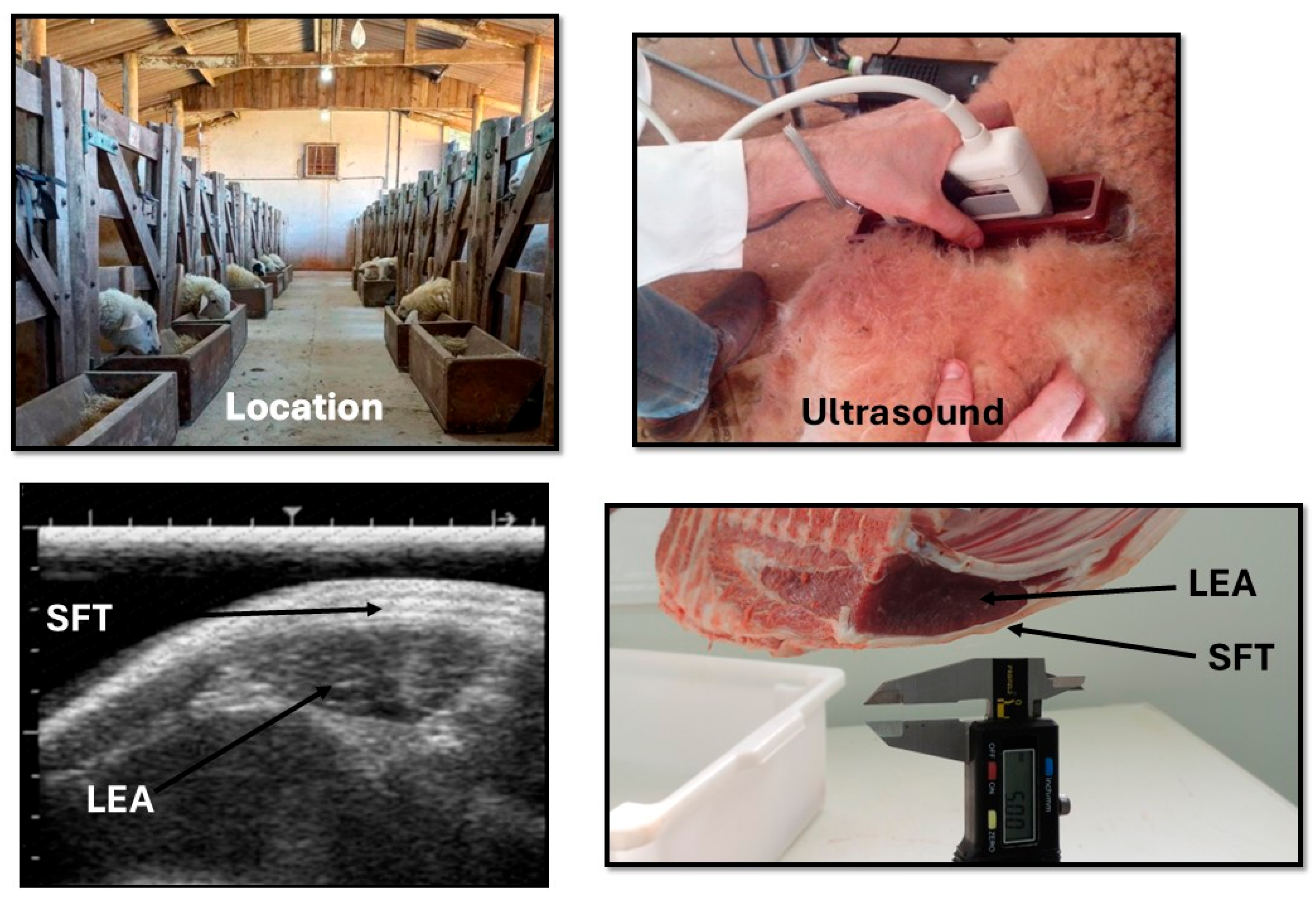
Each cut was defrosted at 10 °C for 24 h in plastic bags, and after defrosting, the cuts were weighed and identified. The dissection of the cuts was performed at the Laboratory of Analysis of Agricultural Products of the UFGD to determine the proportion of muscle, bone, and fat in each cut [18]. After weighing the tissues, the muscle/fat and muscle/bone ratios were determined by dividing the muscle weight by the fat and bone weights, respectively. The percentage of tissue components was calculated relative to WS. Figure 1 presents the location where the research was conducted and the main resources used for data collection.

2.4. Statistical Analysis

Data were analyzed using XLSTAT statistical software (version 2014.2.07; Addinsoft, Paris, France). The allometric growth of total, muscle, fat, and bone tissues relative to body weight at slaughter was evaluated for the carcass and each commercial cut to describe the pattern of tissue deposition across developmental stages. The model log(Y) = log(a) + blog(X) was fitted using linear regression, where Y is the weight (or size) of a specific tissue and cut, X is the reference body weight at slaughter, a is the intercept (scaling constant), and b is the allometric coefficient describing the relative growth rate of Y with respect to X. Linear regression was performed between weight at slaughter and carcass weight, LEA, or SFT to evaluate candidates for use in the prediction model. Pearson correlation was performed between the predictor candidate (WS, LEA, or SFT) and each commercial cut component.
Weight at slaughter, LEA, and SFT were initially considered as predictor candidates for the regression models. Each variable was first evaluated individually using simple linear regression to assess its relationship with the dependent variables (commercial cuts, carcass components, and carcass component ratios). Subsequently, multiple regression models were developed to test combinations of predictor candidates. Model performance was evaluated based on the coefficient of determination (R2), in addition to the identification test proposed by Leite and Oliveira [19], using the Mann–Whitney and Wilcoxon statistical tests. All models tested are presented in the Results section.

3. Results

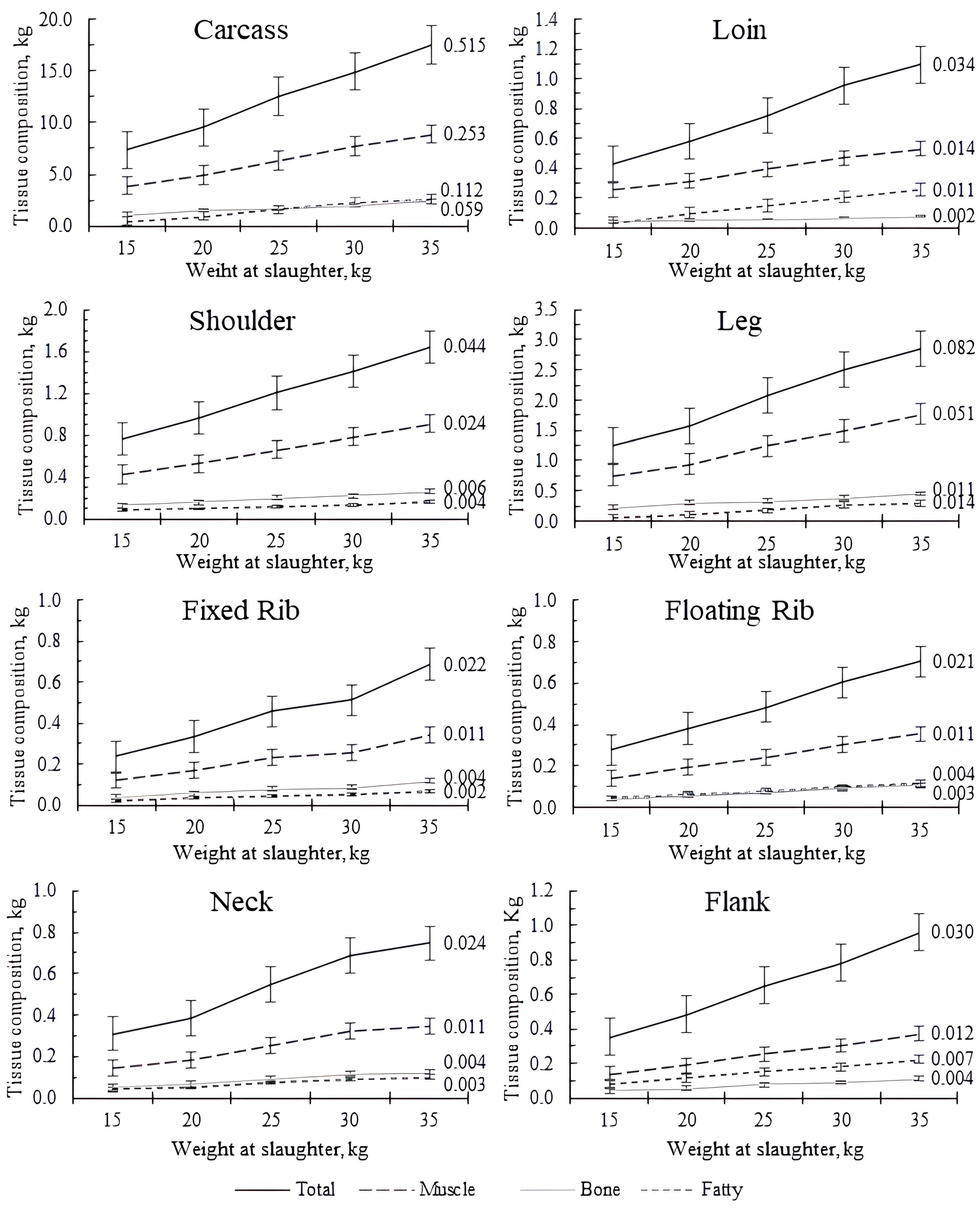
Based on allometric growth curves (Figure 2), we observed that increased WS resulted in greater carcass weight and commercial cuts. However, above 15 kg BW, there was little or no increase in bone weight (allometric coefficient = 0.06), whereas muscle and fat tissues increased steadily, with allometric coefficients of 0.25 and 0.11, respectively. The cuts that presented higher average weights were leg and shoulder, with muscle as the major tissue component and an allometric coefficient.
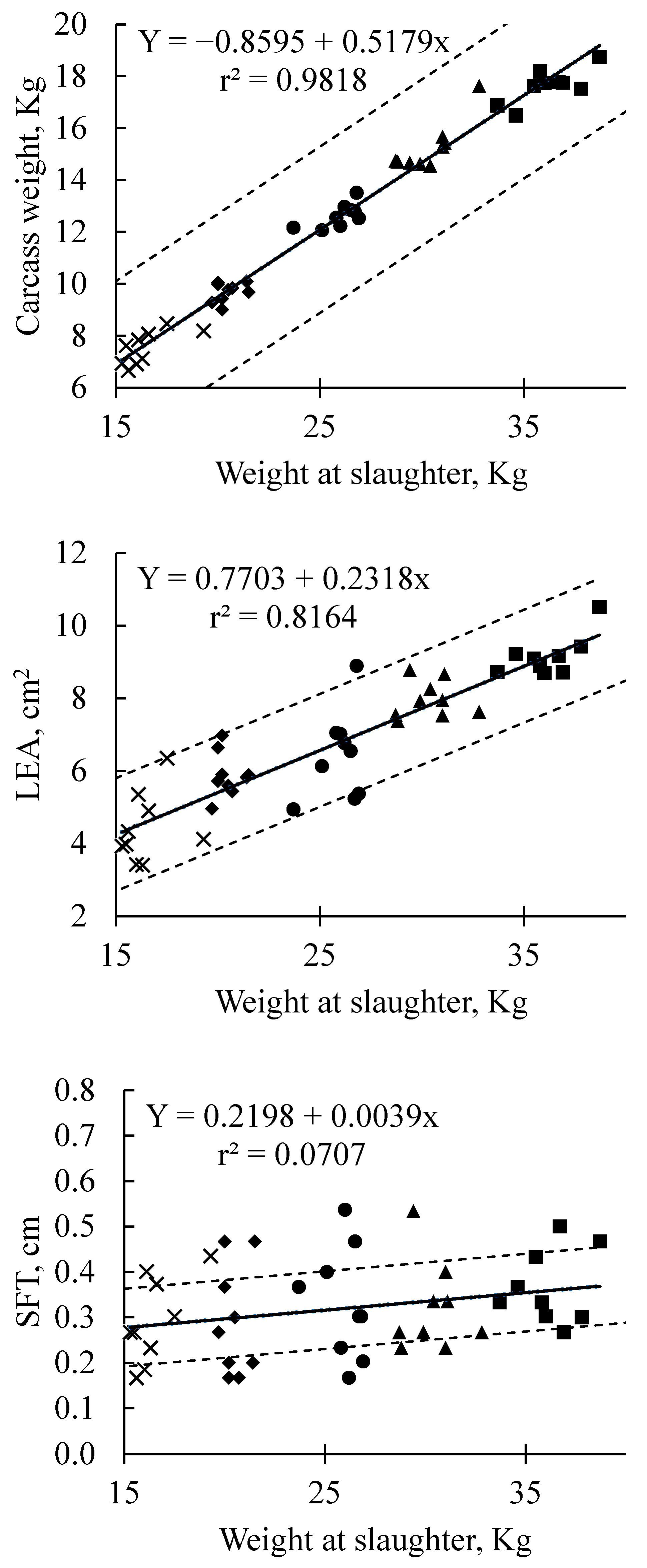
Carcass weight showed a high correlation with the weight of the animal at slaughter (Figure 3). LEA showed greater variability, especially in animals up to 25 kg, but still had a high correlation and linear adjustment, where increased WS resulted in increased LEA. SFT showed high variability among the animals studied, regardless of weight (age), which resulted in a flank correlation between SFT and WS.
The commercial cuts (loin, shoulder, leg, fixed ribs, floating ribs, neck, and flank) showed a high and significant correlation with WS and LEA (Table 1). The muscle and bone proportion of the leg had a significant (p < 0.10) correlation with SFT, but this correlation was low.
The predictive model estimates based on WS, LEA, and SFT concerning the absolute weights of the cuts are shown in Table 2. For shoulder, floating ribs, neck, and flank cuts, when using the equations including the WS effect (WS + LEA + SFT, WS + LEA, WS + SFT, or WS only), the weight of these cuts showed a high determination coefficient between the predicted and measured values. The identification test, based on Mann–Whitney and Wilcoxon statistical tests, indicated that the predicted and measured values were equivalent.
Leg predictions were highly correlated with the values measured when using WS associated with LEA or SFT or both, with a high determination coefficient, and were equivalent according to the identification test. However, when only WS was used to predict the leg cut, there was a high determination coefficient with the measured values, but the values could not be considered equivalent based on the significance of the Wilcoxon test in the identity assessment. For fixed ribs, only the prediction obtained from the equation containing WS associated with SFT showed a determination coefficient greater than 0.6 and could be considered equivalent to the values measured by the identification test. For the loin, just the predictions estimated using WS and WS associated with SFT had a high determination coefficient and were equivalent according to the identification test.
For the total weight of muscle and fat (Table 3), all estimated predictions based on just WS or WS associated with LEA or SFT resulted in predictions with a high determination coefficient and equivalent according to the identification test. For the total bone content, only the prediction based on WS had a determination coefficient above 0.6 and equivalence to the values measured. The determination coefficients between predicted and measured values for muscle/fat and muscle/bone relationships were flank; however, when using only WS, only SFT, WS + LEA, or even WS + SFT in the prediction equations, the predicted value was equivalent to the measured value. For estimates of the percentage of muscle, fat, and bone in the carcass, despite having significant correlations, all determination coefficients between predicted and measured were less than 0.6, and the values could not be considered equivalent according to the identification test.

4. Discussion

The evaluation of animals across a wide WS range (15–35 kg) allowed a robust characterization of tissue deposition dynamics in Pantaneiro lambs. The allometric coefficients indicate distinct growth priorities among tissues. Bone exhibited a very low coefficient, suggesting that skeletal development was largely completed within the studied weight range. This behavior is consistent with the biological principle that bone tissue matures earlier than muscle and adipose tissue, reflecting early structural establishment followed by progressive soft-tissue deposition [20,21,22]. Muscle tissue showed a higher allometric coefficient, indicating sustained muscular growth as body weight increased, whereas fat tissue presented a moderate coefficient, demonstrating progressive but proportionally slower deposition relative to muscle within this weight interval. Together, these coefficients characterize Pantaneiro lambs as animals with extended muscular development before accelerated adipose accumulation, which may reflect intermediate physiological maturity compared with early-finishing genotypes reported in other breeds.
The relatively stable carcass yield (>50%) across increasing WS suggests proportional development between carcass and non-carcass components. Moreover, the predominance of muscle in economically important cuts such as the leg and shoulder reinforces the biological suitability of this breed for meat production under feedlot conditions. The strong relationship between leg composition and whole-carcass tissue distribution supports previous findings that this cut serves as a reliable anatomical indicator of overall carcass quality [23].
The positive correlation between WS and LEA confirms that muscle accretion progressed consistently throughout the finishing period [24]. LEA variability was greater at lower weights, which may reflect differences in individual growth trajectories during early finishing. As body weight increased, LEA values became more homogeneous, suggesting convergence in muscular development near slaughter maturity.
In contrast, SFT showed weak and inconsistent correlations with WS and carcass components. This variability may be explained by genetic heterogeneity of the Pantaneiro breed, physiological differences in maturity among individuals at similar body weights, and the limited sensitivity of SFT measurements at low fat deposition levels typical of young lambs. In early growth stages, adipose deposition is naturally reduced relative to muscle growth [25], and small differences in SFT may fall within the technical resolution limits of ultrasound evaluation. Consequently, fat deposition in Pantaneiro lambs does not appear to be strictly weight-dependent within the evaluated range, indicating that body weight alone may not reliably signal adiposity level in this genotype. While LEA effectively captured muscular development, SFT demonstrated limited predictive consistency for carcass composition under these conditions.
Slaughter weight emerged as the most robust single predictor for absolute weights of commercial cuts and total muscle and fat content, producing medium to high coefficients of determination. The addition of LEA and/or SFT generally did not substantially increase R2 values, indicating that WS alone already explained most of the variation in absolute tissue weights.
When analyzing carcass tissue composition, regional differences in muscle development must be considered, as muscle growth occurs earlier in the shoulder, is intermediate in the leg, and later in the loin [26]. In Pantaneiro sheep, the strong relationship between leg tissue composition and whole-carcass composition can be explained by their small-to-medium body size and intermediate muscularity. Animals with lower performance tend to show weaker associations between muscularity and valuable cuts [27], whereas animals with better performance exhibit stronger correlations between LEA and noble cuts such as the leg [28].
For the estimates of commercial cuts based on WS, the inclusion of LEA and/or SFT did not improve the coefficient of determination but improved the model predictions to make them equivalent to the measured values. However, for the prediction of the loin and fixed ribs, the inclusion of LEA in the equation worsened the coefficient of determination, as well as the equivalence of the results; these two tissues presented greater variations in the proportion of fat deposited concerning the amounts of muscle and bone. The WS represents the animal as a whole and, as a result, was the model variable that best estimated carcass weight, obtaining single coefficients of determination from medium to high (0.64), and the introduction of ultrasound measures made the model more robust, especially when evaluated on a larger scale [8,12].
From a production engineering perspective, slaughter weight proved to be a reliable and operationally efficient predictor of carcass and cut weights in Pantaneiro lambs finished between 15 and 35 kg. Given the limited incremental benefit of adding ultrasound measurements, routine use of LEA and SFT for commercial prediction purposes may not be economically justified under standard feedlot conditions.
Nevertheless, ultrasound evaluation remains relevant in precision production systems, breeding programs, and research contexts that require detailed assessment of muscular development. In such cases, LEA may provide complementary information for selection and carcass classification, particularly for high-value cuts such as the leg and loin.
This study has limitations that should be acknowledged. The sample size (n = 45) may have reduced statistical power for detecting subtle relationships, especially those involving SFT. In addition, the genetic variability of the Pantaneiro population may have increased residual variation and reduced predictive precision. Future studies incorporating larger and genetically stratified populations could improve model robustness and clarify the biological determinants of adipose deposition patterns.
Overall, although ultrasound measurements offer valuable biological insight into muscle and fat dynamics, slaughter weight remains the most practical and statistically consistent predictor of carcass composition in Pantaneiro lambs within the evaluated finishing range.

5. Conclusions

Although the inclusion of LEA and SFT did not substantially increase the coefficient of determination compared with WS alone, their incorporation improved model equivalence, suggesting a reduction in prediction bias rather than an increase in explained variance. From a practical standpoint, this indicates that slaughter weight remains the most robust and parsimonious predictor of carcass composition in Pantaneiro lambs. The marginal gains achieved by adding ultrasound measurements may not justify the additional operational cost under commercial conditions. However, in breeding programs or precision production systems where greater accuracy in classification is required, LEA may provide complementary information, particularly for estimating muscle yield in high-value cuts such as the leg.

Supplementary Materials

The following supporting information can be downloaded at: https://www.mdpi.com/article/10.3390/agriengineering8030111/s1, Table S1: Ingredients and chemical composition of the experimental diet, Data Supplementary S1: Planilha Excel.

Author Contributions

Conceptualization, A.T.d.M., T.F., A.R.M.F. and F.M.d.V.J.; Methodology, A.T.d.M., A.S.O.H., I.H.d.S.F., A.R.M.F., A.L.A.d.S., R.A.S. and A.P.L.; Software, A.T.d.M., I.H.d.S.F., A.L.A.d.S. and A.P.L.; Formal analysis, T.F., A.R.D.S. and F.M.d.V.J.; Investigation, A.T.d.M., A.S.O.H., I.H.d.S.F., A.R.M.F., A.L.A.d.S., R.A.S. and A.P.L.; Resources, A.T.d.M., T.F., A.R.M.F. and A.R.D.S.; Data curation, A.T.d.M., A.S.O.H., I.H.d.S.F., A.R.M.F., A.L.A.d.S., R.A.S. and A.P.L.; Writing—original draft, A.T.d.M., T.F., A.R.D.S. and F.M.d.V.J.; Writing—review & editing, A.T.d.M. and A.R.D.S.; Visualization, T.F., A.R.D.S. and F.M.d.V.J.; Supervision, A.R.M.F. and F.M.d.V.J.; Project administration, F.M.d.V.J.; Funding acquisition, F.M.d.V.J. All authors have read and agreed to the published version of the manuscript.

Funding

Work financed by the Coordination of Improvement of Higher Level Personnel (PROAP and Scholarship; CAPES; Brasília, DF, Brazil); Foundation for Support to the Development of Education, Science and Technology of the State of Mato Grosso do Sul (Universal FUNDECT Grant term 355/2022 SIAFEM 32366; FUNDECT; Campo Grande, MS, Brazil); and National Council for Scientific and Technological Development (Scholarship PQ; CNPq; Brasília, DF, Brazil).

Institutional Review Board Statement

The study was conducted in accordance with the Declaration of Helsinki, and approved by the Animal Experimentation Ethics Committee (CEUA; protocol no. 018/2013) of the Federal University of Grande Dourados (UFGD).

Informed Consent Statement

Not applicable.

Data Availability Statement

The datasets generated and analyzed during the current study are available from the corresponding author upon request.

Acknowledgments

The authors thank the Ovinotecnia research group at the Federal University of Grande Dourados, and the SISPEC network (Network of Smart and Sustainable Livestock Systems, funded by CYTED ref. 125RT0167) for their support.

Conflicts of Interest

The authors declare no conflicts of interest.

References

  1. Vargas Junior, F.M.; Martins, C.F.; Pinto, G.D.S.; Ferreira, M.B.; Ricardo, H.D.A.; Leonardo, A.P.; Teixeira, A. Carcass measurements, non-carcass components and cut production of local Brazilian Pantaneiro sheep and crossbreeds of Texel and Santa Inês with Pantaneiro. Small Rum. Res. 2015, 124, 55–62. [Google Scholar] [CrossRef]
  2. Santos, A.R.D.; Barbosa, C.R.; Souza, C.G.; Souza, M.R.; Fernandes, T.; Aquino, C.G.; Bessa, R.J.B.; Alves, S.P.; Vargas Junior, F.M. Copaiba oleoresin as a substitute for sodium lasalocid in finishing diets for lambs: Carcass characteristics and meat quality. N. Z. J. Agric. Res. 2025, 68, 1560–1578. [Google Scholar] [CrossRef]
  3. Santos, A.R.D.; Barbosa, C.R.; Souza, C.G.; Fernandes, T.; Chagas, R.A.; Navarro, S.R.; Fernandes, A.R.M.; Vargas Junior, F.M. Barbatimão bark as an alternative to sodium lasalocid in finishing diets for lambs: Carcass characteristics and meat quality. Meat Sci. 2025, 225, 109831. [Google Scholar] [CrossRef] [PubMed]
  4. Gonçalves, A.G.; Sasa, A.; Vedovatto, M.; Santos, A.R.D.; Oliveira, P.R.O.; Rohod, R.V.; Belmonte, J.C.C.; da Silva, E.R.F.; Simões, A.R.P.; Ferraz, A.L.J.; et al. Breed and sex class affect the intake, performance, and meat quality of Pantaneiro and Santa Inês lambs but do not alter carcass patterns. Anim. Prod. Sci. 2025, 65, AN24250. [Google Scholar] [CrossRef]
  5. Mora, N.H.A.P.; Macedo, F.D.A.F.; Mexia, A.A.; Almeida, F.L.A.; Senegalhe, F.B.D.; Possamai, A.P.S.; Macedo, R.M.G.; Araújo, G.G.L. Physicochemical characteristics of meat from pantaneiro lambs slaughtered with different of subcutaneous fat thicknesses. Semin. Ciências Agrárias 2015, 36, 2819–2828. [Google Scholar] [CrossRef][Green Version]
  6. Mora, N.H.A.P.; Macedo, F.A.F.; Mexia, A.A.; Dias-Senegalhe, F.B.; Oliveira, E.Q.; Radis, A.C. Características de carcaça de cordeiras Pantaneiras abatidas com diferentes espessuras de gordura subcutânea (Carcass characteristics of pantaneiro lambs slaughtered whith diferente subcutaneous fat thickness). Arq. Bras. Med. Veterinária Zootec. 2015, 67, 290–298. [Google Scholar] [CrossRef]
  7. Osório, J.C.D.S.; Osório, M.T.M.; Vargas-Junior, F.M.; Fernandes, A.R.M.; Seno, L.D.O.; Ricardo, H.D.A.; Rossini, F.C.; Orrico Junior, M.A.P. Critérios para abate do animal e a qualidade da carne. (Criteria for animal slaughter and the meat quality). Agrarian 2012, 5, 433–443. Available online: https://ojs.ufgd.edu.br/agrarian/article/view/1822 (accessed on 3 March 2026).
  8. Peres, A.; Dias, L.; Joy, M.; Teixeira, A. Assessment of goat fat depots using ultrasound technology and multiple multivariate prediction models. J. Anim. Sci. 2010, 88, 572–580. [Google Scholar] [CrossRef] [PubMed]
  9. Nubiato, K.E.; Fernandes, A.; Alves, L.G.C.; Osorio, J.; Osório, M.; Cunha, C.M.; Cornelio, T.; Catalano Neto, A. A técnica do ultrassom para avaliação da carcaça em tempo real (The technique of ultrasound for carcass evaluation in real time). Pubvet 2013, 7, 1526. [Google Scholar] [CrossRef][Green Version]
  10. Grill, L.; Ringdorfer, F.; Baumung, R.; Fuerst-Waltl, B. Evaluation of ultrasound scanning to predict carcass composition of Austrian meat sheep. Small Rumin. Res. 2015, 123, 260–268. [Google Scholar] [CrossRef]
  11. Gallo, S.B.; Arrigoni, M.B.; Lemos, A.L.S.C.; Haguiwara, M.M.H.; Bezerra, H.V.A. Influence of lamb finishing system on animal performance and meat quality. Acta Sci. Anim. Sci. 2019, 41, 44742. [Google Scholar] [CrossRef]
  12. Orman, A.; Çalışkan, G.U.; Dikmen, S.; Üstüner, H.; Ogan, M.M.; Çalışkan, C. The assessment of carcass composition of Awassi male lambs by real-time ultrasound at two different live weights. Meat Sci. 2008, 80, 1031–1036. [Google Scholar] [CrossRef]
  13. Orman, A.; Caliskan, G.U.; Dikmen, S. The assessment of carcass traits of Awassi lambs by real-time ultrasound at different body weights and sexes. J. Anim. Sci. 2010, 88, 3428–3438. [Google Scholar] [CrossRef]
  14. Hirata, A.S.O.; Fernandes, A.R.M.; Fuzikawa, I.H.S.; Vargas-Junior, F.M.; Ricardo, H.A.; Cardoso, C.A.L.; Alves, L.G.C.; Zagonel, N.G.T. Meat quality of pantaneiro lambs at different body weights. Semin. Ciências Agrárias 2019, 40, 427–442. [Google Scholar] [CrossRef]
  15. National Research Council. Nutrient Requirements of Small Ruminants: Sheep, Goats, Cervids, and New World Camelids; National Academies Press: Washington, DC, USA, 2007; p. 347. [Google Scholar]
  16. Silva, S.R.; Afonso, J.J.; Santos, V.A.; Monteiro, A.; Guedes, C.M.; Azevedo, J.M.T.; Dias-da-Silva, A. In vivo estimation of sheep carcass composition using real-time ultrasound with two probes of 5 and 7.5 MHz and image analysis. J. Anim. Sci. 2006, 84, 3433–3439. [Google Scholar] [CrossRef] [PubMed]
  17. Vargas-Junior, F.M.; Fernandes, T.; Matos, A.T.; Fernandes, A.R.M.; Alves, L.G.C.; Rossatti, J.A.; Vega-Britez, G.D.; Zagonel, N.G.T. Evaluator effect on the ultrasound measurement of subcutaneous fat deposition and loin eye area from weaning to slaughter lambs. Vet. World 2021, 14, 259–264. [Google Scholar] [CrossRef] [PubMed]
  18. Panea, B.; Ripoll, G.; Albertí Joy, M.; Teixeira, A. Atlas de disección de la canal de los ruminantes. Inform. Téc. Econ. Agrár. 2012, 108, 5–105. [Google Scholar]
  19. Leite, H.G.; Oliveira, F.H.T. Statistical procedure to teste identity between analytical methods. Commun. Soil Sci. Plant Anal. 2002, 33, 1105–1118. [Google Scholar] [CrossRef]
  20. Berg, R.T.; Butterfield, R.M. New Concepts of Cattle Growth; Sydney University Press: Sydney, Australia, 1976. [Google Scholar]
  21. Santos, C.L.; Pérez, J.R.O.; Muniz, J.A.; Geraseev, L.C.; Siqueira, E.R. Relative development of the bone, muscular and fat tissues of joints of the carcass of Santa Inês lambs. Rev. Bras. Zootec. 2001, 30, 487–492. [Google Scholar] [CrossRef]
  22. Sabbioni, A.; Beretti, V.; Ablondi, M.; Righi, F.; Superchi, P. Allometric coefficients for carcass and non-carcass components in a local meat-type sheep breed. Small Rumin. Res. 2018, 159, 69–74. [Google Scholar] [CrossRef]
  23. Wolf, B.T.; Jones, D.A.; Owen, M.G. In vivo prediction of carcass composition and muscularity in purebred Texel lambs. Meat Sci. 2006, 74, 416–423. [Google Scholar] [CrossRef] [PubMed]
  24. Santhoshkumar, R.; Ramesh, V.; Sivakumar, K.; Thiruvenkadan, A.K. Influence of weaning age and level of concentrate supplementation on carcass characteristics of Mecheri lambs. J. Pharmacogn. Phytochem. 2018, SP1, 2660–2664. Available online: https://www.semanticscholar.org/paper/Influence-of-weaning-age-and-level-of-concentrate-Santhoshkumar-Ramesh/65d4a5051b5315c8c4ec66a43becc0559c912082 (accessed on 15 April 2019).
  25. Owens, F.N.; Dubeski, P.; Hanson, C. Factors that alter the growth and development of ruminants. J. Anim. Sci. 1993, 71, 3138–3150. [Google Scholar] [CrossRef]
  26. Siqueira, E.R.D.; Simões, C.D.; Fernandes, S. Efeito do sexo e do peso ao abate sobre a produção de carne de cordeiro. Morfometria da carcaça, pesos dos cortes, composição tecidual e componentes não constituintes da carcaça (Sex and slaughter weight effects on meat production of lambs. Carcass morphometric evaluation, cuts weights, tissues and offals percentages). Rev. Bras. Zootec. 2001, 30, 1299–1307. [Google Scholar] [CrossRef]
  27. Bernardes, G.M.C.; Carvalho, S.; Venturini, R.S.; Teixeira, W.S.; Motta, J.H.; Borges, L.I.; Rosa, J.S.; Pesamosca, A.C.; Mello, V.L.; Moraes, M.L. Carcass characteristics and tissue composition of the meat of feedlot lambs fed high-grain diets. Semin. Ciências Agrárias 2018, 39, 2635–2644. [Google Scholar] [CrossRef]
  28. Williams, A.R. Ultrasound applications in beef cattle carcass research and management. J. Anim. Sci. 2002, 80, 183–188. [Google Scholar] [CrossRef]
Figure 1. Location where the research was conducted and the main resources used for data collection.
Agriengineering 08 00111 g001
Figure 2. Allometric growth curve of carcass and cuts (neck, shoulder, leg, fixed rib, floating rib, loin, and flank), their tissue composition (muscle, fat, and bone), and allometric coefficient after each curve, from Pantaneiro lambs.
Agriengineering 08 00111 g002
Figure 3. Linear regression between slaughter weight, carcass weight, loin eye area (LEA), and subcutaneous fat thickness (SFT) of Pantaneiro lambs. Slaughter weight: x 15 kg; ♦ 20 kg; ● 25 kg; ▲ 30 kg; ■ 35 kg.
Agriengineering 08 00111 g003
Table 1. Correlation of in vivo measurements between commercial cuts, muscle, fat, and bone weight.
LoinShoulderLegFixed RibsFloating RibsNeckFlank
Commercial cut, kg
WS, kg0.920.920.950.790.880.840.93
p < 0.01p < 0.01p < 0.01p < 0.01p < 0.01p < 0.01p < 0.01
LEA, cm20.840.850.870.700.810.810.85
p < 0.01p < 0.01p < 0.01p < 0.01p < 0.01p < 0.01p < 0.01
SFT, cm0.170.240.270.180.130.200.17
p = 0.25p = 0.11p = 0.07p = 0.23p = 0.39p = 0.18p = 0.26
Muscle, kg
WS, kg0.930.930.930.790.880.840.93
p < 0.01p < 0.01p < 0.01p < 0.01p < 0.01p < 0.01p < 0.01
LEA, cm20.820.860.860.710.810.810.85
p < 0.01p < 0.01p < 0.01p < 0.01p < 0.01p < 0.01p < 0.01
SFT, cm0.170.250.290.190.130.200.17
p = 0.27p = 0.100.05p = 0.24p = 0.39p = 0.18p = 0.26
Fat, kg
WS, kg0.800.940.850.790.880.840.93
p < 0.01p < 0.01p < 0.01p < 0.01p < 0.01p < 0.01p < 0.01
LEA, cm20.770.850.810.710.810.810.85
p < 0.01p < 0.01p < 0.01p < 0.01p < 0.01p < 0.01p < 0.01
SFT, cm0.210.250.260.190.130.200.17
p = 0.16p = 0.10p = 0.09p = 0.24p = 0.39p = 0.18p = 0.26
Bone, kg
WS, kg0.540.860.640.790.880.840.93
p < 0.01p < 0.01p < 0.01p < 0.01p < 0.01p < 0.01p < 0.01
LEA, cm20.440.790.590.710.810.810.85
p < 0.01p < 0.01p < 0.01p < 0.01p < 0.01p < 0.01p < 0.01
SFT, cm−0.150.220.410.190.130.200.17
p = 0.33p = 0.15p < 0.01p = 0.24p = 0.39p = 0.18p = 0.26
WS = weight at slaughter (kg); LEA = loin eye area measured by ultrasonography; SFT = subcutaneous fat thickness measured by ultrasonography; Neck = neck cut (kg); Shoulder = shoulder cut (kg); Leg = leg cut (kg); Fixed ribs = fixed ribs cut (kg); Floating ribs = floating ribs cut (kg); Loin = loin ribs cut (kg); Flank = flank cut (kg).
Table 2. Measurements, prediction values, and regression equation obtained by weight at slaughter and ultrasonography measurements for cuts of half carcass of Pantaneiro lambs; correlation and identification test.
ValuesRegression EquationIdentification Test
M ± SDp ± SDInterceptWSLEASFTPr > FSEMR2MW
Neck, kg
0.54 ± 0.170.55 ± 0.14−0.08430.01560.03290.0195<0.010.100.720.610.25
0.54 ± 0.14−0.07050.0234 <0.010.100.700.880.92
0.14 ± 0.04−0.0584 0.0288 <0.010.120.65<0.01<0.01
0.54 ± 0.000.5489 −0.02900.530.200.010.210.80
0.54 ± 0.14−0.09270.01680.0287 <0.010.100.710.840.80
0.54 ± 0.14−0.0461 0.0885−0.0393<0.010.120.670.710.57
0.54 ± 0.14−0.06510.0234 0.0091<0.010.110.700.780.54
Shoulder, kg
1.20 ± 0.261.20 ± 0.260.09830.04230.00060.0105<0.010.110.870.900.48
1.20 ± 0.260.10510.0424 <0.010.110.870.880.38
1.20 ± 0.230.1881 0.1499 <0.010.170.720.860.65
1.21 ± 0.011.2139 −0.02510.740.330.000.940.86
1.18 ± 0.260.10280.04170.0029 <0.010.110.870.920.36
1.21 ± 0.230.2014 0.1506−0.0428<0.010.170.730.780.56
1.20 ± 0.260.09840.0425 0.0107<0.010.110.870.870.42
Leg, kg
2.04 ± 0.522.09 ± 0.51−0.14030.08400.00120.0381<0.010.160.930.720.09
2.28 ± 0.510.11840.0835 <0.010.160.930.76<0.01
2.04 ± 0.460.0432 0.2955 <0.010.300.770.980.96
2.05 ± 0.012.0577 −0.03060.820.630.000.370.90
2.04 ± 0.51−0.12390.08180.0071 <0.010.160.930.870.68
2.05 ± 0.460.0643 0.2965−0.0678<0.010.300.770.940.81
2.04 ± 0.51−0.14100.0838 0.0378<0.010.160.930.860.68
Fixed ribs, kg
0.45 ± 0.140.48 ± 0.13−0.09550.02150.00210.0058<0.010.120.620.230.03
0.64 ± 0.130.10060.0210 <0.010.110.62<0.01<0.01
0.45 ± 0.11−0.0534 0.0737 <0.010.140.500.570.78
0.45 ± 0.010.4555 −0.02440.580.190.010.180.48
0.69 ± 0.140.09800.02180.0034 <0.010.110.62<0.01<0.01
0.45 ± 0.11−0.0431 0.0741−0.0330<0.010.140.520.510.68
0.45 ± 0.13−0.0960.0210 0.0065<0.010.110.620.600.71
Floating ribs, kg
0.49 ± 0.140.49 ± 0.13−0.05120.01940.00570.0014<0.010.080.780.880.42
0.49 ± 0.13−0.04770.0207 <0.010.080.770.880.54
5.01 ± 1.15−0.0120 0.7413 <0.010.100.65<0.01<0.01
0.49 ± 0.010.4969 −0.01730.660.170.000.050.77
0.49 ± 0.13−0.05190.01950.0054 <0.010.080.780.590.48
0.49 ± 0.12−0.0040 0.0745−0.0259<0.010.100.660.820.63
0.49 ± 0.13−0.04790.0207 0.0003<0.010.080.770.880.54
Loin, kg
0.77 ± 0.238.84 ± 2.10−0.10630.3450.00240.0047<0.010.110.83<0.01<0.01
0.77 ± 0.21−0.11100.0339 <0.010.100.830.940.39
0.77 ± 0.19−0.0373 0.1191 <0.010.150.680.870.51
0.77 ± 0.000.7832 −0.03430.580.270.010.370.87
0.92 ± 0.22−0.00010.03480.0034 <0.010.110.830.01<0.01
0.77 ± 0.19−0.0223 0.1198−0.0483<0.010.150.690.810.37
0.77 ± 0.21−0.10770.0339 0.0055<0.010.110.830.850.17
Flank, kg
0.65 ± 0.200.66 ± 0.18−0.12940.02750.01050.0212<0.010.080.870.780.29
0.65 ± 0.18−0.13400.0301 <0.010.080.860.991.00
0.65 ± 0.17−0.0799 0.1072 <0.010.120.720.940.96
0.65 ± 0.010.6637 −0.04330.420.230.020.590.93
0.64 ± 0.18−0.13860.02870.0058 <0.010.080.870.970.94
0.65 ± 0.17−0.0625 0.1080−0.0560<0.010.120.750.870.84
0.66 ± 0.18−0.12330.0300 0.0179<0.010.080.870.810.31
Values: M = measured, p = predicted, SD = standard deviation; equation of regression: WS = weight at slaughter (kg), LEA = loin eye area measured by ultrasonography, SFT = subcutaneous fat thickness measured by ultrasonography, SEM = square error mean, R2 = determination coefficient; identification test: M = Mann–Whitney statistical tests, W = Wilcoxon statistical test.
Table 3. Measurements, prediction values, and regression equation obtained by weight at slaughter and ultrasonography measurements for weights of half carcass and percentages of muscle, fat, and bone tissue, and muscle: fat and muscle: bone ratio of Pantaneiro lambs; correlation and identification test.
ValuesRegression EquationIdentification Test
M ± SDp ± SDInterceptWSLEASFTPr > FSEMR2MW
Muscle (kg)
3.18 ± 0.773.18 ± 0.79−0.12860.12720.00060.0472<0.010.230.930.990.68
3.18 ± 0.79−0.10090.1267 <0.010.230.930.990.78
3.18 ± 0.700.1457 0.4482 <0.010.450.770.940.98
3.23 ± 0.013.2060 0.06040.7820.940.000.370.75
3.18 ± 0.77−0.10830.12450.0096 <0.010.230.930.990.80
3.18 ± 0.77−0.12900.1271 0.0470<0.010.230.930.990.82
Fat (kg)
0.79 ± 0.370.79 ± 0.34−0.66480.05250.01450.0011<0.010.180.830.920.82
0.79 ± 0.34−0.65290.0559 <0.010.170.830.960.86
1.91 ± 0.310.5572 0.1996 <0.010.240.70<0.01<0.01
0.82 ± 0.000.8117 0.04150.6840.440.000.450.55
0.79 ± 0.34−0.66430.05240.0148 <0.010.170.830.920.85
0.79 ± 0.34−0.65630.0559 0.0057<0.010.180.830.940.78
Bone (kg)
0.87 ± 0.220.98 ± 0.200.12430.03110.00650.0286<0.010.160.630.03<0.01
0.87 ± 0.180.10210.0298 <0.010.160.620.780.67
1.31 ± 0.280.1788 0.1026 <0.010.190.48<0.01<0.01
0.91 ± 0.000.8968 0.05570.3740.270.010.170.25
1.04 ± 0.220.11200.03270.0127 <0.010.160.62<0.01<0.01
1.09 ± 0.220.12050.0295 0.0307<0.010.160.63<0.01<0.01
Muscle/Fat rate
5.62 ± 2.6525.84 ± 2.3015.76250.32440.22030.5989<0.014.180.30<0.01<0.01
24.84 ± 2.2515.23490.3712 <0.014.110.29<0.01<0.01
24.20 ± 2.1314.9140 1.3719 <0.014.200.26<0.01<0.01
5.88 ± 0.035.7694 0.35040.7574.900.00<0.010.01
25.38 ± 2.2715.50540.28980.3511 0.0014.150.30<0.01<0.01
25.58 ± 2.3015.63420.3760 0.6684<0.014.130.30<0.01<0.01
Muscle/Bone rate
3.70 ± 0.459.04 ± 1.403.02070.02290.00250.23440.120.560.13<0.01<0.01
3.69 ± 2.053.15890.0207 0.090.570.060.960.95
58.63 ± 12.743.1407 8.1954 0.090.570.06<0.01<0.01
3.68 ± 0.023.6069 0.21470.110.570.050.590.78
3.69 ± 0.133.12140.00940.0486 0.230.580.060.990.88
3.67 ± 0.143.01930.0223 0.23360.050.550.130.780.80
Muscle (%)
51.67 ± 2.1083.96 ± 2.0574.91100.26430.28980.7786<0.013.280.37<0.01<0.01
83.88 ± 2.0575.15290.3370 <0.013.250.36<0.01<0.01
82.80 ± 1.8874.6142 1.2091 <0.013.380.30<0.01<0.01
66.34 ± 0.0866.0274 0.96820.304.010.02<0.01<0.01
84.06 ± 2.0475.24520.30920.1198 <0.013.280.36<0.01<0.01
83.56 ± 2.0374.74230.3321 0.6873<0.013.250.37<0.01<0.01
Fat (%)
11.87 ± 3.2015.12 ± 3.360.47600.43220.50300.1661<0.013.450.58<0.01<0.01
15.14 ± 3.330.96280.5477 <0.013.400.57<0.01<0.01
15.14 ± 3.151.4098 2.0280 <0.013.620.52<0.01<0.01
15.24 ± 0.0115.1996 0.14040.915.220.00<0.01<0.01
15.14 ± 3.360.54740.42270.5393 <0.013.410.58<0.01<0.01
15.11 ± 3.350.76890.5500 0.3247<0.013.430.57<0.01<0.01
Bone (%)
14.37 ± 1.8630.70 ± 1.3624.61280.16790.21320.9448<0.012.780.27<0.01<0.01
29.34 ± 1.2823.88410.2106 <0.012.800.22<0.01<0.01
29.52 ± 1.2723.9759 0.8189 <0.012.810.22<0.01<0.01
19.04 ± 0.0718.7728 0.82780.263.140.03<0.01<0.01
29.98 ± 1.3224.20730.11340.4195 <0.012.820.23<0.01<0.01
30.45 ± 1.3524.48870.2178 1.0120<0.012.750.27<0.01<0.01
Values: M = measured, p = predicted, SD = standard deviation; equation of regression: WS = weight at slaughter (kg), LEA = loin eye area measured by ultrasonography, SFT = subcutaneous fat thickness measured by ultrasonography, SEM = square error mean, R2 = determination coefficient; identification test: M = Mann–Whitney statistical tests, W = Wilcoxon statistical test.
Disclaimer/Publisher’s Note: The statements, opinions and data contained in all publications are solely those of the individual author(s) and contributor(s) and not of MDPI and/or the editor(s). MDPI and/or the editor(s) disclaim responsibility for any injury to people or property resulting from any ideas, methods, instructions or products referred to in the content.