1. Introduction
The new era of agriculture is called upon to address challenges linked to labor shortages, the demand for flexible technological solutions [
1], and increasing pressure for more efficient and sustainable production. 3D printing technology is emerging as a critical tool for components tailored to the specific needs of each cultivation or robotic mechanism, modernizing and automating the primary industry, as 3D printers now enable rapid additive manufacturing of specialized components [
2]. The ease of design, including via 3D scanning, allows the reconstruction and optimization of field tools, reducing both the time and cost required to develop new systems.
Indeed, 3D printing techniques are gaining increasing interest, providing customized and flexible solutions for a wide variety of cases, not excluding agriculture. These techniques became popular mainly via their suitability to support STEM (Science, Technology, Engineering, and Mathematics) education activities, but their use has long exceeded this area. At both the educational and farm levels, 3D printing facilitates experimental research and development, thereby accelerating the transition from conceptual design to field implementation. From the repair or redesign of critical components in agricultural machinery to the creation of customized parts for robotic systems, this technology offers a degree of flexibility and adaptability that is difficult to match with conventional manufacturing techniques [
3]. As its use expands, supported by advances in design software and the growing availability of cost-effective printing materials, 3D printing is helping to shape a new paradigm of innovative agricultural mechanization and enabling smarter, more sustainable agriculture [
4,
5].
This achievement surpasses the cross-industry average of 70% [
6]. The most substantial growth is in practical, ready-to-use applications [
7]. These include on-demand spare parts for machinery, such as tractors and pumps; custom tools, such as crop-handling grippers; and irrigation components, such as valves and nozzles [
8]. There are also printed housings and enclosures that support precision farming sensors for monitoring soil, humidity, temperature, and crop health [
9,
10]. Together, these applications reduce downtime and the need for stockpiled inventory [
11]. They also help meet sustainability goals by lowering material waste and potentially delivering significant cost savings, reported at up to about 90% compared to traditional sourcing and manufacturing. This is especially true when combined with AI- and IoT-enabled intelligent agriculture workflows [
12,
13].
Alongside farm-led innovation, major manufacturers, including John Deere and AGCO, are using 3D printing to customize machinery components. Farmers are increasingly prototyping unique items, such as seed planters, harvesting blades, and structures for controlled environments or vertical farming [
8,
10]. Key technical directions include recycling failed prints into new filaments and developing more durable materials suitable for the field, such as fiber-reinforced polymers. This addresses ongoing concerns about performance in harsh outdoor conditions, especially regarding UV (ultraviolet) exposure, where ABS (acrylonitrile butadiene styrene) is often preferred over PLA (Polylactic Acid) [
14]. Survey evidence shows optimism among both farmers and engineers. Market outlooks show continued growth, with about 18% annual growth through 2034, driven by prototyping, education, and wider adoption of agri-technologies [
13]. This growth also interacts with broader policy and intellectual property considerations surrounding agri-technology innovation [
14,
15].
In the agricultural domain, a verified exemplification paradigm for 3D-printed parts is commonly described as an iterative cycle: (i) identifying a concrete field need (e.g., a broken or unavailable component, or a functional upgrade), (ii) digitizing the part geometry through measurement and/or CAD (Computer-Aided Design) redesign, (iii) fabricating an initial prototype via low-cost polymer printing, and (iv) validating performance under realistic mechanical and environmental constraints before final deployment. Representative published examples include the production of mechanical implement components (e.g., seeding/weeding parts) to support smallholder operations and sustainability goals, demonstrating how on-site fabrication and redesign can shorten lead times and improve practicality in the field [
16].
Additional evidence from open-source farm applications categorizes on-farm prints into areas such as tools and water management, or hydroponics. This indicates that local fabrication can be both technically feasible and economically beneficial when designs are shared openly [
17].
In parallel, repair-focused studies highlight 3D printing pathways for the maintenance and repair of agricultural machinery parts (e.g., gear- and shaft-related repairs) [
18]. At the same time, industrial case reports document on-demand tractor spare parts as a practical route to reducing downtime—together illustrating a repeatable “design–print–test–iterate” paradigm [
19,
20].
Looking ahead, the use of 3D printing in agriculture is expected to shift from occasional prototyping to digital, quality-assured manufacturing of functional parts and integrated sensing and robotic subsystems [
7,
21]. At the system level, producing spare parts across different locations, supported by Industry 4.0 connectivity and digital inventory systems, can shorten lead times and reduce inventory issues. However, this increases the need for standardization, traceability, and quality control across sites [
22,
23]. Lastly, sustainable approaches, such as using recycled and bio-based materials and optimizing processes based on their lifecycle impacts, are likely to become increasingly critical as adoption grows [
24,
25].
Compared with conventional manufacturing methods, there is a clear research gap in directly comparing the performance and sustainability of 3D-printed parts with those produced by conventional methods. Further investigation is needed into how additive manufacturing can compete with or complement traditional manufacturing, particularly for spare parts and on-site repair of machinery [
1,
2,
26,
27]. Furthermore, issues arise in comparing mechanical properties across different printing technologies and conventional materials.
The use of 3D printing for agricultural components remains an open research area; the primary focus is on product quality, durability under real-world conditions, production speed, and comparisons with conventional methods. Print quality and manufacturing defects are significant gaps that concern the prevalence of manufacturing defects and the inability to achieve “perfect” printing, both of which affect component functionality. Research is needed on composite materials and reinforced polymers (e.g., with carbon fibers) that provide the necessary mechanical strength for demanding applications, such as in drone components or robotic arms [
28,
29,
30]. In addition, production speed and the Fused Filament Fabrication (FFF) technique are among the key challenges. The speed of the FFF technique remains a limitation in relation to the needs of agricultural production. The literature indicates the need to balance between printing speed and quality/mechanical strength through the optimization of parameters such as temperature and material [
1,
2].
Under this dynamic, the specific work intentionally focuses on comparatively cheap and simple 3D printing techniques, intending to indicate that, even so, the benefits for component manufacturing/repairing are not negligible, as there is room for several improvements and innovations in the area of agriculture. Thus, its contribution, also defining the content and the structure of the containing sections, can be summarized as follows:
First, it points out the recent progress and trends in 3D printing and its applicability and adaptation for agriculture, according to the related scientific work in the area (in
Section 1 and
Section 2);
It sheds light on the most widely used 3D printing technique being adopted, explaining in detail the corresponding technical process stages and the practical arrangements being made (in
Section 3);
It describes and assesses experimentally verified paradigms about the feasibility of utilizing 3D printing in agriculture in a comparatively simple and cost-effective manner. In this way, other groups of researchers, educators, technicians and farmers can be assisted to replicate and/or upgrade these cases (in
Section 4);
In a complementary manner, it brings the essence of very recent views of people related in various ways to agriculture, regarding the contribution of 3D printing in its evolution. Processing these different opinions further reveals the strengths and weaknesses of the aforementioned 3D printing methods (in
Section 5);
Finally, it provides useful guidance for future investigation and improvement
s, indicating directions for adopting mixed manufacturing techniques and minimizing the environmental footprint of the printing process (in
Section 6).
This multiperspective orientation aims to address a specific gap in agricultural automation by demonstrating simple, cost-effective Fused Filament Fabrication (FFF) solutions for on-demand spare parts and custom components suitable for agri-field and typically decentralized settings, where traditional manufacturing is slow, expensive and/or unavailable. It provides new methodological insights and experimental paradigms via laboratory-verified prototypes, including frequently used parts like pump covers, gears, irrigation valves, greenhouse joints, ventilation holes, and fruit grippers, achieving significant cost/time savings versus conventional sourcing. Complementary questionnaire data from agricultural students, professors, and farmers (n > 100) quantify strengths (e.g., rapid prototyping) and weaknesses (e.g., PLA durability), with 80% overall positive feedback on feasibility. These findings are transferable to wider applications like retrofitting legacy machinery, drone components, robotic end-effectors, and smallholder farm repairs, enabling decentralized manufacturing via open-source designs and recycled filaments for sustainability. Unlike general descriptive overviews, this manuscript advances the field through hands-on experimentation, quantitative validation (e.g., failure analysis, parameter optimization), and stakeholder surveys, offering a replicable framework for educators, researchers, and farmers to iterate on FFF in agriculture—bridging prototyping to practical deployment.
The remainder of this paper is organized as follows:
Section 2 reviews background and related work;
Section 3 details methodology and material selection for 3D printing;
Section 4 presents experimental case studies;
Section 5 discusses questionnaire results;
Section 6 covers limitations and future perspectives; and
Section 7 contains concluding remarks. This three-fold structure—literature context, experimentally verified case studies, and stakeholder-based evaluation—positions the manuscript as an applied, experimentally grounded contribution rather than a purely narrative review.
2. Background and Related Work
The 3D market is continuing to grow at 18% per year through 2034 [
31] is absolutely justified, as many practical use cases demand the use of 3D printers, both to reduce production costs and to rapidly materialize digital designs into tangible 3D objects [
32]. Extensive work has been undertaken by industry professionals, research laboratories, hobbyists, and general users [
33,
34]. Most efforts focus on developing useful components to facilitate daily tasks and problem-solving and on creating innovative products by testing the limits of their design inspirations, printers, and materials, advancing research in 4D printing for more sustainable plastics [
35]. The community focused on 3D printing is examining optimal printing parameters, identifying the most suitable materials for each application, and, naturally, designing objects in ways that minimize support structures. Many researchers have 3D printers installed in their laboratories to support their research and help students develop practical teamwork skills, provide leadership, foster a collaborative and inclusive environment, establish goals, plan tasks, and meet objectives [
32,
33,
34,
35,
36,
37]. Hollmann et al. [
38] studied educational materials using a specialized 3D printer that can integrate tactile elements into 3D-printed parts. Similarly, Krasheninnik et al. [
39] with the educational program ‘3D Print Lab’, focused on developing STEAM skills to adults.
The choice of material profoundly affects the energy use, recyclability, and biodegradability options of printed components [
40]. Several laboratories are experimenting with 3D printing as a research tool for materials discovery, developing their own proprietary materials and textures [
41,
42,
43]. In addition, the application of 3D printing in economic and sustainability context can reduce maintenance costs by avoiding the purchase of expensive original spare parts or entire assemblies when only a small part is needed [
17,
18,
19]. Furthermore, it contributes to sustainability and the circular economy by extending machine lifecycles and reducing waste [
17,
18,
19].
Regarding the area of agriculture, Kantaros et al. [
44] designed and printed drone components examining improvements in performance, durability, and stability in UAV applications. Loukatos et al. [
45] printed and utilized PLA grippers to optimize the forces exerted on fruits during harvesting. Padhiary et al. [
5] investigating the future of AM technology for producing proof-of-concept, 3D-printed spare parts for agricultural machinery. Bömer et al. [
46] 3D-printed a sugar beet plant model to provide a reference tool for phenotyping, a process that observes and analyzes plants to make predictions about status. Lamandé et al. [
47], Barnes et al. [
48], and Ferrari et al. [
49] used X-ray microtomography to reconstruct 3D-printed models’ original structures of soil samples, including porosity and pore shape. The LACRIMA Foundation [
50] launched its 3D Printed Wood Log Hive, the first beekeeping wood log hive. Lang et al. [
51] used a 3D printer to emulate nature to teach students how to identify problems in the field while simultaneously increasing Spotted Lanternfly awareness with stakeholders. Gu et al. [
26] represent one of the most comprehensive examples of 3D printing mechanical agricultural parts by printing Push Seeder Roller Components and Weeder Rotor Components. Sherov et al. [
27] proposed to use 3D printers to repair and manufacture parts, such as shaft-gear components of agricultural machines, to fix the lack of repair shops and machinery. Sensor enclosures are made with 3D printers and used to cover a sensor to strengthen the signal, hold it in a specific position for more accurate measurements, or even protect it from weathering conditions using ABS [
44,
52]. Robotic arms are the epitome of 3D printing usage in agriculture. The most human-like tasks, like scanning, spraying, weeding, and planting, can be done by 3D-printed robots and drones that are utilized to perform these tasks autonomously [
53,
54,
55].
A critical advantage of 3D printing in agriculture lies in the transition toward a distributed manufacturing model. Unlike traditional supply chains that rely on centralized factories, 3D printing allows for the production of specialized tools directly at the point of use, effectively reducing lead times for critical components [
56]. This is particularly transformative for rural or remote farming communities, where the failure of a single part can halt automated processes, such as irrigation or autonomous weeding, resulting in significant economic losses. By utilizing cloud-based CAD repositories and digital twin technology, farmers can now manufacture “on-demand” equipment—ranging from custom irrigation valves to specialized seed plates—thereby decreasing the carbon footprint associated with global logistics while ensuring a resilient “just-in-time” repair strategy [
17,
57].
As agricultural automation evolves toward Industry 4.0, 3D printing serves as a primary facilitator for the Internet of Things (IoT). Beyond structural utility, 3D printing is increasingly used to create “smart” enclosures that protect delicate electronics from harsh soil conditions and moisture [
52]. Recent studies highlight the fusion of 3D printing with sensor technology, where custom-built housings are used to position soil moisture, pH, and temperature sensors for maximum signal accuracy [
58,
59]. This synergy enables the creation of seamless, waterproof nodes tailored to the specific dimensions of agricultural equipment or the unique topography of a field. These developments are not merely technical improvements but represent a democratization of technology, making precision agriculture tools affordable and adaptable for diverse farming environments [
60].
Core technical issues, such as failure induced by thermal aging, have been identified as critical parameters in failure analysis, particularly for parts made from PLA. Exposure to thermal stress exacerbates the effects of manufacturing defects that occur during printing, leading to premature failure or loss of functionality. Furthermore, the long-term behavior of materials such as PLA and ABS varies with temperature. Over time, thermal aging can alter the material’s chemical composition and stability, reducing its resistance to loads and stresses. Thermal aging further reduces environmental durability by reducing the overall resistance of parts to environmental operating conditions. This is particularly critical for components intended for outdoor use, where temperature fluctuations can significantly affect their service life. In conclusion, thermal aging does not work in isolation but acts in conjunction with printing imperfections, reducing the reliability of components, making it a key research topic for improving agricultural applications [
1,
2].
The FFF has a significant contribution to the production of spare parts “on demand” and dealing with shortages. Indeed, the most immediate application is the ability to print parts that have worn out or broken, without the need to wait for them to be shipped from the manufacturer [
8,
9,
10]. This is particularly critical for legacy equipment for which factory spare parts may have been discontinued or are difficult to find [
8,
9,
10].
Similarly, the FFF method drastically contributes to decentralized manufacturing and to the reduction in downtime, enabling “distributed manufacturing”. In this approach, components are produced near their point of use, such as in local workshops or directly on farms. This significantly reduces the amount of time a machine is offline, which is especially important during critical periods like harvest time [
5,
17,
54]. Beyond simple one-to-one replacement, 3D printing enables the customization and improvement of components allowing farmers and engineers to adapt their tools to specific tasks and soil conditions [
13,
14,
15,
44,
45]. An indicative example is the printing of specialized harvesting grippers that can be created that adapt to the mechanical properties of fruits [
45,
61,
62,
63].
Many additional designs and agricultural utilization cases of 3D printers can be found online from individuals and whole teams who have created parts to meet their specific needs [
64,
65,
66]. Some of those are sprinklers, hose pipes and splitters, fruit pickers, corn shellers, shovels, handles, spigots for home gardening, urban farming, water management, greenhouses, and automation in agricultural fields [
17,
67]. All of the above are only a few of the many examples that appear daily and leverage printing technology to save time, reduce costs, and drive innovation.
3. Method and Material Selection for 3D Printing
The most common 3D printing technique is the polymer additive manufacturing (AM) one, and more specifically, its variant called Fused Filament Fabrication (FFF, also known as FDM—Fused Deposition Modeling) [
24]. FFF is suitable for several use cases, including industrial, educational, and recreational applications. This method belongs to the material extrusion (MEX) family, while PLA and ABS are the most common materials for 3D printing for agricultural implements and equipment [
20,
68,
69]. FFF allows a print head to heat a polymer filament to the melting point of this specific material. As a result, the semi-solid filament melts and is deposited onto a usually heated build platform. This process, repeated layer by layer, creates a 3D object [
70]. The movements of the print head and the heated bed are controlled by stepper motors and are guided by a G-code file—a file generated by slicing software.
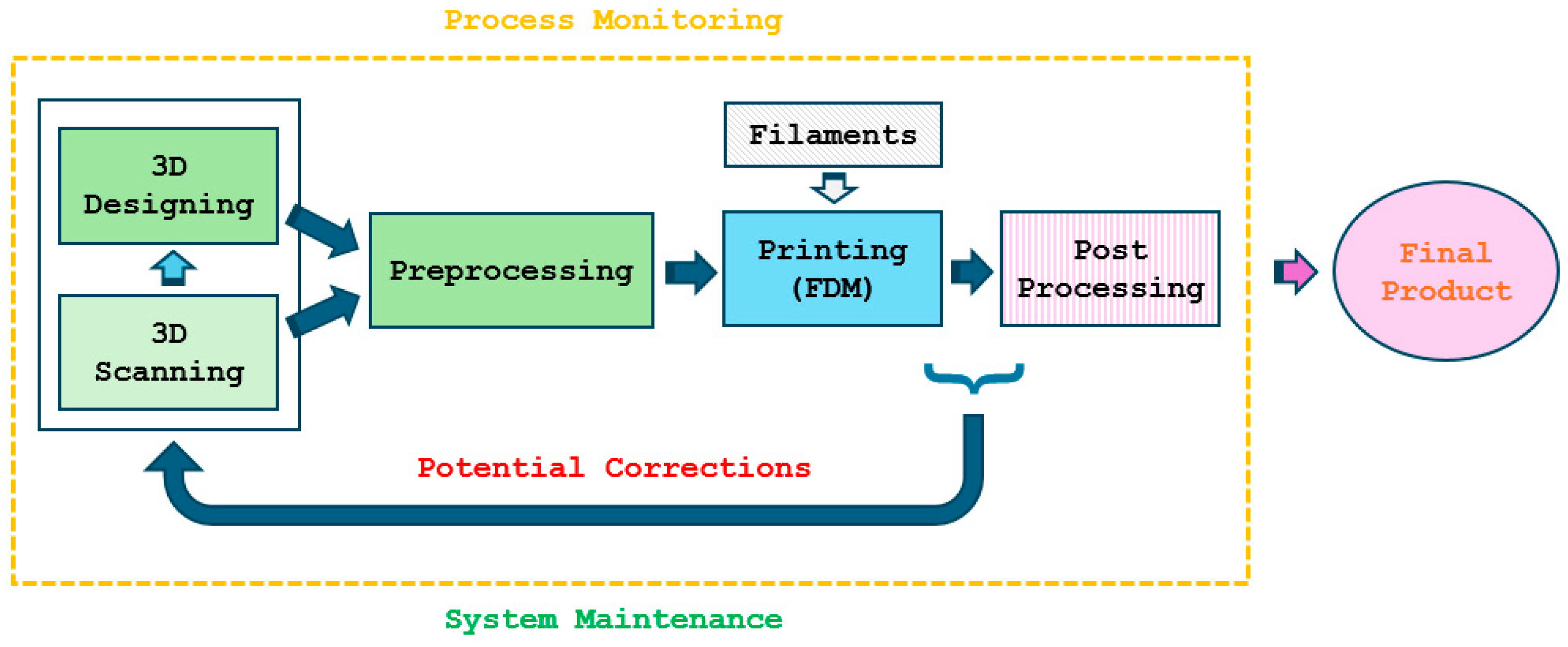
Consequently, in order to shed further light on the recent progress in 3D printing fabrication, we present the analytical steps of the widely used additive manufacturing process, as depicted in
Figure 1 and explained in the subsections that follow (i.e., in
Section 3.1,
Section 3.2,
Section 3.3,
Section 3.4,
Section 3.5,
Section 3.6,
Section 3.7 and
Section 3.8).
The popularity of the FDM method is mainly due to its simple machine design, low startup and operating costs, wide range of available materials, such as PLA and ABS, and a growing selection of composites. Additionally, it is user-friendly for quick prototyping and small production runs. These features meet the practical needs of agricultural engineering and on-demand fabrication [
71,
72,
73].
3.1. Designing
The design of a 3D object is the most important stage for producing an optimal result. Given that the designs must be of vector type and therefore in digital form, it is necessary to be produced following the CAD principles. The 3D modeling software involves a diverse array of applications tailored to varying user proficiencies and deployment environments. Selection of an appropriate tool involves consideration of user expertise, project complexity, platform compatibility, and cost. Personal computers and laptops are the most suitable for designing complex projects, while tablets, smartphones, and devices like the Raspberry Pi can execute smaller projects without complex geometries and computations. On the other hand, when a design needs to be accessible to a wide range of users across a variety of platforms, cloud computing can greatly facilitate the production process, since the design is displayed on any platform, while the calculations are performed in the cloud.
A vital role has the user expertise level in designing in 3D space. For beginners, TinkerCAD (version 1.4, Autodesk Inc., San Francisco, CA, USA) [
74] and SketchUp (version 8.1.1, Trimble Inc., Westminster, CO, USA) [
75] are ideal. For intermediate level, Fusion 360 (version 2701.1.15, Autodesk Inc., San Francisco, CA, USA) [
76] offers parametric CAD, CAM, and cloud collaboration, while Shapr3D (version 26.22.0.10470, Shapr3D Zrt., Budapest, Hungary) [
77] and FreeCAD (version 1.0.2, FreeCAD Project Association, Brussels, Belgium) [
78] address mobile and extensible workflows. Advanced users prefer Blender (version 5.0.1, Blender Foundation, Amsterdam, The Netherlands) [
79] and OpenSCAD (version 2021.01, open-source project) [
80]. Specialized solutions include web-based tools like Womp (Womp Inc., San Francisco, CA, USA) [
81] and SelfCAD (Crossbrowser 3D LLC, Brooklyn, NY, USA) [
82] and mobile apps such as Nomad Sculpt (version 2.8, Hexanomad, Paris, France) [
83]. Overall, TinkerCAD is the most accessible for rapid learning, whereas Fusion 360 combines professional features with cross-platform support for more demanding projects.
The experimentation included in this research started by utilizing the simpler TinkerCAD and then FreeCAD environments. Later, reaching better maturity levels, it shifted to the Shapr3D solution, due to its flexibility and to its potential for fast and detailed 3D object description, suitable for intermediate-level users, like the majority of the agricultural engineering students and faculty involved in the experimental 3D printing process described herein.
The design philosophy underlying object development is primarily determined by the use of the specific object to be printed, while also conforming to the practical rules/constraints characterizing the additive manufacturing process. Feasibility in additive manufacturing is related to the development of geometries that minimize or eliminate the need for assistive supporting structures, while ensuring optimal distribution of mechanical stresses throughout the main component structure. During the design phase, it is recommended to incorporate smooth fileted edges instead of sharp angular features across all surfaces.
3.2. Scanning
Three-dimensional scanning in agriculture plays a pivotal role in linking real-world objects with additively manufactured components, enabling precise, application-specific intervention and replication in both biological and mechanical systems. It enables fast, accurate capture of plants, roots, animals, and machine parts, providing high-resolution geometry that can be directly exploited in design and analysis workflows [
84].
Using techniques such as photogrammetry based on structure from motion, laser or structured light scanning, dense point clouds and surface meshes are generated that encode measurable diverse morphological traits, including plant height, canopy geometry, wear of components, and assembly tolerances. These datasets form an objective, reproducible basis for monitoring field conditions and equipment status, supporting robust quantitative analysis in agricultural research and practice. The resulting digital representation functions as a “digital twin” of the actual system, allowing scenario evaluation, optimization of spatial layouts (for example, greenhouse structures or irrigation lines), and design of mechanical improvements. This enhances decision-making in precision agriculture by coupling spatially explicit measurements with targeted design modifications [
85].
In additive manufacturing, 3D scanning data feeds directly into reverse engineering and CAD workflows, enabling the creation (after potential corrections/additions) of customized 3D-printable parts for agricultural machinery, irrigation infrastructure, or field experimental setups. This capability is particularly valuable for reconstructing or redesigning legacy or worn components where original drawings are unavailable, while on-site printing of small batches of spare parts shortens equipment downtime, reduces the need for extensive physical inventory, and lowers dependence on external suppliers whose material quality, price, and delivery time may be uncertain.
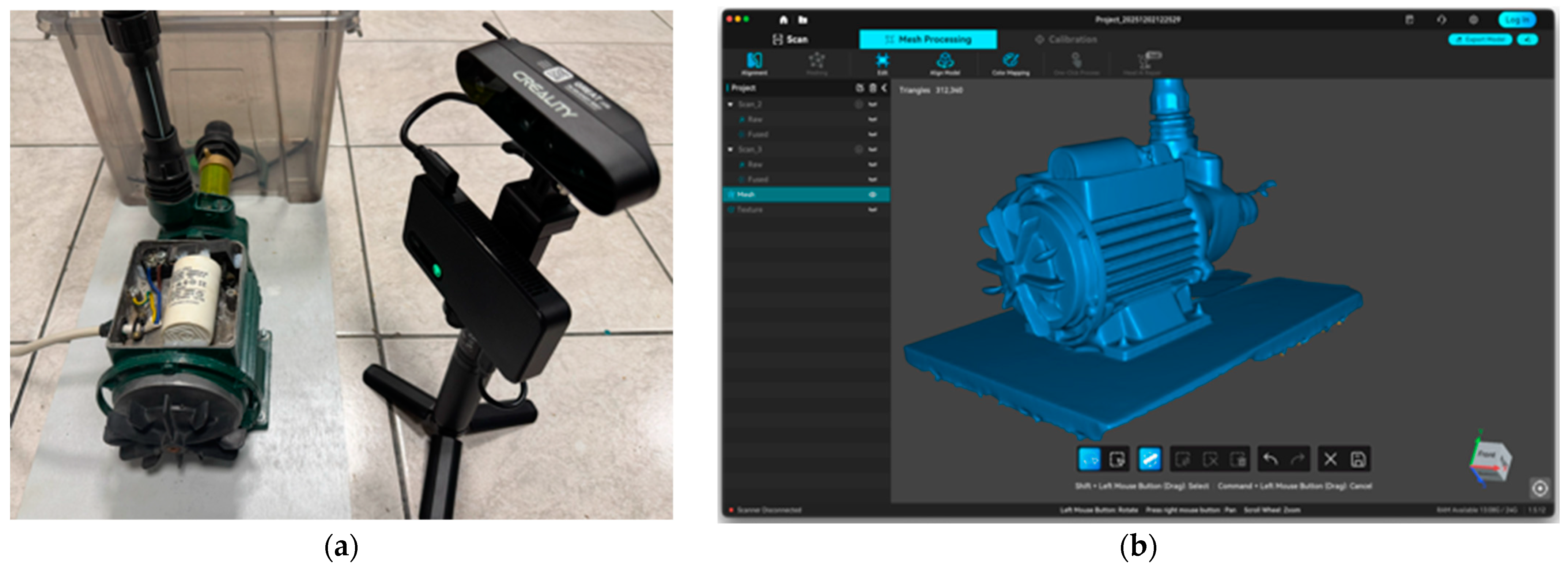
Figure 2a depicts the 3D scanning device involved in our experimentation, namely a CR-Scan Ferret Pro unit made by Creality manufacturer (Shenzhen Creality 3D Technology Co., Ltd., Shenzhen, China) [
85] with 0.1 mm accuracy, ready to capture a 3D representation of an electric water pump with its top and back cover missing and its ventilation fan partially broken.
Figure 2b illustrates the corresponding 3D image (mesh) of the pump.
3.3. Preprocessing (Slicing and Printer Preparation)
Slicing is a process that divides the 3D model into layers and determines printing paths with customizable settings such as infill density, layer height, print speed, nozzle, and bed temperature [
86]. The slicing software produces the printer-ready G-code file that translates into motor movements. Through slicing software, it is possible to preview the full path of every layer, understand the process, and identify potential errors before they occur [
87].
Slicing software such as UltiMaker Cura (version 5.11.0, UltiMaker B.V., Utrecht, The Netherlands) [
88], Slic3r (version 1.3.0, open-source project) [
89], and PrusaSlicer (version 2.9.4, Prusa Research, Prague, Czech Republic) [
90] is free, open-source, and works in Windows, MacOS, or Linux. Cura, when integrated with web-based management interfaces like OctoPrint (version 1.11.7, open-source project) [
91], creates a powerful toolchain for 3D printing and digital fabrication in a university research and educational environment, providing a comprehensive solution for remotely controlling and monitoring the printing processes. Programs offering slicing, like ideaMaker (version 5.3.2, Raise3D Technologies, Stafford, TX, USA) [
92], are closed-source and work very efficiently on printers of the same manufacturer. The integration of slicing software and print management systems is a common technique that facilitates the convergence of software engineering, hardware development, and material science, which is central to advancing the field of additive manufacturing. Further details on these integration arrangements followed during the research being presented are provided in
Section 3.7.
Preprocessing also includes printer preparation, i.e., the systematic inspection of mechanical components, assessment of existing filament inventory for material loading or unloading procedures, and the application of adhesive compounds to the build platform prior to the initiation of thermal preheating protocols. Optimal extrusion temperature determination requires validation through temperature tower methodology, involving the fabrication of test specimens to establish ideal thermal parameters. Furthermore, assessment of maximum overhang angles and bridge distances achievable without support structures must be characterized for each material through systematic testing protocols [
93]. These calibration procedures ensure optimal material flow characteristics and dimensional accuracy while minimizing defects such as stringing, poor layer adhesion, and surface irregularities. The removal of fabricated components must be executed manually by qualified personnel before the printer initiates subsequent print operations.
3.4. Devices and Printing Procedure
The additive manufacturing marketplace offers a vast array of options for identifying the optimal hardware solution. Printers may be categorized by printable materials, build-volume capacity, throughput speed, and, of course, cost. Moreover, devices exist to serve individual users, research groups, laboratory settings, or industrial production. Modular systems further expand functionality by permitting toolhead exchanges—enabling tasks such as routing or laser engraving on the same gantry architecture with only a single head swap. Accordingly, rigorous evaluation of application requirements is essential prior to printer acquisition.
The optimal selection of an FDM 3D printer should be informed by the intended applications from prototypes of agricultural implements and instrument components and the requisite precision and material performance [
94]. The printer must accommodate biocompatible polymers (e.g., hydrophobic or chemically resistant formulations) for simulating soil conditions, while also supporting low-cost biodegradable and agricultural filaments (PLA, PETG). High surface-finish quality and dimensional accuracy (layer thickness ≤ 0.10 mm, dimensional tolerances ≤ ±0.10 mm) are essential for metrological instruments and functional prototypes. A build volume of at least 200 × 200 × 200 mm minimizes outsourcing, and print speeds exceeding 50 mm/s balance throughput with fidelity for iterative prototyping. Compatibility with established slicers PrusaSlicer (Prusa Research, Prague, Czech Republic) or Cura (Ultimaker B.V., Utrecht, The Netherlands) and CAD platforms like Fusion 360 (Autodesk, San Francisco, CA, USA) and FreeCAD (FreeCAD Project Association, Belgium), as well as open-source firmware and APIs, ensures smooth integration into laboratory automation and data workflows. Low maintenance demands, accessible spare parts, and robust technical support maximize uptime, while a compact footprint, mobility, and enclosed build chamber with filtration safeguard both space-constrained environments and user safety during high-temperature or chemical-resistant material printing. Cost considerations must weigh initial investment against ongoing expenses for consumables, energy, and personnel time [
95]. Finally, dual-extrusion or multi-material configurations, together with future add-ons, such as automatic filament sensors and remote control, enhance experimental versatility. Educational resources, tutorials, and an active user community further accelerate student proficiency and troubleshooting efficacy. Collectively, these specifications endorse a high-precision, multipolymer-capable FDM printer—featuring ≥ 200 mm
3 build volume, closed enclosure, open-source software, and reliable support—as the ideal solution for advanced agricultural engineering research and prototyping.
Most FDM users often modify electromechanical subsystems. They primarily focus on the hot-end assembly to improve performance. The most common changes are nozzle diameter and material selection. Nozzle diameter and material selection constitute the most frequent modifications. A 0.20 mm nozzle facilitates extremely fine feature resolution—suitable for jewelry or miniature models—but carries increased risk of clogging and substantially longer print durations. The 0.40 mm nozzle typifies the industry standard, balancing print speed and detail fidelity across desktop FDM platforms. Larger nozzles (0.60–1.20 mm) markedly accelerate extrusion rates and enhance structural robustness, rendering them appropriate for large-scale or mechanically demanding parts. Nozzle substrates vary by wear resistance and thermal conductivity. Brass nozzles are cost-effective and offer excellent thermal transfer. They are ideal for standard PLA or ABS but degrade rapidly when processing abrasive or particulate-filled filaments. Stainless steel and hardened steel nozzles provide superior abrasion resistance, enabling reliable extrusion of carbon-fiber, metal-filled, or glow-in-the-dark composites, though they require elevated extrusion temperatures to compensate for lower thermal conductivity [
96,
97]. For extreme-wear environments and precision applications, ruby-tipped and tungsten-carbide nozzles provide exceptional dimensional accuracy and service life [
98].
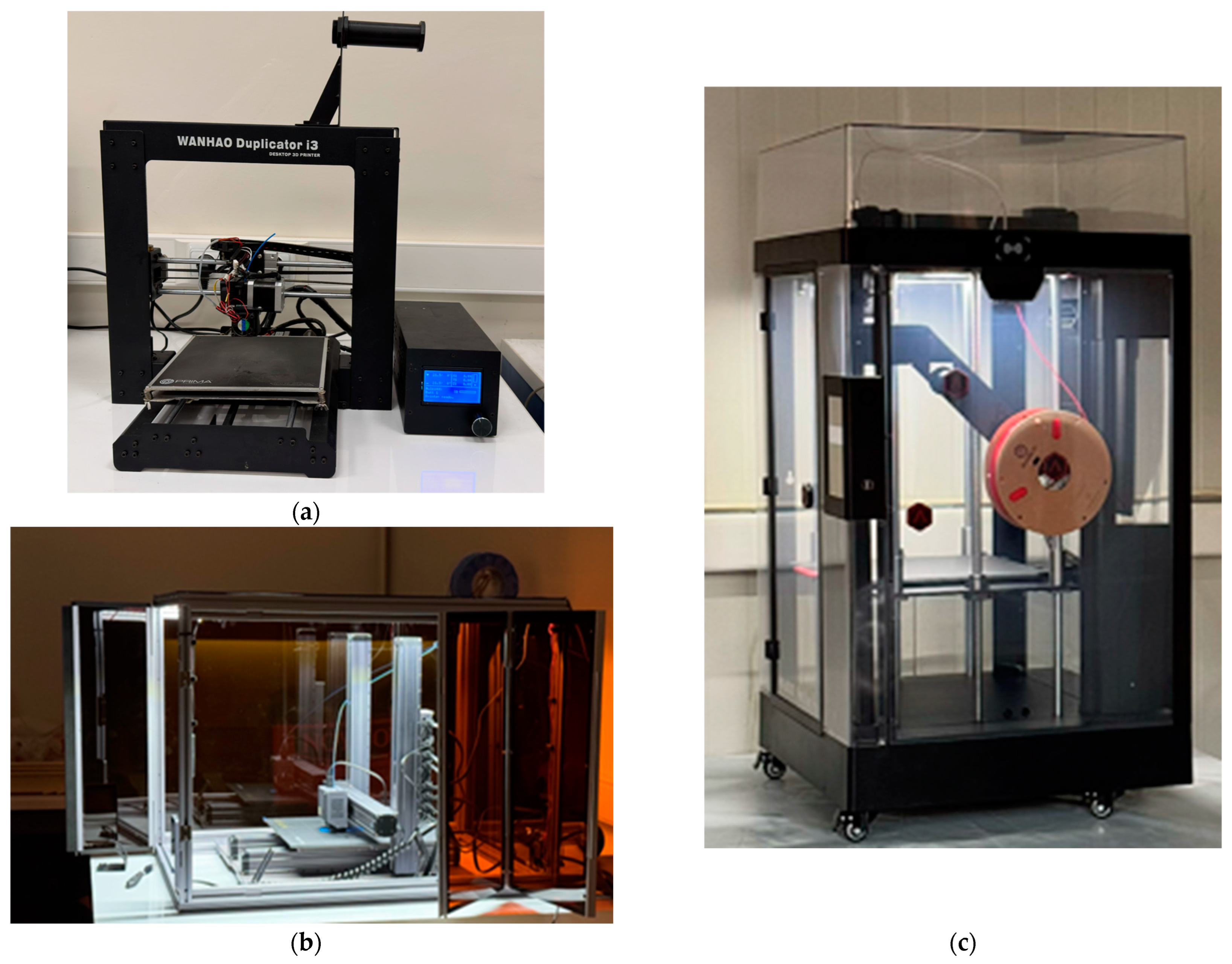
This research started utilizing the simple Wanhao Duplicator i3 (Wanhao, Jinhua, Zhejiang, China) [
99] (as shown in
Figure 3a), which is an entry-level, cost-effective FDM printer with a small heated bed (40 × 41 × 40 cm), a maximum build size of 20 × 20 × 18 cm, and a metal frame to increase machine stability. This model is compatible with a wide range of materials, and its printing temperature can reach up to 240 degrees. There are two basic, distinct parts to the printer—the print assembly and the PSU with an embedded control panel. The printer is a great solution for 3D printing beginners, while its print quality is comparable to that of high-end printers.
The Snapmaker 2.0 A350 (Snapmaker, Shenzhen, Guangdong, China) (as shown in
Figure 3b) was the main upgrade of our experimental 3D printing testbed, as it is a newer, faster, yet affordable, more accurate, and more versatile machine, integrating a quick-swap modular architecture that consolidates 3D printing, laser processing, and CNC (Computer Numerical Control) routing within a single platform [
100]. Referring to its printing toolhead, it includes a configurable hot end, i.e., a 0.20–1.20 mm nozzle, covering a very satisfactory 320 × 350 × 330 mm printing area. The unified design of Snapmaker 2.0 A350 streamlines maintenance, upgrades, and workflow integration in laboratory or makerspace environments, enabling seamless transitions among additive, subtractive, and engraving operations without multiple dedicated machines [
101,
102].
Apart from the Snapmaker 2.0 A350, we also utilized, for even faster and larger dimension part production, the Raise 3D Pro 3 Plus (Raise3D Technologies, Stafford, TX, USA), mainly with PLA and ABS materials, as depicted in
Figure 3c. It offers a build area (i.e., of 300 × 300 × 605 mm) for big prints and/or batch production. It is also capable of printing with two materials/colors simultaneously, with fast hot end swapping, and has professional 24/7 working specifications [
103]. Its price, however, is 3–4 times that of the Snapmaker 2.0 A350, a factor that should be taken into consideration when selecting equipment for a laboratory setting.
3.5. Filaments
The functional demands placed on a printed part may vary in terms of mechanical load resistance, environmental stability under diverse climatic conditions, and chemical exposure resilience. Accordingly, the selection of the optimal printing material must be predicated upon a thorough characterization of these performance criteria [
104]. In this regard, a variety of materials can be used to produce 3D objects, including polymers and polymer blends that enable design flexibility and tunable performance for tailored mechanical strength or thermal stability [
105].
Fiber or nanomaterial-reinforced thermoplastics combine high stiffness with low density, making them ideal for durable end-use components [
106]. Cementitious composites broaden 3D printing’s applicability to civil engineering structures by enabling direct fabrication of complex geometries with optimized compressive performance materials [
107]. Specialized fields exploit printable substrates incorporating conductive or semiconductive formulations for microelectronic and microfluidic devices, replicating functions traditionally reserved for clean-room processes [
108]. Food-grade materials unlock applications in food biotechnology and personalized nutrition by permitting on-demand production of customized edible constructs [
28].
Despite the growing availability of advanced formulations, PLA remains the predominant choice for rapid prototyping and routine laboratory printing. PLA’s biocompatibility, recyclability, and absence of toxic emissions during extrusion render it safe for educational and research environments [
29]. Although the fracture resistance and overall longevity of PLA components are generally adequate for many applications, they are significantly reduced when manufacturing defects are present or when the parts are exposed to long-term thermal aging. Such conditions accelerate material degradation, leading to increased brittleness and a higher likelihood of mechanical failure over time [
30]. It delivers tolerable mechanical strength and high surface quality in printed parts, while its widespread filament availability and compatibility with most desktop 3D printers make it an economical and practical general-purpose solution.
3.6. Post-Processing
After part removal, a comprehensive quality assessment of the manufactured component is performed to identify potential defects or anomalies that may have occurred during the fabrication process. The manufacturing efficiency of specific components depends not exclusively upon the initial design phase and printing process but mostly upon the post-processing requirements. Numerous components, upon completion of the printing process, are immediately ready for operational deployment without requiring supplementary processing procedures for functional implementation. These components are produced in a ready-to-use state, whereas alternative manufacturing methodologies necessitate various post-production procedures before product utilization becomes possible. In conventional manufacturing processes, products frequently require extended waiting periods for cooling or drying processes, controlled environmental conditions, immersion in chemical solutions, ion loading procedures, cleaning protocols, or support structure removal [
109]. The advantages of additive manufacturing become particularly evident when considering the immediate functional availability of printed components. For instance, ventilation systems can be fabricated as integrated single-print assemblies, eliminating the need for support structures and multiple separate components that would otherwise require mechanical fasteners. Alternative 3D components produced through additive manufacturing may incorporate support structures at various locations throughout the object geometry following the printing process. The removal characteristics of these support materials demonstrate significant variation depending on the specific material composition employed. Certain materials exhibit facile detachment properties, while others present greater challenges in separation from the primary object structure. Contemporary support materials are categorized into two primary classifications: soluble support systems that dissolve in mild chemical solutions, and breakaway support structures designed for manual removal.
The post-processing requirements vary based on the specific additive manufacturing material utilized. Water-soluble support materials such as PVA (Polyvinyl Alcohol) dissolve readily in aqueous solutions [
110], facilitating automated removal processes. Equally, breakaway support materials, including various thermoplastics, require mechanical separation techniques, which may result in surface irregularities requiring additional finishing procedures. The selection of appropriate support materials directly influences the overall manufacturing efficiency and final component quality.
3.7. Monitoring Software
Equally vital to the hardware and material selection is the accompanying control software, which serves as a critical determinant of overall system performance. Yet perhaps the most influential factor is the user community: an active, engaged network that sustains software development, facilitates troubleshooting, and accelerates fault diagnosis. Leveraging specialized online forums alongside artificial intelligence-driven support tools can markedly reduce the time and effort required to resolve operational challenges. This combination of software and hardware enables a more efficient workflow, allowing multiple users to access the 3D printer remotely and manage print queues effectively. It also provides a platform for students and enthusiasts to learn about the intricacies of 3D printing technology, including the relationship between software settings, printer hardware, and the final printed object’s quality.
Monitoring tools enable the dynamic adjustment of process parameters, including extrusion head (nozzle), build plate (bed) temperature, and chamber temperatures, as well as activation or deactivation of ventilation and illumination. Some configurations also include camera systems for 3D printing process monitoring or even for smart detection of possible failures assisted by artificial intelligence. Integration with cloud services further extends remote access beyond the confines of the local network, facilitating off-site supervision and real-time intervention.
A widely used yet efficient solution is the utilization of specialized open-source platforms for remote connectivity and monitoring of additive manufacturing systems over the internet. OctoPrint, one such solution, may be installed on a laptop or even on a small single-board computer—commonly a Raspberry Pi 4—to provide comprehensive remote management of a designated printer. This system proves particularly advantageous for large-format builds by orchestrating each stage of the fabrication process (initiation timestamp, remaining build time estimation, and total elapsed duration) and by diagnosing common printing errors [
91].
While working with the basic Wanhao Duplicator i3 machine, the OctoPrint software, installed on a laptop and communicating via USB with the printer, was the preferred monitoring option. According to this orchestration, printing started by loading the G-code file from an SD card that had been previously sliced with Cura or a similar application, or transferred via the USB to the Wanhao machine.
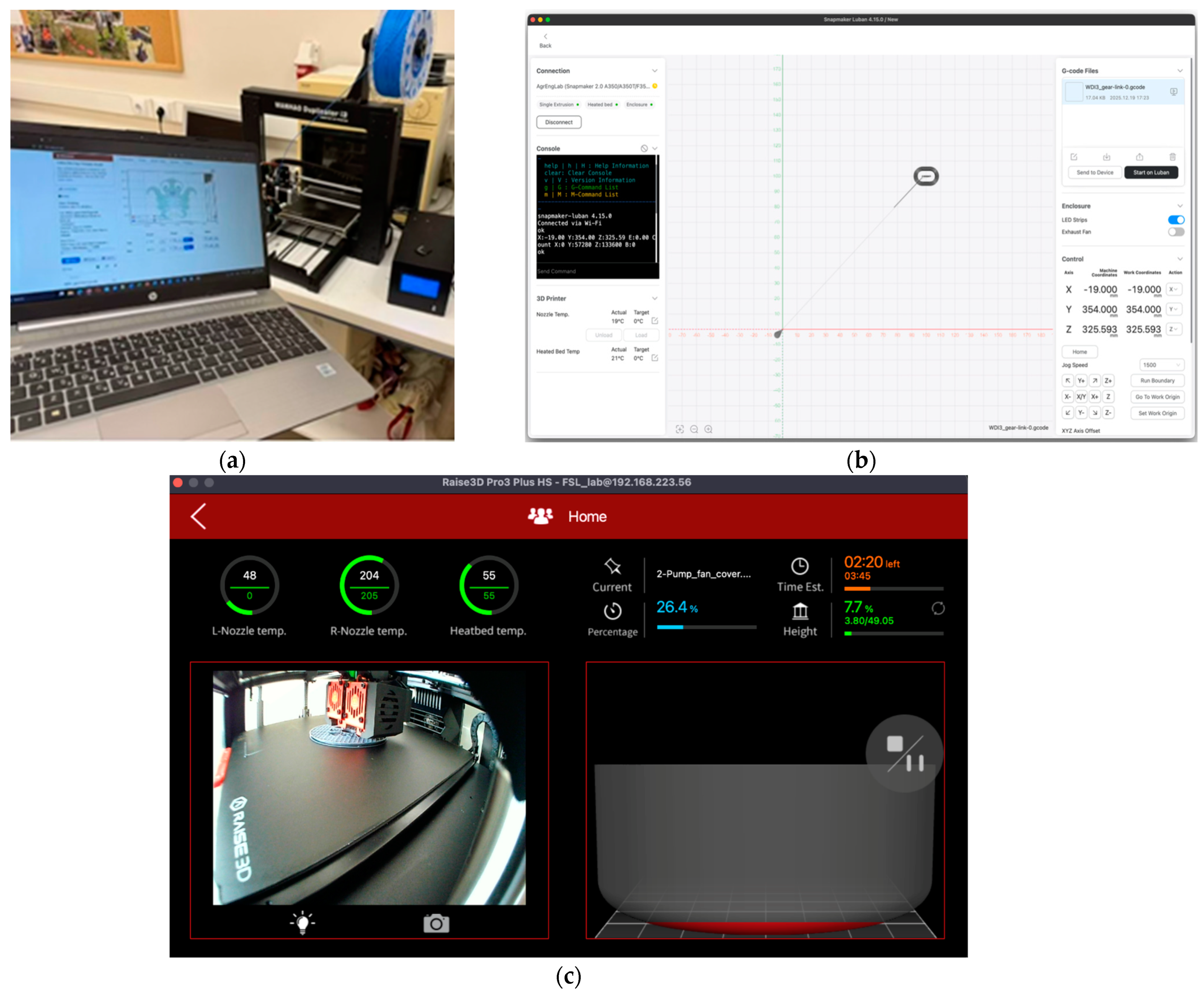
Figure 4a illustrates OctoPrint installed on a Windows laptop, monitoring and controlling the Wanhao i3 printer.
As mentioned in
Section 3.3, quite often slicing and monitoring capabilities are offered within the same application, allowing users to control the printer via a USB cable, via Wi-Fi if the printer and the controlling device are on the same network, or even remotely via the cloud.
The Snapmaker 2.0 A350 device, being utilized, for example, features a slicer and monitoring app embedded in the Luban software (version 4.15.0, Snapmaker, Shenzhen, China). In this app, users can slice a model and select a toolhead for the machine (3D Printing, Laser, or CNC module). More specifically, within the Workspace, users can make light edits to a model, select appropriate settings for optimal printing, and send macro commands to the printer.
Figure 4b depicts a characteristic instance of monitoring the Snapmaker 2.0 A350 through the dedicated Luban software. Similarly, the Raise3D cloud system also allows the user to modify parts of the design, generate auto-support structures, generate G-code, and send the print job for printing via USB or Wi-Fi, all within the purpose-created ideaMaker application. With a vast selection of engineering-grade and functional materials, a user can modify or download slicing profiles from the free in-app library.
Figure 4c shows the ideaMaker environment monitoring the Raise3D machine.
3.8. Maintenance
Printer maintenance encompasses primarily the cleaning of extrusion heads, lubrication of linear motion axes with appropriate grease compounds, and calibration procedures necessary to ensure optimal printer performance to prevent failures and cyberattacks [
111,
112]. Lubrication procedures are recommended at biweekly intervals, while calibration protocols should be implemented whenever nozzle assemblies are replaced. Calibration procedures are performed on the nozzle assembly to establish optimal positioning height relative to the build platform. Additionally, filament-specific calibration must be executed when material substitution occurs. Certainly, the printer should be maintained in a suitable environment, with minimal exposure to dust, humidity, and direct sunlight. Humidity is also the filament’s most formidable adversary. More sophisticated printers are capable of resuming their operation following a voltage failure.
For safety reasons, the printers have filters that require cleaning. The general rule is that the frequency of replacement depends on the type of filter (HEPA or Activated Carbon), the specific materials being printed, and overall printer usage. For moderate use, manufacturers often recommend changing HEPA or carbon filters every 6–12 months or after 500–900 h of operation, with some printers featuring built-in hour counters or automated alerts. Intensive use may require more frequent changes, every 3–6 months. Some advanced printers include sensors or software that signal when a filter change is needed based on real-time usage [
113,
114,
115]. Having outlined the complete FFF methodology, from design to maintenance, the following section applies it to practical experimental prototypes for agricultural automation.
4. Experimental Verification Paradigm
This section is dedicated to the design and implementation details resulting in the creation of selected 3D-printed component exemplification. The most important criteria being followed to decide the experimental parts to be manufactured included the following: relativity with agricultural operations, ease of designing and printing, low to medium force specifications, small to medium object size, scarcity of conventional alternatives, medium tolerance to size and motion imperfections and, last but not least, utilization of comparatively low-cost procedures.
In any case, initial design models were used to print prototypes using PLA+ for faster and cheaper results. Afterwards, the design was potentially reviewed according to the effects of the stress upon these prototypes (i.e., due to the mechanical forces or to the environmental conditions) or according to the presence of manufacturing defects in size and/or texture of the parts. Finally, the parts were reprinted with filament material selection tailored to their intended application. This iterative approach ensured that each final component met the specific mechanical and functional requirements for reliable use in its designated context [
116]. The 3D-printed parts can be categorized as follows: (i) parts replacing pre-existing conventional components, (ii) parts utilized in combination with conventional ones to form new equipment, and (iii) parts forming new systems using solely 3D printing methods.
4.1. Pre-Existing Part Replacement
In agriculture, certain components of an integrated system are often damaged due to heavy use in the field. A simple part may fail either due to improper handling or because of environmental conditions, rendering a device non-functional. In many cases, the damaged component is no longer manufactured, or its repair through the authorized distributor is prohibitively expensive. Frequently, especially in older machinery, the original manufacturer is no longer in operation, and as a result, replacement parts are not commercially available. The use of a 3D printer can offer a solution to such failures. A 3D printer can be used to reproduce a broken part with, sometimes, even better mechanical properties than the original. Typical examples of such applications were designed and implemented during this research work.
4.1.1. Pump Cover
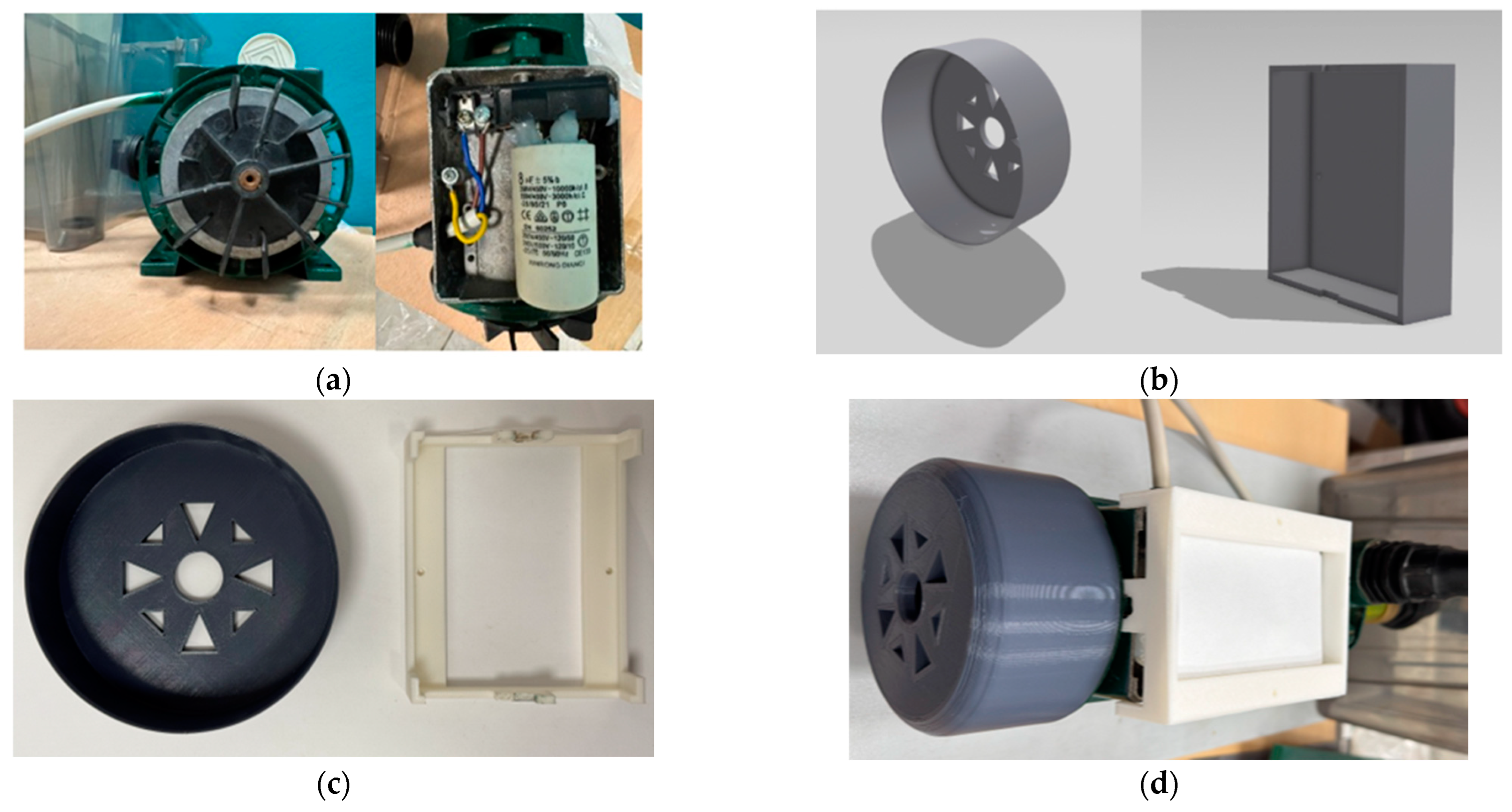
One example of 3D printer use is the fabrication of a cover for the electrical components and the cooling fan of a centrifugal water pump. The purpose is to protect humans by enclosing the hazardous areas of the pump, hosting the fan, and the electrical connections of the system. The cover was designed using the Shapr3D application on an iPad and printed with two different printers. The Snapmaker A350 is using the Snapmaker Luban slicing software and the Raise3D Pro 3 Plus printer, using ideaMaker for slicing. Both printers created the desired component without any noticeable difference. The filament utilized was PLA, as it is a non-conductive material and it will not be exposed to extreme stress [
117]. The whole process is depicted in
Figure 5a–d.
4.1.2. RTK GNSS Antenna Base
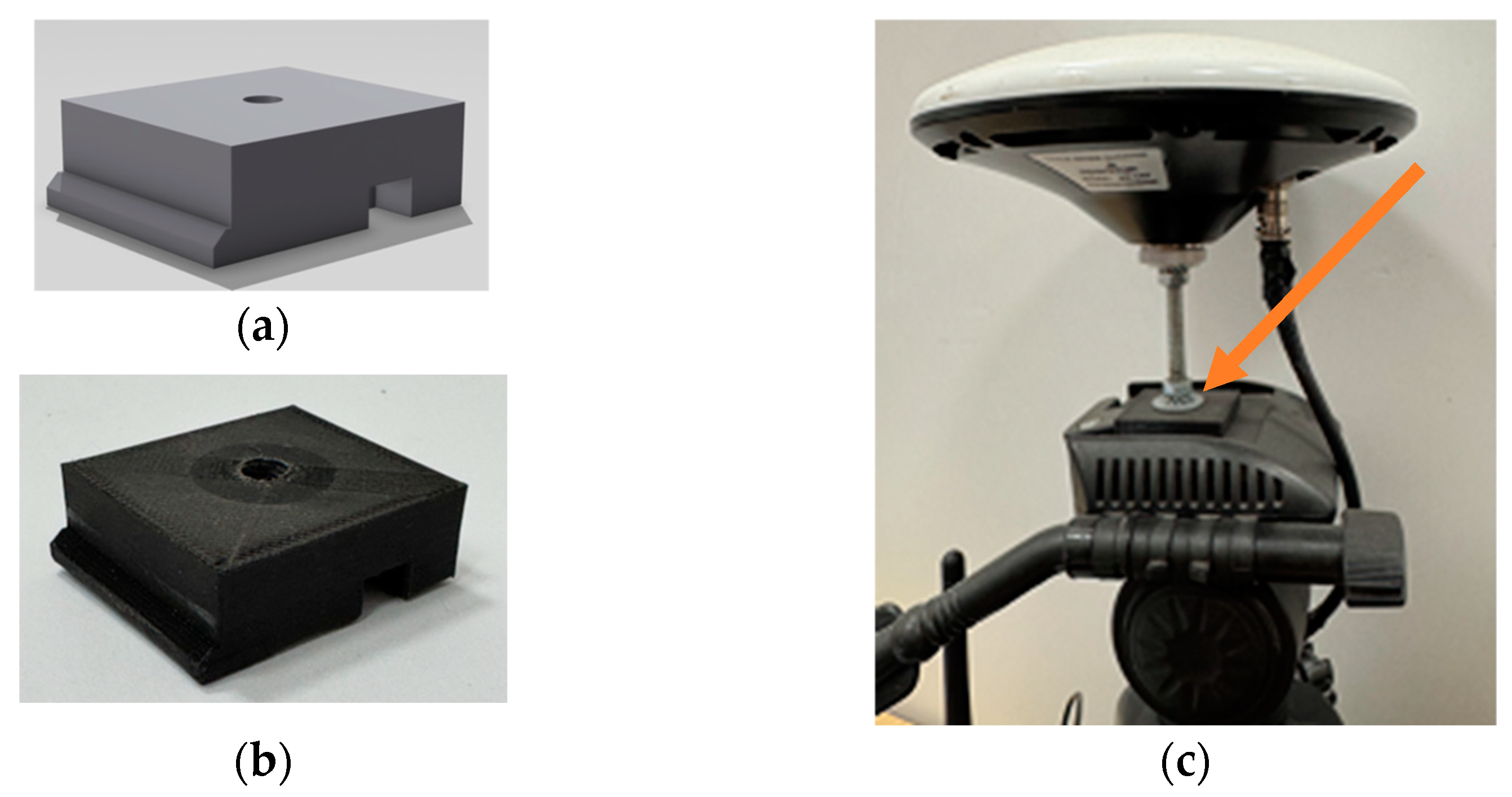
A practical application of additive manufacturing in laboratory and field research is the fabrication of custom support mounts. In this scenario, a 3D printer was utilized to produce a specialized base mount for attaching an RTK (Real-Time Kinematic) base station antenna onto a standard photography tripod. The design requirements stipulated that the mount must securely wedge into the tripod’s apex and feature a precision-drilled aperture (M6 diameter) to accommodate the antenna’s threaded attachment. The mount’s geometry incorporated angled surfaces and recesses engineered to interface with the tripod’s clamping mechanism, ensuring a stable and immobile fit during operation. The whole process is explained in
Figure 6a–c.
This tailored approach allowed for rapid prototyping and iterative refinement, enabling the development of an adjustable holding mechanism for the RTK GNSS receiver antenna. The resulting solution provided robust mechanical fixation, facilitating precise geospatial data acquisition in experimental agricultural engineering contexts.
4.2. Combining Pre-Existing with 3D-Printed Parts to Innovate
Despite the fact that the size of the 3D objects is limited by the physical dimensions of the printer device, these components can be fit to conventional structural elements, such as metallic or wooden rods, resulting in a much larger functioning whole. This hybrid technique requires good knowledge of the diverse material properties and of the environmental factors characterizing the end application but may provide very efficient and cost-effective solutions. The following three subsections report on such examples.
4.2.1. Greenhouse Joints
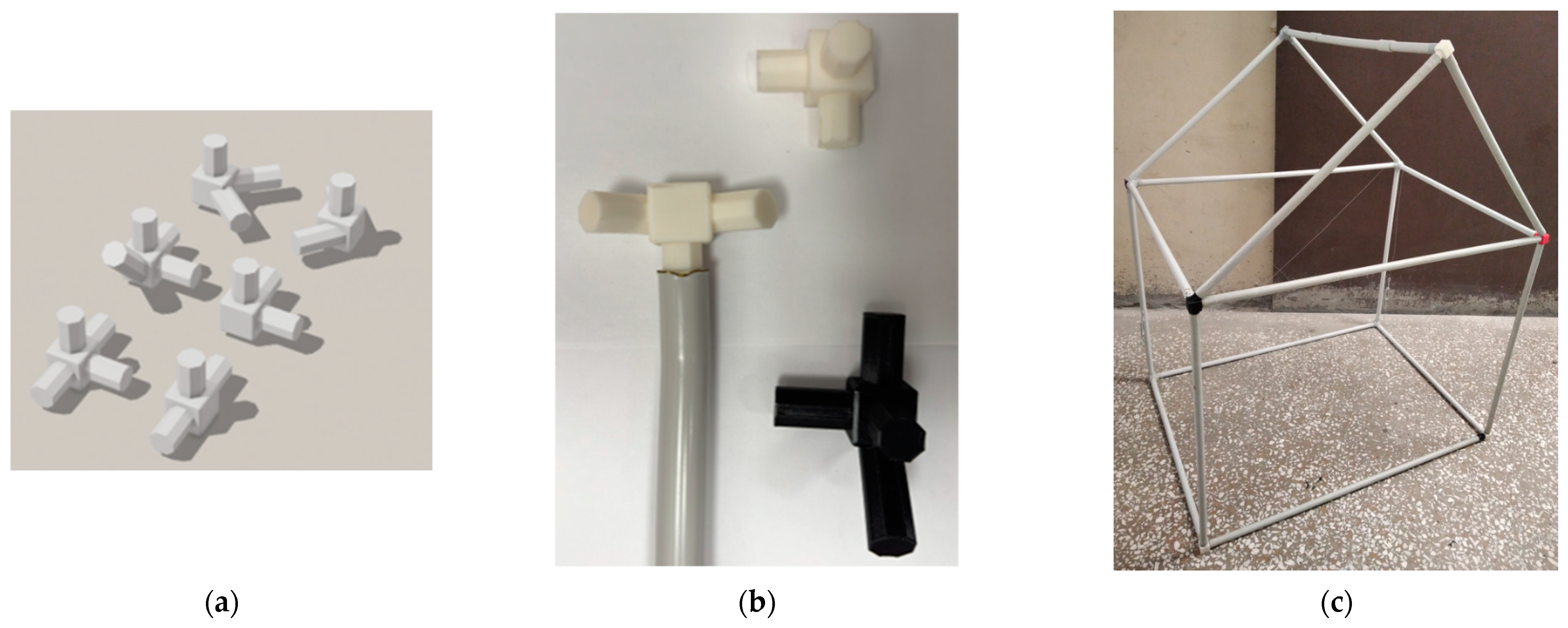
Leveraging existing laboratory infrastructure, a scaled greenhouse framework was assembled from PVC electrical conduit rods joined by bespoke, 3D-printed connector modules. Connector geometries—including corner coupling profiles and shaft diameters—were parametrically designed in Shapr3D to optimize interfacial friction and mechanical retention. Material trials comparing PLA, ABS, PETG, and fiber-reinforced blends evaluated trade-offs in printability, density, and tensile performance [
117,
118]. Finally, PLA+ was selected for its fabrication efficiency and adequate strength characteristics. To further enhance retention within cylindrical conduit bores, polygonal bosses were integrated into the connector’s cylindrical sockets, increasing surface contact and minimizing pull-out risk. The rigidity of the final structure was further increased using steel wires. This prototype was realized as part of an undergraduate thesis project. The student combined programming expertise with university laboratory resources to implement a motor-controlled motion sequence for precision ventilation inside small greenhouses. The whole 3D-printable joint manufacturing process is shown in
Figure 7a–c.
4.2.2. Smooth Edge Claw
A student experiment was designed to measure the force exerted by a robotic arm’s gripper on a fruit, an essential parameter for optimizing fruit harvesting conditions [
45,
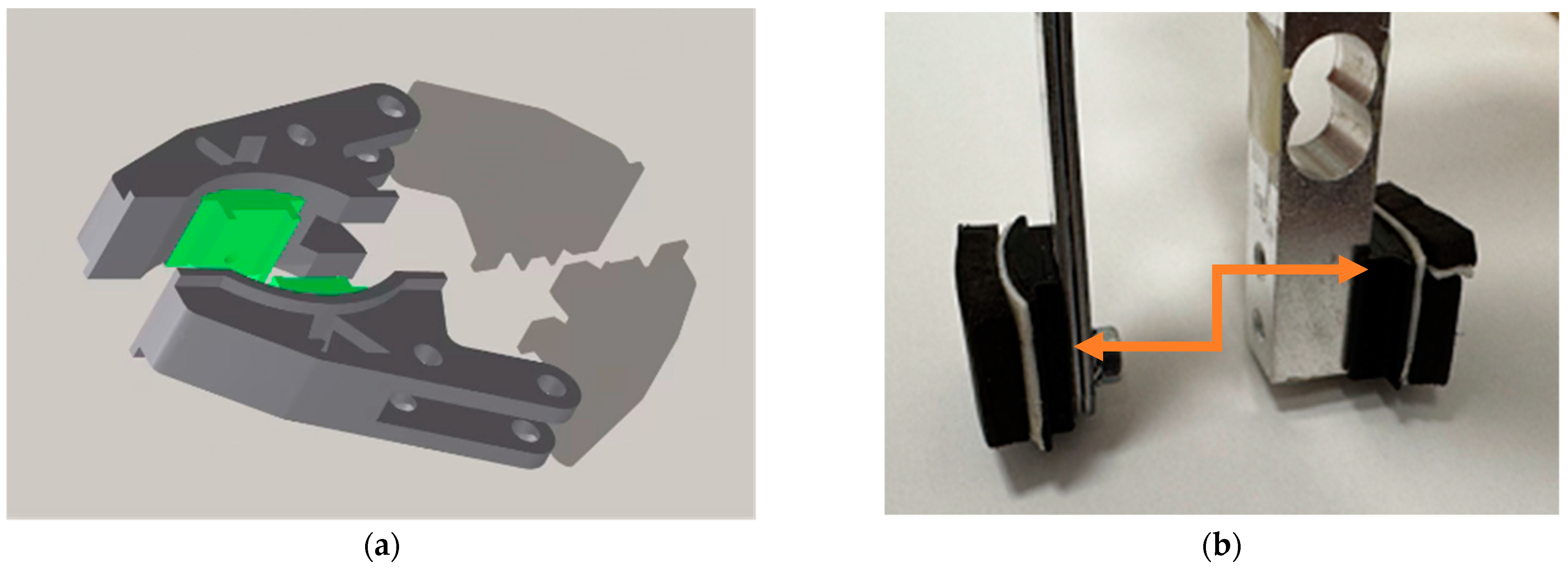
61]. The experimental apparatus consisted of two main components: one sourced directly from an open-access repository (Thingiverse), and a set of custom-designed adapters produced in Shapr3D to improve the contact of the gripper with a force sensor (
Figure 8a,b). The rotational motion of the motor driving the gripper frequently resulted in structural failure at the connection point under extreme compressive loads. Additionally, the force sensor utilized in this setup was square-shaped, and its sharp edges caused issues with measurement consistency; the gripper would slip over the sensor surface as it closed, leading to inaccurate readings. To address these challenges, a bespoke 3D-printed connector was introduced between the gripper and the force sensor. One end of the connector provided a smooth fit against the internal profile of the gripper, while the other was rigidly secured to the sensor with a screw. This solution stabilized the interface, minimized slip, and improved measurement reliability. For fabrication, the chosen material was PLA+ with 30% infill and two outer layers, selected for its ease of printing and sufficient mechanical strength given the moderate force requirements of the experiment.
4.2.3. Automatic Adjustable Valves for Liquids
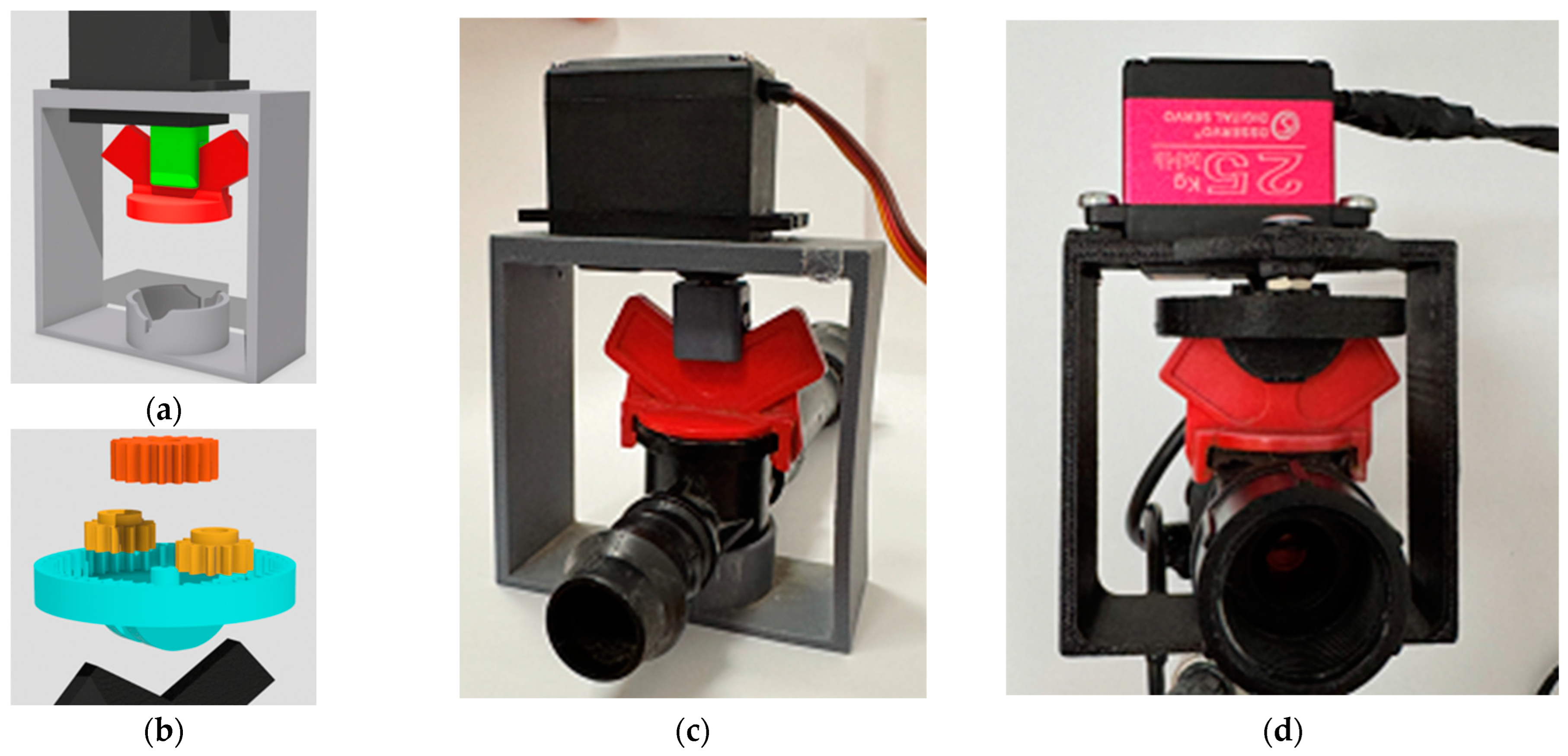
The 3D printer was utilized to fabricate a custom mounting bracket designed to secure a servomotor onto a plastic irrigation valve, enabling automated actuation for experimental smart irrigation applications. The instructional scenario involved retrofitting a low-cost, manually operated plastic valve with a servo-driven remote-control system. The actuating servo is remotely controlled via an ESP8266 microcontroller, enclosed within a weatherproof electrical junction box that also houses a battery for autonomous operation.
Mechanical motion is transmitted through a 3D-printed claw mechanism, which couples the servo’s gear output to the valve handle, allowing rotational movement from the servo to be efficiently transferred to the valve’s actuation axis (
Figure 9a–d). The mounting assembly was engineered to tightly maintain the servo in precise alignment with both the valve body and the whole 3D-printed claw, ensuring reliable transmission of torque. Under this configuration, a 90-degree clockwise motor rotation fully opens the valve, while a 90-degree counterclockwise rotation closes it.
Initially, the prototype components were printed in PLA, selected for its ease and speed of printing, as well as the absence of toxic emissions during extrusion [
62], making it suitable for educational and laboratory settings. According to San Andreas et al. [
63], PLA exhibits the most favorable behavior in response to ultraviolet radiation. Consequently, extended exposure of the PLA components to direct sunlight led to thermal deformation due to the material’s low glass transition temperature (
Figure 9c). To address this, the identical CAD file was reprinted using acrylonitrile butadiene styrene (ABS) under identical slicing profiles and printer settings (
Figure 9d). Although ABS presents a less environmentally friendly option [
119], it provides enhanced thermal resistance and mechanical robustness, ensuring operational reliability under outdoor environmental conditions [
120].
The aforementioned valve mechanism was further upgraded by utilizing 3D-printed gears to increase (i.e., to double) the torque produced by its servomotor. The urgent employment of gears in agricultural applications has engendered the requirement for bespoke production of components in precise dimensions and geometries, with rapid turnaround times and in-purpose printing arrangements [
121]. Within university-based agricultural laboratories, the integration of gears into experimental assemblies for rotational-mechanism prototypes such as robotic arms, grippers, clamps, lead screws, and speed reducers coupled to servomotors demands not only the designer’s mechanical acumen but also the immediate fabrication of the part to meet stringent research timelines. For the specific valve enhancement, it was necessary to fabricate a sun (pinion) gear attached to the servo, two planetary gears, and an internal ring gear with one extra stand in the middle to hold the sun gear in place. The two planetary gears were attached to a metallic screw over the top of the main body’s structure (
Figure 9b,d).
4.3. New Part Creation via 3D Printing
Via 3D printing, parts forming new systems can be realized, using solely 3D printing methods. Exemplification herein varies from very simple sensor enclosures to complex robotic grippers and arms.
4.3.1. Humidity/Temperature Sensor Enclosure
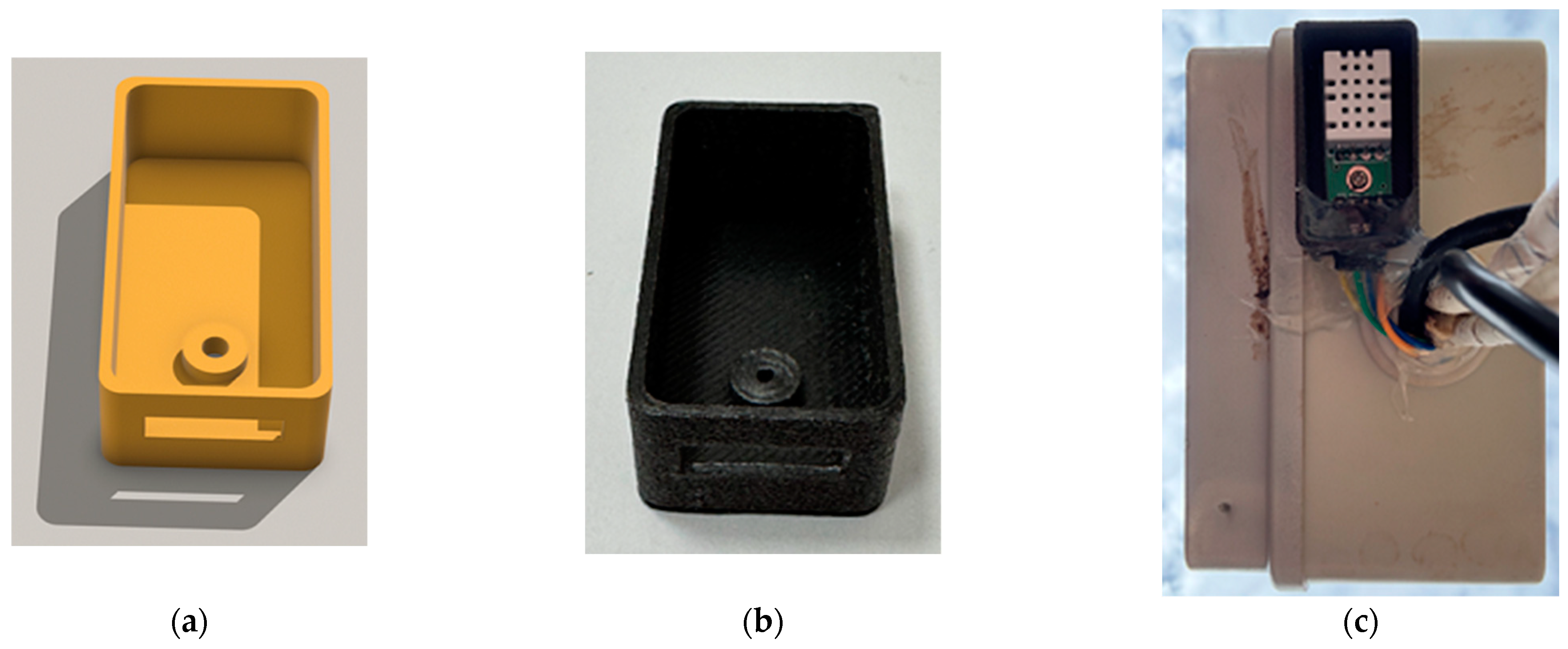
An enclosure was fabricated to host a Sensirion SHTC3 digital humidity and temperature sensor, protecting it from extreme weather conditions. The printed cover was fixed to an external tower for meteorological measurements. The components were printed using ABS material due to the exceptionally high UV index prevalent in the vicinity. The object had to be redesigned and reprinted to best fit the sensor dimensions, along with its wiring. The whole process is explained in
Figure 10a–c.
4.3.2. Passive Ventilation Holes
The issue of regulating airflow [
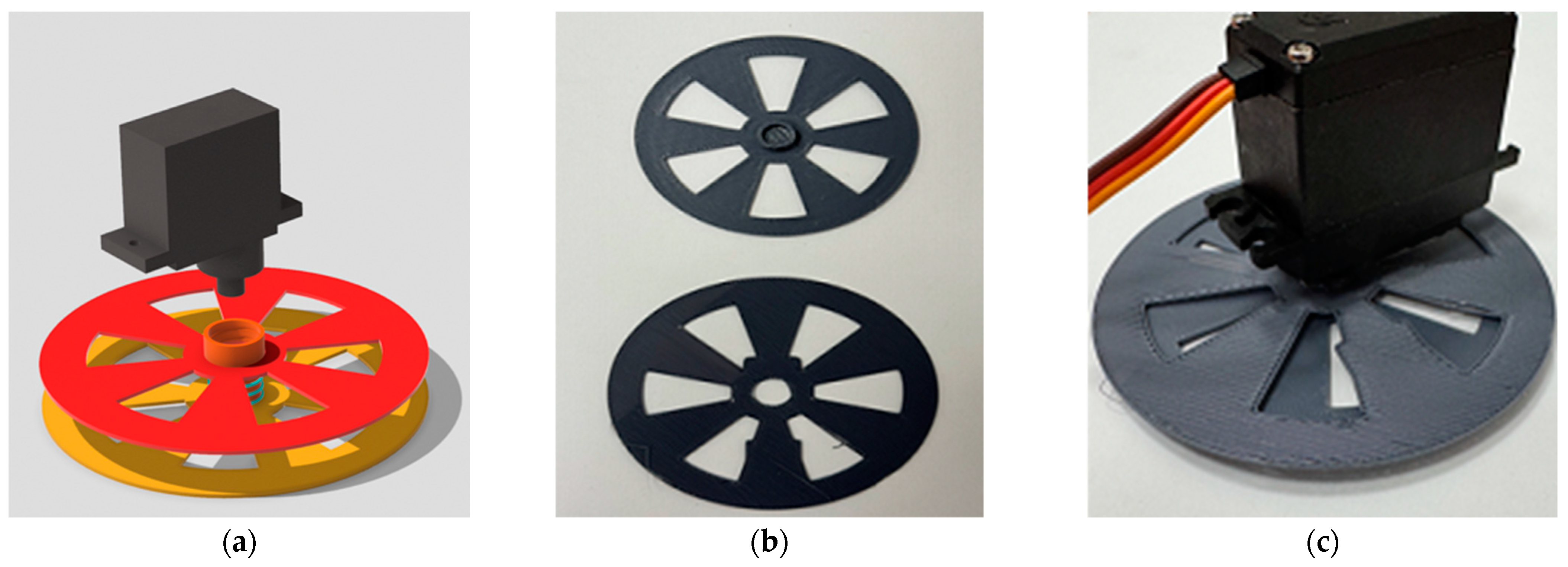
122] in specially designed enclosures, for greenhouse or livestock farm products, can be addressed using a louver system actuated by a servomotor. The component set was fabricated from PLA+ in three discrete parts. First, an external base was printed to cover and protect the mechanism outside the plastic container. Internally, the green segment, featuring notches, is rigidly fixed to the servo. The servo itself is mounted onto the yellow component, which also contains notches—slightly smaller in size—allowing for an overlapping effect that ensures proper closure as the green segment rotates open. Mechanically, the servo is coupled to half of the louver assembly. As the servo gear rotates, the remaining half of the louver is actuated to open or close in tandem. The whole process is explained in
Figure 11a–c.
An initial attempt was made to print the system as a single in-place assembly; however, this proved unfeasible due to excessive bridging distances, which caused the filament to fuse with the underlying layers. Additionally, the gray part encountered print quality issues, specifically with the integrity of its curved protective barriers. This problem was resolved by increasing the thickness of the protective barriers and raising the Z-axis offset of the printer, as filament dragging and intermittent extrusion interruptions would otherwise result in residual filament sticking to the nozzle during travel moves.
4.3.3. Fruit Gripper
A primary challenge faced by the laboratory was the development of a robotic arm constructed entirely via additive manufacturing. The end-effector, specifically the gripper mounted at the apex of the arm, originated from an open-access design sourced from Thingiverse, which was modified comprehensively to align with the needs of the agricultural laboratory (
Figure 12a). The entire assembly is modular by design, enabling secure, friction-fit connections between the gripper and the arm. The servomotor is similarly encapsulated within the gripper housing, utilizing a press-fit mechanism. When inserted, the servo’s gear couples directly with the integrated actuation system for both gripping jaws, unifying motion into a single structural assembly. The mechanical gear transmission ensures that force from the servo is immediately transferred to the gripper, enabling synchronized operation.
Structurally, the assembly is stratified into three principal layers. The top layer houses the servo enclosure and features a protruding mount for integrating the gripper with the robotic arm. The middle layer contains connectors joining the dual gripper jaws, actuating left and right movements. The bottom layer serves as the baseline support for the middle layer’s connectors and facilitates rotational mechanisms. Mechanical fastening, achieved with metal or plastic screws, further reinforces the stability and integrity of the modular system, ensuring robust operation during experimental procedures. This modular approach facilitates iterative improvements, maintenance, and adaptation for a variety of research scenarios in the laboratory context. After experiencing several breaks, blue parts were printed thicker to withstand the forces during clamping (
Figure 12b).
4.4. Summarizing Technical Performance and Cost Characteristics
In order to make the paradigm being presented more comprehensive and to assist other groups of researchers, educators, technicians and/or farmers to be inspired by and to replicate or upgrade the parts being presented, additional information is provided herein. More specifically, the technical parameters defining the 3D printing process characteristics are meticulously explained and then the corresponding values per part are given. Furthermore, the corresponding overall costs in time, material quantity, energy, money and misprinted trials are reported.
In this regard, the nozzle diameter refers to the size of the opening at the tip of a 3D printer’s extruder. It is measured in millimeters and affects the resolution, speed, and strength of printed objects [
123]. The layer height is the thickness of each layer that the printer deposits during printing. It significantly affects print speed, quality, and detail. Thinner layers provide higher resolution and smoother surfaces, while thicker layers reduce print time but may result in lower detail [
124]. The infill density refers to the amount of material used inside a printed object, expressed as a percentage from 0% to 100% (hollow to solid). It affects the strength, weight, and material selection of the final product, enabling customization based on specific application needs [
125]. The infill patterns are the internal structures that provide support and strength while reducing material usage in printed objects. Common types include grid, cubic, rectangular and gyroid, each offering different benefits depending on the intended use of the print [
126,
127]. The nozzle temperature parameter is also very important. High nozzle temperature keeps the filament melted and facilitates passing the extruded material through the nozzle. For PLA, the typical nozzle temperature ranges from 190 °C to 220 °C, depending on the specific filament and printer settings, while ABS typically ranges from 210 °C to 250 °C [
128]. The bed temperature is crucial for ensuring proper adhesion of the first layer, minimizing warping, and achieving consistent print quality. Recommended bed temperatures vary by material. PLA typically requires 50–60 °C for optimal results, while ABS requires 70–110 °C [
129]. An enclosure is required when printing ABS and other toxic materials, while PLA can be printed without one. The enclosure is kept always on top of the printer to ensure ideal conditions inside the printer and to minimize heat loss and humidity from entering [
130].
Table 1 provides the finalized configuration parameters per selected 3D-printed part being presented, allowing fast and easy process replication.
The measured power consumption of Raise3D while printing PLA is 0.29 kW, and while printing ABS it is 0.33 kW. This is completely normal because ABS requires more energy to heat the nozzle and the bed at higher temperatures. The Snapmaker 2.0 A350 consumes 0.28 kW while printing PLA, whereas the Wanhao i3 consumes only 0.11 kW. Energy consumption to print a specific component, in kWh, is calculated by multiplying the power consumption (expressed in kW) by the print time (expressed in h), respectively. Carbon emissions, in kg of CO
2 equivalent (CO
2eq), are calculated by multiplying the energy consumption required to print a specific component by 0.239, which is the average value reported for Greece for 2025 per kWh (CO
2eq/kWh) [
131]. The material cost of each component in euros is calculated by multiplying the print weight by 0.025, as the average price of 1kg of PLA or ABS is 25€. The total cost of each part, in euros, is calculated by adding to its material cost the energy required to print it by the electricity cost price per kWh, given that the average price per kWh in Greece in 2025 was 0.14€. Finally, the last column contains the attempts required until reaching/finalizing successful printing characteristics for a specific part and printer selection. After finalizing printing configuration, the parts were printed with 19 successful over 20 trials, on average. These performance characteristics are summarized in
Table 2.
The resistance to radiation and to thermal and to mechanical stress of the parts presented are directly linked to the material being used to 3D print them. For selected parts, like the fruit gripper or the servo-assisted fluid valve, additional tests have been performed to verify their suitability for the application they were designed for. In the case of the fruit gripper, forces (upon the fruit) ranging between 5 N and 25 N had to be applied, without tendon or gear component deformation/breaking. After experimentation, this requirement was achieved, without noticeable performance degradation via several repetition cycles (nearly 250, over a period of 3 months). The driving torque applied to the 3D-printed pinion gear attached to the corresponding angle servomotor was measured indirectly via measuring the current consumed by the servomotor, according to the method described in our previous work [
45]. This was translated to torque values up to 25–30 kg∙cm without gear deformation. A similar method was followed in the case of the servo-assisted valve, where the torque values applied upon the 3D-printed attachment to rotate the valve axis varied from 7 kg∙cm to 20 kg∙cm. The valve was tested for a period of 8 months in extreme outdoor conditions, and it remained fully functioning.
At this point, it should be mentioned that the strength and the orientation of this study is not to define production line standardization but rather to indicate the feasibility of providing on-demand, decentralized and affordable customizable solutions for small farm facilities. Apparently, larger-scale (in number and/or size) manufacturing plans would signify exhaustive testing and compliance procedures that would require drastically elevated arrangements and different cost assumptions. The prototypes being presented validate the feasibility of the FFF methodology. The next section complements them with quantitative stakeholder feedback via questionnaire results.
5. Survey Evaluation Feedback
This section presents the setup arrangements and the results of an in-purpose performed survey which complements the technical paradigm being presented. For this reason, it captures the perceptions of diverse key stakeholders (i.e., of under- and postgraduate students, of academic staff, and of farmers), regarding the role of the widely available FFF 3D printing methods in agricultural automation. The participation of individuals from different groups provides a multiperspective view of the 3D printing potential in agriculture, yielding rich results that help contextualize the experimental findings and identify perceived drivers and barriers to adoption.
5.1. Survey Organization
People potentially interested in the role of 3D printing in agriculture were asked to participate in a survey reflecting their point of view on this topic. The questionnaire was tested for its internal consistency, and the scale was acceptable (Cronbach’s α = 0.75). These people (a total of 199) anonymously and consensually filled electronic 5-point Likert scale question forms. These individuals belonged to four categories: undergraduate students of agricultural engineering (24%), postgraduate students of agricultural engineering (22%), university teaching staff (9%), and active farmers (46%). The survey took place in November 2025.
Before completing the Likert forms, participants watched a short informative video including material that corresponded to the experimental paradigm presented in
Section 4. Many of the aforementioned undergraduate students had taken lessons in the areas of automatic control, precision agriculture, smart agriculture, sensors, actuators, and electronics in agriculture, delivered by the Dept. of Natural Resource Management and Agricultural Engineering of the Agricultural University of Athens (AUA), in Greece. Many of the postgraduate students were enrolled in the Master’s program entitled “Digital Technologies and Smart Infrastructure in Agriculture”, offered by the Dept. of Natural Resources Management and Agricultural Engineering of the AUA. The practices applied in the above-mentioned postgraduate program were closely linked to the ongoing European Union (EU) project on digital literacy entitled “Digital agriculture for sustainable development”, with the acronym AGRITECH EU (grant agreement number: 101123258) [
132]. University educators (i.e., professors, laboratory teaching staff, or researchers) were also working at the same university department. Finally, the majority of the farmers originated from the continent of central Greece, where the largest cultivation areas of this country exist.
5.2. Survey Findings
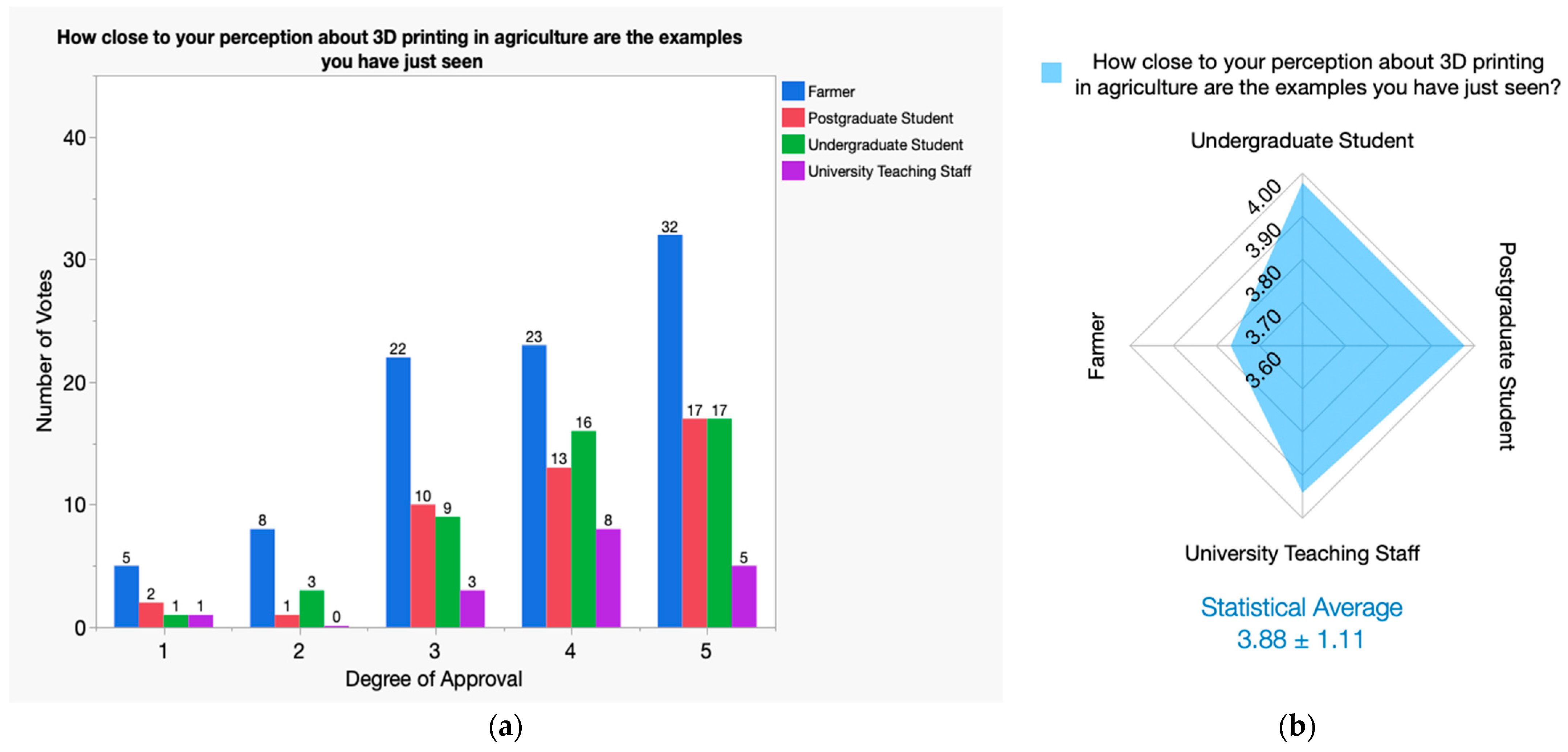
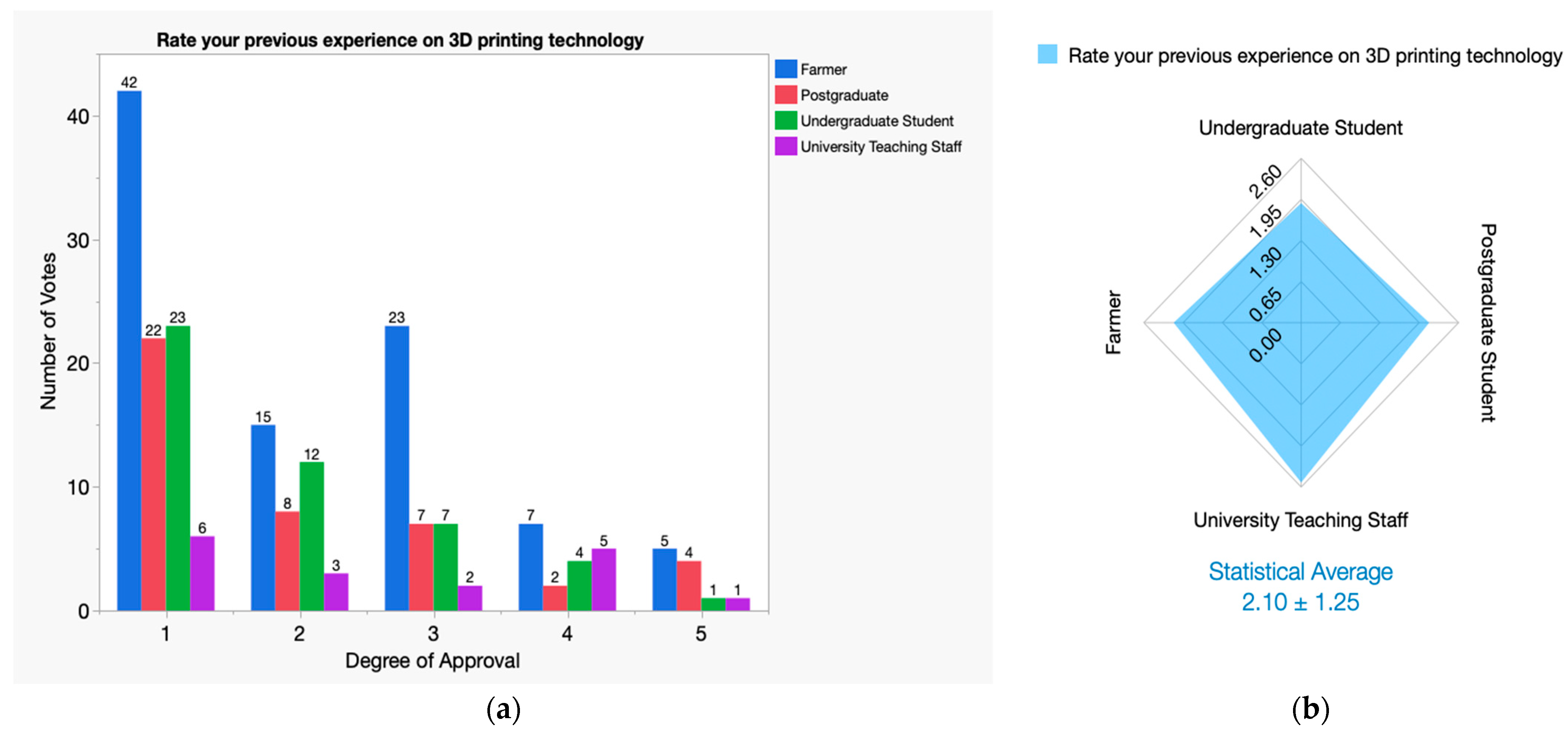
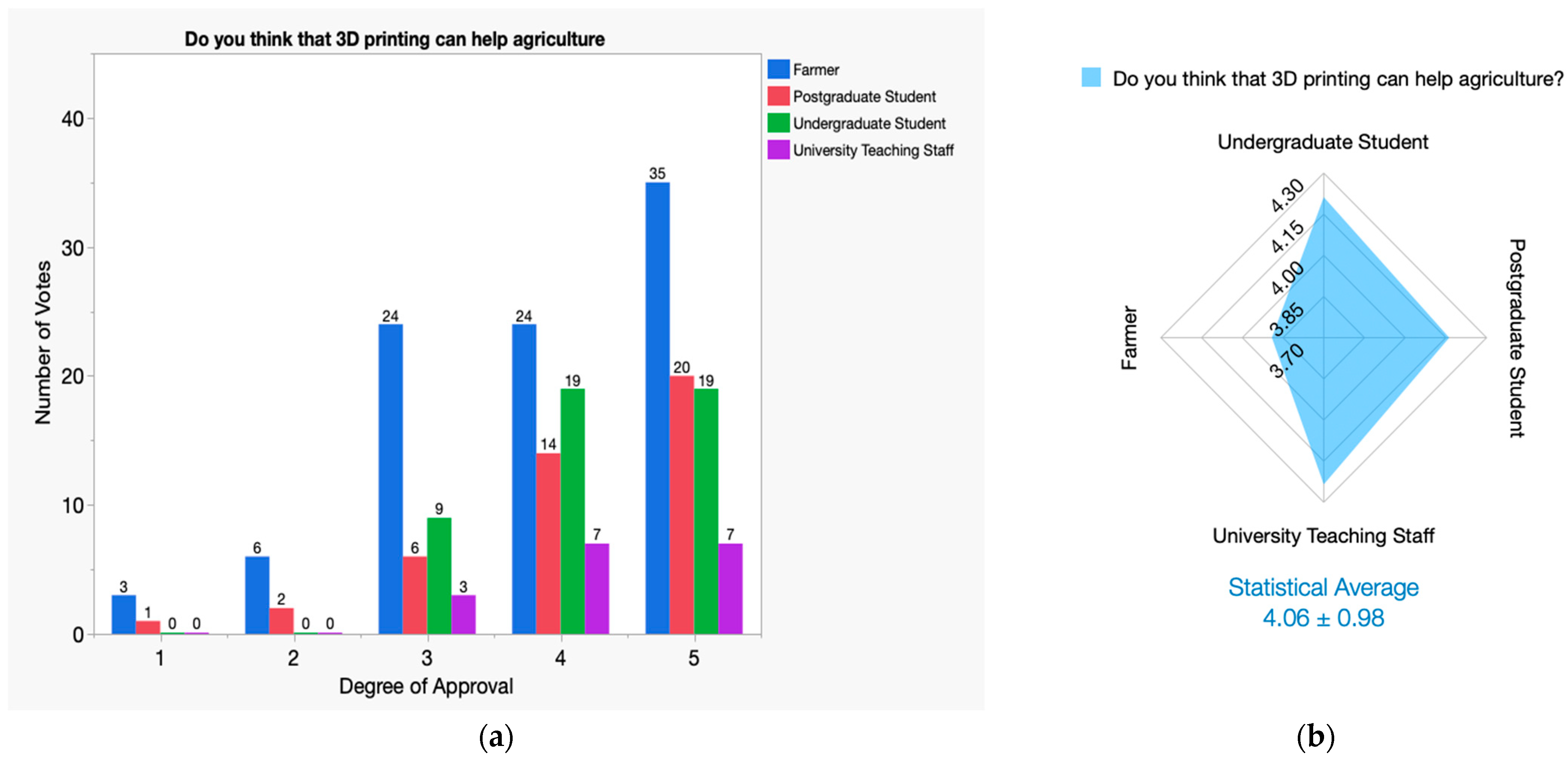
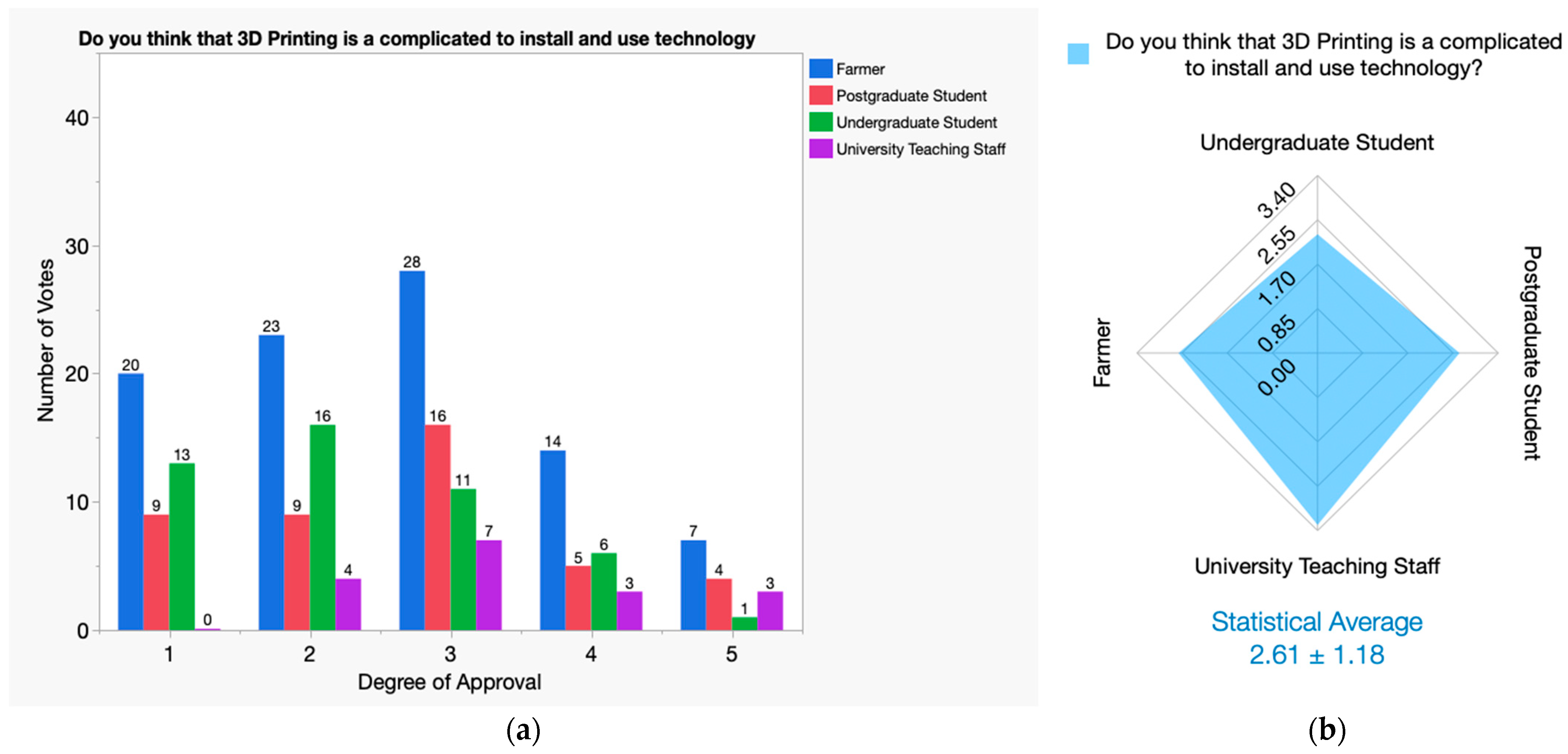
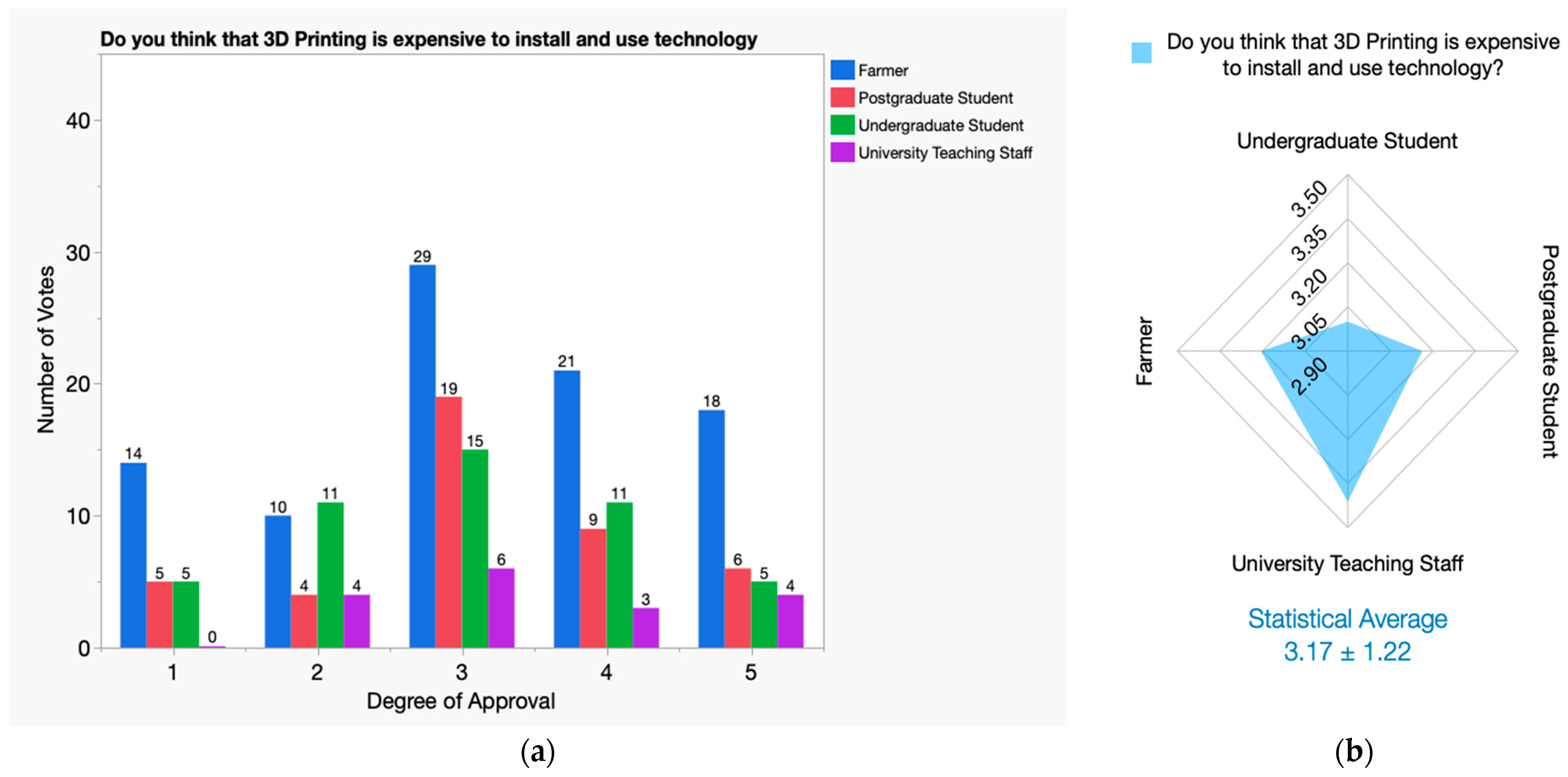
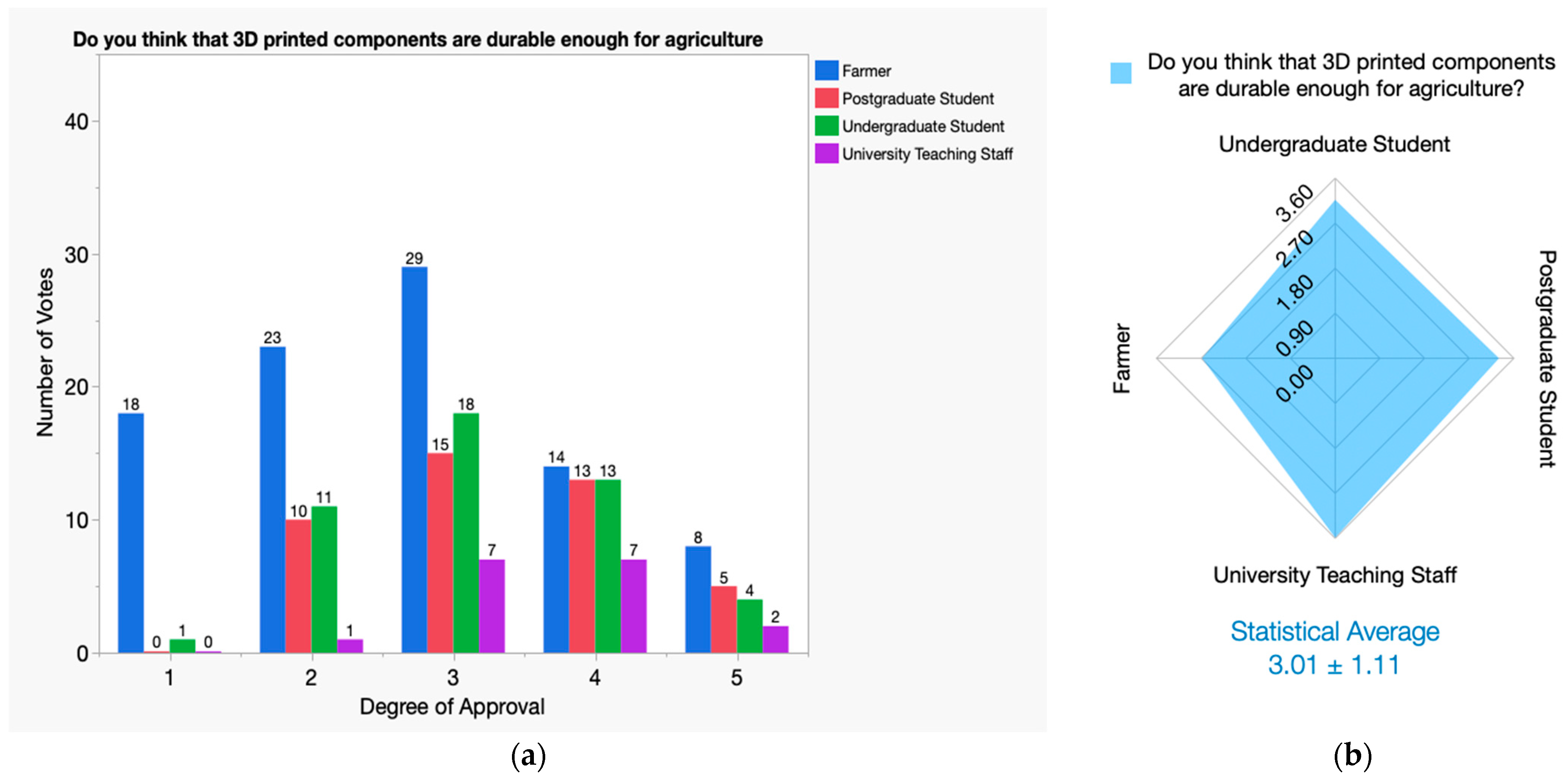
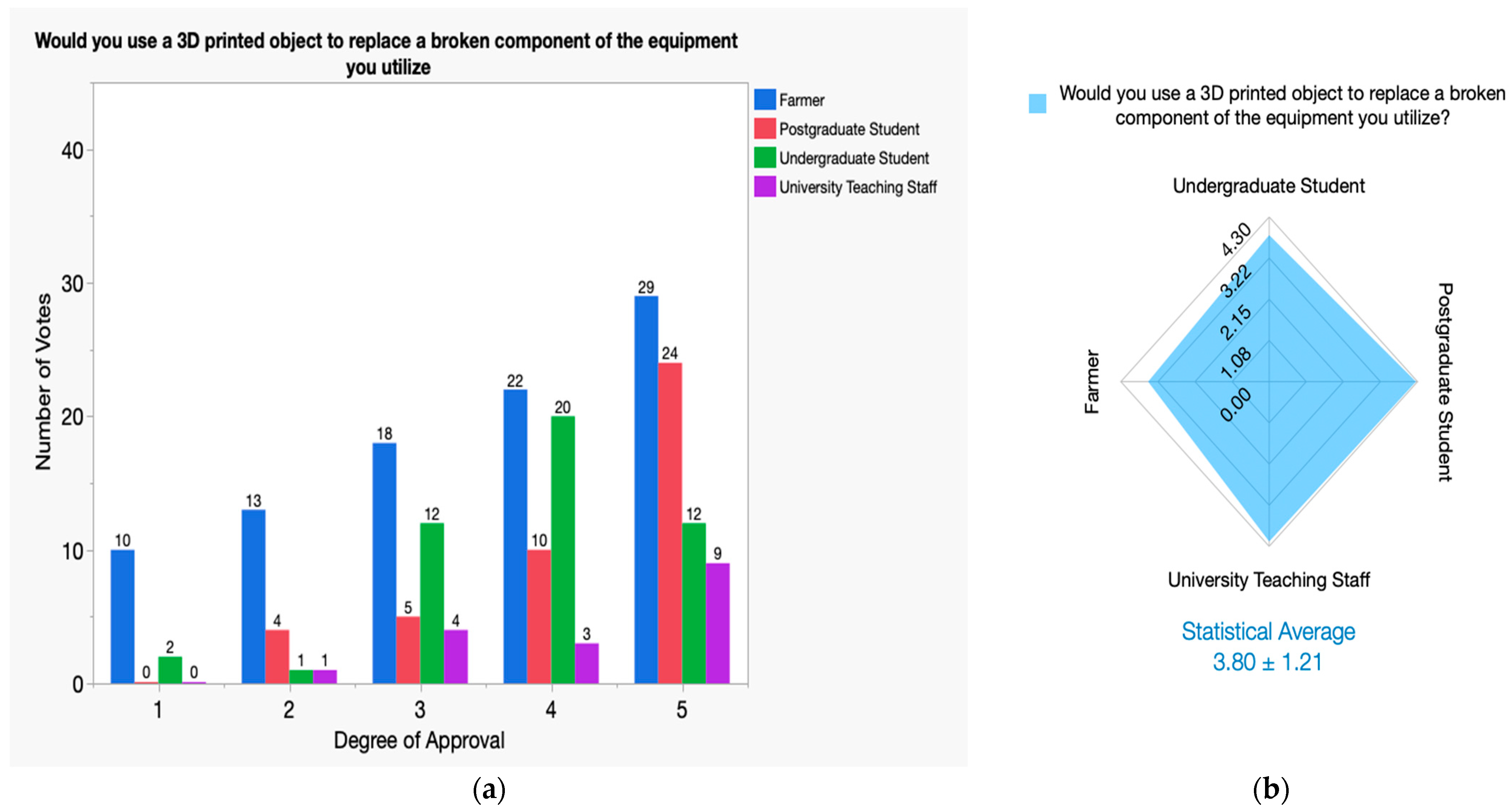
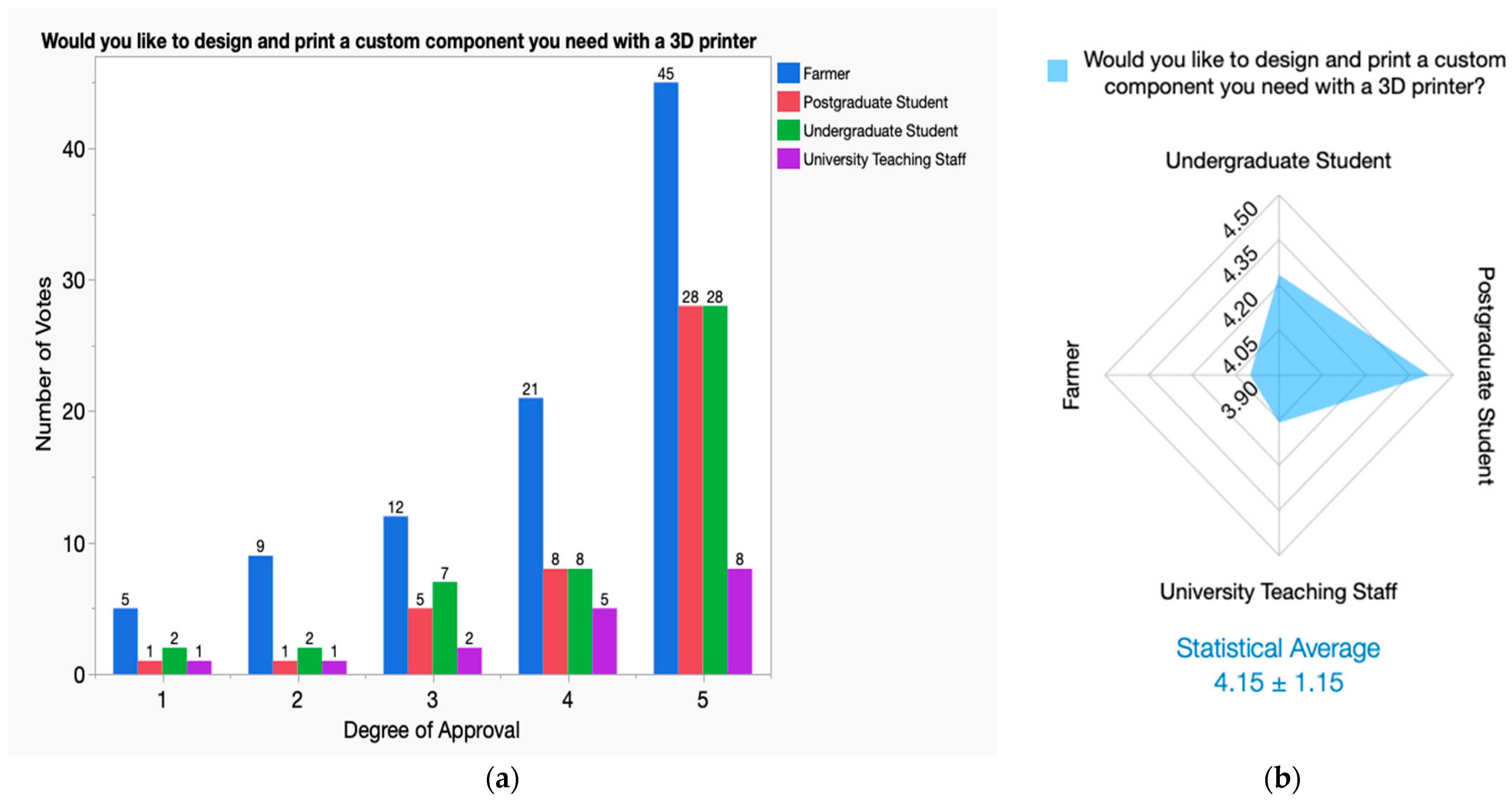
Going further, an illustrative set of results, collected and processed, is depicted in
Figure 13,
Figure 14,
Figure 15,
Figure 16,
Figure 17,
Figure 18,
Figure 19,
Figure 20,
Figure 21,
Figure 22,
Figure 23,
Figure 24 and
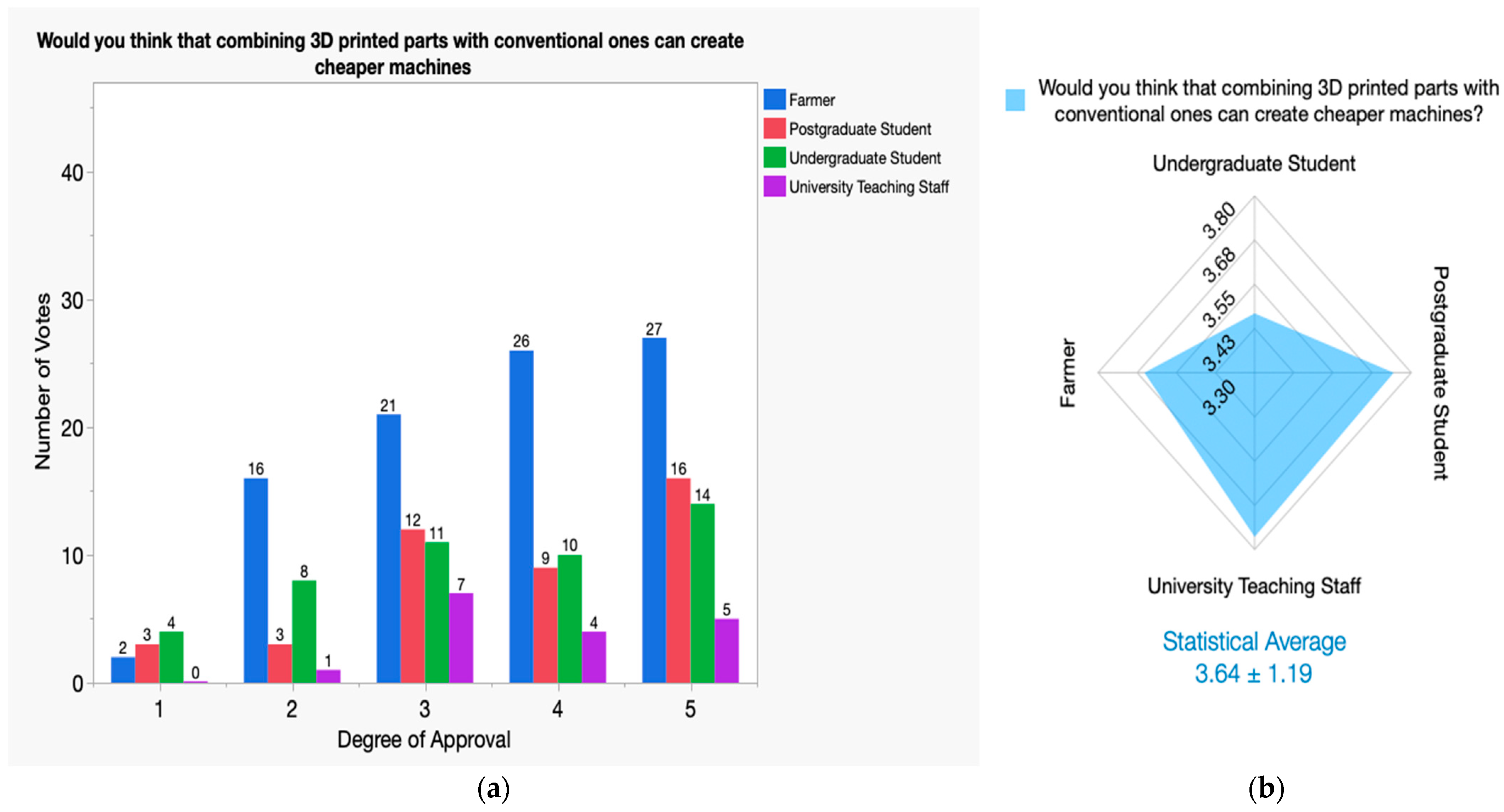
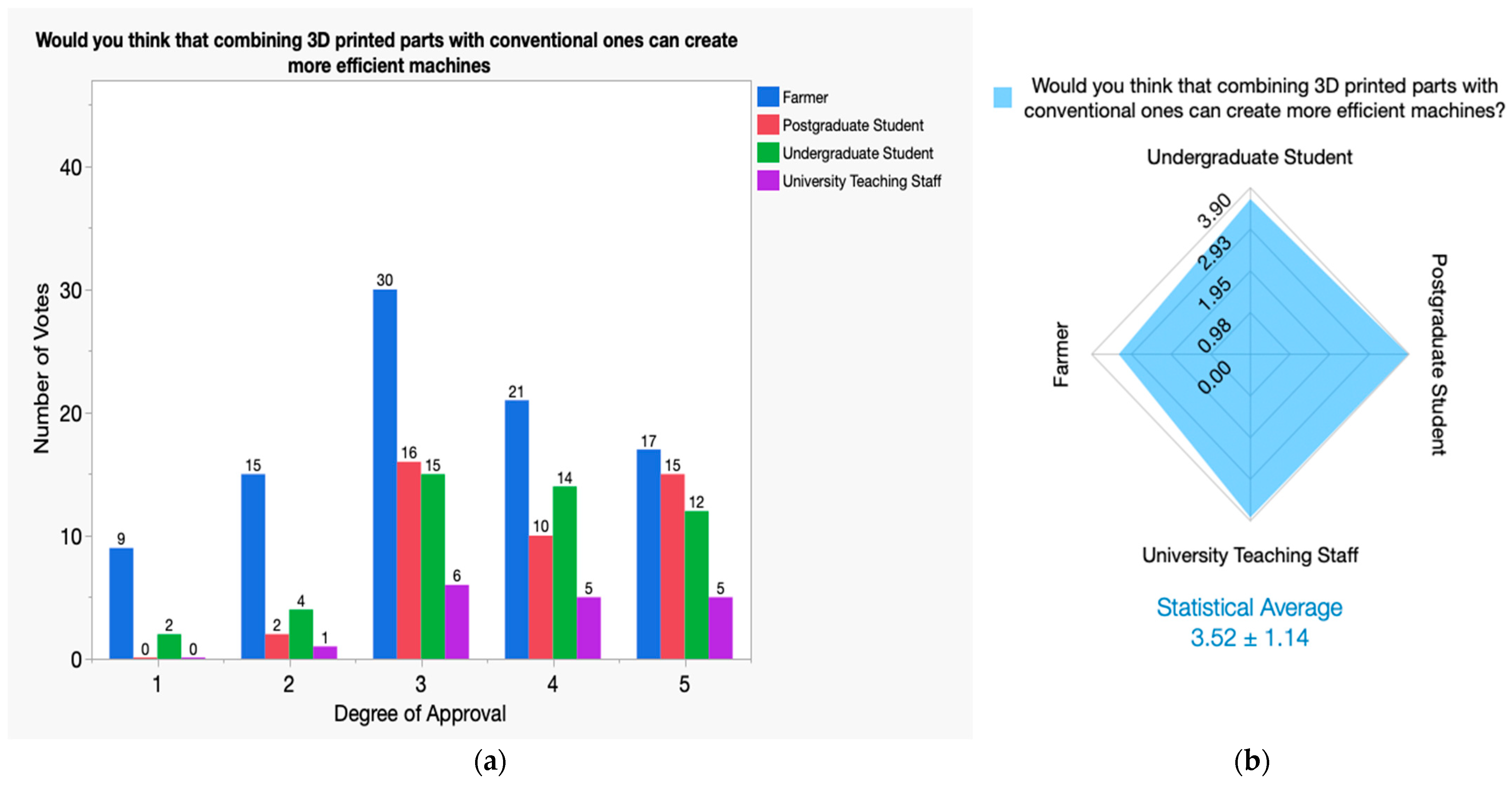
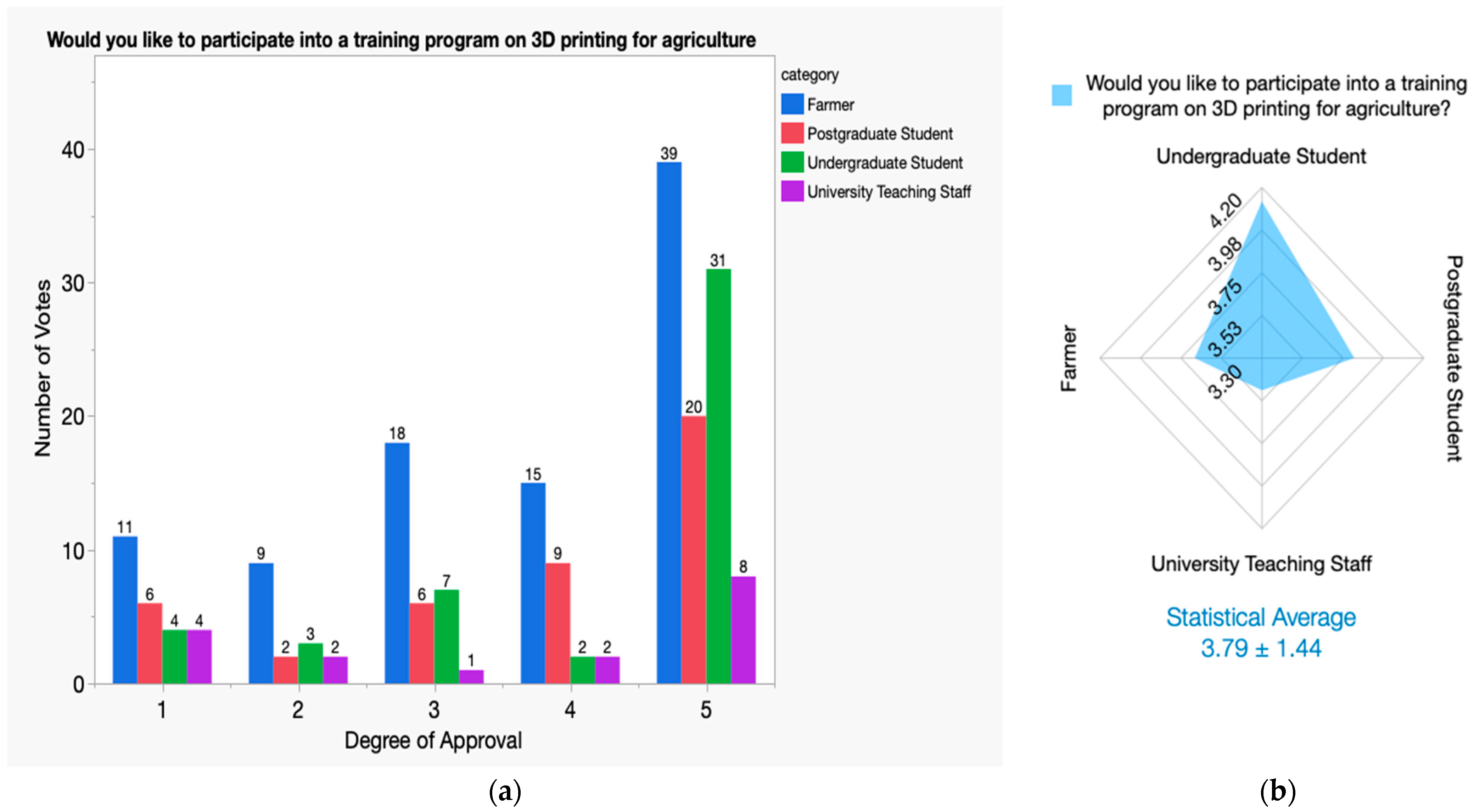
Figure 25. In the left part (a) of these figures, the bar height (vertical axis) illustrates the absolute number of persons with a particular level of agreement regarding the statement depicted above the chart. Green bars refer to the opinions of undergraduate students. Red bars pertain to the opinions of postgraduate students. Purple bars reflect the opinions of university educators. Finally, blue bars express the farmer’s point of view. In all cases, the horizontal axis represents the characterization of opinion groups by a numerical scale ranging from 1 to 5, where the number 1 represents “Strongly Disagree,” 2 stands for “Disagree,” 3 denotes “Neutral,” 4 indicates “Agree,” and 5 signifies “Strongly Agree”.
The right part (b) of
Figure 16,
Figure 17,
Figure 18,
Figure 19,
Figure 20,
Figure 21,
Figure 22,
Figure 23,
Figure 24 and
Figure 25 contains a radar chart representing the statistical average of the opinions of each participant category about a specific question. The radar chart is a type of 2D graph that is extremely suitable for spotting similarities, differences, outliers, or general trends among the variables at a glance. The larger the area covered by the polygon, the higher the overall ranking or performance across the measured parameters and vice versa. The overall statistical average expressing the opinion of all people per question is also depicted at the bottom of these figures. All statistical values range between 1 and 5, expressing the degree of approval according to the aforementioned 5-point Likert scale.
By analyzing the results one by one,
Figure 13 indicates that, while some of the participants were involved in hobbyist or curricular projects utilizing 3D printing technologies, the majority of them had little to no previous experience with 3D printing. The overall statistical average was below the middle of the scale (namely 2.19), with the teaching staff being more acquainted with this technology (mean close to 2.60) and the other three categories not passing the 2.00 limit.
Figure 14 indicates that most of the individuals are optimistic about the potential of 3D printing solutions to foster agriculture (overall value 4.11), but farmers are a bit more skeptical about it (with an average value of approval close to 3.85).
Figure 15 shows that the majority of people participating in the specific survey find the selection of paradigms included in the brief video accompanying the questionnaire and corresponding to the cases presented in this article, quite enlightening (overall value 3.93), whereas farmers are a bit more skeptical about it (with an average value of approval slightly below 3.80).
In terms of complexity and cost to install and use, participants generally consider the process of installing and using 3D printing to be reasonable, as indicated in
Figure 16 (total average value of 2.73 over 5), while they perceive the cost of installing and using this technology as not cheap but still affordable, as shown in
Figure 17 (total average value of 3.20 over 5).
Going deeper, as shown in
Figure 18, participants express concerns about the durability of 3D-printed components for agricultural use (statistical average value of 3.15), with no significant difference among the four categories (indeed, farmers are slightly more skeptical again with average value of approval close to 2.70, while university educators have less fears as reflected by their average approval of 3.60). These concerns are absolutely justified by the harsh environmental conditions characterizing the agricultural activities and the increased forces that the corresponding equipment should tackle.
This skepticism does not seem to reduce their optimism about the perspectives of 3D printing for agricultural use, according to the results shown in
Figure 19, as most of them would use a 3D-printed object to replace a broken conventional counterpart (overall approval value of 3.94). The farmers are more skeptical about it (average approval close to 3.50 out of 5), while the postgraduate students and their educators are the most optimistic (average approval for both of them close to 4.15 out of 5). Similarly, the majority of participants are positive about designing and printing a custom, useful component on their own, according to the results shown in
Figure 20 (overall approval value of 4.17), with the farmers being more restrained (approval value close to 3.95) and the postgraduate students being more certain about it (approval value close to 4.40).
According to
Figure 21, the majority of persons involved in the survey believe that combining 3D-printed and conventional components, can result in cheaper agricultural machines (total average approval of 3.70 over 5), with postgraduate students and university teaching staff expressing slightly stronger agreement (average approval for both of them close to 3.76 over 5). The majority of participants are also positive about the efficiency improvement that those machines could bring, as shown in
Figure 22 (total average approval of 3.62 over 5), with the farmers being more skeptical again (average approval of 3.25) and the postgraduate students and their educators being the most optimistic (average approval for both of them close to 3.85 over 5).
Finally,
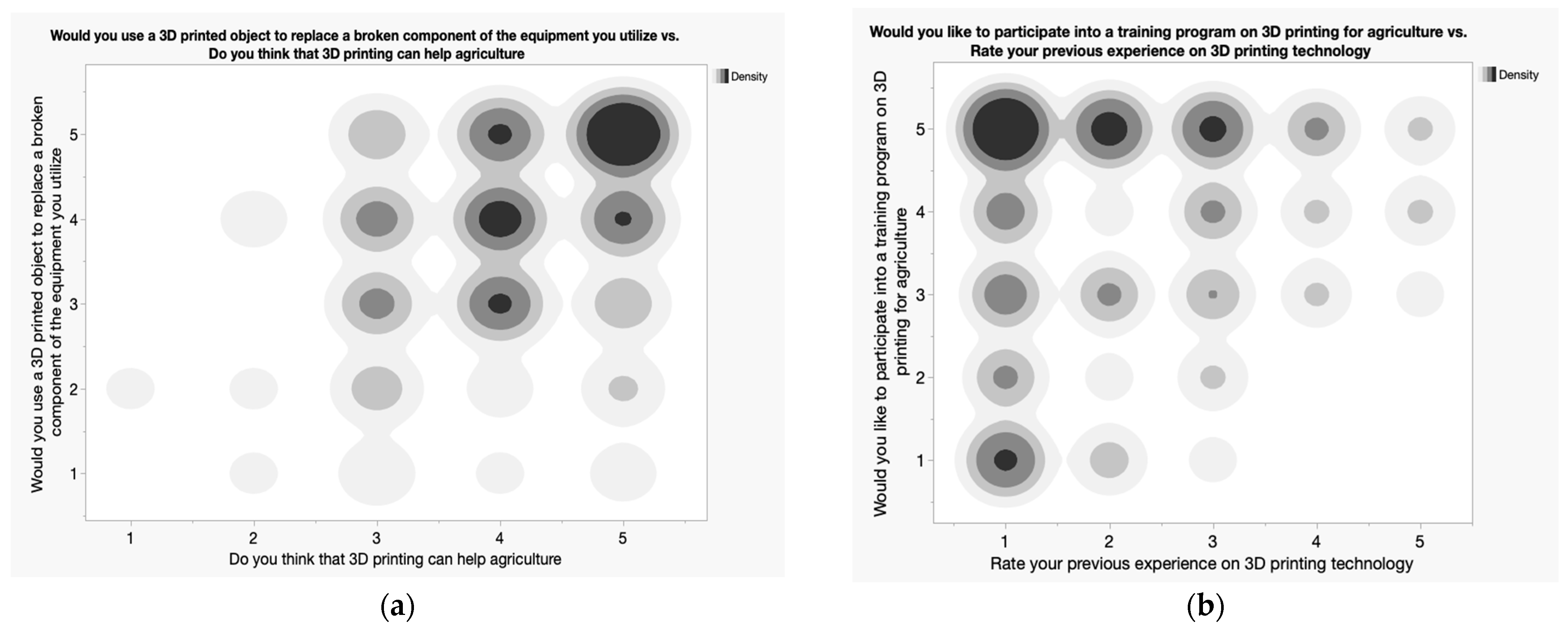
Figure 23a,b visualizes participant opinions about the topic “Would you like to participate in a training program on 3D printing for agriculture?”. According to these responses, most of the individuals would like to participate in a training program in 3D printing (total average approval of 3.79 out of 5), with the undergraduate students reaching approval levels of 4.15, followed by the postgraduate ones, the farmers, and the university educators (close to 3.50). These opinions highlight both strengths and limitations, which are synthesized in the ensuing discussion on open issues and future directions.
In order to better summarize the survey results, the (statistical) average along with the standard deviation margin, per question and per participant category and total, are provided in
Table 3.
The internal consistency of the questionnaire scale was acceptable (Cronbach’s α = 0.7526). The four groups (levels) of respondents are the independent variables (factor-categories of respondents). The eleven continuous questions (Q1 to Q11) are the dependent variables. All observations are independent (independence of sample), the data in each group are approximately normally distributed (normality), and the variance within each group is roughly equal (homoscedasticity). The application of an ANOVA test reveals that for the following questions there is no statistically significant difference: Q1, Q2, Q3, Q5, Q8, Q9, and Q11 (Q1: p = 0.3277, Q2: p = 0.1813, Q3: p = 0.6467, Q5: p = 0.6497, Q8: p = 0.3272, Q9: p = 0.6833, Q11: p = 0.2594). On the other hand, for the questions Q4, Q6, Q7, and Q10 (Q4: p = 0.0218, Q6: p = 0.0007, Q7: p = 0.0040, Q10: p = 0.0079) there is a statistically significant difference.
Apart from the aforementioned survey results, further analysis of the responses revealed very interesting trends. More specifically, statistical results in the form of density maps can be extracted, reflecting the opinions of the participants about hot combinational topics. In this type of opinion representation, both horizontal and vertical axes follow the Likert level numbering (i.e., forming a 5 × 5 area of points), while bigger and darker concentrations indicate a higher degree of approval for this specific point.
In this regard,
Figure 24a, visualizes information reflecting the opinions about replacing a broken component with a 3D-printed one as a function of the degree to which participants find the 3D printing useful for agriculture. In other words, this reflects the trends on the combinational query formed by the simple question “Would you use a 3D-printed object to replace a broken component of the equipment you utilize?” vs. “Do you think that 3D printing can help agriculture?”. By interpreting the density map results, as the bigger and darker points are concentrated at the top right area of it, it is inferred that the more confident participants are about the role of 3D printing in agriculture, the more willing they are to replace a broken conventional part of the equipment they use with a 3D-printed one.
Similarly,
Figure 24b visualizes information reflecting the opinions for the question “Would you like to participate in a training program on 3D printing for agriculture?” vs. “Rate your previous experience on 3D printing technology”. In this case, the bigger and darker points are concentrated at the top left area of the density map, indicating that the less experienced with 3D printing the participants are, the more willing they are to participate in a corresponding training program.
Moving to less obvious conclusions,
Figure 25a visualizes the results on the combinational topic “Would you like to design and print a custom component you need with a 3D printer?” vs. “Do you think that 3D printing is an expensive to install and use technology?”. In this case, the bigger and darker points are concentrated in all the top area of the density map, indicating that participants would like to design and print a custom component regardless of their opinion about the cost of this process.
Finally,
Figure 25b visualizes the results on the combinational topic “Would you think that combining 3D-printed parts with conventional ones can create more efficient machines?” vs. “Do you think that 3D-printed components are durable enough for agriculture?”. In this case, the bigger and darker points are more likely found in the central area of the density map, reflecting the skepticism of the participants about how efficient components that are not durable enough are. Despite that, there is also a trend toward higher concentrations in the upper and rightmost part of the area, indicating a willingness to further experiment with the potential of 3D-printed parts to elevate agricultural automations.
6. Discussion and Open Issues
3D printing technology, even utilizing lower-end materials and equipment, can reshape and retrofit several small-to-medium scale components that have a key role in agricultural processes. Typical solutions of this kind may include mechanical joints, stands/sockets, and enclosures for electrical/electronic equipment, ventilation holes, automatic valves, lightweight grippers, and similar. Old (and often rare to find) broken agricultural equipment parts can be replaced, while others can be retrofitted to improve their applicability and efficiency. Although the size of the 3D products is limited by the physical dimensions of the printer device, these components can be fit to conventional structural elements, such as metallic or wooden rods, resulting in a much larger whole. These mixed/hybrid manufacturing techniques require good knowledge of the diverse material properties, of the environmental conditions characterizing the application field, and last but not least, a decent amount of imagination and 3D design skills. Overall, the same design–print–test–iterate cycle, when combined with open-source sharing of CAD files, can support decentralized manufacturing of a broad range of agricultural tools and subsystems, extending beyond the specific case studies presented herein. This work demonstrates 3D printing’s potential as a facilitator for agricultural innovation, not obstructing but facilitating the way for hybrid manufacturing, if the latter is achieving better results.
The experimentation with the 3D printing technologies presented revealed the importance of optimally adjusting critical printing factors like the degree/percentage of infill density, the infill pattern, the filament material and humidity, the nozzle and bed temperature, and even the printing object orientation arrangements, apart from the 3D model design characteristics. Indeed, during the trials, mechanical links and gears had to be designed thicker, and frames and gears had to be printed with different materials (i.e., using ABS filament instead of PLA polymer) to withstand force levels and degradation from sun radiation. These 3D-printed parts worked quite well despite their design simplicity and their low cost. Furthermore, the combination with pre-existing conventional parts was also tested and provided functioning solutions (e.g., for automatic electric valves or for greenhouse structure constructions). Despite concerns about the FDM manufactured object durability, our experience indicated that the weakest link can be other coexisting components, like the elastic sealing of the fluid valves or some metal parts (e.g., rods, screws and nuts) that get rusty or the sealing of the accompanying electrical/electronic components. Furthermore, not all parts intended for agricultural use are destined to be subjected to extreme radiation or mechanical stress. Consequently, there is a lot of room for low to medium durability yet useful (3D-printable) equipment.
The practicality and the potential contribution of the aforementioned directions, apart from being tested by our research team via several pilot implementations, were also verified through questionnaires reflecting the opinions of several agricultural engineering students (undergraduate and postgraduate ones), their educators, and active farmers. The research being carried out indicated that there is not enough knowledge about the exact 3D printing processes and the potential that these can have for agricultural use, but people are optimistic about the role that this technology could play in the area and are willing to acquire more skills about this technology. On the other hand, there is skepticism about the complexity and the cost of the corresponding manufacturing methods and about the durability of the 3D-printed components. These concerns do not seem to discourage these persons in charge from being willing to experiment with their own 3D-designed and printed parts. It is also worth mentioning that farmers are more skeptical about the efficiency of 3D-printed parts than the other categories of survey participants. This trend is absolutely justified by the fact that farmers have first-hand experience with the extreme and harsh conditions (e.g., high forces, temperature, humidity, and radiation exposure, fast repetitive operation requirements, etc.) characterizing agricultural automation operations.
This skepticism indicates that more effort should be put into it, as the transition of 3D printing from laboratory settings to field applications requires a strong focus on environmental resilience. Standard polymers like PLA often fail in outdoor agricultural contexts due to UV-induced degradation and thermal instability. Consequently, future research has pivoted toward high-performance materials such as ASA (Acrylonitrile Styrene Acrylate), which offers superior weather resistance and mechanical toughness for long-term outdoor use [
133]. Furthermore, the integration of carbon-fiber-reinforced filaments is becoming a driver for functional parts, as these materials offer the high stiffness-to-weight ratios required for the structural components of agricultural robotics [
134]. By fine-tuning internal geometries—such as gyroid or honeycomb infill patterns—researchers can design automated hardware that is lightweight yet robust enough to withstand the high-torque demands of soil-interacting machinery [
135]. It should be mentioned that the FFF method, although not producing the strongest nor the most accurate dimension parts, is simpler to apply, cost-effective and fast for small printable part numbers and low level of complexity requirements [
136,
137]. Added to this, it generates less waste than the other candidate 3D printing methods (like the Selective Laser Sintering—SLS) and offers a better recyclability rate [
137].
The knowledge gained during our tests indicated that a non-negligible amount of intermediate form products has to be melted down and reused. In parallel, ordinary polymer materials, e.g., coming from plastic greenhouses, pipes, or bottles, should be recycled as well. More specifically, apart from the ready-made filaments available commercially, one can also produce one’s own filament by recycling failed 3D printer parts. This process requires a shredder in which the plastics to be recycled are fed into it and chopped, followed by an extruder that melts the shredded plastic and creates a continuous filament, which is then wound onto a spooler after its diameter is measured to ensure a consistent filament thickness. Precautions should also be taken to keep clean atmospheric conditions in the area of the 3D printing premises. For this reason, the printers are equipped with special air filters that must also be cleaned once or twice a year, depending on the usage [
138,
139]. Printing materials such as ABS, ASA, and nylon generate higher levels of particles and VOCs (Volatile Organic Compounds), so saturation—especially in carbon filters—may demand even more frequent replacement, typically every 4–6 months. There are no scientific papers establishing a universal filter replacement interval for all 3D printers; official recommendations typically come from manufacturer manuals, technical guidelines, and applied safety studies, and thus, there is room for further investigation herein as well. The importance of these sustainability-related issues indicates the organization of a future survey study dedicated to the opinions about the impact of the 3D printing techniques in this sensitive area.
The experiences acquired throughout this multiperspective work helped to clarify the factors to be considered and provided useful guidelines for applying 3D printing techniques to agricultural automation. More specifically, the following actions are recommended:
Carefully estimate the extent to which the monetary, temporal, labor, complexity-related, and environmental costs of the part of interest accumulate if it is manufactured using conventional techniques versus 3D printing.
Meticulously take into account the quality requirements (e.g., the longevity, durability, accuracy, weight, size, ease of maintenance and repair, etc.) of the proposed solution, if manufactured using either conventional techniques or 3D printing ones.
Not to hesitate to test the efficacy of mixed techniques combining conventional (i.e., new or retrofitted parts) with 3D-printed parts, if these techniques seem to optimize the cost and benefit outcome.
Seek improved 3D printing techniques and materials in terms of cost, manufacturing speed and complexity, durability, accuracy, and environmental friendliness. As technology rapidly evolves, these techniques become increasingly appealing. Thus, continuous effort is necessary to keep pace with these improvements and to be ready to incorporate the best part of them.
Communicate with key stakeholders (i.e., technicians, researchers, university staff, farmers) and carefully assess both their feedback and any experimental finding that seems to improve the cost and/or the efficiency of the parts to be manufactured.
Via this multi-level guidance and feedback, fertile ground is provided for surgically targeted actions to improve the way 3D printing assists agriculture. Consequently, agricultural engineers and farmers can prioritize amendments and apply quicker and more accurate prototyping, thus addressing the evolving agricultural challenges more effectively.




 ,
,