You are currently viewing a new version of our website. To view the old version click .
AgriEngineering
  • Article
  • Open Access

4 December 2025

Innovative Farming Technique: The Use of Agricultural Bio-Inputs by Soybean Farmers in Brazil

,
,

and
1
Faculty of Agronomy and Veterinary Medicine, University of Brasilia (UnB), Brasília 70910-970, DF, Brazil
2
Center of Agricultural Sciences, Federal University of Paraíba (UFPB), Areia 58397-000, PB, Brazil
3
Center of Agricultural Sciences, Federal University of Santa Catarina (UFSC), Florianópolis 88034-000, SC, Brazil
*
Author to whom correspondence should be addressed.
This article belongs to the Section Sustainable Bioresource and Bioprocess Engineering

Abstract

Agricultural bio-inputs represent one of the primary alternatives for reducing the use of agrochemicals, as biological engineering offers promising solutions through the use of microorganisms for biological control of pests and diseases, and also reducing the use of fertilizers, using microorganisms that fix biological nitrogen and solubilize nutrients. This study identifies the biological solutions currently available on the market for the main agricultural practices employed in soybean farming, which is the leading agricultural commodity produced in Brazil. Additionally, the study evaluates the adoption levels of these biological alternatives among a sample of 72 farmers from two regions surrounding the city of Brasilia, Brazil. The data were collected from official databases and field surveys conducted with soybean farmers. The findings revealed that 1325 biological technologies are already available in Brazil for nine of the ten main agricultural practices used in soybean farming. Adoption rates among farmers were 41.7% for phosphorus biosolubilizers, 50% for Bacillus thuringiensis and 44.4% for baculoviruses, both used as bioinsecticides, reaching up to 88.9% for bionematicides. Notably, there were significant differences in adoption levels between the two regions analyzed. This study revealed that 82.8% of companies with registered biological products in Brazil were predominantly Brazilian-owned by December 2024, showing that bio-input technology is available, with capital for investment and support for innovation. Bio-inputs already constitute a viable pathway toward more sustainable soybean farming and represent a strategic sector for the advancement of sustainable bioresource engineering in Brazil.

1. Introduction

There is an increasing market demand for agricultural bio-inputs with potential to replace synthetic inputs [1]. In Brazil, the bio-inputs sector has gained prominence as an alternative to synthetic pesticides and as a strategy to reduce fertilizer dependence by employing microorganisms capable of fixing biological nitrogen and solubilizing nutrients such as phosphorus [2]. Agricultural bio-inputs are biological products developed from microorganisms, macroorganisms (invertebrates), extracts from plants, enzymes, and secondary metabolites, used for biological control, nutrition, growth promotion and greater tolerance of abiotic and biotic stresses [3].
Following an extensive product development process within public and private research institutions, bio-inputs have become widely accessible to farmers in the market [4]. Brazil already has registered biological inputs such as inoculants, biofertilizers, and products for biological control of pests and plant pathogens, such as fungicides, insecticides, and nematicides. The number of products registered in the country is expected to increase gradually, considering ongoing research [5], private investment, new legal frameworks for biological products, and regulations that expand the reference specifications for phytosanitary products [6].
Despite progress in the development of commercial products, it remains unclear to what extent bio-inputs represent viable commercial alternatives available to farmers willing to incorporate this biological approach into their practices, from planting to harvesting [7]. There is also a need to better understand the possibility of fully or partially replacing synthetic inputs with bio-inputs, since one of the obstacles to the adoption of bio-inputs lies in the efficiency and speed achieved with the use of chemical products.
The adoption of bio-inputs has been growing, particularly among large Brazilian farmers [8]. Aggregate data reveal that inoculants were applied to approximately 85% of soybean (Glycine max L.) area planted in Brazil in 2023, according to the National Association of Inoculant Producers and Importers [9]. In addition, approximately 61% of Brazilian farmers used products for biological control in 2024, making Brazil a global leader in the use of bio-inputs [10].
Although the adoption of bio-inputs has been increasing worldwide, their use as either incremental or substitutive technologies remains insufficiently understood. In the absence of detailed information on farmers’ adoption of commercial bio-inputs, this sector may be mistakenly viewed as a minor niche that does not yet offer technological alternatives to most synthetic inputs [11] and also as an incremental, rather than a substitute, technology for conventional practices based on synthetic products [10].
With the popularization of biological products, farmers are increasingly aware of the correct recommendations for using such products, with many commercial farms treated exclusively with bio-inputs, which makes Brazil the second largest producer of organic food in the world, largely thanks to biological products [12]. In this sense, the bio-inputs sector should not be seen as a niche but rather as an emerging sector of sustainable bioresources with potential for developing agro-industrial capacity in low- and middle-income countries, such as Brazil [13].
This study hypothesizes that the bio-inputs sector is already developed to the point of representing a real alternative technology for most practices employed by farmers, who have adopted these inputs to a large extent, including commercial conventional (non-organic) farming systems. As a proxy for the potential for sustainable bioresource development in Brazil, the bio-inputs sector offers valuable insights into the growth prospects of emerging industrial sectors within the bio-based economy [14]. The experiences and lessons derived from this sector can guide the implementation of the new Brazilian industrial policy—New Industry Brazil—which aims to foster investment in independent agricultural technologies through the promotion of sustainable agro-industrial supply chains and the bioeconomy [15].
The main objective of the research was to review and catalog the products currently offered in the Brazilian market and to conduct a survey among farmers to assess the relevance of the bio-inputs market. Specifically, the study sought to: (1) identify the biological solutions registered for commercial use in the main agricultural practices related to soybean cultivation—the main crop produced in Brazil; and (2) evaluate the adoption rates of these biological alternatives in a sample of farmers from two regions near Brasília, the country’s capital.

2. Methods

Based on specialized literature about the use of bio-inputs in soybean cultivation, the main crop grown in Brazil [4], the ten main agricultural practices for soybean farming were defined (Table 1), given the economic importance of soybean exports for Brazil and also because it is a crop with which farmers already have a tradition of using bio-inputs, especially inoculants. For each practice listed, the biological products registered in the Ministry of Agriculture and Livestock (MAPA), responsible for the registration and authorization of the use of new products in the Brazilian agricultural sector, were surveyed.
Table 1. Main production practices analyzed for soybean farming in Brazil.
Information on biofertilizers and inoculants was obtained from the Integrated System of Agricultural Products and Establishments (Sipeagro) of MAPA [16]. Under the ‘Reports’ and ‘Products’ sections of the website, the category for inoculants and biofertilizers (including biofertilizer, soil conditioner, mineral fertilizer, and organic fertilizer) was selected, resulting in a list of registered products and the respective companies responsible for their registration.
Information on biological control products was obtained from MAPA’s AgroFit platform [17]. In the ‘Formulated Products’ section, all classes categorized as biological were selected, resulting in a list of the registered biological control products, their active ingredients, and the corresponding registrant companies. The lists of inoculants/fertilizers and biological control products were then merged for analysis, including all products registered up to December 2024.
In-person interviews were conducted with farmers to assess the adoption of agricultural bio-inputs. The study covered the Federal District and surrounding areas, as well as the municipality of Cristalina, Goiás—both located near Brasília in Brazil’s Midwest region. Farms in these areas are generally larger than 500 ha and employ modern practices, including pest and disease management, soil fertilization, mechanized production systems, and, in many cases, central pivot irrigation [18]. Considering a 90% confidence level, 72 farmers were sampled randomly from the population of 1579 farmers who produce annual crops in the studied regions according to the 2017 Agricultural Census [19]. Interviews took place from March to September 2024. The two areas for field survey were:
  • Federal District (DF)—Area located within the Federal District’s Directed Settlement Program (PAD-DF), including the region adjacent to the Federal District’s border with Goiás. Farmers in this region produce soybean, vegetables, and fruits using advanced technologies, with a focus on high productivity and efficiency.
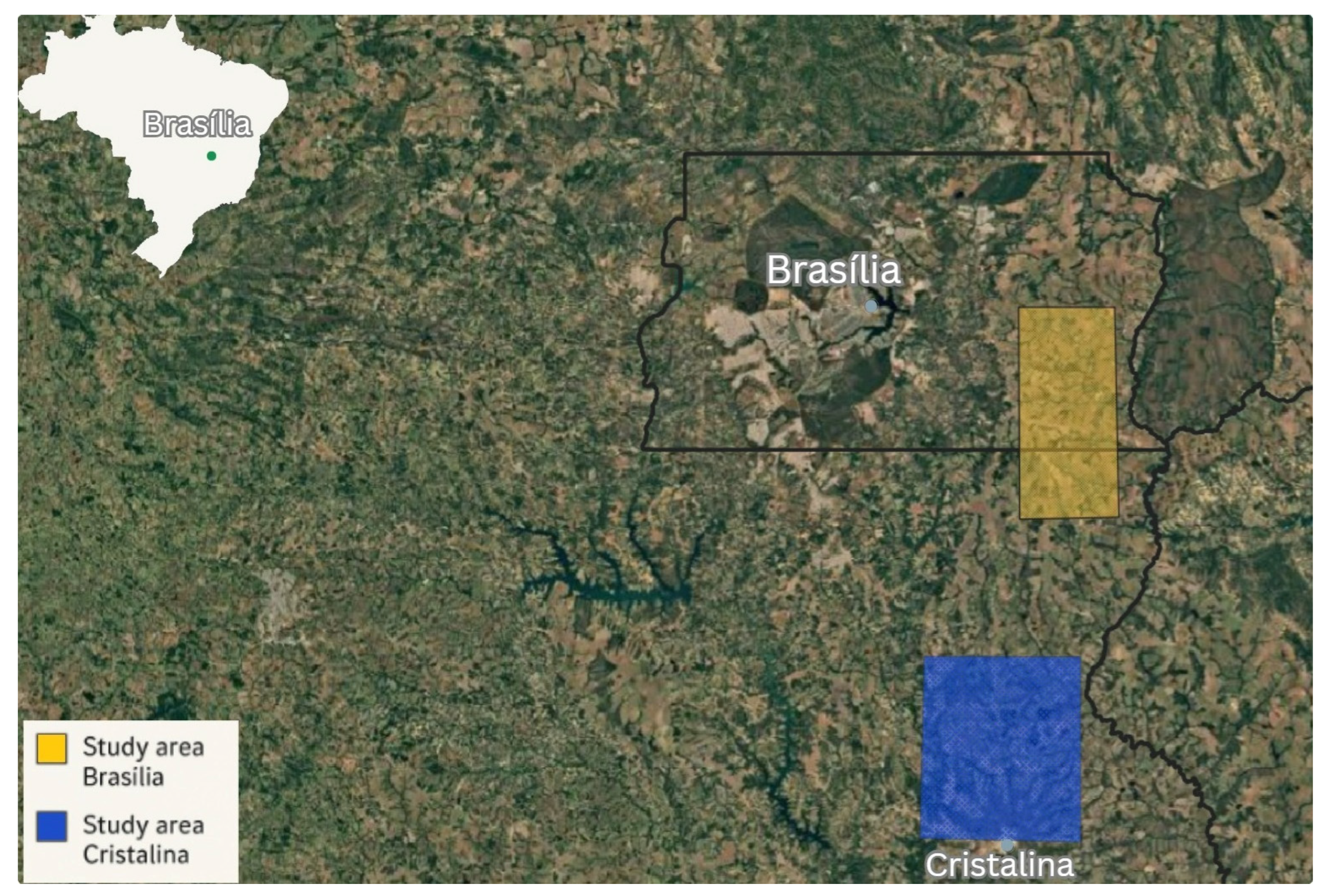
  • Goiás (GO)—Area surrounding the headquarters of the municipality of Cristalina in Goiás, including the Campos Lindos District and the village of São Bartolomeu. Farmers in this region have large-scale properties producing soybeans based on conventional agricultural methods (Figure 1).
    Figure 1. Location of the sampled regions of the Federal District (in yellow) and Cristalina, Goiás (in blue).
Brazil is one of the world’s largest corn producers, ranking third among producers and second among exporters. In soybeans, Brazil stands out as the world’s largest producer and exporter. Production of both crops is concentrated in the Brazilian Midwest region. These figures highlight the importance of this research in the country’s largest production areas and, consequently, show the great potential for the use of bio-inputs.
Farmers were briefed that the interviews were not being recorded and that their identities would remain confidential. The interview protocol covered the biological products used for plant nutrition and for pest and disease control. Regarding plant nutrition, the focus was placed on the use of phosphorus biosolubilizers, which have a large number of products available compared to other biosolubilizers. This is an unknown market compared to the inoculant market, which has already been well described by ANPII [20]. In the case of biological control products, the focus was on bioinsecticides based on Bacillus thuringiensis and baculovirus, due to the large number of registered products, and on bionematicides, due to the possibility of replacing synthetic inputs, as reported in a previous study [21].
Each farmer interviewed was asked whether they used phosphorus biosolubilizers, B. thuringiensis, baculovirus-based products, or bionematicides. In cases where farmers responded that they used one of these biological products, additional questions were asked about the name of the commercial product and field application practices, as well as association with synthetic products.

3. Results

3.1. Biological Solutions for Farming

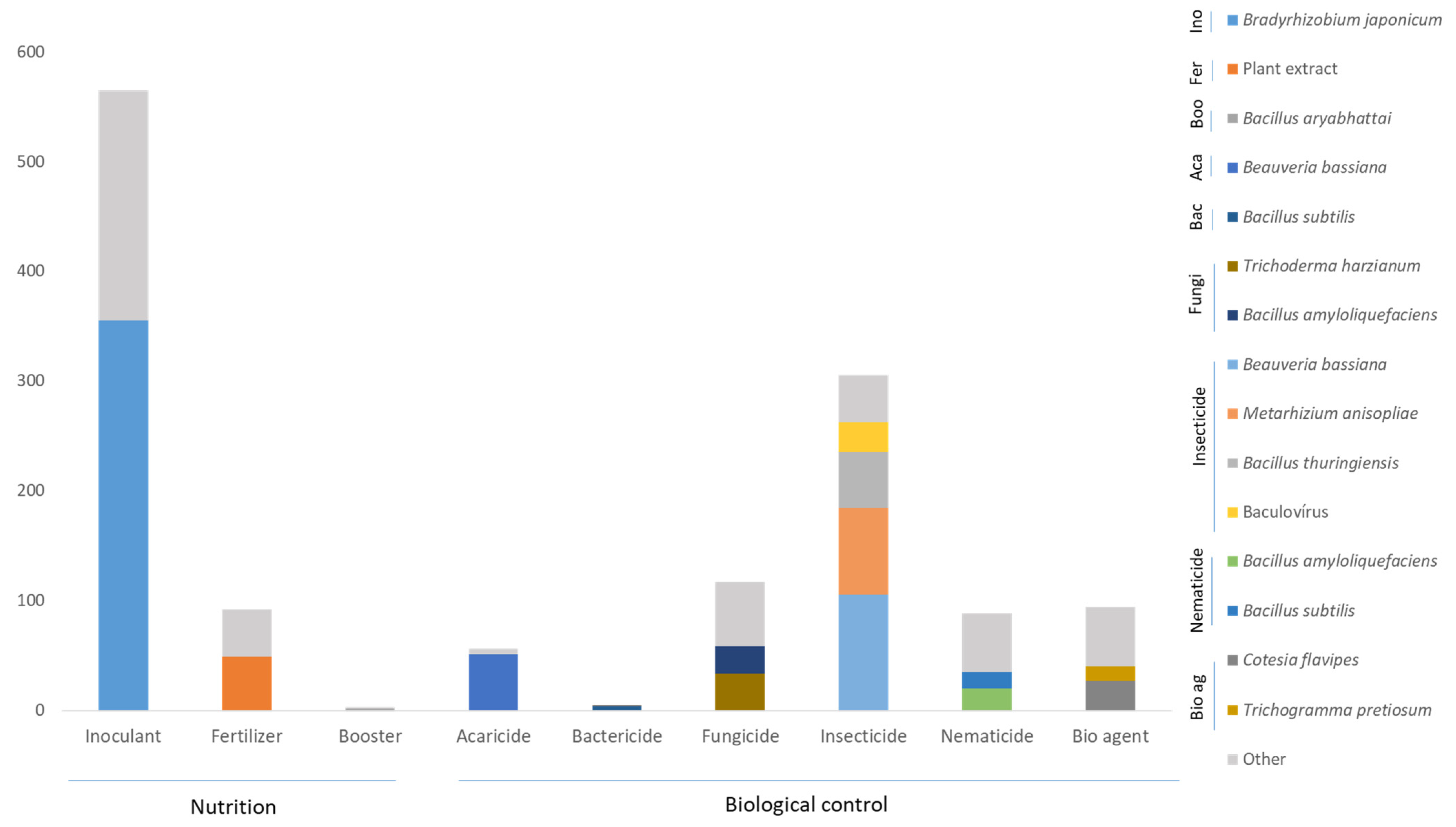
By December 2024, Brazil had 660 biological products for plant nutrition (including inoculants, biofertilizers, and plant activators) and 665 products for biological control (including acaricides, bactericides, fungicides, insecticides, nematicides, and biological agents such as wasps and other invertebrate macroorganisms) registered with MAPA, totaling 1325 registered biological technologies (Figure 2). For plant nutrition, MAPA had registered 565 inoculants by 2024, most based on the bacterium Bradyrhizobium japonicum; 92 biofertilizers, most based on plant extracts; and 3 plant activators, 2 of which were based on Bacillus aryabhattai.
Figure 2. Total number of agricultural bio-inputs registered in Brazil until December 2024, and the organisms used. Source: Adapted from MAPA [17].
Among the 665 products registered for biological control, the majority (91%) of the 56 acaricides were formulated from the fungus Beauveria bassiana, although products made of other fungi and mites were also present. The 5 bactericides were formulated with bacteria of the genus Bacillus, while the 117 fungicides were based on fungi Trichoderma spp. or bacteria of Bacillus spp., either as single-microorganism formulations or as microbial consortia. The 305 bioinsecticides were composed mainly of the fungi B. bassiana (43%) and Metarhizium anisopliae (26%), the bacterium B. thuringiensis (17%), and baculovirus (9%), and the 88 nematicides were produced from Bacillus. Most of the 94 antagonistic pest agents were macroorganisms, such Cotesia and Trichogramma wasps, although some products also contained predatory mites and bugs.
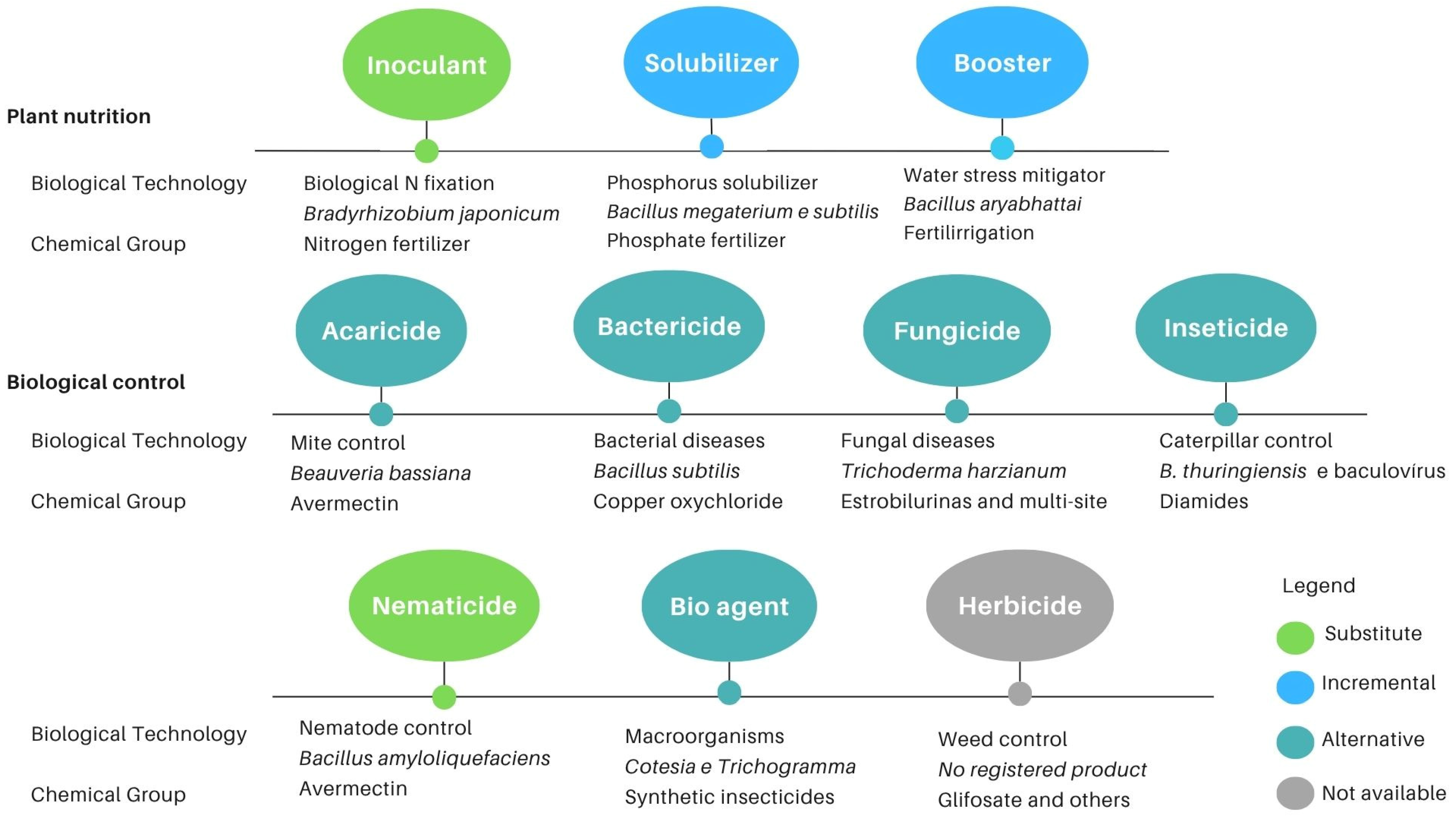
Figure 3 summarizes the biological technologies used in the main soybean farming practices adopted in the evaluated areas, ranging from plant nutrition to weed management with herbicides. Farmers use some biological products as substitutes for chemical inputs—for example, nitrogen-fixing inoculants, which substitute conventional nitrogen fertilization in soybean, and bionematicides, which prevent nematode attacks in substitution to synthetic nematicides. In contrast, there are currently no bio-herbicides registered in Brazil.
Figure 3. Main agricultural practices adopted for soybean farming and the biological and chemical technologies most commonly employed by farmers in the areas of the Directed Settlement Program of the Federal District (PAD-DF) and the surrounding area of the municipality of Cristalina, in Goiás.
Biological products, including biosolubilizers and plant activators, are often used as incremental complements to conventional inputs, applied alongside chemical products rather than as substitutes. Their application is generally recommended while maintaining chemical fertilization. Some biological products, however, allow alternation between synthetic and biological applications, thereby reducing the reliance on chemical pesticides. For instance, bioinsecticides are employed to prevent insect pest attacks, such as those caused by caterpillars.
The following subsections detail these results with a focus on commercial biological inputs designed to support plant nutrition and to provide biological control of insect pests and pathogens.

3.1.1. Plant Nutrition

Nitrogen (N), phosphorus (P), and potassium (K) are the main macronutrients used in plant fertilization and are widely imported into Brazil. Inoculants are used to improve the nitrogen-fixing capacity of soybean plants and reduce or eliminate the need for synthetic nitrogen fertilizers. Large-scale commercial use of inoculants in Brazil began with the bacterium B. japonicum inoculated into soybean seeds. Inoculants have also been developed for crops such as corn (Zea mays) and wheat (Triticum aestivum) based on the bacterium Azospirillum brasilense, and for leguminous crops such as beans based on the bacterium Rhizobium tropici. More recently, the use of inoculants based on Azospirillum brasilense in the co-inoculation of soybean has increased.
Inoculants are products containing living microorganisms that promote plant growth by biological nitrogen fixation or other beneficial mechanisms, such phosphorus solubilizing, and is regulated under Normative Instruction MAPA nº 13/2011 and nº 61/2020. On the other hand, the current definition of biofertilizer in Brazil, as abiotic biostimulant products are known abroad, is a product containing an active ingredient or organic agent, capable of acting directly or indirectly on cultivated plants, increasing their productivity, regardless of their hormonal or stimulant value. The identified sources of biofertilizers in Brazil are seaweed and plant extracts, aminoacids, and humic substances. This definition emphasizes that biofertilizers must exhibit bioactivity, that is, proven beneficial effects on plants, regardless of the direct supply of nutrients.
The main difference between biofertilizers and conventional fertilizers lies in their mode of action: while traditional fertilizers provide nutrients directly, biofertilizers act through biological mechanisms, such as stimulating root growth, improving nutrient uptake, increasing resistance to environmental stresses, and activating physiological processes in plants. Biological nutrient solubilizers are inoculants used to make soil nutrients available to plants. Commercially available biosolubilizers primarily solubilize P, but also K. Recent commercial developments in this sector include use of the bacteria Pseudomonas fluorescens and also consortia of microorganisms such as Bacillus megaterium and B. subtilis [22]. Public innovation centers and companies continue to test different microorganisms to solubilize nutrients.
This research focused on P solubilizers, as this technology is more developed in the Brazilian market. BiomaPhos®, a market-leading product, is registered as a phosphorus solubilizer for corn (Registration Number: PR 000497-9.000045) and soybean (Registration Number: PR 000497-9.000063). During the survey for this research, other products presented as phosphorus solubilizers were found registered as inoculants (Table 2).
Table 2. Commercial inoculants and soil conditioners with phosphorus-solubilizing activity.
MAPA also registers plant activators, with three products registered by December 2024: Bioasis Power® and Biolord®, both from Total/Biotrop, and Holzen® from Syntech Research Laboratório Brasil. The first two products are based on Bacillus aryabhattai, which reduces water and heat stress. The number of products registered as plant activators is expected to increase, based on growth-promoting rhizobacteria of the genera Bacillus, Rhizobium and Streptomyces, and mycorrhizal fungi, which boost plant growth and resistance to abiotic stress.

3.1.2. Biological Control

Microorganisms are used in the biological control of pathogens and pest insects. Commercial biological control initially involved the use of a limited number of non-pathogenic fungal species that acted as antagonists against pathogenic fungi. Over time, it has evolved into products that combine different groups of microorganisms, including fungi and bacteria. For example, the fungus Beauveria bassiana is commonly employed in biological insecticide formulations, and companies have developed novel biofungicides and bioinsecticides using species from the genera Streptomyces (bacteria) and Metarhizium (fungus). This section presents commercial biological products for controlling pathogens in pest insects in soybean fields.
Control of Mites, Bacteria, Fungi and Insects
Although mites are considered less important pests in soybeans, they have been gaining attention due to climate change and the intensive use of synthetic acaricides, which generates resistance to the chemical groups used. The main mite species found in soybean belongs to the Tetranychidae family, notably the species Tetranychus urticae [4]. Most synthetic products are formulated based on the avermectin chemical group. The vast majority of the 56 bioacaricides registered in Brazil are made of B. bassiana, although other fungi and mites are also used.
Diseases caused by bacteria in soybeans include bacterial blight (Pseudomonas savastanoi pv. glycinea), fire blight (Pseudomonas syringae pv. tabaci), and bacterial pustule (Xanthomonas axonopodis pv. glycines) [4]. Chemicals for bacterial blight in soybeans are based on copper oxychloride and cuprous oxide. The five biological bactericides registered in Brazil are formulated with bacteria of the genus Bacillus.
The 117 registered biofungicides are formulated with bacteria Bacillus spp. and fungi Trichoderma spp., either as single-microorganism formulations or as consortia comprising more than one organism. Biofungicides based on Trichoderma sp. are particularly used in soybeans to control diseases such as the fungus that causes white mold (Sclerotinia sclerotiorum) through soil application. Products based on Bacillus pumillus are used to control brown spot (Septoria glycines), target spot (Corynespora cassiicola), and leaf blight (Cercospora kikuchii) through foliar application. B. subtilis is used to control Asian rust (Phakopsora pachyrhizi) through foliar application, mainly due to multiple and cross-resistance to site-specific fungicides.
There are two products not based on living microorganisms registered in Brazil as fungicides for use in soybean crops. The first is Saori (PHC Ltd.a), composed of peptides derived from the harpin protein, registered for the control of soybean foliar diseases, including Asian rust. The second is Romeo, formulated from cell wall components from the yeast S. cerevisiae, registered by Biospringer Indústrias de Alimentos SA and marketed by Iharabras SA, which is used for the control of soybean foliar diseases. Both products act indirectly, promoting plant resistance to pathogens through activation of biochemical defense mechanisms.
Bioinsecticides are the most widely registered category of biological control products in Brazil, primarily used in soybeans to control insects such as caterpillars and bugs. The 305 bioinsecticides registered in Brazil are primarily composed of B. bassiana and M. anisopliae, B. thuringiensis, and baculoviruses. Other organisms, such as Isaria spp., are being used to control pests such as whiteflies.
Much of the soybean planted in Brazil uses Intacta2 Xtend® technology, which is resistant to the caterpillars Chrysodeixis includens, Anticarsia gemmatalis, Chloridea virescens, Crocidosema aporema, Helicoverpa armigera, and Spodoptera cosmioides [23]. However, this technology does not provide resistance to other caterpillars, such as fall armyworm (Spodoptera frugiperda), which is controlled with synthetic products or prevented with biological inputs.
The main biological alternatives for controlling insects such as the fall armyworm in soybean are products based on B. thuringiensis (Bt) and baculovirus, which are used for various caterpillars. Bt toxins exhibit high specificity upon ingestion by insects, causing damage to intestinal tissues, leading to gut paralysis and ultimately death by starvation. While Bt products act as a midgut membrane disruptor in caterpillars, the baculoviruses mechanism of action is undefined.
Bioinsecticides have gained significant importance in Brazil since 2013 for controlling Helicoverpa armigera, before the current Intacta technology, which is resistant to attacks by this caterpillar. Table 3 presents the list of Bt-based biological products used by the farmers interviewed for this study and their main targets according to records made in Brazil.
Table 3. Biological insecticides based on Bacillus thuringiensis marketed in Brazil and their applications.
Baculovirus is a naturally occurring virus produced from the pest controlled by this virus and specific to this pest Baculoviruses (family Baculoviridae), due to their high specificity for insects (they do not replicate in mammalian and plant cells), are used in biological control, mainly in the control of caterpillars (Lepidoptera) based on nucleopolyhedroviruses (NPVs) and Granuloviruses (GVs) [13].
In Brazil, products made of baculovirus registered for the control of the caterpillar S. frugiperda stand out, although there are also products for the control of Chrysodeixis includens and Helicoverpa armígera (Table 4). Soybean leaves sprayed with baculovirus infect the caterpillars that eat the leaves and promote the multiplication of the virus in the bodies of the caterpillars. After the fourth day of feeding, the infected caterpillars become weakened, stop feeding, and then discoloration and death are observed.
Table 4. Baculoviruses marketed in Brazil and their applications.
The main chemical insecticides reported by the farmers interviewed were Belt® from Bayer (based on Flubendiamide, from the diamide group), Proclaim® from Syngenta (based on Emamectin benzoate from the benzoate group) and Methomyl® from Nortox (based on Methylcarbamate oxime from the carbamate group). Benzoates, Carbamates, Diamides, Phosphorates and Spinosyns act on the nervous system, compromising the nerves and muscles of insects.
Nematode Control Agents
There are also advances in the development of biological products for nematode control, since some nematodes are plant-parasitic species that damage crops by feeding on roots and leaves. Root-knot nematodes (Meloidogyne spp.), root-lesion nematodes (Pratylenchus spp.) and soybean cyst nematode (Heterodera glycines) are responsible for major losses in soybean crops in Brazil [21]. These nematode genera have received greater attention in the development of commercial bionematicides, mainly because they infect both soybean and corn crops, interfering with the main crop rotation adopted in Brazil, especially in the Midwest region.
For biological control of plant nematodes, products based on endoparasitic bacteria and nematophagous fungi stand out [24]. Some genera of bacteria, such as Pasteuria, have a direct effect on nematodes; while other genera, such as Bacillus, have an indirect effect, producing biofilms on plant roots, which limit nematode attack. Nematophagous fungi with commercial application in Brazil such as Pochonia chlamydosporia, Purpureocillium (Paecilomyces) lilacinus and T. harzianum are mainly parasites of eggs and juvenile nematodes [25].
Bionematicides have three main functions that allow the prevention of nematodes infection: 1. Biofilm that protects the plant roots, 2. Chemotaxis that limits the nematode’s ability to locate the host plant, and 3. Chitinase that cleaves the chitin of nematodes and their eggs, reducing the population of juvenile nematodes in the soil, as well as the number of eggs [24]. Chemical nematicides are classified according to the three main mechanisms of action based on the chemical group: 1. Avermectins, Carbamates and Organophosphates act on the nervous system causing paralysis and death of nematodes, 2. Pyridinyl-ethyl benzamides and Phenylpyridinamides inhibit cellular respiration by interfering with the nematode respiratory chain and 3. Tetronic and tetramic acid derivatives disrupt development by interfering with nematode ecdysis [26].
The most commonly used technology in the 88 bionematicides registered in Brazil is the bacteria B. amyloliquefaciens, but there are products formulated with other Bacillus species, in addition to the bacteria P. lilacinus. The fungus P. chlamydosporia is also used in bionematicides for the control of nematode eggs and females. Bacteria with proven deleterious effects on nematodes include Bacillus spp., Burkholderia spp., Pasteuria spp., Pseudomonas spp., and Streptomyces spp. Fungi with nematicidal effects include Actinomyces spp., Arthrobotrys spp., Aspergillus spp., Muscodor spp., Myrothecium spp., Pochonia spp., P. lilacinum (syn. P.lilacinus), and Trichoderma spp. [27].
Table 5 presents the main bionematicides mentioned by farmers in the evaluated areas. The listed products primarily target root-knot nematodes (Meloidogyne spp.) and root-lesion nematodes (Pratylenchus spp.), which are responsible for significant losses in soybean crops. The main chemical nematicides reported by the interviewed farmers were Syngenta’s Avicta® 500 FS (based on Abamectin from the avermectin group) and Bayer’s Verango Prime® (based on Fluopyram from the benzamide group).
Table 5. Biological nematicides marketed in Brazil and their applications.
While biological products can help to reduce the population of juvenile nematodes and their eggs, chemical products only control juveniles. Consequently, biological products are employed as preventive measures against nematode attacks, whereas chemical products are applied curatively. Chemical nematicides can have residual and toxic properties, potentially rendering the soil unsuitable for planting within two years in extreme cases. Synthetic nematicides have high toxicity with a long residual effect in the soil, which can cause a significant negative impact on its biology and overall health. Therefore, the use of bionematicides is a highly promising alternative for the control of plant-parasitic nematodes. Among interviewed farmers, bionematicides have been employed as substitutes for synthetic products in the prevention of nematode attacks.
Most of the 94 products registered with MAPA as biological control agents consist of macroorganisms, including wasps of the genera Cotesia and Trichogramma, although predatory bugs and mites are also represented. Biological control agents, as registered by MAPA, are living organisms (usually macroorganisms) that promote natural pest control.

3.1.3. Weed Control

Herbicides made of synthetic molecules are used to control weeds in soybean crops. Chemical herbicides are largely used in soybean plantations given the practicality, efficiency, and speed of application offered by the chemical method. The application of glyphosate post-emergence in genetically modified soybean crops has made it possible to control weeds while preserving the plants. In addition to glyphosate, other synthetic herbicides are used in soybean farming.
In Brazil, there is still no bioherbicide registered with MAPA, although research is underway to develop commercial products. The Federal University of Santa Maria has a partnership with Transfertech to develop a biological herbicide based on the fungus Fusarium fujikuroi. Private companies such as Biotrop and UPL are also researching the production of bioherbicides to be registered in Brazil.
There are approximately 20 commercial bioherbicides available in the United States, Canada, the Netherlands, China, and South Africa. Bioherbicides, known as microherbicides, have effective fungi-based components, while plant-specific herbicides use the allelopathic principle that some plants exhibit against others to develop products that control unwanted plants.

3.2. Adoption of Biological Technologies by Farmers

The survey on farmers’ adoption of biological products was conducted for biosolubilizers, bioinsecticides, and bionematicides. For plant nutrition, the study focused on phosphorus biosolubilizers, as the number of commercial phosphorus biosolubilizers is greater than that of other biosolubilizers or plant activators. For biological pest and disease control, due to the greater number of products registered for caterpillar control, the focus was on bioinsecticides based on B. thuringiensis and baculovirus. The focus on bionematicides was driven by their potential to replace chemical nematicides with biological alternatives.

3.2.1. Plant Nutrition—Phosphorus Biosolubilizers

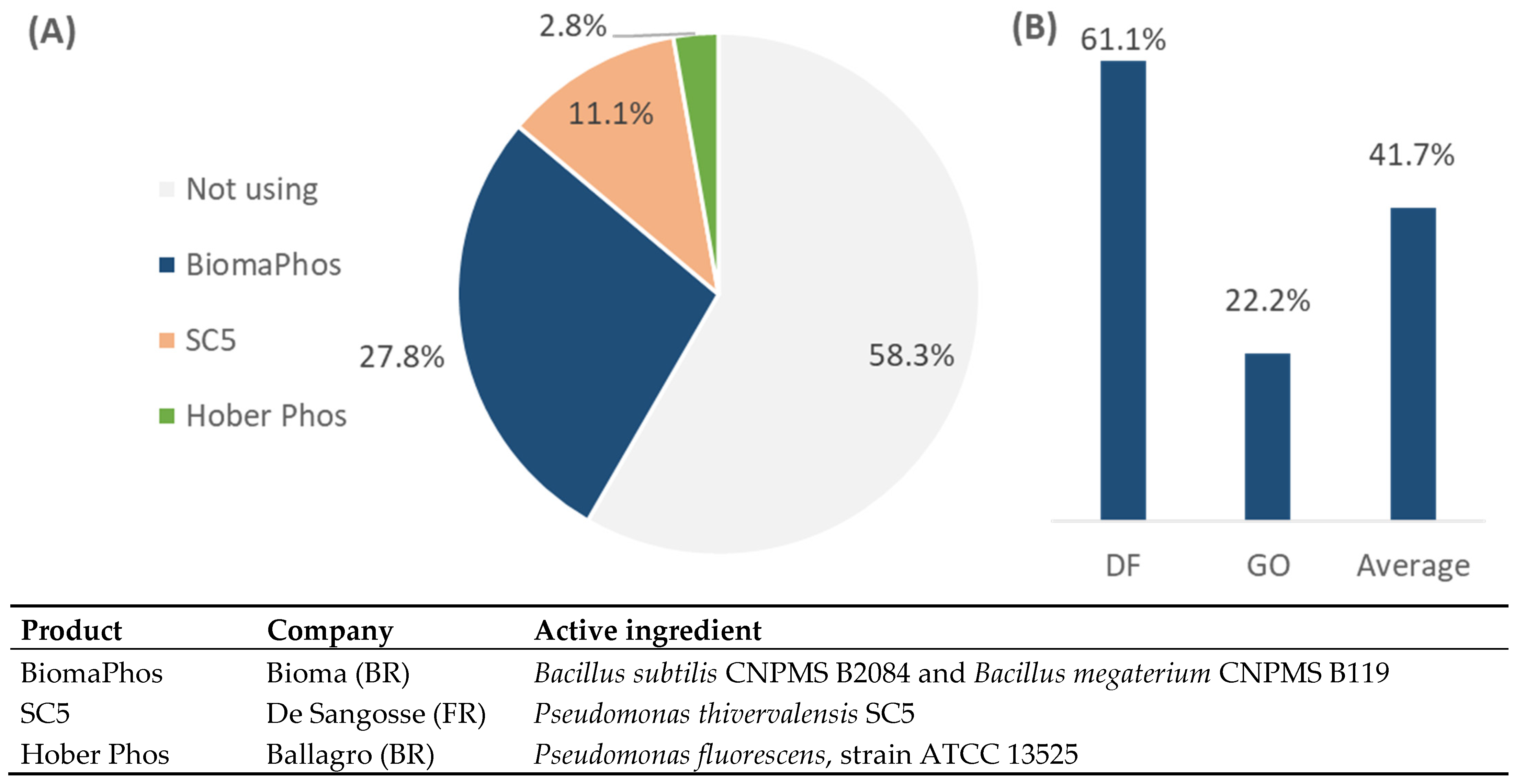
Field results revealed that 41.7% of the interviewed farmers used phosphorus solubilizers and 58.3% did not. The vast majority of farmers used BiomaPhos® (Bioma), while some farmers reported using SC5® (De Sangosse) and HoberPhos® (Ballagro) (Figure 4A). Among farmers reporting not using biosolubilizers, 11.1% indicated that they had tested them but subsequently discontinued use, while 88.9% had never used these products. There was a significant difference in the adoption level of phosphorus biosolubilizers by farmers in the two studied regions, with higher adoption among farmers in PAD-DF than in Cristalina-GO (Figure 4B), according to the independent t-test (t(68) = 3.591; p < 0.05).
Figure 4. Adoption of phosphorus biosolubilizers in soybean cultivation by farmers (A) Global data on adoption and commercial products used by the interviewed farmers in the area of the Federal District Directed Settlement Program (PAD-DF) and the surrounding area of the Municipality of Cristalina, in Goiás, in 2024; (B) Difference in adoption between the two regions studied: Federal District (DF), Municipality of Cristalina, in Goiás (GO), and average between DF and GO. Source: Field survey. The independent t-test showed a significant difference between the means of the DF and GO regions: (t(68)= 3.591; p < 0.05).
Farmers adopting phosphorus biosolubilizers invested from USD 7.50 to USD 38.00 per hectare per year. While approximately 65% of the farmers interviewed reported being satisfied, about 35% reported being either neutral or dissatisfied with the use of phosphorus biosolubilizers.

3.2.2. Biological Control—Bt and Virus

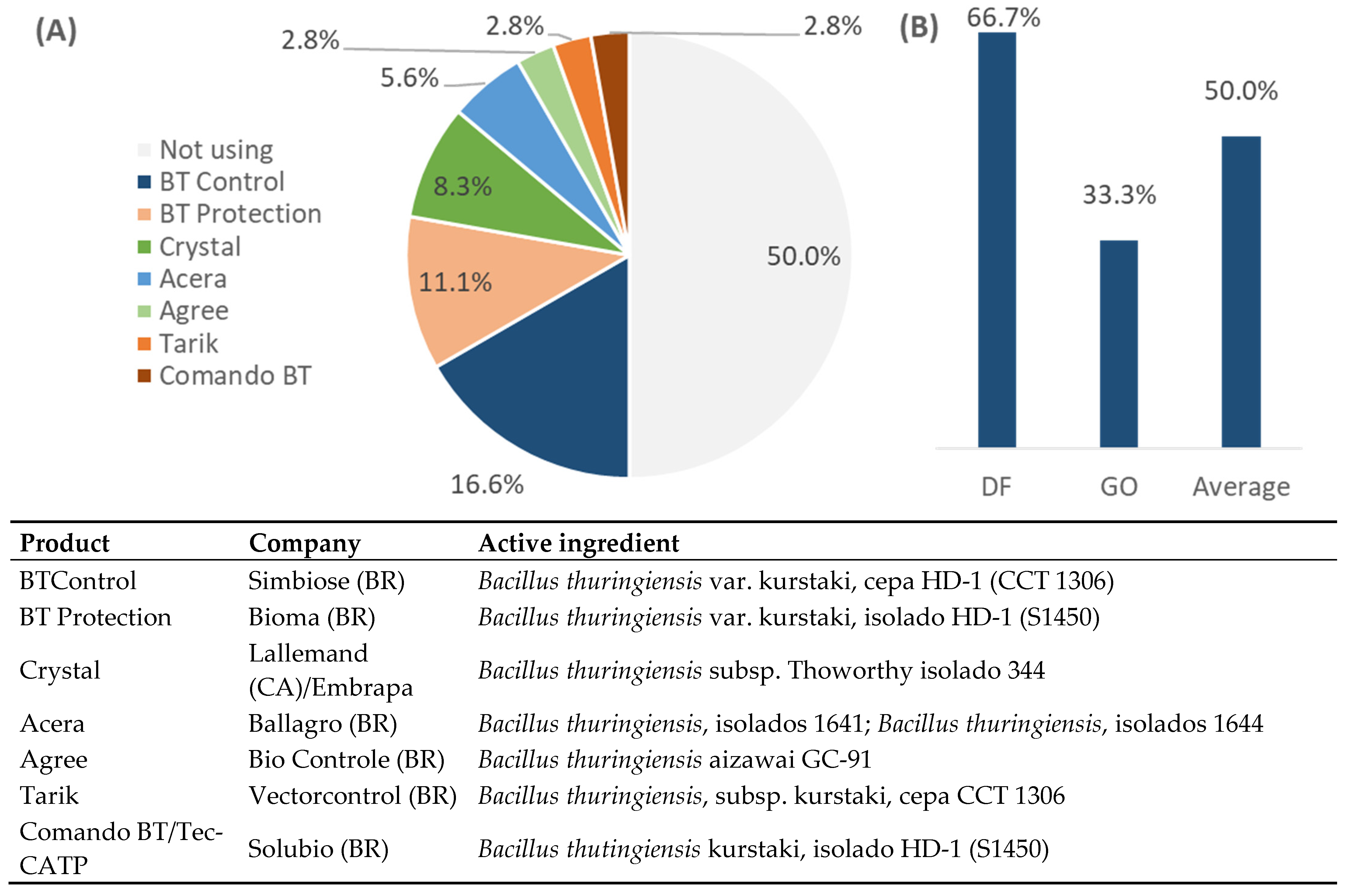
B. thuringiensis (Bt)-based products were used as bioinsecticides by 50% of the farmers interviewed, while the other 50% reported not using them (Figure 5A). Unlike biosolubilizers, there is no absolute market leader in this sector, although in the regions studied, adoption is higher for BT Control® and BT Protection® products, from Simbiose and Bioma, respectively, which are part of the same business group.
Figure 5. Adoption of biological products based on Bacillus thuringiensis in soybean cultivation by farmers (A) Global data on adoption and commercial products used by the interviewed farmers in the area of the Federal District Directed Settlement Program (PAD-DF) and the surrounding area of the Municipality of Cristalina, in Goiás, in 2024; (B) Difference in adoption between the two regions studied: Federal District (DF), Municipality of Cristalina, in Goiás (GO), and average between DF and GO. Source: Field survey. The independent t-test showed a significant difference between the means of the DF and GO regions: (t(70)= 2.958; p < 0.05).
Among farmers who reported not using Bt-based products, 5.5% indicated having tested but stopped using them, and the remaining 94.5% had never used the biological product. There was a significant difference in the adoption level by farmers in the two regions studied, with greater adoption among farmers in PAD-DF than in Cristalina-GO (Figure 5B), according to the independent t-test (t(70) = 2.958; p < 0.05).
The main use of Bt-based bioinsecticides was for caterpillar control, primarily as a preventative measure when the infestation was detected at an early stage [28]. Among farmers who used Bt-based products, the annual investment ranged from USD6.50 0 to USD18.50, typically with two applications per year. Some farmers reported one application per year, and one farmer reported nine applications per year.
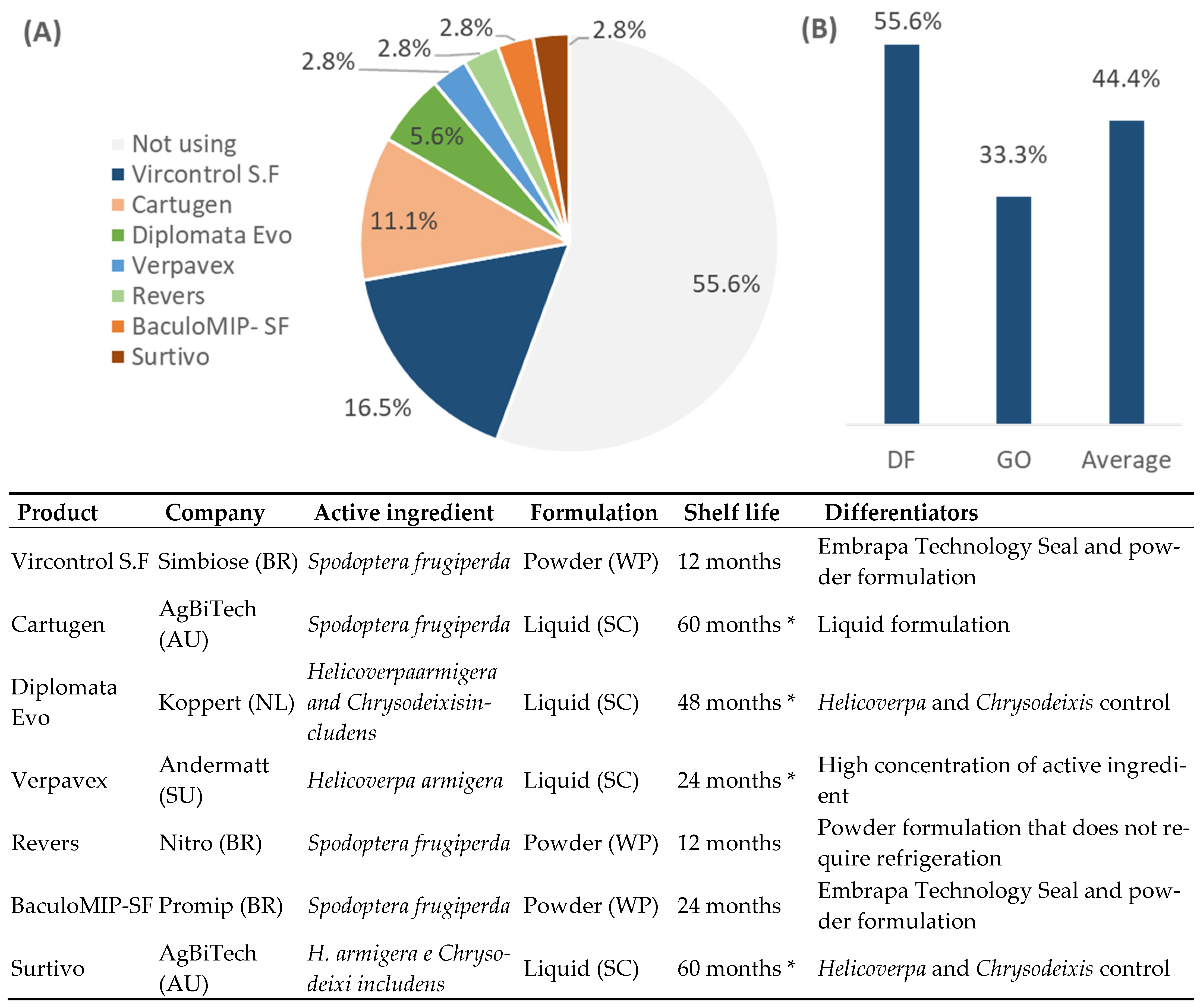
Results also revealed that 44.4% of the interviewed farmers used baculovirus-based products and 55.6% did not (Figure 6A). There is also no absolute leader in this sector, although in the regions studied, adoption was higher for Vircontrol SF® and Cartugen® products from Simbiose and Agbitech, respectively.
Figure 6. Adoption of baculovirus-based biological products in soybean cultivation by farmers. (A) Global data on adoption and commercial products used by the interviewed farmers in the area of the Federal District Directed Settlement Program (PAD-DF) and the surrounding area of the Municipality of Cristalina, in Goiás, in 2024; (B) Difference in adoption between the two regions studied: Federal District (DF), and Municipality of Cristalina, in Goiás (GO). Source: Field survey. The independent t-test showed no significant difference between the means of the DF and GO regions: (t(70)= 1.919; p > 0.05). * as long as it is kept refrigerated.
Among farmers who reported not using baculovirus, 2.8% indicated that they had used it before but stopped using it, and the remaining 97.2% had never used it. There was no significant difference in the adoption rate among farmers in PAD-DF and Cristalina-GO, suggesting a similar level of adoption between the two regions (Figure 6B). Among farmers who used baculovirus, the annual investment ranged from USD5.50 to USD15.50 per hectare, typically with one to three applications per year. The main application of baculovirus was in caterpillar control, mainly as a preventative measure when the infestation was identified at an early stage.

3.2.3. Nematode Control

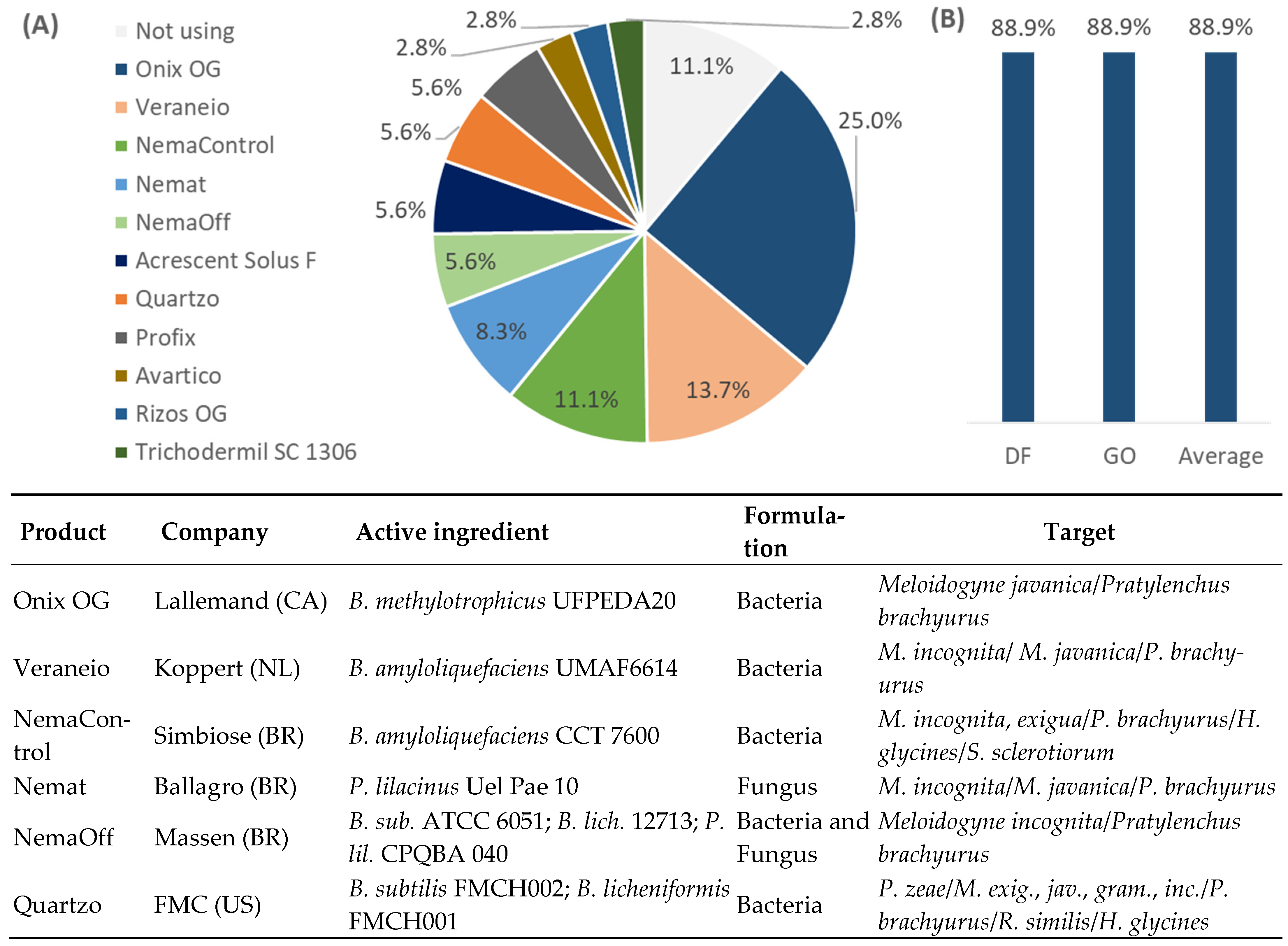
The results indicated that 88.9% of farmers used bionematicides, whereas 11.1% did not (Figure 7A). Additionally, no clear market leader was identified in this sector, although adoption of Onix OG® from Lallemand was highest in the regions studied. In the regions analyzed, bionematicides represented the category with the highest number of products competing in the market, with a total of 11 products identified in the survey.
Figure 7. Adoption of bionematicides in soybean cultivation by farmers crops by farmers. (A) Global data on adoption and commercial products used by the interviewed farmers in the area of the Federal District Directed Settlement Program (PAD-DF) and the surrounding area of the Municipality of Cristalina, in Goiás, in 2024; (B) Difference in adoption between the two regions studied: Federal District (DF), and Municipality of Cristalina, in Goiás (GO). Source: Field survey. The independent t-test showed no significant difference between the means of the DF and GO regions: (t(70) = 0.00; p > 0.05).
None of the farmers who reported not using bionematicides had ever tested these biological control products, and there were no instances of farmers who had previously used bionematicides and later discontinued their use. There was also no difference in the adoption level among farmers in the two regions studied, with farmers in PAD-DF and Cristalina-GO showing the same levels of adoption (Figure 7B).
Financial investment in bionematicides ranged from USD4.60 to USD21.30 per hectare per year, with one application per year. Bionematicides, together with inoculants, were the only categories in which farmers reported using biological products as alternatives to chemical ones, particularly for preventive purposes, owing to their effectiveness in controlling juvenile and egg populations. In cases of established infestations, farmers control nematodes through a combination of biological and chemical products.

4. Discussion

This study revealed that biological products already cover a large part of the chemical portfolio used in soybean farming, with commercial biotechnologies primarily based on living microorganisms. New technologies under development that apply molecular biology and nanotechnology can increase the efficacy and coverage spectrum of biological products in the near future [8,13]. In countries like Brazil, more than a niche [11], agricultural bio-inputs should be seen as an emerging sector of the bioeconomy with potential to underpin sustainable industrial development [14].
Farmers in Brazil have adopted biological inputs in commercial and large-scale commodity systems, extending adoption beyond the niche of organic farmers. Large-scale farmers interviewed for this research have adopted biological products in a variety of agricultural practices, from plant nutrition to biological control of pests and diseases. Large-scale adoption of bio-inputs has been observed among large-scale soybean farmers, as noted in the specialized literature [4]. In general, the interviewed farmers adopted biological products alongside the continued use of synthetic inputs. Biosolubilizers were adopted incrementally to the use of chemical fertilizers, maximizing the effects of chemical inputs as recommended in the specialized literature [22]. Bioinsecticides were used as an alternative to synthetic products, mainly as a preventative measure when the infestation was identified at an early stage, reducing the number of applications of conventional synthetic inputs.
Bionematicides were the only products, aside from inoculants, in which farmers used bio-inputs as substitutes for chemical ones, primarily in preventive applications, due to their ability to control populations of juvenile nematodes and their eggs and the limited performance of chemical products currently available in the market [21,24]. For weed control, farmers reported using only synthetic herbicides, since there are no biological herbicides available in the Brazilian market.
The advent of targeted spraying equipment attachable to planters also helped the adoption of bio-inputs by large soybean farmers in the studied regions, especially for products applied in the planting furrow, such as biosolubilizers and bionematicides. In the case of Bt- and baculovirus-based bioinsecticides, foliar application used a tractor boom sprayer in the early stages of pest development because it facilitates the ingestion of bioinsecticides by caterpillars when they feed from the leaves [28].
This study revealed different adoption levels of biological products, with the PAD-DF region having the highest adoption and the Cristalina-GO region having lower adoption for biosolubilizers and Bt-based bioinsecticides. This result reveals, on the one hand, the potential for large adoption levels of biological products, as in the case of PAD-DF farmers who already use biologicals for a large part of their production practices. The adoption of bio-inputs is also high in other Brazilian agricultural regions, such as Luiz Eduardo Magalhães (Bahia) and Rio Verde (Goiás) [2].
On the other hand, there are regions where the adoption of biological products is still relatively low, which indicates potential for growth with the expansion of companies and retailers offering bio-inputs. For example, the Cristalina-GO region, despite being a national benchmark in the adoption of irrigation technologies, still has relatively low adoption of bio-inputs when compared to the PAD-DF. The high adoption of bionematicides in Cristalina-GO was likely because the interviewed farmers have old pivot irrigation areas, with a history of nematode presence. More remote regions tend to have lower adoption levels than the regions covered in this study.
Additionally, family farmers still have limited access to industrial biological products, mainly because bio-input companies have prioritized large-scale farmers given the relatively high costs of sales and technical support on a small scale. This survey also drew attention to the number of farmers interviewed who tried biological products but stopped using them over time, a topic that deserves further study. Despite advances in the development of commercial products, some farmers are still reluctant to use biological inputs due to the need for immediate results and high performance, which, for some practices, is mostly provided by synthetic chemical products.
This work has limitations that deserve to be highlighted, including a limited regional scope, a relatively small sample size, and a short observation period limited to the year of 2024. It is also a study of commercial products and their field adoption that does not include analyses of product efficacy, a topic that is addressed in the specialized literature [5]. In addition to the industrial sector of biological products, on-farm production of bio-inputs was identified during the field visits, but not covered in this study.
The results of this study do not necessarily suggest a transition to more diverse or ecologically balanced ecosystems [1], since the survey only revealed the possible substitution of synthetic products with biological inputs in some established agricultural practices. Also, the transition to biological products is not without risks, since studies on the impact of high concentrations of microorganisms or their metabolites are still lacking. Finally, the conclusions do not suggest any type of social justice, since adoption in the regions studied was largely led by large-scale farmers adopting large-scale farming systems.

5. Conclusions

In Brazil, the 1325 commercially available biological products already cover a large portion of the synthetic agricultural inputs portfolio, with biological solutions available for nine out of the ten main agricultural practices in soybean farming. These sustainable bioresource solutions include plant nutrition products—such as inoculants, solubilizers, and plant activators—as well as biological pest and disease control solutions.
Adoption rates among farmers were 41.7% for phosphorus biosolubilizers, 50% for B. thuringiensis, and 44.4% for baculoviruses, both used as bioinsecticides, reaching up to 88.9% for bionematicides. Biosolubilizers were used as incremental to chemical fertilizers, whereas bioinsecticides were adopted as alternatives to synthetic products. For preventive nematode control, biological solutions have substituted synthetic nematicides, whereas biological herbicides are not yet commercially available in Brazil.
These findings demonstrate that bio-inputs already represent viable innovative farming techniques for supporting sustainable modern agriculture. As an agro-industrial sector, agricultural bio-inputs hold significant potential for industrial development in Brazil.

Author Contributions

Conceptualization, G.d.S.M.; methodology, G.d.S.M.; formal analysis, G.d.S.M., L.C.d.N., M.J.S. and M.L.G.R.; investigation, G.d.S.M.; resources, G.d.S.M.; data curation, G.d.S.M.; writing—original draft preparation, G.d.S.M.; writing—review and editing, L.C.d.N., M.J.S. and M.L.G.R.; funding acquisition, G.d.S.M. All authors have read and agreed to the published version of the manuscript.

Funding

The field survey for this research was funded by the Brazilian National Council for Scientific and Technological Development (CNPq) process 402281/2023-3 and process 303769/2023-8.

Institutional Review Board Statement

Article 1 of Brazil’s CNS Resolution No. 510 from 2016 and Article 26 of CNS Resolution No. 674 from 2022. The CNS Resolution No. 510, in its Article 1, states: The following will not be recorded or evaluated by the CEP/CONEP system: I—public opinion surveys with unidentified participants. Public opinion research with unidentified participants is defined as: Art. 2, XIV […] a verbal or written consultation of a specific nature, conducted using a particular methodology, through which the participant is invited to express their preference, evaluation, or the meaning they attribute to topics, the actions of individuals and organizations, or products and services; without the possibility of identifying the participant.

Data Availability Statement

Information on inoculants and biofertilizers was obtained from the Integrated System of Agricultural Products and Establishments (Sipeagro), while data on biological control products were sourced from the AgroFit platform, both made available by the Brazilian Ministry of Agriculture and Livestock (MAPA).

Acknowledgments

We acknowledge the support provided by the Brazilian National Council for Scientific and Technological Development (CNPq).

Conflicts of Interest

The authors declare that they have no known competing financial interests or personal relationships that could have appeared to influence the work reported in this paper.

References

  1. Mouratidis, A.; Marrero-Díaz, E.; Sánchez-Álvarez, B.; Hernández-Suárez, E.; Messelink, G.J. Preventive releases of phytoseiid and anthocorid predators provided with supplemental food successfully control Scirtothrips in strawberry. BioControl 2023, 68, 603–615. [Google Scholar] [CrossRef]
  2. Fischer, H.; Marcondes de Almeida, J.E.; Limberger, C.; Harakava, R.; Sato, M.E.; Costa, V.A.; Schoeninger, K.; Leite, L.G.; Chacon-Orozco, J.G.; Baldo, F.B. The Rise of Bioinputs in the Brazilian Agri-Industry: Trends, Cases and Hurdles. Outlooks Pest Manag. 2023, 34, 106–118. [Google Scholar] [CrossRef]
  3. Ercole, T.G.; Kava, V.M.; Petters-Vandresen, D.A.L.; Nassif Gomes, M.E.; Aluizio, R.; Ribeiro, R.A.; Hungria, M.; Galli, L.V. Unlocking the growth-promoting and antagonistic power: A comprehensive whole genome study on Bacillus velezensis strains. Gene 2024, 927, 148669. [Google Scholar] [CrossRef] [PubMed]
  4. Meyer, M.; Bueno, A.; Mazaro, S.; Silva, J. Bioinsumos na Cultura da Soja; Embrapa Soja: Londrina, Brazil, 2022; ISBN 9786587380964. [Google Scholar]
  5. Canellas, L.P.; da Silva, R.M.; Busato, J.G.; Olivares, F.L. Humic substances and plant abiotic stress adaptation. Chem. Biol. Technol. Agric. 2024, 11, 66. [Google Scholar] [CrossRef]
  6. Bortoloti, G.; Sampaio, R.M. Desafios e estratégias no desenvolvimento dos bioinsumos para controle biológico no Brasil. Rev. Tecnol. Soc. 2024, 20, 291–307. [Google Scholar] [CrossRef]
  7. Mac Clay, P.; Sellare, J. Value chain transformations in the transition to a sustainable bioeconomy. SSRN Electron. J. 2022, 319, 1–34. [Google Scholar] [CrossRef]
  8. Medina, G.; Rotondo, R.; Rodríguez, G.R. Innovations in Agricultural Bio-Inputs: Commercial Products Developed in Argentina and Brazil. Sustainability 2024, 16, 2763. [Google Scholar] [CrossRef]
  9. INPI. Bioinsumos na Agricultura: Inoculantes, 1st ed.; Instituto Nacional da Propriedade Industrial (Brasil)—INPI: Rio de Janeiro, Brazil, 2023. [Google Scholar]
  10. Mckinsey & Company. Mckinsey & Company. Global Farmer Insights 2024. Available online: https://globalfarmerinsights2022.mckinsey.com/ (accessed on 1 July 2025).
  11. Goulet, F. Characterizing alignments in socio-technical transitions. Lessons from agricultural bio-inputs in Brazil. Technol. Soc. 2021, 65, 101580. [Google Scholar] [CrossRef]
  12. Andrade, T.; Dias, M.F.P. Drivers of the adoption of organic farming in Brazil: A combinatorial analysis. CEPAL Rev. 2024, 2024, 181–197. [Google Scholar] [CrossRef]
  13. Galli, M.; Feldmann, F.; Vogler, U.K.; Kogel, K.-H. Can biocontrol be the game-changer in integrated pest management? A review of definitions, methods and strategies. J. Plant Dis. Prot. 2024, 131, 265–291. [Google Scholar] [CrossRef]
  14. Santos, L.d.M.; De Moura, J.B.; Lopes Filho, L.C.; Teixeira, M.F.; Peixoto, J.d.C. Bioinputs: A sustainable alternative to traditional pesticide cultivation. Obs. Econ. Latinoam. 2023, 21, 24777–24816. [Google Scholar] [CrossRef]
  15. Sampaio, A.V.; Fluminense, U.F.; Orsi, B. (re)industrialização—Por que tem que ser nova? Bol. Finde 2023. [Google Scholar] [CrossRef]
  16. MAPA. Sipeagro. MAPA (Ministério da Agricultura Pecuária e Abastecimento). Available online: https://mapa-indicadores.agricultura.gov.br/publico/extensions/Fertilizantes/Fertilizantes.html (accessed on 30 December 2024).
  17. APA. Agrofit—Sistema de Agrotóxicos Fitossanitários. MAPA (Ministério da Agricultura Pecuária e Abastecimento). Available online: https://agrofit.agricultura.gov.br/agrofit_cons/principal_agrofit_cons (accessed on 30 December 2024).
  18. dos Santos Barros, N.; Barbosa da Silva, E.; Fernandes dos Anjos, A. Segurança hídrica e conflitos pela água no município de Cristalina-Go. Ateliê Geogr. 2023, 17, 196–222. [Google Scholar] [CrossRef]
  19. IBGE. Censo Agropecuário 2017—Resultados Definitivos. Instituto Brasileiro de Geografia e Estatística. Available online: https://sidra.ibge.gov.br/pesquisa/censo-agropecuario/censo-agropecuario-2017 (accessed on 1 July 2025).
  20. ANPII. Estatísticas da Associação Nacional dos Produtores e Importadores de Inoculantes—ANPII. Available online: https://www.anpii.org.br/ (accessed on 1 July 2025).
  21. de Araujo, F.G.; Teixeira, S.J.C.; de Souza, J.C.; Arieira, C.R.D. Cover crops and biocontrol agents in the management of nematodes in soybean crop. Rev. Caatinga 2023, 36, 243–250. [Google Scholar] [CrossRef]
  22. de Oliveira-Paiva, C.A.; Bini, D.; de Sousa, S.M.; Ribeiro, V.P.; dos Santos, F.C.; de Paula Lana, U.G.; de Souza, F.F.; Gomes, E.A.; Marriel, I.E. Inoculation with Bacillus megaterium CNPMS B119 and Bacillus subtilis CNPMS B2084 improve P-acquisition and maize yield in Brazil. Front. Microbiol. 2024, 15, 1426166. [Google Scholar] [CrossRef] [PubMed]
  23. Godoy, D.N.; Pretto, V.E.; de Almeida, P.G.; Weschenfelder, M.A.G.; Warpechowski, L.F.; Horikoshi, R.J.; Martinelli, S.; Head, G.P.; Bernardi, O. Dose Effects of Flubendiamide and Thiodicarb against Spodoptera Species Developing on Bt and Non-Bt Soybean. Insects 2023, 14, 766. [Google Scholar] [CrossRef] [PubMed]
  24. de Freitas Soares, F.E.; Ferreira, J.M.; Genier, H.L.A.; Al-Ani, L.K.T.; Aguilar-Marcelino, L. Biological control 2.0: Use of nematophagous fungi enzymes for nematode control. J. Nat. Pestic. Res. 2023, 4, 100025. [Google Scholar] [CrossRef]
  25. de Oliveira, C.M.; Almeida, N.O.; Côrtes, M.V.d.C.B.; Júnior, M.L.; da Rocha, M.R.; Ulhoa, C.J. Biological control of Pratylenchus brachyurus with isolates of Trichoderma spp. on soybean. Biol. Control 2021, 152, 104425. [Google Scholar] [CrossRef]
  26. Fontanela, M.L.C.; Miamoto, A.; Rodrigues-Neto, D.A.; Calandrelli, A.; de Silva, M.T.R.; Dias-Arieira, C.R. Chemical control associated with genetic management of Meloidogyne javanica in soybean. Chil. J. Agric. Res. 2024, 84, 281–290. [Google Scholar] [CrossRef]
  27. Mokrini, F.; Laasli, S.-E.; Ezrari, S.; Belabess, Z.; Lahlali, R. Plant-Parasitic Nematodes and Microbe Interactions: A Biological Control Perspective. In Sustainable Management of Nematodes in Agriculture; Springer Nature: Berlin/Heidelberg, Germany, 2024; pp. 89–126. [Google Scholar]
  28. Berçot, M.R.; Queiroz, P.R.M.; Grynberg, P.; Togawa, R.; Martins, É.S.; Rocha, G.T.; Monnerat, R.G. Distribution and Genetic Diversity of Genes from Brazilian Bacillus thuringiensis Strains Toxic to Agricultural Insect Pests Revealed by Real-Time PCR. Microb. Ecol. 2023, 86, 2515–2526. [Google Scholar] [CrossRef] [PubMed]
Disclaimer/Publisher’s Note: The statements, opinions and data contained in all publications are solely those of the individual author(s) and contributor(s) and not of MDPI and/or the editor(s). MDPI and/or the editor(s) disclaim responsibility for any injury to people or property resulting from any ideas, methods, instructions or products referred to in the content.

Article Metrics

Citations

Article Access Statistics

Multiple requests from the same IP address are counted as one view.