Article

Design and Testing of a Helmholtz Coil Device to Generate Homogeneous Magnetic Field for Enhancing Solid-State Fermentation of Agricultural Biomass


1
School of Electrical and Information Engineering, Jiangsu University, 301 Xuefu Road, Zhenjiang 212013, China
2
School of Food and Biological Engineering, Jiangsu University, 301 Xuefu Road, Zhenjiang 212013, China
3
School of Environmental and Safety Engineering, Jiangsu University, 301 Xuefu Road, Zhenjiang 212013, China
*
Author to whom correspondence should be addressed.
AgriEngineering 2025, 7(11), 385; https://doi.org/10.3390/agriengineering7110385
Submission received: 29 August 2025 / Revised: 14 October 2025 / Accepted: 24 October 2025 / Published: 13 November 2025
(This article belongs to the Section Sustainable Bioresource and Bioprocess Engineering)

Abstract

The bio-conversion of agricultural biomass into value-added products via solid-state fermentation (SSF) represents a cost-effective and eco-friendly approach, though it is often limited by low efficiency and prolonged processing times. While low-intensity magnetic fields (LMFs) have shown potential to enhance microbial metabolism and improve mass and heat transfer during SSF, the effects of conventional inhomogeneous magnetic fields remain inconsistent and may even cause localized microbial damage due to uneven field distribution. In this study, we designed and optimized a Helmholtz coil system capable of generating a highly homogeneous low-intensity magnetic field to overcome this limitation. Through electromagnetic simulation and experimental validation, an optimized aluminum profile-supported coil configuration was developed, achieving an average magnetic field intensity of 142.77 G under 70% power load with high spatial homogeneity (maximum deviation: ±1.32%). Applied to the solid-state fermentation of peanut meal, the homogeneous LMF treatment (40 G, 4 h) significantly increased peptide content by 77.76% compared to non-treated samples, and by 42.95% over traditional inhomogeneous LMF treatment. This work establishes homogeneous magnetic-field-assisted SSF as a novel, efficient, and scalable bioprocessing strategy, providing both a robust technological framework and new insights into the role of field uniformity in the magneto-fermentation of agricultural biomass.

1. Introduction

Agricultural biomass solid-state fermentation (SSF) (e.g., meal, straw, fruit and vegetable waste, bagasse, etc.) is a promising bioprocess with multiple advantages for sustainable biorefining. This technology enables efficient valorization of low-cost, renewable waste into high-value products such as enzymes, peptides, biofuels, prebiotics, and other valuable metabolites. However, SSF faces significant technical limitations that hinder industrial scale-up. The primary challenges include inadequate heat and mass transfer efficiency, prolonged fermentation period, and unsatisfactory product yield, which are mainly attributed to the inherent properties of the solid matrix [1,2].
Recent advances demonstrate emerging SSF enhancement strategies. For instance, compared to separate fermentation processes, keratinase-producing B. subtilis LDJ01 and B. siamensis LDJ02 mixed co-culture fermentation could more efficiently degrade large proteins in the corn gluten–wheat bran mixture, increasing peptide yields [3], while engineered Streptomyces strains achieved 83.7% protein recovery from cottonseed meal, producing bioactive peptides with antioxidant capacity [4]. These developments highlight ongoing efforts to overcome SSF limitations through novel biotechnological approaches.
As a pivotal technology used in various fields, an external low-intensity magnetic field (LMF) demonstrated the ability to increase conversion efficiency and improve product quality through the influence of magnetic fields on substrate properties and microbial activity in SSF [5,6,7,8,9,10,11,12,13]. Studies have shown that LMF could improve the growth, metabolic activities, and product production of microorganisms by influencing their biochemical processes [14,15,16,17,18,19,20]. For instance, studies on low-intensity magnetic field treatments have been shown to enhance properties like surface hydrophobicity and antioxidant activity, as observed in rapeseed meal [21]. Furthermore, magnetic fields have been used to enhance sludge fermentation for heavy metal removal, with documented copper removal rates reaching notably high levels [22].
Despite these benefits, it is worth noting that a magnetic field’s strengthening effect is not a case of “the higher intensity, the better action.“ An excessively intense magnetic field can adversely impact microorganisms [23], leading to decreased viability or metabolic disturbances [24,25,26,27,28]. Consequently, optimizing magnetic field intensity is crucial for effective application in fermentation processes.
Another critical factor for LMF-enhanced fermentation is the homogeneity of the magnetic field, as uneven field distributions can lead to inconsistent fermentation results or even inhibit the SSF process [29]. Although the magnitude of magnetic intensity will affect the fermentation results, a homogeneous magnetic field allows for more predictable and consistent effects on microbial and substrate behavior, making it essential for reliable outcomes in fermentation applications. Despite growing research on the bio-effects of magnetic fields have been explored, the critical importance of field homogeneity has often been overlooked. Particularly, inhomogeneous LMFs may cause microbial damage via extreme high-intensity magnetic fields in a partial area [30,31]. In such setups, the magnetic force and gradient vary significantly across the sample, introducing a major confounding variable. Ju et al. [32] reported regulating effects of a low-frequency magnetic field on the synthesis of carotenoids in Rhodotorula mucilaginosa; they found that those biological regulating effects are dose- and condition-sensitive. This sensitivity to specific parameters helps explain why inconsistent fields (inhomogeneous) would yield unpredictable results compared to a controlled, homogeneous application. Inconsistent field strength can lead to variable and unreproducible fermentation outcomes: it may alter enzyme kinetics and microbial metabolism, leading to predictable changes in the synthesis of proteins and carbohydrates. Moreover, a uniform field is essential for reliably influencing free radical concentrations and electron spin orientations, which are pivotal for inducing targeted biological effects [7].
Recent studies have significantly advanced Helmholtz coil optimization on promoting magnetic field homogeneity. Research has systematically compared circular, square, and triangular configurations [33,34]; employed Taylor series approximations for field analysis [35]; and utilized COMSOL Multiphysics 6.2 simulations for design improvement [36]. Therefore, recent advancements in magnetic field design have sought to improve homogeneity through modifications to traditional Helmholtz coils and other devices [37,38,39]. These works demonstrate that geometric optimization and computational modeling are crucial for enhancing magnetic field homogeneity, providing a solid technical foundation for our coil design approach aimed at achieving uniform magnetic field distribution for fermentation applications.
And in response to those challenges in the study of LMFs, the Helmholtz coil device was designed to generate a homogeneous magnetic field by adapting the design methods from recent studies [7,40,41]. Previous research by Deutmeyer et al. [40] characterized the role of homogeneous and non-homogeneous static magnetic fields on Saccharomyces cerevisiae. It was found that magnetic field heterogeneity is a critical factor for the enhancement of ethanol production. Similarly, Guzmán-Armenteros et al.’s [20] study utilized a Helmholtz coil pair to apply a highly homogeneous, weak alternating magnetic field (0.5 mT) across various frequencies to yeast suspensions. The results demonstrated significant, reproducible increases in the proliferation yield (over 25%) at specific frequencies (15 Hz and 50 Hz), highlighting the importance of field parameters. The use of a homogeneous field from the Helmholtz coil was crucial for obtaining these consistent biological effects, which were also reflected in cellular ATP content. The findings underscore that precise control over a homogeneous magnetic field is essential to avoid discrepancies and achieve reliable, repeatable outcomes in fermentation studies.
Aiming to generate a homogeneous magnetic field for LMFs, this research designed a Helmholtz coil device, adapting design methods from recent literature [7,40,41,42]. The magnetic field’s homogeneity was modeled and optimized through physics simulation. This was followed by practical validation using a Gauss meter to measure the magnetic induction intensity within the coil. Finally, a magnetic field-enhanced solid-state fermentation (SSF) experiment was conducted, using peanut meal as the raw biomass to verify the coil design. This experiment demonstrated the effectiveness of the homogeneous magnetic field in enhancing fermentation efficiency, offering further insight into magnetic field-assisted fermentation. Based on these results, the authors are currently designing a low-frequency magnetic field (LMF)-enhanced solid-state fermentation-bed equipment for agricultural biomass.

2. Helmholtz Coil System Design and Validation

2.1. Basic Principle of Helmholtz Coil

A standard Helmholtz coil configuration was employed to generate a highly homogeneous magnetic field within a defined workspace. As shown in Figure 1, the system consists of two identical circular coils of radius R, positioned coaxially and separated by a distance h equal to the radius R. This specific geometric arrangement minimizes the field inhomogeneity in the central region between the coils, producing a uniform magnetic field essential for consistent bio-stimulation studies.
According to the Biot–Savart law [42,43], the axial magnetic field distribution of a standard two-loop Helmholtz pair can be expressed as the following equation:
B z = 1 2 μ 0 N I R c 2 R 2 + h + z 2 3 2 + R 2 + h z 2 3 2
where μ0 is the vacuum permeability, N is the turn number, I is the current, R is the radius of one coil, h is the distance between one coil to the xoy plane, and z is the distance between one arbitrary point on the z-axis to the origin.

2.2. Helmholtz Coil Design Steps

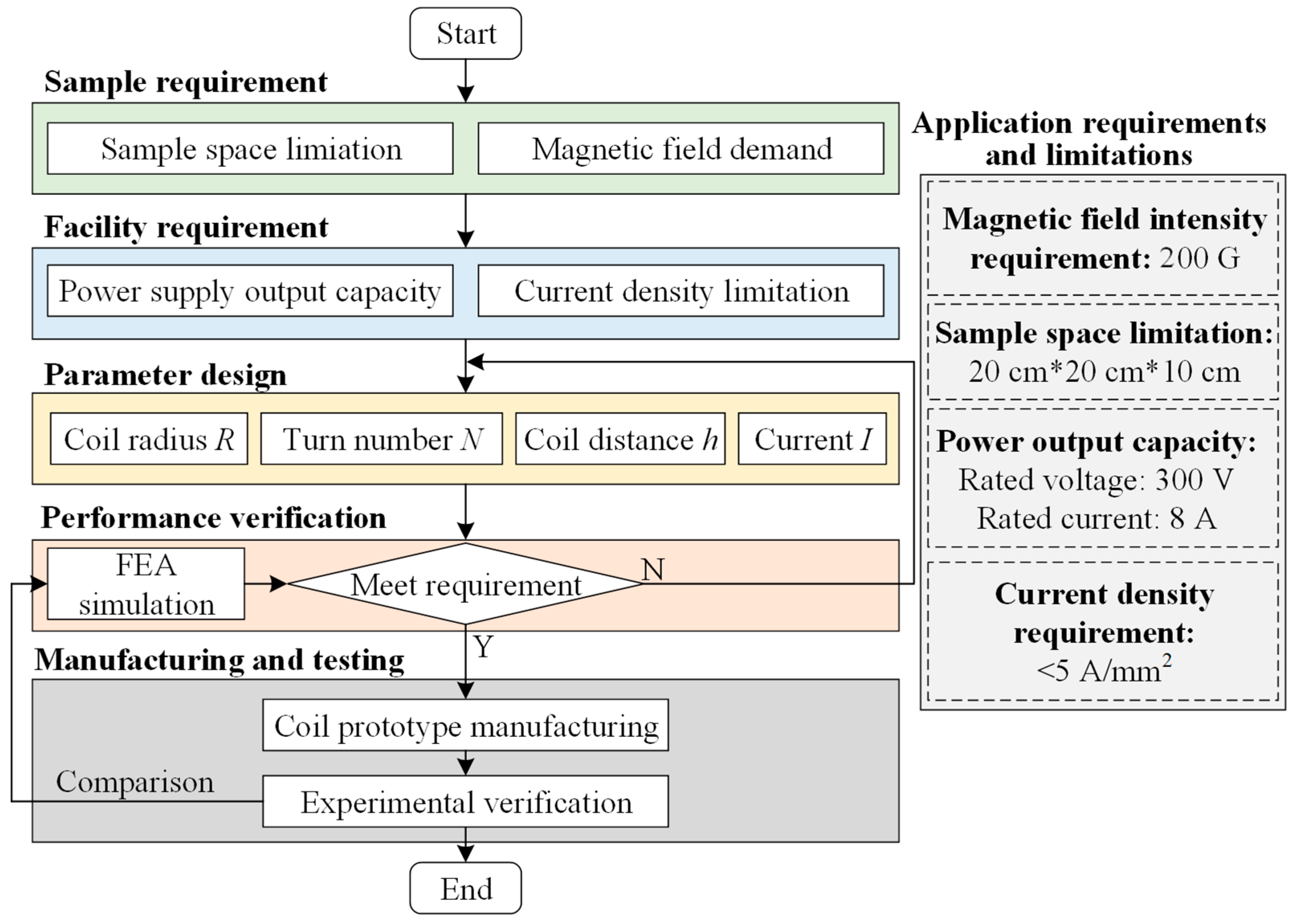
A structured design process for the Helmholtz coil was established, as illustrated in Figure 2. The procedure begins by defining operational requirements, including spatial constraints and target magnetic field intensity. Subsequently, facility specifications, such as power supply capacity and allowable current density are determined to prevent overheating during prolonged operation. Based on these inputs, coil parameters are designed and iteratively refined using finite element analysis (FEA). A prototype is then fabricated and experimentally evaluated, with measured results validated against FEA simulations. Key application requirements are specified alongside the workflow: a magnetic field intensity of 200 G, a sample space of 20 × 20 × 10 cm (L × W × H), a power supply rated at 300 V and 8 A, and a current density limit of 5 A/mm2 under natural cooling conditions.
The design process follows the systematic approach outlined in Figure 2, incorporating methodologies from established references [33,34,35,42,43,44].
(1)
Design requirement
Application requirements fundamentally govern the target magnetic field intensity and spatial homogeneity. For instance, in biological magnetic field applications, a homogeneous field volume of 20 cm × 20 cm × 10 cm is specified to accommodate the sample dimensions, directly guiding the determination of the coil size and configuration.
(2)
Coil parameter calculation
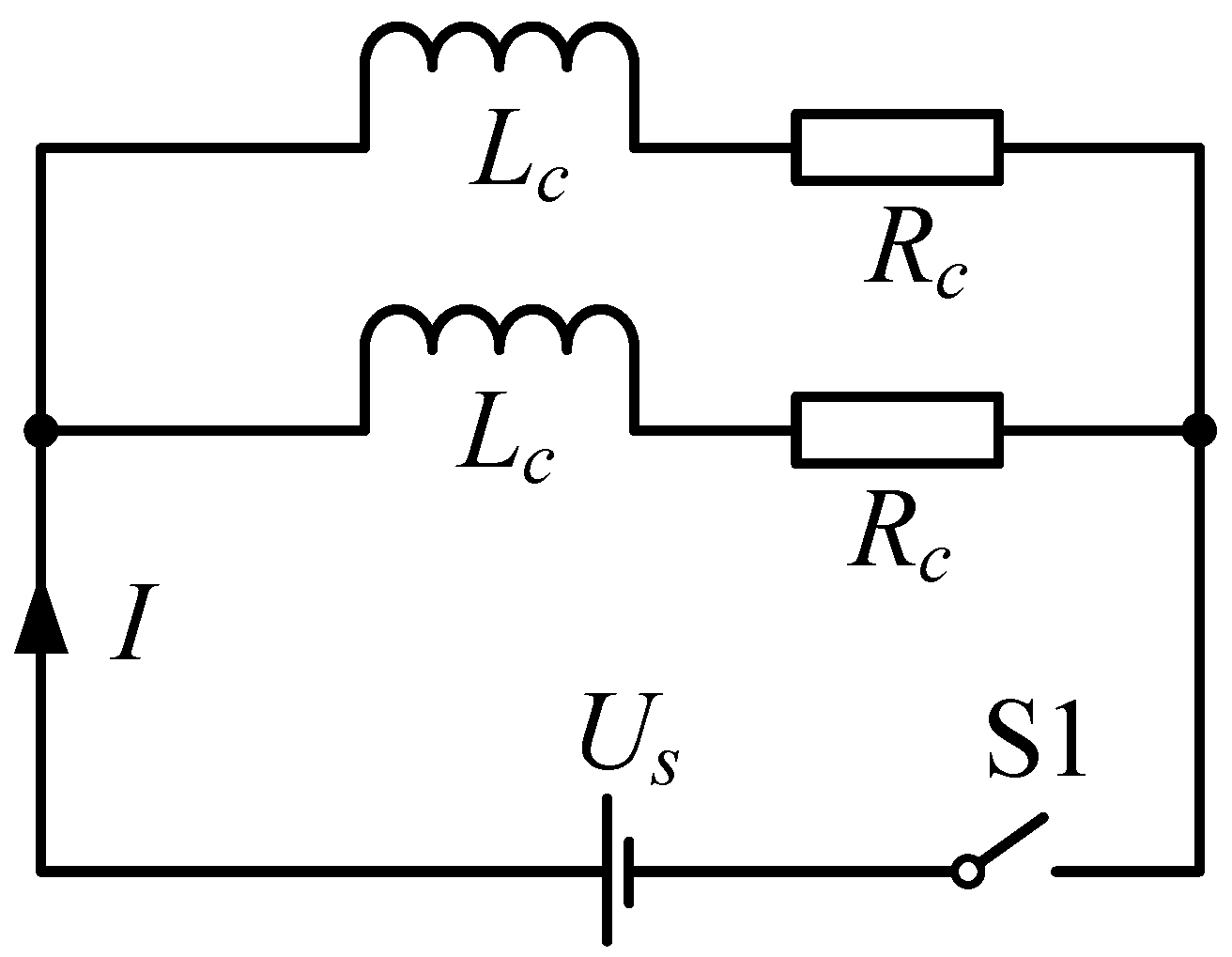
The simplified equivalent circuit is shown in Figure 3, in which Lc and Rc are the inductance and resistance of one coil, respectively, Us is the supply voltage, and S1 is the safety switch to control the circuit. It can be seen that the two coils are in parallel with each other to reduce the power loss of the system.
When the required magnetic field intensity is decided according to the experimental requirements, the coil parameters can be calculated by
B = 8 μ 0 N I 125 R
To achieve a relatively homogeneous magnetic field distribution, two identical coils of radius R are employed, with an inter-coil distance of h = R. The design process begins by defining the operational constraints, including the maximum allowable coil diameter and the permissible current density. The selected coil diameter must comply with spatial facility requirements, while the operating current I must be determined within a range that satisfies the current density limitation. These constraints can be formally expressed as follows:
R < D max 2 I π 4 D c o n d 2 A max
where Dmax is the maximum required diameter, Dcond is the diameter of one conductor, and Amax is the maximum current density determined by the heat dissipation capability of the whole system and is usually smaller than 5 A/mm2 in a natural dissipation environment.
Based on these constraints, the number of turns per coil and the conductor diameter are determined, while the final coil diameter is selected according to application-specific requirements. Subsequently, the coil inductance can be calculated as follows:
L c = μ 0 N 2 D c o n d 2 8 R
The inductive reactance can then be obtained:
X L = 2 π f L c
where f is the current frequency.
The resistance of one coil can be calculated as follows:
R = 8 ρ R N c D c o n d 2
Hence, the current can be calculated as follows:
I = U s R c 2 4 + X L 2 4 = U s 8 ρ R N c 2 D c o n d 2 2 + π f μ 0 N 2 D c o n d 2 8 R
Finally, the current density must be verified to ensure compliance with both the prescribed current density limit and the power supply’s operational constraints. By systematically following these design steps, a Helmholtz coil can be precisely engineered to achieve the target magnetic field characteristics with validated performance parameters.
(3)
Magnetic field homogeneity analysis
To improve the homogeneity of the magnetic field, the value high-order derivatives (d2B(0)/dz2) equals 0 to eliminate the quadratic contribution at the center of the coil. This characteristic can be verified by Taylor expansion as follows:
B z = B 0 + 1 2 d 2 B d z 2 0 z 2 + O z 3
(4)
FEA Simulation
The magnetic field distribution was numerically simulated using a finite element analysis (FEA) software (COMSOL). This simulation served to verify the theoretical calculations and allowed for further adjustment of the design parameters to optimize the coil’s performance.
(5)
Prototype Manufacturing and Testing
A physical prototype was fabricated according to the final design parameters. To maintain the structural and thermal stability of the coil system during operation, the supporting materials were carefully selected, and their dimensions were properly specified. The magnetic field distribution generated by the prototype was experimentally tested, and the results were compared with the FEA simulations for validation [36,45,46].

3. Analysis and Optimization of Electromagnetic Field Performance

In this section, a comparative analysis of magnetic field performance across different coil configurations is presented. Electromagnetic field simulation was performed using COMSOL Multiphysics software (COMSOL AB, Sweden).

3.1. Ring Coil Structure

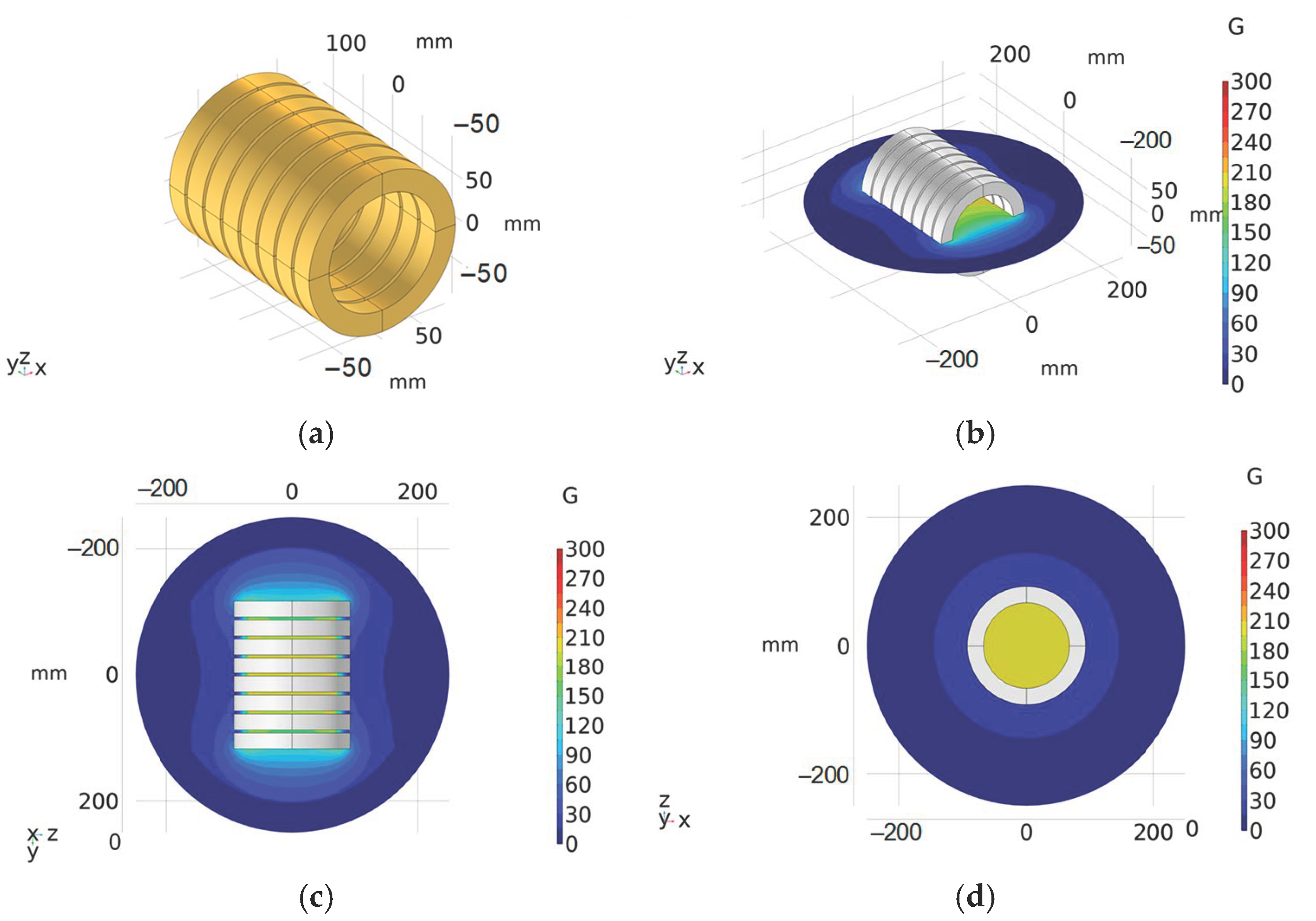
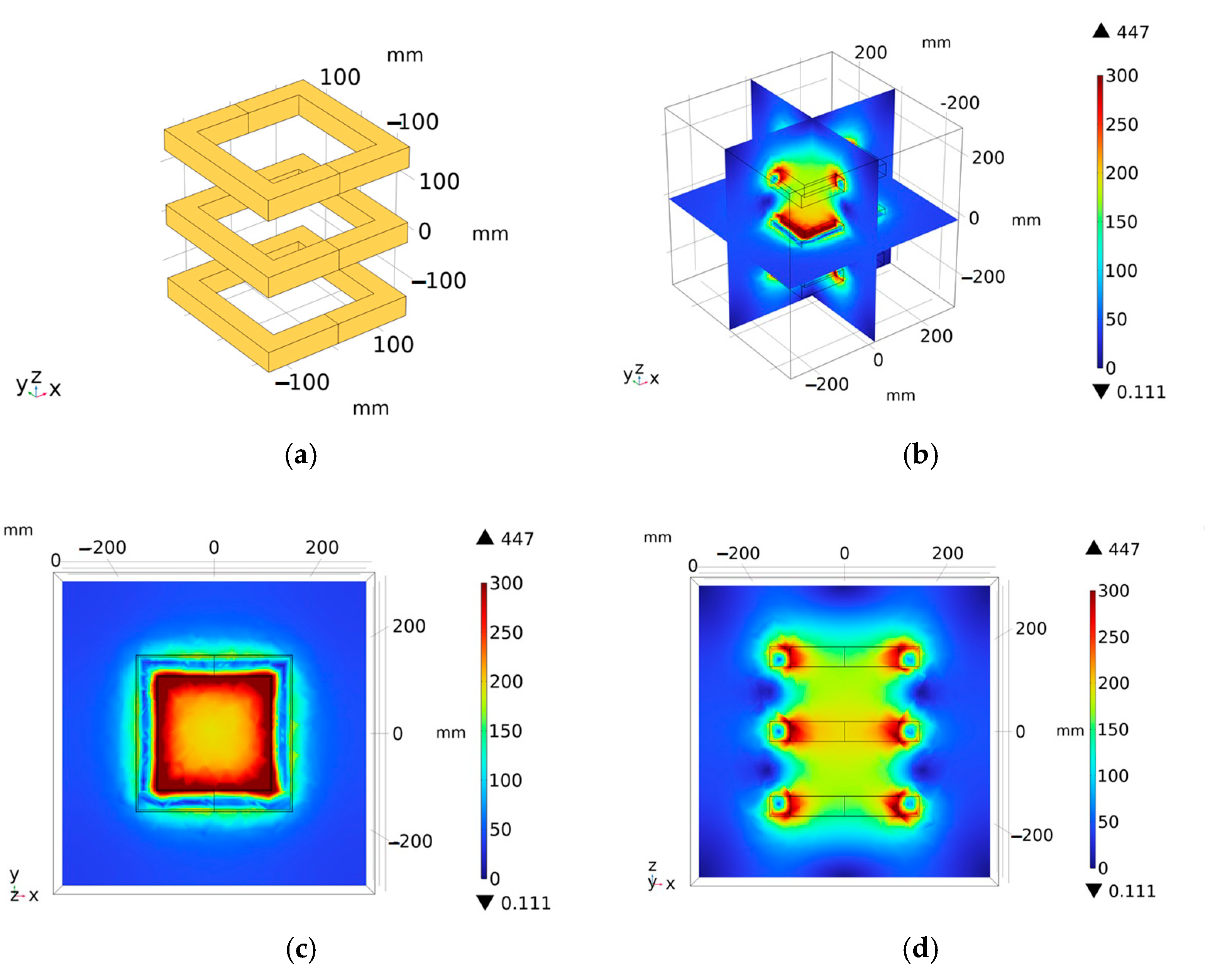
The ring coil structure (Figure 4a), comprising eight 135-turn hollow toroidal coils (height: 20 cm; diameter: 15 cm), was simulated under a 4.3 A current. While the configuration generated the target 200 G field within a limited central volume (7 cm diameter × 10 cm height), the magnetic field exhibited rapid decay beyond this region, fluctuating to approximately 50 G (Figure 4b). This constrained homogeneity renders the toroidal design unsuitable for applications requiring larger uniform field volumes, such as whole-organism agri-biological treatments [45].

3.2. Double-Square Coil Structure

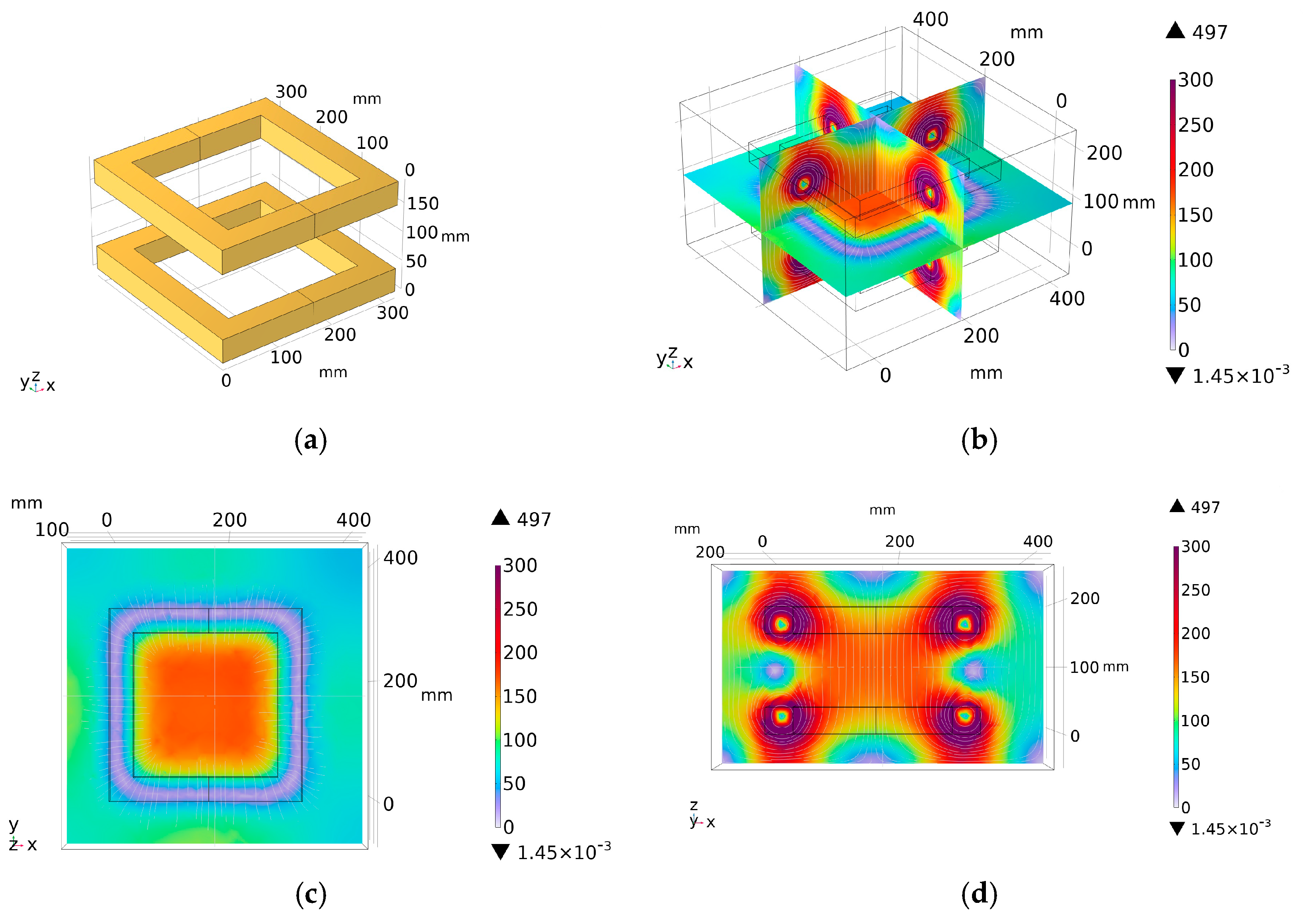
A double-square coil configuration was evaluated (Figure 5a), consisting of two 441-turn hollow square coils with an inter-coil distance of 13 cm. Each coil featured an outer side length of 30 cm and an inner side length of 26 cm. At an applied current of 12 A, the system generated the target 200 G magnetic field.
Simulation results demonstrated a homogeneous field distribution within a central 26 × 26 × 13 cm3 volume, confirming this configuration’s suitability for large-scale agricultural applications. However, significant field attenuation (>75% reduction) was observed within 0.5 cm of the coil boundaries, indicating substantial edge effects that require consideration in experimental design [43].

3.3. Triangular Coil Structure

The triangular coil configuration (Figure 6a), comprising three 441-turn square coils arranged with 13 cm spacing, generated a 200 G field at 7 A current. Simulation results confirmed homogeneous field distribution within a 26 × 26 × 26 cm3 central volume, representing a significant improvement in usable space. However, field heterogeneity emerged at interfacial regions (1/4 and 1/2 height positions) with homogeneity variations of approximately 10 G, indicating the need for spatial optimization to ensure consistent bio-stimulation across agricultural samples.

3.4. Hexagonal Three-Dimensional Coil Structure

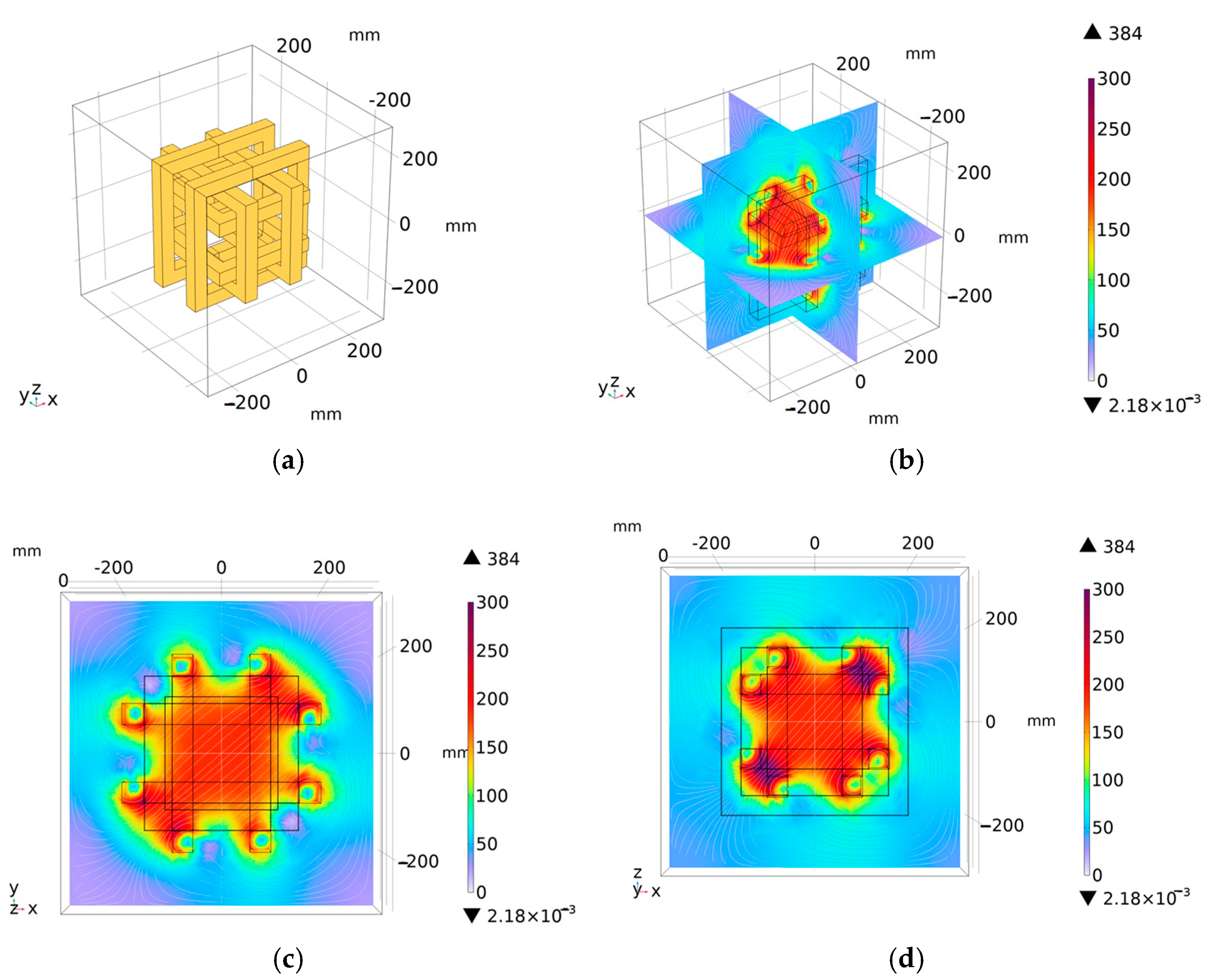
The hexagonal configuration (Figure 7a) employs six 220-turn square coils arranged along perpendicular axes. Operating at 10 A, this system achieves a 200 G field within a 26 cm3 central volume—the largest uniform space among evaluated designs. However, progressive field attenuation along diagonal directions (∼5% variation) reveals inherent geometric limitations. While the structural complexity and stringent alignment requirements pose manufacturing challenges, the design demonstrates valuable potential for large-scale agricultural applications where volumetric exposure is prioritized over absolute field uniformity [34,35].

3.5. Coil Structure Selection

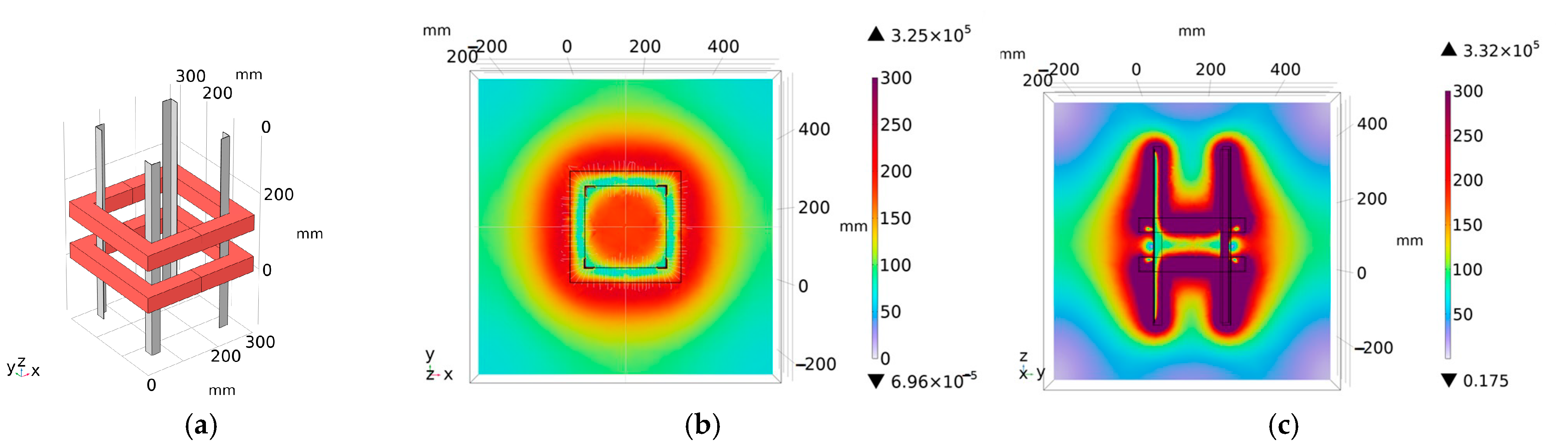
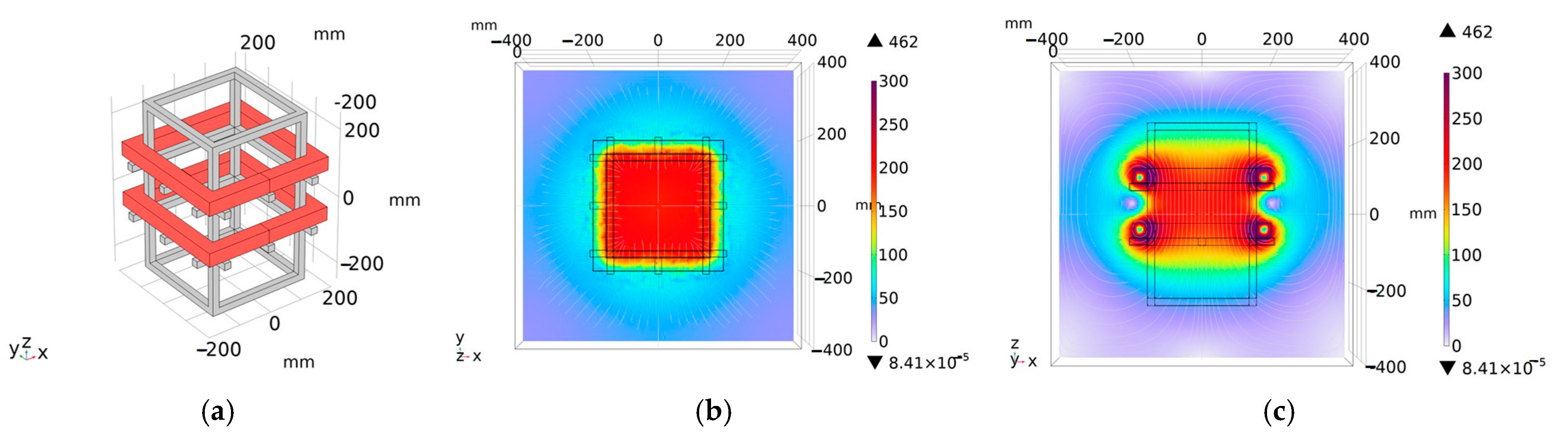
A comparative analysis of support materials revealed aluminum alloy’s superior performance over steel for coil frameworks. The high magnetic permeability of steel (Figure 8) significantly distorted the magnetic field, compromising homogeneity. In contrast, aluminum alloy’s permeability approximates air, and its non-closed structural design prevents eddy current formation. As shown in Figure 9, this configuration maintained 95.2% field homogeneity within the target region while providing sufficient mechanical stability, establishing aluminum alloy as the optimal support material for precision bio-stimulation systems [36,45,46].

4. Experiment Verification of Magnetic Field Intensity Homogeneity

In this study, all experiments were conducted with three independent biological replicates unless otherwise specified. Data are presented as mean ± standard deviation (SD). Statistical analyses were performed using SPSS Statistics (Version 26.0, IBM Corp., Armonk, NY, USA) Comparison of Multiple Groups: For comparisons among three or more groups, one-way analysis of variance (ANOVA) was employed, followed by Tukey’s post hoc test for multiple comparisons when significant differences were detected (p < 0.05).
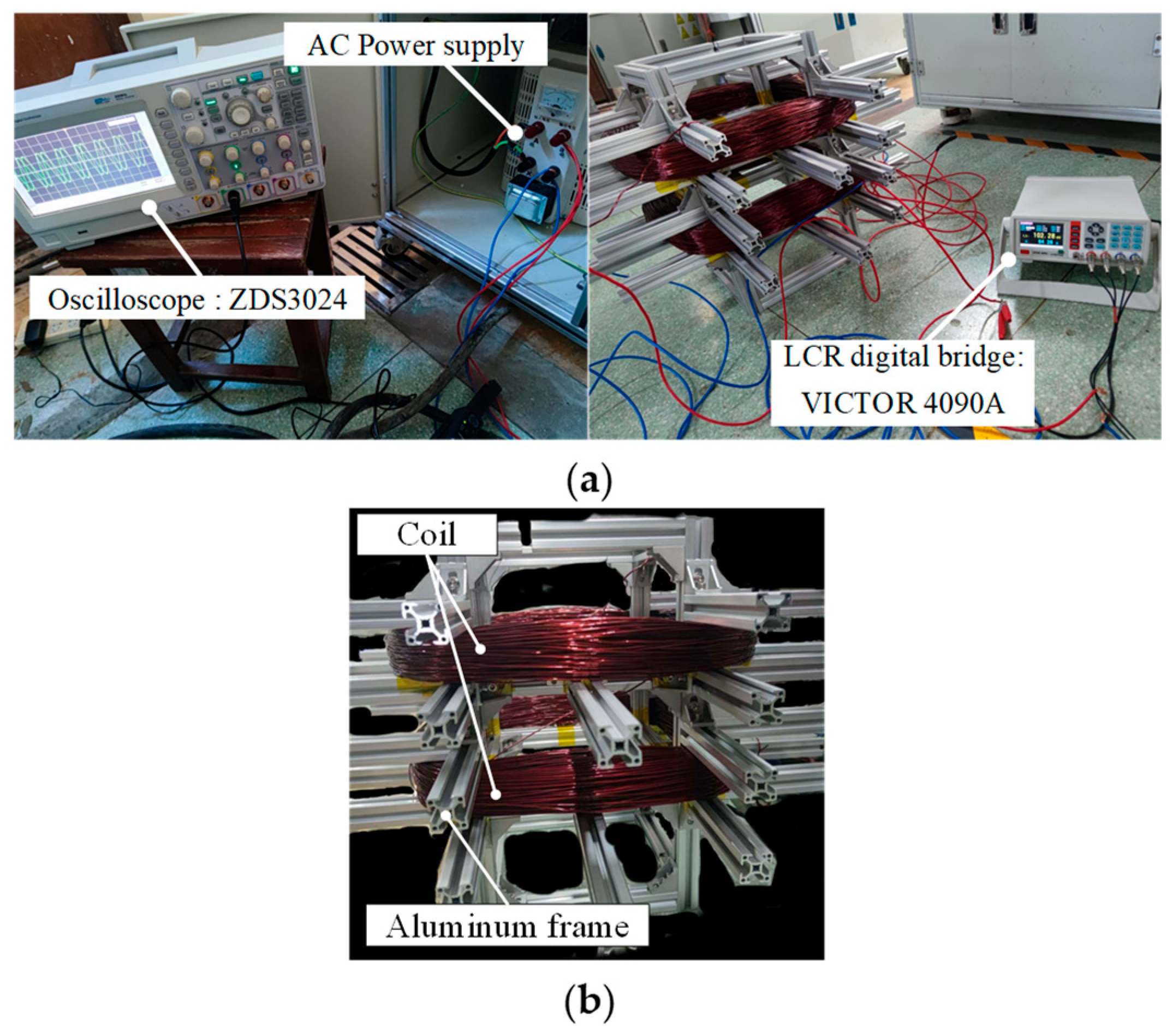
The experimental facilities are shown in Figure 10a and listed as follows: 1. Oscilloscope: ZDS3024. 2. LCR digital bridge: VICTOR 4090A. 3. Voltage regulator TDGC2. 4. AC magnetic field Gauss meter. The coil structure is shown in Figure 10b.
In this study, magnetic field homogeneity quantitatively describes the uniformity of a magnetic field within a specified working volume. It is defined as the maximum deviation of the magnetic flux density at any point in the target region relative to the average value, expressed as a percentage. It can be calculated according to the following formula:
H o m o g e n e i t y ( % ) = B m a x B m i n B m e a n × 100 %
where Bmax, Bmin, and Bmean represent the maximum, minimum, and average magnetic flux density (in Gauss) within the measured volume, respectively.
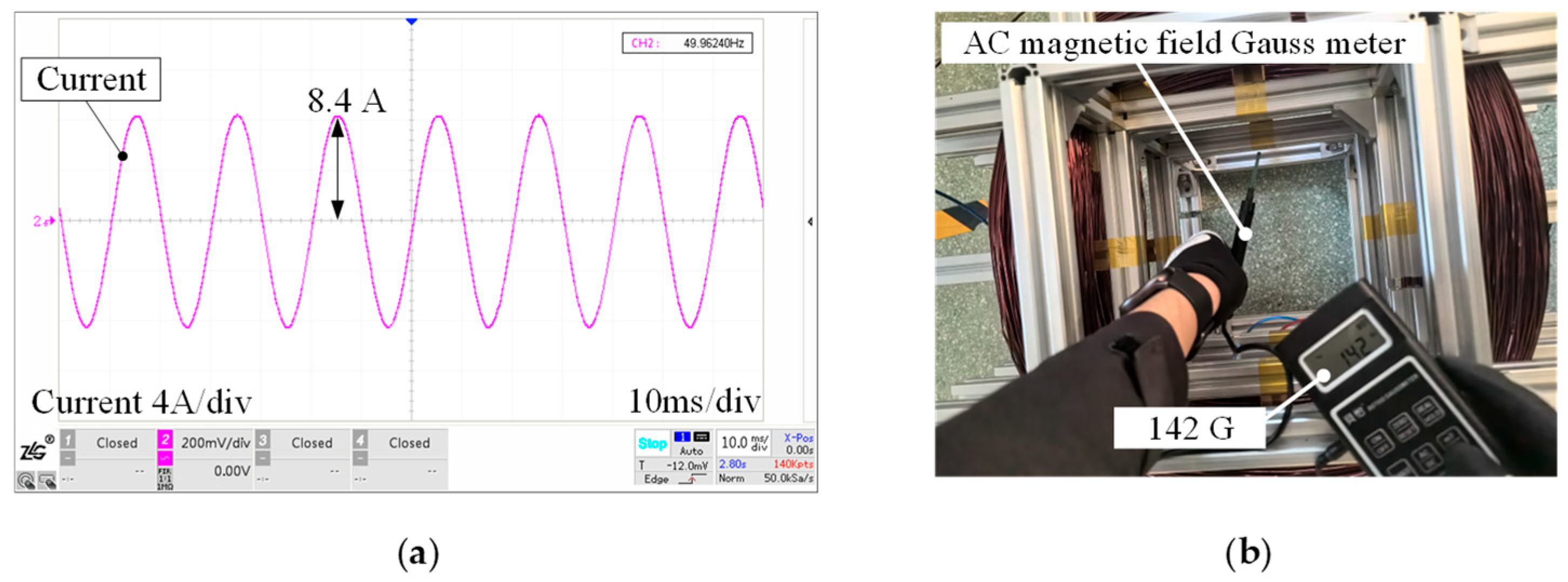
The specific coil parameters are designed and shown in Table 1. The experiments were conducted at 70% power load conditions (PLC), which corresponds to 70% of the maximum rated current of 12 A, i.e., 8.4 A. The term “power load conditions” refers to the operational level of the electromagnetic coil system, expressed as a percentage of its maximum rated electrical input. In this study, the coil’s maximum rated current was 12 A. Operating at 70% PLC means the coil was supplied with 70% of its maximum current (8.4 A), resulting in a proportional reduction in power consumption while maintaining the desired magnetic field intensity. A current of 8.4 A is injected in the coils, while 27 points are evenly selected inside the coil space for measuring the magnetic field intensity. The average value is 142.77 G, while the error is 1.88 G. The relative error is 1.32% (p < 0.05) and is relatively low.
Meanwhile, a magnetic field intensity of 200 G can be obtained by the current with amplitude of 12 A according to the FEA simulation in Figure 5 of the double square coil. The magnetic field intensity and the current amplitude are in proportional relation because the permeability of air is similar to that of a vacuum. Therefore, a magnetic field intensity of 140 G can be obtained with a current amplitude of 8.4 A via FEA simulation theoretically, which agrees well with the experiment result of 142.77 G. The close agreement between theoretical FEA simulations and experimental measurements (142.77 G achieved vs. 140 G predicted) demonstrates the reliability of the coil design and parameter optimization for precise magnetic field generation in agricultural bioelectromagnetic applications, particularly for microbial growth stimulation or seed germination studies, where field homogeneity and accuracy are critical [36,45,46].
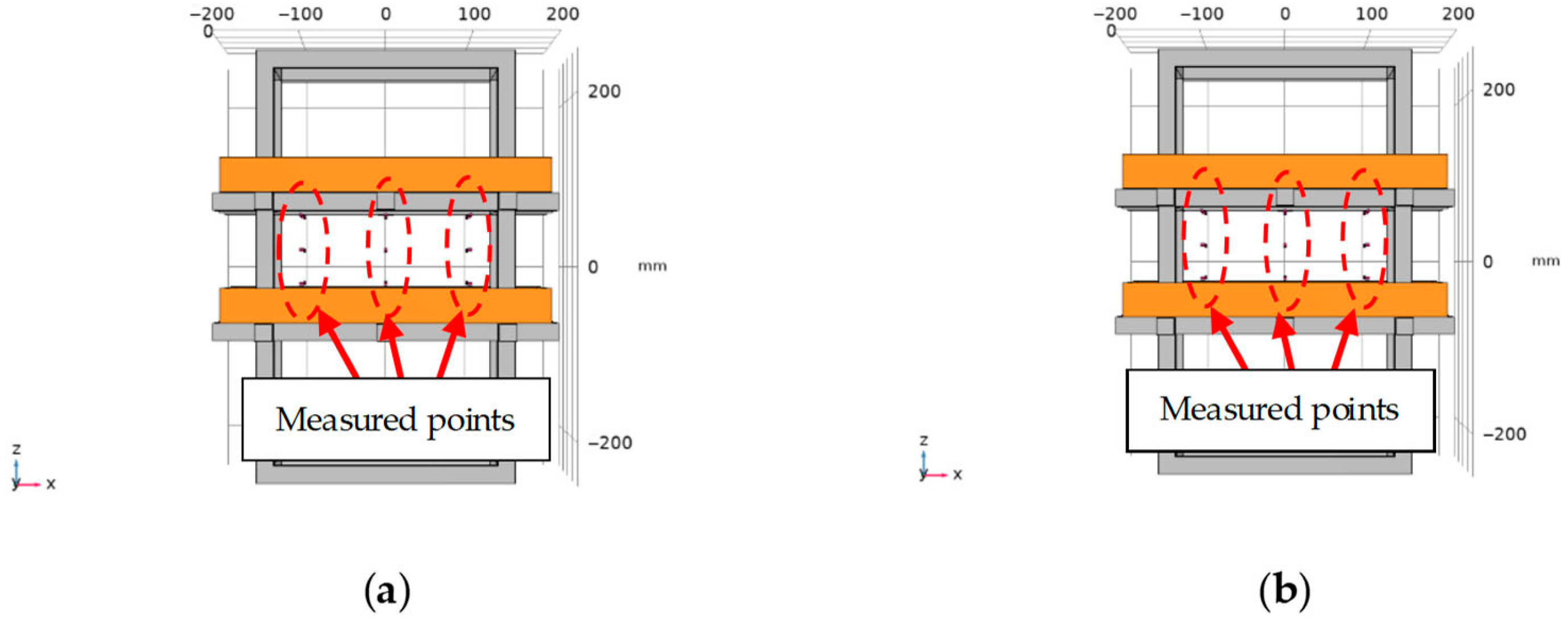
The measured points are then selected, as shown in Figure 11. Divide the coil into three layers and number them from top to bottom. Each layer has nine points. The coil current during the test is shown in Figure 12. The measured results are summarized in Table 2.

5. Magnetic-Field-Assisted Fermentation for Enhanced Polypeptide Production from Peanut Meal

5.1. Bacteria and Growth Conditions

Bacillus subtilis CICC 10089 was obtained from the School of Food Science and Engineering, Jiangsu University. The strain was initially revived by suspending the preserved bacterial powder in 5 mL of sterile liquid medium (composition: 10.0 g/L peptone, 5.0 g/L NaCl, 3.0 g/L beef extract, pH 7.0 ± 0.2) and incubating statically at 30 °C for 24 h. Subsequently, three loops of this culture were aseptically transferred to 100 mL of fresh liquid medium in a 500 mL Erlenmeyer flask and incubated in a rotary shaker at 180 r/m and 30 °C for 24 h. This subculturing process was repeated for three generations to ensure strain stability. For fermentation experiments, the final seed culture was prepared by inoculating 1 mL of actively growing culture into 100 mL of fresh medium and incubating under identical conditions (180 r/m, 30 °C, 24 h), yielding a cell density of approximately 108 CFU/mL.

5.2. Magnetic-Field-Assisted Fermentation Experimental Steps

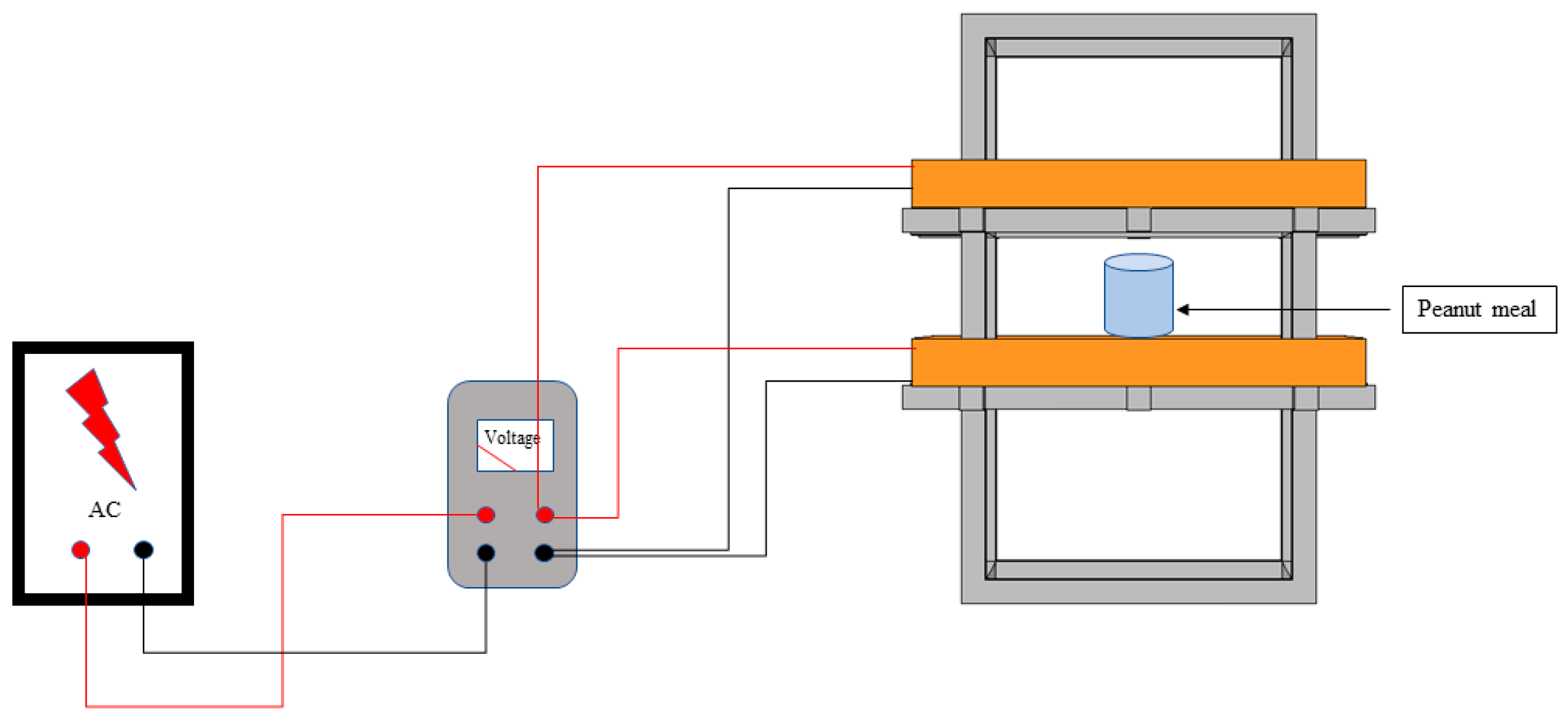
Fermentation substrates were prepared by placing 20.0 ± 0.1 g of sieved peanut meal (particle size < 500 μm) in 150 mL beakers. The initial moisture content of the raw peanut meal was determined to be 8.5% by gravimetric analysis. Substrates were covered with two layers of sterile gauze and sterilized by autoclaving at 121 °C for 20 min. After cooling to room temperature (25 ± 2 °C), substrates were aseptically supplemented with 20 mL of sterile distilled water and 6 mL (equivalent to 15% v/w of dry substrate) of fermentation seed liquid in a laminar flow hood. This resulted in a final moisture content of 58.3 ± 1.5%. The inoculated substrates were thoroughly mixed using sterile spatulas to ensure uniform distribution of inoculum. Fermentation units were incubated in a constant temperature and humidity incubator maintained at 37 ± 0.5 °C and 85 ± 5% relative humidity for 72 h. During the magnetic field treatment, samples were transferred to a specially designed temperature-controlled chamber that housed the Helmholtz coil system. This insulated chamber was equipped with a precision PID temperature controller and circulating-air system that maintained the internal environment at 37 ± 0.5 °C, identical to the incubator conditions. The temperature was continuously monitored using calibrated thermocouples placed adjacent to the samples, ensuring thermal stability throughout the magnetic field exposure period. The schematic diagram of the fermentation experiment is shown in Figure 13.

5.3. Experimental Study on the Effect of Magnetic Field on the Preparation of Peptides from Peanut Meal by Solid-State Fermentation

In the single-factor experiment, the effects of magnetic field intensity, intervention time, and treatment time on the preparation of peptides from fermented peanut meal were studied, respectively, as shown in Table 3.
This study employed three fermentation replicates with full randomization. Treatment assignment used computer-generated random sequences, while the sample-processing order was randomized daily. Analytical measurements were conducted by personnel blinded to group allocations to ensure objectivity and minimize potential bias.
Additionally, ANOVA was applied to assess the significance of each factor’s contribution to the observed variations. Pearson correlation coefficients were calculated to evaluate linear relationships between continuous variables, with statistical significance set at p < 0.05. Data from orthogonal experiments were analyzed using Range Analysis to determine optimal factor combinations.
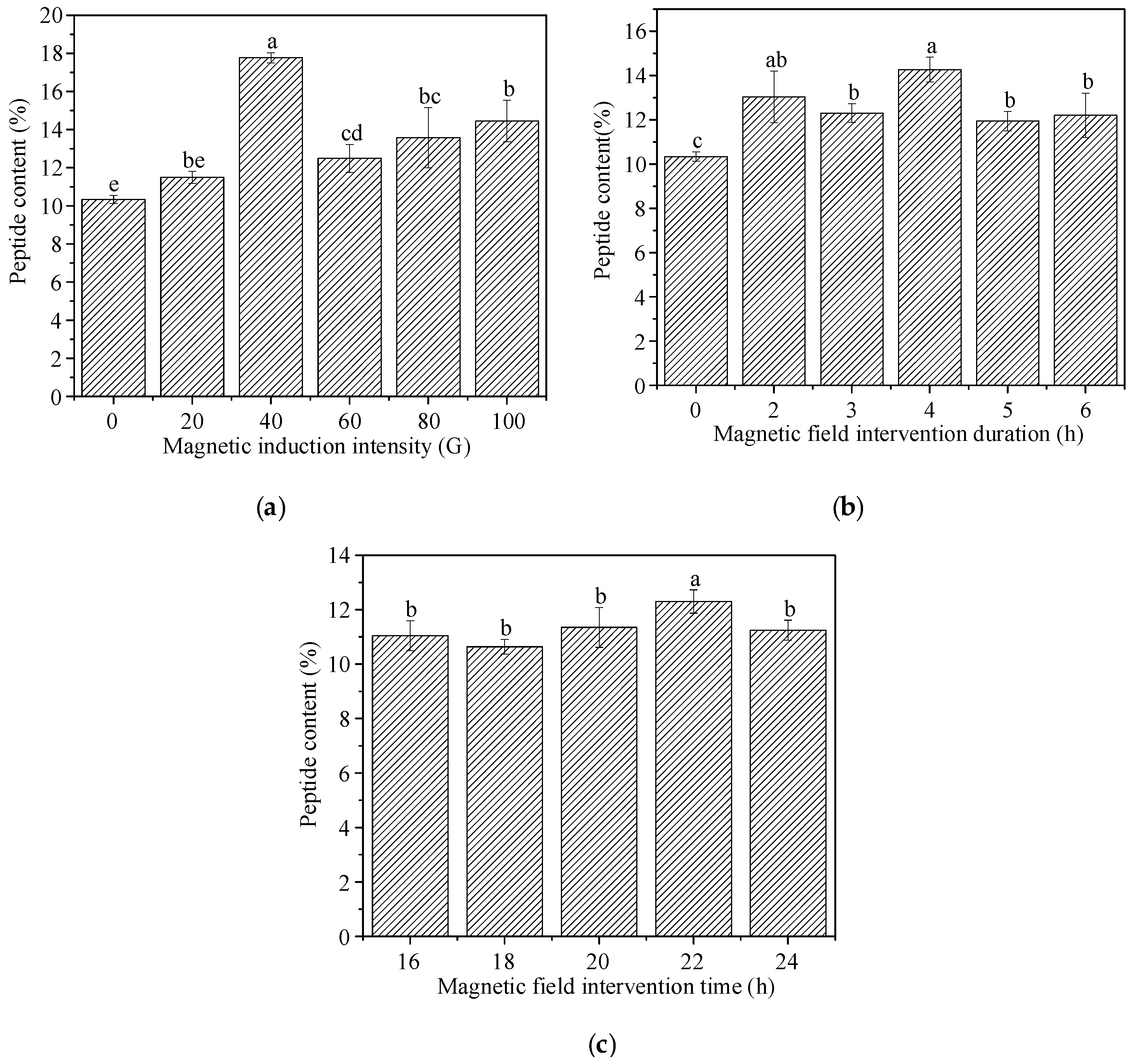
When conducting a single-factor experiment, the subjected factors (magnetic field intensity, magnetic field intervention time, magnetic field treatment duration) and levels were listed in Table 3, according to the literature consulted [8,9,13,15]. And, excluding the subjected factor, the other factors were set as follows: magnetic field intensity 80 G, intervention time starting at the 22nd hour of fermentation, magnetic-field-assisted fermentation duration of 4 h, and culture temperature of 37 °C. The experimental results are shown in Figure 14, peanut meal was subjected by magnetic-field-assisted fermentation in the magnetic field intensity of 0, 20, 40, 60, 80, and 100 G. Significant increase in peptide content was observed in 40, 60, 80, and 100 G magnetic field intensity treatments compared to the control (without magnetic field intensity treatment).
The highest peptide yield was achieved under the following conditions: magnetic induction intensity of 40 G, magnetic field intervention at 22nd hour after the start of fermentation, and a magnetic field treatment duration of 4 h. In the peanut meal fermentation test, as shown in Figure 14a, the maximum peptide content increased from 10.12% to 17.76%, and the yield increased by 75.49% compared with the control group without magnetic field treatment. One of the possible reasons why 40 G shows the optimal effect may be the biological “window effect”, i.e., 40 G is a “intensity window” for the fermentation, in which microbes are sensitive to be activated to promote growth, proliferation, and metabolism. In Guo’s [9] and He’s [47] research, they both ascribed the biological “window effect” as one of the possible reasons for the discontinuous trend in an activation or inactivation effect as the magnetic field strength increases. However, more insightful research on the mechanism of the biological window effect needs to be carried out in future study.
Table 4 shows the result and Range analysis (RA) of an orthogonal experimental study on the effect of a magnetic field on the preparation of peptides by the solid-state fermentation of peanut meal. It can be concluded from the Intuitive Range Analysis that the order of Importance is A (Magnetic Induction Intensity) > C (Intervention Duration) > B (Intervention Time). Theoretically Optimal Process Conditions: A2B1C3, which means magnetic induction intensity: 40 G, magnetic field intervention time: 4 h, and magnetic field intervention duration: 22 h.
The conclusions from the ANOVA (Table 5) are as follows: The effects of magnetic induction intensity (A) and intervention duration (C) on the peptide content are highly significant. The effect of the intervention time (B) is significant, but its influence is far less than that of A and C. The order of factor importance is A > C > B, which is fully consistent with the Range Analysis results.
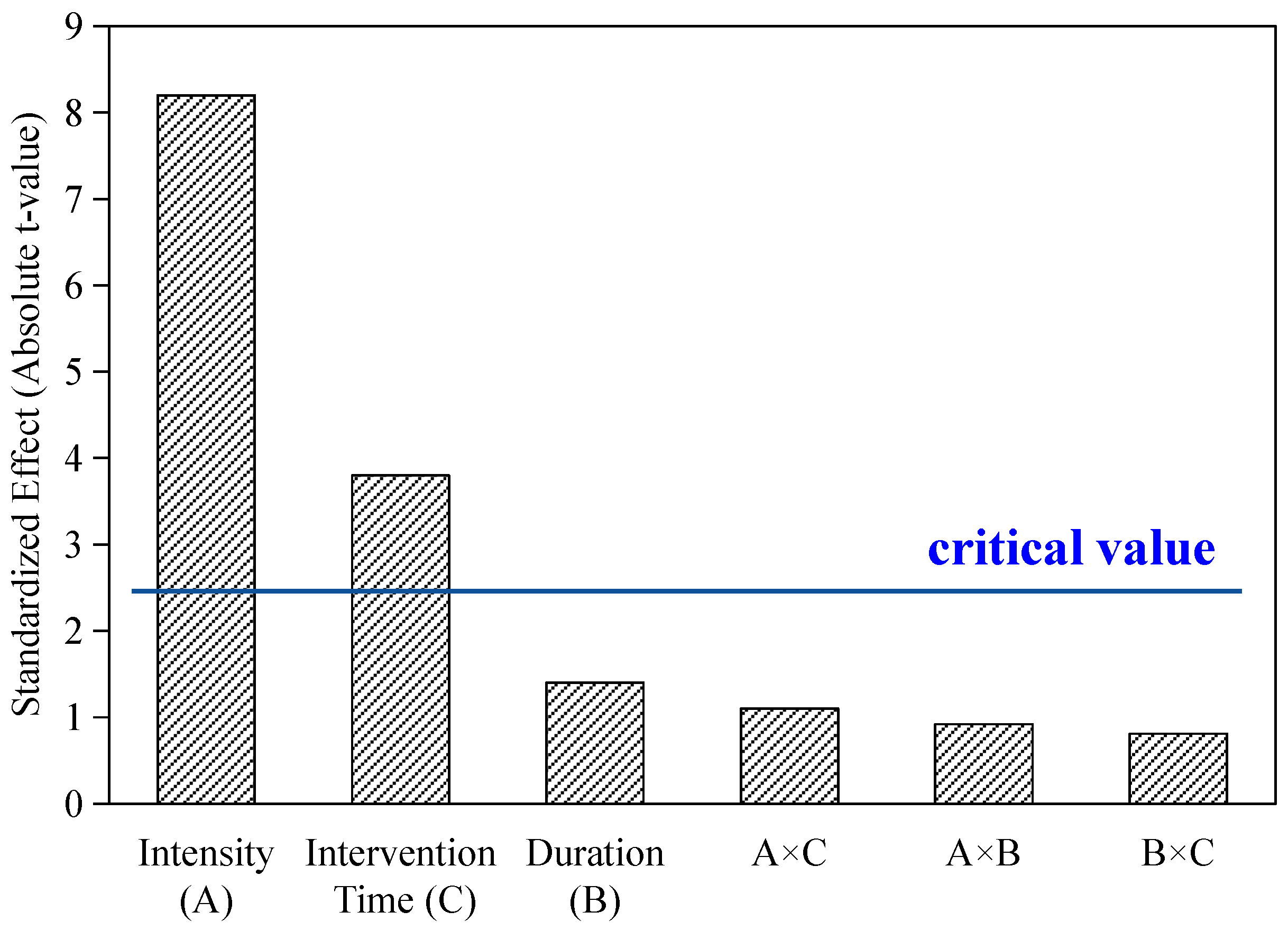
Based on the orthogonal experimental data from Table 4, a Pareto diagram was created (Figure 15). It showed the standardized effects of the factors investigated. The diagram clearly displays the relative importance of each factor in influencing the peptide content. The Pareto diagram reveals that magnetic field intensity is the most statistically significant factor (standardized effect: 8.2), followed by intervention timing (3.8), both exceeding the significance threshold. Intervention duration (1.4) and all interaction effects fall below the critical value, indicating a negligible impact on the peptide content within the tested parameters.
According to the LMF optimal treatment conditions, three fermentation validation experiments were conducted using the new designed LMF device (with optimized homogeneous magnetic field) for enhancing treatment, and the results of the peptide content were 18.05%, 18.72%, and 18.86%, with an average value of 18.54%, which is close to the orthogonal experimental results. Meanwhile, the average peptide content of 12.97% was achieved in SSF of the peanut meal at same conditions of fermentation and LMF (using a traditional LMF device which was reported in the authors’ former study [9]). The control group (without magnetic field treatment) demonstrated a baseline peptide content of 10.43%. A comparative analysis revealed that the homogeneous LMF treatment significantly enhanced the peptide yield, achieving 77.76% and 42.95% increases compared to the non-treated control and conventional inhomogeneous LMF treatment, respectively.
Pessoa et al. [48] provided valuable external validation for the potential of magnetic fields in enhancing bioconversion processes. Their demonstration that an induced magnetic field increased methane yield by 62% during anaerobic digestion of sugar beet pulp aligns with our observation of significantly improved peptide content (77.76%) in solid-state fermentation of peanut meal. This consistency across different biological systems (anaerobic digestion vs. aerobic solid-state fermentation) and target products (biogas vs. peptides) strengthens the evidence for the broad applicability of magnetic bio-stimulation.
Tang et al.’s [49] research obtained an 86.8% increase in vitamin K2 yield, during magnetic-field-enhanced fermentation of Flavobacterium sp. Veerana et al. [50] observed increases in the protein concentration and α-amylase activity by 1.5–3 times in Aspergillus oryzae fermentation after a radio-frequency–electromagnetic field (RF-EMF) treatment. The remarkable 77.76% increase in peptide content achieved through LMF treatment, which is consistent with the enhancement trends observed in Tang et al. (vitamin K2) and Veerana et al. (enzyme activity), strongly demonstrates the broad potential of homogeneous LMF technology in boosting microbial fermentation efficiency across diverse biological systems.
Recent advances in solid-state fermentation have demonstrated various strategies for enhancing the nutritional value of agricultural by-products. Chi et al. [3] successfully employed a mixed bacterial culture of keratinase-producing Bacillus strains to significantly increase the small peptide content in corn gluten–wheat bran mixture while also demonstrating pathogen inhibition and beneficial metabolite production. In a more engineered approach, an optimized Streptomyces sp. strain achieved remarkable protein recovery (83.7%) from cottonseed meal, yielding high levels of free amino acids and bioactive peptides with demonstrated antioxidant activity [4].
Compared to these biological approaches, our magnetic-field-assisted fermentation technology offers distinct advantages. While microbial strategies require careful strain selection and maintenance, and enzymatic approaches face cost limitations, our homogeneous magnetic field method provides a non-invasive, physically based alternative that avoids introducing external biological components. Specifically, our homogeneous magnetic field treatment achieved a 77.76% increase in peptide content from peanut meal, demonstrating competitive performance without the need for specialized microbial strains or expensive enzyme preparations. Furthermore, the precisely controlled Helmholtz coil system enables tunable fermentation enhancement while maintaining the integrity of the native microbial ecosystem, offering significant advantages in operational simplicity and biological compatibility.
Notably, our approach shares the common goal of enhancing protein bioavailability and generating bioactive compounds, but through a fundamentally different mechanism—directly influencing microbial metabolism and enzyme kinetics via controlled magnetic stimulation rather than relying solely on biological or enzymatic degradation. This physical-field-based strategy represents a promising complementary technology to existing biological methods, particularly suitable for applications, where introducing foreign biological components is undesirable or cost-prohibitive.

6. Conclusions

This study has established a comprehensive framework for designing and implementing Helmholtz coil systems to enhance solid-state fermentation of agricultural biomass through homogeneous magnetic field application. The key contributions and findings can be summarized as follows:
First, we established a systematic design methodology that integrates theoretical calculations, finite element analysis, and experimental validation to optimize Helmholtz coil performance. This integrated approach enabled us to achieve exceptional magnetic field homogeneity with merely 1.32% spatial deviation within the central fermentation region, addressing a critical limitation of previous magnetic fermentation systems where field inhomogeneity often led to inconsistent biological effects.
Second, our material selection analysis demonstrated that aluminum profiles serve as superior structural supports compared to traditional angle iron, effectively maintaining magnetic field integrity without distortion while providing mechanical stability. This finding has significant implications for industrial-scale implementation where both electromagnetic performance and structural reliability are crucial.
Most importantly, we identified and optimized the critical magnetic treatment parameters for peanut meal fermentation, determining that a 40 G field intensity with specific temporal parameters (22nd hour initiation and 4 h duration) maximizes peptide production. The resulting 77.76% and 42.95% increases in peptide content compared to non-treated and conventional LMF-treated samples, respectively, provide compelling evidence for the efficacy of homogeneous magnetic fields in enhancing the fermentation efficiency.
Beyond these demonstrable outcomes, our research provides fundamental insights into the relationship between magnetic field homogeneity and microbial metabolic activity, suggesting that consistent field exposure is essential for obtaining reproducible fermentation enhancement. The successful integration of precision electromagnetic engineering with bioprocess optimization presented in this work establishes a new paradigm for physical-field-assisted fermentation technology, creating a robust foundation for future developments in electromagnetic bioprocessing.
Looking forward, this study opens several promising research directions, including the scaling of homogeneous magnetic systems for industrial applications, the exploration of field–frequency combinations for different microbial strains, and the investigation of molecular mechanisms underlying magnetic field effects on metabolic pathways. The principles and methodologies developed here provide a robust foundation for future advances in magnetic-field-enhanced bioprocessing of agricultural materials.

Author Contributions

Conceptualization, H.C., Y.Z., and Z.H.; methodology, H.C. and Z.H.; software, Y.Z. and Z.H.; investigation, H.C., Y.Z., and Z.H.; experiment design, Y.D., C.D., and Z.H.; writing—original draft preparation, H.C. and Y.Z.; writing—review and editing, Y.D. and C.D.; supervision, R.H. and H.M. All authors have read and agreed to the published version of the manuscript.

Funding

This study was supported by Primary Research and Development Plan of Jiangsu Province [Grant Number BE2020329], and sponsored by a project funded by the Priority Academic Program Development of Jiangsu Higher Education Institutions (PAPD).

Data Availability Statement

The original contributions presented in this study are included in the article. Further inquiries can be directed to the corresponding author.

Conflicts of Interest

The authors declare no conflicts of interest.

References

  1. Chilakamarry, C.R.; Sakinah, A.M.M.; Zularisam, A.W.; Sirohi, R.; Khilji, I.A.; Ahmad, N.; Pandey, A. Advances in solid-state fermentation for bioconversion of agricultural wastes to value-added products: Opportunities and challenges. Bioresour. Technol. 2022, 343, 126065. [Google Scholar] [CrossRef]
  2. Kukreti, N.; Kumar, P.; Kataria, R. Sustainable biotransformation of lignocellulosic biomass to microbial enzymes: An overview and update. Ind. Crops Prod. 2024, 222 Pt 1, 119432. [Google Scholar] [CrossRef]
  3. Chi, Z.; Feng, Y.; Wang, J.; Lv, G.; Fang, X.; Teng, T.; Shi, B. Enhancing small peptide content and improving the microbial community and metabolites in corn gluten meal with solid-state fermentation using keratinase-producing Bacillus strains. Int. J. Food Microbiol. 2025, 441, 111320. [Google Scholar] [CrossRef] [PubMed]
  4. Dai, Z.; Zhang, M.; Li, Z.; Lu, D.; Wu, L.; Qin, C.; Wang, H.; Deng, J.; Luo, X. Highly efficient and sustainable bioconversion of cottonseed meal to high-value products through solid-state fermentation by protease-enhanced Streptomyces sp. SCUT-3. Chem. Eng. J. 2025, 521, 166481. [Google Scholar] [CrossRef]
  5. Chen, S.; Jin, Y.; Yang, N.; Wei, L.; Xu, D.; Xu, X. Improving microbial production of value-added products through the intervention of magnetic fields. Bioresour. Technol. 2024, 393, 130087. [Google Scholar] [CrossRef] [PubMed]
  6. Zhao, C.; Song, Y.; Chen, H.; Li, Y.; Lei, A.; Wu, Q.; Zhu, L.; He, Q. Study on the selective regulation of microbial community structure in microbial fuel cells by magnetic field–coupled magnetic carbon dots. Bioresour. Technol. 2025, 437, 133065. [Google Scholar] [CrossRef]
  7. Li, W.; Ma, H.; He, R.; Ren, X.; Zhou, C. Prospects and application of ultrasound and magnetic fields in the fermentation of rare edible fungi. Ultrason. Sonochem. 2021, 76, 105613. [Google Scholar] [CrossRef]
  8. Guo, L.; Li, X.; Zhang, X.; Ma, H. Effect of low-intensity magnetic field on the growth and metabolite of Grifola frondosa in submerged fermentation and its possible mechanisms. Food Res. Int. 2022, 159, 111537. [Google Scholar] [CrossRef]
  9. Guo, L.; Guo, Y.; Wu, P.; Liu, S.; Gu, C.; Wu, Y.M.; Ma, H.; He, R. Enhancement of polypeptide yield derived from rapeseed meal with low-intensity alternating magnetic field. Foods 2022, 11, 2952. [Google Scholar] [CrossRef]
  10. Canli, O.; Kurbanoglu, E.B. Application of low magnetic field on inulinase production by Geotrichum candidum under solid state fermentation using leek as substrate. Toxicol. Ind. Health 2012, 28, 894–900. [Google Scholar] [CrossRef]
  11. Andrade, C.M.; Cogo, A.J.D.; Perez, V.H.; Santos, N.F.; Okorokova-Façanha, A.L.; Justo, O.R.; Façanha, A.R. Increases of bioethanol productivity by S. cerevisiae in unconventional bioreactor under ELF-magnetic field: New advances in the biophysical mechanism elucidation on yeasts. Renew. Energy 2021, 169, 836–842. [Google Scholar] [CrossRef]
  12. Liu, J.; Wang, D.; Wang, H.; Yang, N.; Hou, J.; Lv, X.; Gong, L. Low frequency magnetic field assisted production of acidic protease by Aspergillus niger. Arch. Microbiol. 2024, 206, 273. [Google Scholar] [CrossRef]
  13. Liu, D.; Zhu, L.; Guo, Y.; Zhao, Y.; Betchem, G.; Yolandani, Y.; Ma, H. Enhancing submerged fermentation of Antrodia camphorata by low-frequency alternating magnetic field. Innov. Food Sci. Emerg. Technol. 2023, 86, 103382. [Google Scholar] [CrossRef]
  14. Wang, H.; Hou, J.; Wang, D.; Shi, H.; Gong, L.; Lv, X.; Liu, J. Effect of low frequency alternating magnetic field for erythritol production in Yarrowia lipolytica. Arch. Microbiol. 2024, 206, 392. [Google Scholar] [CrossRef]
  15. Tuly, J.A.; Ma, H.; Zabed, H.M.; Dong, Y.; Chen, G.; Guo, L.; Betchem, G.; Igbokwe, C.J. Exploring magnetic field treatment into solid-state fermentation of organic waste for improving structural and physiological properties of keratin peptides. Food Biosci. 2022, 49, 101872. [Google Scholar] [CrossRef]
  16. Akarca, G.; Denizkara, A.J. Changes of quality in yoghurt produced under magnetic field effect during fermentation and storage processes. Int. Dairy J. 2024, 150, 105841. [Google Scholar] [CrossRef]
  17. Zhang, M.; Wang, P.; Wang, H.; Wang, L.; Ding, X.; Zheng, Z.; Zhao, G. Mechanism of static magnetic field influencing morphogenesis of Flavobacterium sp. m1-14. Enzym. Microb. Technol. 2025, 191, 110714. [Google Scholar] [CrossRef] [PubMed]
  18. Yang, Y.; Liao, Q.; Zhang, J.; Liu, Y.; Li, L.; Chen, S.; Gao, M. Effect of a magnetic field on the production of Monascus pigments and citrinin via regulation of intracellular and extracellular iron content. Food Phys. 2026, 3, 100070. [Google Scholar] [CrossRef]
  19. Yan, H.; Cui, Y.; Liang, H.; Li, Z. Critical review on magnetic biological effects of microorganisms in the field of wastewater treatment: Theory and application. J. Environ. Chem. Eng. 2025, 13, 118351. [Google Scholar] [CrossRef]
  20. Guzmán-Armenteros, T.M.; Villacís-Chiriboga, J.; Guerra, L.S.; Ruales, J. Electromagnetic fields effects on microbial growth in cocoa fermentation: A controlled experimental approach using established growth models. Heliyon 2024, 10, e24927. [Google Scholar] [CrossRef]
  21. Velichkova, P.G.; Ivanov, T.V.; Lalov, I.G. Magnetically assisted fluidized bed bioreactor for bioethanol production. Bulg. Chem. Commun. 2017, 49, 105–109. [Google Scholar]
  22. Konopacka, A.; Rakoczy, R.; Konopacki, M. The effect of rotating magnetic field on bioethanol production by yeast strain modified by ferrimagnetic nanoparticles. J. Magn. Magn. Mater. 2019, 473, 176–183. [Google Scholar] [CrossRef]
  23. Lin, L.; Wang, X.; He, R.; Cui, H. Action mechanism of pulsed magnetic field against E. coli O157:H7 and its application in vegetable juice. Food Control 2019, 95, 150–156. [Google Scholar] [CrossRef]
  24. Betchem, G.; Dabbour, M.; Tuly, J.A.; Lu, F.; Liu, D.; Monto, A.R.; Dusabe, K.D.; Ma, H. Effect of magnetic field-assisted fermentation on the in vitro protein digestibility and molecular structure of rapeseed meal. J. Sci. Food Agric. 2024, 104, 3883–3893. [Google Scholar] [CrossRef] [PubMed]
  25. Cheng, M.; Xu, B.; Qu, G.; Ning, P.; Ren, N.; Zou, H. Research on the mechanism of copper removal during electromagnetic enhanced aerobic fermentation of sludge. Renew. Energy 2024, 231, 121014. [Google Scholar] [CrossRef]
  26. Ma, H.; Pan, Z.; Gao, M.; Luo, L. Efficacy in microbial sterilization of pulsed magnetic field treatment. Int. J. Food Eng. 2008, 4, 15. [Google Scholar] [CrossRef]
  27. Bawin, S.M.; Adey, W.R.; Sabbot, I.M. Ionic factors in release of 45Ca2+ from chicken cerebral tissue by electromagnetic fields. Proc. Natl. Acad. Sci. USA 1978, 75, 6314–6318. [Google Scholar] [CrossRef]
  28. Blackman, C.F.; Benane, S.G.; Elliott, D.J.; House, D.E.; Pollock, M.M. Influence from brain tissue in Vitro: A three-model analysis consistent with the frequency response up to 510 Hz. Bioelectromangetics 1988, 9, 215–227. [Google Scholar] [CrossRef]
  29. Byus, C.V.; Lundak, R.L.; Fletche, R.M.; Adey, W.R. Alterations in protein kinase activity following exposure of cultured human lymphocytes to modulated microwave fields. Bioelectromagnetics 1984, 5, 341–351. [Google Scholar] [CrossRef]
  30. Li, M.; Qu, J.; Peng, Y. Sterilization of Escherichia coli cells by the application of pulsed magnetic field. J. Environ. Sci. 2004, 16, 348–352. [Google Scholar]
  31. Mackinder, M.A.; Wang, K.; Zheng, B.; Shrestha, M.; Fan, Q. Magnetic field enhanced cold plasma sterilization. Clin. Plasma Med. 2020, 17, 100092. [Google Scholar] [CrossRef]
  32. Ju, M.; Zhang, J.; Li, L.; Liu, Y.; Gu, T.; Gao, M. A low-frequency magnetic field regulated the synthesis of carotenoids in Rhodotorula mucilaginosa by influencing iron metabolism. Food Phys. 2025, 2, 100041. [Google Scholar] [CrossRef]
  33. Restrepo, A.F.; Franco, E.; Cadavid, H.; Pinedo, C.R. Analysis of the magnetic field homogeneity for an equilateral triangular helmholtz coil. Prog. Electromagn. Res. M 2016, 50, 75–83. [Google Scholar] [CrossRef]
  34. Restrepo, A.F.; Franco, E.; Cadavid, H.; Pinedo, C.R. A comparative study of the magnetic field homogeneity for circular, square and equilateral triangular helmholtz coils. In Proceedings of the 2017 International Conference on Electrical, Electronics, Communication, Computer, and Optimization Techniques (ICEECCOT), Mysuru, India, 15–16 December 2017. [Google Scholar]
  35. Restrepo, A.F.; Franco, E.; Pinedo, C.R. Study and analysis of magnetic field homogeneity of square and circular Helmholtz coil pairs: A Taylor series approximation. In Proceedings of the 2012 VI Andean Region International Conference, Cuenca, Ecuador, 7–9 November 2012. [Google Scholar]
  36. Baranova, V.E.; Baranov, P.F. The Helmholtz coils simulating and improved in COMSOL. In Proceedings of the 2014 Dynamics of Systems, Mechanisms and Machines (Dynamics), Omsk, Russia, 11–13 November 2014. [Google Scholar]
  37. Liu, Z.; Gao, X.; Zhao, J.; Xiang, Y. The sterilization effect of solenoid magnetic field direction on heterotrophic bacteria in circulating cooling water. Procedia Eng. 2017, 174, 1296–1302. [Google Scholar] [CrossRef]
  38. Ito, T.; Murayama, Y.; Suzuki, M.; Yoshimura, N.; Iwano, K.; Kudo, K. Evidence for sterilization of Saccharomyces cerevisiae K 7 by an external magnetic flux. Jpn. J. Appl. Phys. 1992, 31, L676. [Google Scholar] [CrossRef]
  39. Tsuchiya, K.; Nakamura, K.; Okuno, K.; Ano, T.; Shoda, M. Effect of homogeneous and inhomogeneous high magnetic fields on the growth of Escherichia coli. J. Biosci. Bioeng. 1996, 81, 343–346. [Google Scholar] [CrossRef]
  40. Deutmeyer, A.; Raman, R.; Murphy, P.; Pandey, S. Effect of magnetic field on the fermentation kinetics of Saccharomyces cerevisiae. Adv. Biosci. Biotechnol. 2011, 2, 207–213. [Google Scholar] [CrossRef][Green Version]
  41. Chen, L.; Zhang, K.; Wang, M.; Zhang, Z.; Feng, Y. Enhancement of magnetic field on fermentative hydrogen production by Clostridium pasteurianum. Bioresour. Technol. 2021, 341, 125764. [Google Scholar] [CrossRef]
  42. Zhu, X.; Xing, M.; Liu, C.; Ye, J.; Cheng, H.; Miao, Y. Optimization of composite Helmholtz coils towards high magnetic uniformity. Eng. Sci. Technol. Int. J. 2023, 47, 101539. [Google Scholar] [CrossRef]
  43. Nieves, F.J.; Bayón, A.; Gascón, F. Optimization of the magnetic field homogeneity of circular and conical coil pairs. Rev. Sci. Instrum. 2019, 90, 045120. [Google Scholar] [CrossRef]
  44. Wang, J.; She, S.; Zhang, S. An improved Helmholtz coil and analysis of its magnetic field homogeneity. Rev. Sci. Instrum. 2002, 73, 2175–2179. [Google Scholar] [CrossRef]
  45. Doan, V.D.; Jeng, J.T.; Tsao, T.H.; Pham, T.T.; Mei, P.I. Development of a broad bandwidth Helmholtz coil for biomagnetic application. IEEE Trans. Magn. 2020, 57, 5300305. [Google Scholar] [CrossRef]
  46. Ghaly, S.M.O.A.; Muhanna, K.A.; Khan, M.O. Design and Testing of a Square Helmholtz Coil for NMR Applications with Relative Improved B 1 Homogeneity. In Proceedings of the 2019 IEEE International Conference on Imaging Systems and Techniques (IST), Abu Dhabi, United Arab Emirates, 9–10 December 2019. [Google Scholar]
  47. He, R.; Ma, H.; Wang, H. Inactivation of E. coli by high-intensity pulsed electromagnetic field with a change in the intracellular Ca2+ concentration. J. Electromagn. Waves Appl. 2014, 28, 459–469. [Google Scholar] [CrossRef]
  48. Pessoa, M.; Motta Sobrinho, M.A.; Kraume, M. The use of biomagnetism for biogas production from sugar beet pulp. Biochem. Eng. J. 2020, 164, 107770. [Google Scholar] [CrossRef]
  49. Tang, H.; Wang, P.; Wang, H.; Fang, Z.; Yang, Q.; Ni, W.; Sun, X.; Liu, H.; Wang, L.; Zhao, G.; et al. Effect of static magnetic field on morphology and growth metabolism of Flavobacterium sp. m1–14. Bioprocess Biosyst. Eng. 2019, 42, 1923–1933. [Google Scholar] [CrossRef]
  50. Veerana, M.; Yu, N.N.; Bae, S.J.; Kim, I.; Kim, E.S.; Ketya, W.; Lee, H.Y.; Kim, N.Y.; Park, G. Enhancement of fungal enzyme production by radio-frequency electromagnetic fields. J. Ferment. 2022, 8, 1187. [Google Scholar] [CrossRef] [PubMed]
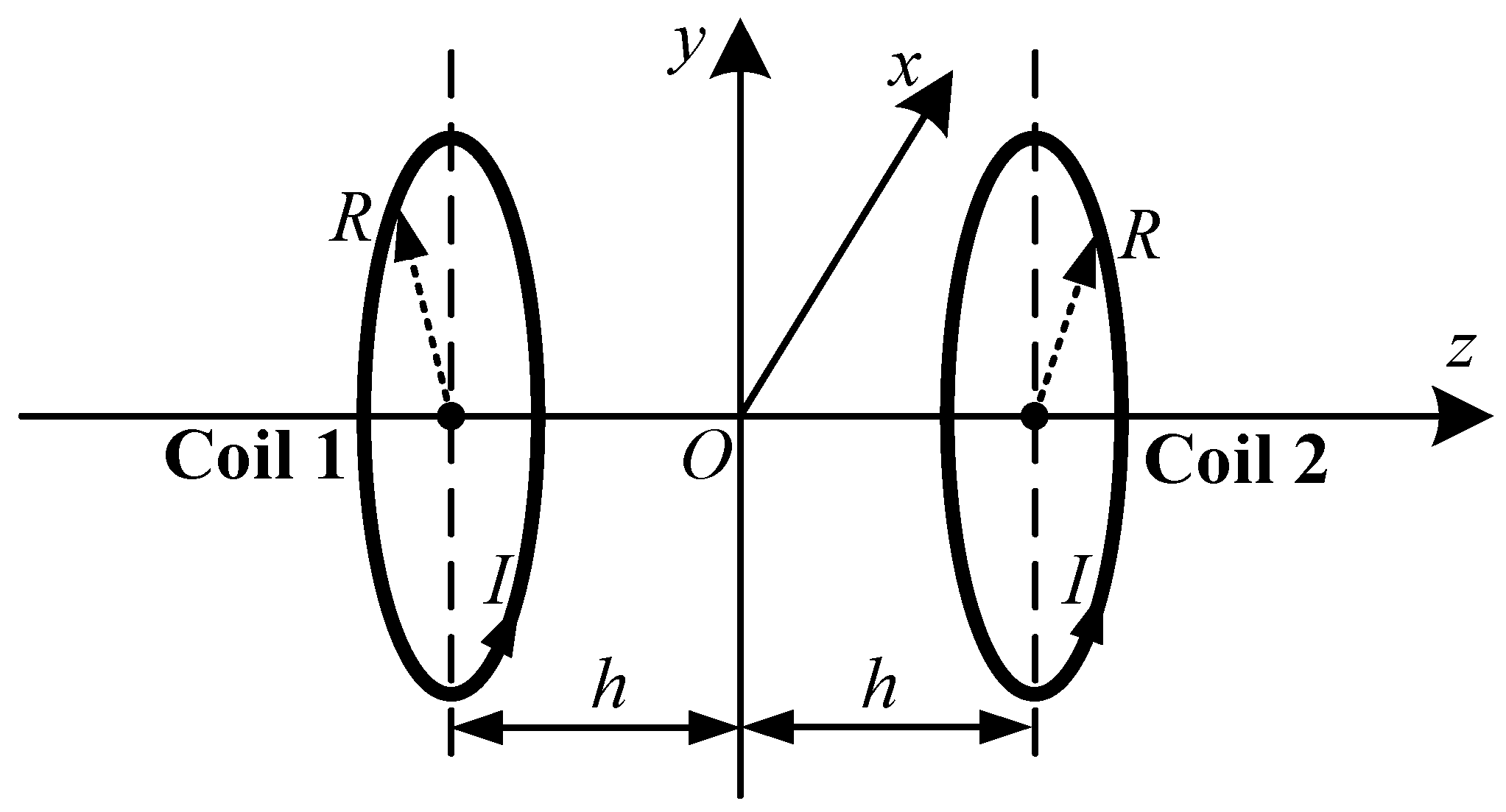
Figure 1. Schematic diagram of a two-loop Helmholtz pair.
Agriengineering 07 00385 g001
Figure 2. Structured design workflow for the Helmholtz coil system.
Agriengineering 07 00385 g002
Figure 3. Equivalent circuit diagram of the Helmholtz coil system.
Agriengineering 07 00385 g003
Figure 4. Magnetic induction intensity distribution diagram of ring coil structure. (a) Ring coil structure; (b) 3D magnetic field; (c) magnetic field (top view); (d) magnetic field (side view).
Agriengineering 07 00385 g004
Figure 5. Coil model and magnetic field distribution of double-square coil structure. (a) Double-square coil structure; (b) 3D magnetic field; (c) magnetic field (top view); (d) magnetic field (side view).
Agriengineering 07 00385 g005
Figure 6. Configuration and simulated magnetic field distribution of the triangular coil structure. (a) Schematic of the three-coil triangular configuration; (b) three-dimensional magnetic flux density distribution; (c) top-view field mapping; (d) side-view field mapping.
Agriengineering 07 00385 g006
Figure 7. Design and electromagnetic performance of the hexagonal three-dimensional coil system. (a) Geometric arrangement of the six square coils in orthogonal orientation; (b) 3D representation of magnetic flux density; (c) planar field distribution (top view); (d) vertical field profile (side view).
Agriengineering 07 00385 g007
Figure 8. Magnetic field distribution of the coil system with steel support frame. (a) Schematic of the coil structure employing a steel frame; (b) top-view and (c) side-view of magnetic field mappings.
Agriengineering 07 00385 g008
Figure 9. Optimized coil system with aluminum alloy support frame. (a) Schematic of the coil structure with aluminum alloy frame; (b) top-view and (c) side-view of magnetic field distributions.
Agriengineering 07 00385 g009
Figure 10. Magnetic intensity measurement platform and facilities. (a) Experiment platform. (b) Coil structure.
Agriengineering 07 00385 g010
Figure 11. Schematic diagram of magnetic field intensity measurement points for homogeneity validation. (a) Top view and (b) side view of the 27-point measurement grid distributed across three horizontal layers within the Helmholtz coil workspace. Each layer contains nine measurement points arranged in a 3 × 3 matrix, systematically covering the central fermentation volume to quantitatively assess spatial field homogeneity.
Agriengineering 07 00385 g011
Figure 12. Coil current characterization during magnetic field testing. (a) Stable DC current waveform maintained at 8.4 A (70% of maximum rated current) throughout the fermentation experiments. (b) Experimental setup for current monitoring using a calibrated digital multimeter, showing real-time current measurement during system operation.
Agriengineering 07 00385 g012
Figure 13. Magnetic-field-assisted Bacillus subtilis fermentation of peanut meal experimental platform.
Agriengineering 07 00385 g013
Figure 14. Peptide yields under different magnetic field parameters. (a) Magnetic induction intensity (G); (b) magnetic field intervention duration (h); (c) magnetic field intervention time (fermentation hour). Error bars represent standard deviation (n = 3). Different letters (a, b, c) above bars indicate statistically significant differences (p < 0.05) as determined by one-way ANOVA with Tukey’s post hoc test. Bars sharing the same letter are not significantly different, while bars with different letters show statistically significant differences.
Agriengineering 07 00385 g014
Figure 15. Pareto diagram of standardized effects for magnetic field parameters. factor effects analysis: magnetic induction intensity (A): standardized effect = 8.2 >> 2.45 → highly significant; magnetic field intervention time (C): standardized effect = 3.8 > 2.45 → statistically significant; magnetic field intervention duration (B): standardized effect = 1.4 < 2.45 (critical value) → not significant. All interaction effects (A × C, A × B, B × C) are below the significance threshold.
Agriengineering 07 00385 g015
Table 1. Helmholtz coil parameters.
ParameterValue
Coil length, mm300
Turn number per coil441
Coil distance, mm150
Wire typeQZY-2/180
Wire diameter, mm2
Wire insulation thickness, mm0.05
Current density, A/mm22.54
Table 2. Measured values of magnetic field intensity at 27 spatial points under 8.4 A operating current (70% power load).
Shelf NumberGroup 1Group 2Group 3
1145 G143 G146 G
143 G141 G144 G
141 G142 G147 G
2143 G142 G141 G
141 G142 G143 G
140 G141 G141 G
3145 G142 G146 G
143 G141 G144 G
141 G142 G145 G
Table 3. Experimental factors and levels for single-factor optimization of magnetic-field-assisted peptide production from peanut meal through solid-state fermentation.
FactorLevel
Magnetic field intensity (G)0, 20, 40, 60, 80, 100
Magnetic field treatment duration (h)2, 3, 4, 5, 6
Magnetic field intervention time (fermentation hour)0, 16, 18, 20, 22, 24
Table 4. Orthogonal experimental study and Range analysis (RA) on the effect of magnetic field on the preparation of peptides by solid-state fermentation of peanut meal.
SequenceMagnetic Induction Intensity (G)Magnetic Field Intervention Duration (h)Magnetic Field Intervention Time (Fermentation Hour)Peptide Content (%)
120 G4 h20 h13.5
220 G3 h24 h12.3
320 G5 h22 h15.0
440 G4 h24 h16.5
540 G3 h22 h18.4
640 G5 h20 h16.0
760 G4 h22 h13.3
860 G3 h20 h9.8
960 G5 h24 h11.6
K140.840.539.3/
K250.943.346.7/
K334.742.640.4/
k113.613.513.1/
k216.9714.4315.57/
k311.5714.2013.47/
R5.400.932.47/
Note: Ki values represent the sum of peptide content for each factor at level i; ki values represent the average peptide content for each factor at level i, calculated as ki = Ki/3; R values represent the range for each factor, calculated as R = max(ki) − min(ki). The R value reflects the influence degree of each factor on peptide content, with larger R values indicating greater influence.
Table 5. Analysis of variance (ANOVA) in orthogonal experiments.
Source of VariationSum of Squares (SS)Degrees of Freedom (df)Mean Square (MS)F-ValueF-Critical (α = 0.05)Significance
A (Intensity)44.25222.125221.2519.00**
B (Time)1.3620.686.819.00ns
C (Duration)9.2924.64546.4519.00**
Error 0.2020.10---
Total55.008----
Note: ** indicates highly significant (F-value > F-critical value at α = 0.05), ns—not significant.
Disclaimer/Publisher’s Note: The statements, opinions and data contained in all publications are solely those of the individual author(s) and contributor(s) and not of MDPI and/or the editor(s). MDPI and/or the editor(s) disclaim responsibility for any injury to people or property resulting from any ideas, methods, instructions or products referred to in the content.