Article

A Bimodal EMG/FMG System Using Machine Learning Techniques for Gesture Recognition Optimization

1
Polytechnic Institute of Coimbra, Coimbra Institute of Engineering, Rua Pedro Nunes—Quinta da Nora, 3030-199 Coimbra, Portugal
2
LIBPhys, Department of Physics, University of Coimbra, Rua Larga, 3004-516 Coimbra, Portugal
*
Author to whom correspondence should be addressed.
Submission received: 24 November 2024 / Revised: 17 February 2025 / Accepted: 17 February 2025 / Published: 20 February 2025

Abstract

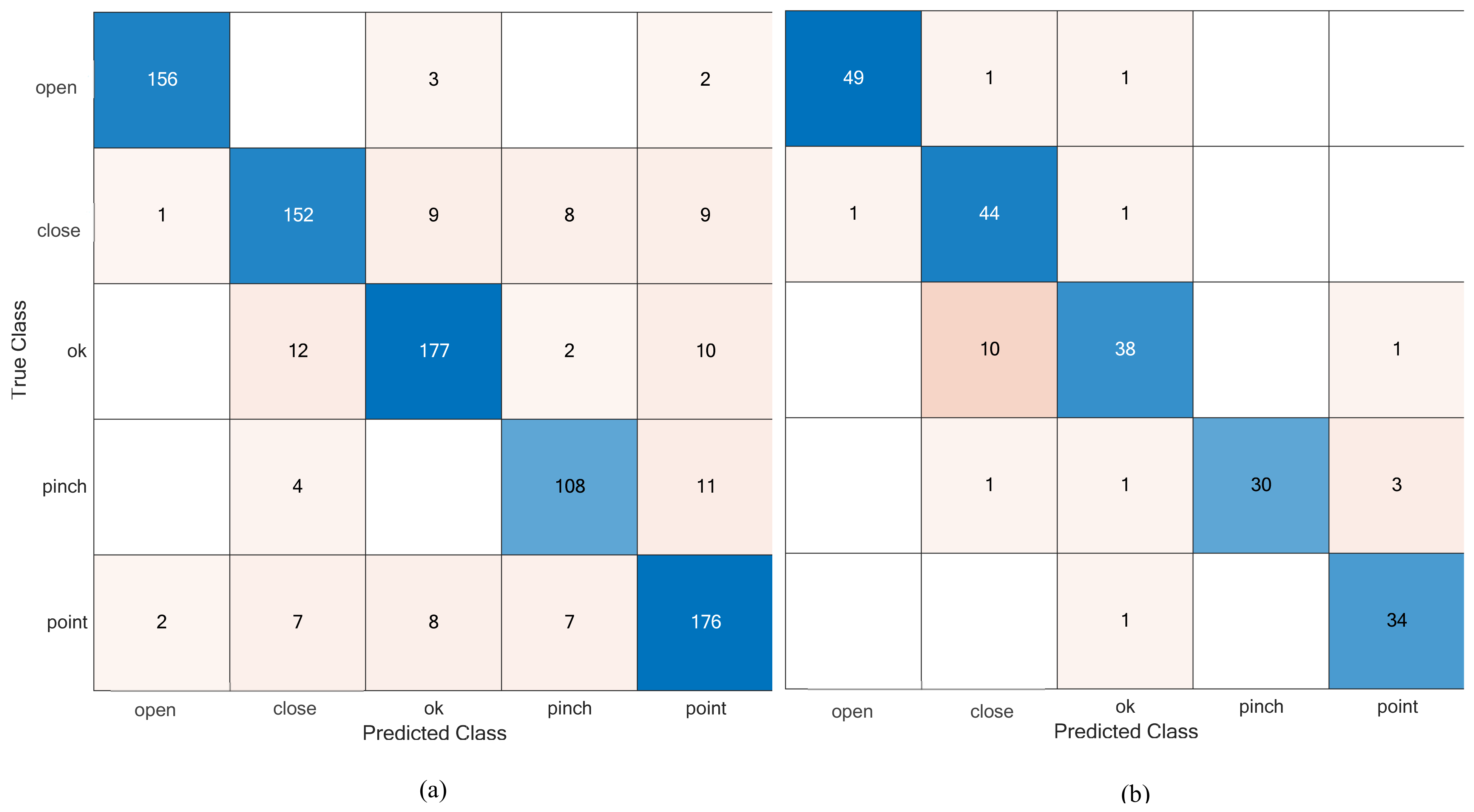
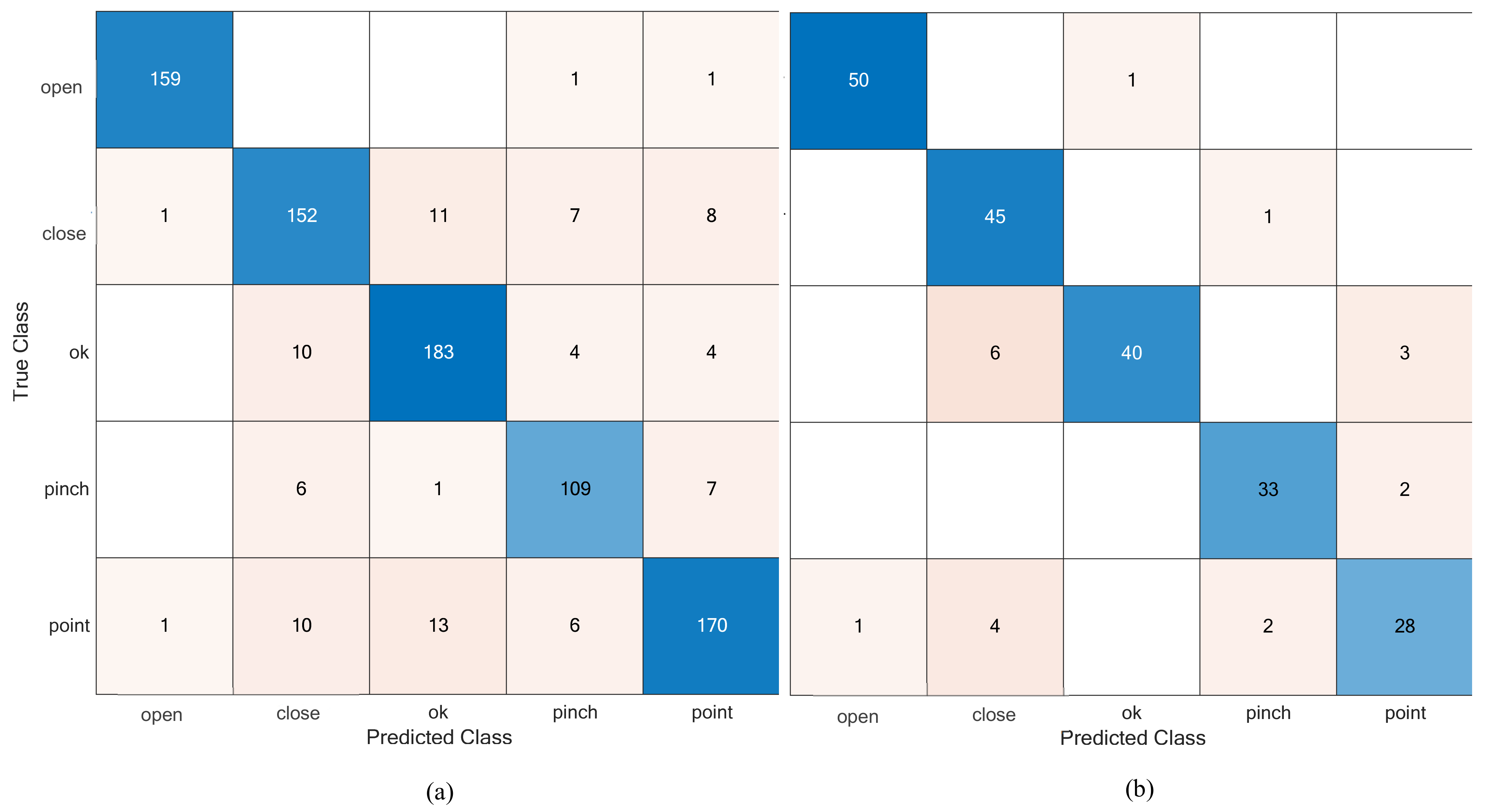
This study is part of a broader project, the Open Source Bionic Hand, which aims to develop and control, in real time, a low-cost 3D-printed bionic hand prototype using signals from the muscles of the forearm. This work is intended to implement a bimodal signal acquisition system, which uses EMG signals and Force Myography (FMG) in order to optimize the recognition of gesture intention and, consequently, the control of the bionic hand. The implementation of this bimodal EMG-FMG system will be described. It uses two different signals from BITalino EMG modules and Flexiforce™ sensors from Tekscan™. The dataset was built from thirty-six features extracted from each acquisition using two of each EMG and FMG sensors in extensor and flexor muscle groups simultaneously. The extraction of features is also depicted, as well as the subsequent use of these features to train and compare Machine Learning models in gesture recognition through MATLAB’s Classification Learner tool (v2.2.5 software). Preliminary results obtained from a dataset of three healthy volunteers show the effectiveness of this bimodal EMG/FMG system in the improvement of the efficacy on gesture recognition as it is shown, for example, for the Quadratic SVM classifier that raises from 75.00% with EMG signals to 87.96% using both signals.
Keywords: bionic hand; electromyogtaphy; force myography; feature extraction; gesture recognition; classification models bionic hand; electromyogtaphy; force myography; feature extraction; gesture recognition; classification models