Article

Evaluating Noise Levels and Perception: A Study on the Impact of Noise Pollution in an Urban and Semi-Rural Campus of the University of Guadalajara, Mexico


by
Gabriel Torres-Pasillas
1,
Arturo Figueroa-Montaño
2,*,
Martha Georgina Orozco-Medina
3,* and
Valentina Davydova-Belitskaya
3
1
Environmental Health Sciences, Environmental Science Department, University Center of Biological and Agricultural Sciences, University of Guadalajara, 2100 Ramón Padilla Sánchez Road, Zapopan 45200, Jalisco, Mexico
2
Physics Department, University Center of Exact Sciences and Engineering, University of Guadalajara, Blvd Marcelino García Barragán 1421, Guadalajara 44430, Jalisco, Mexico
3
Department of Environmental Sciences, University Center of Biological and Agricultural Sciences, University of Guadalajara, 2100 Ramón Padilla Sánchez Road, Zapopan 45200, Jalisco, Mexico
*
Authors to whom correspondence should be addressed.
Acoustics 2026, 8(1), 13; https://doi.org/10.3390/acoustics8010013
Submission received: 17 December 2025 / Revised: 2 February 2026 / Accepted: 4 February 2026 / Published: 9 February 2026

Abstract

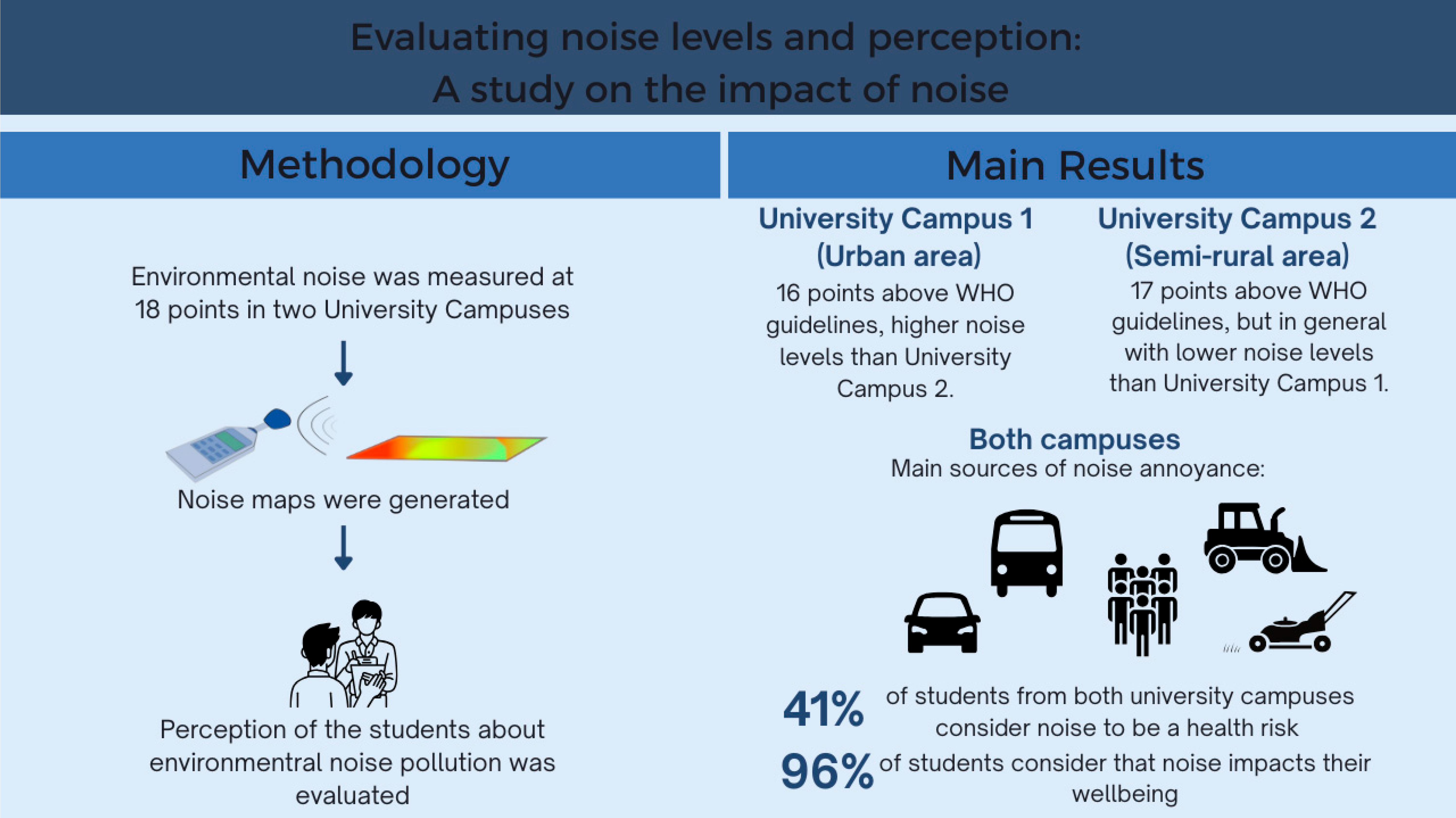
Noise pollution poses a serious threat to human health and well-being, especially in educational environments where concentration and learning are essential. While urban noise has been widely studied, its effects within university settings remain underexplored. This study investigates environmental noise and student perceptions on two campuses of the University of Guadalajara, Mexico—one located in an urban area and the other in a semi-rural setting. Noise levels were measured using the CESVA-SC260 integrating instrument (CESVA Instruments, SLU, Barcelona, Spain), and student perceptions were gathered through a survey. A total of 731 students participated, with 357 from the urban campus and 374 from the semi-rural one. Results showed that noise levels on both campuses frequently exceeded the WHO’s recommended limit of 55 dB(A) for educational facilities, with readings between 40.9 and 85.0 dB(A); 89% of measurements surpassed the threshold. Major sources of noise included vehicular traffic, student gatherings, and construction-related machinery. Survey responses indicated that 41% of students perceived noise as a health risk, and 96% reported adverse effects on well-being and identified it as a disruptor of academic tasks. These findings underscore the pressing need for targeted noise management strategies in university environments and call for further research into effective, context-specific interventions that enhances learning conditions.

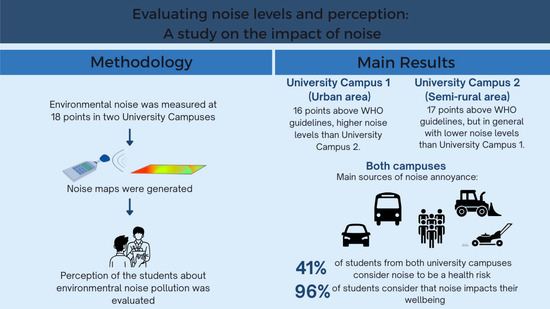
Graphical Abstract

1. Introduction

Noise pollution has emerged as a significant environmental health threat, with profound implications for both physiological and psychological well-being [1,2]. As urbanization continues to expand, the prevalence of noise pollution has escalated, presenting formidable challenges to public health and quality of life.
The World Health Organization (WHO) has underscored the severity of this issue, citing its potential to disrupt sleep, elevate stress levels, contribute to cardiovascular diseases, metabolic disorders and cognitive impairments [3,4,5,6,7,8,9,10]. This pervasive problem is especially acute in urban areas, where traffic, industrial activities, and construction significantly elevate ambient noise levels and where the detrimental effects of noise pollution extend beyond auditory damage [11,12,13,14]. Human health is affected through various mechanisms, including the acute and chronic activation of the stress response, interference with restorative sleep, distraction during learning tasks, and the physiological burden from noise-induced annoyance [15].
In educational environments, noise exposure consistently and demonstrably degrades reading ability, attention, working memory, and executive functions in students [16,17,18]. Unlike generic urban settings, university campuses are purpose-built learning environments in which individuals are required to sustain high levels of cognitive effort over prolonged periods, rendering them particularly vulnerable to environmental stressors such as noise. A longitudinal cohort study in Barcelona provides clear evidence of this vulnerability, showing that exposure to road traffic noise in schools was associated with slower improvement in working memory and increased inattentiveness in children aged 7–10 [19]. Complementary experimental evidence in adult populations further confirms that even moderate traffic noise levels significantly impair sustained attention and inhibitory control, especially when noise peaks or temporal variability are present [20].
Empirical studies conducted at institutions such as the University of Dammam, the University of York, and the University of Technology in Iraq consistently document the prevalence of traffic-induced noise pollution within university campuses, particularly during peak commuting hours. Although many campuses are embedded within urban contexts, they are functionally distinct from surrounding city spaces, as they concentrate on teaching, learning, and research activities that demand sustained attention and minimal cognitive interference. Investigations at King Abdulaziz University clearly demonstrate that engineering and technical laboratories frequently exceed recommended noise limits for educational settings, directly impairing students’ concentration, disrupting the effective transmission and reception of instructional content, and eliciting physiological symptoms such as headaches and auditory discomfort [21].
The acoustic environment within university campuses therefore constitutes a critical determinant of student experience, with direct consequences for both academic performance and overall well-being. Unlike general urban environments where noise exposure may be intermittent, incidental, or task-independent; campus noise exposure occurs in spaces explicitly designed for learning, study, and intellectual engagement. Research on campus noise pollution underscores the complex and multifactorial nature of acoustic disturbances, which commonly arise from traffic, construction activities, and institutional events [22,23,24,25,26,27]. In learning environments such as lecture halls and libraries, appropriate acoustic conditions are indispensable for effective knowledge acquisition and sustained intellectual engagement. Disruptive noise unambiguously increases cognitive load and reduces academic efficiency, resulting in diminished productivity and student engagement [28,29,30,31,32,33]. Beyond academic outcomes, the acoustic environment exerts substantial and well-documented effects on students’ mental health [34,35,36]. Chronic exposure to environmental noise in academic settings has been robustly associated with elevated stress, anxiety, and symptoms of depression [37,38]. These effects are mediated by physiological stress responses, including increased cortisol secretion and sustained activation of the sympathetic nervous system, which over time compromise students’ capacity to manage academic and social demands [39].
Noise pollution also undermines social interaction and community cohesion within campus settings. Elevated noise levels interfere with verbal communication and discourage participation in social and academic exchanges, contributing to feelings of social isolation and a reduced sense of belonging—both of which are closely linked to academic persistence and student well-being [40,41]. Conversely, a well-managed campus acoustic environment actively promotes inclusivity and facilitates meaningful peer interaction and cultural exchange.
In the Latin American context, research on noise pollution in educational settings has been conducted in countries like Brazil and Colombia [42,43,44]. However, in Mexico, studies have predominantly focused on elementary education, university libraries and indoor classroom conditions, leaving outdoor campus noise exposure and its effects on students’ perception and academic performance understudied [45,46,47,48].
A comprehensive understanding of noise pollution necessitates an examination of both its sources and its effects on human health and behavior. The subjective experience of noise, often referred to as “annoyance,” is a significant health effect, as it can lead to stress and interfere with daily activities. Babisch’s reaction scheme provides a theoretical framework for understanding the biological pathways through which noise pollution can affect cardiovascular health, emphasizing the role of stress and hormonal responses. This framework underscores the complexity of noise pollution’s impact, highlighting the need for targeted research to address specific gaps in knowledge [49].
Addressing the identified gap is crucial for several reasons. Firstly, understanding noise pollution in university settings is essential for developing effective interventions to mitigate its impact on student health and academic performance. Secondly, research in this area can inform policy decisions, guiding the implementation of noise management strategies in educational institutions. Lastly, by exploring the subjective experiences of noise pollution, this study can contribute to a more nuanced understanding of its effects, paving the way for future research in similar contexts.
The primary objective of this research is to investigate both the actual noise levels and the subjective perception of noise among students, providing a comprehensive analysis of how environmental noise influences their daily lives and academic tasks at two university campuses in Mexico. The research question guiding this study is: What are the primary sources of noise pollution on urban and semi-rural campuses, and how do they affect student well-being? The study hypothesizes that noise pollution is more prevalent and has a more pronounced impact on student well-being on urban campuses compared to semi-rural ones. To address these questions, the study employs a mixed-methods approach, combining environmental noise measurements with student questionnaires to assess both objective noise levels and subjective experiences.

2. Materials and Methods

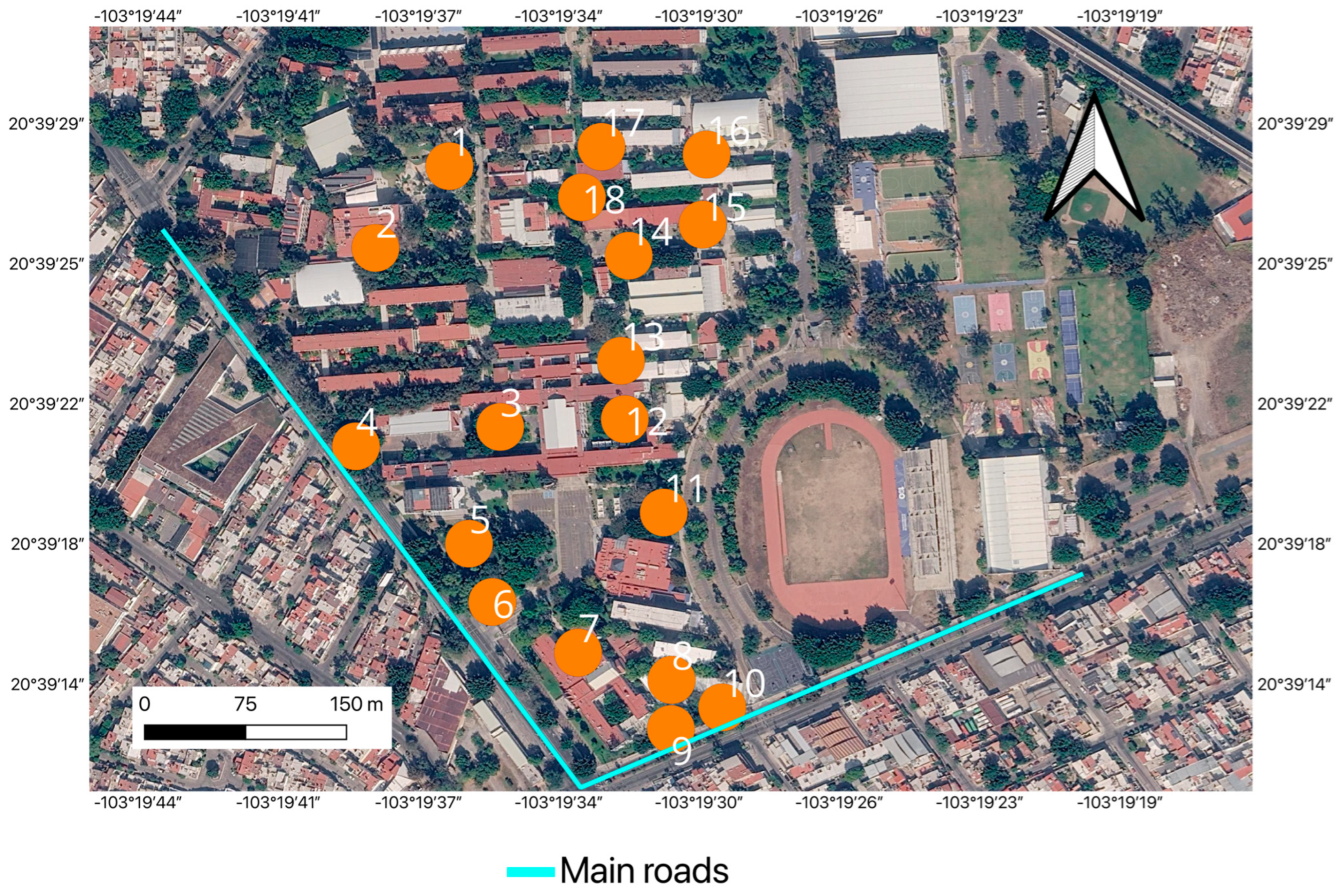
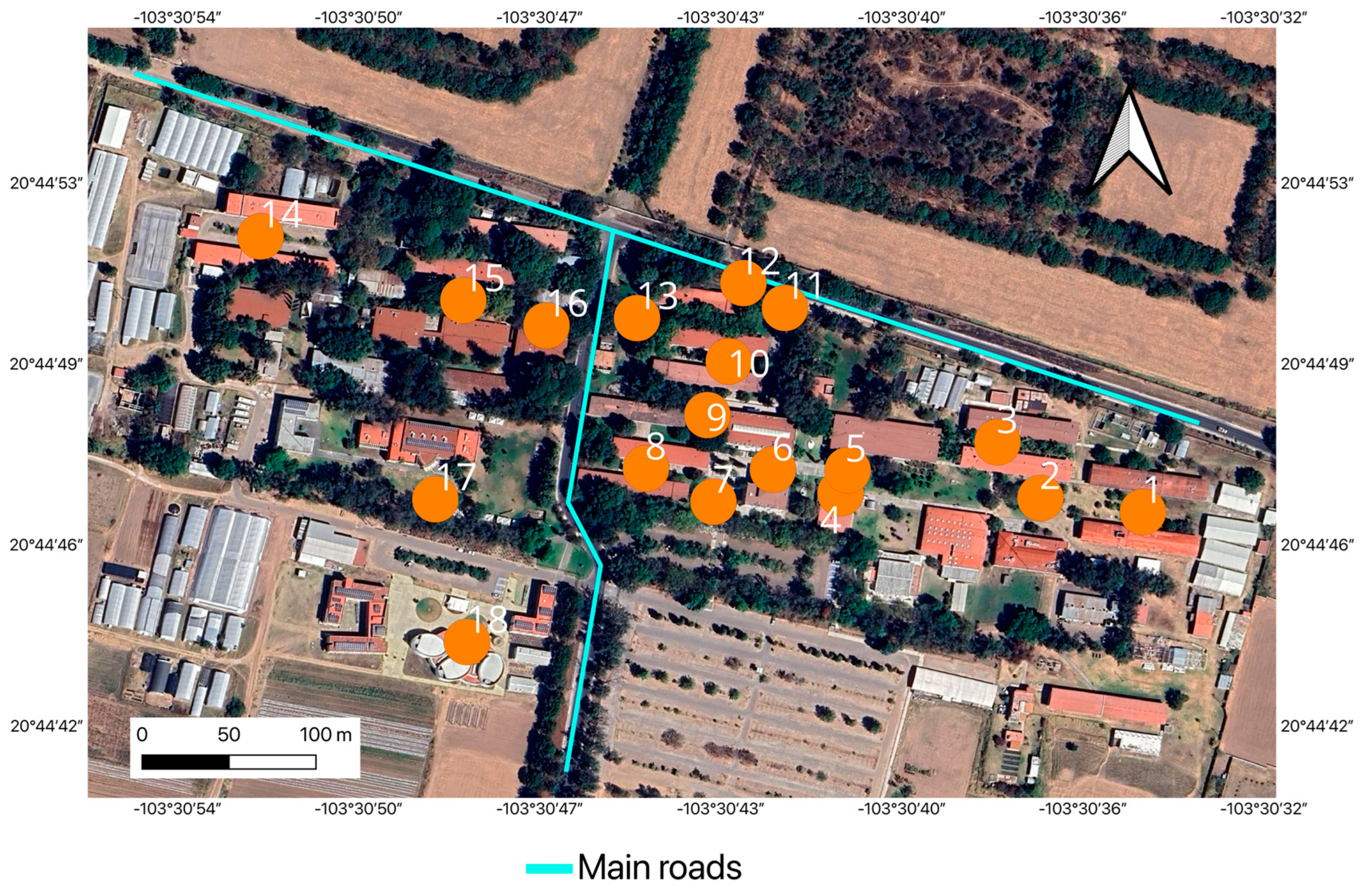
The study was conducted at two university campuses affiliated with the University of Guadalajara in Mexico: UC1, situated in the urban complex of Guadalajara (Figure 1), and UC2, located in the municipality of Zapopan (Figure 2). In the figures, circles and numbres show the distribution of measuring points within the campuses.
UC1 serves a student population of 22,500 across 20 undergraduate and 33 graduate programs, while UC2 serves 6666 students across 7 undergraduate and 7 graduate programs. At these campuses, data collection comprised two primary components: environmental noise measurements and a questionnaire survey assessing students’ perceptions of noise annoyance and its impact on their well-being.

2.1. Noise Measurements

Noise measurements were conducted using the CESVA SC260 sound level meter, an integrating averaging instrument that complies with IEC 61672 Class 1 standards for precision and reliability [50]. The sound level meter was calibrated before each measurement session using a CESVA-CB006 acoustic calibrator (CESVA Instruments, SLU, Barcelona, Spain) to ensure measurement accuracy. The instrument was mounted on a tripod to perform outdoor measurements at 18 selected points distributed evenly across both campuses (Figure 1 and Figure 2). The selection of measurement points focused on areas influenced by major noise sources associated with campus activities, including the use of gardening equipment, construction machinery for building maintenance, traffic from nearby roads, and student gathering areas. Three measurement campaigns were conducted at each campus between January 2019 and February 2020 to capture temporal variability in noise levels across different times of the day and day of the week. At each measurement point, noise levels were recorded in eight consecutive 5 min intervals, resulting in a total of 40 min of measurement per campaign. Using this approach, environmental noise at each point was assessed 24 times across the three campaigns, yielding a cumulative measurement duration of 120 min per location over the entire study period. This sampling strategy was designed to ensure comparable and representative noise exposure assessment across both campuses by systematically capturing spatially diverse noise sources and temporal variability linked to routine academic and operational activities. These aggregated measurements were subsequently used to calculate the A-weighted equivalent continuous sound level ( L A e q , T ) in accordance with IEC 61672 standards, as expressed in Equation (1).
L A e q , T = 10 L o g 10   1 T 0 T ( p ( t ) h A ( t ) ) 2 p 0 2 d t   d B ( A )
where   p ( t ) is the instantaneous sound pressur, h A ( t ) is the standarized A-weighting filter response, p 0   = 20   µ P a , and T is the inregration time. Finally, calculated mean energy levels were represented in graphs and noise maps to identify critial points within the campuses.

2.2. Questionnaires

The questionnaire component utilized the Lund Environmental Annoyance (LEA) questionnaire, which has been validated in previous studies and is widely used in environmental noise research to assess perceived annoyance and subjective responses to multiple noise sources in urban and institutional contexts [51]. The instrument evaluates individual annoyance levels and perceived impacts of environmental noise on daily activities and well-being, demonstrating adequate construct validity across diverse settings.
Participants were selected using a stratified random sampling strategy to ensure representation across different academic programs and years of study. Eligible participants included undergraduate and graduate students who were present on campus during the study period and voluntarily agreed to participate. No exclusion criteria were applied beyond non-consent or incomplete questionnaire responses. A total of 731 students participated in the survey, comprising 357 students from UC1 and 374 students from UC2, ensuring balanced representation across both campuses.
Participants were asked to identify the main sources of noise they experienced on campus, including vehicular traffic, student social interactions, and construction-related machinery. At UC2, an additional item addressed noise from small aircraft due to the campus’s proximity to a military airbase. Respondents rated their annoyance levels using a three-point categorical scale (“not annoying,” “annoying,” and “very annoying”) and provided information regarding perceived noise-related health risks and impacts on well-being.

2.3. Data Analysis

Data obtained from environmental noise measurements were screened to remove outliers or anomalous values caused by atypical events unrelated to routine campus activities (e.g., isolated sudden noise events). The sound level meter output was converted into a standardized format and processed using CESVA Noise Manager 4.0 software for descriptive analysis. Questionnaire responses were digitized, coded, and verified for completeness and internal consistency prior to statistical analysis.
Statistical analyses were conducted using StatGraphics Centurion XIX software. Statgraphics Centurion 19 (Statgraphics Technologies Inc., Warrenton, VA, USA). Descriptive statistics were used to summarize noise levels and questionnaire responses, providing an overview of their distribution and variability. Differences in noise profiles between the urban and semi-rural campuses were evaluated using one-way analysis of variance (ANOVA). The internal consistency of the LEA questionnaire scales was assessed using Cronbach’s alpha, yielding a value of α = 0.79, indicating satisfactory reliability. Associations between identified noise sources and reported annoyance levels were examined using Chi-square tests, which showed no statistically significant associations across the analyzed cases (p > 0.05).
Although questionnaire data are inherently self-reported, the use of a validated instrument, a large sample size, and a stratified sampling design helped mitigate potential response bias. The integration of quantitative noise measurements with qualitative perception data provides a comprehensive assessment of campus noise environments and associated annoyance, contributing valuable insights to environmental health and educational research.

3. Results

3.1. Distribution of Noise Levels

The present study systematically investigates the acoustic environment at two distinct university campuses, designated herein as UC1 and UC2, with a dual focus on quantifying ambient noise levels and evaluating the subjective perception of noise-induced annoyance among students.
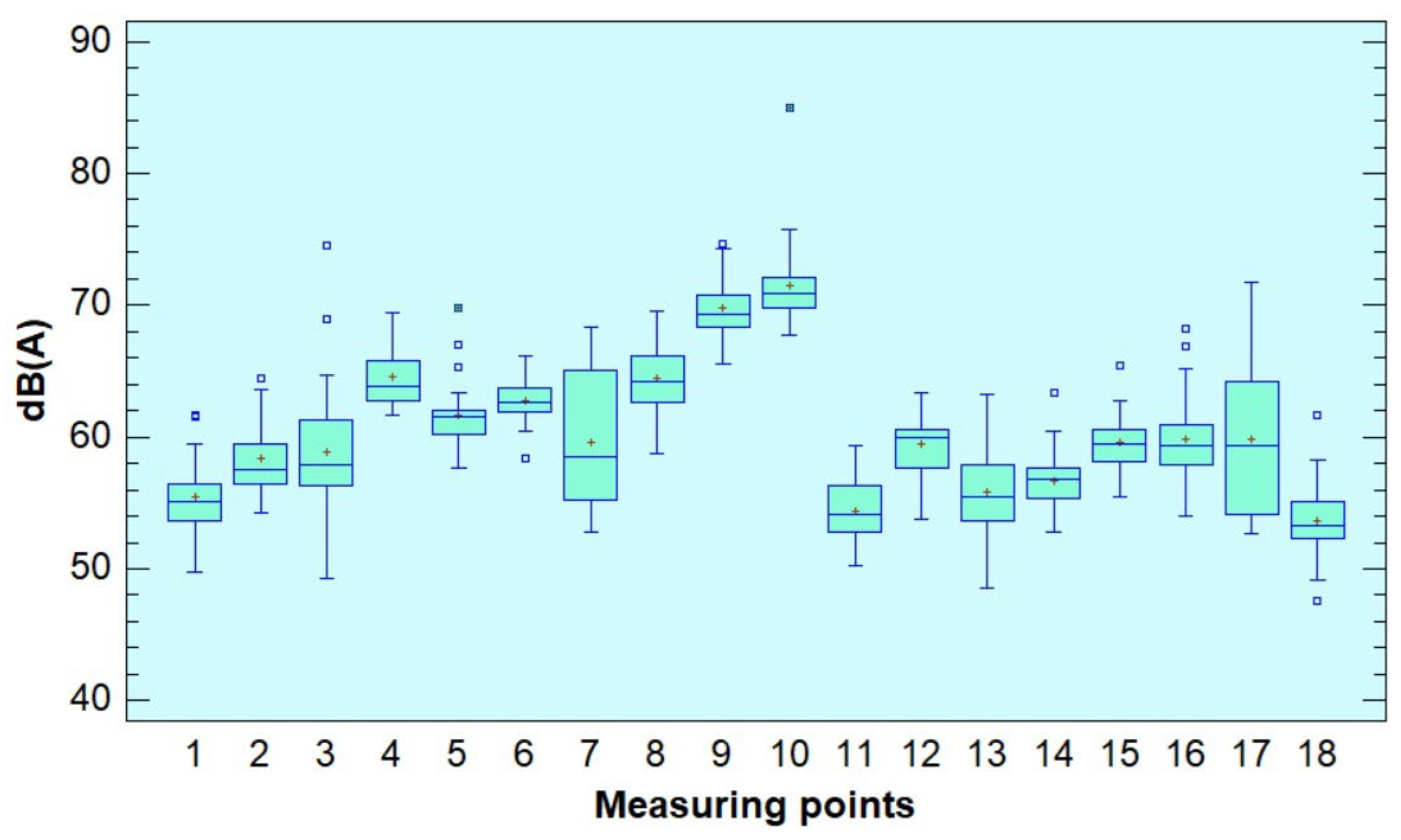
The data collected reveal significant disparities in noise distribution between UC1 and UC2. At UC1, noise levels ranged from 47.6 to 85.0 dB(A), while UC2 exhibited a range from 40.9 to 81.6 dB(A). Box-and-whisker plots, shown in Figure 3, illustrate the distribution, spread, and symmetry of recorded noise levels at each measuring point. The line inside each box represents the median; the red cross indicates the mean; the bottom and top edges correspond to the first quartile (Q1) and the third quartile (Q3), respectively; and the size of the box reflects the interquartile range (Q3–Q1), which indicates data spread (i.e., a small box denotes low variability, while a large box denotes high variability). The whiskers extend from the box to the minimum and maximum values that fall within 1.5 times the interquartile range. Dots beyond the whiskers highlight unusual or extreme observations recorded during the study. The figure emphasizes points 4, 5, 6, 8, 9, and 10, where median noise levels exceeded 60 dB(A). These elevated readings are closely associated with traffic noise due to the proximity of major thoroughfares bordering the campus, as corroborated by the spatial layout illustrated in Figure 1.
Temporal variability and distributional characteristics of noise are further elucidated through percentile-based statistical descriptors, specifically the L10, L50, and L90 percentiles. These metrics, calculated from raw data across the three measurement campaigns, provide insights into the variability and risk associated with noise exposure.
The L10 percentile, calculated at 68.8 dB(A), represents the sound level that was exceeded during 10% of the accumulated measuring period. It suggests that significant noise events occurred regularly during the study period and are likely associated with vehicular traffic from nearby roads. In educational settings, elevated noise levels can disrupt concentration and impede cognitive processes, thereby affecting the efficacy of teaching and learning activities.
The L50 percentile, also known as the median noise level, was calculated at 59.6 dB(A). This value represents the typical sound level on campus and reflects the noise that students and staff are exposed to during normal daily activities. Since this level is above the 55 dB(A) limit recommended by the WHO for educational settings, it indicates a moderately noisy environment. This may affect concentration and learning, so it could be important to consider strategies to reduce noise and support better teaching and learning conditions.
The L90 percentile, recorded at 53.4 dB(A), represents the noise level exceeding 90% of the time, effectively delineating the baseline or background noise level. This metric offers insight into the acoustic environment, highlighting the persistent noise exposure that may be perceived as the ambient soundscape.
Collectively, these percentile measures provide a nuanced characterization of the noise exposure landscape, enabling the identification of periods of significant acoustic disturbance. The implications of these findings for the teaching and learning environment are profound, as they underscore the need for targeted noise mitigation strategies to optimize educational outcomes. Such strategies may include architectural modifications to improve sound insulation, the implementation of noise control technologies, or the scheduling of activities to minimize exposure during peak noise periods. Furthermore, these findings have regulatory implications, as they inform compliance assessments with established noise standards and guidelines.
In Mexico, environmental noise is regulated primarily through federal standards (NOM-081-SEMARNAT-1994 [52] for fixed sources, NOM-080-SEMARNAT-1994 [53] for motor vehicles, and NOM-011-STPS-2001 [54] for occupational settings) within the framework of the General Law on Ecological Balance and Environmental Protection. These norms establish maximum permissible levels for residential, commercial, and industrial zones, as well as workplace exposure limits. However, they remain generally less stringent than the WHO’s environmental noise guidelines, particularly with respect to night-time exposure. Importantly, there is no specific national legislation aimed at protecting public health in sensitive environments such as schools and universities, where noise can significantly disrupt learning, concentration, and well-being. This regulatory gap underscores the urgent need to update and adapt Mexican noise standards to ensure adequate protection for educational communities and to align with international best practices aimed at fostering conducive learning environments within academic institutions.
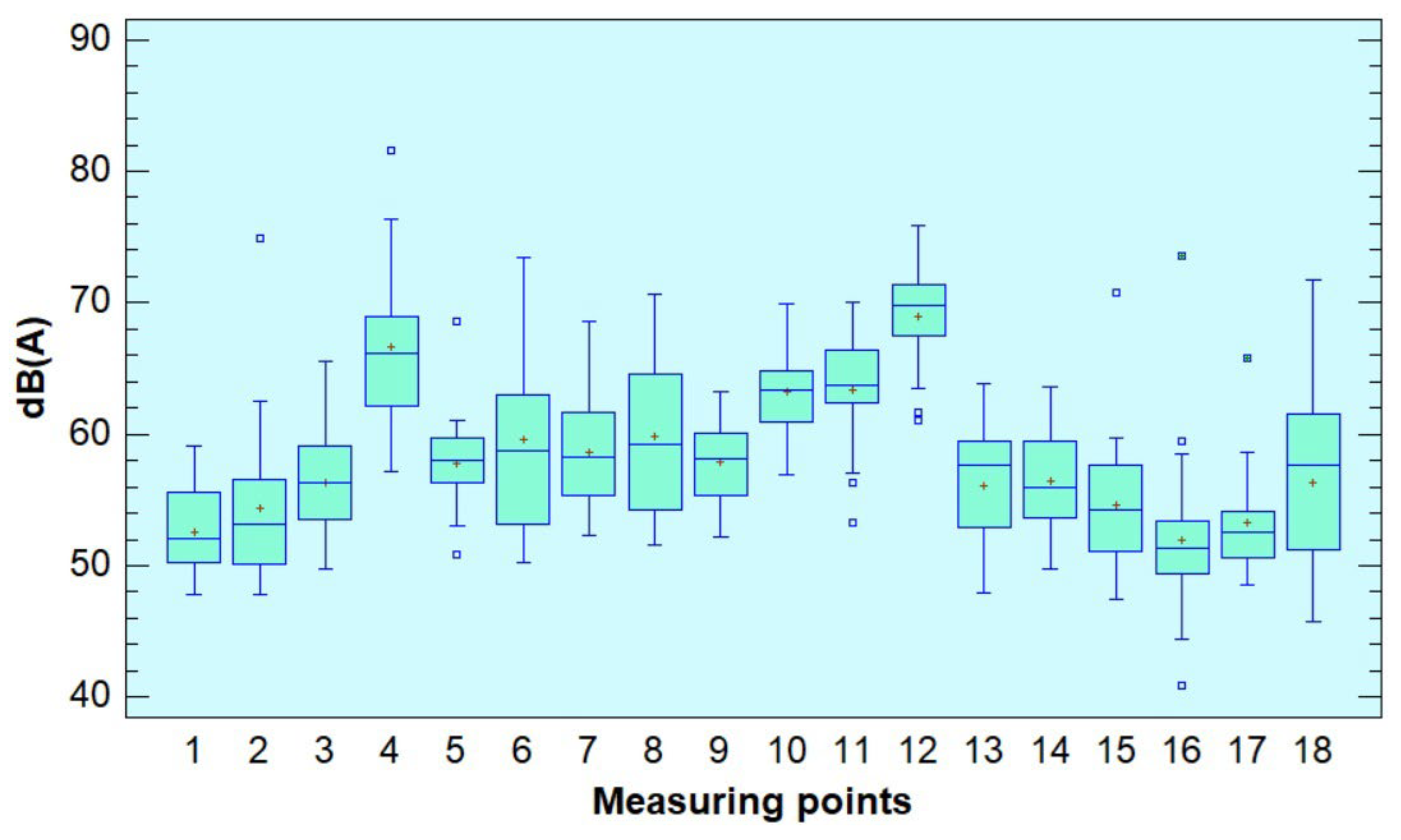
In semi-rural soundscapes, the acoustic environment is characterized by a relatively simplistic auditory profile, primarily influenced by natural sound sources such as aeolian phenomena, avian vocalizations, and the subtle movements of foliage. These environments are typified by attenuated baseline noise levels, a direct consequence of the diminished prevalence of anthropogenic acoustic intrusions. The sparse infrastructure and reduced population density intrinsic to semi-rural locales contribute significantly to this subdued acoustic ambiance. Figure 4 elucidates the noise variability observed at UC2, thereby highlighting the acoustic disparities between urban and semi-rural contexts. Within UC2, the majority of measurement points register median noise levels below 60 dB(A). However, specific points, namely 4, 10, 11, and 12, exhibit elevated acoustic measurements. These anomalies are attributable to localized anthropogenic activities, such as congregations of students in the cafeteria, social interactions in proximity to laboratory edifices, and the congregation at the bus station for homeward transit. Notably, adjacent measurement points at UC2 did not always display similar noise levels. For example, points 4 and 5, despite their spatial proximity, differed by approximately 10 dB(A). This contrast reflects the strong influence of localized and intermittent noise sources captured during the measurement campaigns. Point 4 is located near the cafeteria and a bus stop area characterized by concentrated student activity and vehicle idling, whereas point 5 is situated in a more open zone with fewer congregation activities and partial shielding from dominant noise sources. This finding highlights the importance of micro-scale land use and human activity patterns in shaping campus noise levels, beyond simple proximity to traffic corridors.
Table 1 presents the detailed L10, L50, and L90 values across the 18 measurement points at UC1 and UC2, offering a finer resolution of spatial variability. For instance, in UC1, measurement points located near the main roads (P4, P5, P6, P8, P9, and P10) consistently exhibited higher L10 values, reflecting frequent high-intensity noise events. In contrast, points situated in interior areas of UC1 (e.g., P1, P11 and P18) showed lower percentile values, closer to background noise levels. At UC2, the L10, L50, and L90 values were generally lower. These metrics underscore the reduced acoustic intensity and variability in the semi-rural environment of UC2 compared to UC1. Moreover, the temporal variability and distributional characteristics of noise at UC2 differ markedly from those at UC1. This variation is reflective of the inherent acoustic dynamics of semi-rural areas, where noise levels are subject to fluctuations primarily dictated by sporadic human activities and the stochastic nature of natural sound sources.
The data suggests that the acoustic environment at UC2 is not only quieter but also exhibits less temporal fluctuation compared to UC1, where urban noise sources contribute to a more consistent and elevated acoustic baseline. This detailed acoustic profiling provides critical insights into the soundscape ecology of semi-rural areas, offering a nuanced understanding of the interaction between natural and anthropogenic sound sources in shaping the auditory environment.

3.2. Equivalent Continuous Sound Pressure Level (Leq) at Measured Points

Leq is a key indicator in environmental noise studies. It represents the steady noise level that would deliver the same total acoustic energy as the fluctuating sounds measured over a given time period. By condensing variable noise into a single value, Leq communicates the overall exposure of individuals to environmental noise and allows for comparison with regulatory standards. It is closely linked to human health impacts such as annoyance, sleep disturbance, and cardiovascular stress. However, while Leq effectively summarizes total noise energy, it does not provide information on variability or peak events, as the complementary metrics of L10, L50 or L90.
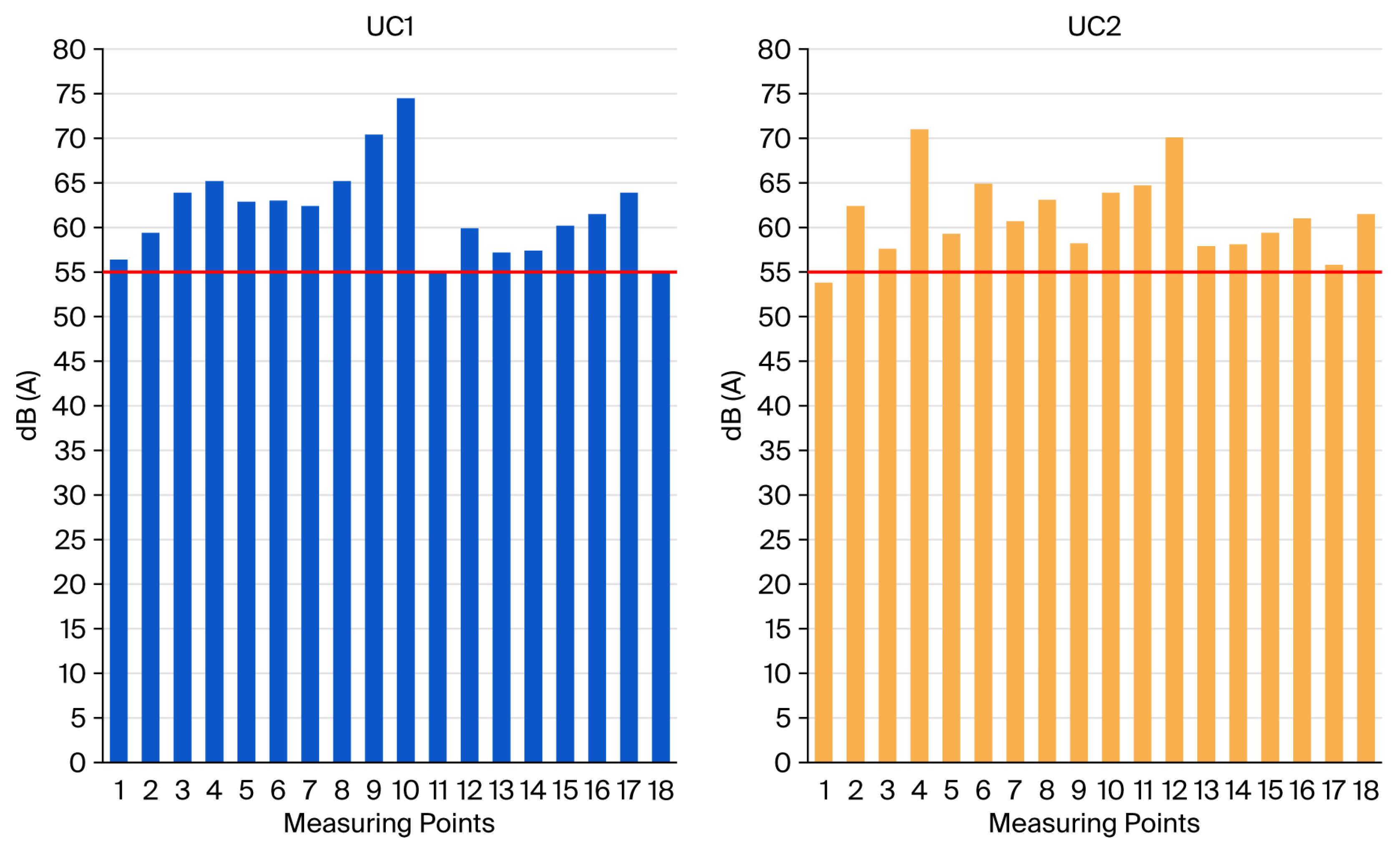
As depicted in Figure 5, the analysis of Leq across 18 measuring points in both campuses (UC1 and UC2) indicates that a substantial majority exceed the 55 dB(A) threshold recommended by the WHO for educational facilities. In UC1, nearly all measuring points are above the guideline value, with several locations consistently surpassing 60 dB(A). In UC2, although a few points remain closer to the threshold, most still exceed the WHO limit, with several readings approaching 65 dB(A).
The results presented here demonstrate that students and staff are subjected to persistent noise levels above health-based recommendations, regardless of the specific location within the campuses. From an educational perspective, this is highly significant. Prolonged exposure to Leq levels above 55 dB(A) has been linked to impaired concentration, reduced speech intelligibility, and negative impacts on reading comprehension and memory. Thus, the findings underscore a critical need for targeted noise management interventions within both campuses. Without such measures, the elevated acoustic environment may compromise the ability of students to engage effectively in academic activities and diminish the overall quality of the educational experience.

3.3. Spatial Distribution of Energy-Averaged Sound Level

Noise maps serve as a critical tool in the analysis and visualization of environmental noise, offering a spatial representation of noise levels across different geographical areas. These maps are generated by aggregating and averaging noise energy measurements taken at various times throughout the day and week, thereby providing a comprehensive overview of temporal variations in noise exposure. The utility of noise maps lies in their ability to identify and delineate noise hot spots and quieter zones, facilitating targeted interventions and informed urban planning decisions.
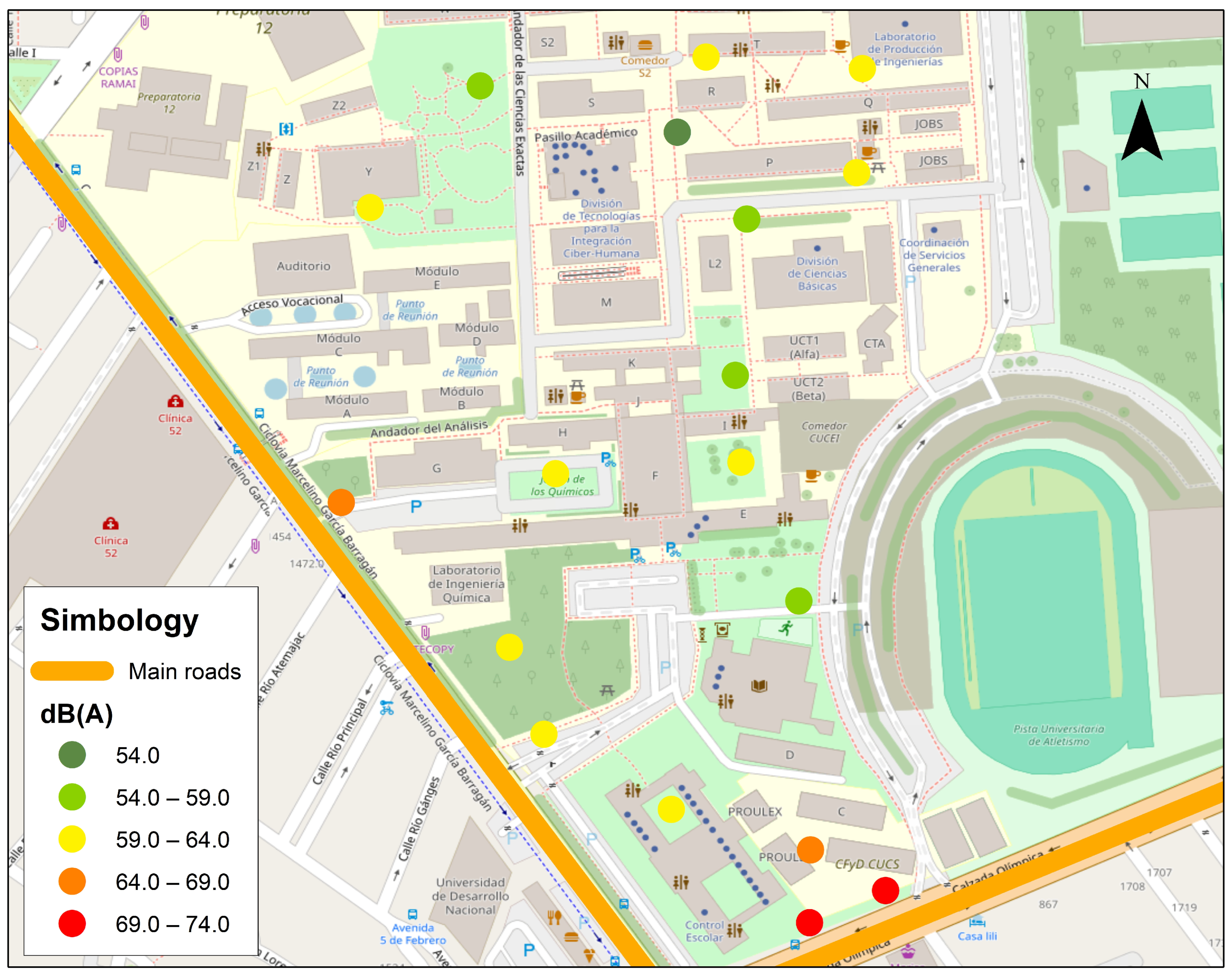
In busy city environments, like university campuses in densely populated areas, noise maps show that most of the noise comes from human activity, mainly traffic. In the study, the highest noise levels, reaching an energy-average about 74 dB(A), were recorded near the main roads surrounding the campus, showing the strong impact of traffic noise. In contrast, quieter parts of the campus, such as sports fields and green spaces have much lower noise levels about 54 and 59 dB(A) (Figure 6). These areas provide a break from the city noise and are important places for recreation and relaxation.
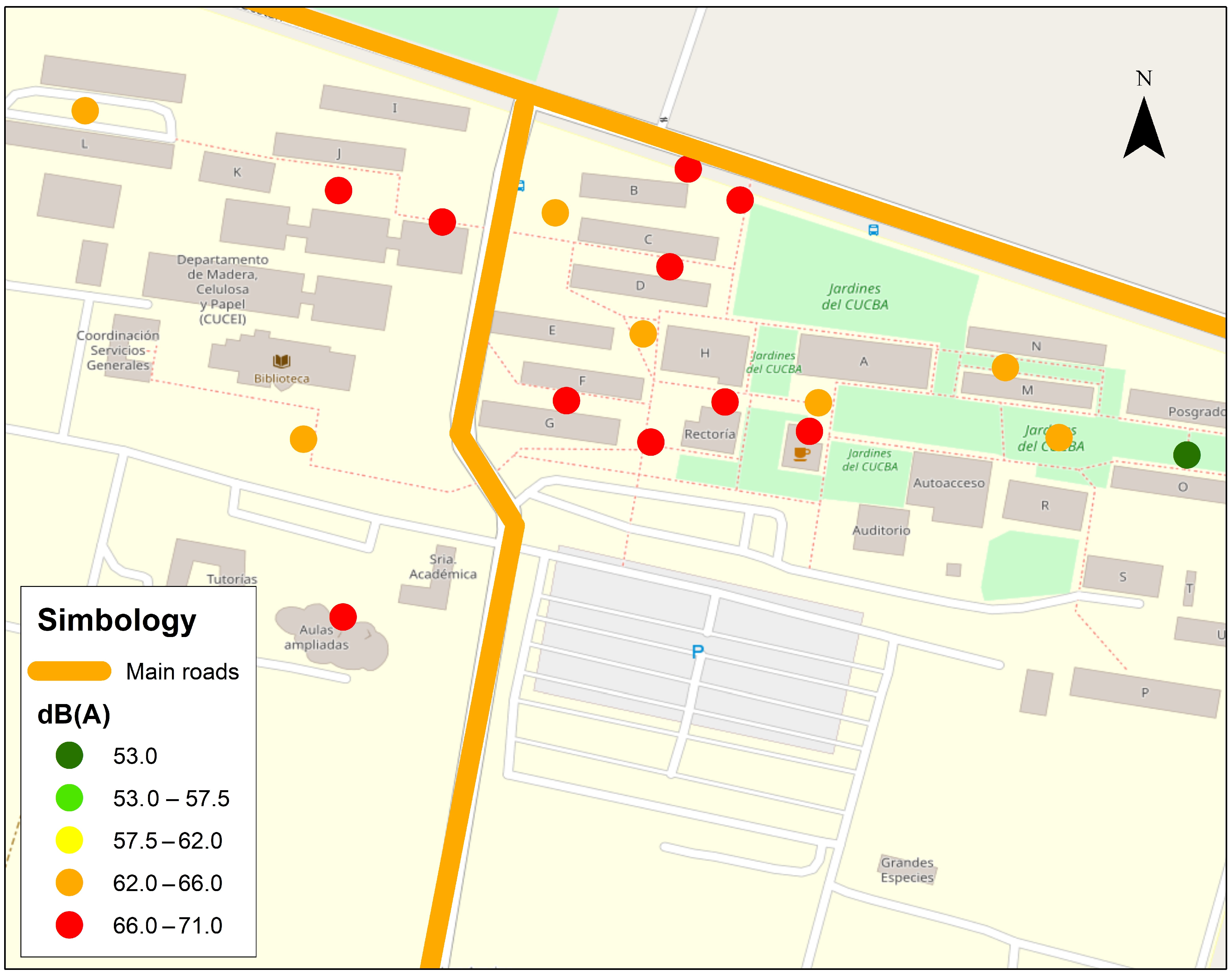
The spatial distribution of noise on semi-rural campuses presents a contrasting scenario, characterized by a more homogenous noise landscape. Here, the noise map indicates the presence of distinct quiet zones where average energy levels are notably lower, while areas with higher energy levels reached 71 dB(A) (Figure 7).
The comparison between urban campus UC1 and semi-rural campus UC2 further elucidates the disparities in noise energy averages. At UC1, the noise energy-average spans from 54–74 dB(A), reflecting the influence of urban noise sources and the variability inherent in such environments. In contrast, UC2 exhibits a narrower range of 53–71 dB(A), suggesting a relatively stable acoustic environment with fewer fluctuations in noise levels. Differences in energy-averaged noise levels (Leq) between UC1 and UC2 were statistically evaluated using a one-way ANOVA, revealing a highly significant effect of campus type (p < 0.0001). Although effect sizes were not explicitly calculated, the consistent separation between campuses across multiple indicators (Leq, L10, L50, and L90) supports the practical relevance of these differences.
The deployment of noise maps in environmental noise studies provides a robust framework for assessing the spatial distribution of noise and its implications for human health and well-being. By visualizing noise exposure across different settings, researchers can identify critical areas for intervention, develop strategies to mitigate noise pollution, and enhance the quality of life for affected populations.

3.4. Perception of the Problem

The study analyzed 371 survey responses, with 51% of participants from UC1 and 49% from UC2. The gender split was fairly even, with 52% male and 48% female respondents, most of whom were aged 20 to 25. On average, these students spent 6 to 8 h a day in university facilities for academic activities.
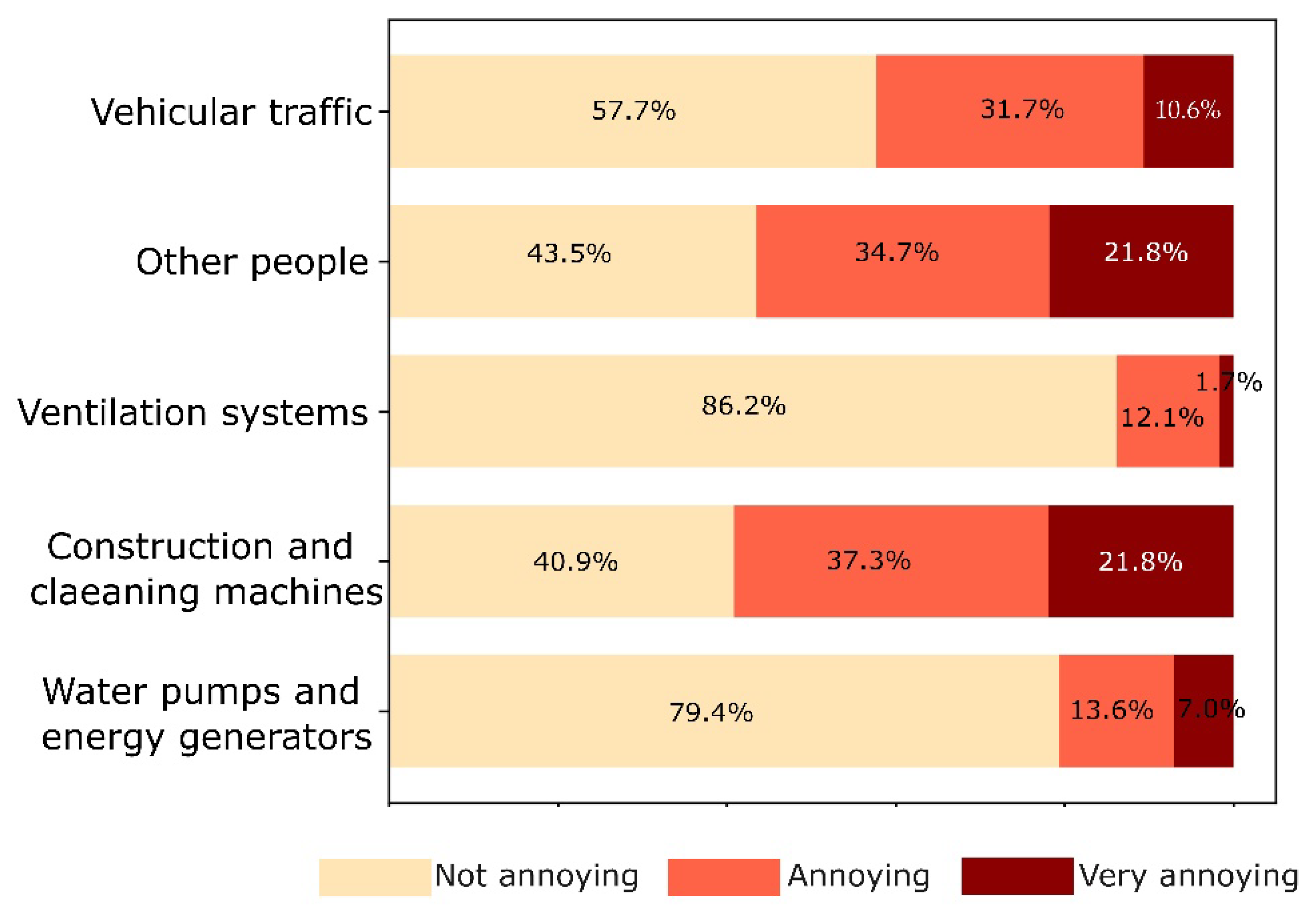
The questionnaire results highlight clear differences in the perception of noise annoyance between the two campuses. At UC1, the most prominent source of annoyance was construction-related machinery (37.3%), followed closely by student social interactions and extracurricular workshops (34.7%), and vehicular traffic (31.7%) (Figure 8). This pattern reflects the influence of ongoing infrastructure activities and the higher density of social and traffic-related noise typical of urban campuses. Students emphasized that these sources frequently interfered with their ability to concentrate, directly impairing academic performance.
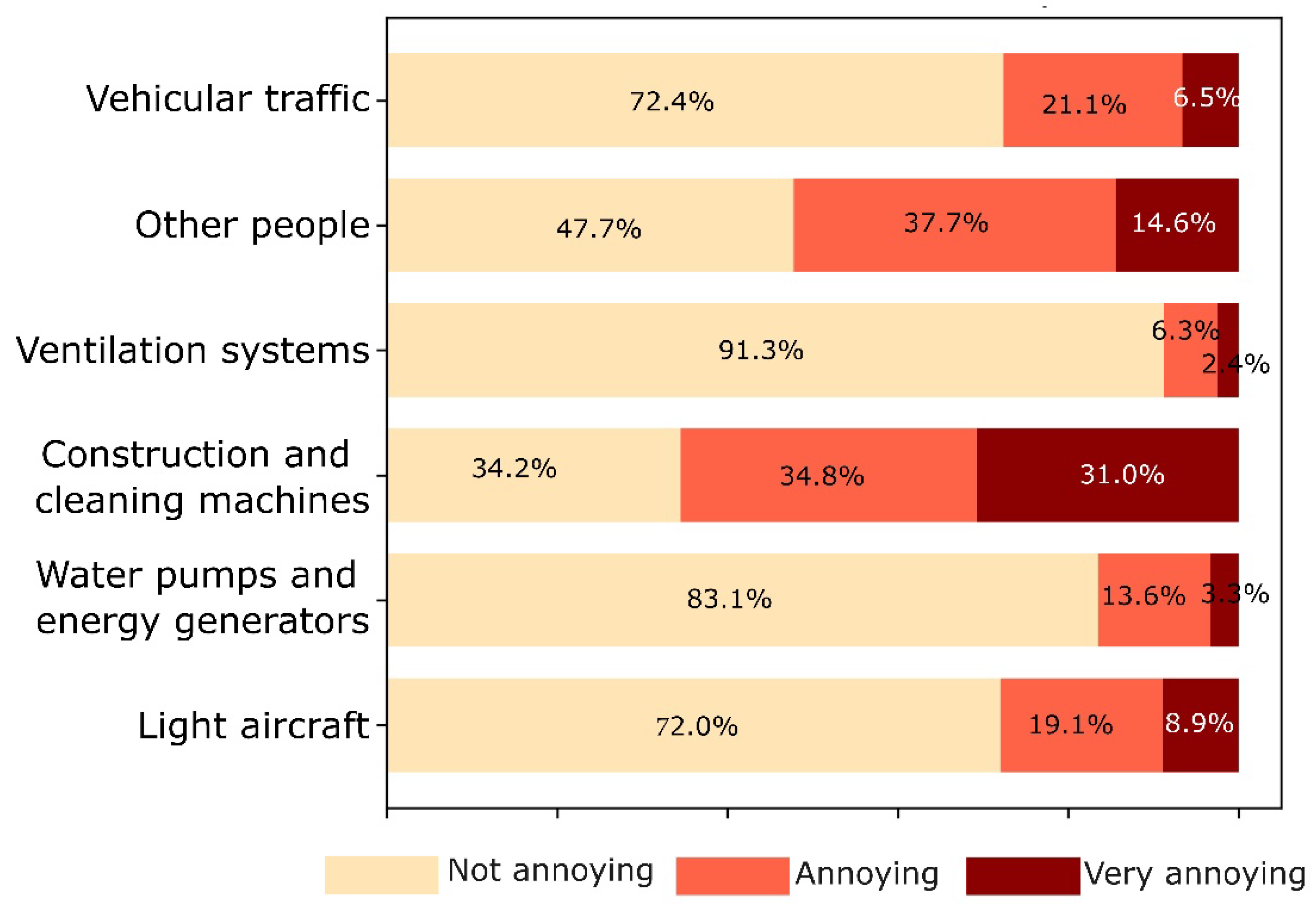
In contrast, at UC2, the hierarchy of disturbance shifted. The most frequently reported source of annoyance was student social interactions (37.7%), followed by construction-related noise (34.8%), with traffic and aircraft noise ranking lower (Figure 9). The presence of aircraft as a distinct source reflects the proximity of the campus to a military airbase, introducing an additional auditory burden absent in UC1.
The figures also show the distribution of responses for noise rated as very annoying. At UC1, traffic noise and construction activities were most frequently identified as very annoying, signaling that urban-related noise sources not only dominate in frequency but also in intensity of disturbance. At UC2, however, aircraft overflights and student social interactions emerged as the most annoying sources. Although questionnaire responses were not matched to individual measurement points, perception data were interpreted at the campus and area level, in relation to dominant noise sources identified through objective measurements and field observations. Areas characterized by higher measured noise levels—such as traffic-exposed perimeters at UC1 and student congregation zones at UC2—corresponded to the sources most frequently reported as annoying. Thus, the integration of objective noise measurements and subjective perception data was achieved through shared spatial patterns and source-specific characteristics, rather than direct point-to-point comparisons.
Despite these contextual differences, both campuses shared a common outcome: a very high proportion of students reported that noise negatively impacted their well-being 96.9% at UC1 and 95.1% at UC2. These findings underscore that, whether in highly urbanized or semi-rural environments, noise pollution is perceived as a pervasive and harmful factor that disrupts concentration, reduces academic performance, and threatens overall student well-being.
The implications are significant: sources rated as very annoying are likely to generate greater stress and long-term negative outcomes, including heightened annoyance, cognitive fatigue, and decreased motivation. For UC1, interventions should focus on traffic management and regulating construction activities during academic hours. For UC2, strategies are needed to reduce the impact of social noise through awareness campaigns and infrastructure planning, while also addressing periodic aircraft noise exposure. In both cases, these results highlight the urgency of implementing campus-specific noise management strategies to create healthier and more supportive learning environments.

4. Discussion

In the present study, it was observed that students typically spend approximately 6–8 h daily on campus and during this time period noise levels can reach peaks above 80 dB(A), as it occurs during the operation of construction, gardening and cleaning machinery. The research revealed that both UC1 and UC2 campuses exhibited noise levels exceeding the WHO’s recommended threshold of 55 dB(A), for educational settings. This finding is particularly noteworthy given the absence of specific noise regulations for educational environments, since in the country, noise regulation is primarily governed by NOM-081-SEMARNAT-1994, which sets permissible limits for fixed sources of noise, and NOM-080-SEMARNAT-1994, which regulates vehicular emissions, and occupational exposure is addressed by NOM-011-STPS-2001. These standards establish baseline thresholds for residential, commercial, industrial, and workplace settings and they do not provide specific provisions for sensitive environments such as schools and universities, where sustained exposure to noise can be particularly detrimental. This regulatory gap has significant implications for students and academic staff, as elevated background noise levels are known to impair concentration, reduce speech intelligibility, and negatively affect cognitive performance and well-being.
Recent international research supports the relevance of our findings and places them within a broader global context of campus noise exposure. Studies conducted at the University of Dammam, the University of York, and the University of Technology in Iraq have consistently reported traffic-related noise as a dominant source of acoustic disturbance within university campuses, particularly during peak commuting periods [21,22,23]. Similarly, investigations at King Abdulaziz University revealed that noise levels in technical and laboratory settings frequently exceed recommended limits for educational environments, resulting in impaired concentration, reduced speech intelligibility, and increased auditory discomfort among students [21]. These observations closely align with our results, where both UC1 and UC2 exhibited noise levels surpassing the World Health Organization’s recommended threshold of 55 dB(A) for educational settings, reinforcing the notion that excessive campus noise is a widespread issue rather than a localized phenomenon.
More recent studies adopting a soundscape-oriented approach further contextualize our findings by emphasizing the interaction between objective noise indicators and subjective perception. Mancini et al. (2021) demonstrated at the University of Salerno that elevated sound pressure levels do not invariably translate into negative perceptions, as the type and contextual meaning of sounds play a critical role in shaping annoyance and comfort [55]. Likewise, Ma et al. (2023) showed that functional campus spaces at Guizhou University, particularly ecological green areas and water features can mitigate negative soundscape perceptions, whereas traffic noise consistently exerts a detrimental influence on perceived acoustic quality [56]. These findings parallel our observations, particularly at UC2, where localized human activity and intermittent vehicular flows generated pronounced perceptual disturbance despite lower average background noise compared to UC1.
The convergence of our results with international evidence underscores the importance of considering both chronic exposure and short-duration noise peaks when assessing campus acoustic environments. While UC1 was characterized by sustained high background noise associated with dense urban traffic, UC2 exhibited episodic yet intense noise events linked to machinery operation and nearby transportation sources. Similar distinctions have been reported in recent campus soundscape studies, which highlight that different noise profiles (continuous versus intermittent) can produce comparable levels of annoyance and cognitive disruption [57]. This variability reinforces the need for spatially and temporally resolved noise assessments in university settings, as reliance on average sound levels alone may underestimate exposure-related risks.
From a mechanistic perspective, the observed associations between noise exposure, annoyance, and perceived academic disruption are consistent with established cognitive and physiological pathways described in the literature. Environmental noise has been shown to impair attention, working memory, and executive functioning by increasing cognitive load and reducing speech intelligibility [16,17,18,28,29,30,31,32,33]. These effects are particularly consequential in academic contexts requiring sustained concentration. Additionally, chronic or repetitive noise exposure can activate physiological stress responses, including increased cortisol secretion and sustained activation of the sympathetic nervous system, which over time may contribute to heightened stress, anxiety, and reduced psychological well-being [34,35,36,37,38,39]. These mechanisms provide a plausible explanatory framework linking the objective noise measurements and subjective perceptions reported by students on both campuses.
Taken together, these findings strengthen the contribution of the present study by demonstrating that both urban and semi-rural campuses face distinct yet comparable acoustic challenges. By integrating quantitative noise metrics with student-reported annoyance, our results complement and extend previous international research conducted in Europe, Asia, and the Middle East [21,22,23,24,25,26,27,55,56,57,58], while addressing a critical gap in the Mexican and Latin American literature, where outdoor campus noise exposure remains understudied [45,46,47,48]. Moreover, the absence of specific national regulations addressing noise in educational environments in Mexico highlights a significant policy gap, particularly when contrasted with international advances in soundscape-based planning and noise-sensitive campus design.
Despite the relevance of these findings, several limitations should be acknowledged. First, annoyance and perceived impacts were assessed using self-reported questionnaire data, which may be influenced by individual noise sensitivity and contextual expectations [51]. Second, the cross-sectional design of the study limits the ability to establish causal relationships between noise exposure and reported academic or health-related outcomes. Additionally, although multiple measurement campaigns were conducted, noise exposure was not continuously monitored throughout the academic year. Future research would benefit from longitudinal designs, repeated exposure assessments, and the inclusion of objective indicators of cognitive performance or physiological stress, as suggested by previous experimental and epidemiological studies on noise exposure [16,17,18,34,35,36,37,38,39].

5. Conclusions

The findings of this study identify clear and persistent sources of noise pollution within university campuses, with distinct exposure patterns observed between urban and semi-rural environments. Noise levels in both contexts frequently exceeded health-based recommendations for educational settings, confirming that campus noise constitutes a relevant environmental stressor with direct implications for student well-being and academic functioning. These results underscore the urgency of moving beyond general awareness toward the implementation of targeted, campus-specific noise management strategies, particularly in Mexico, where current environmental noise regulations do not explicitly address educational environments.
To mitigate the identified impacts, universities should adopt a combination of operational, planning, and infrastructural interventions. At the operational level, traffic management measures, such as restricting vehicle access during peak academic hours, rerouting through-traffic away from teaching areas, and promoting pedestrian or low-noise mobility zones can substantially reduce background noise exposure. Maintenance and construction activities should be systematically scheduled outside of peak class times and examination periods, supported by institutional noise control protocols that set maximum allowable sound levels for on-campus operations.
From a planning and design perspective, campuses would benefit from integrating noise sensitive land use planning, including the strategic placement of quiet academic zones away from major traffic corridors and mechanical equipment. The use of vegetation buffers, green barriers, and landscaped corridors can provide both acoustic attenuation and restorative benefits, particularly in outdoor learning and circulation spaces. Additionally, building level-interventions such as improved façade insulation, double-glazed windows, and acoustically treated ventilation systems are especially relevant for lecture halls, libraries, and laboratories located near identified noise hotspots.
Complementing physical interventions, awareness and behavioral strategies are essential to ensure long-term effectiveness. Universities should implement educational campaigns aimed at students, faculty, and staff to promote awareness of noise as an environmental health issue and to encourage quieter behaviors in shared academic spaces. The incorporation of soundscape principles into campus planning processes can further support a shift from purely noise reduction toward the creation of acoustically supportive learning environments.
At the policy level, the results of this study highlight the need for institutional and national action. Universities should incorporate environmental noise criteria into campus management plans and infrastructure guidelines, while policymakers should consider updating national noise regulations to explicitly recognize educational environments as sensitive receptors. Establishing routine campus noise monitoring programs and developing noise maps can support evidence-based decision-making and facilitate compliance with international health recommendations.
Finally, while this study provides a robust baseline for understanding campus noise exposure and perception in Mexican universities, future research should build upon these findings through longitudinal designs, continuous noise monitoring, and the inclusion of objective cognitive or physiological indicators. Such approaches would further clarify causal pathways and strengthen the evidence base needed to inform sustainable noise management in higher education.

Author Contributions

Conceptualization, G.T.-P., M.G.O.-M. and A.F.-M.; methodology, G.T.-P., M.G.O.-M. and A.F.-M.; software, A.F.-M. and V.D.-B.; validation, G.T.-P. and A.F.-M.; formal analysis, G.T.-P. and A.F.-M.; investigation, G.T.-P. and M.G.O.-M.; resources, M.G.O.-M.; data curation, A.F.-M. and V.D.-B.; writing—original draft preparation, A.F.-M. and G.T.-P.; writing—review and editing, G.T.-P. and A.F.-M.; visualization, A.F.-M. and V.D.-B.; supervision, M.G.O.-M. and A.F.-M.; project administration, M.G.O.-M.; funding acquisition, M.G.O.-M. All authors have read and agreed to the published version of the manuscript.

Funding

This study was carried out with the support of grant number 712470, awarded to Gabriel Torres-Pasillas by the Consejo Nacional de Ciencia y Tecnología from the Mexican Government (CONACYT), now “Secretaría de Ciencia, Humanidades, Tecnología e Innovación (SECIHITI)”.

Institutional Review Board Statement

The study was conducted in accordance with the Declaration of Helsinki, and the protocol was approved by the Bioethics Committee of the Research Coordination of the University Center for Biological and Agricultural Sciences of the University of Guadalajara-CINN-C/047/2025 on 23 September 2025.

Informed Consent Statement

Informed consent was obtained from all subjects involved in the study.

Data Availability Statement

The original data presented in the study are openly available in Research Gate at: https://www.researchgate.net/publication/392593099_RAW_DATA_NOISE_AND_PERCEPTION_MANUSCRIPT_2025?channel=doi&linkId=6849ccec43aad60b4c1650a5&showFulltext=true (accessed on 3 February 2026).

Acknowledgments

The authors of the article would like to thank Miriam Guadalupe Castro Lazcarro for the technical support in generating the noise maps presented in the manuscript.

Conflicts of Interest

The authors declare no conflicts of interest. The funders had no role in the design of the study; in the collection, analyses, or interpretation of data; in the writing of the manuscript; or in the decision to publish the results.

References

  1. Yadav, D.; Garg, N.; Gautam, C.; Agarwal, R.; Yadav, S. Noise pollution: The silent intruder to health and well-being. In Handbook of Vibroacoustics, Noise and Harshness; Garg, N., Gautam, C., Rab, S., Wan, M., Agarwal, R., Yadav, S., Eds.; Springer: Singapore, 2025; pp. 1185–1203. [Google Scholar] [CrossRef]
  2. Byaello, K. Impact of noise pollution on community health and well-being in Lagos, Nigeria. J. Wet. Health 2023, 4, 15–21. [Google Scholar] [CrossRef]
  3. World Health Organization. Burden of Disease from Environ Mental Noise Quantification of Healthy Life Years Lost in Europe; World Health Organization: Genova, Switzerland, 2011; pp. 1–172. [Google Scholar]
  4. Babisch, W. Updated exposure-response relationship between road traffic noise and coronary heart diseases: A meta-analysis. Noise Health 2014, 16, 1–9. [Google Scholar] [PubMed]
  5. Zhou, B.; Lan, Y.; Bi, Y.; Li, C.; Zhang, X.; Wu, X. Relationship Between Occupational Noise and Hypertension in Modern Enterprise Workers: A Case-Control Study. Int. J. Public Health 2022, 67, 1604997. [Google Scholar] [CrossRef] [PubMed]
  6. Rani, P.; Dhok, A. Effects of Pollution on Pregnancy and Infants. Cureus 2023, 15, e33906. [Google Scholar] [CrossRef]
  7. Golmohammadi, R.; Darvishi, E. The combined effects of occupational exposure to noise and other risk factors a systematic review. Noise Health 2019, 21, 125–141. [Google Scholar] [CrossRef]
  8. Lie, A.; Skogstad, M.; Johannessen, H.A.; Tynes, T.; Mehlum, I.S.; Nordby, K.C.; Engdahl, B.; Tambs, K. Occupational noise exposure and hearing: A systematic review. Int. Arch. Occup. Environ. Health 2016, 89, 351–372. [Google Scholar] [CrossRef]
  9. Thacher, J.D.; Poulsen, A.H.; Raaschou-Nielsen, O.; Hvidtfeldt, U.A.; Brandt, J.; Christensen, J.H.; Khan, J.; Levin, G.; Münzel, T.; Sørensen, M. Exposure to transportation noise and risk for cardiovascular disease in a nationwide cohort study from Denmark. Environ. Res. 2022, 211, 113106. [Google Scholar] [CrossRef]
  10. Münzel, T.; Schmidt, F.P.; Steven, S.; Herzog, J.; Daiber, A.; Sørensen, M. Environmental noise and the cardiovascular system. J. Am. Coll. Cardiol. 2018, 71, 688–697. [Google Scholar] [CrossRef]
  11. Paiva, K.M.; Cardoso, M.R.A.; Zannin, P.H.T. Exposure to road traffic noise: Annoyance, perception and associated factors among Brazil’s adult population. Sci. Total Environ. 2019, 650, 978–986. [Google Scholar] [CrossRef]
  12. Holzman, D.C. Vehicle motion alarms: Necessity, noise pollution, or both? Environ. Health Perspect. 2011, 119, A30–A33. [Google Scholar] [CrossRef]
  13. Guski, R.; Felscher-Suhr, U.; Schuemer, R. The concept of noise annoyance: How international experts see it. J. Sound. Vib. 1999, 223, 513–527. [Google Scholar] [CrossRef]
  14. Roy, M.; Shamim, F.; Majumder, R.; Ghosh, C.; Chatterjee, S. Evaluation of environmental noise in urban areas: A noise pollution assessment approach. Medicon Agric. Environ. Sci. 2022, 2, 21–40. [Google Scholar] [CrossRef]
  15. Cakir, H.I.; Bas, N.; Geyik, A. Impact of environmental noise in inclusive settings: An observational case study. In Proceedings of the AERA Annual Meeting, Philadelphia, PA, USA, 19 April 2024. [Google Scholar]
  16. Fretes, G.; Palau, R. The Impact of Noise on Learning in Children and Adolescents: A Meta-Analysis. Appl. Sci. 2025, 15, 4128. [Google Scholar] [CrossRef]
  17. Diaco, S.B. Effects of noise pollution in the learning environment on cognitive performances. Liceo J. High. Educ. Res. 2014, 10, 83. [Google Scholar] [CrossRef]
  18. Klatte, M.; Bergström, K.; Lachmann, T. Does noise affect learning? A short review on noise effects on cognitive performance in children. Front. Psychol. 2013, 4, 578. [Google Scholar] [CrossRef]
  19. Foraster, M.; Esnaola, M.; López-Vicente, M.; Rivas, I.; Álvarez-Pedrerol, M.; Persavento, C.; Sunyer, J. Exposure to road traffic noise and cognitive development in schoolchildren in Barcelona, Spain: A population-based cohort study. PLoS Med. 2022, 19, e1004001. [Google Scholar] [CrossRef]
  20. Müller, L.; Forssén, J.; Kropp, W. Traffic noise at moderate levels affects cognitive performance: Do distance-induced temporal changes matter? Int. J. Environ. Res. Public Health 2023, 20, 3798. [Google Scholar] [CrossRef]
  21. Ali, H.H.M.; Farhan, A.H.; Jawad, A.S. Comprehensive Review of Noise Pollution Sources, Health Impacts, and Acoustic Environments Affecting College and University Students. Mesopotamian J. Civ. Eng. 2023, 2023, 86–97. [Google Scholar] [CrossRef]
  22. Chen, J.; AuBuchon, A.M. The impact of environmental noise on the cognitive functions and mental workload of high school students. J. Emerg. Investig. 2025, 8, 1–7. [Google Scholar] [CrossRef]
  23. Agaja, T.M.; Akande, G.P. Impact of noise pollution on the academic performance of students in the University of Ilorin’s learning environment, Nigeria. FUDMA J. Earth Environ. Sci. 2024, 1, 42–57. [Google Scholar] [CrossRef]
  24. Akintunde, E.A.; Bayei, J.Y.; Akintunde, J.A. Noise level mapping in University of Jos, Nigeria. GeoJournal 2020, 87, 2441–2453. [Google Scholar] [CrossRef]
  25. Haron, Z.; Han, L.M.; Darus, N.; Lee, Y.L.; Jahya, Z.; Hamid, F.A.; Shek, P.N. A preliminary study of environmental noise in public university. J. Teknol. Sci. Eng. 2015, 77, 145–151. [Google Scholar] [CrossRef]
  26. Ozer, S.; Zengin, M.; Yılmaz, H. Determination of the noise pollution on university (education) campuses: A case study of Ataturk University. Ekoloji 2014, 23, 49–54. [Google Scholar] [CrossRef]
  27. Rauf, K.M.; Hossieni, H.; Ahmad, S.S.; Ali, H.; Kawa, H. Study of the improvement of noise pollution in University of Sulaimani in both new and old campus. J. Pollut. Eff. Cont. 2015, 3, 1–3. [Google Scholar] [CrossRef]
  28. Lee, P.J.; Jeon, J.Y. Relating traffic, construction, and ventilation noise to cognitive performances and subjective perceptions. J. Acoust. Soc. Am. 2013, 134, 2765–2772. [Google Scholar] [CrossRef]
  29. Gheller, F.; Spicciarelli, G.; Scimemi, P.; Arfé, B. The effects of noise on children’s cognitive performance: A systematic review. Environ. Behav. 2023, 55, 698–734. [Google Scholar] [CrossRef]
  30. Sörqvist, P. Effects of aircraft noise and speech on prose memory: What role for working memory capacity? J. Environ. Psychol. 2010, 30, 112–118. [Google Scholar] [CrossRef]
  31. Alimohammadi, I.; Kanrash, F.A.; Abolghasemi, S.; Rahmani, K.; Chalak, M.H. Relationship between noise annoyance and cognitive performance in automotive workers exposed to chronic noise. J. UOEH 2019, 41, 375–385. [Google Scholar] [CrossRef]
  32. Sörqvist, P.; Stenfelt, S.; Rönnberg, J. Working memory capacity and visual–verbal cognitive load modulate auditory–sensory gating in the brainstem: Toward a unified view of attention. J. Cogn. Neurosci. 2012, 24, 2147–2154. [Google Scholar] [CrossRef]
  33. Connolly, D.; Dockrell, J.; Shield, B.; Conetta, R.; Mydlarz, C.; Cox, T. The effects of classroom noise on the reading comprehension of adolescents. J. Acoust. Soc. Am. 2019, 145, 372–381. [Google Scholar] [CrossRef]
  34. Dzhambov, A.; Tilov, B.; Markevych, I.; Dimitrova, D. Residential road traffic noise and general mental health in youth: The role of noise annoyance, neighborhood restorative quality, physical activity, and social cohesion as potential mediators. Environ. Int. 2017, 109, 1–9. [Google Scholar] [CrossRef]
  35. Basner, M.; Babisch, W.; Davis, A.; Brink, M.; Clarck, C.; Janssen, S.; Stansfeld, S. Auditory and non-auditory effects of noise on health. Lancet 2014, 383, 1325–1332. [Google Scholar] [CrossRef] [PubMed]
  36. Stansfeld, S.; Clark, C. Health effects of noise exposure in children. Curr. Environ. Health Rep. 2015, 2, 171–178. [Google Scholar] [CrossRef] [PubMed]
  37. Bronzaft, A.L.; Van Ryzin, G. Neighborhood Noise and Its Consequences: A Survey in Collaboration with the Council on the Environment of New York City; Baruch College, City University of New York: New York, NY, USA, 2004; pp. 1–20. [Google Scholar]
  38. Pretty, J.; Peacock, J.; Sellens, M.; Griffin, M. The mental and physical health outcomes of green exercise. Int. J. Environ. Health Res. 2005, 15, 319–337. [Google Scholar] [CrossRef] [PubMed]
  39. Babisch, W. The noise/stress concept, risk assessment and research needs. Noise Health 2002, 4, 1–11. [Google Scholar]
  40. Clark, C.; Crumpler, C.; Notley, A.H. Evidence for Environmental Noise Effects on Health for the United Kingdom Policy Context: A Systematic Review of the Effects of Environmental Noise on Mental Health, Wellbeing, Quality of Life, Cancer, Dementia, Birth, Reproductive Outcomes, and Cognition. Int. J. Environ. Res. Public Health 2020, 17, 393. [Google Scholar] [CrossRef]
  41. Van Kamp, I.; Davies, H. Noise and health in vulnerable groups: A review. Noise Health 2013, 15, 153–159. [Google Scholar] [CrossRef]
  42. Souza, T.B.; Alberto, K.C.; Barbosa, S.A. Evaluation of noise pollution related to human perception in a university campus in Brazil. Appl. Acoust. 2020, 157, 107023. [Google Scholar] [CrossRef]
  43. Zannin, P.H.T.; Engel, M.S.; Fiedler, P.E.K.; Bunn, F. Characterization of environmental noise based on noise measurements, noise mapping and interviews: A case study at a university campus in Brazil. Cities 2013, 31, 317–327. [Google Scholar] [CrossRef]
  44. Luna-Guevara, A.F.; Luna-Guevara, A.M.; Roa-Rojas, Y.N. Spatial temporal assessment and mapping of the air quality and noise pollution in a sub-area local environment inside the center of a Latin American megacity: Universidad Nacional de Colombia Bogotá Campus. Asian J. Atmos. Environ. 2018, 12, 232–243. [Google Scholar] [CrossRef]
  45. Figueroa-Montaño, A.; Orozco-Medina, M.G.; Preciado-Caballero, N.E. Niveles de ruido y su relación con el aprendizaje y la percepción en escuelas primarias de Guadalajara, Jalisco. Ingeniería 2012, 16, 175–181. [Google Scholar]
  46. Moreno-Ceja, F.; Orozco-Medina, M.G.; Zumaya-Leal, M.R. Los niveles de ruido en una biblioteca universitaria, bases para su análisis y discusión. Investig. Bibl. 2015, 29, 197–224. [Google Scholar] [CrossRef]
  47. Damián-Chávez, M.M.; Ledesma-Coronado, P.E.; Drexel-Romo, M.; Ibarra-Zárate, D.I.; Alonso-Valerdi, L.M. Environmental noise at library learning commons affects student performance and electrophysiological functioning. Physiol. Behav. 2021, 241, 113563. [Google Scholar] [CrossRef] [PubMed]
  48. Zamorano-González, B.; Pena-Cardenas, F.; Velázquez-Narváez, Y.; Parra-Sierra, V.; Vargas-Martínez, J.I.; Monreal-Aranda, O.; Ruíz-Ramos, L. Traffic noise annoyance in the population of North Mexico: Case study on the daytime period in the city of Matamoros. Front. Psychol. 2021, 12, 657428. [Google Scholar] [CrossRef] [PubMed]
  49. Babisch, W. Stress hormones in the research on cardiovascular effects of noise. Noise Health 2003, 5, 1–11. [Google Scholar]
  50. IEC 61672-1:2013; Electroacoustics—Sound Level Meters—Part 1: Specifications. International Electrotechnical Commission (IEC): Geneva, Switzerland, 2013. Available online: https://webstore.iec.ch/en/publication/5708?utm_source=chatgpt.com (accessed on 3 February 2026).
  51. Persson, R.; Björk, J.; Ardö, J.; Albin, M.; Jakobsson, K. Trait anxiety and modeled exposure as determinants of self-reported annoyance to sound, air pollution and other environmental factors in the home. Int. Arch. Occup. Environ. Health 2007, 81, 179–191. [Google Scholar] [CrossRef]
  52. NOM-081-SEMARNAT-1994; Norma Oficial Mexicana NOM-081-SEMARNAT-1994, Que Establece los Límites Máximos Permisibles de Emisión de Ruido de las Fuentes Fijas y su Método de Medición. Secretaría de Medio Ambiente y Recursos Naturales (SEMARNAT): Mexico City, Mexico, 1994. Available online: https://siga.jalisco.gob.mx/Assets/documentos/normatividad/nom081semarnat1994.htm (accessed on 3 February 2026).
  53. NOM-080-SEMARNAT-1994; Norma Oficial Mexicana NOM-080-SEMARNAT-1994, Que Establece los Límites Máximos Permisibles de Emisión de Ruido de los Vehículos Automotores, Motocicletas y Triciclos Motorizados en Circulación y su Método de Medición. Secretaría de Medio Ambiente y Recursos Naturales (SEMARNAT): Mexico City, Mexico, 1994. Available online: https://platiica.economia.gob.mx/normalizacion/nom-080-semarnat-1994/ (accessed on 3 February 2026).
  54. NOM-011-STPS-2001; Norma Oficial Mexicana NOM-011-STPS-2001, Condiciones de Seguridad e Higiene en los Centros de Trabajo Donde se Genere Ruido. Secretaría del Trabajo y Previsión Social (STPS): Mexico City, Mexico, 2001. Available online: https://asinom.stps.gob.mx/upload/noms/Nom-011.pdf (accessed on 3 February 2026).
  55. Mancini, S.; Mascolo, A.; Graziuso, G.; Guarnaccia, C.S. Questionnaires and Noise Measurements in a University Campus: A Soundscape Study. Sustainability 2021, 13, 841. [Google Scholar] [CrossRef]
  56. Ma, Y.; Tang, H.; Zhou, X. Research on the Characteristics and Influencing Factors of Spatial Soundscape Perception in University Campuses: Guizhou University as an Example. In International Conference on Green Building, Civil Engineering and Smart City; Springer Nature: Singapore, 2023; pp. 607–620. [Google Scholar] [CrossRef]
  57. Mascolo, A.; Rossi, D.; Grimaldi, M.; Guarnaccia, C. Soundscape maps of pleasantness in a university campus by crowd-sourced measurements interpolation. Noise Mapp. 2024, 11, 20220178. [Google Scholar] [CrossRef]
  58. Liang, Q.; Lin, S.; Wang, L.; Yang, F.; Yang, Y. The impact of campus soundscape on enhancing student emotional well-being: A case study of fuzhou university. Buildings 2024, 15, 79. [Google Scholar] [CrossRef]
Figure 1. UC1 located in the urban complex of Guadalajara, Mexico.
Acoustics 08 00013 g001
Figure 2. UC2 located in a semi-rural environment.
Acoustics 08 00013 g002
Figure 3. Distribution of noise levels at UC1.
Acoustics 08 00013 g003
Figure 4. Distribution of noise levels at UC2.
Acoustics 08 00013 g004
Figure 5. Leq recorded at 18 measuring points in UC1 and UC2. The vertical red line represents the WHO recommended value for educational facilities, 55 dB(A).
Acoustics 08 00013 g005
Figure 6. Energy-averaged sound level at UC1.
Acoustics 08 00013 g006
Figure 7. Energy-averaged sound level at UC2.
Acoustics 08 00013 g007
Figure 8. The proportion of annoyance concerning noise sources at UC1.
Acoustics 08 00013 g008
Figure 9. The proportion of annoyance concerning noise sources at UC2.
Acoustics 08 00013 g009
Table 1. Statistical descriptors of temporal variability of noise dB(A) at both campuses.
UC1UC2
Measuring PointL10L50L90L10L50L90
159.355.151.956.752.149.2
263.157.554.858.653.149.2
364.657.953.460.756.352.0
468.263.862.273.966.161.2
564.761.559.460.958.053.3
665.062.661.371.058.752.2
766.558.653.365.158.253.8
868.164.261.769.759.253.3
972.669.367.561.358.155.2
1074.471.068.768.663.358.9
1157.354.251.568.263.757.1
1261.76057.471.869.863.5
1360.655.452.260.557.751.5
1459.656.853.860.555.952.7
1561.759.457.159.654.349.0
1664.559.455.858.551.344.8
1768.259.453.558.452.549.7
1857.353.350.863.557.646.3
Disclaimer/Publisher’s Note: The statements, opinions and data contained in all publications are solely those of the individual author(s) and contributor(s) and not of MDPI and/or the editor(s). MDPI and/or the editor(s) disclaim responsibility for any injury to people or property resulting from any ideas, methods, instructions or products referred to in the content.