Case Report

Ultrastructural Features of Amoeboid Tumor Cell–Unmyelinated Nerve Fiber Interactions in Early Gastric Cancer: A Case Report Within the Context of Cancer Neuroscience


1
School of Advanced Studies, University of Camerino, 62032 Camerino, Italy
2
Department of Human Pathology in Adult and Developmental Age “G. Barresi”, University of Messina, 98123 Messina, Italy
*
Author to whom correspondence should be addressed.
Gastrointest. Disord. 2026, 8(1), 11; https://doi.org/10.3390/gidisord8010011
Submission received: 22 December 2025 / Revised: 29 January 2026 / Accepted: 1 February 2026 / Published: 10 February 2026

Abstract

Background: Perineural invasion (PNI) is a recognized pathway for cancer spread and is associated with poor outcomes in gastric cancer. However, the initial morphological characteristics of tumor–nerve interactions in early gastric cancer, particularly at the ultrastructural level, remain insufficiently defined. Case Presentation: We report a case of a 49-year-old man diagnosed with type IIc early gastric cancer. Histological examination revealed a combined poorly cohesive carcinoma (PCC)-NOS/signet-ring cell (SRC) histotype. Tumor invasion reached the middle third of the submucosa and was accompanied by a mature desmoplastic reaction, with metastases identified in two perigastric lymph nodes (pT1bN1M0). Transmission electron microscopy (TEM) revealed unmyelinated nerve fibers embedded within the submucosal desmoplastic stroma, in close proximity to infiltrating neoplastic cells. Several tumor cells exhibited cytoplasmic projections ranging from single extensions to multiple prominent pseudopods, resulting in an amoeboid morphology. Notably, an unmyelinated nerve process was observed within a cytoplasmic invagination of an individual tumor cell. Conclusions: Taken together, these ultrastructural findings provide novel and previously undescribed morphological evidence of a specific interaction between amoeboid tumor cells and peripheral unmyelinated nerve fibers within the submucosal desmoplastic stroma of early gastric cancer. The biological and clinical significance of this interaction in the early stages of perineural invasion warrants further investigation.

1. Background

The tumor microenvironment is a dynamic and heterogeneous ecosystem consisting of immune cells, neurons, lymphatic and blood vessels, and the extracellular matrix that surrounds the tumor. Within this intricate network, tumor cells communicate with host cells through direct intercellular contacts or paracrine signaling within specialized regions known as tumor niches, which promote cancer progression and metastasis [1,2,3].
The innervated niche is one of these compartments that has recently drawn particular attention. It refers to a microenvironment rich in sympathetic, parasympathetic, or sensory fibers, often characterized by small diameter axons and dense neurochemical signaling that continuously interact with tumor and stromal cells via neurotransmitters and neuropeptides released into the extracellular space [4]. Evidence from both human and experimental studies indicates that the peripheral nervous system may play a crucial role in various malignancies, influencing their initiation and progression [5,6,7,8,9,10]. These discoveries have led to the development of cancer neuroscience, an interdisciplinary field investigating how neural signaling affects tumor dynamics and how cancer, in turn, modulates neural circuits within the tumor microenvironment [11,12,13].
Perineural invasion (PNI), classically described as the invasion of cancer cells in, around, and along nerves, is a distinct pathway of tumor dissemination and an adverse prognostic indicator in several cancers [14]. Standard hematoxylin–eosin-stained sections, frequently complemented by histochemical and immunohistochemical methods, enable surgical pathologists to detect PNI, typically assessed at the level of Auerbach’s (myenteric) plexus [15] or major nerve trunks situated within the subserosal soft tissue [16].
Toluidine blue-stained semithin resin sections offer a more detailed evaluation of neural morphology than routine paraffin sections, whereas transmission electron microscopy (TEM) is the gold standard for identifying unmyelinated fibers, which are not reliably recognized by light microscopy because of their small caliber (approximately 0.1–3 μm diameter) [17,18]. TEM also facilitates the examination of neuroeffector junctions, which are specialized regions where autonomic postganglionic axons establish dynamic connections with diverse non-neuronal effector cells, including smooth muscle, glandular, and immune cells [19]. In these junctions, neurotransmitter release typically occurs from swellings (varicosities) along autonomic nerve fibers, rather than exclusively at the terminal end, and diffuses as paracrine signaling over short distances to reach target cells [19,20].
The neural component of the tumor microenvironment has been the subject of relatively limited ultrastructural investigations, the majority of which have focused on neural structures in proximity to tumors. Zauszkiewicz-Pawlak et al. [21] analyzed the ultrastructure of the myenteric plexus in colonic areas distant from colorectal carcinomas, comparing them with plexuses situated near the tumor tissue. Other researchers have documented ultrastructural characteristics of PNI in peritumoral areas, typically involving larger nerve trunks or plexuses in more advanced stages [22,23,24]. However, to the best of our knowledge, no ultrastructural studies specifically examining nerve–tumor interactions in human gastric carcinoma have been documented yet.
The present report details an early gastric cancer in which TEM demonstrates unmyelinated nerve fibers embedded within the submucosal desmoplastic tumor stroma, establishing highly intimate associations with amoeboid tumor cells. These observations are analyzed within the wider context of cancer neuroscience [11] and are presented as hypothesis-generating ultrastructural evidence of specific tumor–nerve interactions within the submucosal compartment of early gastric cancer.

2. Case Report

Between 1998 and 2005, gastric carcinoma specimens examined at the Department of Human Pathology of the University Hospital “G. Martino” in Messina were routinely processed for both light microscopy and TEM. This integrated diagnostic protocol was predominantly utilized for specific neoplasms in which ultrastructural analysis could aid in differential diagnosis (e.g., neuroendocrine or hepatoid carcinomas, non-epithelial tumors).
Light microscopy and TEM were performed on paired tissue samples obtained contemporaneously from fresh surgical specimens and immediately fixed in parallel, thereby avoiding fixation delays or the use of archival material for ultrastructural evaluation. For each case, fresh tumor tissue was sectioned into two contiguous portions using a razor blade, allowing the acquisition of matched samples for conventional histology and electron microscopy from the same anatomical region of the lesion. One portion was fixed in 10% neutral-buffered formalin and embedded in paraffin, in addition to supplementary tissue samples obtained from the tumor, perigastric lymph nodes, and the surgical resection margins. Hematoxylin and eosin staining was employed for standard histological evaluation. The contiguous second portion was cut into small fragments (1–2 mm in diameter) and processed for TEM. These samples were fixed in 3% phosphate-buffered glutaraldehyde (pH 7.4), subsequently post-fixed in 1% osmium tetroxide, dehydrated using a graded ethanol series, and embedded in Araldite. The patient described in this report was part of this diagnostic series.
A 49-year-old male was admitted to the University Hospital “G. Martino” in Messina, Italy, on 15 February 2004, with a two-month history of epigastric pain. Upper endoscopy revealed an approximately 2.0 × 1.5 cm type IIc depressed lesion situated at the incisura angularis. Targeted biopsies revealed the presence of signet-ring cell (SRC) carcinoma, while supplementary biopsy samples obtained from the lesser curvature of the antrum and body were positive for Helicobacter pylori using Giemsa staining. Preoperative staging, comprising chest radiography, abdominal ultrasonography, and contrast-enhanced computed tomography, indicated no signs of distant metastases or locoregional invasion. A subtotal gastrectomy and regional lymphadenectomy were later performed on the patient. The postoperative recovery proceeded without complications. Adjuvant therapy was not implemented, according to therapeutic protocols of 2004. During the long-term follow-up, the patient remained asymptomatic, with no clinical or radiological indications of recurrence or metastatic disease for a 15-year duration.
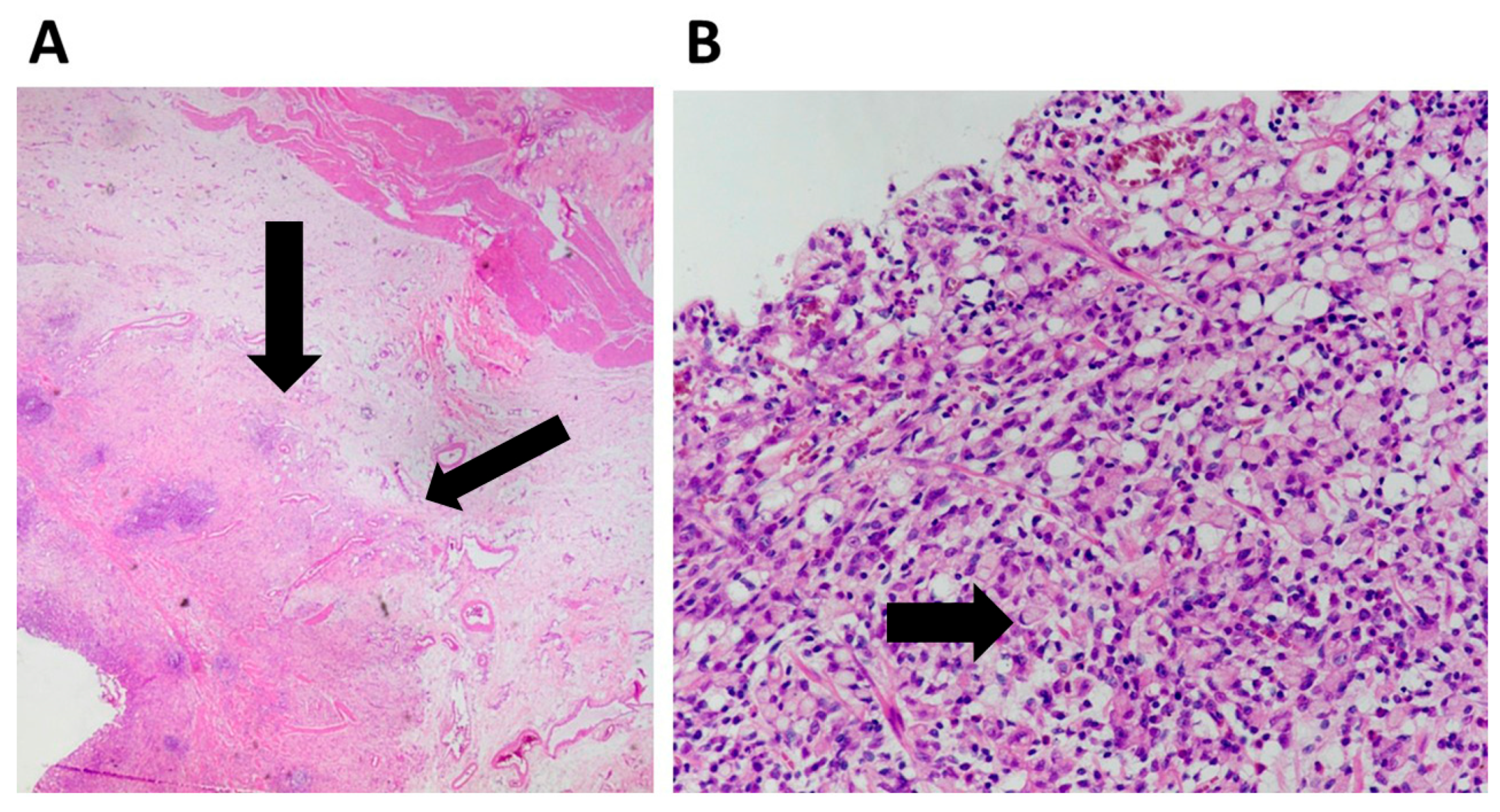
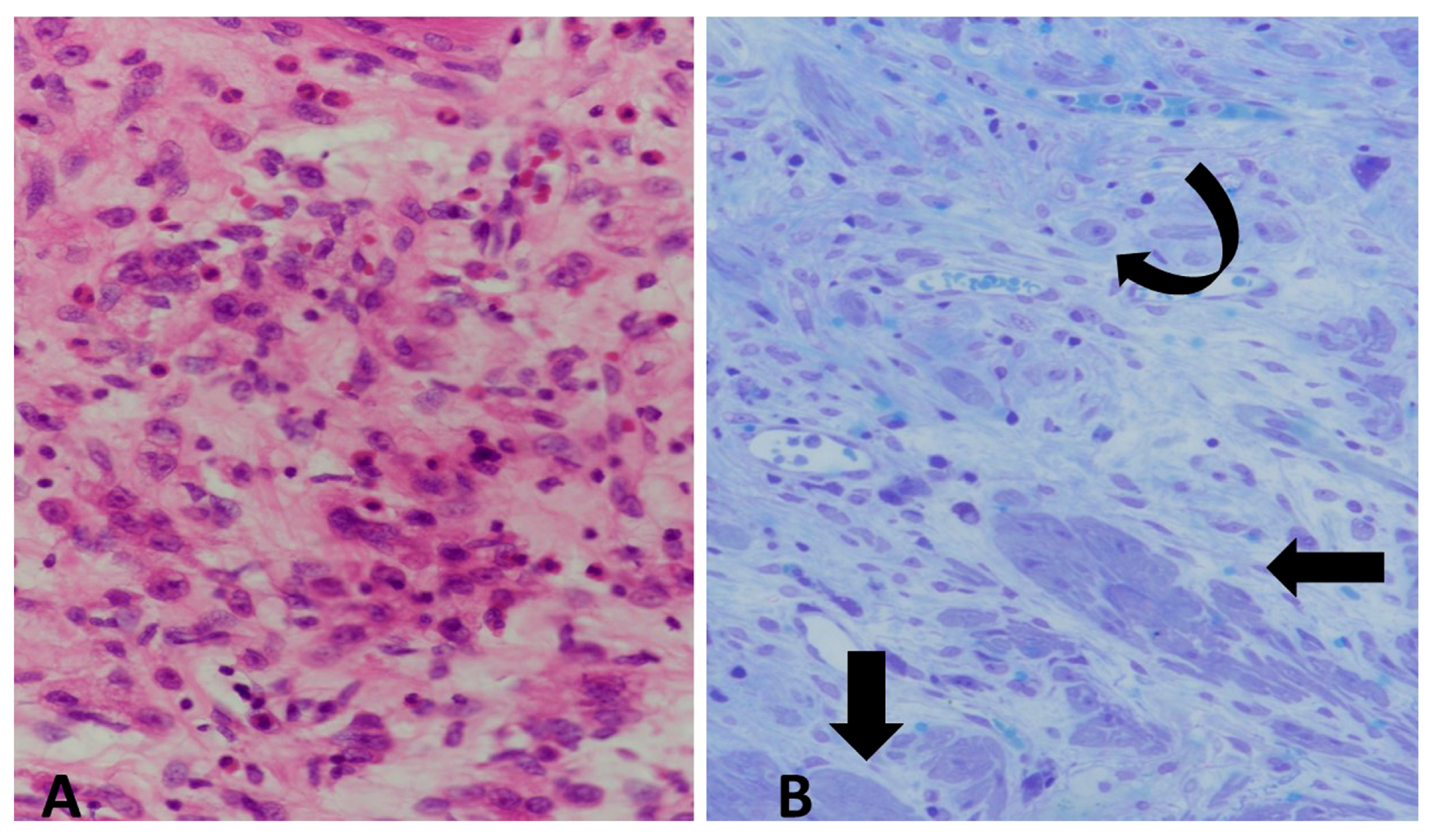
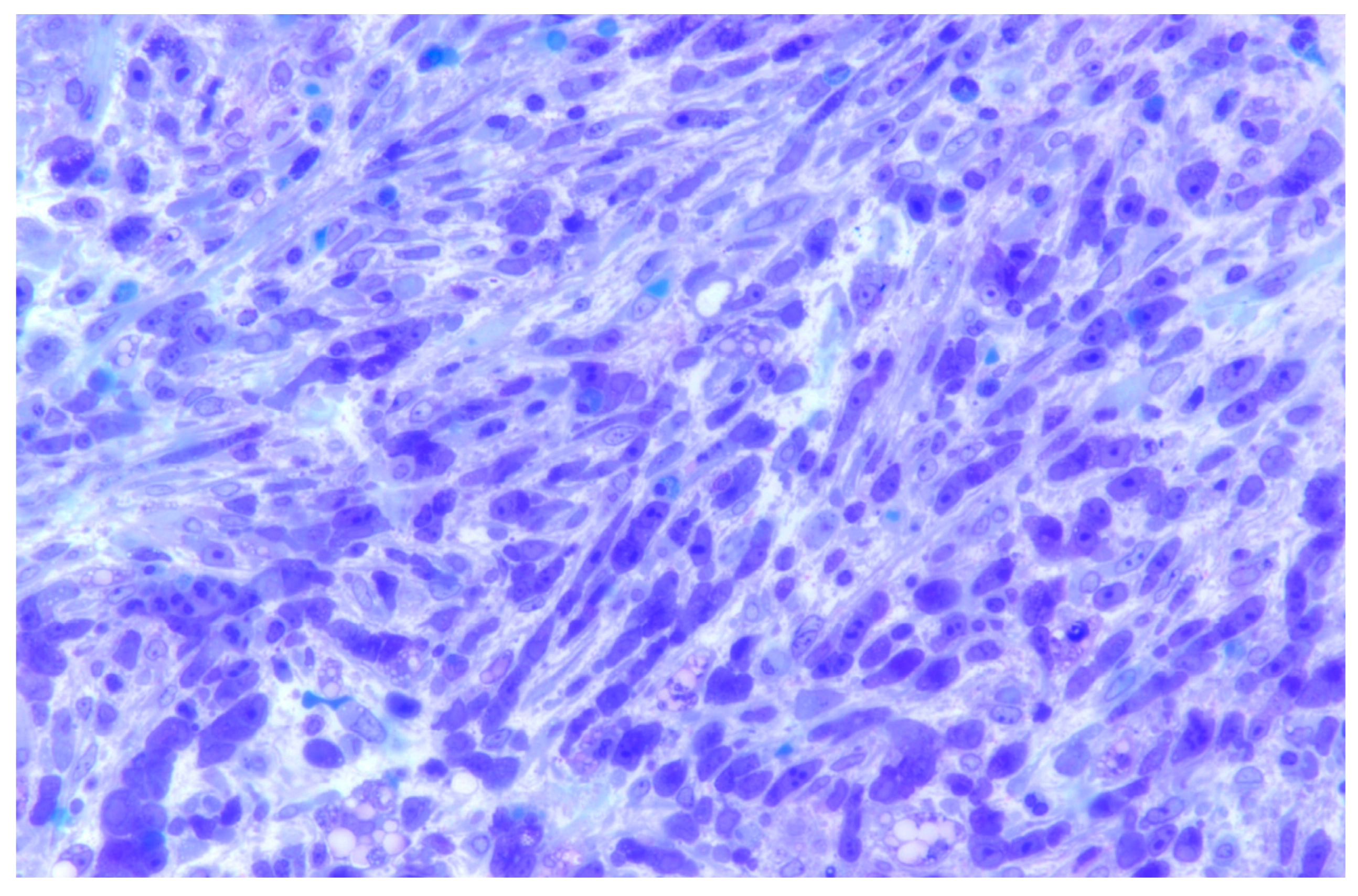
The resected stomach showed a depressed lesion measuring 2.0 × 1.5 cm at the incisura angularis. The tumor infiltrated the middle third of the submucosal layer (Figure 1A), and all resection margins were devoid of neoplastic invasion. Two of the eighteen perigastric lymph nodes revealed metastases, but there was no light microscopic evidence of venous or PNI. The neoplasm was reclassified as pT1bN1M0, stage IB (early gastric cancer), in accordance with the American Joint Committee on Cancer TNM staging system for gastric cancer (Eighth Edition) [25]. The tumor consisted of individual cells or small clusters lacking glandular differentiation, a characteristic corresponding with a poorly cohesive carcinoma (PCC)-NOS, as defined by the WHO classification [26]. It displayed different cytological types, including SRC and histiocytoid components. Based on the presence of an SRC component constituting more than 10% but less than 90%, PCC-NOS was subsequently subclassified into combined PCC-NOS/SRC in accordance with the recent European consensus established by the International Gastric Carcinoma Association [27]. SRC was the most prevalent type of cell that infiltrated the mucosal layer (Figure 1B). On the other hand, histiocytoid tumor cells, sparsely distributed in a desmoplastic stroma, were mainly detected in the submucosal layer (Figure 2A). Focal eosinophil infiltration was identified in these regions. Based on the absence of myxoid stroma or keloid-like collagen bundles (Figure 1A), the desmoplastic reaction was designated as “mature” in accordance with Ueno’s histopathological classification [28]. In the paired specimens embedded in Araldite, submucosal infiltration by histiocytoid tumor cells accompanied by a mature desmoplastic response was confirmed in semithin sections stained with toluidine blue (Figure 2B and Figure 3). There was marked variability in the density of submucosal tumor cells. In some areas, only scattered histiocytoid elements were present within the desmoplastic stroma (Figure 2B), whereas in other fields, the stroma was densely populated by crowded but still poorly cohesive histiocytoid tumor cells (Figure 3). These malignant cells exhibited a single, enlarged, round-to-irregular nucleus with a prominent nucleolus (Figure 2B and Figure 3).
We adopted a strict correlative sampling procedure to ensure that the tissue examined under TEM corresponded to the tumor component infiltrating the submucosal layer. This approach was based on a stepwise comparison between hematoxylin–eosin-stained sections, semithin toluidine blue-stained sections, and TEM. Submucosal tumor invasion was identified on hematoxylin–eosin-stained sections (Figure 1A,B and Figure 2A) and precisely localized for ultrastructural analysis using corresponding semithin toluidine blue-stained sections (Figure 2B and Figure 3). Araldite blocks containing these predefined regions were then sectioned for TEM. Using the reference photomicrographs obtained from the semithin sections, the same anatomical structures were subsequently identified, examined, and documented at the ultrastructural level, using a JEOL 1200 TEM (JEOL, Tokyo, Japan). Within the analyzed specimen, the muscularis propria was consistently devoid of neoplastic infiltration in semithin sections, thereby corroborating the diagnosis of an early-stage gastric carcinoma and confirming that the ultrastructural findings were obtained within the context of submucosal invasion.
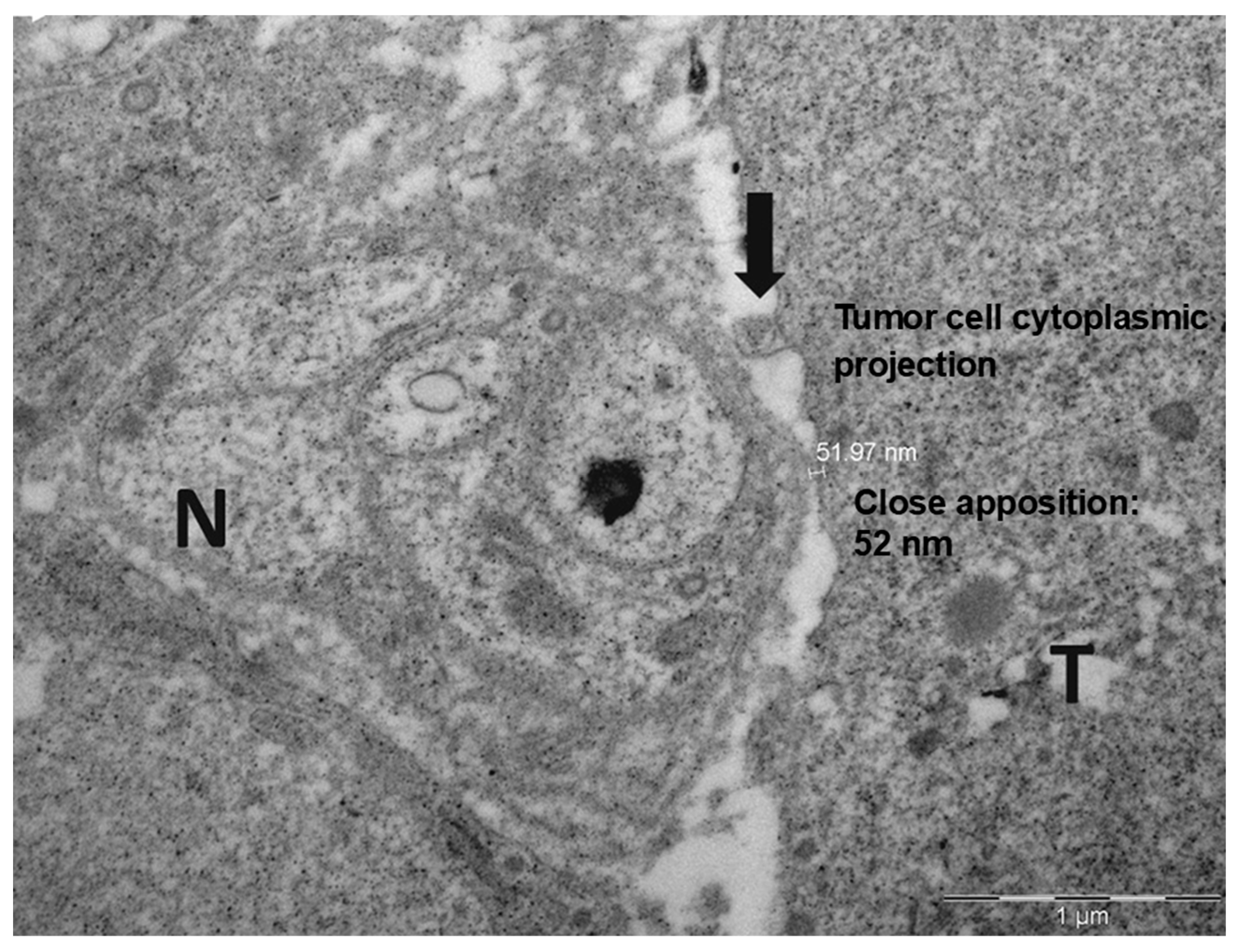
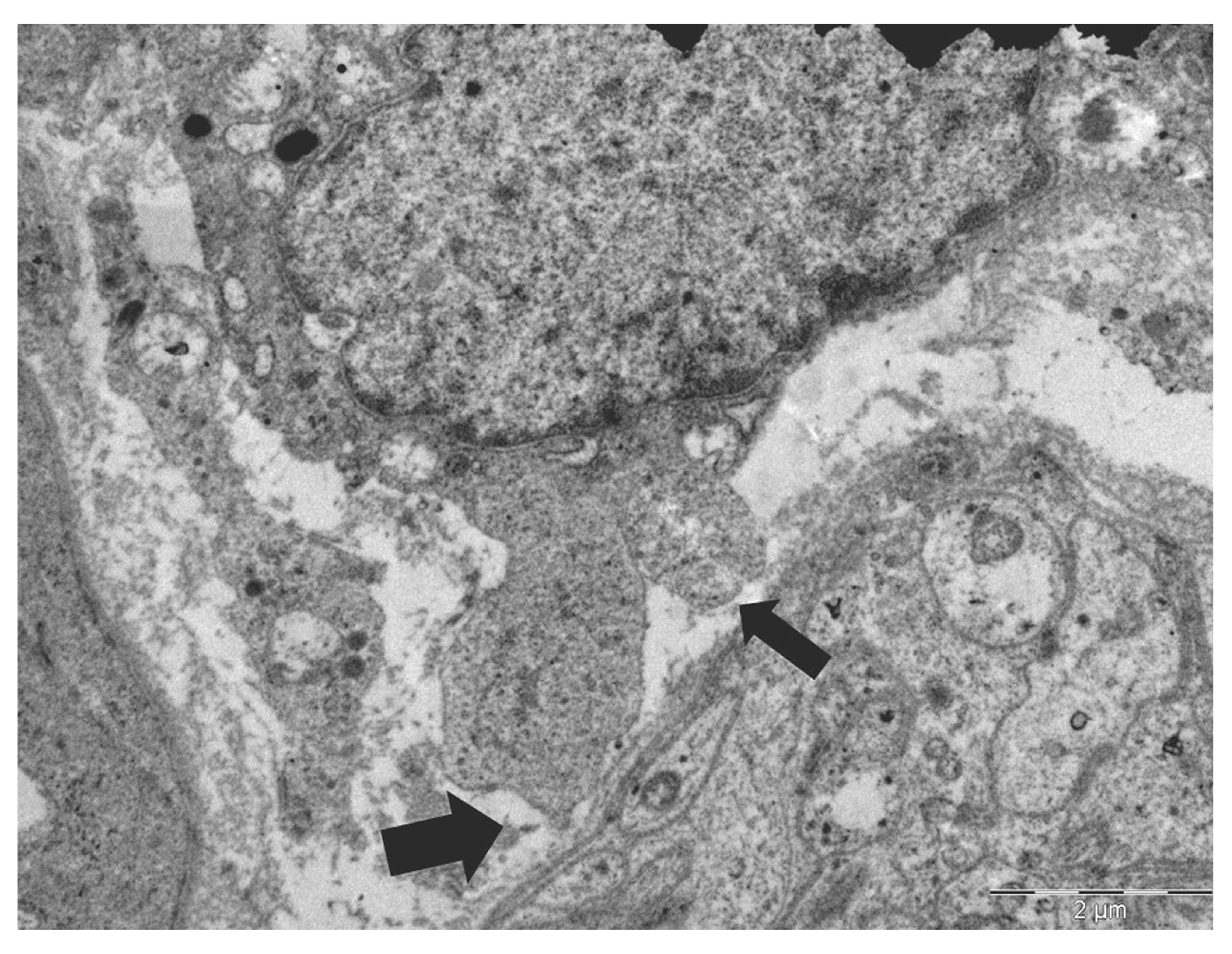
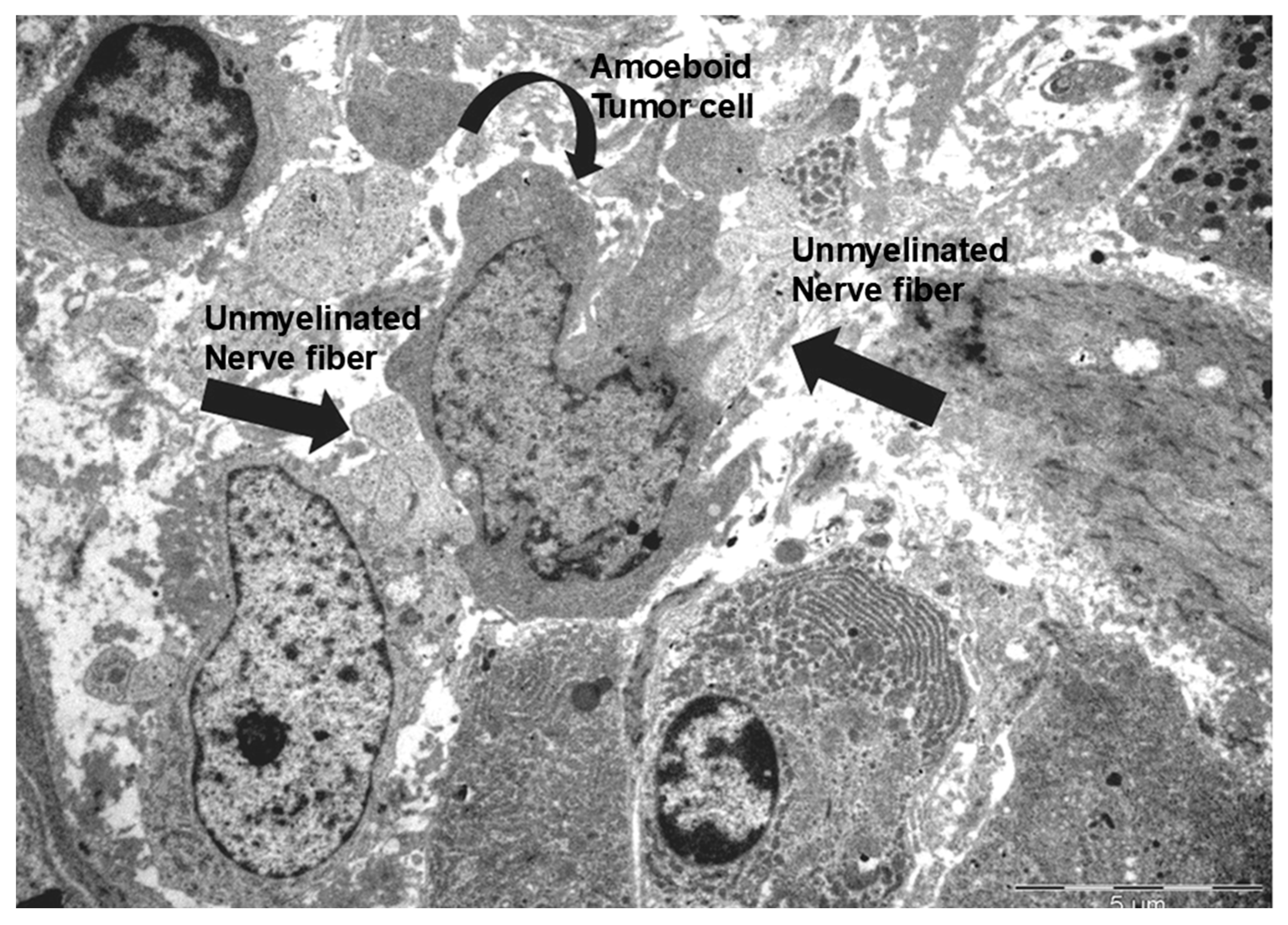
TEM identified unmyelinated nerve fibers embedded within the submucosal desmoplastic stroma, in close proximity to infiltrating neoplastic cells. A morphological continuum of nerve–tumor interfaces was noted, varying from mere proximity to highly intimate connections characterized by considerable narrowing of the intercellular gap (Figure 4). Moreover, tumor cells often displayed cytoplasmic protrusions oriented toward adjacent unmyelinated fibers. Examples of these cytoplasmic protrusions from tumor cells are illustrated in Figure 4, which shows a finger-like projection from the cytoplasm of a tumor cell, and in Figure 5, where tumor cells extended two broad cytoplasmic pseudopods toward nearby unmyelinated nerve fibers, while the axonal profiles did not show varicosities or clustered synaptic vesicles. These cytoplasmic pseudopods conferred an amoeboid shape in some tumor cells. Specifically, Figure 6 illustrates an amoeboid tumor cell, situated near two distinct unmyelinated nerve fibers, arranged in a bipolar configuration.
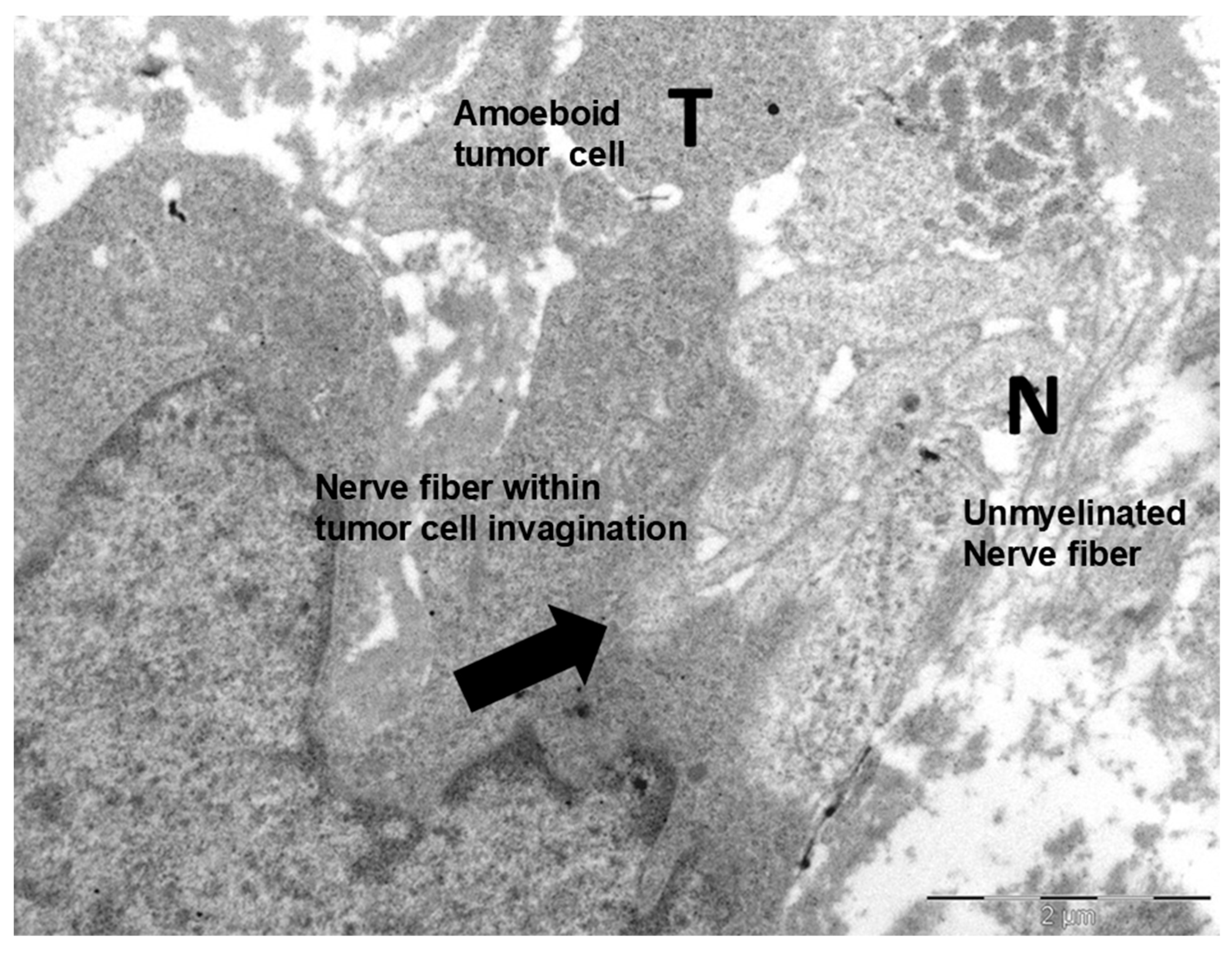
At greater magnification, no distinguishable intercellular fissure could be observed between the unmyelinated nerve fiber and the tumor cell. Moreover, a neural process appeared to be accommodated within a cytoplasmic invagination of the tumor cell (Figure 7), resulting in highly intimate nerve–tumor interactions within the submucosal desmoplastic region. Furthermore, in the examined sections, the axonal profile closely apposed to the tumor cell did not show focal swelling or a clustered accumulation of synaptic vesicles and is therefore best interpreted as a non-varicose segment of an unmyelinated axon.
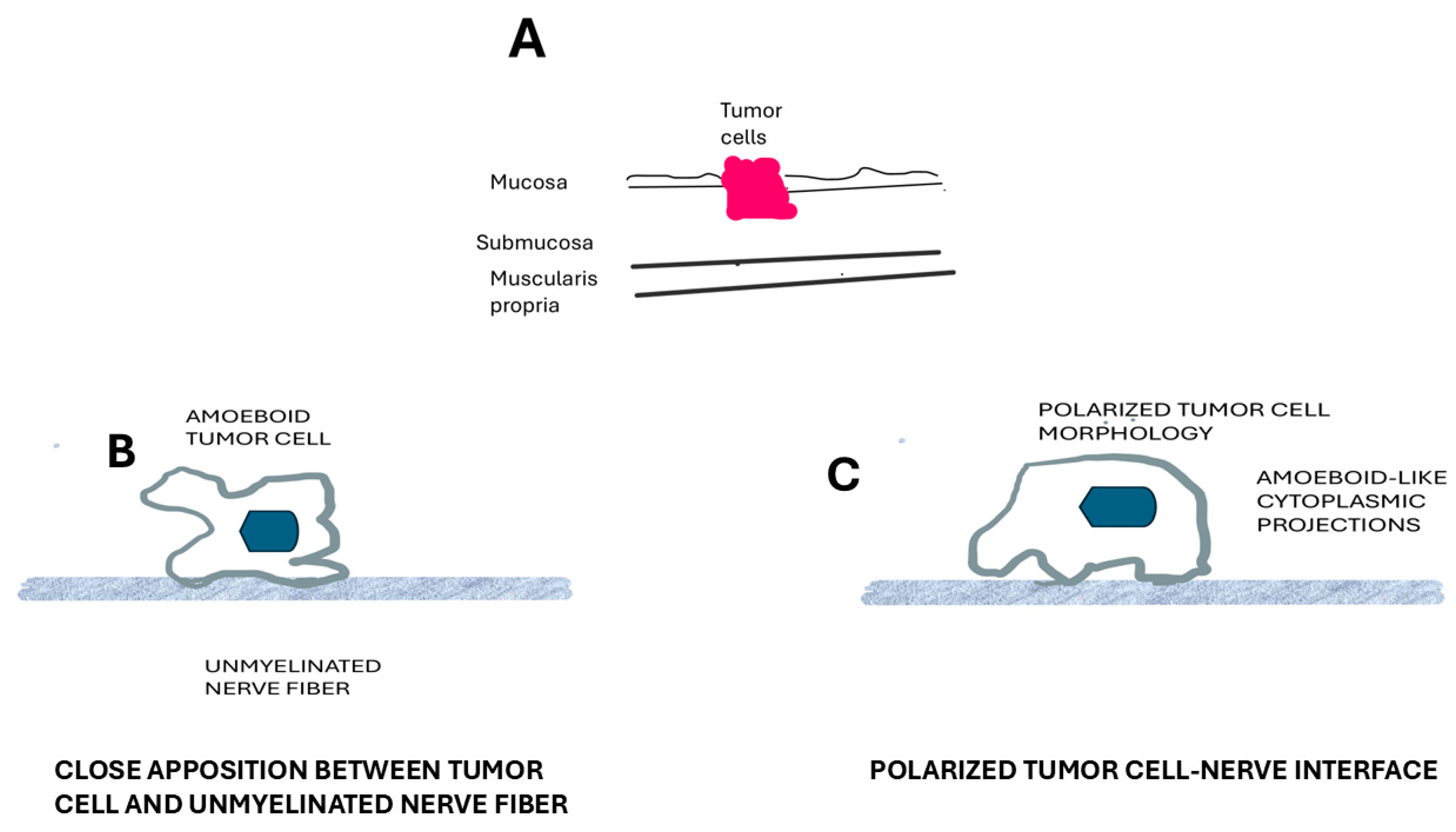
Figure 8 provides a schematic summary of the anatomical context and the tumor–nerve interaction patterns documented in this case to facilitate the integration of the histological and ultrastructural observations described above.

3. Discussion

We report a case of type IIc early gastric cancer with submucosal invasion, classified as a combined PCC-NOS/SRC carcinoma, with an SRC component exceeding 10% but less than 90% [26,27].
This case exhibits clinicopathological characteristics, including poorly cohesive histology with SRC and histiocytoid cells, significant mature desmoplasia in the submucosa, and an excellent long-term prognosis, similar to the low-grade diffuse gastric cancer subtype described by Chiaravalli et al. [29], which is correlated with a relatively favorable outcome. It also has histological similarities to the PCC-NOS/SRC carcinomas described by Roviello et al. [30]. In this study, patients with PCC-NOS/SRC exhibited superior survival compared to those with PCC-NOS.
We examine our case of early gastric cancer within the context of the emerging discipline of cancer neuroscience, which integrates the study of the nervous system with tumor biology [11,12,13]. The peripheral nervous system of the stomach predominantly comprises a well-developed intermuscular ganglionated plexus (Auerbach’s plexus) that provides innervation to the gastric mucosa, submucosa, and smooth muscle tissue [31]. In contrast to the small and large intestines, the human stomach lacks a prominent submucosal plexus (Meissner’s plexus), possessing only a limited number of ganglia and a few unmyelinated nerve fibers [31,32]. PNI is more commonly detected in advanced gastric cancer within the myenteric plexus or extramural nerve trunks, whereas it has been rarely reported in early gastric cancer [33]. However, to the best of our knowledge, no ultrastructural studies regarding nerve–tumor interactions in early gastric cancer have yet been documented.
Cancer cell invasion is characterized by two main types of individual tumor cell migration: mesenchymal (fibroblast-like) and amoeboid [34]. In a recent study, Marcadis et al. [35], utilizing a murine model of PNI within the sciatic nerve, demonstrated that tumor cells rely exclusively on an amoeboid mode of migration to achieve rapid PNI. Furthermore, these authors emphasize that therapeutic interventions can specifically target this mode of migration [35]. In our observations, some tumor cells in contact with nerve fibers displayed a variety of cytoplasmic protrusions, ranging from a single protrusion to multiple large pseudopods, which give rise to an amoeboid morphology. It is important to note that the plasma membranes of the amoeboid tumor cell and of an adjacent unmyelinated nerve fiber are in direct contact, with no visible intercellular gap. Additionally, a nerve process appears to be located within a cytoplasmic invagination of the tumor cell. In the examined sections, this axonal profile did not exhibit focal swelling or a clustered accumulation of synaptic vesicles and is therefore best interpreted as a non-varicose segment of an unmyelinated axon. Taken together, these features do not support the interpretation of this interface as a synapse-like junction between nerve and tumor cell. Given that axonal varicosities are dynamic and distributed segmentally, varicosity-mediated signaling along the same fiber cannot be conclusively ruled out; our negative findings pertain solely to the regions included within the examined sections for TEM. On the other hand, the amoeboid configuration of the neoplastic cells resembles that reported in experimental models of PNI [35]. In this context, the absence of disease recurrence despite long-term follow-up suggests that early and localized tumor–nerve interactions, as observed in this case, do not necessarily correspond to an aggressive or progressive perineural invasive process in early-stage gastric cancer. Accordingly, our findings provide novel ultrastructural evidence of a specific pattern of interaction between amoeboid tumor cells and unmyelinated nerve fibers within the submucosal tumor compartment. Further studies will be required to determine whether this ultrastructural configuration represents an initial submucosal stage of PNI.

Limitations

The diagnosis of early gastric cancer was determined using histopathological criteria, based on the localization of the neoplastic proliferation to the mucosa and superficial submucosa, demonstrated by the low-magnification histological sections provided (Figure 1A,B). Endoscopic or gross macroscopic photographs of the resected specimen were unavailable for this retrospective case; however, the pathological definition of early gastric cancer is based on the depth of tumor invasion detected by light microscopy rather than macroscopic appearance.
In conclusion, we report a rare case of early gastric cancer in which TEM revealed early interactions between amoeboid tumor cells and unmyelinated nerve fibers within the submucosal layer. These observations extend current knowledge on tumor–nerve relationships in early gastric cancer and provide hypothesis-generating ultrastructural evidence that nerve-associated amoeboid tumor cell invasion may represent one of the possible modes of spread within the gastric tumor microenvironment. Further studies are needed to determine whether similar submucosal patterns of tumor–nerve interaction can be documented in additional cases of PCC-NOS advanced gastric carcinoma, particularly in tumors with desmoplasia and PNI along the myenteric (Auerbach’s) plexus.

Author Contributions

V.C.: conceptualization, investigation, writing—original draft, writing—review and editing, supervision. R.C. and L.R.: investigation, visualization, writing—review and editing. All authors have read and agreed to the published version of the manuscript.

Funding

This research received no external funding.

Institutional Review Board Statement

The study was conducted in accordance with the guidelines of the Declaration of Helsinki. The investigation relied exclusively on archival, anonymized tissue samples obtained for routine diagnostic purposes between 1998 and 2005. Since the study is retrospective, non-interventional, and involved no modification to the patients’ clinical management, formal ethical review and approval were not required under the local regulations in force at the time of sample collection. In accordance with Italian legislation (Legislative Decree No 211/2003. Articles 6 and 9), Ethics Committee approval is required only for interventional clinical trials involving medicinal products for human use. All patient data were fully anonymized before analysis, ensuring complete confidentiality in compliance with current data protection regulations.

Informed Consent Statement

Patient consent was waived due to the use of anonymized archival material obtained exclusively for routine diagnostic purposes.

Data Availability Statement

The original contributions presented in this study are included in the article. Further inquiries can be directed to the corresponding author.

Conflicts of Interest

The authors declare no conflicts of interest.

Abbreviations

The following abbreviations are used in this manuscript:
PNIPerineural invasion
PCCPoorly cohesive carcinoma
SRCSignet-ring cell
TEMTransmission electron microscopy

References

  1. Wang, Q.; Shao, X.; Zhang, Y.; Zhu, M.; Wang, F.X.C.; Mu, J.; Li, J.; Yao, H.; Chen, K. Role of tumor microenvironment in cancer progression and therapeutic strategy. Cancer Med. 2023, 12, 11149–11165. [Google Scholar] [CrossRef] [PubMed]
  2. Goenka, A.; Khan, F.; Verma, B.; Sinha, P.; Dmello, C.C.; Jogalekar, M.P.; Gangadaran, P.; Ahn, B.C. Tumor microenvironment signaling and therapeutics in cancer progression. Cancer Commun. 2023, 43, 525–561. [Google Scholar] [CrossRef] [PubMed]
  3. Lee, S.H.; Lee, D.; Choi, J.; Oh, H.J.; Ham, I.H.; Ryu, D.; Lee, S.Y.; Han, D.J.; Kim, S.; Moon, Y.; et al. Spatial dissection of tumour microenvironments in gastric cancers reveals the immunosuppressive crosstalk between CCL2+ fibroblasts and STAT3-activated macrophages. Gut 2025, 74, 714–727. [Google Scholar]
  4. Jin, M.Z.; Jin, W.L. The updated landscape of tumor microenvironment and drug repurposing. Signal Transduct. Target. Ther. 2020, 5, 166. [Google Scholar] [CrossRef]
  5. Ayala, G.E.; Dai, H.; Powell, M.; Li, R.; Ding, Y.; Wheeler, T.M.; Shine, D.; Kadmon, D.; Thompson, T.; Miles, B.J.; et al. Cancer-related axonogenesis and neurogenesis in prostate cancer. Clin. Cancer Res. 2008, 14, 7593–7603. [Google Scholar] [CrossRef]
  6. Magnon, C.; Hall, S.J.; Lin, J.; Xue, X.; Gerber, L.; Freedland, S.J.; Frenette, P.S. Autonomic nerve development contributes to prostate cancer progression. Science 2013, 341, 1236361. [Google Scholar] [CrossRef]
  7. Zhao, C.M.; Hayakawa, Y.; Kodama, Y.; Muthupalani, S.; Westphalen, C.B.; Andersen, G.T.; Flatberg, A.; Johannessen, H.; Friedman, R.A.; Chen, D.; et al. Denervation suppresses gastric tumorigenesis. Sci. Transl. Med. 2014, 6, 250ra115. [Google Scholar] [CrossRef]
  8. Saloman, J.L.; Albers, K.M.; Li, D.; Hartman, D.J.; Crawford, H.C.; Muha, E.A.; Rhim, A.D.; Davis, B.M. Ablation of sensory neurons in a genetic model of pancreatic ductal adenocarcinoma slows initiation and progression of cancer. Proc. Natl. Acad. Sci. USA 2016, 113, 3078–3083. [Google Scholar] [CrossRef]
  9. Pundavela, J.; Roselli, S.; Faulkner, S.; Attia, J.; Scott, R.J.; Thorne, R.F.; Forbes, J.F.; Bradshaw, R.A.; Walker, M.M.; Jobling, P.; et al. Nerve fibers infiltrate the tumor microenvironment and are associated with nerve growth factor production and lymph node invasion in breast cancer. Mol. Oncol. 2015, 9, 1626–1635. [Google Scholar] [CrossRef]
  10. Zhou, Y.; Shurin, G.V.; Zhong, H.; Bunimovich, Y.L.; Han, B.; Shurin, M.R. Schwann Cells Augment Cell Spreading and Metastasis of Lung Cancer. Cancer Res. 2018, 78, 5927–5939. [Google Scholar] [CrossRef]
  11. Monje, M.; Borniger, J.C.; D’Silva, N.J.; Deneen, B.; Dirks, P.B.; Fattahi, F.; Frenette, P.S.; Garzia, L.; Hanahan, D.; Winkler, F.; et al. Roadmap for the Emerging Field of Cancer Neuroscience. Cell 2020, 181, 219–222. [Google Scholar] [CrossRef]
  12. Huang, Q.; Hu, B.; Zhang, P.; Yuan, Y.; Yue, S.; Chen, X.; Liang, J.; Tang, Z.; Zhang, B. Neuroscience of cancer: Unraveling the complex interplay between the nervous system, the tumor and the tumor immune microenvironment. Mol. Cancer 2025, 24, 24. [Google Scholar] [CrossRef]
  13. Yuan, M.; Xi, R.; Kang, Y.; Kuang, M.J.; Ji, X. Cancer Neuroscience: Decoding Neural Circuitry in Tumor Evolution for Targeted Therapy. Adv. Sci. 2025, 12, e06813. [Google Scholar] [CrossRef] [PubMed]
  14. Chen, S.H.; Zhang, B.Y.; Zhou, B.; Zhu, C.Z.; Sun, L.Q.; Feng, Y.J. Perineural invasion of cancer: A complex crosstalk between cells and molecules in the perineural niche. Am. J. Cancer Res. 2019, 9, 1–21. [Google Scholar] [PubMed]
  15. Fujita, S.; Shimoda, T.; Yoshimura, K.; Yamamoto, S.; Akasu, T.; Moriya, Y. Prospective evaluation of prognostic factors in patients with colorectal cancer undergoing curative resection. J. Surg. Oncol. 2003, 84, 127–131. [Google Scholar] [CrossRef] [PubMed]
  16. Ueno, H.; Shirouzu, K.; Eishi, Y.; Yamada, K.; Kusumi, T.; Kushima, R.; Ikegami, M.; Murata, A.; Okuno, K.; Sato, T.; et al. Study Group for Perineural Invasion projected by the Japanese Society for Cancer of the Colon and Rectum (JSCCR). Characterization of perineural invasion as a component of colorectal cancer staging. Am. J. Surg. Pathol. 2013, 37, 1542–1549. [Google Scholar] [CrossRef]
  17. Sommer, C.L.; Brandner, S.; Dyck, P.J.; Harati, Y.; LaCroix, C.; Lammens, M.; Magy, L.; Mellgren, S.I.; Morbin, M.; Weis, J.; et al. Peripheral Nerve Society. Peripheral Nerve Society Guideline on processing and evaluation of nerve biopsies. J. Peripher. Nerv. Syst. 2010, 15, 164–175. [Google Scholar] [CrossRef]
  18. Weis, J.; Katona, I.; Nikolin, S.; Nobbio, L.; Prada, V.; Grandis, M.; Schenone, A. Techniques for the standard histological and ultrastructural assessment of nerve biopsies. J. Peripher. Nerv. Syst. 2021, 26, S3–S10. [Google Scholar] [CrossRef]
  19. Faussone-Pellegrini, M.S.; Cortesini, C.; Romagnoli, P. The ultrastructure of the muscle coat of human gastro-oesophageal junction, with special reference to “interstitial cells of Cajal”. Front. Neurosci. 2013, 7, 49. [Google Scholar] [CrossRef]
  20. Burnstock, G. Non-synaptic transmission at autonomic neuroeffector junctions. Neurochem. Int. 2008, 52, 14–25. [Google Scholar] [CrossRef]
  21. Zauszkiewicz-Pawlak, A.; Godlewski, J.; Kwiatkowski, P.; Kmiec, Z. Ultrastructural characteristics of myenteric plexus in patients with colorectal cancer. Folia Histochem. Cytobiol. 2017, 55, 6–10. [Google Scholar] [CrossRef][Green Version]
  22. Takubo, K.; Takai, A.; Yamashita, K.; Yoshimatsu, N.; Kitano, M.; Sasajima, K.; Fujita, K. Light and electron microscopic studies of perineural invasion by esophageal carcinoma. J. Natl. Cancer Inst. 1985, 74, 987–993. [Google Scholar] [PubMed]
  23. Dang, C.; Takashi, E.; Guo, F.; Naito, Z.; Yokoyama, M.; Asano, G.; Ji, Z.; Qin, Z. Ultrastructural study of the mechanism of perineural extension in pancreatic cancer. Med. Electron Microsc. 1998, 31, 31–37. [Google Scholar]
  24. Luo, X.L.; Sun, M.Y.; Lu, C.T.; Zhou, Z.H. The role of Schwann cell differentiation in perineural invasion of adenoid cystic and mucoepidermoid carcinoma of the salivary glands. Int. J. Oral Maxillofac. Surg. 2006, 35, 733–739. [Google Scholar] [CrossRef] [PubMed]
  25. Brierley, J.D.; Gospodarwicz, M.K.; Wittekind, C.; Amin, M.B. TNM Classification of Malignant Tumours, 8th ed.; Wiley Blackwell: Oxford, UK, 2017; pp. 63–66. [Google Scholar]
  26. Carneiro, F.; Fukayama, M.; Grabsch, H.I.; Yasui, W. Gastric adenocarcinoma. In Digestive System Tumours, 5th ed.; WHO Classification of Tumours Editorial Board; World Health Organization: Lyon, France, 2019; Volume 1, pp. 85–95. [Google Scholar]
  27. Mariette, C.; Carneiro, F.; Grabsch, H.I.; van der Post, R.S.; Allum, W.; de Manzoni, G.; European Chapter of International Gastric Cancer Association. Consensus on the pathological definition and classification of poorly cohesive gastric carcinoma. Gastric Cancer 2019, 22, 1–9. [Google Scholar] [CrossRef]
  28. Ueno, H.; Kajiwara, Y.; Ajioka, Y.; Sugai, T.; Sekine, S.; Ishiguro, M.; Takashima, A.; Kanemitsu, Y. Histopathological atlas of desmoplastic reaction characterization in colorectal cancer. Jpn. J. Clin. Oncol. 2021, 51, 1004–1012. [Google Scholar] [CrossRef]
  29. Chiaravalli, A.M.; Klersy, C.; Tava, F.; Manca, R.; Fiocca, R.; Capella, C.; Solcia, E. Lower- and higher-grade subtypes of diffuse gastric cancer. Hum. Pathol. 2009, 40, 1591–1599. [Google Scholar] [CrossRef]
  30. Roviello, F.; Marano, L.; Ambrosio, M.R.; Resca, L.; D’Ignazio, A.; Petrelli, F.; Petrioli, R.; Costantini, M.; Polom, K.; Marrelli, D.; et al. Signet ring cell percentage in poorly cohesive gastric cancer patients: A potential novel predictor of survival. Eur. J. Surg. Oncol. 2022, 48, 561–569. [Google Scholar] [CrossRef]
  31. Furness, J.B.; Callaghan, B.P.; Rivera, L.R.; Cho, H.J. The enteric nervous system and gastrointestinal innervation: Integrated local and central control. Adv. Exp. Med. Biol. 2014, 817, 39–71. [Google Scholar]
  32. Schonkeren, S.L.; Thijssen, M.S.; Vaes, N.; Boesmans, W.; Melotte, V. The Emerging Role of Nerves and Glia in Colorectal Cancer. Cancers 2021, 13, 152. [Google Scholar] [CrossRef]
  33. Kim, Y.B.; Han, S.U.; Lee, D. Prominent neural invasion of mucosal gastric cancer into the muscularis propria. Histopathology 2017, 71, 661–662. [Google Scholar] [CrossRef]
  34. Friedl, P.; Alexander, S. Cancer invasion and the microenvironment: Plasticity and reciprocity. Cell 2011, 147, 992–1009. [Google Scholar] [CrossRef]
  35. Marcadis, A.R.; Kao, E.; Wang, Q.; Chen, C.H.; Gusain, L.; Powers, A.; Bakst, R.L.; Deborde, S.; Wong, R.J. Rapid cancer cell perineural invasion utilizes amoeboid migration. Proc. Natl. Acad. Sci. USA 2023, 120, e2210735120. [Google Scholar]
Figure 1. (A) Hematoxylin–eosin-stained section of an early gastric cancer type IIc. The tumor invades the middle third of the submucosal layer and is associated with extensive mature desmoplasia (arrows). Original magnification ×10. (B) The mucosal component of the early gastric cancer contains numerous signet-ring cells (SRC), arranged singly, in cords, or in nests, showing abundant eosinophilic cytoplasm and an eccentric nucleus (arrow). Hematoxylin–eosin-stained section. Original magnification ×100.
Gastrointestdisord 08 00011 g001
Figure 2. (A) Infiltration of the submucosa by mononucleated histiocytoid tumor cells. Hematoxylin–eosin-stained section. Original magnification ×400. (B) The toluidine blue-stained semithin resin section of the stomach wall corresponds to the submucosal layer, as evidenced by the presence of a segment of muscularis mucosae composed of clusters of smooth muscle cells (arrows). Observe the presence of dispersed histiocytoid tumor cells (curved arrow). Original magnification ×40.
Gastrointestdisord 08 00011 g002
Figure 3. Toluidine blue-stained semithin resin section of another submucosal field showing crowded, histiocytoid, poorly cohesive tumor cells. Original magnification ×200.
Gastrointestdisord 08 00011 g003
Figure 4. Transmission electron micrograph depicting an unmyelinated nerve fiber (N) in proximity to a tumor cell (T). The intercellular space measures approximately 52 nm at its narrowest point. A narrow, finger-like cytoplasmic projection extends from the tumor cell toward the nerve profile (arrow). Scale bar: 1 µm.
Gastrointestdisord 08 00011 g004
Figure 5. Transmission electron micrograph showing an unmyelinated nerve fiber in close proximity to a tumor cell. Compared to Figure 4, the cytoplasmic protrusions of the tumor cell are more prominent, forming two pseudopods that extend toward the nerve fiber (arrows). Scale bar: 2 µm.
Gastrointestdisord 08 00011 g005
Figure 6. Transmission electron micrograph showing an infiltrating tumor cell (curved arrow) with an amoeboid shape in the submucosal desmoplastic stroma. The cell forms a bipolar close connection with two unmyelinated nerve fibers that are located at opposite ends of the tumor cell profile (arrows). Scale bar: 5 µm.
Gastrointestdisord 08 00011 g006
Figure 7. Detail at high magnification of Figure 6. The amoeboid tumor cell (T) is in close proximity to an unmyelinated nerve fiber (N), with no discernible intercellular space observed. A nerve process appears to be accommodated within a cytoplasmic invagination of the tumor cell (arrow). No definitive axonal varicosity containing synaptic vesicles is observable in the examined section. Scale bar: 2 µm.
Gastrointestdisord 08 00011 g007
Figure 8. Schematic illustration of the histological background and ultrastructural patterns of tumor–nerve interactions seen in an early gastric cancer. (A) Gastric wall structure based on light microscopic analysis. Tumor cells are located in the mucosal and submucosal layers, without invasion of the muscularis propria. (B) Schematic ultrastructural representation (transmission electron microscopy (TEM) level) of the close apposition between an amoeboid tumor cell and an unmyelinated nerve fiber within the submucosal stroma. (C) Diagrammatic representation of the morphology of a polarized amoeboid tumor cell near an unmyelinated nerve fiber, with oriented cytoplasmic projections creating a focal contact between the tumor cell and nerve.
Gastrointestdisord 08 00011 g008
Disclaimer/Publisher’s Note: The statements, opinions and data contained in all publications are solely those of the individual author(s) and contributor(s) and not of MDPI and/or the editor(s). MDPI and/or the editor(s) disclaim responsibility for any injury to people or property resulting from any ideas, methods, instructions or products referred to in the content.